



Diminazene
Based on 15 publication(s) in Google Scholar
Diminazene is an antiparasitic agent widely used to treat parasitic diseases caused by hemoparasites (such as trypanosomes and babesia). Diminazene acts as an ACE2 activator and exerts cardiovascular protective effects by activating the ACE2/Ang-(1-7)/Mas receptor axis. By regulating gut microbiota-tryptophan metabolism, Diminazene inhibits the activation of core inflammatory signaling pathways including MAPK, STAT and NF-κB, increases central 5-HT levels, and suppresses splenic TNF-α production, thereby alleviating systemic inflammation.
Nur für Forschungszwecke. Wir verkaufen nicht an Patienten.
- CAS. Nr.: 536-71-0
- Formel: C14H15N7
- Molecular Weight:281.32
-
Speicherung:
Please store the product under the recommended conditions in the Certificate of Analysis.


To place orders, for customer services and technical support, please contact: MedChemExpress USA
Tel: 609-228-6898 E-mail: [email protected] [email protected]


-
 Biologische Aktivität
-
Chemical Information
- Protokoll
- Reinheit & Dokumentation
- Verweise
-
 Help & FAQs


Publications Citing Use of MedChemExpress (MCE) Diminazene
More- Cell Metab. 2022 Mar 1;34(3):424-440.e7. [Abstract]
- Mater Today Bio. 2026 Aug 13:40:103565.
- Int J Radiat Oncol Biol Phys. 2025 Sep 16:S0360-3016(25)06272-8. [Abstract]
- Drug Deliv Transl Res. 2025 Oct 29. [Abstract]
- Biochem Pharmacol. 2026 Aug;250(Pt 1):117991. [Abstract]
- Int Immunopharmacol. 2025 Oct 30:164:115325. [Abstract]
- Neuropharmacology. 2026 May 15:289:110880. [Abstract]
- J Inflamm Res. 2023 Apr 17:16:1639-1652. [Abstract]
- FASEB J. 2026 Mar 31;40(6):e71682. [Abstract]
- Int J Parasitol Drugs Drug Resist. 2026 May 17;31:100649.
- Int J Parasitol Drugs Drug Resist. 2026 Apr 22:31:100646. [Abstract]
- Endocrine. 2021 May;72(2):340-348. [Abstract]
- Radiat Res. 2022 Oct 1;198(4):325-335. [Abstract]
- Parasitol Res. 2025 Dec 3;124(12):149. [Abstract]
- Research Square Preprint. 2021 Mar.
 Customer Validation & Images

-
IHC
-
In Vivo Efficacy Study
-
IHC
-
Bio/Physico-chemical Assay
-
RT-PCR

Alle Parasite Isoform-spezifische Produkte anzeigen
MoreAlle Angiotensin Receptor Isoform-spezifische Produkte anzeigen
MoreAlle TNF Receptor Isoform-spezifische Produkte anzeigen
MoreAlle 5-HT Receptor Isoform-spezifische Produkte anzeigen
More

Biologische Aktivität
Beschreibung
Cellular Effect
|
Cell Line

|
Type | Value | Description | References |
|---|---|---|---|---|
| CHO | IC50 |
0.3 μM
Compound: 1, Berenil
|
Inhibition of mouse hippocampal neurons ASIC transfected in CHO cells assessed as inhibition of acid-evoked current at -60 mV holding potential by two-electrode voltage-clamp electrophysiology assay
Inhibition of mouse hippocampal neurons ASIC transfected in CHO cells assessed as inhibition of acid-evoked current at -60 mV holding potential by two-electrode voltage-clamp electrophysiology assay
|
[PMID: 24630693] |
| HEK293 | IC50 |
>80 μM
Compound: Diminazene
|
Cytotoxicity against HEK239 cells after 72 hrs by Alamar blue assay
Cytotoxicity against HEK239 cells after 72 hrs by Alamar blue assay
|
[PMID: 20558060] |
| L1210 | IC50 |
32 μM
Compound: Berenil
|
Concentration required to inhibit the cell growth by 50 % after 48 hr in L1210 leukemic cells.
Concentration required to inhibit the cell growth by 50 % after 48 hr in L1210 leukemic cells.
|
[PMID: 7658436] |
| L6 | IC50 |
5 μM
Compound: Diminazene
|
Cytotoxicity against rat L6 cells after 70 hrs by alamar blue assay
Cytotoxicity against rat L6 cells after 70 hrs by alamar blue assay
|
[PMID: 21112788] |
| OVCAR-3 | GI50 |
>25 μM
Compound: DMZ
|
Antiproliferative activity against human OVCAR3 cells after 72 hrs by WST-1 assay
Antiproliferative activity against human OVCAR3 cells after 72 hrs by WST-1 assay
|
[PMID: 27132164] |
In Vitro
Diminazene downregulates lipopolysaccharide-induced proinflammatory cytokine production in macrophages by inhibiting the phosphorylation of MAPK/ERK and STAT proteins[1].
Diminazene activates the ACE2/Ang (1-7)/Mas axis, thereby stimulating vascular repair-related functions in CD34+ cells[1].
Diminazene (100 μM; 5 min) reduces non-induced arrhythmic contractions in isolated ventricular cardiomyocytes from C57bl6/J mice, while increasing the maximal contraction and relaxation rates, but exerts no effect on fractional shortening or systolic/diastolic duration parameters[2].
Diminazene (100 μM; 5 min) shortens the action potential duration of all repolarization phases in isolated ventricular myocytes from C57bl6/J mice, induces resting membrane hyperpolarization, and inhibits the halothane+isoproterenol-induced prolongation of action potential, but exerts no effect on the action potential amplitude or the halothane-induced reduction in the maximum upstroke velocity of action potential[2].
Diminazene inhibits the phosphorylation of MAPKs (ERK, p38, JNK), STAT1, STAT3 and NF-κB p65, while upregulating the expression of SOCS1 and SOCS3, and downregulating the production of proinflammatory cytokines in primary bone marrow-derived macrophages and dendritic cells without altering the expression of TLRs[4].
Diminazene specifically binds to adenine-thymidine-rich sites in kinetoplast DNA of trypanosomes, induces irreversible akinetoplastic damage, disrupts chromatin structure during the G2 phase of the cell cycle, and inhibits DNA replication by interfering with the binding of DNA topoisomerase and DNA conformation[4].
Diminazene (3.12-200 μM; 24-120 h) potently kills immature cercariae of *Schistosoma mansoni* in a time- and concentration-dependent manner, with an EC50 of 6.4 μM after 120 h of incubation[6].
Diminazene (3.12-200 μM; 24-120 h) kills paired adult Schistosoma mansoni in a time- and concentration-dependent manner, with an EC50 of 24.2 μM at 120 h[6].
MedChemExpress (MCE) has not independently confirmed the accuracy of these methods. They are for reference only.
Parmacokinetics
| Species | Dose | Route | Cmax | Tmax | Plasma Concentration | T1/2 |
|---|---|---|---|---|---|---|
| Cattle[1] | 3.5 mg/kg | i.m. | 4.76 μg/mL | 0.5 h | 0.43 μg/mL | 61 h |
In Vivo
Diminazene (5 mg/kg; i.v.; single administration) reduces halothane-epinephrine induced arrhythmic events in rats by approximately 68%, and its effect is independent of Mas receptor activation and nitric oxide release[2].
Diminazene (15 mg/kg; s.c.; single administration) non-significantly reduces the 48-hour mortality rate to 38.5% in a rat model of septic cardiomyopathy, improves cardiac function, decreases the levels of inflammatory and myocardial injury biomarkers, restores the balance of the myocardial renin-angiotensin system, and alleviates myocardial structural damage[3].
Diminazene modulates host immune responses, reduces the production of proinflammatory cytokines, controls parasitemia, enhances the production of parasite-specific antibodies, and induces protective immunity against homologous Trypanosoma congolense challenge in infected mice[4].
Pretreatment with Diminazene inhibits LPS (HY-D1056)-induced production of proinflammatory cytokines by suppressing the phosphorylation of MAPK and STAT and upregulating SOCS proteins, thereby ameliorating acute inflammation and mortality in LPS-challenged mice[4].
Chronic administration of Diminazene prevents and blocks experimental pulmonary hypertension, and upregulates the expression of ACE II mRNA in rats treated with Bleomycin (HY-108345) and Monocrotaline (HY-N0750)[4].
Diminazene (2 mg/kg; i.p.; single administration) reduces the production of TNF in serum and spleen by restoring intestinal ACE2 function, elevating central 5-HT levels, and activating the efferent sympathetic branch of the inflammatory reflex, thereby alleviating systemic inflammatory responses in male C57BL/6 mice with endotoxemia[5].
Diminazene (10-400 mg/kg; i.p., p.o.; single administration) reduces worm burden, egg production, hepatosplenomegaly severity and liver injury markers in mice with chronic S. mansoni infection in a dose- and route-dependent manner, with an ED50 of 44.6 mg/kg for intraperitoneal injection and 226.8 mg/kg for oral administration[6].
Diminazene (100-400 mg/kg; i.p., p.o.; single administration) causes a significant moderate reduction in worm burden in mice with early-stage Schistosoma mansoni infection, while reducing egg production, but fails to alleviate hepatosplenomegaly in this model[6].
MedChemExpress (MCE) has not independently confirmed the accuracy of these methods. They are for reference only.
-
Animal Model:Wistar rats (male)[2]
-
Dosage:5 mg/kg
-
Administration:i.v.; single injection
-
Result:Reduced arrhythmic events.
Maintained antiarrhythmic effect when co-administered with Mas receptor blocker A-779 or nitric oxide synthase inhibitor L-NAME.
-
Animal Model:Wistar rats (male, 10-11 weeks old, 280-320 g, cecal ligation and puncture surgery)[3]
-
Dosage:15 mg/kg
-
Administration:s.c.; single dose 30 minutes pre-surgery
-
Result:Mitigated the development of SCM and preserve cardiac function during sepsis possibly by interfering with the renin-angiotensin system through promoting myocardial ACE2 expression and restoring local Ang-(1-7) levels.


Chemical Information
-
CAS. Nr. 536-71-0
-
Molecular Weight 281.32
-
Formel C14H15N7
-
SMILES
N=C(C1=CC=C(C=C1)/N=N/NC2=CC=C(C(N)=N)C=C2)N
-
Versand
Room temperature in continental US; may vary elsewhere.
-
Speicherung
Please store the product under the recommended conditions in the Certificate of Analysis.


Publications (15)
-
Journal Impact Factor
-
Most Recent
-
Cell Metab
Imatinib and methazolamide ameliorate COVID-19-induced metabolic complications via elevating ACE2 enzymatic activity and inhibiting viral entry. [Abstract]2022 Mar 1;34(3):424-440.e7. PMID: 35150639
Diminazene purchased from MedChemExpress. Usage Cited in: Cell Metab. 2022 Mar 1;34(3):424-440.e7. [Abstract]
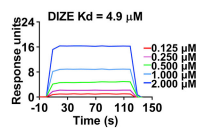
The direct binding was illustrated by surface plasmon resonance (SPR) assay of purified ACE2 protein with Diminazene aceturate (DIZE;0.125, 0.25, 0.5, 1, 2 μM).
Diminazene purchased from MedChemExpress. Usage Cited in: Cell Metab. 2022 Mar 1;34(3):424-440.e7. [Abstract]
HUVECs were treated with Diminazene aceturate (DIZE, 100 μM), imatinib (Ima), harpagoside (Har) or methazolamide (Met) for 16 h and subjected to real-time PCR
-
-
Int J Radiat Oncol Biol Phys
Activation of Angiotensin Converting Enzyme 2 (ACE2) Mitigates Gastrointestinal Acute Radiation Syndrome (GI-ARS). [Abstract]2025 Sep 16:S0360-3016(25)06272-8. PMID: 40967372
Diminazene purchased from MedChemExpress. Usage Cited in: Int J Radiat Oncol Biol Phys. 2025 Sep 16:S0360-3016(25)06272-8. [Abstract]
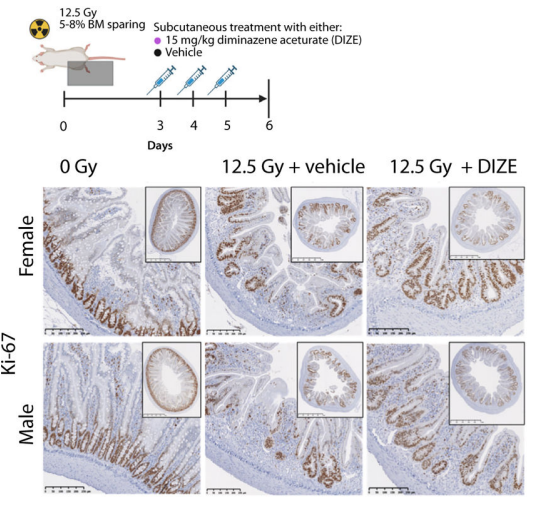
Diminazene aceturate (DIZE; 15 mg/kg; SC)showed a near depletion of Ki-67+ regenerating intestinal crypts. WAG/RijCmcr rats were exposed to 12.5 Gy PBI and treated subcutaneously with vehicle or Diminazene aceturate (DIZE; 15 mg/kg; SC on days 3, 4, and 5 postirradiation. Representative Ki-67-stained IHC cross-sections of day 6 jejunum from nonirradiated, 12.5 Gy + vehicle-treated, or 12.5 Gy + DIZE.
Diminazene purchased from MedChemExpress. Usage Cited in: Int J Radiat Oncol Biol Phys. 2025 Sep 16:S0360-3016(25)06272-8. [Abstract]
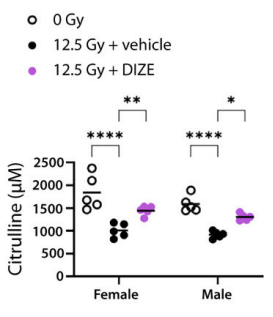
Diminazene aceturate (DIZE; 15 mg/kg; SC)showed a decrease in plasma citrulline levels indicative of reduced GI mass in WAG/RijCmcr rats. Mean plasma citrulline levels at day 6 in female and male rats after irradiation and treatment with vehicle or DIZE.
Diminazene purchased from MedChemExpress. Usage Cited in: Int J Radiat Oncol Biol Phys. 2025 Sep 16:S0360-3016(25)06272-8. [Abstract]
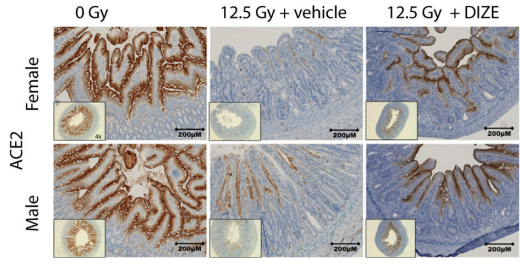
Diminazene aceturate (DIZE; 15 mg/kg; SC) increased luminal ACE2 staining. Representative ACE2-stained IHC cross-sections of day 6 jejunums from nonirradiated, 12.5 Gy + vehicle-treated, or 12.5 Gy + DIZE.
-
Drug Deliv Transl Res
Leveraging quantum chemical properties in transfer learning for predicting blood-brain barrier permeability of drugs. [Abstract]2025 Oct 29. PMID: 41160380 -
Biochem Pharmacol
Pharmacologic modulation of the SAT1-N1-acetylspermidine axis is associated with enhanced chemotherapy cytotoxicity in T-LBL/ALL cells. [Abstract]2026 Aug;250(Pt 1):117991. PMID: 42002236 -
Int Immunopharmacol
ACE2/Ang(1-7)/MasR axis exerts protective effects on lung ischemia/reperfusion injury via NF-κB-dependent mitochondrial adaptation and epithelial cell pyroptosis. [Abstract]2025 Oct 30:164:115325. PMID: 40795499 -
Neuropharmacology
Diminazene attenuates astrocytic oxidative stress and neuronal ferroptosis via miR-10b-3p/NOX4 axis in Alzheimer's Disease Model. [Abstract]2026 May 15:289:110880. PMID: 41698644 -
J Inflamm Res
Diminazene Ameliorates Neuroinflammation by Suppression of Astrocytic miRNA-224-5p/NLRP3 Axis in Alzheimer's Disease Model. [Abstract]2023 Apr 17:16:1639-1652. PMID: 37092127 -
FASEB J
Diminazene Aceturate Ameliorates Hypertension-Induced Cognitive Impairment by Disrupting the CCN1-Integrin αvβ6-TGF-β Axis and Preserving Mitochondrial Integrity. [Abstract]2026 Mar 31;40(6):e71682. PMID: 41860098 -
-
Int J Parasitol Drugs Drug Resist
In vitro and in vivo anti-piroplasm activity of PBT2 against Theileria annulata and Babesia microti. [Abstract]2026 Apr 22:31:100646. PMID: 42030593 -
Endocrine
A potential impact of SARS-CoV-2 on pituitary glands and pituitary neuroendocrine tumors. [Abstract]2021 May;72(2):340-348. PMID: 33786714 -
Radiat Res
2022 Oct 1;198(4):325-335. PMID: 35904437 -
Parasitol Res
Furamidine, a methyltransferase inhibitor, is a potential anti-Babesia spp. chemotherapeutic. [Abstract]2025 Dec 3;124(12):149. PMID: 41339613 -


Reinheit & Dokumentation
-
Data Sheet (277 KB)
-
SDS (252 KB)
- Français - FR (252 KB)
- Deutsch - DE (252 KB)
- Norwegian - NO (252 KB)
- Español - ES (252 KB)
- Swedish - SV (252 KB)
- Italian - IT (252 KB)
- Korean - KR (252 KB)
- Portuguese - PT (252 KB)
-
Handling Instructions (2659 KB)
Verweise
[1]. Qaradakhi T, et al. The potential actions of angiotensin-converting enzyme II (ACE2) activator diminazene aceturate (DIZE) in various diseases. Clin Exp Pharmacol Physiol. 2020;47(5):751-758. [Content Brief]
[2]. Joviano-Santos JV, et al. Diminazene aceturate (DIZE) has cellular and in vivo antiarrhythmic effects. Clin Exp Pharmacol Physiol. 2020;47(2):213-219. [Content Brief]
[3]. Lu Z, et al. Diminazene aceturate mitigates cardiomyopathy by interfering with renin-angiotensin system in a septic rat model. BMC Pharmacol Toxicol. 2022;23(1):44. Published 2022 Jul 4. [Content Brief]
[4]. Kuriakose S, et al. Diminazene aceturate (Berenil), a new use for an old compound?. Int Immunopharmacol. 2014;21(2):342-345. [Content Brief]
[5]. Passaglia P, et al. Diminazene aceturate attenuates systemic inflammation via microbiota gut-5-HT brain-spleen sympathetic axis in male mice. Brain Behav Immun. 2024;119:105-119. [Content Brief]
[6]. de Brito MG, et al. Therapeutic Effect of Diminazene Aceturate on Parasitic Blood Fluke Schistosoma mansoni Infection. Antimicrob Agents Chemother. 2020;64(11):e01372-20. Published 2020 Oct 20. [Content Brief]

Calculators
Konzentration (Stammlösung) × Volumen (Stammlösung) = Konzentration (Ziellösung) × Volumen (Ziellösung)


Diminazene Related Classifications
HY-W342283 Related Classifications
 Powered by Bioz
Keywords
- Diminazene
- 536-71-0
- Parasite
- Angiotensin-converting Enzyme (ACE)
- Angiotensin Receptor
- p38 MAPK
- STAT
- NF-κB
- TNF Receptor
- 5-HT Receptor
- Schistosoma mansoni
- Trypanosoma congolense
- NFκB p65
- DNA topoisomerase
- dendritic cells
- angiotensin-converting enzyme II (ACE2)
- MAPK/ERK
- cardiomyocyte
- bone marrow-derived macrophages
- Inhibitor
- inhibitor
- inhibit