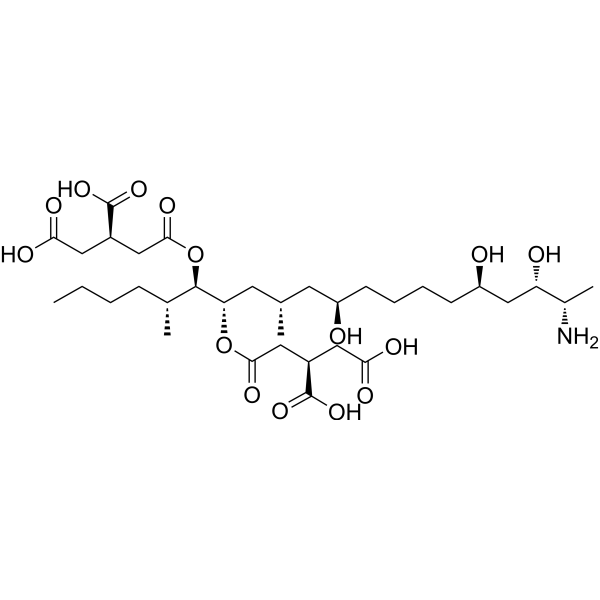
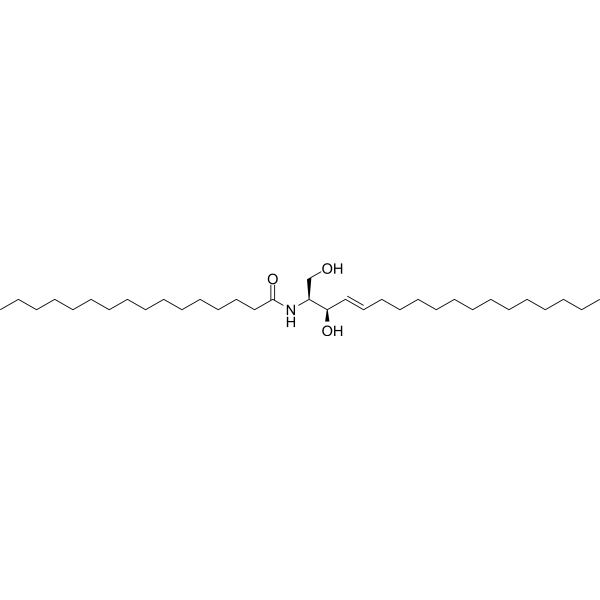

Search Result
Results for "
ceramides
" in MedChemExpress (MCE) Product Catalog:
15
Biochemical Assay Reagents
46
Isotope-Labeled Compounds
| Cat. No. |
Product Name |
Target |
Research Areas |
Chemical Structure |
-
- HY-17020
-
-
-
- HY-113679
-
|
|
Telomerase
|
Metabolic Disease
Endocrinology
|
|
Ceramides Mixture is an endogenous ceramide and consists of hydroxy and non-hydroxy fatty acid-containing ceramides. Ceramides Mixture is a main lipid component of the permeability barrier in epidermis. Ceramides Mixture is involved in the regulation of growth inhibition, cell cycle arrest, and modulation of telomerase activity .
|
-
-
- HY-P1975
-
|
Basifungin
|
Antibiotic
Fungal
Parasite
|
Infection
Inflammation/Immunology
|
|
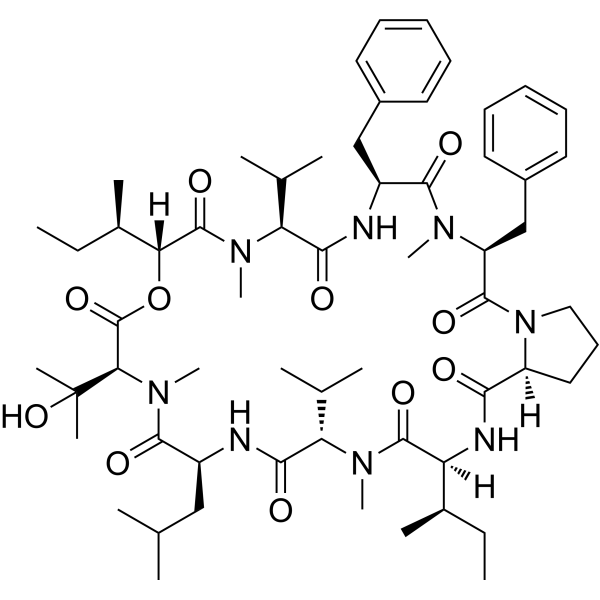
Aureobasidin A (Basifungin) is a cyclic peptide antibiotic with oral activity. Aureobasidin A is an inhibitor of inositol phosphorylated ceramide synthetase AUR1. Aureobasidin A has antifungal and antiparasitic activity .
|
-
-
- HY-101180
-
|
Ceramide 2
|
Phosphatase
Mitochondrial Metabolism
Apoptosis
Autophagy
|
Metabolic Disease
Endocrinology
|
|
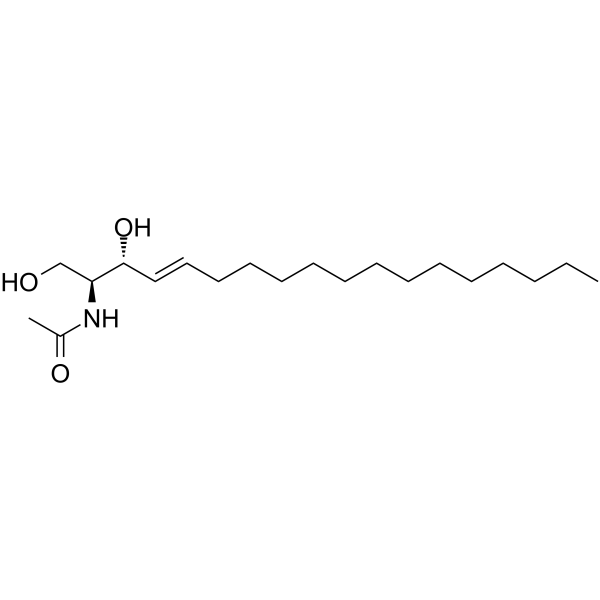
C2 Ceramide (Ceramide 2) is the main lipid of the stratum corneum and a protein phosphatase 1 (PP1) activator. C2 Ceramide activates PP2A and ceramide-activated protein phosphatase (CAPP). C2 Ceramide induces cells differentiation, autophagy and apoptosis, inhibits mitochondrial respiratory chain complex III. C2 Ceramide is also a skin conditioning agent that protects the epidermal barrier from water loss .
|
-
-
- HY-19542
-
|
C6-Cer; N-Hexanoylsphingosine
|
Apoptosis
|
Cancer
|
|
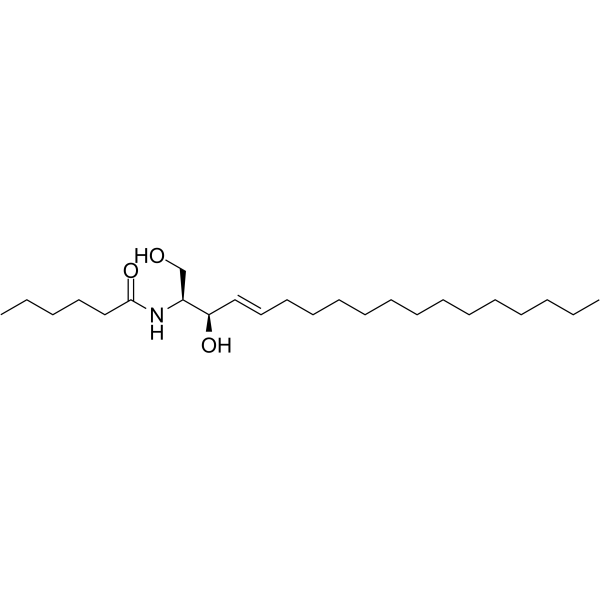
C6 Ceramide (C6-Cer) is a short-chain, cell-permeable ceramide pathway activator with anticancer activity. C6 Ceramide-mediated miR-29b expression participates in the progression of multiple myeloma through suppressing the proliferation, migration and angiogenesis of endothelial cells by targeting Akt signal pathway. C6 Ceramide exhibits multiple anti-cancer properties including cell cycle arrest, Apoptosis, inhibition of tumor growth and enhances the effects of chemotherapy in drug-resistant cancer cells. C6-ceramide can be used as an adjuvant for chemotherapeutic agents, to enhance anti-tumor effects .
|
-
-
- HY-17020A
-
|
N-Butyldeoxynojirimycin hydrochloride; NB-DNJ hydrochloride; OGT 918 hydrochloride
|
Glucosylceramide Synthase (GCS)
|
Neurological Disease
Inflammation/Immunology
|
|
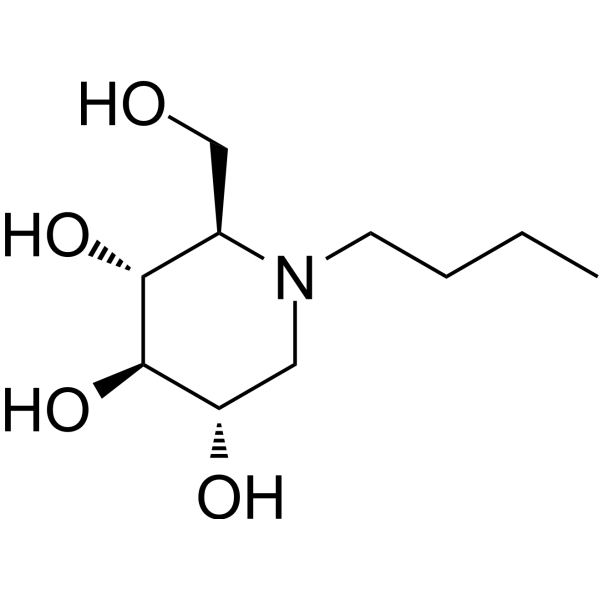
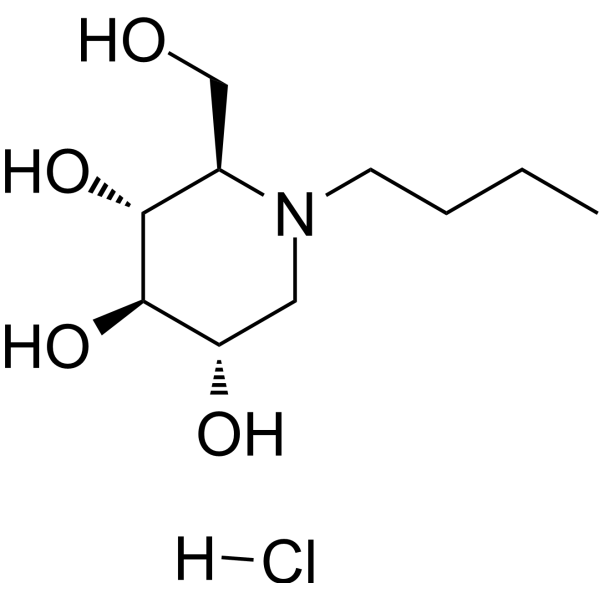
Miglustat (N-Butyldeoxynojirimycin) hydrochloride is an orally active and reversible ceramide glucosyltransferase inhibitor, with blood-brain barrier permeability. Miglustat hydrochloride can be used for the research of type I gaucher disease .
|
-
-
- HY-134575
-
|
|
Apoptosis
GSK-3
|
Others
|
|
C24:1-Ceramide is one of the most abundant naturally occurring ceramide. Ceramides regulates many diverse biological activities, such as cell apoptosis, cell differentiation, proliferation of smooth muscle cells, and inhibition of the mitochondrial respiratory chain .
|
-
-
- HY-154831
-
|
N-Behenoyl-D-erythro-sphingosine; C22-Ceramide; Cer d18:1/22:0
|
Liposome
|
Metabolic Disease
|
|
C22-Ceramide (d18:1/22:0) (Cer d18:1/22:0) is an endogenous bioactive sphingolipid. C22-Ceramide (d18:1/22:0) reduces the propensity of C16-ceramide channel formation in isolated rat liver mitochondria and in liposomes .
|
-
-
- HY-112016
-
|
C20 Ceramide; N-Arachidoyl-D-sphingosine
|
Endogenous Metabolite
|
Neurological Disease
|
|
C20 Ceramide (d18:1/20:0) (N-Arachidoyl-D-sphingosine) is a natural 20:0 ceramide and a N-acylsphingosine in which the ceramide N-acyl group is specified as eicosanoyl. C20 Ceramide (d18:1/20:0) acts as a key signal molecule mediating biological processes .
|
-
-
- HY-131703
-
|
|
UGT
|
Metabolic Disease
|
|
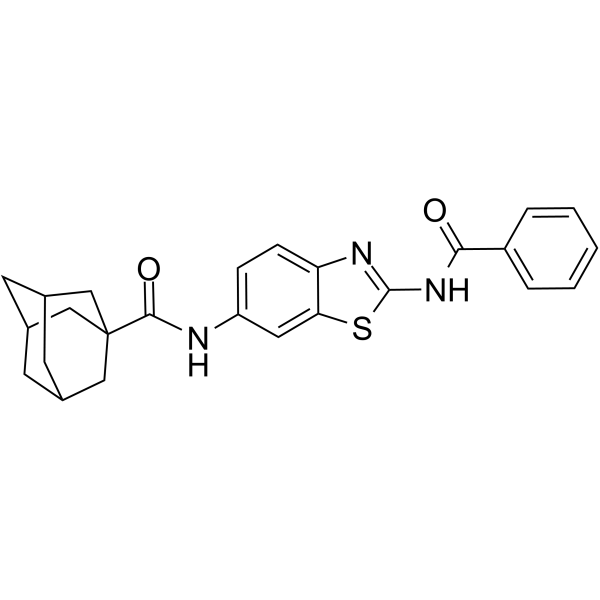
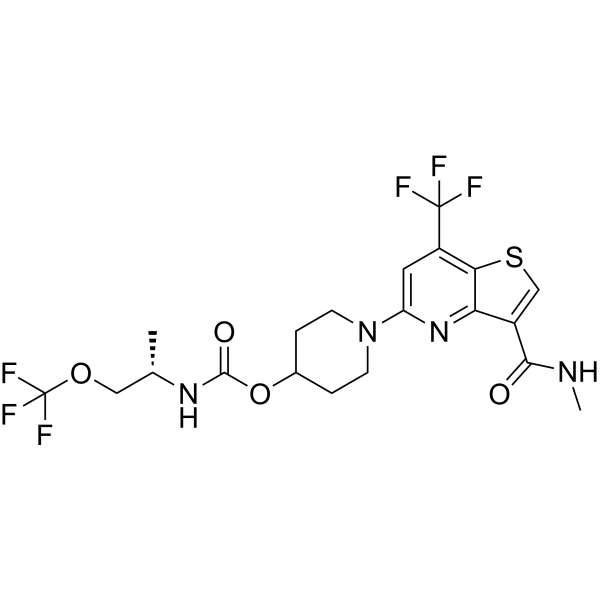
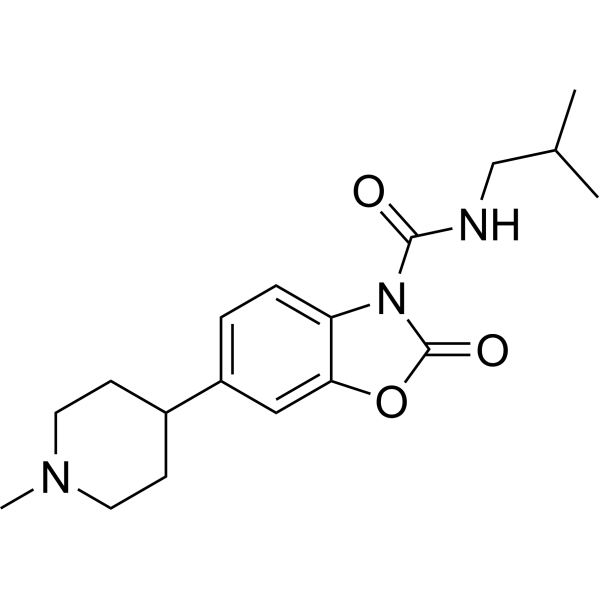
UGT8-IN-1 is a brain penetrable and orally active inhibitor of ceramide galactosyltransferase enzyme (UGT8). UGT8-IN-1 can be used in the study for lysosomal storage disorders .
|
-
-
- HY-E70038
-
|
|
Endogenous Metabolite
|
Metabolic Disease
|
Endoglycoceramidase II (EGCase II) is an endo-β-glucosidase that releases intact glycans from ceramides in glycosphingolipids. Endoglycoceramidase II catalyzes the hydrolysis of β-glycosidic linkages between oligosaccharides and ceramides in various glycosphingolipids .
|
-
-
- HY-116147
-
|
|
LPL Receptor
Apoptosis
|
Cancer
|
|
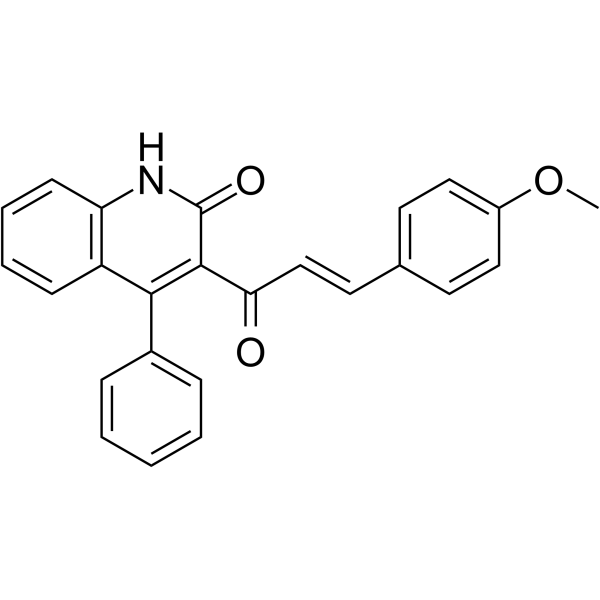
Ceranib-2 is a potent and nonlipid ceramidase inhibitor that inhibits cellular ceramidase activity with an IC50 of 28 μM in SKOV3 cells. Ceranib-2 induces the accumulation of multiple ceramide species, decreases levels of sphingosine and sphingosine-1-phosphate (S1P), and induces cell apoptosis. Anticancer activity .
|
-
-
- HY-144005
-
|
C16 PEG Ceramide (MW 2000)
|
Liposome
Autophagy
|
Cancer
|
|
C16 PEG2000 Ceramide is a polyethylene glycolylated ceramide. C16 PEG2000 Ceramide can be used for lipid carrier to delivery. C16 PEG2000 Ceramide induces autophagy. C16 PEG2000 Ceramide can be used for cancer research .
|
-
-
- HY-114615
-
-
-
- HY-132182
-
HPA-12
1 Publications Verification
|
Ceramidase
Autophagy
Apoptosis
ATF6
|
Neurological Disease
Cancer
|
|
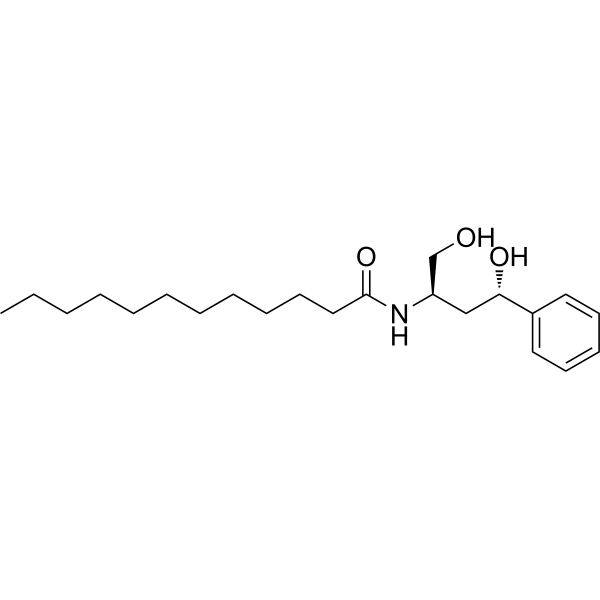
HPA-12 is a blood-brain barrier-permeable small-molecule inhibitor of ceramide transfer protein (CERT) with four stereoisomers (the (1R,3R)-stereoisomer exhibits the highest activity). HPA-12 blocks the transport of ceramide from the endoplasmic reticulum to the Golgi apparatus by binding to the START domain of CERT, leading to intracellular ceramide accumulation and inhibition of sphingomyelin (SM) synthesis. HPA-12 induces endoplasmic reticulum stress via the GRP78/ATF6/CHOP axis and activates mitochondrial autophagy, thereby inhibiting cell growth and inducing apoptosis. In in vivo experiments, HPA-12 significantly reduces the leukemia burden and splenomegaly in mouse models of acute myeloid leukemia (AML) and prolongs survival. HPA-12 is applicable for the research of lipid metabolism in acute myeloid leukemia and Alzheimer's disease .
|
-
-
- HY-126015
-
P053
1 Publications Verification
|
Acyltransferase
|
Metabolic Disease
|
|
P053 is a potent, non-competitive and selective ceramide synthase 1 (CerS1) inhibitor wirh an IC50 of 0.5 μM. P053 acts as an endogenous inhibitor of mitochondrial fatty acid oxidation in muscle. Whole-body adiposity regulator .
|
-
-
- HY-134508A
-
|
|
Biochemical Assay Reagents
|
Others
|
|
C24-Ceramide (d18:1/24:0) is a sphingolipid that can be used for the lipid membranes composed. C24-Ceramide (d18:1/24:0) induces time-dependent changes in membrane properties. C24-Ceramide (d18:1/24:0) induces membrane reorganization .
|
-
-
- HY-141578
-
-
-
- HY-165099
-
|
|
Apoptosis
PI3K
DNA/RNA Synthesis
|
Metabolic Disease
|
C-8 Ceramide-1-phosphate is a cell apoptosis inhibitor and a cell survival inducer that can stimulate DNA synthesis and cell division. C-8 Ceramide-1-phosphate can inhibit acidic sphingomyelinase (SMase) and stimulate PI3-K, which in turn produces PIP3; PIP3 can also inhibit acidic SMase. The C-8 Ceramide-1-phosphate and ceramide can be interconverted in cells through kinase and phosphatase activity, and maintaining the balance between the two is crucial for cellular and tissue homeostasis .
|
-
-
- HY-108391
-
|
N-Octanoyl-D-erythro-sphingosine
|
Apoptosis
PKC
Autophagy
|
Inflammation/Immunology
Cancer
|
|
C8-Ceramide (N-Octanoyl-D-erythro-sphingosine) is a cell-permeable analog of naturally occurring ceramides. C8-Ceramide has anti-proliferation properties and acts as a potent chemotherapeutic agent. C8-Ceramide stimulates dendritic cells to promote T cell responses upon virus infections. C8-Ceramide induces slight activation of protein kinase (PKC) in vitro .
|
-
-
- HY-103359
-
|
|
Ceramidase
|
Cancer
|
|
Ceranib1 is a ceramidase inhibitor. Ceranib1 inhibits ceramidase activity toward an exogenous ceramide analog, induces the accumulation of multiple ceramide species, decreases levels of sphingosine and S1P. Ceranib1 inhibits the proliferation of ovarian cancer cells .
|
-
-
- HY-13626
-
|
ES-285
|
PKC
Apoptosis
|
Cancer
|
|
Spisulosine (ES-285) is an antiproliferative (antitumoral) compound of marine origin. Spisulosine inhibits the growth of the prostate PC-3 and LNCaP cells through intracellular ceramide accumulation and PKCζ activation. Spisulosine induces apoptosis in PC-3 and LNCaP cells .
|
-
-
- HY-129099A
-
|
|
PKC
Estrogen Receptor/ERR
Drug Metabolite
Endogenous Metabolite
|
Cancer
|
|
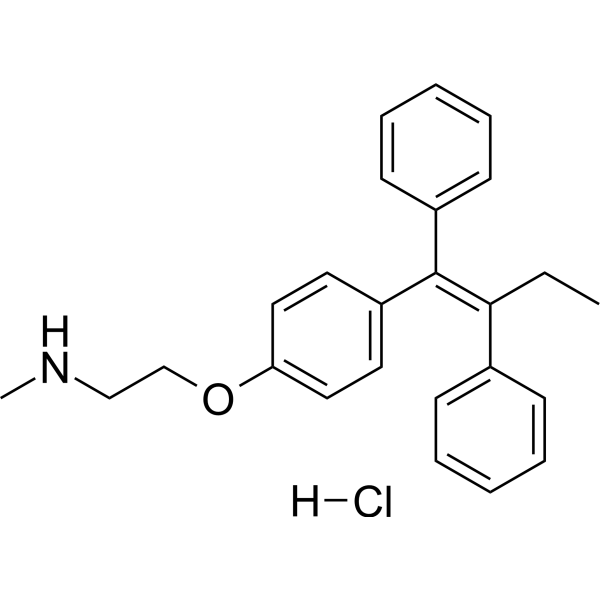
N-Desmethyltamoxifen hydrochloride is the major metabolite of tamoxifen in humans. N-Desmethyltamoxifen, a poor antiestrogen, is a ten-fold more potent protein kinase C (PKC) inhibitor than Tamoxifen. N-Desmethyltamoxifen hydrochloride is also a potent regulator of ceramide metabolism in human AML cells, limiting ceramide glycosylation, hydrolysis, and sphingosine phosphorylation .
|
-
-
- HY-115703
-
|
N-Heptadecanoyl-D-erythro-sphingosine
|
Biochemical Assay Reagents
|
Metabolic Disease
|
|
C17 Ceramide (d18:1/17:0) (N-Heptadecanoyl-D-erythro-sphingosine) is a phospholipid internal standard. C17 Ceramide (d18:1/17:0) is used in studies of medium-chain acyl-CoA dehydrogenase deficiency (MCADD) .
|
-
-
- HY-141866
-
|
|
Ceramidase
|
Neurological Disease
|
|
Acid Ceramidase-IN-1 is orally active and blood-brain barrier penetrant acid ceramidase (AC, ASAH-1) inhibitor (hAC IC50=0.166 μM). Acid Ceramidase-IN-1 reduces AC activity, accumulates ceramide species (Cer (d18:0/16:0), Cer (d18:1/16:0)), and decreases sphingosine levels. Acid Ceramidase-IN-1 can be used for the study of severe neurological lysosomal storage diseases (LSDs) such as Gaucher’s disease (GD) and Krabbe’s disease (KD) .
|
-
-
- HY-134508S
-
-
-
- HY-100353
-
|
N-Lauroyl-D-erythro-sphingosine; N-Laurylsphingosine
|
Endogenous Metabolite
|
Metabolic Disease
Cancer
|
|
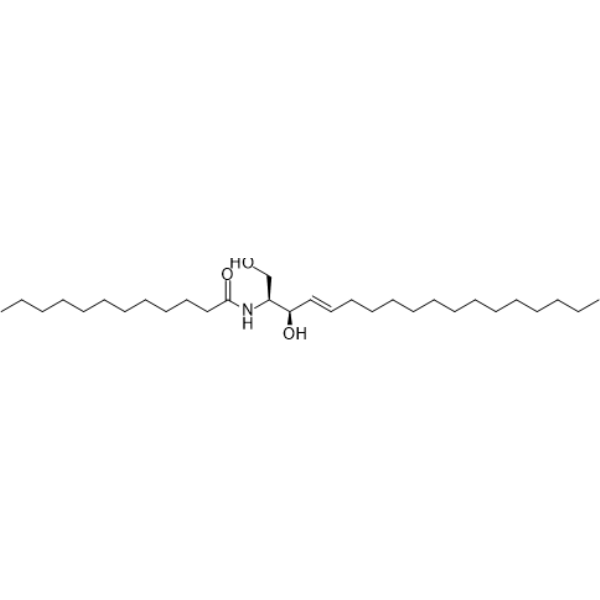
C12-Ceramide (N-Lauroyl-D-erythro-sphingosine), a naturally occurring ceramide, is formed by hydrolysis of C12 sphingomyelin. C12-Ceramide can enhance the Doxorubicin toxicity in MDA-MB-231 cells. C12-Ceramide also can be used to diagnose types A and B Niemann-Pick disease .
|
-
-
- HY-146906S
-
-
-
- HY-124177A
-
-
-
- HY-158783
-
|
|
Ceramidase
Bcl-2 Family
LPL Receptor
Apoptosis
|
Neurological Disease
|
|
SACLAC, a Ceramide analog, is a potent and covalent acid ceramidase (ASAH1; AC) inhibitor with a Ki of 97.1 nM. SACLAC effectively blocks AC activity and induces a decrease in sphingosine 1-phosphate (S1P) and total ceramide levels. SACLAC reduces the levels of splicing factor SF3B1 and alternative Mcl-1 mRNA splicing, increases pro-apoptotic Mcl-1S levels to induce apoptosis in acute myeloid leukemia (AML) cells. SACLAC reduces the leukemic burden in human AML xenograft mouse models .
|
-
-
- HY-141578S
-
|
|
Isotope-Labeled Compounds
|
Others
|
|
C18:1-Ceramide- 13C18 is a 13C-labeled C18:1-Ceramide (HY-141578). C18:1-Ceramide is a ceramide subspecies. C18:1-Ceramide can be used in the study of type 2 diabetes .
|
-
-
- HY-100354S3
-
-
-
- HY-134575S
-
-
-
- HY-176568
-
|
|
Mitophagy
PINK1/Parkin
Mitochondrial Metabolism
|
Neurological Disease
Cancer
|
|
LCL768 is a ceramide analog. LCL768 attenuates PARKIN succination to promote PARKIN activation and mitophagy. LCL768 induces CerS1-mediated endogenous C18-ceramide accumulation in mitochondria to mediate mitophagy, which is dependent on DRP1 activation via nitrosylation at C644. LCL768 alters mitochondrial metabolism, resulting in fumarate depletion and leading to tumor suppression. LCL768 improves sensorimotor defects in neurodegenerative diseases like ALS .
|
-
-
- HY-129099
-
|
|
PKC
Estrogen Receptor/ERR
Drug Metabolite
Endogenous Metabolite
|
Cancer
|
|
N-Desmethyltamoxifen is the major metabolite of tamoxifen in humans. N-Desmethyltamoxifen, a poor antiestrogen, is a ten-fold more potent protein kinase C (PKC) inhibitor than Tamoxifen. N-Desmethyltamoxifen is also a potent regulator of ceramide metabolism in human AML cells, limiting ceramide glycosylation, hydrolysis, and sphingosine phosphorylation .
|
-
-
- HY-100355S1
-
-
-
- HY-100354S4
-
-
-
- HY-145467
-
|
C16 Ceramide-1-phosphate ammonium; Ceramide-1-phosphate (d18:1/16:0) ammonium; CerP(d18:1/16:0) ammonium
|
Biochemical Assay Reagents
|
Metabolic Disease
|
|
C16 Ceramide-1-phosphate (d18:1/16:0) (ammonium) (C16 Ceramide-1-phosphate (ammonium); Ceramide-1-phosphate (d18:1/16:0) (ammonium)) is an ester product.
|
-
-
- HY-125953
-
|
Ceramide (Egg, Chicken)
|
JNK
p38 MAPK
Phosphatase
Akt
Survivin
CDK
mTOR
Apoptosis
Autophagy
Reactive Oxygen Species (ROS)
|
Neurological Disease
Cancer
|
|
Ceramide (Egg) (Ceramide (Egg, Chicken)) is a ceramide from chicken. Ceramide (Egg) is a sphingomyelin signaling pathway second messenger. Ceramide (Egg) activates PP2A, JNK, p38 MAPK, CAPK, ceramide-activated protein phosphatase, Vav, PKCζ, and SAPK/JNK cascade. Ceramide (Egg) downregulates or inhibits AKT, survivin, CDK2, mTOR, and FLIP. Ceramide (Egg) mediates apoptosis, autophagy, cell cycle arrest, mitochondrial dysfunction, redox state shifts, and ROS generation. Ceramide (Egg) can be used for the research of cancer and neurological disease .
|
-
-
- HY-166315
-
-
-
- HY-19542S1
-
|
C6-Cer-d11; N-Hexanoylsphingosine-d11
|
Apoptosis
Isotope-Labeled Compounds
|
Cancer
|
|
C6 Ceramide-d11 is deuterated labeled C6 Ceramide (HY-19542). C6-ceramide, a ceramide pathway activator, shows activity against a variety of cancer cell lines. C6-ceramide can be used as an adjuvant for chemotherapeutic agents, to enhance anti-tumor effects .
|
-
-
- HY-D1573
-
|
|
Fluorescent Dye
|
Others
|
|
C6 NBD Phytoceramide is a fluorescently labeled short-chain ceramide analog that can be recognized by mammalian GlcCer synthase (GCS) .
|
-
-
- HY-166262
-
-
-
- HY-124177AS
-
-
-
- HY-141575
-
|
|
Fluorescent Dye
|
Others
|
|
C12-NBD-ceramide is a fluorescent analogue of ceramide, it can be used as a substrate in ceramidase assays .
|
-
-
- HY-17020R
-
|
N-Butyldeoxynojirimycin (Standard); NB-DNJ (Standard); OGT 918 (Standard)
|
Glucosylceramide Synthase (GCS)
Reference Standards
|
Neurological Disease
Inflammation/Immunology
|
|
Miglustat (Standard) is the analytical standard of Miglustat. This product is intended for research and analytical applications. Miglustat (N-Butyldeoxynojirimycin) is an orally active and reversible ceramide glucosyltransferase inhibitor. Miglustat can be used for the research of type I gaucher disease .
|
-
-
- HY-119312
-
|
|
PKC
|
Cancer
|
|
C8 Dihydroceramide is a negative control of C8 Ceramide. C8-Ceramide (N-Octanoyl-D-erythro-sphingosine) is a cell-permeable analog of naturally occurring ceramides. C8-Ceramide has anti-proliferation properties and acts as a potent chemotherapeutic agent. C8-Ceramide stimulates dendritic cells to promote T cell responses upon virus infections. C8-Ceramide induces slight activation of protein kinase (PKC) in vitro .
|
-
-
- HY-175198
-
|
|
Acyltransferase
Fungal
|
Infection
|
|
Cs-2d is a selective ceramide synthases Cer1 inhibitor. Cs-2d has potent inhibitory activity toward C. neoformans Cer1, while maintaining a low off-target effect on human hCerS1. Cs-2d has potent antifungal activity with the significant growth inhibition. Cs-2d can be used for invasive fungal infections research .
|
-
-
- HY-141578R
-
|
|
Endogenous Metabolite
|
Metabolic Disease
|
|
C18:1-Ceramide (Standard) is the analytical standard of C18:1-Ceramide. This product is intended for research and analytical applications. C18:1-Ceramide is a ceramide subspecies. C18:1-Ceramide can be used in the study of type 2 diabetes
|
-
-
- HY-D1582
-
|
|
Fluorescent Dye
|
Others
|
|
C12 NBD Phytoceramide, a ceramide analogue, is a fluorescent substrate, can be used to detect ceramidase activity .
|
-
- HY-D1576
-
|
|
Fluorescent Dye
|
Others
|
|
C6 NBD L-threo-dihydroceramide is a dihydro-ceramide isomer labeled with a fluorescent group C6 nitrobenzoxadiazole (C6 NBD), can be used to detect ceramide.
|
-
- HY-E70281
-
|
rEGCase II
|
Biochemical Assay Reagents
|
Metabolic Disease
|
|
Recombinant endoglycoceramidase II (rEGCase II) is an endo-β-glucosidase releasing the complete glycan from ceramide in glycosphingolipids. Recombinant endoglycoceramidase II catalyzes the hydrolysis of the β-glycosidic linkage between oligosaccharides and ceramides in various glycosphingolipids .
|
-
- HY-157418
-
-
- HY-W024564
-
|
Acetamidomethanol
|
Biochemical Assay Reagents
|
Others
|
|
N-(Hydroxymethyl)acetamide (Acetamidomethanol) is a model molecule of Ceramide. The dimers of N-(Hydroxymethyl)acetamide have various hydrogen bonds, and the three-dimensional network structure formed by these hydrogen bonds may be the main reason for the barrier function of the stratum corneum of the skin .
|
-
- HY-E70280
-
|
rEGCase I
|
Biochemical Assay Reagents
|
Metabolic Disease
|
|
Recombinant endoglycoceramidase I (rEGCase I) is a glycosidase that catalyzes the hydrolysis of the β-glycosidic linkage between oligosaccharides and ceramides. Recombinant endoglycoceramidase I catalyzes a transglycosylation reaction, which transfers the sugar moiety of glycosphingolipids (GSLs) to the primary hydroxyl group of several 1-alkanols .
|
-
- HY-129099AR
-
|
|
Reference Standards
PKC
Estrogen Receptor/ERR
Drug Metabolite
Endogenous Metabolite
|
Cancer
|
|
N-Desmethyltamoxifen (hydrochloride) (Standard) is the analytical standard of N-Desmethyltamoxifen (hydrochloride). This product is intended for research and analytical applications. N-Desmethyltamoxifen hydrochloride is the major metabolite of tamoxifen in humans. N-Desmethyltamoxifen, a poor antiestrogen, is a ten-fold more potent protein kinase C (PKC) inhibitor than Tamoxifen. N-Desmethyltamoxifen hydrochloride is also a potent regulator of ceramide metabolism in human AML cells, limiting ceramide glycosylation, hydrolysis, and sphingosine phosphorylation[1][2][3].
|
-
- HY-17020AR
-
|
N-Butyldeoxynojirimycin hydrochloride (Standard); NB-DNJ hydrochloride (Standard); OGT 918 hydrochloride (Standard)
|
Glucosylceramide Synthase (GCS)
Reference Standards
|
Neurological Disease
Inflammation/Immunology
|
|
Miglustat (hydrochloride) (Standard) is the analytical standard of Miglustat (hydrochloride). This product is intended for research and analytical applications. Miglustat (N-Butyldeoxynojirimycin) hydrochloride is an orally active and reversible ceramide glucosyltransferase inhibitor. Miglustat hydrochloride can be used for the research of type I gaucher disease .
|
-
- HY-D1579
-
|
|
Fluorescent Dye
|
Others
|
|
C12 NBD galactosylceramide is a biologically active derivative of galactosylceramide that is tagged with a fluorescent C12 nitrobenzoxadiazole (C12 NBD) group. C12 NBD galactosylceramide has been used to detect ceramide trihexoside .
|
-
- HY-166315S
-
-
- HY-100353R
-
|
N-Lauroyl-D-erythro-sphingosine (Standard); N-Laurylsphingosine (Standard)
|
Reference Standards
Others
|
Metabolic Disease
Cancer
|
|
C12-Ceramide (Standard) is the analytical standard of C12-Ceramide. This product is intended for research and analytical applications. C12-Ceramide (N-Lauroyl-D-erythro-sphingosine), a naturally occurring ceramide, is formed by hydrolysis of C12 sphingomyelin. C12-Ceramide can enhance the Doxorubicin toxicity in MDA-MB-231 cells. C12-Ceramide also can be used to diagnose types A and B Niemann-Pick disease .
|
-
- HY-100355S
-
-
- HY-100355R
-
|
|
Endogenous Metabolite
Reference Standards
|
Neurological Disease
Cancer
|
|
C18-Ceramide (Standard) is the analytical standard of C18-Ceramide. This product is intended for research and analytical applications. C18-Ceramide can promote exocytosis of glutamate from damaged neurons. C18-Ceramide promotes cell death in glioma cells. Ceramides is involved in diverse cellular functions, such as differentiation, cell cycle progression, cell-cell adhesion, senescence, and apoptosis .
|
-
- HY-146902S
-
-
- HY-100354S
-
-
- HY-W698686S
-
|
|
Isotope-Labeled Compounds
Others
|
Others
|
|
β-Galactosyl-C18-ceramide-d35 is deuterium labeled β-Galactosyl-C18-ceramide. β-Galactosyl-C18-ceramide is a bioactive molecule that promotes the regulation of nerve cells, regulates protein kinase C activity, and affects hormone receptors. β-Galactosyl-C18-ceramide is widely used in neuroscience research to explore its effects on nerve cell growth and function. The regulatory function of β-Galactosyl-C18-ceramide makes it a potential application prospect in compound development and disease inhibition .
|
-
- HY-19542S
-
|
|
Isotope-Labeled Compounds
Apoptosis
|
Cancer
|
|
Ceramide C6-d7 is the deuterium labeled Ceramide C6. Ceramide C6, a Ceramide pathway activator, is an exogenous short-chain ceramide which can induce apoptosis of multiple cancer cells .
|
-
- HY-146935S
-
-
- HY-146760S
-
-
- HY-146934S
-
-
- HY-146936S
-
-
- HY-141578S1
-
-
- HY-166277
-
-
- HY-146907S
-
-
- HY-W821802
-
|
|
Others
|
Others
|
|
3'-Hydroxygynuramide II (compound t18:1/C24:0) is a kind of ceramide that can be found in Moro Blood Orange (Citrus sinensis) .
|
-
- HY-108391R
-
|
N-Octanoyl-D-erythro-sphingosine (Standard)
|
Reference Standards
Apoptosis
PKC
Autophagy
|
Inflammation/Immunology
Cancer
|
|
C8-Ceramide (Standard) is the analytical standard of C8-Ceramide (HY-108391). This product is intended for research and analytical applications. C8-Ceramide (N-Octanoyl-D-erythro-sphingosine) is a cell-permeable analog of naturally occurring ceramides. C8-Ceramide has anti-proliferation properties and acts as a potent chemotherapeutic agent. C8-Ceramide stimulates dendritic cells to promote T cell responses upon virus infections. C8-Ceramide induces slight activation of protein Kinase (PKC) in vitro .
|
-
- HY-176781
-
|
|
Drug Derivative
|
Neurological Disease
|
|
1-Deoxyceramide (m18:1/20:0) is a type of ceramide. 1-Deoxyceramide (m18:1/20:0) is upregulated in the dorsal root ganglia of mice treated with Docetaxel (HY-B0011) .
|
-
- HY-160559
-
|
|
Drug Derivative
|
Others
|
|
Ceramide 8 is a free 6-hydroxylated ceramide found in human skin with (2S,3R,4E,6R) stereochemical configuration. Ceramide 8 is a predominant lipid component of human epidermal stratum corneum. Ceramide 8 contributes to the skin's water barrier function that prevents body water loss .
|
-
- HY-W718206
-
-
- HY-175055
-
|
C12 NBD phytosphingosine (t18:0/12:0); NBD cer (t18:0/12:0); NBD ceramide (t18:0/12:0)
|
Fluorescent Dye
Drug Derivative
|
Others
|
|
C12 NBD Phytoceramide (t18:0/12:0) is a ceramide analogue composed of a phytoceramide and green fluorescent C12 NBD. C12 NBD Phytoceramide (t18:0/12:0) is a fluorescent substrate (Ex=485 nM, Em=525 nM) and can be used to detect ceramidase (such as diacylglycerol acyltransfereases Lro1p) activity .
|
-
- HY-W777920
-
|
|
Endogenous Metabolite
|
Neurological Disease
Inflammation/Immunology
|
|
C26-Dihydro ceramide is a dihydroceramide containing a C26 very-long-chain fatty acid. C26-Dihydro ceramide can be used for research on various neurological disorders including Alzheimer's disease, Parkinson's disease, multiple sclerosis, depression, and anxiety disorders .
|
-
- HY-W590667A
-
-
- HY-165099A
-
-
- HY-181943
-
|
|
Acyltransferase
|
Cancer
|
|
SPT-IN-2 is an orally active serine palmitoyltransferase (SPT) inhibitor (with an IC50 of 0.71 nM against human SPT2). SPT-IN-2 inhibits ceramide synthesis, suppresses cancer cell growth, and exhibits in vivo anti-tumor activity, favorable metabolic stability and cell membrane permeability in xenograft mouse models. SPT-IN-2 blocks the de novo sphingolipid synthesis pathway, significantly reducing intracellular ceramide levels and the levels of 3-ketodihydrosphingosine (3-KDS), the immediate downstream product of SPT. SPT-IN-2 can be used in research related to lung adenocarcinoma, acute promyelocytic leukemia and breast cancer .
|
-
- HY-179808
-
-
- HY-179813
-
-
- HY-179791
-
-
- HY-179790
-
-
- HY-179793
-
-
- HY-179812
-
-
- HY-179811
-
-
- HY-101180A
-
-
- HY-179819
-
-
- HY-179763
-
-
- HY-179786
-
-
- HY-W955711
-
-
- HY-179747
-
-
- HY-W955711A
-
-
- HY-W960563
-
-
- HY-179763A
-
-
- HY-179786A
-
-
- HY-179747A
-
-
- HY-179780A
-
-
- HY-179780
-
-
- HY-179952
-
-
- HY-179952A
-
-
- HY-179756
-
-
- HY-165781
-
-
- HY-134508
-
|
|
mTOR
|
Neurological Disease
Cancer
|
|
C24-Ceramide is an orally active competitive binding agonist of PIP4K2C (mTOR complex regulator), thereby activating the mTOR signaling pathway. At the same time, C24-Ceramide changes the membrane morphology by inducing the formation of a partially interlocked gel phase in the phospholipid bilayer. C24-Ceramide can promote the proliferation and migration of keratinocytes to accelerate skin wound healing and drive the proliferation and metastasis of gallbladder cancer cells. The level of C24-Ceramide in serum can be used as a diagnostic marker for gallbladder cancer .
|
-
- HY-W778830
-
|
|
Drug Metabolite
|
Neurological Disease
|
|
Bodipy C12-ceramide (B12Cer) is a fluorescently tagged form of C12-Ceramide (HY-100353) that displays excitation/emission maxima of 505/540 nm, respectively. Bodipy C12-ceramide is formed when acid sphingomyelinase hydrolyzes BODIPY-C12 sphingomyelin in vitro and has been used to quantify acid sphingomyelinase activity in plasma with Niemann-Pick disease .
|
-
- HY-W698686
-
|
|
Biochemical Assay Reagents
|
|
|
β-Galactosyl-C18-ceramide is a bioactive molecule that promotes the regulation of nerve cells, regulates protein kinase C activity, and affects hormone receptors. β-Galactosyl-C18-ceramide is widely used in neuroscience research to explore its effects on nerve cell growth and function. The regulatory function of β-Galactosyl-C18-ceramide makes it a potential application prospect in compound development and disease inhibition.
|
-
- HY-W654105
-
-
- HY-N15851
-
|
|
Biochemical Assay Reagents
|
Others
|
|
C24 Glucosyl(β) ceramide (d18:1/24:0), C24-Ceramide (d18:1/24:0) (HY-134508A) derivative, is a β-glucosyl ceramide and can be used for the research of lipid.
|
-
- HY-W588184
-
|
|
Biochemical Assay Reagents
|
Others
|
|
(Rac)-C22-Ceramide is a lipid featuring two hydrophobic tails, one saturated and the other unsaturated. Ceramides may be used in developing lipid nanoparticles or liposomes.
|
-
- HY-179804
-
-
- HY-179794
-
-
- HY-179809
-
-
- HY-179826
-
-
- HY-179803
-
-
- HY-147178
-
|
|
Fluorescent Dye
|
Others
|
|
C-6 NBD-dihydro-Ceramide is a membrane-permeable ceramides. C-6 NBD-dihydro-Ceramide is a biologically active fluorescent analog of short chain .
|
-
- HY-P2936A
-
|
|
Insecticide
Phosphodiesterase (PDE)
|
Infection
Neurological Disease
Inflammation/Immunology
|
|
Sphingomyelin phosphodiesterase, Bacillus cereus is a sphingomyelin hydrolase and Insecticide. Sphingomyelin phosphodiesterase, Bacillus cereus catalyzes the decomposition of sphingomyelin into ceramide and phosphorylcholine. Sphingomyelin phosphodiesterase, Bacillus cereus causes rapid paralysis and death in injected insects, including German cockroaches and black cutworms. Sphingomyelin phosphodiesterase, Bacillus cereus reduces H2O2 production. Sphingomyelin phosphodiesterase, Bacillus cereus can be used in studies related to sepsis and endophthalmitis .
|
-
- HY-152021S
-
|
|
Isotope-Labeled Compounds
|
Others
|
|
C18 Ceramide-1-phosphate (d18:1/18:0)-d3 is the deuterium labeled C18 Ceramide-1-phosphate (d18:1/18:0) (HY-160850). C18 Ceramide-1-phosphate (d18:1/18:0) is a specific type of long-chain molecule found in murine skin. C18 Ceramide-1-phosphate (d18:1/18:0) promotes migration of both mouse bone marrow-derived multipotent stromal cells and human umbilical vein endothelial cells at concentrations between 0.5-5 μM. C18 Ceramide-1-phosphate (d18:1/18:0)’s levels are higher in CFPAC-1 pancreatic ductal adenocarcinoma cells than in pancreatic cancer stem cells .
|
-
- HY-179775
-
|
|
Fluorescent Dye
|
Others
|
|
C11-BODIPY 505/515 Ceramide-1-phosphate ammonium is a C11-BODIPY 505/515-labeled ceramide-1-phosphate ammonium that can be used to prepare lipid nanoparticles for drug delivery (Ex/Em = 505/515 nm).
|
-
- HY-176102
-
|
N-Hexanoyl-D-erythro-sphingosine alkyne
|
Biochemical Assay Reagents
|
Others
|
|
C6 Ceramide (d18:1/6:0) alkyne is an ω-alkyne derivative of C6 ceramide. The terminal alkyne group can be used in click chemistry reactions to tag C6 ceramide with fluorescent or biotinylated labels, allowing the analysis of the metabolism and biological activity of C6 ceramide.
|
-
- HY-W590667
-
|
|
Biochemical Assay Reagents
|
Others
|
|
C2 Ceramide-1-phosphate is a phospholipid. Phospholipids have good biocompatibility and significant amphiphilic characteristics, making them the main and suitable dosage form or excipient in drug formulations, thereby achieving better therapeutic effects. C2 Ceramide-1-phosphatecan be used in drug delivery research .
|
-
- HY-165087
-
-
- HY-141582S
-
|
N-Stearoyl phytosphingosine-d3
|
Isotope-Labeled Compounds
Interleukin Related
TNF Receptor
NF-κB
JNK
|
Inflammation/Immunology
|
|
Ceramide 3-d3 (N-Stearoyl phytosphingosine-d3) is deuterium labeled Ceramide 3. Ceramide 3 is an orally active major component of intercellular lipids in the stratum corneum of the skin, and belongs to the ceramide family. Ceramide 3 inhibits c-jun and NF-κB activation induced by Histamine (HY-B1204), and suppresses the expression of IL-4 and TNF-α. Ceramide 3 inhibits scratching behavior and vascular permeability in mice, and exhibits antihistamine effects in guinea pig ileum. Ceramide 3 improves skin barrier function, reduces transepidermal water loss, erythema and the number of circulating epidermal cells, and accelerates barrier repair of irritated or dysfunctional skin.
|
-
- HY-179940
-
-
- HY-N15809
-
-
- HY-N15945
-
-
- HY-N15793
-
-
- HY-179806
-
-
- HY-N15845
-
-
- HY-N15905
-
-
- HY-160410
-
|
|
Drug Derivative
|
Neurological Disease
Inflammation/Immunology
|
|
Ceramide 3B is a ceramide 3 lipid class with aggregation behavior. Ceramide 3B has a variety of physiological functions and can serve as a penetration enhancer and auxiliary emulsifier, playing an important role in barrier function stability .
|
-
- HY-112016A
-
|
(E/Z)-C20 Ceramide; (E/Z)-N-Arachidoyl-D-sphingosine
|
Endogenous Metabolite
|
Neurological Disease
|
|
(E/Z)-C20 Ceramide (d18:1/20:0) ((E/Z)-N-Arachidoyl-D-sphingosine) is the mixture of (Z)-C20 Ceramide and (E)-C20 Ceramide .
|
-
- HY-116258S
-
-
- HY-175132
-
|
NBD L-threo cer (d18:1/12:0); NBD L-threo ceramide (d18:1/12:0); N-Dodecanoyl-NBD L-threo-sphingosine
|
Fluorescent Dye
|
Others
|
|
C12 NBD L-threo Ceramide (d18:1/12:0) (NBD L-threo cer (d18:1/12:0); NBD L-threo ceramide (d18:1/12:0); N-Dodecanoyl-NBD L-threo-sphingosine) is an NBD fluorescently labeled ceramide analog. C12 NBD L-threo Ceramide (d18:1/12:0) is an isomer of C12 NBD ceramide. C12 NBD L-threo Ceramide (d18:1/12:0) can be used for fluorescence detection, imaging, and kinetic analysis.
|
-
- HY-116609
-
|
|
Interleukin Related
|
Inflammation/Immunology
|
|
C6 L-threo Ceramide is a bioactive sphingolipid and cell-permeable analog of naturally occurring ceramides . C6 L-threo Ceramide significantly inhibits IL-4 production in T cells. Anti-allergic agents .
|
-
- HY-168762
-
-
- HY-N16035
-
|
|
Biochemical Assay Reagents
|
Others
|
|
1-O-Acyl Ceramide (d18:1/18:1/24:1) is a class of 1-O-Acyl-ceramides. 1-O-Acyl Ceramides play a key role in preventing the barrier function of the lipid lamellae.
|
-
- HY-N15849
-
|
|
Biochemical Assay Reagents
|
Others
|
|
1-O-Acyl Ceramide (d18:1/16:0/18:1) is a class of 1-O-Acyl-ceramides. 1-O-Acyl Ceramides play a key role in preventing the barrier function of the lipid lamellae.
|
-
- HY-N15863
-
|
|
Biochemical Assay Reagents
|
Others
|
|
1-O-Acyl ceramide (d18:1/18:1/18:1) is a class of 1-O-Acyl-ceramides. 1-O-Acyl Ceramides play a key role in preventing the barrier function of the lipid lamellae.
|
-
- HY-N15904
-
|
|
Biochemical Assay Reagents
|
Others
|
|
1-O-Acyl Ceramide (d18:1/16:0/16:0) is a class of 1-O-Acyl-ceramides. 1-O-Acyl Ceramides play a key role in preventing the barrier function of the lipid lamellae.
|
-
- HY-N15814
-
|
|
Biochemical Assay Reagents
|
Others
|
|
1-O-Acyl ceramide (d18:1/18:1/16:0) is a class of 1-O-Acyl-ceramides. 1-O-Acyl Ceramides play a key role in preventing the barrier function of the lipid lamellae.
|
-
- HY-N15796
-
|
|
Biochemical Assay Reagents
|
Others
|
|
1-O-Acyl ceramide (d18:1/24:1/18:1) is a class of 1-O-Acyl-ceramides. 1-O-Acyl Ceramides play a key role in preventing the barrier function of the lipid lamellae.
|
-
- HY-N15861
-
|
|
Biochemical Assay Reagents
|
Others
|
|
1-O-Acyl ceramide (d18:1/16:0/24:1) is a class of 1-O-Acyl-ceramides. 1-O-Acyl Ceramides play a key role in preventing the barrier function of the lipid lamellae.
|
-
- HY-172665
-
-
- HY-N15842
-
|
|
Biochemical Assay Reagents
|
Others
|
|
1-O-Acyl Ceramide (d18:1/24:1/24:1) is a class of 1-O-Acyl-ceramides. 1-O-Acyl Ceramides play a key role in preventing the barrier function of the lipid lamellae.
|
-
- HY-N15840
-
-
- HY-N15941
-
|
|
Biochemical Assay Reagents
|
Others
|
|
1-O-Acyl Ceramide (d18:1/24:1/16:0)is a class of 1-O-Acyl-ceramides. 1-O-Acyl Ceramides play a key role in preventing the barrier function of the lipid lamellae.
|
-
- HY-172666F
-
|
Biotin ceramide (d18:0/6:0)
|
Fluorescent Dye
|
Neurological Disease
|
|
C6 Biotin dihydro ceramide is an affinity probe that allows C6 dihydro ceramide to be detected or immobilized through interaction with the biotin ligand.
|
-
- HY-160850
-
|
|
Endogenous Metabolite
|
Endocrinology
|
|
C18 Ceramide-1-phosphate (d18:1/18:0) (ammonium salt) is a specific type of long-chain molecule found in murine skin . C18 Ceramide-1-phosphate (d18:1/18:0) (ammonium salt) promotes migration of both mouse bone marrow-derived multipotent stromal cells and human umbilical vein endothelial cells at concentrations between 0.5-5 µM. C18 Ceramide-1-phosphate (d18:1/18:0) (ammonium salt)’s levels are higher in CFPAC-1 pancreatic ductal adenocarcinoma cells than in pancreatic cancer stem cells .
|
-
- HY-W747533
-
|
C8 Ceramine; Ceramine (d18:1/8:0)
|
Drug Derivative
|
Others
|
|
C8 Ceramine is an analog of ceramide in which the carbonyl group of the ceramide is replaced by a methylene group. At a concentration of 10 μM, C8 ceramine induces maximal DNA fragmentation in U937 cells after 6 hours of incubation, compared to 12 hours for C8 ceramide.
|
-
- HY-186165
-
|
|
Phosphatase
AMPK
Calcium Channel
GHSR
|
Neurological Disease
|
|
KARI 101 is a blood-brain barrier permeable acid sphingomyelinase (ASM) inhibitor. KARI 101 directly inhibits ASM activity and reduces ceramide production. KARI 101 induces Ca 2+ mobilization, activates AMPK and triggers GHSR1α internalization. KARI 101 can be used for the research of Alzheimer's disease .
|
-
- HY-W590674
-
|
|
Drug Derivative
|
Others
|
|
C26 Ceramide is a lipid featuring two hydrophobic tails, one saturated and the other unsaturated. Ceramides may be used in developing lipid nanoparticles or liposomes.
|
-
- HY-W590573
-
|
|
Biochemical Assay Reagents
|
Others
|
|
C3 Ceramide is a lipid featuring two hydrophobic tails, one saturated and the other unsaturated. Ceramides may be used in developing lipid nanoparticles or liposomes.
|
-
- HY-W766368
-
|
C6-Cer-13C2,d2; N-Hexanoylsphingosine-13C2,d2
|
Isotope-Labeled Compounds
Apoptosis
|
Cancer
|
|
C6 Ceramide- 13C2,d2 (C6-Cer- 13C2,d2) is the deuterium labeled and 13C-labeled C6 Ceramide (HY-19542). C6 Ceramide (C6-Cer) is a short-chain, cell-permeable ceramide pathway activator with anticancer activity. C6 Ceramide-mediated miR-29b expression participates in the progression of multiple myeloma through suppressing the proliferation, migration and angiogenesis of endothelial cells by targeting Akt signal pathway. C6 Ceramide exhibits multiple anti-cancer properties including cell cycle arrest, Apoptosis, inhibition of tumor growth and enhances the effects of chemotherapy in drug-resistant cancer cells. C6-ceramide can be used as an adjuvant for chemotherapeutic agents, to enhance anti-tumor effects .
|
-
- HY-170220
-
-
- HY-179805
-
-
- HY-172000
-
-
- HY-179835
-
-
- HY-167593S
-
-
- HY-167594S
-
-
- HY-144005B
-
|
C16 PEG Ceramide (MW 5000)
|
Biochemical Assay Reagents
Liposome
|
Others
|
|
C16 PEG5000 Ceramide (C16 PEG Ceramide (MW 5000)) is a PEG lipid for the preparation of liposomes and can be used in drug delivery studies .
|
-
- HY-144008
-
|
|
Liposome
|
Others
|
|
C8 PEG-Ceramide is a lipid product. C8 PEG-Ceramide can synthesize lipid bilayer carrier and can be used for drug delivery .
|
-
- HY-144005A
-
|
C16 PEG Ceramide (MW 750)
|
Biochemical Assay Reagents
Liposome
|
Others
|
|
C16 PEG750 Ceramide (C16 PEG Ceramide (MW 750)) is a PEG lipid for the preparation of liposomes and can be used in drug delivery studies .
|
-
- HY-108491
-
|
|
SphK
Apoptosis
|
Cancer
|
|
N,N-Dimethylsphingosine is a sphingosine kinase inhibitor. N,N-Dimethylsphingosine binds competitively to sphingosine kinase and blocks the conversion of sphingosine to sphingosine-1-phosphate. N,N-Dimethylsphingosine inhibits sphingosine-1-phosphate release and aggregation of platelets, and also exerts pro-apoptotic effects by resetting ceramide/sphingosine-1-phosphate homeostasis. N,N-Dimethylsphingosine can be used in cancer-related research .
|
-
- HY-139062
-
|
C6 Ceramide (d18:1/6:0) Urea; Cer(d18:1/6:0) Urea; D-erythro-Urea-C6-Ceramide
|
Apoptosis
Ceramidase
Autophagy
β-catenin
|
Cancer
|
|
C6 Urea Ceramide (Cer(d18:1/6:0) Urea) is an inhibitor of neutral ceramidase. C6 Urea Ceramide increases total ceramide levels in wild-type mouse embryonic fibroblasts (MEFs) and HT-29 colon cancer cells. C6 Urea Ceramide (5-10 μM) inhibits proliferation of HT-29 cells and induces apoptosis and autophagy, but is not toxic to non-cancerous cells. C6 Urea Ceramide decreases total and phosphorylated β-catenin levels in HT-29 and HCT116 cells, and induces colocalization of β-catenin with the 20S proteasome. C6 Urea Ceramide (1.25, 2.5, and 5 mg/kg) reduced tumor growth and increased C16, C18, C20, and C24 ceramide levels in tumor tissues in the HT-29 mouse xenograft model.
|
-
- HY-141582
-
|
N-Stearoyl phytosphingosine
|
JNK
NF-κB
Interleukin Related
TNF Receptor
|
Inflammation/Immunology
|
|
Ceramide 3 (N-Stearoyl phytosphingosine) is an orally active major component of intercellular lipids in the stratum corneum of the skin, and belongs to the ceramide family. Ceramide 3 inhibits c-jun and NF-κB activation induced by Histamine (HY-B1204), and suppresses the expression of IL-4 and TNF-α. Ceramide 3 inhibits scratching behavior and vascular permeability in mice, and exhibits antihistamine effects in guinea pig ileum. Ceramide 3 improves skin barrier function, reduces transepidermal water loss, erythema and the number of circulating epidermal cells, and accelerates barrier repair of irritated or dysfunctional skin .
|
-
- HY-158878
-
|
(±)-2'-Hydroxy cer(d18:0/12:0); (±)-2'-Hydroxy ceramide (d18:0/12:0); N-(R,S)-α-Hydroxydodecanoyl-D-erythro-dihydrosphingosine
|
Biochemical Assay Reagents
|
Others
|
|
C12((±)-2'-Hydroxy) dihydro ceramide (d18:0/12:0) is the 2’-hydroxylated form of C12 dihydro ceramide.
|
-
- HY-100354
-
-
- HY-N16026
-
-
- HY-167175
-
-
- HY-N16030
-
-
- HY-124177
-
-
- HY-N15841
-
|
|
Ceramidase
|
Others
|
|
C25 Ceramide (d18:1/25:0) is an endogenous ultra-long-chain ceramide that antagonizes the detrimental effects of long-chain ceramides on insulin sensitivity. C25 Ceramide (d18:1/25:0) is specifically enriched in oxidative skeletal muscle fibers, where it serves dual roles in providing structural support to cell membranes and regulating cellular signaling. By participating in the regulation of lipid homeostasis within muscle fibers, C25 Ceramide (d18:1/25:0) helps maintain normal insulin signaling. C25 Ceramide (d18:1/25:0) is primarily utilized in research concerning metabolic diseases—particularly in mechanistic studies investigating the muscle fiber type-specific aspects of insulin resistance .
|
-
- HY-179807
-
-
- HY-W765990
-
|
|
Others
|
Metabolic Disease
|
|
α-Galactosyl-C16-ceramide (d18:1/16:0) is a lipid that can be used to prepare lipid nanoparticles (LNPs) for drug delivery.
|
-
- HY-N16297
-
-
- HY-P2982
-
|
|
Liposome
|
Metabolic Disease
|
|
Ceramide 1-phosphate is a bioactive lipid and one of the key components of sphingolipids. Ceramide 1-phosphate playing diverse roles in cellular behaviors such as cell differentiation, migration, proliferation and death .
|
-
- HY-144008A
-
|
|
Liposome
|
Others
|
|
C8 PEG5000 Ceramide is a lipid product. C8 PEG5000 Ceramide can synthesize lipid bilayer carrier and can be used for drug delivery .
|
-
- HY-E70023
-
|
|
Endogenous Metabolite
|
Metabolic Disease
|
|
Sphingolipid ceramide N-deacylase (SCDase) cleaves the N-acyl linkage between fatty acids and sphingosine bases in various glycosphingolipids. Sphingolipid ceramide N-deacylase catalyzes glycosphingolipids to lysoglycosphingolipids .
|
-
- HY-N16089
-
-
- HY-139404
-
|
Anthrylvinyl ceramide; AV Ceramide; AV Ceramide (d18:1/10:0)
|
Fluorescent Dye
|
Others
|
|
C10 AV Ceramide (d18:1/10:0) is a fluorescent probe. Anthrylvinyl (AV) acts as the fluorescent label positioned on the amide linked acyl chain on the Ceramide molecule to measure the CERT-mediated transfer. The anthrylvinyl moiety of C10 AV Ceramide (d18:1/10:0) localizes to the hydrophobic region of the bilayer .
|
-
- HY-D1612
-
|
|
Fluorescent Dye
|
Others
|
|
The Golgi apparatus is composed of flattened vesicles superimposed on each other by unit membranes. The flattened vesicles are round with expanded and perforated edges. The Golgi fluorescent probe is a BODIPY-labeled ceramide derivative, the synthesis of which occurs in the endoplasmic reticulum and can then be transported to the Golgi via ceramide transport protein (CERT) or vesicular translocation, allowing specific labeling of the dye . BODIPY Fl C5-Ceramide is a Golgi-specific green fluorescent dye, which can visualise individual cells . Ex/Em= 505 nm/512 nm.
|
-
- HY-173541
-
|
C6 Dihydro ceramide (m18:0/6:0)
|
Drug Derivative
|
Metabolic Disease
|
|
C6 Dihydro 1-deoxyceramide (m18:0/6:0) (C6 Dihydro ceramide (m18:0/6:0)) is an analog of ceramide .
|
-
- HY-124134
-
|
LCL102
|
Ceramidase
Caspase
PARP
|
Cancer
|
|
AD-2646 (LCL102), a ceramide analog, can kill leukemic T cells (EC50: 40 μM). AD-2646 triggers the cleavage of caspase-8, -9 and -3, as well as the caspase substrate PARP. AD-2646 is a ceramidase inhibitor. AD-2646 induces an accumulation of endogenous ceramide owing to perturbed ceramide metabolism .
|
-
- HY-144008B
-
|
|
PROTAC Linkers
|
Others
|
|
C8 PEG750 Ceramide is a lipid product. C8 PEG750 Ceramide synthesizes a lipid bilayer carrier for the selective delivery of various diagnostic and therapeutic agents to acidic diseased cells .
|
-
- HY-N15860
-
-
- HY-N15946
-
-
- HY-116017
-
-
- HY-176816
-
|
C6:0 Ceramide (m18:1/6:0); Cer(m18:1/6:0); C6:0 1-Deoxyceramide
|
Endogenous Metabolite
|
Others
|
|
C6 1-Deoxyceramide (m18:1/6:0) (C6:0 Ceramide (m18:1/6:0)) is a short-chain atypical ceramide .
|
-
- HY-116585
-
|
|
Liposome
Interleukin Related
|
Neurological Disease
|
|
C6 D-Threo Ceramide (d18:1/6:0) is a bioactive sphingolipid and cell-permeable analog of ceramides. C6 D-Threo Ceramide (d18:1/6:0) enhances IL-4 production induced by Phorbol 12-myristate 13-acetate (HY-18739) in EL4 T cells .
|
-
- HY-158873
-
-
- HY-166305
-
-
- HY-173585
-
|
Cer(d18:1(14Z)/16:0)
|
Ceramidase
|
Cancer
|
|
C16 Ceramide (Cer) (d18:1(14Z)/16:0) is a sphingosine ceramide composed of long-chain sphingosine (d18:1) and palmitic acid (C16:0). It is one of the key lipid signaling molecules involved in apoptosis signaling. C16 ceramides are particularly involved in cell cycle arrest, cell death, and insulin signaling inhibition .
|
-
- HY-172938
-
|
|
Drug Isomer
|
Others
|
|
C24 (2'(S)-Hydroxy) dihydro ceramide (d18:0/24:0) is the 2S-isomer of C24 Dihydro ceramide (d18:0/24:0) (HY-156206) and the S-isomer of C24 (2'(R)-Hydroxy) dihydro ceramide (d18:0/24:0) (HY-158952).
|
-
- HY-172669
-
|
|
Liposome
|
Others
|
|
C22:1 Ceramide (d18:1(14Z)/22:1(13Z)) is a derivative of ceramide 1-phosphate (C1P) (HY-P2982) .
|
-
- HY-145517
-
|
|
Apoptosis
|
Neurological Disease
|
|
C6-Phytoceramide is a cell-permeable analog of Phytoceramide. C6-Phytoceramide induces higher levels of apoptosis than C6-Ceramide (HY-19542) in neuroblastoma cells .
|
-
- HY-N16076
-
-
- HY-W923646
-
-
- HY-173539
-
-
- HY-179776
-
|
|
Fluorescent Dye
|
Others
|
|
C11-BODIPY 505/515 Galactosyl ceramide is a C11-BODIPY 505/515-labeled Galactosyl ceramide that can be used to prepare lipid nanoparticles for drug delivery (Ex/Em = 505/515 nm).
|
-
- HY-179777
-
|
|
Fluorescent Dye
|
Others
|
|
C11-BODIPY 505/515 Glucosyl ceramide is a C11-BODIPY 505/515-labeled Glucosyl ceramide that can be used to prepare lipid nanoparticles for drug delivery (Ex/Em = 505/515 nm).
|
-
- HY-158725
-
|
|
Endogenous Metabolite
|
Others
|
|
N-Octadecenoyl-(cis-9) -Sulfatide is a glycolipid found in the brains of mice. N-Octadecenoyl-(cis-9) -Sulfatide can be used as a standard for the determination of C18:13 '-mergogalactosyllactose in dry blood stains of patients with chromatic leukodystrophy (MLD) by ultra-high performance liquid chromatography-mass spectrometry (UPLC-MS) .
|
-
- HY-165034
-
|
((±)-2'-Hydroxy) cer(d18:1/18:0); 18:0 (2R/S-OH)-Ceramide; ((±)-2'-Hydroxy) ceramide (d18:1/18:0)
|
Endogenous Metabolite
|
Others
|
|
C18 ((±)-2'-Hydroxy) ceramide ((±)-2'-Hydroxy) cer) (d18:1/18:0) is a bioactive sphingolipid found in the stratum corneum layer of mammalian epidermis. Ceramides maintains the normal hydration levels required for the normal physiological .
|
-
- HY-13945
-
NVP 231
3 Publications Verification
|
Apoptosis
|
Cancer
|
|
NVP 231 is a potent, specific, and reversible ceramide kinase (CerK) inhibitor(IC50=12 nM) that competitively inhibits binding of ceramide to CerK . NVP 231 induces cell apoptosis by increasing DNA fragmentation and caspase-3 and caspase-9 cleavage .
|
-
- HY-19542A
-
-
- HY-145518
-
-
- HY-W356116
-
|
Nbd-ceramide
|
Fluorescent Dye
|
Others
|
|
C6 NBD Ceramide is a Golgi apparatus fluorescent probe with cell membrane permeability. C6 NBD Ceramide can be used for fast and convenient green fluorescent labeling of Golgi in living and fixed cells, and can be used to observe changes in Golgi morphology in living cells (Ex=466 nm, Em=536 nm). C6-NBD-ceramide is metabolized to fluorescent sphingomyelin and glucosylceramide, can be used for the study of sphingolipid transport and metabolic mechanism .
|
-
- HY-D1749
-
|
|
Fluorescent Dye
|
Others
|
|
C6 NBD L-threo-ceramide is a cell-permeable analog of ceramides that is tagged with a fluorescent group C6 nitrobenzoxadiazole (C6 NBD). It is rapidly transferred between liposomes, labels the Golgi apparatus, and is metabolized to C6 NBD sphingomyelin in BHK cells and V79 fibroblasts.
|
-
- HY-124273
-
|
L-threo Cer(d18:1/2:0); L-threo Ceramide (d18:1/2:0); N-acetyl-L-threo-Sphingosine
|
Endogenous Metabolite
|
Cardiovascular Disease
|
|
C2 L-threo Ceramide (d18:1/2:0) (L-threo Cer(d18:1/2:0); L-threo Ceramide (d18:1/2:0)) is a bioactive sphingolipid and cell-permeable analog of naturally occurring ceramides. It stimulates cholesterol efflux in CHO cells expressing the human ABCA1 receptor when used at a concentration of 10 μM, however, this efflux is 50% less than that stimulated by C2 ceramide. C2 L-threo Ceramide inhibits IL-4 production by 17% in EL4 T cells stimulated with phorbol 12-myristate 13-acetate when used at a concentration of 10 μM. It also induces cell cycle arrest in the G0/G1 phase and a 7-fold increase in sphingosine accumulation as well as inhibits growth of HL-60 leukemia cells.
|
-
- HY-179833
-
-
- HY-156206
-
-
- HY-W923636
-
-
- HY-158723
-
-
- HY-W590666
-
-
- HY-179832
-
-
- HY-D3198
-
|
|
Fluorescent Dye
Endogenous Metabolite
|
Cancer
|
|
NIR-fluorescent ceramide is a neutral near-infrared (NIF) fluorescent probe (λem=650 nm) based on the C-bridged nitrobenzoxadiazole SCOTfluor core, which enables visualization of lipid metabolic processes such as sphingolipid trafficking. The emission signal of NIR-fluorescent ceramide increases significantly in liposomal environments. NIR-fluorescent ceramide acts as an intracellular trafficking tracer, localizing to regions surrounding the endoplasmic reticulum and Golgi apparatus within a short period, and then translocating to recycling lysosomes over a longer period, thus enabling real-time visualization of sphingolipid trafficking and biological lipid functions in living cells. NIR-fluorescent ceramide also generates metabolic uptake profiles and provides multiple metabolic readouts in human cancer cell lines .
|
-
- HY-167595S
-
-
- HY-131992
-
|
C2 Galactosylceramide (d18:1/2:0)
|
Apoptosis
|
Inflammation/Immunology
|
|
N-Acetylpsychosine (C2 Galactosylceramide (d18:1/2:0)), α-galactosylated C2-ceramide, has immunostimulatory activity. N-Acetylpsychosine can be a useful tool to investigate the mechanism of apoptosis and the immune reponses induced by dendritic cells (DCs) .
|
-
- HY-167596S
-
-
- HY-167598S
-
-
- HY-D1735
-
|
Golgi-Red Tracke
|
Fluorescent Dye
|
Others
|
|
The Golgi apparatus is composed of flattened vesicles superimposed on each other by unit membranes. The flattened vesicles are round with expanded and perforated edges. The Golgi fluorescent probe is a BODIPY-labeled ceramide derivative, the synthesis of which occurs in the endoplasmic reticulum and can then be transported to the Golgi via ceramide transport protein (CERT) or vesicular translocation, allowing specific labeling of the dye. BODIPY TR Ceramide (Golgi-Red Tracke) is a Golgi-specific fluorescent dye, which can visualise individual cells . Ex/Em=589 nm/616 nm.
|
-
- HY-117081
-
|
|
Others
|
Others
|
|
C30(ω-hydroxy) Ceramide (d18:1/30:0), a sphingolipid, is an epidermis-specifically vital component of the water barrier in mammalian skin. C30(ω-hydroxy) Ceramide (d18:1/30:0) is expressed in epidermal keratinocytes and male germ cells during their differentiation and maturation. C30(ω-hydroxy) Ceramide (d18:1/30:0) deficiency in the epiderm of Elovl4 deletion or mutation mice .
|
-
- HY-172668
-
|
|
Endogenous Metabolite
|
Others
|
|
C22 Ceramide (d18:1(14Z)/22:0) is an endogenous bioactive sphingolipid. C22 Ceramide (d18:1(14Z)/22:0) has the effects of promoting cell cycle arrest and inducing apoptosis .
|
-
- HY-179882
-
-
- HY-179831
-
-
- HY-167597S
-
-
- HY-167599S
-
-
- HY-116877
-
|
|
COX
|
Cancer
|
|
C2 Ceramide (d14:1/2:0) is a composition for diagnosing diseases associated with cyclooxygenase 2 (COX2) overexpression. C2 Ceramide (d14:1/2:0) exhibits a strong binding activity to COX2 protein (extracted from patent WO2019235824A1).
|
-
- HY-139249
-
|
C24 Dihydro ceramide (m18:0/24:0); N-Tetracosanoyl-1-deoxy-sphinganine
|
Drug Derivative
|
Others
|
|
C24 Dihydro 1-deoxyceramide (m18:0/24:0) is a ceramide.
|
-
- HY-158727
-
-
- HY-165158
-
-
- HY-165064
-
|
L-Erythro cer(d18:1/2:0); N-Acetyl-L-erythro-sphingosine; Acetyl-L-erythro-sphingosine
|
Apoptosis
|
Cancer
|
|
C2 L-Erythro ceramide (d18:1/2:0) is a cell-permeable sphingolipid. C2 L-Erythro ceramide (d18:1/2:0) induces cell cycle arrest in the G0/G1 phase and inhibits cell growth .
|
-
- HY-N15776
-
|
|
Biochemical Assay Reagents
|
Cancer
|
|
C24:1 GD2 Ceramide (d18:1/24:1) is a sphingoid base linked to a fatty acid. C24:1 GD2 Ceramide (d18:1/24:1) interacts with other membrane lipids and allows GD2 to be tightly anchored to the cell surface .
|
-
- HY-179825
-
-
- HY-N16033
-
-
- HY-N15812
-
-
- HY-179795
-
-
- HY-158951
-
-
- HY-165986
-
-
- HY-N16004
-
-
- HY-165066
-
-
- HY-N15798
-
-
- HY-N15850
-
-
- HY-176818
-
|
Ceramide (m18:1(14Z)/6:0); C6 Ceramide (m18:1(14Z)/6:0); Cer(m18:1(14Z)/6:0)
|
Endogenous Metabolite
|
Others
|
|
C6 1-Deoxyceramide (m18:1(14Z)/6:0) (Ceramide (m18:1(14Z)/6:0)) is a short-chain ceramide containing a 1-Deoxysphingosine (m18:1(14Z)) (HY-139261) .
|
-
- HY-116258
-
|
|
Liposome
|
Others
|
|
C16 Ceramide (d16:1,C16:0) is a bioactive sphingolipid that induces ordered- and gel-phase formation and thermal stabilization of palmitoylsphingomyelin-rich domains in palmitoylphosphocholine (POPC) bilayers. C16 Ceramide (d16:1,C16:0) is found in sphingomyelins in human erythrocytes .
|
-
- HY-N16333
-
-
- HY-165031
-
|
16:0 (2S-OH)-Ceramide; 2'-Hydroxy C16-ceramide; 2'(S)-Hydroxy cer(d18:1/16:0)
|
Biochemical Assay Reagents
|
Others
|
|
C16 (2'(S)-Hydroxy) ceramide (d18:1/16:0) is a biochemical reagent.
|
-
- HY-165032
-
|
(2'(S)-Hydroxy) ceramide (d18:1/24:0); 2'(S)-Hydroxy cer (d18:1/24:0); 24:0(2S-OH) Ceramide
|
Biochemical Assay Reagents
|
Others
|
|
C24 (2'(S)-Hydroxy) ceramide (d18:1/24:0) is a biochemical reagent.
|
-
- HY-153872
-
-
- HY-153862
-
-
- HY-165033
-
|
(2'(R)-Hydroxy) ceramide (d18:1/24:0); 2'(R)-hydroxy cer(d18:1/24:0); 24:0(2R-OH) Ceramide
|
Biochemical Assay Reagents
|
Others
|
|
C24 (2'(R)-Hydroxy) ceramide (d18:1/24:0) is a biochemical reagent.
|
-
- HY-158952
-
|
(R)-2'-Hydroxy cer(d18:0/24:0); (R)-2'-Hydroxy ceramide (d18:0/24:0); N-(R)-α-C24 Dihydro ceramide (d18:0/24:0)
|
Biochemical Assay Reagents
|
Metabolic Disease
|
|
C24 (2'(R)-Hydroxy) dihydro ceramide (d18:0/24:0) ((R)-2'-Hydroxy cer(d18:0/24:0)) is the 2R-isomer of a 2’-hydroxylated form of C24 Dihydro ceramide (d18:0/24:0) (HY-156206).
|
-
- HY-118358
-
-
- HY-179881
-
-
- HY-W590672
-
|
|
Biochemical Assay Reagents
|
Others
|
|
C22 Dihydroceramide is a lipid featuring two saturated hydrophobic tails. Ceramides may be used in developing lipid nanoparticles or liposomes.
|
-
- HY-P1103A
-
|
|
CXCR
|
Cancer
|
|
CTCE-9908 TFA is a potent and selective CXCR4 antagonist. CTCE-9908 TFA induces mitotic catastrophe, cytotoxicity and inhibits migration in CXCR4-expressing ovarian cancer cells .
|
-
- HY-P1103
-
|
|
CXCR
|
Cancer
|
|
CTCE-9908 is a potent and selective CXCR4 antagonist. CTCE-9908 induces mitotic catastrophe, cytotoxicity and inhibits migration in CXCR4-expressing ovarian cancer cells .
|
-
- HY-176819
-
|
C22 Ceramide (m18:1/22:0); Cer(m18:1/22:0)
|
Endogenous Metabolite
|
Others
|
|
C22 1-Deoxyceramide (m18:1(14Z)/22:0) (C22 Ceramide (m18:1/22:0); Cer(m18:1/22:0)) is a long-chain ceramide containing a 1-Deoxysphingosine (m18:1(14Z)) (HY-139261) .
|
-
- HY-153871
-
|
3-O-Sulfo-β-d-galactosylceramide C24:1 ammonium
|
Others
|
Metabolic Disease
|
|
C24:1 Mono-sulfo Galactosyl (β) ceramide (d18:1/24:1) (ammonium) is a glycosphingolipid.
|
-
- HY-W741062
-
|
iso-C17:0; Isoheptadecasphinganine; 15-Methylhexadecasphinganine
|
Bacterial
|
Infection
|
|
Sphinganine (d16:0 branched) is an iso-branched sphingolipid. It has been found as a component of ceramide-containing phospholipids in bacteria.
|
-
- HY-153871A
-
|
3-O-sulfo-α-d-galactosylceramide C24:1 ammonium
|
Others
|
Metabolic Disease
|
|
C24:1 Mono-sulfo Galactosyl (α) ceramide (d18:1/24:1) (ammonium) is a glycosphingolipid.
|
-
- HY-133491
-
|
|
Acyltransferase
|
Neurological Disease
Metabolic Disease
|
|
ST1060, FTY720 (HY-12005) derivative, is a selective ceramide synthase 2 (CerS2) inhibitor. ST1060 can reduce the level of long-chain dihydroceramide (dhCer) catalyzed by CerS2 with IC50 values of 63.6, and 61.3 μM for C24:0 and C24:1ceramide metabolism disorders .
|
-
- HY-144267
-
|
|
Glucosylceramide Synthase (GCS)
|
Neurological Disease
Metabolic Disease
|
|
Glucosylceramide synthase-IN-2 (compound T-690) is a potent, brain-penetrant and orally active glucosylceramide synthase (GCS) inhibitor with IC50s of 15 nM and 190 nM for human GCS and mouse GCS, respectively.Glucosylceramide synthase-IN-2 exhibits noncompetitive type inhibition with C8-ceramide and UDP-glucose.Glucosylceramide synthase-IN-2 can be used for Gaucher's disease research .
|
-
- HY-145520
-
-
- HY-179823
-
|
|
Others
|
Metabolic Disease
|
|
C18(2R-OH) Galactosyl(β) ceramide is a lipid that can be used to prepare lipid nanoparticles (LNPs) for drug delivery.
|
-
- HY-167803
-
|
24:1(2R-OH) Ceramide
|
Biochemical Assay Reagents
|
|
|
N-(2'-(R)-Hydroxynervonoyl) -d-erythro-Sphingosine (24:1(2R-OH) Ceramide) is a biochemical reagent .
|
-
- HY-179823A
-
|
|
Others
|
Metabolic Disease
|
|
C18(2S-OH) Galactosyl(β) ceramide is a lipid that can be used to prepare lipid nanoparticles (LNPs) for drug delivery.
|
-
- HY-179769
-
|
|
Others
|
Metabolic Disease
|
|
C17 Glucosyl(β) ceramide (d18:1/17:0) is a lipid that can be used to prepare lipid nanoparticles (LNPs) for drug delivery.
|
-
- HY-N15951
-
|
|
Biochemical Assay Reagents
|
Others
|
|
C16 Ceramide-suc-PEG2K-maleimide is functionalized PEG lipid that can be used to synthesize lipid nanoparticles for drug delivery.
|
-
- HY-N15835
-
-
- HY-179792
-
-
- HY-153827
-
|
|
Others
|
Metabolic Disease
|
|
C12 Glucosyl(β) ceramide (d18:1/12:0) is a lipid that can be used to prepare lipid nanoparticles (LNPs) for drug delivery.
|
-
- HY-W394166
-
|
|
Biochemical Assay Reagents
|
Others
|
|
6-Bromo-7-hydroxy-4-(hydroxymethyl)coumarin is a photosensitive cage like ceramide. 6-Bromo-7-hydroxy-4-(hydroxymethyl)coumarin can release active ceramides under light exposure. 6-Bromo-7-hydroxy-4-(hydroxymethyl)coumarin can be used for research on drug release with high spatiotemporal precision .
|
-
- HY-N15822
-
-
- HY-N15823
-
-
- HY-N15825
-
-
- HY-N15844
-
-
- HY-E71302
-
|
|
Biochemical Assay Reagents
|
Others
|
|
β-Galactosyl-N-acetylglucosaminylgalactosylglucosyl-ceramide β-1,3-acetylglucosaminyltransferase (EC 2.4.1.163) requires Mn2+.
|
-
- HY-N15820
-
-
- HY-109514
-
|
Recombinant GCase (glucocerebrosidase)
|
Glycosidase
|
Neurological Disease
Metabolic Disease
|
|
Imiglucerase is a recombinant human glucocerebrosidase that glucosylceramide to glucose and ceramide. Imiglucerase can be used for the study of type 1 (non-neuronopathic) and type 3 (chronic neuronopathic) Gaucher's disease .
|
-
- HY-179822
-
|
|
Others
|
Metabolic Disease
|
|
C18:1 Lactosyl(β) ceramide (d18:1/18:1) is a lipid that can be used to prepare lipid nanoparticles (LNPs) for drug delivery.
|
-
- HY-179824
-
|
|
Others
|
Metabolic Disease
|
|
C24:0 Galactosyl(β)ceramide(d18:1/24:0) is a lipid that can be used to prepare lipid nanoparticles (LNPs) for drug delivery.
|
-
- HY-153867
-
|
|
Others
|
Metabolic Disease
|
|
C12 Mono-Sulfo galactosyl(β) ceramide (d18:1/12:0) ammonium is a lipid that can be used to prepare lipid nanoparticles (LNPs) for drug delivery.
|
-
- HY-N16325
-
|
|
Fluorescent Dye
|
Others
|
|
Golgi-laurdan, a derivative of Laurdan (HY-D0080), is a fluorescent probe. Golgi-Laurdanmimics the structure NBD C6 Ceramide that can be used for the study of the Golgi apparatus .
|
-
- HY-133488
-
|
|
Acyltransferase
|
Cancer
|
|
ST1072 is a dual inhibitor of CerS4 and CerS6. ST1072 significantly reduces the ability of murine T cells to proliferate and produce IFN-γ. ST1072 can be used for hematologic malignancies research .
|
-
- HY-155111
-
|
|
Phospholipase
|
Neurological Disease
|
|
nSMase2-IN-1 is an orally active Neutral sphingomyelinase 2 (nSMase2) inhibitor with an IC50 value of 0.13 ± 0.06 μM. nSMase2-IN-1 is metabolically stable in liver microsomes and orally available with a favorable brain-to-plasma ratio. nSMase2-IN-1 can be used for nervous system disease research .
|
-
- HY-156800
-
|
|
Phospholipase
|
Others
|
|
PDDC is a compound used to inhibit Alzheimer's disease. It is a nSMase2 inhibitor that can inhibit tau-induced nSMase2 activity and ceramide elevation, and slow the spread of tau in mouse models.
|
-
- HY-N16029
-
-
- HY-179820
-
|
|
Others
|
Metabolic Disease
|
|
C18:1 Galactosyl(β) ceramide (d18:1/18:1(9Z)) is a lipid that can be used to prepare lipid nanoparticles (LNPs) for drug delivery.
|
-
- HY-179821
-
|
|
Others
|
Metabolic Disease
|
|
C18:1 Glucosyl(β) ceramide (d18:1/18:1(9Z)) is a lipid that can be used to prepare lipid nanoparticles (LNPs) for drug delivery.
|
-
- HY-12744A
-
|
|
Glucosylceramide Synthase (GCS)
|
Metabolic Disease
|
|
Genz-123346 is a potent, orally available glucosylceramide synthase inhibitor. Genz-123346 blocks the conversion of ceramide to glucosylceramide (GL1) and inhibits GM1 with an IC50 value of 14 nM .
|
-
- HY-12744
-
-
- HY-116392H
-
|
|
Glucosylceramide Synthase (GCS)
|
Others
|
|
D,L-erythro-PDMP hydrochloride is an erythro isomer of PDMP. D,L-erythro-PDMP hydrochloride causes growth inhibition of cultured rabbit skin fibroblasts. PDMP is an effective inhibitor of UDP-glucose:ceramide glucosyltransferase .
|
-
- HY-169795
-
|
|
Apoptosis
|
Cancer
|
|
C8 D-threo Ceramide (d18:1/8:0) is a sphingolipid analog that can effectively induce apoptosis in U937 cells and cause fragmentation of nucleosomal DNA .
|
-
- HY-153868
-
|
|
Others
|
Metabolic Disease
|
|
C17-Mono-sulfo galactosyl(β) ceramide (d18:1/17:0) ammonium is a lipid that can be used to prepare lipid nanoparticles (LNPs) for drug delivery.
|
-
- HY-116392G
-
|
|
Glucosylceramide Synthase (GCS)
|
Others
|
|
D,L-erythro-PDMP is an erythro isomer of PDMP. D,L-erythro-PDMP causes growth inhibition of cultured rabbit skin fibroblasts. PDMP is an effective inhibitor of UDP-glucose:ceramide glucosyltransferase .
|
-
- HY-P4757
-
|
|
Parasite
|
Others
|
|
N1-Glutathionyl-spermidine disulfide is a substrate of trypanothione reductase .
|
-
- HY-P11293
-
|
|
Melanocortin Receptor
|
Cancer
|
|
DOTA-GGNle-CycMSHhex is a melanocortin-1 receptor (MC1R)-targeting peptide that can be radionuclide-labeled for melanoma imaging .
|
-
- HY-P11480
-
|
|
Trk Receptor
|
Neurological Disease
|
|
TrkA/NGF-IN-1 (Peptide 19) is an inhibitor of protein-protein interactions between TrkA and NGF (IC50: 21 nM for human TrkA in PathHunter assay). TrkA/NGF-IN-1 shows an analgesic effect in a rat incisional pain model .
|
-
- HY-E70940A
-
|
|
Endogenous Metabolite
|
Metabolic Disease
|
|
Sphingomyelinase, Streptomyces sp. (EC 3.1.4.12) is a hydrolase enzyme that is involved in sphingolipid metabolism reactions. Sphingomyelinase is a member of the DNase I superfamily of enzymes and is responsible for breaking sphingomyelin (SM) down into phosphocholine and ceramide.
|
-
- HY-E70940
-
|
|
Endogenous Metabolite
|
Metabolic Disease
|
|
Sphingomyelinase, Staphylococcus aureus (EC 3.1.4.12) is a hydrolase enzyme that is involved in sphingolipid metabolism reactions. Sphingomyelinase is a member of the DNase I superfamily of enzymes and is responsible for breaking sphingomyelin (SM) down into phosphocholine and ceramide.
|
-
- HY-N15775
-
|
|
Biochemical Assay Reagents
|
Others
|
|
ACe-1 is a ceramide derivative with an azobenzene moiety to allow for optical control of the N-acyl chain. ACe-1 is capable of reversibly switching lipid domains in a raft-like bilayer membrane .
|
-
- HY-W590539
-
|
|
Bacterial
|
Infection
|
|
ω-azido-C6 Ceramide reduces the membrane potential, and exhibits antibacterial activity against Neisseria, with MIC of 2 µg/ml for N. meningitidis MC58 and N. gonorrhoeae FA1090 .
|
-
- HY-125407
-
|
N-Palmitoyl serinol
|
Cannabinoid Receptor
|
Inflammation/Immunology
|
|
Palmitoyl serinol (N-Palmitoyl serinol) is an analog of the endocannabinoid N-palmitoyl ethanolamine (PEA). Palmitoyl serinol improves the epidermal permeability barrier in both normal and inflamed skin .
|
-
- HY-157718
-
|
|
Biochemical Assay Reagents
|
|
|
1,2-Di-O-(9Z-octadecenyl)-sn-glycero-3-phosphocholine is a surfactant that has the activity of promoting liposome formation. 1,2-Di-O-(9Z-octadecenyl)-sn-glycero-3-phosphocholine can effectively study the biological effects of ceramide and ceramide phosphate. 1,2-Di-O-(9Z-octadecenyl)-sn-glycero-3-phosphocholine shows important application in the determination of phospholipase A activity of lecithin-cholesterol acyltransferase in ether matrix.
|
-
- HY-N6730
-
|
Aminopentol
|
Apoptosis
|
Neurological Disease
|
|
Hydrolyzed Fumonisin B1 (Aminopentol) is the backbone and main hydrolysis product of the mycotoxin Fumonisin B1 (HY-N6719). Hydrolyzed Fumonisin B1 can weakly inhibit ceramide synthase .
|
-
- HY-176500
-
|
|
LPL Receptor
|
Inflammation/Immunology
|
|
Sphingolipid E is a synthetic pseudoceramide sphingolipid similar to type 2 ceramide with a metastable lamellar structure. Sphingolipid E ??can be used as a potential drug carrier to control the penetration of molecules as a lipid component of the intercellular space of the stratum corneum .
|
-
- HY-N15472
-
|
C24:0(2R-OH) Galactosyl(ß) Ceramide (d18:1/24:0)
|
Others
|
Others
|
|
Phrenosine (C24:0(2R-OH) Galactosyl(ß) Ceramide (d18:1/24:0)) is a cerebroside with a 24-carbon fatty acid chain and an 18-carbon sphingosine moiety .
|
-
- HY-N15594
-
|
SLE
|
Ceramidase
|
Others
|
|
Sphingolipid E is a synthetic pseudoceramide sphingolipid similar to type 2 ceramide with a metastable lamellar structure. Sphingolipid E ??can be used as a potential drug carrier to control the penetration of molecules as a lipid component of the intercellular space of the stratum corneum .
|
-
- HY-W590664
-
|
|
Endogenous Metabolite
|
Cardiovascular Disease
|
|
C2 Dihydroceramide is a derivative of C2 Ceramide (HY-101180). C2 Dihydroceramide enhances the ABCA1-mediated cholesterol efflux to apolipoprotein A-I (apoA-I) without causing cytotoxicity .
|
-
- HY-124962
-
|
(1R,2R)-B13
|
iGluR
|
Neurological Disease
Cancer
|
|
D-NMAPPD ((1R,2R)-B13) is an acid ceramidase inhibitor. D-NMAPPD regulates NMDA receptor properties by enhancing endogenous production of ceramides. D-NMAPPD has anticancer effecs .
|
-
- HY-141630
-
|
D-erythro-Sphingosine-C17-1-phosphate
|
Drug Derivative
|
Cancer
|
|
Sphingosine-1-phosphate d17:1 (D-erythro-Sphingosine-C17-1-phosphate) is a derivative of ceramide. Sphingosine-1-phosphate d17:1 can be used for the research of cancer .
|
-
- HY-115737A
-
|
|
Apoptosis
|
Cancer
|
|
L-threo-PPMP hydrochloride is a GlcT (UDP-Glc: Ceramide β1,1glucosyltransferase) inhibitor. L-threo-PPMP hydrochloride inhibits glycosphingolipid biosynthesis and induces apoptosis. L-threo-PPMP hydrochloride has anti-cancer activity .
|
-
- HY-E70940B
-
|
|
Biochemical Assay Reagents
|
Metabolic Disease
|
|
Sphingomyelinase, Bacillus cereus (EC 3.1.4.12) is a hydrolase enzyme that is involved in sphingolipid metabolism reactions. Sphingomyelinase, Bacillus cereus (EC 3.1.4.12) is a member of the DNase I superfamily of enzymes and is responsible for breaking sphingomyelin (SM) down into phosphocholine and ceramide.
|
-
- HY-N6719
-
Fumonisin B1
Maximum Cited Publications
9 Publications Verification
|
Acyltransferase
|
Infection
|
|
Fumonisin B1 is a mycotoxin produced from Fusarium moniliforme. Fumonisin B1 is a potent inhibitor of sphingosine N-acyltransferase (ceramide synthase) and disrupts de novo sphingolipid biosynthesis. Fumonisin B1 is the most abundant and toxic fumonisin .
|
-
- HY-115737
-
|
|
Apoptosis
|
Cancer
|
|
L-threo-PPMP is a GlcT (UDP-Glc: Ceramide β1,1glucosyltransferase) inhibitor. L-threo-PPMP inhibits glycosphingolipid biosynthesis and induces apoptosis. L-threo-PPMP has anti-cancer activity .
|
-
- HY-W356117
-
|
|
Fluorescent Dye
|
Others
|
|
C6 NBD Glucosylceramide is a glucosylceramide fluorescent derivative (Ex=466 nm, Em=535 nm). C6 NBD Glucosylceramide can be used to study the metabolism and internalization of glucosylceramide and also for the determination of glucosyl ceramide synthase activity .
|
-
- HY-P1321
-
|
1229U91; GW1229
|
Neuropeptide Y Receptor
|
Neurological Disease
|
|
GR231118, an analogue of the C-terminus of neuropeptide Y, is a potent , competitive and relative seletive antagonist at human neuropeptide Y Y receptor with a pKi of 10.4. GR231118 a potent agonist at the human neuropeptide Y Y4 receptor (pEC50=8.6; pKi=9.6) and a weak agonist at the human and rat neuropeptide YY2 and Y5 receptors. GR231118 also has high affinity for the mouse neuropeptide Y Y6 receptor (pKi= 8.8) .
|
-
- HY-P1321A
-
|
1229U91 TFA; GW1229 TFA
|
Neuropeptide Y Receptor
|
Neurological Disease
|
|
GR231118 TFA, an analogue of the C-terminus of neuropeptide Y, is a potent , competitive and relative seletive antagonist at human neuropeptide YY receptor with a pKi of 10.4. GR231118 a potent agonist at the human neuropeptide YY4 receptor (pEC50=8.6; pKi=9.6) and a weak agonist at the human and rat neuropeptide Y Y2 and Y5 receptors. GR231118 also has high affinity for the mouse neuropeptide YY6 receptor (pKi= 8.8) .
|
-
- HY-124758
-
|
|
Mitochondrial Metabolism
|
Metabolic Disease
Cancer
|
|
SH-BC-893 is an orally active anti-neoplastic sphingolipid analog. SH-BC-893 also protects from ceramide-induced mitochondrial dysfunction and corrects diet-induced obesity. SH-BC-893 can be used for the research of cancer and obesity .
|
-
- HY-175088
-
|
C48:2 EOP (t18:0/30:0w18:2 (9Z,12Z)); N-(30-Linoleoyloxy-triacontanoyl)-phytosphingosine
|
Drug Derivative
|
Others
|
|
EOP (t18:0/30:0/18:2) (C48:2 EOP (t18:0/30:0w18:2 (9Z,12Z)); N-(30-Linoleoyloxy-triacontanoyl)-phytosphingosine) is a plant ceramide-based EOS analog. EOP (t18:0/30:0/18:2) is formed by esterifying an ω-hydroxy very long chain ceramide (C28-36) with the essential fatty acid linoleic acid. EOP (t18:0/30:0/18:2) has been used as a component of a model stratum corneum lipid mixture .
|
-
- HY-E70288
-
|
ST6GALNAC6
|
Others
|
Inflammation/Immunology
|
|
ST6 Sialyltransferase 6 (ST6GALNAC6) belongs to the salivary transferase family, which modifies proteins and ceramides on the cell surface, thereby altering intercellular or extracellular matrix interactions. ST6 Sialyltransferase 6 can be used in the study of inflammatory bowel disease (IBD) .
|
-
- HY-149120
-
|
|
Phospholipase
|
Cardiovascular Disease
Inflammation/Immunology
|
|
ASM-IN-1 is a potent and orally active acid sphingomyelinase (ASM) inhibitor with an IC50 value of 1.5 µM. ASM-IN-1 reduces lipid plaques in the aortic arch and aorta and reduces plasma ceramide concentration and Ox-LDL levels. ASM-IN-1 shows antiatherosclerotic and anti-inflammatory activity .
|
-
- HY-152022S
-
|
N-(32-lioleoyloxy-dotiacotaoyl)-sphigosie-d9
|
Isotope-Labeled Compounds
|
Others
|
|
EOS (d18:1/32:0/18:2)-d9 is the deuterium labeled EOS (d18:1/32:1/18:2) (HY-139393). EOS (d18:1/32:1/18:2) is a kind ceramide in the outer epidermis .
|
-
- HY-D1574
-
|
|
Fluorescent Dye
|
Others
|
|
C6 NBD Sphingomyelin is a fluorescent short-chain analogue of Sphingomyelin (HY-113498). Chlamydia trachomatis acquires C6 NBD Sphingomyelin endogenously synthesizes from C6-NBD-ceramide and transportes to the chlamydial inclusion. C6 NBD Sphingomyelin can incorporate into the plasma membrane .
|
-
- HY-183140
-
|
|
Acyltransferase
Caspase
|
Cancer
|
|
DH20931 is a ceramide synthase 2 (CerS2) activator. DH20931 inhibits growth of cancer cells by inducing lipotoxic endoplasmic reticulum (ER) stress. DH20931 shows synergistic anti-tumor efficacy with Doxorubicin (HY-15142A). DH20931 can be used for the research of breast cancer .
|
-
- HY-122788
-
|
Oleoyl serinol
|
Apoptosis
|
Cancer
|
|
N-Oleoyl serinol is a ceramide analog that can be used in stem cell therapy to prevent stem cells from developing into teratomas. N-Oleoyl serinol induces apoptosis in residual pluripotent embryoid body-derived cells (EBCs), prevents teratoma formation, and enriches EBC cells that undergo neural differentiation after transplantation .
|
-
- HY-177888
-
|
|
Biochemical Assay Reagents
|
Endocrinology
|
|
Lc2Cer(d18:1, 22:0) is a lactosylceramide containing d18:1, C22:0 ceramides. Lc2Cer(d18:1, 22:0) can be used for renal cortical epithelial cell research .
|
-
- HY-N6723S
-
|
|
Isotope-Labeled Compounds
|
Infection
|
|
Fumonisin B2- 13C34 is the 13C labeled Fumonisin B2 (HY-N6723) . Fumonisin B2, a mycotoxin produced by Fusarium moniliforme in various grains, is a potent inhibitor of sphingosine N-acyltransferase (ceramide synthase) and disrupts de novo sphingolipid biosynthesis .
|
-
- HY-100355
-
|
C18-Ceramide
|
Endogenous Metabolite
|
Neurological Disease
Cancer
|
|
C18-Ceramide (d18:1/18:0) is a bioactive molecule with multiple functions in cells, not a traditional agonist or inhibitor targeting a single site. It can act on multiple cellular targets, such as proteins related to endoplasmic reticulum stress (e.g., ATF-4, XBP-1, CHOP), proteins in the PI3K/AKT signaling pathway, and SNARE complex proteins. It exerts activities like inducing cell death, promoting autophagy, and regulating exocytosis through mechanisms such as activating endoplasmic reticulum stress, inhibiting the PI3K/AKT signaling pathway, and affecting lipid raft - related functions. It can be used in research on the mechanism of neuronal injury in the field of neuroscience and in the treatment research of cancers such as glioma in the field of oncology .
|
-
- HY-162613
-
|
|
Phospholipase
|
Neurological Disease
|
|
ASM-IN-2 (Compound 46) is a potent ASM inhibitor with an IC50 value of 0.87 μM, displaying good drug-like properties. ASM-IN-2 involves in multiple antidepressant mechanisms of actionin, which are associated with a decline of ceramide. It demostrates remarkable antidepressant effects in the CUMS-induced mouse, which is promising for research in the field of antidepressant drugs .
|
-
- HY-124042
-
K6PC-5
4 Publications Verification
|
SphK
Filovirus
|
Infection
Neurological Disease
Inflammation/Immunology
|
|
K6PC-5, a ceramide derivative, is a sphingosine kinase 1(SPHK1) activator and elicites a rapid transient increase in intracellular calcium levels. K6PC-5 has the potential for skin diseases involving abnormal keratinocyte, and neurodegeneration and virus infection research .
|
-
- HY-N6719S
-
|
|
Isotope-Labeled Compounds
|
Infection
|
|
Fumonisin B1- 13C34 is the 13C labeled Fumonisin B1 (HY-N6719) . Fumonisin B1 is a mycotoxin produced from Fusarium moniliforme. Fumonisin B1 is a potent inhibitor of sphingosine N-acyltransferase (ceramide synthase) and disrupts de novo sphingolipid biosynthesis. Fumonisin B1 is the most abundant and toxic fumonisin .
|
-
- HY-13626S
-
|
ES-285-d3
|
Isotope-Labeled Compounds
PKC
Apoptosis
|
Cancer
|
|
Spisulosine-d3 (ES-285-d3) is deuterium labeled Spisulosine (HY-13626). Spisulosine is an antiproliferative (antitumoral) compound of marine origin. Spisulosine inhibits the growth of the prostate PC-3 and LNCaP cells through intracellular ceramide accumulation and PKCζ activation. Spisulosine induces apoptosis in PC-3 and LNCaP cells .
|
-
- HY-P2817B
-
|
|
Biochemical Assay Reagents
|
Metabolic Disease
|
|
Phospholipase C, Bacillus cereus (EC 3.1.4.3) is induced by thrombin and platelet-activating factor, forming 1,2-diacylglycerol and phosphatidic acid. Phospholipase C, Bacillus cereus (EC 3.1.4.3) hydrolyzes the phosphate bond on phosphatidylcholine and other glycerophospholipids yielding diacylglycerol. Phospholipase C, Bacillus cereus (EC 3.1.4.3) hydrolyzes the phosphate bonds of sphingomyelin, cardiolipin, choline plasmalogen and ceramide phospholipids.
|
-
- HY-131701
-
|
C18 Lactosyl(β) Ceramide; Lactosyl Sphingosine; Lyso-Lactosylceramide (synthetic)
|
Endogenous Metabolite
|
Metabolic Disease
|
|
Lactosyl-C18-sphingosine (C18 Lactosyl(β) Ceramide; Lactosyl Sphingosine) is a bioactive sphingolipid that is a form of lactosylceramide but lacks the fatty acyl group. Lysolactosylceramide (1-50 μM) reduces the viability of human neutrophils in a concentration-dependent manner. Unlike lactosylceramide, Lactosyl-C18-sphingosine has no effect on protein synthesis and cell proliferation in cardiomyocytes. Lactosyl-C18-sphingosine is a lysoganglioside GM3.
|
-
- HY-128753S6
-
|
|
Isotope-Labeled Compounds
Endogenous Metabolite
Drug Intermediate
|
Metabolic Disease
|
|
D-Lyxose-d is the deuterium labeled D-Lyxose. D-Lyxose is an endogenous metabolite. D-Lyxose is a rare pentose sugar with significant potential for drug synthesis. D-Lyxose can be used as a starting material for anti-tumor drugs such as alpha galactose ceramide immunostimulants. D-Lyxose can be used as a precursor for L-nucleoside analogs for the development of antiviral drugs. D-Lyxose can be used as a synthetic intermediate for other rare sugars such as L-ribose .
|
-
- HY-128753S7
-
|
|
Isotope-Labeled Compounds
Endogenous Metabolite
Drug Intermediate
|
Metabolic Disease
|
|
D-Lyxose-d-1 is the deuterium labeled D-Lyxose. D-Lyxose is an endogenous metabolite. D-Lyxose is a rare pentose sugar with significant potential for drug synthesis. D-Lyxose can be used as a starting material for anti-tumor drugs such as alpha galactose ceramide immunostimulants. D-Lyxose can be used as a precursor for L-nucleoside analogs for the development of antiviral drugs. D-Lyxose can be used as a synthetic intermediate for other rare sugars such as L-ribose .
|
-
- HY-N10634
-
|
C16 Glucosyl(β) Ceramide (d18:1/16:0)
|
Endogenous Metabolite
|
Inflammation/Immunology
|
|
D-Glucosyl-β-1,1′-N-palmitoylsphingosine (C16 Glucosyl (β) Ceramide (d18:1/16:0)) is an endogenous Mincle ligand with immunostimulatory activity. D-Glucosyl-β-1,1′-N-palmitoylsphingosine binds to and activates macrophage-inducible C-type lectin (Mincle). D-Glucosyl-β-1,1′-N-palmitoylsphingosine is applicable to the research of immune system diseases .
|
-
- HY-W724404
-
|
Oleoyl serinol-d5
|
Isotope-Labeled Compounds
Apoptosis
|
Cancer
|
|
N-Oleoyl serinol-d5 (Oleoyl serinol-d5) is the deuterium labeled N-Oleoyl serinol (HY-122788). N-Oleoyl serinol is a ceramide analog that can be used in stem cell therapy to prevent stem cells from developing into teratomas. N-Oleoyl serinol induces apoptosis in residual pluripotent embryoid body-derived cells (EBCs), prevents teratoma formation, and enriches EBC cells that undergo neural differentiation after transplantation .
|
-
- HY-128395
-
|
C20-DHSM; DHSM (d18:0/20:0)
|
Liposome
Endogenous Metabolite
|
Metabolic Disease
|
|
C20-Dihydrosphingomyelin (C20-DHSM; DHSM (d18:0/20:0)) is a saturated form of Sphingomyelin (HY-113498). C20-Dihydrosphingomyelin is a secondary component of most cell sphingolipids and its levels significantly decrease after intermittent fasting during Ramadan. C20-Dihydrosphingomyelin can be used for the development of liposome reagents .
|
-
- HY-128753S5
-
|
|
Isotope-Labeled Compounds
Endogenous Metabolite
Drug Intermediate
|
Others
|
|
D-Lyxose- 13C-4 is the 13C labeled D-Lyxose. D-Lyxose is an endogenous metabolite. D-Lyxose is a rare pentose sugar with significant potential for drug synthesis. D-Lyxose can be used as a starting material for anti-tumor drugs such as alpha galactose ceramide immunostimulants. D-Lyxose can be used as a precursor for L-nucleoside analogs for the development of antiviral drugs. D-Lyxose can be used as a synthetic intermediate for other rare sugars such as L-ribose .
|
-
- HY-173540
-
|
C22:1(13Z) 1-Deoxyceramide
|
Ceramidase
|
Neurological Disease
|
|
C22:1 1-Deoxyceramide (m18:1/22:1) (C22:1(13Z) 1-Deoxyceramide) is a deoxyceramide lipid that lacks the 1-hydroxyl group and is a ceramide variant. C22:1 1-Deoxyceramide (m18:1/22:1) has potential neurotoxicity and is involved in mitochondrial stress and cell death signaling. It can be used to study abnormal sphingolipid metabolism and neurodegenerative diseases .
|
-
- HY-128753R
-
|
|
Reference Standards
Endogenous Metabolite
Drug Intermediate
|
Metabolic Disease
|
|
D-Lyxose (Standard) is the analytical standard of D-Lyxose. This product is intended for research and analytical applications. D-Lyxose is an endogenous metabolite. D-Lyxose is a rare pentose sugar with significant potential for drug synthesis. D-Lyxose can be used as a starting material for anti-tumor drugs such as alpha galactose ceramide immunostimulants. D-Lyxose can be used as a precursor for L-nucleoside analogs for the development of antiviral drugs. D-Lyxose can be used as a synthetic intermediate for other rare sugars such as L-ribose .
|
-
- HY-128753S4
-
|
|
Isotope-Labeled Compounds
Endogenous Metabolite
Drug Intermediate
|
Others
|
|
D-Lyxose- 13C-3 is the 13C labeled D-Lyxose. D-Lyxose is an endogenous metabolite. D-Lyxose is a rare pentose sugar with significant potential for drug synthesis. D-Lyxose can be used as a starting material for anti-tumor drugs such as alpha galactose ceramide immunostimulants. D-Lyxose can be used as a precursor for L-nucleoside analogs for the development of antiviral drugs. D-Lyxose can be used as a synthetic intermediate for other rare sugars such as L-ribose .
|
-
- HY-128753S3
-
|
|
Isotope-Labeled Compounds
Endogenous Metabolite
Drug Intermediate
|
Others
|
|
D-Lyxose- 13C-2 is the 13C labeled D-Lyxose. D-Lyxose is an endogenous metabolite. D-Lyxose is a rare pentose sugar with significant potential for drug synthesis. D-Lyxose can be used as a starting material for anti-tumor drugs such as alpha galactose ceramide immunostimulants. D-Lyxose can be used as a precursor for L-nucleoside analogs for the development of antiviral drugs. D-Lyxose can be used as a synthetic intermediate for other rare sugars such as L-ribose .
|
-
- HY-N10634S
-
|
N-ω-CD3-Hexadecaoyl-glucopsychosie; GluCe(d18:1/16:0-d3); Glucosylceamide-d3 (d18:1/16:0-d3)
|
Isotope-Labeled Compounds
Others
|
Inflammation/Immunology
|
|
D-Glucosyl-β-N-palmitoylsphingosine-d3 (N-ω-CD3-Hexadecaoyl-glucopsychosie) is deuterium labeled D-Glucosyl-β-1,1′-N-palmitoylsphingosine (HY-N10634). D-Glucosyl-β-1,1′-N-palmitoylsphingosine (C16 Glucosyl(β) Ceramide (d18:1/16:0)) is an endogenous Mincle ligand possessing immunostimulatory activity .
|
-
- HY-117057
-
|
|
Endogenous Metabolite
|
Metabolic Disease
|
|
Very long chain polyunsaturated fatty acids (VLCPUFAs) are important components of ceramides and sphingomyelin and are present in retina, sperm, and brain. Tetratriaconta-16(Z),19(Z),22(Z),25(Z),28(Z),31(Z)-hexaenoic acid is a C34:6 VLCPUFA whose specific biological actions are largely unknown. This VLCPUFA, along with others, has been investigated for its role in activating protein kinase C.
|
-
- HY-108491S
-
|
|
Isotope-Labeled Compounds
SphK
Apoptosis
|
Cancer
|
|
N,N-Dimethylsphingosine- 13C2 is the 13C-labeled N,N-Dimethylsphingosine (HY-108491). N,N-Dimethylsphingosine is a sphingosine kinase inhibitor. N,N-Dimethylsphingosine binds competitively to sphingosine kinase and blocks the conversion of sphingosine to sphingosine-1-phosphate. N,N-Dimethylsphingosine inhibits sphingosine-1-phosphate release and aggregation of platelets, and also exerts pro-apoptotic effects by resetting ceramide/sphingosine-1-phosphate homeostasis. N,N-Dimethylsphingosine can be used in cancer-related research .
|
-
- HY-117057S
-
|
|
Isotope-Labeled Compounds
Endogenous Metabolite
|
Metabolic Disease
|
|
Hexaenoic acid-d6 is deuterium labeled Hexaenoic acid. Very long chain polyunsaturated fatty acids (VLCPUFAs) are important components of ceramides and sphingomyelin and are present in retina, sperm, and brain. Tetratriaconta-16(Z),19(Z),22(Z),25(Z),28(Z),31(Z)-hexaenoic acid is a C34:6 VLCPUFA whose specific biological actions are largely unknown. This VLCPUFA, along with others, has been investigated for its role in activating protein kinase C .
|
-
- HY-N6723
-
|
|
Ceramidase
Acyltransferase
|
Infection
Cancer
|
|
Fumonisin B2 is a selective ceramide synthase inhibitor and carcinogenic mycotoxin with toxicity comparable to that of Fumonisin B1 (HY-N6719). Fumonisin B2 inhibits de novo sphingolipid biosynthesis by blocking the amide bond formation between fatty acids and dihydrosphingosine, which leads to a massive intracellular accumulation of free dihydrosphingosine, altered sphingosine levels, subsequent inhibition of cell proliferation, and induction of cell death. Fumonisin B2 is used to investigate the pathogenesis of diseases associated with Fusarium verticillioides contamination, including equine leukoencephalomalacia, porcine pulmonary edema syndrome, human esophageal cancer, and rat hepatocellular carcinoma .
|
-
- HY-P4070
-
|
|
Insulin Receptor
|
Metabolic Disease
|
|
Insulin icodec is an Insulin (HY-P0035) analog that strongly but reversibly binds to albumin. Insulin icodec has long plasma half-life. Insulin icodec modulates insulin receptor activity, controls blood glucose levels, reduces HbA1c levels, and binds reversibly to human serum albumin. Insulin icodec can be used for the research of type 2 diabetes mellitus .
|
-
- HY-179055
-
|
|
PROTACs
DAPK
|
Neurological Disease
|
|
PROTAC DAPK1 Degrader-1 (Compound CP1) is a DAPK1 PROTAC degrader with a DC50 of 119.6 nM. PROTAC DAPK1 Degrader-1 significantly increased the MDM2 protein level. PROTAC DAPK1 Degrader-1 significantly reduced the levels of cleaved caspase-3 and cleaved PARP in a cell apoptosis model induced by the neurotoxin ceramide, indicating that it effectively inhibits neuronal apoptosis by degrading DAPK1. PROTAC DAPK1 Degrader-1 can be used to study neurological diseases such as cerebral ischemia and traumatic brain injury (pink: DAPK1 ligand (HY-179071); blue: CRBN ligand (HY-10984); black: linker (HY-40171)) .
|
-
- HY-183723
-
|
|
Dihydroceramide Desaturase 1 (DES1)
|
Metabolic Disease
|
|
GAA-4OH is a potent and irreversible dihydroceramide desaturase-1 (DES1) inhibitor with an IC50 of 0.6 μM and a Ki of 139.5 nM. GAA-4OH undergoes oxidation to form a reactive iminoquinone that covalently blocks DES1’s catalytic cavity, causing permanent enzyme inactivation. GAA-4OH modulates sphingolipid balance by reducing ceramide-to-dihydroceramide ratios in liver tissue. GAA-4OH improves liver steatosis, inflammation, fibrosis, and reduces pro-inflammatory and pro-fibrogenic gene expression. GAA-4OH can be used for the research of metabolic dysfunction-associated steatotic liver disease (MASLD) .
|
-
- HY-N10706
-
|
|
Endogenous Metabolite
|
Cardiovascular Disease
|
|
3-Keto sphinganine (d18:0) serves as the substrate for 3-keto-dihydrosphingosine reductase in the de novo sphingolipid synthesis pathway, and is a key intermediate in the de novo synthesis of sphingoid long-chain bases. 3-Keto sphinganine (d18:0) can be used in studies related to thrombocytopenia, anemia .
|
-
- HY-165550
-
|
C22-D-erythro-Sphingosine
|
Apoptosis
Caspase
Mitochondrial Metabolism
Bcl-2 Family
|
Metabolic Disease
|
|
Sphingosine (C22-D-erythro-Sphingosine) is a metabolite of sphingolipid and a pro-Apoptotic signaling messenger. Sphingosine induces apoptosis via Caspase-dependent, mitochondria-dependent and lysosomal affinity detergent pathways, downregulates Bcl-2 and Bcl-xL, and truncates Bid and Bax. Sphingosine is used for cancer research .
|
-
- HY-170035
-
|
C18 Glucosyl(β) ceramide (d18:1/18:0); D-glucosyl-β-1,1' N-stearoyl-D-erythro-sphingosine
|
Fungal
Wnt
β-catenin
|
Infection
Neurological Disease
Cancer
|
|
GlcCer (d18:1/18:0) (C18 Glucosyl(β) ceramide (d18:1/18:0)) is a glycosphingolipids that activates the Wnt/β-catenin pathway by targeting LRP6. GlcCer (d18:1/18:0) drives EMT, migration, invasion and GBA1-mediated liver cancer metastasis. GlcCer (d18:1/18:0) accumulates to impair lysosomal function and induce toxic α-synuclein aggregation. GlcCer (d18:1/18:0) supports growth, sporulation, germination and virulence in Penicillium digitatum. GlcCer (d18:1/18:0) is reduced in demyelinated mouse corpus callosum. GlcCer (d18:1/18:0) can be used for the research of liver cancer, synucleinopathies, fungal, Parkinson’s disease and Gaucher disease .
|
-
- HY-145539
-
|
|
Liposome
|
Others
|
|
1,2-Dipalmitoyl-sn-glycero-3-PS sodium is a phosphatidylserine phospholipid. 1,2-Dipalmitoyl-sn-glycero-3-PS sodium is used for the preparation of phospholipid bilayers .
|
-
- HY-145539A
-
|
|
Liposome
|
Others
|
|
1,2-Dipalmitoyl-sn-glycero-3-PS is a phosphatidylserine phospholipid. 1,2-Dipalmitoyl-sn-glycero-3-PS is used for the preparation of phospholipid bilayers .
|
-
- HY-N9933
-
|
TβMCA
|
FXR
Apoptosis
|
Neurological Disease
Metabolic Disease
Inflammation/Immunology
Cancer
|
|
Tauro-β-muricholic acid (TβMCA) is an orally active trihydroxylated bile acid and a competitive, reversible FXR antagonist (IC50=40 μM). Tauro-β-muricholic acid inhibits bile acid-induced hepatocyte apoptosis by maintaining mitochondrial membrane potential, while simultaneously inhibiting intestinal FXR signaling, affecting bile acid synthesis, hepatic lipid metabolism, and insulin sensitivity. Accumulation of tauro-β-muricholic acid disrupts metabolic homeostasis, promoting cancer stem cell proliferation and tumor progression. The mechanisms of tauro-β-muricholic acid involve two aspects: first, inhibiting the translocation of the pro-apoptotic protein Bax to mitochondria and maintaining mitochondrial membrane potential (MMP); and second, blocking the FXR signaling pathway to regulate bile acid metabolism, reduce serum ceramide production, and downregulate the hepatic SREBP1C/CIDEA pathway. Tauro-β-muricholic acid possesses anti-hepatocyte apoptosis, bile acid homeostasis regulation, and liver fat accumulation reduction properties, and also functions as a biomarker, making it useful in the study of diseases such as bile acid metabolism disorders, non-alcoholic fatty liver disease, colorectal cancer, and liver fibrosis .
|
-
| Cat. No. |
Product Name |
Type |
-
- HY-D1612
-
|
|
Fluorescent Dyes
|
|
The Golgi apparatus is composed of flattened vesicles superimposed on each other by unit membranes. The flattened vesicles are round with expanded and perforated edges. The Golgi fluorescent probe is a BODIPY-labeled ceramide derivative, the synthesis of which occurs in the endoplasmic reticulum and can then be transported to the Golgi via ceramide transport protein (CERT) or vesicular translocation, allowing specific labeling of the dye . BODIPY Fl C5-Ceramide is a Golgi-specific green fluorescent dye, which can visualise individual cells . Ex/Em= 505 nm/512 nm.
|
-
- HY-W356116
-
|
Nbd-ceramide
|
Fluorescent Dyes
|
|
C6 NBD Ceramide is a Golgi apparatus fluorescent probe with cell membrane permeability. C6 NBD Ceramide can be used for fast and convenient green fluorescent labeling of Golgi in living and fixed cells, and can be used to observe changes in Golgi morphology in living cells (Ex=466 nm, Em=536 nm). C6-NBD-ceramide is metabolized to fluorescent sphingomyelin and glucosylceramide, can be used for the study of sphingolipid transport and metabolic mechanism .
|
-
- HY-D1735
-
|
Golgi-Red Tracke
|
Fluorescent Dyes
|
|
The Golgi apparatus is composed of flattened vesicles superimposed on each other by unit membranes. The flattened vesicles are round with expanded and perforated edges. The Golgi fluorescent probe is a BODIPY-labeled ceramide derivative, the synthesis of which occurs in the endoplasmic reticulum and can then be transported to the Golgi via ceramide transport protein (CERT) or vesicular translocation, allowing specific labeling of the dye. BODIPY TR Ceramide (Golgi-Red Tracke) is a Golgi-specific fluorescent dye, which can visualise individual cells . Ex/Em=589 nm/616 nm.
|
-
- HY-W356117
-
|
|
Fluorescent Dyes
|
|
C6 NBD Glucosylceramide is a glucosylceramide fluorescent derivative (Ex=466 nm, Em=535 nm). C6 NBD Glucosylceramide can be used to study the metabolism and internalization of glucosylceramide and also for the determination of glucosyl ceramide synthase activity .
|
-
- HY-D1574
-
|
|
Fluorescent Dyes
|
|
C6 NBD Sphingomyelin is a fluorescent short-chain analogue of Sphingomyelin (HY-113498). Chlamydia trachomatis acquires C6 NBD Sphingomyelin endogenously synthesizes from C6-NBD-ceramide and transportes to the chlamydial inclusion. C6 NBD Sphingomyelin can incorporate into the plasma membrane .
|
-
- HY-D1573
-
|
|
Fluorescent Dyes
|
|
C6 NBD Phytoceramide is a fluorescently labeled short-chain ceramide analog that can be recognized by mammalian GlcCer synthase (GCS) .
|
-
- HY-141575
-
|
|
Fluorescent Dyes
|
|
C12-NBD-ceramide is a fluorescent analogue of ceramide, it can be used as a substrate in ceramidase assays .
|
-
- HY-D1582
-
|
|
Fluorescent Dyes
|
|
C12 NBD Phytoceramide, a ceramide analogue, is a fluorescent substrate, can be used to detect ceramidase activity .
|
-
- HY-D1579
-
|
|
Fluorescent Dyes
|
|
C12 NBD galactosylceramide is a biologically active derivative of galactosylceramide that is tagged with a fluorescent C12 nitrobenzoxadiazole (C12 NBD) group. C12 NBD galactosylceramide has been used to detect ceramide trihexoside .
|
-
- HY-D1749
-
|
|
Fluorescent Dyes
|
|
C6 NBD L-threo-ceramide is a cell-permeable analog of ceramides that is tagged with a fluorescent group C6 nitrobenzoxadiazole (C6 NBD). It is rapidly transferred between liposomes, labels the Golgi apparatus, and is metabolized to C6 NBD sphingomyelin in BHK cells and V79 fibroblasts.
|
-
- HY-172666F
-
|
Biotin ceramide (d18:0/6:0)
|
Fluorescent Dyes
|
|
C6 Biotin dihydro ceramide is an affinity probe that allows C6 dihydro ceramide to be detected or immobilized through interaction with the biotin ligand.
|
-
- HY-D3198
-
|
|
Fluorescent Dyes
|
|
NIR-fluorescent ceramide is a neutral near-infrared (NIF) fluorescent probe (λem=650 nm) based on the C-bridged nitrobenzoxadiazole SCOTfluor core, which enables visualization of lipid metabolic processes such as sphingolipid trafficking. The emission signal of NIR-fluorescent ceramide increases significantly in liposomal environments. NIR-fluorescent ceramide acts as an intracellular trafficking tracer, localizing to regions surrounding the endoplasmic reticulum and Golgi apparatus within a short period, and then translocating to recycling lysosomes over a longer period, thus enabling real-time visualization of sphingolipid trafficking and biological lipid functions in living cells. NIR-fluorescent ceramide also generates metabolic uptake profiles and provides multiple metabolic readouts in human cancer cell lines .
|
| Cat. No. |
Product Name |
Type |
-
- HY-134508
-
|
|
Biochemical Assay Reagents
|
|
C24-Ceramide is an orally active competitive binding agonist of PIP4K2C (mTOR complex regulator), thereby activating the mTOR signaling pathway. At the same time, C24-Ceramide changes the membrane morphology by inducing the formation of a partially interlocked gel phase in the phospholipid bilayer. C24-Ceramide can promote the proliferation and migration of keratinocytes to accelerate skin wound healing and drive the proliferation and metastasis of gallbladder cancer cells. The level of C24-Ceramide in serum can be used as a diagnostic marker for gallbladder cancer .
|
-
- HY-154831
-
|
N-Behenoyl-D-erythro-sphingosine; C22-Ceramide; Cer d18:1/22:0
|
Biochemical Assay Reagents
|
|
C22-Ceramide (d18:1/22:0) (Cer d18:1/22:0) is an endogenous bioactive sphingolipid. C22-Ceramide (d18:1/22:0) reduces the propensity of C16-ceramide channel formation in isolated rat liver mitochondria and in liposomes .
|
-
- HY-141582
-
|
N-Stearoyl phytosphingosine
|
Biochemical Assay Reagents
|
|
Ceramide 3 (N-Stearoyl phytosphingosine) is an orally active major component of intercellular lipids in the stratum corneum of the skin, and belongs to the ceramide family. Ceramide 3 inhibits c-jun and NF-κB activation induced by Histamine (HY-B1204), and suppresses the expression of IL-4 and TNF-α. Ceramide 3 inhibits scratching behavior and vascular permeability in mice, and exhibits antihistamine effects in guinea pig ileum. Ceramide 3 improves skin barrier function, reduces transepidermal water loss, erythema and the number of circulating epidermal cells, and accelerates barrier repair of irritated or dysfunctional skin .
|
-
- HY-144005
-
|
C16 PEG Ceramide (MW 2000)
|
Biochemical Assay Reagents
|
|
C16 PEG2000 Ceramide is a polyethylene glycolylated ceramide. C16 PEG2000 Ceramide can be used for lipid carrier to delivery. C16 PEG2000 Ceramide induces autophagy. C16 PEG2000 Ceramide can be used for cancer research .
|
-
- HY-165099
-
|
|
Biochemical Assay Reagents
|
C-8 Ceramide-1-phosphate is a cell apoptosis inhibitor and a cell survival inducer that can stimulate DNA synthesis and cell division. C-8 Ceramide-1-phosphate can inhibit acidic sphingomyelinase (SMase) and stimulate PI3-K, which in turn produces PIP3; PIP3 can also inhibit acidic SMase. The C-8 Ceramide-1-phosphate and ceramide can be interconverted in cells through kinase and phosphatase activity, and maintaining the balance between the two is crucial for cellular and tissue homeostasis .
|
-
- HY-145539
-
|
|
Biochemical Assay Reagents
|
|
1,2-Dipalmitoyl-sn-glycero-3-PS sodium is a phosphatidylserine phospholipid. 1,2-Dipalmitoyl-sn-glycero-3-PS sodium is used for the preparation of phospholipid bilayers .
|
-
- HY-144005B
-
|
C16 PEG Ceramide (MW 5000)
|
Biochemical Assay Reagents
|
|
C16 PEG5000 Ceramide (C16 PEG Ceramide (MW 5000)) is a PEG lipid for the preparation of liposomes and can be used in drug delivery studies .
|
-
- HY-144008
-
|
|
Biochemical Assay Reagents
|
|
C8 PEG-Ceramide is a lipid product. C8 PEG-Ceramide can synthesize lipid bilayer carrier and can be used for drug delivery .
|
-
- HY-144005A
-
|
C16 PEG Ceramide (MW 750)
|
Biochemical Assay Reagents
|
|
C16 PEG750 Ceramide (C16 PEG Ceramide (MW 750)) is a PEG lipid for the preparation of liposomes and can be used in drug delivery studies .
|
-
- HY-W698686
-
|
|
Biochemical Assay Reagents
|
|
β-Galactosyl-C18-ceramide is a bioactive molecule that promotes the regulation of nerve cells, regulates protein kinase C activity, and affects hormone receptors. β-Galactosyl-C18-ceramide is widely used in neuroscience research to explore its effects on nerve cell growth and function. The regulatory function of β-Galactosyl-C18-ceramide makes it a potential application prospect in compound development and disease inhibition.
|
-
- HY-W590667
-
|
|
Biochemical Assay Reagents
|
|
C2 Ceramide-1-phosphate is a phospholipid. Phospholipids have good biocompatibility and significant amphiphilic characteristics, making them the main and suitable dosage form or excipient in drug formulations, thereby achieving better therapeutic effects. C2 Ceramide-1-phosphatecan be used in drug delivery research .
|
-
- HY-170220
-
|
|
Biochemical Assay Reagents
|
|
PacFA Ceramide is a 15-carbon long photoactivatable and clickable fatty acid. PacFA Ceramide can be used for the analysis of protein-lipid interactions in living cells .
|
-
- HY-144008A
-
|
|
Biochemical Assay Reagents
|
|
C8 PEG5000 Ceramide is a lipid product. C8 PEG5000 Ceramide can synthesize lipid bilayer carrier and can be used for drug delivery .
|
-
- HY-157718
-
|
|
Biochemical Assay Reagents
|
|
1,2-Di-O-(9Z-octadecenyl)-sn-glycero-3-phosphocholine is a surfactant that has the activity of promoting liposome formation. 1,2-Di-O-(9Z-octadecenyl)-sn-glycero-3-phosphocholine can effectively study the biological effects of ceramide and ceramide phosphate. 1,2-Di-O-(9Z-octadecenyl)-sn-glycero-3-phosphocholine shows important application in the determination of phospholipase A activity of lecithin-cholesterol acyltransferase in ether matrix.
|
-
- HY-167803
-
|
24:1(2R-OH) Ceramide
|
Biochemical Assay Reagents
|
|
N-(2'-(R)-Hydroxynervonoyl) -d-erythro-Sphingosine (24:1(2R-OH) Ceramide) is a biochemical reagent .
|
| Cat. No. |
Product Name |
Target |
Research Area |
-
- HY-P1975
-
|
Basifungin
|
Antibiotic
Fungal
Parasite
|
Infection
Inflammation/Immunology
|
|
Aureobasidin A (Basifungin) is a cyclic peptide antibiotic with oral activity. Aureobasidin A is an inhibitor of inositol phosphorylated ceramide synthetase AUR1. Aureobasidin A has antifungal and antiparasitic activity .
|
-
- HY-P4070
-
|
|
Insulin Receptor
|
Metabolic Disease
|
|
Insulin icodec is an Insulin (HY-P0035) analog that strongly but reversibly binds to albumin. Insulin icodec has long plasma half-life. Insulin icodec modulates insulin receptor activity, controls blood glucose levels, reduces HbA1c levels, and binds reversibly to human serum albumin. Insulin icodec can be used for the research of type 2 diabetes mellitus .
|
-
- HY-P1103
-
|
|
CXCR
|
Cancer
|
|
CTCE-9908 is a potent and selective CXCR4 antagonist. CTCE-9908 induces mitotic catastrophe, cytotoxicity and inhibits migration in CXCR4-expressing ovarian cancer cells .
|
-
- HY-P1103A
-
|
|
CXCR
|
Cancer
|
|
CTCE-9908 TFA is a potent and selective CXCR4 antagonist. CTCE-9908 TFA induces mitotic catastrophe, cytotoxicity and inhibits migration in CXCR4-expressing ovarian cancer cells .
|
-
- HY-P4757
-
|
|
Parasite
|
Others
|
|
N1-Glutathionyl-spermidine disulfide is a substrate of trypanothione reductase .
|
-
- HY-P11293
-
|
|
Melanocortin Receptor
|
Cancer
|
|
DOTA-GGNle-CycMSHhex is a melanocortin-1 receptor (MC1R)-targeting peptide that can be radionuclide-labeled for melanoma imaging .
|
-
- HY-P1321
-
|
1229U91; GW1229
|
Neuropeptide Y Receptor
|
Neurological Disease
|
|
GR231118, an analogue of the C-terminus of neuropeptide Y, is a potent , competitive and relative seletive antagonist at human neuropeptide Y Y receptor with a pKi of 10.4. GR231118 a potent agonist at the human neuropeptide Y Y4 receptor (pEC50=8.6; pKi=9.6) and a weak agonist at the human and rat neuropeptide YY2 and Y5 receptors. GR231118 also has high affinity for the mouse neuropeptide Y Y6 receptor (pKi= 8.8) .
|
-
- HY-P1321A
-
|
1229U91 TFA; GW1229 TFA
|
Neuropeptide Y Receptor
|
Neurological Disease
|
|
GR231118 TFA, an analogue of the C-terminus of neuropeptide Y, is a potent , competitive and relative seletive antagonist at human neuropeptide YY receptor with a pKi of 10.4. GR231118 a potent agonist at the human neuropeptide YY4 receptor (pEC50=8.6; pKi=9.6) and a weak agonist at the human and rat neuropeptide Y Y2 and Y5 receptors. GR231118 also has high affinity for the mouse neuropeptide YY6 receptor (pKi= 8.8) .
|
-
- HY-P11480
-
|
|
Trk Receptor
|
Neurological Disease
|
|
TrkA/NGF-IN-1 (Peptide 19) is an inhibitor of protein-protein interactions between TrkA and NGF (IC50: 21 nM for human TrkA in PathHunter assay). TrkA/NGF-IN-1 shows an analgesic effect in a rat incisional pain model .
|
| Cat. No. |
Product Name |
Category |
Target |
Chemical Structure |
-
- HY-100354
-
-
-
- HY-N6719
-
-
-
- HY-100355
-
|
C18-Ceramide
|
Structural Classification
Alkaloids
Neurological Disease
Classification of Application Fields
Other Alkaloids
Endogenous metabolite
Disease Research Fields
Source Classification
Cancer
|
Endogenous Metabolite
|
|
C18-Ceramide (d18:1/18:0) is a bioactive molecule with multiple functions in cells, not a traditional agonist or inhibitor targeting a single site. It can act on multiple cellular targets, such as proteins related to endoplasmic reticulum stress (e.g., ATF-4, XBP-1, CHOP), proteins in the PI3K/AKT signaling pathway, and SNARE complex proteins. It exerts activities like inducing cell death, promoting autophagy, and regulating exocytosis through mechanisms such as activating endoplasmic reticulum stress, inhibiting the PI3K/AKT signaling pathway, and affecting lipid raft - related functions. It can be used in research on the mechanism of neuronal injury in the field of neuroscience and in the treatment research of cancers such as glioma in the field of oncology .
|
-
-
- HY-P1975
-
-
-
- HY-N9933
-
|
TβMCA
|
Structural Classification
Human Gut Microbiota Metabolites
Animals
Endogenous metabolite
Steroids
Source Classification
|
FXR
Apoptosis
|
|
Tauro-β-muricholic acid (TβMCA) is an orally active trihydroxylated bile acid and a competitive, reversible FXR antagonist (IC50=40 μM). Tauro-β-muricholic acid inhibits bile acid-induced hepatocyte apoptosis by maintaining mitochondrial membrane potential, while simultaneously inhibiting intestinal FXR signaling, affecting bile acid synthesis, hepatic lipid metabolism, and insulin sensitivity. Accumulation of tauro-β-muricholic acid disrupts metabolic homeostasis, promoting cancer stem cell proliferation and tumor progression. The mechanisms of tauro-β-muricholic acid involve two aspects: first, inhibiting the translocation of the pro-apoptotic protein Bax to mitochondria and maintaining mitochondrial membrane potential (MMP); and second, blocking the FXR signaling pathway to regulate bile acid metabolism, reduce serum ceramide production, and downregulate the hepatic SREBP1C/CIDEA pathway. Tauro-β-muricholic acid possesses anti-hepatocyte apoptosis, bile acid homeostasis regulation, and liver fat accumulation reduction properties, and also functions as a biomarker, making it useful in the study of diseases such as bile acid metabolism disorders, non-alcoholic fatty liver disease, colorectal cancer, and liver fibrosis .
|
-
-
- HY-N10634
-
-
-
- HY-112016
-
-
-
- HY-N15851
-
-
-
- HY-N6723
-
-
-
- HY-141578
-
-
-
- HY-13626
-
-
-
- HY-129099A
-
-
-
- HY-N15905
-
-
-
- HY-N15809
-
-
-
- HY-N15841
-
|
|
Structural Classification
Lipid
|
Ceramidase
|
|
C25 Ceramide (d18:1/25:0) is an endogenous ultra-long-chain ceramide that antagonizes the detrimental effects of long-chain ceramides on insulin sensitivity. C25 Ceramide (d18:1/25:0) is specifically enriched in oxidative skeletal muscle fibers, where it serves dual roles in providing structural support to cell membranes and regulating cellular signaling. By participating in the regulation of lipid homeostasis within muscle fibers, C25 Ceramide (d18:1/25:0) helps maintain normal insulin signaling. C25 Ceramide (d18:1/25:0) is primarily utilized in research concerning metabolic diseases—particularly in mechanistic studies investigating the muscle fiber type-specific aspects of insulin resistance .
|
-
-
- HY-129099
-
-
-
- HY-117081
-
-
-
- HY-N6730
-
-
-
- HY-N16333
-
-
-
- HY-N15822
-
-
-
- HY-N15825
-
-
-
- HY-N15820
-
-
-
- HY-N16325
-
|
|
Lipid
|
Fluorescent Dye
|
|
Golgi-laurdan, a derivative of Laurdan (HY-D0080), is a fluorescent probe. Golgi-Laurdanmimics the structure NBD C6 Ceramide that can be used for the study of the Golgi apparatus .
|
-
-
- HY-N15594
-
-
-
- HY-141578R
-
-
-
- HY-129099AR
-
-
-
- HY-100355R
-
-
-
- HY-N15945
-
-
-
- HY-N15793
-
-
-
- HY-N15849
-
|
|
Lipid
|
Biochemical Assay Reagents
|
|
1-O-Acyl Ceramide (d18:1/16:0/18:1) is a class of 1-O-Acyl-ceramides. 1-O-Acyl Ceramides play a key role in preventing the barrier function of the lipid lamellae.
|
-
-
- HY-N15861
-
|
|
Lipid
|
Biochemical Assay Reagents
|
|
1-O-Acyl ceramide (d18:1/16:0/24:1) is a class of 1-O-Acyl-ceramides. 1-O-Acyl Ceramides play a key role in preventing the barrier function of the lipid lamellae.
|
-
-
- HY-N15842
-
|
|
Lipid
|
Biochemical Assay Reagents
|
|
1-O-Acyl Ceramide (d18:1/24:1/24:1) is a class of 1-O-Acyl-ceramides. 1-O-Acyl Ceramides play a key role in preventing the barrier function of the lipid lamellae.
|
-
-
- HY-N15840
-
-
-
- HY-N16297
-
-
-
- HY-N16004
-
-
-
- HY-N15798
-
-
-
- HY-N15850
-
-
-
- HY-145520
-
-
-
- HY-N15951
-
|
|
Lipid
|
Biochemical Assay Reagents
|
|
C16 Ceramide-suc-PEG2K-maleimide is functionalized PEG lipid that can be used to synthesize lipid nanoparticles for drug delivery.
|
-
-
- HY-N15835
-
-
-
- HY-N16029
-
|
|
Lipid
|
Biochemical Assay Reagents
|
|
C18:0 Fuc-GM1 Ceramide (d18:1/18:0) is a ganglioside that can be used to synthesize lipid nanoparticles for drug delivery .
|
-
-
- HY-128753R
-
-
-
- HY-W821802
-
-
-
- HY-W960563
-
-
-
- HY-N15845
-
-
-
- HY-N16035
-
|
|
Lipid
|
Biochemical Assay Reagents
|
|
1-O-Acyl Ceramide (d18:1/18:1/24:1) is a class of 1-O-Acyl-ceramides. 1-O-Acyl Ceramides play a key role in preventing the barrier function of the lipid lamellae.
|
-
-
- HY-N15863
-
|
|
Lipid
|
Biochemical Assay Reagents
|
|
1-O-Acyl ceramide (d18:1/18:1/18:1) is a class of 1-O-Acyl-ceramides. 1-O-Acyl Ceramides play a key role in preventing the barrier function of the lipid lamellae.
|
-
-
- HY-N15904
-
|
|
Lipid
|
Biochemical Assay Reagents
|
|
1-O-Acyl Ceramide (d18:1/16:0/16:0) is a class of 1-O-Acyl-ceramides. 1-O-Acyl Ceramides play a key role in preventing the barrier function of the lipid lamellae.
|
-
-
- HY-N15814
-
|
|
Lipid
|
Biochemical Assay Reagents
|
|
1-O-Acyl ceramide (d18:1/18:1/16:0) is a class of 1-O-Acyl-ceramides. 1-O-Acyl Ceramides play a key role in preventing the barrier function of the lipid lamellae.
|
-
-
- HY-N15796
-
|
|
Lipid
|
Biochemical Assay Reagents
|
|
1-O-Acyl ceramide (d18:1/24:1/18:1) is a class of 1-O-Acyl-ceramides. 1-O-Acyl Ceramides play a key role in preventing the barrier function of the lipid lamellae.
|
-
- HY-N15941
-
|
|
Lipid
|
Biochemical Assay Reagents
|
|
1-O-Acyl Ceramide (d18:1/24:1/16:0)is a class of 1-O-Acyl-ceramides. 1-O-Acyl Ceramides play a key role in preventing the barrier function of the lipid lamellae.
|
-
- HY-N16026
-
-
- HY-N16030
-
-
- HY-N15860
-
-
- HY-N15946
-
-
- HY-N15776
-
|
|
Lipid
|
Biochemical Assay Reagents
|
|
C24:1 GD2 Ceramide (d18:1/24:1) is a sphingoid base linked to a fatty acid. C24:1 GD2 Ceramide (d18:1/24:1) interacts with other membrane lipids and allows GD2 to be tightly anchored to the cell surface .
|
-
- HY-N16033
-
-
- HY-N15812
-
-
- HY-N15823
-
-
- HY-N15844
-
-
- HY-N15775
-
|
|
Lipid
|
Biochemical Assay Reagents
|
|
ACe-1 is a ceramide derivative with an azobenzene moiety to allow for optical control of the N-acyl chain. ACe-1 is capable of reversibly switching lipid domains in a raft-like bilayer membrane .
|
-
- HY-N15472
-
-
- HY-N10706
-
-
| Cat. No. |
Product Name |
Chemical Structure |
-
- HY-116258S
-
|
|
|
C16 Ceramide-d7 (d16:1,C16:0) is the deuterium labeled C16 Ceramide (d16:1,C16:0) .
|
-
-
- HY-134508S
-
|
|
|
C24-Ceramide-d7 is the deuterium labeled C24-Ceramide .
|
-
-
- HY-146906S
-
|
|
|
C18 Glucosyl(ß) ceramide-d5 is deuterium labeled C18 Glucosyl(ß) ceramide.
|
-
-
- HY-141578S
-
|
|
|
C18:1-Ceramide- 13C18 is a 13C-labeled C18:1-Ceramide (HY-141578). C18:1-Ceramide is a ceramide subspecies. C18:1-Ceramide can be used in the study of type 2 diabetes .
|
-
-
- HY-100354S3
-
|
|
|
C16-Ceramide-d9 is deuterium labeled C16-Ceramide.
|
-
-
- HY-134575S
-
|
|
|
C24:1-Ceramide-d7 is the deuterium labeled C24:1-Ceramide .
|
-
-
- HY-100355S1
-
|
|
|
C18-Ceramide-d7 is deuterium labeled C18-Ceramide.
|
-
-
- HY-100354S4
-
|
|
|
C16-Ceramide-d31 is deuterium labeled C16-Ceramide.
|
-
-
- HY-19542S1
-
|
|
|
C6 Ceramide-d11 is deuterated labeled C6 Ceramide (HY-19542). C6-ceramide, a ceramide pathway activator, shows activity against a variety of cancer cell lines. C6-ceramide can be used as an adjuvant for chemotherapeutic agents, to enhance anti-tumor effects .
|
-
-
- HY-124177AS
-
|
|
|
C14 Ceramide (d18:1/14:0)-d7 is the deuterium labeled C14 Ceramide (d18:1/14:0) (HY-124177A). C14 Ceramide (d18:1/14:0) is an endogenous ceramide produced by ceramide synthetase 6, which can be used for Parkinson's and diabetes research .
|
-
-
- HY-141582S
-
|
|
|
Ceramide 3-d3 (N-Stearoyl phytosphingosine-d3) is deuterium labeled Ceramide 3. Ceramide 3 is an orally active major component of intercellular lipids in the stratum corneum of the skin, and belongs to the ceramide family. Ceramide 3 inhibits c-jun and NF-κB activation induced by Histamine (HY-B1204), and suppresses the expression of IL-4 and TNF-α. Ceramide 3 inhibits scratching behavior and vascular permeability in mice, and exhibits antihistamine effects in guinea pig ileum. Ceramide 3 improves skin barrier function, reduces transepidermal water loss, erythema and the number of circulating epidermal cells, and accelerates barrier repair of irritated or dysfunctional skin.
|
-
-
- HY-167595S
-
|
|
|
C18:0-d7 GD3 Ceramide (d18:1/18:0-d7) is deuterium labeled C18:0 GD3 Ceramide (d18:1/18:0) .
|
-
-
- HY-N6723S
-
|
|
|
Fumonisin B2- 13C34 is the 13C labeled Fumonisin B2 (HY-N6723) . Fumonisin B2, a mycotoxin produced by Fusarium moniliforme in various grains, is a potent inhibitor of sphingosine N-acyltransferase (ceramide synthase) and disrupts de novo sphingolipid biosynthesis .
|
-
-
- HY-N6719S
-
|
|
|
Fumonisin B1- 13C34 is the 13C labeled Fumonisin B1 (HY-N6719) . Fumonisin B1 is a mycotoxin produced from Fusarium moniliforme. Fumonisin B1 is a potent inhibitor of sphingosine N-acyltransferase (ceramide synthase) and disrupts de novo sphingolipid biosynthesis. Fumonisin B1 is the most abundant and toxic fumonisin .
|
-
-
- HY-128753S6
-
|
|
|
D-Lyxose-d is the deuterium labeled D-Lyxose. D-Lyxose is an endogenous metabolite. D-Lyxose is a rare pentose sugar with significant potential for drug synthesis. D-Lyxose can be used as a starting material for anti-tumor drugs such as alpha galactose ceramide immunostimulants. D-Lyxose can be used as a precursor for L-nucleoside analogs for the development of antiviral drugs. D-Lyxose can be used as a synthetic intermediate for other rare sugars such as L-ribose .
|
-
-
- HY-117057S
-
|
|
|
Hexaenoic acid-d6 is deuterium labeled Hexaenoic acid. Very long chain polyunsaturated fatty acids (VLCPUFAs) are important components of ceramides and sphingomyelin and are present in retina, sperm, and brain. Tetratriaconta-16(Z),19(Z),22(Z),25(Z),28(Z),31(Z)-hexaenoic acid is a C34:6 VLCPUFA whose specific biological actions are largely unknown. This VLCPUFA, along with others, has been investigated for its role in activating protein kinase C .
|
-
-
- HY-167596S
-
|
|
|
C18:0-d7 GD2 Ceramide (d18:1/18:0-d7) is deuterium labeled C18:0 GD2 Ceramide (d18:1/18:0) .
|
-
-
- HY-166315S
-
|
|
|
C15-Ceramide-d7 is deuterium labeled C15-Ceramide. C15-Ceramide is an ester product .
|
-
-
- HY-100355S
-
|
|
|
C18-Ceramide-d3 is the deuterium labeled C18-Ceramide .
|
-
-
- HY-146902S
-
|
|
|
C15 Ceramide-1-phosphate-d7 is deuterium labeled C15 Ceramide-1-phosphate.
|
-
-
- HY-100354S
-
|
|
|
C16-Ceramide- 13C16 is a 13C-labeled C16-Ceramide (HY-100354).
|
-
-
- HY-W698686S
-
|
|
|
β-Galactosyl-C18-ceramide-d35 is deuterium labeled β-Galactosyl-C18-ceramide. β-Galactosyl-C18-ceramide is a bioactive molecule that promotes the regulation of nerve cells, regulates protein kinase C activity, and affects hormone receptors. β-Galactosyl-C18-ceramide is widely used in neuroscience research to explore its effects on nerve cell growth and function. The regulatory function of β-Galactosyl-C18-ceramide makes it a potential application prospect in compound development and disease inhibition .
|
-
-
- HY-19542S
-
|
|
|
Ceramide C6-d7 is the deuterium labeled Ceramide C6. Ceramide C6, a Ceramide pathway activator, is an exogenous short-chain ceramide which can induce apoptosis of multiple cancer cells .
|
-
-
- HY-146935S
-
|
|
|
C20:1 Ceramide-d7 is deuterium labeled C20:1 Ceramide.
|
-
-
- HY-146760S
-
|
|
|
C15 Glucosyl(β) ceramide-d7 is deuterium labeled C15 Glucosyl(β) ceramide.
|
-
-
- HY-146934S
-
|
|
|
C22:1 Ceramide-d7 is deuterium labeled C22:1 Ceramide.
|
-
-
- HY-146936S
-
|
|
|
C16:1 Ceramide-d7 is deuterium labeled C16:1 Ceramide.
|
-
-
- HY-141578S1
-
|
|
|
C18:1 Ceramide-d7 is deuterium labeled C18:1 Ceramide.
|
-
-
- HY-146907S
-
|
|
|
C18:1 Glucosyl ceramide-d5 is deuterium labeled C18:1 Glucosyl ceramide.
|
-
-
- HY-W654105
-
|
|
|
C18-Ceramide-13C2,d2 is a deuterated labeled C18-Ceramide-13C2,d2 .
|
-
-
- HY-152021S
-
|
|
|
C18 Ceramide-1-phosphate (d18:1/18:0)-d3 is the deuterium labeled C18 Ceramide-1-phosphate (d18:1/18:0) (HY-160850). C18 Ceramide-1-phosphate (d18:1/18:0) is a specific type of long-chain molecule found in murine skin. C18 Ceramide-1-phosphate (d18:1/18:0) promotes migration of both mouse bone marrow-derived multipotent stromal cells and human umbilical vein endothelial cells at concentrations between 0.5-5 μM. C18 Ceramide-1-phosphate (d18:1/18:0)’s levels are higher in CFPAC-1 pancreatic ductal adenocarcinoma cells than in pancreatic cancer stem cells .
|
-
-
- HY-167597S
-
|
|
|
C18:0-d7 GD1b Ceramide (d18:1/18:0-d7) is deuterium labeled C18:0 GD1b Ceramide (d18:1/18:0) .
|
-
-
- HY-167599S
-
|
|
|
C18:0-d7 Fuc-GM1 Ceramide (d18:1/18:0-d7) is deuterium labeled C18:0 Fuc-GM1 Ceramide (d18:1/18:0) .
|
-
-
- HY-152022S
-
|
|
|
EOS (d18:1/32:0/18:2)-d9 is the deuterium labeled EOS (d18:1/32:1/18:2) (HY-139393). EOS (d18:1/32:1/18:2) is a kind ceramide in the outer epidermis .
|
-
-
- HY-13626S
-
|
|
|
Spisulosine-d3 (ES-285-d3) is deuterium labeled Spisulosine (HY-13626). Spisulosine is an antiproliferative (antitumoral) compound of marine origin. Spisulosine inhibits the growth of the prostate PC-3 and LNCaP cells through intracellular ceramide accumulation and PKCζ activation. Spisulosine induces apoptosis in PC-3 and LNCaP cells .
|
-
-
- HY-128753S7
-
|
|
|
D-Lyxose-d-1 is the deuterium labeled D-Lyxose. D-Lyxose is an endogenous metabolite. D-Lyxose is a rare pentose sugar with significant potential for drug synthesis. D-Lyxose can be used as a starting material for anti-tumor drugs such as alpha galactose ceramide immunostimulants. D-Lyxose can be used as a precursor for L-nucleoside analogs for the development of antiviral drugs. D-Lyxose can be used as a synthetic intermediate for other rare sugars such as L-ribose .
|
-
-
- HY-128753S5
-
|
|
|
D-Lyxose- 13C-4 is the 13C labeled D-Lyxose. D-Lyxose is an endogenous metabolite. D-Lyxose is a rare pentose sugar with significant potential for drug synthesis. D-Lyxose can be used as a starting material for anti-tumor drugs such as alpha galactose ceramide immunostimulants. D-Lyxose can be used as a precursor for L-nucleoside analogs for the development of antiviral drugs. D-Lyxose can be used as a synthetic intermediate for other rare sugars such as L-ribose .
|
-
-
- HY-128753S4
-
|
|
|
D-Lyxose- 13C-3 is the 13C labeled D-Lyxose. D-Lyxose is an endogenous metabolite. D-Lyxose is a rare pentose sugar with significant potential for drug synthesis. D-Lyxose can be used as a starting material for anti-tumor drugs such as alpha galactose ceramide immunostimulants. D-Lyxose can be used as a precursor for L-nucleoside analogs for the development of antiviral drugs. D-Lyxose can be used as a synthetic intermediate for other rare sugars such as L-ribose .
|
-
-
- HY-128753S3
-
|
|
|
D-Lyxose- 13C-2 is the 13C labeled D-Lyxose. D-Lyxose is an endogenous metabolite. D-Lyxose is a rare pentose sugar with significant potential for drug synthesis. D-Lyxose can be used as a starting material for anti-tumor drugs such as alpha galactose ceramide immunostimulants. D-Lyxose can be used as a precursor for L-nucleoside analogs for the development of antiviral drugs. D-Lyxose can be used as a synthetic intermediate for other rare sugars such as L-ribose .
|
-
-
- HY-W766368
-
|
|
|
C6 Ceramide- 13C2,d2 (C6-Cer- 13C2,d2) is the deuterium labeled and 13C-labeled C6 Ceramide (HY-19542). C6 Ceramide (C6-Cer) is a short-chain, cell-permeable ceramide pathway activator with anticancer activity. C6 Ceramide-mediated miR-29b expression participates in the progression of multiple myeloma through suppressing the proliferation, migration and angiogenesis of endothelial cells by targeting Akt signal pathway. C6 Ceramide exhibits multiple anti-cancer properties including cell cycle arrest, Apoptosis, inhibition of tumor growth and enhances the effects of chemotherapy in drug-resistant cancer cells. C6-ceramide can be used as an adjuvant for chemotherapeutic agents, to enhance anti-tumor effects .
|
-
-
- HY-167593S
-
|
|
|
C18:0-d7 GM1 Ceramide is deuterium labeled C18:0 GM1 Ceramide .
|
-
-
- HY-167594S
-
|
|
|
C18:0-d7 GM2 Ceramide is deuterium labeled C18:0 GM2 Ceramide .
|
-
-
- HY-167598S
-
|
|
|
C18:0-d7 GB4 Ceramide (d18:1/18:0-d7) is deuterium labeled C18:0 GB4 Ceramide (d18:1/18:0) .
|
-
-
- HY-W724404
-
|
|
|
N-Oleoyl serinol-d5 (Oleoyl serinol-d5) is the deuterium labeled N-Oleoyl serinol (HY-122788). N-Oleoyl serinol is a ceramide analog that can be used in stem cell therapy to prevent stem cells from developing into teratomas. N-Oleoyl serinol induces apoptosis in residual pluripotent embryoid body-derived cells (EBCs), prevents teratoma formation, and enriches EBC cells that undergo neural differentiation after transplantation .
|
-
-
- HY-N10634S
-
|
|
|
D-Glucosyl-β-N-palmitoylsphingosine-d3 (N-ω-CD3-Hexadecaoyl-glucopsychosie) is deuterium labeled D-Glucosyl-β-1,1′-N-palmitoylsphingosine (HY-N10634). D-Glucosyl-β-1,1′-N-palmitoylsphingosine (C16 Glucosyl(β) Ceramide (d18:1/16:0)) is an endogenous Mincle ligand possessing immunostimulatory activity .
|
-
-
- HY-108491S
-
|
|
|
N,N-Dimethylsphingosine- 13C2 is the 13C-labeled N,N-Dimethylsphingosine (HY-108491). N,N-Dimethylsphingosine is a sphingosine kinase inhibitor. N,N-Dimethylsphingosine binds competitively to sphingosine kinase and blocks the conversion of sphingosine to sphingosine-1-phosphate. N,N-Dimethylsphingosine inhibits sphingosine-1-phosphate release and aggregation of platelets, and also exerts pro-apoptotic effects by resetting ceramide/sphingosine-1-phosphate homeostasis. N,N-Dimethylsphingosine can be used in cancer-related research .
|
-
| Cat. No. |
Product Name |
|
Classification |
-
- HY-176102
-
|
N-Hexanoyl-D-erythro-sphingosine alkyne
|
|
Alkynes
|
|
C6 Ceramide (d18:1/6:0) alkyne is an ω-alkyne derivative of C6 ceramide. The terminal alkyne group can be used in click chemistry reactions to tag C6 ceramide with fluorescent or biotinylated labels, allowing the analysis of the metabolism and biological activity of C6 ceramide.
|
| Cat. No. |
Product Name |
|
Classification |
-
- HY-134508
-
|
|
|
Phospholipids
|
|
C24-Ceramide is an orally active competitive binding agonist of PIP4K2C (mTOR complex regulator), thereby activating the mTOR signaling pathway. At the same time, C24-Ceramide changes the membrane morphology by inducing the formation of a partially interlocked gel phase in the phospholipid bilayer. C24-Ceramide can promote the proliferation and migration of keratinocytes to accelerate skin wound healing and drive the proliferation and metastasis of gallbladder cancer cells. The level of C24-Ceramide in serum can be used as a diagnostic marker for gallbladder cancer .
|
-
- HY-144005
-
|
C16 PEG Ceramide (MW 2000)
|
|
Pegylated Lipids
|
|
C16 PEG2000 Ceramide is a polyethylene glycolylated ceramide. C16 PEG2000 Ceramide can be used for lipid carrier to delivery. C16 PEG2000 Ceramide induces autophagy. C16 PEG2000 Ceramide can be used for cancer research .
|
-
- HY-145539
-
|
|
|
Phospholipids
|
|
1,2-Dipalmitoyl-sn-glycero-3-PS sodium is a phosphatidylserine phospholipid. 1,2-Dipalmitoyl-sn-glycero-3-PS sodium is used for the preparation of phospholipid bilayers .
|
-
- HY-144008
-
|
|
|
Pegylated Lipids
|
|
C8 PEG-Ceramide is a lipid product. C8 PEG-Ceramide can synthesize lipid bilayer carrier and can be used for drug delivery .
|
-
- HY-144008A
-
|
|
|
Pegylated Lipids
|
|
C8 PEG5000 Ceramide is a lipid product. C8 PEG5000 Ceramide can synthesize lipid bilayer carrier and can be used for drug delivery .
|
-
- HY-157718
-
|
|
|
Phospholipids
|
|
1,2-Di-O-(9Z-octadecenyl)-sn-glycero-3-phosphocholine is a surfactant that has the activity of promoting liposome formation. 1,2-Di-O-(9Z-octadecenyl)-sn-glycero-3-phosphocholine can effectively study the biological effects of ceramide and ceramide phosphate. 1,2-Di-O-(9Z-octadecenyl)-sn-glycero-3-phosphocholine shows important application in the determination of phospholipase A activity of lecithin-cholesterol acyltransferase in ether matrix.
|
-
- HY-179775
-
|
|
|
Fluorescent Lipids
|
|
C11-BODIPY 505/515 Ceramide-1-phosphate ammonium is a C11-BODIPY 505/515-labeled ceramide-1-phosphate ammonium that can be used to prepare lipid nanoparticles for drug delivery (Ex/Em = 505/515 nm).
|
-
- HY-179776
-
|
|
|
Fluorescent Lipids
|
|
C11-BODIPY 505/515 Galactosyl ceramide is a C11-BODIPY 505/515-labeled Galactosyl ceramide that can be used to prepare lipid nanoparticles for drug delivery (Ex/Em = 505/515 nm).
|
-
- HY-179777
-
|
|
|
Fluorescent Lipids
|
|
C11-BODIPY 505/515 Glucosyl ceramide is a C11-BODIPY 505/515-labeled Glucosyl ceramide that can be used to prepare lipid nanoparticles for drug delivery (Ex/Em = 505/515 nm).
|
-
- HY-128395
-
|
C20-DHSM; DHSM (d18:0/20:0)
|
|
Phospholipids
|
|
C20-Dihydrosphingomyelin (C20-DHSM; DHSM (d18:0/20:0)) is a saturated form of Sphingomyelin (HY-113498). C20-Dihydrosphingomyelin is a secondary component of most cell sphingolipids and its levels significantly decrease after intermittent fasting during Ramadan. C20-Dihydrosphingomyelin can be used for the development of liposome reagents .
|
Your information is safe with us. * Required Fields.
Inquiry Information
- Product Name:
- Cat. No.:
- Quantity:
- MCE Japan Authorized Agent:

