



Ceramide 3

Based on 1 Customer Validation
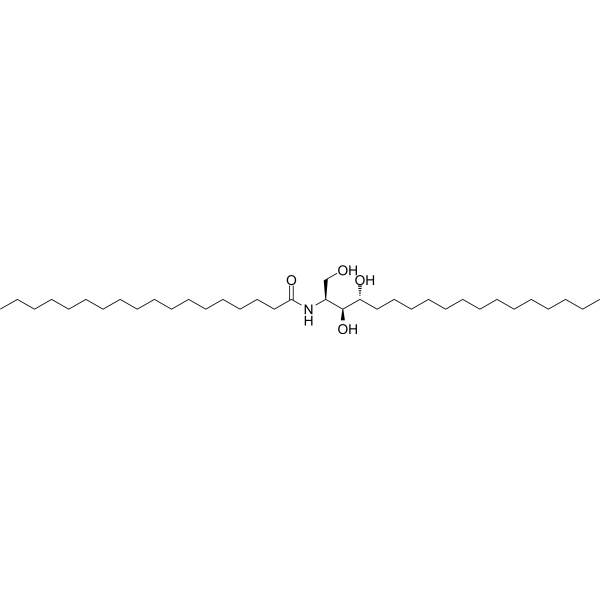
Ceramide 3 (N-Stearoyl phytosphingosine) is an orally active major component of intercellular lipids in the stratum corneum of the skin, and belongs to the ceramide family. Ceramide 3 inhibits c-jun and NF-κB activation induced by Histamine (HY-B1204), and suppresses the expression of IL-4 and TNF-α. Ceramide 3 inhibits scratching behavior and vascular permeability in mice, and exhibits antihistamine effects in guinea pig ileum. Ceramide 3 improves skin barrier function, reduces transepidermal water loss, erythema and the number of circulating epidermal cells, and accelerates barrier repair of irritated or dysfunctional skin.
For research use only. We do not sell to patients.
- Purity : 95.53%
- CAS No.: 34354-88-6
- Formula: C36H73NO4
- Molecular Weight:583.97
-
Storage:Powder -20°C, 3 years , 4°C, 2 years ; In solvent -80°C, 6 months , -20°C, 1 month

To place orders, for customer services and technical support, please contact: MedChemExpress USA
Tel: 609-228-6898 E-mail: [email protected] [email protected]


-
 Biological Activity
-
Chemical Information
-
Solvent & Solubility
- Protocols
- Purity & Documentation
- References
-
 Help & FAQs


-
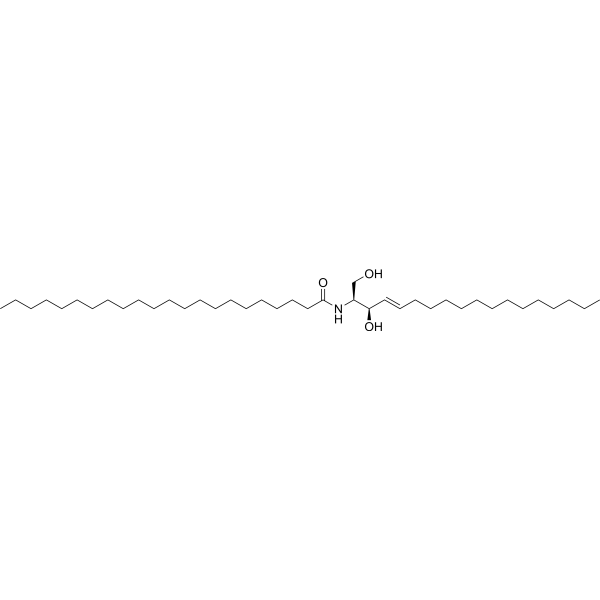
HY-154831
C22-Ceramide (d18:1/22:0)Ceramide -
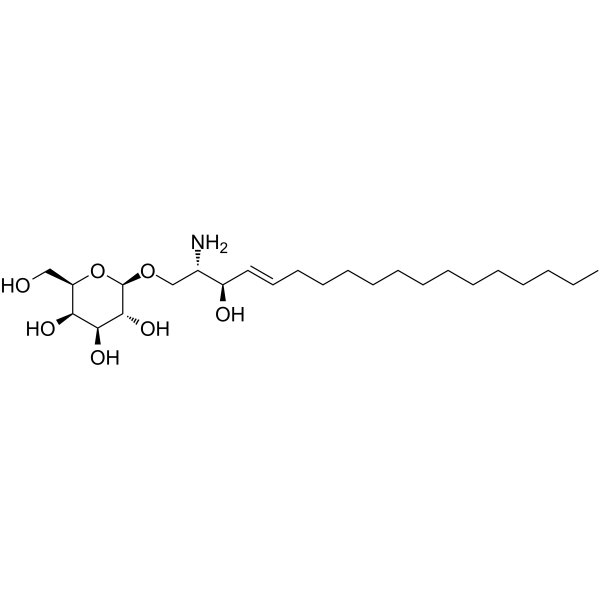
HY-136490
PsychosineCytotoxic Lipid -
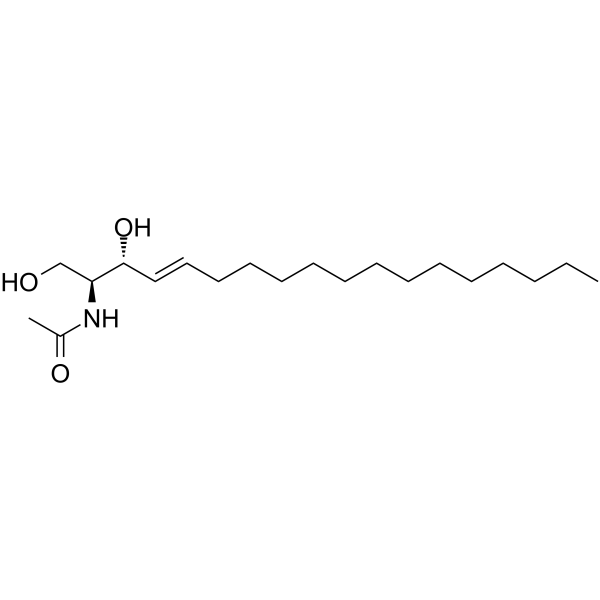
HY-101180
C2 CeramideProtein Phosphatase 1 Activator -
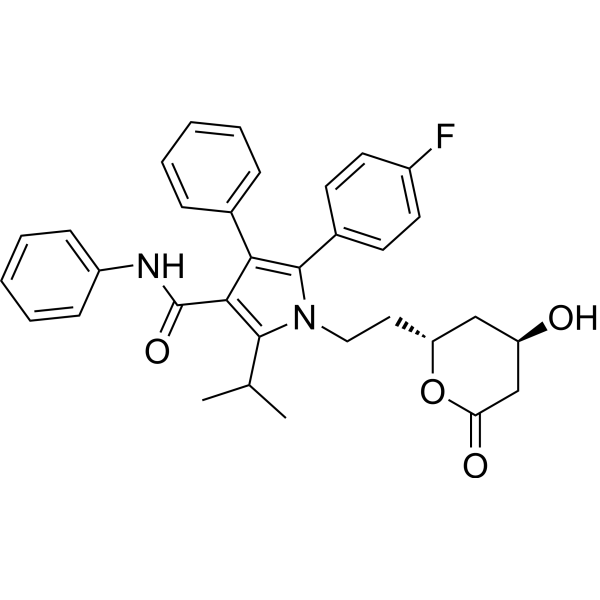
HY-101873
Atorvastatin lactoneAtorvastatin Acid Metabolite -

HY-115703
C17 Ceramide (d18:1/17:0)Phospholipid Internal Standard -
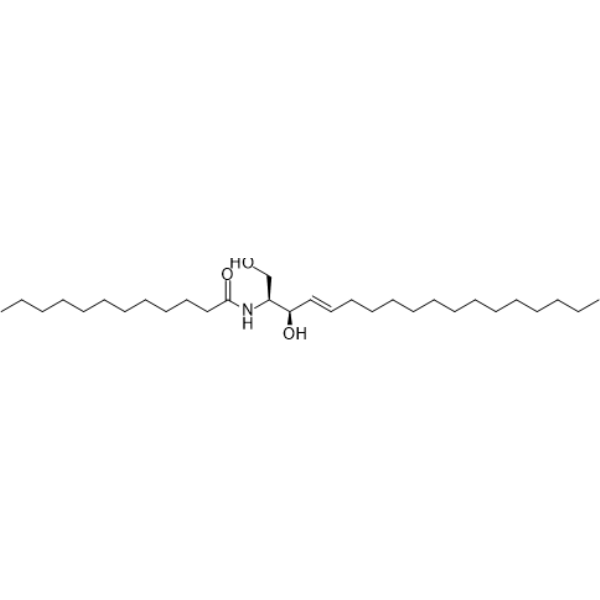
HY-100353
C12-CeramideNatural Ceramide -

HY-141580
C18 DihydroceramideEster Product -

HY-116017
C10 CeramideEster Product -
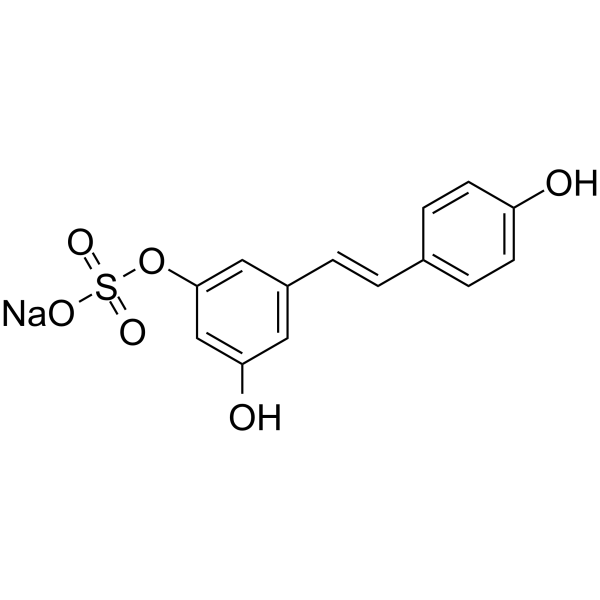
HY-137932
Resveratrol-3-O-sulfate sodiumDrug Metabolite -

HY-118334
ArmillaramideEster Product -

HY-W344461
N-Butyroyl-D-sphingosineEster Product -

HY-165158
C18 D-threo ceramide (d18:1/18:0)Biochemical Reagent


Biological Activity
Description
In Vivo
MedChemExpress (MCE) has not independently confirmed the accuracy of these methods. They are for reference only.
-
Animal Model:ICR mice (male, 5 weeks old, 20-22 g)[1]
-
Dosage:20 mg/kg; 50 mg/kg
-
Administration:p.o.; single dose 1 hour prior to histamine challenge
-
Result:Reduced histamine-induced scratching behavior frequency (statistically significant vs.
histamine-treated group) at 20 mg/kg.
Inhibited histamine-induced IL-4 protein expression (statistically significant vs.
histamine-treated group) at 20 mg/kg.
Inhibited histamine-induced TNF-α protein expression (statistically significant vs.
histamine-treated group) at 20 mg/kg.
Reduced histamine-induced vascular permeability (statistically significant vs.
histamine-treated group) at 20 mg/kg.
Reduced histamine-induced skin inflammation (epidermal hyperplasia and inflammatory cell infiltration) at 20 mg/kg.
Reduced histamine-induced scratching behavior frequency by 67% at 50 mg/kg.
Inhibited histamine-induced IL-4 protein expression by 75% at 50 mg/kg.
Inhibited histamine-induced TNF-α protein expression by 88% at 50 mg/kg.
Reduced histamine-induced vascular permeability by 51% at 50 mg/kg.
Reduced histamine-induced skin inflammation (epidermal hyperplasia and inflammatory cell infiltration) at 50 mg/kg.
Inhibited histamine-induced activation of transcription factors NF-κB (phospho-p65) and c-jun (phospho-c-jun) at both 20 mg/kg and 50 mg/kg.


Chemical Information
-
CAS No. 34354-88-6
-
Appearance Solid
-
Molecular Weight 583.97
-
Formula C36H73NO4
-
Color White to off-white
-
SMILES
CCCCCCCCCCCCCC[C@@H](O)[C@@H](O)[C@H](CO)NC(CCCCCCCCCCCCCCCCC)=O
-
Synonyms
N-Stearoyl phytosphingosine
-
Shipping
Room temperature in continental US; may vary elsewhere.
-
Storage
Powder -20°C 3 years 4°C 2 years In solvent -80°C 6 months -20°C 1 month


Solvent & Solubility
In Vitro:
Methanol : 1 mg/mL (1.71 mM; ultrasonic and warming and heat to 60°C)
Please refer to the solubility information to select the appropriate solvent. Once prepared, please aliquot and store the solution to prevent product inactivation from repeated freeze-thaw cycles.
Storage method and period of stock solution: -80°C, 6 months; -20°C, 1 month. When stored at -80°C, please use it within 6 months. When stored at -20°C, please use it within 1 month.
Please refer to the solubility information to select the appropriate solvent. Once prepared, please aliquot and store the solution to prevent product inactivation from repeated freeze-thaw cycles.
Storage method and period of stock solution: -80°C, 6 months; -20°C, 1 month. When stored at -80°C, please use it within 6 months. When stored at -20°C, please use it within 1 month.
Concentration (start) × Volume (start) = Concentration (final) × Volume (final)


Purity & Documentation
-
Data Sheet (267 KB)
-
SDS (254 KB)
- English - EN (254 KB)
- Français - FR (254 KB)
- Deutsch - DE (254 KB)
- Norwegian - NO (254 KB)
- Español - ES (254 KB)
- Swedish - SV (254 KB)
- Italian - IT (254 KB)
- Korean - KR (254 KB)
- Portuguese - PT (254 KB)
-
Handling Instructions (2659 KB)
References
[1]. Ryu KR, et al. Anti-scratching behavioral effects of N-stearoyl-phytosphingosine and 4-hydroxysphinganine in mice. Lipids. 2010;45(7):613-618. [Content Brief]
[3]. Kucharekova M, et al. Effect of a lipid-rich emollient containing ceramide 3 in experimentally induced skin barrier dysfunction. Contact Dermatitis. 2002;46(6):331-338. [Content Brief]


Complete Stock Solution Preparation Table
Please refer to the solubility information to select the appropriate solvent. Once prepared, please aliquot and store the solution to prevent product inactivation from repeated freeze-thaw cycles.
Storage method and period of stock solution: -80°C, 6 months; -20°C, 1 month. When stored at -80°C, please use it within 6 months. When stored at -20°C, please use it within 1 month.
| Optional Solvent | Concentration Solvent Mass | 1 mg | 5 mg | 10 mg | 25 mg |
|---|---|---|---|---|---|
| Methanol | 1 mM | 1.7124 mL | 8.5621 mL | 17.1242 mL | 42.8104 mL |


Ceramide 3 Related Classifications
HY-141582 Related Classifications
 Powered by Bioz