1. Search Result
Search Result
Results for "

opioid antagonist

" in MedChemExpress (MCE) Product Catalog:

194

Inhibitors & Agonists

1

Fluorescent Dyes

1

Biochemical Assay Reagents

19

Peptides

6

Natural
Products

15

Isotope-Labeled Compounds

Targets Recommended:
Cat. No. Product Name Target Research Areas Chemical Structure
  • HY-17417
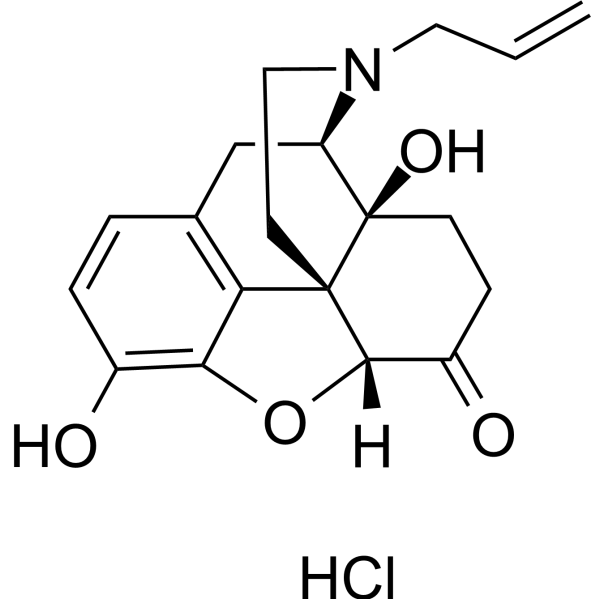
    Naloxone hydrochloride
    5+ Cited Publications

    Opioid Receptor Neurological Disease Cancer
    Naloxone hydrochloride is an antagonist of Opioid receptor. Naloxone hydrochloride alleviates opioid-overdose-induced respiratory depression. Naloxone hydrochloride may cause pulmonary edema and cardiac arrhythmias .
    Naloxone hydrochloride
  • HY-101718
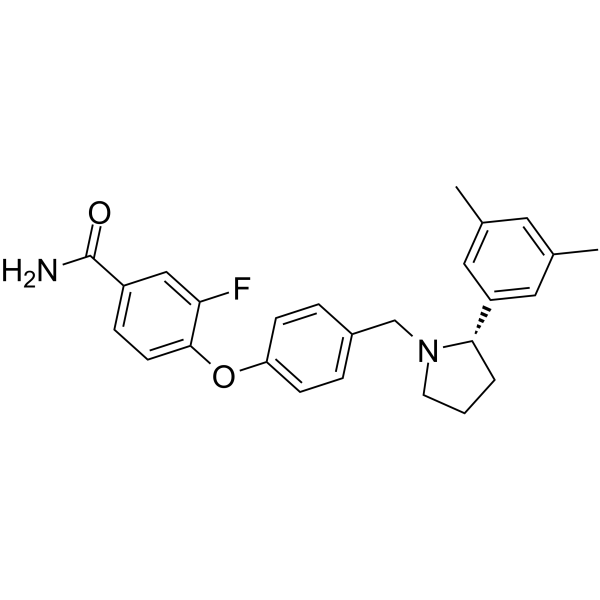
    Aticaprant
    5+ Cited Publications

    CERC-501; LY-2456302

    Opioid Receptor Neurological Disease
    Aticaprant (CERC-501) is a potent and centrally-penetrant kappa opioid receptor antagonist with a Ki of 0.807 nM.
    Aticaprant
  • HY-17417A
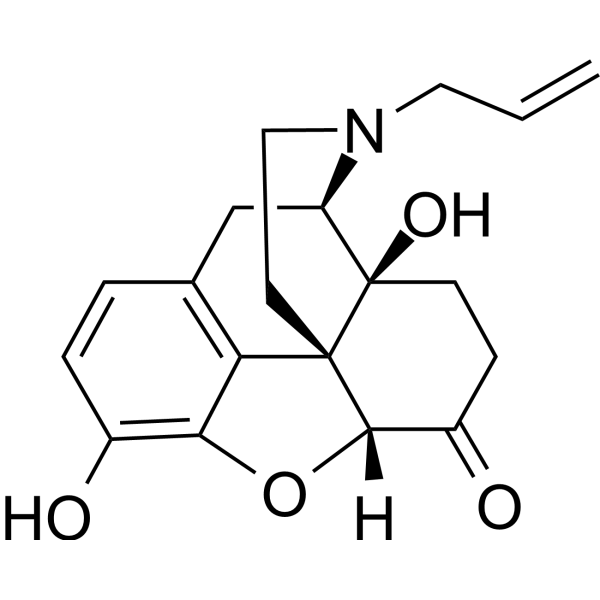
    Naloxone
    5+ Cited Publications

    Opioid Receptor Neurological Disease Cancer
    Naloxone is an antagonist of Opioid receptor. Naloxone alleviates opioid-overdose-induced respiratory depression. Naloxone may cause pulmonary edema and cardiac arrhythmias .
    Naloxone
  • HY-19627A
    Naldemedine tosylate
    1 Publications Verification

    S-297995 tosylate

    Opioid Receptor Neurological Disease Metabolic Disease
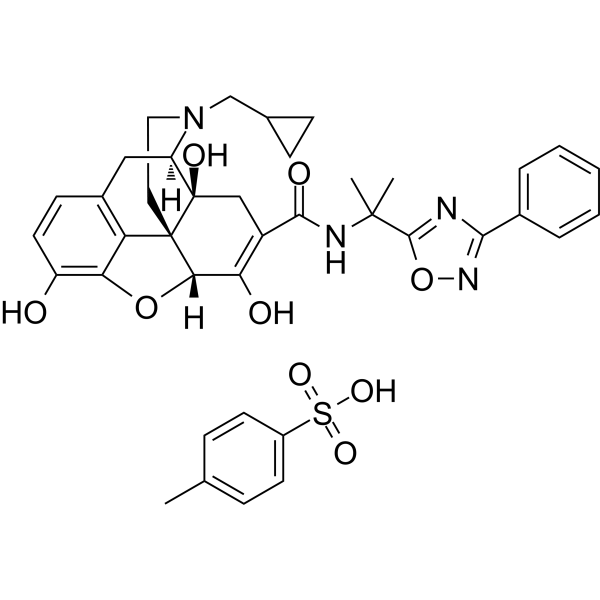
    Naldemedine (S-297995) tosylate is an orally active μ-opioid receptor antagonist (PAMORA) . Naldemedine tosylate shows potent binding affinities (Ki=0.34, 0.43, 0.94 nM, respectively) and antagonist activities (IC50=25.57, 7.09, 16.1 nM, respectively) for recombinant human μ-, δ-, and κ- opioid receptors . Naldemedine can be used in opioid-induced constipation (OIC) research . Naldemedine tosylate is predicted to bind to 3CL pro encoded by SARS-CoV2 genome .
    Naldemedine tosylate
  • HY-76711

    Opioid Receptor Neurological Disease Metabolic Disease Inflammation/Immunology Cancer
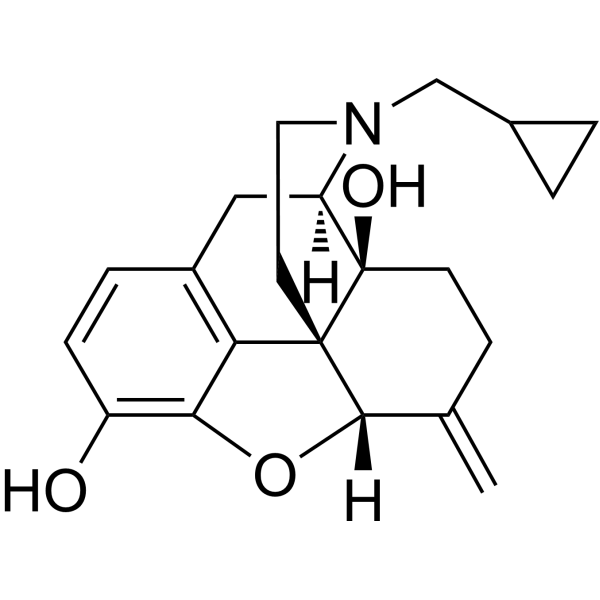
    Naltrexone is an orally active, long-acting opioid receptor (opioid receptor) antagonist. Naltrexone blocks the euphoric effects of exogenous opioids and reduces alcohol craving by blocking opioid receptors (μ, κ, and δ) as well as opioid growth factor receptors. Low doses of Naltrexone are used to relieve chronic pain, treat inflammatory diseases and inhibit tumor growth, while high doses or continuous administration exert pro-inflammatory or pro-proliferative effects. Naltrexone relieves intractable pruritus caused by psoriasis, atopic dermatitis and other conditions, and its combination with Bupropion (HY-B0403) inhibits food craving, thereby reducing body weight .
    Naltrexone
  • HY-107744
    Nalmefene
    1 Publications Verification

    Opioid Receptor Apoptosis Reactive Oxygen Species (ROS) NO Synthase Toll-like Receptor (TLR) p38 MAPK NF-κB Cardiovascular Disease Neurological Disease Inflammation/Immunology
    Nalmefene is a BBB-penetrable opioid receptor modulator. Nalmefene is an antagonist of MOR and DOR, and a partial agonist of KOR. Nalmefene has anti-inflammatory and neuroprotective activities. Nalmefene can be used in the research of reducing alcohol-dependent disorders .
    Nalmefene
  • HY-A0118A
    Naloxegol oxalate
    2 Publications Verification

    NKTR-118 oxalate; AZ-13337019 oxalate

    Opioid Receptor Metabolic Disease
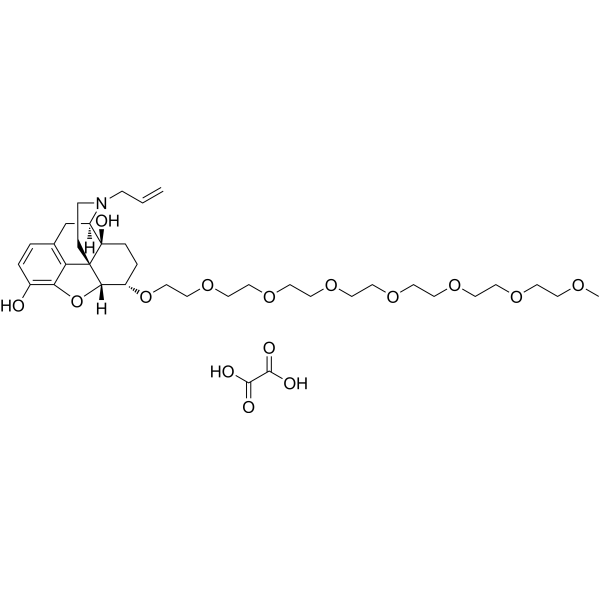
    Naloxegol oxalate (NKTR-118 oxalate; AZ-13337019 oxalate) is an orally active peripherally acting μ-opioid receptor antagonist with a target Ki of 7.42 nM. Naloxegol oxalate inhibits the binding of opioids to μ-opioid receptors in the gastrointestinal tract, and alleviates opioid-induced gastrointestinal hypomotility, delayed transit, hypertonicity, and increased fluid reabsorption. Naloxegol oxalate is applicable to research related to opioid-induced constipation .
    Naloxegol oxalate
  • HY-13243
    Alvimopan
    2 Publications Verification

    ADL 8-2698; LY 246736

    Opioid Receptor Neurological Disease
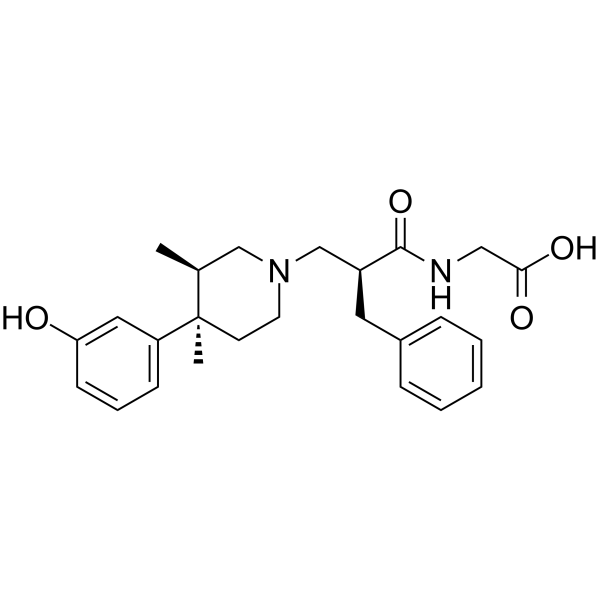
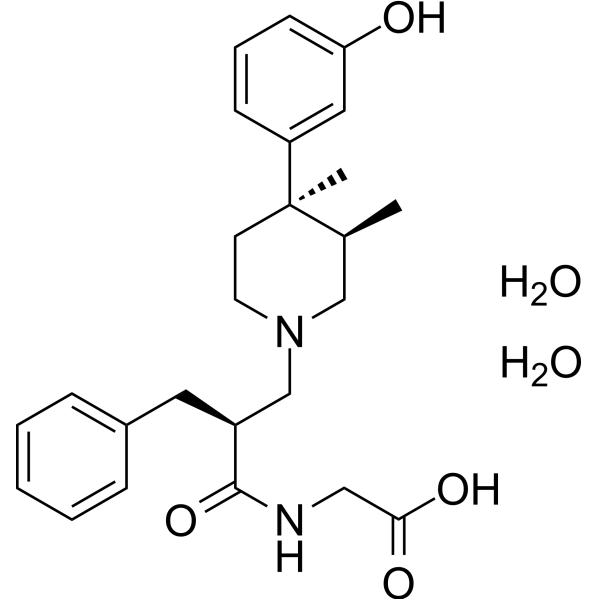
    Alvimopan (ADL 8-2698) is a potent, selective, orally active and reversible μ-opioid receptor antagonist, with an IC50 of 1.7 nM. Alvimopan has selectivity for μ-opioid receptor (Ki=0.47 nM) over κ- and δ-opioid receptors (Kis=100, 12 nM, respectively). Alvimopan can be used for the research of postoperative ileus .
    Alvimopan
  • HY-10487
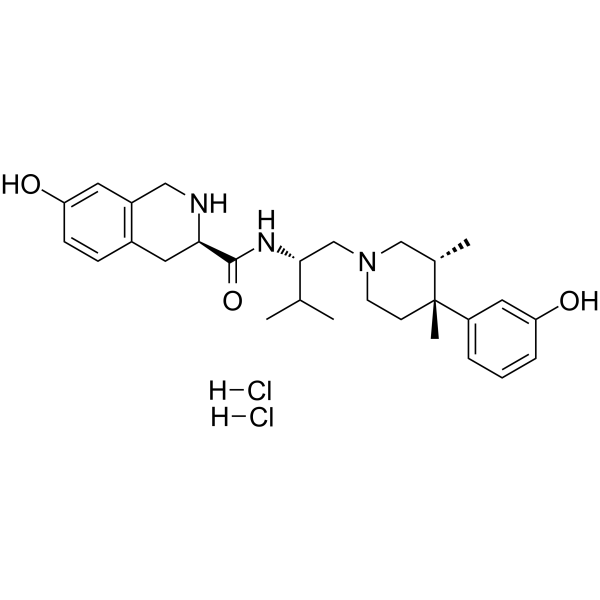
    JDTic dihydrochloride
    3 Publications Verification

    Opioid Receptor Neurological Disease
    JDTic (dihydrochloride) is a potent antagonist of kappa-opioid receptors (KOR), blocking the κ-agonist U50, 488-induced antinociception.
    JDTic dihydrochloride
  • HY-13274
    JTC-801
    5+ Cited Publications

    Opioid Receptor Neurological Disease
    JTC-801 is a selective opioid receptor-like1 (ORL1) receptor antagonist, binding to ORL1 receptor with a Ki value of 8.2 nM.
    JTC-801
  • HY-100903

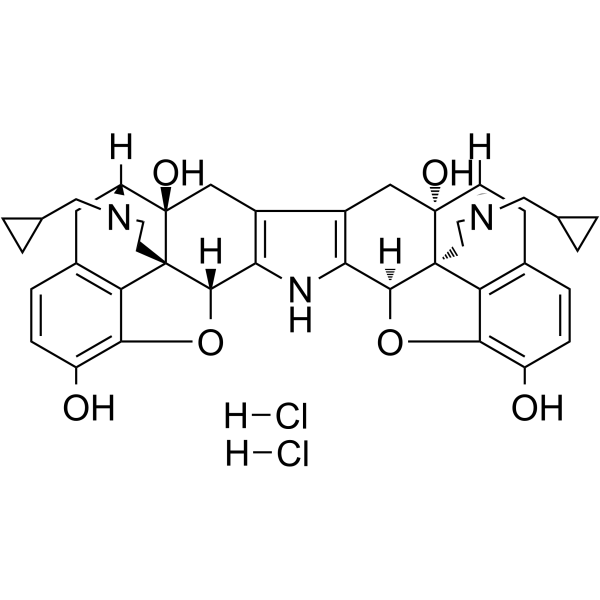
    nor-Binaltorphimine dihydrochloride; nor-BNI dihydrochloride

    Opioid Receptor Neurological Disease
    Norbinaltorphimine dihydrochloride (nor-Binaltorphimine dihydrochloride; nor-BNI dihydrochloride) is a selective, long-acting competitive antagonist of the κ-opioid receptor. Norbinaltorphimine dihydrochloride blocks κ-opioid receptor-mediated analgesic effects, and inhibits butorphanol-induced changes in κ-opioid receptor binding kinetics, desensitization and down-regulation. Norbinaltorphimine dihydrochloride suppresses specific opioid withdrawal symptoms, precipitates withdrawal behaviors in butorphanol-dependent rats, and serves as a molecular probe for studying κ-opioid receptor-agonist interactions. Norbinaltorphimine dihydrochloride is applicable to research related to neurological disorders such as pain .
    Norbinaltorphimine dihydrochloride
  • HY-117040
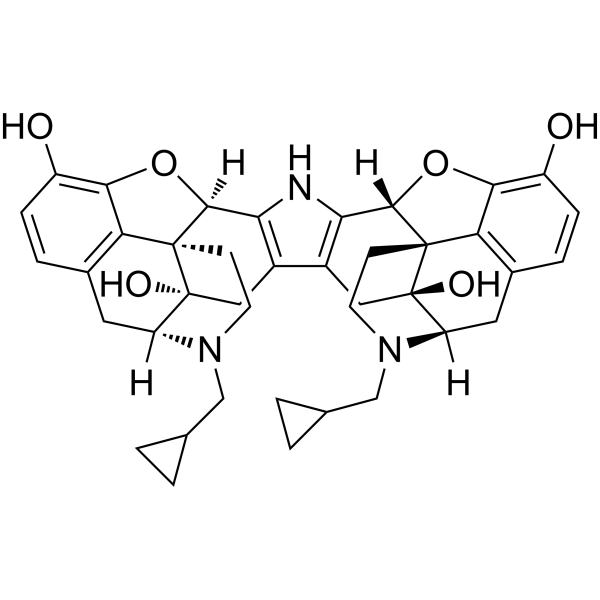
    nor-Binaltorphimine
    5+ Cited Publications

    Norbinaltorphimine; NorBNI

    Opioid Receptor Neurological Disease
    nor-Binaltorphimine (Norbinaltorphimine; NorBNI) is a selective, long-acting competitive antagonist of the κ-opioid receptor. nor-Binaltorphimine blocks κ-opioid receptor-mediated analgesic effects, and inhibits butorphanol-induced changes in κ-opioid receptor binding kinetics, desensitization and down-regulation. nor-Binaltorphimine suppresses specific opioid withdrawal symptoms, precipitates withdrawal behaviors in butorphanol-dependent rats, and serves as a molecular probe for studying κ-opioid receptor-agonist interactions. nor-Binaltorphimine is applicable to research related to neurological disorders such as pain .
    nor-Binaltorphimine
  • HY-101302
    Naltriben mesylate
    2 Publications Verification

    Opioid Receptor TRP Channel Inflammation/Immunology
    Naltriben mesylate is a potent δ2-opioid receptor antagonist and a TRPM7 activator. Naltriben mesylate shows Ki values of 0.013 nM, 19 nM and 152 nM for δ, μ and κ receptors, respectively. Naltriben mesylate enhances glioblastoma cell migration and invasion. Naltriben mesylate can be used in research into neurological diseases and cancer .
    Naltriben mesylate
  • HY-123689

    ALKS-33; RDC-0313

    Opioid Receptor Neurological Disease
    Samidorphan (ALKS-33) is an orally active opioid system modulator that has a high affinity for binding with μ‐opioid, κ‐opioid, and δ‐opioid receptors. Samidorphan acts as an antagonist at μ‐opioid receptors and acts as a partial agonist at k-opioid and δ‐opioid receptors. Samidorphan primarily acts as an opioid receptor antagonist in vivo. Samidorphan can improve the behavior of depressed animals .
    Samidorphan
  • HY-101376

    (+)-SKF 10047 hydrochloride; (+)-N-Allyl-N-normetazocine hydrochloride

    Opioid Receptor Neurological Disease
    (+)-N-Allylnormetazocine ((+)-SKF 10047) hydrochloride is a benzomorphan opioid with psychotomi metic effects. (+)-N-Allylnormetazocine hydrochloride is an opioid receptor antagonist with Ki values of 300 nM and 27 μM for σ1 and σ2 opioid receptors, respectively. (+)-N-Allylnormetazocine hydrochloride can be used for the research of neurological disease .
    (+)-N-Allylnormetazocine hydrochloride
  • HY-107749

    Opioid Receptor Neurological Disease
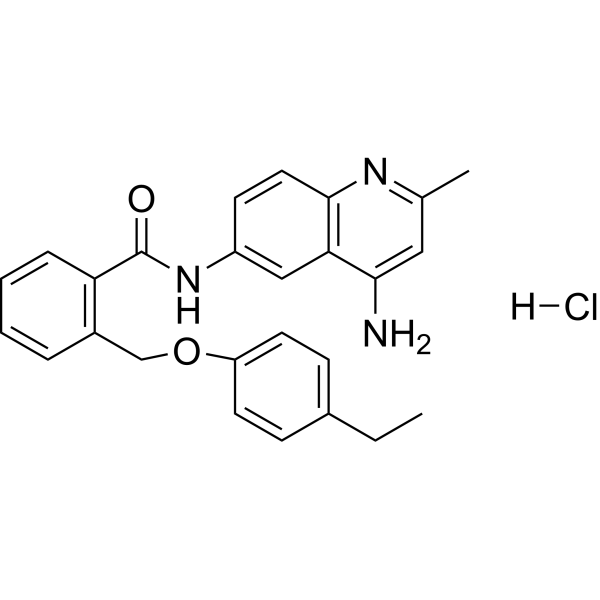
    ML 190 is a selective κ opioid receptor (KOR) antagonist with an IC50 of 120 nM and an EC50 of 129 nM, respectively .
    ML 190
  • HY-101011

    Opioid Receptor Infection Neurological Disease
    Naloxonazine dihydrochloride is a specific μ-opioid receptor antagonist with an IC50 of 5.4 nM. Naloxonazine dihydrochloride also shows anti-leishmanial activity .
    Naloxonazine dihydrochloride
  • HY-107748

    5'-GNTI hydrochloride

    Opioid Receptor Neurological Disease
    5'-Guanidinonaltrindole (5'-GNTI) hydrochloride is a highly selective and potent κ-opioid receptor antagonist with a Ki of 0.18 nM for human κ-opioid receptor .
    5'-Guanidinonaltrindole hydrochloride
  • HY-100122
    Bevenopran
    1 Publications Verification

    CB-5945; ADL-5945

    Opioid Receptor Neurological Disease
    Bevenopran is a peripheral μ-opioid receptor antagonist .
    Bevenopran
  • HY-108229

    6β-Hydroxynaltrexone

    Drug Metabolite Opioid Receptor Neurological Disease
    6β-Naltrexol (6β-Hydroxynaltrexone), the primary metabolite of Naltrexone, is a peripherally selective opioid antagonist. 6β-Naltrexol selectively inhibits gastrointestinal opioid effects in human subjects and inhibits Morphine-induced slowing of gastrointestinal transit .
    6β-Naltrexol
  • HY-19627

    S-297995

    Opioid Receptor Neurological Disease Metabolic Disease
    Naldemedine (S-297995) is an orally active μ-opioid receptor antagonist (PAMORA) . Naldemedine shows potent binding affinities (Ki=0.34, 0.43, 0.94 nM, respectively) and antagonist activities (IC50=25.57, 7.09, 16.1 nM, respectively) for recombinant human μ-, δ-, and κ- opioid receptors . Naldemedine can be used in opioid-induced constipation (OIC) research . Naldemedine is predicted to bind to 3CL pro encoded by SARS-CoV2 genome .
    Naldemedine
  • HY-137279
    Naloxone methiodide
    1 Publications Verification

    Opioid Receptor Inflammation/Immunology
    Naloxone methiodide is a peripherally restricted, nonselective, and competitive opioid receptor antagonist. Naloxone methiodide does not penetrate the blood-brain barrier .
    Naloxone methiodide
  • HY-136208

    Opioid Receptor Neurological Disease
    TAN-452 is an orally active, selective peripherally acting δ-opioid receptor (DOR) antagonist with a Ki of 0.47 nM and a Kb of 0.21 nM. TAN-452 is an antagonist for μ-opioid receptor (MOR; Ki=36.56 nM and Kb=9.43 nM) and κ-opioid receptor (KOR; Ki=5.31 nM and Kb=7.18 nM). TAN-452, a derivative of Naltrindole, demonstrates low brain penetrability and attenuates morphine-induced side effects without affecting pain control .
    TAN-452
  • HY-W013154

    Amino Acid Derivatives Others
    Fmoc-Tic-OH is an amino acid derivative with an Fmoc protecting group, which can be used to synthesize bioactive peptide mimetics, such as the biotinylated derivative of the opioid receptor antagonist TIPP .
    Fmoc-Tic-OH
  • HY-D1387

    Fluorescent Dye Neurological Disease
    Naloxone fluorescein acetate is the fluorescent-derivative of Naloxone. Naloxone is an opioid antagonist. Naloxone is the antidote for reversing the effects of an opioid overdose .
    Naloxone fluorescein acetate
  • HY-76711R

    Reference Standards Opioid Receptor Neurological Disease Metabolic Disease Inflammation/Immunology Cancer
    Naltrexone (Standard) is the analytical standard of Naltrexone (HY-76711). This product is intended for research and analytical applications. Naltrexone is an orally active, long-acting opioid receptor (opioid receptor) antagonist. Naltrexone blocks the euphoric effects of exogenous opioids and reduces alcohol craving by blocking opioid receptors (μ, κ, and δ) as well as opioid growth factor receptors. Low doses of Naltrexone are used to relieve chronic pain, treat inflammatory diseases and inhibit tumor growth, while high doses or continuous administration exert pro-inflammatory or pro-proliferative effects. Naltrexone relieves intractable pruritus caused by psoriasis, atopic dermatitis and other conditions, and its combination with Bupropion (HY-B0403) inhibits food craving, thereby reducing body weight.
    Naltrexone (Standard)
  • HY-174422

    Opioid Receptor Others
    Opioid receptor antagonist 2 (Compound 9) is a potent opioid receptor antagonist. Opioid receptor antagonist 2 can reverse ventilatory depression and vocal cord closure induced by fentanyl analogs in mice. Opioid receptor antagonist 2 is promising for research of acute poisoning such as respiratory depression caused by overdose of opioids .
    Opioid receptor antagonist 2
  • HY-101307

    7-Benzylidenenaltrexone maleate

    Opioid Receptor Neurological Disease
    BNTX (7-Benzylidenenaltrexone) maleate is a δ1-opioid receptor antagonist with the Kis of 0.1, 10.8, 13.3, and 58.6 nM for δ1, δ2-, μ-, and κ-opioid receptor, respectively. BNTX maleate shows antinociceptive activity .
    BNTX maleate
  • HY-17417R

    Reference Standards Opioid Receptor Neurological Disease Cancer
    Naloxone (hydrochloride) (Standard) is the analytical standard of Naloxone (hydrochloride). This product is intended for research and analytical applications. Naloxone hydrochloride is an antagonist of Opioid receptor. Naloxone hydrochloride alleviates opioid-overdose-induced respiratory depression. Naloxone hydrochloride may cause pulmonary edema and cardiac arrhythmias .
    Naloxone hydrochloride (Standard)
  • HY-107750A

    Opioid Receptor Neurological Disease
    Cyprodime hydrochloride is a highly selective μ-opioid receptor antagonist with Ki values of 5.4 nM, 244.6 nM and 2187 nM for μ-, δ- and κ-opioid receptors, respectively. Cyprodime hydrochloride has anti-depressant-like effect .
    Cyprodime hydrochloride
  • HY-76657A
    Alvimopan dihydrate
    2 Publications Verification

    ADL 8-2698 dihydrate; LY 246736 dihydrate

    Opioid Receptor Neurological Disease Cancer
    Alvimopan dihydrate (ADL 8-2698 dihydrate) is a potent, selective, orally active and reversible μ-opioid receptor antagonist, with an IC50 of 1.7 nM. Alvimopan dihydrate has selectivity for μ-opioid receptor (Ki=0.47 nM) over κ- and δ-opioid receptors (Kis=100, 12 nM, respectively). Alvimopan dihydrate can be used for the research of postoperative ileus .
    Alvimopan dihydrate
  • HY-16979

    Opioid Receptor Neurological Disease
    RK-851 is a highly selective and orally active δ-opioid receptor antagonist, with a negative logarithm of the antagonist concentration (pA2) of 8.84. TRK-851 exhibits the selectivity for the δ receptor of more than 100 times higher than that for the μ or κ receptors. TRK-851 exhibits a potent antitussive effect in a rat model of capsaicin-induced cough. TRK-851 can be used for research on antitussive effects .
    TRK-851
  • HY-107121

    LY 2196044

    Opioid Receptor Neurological Disease
    Ondelopran (LY 2196044) is a non-selective opioid receptor antagonist. Ondelopran inhibits the release of dopamine in the nucleus accumbens induced by alcohol, reduces the rewarding effect of alcohol consumption, and lowers the craving. Ondelopran can be used for alcohol use disorder (AUD) .
    Ondelopran
  • HY-144609

    Opioid Receptor Neurological Disease
    Mu opioid receptor antagonist 4 (compound 31) is a potent and selective μ opioid receptor (MOR) antagonist with a Ki of 0.38 nM and an EC50 of 1.07 nM. Mu opioid receptor antagonist 4 has remarkable CNS antagonism against morphine, and precipitated fewer withdrawal symptoms than Naloxone. Mu opioid receptor antagonist 4 Mu opioid receptor antagonist 4 can be used for researching opioid use disorders (OUD) .
    Mu opioid receptor antagonist 4
  • HY-107743

    NalBzoH

    Opioid Receptor Neurological Disease
    Naloxone benzoylhydrazone (NalBzoH) is a mixed agonist/antagonist. Naloxone benzoylhydrazone is a prototypic κ3-opioid receptor agonist, and a partial agonist at the cloned μ and δ opioid receptors, and an antagonist at opioid-like NOP receptors. Naloxone benzoylhydrazone has potently analgesia effect .
    Naloxone benzoylhydrazone
  • HY-155320

    Opioid Receptor Neurological Disease
    Mu opioid receptor antagonist 7 (compound 24) is a potent and CNS permeable antagonist of µOR (µ-opioid receptor), with an IC50 of 29 ± 3.0 nM. Mu opioid receptor antagonist 7 can be used for the research of pain and opioid use disorder .
    Mu opioid receptor antagonist 7
  • HY-10486

    Opioid Receptor Neurological Disease
    JDTic is a highly selective antagonist for the κ-opioid receptor; without affecting the μ- or δ-opioid receptors.
    JDTic
  • HY-144607

    Opioid Receptor Neurological Disease
    Mu opioid receptor antagonist 2 (compound 25) is a potent, selective and blood-brain barrier (BBB) penetrant μ opioid receptor (MOR) antagonist with a Ki of 0.37 nM and an EC50 of 0.44 nM. Mu opioid receptor antagonist 2 has remarkable CNS antagonism against morphine, and precipitated fewer withdrawal symptoms than Naloxone. Mu opioid receptor antagonist 2 can be used for researching opioid use disorders (OUD) .
    Mu opioid receptor antagonist 2
  • HY-144606

    Opioid Receptor Neurological Disease
    Mu opioid receptor antagonist 1 (compound 19) is a selective and orally active μ opioid receptor (MOR) ligand with an Ki value of 0.58 nM and an EC50 of 1.15 nM. Orally administrating with Mu opioid receptor antagonist 1 increases intestinal motility during morphine-induced constipation. Mu opioid receptor antagonist 1 can be used for researching opioid-induced constipation (OIC) .
    Mu opioid receptor antagonist 1
  • HY-156614

    Opioid Receptor Neurological Disease
    Icalcaprant is a kappa-opioid receptor antagonist .
    Icalcaprant
  • HY-101233

    M 154129

    Opioid Receptor Neurological Disease
    ICI 154 129 is a delta-opioid receptor antagonist and can be used for seizure research.
    ICI 154129
  • HY-169867

    7-Benzylidenenaltrexone

    Opioid Receptor Neurological Disease
    BNTX (7-Benzylidenenaltrexone) is a highly selective δ1 opioid receptor antagonist. BNTX selectively antagonizes the antinociceptive activity mediated by spinal δ1 opioid receptors, and does not alter the antinociceptive effects mediated by δ2, μ or κ opioid receptors at selective doses .
    BNTX
  • HY-114072A

    Opioid Receptor Neurological Disease
    (S,S)-J-113397 is an isomer of J-113397 (HY-114072). J-113397 is an Opioid Receptor antagonist .
    (S,S)-J-113397
  • HY-178235

    Opioid Receptor Neurological Disease
    MDAN-21 is a bivalent opioid ligand that contains both μ-opioid receptor agonists and δ-opioid receptor antagonists. MDAN-21 has a strong analgesic effect and does not produce tolerance in mouse studies. MDAN-21 can effectively inhibit the withdrawal of morphine dependent monkeys and alleviate abnormal pain in the study of rhesus monkeys. MDAN-21 can be used for the study of allodynia .
    MDAN-21
  • HY-19902

    Opioid Receptor Neurological Disease
    GSK1521498 is a potent and selective μ-opioid receptor (MOR) antagonist. GSK1521498 has the potential for disorders of compulsive consumption of food, alcohol, and agents .
    GSK1521498
  • HY-N12180A

    Opioid Receptor Bacterial Fungal Infection Neurological Disease
    Hodgkinsine is an opioid receptor agonist and NMDA receptor antagonist, which has analgesic and anti-injurial effects. In addition, Hodgkinsine has antiviral, antibacterial and antifungal activities .
    Hodgkinsine
  • HY-B1485

    Opioid Receptor Neurological Disease
    Nalmefene hydrochloride is a long acting opioid (MOR and DOR antagonist), and a partial KOR agonist. Nalmefene hydrochloride is used for opioid overdose and alcohol dependence .
    Nalmefene hydrochloride
  • HY-163895

    Fluorescent Dye Opioid Receptor Neurological Disease
    δ opioid receptor antagonist 1 (compound 6-Cy3) is a fluorescent antagonist probe with high selectivity for δ opioid receptor (DOR) (Ki=1.7 nM). δ opioid receptor antagonist 1 can be used to study the mechanism of pain perception .
    δ opioid receptor antagonist 1
  • HY-175661

    Opioid Receptor Beta-secretase Neurological Disease
    SRI-22136 is a Delta Opioid Receptor (DOR) antagonist that can cross blood-brain barrier with a IC50 of 0.42 nM. SRI-22136 does not have agonistic activity but antagonistic activity against DOR, MOR (IC50 = 370 nM), KOR (IC50 = 54 nM) and can avoid addiction/aversion effects. SRI-22136 can effectively inhibit the BACE1 activity induced by DADLE (a DOR agonist) (HY-105343) (IC50 = 120 nM). SRI-22136 prevents completely Alzheimer’s-like pathology in mouse model. SRI-22136 can used for the study of Alzheimer’s disease .
    SRI-22136
  • HY-170654

    Opioid Receptor Neurological Disease
    Opioid receptor antagonist 1 (Compound 10) is an Orvinol (HY-D0168)-based opioid receptor antagonist. Opioid receptor antagonist 1 has antagonistic activity to the analgesic properties of Morphine .
    Opioid receptor antagonist 1

Inquiry Online

Your information is safe with us. * Required Fields.

Salutation


Country or Region *

Applicant Name *


Organization Name *

Department *


Email Address *


Product Name *

Cat. No.


Requested quantity *

Phone Number *


Remarks

Inquiry Online

Inquiry Information

Product Name:
Cat. No.:
Quantity:
MCE Japan Authorized Agent:

