



LY255582

Based on 1 Customer Validation
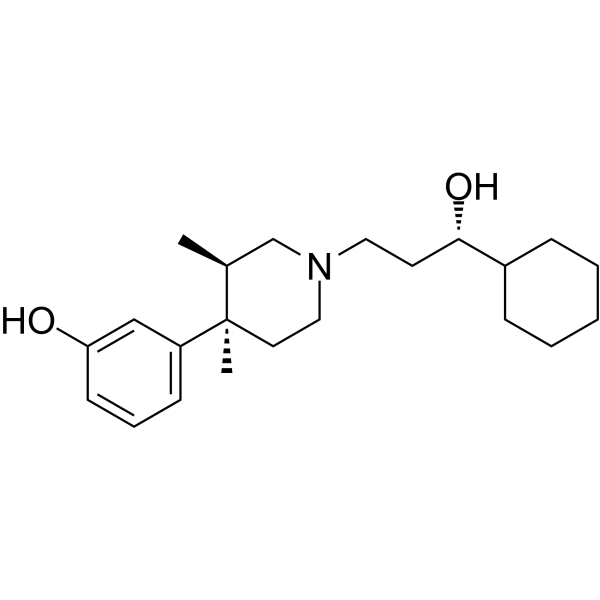
LY255582 is a pan-opioid antagonist and has high affinity for mu, delta, and kappa receptors (Ki: 0.4 nM, 5.2, 2.0 nM respectively). LY255582 can decrease food intake and body weight. LY255582 can be used for the research of obesity.
商品は「研究用試薬」です。人や動物の医療用・臨床診断用・食品用の製品ではありません。
研究用途以外に使用した場合、当社は一切の責任を負いかねます。
- 純度 : 98%
- CAS 番号: 119193-09-8
- 分子式: C22H35NO2
- 分子量:345.52
-
保管条件:
-20°C, stored under nitrogen, away from moisture
* In solvent : -80°C, 6 months; -20°C, 1 month (stored under nitrogen, away from moisture)

To place orders, for customer services and technical support, please contact: MedChemExpress USA
Tel: 609-228-6898 E-mail: [email protected] [email protected]


-
 生物活性
生物活性
-
化学情報
-
溶剤 & 溶解度
- プロトコル
- 純度とドキュメンテーション
- 参考文献
-
 Help & FAQs


-
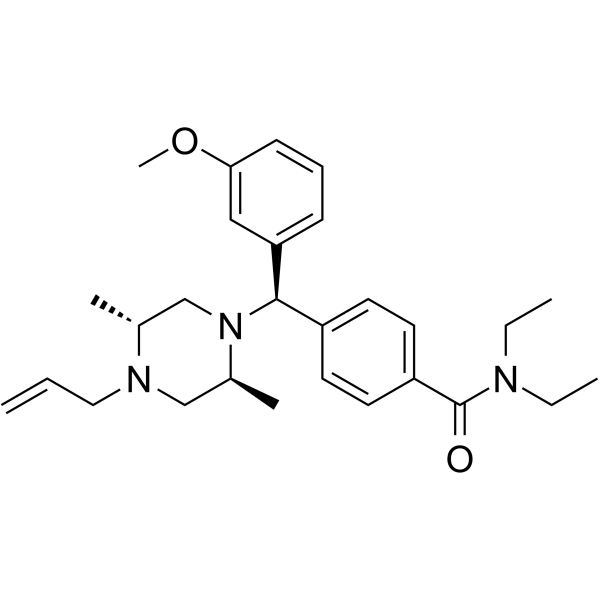
HY-101202
SNC80δ-opioid Receptor Agonist -
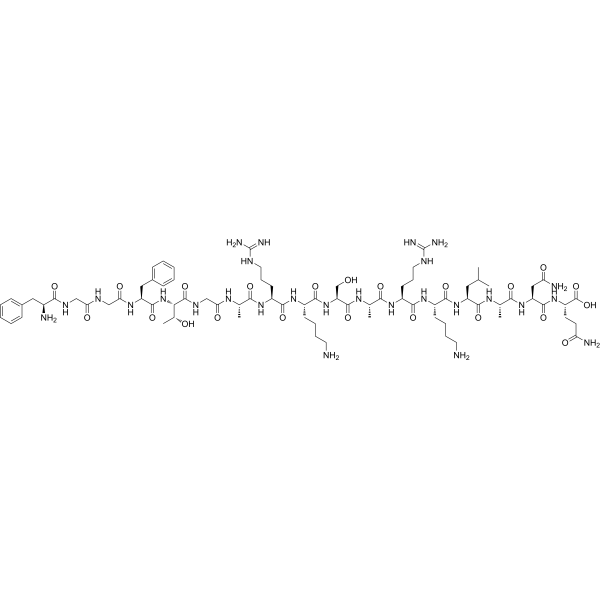
HY-P0183
NociceptinNociceptin Receptor Ligand -
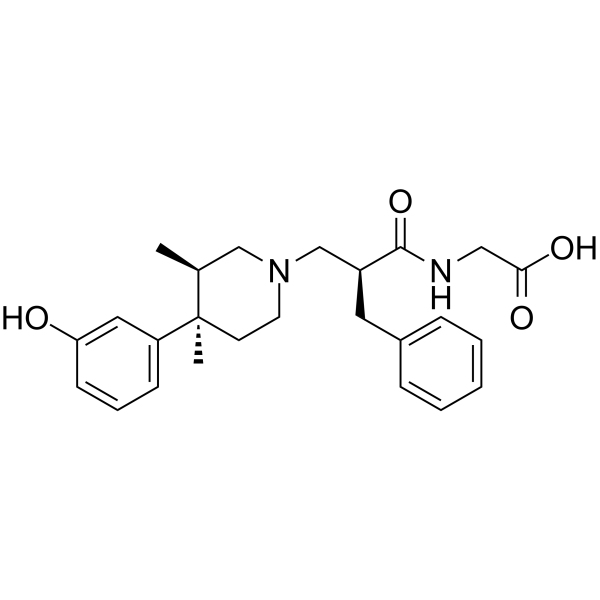
HY-13243
Alvimopanμ-opioid Receptor Antagonist -
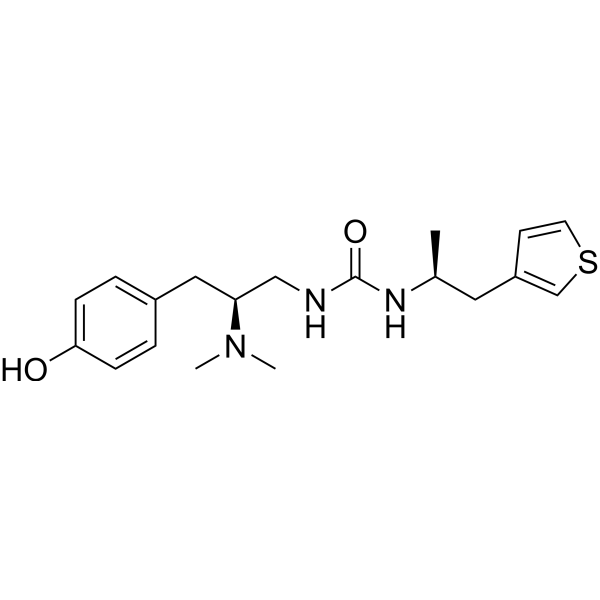
HY-101386
PZM21μ-opioid Receptor Agonist -
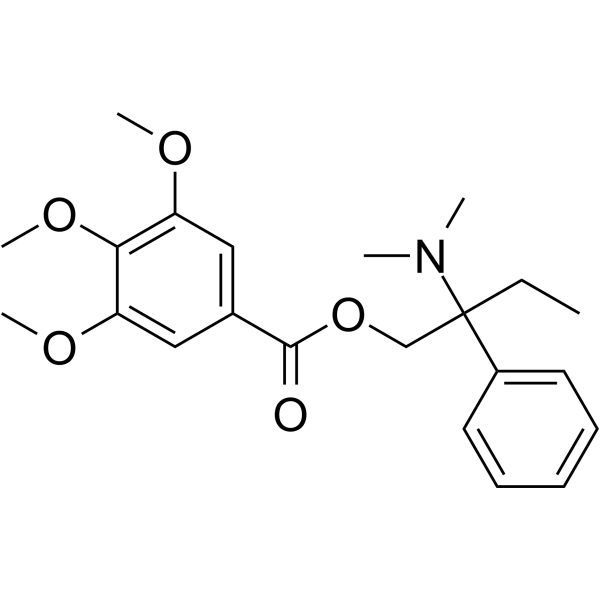
HY-B0380
TrimebutineOpioid Receptor Agonist -
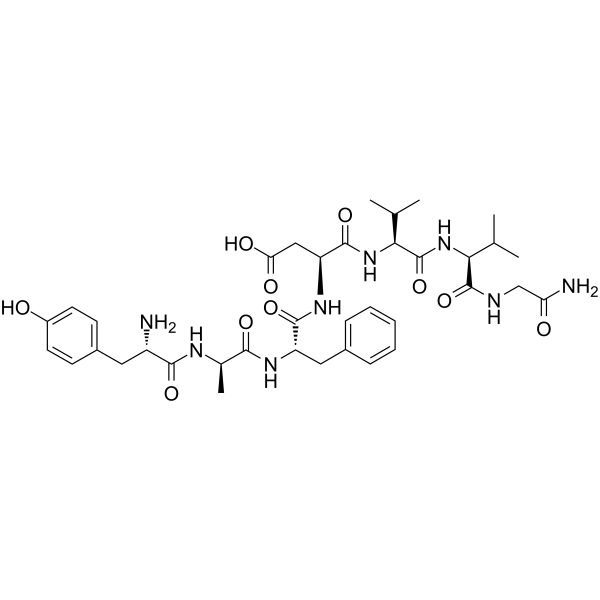
HY-P1336
Deltorphin Iδ-Opioid Receptor Agonist -
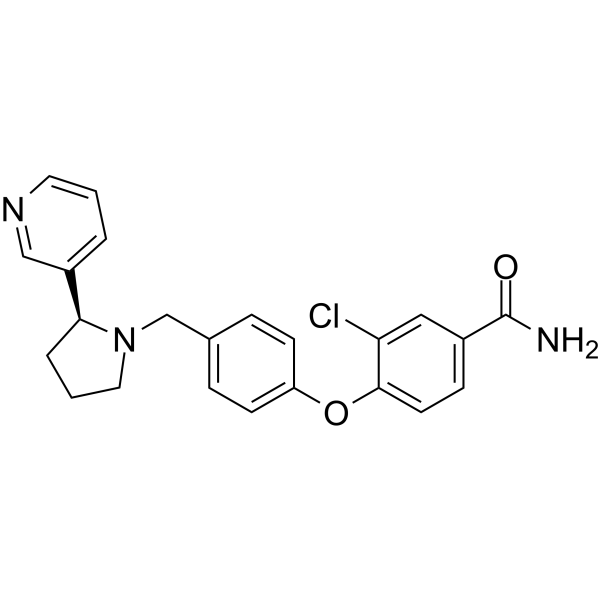
HY-15708
LY2795050κ(kappa)-opioid Receptor (KOR) Antagonist -
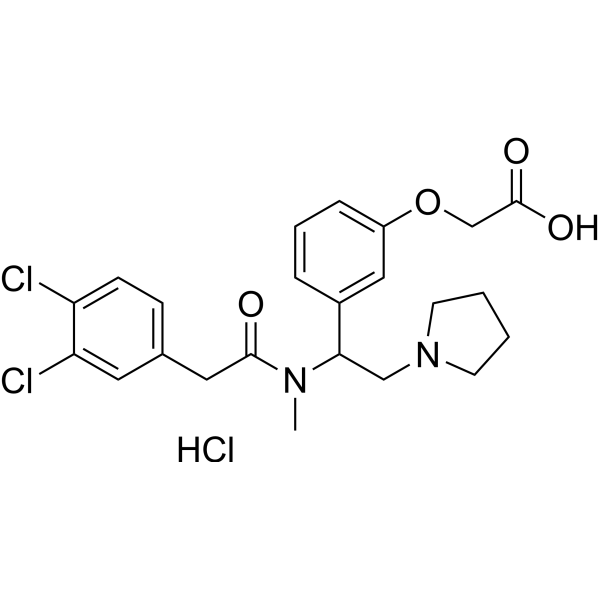
HY-101231
ICI-204448κ-opioid agonists -
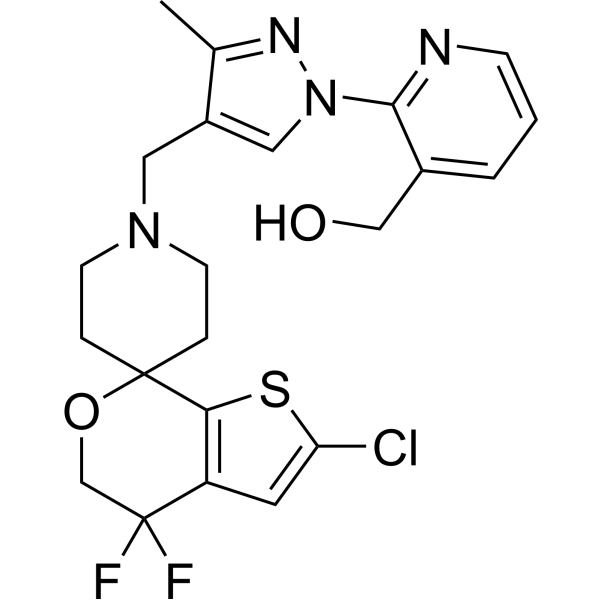
HY-114452
LY2940094NOP Antagonist -
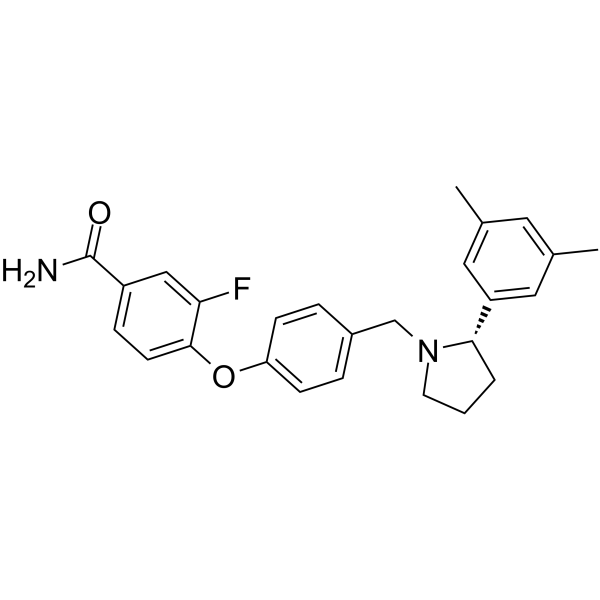
HY-101718
Aticaprantκ-opioid Antagonist -
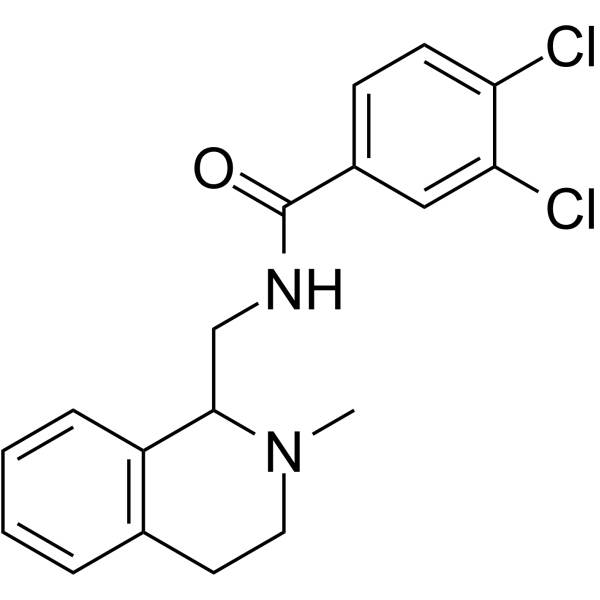
HY-128865
BPR1M97 -
HY-107749
ML 190KOR Antagonist
Opioid Receptor アイソフォーム固有の製品をすべて表示
More

生物活性
製品説明
IC50 & Target
[1]|
μ Opioid Receptor/MOR 0.4 nM (Ki) |
δ Opioid Receptor/DOR 5.2 nM (Ki) |
κ Opioid Receptor/KOR 2.0 nM (Ki) |
体外実験
LY255582 (40 μM, 24-72 h) reduces cell viability of Huh7 and MHCC-97H cells[5].
MedChemExpress (MCE) has not independently confirmed the accuracy of these methods. They are for reference only.
体内実験
LY255582 (15 mg/kg, s.c., once daily) decreases food intake and body weight gain of fed obese Zucker rats[4].
MedChemExpress (MCE) has not independently confirmed the accuracy of these methods. They are for reference only.
-
Animal Model:STZ-induced diabetic mice[1]
-
Dosage:100, 10 and 1 μg
-
Administration:i.c.v.
-
Result:Decreased food at 100, 10 and 1 μg by 76, 62 and 29%.


化学情報
-
CAS 番号 119193-09-8
-
性状 Solid
-
分子量 345.52
-
分子式 C22H35NO2
-
Color White to off-white
-
SMILES
OC1=CC([C@]2([C@H](CN(CC2)CC[C@@H](C3CCCCC3)O)C)C)=CC=C1
-
輸送条件
Room temperature in continental US; may vary elsewhere.
-
保管条件
-20°C, stored under nitrogen, away from moisture
* In solvent : -80°C, 6 months; -20°C, 1 month (stored under nitrogen, away from moisture)


溶剤 & 溶解度
体外:
DMSO : 15 mg/mL (43.41 mM; Need ultrasonic and warming; Hygroscopic DMSO has a significant impact on the solubility of product, please use newly opened DMSO)
Please refer to the solubility information to select the appropriate solvent. Once prepared, please aliquot and store the solution to prevent product inactivation from repeated freeze-thaw cycles.
Storage method and period of stock solution: -80°C, 6 months; -20°C, 1 month (stored under nitrogen, away from moisture). When stored at -80°C, please use it within 6 months. When stored at -20°C, please use it within 1 month.
Please refer to the solubility information to select the appropriate solvent. Once prepared, please aliquot and store the solution to prevent product inactivation from repeated freeze-thaw cycles.
Storage method and period of stock solution: -80°C, 6 months; -20°C, 1 month (stored under nitrogen, away from moisture). When stored at -80°C, please use it within 6 months. When stored at -20°C, please use it within 1 month.
濃度 (開始) × 体積 (開始) = 濃度 (終了) × 体積 (終了)


純度とドキュメンテーション
-
データシート (272 KB)
-
SDS (252 KB)
- English - EN (252 KB)
- Français - FR (252 KB)
- Deutsch - DE (252 KB)
- Norwegian - NO (252 KB)
- Español - ES (252 KB)
- Swedish - SV (252 KB)
- Italian - IT (252 KB)
- Korean - KR (252 KB)
- Portuguese - PT (252 KB)
-
取扱説明書 (2659 KB)
参考文献
[1]. Levine AS, et al. Central administration of the opioid antagonist, LY255582, decreases short- and long-term food intake in rats. Brain Res. 1991 Dec 6;566(1-2):193-7. [Content Brief]
[2]. Need AB, et al. In vivo rat brain opioid receptor binding of LY255582 assessed with a novel method using LC/MS/MS and the administration of three tracers simultaneously. Life Sci. 2007 Oct 13;81(17-18):1389-96. [Content Brief]
[4]. Shaw WN, et al. Long-term treatment of obese Zucker rats with LY255582 and other appetite suppressants. Pharmacol Biochem Behav. 1993 Nov;46(3):653-9. [Content Brief]
[5]. Chen DT, et al. The mu-opioid receptor is a molecular marker for poor prognosis in hepatocellular carcinoma and represents a potential therapeutic target. Br J Anaesth. 2019 Jun;122(6):e157-e167. [Content Brief]


Complete Stock Solution Preparation Table
Please refer to the solubility information to select the appropriate solvent. Once prepared, please aliquot and store the solution to prevent product inactivation from repeated freeze-thaw cycles.
Storage method and period of stock solution: -80°C, 6 months; -20°C, 1 month (stored under nitrogen, away from moisture). When stored at -80°C, please use it within 6 months. When stored at -20°C, please use it within 1 month.
| Optional Solvent | Concentration Solvent Mass | 1 mg | 5 mg | 10 mg | 25 mg |
|---|---|---|---|---|---|
| DMSO | 1 mM | 2.8942 mL | 14.4709 mL | 28.9419 mL | 72.3547 mL |
| 5 mM | 0.5788 mL | 2.8942 mL | 5.7884 mL | 14.4709 mL | |
| 10 mM | 0.2894 mL | 1.4471 mL | 2.8942 mL | 7.2355 mL | |
| 15 mM | 0.1929 mL | 0.9647 mL | 1.9295 mL | 4.8236 mL | |
| 20 mM | 0.1447 mL | 0.7235 mL | 1.4471 mL | 3.6177 mL | |
| 25 mM | 0.1158 mL | 0.5788 mL | 1.1577 mL | 2.8942 mL | |
| 30 mM | 0.0965 mL | 0.4824 mL | 0.9647 mL | 2.4118 mL | |
| 40 mM | 0.0724 mL | 0.3618 mL | 0.7235 mL | 1.8089 mL |


LY255582 関連分類
HY-118949 関連分類
 Powered by Bioz