



CB1 antagonist 2
Based on 1 publication(s) in Google Scholar
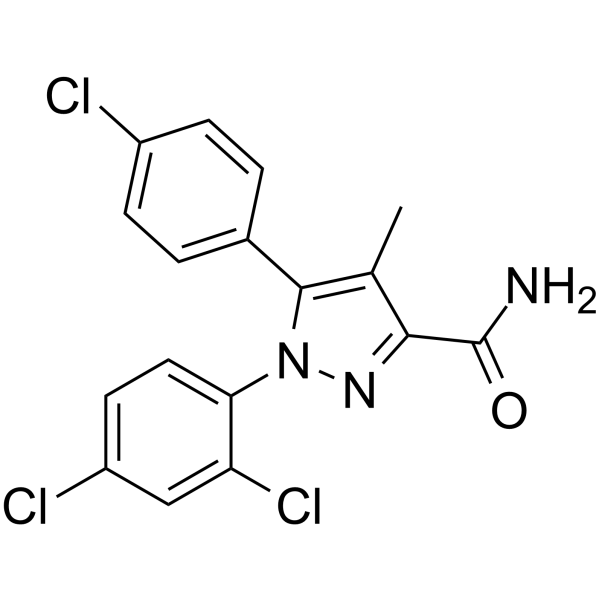
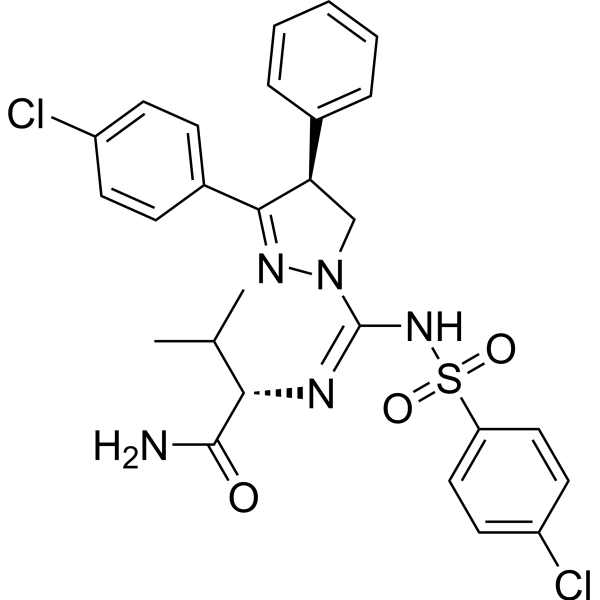
CB1 antagonist 2 (AM4113) is an orally active cannabinoid receptor type 1 (CB1R) antagonist. CB1 antagonist 2 suppresses appetite, reduces body weight, and blocks addictive behaviors such as heroin addiction, without causing adverse effects like nausea and depression that are associated with traditional CB1 inverse agonists. CB1 antagonist 2 can be used in studies related to obesity and opioid addiction.
Nos produits utilisent uniquement pour la recherche. Nous ne vendons pas aux patients.
- Pureté : 99.91%
- CAS No.: 614726-85-1
- Formule: C17H12Cl3N3O
- Masse moléculaire:380.66
-
Stockage:Powder -20°C, 3 years , 4°C, 2 years ; In solvent -80°C, 2 years , -20°C, 1 year

To place orders, for customer services and technical support, please contact: MedChemExpress USA
Tel: 609-228-6898 E-mail: [email protected] [email protected]


-
 Activité biologique
-
Chemical Information
-
Solvant et solubilité
- Protocole
- Pureté et documentation
- Références
-
 Help & FAQs


-
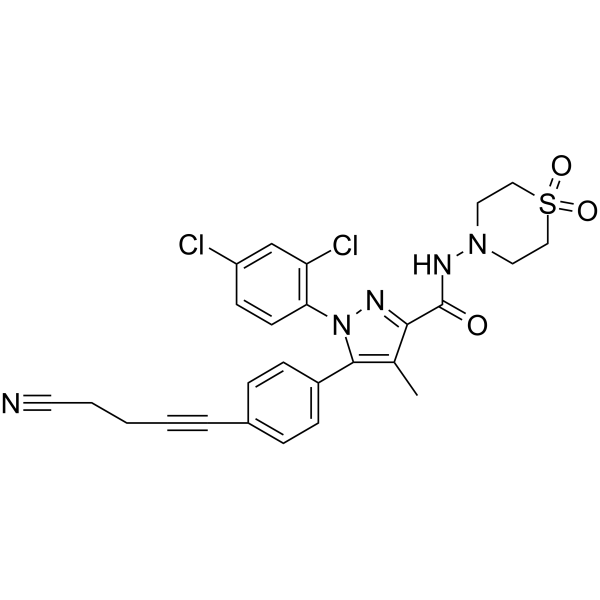
HY-110206
AM6545CB1 Receptor Antagonist -
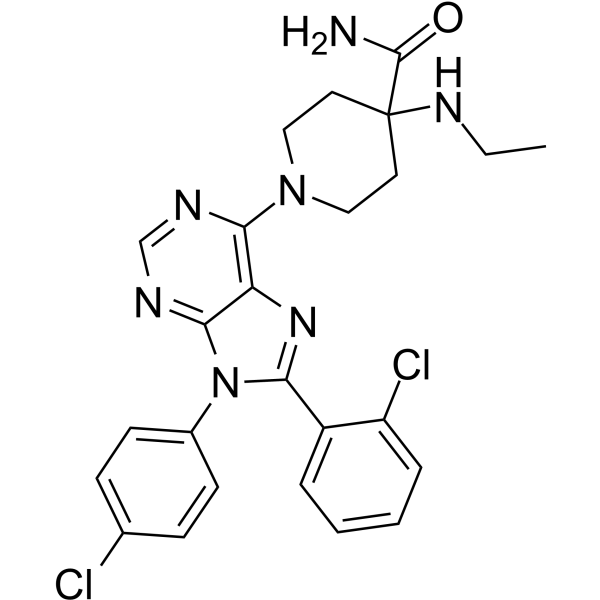
HY-10871
OtenabantCannabinoid Receptor Antagonist -
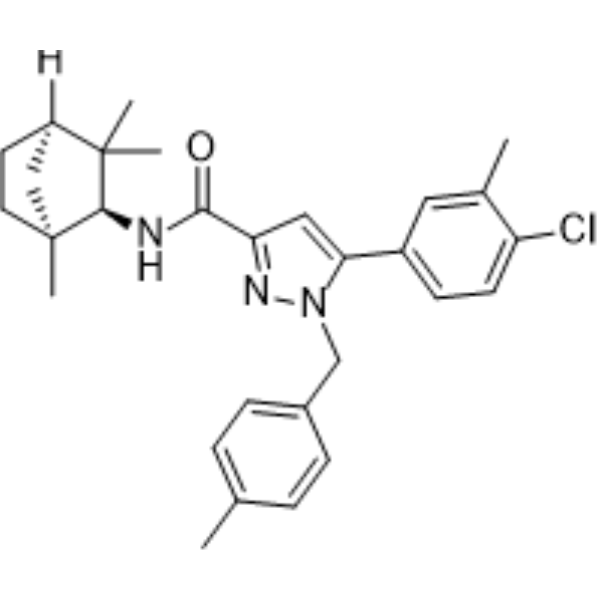
HY-13439
SR144528CB2 Receptor Antagonist -
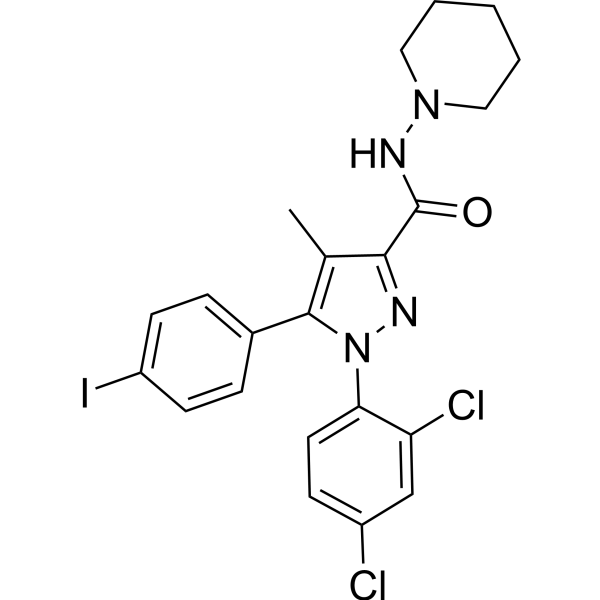
HY-15443
AM251CB1 Receptor Antagonist -
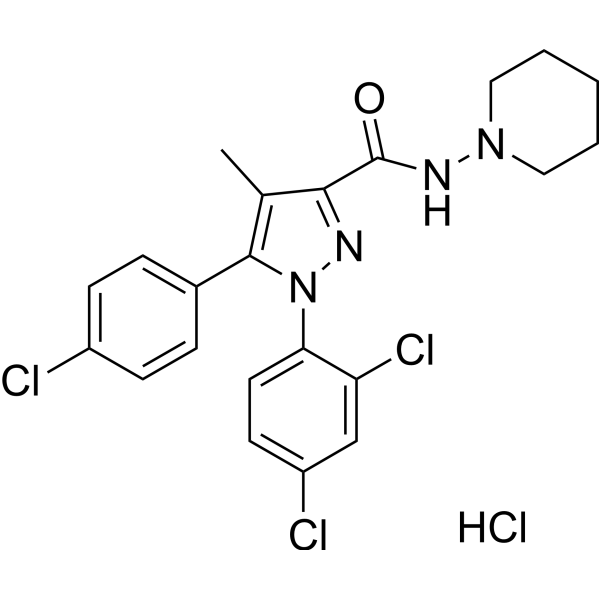
HY-14137
Rimonabant HydrochlorideCB1 Antagonist -
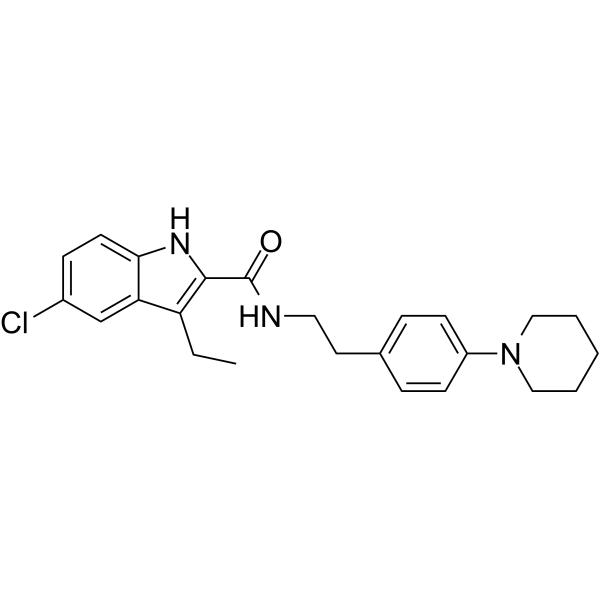
HY-13288
Org 27569Cannabinoid Receptor Modulator -
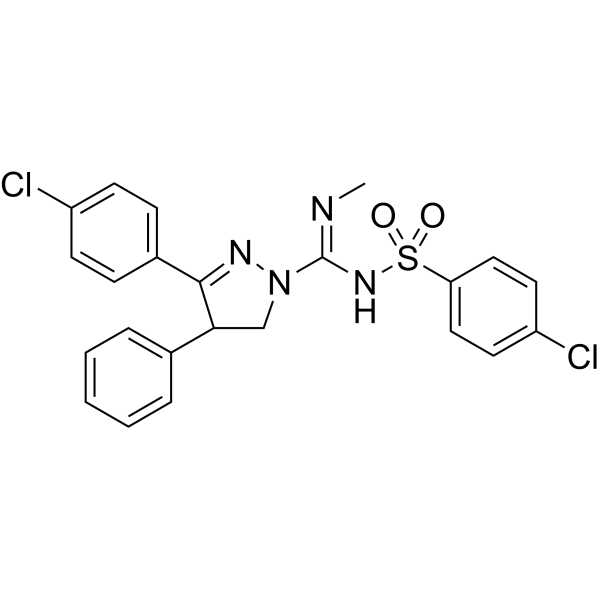
HY-14791A
(±)-IbipinabantCannabinoid Receptor Antagonist -
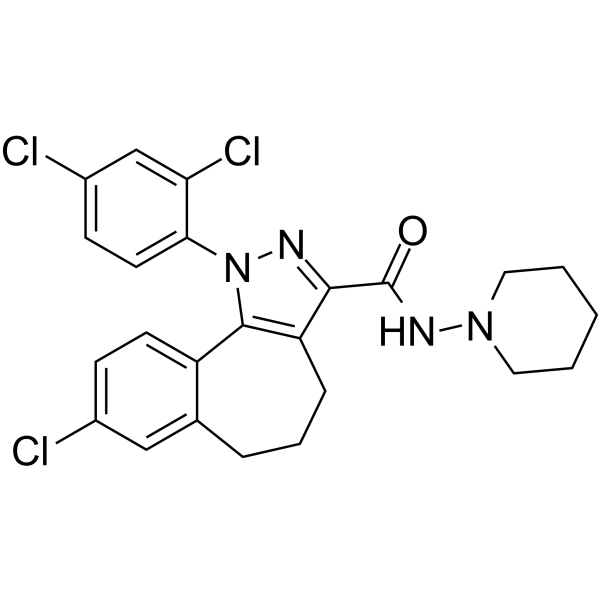
HY-117139
NESS 0327Cannabinoid Antagonist -
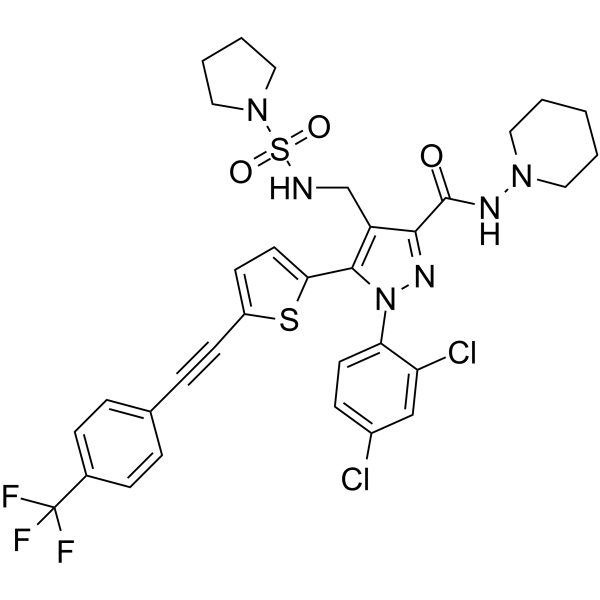
HY-12790
BPRCB1184CB1 Antagonist -
HY-Y1891
Tween 80 -
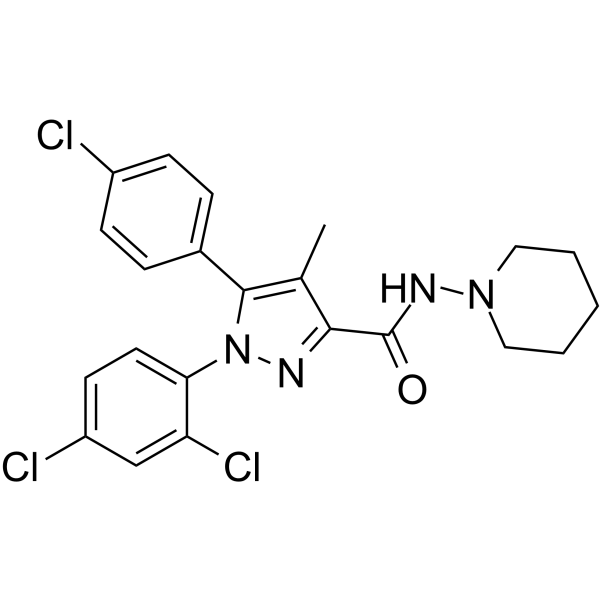
HY-14136
Rimonabant -
HY-18697
JD-5037CB1 Receptor Antagonist
Publications Citing Use of MedChemExpress (MCE) CB1 antagonist 2
More

Activité biologique
Description
In Vitro
CB1 antagonist 2 does not alter Forskolin (HY-15371)-stimulated cAMP formation in in vitro, indicating a lack of inverse agonist profile at CB1 receptors[2].
MedChemExpress (MCE) has not independently confirmed the accuracy of these methods. They are for reference only.
In Vivo
CB1 antagonist 2 (0.3-3 mg/kg; i.p.; single administration) dose-dependently antagonizes WIN55,212-2-induced inhibition of spontaneous activity and rearing behavior, prolongation of latency, and circling behavior[1].
CB1 antagonist 2 (3-10 mg/kg; i.p.; single administration) dose-dependently inhibits heroin self-administration behavior in male Long-Evans rats. At i.p. doses of 3 mg/kg and 10 mg/kg, both the number of heroin infusions and active lever presses decrease with statistical significance[2].
CB1 antagonist 2 (2-10 mg/kg; i.p.; 14 days) causes a transient, dose-dependent reduction in food intake in rats, which in turn results in sustained, dose-dependent inhibition of body weight gain[3].
CB1 antagonist 2 (50 mg/kg; p.o.; 7 days) causes a sustained reduction in food intake in rats over 7 days, thereby significantly inhibiting body weight gain[3].
MedChemExpress (MCE) has not independently confirmed the accuracy of these methods. They are for reference only.
-
Animal Model:Sprague-Dawley (adult male, 2.5-3.5 months old)[1]
-
Dosage:0.3 mg/kg; 1 mg/kg; 3 mg/kg
-
Administration:i.p.; single dose; co-administered with WIN55,212-2
-
Result:Completely reversed WIN55,212-2-induced suppression of ambulation to control levels at all three doses.
Partially reversed WIN55,212-2-induced suppression of rearing at all three doses, with levels significantly below controls but significantly higher than WIN55,212-2 alone.
Blocked WIN55,212-2-induced increases in latency to leave the center circle at all three doses.
Dose-dependently reduced WIN55,212-2-induced circling at all three doses.
Significantly increased scratching frequency at 1 mg/kg and 3 mg/kg compared to WIN55,212-2 alone.
Significantly increased grooming frequency and grooming duration at 3 mg/kg compared to WIN55,212-2 alone and controls.
Showed no significant effects on defecation, urination, or vocalization at any dose.
-
Animal Model:C57BL/6N (female, 10-16 weeks old, 20-30 g start weight; CB1 receptor knockout, wild-type)[3]
-
Dosage:10 mg/kg
-
Administration:i.p.; single dose
-
Result:Significantly reduced food intake at 2, 3, and 18 h post-administration in wild-type mice.
Produced no significant change in food intake compared to vehicle in CB1 receptor knockout mice.
-
Animal Model:Sprague-Dawley (male, 180-280 g start weight)[3]
-
Dosage:2 mg/kg; 10 mg/kg
-
Administration:i.p.; daily; 14 days
-
Result:Significantly reduced food intake on treatment days 1 and 2 at 2 mg/kg, with body weight stabilizing at 5% less than vehicle-treated rats; body weight gain was significantly reduced on treatment days 5-14.
Significantly reduced food intake on treatment days 2-4 at 10 mg/kg, with body weight stabilizing at 10% less than vehicle-treated rats; body weight gain was significantly reduced on treatment days 5-14.
Reduced fat mass by 29.3±11.4% and lean body mass by 9.0±2.2% compared to vehicle-treated rats at 10 mg/kg, though differences did not reach statistical significance.
Showed no significant differences in plasma or hypothalamic 2-AG levels, or serum glucose, triglycerides, total cholesterol, or HDL cholesterol levels between AM4113-treated and vehicle-treated rats.


Chemical Information
-
CAS No. 614726-85-1
-
Appearance Solid
-
Masse moléculaire 380.66
-
Formule C17H12Cl3N3O
-
Color White to off-white
-
SMILES
O=C(N)C1=NN(C(C2=CC=C(C=C2)Cl)=C1C)C3=CC=C(C=C3Cl)Cl
-
Synonyms
AM4113
-
Livraison
Room temperature in continental US; may vary elsewhere.
-
Stockage
Powder -20°C 3 years 4°C 2 years In solvent -80°C 2 years -20°C 1 year


Publications (1)
-
Journal Impact Factor
-
Most Recent


Solvant et solubilité
In Vitro:
DMSO : 62.5 mg/mL (164.19 mM; Need ultrasonic; Hygroscopic DMSO has a significant impact on the solubility of product, please use newly opened DMSO)
Please refer to the solubility information to select the appropriate solvent. Once prepared, please aliquot and store the solution to prevent product inactivation from repeated freeze-thaw cycles.
Storage method and period of stock solution: -80°C, 2 years; -20°C, 1 year. When stored at -80°C, please use it within 2 years. When stored at -20°C, please use it within 1 year.
Please refer to the solubility information to select the appropriate solvent. Once prepared, please aliquot and store the solution to prevent product inactivation from repeated freeze-thaw cycles.
Storage method and period of stock solution: -80°C, 2 years; -20°C, 1 year. When stored at -80°C, please use it within 2 years. When stored at -20°C, please use it within 1 year.
Concentration (start) × Volume (start) = Concentration (final) × Volume (final)
In Vivo:
Select the appropriate dissolution method based on your experimental animal and administration route.
- For the following dissolution methods, please ensure to first prepare a clear stock solution using an In Vitro approach and then sequentially add co-solvents:
- To ensure reliable experimental results, the clarified stock solution can be appropriately stored based on storage conditions. As for the working solution for In Vivo experiments, it is recommended to prepare freshly and use it on the same day.
- The percentages shown for the solvents indicate their volumetric ratio in the final prepared solution. If precipitation or phase separation occurs during preparation, heat and/or sonication can be used to aid dissolution.
Add each solvent one by one: 10% DMSO 40% PEG300 5% Tween-80 45% Saline
Solubility: ≥ 2.08 mg/mL (5.46 mM); Clear solution
This protocol yields a clear solution of ≥ 2.08 mg/mL (saturation unknown).
Taking 1 mL working solution as an example, add 100 μL DMSO stock solution (20.8 mg/mL) to 400 μL PEG300, and mix evenly; then add 50 μL Tween-80 and mix evenly; then add 450 μL Saline to adjust the volume to 1 mL.
Preparation of Saline: Dissolve 0.9 g sodium chloride in ddH₂O and dilute to 100 mL to obtain a clear Saline solution.
In Vivo Dissolution Calculator
Please enter the basic information of animal experiments:
-
-
-
-
Recommended: Prepare an additional quantity of animals to account for potential losses during experiments.
Please enter your animal formula composition:
-
%DMSO +
Recommended: Keep the proportion of DMSO in working solution below 2% if your animal is weak.
-
%+
-
+%Tween-80 + +
-
%Saline +
The co-solvents required include: DMSO, . All of co-solvents are available by MedChemExpress (MCE). , Tween 80. All of co-solvents are available by MedChemExpress (MCE).
Working solution concentration: 0.22 mg/mL
Method for preparing stock solution: mg drug dissolved in μL DMSO. Stock solution concentration: mg/mL.
1. Take μL DMSO stock solution;
2. Add μL .
μL , mix evenly;
3. Then add μL Tween 80, mix evenly;
4. Then add μL
Please ensure that the stock solution in the first step is dissolved to a clear state, and add co-solvents in sequence. You can use ultrasonic heating (ultrasonic cleaner, recommended frequency 20-40 kHz), vortexing, etc. to assist dissolution.


Pureté et documentation
-
Fiche technique (283 KB)
-
SDS (252 KB)
- English - EN (252 KB)
- Français - FR (252 KB)
- Deutsch - DE (252 KB)
- Norwegian - NO (252 KB)
- Español - ES (252 KB)
- Swedish - SV (252 KB)
- Italian - IT (252 KB)
- Korean - KR (252 KB)
- Portuguese - PT (252 KB)
-
Instruction de manipulation (2659 KB)
Références
[1]. Järbe TU, et al. Intrinsic effects of AM4113, a putative neutral CB1 receptor selective antagonist, on open-field behaviors in rats. Pharmacol Biochem Behav. 2008;91(1):84-90. [Content Brief]
[2]. He XH, et al. Cannabinoid CB1 receptor neutral antagonist AM4113 inhibits heroin self-administration without depressive side effects in rats. Acta Pharmacol Sin. 2019;40(3):365-373. [Content Brief]
[3]. Cluny NL, et al. The neutral cannabinoid CB₁ receptor antagonist AM4113 regulates body weight through changes in energy intake in the rat. Pharmacol Biochem Behav. 2011;97(3):537-543. [Content Brief]


Complete Stock Solution Preparation Table
Please refer to the solubility information to select the appropriate solvent. Once prepared, please aliquot and store the solution to prevent product inactivation from repeated freeze-thaw cycles.
Storage method and period of stock solution: -80°C, 2 years; -20°C, 1 year. When stored at -80°C, please use it within 2 years. When stored at -20°C, please use it within 1 year.
| Optional Solvent | Concentration Solvent Mass | 1 mg | 5 mg | 10 mg | 25 mg |
|---|---|---|---|---|---|
| DMSO | 1 mM | 2.6270 mL | 13.1351 mL | 26.2702 mL | 65.6754 mL |
| 5 mM | 0.5254 mL | 2.6270 mL | 5.2540 mL | 13.1351 mL | |
| 10 mM | 0.2627 mL | 1.3135 mL | 2.6270 mL | 6.5675 mL | |
| 15 mM | 0.1751 mL | 0.8757 mL | 1.7513 mL | 4.3784 mL | |
| 20 mM | 0.1314 mL | 0.6568 mL | 1.3135 mL | 3.2838 mL | |
| 25 mM | 0.1051 mL | 0.5254 mL | 1.0508 mL | 2.6270 mL | |
| 30 mM | 0.0876 mL | 0.4378 mL | 0.8757 mL | 2.1892 mL | |
| 40 mM | 0.0657 mL | 0.3284 mL | 0.6568 mL | 1.6419 mL | |
| 50 mM | 0.0525 mL | 0.2627 mL | 0.5254 mL | 1.3135 mL | |
| 60 mM | 0.0438 mL | 0.2189 mL | 0.4378 mL | 1.0946 mL | |
| 80 mM | 0.0328 mL | 0.1642 mL | 0.3284 mL | 0.8209 mL | |
| 100 mM | 0.0263 mL | 0.1314 mL | 0.2627 mL | 0.6568 mL |


CB1 antagonist 2 Related Classifications
HY-116649 Related Classifications
 Powered by Bioz