Search Result
Results for "
5-HT1A receptor antagonist
" in MedChemExpress (MCE) Product Catalog:
26
Isotope-Labeled Compounds
| Cat. No. |
Product Name |
Target |
Research Areas |
Chemical Structure |
-
- HY-15780
-
|
OPC-34712
|
5-HT Receptor
Dopamine Receptor
Adrenergic Receptor
|
Neurological Disease
|
|
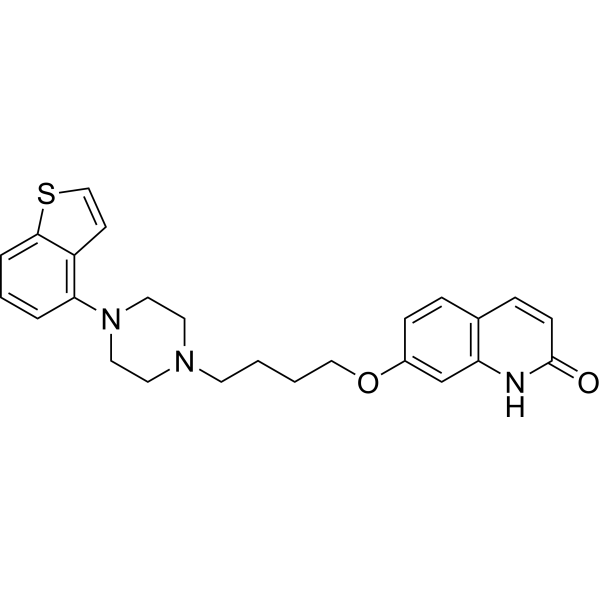
Brexpiprazole (OPC-34712), an atypical orally active antipsychotic agent, is a partial agonist of human 5-HT1A and dopamine D2L receptor with Kis of 0.12 nM and 0.3 nM, respectively. Brexpiprazole is also a 5-HT2A receptor antagonist with a Ki of 0.47 nM. Brexpiprazole also shows potent antagonist activity at human noradrenergic α1B (Ki=0.17 nM) and α2C receptors (Ki=0.59 nM) .
|
-
-
- HY-B1115A
-
-
-
- HY-B1517
-
|
(RS)-Alprenolol; dl-Alprenolol
|
5-HT Receptor
|
Cardiovascular Disease
Cancer
|
|
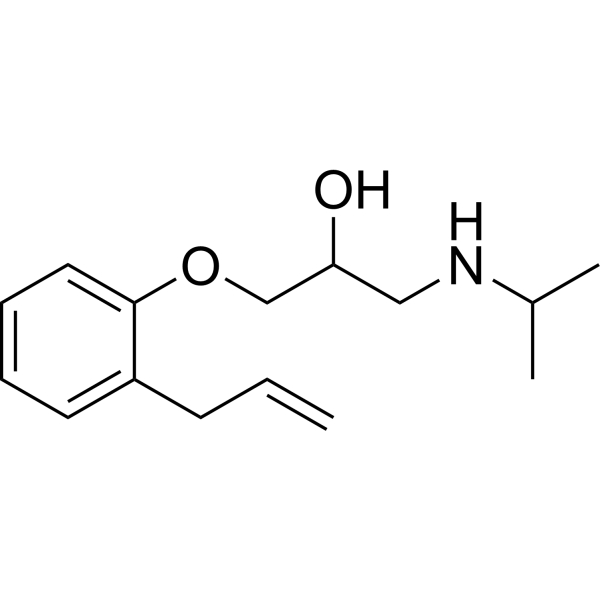
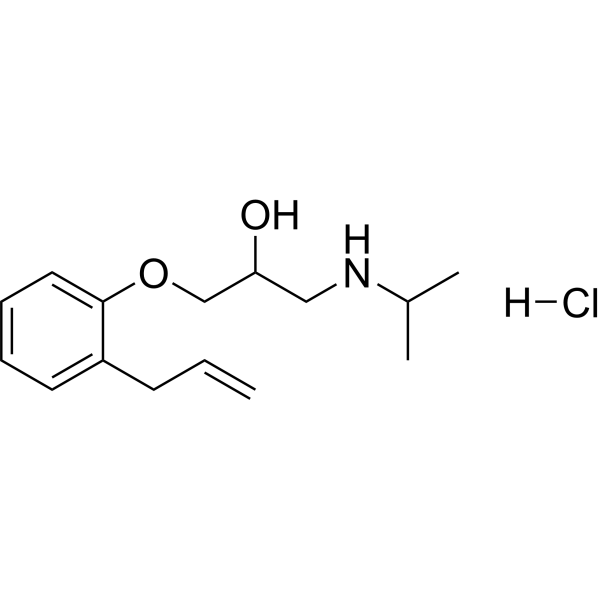
Alprenolol ((RS)-Alprenolol; dl-Alprenolol) is an orally active non-selective β-adrenoceptor antagonist and an antagonist of 5-HT1A and 5-HT1B receptors. Alprenolol is used as an anti-hypertensive, anti-anginal and anti-arrhythmic agent .
|
-
-
- HY-10349
-
WAY-100635
Maximum Cited Publications
12 Publications Verification
|
5-HT Receptor
Dopamine Receptor
|
Neurological Disease
|
|
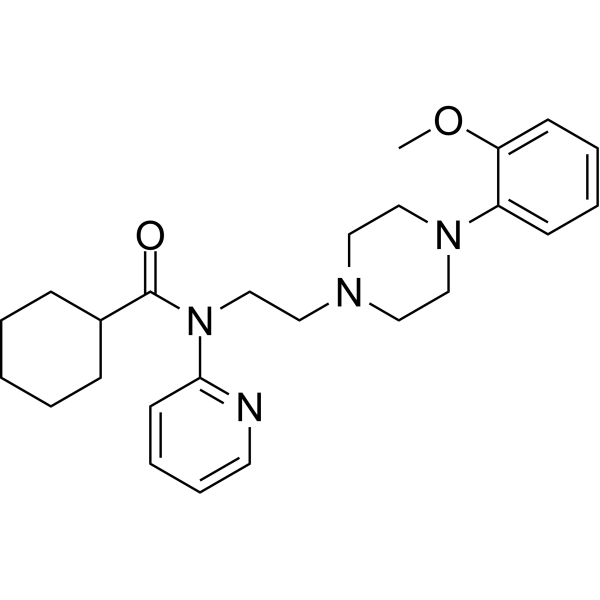
WAY-100635 is a potent and selective 5-HT1A Receptor antagonist with a pIC50 of 8.87, an apparent pA2 of 9.71.
WAY-100635 is a potent and selective 5-hydroxytryptamine 1A (5-HT1A) receptor antagonist with an IC50 value of 0.91 nM and Ki value of 0.39 nM. WAY-100635 has pIC50 values for 5-HT1A and α1-adrenergic receptors of 8.9 and 6.6, respectively. WAY-100635 is also a potent dopamine D4 receptor agonist .
|
-
-
- HY-B0032A
-
|
SM-13496
|
5-HT Receptor
Dopamine Receptor
|
Neurological Disease
|
|
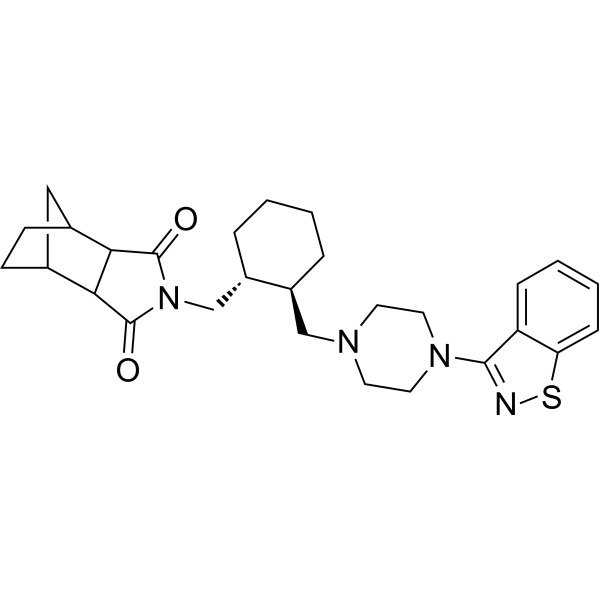
Lurasidone (SM-13496) is an antagonist of both dopamine D2 and 5-HT7 with IC50s of 1.68 and 0.495 nM, respectively. Lurasidone (SM-13496) is also a partial agonist of 5-HT1A receptor with an IC50 of 6.75 nM.
|
-
-
- HY-B1517A
-
|
(RS)-Alprenolol hydrochloride; dl-Alprenolol hydrochloride
|
5-HT Receptor
|
Cardiovascular Disease
Cancer
|
|
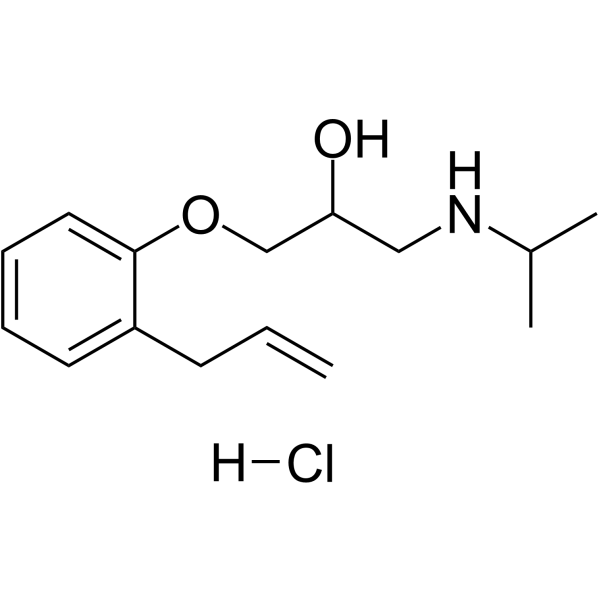
Alprenolol ((RS)-Alprenolol; dl-Alprenolol) hydrochloride is an orally active non-selective β-adrenoceptor antagonist and an antagonist of 5-HT1A and 5-HT1B receptors. Alprenolol hydrochloride is used as an anti-hypertensive, anti-anginal and anti-arrhythmic agent .
|
-
-
- HY-75502
-
|
N-0923; (-)-N 0437
|
Dopamine Receptor
Adrenergic Receptor
5-HT Receptor
|
Neurological Disease
Endocrinology
|
|
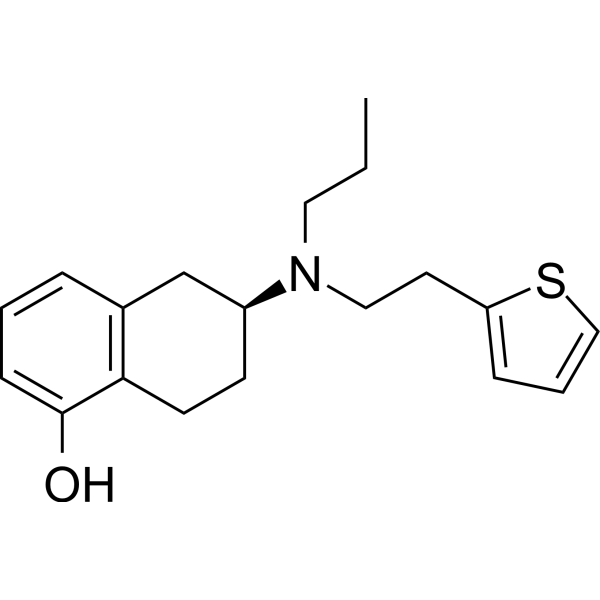
Rotigotine is a potent dopamine receptor agonist with Ki values of 0.71 nM, 4-15 nM, and 83 nM for the dopamine D3 receptor and D2, D5, D4 receptors and dopamine D1 receptor. Rotigotine a partial agonist of the 5-HT1A receptor, and an antagonist of the α2B-adrenergic receptor. Rotigotine can be used for parkinson's disease (PD) research .
|
-
-
- HY-A0095
-
|
BIMT-17; BIMT-17BS
|
5-HT Receptor
|
Neurological Disease
Cancer
|
|
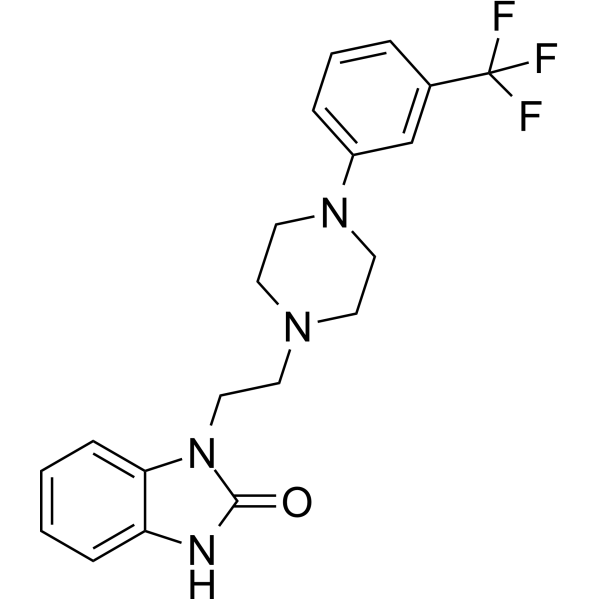
Flibanserin (BIMT-17; BIMT-17BS) is an orally active serotonin 5-HT1A receptor agonist and 5-HT2A receptor antagonist with Ki values of 1 nM and 49 nM, respectively. Flibanserin binds to dopamine D4 receptors with an Ki value of 4-24 nM. Flibanserin shows anti-depression and anti-anxiety effect, can be used to hypoactive sexual desire disorder (HSDD) research - .
|
-
-
- HY-N0096
-
|
(-)-Tetrahydropalmatine; L-Tetrahydropalmatine
|
5-HT Receptor
Dopamine Receptor
|
Neurological Disease
|
|
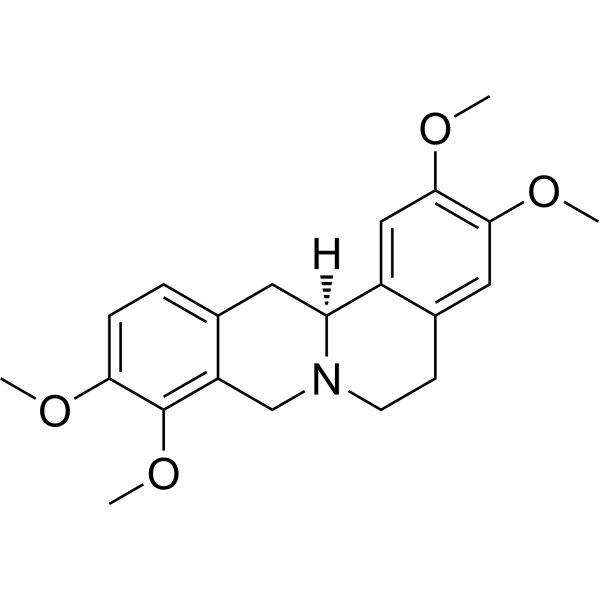
Rotundine is an antagonist of dopamine D1, D2 and D3 receptors with IC50s of 166 nM, 1.4 μM and 3.3 μM, respectively. Rotundine is also an antagonist of 5-HT1A with an IC50 of 370 nM.
|
-
-
- HY-10349A
-
|
|
5-HT Receptor
Dopamine Receptor
|
Neurological Disease
|
|
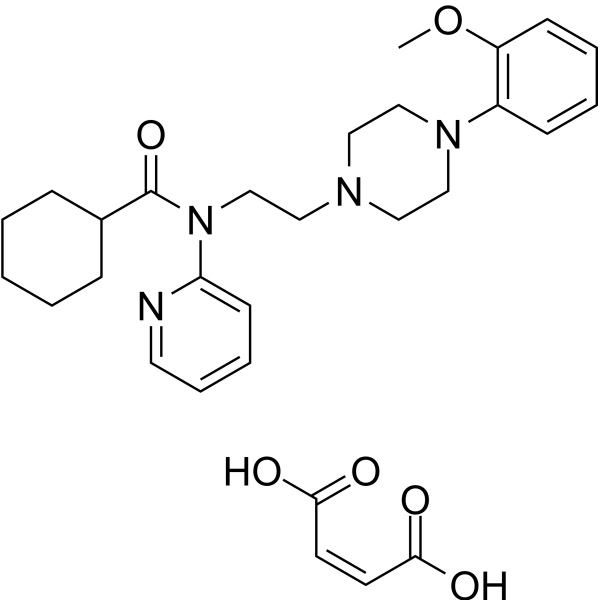
WAY-100635 maleate is a potent and selective 5-hydroxytryptamine 1A (5-HT1A) receptor antagonist with an IC50 value of 0.91 nM and Ki value of 0.39 nM. WAY-100635 maleate has pIC50 values for 5-HT1A and α1-adrenergic receptors of 8.9 and 6.6, respectively. WAY-100635 maleate is also a potent dopamine D4 receptor agonist .
|
-
-
- HY-B0032
-
|
SM-13496 Hydrochloride
|
5-HT Receptor
Dopamine Receptor
|
Neurological Disease
|
|
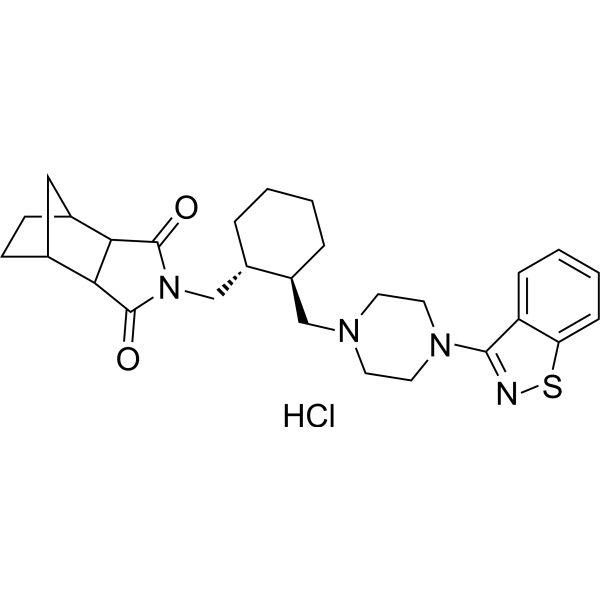
Lurasidone (Hydrochloride) (SM-13496 (Hydrochloride)) is an antagonist of both dopamine D2 and 5-HT7 with IC50s of 1.68 and 0.495 nM, respectively. Lurasidone (Hydrochloride) (SM-13496 (Hydrochloride)) is also a partial agonist of 5-HT1A receptor with an IC50 of 6.75 nM.
|
-
-
- HY-103152
-
-
-
- HY-17407
-
|
CP 88059 hydrochloride monohydrate
|
5-HT Receptor
Dopamine Receptor
|
Neurological Disease
|
|
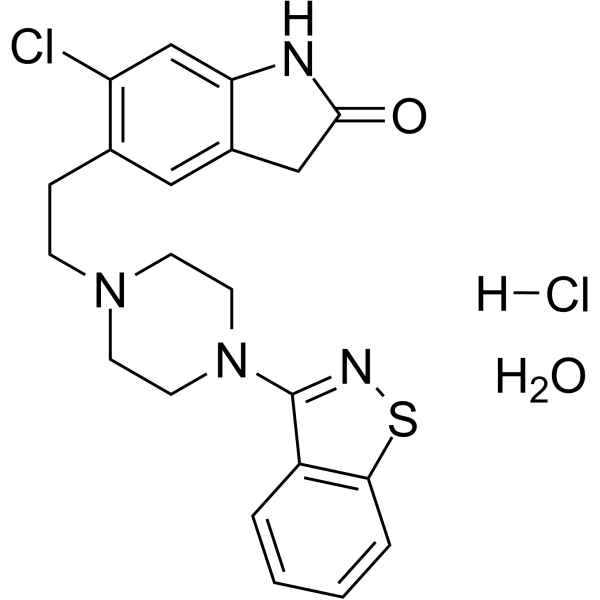
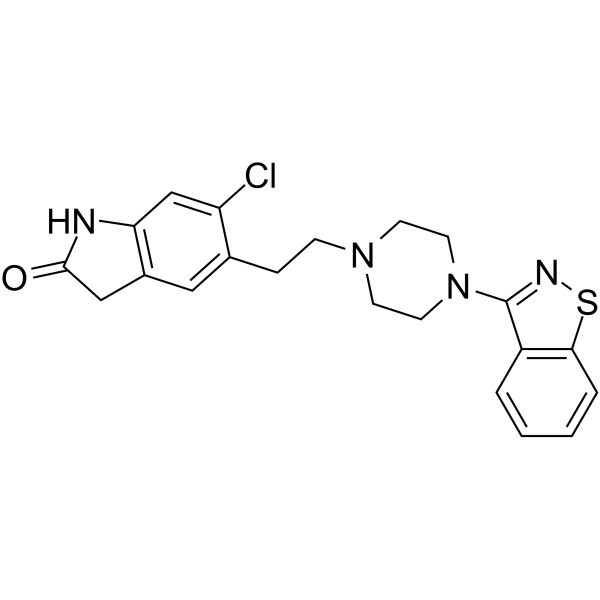
Ziprasidone (CP-88059) hydrochloride monohydrate is an orally active combined 5-HT and dopamine receptor antagonist . Ziprasidone hydrochloride monohydrate has affinities for Rat D2 (Ki=4.8 nM), 5-HT2A (Ki=0.42 nM) and 5-HT1A (Ki=3.4 nM) .
|
-
-
- HY-A0007
-
|
N-0923 Hydrochloride
|
Dopamine Receptor
Adrenergic Receptor
5-HT Receptor
|
Neurological Disease
|
|
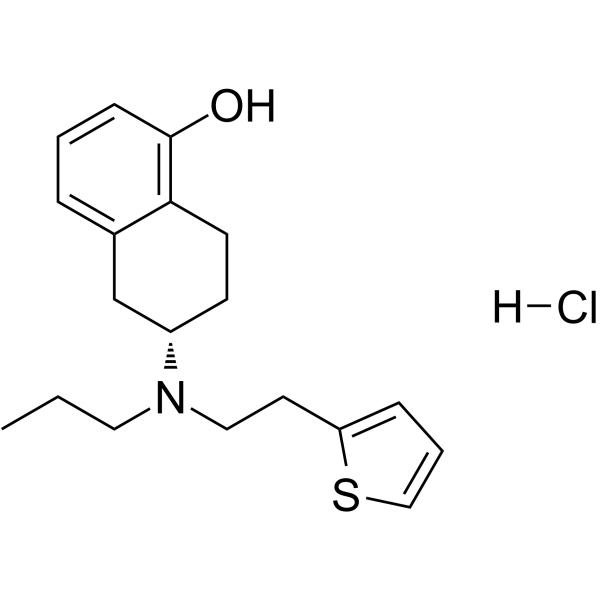
Rotigotine Hydrochloride (N-0923 Hydrochloride) is a full agonist of dopamine receptor, a partial agonist of the 5-HT1A receptor, and an antagonist of the α2B-adrenergic receptor, with Ki of 0.71 nM, 4-15 nM, and 83 nM for the dopamine D3 receptor and D2, D5, D4 receptors, and dopamine D1 receptor.
|
-
-
- HY-14542A
-
|
CP-88059 hydrochloride
|
5-HT Receptor
Dopamine Receptor
|
Neurological Disease
|
|
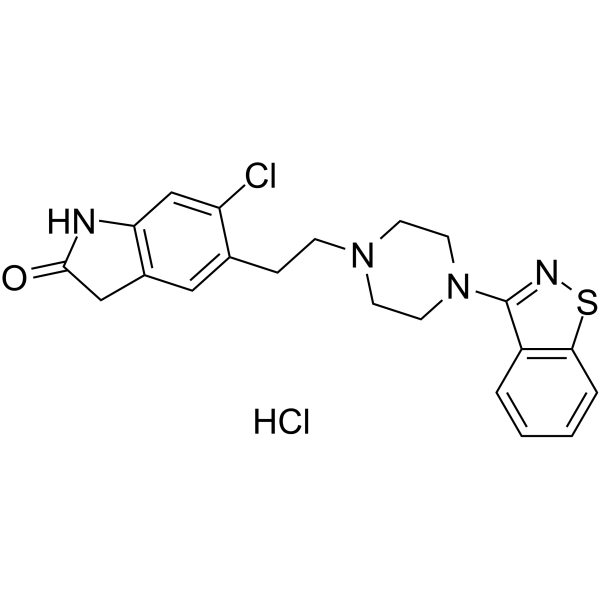
Ziprasidone (CP-88059) hydrochloride is an orally active combined 5-HT and dopamine receptor antagonist . Ziprasidone hydrochloride has affinities for Rat D2 (Ki=4.8 nM), 5-HT2A (Ki=0.42 nM) and 5-HT1A (Ki=3.4 nM) .
|
-
-
- HY-B0500
-
-
-
- HY-19818A
-
-
-
- HY-B0716
-
-
-
- HY-103415
-
|
YM-09151-2; Emonapride
|
Dopamine Receptor
5-HT Receptor
|
Neurological Disease
|
|
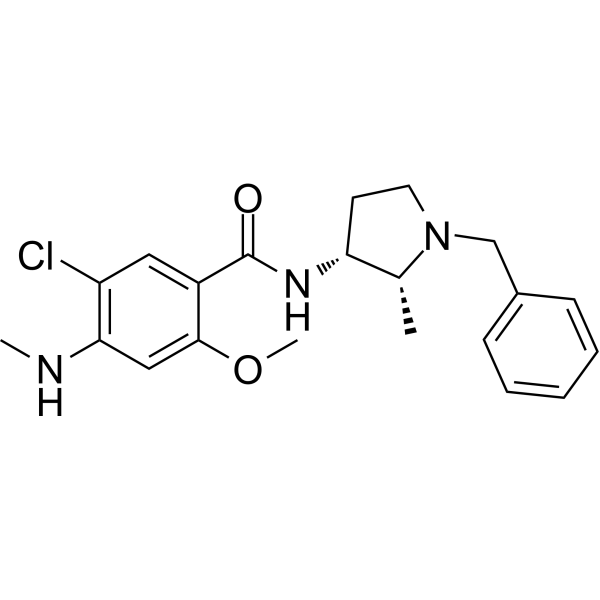
Nemonapride is a highly potent dopamine D2 receptor antagonist with a Ki of 0.06 nM. Nemonapride also activates 5-HT1A receptor with an IC50 of 34 nM. Nemonapride is an antipsychotic that readily passes through the blood brain barrier and exhibits potent neuroleptic effects in animals .
|
-
-
- HY-100658
-
|
|
5-HT Receptor
Dopamine Receptor
|
Neurological Disease
|
|
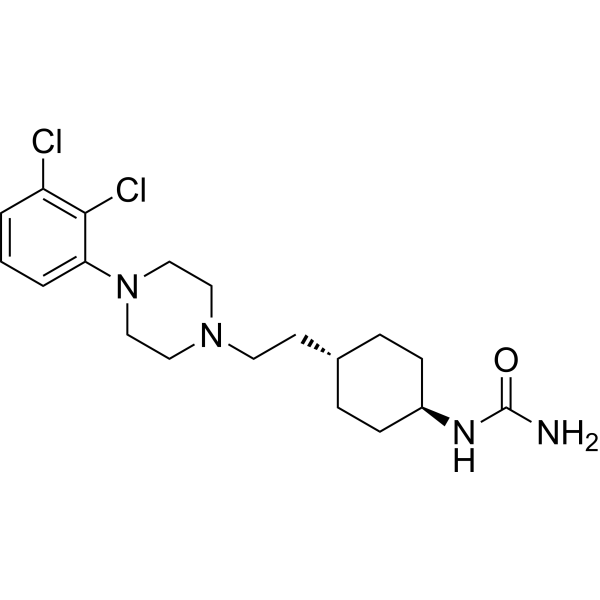
Didesmethyl cariprazine is an orally active, BBB-permeable metabolite of Cariprazine (HY-14763). Didesmethyl cariprazine is a partial agonist at the D2 and D3 receptors, full agonist at the 5-HT1A receptor, and antagonist at the human 5-HT2B receptor (Ki: 1.41 nM (human D2L), 0.056 nM (human D3), 1.7 nM (human 5-HT1A), 0.52 nM (human 5-HT2B)). Didesmethyl cariprazine dose-dependently inhibits the spontaneous activity of rat midbrain dopaminergic neurons .
|
-
-
- HY-B0731A
-
|
SM-9018 free base
|
5-HT Receptor
Dopamine Receptor
|
Neurological Disease
|
|
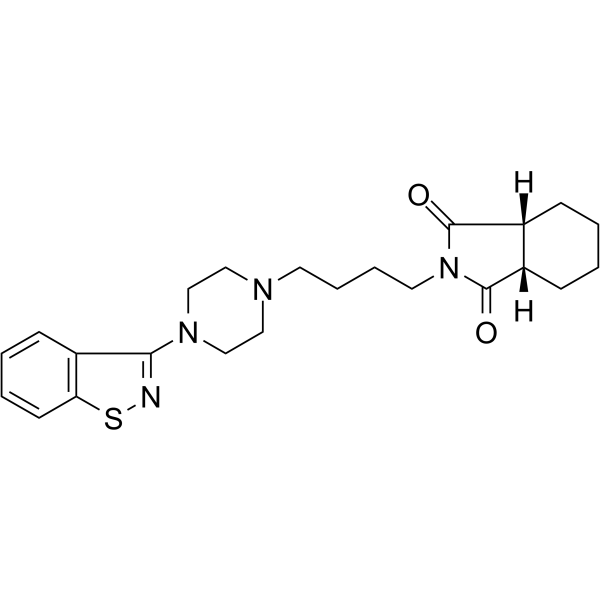
Perospirone (SM-9018 free base) is an orally active antagonist of 5-HT2A receptor (Ki=0.6 nM) and dopamine D2 receptor (Ki=1.4 nM), and also a partial agonist of 5-HT1A receptor (Ki=2.9 nM). Perospirone is an atypical antipsychotic agent and has the potential for schizophrenic disease research .
|
-
-
- HY-B0731
-
|
SM-9018
|
5-HT Receptor
Dopamine Receptor
|
Neurological Disease
|
|
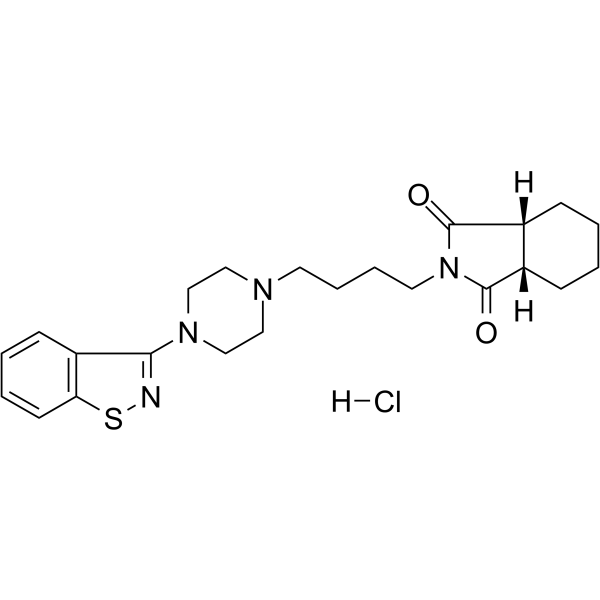
Perospirone hydrochloride (SM-9018) is an orally active antagonist of 5-HT2A receptor (Ki of 0.6 nM) and dopamine D2 receptor (Ki of 1.4 nM). Perospirone hydrochloride is also a partial agonist of 5-HT1A receptor (Ki of 2.9 nM). Perospirone hydrochloride is an atypical antipsychotic agent and has the potential for schizophrenic disease research .
|
-
-
- HY-19686
-
|
TVX Q 7821 free base
|
5-HT Receptor
|
Neurological Disease
|
|
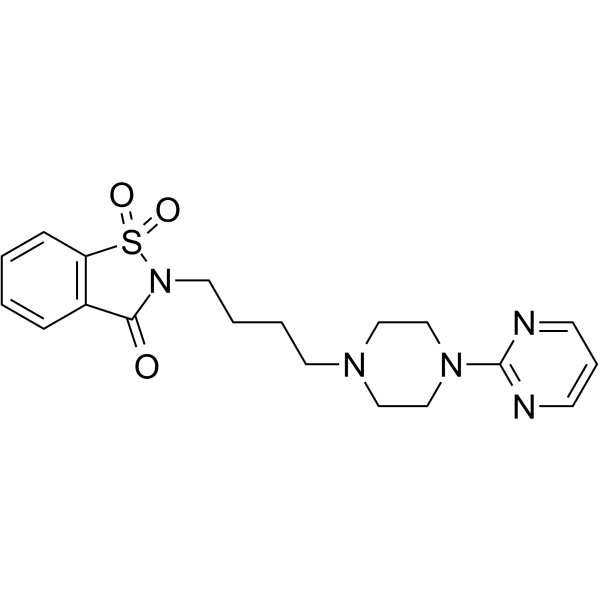
Ipsapirone (TVX Q 7821) is an anxiolytic compound and a 5-HT1A receptor partial agonist. Ipsapirone (TVX Q 7821) also exhibits 5-HT1A receptor antagonistic effect, and only at high doses it can also produce an inhibitory effect on 5-HT2 and the α1-adrenergic function .
|
-
-
- HY-15394
-
|
N-0437 hydrochloride
|
Dopamine Receptor
Adrenergic Receptor
5-HT Receptor
|
Neurological Disease
Endocrinology
|
|
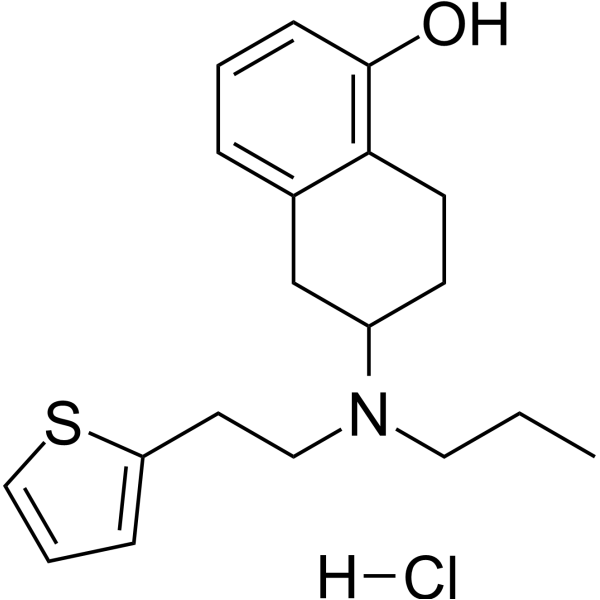
(Rac)-Rotigotine hydrochloride is a racemate of Rotigotine. Rotigotine is a full agonist of dopamine receptor, a partial agonist of the 5-HT1A receptor, and an antagonist of the α2B-adrenergic receptor, with Kis of 0.71 nM, 4-15 nM, and 83 nM for the dopamine D3 receptor and D2, D5, D4 receptors, and dopamine D1 receptor.
|
-
-
- HY-W795507
-
|
|
Adrenergic Receptor
5-HT Receptor
|
Neurological Disease
|
|
Cyanopindolol is an β3-adrenoceptor antagonist. Cyanopindolol is a potent and selective antagonist at the presynaptic serotonin autoreceptor in the rat brain cortex. Cyanopindolol has binding affinity for 5-HT1A and 5-HT1B receptor (Ki: 2.1 and 3 nM respectively) .
|
-

-
- HY-G0002
-
|
|
Drug Metabolite
Dopamine Receptor
5-HT Receptor
|
Neurological Disease
|
|
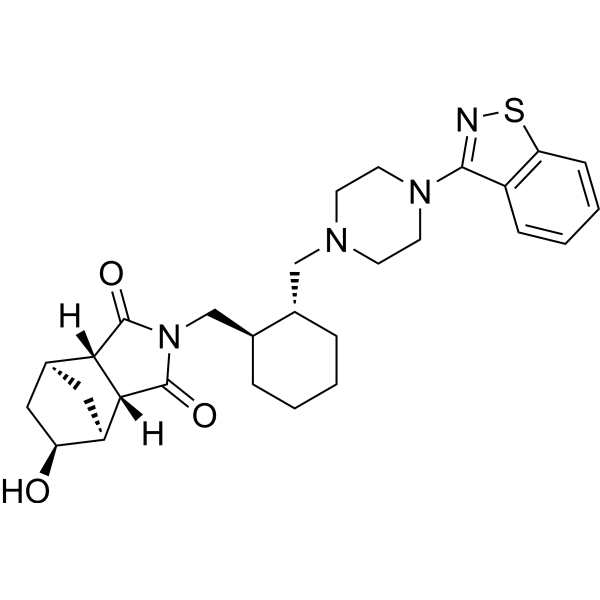
Lurasidone metabolite 14326 is a minor active metabolite of Lurasidone (HY-B0032A) generated via metabolism by CYP3A4. Lurasidone metabolite 14326 shares similar receptor-binding properties with Lurasidone, acting as an antagonist of the dopamine D2 receptor (dopamine D2 receptor), an antagonist of the serotonin 5-HT2A and 5-HT7 receptors (5-HT2A and 5-HT7 receptor), and a partial agonist of the serotonin 5-HT1A receptor. Lurasidone metabolite 14326 can be used in the research of schizophrenia and bipolar depression .
|
-
-
- HY-117575A
-
|
|
5-HT Receptor
|
Neurological Disease
|
|
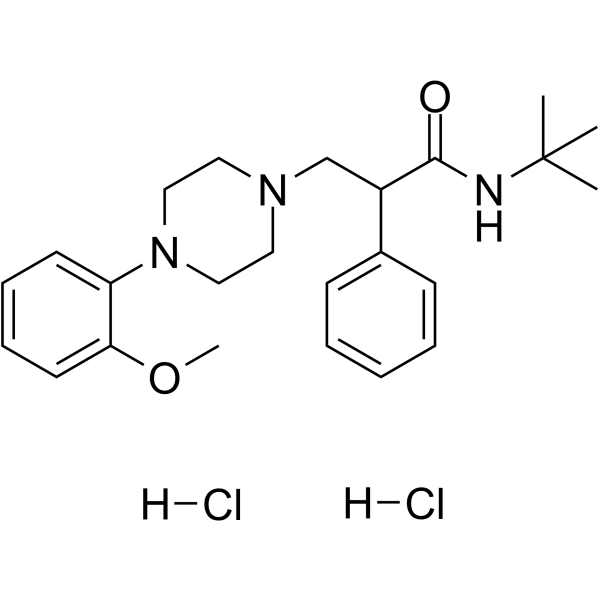
WAY-100135 dihydrochloride is a selective antagonist at presynaptic and postsynaptic 5-HT1A receptor, with an IC50 of 34 nM at the rat hippocampal 5-HT1A receptor. WAY-100135 dihydrochloride has potential antipsychotic properties .
|
-
-
- HY-14782
-
|
SLV313
|
5-HT Receptor
Dopamine Receptor
|
Neurological Disease
|
|
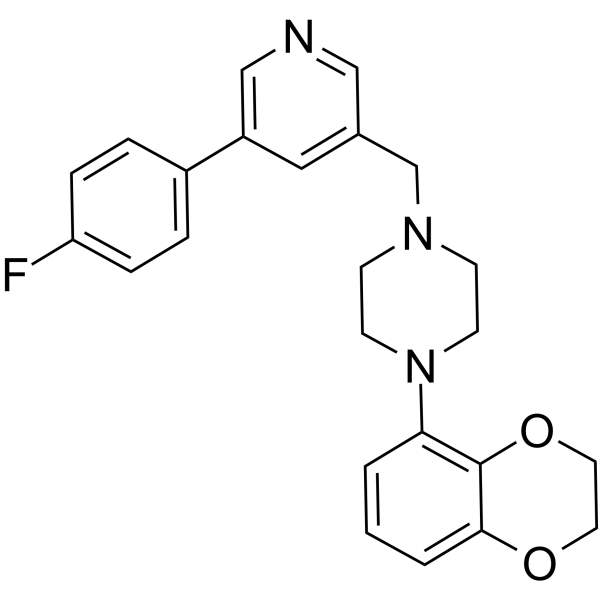
Adoprazine (SLV313) is a full 5-HT1A receptor agonist with a pEC50 of 9 at cloned h5-HT1A receptors. Adoprazine (SLV313) is a full D2 and D3 receptor antagonist with pA2s of 9.3 and 8.9 at hD2 and hD3 receptors, respectively. Adoprazine (SLV313) has the characteristics of atypical antipsychotics .
|
-
-
- HY-133152
-
|
DM-3411
|
5-HT Receptor
Dopamine Receptor
|
Neurological Disease
|
|
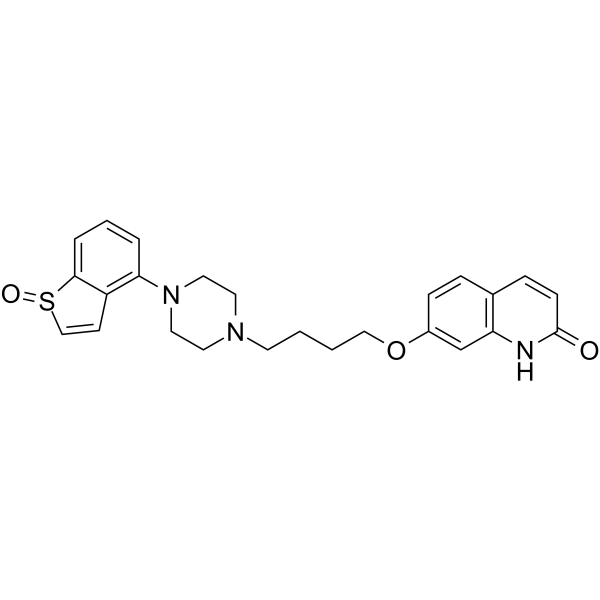
Brexpiprazole S-oxide (DM-3411) is a main metabolite of Brexpiprazole and is metabolized by cytochrome P450 3A4 (CYP3A4). Brexpiprazole is an atypical antipsychotic agent and a partial agonist of human 5-HT1A and dopamine receptor with Kis of 0.12 nM and 0.3 nM, respectively. Brexpiprazole is also a 5-HT2A receptor antagonist with a Ki of 0.47 nM .
|
-
-
- HY-B0500A
-
-

-
- HY-116076
-
|
|
5-HT Receptor
|
Neurological Disease
|
|
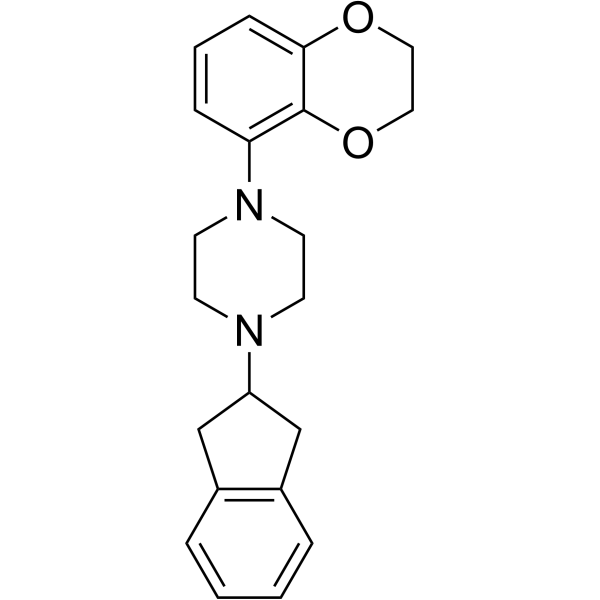
S-15535 is a highly selective 5-HT1A receptor ligand. S-15535 is an antagonist of postsynaptic 5-HT1A receptors and an agonist of presynaptic 5-HT1A receptors. S-15535 can be used in research on psychiatric disorders, such as anti-anxiety .
|
-
-
- HY-120738
-
|
|
5-HT Receptor
|
Neurological Disease
|
|
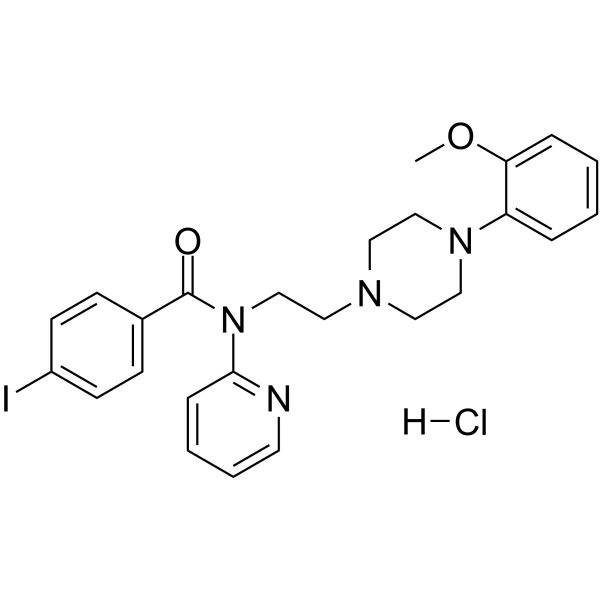
p-MPPI hydrochloride is a selective 5-HT1A receptor antagonist with high affinity for 5-HT1A receptors. p-MPPI hydrochloride can crosses the blood-brain barrier, and has clear antidepressant and anxiolytic-like effects .
|
-
-
- HY-B0716S2
-
-
-
- HY-19742A
-
|
SRA-333 hydrochloride
|
5-HT Receptor
|
Neurological Disease
|
|
Lecozotan (SRA-333) hydrochloride is an orally active and selective antagonist of 5-HT1A with a Ki of 4.5 nM for cloned human 5-HT1A receptor. Lecozotan hydrochloride enhances the stimulated release of glutamate and acetylcholine in the hippocampus and possesses cognitive-enhancing properties. Lecozotan hydrochloride has the potential for mild-to-moderate Alzheimer's disease (AD) research .
|
-

-
- HY-15780A
-
|
OPC-34712 hydrochloride
|
5-HT Receptor
Dopamine Receptor
Adrenergic Receptor
|
Neurological Disease
|
|
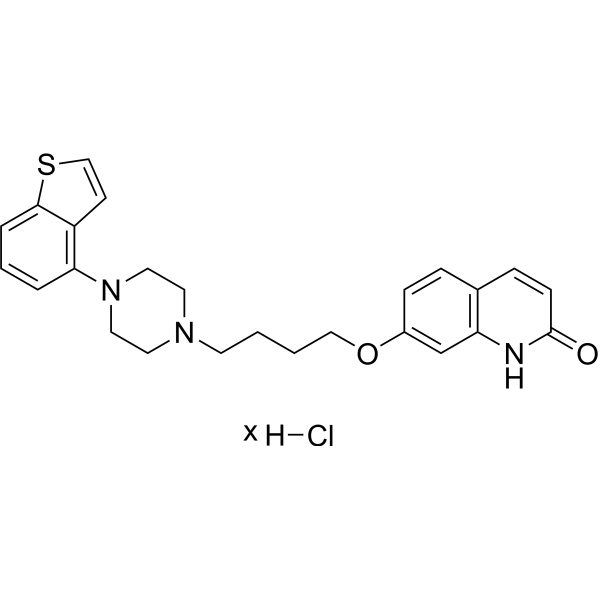
Brexpiprazole (OPC-34712) hydrochloride, an atypical orally active antipsychotic agent, is a partial agonist of human 5-HT1A and dopamine D2L receptor with Kis of 0.12 nM and 0.3 nM, respectively. Brexpiprazole hydrochloride is also a 5-HT2A receptor antagonist with a Ki of 0.47 nM. Brexpiprazole hydrochloride also shows potent antagonist activity at human noradrenergic α1B (Ki=0.17 nM) and α2C receptors (Ki=0.59 nM) .
|
-
-
- HY-B1517AR
-
|
(RS)-Alprenolol hydrochloride (Standard); dl-Alprenolol hydrochloride (Standard)
|
Reference Standards
5-HT Receptor
|
Cancer
|
|
Alprenolol (hydrochloride) (Standard) is the analytical standard of Alprenolol (hydrochloride). This product is intended for research and analytical applications. Alprenolol ((RS)-Alprenolol; dl-Alprenolol) hydrochloride is an orally active non-selective β-adrenoceptor antagonist and an antagonist of 5-HT1A and 5-HT1B receptors. Alprenolol hydrochloride is used as an anti-hypertensive, anti-anginal and anti-arrhythmic agent .
|
-
-
- HY-12709
-
-
-
- HY-144764
-
|
|
5-HT Receptor
|
Neurological Disease
|
|
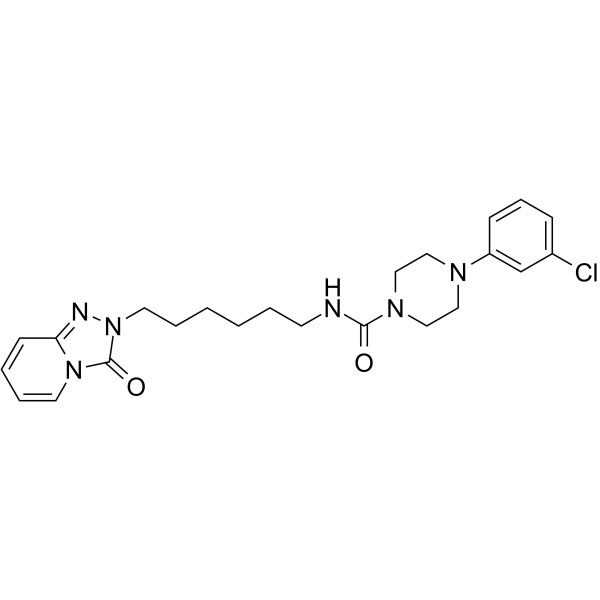
5-HT1A antagonist 1 (compound 6f) is a potent and selective antagonist of 5-HT1A receptor, with a Ki of 35 nM. 5-HT1A antagonist 1 can be used for the research of CNS diseases .
|
-
-
- HY-12701A
-
|
U-99194A; PNU-99194A maleate; JPC-211 maleate
|
Dopamine Receptor
|
Neurological Disease
|
|
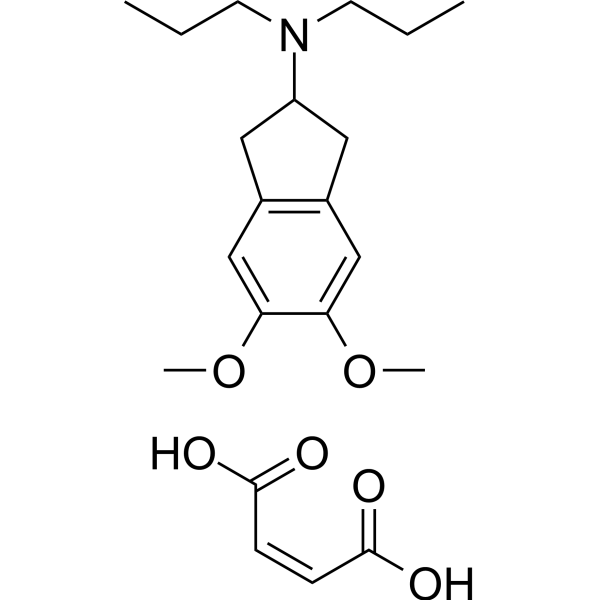
U-99194 (PNU-99194) maleate is a selective, potent dopamine D3 receptor antagonist (Ki =160 nM). U-99194 maleate inhibits the activation of D3 receptor mediated by endogenously released dopamine or exogenous D3 agonists. U-99194 maleate abrogates the IPSC-suppressive effect of the D3 agonist PD 128907 in rat hippocampal slices. U-99194 maleate significantly suppresses Nicotine (HY-127019)-induced tremor in mice. U-99194 maleate can be used for the study of dopamine D3 receptor-mediated motor disorders, particularly kinetic tremors .
|
-
-
- HY-101322A
-
|
|
5-HT Receptor
|
Neurological Disease
|
|
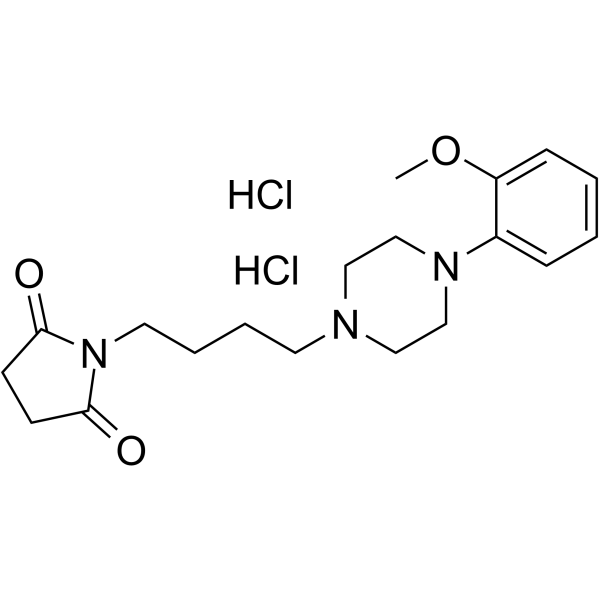
MM 77 dihydrochloride is a potent postsynaptic antagonist of the 5-HT1A receptor. MM 77 dihydrochloride exhibits anxiolytic-like activity .
|
-
-
- HY-19417A
-
|
|
Serotonin Transporter
5-HT Receptor
|
Neurological Disease
|
|
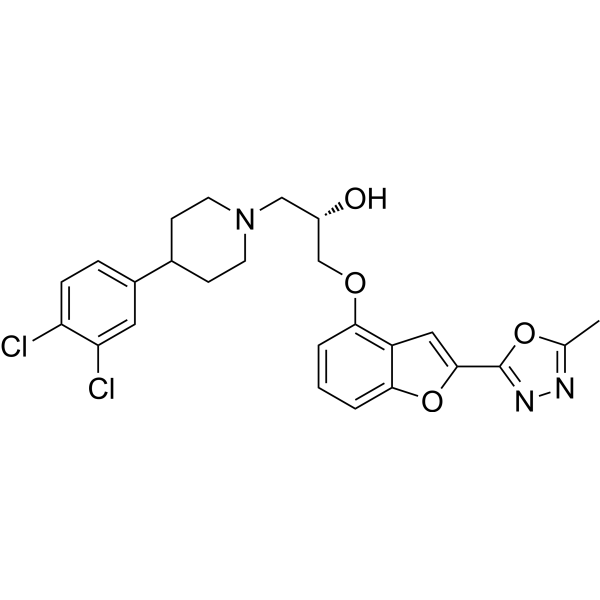
Wf-516 is an inhibitor of 5-HT reuptake, and an antagonist of 5-HT1A and 5-HT2A receptors, with Ki of 5 nM and 40 nM for 5-HT1A receptor and 5-HT2A receptor in humans, respectively, and has potent antidepressant activity.
|
-
-
- HY-106943
-
|
|
Dopamine Receptor
5-HT Receptor
|
Neurological Disease
|
|
1192U90 is an antipsychotic agent, dopamine D2 receptor antagonist as well as serotonin 5-HT1a receptor agonist. 1192U90 reduces the number of spontaneously firing neurons in the limbic dopamine system .
|
-

-
- HY-105328
-
|
|
5-HT Receptor
|
Neurological Disease
|
|
S-14489 is an orally active selective postsynaptic 5-HT1A receptor antagonist with a pKi of 9.2. S-14489 can act as a 5-HT1A autoreceptor agonist and inhibit striatal 5-hydroxytryptophan accumulation. S-14489 can be used for the research of neurological disease .
|
-

-
- HY-B1517B
-
|
|
5-HT Receptor
|
Cardiovascular Disease
Cancer
|
|
Alprenolol benzoate is an orally active non-selective β-adrenoceptor antagonist and an antagonist of 5-HT1A and 5-HT1B receptors. Alprenolol benzoate is used as an anti-hypertensive, anti-anginal and anti-arrhythmic agent .
|
-

-
- HY-B0716R
-
-

-
- HY-19372
-
|
|
Dopamine Receptor
5-HT Receptor
|
Neurological Disease
|
|
SSR-181507 hydrochloride is a dopamine D2 receptor antagonist and 5-HT1A receptor agonist. SSR-181507 antagonizes Apomorphine (HY-12723)-induced climbing in mice and stereotypies in rats. SSR-181507 hydrochloride can be used in the research of depression and anxiety .
|
-

-
- HY-B1115AR
-
-

-
- HY-A0095B
-
|
BIMT-17 hydrochloride; BIMT-17BS hydrochloride
|
5-HT Receptor
Dopamine Receptor
|
Neurological Disease
|
|
Flibanserin hydrochloride (BIMT-17 hydrochloride) is an orally active 5-HT1A receptor agonist and 5-HT2A receptor antagonist with binding affinities Ki of 1 nM and 49 nM, respectively. Flibanserin hydrochloride also binds to dopamine D4 receptors with a Ki of 4-24 nM. Flibanserin hydrochloride has antidepressant and anxiolytic effects and can be used in the study of hypoactive sexual desire disorder (HSDD) .
|
-

-
- HY-120939
-
-

-
- HY-A0007S
-
|
N-0923 D7 Hydrochloride
|
Isotope-Labeled Compounds
Dopamine Receptor
|
Neurological Disease
|
|
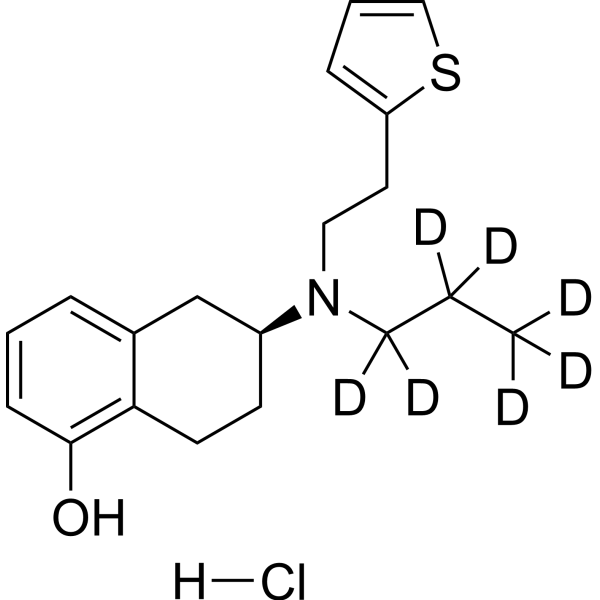
Rotigotine-d7 (N-0923-d7) hydrochloride is the deuterium labeled Rotigotine(HY-75502). Rotigotine is a potent dopamine receptor agonist with Ki values of 0.71 nM, 4-15 nM, and 83 nM for the dopamine D3 receptor and D2, D5, D4 receptors and dopamine D1 receptor. Rotigotine a partial agonist of the 5-HT1A receptor, and an antagonist of the α2B-adrenergic receptor. Rotigotine can be used for parkinson's disease (PD) research.
|
-
- HY-14542C
-
|
CP-88059 mesylate
|
5-HT Receptor
Dopamine Receptor
|
Neurological Disease
|
|
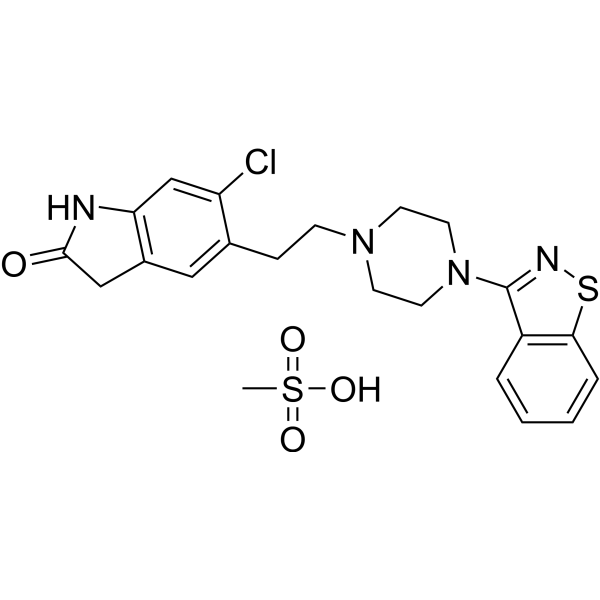
Ziprasidone (CP-88059) mesylate is an orally active combined 5-HT and dopamine receptor antagonist . Ziprasidone mesylate has affinities for Rat D2 (Ki=4.8 nM), 5-HT2A (Ki=0.42 nM) and 5-HT1A (Ki=3.4 nM) .
|
-
- HY-12709R
-
|
|
Adrenergic Receptor
5-HT Receptor
|
Neurological Disease
|
|
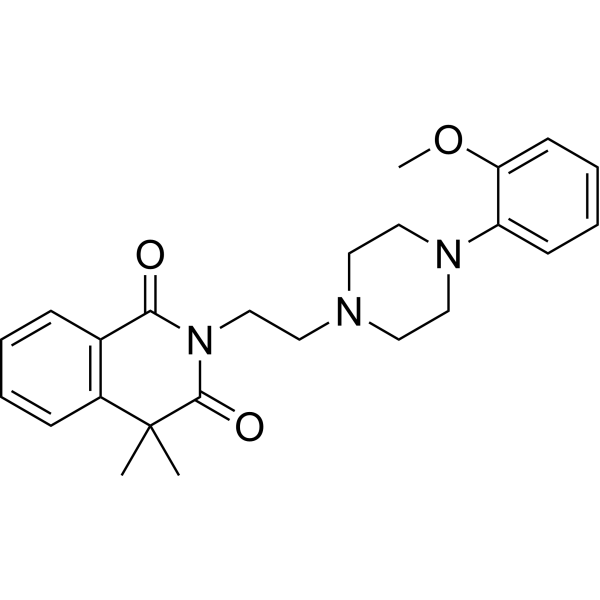
ARC 239 (Standard) is the analytical standard of ARC 239. This product is intended for research and analytical applications. ARC 239 is an α2B/C-adrenergic receptor antagonist with pKi of 7.06 and 6.95 for rat kidney α2B and human α2C, respectively. ARC 239 also inhibits 5-HT1A receptor with a Ki of 63.1 nM .
|
-

- HY-100925
-
-

- HY-B0500B
-
-

- HY-116309
-
-

- HY-12701
-
|
U-99194A free base; PNU-99194A; JPC-211
|
Dopamine Receptor
|
Neurological Disease
|
|
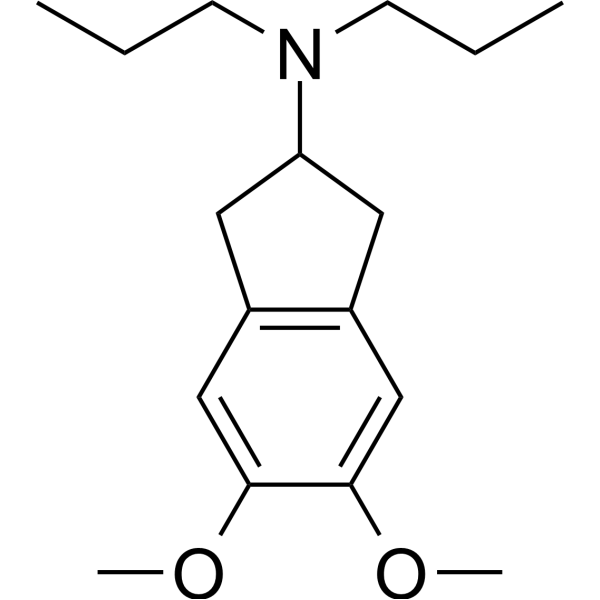
U-99194 (PNU-99194) is a selective, potent dopamine D3 receptor antagonist. U-99194 inhibits the activation of D3 receptor mediated by endogenously released dopamine or exogenous D3 agonists. U-99194 abrogates the IPSC-suppressive effect of the D3 agonist PD 128907 in rat hippocampal slices. U-99194 significantly suppresses Nicotine (HY-127019)-induced tremor in mice. U-99194 can be used for the study of dopamine D3 receptor-mediated motor disorders, particularly kinetic tremors .
|
-
- HY-19417
-
|
|
Serotonin Transporter
5-HT Receptor
|
Neurological Disease
|
|
Wf-516 hydrochloride is an inhibitor of 5-HT reuptake, and an antagonist of 5-HT1A and 5-HT2A receptors, with Ki of 5 nM and 40 nM for 5-HT1A receptor and 5-HT2A receptor in humans, respectively.Wf-516 hydrochloride has potent antidepressant activity.
|
-
- HY-117646
-
-
- HY-B0716S1
-
-
- HY-117799C
-
-

- HY-108081
-
|
|
5-HT Receptor
|
Neurological Disease
|
|
GSK-958108 is a highly selective 5-HT1A receptor antagonist. GSK-958108 is commonly used in the study of neurological conditions .
|
-

- HY-118775
-
|
|
5-HT Receptor
|
Others
|
|
LEK 8804 is a compound with 5-HT1A receptor agonist and 5-HT2 receptor antagonist properties, and has the activity of modulating related receptor-mediated behavioral responses. LEK 8804 can induce spontaneous tail-flick response in rats in a dose-dependent manner, showing complete 5-HT1A agonist activity, and can inhibit 5-HTP-induced head twitch response in mice, probably through antagonism of 5-HT2 receptors rather than agonism of 5-HT1A receptors.
|
-

- HY-119389
-
-

- HY-B0500R
-
|
NSC 35459 (Standard)
|
Reference Standards
5-HT Receptor
|
Metabolic Disease
|
|
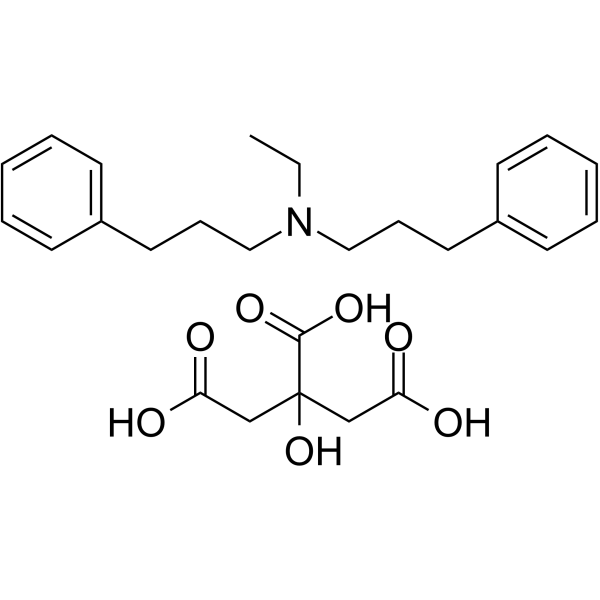
Alverine (citrate) (Standard) is the analytical standard of Alverine (citrate). This product is intended for research and analytical applications. Alverine citrate is a 5-HT1A receptor antagonist, with an IC50 of 101 nM.
|
-

- HY-10349R
-
|
|
Reference Standards
5-HT Receptor
Dopamine Receptor
|
Neurological Disease
|
|
WAY-100635 (Standard) is the analytical standard of WAY-100635. This product is intended for research and analytical applications. WAY-100635 is a potent and selective 5-HT1A Receptor antagonist with a pIC50 of 8.87, an apparent pA2 of 9.71.
WAY-100635 is a potent and selective 5-hydroxytryptamine 1A (5-HT1A) receptor antagonist with an IC50 value of 0.91 nM and Ki value of 0.39 nM. WAY-100635 has pIC50 values for 5-HT1A and α1-adrenergic receptors of 8.9 and 6.6, respectively. WAY-100635 is also a potent dopamine D4 receptor agonist .
|
-

- HY-116581
-
|
|
5-HT Receptor
|
Neurological Disease
|
|
5-HT7R antagonist 4 (Compound 4) is a potent 5-HT7 receptor antagonist (Ki=2.6 nM) with low binding affinity for the 5-HT1A receptor (Ki= 476 nM). 5-HT7R antagonist 4 is promising for research of neurological diseases .
|
-

- HY-19686A
-
|
TVX Q 7821
|
5-HT Receptor
|
Neurological Disease
|
|
Ipsapirone hydrochloride (TVX Q 7821) is an anxiolytic compound and a 5-HT1A receptor partial agonist. Ipsapirone hydrochloride (TVX Q 7821) also exhibits 5-HT1A receptor antagonistic effect, and only at high doses it can also produce an inhibitory effect on 5-HT2 and the α1-adrenergic function .
|
-

- HY-121053A
-
|
WY-50324 hydrochloride; SEB-324 hydrochloride
|
5-HT Receptor
|
Neurological Disease
|
|
Adatanserin hydrochloride is a high affinity, selective and partial agonist for the 5-HT1A receptor with a Ki of 1 nM. Adatanserin hydrochloride is a moderate affinity 5-HT2 receptor antagonist with a Ki of 73 nM. Adatanserin hydrochloride shows significant anxiolytic and antidepressant activity in an animal conflict model .
|
-

- HY-W714110
-
|
|
5-HT Receptor
|
Neurological Disease
|
|
UH 301 hydrochloride is a 5-HT1A receptor antagonist. UH 301 hydrochloride modulates consolidation of learning in normal and cognitively impaired rats. UH 301 hydrochloride can be used for Alzheimer’s disease and amnesia research .
|
-

- HY-19818AR
-
|
|
5-HT Receptor
|
Neurological Disease
|
|
NAN-190 (hydrobromide) (Standard) is the analytical standard of NAN-190 (hydrobromide). This product is intended for research and analytical applications. NAN-190 hydrobromide is a serotonin receptor 5-HT antagonist. NAN-190 is a selective antagonist of 5-HT1A .
|
-

- HY-117575
-
|
|
5-HT Receptor
|
Neurological Disease
|
|
WAY-100135 is a serotonergic compound belonging to the phenylpiperazine family, utilized in scientific research for its role as a strong antagonist of the 5-HT1A receptor and a partial agonist of the 5-HT1D receptor, with minimal activity at the 5-HT1B receptor.
|
-

- HY-117799
-
|
|
5-HT Receptor
|
Endocrinology
|
|
LY426965 is a potent arylpiperazine compound known for its role as a full antagonist of the serotonin 1A receptor, lacking partial agonist activity. It is identified as a selective 5-HT1A antagonist, showing promise in preclinical studies for treating conditions associated with serotonin dysregulation, such as smoking cessation and depression-related disorders .
|
-

- HY-15394A
-
|
N-0437
|
Adrenergic Receptor
5-HT Receptor
Dopamine Receptor
|
Neurological Disease
Endocrinology
|
|
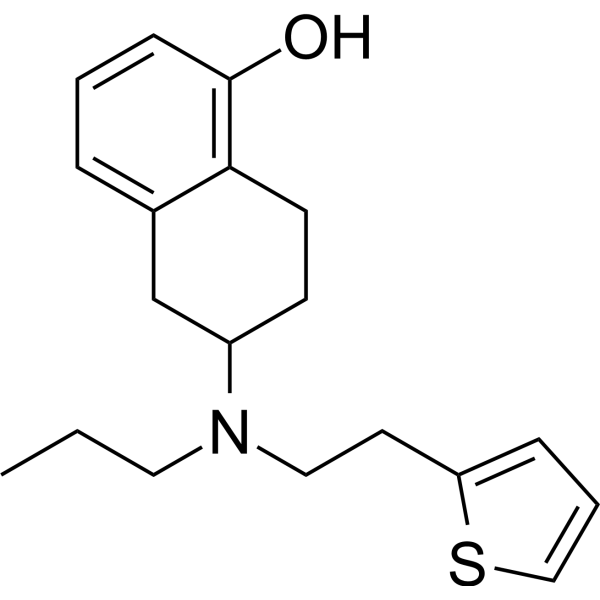
(Rac)-Rotigotine (N-0437) is a racemate of Rotigotine. Rotigotine is a full agonist of dopamine receptor, a partial agonist of the 5-HT1A receptor, and an antagonist of the α2B-adrenergic receptor, with Kis of 0.71 nM, 4-15 nM, and 83 nM for the dopamine D3 receptor and D2, D5, D4 receptors, and dopamine D1 receptor.
|
-
- HY-121053
-
|
WY-50324; SEB-324
|
5-HT Receptor
|
Neurological Disease
|
|
Adatanserin (WY-50324) is a high affinity, selective and partial agonist for the 5-HT1A receptor with a Ki of 1 nM. Adatanserin is a moderate affinity 5-HT2 receptor antagonist with a Ki of 73 nM. Adatanserin shows significant anxiolytic and antidepressant activity in an animal conflict model .
|
-

- HY-117799A
-
|
|
5-HT Receptor
|
Endocrinology
|
|
LY-426965 hydrochloride is a potent arylpiperazine compound known for its role as a full antagonist of the serotonin 1A receptor, lacking partial agonist activity. It is identified as a selective 5-HT1A antagonist, showing promise in preclinical studies for treating conditions associated with serotonin dysregulation, such as smoking cessation and depression-related disorders .
|
-

- HY-108509
-
|
BMY-14802-1; BMS 181100 hydrochloride
|
Sigma Receptor
5-HT Receptor
Adrenergic Receptor
|
Neurological Disease
|
|
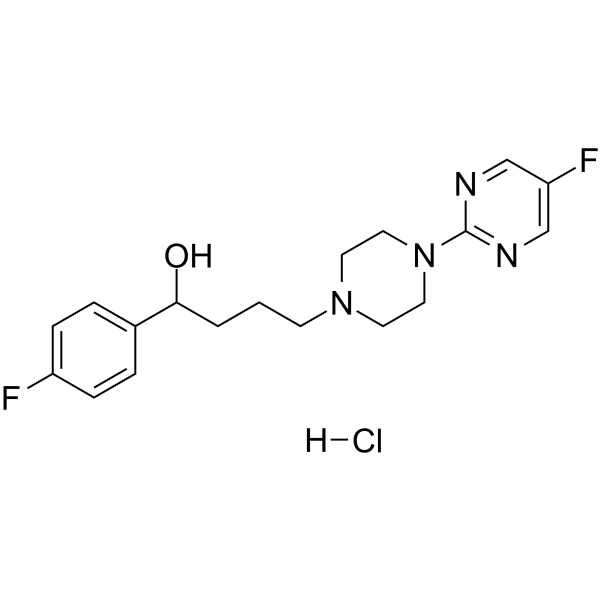
BMY-14802 hydrochloride (BMY-14802-1) is a selective and orally active sigma receptor antagonist with an IC50 of 112 nM. BMY-14802 hydrochloride is also a 5-HT1A and adrenergic α1 receptors agonist. BMY-14802 hydrochloride has antipsychotic effects .
|
-
- HY-A0095S
-
|
BIMT-17-d4; BIMT-17BS-d4
|
5-HT Receptor
|
Neurological Disease
|
|
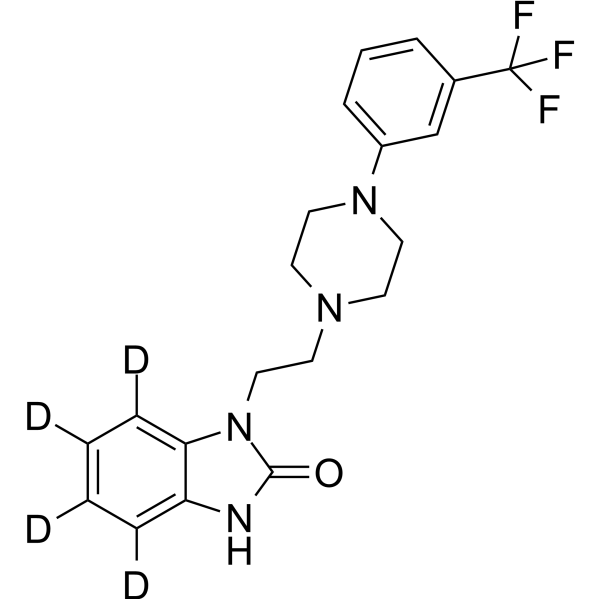
Flibanserin-d4 is a deuterium labeled Flibanserin (BIMT-17). Flibanserin is a full agonist of the serotonin 5-HT1A receptor (Ki=1 nM) and an antagonist of 5-HT2A (49 nM) .
|
-
- HY-106617
-
|
|
5-HT Receptor
Adrenergic Receptor
|
Neurological Disease
|
|
Etoperidone, an antidepressant agent, is an orally active serotonin and nor-adrenaline re-uptake antagonist. Etoperidone shows Kd values of 36 nM, 38 nM, 85 nM, and 570 nM for 5-HT2 receptor, α1-adrenergic receptor, 5-HT1A receptor, and α2-adrenergic receptor, respectively .
|
-

- HY-106617A
-
|
|
5-HT Receptor
Adrenergic Receptor
|
Neurological Disease
|
|
Etoperidone hydrochloride, an antidepressant agent, is an orally active serotonin and nor-adrenaline re-uptake antagonist. Etoperidone hydrochloride shows Kd values of 36 nM, 38 nM, 85 nM, and 570 nM for 5-HT2 receptor, α1-adrenergic receptor, 5-HT1A receptor, and α2-adrenergic receptor, respectively .
|
-

- HY-A0007R
-
|
N-0923 Hydrochloride (Standard)
|
Reference Standards
Dopamine Receptor
Adrenergic Receptor
5-HT Receptor
|
Neurological Disease
|
|
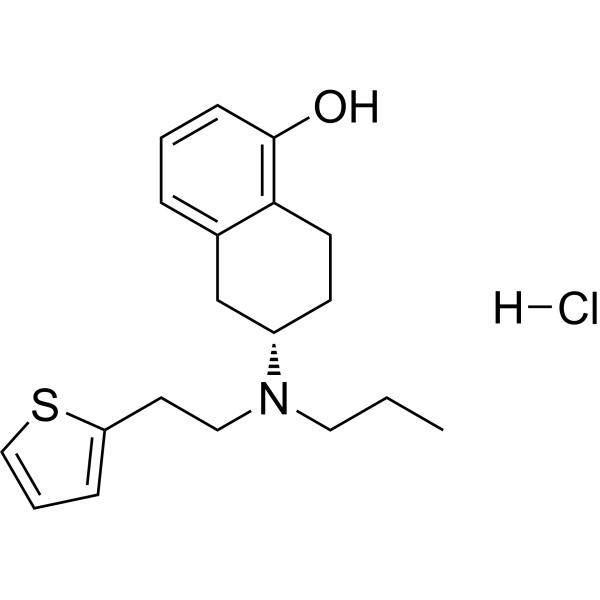
Rotigotine (Hydrochloride) (Standard) is the analytical standard of Rotigotine (Hydrochloride). This product is intended for research and analytical applications. Rotigotine Hydrochloride (N-0923 Hydrochloride) is a full agonist of dopamine receptor, a partial agonist of the 5-HT1A receptor, and an antagonist of the α2B-adrenergic receptor, with Ki of 0.71 nM, 4-15 nM, and 83 nM for the dopamine D3 receptor and D2, D5, D4 receptors, and dopamine D1 receptor.
|
-
- HY-14782A
-
|
SLV313 hydrochloride
|
5-HT Receptor
Dopamine Receptor
|
|
|
Adoprazine (SLV313) hydrochloride is a full 5-HT1A receptor agonist with a pEC50 of 9 at cloned h5-HT1A receptors. Adoprazine hydrochloride is a full D2 and D3 receptor antagonist with pA2s of 9.3 and 8.9 at hD2 and hD3 receptors, respectively. Adoprazine has the characteristics of atypical antipsychotics .
|
-

- HY-10349AR
-
|
|
Reference Standards
5-HT Receptor
Dopamine Receptor
|
Neurological Disease
|
|
WAY-100635 (maleate) (Standard) is the analytical standard of WAY-100635 (maleate). This product is intended for research and analytical applications. WAY-100635 maleate is a potent and selective 5-hydroxytryptamine 1A (5-HT1A) receptor antagonist with an IC50 value of 0.91 nM and Ki value of 0.39 nM. WAY-100635 maleate has pIC50 values for 5-HT1A and α1-adrenergic receptors of 8.9 and 6.6, respectively. WAY-100635 maleate is also a potent dopamine D4 receptor agonist .
|
-

- HY-112538
-
|
1-NP hydrochloride; 1-NapHThylpiperazine hydrochloride
|
5-HT Receptor
Apoptosis
|
Inflammation/Immunology
Cancer
|
|
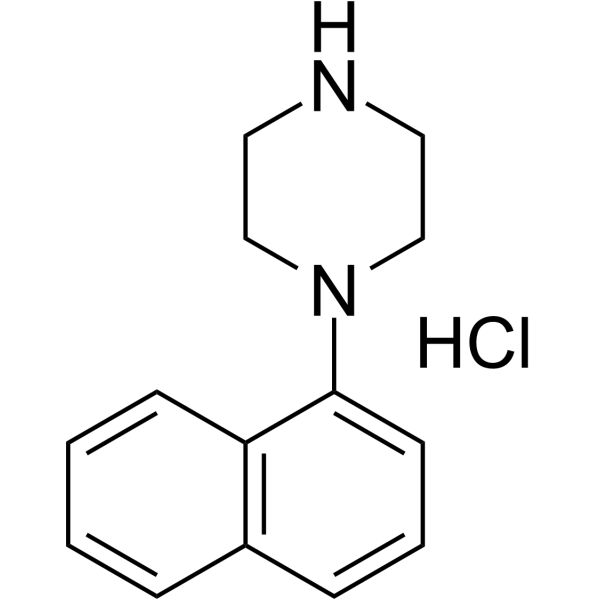
1-1-Naphthylpiperazine hydrochloride (1-NP hydrochloride; 1-Naphthylpiperazine hydrochloride) is a serotonergic derivative of quipazine, which is both an agonist for 5-HT1A receptor and an antagonist for 5-HT2A receptor. 1-1-Naphthylpiperazine hydrochloride induces cell apoptosis. 1-1-Naphthylpiperazine hydrochloride prevents the immunosuppression and photocarcinogenesis .
|
-
- HY-105034
-
|
BMY 13859-1 free base
|
5-HT Receptor
|
Neurological Disease
|
|
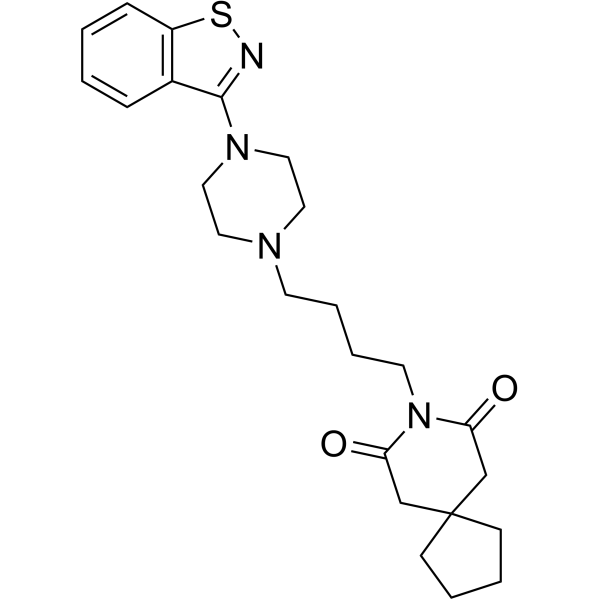
Tiospirone is a 5-HT2 receptor antagonist with affinity for D2, 5-HT1a, and 5-HT7, and sigma receptors. Tiospirone decreases consumption of ethanol while increasing food intake of rats. Tiospirone can also reduce the reinforcing properties of Cocaine exhibited in the conditioned place preference paradigm .
|
-
- HY-15394S1
-
|
N-0437-d3 hydrochloride
|
Isotope-Labeled Compounds
Adrenergic Receptor
Dopamine Receptor
5-HT Receptor
|
Endocrinology
|
|
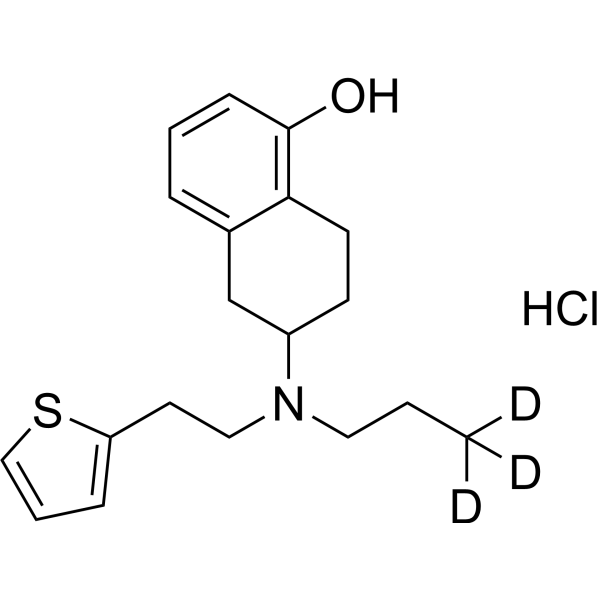
(Rac)-Rotigotine-d3 hydrochloride is a deuterium labeled (Rac)-Rotigotine (hydrochloride) (HY-15394). (Rac)-Rotigotine hydrochloride is a racemate of Rotigotine. Rotigotine is a full agonist of dopamine receptor, a partial agonist of the 5-HT1A receptor, and an antagonist of the α2B-adrenergic receptor, with Kis of 0.71 nM, 4-15 nM, and 83 nM for the dopamine D3 receptor and D2, D5, D4 receptors, and dopamine D1 receptor.
|
-
- HY-15394R
-
|
N-0437 hydrochloride (Standard)
|
Dopamine Receptor
Adrenergic Receptor
5-HT Receptor
Reference Standards
|
Neurological Disease
Endocrinology
|
|
(Rac)-Rotigotine (hydrochloride) (Standard) is the analytical standard of (Rac)-Rotigotine (hydrochloride). This product is intended for research and analytical applications. (Rac)-Rotigotine hydrochloride is a racemate of Rotigotine. Rotigotine is a full agonist of dopamine receptor, a partial agonist of the 5-HT1A receptor, and an antagonist of the α2B-adrenergic receptor, with Kis of 0.71 nM, 4-15 nM, and 83 nM for the dopamine D3 receptor and D2, D5, D4 receptors, and dopamine D1 receptor.
|
-

- HY-116908
-
|
|
5-HT Receptor
|
Neurological Disease
|
|
SB-272183 is a selective 5-HT1A, 5-HT1B and 5-HT1D receptor antagonist. In addition, SB-272183 is also a potent and selective ligand for 5-HT1A, 5-HT1B and 5-HT1D receptors in human recombinant and native tissues with pKi values of 8.0, 8.1 and 8.7, respectively. SB-272183 can be used in antidepressant research .
|
-

- HY-136487
-
|
Bu N-oxide
|
Drug Metabolite
|
Neurological Disease
|
|
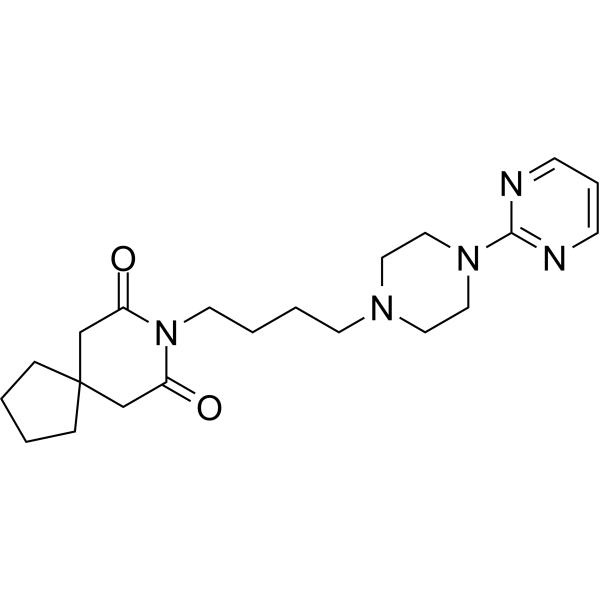
Buspirone N-oxide (Bu N-oxide) is a metabolite of Buspirone (HY-B1115A). Buspirone is an orally active 5-HT1A receptor agonist, and a dopamine D2 autoreceptorsant antagonist. Buspirone is an anxiolytic agent, and can be used for the generalized anxiety disorder research .
|
-

- HY-B1213S
-
-
- HY-106904
-
|
|
Calcium Channel
5-HT Receptor
Dopamine Receptor
|
Cardiovascular Disease
|
|
Nexopamil is a calcium antagonist of Ca 2+ channel, 5HT2, 5HT1A, 5HT1C and dopamine D2 receptors. Nexopamil exhibits vasodilatory, cardioprotective, and platelet aggregation inhibiting effects. Nexopamil can be used for researches of stable or unstable angina and possibly of peripheral arterial occlusive disease .
|
-

- HY-75502R
-
|
N-0923 (Standard); (-)-N 0437 (Standard)
|
Reference Standards
Dopamine Receptor
Adrenergic Receptor
5-HT Receptor
|
Neurological Disease
Endocrinology
|
|
Rotigotine (Standard) is the analytical standard of Rotigotine. This product is intended for research and analytical applications. Rotigotine is a potent dopamine receptor agonist with Ki values of 0.71 nM, 4-15 nM, and 83 nM for the dopamine D3 receptor and D2, D5, D4 receptors and dopamine D1 receptor. Rotigotine a partial agonist of the 5-HT1A receptor, and an antagonist of the α2B-adrenergic receptor. Rotigotine can be used for parkinson's disease (PD) research .
|
-

- HY-B0731R
-
|
SM-9018 (Standard)
|
Reference Standards
5-HT Receptor
Dopamine Receptor
|
Neurological Disease
|
|
Perospirone (hydrochloride) (Standard) is the analytical standard of Perospirone (hydrochloride). This product is intended for research and analytical applications. Perospirone hydrochloride (SM-9018) is an orally active antagonist of 5-HT2A receptor (Ki of 0.6 nM) and dopamine D2 receptor (Ki of 1.4 nM). Perospirone hydrochloride is also a partial agonist of 5-HT1A receptor (Ki of 2.9 nM). Perospirone hydrochloride is an atypical antipsychotic agent and has the potential for schizophrenic disease research .
|
-

- HY-19225A
-
|
KA-672; Anseculin
|
iGluR
5-HT Receptor
Adrenergic Receptor
Dopamine Receptor
|
Neurological Disease
|
|
Ensaculin free base (KA-672) is a NMDA antagonist and have high affinities to serotonergic 5-HT1A and 5-HT7 receptors, adrenergic α1, and dopaminergic D2 and D3 receptors. Ensaculin free base is a memory-enhancing agent. Ensaculin free base has the potential as an antidementia agent acting on various transmitter systems .
|
-
- HY-124117
-
|
|
5-HT Receptor
|
Neurological Disease
|
|
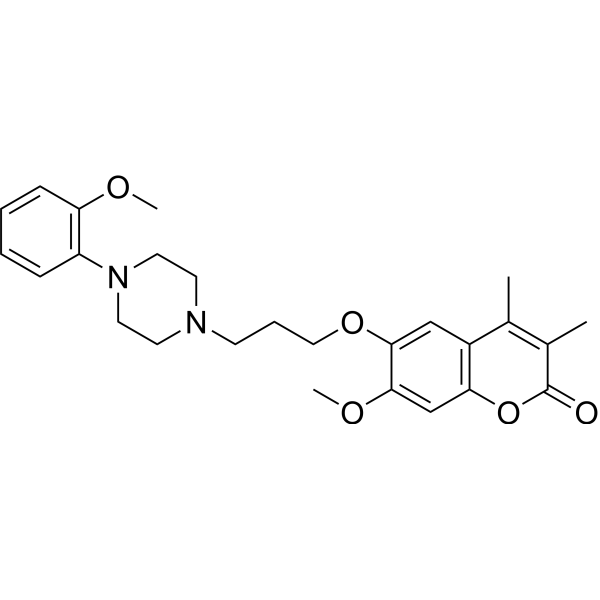
LY 278584 is a potent, highly selective 5-HT3 receptor antagonist with a Ki of 1.62 nM. LY 278584 has no activity on 5-HT1A, 5-HT1B, 5-HT1C, 5-HT1D, or 5-HT2 receptors .
|
-
- HY-110024
-
|
|
5-HT Receptor
Dopamine Receptor
|
Neurological Disease
|
|
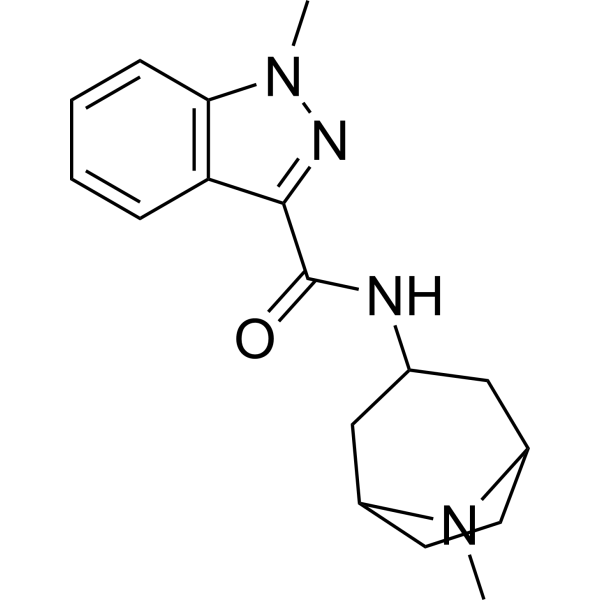
S-14506 hydrochloride is a potent 5-HT1A agonist, as well as 5-HT2A/2C antagonist. S-14506 hydrochloride displays dopamine antagonist properties by blocking dopamine D2 receptors. S-14506 hydrochloride inhibits the in vivo binding of [3H]raclopride in striatum and olfactory bulbs. S-14506 hydrochloride has the potential for the research of anxiolytic agent .
|
-
- HY-A0095S1
-
|
BIMT-17-d4-1; BIMT-17BS-d4-1
|
Isotope-Labeled Compounds
5-HT Receptor
|
Neurological Disease
|
|
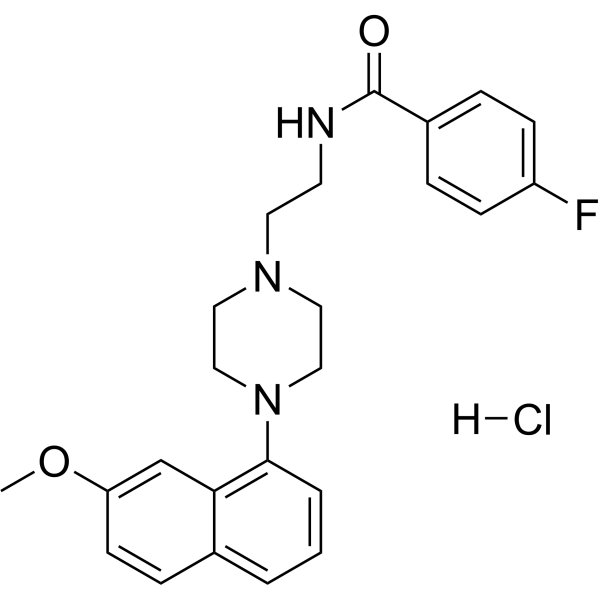
Flibanserin-d4-1 is deuterium labeled Flibanserin. Flibanserin (BIMT-17) is a full agonist of the serotonin 5-HT1A receptor (Ki=1 nM) and an antagonist of 5-HT2A (49 nM). Flibanserin binds to dopamine D4 receptors (4-24 nM), and has negligible affinity for a variety of other neurotransmitter receptors and ion channels. Flibanserin is efficacious in treating hypoactive sexual desire disorder (HSDD) .
|
-
- HY-106874A
-
|
RS-15385-197 hydrochloride
|
Adrenergic Receptor
|
Neurological Disease
|
|
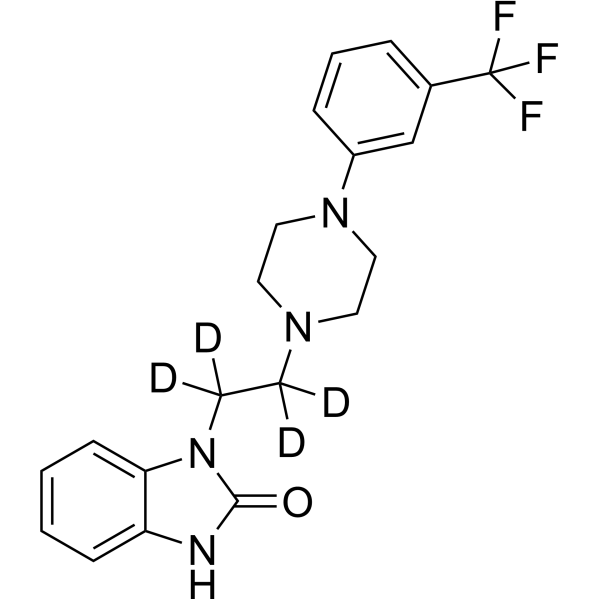
Delequamine (RS-15385-197) hydrochloride is an orally active and selective α2-adrenergic receptor antagonist with a pKi of 9.5 for α2-adrenoceptors in rat cortex. Delequamine hydrochloride shows >1000 fold selectivity against 5-HT1A receptors and α1-adrenoceptors. Delequamine hydrochloride can be used for the study of erectile dysfunction .
|
-

- HY-106874
-
|
RS-15385-197
|
Adrenergic Receptor
|
Neurological Disease
|
|
Delequamine (RS-15385-197) is an orally active and selective α2-adrenergic receptor antagonist with a pKi of 9.5 for α2-adrenoceptors in rat cortex. Delequamine shows >1000 fold selectivity against 5-HT1A receptors and α1-adrenoceptors. Delequamine can be used for the study of erectile dysfunction .
|
-

- HY-182677
-
|
|
5-HT Receptor
Dopamine Receptor
|
Neurological Disease
|
|
EF-7412 is a dual antagonist of the 5-HT1A receptor and dopamine D2 receptor, with Ki values of 27 nM and 22 nM, respectively. EF-7412 acts as an antagonist at both pre- and postsynaptic 5-HT1A receptor sites, blocking 8-OH-DPAT (HY-112061)-induced hypothermia, behavioral syndrome, and corticosterone elevation in vivo. EF-7412 increases hypothalamic 5-HIAA/5-HT and DOPAC/DA ratios, alters 5-HT and DA neuronal activity, and slightly decreases spontaneous motor activity. EF-7412 can be used for research on 5-HT1A/D2 receptor regulation and related neural pathways .
|
-

- HY-100658S
-
|
|
Isotope-Labeled Compounds
5-HT Receptor
Dopamine Receptor
|
Neurological Disease
|
|
Didesmethyl cariprazine-d8 is the deuterium labeled Didesmethyl cariprazine (HY-100658). Didesmethyl cariprazine is an orally active, BBB-permeable metabolite of Cariprazine (HY-14763). Didesmethyl cariprazine is a partial agonist at the D2 and D3 receptors, full agonist at the 5-HT1A receptor, and antagonist at the human 5-HT2B receptor (Ki: 1.41 nM (human D2L), 0.056 nM (human D3), 1.7 nM (human 5-HT1A), 0.52 nM (human 5-HT2B)). Didesmethyl cariprazine dose-dependently inhibits the spontaneous activity of rat midbrain dopaminergic neurons.
|
-

- HY-14544
-
|
ICI204636
|
5-HT Receptor
Dopamine Receptor
|
Neurological Disease
|
|
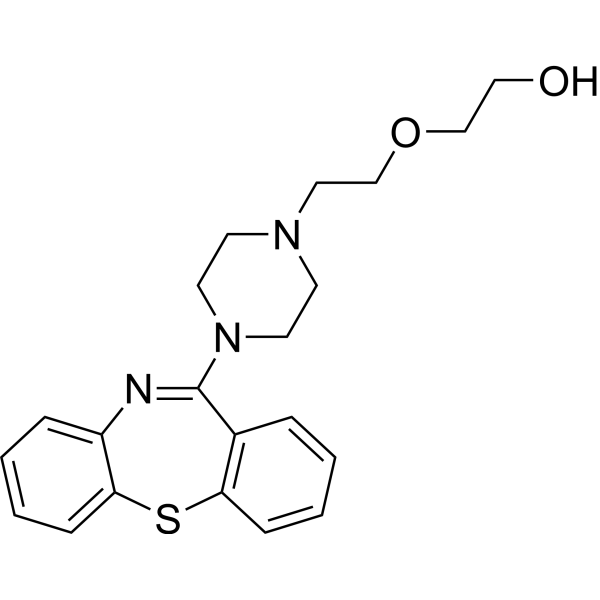
Quetiapine (ICI204636) is a 5-HT receptors agonist with a pEC50 of 4.77 for human 5-HT1A receptor. Quetiapine is a dopamine receptor antagonist with a pIC50 of 6.33 for human D2 receptor. Quetiapine has moderate to high affinity for the human D2, HT1A, 5-HT2A, 5-HT2C receptor with pKis of 7.25, 5.74, 7.54, 5.55. Antidepressant and anxiolytic effects .
|
-
- HY-B0031
-
|
|
5-HT Receptor
Dopamine Receptor
|
Neurological Disease
|
|
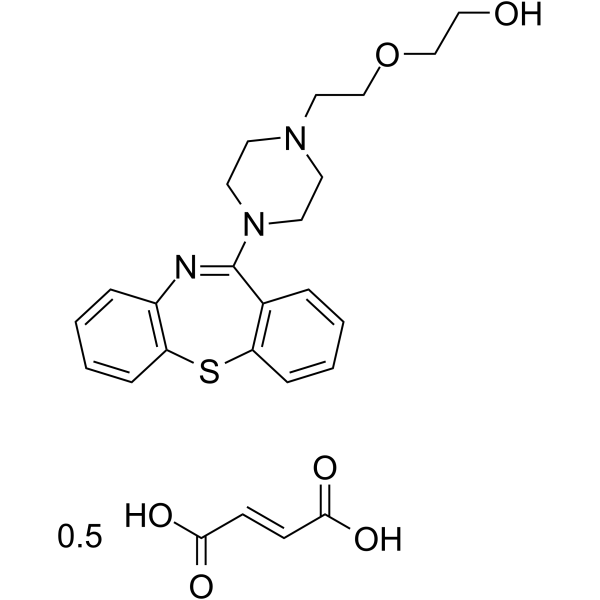
Quetiapine hemifumarate is a 5-HT receptors agonist with a pEC50 of 4.77 for human 5-HT1A receptor. Quetiapine hemifumarate is a dopamine receptor antagonist with a pIC50 of 6.33 for human D2 receptor. Quetiapine hemifumarate has moderate to high affinity for the human D2, HT1A, 5-HT2A, 5-HT2C receptor with pKis of 7.25, 5.74, 7.54, 5.55. Antidepressant and anxiolytic effects .
|
-
- HY-15780R
-
|
OPC-34712 (Standard)
|
Reference Standards
5-HT Receptor
Dopamine Receptor
Adrenergic Receptor
|
Neurological Disease
|
|
Brexpiprazole (Standard) is the analytical standard of Brexpiprazole. This product is intended for research and analytical applications. Brexpiprazole (OPC-34712), an atypical orally active antipsychotic agent, is a partial agonist of human 5-HT1A and dopamine D2L receptor with Kis of 0.12 nM and 0.3 nM, respectively. Brexpiprazole is also a 5-HT2A receptor antagonist with a Ki of 0.47 nM. Brexpiprazole also shows potent antagonist activity at human noradrenergic α1B (Ki=0.17 nM) and α2C receptors (Ki=0.59 nM) .
|
-

- HY-15414
-
-
- HY-110024A
-
|
|
5-HT Receptor
|
Neurological Disease
|
|
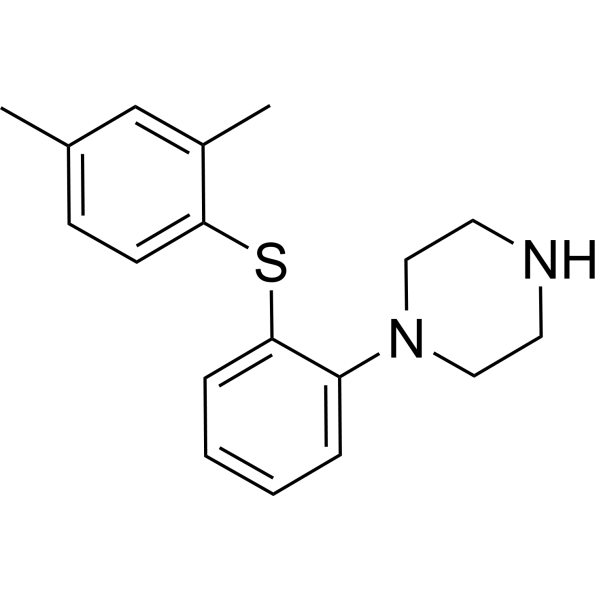
S-14506 hydrochloride is a potent 5-HT1A agonist. S-14506 hydrochloride displays dopamine antagonist properties by blocking dopamine D2 receptors. S-14506 hydrochloride inhibits the in vivo binding of [3H]raclopride in striatum and olfactory bulbs. S-14506 hydrochloride has the potential for the research of anxiolytic agent .
|
-

- HY-B0032AS
-
|
SM-13496-d8
|
5-HT Receptor
Dopamine Receptor
|
Neurological Disease
|
|
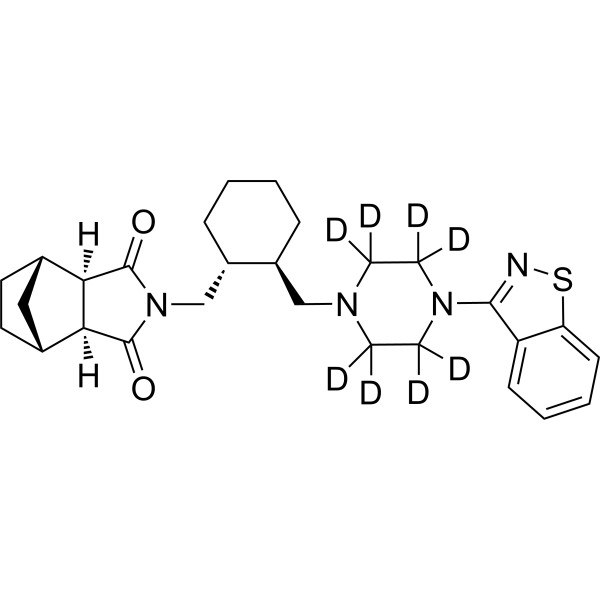
Lurasidone-d8 is deuterium labeled Lurasidone. Lurasidone (SM-13496) is an antagonist of both dopamine D2 and 5-HT7 with IC50s of 1.68 and 0.495 nM, respectively. Lurasidone (SM-13496) is also a partial agonist of 5-HT1A receptor with an IC50 of 6.75 nM.
|
-
- HY-14542B
-
|
CP-88059 mesylate trihydrate
|
5-HT Receptor
Dopamine Receptor
|
Neurological Disease
|
|
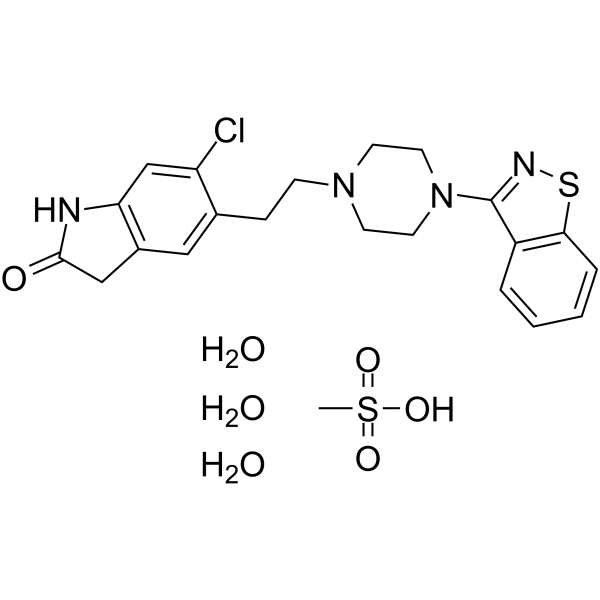
Ziprasidone (CP-88059) mesylate trihydrate is an orally active combined 5-HT and dopamine receptor antagonist . Ziprasidone mesylate trihydrate has affinities for Rat D2 (Ki=4.8 nM), 5-HT2A (Ki=0.42 nM) and 5-HT1A (Ki=3.4 nM) .
|
-
- HY-B1371
-
|
Spiroperidol
|
Dopamine Receptor
5-HT Receptor
Wnt
|
Neurological Disease
|
|
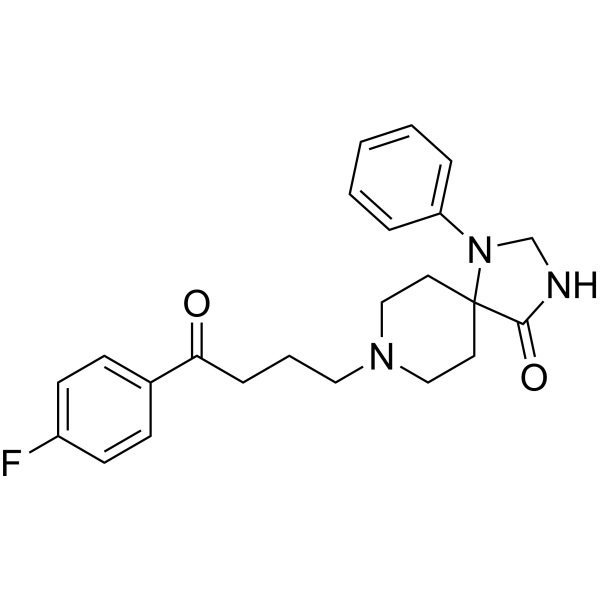
Spiperone (Spiroperidol) is a potent dopamine D2, serotonin 5-HT1A, and serotonin 5-HT2A antagonist. Spiperone is also a labelled ligand for neuroleptic receptors. Spiperone enhances intracellular calcium level and inhibits the Wnt signaling pathway. Spiperone has the potential for the research of neurology diseases .
|
-
- HY-B0354A
-
-
- HY-100658R
-
|
|
5-HT Receptor
Reference Standards
Dopamine Receptor
|
Neurological Disease
|
|
Didesmethyl cariprazine (Standard) is the analytical standard of Didesmethyl cariprazine (HY-100658). This product is intended for research and analytical applications. Didesmethyl cariprazine is an orally active, BBB-permeable metabolite of Cariprazine (HY-14763). Didesmethyl cariprazine is a partial agonist at the D2 and D3 receptors, full agonist at the 5-HT1A receptor, and antagonist at the human 5-HT2B receptor (Ki: 1.41 nM (human D2L), 0.056 nM (human D3), 1.7 nM (human 5-HT1A), 0.52 nM (human 5-HT2B)). Didesmethyl cariprazine dose-dependently inhibits the spontaneous activity of rat midbrain dopaminergic neurons .
|
-

- HY-108509R
-
|
BMY-14802-1 (Standard); BMS 181100 hydrochloride (Standard)
|
Reference Standards
Sigma Receptor
5-HT Receptor
Adrenergic Receptor
|
Neurological Disease
|
|
BMY-14802 hydrochloride (Standard) is the analytical standard of BMY-14802 (hydrochloride) (HY-108509). This product is intended for research and analytical applications. BMY-14802 hydrochloride (BMY-14802-1) is a selective and orally active sigma receptor antagonist with an IC50 of 112 nM. BMY-14802 hydrochloride is also a 5-HT1A and adrenergic α1 receptors agonist. BMY-14802 hydrochloride has antipsychotic effects .
|
-

- HY-107847
-
|
|
5-HT Receptor
Adrenergic Receptor
|
Neurological Disease
|
|
2-(2-Methoxyphenoxy)ethylamine hydrochloride (Compound 2b) is a mixed agonist/antagonist. 2-(2-Methoxyphenoxy)ethylamine hydrochloride is a5-HT1A receptor partial agonist and a α1-adrenergic receptor antagonist. 2-(2-Methoxyphenoxy)ethylamine hydrochloride can be used for neurological diseases research, such as anxiety, depression and psychosis .
|
-

- HY-107847R
-
|
|
Reference Standards
5-HT Receptor
Adrenergic Receptor
|
Neurological Disease
|
|
2-(2-Methoxyphenoxy)ethylamine hydrochloride (Standard) is the analytical standard of 2-(2-Methoxyphenoxy)ethylamine (hydrochloride) (HY-107847). This product is intended for research and analytical applications. 2-(2-Methoxyphenoxy)ethylamine hydrochloride (Compound 2b) is a mixed agonist/antagonist. 2-(2-Methoxyphenoxy)ethylamine hydrochloride is a5-HT1A receptor partial agonist and a α1-adrenergic receptor antagonist. 2-(2-Methoxyphenoxy)ethylamine hydrochloride can be used for neurological diseases research, such as anxiety, depression and psychosis .
|
-

- HY-B0031S2
-
|
|
Isotope-Labeled Compounds
5-HT Receptor
Dopamine Receptor
|
Neurological Disease
|
|
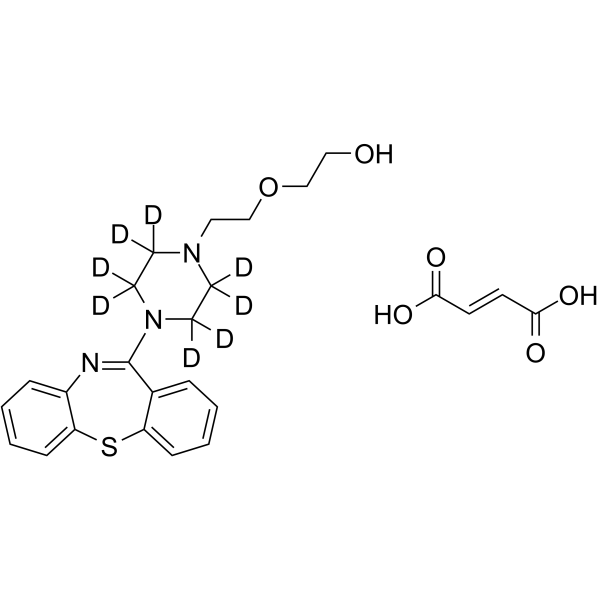
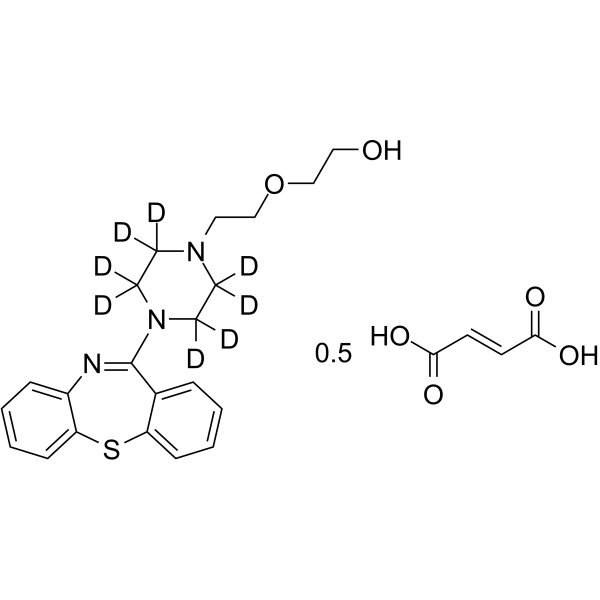
Quetiapine-d8 (fumarate) is the deuterium labeled Quetiapine. Quetiapine is a 5-HT receptors agonist with a pEC50 of 4.77 for human 5-HT1A receptor. Quetiapine is a dopamine receptor antagonist with a pIC50 of 6.33 for human D2 receptor. Quetiapine has moderate to high affinity for the human D2, HT1A, 5-HT2A, 5-HT2C receptor with pKis of 7.25, 5.74, 7.54, 5.55. Antidepressant and anxiolytic effects .
|
-
- HY-B0032AR
-
|
SM-13496 (Standard)
|
Reference Standards
5-HT Receptor
Dopamine Receptor
|
Neurological Disease
|
|
Lurasidone (Standard) is the analytical standard of Lurasidone. This product is intended for research and analytical applications. Lurasidone (SM-13496) is an antagonist of both dopamine D2 and 5-HT7 with IC50s of 1.68 and 0.495 nM, respectively. Lurasidone (SM-13496) is also a partial agonist of 5-HT1A receptor with an IC50 of 6.75 nM.
|
-

- HY-B0032R
-
|
SM-13496 Hydrochloride (Standard)
|
Reference Standards
5-HT Receptor
Dopamine Receptor
|
Neurological Disease
|
|
Lurasidone (Hydrochloride) (Standard) is the analytical standard of Lurasidone (Hydrochloride). This product is intended for research and analytical applications. Lurasidone (Hydrochloride) (SM-13496 (Hydrochloride)) is an antagonist of both dopamine D2 and 5-HT7 with IC50s of 1.68 and 0.495 nM, respectively. Lurasidone (Hydrochloride) (SM-13496 (Hydrochloride)) is also a partial agonist of 5-HT1A receptor with an IC50 of 6.75 nM.
|
-

- HY-14542
-
|
CP-88059
|
5-HT Receptor
Dopamine Receptor
|
Neurological Disease
|
|
Ziprasidone (CP-88059), an orally active antipsychotic agent, is a combined 5-HT and dopamine receptor antagonist . Ziprasidone mesylate trihydrate has affinities for Rat D2 (Ki=4.8 nM), 5-HT2A (Ki=0.42 nM) and 5-HT1A (Ki=3.4 nM) .
|
-
- HY-W654010
-
|
SM-13496-d8-1 hydrochloride
|
Isotope-Labeled Compounds
5-HT Receptor
Dopamine Receptor
|
Neurological Disease
|
|
Lurasidone-d8-1 (hydrochloride) is deuterium labeled Lurasidone (Hydrochloride). Lurasidone (Hydrochloride) (SM-13496 (Hydrochloride)) is an antagonist of both dopamine D2 and 5-HT7 with IC50s of 1.68 and 0.495 nM, respectively. Lurasidone (Hydrochloride) (SM-13496 (Hydrochloride)) is also a partial agonist of 5-HT1A receptor with an IC50 of 6.75 nM .
|
-

- HY-15414A
-
|
Lu AA21004 hydrobromide
|
5-HT Receptor
Serotonin Transporter
|
Neurological Disease
Cancer
|
|
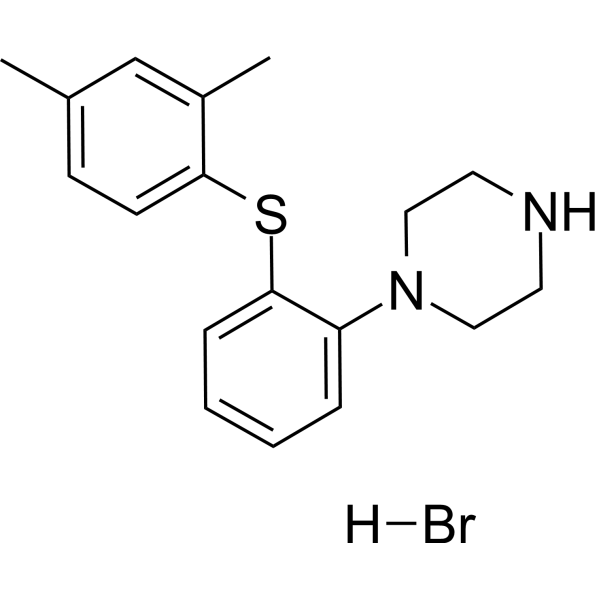
Vortioxetine (Lu AA 21004) hydrobromide is an antagonist of 5-HT3A and 5-HT7 receptors (Ki: 3.7 nM, 19 nM) and an inhibitor of 5-hydroxytryptamine transporter (SERT) (Ki: 1.6 nM), as well as a 5-HT1A agonist and a partial 5-HT1B agonist (Ki: 15 nM, 33 nM) .
|
-
- HY-15780S
-
|
OPC-34712-d8
|
Isotope-Labeled Compounds
5-HT Receptor
Dopamine Receptor
Adrenergic Receptor
|
Neurological Disease
|
|
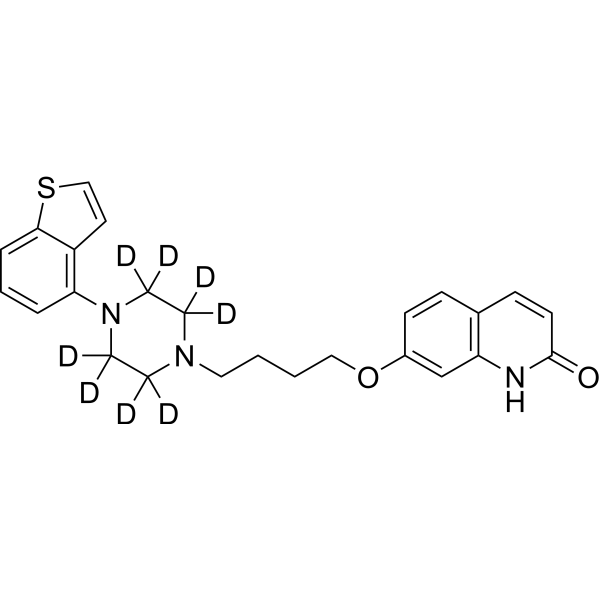
Brexpiprazole-d8 (OPC-34712-d8) is the deuterium labeled Brexpiprazole (HY-15780). Brexpiprazole (OPC-34712), an atypical orally active antipsychotic agent, is a partial agonist of human 5-HT1A and dopamine D2L receptor with Kis of 0.12 nM and 0.3 nM, respectively. Brexpiprazole is also a 5-HT2A receptor antagonist with a Ki of 0.47 nM. Brexpiprazole also shows potent antagonist activity at human noradrenergic α1B (Ki=0.17 nM) and α2C receptors (Ki=0.59 nM) .
|
-
- HY-15780S1
-
|
OPC-34712-d8-1
|
Isotope-Labeled Compounds
Dopamine Receptor
Adrenergic Receptor
5-HT Receptor
|
Neurological Disease
|
|
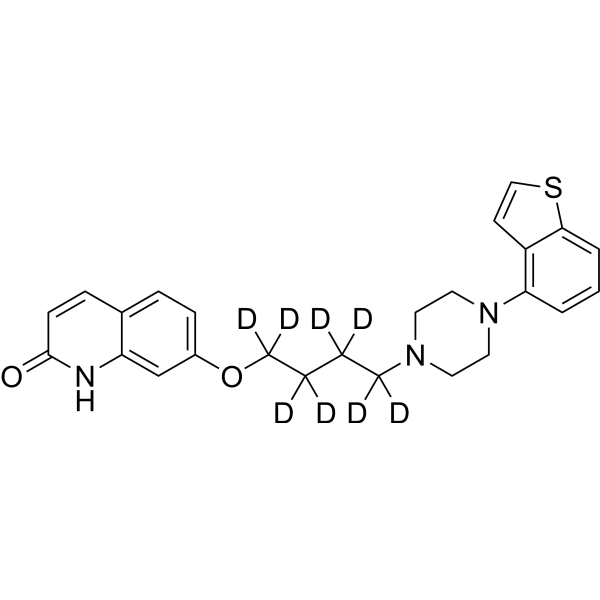
Brexpiprazole-d8-1 (OPC-34712-d8-1) is the deuterium labeled Brexpiprazole (HY-15780) . Brexpiprazole (OPC-34712), an atypical orally active antipsychotic agent, is a partial agonist of human 5-HT1A and dopamine D2L receptor with Kis of 0.12 nM and 0.3 nM, respectively. Brexpiprazole is also a 5-HT2A receptor antagonist with a Ki of 0.47 nM. Brexpiprazole also shows potent antagonist activity at human noradrenergic α1B (Ki=0.17 nM) and α2C receptors (Ki=0.59 nM) .
|
-
- HY-B0031S3
-
|
|
Isotope-Labeled Compounds
5-HT Receptor
Dopamine Receptor
|
Neurological Disease
|
|
Quetiapine-d8 (hemifumarate) is the deuterium labeled Quetiapine hemifumarate. Quetiapine hemifumarate is a 5-HT receptors agonist with a pEC50 of 4.77 for human 5-HT1A receptor. Quetiapine hemifumarate is a dopamine receptor antagonist with a pIC50 of 6.33 for human D2 receptor. Quetiapine hemifumarate has moderate to high affinity for the human D2, HT1A, 5-HT2A, 5-HT2C receptor with pKis of 7.25, 5.74, 7.54, 5.55. Antidepressant and anxiolytic effects .
|
-
- HY-14544R
-
|
ICI204636 (Standard)
|
Reference Standards
5-HT Receptor
Dopamine Receptor
|
Neurological Disease
|
|
Quetiapine (Standard) is the analytical standard of Quetiapine. This product is intended for research and analytical applications. Quetiapine (ICI204636) is a 5-HT receptors agonist with a pEC50 of 4.77 for human 5-HT1A receptor. Quetiapine is a dopamine receptor antagonist with a pIC50 of 6.33 for human D2 receptor. Quetiapine has moderate to high affinity for the human D2, HT1A, 5-HT2A, 5-HT2C receptor with pKis of 7.25, 5.74, 7.54, 5.55. Antidepressant and anxiolytic effects .
|
-

- HY-A0095R
-
|
BIMT-17 (Standard); BIMT-17BS (Standard)
|
Reference Standards
5-HT Receptor
|
Neurological Disease
Cancer
|
|
Flibanserin (Standard) is the analytical standard of Flibanserin. This product is intended for research and analytical applications. Flibanserin (BIMT-17; BIMT-17BS) is an orally active serotonin 5-HT1A receptor agonist and 5-HT2A receptor antagonist with Ki values of 1 nM and 49 nM, respectively. Flibanserin binds to dopamine D4 receptors with an Ki value of 4-24 nM. Flibanserin shows anti-depression and anti-anxiety effect, can be used to hypoactive sexual desire disorder (HSDD) research - .
|
-

- HY-103152R
-
|
|
Reference Standards
5-HT Receptor
|
Neurological Disease
Inflammation/Immunology
|
|
GR 113808 (Standard) is the analytical standard of GR 113808. This product is intended for research and analytical applications. GR 113808 is a potent and highly selective 5-HT4 receptor antagonist (pKb= 8.8). GR 113808 shows 300-fold selectivity over 5-HT1A, 5-HT1B, 5-HT2A, 5-HT2C and 5-HT3 receptors .
|
-

- HY-A0095A
-
|
BIMT-17 hydrochloride (propan-2-ol) hydrate; BIMT-17BS hydrochloride (propan-2-ol) hydrate
|
5-HT Receptor
|
Neurological Disease
Cancer
|
|
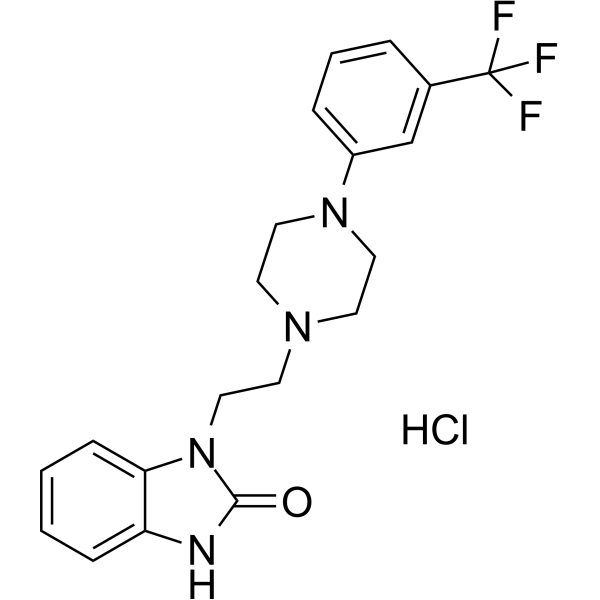
Flibanserin (BIMT-17) hydrochloride (propan-2-ol) hydrate is an orally active serotonin 5-HT1A receptor agonist and 5-HT2A receptor antagonist with Ki values of 1 nM and 49 nM, respectively. Flibanserin hydrochloride (propan-2-ol) hydrate binds to dopamine D4 receptors with an Ki value of 4-24 nM. Flibanserin hydrochloride (propan-2-ol) hydrate shows anti-depression and anti-anxiety effect, can be used to hypoactive sexual desire disorder (HSDD) research - .
|
-
- HY-B0731AS
-
|
SM-9018-d8 free base
|
Isotope-Labeled Compounds
5-HT Receptor
Dopamine Receptor
|
Neurological Disease
|
|
Perospirone-d8 (SM-9018-d8 (free base)) is deuterium labeled Perospirone. Perospirone (SM-9018 free base) is an orally active antagonist of 5-HT2A receptor (Ki=0.6 nM) and dopamine D2 receptor (Ki=1.4 nM), and also a partial agonist of 5-HT1A receptor (Ki=2.9 nM). Perospirone is an atypical antipsychotic agent and has the potential for schizophrenic disease research .
|
-

- HY-B0354AR
-
|
|
Reference Standards
5-HT Receptor
Adrenergic Receptor
|
Cardiovascular Disease
Endocrinology
|
|
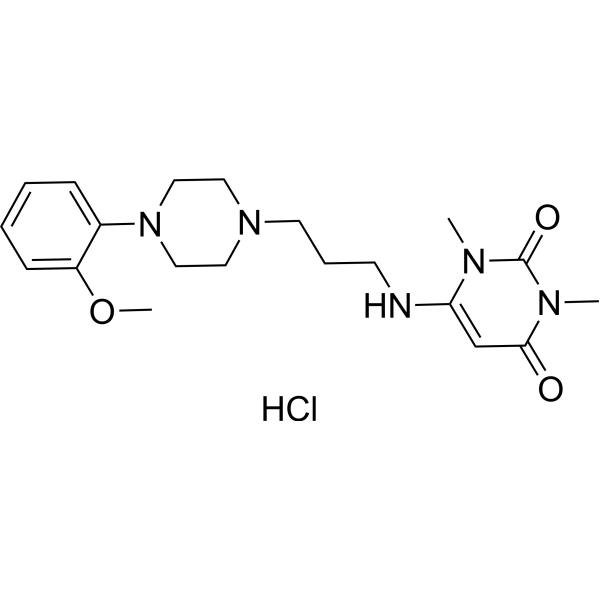
Urapidil (hydrochloride) (Standard) is the analytical standard of Urapidil (hydrochloride). This product is intended for research and analytical applications. Urapidil hydrochloride is an orally active α1-adrenoceptor antagonist and 5-HT1A receptor agonist with a pIC50 of 6.13 and 4.38 against α1- and α2-adrenoceptor, respectively. Urapidil hydrochloride shows antihypertensive effect .
|
-

- HY-B0031R
-
|
|
Reference Standards
5-HT Receptor
Dopamine Receptor
|
Neurological Disease
|
|
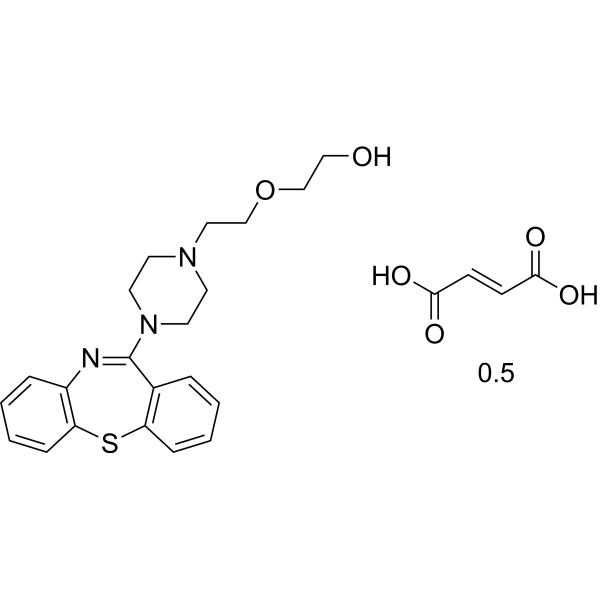
Quetiapine (hemifumarate) (Standard) is the analytical standard of Quetiapine (hemifumarate). This product is intended for research and analytical applications. Quetiapine hemifumarate is a 5-HT receptors agonist with a pEC50 of 4.77 for human 5-HT1A receptor. Quetiapine hemifumarate is a dopamine receptor antagonist with a pIC50 of 6.33 for human D2 receptor. Quetiapine hemifumarate has moderate to high affinity for the human D2, HT1A, 5-HT2A, 5-HT2C receptor with pKis of 7.25, 5.74, 7.54, 5.55. Antidepressant and anxiolytic effects .
|
-
- HY-B0031S5
-
|
|
Dopamine Receptor
5-HT Receptor
Isotope-Labeled Compounds
|
Neurological Disease
|
|
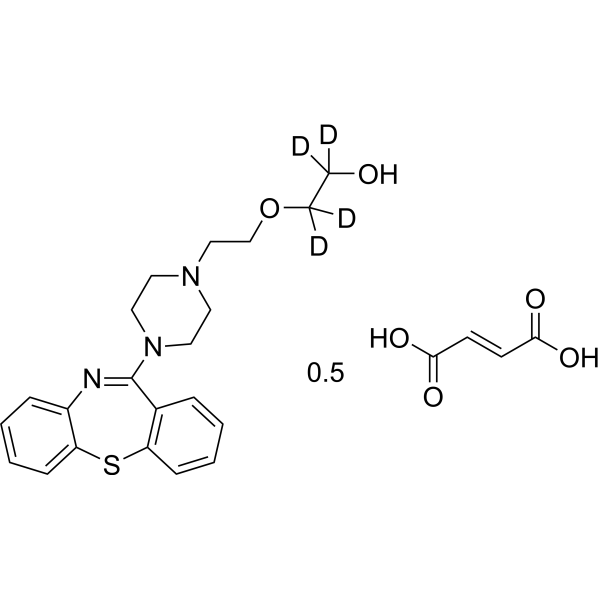
Quetiapine-d4-1 fumarate is deuterated labeled Quetiapine (hemifumarate) (HY-B0031). Quetiapine hemifumarate is a 5-HT receptors agonist with a pEC50 of 4.77 for human 5-HT1A receptor. Quetiapine hemifumarate is a dopamine receptor antagonist with a pIC50 of 6.33 for human D2 receptor. Quetiapine hemifumarate has moderate to high affinity for the human D2, HT1A, 5-HT2A, 5-HT2C receptor with pKis of 7.25, 5.74, 7.54, 5.55. Antidepressant and anxiolytic effects .
|
-
- HY-B0031S4
-
|
|
Dopamine Receptor
5-HT Receptor
|
Neurological Disease
|
|
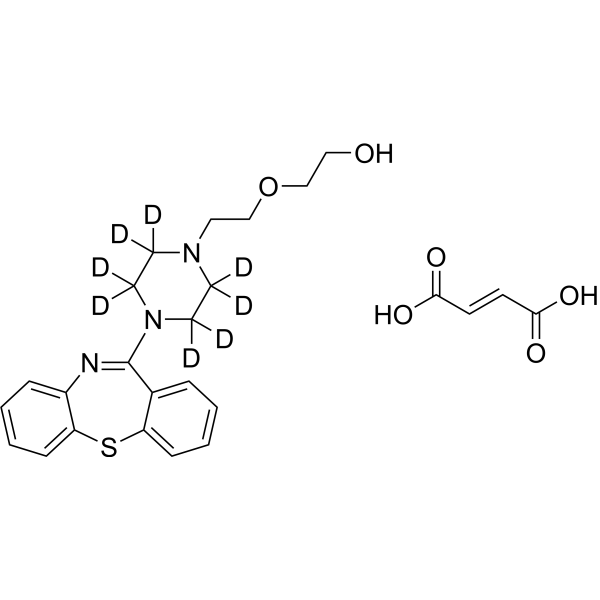
Quetiapine (hemifumarate)-d8 is the deuterium labeled Quetiapine hemifumarate . Quetiapine hemifumarate is a 5-HT receptors agonist with a pEC50 of 4.77 for human 5-HT1A receptor. Quetiapine hemifumarate is a dopamine receptor antagonist with a pIC50 of 6.33 for human D2 receptor. Quetiapine hemifumarate has moderate to high affinity for the human D2, HT1A, 5-HT2A, 5-HT2C receptor with pKis of 7.25, 5.74, 7.54, 5.55. Antidepressant and anxiolytic effects .
|
-
- HY-W394935
-
|
Disulfide,bis(2,4-dimethylphenyl)
|
Biochemical Assay Reagents
|
Others
|
|
Dixylyl disulphide (Disulfide, bis(2,4-dimethylphenyl)) is a 1,2-bis(2,4-dimethylphenyl) thioether that can serve as an impurity reference standard for hydrobromide vortioxetine, used for monitoring impurities in the synthesis process. Hydrobromide vortioxetine is a 5-HT3, 5-HT7, and 5-HT1D receptor antagonist and a 5-HT1A receptor agonist, exhibiting antidepressant activity .
|
-

- HY-123869
-
|
|
5-HT Receptor
|
Neurological Disease
|
|
GR127935 is a potent and orally active 5-HT1D and 5-HT1B receptor antagonist with pKis of 8.5 for both isoforms. GR127935 hydrochloride has 100-fold selectivity for 5-HT1B/1D receptors over 5-HT1A, 5-HT2A, and 5-HT2C receptors. GR127935 can be used in neurological disease research .
|
-

- HY-100794
-
|
|
5-HT Receptor
|
Neurological Disease
|
|
GR127935 hydrochloride is a potent and orally active 5-HT1D and 5-HT1B receptor antagonist with pKis of 8.5 for both isoforms. GR127935 hydrochloride has 100-fold selectivity for 5-HT1B/1D receptors over 5-HT1A, 5-HT2A, and 5-HT2C receptors. GR127935 hydrochloride can be used in neurological disease research .
|
-
- HY-17407R
-
|
CP 88059 hydrochloride monohydrate (Standard)
|
Reference Standards
5-HT Receptor
Dopamine Receptor
|
Neurological Disease
|
|
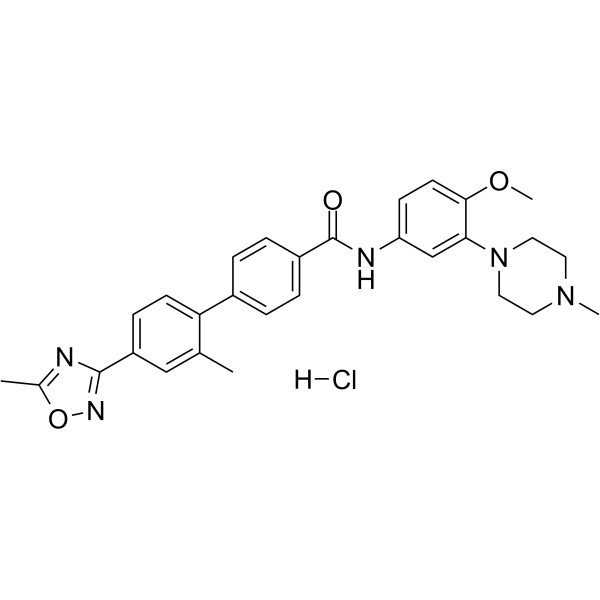
Ziprasidone (hydrochloride monohydrate) (Standard) is the analytical standard of Ziprasidone (hydrochloride monohydrate). This product is intended for research and analytical applications. Ziprasidone (CP-88059) hydrochloride monohydrate is an orally active combined 5-HT and dopamine receptor antagonist . Ziprasidone hydrochloride monohydrate has affinities for Rat D2 (Ki=4.8 nM), 5-HT2A (Ki=0.42 nM) and 5-HT1A (Ki=3.4 nM) .
|
-

- HY-14544AS
-
|
ICI204636-d4 hydrochloride
|
Isotope-Labeled Compounds
Dopamine Receptor
5-HT Receptor
|
Neurological Disease
|
|
Quetiapine-d4 (hydrochloride) (ICI204636-d4 (hydrochloride)) is deuterium labeled Quetiapine. Quetiapine (ICI204636) is a 5-HT receptors agonist with a pEC50 of 4.77 for human 5-HT1A receptor. Quetiapine is a dopamine receptor antagonist with a pIC50 of 6.33 for human D2 receptor. Quetiapine has moderate to high affinity for the human D2, HT1A, 5-HT2A, 5-HT2C receptor with pKis of 7.25, 5.74, 7.54, 5.55. Antidepressant and anxiolytic effects .
|
-

- HY-B1371R
-
|
Spiroperidol (Standard)
|
Dopamine Receptor
5-HT Receptor
Wnt
Reference Standards
|
Neurological Disease
|
|
Spiperone (Standard) is the analytical standard of Spiperone. This product is intended for research and analytical applications. Spiperone (Spiroperidol) is a potent dopamine D2, serotonin 5-HT1A, and serotonin 5-HT2A antagonist. Spiperone is also a labelled ligand for neuroleptic receptors. Spiperone enhances intracellular calcium level and inhibits the Wnt signaling pathway. Spiperone has the potential for the research of neurology diseases .
|
-

- HY-123138
-
|
|
5-HT Receptor
|
Neurological Disease
|
|
LY206130 free base is a 5-HT1A receptor antagonist with the activity of enhancing exogenous serotonin levels. LY206130 free base, when used concomitantly with fluoxetine, may enhance the appetite-suppressing effects of fluoxetine. LY206130 free base was shown to significantly reduce sweetened milk concentrate consumption in a dietary model. Clinical application of LY206130 free base may be beneficial in curbing eating disorders and obesity .
|
-

- HY-14542R
-
|
CP-88059 (Standard)
|
5-HT Receptor
Dopamine Receptor
Reference Standards
|
Neurological Disease
|
|
Ziprasidone (Standard) is the analytical standard of Ziprasidone. This product is intended for research and analytical applications. Ziprasidone (CP-88059), an orally active antipsychotic agent, is a combined 5-HT and dopamine receptor antagonist . Ziprasidone mesylate trihydrate has affinities for Rat D2 (Ki=4.8 nM), 5-HT2A (Ki=0.42 nM) and 5-HT1A (Ki=3.4 nM) .
|
-

- HY-15414R
-
|
Lu AA 21004 (Standard)
|
Reference Standards
5-HT Receptor
Serotonin Transporter
|
Neurological Disease
Cancer
|
|
Vortioxetine (Standard) is an analytical standard for Vortioxetine. This product is intended for research and analytical applications. Vortioxetine (Lu AA 21004) is an antagonist of 5-HT3A and 5-HT7 receptors (Ki: 3.7 nM, 19 nM) and an inhibitor of serotonin transporter (SERT) (Ki: 1.6 nM), as well as a 5-HT1A agonist and a partial 5-HT1B agonist (Ki: 15 nM, 33 nM) .
|
-

- HY-133152S
-
|
DM-3411 d8
|
Isotope-Labeled Compounds
5-HT Receptor
Dopamine Receptor
|
Neurological Disease
|
|
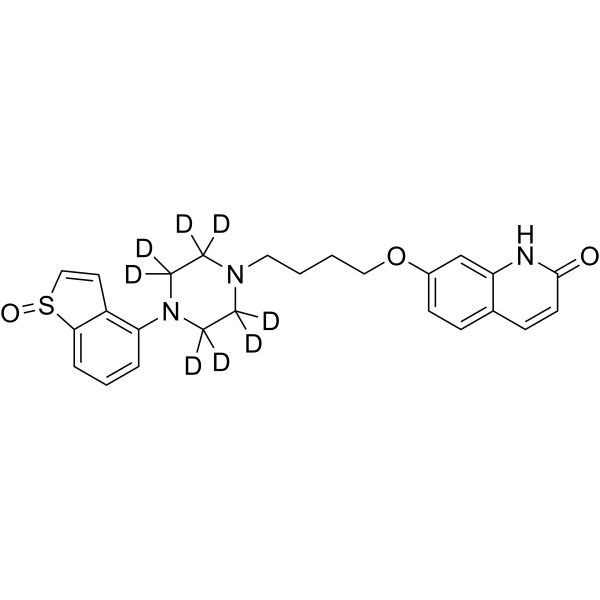
Brexpiprazole S-oxide-d8 (DM-3411 D8) is a deuterium labeled Brexpiprazole S-oxide (HY-133152). Brexpiprazole S-oxide is a main metabolite of Brexpiprazole and is metabolized by cytochrome P450 3A4 (CYP3A4). Brexpiprazole is an atypical antipsychotic agent and a partial agonist of human 5-HT1A and dopamine receptor with Kis of 0.12 nM and 0.3 nM, respectively. Brexpiprazole is also a 5-HT2A receptor antagonist with a Ki of 0.47 nM .
|
-
- HY-101094
-
|
R79598
|
5-HT Receptor
Dopamine Receptor
|
Neurological Disease
|
|
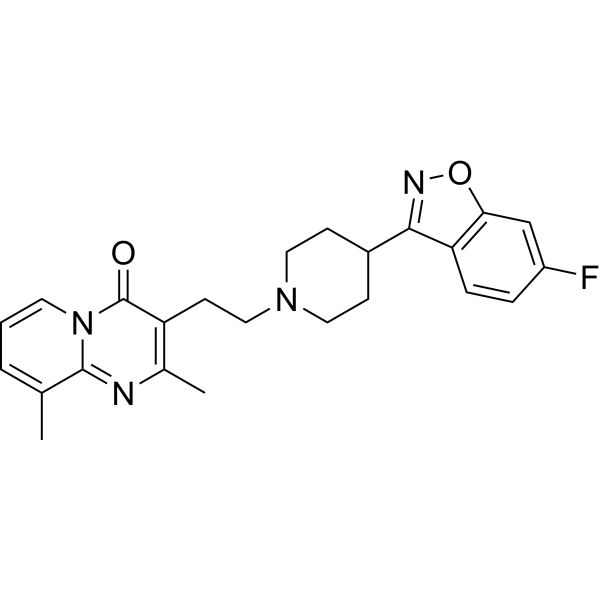
Ocaperidone is an effective antipsychotic agent, acting as a potent 5-HT2 and dopamine D2 antagonist, and a 5-HT1A agonist, with Kis of 0.14 nM, 0.46 nM, 0.75 nM, 1.6 nM and 5.4 nM for 5-HT2, a1-adrenergic receptor, dopamine D2, histamine H1 and a2-adrenergic receptor, respectively, and a pEC50 and pKi of 7.60 and 8.08 for h5-HT1A.
|
-
- HY-10861
-
|
|
5-HT Receptor
Dopamine Receptor
|
Neurological Disease
|
|
D3/5-HT receptor modulator-1 (compound 5i) is a selective dopamine D3 receptor and 5-HT2A receptor antagonist and a partial 5-HT1A receptor agonist. D3/5-HT receptor modulator-1 shows Ki values of 4.5 nM, 11.9 nM, and 15.3 nM for dopamine D3, 5-HT2A, and 5-HT2A receptors. D3/5-HT receptor modulator-1 has a low affinity for dopamine D2 receptors, 5-HT2C receptors, and hERG channels. D3/5-HT receptor modulator-1 has an atypical antipsychotic profile .
|
-

- HY-15414S2
-
|
Lu AA 21004-d4
|
Isotope-Labeled Compounds
5-HT Receptor
Serotonin Transporter
|
Neurological Disease
|
|
Vortioxetine-d4 (Lu AA 21004-d4) is the deuterium labeled Vortioxetine (HY-15414). Vortioxetine is an antagonist of 5-HT3A and 5-HT7 receptors (Ki: 3.7 nM, 19 nM) and an inhibitor of serotonin transporter (SERT) (Ki: 1.6 nM), as well as a 5-HT1A agonist and a partial agonist of 5-HT1B (Ki: 15 nM, 33 nM) .
|
-

- HY-15414S
-
|
Lu AA 21004 d8
|
Isotope-Labeled Compounds
5-HT Receptor
Serotonin Transporter
|
Neurological Disease
|
|
Vortioxetine-d8 (Lu AA 21004-d8) is a deuterated version of Vortioxetine. Vortioxetine (Lu AA 21004) is an antagonist of 5-HT3A and 5-HT7 receptors (Ki: 3.7 nM, 19 nM) and an inhibitor of 5-hydroxytryptamine transporter (SERT) (Ki: 1.6 nM), as well as a 5-HT1A agonist and a partial 5-HT1B agonist (Ki: 15 nM, 33 nM) .
|
-
- HY-15414AS
-
|
Lu AA21004-d8 hydrobromide
|
Isotope-Labeled Compounds
5-HT Receptor
Serotonin Transporter
|
Neurological Disease
|
|
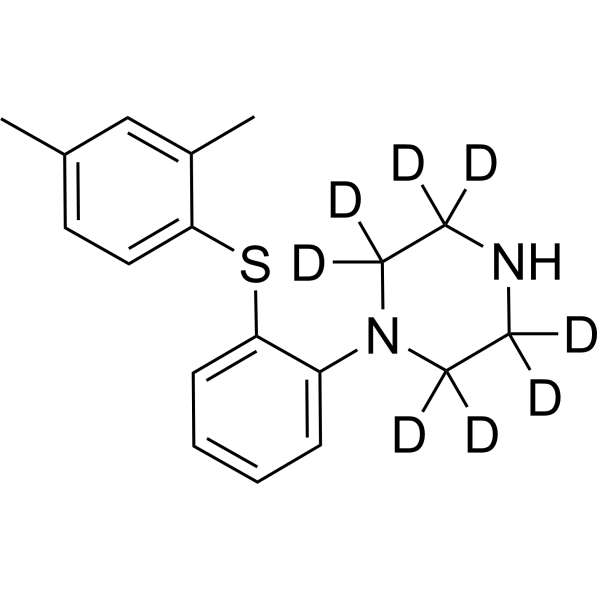
Vortioxetine-d8 (Lu AA 21004-d8) hydrobromide is the deuterated form of Vortioxetine. Vortioxetine (Lu AA 21004) is an antagonist of 5-HT3A and 5-HT7 receptors (Ki: 3.7 nM, 19 nM) and an inhibitor of 5-hydroxytryptamine transporter (SERT) (Ki: 1.6 nM), as well as a 5-HT1A agonist and a partial 5-HT1B agonist (Ki: 15 nM, 33 nM) .
|
-
- HY-15414AR
-
|
Lu AA21004 hydrobromide (Standard)
|
5-HT Receptor
Serotonin Transporter
Reference Standards
|
Neurological Disease
Cancer
|
|
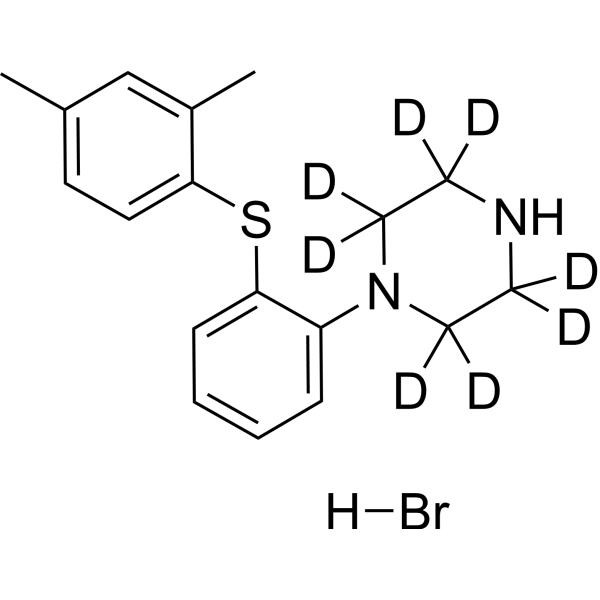
Vortioxetine (hydrobromide) (Standard) is the analytical standard of Vortioxetine (hydrobromide). This product is intended for research and analytical applications. Vortioxetine (Lu AA 21004) hydrobromide is an antagonist of 5-HT3A and 5-HT7 receptors (Ki: 3.7 nM, 19 nM) and an inhibitor of 5-hydroxytryptamine transporter (SERT) (Ki: 1.6 nM), as well as a 5-HT1A agonist and a partial 5-HT1B agonist (Ki: 15 nM, 33 nM) .
|
-

- HY-W052508R
-
|
N-Desalkylquetiapine (Standard)
|
5-HT Receptor
Reference Standards
|
Neurological Disease
|
|
Norquetiapine is an antidepressant and neuroprotective agent and is the active metabolic component of Quetiapine (HY-14544). Norquetiapine is also a partial 5-HT1A receptor agonist, and a presynaptic α2, 5-HT2C and 5-HT7 b> Receptor antagonist. Norquetiapine can also selectively inhibit norepinephrine transporter (NET), inhibit norepinephrine reuptake, and has potential inhibitory effects on bipolar depression, major depressive disorder, and generalized anxiety disorder. Norquetiapine demonstrated in vivo activity in forced swimming in mice and learned helplessness tests in rats .
|
-

- HY-15414S3
-
-

- HY-146202
-
|
|
Phosphodiesterase (PDE)
|
Others
|
|
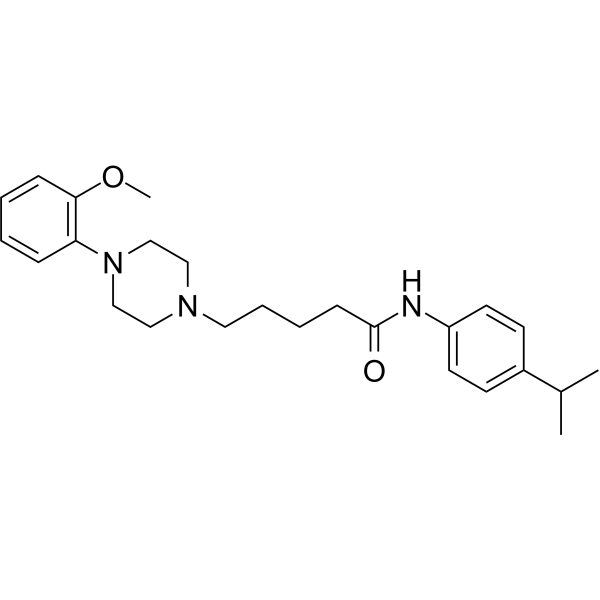
5-HT1A/5-HT7 receptor antagonist (5-HT1A Ki = 8 nM, Kb = 0.04 nM; 5-HT7 Ki = 451 nM, Kb = 460 nM) with PDE4B/PDE7A inhibitory activity (PDE4B IC50 = 80.4 μM; PDE7A IC50 = 151.3 μM) , its antidepressant like effect is stronger than that of escitalopram as a reference agent.
|
-
- HY-15414S1
-
|
Lu AA 21004-d6
|
Serotonin Transporter
5-HT Receptor
Isotope-Labeled Compounds
|
Neurological Disease
Cancer
|
|
Vortioxetine-d6 (Lu AA 21004-d6) is the deuterium labeled Vortioxetine (HY-B1490A). Vortioxetine (Lu AA 21004) is an antagonist of 5-HT3A and 5-HT7 receptors (Ki: 3.7 nM, 19 nM) and an inhibitor of serotonin transporter (SERT) (Ki: 1.6 nM), as well as a 5-HT1A agonist and a partial agonist of 5-HT1B (Ki: 15 nM, 33 nM) .
|
-

- HY-19283
-
|
|
5-HT Receptor
|
Neurological Disease
|
|
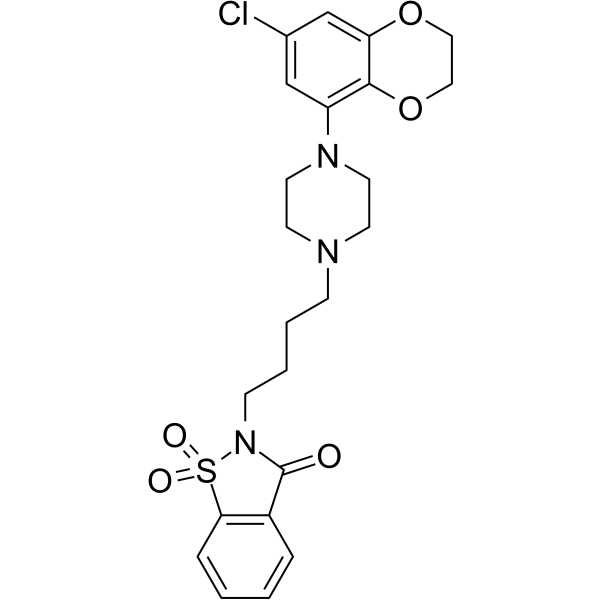
DU125530 is a potent and selective5-HT1A receptor antagonist with Ki values of 0.7, 890, 1200, 240, 750, 1100 nM for 5-HT1A, 5-HT1B, 5-HT1D, 5-HT2A, 5-HT2C, 5-HT3, respectively. DU125530 shows antidepressant effects .
|
-
- HY-19682A
-
|
|
5-HT Receptor
Adrenergic Receptor
|
Neurological Disease
|
|
Enciprazine dihydrochloride is an orally active non-benzodiazepine anxiolytic. Enciprazine dihydrochloride acts as an agonist of 5-HT1A receptor (5-HT1AR) and an antagonist of α1-adrenergic receptor (α1-adrenergic receptor) . Enciprazine dihydrochloride induces drug-related electroencephalogram changes by reducing the average power of δ waves and θ waves, and increasing the average power of α waves and fast β waves. Enciprazine dihydrochloride exhibits anti-aggressive activity, with only weak sedative and ataxic effects. Enciprazine dihydrochloride regulates plasma corticosterone levels and activates the hypothalamic-pituitary-adrenal axis. Enciprazine dihydrochloride can be used in research related to anxiety disorders, generalized anxiety syndrome and psychosis .
|
-

- HY-19682
-
|
|
5-HT Receptor
Adrenergic Receptor
|
Neurological Disease
|
|
Enciprazine is an orally active non-benzodiazepine anxiolytic. Enciprazine acts as an agonist of 5-HT1A receptor (5-HT1AR) and an antagonist of α1-adrenergic receptor (α1-adrenergic receptor) . Enciprazine induces drug-related electroencephalogram changes by reducing the average power of δ waves and θ waves, and increasing the average power of α waves and fast β waves. Enciprazine exhibits anti-aggressive activity, with only weak sedative and ataxic effects. Enciprazine regulates plasma corticosterone levels and activates the hypothalamic-pituitary-adrenal axis. Enciprazine can be used in research related to anxiety disorders, generalized anxiety syndrome and psychosis .
|
-

- HY-101343
-
|
|
5-HT Receptor
|
Neurological Disease
|
|
RS 39604 is a potent, selective, and orally active 5-HT4 receptor antagonist with a pKi of 9.1 in guinea pig striatal membranes. RS 39604 displays a low affinity (pKi<6.5) for 5-HT1A, 5-HT2C, 5-HT3, α1c, D1, D2, M1, M2, AT1, B1 and opioid mu receptors and moderate affinity for δ1, (pKi=6.8) and δ2 (pKi=7.8) sites .
|
-
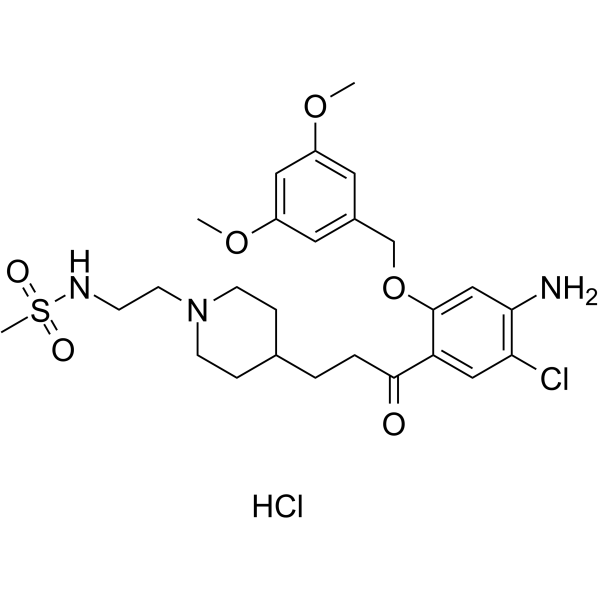
- HY-W130288
-
|
|
5-HT Receptor
Adenylate Cyclase
Apoptosis
Reactive Oxygen Species (ROS)
|
Cancer
|
|
1-(1-Naphthyl)piperazine is a 5-HT receptor modulator that acts as both a 5-HT2A receptor antagonist and 5-HT1A receptor agonist, and binds to human 5-HT6 receptor with a Ki of 120 nM. 1-(1-Naphthyl)piperazine partially inhibits forskolin-stimulated adenylate cyclase activity in calf substantia nigra. 1-(1-Naphthyl)piperazine inhibits UV-induced immunosuppression. 1-(1-Naphthyl)piperazine induces S-phase cell cycle delay, apoptosis and increases ROS levels, leading to inhibit MNT-1 cell proliferation. 1-(1-Naphthyl)piperazine can be used for melanoma research .
|
-

- HY-101094R
-
|
R79598 (Standard)
|
5-HT Receptor
Reference Standards
Dopamine Receptor
|
Neurological Disease
|
|
Ocaperidone (Standard) is the analytical standard of Ocaperidone (HY-101094). This product is intended for research and analytical applications. Ocaperidone is an effective antipsychotic agent, acting as a potent 5-HT2 and dopamine D2 antagonist, and a 5-HT1A agonist, with Kis of 0.14 nM, 0.46 nM, 0.75 nM, 1.6 nM and 5.4 nM for 5-HT2, a1-adrenergic receptor, dopamine D2, histamine H1 and a2-adrenergic receptor, respectively, and a pEC50 and pKi of 7.60 and 8.08 for h5-HT1A.
|
-

- HY-109112
-
|
RP5063
|
Dopamine Receptor
5-HT Receptor
|
Neurological Disease
Inflammation/Immunology
|
|
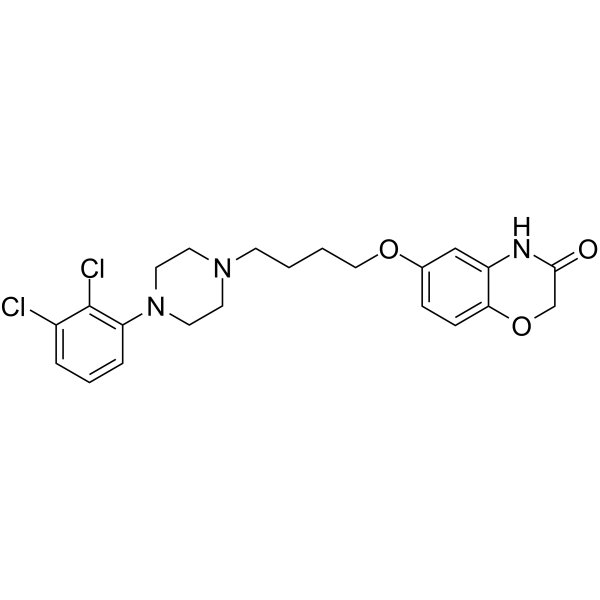
Brilaroxazine (RP5603) is a potent and orally active multimodal dopamine (DA)/serotonin (5-HT) modulator. Brilaroxazine is a partial agonist of dopamine (DA) D2, D3, and D4 receptors, 5-HT1A (Ki=1.5 nM) and 5-HT2A (Ki=2.5 nM), and has antagonist activity at 5-HT2B (Ki=0.19 nM), and 5-HT7 (Ki=2.7 nM) receptors . Brilaroxazine is an atypical antipsychotic agent, and has the potential to improve cognitive impairments in neuropsychiatric and neurological diseases in vivo .
|
-
- HY-B1213A
-
|
|
5-HT Receptor
Bacterial
|
Neurological Disease
|
|
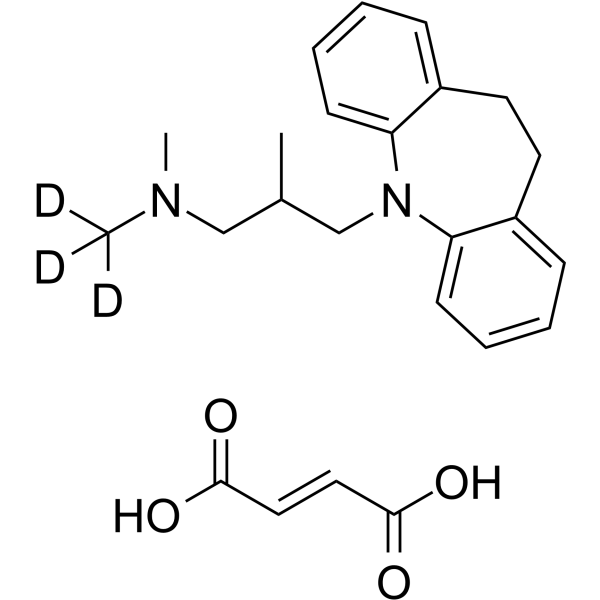
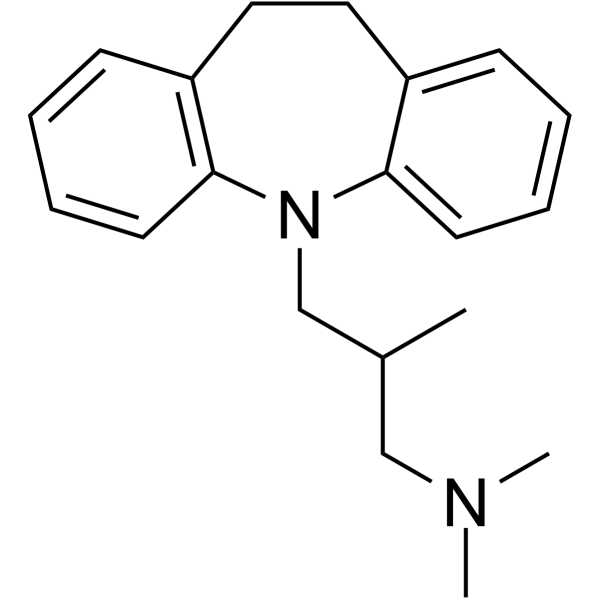
Trimipramine is a 5-HT receptor antagonist, with pKi binding values of 6.39, 8.10, 4.66 for 5-HT1C, 5-HT2 and 5-HT1A, respectively. Trimipramine is also a potent and selective inhibitor targeting human noradrenaline (hNAT), serotonin (hSERT) and organic cation transporters (hOCT1, hOCT2) with IC50 values of 4.99 μM, 2.11 μM, 3.72 μM, 8.00 μM, respectively. Trimipramine has vascular activity and anxiolytic efficacy .
|
-
- HY-B1101
-
|
Pimetixene
|
5-HT Receptor
Histamine Receptor
|
Neurological Disease
Endocrinology
|
|
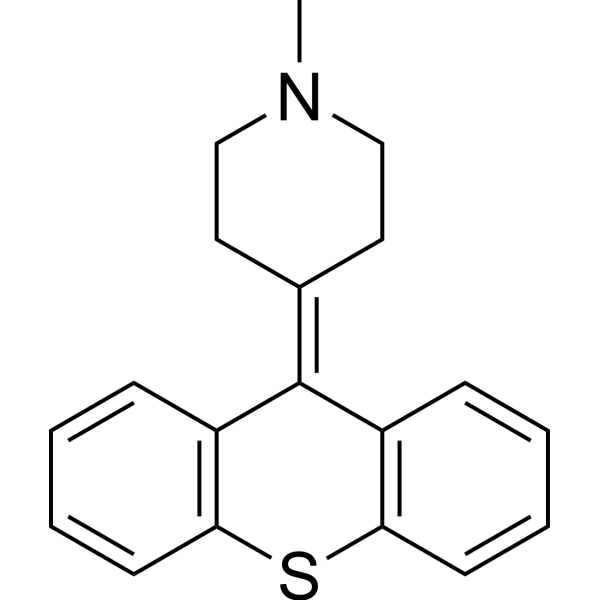
Pimethixene is antihistamine and antiserotonergic compound, acts as an antimigraine agent.
Pimethixene is a highly potent antagonist of 5-HT1A, 5-HT2A, 5-HT2B, 5-HT2C, histamine H1, dopamine D2 and D4.4 as well as muscarinic M1 and M2 receptors, with pKis of 7.63, 10.22, 10.44, 8.42, 10.14, 8.19, 7.54, 8.61 and 9.38, respectively .
|
-
- HY-B1101A
-
|
Pimetixene maleate
|
5-HT Receptor
Histamine Receptor
|
Neurological Disease
Endocrinology
|
|
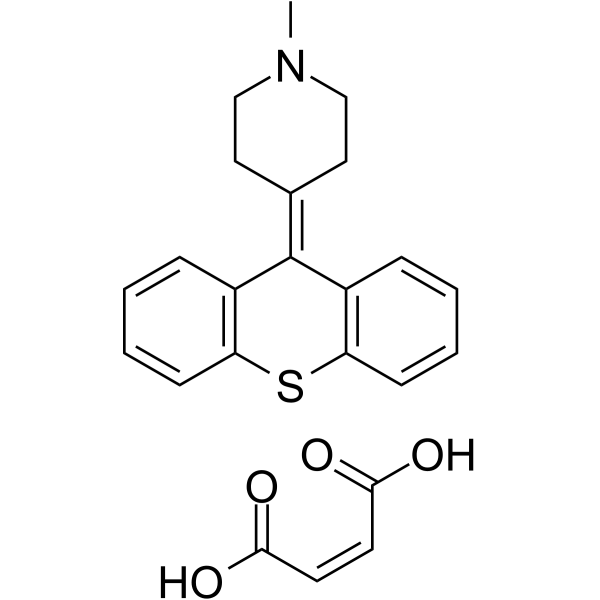
Pimethixene maleate is antihistamine and antiserotonergic compound, acts as an antimigraine agent.
Pimethixene maleate is a highly potent antagonist of 5-HT1A, 5-HT2A, 5-HT2B, 5-HT2C, histamine H1, dopamine D2 and D4.4 as well as muscarinic M1 and M2 receptors, with pKis of 7.63, 10.22, 10.44, 8.42, 10.14, 8.19, 7.54, 8.61 and 9.38, respectively .
|
-
- HY-109112R
-
|
RP5063 (Standard)
|
Reference Standards
Dopamine Receptor
5-HT Receptor
|
Neurological Disease
Inflammation/Immunology
|
|
Brilaroxazine (Standard) is the analytical standard of Brilaroxazine. This product is intended for research and analytical applications. Brilaroxazine (RP5603) is a potent and orally active multimodal dopamine (DA)/serotonin (5-HT) modulator. Brilaroxazine is a partial agonist of dopamine (DA) D2, D3, and D4 receptors, 5-HT1A (Ki=1.5 nM) and 5-HT2A (Ki=2.5 nM), and has antagonist activity at 5-HT2B (Ki=0.19 nM), and 5-HT7 (Ki=2.7 nM) receptors . Brilaroxazine is an atypical antipsychotic agent, and has the potential to improve cognitive impairments in neuropsychiatric and neurological diseases in vivo .
|
-

- HY-121562
-
|
|
5-HT Receptor
|
Neurological Disease
|
|
SB 714786 is a potent and selective 5-hydroxytryptamine 1D (5-HT1D) receptor antagonist. It was developed from the previously reported series of dual 5-HT1 selective 5-hydroxytryptamine reuptake inhibitors (5HT1-SSRIs). SB 714786 is the first reported highly potent and selective 5-HT1D receptor antagonist, providing an extremely useful pharmacological tool for further understanding the role of 5-HT1 receptor subtypes. It has no or very low intrinsic activity against all three receptors. SB 714786 has pKi values of 6.5, 6.7, 9.1 and 6.5 for 5-HT1A, 5-HT1B, 5-HT1D and SerT receptors, respectively, showing high selectivity for 5-HT1D receptors. These properties make SB 714786 a potential tool compound for studying the function of 5-HT1D receptors and the treatment of related diseases.
|
-

- HY-100057
-
|
6-Hydroxybuspirone; 6'-Hydroxybuspirone; BMS 528215
|
5-HT Receptor
Drug Metabolite
Dopamine Receptor
|
Neurological Disease
|
|
BMY 28674 (6-Hydroxybuspirone) is the active metabolite of the anxiolytic buspirone (HY-B1115A) and is metabolized by CYP3A4.4. BMY 28674 binds to the serotonin (5-HT) receptor subtype 5-HT1A in the rat hippocampus and dorsal raphe (EC50s are 4 and 1 μM, respectively) and is an antagonist of dopamine D2, D3, and D4 receptors (IC50s are 3.1, 4.9, and 0.85 μM, respectively). BMY 28674 also inhibits organic cation transporter 1 (OCT1), OCT2, and OCT3 expressing human transporters in S2 proximal tubule cells in a concentration-dependent manner.
|
-

- HY-B2169
-
|
|
5-HT Receptor
Dopamine Receptor
Adrenergic Receptor
Cytochrome P450
|
Neurological Disease
|
|
Melperone is a butyrophenone with atypical antipsychotic properties. Melperone is a multireceptor antagonist with Kds of 102 nM, 180 nM, 180 nM, and 150 nM for 5-HT2A, dopamine D2, α1-adrenergic, and α2-adrenergic receptors, respectively. Melperone has weak binding to histamine H1, 5-HT2C, 5-HT1A, 5-HT1D, and muscarinic receptors, with Kd values of 580 nM, 2100 nM, 2200 nM, 3400 nM, >10000 nM, respectively. Melperone is also a CYP2D6 inhibitor. Melperone can be used for the study of schizophrenia, and agitation in the elderly .
|
-
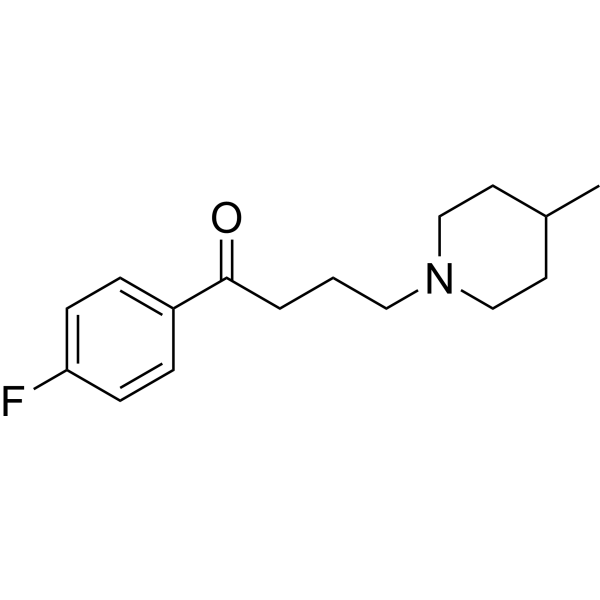
- HY-103109
-
|
|
5-HT Receptor
Dopamine Receptor
Adrenergic Receptor
Cytochrome P450
|
Neurological Disease
|
|
Melperone hydrochloride is a butyrophenone with atypical antipsychotic properties. Melperone hydrochloride is a multireceptor antagonist with Kds of 102 nM, 180 nM, 180 nM, and 150 nM for 5-HT2A, dopamine D2, α1-adrenergic, and α2-adrenergic receptors, respectively. Melperone hydrochloride has weak binding to histamine H1, 5-HT2C, 5-HT1A, 5-HT1D, and muscarinic receptors, with Kd values of 580 nM, 2100 nM, 2200 nM, 3400 nM, >10000 nM, respectively. Melperone hydrochloride is also a CYP2D6 inhibitor. Melperone hydrochloride can be used for the study of schizophrenia, and agitation in the elderly .
|
-

- HY-100554
-
|
|
Adrenergic Receptor
5-HT Receptor
|
Cardiovascular Disease
|
|
BMY 7378 is a selective antagonist of α1D-adrenoceptor (α1D-AR). BMY 7378 binds to membranes expressing the cloned rat α1D-AR with a >100-fold higher affinity (Ki=2 nM) than binding to either the cloned rat α1A-AR (Ki=800 nM) or the hamster α1B-AR (Ki=600 nM). BMY 7378 is a 5-HT1A receptor partial agonist .
|
-
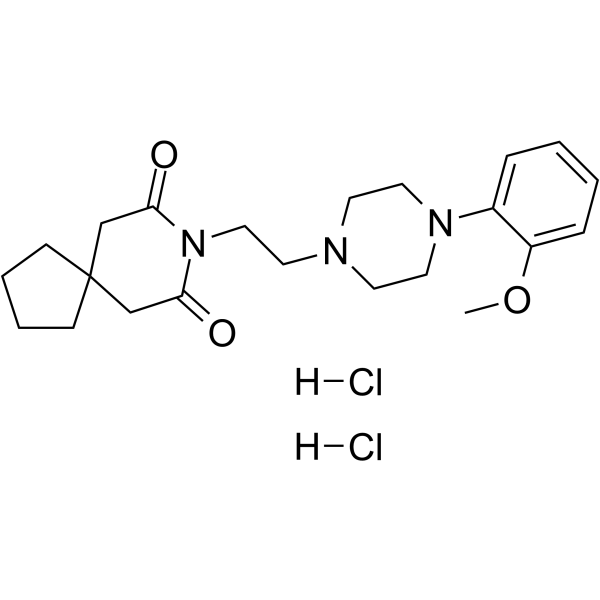
- HY-B1213
-
|
|
5-HT Receptor
Bacterial
|
Neurological Disease
|
|
Trimipramine maleate is a 5-HT receptor antagonist, with blood-brain barrier permeability. Trimipramine maleate has pKi binding values of 6.39, 8.10, 4.66 for 5-HT1C, 5-HT2 and 5-HT1A, respectively. Trimipramine maleate is also a potent and selective inhibitor targeting human noradrenaline (hNAT), serotonin (hSERT) and organic cation transporters (hOCT1, hOCT2) with IC50 values of 4.99 μM, 2.11 μM, 3.72 μM, 8.00 μM, respectively. Trimipramine maleate has vascular activity and anxiolytic efficacy .
|
-
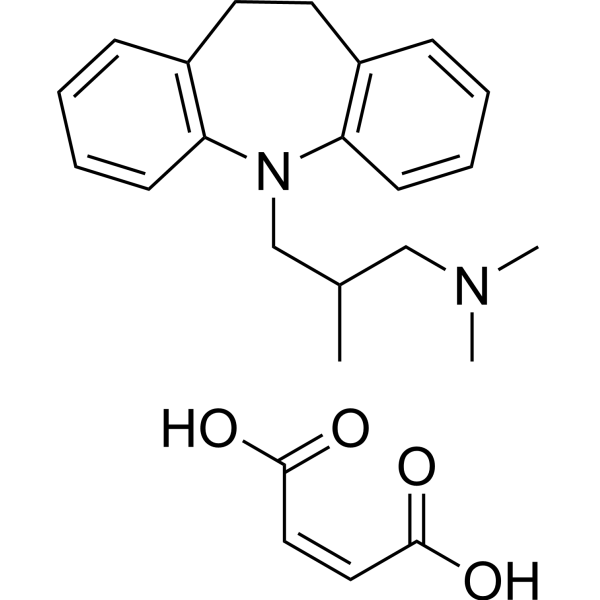
- HY-B2169R
-
|
|
5-HT Receptor
Reference Standards
Dopamine Receptor
Adrenergic Receptor
Cytochrome P450
|
Neurological Disease
|
|
Melperone (Standard) is the analytical standard of Melperone (HY-B2169). This product is intended for research and analytical applications. Melperone is a butyrophenone with atypical antipsychotic properties. Melperone is a multireceptor antagonist with Kds of 102 nM, 180 nM, 180 nM, and 150 nM for 5-HT2A, dopamine D2, α1-adrenergic, and α2-adrenergic receptors, respectively. Melperone has weak binding to histamine H1, 5-HT2C, 5-HT1A, 5-HT1D, and muscarinic receptors, with Kd values of 580 nM, 2100 nM, 2200 nM, 3400 nM, >10000 nM, respectively. Melperone is also a CYP2D6 inhibitor. Melperone can be used for the study of schizophrenia, and agitation in the elderly.
|
-

- HY-B2169S2
-
|
|
Isotope-Labeled Compounds
5-HT Receptor
Dopamine Receptor
Adrenergic Receptor
Cytochrome P450
|
Neurological Disease
|
|
Melperone-d4 hydrochloride is the deuterium labeled Melperone hydrochloride (HY-103109) . Melperone hydrochloride is a butyrophenone with atypical antipsychotic properties. Melperone hydrochloride is a multireceptor antagonist with Kds of 102 nM, 180 nM, 180 nM, and 150 nM for 5-HT2A, dopamine D2, α1-adrenergic, and α2-adrenergic receptors, respectively. Melperone hydrochloride has weak binding to histamine H1, 5-HT2C, 5-HT1A, 5-HT1D, and muscarinic receptors, with Kd values of 580 nM, 2100 nM, 2200 nM, 3400 nM, >10000 nM, respectively. Melperone hydrochloride is also a CYP2D6 inhibitor. Melperone hydrochloride can be used for the study of schizophrenia, and agitation in the elderly .
|
-
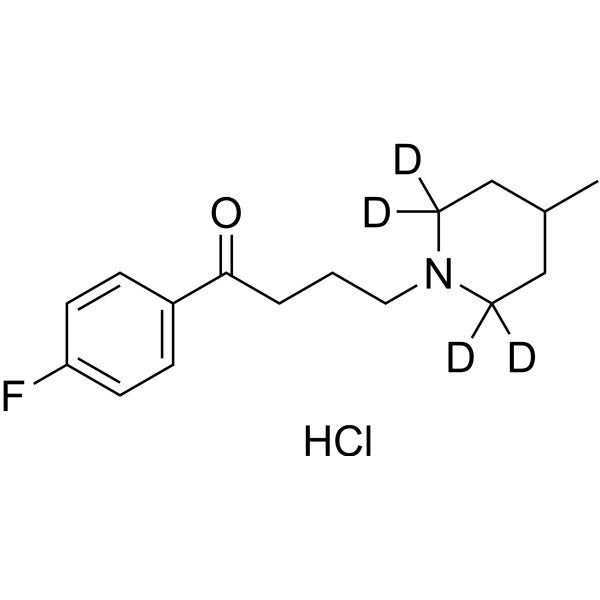
- HY-W052508
-
|
N-Desalkylquetiapine
|
Drug Metabolite
5-HT Receptor
HCN Channel
Serotonin Transporter
|
Neurological Disease
|
|
Norquetiapine ( N-Desalkylauetiapine), a metabolite of Quetiapine (HY-14544), is a selective HCN1 channel inhibitor, with an IC50 of 13.9 μM. Norquetiapine selectively inhibits noradrenaline reuptake, is a partial 5-HT1A (Ki = 45 nM) receptor agonist, and acts as an antagonist at presynapticα2 (Ki = 237 nM), 5-HT2C(Ki = 107 nM), and 5-HT7 (Ki = 76 nM) receptors. Norquetiapine blocks the human cardiac sodium channel Nav1.5 in a state-dependent manner. Norquetiapine shows partial anti-inflammatory effects in LPS (HY-D1056) injected C57BL/6 mice. Norquetiapine can be used for the study of depression and inflammation .
|
-

- HY-W040555
-
|
N-Desalkylquetiapine dihydrochloride
|
Drug Metabolite
5-HT Receptor
HCN Channel
Serotonin Transporter
|
Neurological Disease
|
|
Norquetiapine ( N-Desalkylauetiapine) dihydrochloride, a metabolite of Quetiapine (HY-14544), is a selective HCN1 channel inhibitor, with an IC50 of 13.9 μM. Norquetiapine dihydrochloride selectively inhibits noradrenaline reuptake, is a partial 5-HT1A (Ki = 45 nM) receptor agonist, and acts as an antagonist at presynapticα2 (Ki = 237 nM), 5-HT2C(Ki = 107 nM), and 5-HT7 (Ki = 76 nM) receptors. Norquetiapine dihydrochloride blocks the human cardiac sodium channel Nav1.5 in a state-dependent manner. Norquetiapine dihydrochloride shows partial anti-inflammatory effects in LPS (HY-D1056) injected C57BL/6 mice. Norquetiapine dihydrochloride can be used for the study of depression and inflammation .
|
-

- HY-B1213AR
-
|
|
Reference Standards
5-HT Receptor
Bacterial
|
Neurological Disease
|
|
Trimipramine (Standard) is the analytical standard of Trimipramine. This product is intended for research and analytical applications. Trimipramine is a 5-HT receptor antagonist, with pKi binding values of 6.39, 8.10, 4.66 for 5-HT1C, 5-HT2 and 5-HT1A, respectively. Trimipramine is also a potent and selective inhibitor targeting human noradrenaline (hNAT), serotonin (hSERT) and organic cation transporters (hOCT1, hOCT2) with IC50 values of 4.99 μM, 2.11 μM, 3.72 μM, 8.00 μM, respectively. Trimipramine has vascular activity and anxiolytic efficacy .
|
-

- HY-N9418R
-
|
|
Phytohormone
Reference Standards
|
Others
|
|
Trimipramine (Standard) is the analytical standard of Trimipramine. This product is intended for research and analytical applications. Trimipramine is a 5-HT receptor antagonist, with pKi binding values of 6.39, 8.10, 4.66 for 5-HT1C, 5-HT2 and 5-HT1A, respectively. Trimipramine is also a potent and selective inhibitor targeting human noradrenaline (hNAT), serotonin (hSERT) and organic cation transporters (hOCT1, hOCT2) with IC50 values of 4.99 μM, 2.11 μM, 3.72 μM, 8.00 μM, respectively. Trimipramine has vascular activity and anxiolytic efficacy .
|
-

- HY-101009
-
|
Metitepine maleate; Ro-8-6837 maleate
|
5-HT Receptor
|
Neurological Disease
|
|
Methiothepin maleate is a potent and non-selective 5-HT2 receptor antagonist, with pKds of 7.10 (5-HT1A), 7.28 (5HT1B), 7.56 (5HT1C), 6.99 (5HT1D), 7.0 (5-HT5A), 7.8 (5-HT5B), 8.74 (5-HT6), and 8.99 (5-HT7), and pKis of 8.50 (5HT2A), 8.68 (5HT2B), and 8.35 (5HT2C).
|
-
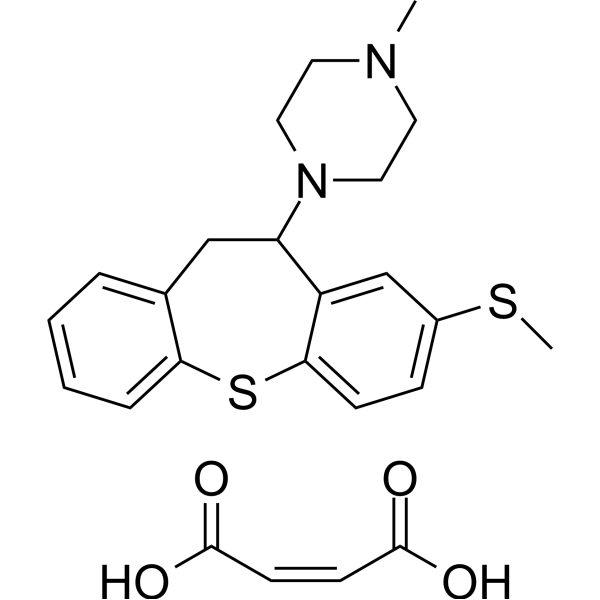
- HY-B1213R
-
|
|
Reference Standards
5-HT Receptor
Bacterial
|
Neurological Disease
|
|
Trimipramine (maleate) (Standard) is the analytical standard of Trimipramine (maleate). This product is intended for research and analytical applications. Trimipramine maleate is a 5-HT receptor antagonist, with pKi binding values of 6.39, 8.10, 4.66 for 5-HT1C, 5-HT2 and 5-HT1A, respectively . Trimipramine maleate is also a potent and selective inhibitor targeting human noradrenaline (hNAT), serotonin (hSERT) and organic cation transporters (hOCT1, hOCT2) with IC50 values of 4.99 μM, 2.11 μM, 3.72 μM, 8.00 μM, respectively . Trimipramine maleate has vascular activity and anxiolytic efficacy .
|
-

- HY-B1101AR
-
|
Pimetixene maleate (Standard)
|
Reference Standards
5-HT Receptor
Histamine Receptor
|
Neurological Disease
Endocrinology
|
|
Pimethixene maleate (Standard) is the analytical standard of Pimethixene maleate. This product is intended for research and analytical applications. Pimethixene maleate is antihistamine and antiserotonergic compound, acts as an antimigraine agent.
Pimethixene maleate is a highly potent antagonist of 5-HT1A, 5-HT2A, 5-HT2B, 5-HT2C, histamine H1, dopamine D2 and D4.4 as well as muscarinic M1 and M2 receptors, with pKis of 7.63, 10.22, 10.44, 8.42, 10.14, 8.19, 7.54, 8.61 and 9.38, respectively .
|
-

- HY-W052508S
-
|
N-Desalkylquetiapine-d8
|
Isotope-Labeled Compounds
|
Others
Neurological Disease
Inflammation/Immunology
|
|
Norquetiapine-d8 (N-Desalkylquetiapine-d8) is the deuterium labeled Norquetiapine.Norquetiapine ( N-Desalkylauetiapine), a metabolite of Quetiapine (HY-14544), is a selective HCN1 channel inhibitor, with an IC50 of 13.9 μM. Norquetiapine selectively inhibits noradrenaline reuptake, is a partial 5-HT1A (Ki = 45 nM) receptor agonist, and acts as an antagonist at presynapticα2 (Ki = 237 nM), 5-HT2C(Ki = 107 nM), and 5-HT7 (Ki = 76 nM) receptors. Norquetiapine blocks the human cardiac sodium channel Nav1.5 in a state-dependent manner. Norquetiapine shows partial anti-inflammatory effects in LPS (HY-D1056) injected C57BL/6 mice. Norquetiapine can be used for the study of depression and inflammation .
|
-
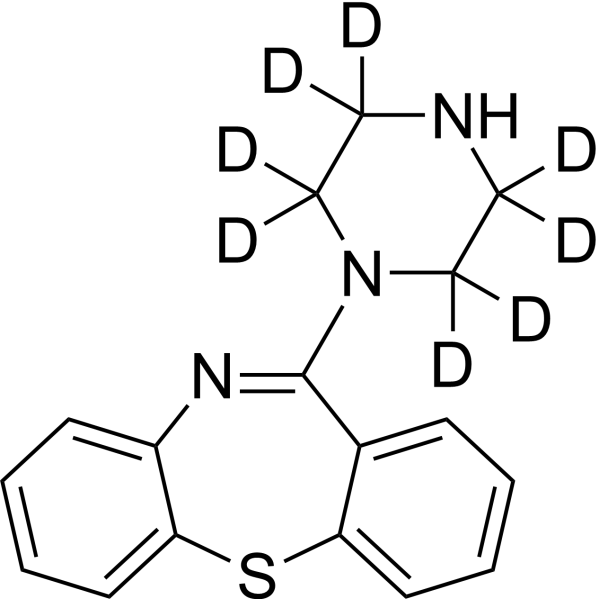
- HY-111491
-
|
Metitepine; Ro 8-6837
|
5-HT Receptor
|
Neurological Disease
|
|
Methiothepin (Metitepine; Ro 8-6837) is a potent and non-selective 5-HT2 receptor antagonist, with pKds of 7.10 (5-HT1A), 7.28 (5HT1B), 7.56 (5HT1C), 6.99 (5HT1D), 7.0 (5-HT5A), 7.8 (5-HT5B), 8.74 (5-HT6), and 8.99 (5-HT7), and pKis of 8.50 (5HT2A), 8.68 (5HT2B), and 8.35 (5HT2C).
|
-

- HY-107836
-
|
Metitepine mesylate; Ro 8-6837 mesylate
|
5-HT Receptor
|
Neurological Disease
|
|
Methiothepin (Metitepine) mesylate is a potent and non-selective 5-HT2 receptor antagonist, with pKds of 7.10 (5-HT1A), 7.28 (5HT1B), 7.56 (5HT1C), 6.99 (5HT1D), 7.0 (5-HT5A), 7.8 (5-HT5B), 8.74 (5-HT6), and 8.99 (5-HT7), and pKis of 8.50 (5HT2A), 8.68 (5HT2B), and 8.35 (5HT2C).
|
-
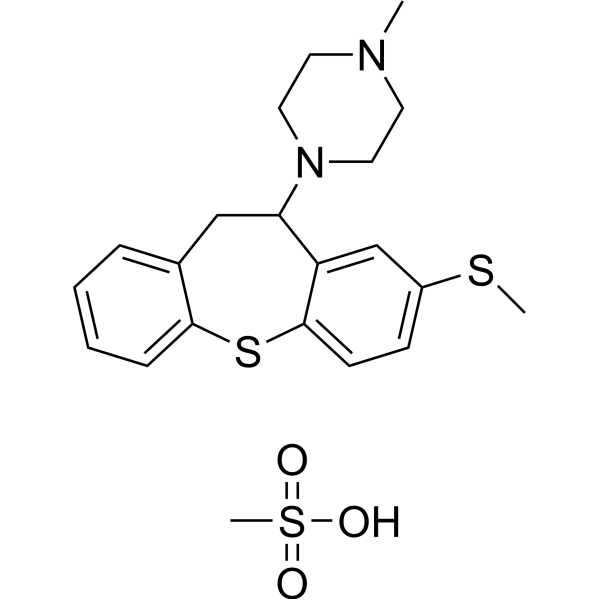
- HY-116982
-
|
|
Adrenergic Receptor
5-HT Receptor
|
|
|
BMY 7378 (free base) is a selective antagonist of α1D-adrenoceptor (α1D-AR). BMY 7378 (free base) binds to membranes expressing the cloned rat α1D-AR with a >100-fold higher affinity (Ki=2 nM) than binding to either the cloned rat α1A-AR (Ki=800 nM) or the hamster α1B-AR (Ki=600 nM). BMY 7378 (free base) is a 5-HT1A receptor partial agonist .
|
-

- HY-N0049
-
|
|
Parasite
5-HT Receptor
Dopamine Receptor
|
Neurological Disease
|
|
Nuciferine is an antagonist at 5-HT2A (IC50=478 nM), 5-HT2C (IC50=131 nM), and 5-HT2B (IC50=1 μM), an inverse agonist at 5-HT7 (IC50=150 nM), a partial agonist at D2 (EC50=64 nM), D5 (EC50=2.6 μM) and 5-HT6 (EC50=700 nM), an agonist at 5-HT1A (EC50=3.2 μM) and D4 (EC50=2 μM) receptor.
|
-
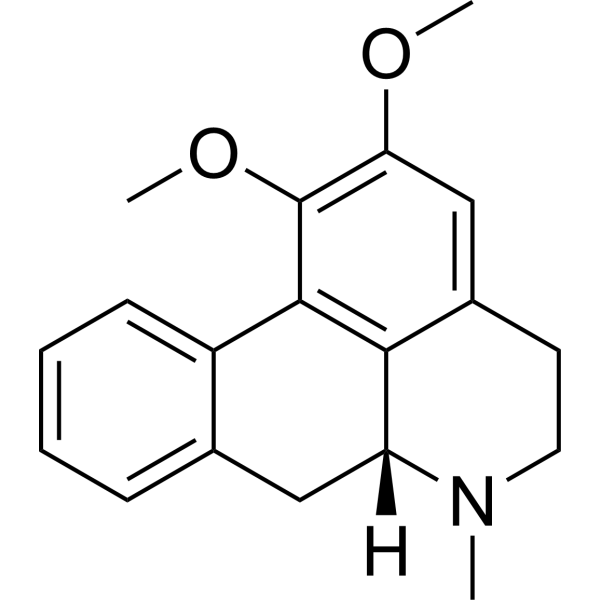
- HY-107836R
-
|
Metitepine mesylate (Standard); Ro 8-6837 mesylate (Standard)
|
5-HT Receptor
Reference Standards
|
Neurological Disease
|
|
Methiothepin (mesylate) (Standard) is the analytical standard of Methiothepin (mesylate). This product is intended for research and analytical applications. Methiothepin (Metitepine) mesylate is a potent and non-selective 5-HT2 receptor antagonist, with pKds of 7.10 (5-HT1A), 7.28 (5HT1B), 7.56 (5HT1C), 6.99 (5HT1D), 7.0 (5-HT5A), 7.8 (5-HT5B), 8.74 (5-HT6), and 8.99 (5-HT7), and pKis of 8.50 (5HT2A), 8.68 (5HT2B), and 8.35 (5HT2C).
|
-

- HY-N0049R
-
|
|
Reference Standards
5-HT Receptor
Dopamine Receptor
|
Neurological Disease
|
|
Nuciferine (Standard) is the analytical standard of Nuciferine. This product is intended for research and analytical applications. Nuciferine is an antagonist at 5-HT2A (IC50=478 nM), 5-HT2C (IC50=131 nM), and 5-HT2B (IC50=1 μM), an inverse agonist at 5-HT7 (IC50=150 nM), a partial agonist at D2 (EC50=64 nM), D5 (EC50=2.6 μM) and 5-HT6 (EC50=700 nM), an agonist at 5-HT1A (EC50=3.2 μM) and D4 (EC50=2 μM) receptor.
|
-
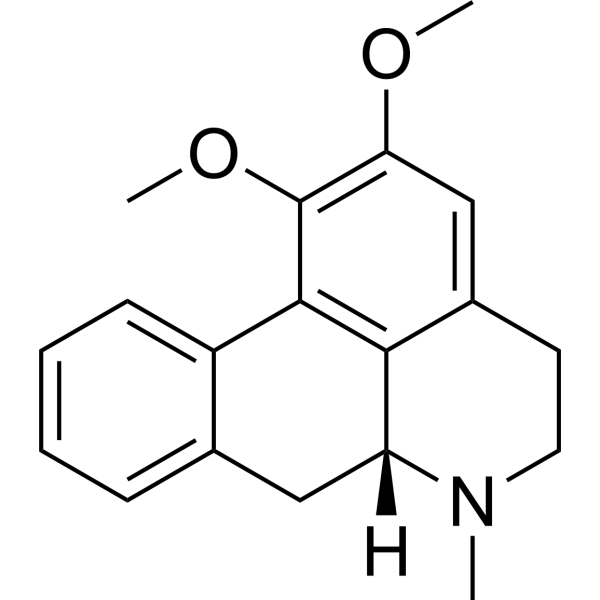
- HY-100554R
-
|
|
Adrenergic Receptor
Reference Standards
5-HT Receptor
|
Cardiovascular Disease
|
|
BMY 7378 (Standard) is the analytical standard of BMY 7378 (HY-100554). This product is intended for research and analytical applications. BMY 7378 is a selective antagonist of α1D-adrenoceptor (α1D-AR). BMY 7378 binds to membranes expressing the cloned rat α1D-AR with a >100-fold higher affinity (Ki=2 nM) than binding to either the cloned rat α1A-AR (Ki=800 nM) or the hamster α1B-AR (Ki=600 nM). BMY 7378 is a 5-HT1A receptor partial agonist .
|
-

| Cat. No. |
Product Name |
Category |
Target |
Chemical Structure |
-
- HY-N0049
-
-
-
- HY-N0096
-
-
-
- HY-N9418R
-
|
|
Rosaceae
Plants
Rosa canina Gremli ex Christ
Source Classification
|
Phytohormone
Reference Standards
|
|
Trimipramine (Standard) is the analytical standard of Trimipramine. This product is intended for research and analytical applications. Trimipramine is a 5-HT receptor antagonist, with pKi binding values of 6.39, 8.10, 4.66 for 5-HT1C, 5-HT2 and 5-HT1A, respectively. Trimipramine is also a potent and selective inhibitor targeting human noradrenaline (hNAT), serotonin (hSERT) and organic cation transporters (hOCT1, hOCT2) with IC50 values of 4.99 μM, 2.11 μM, 3.72 μM, 8.00 μM, respectively. Trimipramine has vascular activity and anxiolytic efficacy .
|
-
-
- HY-N0049R
-
|
|
Alkaloids
other families
Plants
Source Classification
|
Reference Standards
5-HT Receptor
Dopamine Receptor
|
|
Nuciferine (Standard) is the analytical standard of Nuciferine. This product is intended for research and analytical applications. Nuciferine is an antagonist at 5-HT2A (IC50=478 nM), 5-HT2C (IC50=131 nM), and 5-HT2B (IC50=1 μM), an inverse agonist at 5-HT7 (IC50=150 nM), a partial agonist at D2 (EC50=64 nM), D5 (EC50=2.6 μM) and 5-HT6 (EC50=700 nM), an agonist at 5-HT1A (EC50=3.2 μM) and D4 (EC50=2 μM) receptor.
|
-
| Cat. No. |
Product Name |
Chemical Structure |
-
- HY-15780S1
-
|
|
|
Brexpiprazole-d8-1 (OPC-34712-d8-1) is the deuterium labeled Brexpiprazole (HY-15780) . Brexpiprazole (OPC-34712), an atypical orally active antipsychotic agent, is a partial agonist of human 5-HT1A and dopamine D2L receptor with Kis of 0.12 nM and 0.3 nM, respectively. Brexpiprazole is also a 5-HT2A receptor antagonist with a Ki of 0.47 nM. Brexpiprazole also shows potent antagonist activity at human noradrenergic α1B (Ki=0.17 nM) and α2C receptors (Ki=0.59 nM) .
|
-
-
- HY-15780S
-
|
|
|
Brexpiprazole-d8 (OPC-34712-d8) is the deuterium labeled Brexpiprazole (HY-15780). Brexpiprazole (OPC-34712), an atypical orally active antipsychotic agent, is a partial agonist of human 5-HT1A and dopamine D2L receptor with Kis of 0.12 nM and 0.3 nM, respectively. Brexpiprazole is also a 5-HT2A receptor antagonist with a Ki of 0.47 nM. Brexpiprazole also shows potent antagonist activity at human noradrenergic α1B (Ki=0.17 nM) and α2C receptors (Ki=0.59 nM) .
|
-
-
- HY-W052508S
-
|
|
|
Norquetiapine-d8 (N-Desalkylquetiapine-d8) is the deuterium labeled Norquetiapine.Norquetiapine ( N-Desalkylauetiapine), a metabolite of Quetiapine (HY-14544), is a selective HCN1 channel inhibitor, with an IC50 of 13.9 μM. Norquetiapine selectively inhibits noradrenaline reuptake, is a partial 5-HT1A (Ki = 45 nM) receptor agonist, and acts as an antagonist at presynapticα2 (Ki = 237 nM), 5-HT2C(Ki = 107 nM), and 5-HT7 (Ki = 76 nM) receptors. Norquetiapine blocks the human cardiac sodium channel Nav1.5 in a state-dependent manner. Norquetiapine shows partial anti-inflammatory effects in LPS (HY-D1056) injected C57BL/6 mice. Norquetiapine can be used for the study of depression and inflammation .
|
-
-
- HY-B0716S2
-
|
|
|
Urapidil-d4 is the deuterium labeled Urapidil . Urapidil is an α1 adrenoreceptor antagonist and a 5-HT1A receptor agonist .
|
-
-
- HY-133152S
-
|
|
|
Brexpiprazole S-oxide-d8 (DM-3411 D8) is a deuterium labeled Brexpiprazole S-oxide (HY-133152). Brexpiprazole S-oxide is a main metabolite of Brexpiprazole and is metabolized by cytochrome P450 3A4 (CYP3A4). Brexpiprazole is an atypical antipsychotic agent and a partial agonist of human 5-HT1A and dopamine receptor with Kis of 0.12 nM and 0.3 nM, respectively. Brexpiprazole is also a 5-HT2A receptor antagonist with a Ki of 0.47 nM .
|
-
-
- HY-15414S
-
|
|
|
Vortioxetine-d8 (Lu AA 21004-d8) is a deuterated version of Vortioxetine. Vortioxetine (Lu AA 21004) is an antagonist of 5-HT3A and 5-HT7 receptors (Ki: 3.7 nM, 19 nM) and an inhibitor of 5-hydroxytryptamine transporter (SERT) (Ki: 1.6 nM), as well as a 5-HT1A agonist and a partial 5-HT1B agonist (Ki: 15 nM, 33 nM) .
|
-
-
- HY-A0007S
-
|
|
|
Rotigotine-d7 (N-0923-d7) hydrochloride is the deuterium labeled Rotigotine(HY-75502). Rotigotine is a potent dopamine receptor agonist with Ki values of 0.71 nM, 4-15 nM, and 83 nM for the dopamine D3 receptor and D2, D5, D4 receptors and dopamine D1 receptor. Rotigotine a partial agonist of the 5-HT1A receptor, and an antagonist of the α2B-adrenergic receptor. Rotigotine can be used for parkinson's disease (PD) research.
|
-
-
- HY-B0032AS
-
|
|
|
Lurasidone-d8 is deuterium labeled Lurasidone. Lurasidone (SM-13496) is an antagonist of both dopamine D2 and 5-HT7 with IC50s of 1.68 and 0.495 nM, respectively. Lurasidone (SM-13496) is also a partial agonist of 5-HT1A receptor with an IC50 of 6.75 nM.
|
-
-
- HY-B0031S2
-
|
|
|
Quetiapine-d8 (fumarate) is the deuterium labeled Quetiapine. Quetiapine is a 5-HT receptors agonist with a pEC50 of 4.77 for human 5-HT1A receptor. Quetiapine is a dopamine receptor antagonist with a pIC50 of 6.33 for human D2 receptor. Quetiapine has moderate to high affinity for the human D2, HT1A, 5-HT2A, 5-HT2C receptor with pKis of 7.25, 5.74, 7.54, 5.55. Antidepressant and anxiolytic effects .
|
-
-
- HY-15414AS
-
|
|
|
Vortioxetine-d8 (Lu AA 21004-d8) hydrobromide is the deuterated form of Vortioxetine. Vortioxetine (Lu AA 21004) is an antagonist of 5-HT3A and 5-HT7 receptors (Ki: 3.7 nM, 19 nM) and an inhibitor of 5-hydroxytryptamine transporter (SERT) (Ki: 1.6 nM), as well as a 5-HT1A agonist and a partial 5-HT1B agonist (Ki: 15 nM, 33 nM) .
|
-
-
- HY-B2169S2
-
|
|
|
Melperone-d4 hydrochloride is the deuterium labeled Melperone hydrochloride (HY-103109) . Melperone hydrochloride is a butyrophenone with atypical antipsychotic properties. Melperone hydrochloride is a multireceptor antagonist with Kds of 102 nM, 180 nM, 180 nM, and 150 nM for 5-HT2A, dopamine D2, α1-adrenergic, and α2-adrenergic receptors, respectively. Melperone hydrochloride has weak binding to histamine H1, 5-HT2C, 5-HT1A, 5-HT1D, and muscarinic receptors, with Kd values of 580 nM, 2100 nM, 2200 nM, 3400 nM, >10000 nM, respectively. Melperone hydrochloride is also a CYP2D6 inhibitor. Melperone hydrochloride can be used for the study of schizophrenia, and agitation in the elderly .
|
-
-
- HY-B0716S1
-
|
|
|
Urapidil-d3 is the deuterium labeled Urapidil. Urapidil is an α1 adrenoreceptor antagonist and a 5-HT1A receptor agonist.
|
-
-
- HY-A0095S
-
|
|
|
Flibanserin-d4 is a deuterium labeled Flibanserin (BIMT-17). Flibanserin is a full agonist of the serotonin 5-HT1A receptor (Ki=1 nM) and an antagonist of 5-HT2A (49 nM) .
|
-
-
- HY-15394S1
-
|
|
|
(Rac)-Rotigotine-d3 hydrochloride is a deuterium labeled (Rac)-Rotigotine (hydrochloride) (HY-15394). (Rac)-Rotigotine hydrochloride is a racemate of Rotigotine. Rotigotine is a full agonist of dopamine receptor, a partial agonist of the 5-HT1A receptor, and an antagonist of the α2B-adrenergic receptor, with Kis of 0.71 nM, 4-15 nM, and 83 nM for the dopamine D3 receptor and D2, D5, D4 receptors, and dopamine D1 receptor.
|
-
-
- HY-B1213S
-
|
|
|
Trimipramine-d3 (maleate) is the deuterium labeled Trimipramine maleate. Trimipramine maleate is a 5-HT receptor antagonist, with pKis of 6.39, 8.10, 4.66 for 5-HT1C, 5-HT2 and 5-HT1A, respectively .
|
-
-
- HY-A0095S1
-
|
|
|
Flibanserin-d4-1 is deuterium labeled Flibanserin. Flibanserin (BIMT-17) is a full agonist of the serotonin 5-HT1A receptor (Ki=1 nM) and an antagonist of 5-HT2A (49 nM). Flibanserin binds to dopamine D4 receptors (4-24 nM), and has negligible affinity for a variety of other neurotransmitter receptors and ion channels. Flibanserin is efficacious in treating hypoactive sexual desire disorder (HSDD) .
|
-
-
- HY-W654010
-
|
|
|
Lurasidone-d8-1 (hydrochloride) is deuterium labeled Lurasidone (Hydrochloride). Lurasidone (Hydrochloride) (SM-13496 (Hydrochloride)) is an antagonist of both dopamine D2 and 5-HT7 with IC50s of 1.68 and 0.495 nM, respectively. Lurasidone (Hydrochloride) (SM-13496 (Hydrochloride)) is also a partial agonist of 5-HT1A receptor with an IC50 of 6.75 nM .
|
-
-
- HY-B0031S3
-
|
|
|
Quetiapine-d8 (hemifumarate) is the deuterium labeled Quetiapine hemifumarate. Quetiapine hemifumarate is a 5-HT receptors agonist with a pEC50 of 4.77 for human 5-HT1A receptor. Quetiapine hemifumarate is a dopamine receptor antagonist with a pIC50 of 6.33 for human D2 receptor. Quetiapine hemifumarate has moderate to high affinity for the human D2, HT1A, 5-HT2A, 5-HT2C receptor with pKis of 7.25, 5.74, 7.54, 5.55. Antidepressant and anxiolytic effects .
|
-
-
- HY-B0731AS
-
|
|
|
Perospirone-d8 (SM-9018-d8 (free base)) is deuterium labeled Perospirone. Perospirone (SM-9018 free base) is an orally active antagonist of 5-HT2A receptor (Ki=0.6 nM) and dopamine D2 receptor (Ki=1.4 nM), and also a partial agonist of 5-HT1A receptor (Ki=2.9 nM). Perospirone is an atypical antipsychotic agent and has the potential for schizophrenic disease research .
|
-
-
- HY-B0031S4
-
|
|
|
Quetiapine (hemifumarate)-d8 is the deuterium labeled Quetiapine hemifumarate . Quetiapine hemifumarate is a 5-HT receptors agonist with a pEC50 of 4.77 for human 5-HT1A receptor. Quetiapine hemifumarate is a dopamine receptor antagonist with a pIC50 of 6.33 for human D2 receptor. Quetiapine hemifumarate has moderate to high affinity for the human D2, HT1A, 5-HT2A, 5-HT2C receptor with pKis of 7.25, 5.74, 7.54, 5.55. Antidepressant and anxiolytic effects .
|
-
-
- HY-B0031S5
-
|
|
|
Quetiapine-d4-1 fumarate is deuterated labeled Quetiapine (hemifumarate) (HY-B0031). Quetiapine hemifumarate is a 5-HT receptors agonist with a pEC50 of 4.77 for human 5-HT1A receptor. Quetiapine hemifumarate is a dopamine receptor antagonist with a pIC50 of 6.33 for human D2 receptor. Quetiapine hemifumarate has moderate to high affinity for the human D2, HT1A, 5-HT2A, 5-HT2C receptor with pKis of 7.25, 5.74, 7.54, 5.55. Antidepressant and anxiolytic effects .
|
-
-
- HY-14544AS
-
|
|
|
Quetiapine-d4 (hydrochloride) (ICI204636-d4 (hydrochloride)) is deuterium labeled Quetiapine. Quetiapine (ICI204636) is a 5-HT receptors agonist with a pEC50 of 4.77 for human 5-HT1A receptor. Quetiapine is a dopamine receptor antagonist with a pIC50 of 6.33 for human D2 receptor. Quetiapine has moderate to high affinity for the human D2, HT1A, 5-HT2A, 5-HT2C receptor with pKis of 7.25, 5.74, 7.54, 5.55. Antidepressant and anxiolytic effects .
|
-
-
- HY-15414S2
-
|
|
|
Vortioxetine-d4 (Lu AA 21004-d4) is the deuterium labeled Vortioxetine (HY-15414). Vortioxetine is an antagonist of 5-HT3A and 5-HT7 receptors (Ki: 3.7 nM, 19 nM) and an inhibitor of serotonin transporter (SERT) (Ki: 1.6 nM), as well as a 5-HT1A agonist and a partial agonist of 5-HT1B (Ki: 15 nM, 33 nM) .
|
-
-
- HY-15414S3
-
|
|
|
Vortioxetine-d3 (Lu AA 21004-d3) is a deuterium labeled Vortioxetine (HY-15414). Vortioxetine (Lu AA 21004) is an antagonist of 5-HT3A and 5-HT7 receptors (Ki: 3.7 nM, 19 nM) and an inhibitor of serotonin transporter (SERT) (Ki: 1.6 nM), as well as a 5-HT1A agonist and a partial agonist of 5-HT1B (Ki: 15 nM, 33 nM) .
|
-
-
- HY-15414S1
-
|
|
|
Vortioxetine-d6 (Lu AA 21004-d6) is the deuterium labeled Vortioxetine (HY-B1490A). Vortioxetine (Lu AA 21004) is an antagonist of 5-HT3A and 5-HT7 receptors (Ki: 3.7 nM, 19 nM) and an inhibitor of serotonin transporter (SERT) (Ki: 1.6 nM), as well as a 5-HT1A agonist and a partial agonist of 5-HT1B (Ki: 15 nM, 33 nM) .
|
-
-
- HY-100658S
-
|
|
|
Didesmethyl cariprazine-d8 is the deuterium labeled Didesmethyl cariprazine (HY-100658). Didesmethyl cariprazine is an orally active, BBB-permeable metabolite of Cariprazine (HY-14763). Didesmethyl cariprazine is a partial agonist at the D2 and D3 receptors, full agonist at the 5-HT1A receptor, and antagonist at the human 5-HT2B receptor (Ki: 1.41 nM (human D2L), 0.056 nM (human D3), 1.7 nM (human 5-HT1A), 0.52 nM (human 5-HT2B)). Didesmethyl cariprazine dose-dependently inhibits the spontaneous activity of rat midbrain dopaminergic neurons.
|
-
Your information is safe with us. * Required Fields.
Inquiry Information
- Product Name:
- Cat. No.:
- Quantity:
- MCE Japan Authorized Agent:








