


1. Search Result
Search Result
Results for "

C-13/C-17

" in MedChemExpress (MCE) Product Catalog:

228

Inhibitors & Agonists

6

Biochemical Assay Reagents

4

Peptides

3

Inhibitory Antibodies

21

Natural
Products

11

Recombinant Proteins

136

Isotope-Labeled Compounds

33

Antibodies

10

Oligonucleotides

Cat. No. Product Name Target Research Areas Chemical Structure
  • HY-N2116
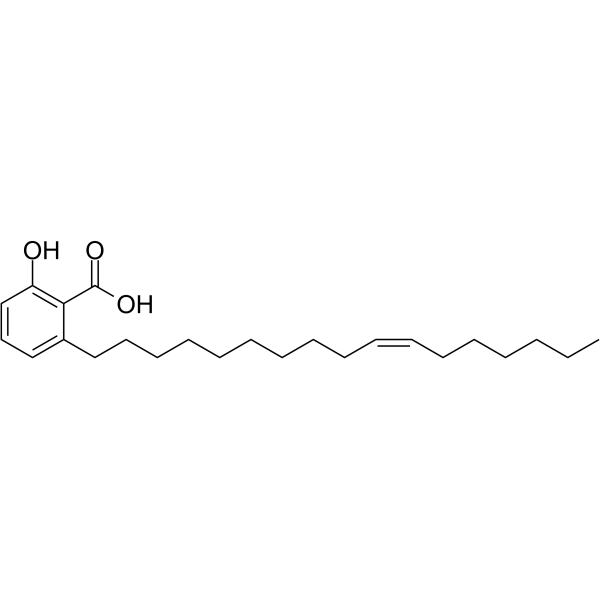
    Ginkgolic acid C17:1
    1 Publications Verification

    PTEN Fatty Acid Synthase (FASN) STAT Apoptosis SARS-CoV Infection Cancer
    Ginkgolic acid C17:1 is a fatty acid synthase (FAS) inhibitor with an IC50 of 10.5 µM. Ginkgolic acid C17:1 shows anti-tumor activity by inhibiting the phosphorylation of STAT3 and inducing apoptosis. Ginkgolic acid C17:1 can block the interaction between S-RBD and ACE2, and has anti-SARS-CoV-2-S pseudovirus activity. Ginkgolic acid C17:1 inhibits the biofilm formation of enterohemorrhagic Escherichia coli and Staphylococcus aureus .
    Ginkgolic acid C17:1
  • HY-N0078

    Ginkgolic acid (13:0); Ginkgoneolic Acid; 6-Tridecylsalicylic acid

    Bacterial PI3K Parasite Infection Inflammation/Immunology
    Ginkgolic Acid (C13:0) (Ginkgoneolic Acid) is an anti-cariogenic agent and a PI3Kδ inhibitor (IC50: 2.49 μM). Ginkgolic Acid (C13:0) exhibits antibacterial and anti-parasitic activities. Ginkgolic Acid (C13:0) can also inhibit mast cell degranulation (IC50: 2.40 μM) .
    Ginkgolic Acid (C13:0)
  • HY-115703

    N-Heptadecanoyl-D-erythro-sphingosine

    Biochemical Assay Reagents Metabolic Disease
    C17 Ceramide (d18:1/17:0) (N-Heptadecanoyl-D-erythro-sphingosine) is a phospholipid internal standard. C17 Ceramide (d18:1/17:0) is used in studies of medium-chain acyl-CoA dehydrogenase deficiency (MCADD) .
    C17 Ceramide (d18:1/17:0)
  • HY-149992
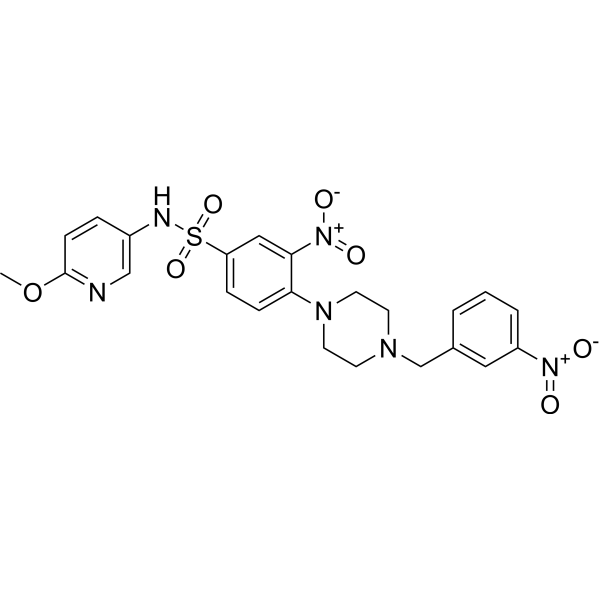
    MyD88-IN-1
    5 Publications Verification

    MyD88 Inflammation/Immunology Cancer
    MyD88-IN-1 (Compound c17) is an orally active MyD88 inhibitor. MyD88-IN-1 inhibits the interaction of TLR4 and MyD88 and suppressed the NF-κB pathway. MyD88-IN-1 can be used in research of cancer and inflammatory .
    MyD88-IN-1
  • HY-N6953
    Garcinone D
    4 Publications Verification

    STAT Keap1-Nrf2 Reactive Oxygen Species (ROS) Neurological Disease
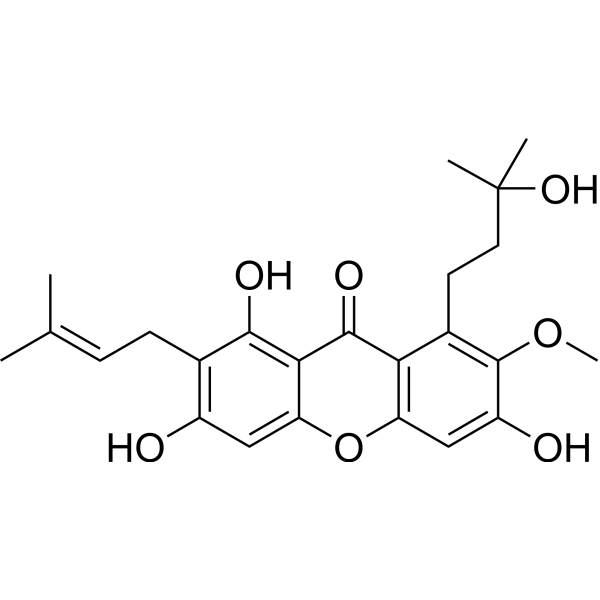
    Garcinone D is an activator of the STAT3/Cyclin D1 and Nrf2/HO-1 pathways, and an inhibitor of CDK2/CyclinE1 (IC50 for CDK2/CyclinE1 is 28.23 μM). Garcinone D promotes neural stem cell proliferation by activating STAT3 phosphorylation and Cyclin D1 expression and enhancing the Nrf2/HO-1 signaling pathway. In addition, Garcinone D blocks the tumor cell cycle by inhibiting CDK2/CyclinE1. Garcinone D can promote the proliferation of C17.2 neural stem cells and inhibit prostate and breast cancer .
    Garcinone D
  • HY-P1651
    SOR-C13
    1 Publications Verification

    TRP Channel Cancer
    SOR-C13, a carboxy-terminal truncated peptide, is a high-affinity TRPV6 antagonist with an IC50 value of 14 nM. TRPV6 is a non-voltage gated calcium channel that is associated with malignancy and poor prognosis in breast cancer. SOR-C13 has anticancer activity .
    SOR-C13
  • HY-P991598

    MOR12743; MOR03207

    Interleukin Related NF-κB Inflammation/Immunology
    MOR-106 (MOR12743) is a humanized anti-IL-17C IgG1 monoclonal antibody. MOR-106 inhibits the NF-κB signaling pathway by specifically binding to IL-17C (IC50 = 59 pM for human IL-17C, IC50 = 55 pM for mouse IL-17C). MOR-106 can effectively inhibit skin inflammation and reduce related inflammatory factors in animal models of psoriasis and atopic dermatitis .
    MOR-106
  • HY-W004290S

    Isotope-Labeled Compounds Biochemical Assay Reagents Drug Derivative Others
    Methyl heptadecanoate-d33 is the deuterium labeled Methyl heptadecanoate (HY-W004290). Methyl heptadecanoate (C17:0 methyl ester) is the methyl ester derivative of heptadecanoic acid (HY-W004284). Methyl heptadecanoate is used as an internal standard for quantitative calibration of fatty acids in GC-MS analysis .
    Methyl heptadecanoate-d33
  • HY-141632

    Heptadecasphinganine

    Bacterial Infection Neurological Disease
    Sphinganine-C17 (Heptadecasphinganine) is a synthetic bioactive sphingolipid and an isomer of sphinganine. Sphinganine-C17 inhibits the growth of Candida glabrata and Candida albicans with a minimum bactericidal concentration (MBC) of 0.5 μg/mL for both. Sphinganine-C17 can be used as an internal standard for the chromatographic analysis of sphingosine compounds .
    Sphinganine-C17
  • HY-N0210S16

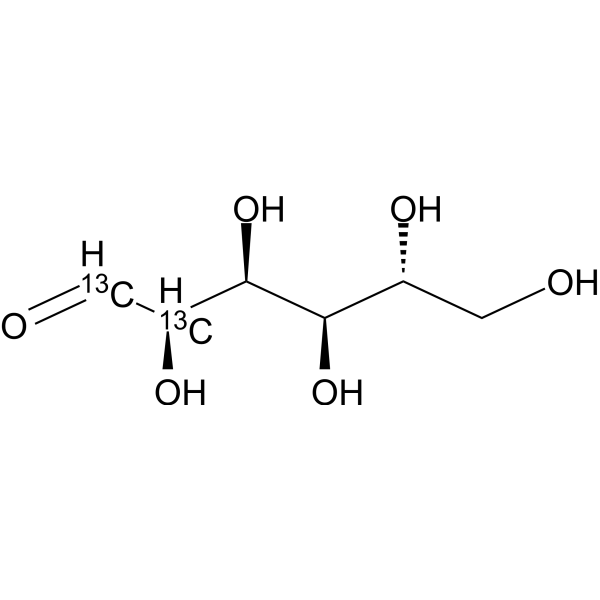
    D-(+)-Galactose-13C6

    Endogenous Metabolite Neurological Disease
    D-Galactose- 13C6 is the C13 labeled D-Galactose (HY-N0210). D-Galactose is a natural aldohexose and C-4 epimer of glucose .
    D-Galactose-13C6
  • HY-148430

    Cytochrome P450 Cancer
    4-Pyridylmethyl adamantanecarboxamide (Compound 11) is an Aromatase inhibitor with an IC50 of 1.5 μM against hAromatase. 4-Pyridylmethyl adamantanecarboxamide inhibits the C17,20-lyase activity of testicular cytochrome P45017α with an IC50 of 1600 nM, and also inhibits the 17α-hydroxylase activity of this enzyme with an IC50 of 7700 nM. 4-Pyridylmethyl adamantanecarboxamide can be used in the research of prostate cancer .
    4-Pyridylmethyl adamantanecarboxamide
  • HY-N7961

    Dihydroorotate Dehydrogenase Others
    (E/Z)-Ginkgolic acid C17:2, isolated from Ginkgo biloba, can bind with human dihydroorotate dehydrogenase (DHODH) tightly .
    (E/Z)-Ginkgolic acid C17:2
  • HY-P990225

    Interleukin Related Metabolic Disease Inflammation/Immunology
    Anti-Mouse IL-12 p40 Antibody (C17.8) is a rat-derived anti-mouse IL-12 p40 IgG2a κ type antibody inhibitor. Anti-Mouse IL-12 p40 Antibody (C17.8) binds p40 subunit of IL-12. Anti-Mouse IL-12 p40 Antibody (C17.8) can be used for the researches of inflammation, immunology and metabolic disease, such as diabetes and arthritis .
    Anti-Mouse IL-12 p40 Antibody (C17.8)
  • HY-N7583

    Parasite Infection
    Norcaesalpinin E, a C-17-norcassane-type diterpene found in Caesalpinia crista, is a Plasmodium falciparum growth inhibitor with an IC50 of 90 nM. Norcaesalpinin E induces dose-dependent growth inhibition of Plasmodium falciparum. Norcaesalpinin E can be used for the research of malaria .
    Norcaesalpinin E
  • HY-141630

    D-erythro-Sphingosine-C17-1-phosphate

    Drug Derivative Cancer
    Sphingosine-1-phosphate d17:1 (D-erythro-Sphingosine-C17-1-phosphate) is a derivative of ceramide. Sphingosine-1-phosphate d17:1 can be used for the research of cancer .
    Sphingosine-1-phosphate (d17:1)
  • HY-N2673

    5-n-Heptadecylresorcinol; AR-C17

    Sirtuin Cardiovascular Disease Metabolic Disease
    5-Heptadecylresorcinol (AR-C17), a phenolic lipid component, is also an orally active mitochondrial protector. 5-Heptadecylresorcinol improves mitochondrial function via sirtuin3 signaling pathway, thus alleviates endothelial cell damage and apoptosis. 5-Heptadecylresorcinol induces sirtuin3-mediated autophagy. 5-Heptadecylresorcinol reduces the atherosclerotic plaques in the aortic root region of mice heart. 5-Heptadecylresorcinol can be used for research of atherosclerosis prevention and obesity .
    5-Heptadecylresorcinol
  • HY-N2380

    Others Cancer
    N-Benzoyl-(2R,3S)-3-phenylisoserine is a Taxol C-13 Side Chain and crucial for the strong antitumor activity of Taxol .
    N-Benzoyl-(2R,3S)-3-phenylisoserine
  • HY-W010042S3

    L-(-)-Glucose-13C6

    Isotope-Labeled Compounds Metabolic Disease
    L-Glucose- 13C6 (L-(-)-Glucose- 13C6) is C13-labeled L-Glucose. L-Glucose is an enantiomer of D-glucose. L-Glucose enhances food intake .
    L-Glucose-13C6
  • HY-104026S5

    Aryl Hydrocarbon Receptor Metabolic Disease
    L-Kynurenine-13C10 sulfate hydrate is the C13 labeled L-Kynurenine sulfate hydrate. L-Kynurenine is an aryl hydrocarbon receptor agonist .
    L-Kynurenine-13C10 sulfate hydrate
  • HY-131676

    SM (d18:1/17:0); Heptadecanoyl Sphingomyelin; N-Heptadecanoyl-D-erythro-Sphingosylphosphorylcholine

    Endogenous Metabolite Metabolic Disease
    C17 Sphingomyelin is a synthetic derivative of sphingomyelin that has been used as an internal standard for the quantification of sphingomyelin.
    C17 Sphingomyelin (d18:1/17:0)
  • HY-69055

    Drug Intermediate Cardiovascular Disease
    7-Bromoisoquinoline is a brominated isoquinoline and synthetic precursor that constructs the isoquinoline functional group at the C17 position of target molecules. 7-Bromoisoquinoline serves as a key synthetic intermediate for the synthesis of cortistatin A-derived anti-angiogenic steroidal analogs (e.g., 7-tributylstannyl isoquinoline). 7-Bromoisoquinoline .
    7-Bromoisoquinoline
  • HY-P1651A
    SOR-C13 TFA
    1 Publications Verification

    TRP Channel Cancer
    SOR-C13 TFA, a carboxy-terminal truncated peptide, is a high-affinity TRPV6 antagonist with an IC50 value of 14 nM. TRPV6 is a non-voltage gated calcium channel that is associated with malignancy and poor prognosis in breast cancer. SOR-C13 TFA has anticancer activity .
    SOR-C13 TFA
  • HY-P1651B
    SOR-C13 acetate
    1 Publications Verification

    TRP Channel Cancer
    SOR-C13 acetate is the acetate salt form of SOR-C13 (HY-P1651). SOR-C13 acetate is an antagonist for transient receptor potential vanilloid 6 (TRPV 6), with an IC50 of 14 nM. SOR-C13 acetate inhibits tumor growth in SKOV-3 xenograft mouse model .
    SOR-C13 acetate
  • HY-136153

    Fungal Infection
    Amphotericin X1 is an 13-O-methyl derivative of Amphotericin B with good antifungal activity. Amphotericin X1 inhibits Candida albicans 33/079, C.parapsilosis 937A, Cryptococcus neoformans 451, Aspergillus niger 57A and A.fumigatus with MIC values of 1 μg/mL, 8 μg/mL, 1 μg/mL, 2 μg/mL and 2 μg/mL, respectively .
    Amphotericin X1
  • HY-Y0677S

    Isotope-Labeled Compounds Others
    Carbethoxymethyldiethyl phosphonate- 13C2 is the C13 labeled Carbethoxymethyldiethyl phosphonate .
    Carbethoxymethyldiethyl phosphonate-C13
  • HY-P99832
    Cosfroviximab
    1 Publications Verification

    c13C6-FR1

    Filovirus Infection
    Cosfroviximab (c13C6-FR1) is a mouse/human chimeric monoclonal antibody against Ebola virus glycoprotein (EBOV-GP) .
    Cosfroviximab
  • HY-W092036

    PROTAC Linkers Cancer
    Boc-C17-COOH is a PROTAC linker that can be used in the synthesis of PROTACs.
    Boc-C17-COOH
  • HY-116643

    Cytochrome P450 Metabolic Disease
    SU 10603 is a specific inhibitor of P45017α (P450c17; CYP17A1) .
    SU 10603
  • HY-158655

    (3'-Sulfo)Galβ-Cer (d18:1/17:0); N-Heptadecanoyl sulfatide; C17 Sulfatide

    Biochemical Assay Reagents Neurological Disease
    C17 3'-Sulfo galactosylceramide (d18:1/17:0) is a member of the sulfatide class of glycolipids. C17 3'-Sulfo galactosylceramide (d18:1/17:0) can be used for the mass spectrometric quantitative urinary determination in metachromatic leukodystrophies .
    C17 3'-Sulfo galactosylceramide (d18:1/17:0)
  • HY-N2673R

    5-n-Heptadecylresorcinol (Standard); AR-C17 (Standard)

    Reference Standards Sirtuin Cardiovascular Disease Metabolic Disease
    5-Heptadecylresorcinol (AR-C17), a phenolic lipid component, is also an orally active mitochondrial protector. 5-Heptadecylresorcinol improves mitochondrial function via sirtuin3 signaling pathway, thus alleviates endothelial cell damage and apoptosis. 5-Heptadecylresorcinol induces sirtuin3-mediated autophagy. 5-Heptadecylresorcinol reduces the atherosclerotic plaques in the aortic root region of mice heart. 5-Heptadecylresorcinol can be used for research of atherosclerosis prevention and obesity .
    5-Heptadecylresorcinol (Standard)
  • HY-W414697

    D-Ribo-phytosphingosine (C17 base)

    Bacterial Others
    4-Hydroxysphinganine C17 base (D-Ribo-phytosphingosine C17 base), also known as D-ribo-phytosphingosine or PHS, is a crucial compound present in the membranes of fungi, plants, bacteria, marine organisms, and mammalian tissues. It plays a vital role in preserving the structural integrity of membranes, regulating cellular growth, and mediating the heat stress response in yeast. Additionally, PHS serves as a precursor for the synthesis of important lipid mediators such as PHS 1-phosphate, inositol phosphorylceramide, and KRN7000 (the α-anomer of galactosylceramide). Furthermore, this phospholipid promotes keratinocyte differentiation, making it a valuable active ingredient in cosmetic formulations.
    4-Hydroxysphinganine (C17 base)
  • HY-170229

    1-O-Heptadecyl-2-hydroxy-sn-glycero-3-phosphocholine

    Biochemical Assay Reagents Others
    C17 Lyso PAF (1-O-Heptadecyl-2-hydroxy-sn-glycero-3-phosphocholine) is a precursor and metabolite of 1-O-heptadecyl-2-acetyl-sn-glycero-3-phosphocholine (C17:0 PAF) .
    C17 Lyso PAF
  • HY-B0421S2

    Mycophenolate-13C17

    Isotope-Labeled Compounds Flavivirus Cancer
    Mycophenolic acid-13C17 (Mycophenolate-13C17) is the 13C labeled Mycophenolic acid (HY-B0421). Mycophenolic acid is a potent uncompetitive inosine monophosphate dehydrogenase (IMPDH) inhibitor with an EC50 of 0.24 μM. Mycophenolic acid demonstrates antiviral effects against a wide range of RNA viruses including influenza. Mycophenolic acid is an immunosuppressive agent. Antiangiogenic and antitumor effects.
    Mycophenolic acid-13C17
  • HY-155789

    Ceramide trihexoside (d18:1/17:0); Gb3(d18:1)(C17:0)

    Biochemical Assay Reagents Others
    C17 Globotriaosylceramide (d18:1/17:0) is a sphygosine lipid that can be used to quantify Globotriaosylceramide in plasma and urine of patients with Fabry disease by gas chromatography-mass spectrometry (GC-MS) .
    C17 Globotriaosylceramide (d18:1/17:0)
  • HY-N2116R

    Reference Standards PTEN Fatty Acid Synthase (FASN) STAT Apoptosis SARS-CoV Infection Cancer
    Ginkgolic acid C17:1 (Standard) is the analytical standard of Ginkgolic acid C17:1. This product is intended for research and analytical applications. Ginkgolic acid C17:1 is a fatty acid synthase (FAS) inhibitor with an IC50 of 10.5 µM. Ginkgolic acid C17:1 shows anti-tumor activity by inhibiting the phosphorylation of STAT3 and inducing apoptosis. Ginkgolic acid C17:1 can block the interaction between S-RBD and ACE2, and has anti-SARS-CoV-2-S pseudovirus activity. Ginkgolic acid C17:1 inhibits the biofilm formation of enterohemorrhagic Escherichia coli and Staphylococcus aureus .
    Ginkgolic acid C17:1 (Standard)
  • HY-N16018

    Biochemical Assay Reagents Others
    C17:1 Anandamide is an anandamide.
    C17:1 Anandamide
  • HY-CE01241

    C13:0-Coenzyme A; Tridecanoyl-CoA; Tridecanoyl-coenzyme A

    Biochemical Assay Reagents Metabolic Disease
    C13:0-CoA (C13:0-coenzyme A) is a coenzyme A derivative .
    C13:0-CoA
  • HY-155075

    PROTACs Glutathione Peroxidase Ferroptosis Cancer
    NC-R17 is a PROTAC-class, non-covalent GPX4 degrader based on RSL3, involved in ferroptosis. NC-R17 has antitumor activity and is used for non-covalent GPX4 PROTAC design . NC-R17 consists of a target protein ligand (red part) Demethyl-RSL3 (HY-135832); an E3 ubiquitin ligase ligand (blue part) Lenalidomide (HY-A0003) and a PROTAC linker (black part) (HY-169376). E3 ubiquitin ligase and linker can form Lenalidomide-C13-piperazine-Boc (HY-169377) .
    NC-R17
  • HY-169376

    PROTAC Linkers Cancer
    Boc-piperazine-C13-OTs is a PROTAC linker. Boc-piperazine-C13-OTs can be used to synthesize NC-R17 (HY-155075) .
    Boc-piperazine-C13-OTs
  • HY-155269

    E3 Ligase Ligand-Linker Conjugates Cancer
    Pomalidomide-5-C13-NH2 hydrochloride is a Pomalidomide (HY-10984)-based E3 ubiquitin ligase cereblon (CRBN) ligand for recruiting cereblon proteins. Pomalidomide-5-C13-NH2 hydrochloride can be connected to protein ligands through a linker to form PROTAC.
    Pomalidomide-5-C13-NH2 hydrochloride
  • HY-N0078R

    Ginkgolic acid (13:0) (Standard); Ginkgoneolic Acid (Standard); 6-Tridecylsalicylic acid (Standard)

    Reference Standards Bacterial PI3K Parasite Infection Inflammation/Immunology
    Ginkgolic Acid (C13:0) (Standard) is the analytical standard of Ginkgolic Acid (C13:0) (HY-N0078). This product is intended for research and analytical applications. Ginkgolic Acid (C13:0) (Ginkgoneolic Acid) is an anti-cariogenic agent and a PI3Kδ inhibitor (IC50: 2.49 μM). Ginkgolic Acid (C13:0) exhibits antibacterial and anti-parasitic activities. Ginkgolic Acid (C13:0) can also inhibit mast cell degranulation (IC50: 2.40 μM) .
    Ginkgolic Acid (C13:0) (Standard)
  • HY-W440681

    Liposome Others
    C13-112-tri-tail is a cationic lipid-like compound containing a polar amino alcohol head group, three hydrophobic carbon-13 tails, and a PEG2 linker. C13-112-tri-tail can be formulated into a lipid nanoparticle (LNP).
    C13-112-tri-tail
  • HY-W440684

    Liposome Others
    C13-113-tetra tail is a cationic lipid-like compound containing a polar amino alcohol head group, four hydrophobic carbon-13 tails, and a tertiary amine linker. C13-113-tetra tail can be formulated into a lipid nanoparticle (LNP).
    C13-113-tetra-tail
  • HY-W440683

    Liposome Others
    C13-112-tetra-tail is a cationic lipid-like compound containing a polar amino alcohol head group, four hydrophobic carbon-13 tails, and a PEG2 linker. C13-112-tetra-tail can be formulated into a lipid nanoparticle (LNP).
    C13-112-tetra-tail
  • HY-W440682

    Liposome Others
    C13-113-tri tail is a cationic lipid-like compound containing a polar amino alcohol head group, three hydrophobic carbon-13 tails, and a tertiary amine linker. C13-113-tri tail can be formulated into a lipid nanoparticle (LNP).
    C13-113-tri-tail
  • HY-156161

    E3 Ligase Ligand-Linker Conjugates Autophagy Apoptosis Cancer
    Thalidomide-NH-C13-NH2 hydrochloride is the Thalidomide (HY-10984)-based cereblon ligand used in the recruitment of CRBN protein.Thalidomide-NH-C13-NH2 hydrochloride can be connected to the ligand for protein by a linker to form PROTACs .
    Thalidomide-NH-C13-NH2 hydrochloride
  • HY-149570

    E3 Ligase Ligand-Linker Conjugates Autophagy Apoptosis Cancer
    Thalidomide-5-O-C13-NH2 hydrochloride is the Thalidomide (HY-10984)-based cereblon ligand used in the recruitment of CRBN protein.Thalidomide-5-O-C13-NH2 hydrochloride can be connected to the ligand for protein by a linker to form PROTACs .
    Thalidomide-5-O-C13-NH2 hydrochloride
  • HY-149575

    E3 Ligase Ligand-Linker Conjugates Autophagy Apoptosis Cancer
    Thalidomide-4-O-C13-NH2 hydrochloride is the Thalidomide (HY-10984)-based cereblon ligand used in the recruitment of CRBN protein.Thalidomide-4-O-C13-NH2 hydrochloride can be connected to the ligand for protein by a linker to form PROTACs .
    Thalidomide-4-O-C13-NH2 hydrochloride
  • HY-W940885

    E3 Ligase Ligand-Linker Conjugates Cancer
    Pomalidomide-NH-C13-OH is a synthesized E3 ligase ligand-linker conjugate that can be used for synthesis of PROTAC PI3Kα degrader-1 (HY-174461) .
    Pomalidomide-NH-C13-OH
  • HY-W008582

    Methyl cis-10-heptadecenoate; C17:1 methyl ester; Methyl Heptadecenoate

    Endogenous Metabolite Metabolic Disease
    (Z)-Methyl heptadec-10-enoate (Methyl cis-10-heptadecenoate; C17:1 methyl ester) is the ester form of cis-10-heptadecenoic acid. It is a minor fatty acid methyl ester (FAME) component of biodiesel.
    (Z)-Methyl heptadec-10-enoate

Inquiry Online

Your information is safe with us. * Required Fields.

Salutation


Country or Region *

Applicant Name *


Organization Name *

Department *


Email Address *


Product Name *

Cat. No.


Requested quantity *

Phone Number *


Remarks

Inquiry Online

Inquiry Information

Product Name:
Cat. No.:
Quantity:
MCE Japan Authorized Agent:

