



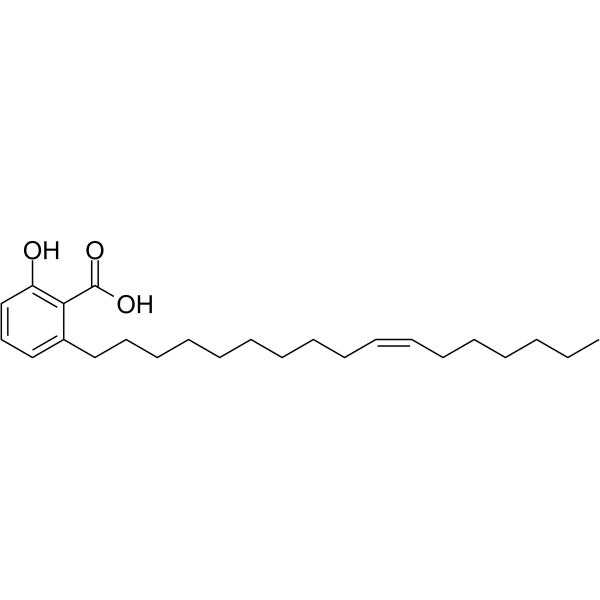
Ginkgolic acid C17:1
Based on 1 publication(s) in Google Scholar
Ginkgolic acid C17:1 is a fatty acid synthase (FAS) inhibitor with an IC50 of 10.5 µM. Ginkgolic acid C17:1 shows anti-tumor activity by inhibiting the phosphorylation of STAT3 and inducing apoptosis. Ginkgolic acid C17:1 can block the interaction between S-RBD and ACE2, and has anti-SARS-CoV-2-S pseudovirus activity. Ginkgolic acid C17:1 inhibits the biofilm formation of enterohemorrhagic Escherichia coli and Staphylococcus aureus.
For research use only. We do not sell to patients.
- Purity: 99.80%
- CAS No.: 111047-30-4
- Formula: C24H38O3
- Molecular Weight:374.56
-
Storage:
-20°C, protect from light
* In solvent : -80°C, 6 months; -20°C, 1 month (protect from light)

To place orders, for customer services and technical support, please contact: MedChemExpress USA
Tel: 609-228-6898 E-mail: [email protected] [email protected]


-
 Biological Activity
-
Chemical Information
-
Solvent & Solubility
- Purity & Documentation
- References
-
 Help & FAQs


-
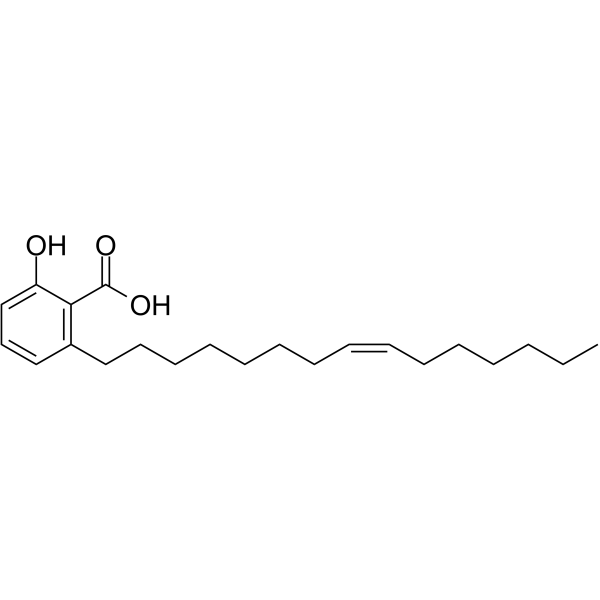
HY-N0077
Ginkgolic acid -
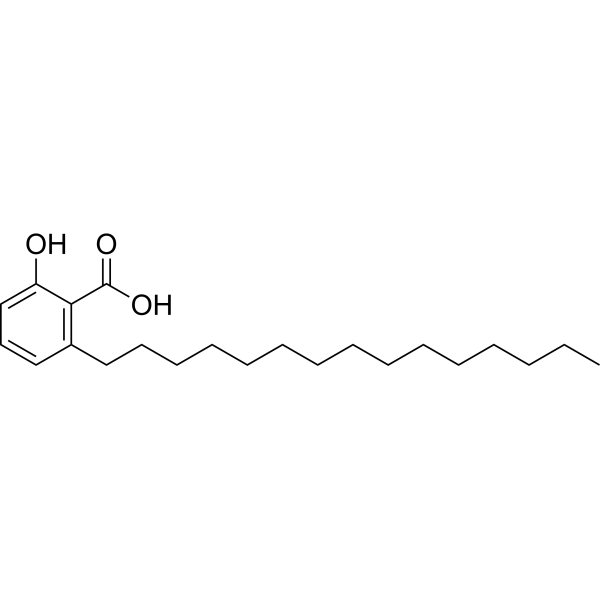
HY-N2020
Anacardic Acid -
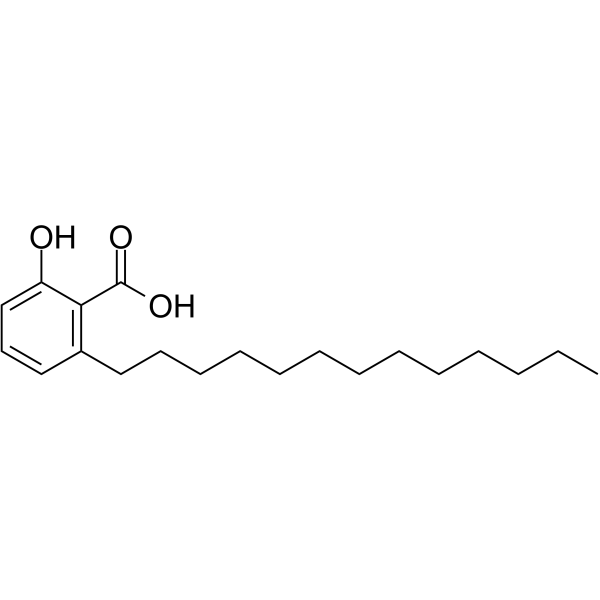
HY-N0078
Ginkgolic Acid (C13:0) -
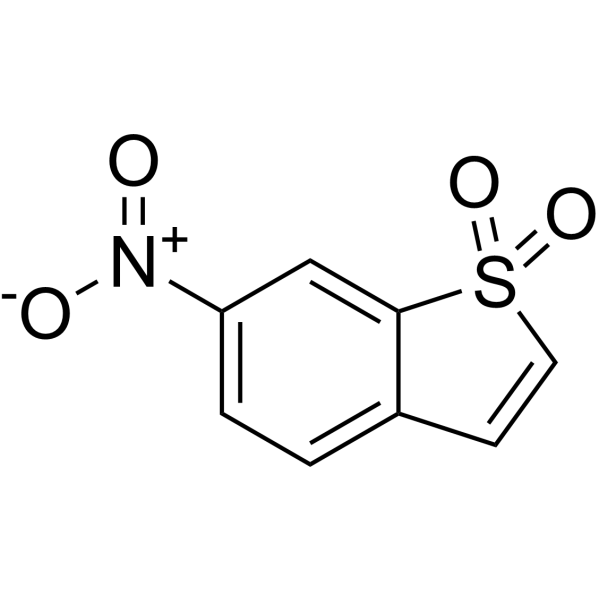
HY-13818
Stattic -
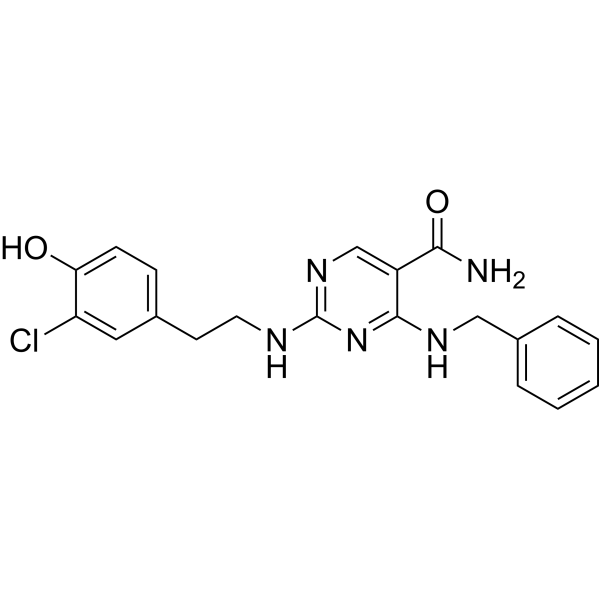
HY-100614
AS1517499 -
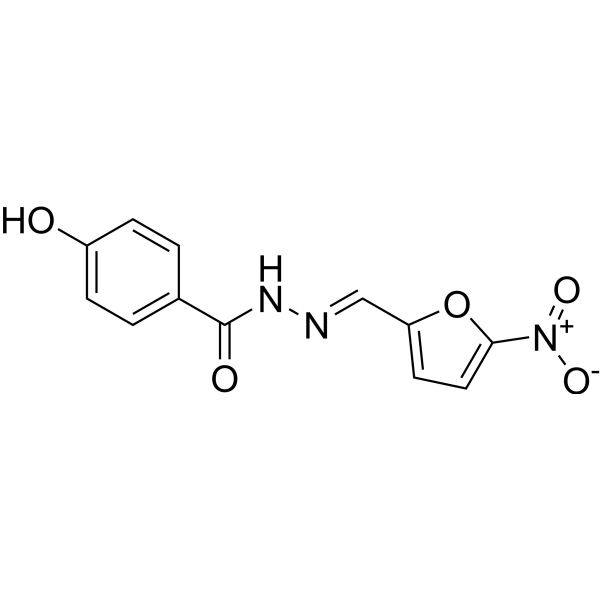
HY-B1436
Nifuroxazide -

HY-N2116R
Ginkgolic acid C17:1 (Standard) -
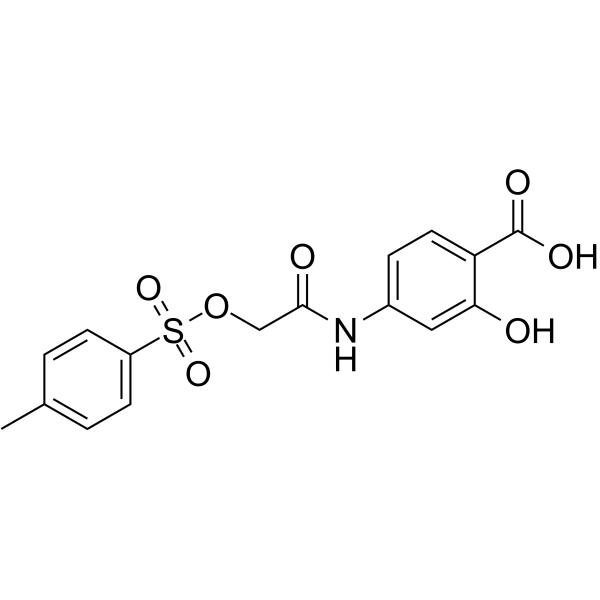
HY-15146
NSC 74859 -
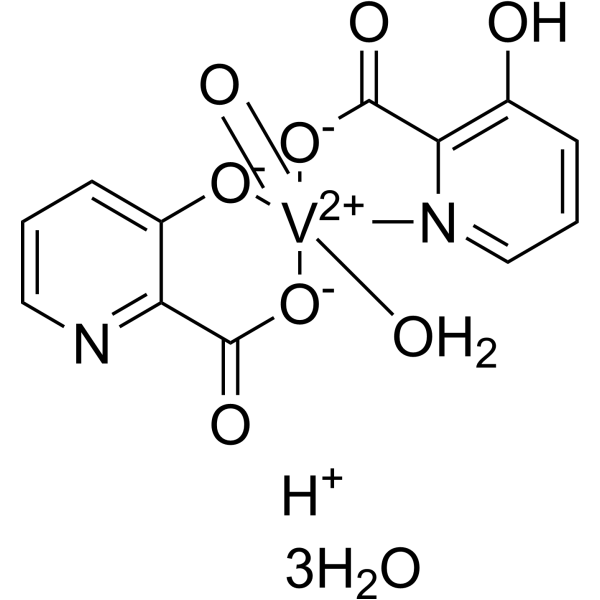
HY-13074
VO-Ohpic trihydrate -
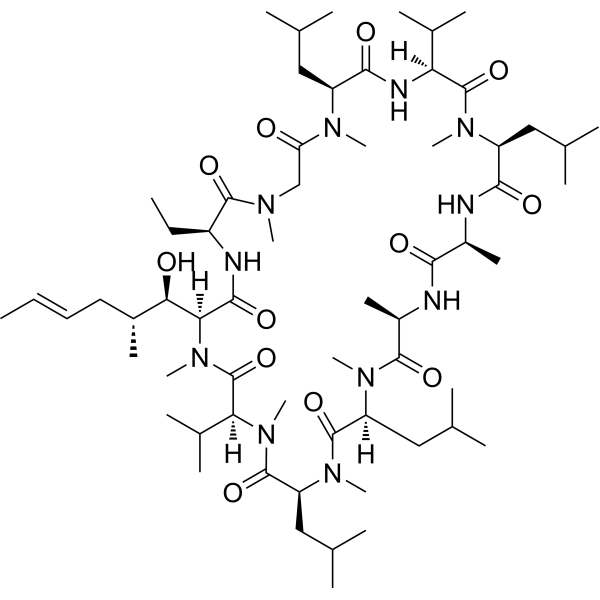
HY-B0579
Cyclosporin A -
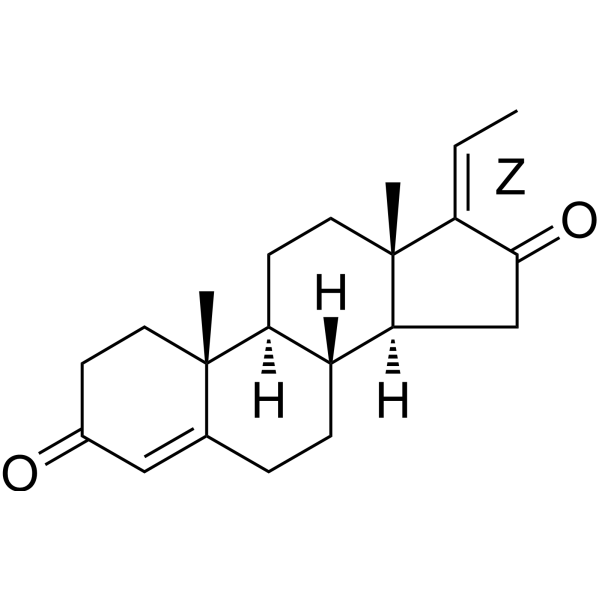
HY-110066
(Z)-Guggulsterone -
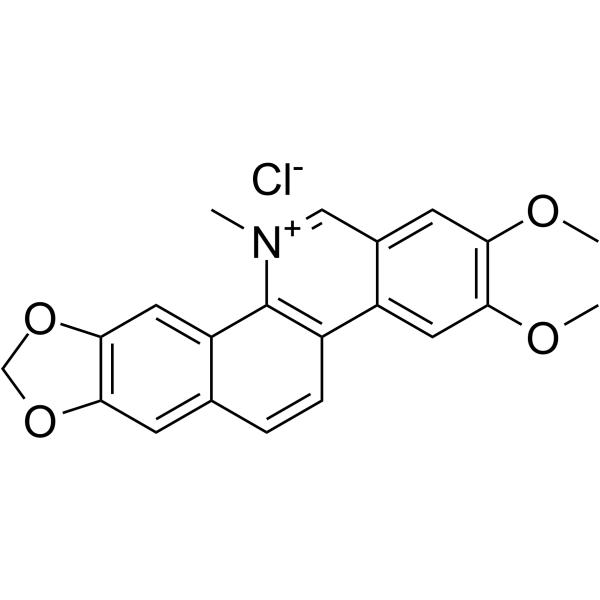
HY-N0498
Nitidine chloride
Publications Citing Use of MedChemExpress (MCE) Ginkgolic acid C17:1
More

Biological Activity
Description
IC50 & Target
[1]|
STAT3 |
Cellular Effect
|
Cell Line

|
Type | Value | Description | References |
|---|---|---|---|---|
| A549 | IC50 |
29.2 μg/mL
Compound: 6, phenolic acid C17:1
|
Growth inhibition of human A549 cells after 2 days by SRB assay
Growth inhibition of human A549 cells after 2 days by SRB assay
|
[PMID: 9677265] |
| HCT-15 | IC50 |
8.39 μg/mL
Compound: 6, phenolic acid C17:1
|
Growth inhibition of human HCT15 cells after 2 days by SRB assay
Growth inhibition of human HCT15 cells after 2 days by SRB assay
|
[PMID: 9677265] |
| HT1197 | IC50 |
28.14 μg/mL
Compound: 6, phenolic acid C17:1
|
Growth inhibition of human HT1197 cells after 2 days by SRB assay
Growth inhibition of human HT1197 cells after 2 days by SRB assay
|
[PMID: 9677265] |
| MCF7 | IC50 |
5.06 μg/mL
Compound: 6, phenolic acid C17:1
|
Growth inhibition of human MCF7 cells after 2 days by SRB assay
Growth inhibition of human MCF7 cells after 2 days by SRB assay
|
[PMID: 9677265] |
| SK-OV-3 | IC50 |
>50 μg/mL
Compound: 6, phenolic acid C17:1
|
Growth inhibition of human SKOV3 cells after 2 days by SRB assay
Growth inhibition of human SKOV3 cells after 2 days by SRB assay
|
[PMID: 9677265] |
In Vitro
Ginkgolic acid C17:1 (30-50 μM; 24 h) reduces the viability of U266 cells with an IC50 about 64 µM, but has no effect on PBMCs[1].
Ginkgolic acid C17:1 (30-50 μM; 1.5-24 h) inhibits the phosphorylation of STAT3, up-regulates the expression of PTEN and SHP-1, and induces apoptosis in multiple myeloma cells[1].
Ginkgolic acid C17:1 (10-500 μM; 25 h) inhibits SARS-CoV-2-S pseudovirus in hACE2/HEK293T cells with an IC50 of 79.43 μM and the maximum half cytotoxic concentration (CC50) of 130.8 μM[2].
Ginkgolic acid C17:1 (1-20 μg/mL; 24 h) significantly and dose-dependent inhibits the biofilm formation of enterohemorrhagic Escherichia coli (EHEC) and Staphylococcus aureus, but did not affect the growth of EHEC cells[3].
Ginkgolic acid C17:1 (0-30 μg/mL; 0-72 h) inhibits SMMC-7721 cells with an IC50 of 8.5 μg/mL, and induces apoptosis and inhibits cell migration[4].
MedChemExpress (MCE) has not independently confirmed the accuracy of these methods. They are for reference only.
-
Cell Line:U266 cells
-
Concentration:30 and 50 μM
-
Incubation Time:24 h
-
Result:Reduced cell viability of U266 in a concentration-dependent manner.
-
Cell Line:U266 cells
-
Concentration:30 and 50 μM
-
Incubation Time:1.5 and 3 h
-
Result:Substantially suppressed phosphorylation of STAT3 in a dose- and time-dependent manner.
-
Cell Line:U266 cells
-
Concentration:0, 5, 10, 20 and 30 μg/mL
-
Incubation Time:0, 24, 48 and 72 h
-
Result:Increased the Bax/Bcl-2 ratio by significantly increasing the expression of the pro-apoptotic protein Bax.


Chemical Information
-
CAS No. 111047-30-4
-
Appearance Solid
-
Molecular Weight 374.56
-
Formula C24H38O3
-
Color White to off-white
-
SMILES
O=C(O)C1=C(O)C=CC=C1CCCCCCCCC/C=C\CCCCCC
-
Structure Classification
-
Initial Source
-
Shipping
Room temperature in continental US; may vary elsewhere.
-
Storage
-20°C, protect from light
* In solvent : -80°C, 6 months; -20°C, 1 month (protect from light)


Publications (1)
-
Journal Impact Factor
-
Most Recent
-
Pharm Biol
Ginkgolic acid targets HSPA8 to trigger ferroptosis in hepatocellular carcinoma via chaperone-mediated autophagy-dependent GPX4 degradation. [Abstract]2026 Dec;64(1):514-535. PMID: 41877645


Solvent & Solubility
In Vitro:
DMSO : 100 mg/mL (266.98 mM; Need ultrasonic; Hygroscopic DMSO has a significant impact on the solubility of product, please use newly opened DMSO)
Please refer to the solubility information to select the appropriate solvent. Once prepared, please aliquot and store the solution to prevent product inactivation from repeated freeze-thaw cycles.
Storage method and period of stock solution: -80°C, 6 months; -20°C, 1 month (protect from light). When stored at -80°C, please use it within 6 months. When stored at -20°C, please use it within 1 month.
Please refer to the solubility information to select the appropriate solvent. Once prepared, please aliquot and store the solution to prevent product inactivation from repeated freeze-thaw cycles.
Storage method and period of stock solution: -80°C, 6 months; -20°C, 1 month (protect from light). When stored at -80°C, please use it within 6 months. When stored at -20°C, please use it within 1 month.
Concentration (start) × Volume (start) = Concentration (final) × Volume (final)
In Vivo:
Select the appropriate dissolution method based on your experimental animal and administration route.
- For the following dissolution methods, please ensure to first prepare a clear stock solution using an In Vitro approach and then sequentially add co-solvents:
- To ensure reliable experimental results, the clarified stock solution can be appropriately stored based on storage conditions. As for the working solution for In Vivo experiments, it is recommended to prepare freshly and use it on the same day.
- The percentages shown for the solvents indicate their volumetric ratio in the final prepared solution. If precipitation or phase separation occurs during preparation, heat and/or sonication can be used to aid dissolution.
Add each solvent one by one: 10% DMSO 40% PEG300 5% Tween-80 45% Saline
Solubility: ≥ 2.5 mg/mL (6.67 mM); Clear solution
This protocol yields a clear solution of ≥ 2.5 mg/mL (saturation unknown).
Taking 1 mL working solution as an example, add 100 μL DMSO stock solution (25.0 mg/mL) to 400 μL PEG300, and mix evenly; then add 50 μL Tween-80 and mix evenly; then add 450 μL Saline to adjust the volume to 1 mL.
Preparation of Saline: Dissolve 0.9 g sodium chloride in ddH₂O and dilute to 100 mL to obtain a clear Saline solution.
Add each solvent one by one: 10% DMSO 90% (20% SBE-β-CD in Saline)
Solubility: ≥ 2.5 mg/mL (6.67 mM); Clear solution
This protocol yields a clear solution of ≥ 2.5 mg/mL (saturation unknown).
Taking 1 mL working solution as an example, add 100 μL DMSO stock solution (25.0 mg/mL) to 900 μL 20% SBE-β-CD in Saline, and mix evenly.
Preparation of 20% SBE-β-CD in Saline (4°C, storage for one week): 2 g SBE-β-CD powder is dissolved in 10 mL Saline, completely dissolve until clear.
In Vivo Dissolution Calculator
Please enter the basic information of animal experiments:
-
-
-
-
Recommended: Prepare an additional quantity of animals to account for potential losses during experiments.
Please enter your animal formula composition:
-
%DMSO +
Recommended: Keep the proportion of DMSO in working solution below 2% if your animal is weak.
-
%+
-
+%Tween-80 + +
-
%Saline +
The co-solvents required include: DMSO, . All of co-solvents are available by MedChemExpress (MCE). , Tween 80. All of co-solvents are available by MedChemExpress (MCE).
Working solution concentration: 0.22 mg/mL
Method for preparing stock solution: mg drug dissolved in μL DMSO. Stock solution concentration: mg/mL. * In solvent : -80°C, 6 months; -20°C, 1 month (protect from light)
1. Take μL DMSO stock solution;
2. Add μL .
μL , mix evenly;
3. Then add μL Tween 80, mix evenly;
4. Then add μL
Please ensure that the stock solution in the first step is dissolved to a clear state, and add co-solvents in sequence. You can use ultrasonic heating (ultrasonic cleaner, recommended frequency 20-40 kHz), vortexing, etc. to assist dissolution.


Purity & Documentation
-
Data Sheet (273 KB)
-
SDS (393 KB)
- English - EN (393 KB)
- Français - FR (393 KB)
- Deutsch - DE (393 KB)
- Norwegian - NO (393 KB)
- Español - ES (393 KB)
- Swedish - SV (393 KB)
- Italian - IT (393 KB)
- Korean - KR (393 KB)
- Portuguese - PT (393 KB)
-
Handling Instructions (2659 KB)
References
[1]. Baek SH, et al. Ginkgolic Acid C 17:1, Derived from Ginkgo biloba Leaves, Suppresses Constitutive and Inducible STAT3 Activation through Induction of PTEN and SHP-1 Tyrosine Phosphatase. Molecules. 2017 Feb 13;22(2). pii: E276. [Content Brief]
[2]. Xiang Y, et al. Ginkgolic acids inhibit SARS-CoV-2 and its variants by blocking the spike protein/ACE2 interplay. Int J Biol Macromol. 2023 Jan 31;226:780-792. [Content Brief]
[3]. Lee JH, et al. Ginkgolic acids and Ginkgo biloba extract inhibit Escherichia coli O157:H7 and Staphylococcus aureus biofilm formation. Int J Food Microbiol. 2014 Mar 17;174:47-55. [Content Brief]
[4]. Yang XM, et al. Thermal stability of ginkgolic acids from Ginkgo biloba and the effects of ginkgol C17:1 on the apoptosis and migration of SMMC7721 cells. Fitoterapia. 2014 Oct;98:66-76. [Content Brief]
[5]. Oh J, et al. Inhibition of fatty acid synthase by ginkgolic acids from the leaves of Ginkgo biloba and their cytotoxic activity. J Enzyme Inhib Med Chem. 2013 Jun;28(3):565-8. [Content Brief]


Complete Stock Solution Preparation Table
Please refer to the solubility information to select the appropriate solvent. Once prepared, please aliquot and store the solution to prevent product inactivation from repeated freeze-thaw cycles.
Storage method and period of stock solution: -80°C, 6 months; -20°C, 1 month (protect from light). When stored at -80°C, please use it within 6 months. When stored at -20°C, please use it within 1 month.
| Optional Solvent | Concentration Solvent Mass | 1 mg | 5 mg | 10 mg | 25 mg |
|---|---|---|---|---|---|
| DMSO | 1 mM | 2.6698 mL | 13.3490 mL | 26.6980 mL | 66.7450 mL |
| 5 mM | 0.5340 mL | 2.6698 mL | 5.3396 mL | 13.3490 mL | |
| 10 mM | 0.2670 mL | 1.3349 mL | 2.6698 mL | 6.6745 mL | |
| 15 mM | 0.1780 mL | 0.8899 mL | 1.7799 mL | 4.4497 mL | |
| 20 mM | 0.1335 mL | 0.6674 mL | 1.3349 mL | 3.3372 mL | |
| 25 mM | 0.1068 mL | 0.5340 mL | 1.0679 mL | 2.6698 mL | |
| 30 mM | 0.0890 mL | 0.4450 mL | 0.8899 mL | 2.2248 mL | |
| 40 mM | 0.0667 mL | 0.3337 mL | 0.6674 mL | 1.6686 mL | |
| 50 mM | 0.0534 mL | 0.2670 mL | 0.5340 mL | 1.3349 mL | |
| 60 mM | 0.0445 mL | 0.2225 mL | 0.4450 mL | 1.1124 mL | |
| 80 mM | 0.0334 mL | 0.1669 mL | 0.3337 mL | 0.8343 mL | |
| 100 mM | 0.0267 mL | 0.1335 mL | 0.2670 mL | 0.6674 mL |


Ginkgolic acid C17:1 Related Classifications
HY-N2116 Related Classifications
 Powered by Bioz