Search Result
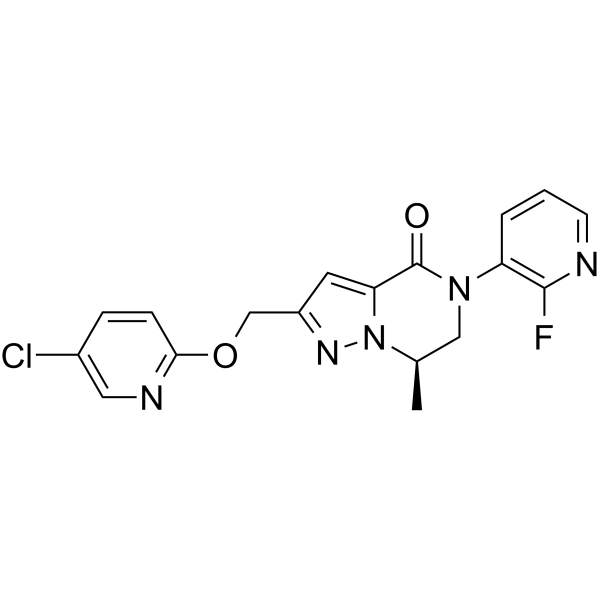
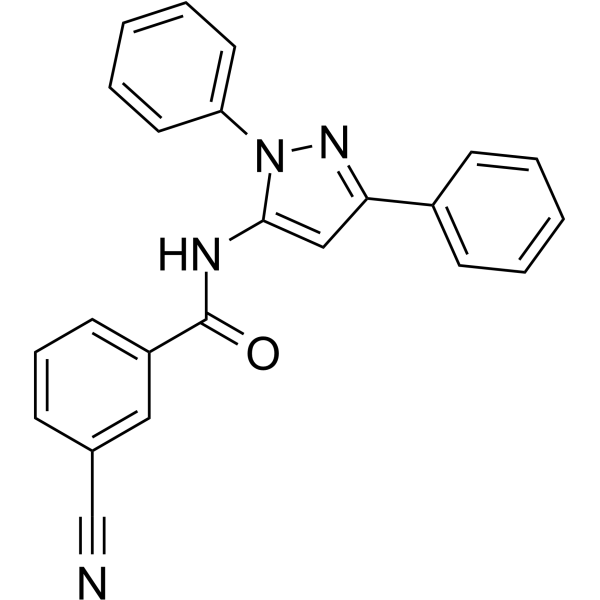
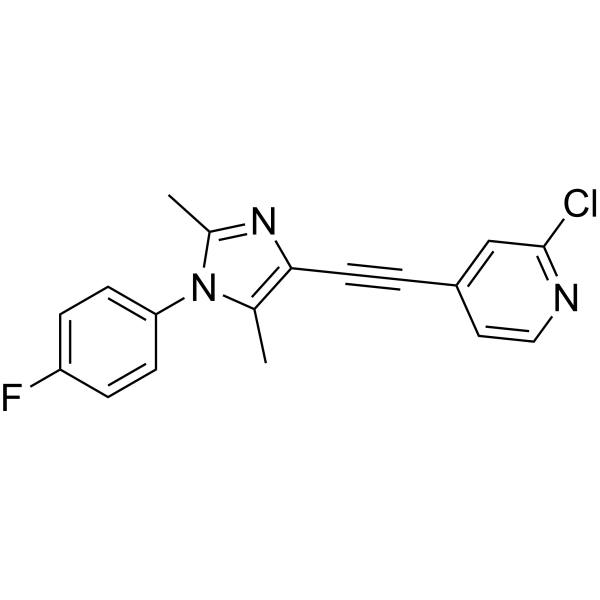
Results for "
Metabotropic glutamate receptors
" in MedChemExpress (MCE) Product Catalog:
13
Isotope-Labeled Compounds
| Cat. No. |
Product Name |
Target |
Research Areas |
Chemical Structure |
-
- HY-14608
-
|
|
Environmental Pollutants
Endogenous Metabolite
iGluR
Ferroptosis
Apoptosis
|
Neurological Disease
|
|
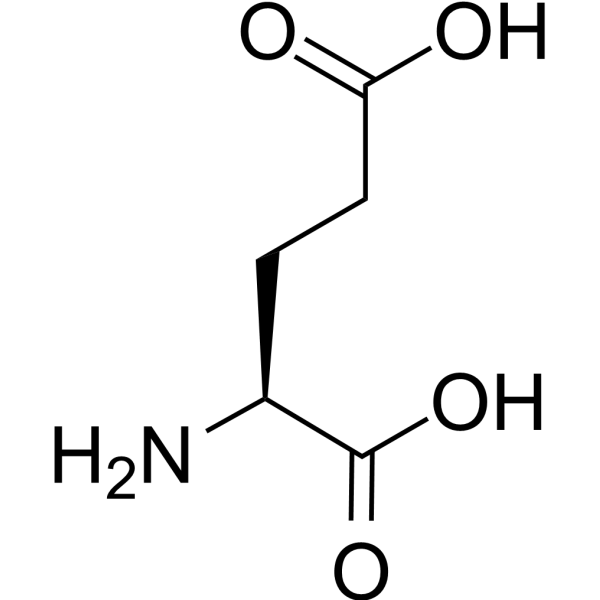
L-Glutamic acid is an excitatory amino acid neurotransmitter that acts as an agonist for all subtypes of glutamate receptors (metabolic rhodophylline, NMDA, and AMPA). L-Glutamic acid has an agonist effect on the release of DA from dopaminergic nerve endings. L-Glutamic acid can be used in the study of neurological diseases. L-Glutamic acid acts at ionotropic and metabotropic glutamate receptors .
|
-
-
- HY-14608A
-
|
|
Environmental Pollutants
iGluR
Apoptosis
Ferroptosis
Endogenous Metabolite
|
Neurological Disease
|
|
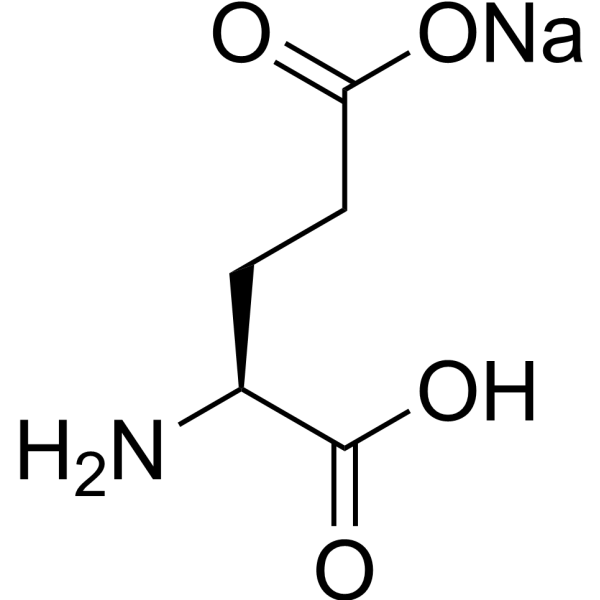
L-Glutamic acid monosodium salt is an excitatory amino acid neurotransmitter that acts as an agonist for all subtypes of glutamate receptors (metabolic rhodophylline, NMDA, and AMPA). L-Glutamic acid monosodium salt has an agonist effect on the release of DA from dopaminergic nerve endings. L-Glutamic acid monosodium salt can be used in the study of neurological diseases. L-Glutamic acid monosodium salt acts at ionotropic and metabotropic glutamate receptors .
|
-
-
- HY-W014666
-
-
-
- HY-70059
-
|
|
mGluR
|
Neurological Disease
|
|
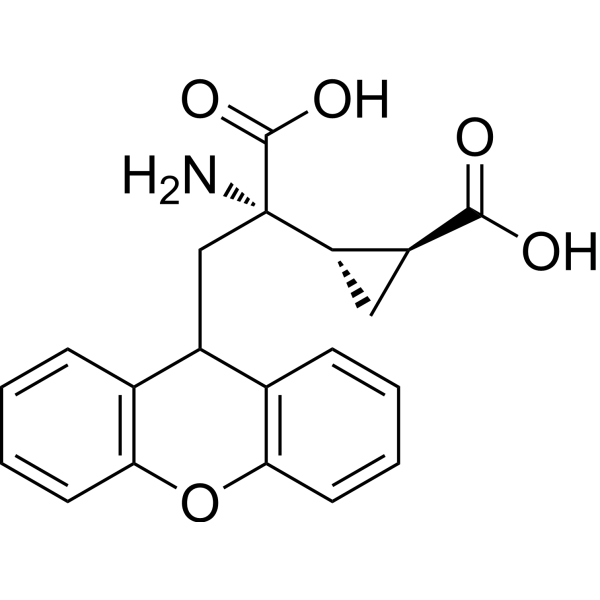
LY341495 is a metabotropic glutamate receptor (mGluR) antagonist with IC50s of 21 nM, 14 nM, 7.8 μM, 8.2 μM, 170 nM, 990 nM, 22 μM for mGlu2, mGlu3, mGlu1a, mGlu5a, mGlu8, mGlu7, and mGlu4 receptors, respectively .
|
-
-
- HY-14608S5
-
|
|
Endogenous Metabolite
iGluR
Ferroptosis
Apoptosis
|
Neurological Disease
|
|
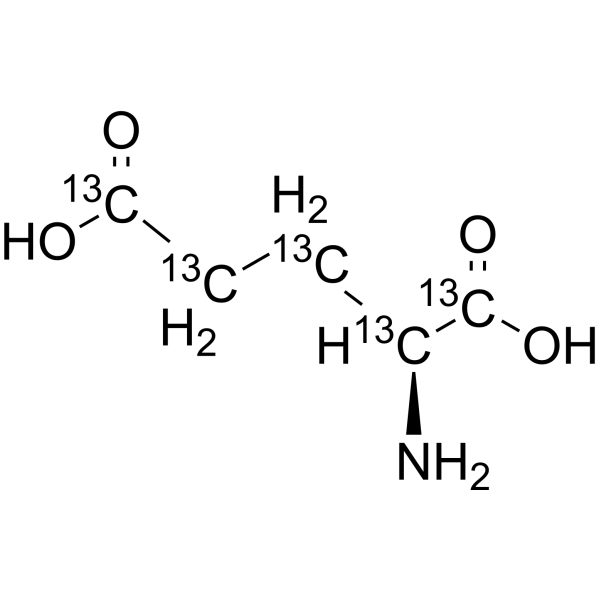
L-Glutamic acid- 13C5 is the 13C-labeled L-Glutamic acid. L-Glutamic acid acts as an excitatory transmitter and an agonist at all subtypes of glutamate receptors (metabotropic, kainate, NMDA, and AMPA). L-Glutamic acid shows a direct activating effect on the release of DA from dopaminergic terminals.
|
-
-
- HY-12598
-
|
|
mGluR
|
Neurological Disease
|
|
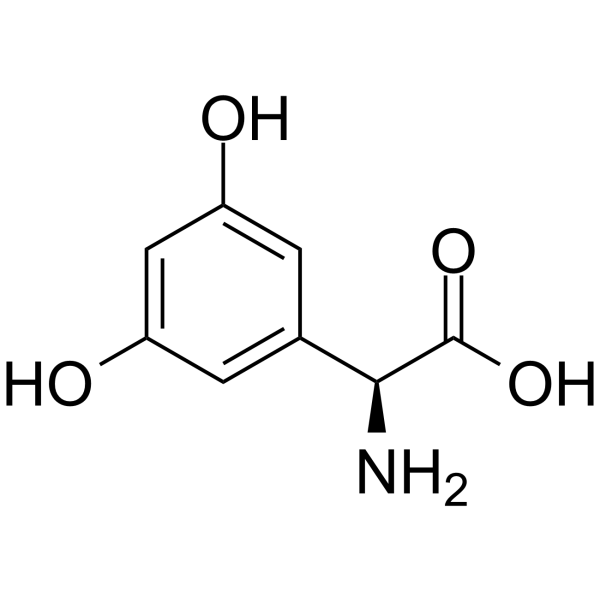
(S)-3,5-DHPG is a weak, but selective group I metabotropic glutamate receptors (mGluRs) agonist with Ki values of 0.9 μM and 3.9 μM for mGluR1a and mGluR5a, respectively . (S)-3,5-DHPG exhibits anxiolytic activity in rats subjected to hypoxia .
|
-
-
- HY-14608S7
-
|
|
Endogenous Metabolite
iGluR
Ferroptosis
Apoptosis
|
Neurological Disease
|
|
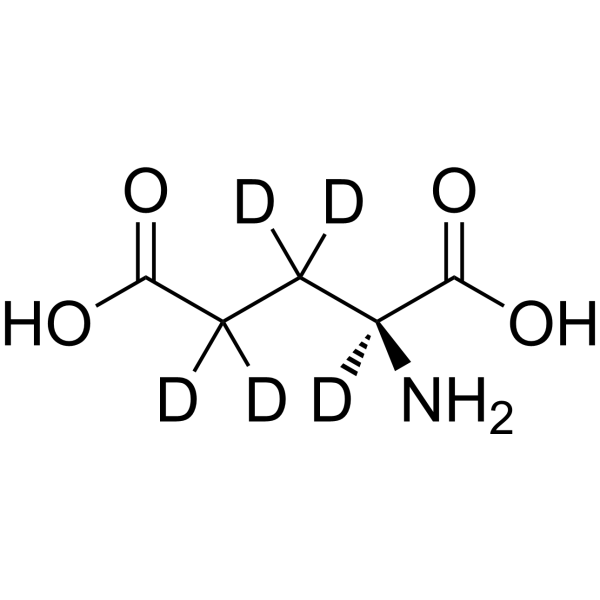
L-Glutamic acid-d5 is the deuterium labeled L-Glutamic acid. L-Glutamic acid acts as an excitatory transmitter and an agonist at all subtypes of glutamate receptors (metabotropic, kainate, NMDA, and AMPA). L-Glutamic acid shows a direct activating effect on the release of DA from dopaminergic terminals.
|
-
-
- HY-14608S8
-
|
|
Endogenous Metabolite
iGluR
Ferroptosis
Apoptosis
|
Neurological Disease
|
|
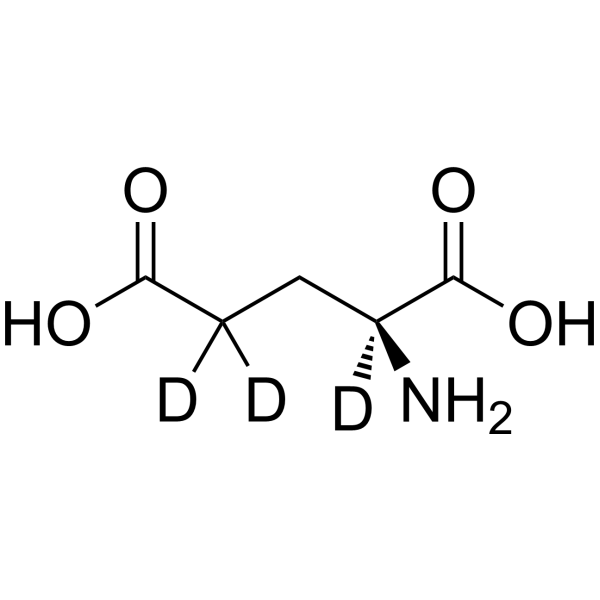
L-Glutamic acid-d3 is the deuterium labeled L-Glutamic acid. L-Glutamic acid acts as an excitatory transmitter and an agonist at all subtypes of glutamate receptors (metabotropic, kainate, NMDA, and AMPA). L-Glutamic acid shows a direct activating effect on the release of DA from dopaminergic terminals.
|
-
-
- HY-100371
-
|
alpha-MCPG
|
mGluR
|
Neurological Disease
|
|
(RS)-MCPG (alpha-MCPG) is a competitive and selective group I/group II metabotropic glutamate receptor (mGluR) antagonist. (RS)-MCPG blocks theta-burst stimulation (TBS)-induced shifts in both juvenile and neonatal rat hippocampal neurons .
|
-
-
- HY-W014666S
-
-
-
- HY-108710
-
|
|
mGluR
|
Neurological Disease
|
|
VU0650786 is a potent and selective CNS penetrant negative allosteric modulator of metabotropic glutamate receptor subtype 3 (mGlu3 NAM), with an IC50 of 392 nM. VU0650786 has antidepressant and anxiolytic activity in rodents .
|
-
-
- HY-W419700
-
|
|
Endogenous Metabolite
iGluR
Ferroptosis
Apoptosis
|
Neurological Disease
|
|
L-Glutamic acid ammonium is an excitatory amino acid neurotransmitter that acts as an agonist for all subtypes of glutamate receptors (metabolic rhodophylline, NMDA, and AMPA). L-Glutamic acid ammonium has an agonist effect on the release of DA from dopaminergic nerve endings. L-Glutamic acid can be used in the study of neurological diseases. L-Glutamic acid ammonium acts at ionotropic and?metabotropic glutamate receptors .
|
-
-
- HY-103111
-
|
|
mGluR
|
Neurological Disease
|
|
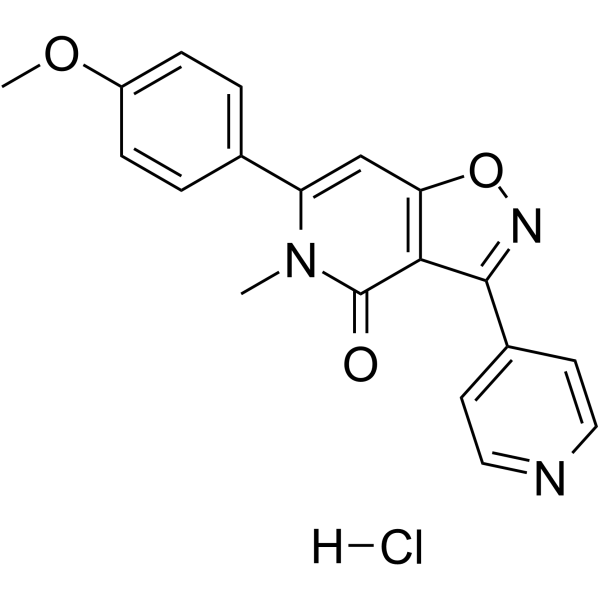
MMPIP hydrochloride is an allosteric metabotropic glutamate receptor 7 (mGluR7) selective antagonist (KB values 24 -30 nM). MMPIP hydrochloride acts as a pharmacological tool for elucidating the roles of mGluR7 on central nervous system functions. MMPIP hydrochloride alleviates pain and normalizes affective and cognitive behavior in neuropathic mice .
|
-
-
- HY-100804
-
|
|
mGluR
Endogenous Metabolite
|
Neurological Disease
|
|
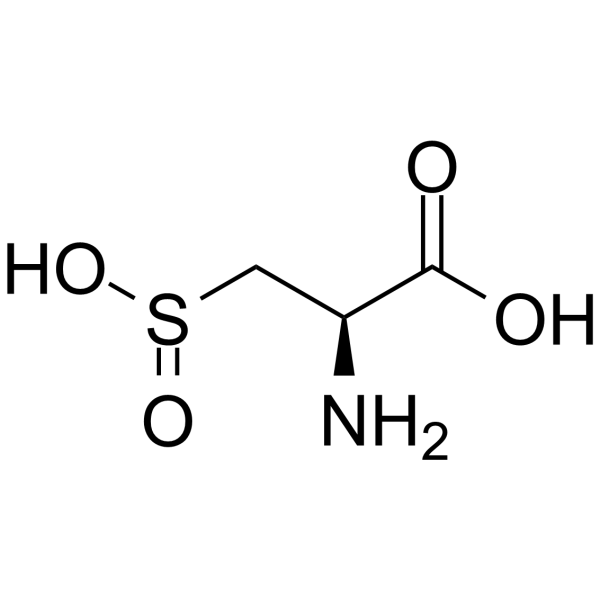
L-Cysteinesulfinic acid is a potent agonist at several rat metabotropic glutamate receptors (mGluRs) with pEC50s of 3.92, 4.6, 3.9, 2.7, 4.0, and 3.94 for mGluR1, mGluR5, mGluR2, mGluR4, mGluR6, and mGluR8, respectively .
|
-
-
- HY-107481
-
|
NS 105
|
mGluR
|
Neurological Disease
|
|
Fasoracetam (NS 105) is the activator of metabotropic glutamate receptor (mGluR). Fasoracetam (NS 105) has the potential for the research of attention-deficit hyperactivity disorder (ADHD) and Alzheimer's disease (AD) .
|
-
-
- HY-18654
-
|
|
mGluR
|
Neurological Disease
|
|
ADX88178 is a potent metabotropic glutamate receptor 4 positive allosteric modulator (mGluR4 PAM) with an EC50 of 4 nM for human mGluR4.
|
-
-
- HY-101226
-
|
|
mGluR
|
Neurological Disease
|
|
MSOP is a selective group III metabotropic glutamate receptor antagonist with apparent KD of 51 μM for the L-AP4-sensitive presynaptic mGluR.
|
-
-
- HY-100406
-
|
(+)-MCPG
|
mGluR
|
Neurological Disease
|
|
(S)-MCPG ((+)-MCPG) is a potent group I/II metabotropic glutamate receptor (mGluRs) antagonist and the active isomer of (RS)-MCPG (HY-100371) . (S)-MCPG can be used for the study of the function of mGluRs in spatial learning .
|
-
-
- HY-W016145
-
|
|
Endogenous Metabolite
iGluR
Ferroptosis
Apoptosis
|
Neurological Disease
Metabolic Disease
Inflammation/Immunology
Cancer
|
|
L-Glutamic acid monosodium hydrate is an excitatory amino acid neurotransmitter that acts as an agonist for all subtypes of glutamate receptors (metabolic rhodophylline, NMDA, and AMPA). L-Glutamic acid monosodium hydrate has an agonist effect on the release of DA from dopaminergic nerve endings. L-Glutamic acid monosodium hydrate can be used in the study of neurological diseases. L-Glutamic acid monosodium hydrate acts at ionotropic and?metabotropic glutamate receptors .
|
-
-
- HY-14608S
-
|
|
Endogenous Metabolite
iGluR
Ferroptosis
Apoptosis
|
Neurological Disease
|
|
L-Glutamic acid- 13C is the 13C-labeled L-Glutamic acid. L-Glutamic acid acts as an excitatory transmitter and an agonist at all subtypes of glutamate receptors (metabotropic, kainate, NMDA, and AMPA). L-Glutamic acid shows a direct activating effect on the release of DA from dopaminergic terminals.
|
-
-
- HY-W017230
-
|
|
mGluR
Endogenous Metabolite
|
Neurological Disease
|
|
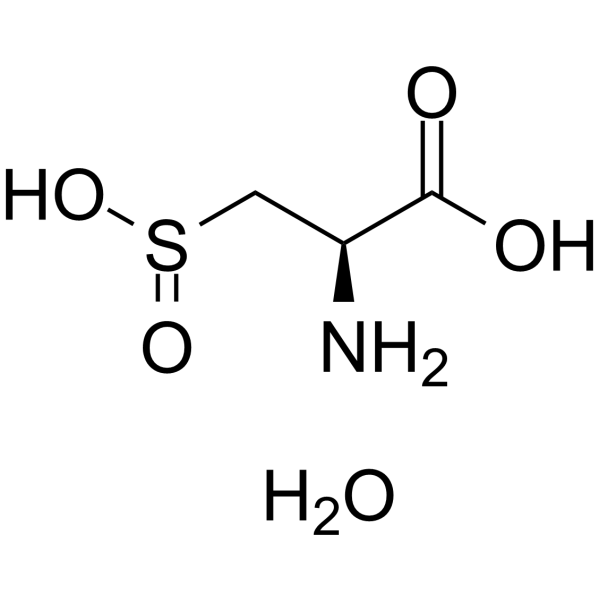
L-Cysteinesulfinic acid monohydrate is a potent agonist at several rat metabotropic glutamate receptors (mGluRs) with pEC50s of 3.92, 4.6, 3.9, 2.7, 4.0, and 3.94 for mGluR1, mGluR5, mGluR2, mGluR4, mGluR6, and mGluR8, respectively .
|
-
-
- HY-14612
-
|
|
mGluR
|
Neurological Disease
|
|
CPPHA is potent and selective positive allosteric modulator (PAM) of the mGluR5 and mGluR1 (metabotropic glutamate receptor). CPPHA can potentiate responses of mGluR5 and mGluR1 to activation of these receptors. CPPHA is developed for the research of central nervous system disorders .
|
-
-
- HY-110278
-
|
|
mGluR
|
Neurological Disease
|
|
ADX71743 is a highly selective, noncompetitive and brain-penetrant metabotropic glutamate receptor 7 negative allosteric modulator (mGlu7 NAM). ADX71743 can cross the blood-brain barrier (BBB) and possesses anxiolytic activity. .
|
-
-
- HY-101356
-
|
|
mGluR
|
Neurological Disease
|
|
CPCCOEt is a low affinity, selective, non-competitive and reversible antagonist of metabotropic glutamate receptor 1b (mGluR1b) .
|
-
-
- HY-W014666R
-
-
-
- HY-108703A
-
|
PXT002331 monohydrochloride
|
mGluR
|
Neurological Disease
|
|
Foliglurax monohydrochloride (PXT002331 monohydrochloride) is a highly selective and potent, brain-penetrant metabotropic glutamate receptor 4 positive allosteric modulator (mGluR4 PAM) , with an EC50 of 79 nM . Antiparkinsonian effect .
|
-
-
- HY-107516
-
|
(S)-3,4-Dicarboxyphenylglycine
|
mGluR
|
Neurological Disease
|
|
(S)-3,4-DCPG is a selective agonist of metabotropic glutamate receptor 8a (mGluR8a) with an EC50 of 31 nM in AV12-664 cells expressing human mGluR8 .
|
-
-
- HY-100405
-
|
|
mGluR
|
Neurological Disease
|
|
FTIDC is an orally active, noncompetitive, selective allosteric metabotropic glutamate receptor (mGluR) 1 antagonist with an IC50 of 5.8 nM for human mGluR1a. FTIDC has no species differences in its antagonistic activity on recombinant human, mouse, and rat mGluR1 .
|
-
-
- HY-123820
-
|
|
mGluR
|
Neurological Disease
|
|
LY3020371 hydrochloride is a potent, selective metabotropic glutamate 2/3 receptor (mGlu2/3) antagonist with Ki of 5.3 and 2.5 nM, potently blocks cAMP formation with IC50 of 16.2 nM . LY3020371 hydrochloride exerts an antidepressant-like signature in vivo .
|
-
-
- HY-14418
-
|
ML-128
|
mGluR
|
Neurological Disease
|
|
VU0361737 (ML-128) is a potent, selective and CNS penetrant positive allosteric modulator of metabotropic glutamate receptor 4 (mGluR4 PAM), with EC50s of 240 nM and 110 nM for human and rat mGluR4 receptors, respectively. VU0361737 has neuroprotective effect. VU0361737 is potential for Parkinson's disease research .
|
-
-
- HY-14608S2
-
|
|
Endogenous Metabolite
iGluR
Ferroptosis
Apoptosis
|
Neurological Disease
|
|
L-Glutamic acid- 15N is the 15N-labeled L-Glutamic acid. L-Glutamic acid acts as an excitatory transmitter and an agonist at all subtypes of glutamate receptors (metabotropic, kainate, NMDA, and AMPA). L-Glutamic acid shows a direct activating effect on the release of DA from dopaminergic terminals .
|
-
-
- HY-14608S1
-
|
|
Endogenous Metabolite
iGluR
Ferroptosis
Apoptosis
|
Neurological Disease
|
|
L-Glutamic acid-1- 13C is the 13C-labeled L-Glutamic acid. L-Glutamic acid acts as an excitatory transmitter and an agonist at all subtypes of glutamate receptors (metabotropic, kainate, NMDA, and AMPA). L-Glutamic acid shows a direct activating effect on the release of DA from dopaminergic terminals.
|
-
-
- HY-103344
-
|
|
Aminopeptidase
Carboxypeptidase
mGluR
|
Neurological Disease
|
|
ZJ43 is a NAAG peptidase inhibitor and glutamate carboxypeptidase II/III (GCP II/III) inhibitor with human GCP II IC50 of 2.4 nM and Ki of 0.8 nM. ZJ43 blocks N-acetylaspartylglutamate hydrolysis, elevates extracellular N-acetylaspartylglutamate levels, and activates group II metabotropic glutamate receptors (mGluR). ZJ43 can be used for the research of schizophrenia, inflammatory pain, neuropathic pain, and traumatic brain injury .
|
-
-
- HY-114403
-
|
|
mGluR
|
Neurological Disease
|
|
VU6012962 is an orally bioavailable and CNS-penetrant metabotropic glutamate receptor 7 negative allosteric modulator (mGlu7 NAM) with an IC50 of 347 nM .
|
-
-
- HY-131286A
-
|
LY-544344 (hydrochloride)
|
Drug Derivative
mGluR
|
Neurological Disease
|
|
Talaglumetad hydrochloride (LY-544344 hydrochloride) is an orally active prodrug of Eglumegad (HY-18941) and a metabotropic glutamate receptor 2/3 (mGluR2/3) agonist. Talaglumetad hydrochloride undergoes transmembrane transport via the intestinal peptide transporter hPepT1, and is enzymatically hydrolyzed to produce L-alanine and the parent drug Eglumegad after entering the body. Talaglumetad hydrochloride can be used in research related to metabotropic glutamate receptor 2-associated neurological systems .
|
-
-
- HY-107503
-
|
|
mGluR
|
Neurological Disease
|
|
MMPIP is an allosteric metabotropic glutamate receptor 7 (mGluR7) selective antagonist (KB values 24 -30 nM). MMPIP acts as a pharmacological tool for elucidating the roles of mGluR7 on central nervous system functions. MMPIP alleviates pain and normalizes affective and cognitive behavior in neuropathic mice .
|
-
-
- HY-110146
-
|
|
mGluR
|
Neurological Disease
|
|
XAP044 is a potent and selective antagonist of mGlu7. The metabotropic glutamate receptor subtype 7 (mGlu7) is an important presynaptic regulator of neurotransmission in the mammalian CNS. XAP044 demonstrates good brain exposure and wide spectrum anti-stress and antidepressant- and anxiolytic-like efficacy in rodent behavioral paradigms .
|
-
-
- HY-14608S6
-
-
-
- HY-103568
-
|
|
mGluR
|
Neurological Disease
|
|
YM-298198 hydrochloride is a high-affinity, selective, orally active, and non-competitive antagonist of metabotropic glutamate receptor type 1 (mGluR1). YM-298198 hydrochloride can be used for the research of neurological disorders .
|
-
-
- HY-108546
-
|
3-Phosphono-L-alanine
|
mGluR
|
Neurological Disease
|
|
L-AP3, metabotropic glutamate receptor (mGluR) antagonist, inhibits D-phosphoserine and L-phosphoserine with IC50s of 368 μM and 2087 μM, respectively .
|
-
-
- HY-110152
-
|
|
mGluR
|
Neurological Disease
|
|
LSN2463359 is positive allosteric modulator of metabotropic glutamate 5 (mGlu5). LSN2463359 attenuates aspects of the behavioral response to administration of the competitive NMDA receptor antagonist. LSN2463359 selectively attenuates reversal learning deficits observed in the neurodevelopmental MAM E17 model . LSN2463359 is a click chemistry reagent, it contains an Alkyne group and can undergo copper-catalyzed azide-alkyne cycloaddition (CuAAc) with molecules containing Azide groups.
|
-
-
- HY-18162
-
|
|
mGluR
|
Neurological Disease
|
|
JNJ-42153605 is a positive allosteric modulator of the metabotropic glutamate 2 (mGlu2) receptor with an EC50 of 17 nM.
|
-
-
- HY-101311
-
|
AIDA
|
mGluR
|
Inflammation/Immunology
Cancer
|
|
UPF-523 (AIDA), a rigid (carboxyphenyl) glycine derivative, is a relatively potent and selective antagonist of group I metabotropic glutamate receptors (mGlu1a) with an IC50 of 214 μM. But UPF-523 has no effect on group II (mGlu2), group III (mGlu4) receptors or ionotropic glutamate receptors. UPF-523 has the potential for the research of the acute arthritis .
|
-
-
- HY-130630
-
|
|
mGluR
|
Neurological Disease
|
|
mGluR2 modulator 1 (compound 95) is a potent and BBB-penetrated mGluR2 (metabotropic glutamate receptor-2) positive allosteric modulator, with an EC50 of 0.03 μM. mGluR2 modulator 1 can be used for psychosis research .
|
-
-
- HY-102094
-
|
|
mGluR
|
Neurological Disease
|
|
(E/Z)-SIB-1893 is a racemic compound of (E)-SIB-1893 and (Z)-SIB-1893 isomers. (E)-SIB-1893 is a selective non-competitive metabotropic glutamate subtype 5 receptor (mGluR5) antagonist .
|
-
-
- HY-101375
-
|
|
mGluR
|
Neurological Disease
|
|
(RS)-APICA is a selective group II metabotropic glutamate receptor (mGluR II) antagonist. (RS)-APICA shows potential neuroprotective effect .
|
-
-
- HY-119078
-
|
|
mGluR
|
Neurological Disease
|
|
VU0080241 is a positive allosteric modulator (PAM) of the metabotropic glutamate receptor subtype 4 (mGluR4), with an EC50 of 4.6 μM .
|
-
-
- HY-108703
-
|
PXT002331
|
mGluR
|
Neurological Disease
|
|
Foliglurax (PXT002331) is a highly selective and potent, brain-penetrant metabotropic glutamate receptor 4 positive allosteric modulator (mGluR4 PAM) with an EC50 of 79 nM . Antiparkinsonian effect .
|
-
-
- HY-100617A
-
|
(RS)-4-Carboxyphenylglycine
|
mGluR
|
Others
|
|
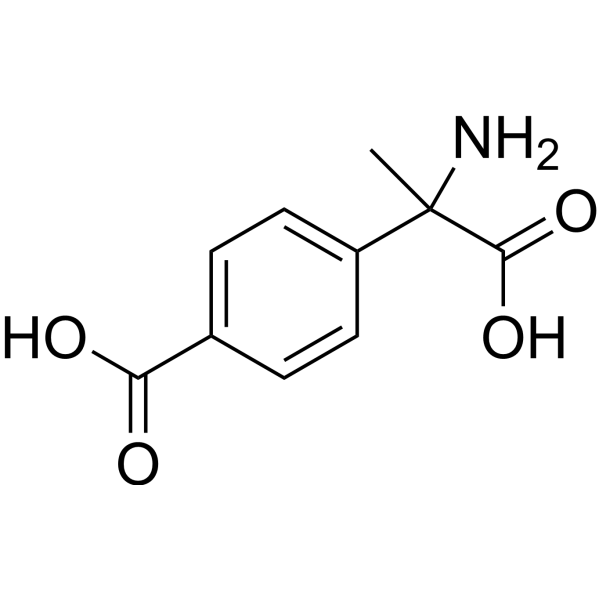
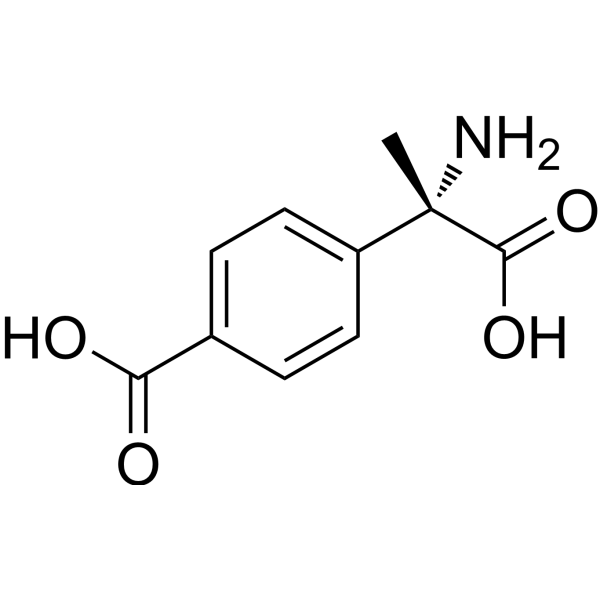
(RS)-4CPG ((RS)-4-Carboxyphenylglycine) is a type I metabotropic glutamate receptor antagonist with activity in blocking LTP induction. In mice lacking IP3R1, (RS)-4CPG (500μM) nearly blocked long-term potentiation (LTP) induced by type I metabotropic glutamate receptor activation, with LTP of 117.6±1.7% (n = 8) in IP3R1(-/-) mice and 116.9±1.8% (n = 5) in IP3R1(+/+) mice.
|
-
-
- HY-133555
-
|
|
mGluR
|
Neurological Disease
|
|
mGluR2 antagonist 1 is a highly potent, orally bioavailable and selective class of mGluR2 negative allosteric modulator (IC50 of 9 nM) with excellent brain permeability .
|
-
- HY-14608S10
-
|
|
Apoptosis
iGluR
Ferroptosis
Endogenous Metabolite
|
Neurological Disease
|
|
L-Glutamic acid- 13C2 is the 13C labeled L-Glutamic acid . L-Glutamic acid acts as an excitatory transmitter and an agonist at all subtypes of glutamate receptors (metabotropic, kainate, NMDA, and AMPA). L-Glutamic acid shows a direct activating effect on the release of DA from dopaminergic terminals .
|
-
- HY-W017230R
-
|
|
Reference Standards
mGluR
Endogenous Metabolite
|
Neurological Disease
|
|
L-Cysteinesulfinic acid monohydrate is a potent agonist at several rat metabotropic glutamate receptors (mGluRs) with pEC50s of 3.92, 4.6, 3.9, 2.7, 4.0, and 3.94 for mGluR1, mGluR5, mGluR2, mGluR4, mGluR6, and mGluR8, respectively .
|
-
- HY-115483
-
|
|
mGluR
|
Neurological Disease
|
|
VU0477573 is a brain-penetrant partial negative allosteric modulator of metabotropic glutamate receptor subtype 5 (mGluR5). VU0477573 exhibits neuroprotective and anxiolytic effects. VU0477573 can be used for the research of neurological disease, such as Parkinson disease .
|
-
- HY-16951
-
|
|
mGluR
|
Neurological Disease
|
|
VU-1545 is a metabotropic glutamate receptor 5 positive allosteric modulator (mGluR5 PAM) with a Ki of 156 nM and an EC50 of 9.6 nM .
|
-
- HY-W565924
-
|
|
mGluR
ERK
|
Neurological Disease
|
|
STX107 is a metabotropic glutamate 5 (mGlu5) receptor negative allosteric modulator (NAM) with a pKi of 8.32. STX107 inhibits glutamate-induced Ca 2+ mobilization, IP1 accumulation, and ERK1/2 phosphorylation. STX107 also inhibits glutamate-induced mGlu5 internalization .
|
-
- HY-103561
-
|
|
mGluR
|
Neurological Disease
|
|
DCB (3,3′-dichlorobenzaldazine) is an neutral allosteric modulator of themetabotropic glutamate receptor metabotropic glutamate receptor subtype 5 (mGluR5) . DCB blocks the positive allosteric regulation of mGluRs (mGluR5) with the help of 3,3′-difluorobenzaldazine (DFB). DCB shows the negative modulatory effect of 3,3′-dimethoxybenzaldazine (DMeOB) .
|
-
- HY-116855
-
|
|
mGluR
|
Neurological Disease
|
|
TASP0433864 is a selective positive allosteric modulator (PAM) of metabotropic glutamate 2 (mGlu2) receptor with EC50 values of 199 nM and 206 nM against human and rat mGlu2 receptors, respectively. TASP0433864 has antipsychotic activity .
|
-
- HY-100372
-
|
(RS)-ECPG
|
mGluR
|
Neurological Disease
|
|
E4CPG ((RS)-ECPG) is a Group I/Group II metabotropic glutamate receptor (mGluR) antagonist. E4CPG can inhibit the paired-pulse ratio of monosynaptic inhibitory postsynaptic currents (IPSC) potentiation .
|
-
- HY-102091
-
|
(2R,4R)-4-Aminopyrrolidine-2,4-dicarboxylic acid
|
mGluR
|
Neurological Disease
|
|
(2R,4R)-APDC is a group II metabotropic glutamate receptor (mGluR) agonist. (2R,4R)-APDC affects cell proliferation by inhibiting glutamate release, enhancing motor responses produced by D1 receptor activation, or reducing brain-derived neurotrophic factor (BDNF) levels. (2R,4R)-APDC can be used in the study of epilepsy and other neurological diseases .
|
-
- HY-103570
-
|
|
mGluR
|
Neurological Disease
|
|
MCPG is a carboxylic phenyl glycine. MCPG can block metabotropic glutamate receptor (mGluR)(HY-15129) and has antagonistic activity of mGluR subtype. MCPG can be used to study the induction and maintenance of long-term potentiation (LTP) .
|
-
- HY-113981
-
|
|
mGluR
|
Neurological Disease
|
|
LY459477 is a potent, selective and orally active metabotropic glutamate 2/3 receptor (mGluR2/3) agonist. LY459477 can effectively suppress Phencyclidine-evoked locomotor activity at doses that do not impair neuromuscular coordination. LY459477 can be used for the research of neurological disease .
|
-
- HY-100840
-
|
(S)-4-Carboxy-3-hydroxyphenylglycine
|
mGluR
|
Neurological Disease
|
|
(S)-4C3HPG ((S)-4-Carboxy-3-hydroxyphenylglycine) is an antagonist of metabotropic glutamate receptor 1a (mGluR 1a) and an agonist of GluR2. (S)-4C3HPG has the anticonvulsant activity and protects against audiogenic seizures in DBA/2 mice .
|
-
- HY-100371R
-
|
alpha-MCPG (Standard)
|
Reference Standards
mGluR
|
Neurological Disease
|
|
(RS)-MCPG (Standard) is the analytical standard of (RS)-MCPG. This product is intended for research and analytical applications. (RS)-MCPG (alpha-MCPG) is a competitive and selective group I/group II metabotropic glutamate receptor (mGluR) antagonist. (RS)-MCPG blocks theta-burst stimulation (TBS)-induced shifts in both juvenile and neonatal rat hippocampal neurons .
|
-
- HY-11041
-
|
|
mGluR
|
Neurological Disease
|
|
LSP1-2111 is a phosphinic glutamate derivative that agonists metabotropic glutamate (mGlu) receptor .
|
-
- HY-103573
-
|
|
mGluR
|
Neurological Disease
|
|
VU 0360223 is a potent metabotropic glutamate receptors (mGluR) negative allosteric modulator with an IC50 of 61 nM .
|
-
- HY-162232A
-
|
|
mGluR
|
Neurological Disease
|
|
mGluR2 agonist 1 hydrochloride is a potent selective agonist for metabotropic glutamate receptors mGluR 2 with EC50 of 82 nM .
|
-
- HY-119941
-
|
|
mGluR
|
Neurological Disease
|
|
VU0652835 is a metabotropic glutamate receptor subtype 5 (mGlu5) negative allosteric modulator with an IC50 of 81 nM .
|
-
- HY-135441
-
|
|
mGluR
|
Inflammation/Immunology
|
|
PF-06422913 is an orally active, potent and selective metabotropic glutamate receptor 5 (mGluR5) negative allosteric modulator .
|
-
- HY-112814
-
|
|
mGluR
|
Neurological Disease
|
|
VU6001376 is a potent and selective positive allosteric modulator of the metabotropic glutamate receptor 4 (mGlu4 PAM) with an EC50 of 50.1 nM .
|
-
- HY-103491
-
|
|
iGluR
|
Neurological Disease
|
|
PF-06462894 is an alkyne-lacking metabotropic glutamate receptor 5 (mGluR5) negative allosteric modulator profiled in both rat and nonhuman primates .
|
-
- HY-123667
-
|
|
mGluR
|
Neurological Disease
|
|
NCFP is a metabotropic glutamate receptor 5 (mGlu5) positive allosteric modulator (PAM). NCFP can be used in the study of central nervous system diseases .
|
-
- HY-131287
-
|
|
mGluR
|
Neurological Disease
|
|
MGS0028 is a selective metabotropic glutamate 2/3 (mGlu2/3) receptor agonist. MGS0028 can be used for psychiatric disorders research .
|
-
- HY-100842A
-
|
|
GABA Receptor
|
Neurological Disease
|
|
(S)-3C4HPG is a metabotropic glutamate receptor antagonist, demonstrating significant potential in modulating neuronal excitability and influencing synaptic transmission.
|
-
- HY-169345
-
|
|
mGluR
|
Neurological Disease
|
|
VU6043653 is a potent, selective and cross the blood-brain barrier metabotropic glutamate receptor subtype 5 (mGlu5) negative allosteric modulator with an IC50 value of 325 nM for h mGlu5 .
|
-
- HY-120567
-
|
ML182
|
mGluR
|
Neurological Disease
|
|
VU0400195 (ML182) is a oral active and allosteric modulator of the metabotropic glutamate receptor 4 (mGlu4) with the EC50 of 291 nM. VU0400195 can be used for study of antiparkinsonian animal model .
|
-
- HY-103562
-
|
3,3'-Dimethoxybenzaldazine
|
mGluR
|
Neurological Disease
|
|
DMeOB (3,3'-Dimethoxybenzaldazine) is a mGluR5 receptor negative allosteric modulator with an IC50 of 3 μM. DMeOB displays reversible non-competitive inhibition of mGlu5-mediated responses .
|
-
- HY-W714513
-
|
|
mGluR
|
Neurological Disease
|
|
VU0469650 hydrochloride is a brain-penetrant negative allosteric modulator of metabotropic glutamate receptor 1 (mGluR1). VU0469650 hydrochloride inhibits glutamate-induced calcium flux in cells expressing human mGluR1 (IC50= 99 nM). VU0469650 hydrochloride is promising for research of central nervous system diseases such as anxiety, addiction, and epilepsy .
|
-
- HY-118022
-
|
|
mGluR
|
Neurological Disease
|
|
VU0361747 is a potent and selective positive allosteric modulator of metabotropic glutamate receptor 4 (mGluR4 PAM). VU0361737 has neuroprotective effect. VU0361737 significantly reverses Amphetamine-induced hyperlocomotion in vivo .
|
-
- HY-12629
-
|
PF-06297470
|
mGluR
|
Others
|
|
PF470 (PF-06297470) is a negative allosteric modulator of metabotropic glutamate receptor 5 (mGluR5) with significant efficacy in Parkinson's disease models, but clinical development was halted due to potential issues found in toxicology studies.
|
-
- HY-131336
-
|
|
mGluR
|
Neurological Disease
|
|
MGS0274, an ester-based lipophilic proagent of a metabotropic glutamate (mGlu)2 and mGlu3 receptor agonist MGS0008, shows improved oral bioavailability. MGS0274 has the potential for the research of schizophrenia .
|
-
- HY-111256
-
|
|
mGluR
|
Neurological Disease
|
|
A-850002 is a metabotropic glutamate receptor (mGluR) antagonist (IC50=27 nM) that significantly attenuates spontaneous pain behavior after skin incision in rats. A-850002 can be used for analgesia research .
|
-
- HY-120699
-
|
|
mGluR
|
Neurological Disease
|
|
RO5488608 is a negative allosteric metabotropic modulator of glutamate receptor 2/3. RO5488608 inhibits LY354740 (HY-18941)-induced intracellular Ca 2+ release and can be used for study of antidepressant .
|
-
- HY-162232
-
|
|
mGluR
|
Neurological Disease
|
|
mGluR2 agonist 1 (Compound 5b) is a potent and selective metabotropic glutamate 2 receptor (mGluR) agonist with an EC50 of 82 nM. mGluR2 agonist 1 can be used for the research of central nervous system (CNS) diseases .
|
-
- HY-W016145S
-
|
|
Isotope-Labeled Compounds
Endogenous Metabolite
iGluR
Ferroptosis
Apoptosis
|
Neurological Disease
Metabolic Disease
Inflammation/Immunology
Cancer
|
|
L-Glutamic acid- 13C5 hydrate salt is the 13C labeled L-Glutamic acid hydrate salt. L-Glutamic acid monosodium hydrate is an excitatory amino acid neurotransmitter that acts as an agonist for all subtypes of glutamate receptors (metabolic rhodophylline, NMDA, and AMPA). L-Glutamic acid monosodium hydrate has an agonist effect on the release of DA from dopaminergic nerve endings. L-Glutamic acid monosodium hydrate can be used in the study of neurological diseases. L-Glutamic acid monosodium hydrate acts at ionotropic and?metabotropic glutamate receptors.
|
-
- HY-115782
-
|
|
mGluR
|
Neurological Disease
|
|
VU6001192 is a potent and selective mGlu2 (metabotropic glutamate receptor 2) negative allosteric modulator. VU6001192 has potent inhibitory activity against the mGlu2 receptor (IC50 = 207 nM), but no activity against the mGlu3 receptor and the other 6 mGlu subtypes. VU6001192 can be used for the research of neurological disease, such as depression .
|
-
- HY-176122
-
|
|
mGluR
|
Neurological Disease
|
|
VU6024945 is an orally active negative allosteric modulator of metabotropic glutamate receptor subtype 5 (mGlu5 NAM) with an IC50 value of 110 nM. VU6024945 can be used in the research of anti-anxiety, anti-depression and Parkinson's disease and other neurological diseases .
|
-
- HY-169808
-
|
|
mGluR
|
Neurological Disease
|
|
BOMA (Compound 7) is a potent and selective metabotropic glutamate receptor 5 (mGluR 5) antagonist with an IC50 value of 3 nM and an Ki value of 3 nM. BOMA is promising for research of various pain states, including acute, persistent and chronic pain, inflammatory pain and neuropathic pain .
|
-
- HY-103551A
-
|
|
mGluR
|
Neurological Disease
|
|
LY 541850 is claimed from human ionotropic and metabotropic glutamate (mGlu) receptors expressed in non-neuronal cells. LY541850 is a selective orthosteric mGlu2 agonist and mGlu3 antagonist with IC50 values of 0.161 μM and 0.038 μM, respectively .
|
-
- HY-115796
-
|
|
mGluR
|
Others
|
|
VU0477886 is a metabotropic glutamate receptor subtype 4 (mGlu4) positive allosteric modulator with potent activating activity on mGlu4 (EC50 = 95nM, 89% Glu Max), good pharmacokinetic characteristics (brain: plasma Kp = 1.3), and significant therapeutic efficacy in Parkinson's disease models.
|
-
- HY-116723
-
|
|
mGluR
|
Neurological Disease
|
|
CFMMC is a selective allosteric metabotropic glutamate receptor 1 (mGluR1) antagonist. CFMMC inhibits L-glutamate-induced intracellular Ca 2+ mobilization ([Ca 2+]i) in Chinese hamster ovary cells expressing recombinant human mGluR1a with an IC50 value of 50 nM. CFMMC is promising for research of various central nervous system disorders, such as schizophrenia, epilepsy, anxiety, pain, cognitive dysfunction and drug abuse .
|
-
- HY-129274
-
|
|
mGluR
|
Neurological Disease
|
|
RO4988546 is a negative allosteric modulator (NAM) that targets metabotropic glutamate receptors 2 and 3 (mGlu2, mGlu3). RO4988546 can reduce the binding of [ 3h]-LY354740 at the positive binding site, while affecting the receptor's G protein coupling and intracellular signaling. RO4988546 can be used in the development of antidepressants and cognitive enhancers .
|
-
- HY-107481R
-
|
NS 105 (Standard)
|
Reference Standards
mGluR
|
Neurological Disease
|
|
Fasoracetam (Standard) is the analytical standard of Fasoracetam (HY-107481). This product is intended for research and analytical applications. Fasoracetam (NS 105) is the activator of metabotropic glutamate receptor (mGluR). Fasoracetam (NS 105) has the potential for the research of attention-deficit hyperactivity disorder (ADHD) and Alzheimer's disease (AD) .
|
-
- HY-132227
-
|
3',4'-Dichlorobenzamil hydrochloride; L-594881 hydrochloride
|
Na+/Ca2+ Exchanger
|
Others
|
|
Dichlorobenzamil (3',4'-Dichlorobenzamil; L-594881) hydrochloride is a Na +-Ca 2+ Exchanger inhibitor. Dichlorobenzamil (hydrochloride) attenuates the Na +-Ca 2+ exchanger-mediated inward current induced by activation of type I metabotropic glutamate receptors in second-order baroreceptor neurons of the rat nucleus tractus solitarius .
|
-
- HY-114515
-
|
RG7090 sulfate; RO4917523 sulfate
|
mGluR
|
Neurological Disease
|
|
Basimglurant (RG7090; RO4917523) sulfate is a selective, orally active, blood-brain barrier permeable negative allosteric modulator of metabotropic glutamate receptor 5 (mGluR5), with a Ki of 1.4 nM (against [ 3H]-ABP688 (HY-110141)) and 35.6 nM (against [ 3H]-MPEP (HY-14609A)). Basimglurant sulfate inhibits mGlu5-mediated signaling pathways and receptor constitutive activity, regulates dopamine levels in the nucleus accumbens, exerts anxiolytic, antidepressant-like, analgesic and arousal-promoting effects, and alters δ-wave power during non-rapid eye movement sleep. Basimglurant sulfate can be used in research on depression, fragile X syndrome, anxiety disorders, etc .
|
-
- HY-131286
-
|
LY-544344
|
mGluR
|
Neurological Disease
|
|
Talaglumetad (LY-544344) is an orally active prodrug of Eglumegad (HY-18941) and a metabotropic glutamate receptor 2/3 (mGluR2/3) agonist. Talaglumetad undergoes transmembrane transport via the intestinal peptide transporter hPepT1, and is enzymatically hydrolyzed to produce L-alanine and the parent drug Eglumegad after entering the body. Talaglumetad can be used in research related to metabotropic glutamate receptor 2-associated neurological systems .
|
-
- HY-103561R
-
|
|
Reference Standards
mGluR
|
Neurological Disease
Cancer
|
|
DCB (Standard) is the analytical standard of DCB (HY-103561). This product is intended for research and analytical applications. DCB (3,3′-dichlorobenzaldazine) is an neutral allosteric modulator of the metabotropic glutamate receptor metabotropic glutamate receptor subtype 5 (mGluR5). DCB blocks the positive allosteric regulation of mGluRs (mGluR5) with the help of 3,3′-difluorobenzaldazine (DFB). DCB shows the negative modulatory effect of 3,3′-dimethoxybenzaldazine (DMeOB) .
|
-
- HY-131292
-
|
|
mGluR
|
Neurological Disease
|
|
Ro-65-3479 is a selective metabotropic glutamate receptor (mGlu2/3) antagonist. Ro-65-3479 blocks glutamate-induced signaling and modulates calcium channel activity. Ro-65-3479 is promising for research of disorders involving glutamatergic dysregulation, such as anxiety, schizophrenia, and neurodegenerative diseases .
|
-
- HY-101226R
-
|
|
mGluR
Reference Standards
|
Neurological Disease
|
|
MSOP (Standard) is the analytical standard of MSOP (HY-101226). This product is intended for research and analytical applications. MSOP is a selective group III metabotropic glutamate receptor antagonist with apparent KD of 51 μM for the L-AP4-sensitive presynaptic mGluR.
|
-
- HY-101375R
-
|
|
mGluR
Reference Standards
|
Neurological Disease
|
|
(RS)-APICA (Standard) is the analytical standard of (RS)-APICA (HY-101375). This product is intended for research and analytical applications. (RS)-APICA is a selective group II metabotropic glutamate receptor (mGluR II) antagonist. (RS)-APICA shows potential neuroprotective effect .
|
-
- HY-108703AR
-
|
PXT002331 monohydrochloride (Standard)
|
Reference Standards
mGluR
|
Neurological Disease
|
|
Foliglurax monohydrochloride (Standard) is the analytical standard of Foliglurax (monohydrochloride) (HY-108703A). This product is intended for research and analytical applications. Foliglurax monohydrochloride (PXT002331 monohydrochloride) is a highly selective and potent, brain-penetrant metabotropic glutamate receptor 4 positive allosteric modulator (mGluR4 PAM) , with an EC50 of 79 nM . AntiparKinsonian effect .
|
-
- HY-15748
-
|
ADX-71149
|
mGluR
|
Neurological Disease
|
|
JNJ-40411813 (ADX-71149) is a novel positive allosteric modulator of the metabotropic Glutamate 2 receptor (mGlu2R) with EC50 of 147 nM. JNJ-40411813 has orally bioactivity and penetrate the blood-brain barriers. JNJ-40411813 has the potential property of anti-depression .
|
-
- HY-128099
-
|
|
mGluR
|
Neurological Disease
|
|
mGluR7 antagonist-2 (compound 1) is a potent and selective metabotropic glutamate receptor 7 (mGluR7) allosteric antagonist (IC50 = 20 nM). mGluR7 antagonist-2 shows high selectivity over other mGluRs (mGluR1/2/3/4/5/6/8) .
|
-
- HY-119097
-
|
|
mGluR
|
Neurological Disease
|
|
LY456066 is a selective non-competitive metabotropic glutamate receptors (mGluR1) antagonist with an IC50 value of 52.0 nM. LY456066 is effective in rodent models of anxiolysis and nociception. LY456066 reduces hyperalgesia and the amount of licking and flinching following formalin injection, which is promising for research of analgesics for chronic pain .
|
-
- HY-14608S3
-
-
- HY-14608S9
-
-
- HY-114589
-
|
|
mGluR
|
Others
|
|
VU0240382 is a metabotropic glutamate receptor subtype 5 modulator whose activity differs depending on whether it has allosteric agonist activity. VU0240382 with allosteric agonist activity can activate mGlu(5) receptors in cell lines, but has no agonist activity in natural systems and has similar efficacy to mGlu(5) modulators without allosteric agonist activity in animal models.
|
-
- HY-131293
-
|
|
mGluR
|
Neurological Disease
|
|
MGS0008 is an orally active and brain-penetrant metabotropic glutamate receptor 2/3 (mGlu2/3) agonist with EC50 values of 29.4 nM and 45.4 nM for mGluR2 and mGluR3, respectively. MGS0008 is promising for research of central nervous system disorders, including schizophrenia, anxiety, and neurodegenerative diseases .
|
-
- HY-108710R
-
|
|
Reference Standards
mGluR
|
Neurological Disease
|
|
VU0650786 (Standard) is the analytical standard of VU0650786 (HY-108710). This product is intended for research and analytical applications. VU0650786 is a potent and selective CNS penetrant negative allosteric modulator of metabotropic glutamate receptor subtype 3 (mGlu3 NAM), with an IC50 of 392 nM. VU0650786 has antidepressant and anxiolytic activity in rodents .
|
-
- HY-14569
-
-
- HY-100406R
-
|
(+)-MCPG (Standard)
|
mGluR
Reference Standards
|
Neurological Disease
|
|
(S)-MCPG (Standard) is the analytical standard of (S)-MCPG (HY-100406). This product is intended for research and analytical applications. (S)-MCPG ((+)-MCPG) is a potent group I/II metabotropic glutamate receptor (mGluRs) antagonist and the active isomer of (RS)-MCPG (HY-100371) . (S)-MCPG can be used for the study of the function of mGluRs in spatial learning .
|
-
- HY-14608S4
-
-
- HY-14608S12
-
|
L-Glutamic acid-14C
|
iGluR
Ferroptosis
Apoptosis
|
Neurological Disease
|
|
L-Glutamic acid-14C is L-Glutamic acid (HY-14608) labeled with the radioactive isotope carbon-14. L-Glutamic acid is an excitatory amino acid neurotransmitter and an agonist for all subtypes of glutamate receptors (metabotropic, NMDA, and AMPA). L-Glutamic acid acts as an agonist in the release of DA from dopaminergic nerve terminals and can be used in the study of neurological diseases .
|
-
- HY-70059A
-
|
|
mGluR
|
Neurological Disease
|
|
(Rac)-LY341495 is the isomers of LY341495 (HY-70059) can be used as control compounds in experiments. LY341495 is a metabotropic glutamate receptor (mGluR) antagonist with IC50s of 21 nM, 14 nM, 7.8 μM, 8.2 μM, 170 nM, 990 nM, 22 μM for mGlu2, mGlu3, mGlu1a, mGlu5a, mGlu8, mGlu7, and mGlu4 receptors, respectively .
|
-
- HY-102091A
-
|
(2R,4R)-4-Aminopyrrolidine-2,4-dicarboxylic acid hydrate
|
mGluR
|
Neurological Disease
|
|
(2R,4R)-APDC hydrate ((2R,4R)-4-Aminopyrrolidine-2,4-dicarboxylic acid hydrate) is a group II metabotropic glutamate receptor (mGluR) agonist. (2R,4R)-APDC hydrate affects cell proliferation by inhibiting glutamate release, enhancing motor responses produced by D1 receptor activation, or reducing brain-derived neurotrophic factor (BDNF) levels. (2R,4R)-APDC hydrate can be used in the study of epilepsy and other neurological diseases .
|
-
- HY-107508
-
|
|
mGluR
|
Neurological Disease
|
|
VU-29 is a positive allosteric modulator of metabotropic glutamate 5 (mGlu5) receptor (EC50=9 nM and Ki=244 nM for rmGluR5). VU-29 is selective for mGluR5 relative to other mGluR subtypes (EC50: rmGluR1/rmGluR2=557 nM/1.5 μM; hmGluR4=154 nM) .
|
-
- HY-100804R
-
|
|
Reference Standards
mGluR
Endogenous Metabolite
|
Neurological Disease
|
|
L-Cysteinesulfinic acid (Standard) is the analytical standard of L-Cysteinesulfinic acid. This product is intended for research and analytical applications. L-Cysteinesulfinic acid is a potent agonist at several rat metabotropic glutamate receptors (mGluRs) with pEC50s of 3.92, 4.6, 3.9, 2.7, 4.0, and 3.94 for mGluR1, mGluR5, mGluR2, mGluR4, mGluR6, and mGluR8, respectively .
|
-
- HY-103111R
-
|
|
Reference Standards
mGluR
|
Neurological Disease
|
|
MMPIP hydrochloride (Standard) is the analytical standard of MMPIP hydrochloride (HY-103111). This product is intended for research and analytical applications. MMPIP hydrochloride is an allosteric metabotropic glutamate receptor 7 (mGluR7) selective antagonist (KB values 24 -30 nM). MMPIP hydrochloride acts as a pharmacological tool for elucidating the roles of mGluR7 on central nervous system functions. MMPIP hydrochloride alleviates pain and normalizes affective and cognitive behavior in neuropathic mice .
|
-
- HY-110070
-
|
2-Amino-4-phosphonobutyric acid sodium
|
mGluR
|
Others
Neurological Disease
|
|
DL-AP4 sodium (2-Amino-4-phosphonobutyric acid sodium) is an agonist for metabotropic glutamate receptors (mGluR). DL-AP4 sodium binds to mGluR4, activates the signaling pathway that is negatively correlated with adenylate cyclase, and inhibits the Forskolin (HY-15371)-induced production of cAMP. DL-AP4 sodium is also an inhibitor for ON channel, that reduces the sensitivity of photoreceptors to brightness changes .
|
-
- HY-102094R
-
|
|
Reference Standards
mGluR
|
Neurological Disease
|
|
(E/Z)-SIB-1893 (Standard) is the analytical standard of (E/Z)-SIB-1893 (HY-102094). This product is intended for research and analytical applications. (E/Z)-SIB-1893 is a racemic compound of (E)-SIB-1893 and (Z)-SIB-1893 isomers. (E)-SIB-1893 is a selective non-competitive metabotropic glutamate subtype 5 receptor (mGluR5) antagonist .
|
-
- HY-100840A
-
|
4-Carboxy-3-hydroxyphenylglycine
|
mGluR
|
Neurological Disease
|
|
(RS)-4C3HPG (4-Carboxy-3-hydroxyphenylglycine) is an effective competitive antagonist at the metabotropic glutamate receptor 1 (mGluR1) in the central nervous system, and it is also an agonist at mGluR2/3. (RS)-4C3HPG exhibits neuroprotective effects in an acute global ischemia rat model .
|
-
- HY-103574R
-
|
ADX-10059 hydrochloride (Standard)
|
mGluR
Reference Standards
|
Neurological Disease
|
|
Raseglurant hydrochloride (Standard) is the analytical standard of Raseglurant hydrochloride (HY-103574). This product is intended for research and analytical applications. Raseglurant hydrochloride is a negative allosteric modulator of mGluR5. Raseglurant hydrochloride can be used in study migraine .
|
-
- HY-103574
-
|
ADX-10059 hydrochloride
|
mGluR
|
Neurological Disease
|
|
Raseglurant hydrochloride is a negative allosteric modulator of mGluR5. Raseglurant hydrochloride can be used in study migraine .
|
-
- HY-117132
-
|
|
mGluR
|
Neurological Disease
|
|
YM-202074 is a selective, allosteric metabotropic glutamate receptor type 1 (mGluR1) antagonist with high affinity. YM-202074 binds to the allosteric site of rat mGluR1 with a Ki of 4.8 nM. YM-202074 fumarate also inhibits mGluR1-mediated inositol phosphate production in rat cerebellar granule cells with an IC50 of 8.6 nM. YM-202074 has potent neuroprotective effects in transient MCA (tMCA) occlusion rat models .
|
-
- HY-170499
-
|
BI02982816
|
mGluR
|
Neurological Disease
|
|
VU6024578 (BI02982816) is a selective, orally active positive allosteric modulator (PAM) for metabotropic glutamate receptor (mGluR1), that activates human mGluR1 and rat mGluR1 with EC50 of 54 nM and 46 nM. VU6024578 exhibits antipsychotic activity in rats amphetamine-induced hyperactivity models and MK-801 (HY-15084B)-induced novel object recognition (NOR) models. VU6024578 is blood brain barrier penetrable .
|
-
- HY-103556
-
|
|
mGluR
|
Neurological Disease
|
|
YM-202074 fumarate is a selective, allosteric metabotropic glutamate receptor type 1 (mGluR1) antagonist with high affinity. YM-202074 fumarate binds to the allosteric site of rat mGluR1 with a Ki of 4.8 nM. YM-202074 fumarate also inhibits mGluR1-mediated inositol phosphate production in rat cerebellar granule cells with an IC50 of 8.6 nM. YM-202074 fumarate has potent neuroprotective effects in transient MCA (tMCA) occlusion rat models .
|
-
- HY-114978
-
|
|
mGluR
PERK
|
Neurological Disease
|
|
VU0424465 is a potent and partial PAM (positive allosteric modulator)-agonist for mGlu5 mediated iCa 2+ mobilization. VU0424465 exhibits high affinity at MPEP allosteric binding site, with a Ki value of 11.8 nM. VU0424465 is also a agonist for pERK1/2 in cortical neurons .
|
-
- HY-107508R
-
|
|
Reference Standards
mGluR
|
Neurological Disease
|
|
VU-29 (Standard) is the analytical standard of VU-29 (HY-107508). This product is intended for research and analytical applications. VU-29 is a positive allosteric modulator of metabotropic glutamate 5 (mGlu5) receptor (EC50=9 nM and Ki=244 nM for rmGluR5). VU-29 is selective for mGluR5 relative to other mGluR subtypes (EC50: rmGluR1/rmGluR2=557 nM/1.5 μM; hmGluR4=154 nM) .
|
-
- HY-157998
-
|
|
mGluR
Src
|
Others
|
|
mG2N001 is a negative allosteric modulator (NAM) (IC50: 93 nM) of the metabotropic glutamate receptor mGluR2 and binds to mGluR2 as an antagonist (Ki: 63 nM). mG2N001 is microparticle- and plasma-stable, and its radioisotope [11C]mG2N001 can be used in PET imaging. [11C]mG2N001 has good brain heterogeneity and brain penetration, and can selectively accumulate in mGluR2-rich regions, producing high-contrast brain images .
|
-
- HY-15446
-
|
RG7090; RO4917523
|
mGluR
|
Neurological Disease
|
|
Basimglurant (RG7090; RO4917523) is a selective, orally active, blood-brain barrier permeable negative allosteric modulator of metabotropic glutamate receptor 5 (mGluR5), with a Ki of 1.4 nM (against [ 3H]-ABP688 (HY-110141)) and 35.6 nM (against [ 3H]-MPEP (HY-14609A)). Basimglurant inhibits mGlu5-mediated signaling pathways and receptor constitutive activity, regulates dopamine levels in the nucleus accumbens, exerts anxiolytic, antidepressant-like, analgesic and arousal-promoting effects, and alters δ-wave power during non-rapid eye movement sleep. Basimglurant can be used in research on depression, fragile X syndrome, anxiety disorders, etc .
|
-
- HY-15446R
-
|
RG7090 (Standard); RO4917523 (Standard)
|
Reference Standards
mGluR
|
Neurological Disease
|
|
Basimglurant (RG7090; RO4917523) (Standard) is the analytical standard of Basimglurant. This product is intended for research and analytical applications. Basimglurant is a selective, orally active, blood-brain barrier permeable negative allosteric modulator of metabotropic glutamate receptor 5 (mGluR5), with a Ki of 1.4 nM (against [ 3H]-ABP688 (HY-110141)) and 35.6 nM (against [ 3H]-MPEP (HY-14609A)). Basimglurant inhibits mGlu5-mediated signaling pathways and receptor constitutive activity, regulates dopamine levels in the nucleus accumbens, exerts anxiolytic, antidepressant-like, analgesic and arousal-promoting effects, and alters δ-wave power during non-rapid eye movement sleep. Basimglurant can be used in research on depression, fragile X syndrome, anxiety disorders, etc.
|
-
- HY-11095
-
|
|
mGluR
CaSR
PI3K
Akt
mTOR
Autophagy
Apoptosis
Bcl-2 Family
Caspase
|
Cardiovascular Disease
Neurological Disease
|
|
NPS 2390 is an allosteric antagonist of calcium-sensing receptor (CaSR) and mGluR1/5. NPS 2390 inhibits the PI3K/Akt/mTOR signaling pathway, reduces hypoxia-induced intracellular calcium elevation, decreases the expression of autophagy (autophagy) proteins, regulates the expression of phenotypic marker proteins, and inhibits the proliferation of pulmonary artery smooth muscle cells. NPS 2390 attenuates the endogenous apoptosis (apoptosis) pathway, increases the expression level of Bcl-2, downregulates the expression levels of Bax, cytochrome c and caspase-3, alleviates cerebral edema and improves neurological function in rat models. NPS 2390 can be used in studies related to hypoxic pulmonary hypertension, traumatic brain injury, stroke and pain .
|
-
| Cat. No. |
Product Name |
Category |
Target |
Chemical Structure |
-
- HY-14608
-
-
-
- HY-14608A
-
-
-
- HY-W014666
-
-
-
- HY-100804
-
|
|
Ketones, Aldehydes, Acids
Endogenous metabolite
Source Classification
|
mGluR
Endogenous Metabolite
|
|
L-Cysteinesulfinic acid is a potent agonist at several rat metabotropic glutamate receptors (mGluRs) with pEC50s of 3.92, 4.6, 3.9, 2.7, 4.0, and 3.94 for mGluR1, mGluR5, mGluR2, mGluR4, mGluR6, and mGluR8, respectively .
|
-
-
- HY-W017230
-
|
|
Natural Products
Neurological Disease
Classification of Application Fields
Endogenous metabolite
Disease Research Fields
Source Classification
|
mGluR
Endogenous Metabolite
|
|
L-Cysteinesulfinic acid monohydrate is a potent agonist at several rat metabotropic glutamate receptors (mGluRs) with pEC50s of 3.92, 4.6, 3.9, 2.7, 4.0, and 3.94 for mGluR1, mGluR5, mGluR2, mGluR4, mGluR6, and mGluR8, respectively .
|
-
-
- HY-W014666R
-
-
-
- HY-W017230R
-
|
|
Structural Classification
Natural Products
Endogenous metabolite
Source Classification
|
Reference Standards
mGluR
Endogenous Metabolite
|
|
L-Cysteinesulfinic acid monohydrate is a potent agonist at several rat metabotropic glutamate receptors (mGluRs) with pEC50s of 3.92, 4.6, 3.9, 2.7, 4.0, and 3.94 for mGluR1, mGluR5, mGluR2, mGluR4, mGluR6, and mGluR8, respectively .
|
-
-
- HY-100804R
-
|
|
Structural Classification
Ketones, Aldehydes, Acids
Endogenous metabolite
Source Classification
|
Reference Standards
mGluR
Endogenous Metabolite
|
|
L-Cysteinesulfinic acid (Standard) is the analytical standard of L-Cysteinesulfinic acid. This product is intended for research and analytical applications. L-Cysteinesulfinic acid is a potent agonist at several rat metabotropic glutamate receptors (mGluRs) with pEC50s of 3.92, 4.6, 3.9, 2.7, 4.0, and 3.94 for mGluR1, mGluR5, mGluR2, mGluR4, mGluR6, and mGluR8, respectively .
|
-
| Cat. No. |
Product Name |
Chemical Structure |
-
- HY-14608S5
-
1 Publications Verification
|
|
L-Glutamic acid- 13C5 is the 13C-labeled L-Glutamic acid. L-Glutamic acid acts as an excitatory transmitter and an agonist at all subtypes of glutamate receptors (metabotropic, kainate, NMDA, and AMPA). L-Glutamic acid shows a direct activating effect on the release of DA from dopaminergic terminals.
|
-
-
- HY-14608S7
-
|
|
|
L-Glutamic acid-d5 is the deuterium labeled L-Glutamic acid. L-Glutamic acid acts as an excitatory transmitter and an agonist at all subtypes of glutamate receptors (metabotropic, kainate, NMDA, and AMPA). L-Glutamic acid shows a direct activating effect on the release of DA from dopaminergic terminals.
|
-
-
- HY-14608S8
-
|
|
|
L-Glutamic acid-d3 is the deuterium labeled L-Glutamic acid. L-Glutamic acid acts as an excitatory transmitter and an agonist at all subtypes of glutamate receptors (metabotropic, kainate, NMDA, and AMPA). L-Glutamic acid shows a direct activating effect on the release of DA from dopaminergic terminals.
|
-
-
- HY-14608S3
-
|
|
|
L-Glutamic acid- 13C5, 15N is the 13C- and 15N-labeled L-Glutamic acid. L-Glutamic acid acts as an excitatory transmitter and an agonist at all subtypes of glutamate receptors (metabotropic, kainate, NMDA, and AMPA). L-Glutamic acid shows a direct activating effect on the release of DA from dopaminergic terminals.
|
-
-
- HY-W014666S
-
|
|
|
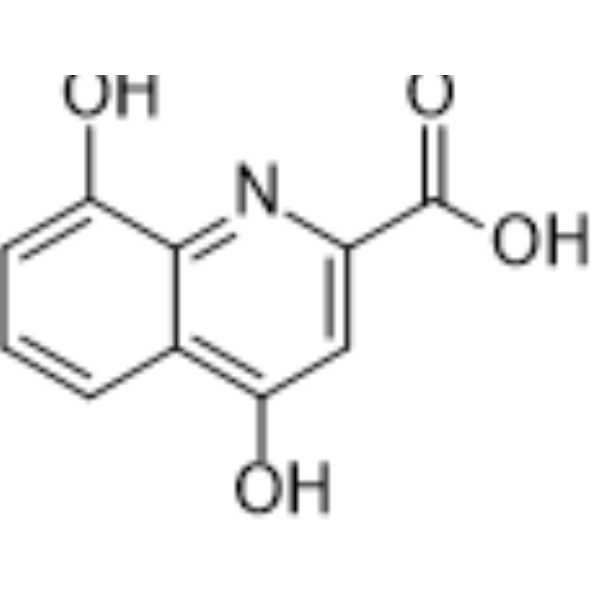
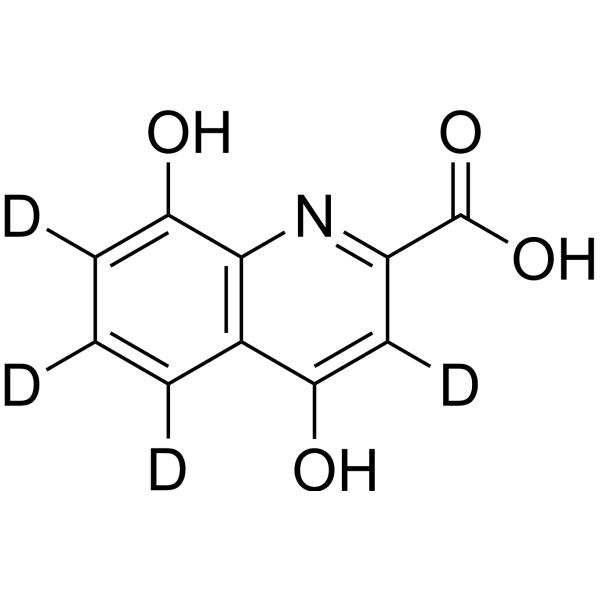
Xanthurenic acid-d4 is the deuterium labeled Xanthurenic acid . Xanthurenic acid is a putative endogenous Group II metabotropic glutamate receptor agonist, on sensory transmission in the thalamus .
|
-
-
- HY-14608S
-
|
|
|
L-Glutamic acid- 13C is the 13C-labeled L-Glutamic acid. L-Glutamic acid acts as an excitatory transmitter and an agonist at all subtypes of glutamate receptors (metabotropic, kainate, NMDA, and AMPA). L-Glutamic acid shows a direct activating effect on the release of DA from dopaminergic terminals.
|
-
-
- HY-14608S2
-
|
|
|
L-Glutamic acid- 15N is the 15N-labeled L-Glutamic acid. L-Glutamic acid acts as an excitatory transmitter and an agonist at all subtypes of glutamate receptors (metabotropic, kainate, NMDA, and AMPA). L-Glutamic acid shows a direct activating effect on the release of DA from dopaminergic terminals .
|
-
-
- HY-14608S1
-
|
|
|
L-Glutamic acid-1- 13C is the 13C-labeled L-Glutamic acid. L-Glutamic acid acts as an excitatory transmitter and an agonist at all subtypes of glutamate receptors (metabotropic, kainate, NMDA, and AMPA). L-Glutamic acid shows a direct activating effect on the release of DA from dopaminergic terminals.
|
-
-
- HY-14608S6
-
|
|
|
L-Glutamic acid-5- 13C is the 13C-labeled L-Glutamic acid. L-Glutamic acid acts as an excitatory transmitter and an agonist at all subtypes of glutamate receptors (metabotropic, kainate, NMDA, and AMPA). L-Glutamic acid shows a direct activating effect on the release of DA from dopaminergic terminals.
|
-
-
- HY-14608S4
-
|
|
|
L-Glutamic acid- 13C5, 15N,d5 is the deuterium, 13C-, and 15-labeled L-Glutamic acid. L-Glutamic acid acts as an excitatory transmitter and an agonist at all subtypes of glutamate receptors (metabotropic, kainate, NMDA, and AMPA). L-Glutamic acid shows a direct activating effect on the release of DA from dopaminergic terminals.
|
-
-
- HY-14608S10
-
|
|
|
L-Glutamic acid- 13C2 is the 13C labeled L-Glutamic acid . L-Glutamic acid acts as an excitatory transmitter and an agonist at all subtypes of glutamate receptors (metabotropic, kainate, NMDA, and AMPA). L-Glutamic acid shows a direct activating effect on the release of DA from dopaminergic terminals .
|
-
-
- HY-W016145S
-
|
|
|
L-Glutamic acid- 13C5 hydrate salt is the 13C labeled L-Glutamic acid hydrate salt. L-Glutamic acid monosodium hydrate is an excitatory amino acid neurotransmitter that acts as an agonist for all subtypes of glutamate receptors (metabolic rhodophylline, NMDA, and AMPA). L-Glutamic acid monosodium hydrate has an agonist effect on the release of DA from dopaminergic nerve endings. L-Glutamic acid monosodium hydrate can be used in the study of neurological diseases. L-Glutamic acid monosodium hydrate acts at ionotropic and?metabotropic glutamate receptors.
|
-
-
- HY-14608S9
-
|
|
|
L-Glutamic acid- 15N,d5 is the deuterium and 15N-labeled L-Glutamic acid. L-Glutamic acid acts as an excitatory transmitter and an agonist at all subtypes of glutamate receptors (metabotropic, kainate, NMDA, and AMPA). L-Glutamic acid shows a direct activating effect on the release of DA from dopaminergic terminals.
|
-
| Cat. No. |
Product Name |
|
Classification |
-
- HY-118022
-
|
|
|
Alkynes
|
|
VU0361747 is a potent and selective positive allosteric modulator of metabotropic glutamate receptor 4 (mGluR4 PAM). VU0361737 has neuroprotective effect. VU0361737 significantly reverses Amphetamine-induced hyperlocomotion in vivo .
|
Your information is safe with us. * Required Fields.
Inquiry Information
- Product Name:
- Cat. No.:
- Quantity:
- MCE Japan Authorized Agent:

