



MMPIP

Based on 1 Customer Validation
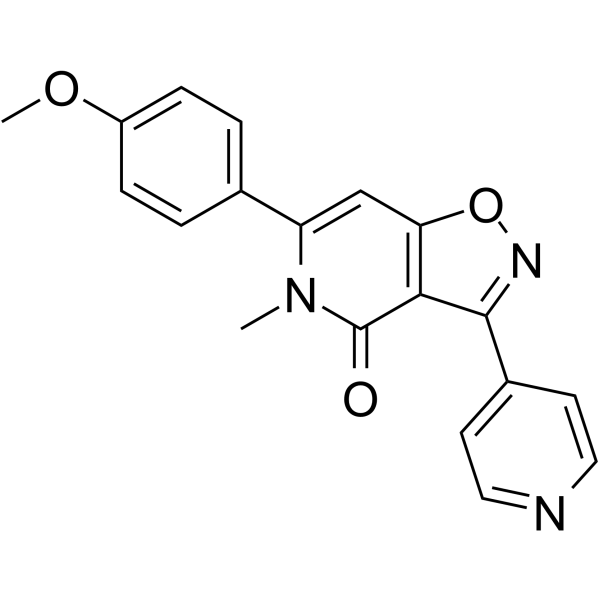
MMPIP is an allosteric metabotropic glutamate receptor 7 (mGluR7) selective antagonist (KB values 24 -30 nM). MMPIP acts as a pharmacological tool for elucidating the roles of mGluR7 on central nervous system functions. MMPIP alleviates pain and normalizes affective and cognitive behavior in neuropathic mice.
For research use only. We do not sell to patients.
- Purity : 99.38%
- CAS No.: 479077-02-6
- Formula: C19H15N3O3
- Molecular Weight:333.34
-
Storage:Powder -20°C, 3 years , 4°C, 2 years ; In solvent -80°C, 6 months , -20°C, 1 month

To place orders, for customer services and technical support, please contact: MedChemExpress USA
Tel: 609-228-6898 E-mail: [email protected] [email protected]


-
 Biological Activity
-
Chemical Information
-
Solvent & Solubility
- Purity & Documentation
- References
-
 Help & FAQs


-
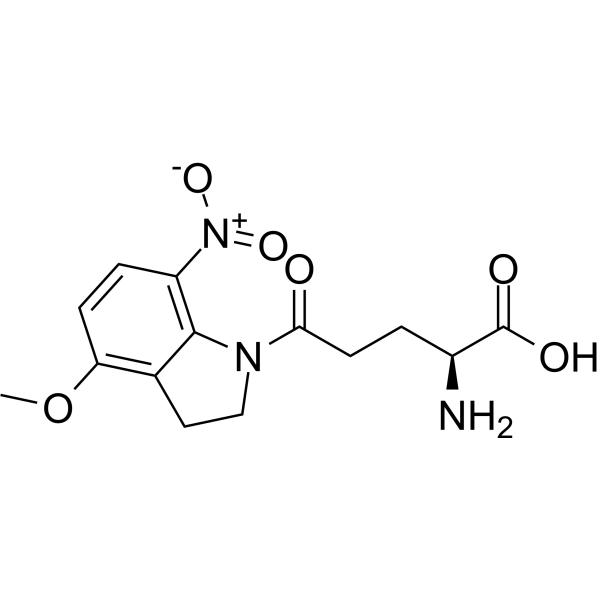
HY-107520
MNI-caged-L-glutamateGlutamate Precursor -
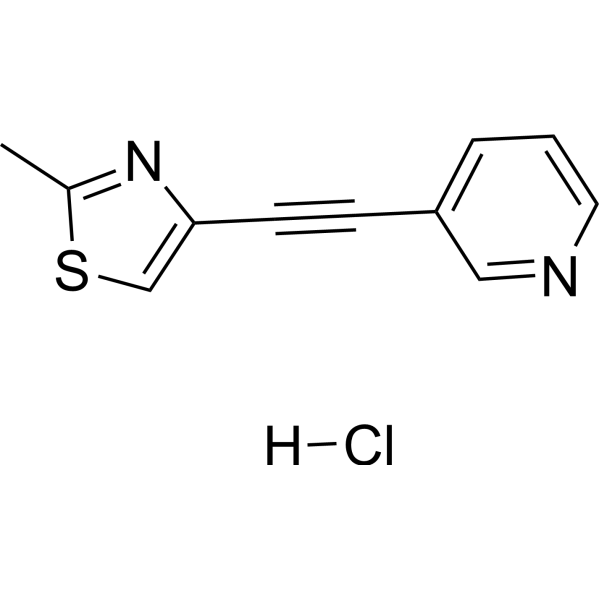
HY-13206
MTEP hydrochloridemGlu5 Antagonist -
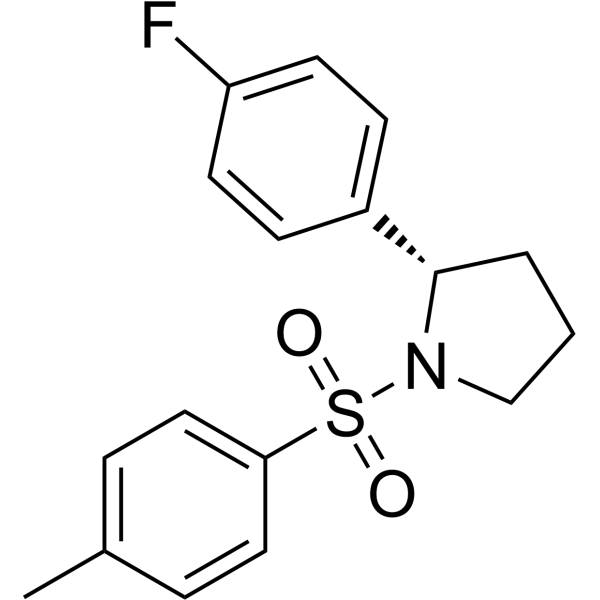
HY-100403
Ro 67-7476mGluR1 PAM -
HY-W015546
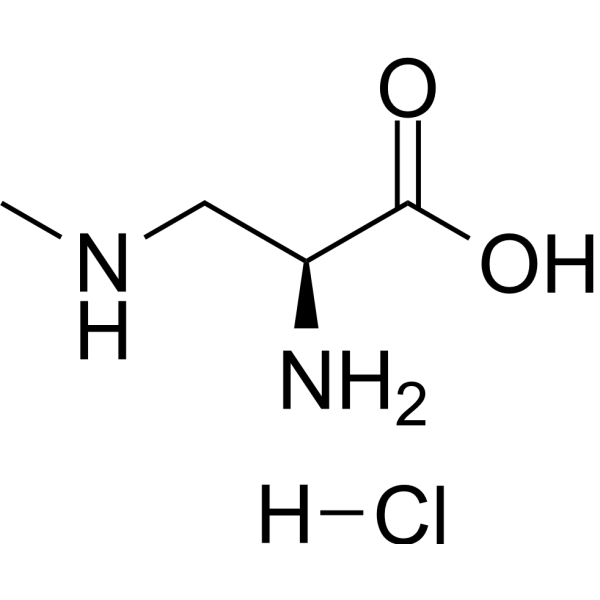
β-N-methylamino-L-alanine hydrochlorideNeurotoxin -
HY-130553
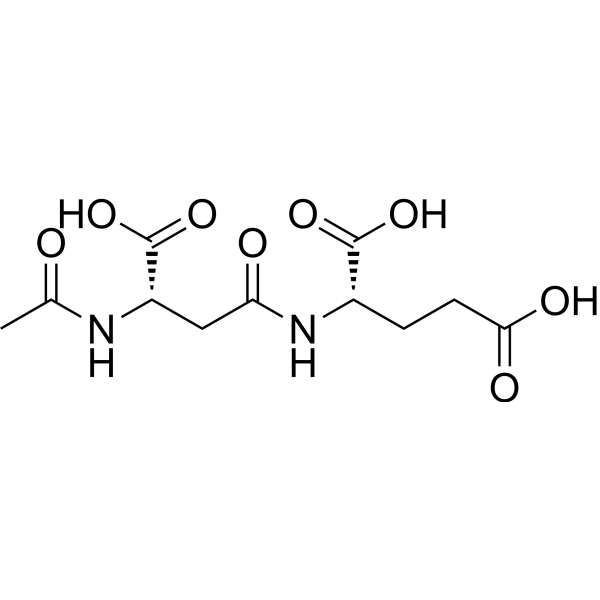
β-Spaglumic acidNAAG Peptidase Inhibitor -
HY-100409
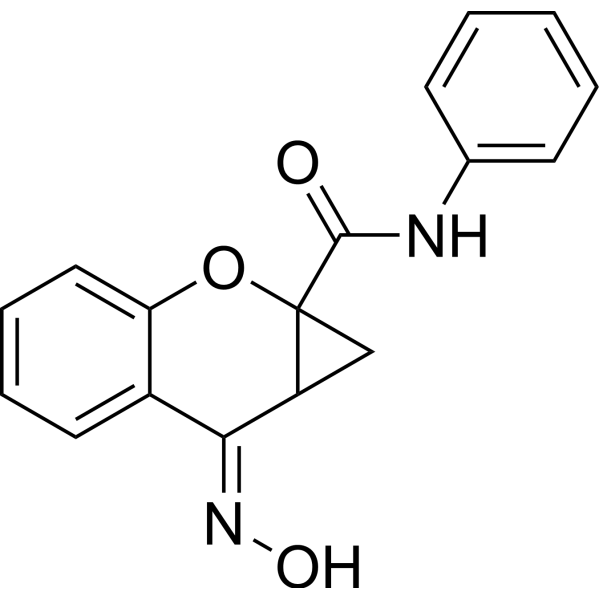
PHCCCGroup I mGluR Antagonist -
HY-13058B
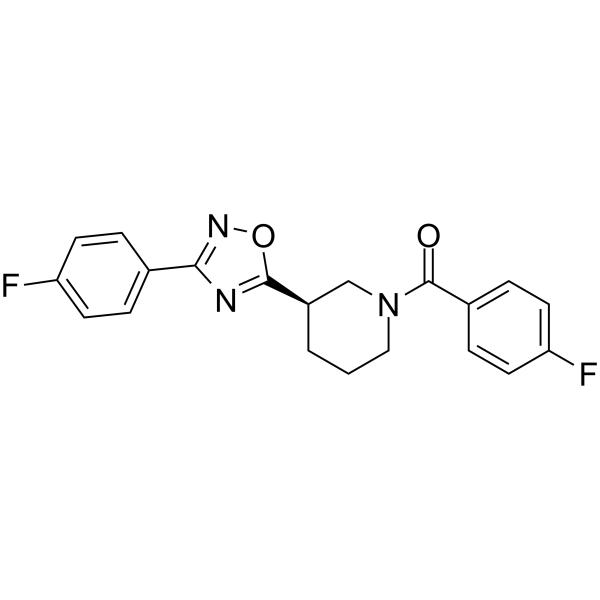
(R)-ADX-47273mGluR Modulator -
HY-19559
JNJ-46778212mGlu5 Positive Allosteric Modulator -

HY-13206R
MTEP hydrochloride (Standard)mGlu5 Antagonist -

HY-100409R
PHCCC (Standard)Group I mGluR Antagonist -

HY-W015546R
β-N-methylamino-L-alanine hydrochloride (Standard)Neurotoxin -

HY-100403R
Ro 67-7476 (Standard)mGluR1 PAM


Biological Activity
Description
IC50 & Target
[1]|
mGlu7 |
Cellular Effect
|
Cell Line

|
Type | Value | Description | References |
|---|---|---|---|---|
| CHO | IC50 |
26 nM
Compound: 2
|
Antagonist activity at rat mGluR7 expressed in CHO cells assessed as inhibition of LAP-induced intracellular calcium mobilization by FLIPR
Antagonist activity at rat mGluR7 expressed in CHO cells assessed as inhibition of LAP-induced intracellular calcium mobilization by FLIPR
|
[PMID: 20005101] |
| CHO | IC50 |
26 nM
Compound: MMPIP; 2
|
Allosteric antagonist activity at rat mGlu7 receptor expressed in CHO cell co-expressing Galpha15 (unknown origin) assessed as reduction in L-AP4-induced intracellular Ca2+ mobilization
Allosteric antagonist activity at rat mGlu7 receptor expressed in CHO cell co-expressing Galpha15 (unknown origin) assessed as reduction in L-AP4-induced intracellular Ca2+ mobilization
|
[PMID: 30881607] |
In Vitro
MMPIP inhibits L-(+)-2-amino-4-phosphonobutyric acid (L-AP4; 0.5 mM)-induced intracellular Ca2+ mobilization in Chinese hamster ovary (CHO) cells coexpressing rat mGluR7 with Gα15 (IC550=26 nM) [1].
In CHO cells expressing rat mGluR7, MMPIP inhibits L-AP4-induced inhibition of forskolin-stimulated cAMP accumulation (IC50 220 nM)[1].
MMPIP also antagonizes L-AP4-induced inhibition of cAMP accumulation with an IC50 of 610 nM in CHO-human mGluR7/Gα15[1].
MedChemExpress (MCE) has not independently confirmed the accuracy of these methods. They are for reference only.
In Vivo
MMPIP (10 mg/kg) rescues the MK-801 (0.1 mg/kg)-induced cognitive impairments, by improving the choice accuracy[2].
Zamifenacin exhibits short elimination half-lives (plasma 1.16 h, brain 1.75 h) following i.p. administration (10 mg/kg) in mice[2].
MedChemExpress (MCE) has not independently confirmed the accuracy of these methods. They are for reference only.


Chemical Information
-
CAS No. 479077-02-6
-
Appearance Solid
-
Molecular Weight 333.34
-
Formula C19H15N3O3
-
Color White to off-white
-
SMILES
O=C1C2=C(ON=C2C3=CC=NC=C3)C=C(C4=CC=C(OC)C=C4)N1C
-
Shipping
Room temperature in continental US; may vary elsewhere.
-
Storage
Powder -20°C 3 years 4°C 2 years In solvent -80°C 6 months -20°C 1 month


Solvent & Solubility
In Vitro:
DMSO : 30 mg/mL (90.00 mM; ultrasonic and warming and heat to 60°C; Hygroscopic DMSO has a significant impact on the solubility of product, please use newly opened DMSO)
Please refer to the solubility information to select the appropriate solvent. Once prepared, please aliquot and store the solution to prevent product inactivation from repeated freeze-thaw cycles.
Storage method and period of stock solution: -80°C, 6 months; -20°C, 1 month. When stored at -80°C, please use it within 6 months. When stored at -20°C, please use it within 1 month.
Please refer to the solubility information to select the appropriate solvent. Once prepared, please aliquot and store the solution to prevent product inactivation from repeated freeze-thaw cycles.
Storage method and period of stock solution: -80°C, 6 months; -20°C, 1 month. When stored at -80°C, please use it within 6 months. When stored at -20°C, please use it within 1 month.
Concentration (start) × Volume (start) = Concentration (final) × Volume (final)
In Vivo:
Select the appropriate dissolution method based on your experimental animal and administration route.
- For the following dissolution methods, please ensure to first prepare a clear stock solution using an In Vitro approach and then sequentially add co-solvents:
- To ensure reliable experimental results, the clarified stock solution can be appropriately stored based on storage conditions. As for the working solution for In Vivo experiments, it is recommended to prepare freshly and use it on the same day.
- The percentages shown for the solvents indicate their volumetric ratio in the final prepared solution. If precipitation or phase separation occurs during preparation, heat and/or sonication can be used to aid dissolution.
In Vivo Dissolution Calculator
Please enter the basic information of animal experiments:
-
-
-
-
Recommended: Prepare an additional quantity of animals to account for potential losses during experiments.
Please enter your animal formula composition:
-
%DMSO +
Recommended: Keep the proportion of DMSO in working solution below 2% if your animal is weak.
-
%+
-
+%Tween-80 + +
-
%Saline +
The co-solvents required include: DMSO, . All of co-solvents are available by MedChemExpress (MCE). , Tween 80. All of co-solvents are available by MedChemExpress (MCE).
Working solution concentration: 0.22 mg/mL
Method for preparing stock solution: mg drug dissolved in μL DMSO. Stock solution concentration: mg/mL.
1. Take μL DMSO stock solution;
2. Add μL .
μL , mix evenly;
3. Then add μL Tween 80, mix evenly;
4. Then add μL
Please ensure that the stock solution in the first step is dissolved to a clear state, and add co-solvents in sequence. You can use ultrasonic heating (ultrasonic cleaner, recommended frequency 20-40 kHz), vortexing, etc. to assist dissolution.


Purity & Documentation
-
Data Sheet (276 KB)
-
SDS (479 KB)
- English - EN (479 KB)
- Français - FR (479 KB)
- Deutsch - DE (479 KB)
- Norwegian - NO (479 KB)
- Español - ES (479 KB)
- Swedish - SV (479 KB)
- Italian - IT (479 KB)
- Korean - KR (479 KB)
- Portuguese - PT (479 KB)
-
Handling Instructions (2659 KB)
References
[1]. Gentaroh Suzuki, et al. In vitro pharmacological characterization of novel isoxazolopyridone derivatives as allosteric metabotropic glutamate receptor 7 antagonists. J Pharmacol Exp Ther. 2007 Oct;323(1):147-56. [Content Brief]
[2]. Paulina Cieślik, et al. Negative Allosteric Modulators of mGlu 7 Receptor as Putative Antipsychotic Drugs. Front Mol Neurosci. 2018 Sep 20;11:316. [Content Brief]


Complete Stock Solution Preparation Table
Please refer to the solubility information to select the appropriate solvent. Once prepared, please aliquot and store the solution to prevent product inactivation from repeated freeze-thaw cycles.
Storage method and period of stock solution: -80°C, 6 months; -20°C, 1 month. When stored at -80°C, please use it within 6 months. When stored at -20°C, please use it within 1 month.
| Optional Solvent | Concentration Solvent Mass | 1 mg | 5 mg | 10 mg | 25 mg |
|---|---|---|---|---|---|
| DMSO | 1 mM | 2.9999 mL | 14.9997 mL | 29.9994 mL | 74.9985 mL |
| 5 mM | 0.6000 mL | 2.9999 mL | 5.9999 mL | 14.9997 mL | |
| 10 mM | 0.3000 mL | 1.5000 mL | 2.9999 mL | 7.4999 mL | |
| 15 mM | 0.2000 mL | 1.0000 mL | 2.0000 mL | 4.9999 mL | |
| 20 mM | 0.1500 mL | 0.7500 mL | 1.5000 mL | 3.7499 mL | |
| 25 mM | 0.1200 mL | 0.6000 mL | 1.2000 mL | 2.9999 mL | |
| 30 mM | 0.1000 mL | 0.5000 mL | 1.0000 mL | 2.5000 mL | |
| 40 mM | 0.0750 mL | 0.3750 mL | 0.7500 mL | 1.8750 mL | |
| 50 mM | 0.0600 mL | 0.3000 mL | 0.6000 mL | 1.5000 mL | |
| 60 mM | 0.0500 mL | 0.2500 mL | 0.5000 mL | 1.2500 mL | |
| 80 mM | 0.0375 mL | 0.1875 mL | 0.3750 mL | 0.9375 mL |


MMPIP Related Classifications
HY-107503 Related Classifications
 Powered by Bioz