



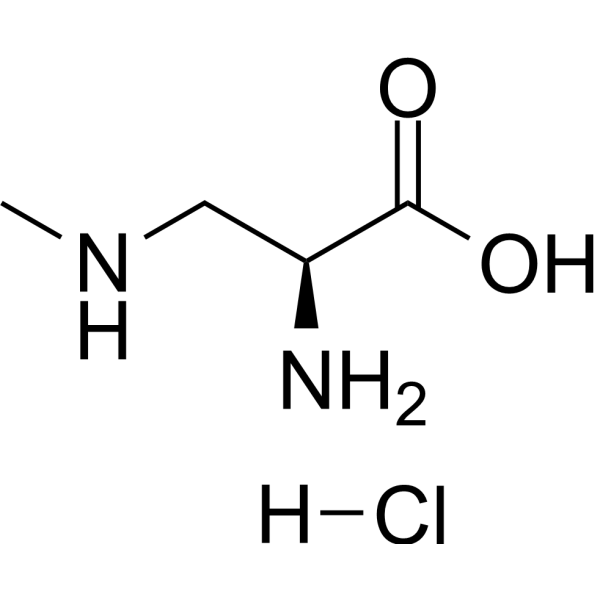
β-N-methylamino-L-alanine hydrochloride (Standard)
Clenbuterol (Standard) is the analytical standard of Clenbuterol. This product is intended for research and analytical applications. Clenbuterol (NAB-365) is a β2-adrenergic receptor agonist with an EC50 of 31.9 nM. Clenbuterol is a very potent inhibitor of the lipopolysaccharide (LPS)-induced release of TNF-α and IL-1β. Clenbuterol can inhibit the inflammatory process. Clenbuterol is a bronchodilator.
For research use only. We do not sell to patients.
- Purity : 98%
- CAS No.: 16012-55-8
- Formula: C4H11ClN2O2
- Molecular Weight:154.60
-
Storage:
Please store the product under the recommended conditions in the Certificate of Analysis.


To place orders, for customer services and technical support, please contact: MedChemExpress USA
Tel: 609-228-6898 E-mail: [email protected] [email protected]


-
 Product Information
-
Chemical Information
- Purity & Documentation
-
 Help & FAQs


-
HY-W015546
β-N-methylamino-L-alanine hydrochloride -
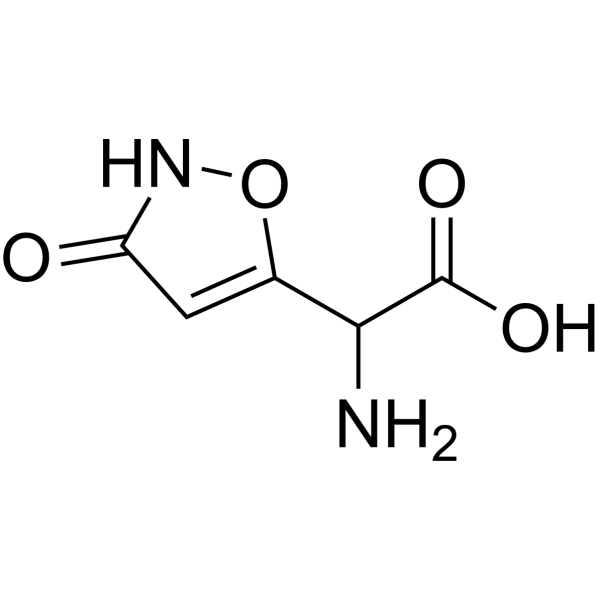
HY-N2311
Ibotenic acid -

HY-N2311R
Ibotenic acid (Standard) -
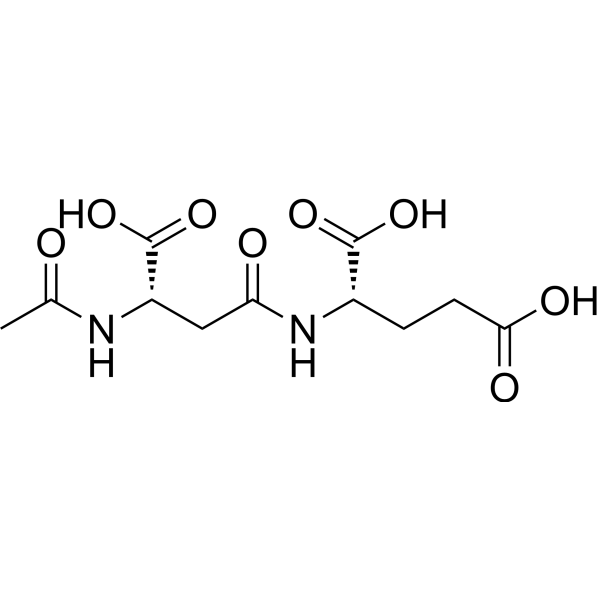
HY-130553
β-Spaglumic acid -
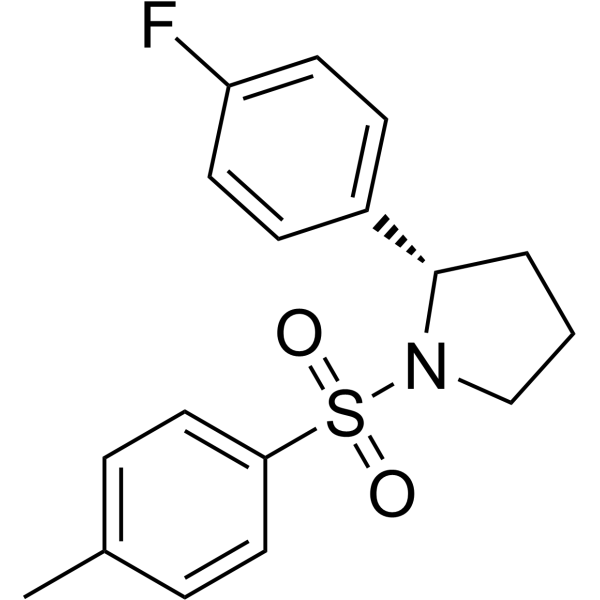
HY-100403
Ro 67-7476 -
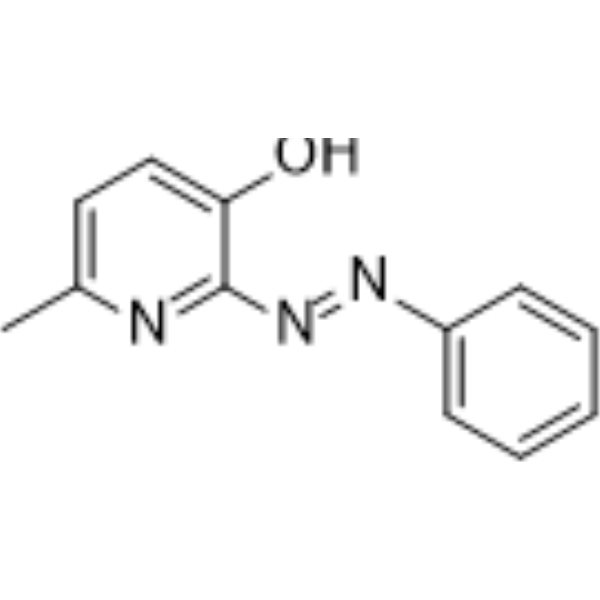
HY-102095
SIB-1757 -
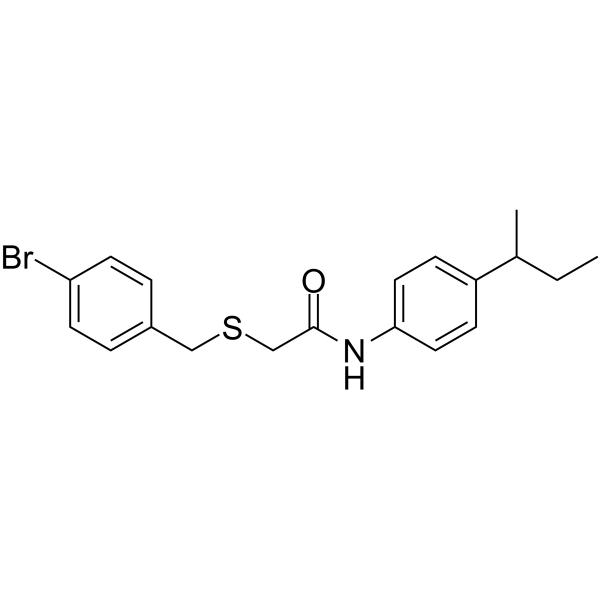
HY-110122
AZ 12216052 -
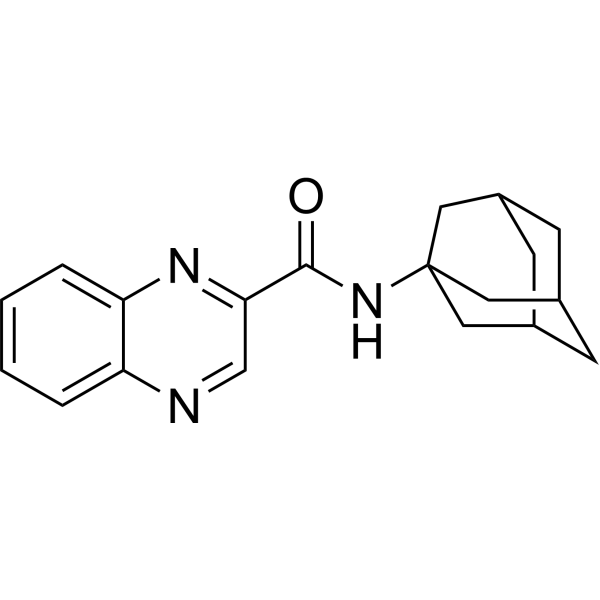
HY-11095
NPS 2390 -
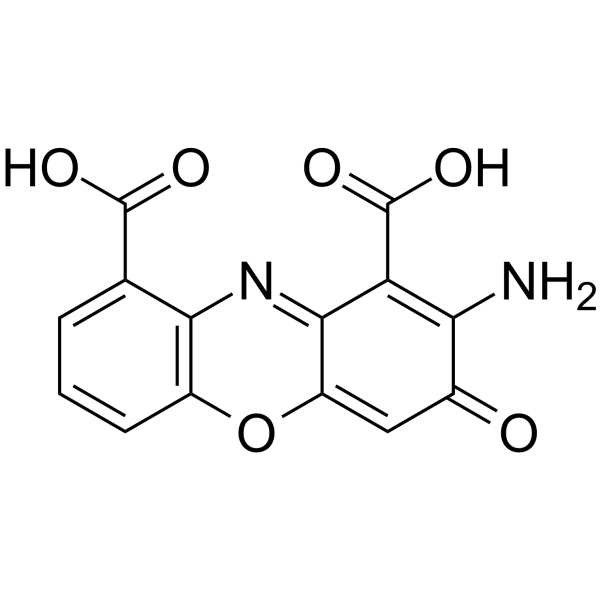
HY-W011417
Cinnabarinic acid -
HY-14609
MPEP Hydrochloride -
HY-100786
DL-AP3 -
HY-100804
L-Cysteinesulfinic acid


Product Information
Information
Application
The compound is the grade of analytical standard, which is the reference standard supplied assay. It is commonly used in qualitative, quantitative and methodological research experiments in HPLC, GC and MS.


Chemical Information
-
CAS No. 16012-55-8
-
Molecular Weight 154.60
-
Formula C4H11ClN2O2
-
SMILES
N[C@@H](CNC)C(O)=O.[H]Cl
-
Synonyms
BMAA hydrochloride (Standard)
-
Structure Classification
-
Initial Source
-
Shipping
Room temperature in continental US; may vary elsewhere.
-
Storage
Please store the product under the recommended conditions in the Certificate of Analysis.


Purity & Documentation
References
[1]. Caller T, et, al. The Potential Role of BMAA in Neurodegeneration. Neurotox Res. 2018 Jan; 33(1): 222-226. [Content Brief]
[2]. Cox PA, et, al. BMAA and Neurodegenerative Illness. Neurotox Res. 2018 Jan; 33(1): 178-183. [Content Brief]
[3]. Okamoto S, et, al. β-N-methylamino-L-alanine (BMAA) suppresses cell cycle progression of non-neuronal cells. Sci Rep. 2018 Dec 20; 8(1): 17995. [Content Brief]
[4]. Pierozan P, et al. The environmental neurotoxin β-N-methylamino-L-alanine inhibits melatonin synthesis in primary pinealocytes and a rat model. J Pineal Res. 2018 Aug;65(1):e12488. [Content Brief]
[5]. van Onselen R, et al. Evaluating amino acids as protectants against β-N-methylamino-l-alanine-induced developmental neurotoxicity in a rat model. Toxicol Appl Pharmacol. 2020 Sep 15;403:115140. [Content Brief]
[6]. de Munck E, et al. β-N-methylamino-l-alanine causes neurological and pathological phenotypes mimicking Amyotrophic Lateral Sclerosis (ALS): the first step towards an experimental model for sporadic ALS. Environ Toxicol Pharmacol. 2013 Sep;36(2):243-255. [Content Brief]
[7]. van Onselen R, et al. β-N-Methylamino-L-Alanine Toxicity in PC12: Excitotoxicity vs. Misincorporation. Neurotox Res. 2018 Jan;33(1):15-23. [Content Brief]
[8]. Santucci S, et al. beta-N-methylamino-L-alanine induced in vivo retinal cell death. J Neurochem. 2009 May;109(3):819-25. [Content Brief]
[9]. Okamoto S, et al. β-N-methylamino-L-alanine (BMAA) suppresses cell cycle progression of non-neuronal cells. Sci Rep. 2018 Dec 20;8(1):17995. [Content Brief]
[10]. Engskog MK, et al. β-N-Methylamino-L-alanine (BMAA) perturbs alanine, aspartate and glutamate metabolism pathways in human neuroblastoma cells as determined by metabolic profiling. Amino Acids. 2017 May;49(5):905-919. [Content Brief]
[11]. Sieroslawska A, et al. Assessment of the cytotoxic impact of cyanotoxin beta-N-methylamino-L-alanine on a fish immune cell line. Aquat Toxicol. 2019 Jul;212:214-221. [Content Brief]
[12]. de Munck E, et al. Effect of β-N-methylamino-L-alanine on oxidative stress of liver and kidney in rat. Environ Toxicol Pharmacol. 2013 Mar;35(2):193-9. [Content Brief]
[13]. Engskog MK, et al. The cyanobacterial amino acid β-N-methylamino-l-alanine perturbs the intermediary metabolism in neonatal rats. Toxicology. 2013 Oct 4;312:6-11. [Content Brief]

Calculators
Concentration (start) × Volume (start) = Concentration (final) × Volume (final)


β-N-methylamino-L-alanine hydrochloride (Standard) Related Classifications
HY-W015546R Related Classifications
 Powered by Bioz