



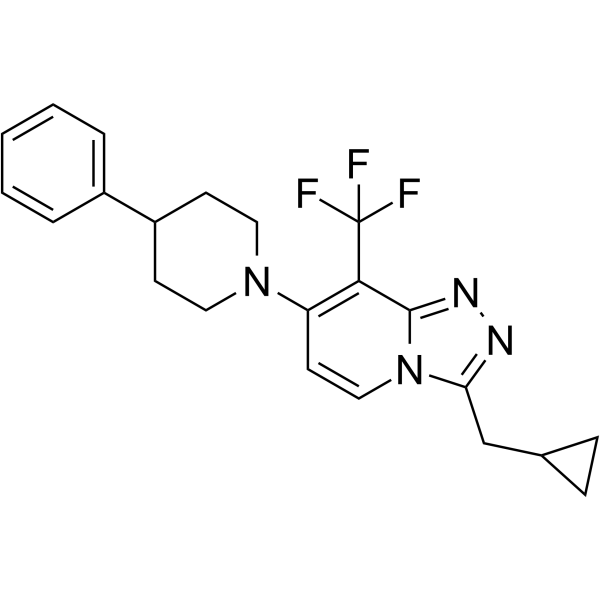
JNJ-42153605
Based on 1 publication(s) in Google Scholar
JNJ-42153605 is a positive allosteric modulator of the metabotropic glutamate 2 (mGlu2) receptor with an EC50 of 17 nM.
For research use only. We do not sell to patients.
- Purity : 98.76%
- CAS No.: 1254977-87-1
- Formula: C22H23F3N4
- Molecular Weight:400.44
-
Storage:Powder -20°C, 3 years , 4°C, 2 years ; In solvent -80°C, 2 years , -20°C, 1 year

To place orders, for customer services and technical support, please contact: MedChemExpress USA
Tel: 609-228-6898 E-mail: [email protected] [email protected]


-
 Biological Activity
-
Chemical Information
-
Solvent & Solubility
- Purity & Documentation
- References
-
 Help & FAQs


-
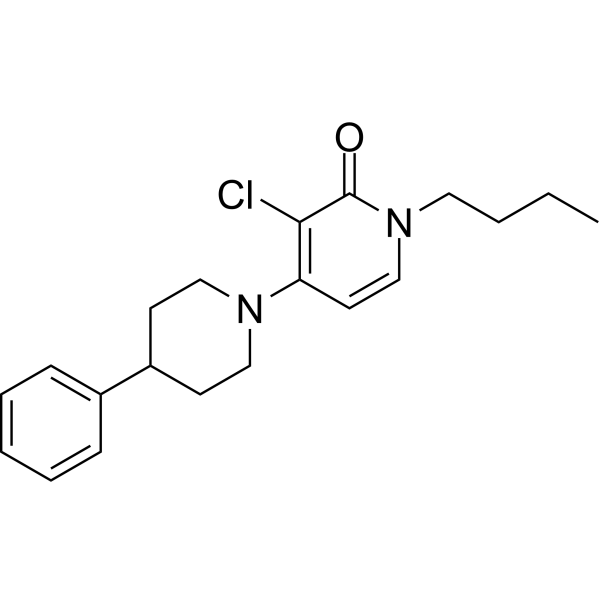
HY-15748
JNJ-40411813Glu2R Positive Allosteric Modulator -
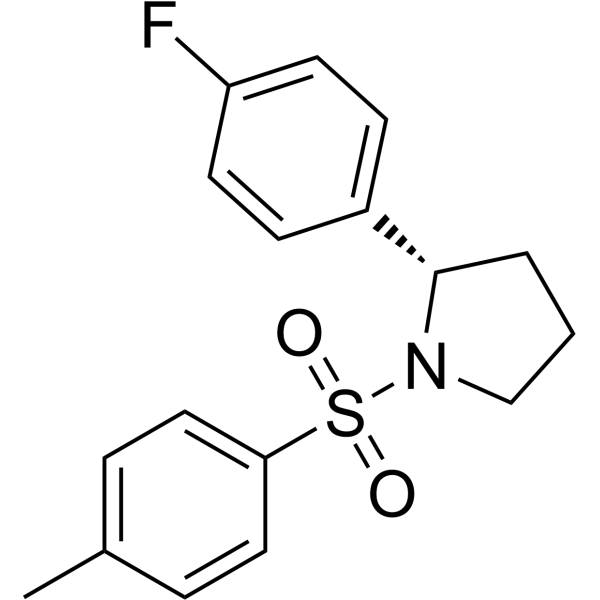
HY-100403
Ro 67-7476mGluR1 PAM -
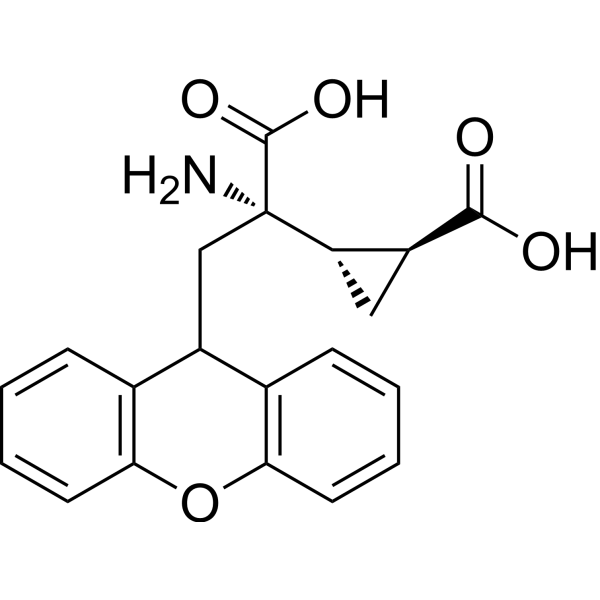
HY-70059
LY341495mGluR Antagonist -
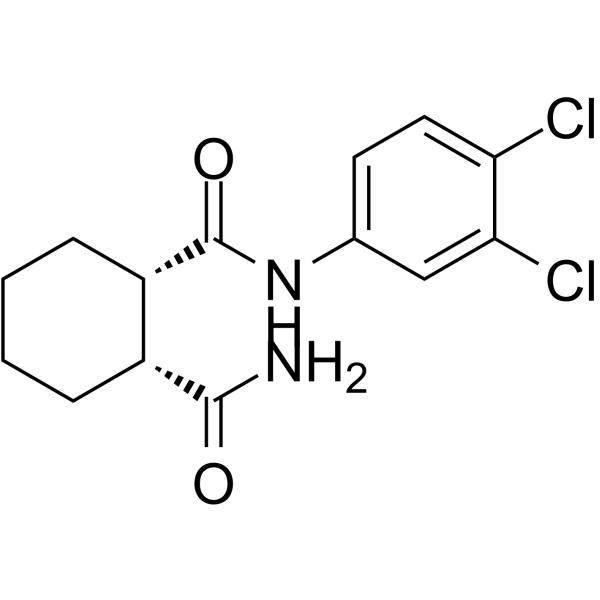
HY-100366
Lu AF21934mGlu4 Receptor PAM -
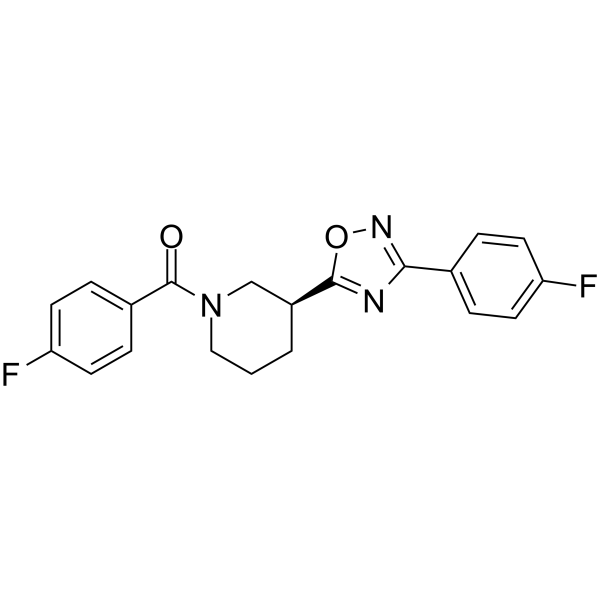
HY-13058
ADX-47273mGluR5 PAM -
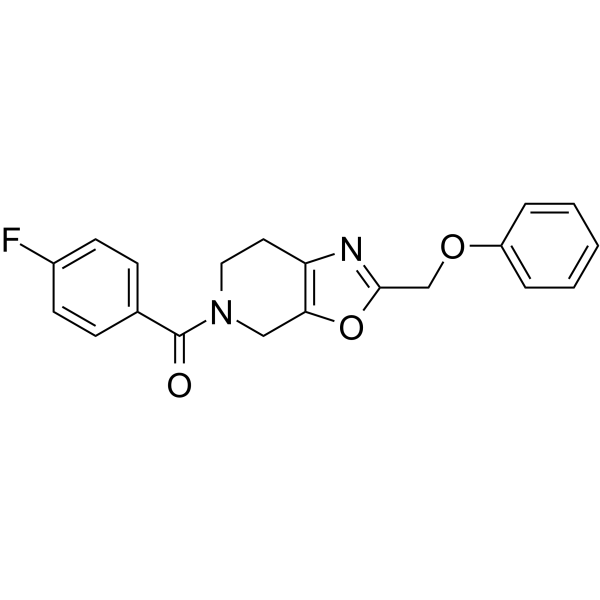
HY-19559
JNJ-46778212mGlu5 Positive Allosteric Modulator -
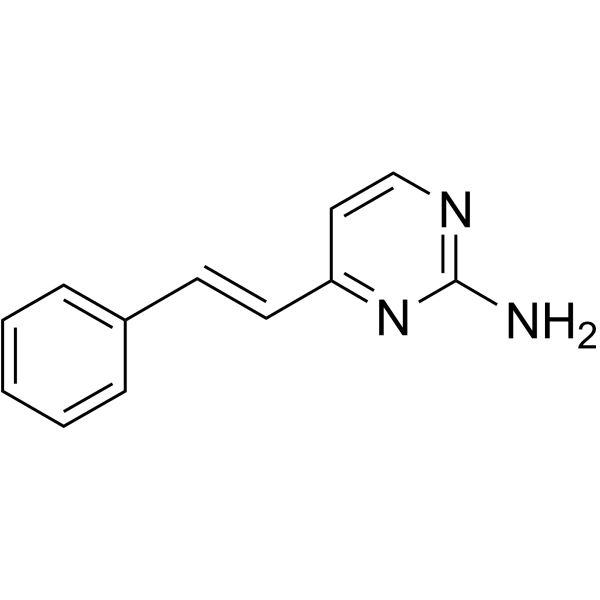
HY-14419
TCN238mGlu4 Receptor PAM -
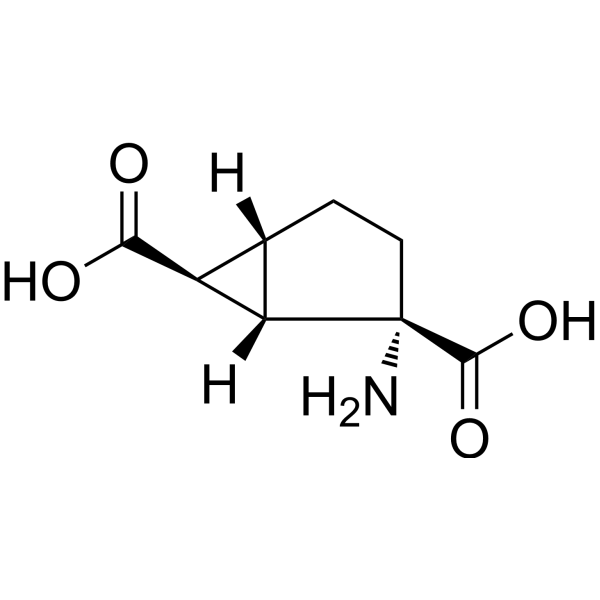
HY-18941
EglumegadmGlu2/3 Receptor Agonist -
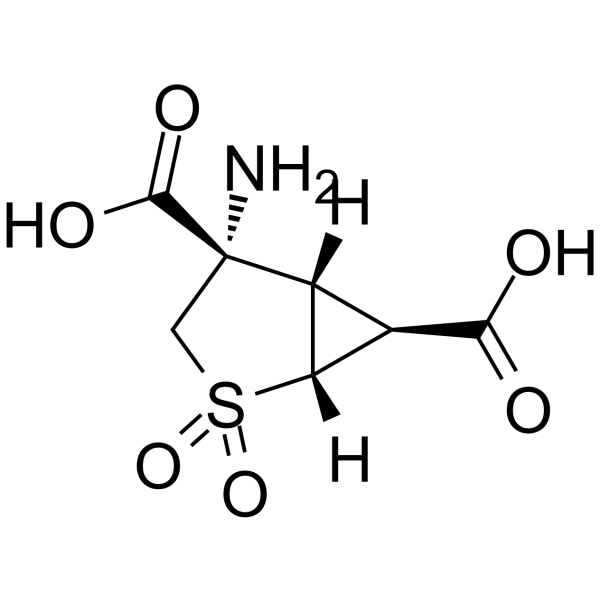
HY-50906
LY404039mGluR2/3 Agonist -
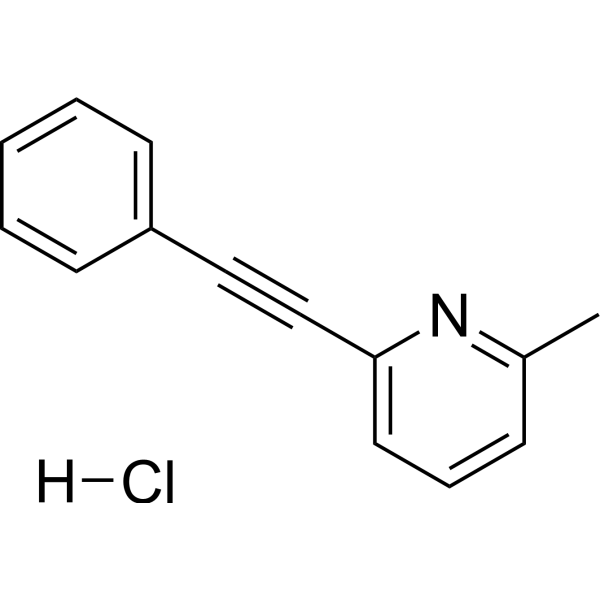
HY-14609
MPEP HydrochloridemGlu5 Receptor Antagonist -
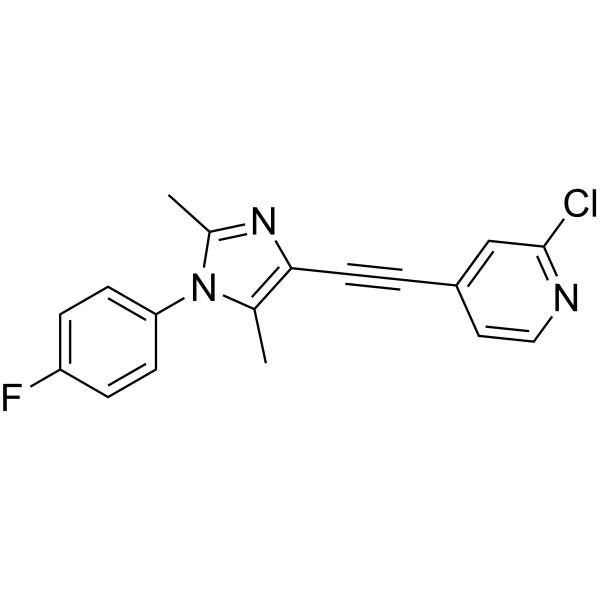
HY-15446
BasimglurantmGlu5 Negative Allosteric Modulator -
HY-100371
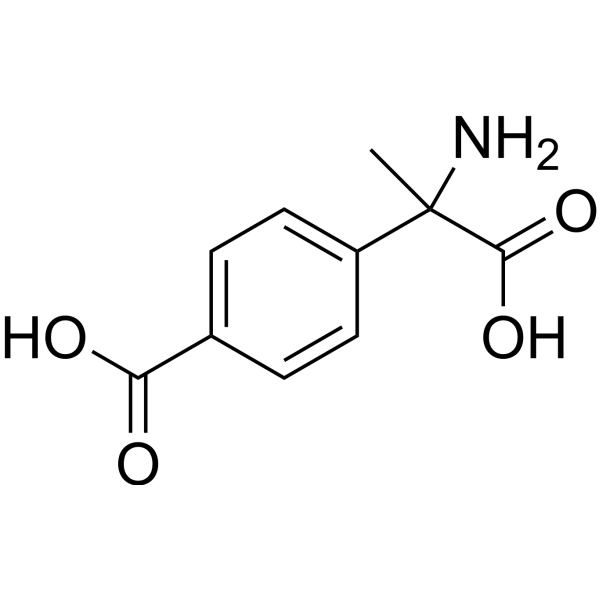
(RS)-MCPGmGluR Antagonist
Publications Citing Use of MedChemExpress (MCE) JNJ-42153605
More

Biological Activity
Description
IC50 & Target
[1]|
mGluR2 17 nM (EC50) |
Cellular Effect
|
Cell Line

|
Type | Value | Description | References |
|---|---|---|---|---|
| CHO | EC50 |
17 nM
Compound: 20, JNJ-42153605
|
Positive allosteric modulator activity at human mGlu2R expressed in CHO cells incubated for 30 mins by [35S]GTPgammaS binding assay
Positive allosteric modulator activity at human mGlu2R expressed in CHO cells incubated for 30 mins by [35S]GTPgammaS binding assay
|
[PMID: 23072213] |
| CHO | EC50 |
270 nM
Compound: 20, JNJ-42153605
|
Agonist activity at human mGlu2R expressed in CHO cells
Agonist activity at human mGlu2R expressed in CHO cells
|
[PMID: 23072213] |
| CHO | IC50 |
15 nM
Compound: 20, JNJ-42153605
|
Binding affinity to human mGlu2R expressed in CHO cells by radioligand binding assay
Binding affinity to human mGlu2R expressed in CHO cells by radioligand binding assay
|
[PMID: 23072213] |
| CHO | EC50 |
17 nM
Compound: 6; JNJ-42153605
|
Positive allosteric modulation of human mGlu2 receptor expressed in CHO cell membranes assessed as potentiation of glutamate-induced effect incubated for 30 mins prior to [35S]GTPgamma addition measured after 30 mins by scintillation counting method
Positive allosteric modulation of human mGlu2 receptor expressed in CHO cell membranes assessed as potentiation of glutamate-induced effect incubated for 30 mins prior to [35S]GTPgamma addition measured after 30 mins by scintillation counting method
|
[PMID: 27579727] |
| CHO-K1 | EC50 |
23.6 nM
Compound: 6; JNJ-42153605
|
Positive allosteric modulation at human mGlu2 receptor F776A mutant expressed in CHO-K1 cells assessed as potentiation of glutamate-induced effect incubated for 30 mins prior to [35S]GTPgamma addition measured after 30 mins by scintillation counting metho
Positive allosteric modulation at human mGlu2 receptor F776A mutant expressed in CHO-K1 cells assessed as potentiation of glutamate-induced effect incubated for 30 mins prior to [35S]GTPgamma addition measured after 30 mins by scintillation counting metho
|
[PMID: 27579727] |
| CHO-K1 | EC50 |
27 nM
Compound: 6; JNJ-42153605
|
Positive allosteric modulation at human mGlu2 receptor N735D mutant expressed in CHO-K1 cells assessed as potentiation of glutamate-induced effect incubated for 30 mins prior to [35S]GTPgamma addition measured after 30 mins by scintillation counting metho
Positive allosteric modulation at human mGlu2 receptor N735D mutant expressed in CHO-K1 cells assessed as potentiation of glutamate-induced effect incubated for 30 mins prior to [35S]GTPgamma addition measured after 30 mins by scintillation counting metho
|
[PMID: 27579727] |
| CHO-K1 | EC50 |
385 nM
Compound: 6; JNJ-42153605
|
Positive allosteric modulation at human mGlu2 receptor F643A mutant expressed in CHO-K1 cells assessed as potentiation of glutamate-induced effect incubated for 30 mins prior to [35S]GTPgamma addition measured after 30 mins by scintillation counting metho
Positive allosteric modulation at human mGlu2 receptor F643A mutant expressed in CHO-K1 cells assessed as potentiation of glutamate-induced effect incubated for 30 mins prior to [35S]GTPgamma addition measured after 30 mins by scintillation counting metho
|
[PMID: 27579727] |
| CHO-K1 | EC50 |
4.8 nM
Compound: 6; JNJ-42153605
|
Positive allosteric modulation of wild-type human mGlu2 receptor expressed in CHO-K1 cells assessed as potentiation of glutamate-induced effect incubated for 30 mins prior to [35S]GTPgamma addition measured after 30 mins by scintillation counting method
Positive allosteric modulation of wild-type human mGlu2 receptor expressed in CHO-K1 cells assessed as potentiation of glutamate-induced effect incubated for 30 mins prior to [35S]GTPgamma addition measured after 30 mins by scintillation counting method
|
[PMID: 27579727] |
| CHO-K1 | EC50 |
46.4 nM
Compound: 6; JNJ-42153605
|
Positive allosteric modulation at wild type human mGlu2 receptor L732A mutant expressed in CHO-K1 cells assessed as potentiation of glutamate-induced effect preincubated for 30 mins prior to glutamate challenge measured after 30 mins by [35S]GTP-gammaS bi
Positive allosteric modulation at wild type human mGlu2 receptor L732A mutant expressed in CHO-K1 cells assessed as potentiation of glutamate-induced effect preincubated for 30 mins prior to glutamate challenge measured after 30 mins by [35S]GTP-gammaS bi
|
[PMID: 27579727] |
| CHO-K1 | EC50 |
>10000 nM
Compound: 6; JNJ-42153605
|
Positive allosteric modulation at human mGlu2 receptor W773A mutant expressed in CHO-K1 cells assessed as potentiation of glutamate-induced effect incubated for 30 mins prior to [35S]GTPgamma addition measured after 30 mins by scintillation counting metho
Positive allosteric modulation at human mGlu2 receptor W773A mutant expressed in CHO-K1 cells assessed as potentiation of glutamate-induced effect incubated for 30 mins prior to [35S]GTPgamma addition measured after 30 mins by scintillation counting metho
|
[PMID: 27579727] |
In Vitro
JNJ-42153605 is assessed for its selectivity for the mGlu2 receptor and is found to not have agonist or antagonist activity toward other mGlu receptor subtypes up to 30 μM. JNJ-42153605 shows high permeability with no indication for P-glycoprotein efflux[1].
MedChemExpress (MCE) has not independently confirmed the accuracy of these methods. They are for reference only.
In Vivo
MedChemExpress (MCE) has not independently confirmed the accuracy of these methods. They are for reference only.


Chemical Information
-
CAS No. 1254977-87-1
-
Appearance Solid
-
Molecular Weight 400.44
-
Formula C22H23F3N4
-
Color White to off-white
-
SMILES
FC(C1=C(N2CCC(C3=CC=CC=C3)CC2)C=CN4C1=NN=C4CC5CC5)(F)F
-
Shipping
Room temperature in continental US; may vary elsewhere.
-
Storage
Powder -20°C 3 years 4°C 2 years In solvent -80°C 2 years -20°C 1 year


Publications (1)
-
Journal Impact Factor
-
Most Recent


Solvent & Solubility
In Vitro:
DMSO : 16.67 mg/mL (41.63 mM; Need ultrasonic; Hygroscopic DMSO has a significant impact on the solubility of product, please use newly opened DMSO)
Please refer to the solubility information to select the appropriate solvent. Once prepared, please aliquot and store the solution to prevent product inactivation from repeated freeze-thaw cycles.
Storage method and period of stock solution: -80°C, 2 years; -20°C, 1 year. When stored at -80°C, please use it within 2 years. When stored at -20°C, please use it within 1 year.
Please refer to the solubility information to select the appropriate solvent. Once prepared, please aliquot and store the solution to prevent product inactivation from repeated freeze-thaw cycles.
Storage method and period of stock solution: -80°C, 2 years; -20°C, 1 year. When stored at -80°C, please use it within 2 years. When stored at -20°C, please use it within 1 year.
Concentration (start) × Volume (start) = Concentration (final) × Volume (final)
In Vivo:
Select the appropriate dissolution method based on your experimental animal and administration route.
- For the following dissolution methods, please ensure to first prepare a clear stock solution using an In Vitro approach and then sequentially add co-solvents:
- To ensure reliable experimental results, the clarified stock solution can be appropriately stored based on storage conditions. As for the working solution for In Vivo experiments, it is recommended to prepare freshly and use it on the same day.
- The percentages shown for the solvents indicate their volumetric ratio in the final prepared solution. If precipitation or phase separation occurs during preparation, heat and/or sonication can be used to aid dissolution.
Add each solvent one by one: 10% DMSO 40% PEG300 5% Tween-80 45% Saline
Solubility: 1.67 mg/mL (4.17 mM); Suspended solution; Need ultrasonic
This protocol yields a suspended solution of 1.67 mg/mL. Suspended solution can be used for oral and intraperitoneal injection.
Taking 1 mL working solution as an example, add 100 μL DMSO stock solution (16.7 mg/mL) to 400 μL PEG300, and mix evenly; then add 50 μL Tween-80 and mix evenly; then add 450 μL Saline to adjust the volume to 1 mL.
Preparation of Saline: Dissolve 0.9 g sodium chloride in ddH₂O and dilute to 100 mL to obtain a clear Saline solution.
Add each solvent one by one: 10% DMSO 90% (20% SBE-β-CD in Saline)
Solubility: ≥ 1.67 mg/mL (4.17 mM); Clear solution
This protocol yields a clear solution of ≥ 1.67 mg/mL (saturation unknown).
Taking 1 mL working solution as an example, add 100 μL DMSO stock solution (16.7 mg/mL) to 900 μL 20% SBE-β-CD in Saline, and mix evenly.
Preparation of 20% SBE-β-CD in Saline (4°C, storage for one week): 2 g SBE-β-CD powder is dissolved in 10 mL Saline, completely dissolve until clear.
In Vivo Dissolution Calculator
Please enter the basic information of animal experiments:
-
-
-
-
Recommended: Prepare an additional quantity of animals to account for potential losses during experiments.
Please enter your animal formula composition:
-
%DMSO +
Recommended: Keep the proportion of DMSO in working solution below 2% if your animal is weak.
-
%+
-
+%Tween-80 + +
-
%Saline +
The co-solvents required include: DMSO, . All of co-solvents are available by MedChemExpress (MCE). , Tween 80. All of co-solvents are available by MedChemExpress (MCE).
Working solution concentration: 0.22 mg/mL
Method for preparing stock solution: mg drug dissolved in μL DMSO. Stock solution concentration: mg/mL.
1. Take μL DMSO stock solution;
2. Add μL .
μL , mix evenly;
3. Then add μL Tween 80, mix evenly;
4. Then add μL
Please ensure that the stock solution in the first step is dissolved to a clear state, and add co-solvents in sequence. You can use ultrasonic heating (ultrasonic cleaner, recommended frequency 20-40 kHz), vortexing, etc. to assist dissolution.


Purity & Documentation
-
Data Sheet (275 KB)
-
SDS (396 KB)
- English - EN (396 KB)
- Français - FR (396 KB)
- Deutsch - DE (396 KB)
- Norwegian - NO (396 KB)
- Español - ES (396 KB)
- Swedish - SV (396 KB)
- Italian - IT (396 KB)
- Korean - KR (396 KB)
- Portuguese - PT (396 KB)
-
Handling Instructions (2659 KB)
References


Complete Stock Solution Preparation Table
Please refer to the solubility information to select the appropriate solvent. Once prepared, please aliquot and store the solution to prevent product inactivation from repeated freeze-thaw cycles.
Storage method and period of stock solution: -80°C, 2 years; -20°C, 1 year. When stored at -80°C, please use it within 2 years. When stored at -20°C, please use it within 1 year.
| Optional Solvent | Concentration Solvent Mass | 1 mg | 5 mg | 10 mg | 25 mg |
|---|---|---|---|---|---|
| DMSO | 1 mM | 2.4973 mL | 12.4863 mL | 24.9725 mL | 62.4313 mL |
| 5 mM | 0.4995 mL | 2.4973 mL | 4.9945 mL | 12.4863 mL | |
| 10 mM | 0.2497 mL | 1.2486 mL | 2.4973 mL | 6.2431 mL | |
| 15 mM | 0.1665 mL | 0.8324 mL | 1.6648 mL | 4.1621 mL | |
| 20 mM | 0.1249 mL | 0.6243 mL | 1.2486 mL | 3.1216 mL | |
| 25 mM | 0.0999 mL | 0.4995 mL | 0.9989 mL | 2.4973 mL | |
| 30 mM | 0.0832 mL | 0.4162 mL | 0.8324 mL | 2.0810 mL | |
| 40 mM | 0.0624 mL | 0.3122 mL | 0.6243 mL | 1.5608 mL |


JNJ-42153605 Related Classifications
HY-18162 Related Classifications
 Powered by Bioz