1. Search Result
Search Result
Results for "

growth+hormone

" in MedChemExpress (MCE) Product Catalog:

129

Inhibitors & Agonists

1

Screening Libraries

5

Biochemical Assay Reagents

47

Peptides

6

Inhibitory Antibodies

11

Natural
Products

19

Recombinant Proteins

15

Isotope-Labeled Compounds

6

Antibodies

4

Oligonucleotides

Cat. No. Product Name Target Research Area
  • HY-17365
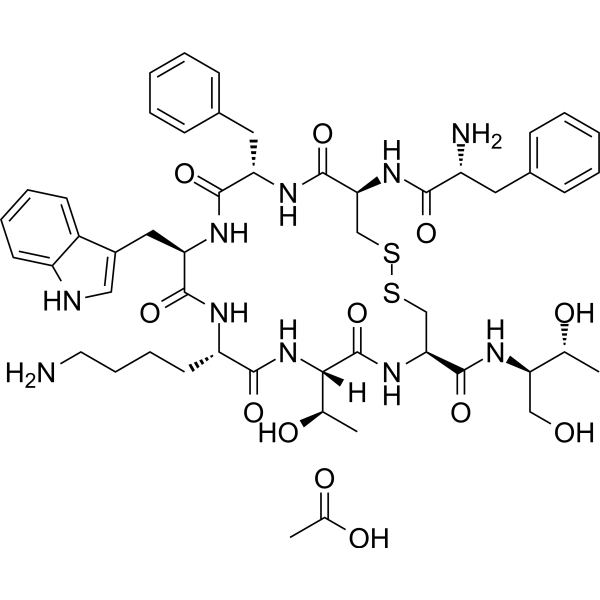
    Octreotide acetate
    Maximum Cited Publications
    16 Publications Verification

    SMS 201-995 acetate

    Somatostatin Receptor Cardiovascular Disease Inflammation/Immunology Endocrinology Cancer
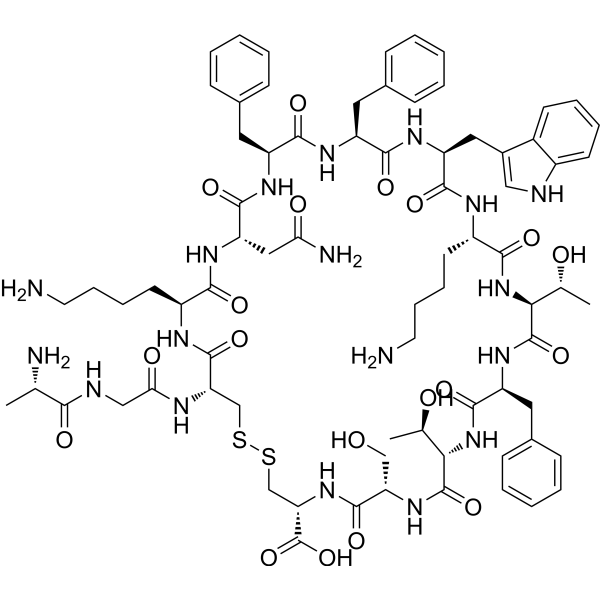
    Octreotide acetate, a long-acting synthetic analog of native somatostatin, inhibits growth hormone, glucagon, and insulin more potently.
  • HY-P0084

    SRIF-14; Somatostatin-14

    Endogenous Metabolite Cardiovascular Disease Neurological Disease
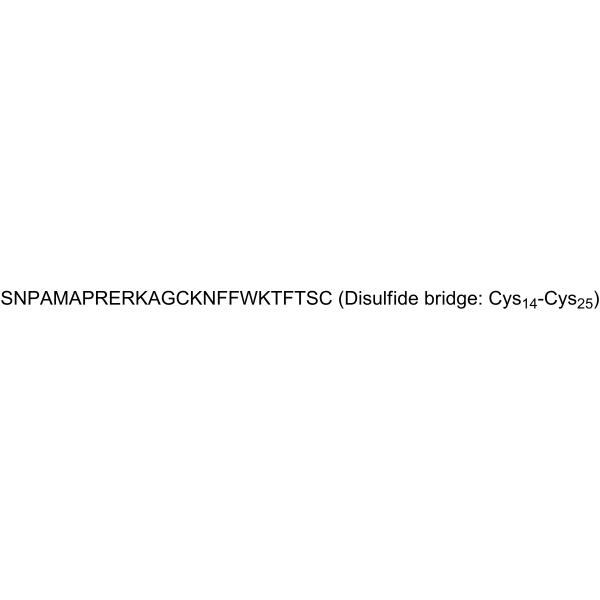
    Cyclic somatostatin (SRIF-14) is a growth hormone-release inhibiting factor used in the research of severe, acute hemorrhages of gastroduodenal ulcers. Cyclic somatostatin is a neuropeptide co-stored with acetylcholine in the cardiac parasympathetic innervation, exerts influences directly on contraction of ventricular cardiomyocytes. Cyclic somatostatin inhibits the contractile response of isoprenaline with an IC50 value of 13 nM. Cyclic somatostatin can be used for the research of cardiovascular disease .
  • HY-19884B
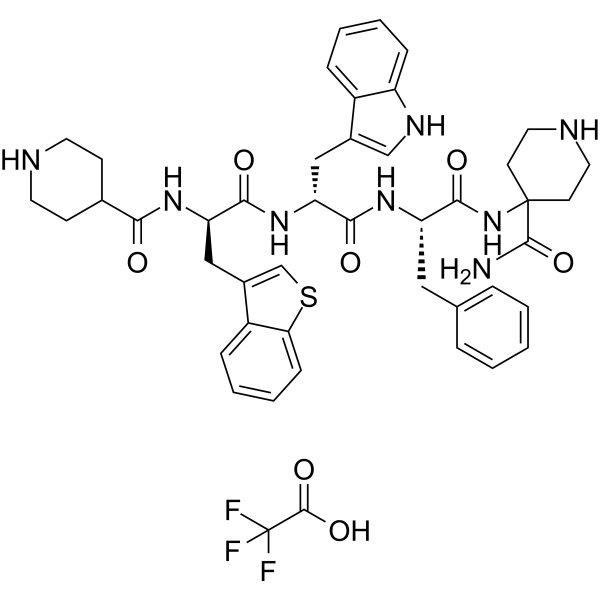
    Relamorelin TFA
    1 Publications Verification

    RM-131 TFA; BIM-28131 TFA

    GHSR Metabolic Disease
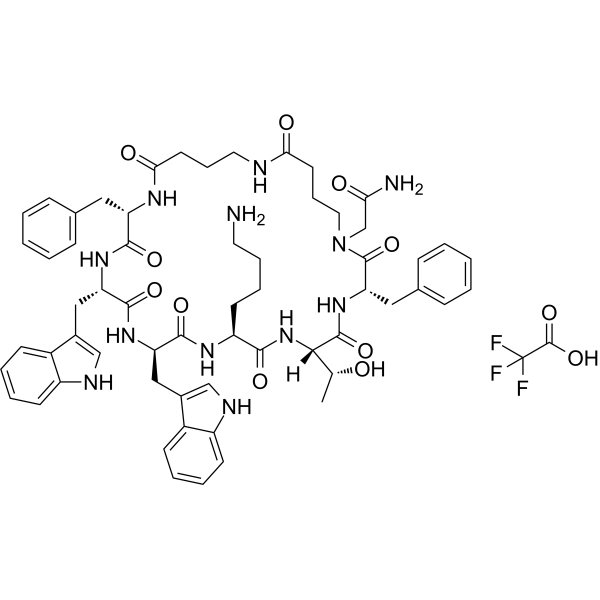
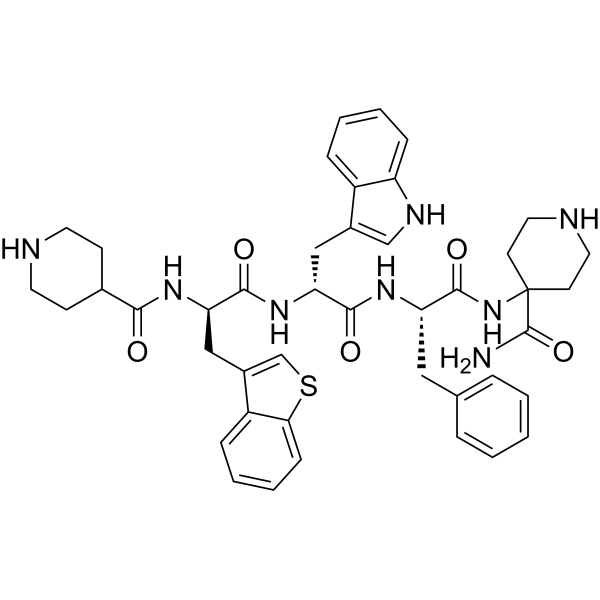
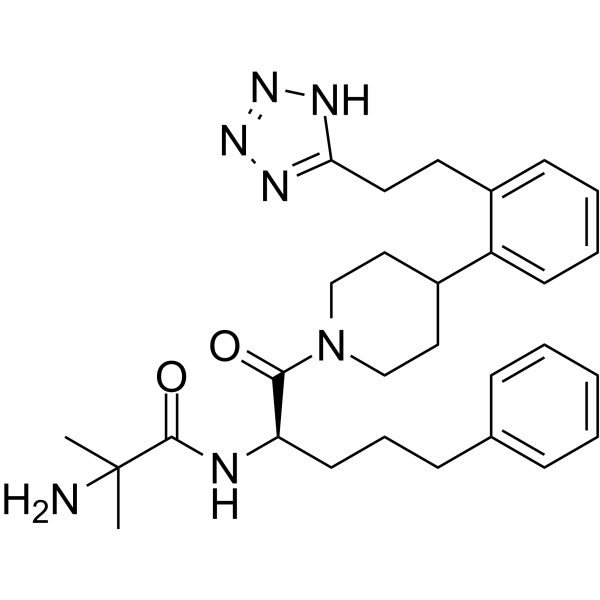
    Relamorelin (RM-131) TFA, a pentapeptide ghrelin analog, is a selective ghrelin/growth hormone secretagogue receptor (GHSR) agonist with a Ki of 0.42 nM for GHS-1a receptor. Relamorelin TFA is centrally penetrant. Relamorelin TFA increases growth hormone levels and accelerates gastric emptying. Relamorelin TFA has the potential for cachexia, gastroparesis, and gastric/intestinal dysmobility disorders research .
  • HY-108905

    Human IGF-I; FK 780

    IGF-1R Metabolic Disease
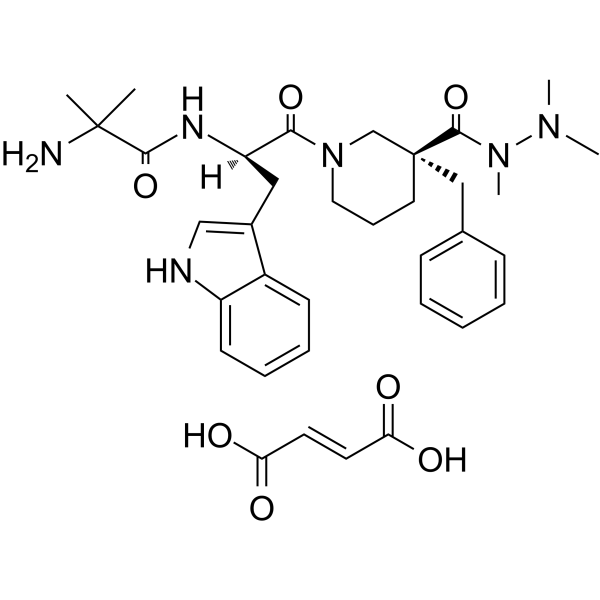
    Mecasermin (Human IGF-I; FK 780) is a recombinant human insulin-like growth factor I (IGF-I). Mecasermin has the potential for the study of the growth failure of growth hormone (GH) insensitivity caused by GH receptor defects or GH-inhibiting antibodies .
  • HY-P3582

    GnRH Receptor Endocrinology
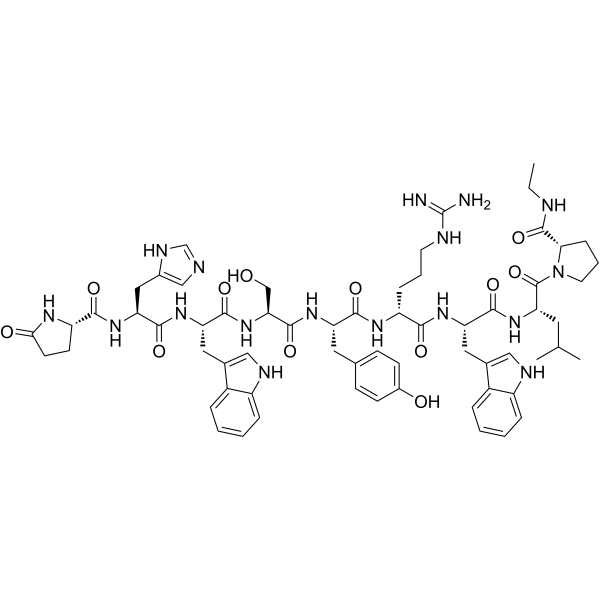
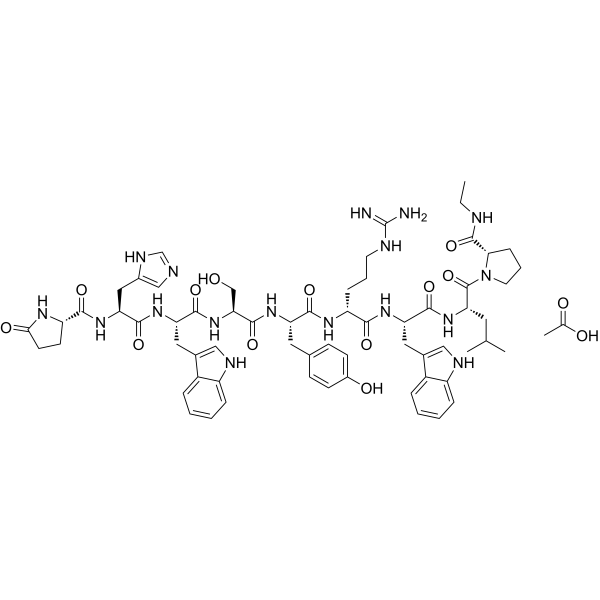
    sGnRH-A is a salmon gonadotropin-releasing hormone (GnRH) analogue. sGnRH-A stimulates growth hormone secretion. sGnRH-A also can be used as an inducer of ovulation by artificial insemination .
  • HY-P3304

    GHR Neurological Disease Cancer
    MR 409 is a selected growth hormone-releasing hormone (GHRH) agonist. MR 409 has remarkable neuroprotective effects through enhancing endogenous neurogenesis in cerebral ischemic mice. MR 409 also inhibits the in vivo growth of lung cancer .
  • HY-P5645
    LEAP-2
    1 Publications Verification

    Human liver expressed antimicrobial peptide-2

    GHSR Interleukin Related IFNAR TNF Receptor Bacterial Infection Metabolic Disease Inflammation/Immunology
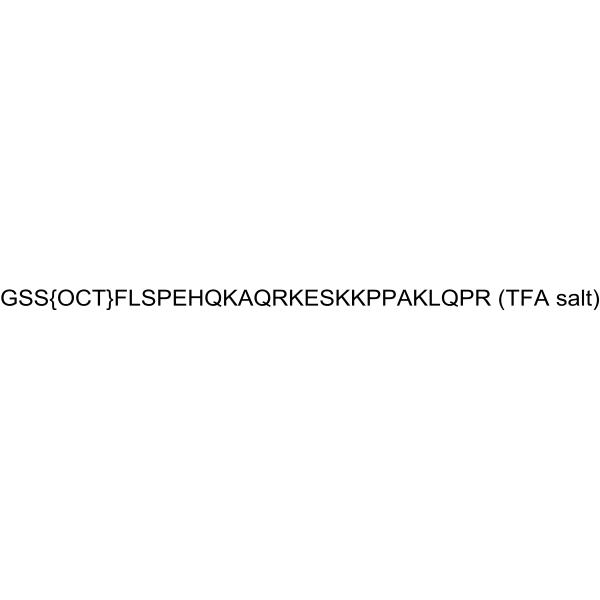
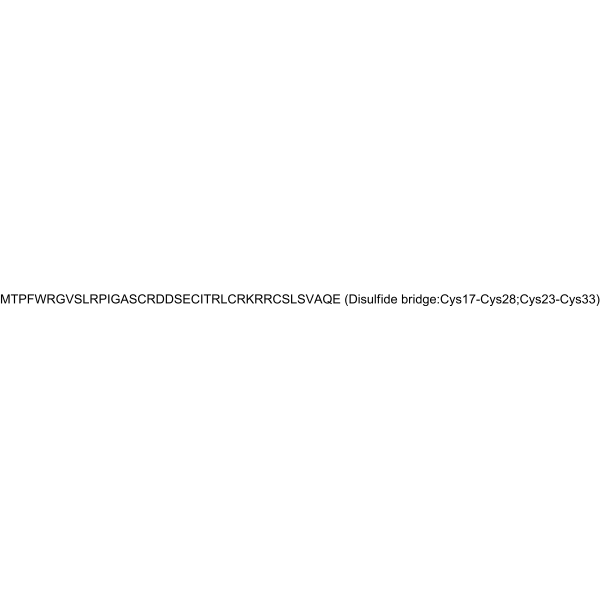
    LEAP-2 (Human liver expressed antimicrobial peptide-2) is a GHS-R1a antagonist, with an IC50 of 6.0 nM. LEAP-2 suppresses the orexigenic effect of ghrelin. LEAP-2 attenuates ghrelin-induced growth hormone (GH) release and reduces basal food intake. LEAP-2 exhibits antimicrobial activity against microbial model organisms. LEAP-2 can be used for the study of obesity and infection .
  • HY-P1155
    GRF (1-29) amide (rat)
    1 Publications Verification

    rGHRH(1-29)NH2

    GHSR Cancer
    GRF (1-29) amide (rat) is a synthetic peptide which can stimulate the growth hormone (GH) secretion.
  • HY-P1777

    Insulin-like Growth Factor I (24-41)

    IGF-1R Metabolic Disease Inflammation/Immunology
    IGF-I (24-41) (Insulin-like Growth Factor I (24-41)) is amino acids 24 to 41 fragment of IGF-I. IGF-I, a 70 aa polypeptide hormone, is a trophic factor for both neurons and glial cells. IGF-I is partly responsible for systemic growth hormone (GH) activities. IGF-I has anabolic, antioxidant, anti-inflammatory and cytoprotective actions. IGF-I (24-41) regulates somatic growth and behavioral development .
  • HY-P0089A

    Growth Hormone Releasing Factor human TFA; Somatorelin (1-44) amide (human) TFA

    GHR Endocrinology
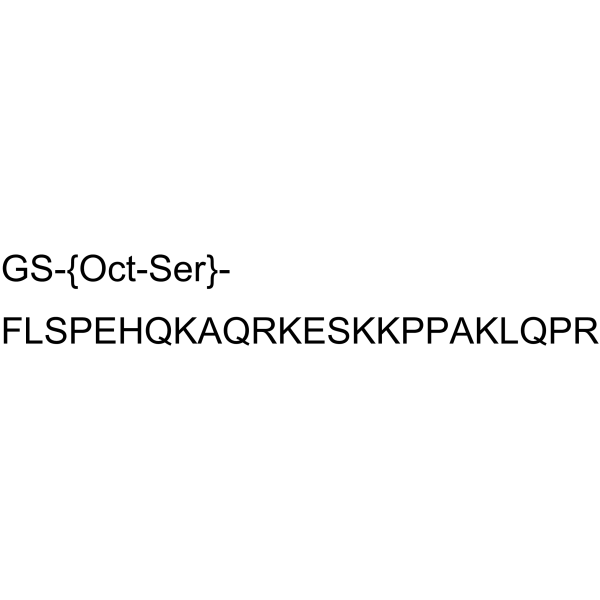
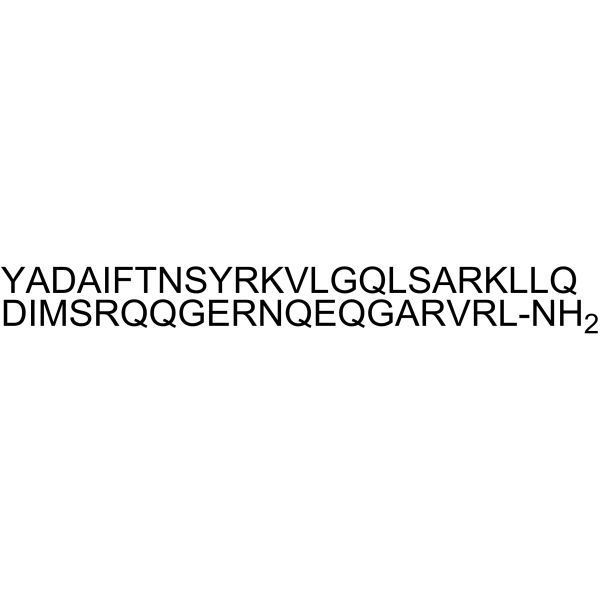
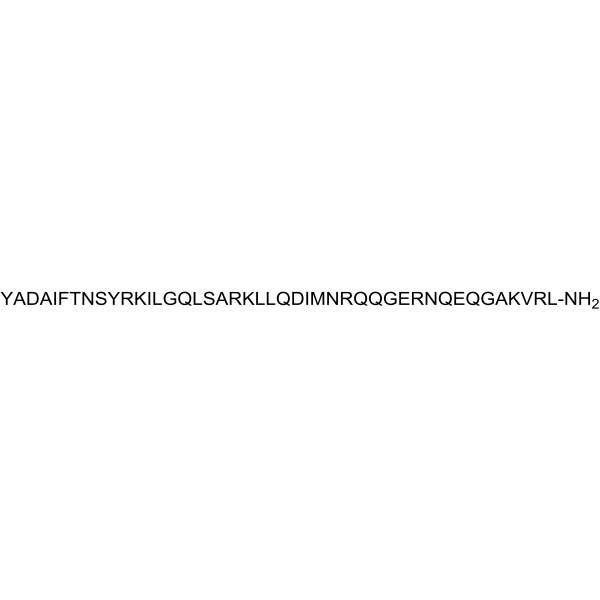
    Human growth hormone-releasing factor TFA (Growth Hormone Releasing Factor human TFA) is a hypothalamic polypeptide and stimulates GH production and release by binding to the GHRH Receptor (GHRHR) on cells in the anterior pituitary .
  • HY-P5189A

    Endogenous Metabolite Cholinesterase (ChE) Others
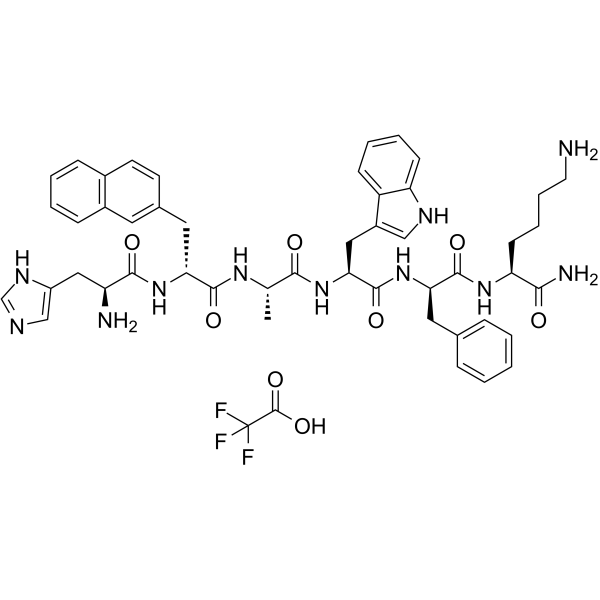
    His-D-beta-Nal-Ala-Trp-D-Phe-Lys-NH2 TFA, is a growth hormone releasing peptide, as well as a metabolite of GHRP-1. GHRP-1, or Ala-His-D-beta Nal-Ala-Trp-D-Phe-Lys-NH2, has the effect of promoting the release of growth hormone (GH). GHRP-1 increases GH release and increases [Ca2+]i levels in static monolayer cells of rat pituitary gland, but does not affect cAMP levels .
  • HY-P1366
    des-​Gln14-​Ghrelin
    1 Publications Verification

    GHSR Metabolic Disease
    des-Gln14-Ghrelin is a second endogenous ligand for the growth hormone secretagogue receptor. a). des-Gln14-ghrelin potently induces increases in [Ca 2+]i in CHO-GHSR62 cells, with an EC50 of 2.4 nM .
  • HY-106103

    MK-678; L-363586

    Somatostatin Receptor Cardiovascular Disease Neurological Disease Metabolic Disease
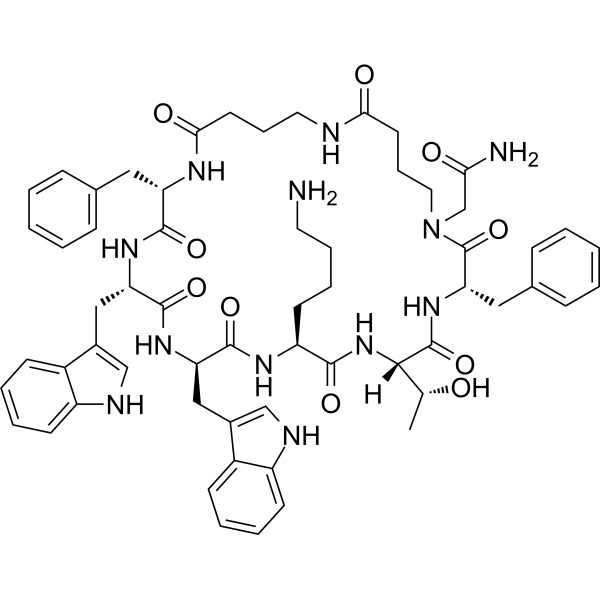
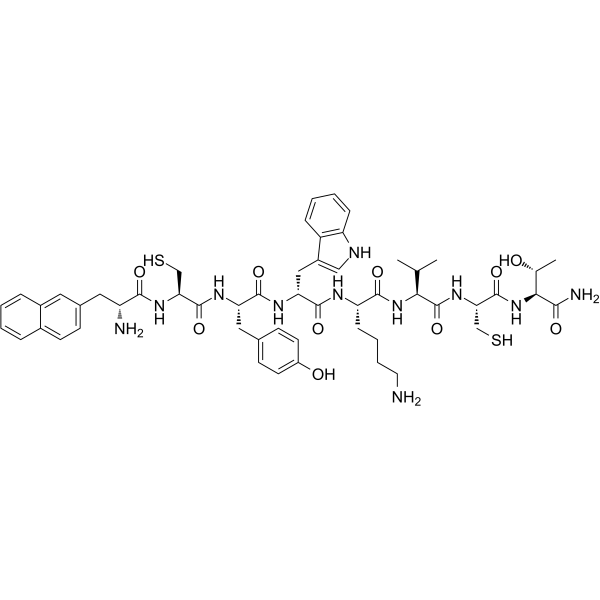
    Seglitide (MK-678) is a potent, orally active somatostatin receptor 2 (SSTR2) agonist, and also a competitive antagonist of SSTR14, SSTR25, and SSTR28. Seglitide has antihypertensive effects and can inhibit plasma glucagon and growth hormone. Seglitide can be used for research on diabetes .
  • HY-P11341

    Kisspeptin Receptor Endocrinology
    Kisspeptin antagonist p271 is a Kisspeptin antagonist with cell-penetrating ability. Kisspeptin antagonist p271 can block the binding of endogenous Kisspeptin to GPR54 on pituitary somatotropes, thereby relieving the inhibition of growth hormone secretion. Kisspeptin antagonist p271 can specifically and significantly stimulate growth hormone secretion, while inhibiting luteinizing hormone without affecting prolactin or cortisol. Kisspeptin antagonist p271 can be used in the research of diseases related to insufficient growth hormone secretion .
  • HY-P1547

    GHSR Neurological Disease
    Somatostatin-25 is a endogenous neuropeptide hormone that shows inhibitory activity against secretion of growth hormone.
  • HY-P10283
    S1H

    GHSR STAT Endocrinology
    S1H, a mimetic of hGH, is a human growth hormone receptor (hGHR) antagonist. S1H inhibits the interaction of hGH with hGHR. S1H inhibits phosphorylation of STAT5 in cells co-treated with hGH .
  • HY-W008024

    Amino Acid Derivatives Others
    Fmoc-Dab(Boc)-OH is an amino acid derivative with an Fmoc protecting group that can be used to synthesize somatostatin analogs that inhibit neointima formation induced by balloon injury in rats without altering growth hormone release. Fmoc-Dab(Boc)-OH can be used for the synthesis of peptides .
  • HY-P3397A

    GHR Cancer
    JV-1-36 acetate is a growth hormone-releasing hormone (GHRH) antagonist. JV-1-36 acetate inhibits the production of reactive oxygen species in A549 lung cancer cells. JV-1-36 can be used to study the effect of GHRH antagonists in vitro .
  • HY-P3596A

    Mouse growth hormone-releasing factor TFA

    GHSR Endocrinology
    GHRF, mouse TFA, a mouse growth hormone-releasing factor, is a peptide containing 44 amino acids. GHRF, mouse TFA stimulates the release and synthesis of growth hormone .
  • HY-P0024A

    DG3173 TFA; PTR-3173 TFA

    Somatostatin Receptor Endocrinology Cancer
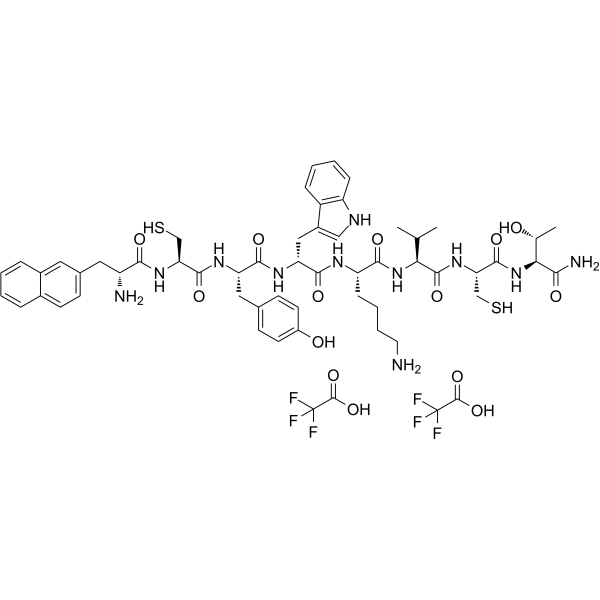
    Veldoreotide (DG3173) TFA a somatostatin analogue, binds to and activate the somatostatin receptors (SSTR) 2, 4, and 5. Veldoreotide TFA inhibits growth hormone (GH) secretion in adenomas compared with Octreotide (HY-P0036). Veldoreotide has the potential to be used as pain modulating agent
  • HY-106103A

    MK 678 acetate; L 36358 acetate

    Somatostatin Receptor Cardiovascular Disease Neurological Disease Metabolic Disease
    Seglitide acetate (MK 678; L 36358 acetate) is a potent, orally active somatostatin receptor 2 (SSTR2) agonist, and also a competitive antagonist of SSTR14, SSTR25, and SSTR28. Seglitide acetate has antihypertensive effects and can inhibit plasma glucagon and growth hormone. Seglitide acetate can be used for research on diabetes .
  • HY-P0089

    Growth Hormone Releasing Factor human; Somatorelin (1-44) amide (human)

    GHR Endocrinology
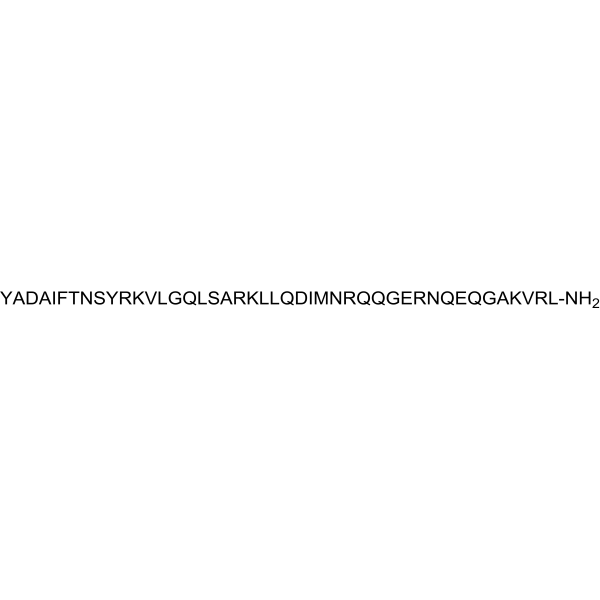
    Human growth hormone-releasing factor (Growth Hormone Releasing Factor human) is a hypothalamic polypeptide and stimulates GH production and release by binding to the GHRH Receptor (GHRHR) on cells in the anterior pituitary .
  • HY-P3596

    Mouse growth hormone-releasing factor

    GHSR Endocrinology
    GHRF, mouse, a mouse growth hormone-releasing factor, is a peptide containing 44 amino acids. GHRF, mouse stimulates the release and synthesis of growth hormone .
  • HY-P10964

    GHSR Endocrinology
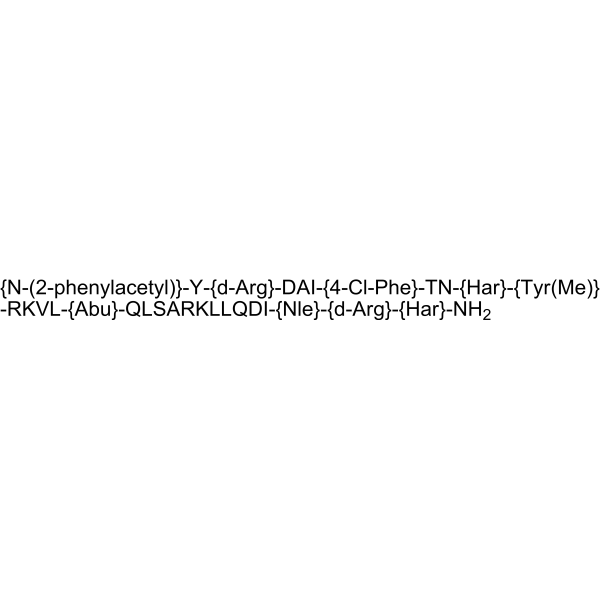
    Tezusomant is a growth hormone receptor antagonist. Tezusomant is promising for research on diseases caused by excessive growth hormone secretion, such as acromegaly .
  • HY-P3595

    GHR Endocrinology
    GHRF, porcine is a growth hormone releasing factor (GHRF) peptide (porcine). GHRF binds to GHSR and induces the release of growth hormone .
  • HY-19884

    RM-131; BIM-28131

    GHSR Metabolic Disease
    Relamorelin (RM-131), a pentapeptide ghrelin analog, is a selective ghrelin/growth hormone secretagogue receptor (GHSR) agonist with a Ki of 0.42 nM for GHS-1a receptor. Relamorelin is centrally penetrant. Relamorelin increases growth hormone levels and accelerates gastric emptying. Relamorelin has the potential for cachexia, gastroparesis, and gastric/intestinal dysmobility disorders research .
  • HY-P3582A

    GnRH Receptor Endocrinology
    sGnRH-A acetate is a salmon gonadotropin-releasing hormone (GnRH) analogue. sGnRH-A acetate stimulates growth hormone secretion. sGnRH-A acetate also can be used as an inducer of ovulation by artificial insemination .
  • HY-P3169

    CRFR Inflammation/Immunology
    α-Helical Corticotropin Releasing Factor (9-41) is a corticotropin releasing factor (CRF) antagonist. α-Helical Corticotropin Releasing Factor (9-41) decreases plasma growth hormone (GH) values in vivo .
  • HY-P0024

    DG3173; PTR-3173

    Somatostatin Receptor Endocrinology Cancer
    Veldoreotide (DG3173) a somatostatin analogue, binds to and activate the somatostatin receptors (SSTR) 2, 4, and 5. Veldoreotide inhibits growth hormone (GH) secretion in adenomas compared withOctreotide (HY-P0036). Veldoreotide has the potential to be used as pain modulating agent
  • HY-P3594

    GHR Endocrinology
    [His1,Nle27] GHRF (1-32), amide, human is a Growth hormone releasing hormone (GHRH) analog. [His1,Nle27] GHRF (1-32), amide, human has great receptor affinity for GHRHR .
  • HY-P4657

    Peptides Endocrinology
    Human Growth Hormone (1-43) is an N-terminal fragment of human growth hormone with specific and pronounced insulin-like activity. Human Growth Hormone (1-43) can be used to study the function and metabolic pathways of growth hormone, a potential obesity-related factor .
  • HY-P11153

    Estrogen Receptor/ERR Cancer
    HGH fragment 176-191 is a fragment of Human Growth Hormone. HGH fragment 176-191 binds with high affinity to Ki-67, MiB protein, and the estrogen receptor. HGH fragment 176-191 enhances the toxicity of Doxorubicin (HY-15142A)-loaded Chitosan nanoparticles against breast cancer .
  • HY-P2090A

    Somatostatin Receptor Adenylate Cyclase Cardiovascular Disease
    Angiopeptin TFA, a cyclic octapeptide analogue of somatostatin, is a weak sst2/sst5 receptor partial agonist with IC50 values of 0.26 nM and 6.92 nM, respectively. Angiopeptin TFA is a potent inhibitor of growth hormone release and insulin-like growth factor-1 (IGF-1) production. Angiopeptin TFA inhibits adenylate cyclase or stimulates extracellular acidification. Angiopeptin TFA has the potential for coronary atherosclerosis research .
  • HY-P3056

    GHSR Endocrinology
    GHRF, ovine is a growth hormone-releasing factor. GHRF is a specific mediator for the effects of hypoglycemia upon the release of pituitary growth hormone (GH) .
  • HY-P4750

    GHSR Endocrinology
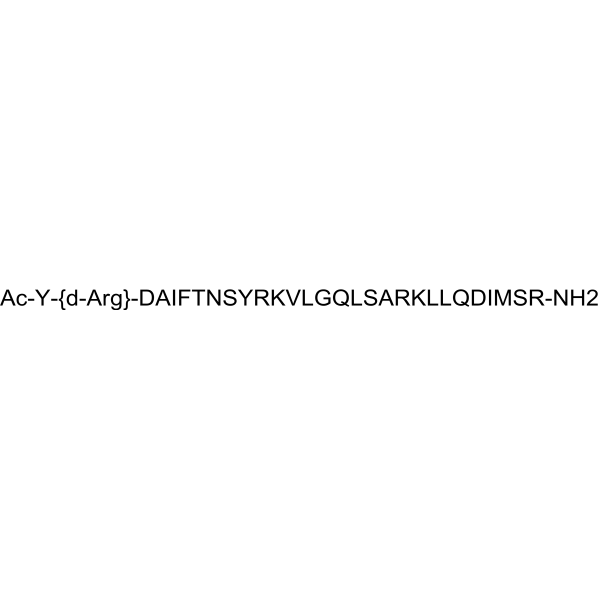
    Acetyl-(D-Arg2)-GRF (1-29) amide (human) is an antagonist of growth hormone releasing factor (GRF). Acetyl-(D-Arg2)-GRF (1-29) amide (human) inhibits the release of growth hormone (GH) and can be used for endocrine research .
  • HY-P1460

    GHR Others
    His-[D-2-ME-Trp]-Ala is a fragment of the growth hormone hexarelin.
  • HY-19884A

    RM-131 acetate; BIM-28131 acetate

    GHSR Metabolic Disease
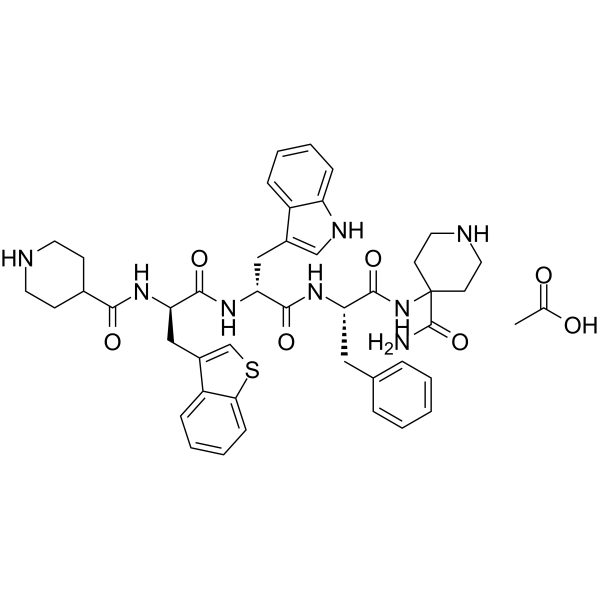
    Relamorelin (RM-131) acetate, a pentapeptide ghrelin analog, is a selective ghrelin/growth hormone secretagogue receptor (GHSR) agonist with a Ki of 0.42 nM for GHS-1a receptor. Relamorelin acetate is centrally penetrant. Relamorelin acetate increases growth hormone levels and accelerates gastric emptying. Relamorelin acetate has the potential for cachexia, gastroparesis, and gastric/intestinal dysmobility disorders research .
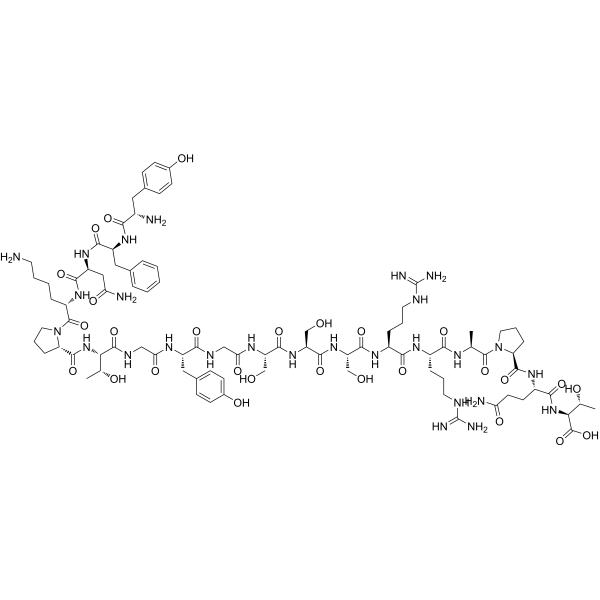
  • HY-P4904

    Neuropeptide NPVF (rat)

    Peptides Neurological Disease
    RFRP-3 (rat) is a neuropeptide. RFRP-3 (rat) inhibits gonadotropin secretion, causing a marked increase in ghrelin mRNA and plasma growth hormone levels .
  • HY-P3397

    GHR Cancer
    JV-1-36 is a growth hormone-releasing hormone (GHRH) antagonist. JV-1-36 inhibits the production of reactive oxygen species in A549 lung cancer cells. JV-1-36 can be used to study the effect of GHRH antagonists in vitro .
  • HY-P0084A

    SRIF-14 acetate; Somatostatin-14 acetate

    Endogenous Metabolite Cardiovascular Disease Metabolic Disease
    Cyclic somatostatin (SRIF-14) acetate is a growth hormone-release inhibiting factor used in the research of severe, acute hemorrhages of gastroduodenal ulcers. Cyclic somatostatin acetate is a neuropeptide co-stored with acetylcholine in the cardiac parasympathetic innervation, exerts influences directly on contraction of ventricular cardiomyocytes. Cyclic somatostatin acetate inhibits the contractile response of isoprenaline with an IC50 value of 13 nM. Cyclic somatostatin acetate can be used for the research of cardiovascular disease .
  • HY-W091365

    N-Boc-N'-xanthyl-L-asparagine

    Amino Acid Derivatives Others
    Boc-Asn(Xan)-OH (N-Boc-N'-xanthyl-L-asparagine) is an amino acid derivative with a Boc protecting group, which can be used to synthesize locust fat growth hormone .
  • HY-P0211

    GCGR Cardiovascular Disease
    [Ac-Tyr1,D-Phe2]GRF 1-29, amide (human), a growth hormone releasing factor (GRF) analogue, is a vasoactive intestinal peptide (VIP) antagonist .
  • HY-P3607

    bGRF(1-44)-NH2

    GHSR Endocrinology
    GHRF, bovine (bGRF(1-44)-NH2) is the bovine growth hormone (GH)-releasing factor (GHRF). GHRF, bovine increases the release of bovine GH, and shows a synergistic effect with Hydrocortisone (HY-N0583) .
  • HY-P4716

    Amino Acid Derivatives Inflammation/Immunology
    Boc-D-Trp(For)-OH, containing the amino acid tryptophan, is synthesized by the ammonolysis of Boc-protected D-alanine, followed by cyclization to form a dipeptide with ninhydrin. Boc-D-Trp(For)-OH has pharmacological properties, including inhibition of growth hormone release, induction of sleep and antiinflammatory .
  • HY-P1366A

    GHSR Metabolic Disease
    des-Gln14-Ghrelin TFA is a second endogenous ligand for the growth hormone secretagogue receptor. a). des-Gln14-ghrelin potently induces increases in [Ca 2+]i in CHO-GHSR62 cells, with an EC50 of 2.4 nM .
  • HY-P2090

    Somatostatin Receptor Adenylate Cyclase Cardiovascular Disease
    Angiopeptin, a cyclic octapeptide analogue of somatostatin, is a weak sst2/sst5 receptor partial agonist with IC50 values of 0.26 nM and 6.92 nM, respectively. Angiopeptin is a potent inhibitor of growth hormone release and insulin-like growth factor-1 (IGF-1) production. Angiopeptin inhibits adenylate cyclase or stimulates extracellular acidification. Angiopeptin has the potential for coronary atherosclerosis research .
  • HY-P1777A

    Insulin-like Growth Factor I (24-41) TFA

    IGF-1R Metabolic Disease Inflammation/Immunology
    IGF-I (24-41) (Insulin-like Growth Factor I (24-41)) TFA is amino acids 24 to 41 fragment of IGF-I. IGF-I TFA, a 70 aa polypeptide hormone, is a trophic factor for both neurons and glial cells. IGF-I TFA is partly responsible for systemic growth hormone (GH) activities. IGF-I TFA has anabolic, antioxidant, anti-inflammatory and cytoprotective actions. IGF-I (24-41) TFA regulates somatic growth and behavioral development .

Inquiry Online

Your information is safe with us. * Required Fields.

Salutation


Country or Region *

Applicant Name *


Organization Name *

Department *


Email Address *


Product Name *

Cat. No.


Requested quantity *

Phone Number *


Remarks

Inquiry Online

Inquiry Information

Product Name:
Cat. No.:
Quantity:
MCE Japan Authorized Agent: