



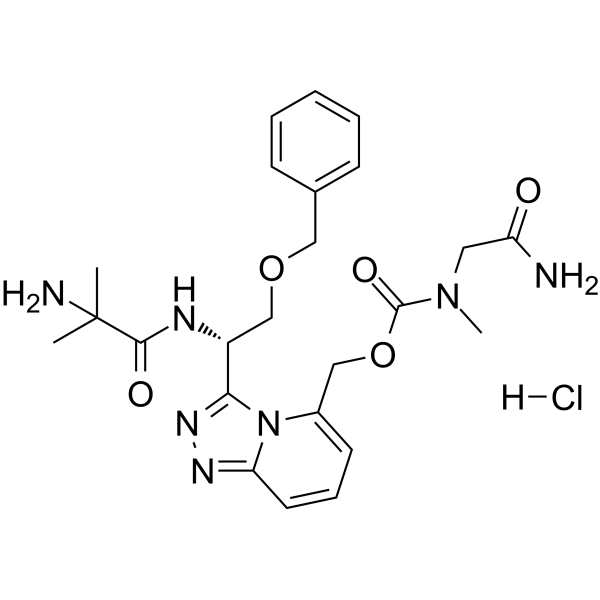
BMS-604992 dihydrochloride
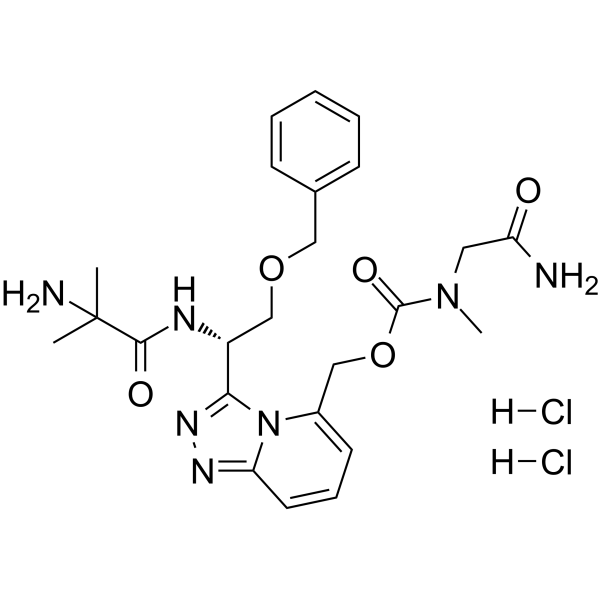
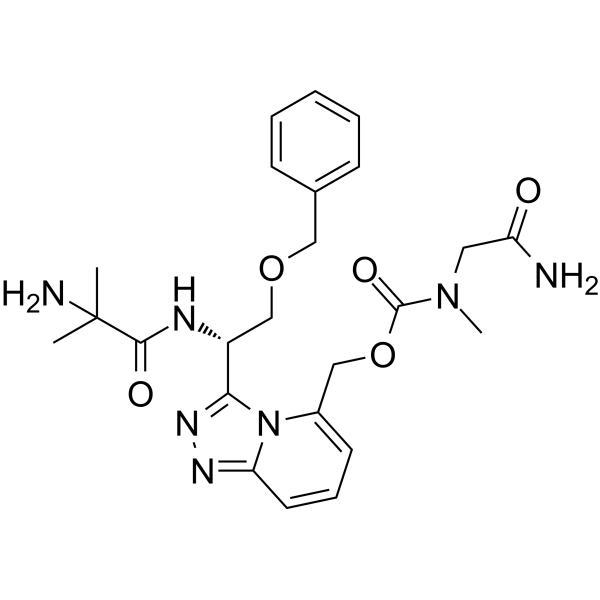
BMS-604992 (EX-1314) dihydrochloride is a selective, orally active small-molecule growth hormone secretagogue receptor (GHSR) agonist. BMS-604992 dihydrochloride demonstrates high-affinity binding (ki=2.3 nM) and potent functional activity (EC50=0.4 nM). BMS-604992 dihydrochloride can stimulate food intake in rodents.
For research use only. We do not sell to patients.
- CAS No.: 1469750-46-6
- Formula: C24H33Cl2N7O5
- Molecular Weight:570.47
-
Storage:
Please store the product under the recommended conditions in the Certificate of Analysis.

To place orders, for customer services and technical support, please contact: MedChemExpress USA
Tel: 609-228-6898 E-mail: [email protected] [email protected]


-
 Biological Activity
-
Chemical Information
- Purity & Documentation
- References
-
 Help & FAQs


-
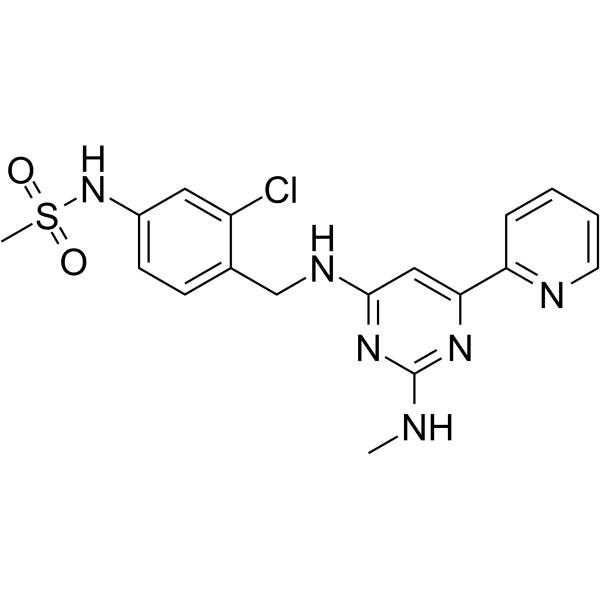
HY-103007
TC-G-1008 -
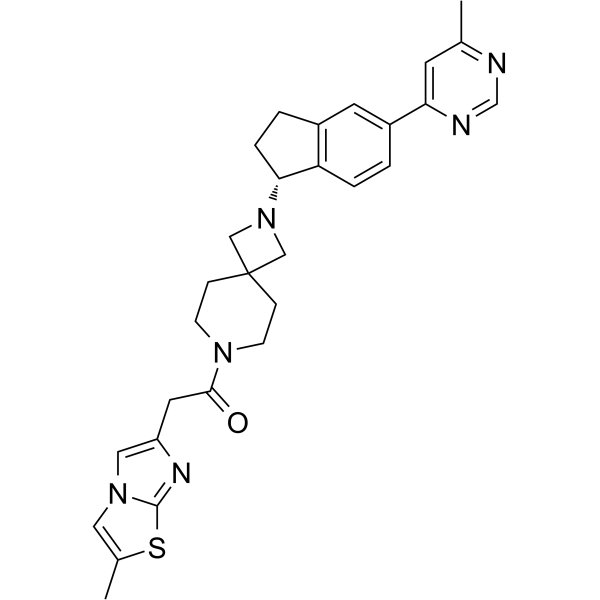
HY-12584
PF-5190457 -
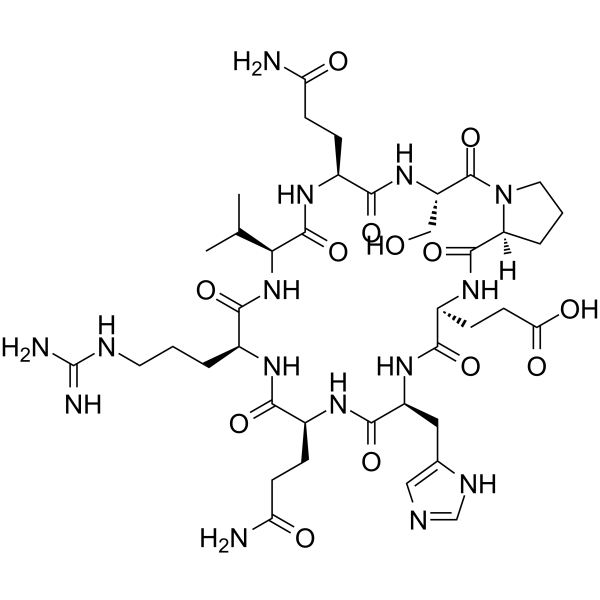
HY-P0231
AZP-531 -
HY-U00433A
JMV 2959 hydrochloride -
HY-10957
L-692429 -
HY-13964A
YIL781 hydrochloride -

HY-103007R
TC-G-1008 (Standard) -
HY-19884
Relamorelin -

HY-129207
JMV 3002 -
HY-14495A
BMS-604992 free base -
HY-14495
BMS-604992 -
HY-145364
Ghrelin receptor full agonist-2


Biological Activity
Description
IC50 & Target
EC50: 0.4 nM (GHSR), Ki: 2.3 nM (GHSR)[1]
In Vitro
BMS-604992 exhibits high-affinity binding (Ki=2.3 nM) and potent functional activity (EC50=0.4 nM) for ghrelin receptor[1].
MedChemExpress (MCE) has not independently confirmed the accuracy of these methods. They are for reference only.
In Vivo
BMS-604992 (1~1000 mg/kg; p.o.; 1 hour) Shows a dose-linear increase in plasma concentrations at the 1 hour time point and elicits a dose-responsive increase in food intake relative to vehicle-treated controls, with a minimum effective dose of approximately 10 mg/kg[1].
BMS-604992 (300 mg/kg; p.o.; 5~20 minutes) produces a significant difference at the 5 minutes time point[1].
BMS-604992 (500 μg/kg; i.p.; 4 hours) increases food intake approximately 2-fold compared with vehicle-treated controls[1].
MedChemExpress (MCE) has not independently confirmed the accuracy of these methods. They are for reference only.
-
Animal Model:C57BL/6 mice
-
Dosage:500 μg/kg
-
Administration:I.p.; 5 minutes
-
Result:Resulted in a significant increase in gastric emptying compared with vehicle-treated mice.
-
Animal Model:C57BL/6 mice
-
Dosage:1~1000 mg/kg
-
Administration:P.o.; 1 hour
-
Result:Showed a dose-linear increase in plasma concentrations at the 1 hour time point and elicited a dose-responsive increase in food intake relative to vehicle-treated controls, with a minimum effective dose of approximately 10 mg/kg.
-
Animal Model:SD rat
-
Dosage:300 mg/kg
-
Administration:P.o.; 5~20 minutes
-
Result:Observed a significant difference at the 5 minutes time point.
-
Animal Model:Male GhrR KO and WT mice
-
Dosage:500 μg/kg
-
Administration:I.p.; 4 hours
-
Result:Increased food intake approximately 2-fold compared with vehicle-treated controls.


Chemical Information
-
CAS No. 1469750-46-6
-
Molecular Weight 570.47
-
Formula C24H33Cl2N7O5
-
SMILES
O=C(OCC1=CC=CC2=NN=C([C@H](NC(C(C)(N)C)=O)COCC3=CC=CC=C3)N12)N(CC(N)=O)C.[H]Cl.[H]Cl
-
Synonyms
EX-1314 dihydrochloride
-
Shipping
Room temperature in continental US; may vary elsewhere.
-
Storage
Please store the product under the recommended conditions in the Certificate of Analysis.


Purity & Documentation
References

Calculators
Concentration (start) × Volume (start) = Concentration (final) × Volume (final)


BMS-604992 dihydrochloride Related Classifications
HY-14495B Related Classifications
 Powered by Bioz