



GHSR1a
GHSR1a (growth hormone secretagogue receptor 1a) is the only molecularly identified receptor for ghrelin and functions as a class A G protein-coupled receptor that mediates key neuroendocrine and metabolic signaling processes[1][2]. Mechanistically, GHSR1a exhibits unusually high constitutive activity, enabling intracellular signaling even in the absence of ligand binding, and this intrinsic property contributes to downstream G protein-dependent pathways that regulate physiological functions including growth hormone secretion and energy homeostasis[3][4][5]. Constitutive signaling is supported by specific structural determinants within the receptor and can activate pathways involving PLC/IP3/Ca2+ and CREB-related signaling networks[6][3]. In disease and experimental contexts, altered GHSR1a activity has been associated with growth regulation, and loss of receptor constitutive activity has been linked to familial short stature, highlighting the physiological relevance of basal receptor signaling[7][3]. GHSR1a is also broadly expressed in the central nervous system, where it participates in neural processes related to feeding behavior, obesity, addiction, inflammation, proliferation, and apoptosis[8]. Compared with the related isoform GHSR1b, GHSR1a is the functional ghrelin-binding receptor, whereas GHSR1b is a truncated, non-signaling isoform that does not bind ghrelin but modulates GHSR1a trafficking, surface expression, constitutive activity, and receptor pharmacology through oligomerization or heterodimerization mechanisms[9][10][6]. For experimental applications, both agonists and inverse agonists have been widely used to investigate receptor activation mechanisms and constitutive signaling, providing valuable tools for studying ghrelin receptor biology and ligand-directed pharmacology[5][11].
References:
- [1]. Albarran-Zeckler RG, et al. Growth hormone secretagogue receptor (GHS-R1a) knockout mice exhibit improved spatial memory and deficits in contextual memory. Behav Brain Res. 2012 Jun 15;232(1):13-9. [Content Brief]
- [2]. Cruz CR, et al. The growth hormone secretagogue receptor. Vitam Horm. 2008;77:47-88. [Content Brief]
- [3]. Mear Y, et al. GHS-R1a constitutive activity and its physiological relevance. Front Neurosci. 2013 May 29;7:87. [Content Brief]
- [4]. Miletti-González KE, et al. Identification of function for CD44 intracytoplasmic domain (CD44-ICD): modulation of matrix metalloproteinase 9 (MMP-9) transcription via novel promoter response element. J Biol Chem. 2012 Jun 1;287(23):18995-9007. [Content Brief]
- [5]. Qin J, et al. Molecular mechanism of agonism and inverse agonism in ghrelin receptor. Nat Commun. 2022 Jan 13;13(1):300. [Content Brief]
- [6]. Yin Y, et al. The growth hormone secretagogue receptor: its intracellular signaling and regulation. Int J Mol Sci. 2014 Mar 19;15(3):4837-55. [Content Brief]
- [7]. Pantel J, et al. Loss of constitutive activity of the growth hormone secretagogue receptor in familial short stature. J Clin Invest. 2006 Mar;116(3):760-8. [Content Brief]
- [8]. Airapetov MI, et al. Expression of the growth hormone secretagogue receptor 1a (GHS-R1a) in the brain. Physiol Rep. 2021 Nov;9(21):e15113. [Content Brief]
- [9]. Navarro G, et al. Complexes of Ghrelin GHS-R1a, GHS-R1b, and Dopamine D1 Receptors Localized in the Ventral Tegmental Area as Main Mediators of the Dopaminergic Effects of Ghrelin. J Neurosci. 2022 Feb 9;42(6):940-953. [Content Brief]
- [10]. Callaghan B, et al. Novel and conventional receptors for ghrelin, desacyl-ghrelin, and pharmacologically related compounds. Pharmacol Rev. 2014 Oct;66(4):984-1001. [Content Brief]
- [11]. Smith RG, et al. Ghrelin receptor (GHS-R1A) agonists show potential as interventive agents during aging. Ann N Y Acad Sci. 2007 Nov;1119:147-64. [Content Brief]
-
GHSR1a Related Products (8)
Related Products (8)

-
LEAP-2
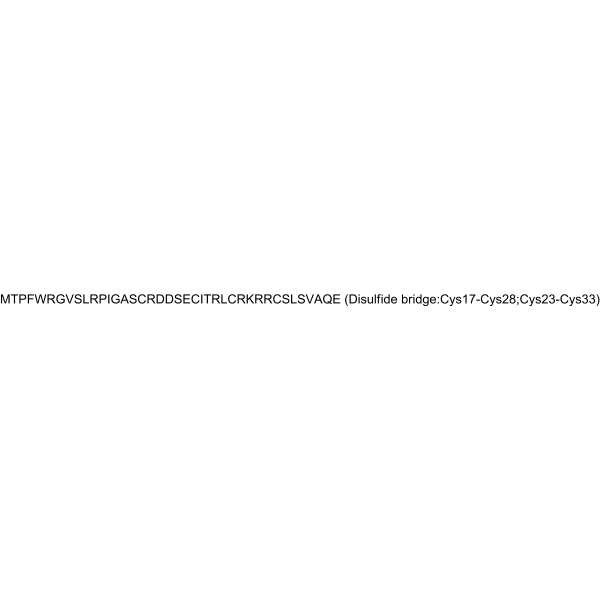 0 ImagesSynonyms: Human liver expressed antimicrobial peptide-2LEAP-2 (Human liver expressed antimicrobial peptide-2) is a GHS-R1a antagonist, with an IC50 of 6.0 nM. LEAP-2 suppresses the orexigenic effect of ghrelin. LEAP-2 attenuates ghrelin-induced growth hormone (GH) release and reduces basal food intake. LEAP-2 exhibits antimicrobial activity against microbial model organisms. LEAP-2 can be used for the study of obesity and infection.
-
Ibutamoren
 0 ImagesSynonyms: MK-677 free base; MK-0677 free baseIbutamoren (MK-677 free base; MK-0677 free base) is an orally active non-peptide growth hormone secretagogue receptor agonist. Ibutamoren activates signal cascades by mimicking endogenous ligands, triggers pulsatile release of growth hormone from the pituitary gland, and increases serum levels of IGF-1 and insulin-like growth factor-binding protein 3. Ibutamoren not only increases the frequency of growth hormone pulses in male individuals, but also promotes elevated bone formation markers in female individuals with postmenopausal osteoporosis. The combination of Ibutamoren with Alendronate sodium hydrate (HY-11101) significantly increases bone mineral density at the femoral neck. However, Ibutamoren may cause mild, reversible adverse reactions such as increased appetite, fluid retention, and elevated fasting blood glucose. Ibutamoren has been widely used in studies related to idiopathic growth hormone deficiency, sarcopenia, Alzheimer's disease, and osteoporosis.
-
Cortistatin-8
 0 ImagesSynonyms: PCFWKTCKCortistatin-8 (CST-8; PCFWKTCK), a neuropeptide, is a GHS-R1a antagonist by counteracting the response of ghrelin on gastric acid secretion. Cortistatin-8 can modulate GH release from somatotroph cells. Cortistatin-8 is a synthetic CST-analogue devoid of any binding affinity to SST-R but capable to bind the GHS-R1a. Cortistatin-8 can exert antagonistic effects on ghrelin actions either in vitro or in vivo in animals.
-
PF-04628935
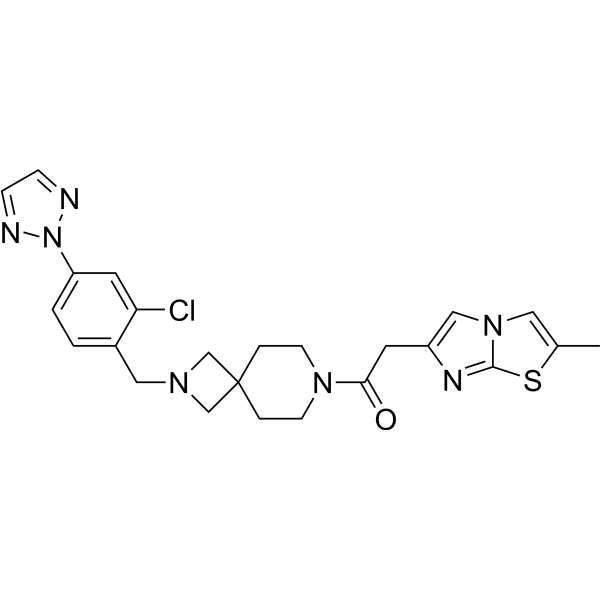 0 ImagesPF-04628935 (compound 10n) is a potent ghrelin receptor inverse agonist, with an IC50 of 4.6 nM. PF-04628935 exhibits oral bioavailability of 43% in rats and shows reasonable penetration into the brain. PF-04628935 can be used for stress and anxiety research.
-
AZ-GHS-38
 0 ImagesCat. No.: HY-176995CAS No.: 1143021-16-2AZ-GHS-38 (compound 38) is an orally active CNS-penetrant inverse agonist of growth hormone secretagogue receptor (GHS-R1a) with an IC50 of 6.7 nM. AZ-GHS-38 results in acute reduction of food intake in wild-type mice. AZ-GHS-38 can be used for anti-obesity research.
-
Capromorelin
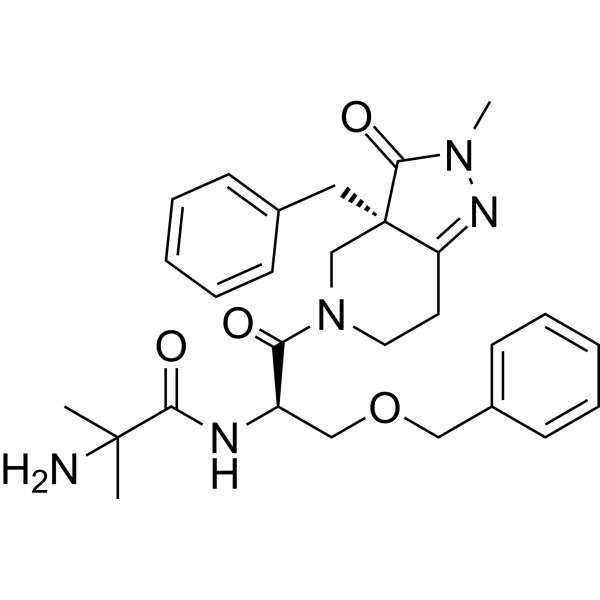 0 ImagesCat. No.: HY-15242CAS No.: 193273-66-4Synonyms: CP 424391Capromorelin (CP 424391) is a pyrazolinone-piperidine dipeptide. Capromorelin is an orally active and potent growth hormone secretagogue (GHS) (hGHS-R1a Ki=7 nM, rat pituicyte EC50=3 nM).
-
GHSR-1a agonist-1
 0 ImagesCat. No.: HY-173271CAS No.: 3060887-25-1GHSR-1a agonist-1 (Compound 4b) is an orally active agonist of the human growth hormone secretagogue receptor 1a (GHSR-1a), with an EC50 of 0.49 nM. GHSR-1a agonist-1 can effectively stimulate the release of endogenous growth hormone by activating GHSR-1a. GHSR-1a agonist-1 administered orally at a dose as low as 0.1 mg/kg can increase the body weight and body length of 4-week-old rats. GHSR-1a agonist-1 can be used in the research field of growth and development retardation in children.
-
JMV 3008
 0 ImagesCat. No.: HY-129287CAS No.: 925239-09-4JMV 3008 is a GHS-R1a antagonist with an IC50 of 5.6 nM. JMV 3008 can be used in the research of diseases such as diabetes and obesity.



