



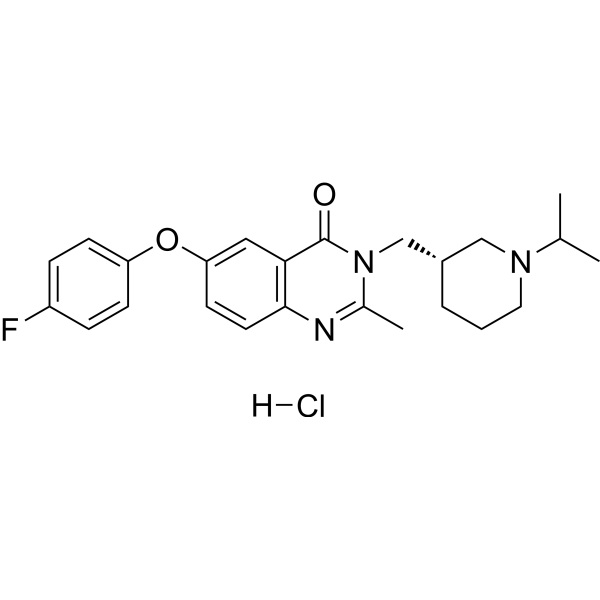
YIL781 hydrochloride

Based on 1 Customer Validation
YIL781 hydrochloride is a potent and orally active ghrelin receptor (GHSR) antagonist. YIL781 hydrochloride produces a greater improvement in glucose homeostasis in rats. YIL781 hydrochloride inhibits the calcium response induced by ghrelin with pIC50 values of 7.90 and 8.27, respectively.
For research use only. We do not sell to patients.
- Purity : 99.48%
- CAS No.: 1640226-17-0
- Formula: C24H29ClFN3O2
- Molecular Weight:445.96
-
Storage:
-20°C, sealed storage, away from moisture
* In solvent : -80°C, 6 months; -20°C, 1 month (sealed storage, away from moisture)

To place orders, for customer services and technical support, please contact: MedChemExpress USA
Tel: 609-228-6898 E-mail: [email protected] [email protected]


-
 Biological Activity
-
Chemical Information
-
Solvent & Solubility
- Purity & Documentation
- References
-
 Help & FAQs


-
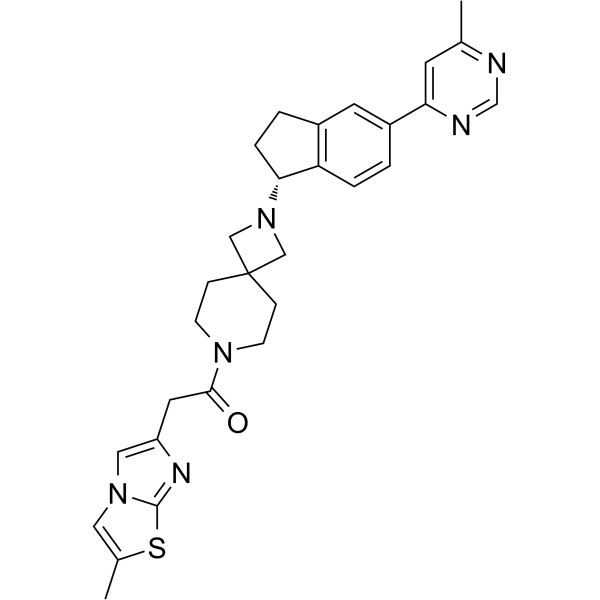
HY-12584
PF-5190457GHSR Inverse Agonist -
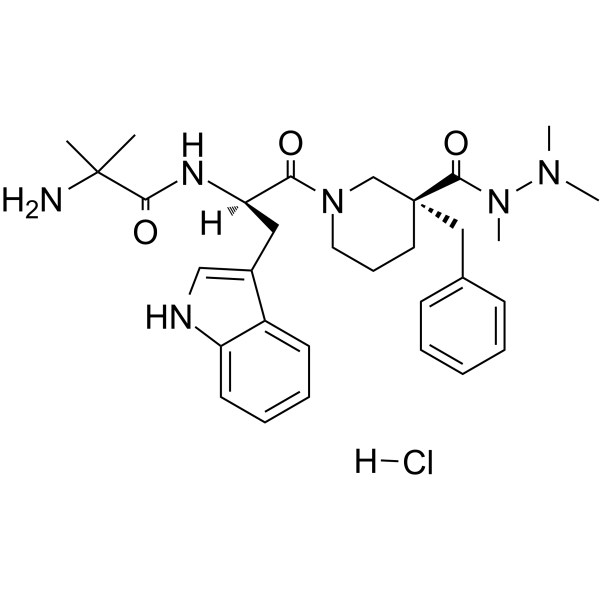
HY-14734A
Anamorelin hydrochlorideGhrelin Receptor Agonist -
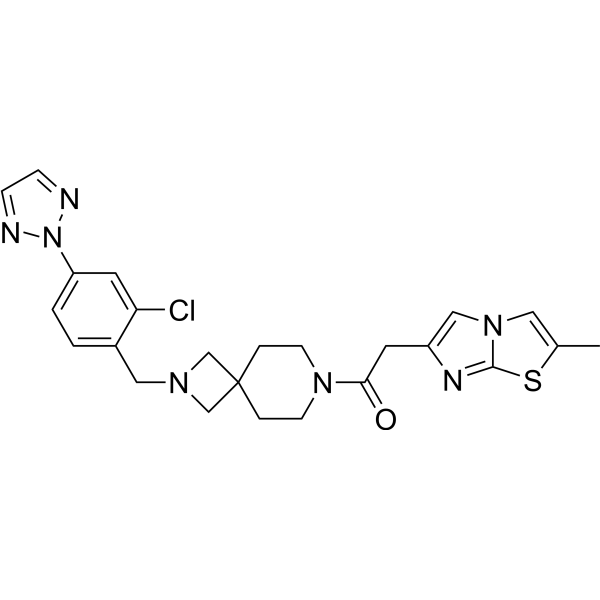
HY-116625
PF-04628935GHSR Inverse Agonist -
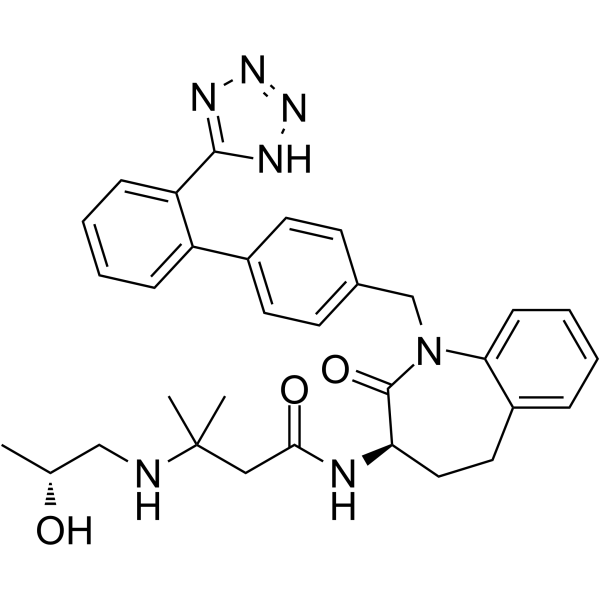
HY-50760
L-692585GHS-R1a Agonist -
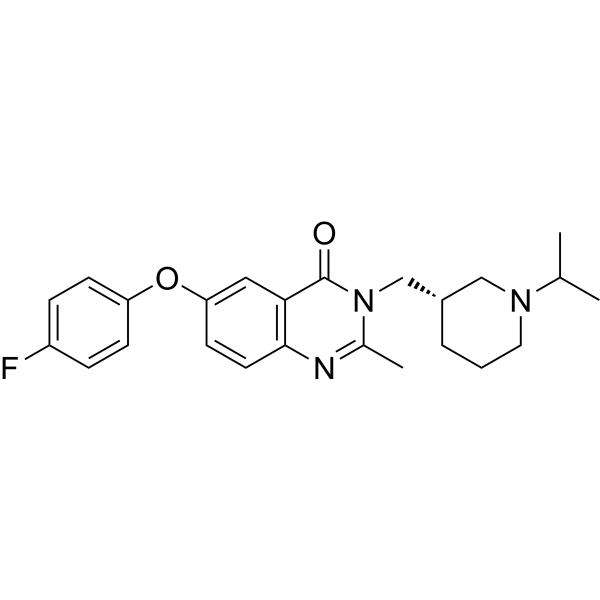
HY-13964
YIL781GHSR Antagonist -
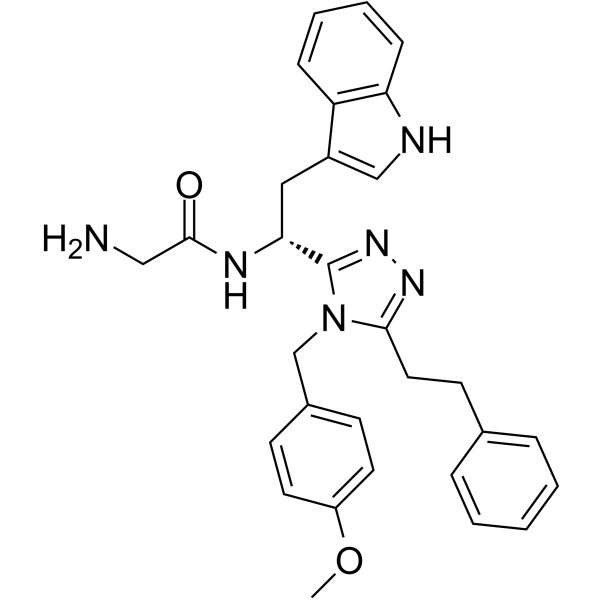
HY-U00433
JMV 2959 -
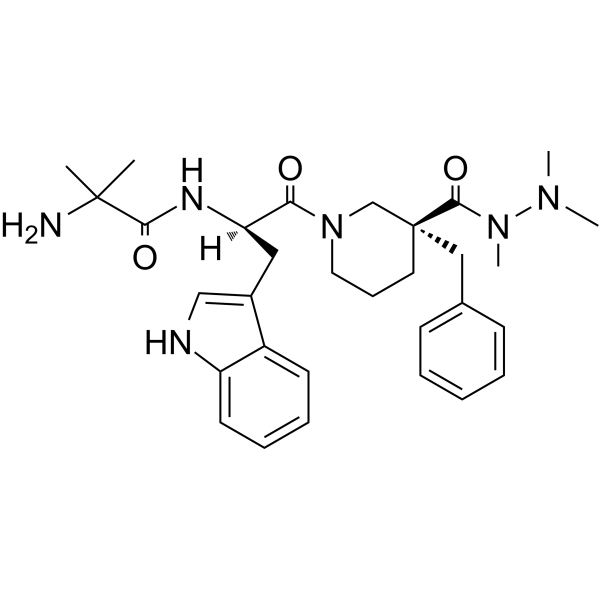
HY-14734
AnamorelinGhrelin Receptor Agonist -
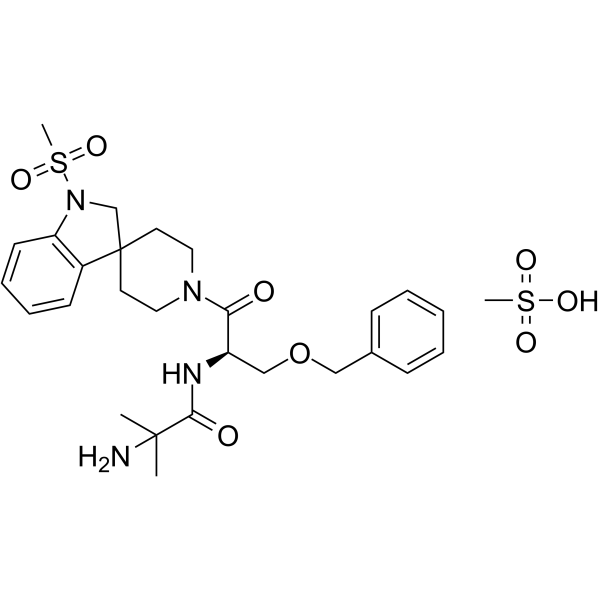
HY-50844
Ibutamoren MesylateGHSR Agonist -
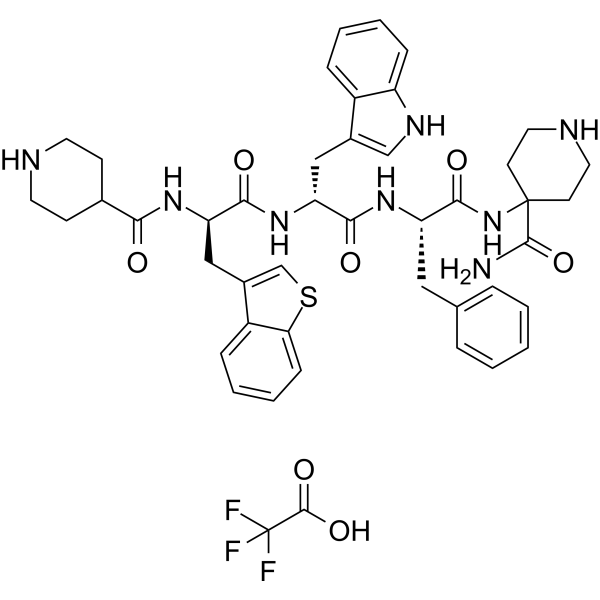
HY-19884B
Relamorelin TFAGHSR Agonist -
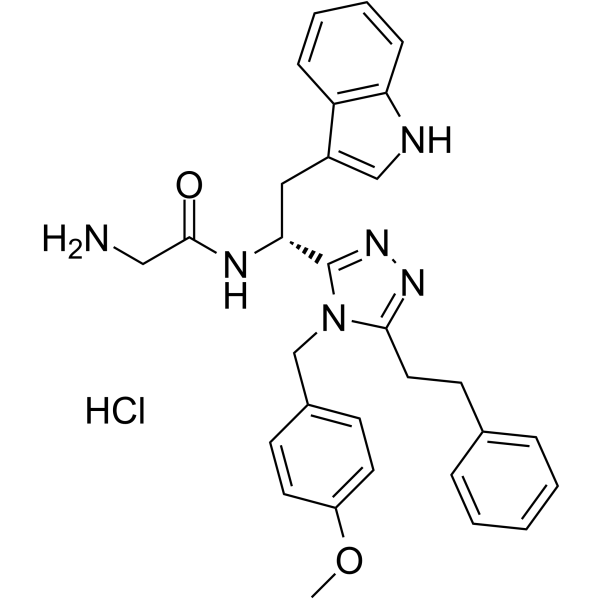
HY-U00433A
JMV 2959 hydrochloride -
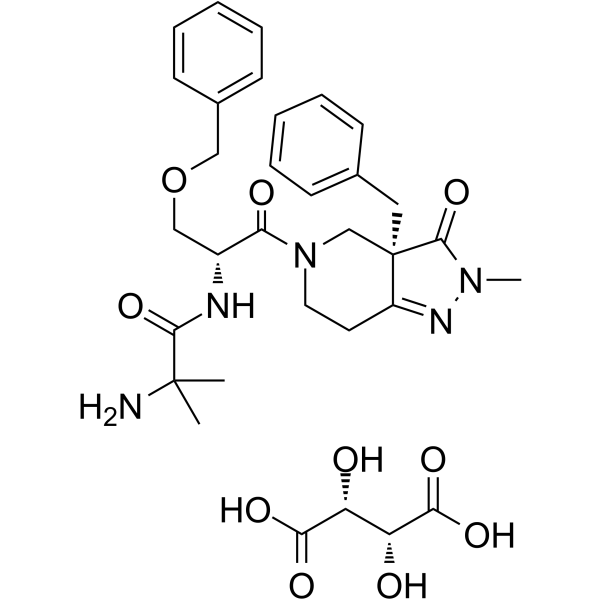
HY-15243
Capromorelin TartrateGHSR Agonist -
HY-14820A
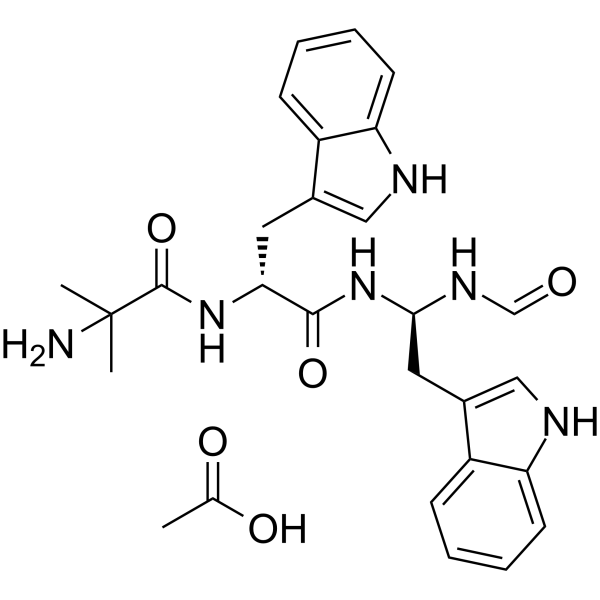
Macimorelin acetateGHSR Agonist


Biological Activity
Description
In Vitro
YIL781 (10-300 nM) induces a concentration-dependent parallel rightward shift of the ghrelin CRC with a slight but statistically significant depression of the maximal response at 100 and 300 nM, reaching a similar agonist maximal response of approximately 90%[3].
MedChemExpress (MCE) has not independently confirmed the accuracy of these methods. They are for reference only. .
In Vivo
MedChemExpress (MCE) has not independently confirmed the accuracy of these methods. They are for reference only.
-
Animal Model:Conscious mice[4].
-
Dosage:0.1 to 5 μg/5 μl.
-
Administration:Intrathecal (i.t.) injection.
-
Result:Attenuated ghrelin-induced up-regulation of the blood glucose level (F = 0.7506; P = 0.5729) (YIL781 5 g + ghrelin 5 g −9.1% at 30 min; −14.9% at 60 min).
The i.t. treatment with YIL781 alone did not affect the blood glucose level (F = 0.8160; P = 0.5095).


Chemical Information
-
CAS No. 1640226-17-0
-
Appearance Solid
-
Molecular Weight 445.96
-
Formula C24H29ClFN3O2
-
Color Off-white to light yellow
-
SMILES
O=C1N(C[C@@H]2CN(C(C)C)CCC2)C(C)=NC3=C1C=C(OC4=CC=C(F)C=C4)C=C3.[H]Cl
-
Shipping
Room temperature in continental US; may vary elsewhere.
-
Storage
-20°C, sealed storage, away from moisture
* In solvent : -80°C, 6 months; -20°C, 1 month (sealed storage, away from moisture)


Solvent & Solubility
In Vitro:
DMSO : 250 mg/mL (560.59 mM; Need ultrasonic; Hygroscopic DMSO has a significant impact on the solubility of product, please use newly opened DMSO)
Please refer to the solubility information to select the appropriate solvent. Once prepared, please aliquot and store the solution to prevent product inactivation from repeated freeze-thaw cycles.
Storage method and period of stock solution: -80°C, 6 months; -20°C, 1 month (sealed storage, away from moisture). When stored at -80°C, please use it within 6 months. When stored at -20°C, please use it within 1 month.
Please refer to the solubility information to select the appropriate solvent. Once prepared, please aliquot and store the solution to prevent product inactivation from repeated freeze-thaw cycles.
Storage method and period of stock solution: -80°C, 6 months; -20°C, 1 month (sealed storage, away from moisture). When stored at -80°C, please use it within 6 months. When stored at -20°C, please use it within 1 month.
Concentration (start) × Volume (start) = Concentration (final) × Volume (final)
In Vivo:
Select the appropriate dissolution method based on your experimental animal and administration route.
- For the following dissolution methods, please ensure to first prepare a clear stock solution using an In Vitro approach and then sequentially add co-solvents:
- To ensure reliable experimental results, the clarified stock solution can be appropriately stored based on storage conditions. As for the working solution for In Vivo experiments, it is recommended to prepare freshly and use it on the same day.
- The percentages shown for the solvents indicate their volumetric ratio in the final prepared solution. If precipitation or phase separation occurs during preparation, heat and/or sonication can be used to aid dissolution.
Add each solvent one by one: 10% DMSO 40% PEG300 5% Tween-80 45% Saline
Solubility: ≥ 2.08 mg/mL (4.66 mM); Clear solution
This protocol yields a clear solution of ≥ 2.08 mg/mL (saturation unknown).
Taking 1 mL working solution as an example, add 100 μL DMSO stock solution (20.8 mg/mL) to 400 μL PEG300, and mix evenly; then add 50 μL Tween-80 and mix evenly; then add 450 μL Saline to adjust the volume to 1 mL.
Preparation of Saline: Dissolve 0.9 g sodium chloride in ddH₂O and dilute to 100 mL to obtain a clear Saline solution.
Add each solvent one by one: 10% DMSO 90% (20% SBE-β-CD in Saline)
Solubility: ≥ 2.08 mg/mL (4.66 mM); Clear solution
This protocol yields a clear solution of ≥ 2.08 mg/mL (saturation unknown).
Taking 1 mL working solution as an example, add 100 μL DMSO stock solution (20.8 mg/mL) to 900 μL 20% SBE-β-CD in Saline, and mix evenly.
Preparation of 20% SBE-β-CD in Saline (4°C, storage for one week): 2 g SBE-β-CD powder is dissolved in 10 mL Saline, completely dissolve until clear.
In Vivo Dissolution Calculator
Please enter the basic information of animal experiments:
-
-
-
-
Recommended: Prepare an additional quantity of animals to account for potential losses during experiments.
Please enter your animal formula composition:
-
%DMSO +
Recommended: Keep the proportion of DMSO in working solution below 2% if your animal is weak.
-
%+
-
+%Tween-80 + +
-
%Saline +
The co-solvents required include: DMSO, . All of co-solvents are available by MedChemExpress (MCE). , Tween 80. All of co-solvents are available by MedChemExpress (MCE).
Working solution concentration: 0.22 mg/mL
Method for preparing stock solution: mg drug dissolved in μL DMSO. Stock solution concentration: mg/mL. * In solvent : -80°C, 6 months; -20°C, 1 month (sealed storage, away from moisture)
1. Take μL DMSO stock solution;
2. Add μL .
μL , mix evenly;
3. Then add μL Tween 80, mix evenly;
4. Then add μL
Please ensure that the stock solution in the first step is dissolved to a clear state, and add co-solvents in sequence. You can use ultrasonic heating (ultrasonic cleaner, recommended frequency 20-40 kHz), vortexing, etc. to assist dissolution.


Purity & Documentation
-
Data Sheet (272 KB)
-
SDS (252 KB)
- English - EN (252 KB)
- Français - FR (252 KB)
- Deutsch - DE (252 KB)
- Norwegian - NO (252 KB)
- Español - ES (252 KB)
- Swedish - SV (252 KB)
- Italian - IT (252 KB)
- Korean - KR (252 KB)
- Portuguese - PT (252 KB)
-
Handling Instructions (2659 KB)
References
[1]. William P Esler, et al. Small-molecule ghrelin receptor antagonists improve glucose tolerance, suppress appetite, and promote weight loss Endocrinology. 2007 Nov;148(11):5175-85. [Content Brief]
[2]. Timothy H. Moran, et al. Gut Peptides: Targets for Antiobesity Drug Development? Endocrinology. 2009 Jun; 150(6): 2526–2530. [Content Brief]
[3]. Elisabetta Perdonà, et al. Pharmacological characterization of the ghrelin receptor antagonist, GSK1614343 in rat RC-4B/C cells natively expressing GHS type 1a receptors. Eur J Pharmacol. 2011 Jan 10;650(1):178-83. [Content Brief]
[4]. Yun-Beom Sim, et al. Ghrelin administered spinally increases the blood glucose level in mice. Peptides. 2014 Apr;54:162-5. [Content Brief]


Complete Stock Solution Preparation Table
Please refer to the solubility information to select the appropriate solvent. Once prepared, please aliquot and store the solution to prevent product inactivation from repeated freeze-thaw cycles.
Storage method and period of stock solution: -80°C, 6 months; -20°C, 1 month (sealed storage, away from moisture). When stored at -80°C, please use it within 6 months. When stored at -20°C, please use it within 1 month.
| Optional Solvent | Concentration Solvent Mass | 1 mg | 5 mg | 10 mg | 25 mg |
|---|---|---|---|---|---|
| DMSO | 1 mM | 2.2424 mL | 11.2118 mL | 22.4235 mL | 56.0588 mL |
| 5 mM | 0.4485 mL | 2.2424 mL | 4.4847 mL | 11.2118 mL | |
| 10 mM | 0.2242 mL | 1.1212 mL | 2.2424 mL | 5.6059 mL | |
| 15 mM | 0.1495 mL | 0.7475 mL | 1.4949 mL | 3.7373 mL | |
| 20 mM | 0.1121 mL | 0.5606 mL | 1.1212 mL | 2.8029 mL | |
| 25 mM | 0.0897 mL | 0.4485 mL | 0.8969 mL | 2.2424 mL | |
| 30 mM | 0.0747 mL | 0.3737 mL | 0.7475 mL | 1.8686 mL | |
| 40 mM | 0.0561 mL | 0.2803 mL | 0.5606 mL | 1.4015 mL | |
| 50 mM | 0.0448 mL | 0.2242 mL | 0.4485 mL | 1.1212 mL | |
| 60 mM | 0.0374 mL | 0.1869 mL | 0.3737 mL | 0.9343 mL | |
| 80 mM | 0.0280 mL | 0.1401 mL | 0.2803 mL | 0.7007 mL | |
| 100 mM | 0.0224 mL | 0.1121 mL | 0.2242 mL | 0.5606 mL |


YIL781 hydrochloride Related Classifications
HY-13964A Related Classifications
 Powered by Bioz