Search Result
Results for "
anticonvulsant activity
" in MedChemExpress (MCE) Product Catalog:
13
Isotope-Labeled Compounds
| Cat. No. |
Product Name |
Target |
Research Areas |
Chemical Structure |
-
- HY-15068
-
|
FG9202
|
iGluR
|
Neurological Disease
|
|
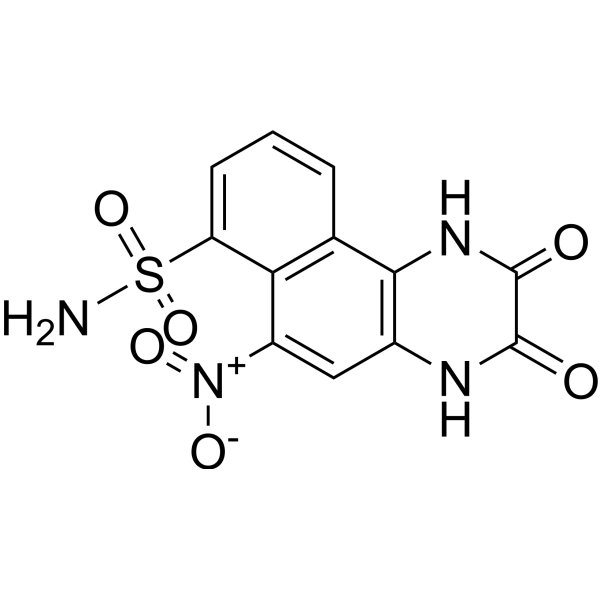
NBQX (FG9202) is a highly selective and competitive AMPA receptor antagonist. NBQX has neuroprotective and anticonvulsant activity .
|
-
-
- HY-114489A
-
|
|
Apoptosis
Influenza Virus
Parasite
|
Infection
Neurological Disease
Cancer
|
|
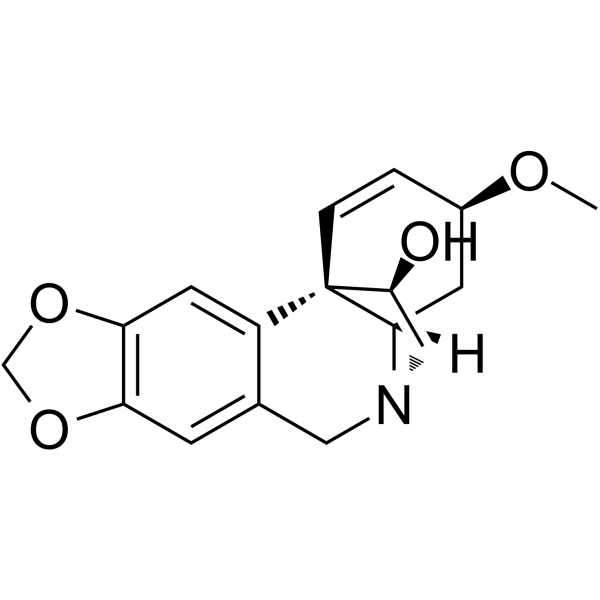
Haemanthamine is a crinine-type alkaloid isolated from the Amaryllidaceae plants with potent anticancer activity. Haemanthamine targets ribosomal that inhibits protein biosynthesis during the elongation stage of translation. Haemanthamine has pro-apoptotic, antioxidant, antiviral, antimalarial and anticonvulsant activities .
|
-
-
- HY-15068A
-
|
FG9202 disodium
|
iGluR
|
Neurological Disease
|
|
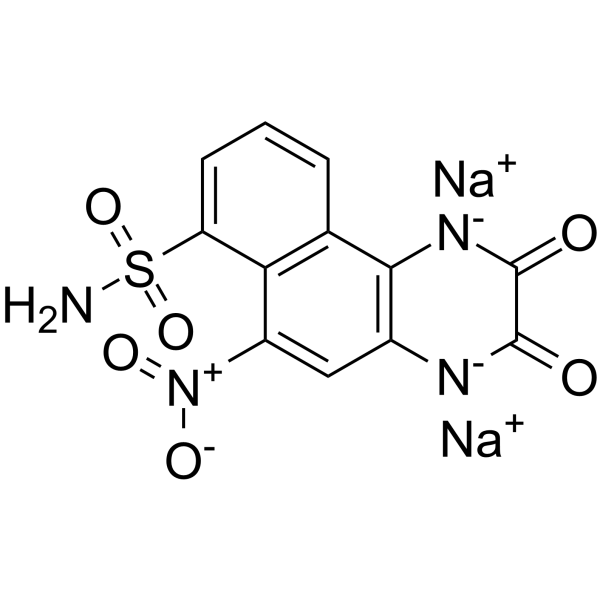
NBQX disodium (FG9202 disodium) is a highly selective and competitive AMPA receptor antagonist. NBQX disodium has neuroprotective and anticonvulsant activity .
|
-
-
- HY-113320
-
|
5β-Androsterone
|
GABA Receptor
Endogenous Metabolite
|
Neurological Disease
|
|
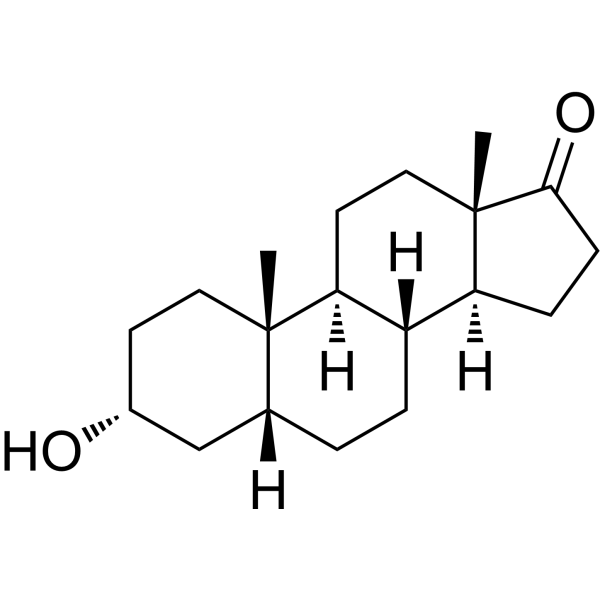
Etiocholanolone (5β-Androsterone) is the excreted metabolite of testosterone and has anticonvulsant activity . Etiocholanolone is a less potent neurosteroid positive allosteric modulator (PAM) of the GABAA receptor than its enantiomer form .
|
-
-
- HY-13993
-
|
|
iGluR
|
Neurological Disease
|
|
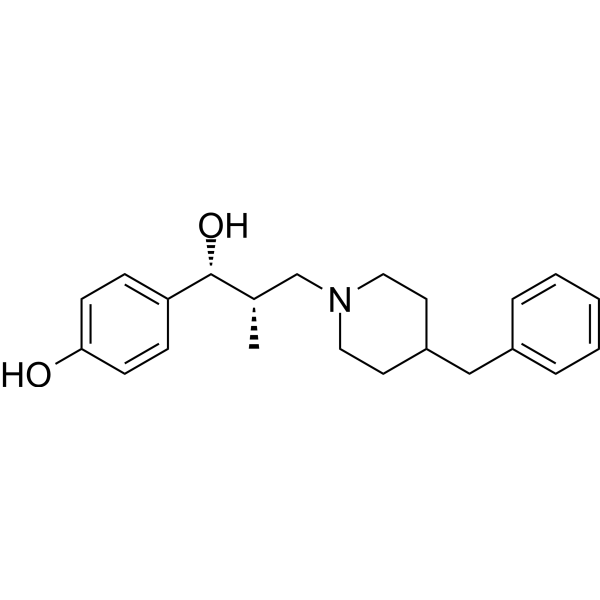
Ro 25-6981 is a potent, selective and activity-dependent NR2B subunit specific NMDA receptor antagonist. Ro 25-6981 shows anticonvulsant and anti-parkinsonian activity. Ro 25-6981 has the potential for the research of parkinson's disease (PD) .
|
-
-
- HY-15356
-
-
-
- HY-W010513
-
|
|
Endogenous Metabolite
Bacterial
|
Neurological Disease
|
|
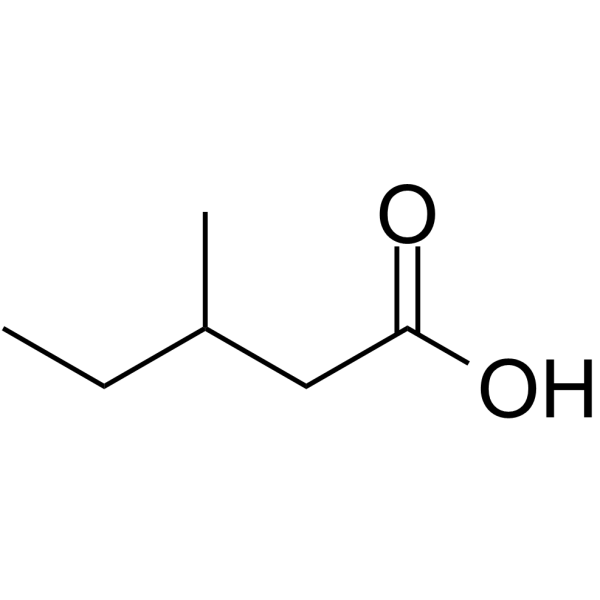
3-Methylvaleric Acid is a branched alkanoic acid. 3-Methylvaleric Acid can be utilized by Pseudomonas citronettotis as a sole carbon source for its growth. 3-Methylvaleric Acid derivatives exhibit anti-hyperalgesic and anticonvulsant activities .
|
-
-
- HY-13993A
-
|
|
iGluR
|
Neurological Disease
|
|
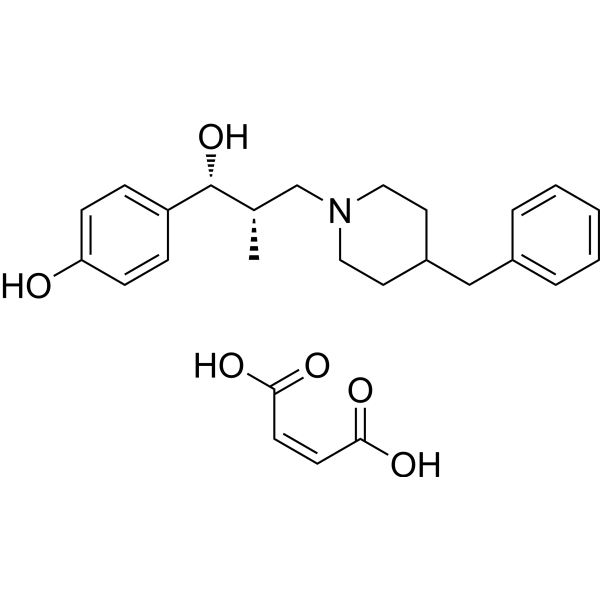
Ro 25-6981 Maleate is a potent, selective and activity-dependent NR2B subunit specific NMDA receptor antagonist. Ro 25-6981 Maleat shows anticonvulsant and anti-parkinsonian activity. Ro 25-6981 Maleate has the potential for the research of parkinson's disease (PD) .
|
-
-
- HY-103505
-
|
|
GABA Receptor
|
Neurological Disease
|
|
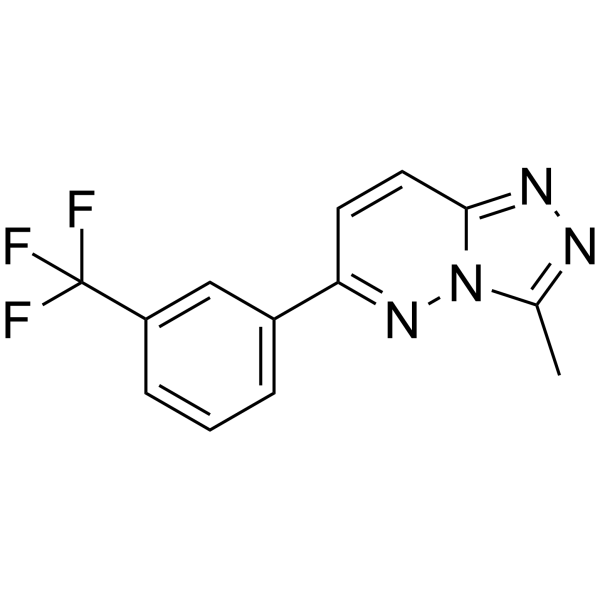
CL 218872 is an orally active and selective ligand for the benzodiazepine receptor subtype BZ1. CL 218872 exhibits anxiolytic, sedative and anticonvulsant activities. CL 218872 can be used in researches of anxiety related disorders and epilepsy .
|
-
-
- HY-B1185
-
-
-
- HY-114871
-
|
|
GABA Receptor
|
Neurological Disease
|
|
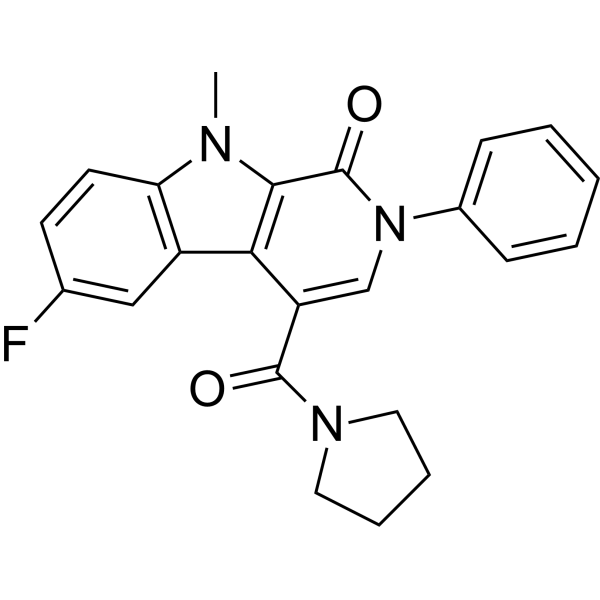
SL651498 is a full agonist of α2 and α3 GABAA receptors, and a partial agonist of α1 and α5 GABAA receptors. SL651498 shows anxiolytic and anticonvulsant activities .
|
-
-
- HY-W294348
-
-
-
- HY-12503
-
CFM-2
1 Publications Verification
|
iGluR
|
Neurological Disease
Cancer
|
|
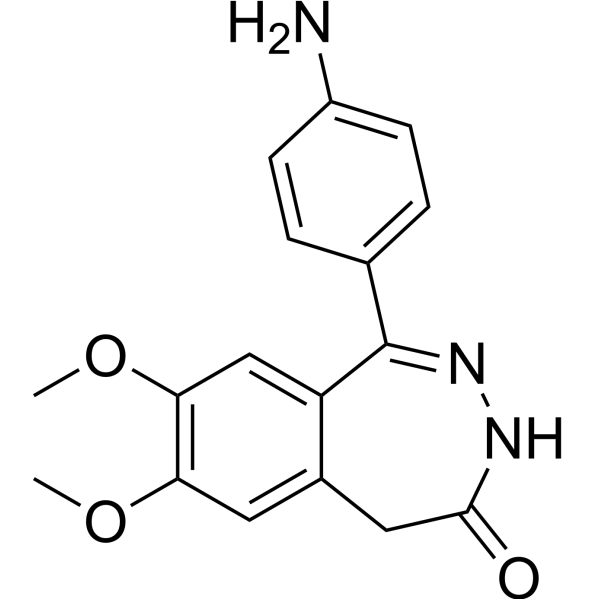
CFM-2 is a potent and selective non-competitive AMPAR antagonist . CFM-2 possesses anticonvulsant activity in various models of seizures .
|
-
-
- HY-125928
-
|
|
Sodium Channel
|
Neurological Disease
|
|
AA43279 is an in gamma-aminobutyric acid (GABA) fast-firing interneurons located activator for Nav1.1 channel (SCN1A) with an EC50 of 9.5 μM. AA43279 enhances specific neuronal firing activity in vitro, and exhibits anticonvulsant activity in rat MEST model .
|
-

-
- HY-136591
-
|
|
Drug Metabolite
|
Neurological Disease
Cancer
|
|
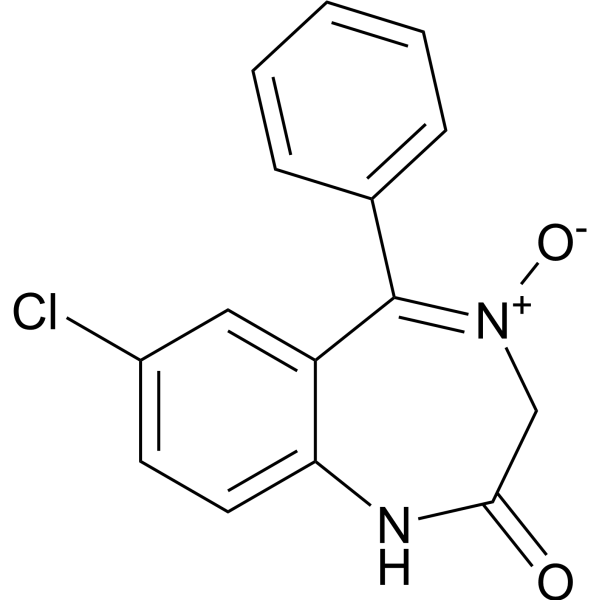
Demoxepam is a major metabolite of Chlordiazepoxide. Demoxepam exhibits cytotoxicity activity against cancer cell lines. Demoxepam has anticonvulsant and anxiolytic effects. Demoxepam has an inhibitory effect on in vitro [ 3H]tryptophan binding to rat hepatic nuclei .
|
-
-
- HY-N9502
-
|
|
Endogenous Metabolite
|
Neurological Disease
|
|
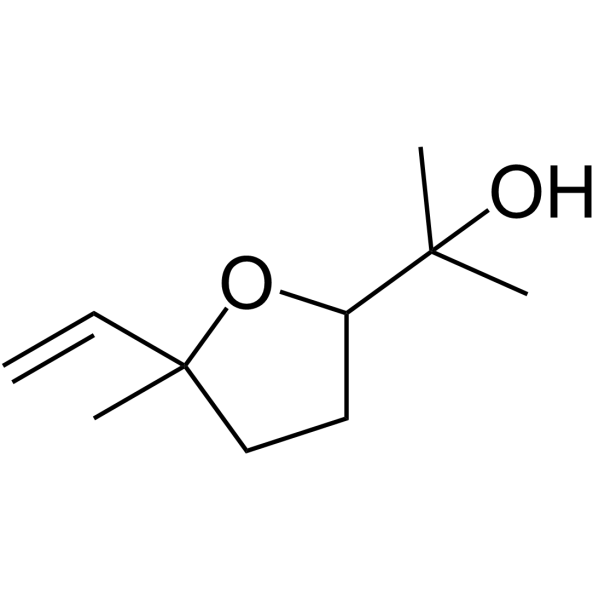
Linalool oxide is a monoterpene and found in aromatic plant essential oils and is a secondary metabolite in elongating wheat plants. Linalool oxide has antinociceptive, anticonvulsant, and anxiolytic activity. Linalool oxide can be used for the research of pain, epilepsy, anxiety disorders .
|
-
-
- HY-19259
-
|
|
Adenosine Kinase
|
Neurological Disease
|
|
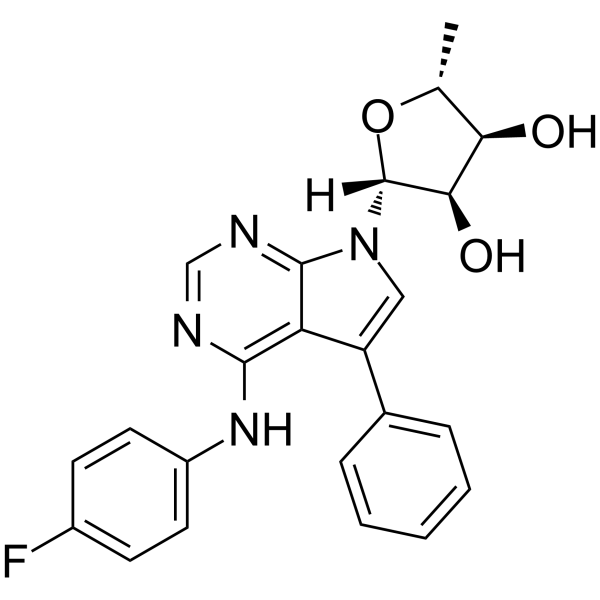
GP3269 is a selective and orally active human adenosine kinase (AK) inhibitor with an IC50 of 11 nM against human adenosine kinase. GP3269 increases adenosine levels at epileptic foci, activates A1 receptors on excitatory neurons, and exhibits anticonvulsant activity in rats. GP3269 does not induce hemodynamic effects including changes in blood pressure or heart rate in rats. GP3269 can be used for epilepsy-related research .
|
-
-
- HY-Z16070
-
|
|
Drug Derivative
|
Cardiovascular Disease
Neurological Disease
|
|
Hydronopol is a saturated alcohol terpene derivative. Hydronopol shows central inhibitory, anticonvulsant, analgesic, anticholinergic and antihypertensive activities. Hydronopol can be used for the researches of neurological and cardiovascular disease .
|
-

-
- HY-W004843
-
|
|
NO Synthase
|
Others
|
|
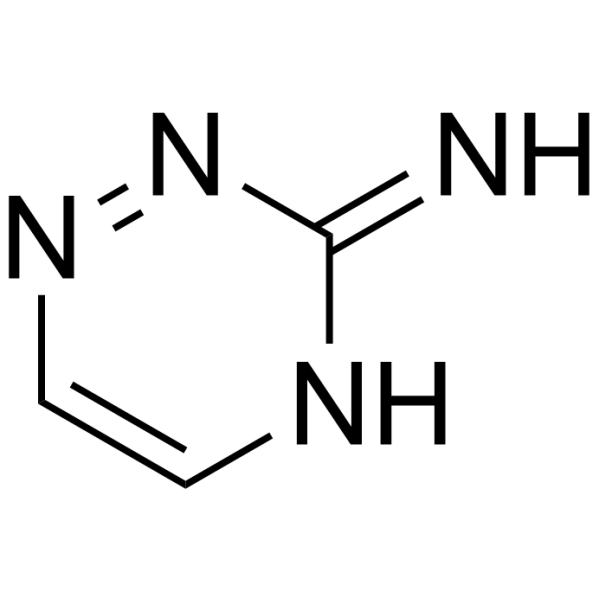
3-Amino-1,2,4-triazine is an inhibitor of NO synthase, and also inhibits nitrite secretion .
|
-
-
- HY-152358
-
|
|
Nucleoside Antimetabolite/Analog
|
Others
|
|
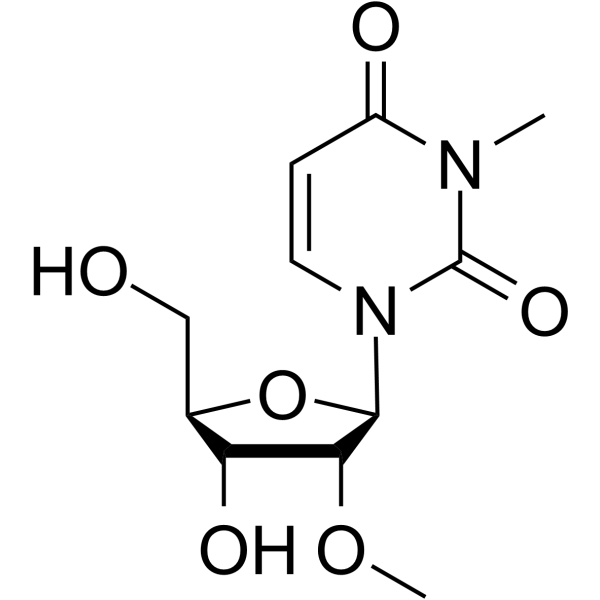
N3-Methyl-2’-O-methyluridine is a uridine analogue. Uridine has potential antiepileptic effects, and its analogs can be used to study anticonvulsant and anxiolytic activities, as well as to develop new antihypertensive agents .
|
-
-
- HY-100797
-
|
(±)-CPP
|
iGluR
|
Neurological Disease
|
|
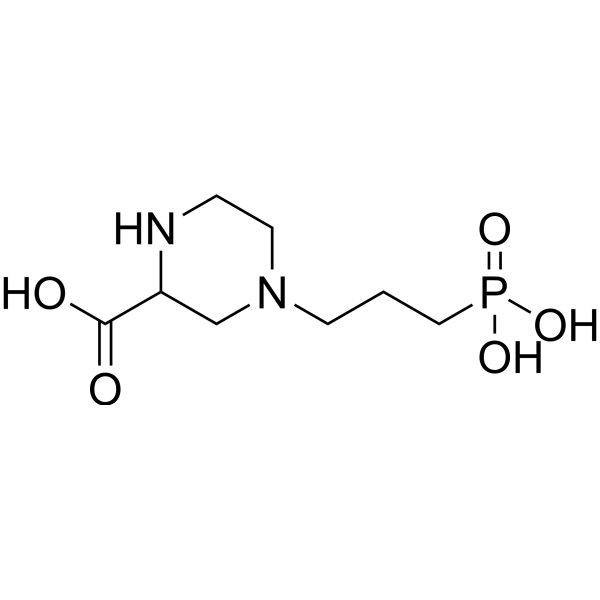
(RS)-CPP ((±)-CPP) is a potent and selective NMDA antagonist. (RS)-CPP inhibits central neuron responses, and has anticonvulsant activity .
|
-
-
- HY-141795
-
|
Co 134444
|
Drug Derivative
|
Neurological Disease
|
|
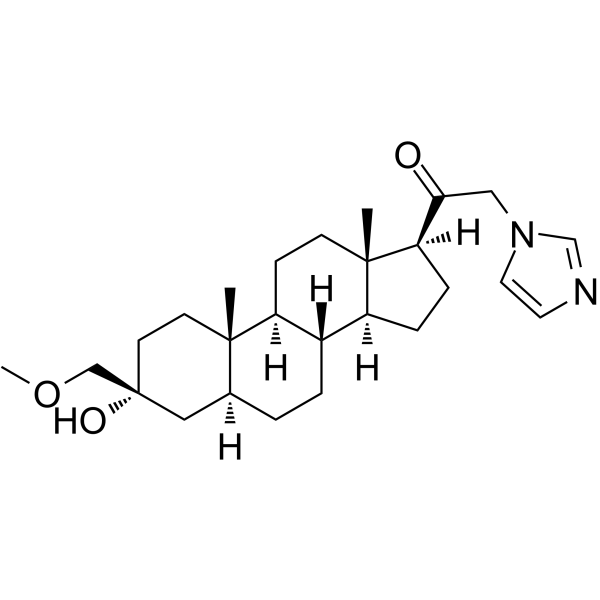
Posovolone (Co 134444) is an orally active, neuroactive steroid. Posovolone has anticonvulsant and anxiolytic-like activity as well as ataxic effects .
|
-
-
- HY-101387
-
|
|
mGluR
|
Neurological Disease
|
|
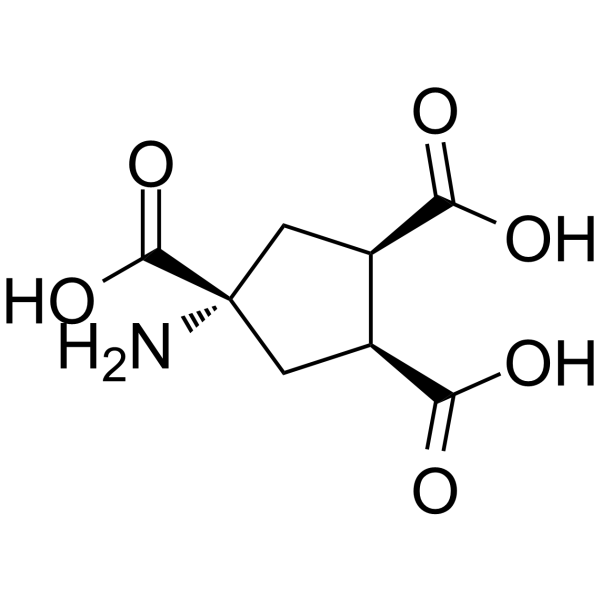
rel-ACPT-I is an agonist of group III mGluRs with diverse biological activities including neuroprotective, anticonvulsant, and anxiolytic-like effects .
|
-
-
- HY-W845607
-
|
|
Monoamine Oxidase
|
Neurological Disease
|
|
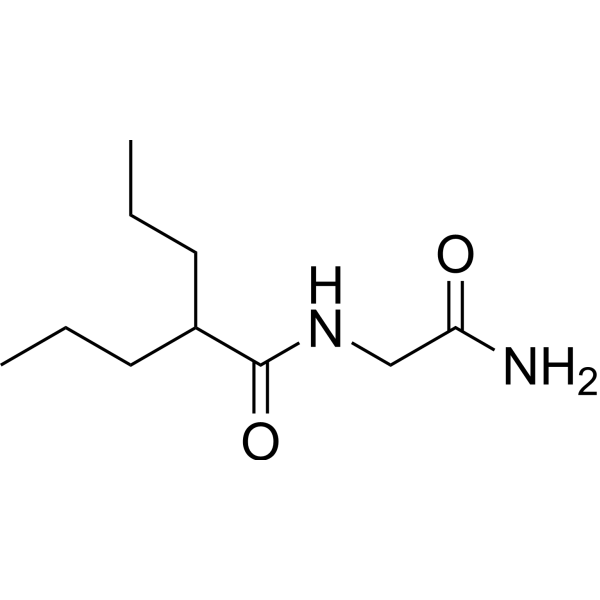
Milacemide, a glycinamide derivative, is an orally active MAO-B inhibitor with anticonvulsant activity. Milacemide reduces the levels of dihydroxyphenylacetic acid and homovanilic acid, but increases the levels of dopamine and serotonin in the caudate nucleus. Milacemide is promising for research of Alzheimer's disease .
|
-

-
- HY-100379
-
-
-
- HY-133486
-
-
-
- HY-15436
-
|
|
iGluR
|
Neurological Disease
|
|
L-687414 is an orally active glycine-site NMDA receptor antagonist or low-potency partial agonist. L-687414 has anticonvulsant activity .
|
-

-
- HY-129408
-
|
|
GABA Receptor
|
Neurological Disease
|
|
SGE-516 is a neuroactive steroid that is a potent positive allosteric modulator of synaptic and extra-synaptic GABAA receptors. SGE-516 has anticonvulsant activity .
|
-

-
- HY-152732
-
|
|
Nucleoside Antimetabolite/Analog
|
Others
|
|
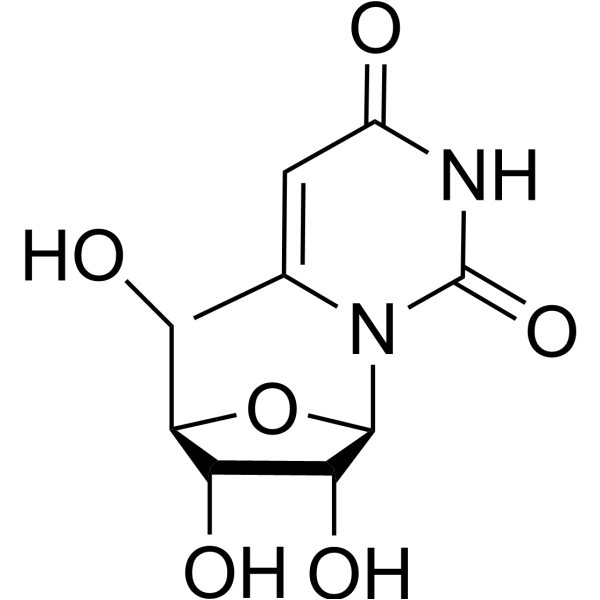
6-Methyluridine is a uridine analogue. Uridine has potential antiepileptic effects, and its analogs can be used to study anticonvulsant and anxiolytic activities, as well as to develop new antihypertensive agents .
|
-
-
- HY-154285
-
|
|
Nucleoside Antimetabolite/Analog
|
Cancer
|
|
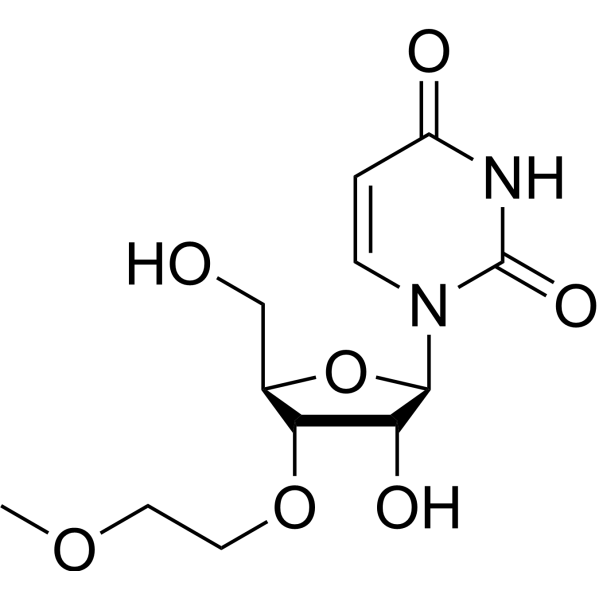
3’-O-(2-Methoxyethyl) uridine is a uridine analog. Uridine has potential antiepileptic effects, and its analogs can be used to study anticonvulsant and anxiolytic activities, as well as to develop new antihypertensive agents .
|
-
-
- HY-22183
-
-
-
- HY-121393
-
|
|
GABA Receptor
|
Neurological Disease
|
|
Imidazenil is a partial positive allosteric modulator of GABAA receptors with anxiolytic, antipanic and anticonvulsant activities.
|
-

-
- HY-W010383
-
-
-
- HY-114880
-
|
|
Cannabinoid Receptor
|
Neurological Disease
|
|
AB-FUBINACA 3-fluorobenzyl isomer is a synthetic cannabinoid that belongs to the indole derivatives and has a high affinity for the central CB1 receptors (Ki= 0.9 nM), exhibiting anticonvulsant activity .
|
-

-
- HY-W020098
-
|
|
Nucleoside Antimetabolite/Analog
|
Cancer
|
|
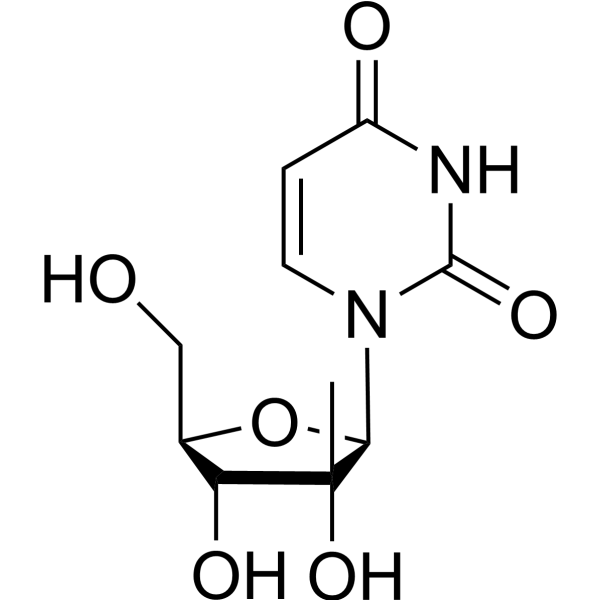
2'-C-methyluridine is a uridine analog. Uridine has potential antiepileptic effects, and its analogs can be used to study anticonvulsant and anxiolytic activities, as well as to develop new antihypertensive agents .
|
-
-
- HY-114489B
-
|
|
Apoptosis
Influenza Virus
Parasite
|
Infection
Neurological Disease
Cancer
|
|
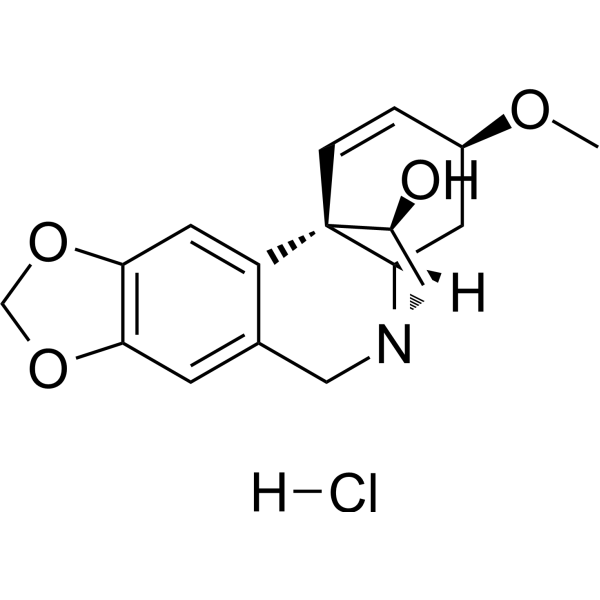
Haemanthamine hydrochloride is a crinine-type alkaloid isolated from the Amaryllidaceae plants with potent anticancer activity. Haemanthamine hydrochloride targets ribosomal that inhibits protein biosynthesis during the elongation stage of translation. Haemanthamine hydrochloride has pro-apoptotic, antioxidant, antiviral, antimalarial and anticonvulsant activities .
|
-
-
- HY-15068AR
-
|
FG9202 disodium (Standard)
|
iGluR
Reference Standards
|
Neurological Disease
|
|
NBQX (disodium) (Standard) is the analytical standard of NBQX (disodium). This product is intended for research and analytical applications. NBQX disodium (FG9202 disodium) is a highly selective and competitive AMPA receptor antagonist. NBQX disodium has neuroprotective and anticonvulsant activity .
|
-

-
- HY-101207
-
|
|
GABA Receptor
|
Neurological Disease
|
|
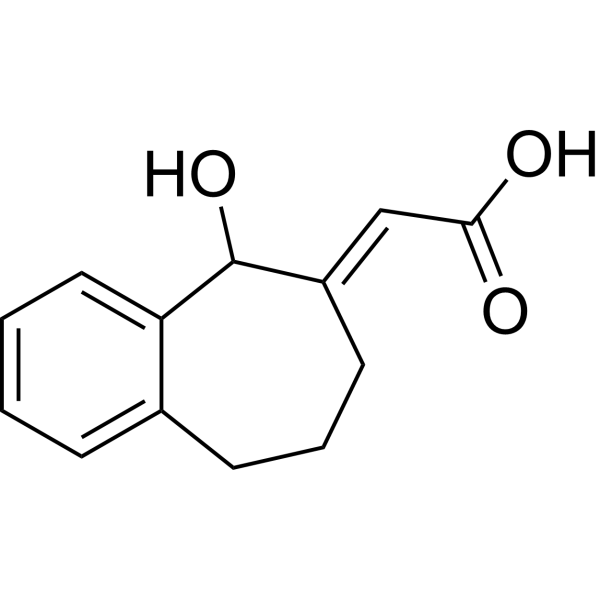
NCS-382 is a potent GABA receptor antagonist and also a GHBR receptor antagonist. NCS-382 has anticonvulsant and antisedative activity. NCS-382 is used in the related research of hereditary nervous system diseases .
|
-
-
- HY-113320S
-
|
5β-Androsterone-d5
|
Isotope-Labeled Compounds
GABA Receptor
Endogenous Metabolite
|
Neurological Disease
|
|
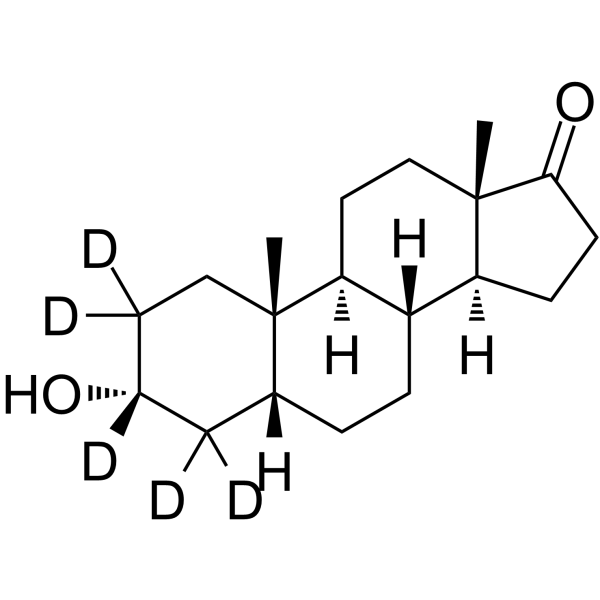
Etiocholanolone-d5 is the deuterium labeled Etiocholanolone. Etiocholanolone (5β-Androsterone) is the excreted metabolite of testosterone and has anticonvulsant activity . Etiocholanolone is a less potent?neurosteroid positive allosteric modulator?(PAM) of the GABAA?receptor than its?enantiomer form .
|
-
-
- HY-14336
-
|
|
5-HT Receptor
|
Neurological Disease
|
|
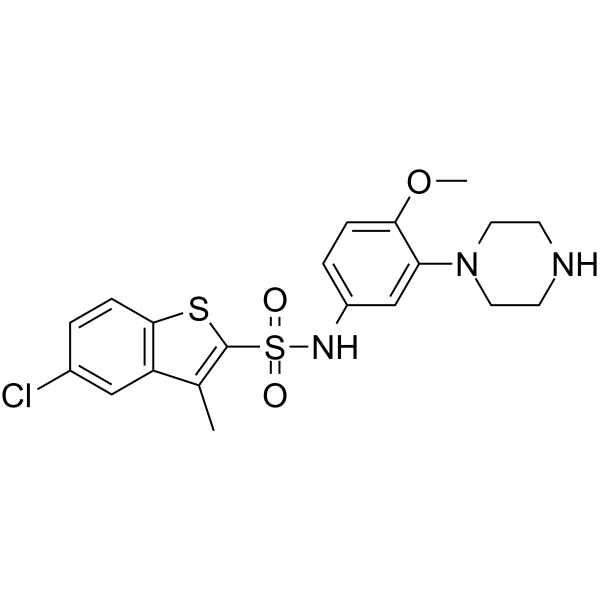
SB 271046 is a potent, selective, orally active and BBB-permeable 5-HT6 receptor antagonist with a pKi of 8.92-9.09. SB 271046 show >200-fold selective for the 5-HT6 receptor over other receptors, binding sites and ion channels. SB 271046 has anticonvulsant activity .
|
-
-
- HY-130205
-
|
CP 1552 S
|
Monoamine Oxidase
|
Neurological Disease
|
|
Milacemide hydrochloride (CP 1552 S), a glycinamide derivative, is an orally active MAO-B inhibitor with anticonvulsant activity. Milacemide hydrochloride reduces the levels of dihydroxyphenylacetic acid and homovanilic acid, but increases the levels of dopamine and serotonin in the caudate nucleus. Milacemide hydrochloride is promising for research of Alzheimer's disease .
|
-

-
- HY-154436
-
-
-
- HY-170930
-
|
|
GABA Receptor
Sodium Channel
|
Neurological Disease
|
|
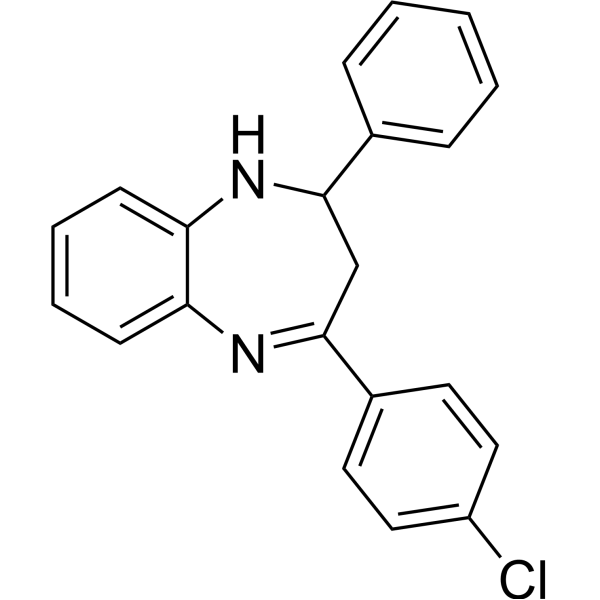
Anticonvulsant agent 9 (compound 4f) is an α1β2γ2 GABAA receptors activator. Anticonvulsant agent 9 activatesα1β2γ2 GABAA receptors with an EC50 of 1.24 μM. Anticonvulsant agent 9 inhibits the inactivation of Nav1.2 channels. Anticonvulsant agent 9 exhibits significant anticonvulsant activities .
|
-

-
- HY-116826
-
-
-
- HY-162757
-
|
|
GABA Receptor
Sodium Channel
|
Neurological Disease
|
|
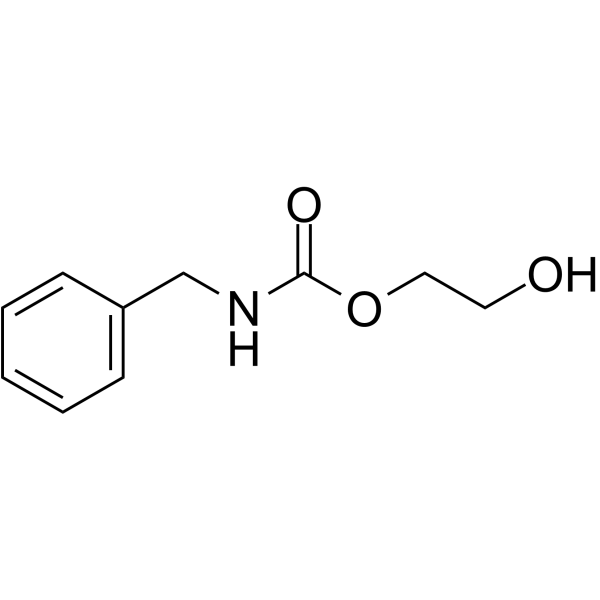
Anticonvulsant agent 5 (Compound 5c) exhibits high affinity for GABAA receptors and NaV1.3 receptors. Anticonvulsant agent 5 shows anticonvulsant efficacy in mice psychomotor epilepsy test with an ED50 of 107 mg/kg. Anticonvulsant agent 5 exhibits neuroprotective activity against Kainic acid (HY-N2309) with an IC50 of 113 μM. Anticonvulsant agent 5 is blood-brain barrier (BBB) penetrable .
|
-

-
- HY-119461
-
-
-
- HY-106670
-
-

-
- HY-106747
-
-

-
- HY-118490
-
-

-
- HY-170717
-
-

- HY-106716
-
-

- HY-167936
-
|
|
Liposome
|
Neurological Disease
|
|
cis-AY 9944 is a cholesterol synthesis inhibitor, exhibiting anticonvulsant activity that influences the dynamics of spike and wave discharges in EEG recordings.
|
-

- HY-101240
-
-

- HY-133160
-
|
VPA-HA
|
Drug Derivative
|
Neurological Disease
|
|
Valproic acid hydroxamate (VPA-HA) has shown anticonvulsant activity in a mouse neural tube defect model, without any teratogenic effects .
|
-

- HY-171253
-
-

- HY-101387A
-
|
|
mGluR
|
Neurological Disease
|
|
ACPT-II is an antagonist of group III mGluRs with diverse biological activities including neuroprotective, anticonvulsant, and anxiolytic-like effects .
|
-
- HY-120240
-
|
|
Others
|
Others
|
|
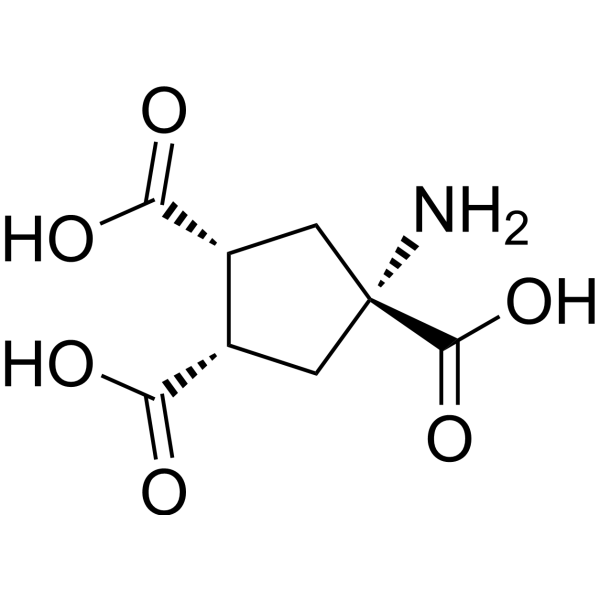
AND-302 is a small molecule anticonvulsant with activity in preventing glutamate- or hydrogen peroxide-induced cell death and decreased neuronal viability in in vitro hippocampal cultures.
|
-

- HY-100963
-
-
- HY-120769
-
-
- HY-19082
-
|
|
GABA Receptor
|
Neurological Disease
|
|
Y-23684 is a partial agonist of benzodiazepine receptor (BZR) with anticonvulsant and anxiolytic activities. Y-23684 can be used in the research of treatment of anxiety disorders .
|
-

- HY-W722128
-
-

- HY-168363
-
|
WE-973
|
GABA Receptor
|
Neurological Disease
|
|
Ciclotizolam (WE-973) is a thienotriazolodiazepine with anticonvulsant and anti-aggressive activities. Ciclotizolam binds to benzodiazepine receptors in the central nervous system. Ciclotizolam decreases total sleep time in cats .
|
-

- HY-125508
-
|
|
GABA Receptor
|
Neurological Disease
|
|
CCD-3693 is an orally active GABA receptor agonist. CCD-3693 has anxiolytic, anticonvulsant and sedative hypnotic activities and can be used in research related to neurological diseases .
|
-

- HY-152755
-
|
|
Nucleoside Antimetabolite/Analog
|
Others
|
|
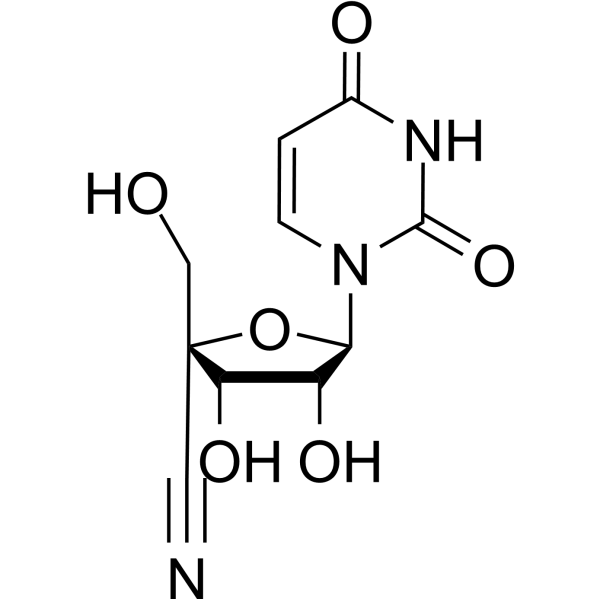
4’-Cyanouridine is a uridine analogue. Uridine has potential antiepileptic effects, and its analogs can be used to study anticonvulsant and anxiolytic activities, as well as to develop new antihypertensive agents .
|
-
- HY-15068R
-
|
FG9202 (Standard)
|
iGluR
Reference Standards
|
Neurological Disease
|
|
NBQX (Standard) is the analytical standard of NBQX. This product is intended for research and analytical applications. NBQX (FG9202) is a highly selective and competitive AMPA receptor antagonist. NBQX has neuroprotective and anticonvulsant activity .
|
-

- HY-152764
-
|
|
Nucleoside Antimetabolite/Analog
|
Others
|
|
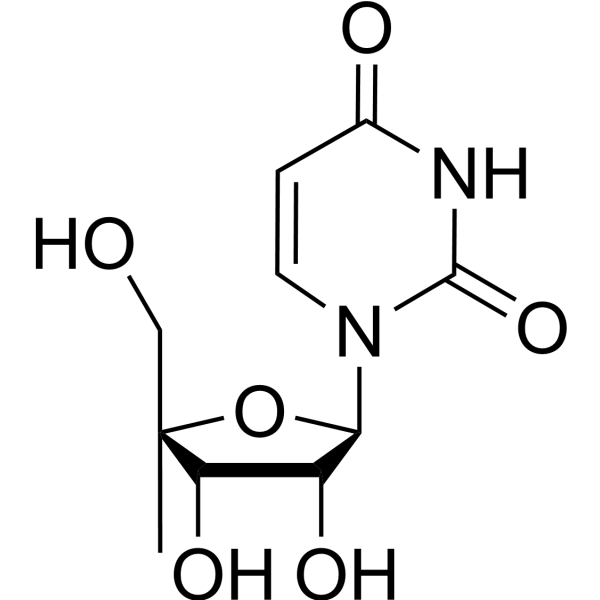
4’-α-C-Methyluridine is a uridine analogue. Uridine has potential antiepileptic effects, and its analogs can be used to study anticonvulsant and anxiolytic activities, as well as to develop new antihypertensive agents .
|
-
- HY-152777
-
|
|
Nucleoside Antimetabolite/Analog
|
Others
|
|
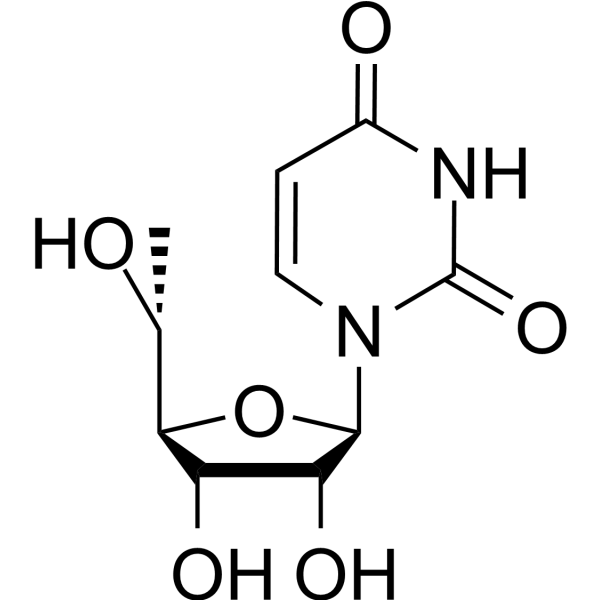
5’(R)-C-Methyluridine is a uridine analogue. Uridine has potential antiepileptic effects, and its analogs can be used to study anticonvulsant and anxiolytic activities, as well as to develop new antihypertensive agents .
|
-
- HY-152299
-
|
|
Nucleoside Antimetabolite/Analog
|
Others
|
|
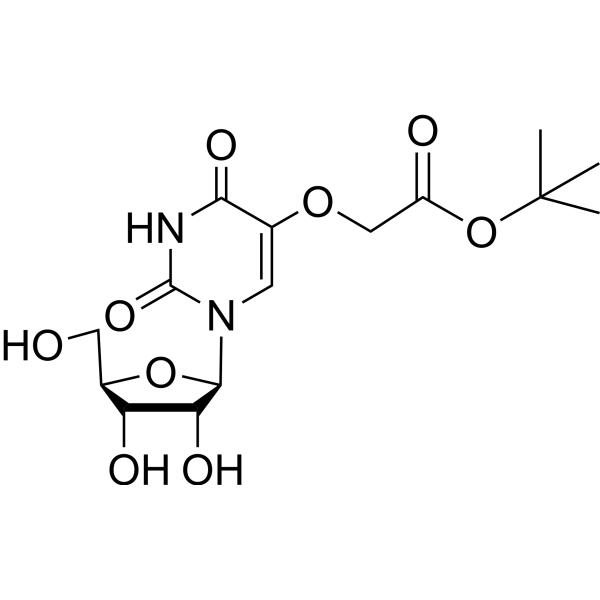
5-(t-Butyloxycarbonylmethoxy)uridine is a uridine analogue. Uridine has potential antiepileptic effects, and its analogs can be used to study anticonvulsant and anxiolytic activities, as well as to develop new antihypertensive agents .
|
-
- HY-154735
-
|
|
Nucleoside Antimetabolite/Analog
|
Cancer
|
|
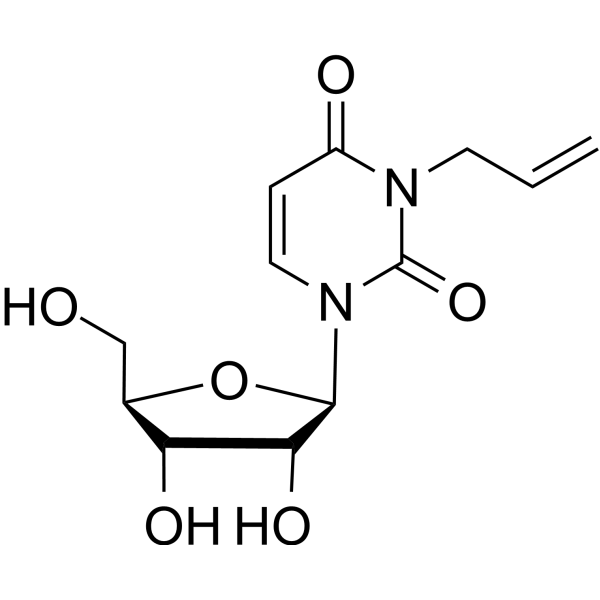
N3-Allyluridine is a uridine analog. Uridine has potential antiepileptic effects, and its analogs can be used to study anticonvulsant and anxiolytic activities, as well as to develop new antihypertensive agents .
|
-
- HY-152388
-
|
|
Nucleoside Antimetabolite/Analog
|
Others
|
|
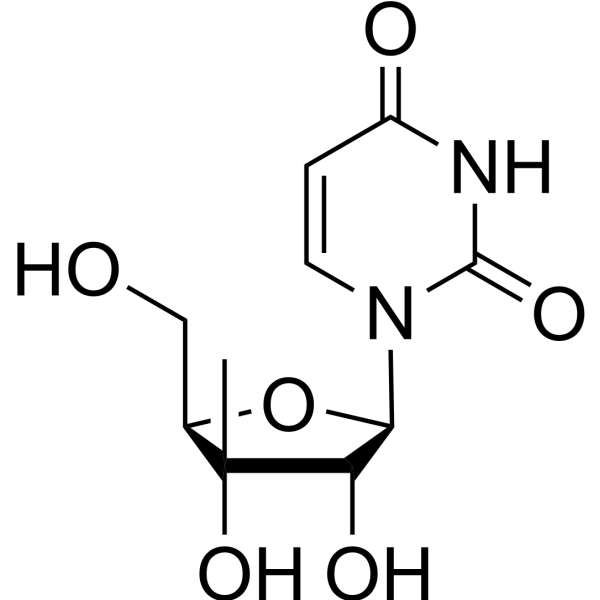
3’-beta-C-Methyluridine is a uridine analogue. Uridine has potential antiepileptic effects, and its analogs can be used to study anticonvulsant and anxiolytic activities, as well as to develop new antihypertensive agents .
|
-
- HY-152665
-
|
|
Nucleoside Antimetabolite/Analog
|
Cancer
|
|
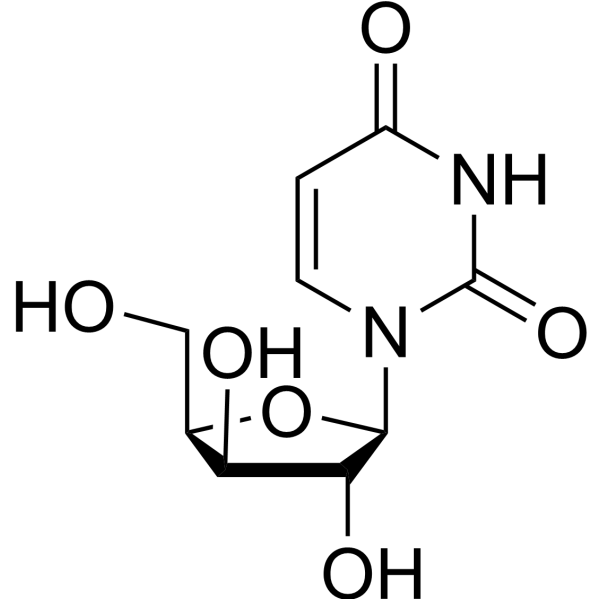
1-(β-D-Xylofuranosyl)uracil is a uridine analog. Uridine has potential antiepileptic effects, and its analogs can be used to study anticonvulsant and anxiolytic activities, as well as to develop new antihypertensive agents .
|
-
- HY-152970
-
|
|
Nucleoside Antimetabolite/Analog
Phosphoramidites
|
Others
|
|
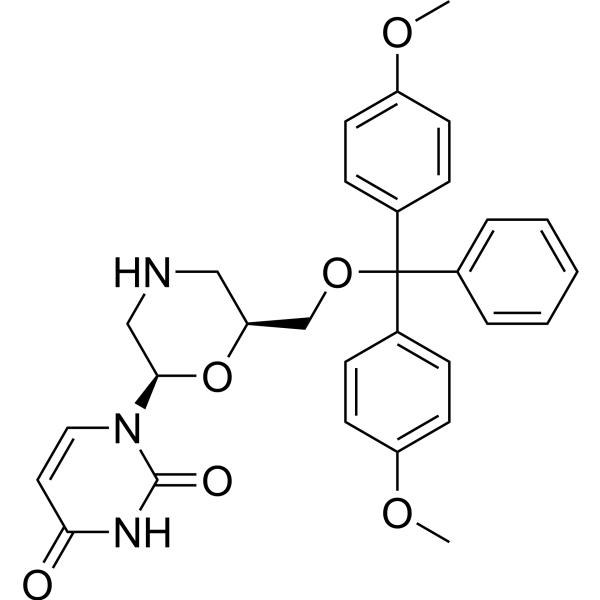
7'-O-DMT-morpholino uracil is a uridine analog. Uridine has potential antiepileptic effects, and its analogs can be used to study anticonvulsant and anxiolytic activities, as well as to develop new antihypertensive agents .
|
-
- HY-107703
-
|
|
iGluR
|
Neurological Disease
|
|
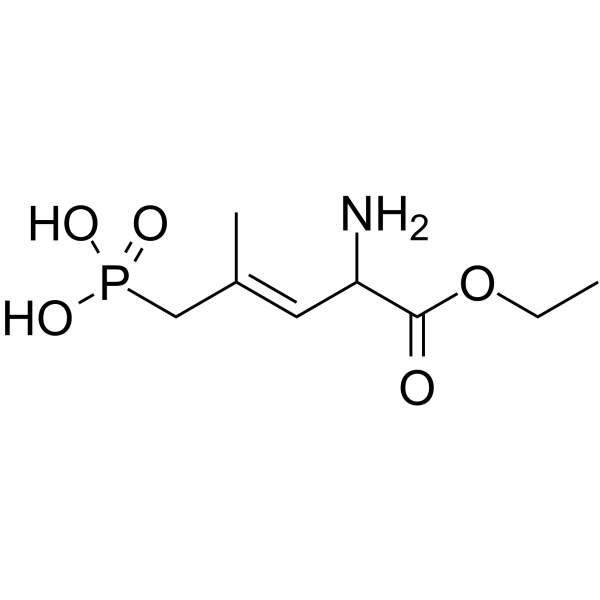
CGP 39551 is a potent, orally active, competitive N-methyl-D-aspartate (NMDA) receptor antagonist with potent anticonvulsant activity . CGP 39551 shows measurable inhibitory activity at both L-[ 3H]-glutamate (Ki=8.4 μM) .
|
-
- HY-154734
-
|
|
Nucleoside Antimetabolite/Analog
|
Cancer
|
|
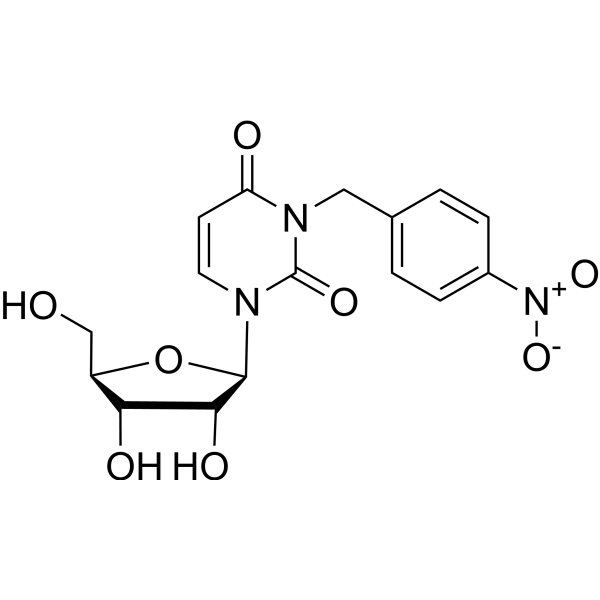
N3-(4-Nitrobenzyl)uridine is a uridine analog. Uridine has potential antiepileptic effects, and its analogs can be used to study anticonvulsant and anxiolytic activities, as well as to develop new antihypertensive agents .
|
-
- HY-W557556
-
|
|
Nucleoside Antimetabolite/Analog
|
Cancer
|
|
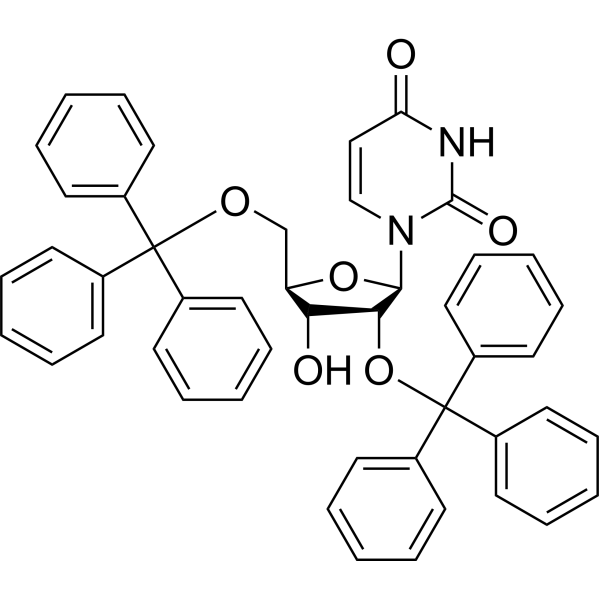
2',5'-Bis-O-(triphenylMethyl)uridine is a uridine analog. Uridine has potential antiepileptic effects, and its analogs can be used to study anticonvulsant and anxiolytic activities, as well as to develop new antihypertensive agents .
|
-
- HY-152677
-
|
|
Nucleoside Antimetabolite/Analog
|
Others
|
|
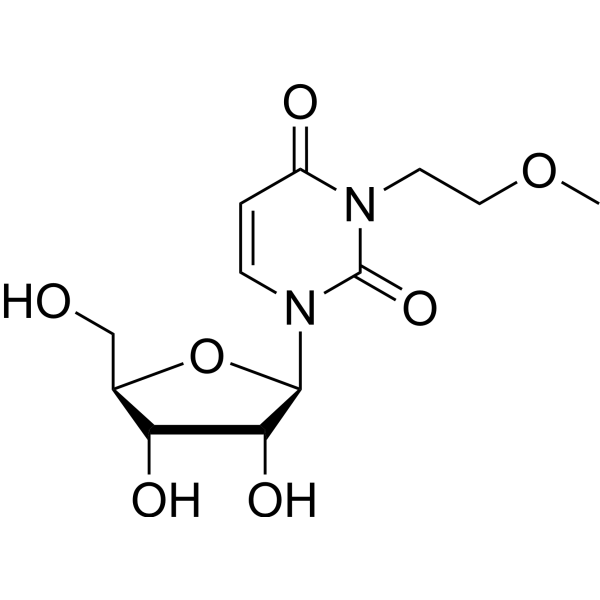
N3-(2-Methoxy)ethyluridine is a uridine analogue. Uridine has potential antiepileptic effects, and its analogs can be used to study anticonvulsant and anxiolytic activities, as well as to develop new antihypertensive agents .
|
-
- HY-149077
-
|
|
Others
|
Others
|
|
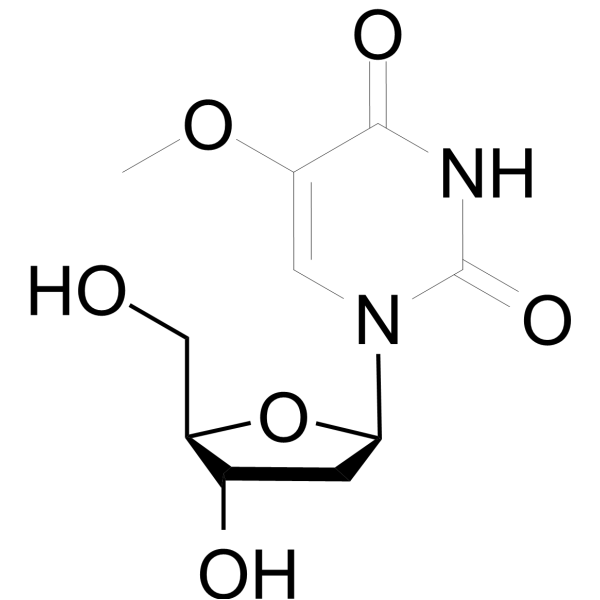
2′-Deoxy-5-methoxyuridine is a uridine analogue. Uridine has potential antiepileptic effects, and its analogs can be used to study anticonvulsant and anxiolytic activities, as well as to develop new antihypertensive agents .
|
-
- HY-154217
-
|
|
Nucleoside Antimetabolite/Analog
|
Cancer
|
|
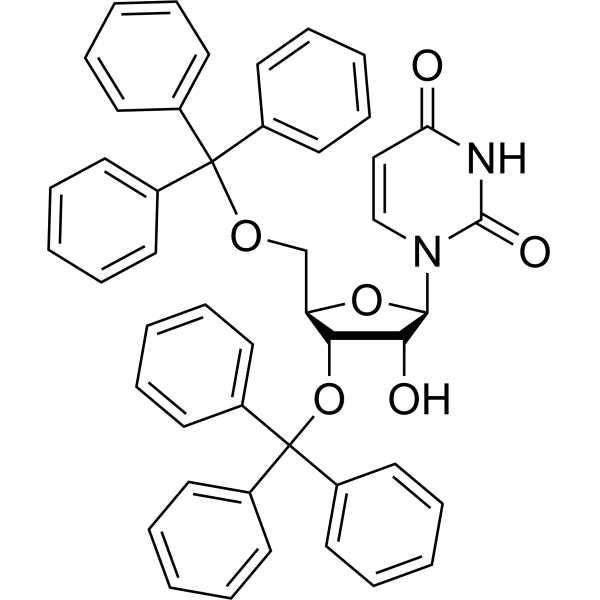
3′,5′-Bis-O-(triphenylmethyl)uridine is a uridine analog. Uridine has potential antiepileptic effects, and its analogs can be used to study anticonvulsant and anxiolytic activities, as well as to develop new antihypertensive agents .
|
-
- HY-13993B
-
|
|
iGluR
|
Neurological Disease
|
|
Ro 25-6981 hydrochloride is a potent, selective and activity-dependent NR2B subunit specific NMDA receptor antagonist. Ro 25-6981 hydrochloride shows anticonvulsant and anti-parkinsonian activity. Ro 25-6981 hydrochloride has the potential for the research of parkinson's disease (PD) .
|
-
- HY-152529
-
|
|
Nucleoside Antimetabolite/Analog
|
Others
|
|
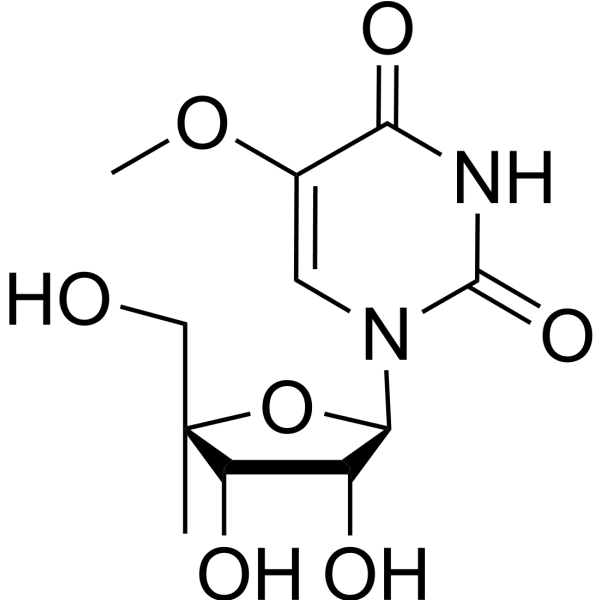
4’-C-Methyl-5-methoxyuridine is a uridine analogue. Uridine has potential antiepileptic effects, and its analogs can be used to study anticonvulsant and anxiolytic activities, as well as to develop new antihypertensive agents .
|
-
- HY-152522
-
|
|
Nucleoside Antimetabolite/Analog
|
Others
|
|
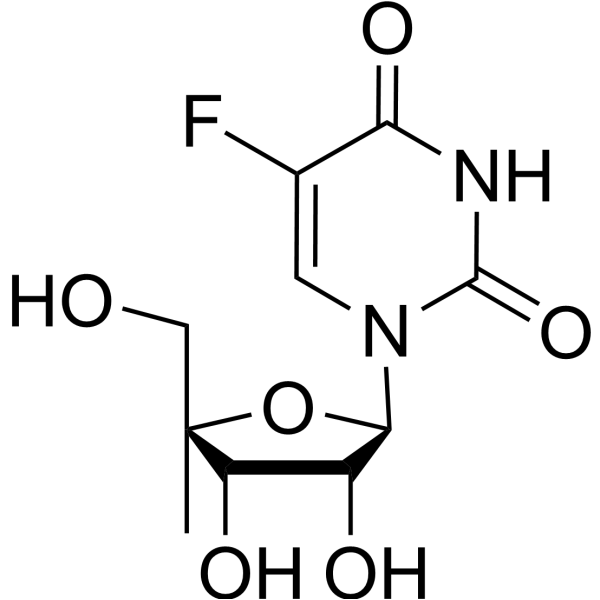
5-Fluoro-4’-C-methyluridine is a uridine analogue. Uridine has potential antiepileptic effects, and its analogs can be used to study anticonvulsant and anxiolytic activities, as well as to develop new antihypertensive agents .
|
-
- HY-154738
-
|
|
Nucleoside Antimetabolite/Analog
|
Cancer
|
|
N3-[3-(tert-Butoxycarbonyl)amino]propyluridine is a uridine analog. Uridine has potential antiepileptic effects, and its analogs can be used to study anticonvulsant and anxiolytic activities, as well as to develop new antihypertensive agents .
|
-
![N3-[3-(tert-Butoxycarbonyl)amino]propyluridine](//file.medchemexpress.com/product_pic/hy-154738.gif)
- HY-152783
-
|
|
Nucleoside Antimetabolite/Analog
|
Others
|
|
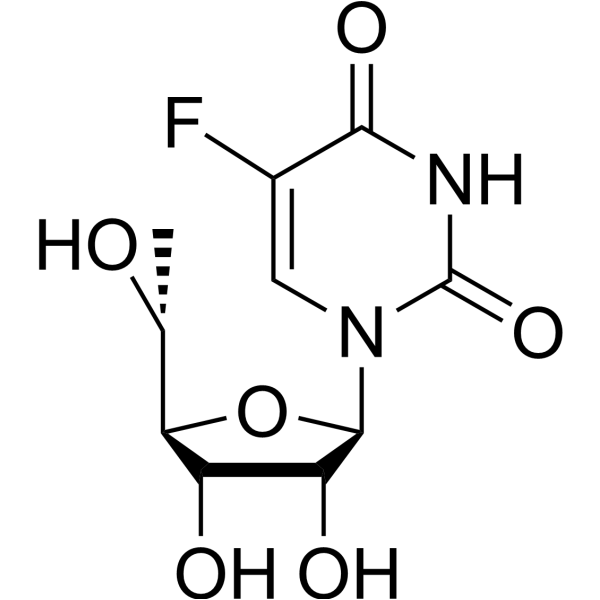
5’(R)-C-Methyl-5-fluorouridine is a uridine analogue. Uridine has potential antiepileptic effects, and its analogs can be used to study anticonvulsant and anxiolytic activities, as well as to develop new antihypertensive agents .
|
-
- HY-152969
-
|
|
Nucleoside Antimetabolite/Analog
|
Others
|
|
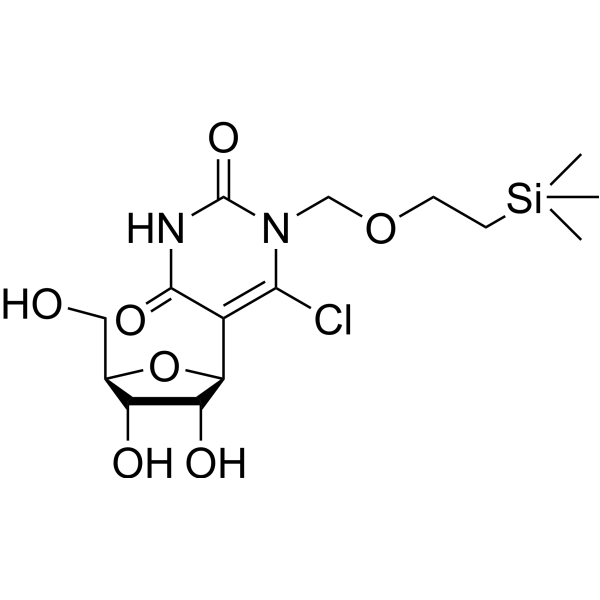
6-Chloro-N1-(trimethylsilylethoxymethyl)pseudouridine is a uridine analog. Uridine has potential antiepileptic effects, and its analogs can be used to study anticonvulsant and anxiolytic activities, as well as to develop new antihypertensive agents .
|
-
- HY-152779
-
|
|
Nucleoside Antimetabolite/Analog
|
Others
|
|
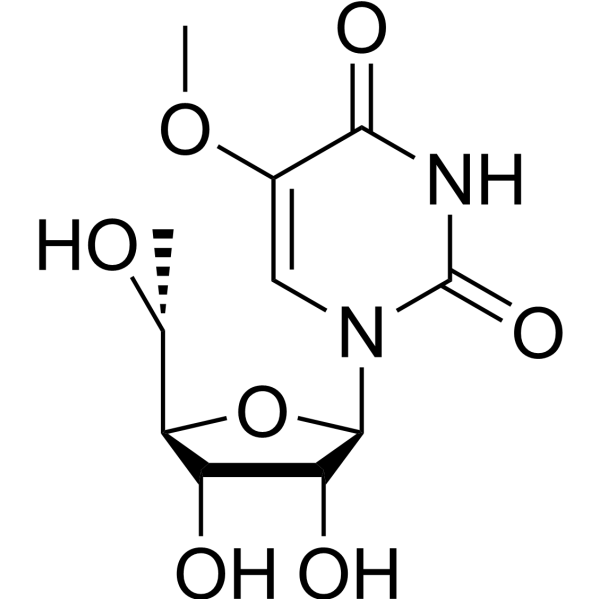
5-Methoxy-5’(R)-C-methyluridine is a uridine analogue. Uridine has potential antiepileptic effects, and its analogs can be used to study anticonvulsant and anxiolytic activities, as well as to develop new antihypertensive agents .
|
-
- HY-P1285
-
|
Con-R
|
iGluR
|
Neurological Disease
|
|
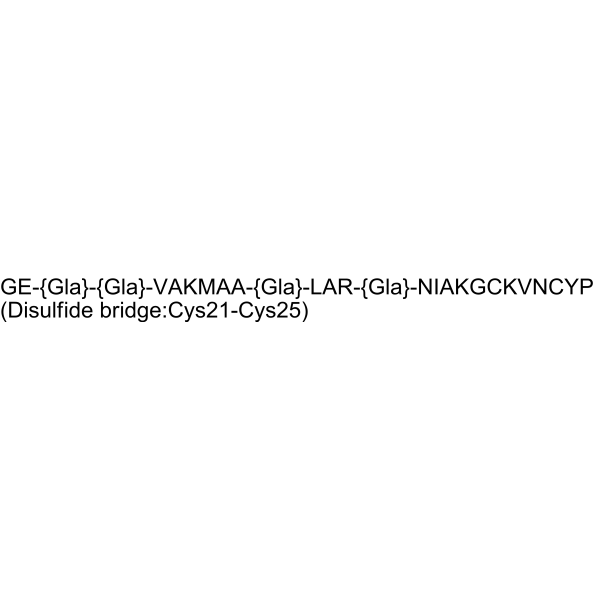
Conantokin R (Con-R) is an NMDA receptor peptide antagonist with an IC50 of 93 nM. Conantokin R binds Zn 2+ and Mg 2+ with Kds of 0.15 μM and 6.5 μM, respectively. Conantokin R shows anticonvulsant activity .
|
-
- HY-152798
-
|
|
Nucleoside Antimetabolite/Analog
|
Others
|
|
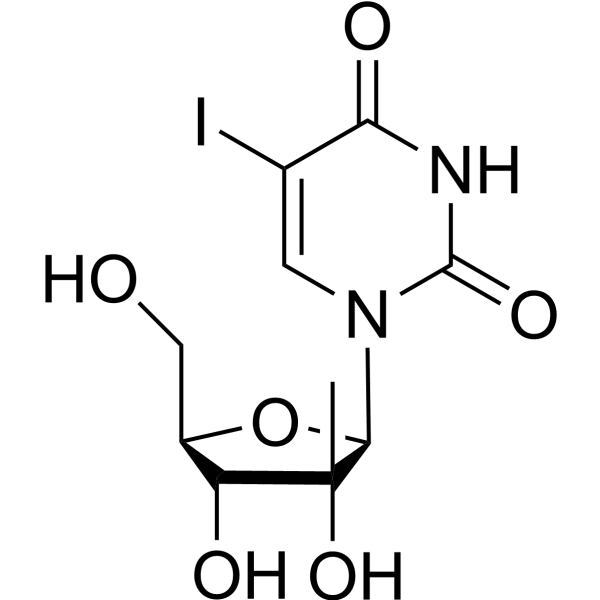
5-Iodo-2’-β-C-methyl uridine is a uridine analogue. Uridine has potential antiepileptic effects, and its analogs can be used to study anticonvulsant and anxiolytic activities, as well as to develop new antihypertensive agents .
|
-
- HY-154737
-
|
|
Nucleoside Antimetabolite/Analog
|
Cancer
|
|
N3-[(Pyrid-4-yl)methyl]uridine is a uridine analog. Uridine has potential antiepileptic effects, and its analogs can be used to study anticonvulsant and anxiolytic activities, as well as to develop new antihypertensive agents .
|
-
![N3-[(Pyrid-4-yl)methyl]uridine](//file.medchemexpress.com/product_pic/hy-154737.gif)
- HY-146099
-
|
|
GABA Receptor
|
Neurological Disease
|
|
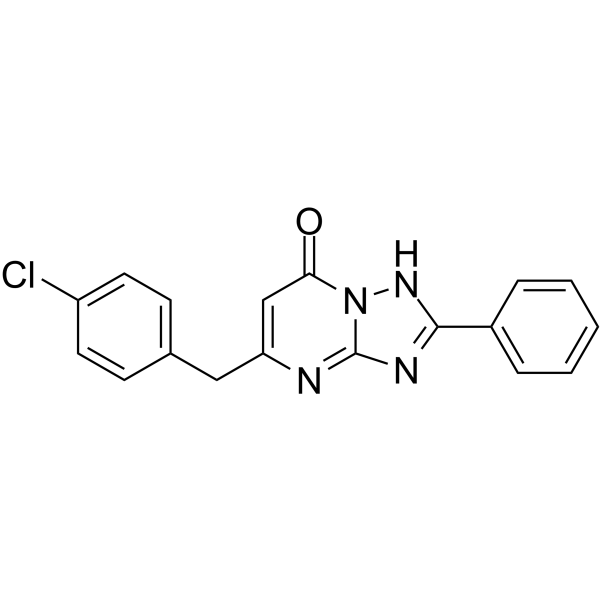
GABAA receptor agent 7 (compoud 5c) is a potent GABAA receptor positive modulator. GABAA receptor agent 7 shows anticonvulsant activity in vitro and in vivo with low neurotoxicity. GABAA receptor agent 7 has the potential for the research of epilepsy .
|
-
- HY-106885
-
|
|
Drug Derivative
|
Neurological Disease
|
|
F 2692 is an orally effective derivative of pyridazine. F 2692 has significant anti anxiety effects. F 2692 also has activities such as anticonvulsant, sedative, and muscle relaxant. F 2692 can be used for research on neurological disorders such as anxiety disorders .
|
-

- HY-146100
-
|
|
GABA Receptor
|
Neurological Disease
|
|
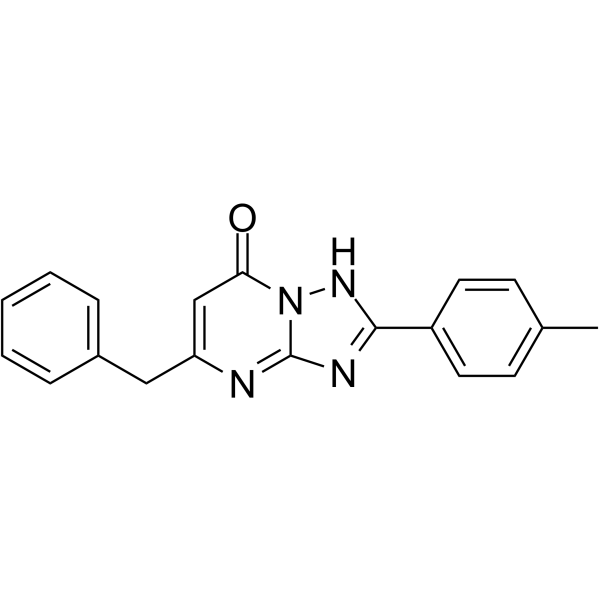
GABAA receptor agent 8 (compoud 5e) is a potent GABAA receptor positive modulator. GABAA receptor agent 8 shows anticonvulsant activity in vitro and in vivo with low neurotoxicity. GABAA receptor agent 8 has the potential for the research of epilepsy .
|
-
- HY-152681
-
|
|
Nucleoside Antimetabolite/Analog
|
Others
|
|
N3-[(Tetrahydro-2-furanyl)methyl]uridine is a uridine analogue. Uridine has potential antiepileptic effects, and its analogs can be used to study anticonvulsant and anxiolytic activities, as well as to develop new antihypertensive agents .
|
-
![N3-[(Tetrahydro-2-furanyl)methyl]uridine](//file.medchemexpress.com/product_pic/hy-152681.gif)
- HY-152463
-
|
|
Nucleoside Antimetabolite/Analog
|
Cancer
|
|
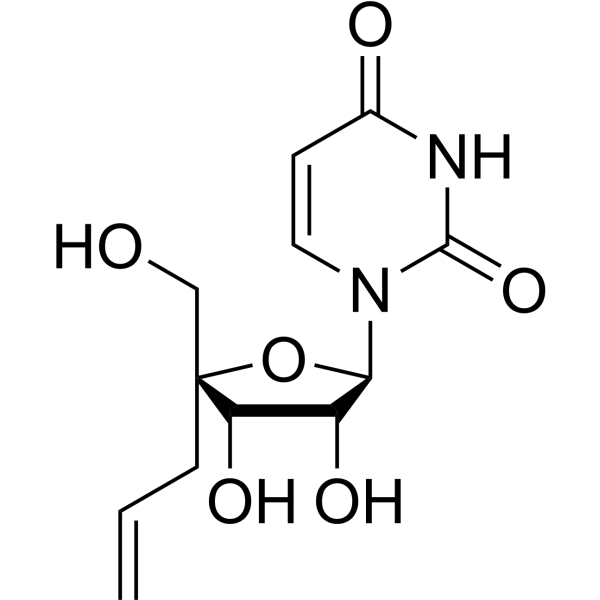
4′-C-2-Propen-1-yluridine is a uridine analog. Uridine has potential antiepileptic effects, and its analogs can be used to study anticonvulsant and anxiolytic activities, as well as to develop new antihypertensive agents .
|
-
- HY-152683
-
|
|
Nucleoside Antimetabolite/Analog
|
Others
|
|
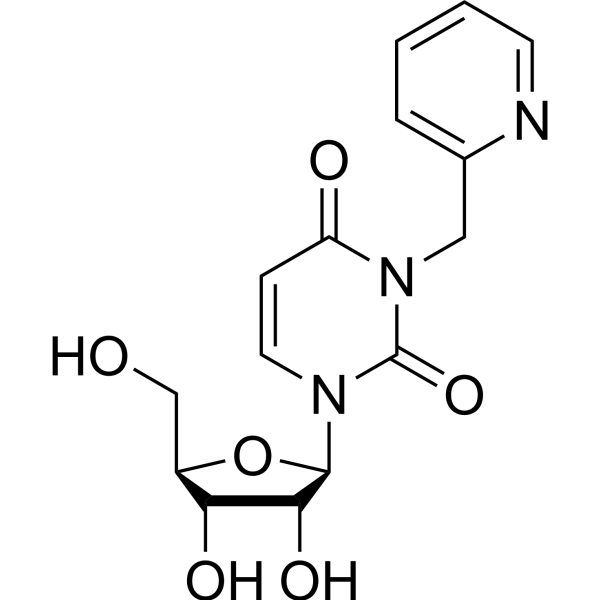
N3-[(Pyrid-2-yl)methyl]uridine is a uridine analogue. Uridine has potential antiepileptic effects, and its analogs can be used to study anticonvulsant and anxiolytic activities, as well as to develop new antihypertensive agents .
|
-
- HY-152674
-
|
|
Nucleoside Antimetabolite/Analog
|
Others
|
|
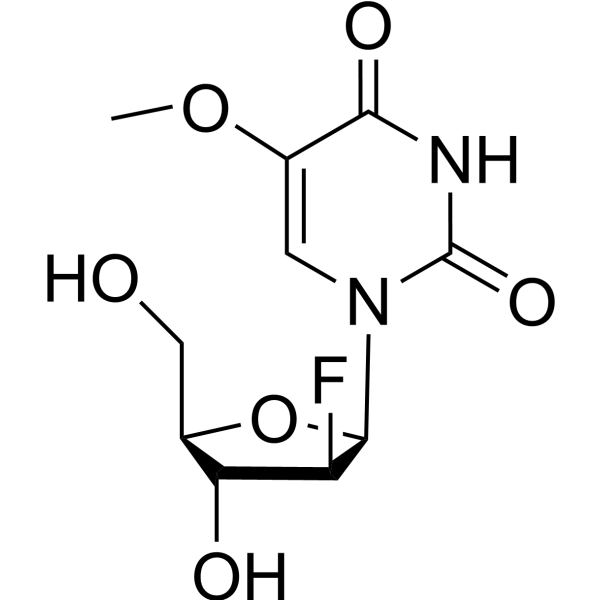
2′-Deoxy-2′-fluoro-5-methoxy-arabinouridine is a uridine analogue. Uridine has potential antiepileptic effects, and its analogs can be used to study anticonvulsant and anxiolytic activities, as well as to develop new antihypertensive agents .
|
-
- HY-W744266
-
|
|
Drug Metabolite
|
Neurological Disease
|
|
9α,10α-Epoxyhexahydrocannabinol is an active metabolite of delta 9-tetrahydrocannabinol. 9α,10α-Epoxyhexahydrocannabinol has anti-convulsant activity. 9α,10α-Epoxyhexahydrocannabinol reduces body temperature, prolongs pentobarbital-induced sleep, and exerts anticonvulsant activity against pentylenetetrazol-induced seizures in mice .
|
-

- HY-B1185R
-
|
N-Benzyl-3-chloropropionamide (Standard)
|
Drug Derivative
Reference Standards
|
Neurological Disease
|
|
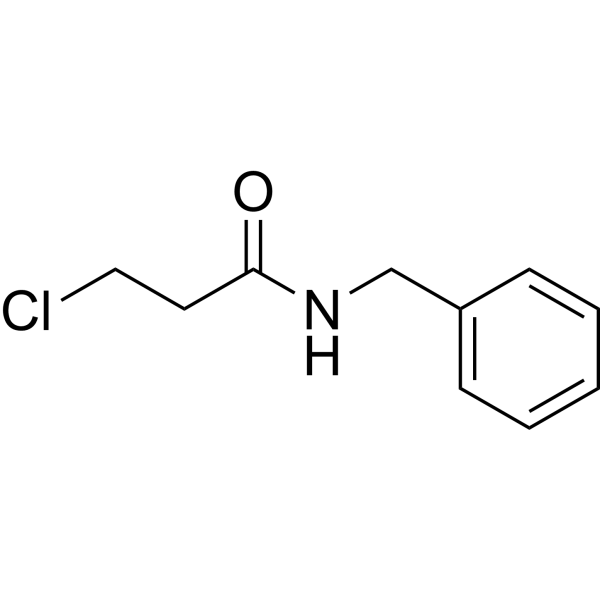
Beclamide (Standard) is the analytical standard of Beclamide. This product is intended for research and analytical applications. Beclamide is an active molecule with anticonvulsant activity, used as an anticonvulsant drug.
|
-

- HY-170801
-
|
|
Drug Derivative
|
Neurological Disease
|
|
Anticonvulsant agent 7 (Compound 19) is an orally active broad-spectrum anticonvulsant that demonstrates excellent anticonvulsive activity in both the MES (maximal electroshock seizure) and 6 Hz epilepsy modelsmouse .
|
-

- HY-124148
-
-

- HY-101240R
-
|
|
Reference Standards
Endogenous Metabolite
|
Neurological Disease
|
|
Propranolol glycol (Standard) is the analytical standard of Propranolol glycol. This product is intended for research and analytical applications. Propranolol glycol is a metabolite of propranolol (HY-B0573B). Propranolol glycol shows instantaneous anticonvulsant activity .
|
-

- HY-154560
-
|
|
Nucleoside Antimetabolite/Analog
|
Cancer
|
|
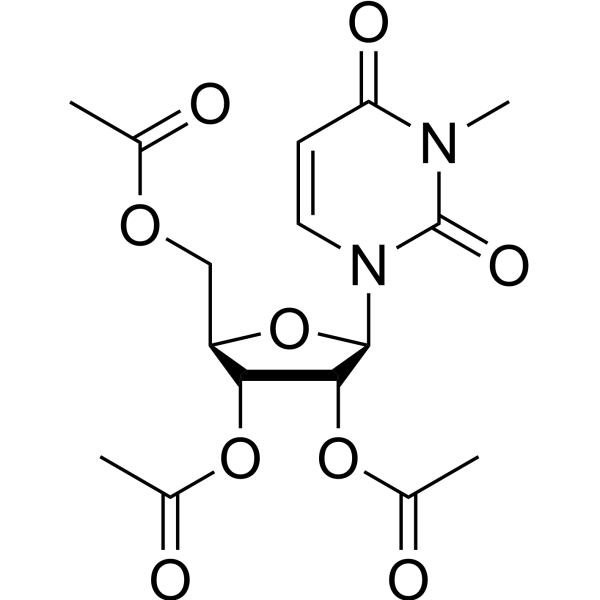
2’,3’,5’-Tri-O-acetyl-N3-methyluridine is a uridine analog. Uridine has potential antiepileptic effects, and its analogs can be used to study anticonvulsant and anxiolytic activities, as well as to develop new antihypertensive agents .
|
-
- HY-B1427
-
|
Gamma-amino-beta-hydroxybutyric acid
|
Drug Derivative
|
Neurological Disease
|
|
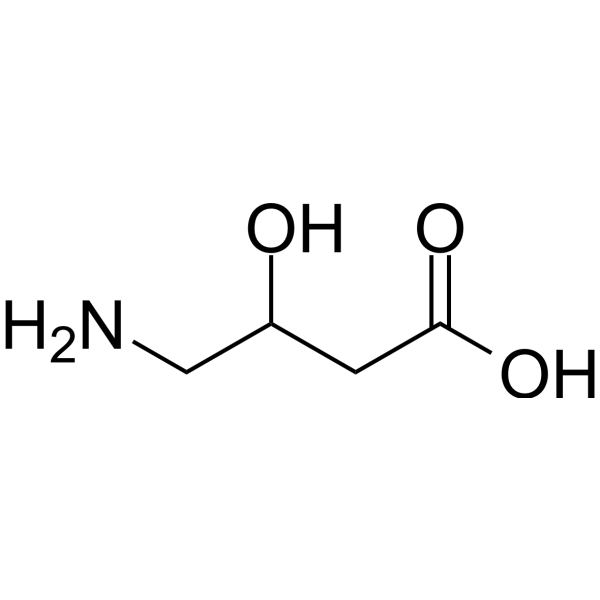
Gamibetal (Gamma-amino-beta-hydroxybutyric acid) is γ-amino-β-hydroxybutyric acid (GABOB), a hydroxylated derivative of GABA (γ-aminobutyric acid). Gamibetal exhibits central inhibitory and anticonvulsant activities. Gamibetal can be used in research on epilepsy, neuralgia, and other conditions .
|
-
- HY-114542
-
|
|
Drug Derivative
|
Others
|
|
LY 201409 is an anticonvulsant compound that is an analog of LY-201116 (HY-114705) with improved metabolic activity. LY 201409 antagonizes maximal electroconvulsive-induced seizures, has mixed effects on seizures induced by multiple chemoconvulsants, and affects behavior and sleep in mice .
|
-

- HY-152574
-
|
|
Nucleoside Antimetabolite/Analog
|
Others
|
|
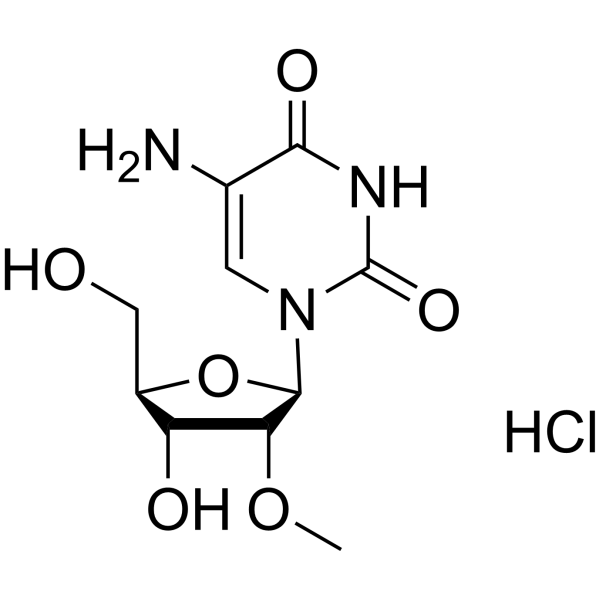
5-Amino-2’-deoxy-2’-O-methyluridine hydrochloride is a uridine analogue. Uridine has potential antiepileptic effects, and its analogs can be used to study anticonvulsant and anxiolytic activities, as well as to develop new antihypertensive agents .
|
-
- HY-B1229
-
|
3-Methylbutanamide
|
GABA Receptor
|
Neurological Disease
Metabolic Disease
|
|
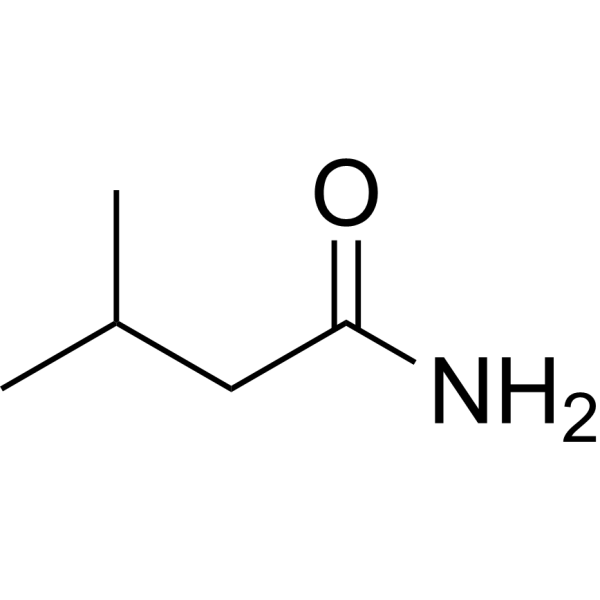
Isovaleramide (3-Methylbutanamide) is an orally active anticonvulsant. Isovaleramide inhibits alcohol dehydrogenase (ADH) activity and regulates GABAergic system. Isovaleramide reduces acute kidney injury. Isovaleramide has antiepileptic, anxiolytic, sedative and hypnotic effects[1] .
|
-
- HY-154466
-
|
|
Nucleoside Antimetabolite/Analog
|
Cancer
|
|
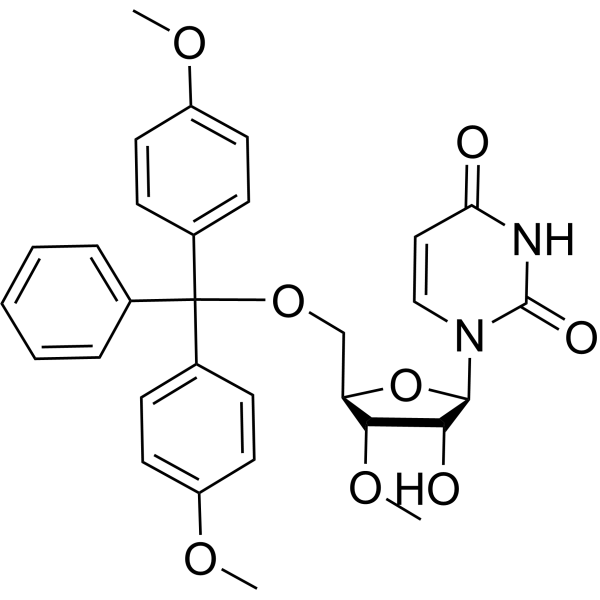
5’-O-(4,4’-Dimethoxytrityl)-3’-O-methyluridine is a uridine analog. Uridine has potential antiepileptic effects, and its analogs can be used to study anticonvulsant and anxiolytic activities, as well as to develop new antihypertensive agents .
|
-
- HY-48973
-
|
|
Nucleoside Antimetabolite/Analog
Phosphoramidites
|
Others
|
|
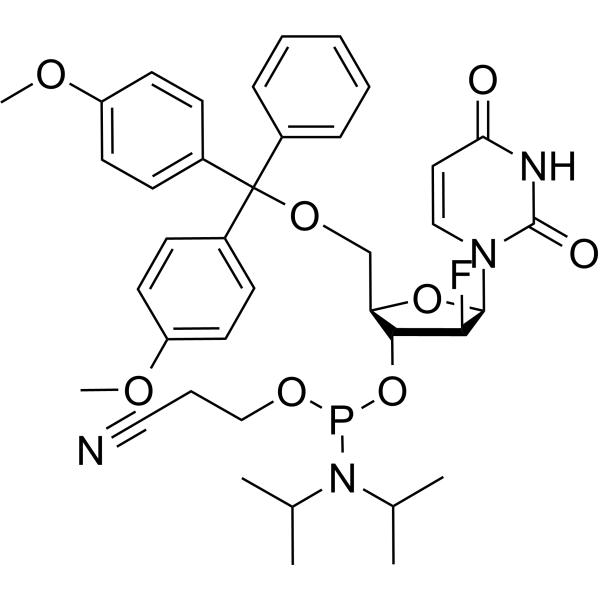
2'-Fluoro-2'-deoxy-ara-U-3'-phosphoramidite is a uridine analog. Uridine has potential antiepileptic effects, and its analogs can be used to study anticonvulsant and anxiolytic activities, as well as to develop new antihypertensive agents .
|
-
- HY-113320S1
-
|
5β-Androsterone-d2
|
Isotope-Labeled Compounds
GABA Receptor
Endogenous Metabolite
|
Neurological Disease
|
|
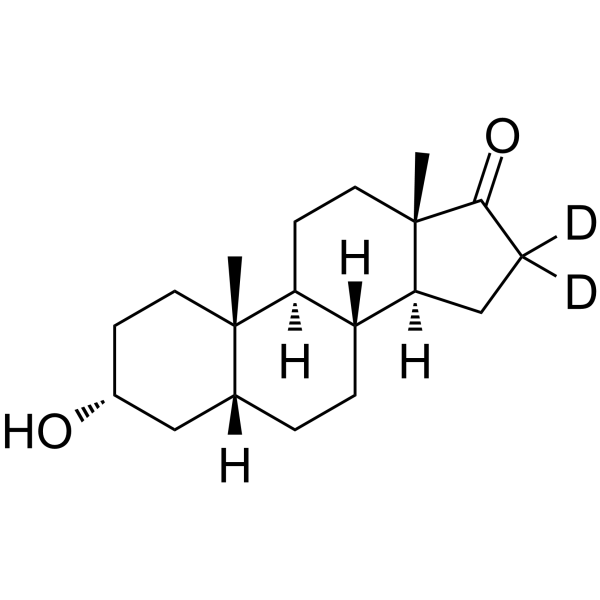
Etiocholanolone-d2 is the deuterium labeled Etiocholanolone. Etiocholanolone (5β-Androsterone) is the excreted metabolite of testosterone and has anticonvulsant activity . Etiocholanolone is a less potent?neurosteroid positive allosteric modulator?(PAM) of the GABAA?receptor than its?enantiomer form .
|
-
- HY-12503R
-
|
|
iGluR
|
Neurological Disease
Cancer
|
|
CFM-2 (Standard) is the analytical standard of CFM-2. This product is intended for research and analytical applications. CFM-2 is a potent and selective non-competitive AMPAR antagonist . CFM-2 possesses anticonvulsant activity in various models of seizures .
|
-

- HY-161896
-
|
|
GABA Receptor
|
Neurological Disease
|
|
Transcription factor-IN-1 (Compound 4e) is an inhibitor for transcription factor. Transcription factor-IN-1 exhibits anticonvulsant activity by antagonism with pentylenetetrazole (PTZ) (ED50 =34.5 mg/kg). Transcription factor-IN-1 exhibits antidepressant effects in rat models .
|
-

- HY-114300
-
|
|
GABA Receptor
|
Neurological Disease
|
|
DSP-0565 (compound 17a) is a strong, broad-spectrum anti-epileptic agent (AED) candidate with unique GABAergic function. DSP-0565 shows anti-convulsant activity in various models (scPTZ, MES, 6 Hz and amygdala kindling) with good safety margin .
|
-
- HY-154173
-
|
|
Nucleoside Antimetabolite/Analog
|
Cancer
|
|
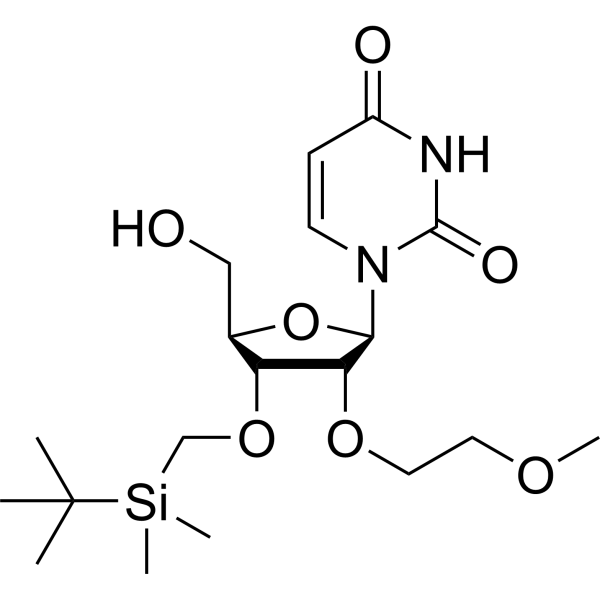
3’-O-(t-Butyldimethylsilyl)-2’-O-(2-methoxyethyl) uridine is a uridine analog. Uridine has potential antiepileptic effects, and its analogs can be used to study anticonvulsant and anxiolytic activities, as well as to develop new antihypertensive agents .
|
-
- HY-154813
-
|
|
Nucleoside Antimetabolite/Analog
|
Others
|
|
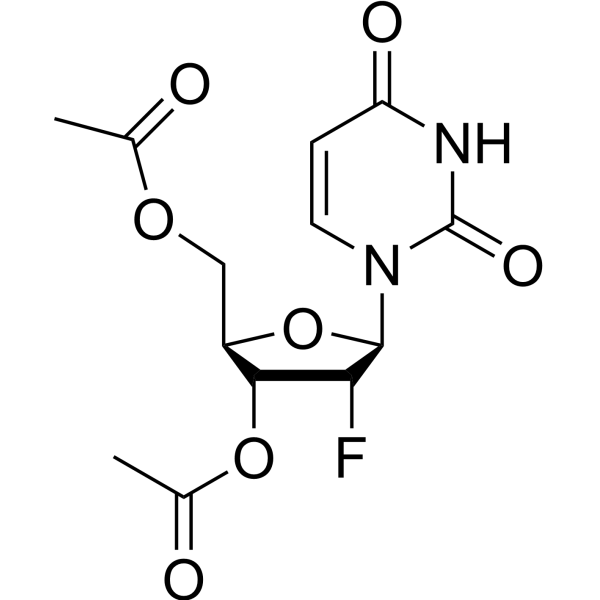
3′,5′-Di-O-acetyl-2′-deoxy-2′-fluorouridine is a uridine analog. Uridine has potential antiepileptic effects, and its analogs can be used to study anticonvulsant and anxiolytic activities, as well as to develop new antihypertensive agents .
|
-
- HY-154358
-
|
|
Nucleoside Antimetabolite/Analog
|
Cancer
|
|
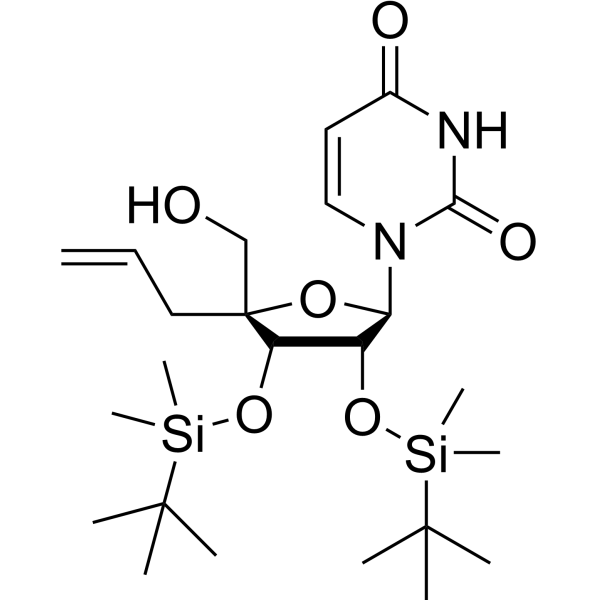
4’-alpha-C-Allyl-2’,3’-bis(O-t-butyldimethylsilyl) uridine is a uridine analog. Uridine has potential antiepileptic effects, and its analogs can be used to study anticonvulsant and anxiolytic activities, as well as to develop new antihypertensive agents .
|
-
- HY-49199
-
|
|
Nucleoside Antimetabolite/Analog
|
Cancer
|
|
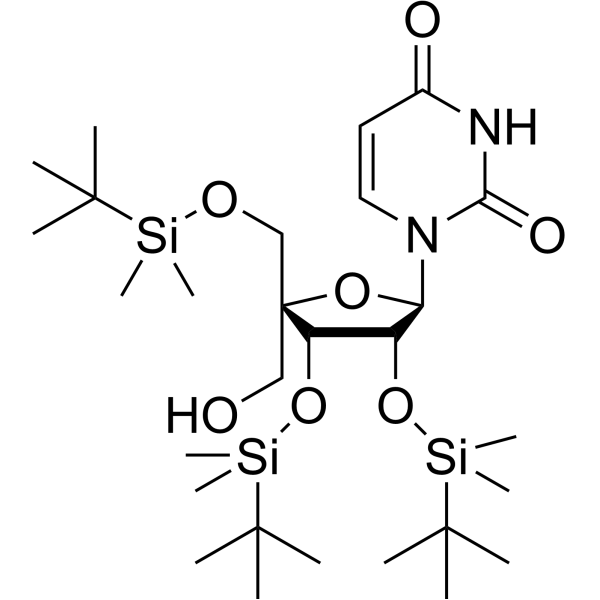
2',3',5'-Tri-O-(t-butyldimethylsilyl)-4'-C-hydroxymethyl uridine is a uridine analog. Uridine has potential antiepileptic effects, and its analogs can be used to study anticonvulsant and anxiolytic activities, as well as to develop new antihypertensive agents .
|
-
- HY-152363
-
|
|
Nucleoside Antimetabolite/Analog
|
Others
|
|
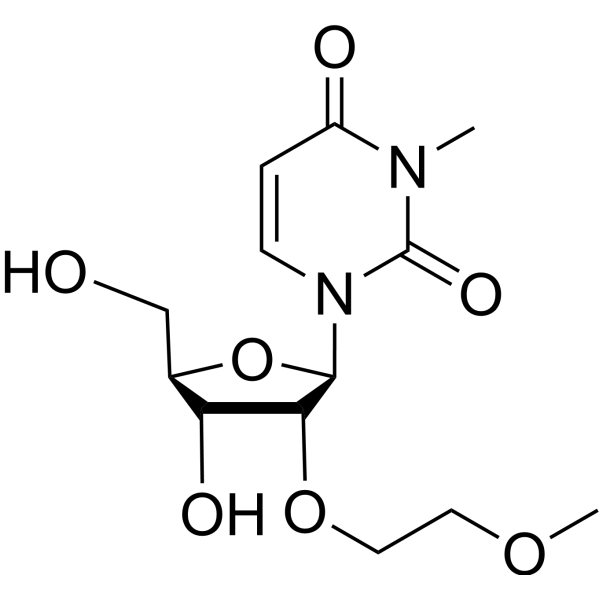
N3-Methyl-2’-O-(2-methoxyethyl)uridine is a uridine analogue. Uridine has potential antiepileptic effects, and its analogs can be used to study anticonvulsant and anxiolytic activities, as well as to develop new antihypertensive agents .
|
-
- HY-160604
-
|
FPL 12924; PR 934-423; FPL 13592
|
iGluR
|
Neurological Disease
|
|
Remacemide (FPL 12924) is an orally active, non-competitive, low-affinity NMDA receptor antagonist. Remacemide shows neuroprotection activity in animal models of hypoxia and ischemic stroke. Remacemide is also an anticonvulsant, and can be used in Parkinson's disease and Huntington's disease research .
|
-

- HY-154488
-
|
|
Nucleoside Antimetabolite/Analog
|
Cancer
|
|
3′-O-[(1,1-Dimethylethyl)dimethylsilyl]-2′-O-methyluridine is a uridine analog. Uridine has potential antiepileptic effects, and its analogs can be used to study anticonvulsant and anxiolytic activities, as well as to develop new antihypertensive agents .
|
-
![3′-O-[(1,1-Dimethylethyl)dimethylsilyl]-2′-O-methyluridine](//file.medchemexpress.com/product_pic/hy-154488.gif)
- HY-106437
-
|
|
GABA Receptor
|
Neurological Disease
|
|
ELB-139 is a progesterone analogue. ELB-139 is a GABAA receptor partial agonist. ELB-139 has anxiolytic and anticonvulsant activity. ELB-139 induces increase of extracellular 5-HT in the striatum and the medial prefrontal cortex of rats .
|
-

- HY-154410
-
|
|
Nucleoside Antimetabolite/Analog
Phosphoramidites
|
Cancer
|
|
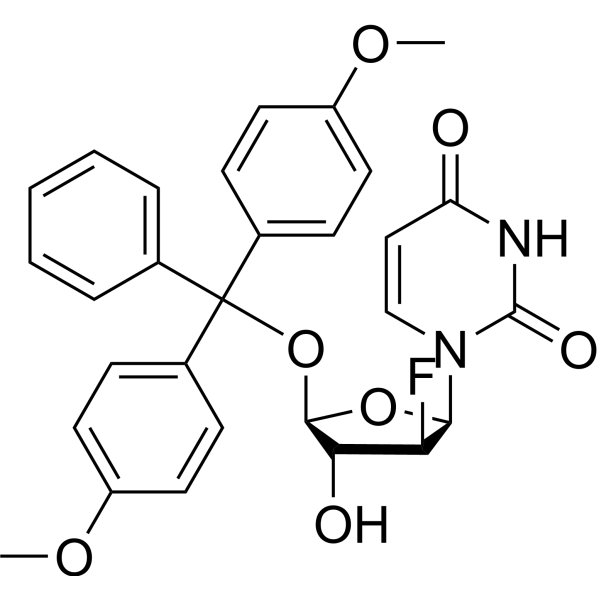
5’-O-DMT-2’-deoxy-2’-fluoro-β-D-arabinouridine is a uridine analog. Uridine has potential antiepileptic effects, and its analogs can be used to study anticonvulsant and anxiolytic activities, as well as to develop new antihypertensive agents .
|
-
- HY-134337
-
|
|
Nucleoside Antimetabolite/Analog
Phosphoramidites
|
Cancer
|
|
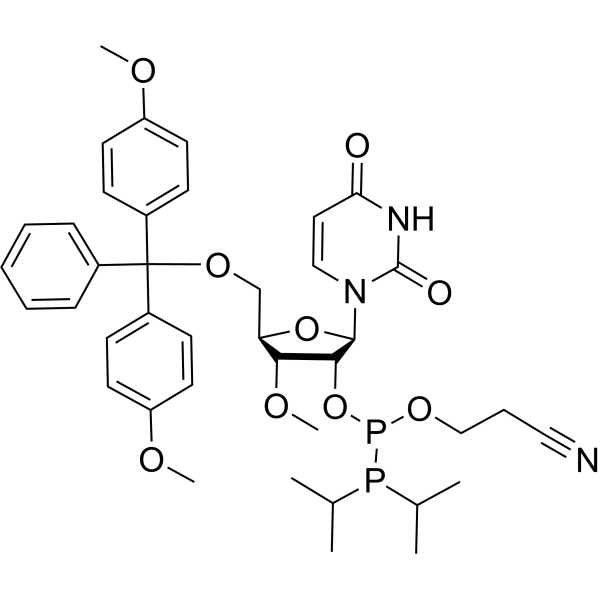
5'-O-DMTr-3'-O-methyl uridine-3'-CED-phosphoramidite is a uridine analog. Uridine has potential antiepileptic effects, and its analogs can be used to study anticonvulsant and anxiolytic activities, as well as to develop new antihypertensive agents .
|
-
- HY-152691
-
|
|
Nucleoside Antimetabolite/Analog
|
Others
|
|
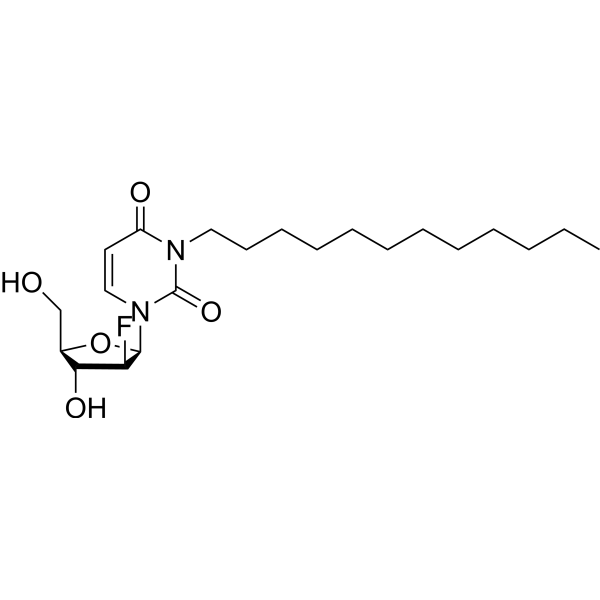
2’-Deoxy-2’-fluoro-N3-(n-dodecyl)-beta-D-arabinouridine is a uridine analogue. Uridine has potential antiepileptic effects, and its analogs can be used to study anticonvulsant and anxiolytic activities, as well as to develop new antihypertensive agents .
|
-
- HY-W017851
-
|
|
Drug Intermediate
|
Neurological Disease
|
|
4-Phenyl-2-pyrrolidinone is a precursor and synthetic intermediate. 4-Phenyl-2-pyrrolidinone can be used as a precursor in the synthesis of compounds with anticonvulsant and nootropic activities and is an intermediate in the synthesis of bromodomain-containing protein 4 (BRD4) bromodomain 1 inhibitors .
|
-

- HY-W131122
-
|
|
Bacterial
|
Others
|
|
1,3,4-Oxadiazoles are a class of synthetic compounds with important medicinal value, which show a variety of biological activities such as anticonvulsant, antidepressant, analgesic, anti-inflammatory, antiallergic, antipsychotic, antimicrobial, antituberculous, antitumor, and antiviral. 1,3,4-Oxadiazole derivatives need to be further developed .
|
-

- HY-154492
-
|
|
Nucleoside Antimetabolite/Analog
|
Cancer
|
|
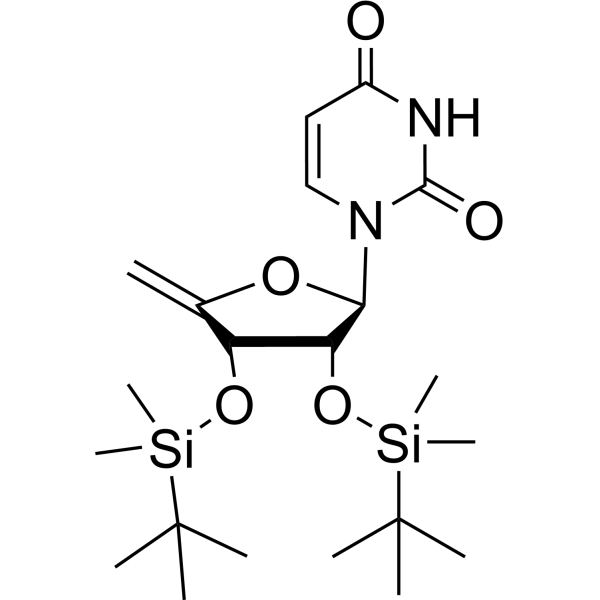
2’,3’-Bis(O-t-butyldimethylsilyl)-4’,5’-didehydro-5’-deoxyuridine is a uridine analog. Uridine has potential antiepileptic effects, and its analogs can be used to study anticonvulsant and anxiolytic activities, as well as to develop new antihypertensive agents .
|
-
- HY-B0162
-
|
|
HCN Channel
|
Cardiovascular Disease
Cancer
|
|
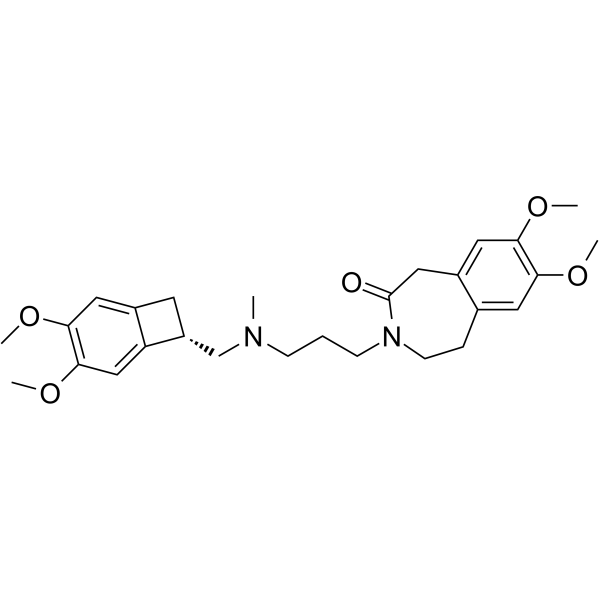
Ivabradine is a potent and orally active HCN (hyperpolarization-activated cyclic nucleotide-gated) channel blocker that inhibits the cardiac pacemaker current (If). Ivabradine reduces dose-dependently heart rate without modification of blood pressure. Ivabradine shows anticonvulsant, anti-ischaemic and anti-anginal activity .
|
-
- HY-107701
-
|
|
iGluR
|
Neurological Disease
|
|
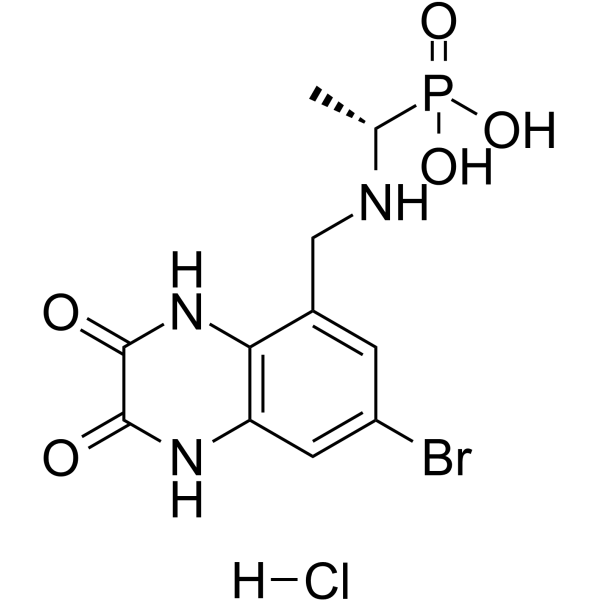
CGP 78608 hydrochloride is a highly potent and selective antagonist at the glycine-binding site of the NMDA receptor, with an IC50 of 6 nM. CGP 78608 hydrochloride acts as a potentiator of GluN1/GluN3A-mediated glycine currents, with an estimated EC50 in the low nM range (26.3 nM). Anticonvulsant activity .
|
-
- HY-B2117
-
|
|
Epoxide Hydrolase
EBV
|
Infection
Neurological Disease
|
|
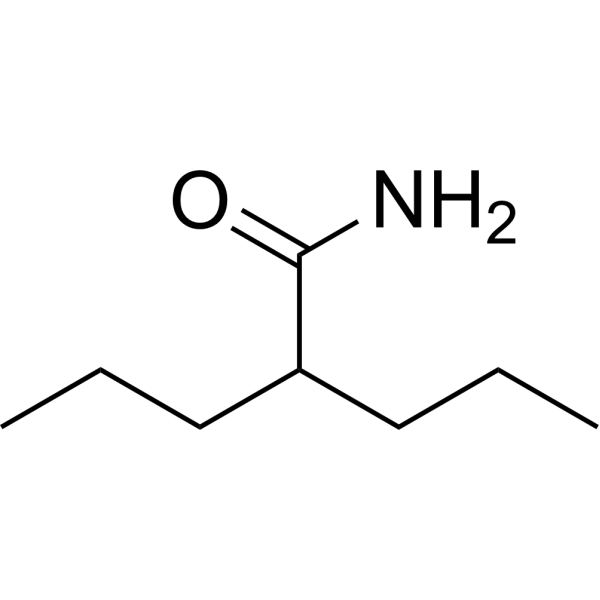
Valpromide is an amide derivative of Valproic acid (HY-10585) and an orally active epoxide hydrolase inhibitor that can cross the blood-brain barrier. Valpromide has antiepileptic, anticonvulsant, and antipsychotic effects. Valpromide also exhibits antiviral activity and can inhibit the reactivation of the EBV lytic cycle .
|
-
- HY-B0162A
-
|
|
HCN Channel
|
Cardiovascular Disease
Infection
Neurological Disease
Metabolic Disease
Cancer
|
|
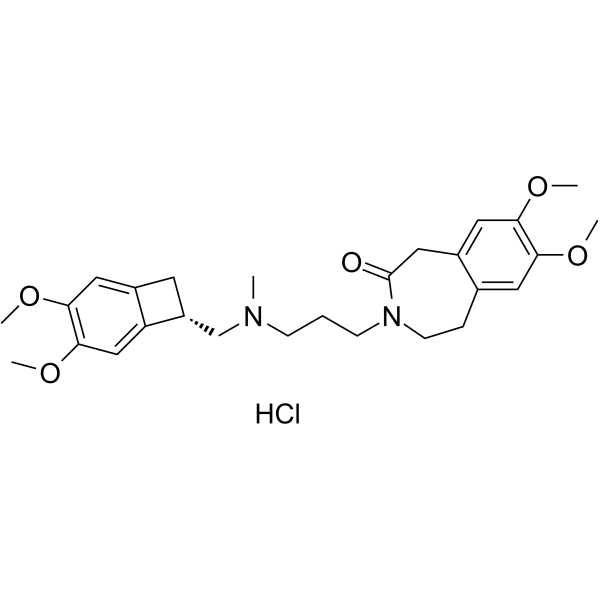
Ivabradine hydrochloride is a potent and orally active HCN (hyperpolarization-activated cyclic nucleotide-gated) channel blocker that inhibits the cardiac pacemaker current (If). Ivabradine hydrochloride reduces dose-dependently heart rate without modification of blood pressure. Ivabradine hydrochloride shows anticonvulsant, anti-ischaemic and anti-anginal activity .
|
-
- HY-115685
-
|
|
GABA Receptor
|
Neurological Disease
|
|
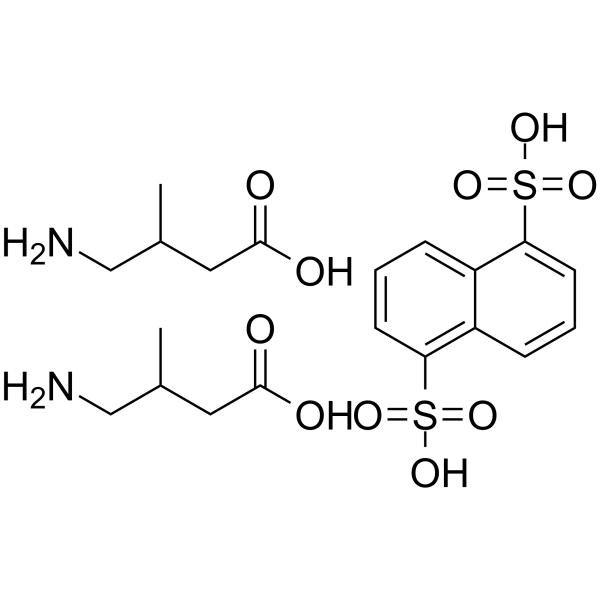
3-Methyl-GABA is a potent GABA aminotransferase activator. 3-Methyl-GABA can fit the binding pocket of GABAA receptor (GABAaR). 3-Methyl-GABA can activate L-glutamic acid decarboxylase (GAD). 3-Methyl-GABA has anticonvulsant activity .
|
-
- HY-154175
-
|
|
Nucleoside Antimetabolite/Analog
|
Others
|
|
1-[6-(Diethoxyphosphinyl)-2-O-(2-methoxyethyl)-β-D-ribo-hexofuranosyl]uracil is a uridine analog. Uridine has potential antiepileptic effects, and its analogs can be used to study anticonvulsant and anxiolytic activities, as well as to develop new antihypertensive agents .
|
-
![1-[6-(Diethoxyphosphinyl)-2-O-(2-methoxyethyl)-β-D-ribo-hexofuranosyl]uracil](//file.medchemexpress.com/product_pic/hy-154175.gif)
- HY-B0688S
-
|
4,4′-Diaminodiphenyl sulfone-d8; DDS-d8
|
Antibiotic
Parasite
Bacterial
Reactive Oxygen Species (ROS)
|
Infection
Inflammation/Immunology
Cancer
|
|
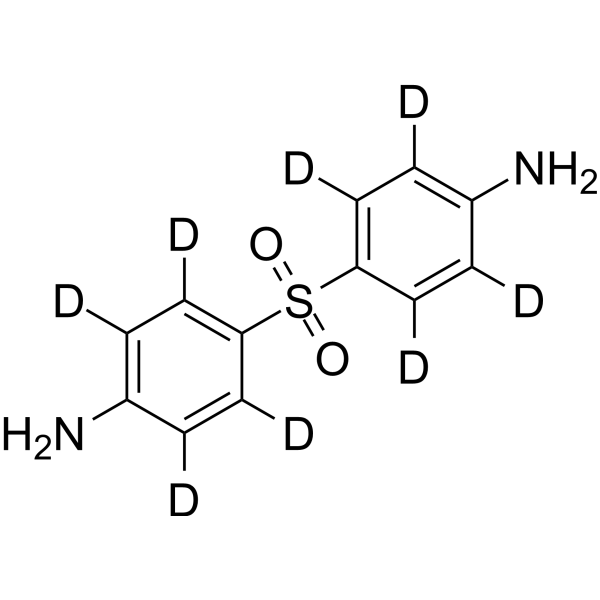
Dapsone-d8 is a deuterium labeled Dapsone. Dapsone is an orally active and blood-brain penetrant sulfonamide antibiotic with antibacterial, antigenic and anti-inflammatory activities . Dapsone?exerts effective antileprosy activity?and inhibits folate synthesis in cell extracts of?M. leprae. Dapsone can be used as an anticonvulsant and also in the research of skin and glioblastoma diseases .
|
-
- HY-179215A
-
|
|
GABA Receptor
|
Neurological Disease
|
|
OV329 is a potent GABA aminotransferase inactivator. OV329 is a Vigabatrin (HY-15399) analogue. OV329 can increase brain GABA levels and block abnormal intracerebral hyperexcitability. OV329 exhibits anticonvulsant and antiepileptic activities. OV329 can be used for the research of neurological disease, such as seizure .
|
-

- HY-177302
-
|
|
mGluR
|
Neurological Disease
|
|
mGluR2 modulator 6 (Compound 25-a) is a mGluR2 modulator. mGluR2 modulator 6 has anticonvulsant activity in the 6Hz epilepsy model, and the effect is better when combined with Levetiracetam (HY-B0106). mGluR2 modulator 6 can be used in the research of epilepsy .
|
-

- HY-179215
-
|
|
GABA Receptor
|
Neurological Disease
|
|
OV329 hydrochloride is a potent GABA aminotransferase inactivator. OV329 hydrochloride is a Vigabatrin (HY-15399) analogue. OV329 hydrochloride can increase brain GABA levels and block abnormal intracerebral hyperexcitability. OV329 hydrochloride exhibits anticonvulsant and antiepileptic activities. OV329 hydrochloride can be used for the research of neurological disease, such as seizure .
|
-

- HY-152792
-
|
|
Nucleoside Antimetabolite/Analog
|
Others
|
|
2’-Deoxy-2’-fluoro-N3-[(pyrid-2-yl)methyl]uridine is a uridine analogue. Uridine has potential antiepileptic effects, and its analogs can be used to study anticonvulsant and anxiolytic activities, as well as to develop new antihypertensive agents .
|
-
![2’-Deoxy-2’-fluoro-N3-[(pyrid-2-yl)methyl]uridine](//file.medchemexpress.com/product_pic/hy-152792.gif)
- HY-154552
-
|
|
Nucleoside Antimetabolite/Analog
|
Cancer
|
|
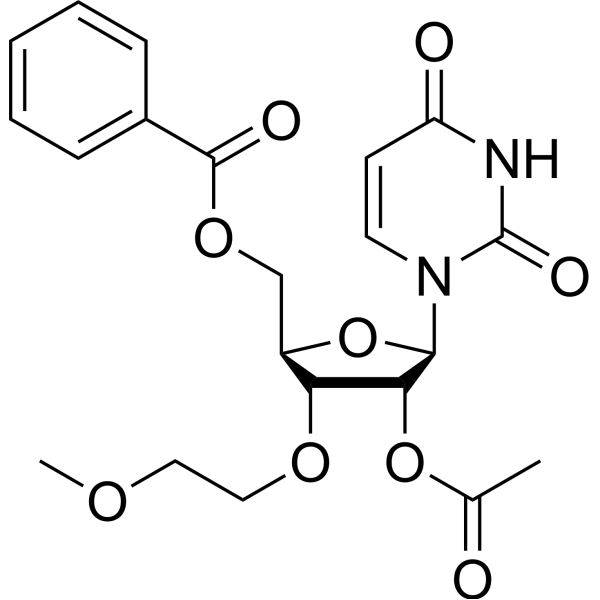
2’-O-Acetyl-5’-O-benzoyl-3’-O-(2-methoxyethyl) uridine is a uridine analog. Uridine has potential antiepileptic effects, and its analogs can be used to study anticonvulsant and anxiolytic activities, as well as to develop new antihypertensive agents .
|
-
- HY-Y0729
-
|
|
Tyrosinase
Bacterial
Fungal
Drug Derivative
|
Infection
Neurological Disease
|
|
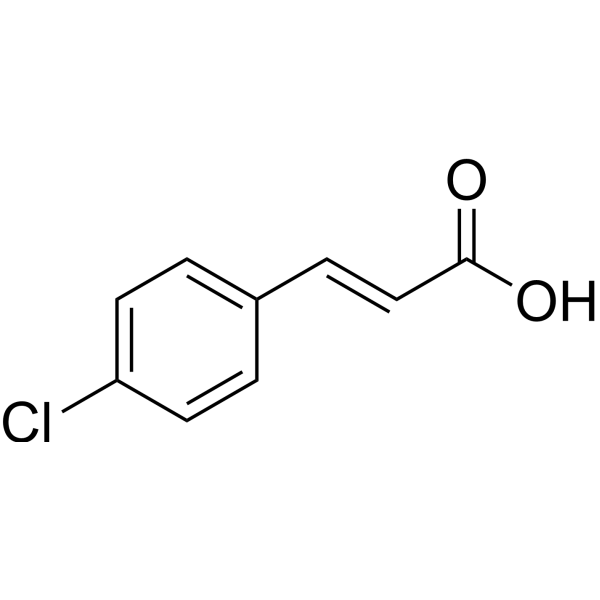
4-Chlorocinnamic acid is a derivative of Cinnamic acid (HY-N0610A). 4-Chlorocinnamic acid inhibits the monophenolase and diphenolase activities of mushroom tyrosinase with IC50 values of 0.477 mM and 0.229 mM, respectively. 4-Chlorocinnamic acid inhibits the mycelial growth of Colletotrichum gloeosporioides. 4-Chlorocinnamic acid exhibits anticonvulsant activity against acute epilepsy induced by pentylenetetrazol .
|
-
- HY-18663B
-
|
|
iGluR
|
Neurological Disease
|
|
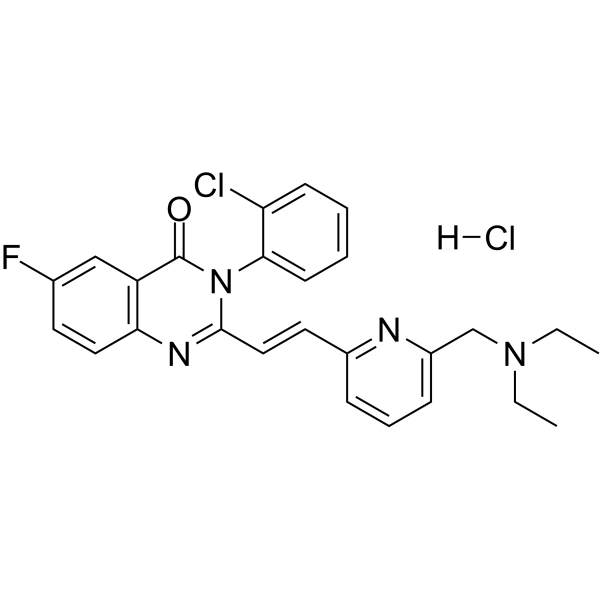
CP-465022 hydrochloride is a potent, and selective noncompetitive AMPA receptor antagonist with anticonvulsant activity. CP-465022 is against Kainate-induced response with an IC50 of 25 nM in rat cortical neurons. CP-465022 provides a new tool to investigate the role of AMPA receptors in physiological and pathophysiological processes .
|
-
- HY-18663
-
|
|
iGluR
|
Neurological Disease
|
|
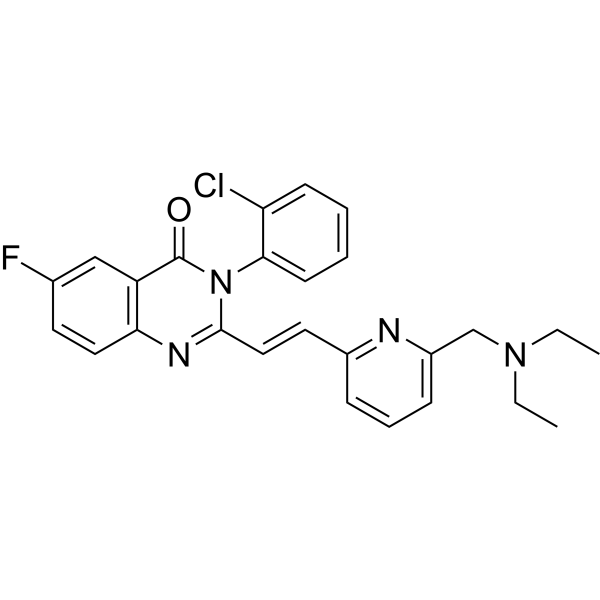
CP-465022 is a potent, and selective noncompetitive AMPA receptor antagonist with anticonvulsant activity. CP-465022 is against Kainate-induced response with an IC50 of 25 nM in rat cortical neurons. CP-465022 provides a new tool to investigate the role of AMPA receptors in physiological and pathophysiological processes .
|
-
- HY-N0219
-
Bicuculline
Maximum Cited Publications
37 Publications Verification
(+)-Bicuculline
|
GABA Receptor
|
Neurological Disease
|
|
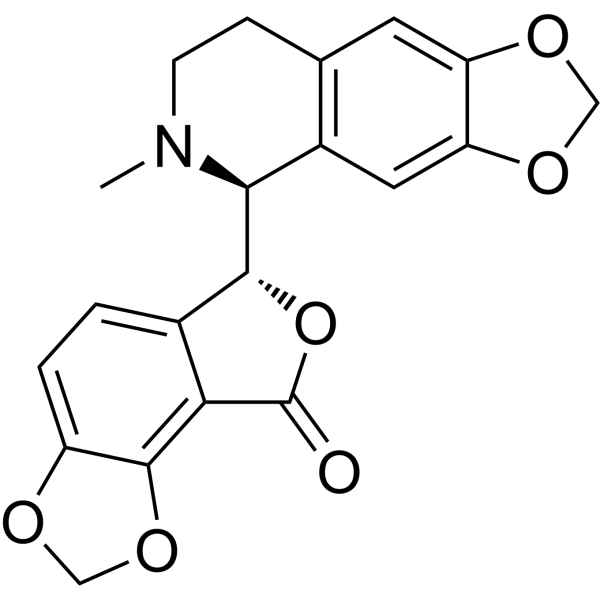
Bicuculline ((+)-Bicuculline) is A competing neurotransmitter GABAA receptor antagonist (IC50=2 μM). Bicuculline also blocks Ca 2+ activating potassium (SK) channels and subsequently blocks slow post-hyperpolarization (slow AHP). Bicuculline has anticonvulsant activity. Bicuculline can be used to induce seizures in mice .
|
-
- HY-B0162B
-
|
|
HCN Channel
|
Cardiovascular Disease
Neurological Disease
Cancer
|
|
Ivabradine sulfate is a potent and orally active HCN (hyperpolarization-activated cyclic nucleotide-gated) channel blocker that inhibits the cardiac pacemaker current (If). Ivabradine sulfate reduces dose-dependently heart rate without modification of blood pressure. Ivabradine sulfate shows anticonvulsant, anti-ischaemic and anti-anginal activity .
|
-

- HY-107701A
-
|
|
iGluR
|
Neurological Disease
|
|
CGP 78608 is a highly potent and selective antagonist at the glycine-binding site of the NMDA receptor, with an IC50 of 6 nM. CGP 78608 acts as a potentiator of GluN1/GluN3A-mediated glycine currents, with an estimated EC50 in the low nM range (26.3 nM). CGP 78608 has anticonvulsant activities .
|
-

- HY-154517
-
|
|
Nucleoside Antimetabolite/Analog
|
Cancer
|
|
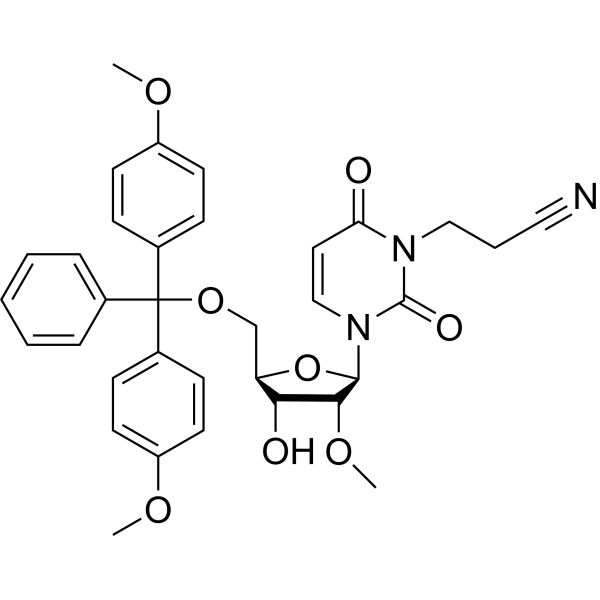
N3-Cyanoethyl-5’-O-(4,4’-dimethoxytrityl)-2’-O-methyluridine is a uridine analog. Uridine has potential antiepileptic effects, and its analogs can be used to study anticonvulsant and anxiolytic activities, as well as to develop new antihypertensive agents .
|
-
- HY-18663A
-
|
|
iGluR
|
Neurological Disease
|
|
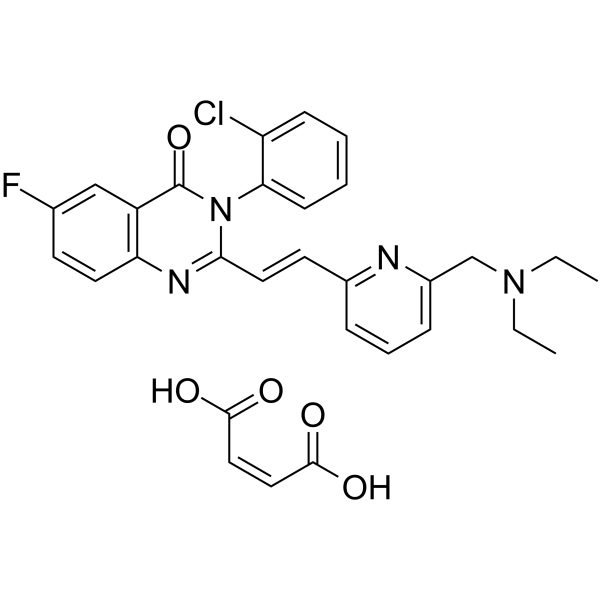
CP-465022 Maleate is a potent, and selective noncompetitive AMPA receptor antagonist with anticonvulsant activity. CP-465022 is against Kainate-induced response with an IC50 of 25 nM in rat cortical neurons. CP-465022 provides a new tool to investigate the role of AMPA receptors in physiological and pathophysiological processes .
|
-
- HY-154647
-
|
|
Nucleoside Antimetabolite/Analog
|
Cancer
|
|
N3-(2S)-[2-(tert-Butoxycarbonyl)amino-3-(tert-butoxy carbonyl)]propyluridine is a uridine analog. Uridine has potential antiepileptic effects, and its analogs can be used to study anticonvulsant and anxiolytic activities, as well as to develop new antihypertensive agents .
|
-
![N3-(2S)-[2-(tert-Butoxycarbonyl)amino-3-(tert-butoxy carbonyl)]propyluridine](//file.medchemexpress.com/product_pic/hy-154647.gif)
- HY-154582
-
|
|
Nucleoside Antimetabolite/Analog
|
Others
|
|
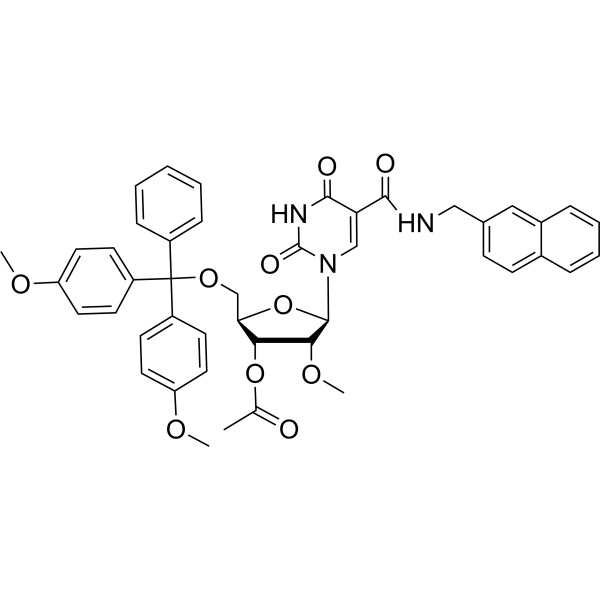
5-Naphthyl-beta-methylaminocarbony-3’-O-acetyl-2’-O-methyl-5’-O-DMTr-uridine is a uridine analog. Uridine has potential antiepileptic effects, and its analogs can be used to study anticonvulsant and anxiolytic activities, as well as to develop new antihypertensive agents .
|
-
- HY-136591R
-
|
|
Drug Metabolite
Reference Standards
|
Neurological Disease
Cancer
|
|
Demoxepam (Standard) is the analytical standard of Demoxepam. This product is intended for research and analytical applications. Demoxepam is a major metabolite of Chlordiazepoxide. Demoxepam exhibits cytotoxicity activity against cancer cell lines. Demoxepam has anticonvulsant and anxiolytic effects. Demoxepam has an inhibitory effect on in vitro [ 3H]tryptophan binding to rat hepatic nuclei .
|
-

- HY-B0696A
-
|
NO050328 hydrochloride; NO328 hydrochloride; TGB hydrochloride
|
GABA Receptor
|
Neurological Disease
|
|
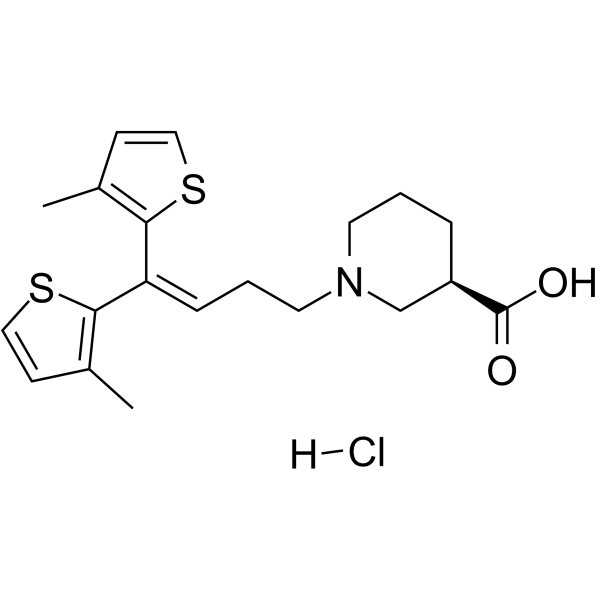
Tiagabine hydrochloride (NO050328; NO328; TGB) is an orally active, highly selective, and reversible GAT-1 inhibitor and anticonvulsant that crosses the blood-brain barrier. By blocking the reuptake of GABA in neurons and glial cells, tiagabine increases extracellular GABA levels to enhance inhibitory signal transduction, thereby exerting multiple activities such as anticonvulsant, neuroprotective, and antioxidant effects. Tiagabine hydrochloride exhibits linear pharmacokinetic properties. Although it is metabolized by CYP3A and has a high protein binding rate, it carries a low risk of cognitive impairment. Tiagabine hydrochloride is widely used in research on related diseases including epilepsy (including refractory partial seizures), alcohol withdrawal symptoms, and Huntington's disease .
|
-
- HY-B0696B
-
|
NO050328 hydrochloride hydrate; NO328 hydrochloride hydrate; TGB hydrochloride hydrate
|
GABA Receptor
|
Neurological Disease
|
|
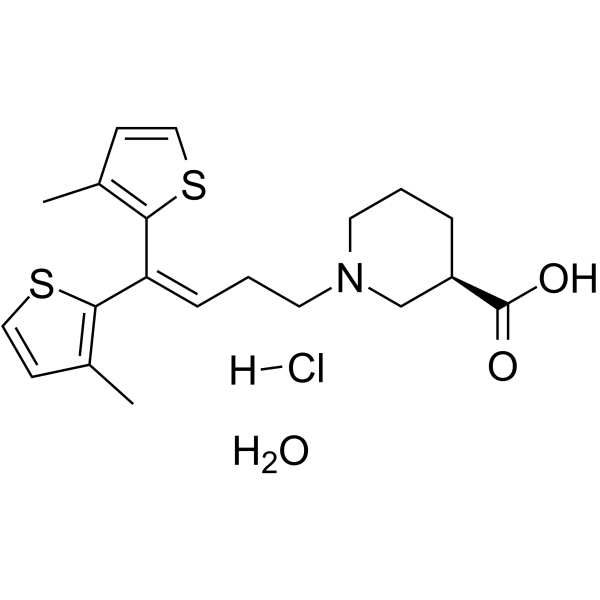
Tiagabine (NO050328; NO328; TGB) hydrochloride hydrate is an orally active, highly selective, and reversible GAT-1 inhibitor and anticonvulsant that crosses the blood-brain barrier. By blocking the reuptake of GABA in neurons and glial cells, tiagabine increases extracellular GABA levels to enhance inhibitory signal transduction, thereby exerting multiple activities such as anticonvulsant, neuroprotective, and antioxidant effects. Tiagabine hydrochloride hydrate exhibits linear pharmacokinetic properties. Although it is metabolized by CYP3A and has a high protein binding rate, it carries a low risk of cognitive impairment. Tiagabine hydrochloride hydrate is widely used in research on related diseases including epilepsy (including refractory partial seizures), alcohol withdrawal symptoms, and Huntington's disease .
|
-
- HY-B0696
-
|
NO050328; NO328; TGB
|
GABA Receptor
|
Neurological Disease
|
|
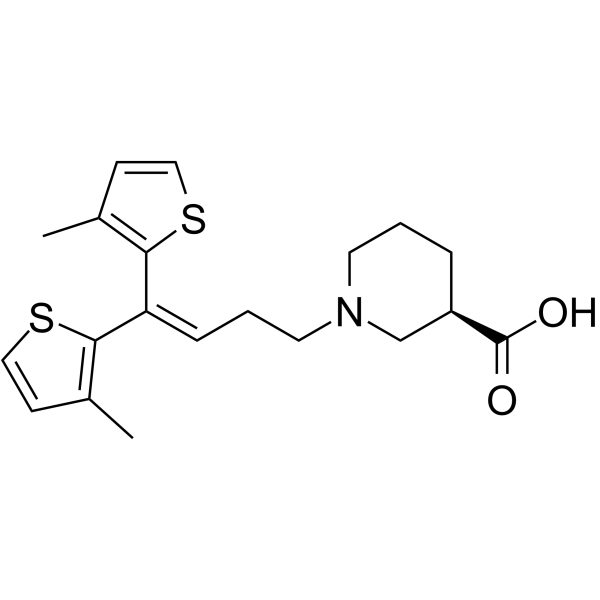
Tiagabine (NO050328; NO328; TGB) is an orally active, highly selective, and reversible GAT-1 inhibitor and anticonvulsant that crosses the blood-brain barrier. By blocking the reuptake of GABA in neurons and glial cells, tiagabine increases extracellular GABA levels to enhance inhibitory signal transduction, thereby exerting multiple activities such as anticonvulsant, neuroprotective, and antioxidant effects. Tiagabine exhibits linear pharmacokinetic properties. Although it is metabolized by CYP3A and has a high protein binding rate, it carries a low risk of cognitive impairment. Tiagabine is widely used in research on related diseases including epilepsy (including refractory partial seizures), alcohol withdrawal symptoms, and Huntington's disease .
|
-
- HY-128772
-
|
|
Sodium Channel
|
Neurological Disease
|
|
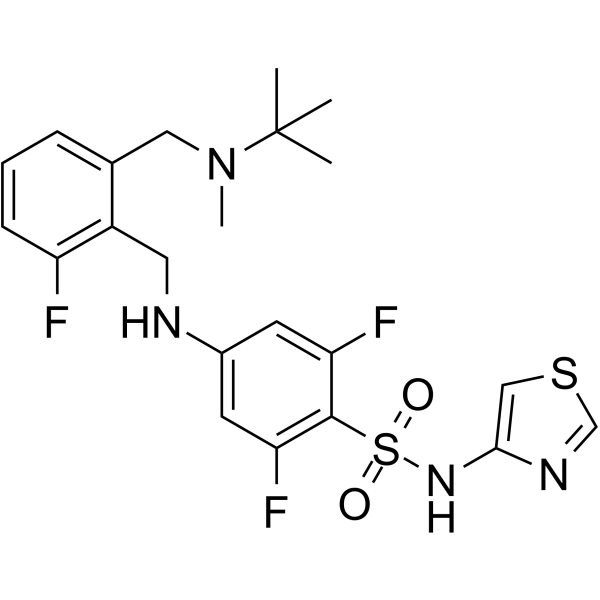
XPC-6444 is a highly potent, isoform-selective, and CNS-penetrant NaV1.6 inhibitor (IC50=41 nM for hNaV1.6). XPC-6444 also displays potent block of NaV1.2 (IC50=125 nM). XPC-6444 shows anticonvulsant activity .
|
-
- HY-103509
-
|
|
GABA Receptor
|
Neurological Disease
|
|
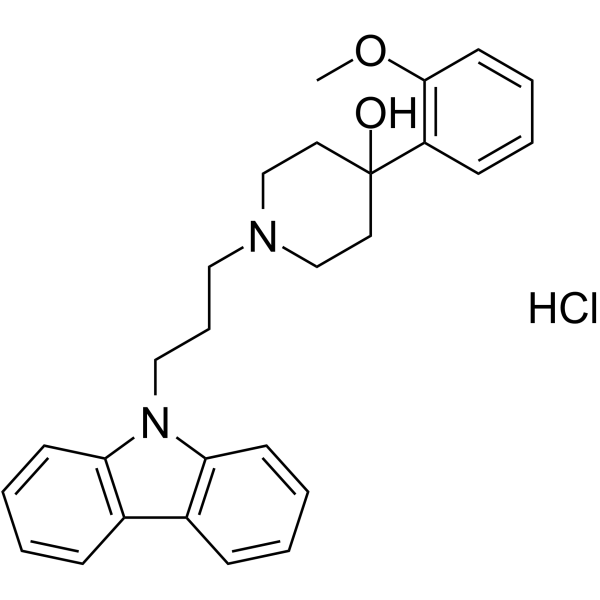
NNC 05-2090 hydrochloride is a GABA uptake inhibitor and inhibitor of the β-GABA transporter (BGT-1) (IC50< /sub>: 10.6 μM). NNC 05-2090 hydrochloride also inhibits mGAT2 with a Ki value of 1.4 μM. NNC 05-2090 has anticonvulsant activity and can be used in the study of epilepsy and neurological diseases .
|
-
- HY-W708332
-
|
|
Isotope-Labeled Compounds
Bacterial
Endogenous Metabolite
|
Neurological Disease
|
|
3-Methylvaleric acid-d11 is the deuterium labeled 3-Methylvaleric Acid (HY-W010513). 3-Methylvaleric Acid is a branched alkanoic acid. 3-Methylvaleric Acid can be utilized by Pseudomonas citronettotis as a sole carbon source for its growth. 3-Methylvaleric Acid derivatives exhibit anti-hyperalgesic and anticonvulsant activities .
|
-

- HY-120146
-
|
|
GABA Receptor
|
Neurological Disease
|
|
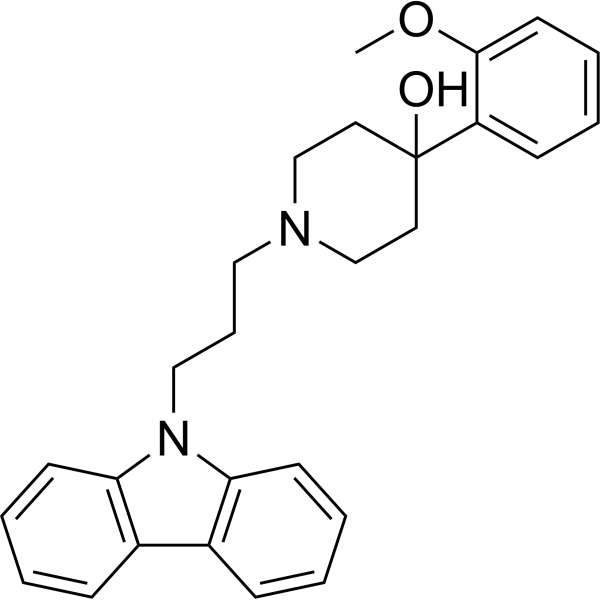
NNC 05-2090 is aGABA uptake inhibitor and inhibitor of the β-GABA transporter (BGT-1) (IC50 sub>: 10.6 μM). NNC 05-2090 also inhibits mGAT2 with a Ki value of 1.4 μM. NNC 05-2090 has anticonvulsant activity and can be used in the study of epilepsy and neurological diseases .
|
-
- HY-164728
-
|
|
Calcium Channel
|
Neurological Disease
|
|
Pregabalin diacid is an impurity of Pregabalin, a lipophilic GABA (γ-aminobutyric acid) analog with anxiolytic and anticonvulsant activity. Pregabalin may act on the α(2)β subunit of voltage-dependent calcium channels, which are widely distributed in the peripheral and central nervous systems. Pregabalin can effectively induce hypoalgesia and improve behavioral disorders .
|
-

- HY-158252S
-
|
NO050328-d5 hydrochloride; NO328-d5 hydrochloride; TGB-d5 hydrochloride
|
Isotope-Labeled Compounds
GABA Receptor
|
Neurological Disease
|
|
Tiagabine-d5 (hydrochloride) is deuterium labeled Tiagabine (hydrochloride). Tiagabine hydrochloride (NO050328; NO328; TGB) is an orally active, highly selective, and reversible GAT-1 inhibitor and anticonvulsant that crosses the blood-brain barrier. By blocking the reuptake of GABA in neurons and glial cells, tiagabine increases extracellular GABA levels to enhance inhibitory signal transduction, thereby exerting multiple activities such as anticonvulsant, neuroprotective, and antioxidant effects. Tiagabine hydrochloride exhibits linear pharmacokinetic properties. Although it is metabolized by CYP3A and has a high protein binding rate, it carries a low risk of cognitive impairment. Tiagabine hydrochloride is widely used in research on related diseases including epilepsy (including refractory partial seizures), alcohol withdrawal symptoms, and Huntington's disease .
|
-

- HY-103505R
-
|
|
Reference Standards
GABA Receptor
|
Neurological Disease
|
|
CL 218872 (Standard) is the analytical standard of CL 218872 (HY-103505). This product is intended for research and analytical applications. CL 218872 is an orally active and selective ligand for the benzodiazepine receptor subtype BZ1. CL 218872 exhibits anxiolytic, sedative and anticonvulsant activities. CL 218872 can be used in researches of anxiety related disorders and epilepsy .
|
-

- HY-B0162S
-
|
|
Isotope-Labeled Compounds
HCN Channel
|
Cardiovascular Disease
|
|
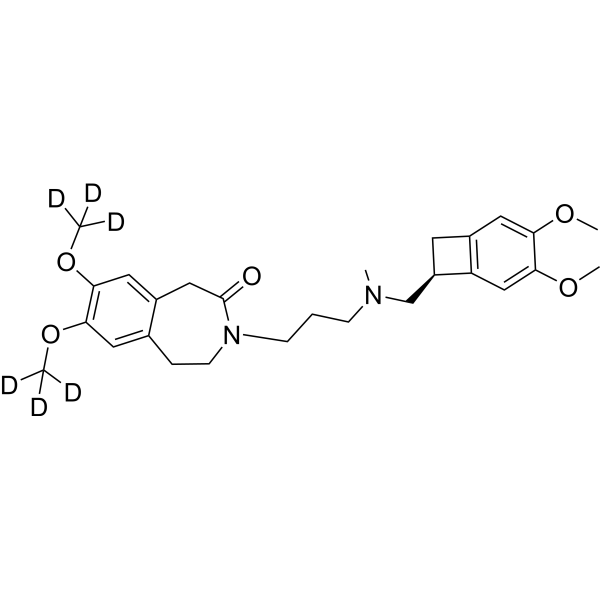
Ivabradine-d6 is the deuterium labeled Ivabradine . Ivabradine is a potent and orally active HCN (hyperpolarization-activated cyclic nucleotide-gated) channel blocker that inhibits the cardiac pacemaker current (If). Ivabradine reduces dose-dependently heart rate without modification of blood pressure. Ivabradine shows anticonvulsant, anti-ischaemic and anti-anginal activity .
|
-
- HY-B1803
-
|
ICI 136753
|
GABA Receptor
|
Neurological Disease
|
|
Tracazolate (ICI 136753) is an orally active non-benzodiazepine anxiolytic. Tracazolate significantly enhances the binding of the radioligand 3H-flunitrazepam ( 3H-FLU) to brain tissue benzodiazepine receptors. Tracazolate enhances the binding of γ-aminobutyric acid (GABA) to its receptors. Tracazolate exhibits anticonvulsant activity. Tracazolate can be used in anxiety-related research .
|
-

- HY-101087
-
|
|
Carbonic Anhydrase
Amyloid-β
Reactive Oxygen Species (ROS)
|
Neurological Disease
Inflammation/Immunology
Cancer
|
|
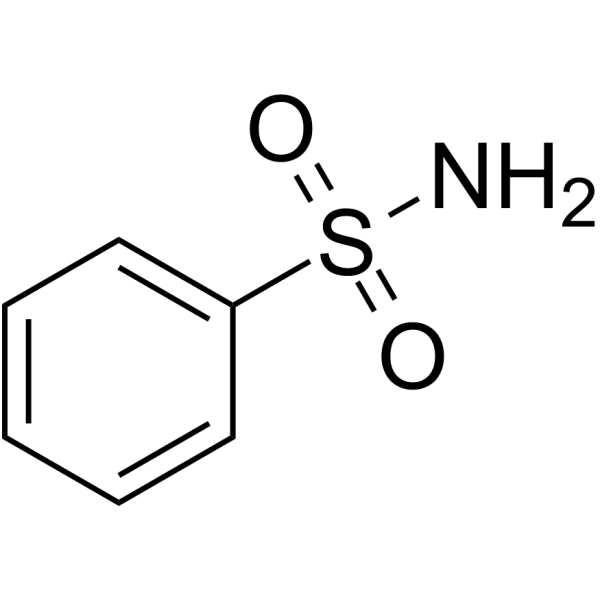
Benzenesulphonamide (Compound 1) is a carbonic anhydrase inhibitor. Benzenesulphonamide exhibits CA II inhibitory activity. Benzenesulphonamide reduces ROS and improves the gene expression of amyloid-β40 and 42. Benzenesulphonamide is beneficial for Alzheimer's disease. Benzenesulphonamide derivatives have anticancer, anti-inflammatory, and anticonvulsant activities. Benzenesulphonamide can be used in the research of Alzheimer's disease, epilepsy, inflammatory diseases, leukemia, melanoma, lung cancer, and colon cancer .
|
-
- HY-W010513R
-
|
|
Reference Standards
Biochemical Assay Reagents
|
Others
|
|
3-Methylvaleric acid (Standard) is an analytical standard form of 3-Methylvaleric acid (HY-W010513). This product is intended for research and analytical applications. 3-Methylvaleric Acid is a branched alkanoic acid. 3-Methylvaleric Acid can be utilized by Pseudomonas citronettotis as a sole carbon source for its growth. 3-Methylvaleric Acid derivatives exhibit anti-hyperalgesic and anticonvulsant activities .
|
-

- HY-B0162AR
-
|
|
Reference Standards
HCN Channel
|
Cardiovascular Disease
Metabolic Disease
Cancer
|
|
Ivabradine hydrochloride (Standard) is the analytical standard of Ivabradine hydrochloride. This product is intended for research and analytical applications. Ivabradine hydrochloride is a potent and orally active HCN (hyperpolarization-activated cyclic nucleotide-gated) channel blocker that inhibits the cardiac pacemaker current (If). Ivabradine hydrochloride reduces dose-dependently heart rate without modification of blood pressure. Ivabradine hydrochloride shows anticonvulsant, anti-ischaemic and anti-anginal activity .
|
-

- HY-100840
-
|
(S)-4-Carboxy-3-hydroxyphenylglycine
|
mGluR
|
Neurological Disease
|
|
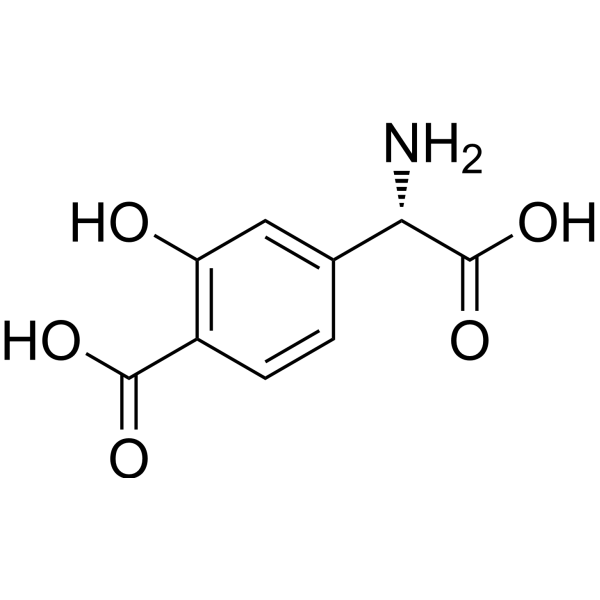
(S)-4C3HPG ((S)-4-Carboxy-3-hydroxyphenylglycine) is an antagonist of metabotropic glutamate receptor 1a (mGluR 1a) and an agonist of GluR2. (S)-4C3HPG has the anticonvulsant activity and protects against audiogenic seizures in DBA/2 mice .
|
-
- HY-181874
-
|
|
Potassium Channel
|
Neurological Disease
|
|
E0714 is a blood-brain barrier-permeable, selective Kv7.2 potassium channel activator, with EC50 values of 1.90 μM and 0.021 μM for homotetrameric Kv7.2 channels and heterotetrameric Kv7.2/7.3 channels, respectively. E0714 exhibits anticonvulsant activity. E0714 can be used in research related to epilepsy .
|
-

- HY-N9502R
-
|
|
Reference Standards
Endogenous Metabolite
|
Neurological Disease
|
|
Linalool oxide (Standard) is the analytical standard of Linalool oxide (HY-N9502). This product is intended for research and analytical applications. Linalool oxide is a monoterpene and found in aromatic plant essential oils and is a secondary metabolite in elongating wheat plants. Linalool oxide has antinociceptive, anticonvulsant, and anxiolytic activity. Linalool oxide can be used for the research of pain, epilepsy, anxiety disorders .
|
-

- HY-148792
-
|
PRAX-562
|
Sodium Channel
|
Neurological Disease
|
|
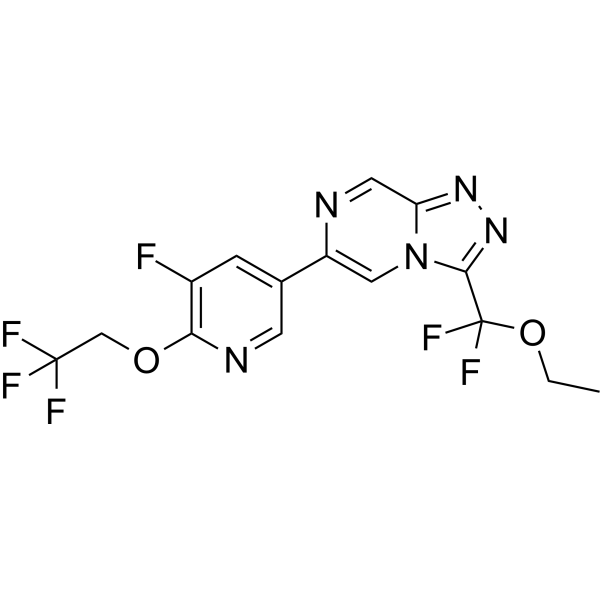
Relutrigine (PRAX-562) is an orally active inhibitor of persistent sodium channel. Relutrigine potently and preferentially inhibits persistent INa induced by ATX-II (Nav 1.5 activator) or the SCN8A mutation N1768D with IC50 values of 141 nM and 75 nM, respectively. Relutrigine exhibits potent use-dependent block and reduces neuronal intrinsic excitability. Relutrigine has effective anticonvulsant activity .
|
-
- HY-154652
-
|
|
Nucleoside Antimetabolite/Analog
|
Cancer
|
|
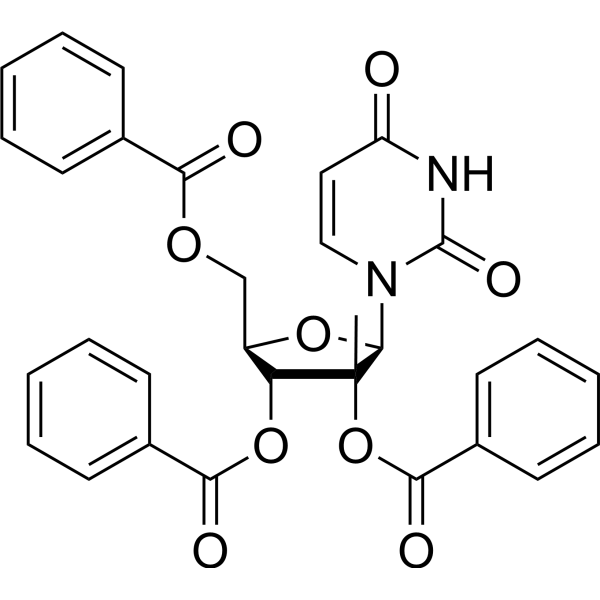
1-(2,3,5-Tri-O-benzoyl-2-C-methyl-β-D-ribofuranosyl)-2,4(1H,3H)-pyrimidinedione is a uridine analog. Uridine has potential antiepileptic effects, and its analogs can be used to study anticonvulsant and anxiolytic activities, as well as to develop new antihypertensive agents .
|
-
- HY-152476
-
|
|
Nucleoside Antimetabolite/Analog
|
Cancer
|
|
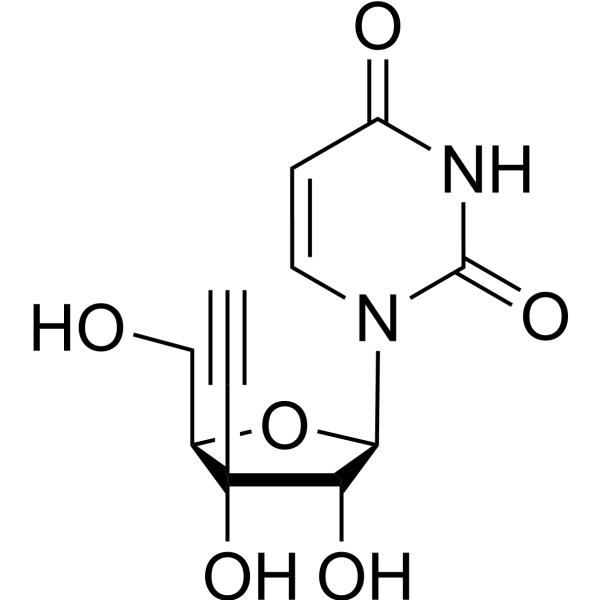
3’-β-C-Ethynyluridine is a uridine analog. Uridine has potential antiepileptic effects, and its analogs can be used to study anticonvulsant and anxiolytic activities, as well as to develop new antihypertensive agents . 3’-β-C-Ethynyluridine is a click chemistry reagent, it contains an Alkyne group and can undergo copper-catalyzed azide-alkyne cycloaddition (CuAAc) with molecules containing Azide groups.
|
-
- HY-B0696S
-
|
NO050328-d6; NO328-d6; TGB-d6
|
Isotope-Labeled Compounds
GABA Receptor
|
Neurological Disease
|
|
Tiagabine-d6 (NO050328-d6) is deuterium labeled Tiagabine. Tiagabine (NO050328; NO328; TGB) is an orally active, highly selective, and reversible GAT-1 inhibitor and anticonvulsant that crosses the blood-brain barrier. By blocking the reuptake of GABA in neurons and glial cells, tiagabine increases extracellular GABA levels to enhance inhibitory signal transduction, thereby exerting multiple activities such as anticonvulsant, neuroprotective, and antioxidant effects. Tiagabine exhibits linear pharmacokinetic properties. Although it is metabolized by CYP3A and has a high protein binding rate, it carries a low risk of cognitive impairment. Tiagabine is widely used in research on related diseases including epilepsy (including refractory partial seizures), alcohol withdrawal symptoms, and Huntington's disease .
|
-

- HY-B0696S1
-
|
NO050328-d4; NO328-d4; TGB-d4
|
Isotope-Labeled Compounds
GABA Receptor
|
Neurological Disease
|
|
Tiagabine-d4 (NO050328-d4) is deuterium labeled Tiagabine. Tiagabine (NO050328; NO328; TGB) is an orally active, highly selective, and reversible GAT-1 inhibitor and anticonvulsant that crosses the blood-brain barrier. By blocking the reuptake of GABA in neurons and glial cells, tiagabine increases extracellular GABA levels to enhance inhibitory signal transduction, thereby exerting multiple activities such as anticonvulsant, neuroprotective, and antioxidant effects. Tiagabine exhibits linear pharmacokinetic properties. Although it is metabolized by CYP3A and has a high protein binding rate, it carries a low risk of cognitive impairment. Tiagabine is widely used in research on related diseases including epilepsy (including refractory partial seizures), alcohol withdrawal symptoms, and Huntington's disease .
|
-

- HY-B0696AS
-
|
NO050328-d4 hydrochloride; NO328-d4 hydrochloride; TGB-d4 hydrochloride
|
Isotope-Labeled Compounds
GABA Receptor
|
Neurological Disease
|
|
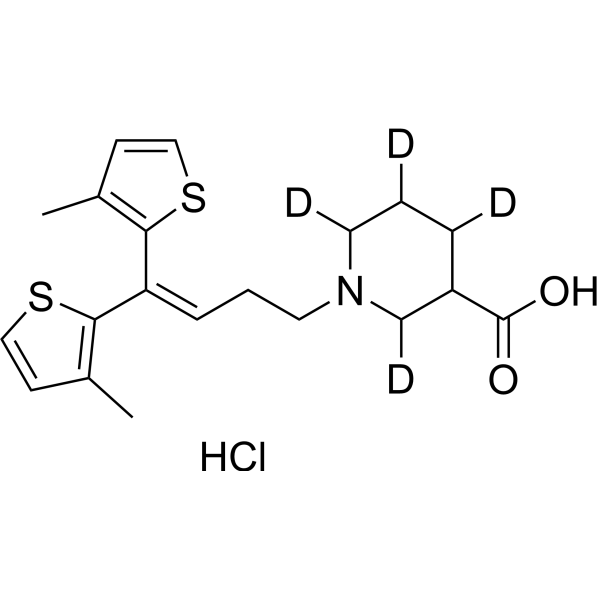
Tiagabine-d4 hydrochloride is deuterated labeled Tiagabine hydrochloride (HY-B0696A). Tiagabine hydrochloride (NO050328; NO328; TGB) is an orally active, highly selective, and reversible GAT-1 inhibitor and anticonvulsant that crosses the blood-brain barrier. By blocking the reuptake of GABA in neurons and glial cells, tiagabine increases extracellular GABA levels to enhance inhibitory signal transduction, thereby exerting multiple activities such as anticonvulsant, neuroprotective, and antioxidant effects. Tiagabine hydrochloride exhibits linear pharmacokinetic properties. Although it is metabolized by CYP3A and has a high protein binding rate, it carries a low risk of cognitive impairment. Tiagabine hydrochloride is widely used in research on related diseases including epilepsy (including refractory partial seizures), alcohol withdrawal symptoms, and Huntington's disease .
|
-
- HY-B0696AR
-
|
NO050328 hydrochloride (Standard); NO328 hydrochloride (Standard); TGB hydrochloride (Standard)
|
Reference Standards
GABA Receptor
|
Neurological Disease
|
|
Tiagabine (hydrochloride) (Standard) is the analytical standard of Tiagabine (hydrochloride). This product is intended for research and analytical applications. Tiagabine hydrochloride (NO050328; NO328; TGB) is an orally active, highly selective, and reversible GAT-1 inhibitor and anticonvulsant that crosses the blood-brain barrier. By blocking the reuptake of GABA in neurons and glial cells, tiagabine increases extracellular GABA levels to enhance inhibitory signal transduction, thereby exerting multiple activities such as anticonvulsant, neuroprotective, and antioxidant effects. Tiagabine hydrochloride exhibits linear pharmacokinetic properties. Although it is metabolized by CYP3A and has a high protein binding rate, it carries a low risk of cognitive impairment. Tiagabine hydrochloride is widely used in research on related diseases including epilepsy (including refractory partial seizures), alcohol withdrawal symptoms, and Huntington's disease .
|
-

- HY-N16538
-
|
|
Drug Derivative
|
Cardiovascular Disease
Neurological Disease
|
|
4-(Acetoxymethyl)phenyl glucoside is a type of gastrodin derivative that can cross the blood-brain barrier. 4-(Acetoxymethyl)phenyl glucoside exhibits sedative, anticonvulsant and analgesic effects in mouse models. 4-(Acetoxymethyl)phenyl glucoside can be used for research on senile cardiovascular and cerebrovascular diseases as well as brain nerve disorders .
|
-

- HY-148135
-
|
|
Carbonic Anhydrase
|
Neurological Disease
|
|
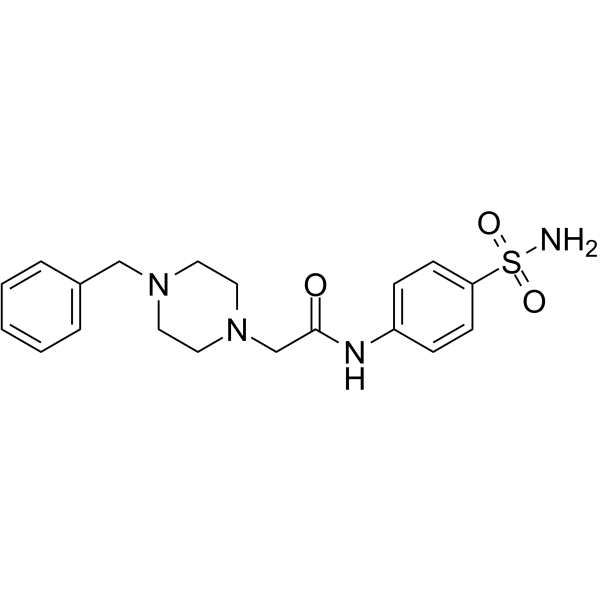
hCAI/II-IN-6 is an orally active human carbonic anhydrase (CA) inhibitor. hCAI/II-IN-6 selectively inhibits hCA II and hCA VII isoforms with Ki values of 220, 4.9, 6.5 and >50000 nM for hCA I, hCA II , hCA VII and hCA XII respectively. hCAI/II-IN-6 shows anticonvulsant activity and anti maximal electroshock (MES) activity in vivo. hCAI/II-IN-6 can be used for the research of epilepsy .
|
-
- HY-17549
-
|
CRL 40028
|
Adrenergic Receptor
|
Neurological Disease
|
|
Adrafinil (CRL 40028) is an orally active vigilance promoting agent. Adrafinil enhances central noradrenergic transmission, improves spontaneous activity, exploratory behavior, discriminative learning ability and response motivation, but impairs visuospatial working memory. Adrafinil antagonizes Prazosin (HY-B0193)-induced hypoactivity and hypothermia, exerts anticonvulsant effects, and induces sustained enhancement of high-frequency electrocortical activity. Adrafinil can be used for research on decreased alertness and specific cognitive deficits .
|
-

- HY-17032
-
|
(rac)-AS1069562 free base; YM-08054 free base
|
Endogenous Metabolite
|
Neurological Disease
|
|
Indeloxazine ((rac)-AS1069562 free base) is a brain active compound with anti-amnesic activity. Indeloxazine significantly prolonged the step latency in senescence accelerated mice (SAM-P/8/Ta), indicating that it has a promoting effect on brain function. Indeloxazine has a broader pharmacology than piracetam and exhibits stronger anti-amnesic activity. Indeloxazine has also been used as an anticonvulsant compound, further supporting its potential use in neuroprotection and behavioral improvement .
|
-

- HY-N0219R
-
|
(+)-Bicuculline (Standard)
|
Reference Standards
GABA Receptor
|
Neurological Disease
|
|
Bicuculline (Standard) is the analytical standard of Bicuculline. This product is intended for research and analytical applications. Bicuculline ((+)-Bicuculline) is A competing neurotransmitter GABAA receptor antagonist (IC50=2 μM). Bicuculline also blocks Ca2+ activating potassium (SK) channels and subsequently blocks slow post-hyperpolarization (slow AHP). Bicuculline has anticonvulsant activity. Bicuculline can be used to induce seizures in mice .
|
-

- HY-W644305
-
|
3β-Androstenol
|
GABA Receptor
Endogenous Metabolite
|
Neurological Disease
|
Androst-16-en-3-ol is a pheromone derived from boars that triggers mating responses in estrous sows. It also exists in human urine, plasma, saliva and sweat. As an endogenous neurosteroid, Androst-16-en-3-ol acts as a positive allosteric modulator of GABAA receptors (GABAA receptor) and exerts anxiolytic, antidepressant and anticonvulsant activities in mice.
|
-

- HY-B2117R
-
|
|
Reference Standards
Epoxide Hydrolase
EBV
|
Infection
Neurological Disease
|
|
Valpromide (Standard) is the analytical standard of Valpromide (HY-B2117). This product is intended for research and analytical applications. Valpromide is an amide derivative of Valproic acid (HY-10585) and an orally active epoxide hydrolase inhibitor that can cross the blood-brain barrier. Valpromide has antiepileptic, anticonvulsant, and antipsychotic effects. Valpromide also exhibits antiviral activity and can inhibit the reactivation of the EBV lytic cycle .
|
-

- HY-105857
-
|
|
GABA Receptor
|
Neurological Disease
|
|
Thiazesim is a benzothiazepine compound with a thiophene structure and acts as a GABAA receptor inhibitor, exerting anticonvulsant and antidepressant effects. Thiazesim exhibits specific pharmacological properties in animal experiments. Thiazesim reduces motor activity in rats and effectively inhibits rat killing responses, with a ratio of 2.1 between the ED50 in rotarod tests and the ED50 for anti-killing behavior. Thiazesim can be widely used in basic and clinical studies related to epilepsy .
|
-

- HY-105857A
-
|
|
GABA Receptor
|
Neurological Disease
|
|
Thiazesim hydrochloride is a benzothiazepine compound with a thiophene structure and acts as a GABAA receptor inhibitor, exerting anticonvulsant and antidepressant effects. Thiazesim hydrochloride exhibits specific pharmacological properties in animal experiments. Thiazesim hydrochloride reduces motor activity in rats and effectively inhibits rat killing responses, with a ratio of 2.1 between the ED50 in rotarod tests and the ED50 for anti-killing behavior. Thiazesim hydrochloride can be widely used in basic and clinical studies related to epilepsy .
|
-

- HY-101440A
-
|
CHF-3381
|
iGluR
Monoamine Oxidase
|
Neurological Disease
|
|
Indantadol hydrochloride (CHF-3381) is an orally active, non-selective NMDA antagonist and MAO inhibitor. Indantadol hydrochloride blocks the binding of [³H]-MK-801 to NMDA receptors in a non-competitive manner, with an IC50 of 8.1 μM. Indantadol hydrochloride completely inhibits dopamine release caused by NMDA. Indantadol hydrochloride protects neurons, with an ED₅₀ of 35 μM. Indantadol hydrochloride has anticonvulsant and anti-high pain hypersensitivity activities .
|
-

- HY-168773
-
|
|
EAAT
|
Neurological Disease
|
|
(R)-AS-1 is a selective positive allosteric modulator of the excitatory amino acid transporter 2 (EAAT2), with an EC50 of 11 nM. (R)-AS-1 (at doses of 60 and 90 mg/kg) increases spontaneous locomotor activity in mice. Additionally, it demonstrates anticonvulsant activity in mouse models of seizures induced by maximal electroshock (MES), pentylenetetrazole (PTZ), or electrical stimuli (32 or 44 mA), with ED50s of 66.3, 36.3, 15.6, and 41.6 mg/kg, respectively. (R)-AS-1 can be used in neurological disease research .
|
-

- HY-12596
-
|
|
Calcium Channel
Sodium Channel
Potassium Channel
|
Neurological Disease
|
|
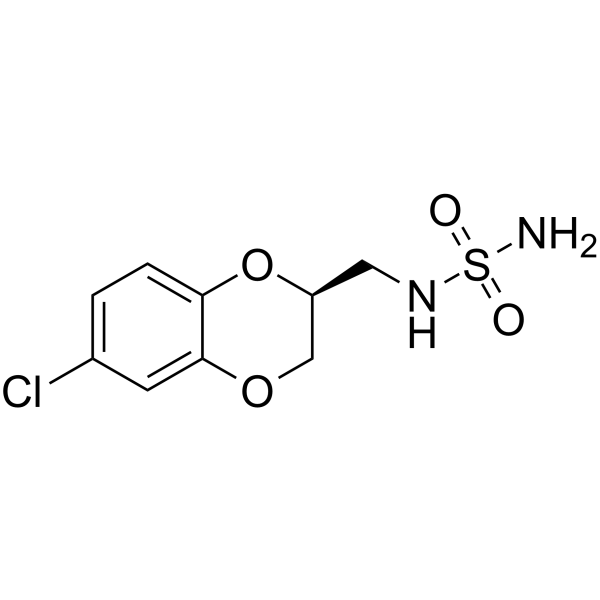
JNJ-26489112, a CNS-active agent, exhibits broad-spectrum anticonvulsant activity in rodents against audiogenic, electrically-induced, and chemically-induced seizures. JNJ-26489112 inhibits voltage-gated Na + channels and N-type Ca 2+ channels, and is effective as a K + channel opener. JNJ-26489112 has very weak inhibition of CA-II (IC50=35 μM) and CA-I (18 μM) .
|
-
- HY-D0803
-
|
|
Apoptosis
VEGFR
PI3K
Akt
|
Infection
Cardiovascular Disease
Neurological Disease
Inflammation/Immunology
Cancer
|
|
Thymoquinone is an orally active natural product isolated from N. sativa Thymoquinone down-regulates the VEGFR2-PI3K-Akt pathway. Thymoquinone has antioxidant, anti-inflammatory, anticancer, antiviral, anticonvulsant, antifungal, antiviral, antiangiogenic activity and hepatoprotective effects. Thymoquinone can be used to study Alzheimer's disease, cancer, cardiovascular disease, infectious disease and inflammation .
|
-
- HY-111751
-
|
|
iGluR
|
Neurological Disease
|
|
JNJ-61432059 is a blood-brain barrier-permeable, orally active TARP γ-8-associated AMPAR modulator with anticonvulsant activity. JNJ-61432059 negatively regulates GluA1 and positively modulates GluA2-containing AMPARs. JNJ-61432059 exerts potent protective effects in rodent epilepsy models. JNJ-61432059 is applicable for epilepsy-related research .
|
-
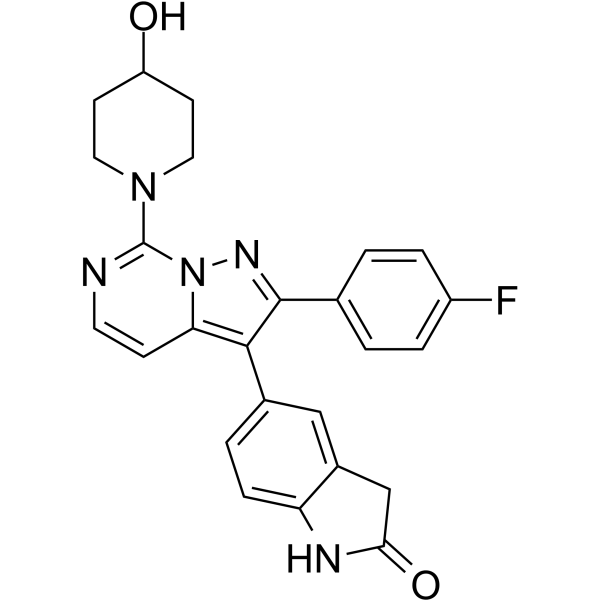
- HY-101440
-
|
CHF-3381 free base
|
iGluR
Monoamine Oxidase
|
Neurological Disease
|
|
Indantadol (the free base of CHF-3381) is an orally active, non-selective NMDA antagonist and MAO inhibitor. Indantadol blocks the binding of [³H]-MK-801 to NMDA receptors in a non-competitive manner, with an IC50 of 8.1 μM. Indantadol completely inhibits dopamine release caused by NMDA. Indantadol protects neurons, with an ED₅₀ of 35 μM. Indantadol has anticonvulsant and anti-high pain hypersensitivity activities .
|
-

- HY-118018
-
|
|
GABA Receptor
|
Neurological Disease
|
|
CHF-2993 is an orally active anticonvulsant. CHF-2993 antagonizes Bicuculline (HY-N0219)- and Picrotoxin (HY-101391)-induced tonic convulsions in mice, shows no activity against Pentylenetetrazole-induced clonic convulsions in mice, and partially reduces Veratridine (HY-N6691)-induced aspartate efflux in rat cortical synaptosomes. CHF-2993 can be used in the research of epilepsy .
|
-

- HY-W011235
-
|
|
5-HT Receptor
Calcium Channel
Drug Metabolite
|
Cardiovascular Disease
Neurological Disease
|
|
Norfluoxetine hydrochloride is an active N-demethylated metabolite of Fluoxetine. Fluoxetine is a selective serotonin (5-HT) reuptake inhibitor that is metabolized to Norfluoxetine hydrochloride by cytochrome P450 (CYP) 2D6, CYP2C19, and CYP3A4. Norfluoxetine hydrochloride inhibits 5-HT uptake and inhibits CaV3.3 T current (IC50 = 5 μM). Norfluoxetine hydrochloride has anticonvulsant activity .
|
-
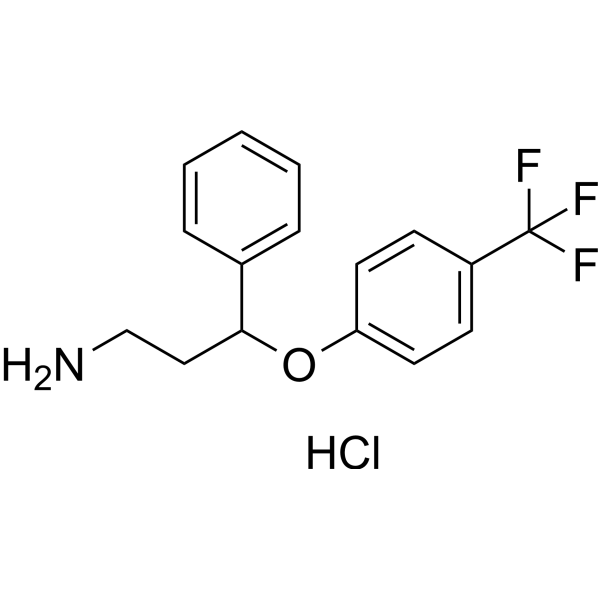
- HY-180056
-
|
|
Carbonic Anhydrase
NKCC
mTOR
|
Neurological Disease
|
|
CAII-IN-12 (compound 6c) is a potent and selective carbonic anhydrase (CA) II and VII inhibitor (hCA II Ki = 47.8 nM, hCA VII Ki = 3.6 nM) with anti-epilepitic activity. CAII-IN-12 displays selectivity over hCA I (Ki = 370 nM). CAII-IN-12 exhibits potent anticonvulsant activity in both Pentylenetetrazol- and Pilocarpine (HY-B0726A)-induced seizure mouse models. CAII-IN-12 increases expression of KCC2 in the hippocampus, maintains neuronal integrity, and reduces mTOR activity. CAII-IN-12 can be used for epilepsy research .
|
-

- HY-N6778
-
|
|
Potassium Channel
Calcium Channel
Reactive Oxygen Species (ROS)
|
Neurological Disease
|
|
Paxilline is an indole alkaloid mycotoxin derived from Penicillium paxilli, which effectively inhibits the BK channel through a channel-blocking mechanism. Paxilline also inhibits sarco/endoplasmic reticulum Ca 2+-stimulated ATPase (SERCA), with IC50 values ranging from 5 μM to 50 μM for different SERCA isoforms. Paxilline exhibits significant anticonvulsant and neuroprotective effects, as well as certain antioxidant activity .
|
-
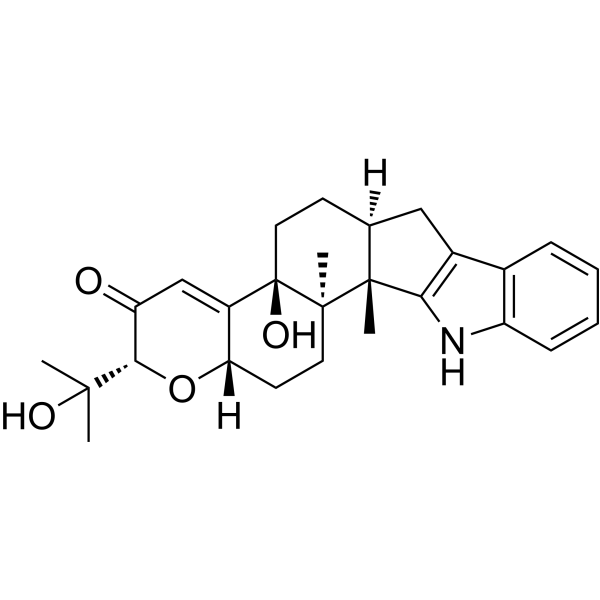
- HY-154736
-
|
|
Nucleoside Antimetabolite/Analog
|
Cancer
|
|
N3-(Butyn-3-yl)uridine is a uridine analog. Uridine has potential antiepileptic effects, and its analogs can be used to study anticonvulsant and anxiolytic activities, as well as to develop new antihypertensive agents . N3-(Butyn-3-yl)uridine is a click chemistry reagent, it contains an Alkyne group and can undergo copper-catalyzed azide-alkyne cycloaddition (CuAAc) with molecules containing Azide groups.
|
-
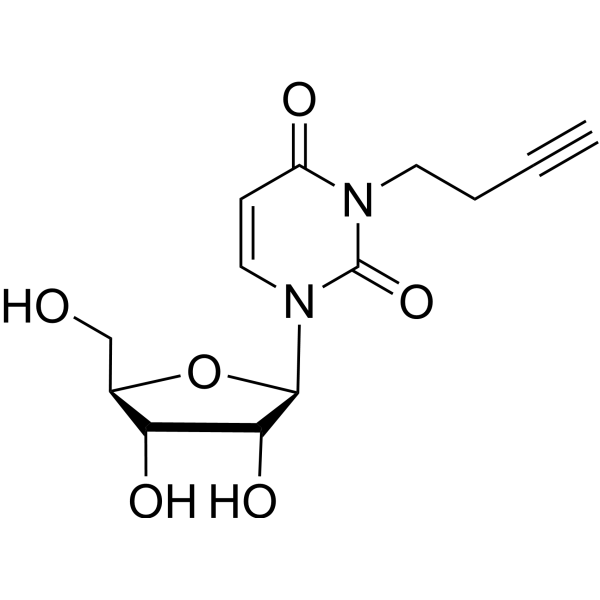
- HY-108327
-
|
|
Potassium Channel
|
Neurological Disease
|
|
PF-05020182 is an orally active opener for Kv7 channel, that activates human Kv7.2/7.3, Kv7.4 and Kv7.3/7.5 with EC50 of 334, 625 and 588 nM, respectively. PF-05020182 exhibits anticonvulsant activity in rats corneal electric shock-induced tonic seizure (MES) models. PF-05020182 is blood-brain barrier (BBB) penetrable .
|
-

- HY-14336A
-
|
SB 271046A
|
5-HT Receptor
|
Neurological Disease
|
|
SB 271046 Hydrochloride (SB 271046A) is a potent, selective, orally active and BBB-permeable 5-HT6 receptor antagonist with pKi of 9.02, 8.55, and 8.81 for rat, pig and human, respectively. SB 271046 Hydrochloride is over 200 fold selective for the 5-HT6 receptor vs 55 other receptors, binding sites and ion channels. Anticonvulsant activity (EC50=0.16 μM) .
|
-
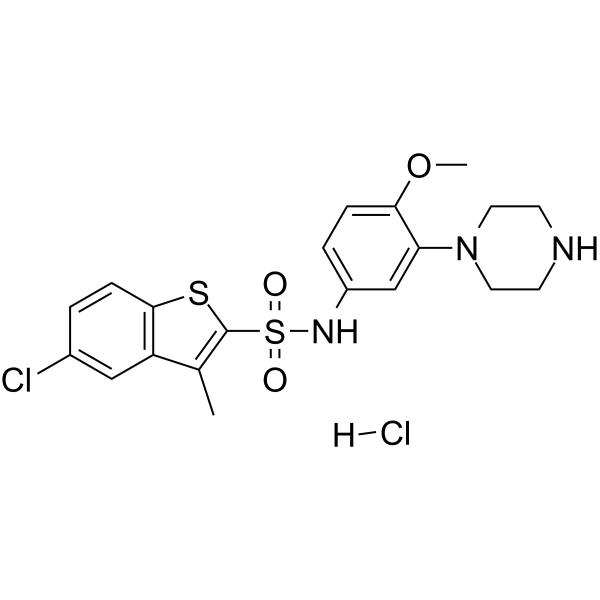
- HY-101087R
-
|
|
Reference Standards
Carbonic Anhydrase
Amyloid-β
Reactive Oxygen Species (ROS)
|
Neurological Disease
Inflammation/Immunology
Cancer
|
|
Benzenesulphonamide (Standard) is the analytical standard of Benzenesulphonamide (HY-101087). This product is intended for research and analytical applications. Benzenesulphonamide (Compound 1) is a carbonic anhydrase inhibitor. Benzenesulphonamide exhibits CA II inhibitory activity. Benzenesulphonamide reduces ROS and improves the gene expression of amyloid-β40 and 42. Benzenesulphonamide is beneficial for Alzheimer's disease. Benzenesulphonamide derivatives have anticancer, anti-inflammatory, and anticonvulsant activities. Benzenesulphonamide can be used in the research of Alzheimer's disease, epilepsy, inflammatory diseases, leukemia, melanoma, lung cancer, and colon cancer .
|
-

- HY-103534
-
|
|
GABA Receptor
|
Neurological Disease
|
|
CI-966 hydrochloride is a potent, selective, orally active and brain-penetrant inhibitor of the GABA transporter GAT-1, with IC50s of 0.26 μM and 1.2 μM for hGAT-1, rGAT-1, respectively. CI-966 hydrochloride shows more than 200-fold selectivity over GAT-2, GAT-3, and BGT-3. CI-966 hydrochloride exhibits anticonvulsant and neuroprotective activities .
|
-

- HY-W013507
-
-
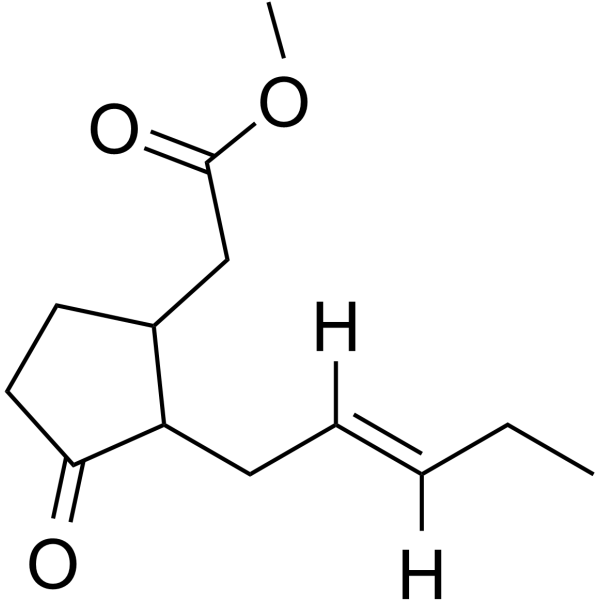
- HY-123240
-
|
|
GABA Receptor
|
Neurological Disease
|
|
CI-966 is a potent, selective, orally active and brain-penetrant inhibitor of the GABA transporter GAT-1, with IC50s of 0.26 μM and 1.2 μM for hGAT-1, rGAT-1, respectively. CI-966 shows more than 200-fold selectivity over GAT-2, GAT-3, and BGT-3. CI-966 exhibits anticonvulsant and neuroprotective activities .
|
-

- HY-103509R
-
|
|
Reference Standards
GABA Receptor
|
Neurological Disease
|
|
NNC 05-2090 hydrochloride (Standard) is the analytical standard of NNC 05-2090 hydrochloride (HY-103509). This product is intended for research and analytical applications. NNC 05-2090 hydrochloride is a GABA uptake inhibitor and inhibitor of the β-GABA transporter (BGT-1) (IC50< /sub>: 10.6 μM). NNC 05-2090 hydrochloride also inhibits mGAT2 with a Ki value of 1.4 μM. NNC 05-2090 has anticonvulsant activity and can be used in the study of epilepsy and neurological diseases .
|
-

- HY-77650
-
|
4'-Azidouridine
|
Nucleoside Antimetabolite/Analog
|
Others
|
|
4'-C-azidouridine (4'-Azidouridine) is a uridine analogue. Uridine has potential antiepileptic effects, and its analogs can be used to study anticonvulsant and anxiolytic activities, as well as to develop new antihypertensive agents . 4'-C-Azidouridine is a click chemistry reagent, it contains an Azide group and can undergo copper-catalyzed azide-alkyne cycloaddition reaction (CuAAc) with molecules containing Alkyne groups. It can also undergo strain-promoted alkyne-azide cycloaddition (SPAAC) reactions with molecules containing DBCO or BCN groups.
|
-
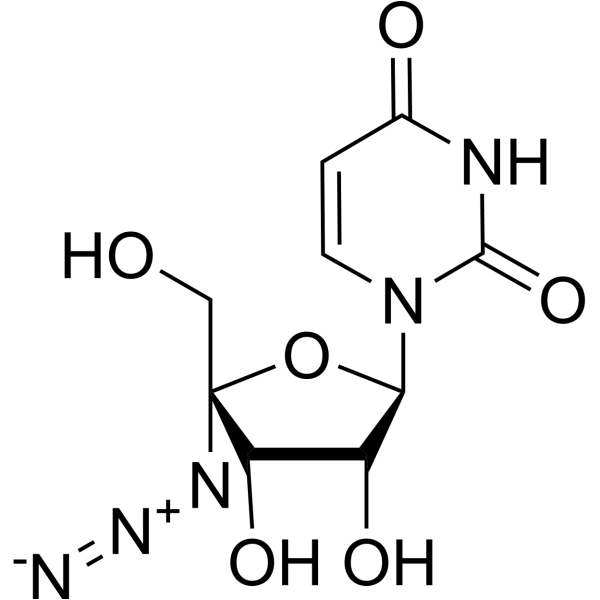
- HY-103506
-
|
NO-711 hydrochloride
|
GABA Receptor
|
Neurological Disease
|
|
NNC-711 (NO-711 hydrochloride) is a potent and selective inhibitor of GAT-1 (GABA transporter 1) with IC50 values of 0.04, 0.38, 171, 1700, 349, 622 μM for human GAT-1, rat GAT-1, rGAT-2, hGAT-3, rGAT-3, hBGT-3, respectively. NNC-711 has anticonvulsant and analgesic effect in vivo and exhibits cognition-enhancing activity .
|
-
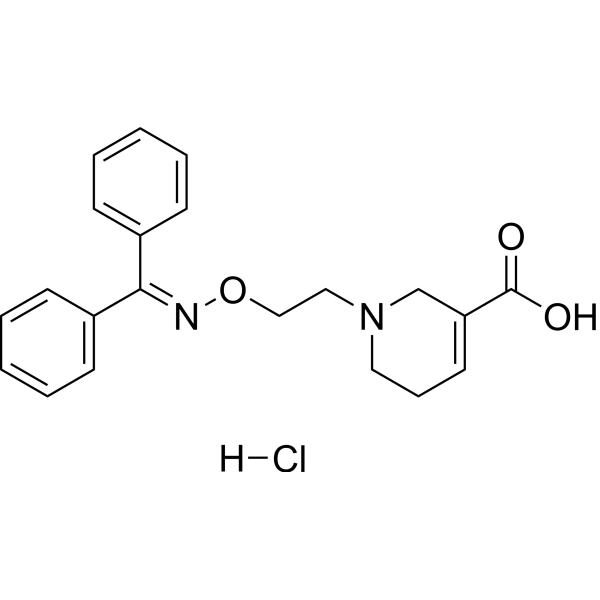
- HY-B1803A
-
|
ICI 136753 hydrochloride
|
GABA Receptor
|
Neurological Disease
|
|
Tracazolate (ICI 136753) hydrochloride is a potent GABAA receptor modulator. Tracazolate hydrochloride has selectivity for β3 and potentiates α1β1γ2s (EC50=13.2 μM), α1β3γ2 (EC50=1.5 μM). Tracazolate hydrochloride has the potency (EC50) determined by the nature of the third subunit (γ1-3, δ, ε) within the receptor complex. Tracazolate hydrochloride possesses anxiolytic and anticonvulsant activity .
|
-
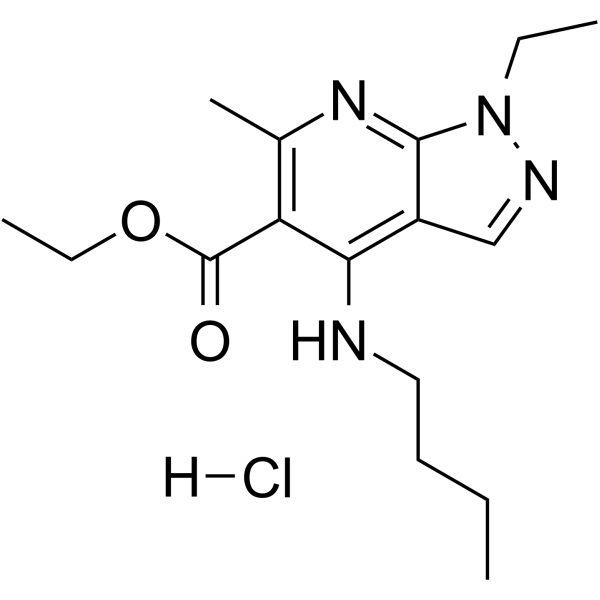
- HY-19130
-
|
|
Adenosine Receptor
|
Neurological Disease
|
|
BW-534U87 is an orally active adenosine A1 receptor agonist and competitive adenosine deaminase (ADA) inhibitor (Ki=7 μM). BW-534U87 elevates brain adenosine levels and suppresses epileptiform activity. BW-534U87 demonstrate anticonvulsant efficacy in animal seizure models. BW-534U87 is promising for research of epilepsy and adenosine-related neuropsychiatric disorders .
|
-

- HY-D0803R
-
|
|
Reference Standards
Apoptosis
VEGFR
PI3K
Akt
|
Infection
Cardiovascular Disease
Neurological Disease
Inflammation/Immunology
Cancer
|
|
Thymoquinone (Standard) is the analytical standard of Thymoquinone. This product is intended for research and analytical applications. Thymoquinone is an orally active natural product isolated from N. sativa Thymoquinone down-regulates the VEGFR2-PI3K-Akt pathway. Thymoquinone has antioxidant, anti-inflammatory, anticancer, antiviral, anticonvulsant, antifungal, antiviral, antiangiogenic activity and hepatoprotective effects. Thymoquinone can be used to study Alzheimer's disease, cancer, cardiovascular disease, infectious disease and inflammation .
|
-

- HY-15080
-
|
LY 293606
|
iGluR
|
Cardiovascular Disease
Neurological Disease
|
|
GYKI 53405 is a non-competitive, orally active AMPA receptor antagonist. GYKI 53405 shows no significant binding affinity for GABAA, GABAB or benzodiazepine receptors. GYKI 53405 increases self-grooming behavior, induces wet dog-like shakes, reduces spontaneous activity, produces anxiolytic-like behavior, reverses the anxiogenic effect induced by mCPP, inhibits locomotor activity, suppresses sound-induced and maximal electroshock-induced seizures, prolongs survival in global cerebral ischemia models, and exhibits sustained anticonvulsant effects at doses below the sedation threshold. GYKI 53405 can be used in research related to absence epilepsy, anxiety disorders and global cerebral ischemia .
|
-

- HY-19021
-
|
|
mGluR
|
Neurological Disease
|
|
ADD-17014 is a L-Glu antagonist. ADD-17014 impairs presynaptic excitatory amino acid L-Glu neurotransmission. ADD-17014 is a prodrug of its β-amino alcohol metabolite, and the metabolite acts as a NMDA receptor antagonist by binding to the MK-801 site located inside the NMDA receptor or ion channel. ADD-17014 has an anticonvulsant and anti-ischemic activity. ADD-17014 can be used for neurodegenerative diseases like Parkinson’s disease, Alzheimer’s disease and stroke research .
|
-

- HY-14336AR
-
|
SB 271046A (Standard)
|
5-HT Receptor
Reference Standards
|
Neurological Disease
|
|
SB 271046 (Hydrochloride) (Standard) is the analytical standard of SB 271046 (Hydrochloride). This product is intended for research and analytical applications. SB 271046 Hydrochloride (SB 271046A) is a potent, selective, orally active and BBB-permeable 5-HT6 receptor antagonist with pKi of 9.02, 8.55, and 8.81 for rat, pig and human, respectively. SB 271046 Hydrochloride is over 200 fold selective for the 5-HT6 receptor vs 55 other receptors, binding sites and ion channels. Anticonvulsant activity (EC50=0.16 μM) .
|
-

- HY-W013507R
-
|
|
Reference Standards
NF-κB
Reactive Oxygen Species (ROS)
Glutathione Peroxidase
Phytohormone
Apoptosis
|
Neurological Disease
Inflammation/Immunology
Cancer
|
|
(rac)-Methyl jasmonate (Standard) is the analytical standard of Methyl jasmonate. This product is intended for research and analytical applications. (rac)-Methyl jasmonate is the racemate of Methyl jasmonate (HY-135663). Methyl jasmonate is a phytohormone that regulates the defense response of plants under biotic and biotic stress through jasmonate signaling pathway. Methyl jasmonate inhibits the activation of NF-κB signaling pathway. Methyl jasmonate can promote the mitochondrial ROS production, but also scavenges free radicals and reduces the oxidative stress. Methyl jasmonate exhibits anti-inflammatory, antitumor, anticonvulsant, antinociceptive and sedative activities .
|
-

- HY-152985
-
|
|
Nucleoside Antimetabolite/Analog
|
Others
|
|
6-Chloro-N1-(trimethylsilylethoxymethyl)pseudouridine is a uridine analog. Uridine has potential antiepileptic effects, and its analogs can be used to study anticonvulsant and anxiolytic activities, as well as to develop new antihypertensive agents . 3’-Azido-3’-deoxy-4-deoxyuridine is a click chemistry reagent, it contains an Azide group and can undergo copper-catalyzed azide-alkyne cycloaddition reaction (CuAAc) with molecules containing Alkyne groups. It can also undergo strain-promoted alkyne-azide cycloaddition (SPAAC) reactions with molecules containing DBCO or BCN groups.
|
-
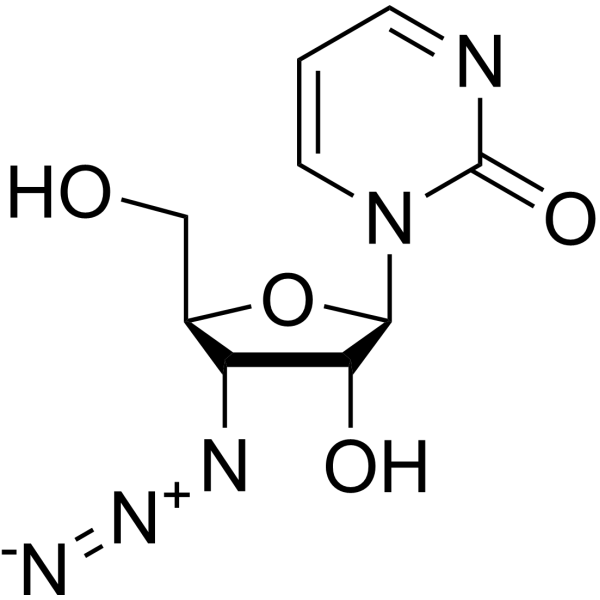
- HY-176065
-
|
|
Sodium Channel
|
Neurological Disease
|
|
Nav1.2-IN-1 (compound 5i), a 3-(1,2,3,6-tetrahydropyridine)-4-azaindole derivative, is a potent and selective Nav1.2 inhibitor. Nav1.2-IN-1 induces a reduction in the peak amplitude of Nav1.2 currents with an IC50 value of 7.79 μM. Nav1.2-IN-1 exhibits antiepileptic activity. Nav1.2-IN-1 shows high anticonvulsant effect and low neurotoxicity in subcutaneous Pentetrazole (sc-PTZ)-induced epilepsy mode .
|
-

- HY-103534R
-
|
|
Reference Standards
GABA Receptor
|
Neurological Disease
|
|
CI-966 hydrochloride (Standard) is the analytical standard of CI-966 hydrochloride (HY-103534). This product is intended for research and analytical applications. CI-966 hydrochloride is a potent, selective, orally active and brain-penetrant inhibitor of the GABA transporter GAT-1, with IC50s of 0.26 μM and 1.2 μM for hGAT-1, rGAT-1, respectively. CI-966 hydrochloride shows more than 200-fold selectivity over GAT-2, GAT-3, and BGT-3. CI-966 hydrochloride exhibits anticonvulsant and neuroprotective activities .
|
-

- HY-154590
-
|
|
Nucleoside Antimetabolite/Analog
|
Cancer
|
|
2’,3’-Di-O-isopropylidene-4’-alpha-C-azidouridine is a uridine analog. Uridine has potential antiepileptic effects, and its analogs can be used to study anticonvulsant and anxiolytic activities, as well as to develop new antihypertensive agents . 2’,3’-Di-O-isopropylidene-4’-alpha-C-azidouridine is a click chemistry reagent, it contains an Azide group and can undergo copper-catalyzed azide-alkyne cycloaddition reaction (CuAAc) with molecules containing Alkyne groups. It can also undergo strain-promoted alkyne-azide cycloaddition (SPAAC) reactions with molecules containing DBCO or BCN groups.
|
-
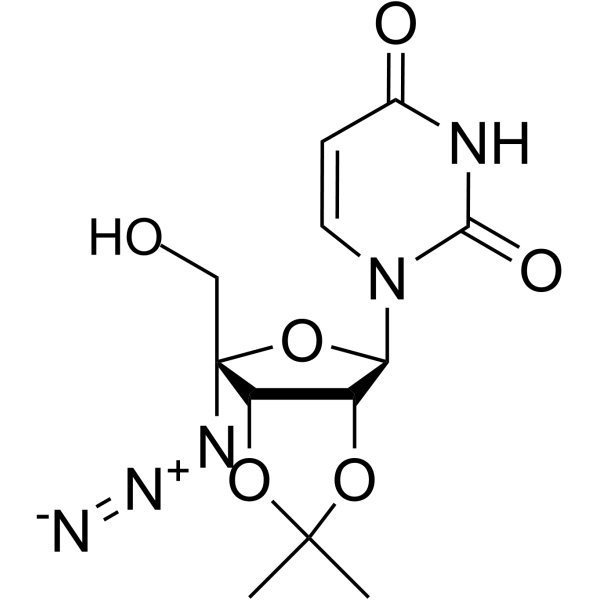
- HY-N0527
-
|
Penta-O-galloyl-β-D-glucose; 1,2,3,4,6-Pentagalloyl glucose
|
JAK
Keap1-Nrf2
Apoptosis
β-catenin
Reactive Oxygen Species (ROS)
E1/E2/E3 Enzyme
|
Neurological Disease
Inflammation/Immunology
Cancer
|
|
Pentagalloylglucose (Penta-O-galloyl-β-D-glucose) is an orally active gallic tannin compound and an inducer of apoptosis and autophagy. Pentagalloglucose induces cell apoptosis and autophagy through the GSK3β/β-catenin pathway. Pentagalloylglucose inhibits UBE2T-mediated p53 ubiquitination, upregulates p53, downregulates RRM1/RRM2 in pancreatic cancer organoids. Pentagalloglucose has antioxidant, anti mutagenic, anti-inflammatory, anticonvulsant, cardioprotective, anti allergic, cholesterol lowering, and anti-tumor activities .
|
-
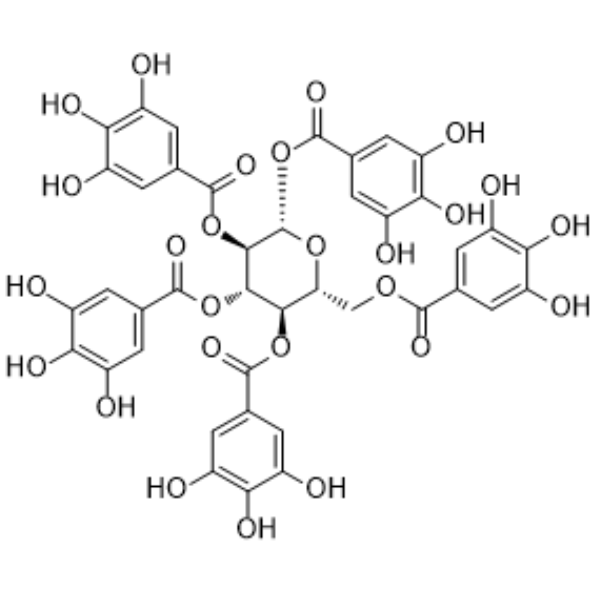
- HY-152782
-
|
|
Nucleoside Antimetabolite/Analog
|
Others
|
|
4’-Azido-2’-deoxy-2’-fluoro-beta-D-arabinouridine is a uridine analogue. Uridine has potential antiepileptic effects, and its analogs can be used to study anticonvulsant and anxiolytic activities, as well as to develop new antihypertensive agents . 4’-Azido-2’-deoxy-2’-fluoro-beta-D-arabinouridine is a click chemistry reagent, it contains an Azide group and can undergo copper-catalyzed azide-alkyne cycloaddition reaction (CuAAc) with molecules containing Alkyne groups. It can also undergo strain-promoted alkyne-azide cycloaddition (SPAAC) reactions with molecules containing DBCO or BCN groups.
|
-
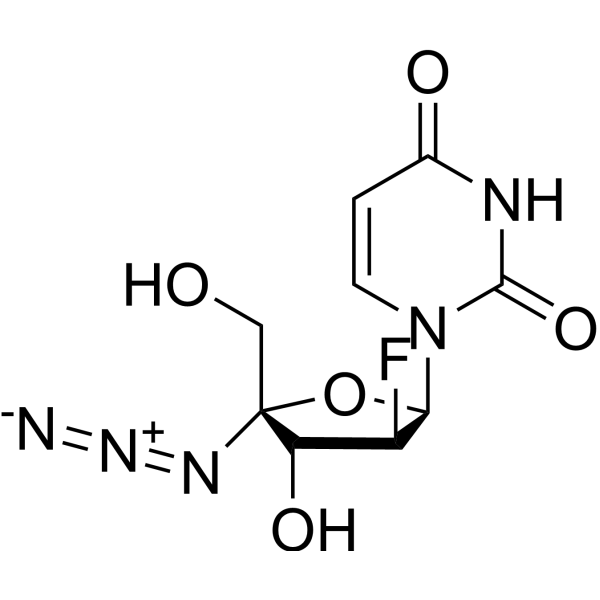
- HY-154357
-
|
|
Nucleoside Antimetabolite/Analog
|
Cancer
|
|
4’-alpha-C-Azido-2’,3’-bis(O-t-butyldimethylsilyl)uridine is a uridine analog. Uridine has potential antiepileptic effects, and its analogs can be used to study anticonvulsant and anxiolytic activities, as well as to develop new antihypertensive agents . 4’-alpha-C-Azido-2’,3’-bis(O-t-butyldimethylsilyl)uridine is a click chemistry reagent, it contains an Azide group and can undergo copper-catalyzed azide-alkyne cycloaddition reaction (CuAAc) with molecules containing Alkyne groups. It can also undergo strain-promoted alkyne-azide cycloaddition (SPAAC) reactions with molecules containing DBCO or BCN groups.
|
-
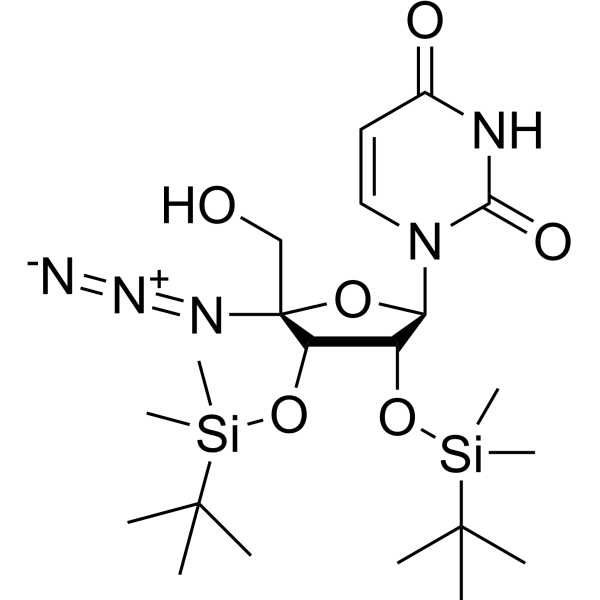
- HY-W377455
-
|
|
Nucleoside Antimetabolite/Analog
|
Others
|
|
5-Fluoro-1-((2R,3S,4R,5R)-3-fluoro-4-hydroxy-5-(hydroxymethyl)tetrahydrofuran-2-yl)pyrimidine-2,4(1H,3H)-dione (2',5-difluoro-2'-deoxy-1-arabinosyluracil) is a uridine analogue. Uridine has potential antiepileptic effects, and its analogs can be used to study anticonvulsant and anxiolytic activities, as well as to develop new antihypertensive agents .
|
-
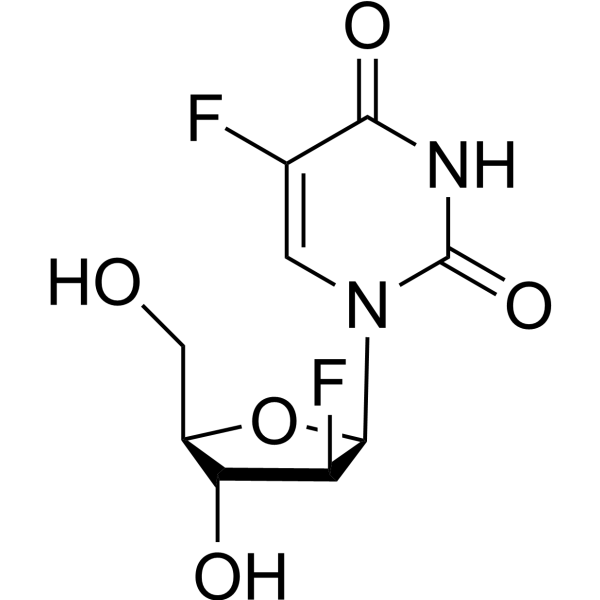
- HY-103506R
-
|
NO-711 hydrochloride (Standard)
|
Reference Standards
GABA Receptor
|
Neurological Disease
|
|
NNC-711 (Standard) is the analytical standard of NNC-711 (HY-103506). This product is intended for research and analytical applications. NNC-711 (NO-711 hydrochloride) is a potent and selective inhibitor of GAT-1 (GABA transporter 1) with IC50 values of 0.04, 0.38, 171, 1700, 349, 622 μM for human GAT-1, rat GAT-1, rGAT-2, hGAT-3, rGAT-3, hBGT-3, respectively. NNC-711 has anticonvulsant and analgesic effect in vivo and exhibits cognition-enhancing activity .
|
-

- HY-N0527R
-
|
Penta-O-galloyl-β-D-glucose (Standard); 1,2,3,4,6-Pentagalloyl glucose (Standard)
|
Reference Standards
JAK
Keap1-Nrf2
Apoptosis
β-catenin
Reactive Oxygen Species (ROS)
|
Neurological Disease
Inflammation/Immunology
Cancer
|
|
Pentagalloylglucose (Standard) is the analytical standard of Pentagalloylglucose. This product is intended for research and analytical applications. Pentagalloylglucose (Penta-O-galloyl-β-D-glucose) is an orally active gallic tannin compound and an inducer of apoptosis and autophagy. Pentagalloglucose induces cell apoptosis and autophagy through the GSK3β/β-catenin pathway. Pentagalloylglucose inhibits UBE2T-mediated p53 ubiquitination, upregulates p53, downregulates RRM1/RRM2 in pancreatic cancer organoids. Pentagalloglucose has antioxidant, anti mutagenic, anti-inflammatory, anticonvulsant, cardioprotective, anti allergic, cholesterol lowering, and anti-tumor activities .
|
-

- HY-W050162
-
|
TMCA
|
GABA Receptor
5-HT Receptor
|
Neurological Disease
|
|
(E)-3,4,5-Trimethoxycinnamic acid (TMCA) is a cinnamic acid substituted by multi-methoxy groups. (E)-3,4,5-Trimethoxycinnamic acid is an orally active and potent GABAA/BZ receptor agonist. (E)-3,4,5-Trimethoxycinnamic exhibits favourable binding affinity to 5-HT2C and 5-HT1A receptor, with IC50 values of 2.5 and 7.6 μM, respectively. (E)-3,4,5-Trimethoxycinnamic acid shows anticonvulsant and sedative activity. (E)-3,4,5-Trimethoxycinnamic acid can be used for the research of insomnia, headache and epilepsy .
|
-
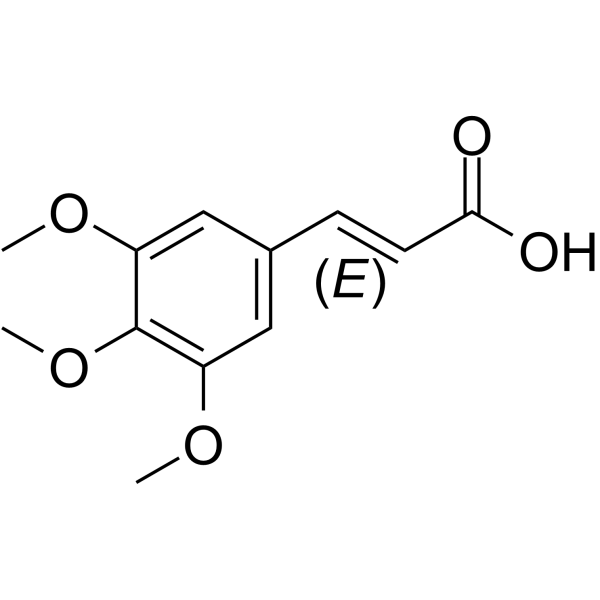
- HY-W013150
-
|
|
GABA Receptor
|
Neurological Disease
|
|
Alpidem, an anxiolytic agent, is an orally active and brain-penetrant GABAA receptor ligand, binds to α1β2γ2 subunit-containing GABAA receptors (IC50 of 17 nM) over α5β2γ2 subunit-containing GABAA receptors (IC50 of >10 μM). Alpidem modulates calcium-induced mitochondrial permeability transition, induces glutathione depletion and hepatocyte necrosis, potentiates TNF-α toxicity, inhibits marble-burying and locomotor activity, enhances stressed rodent feeding behavior, and exerts anticonvulsant effects. Alpidem can be used for the research of anxiety, anxiety disorders, and convulsions .
|
-
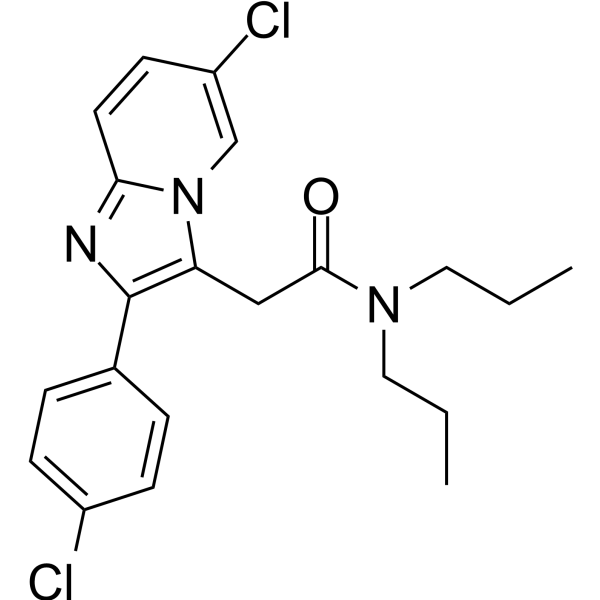
- HY-N0444
-
|
|
Reactive Oxygen Species (ROS)
|
Inflammation/Immunology
|
|
Rubiadin is an orally active polyketide-derived compound and free radical scavenger that inhibits the activation of the NF-κB pathway. Rubiadin inhibits osteoclast formation, bone resorption, lipid peroxidation, HBV DNA replication and cancer cell proliferation; reduces pro-inflammatory cytokine levels; induces cancer cell apoptosis; and possesses antifungal, antimalarial, antibacterial and anticonvulsant activities. Rubiadin can be used in the research of osteoporosis, acute inflammation, chronic inflammation, carbon tetrachloride-induced liver injury, Alzheimer's disease, breast cancer, iron overload disorders, hepatitis B virus infection, colon cancer, liver cancer, T-lymphocytic leukemia, cervical cancer, diabetic nephropathy, epileptic seizures, fungal infections, malaria and bacterial infections .
|
-
- HY-101392
-
Harmane
1 Publications Verification
|
Imidazoline Receptor
Monoamine Oxidase
Adrenergic Receptor
nAChR
GABA Receptor
Opioid Receptor
|
Neurological Disease
Inflammation/Immunology
|
|
Harmane is a benzodiazepine receptor inhibitor (IC50=7 μM), with IC50 values for mACh, Opioid Receptor, MAO-A/B, and α2-adrenergic receptor of 24 μM, 2.8 μM, 0.5 μM, 5 μM, and 18 μM, respectively. Harmane inhibits the I1 imidazoline receptor (IC50 = 30 nM) to reduce blood pressure and has antidepressant, anti-anxiety, anticonvulsant, and analgesic effects. Harmane inhibits dopamine biosynthesis by decreasing tyrosine hydroxylase (TH) activity and enhancing L-DOPA-induced cytotoxicity in PC12 cells. Additionally, Harmane can increase the mutagenic effect induced by 2-acetylaminofluorene (AAF) .
|
-
- HY-W013150R
-
|
|
Reference Standards
GABA Receptor
|
Neurological Disease
|
|
Alpidem (Standard) is the analytical standard of Alpidem (HY-W013150). This product is intended for research and analytical applications. Alpidem, an anxiolytic agent, is an orally active and brain-penetrant GABAA receptor ligand, binds to α1β2γ2 subunit-containing GABAA receptors (IC50 of 17 nM) over α5β2γ2 subunit-containing GABAA receptors (IC50 of >10 μM). Alpidem modulates calcium-induced mitochondrial permeability transition, induces glutathione depletion and hepatocyte necrosis, potentiates TNF-α toxicity, inhibits marble-burying and locomotor activity, enhances stressed rodent feeding behavior, and exerts anticonvulsant effects. Alpidem can be used for the research of anxiety, anxiety disorders, and convulsions.
|
-

- HY-101392A
-
|
|
Imidazoline Receptor
Monoamine Oxidase
Adrenergic Receptor
nAChR
GABA Receptor
Opioid Receptor
|
Neurological Disease
Inflammation/Immunology
|
|
Harmane hydrochloride is a benzodiazepine receptor inhibitor (IC50=7 μM), with IC50 values for mACh, Opioid Receptor, MAO-A/B, and α2-adrenergic receptor of 24 μM, 2.8 μM, 0.5 μM, 5 μM, and 18 μM, respectively. Harmane hydrochloride inhibits the I1 imidazoline receptor (IC50 = 30 nM) to reduce blood pressure and has antidepressant, anti-anxiety, anticonvulsant, and analgesic effects. Harmane hydrochloride inhibits dopamine biosynthesis by decreasing tyrosine hydroxylase (TH) activity and enhancing L-DOPA-induced cytotoxicity in PC12 cells. Additionally, Harmane hydrochloride can increase the mutagenic effect induced by 2-acetylaminofluorene (AAF) .
|
-

- HY-W013150S
-
|
|
Isotope-Labeled Compounds
GABA Receptor
|
Neurological Disease
|
|
Alpidem-d14 is the deuterium labeled Alpidem (HY-W013150) . Alpidem, an anxiolytic agent, is an orally active and brain-penetrant GABAA receptor ligand, binds to α1β2γ2 subunit-containing GABAA receptors (IC50 of 17 nM) over α5β2γ2 subunit-containing GABAA receptors (IC50 of >10 μM). Alpidem modulates calcium-induced mitochondrial permeability transition, induces glutathione depletion and hepatocyte necrosis, potentiates TNF-α toxicity, inhibits marble-burying and locomotor activity, enhances stressed rodent feeding behavior, and exerts anticonvulsant effects. Alpidem can be used for the research of anxiety, anxiety disorders, and convulsions.
|
-

- HY-12882
-
|
NP-120; RC-61-91
|
iGluR
Adrenergic Receptor
Potassium Channel
Calcium Channel
Influenza Virus
|
Infection
Neurological Disease
|
|
Ifenprodil (NP-120), a cerebral vasodilator, is a noncompetitive NMDA receptor antagonist. Ifenprodil exerts high affinity at NR1A/NR2B receptors (IC50=0.34 μM) over 400-fold than at NR1A/NR2A receptors (IC50=146 μM) . Ifenprodil is an α1 adrenergic receptor antagonist. Ifenprodil inhibits GIRK (Kir3), reduces inward currents through the basal GIRK activity. Ifenprodil has reliable inhibitory effects against A/H1N1 strains (EC50 of 6.6 µM). Ifenprodil has neuroprotective, anticonvulsant and antinociceptive effects. Ifenprodil can be used for the study of cerebrovascular diseases and peripheral arterial obliterative disease .
|
-

- HY-W700834
-
|
|
Isotope-Labeled Compounds
|
Neurological Disease
Inflammation/Immunology
|
|
Harman-d3 is deuterium labeled Harmane. Harmane is a benzodiazepine receptor inhibitor (IC50=7 μM), with IC50 values for mACh, Opioid Receptor, MAO-A/B, and α2-adrenergic receptor of 24 μM, 2.8 μM, 0.5 μM, 5 μM, and 18 μM, respectively. Harmane also inhibits haloperidol and serotonin, with IC50 values of 163 μM and 101 μM, respectively. Harmane inhibits the I1 imidazoline receptor (IC50=30 nM) to reduce blood pressure and has antidepressant, anti-anxiety, anticonvulsant, and analgesic effects. Harmane inhibits dopamine biosynthesis by decreasing tyrosine hydroxylase (TH) activity and enhancing L-DOPA-induced cytotoxicity in PC12 cells. Additionally, Harmane can increase the mutagenic effect induced by 2-acetylaminofluorene (AAF) .
|
-

- HY-W777360
-
|
|
Isotope-Labeled Compounds
Adrenergic Receptor
Monoamine Oxidase
nAChR
Opioid Receptor
Imidazoline Receptor
GABA Receptor
|
Neurological Disease
Inflammation/Immunology
|
|
Harman- 13C2, 15N is 13C and 15N labeled Harmane. Harmane is a benzodiazepine receptor inhibitor (IC50=7 μM), with IC50 values for mACh, Opioid Receptor, MAO-A/B, and α2-adrenergic receptor of 24 μM, 2.8 μM, 0.5 μM, 5 μM, and 18 μM, respectively. Harmane also inhibits haloperidol and serotonin, with IC50 values of 163 μM and 101 μM, respectively. Harmane inhibits the I1 imidazoline receptor (IC50=30 nM) to reduce blood pressure and has antidepressant, anti-anxiety, anticonvulsant, and analgesic effects. Harmane inhibits dopamine biosynthesis by decreasing tyrosine hydroxylase (TH) activity and enhancing L-DOPA-induced cytotoxicity in PC12 cells. Additionally, Harmane can increase the mutagenic effect induced by 2-acetylaminofluorene (AAF) .
|
-

- HY-12882A
-
|
NP-120 tartrate; RC-61-91 tartrate
|
iGluR
Adrenergic Receptor
Potassium Channel
Calcium Channel
Influenza Virus
|
Infection
Neurological Disease
|
|
Ifenprodil (NP-120) tartrate, a cerebral vasodilator, is a noncompetitive NMDA receptor antagonist. Ifenprodil tartrate exerts high affinity at NR1A/NR2B receptors (IC50=0.34 μM) over 400-fold than at NR1A/NR2A receptors (IC50=146 μM) . Ifenprodil tartrate is an α1 adrenergic receptor antagonist. Ifenprodil tartrate inhibits GIRK (Kir3), reduces inward currents through the basal GIRK activity. Ifenprodil tartrate has reliable inhibitory effects against A/H1N1 strains (EC50 of 6.6 µM). Ifenprodil tartrate has neuroprotective, anticonvulsant and antinociceptive effects. Ifenprodil tartrate can be used for the study of cerebrovascular diseases and peripheral arterial obliterative disease .
|
-
- HY-N4267
-
|
|
Calcium Channel
Platelet-activating Factor Receptor (PAFR)
UGT
Leukotriene Receptor
TNF Receptor
PGE synthase
Interleukin Related
|
Cardiovascular Disease
Infection
Inflammation/Immunology
|
|
Yangambin is a PAF receptor antagonist and UGT1A1/UGT1A3 inhibitor, with an IC50 of 29.7 μM and a Ki of 17.1 μM against human UGT1A1, and an IC50 of 56.5 μM and a Ki of 66.8 μM against human UGT1A3. Yangambin blocks PAF-mediated responses, inhibits LTB4-mediated neutrophil infiltration, and suppresses inflammatory events and anaphylactic contraction. Yangambin acts as a central nervous system inhibitor to reduce spontaneous activity, and also exhibits analgesic, anticonvulsant, antileishmanial, vasodilatory and hypotensive effects. Yangambin blocks voltage-gated Ca 2+ channels, reduces the production of NO, TNF-α, IL-6 and PGE2 in cells, increases the production of IL-10, and exerts a protective effect against cardiovascular injury. Yangambin can be used in research related to allergies, cutaneous leishmaniasis, central nervous system diseases and cardiovascular diseases .
|
-
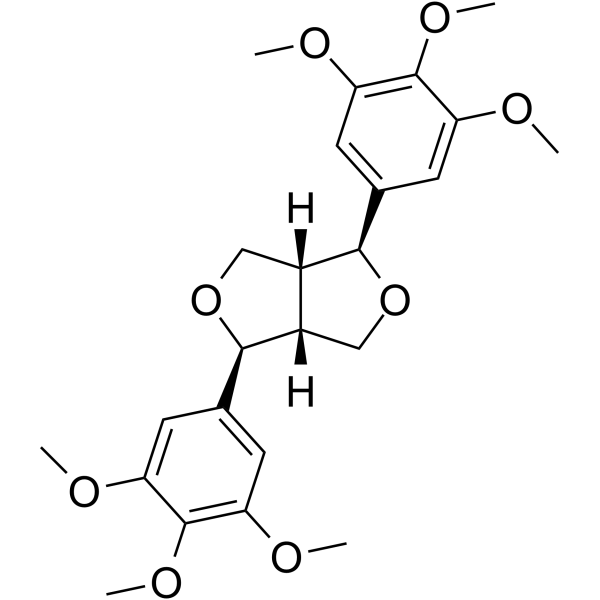
| Cat. No. |
Product Name |
Target |
Research Area |
-
- HY-P1285
-
|
Con-R
|
iGluR
|
Neurological Disease
|
|
Conantokin R (Con-R) is an NMDA receptor peptide antagonist with an IC50 of 93 nM. Conantokin R binds Zn 2+ and Mg 2+ with Kds of 0.15 μM and 6.5 μM, respectively. Conantokin R shows anticonvulsant activity .
|
| Cat. No. |
Product Name |
Category |
Target |
Chemical Structure |
-
- HY-N0219
-
-
-
- HY-N0527
-
|
Penta-O-galloyl-β-D-glucose; 1,2,3,4,6-Pentagalloyl glucose
|
Infection
other families
Classification of Application Fields
Anti-aging
Phenols
Polyphenols
Plants
Disease Research Fields
Source Classification
|
JAK
Keap1-Nrf2
Apoptosis
β-catenin
Reactive Oxygen Species (ROS)
E1/E2/E3 Enzyme
|
|
Pentagalloylglucose (Penta-O-galloyl-β-D-glucose) is an orally active gallic tannin compound and an inducer of apoptosis and autophagy. Pentagalloglucose induces cell apoptosis and autophagy through the GSK3β/β-catenin pathway. Pentagalloylglucose inhibits UBE2T-mediated p53 ubiquitination, upregulates p53, downregulates RRM1/RRM2 in pancreatic cancer organoids. Pentagalloglucose has antioxidant, anti mutagenic, anti-inflammatory, anticonvulsant, cardioprotective, anti allergic, cholesterol lowering, and anti-tumor activities .
|
-
-
- HY-D0803
-
|
|
Quinones
Classification of Application Fields
Nigella sativa L.
Ranunculaceae
Benzene Quinones
Plants
Inflammation/Immunology
Disease Research Fields
|
Apoptosis
VEGFR
PI3K
Akt
|
|
Thymoquinone is an orally active natural product isolated from N. sativa Thymoquinone down-regulates the VEGFR2-PI3K-Akt pathway. Thymoquinone has antioxidant, anti-inflammatory, anticancer, antiviral, anticonvulsant, antifungal, antiviral, antiangiogenic activity and hepatoprotective effects. Thymoquinone can be used to study Alzheimer's disease, cancer, cardiovascular disease, infectious disease and inflammation .
|
-
-
- HY-101392
-
Harmane
1 Publications Verification
|
Alkaloids
other families
Pyridine Alkaloids
Plants
Indole Alkaloids
Source Classification
|
Imidazoline Receptor
Monoamine Oxidase
Adrenergic Receptor
nAChR
GABA Receptor
Opioid Receptor
|
|
Harmane is a benzodiazepine receptor inhibitor (IC50=7 μM), with IC50 values for mACh, Opioid Receptor, MAO-A/B, and α2-adrenergic receptor of 24 μM, 2.8 μM, 0.5 μM, 5 μM, and 18 μM, respectively. Harmane inhibits the I1 imidazoline receptor (IC50 = 30 nM) to reduce blood pressure and has antidepressant, anti-anxiety, anticonvulsant, and analgesic effects. Harmane inhibits dopamine biosynthesis by decreasing tyrosine hydroxylase (TH) activity and enhancing L-DOPA-induced cytotoxicity in PC12 cells. Additionally, Harmane can increase the mutagenic effect induced by 2-acetylaminofluorene (AAF) .
|
-
-
- HY-114489A
-
-
-
- HY-N6778
-
-
-
- HY-W013507
-
-
-
- HY-113320
-
-
-
- HY-12882A
-
-
-
- HY-B1229
-
-
-
- HY-N0444
-
|
|
Quinones
Structural Classification
Classification of Application Fields
Anthraquinones
Rubiaceae
Phenols
Polyphenols
Plants
Morinda officinalis How
Inflammation/Immunology
Disease Research Fields
Source Classification
|
Reactive Oxygen Species (ROS)
|
|
Rubiadin is an orally active polyketide-derived compound and free radical scavenger that inhibits the activation of the NF-κB pathway. Rubiadin inhibits osteoclast formation, bone resorption, lipid peroxidation, HBV DNA replication and cancer cell proliferation; reduces pro-inflammatory cytokine levels; induces cancer cell apoptosis; and possesses antifungal, antimalarial, antibacterial and anticonvulsant activities. Rubiadin can be used in the research of osteoporosis, acute inflammation, chronic inflammation, carbon tetrachloride-induced liver injury, Alzheimer's disease, breast cancer, iron overload disorders, hepatitis B virus infection, colon cancer, liver cancer, T-lymphocytic leukemia, cervical cancer, diabetic nephropathy, epileptic seizures, fungal infections, malaria and bacterial infections .
|
-
-
- HY-W010513
-
-
-
- HY-B1427
-
-
-
- HY-101392A
-
|
|
Apocynaceae
Alkaloids
Other Alkaloids
Plants
Rauwolfia canescens
Source Classification
|
Imidazoline Receptor
Monoamine Oxidase
Adrenergic Receptor
nAChR
GABA Receptor
Opioid Receptor
|
|
Harmane hydrochloride is a benzodiazepine receptor inhibitor (IC50=7 μM), with IC50 values for mACh, Opioid Receptor, MAO-A/B, and α2-adrenergic receptor of 24 μM, 2.8 μM, 0.5 μM, 5 μM, and 18 μM, respectively. Harmane hydrochloride inhibits the I1 imidazoline receptor (IC50 = 30 nM) to reduce blood pressure and has antidepressant, anti-anxiety, anticonvulsant, and analgesic effects. Harmane hydrochloride inhibits dopamine biosynthesis by decreasing tyrosine hydroxylase (TH) activity and enhancing L-DOPA-induced cytotoxicity in PC12 cells. Additionally, Harmane hydrochloride can increase the mutagenic effect induced by 2-acetylaminofluorene (AAF) .
|
-
-
- HY-N9502
-
-
-
- HY-W013507R
-
-
-
- HY-N4267
-
|
|
Cardiovascular Disease
Structural Classification
other families
Classification of Application Fields
Lignans
Phenylpropanoids
Plants
Disease Research Fields
Source Classification
|
Calcium Channel
Platelet-activating Factor Receptor (PAFR)
UGT
Leukotriene Receptor
TNF Receptor
PGE synthase
Interleukin Related
|
|
Yangambin is a PAF receptor antagonist and UGT1A1/UGT1A3 inhibitor, with an IC50 of 29.7 μM and a Ki of 17.1 μM against human UGT1A1, and an IC50 of 56.5 μM and a Ki of 66.8 μM against human UGT1A3. Yangambin blocks PAF-mediated responses, inhibits LTB4-mediated neutrophil infiltration, and suppresses inflammatory events and anaphylactic contraction. Yangambin acts as a central nervous system inhibitor to reduce spontaneous activity, and also exhibits analgesic, anticonvulsant, antileishmanial, vasodilatory and hypotensive effects. Yangambin blocks voltage-gated Ca 2+ channels, reduces the production of NO, TNF-α, IL-6 and PGE2 in cells, increases the production of IL-10, and exerts a protective effect against cardiovascular injury. Yangambin can be used in research related to allergies, cutaneous leishmaniasis, central nervous system diseases and cardiovascular diseases .
|
-
-
- HY-D0803R
-
|
|
Quinones
Structural Classification
Nigella sativa L.
Ranunculaceae
Benzene Quinones
Plants
|
Reference Standards
Apoptosis
VEGFR
PI3K
Akt
|
|
Thymoquinone (Standard) is the analytical standard of Thymoquinone. This product is intended for research and analytical applications. Thymoquinone is an orally active natural product isolated from N. sativa Thymoquinone down-regulates the VEGFR2-PI3K-Akt pathway. Thymoquinone has antioxidant, anti-inflammatory, anticancer, antiviral, anticonvulsant, antifungal, antiviral, antiangiogenic activity and hepatoprotective effects. Thymoquinone can be used to study Alzheimer's disease, cancer, cardiovascular disease, infectious disease and inflammation .
|
-
-
- HY-114489B
-
-
-
- HY-N0219R
-
-
-
- HY-N0527R
-
|
Penta-O-galloyl-β-D-glucose (Standard); 1,2,3,4,6-Pentagalloyl glucose (Standard)
|
Structural Classification
other families
Phenols
Polyphenols
Plants
Source Classification
|
Reference Standards
JAK
Keap1-Nrf2
Apoptosis
β-catenin
Reactive Oxygen Species (ROS)
|
|
Pentagalloylglucose (Standard) is the analytical standard of Pentagalloylglucose. This product is intended for research and analytical applications. Pentagalloylglucose (Penta-O-galloyl-β-D-glucose) is an orally active gallic tannin compound and an inducer of apoptosis and autophagy. Pentagalloglucose induces cell apoptosis and autophagy through the GSK3β/β-catenin pathway. Pentagalloylglucose inhibits UBE2T-mediated p53 ubiquitination, upregulates p53, downregulates RRM1/RRM2 in pancreatic cancer organoids. Pentagalloglucose has antioxidant, anti mutagenic, anti-inflammatory, anticonvulsant, cardioprotective, anti allergic, cholesterol lowering, and anti-tumor activities .
|
-
-
- HY-N9502R
-
-
-
- HY-N16538
-
-
| Cat. No. |
Product Name |
Chemical Structure |
-
- HY-B0688S
-
|
|
|
Dapsone-d8 is a deuterium labeled Dapsone. Dapsone is an orally active and blood-brain penetrant sulfonamide antibiotic with antibacterial, antigenic and anti-inflammatory activities . Dapsone?exerts effective antileprosy activity?and inhibits folate synthesis in cell extracts of?M. leprae. Dapsone can be used as an anticonvulsant and also in the research of skin and glioblastoma diseases .
|
-
-
- HY-113320S
-
|
|
|
Etiocholanolone-d5 is the deuterium labeled Etiocholanolone. Etiocholanolone (5β-Androsterone) is the excreted metabolite of testosterone and has anticonvulsant activity . Etiocholanolone is a less potent?neurosteroid positive allosteric modulator?(PAM) of the GABAA?receptor than its?enantiomer form .
|
-
-
- HY-W722128
-
|
|
|
Olivetolic acid-d9 is the deuterium labeled Olivetolic acid (HY-W090292). Olivetolic acid is a biosynthetic precursor of cannabinol acid (CBGA). Olivetolic acid has anticonvulsant activity .
|
-
-
- HY-113320S1
-
|
|
|
Etiocholanolone-d2 is the deuterium labeled Etiocholanolone. Etiocholanolone (5β-Androsterone) is the excreted metabolite of testosterone and has anticonvulsant activity . Etiocholanolone is a less potent?neurosteroid positive allosteric modulator?(PAM) of the GABAA?receptor than its?enantiomer form .
|
-
-
- HY-B0162S
-
|
|
|
Ivabradine-d6 is the deuterium labeled Ivabradine . Ivabradine is a potent and orally active HCN (hyperpolarization-activated cyclic nucleotide-gated) channel blocker that inhibits the cardiac pacemaker current (If). Ivabradine reduces dose-dependently heart rate without modification of blood pressure. Ivabradine shows anticonvulsant, anti-ischaemic and anti-anginal activity .
|
-
-
- HY-B0696S
-
|
|
|
Tiagabine-d6 (NO050328-d6) is deuterium labeled Tiagabine. Tiagabine (NO050328; NO328; TGB) is an orally active, highly selective, and reversible GAT-1 inhibitor and anticonvulsant that crosses the blood-brain barrier. By blocking the reuptake of GABA in neurons and glial cells, tiagabine increases extracellular GABA levels to enhance inhibitory signal transduction, thereby exerting multiple activities such as anticonvulsant, neuroprotective, and antioxidant effects. Tiagabine exhibits linear pharmacokinetic properties. Although it is metabolized by CYP3A and has a high protein binding rate, it carries a low risk of cognitive impairment. Tiagabine is widely used in research on related diseases including epilepsy (including refractory partial seizures), alcohol withdrawal symptoms, and Huntington's disease .
|
-
-
- HY-B0696AS
-
|
|
|
Tiagabine-d4 hydrochloride is deuterated labeled Tiagabine hydrochloride (HY-B0696A). Tiagabine hydrochloride (NO050328; NO328; TGB) is an orally active, highly selective, and reversible GAT-1 inhibitor and anticonvulsant that crosses the blood-brain barrier. By blocking the reuptake of GABA in neurons and glial cells, tiagabine increases extracellular GABA levels to enhance inhibitory signal transduction, thereby exerting multiple activities such as anticonvulsant, neuroprotective, and antioxidant effects. Tiagabine hydrochloride exhibits linear pharmacokinetic properties. Although it is metabolized by CYP3A and has a high protein binding rate, it carries a low risk of cognitive impairment. Tiagabine hydrochloride is widely used in research on related diseases including epilepsy (including refractory partial seizures), alcohol withdrawal symptoms, and Huntington's disease .
|
-
-
- HY-W013150S
-
|
|
|
Alpidem-d14 is the deuterium labeled Alpidem (HY-W013150) . Alpidem, an anxiolytic agent, is an orally active and brain-penetrant GABAA receptor ligand, binds to α1β2γ2 subunit-containing GABAA receptors (IC50 of 17 nM) over α5β2γ2 subunit-containing GABAA receptors (IC50 of >10 μM). Alpidem modulates calcium-induced mitochondrial permeability transition, induces glutathione depletion and hepatocyte necrosis, potentiates TNF-α toxicity, inhibits marble-burying and locomotor activity, enhances stressed rodent feeding behavior, and exerts anticonvulsant effects. Alpidem can be used for the research of anxiety, anxiety disorders, and convulsions.
|
-
-
- HY-W777360
-
|
|
|
Harman- 13C2, 15N is 13C and 15N labeled Harmane. Harmane is a benzodiazepine receptor inhibitor (IC50=7 μM), with IC50 values for mACh, Opioid Receptor, MAO-A/B, and α2-adrenergic receptor of 24 μM, 2.8 μM, 0.5 μM, 5 μM, and 18 μM, respectively. Harmane also inhibits haloperidol and serotonin, with IC50 values of 163 μM and 101 μM, respectively. Harmane inhibits the I1 imidazoline receptor (IC50=30 nM) to reduce blood pressure and has antidepressant, anti-anxiety, anticonvulsant, and analgesic effects. Harmane inhibits dopamine biosynthesis by decreasing tyrosine hydroxylase (TH) activity and enhancing L-DOPA-induced cytotoxicity in PC12 cells. Additionally, Harmane can increase the mutagenic effect induced by 2-acetylaminofluorene (AAF) .
|
-
-
- HY-W708332
-
|
|
|
3-Methylvaleric acid-d11 is the deuterium labeled 3-Methylvaleric Acid (HY-W010513). 3-Methylvaleric Acid is a branched alkanoic acid. 3-Methylvaleric Acid can be utilized by Pseudomonas citronettotis as a sole carbon source for its growth. 3-Methylvaleric Acid derivatives exhibit anti-hyperalgesic and anticonvulsant activities .
|
-
-
- HY-158252S
-
|
|
|
Tiagabine-d5 (hydrochloride) is deuterium labeled Tiagabine (hydrochloride). Tiagabine hydrochloride (NO050328; NO328; TGB) is an orally active, highly selective, and reversible GAT-1 inhibitor and anticonvulsant that crosses the blood-brain barrier. By blocking the reuptake of GABA in neurons and glial cells, tiagabine increases extracellular GABA levels to enhance inhibitory signal transduction, thereby exerting multiple activities such as anticonvulsant, neuroprotective, and antioxidant effects. Tiagabine hydrochloride exhibits linear pharmacokinetic properties. Although it is metabolized by CYP3A and has a high protein binding rate, it carries a low risk of cognitive impairment. Tiagabine hydrochloride is widely used in research on related diseases including epilepsy (including refractory partial seizures), alcohol withdrawal symptoms, and Huntington's disease .
|
-
-
- HY-B0696S1
-
|
|
|
Tiagabine-d4 (NO050328-d4) is deuterium labeled Tiagabine. Tiagabine (NO050328; NO328; TGB) is an orally active, highly selective, and reversible GAT-1 inhibitor and anticonvulsant that crosses the blood-brain barrier. By blocking the reuptake of GABA in neurons and glial cells, tiagabine increases extracellular GABA levels to enhance inhibitory signal transduction, thereby exerting multiple activities such as anticonvulsant, neuroprotective, and antioxidant effects. Tiagabine exhibits linear pharmacokinetic properties. Although it is metabolized by CYP3A and has a high protein binding rate, it carries a low risk of cognitive impairment. Tiagabine is widely used in research on related diseases including epilepsy (including refractory partial seizures), alcohol withdrawal symptoms, and Huntington's disease .
|
-
-
- HY-W700834
-
|
|
|
Harman-d3 is deuterium labeled Harmane. Harmane is a benzodiazepine receptor inhibitor (IC50=7 μM), with IC50 values for mACh, Opioid Receptor, MAO-A/B, and α2-adrenergic receptor of 24 μM, 2.8 μM, 0.5 μM, 5 μM, and 18 μM, respectively. Harmane also inhibits haloperidol and serotonin, with IC50 values of 163 μM and 101 μM, respectively. Harmane inhibits the I1 imidazoline receptor (IC50=30 nM) to reduce blood pressure and has antidepressant, anti-anxiety, anticonvulsant, and analgesic effects. Harmane inhibits dopamine biosynthesis by decreasing tyrosine hydroxylase (TH) activity and enhancing L-DOPA-induced cytotoxicity in PC12 cells. Additionally, Harmane can increase the mutagenic effect induced by 2-acetylaminofluorene (AAF) .
|
-
| Cat. No. |
Product Name |
|
Classification |
-
- HY-152782
-
|
|
|
Azide
|
|
4’-Azido-2’-deoxy-2’-fluoro-beta-D-arabinouridine is a uridine analogue. Uridine has potential antiepileptic effects, and its analogs can be used to study anticonvulsant and anxiolytic activities, as well as to develop new antihypertensive agents . 4’-Azido-2’-deoxy-2’-fluoro-beta-D-arabinouridine is a click chemistry reagent, it contains an Azide group and can undergo copper-catalyzed azide-alkyne cycloaddition reaction (CuAAc) with molecules containing Alkyne groups. It can also undergo strain-promoted alkyne-azide cycloaddition (SPAAC) reactions with molecules containing DBCO or BCN groups.
|
-
- HY-152476
-
|
|
|
Alkynes
|
|
3’-β-C-Ethynyluridine is a uridine analog. Uridine has potential antiepileptic effects, and its analogs can be used to study anticonvulsant and anxiolytic activities, as well as to develop new antihypertensive agents . 3’-β-C-Ethynyluridine is a click chemistry reagent, it contains an Alkyne group and can undergo copper-catalyzed azide-alkyne cycloaddition (CuAAc) with molecules containing Azide groups.
|
-
- HY-154736
-
|
|
|
Alkynes
|
|
N3-(Butyn-3-yl)uridine is a uridine analog. Uridine has potential antiepileptic effects, and its analogs can be used to study anticonvulsant and anxiolytic activities, as well as to develop new antihypertensive agents . N3-(Butyn-3-yl)uridine is a click chemistry reagent, it contains an Alkyne group and can undergo copper-catalyzed azide-alkyne cycloaddition (CuAAc) with molecules containing Azide groups.
|
-
- HY-152985
-
|
|
|
Azide
|
|
6-Chloro-N1-(trimethylsilylethoxymethyl)pseudouridine is a uridine analog. Uridine has potential antiepileptic effects, and its analogs can be used to study anticonvulsant and anxiolytic activities, as well as to develop new antihypertensive agents . 3’-Azido-3’-deoxy-4-deoxyuridine is a click chemistry reagent, it contains an Azide group and can undergo copper-catalyzed azide-alkyne cycloaddition reaction (CuAAc) with molecules containing Alkyne groups. It can also undergo strain-promoted alkyne-azide cycloaddition (SPAAC) reactions with molecules containing DBCO or BCN groups.
|
-
- HY-154590
-
|
|
|
Azide
|
|
2’,3’-Di-O-isopropylidene-4’-alpha-C-azidouridine is a uridine analog. Uridine has potential antiepileptic effects, and its analogs can be used to study anticonvulsant and anxiolytic activities, as well as to develop new antihypertensive agents . 2’,3’-Di-O-isopropylidene-4’-alpha-C-azidouridine is a click chemistry reagent, it contains an Azide group and can undergo copper-catalyzed azide-alkyne cycloaddition reaction (CuAAc) with molecules containing Alkyne groups. It can also undergo strain-promoted alkyne-azide cycloaddition (SPAAC) reactions with molecules containing DBCO or BCN groups.
|
-
- HY-154357
-
|
|
|
Azide
|
|
4’-alpha-C-Azido-2’,3’-bis(O-t-butyldimethylsilyl)uridine is a uridine analog. Uridine has potential antiepileptic effects, and its analogs can be used to study anticonvulsant and anxiolytic activities, as well as to develop new antihypertensive agents . 4’-alpha-C-Azido-2’,3’-bis(O-t-butyldimethylsilyl)uridine is a click chemistry reagent, it contains an Azide group and can undergo copper-catalyzed azide-alkyne cycloaddition reaction (CuAAc) with molecules containing Alkyne groups. It can also undergo strain-promoted alkyne-azide cycloaddition (SPAAC) reactions with molecules containing DBCO or BCN groups.
|
| Cat. No. |
Product Name |
|
Classification |
-
- HY-152358
-
|
|
|
Nucleoside Analogs
Uridine
|
|
N3-Methyl-2’-O-methyluridine is a uridine analogue. Uridine has potential antiepileptic effects, and its analogs can be used to study anticonvulsant and anxiolytic activities, as well as to develop new antihypertensive agents .
|
-
- HY-134337
-
|
|
|
Phosphoramidites
Uracil
|
|
5'-O-DMTr-3'-O-methyl uridine-3'-CED-phosphoramidite is a uridine analog. Uridine has potential antiepileptic effects, and its analogs can be used to study anticonvulsant and anxiolytic activities, as well as to develop new antihypertensive agents .
|
-
- HY-152732
-
|
|
|
Nucleoside Analogs
Uridine
|
|
6-Methyluridine is a uridine analogue. Uridine has potential antiepileptic effects, and its analogs can be used to study anticonvulsant and anxiolytic activities, as well as to develop new antihypertensive agents .
|
-
- HY-154285
-
|
|
|
Nucleoside Analogs
Uridine
|
|
3’-O-(2-Methoxyethyl) uridine is a uridine analog. Uridine has potential antiepileptic effects, and its analogs can be used to study anticonvulsant and anxiolytic activities, as well as to develop new antihypertensive agents .
|
-
- HY-154466
-
|
|
|
Nucleoside Analogs
Uridine
|
|
5’-O-(4,4’-Dimethoxytrityl)-3’-O-methyluridine is a uridine analog. Uridine has potential antiepileptic effects, and its analogs can be used to study anticonvulsant and anxiolytic activities, as well as to develop new antihypertensive agents .
|
-
- HY-48973
-
|
|
|
Phosphoramidites
Uracil
|
|
2'-Fluoro-2'-deoxy-ara-U-3'-phosphoramidite is a uridine analog. Uridine has potential antiepileptic effects, and its analogs can be used to study anticonvulsant and anxiolytic activities, as well as to develop new antihypertensive agents .
|
-
- HY-154358
-
|
|
|
Nucleoside Analogs
Uridine
|
|
4’-alpha-C-Allyl-2’,3’-bis(O-t-butyldimethylsilyl) uridine is a uridine analog. Uridine has potential antiepileptic effects, and its analogs can be used to study anticonvulsant and anxiolytic activities, as well as to develop new antihypertensive agents .
|
-
- HY-154492
-
|
|
|
Nucleoside Analogs
Uridine
|
|
2’,3’-Bis(O-t-butyldimethylsilyl)-4’,5’-didehydro-5’-deoxyuridine is a uridine analog. Uridine has potential antiepileptic effects, and its analogs can be used to study anticonvulsant and anxiolytic activities, as well as to develop new antihypertensive agents .
|
-
- HY-154582
-
|
|
|
Nucleoside Analogs
Uridine
|
|
5-Naphthyl-beta-methylaminocarbony-3’-O-acetyl-2’-O-methyl-5’-O-DMTr-uridine is a uridine analog. Uridine has potential antiepileptic effects, and its analogs can be used to study anticonvulsant and anxiolytic activities, as well as to develop new antihypertensive agents .
|
-
- HY-152782
-
|
|
|
Nucleoside Analogs
Uridine
|
|
4’-Azido-2’-deoxy-2’-fluoro-beta-D-arabinouridine is a uridine analogue. Uridine has potential antiepileptic effects, and its analogs can be used to study anticonvulsant and anxiolytic activities, as well as to develop new antihypertensive agents . 4’-Azido-2’-deoxy-2’-fluoro-beta-D-arabinouridine is a click chemistry reagent, it contains an Azide group and can undergo copper-catalyzed azide-alkyne cycloaddition reaction (CuAAc) with molecules containing Alkyne groups. It can also undergo strain-promoted alkyne-azide cycloaddition (SPAAC) reactions with molecules containing DBCO or BCN groups.
|
-
- HY-W020098
-
|
|
|
Nucleoside Analogs
Uridine
|
|
2'-C-methyluridine is a uridine analog. Uridine has potential antiepileptic effects, and its analogs can be used to study anticonvulsant and anxiolytic activities, as well as to develop new antihypertensive agents .
|
-
- HY-154488
-
|
|
|
Nucleoside Analogs
Uridine
|
|
3′-O-[(1,1-Dimethylethyl)dimethylsilyl]-2′-O-methyluridine is a uridine analog. Uridine has potential antiepileptic effects, and its analogs can be used to study anticonvulsant and anxiolytic activities, as well as to develop new antihypertensive agents .
|
-
- HY-154517
-
|
|
|
Nucleoside Analogs
Uridine
|
|
N3-Cyanoethyl-5’-O-(4,4’-dimethoxytrityl)-2’-O-methyluridine is a uridine analog. Uridine has potential antiepileptic effects, and its analogs can be used to study anticonvulsant and anxiolytic activities, as well as to develop new antihypertensive agents .
|
-
- HY-152755
-
|
|
|
Nucleoside Analogs
Uridine
|
|
4’-Cyanouridine is a uridine analogue. Uridine has potential antiepileptic effects, and its analogs can be used to study anticonvulsant and anxiolytic activities, as well as to develop new antihypertensive agents .
|
-
- HY-152764
-
|
|
|
Nucleoside Analogs
Uridine
|
|
4’-α-C-Methyluridine is a uridine analogue. Uridine has potential antiepileptic effects, and its analogs can be used to study anticonvulsant and anxiolytic activities, as well as to develop new antihypertensive agents .
|
-
- HY-152777
-
|
|
|
Nucleoside Analogs
Uridine
|
|
5’(R)-C-Methyluridine is a uridine analogue. Uridine has potential antiepileptic effects, and its analogs can be used to study anticonvulsant and anxiolytic activities, as well as to develop new antihypertensive agents .
|
-
- HY-152299
-
|
|
|
Nucleoside Analogs
Uridine
|
|
5-(t-Butyloxycarbonylmethoxy)uridine is a uridine analogue. Uridine has potential antiepileptic effects, and its analogs can be used to study anticonvulsant and anxiolytic activities, as well as to develop new antihypertensive agents .
|
-
- HY-154735
-
|
|
|
Nucleoside Analogs
Uridine
|
|
N3-Allyluridine is a uridine analog. Uridine has potential antiepileptic effects, and its analogs can be used to study anticonvulsant and anxiolytic activities, as well as to develop new antihypertensive agents .
|
-
- HY-152388
-
|
|
|
Nucleoside Analogs
Uridine
|
|
3’-beta-C-Methyluridine is a uridine analogue. Uridine has potential antiepileptic effects, and its analogs can be used to study anticonvulsant and anxiolytic activities, as well as to develop new antihypertensive agents .
|
-
- HY-152665
-
|
|
|
Nucleoside Analogs
Uridine
|
|
1-(β-D-Xylofuranosyl)uracil is a uridine analog. Uridine has potential antiepileptic effects, and its analogs can be used to study anticonvulsant and anxiolytic activities, as well as to develop new antihypertensive agents .
|
-
- HY-152970
-
|
|
|
Phosphoramidites
Uracil
|
|
7'-O-DMT-morpholino uracil is a uridine analog. Uridine has potential antiepileptic effects, and its analogs can be used to study anticonvulsant and anxiolytic activities, as well as to develop new antihypertensive agents .
|
-
- HY-154734
-
|
|
|
Nucleoside Analogs
Uridine
|
|
N3-(4-Nitrobenzyl)uridine is a uridine analog. Uridine has potential antiepileptic effects, and its analogs can be used to study anticonvulsant and anxiolytic activities, as well as to develop new antihypertensive agents .
|
-
- HY-W557556
-
|
|
|
Nucleoside Analogs
Uridine
|
|
2',5'-Bis-O-(triphenylMethyl)uridine is a uridine analog. Uridine has potential antiepileptic effects, and its analogs can be used to study anticonvulsant and anxiolytic activities, as well as to develop new antihypertensive agents .
|
-
- HY-152677
-
|
|
|
Nucleoside Analogs
Uridine
|
|
N3-(2-Methoxy)ethyluridine is a uridine analogue. Uridine has potential antiepileptic effects, and its analogs can be used to study anticonvulsant and anxiolytic activities, as well as to develop new antihypertensive agents .
|
-
- HY-154217
-
|
|
|
Nucleoside Analogs
Uridine
|
|
3′,5′-Bis-O-(triphenylmethyl)uridine is a uridine analog. Uridine has potential antiepileptic effects, and its analogs can be used to study anticonvulsant and anxiolytic activities, as well as to develop new antihypertensive agents .
|
-
- HY-152529
-
|
|
|
Nucleoside Analogs
Uridine
|
|
4’-C-Methyl-5-methoxyuridine is a uridine analogue. Uridine has potential antiepileptic effects, and its analogs can be used to study anticonvulsant and anxiolytic activities, as well as to develop new antihypertensive agents .
|
-
- HY-152522
-
|
|
|
Nucleoside Analogs
Uridine
|
|
5-Fluoro-4’-C-methyluridine is a uridine analogue. Uridine has potential antiepileptic effects, and its analogs can be used to study anticonvulsant and anxiolytic activities, as well as to develop new antihypertensive agents .
|
-
- HY-154738
-
|
|
|
Nucleoside Analogs
Uridine
|
|
N3-[3-(tert-Butoxycarbonyl)amino]propyluridine is a uridine analog. Uridine has potential antiepileptic effects, and its analogs can be used to study anticonvulsant and anxiolytic activities, as well as to develop new antihypertensive agents .
|
-
- HY-152783
-
|
|
|
Nucleoside Analogs
Uridine
|
|
5’(R)-C-Methyl-5-fluorouridine is a uridine analogue. Uridine has potential antiepileptic effects, and its analogs can be used to study anticonvulsant and anxiolytic activities, as well as to develop new antihypertensive agents .
|
-
- HY-152969
-
|
|
|
Nucleoside Analogs
Uridine
|
|
6-Chloro-N1-(trimethylsilylethoxymethyl)pseudouridine is a uridine analog. Uridine has potential antiepileptic effects, and its analogs can be used to study anticonvulsant and anxiolytic activities, as well as to develop new antihypertensive agents .
|
-
- HY-152779
-
|
|
|
Nucleoside Analogs
Uridine
|
|
5-Methoxy-5’(R)-C-methyluridine is a uridine analogue. Uridine has potential antiepileptic effects, and its analogs can be used to study anticonvulsant and anxiolytic activities, as well as to develop new antihypertensive agents .
|
-
- HY-152798
-
|
|
|
Nucleoside Analogs
Uridine
|
|
5-Iodo-2’-β-C-methyl uridine is a uridine analogue. Uridine has potential antiepileptic effects, and its analogs can be used to study anticonvulsant and anxiolytic activities, as well as to develop new antihypertensive agents .
|
-
- HY-154737
-
|
|
|
Nucleoside Analogs
Uridine
|
|
N3-[(Pyrid-4-yl)methyl]uridine is a uridine analog. Uridine has potential antiepileptic effects, and its analogs can be used to study anticonvulsant and anxiolytic activities, as well as to develop new antihypertensive agents .
|
-
- HY-152681
-
|
|
|
Nucleoside Analogs
Uridine
|
|
N3-[(Tetrahydro-2-furanyl)methyl]uridine is a uridine analogue. Uridine has potential antiepileptic effects, and its analogs can be used to study anticonvulsant and anxiolytic activities, as well as to develop new antihypertensive agents .
|
-
- HY-152463
-
|
|
|
Nucleoside Analogs
Uridine
|
|
4′-C-2-Propen-1-yluridine is a uridine analog. Uridine has potential antiepileptic effects, and its analogs can be used to study anticonvulsant and anxiolytic activities, as well as to develop new antihypertensive agents .
|
-
- HY-152683
-
|
|
|
Nucleoside Analogs
Uridine
|
|
N3-[(Pyrid-2-yl)methyl]uridine is a uridine analogue. Uridine has potential antiepileptic effects, and its analogs can be used to study anticonvulsant and anxiolytic activities, as well as to develop new antihypertensive agents .
|
-
- HY-152674
-
|
|
|
Nucleoside Analogs
Uridine
|
|
2′-Deoxy-2′-fluoro-5-methoxy-arabinouridine is a uridine analogue. Uridine has potential antiepileptic effects, and its analogs can be used to study anticonvulsant and anxiolytic activities, as well as to develop new antihypertensive agents .
|
-
- HY-154560
-
|
|
|
Nucleoside Analogs
Uridine
|
|
2’,3’,5’-Tri-O-acetyl-N3-methyluridine is a uridine analog. Uridine has potential antiepileptic effects, and its analogs can be used to study anticonvulsant and anxiolytic activities, as well as to develop new antihypertensive agents .
|
-
- HY-152574
-
|
|
|
Nucleoside Analogs
Uridine
|
|
5-Amino-2’-deoxy-2’-O-methyluridine hydrochloride is a uridine analogue. Uridine has potential antiepileptic effects, and its analogs can be used to study anticonvulsant and anxiolytic activities, as well as to develop new antihypertensive agents .
|
-
- HY-154173
-
|
|
|
Nucleoside Analogs
Uridine
|
|
3’-O-(t-Butyldimethylsilyl)-2’-O-(2-methoxyethyl) uridine is a uridine analog. Uridine has potential antiepileptic effects, and its analogs can be used to study anticonvulsant and anxiolytic activities, as well as to develop new antihypertensive agents .
|
-
- HY-154813
-
|
|
|
Nucleoside Analogs
Uridine
|
|
3′,5′-Di-O-acetyl-2′-deoxy-2′-fluorouridine is a uridine analog. Uridine has potential antiepileptic effects, and its analogs can be used to study anticonvulsant and anxiolytic activities, as well as to develop new antihypertensive agents .
|
-
- HY-49199
-
|
|
|
Nucleoside Analogs
Uridine
|
|
2',3',5'-Tri-O-(t-butyldimethylsilyl)-4'-C-hydroxymethyl uridine is a uridine analog. Uridine has potential antiepileptic effects, and its analogs can be used to study anticonvulsant and anxiolytic activities, as well as to develop new antihypertensive agents .
|
-
- HY-152363
-
|
|
|
Nucleoside Analogs
Uridine
|
|
N3-Methyl-2’-O-(2-methoxyethyl)uridine is a uridine analogue. Uridine has potential antiepileptic effects, and its analogs can be used to study anticonvulsant and anxiolytic activities, as well as to develop new antihypertensive agents .
|
-
- HY-154410
-
|
|
|
Phosphoramidites
Uracil
|
|
5’-O-DMT-2’-deoxy-2’-fluoro-β-D-arabinouridine is a uridine analog. Uridine has potential antiepileptic effects, and its analogs can be used to study anticonvulsant and anxiolytic activities, as well as to develop new antihypertensive agents .
|
-
- HY-152691
-
|
|
|
Nucleoside Analogs
Uridine
|
|
2’-Deoxy-2’-fluoro-N3-(n-dodecyl)-beta-D-arabinouridine is a uridine analogue. Uridine has potential antiepileptic effects, and its analogs can be used to study anticonvulsant and anxiolytic activities, as well as to develop new antihypertensive agents .
|
-
- HY-154175
-
|
|
|
Nucleoside Analogs
Uridine
|
|
1-[6-(Diethoxyphosphinyl)-2-O-(2-methoxyethyl)-β-D-ribo-hexofuranosyl]uracil is a uridine analog. Uridine has potential antiepileptic effects, and its analogs can be used to study anticonvulsant and anxiolytic activities, as well as to develop new antihypertensive agents .
|
-
- HY-152792
-
|
|
|
Nucleoside Analogs
Uridine
|
|
2’-Deoxy-2’-fluoro-N3-[(pyrid-2-yl)methyl]uridine is a uridine analogue. Uridine has potential antiepileptic effects, and its analogs can be used to study anticonvulsant and anxiolytic activities, as well as to develop new antihypertensive agents .
|
-
- HY-154552
-
|
|
|
Nucleoside Analogs
Uridine
|
|
2’-O-Acetyl-5’-O-benzoyl-3’-O-(2-methoxyethyl) uridine is a uridine analog. Uridine has potential antiepileptic effects, and its analogs can be used to study anticonvulsant and anxiolytic activities, as well as to develop new antihypertensive agents .
|
-
- HY-154647
-
|
|
|
Nucleoside Analogs
Uridine
|
|
N3-(2S)-[2-(tert-Butoxycarbonyl)amino-3-(tert-butoxy carbonyl)]propyluridine is a uridine analog. Uridine has potential antiepileptic effects, and its analogs can be used to study anticonvulsant and anxiolytic activities, as well as to develop new antihypertensive agents .
|
-
- HY-154652
-
|
|
|
Nucleoside Analogs
|
|
1-(2,3,5-Tri-O-benzoyl-2-C-methyl-β-D-ribofuranosyl)-2,4(1H,3H)-pyrimidinedione is a uridine analog. Uridine has potential antiepileptic effects, and its analogs can be used to study anticonvulsant and anxiolytic activities, as well as to develop new antihypertensive agents .
|
- HY-152476
-
|
|
|
Nucleoside Analogs
Uridine
|
|
3’-β-C-Ethynyluridine is a uridine analog. Uridine has potential antiepileptic effects, and its analogs can be used to study anticonvulsant and anxiolytic activities, as well as to develop new antihypertensive agents . 3’-β-C-Ethynyluridine is a click chemistry reagent, it contains an Alkyne group and can undergo copper-catalyzed azide-alkyne cycloaddition (CuAAc) with molecules containing Azide groups.
|
- HY-154736
-
|
|
|
Nucleoside Analogs
Uridine
|
|
N3-(Butyn-3-yl)uridine is a uridine analog. Uridine has potential antiepileptic effects, and its analogs can be used to study anticonvulsant and anxiolytic activities, as well as to develop new antihypertensive agents . N3-(Butyn-3-yl)uridine is a click chemistry reagent, it contains an Alkyne group and can undergo copper-catalyzed azide-alkyne cycloaddition (CuAAc) with molecules containing Azide groups.
|
- HY-77650
-
|
4'-Azidouridine
|
|
Nucleoside Analogs
Uridine
|
|
4'-C-azidouridine (4'-Azidouridine) is a uridine analogue. Uridine has potential antiepileptic effects, and its analogs can be used to study anticonvulsant and anxiolytic activities, as well as to develop new antihypertensive agents . 4'-C-Azidouridine is a click chemistry reagent, it contains an Azide group and can undergo copper-catalyzed azide-alkyne cycloaddition reaction (CuAAc) with molecules containing Alkyne groups. It can also undergo strain-promoted alkyne-azide cycloaddition (SPAAC) reactions with molecules containing DBCO or BCN groups.
|
- HY-152985
-
|
|
|
Nucleoside Analogs
Uridine
|
|
6-Chloro-N1-(trimethylsilylethoxymethyl)pseudouridine is a uridine analog. Uridine has potential antiepileptic effects, and its analogs can be used to study anticonvulsant and anxiolytic activities, as well as to develop new antihypertensive agents . 3’-Azido-3’-deoxy-4-deoxyuridine is a click chemistry reagent, it contains an Azide group and can undergo copper-catalyzed azide-alkyne cycloaddition reaction (CuAAc) with molecules containing Alkyne groups. It can also undergo strain-promoted alkyne-azide cycloaddition (SPAAC) reactions with molecules containing DBCO or BCN groups.
|
- HY-154590
-
|
|
|
Nucleoside Analogs
Uridine
|
|
2’,3’-Di-O-isopropylidene-4’-alpha-C-azidouridine is a uridine analog. Uridine has potential antiepileptic effects, and its analogs can be used to study anticonvulsant and anxiolytic activities, as well as to develop new antihypertensive agents . 2’,3’-Di-O-isopropylidene-4’-alpha-C-azidouridine is a click chemistry reagent, it contains an Azide group and can undergo copper-catalyzed azide-alkyne cycloaddition reaction (CuAAc) with molecules containing Alkyne groups. It can also undergo strain-promoted alkyne-azide cycloaddition (SPAAC) reactions with molecules containing DBCO or BCN groups.
|
- HY-154357
-
|
|
|
Nucleoside Analogs
Uridine
|
|
4’-alpha-C-Azido-2’,3’-bis(O-t-butyldimethylsilyl)uridine is a uridine analog. Uridine has potential antiepileptic effects, and its analogs can be used to study anticonvulsant and anxiolytic activities, as well as to develop new antihypertensive agents . 4’-alpha-C-Azido-2’,3’-bis(O-t-butyldimethylsilyl)uridine is a click chemistry reagent, it contains an Azide group and can undergo copper-catalyzed azide-alkyne cycloaddition reaction (CuAAc) with molecules containing Alkyne groups. It can also undergo strain-promoted alkyne-azide cycloaddition (SPAAC) reactions with molecules containing DBCO or BCN groups.
|
Your information is safe with us. * Required Fields.
Inquiry Information
- Product Name:
- Cat. No.:
- Quantity:
- MCE Japan Authorized Agent:





![N3-[3-(tert-Butoxycarbonyl)amino]propyluridine](http://file.medchemexpress.com/product_pic/hy-154738.gif)
![N3-[(Pyrid-4-yl)methyl]uridine](http://file.medchemexpress.com/product_pic/hy-154737.gif)

![N3-[(Tetrahydro-2-furanyl)methyl]uridine](http://file.medchemexpress.com/product_pic/hy-152681.gif)


![3′-O-[(1,1-Dimethylethyl)dimethylsilyl]-2′-O-methyluridine](http://file.medchemexpress.com/product_pic/hy-154488.gif)


![1-[6-(Diethoxyphosphinyl)-2-O-(2-methoxyethyl)-β-D-ribo-hexofuranosyl]uracil](http://file.medchemexpress.com/product_pic/hy-154175.gif)


![2’-Deoxy-2’-fluoro-N3-[(pyrid-2-yl)methyl]uridine](http://file.medchemexpress.com/product_pic/hy-152792.gif)


![N3-(2S)-[2-(tert-Butoxycarbonyl)amino-3-(tert-butoxy carbonyl)]propyluridine](http://file.medchemexpress.com/product_pic/hy-154647.gif)





