



Tiagabine hydrochloride

Based on 1 Customer Validation
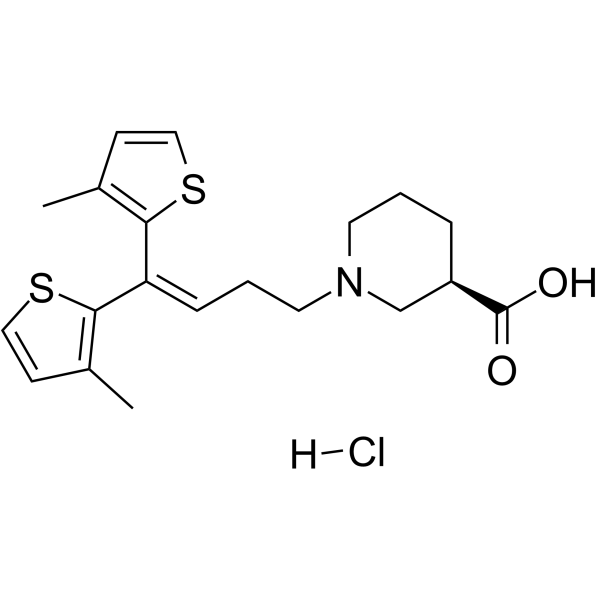
Tiagabine hydrochloride (NO050328; NO328; TGB) is an orally active, highly selective, and reversible GAT-1 inhibitor and anticonvulsant that crosses the blood-brain barrier. By blocking the reuptake of GABA in neurons and glial cells, tiagabine increases extracellular GABA levels to enhance inhibitory signal transduction, thereby exerting multiple activities such as anticonvulsant, neuroprotective, and antioxidant effects. Tiagabine hydrochloride exhibits linear pharmacokinetic properties. Although it is metabolized by CYP3A and has a high protein binding rate, it carries a low risk of cognitive impairment. Tiagabine hydrochloride is widely used in research on related diseases including epilepsy (including refractory partial seizures), alcohol withdrawal symptoms, and Huntington's disease.
For research use only. We do not sell to patients.
- Purity : 99.25%
- CAS No.: 145821-59-6
- Formula: C20H26ClNO2S2
- Molecular Weight:412.01
-
Storage:
4°C, sealed storage, away from moisture
* In solvent : -80°C, 6 months; -20°C, 1 month (sealed storage, away from moisture)

To place orders, for customer services and technical support, please contact: MedChemExpress USA
Tel: 609-228-6898 E-mail: [email protected] [email protected]


-
 Biological Activity
-
Chemical Information
-
Solvent & Solubility
- Protocols
- Purity & Documentation
- References
-
 Help & FAQs


-
HY-N0219
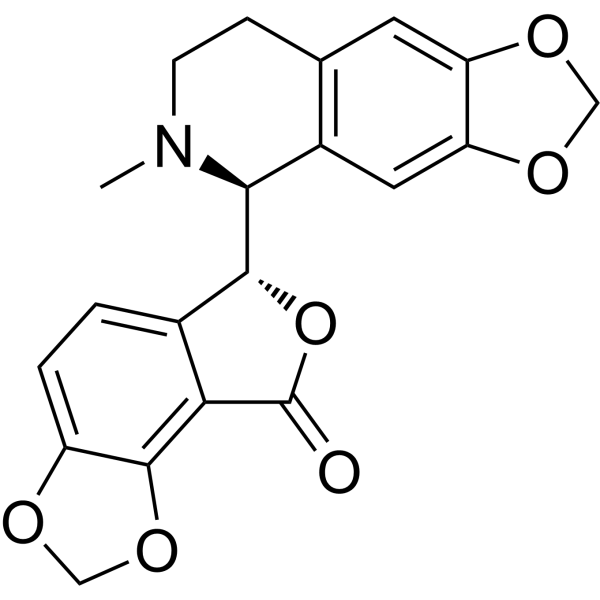
BicucullineGABAA Receptor Antagonist -
HY-15399
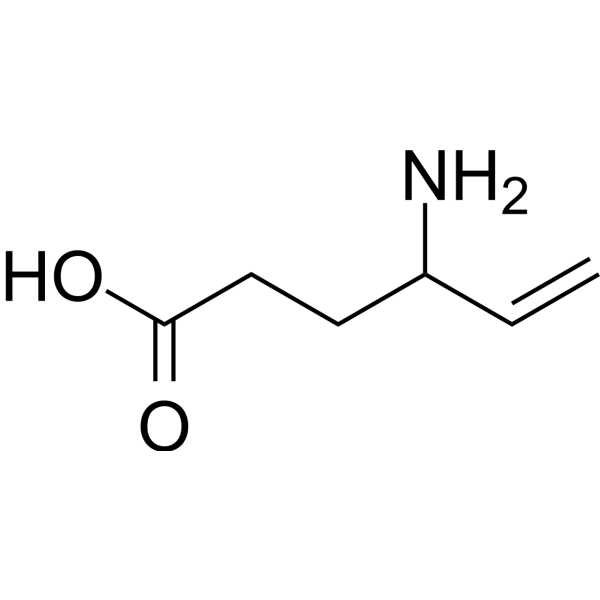
VigabatrinAntiepileptic Agent -
HY-B0007
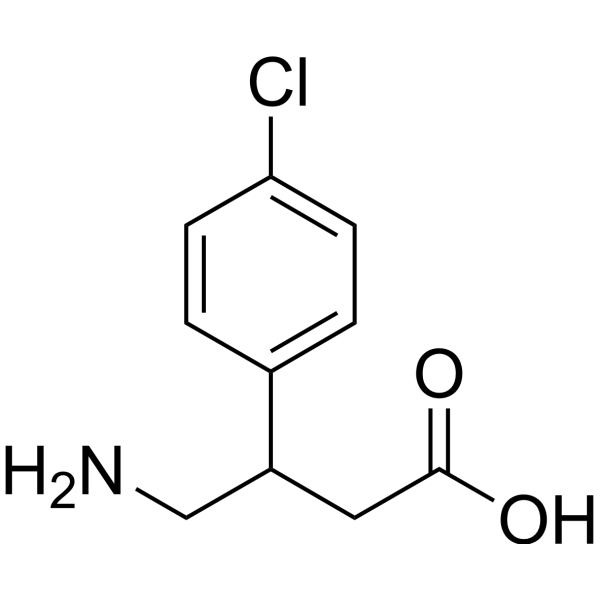
BaclofenGABABR Agonist -
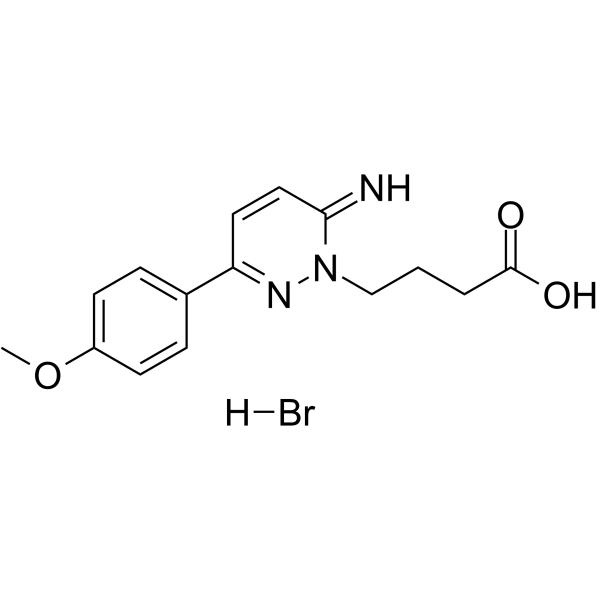
HY-103533
GabazineGABAA Antagonist -
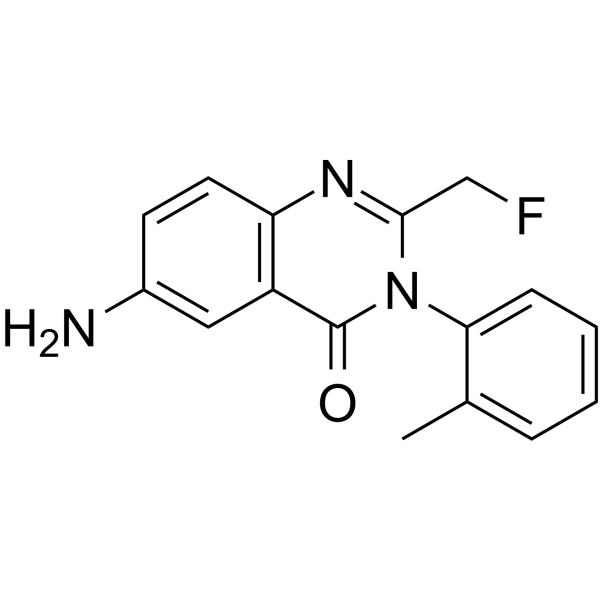
HY-B1833
AfloqualoneMuscle Relaxant Agent -
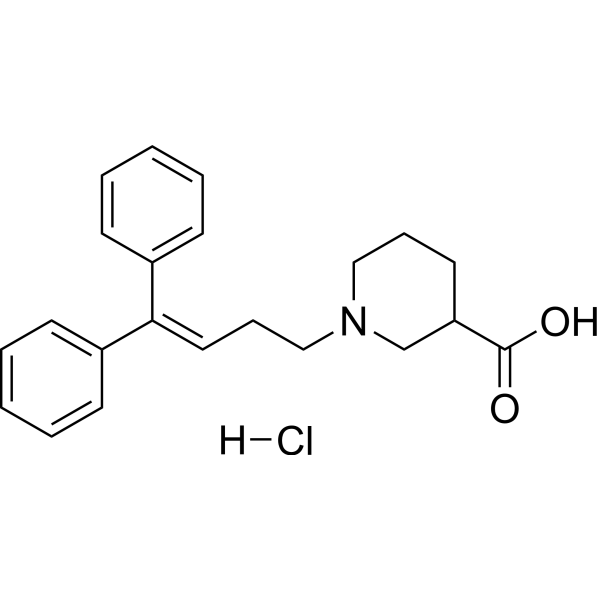
HY-100228A
SKF89976A hydrochlorideGAT-1 Inhibitor -
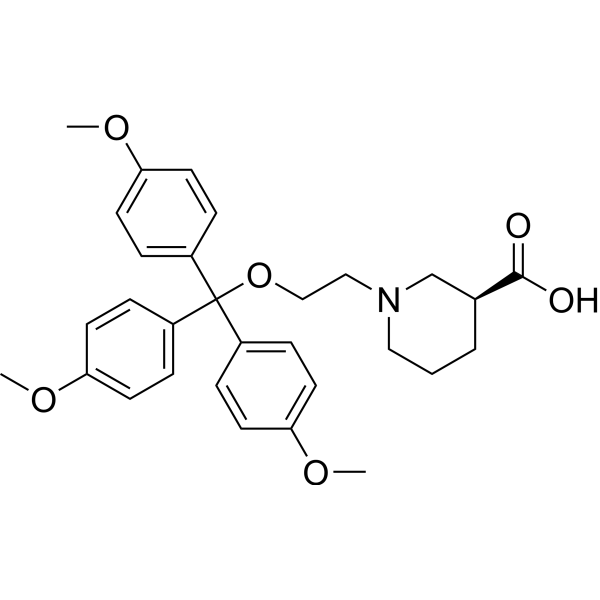
HY-103504
(S)-SNAP5114GABA Transporter Inhibitor -
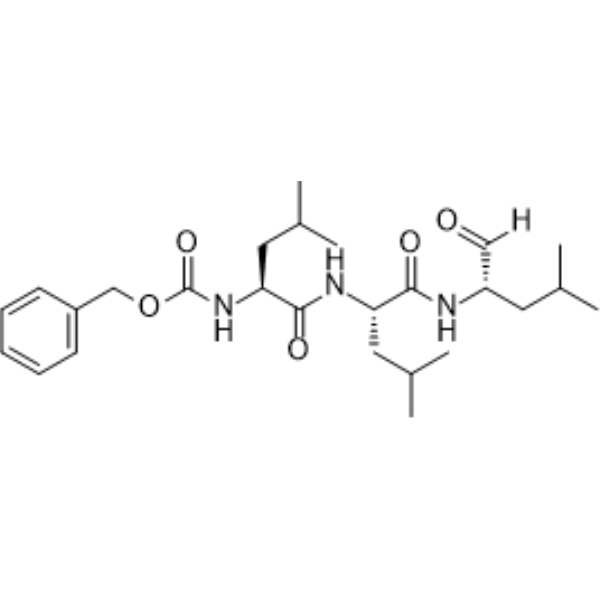
HY-13259
MG-132Proteasome Inhibitor -
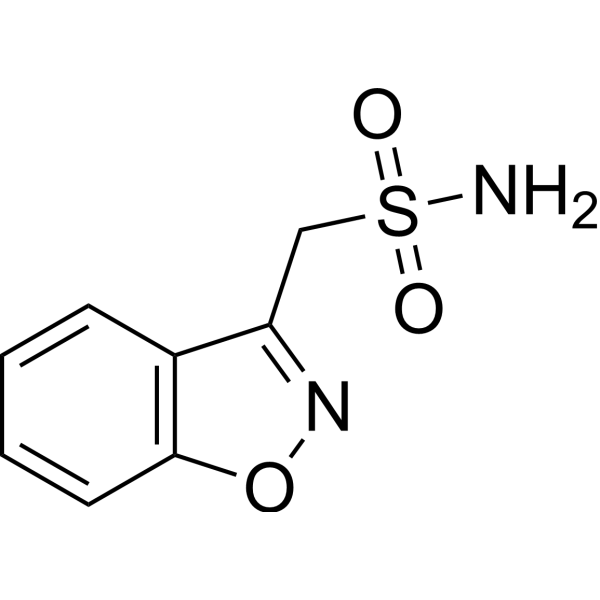
HY-B0124
ZonisamideCarbonic Anhydrase Inhibitor -
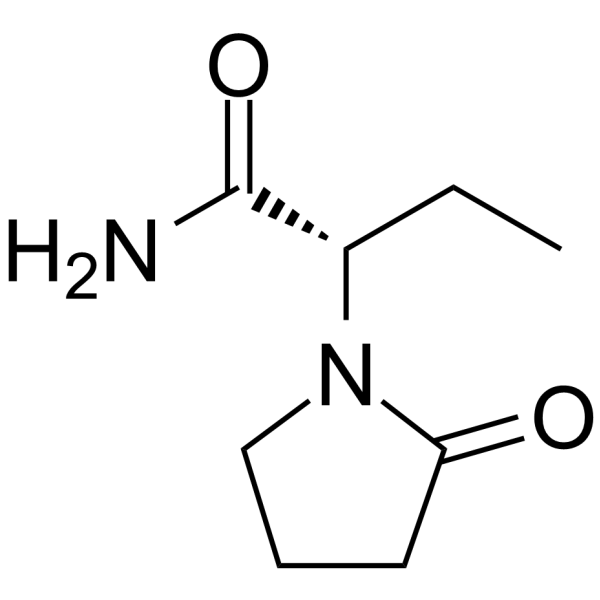
HY-B0106
LevetiracetamAntiepileptic Agent -
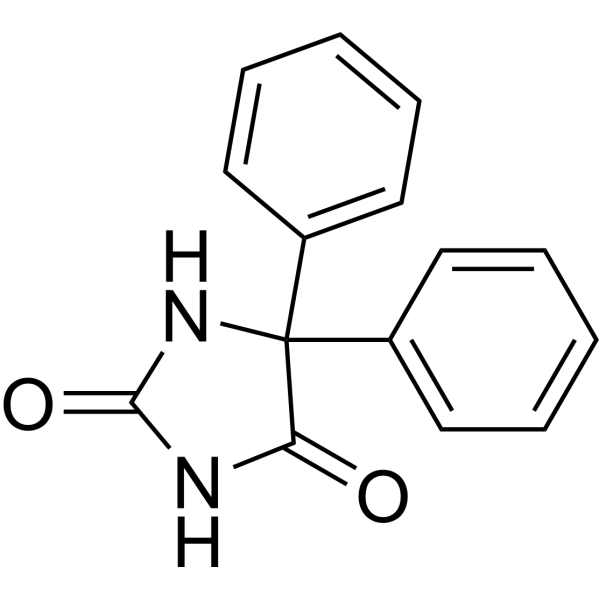
HY-B0448
PhenytoinVirus Protease Inhibitor -
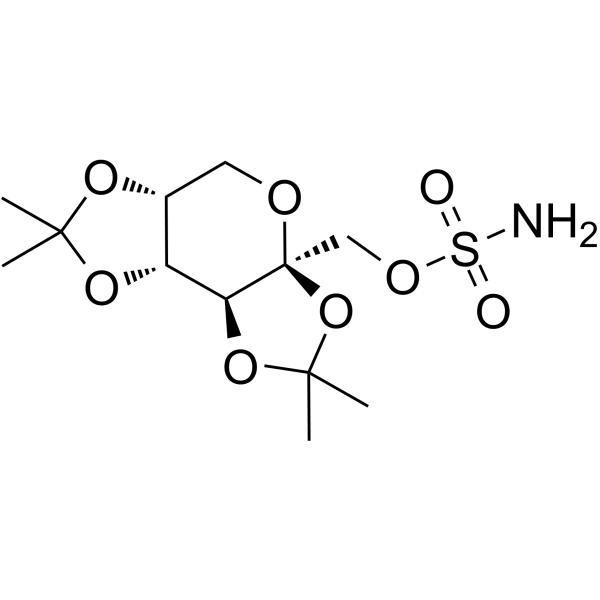
HY-B0122
TopiramateAntiepileptic Agent


Biological Activity
Description
IC50 & Target
[8]|
TrkB |
Cellular Effect
|
Cell Line

|
Type | Value | Description | References |
|---|---|---|---|---|
| CHO | IC50 |
0.049 μM
Compound: 6
|
Inhibition of human GAT1 transfected in CHO cells assessed as [3H]GABA uptake after 20 mins by liquid scintillation counting analysis
Inhibition of human GAT1 transfected in CHO cells assessed as [3H]GABA uptake after 20 mins by liquid scintillation counting analysis
|
[PMID: 23886812] |
In Vitro
Tiagabine hydrochloride (0.1-5 μM; 4 days) protects Tet-off PC12 cells expressing mutant huntingtin against toxicity, with significant effects detected at concentrations of 0.5, 2, and 5 μM after 4 days of treatment[1].
Tiagabine hydrochloride potently and selectively inhibits GABA uptake in glial, neuronal, and synaptosomal preparations, with IC50 values of 0.18 μmol/L, 0.45 μmol/L, and 0.07 μmol/L, respectively[3].
Tiagabine hydrochloride (2-100 μM; 5-15 min) induces long-lasting, repetitive slow depolarizations in cortical wedges from 20-30 day-old DBA/2 mice, with consistent amplitude and frequency across tested concentrations of 2, 5, 50, and 100 μM following 15-min perfusion, and following shorter 5-10 min perfusions of 50 μM[4].
Tiagabine hydrochloride (50 μM; 15 min)-induced depolarizations in cortical wedges from 20-30 day-old DBA/2 mice are Ca2+-dependent, mediated via GABAA receptors, require voltage-dependent sodium channel activity, are unaffected by NMDA receptor blockade, are partially inhibited by AMPA receptor blockade, are abolished by Dextromethorphan, and are potentiated by potassium channel blockade[4].
Tiagabine hydrochloride (50 μM; 15 min) induces depolarizations in cortical wedges from 50 day-old DBAr2 mice and BALB/c mice, similar to responses in 20-30 day-old DBAr2 mice[4].
MedChemExpress (MCE) has not independently confirmed the accuracy of these methods. They are for reference only.
In Vivo
Tiagabine (5 mg/kg; i.p.; daily; lifelong administration) hydrochloride extends the survival of male and female R6/2 transgenic Huntington's disease mice (17.8 days of extension at the dose of 5 mg/kg), improves their motor function, and alleviates brain atrophy[1].
Tiagabine (0.4 mg/kg; i.p.; single administration; 30 min prior to seizure testing) hydrochloride exerts a protective effect against audiogenic tonic seizures in male DBA/2 mice, with an ED50 of 0.4 mg/kg[2].
Tiagabine (1.2-1.3 mg/kg; i.p.; single administration; 30 min prior to seizure tests) hydrochloride exerts a protective effect against PTZ-induced tonic convulsions in male NMRI mice, with an ED50 of 1.2 mg/kg, while providing approximately 50% partial protection against clonic convulsions[2].
Tiagabine (15-30 mg/kg; p.o.; twice daily; for consecutive 21 days) hydrochloride induces tolerance to cognitive effects in mice, but does not induce tolerance to its anticonvulsant effects in DMCM-induced epileptic mice[3].
Tiagabine (9 mg/kg; subcutaneous injection; once daily for 8 consecutive days; single injection 30 min prior to locomotor activity test) hydrochloride initially reduces short-term spontaneous ethanol intake in ad libitum-fed C57BL/6 mice, but tolerance develops rapidly, resulting in ethanol intake exceeding pre-treatment levels on days 7-8[5].
MedChemExpress (MCE) has not independently confirmed the accuracy of these methods. They are for reference only.
-
Animal Model:Tight ligation of L5 and L6 spinal nerves innervating the left hindpaw was performed using aseptic techniques in rats[7]
-
Dosage:7.2, 24.3, and 72.8 µmol/kg (3, 10, and 30 mg/kg)
-
Administration:Intraperitoneal injection (i.p.)
-
Result:Increased response threshold to tactile stimulation at the highest dose of tiagabine (72.8 µmol/kg) at both 15 and 30 min after injection.
-
Animal Model:Male mice[7]
-
Dosage:0.2, 0.7, 2.4, 7.2, and 24.3 µmol/kg (0.1, 0.3, 1, 3, 10 mg/kg)
-
Administration:Intraperitoneal injection (i.p.)
-
Result:Significantly increased foot-licking latency in the hot-plate test at 7.2 and 24.3 µmol/kg.
Significantly increased jump latency at 24.3 µmoles/kg.


Chemical Information
-
CAS No. 145821-59-6
-
Appearance Solid
-
Molecular Weight 412.01
-
Formula C20H26ClNO2S2
-
Color White to off-white
-
SMILES
O=C([C@H]1CN(CC/C=C(C2=C(C)C=CS2)/C3=C(C)C=CS3)CCC1)O.[H]Cl
-
Synonyms
NO050328 hydrochloride; NO328 hydrochloride; TGB hydrochloride
-
Shipping
Room temperature in continental US; may vary elsewhere.
-
Storage
4°C, sealed storage, away from moisture
* In solvent : -80°C, 6 months; -20°C, 1 month (sealed storage, away from moisture)


Solvent & Solubility
In Vitro:
DMSO : 125 mg/mL (303.39 mM; Need ultrasonic; Hygroscopic DMSO has a significant impact on the solubility of product, please use newly opened DMSO)
H2O : 100 mg/mL (242.71 mM; Need ultrasonic)
Please refer to the solubility information to select the appropriate solvent. Once prepared, please aliquot and store the solution to prevent product inactivation from repeated freeze-thaw cycles.
Storage method and period of stock solution: -80°C, 6 months; -20°C, 1 month (sealed storage, away from moisture). When stored at -80°C, please use it within 6 months. When stored at -20°C, please use it within 1 month.
* Note: If you choose water as the stock solution, please dilute it to the working solution, then filter and sterilize it with a 0.22 μm filter before use.
Please refer to the solubility information to select the appropriate solvent. Once prepared, please aliquot and store the solution to prevent product inactivation from repeated freeze-thaw cycles.
Storage method and period of stock solution: -80°C, 6 months; -20°C, 1 month (sealed storage, away from moisture). When stored at -80°C, please use it within 6 months. When stored at -20°C, please use it within 1 month.
* Note: If you choose water as the stock solution, please dilute it to the working solution, then filter and sterilize it with a 0.22 μm filter before use.
Concentration (start) × Volume (start) = Concentration (final) × Volume (final)
In Vivo:
Select the appropriate dissolution method based on your experimental animal and administration route.
- For the following dissolution methods, please ensure to first prepare a clear stock solution using an In Vitro approach and then sequentially add co-solvents:
- To ensure reliable experimental results, the clarified stock solution can be appropriately stored based on storage conditions. As for the working solution for In Vivo experiments, it is recommended to prepare freshly and use it on the same day.
- The percentages shown for the solvents indicate their volumetric ratio in the final prepared solution. If precipitation or phase separation occurs during preparation, heat and/or sonication can be used to aid dissolution.
Add each solvent one by one: 10% DMSO 40% PEG300 5% Tween-80 45% Saline
Solubility: ≥ 2.08 mg/mL (5.05 mM); Clear solution
This protocol yields a clear solution of ≥ 2.08 mg/mL (saturation unknown).
Taking 1 mL working solution as an example, add 100 μL DMSO stock solution (20.8 mg/mL) to 400 μL PEG300, and mix evenly; then add 50 μL Tween-80 and mix evenly; then add 450 μL Saline to adjust the volume to 1 mL.
Preparation of Saline: Dissolve 0.9 g sodium chloride in ddH₂O and dilute to 100 mL to obtain a clear Saline solution.
Add each solvent one by one: 10% DMSO 90% (20% SBE-β-CD in Saline)
Solubility: ≥ 2.08 mg/mL (5.05 mM); Clear solution
This protocol yields a clear solution of ≥ 2.08 mg/mL (saturation unknown).
Taking 1 mL working solution as an example, add 100 μL DMSO stock solution (20.8 mg/mL) to 900 μL 20% SBE-β-CD in Saline, and mix evenly.
Preparation of 20% SBE-β-CD in Saline (4°C, storage for one week): 2 g SBE-β-CD powder is dissolved in 10 mL Saline, completely dissolve until clear.
In Vivo Dissolution Calculator
Please enter the basic information of animal experiments:
-
-
-
-
Recommended: Prepare an additional quantity of animals to account for potential losses during experiments.
Working solution concentration: 0.22 mg/mL
This product has good water solubility, please refer to the measured solubility data in water/PBS/Saline for details.


Purity & Documentation
-
Data Sheet (281 KB)
-
SDS (394 KB)
- English - EN (394 KB)
- Français - FR (394 KB)
- Deutsch - DE (394 KB)
- Norwegian - NO (394 KB)
- Español - ES (394 KB)
- Swedish - SV (394 KB)
- Italian - IT (394 KB)
- Korean - KR (394 KB)
- Portuguese - PT (394 KB)
-
Handling Instructions (2659 KB)
References
[2]. Nielsen EB, et al. Characterization of tiagabine (NO-328), a new potent and selective GABA uptake inhibitor. Eur J Pharmacol. 1991;196(3):257-266. [Content Brief]
[4]. Hu RQ, et al. Tigabine hydrochloride, an inhibitor of gamma-aminobutyric acid (GABA) uptake, induces cortical depolarizations in vitro. Brain Res. 1997;753(2):260-268. [Content Brief]
[5]. Nguyen SA, et al. Tiagabine reduces ethanol reward in C57BL/6 mice under acute and chronic administration regimens. Synapse. 2005;56(3):135-146. [Content Brief]
[6]. Javaid S, et al. Tiagabine suppresses pentylenetetrazole-induced seizures in mice and improves behavioral and cognitive parameters by modulating BDNF/TrkB expression and neuroinflammatory markers. Biomed Pharmacother. 2023;160:114406. [Content Brief]


Complete Stock Solution Preparation Table
Please refer to the solubility information to select the appropriate solvent. Once prepared, please aliquot and store the solution to prevent product inactivation from repeated freeze-thaw cycles.
Storage method and period of stock solution: -80°C, 6 months; -20°C, 1 month (sealed storage, away from moisture). When stored at -80°C, please use it within 6 months. When stored at -20°C, please use it within 1 month.
| Optional Solvent | Concentration Solvent Mass | 1 mg | 5 mg | 10 mg | 25 mg |
|---|---|---|---|---|---|
| H2O / DMSO | 1 mM | 2.4271 mL | 12.1356 mL | 24.2713 mL | 60.6781 mL |
| 5 mM | 0.4854 mL | 2.4271 mL | 4.8543 mL | 12.1356 mL | |
| 10 mM | 0.2427 mL | 1.2136 mL | 2.4271 mL | 6.0678 mL | |
| 15 mM | 0.1618 mL | 0.8090 mL | 1.6181 mL | 4.0452 mL | |
| 20 mM | 0.1214 mL | 0.6068 mL | 1.2136 mL | 3.0339 mL | |
| 25 mM | 0.0971 mL | 0.4854 mL | 0.9709 mL | 2.4271 mL | |
| 30 mM | 0.0809 mL | 0.4045 mL | 0.8090 mL | 2.0226 mL | |
| 40 mM | 0.0607 mL | 0.3034 mL | 0.6068 mL | 1.5170 mL | |
| 50 mM | 0.0485 mL | 0.2427 mL | 0.4854 mL | 1.2136 mL | |
| 60 mM | 0.0405 mL | 0.2023 mL | 0.4045 mL | 1.0113 mL | |
| 80 mM | 0.0303 mL | 0.1517 mL | 0.3034 mL | 0.7585 mL | |
| 100 mM | 0.0243 mL | 0.1214 mL | 0.2427 mL | 0.6068 mL |
* Note: If you choose water as the stock solution, please dilute it to the working solution, then filter and sterilize it with a 0.22 μm filter before use.


Tiagabine hydrochloride Related Classifications
HY-B0696A Related Classifications
 Powered by Bioz