Search Result
Results for "
anxiolytic effects
" in MedChemExpress (MCE) Product Catalog:
3
Biochemical Assay Reagents
12
Isotope-Labeled Compounds
| Cat. No. |
Product Name |
Target |
Research Areas |
Chemical Structure |
-
- HY-13206
-
|
|
mGluR
|
Neurological Disease
|
|
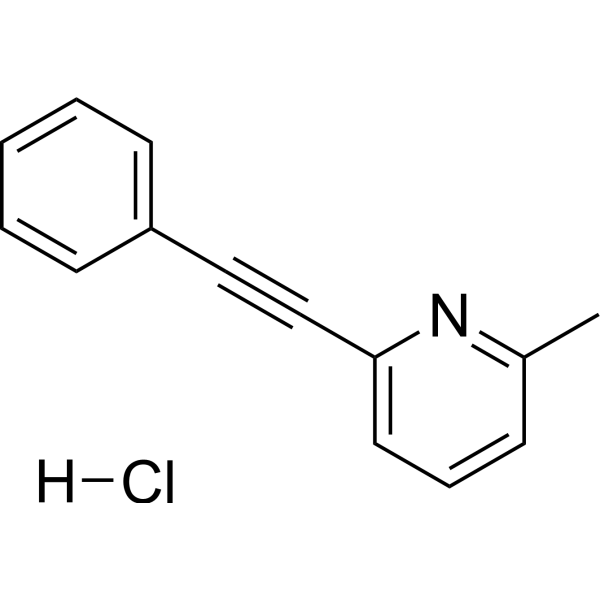
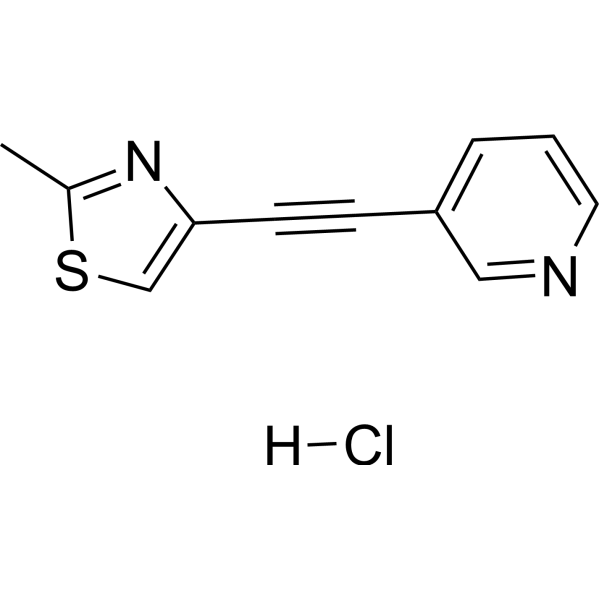
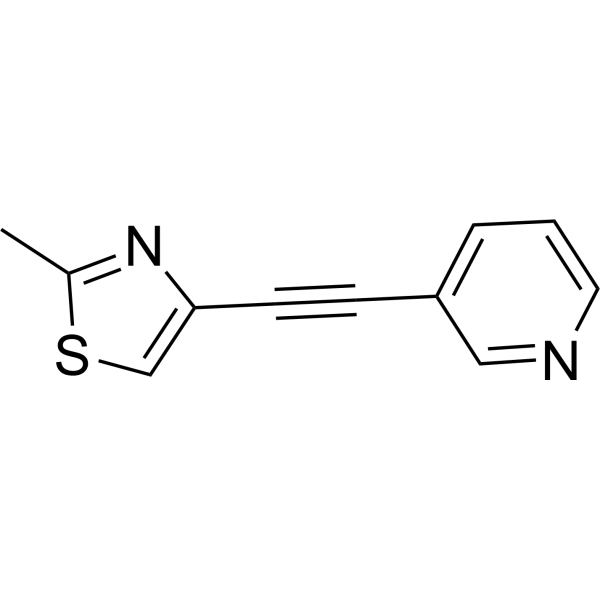
MTEP hydrochloride is a potent, non-competitive and highly selective mGluR5 antagonist, with an IC50 of 5 nM and a Ki of 16 nM. MTEP hydrochloride shows antidepressant and anxiolytic-like effects. MTEP hydrochloride can be used for Parkinson's disease research .
|
-
-
- HY-P1178
-
|
|
Trk Receptor
p38 MAPK
|
Neurological Disease
|
|
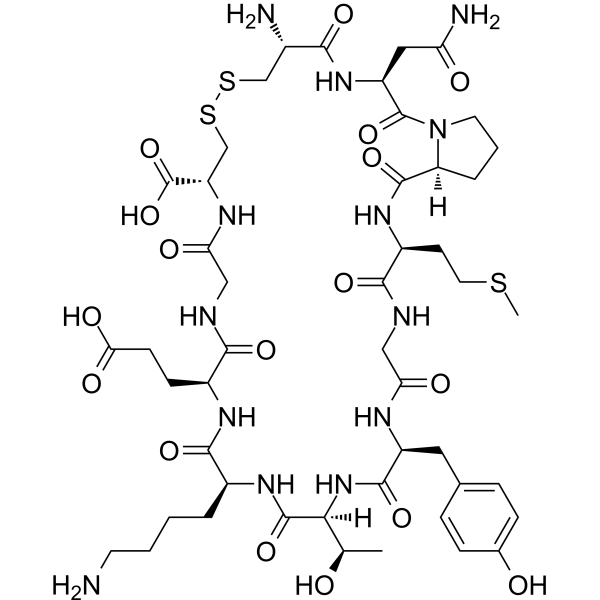
Cyclotraxin B is a BBB-penetrable and selective TrkB inhibitor. Cyclotraxin B inhibits BDNF-induced TrkB activity in a non-competitive manner, with an IC50 of 0.30 nM. Cyclotraxin B has analgesic and anxiolytic effects .
|
-
-
- HY-N0152
-
-
-
- HY-14895
-
|
CM346
|
Parasite
Monoamine Oxidase
Sigma Receptor
P-glycoprotein
|
Infection
Cardiovascular Disease
Neurological Disease
|
|
Fabomotizole (CM346) is an insecticide with anxiolytic, antianxiety, and neuroprotective activities and a substrate of p-glycoprotein. Fabomotizole inhibits the ST-segment depression induced by isoproterenol in a rat model of acute subendocardial ischemia. Fabomotizole also inhibits Giardia lamblia and has the potential to inhibit giardiasis. Fabomotizole also targets Sigma1R, NRH:quinone reductase 2 (NQO2), and MAO-A to exert anxiolytic effects .
|
-
-
- HY-B1229
-
|
3-Methylbutanamide
|
GABA Receptor
|
Neurological Disease
Metabolic Disease
|
|
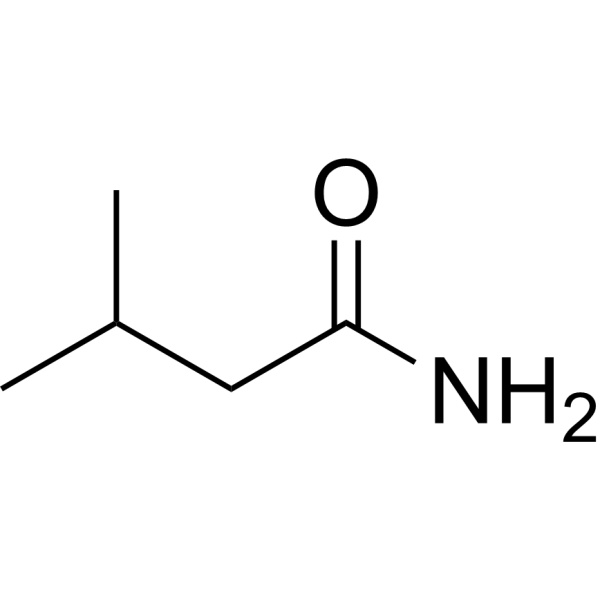
Isovaleramide (3-Methylbutanamide) is an orally active anticonvulsant. Isovaleramide inhibits alcohol dehydrogenase (ADH) activity and regulates GABAergic system. Isovaleramide reduces acute kidney injury. Isovaleramide has antiepileptic, anxiolytic, sedative and hypnotic effects[1] .
|
-
-
- HY-108584
-
|
BMS-204352
|
Potassium Channel
|
Neurological Disease
|
|
Flindokalner (BMS-204352) is a potassium channel modulator. Flindokalner is a positive modulator of all neuronal Kv7 channel subtypes expressed in HEK293 cells. Flindokalner is also a large conductance calcium-activated K channel (BKca) positive modulator. Flindokalner shows a negative modulatory activity at Kv7.1 channels (Ki=3.7 μM), and acts as a negative modulator of GABAA receptors. Flindokalner shows anxiolytic efficacy in vivo .
|
-
-
- HY-14127
-
|
NBI30775
|
CRFR
|
Neurological Disease
Endocrinology
|
|
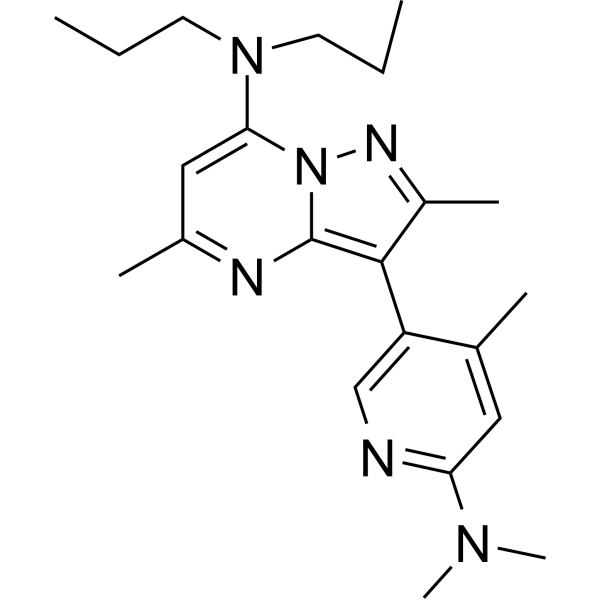
R121919 (NBI30775) is a potent and selective CRF1R antagonist with a Ki of 2 to 5 nM. R121919 has antidepressant and anxiolytic effects. R121919 alleviates defensive withdrawal in rats .
|
-
-
- HY-P2602
-
|
|
GABA Receptor
|
Neurological Disease
|
|
α-Casozepine is an orally effective anxiolytic that binds to the benzodiazepine site of the GABAA receptor in bovine samples with an IC50 of 88 μM. α-Casozepine exerts anxiolytic and anti-stress effects on cats exposed to unfamiliar environments and dogs undergoing road transport . α-Casozepine exhibits significant anxiolytic activity in rats. α-Casozepine can be used in studies related to fear, anxiety and stress .
|
-
-
- HY-108403
-
|
β-Phenyl-GABA; 4-Amino-3-phenylbutanoic acid
|
GABA Receptor
|
Neurological Disease
|
|
Phenibut (β-Phenyl-GABA) is a GABA-B agonist . Phenibut acts as a GABA-mimetic, primarily at GABAB receptors. Phenibut has anxiolytic and nootropic (cognition enhancing) effects .
|
-
-
- HY-W041333
-
|
β-Phenyl-GABA hydrochloride; 4-Amino-3-phenylbutanoic acid hydrochloride; 4-Amino-3-phenylbutyric acid hydrochloride
|
GABA Receptor
|
Neurological Disease
|
|
Phenibut (β-Phenyl-GABA) hydrochloride is an orally active GABA-B agonist . Phenibut hydrochloride acts as a GABA-mimetic, primarily at GABAB?receptors. Phenibut hydrochloride has anxiolytic and nootropic (cognition enhancing) effects .
|
-
-
- HY-14551
-
|
SR142801
|
Neurokinin Receptor
|
Neurological Disease
|
|
Osanetant (SR142801) is a selective NK3 receptor antagonist. Osanetant produces anxiolytic- and antidepressant-like effects and is researched for schizophrenia .
|
-
-
- HY-136591
-
|
|
Drug Metabolite
|
Neurological Disease
Cancer
|
|
Demoxepam is a major metabolite of Chlordiazepoxide. Demoxepam exhibits cytotoxicity activity against cancer cell lines. Demoxepam has anticonvulsant and anxiolytic effects. Demoxepam has an inhibitory effect on in vitro [ 3H]tryptophan binding to rat hepatic nuclei .
|
-
-
- HY-P10397
-
|
rALP-2, Rubisco anxiolytic-like peptide 2
|
iGluR
|
Neurological Disease
Metabolic Disease
|
|
YHIEPV (rALP-2, Rubisco anxiolytic-like peptide 2) is a potent and orally active peptide. YHIEPV shows anxiolytic effects. YHIEPV increases leptin sensitivity to exert its anti-obesity effects .
|
-
-
- HY-137951
-
|
|
Drug Derivative
|
Neurological Disease
|
|
Metizolam, a thienotriazolodiazepine, is the demethylated analogue of Etizolam. Metizolam exhibits psychomotor stabilizing, anxiolytic, sedative, myo-relaxant and amnestic effects .
|
-
-
- HY-W743398
-
|
CS-386
|
GABA Receptor
|
Neurological Disease
|
|
Mexazolam (CS-386) is an orally active benzodiazepine and anxiolytic. Benzodiazepines bind to specific BZD-type receptors on the GABA-chloride complex and potentiate the inhibitory effects of GABA .
|
-
-
- HY-101316
-
|
|
NO Synthase
|
Neurological Disease
|
|
TRIM is a potent nitric oxide synthase inhibitor. TRIM inhibits mouse cerebellar nNOS and rat lung iNOS in vitro with IC50 values of 28.2 and 27.0 µM, respectively. Antidepressant- and anxiolytic-like effects .
|
-
-
- HY-N8829
-
-
-
- HY-152358
-
|
|
Nucleoside Antimetabolite/Analog
|
Others
|
|
N3-Methyl-2’-O-methyluridine is a uridine analogue. Uridine has potential antiepileptic effects, and its analogs can be used to study anticonvulsant and anxiolytic activities, as well as to develop new antihypertensive agents .
|
-
-
- HY-107624
-
ATC0175
1 Publications Verification
|
MCHR1 (GPR24)
|
Neurological Disease
|
|
ATC0175 is a potent, selective and orally active melanin-concentrating hormone 1 recepter antagonist with IC50s of 13.5, >10000 nM for MCH1R, MCH2R, respectively. ATC0175 shows antidepressant effects and anxiolytic effects in animal models. ATC0175 has the potential for the research of depression and/or anxiety disorders .
|
-
-
- HY-141795
-
|
Co 134444
|
Drug Derivative
|
Neurological Disease
|
|
Posovolone (Co 134444) is an orally active, neuroactive steroid. Posovolone has anticonvulsant and anxiolytic-like activity as well as ataxic effects .
|
-
-
- HY-101387
-
|
|
mGluR
|
Neurological Disease
|
|
rel-ACPT-I is an agonist of group III mGluRs with diverse biological activities including neuroprotective, anticonvulsant, and anxiolytic-like effects .
|
-
-
- HY-14836
-
|
JZP 4
|
Calcium Channel
Sodium Channel
|
Neurological Disease
|
|
Elpetrigine (JZP 4) is a potent calcium and sodium channel blocker. Elpetrigine has anticonvulsant, antidepressant, antimania and anxiolytic effects. Elpetrigine can be used in the research of epilepsy and bipolar disorder .
|
-
-
- HY-B0031S1
-
|
|
5-HT Receptor
Dopamine Receptor
|
Neurological Disease
|
|
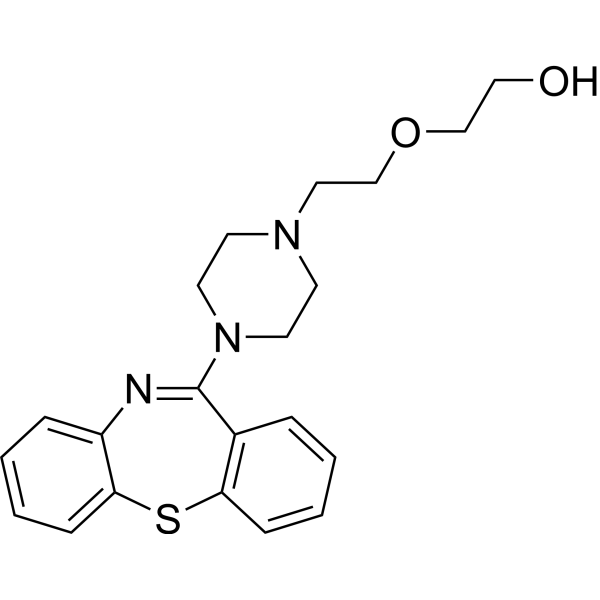
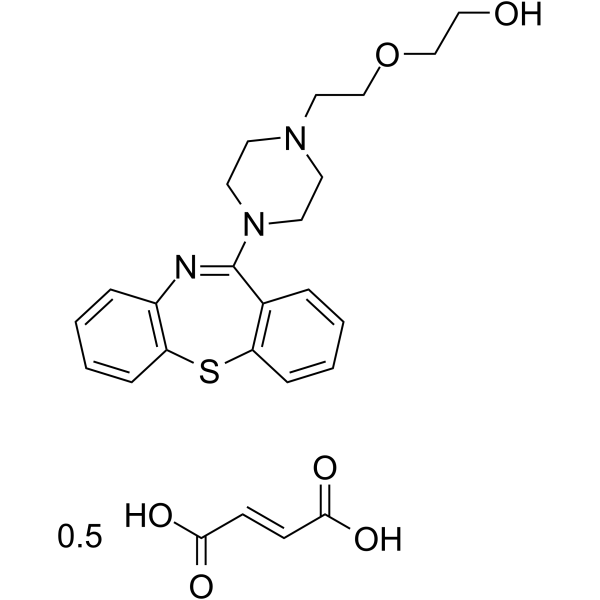
Quetiapine-d4 (hemifumarate) is the deuterium labeled Quetiapine hemifumarate. Quetiapine hemifumarate is a 5-HT receptors agonist and a dopamine receptor antagonist. Antidepressant and anxiolytic effects .
|
-
-
- HY-W028389
-
|
|
GABA Receptor
|
Neurological Disease
|
|
Pyrazolam is a brominated triazolo benzodiazepine psychoactive substance with oral effectiveness. Pyrazolam produces anxiolytic, sedative, and sleep-promoting effects. Pyrazolam can be used for the research of anxiety .
|
-
-
- HY-117526
-
|
|
Serotonin Transporter
|
Neurological Disease
|
|
(-)-Mesembrine is a serotonin transporter (SERT) inhibitor. (-)-Mesembrine inhibits serotonin reuptake. (-)-Mesembrine exerts anxiolytic, mood-enhancing and anti-addictive effects. (-)-Mesembrine is applicable to research on mild-to-moderate depression, anxiety disorders and stress-related conditions .
|
-
-
- HY-101709
-
|
BRL-46470
|
5-HT Receptor
|
Neurological Disease
|
|
Ricasetron (BRL-46470) is a selective and orally active 5-HT3 receptor antagonist. Ricasetron displays little or no affinity for a variety of other neurotransmitter receptors. Ricasetron has anxiolytic and antiemetic effects .
|
-
-
- HY-103378
-
|
|
CRFR
|
Neurological Disease
|
|
NBI 35965 methanesulfonate is a selective, orally active and brain-penetrant corticotropin-releasing factor receptor 1 (CRF1) antagonist with a Ki value of 4 nM and a pKi value of 8.5. NBI 35965 methanesulfonate does not inhibit CRF2. NBI 35965 methanesulfonate reduces CRF or stress-induced adrenocorticotropic hormone (ACTH) production in vivo with pIC50 values of 7.1 and 6.9, respectively. NBI 35965 methanesulfonate shows anxiolytic effects .
|
-
-
- HY-118657
-
|
Cl-683; Pyrazapon
|
Drug Derivative
|
Neurological Disease
|
|
Ripazepam (Cl-683) is a potential antianxiety agent. Ripazepam also is a pyrazolodiazepinone derivative and has anxiolytic effects .
|
-
-
- HY-B0031S
-
-
-
- HY-N3940
-
|
|
Others
|
Neurological Disease
Cancer
|
|
Gelsevirine is the major alkaloid in Gelsemium elegans with potent anxiolytic effects. The anxiolytic mechanism of Gelsevirine may be involved in the agonist action of the glycine receptor in the brain. Gelsevirine has anti-proliferation activity with IC50 values of 1.41 mM and 1.22 mM for SW480 cells and MGC80-3 cells, respectively .
|
-
-
- HY-152732
-
|
|
Nucleoside Antimetabolite/Analog
|
Others
|
|
6-Methyluridine is a uridine analogue. Uridine has potential antiepileptic effects, and its analogs can be used to study anticonvulsant and anxiolytic activities, as well as to develop new antihypertensive agents .
|
-
-
- HY-103536
-
|
|
Neuropeptide Y Receptor
|
Neurological Disease
|
|
Galnon is a selective and non-peptide agonist of galanin GAL1 and GAL2 receptor, with Kis of 11.7 and 34.1 μM respectively. Galnon exhibits anticonvulsant and anxiolytic effects .
|
-
-
- HY-154285
-
|
|
Nucleoside Antimetabolite/Analog
|
Cancer
|
|
3’-O-(2-Methoxyethyl) uridine is a uridine analog. Uridine has potential antiepileptic effects, and its analogs can be used to study anticonvulsant and anxiolytic activities, as well as to develop new antihypertensive agents .
|
-
-
- HY-154466
-
|
|
Nucleoside Antimetabolite/Analog
|
Cancer
|
|
5’-O-(4,4’-Dimethoxytrityl)-3’-O-methyluridine is a uridine analog. Uridine has potential antiepileptic effects, and its analogs can be used to study anticonvulsant and anxiolytic activities, as well as to develop new antihypertensive agents .
|
-
-
- HY-19250
-
-
-
- HY-14551B
-
|
(S)-SR142801
|
Neurotensin Receptor
|
Neurological Disease
|
|
(S)-Osanetant is the S-enantiomer of Osanetant. Osanetant (SR142801) is a selective NK3 receptor antagonist. Osanetant produces anxiolytic- and antidepressant-like effects and is researched for schizophrenia .
|
-
-
- HY-107702
-
|
|
iGluR
|
Neurological Disease
|
|
CGP 37849 is a potent, competitive and orally active N-methyl-D-aspartate (NMDA) receptor antagonist. CGP 37849 is an anticonvulsant in rodents and has antidepressant and anxiolytic-like effects .
|
-
-
- HY-W020098
-
|
|
Nucleoside Antimetabolite/Analog
|
Cancer
|
|
2'-C-methyluridine is a uridine analog. Uridine has potential antiepileptic effects, and its analogs can be used to study anticonvulsant and anxiolytic activities, as well as to develop new antihypertensive agents .
|
-
-
- HY-103536A
-
|
|
Neuropeptide Y Receptor
|
Neurological Disease
|
|
Galnon TFA is a selective and non-peptide agonist of galanin GAL1 and GAL2 receptor, with Kis of 11.7 and 34.1 μM respectively. Galnon TFA exhibits anticonvulsant and anxiolytic effects .
|
-
-
- HY-115483
-
|
|
mGluR
|
Neurological Disease
|
|
VU0477573 is a brain-penetrant partial negative allosteric modulator of metabotropic glutamate receptor subtype 5 (mGluR5). VU0477573 exhibits neuroprotective and anxiolytic effects. VU0477573 can be used for the research of neurological disease, such as Parkinson disease .
|
-
-
- HY-101578
-
|
|
Monoamine Oxidase
|
Neurological Disease
|
|
2614W94 is a selective, reversible and orally active monoamine oxidase-A (MAO-A) inhibitor with an IC50 of 5 nM and a Ki of 1.6 nM. 2614W94 shows no significant inhibition of MAO-B. 2614W94 has antidepressant and anxiolytic effects .
|
-
-
- HY-107604
-
UBP 302
1 Publications Verification
|
iGluR
|
Neurological Disease
|
|
UBP 302 is a potent and selective GLUK5-subunit containing kainate receptor antagonist (apparent Kd=402 nM), and displays very little affinity on GluK2 (GluR6) kainate receptors. Anxiolytic effects .
|
-
-
- HY-110180
-
|
|
mGluR
|
Neurological Disease
|
|
VU0409106 is a potent and selective mGlu5 negative allosteric modulator (NAM) with an IC50 of 24 nM. VU0409106 shows anxiolytic effects in rat models in a concentration-dependent manner. VU0409106 also penetrates the blood-brain barrier (BBB) .
|
-
-
- HY-171253
-
-
-
- HY-105161
-
|
|
5-HT Receptor
|
Neurological Disease
|
|
AP-521 (free base) is a benzothienopyridine derivative that exhibits potent anxiolytic effects by acting as a postsynaptic 5-HT1A receptor agonist and by enhancing serotonergic neural transmission in the medial prefrontal cortex (mPFC). AP-521 (free base) is promising for research of anxiety disorders .
|
-
-
- HY-110056
-
|
|
CRFR
|
Neurological Disease
|
|
NBI 35965 hydrochloride is a selective, orally active and brain-penetrant corticotropin-releasing factor receptor 1 (CRF1) antagonist with a Ki value of 4 nM and a pKi value of 8.5. NBI 35965 hydrochloride does not inhibit CRF2. NBI 35965 hydrochloride reduces CRF or stress-induced adrenocorticotropic hormone (ACTH) production in vivo with pIC50 values of 7.1 and 6.9, respectively. NBI 35965 hydrochloride shows anxiolytic effects .
|
-
-
- HY-14895B
-
|
CM346 dihydrochloride
|
Endogenous Metabolite
|
Neurological Disease
|
|
Fabomotizole dihydrochloride is an anxiolytic agent. Fabomotizole dihydrochloride produces anxiolytic and neuroprotective effects without any muscle relaxant actions.
|
-
-
- HY-171028
-
-
-
- HY-14895R
-
|
CM346 (Standard)
|
Parasite
Reference Standards
|
Neurological Disease
|
|
Fabomotizole (Standard) is the analytical standard of Fabomotizole. This product is intended for research and analytical applications. Fabomotizole (CM346) is an anxiolytic agent. Fabomotizole produces anxiolytic and neuroprotective effects without any muscle relaxant actions.
|
-
-
- HY-N13227
-
|
|
Others
|
Neurological Disease
|
|
Valerian Extract is a valerian extract. Valerian Extract has potential sedative and anxiolytic effects. .
|
-
- HY-167650
-
|
|
GABA Receptor
|
Neurological Disease
|
|
Fletazepam is a benzodiazepine derivative with sedative, anxiolytic and muscle relaxant effects. Fletazepam can be utilized in neurological research .
|
-
- HY-14551C
-
|
SR142801 monohydrochloride
|
Neurokinin Receptor
|
Neurological Disease
|
|
Osanetant (SR142801) monohydrochloride is a selective NK3 receptor antagonist. Osanetant monohydrochloride produces anxiolytic- and antidepressant-like effects .
|
-
- HY-119605
-
|
|
GABA Receptor
|
Neurological Disease
|
|
DAA-1097 is an orally active and selective agonist for the peripheral benzodiazepine receptor (PBR). DAA-1097 has anxiolytic effects .
|
-
- HY-117955
-
|
WAY 141839; Co 2-6749
|
GABA Receptor
|
Neurological Disease
|
|
GMA-839 is a selective modulator of the γ-aminobutyric acid A receptor (GABAA) with an IC50 value of 230 nM. GMA-839 exhibits potent anxiolytic-like activity, demonstrating significant dose-dependent anxiolytic effects in animal models, with an effective oral dose of 1.6 mg/kg. Significant increases in punished responding were observed in squirrel monkeys and pigeons. GMA-839 shows promise for research in the field of anxiolytics .
|
-
- HY-101387A
-
|
|
mGluR
|
Neurological Disease
|
|
ACPT-II is an antagonist of group III mGluRs with diverse biological activities including neuroprotective, anticonvulsant, and anxiolytic-like effects .
|
-
- HY-118008A
-
|
|
5-HT Receptor
|
Neurological Disease
|
|
Lesopitron hydrochloride is a 5-HT receptor agonist with potent anxiolytic-like effects. Lesopitron hydrochloride inhibits forskolin-stimulated adenylate cyclase activity with an IC50 value of 125 nM .
|
-
- HY-118008
-
|
|
5-HT Receptor
|
Neurological Disease
|
|
Lesopitron (E-4424) is a 5-HT receptor agonist with potent anxiolytic-like effects. Lesopitron inhibits forskolin-stimulated adenylate cyclase activity with an IC50 value of 125 nM .
|
-
- HY-152755
-
|
|
Nucleoside Antimetabolite/Analog
|
Others
|
|
4’-Cyanouridine is a uridine analogue. Uridine has potential antiepileptic effects, and its analogs can be used to study anticonvulsant and anxiolytic activities, as well as to develop new antihypertensive agents .
|
-
- HY-108584R
-
|
BMS-204352 (Standard)
|
Potassium Channel
Reference Standards
|
Neurological Disease
|
|
Flindokalner (Standard) is the analytical standard of Flindokalner. This product is intended for research and analytical applications. Flindokalner (BMS-204352) is a potassium channel modulator. Flindokalner is a positive modulator of all neuronal Kv7 channel subtypes expressed in HEK293 cells. Flindokalner is also a large conductance calcium-activated K channel (BKca) positive modulator. Flindokalner shows a negative modulatory activity at Kv7.1 channels (Ki=3.7 μM), and acts as a negative modulator of GABAA receptors. Flindokalner shows anxiolytic efficacy in vivo .
|
-
- HY-103521
-
|
|
GABA Receptor
|
Neurological Disease
|
|
Anxiolytic/nonsedative agent-1 (compound 2b) is a potent and selective GABAA agonist. Anxiolytic/nonsedative agent-1 shows appreciable affinity for the BzR in bovine brain membranes with Kis of 14, 121, 239 nM for α1β2γ2, α2β2γ2, α5β3γ2, respectively. Anxiolytic/nonsedative agent-1 shows α2 selective efficacy in vitro and anxioselective effects in vivo .
|
-
- HY-139802
-
|
|
Somatostatin Receptor
|
Neurological Disease
|
|
L-779976 is a compound with bradykinin agonist activity. Injection into the amygdala and septum of the rat brain can produce anxiolytic effects. Its bradykinin agonist activity has been verified by relevant experiments.
|
-
- HY-110379
-
|
|
TRP Channel
|
Neurological Disease
|
|
M084 hydrochloride is a TRPC4/5 channel blocker, with IC50 values of 10.3 μM and 8.2 μM, respectively. M084 hydrochloride has antidepressant and anxiolytic effects .
|
-
- HY-152764
-
|
|
Nucleoside Antimetabolite/Analog
|
Others
|
|
4’-α-C-Methyluridine is a uridine analogue. Uridine has potential antiepileptic effects, and its analogs can be used to study anticonvulsant and anxiolytic activities, as well as to develop new antihypertensive agents .
|
-
- HY-152777
-
|
|
Nucleoside Antimetabolite/Analog
|
Others
|
|
5’(R)-C-Methyluridine is a uridine analogue. Uridine has potential antiepileptic effects, and its analogs can be used to study anticonvulsant and anxiolytic activities, as well as to develop new antihypertensive agents .
|
-
- HY-152299
-
|
|
Nucleoside Antimetabolite/Analog
|
Others
|
|
5-(t-Butyloxycarbonylmethoxy)uridine is a uridine analogue. Uridine has potential antiepileptic effects, and its analogs can be used to study anticonvulsant and anxiolytic activities, as well as to develop new antihypertensive agents .
|
-
- HY-154735
-
|
|
Nucleoside Antimetabolite/Analog
|
Cancer
|
|
N3-Allyluridine is a uridine analog. Uridine has potential antiepileptic effects, and its analogs can be used to study anticonvulsant and anxiolytic activities, as well as to develop new antihypertensive agents .
|
-
- HY-152388
-
|
|
Nucleoside Antimetabolite/Analog
|
Others
|
|
3’-beta-C-Methyluridine is a uridine analogue. Uridine has potential antiepileptic effects, and its analogs can be used to study anticonvulsant and anxiolytic activities, as well as to develop new antihypertensive agents .
|
-
- HY-W979493
-
|
|
nAChR
|
Others
|
|
TC-2216 is a compound with antidepressant and anxiolytic activity that has shown activity in multiple animal models and may exert its effects by acting on α4β2 neuronal nicotinic receptors.
|
-
- HY-115645
-
|
NBI30775 hydrochloride
|
CRFR
|
Neurological Disease
Metabolic Disease
|
|
R121919 (NBI30775) hydrochloride is a potent and selective CRF1R antagonist with a Ki of 2 to 5 nM. R121919 hydrochloride has antidepressant and anxiolytic effects. R121919 hydrochloride alleviates defensive withdrawal in rats .
|
-
- HY-152665
-
|
|
Nucleoside Antimetabolite/Analog
|
Cancer
|
|
1-(β-D-Xylofuranosyl)uracil is a uridine analog. Uridine has potential antiepileptic effects, and its analogs can be used to study anticonvulsant and anxiolytic activities, as well as to develop new antihypertensive agents .
|
-
- HY-120369
-
|
|
FAAH
|
Neurological Disease
|
|
URB532 is an inhibitor for fatty acid amide hydrolase (FAAH) with an IC50 of 396 nM. URB532 increases levels of arachidonic acid acetamide (AEA), palmitoylethanolamide (PEA), and oleamide (OEA) in the rat brain, and exhibits anxiolytic and analgesic effects .
|
-
- HY-123708
-
|
|
Galectin
|
Others
|
|
SNAP 398299 is a Gal3 receptor antagonist with potential anxiolytic and antidepressant effects. SNAP 398299 can partially reverse the neuropeptide Galanin-induced inhibition of dorsal raphe cell firing and the Galanin-induced hyperpolarizing current.
|
-
- HY-152970
-
|
|
Nucleoside Antimetabolite/Analog
Phosphoramidites
|
Others
|
|
7'-O-DMT-morpholino uracil is a uridine analog. Uridine has potential antiepileptic effects, and its analogs can be used to study anticonvulsant and anxiolytic activities, as well as to develop new antihypertensive agents .
|
-
- HY-108481
-
|
|
Neurokinin Receptor
|
Neurological Disease
|
|
L-760735 is a high affinity, selective and orally active NK1 receptor antagonist with an IC50 of 0.19 nM for human NK1 receptors. L-760735 exhibits anxiolytic and antidepressant-like effects .
|
-
- HY-149077
-
|
|
Others
|
Others
|
|
2′-Deoxy-5-methoxyuridine is a uridine analogue. Uridine has potential antiepileptic effects, and its analogs can be used to study anticonvulsant and anxiolytic activities, as well as to develop new antihypertensive agents .
|
-
- HY-154734
-
|
|
Nucleoside Antimetabolite/Analog
|
Cancer
|
|
N3-(4-Nitrobenzyl)uridine is a uridine analog. Uridine has potential antiepileptic effects, and its analogs can be used to study anticonvulsant and anxiolytic activities, as well as to develop new antihypertensive agents .
|
-
- HY-W557556
-
|
|
Nucleoside Antimetabolite/Analog
|
Cancer
|
|
2',5'-Bis-O-(triphenylMethyl)uridine is a uridine analog. Uridine has potential antiepileptic effects, and its analogs can be used to study anticonvulsant and anxiolytic activities, as well as to develop new antihypertensive agents .
|
-
- HY-152677
-
|
|
Nucleoside Antimetabolite/Analog
|
Others
|
|
N3-(2-Methoxy)ethyluridine is a uridine analogue. Uridine has potential antiepileptic effects, and its analogs can be used to study anticonvulsant and anxiolytic activities, as well as to develop new antihypertensive agents .
|
-
- HY-154217
-
|
|
Nucleoside Antimetabolite/Analog
|
Cancer
|
|
3′,5′-Bis-O-(triphenylmethyl)uridine is a uridine analog. Uridine has potential antiepileptic effects, and its analogs can be used to study anticonvulsant and anxiolytic activities, as well as to develop new antihypertensive agents .
|
-
- HY-152529
-
|
|
Nucleoside Antimetabolite/Analog
|
Others
|
|
4’-C-Methyl-5-methoxyuridine is a uridine analogue. Uridine has potential antiepileptic effects, and its analogs can be used to study anticonvulsant and anxiolytic activities, as well as to develop new antihypertensive agents .
|
-
- HY-152522
-
|
|
Nucleoside Antimetabolite/Analog
|
Others
|
|
5-Fluoro-4’-C-methyluridine is a uridine analogue. Uridine has potential antiepileptic effects, and its analogs can be used to study anticonvulsant and anxiolytic activities, as well as to develop new antihypertensive agents .
|
-
- HY-154738
-
|
|
Nucleoside Antimetabolite/Analog
|
Cancer
|
|
N3-[3-(tert-Butoxycarbonyl)amino]propyluridine is a uridine analog. Uridine has potential antiepileptic effects, and its analogs can be used to study anticonvulsant and anxiolytic activities, as well as to develop new antihypertensive agents .
|
-
- HY-152783
-
|
|
Nucleoside Antimetabolite/Analog
|
Others
|
|
5’(R)-C-Methyl-5-fluorouridine is a uridine analogue. Uridine has potential antiepileptic effects, and its analogs can be used to study anticonvulsant and anxiolytic activities, as well as to develop new antihypertensive agents .
|
-
- HY-152969
-
|
|
Nucleoside Antimetabolite/Analog
|
Others
|
|
6-Chloro-N1-(trimethylsilylethoxymethyl)pseudouridine is a uridine analog. Uridine has potential antiepileptic effects, and its analogs can be used to study anticonvulsant and anxiolytic activities, as well as to develop new antihypertensive agents .
|
-
- HY-152779
-
|
|
Nucleoside Antimetabolite/Analog
|
Others
|
|
5-Methoxy-5’(R)-C-methyluridine is a uridine analogue. Uridine has potential antiepileptic effects, and its analogs can be used to study anticonvulsant and anxiolytic activities, as well as to develop new antihypertensive agents .
|
-
- HY-152798
-
|
|
Nucleoside Antimetabolite/Analog
|
Others
|
|
5-Iodo-2’-β-C-methyl uridine is a uridine analogue. Uridine has potential antiepileptic effects, and its analogs can be used to study anticonvulsant and anxiolytic activities, as well as to develop new antihypertensive agents .
|
-
- HY-P1178A
-
|
|
Trk Receptor
|
Neurological Disease
|
|
Cyclotraxin B TFA is a BBB-penetrable and selective TrkB inhibitor. Cyclotraxin B TFA inhibits BDNF-induced TrkB activity in a non-competitive manner, with an IC50 of 0.30 nM. Cyclotraxin B TFA has analgesic and anxiolytic effects .
|
-
- HY-154737
-
|
|
Nucleoside Antimetabolite/Analog
|
Cancer
|
|
N3-[(Pyrid-4-yl)methyl]uridine is a uridine analog. Uridine has potential antiepileptic effects, and its analogs can be used to study anticonvulsant and anxiolytic activities, as well as to develop new antihypertensive agents .
|
-
- HY-152681
-
|
|
Nucleoside Antimetabolite/Analog
|
Others
|
|
N3-[(Tetrahydro-2-furanyl)methyl]uridine is a uridine analogue. Uridine has potential antiepileptic effects, and its analogs can be used to study anticonvulsant and anxiolytic activities, as well as to develop new antihypertensive agents .
|
-
- HY-152463
-
|
|
Nucleoside Antimetabolite/Analog
|
Cancer
|
|
4′-C-2-Propen-1-yluridine is a uridine analog. Uridine has potential antiepileptic effects, and its analogs can be used to study anticonvulsant and anxiolytic activities, as well as to develop new antihypertensive agents .
|
-
- HY-176436S
-
-
- HY-152683
-
|
|
Nucleoside Antimetabolite/Analog
|
Others
|
|
N3-[(Pyrid-2-yl)methyl]uridine is a uridine analogue. Uridine has potential antiepileptic effects, and its analogs can be used to study anticonvulsant and anxiolytic activities, as well as to develop new antihypertensive agents .
|
-
- HY-152574
-
|
|
Nucleoside Antimetabolite/Analog
|
Others
|
|
5-Amino-2’-deoxy-2’-O-methyluridine hydrochloride is a uridine analogue. Uridine has potential antiepileptic effects, and its analogs can be used to study anticonvulsant and anxiolytic activities, as well as to develop new antihypertensive agents .
|
-
- HY-152674
-
|
|
Nucleoside Antimetabolite/Analog
|
Others
|
|
2′-Deoxy-2′-fluoro-5-methoxy-arabinouridine is a uridine analogue. Uridine has potential antiepileptic effects, and its analogs can be used to study anticonvulsant and anxiolytic activities, as well as to develop new antihypertensive agents .
|
-
- HY-154560
-
|
|
Nucleoside Antimetabolite/Analog
|
Cancer
|
|
2’,3’,5’-Tri-O-acetyl-N3-methyluridine is a uridine analog. Uridine has potential antiepileptic effects, and its analogs can be used to study anticonvulsant and anxiolytic activities, as well as to develop new antihypertensive agents .
|
-
- HY-10049A
-
|
|
Neurokinin Receptor
|
Neurological Disease
|
|
CP 122721 hydrochloride is a potent, non-peptide and selective nonpeptide neurokinin NK1 antagonist, with a pIC50 of 9.8 for human NK1 receptor expressed in IM-9 cells. CP 122721 hydrochloride exhibits anxiolytic and antidepressant-like effects .
|
-
- HY-182645
-
|
|
CRFR
|
Neurological Disease
|
|
CRF1 receptor antagonist-2 is an orally active, blood-brain barrier permeable CRF1 receptor antagonist, with an IC50 of 4 nM in CHO-K1 cell membranes and an IC50 of 7 nM in rat brain cell membranes. CRF1 receptor antagonist-2 exerts anxiolytic effects in swim stress-loaded rats. CRF1 receptor antagonist-2 can be used in studies related to stress-induced anxiety .
|
-
- HY-10347
-
|
S-20499
|
5-HT Receptor
|
Neurological Disease
|
|
Alnespirone (S-20499) is a selective, orally active 5-HT1A receptor agonist (K0.5 = 0.2 nM). Alnespirone shows antidepressant-like and anxiolytic effects .
|
-
- HY-N8829R
-
|
|
Biochemical Assay Reagents
Reference Standards
|
Neurological Disease
|
|
(-)-Myrtenol (Standard) is the analytical standard of (-)-Myrtenol (HY-N8829). This product is intended for research and analytical applications. (-)-Myrtenol is the enantiomer of Myrtenol. (-)-Myrtenol has anti-anxiety effect . (-)-Myrtenol has the characteristics of gastric cell protection .
|
-
- HY-124038
-
|
|
Biochemical Assay Reagents
|
Neurological Disease
|
|
RX-055 is a diazirine-containing photoaffinity probe. RX-055 can be derived from WOBE437. RX-055 can irreversibly block membrane transport of endocannabinoids. RX-055 exerts site-specific anxiolytic effects in brain .
|
-
- HY-114576
-
|
Nooglutyl; ONK-10
|
iGluR
Dopamine Receptor
|
Neurological Disease
|
|
Nooglutil (Nooglutyl; ONK-10) is a positive modulator of AMPA-type glutamate receptors (AMPARs). Nooglutil also regulates dopamine D2 receptor function to exert anxiolytic effects. Nooglutil is promising for research of neurodegenerative disorders (e.g., Alzheimer’s disease) .
|
-
- HY-121653
-
|
|
5-HT Receptor
|
Neurological Disease
|
|
Flesinoxan is a hypotensive agent and a potent, high affinity and selective 5-hydroxytryptamine1A (5-HT1A) receptor agonist with an EC50 value of 24 nM. Flesinoxan also has effective anxiolytic/antidepressant effects .
|
-
- HY-121653B
-
|
DU-29373
|
5-HT Receptor
|
Neurological Disease
|
|
Flesinoxan hydrochloride is a hypotensive agent and a potent, high affinity and selective 5-hydroxytryptamine1A (5-HT1A) receptor agonist with an EC50 value of 24 nM. Flesinoxan hydrochloride also has effective anxiolytic/antidepressant effects .
|
-
- HY-48973
-
|
|
Nucleoside Antimetabolite/Analog
Phosphoramidites
|
Others
|
|
2'-Fluoro-2'-deoxy-ara-U-3'-phosphoramidite is a uridine analog. Uridine has potential antiepileptic effects, and its analogs can be used to study anticonvulsant and anxiolytic activities, as well as to develop new antihypertensive agents .
|
-
- HY-P0208
-
|
|
Neuropeptide Y Receptor
|
Neurological Disease
|
|
[Leu31,Pro34]- Neuropeptide Y (porcine), a Neuropeptide Y (NPY) analog, is a selective NPY Y1 receptor agonist. [Leu31,Pro34]- Neuropeptide Y (porcine) exhibits anxiolytic effects .
|
-
- HY-152363
-
|
|
Nucleoside Antimetabolite/Analog
|
Others
|
|
N3-Methyl-2’-O-(2-methoxyethyl)uridine is a uridine analogue. Uridine has potential antiepileptic effects, and its analogs can be used to study anticonvulsant and anxiolytic activities, as well as to develop new antihypertensive agents .
|
-
- HY-154173
-
|
|
Nucleoside Antimetabolite/Analog
|
Cancer
|
|
3’-O-(t-Butyldimethylsilyl)-2’-O-(2-methoxyethyl) uridine is a uridine analog. Uridine has potential antiepileptic effects, and its analogs can be used to study anticonvulsant and anxiolytic activities, as well as to develop new antihypertensive agents .
|
-
- HY-154813
-
|
|
Nucleoside Antimetabolite/Analog
|
Others
|
|
3′,5′-Di-O-acetyl-2′-deoxy-2′-fluorouridine is a uridine analog. Uridine has potential antiepileptic effects, and its analogs can be used to study anticonvulsant and anxiolytic activities, as well as to develop new antihypertensive agents .
|
-
- HY-N8303
-
|
|
ERK
PAK
|
Neurological Disease
Inflammation/Immunology
|
|
Gardenin A is an orally active and synthetic PMF analogue with the neurotrophic effect for neurite outgrowth and neuronal differentiation. Gardenin A promotes neuritogenesis via activating MAPK/ERK, PKC, and PKA, but not TrkA, CREB signaling pathways. Gardenin A also has sedative, anxiolytic, antidepressant, and anticonvulsant effects .
|
-
- HY-154358
-
|
|
Nucleoside Antimetabolite/Analog
|
Cancer
|
|
4’-alpha-C-Allyl-2’,3’-bis(O-t-butyldimethylsilyl) uridine is a uridine analog. Uridine has potential antiepileptic effects, and its analogs can be used to study anticonvulsant and anxiolytic activities, as well as to develop new antihypertensive agents .
|
-
- HY-49199
-
|
|
Nucleoside Antimetabolite/Analog
|
Cancer
|
|
2',3',5'-Tri-O-(t-butyldimethylsilyl)-4'-C-hydroxymethyl uridine is a uridine analog. Uridine has potential antiepileptic effects, and its analogs can be used to study anticonvulsant and anxiolytic activities, as well as to develop new antihypertensive agents .
|
-
- HY-120738
-
|
|
5-HT Receptor
|
Neurological Disease
|
|
p-MPPI hydrochloride is a selective 5-HT1A receptor antagonist with high affinity for 5-HT1A receptors. p-MPPI hydrochloride can crosses the blood-brain barrier, and has clear antidepressant and anxiolytic-like effects .
|
-
- HY-154488
-
|
|
Nucleoside Antimetabolite/Analog
|
Cancer
|
|
3′-O-[(1,1-Dimethylethyl)dimethylsilyl]-2′-O-methyluridine is a uridine analog. Uridine has potential antiepileptic effects, and its analogs can be used to study anticonvulsant and anxiolytic activities, as well as to develop new antihypertensive agents .
|
-
- HY-U00199A
-
|
(S)-N-Desmethyl zopiclone; SEP-174559
|
GABA Receptor
nAChR
iGluR
|
Neurological Disease
|
|
(S)-Norzopiclone ((S)-N-Desmethyl zopiclone; SEP-174559) is a metabolite of Zopiclone with anxiolytic and anticonvulsant effects. (S)-Norzopiclone has benzodiazepine-like actions at γ2-bearing subtypes of the GABAA receptor and inhibits nACh and NMDA receptors .
|
-
- HY-154410
-
|
|
Nucleoside Antimetabolite/Analog
Phosphoramidites
|
Cancer
|
|
5’-O-DMT-2’-deoxy-2’-fluoro-β-D-arabinouridine is a uridine analog. Uridine has potential antiepileptic effects, and its analogs can be used to study anticonvulsant and anxiolytic activities, as well as to develop new antihypertensive agents .
|
-
- HY-134337
-
|
|
Nucleoside Antimetabolite/Analog
Phosphoramidites
|
Cancer
|
|
5'-O-DMTr-3'-O-methyl uridine-3'-CED-phosphoramidite is a uridine analog. Uridine has potential antiepileptic effects, and its analogs can be used to study anticonvulsant and anxiolytic activities, as well as to develop new antihypertensive agents .
|
-
- HY-N2439R
-
|
|
Reference Standards
Others
|
Neurological Disease
|
|
Methyl isoeugenol (Standard) is the analytical standard of Methyl isoeugenol. This product is intended for research and analytical applications. Methyl isoeugenol (MIE) is a natural food flavour that can be isolated from Pimenta pseudocaryophyllus leaf. Methyl isoeugenol shows anxiolytic and antidepressant like effects. Methyl isoeugenol is orally active .
|
-
- HY-128743R
-
|
|
Reference Standards
Endogenous Metabolite
|
Metabolic Disease
|
|
Methyl isoeugenol (Standard) is the analytical standard of Methyl isoeugenol. This product is intended for research and analytical applications. Methyl isoeugenol (MIE) is a natural food flavour that can be isolated from Pimenta pseudocaryophyllus leaf. Methyl isoeugenol shows anxiolytic and antidepressant like effects. Methyl isoeugenol is orally active .
|
-
- HY-152691
-
|
|
Nucleoside Antimetabolite/Analog
|
Others
|
|
2’-Deoxy-2’-fluoro-N3-(n-dodecyl)-beta-D-arabinouridine is a uridine analogue. Uridine has potential antiepileptic effects, and its analogs can be used to study anticonvulsant and anxiolytic activities, as well as to develop new antihypertensive agents .
|
-
- HY-108403R
-
|
β-Phenyl-GABA (Standard); 4-Amino-3-phenylbutanoic acid (Standard)
|
Reference Standards
GABA Receptor
|
Neurological Disease
|
|
Phenibut (Standard) is the analytical standard of Phenibut (HY-108403). This product is intended for research and analytical applications. Phenibut (β-Phenyl-GABA) is a GABA-B agonist . Phenibut acts as a GABA-mimetic, primarily at GABAB receptors. Phenibut has anxiolytic and nootropic (cognition enhancing) effects .
|
-
- HY-30008
-
|
|
iGluR
|
Infection
Neurological Disease
Metabolic Disease
Cancer
|
|
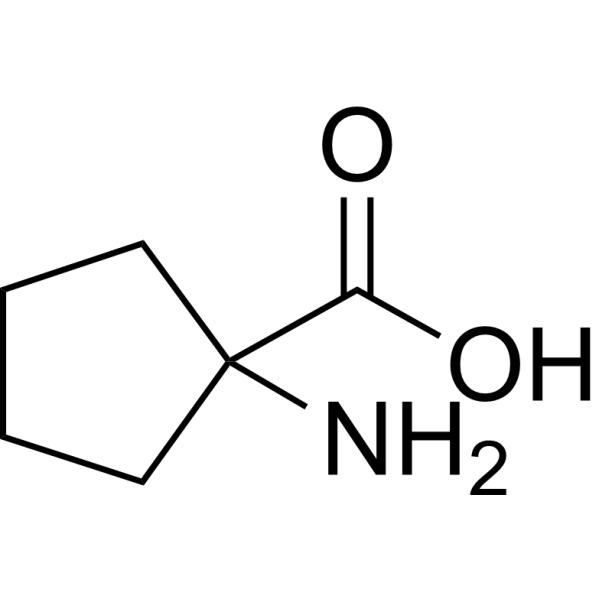
Cycloleucine is a specific inhibitor of S-adenosyl-methionine mediated methylation. Cycloleucine is antagonist of NMDA receptor associated glycine receptor, with a Ki of 600 μM. Cycloleucine is also a competitive inhibitor of ATP: L-methionine-S-adenosyl transferase in vitro. Cycloleucine has anxiolytic and cytostatic effects .
|
-
- HY-154492
-
|
|
Nucleoside Antimetabolite/Analog
|
Cancer
|
|
2’,3’-Bis(O-t-butyldimethylsilyl)-4’,5’-didehydro-5’-deoxyuridine is a uridine analog. Uridine has potential antiepileptic effects, and its analogs can be used to study anticonvulsant and anxiolytic activities, as well as to develop new antihypertensive agents .
|
-
- HY-13206R
-
|
|
mGluR
|
Neurological Disease
|
|
MTEP (hydrochloride) (Standard) is the analytical standard of MTEP (hydrochloride). This product is intended for research and analytical applications. MTEP hydrochloride is a potent, non-competitive and highly selective mGluR5 antagonist, with an IC50 of 5 nM and a Ki of 16 nM. MTEP hydrochloride shows antidepressant and anxiolytic-like effects. MTEP hydrochloride can be used for Parkinson's disease research .
|
-
- HY-154175
-
|
|
Nucleoside Antimetabolite/Analog
|
Others
|
|
1-[6-(Diethoxyphosphinyl)-2-O-(2-methoxyethyl)-β-D-ribo-hexofuranosyl]uracil is a uridine analog. Uridine has potential antiepileptic effects, and its analogs can be used to study anticonvulsant and anxiolytic activities, as well as to develop new antihypertensive agents .
|
-
- HY-14127R
-
|
NBI30775 (Standard)
|
CRFR
Reference Standards
|
Neurological Disease
Endocrinology
|
|
R121919 (Standard) is the analytical standard of R121919. This product is intended for research and analytical applications. R121919 (NBI30775) is a potent and selective CRF1R antagonist with a Ki of 2 to 5 nM. R121919 has antidepressant and anxiolytic effects. R121919 alleviates defensive withdrawal in rats .
|
-
- HY-152792
-
|
|
Nucleoside Antimetabolite/Analog
|
Others
|
|
2’-Deoxy-2’-fluoro-N3-[(pyrid-2-yl)methyl]uridine is a uridine analogue. Uridine has potential antiepileptic effects, and its analogs can be used to study anticonvulsant and anxiolytic activities, as well as to develop new antihypertensive agents .
|
-
- HY-154552
-
|
|
Nucleoside Antimetabolite/Analog
|
Cancer
|
|
2’-O-Acetyl-5’-O-benzoyl-3’-O-(2-methoxyethyl) uridine is a uridine analog. Uridine has potential antiepileptic effects, and its analogs can be used to study anticonvulsant and anxiolytic activities, as well as to develop new antihypertensive agents .
|
-
- HY-18941C
-
|
LY354740 hydrochloride; Eglumetad hydrochloride
|
mGluR
|
Neurological Disease
|
|
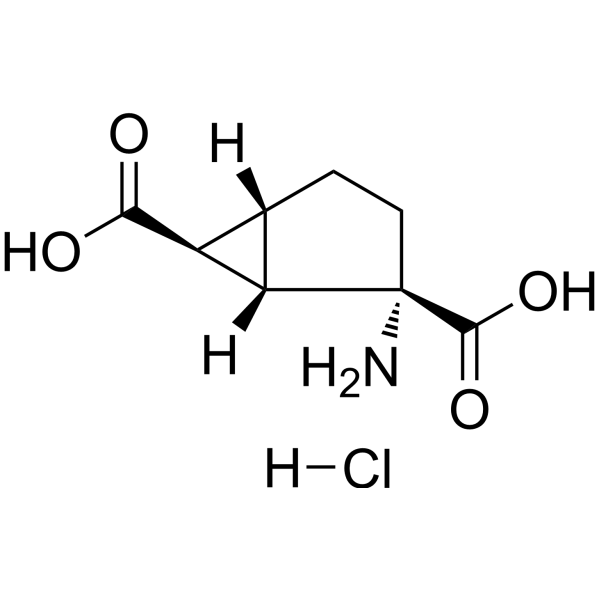
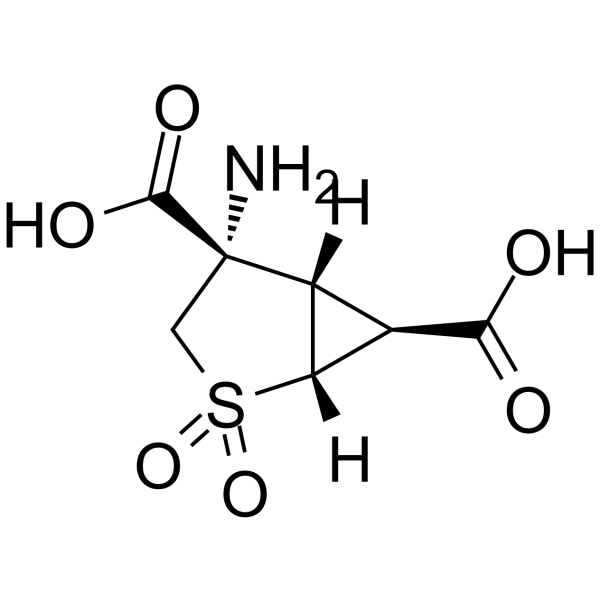
Eglumegad (LY354740) hydrochloride is a highly potent and selective group II (mGlu2/3) receptor agonist with IC50s of 5 and 24 nM on transfected human mGlu2 and mGlu3 receptors, respectively. Eglumegad hydrochloride protects neurons from NMDA toxicity. Eglumegad hydrochloride has anxiolytic- and antipsychotic-like effects .
|
-
- HY-180345
-
|
|
Prostaglandin Receptor
|
Neurological Disease
|
|
ND-7001 is an inhibitor of PDE2 with an IC50 of 0.05 μM. ND-7001 exhibits good selectivity agianst PDE3 and PDE4. ND-7001 increases cGMP levels in primary neuronal cultures of rat cerebral cortical neurons. ND-7001 displays anxiolytic effects .
|
-
- HY-154517
-
|
|
Nucleoside Antimetabolite/Analog
|
Cancer
|
|
N3-Cyanoethyl-5’-O-(4,4’-dimethoxytrityl)-2’-O-methyluridine is a uridine analog. Uridine has potential antiepileptic effects, and its analogs can be used to study anticonvulsant and anxiolytic activities, as well as to develop new antihypertensive agents .
|
-
- HY-154647
-
|
|
Nucleoside Antimetabolite/Analog
|
Cancer
|
|
N3-(2S)-[2-(tert-Butoxycarbonyl)amino-3-(tert-butoxy carbonyl)]propyluridine is a uridine analog. Uridine has potential antiepileptic effects, and its analogs can be used to study anticonvulsant and anxiolytic activities, as well as to develop new antihypertensive agents .
|
-
- HY-107624R
-
|
|
Reference Standards
MCHR1 (GPR24)
|
Neurological Disease
|
|
ATC0175 (Standard) is the analytical standard of ATC0175 (HY-107624). This product is intended for research and analytical applications. ATC0175 is a potent, selective and orally active melanin-concentrating hormone 1 recepter antagonist with IC50s of 13.5, >10000 nM for MCH1R, MCH2R, respectively. ATC0175 shows antidepressant effects and anxiolytic effects in animal models. ATC0175 has the potential for the research of depression and/or anxiety disorders .
|
-
- HY-154582
-
|
|
Nucleoside Antimetabolite/Analog
|
Others
|
|
5-Naphthyl-beta-methylaminocarbony-3’-O-acetyl-2’-O-methyl-5’-O-DMTr-uridine is a uridine analog. Uridine has potential antiepileptic effects, and its analogs can be used to study anticonvulsant and anxiolytic activities, as well as to develop new antihypertensive agents .
|
-
- HY-103133
-
|
|
5-HT Receptor
|
Neurological Disease
|
|
WAY 208466 dihydrochloride is a potent and selective 5-HT6 receptor agonist (EC50=7.3 nM for the human 5-HT6 receptor). WAY-208466 dihydrochloride elevates cortical GABA levels in rat frontal cortex . WAY 208466 dihydrochloride exhibits antidepressant and anxiolytic-like effects .
|
-
- HY-50906
-
|
|
mGluR
|
Neurological Disease
|
|
LY404039 is a potent, selective and orally active mGluR2 and mGluR3 agonist with Kis of 149 nM and 92 nM for recombinant human mGluR2 and mGluR3, respectively. LY404039 shows >100-fold selectivity for mGluR2/3 over other receptors/transproters. LY404039 has antipsychotic and anxiolytic effects .
|
-
- HY-136591R
-
|
|
Drug Metabolite
Reference Standards
|
Neurological Disease
Cancer
|
|
Demoxepam (Standard) is the analytical standard of Demoxepam. This product is intended for research and analytical applications. Demoxepam is a major metabolite of Chlordiazepoxide. Demoxepam exhibits cytotoxicity activity against cancer cell lines. Demoxepam has anticonvulsant and anxiolytic effects. Demoxepam has an inhibitory effect on in vitro [ 3H]tryptophan binding to rat hepatic nuclei .
|
-
- HY-103536AR
-
|
|
Reference Standards
Neuropeptide Y Receptor
|
Neurological Disease
|
|
Galnon TFA (Standard) is the analytical standard of Galnon TFA (HY-103536A). This product is intended for research and analytical applications. Galnon TFA is a selective and non-peptide agonist of galanin GAL1 and GAL2 receptor, with Kis of 11.7 and 34.1 μM respectively. Galnon TFA exhibits anticonvulsant and anxiolytic effects .
|
-
- HY-W396714
-
|
Wormwood acid sodium
|
Potassium Channel
TET Protein
|
Cardiovascular Disease
Neurological Disease
|
|
Succinic acid sodium is a potent and orally active anxiolytic agent. Succinic acid sodium shows inhibitory effects on colonic epithelial cell proliferation in vivo. Succinic acid sodium can down-regulate the expression of KCNMB1 (potassium channel subunit β1) and TET1 (ten?eleven translocation 1). Succinic acid sodium can be used for gestational hypertension research .
|
-
- HY-117839
-
|
|
Cholecystokinin Receptor
|
Neurological Disease
|
|
PD-135666 is a dipeptide inhibitor of cholecystokinin B (CCK B) receptors, binding to CCK B receptors in mouse cerebral cortex with IC50 of 0.1 nM. Its enantiomer, PD-140548, preferentially binds to CCK A receptors with IC50 of 2.8 nM in rat pancreas. PD-135666 exhibits anxiolytic effects in animal models .
|
-
- HY-W007087
-
|
|
GABA Receptor
|
Metabolic Disease
|
|
Valerate sodium is the sodium salt of valeric acid, a short-chain fatty acid, and exhibits oral activity. Valerate sodium reduces binge ethanol intake and decreases blood ethanol concentration in mice, while also exerting anxiolytic effects. Valerate sodium increases GABA levels, regulates epigenetics and alters gut microbiome function. Valerate sodium can be used in research related to excessive alcohol consumption .
|
-
- HY-106003
-
|
|
Phosphodiesterase (PDE)
|
Neurological Disease
Inflammation/Immunology
|
|
GSK356278 is a potent, selective, orally bioavailable and brain-penetrant inhibitor of phosphodiesterase 4 (PDE4), with pIC50s of 8.6, 8.8, and 8.7 for human PDE4A, PDE4B, and PDE4D, respectively. GSK356278 has anti-inflammatory activity, and exhibits anxiolytic and cognition-enhancing effects .
|
-
- HY-N0152R
-
-
- HY-121653R
-
|
|
5-HT Receptor
|
Neurological Disease
|
|
Flesinoxan (Standard) is the analytical standard of Flesinoxan. This product is intended for research and analytical applications. Flesinoxan is a hypotensive agent and a potent, high affinity and selective 5-hydroxytryptamine1A (5-HT1A) receptor agonist with an EC50 value of 24 nM. Flesinoxan also has effective anxiolytic/antidepressant effects .
|
-
- HY-19801
-
|
|
Aldehyde Dehydrogenase (ALDH)
|
Neurological Disease
|
|
CVT-10216 is a highly selective, reversible aldehyde dehydrogenase-2 (ALDH-2) inhibitor with an IC50 of 29 nM. CVT-10216 also has inhibitory effect of ALDH-1 with an IC50 of 1.3 μM. CVT-10216 can reduce excessive alcohol drinking in alcohol-preferring rats and exhibit anxiolytic effects .
|
-
- HY-P3355
-
|
|
iGluR
|
Neurological Disease
|
|
p-fin4 is a peptide inhibitor of STEP Phosphatase-GluA2 AMPA receptor interaction with a Ki of 0.4 μM. p-fin4 restores the memory deficits and displays anxiolytic and antidepressant effects in a scopolamine-treated rat model. p-fin4 is a promising lead compound for novel cognitive enhancers and/or behavioral modulators .
|
-
- HY-13206A
-
MTEP
3 Publications Verification
|
mGluR
|
Neurological Disease
|
|
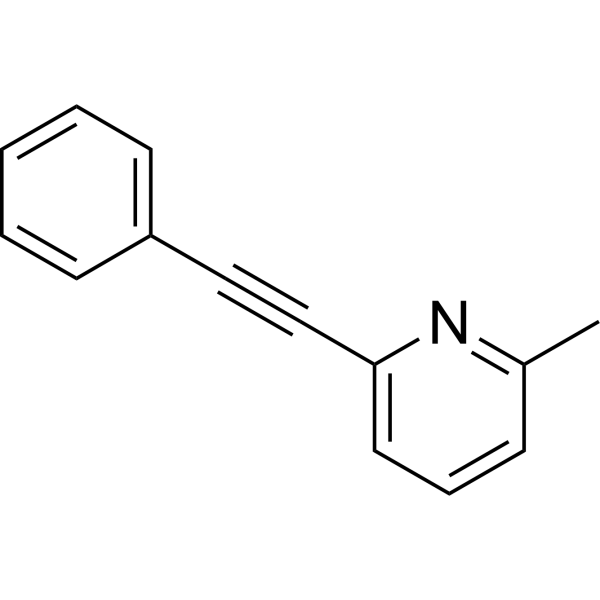
MTEP is a potent, non-competitive and highly selective mGluR5 antagonist, with an IC50 of 5 nM and a Ki of 16 nM. MTEP shows antidepressant and anxiolytic-like effects. MTEP can be used for Parkinson's disease research . MTEP is a click chemistry reagent, it contains an Alkyne group and can undergo copper-catalyzed azide-alkyne cycloaddition (CuAAc) with molecules containing Azide groups.
|
-
- HY-167825
-
-
- HY-110135A
-
|
|
IGF-1R
|
Neurological Disease
|
|
NBI-31772 hydrate is a potent inhibitor of interaction between insulin-like growth factor (IGF) and IGF-binding proteins (IGFBPs). NBI-31772 hydrate is also a nonpeptide ligand that releases bioactive IGF-I from the IGF-I/IGFBP-3 complex (Kis=1-24 nM for all six human subtypes). Anxiolytic and antidepressant-like effects .
|
-
- HY-105226B
-
|
PD134308 hemihydrate
|
Cholecystokinin Receptor
|
Neurological Disease
Cancer
|
|
CI-988 hemihydrate (PD134308) is a potent, selective and orally active CCK2R (cholecystokinin 2 receptor) antagonist with an IC50 of 1.7 nM for mouse cortex CCK2. CI-988 hemihydrate shows >1600-fold selectivity for CCK2 over CCK1 receptor. CI-988 hemihydrate has anxiolytic and anti-tumor effects .
|
-
- HY-14609
-
|
|
mGluR
|
Neurological Disease
|
|
MPEP Hydrochloride is a potent, selective, noncompetitive, orally active and systemically active mGlu5 receptor antagonist, with an IC50 of 36 nM for completely inhibiting quisqualate-stimulated phosphoinositide (PI) hydrolysis. MPEP Hydrochloride has anxiolytic-or antidepressant-like effects . MPEP (Hydrochloride) is a click chemistry reagent, it contains an Alkyne group and can undergo copper-catalyzed azide-alkyne cycloaddition (CuAAc) with molecules containing Azide groups.
|
-
- HY-154652
-
|
|
Nucleoside Antimetabolite/Analog
|
Cancer
|
|
1-(2,3,5-Tri-O-benzoyl-2-C-methyl-β-D-ribofuranosyl)-2,4(1H,3H)-pyrimidinedione is a uridine analog. Uridine has potential antiepileptic effects, and its analogs can be used to study anticonvulsant and anxiolytic activities, as well as to develop new antihypertensive agents .
|
-
- HY-14609A
-
|
|
mGluR
|
Neurological Disease
|
|
MPEP is a potent, selective, noncompetitive, orally active and systemically active mGlu5 receptor antagonist, with an IC50 of 36 nM for completely inhibiting quisqualate-stimulated phosphoinositide (PI) hydrolysis. MPEP has anxiolytic-or antidepressant-like effects . MPEP is a click chemistry reagent, it contains an Alkyne group and can undergo copper-catalyzed azide-alkyne cycloaddition (CuAAc) with molecules containing Azide groups.
|
-
- HY-105226
-
|
PD134308
|
Cholecystokinin Receptor
|
Neurological Disease
Cancer
|
|
CI-988 (PD134308) is a potent, selective and orally active CCK2R (cholecystokinin 2 receptor) antagonist with an IC50 of 1.7 nM for mouse cortex CCK2. CI-988 shows >1600-fold selectivity for CCK2 over CCK1 receptor. CI-988 has anxiolytic and anti-tumor effects .
|
-
- HY-152476
-
|
|
Nucleoside Antimetabolite/Analog
|
Cancer
|
|
3’-β-C-Ethynyluridine is a uridine analog. Uridine has potential antiepileptic effects, and its analogs can be used to study anticonvulsant and anxiolytic activities, as well as to develop new antihypertensive agents . 3’-β-C-Ethynyluridine is a click chemistry reagent, it contains an Alkyne group and can undergo copper-catalyzed azide-alkyne cycloaddition (CuAAc) with molecules containing Azide groups.
|
-
- HY-124110
-
|
|
nAChR
|
Neurological Disease
|
|
TC299423 is an orally active, brain-penetrant, selective and potent agonist for α6β2 ? and α4β2 ? nicotinic acetylcholine receptors (nAChRs) with anxiolytic and antinociceptive properties. TC299423 acts primarily through α6β2 ? nAChRs that are implicated in the anxiolytic effects of nicotine. TC299423 elicits reward-related behavior mediated through α6β2 ? nAChRs in hypersensitive α6L90’S mice. TC299423 elicits dopamine release and dose not suppress nicotine self-administration in rats. TC299423 is proming for rasearch of addiction and Parkinson’s disease .
|
-
- HY-A0095B
-
|
BIMT-17 hydrochloride; BIMT-17BS hydrochloride
|
5-HT Receptor
Dopamine Receptor
|
Neurological Disease
|
|
Flibanserin hydrochloride (BIMT-17 hydrochloride) is an orally active 5-HT1A receptor agonist and 5-HT2A receptor antagonist with binding affinities Ki of 1 nM and 49 nM, respectively. Flibanserin hydrochloride also binds to dopamine D4 receptors with a Ki of 4-24 nM. Flibanserin hydrochloride has antidepressant and anxiolytic effects and can be used in the study of hypoactive sexual desire disorder (HSDD) .
|
-
- HY-103093
-
|
|
5-HT Receptor
Histamine Receptor
Adrenergic Receptor
Dopamine Receptor
|
Neurological Disease
|
|
Zotepine, an antipsychotic agent, is a potent antagonist of 5-HT2A, 5-HT2C, Histamine H1, α1-adrenergic and Dopamine D2 receptors, with Kds of 2.6 nM, 3.2 nM, 3.3 nM, 7.3 nM and 8 nM, respectively. Zotepine exhibits antidepressive and anxiolytic effects in vivo .
|
-
- HY-119114
-
|
|
CRFR
|
Neurological Disease
|
|
E-2508 free base is an orally active and highly selective corticotropin-releasing factor type 1 receptor (CRF1) antagonist with anxiolytic effects (Ki=11 nM). E-2508 free base blocks CRF-induced cAMP accumulation via CRF1 receptor inhibition. E-2508 free base is promising for research of stress-related psychiatric disorders, such as anxiety and depression .
|
-
- HY-B1359
-
|
C.I. Basic Blue 9 trihydrate
|
Guanylate Cyclase
Monoamine Oxidase
NO Synthase
Parasite
|
Infection
Neurological Disease
Cancer
|
|
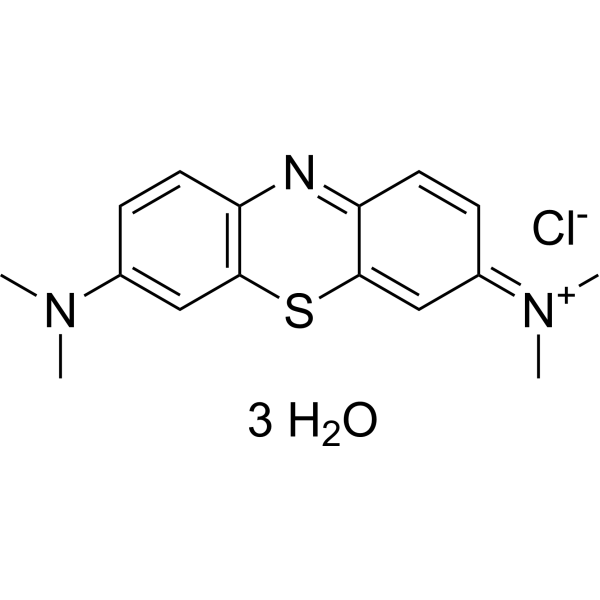
Methylene blue trihydrate (C.I. Basic Blue 9 trihydrate) is a guanylyl cyclase (sGC), monoamine oxidase A (MAO-A) and NO synthase (NOS) inhibitor. Methylene blue trihydrate is a vasopressor and is often used as a dye in several medical procedures. Methylene blue trihydrate has antinociception, antimalarial, antidepressant and anxiolytic activity effects. Methylene Blue trihydrate has the potential for methemoglobinemias, neurodegenerative disorders and ifosfamide-induced encephalopathytreatment .
|
-
- HY-130176
-
|
|
Opioid Receptor
ERK
Adenylate Cyclase
|
Neurological Disease
|
|
UFP-512 is a selective and potent σ-opioid receptor (DOP receptor) peptidic agonist with antidepressant- and anxiolytic-like effects. UFP-512 exhibits as a potent agonist on adenylyl cyclase inhibition and Erk1/2 activation. UFP-512 induces phosphorylation of DOP receptors on Ser 363 with a low desensitization of the cAMP pathway. UFP-512 is promising for research of mood disorders .
|
-
- HY-175263
-
|
|
GABA Receptor
5-HT Receptor
Reactive Oxygen Species (ROS)
|
Neurological Disease
Metabolic Disease
|
|
Aminochalcone 4AAF is a neuroprotective agent that exerts anxiolytic effects through GABAA and 5-HT receptors. Aminochalcone 4AAF has high selectivity for 5-HT3A and 5-HT2C receptors, and stimulates allosteric behavior toward the 5-HT2A receptor. Aminochalcone 4AAF shows hypoglycemic effects and reduces the level of ROS in the liver. Aminochalcone 4AAF delays the clonic stage of the epileptic seizures . Aminochalcone 4AAF can be used in the study of anxiety, hyperglycemia, and seizures .
|
-
- HY-N0920
-
|
7,8-Dihydrokawain; 7,8-Dihydrokavain; Marindinin
|
COX
Cytochrome P450
|
Neurological Disease
Inflammation/Immunology
|
|
Dihydrokavain (7,8-Dihydrokawain) is a natural kavalactone compound. Dihydrokavain inhibits COX-1, COX-2, CYP2C9 (IC50 = 130.95 μM), CYP2C19 (IC50 = 10.05 μM) and CYP3A4 (IC50 = 78.59 μM). Dihydrokavain reduces TNFα secretion. Dihydrokavain shows analgesic and anxiolytic effects .
|
-
- HY-103154
-
|
|
5-HT Receptor
|
Neurological Disease
|
|
SB228357 is a selective, potent and orall active 5-HT2C/2B receptor antagonist with pKi values of 6.9, 8.0 and 9.0 for 5-HT2A, 5-HT2B and 5-HT2C, respectively. SB228357 has antidepressant/anxiolytic effects .
|
-
- HY-159942
-
|
|
5-HT Receptor
Dopamine Receptor
|
Neurological Disease
|
|
5-HT7R antagonist 3 (Compound 6.4) is a selective 5-HT7R antagonist (Ki: 8 nM), with Ki of 511 nM (D2), 8930 nM (5-HT1A) and 5786 nM (5-HT2A), respectively. 5-HT7R antagonist 3 possesses antidepressant and anxiolytic effects in mice .
|
-
- HY-P3354
-
|
|
iGluR
|
Neurological Disease
|
|
p3Ysh-3 is a peptide inhibitor of STEP Phosphatase-GluA2 AMPA receptor interaction with a Ki of 1.09 μM. p3Ysh-3 restores the memory deficits and displays anxiolytic and antidepressant effects in a scopolamine-treated rat model. p3Ysh-3 is a promising lead compound for novel cognitive enhancers and/or behavioral modulators .
|
-
- HY-N1151
-
|
|
Bacterial
Cholinesterase (ChE)
MMP
TNF Receptor
|
Infection
Neurological Disease
Inflammation/Immunology
|
|
Thunberginol C is an orally active, selective, and non-competitive inhibitor of AChE and BChE, with IC50 values of 41.96 and 42.36 μM, respectively. Thunberginol C exerts cytoprotective, pro-collagen type I restorative, MMP-1 inhibitory, hyaluronic acid restorative, anti-photoaging effects in skin cells. Thunberginol C exerts neuroprotective, anxiolytic, TNF-α inhibitory, neuroinflammation inhibitory, and oxidative stress inhibitory effects. Thunberginol C can be used for the research of Alzheimer’s disease, UVB-induced skin photoaging, allergic reactions, oral bacterial infections, and stress-induced anxiety .
|
-
- HY-118317
-
|
|
5-HT Receptor
|
Cardiovascular Disease
Neurological Disease
|
|
Zacopride is an orally active 5-HT3 receptor (Ki of 0.38 nM) antagonist and 5-HT4 receptor (Ki of 373 nM) agonist. Zacopride exhibits multiple activities, such as regulating gastrointestinal motility, affecting cardiac function, and exerting anxiolytic and antiemetic effects. Zacopride is currently mainly used in the research of gastrointestinal diseases, cardiovascular diseases, and psychiatric diseases such as anxiety .
|
-
- HY-103137
-
|
|
5-HT Receptor
|
Cardiovascular Disease
Neurological Disease
|
|
Zacopride hydrochloride is an orally active 5-HT3 receptor (Ki of 0.38 nM) antagonist and 5-HT4 receptor (Ki of 373 nM) agonist. Zacopride hydrochloride exhibits multiple activities, such as regulating gastrointestinal motility, affecting cardiac function, and exerting anxiolytic and antiemetic effects. Zacopride hydrochloride is currently mainly used in the research of gastrointestinal diseases, cardiovascular diseases, and psychiatric diseases such as anxiety .
|
-
- HY-154736
-
|
|
Nucleoside Antimetabolite/Analog
|
Cancer
|
|
N3-(Butyn-3-yl)uridine is a uridine analog. Uridine has potential antiepileptic effects, and its analogs can be used to study anticonvulsant and anxiolytic activities, as well as to develop new antihypertensive agents . N3-(Butyn-3-yl)uridine is a click chemistry reagent, it contains an Alkyne group and can undergo copper-catalyzed azide-alkyne cycloaddition (CuAAc) with molecules containing Azide groups.
|
-
- HY-106003R
-
|
|
Reference Standards
Phosphodiesterase (PDE)
|
Neurological Disease
Inflammation/Immunology
|
|
GSK356278 (Standard) is the analytical standard of GSK356278 (HY-106003). This product is intended for research and analytical applications. GSK356278 is a potent, selective, orally bioavailable and brain-penetrant inhibitor of phosphodiesterase 4 (PDE4), with pIC50s of 8.6, 8.8, and 8.7 for human PDE4A, PDE4B, and PDE4D, respectively. GSK356278 has anti-inflammatory activity, and exhibits anxiolytic and cognition-enhancing effects .
|
-
- HY-14609R
-
|
|
mGluR
|
Neurological Disease
|
|
MPEP (Hydrochloride) (Standard) is the analytical standard of MPEP (Hydrochloride). This product is intended for research and analytical applications. MPEP Hydrochloride is a potent, selective, noncompetitive, orally active and systemically active mGlu5 receptor antagonist, with an IC50 of 36 nM for completely inhibiting quisqualate-stimulated phosphoinositide (PI) hydrolysis. MPEP Hydrochloride has anxiolytic-or antidepressant-like effects . MPEP (Hydrochloride) is a click chemistry reagent, it contains an Alkyne group and can undergo copper-catalyzed azide-alkyne cycloaddition (CuAAc) with molecules containing Azide groups.
|
-
- HY-103093R
-
|
|
Reference Standards
5-HT Receptor
Histamine Receptor
Adrenergic Receptor
Dopamine Receptor
|
Neurological Disease
|
|
Zotepine (Standard) is the analytical standard of Zotepine. This product is intended for research and analytical applications. Zotepine, an antipsychotic agent, is a potent antagonist of 5-HT2A, 5-HT2C, Histamine H1, α1-adrenergic and Dopamine D2 receptors, with Kds of 2.6 nM, 3.2 nM, 3.3 nM, 7.3 nM and 8 nM, respectively. Zotepine exhibits antidepressive and anxiolytic effects in vivo .
|
-
- HY-107691
-
|
|
Neurokinin Receptor
|
Neurological Disease
Endocrinology
Cancer
|
|
GR 159897 is a highly potent, selective, competitive, brain-penetrated non-peptide neurokinin 2 (NK2) receptor antagonist. GR 159897 has little or no affinity for NK1 and NK3 receptors. GR 159897 inhibits binding of [ 3H]GR100679 to human NK2 (hNK2)-CHO cells and rat colon membranes with pKis of 9.51 and 10, respectively. Antagonizes bronchoconstriction. Anxiolytic-like and anti-tumor effects .
|
-
- HY-12143
-
|
GR 205171A
|
Neurokinin Receptor
|
Neurological Disease
|
|
Vofopitant dihydrochloride (GR 205171A) is a blood-brain barrier-permeable NK1 receptor inhibitor with a pKi of 9.02 in mice. Vofopitant dihydrochloride blocks vomiting-related responses and inhibits pseudoptyalism. Vofopitant dihydrochloride exerts anxiolytic effects, regulates 5-HT receptor function and increases central 5-HT release. Vofopitant dihydrochloride improves hyperarousal symptoms of post-traumatic stress disorder. Vofopitant dihydrochloride can be used in research related to depression, anxiety, vomiting and postoperative nausea and vomiting .
|
-
- HY-W744038
-
|
|
Isotope-Labeled Compounds
Dopamine Receptor
Histamine Receptor
Adrenergic Receptor
5-HT Receptor
|
Neurological Disease
|
|
Zotepine-d6 is the deuterium labeled Zotepine (HY-103093). Zotepine, an antipsychotic agent, is a potent antagonist of 5-HT2A, 5-HT2C, Histamine H1, α1-adrenergic and Dopamine D2 receptors, with Kds of 2.6 nM, 3.2 nM, 3.3 nM, 7.3 nM and 8 nM, respectively. Zotepine exhibits antidepressive and anxiolytic effects in vivo .
|
-
- HY-12142
-
|
GR 205171
|
Neurokinin Receptor
|
Neurological Disease
|
|
Vofopitant (GR 205171A) is a blood-brain barrier-permeable NK1 receptor inhibitor with a pKi of 9.02 in mice. Vofopitant blocks vomiting-related responses and inhibits pseudoptyalism. Vofopitant exerts anxiolytic effects, regulates 5-HT receptor function and increases central 5-HT release. Vofopitant improves hyperarousal symptoms of post-traumatic stress disorder. Vofopitant can be used in research related to depression, anxiety, vomiting and postoperative nausea and vomiting .
|
-
- HY-118835
-
|
|
Serotonin Transporter
|
Neurological Disease
|
|
Zimelidine is an orally active selective serotonin reuptake inhibitor. Zimelidine competitively inhibits central 5-HT uptake and desensitizes 5-HT autoreceptors in dorsal raphe nucleus. Zimelidine time-dependently modulates 5-HT neuronal firing and hippocampal CA3 responses. Zimelidine strengthens central serotonergic neurotransmission and produces related behavioral changes. Zimelidine exerts anxiolytic, analgesic, feeding-suppressive and tolerance-attenuating effects. Zimelidine is used for the study of depressive disorders and analgesic tolerance .
|
-
- HY-N0920R
-
|
7,8-Dihydrokawain (Standard); 7,8-Dihydrokavain (Standard); Marindinin (Standard)
|
Reference Standards
COX
Cytochrome P450
|
Neurological Disease
Inflammation/Immunology
|
|
Dihydrokavain (Standard) (7,8-Dihydrokawain (Standard)) is the analytical standard of Dihydrokavain (HY-N0920). This product is intended for research and analytical applications. Dihydrokavain is a natural kavalactone compound. Dihydrokavain inhibits COX-1, COX-2, CYP2C9 (IC50 = 130.95 μM), CYP2C19 (IC50 = 10.05 μM) and CYP3A4 (IC50 = 78.59 μM). Dihydrokavain reduces TNFα secretion. Dihydrokavain shows analgesic and anxiolytic effects.
|
-
- HY-110023
-
|
|
Serotonin Transporter
|
Neurological Disease
|
|
Zimelidine dihydrochloride is an orally active selective serotonin reuptake inhibitor. Zimelidine dihydrochloride competitively inhibits central 5-HT uptake and desensitizes 5-HT autoreceptors in dorsal raphe nucleus. Zimelidine dihydrochloride time-dependently modulates 5-HT neuronal firing and hippocampal CA3 responses. Zimelidine dihydrochloride strengthens central serotonergic neurotransmission and produces related behavioral changes. Zimelidine dihydrochloride exerts anxiolytic, analgesic, feeding-suppressive and tolerance-attenuating effects. Zimelidine dihydrochloride is used for the study of depressive disorders and analgesic tolerance .
|
-
- HY-77650
-
|
4'-Azidouridine
|
Nucleoside Antimetabolite/Analog
|
Others
|
|
4'-C-azidouridine (4'-Azidouridine) is a uridine analogue. Uridine has potential antiepileptic effects, and its analogs can be used to study anticonvulsant and anxiolytic activities, as well as to develop new antihypertensive agents . 4'-C-Azidouridine is a click chemistry reagent, it contains an Azide group and can undergo copper-catalyzed azide-alkyne cycloaddition reaction (CuAAc) with molecules containing Alkyne groups. It can also undergo strain-promoted alkyne-azide cycloaddition (SPAAC) reactions with molecules containing DBCO or BCN groups.
|
-
- HY-165527
-
|
|
Dopamine Receptor
5-HT Receptor
|
Neurological Disease
|
|
S18327 is a multi-target antipsychotic agent. S18327 exerts its efficacy by acting on multiple neurotransmitter systems in the brain, and it has antagonistic effects on dopamine receptors (particularly the D2 receptor) and 5-hydroxytryptamine 2A receptors (5-HT2A receptor). S18327 can counteract excessive dopamine activity and hypo-function of glutamate. S18327 exhibits a multi-parameter pharmacological profile that is highly similar to that of Clozapine (HY-14539). S18327 can produce the same discriminative stimulus as Clozapine, improve cognitive filtering deficits associated with schizophrenia, and display anxiolytic properties. S18327 has relatively weak affinity for histaminergic receptors and muscarinic receptors, which avoids the side effects of Clozapine .
|
-
- HY-W001692
-
|
DOV 273547
|
GABA Receptor
|
Neurological Disease
|
|
Ocinaplon (DOV 273547) is an orally active positive allosteric modulator of GABAA receptor, with an EC50 ranging from 3.07 μM (α1β2γ2 subtype) to 10.03 μM (α1β2γ3 subtype). Ocinaplon enhances GABA-stimulated chloride currents across multiple GABAA receptor subtypes, with varying potency between different subtypes. Ocinaplon exerts anxiolytic and anticonvulsant effects, and causes motor impairment at high doses. Ocinaplon can be used for research on generalized anxiety disorder .
|
-
- HY-120144
-
|
|
Opioid Receptor
|
Neurological Disease
|
|
SR-8993 is a highly selective nociceptin receptor agonist that can penetrate the blood-brain barrier and has the activity of reducing alcohol intake and relieving withdrawal anxiety. SR-8993 has shown mild anxiolytic effects in animal models and can effectively reverse anxiety caused by acute alcohol withdrawal. SR-8993 further reduces restricted drinking, operant responses for alcohol, and increased drinking induced by long-term intermittent exposure to alcohol. SR-8993 also reduces stress- and cue-related alcohol-seeking relapse .
|
-
- HY-14544
-
|
ICI204636
|
5-HT Receptor
Dopamine Receptor
|
Neurological Disease
|
|
Quetiapine (ICI204636) is a 5-HT receptors agonist with a pEC50 of 4.77 for human 5-HT1A receptor. Quetiapine is a dopamine receptor antagonist with a pIC50 of 6.33 for human D2 receptor. Quetiapine has moderate to high affinity for the human D2, HT1A, 5-HT2A, 5-HT2C receptor with pKis of 7.25, 5.74, 7.54, 5.55. Antidepressant and anxiolytic effects .
|
-
- HY-W677042
-
|
5α-Androst-16-en-3α-ol
|
GABA Receptor
|
Neurological Disease
|
|
α-Androstenol (5α-Androst-16-en-3α-ol) is a steroid pheromone that has been found in boar testes and male axillary sweat. α-Androstenol is also a positive allosteric modulator of GABAA receptors, which enhances GABA-activated currents in primary mouse cerebellar granule cells (EC50 of 0.4 μM). α-Androstenol produces anxiolytic-like, antidepressant-like, and anticonvulsant effects in mice. α-Androstenol can be used for the research of seizures .
|
-
- HY-B0031
-
|
|
5-HT Receptor
Dopamine Receptor
|
Neurological Disease
|
|
Quetiapine hemifumarate is a 5-HT receptors agonist with a pEC50 of 4.77 for human 5-HT1A receptor. Quetiapine hemifumarate is a dopamine receptor antagonist with a pIC50 of 6.33 for human D2 receptor. Quetiapine hemifumarate has moderate to high affinity for the human D2, HT1A, 5-HT2A, 5-HT2C receptor with pKis of 7.25, 5.74, 7.54, 5.55. Antidepressant and anxiolytic effects .
|
-
- HY-118301
-
|
|
GABA Receptor
5-HT Receptor
|
Neurological Disease
|
|
ADX71441 is an orally active, blood-brain barrier penetrant positive allosteric modulator of GABAB receptor. ADX71441 potentiates the activity of endogenous GABA at GABAB receptor, with an EC50 of 96 nM. ADX71441 functionally inhibits adenosine transporters and 5-HT2B receptor. ADX71441 produces anxiolytic-like, analgesic, muscle relaxant, hypothermic and overactive bladder inhibitory effects, reduces acute locomotor activity levels, decreases voluntary intake of alcohol and saccharin, attenuates stress-induced neuronal activation, and exhibits anti-hyperalgesic activity .
|
-
- HY-B0031S2
-
|
|
Isotope-Labeled Compounds
5-HT Receptor
Dopamine Receptor
|
Neurological Disease
|
|
Quetiapine-d8 (fumarate) is the deuterium labeled Quetiapine. Quetiapine is a 5-HT receptors agonist with a pEC50 of 4.77 for human 5-HT1A receptor. Quetiapine is a dopamine receptor antagonist with a pIC50 of 6.33 for human D2 receptor. Quetiapine has moderate to high affinity for the human D2, HT1A, 5-HT2A, 5-HT2C receptor with pKis of 7.25, 5.74, 7.54, 5.55. Antidepressant and anxiolytic effects .
|
-
- HY-172236
-
|
BNC210; IW-2143
|
nAChR
|
Neurological Disease
|
|
Soclenicant (BNC210) is an orally active α7 nAChR negative alteration modulator (NAM) with no apparent side effects. Soclenicant exhibits acute anxiolytic activity in rodent models of anxiety. Soclenicant inhibits rat and human α7 nAChR currents (in stably transfected cell lines) induced by acetylcholine, nicotine, choline, and the a7-specific agonist PNU-282987 (HY-12560A) with IC50 values in the range of 1.2 to 3 μM. Soclenicant can be used in studies of anxiety, trauma, and stressor-related disorders .
|
-
- HY-NP009
-
|
|
Bacterial
|
Infection
Neurological Disease
|
|
α-Lactalbumin is a globular whey protein that exists in milk. α-Lactalbumin binds Ca 2+, Mg 2+, Mn 2+, Na +, K + and Zn 2+ ions; among these, Ca 2+ binding enhances protein stability, while Zn 2+ binding reduces stability and induces aggregation. α-Lactalbumin forms amyloid fibrils, amorphous aggregates, nanoparticles and nanotubes depending on external conditions. α-Lactalbumin exhibits bactericidal and antiviral activities. α-Lactalbumin has anxiolytic and antidepressant activities, and its effects are enhanced under stress conditions .
|
-
- HY-152985
-
|
|
Nucleoside Antimetabolite/Analog
|
Others
|
|
6-Chloro-N1-(trimethylsilylethoxymethyl)pseudouridine is a uridine analog. Uridine has potential antiepileptic effects, and its analogs can be used to study anticonvulsant and anxiolytic activities, as well as to develop new antihypertensive agents . 3’-Azido-3’-deoxy-4-deoxyuridine is a click chemistry reagent, it contains an Azide group and can undergo copper-catalyzed azide-alkyne cycloaddition reaction (CuAAc) with molecules containing Alkyne groups. It can also undergo strain-promoted alkyne-azide cycloaddition (SPAAC) reactions with molecules containing DBCO or BCN groups.
|
-
- HY-160887
-
|
|
5-HT Receptor
|
Neurological Disease
|
|
FPT, a 2-Aminotetralin, is an efficacious partial agonist at 5-HT1AR, a full agonist at 5-HT1BR and 5-HT1DR with EC50s of 39.3 nM, 1.2 nM, 0.5 nM, respectively. FPT is a weak agonist at 5-HT7R. FPT shows in vivo efficacy as an antiepileptic in Fmr1 knockout mice and has anxiolytic-like and prosocial effects in Fmr1 knockout mice and other mouse models .
|
-
- HY-B0031S3
-
|
|
Isotope-Labeled Compounds
5-HT Receptor
Dopamine Receptor
|
Neurological Disease
|
|
Quetiapine-d8 (hemifumarate) is the deuterium labeled Quetiapine hemifumarate. Quetiapine hemifumarate is a 5-HT receptors agonist with a pEC50 of 4.77 for human 5-HT1A receptor. Quetiapine hemifumarate is a dopamine receptor antagonist with a pIC50 of 6.33 for human D2 receptor. Quetiapine hemifumarate has moderate to high affinity for the human D2, HT1A, 5-HT2A, 5-HT2C receptor with pKis of 7.25, 5.74, 7.54, 5.55. Antidepressant and anxiolytic effects .
|
-
- HY-110023R
-
|
|
Reference Standards
Serotonin Transporter
|
Neurological Disease
|
|
Zimelidine dihydrochloride (Standard) is the analytical standard of Zimelidine dihydrochloride (HY-110023). This product is intended for research and analytical applications. Zimelidine dihydrochloride is an orally active selective serotonin reuptake inhibitor. Zimelidine dihydrochloride competitively inhibits central 5-HT uptake and desensitizes 5-HT autoreceptors in dorsal raphe nucleus. Zimelidine dihydrochloride time-dependently modulates 5-HT neuronal firing and hippocampal CA3 responses. Zimelidine dihydrochloride strengthens central serotonergic neurotransmission and produces related behavioral changes. Zimelidine dihydrochloride exerts anxiolytic, analgesic, feeding-suppressive and tolerance-attenuating effects. Zimelidine dihydrochloride is used for the study of depressive disorders and analgesic tolerance .
|
-
- HY-N0507
-
|
|
TNF Receptor
Interleukin Related
|
Neurological Disease
Inflammation/Immunology
|
|
Rosavin, an orally bioactive phenylpropanoid from Rhodiola rosea L. (RRL), is an adaptogen that enhances the body’s response to environmental stress. Rosavin significantly influences bone tissue metabolism by inhibiting osteoclastogenesis and promoting osteoblast differentiation, also impacts various diseases, demonstrating antidepressant, adaptogenic, and anxiolytic effects in mouse models. Additionally, Rosavin improves survival, reducing intestinal damage in irradiated rats and Ischemia-reperfusion(I/R)-induced cerebral injury in vivo by regulating inflammation and oxidative stress, making it a promising candidate for research in radiation-induced intestinal injury, I/R-induced cerebral injury and osteoporosis .
|
-
- HY-14544R
-
|
ICI204636 (Standard)
|
Reference Standards
5-HT Receptor
Dopamine Receptor
|
Neurological Disease
|
|
Quetiapine (Standard) is the analytical standard of Quetiapine. This product is intended for research and analytical applications. Quetiapine (ICI204636) is a 5-HT receptors agonist with a pEC50 of 4.77 for human 5-HT1A receptor. Quetiapine is a dopamine receptor antagonist with a pIC50 of 6.33 for human D2 receptor. Quetiapine has moderate to high affinity for the human D2, HT1A, 5-HT2A, 5-HT2C receptor with pKis of 7.25, 5.74, 7.54, 5.55. Antidepressant and anxiolytic effects .
|
-
- HY-154590
-
|
|
Nucleoside Antimetabolite/Analog
|
Cancer
|
|
2’,3’-Di-O-isopropylidene-4’-alpha-C-azidouridine is a uridine analog. Uridine has potential antiepileptic effects, and its analogs can be used to study anticonvulsant and anxiolytic activities, as well as to develop new antihypertensive agents . 2’,3’-Di-O-isopropylidene-4’-alpha-C-azidouridine is a click chemistry reagent, it contains an Azide group and can undergo copper-catalyzed azide-alkyne cycloaddition reaction (CuAAc) with molecules containing Alkyne groups. It can also undergo strain-promoted alkyne-azide cycloaddition (SPAAC) reactions with molecules containing DBCO or BCN groups.
|
-
- HY-118835S
-
|
|
Isotope-Labeled Compounds
Serotonin Transporter
|
Neurological Disease
|
|
Zimeldine-d6 is the deuterium labeled Zimeldine (HY-118835) . Zimelidine is an orally active selective serotonin reuptake inhibitor. Zimelidine competitively inhibits central 5-HT uptake and desensitizes 5-HT autoreceptors in dorsal raphe nucleus. Zimelidine time-dependently modulates 5-HT neuronal firing and hippocampal CA3 responses. Zimelidine strengthens central serotonergic neurotransmission and produces related behavioral changes. Zimelidine exerts anxiolytic, analgesic, feeding-suppressive and tolerance-attenuating effects. Zimelidine is used for the study of depressive disorders and analgesic tolerance .
|
-
- HY-B0031R
-
|
|
Reference Standards
5-HT Receptor
Dopamine Receptor
|
Neurological Disease
|
|
Quetiapine (hemifumarate) (Standard) is the analytical standard of Quetiapine (hemifumarate). This product is intended for research and analytical applications. Quetiapine hemifumarate is a 5-HT receptors agonist with a pEC50 of 4.77 for human 5-HT1A receptor. Quetiapine hemifumarate is a dopamine receptor antagonist with a pIC50 of 6.33 for human D2 receptor. Quetiapine hemifumarate has moderate to high affinity for the human D2, HT1A, 5-HT2A, 5-HT2C receptor with pKis of 7.25, 5.74, 7.54, 5.55. Antidepressant and anxiolytic effects .
|
-
- HY-152782
-
|
|
Nucleoside Antimetabolite/Analog
|
Others
|
|
4’-Azido-2’-deoxy-2’-fluoro-beta-D-arabinouridine is a uridine analogue. Uridine has potential antiepileptic effects, and its analogs can be used to study anticonvulsant and anxiolytic activities, as well as to develop new antihypertensive agents . 4’-Azido-2’-deoxy-2’-fluoro-beta-D-arabinouridine is a click chemistry reagent, it contains an Azide group and can undergo copper-catalyzed azide-alkyne cycloaddition reaction (CuAAc) with molecules containing Alkyne groups. It can also undergo strain-promoted alkyne-azide cycloaddition (SPAAC) reactions with molecules containing DBCO or BCN groups.
|
-
- HY-15080
-
|
LY 293606
|
iGluR
|
Cardiovascular Disease
Neurological Disease
|
|
GYKI 53405 is a non-competitive, orally active AMPA receptor antagonist. GYKI 53405 shows no significant binding affinity for GABAA, GABAB or benzodiazepine receptors. GYKI 53405 increases self-grooming behavior, induces wet dog-like shakes, reduces spontaneous activity, produces anxiolytic-like behavior, reverses the anxiogenic effect induced by mCPP, inhibits locomotor activity, suppresses sound-induced and maximal electroshock-induced seizures, prolongs survival in global cerebral ischemia models, and exhibits sustained anticonvulsant effects at doses below the sedation threshold. GYKI 53405 can be used in research related to absence epilepsy, anxiety disorders and global cerebral ischemia .
|
-
- HY-B0031S5
-
|
|
Dopamine Receptor
5-HT Receptor
Isotope-Labeled Compounds
|
Neurological Disease
|
|
Quetiapine-d4-1 fumarate is deuterated labeled Quetiapine (hemifumarate) (HY-B0031). Quetiapine hemifumarate is a 5-HT receptors agonist with a pEC50 of 4.77 for human 5-HT1A receptor. Quetiapine hemifumarate is a dopamine receptor antagonist with a pIC50 of 6.33 for human D2 receptor. Quetiapine hemifumarate has moderate to high affinity for the human D2, HT1A, 5-HT2A, 5-HT2C receptor with pKis of 7.25, 5.74, 7.54, 5.55. Antidepressant and anxiolytic effects .
|
-
- HY-P10405
-
|
|
Dopamine Receptor
|
Neurological Disease
|
|
TAT-D1 peptide is a dopamine D1-D2 receptor heterodimer inhibitor. TAT-D1 peptide disrupts the function of dopamine D1-D2 receptor heteromers, enhances subchronic amphetamine-induced locomotor activity, and exacerbates the expression of amphetamine-induced locomotor sensitization. TAT-D1 peptide produces rapid anxiolytic and antidepressant-like effects in rat models of depression and anxiety, and inhibits c-fos expression in the nucleus accumbens of rats. TAT-D1 peptide can be used in the research of psychostimulant addiction, depression and anxiety disorders .
|
-
- HY-154357
-
|
|
Nucleoside Antimetabolite/Analog
|
Cancer
|
|
4’-alpha-C-Azido-2’,3’-bis(O-t-butyldimethylsilyl)uridine is a uridine analog. Uridine has potential antiepileptic effects, and its analogs can be used to study anticonvulsant and anxiolytic activities, as well as to develop new antihypertensive agents . 4’-alpha-C-Azido-2’,3’-bis(O-t-butyldimethylsilyl)uridine is a click chemistry reagent, it contains an Azide group and can undergo copper-catalyzed azide-alkyne cycloaddition reaction (CuAAc) with molecules containing Alkyne groups. It can also undergo strain-promoted alkyne-azide cycloaddition (SPAAC) reactions with molecules containing DBCO or BCN groups.
|
-
- HY-P10405A
-
|
|
Dopamine Receptor
|
Neurological Disease
|
|
TAT-D1 peptide acetate is a dopamine D1-D2 receptor heterodimer inhibitor. TAT-D1 peptide acetate disrupts the function of dopamine D1-D2 receptor heteromers, enhances subchronic amphetamine-induced locomotor activity, and exacerbates the expression of amphetamine-induced locomotor sensitization. TAT-D1 peptide acetate produces rapid anxiolytic and antidepressant-like effects in rat models of depression and anxiety, and inhibits c-fos expression in the nucleus accumbens of rats. TAT-D1 peptide acetate can be used in the research of psychostimulant addiction, depression and anxiety disorders .
|
-
- HY-W377455
-
|
|
Nucleoside Antimetabolite/Analog
|
Others
|
|
5-Fluoro-1-((2R,3S,4R,5R)-3-fluoro-4-hydroxy-5-(hydroxymethyl)tetrahydrofuran-2-yl)pyrimidine-2,4(1H,3H)-dione (2',5-difluoro-2'-deoxy-1-arabinosyluracil) is a uridine analogue. Uridine has potential antiepileptic effects, and its analogs can be used to study anticonvulsant and anxiolytic activities, as well as to develop new antihypertensive agents .
|
-
- HY-B0031S4
-
|
|
Dopamine Receptor
5-HT Receptor
|
Neurological Disease
|
|
Quetiapine (hemifumarate)-d8 is the deuterium labeled Quetiapine hemifumarate . Quetiapine hemifumarate is a 5-HT receptors agonist with a pEC50 of 4.77 for human 5-HT1A receptor. Quetiapine hemifumarate is a dopamine receptor antagonist with a pIC50 of 6.33 for human D2 receptor. Quetiapine hemifumarate has moderate to high affinity for the human D2, HT1A, 5-HT2A, 5-HT2C receptor with pKis of 7.25, 5.74, 7.54, 5.55. Antidepressant and anxiolytic effects .
|
-
- HY-12142S
-
|
rac-GR 205171-d3
|
Isotope-Labeled Compounds
Neurokinin Receptor
|
Neurological Disease
|
|
rac-Vofopitant-d3 (rac-GR 205171-d3) is a racemic form of deuterated Vofopitant (HY-12142). Vofopitant (GR 205171A) is a blood-brain barrier-permeable NK1 receptor inhibitor with a pKi of 9.02 in mice. Vofopitant blocks vomiting-related responses and inhibits pseudoptyalism. Vofopitant exerts anxiolytic effects, regulates 5-HT receptor function and increases central 5-HT release. Vofopitant improves hyperarousal symptoms of post-traumatic stress disorder. Vofopitant can be used in research related to depression, anxiety, vomiting and postoperative nausea and vomiting .
|
-
- HY-120511
-
KNT-127
1 Publications Verification
|
Opioid Receptor
|
Neurological Disease
|
|
KNT-127 is a selective and BBB-penetrant δ-opioid receptor (DOR) agonist (Ki = 0.16 nM). KNT-127 is highly selective to the δ receptor, with Ki values of 0.16, 21.3 and 153 nM for δ, μ and κ receptors, respectively. KNT-127 acts as a biased ligand that mainly activates cyclic adenosine monophosphate (cAMP) signaling with lower beta-arrestin signaling activation. KNT-127 increases the release of dopamine and L-glutamate in the striatum, nucleus accumbens, and prefrontal cortex. KNT-127 exhibits antidepressant- and anxiolytic-like effects. KNT-127 can be studied in research on neurological diseases .
|
-
- HY-163150
-
|
|
5-HT Receptor
|
Neurological Disease
|
|
5-HT6R antagonist 3 (compound 15) is a potent, selective and brain-penetrant 5-HT6R antagonist with Ki values of 14 nM, 3533 nM, 35 nM, 1449 nM for 5-HT6, 5-HT1A, 5-HT2A, 5-HT7, respectively. 5-HT6R antagonist 3 shows anxiolytic-like and properties neuroprotective and procognitive-like effects. 5-HT6R antagonist 3 has the potential for the research of Alzheimer’s Disease .
|
-
- HY-N0507R
-
|
|
Reference Standards
TNF Receptor
Interleukin Related
|
Neurological Disease
Inflammation/Immunology
|
|
Rosavin (Standard) is the analytical standard of Rosavin. This product is intended for research and analytical applications. Rosavin, an orally bioactive phenylpropanoid from Rhodiola rosea L. (RRL), is an adaptogen that enhances the body’s response to environmental stress. Rosavin significantly influences bone tissue metabolism by inhibiting osteoclastogenesis and promoting osteoblast differentiation, also impacts various diseases, demonstrating antidepressant, adaptogenic, and anxiolytic effects in mouse models. Additionally, Rosavin improves survival, reducing intestinal damage in irradiated rats and Ischemia-reperfusion(I/R)-induced cerebral injury in vivo by regulating inflammation and oxidative stress, making it a promising candidate for research in radiation-induced intestinal injury, I/R-induced cerebral injury and osteoporosis .
|
-
- HY-14544AS
-
|
ICI204636-d4 hydrochloride
|
Isotope-Labeled Compounds
Dopamine Receptor
5-HT Receptor
|
Neurological Disease
|
|
Quetiapine-d4 (hydrochloride) (ICI204636-d4 (hydrochloride)) is deuterium labeled Quetiapine. Quetiapine (ICI204636) is a 5-HT receptors agonist with a pEC50 of 4.77 for human 5-HT1A receptor. Quetiapine is a dopamine receptor antagonist with a pIC50 of 6.33 for human D2 receptor. Quetiapine has moderate to high affinity for the human D2, HT1A, 5-HT2A, 5-HT2C receptor with pKis of 7.25, 5.74, 7.54, 5.55. Antidepressant and anxiolytic effects .
|
-
- HY-W013150
-
|
|
GABA Receptor
|
Neurological Disease
|
|
Alpidem, an anxiolytic agent, is an orally active and brain-penetrant GABAA receptor ligand, binds to α1β2γ2 subunit-containing GABAA receptors (IC50 of 17 nM) over α5β2γ2 subunit-containing GABAA receptors (IC50 of >10 μM). Alpidem modulates calcium-induced mitochondrial permeability transition, induces glutathione depletion and hepatocyte necrosis, potentiates TNF-α toxicity, inhibits marble-burying and locomotor activity, enhances stressed rodent feeding behavior, and exerts anticonvulsant effects. Alpidem can be used for the research of anxiety, anxiety disorders, and convulsions .
|
-
- HY-15446
-
|
RG7090; RO4917523
|
mGluR
|
Neurological Disease
|
|
Basimglurant (RG7090; RO4917523) is a selective, orally active, blood-brain barrier permeable negative allosteric modulator of metabotropic glutamate receptor 5 (mGluR5), with a Ki of 1.4 nM (against [ 3H]-ABP688 (HY-110141)) and 35.6 nM (against [ 3H]-MPEP (HY-14609A)). Basimglurant inhibits mGlu5-mediated signaling pathways and receptor constitutive activity, regulates dopamine levels in the nucleus accumbens, exerts anxiolytic, antidepressant-like, analgesic and arousal-promoting effects, and alters δ-wave power during non-rapid eye movement sleep. Basimglurant can be used in research on depression, fragile X syndrome, anxiety disorders, etc .
|
-
- HY-114515
-
|
RG7090 sulfate; RO4917523 sulfate
|
mGluR
|
Neurological Disease
|
|
Basimglurant (RG7090; RO4917523) sulfate is a selective, orally active, blood-brain barrier permeable negative allosteric modulator of metabotropic glutamate receptor 5 (mGluR5), with a Ki of 1.4 nM (against [ 3H]-ABP688 (HY-110141)) and 35.6 nM (against [ 3H]-MPEP (HY-14609A)). Basimglurant sulfate inhibits mGlu5-mediated signaling pathways and receptor constitutive activity, regulates dopamine levels in the nucleus accumbens, exerts anxiolytic, antidepressant-like, analgesic and arousal-promoting effects, and alters δ-wave power during non-rapid eye movement sleep. Basimglurant sulfate can be used in research on depression, fragile X syndrome, anxiety disorders, etc .
|
-
- HY-19682A
-
|
|
5-HT Receptor
Adrenergic Receptor
|
Neurological Disease
|
|
Enciprazine dihydrochloride is an orally active non-benzodiazepine anxiolytic. Enciprazine dihydrochloride acts as an agonist of 5-HT1A receptor (5-HT1AR) and an antagonist of α1-adrenergic receptor (α1-adrenergic receptor) . Enciprazine dihydrochloride induces drug-related electroencephalogram changes by reducing the average power of δ waves and θ waves, and increasing the average power of α waves and fast β waves. Enciprazine dihydrochloride exhibits anti-aggressive activity, with only weak sedative and ataxic effects. Enciprazine dihydrochloride regulates plasma corticosterone levels and activates the hypothalamic-pituitary-adrenal axis. Enciprazine dihydrochloride can be used in research related to anxiety disorders, generalized anxiety syndrome and psychosis .
|
-
- HY-W013150R
-
|
|
Reference Standards
GABA Receptor
|
Neurological Disease
|
|
Alpidem (Standard) is the analytical standard of Alpidem (HY-W013150). This product is intended for research and analytical applications. Alpidem, an anxiolytic agent, is an orally active and brain-penetrant GABAA receptor ligand, binds to α1β2γ2 subunit-containing GABAA receptors (IC50 of 17 nM) over α5β2γ2 subunit-containing GABAA receptors (IC50 of >10 μM). Alpidem modulates calcium-induced mitochondrial permeability transition, induces glutathione depletion and hepatocyte necrosis, potentiates TNF-α toxicity, inhibits marble-burying and locomotor activity, enhances stressed rodent feeding behavior, and exerts anticonvulsant effects. Alpidem can be used for the research of anxiety, anxiety disorders, and convulsions.
|
-
- HY-W013150S
-
|
|
Isotope-Labeled Compounds
GABA Receptor
|
Neurological Disease
|
|
Alpidem-d14 is the deuterium labeled Alpidem (HY-W013150) . Alpidem, an anxiolytic agent, is an orally active and brain-penetrant GABAA receptor ligand, binds to α1β2γ2 subunit-containing GABAA receptors (IC50 of 17 nM) over α5β2γ2 subunit-containing GABAA receptors (IC50 of >10 μM). Alpidem modulates calcium-induced mitochondrial permeability transition, induces glutathione depletion and hepatocyte necrosis, potentiates TNF-α toxicity, inhibits marble-burying and locomotor activity, enhances stressed rodent feeding behavior, and exerts anticonvulsant effects. Alpidem can be used for the research of anxiety, anxiety disorders, and convulsions.
|
-
- HY-19682
-
|
|
5-HT Receptor
Adrenergic Receptor
|
Neurological Disease
|
|
Enciprazine is an orally active non-benzodiazepine anxiolytic. Enciprazine acts as an agonist of 5-HT1A receptor (5-HT1AR) and an antagonist of α1-adrenergic receptor (α1-adrenergic receptor) . Enciprazine induces drug-related electroencephalogram changes by reducing the average power of δ waves and θ waves, and increasing the average power of α waves and fast β waves. Enciprazine exhibits anti-aggressive activity, with only weak sedative and ataxic effects. Enciprazine regulates plasma corticosterone levels and activates the hypothalamic-pituitary-adrenal axis. Enciprazine can be used in research related to anxiety disorders, generalized anxiety syndrome and psychosis .
|
-
- HY-117820
-
-
- HY-15446R
-
|
RG7090 (Standard); RO4917523 (Standard)
|
Reference Standards
mGluR
|
Neurological Disease
|
|
Basimglurant (RG7090; RO4917523) (Standard) is the analytical standard of Basimglurant. This product is intended for research and analytical applications. Basimglurant is a selective, orally active, blood-brain barrier permeable negative allosteric modulator of metabotropic glutamate receptor 5 (mGluR5), with a Ki of 1.4 nM (against [ 3H]-ABP688 (HY-110141)) and 35.6 nM (against [ 3H]-MPEP (HY-14609A)). Basimglurant inhibits mGlu5-mediated signaling pathways and receptor constitutive activity, regulates dopamine levels in the nucleus accumbens, exerts anxiolytic, antidepressant-like, analgesic and arousal-promoting effects, and alters δ-wave power during non-rapid eye movement sleep. Basimglurant can be used in research on depression, fragile X syndrome, anxiety disorders, etc.
|
-
- HY-N1414
-
|
|
Trk Receptor
NF-κB
Amyloid-β
|
Neurological Disease
|
|
(E)-3',6-Disinapoylsucrose is an orally active, blood-brain barrier permeable neuroprotective agent that inhibits Aβ protein aggregation. (E)-3',6-Disinapoylsucrose exerts anxiolytic, anti-inflammatory and cognitive-enhancing effects. (E)-3',6-Disinapoylsucrose regulates the TrkB/BDNF signaling pathway, inhibits the expression of NF-κB p65, reduces pro-inflammatory cytokine levels, and alleviates neuronal damage. (E)-3',6-Disinapoylsucrose also enhances the functions of central 5-HT and noradrenergic systems, thereby improving spatial learning and memory abilities and reducing anxiety-like behaviors. (E)-3',6-Disinapoylsucrose can be used for the research of related diseases such as Alzheimer's disease, depression, memory impairment and anxiety disorder .
|
-
| Cat. No. |
Product Name |
Type |
-
- HY-NP009
-
|
|
Biochemical Assay Reagents
|
|
α-Lactalbumin is a globular whey protein that exists in milk. α-Lactalbumin binds Ca 2+, Mg 2+, Mn 2+, Na +, K + and Zn 2+ ions; among these, Ca 2+ binding enhances protein stability, while Zn 2+ binding reduces stability and induces aggregation. α-Lactalbumin forms amyloid fibrils, amorphous aggregates, nanoparticles and nanotubes depending on external conditions. α-Lactalbumin exhibits bactericidal and antiviral activities. α-Lactalbumin has anxiolytic and antidepressant activities, and its effects are enhanced under stress conditions .
|
-
- HY-N8829
-
|
|
Biochemical Assay Reagents
|
|
(-)-Myrtenol is the enantiomer of Myrtenol. (-)-Myrtenol has anti-anxiety effect . (-)-Myrtenol has the characteristics of gastric cell protection .
|
-
- HY-N8829R
-
|
|
Biochemical Assay Reagents
|
|
(-)-Myrtenol (Standard) is the analytical standard of (-)-Myrtenol (HY-N8829). This product is intended for research and analytical applications. (-)-Myrtenol is the enantiomer of Myrtenol. (-)-Myrtenol has anti-anxiety effect . (-)-Myrtenol has the characteristics of gastric cell protection .
|
| Cat. No. |
Product Name |
Target |
Research Area |
-
- HY-P1178
-
|
|
Trk Receptor
p38 MAPK
|
Neurological Disease
|
|
Cyclotraxin B is a BBB-penetrable and selective TrkB inhibitor. Cyclotraxin B inhibits BDNF-induced TrkB activity in a non-competitive manner, with an IC50 of 0.30 nM. Cyclotraxin B has analgesic and anxiolytic effects .
|
-
- HY-P2602
-
|
|
GABA Receptor
|
Neurological Disease
|
|
α-Casozepine is an orally effective anxiolytic that binds to the benzodiazepine site of the GABAA receptor in bovine samples with an IC50 of 88 μM. α-Casozepine exerts anxiolytic and anti-stress effects on cats exposed to unfamiliar environments and dogs undergoing road transport . α-Casozepine exhibits significant anxiolytic activity in rats. α-Casozepine can be used in studies related to fear, anxiety and stress .
|
-
- HY-P0208
-
|
|
Neuropeptide Y Receptor
|
Neurological Disease
|
|
[Leu31,Pro34]- Neuropeptide Y (porcine), a Neuropeptide Y (NPY) analog, is a selective NPY Y1 receptor agonist. [Leu31,Pro34]- Neuropeptide Y (porcine) exhibits anxiolytic effects .
|
-
- HY-P10397
-
|
rALP-2, Rubisco anxiolytic-like peptide 2
|
iGluR
|
Neurological Disease
Metabolic Disease
|
|
YHIEPV (rALP-2, Rubisco anxiolytic-like peptide 2) is a potent and orally active peptide. YHIEPV shows anxiolytic effects. YHIEPV increases leptin sensitivity to exert its anti-obesity effects .
|
-
- HY-P10405A
-
|
|
Dopamine Receptor
|
Neurological Disease
|
|
TAT-D1 peptide acetate is a dopamine D1-D2 receptor heterodimer inhibitor. TAT-D1 peptide acetate disrupts the function of dopamine D1-D2 receptor heteromers, enhances subchronic amphetamine-induced locomotor activity, and exacerbates the expression of amphetamine-induced locomotor sensitization. TAT-D1 peptide acetate produces rapid anxiolytic and antidepressant-like effects in rat models of depression and anxiety, and inhibits c-fos expression in the nucleus accumbens of rats. TAT-D1 peptide acetate can be used in the research of psychostimulant addiction, depression and anxiety disorders .
|
-
- HY-P10405
-
|
|
Dopamine Receptor
|
Neurological Disease
|
|
TAT-D1 peptide is a dopamine D1-D2 receptor heterodimer inhibitor. TAT-D1 peptide disrupts the function of dopamine D1-D2 receptor heteromers, enhances subchronic amphetamine-induced locomotor activity, and exacerbates the expression of amphetamine-induced locomotor sensitization. TAT-D1 peptide produces rapid anxiolytic and antidepressant-like effects in rat models of depression and anxiety, and inhibits c-fos expression in the nucleus accumbens of rats. TAT-D1 peptide can be used in the research of psychostimulant addiction, depression and anxiety disorders .
|
-
- HY-P1178A
-
|
|
Trk Receptor
|
Neurological Disease
|
|
Cyclotraxin B TFA is a BBB-penetrable and selective TrkB inhibitor. Cyclotraxin B TFA inhibits BDNF-induced TrkB activity in a non-competitive manner, with an IC50 of 0.30 nM. Cyclotraxin B TFA has analgesic and anxiolytic effects .
|
-
- HY-P3355
-
|
|
iGluR
|
Neurological Disease
|
|
p-fin4 is a peptide inhibitor of STEP Phosphatase-GluA2 AMPA receptor interaction with a Ki of 0.4 μM. p-fin4 restores the memory deficits and displays anxiolytic and antidepressant effects in a scopolamine-treated rat model. p-fin4 is a promising lead compound for novel cognitive enhancers and/or behavioral modulators .
|
-
- HY-P3354
-
|
|
iGluR
|
Neurological Disease
|
|
p3Ysh-3 is a peptide inhibitor of STEP Phosphatase-GluA2 AMPA receptor interaction with a Ki of 1.09 μM. p3Ysh-3 restores the memory deficits and displays anxiolytic and antidepressant effects in a scopolamine-treated rat model. p3Ysh-3 is a promising lead compound for novel cognitive enhancers and/or behavioral modulators .
|
| Cat. No. |
Product Name |
Category |
Target |
Chemical Structure |
-
- HY-N0152
-
-
-
- HY-B1229
-
-
-
- HY-N0920
-
-
-
- HY-N0507
-
|
|
Simple Phenylpropanols
Rhodiola rosea Linn.
Crassulaceae
Phenylpropanoids
Plants
Source Classification
|
TNF Receptor
Interleukin Related
|
|
Rosavin, an orally bioactive phenylpropanoid from Rhodiola rosea L. (RRL), is an adaptogen that enhances the body’s response to environmental stress. Rosavin significantly influences bone tissue metabolism by inhibiting osteoclastogenesis and promoting osteoblast differentiation, also impacts various diseases, demonstrating antidepressant, adaptogenic, and anxiolytic effects in mouse models. Additionally, Rosavin improves survival, reducing intestinal damage in irradiated rats and Ischemia-reperfusion(I/R)-induced cerebral injury in vivo by regulating inflammation and oxidative stress, making it a promising candidate for research in radiation-induced intestinal injury, I/R-induced cerebral injury and osteoporosis .
|
-
-
- HY-N1414
-
|
|
Structural Classification
Simple Phenylpropanols
Polygalaceae
Phenols
Polyphenols
Phenylpropanoids
Plants
Polygala tenuifolia Willd.
Source Classification
|
Trk Receptor
NF-κB
Amyloid-β
|
|
(E)-3',6-Disinapoylsucrose is an orally active, blood-brain barrier permeable neuroprotective agent that inhibits Aβ protein aggregation. (E)-3',6-Disinapoylsucrose exerts anxiolytic, anti-inflammatory and cognitive-enhancing effects. (E)-3',6-Disinapoylsucrose regulates the TrkB/BDNF signaling pathway, inhibits the expression of NF-κB p65, reduces pro-inflammatory cytokine levels, and alleviates neuronal damage. (E)-3',6-Disinapoylsucrose also enhances the functions of central 5-HT and noradrenergic systems, thereby improving spatial learning and memory abilities and reducing anxiety-like behaviors. (E)-3',6-Disinapoylsucrose can be used for the research of related diseases such as Alzheimer's disease, depression, memory impairment and anxiety disorder .
|
-
-
- HY-N8303
-
|
|
Flavonoids
Flavones
Rutaceae
Plants
Citrus reticulata Blanco
Source Classification
|
ERK
PAK
|
|
Gardenin A is an orally active and synthetic PMF analogue with the neurotrophic effect for neurite outgrowth and neuronal differentiation. Gardenin A promotes neuritogenesis via activating MAPK/ERK, PKC, and PKA, but not TrkA, CREB signaling pathways. Gardenin A also has sedative, anxiolytic, antidepressant, and anticonvulsant effects .
|
-
-
- HY-N8829
-
-
-
- HY-117526
-
-
-
- HY-N3940
-
-
-
- HY-N1151
-
|
|
Structural Classification
Hydrangeaceae
Coumarins
Phenylpropanoids
Plants
Source Classification
|
Bacterial
Cholinesterase (ChE)
MMP
TNF Receptor
|
|
Thunberginol C is an orally active, selective, and non-competitive inhibitor of AChE and BChE, with IC50 values of 41.96 and 42.36 μM, respectively. Thunberginol C exerts cytoprotective, pro-collagen type I restorative, MMP-1 inhibitory, hyaluronic acid restorative, anti-photoaging effects in skin cells. Thunberginol C exerts neuroprotective, anxiolytic, TNF-α inhibitory, neuroinflammation inhibitory, and oxidative stress inhibitory effects. Thunberginol C can be used for the research of Alzheimer’s disease, UVB-induced skin photoaging, allergic reactions, oral bacterial infections, and stress-induced anxiety .
|
-
-
- HY-167825
-
-
-
- HY-N0507R
-
|
|
Structural Classification
Simple Phenylpropanols
Rhodiola rosea Linn.
Crassulaceae
Phenylpropanoids
Plants
Source Classification
|
Reference Standards
TNF Receptor
Interleukin Related
|
|
Rosavin (Standard) is the analytical standard of Rosavin. This product is intended for research and analytical applications. Rosavin, an orally bioactive phenylpropanoid from Rhodiola rosea L. (RRL), is an adaptogen that enhances the body’s response to environmental stress. Rosavin significantly influences bone tissue metabolism by inhibiting osteoclastogenesis and promoting osteoblast differentiation, also impacts various diseases, demonstrating antidepressant, adaptogenic, and anxiolytic effects in mouse models. Additionally, Rosavin improves survival, reducing intestinal damage in irradiated rats and Ischemia-reperfusion(I/R)-induced cerebral injury in vivo by regulating inflammation and oxidative stress, making it a promising candidate for research in radiation-induced intestinal injury, I/R-induced cerebral injury and osteoporosis .
|
-
-
- HY-N13227
-
-
-
- HY-N2439R
-
-
-
- HY-128743R
-
-
-
- HY-N0152R
-
-
-
- HY-N0920R
-
|
7,8-Dihydrokawain (Standard); 7,8-Dihydrokavain (Standard); Marindinin (Standard)
|
Structural Classification
Natural Products
other families
Plants
Source Classification
|
Reference Standards
COX
Cytochrome P450
|
|
Dihydrokavain (Standard) (7,8-Dihydrokawain (Standard)) is the analytical standard of Dihydrokavain (HY-N0920). This product is intended for research and analytical applications. Dihydrokavain is a natural kavalactone compound. Dihydrokavain inhibits COX-1, COX-2, CYP2C9 (IC50 = 130.95 μM), CYP2C19 (IC50 = 10.05 μM) and CYP3A4 (IC50 = 78.59 μM). Dihydrokavain reduces TNFα secretion. Dihydrokavain shows analgesic and anxiolytic effects.
|
-
-
- HY-N8829R
-
-
| Cat. No. |
Product Name |
Chemical Structure |
-
- HY-B0031S1
-
|
|
|
Quetiapine-d4 (hemifumarate) is the deuterium labeled Quetiapine hemifumarate. Quetiapine hemifumarate is a 5-HT receptors agonist and a dopamine receptor antagonist. Antidepressant and anxiolytic effects .
|
-
-
- HY-B0031S
-
|
|
|
Quetiapine-d4 (fumarate) is the deuterium labeled Quetiapine fumarate. Quetiapine fumarate is a 5-HT receptors agonist and a dopamine receptor antagonist. Antidepressant and anxiolytic effects .
|
-
-
- HY-B0031S2
-
|
|
|
Quetiapine-d8 (fumarate) is the deuterium labeled Quetiapine. Quetiapine is a 5-HT receptors agonist with a pEC50 of 4.77 for human 5-HT1A receptor. Quetiapine is a dopamine receptor antagonist with a pIC50 of 6.33 for human D2 receptor. Quetiapine has moderate to high affinity for the human D2, HT1A, 5-HT2A, 5-HT2C receptor with pKis of 7.25, 5.74, 7.54, 5.55. Antidepressant and anxiolytic effects .
|
-
-
- HY-176436S
-
|
|
|
GW-117 is a 5-HT2C receptor antagonist and a melatonin (MT1/MT2) receptor agonist. GW-117 shows antidepressant-like and anxiolytic-like effects .
|
-
-
- HY-W744038
-
|
|
|
Zotepine-d6 is the deuterium labeled Zotepine (HY-103093). Zotepine, an antipsychotic agent, is a potent antagonist of 5-HT2A, 5-HT2C, Histamine H1, α1-adrenergic and Dopamine D2 receptors, with Kds of 2.6 nM, 3.2 nM, 3.3 nM, 7.3 nM and 8 nM, respectively. Zotepine exhibits antidepressive and anxiolytic effects in vivo .
|
-
-
- HY-B0031S3
-
|
|
|
Quetiapine-d8 (hemifumarate) is the deuterium labeled Quetiapine hemifumarate. Quetiapine hemifumarate is a 5-HT receptors agonist with a pEC50 of 4.77 for human 5-HT1A receptor. Quetiapine hemifumarate is a dopamine receptor antagonist with a pIC50 of 6.33 for human D2 receptor. Quetiapine hemifumarate has moderate to high affinity for the human D2, HT1A, 5-HT2A, 5-HT2C receptor with pKis of 7.25, 5.74, 7.54, 5.55. Antidepressant and anxiolytic effects .
|
-
-
- HY-118835S
-
|
|
|
Zimeldine-d6 is the deuterium labeled Zimeldine (HY-118835) . Zimelidine is an orally active selective serotonin reuptake inhibitor. Zimelidine competitively inhibits central 5-HT uptake and desensitizes 5-HT autoreceptors in dorsal raphe nucleus. Zimelidine time-dependently modulates 5-HT neuronal firing and hippocampal CA3 responses. Zimelidine strengthens central serotonergic neurotransmission and produces related behavioral changes. Zimelidine exerts anxiolytic, analgesic, feeding-suppressive and tolerance-attenuating effects. Zimelidine is used for the study of depressive disorders and analgesic tolerance .
|
-
-
- HY-B0031S4
-
|
|
|
Quetiapine (hemifumarate)-d8 is the deuterium labeled Quetiapine hemifumarate . Quetiapine hemifumarate is a 5-HT receptors agonist with a pEC50 of 4.77 for human 5-HT1A receptor. Quetiapine hemifumarate is a dopamine receptor antagonist with a pIC50 of 6.33 for human D2 receptor. Quetiapine hemifumarate has moderate to high affinity for the human D2, HT1A, 5-HT2A, 5-HT2C receptor with pKis of 7.25, 5.74, 7.54, 5.55. Antidepressant and anxiolytic effects .
|
-
-
- HY-B0031S5
-
|
|
|
Quetiapine-d4-1 fumarate is deuterated labeled Quetiapine (hemifumarate) (HY-B0031). Quetiapine hemifumarate is a 5-HT receptors agonist with a pEC50 of 4.77 for human 5-HT1A receptor. Quetiapine hemifumarate is a dopamine receptor antagonist with a pIC50 of 6.33 for human D2 receptor. Quetiapine hemifumarate has moderate to high affinity for the human D2, HT1A, 5-HT2A, 5-HT2C receptor with pKis of 7.25, 5.74, 7.54, 5.55. Antidepressant and anxiolytic effects .
|
-
-
- HY-12142S
-
|
|
|
rac-Vofopitant-d3 (rac-GR 205171-d3) is a racemic form of deuterated Vofopitant (HY-12142). Vofopitant (GR 205171A) is a blood-brain barrier-permeable NK1 receptor inhibitor with a pKi of 9.02 in mice. Vofopitant blocks vomiting-related responses and inhibits pseudoptyalism. Vofopitant exerts anxiolytic effects, regulates 5-HT receptor function and increases central 5-HT release. Vofopitant improves hyperarousal symptoms of post-traumatic stress disorder. Vofopitant can be used in research related to depression, anxiety, vomiting and postoperative nausea and vomiting .
|
-
-
- HY-14544AS
-
|
|
|
Quetiapine-d4 (hydrochloride) (ICI204636-d4 (hydrochloride)) is deuterium labeled Quetiapine. Quetiapine (ICI204636) is a 5-HT receptors agonist with a pEC50 of 4.77 for human 5-HT1A receptor. Quetiapine is a dopamine receptor antagonist with a pIC50 of 6.33 for human D2 receptor. Quetiapine has moderate to high affinity for the human D2, HT1A, 5-HT2A, 5-HT2C receptor with pKis of 7.25, 5.74, 7.54, 5.55. Antidepressant and anxiolytic effects .
|
-
-
- HY-W013150S
-
|
|
|
Alpidem-d14 is the deuterium labeled Alpidem (HY-W013150) . Alpidem, an anxiolytic agent, is an orally active and brain-penetrant GABAA receptor ligand, binds to α1β2γ2 subunit-containing GABAA receptors (IC50 of 17 nM) over α5β2γ2 subunit-containing GABAA receptors (IC50 of >10 μM). Alpidem modulates calcium-induced mitochondrial permeability transition, induces glutathione depletion and hepatocyte necrosis, potentiates TNF-α toxicity, inhibits marble-burying and locomotor activity, enhances stressed rodent feeding behavior, and exerts anticonvulsant effects. Alpidem can be used for the research of anxiety, anxiety disorders, and convulsions.
|
-
| Cat. No. |
Product Name |
|
Classification |
-
- HY-152782
-
|
|
|
Azide
|
|
4’-Azido-2’-deoxy-2’-fluoro-beta-D-arabinouridine is a uridine analogue. Uridine has potential antiepileptic effects, and its analogs can be used to study anticonvulsant and anxiolytic activities, as well as to develop new antihypertensive agents . 4’-Azido-2’-deoxy-2’-fluoro-beta-D-arabinouridine is a click chemistry reagent, it contains an Azide group and can undergo copper-catalyzed azide-alkyne cycloaddition reaction (CuAAc) with molecules containing Alkyne groups. It can also undergo strain-promoted alkyne-azide cycloaddition (SPAAC) reactions with molecules containing DBCO or BCN groups.
|
-
- HY-152476
-
|
|
|
Alkynes
|
|
3’-β-C-Ethynyluridine is a uridine analog. Uridine has potential antiepileptic effects, and its analogs can be used to study anticonvulsant and anxiolytic activities, as well as to develop new antihypertensive agents . 3’-β-C-Ethynyluridine is a click chemistry reagent, it contains an Alkyne group and can undergo copper-catalyzed azide-alkyne cycloaddition (CuAAc) with molecules containing Azide groups.
|
-
- HY-154736
-
|
|
|
Alkynes
|
|
N3-(Butyn-3-yl)uridine is a uridine analog. Uridine has potential antiepileptic effects, and its analogs can be used to study anticonvulsant and anxiolytic activities, as well as to develop new antihypertensive agents . N3-(Butyn-3-yl)uridine is a click chemistry reagent, it contains an Alkyne group and can undergo copper-catalyzed azide-alkyne cycloaddition (CuAAc) with molecules containing Azide groups.
|
-
- HY-152985
-
|
|
|
Azide
|
|
6-Chloro-N1-(trimethylsilylethoxymethyl)pseudouridine is a uridine analog. Uridine has potential antiepileptic effects, and its analogs can be used to study anticonvulsant and anxiolytic activities, as well as to develop new antihypertensive agents . 3’-Azido-3’-deoxy-4-deoxyuridine is a click chemistry reagent, it contains an Azide group and can undergo copper-catalyzed azide-alkyne cycloaddition reaction (CuAAc) with molecules containing Alkyne groups. It can also undergo strain-promoted alkyne-azide cycloaddition (SPAAC) reactions with molecules containing DBCO or BCN groups.
|
-
- HY-154590
-
|
|
|
Azide
|
|
2’,3’-Di-O-isopropylidene-4’-alpha-C-azidouridine is a uridine analog. Uridine has potential antiepileptic effects, and its analogs can be used to study anticonvulsant and anxiolytic activities, as well as to develop new antihypertensive agents . 2’,3’-Di-O-isopropylidene-4’-alpha-C-azidouridine is a click chemistry reagent, it contains an Azide group and can undergo copper-catalyzed azide-alkyne cycloaddition reaction (CuAAc) with molecules containing Alkyne groups. It can also undergo strain-promoted alkyne-azide cycloaddition (SPAAC) reactions with molecules containing DBCO or BCN groups.
|
-
- HY-154357
-
|
|
|
Azide
|
|
4’-alpha-C-Azido-2’,3’-bis(O-t-butyldimethylsilyl)uridine is a uridine analog. Uridine has potential antiepileptic effects, and its analogs can be used to study anticonvulsant and anxiolytic activities, as well as to develop new antihypertensive agents . 4’-alpha-C-Azido-2’,3’-bis(O-t-butyldimethylsilyl)uridine is a click chemistry reagent, it contains an Azide group and can undergo copper-catalyzed azide-alkyne cycloaddition reaction (CuAAc) with molecules containing Alkyne groups. It can also undergo strain-promoted alkyne-azide cycloaddition (SPAAC) reactions with molecules containing DBCO or BCN groups.
|
| Cat. No. |
Product Name |
|
Classification |
-
- HY-152358
-
|
|
|
Nucleoside Analogs
Uridine
|
|
N3-Methyl-2’-O-methyluridine is a uridine analogue. Uridine has potential antiepileptic effects, and its analogs can be used to study anticonvulsant and anxiolytic activities, as well as to develop new antihypertensive agents .
|
-
- HY-134337
-
|
|
|
Phosphoramidites
Uracil
|
|
5'-O-DMTr-3'-O-methyl uridine-3'-CED-phosphoramidite is a uridine analog. Uridine has potential antiepileptic effects, and its analogs can be used to study anticonvulsant and anxiolytic activities, as well as to develop new antihypertensive agents .
|
-
- HY-152732
-
|
|
|
Nucleoside Analogs
Uridine
|
|
6-Methyluridine is a uridine analogue. Uridine has potential antiepileptic effects, and its analogs can be used to study anticonvulsant and anxiolytic activities, as well as to develop new antihypertensive agents .
|
-
- HY-154285
-
|
|
|
Nucleoside Analogs
Uridine
|
|
3’-O-(2-Methoxyethyl) uridine is a uridine analog. Uridine has potential antiepileptic effects, and its analogs can be used to study anticonvulsant and anxiolytic activities, as well as to develop new antihypertensive agents .
|
-
- HY-154466
-
|
|
|
Nucleoside Analogs
Uridine
|
|
5’-O-(4,4’-Dimethoxytrityl)-3’-O-methyluridine is a uridine analog. Uridine has potential antiepileptic effects, and its analogs can be used to study anticonvulsant and anxiolytic activities, as well as to develop new antihypertensive agents .
|
-
- HY-48973
-
|
|
|
Phosphoramidites
Uracil
|
|
2'-Fluoro-2'-deoxy-ara-U-3'-phosphoramidite is a uridine analog. Uridine has potential antiepileptic effects, and its analogs can be used to study anticonvulsant and anxiolytic activities, as well as to develop new antihypertensive agents .
|
-
- HY-154358
-
|
|
|
Nucleoside Analogs
Uridine
|
|
4’-alpha-C-Allyl-2’,3’-bis(O-t-butyldimethylsilyl) uridine is a uridine analog. Uridine has potential antiepileptic effects, and its analogs can be used to study anticonvulsant and anxiolytic activities, as well as to develop new antihypertensive agents .
|
-
- HY-154492
-
|
|
|
Nucleoside Analogs
Uridine
|
|
2’,3’-Bis(O-t-butyldimethylsilyl)-4’,5’-didehydro-5’-deoxyuridine is a uridine analog. Uridine has potential antiepileptic effects, and its analogs can be used to study anticonvulsant and anxiolytic activities, as well as to develop new antihypertensive agents .
|
-
- HY-154582
-
|
|
|
Nucleoside Analogs
Uridine
|
|
5-Naphthyl-beta-methylaminocarbony-3’-O-acetyl-2’-O-methyl-5’-O-DMTr-uridine is a uridine analog. Uridine has potential antiepileptic effects, and its analogs can be used to study anticonvulsant and anxiolytic activities, as well as to develop new antihypertensive agents .
|
-
- HY-152782
-
|
|
|
Nucleoside Analogs
Uridine
|
|
4’-Azido-2’-deoxy-2’-fluoro-beta-D-arabinouridine is a uridine analogue. Uridine has potential antiepileptic effects, and its analogs can be used to study anticonvulsant and anxiolytic activities, as well as to develop new antihypertensive agents . 4’-Azido-2’-deoxy-2’-fluoro-beta-D-arabinouridine is a click chemistry reagent, it contains an Azide group and can undergo copper-catalyzed azide-alkyne cycloaddition reaction (CuAAc) with molecules containing Alkyne groups. It can also undergo strain-promoted alkyne-azide cycloaddition (SPAAC) reactions with molecules containing DBCO or BCN groups.
|
-
- HY-W020098
-
|
|
|
Nucleoside Analogs
Uridine
|
|
2'-C-methyluridine is a uridine analog. Uridine has potential antiepileptic effects, and its analogs can be used to study anticonvulsant and anxiolytic activities, as well as to develop new antihypertensive agents .
|
-
- HY-154488
-
|
|
|
Nucleoside Analogs
Uridine
|
|
3′-O-[(1,1-Dimethylethyl)dimethylsilyl]-2′-O-methyluridine is a uridine analog. Uridine has potential antiepileptic effects, and its analogs can be used to study anticonvulsant and anxiolytic activities, as well as to develop new antihypertensive agents .
|
-
- HY-154517
-
|
|
|
Nucleoside Analogs
Uridine
|
|
N3-Cyanoethyl-5’-O-(4,4’-dimethoxytrityl)-2’-O-methyluridine is a uridine analog. Uridine has potential antiepileptic effects, and its analogs can be used to study anticonvulsant and anxiolytic activities, as well as to develop new antihypertensive agents .
|
-
- HY-152755
-
|
|
|
Nucleoside Analogs
Uridine
|
|
4’-Cyanouridine is a uridine analogue. Uridine has potential antiepileptic effects, and its analogs can be used to study anticonvulsant and anxiolytic activities, as well as to develop new antihypertensive agents .
|
-
- HY-152764
-
|
|
|
Nucleoside Analogs
Uridine
|
|
4’-α-C-Methyluridine is a uridine analogue. Uridine has potential antiepileptic effects, and its analogs can be used to study anticonvulsant and anxiolytic activities, as well as to develop new antihypertensive agents .
|
-
- HY-152777
-
|
|
|
Nucleoside Analogs
Uridine
|
|
5’(R)-C-Methyluridine is a uridine analogue. Uridine has potential antiepileptic effects, and its analogs can be used to study anticonvulsant and anxiolytic activities, as well as to develop new antihypertensive agents .
|
-
- HY-152299
-
|
|
|
Nucleoside Analogs
Uridine
|
|
5-(t-Butyloxycarbonylmethoxy)uridine is a uridine analogue. Uridine has potential antiepileptic effects, and its analogs can be used to study anticonvulsant and anxiolytic activities, as well as to develop new antihypertensive agents .
|
-
- HY-154735
-
|
|
|
Nucleoside Analogs
Uridine
|
|
N3-Allyluridine is a uridine analog. Uridine has potential antiepileptic effects, and its analogs can be used to study anticonvulsant and anxiolytic activities, as well as to develop new antihypertensive agents .
|
-
- HY-152388
-
|
|
|
Nucleoside Analogs
Uridine
|
|
3’-beta-C-Methyluridine is a uridine analogue. Uridine has potential antiepileptic effects, and its analogs can be used to study anticonvulsant and anxiolytic activities, as well as to develop new antihypertensive agents .
|
-
- HY-152665
-
|
|
|
Nucleoside Analogs
Uridine
|
|
1-(β-D-Xylofuranosyl)uracil is a uridine analog. Uridine has potential antiepileptic effects, and its analogs can be used to study anticonvulsant and anxiolytic activities, as well as to develop new antihypertensive agents .
|
-
- HY-152970
-
|
|
|
Phosphoramidites
Uracil
|
|
7'-O-DMT-morpholino uracil is a uridine analog. Uridine has potential antiepileptic effects, and its analogs can be used to study anticonvulsant and anxiolytic activities, as well as to develop new antihypertensive agents .
|
-
- HY-154734
-
|
|
|
Nucleoside Analogs
Uridine
|
|
N3-(4-Nitrobenzyl)uridine is a uridine analog. Uridine has potential antiepileptic effects, and its analogs can be used to study anticonvulsant and anxiolytic activities, as well as to develop new antihypertensive agents .
|
-
- HY-W557556
-
|
|
|
Nucleoside Analogs
Uridine
|
|
2',5'-Bis-O-(triphenylMethyl)uridine is a uridine analog. Uridine has potential antiepileptic effects, and its analogs can be used to study anticonvulsant and anxiolytic activities, as well as to develop new antihypertensive agents .
|
-
- HY-152677
-
|
|
|
Nucleoside Analogs
Uridine
|
|
N3-(2-Methoxy)ethyluridine is a uridine analogue. Uridine has potential antiepileptic effects, and its analogs can be used to study anticonvulsant and anxiolytic activities, as well as to develop new antihypertensive agents .
|
-
- HY-154217
-
|
|
|
Nucleoside Analogs
Uridine
|
|
3′,5′-Bis-O-(triphenylmethyl)uridine is a uridine analog. Uridine has potential antiepileptic effects, and its analogs can be used to study anticonvulsant and anxiolytic activities, as well as to develop new antihypertensive agents .
|
-
- HY-152529
-
|
|
|
Nucleoside Analogs
Uridine
|
|
4’-C-Methyl-5-methoxyuridine is a uridine analogue. Uridine has potential antiepileptic effects, and its analogs can be used to study anticonvulsant and anxiolytic activities, as well as to develop new antihypertensive agents .
|
-
- HY-152522
-
|
|
|
Nucleoside Analogs
Uridine
|
|
5-Fluoro-4’-C-methyluridine is a uridine analogue. Uridine has potential antiepileptic effects, and its analogs can be used to study anticonvulsant and anxiolytic activities, as well as to develop new antihypertensive agents .
|
-
- HY-154738
-
|
|
|
Nucleoside Analogs
Uridine
|
|
N3-[3-(tert-Butoxycarbonyl)amino]propyluridine is a uridine analog. Uridine has potential antiepileptic effects, and its analogs can be used to study anticonvulsant and anxiolytic activities, as well as to develop new antihypertensive agents .
|
-
- HY-152783
-
|
|
|
Nucleoside Analogs
Uridine
|
|
5’(R)-C-Methyl-5-fluorouridine is a uridine analogue. Uridine has potential antiepileptic effects, and its analogs can be used to study anticonvulsant and anxiolytic activities, as well as to develop new antihypertensive agents .
|
-
- HY-152969
-
|
|
|
Nucleoside Analogs
Uridine
|
|
6-Chloro-N1-(trimethylsilylethoxymethyl)pseudouridine is a uridine analog. Uridine has potential antiepileptic effects, and its analogs can be used to study anticonvulsant and anxiolytic activities, as well as to develop new antihypertensive agents .
|
-
- HY-152779
-
|
|
|
Nucleoside Analogs
Uridine
|
|
5-Methoxy-5’(R)-C-methyluridine is a uridine analogue. Uridine has potential antiepileptic effects, and its analogs can be used to study anticonvulsant and anxiolytic activities, as well as to develop new antihypertensive agents .
|
-
- HY-152798
-
|
|
|
Nucleoside Analogs
Uridine
|
|
5-Iodo-2’-β-C-methyl uridine is a uridine analogue. Uridine has potential antiepileptic effects, and its analogs can be used to study anticonvulsant and anxiolytic activities, as well as to develop new antihypertensive agents .
|
-
- HY-154737
-
|
|
|
Nucleoside Analogs
Uridine
|
|
N3-[(Pyrid-4-yl)methyl]uridine is a uridine analog. Uridine has potential antiepileptic effects, and its analogs can be used to study anticonvulsant and anxiolytic activities, as well as to develop new antihypertensive agents .
|
-
- HY-152681
-
|
|
|
Nucleoside Analogs
Uridine
|
|
N3-[(Tetrahydro-2-furanyl)methyl]uridine is a uridine analogue. Uridine has potential antiepileptic effects, and its analogs can be used to study anticonvulsant and anxiolytic activities, as well as to develop new antihypertensive agents .
|
-
- HY-152463
-
|
|
|
Nucleoside Analogs
Uridine
|
|
4′-C-2-Propen-1-yluridine is a uridine analog. Uridine has potential antiepileptic effects, and its analogs can be used to study anticonvulsant and anxiolytic activities, as well as to develop new antihypertensive agents .
|
-
- HY-152683
-
|
|
|
Nucleoside Analogs
Uridine
|
|
N3-[(Pyrid-2-yl)methyl]uridine is a uridine analogue. Uridine has potential antiepileptic effects, and its analogs can be used to study anticonvulsant and anxiolytic activities, as well as to develop new antihypertensive agents .
|
-
- HY-152574
-
|
|
|
Nucleoside Analogs
Uridine
|
|
5-Amino-2’-deoxy-2’-O-methyluridine hydrochloride is a uridine analogue. Uridine has potential antiepileptic effects, and its analogs can be used to study anticonvulsant and anxiolytic activities, as well as to develop new antihypertensive agents .
|
-
- HY-152674
-
|
|
|
Nucleoside Analogs
Uridine
|
|
2′-Deoxy-2′-fluoro-5-methoxy-arabinouridine is a uridine analogue. Uridine has potential antiepileptic effects, and its analogs can be used to study anticonvulsant and anxiolytic activities, as well as to develop new antihypertensive agents .
|
-
- HY-154560
-
|
|
|
Nucleoside Analogs
Uridine
|
|
2’,3’,5’-Tri-O-acetyl-N3-methyluridine is a uridine analog. Uridine has potential antiepileptic effects, and its analogs can be used to study anticonvulsant and anxiolytic activities, as well as to develop new antihypertensive agents .
|
-
- HY-152363
-
|
|
|
Nucleoside Analogs
Uridine
|
|
N3-Methyl-2’-O-(2-methoxyethyl)uridine is a uridine analogue. Uridine has potential antiepileptic effects, and its analogs can be used to study anticonvulsant and anxiolytic activities, as well as to develop new antihypertensive agents .
|
-
- HY-154173
-
|
|
|
Nucleoside Analogs
Uridine
|
|
3’-O-(t-Butyldimethylsilyl)-2’-O-(2-methoxyethyl) uridine is a uridine analog. Uridine has potential antiepileptic effects, and its analogs can be used to study anticonvulsant and anxiolytic activities, as well as to develop new antihypertensive agents .
|
-
- HY-154813
-
|
|
|
Nucleoside Analogs
Uridine
|
|
3′,5′-Di-O-acetyl-2′-deoxy-2′-fluorouridine is a uridine analog. Uridine has potential antiepileptic effects, and its analogs can be used to study anticonvulsant and anxiolytic activities, as well as to develop new antihypertensive agents .
|
-
- HY-49199
-
|
|
|
Nucleoside Analogs
Uridine
|
|
2',3',5'-Tri-O-(t-butyldimethylsilyl)-4'-C-hydroxymethyl uridine is a uridine analog. Uridine has potential antiepileptic effects, and its analogs can be used to study anticonvulsant and anxiolytic activities, as well as to develop new antihypertensive agents .
|
-
- HY-154410
-
|
|
|
Phosphoramidites
Uracil
|
|
5’-O-DMT-2’-deoxy-2’-fluoro-β-D-arabinouridine is a uridine analog. Uridine has potential antiepileptic effects, and its analogs can be used to study anticonvulsant and anxiolytic activities, as well as to develop new antihypertensive agents .
|
-
- HY-152691
-
|
|
|
Nucleoside Analogs
Uridine
|
|
2’-Deoxy-2’-fluoro-N3-(n-dodecyl)-beta-D-arabinouridine is a uridine analogue. Uridine has potential antiepileptic effects, and its analogs can be used to study anticonvulsant and anxiolytic activities, as well as to develop new antihypertensive agents .
|
-
- HY-154175
-
|
|
|
Nucleoside Analogs
Uridine
|
|
1-[6-(Diethoxyphosphinyl)-2-O-(2-methoxyethyl)-β-D-ribo-hexofuranosyl]uracil is a uridine analog. Uridine has potential antiepileptic effects, and its analogs can be used to study anticonvulsant and anxiolytic activities, as well as to develop new antihypertensive agents .
|
-
- HY-152792
-
|
|
|
Nucleoside Analogs
Uridine
|
|
2’-Deoxy-2’-fluoro-N3-[(pyrid-2-yl)methyl]uridine is a uridine analogue. Uridine has potential antiepileptic effects, and its analogs can be used to study anticonvulsant and anxiolytic activities, as well as to develop new antihypertensive agents .
|
-
- HY-154552
-
|
|
|
Nucleoside Analogs
Uridine
|
|
2’-O-Acetyl-5’-O-benzoyl-3’-O-(2-methoxyethyl) uridine is a uridine analog. Uridine has potential antiepileptic effects, and its analogs can be used to study anticonvulsant and anxiolytic activities, as well as to develop new antihypertensive agents .
|
-
- HY-154647
-
|
|
|
Nucleoside Analogs
Uridine
|
|
N3-(2S)-[2-(tert-Butoxycarbonyl)amino-3-(tert-butoxy carbonyl)]propyluridine is a uridine analog. Uridine has potential antiepileptic effects, and its analogs can be used to study anticonvulsant and anxiolytic activities, as well as to develop new antihypertensive agents .
|
-
- HY-154652
-
|
|
|
Nucleoside Analogs
|
|
1-(2,3,5-Tri-O-benzoyl-2-C-methyl-β-D-ribofuranosyl)-2,4(1H,3H)-pyrimidinedione is a uridine analog. Uridine has potential antiepileptic effects, and its analogs can be used to study anticonvulsant and anxiolytic activities, as well as to develop new antihypertensive agents .
|
- HY-152476
-
|
|
|
Nucleoside Analogs
Uridine
|
|
3’-β-C-Ethynyluridine is a uridine analog. Uridine has potential antiepileptic effects, and its analogs can be used to study anticonvulsant and anxiolytic activities, as well as to develop new antihypertensive agents . 3’-β-C-Ethynyluridine is a click chemistry reagent, it contains an Alkyne group and can undergo copper-catalyzed azide-alkyne cycloaddition (CuAAc) with molecules containing Azide groups.
|
- HY-154736
-
|
|
|
Nucleoside Analogs
Uridine
|
|
N3-(Butyn-3-yl)uridine is a uridine analog. Uridine has potential antiepileptic effects, and its analogs can be used to study anticonvulsant and anxiolytic activities, as well as to develop new antihypertensive agents . N3-(Butyn-3-yl)uridine is a click chemistry reagent, it contains an Alkyne group and can undergo copper-catalyzed azide-alkyne cycloaddition (CuAAc) with molecules containing Azide groups.
|
- HY-77650
-
|
4'-Azidouridine
|
|
Nucleoside Analogs
Uridine
|
|
4'-C-azidouridine (4'-Azidouridine) is a uridine analogue. Uridine has potential antiepileptic effects, and its analogs can be used to study anticonvulsant and anxiolytic activities, as well as to develop new antihypertensive agents . 4'-C-Azidouridine is a click chemistry reagent, it contains an Azide group and can undergo copper-catalyzed azide-alkyne cycloaddition reaction (CuAAc) with molecules containing Alkyne groups. It can also undergo strain-promoted alkyne-azide cycloaddition (SPAAC) reactions with molecules containing DBCO or BCN groups.
|
- HY-152985
-
|
|
|
Nucleoside Analogs
Uridine
|
|
6-Chloro-N1-(trimethylsilylethoxymethyl)pseudouridine is a uridine analog. Uridine has potential antiepileptic effects, and its analogs can be used to study anticonvulsant and anxiolytic activities, as well as to develop new antihypertensive agents . 3’-Azido-3’-deoxy-4-deoxyuridine is a click chemistry reagent, it contains an Azide group and can undergo copper-catalyzed azide-alkyne cycloaddition reaction (CuAAc) with molecules containing Alkyne groups. It can also undergo strain-promoted alkyne-azide cycloaddition (SPAAC) reactions with molecules containing DBCO or BCN groups.
|
- HY-154590
-
|
|
|
Nucleoside Analogs
Uridine
|
|
2’,3’-Di-O-isopropylidene-4’-alpha-C-azidouridine is a uridine analog. Uridine has potential antiepileptic effects, and its analogs can be used to study anticonvulsant and anxiolytic activities, as well as to develop new antihypertensive agents . 2’,3’-Di-O-isopropylidene-4’-alpha-C-azidouridine is a click chemistry reagent, it contains an Azide group and can undergo copper-catalyzed azide-alkyne cycloaddition reaction (CuAAc) with molecules containing Alkyne groups. It can also undergo strain-promoted alkyne-azide cycloaddition (SPAAC) reactions with molecules containing DBCO or BCN groups.
|
- HY-154357
-
|
|
|
Nucleoside Analogs
Uridine
|
|
4’-alpha-C-Azido-2’,3’-bis(O-t-butyldimethylsilyl)uridine is a uridine analog. Uridine has potential antiepileptic effects, and its analogs can be used to study anticonvulsant and anxiolytic activities, as well as to develop new antihypertensive agents . 4’-alpha-C-Azido-2’,3’-bis(O-t-butyldimethylsilyl)uridine is a click chemistry reagent, it contains an Azide group and can undergo copper-catalyzed azide-alkyne cycloaddition reaction (CuAAc) with molecules containing Alkyne groups. It can also undergo strain-promoted alkyne-azide cycloaddition (SPAAC) reactions with molecules containing DBCO or BCN groups.
|
Your information is safe with us. * Required Fields.
Inquiry Information
- Product Name:
- Cat. No.:
- Quantity:
- MCE Japan Authorized Agent:

