



MPEP
Based on 10 publication(s) in Google Scholar
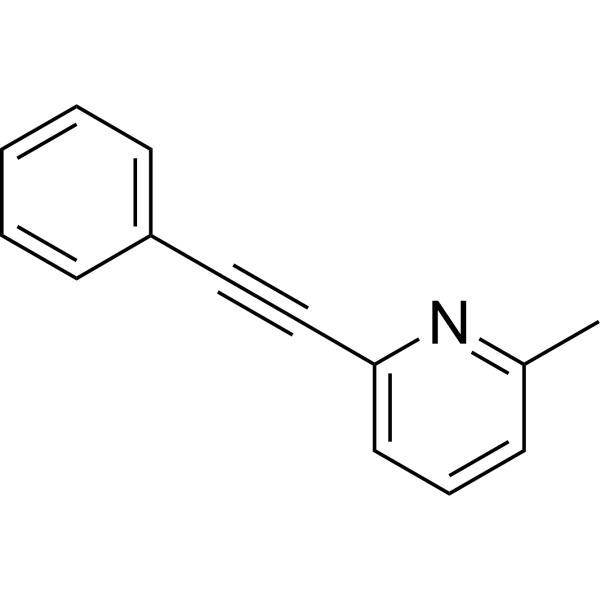
MPEP is a potent, selective, noncompetitive, orally active and systemically active mGlu5 receptor antagonist, with an IC50 of 36 nM for completely inhibiting quisqualate-stimulated phosphoinositide (PI) hydrolysis. MPEP has anxiolytic-or antidepressant-like effects. MPEP is a click chemistry reagent, it contains an Alkyne group and can undergo copper-catalyzed azide-alkyne cycloaddition (CuAAc) with molecules containing Azide groups.
For research use only. We do not sell to patients.
- Purity : 99.50%
- CAS No.: 96206-92-7
- Formula: C14H11N
- Molecular Weight:193.24
-
Storage:Powder -20°C, 3 years , 4°C, 2 years ; In solvent -80°C, 6 months , -20°C, 1 month

To place orders, for customer services and technical support, please contact: MedChemExpress USA
Tel: 609-228-6898 E-mail: [email protected] [email protected]


-
 Biological Activity
-
Chemical Information
-
Solvent & Solubility
- Protocols
- Purity & Documentation
- References
-
 Help & FAQs


-
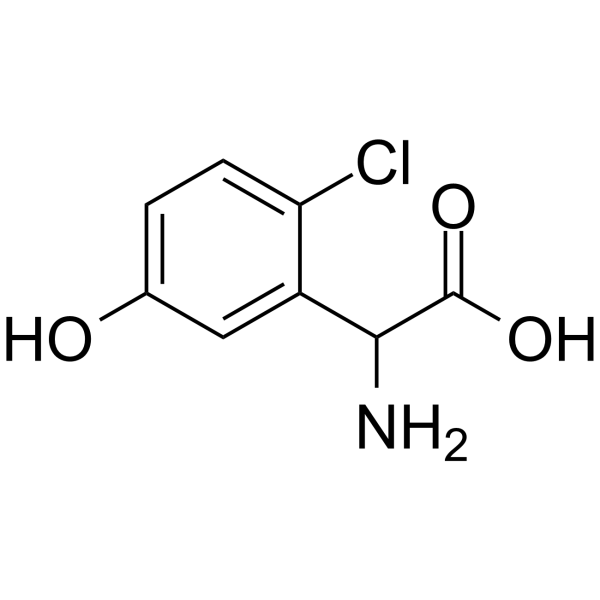
HY-101364
CHPGmGluR5 Agonist -
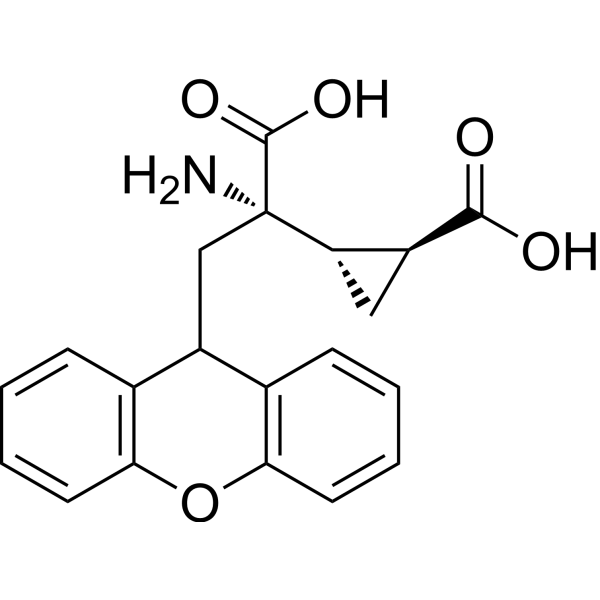
HY-70059
LY341495mGluR Antagonist -
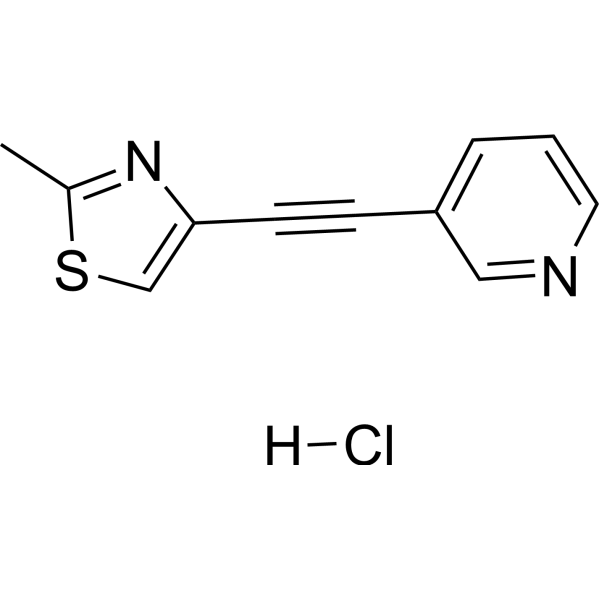
HY-13206
MTEP hydrochloridemGlu5 Antagonist -
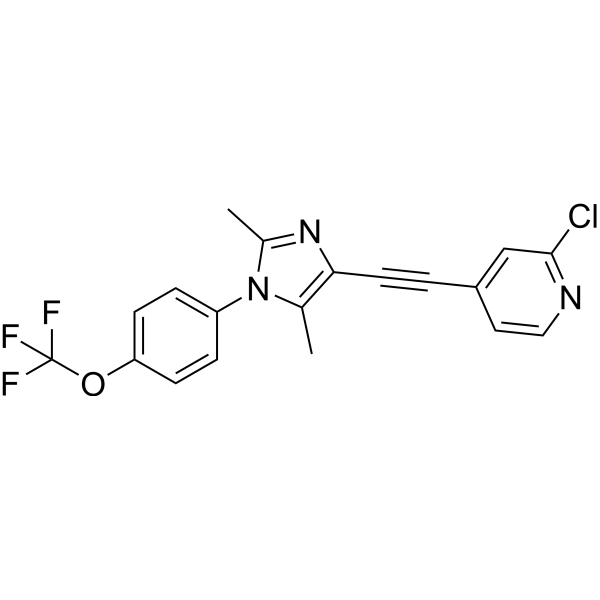
HY-15445
CTEPmGluR Antagonist -
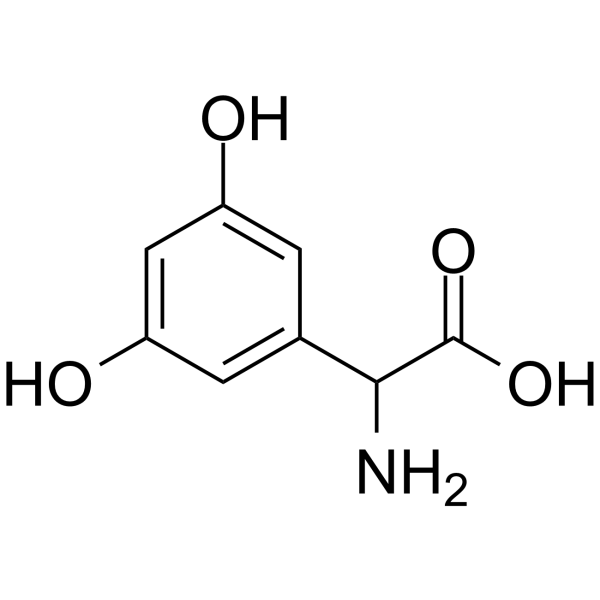
HY-12598A
DHPGmGluR1/5 Agonist -
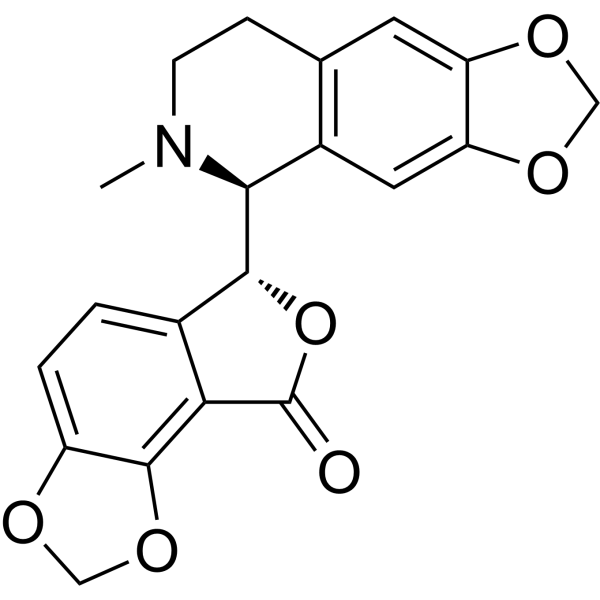
HY-N0219
BicucullineGABAA Receptor Antagonist -
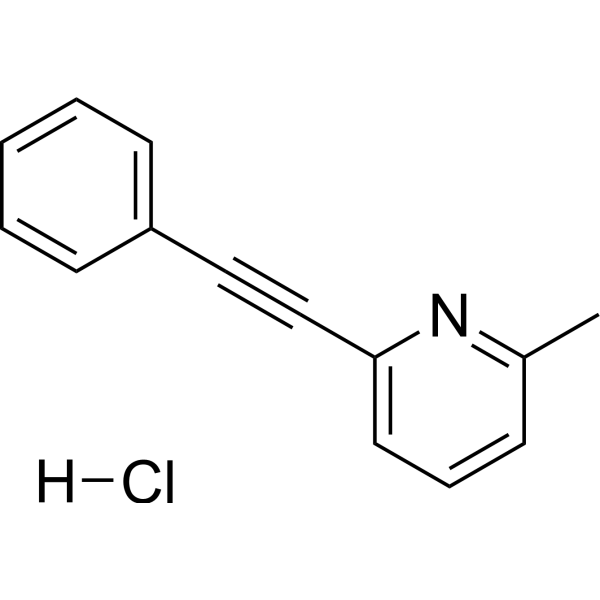
HY-14609
MPEP HydrochloridemGlu5 Receptor Antagonist -
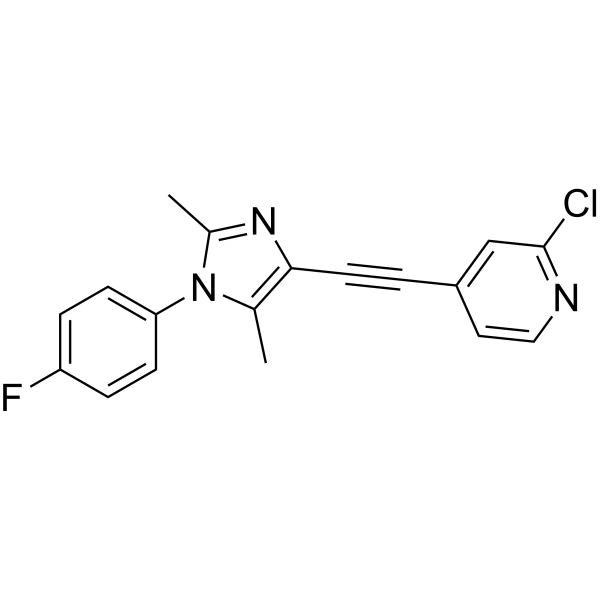
HY-15446
BasimglurantmGlu5 Negative Allosteric Modulator -
HY-K1031
Agarose -
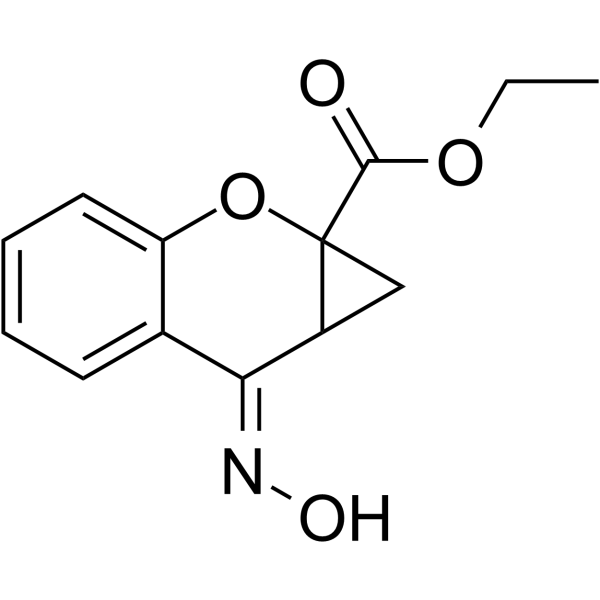
HY-101356
CPCCOEtmGluR1b Antagonist -
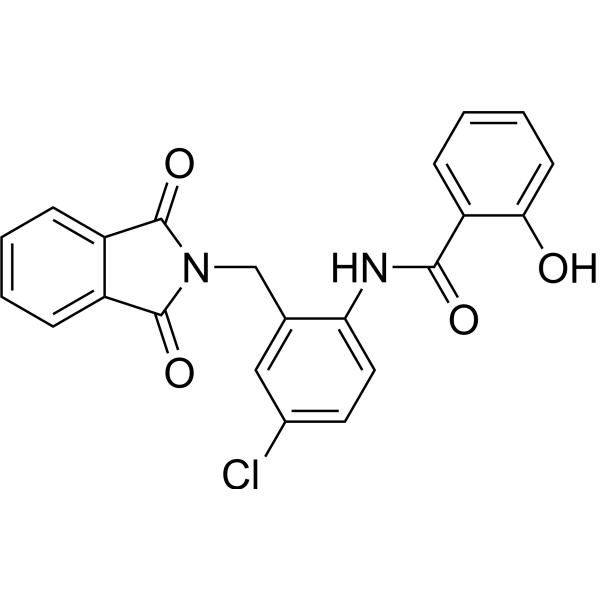
HY-14612
CPPHAmGluR5/mGluR1 Modulator -
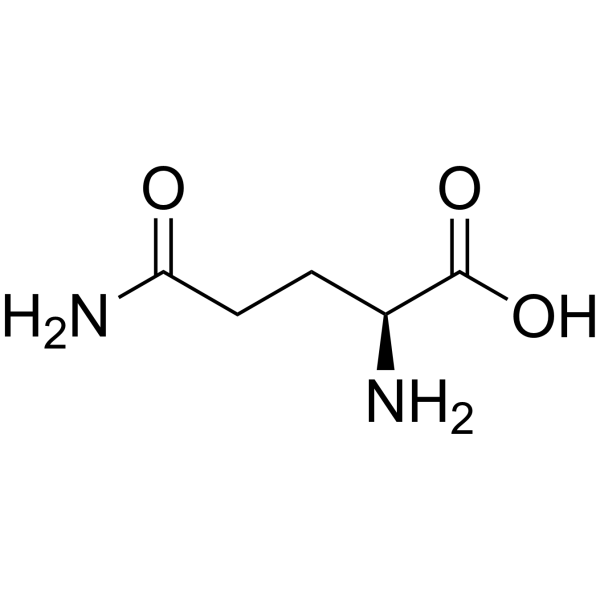
HY-N0390
L-GlutamineEndogenous Metabolite
Publications Citing Use of MedChemExpress (MCE) MPEP
More- Nat Commun. 2026 Jul 17;17(1):8774.
- Brain Behav Immun. 2026 Jul:135:106529. [Abstract]
- Int J Mol Sci. 2026 Apr 6;27(7):3306. [Abstract]
- Pharmacol Biochem Behav. 2023 Jun:227-228:173588. [Abstract]
- Epilepsy Res. 2021 Sep:175:106677. [Abstract]
- Neurosci Lett. 2025 Mar 15:852:138193. [Abstract]
- bioRxiv. 2026 Jan 28.
- SSRN. 2025 Aug 27.
- bioRxiv. 2024 November 03.
- SSRN. 2023 Apr 26.


Biological Activity
Description
IC50 & Target
[1]|
mGluR5 36 nM (IC50) |
Cellular Effect
|
Cell Line

|
Type | Value | Description | References |
|---|---|---|---|---|
| CHO | IC50 |
0.039 μM
Compound: 3
|
Antagonist activity against mGluR5 expressed in CHO cells assessed as inhibition of agonist-induced phosphoinositide hydrolysis
Antagonist activity against mGluR5 expressed in CHO cells assessed as inhibition of agonist-induced phosphoinositide hydrolysis
|
[PMID: 16678408] |
| CHO | IC50 |
0.2 nM
Compound: 1, MPEP
|
Activity at rat mGlu5 receptor expressed in CHO cells assessed as inhibition of quisqualate-stimulated calcium mobilization by FLIPR assay
Activity at rat mGlu5 receptor expressed in CHO cells assessed as inhibition of quisqualate-stimulated calcium mobilization by FLIPR assay
|
[PMID: 17590335] |
| CHO | IC50 |
39 nM
Compound: MPEP
|
Activity in agonist-induced phosphoinositide hydrolysis in CHO cells expressing mGluR5a
Activity in agonist-induced phosphoinositide hydrolysis in CHO cells expressing mGluR5a
|
[PMID: 16451073] |
| CHO-K1 | IC50 |
1.5 nM
Compound: 2
|
Antagonist activity at human mGluR5 receptor expressed in CHOK1 cells assessed as inhibition of glutamate-mediated internal calcium mobilization
Antagonist activity at human mGluR5 receptor expressed in CHOK1 cells assessed as inhibition of glutamate-mediated internal calcium mobilization
|
[PMID: 17569516] |
| HEK293 | IC50 |
2.3 nM
Compound: MPEP
|
Antagonist activity at human mGluR5 expressed in HEK293 cells assessed as inhibition of Ca2+ mobilization by FLIPR assay
Antagonist activity at human mGluR5 expressed in HEK293 cells assessed as inhibition of Ca2+ mobilization by FLIPR assay
|
[PMID: 23357634] |
| HEK293 | IC50 |
2.93 nM
Compound: MPEP
|
Antagonist activity at rat mGluR5 expressed in human HEK-293 cells assessed as inhibition of glutamate-induced intracellular calcium mobilization
Antagonist activity at rat mGluR5 expressed in human HEK-293 cells assessed as inhibition of glutamate-induced intracellular calcium mobilization
|
[PMID: 21546249] |
| HEK293 | IC50 |
32 nM
Compound: MPEP
|
Negative allosteric modulator activity against human mGluR5 expressed in HEK293 cells assessed as inhibition of glutamate-induced inositol phosphate accumulation by IP-one HTRF assay
Negative allosteric modulator activity against human mGluR5 expressed in HEK293 cells assessed as inhibition of glutamate-induced inositol phosphate accumulation by IP-one HTRF assay
|
[PMID: 26112438] |
| HEK293 | IC50 |
89 nM
Compound: 10, MPEP
|
Negative allosteric modulator activity at rat mGlu5 receptor expressed in HEK293 cells assessed as effect on quisqualate-induced inositol phosphate accumulation incubated for 30 mins by florescence assay
Negative allosteric modulator activity at rat mGlu5 receptor expressed in HEK293 cells assessed as effect on quisqualate-induced inositol phosphate accumulation incubated for 30 mins by florescence assay
|
10.1039/C4MD00208C |
| HEK293-A | IC50 |
3.54 nM
Compound: 1, MPEP
|
Antagonist activity at rat mGluR5 expressed in HEK293A cells assessed as glutamate-induced calcium flux preincubated for 140 sec before glutamate challenge by calcium fluorescence assay
Antagonist activity at rat mGluR5 expressed in HEK293A cells assessed as glutamate-induced calcium flux preincubated for 140 sec before glutamate challenge by calcium fluorescence assay
|
[PMID: 19445453] |
| HEK293-A | IC50 |
31 nM
Compound: 1, MPEP
|
Inverse agonist activity at rat mGluR5 expressed in HEK293A cells coexpressing Gqalpha assessed as inhibition of quisqualic-induced D-myo-inositol 1 production by ELISA
Inverse agonist activity at rat mGluR5 expressed in HEK293A cells coexpressing Gqalpha assessed as inhibition of quisqualic-induced D-myo-inositol 1 production by ELISA
|
[PMID: 22924094] |
| HEK-293T | IC50 |
3.54 nM
Compound: 1, MPEP
|
Antagonist activity at rat mGluR5 expressed in HEK293T cells assessed as inhibition of glutamate-induced calcium flux by calcium fluorescence assay
Antagonist activity at rat mGluR5 expressed in HEK293T cells assessed as inhibition of glutamate-induced calcium flux by calcium fluorescence assay
|
[PMID: 21295978] |
In Vitro
MPEP does not show agonist or antagonist activity at 100 mM on human mGlu2, -3, -4a, -7b, and -8a receptors nor at 10 μM on the human mGlu6 receptor[1].
MedChemExpress (MCE) has not independently confirmed the accuracy of these methods. They are for reference only.
In Vivo
MPEP (1-20 mg/kg) does shorten the immobility time in a tail suspension test in mice, however it is inactive in the behavioural despair test in rats[2].
MPEP (30 mg/kg i.p.) slightly but significantly increases (by 39%) the number of punished crossings in the four-plate test, lower doses of the compound (3 and 10 mg/kg) does not affect the number of punished crossings in that test (F (3,36)=3.240, P<0.05)[2].
MPEP (1, 10 and 20 mg/kg) significantly (by 55% after the highest dose), (F(3,28)=15.47, P<0.001) decreases the immobility time of mice in the tail suspension test. Its efficacy is similar to that of imipramine (20 mg/kg), used as the positive standard[2].
MedChemExpress (MCE) has not independently confirmed the accuracy of these methods. They are for reference only.
-
Animal Model:Male Wistar rats (200 ± 250 g)[2].
-
Dosage:IP or PO.
-
Administration:0.3, 1 and 10 mg/kg, i.p. (Conflict drinking test).
-
Result:At a dose of 0.3 mg/kg was not ffective, at doses of 1 and 10 mg/kg i.p. significantly (F (3,30)=11.193, P<0.001), increased the number of shocks (by 330 and 507%, respectively) accepted during the experimental session in the Vogel test.
-
Animal Model:Male Wistar rats (200 ± 250 g)[2].
-
Dosage:IP or PO.
-
Administration:1, 3 and 10 mg/kg, i.p. or 10 and 30 mg/kg, p.o.(Elevated plus-maze test).
-
Result:Administered at a dose of 1 mg kg71 i.p. did not change the entries into and time spent in the open arms. At doses of 3 and 10 mg/kg i.p. significantly (F (3,24)=22.978, P<0.001) dose-dependently increased the time spent in the open arms (up to 45 and 74%, respectively), and the percentage of entries into the open arms (up to 48 and 68%, respectively, F(3,24)=5.678, P<.01). At doses of 3 and 10 mg/kg i.p. significantly increased (by 64%) the total number of entries and reduced (by about 25%) the total time spent (data not shown) in the arms (either type).
At the dose of 30 mg/kg (po, but not 10 mg/kg) significantly (up to 64%, F (2,16)=14.249, P<0.001) increased the percentage of the time spent in the open arms and the percentage of entries into the open arms (up to 63%, F (2,16)=7.295, P<0.01). MPEP given p.o. in both doses used did not change the total number of entries nor the total time spent in the arms (either type).


Chemical Information
-
CAS No. 96206-92-7
-
Appearance Solid
-
Molecular Weight 193.24
-
Formula C14H11N
-
Color Yellow to brown
-
SMILES
CC1=NC(C#CC2=CC=CC=C2)=CC=C1
-
Shipping
Room temperature in continental US; may vary elsewhere.
-
Storage
Powder -20°C 3 years 4°C 2 years In solvent -80°C 6 months -20°C 1 month


Publications (10)
-
Journal Impact Factor
-
Most Recent
-
-
Brain Behav Immun
NR2B-CaMKII signaling in the dentate gyrus driven by astrocytic P2Y1Rs mediates the antidepressant effect of low-dose LPS. [Abstract]2026 Jul:135:106529. PMID: 41796645 -
Int J Mol Sci
Neurogranin Promotes Neuronal Maturation and Network Activity Through Ca2+/Calmodulin Signaling. [Abstract]2026 Apr 6;27(7):3306. PMID: 41977485 -
Pharmacol Biochem Behav
Anxiolytic-like effects of an mGluR 5 antagonist and a mGluR 2/3 agonist, and antidepressant-like effects of an mGluR 7 agonist in the chick social separation stress test, a dual-drug screening model of treatment-resistant depression. [Abstract]2023 Jun:227-228:173588. PMID: 37348610 -
Epilepsy Res
2021 Sep:175:106677. PMID: 34130255 -
Neurosci Lett
Intracellular metabotropic glutamate receptor 5 in spinal dorsal horn neurons contributes to pain in a mouse model of vincristine-induced neuropathic pain. [Abstract]2025 Mar 15:852:138193. PMID: 40074023 -
-
-
-


Solvent & Solubility
In Vitro:
DMSO : 100 mg/mL (517.49 mM; Need ultrasonic; Hygroscopic DMSO has a significant impact on the solubility of product, please use newly opened DMSO)
Please refer to the solubility information to select the appropriate solvent. Once prepared, please aliquot and store the solution to prevent product inactivation from repeated freeze-thaw cycles.
Storage method and period of stock solution: -80°C, 6 months; -20°C, 1 month. When stored at -80°C, please use it within 6 months. When stored at -20°C, please use it within 1 month.
Please refer to the solubility information to select the appropriate solvent. Once prepared, please aliquot and store the solution to prevent product inactivation from repeated freeze-thaw cycles.
Storage method and period of stock solution: -80°C, 6 months; -20°C, 1 month. When stored at -80°C, please use it within 6 months. When stored at -20°C, please use it within 1 month.
Concentration (start) × Volume (start) = Concentration (final) × Volume (final)
In Vivo:
Select the appropriate dissolution method based on your experimental animal and administration route.
- For the following dissolution methods, please ensure to first prepare a clear stock solution using an In Vitro approach and then sequentially add co-solvents:
- To ensure reliable experimental results, the clarified stock solution can be appropriately stored based on storage conditions. As for the working solution for In Vivo experiments, it is recommended to prepare freshly and use it on the same day.
- The percentages shown for the solvents indicate their volumetric ratio in the final prepared solution. If precipitation or phase separation occurs during preparation, heat and/or sonication can be used to aid dissolution.
Add each solvent one by one: 10% DMSO 40% PEG300 5% Tween-80 45% Saline
Solubility: ≥ 2.5 mg/mL (12.94 mM); Clear solution
This protocol yields a clear solution of ≥ 2.5 mg/mL (saturation unknown).
Taking 1 mL working solution as an example, add 100 μL DMSO stock solution (25.0 mg/mL) to 400 μL PEG300, and mix evenly; then add 50 μL Tween-80 and mix evenly; then add 450 μL Saline to adjust the volume to 1 mL.
Preparation of Saline: Dissolve 0.9 g sodium chloride in ddH₂O and dilute to 100 mL to obtain a clear Saline solution.
Add each solvent one by one: 10% DMSO 90% (20% SBE-β-CD in Saline)
Solubility: ≥ 2.5 mg/mL (12.94 mM); Clear solution
This protocol yields a clear solution of ≥ 2.5 mg/mL (saturation unknown).
Taking 1 mL working solution as an example, add 100 μL DMSO stock solution (25.0 mg/mL) to 900 μL 20% SBE-β-CD in Saline, and mix evenly.
Preparation of 20% SBE-β-CD in Saline (4°C, storage for one week): 2 g SBE-β-CD powder is dissolved in 10 mL Saline, completely dissolve until clear.
In Vivo Dissolution Calculator
Please enter the basic information of animal experiments:
-
-
-
-
Recommended: Prepare an additional quantity of animals to account for potential losses during experiments.
Please enter your animal formula composition:
-
%DMSO +
Recommended: Keep the proportion of DMSO in working solution below 2% if your animal is weak.
-
%+
-
+%Tween-80 + +
-
%Saline +
The co-solvents required include: DMSO, . All of co-solvents are available by MedChemExpress (MCE). , Tween 80. All of co-solvents are available by MedChemExpress (MCE).
Working solution concentration: 0.22 mg/mL
Method for preparing stock solution: mg drug dissolved in μL DMSO. Stock solution concentration: mg/mL.
1. Take μL DMSO stock solution;
2. Add μL .
μL , mix evenly;
3. Then add μL Tween 80, mix evenly;
4. Then add μL
Please ensure that the stock solution in the first step is dissolved to a clear state, and add co-solvents in sequence. You can use ultrasonic heating (ultrasonic cleaner, recommended frequency 20-40 kHz), vortexing, etc. to assist dissolution.


Purity & Documentation
-
Data Sheet (278 KB)
-
SDS (396 KB)
- English - EN (396 KB)
- Français - FR (396 KB)
- Deutsch - DE (396 KB)
- Norwegian - NO (396 KB)
- Español - ES (396 KB)
- Swedish - SV (396 KB)
- Italian - IT (396 KB)
- Korean - KR (396 KB)
- Portuguese - PT (396 KB)
-
Handling Instructions (2659 KB)
References
[1]. F Gasparini, et al. 2-Methyl-6-(phenylethynyl)-pyridine (MPEP), a Potent, Selective and Systemically Active mGlu5 Receptor Antagonist. Neuropharmacology. 1999 Oct;38(10):1493-503. [Content Brief]
[2]. E Tatarczyńska, et al. Potential anxiolytic- and antidepressant-like effects of MPEP, a potent, selective and systemically active mGlu5 receptor antagonist. Br J Pharmacol. 2001 Apr;132(7):1423-30. [Content Brief]


Complete Stock Solution Preparation Table
Please refer to the solubility information to select the appropriate solvent. Once prepared, please aliquot and store the solution to prevent product inactivation from repeated freeze-thaw cycles.
Storage method and period of stock solution: -80°C, 6 months; -20°C, 1 month. When stored at -80°C, please use it within 6 months. When stored at -20°C, please use it within 1 month.
| Optional Solvent | Concentration Solvent Mass | 1 mg | 5 mg | 10 mg | 25 mg |
|---|---|---|---|---|---|
| DMSO | 1 mM | 5.1749 mL | 25.8746 mL | 51.7491 mL | 129.3728 mL |
| 5 mM | 1.0350 mL | 5.1749 mL | 10.3498 mL | 25.8746 mL | |
| 10 mM | 0.5175 mL | 2.5875 mL | 5.1749 mL | 12.9373 mL | |
| 15 mM | 0.3450 mL | 1.7250 mL | 3.4499 mL | 8.6249 mL | |
| 20 mM | 0.2587 mL | 1.2937 mL | 2.5875 mL | 6.4686 mL | |
| 25 mM | 0.2070 mL | 1.0350 mL | 2.0700 mL | 5.1749 mL | |
| 30 mM | 0.1725 mL | 0.8625 mL | 1.7250 mL | 4.3124 mL | |
| 40 mM | 0.1294 mL | 0.6469 mL | 1.2937 mL | 3.2343 mL | |
| 50 mM | 0.1035 mL | 0.5175 mL | 1.0350 mL | 2.5875 mL | |
| 60 mM | 0.0862 mL | 0.4312 mL | 0.8625 mL | 2.1562 mL | |
| 80 mM | 0.0647 mL | 0.3234 mL | 0.6469 mL | 1.6172 mL | |
| 100 mM | 0.0517 mL | 0.2587 mL | 0.5175 mL | 1.2937 mL |


MPEP Related Classifications
HY-14609A Related Classifications
 Powered by Bioz