



Myricitrin
Based on 5 publication(s) in Google Scholar
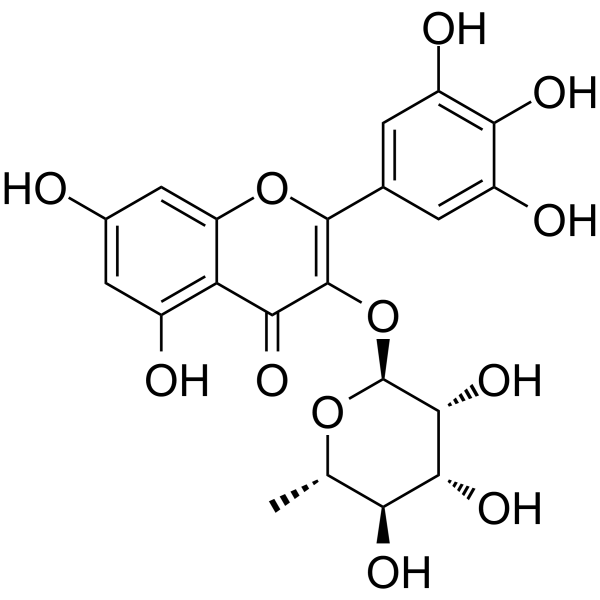
Myricitrin, a naturally occurring flavonoid, is an orally active nitric oxide (NO) and PKC inhibitor. Myricitrin has central nervous system activity, including anxiolytic-like action. Myricitrin possesses antioxidant, anti-inflammatory, antifibrotic and anti-malarial effects.
For research use only. We do not sell to patients.
- Purity : 99.76%
- CAS No.: 17912-87-7
- Formula: C21H20O12
- Molecular Weight:464.38
-
Storage:
4°C, protect from light
* In solvent : -80°C, 6 months; -20°C, 1 month (protect from light)

To place orders, for customer services and technical support, please contact: MedChemExpress USA
Tel: 609-228-6898 E-mail: [email protected] [email protected]


-
 Biological Activity
-
Chemical Information
-
Solvent & Solubility
- Protocols
- Purity & Documentation
- References
-
 Help & FAQs


-
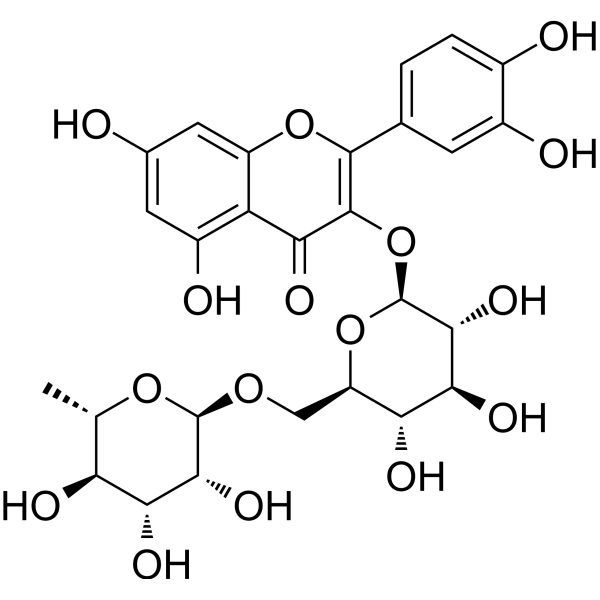
HY-N0148
RutinCBR1 Inhibitor -
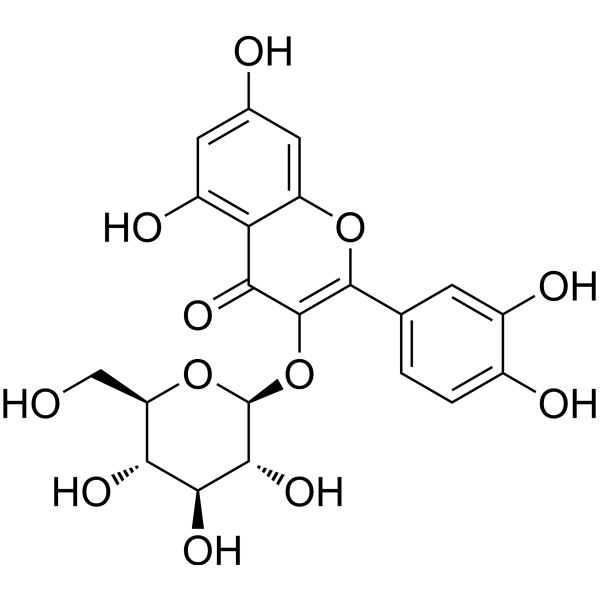
HY-N1445
IsoquercitrinNO Synthase Inhibitor -
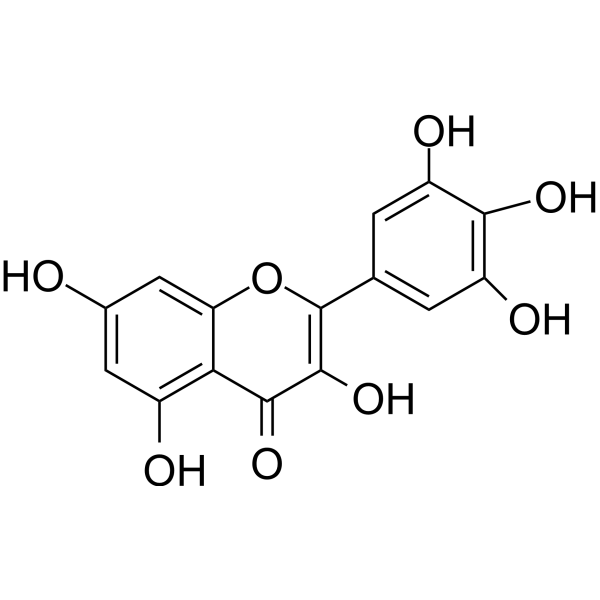
HY-15097
MyricetinAutophagy Inducer -
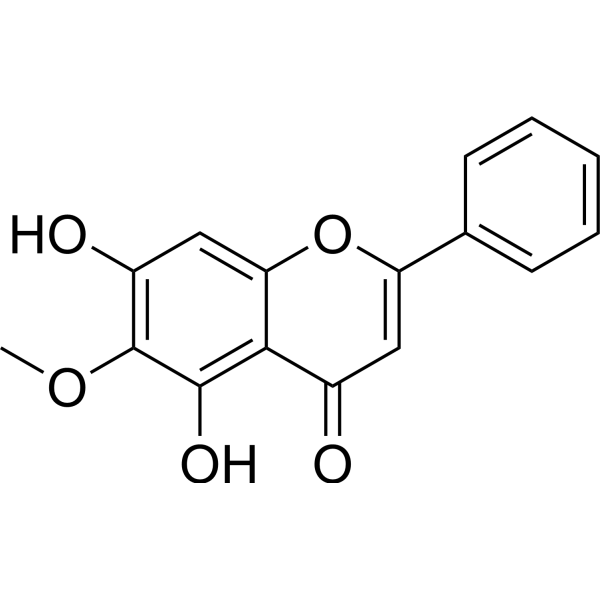
HY-N0560
Oroxylin AAutophagy Inducer -
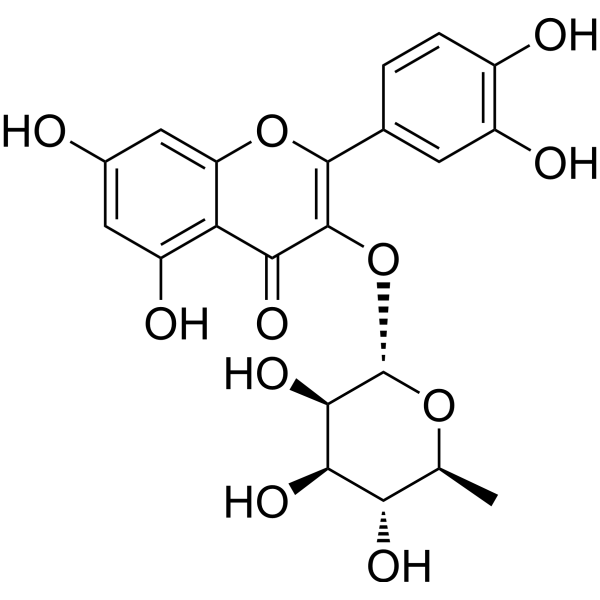
HY-N0418
QuercitrinAnti-inflammatory Agent -
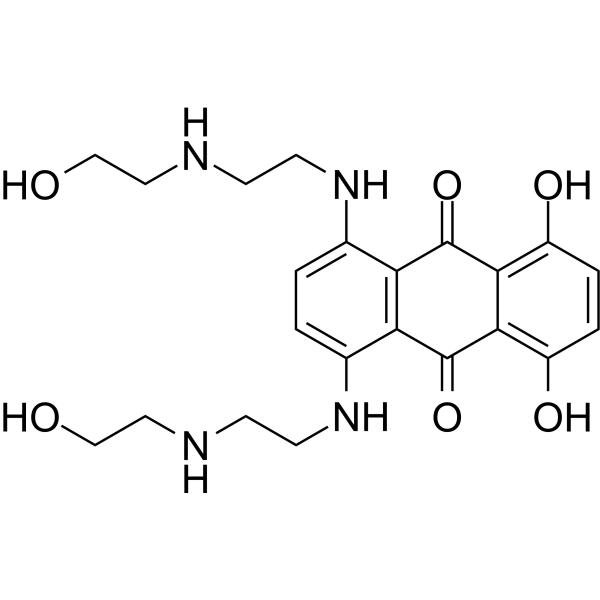
HY-13502
MitoxantroneTop II/PKC Inhibitor -
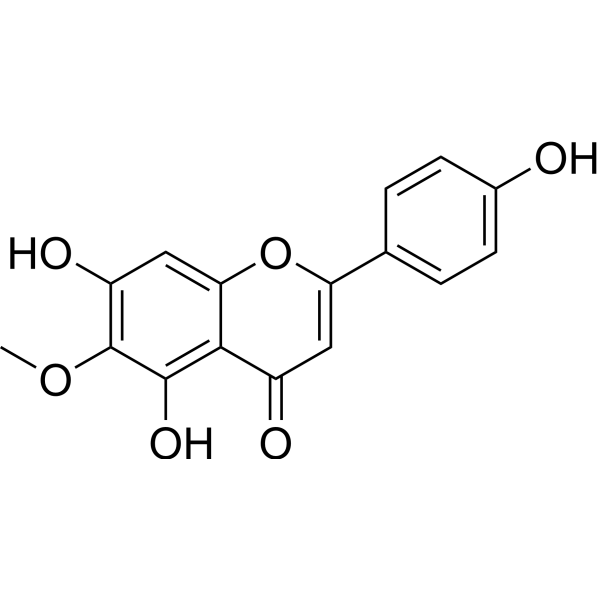
HY-N1950
HispidulinPim-1 Inhibitor -
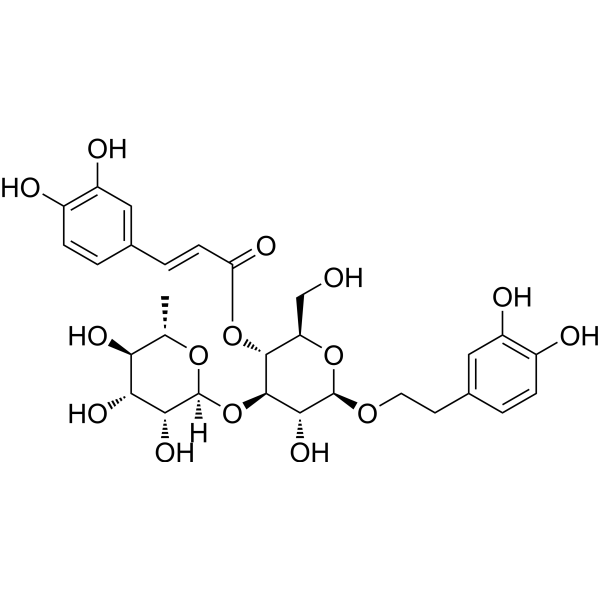
HY-N0021
VerbascosideBacterial Inhibitor -
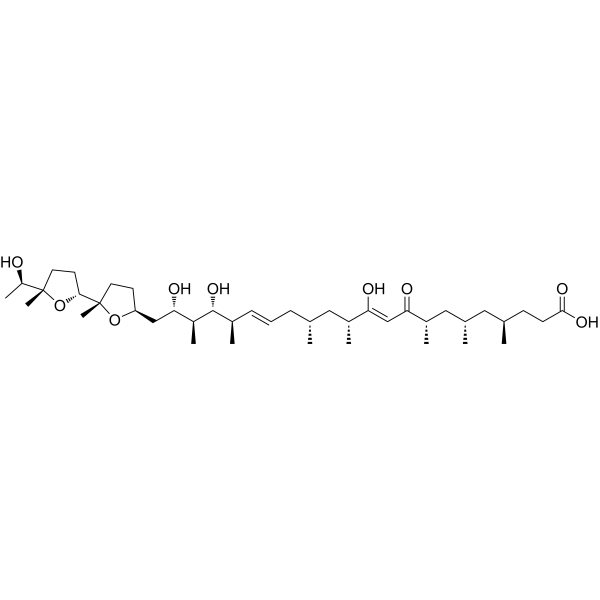
HY-13434
IonomycinCalcium Ionophore -

HY-N0152R
Myricitrin (Standard)PKC Inhibitor -
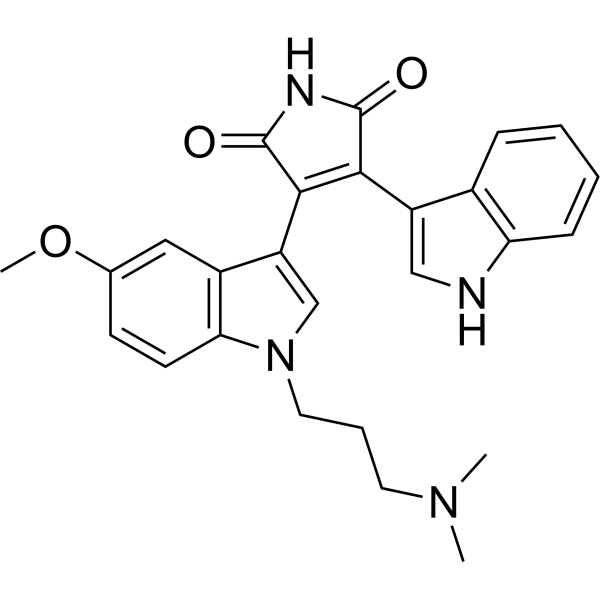
HY-13689
Go 6983PKC Inhibitor -
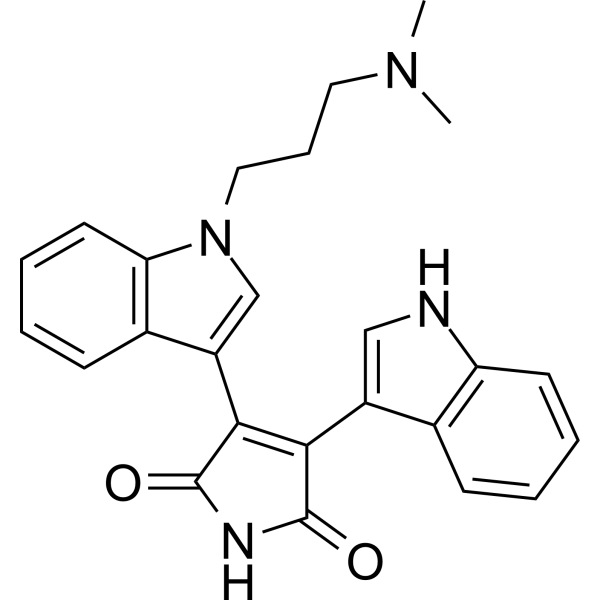
HY-13867
Bisindolylmaleimide IPKC Inhibitor
Publications Citing Use of MedChemExpress (MCE) Myricitrin
More Customer Validation & Images

-
Histological Imaging/Staining

-
Apoptosis Analysis

-
WB

-
IF

-
ELISA

All Parasite Isoforms
More

Biological Activity
Description
Cellular Effect
|
Cell Line

|
Type | Value | Description | References |
|---|---|---|---|---|
| BV-2 | IC50 |
>100 μM
Compound: 4
|
Antineuroinflammatory activity in human BV2 cells assessed as inhibition of LPS-induced NO production after 24 hrs in presence of LPS by Griess reaction
Antineuroinflammatory activity in human BV2 cells assessed as inhibition of LPS-induced NO production after 24 hrs in presence of LPS by Griess reaction
|
[PMID: 27623545] |
| KB | ED50 |
8.3 μg/mL
Compound: NSC-19803
|
Cytotoxicity against human KB cells
Cytotoxicity against human KB cells
|
[PMID: 469554] |
In Vitro
Myricitrin has strong antioxidant activity as radical scavenger and metal-ion chelator. Myricitrin has been reported to inhibit the aldose reductase activity and the oxidation of low-density lipoprotein, and has anti-malarial effect[1].
Myricitrin exhibits a strong scavenging activity against DPPH and NO radicals, as well as H2O2 (IC50 = 1.31 μg/mL, 21.54 μg/mL and 28.46 μg/mL, respectively)[2].
Raw264.7 cells are pre-treated with Myricitrin (0.2-1 mM) for 2 h and stimulates with LPS (HY-D1056) at a concentration of 100 ng/mL for 4 h. Myricitrin inhibits TNFα production and enhances RANTES (regulated on activation normal T-cell expressed and secreted) production in LPS-stimulated Raw264.7 cells. It should be noted that the inhibitory effect of Myricitrin is not observed when Myricitrin was added either simultaneously or after LPS stimulation[3].
Myricitrin shows proliferation inhibition of Plasmodium falciparum, with IC50 value of 5.4 µg/mL[4].
MedChemExpress (MCE) has not independently confirmed the accuracy of these methods. They are for reference only. Further protocols information, click here.
In Vivo
Myricitrin (5-30 mg/kg; i.p.; once) dose-dependently blocks the stereotypy and climbing induced by Apomorphine (HY-12723) at doses that does not induce catalepsy[5].
MedChemExpress (MCE) has not independently confirmed the accuracy of these methods. They are for reference only.
-
Animal Model:BALB/cN mice (10-12 weeks old, 23-27 g) following CCl4-intoxication[2]
-
Dosage:10, 30 and 100 mg/kg (0.5% Methylcellulose (HY-125861))
-
Administration:Oral gavage; once daily; for two consecutive days
-
Result:Significantly ameliorated CCl4-induced increase in serum aspartate transaminase (AST) and alanine transaminase (ALT) levels and histopathological changes in the liver.
Hepatic oxidative stress was reduced, as evidenced by the decrease in lipid peroxidation, with concomitant increase in GSH level and CYP2E1 expression.
COX-2 and TNF-α overexpression in the liver was reduced.
The expression of TGF-β1 and α-SMA was markedly ameliorated.
Increased proliferating cell nuclear antigen (PCNA) expression.
-
Animal Model:Male adult Swiss albino mice (30-40 g)[5]
-
Dosage:5 mg/kg, 10 mg/kg, and 30 mg/kg (Tween 80/saline)
-
Administration:i.p.; once
-
Result:Dose-dependently blocked the stereotypy and climbing induced by Apomorphine (HY-12723) at doses.


Chemical Information
-
CAS No. 17912-87-7
-
Appearance Solid
-
Molecular Weight 464.38
-
Formula C21H20O12
-
Color White to yellow
-
SMILES
O=C1C(O[C@H]2[C@@H]([C@@H]([C@H]([C@H](C)O2)O)O)O)=C(C3=CC(O)=C(O)C(O)=C3)OC4=CC(O)=CC(O)=C14
-
Structure Classification
-
Initial Source
-
Shipping
Room temperature in continental US; may vary elsewhere.
-
Storage
4°C, protect from light
* In solvent : -80°C, 6 months; -20°C, 1 month (protect from light)


Publications (5)
-
Journal Impact Factor
-
Most Recent
-
Food Chem
Effects of sun drying combined with baking processes on the flavor quality of Chongqing Tuocha raw tea. [Abstract]2025 Dec 30:497:146992. PMID: 41285060 -
Food Chem
Flavonoid-mediated metabolic underpinning quality variation in red bud-sport pear mutants. [Abstract]2025 Oct 15:489:144992. PMID: 40466530 -
-
Myricitrin purchased from MedChemExpress. Usage Cited in: Biochem Pharmacol. 2026 Oct:252:118212.
Representative images of lung pathological changes examined by HE staining treated with Myricitrin (50, 100 mg/kg, i.p.).
Myricitrin purchased from MedChemExpress. Usage Cited in: Biochem Pharmacol. 2026 Oct:252:118212.
Cell apoptosis was detected by flow cytometry treated with Myricitrin (10 μM).
Myricitrin purchased from MedChemExpress. Usage Cited in: Biochem Pharmacol. 2026 Oct:252:118212.
Expression levels of apoptosis-related proteins treated with Myricitrin (10 μM).
Myricitrin purchased from MedChemExpress. Usage Cited in: Biochem Pharmacol. 2026 Oct:252:118212.
Representative images of intracellular ROS levels treated with Myricitrin (10 μM).
Myricitrin purchased from MedChemExpress. Usage Cited in: Biochem Pharmacol. 2026 Oct:252:118212.
IL-6 and TNF-α levels in BALF measured by ELISA treated with Myricitrin (10 μM).
-


Solvent & Solubility
In Vitro:
DMSO : 100 mg/mL (215.34 mM; Need ultrasonic; Hygroscopic DMSO has a significant impact on the solubility of product, please use newly opened DMSO)
Please refer to the solubility information to select the appropriate solvent. Once prepared, please aliquot and store the solution to prevent product inactivation from repeated freeze-thaw cycles.
Storage method and period of stock solution: -80°C, 6 months; -20°C, 1 month (protect from light). When stored at -80°C, please use it within 6 months. When stored at -20°C, please use it within 1 month.
Please refer to the solubility information to select the appropriate solvent. Once prepared, please aliquot and store the solution to prevent product inactivation from repeated freeze-thaw cycles.
Storage method and period of stock solution: -80°C, 6 months; -20°C, 1 month (protect from light). When stored at -80°C, please use it within 6 months. When stored at -20°C, please use it within 1 month.
Concentration (start) × Volume (start) = Concentration (final) × Volume (final)
In Vivo:
Select the appropriate dissolution method based on your experimental animal and administration route.
- For the following dissolution methods, please ensure to first prepare a clear stock solution using an In Vitro approach and then sequentially add co-solvents:
- To ensure reliable experimental results, the clarified stock solution can be appropriately stored based on storage conditions. As for the working solution for In Vivo experiments, it is recommended to prepare freshly and use it on the same day.
- The percentages shown for the solvents indicate their volumetric ratio in the final prepared solution. If precipitation or phase separation occurs during preparation, heat and/or sonication can be used to aid dissolution.
Add each solvent one by one: 10% DMSO 90% (20% SBE-β-CD in Saline)
Solubility: ≥ 2.5 mg/mL (5.38 mM); Clear solution
This protocol yields a clear solution of ≥ 2.5 mg/mL (saturation unknown).
Taking 1 mL working solution as an example, add 100 μL DMSO stock solution (25.0 mg/mL) to 900 μL 20% SBE-β-CD in Saline, and mix evenly.
Preparation of 20% SBE-β-CD in Saline (4°C, storage for one week): 2 g SBE-β-CD powder is dissolved in 10 mL Saline, completely dissolve until clear.
In Vivo Dissolution Calculator
Please enter the basic information of animal experiments:
-
-
-
-
Recommended: Prepare an additional quantity of animals to account for potential losses during experiments.
Please enter your animal formula composition:
-
%DMSO +
Recommended: Keep the proportion of DMSO in working solution below 2% if your animal is weak.
-
%+
-
+%Tween-80 + +
-
%Saline +
The co-solvents required include: DMSO, . All of co-solvents are available by MedChemExpress (MCE). , Tween 80. All of co-solvents are available by MedChemExpress (MCE).
Working solution concentration: 0.22 mg/mL
Method for preparing stock solution: mg drug dissolved in μL DMSO. Stock solution concentration: mg/mL. * In solvent : -80°C, 6 months; -20°C, 1 month (protect from light)
1. Take μL DMSO stock solution;
2. Add μL .
μL , mix evenly;
3. Then add μL Tween 80, mix evenly;
4. Then add μL
Please ensure that the stock solution in the first step is dissolved to a clear state, and add co-solvents in sequence. You can use ultrasonic heating (ultrasonic cleaner, recommended frequency 20-40 kHz), vortexing, etc. to assist dissolution.

Protocols
-
Research Protocol for Inflammation-related Diseases
The NLRP3 inflammasome is a cytosolic innate immune signaling platform that integrates priming signals and danger-signal activation to promote caspase-1 activation, maturation of IL-1β and IL-18, and gasdermin D-mediated pyroptotic cell death. The core experimental logic is to determine whether inflammatory disease phenotypes are driven by increased NLRP3 expression, ASC-containing inflammasome assembly, caspase-1 cleavage, GSDMD cleavage, and extracellular release of IL-1β/IL-18 rather than by nonspecific cell injury alone. The pathway is strongly linked to inflammation-related disease phenotypes because monosodium urate crystals activate NALP3/NLRP3 inflammasome signaling in gout-like crystal inflammation, cholesterol crystals activate NLRP3 inflammasomes in atherogenesis models, and DSS-induced intestinal inflammation has been reported to involve NLRP3 inflammasome activity. However, experimental colitis studies also show context-dependent protective effects of NLRP3 inflammasome co


Purity & Documentation
-
Data Sheet (285 KB)
-
SDS (394 KB)
- English - EN (394 KB)
- Français - FR (394 KB)
- Deutsch - DE (394 KB)
- Norwegian - NO (394 KB)
- Español - ES (394 KB)
- Swedish - SV (394 KB)
- Italian - IT (394 KB)
- Korean - KR (394 KB)
- Portuguese - PT (394 KB)
-
Handling Instructions (2659 KB)
References
[1]. Hwang IW, et al. Isolation and Identification of Myricitrin, an Antioxidant Flavonoid, from Daebong PersimmonPeel. Prev Nutr Food Sci. 2018 Dec;23(4):341-346. [Content Brief]
[2]. Domitrović R, et al. Myricitrin exhibits antioxidant, anti-inflammatory and antifibrotic activity in carbon tetrachloride-intoxicated mice. Chem Biol Interact. 2015 Mar 25;230:21-9. [Content Brief]
[3]. Shimosaki S, et al. Anti-allergic effect of the flavonoid myricitrin from Myrica rubra leaf extracts in vitro and in vivo. Nat Prod Res. 2011 Feb;25(4):374-80. [Content Brief]
[5]. Pereira M, et al. Myricitrin, a nitric oxide and protein kinase C inhibitor, exerts antipsychotic-like effects in animal models. Prog Neuropsychopharmacol Biol Psychiatry. 2011 Aug 15;35(7):1636-44. [Content Brief]


Complete Stock Solution Preparation Table
Please refer to the solubility information to select the appropriate solvent. Once prepared, please aliquot and store the solution to prevent product inactivation from repeated freeze-thaw cycles.
Storage method and period of stock solution: -80°C, 6 months; -20°C, 1 month (protect from light). When stored at -80°C, please use it within 6 months. When stored at -20°C, please use it within 1 month.
| Optional Solvent | Concentration Solvent Mass | 1 mg | 5 mg | 10 mg | 25 mg |
|---|---|---|---|---|---|
| DMSO | 1 mM | 2.1534 mL | 10.7670 mL | 21.5341 mL | 53.8352 mL |
| 5 mM | 0.4307 mL | 2.1534 mL | 4.3068 mL | 10.7670 mL | |
| 10 mM | 0.2153 mL | 1.0767 mL | 2.1534 mL | 5.3835 mL | |
| 15 mM | 0.1436 mL | 0.7178 mL | 1.4356 mL | 3.5890 mL | |
| 20 mM | 0.1077 mL | 0.5384 mL | 1.0767 mL | 2.6918 mL | |
| 25 mM | 0.0861 mL | 0.4307 mL | 0.8614 mL | 2.1534 mL | |
| 30 mM | 0.0718 mL | 0.3589 mL | 0.7178 mL | 1.7945 mL | |
| 40 mM | 0.0538 mL | 0.2692 mL | 0.5384 mL | 1.3459 mL | |
| 50 mM | 0.0431 mL | 0.2153 mL | 0.4307 mL | 1.0767 mL | |
| 60 mM | 0.0359 mL | 0.1795 mL | 0.3589 mL | 0.8973 mL | |
| 80 mM | 0.0269 mL | 0.1346 mL | 0.2692 mL | 0.6729 mL | |
| 100 mM | 0.0215 mL | 0.1077 mL | 0.2153 mL | 0.5384 mL |


Myricitrin Related Classifications
HY-N0152 Related Classifications
 Powered by Bioz