



Vofopitant dihydrochloride

Based on 1 Customer Validation
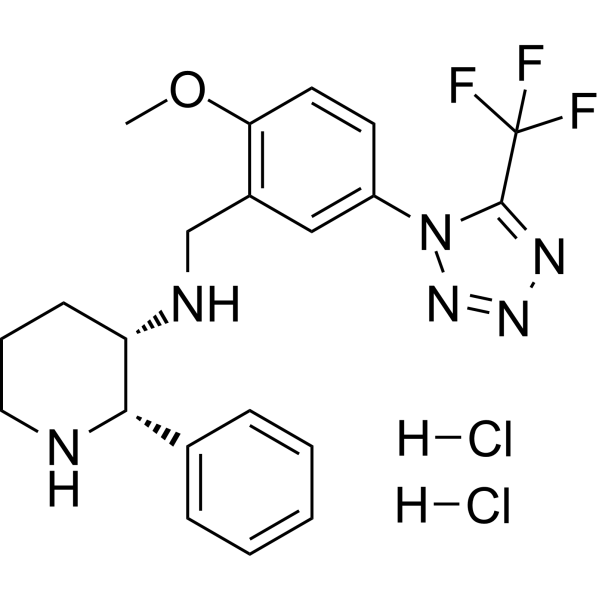
Vofopitant dihydrochloride (GR 205171A) is a blood-brain barrier-permeable NK1 receptor inhibitor with a pKi of 9.02 in mice. Vofopitant dihydrochloride blocks vomiting-related responses and inhibits pseudoptyalism. Vofopitant dihydrochloride exerts anxiolytic effects, regulates 5-HT receptor function and increases central 5-HT release. Vofopitant dihydrochloride improves hyperarousal symptoms of post-traumatic stress disorder. Vofopitant dihydrochloride can be used in research related to depression, anxiety, vomiting and postoperative nausea and vomiting.
For research use only. We do not sell to patients.
- Purity : 99.56%
- CAS No.: 168266-51-1
- Formula: C21H25Cl2F3N6O
- Molecular Weight:505.36
-
Storage:
4°C, stored under nitrogen, away from moisture
* In solvent : -80°C, 6 months; -20°C, 1 month (stored under nitrogen, away from moisture)

To place orders, for customer services and technical support, please contact: MedChemExpress USA
Tel: 609-228-6898 E-mail: [email protected] [email protected]


-
 Biological Activity
-
Chemical Information
-
Solvent & Solubility
- Purity & Documentation
- References
-
 Help & FAQs


-
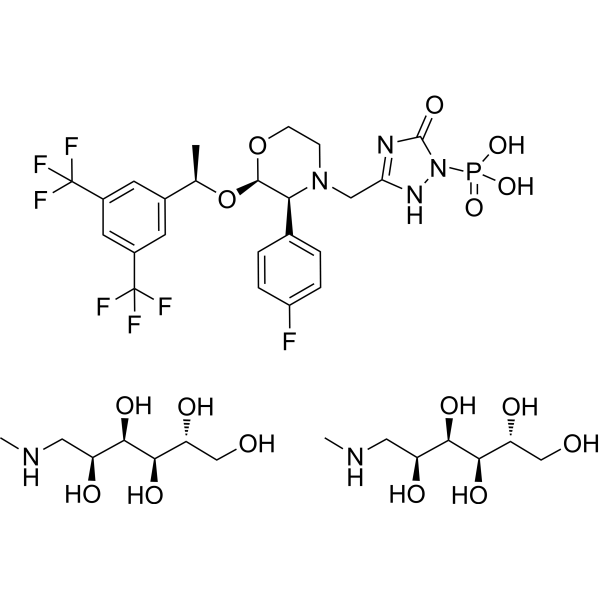
HY-14407A
Fosaprepitant dimeglumineNeurokinin-1 Receptor Antagonist -
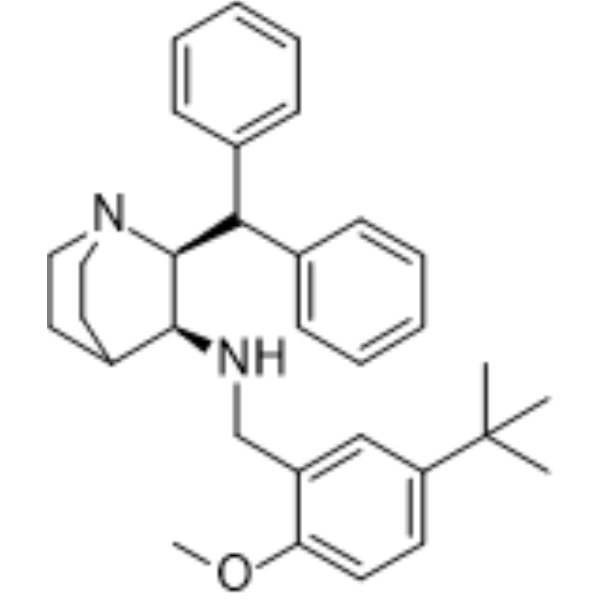
HY-10053
MaropitantNK1 Receptor Antagonist -
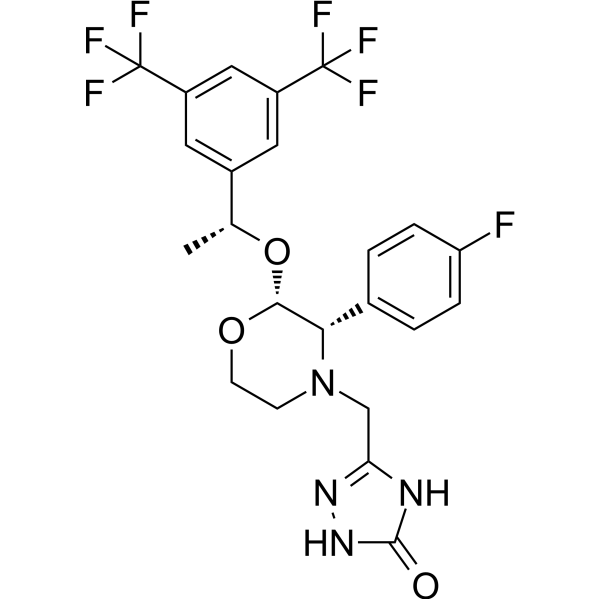
HY-10052
AprepitantNeurokinin 1 Receptor Antagonist -
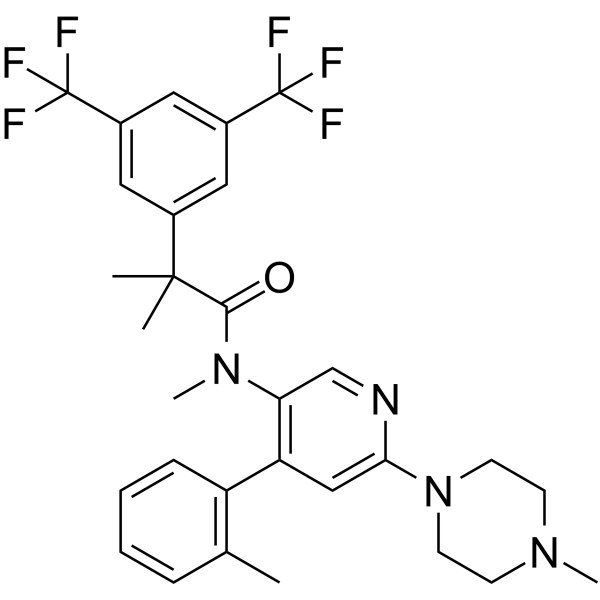
HY-16346
NetupitantNK1 Receptor Inhibitor -
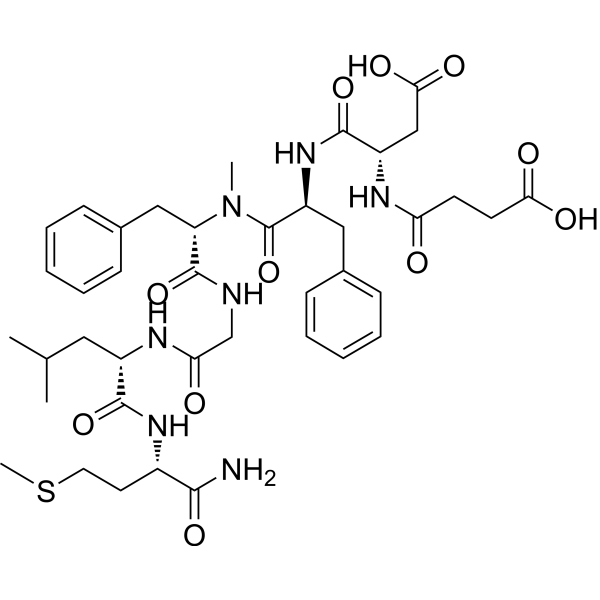
HY-P0187
SenktideNK3 Receptor Agonist -
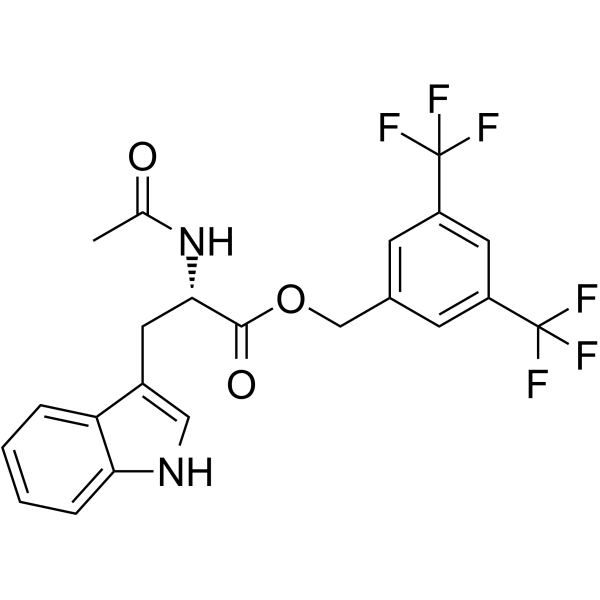
HY-101249
L-732138NK-1 Receptor Antagonist -
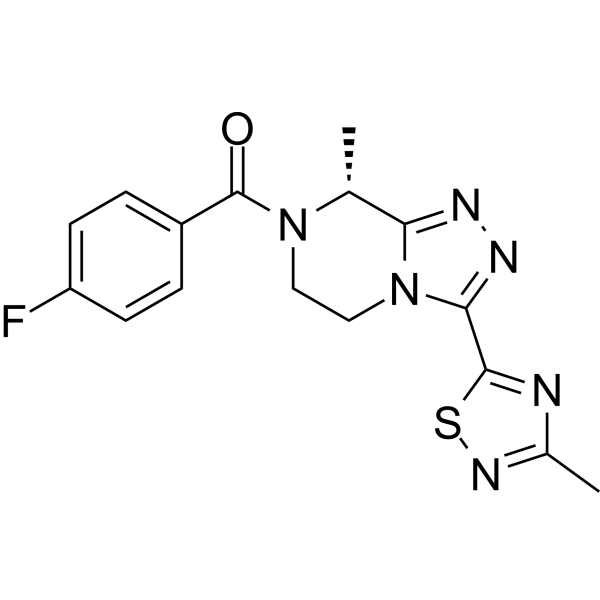
HY-19632
FezolinetantNK3R Antagonist -
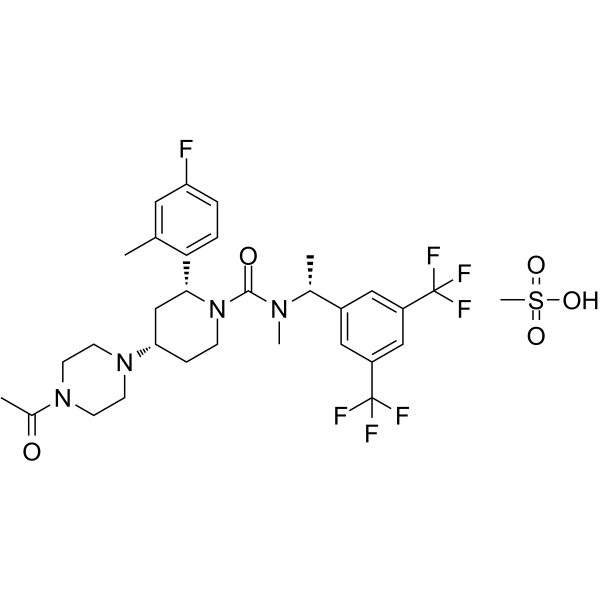
HY-14405A
Casopitant mesylateNeurokinin-1 Receptor Antagonist -
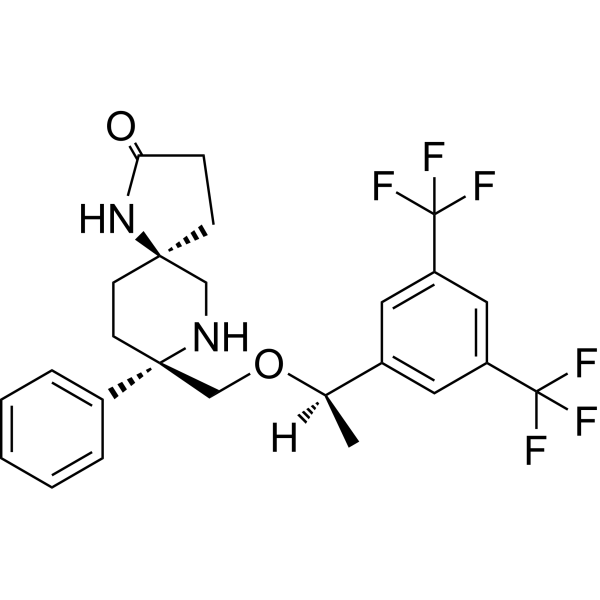
HY-14751
RolapitantNK1 Receptor Antagonist -
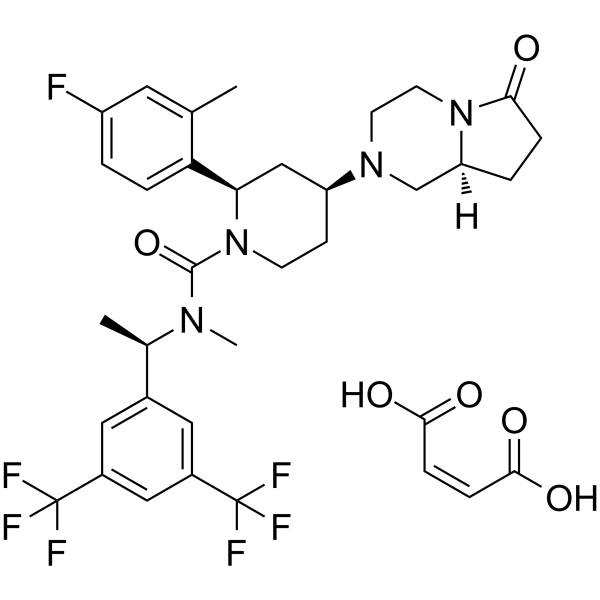
HY-122347A
Orvepitant maleateNeurokinin-1 Receptor Antagonist -
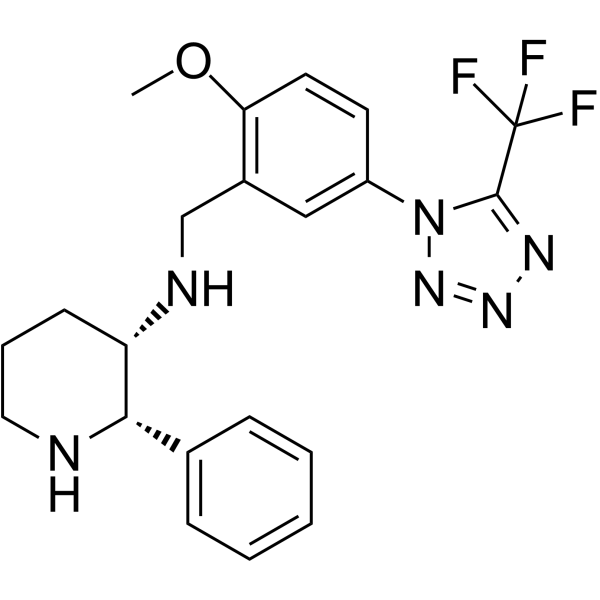
HY-12142
VofopitantNK1 Receptor Antagonist -
HY-15722
SB-222200NK-3 Receptor Antagonist


Biological Activity
Description
IC50 & Target
[1]|
NK1R 9.02 (pKi) |
In Vitro
Vofopitant (GR 205171) (10 pM-1 mM; 60 min) dihydrochloride potently inhibits [3H]-SP binding to NK1 receptors in mouse cerebral cortex homogenates with a pKi of 9.02[1].
MedChemExpress (MCE) has not independently confirmed the accuracy of these methods. They are for reference only. .
In Vivo
Vofopitant (GR-205171) (50 µg/kg; i.v.; single dose) dihydrochloride abolishes fictive retching and emesis-associated antral contractility enhancement, reduces emesis-related hypersalivation and parasympathetic nerve activity, but does not affect gastric corpus relaxation, vagosalivary reflex-mediated salivation, or linguosalivary reflex responses in dogs[2].
Vofopitant (GR 205171) (10 mg/kg; s.c.; single dose) dihydrochloride does not alter DRN serotonergic neuron firing or 5-HT1A autoreceptor sensitivity in male C57BL/6J mice[4].
Vofopitant (10 mg/kg/day; s.c.; continuous delivery; 21 days) dihydrochloride reduces the potency of Ipsapirone (HY-19686) to inhibit DRN serotonergic neuron firing by ~1.5-fold, indicating functional desensitization of 5-HT1A autoreceptors in male C57BL/6J mice[4].
Vofopitant (10 mg/kg/day; s.c.; continuous delivery; 21 days) dihydrochloride reduces the potency and maximal effect of 5-CT to stimulate [35S]GTP-γ-S binding in the DRN, indicating impaired G-protein coupling of desensitized 5-HT1A autoreceptors in male C57BL/6J mice[4].
Vofopitant (10 mg/kg/day; s.c.; continuous delivery; 21 days) dihydrochloride significantly increases basal extracellular 5-HT levels in the DRN and potentiates Paroxetine (HY-122272)-induced cortical 5-HT overflow in male C57BL/6J mice[4].
MedChemExpress (MCE) has not independently confirmed the accuracy of these methods. They are for reference only.


Chemical Information
-
CAS No. 168266-51-1
-
Appearance Solid
-
Molecular Weight 505.36
-
Formula C21H25Cl2F3N6O
-
Color White to off-white
-
SMILES
COC1=C(CN[C@H]2CCCN[C@H]2C3=CC=CC=C3)C=C(N4N=NN=C4C(F)(F)F)C=C1.[H]Cl.[H]Cl
-
Synonyms
GR 205171A
-
Shipping
Room temperature in continental US; may vary elsewhere.
-
Storage
4°C, stored under nitrogen, away from moisture
* In solvent : -80°C, 6 months; -20°C, 1 month (stored under nitrogen, away from moisture)


Solvent & Solubility
In Vitro:
H2O : 33.33 mg/mL (65.95 mM; Need ultrasonic)
DMSO : 33.33 mg/mL (65.95 mM; Need ultrasonic; Hygroscopic DMSO has a significant impact on the solubility of product, please use newly opened DMSO)
Please refer to the solubility information to select the appropriate solvent. Once prepared, please aliquot and store the solution to prevent product inactivation from repeated freeze-thaw cycles.
Storage method and period of stock solution: -80°C, 6 months; -20°C, 1 month (stored under nitrogen, away from moisture). When stored at -80°C, please use it within 6 months. When stored at -20°C, please use it within 1 month.
* Note: If you choose water as the stock solution, please dilute it to the working solution, then filter and sterilize it with a 0.22 μm filter before use.
Please refer to the solubility information to select the appropriate solvent. Once prepared, please aliquot and store the solution to prevent product inactivation from repeated freeze-thaw cycles.
Storage method and period of stock solution: -80°C, 6 months; -20°C, 1 month (stored under nitrogen, away from moisture). When stored at -80°C, please use it within 6 months. When stored at -20°C, please use it within 1 month.
* Note: If you choose water as the stock solution, please dilute it to the working solution, then filter and sterilize it with a 0.22 μm filter before use.
Concentration (start) × Volume (start) = Concentration (final) × Volume (final)
In Vivo:
Select the appropriate dissolution method based on your experimental animal and administration route.
- For the following dissolution methods, please ensure to first prepare a clear stock solution using an In Vitro approach and then sequentially add co-solvents:
- To ensure reliable experimental results, the clarified stock solution can be appropriately stored based on storage conditions. As for the working solution for In Vivo experiments, it is recommended to prepare freshly and use it on the same day.
- The percentages shown for the solvents indicate their volumetric ratio in the final prepared solution. If precipitation or phase separation occurs during preparation, heat and/or sonication can be used to aid dissolution.
Add each solvent one by one: 10% DMSO 40% PEG300 5% Tween-80 45% Saline
Solubility: ≥ 2.5 mg/mL (4.95 mM); Clear solution
This protocol yields a clear solution of ≥ 2.5 mg/mL (saturation unknown).
Taking 1 mL working solution as an example, add 100 μL DMSO stock solution (25.0 mg/mL) to 400 μL PEG300, and mix evenly; then add 50 μL Tween-80 and mix evenly; then add 450 μL Saline to adjust the volume to 1 mL.
Preparation of Saline: Dissolve 0.9 g sodium chloride in ddH₂O and dilute to 100 mL to obtain a clear Saline solution.
Add each solvent one by one: 10% DMSO 90% (20% SBE-β-CD in Saline)
Solubility: ≥ 2.5 mg/mL (4.95 mM); Clear solution
This protocol yields a clear solution of ≥ 2.5 mg/mL (saturation unknown).
Taking 1 mL working solution as an example, add 100 μL DMSO stock solution (25.0 mg/mL) to 900 μL 20% SBE-β-CD in Saline, and mix evenly.
Preparation of 20% SBE-β-CD in Saline (4°C, storage for one week): 2 g SBE-β-CD powder is dissolved in 10 mL Saline, completely dissolve until clear.
For the following dissolution methods, please prepare the working solution directly:
It is recommended to prepare fresh solutions and use them promptly within a short period of time.
The percentages shown for the solvents indicate their volumetric ratio in the final prepared solution. If precipitation or phase separation occurs during preparation, heat and/or sonication can be used to aid dissolution.
Add each solvent one by one: PBS
Solubility: 50 mg/mL (98.94 mM); Clear solution; Need ultrasonic
In Vivo Dissolution Calculator
Please enter the basic information of animal experiments:
-
-
-
-
Recommended: Prepare an additional quantity of animals to account for potential losses during experiments.
Working solution concentration: 0.22 mg/mL
This product has good water solubility, please refer to the measured solubility data in water/PBS/Saline for details.


Purity & Documentation
-
Data Sheet (281 KB)
-
SDS (419 KB)
- English - EN (419 KB)
- Français - FR (419 KB)
- Deutsch - DE (419 KB)
- Norwegian - NO (419 KB)
- Español - ES (419 KB)
- Swedish - SV (419 KB)
- Italian - IT (419 KB)
- Korean - KR (419 KB)
- Portuguese - PT (419 KB)
-
Handling Instructions (2659 KB)
References
[1]. Zocchi A, et al. Effects of antidepressant drugs and GR 205171, an neurokinin-1 (NK1) receptor antagonist, on the response in the forced swim test and on monoamine extracellular levels in the frontal cortex of the mouse. Neurosci Lett. 2003;345(2):73-76. [Content Brief]
[2]. Furukawa N, et al. A neurokinin-1 receptor antagonist reduced hypersalivation and gastric contractility related to emesis in dogs. Am J Physiol. 1998;275(5):G1193-G1201. [Content Brief]
[3]. Heldt SA, et al. Anxiolytic-like effects of the neurokinin 1 receptor antagonist GR-205171 in the elevated plus maze and contextual fear-potentiated startle model of anxiety in gerbils. Behav Pharmacol. 2009;20(7):584-595. [Content Brief]
[4]. Guiard BP, et al. Sustained pharmacological blockade of NK1 substance P receptors causes functional desensitization of dorsal raphe 5-HT 1A autoreceptors in mice. J Neurochem. 2005;95(6):1713-1723. [Content Brief]
[5]. Mathew SJ, et al. A selective neurokinin-1 receptor antagonist in chronic PTSD: a randomized, double-blind, placebo-controlled, proof-of-concept trial. Eur Neuropsychopharmacol. 2011;21(3):221-229. [Content Brief]


Complete Stock Solution Preparation Table
Please refer to the solubility information to select the appropriate solvent. Once prepared, please aliquot and store the solution to prevent product inactivation from repeated freeze-thaw cycles.
Storage method and period of stock solution: -80°C, 6 months; -20°C, 1 month (stored under nitrogen, away from moisture). When stored at -80°C, please use it within 6 months. When stored at -20°C, please use it within 1 month.
| Optional Solvent | Concentration Solvent Mass | 1 mg | 5 mg | 10 mg | 25 mg |
|---|---|---|---|---|---|
| H2O / DMSO | 1 mM | 1.9788 mL | 9.8939 mL | 19.7879 mL | 49.4697 mL |
| 5 mM | 0.3958 mL | 1.9788 mL | 3.9576 mL | 9.8939 mL | |
| 10 mM | 0.1979 mL | 0.9894 mL | 1.9788 mL | 4.9470 mL | |
| 15 mM | 0.1319 mL | 0.6596 mL | 1.3192 mL | 3.2980 mL | |
| 20 mM | 0.0989 mL | 0.4947 mL | 0.9894 mL | 2.4735 mL | |
| 25 mM | 0.0792 mL | 0.3958 mL | 0.7915 mL | 1.9788 mL | |
| 30 mM | 0.0660 mL | 0.3298 mL | 0.6596 mL | 1.6490 mL | |
| 40 mM | 0.0495 mL | 0.2473 mL | 0.4947 mL | 1.2367 mL | |
| 50 mM | 0.0396 mL | 0.1979 mL | 0.3958 mL | 0.9894 mL | |
| 60 mM | 0.0330 mL | 0.1649 mL | 0.3298 mL | 0.8245 mL |
* Note: If you choose water as the stock solution, please dilute it to the working solution, then filter and sterilize it with a 0.22 μm filter before use.


Vofopitant dihydrochloride Related Classifications
HY-12143 Related Classifications
 Powered by Bioz