Search Result
Results for "
5-HT2 Receptor Agonist
" in MedChemExpress (MCE) Product Catalog:
2
Biochemical Assay Reagents
29
Isotope-Labeled Compounds
| Cat. No. |
Product Name |
Target |
Research Areas |
Chemical Structure |
-
- HY-19545A
-
|
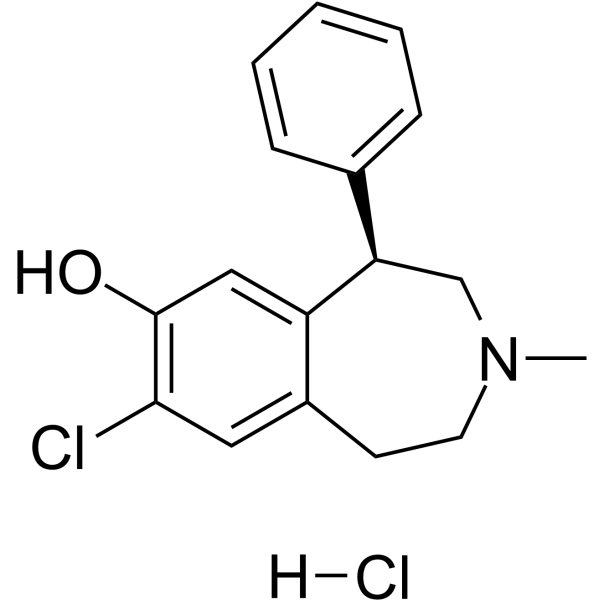
R-(+)-SCH-23390 hydrochloride
|
Dopamine Receptor
5-HT Receptor
Potassium Channel
|
Neurological Disease
|
|
SCH-23390 hydrochloride (R-(+)-SCH-23390 hydrochloride) is a potent and selective dopamine D1-like receptor antagonist with Kis of 0.2 nM and 0.3 nM for the D1 and D5 receptor, respectively. SCH-23390 hydrochloride is a potent and high efficacy human 5-HT2C receptor agonist with a Ki of 9.3 nM. SCH-23390 hydrochloride also binds with high affinity to the 5-HT2 and 5-HT1C receptors. SCH-23390 hydrochloride inhibits G protein-coupled inwardly rectifying potassium (GIRK) channels with an IC50 of 268 nM .
|
-
-
- HY-14546
-
|
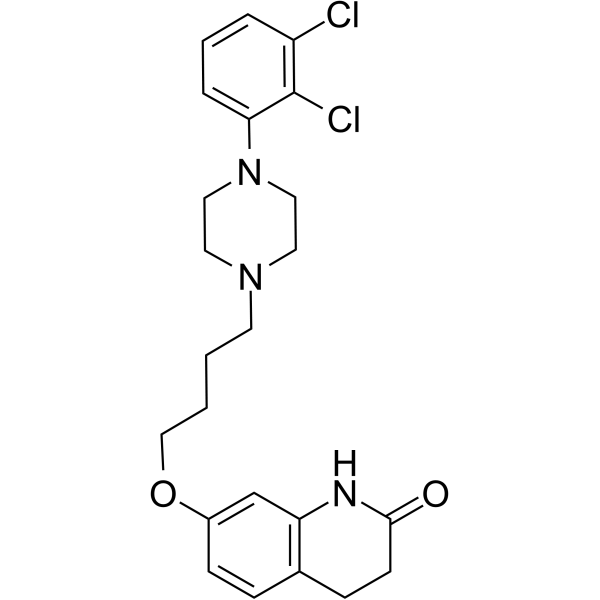
OPC-14597
|
5-HT Receptor
Dopamine Receptor
|
Infection
Neurological Disease
Inflammation/Immunology
|
|
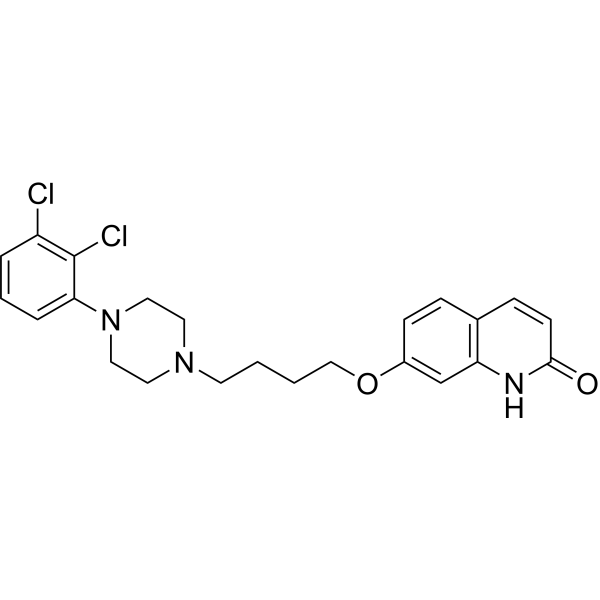
Aripiprazole (OPC-14597), an atypical antipsychotic, is a potent and high-affinity dopamine D2 receptor partial agonist. Aripiprazole is an inverse agonist at 5-HT2B and 5-HT2A receptors and displays partial agonist actions at 5-HT1A, 5-HT2C, D3, and D4 receptors. Aripiprazole can be used for the research of schizophrenia and COVID19 .
|
-
-
- HY-103124
-
|
|
5-HT Receptor
|
Neurological Disease
|
|
DOI hydrochloride is a serotonin 5-HT2A/2C receptor agonist with Ki values of 0.7 nM, 2.4 nM and 20 nM for h5-HT2A, h5-HT2C and h5-HT2B receptors, respectively. DOI hydrochloride can across the blood-brain barrier. DOI hydrochloride increases head twitches in mice .
|
-

-
- HY-14557
-
|
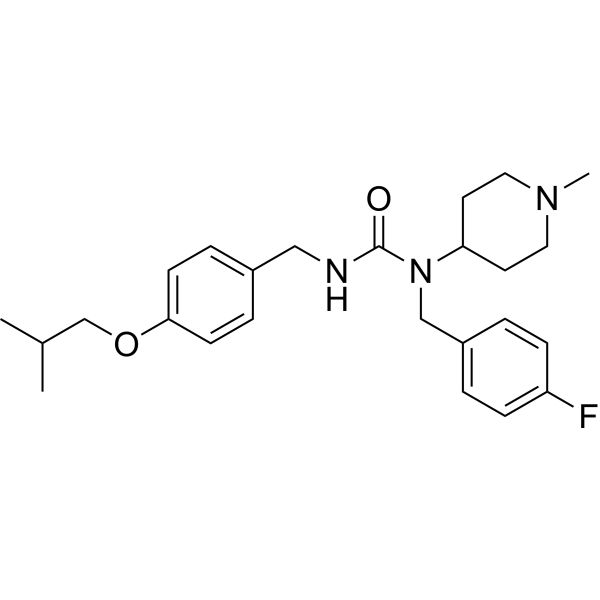
ACP-103
|
5-HT Receptor
|
Neurological Disease
|
|
Pimavanserin is a selective, brain-penetrant, inverse agonist of the 5-HT2A receptor with pIC50 and pKd of 8.73 and 9.3, respectively.
|
-
-
- HY-156601
-
|
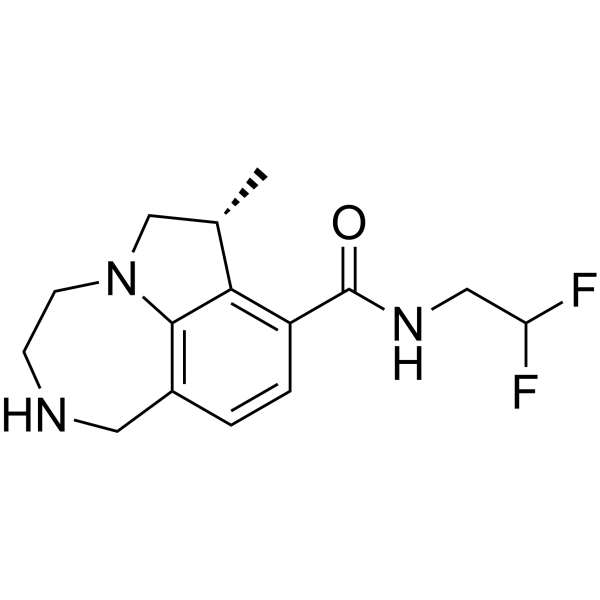
LP352
|
5-HT Receptor
|
Neurological Disease
|
|
Bexicaserin (LP352) is a 5-HT2C receptor agonist with potential for studying obesity and psychiatric-related disorders (such as epilepsy) .
|
-
-
- HY-172420
-
|
GM-2505
|
5-HT Receptor
|
Neurological Disease
|
|
Bretisilocin (GM-2505) is the agonist for 5-HT2A receptor and a serotonin releaser. Bretisilocin exhibits antidepressant activity and can be used in the study of depression .
|
-

-
- HY-14546A
-
|
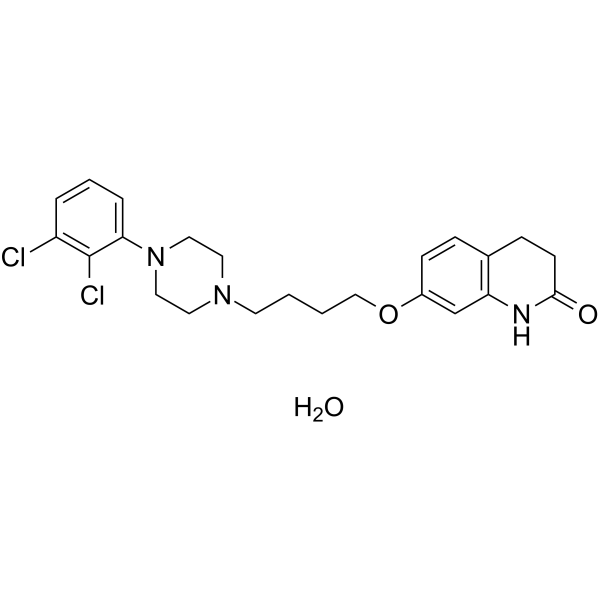
OPC-14597 monohydrate
|
5-HT Receptor
Dopamine Receptor
|
Infection
Neurological Disease
Inflammation/Immunology
|
|
Aripiprazole (OPC-14597) monohydrate, an atypical antipsychotic, is a potent and high-affinity dopamine D2 receptor partial agonist. Aripiprazole monohydrate is an inverse agonist at 5-HT2B and 5-HT2A receptors and displays partial agonist actions at 5-HT1A, 5-HT2C, D3, and D4 receptors. Aripiprazole monohydrate can be used for the research of schizophrenia and COVID19 .
|
-
-
- HY-12714
-
-

-
- HY-113008A
-
|
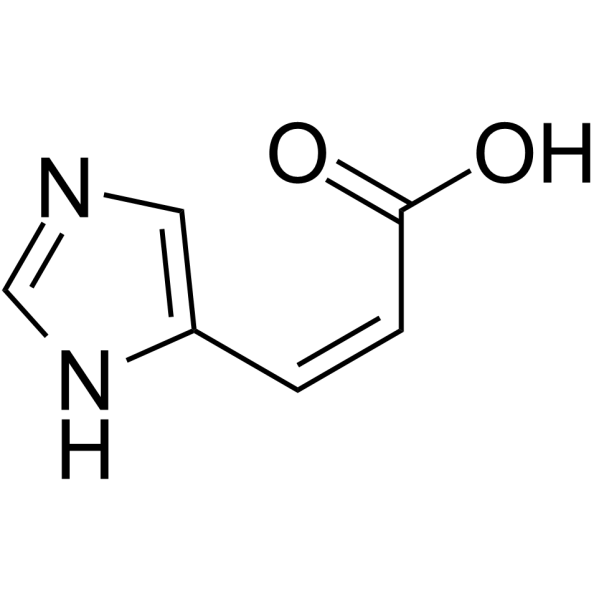
(Z)-Urocanic acid; cis-UCA
|
5-HT Receptor
|
Inflammation/Immunology
|
|
cis-Urocanic acid is a 5-HT2A receptor agonist. cis-Urocanic acid binds to 5-HT receptor with relatively high affinity (Kd=4.6 nM). cis-Urocanic acid is an immune modulator that induces immunosuppression by binding to the 5-HT2A receptor .
|
-
-
- HY-111200
-
-
-
- HY-103138
-
|
|
5-HT Receptor
|
Neurological Disease
Metabolic Disease
|
|
(Rac)-WAY-161503 hydrochloride is a potent, selective, high affinity 5-HT2C receptor agonist with a Ki of 4 nM and an EC50 of 12 nM. (Rac)-WAY-161503 hydrochloride displays higher affinity for 5-HT2C than 5-HT2A and 5-HT2B receptors. (Rac)-WAY-161503 hydrochloride has anti-obesity and antidepressant effects .
|
-
-
- HY-101094
-
|
R79598
|
5-HT Receptor
Dopamine Receptor
|
Neurological Disease
|
|
Ocaperidone is an effective antipsychotic agent, acting as a potent 5-HT2 and dopamine D2 antagonist, and a 5-HT1A agonist, with Kis of 0.14 nM, 0.46 nM, 0.75 nM, 1.6 nM and 5.4 nM for 5-HT2, a1-adrenergic receptor, dopamine D2, histamine H1 and a2-adrenergic receptor, respectively, and a pEC50 and pKi of 7.60 and 8.08 for h5-HT1A.
|
-
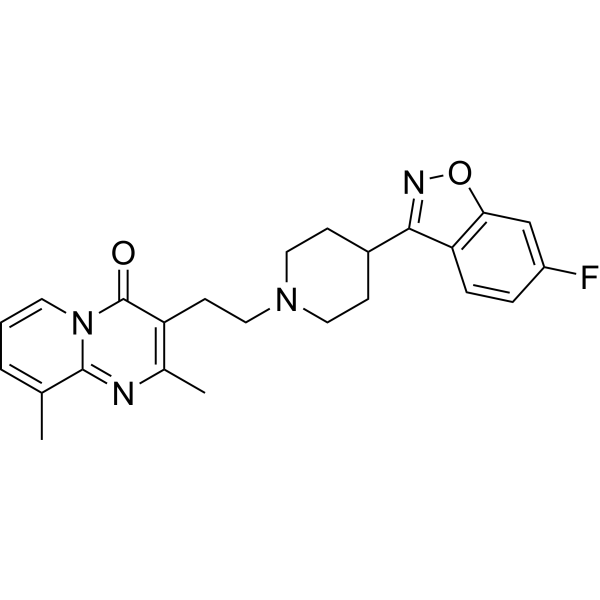
-
- HY-B2089
-
-
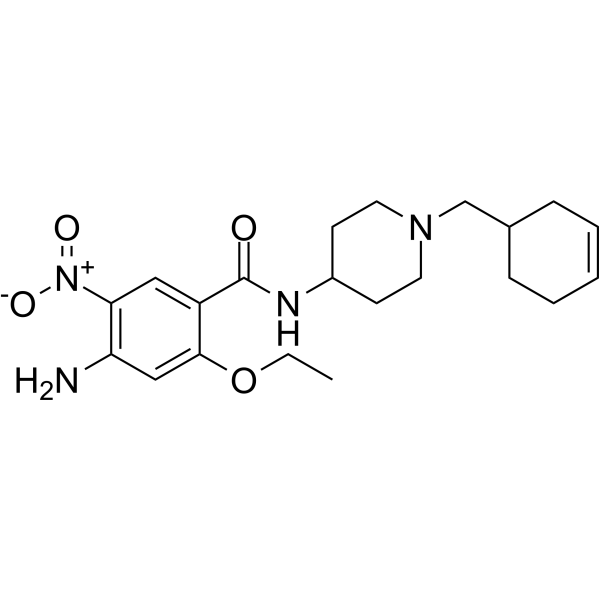
-
- HY-153912
-
|
|
5-HT Receptor
|
Neurological Disease
|
|
5-HT2A receptor agonist-3 ((S,S)-9b) is a 5-HT2A receptor agonist with a Ki of 2.5 nM for human 5-HT2A receptor. 5-HT2A receptor agonist-3 shows 124-fold selectivity for 5-HT2A over the structurally similar 5-HT2C receptor .
|
-
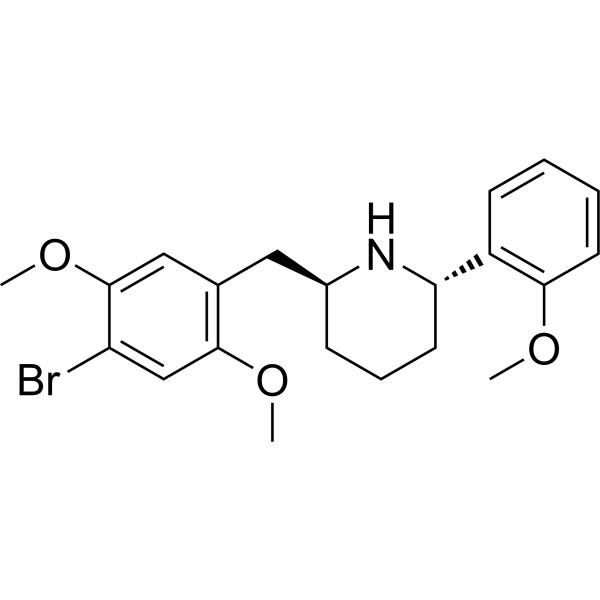
-
- HY-145393
-
|
|
5-HT Receptor
|
Neurological Disease
|
|
5-HT2A receptor agonist-1 (Compound 3) is a selective 5-HT2A receptor agonist with the EC50 of 5.54 nM. 5-HT2A receptor agonist-1 can be used for the research of mood disorders .
|
-

-
- HY-101630
-
|
EGIS-3886
|
5-HT Receptor
|
Neurological Disease
|
|
Deramciclane has a high affinity for 5-HT2A and 5-HT2C receptors; it acts as an antagonist at both receptor subtypes and has inverse agonist properties at the 5-HT2C receptors without direct stimulatory agonist.
|
-
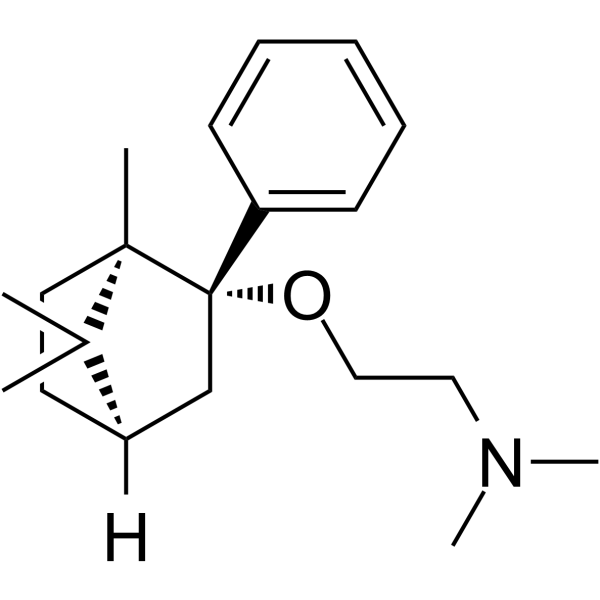
-
- HY-103102
-
-

-
- HY-132225
-
|
|
5-HT Receptor
|
Inflammation/Immunology
|
|
SB 206553 is a 5-HT2C inverse agonist. SB 206553 can attenuate methamphetamine-seeking in rats. SB 206553 has activity for 5-HT2 receptor ligands in HEK-293 or CHO-K1 cells expressing human recombinant 5-HT2 receptors with pKi values of 5.6 nM (5-HT2A), 7.7 nM (5-HT2B) and 7.8 nM (5-HT2C), respectively. SB 206553 can be used for the research of psychostimulant abuse disorders .
|
-
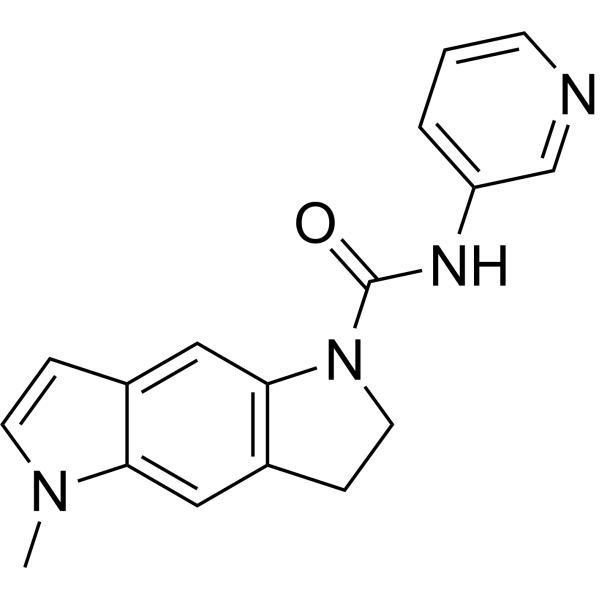
-
- HY-100993
-
|
|
5-HT Receptor
|
Cardiovascular Disease
|
|
α-Methylserotonin maleate is a potent and selective agonist of 5-HT2 receptor. α-Methylserotonin maleate is an analogue of serotonin formed in vivo from α-Methyltryptophan. α-Methylserotonin maleate mediates the lymphatic smooth muscle contraction and prevents the up-regulation of serotonin-receptor-mediated phosphoinositide hydrolysis .
|
-

-
- HY-19950
-
-

-
- HY-19686
-
|
TVX Q 7821 free base
|
5-HT Receptor
|
Neurological Disease
|
|
Ipsapirone (TVX Q 7821) is an anxiolytic compound and a 5-HT1A receptor partial agonist. Ipsapirone (TVX Q 7821) also exhibits 5-HT1A receptor antagonistic effect, and only at high doses it can also produce an inhibitory effect on 5-HT2 and the α1-adrenergic function .
|
-
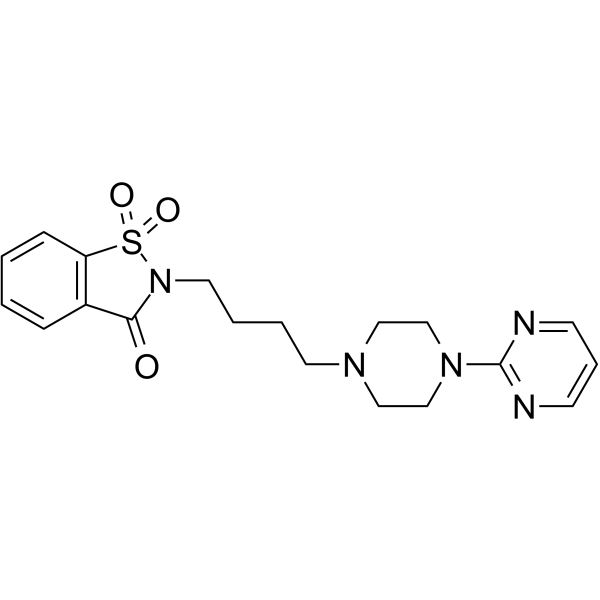
-
- HY-100330
-
YM348
1 Publications Verification
|
5-HT Receptor
|
Metabolic Disease
|
|
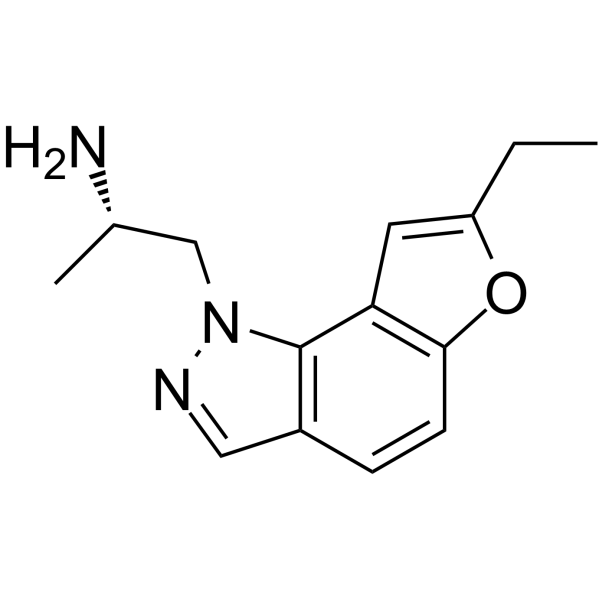
YM348 is a potent and orally active 5-HT2C receptor agonist, which shows a high affinity for cloned human 5-HT2C receptor (Ki: 0.89 nM).
|
-
-
- HY-103138A
-
|
|
5-HT Receptor
|
Neurological Disease
Metabolic Disease
|
|
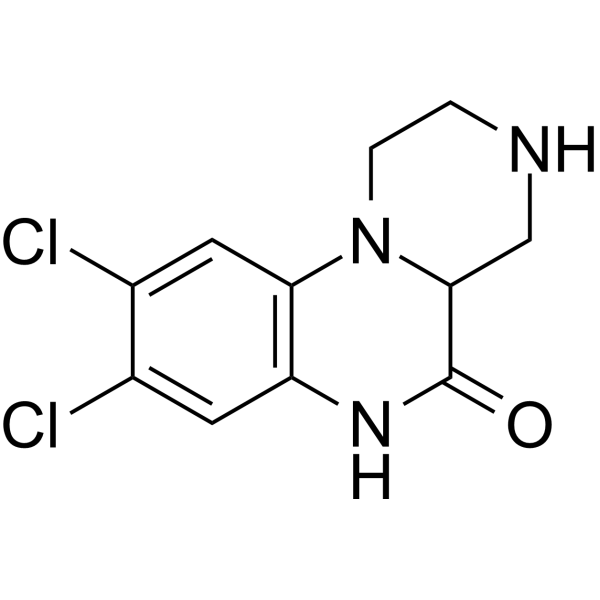
(Rac)-WAY-161503 is a potent, selective, highly affinity 5-HT2C receptor agonist with a Ki of 4 nM and an EC50 of 12 nM. (Rac)-WAY-161503 displays higher affinity for 5-HT2C than 5-HT2A and 5-HT2B receptors. (Rac)-WAY-161503 has anti-obesity and antidepressant effects .
|
-
-
- HY-123838
-
-
-
- HY-W077477
-
|
|
5-HT Receptor
|
Neurological Disease
|
|
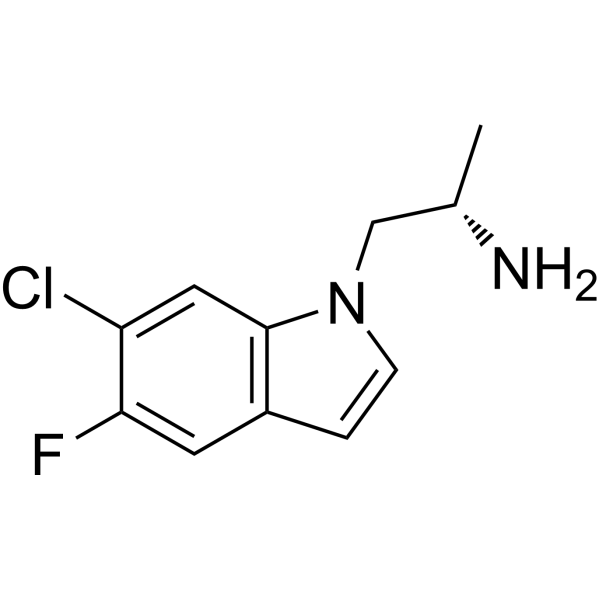
IHCH-7113 (Compound 166) is an agonist of 5-HT2A serotonin receptor with antidepressant activity. IHCH-7113 is promising for research of antipsychotic agent .
|
-

-
- HY-145841
-
|
|
5-HT Receptor
|
Cardiovascular Disease
|
|
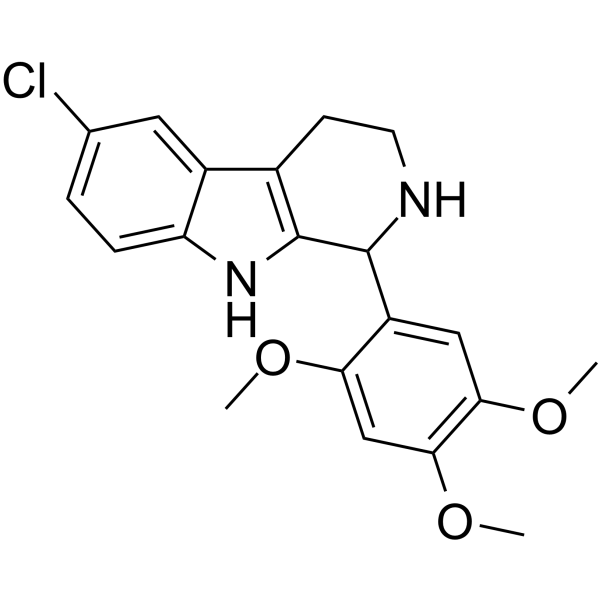
5-HT2A receptor agonist-2 is a highly potent serotonin 5-HT2 receptor agonists. 5-HT2A receptor agonist-2 inspires 5-HT2A, 5-HT2B, and 5-HT2C with EC50 values of 1.7, 0.58, and 0.50 nM, respectively .
|
-
-
- HY-N4157
-
|
|
mAChR
5-HT Receptor
Bacterial
|
Neurological Disease
|
|
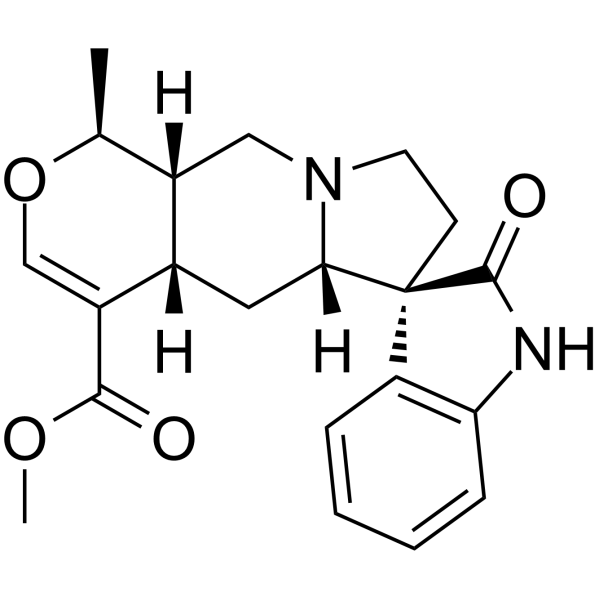
Isopteropodine is a positive modulator that selectively acts on muscarinic M1 and 5-HT2 receptors. Isopteropodine has an EC50 of 9.92 μM for acetylcholine and 14.5 μM for 5-HT. Isopteropodine also has antibacterial activity against Gram-positive bacteria, with MICs of 150 μg/mL and 250 μg/mL for Staphylococcus aureus and Bacillus subtilis, respectively. Isopteropodine enhances receptor function by increasing the affinity of agonists for receptors and can also inhibit the growth of specific Gram-positive bacteria, and can be used in cognitive impairment and antibacterial research .
|
-
-
- HY-175511
-
|
|
5-HT Receptor
|
Neurological Disease
|
|
5-HT2A agonist 7 (Compound 45) is an orally active and highly selective serotonin receptor 2A (5-HT2A) agonist (EC50=12 nM). 5-HT2A agonist 7 is promising for research of psychiatric disorders such as depression .
|
-

-
- HY-133024
-
|
|
5-HT Receptor
|
Neurological Disease
|
|
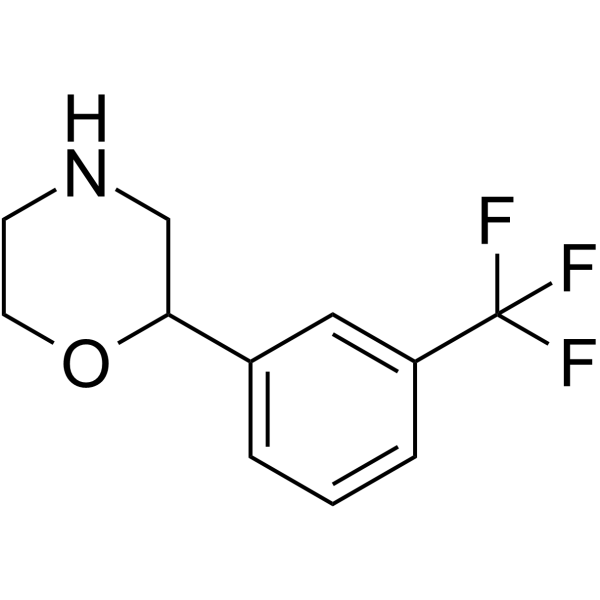
Flumexadol is a selective and affinity 5-HT2C receptor agonist with a Ki of 25 nM for the (+)-enantiomer of Flumexadol, and is 40-fold selective over the 5-HT2A receptor. Flumexadol is an orally active non-narcotic analgesic .
|
-
-
- HY-126057
-
|
|
Parasite
5-HT Receptor
|
Infection
|
|
(R)-Praziquantel, the active enantiomer of Praziquantel, is a partial agonist of the human 5-HT2B receptor. (R)-Praziquantel acts as an antischistosomal eutomer .
|
-

-
- HY-179063
-
|
|
5-HT Receptor
Dopamine Receptor
Serotonin Transporter
|
Neurological Disease
|
5-HT2A receptor agonist-13 (Compound 28c) is a partial agonist of the 5-HT2A receptor, with an EC50 value of 416.9 nM and a Ki value of 113.9 nM. 5-HT2A receptor agonist-13 exhibits very weak agonistic activity towards the 5-HT2B receptor (EC50 = 120.2 nM), D2 receptor (Ki = 1298 nM), and has no activity towards the 5-HT2C receptor. 5-HT2A receptor agonist-13 exhibits weak inhibitory activity on the serotonin transporter (SERT) (EC50 = 977.2 nM). 5-HT2A receptor agonist-13 has antidepressant activity in mouse models and does not induce hallucinogenic behavior. 5-HT2A receptor agonist-13 can be used for the study of major depressive disorder (MDD) and treatment-resistant depression (TRD) .
|
-

-
- HY-175657
-
-

-
- HY-101100
-
|
D-16949 hydrochloride
|
5-HT Receptor
|
Neurological Disease
|
|
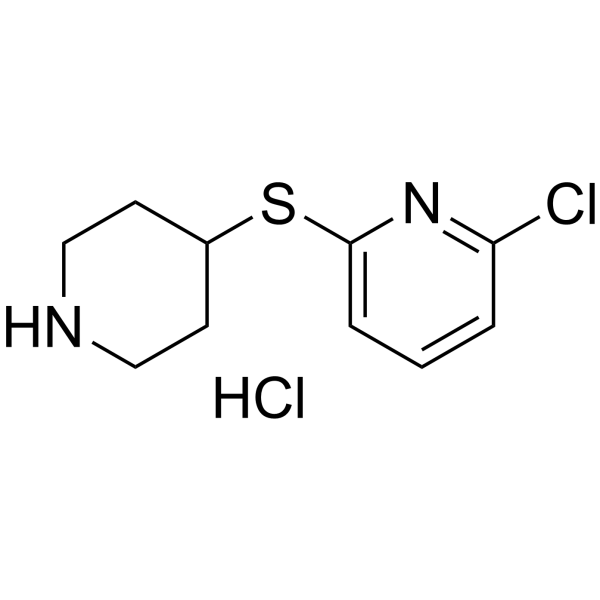
Anpirtoline (D-16949) hydrochloride is a centrally acting 5-HT1B receptor agonist, with Kis of 28 nM (5-HT1B), 150 nM (5-HT1A) and 1.49 μM (5-HT2). Anpirtoline hydrochloride has serotonergic, antinociceptive, antidepressant-like effects .
|
-
-
- HY-175822
-
|
|
5-HT Receptor
|
Neurological Disease
|
|
5-HT2A inverse agonist-1 is a 5-HT2A receptor inverse agonist with a IC50 of 5.5 nM. 5-HT2A inverse agonist-1 shows minimal hERG inhibition. 5-HT2A inverse agonist-1 can be used for the research of neurological disease, such as Parkinson’s disease .
|
-

-
- HY-125641
-
|
|
5-HT Receptor
Adrenergic Receptor
|
Cardiovascular Disease
|
|
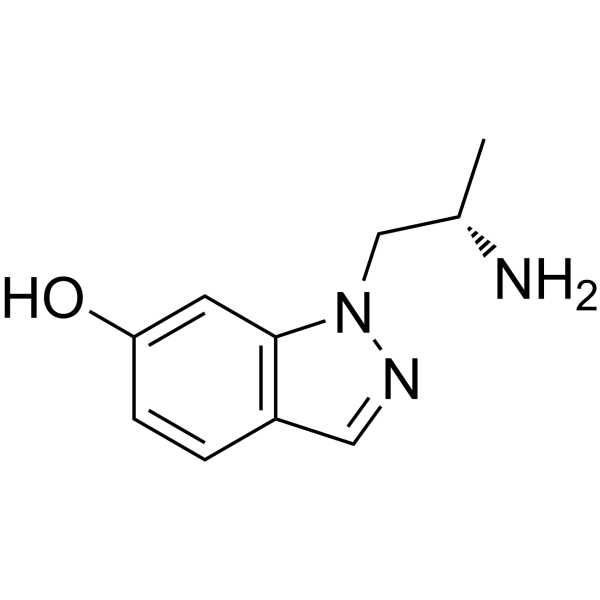
AL-34662 is a selective 5-HT2A receptoragonist (IC50: 0.77 nM and 1.5 nM for rat and human 5-HT2 receptor). AL-34662 is also a weak α-1D adrenergic agonist activity (EC50:0.4 μM). AL-34662 is an ocular hypotensive agent .
|
-
-
- HY-175515
-
|
|
5-HT Receptor
|
Neurological Disease
|
|
5-HT2C agonist-11 (Compound 1) is an orally active, brain-penetrant and selective 5-HT2C receptor agonist (EC50=15 nM). 5-HT2C agonist-11 activates the Gq protein signaling pathway, promoting intracellular calcium release. 5-HT2C agonist-11 is promising for research of depression, post-traumatic stress disorder (PTSD) and neuropathic pain .
|
-

-
- HY-14546R
-
|
OPC-14597 (Standard)
|
Reference Standards
5-HT Receptor
Dopamine Receptor
|
Infection
Neurological Disease
Inflammation/Immunology
|
|
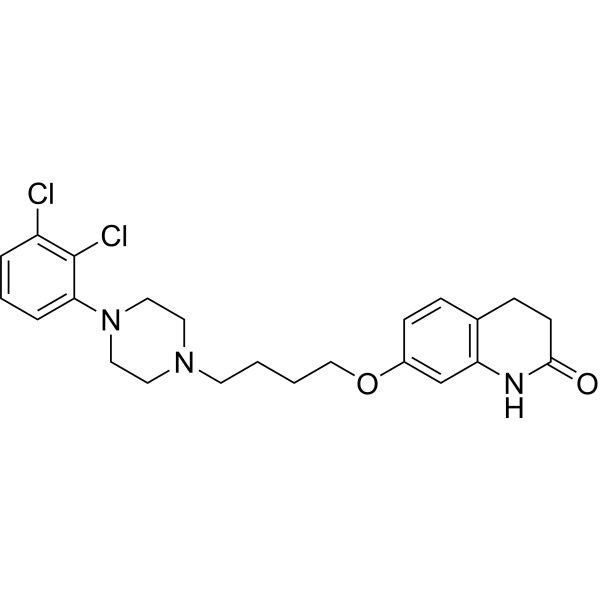
Aripiprazole (Standard) is the analytical standard of Aripiprazole. This product is intended for research and analytical applications. Aripiprazole (OPC-14597), an atypical antipsychotic, is a potent and high-affinity dopamine D2 receptor partial agonist. Aripiprazole is an inverse agonist at 5-HT2B and 5-HT2A receptors and displays partial agonist actions at 5-HT1A, 5-HT2C, D3, and D4 receptors. Aripiprazole can be used for the research of schizophrenia and COVID19 .
|
-
-
- HY-14546S
-
|
OPC-14597-d8
|
5-HT Receptor
|
Neurological Disease
|
|
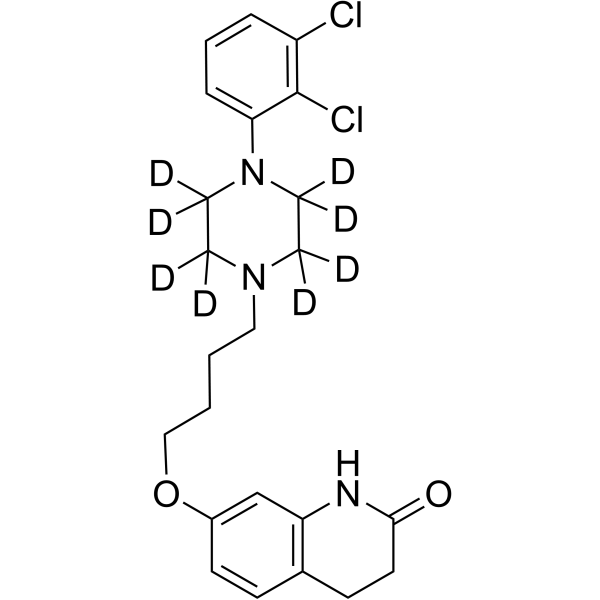
Aripiprazole-d8 (OPC-14597-d8) is the deuterium labeled Aripiprazole (HY-14546). Aripiprazole (OPC-14597), an atypical antipsychotic, is a potent and high-affinity dopamine D2 receptor partial agonist. Aripiprazole is an inverse agonist at 5-HT2B and 5-HT2A receptors and displays partial agonist actions at 5-HT1A, 5-HT2C, D3, and D4 receptors. Aripiprazole can be used for the research of schizophrenia and COVID19.
|
-
-
- HY-161511
-
|
|
5-HT Receptor
|
Neurological Disease
|
|
LPH-5 is a selective 5-HT2A receptor agonist (EC50=190 nM). LPH-5 works by selectively activating the 5-HT2A receptor, which may be involved in regulating mood, perception, and other central nervous system functions associated with the 5-HT2A receptor. LPH-5 can be used to further explore the 5-HT2A receptor in psychiatric disorders, including depression, anxiety, and substance abuse disorders .
|
-

-
- HY-156532C
-
|
|
5-HT Receptor
|
Neurological Disease
|
|
(-)-5-HT2C agonist-3 (compound (-)-19) is a 5-HT2C selective agonist with Gq signaling preference, with EC50 values for 5-HT2 receptors of 5-HT2C: 103 nM; 5-HT2B: 570 nM; 5-HT2A: 72 nM. (-)-5-HT2C agonist-3 can be used in antipsychotic research .
|
-

-
- HY-162423
-
|
|
5-HT Receptor
Androgen Receptor
|
Neurological Disease
|
|
CYB210010 is an orally bioavailable, long-acting serotonin 5-HT2 receptor agonist that selectively targets 5-HT2A and 5-HT2C receptors (EC50: 4.1 n, 7.3 nM). CYB210010 can enter the central nervous system, cause a head twitch response (HTR), and is not prone to behavioral tolerance during chronic administration .
|
-

-
- HY-169786
-
|
|
5-HT Receptor
|
Neurological Disease
|
|
5-HT2A receptor agonist-5 (compound I-3) is a potent 5-HT2A receptor agonist with a Ki value of 0.017 µM. 5-HT2A receptor agonist-5 shows antidepressant activity .
|
-

-
- HY-172978
-
|
|
5-HT Receptor
|
Neurological Disease
|
|
5-HT2A receptor agonist-8 (compound 8) is a potent 5-HT2A receptor agonist with an EC50 of 0.6784 nM. 5-HT2A receptor agonist-8 can be used in the study of depressive disorders and bipolar disorders .
|
-

-
- HY-172980
-
|
|
5-HT Receptor
|
Neurological Disease
|
|
5-HT2A receptor agonist-9 (Compound 9) is a β-arrestin-biased 5-HT2A receptor agonist. 5-HT2A receptor agonist-9 can be used in the research of neurological diseases such as antidepressant and psychedelic .
|
-

-
- HY-174909
-
|
|
5-HT Receptor
|
Neurological Disease
|
|
5-HT2A receptor agonist-11 (Compound I-69) is a 5-HT2A receptor agonist with an EC50 of 22 nM. 5-HT2A receptor agonist-11 can be used in the research of mental illness or central nervous system disorders .
|
-

-
- HY-169785
-
|
7-TMT
|
5-HT Receptor
|
Neurological Disease
|
|
7-Methyl DMT (7-TMT) is a 5-HT2 receptor agonist. Structurally, 7-Methyl DMT is a tryptamine derivative. It can be used as an analytical reference standard for the psychoactive substance DOM. 7-Methyl DMT is also used in research in the field of neurological diseases .
|
-

-
- HY-176721
-
|
|
5-HT Receptor
|
Neurological Disease
|
|
5-HT2A receptor agonist-10 (Compound (R)-I-121.HCl) is a 5-HT2A receptor agonist, with an IC50 of 2192.39 nM for h5-HT2A and h5-HT1A, respectively. 5-HT2A receptor agonist-10 can be used for the research of psychosis, mental illnesses and CNS disorders .
|
-

-
- HY-173269
-
|
|
5-HT Receptor
|
Others
|
|
5-HT2A receptor agonist-7 (517) is a 5-HT2A modulator, with an EC50 of <100 nM .
|
-

-
- HY-B2089R
-
-

-
- HY-108400
-
|
R-(+)-SCH-23390 maleate
|
Dopamine Receptor
5-HT Receptor
Potassium Channel
|
Neurological Disease
|
|
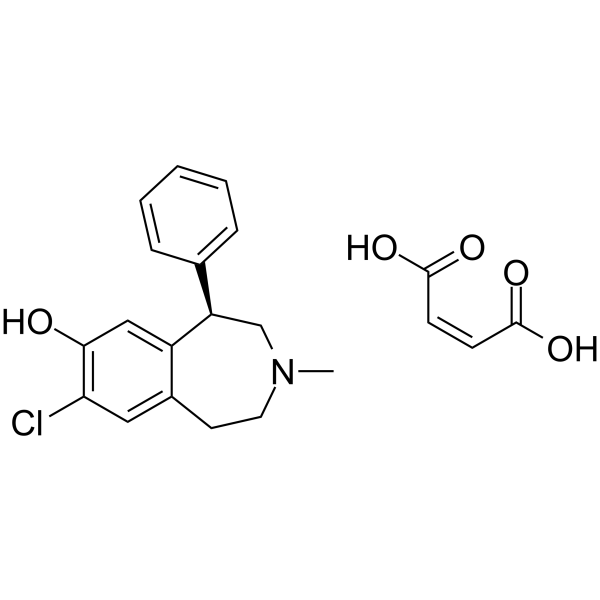
SCH-23390 maleate (R-(+)-SCH-23390 maleate) is a potent and selective dopamine D1-like receptor antagonist with Kis of 0.2 nM and 0.3 nM for the D1 and D5 receptor, respectively. SCH-23390 maleate is a potent and high efficacy human 5-HT2C receptor agonist with a Ki of 9.3 nM. SCH-23390 maleate also binds with high affinity to the 5-HT2 and 5-HT1C receptors. SCH-23390 maleate inhibits G protein-coupled inwardly rectifying potassium (GIRK) channels with an IC50 of 268 nM .
|
-
- HY-169001
-
|
|
5-HT Receptor
|
Neurological Disease
|
|
5-HT2A/5-HT2C inverse agonist 1 is a potent and dual 5-HT2A and 5-HT2C receptor inverse agonist with a hERG inhibitions, thus avoiding cardiovascular risks. 5-HT2A/5-HT2C inverse agonist 1 shows significant antipsychotic efficacy in the MK-801 (HY-15084B)-induced mouse model. 5-HT2A/5-HT2C inverse agonist 1 is promising for research of psychosis .
|
-

- HY-W1123900
-
|
|
5-HT Receptor
|
Neurological Disease
|
|
5-HT2A agonist 3 (Compound P-141) is a selective 5-hydroxytryptamine 2A receptor (5-HT2A) agonist with an EC50 value of 13.80 nM. 5-HT2A agonist 3 is promising for research of mental illnesses such as depression, post-traumatic stress disorder, obsessive-compulsive disorder, and central nervous system disorders .
|
-

- HY-103140
-
-
- HY-167677
-
|
|
5-HT Receptor
|
Neurological Disease
|
|
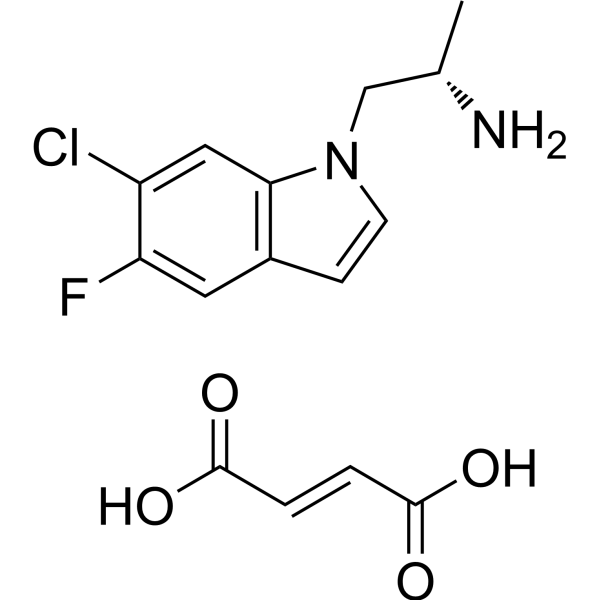
ASP-2205 is a 5-HT2C receptor agonist (human 5-HT2C receptor, EC50=0.85 nM; rat 5-HT2C receptor, EC50=2.5 nM). ASP-2205 enhances the pudendal nerve-mediated urethral closure reflex through the 5-HT2C receptor, thereby preventing urinary incontinence .
|
-

- HY-119103
-
|
|
5-HT Receptor
|
Neurological Disease
|
|
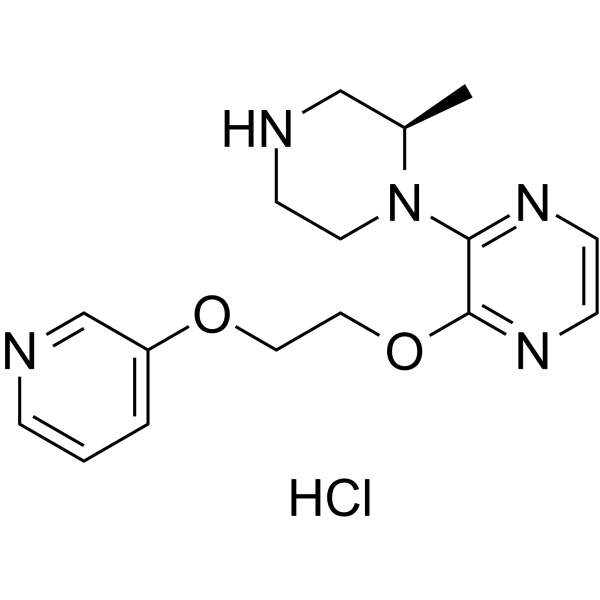
PF-03246799 is a potent and selective 5-HT2C receptor agonist with an EC50 of 190 nM and a Ki of 160 nM. PF-03246799 shows selectivity for 5-HT2C over 5-HT2A and 5-HT2B receptors. PF-03246799 has the potential for stress urinary incontinence (SUI) research .
|
-
- HY-100171
-
-
- HY-124947
-
|
|
5-HT Receptor
|
Neurological Disease
|
|
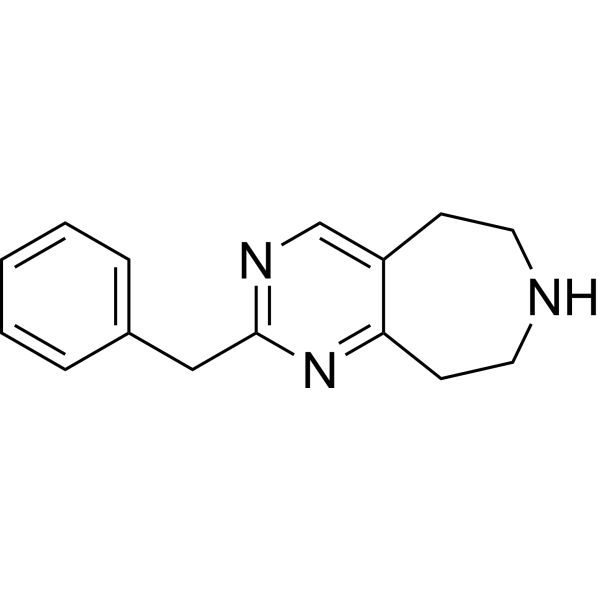
PF-4522654 is a potent, selective and brain-permeable 5-HT2C receptor agonist with an EC50 of 16 nM and a Ki of 8 nM. PF-4522654 shows no measurable functional agonism at no 5-HT2A and 5-HT2B receptors. PF-4522654 can be used for the study of stress urinary incontinence (SUI) .
|
-

- HY-169448
-
|
EPT
|
5-HT Receptor
|
Others
|
|
Ethylpropyltryptamine (EPT) is a novel orally active psychoactive substance. Ethylpropyltryptamine (EPT) is predicted to be a partial agonist of the 5-HT2A receptor .
|
-

- HY-A0172
-
-

- HY-124296
-
|
|
5-HT Receptor
|
Neurological Disease
|
|
2C-TFM hydrochloride is a ,5-dimethoxyphenethylamines compound with a para-trifluoromethyl substitution. 2C-TFM hydrochloride is a potent agonist of the 5-HT receptor subtypes 5-HT2A and 5-HT2C .
|
-

- HY-139045
-
-

- HY-117090
-
|
(rac)-4,5-DHP-AMT
|
5-HT Receptor
|
Others
|
|
(rac)-AL-37350A ((rac)-4,5-DHP-AMT) is a 5-HT2 receptor agonist with intraocular pressure-lowering activity. (rac)-AL-37350A has high affinity and selectivity for the 5-HT2 receptor and effectively reduces intraocular pressure in conscious hypertensive cynomolgus monkeys.
|
-

- HY-117646
-
-
- HY-W713312
-
|
|
5-HT Receptor
|
Neurological Disease
|
|
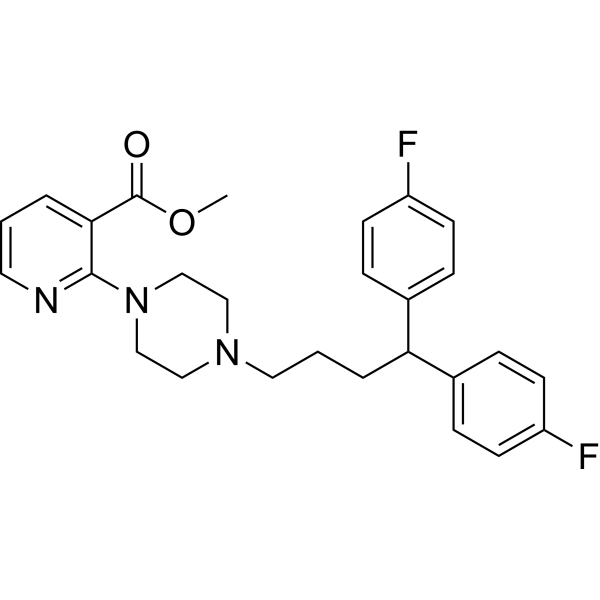
2,6-DMA hydrochloride is classified as an amphetamine. 2,6-DMA hydrochloride is a serotonin 5-HT2 receptor agonist with an apparent pA2 value of 5.09.
|
-

- HY-118775
-
|
|
5-HT Receptor
|
Others
|
|
LEK 8804 is a compound with 5-HT1A receptor agonist and 5-HT2 receptor antagonist properties, and has the activity of modulating related receptor-mediated behavioral responses. LEK 8804 can induce spontaneous tail-flick response in rats in a dose-dependent manner, showing complete 5-HT1A agonist activity, and can inhibit 5-HTP-induced head twitch response in mice, probably through antagonism of 5-HT2 receptors rather than agonism of 5-HT1A receptors.
|
-

- HY-121053A
-
|
WY-50324 hydrochloride; SEB-324 hydrochloride
|
5-HT Receptor
|
Neurological Disease
|
|
Adatanserin hydrochloride is a high affinity, selective and partial agonist for the 5-HT1A receptor with a Ki of 1 nM. Adatanserin hydrochloride is a moderate affinity 5-HT2 receptor antagonist with a Ki of 73 nM. Adatanserin hydrochloride shows significant anxiolytic and antidepressant activity in an animal conflict model .
|
-

- HY-121053
-
|
WY-50324; SEB-324
|
5-HT Receptor
|
Neurological Disease
|
|
Adatanserin (WY-50324) is a high affinity, selective and partial agonist for the 5-HT1A receptor with a Ki of 1 nM. Adatanserin is a moderate affinity 5-HT2 receptor antagonist with a Ki of 73 nM. Adatanserin shows significant anxiolytic and antidepressant activity in an animal conflict model .
|
-

- HY-W744750
-
|
Tergurid-d10; Terguride-d10; trans-Dihydrolisuride-d10
|
Isotope-Labeled Compounds
Dopamine Receptor
5-HT Receptor
|
Neurological Disease
|
|
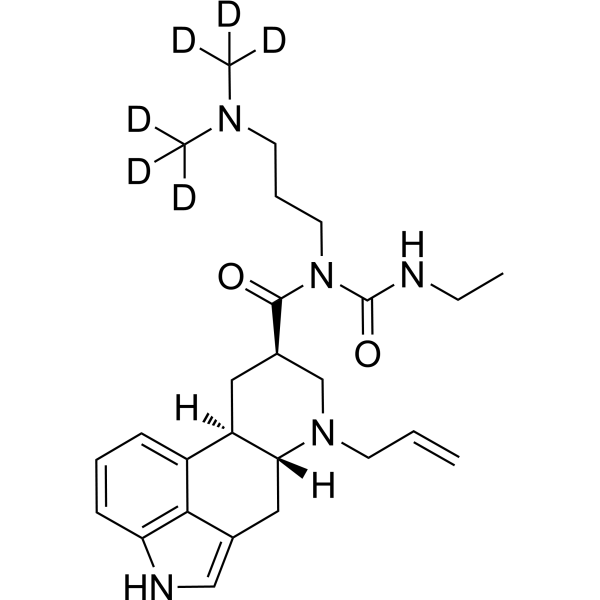
TDHL-d10 (Tergurid-d10; Terguride-d10; trans-Dihydrolisuride-d10) is the deuterium labeled TDHL (HY-12714). TDHL (Tergurid) is a dopamine receptor agonist with a Kd of 0.39 nM for D2 receptor and an orally available 5-HT-2 receptor antagonist.
|
-

- HY-145463
-
|
|
5-HT Receptor
|
Cardiovascular Disease
|
|
α-Methylserotonin is a potent and selective agonist of 5-HT2 receptor. α-Methylserotonin is an analogue of serotonin formed in vivo from α-methyltryptophan. α-Methylserotonin mediates the lymphatic smooth muscle contraction and prevents the up-regulation of serotonin-receptor-mediated phosphoinositide hydrolysis .
|
-

- HY-W609889
-
|
|
5-HT Receptor
|
Neurological Disease
|
|
5-HT2A receptor agonist-14 (Compound I-23) is a tricyclic 5-HT2A receptor agonist with a pEC50 value ≥ 6. 5-HT2A receptor agonist-14 can be used in research related to depression, anxiety, substance abuse and headache .
|
-

- HY-19686A
-
|
TVX Q 7821
|
5-HT Receptor
|
Neurological Disease
|
|
Ipsapirone hydrochloride (TVX Q 7821) is an anxiolytic compound and a 5-HT1A receptor partial agonist. Ipsapirone hydrochloride (TVX Q 7821) also exhibits 5-HT1A receptor antagonistic effect, and only at high doses it can also produce an inhibitory effect on 5-HT2 and the α1-adrenergic function .
|
-

- HY-101100A
-
|
D-16949
|
5-HT Receptor
|
Neurological Disease
|
|
Anpirtoline (D-16949) is a centrally acting 5-HT1B receptor agonist, with Kis of 28 nM (5-HT1B), 150 nM (5-HT1A) and 1.49 μM (5-HT2). Anpirtoline has serotonergic, antinociceptive, antidepressant-like effects .
|
-

- HY-114578
-
|
|
Dopamine Receptor
5-HT Receptor
|
Neurological Disease
|
|
PD 118717 is a selective dopamine (DA) D-2 autoreceptor agonist. PD 118717 has significant affinity for 5-HT1A but not 5-HT1B and 5-HT2 receptors. PD 118717 is active in antagonizing the tau-Butyrolactone-induced accumulation of dopa in rat striatum and mesolimbic regions. PD 118717 exhibits an antipsychotic-like profile .
|
-

- HY-125641A
-
|
|
5-HT Receptor
|
Neurological Disease
|
|
AL-34662 (formate) is a 5-HT2 receptor agonist (IC50: 0.8-1.5 nM). AL-34662 (formate) stimulates inositol phosphate turnover and Ca 2+ release in human ciliary muscle cells (h-CM) (E50: 289 nM) and human trabecular meshwork cells (h-TM) (E50: 254 nM). AL-34662 (formate) can be used in studies to lower intraocular pressure (IOP) .
|
-

- HY-168334
-
|
|
5-HT Receptor
|
Neurological Disease
|
|
5-HT2C agonist-4 (Compound 3i) is an agonist for 5-HT2C receptor with an EC50 of 5.7 nM. 5-HT2C agonist-4 reduces locomotor activity in the zebrafish larval model .
|
-

- HY-101630R
-
|
EGIS-3886 (Standard)
|
Reference Standards
5-HT Receptor
|
Neurological Disease
|
|
Deramciclane (Standard) is the analytical standard of Deramciclane. This product is intended for research and analytical applications. Deramciclane has a high affinity for 5-HT2A and 5-HT2C receptors; it acts as an antagonist at both receptor subtypes and has inverse agonist properties at the 5-HT2C receptors without direct stimulatory agonist.
|
-

- HY-N4157R
-
|
|
Reference Standards
mAChR
5-HT Receptor
Bacterial
|
Neurological Disease
|
|
Isopteropodine (Standard) is the analytical standard of Isopteropodine (HY-N4157). This product is intended for research and analytical applications. Isopteropodine is a positive modulator that selectively acts on muscarinic M1 and 5-HT2 receptors. Isopteropodine has an EC50 of 9.92 μM for acetylcholine and 14.5 μM for 5-HT. Isopteropodine also has antibacterial activity against Gram-positive bacteria, with MICs of 150 μg/mL and 250 μg/mL for Staphylococcus aureus and Bacillus subtilis, respectively. Isopteropodine enhances receptor function by increasing the affinity of agonists for receptors and can also inhibit the growth of specific Gram-positive bacteria, and can be used in cognitive impairment and antibacterial research .
|
-

- HY-148032
-
|
5-BT
|
5-HT Receptor
|
Neurological Disease
|
|
5-Benzyloxytryptamine (5-BT) is a selective partial agonist for 5-hydroxytryptamine 1D/1B (5-HT1D/1B) receptors with an IC50 value of 40 nM for bovine caudate 5-HT1D and reduced affinity for other receptors (5-HT2 IC50>470 nM). 5-Benzyloxytryptamine inhibits adenylate cyclase to decrease neurotransmitter release and downregulate cAMP signaling. 5-Benzyloxytryptamine is promising for research of neurotransmitter imbalance-related disorders like migraine .
|
-

- HY-124367
-
|
|
5-HT Receptor
|
Neurological Disease
|
|
25B-NBF hydrochloride is a highly potent agonist for the 5-HT2C receptor binds human 5-HT2A receptors and rat 5-HT2C receptors with pKi values of 8.57 and 7.73, respectively .
|
-

- HY-117118A
-
-
- HY-155215
-
|
|
5-HT Receptor
|
Others
|
|
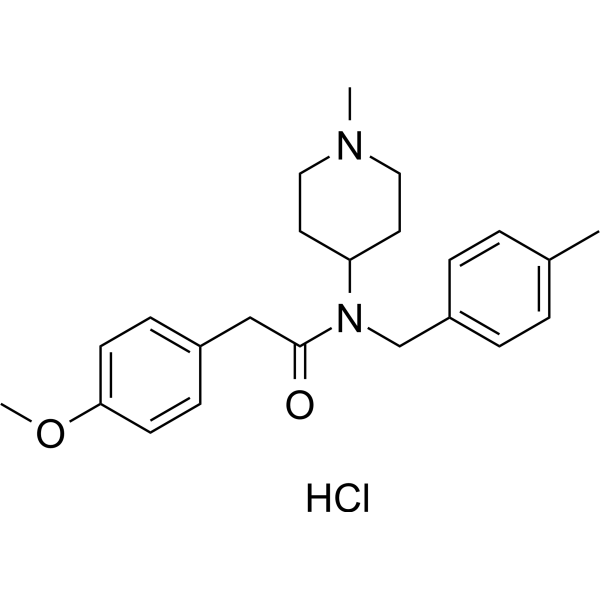
Tenilapine displays potent inverse agonist activity at rat and human 5-HT(2C) receptors .
|
-

- HY-171235
-
|
|
5-HT Receptor
|
Neurological Disease
|
|
5-HT2A antagonist 3 (Formula (III)) is a 5-HT2A receptor antagonist and inverse agonist with a pIC50 of 8.7 and a pKi of 9. 5-HT2A antagonist 3 can be utilized in neurological reesearch .
|
-

- HY-135241
-
|
|
5-HT Receptor
|
Neurological Disease
|
|
25I-NBF hydrochloride is a highly potent partial agonist for the 5-HT2A receptors receptor with a Ki value of 0.26 nM and an EC50 value of 1.6 nM .
|
-

- HY-103120
-
|
|
5-HT Receptor
|
Neurological Disease
|
|
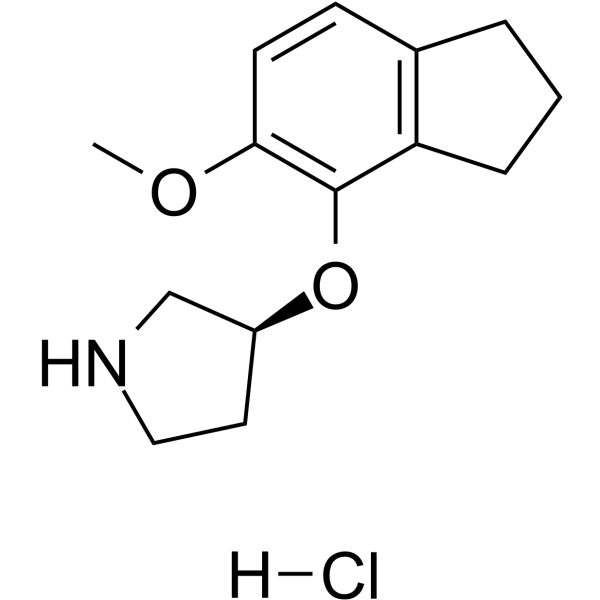
Org37684 is a highly potent 5-HT2C receptor agonist (pEC50=8.17). Org37684 exhibits a rank order of potency of 5-HT2C>5-HT2B>5-HT2A. Its selectivity for the 5-HT2C receptor is approximately 2.5 times over the 5-HT2B (pEC50=7.96) and ten times for the 5-HT2A (pEC50=7.11) receptor .
|
-
- HY-138906
-
-

- HY-182472
-
|
|
5-HT Receptor
|
Neurological Disease
|
|
AL-38022A is a potent and selective 5-HT2 receptor agonist (Ki ≤2.2 nM), but a significantly lower (>100-fold less) affinity for other 5-HT receptors. AL-38022A potently stimulates functional responses via 5-HT2 receptor subtypes including [Ca 2+]i mobilization and tissue contractions with apparently similar potencies and intrinsic activities. AL-38022A fully generalizes to the (±)-1-(2,5-dimethoxy 4-methylphenyl)-2-aminopropane hydrochloride (DOM) stimulus in drug discrimination paradigms. AL-38022A can be used for the glaucoma research .
|
-

- HY-170053
-
|
4-OH-MPT; Meprocin
|
5-HT Receptor
|
Neurological Disease
|
|
4-Hydroxy MPT (4-OH-MPT), a serotonergic hallucinogen, is a 5-HT2A and 5-HT2B receptors agonist with EC50 values of 3.82 nM and 3.4 nM, respectively .
|
-

- HY-101630A
-
|
EGIS-3886 fumarate
|
5-HT Receptor
|
Others
|
|
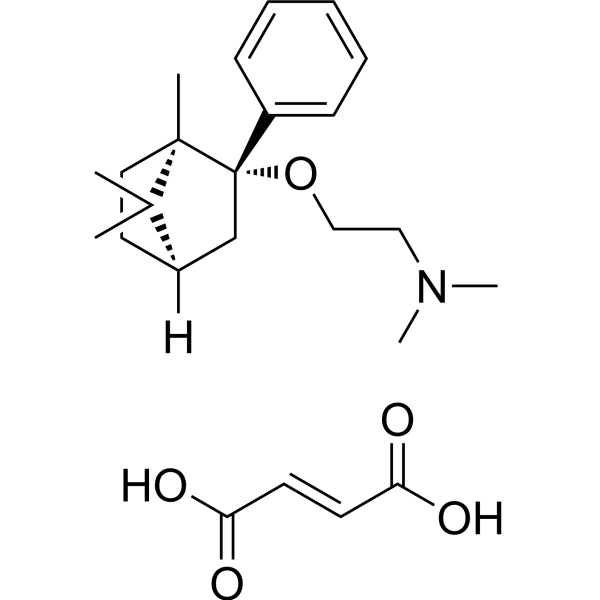
Deramciclane fumarate is an antagonist of 5-HT Receptor. Deramciclane fumarate is an inverse agonist of 5-HT2C Receptor with an IC50 of 168 nM. Deramciclane fumarate also decreases basal phosphoinositide hydrolysis .
|
-
- HY-21994
-
|
|
5-HT Receptor
|
Neurological Disease
|
|
Org 12962 hydrochloride is a potent, selective and efficacious 5-HT2C receptor agonist and exhibits pEC50 values of 7.01, 6.38 and 6.28 for 5-HT2C, 5-HT2A and 5-HT2A, respectively. Org 12962 hydrochloride is effective in panic-like anxiety animal model .
|
-
- HY-113008AS
-
|
(Z)-Urocanic acid-13C3; cis-UCA-13C3
|
Isotope-Labeled Compounds
5-HT Receptor
|
Inflammation/Immunology
|
|
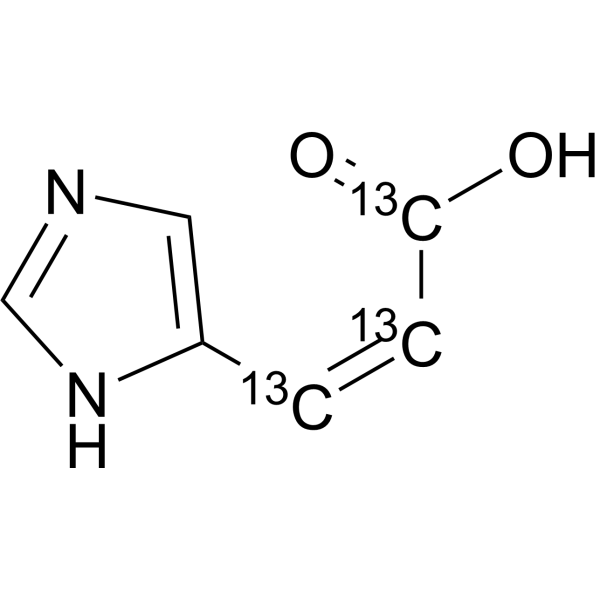
cis-Urocanic acid- 13C3 is the 13C-labeled cis-Urocanic acid. cis-Urocanic acid is a 5-HT2A receptor agonist. cis-Urocanic acid binds to 5-HT receptor with relatively high affinity (Kd=4.6 nM). cis-Urocanic acid is an immune modulator that induces immunosuppression by binding to the 5-HT2A receptor .
|
-
- HY-130351
-
|
|
5-HT Receptor
|
Neurological Disease
|
|
25H-NBOMe hydrochloride is an agonist for the rat and human serotonin 5-HT2A receptors with Ki values of 1.19 and 2.83 nM, respectively .
|
-

- HY-10861
-
|
|
5-HT Receptor
Dopamine Receptor
|
Neurological Disease
|
|
D3/5-HT receptor modulator-1 (compound 5i) is a selective dopamine D3 receptor and 5-HT2A receptor antagonist and a partial 5-HT1A receptor agonist. D3/5-HT receptor modulator-1 shows Ki values of 4.5 nM, 11.9 nM, and 15.3 nM for dopamine D3, 5-HT2A, and 5-HT2A receptors. D3/5-HT receptor modulator-1 has a low affinity for dopamine D2 receptors, 5-HT2C receptors, and hERG channels. D3/5-HT receptor modulator-1 has an atypical antipsychotic profile .
|
-

- HY-103117
-
|
|
5-HT Receptor
|
Neurological Disease
|
|
S 32212 hydrochloride is an inverse agonist of 5-HT receptors 5-HT2(CINI) and 5-HT2(CVSV) (Kis=6.6, 8.9 nM) and an antagonist of 5-HT2A and α2β-adrenergic receptors (Ki=5.8, 5.8 nM). S 32212 hydrochloride can reduce the binding of GTPγS to Gαq, and reduce the activity of phospholipase C (PLC) in HEK293 cells expressing 5-HT2(CINI) receptor and CHO cells expressing 5-HT2(CVSV) receptor (EC50=38 and 18.6 nM, respectively). S 32212 hydrochloride (2.5 mg/kg) reduces 5-HT receptor agonist-induced head twitches and penile erections in mice and rats. S 32212 hydrochloride (10, 40 mg/kg) reduces immobility time in the forced swim test and marble burying behavior in mice and rats, exerting antidepressant and anxiolytic activities.
|
-

- HY-101094R
-
|
R79598 (Standard)
|
5-HT Receptor
Reference Standards
Dopamine Receptor
|
Neurological Disease
|
|
Ocaperidone (Standard) is the analytical standard of Ocaperidone (HY-101094). This product is intended for research and analytical applications. Ocaperidone is an effective antipsychotic agent, acting as a potent 5-HT2 and dopamine D2 antagonist, and a 5-HT1A agonist, with Kis of 0.14 nM, 0.46 nM, 0.75 nM, 1.6 nM and 5.4 nM for 5-HT2, a1-adrenergic receptor, dopamine D2, histamine H1 and a2-adrenergic receptor, respectively, and a pEC50 and pKi of 7.60 and 8.08 for h5-HT1A.
|
-

- HY-182373
-
|
|
5-HT Receptor
|
Metabolic Disease
|
|
5-HT2C agonist-13 is an orally active, selective and brain-penetrant 5-HT2C receptor agonist with human 5-HT2C receptor EC50 of 16 nM, Ki of 20 nM. 5-HT2C agonist-13 functionally activates 5-HT2C receptors, reduces food intake, reduces body weight gain, and exhibits effects reversible by a selective 5-HT2C antagonist. 5-HT2C agonist-13 can be used for the research of obesity .
|
-

- HY-181613
-
|
|
5-HT Receptor
|
Neurological Disease
|
|
5-HT2A&5-HT2C agonist-3 (compound 4e) is an orally bioavailable and blood-brain barrier penetrant agonist of 5-HT2A and 5-HT2C. 5-HT2A&5-HT2C agonist-3 increases intracellular calcium levels in cells overexpressing 5-HT2A or 5-HT2C receptors, and shows no activity against 5-HT2B receptors. 5-HT2A&5-HT2C agonist-3 can be used for the research of neuropsychiatric disorders .
|
-

- HY-183577
-
|
|
5-HT Receptor
|
Neurological Disease
|
|
5-HT2A agonist 10 (Compound (R) I-94) is a 5-HT2A receptor agonist with an EC50 of 9 nM. 5-HT2A agonist 10 is applicable to research related to central nervous system diseases .
|
-

- HY-180465
-
|
|
5-HT Receptor
|
Metabolic Disease
|
|
5-HT2C agonist-12 (example.2) is a selective and orally active 5-HT2C receptor agonist. 5-HT2C agonist-12 can inhibit the accumulation of IP3 with an IC50 of 4.5 nM. 5-HT2C agonist-12 can induce a feeling of fullness, shorten the time of eating, and reduce calorie intake. 5-HT2C agonist-12 can be used for the research of obesity .
|
-

- HY-183652
-
|
|
5-HT Receptor
Sodium Channel
|
Neurological Disease
|
|
5-HT2C-agonist-14 is a 5-HT2C receptor agonist with an EC50 of 2.9 μM against human receptors. It also acts as a voltage-gated sodium channel inhibitor with blood-brain barrier permeable. 5-HT2C-agonist-14 elevates seizure threshold, suppresses seizure progression and alleviates pain-related behaviors. It can be used in the research of epilepsy and pain-related diseases .
|
-

- HY-119103B
-
|
|
5-HT Receptor
|
Neurological Disease
|
|
PF-03246799 monohydrochloride is a potent and selective 5-HT2C receptor agonist with an EC50 of 190 nM and a Ki of 160 nM. PF-03246799 monohydrochloride shows selectivity for 5-HT2C over 5-HT2A and 5-HT2B receptors. PF-03246799 monohydrochloride has the potential for stress urinary incontinence (SUI) research .
|
-

- HY-103124R
-
|
|
Reference Standards
5-HT Receptor
|
Neurological Disease
|
|
DOI hydrochloride (Standard) is the analytical standard of DOI hydrochloride (HY-103124). This product is intended for research and analytical applications. DOI hydrochloride is a serotonin 5-HT2A/2C receptor agonist with Ki values of 0.7 nM, 2.4 nM and 20 nM for h5-HT2A, h5-HT2C and h5-HT2B receptors, respectively. DOI hydrochloride can across the blood-brain barrier. DOI hydrochloride increases head twitches in mice .
|
-

- HY-32329
-
|
Org-8282
|
5-HT Receptor
Adrenergic Receptor
|
Neurological Disease
|
|
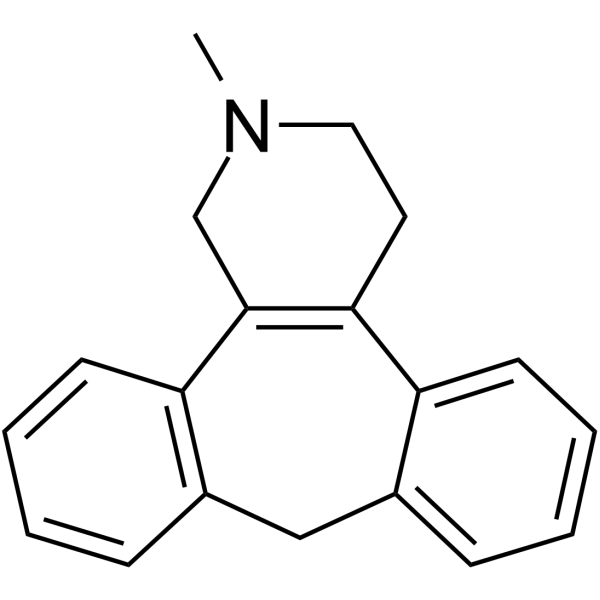
Setiptiline (Org-8282) is a serotonin receptor antagonist. Setiptiline is a tetracyclic antidepressant (TeCA) which acts as a noradrenergic and specific serotonergic antidepressant (NaSSA). Setiptiline acts as a norepinephrine reuptake inhibitor, α2-adrenergic receptor antagonist, and serotonin receptor antagonist, likely at the 5-HT2A, 5-HT2C, and/or 5-HT3 subtypes, as well as an H1 receptor inverse agonist/antihistamine.
|
-
- HY-155206
-
|
|
5-HT Receptor
|
Neurological Disease
|
|
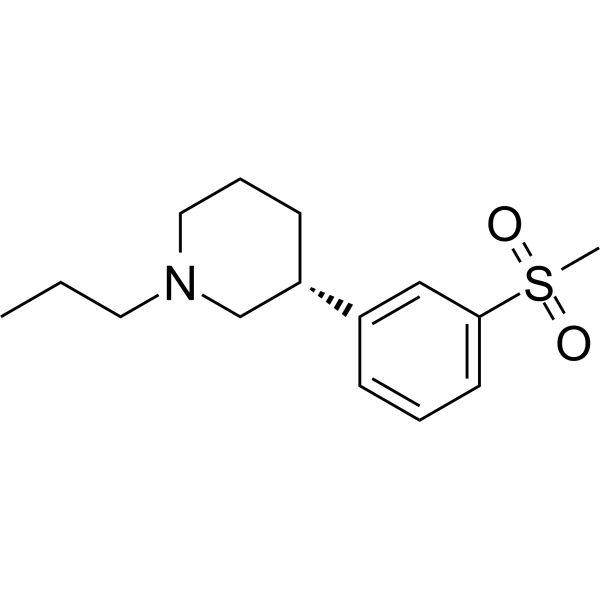
(+)-OSU6162 is an stabilizer on dopaminergic and serotonergic brain signaling. (+)-OSU6162 is a partial agonist of 5-HT2A receptor. (+)-OSU6162 can be used for neurological research .
|
-
- HY-135392
-
|
AC-279
|
Drug Metabolite
|
Neurological Disease
|
|
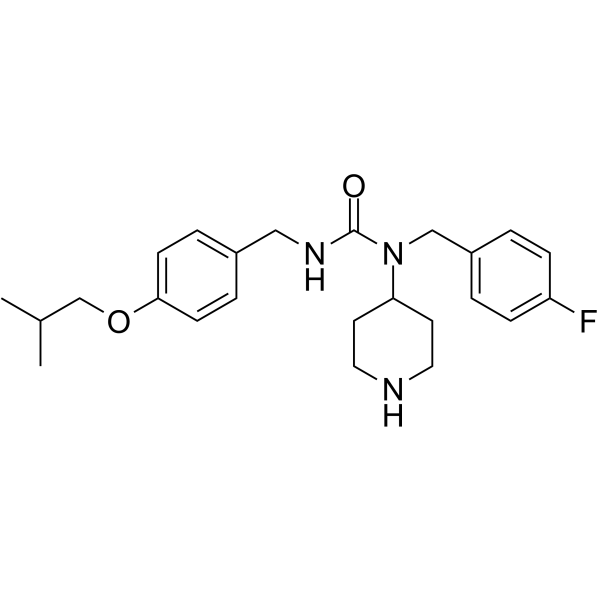
N-Desmethyl Pimavanserin is the active metabolite of Pimavanserin. Pimavanserin is a selective inverse agonist of the 5-HT2A receptor with pIC50 and pKd of 8.73 and 9.3, respectively.
|
-
- HY-118152
-
|
|
5-HT Receptor
|
Neurological Disease
Metabolic Disease
|
|
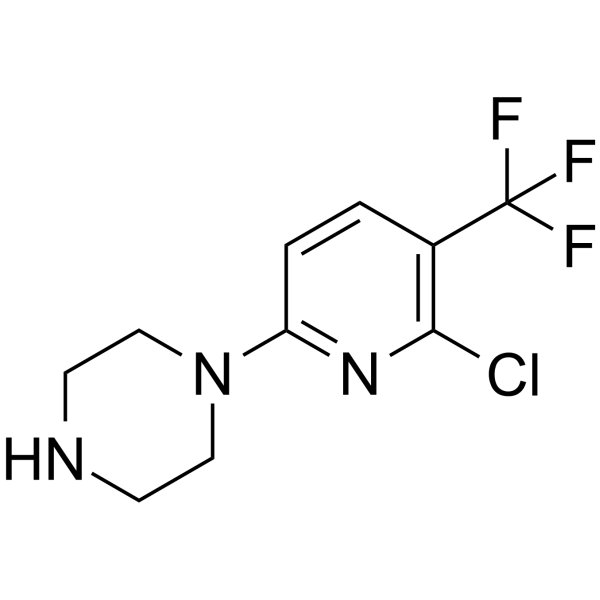
Org-12962 is a potent, selective and brain-penetrant and 5-HT2C receptor agonist with a pEC50 value of 7.01. Org-12962 also exhibits high effacy for the 5-HT2A and 5-HT2B receptor with pEC50s of 6.38 and 6.28, respectively .Org-12962 displays antiaversive effects in a rat model of panic-like anxiety .
|
-
- HY-186170B
-
|
|
5-HT Receptor
|
Neurological Disease
|
|
(R,S)-MDMA acts as a partial agonist of 5-HT2A, 5-HT2B and 5-HT2C receptors. (R,S)-MDMA belongs to psychoactive substances. (R,S)-MDMA exhibits antidepressant activity. (R,S)-MDMA can be used for research on mental disorders such as post-traumatic stress disorder and depression .
|
-

- HY-121675
-
|
BOL-148; Bromolysergide
|
5-HT Receptor
G protein-coupled Bile Acid Receptor 1
|
Neurological Disease
|
|
2-Bromo-LSD (BOL-148) is a blood-brain barrier-permeable 5-HT2A partial agonist and competitive partial antagonist. 2-Bromo-LSD acts as both a potent partial agonist (with an EC50 of 0.81 nM for Gq dissociation) and a potent partial antagonist (with a KB of 0.18 nM for Gq dissociation) at the 5-HT2A receptor. 2-Bromo-LSD exhibits partial agonist activity at multiple aminergic GPCRs, including 5-HT2A. 2-Bromo-LSD lacks 5-HT2B agonist activity. 2-Bromo-LSD induces dendritogenesis and spinogenesis. 2-Bromo-LSD reverses the behavioral effects of chronic stress and increases active coping behaviors in mice .
|
-

- HY-176436S
-
-

- HY-133113
-
|
|
5-HT Receptor
|
Neurological Disease
|
|
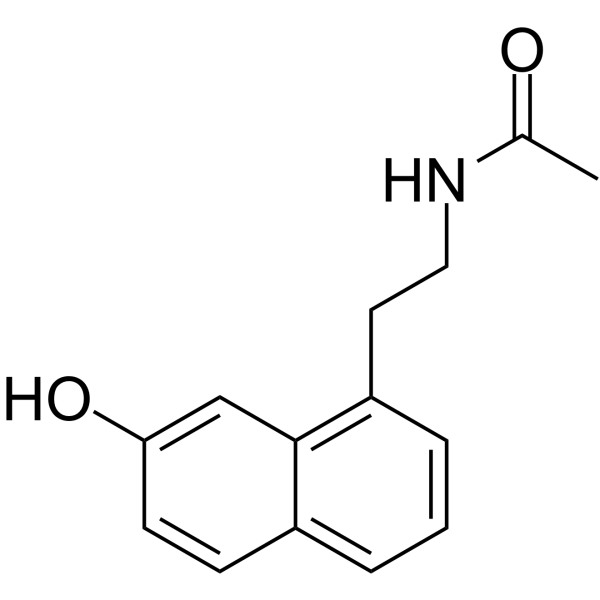
7-Desmethyl-agomelatine is a metabolite of Agomelatine. Agomelatineis a potent agonist at melatonin receptors (MT1 and MT2), and also is an antagonist of 5-HT2C .
|
-
- HY-103102R
-
-

- HY-116524
-
|
|
5-HT Receptor
|
Neurological Disease
|
|
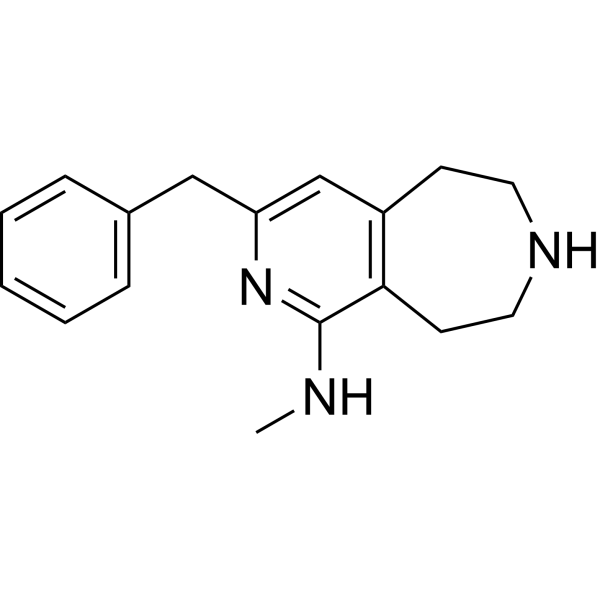
PF-04781340 is a potent and selective 5-HT2C receptor agonist. PF-04781340 is orally available and have central nervous system penetrant profile .
|
-
- HY-183734
-
-

- HY-14153
-
|
|
5-HT Receptor
Apoptosis
|
Metabolic Disease
Cancer
|
|
Tegaserod is an orally active serotonin receptor 4 (HTR4; 5-HT4R) agonist and a 5-HT2B receptor antagonist. Tegaserod has pKis of 7.5, 8.4 and 7.0 for human recombinant 5-HT2A, 5-HT2B and 5-HT2C receptors, respectively. Tegaserod causes tumor cell apoptosis, blunts PI3K/Akt/mTOR signaling and decreases S6 phosphorylation. Tegaserod has anti-tumor activity and has the potential for irritable bowel syndrome (IBS) research .
|
-
- HY-32329A
-
|
MO-8282
|
5-HT Receptor
|
Neurological Disease
|
|
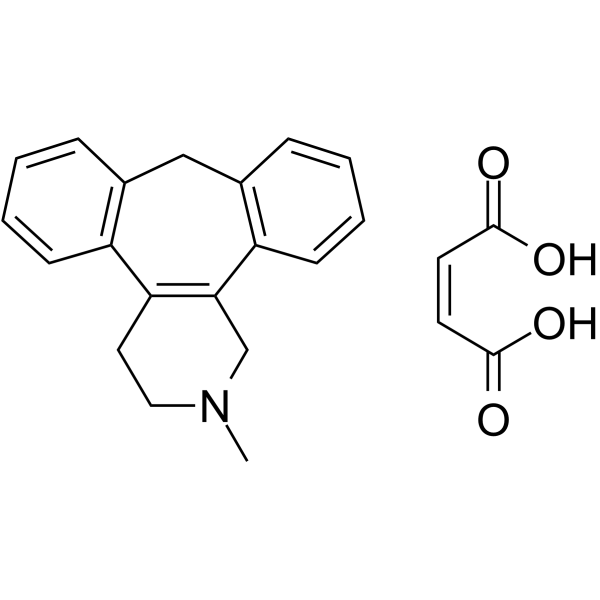
Setiptiline maleate (MO-8282 maleate) is a serotonin receptor antagonist. Setiptiline maleate is a tetracyclic antidepressant (TeCA) which acts as a noradrenergic and specific serotonergic antidepressant (NaSSA). Setiptiline maleate acts as a norepinephrine reuptake inhibitor, α2-adrenergic receptor antagonist, and serotonin receptor antagonist, likely at the 5-HT2A, 5-HT2C, and/or 5-HT3 subtypes, as well as an H1 receptor inverse agonist/antihistamine .
|
-
- HY-14544
-
|
ICI204636
|
5-HT Receptor
Dopamine Receptor
|
Neurological Disease
|
|
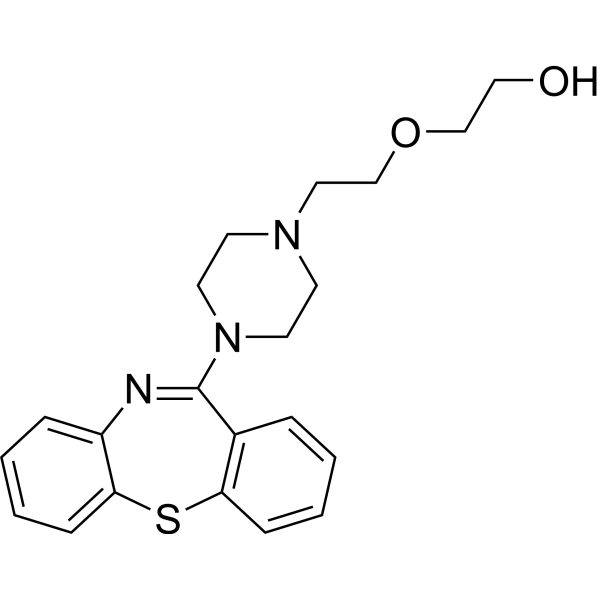
Quetiapine (ICI204636) is a 5-HT receptors agonist with a pEC50 of 4.77 for human 5-HT1A receptor. Quetiapine is a dopamine receptor antagonist with a pIC50 of 6.33 for human D2 receptor. Quetiapine has moderate to high affinity for the human D2, HT1A, 5-HT2A, 5-HT2C receptor with pKis of 7.25, 5.74, 7.54, 5.55. Antidepressant and anxiolytic effects .
|
-
- HY-B0031
-
|
|
5-HT Receptor
Dopamine Receptor
|
Neurological Disease
|
|
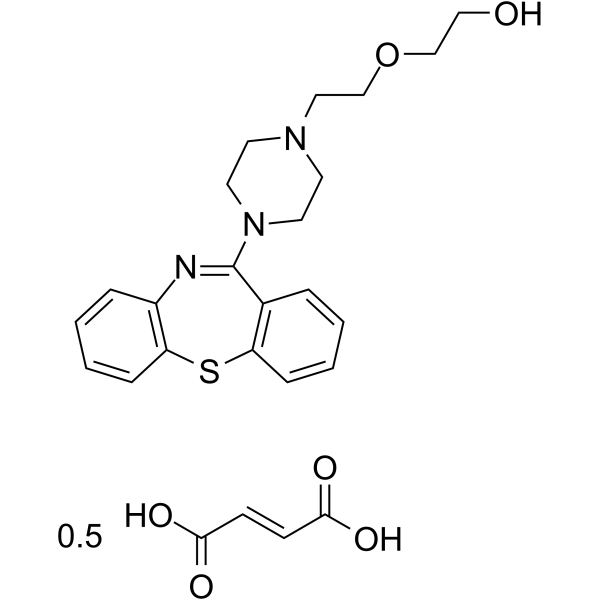
Quetiapine hemifumarate is a 5-HT receptors agonist with a pEC50 of 4.77 for human 5-HT1A receptor. Quetiapine hemifumarate is a dopamine receptor antagonist with a pIC50 of 6.33 for human D2 receptor. Quetiapine hemifumarate has moderate to high affinity for the human D2, HT1A, 5-HT2A, 5-HT2C receptor with pKis of 7.25, 5.74, 7.54, 5.55. Antidepressant and anxiolytic effects .
|
-
- HY-16687A
-
|
DU 28853 hydrochloride
|
5-HT Receptor
|
Neurological Disease
|
|
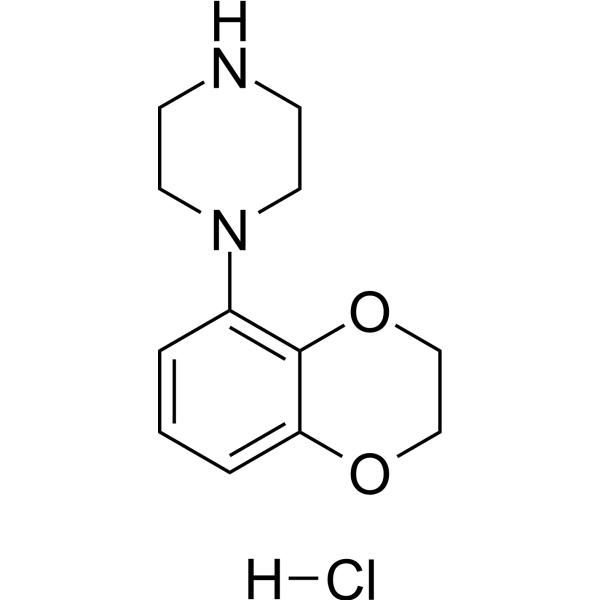
Eltoprazine (DU 28853) hydrochloride is a 5-HT1A/5-HT1B receptors agonist and a 5-HT2C receptor antagonist. Eltoprazine hydrochloride shows antiaggressive and anxiogenic effects .
|
-
- HY-16687B
-
|
DU 28853 dihydrochloride
|
5-HT Receptor
|
Neurological Disease
|
|
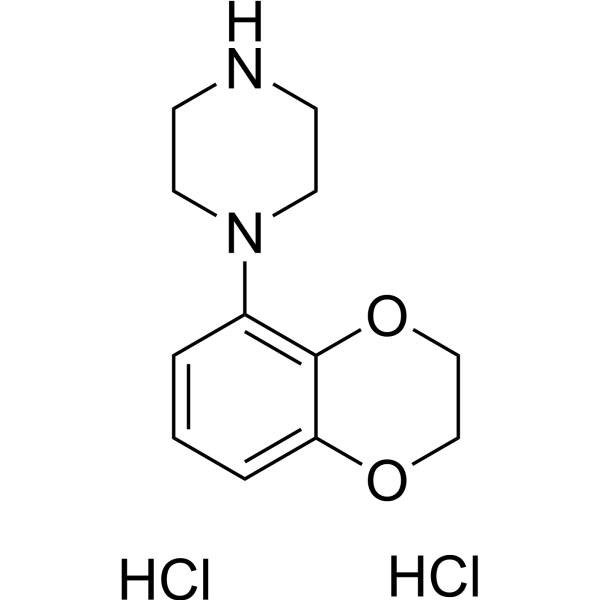
Eltoprazine (DU 28853) dihydrochloride is a 5-HT1A/5-HT1B receptors agonist and a 5-HT2C receptor antagonist. Eltoprazine dihydrochloride shows antiaggressive and anxiogenic effects .
|
-
- HY-16687
-
|
DU 28853
|
5-HT Receptor
|
Neurological Disease
|
|
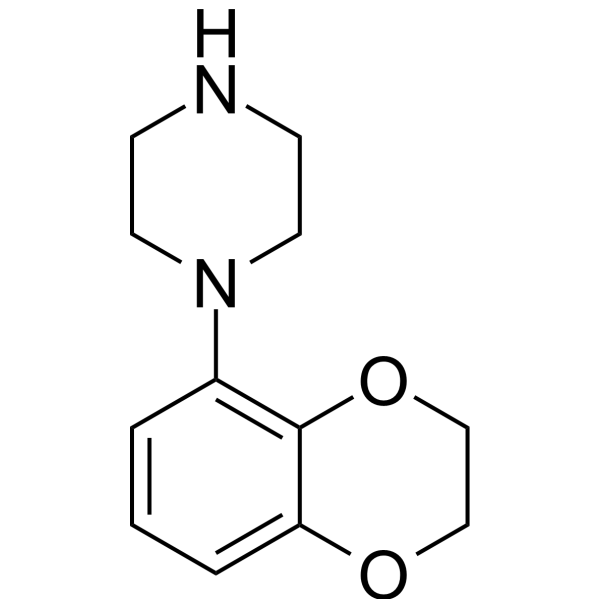
Eltoprazine (DU 28853) is a 5-HT1A/5-HT1B receptors agonist and a 5-HT2C receptor antagonist. Eltoprazine shows antiaggressive and anxiogenic effects .
|
-
- HY-118339
-
|
|
5-HT Receptor
|
Cardiovascular Disease
Cancer
|
|
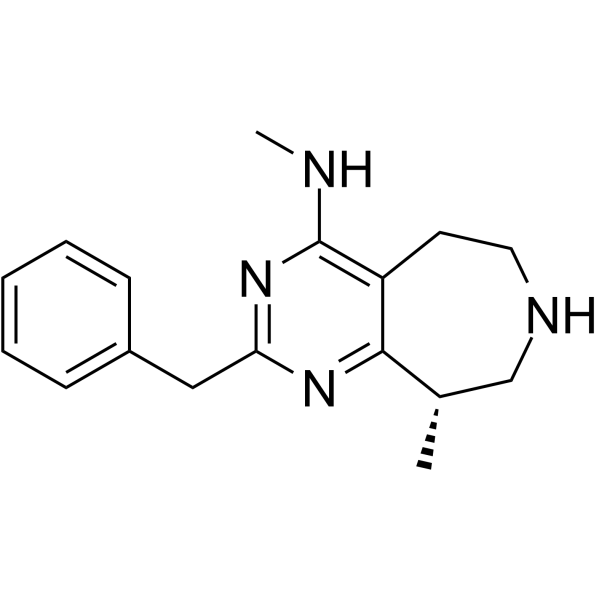
PF-4479745 is a potent and selective 5-HT2C receptor agonist (EC50: 10 nM, ki: 15 nM). PF-4479745 can be used in the research of cardiovascular disease like hypertension .
|
-
- HY-10457
-
|
TD-5108
|
5-HT Receptor
|
Neurological Disease
Metabolic Disease
|
|
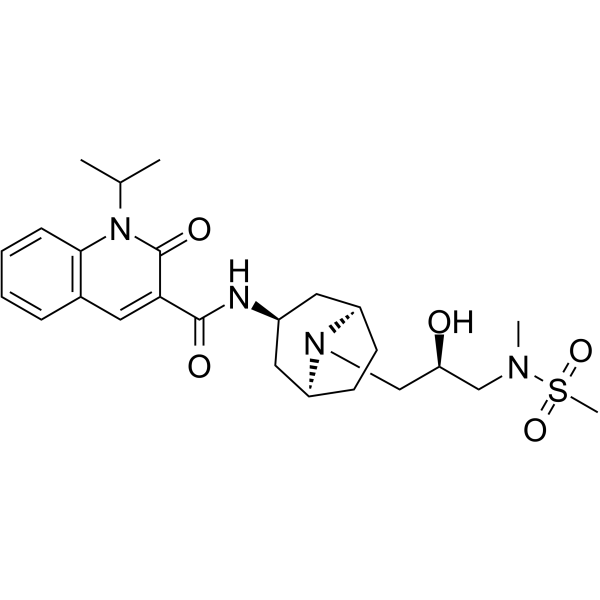
Velusetrag (TD-5108) is an orally active, potent and selective agonist of serotonin 5-HT4 receptor (5-HT4R), with a pKi of 7.7. Velusetrag exhibits no affinity (Ki>10 μM) for 5-HT2A and 5-HT2B receptors. Velusetrag can be used for the research of gastrointestinal diseases and Parkinson's disease .
|
-
- HY-10457A
-
|
TD-5108 hydrochloride
|
5-HT Receptor
|
Neurological Disease
Metabolic Disease
|
|
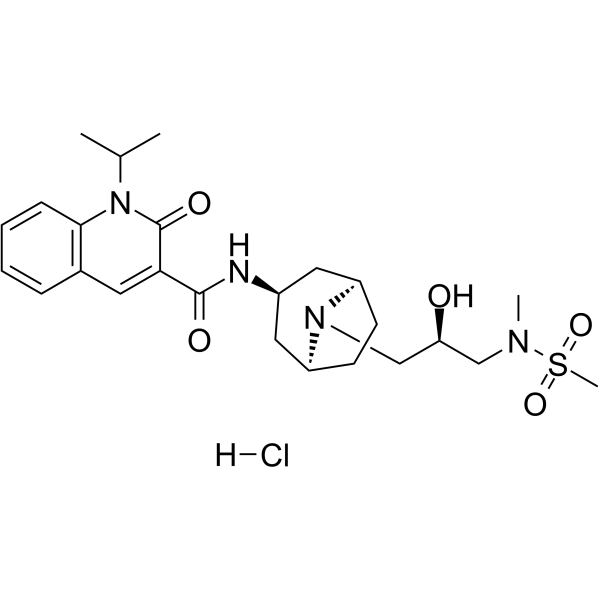
Velusetrag (TD-5108) hydrochloride is an orally active, potent and selective agonist of serotonin 5-HT4 receptor (5-HT4R), with a pKi of 7.7. Velusetrag hydrochloride exhibits no affinity (Ki>10 μM) for 5-HT2A and 5-HT2B receptors. Velusetrag hydrochloride can be used for the research of gastrointestinal diseases and Parkinson's disease .
|
-
- HY-15296
-
-
- HY-121920
-
|
|
5-HT Receptor
|
Neurological Disease
|
|
25C-NBOH hydrochloride is a derivative of 2C-C having an N-(2-hydroxybenzyl) addition at the amine and is a potent agonist of 5-HT receptors that shows selectivity for 5-HT2A over 5-HT2C (EC50s = ~ 0.40 and 15 nM, respectively) .
|
-

- HY-N0049
-
|
|
Parasite
5-HT Receptor
Dopamine Receptor
|
Neurological Disease
|
|
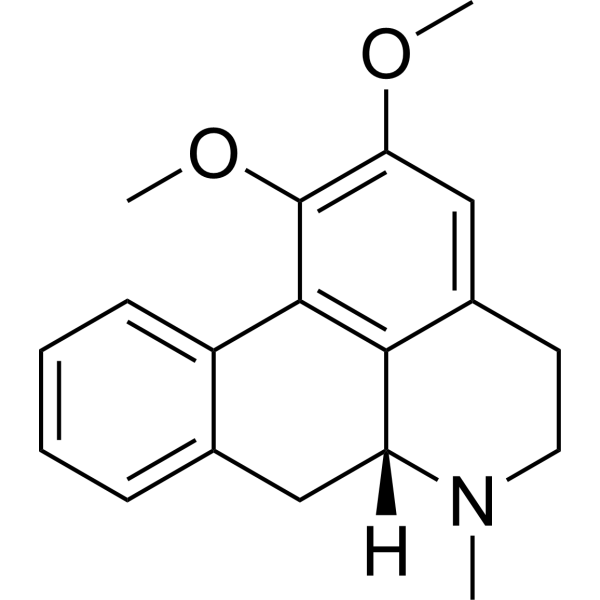
Nuciferine is an antagonist at 5-HT2A (IC50=478 nM), 5-HT2C (IC50=131 nM), and 5-HT2B (IC50=1 μM), an inverse agonist at 5-HT7 (IC50=150 nM), a partial agonist at D2 (EC50=64 nM), D5 (EC50=2.6 μM) and 5-HT6 (EC50=700 nM), an agonist at 5-HT1A (EC50=3.2 μM) and D4 (EC50=2 μM) receptor.
|
-
- HY-100658
-
|
|
5-HT Receptor
Dopamine Receptor
|
Neurological Disease
|
|
Didesmethyl cariprazine is an orally active, BBB-permeable metabolite of Cariprazine (HY-14763). Didesmethyl cariprazine is a partial agonist at the D2 and D3 receptors, full agonist at the 5-HT1A receptor, and antagonist at the human 5-HT2B receptor (Ki: 1.41 nM (human D2L), 0.056 nM (human D3), 1.7 nM (human 5-HT1A), 0.52 nM (human 5-HT2B)). Didesmethyl cariprazine dose-dependently inhibits the spontaneous activity of rat midbrain dopaminergic neurons .
|
-
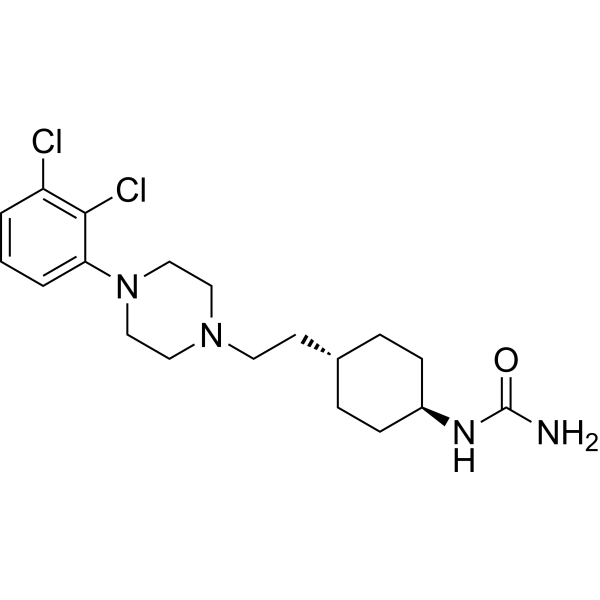
- HY-14153S
-
|
|
5-HT Receptor
Apoptosis
Isotope-Labeled Compounds
|
Metabolic Disease
Cancer
|
|
Tegaserod-d11 is deuterated labeled Tegaserod (HY-14153). Tegaserod is an orally active serotonin receptor 4 (HTR4; 5-HT4R) agonist and a 5-HT2B receptor antagonist. Tegaserod has pKis of 7.5, 8.4 and 7.0 for human recombinant 5-HT2A, 5-HT2B and 5-HT2C receptors, respectively. Tegaserod causes tumor cell apoptosis, blunts PI3K/Akt/mTOR signaling and decreases S6 phosphorylation. Tegaserod has anti-tumor activity and has the potential for irritable bowel syndrome (IBS) research .
|
-
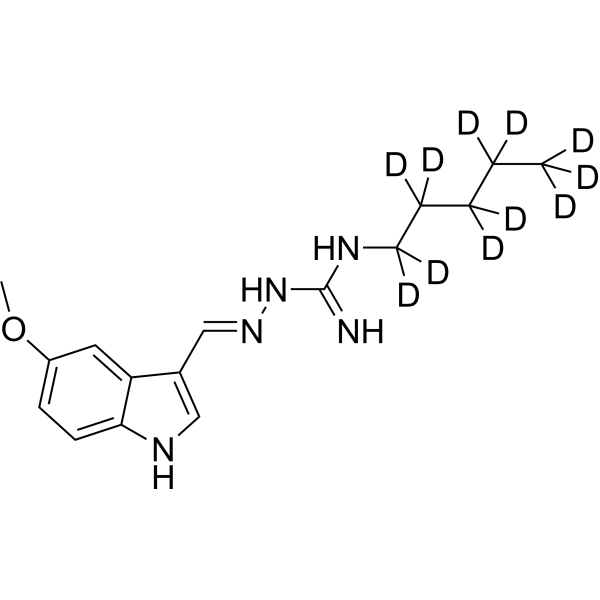
- HY-14153A
-
|
SDZ-HTF-919; HTF-919
|
5-HT Receptor
Apoptosis
|
Neurological Disease
Metabolic Disease
Cancer
|
|
Tegaserod maleate (SDZ-HTF-919) is an orally active serotonin receptor 4 (HTR4; 5-HT4R) agonist and a 5-HT2B receptor antagonist. Tegaserod maleate has pKis of 7.5, 8.4 and 7.0 for human recombinant 5-HT2A, 5-HT2B and 5-HT2C receptors, respectively. Tegaserod maleate causes tumor cell apoptosis, blunts PI3K/Akt/mTOR signaling and decreases S6 phosphorylation. Tegaserod maleate has anti-tumor activity and has the potential for irritable bowel syndrome (IBS) research .
|
-
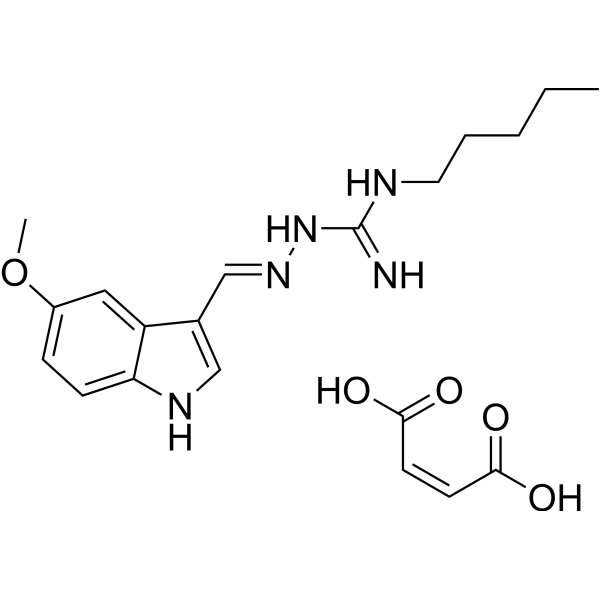
- HY-B0031S2
-
|
|
Isotope-Labeled Compounds
5-HT Receptor
Dopamine Receptor
|
Neurological Disease
|
|
Quetiapine-d8 (fumarate) is the deuterium labeled Quetiapine. Quetiapine is a 5-HT receptors agonist with a pEC50 of 4.77 for human 5-HT1A receptor. Quetiapine is a dopamine receptor antagonist with a pIC50 of 6.33 for human D2 receptor. Quetiapine has moderate to high affinity for the human D2, HT1A, 5-HT2A, 5-HT2C receptor with pKis of 7.25, 5.74, 7.54, 5.55. Antidepressant and anxiolytic effects .
|
-
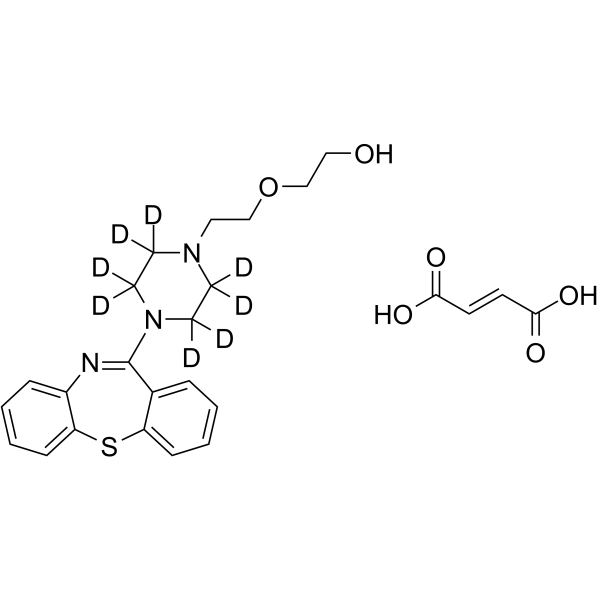
- HY-186169
-
|
|
5-HT Receptor
Drug Derivative
|
Neurological Disease
|
|
R-MDDMA, 4-methylenedioxymethamphetamine (MDMA) analogue, is a 5-HT2A/5-HT2C receptor modulator. R-MDDMA shows antagonistic activity against 5-HT2A/5-HT2C with IC50 values of 642 and 137 nM, and also shows partial agonist activity with EC50 values of 24.5 and 14.4 nM, but does not activate 5-HT2B receptors. R-MDDMA promotes cortical neuron growth. R-MDDMA facilitates fear extinction learning and produces antidepressant-like effects in preclinical rodent models. R-MDDMA can be used for the researches of post-traumatic stress disorder and depression .
|
-

- HY-15296A
-
|
FCE-21336 diphosphate
|
Dopamine Receptor
Autophagy
|
Endocrinology
Cancer
|
|
Cabergoline diphosphate is an ergot derived-dopamine D2-like receptor agonist that has high affinity for D2, D3, and 5-HT2B receptors (Ki=0.7, 1.5, and 1.2, respectively).
|
-

- HY-134483
-
|
|
5-HT Receptor
|
Neurological Disease
|
|
5-HT7/5-HT2A receptor antagonist 1 is a high-affinity, orally active, brain-penetrant 5-HT7 and 5-HT2A receptor ligand having a pKi = 8.1 at both receptors. 5-HT7/5-HT2A receptor antagonist 1 behaves as an antagonist in an in vitro functional assay for 5-HT2A and as an inverse agonist in an in vitro functional assay for 5-HT7. 5-HT7/5-HT2A receptor antagonist 1 blockade of 5-Carboxamidotryptamine (5-CT) (HY-135555) induced hypothermia in rats, and blockade of 2,5-dimethoxy-4-iodoamphetamine (DOI) induced head-twitches in mice. 5-HT7/5-HT2A receptor antagonist 1 occupied 5-HT2A receptor binding sites in the frontal cortex of the rat brain. 5-HT7/5-HT2A receptor antagonist 1 can be used for the study of Neurological diseases .
|
-

- HY-133858
-
|
|
5-HT Receptor
|
Neurological Disease
|
|
25N-NBOMe hydrochloride, a 2C-N derivative, is a 5-HT2A and 5-HT2C receptors agonist with Ki values of 0.144 nM and 1.06 nM, respectively. 25N-NBOMe hydrochloride has little to no efficacy at inducing release of preloaded neurotransmitter from recombinant dopamine, serotonin and norepinephrine transporters .
|
-

- HY-126057S
-
|
|
Parasite
5-HT Receptor
|
Infection
|
|
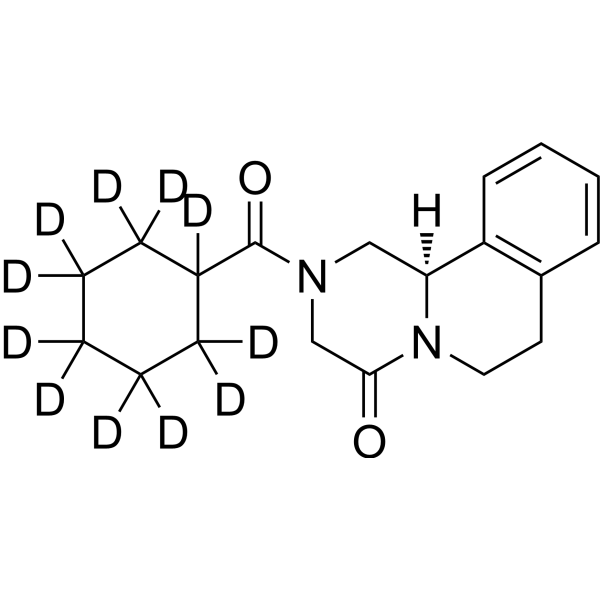
(R)-Praziquantel-d11 is the deuterium labeled (R)-Praziquantel. (R)-Praziquantel, the active enantiomer of Praziquantel, is a partial agonist of the human 5-HT2B receptor. (R)-Praziquantel acts as an antischistosomal eutomer .
|
-
- HY-15543A
-
|
|
5-HT Receptor
|
Neurological Disease
|
|
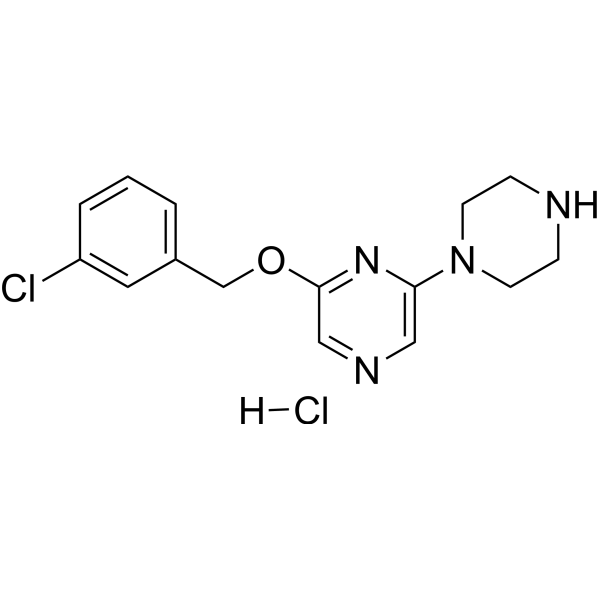
CP-809101 hydrochloride is a potent and highly selective 5-HT2C receptor agonist, with pEC50s of 9.96, 7.19 and 6.81 M for human 5HT2C, 5HT2B and 5HT2A receptor. CP-809101 hydrochloride inhibits conditioned avoidance responding in rats and antagonizes both PCP (phencyclidine hydrochloride)- and d-amphetamine-induced hyperactivity. CP-809101 hydrochloride also reduces food and nicotine dependence in rats, can be used in studies of antipsychotic and nicotine dependence .
|
-
- HY-15543
-
|
|
5-HT Receptor
|
Neurological Disease
|
|
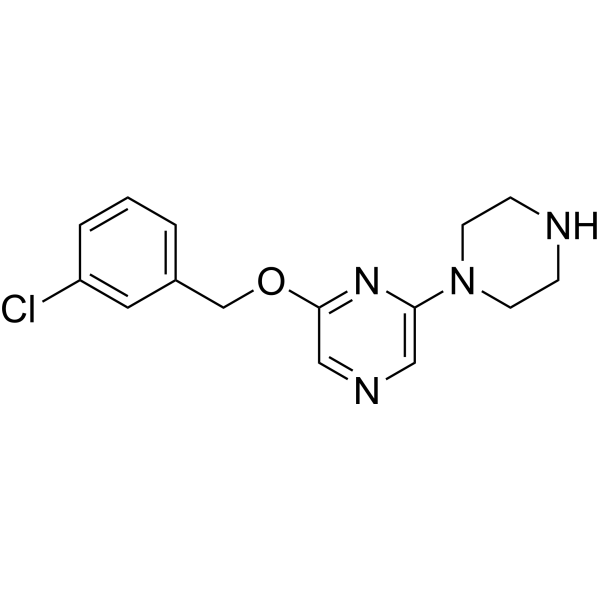
CP-809101 is a potent and highly selective 5-HT2C receptor agonist, with pEC50s of 9.96, 7.19 and 6.81 M for human 5HT2C, 5HT2B and 5HT2A receptor. CP-809101 inhibits conditioned avoidance responding in rats and antagonizes both PCP (phencyclidine hydrochloride)- and d-amphetamine-induced hyperactivity. CP-809101 also reduces food and nicotine dependence in rats, can be used in studies of antipsychotic and nicotine dependence .
|
-
- HY-19733
-
|
ITI-007 tosylate
|
5-HT Receptor
Dopamine Receptor
|
Neurological Disease
Cancer
|
|
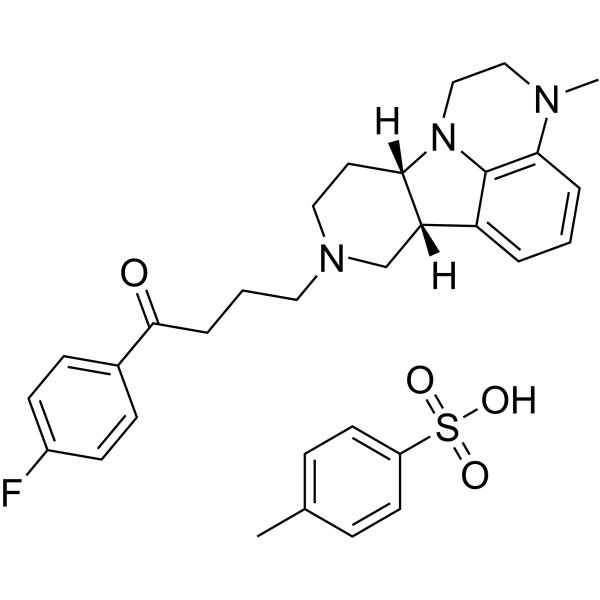
Lumateperone (ITI-007) tosylate is a 5-HT2A receptor antagonist (Ki = 0.54 nM), a partial agonist of presynaptic D2 receptors and an antagonist of postsynaptic D2 receptors (Ki = 32 nM), and a dopamine D1 receptor modulator. Lumateperone tosylate has anticancer activity and can also be used in studies of psychiatric disorders such as schizophrenia .
|
-
- HY-W014208
-
|
AF-267B
|
mAChR
|
Others
|
|
NGX-267 is a selective agonist of the actin M1 receptor, which has high selectivity among the five actin receptor subtypes, especially for the M1 receptor rather than the M3 receptor. NGX-267 also has significant differences in affinity for dopamine D2 and 5-HT2B receptors .
|
-

- HY-16729
-
|
YKP10811
|
5-HT Receptor
|
Metabolic Disease
|
|
Relenopride is a agonist of novel potent 5-HT4 receptor partial with weak binding to 5-HT 2B receptors (Ki = 31 nM) .
|
-

- HY-178760
-
|
|
5-HT Receptor
|
Neurological Disease
|
|
TGF-8027 is a selective 5-HT2A agonist that can cross the blood-brain barrier. TGF-8027 exhibits EC50s of 3.3 nM, 160 nM and 7600 nM against human 5-HT2A, 5-HT2C and 5-HT2B and exhibits EC50s against mouse 5-HT2A and mouse 5-HT2C of 14 and 210 nM. TGF-8027 can induce a head-shaking response in mice. TGF-8027 can be used to study diseases that target the 5-HT2A receptor (such as depression) .
|
-

- HY-121675A
-
|
BOL-148 D-Tartrate; Bromolysergide D-Tartrate
|
5-HT Receptor
G protein-coupled Bile Acid Receptor 1
|
Neurological Disease
|
|
2-Bromo-LSD D-Tartrate (BOL-148 D-Tartrate) is a blood-brain barrier-permeable 5-HT2A partial agonist and competitive partial antagonist. 2-Bromo-LSD D-Tartrate acts as both a potent partial agonist (with an EC50 of 0.81 nM for Gq dissociation) and a potent partial antagonist (with a KB of 0.18 nM for Gq dissociation) at the 5-HT2A receptor. 2-Bromo-LSD D-Tartrate exhibits partial agonist activity at multiple aminergic GPCRs, including 5-HT2A. 2-Bromo-LSD D-Tartrate lacks 5-HT2B agonist activity. 2-Bromo-LSD D-Tartrate induces dendritogenesis and spinogenesis. 2-Bromo-LSD D-Tartrate reverses the behavioral effects of chronic stress and increases active coping behaviors in mice .
|
-

- HY-100665
-
|
OPC-14857; DM-14857
|
5-HT Receptor
Dopamine Receptor
|
Neurological Disease
|
|
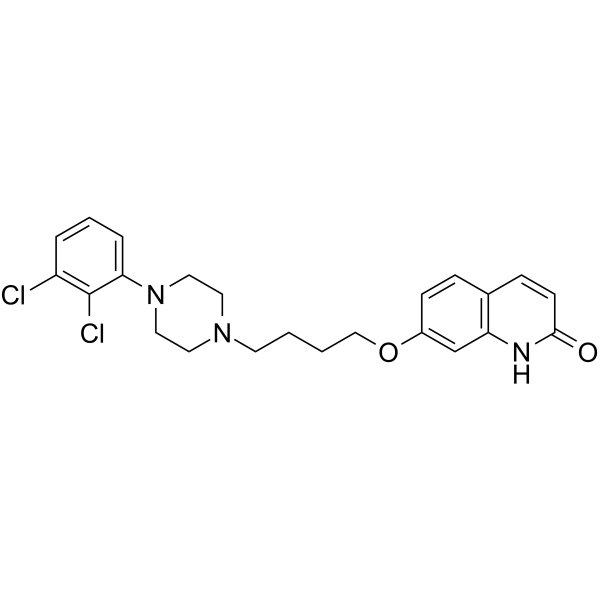
Dehydroaripiprazole (OPC-14857) is an active metabolite of Aripiprazole (HY-14546) and dopamine D2/D3 receptor partial agonist. Dehydroaripiprazole also has certain affinity for serotonin 5-HT1A, 5-HT2A and 5-HT2B receptors. Dehydroaripiprazole has antipsychotic activity equivalent to Aripiprazole .
|
-
- HY-16729A
-
|
YKP10811 hydrochloride
|
5-HT Receptor
|
Inflammation/Immunology
|
|
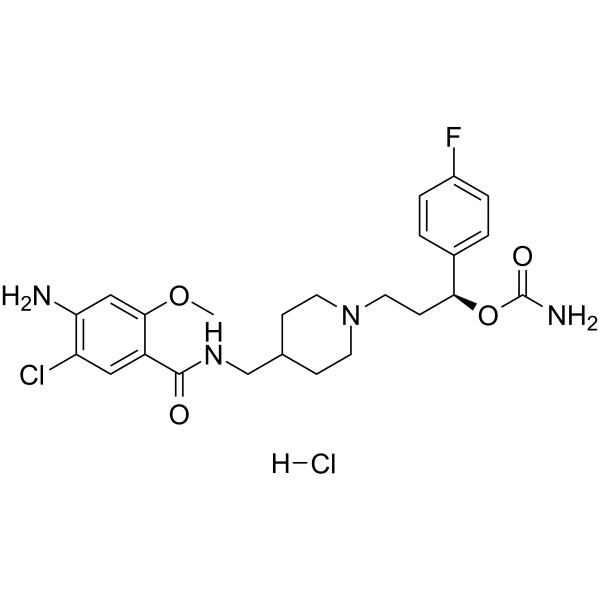
Relenopride (YKP10811) hydrochloride is a specific and selective 5-HT4 receptor agonist (Ki=4.96 nM). Relenopride hydrochloride has 120-fold and 6-fold lower affinity, respectively, for 5-HT2A (Ki=600 nM) and 5-HT2B receptors (Ki=31 nM) than for 5-HT4. Relenopride hydrochloride increases gastrointestinal (GI) motility .
|
-
- HY-32329S
-
|
|
Isotope-Labeled Compounds
5-HT Receptor
Adrenergic Receptor
|
Neurological Disease
|
|
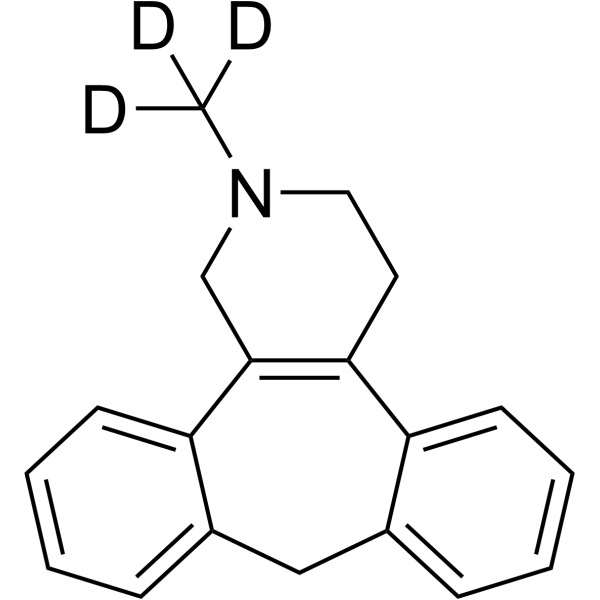
Setiptiline-d3 is the deuterium labeled Setiptiline. Setiptiline (Org-8282) is a serotonin receptor antagonist. Setiptiline is a tetracyclic antidepressant (TeCA) which acts as a noradrenergic and specific serotonergic antidepressant (NaSSA). Setiptiline acts as a norepinephrine reuptake inhibitor, α2-adrenergic receptor antagonist, and serotonin receptor antagonist, likely at the 5-HT2A, 5-HT2C, and/or 5-HT3 subtypes, as well as an H1 receptor inverse agonist/antihistamine .
|
-
- HY-32329R
-
|
Org-8282 (Standard)
|
5-HT Receptor
Adrenergic Receptor
Reference Standards
|
Neurological Disease
|
|
Setiptiline (Standard) is the analytical standard of Setiptiline. This product is intended for research and analytical applications. Setiptiline (Org-8282) is a serotonin receptor antagonist. Setiptiline is a tetracyclic antidepressant (TeCA) which acts as a noradrenergic and specific serotonergic antidepressant (NaSSA). Setiptiline acts as a norepinephrine reuptake inhibitor, α2-adrenergic receptor antagonist, and serotonin receptor antagonist, likely at the 5-HT2A, 5-HT2C, and/or 5-HT3 subtypes, as well as an H1 receptor inverse agonist/antihistamine.
|
-

- HY-106465
-
-

- HY-14557R
-
|
ACP-103 (Standard)
|
Reference Standards
5-HT Receptor
|
Neurological Disease
|
|
Pimavanserin (Standard) is the analytical standard of Pimavanserin. This product is intended for research and analytical applications. Pimavanserin is a selective and brain-penetrant inverse agonist of the 5-HT2A receptor with pIC50 and pKd of 8.73 and 9.3, respectively.
|
-

- HY-172995
-
|
|
5-HT Receptor
|
Neurological Disease
|
|
RS130-180 is a selective β-arrestin-biased agonist targeting the serotonin 2A receptor (5-HT2aR). RS130-180 is promising for research of neuropsychiatric disorders such as depression .
|
-

- HY-B0031S3
-
|
|
Isotope-Labeled Compounds
5-HT Receptor
Dopamine Receptor
|
Neurological Disease
|
|
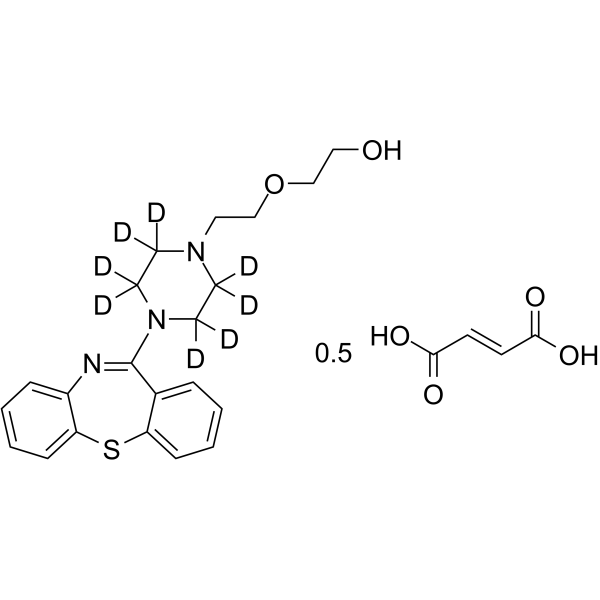
Quetiapine-d8 (hemifumarate) is the deuterium labeled Quetiapine hemifumarate. Quetiapine hemifumarate is a 5-HT receptors agonist with a pEC50 of 4.77 for human 5-HT1A receptor. Quetiapine hemifumarate is a dopamine receptor antagonist with a pIC50 of 6.33 for human D2 receptor. Quetiapine hemifumarate has moderate to high affinity for the human D2, HT1A, 5-HT2A, 5-HT2C receptor with pKis of 7.25, 5.74, 7.54, 5.55. Antidepressant and anxiolytic effects .
|
-
- HY-14544R
-
|
ICI204636 (Standard)
|
Reference Standards
5-HT Receptor
Dopamine Receptor
|
Neurological Disease
|
|
Quetiapine (Standard) is the analytical standard of Quetiapine. This product is intended for research and analytical applications. Quetiapine (ICI204636) is a 5-HT receptors agonist with a pEC50 of 4.77 for human 5-HT1A receptor. Quetiapine is a dopamine receptor antagonist with a pIC50 of 6.33 for human D2 receptor. Quetiapine has moderate to high affinity for the human D2, HT1A, 5-HT2A, 5-HT2C receptor with pKis of 7.25, 5.74, 7.54, 5.55. Antidepressant and anxiolytic effects .
|
-

- HY-17038A
-
|
S-20098 hydrochloride
|
Melatonin Receptor
5-HT Receptor
Endogenous Metabolite
|
Neurological Disease
|
|
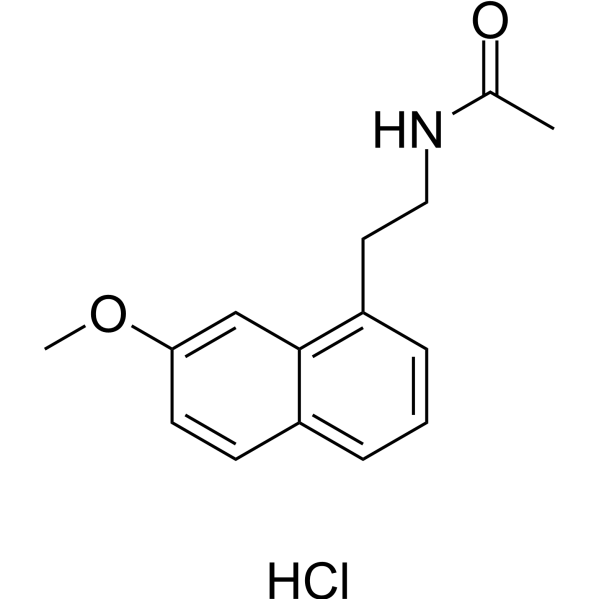
Agomelatine hydrochloride (S-20098 hydrochloride) is a specific agonist of MT1 and MT2 receptors with Kis of 0.1, 0.06, 0.12, and 0.27 nM for CHO-hMT1, HEK-hMT1, CHO-hMT2, and HEK-hMT2, respectively . Agomelatine hydrochloride is a selective 5-HT2C receptor antagonist with pKis of 6.4 and 6.2 at native (porcine) and cloned, human 5-HT2C receptors, respectively .
|
-
- HY-17038
-
Agomelatine
Maximum Cited Publications
9 Publications Verification
S-20098
|
Melatonin Receptor
5-HT Receptor
Endogenous Metabolite
|
Neurological Disease
|
|
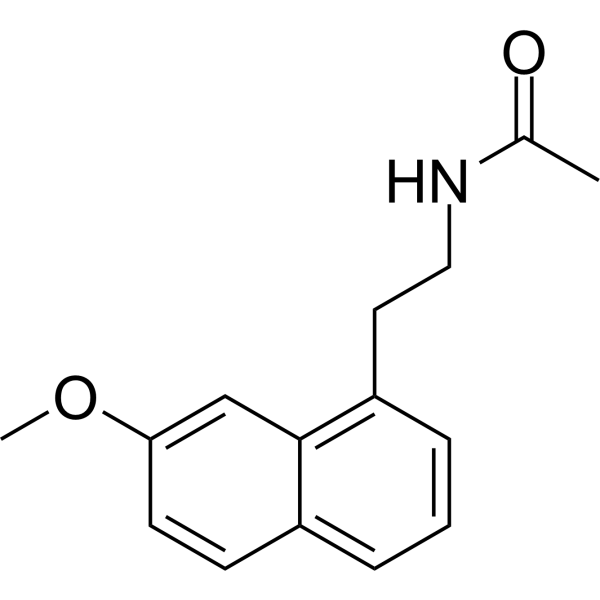
Agomelatine (S-20098) is a specific agonist of MT1 and MT2 receptors with Kis of 0.1, 0.06, 0.12, and 0.27 nM for CHO-hMT1, HEK-hMT1, CHO-hMT2, and HEK-hMT2, respectively . Agomelatine is a selective 5-HT2C receptor antagonist with pKis of 6.4 and 6.2 at native (porcine) and cloned, human 5-HT2C receptors, respectively .
|
-
- HY-G0002
-
|
|
Drug Metabolite
Dopamine Receptor
5-HT Receptor
|
Neurological Disease
|
|
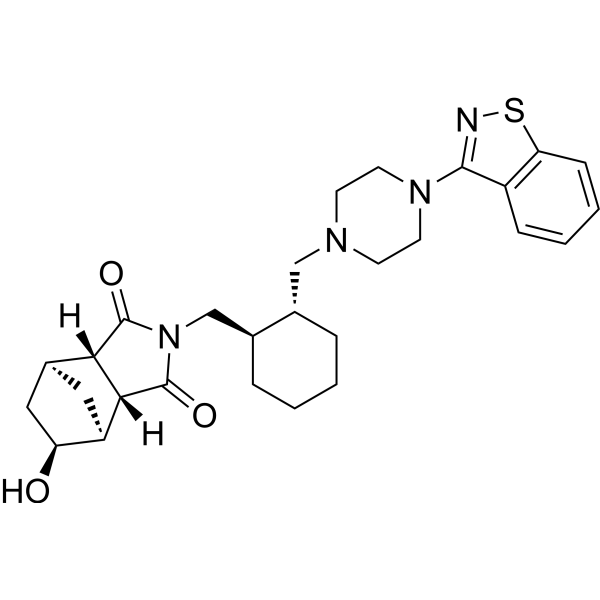
Lurasidone metabolite 14326 is a minor active metabolite of Lurasidone (HY-B0032A) generated via metabolism by CYP3A4. Lurasidone metabolite 14326 shares similar receptor-binding properties with Lurasidone, acting as an antagonist of the dopamine D2 receptor (dopamine D2 receptor), an antagonist of the serotonin 5-HT2A and 5-HT7 receptors (5-HT2A and 5-HT7 receptor), and a partial agonist of the serotonin 5-HT1A receptor. Lurasidone metabolite 14326 can be used in the research of schizophrenia and bipolar depression .
|
-
- HY-17637
-
|
ITI-007
|
Dopamine Receptor
5-HT Receptor
|
Neurological Disease
Cancer
|
|
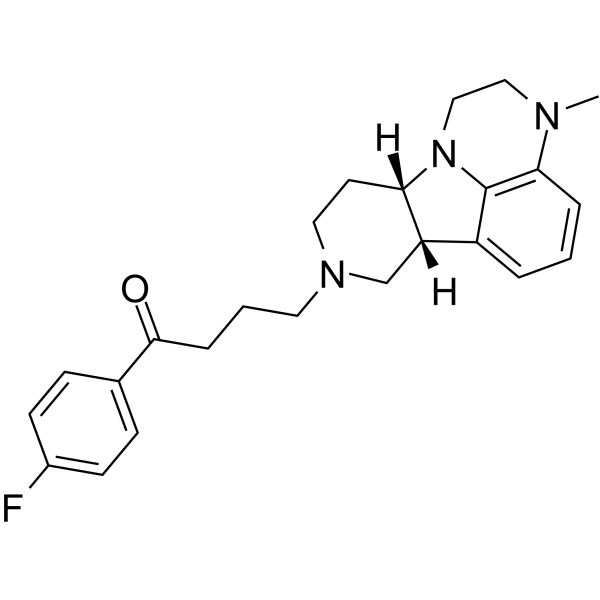
Lumateperone (ITI-007) is an orally active 5-HT2A receptor antagonist (Ki = 0.54 nM), a partial agonist of presynaptic D2 receptors and an antagonist of postsynaptic D2 receptors (Ki = 32 nM), and a dopamine D1 receptor modulator. Lumateperone has anticancer activity and can also be used for the study of schizophrenia and bipolar depression .
|
-
- HY-164703
-
|
|
Drug Metabolite
Dopamine Receptor
5-HT Receptor
|
Neurological Disease
|
|
Lumateperone metabolite 1 (Formula T) is a metabolite of Lumateperone (HY-17637) . Lumateperone (ITI-007) is an orally active 5-HT2A receptor antagonist (Ki = 0.54 nM), a partial agonist of presynaptic D2 receptors and an antagonist of postsynaptic D2 receptors (Ki = 32 nM), and a dopamine D1 receptor modulator
|
-

- HY-N0049R
-
|
|
Reference Standards
5-HT Receptor
Dopamine Receptor
|
Neurological Disease
|
|
Nuciferine (Standard) is the analytical standard of Nuciferine. This product is intended for research and analytical applications. Nuciferine is an antagonist at 5-HT2A (IC50=478 nM), 5-HT2C (IC50=131 nM), and 5-HT2B (IC50=1 μM), an inverse agonist at 5-HT7 (IC50=150 nM), a partial agonist at D2 (EC50=64 nM), D5 (EC50=2.6 μM) and 5-HT6 (EC50=700 nM), an agonist at 5-HT1A (EC50=3.2 μM) and D4 (EC50=2 μM) receptor.
|
-
- HY-W708033
-
|
|
5-HT Receptor
|
Neurological Disease
|
|
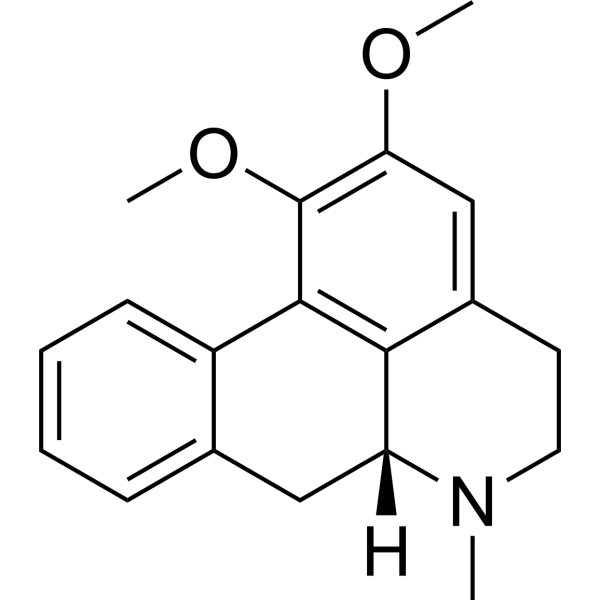
25E-NBOMe hydrochloride is a derivative of 2C-E having an N-(2-methoxybenzyl) addition at the amine. 25E-NBOMe hydrochloride is a selective /b>5-HT2A receptor agonist.
|
-

- HY-W680886
-
|
|
Monoamine Transporter
Serotonin Transporter
Dopamine Transporter
5-HT Receptor
|
Neurological Disease
|
|
6-APDB is a class of monoamine neurotransmitter releaser and Monoamine Transporter modulator that exerts selective effects on human monoamine transporters and acts as a partial agonist at 5-HT2 family receptors. For NET, 6-APDB has an IC50 of 0.56 μM and a Ki of 18 μM; for SERT, it has an IC50 of 2.3 μM and a Ki of 23 μM; for DAT, it has an IC50 of 33 μM and a Ki of >30 μM, and affinity for rat and mouse TAAR1, with Ki values of 1.0 μM and 0.21 μM, respectively. 6-APDB inhibits norepinephrine and 5-HT reuptake, mediates the release of three types of monoamine neurotransmitters, shows a dose-dependent biphasic locomotor effect in mice, and fully substitutes the discriminative stimulus effect of MDMA. 6-APDB shows no significant cytotoxicity at high concentrations, and possesses empathogenic psychoactivity, potential hallucinogenic effects, and behavioral effects associated with intermittent abuse .
|
-

- HY-100658S
-
|
|
Isotope-Labeled Compounds
5-HT Receptor
Dopamine Receptor
|
Neurological Disease
|
|
Didesmethyl cariprazine-d8 is the deuterium labeled Didesmethyl cariprazine (HY-100658). Didesmethyl cariprazine is an orally active, BBB-permeable metabolite of Cariprazine (HY-14763). Didesmethyl cariprazine is a partial agonist at the D2 and D3 receptors, full agonist at the 5-HT1A receptor, and antagonist at the human 5-HT2B receptor (Ki: 1.41 nM (human D2L), 0.056 nM (human D3), 1.7 nM (human 5-HT1A), 0.52 nM (human 5-HT2B)). Didesmethyl cariprazine dose-dependently inhibits the spontaneous activity of rat midbrain dopaminergic neurons.
|
-

- HY-32329AR
-
|
MO-8282 (Standard)
|
5-HT Receptor
Reference Standards
|
Neurological Disease
|
|
Setiptiline (maleate) (Standard) is the analytical standard of Setiptiline (maleate). This product is intended for research and analytical applications. Setiptiline maleate (MO-8282 maleate) is a serotonin receptor antagonist. Setiptiline maleate is a tetracyclic antidepressant (TeCA) which acts as a noradrenergic and specific serotonergic antidepressant (NaSSA). Setiptiline maleate acts as a norepinephrine reuptake inhibitor, α2-adrenergic receptor antagonist, and serotonin receptor antagonist, likely at the 5-HT2A, 5-HT2C, and/or 5-HT3 subtypes, as well as an H1 receptor inverse agonist/antihistamine .
|
-

- HY-B0031R
-
|
|
Reference Standards
5-HT Receptor
Dopamine Receptor
|
Neurological Disease
|
|
Quetiapine (hemifumarate) (Standard) is the analytical standard of Quetiapine (hemifumarate). This product is intended for research and analytical applications. Quetiapine hemifumarate is a 5-HT receptors agonist with a pEC50 of 4.77 for human 5-HT1A receptor. Quetiapine hemifumarate is a dopamine receptor antagonist with a pIC50 of 6.33 for human D2 receptor. Quetiapine hemifumarate has moderate to high affinity for the human D2, HT1A, 5-HT2A, 5-HT2C receptor with pKis of 7.25, 5.74, 7.54, 5.55. Antidepressant and anxiolytic effects .
|
-
- HY-B0031S5
-
|
|
Dopamine Receptor
5-HT Receptor
Isotope-Labeled Compounds
|
Neurological Disease
|
|
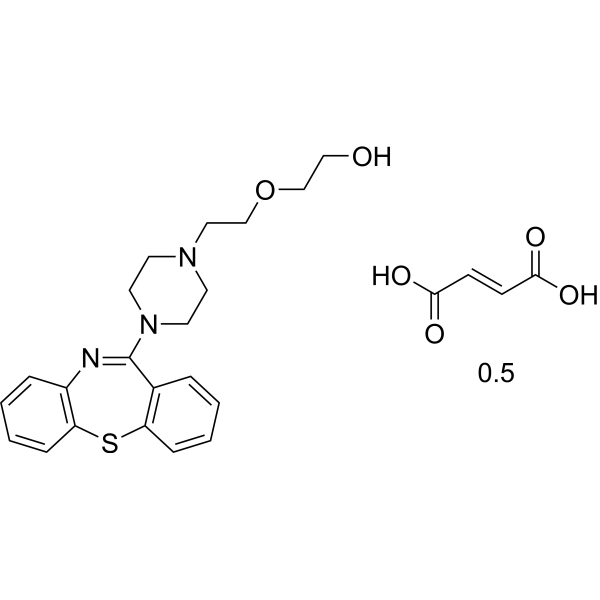
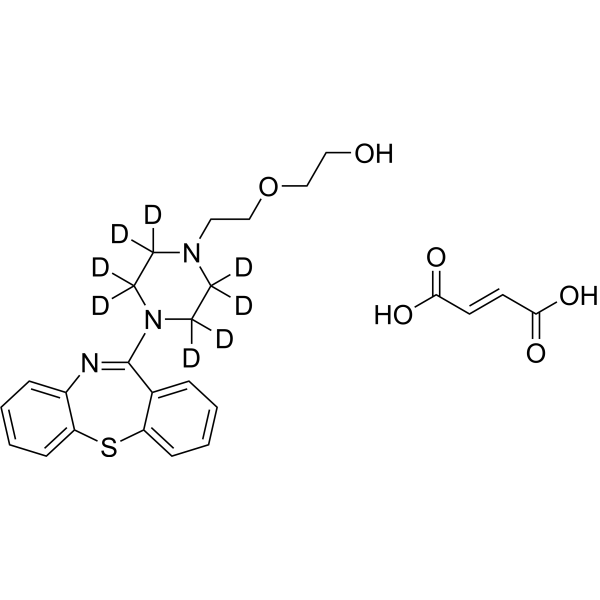
Quetiapine-d4-1 fumarate is deuterated labeled Quetiapine (hemifumarate) (HY-B0031). Quetiapine hemifumarate is a 5-HT receptors agonist with a pEC50 of 4.77 for human 5-HT1A receptor. Quetiapine hemifumarate is a dopamine receptor antagonist with a pIC50 of 6.33 for human D2 receptor. Quetiapine hemifumarate has moderate to high affinity for the human D2, HT1A, 5-HT2A, 5-HT2C receptor with pKis of 7.25, 5.74, 7.54, 5.55. Antidepressant and anxiolytic effects .
|
-
- HY-B0031S4
-
|
|
Dopamine Receptor
5-HT Receptor
|
Neurological Disease
|
|
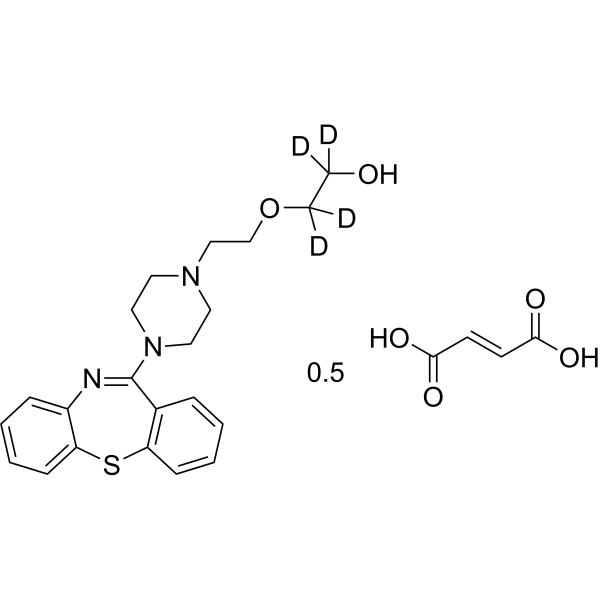
Quetiapine (hemifumarate)-d8 is the deuterium labeled Quetiapine hemifumarate . Quetiapine hemifumarate is a 5-HT receptors agonist with a pEC50 of 4.77 for human 5-HT1A receptor. Quetiapine hemifumarate is a dopamine receptor antagonist with a pIC50 of 6.33 for human D2 receptor. Quetiapine hemifumarate has moderate to high affinity for the human D2, HT1A, 5-HT2A, 5-HT2C receptor with pKis of 7.25, 5.74, 7.54, 5.55. Antidepressant and anxiolytic effects .
|
-
- HY-N8200
-
-
- HY-A0095S
-
|
BIMT-17-d4; BIMT-17BS-d4
|
5-HT Receptor
|
Neurological Disease
|
|
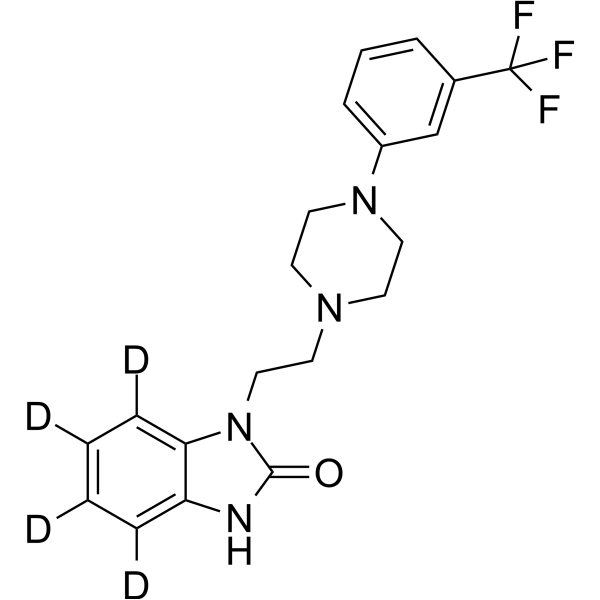
Flibanserin-d4 is a deuterium labeled Flibanserin (BIMT-17). Flibanserin is a full agonist of the serotonin 5-HT1A receptor (Ki=1 nM) and an antagonist of 5-HT2A (49 nM) .
|
-
- HY-106136
-
|
PD-6735; LY-156735
|
Melatonin Receptor
5-HT Receptor
|
Neurological Disease
|
|
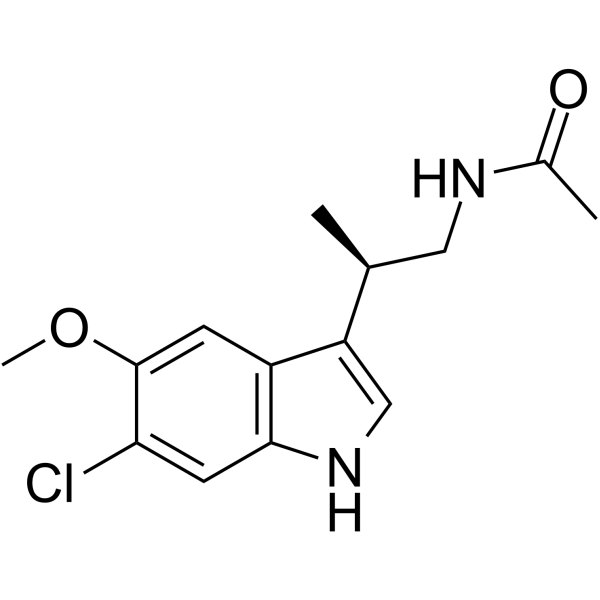
TIK-301 (PD-6735) is a chlorinated melatonin derivative and a potent, high-affinity and orally active melatonin MT1 and MT2 receptors agonist with Kis of 0.081 nM and 0.042 nM, respectively. TIK-301 is also a 5-HT2B/5-HT2C receptors antagonist with antidepressant action. TIK-301 has the potential for sleep disorders and other circadian rhythm disorders treatment .
|
-
- HY-120498
-
|
|
5-HT Receptor
|
Neurological Disease
|
|
RS-64459-193 is a 5-HT1A receptor partial agonist with a Ki of 24.9 nM. RS-64459-193 also shows high affinity for 5-HT2C, 5-HT2A and 5-HT7 with pKi values of 6.87, 7.02, and 7.18, respectively. RS-64459-193 is almost devoid of activity at the m 5-HT3 receptor .
|
-

- HY-17038S1
-
|
S-20098-d4
|
Isotope-Labeled Compounds
Melatonin Receptor
5-HT Receptor
Endogenous Metabolite
|
Neurological Disease
|
|
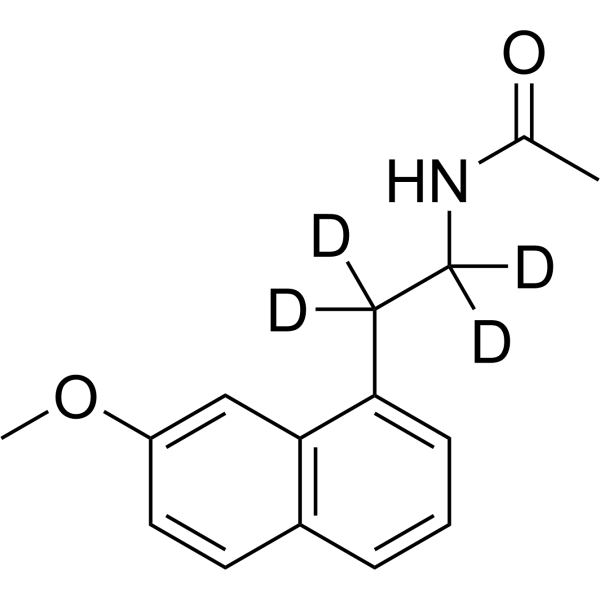
Agomelatine-d4 is the deuterium labeled Agomelatine. Agomelatine (S-20098) is a specific agonist of MT1 and MT2 receptors with Kis of 0.1, 0.06, 0.12, and 0.27 nM for CHO-hMT1, HEK-hMT1, CHO-hMT2, and HEK-hMT2, respectively . Agomelatine is a selective 5-HT2C receptor antagonist with pKis of 6.4 and 6.2 at native (porcine) and cloned, human 5-HT2C receptors, respectively .
|
-
- HY-17038B
-
|
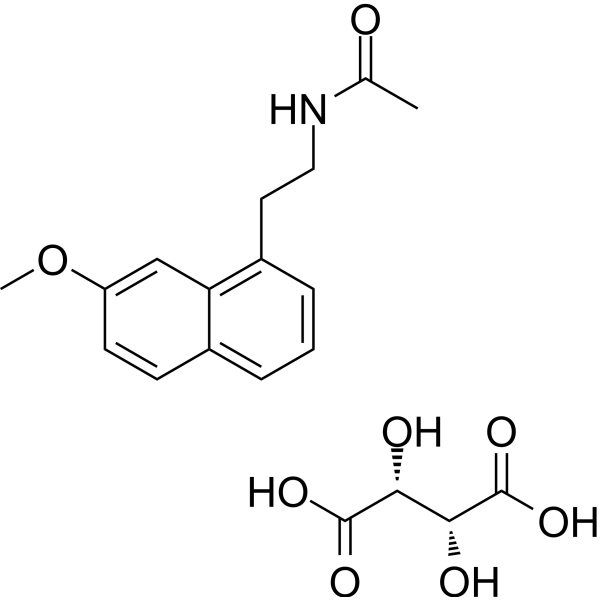
S-20098 L(+)-Tartaric acid
|
Melatonin Receptor
5-HT Receptor
Endogenous Metabolite
|
Neurological Disease
|
|
Agomelatine L(+)-Tartaric acid (S-20098 L(+)-Tartaric acid) is a specific agonist of MT1 and MT2 receptors with Kis of 0.1, 0.06, 0.12, and 0.27 nM for CHO-hMT1, HEK-hMT1, CHO-hMT2, and HEK-hMT2, respectively . Agomelatine L(+)-Tartaric acid is a selective 5-HT2C receptor antagonist with pKis of 6.4 and 6.2 at native (porcine) and cloned, human 5-HT2C receptors, respectively .
|
-
- HY-17038S2
-
|
S-20098-d3
|
Melatonin Receptor
5-HT Receptor
Endogenous Metabolite
|
Neurological Disease
|
|
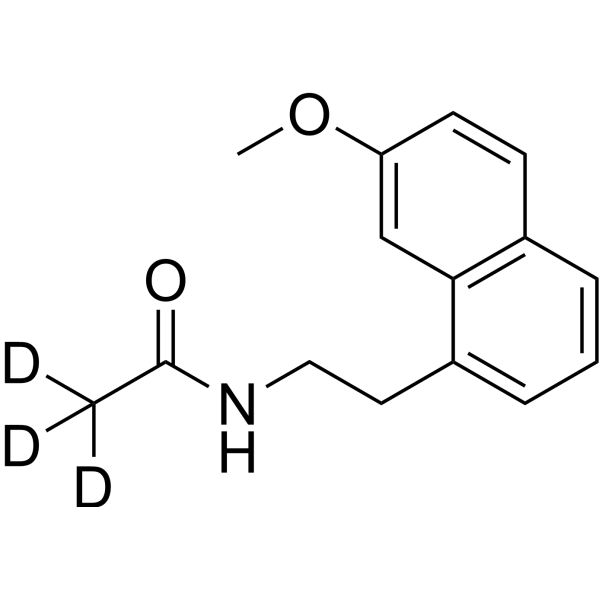
Agomelatine-d3 is the deuterium labeled Agomelatine. Agomelatine (S-20098) is a specific agonist of MT1 and MT2 receptors with Kis of 0.1, 0.06, 0.12, and 0.27 nM for CHO-hMT1, HEK-hMT1, CHO-hMT2, and HEK-hMT2, respectively . Agomelatine is a selective 5-HT2C receptor antagonist with pKis of 6.4 and 6.2 at native (porcine) and cloned, human 5-HT2C receptors, respectively .
|
-
- HY-B0731
-
|
SM-9018
|
5-HT Receptor
Dopamine Receptor
|
Neurological Disease
|
|
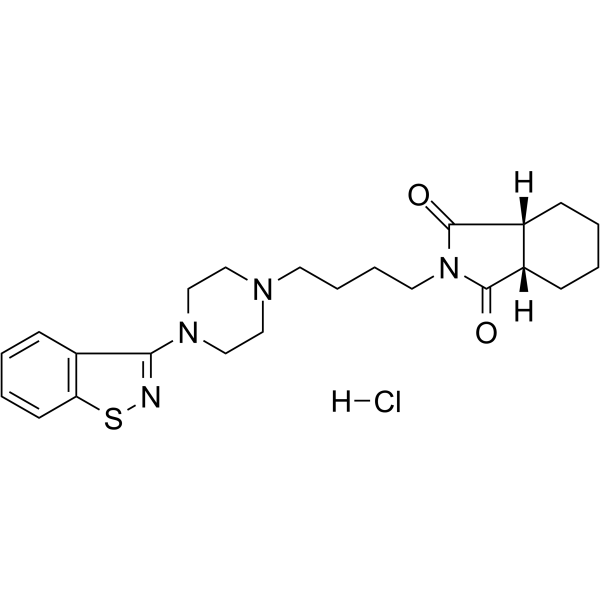
Perospirone hydrochloride (SM-9018) is an orally active antagonist of 5-HT2A receptor (Ki of 0.6 nM) and dopamine D2 receptor (Ki of 1.4 nM). Perospirone hydrochloride is also a partial agonist of 5-HT1A receptor (Ki of 2.9 nM). Perospirone hydrochloride is an atypical antipsychotic agent and has the potential for schizophrenic disease research .
|
-
- HY-14153AS
-
|
SDZ-HTF-919-13C,d3; HTF-919-13C,d3
|
Isotope-Labeled Compounds
5-HT Receptor
|
Neurological Disease
Metabolic Disease
|
|
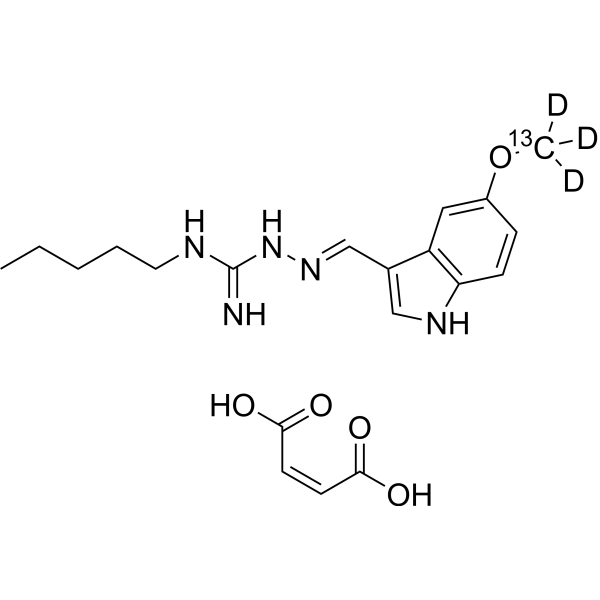
Tegaserod- 13C,d3 (maleate) is the 13C- and deuterium labeled Tegaserod (maleate). Tegaserod maleate is a selective 5-HT4 receptor partial agonist and a 5-HT2B receptor antagonist. Tegaserod maleate exhibits a promotile effect throughout the gastrointestinal (GI) tract .
|
-
- HY-169791
-
|
|
5-HT Receptor
|
Neurological Disease
|
|
ECPLA, a lysergamide lysergic acid diethylamidean (LSD) analog, is a potent 5-HT2A agonist (EC50 of 14.6 nM) for Gq-mediated calcium flux. ECPLA has high affinity for most serotonin receptors, α2-adrenoceptors, and D2-like dopamine receptors .
|
-

- HY-15296S1
-
-
- HY-14544AS
-
|
ICI204636-d4 hydrochloride
|
Isotope-Labeled Compounds
Dopamine Receptor
5-HT Receptor
|
Neurological Disease
|
|
Quetiapine-d4 (hydrochloride) (ICI204636-d4 (hydrochloride)) is deuterium labeled Quetiapine. Quetiapine (ICI204636) is a 5-HT receptors agonist with a pEC50 of 4.77 for human 5-HT1A receptor. Quetiapine is a dopamine receptor antagonist with a pIC50 of 6.33 for human D2 receptor. Quetiapine has moderate to high affinity for the human D2, HT1A, 5-HT2A, 5-HT2C receptor with pKis of 7.25, 5.74, 7.54, 5.55. Antidepressant and anxiolytic effects .
|
-

- HY-100665R
-
|
OPC-14857 (Standard); DM-14857 (Standard)
|
Reference Standards
5-HT Receptor
|
Neurological Disease
|
|
Dehydroaripiprazole (Standard) is the analytical standard of Dehydroaripiprazole. This product is intended for research and analytical applications. Dehydroaripiprazole (OPC-14857) is an active metabolite of Aripiprazole (HY-14546) and dopamine D2/D3 receptor partial agonist. Dehydroaripiprazole also has certain affinity for serotonin 5-HT1A, 5-HT2A and 5-HT2B receptors. Dehydroaripiprazole has antipsychotic activity equivalent to Aripiprazole .
|
-
- HY-17038R
-
|
S-20098 (Standard)
|
Reference Standards
Melatonin Receptor
5-HT Receptor
Endogenous Metabolite
|
Neurological Disease
|
|
Agomelatine (Standard) is the analytical standard of Agomelatine. This product is intended for research and analytical applications. Agomelatine (S-20098) is a specific agonist of MT1 and MT2 receptors with Kis of 0.1, 0.06, 0.12, and 0.27 nM for CHO-hMT1, HEK-hMT1, CHO-hMT2, and HEK-hMT2, respectively . Agomelatine is a selective 5-HT2C receptor antagonist with pKis of 6.4 and 6.2 at native (porcine) and cloned, human 5-HT2C receptors, respectively .
|
-

- HY-17038AR
-
|
S-20098 hydrochloride (Standard)
|
Melatonin Receptor
5-HT Receptor
Endogenous Metabolite
Reference Standards
|
Neurological Disease
|
|
Agomelatine (hydrochloride) (Standard) is the analytical standard of Agomelatine (hydrochloride). This product is intended for research and analytical applications. Agomelatine hydrochloride (S-20098 hydrochloride) is a specific agonist of MT1 and MT2 receptors with Kis of 0.1, 0.06, 0.12, and 0.27 nM for CHO-hMT1, HEK-hMT1, CHO-hMT2, and HEK-hMT2, respectively . Agomelatine hydrochloride is a selective 5-HT2C receptor antagonist with pKis of 6.4 and 6.2 at native (porcine) and cloned, human 5-HT2C receptors, respectively .
|
-

- HY-182091
-
|
|
5-HT Receptor
Dopamine Receptor
Dopamine Transporter
Adrenergic Receptor
Calcium Channel
|
Neurological Disease
|
|
CYD-1-79 is a selective positive allosteric modulator of 5-HT2C receptor. CYD-1-79 potentiates 5-HT-evoked intracellular calcium release via a topographically distinct allosteric site. CYD-1-79 shows significant inhibition of binding at dopamine D3 receptor, DAT, and α2A/α2B adrenergic receptors. CYD-1-79 modulates 5-HT2C receptor-mediated spontaneous ambulation in rodents and synergizes with a low dose of a 5-HT2C receptor agonist. CYD-1-79 attenuates relapse vulnerability of psychoactive substance in a rodent self-administration model. CYD-1-79 can be used for the research of neurological disease .
|
-

- HY-15296R
-
|
FCE-21336 (Standard)
|
Reference Standards
Dopamine Receptor
Autophagy
|
Endocrinology
Cancer
|
|
Cabergoline (Standard) is the analytical standard of Cabergoline. This product is intended for research and analytical applications. Cabergoline is an ergot derived-dopamine D2-like receptor agonist that has high affinity for D2, D3, and 5-HT2B receptors (Ki=0.7, 1.5, and 1.2, respectively).
|
-

- HY-16687AR
-
|
DU 28853 hydrochloride (Standard)
|
5-HT Receptor
Reference Standards
|
Neurological Disease
|
|
Eltoprazine (hydrochloride) (Standard) is the analytical standard of Eltoprazine (hydrochloride). This product is intended for research and analytical applications. Eltoprazine (DU 28853) hydrochloride is a 5-HT1A/5-HT1B receptors agonist and a 5-HT2C receptor antagonist. Eltoprazine hydrochloride shows antiaggressive and anxiogenic effects .
|
-

- HY-15296S
-
-
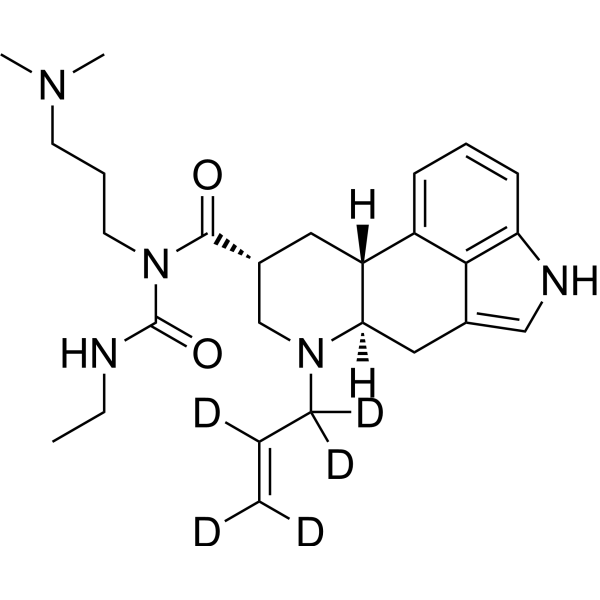
- HY-100658R
-
|
|
5-HT Receptor
Reference Standards
Dopamine Receptor
|
Neurological Disease
|
|
Didesmethyl cariprazine (Standard) is the analytical standard of Didesmethyl cariprazine (HY-100658). This product is intended for research and analytical applications. Didesmethyl cariprazine is an orally active, BBB-permeable metabolite of Cariprazine (HY-14763). Didesmethyl cariprazine is a partial agonist at the D2 and D3 receptors, full agonist at the 5-HT1A receptor, and antagonist at the human 5-HT2B receptor (Ki: 1.41 nM (human D2L), 0.056 nM (human D3), 1.7 nM (human 5-HT1A), 0.52 nM (human 5-HT2B)). Didesmethyl cariprazine dose-dependently inhibits the spontaneous activity of rat midbrain dopaminergic neurons .
|
-

- HY-A0095B
-
|
BIMT-17 hydrochloride; BIMT-17BS hydrochloride
|
5-HT Receptor
Dopamine Receptor
|
Neurological Disease
|
|
Flibanserin hydrochloride (BIMT-17 hydrochloride) is an orally active 5-HT1A receptor agonist and 5-HT2A receptor antagonist with binding affinities Ki of 1 nM and 49 nM, respectively. Flibanserin hydrochloride also binds to dopamine D4 receptors with a Ki of 4-24 nM. Flibanserin hydrochloride has antidepressant and anxiolytic effects and can be used in the study of hypoactive sexual desire disorder (HSDD) .
|
-

- HY-103110
-
ST1936
1 Publications Verification
|
5-HT Receptor
Adrenergic Receptor
|
Neurological Disease
|
|
ST1936 is a selective, nanomolar affinity 5-HT6 receptor agonist with Ki values of 13 nM, 168 nM and 245 nM for human 5-HT6, 5-HT7 and 5-HT2B receptors, respectively. ST1936 also shows moderate affinity (Ki of 300 nM) for human and rat α2 adrenergic receptor .
|
-
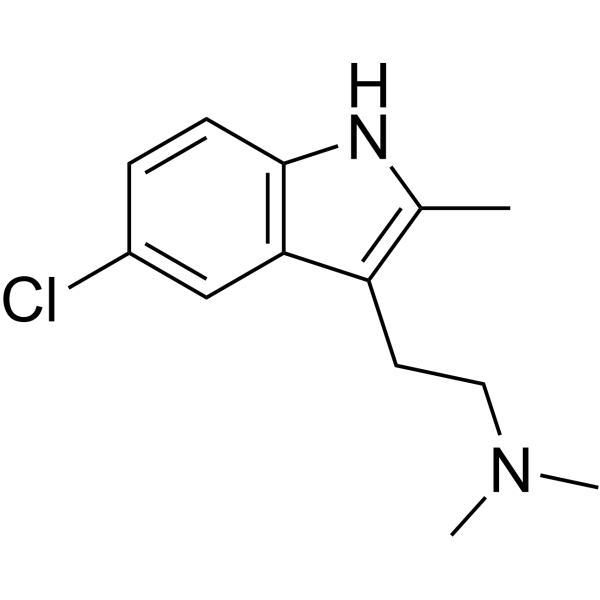
- HY-10457AR
-
|
TD-5108 hydrochloride (Standard)
|
Reference Standards
5-HT Receptor
|
Neurological Disease
Metabolic Disease
|
|
Velusetrag hydrochloride (Standard) is the analytical standard of Velusetrag hydrochloride (HY-10457A). This product is intended for research and analytical applications. Velusetrag (TD-5108) hydrochloride is an orally active, potent and selective agonist of serotonin 5-HT4 receptor (5-HT4R), with a pKi of 7.7. Velusetrag hydrochloride exhibits no affinity (Ki>10 μM) for 5-HT2A and 5-HT2B receptors. Velusetrag hydrochloride can be used for the research of gastrointestinal diseases and Parkinson's disease .
|
-

- HY-10457R
-
|
TD-5108 (Standard)
|
Reference Standards
5-HT Receptor
|
Neurological Disease
Metabolic Disease
|
|
Velusetrag (Standard) is the analytical standard of Velusetrag (HY-10457). This product is intended for research and analytical applications. Velusetrag (TD-5108) is an orally active, potent and selective agonist of serotonin 5-HT4 receptor (5-HT4R), with a pKi of 7.7. Velusetrag exhibits no affinity (Ki>10 μM) for 5-HT2A and 5-HT2B receptors. Velusetrag can be used for the research of gastrointestinal diseases and Parkinson's disease .
|
-

- HY-118010A
-
|
d-Norfenfluramine hydrochloride
|
5-HT Receptor
|
Cardiovascular Disease
|
|
(+)-Norfenfluramine hydrochloride, a major hepatic metabolite of (+)-fenfluramine, is a selective 5-HT2B receptor agonist (Ki: 11.2 nM). (+)-Norfenfluramine hydrochloride potently stimulates the hydrolysis of inositol phosphates and increases intracellular Ca 2+. (+)-Norfenfluramine hydrochloride can be used for the research of primary pulmonary hypertension and valvular heart disease .
|
-

- HY-W131725
-
|
d-Norfenfluramine
|
5-HT Receptor
|
Cardiovascular Disease
|
|
(+)-Norfenfluramine a major hepatic metabolite of (+)-fenfluramine, is a selective 5-HT2B receptor agonist (Ki: 11.2 nM). (+)-Norfenfluramine potently stimulates the hydrolysis of inositol phosphates and increases intracellular Ca 2+. (+)-Norfenfluramine can be used for the research of primary pulmonary hypertension and valvular heart disease .
|
-

- HY-103105A
-
|
|
5-HT Receptor
|
Neurological Disease
|
|
LP 12 hydrochloride hydrate is a potent and selective 5-HT7 receptor agonist with a Ki of 0.13 nM. LP 12 hydrochloride hydrate displays selectivity for 5-HT7 over D2, 5-HT1A and 5-HT2A receptors (Ki values are 224 nM, 60.9 nM and >1000 nM, respectively) .
|
-
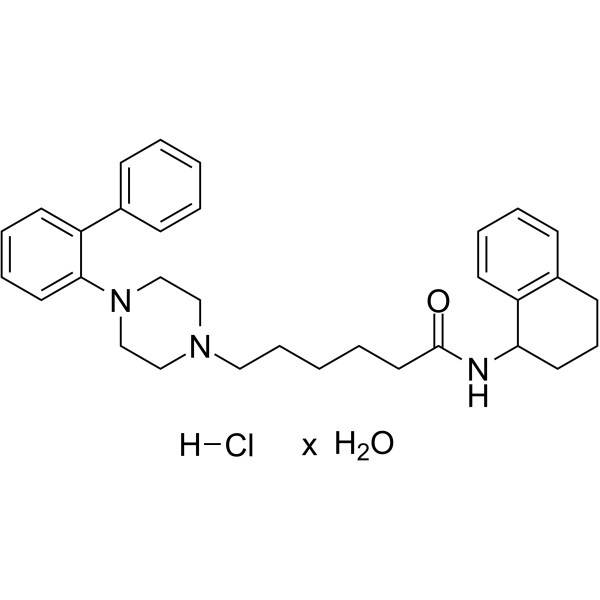
- HY-112538
-
|
1-NP hydrochloride; 1-NapHThylpiperazine hydrochloride
|
5-HT Receptor
Apoptosis
|
Inflammation/Immunology
Cancer
|
|
1-1-Naphthylpiperazine hydrochloride (1-NP hydrochloride; 1-Naphthylpiperazine hydrochloride) is a serotonergic derivative of quipazine, which is both an agonist for 5-HT1A receptor and an antagonist for 5-HT2A receptor. 1-1-Naphthylpiperazine hydrochloride induces cell apoptosis. 1-1-Naphthylpiperazine hydrochloride prevents the immunosuppression and photocarcinogenesis .
|
-
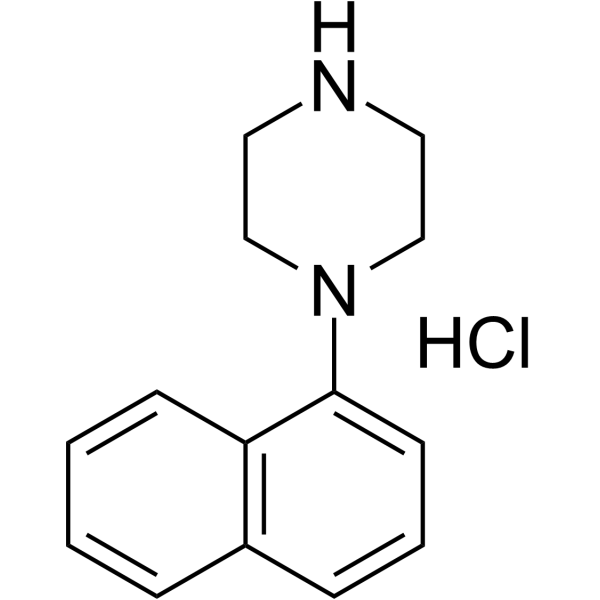
- HY-B0731A
-
|
SM-9018 free base
|
5-HT Receptor
Dopamine Receptor
|
Neurological Disease
|
|
Perospirone (SM-9018 free base) is an orally active antagonist of 5-HT2A receptor (Ki=0.6 nM) and dopamine D2 receptor (Ki=1.4 nM), and also a partial agonist of 5-HT1A receptor (Ki=2.9 nM). Perospirone is an atypical antipsychotic agent and has the potential for schizophrenic disease research .
|
-
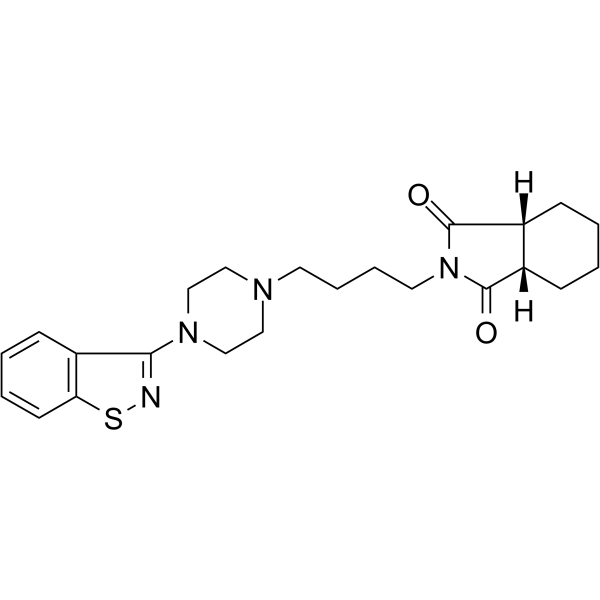
- HY-103110A
-
|
|
5-HT Receptor
Adrenergic Receptor
|
Neurological Disease
|
|
ST1936 oxalate is a selective, nanomolar affinity 5-HT6 receptor agonist with Ki values of 13 nM, 168 nM and 245 nM for human 5-HT6, 5-HT7 and 5-HT2B receptors, respectively. ST1936 oxalate also shows moderate affinity (Ki of 300 nM) for human and rat α2 adrenergic receptor .
|
-
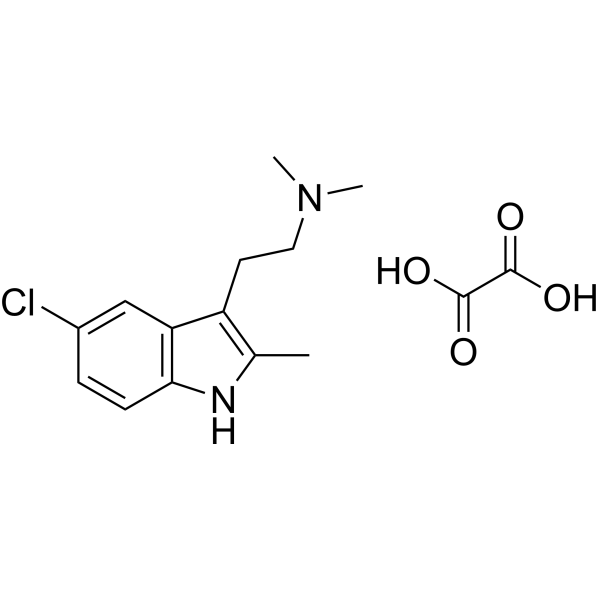
- HY-17637R
-
|
ITI-007 (Standard)
|
Dopamine Receptor
5-HT Receptor
Reference Standards
|
Neurological Disease
Cancer
|
|
Lumateperone (Standard) is the analytical standard of Lumateperone. This product is intended for research and analytical applications. Lumateperone (ITI-007) is an orally active 5-HT2A receptor antagonist (Ki = 0.54 nM), a partial agonist of presynaptic D2 receptors and an antagonist of postsynaptic D2 receptors (Ki = 32 nM), and a dopamine D1 receptor modulator. Lumateperone has anticancer activity and can also be used for the study of schizophrenia and bipolar depression .
|
-

- HY-101341
-
|
|
5-HT Receptor
|
Neurological Disease
|
|
RS 67333 hydrochloride is a potent and selective 5-HT4 receptor (5-HT4R) partial agonist with a pKi of 8.7 in guinea-pig striatum. RS 67333 hydrochloride exhibits lower affinities at several other receptors including 5-HT1A, 5-HT1D, 5-HT2A, 5-HT2C, dopamine D1, D2 and muscarinic M1-M3 receptors. RS 67333 hydrochloride has neuroprotective effects, and can be used for Alzheimer's disease research .
|
-
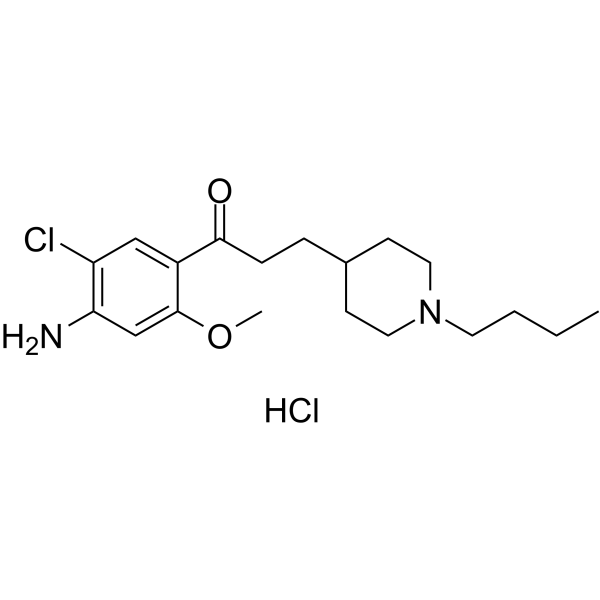
- HY-14557A
-
|
ACP-103 hemitartrate
|
5-HT Receptor
|
Neurological Disease
|
|
Pimavanserin (ACP-103) hemitartrate is a potent and brain-penetrant5-HT 2A receptor inverse agonist with pIC50 and pKi of 8.73 and 9.3, respectively.
|
-
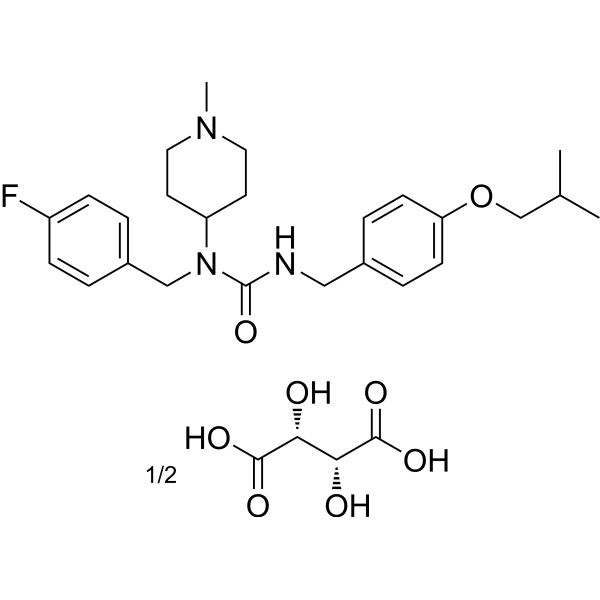
- HY-103105
-
|
|
5-HT Receptor
|
Neurological Disease
|
|
LP 12 hydrochloride (compound 21) is a potent and selective 5-HT7 receptor agonist with a Ki of 0.13 nM. LP 12 hydrochloride displays selectivity for 5-HT7 over D2, 5-HT1A and 5-HT2A receptors (Ki values are 224 nM, 60.9 nM and >1000 nM, respectively) .
|
-
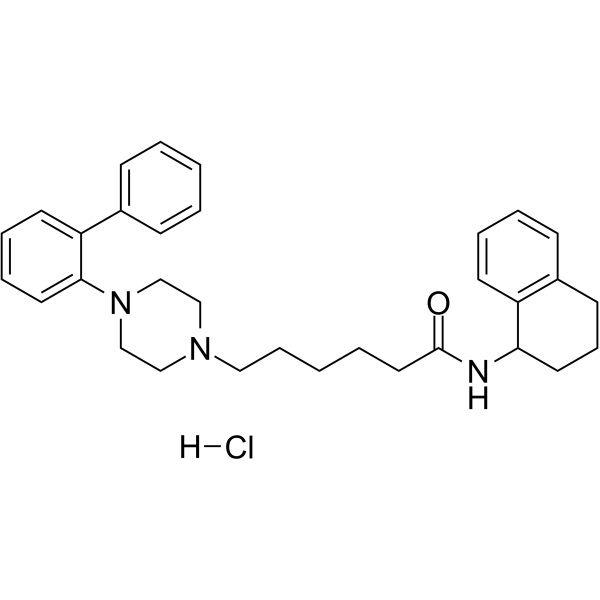
- HY-B0731R
-
|
SM-9018 (Standard)
|
Reference Standards
5-HT Receptor
Dopamine Receptor
|
Neurological Disease
|
|
Perospirone (hydrochloride) (Standard) is the analytical standard of Perospirone (hydrochloride). This product is intended for research and analytical applications. Perospirone hydrochloride (SM-9018) is an orally active antagonist of 5-HT2A receptor (Ki of 0.6 nM) and dopamine D2 receptor (Ki of 1.4 nM). Perospirone hydrochloride is also a partial agonist of 5-HT1A receptor (Ki of 2.9 nM). Perospirone hydrochloride is an atypical antipsychotic agent and has the potential for schizophrenic disease research .
|
-

- HY-A0095
-
|
BIMT-17; BIMT-17BS
|
5-HT Receptor
|
Neurological Disease
Cancer
|
|
Flibanserin (BIMT-17; BIMT-17BS) is an orally active serotonin 5-HT1A receptor agonist and 5-HT2A receptor antagonist with Ki values of 1 nM and 49 nM, respectively. Flibanserin binds to dopamine D4 receptors with an Ki value of 4-24 nM. Flibanserin shows anti-depression and anti-anxiety effect, can be used to hypoactive sexual desire disorder (HSDD) research - .
|
-
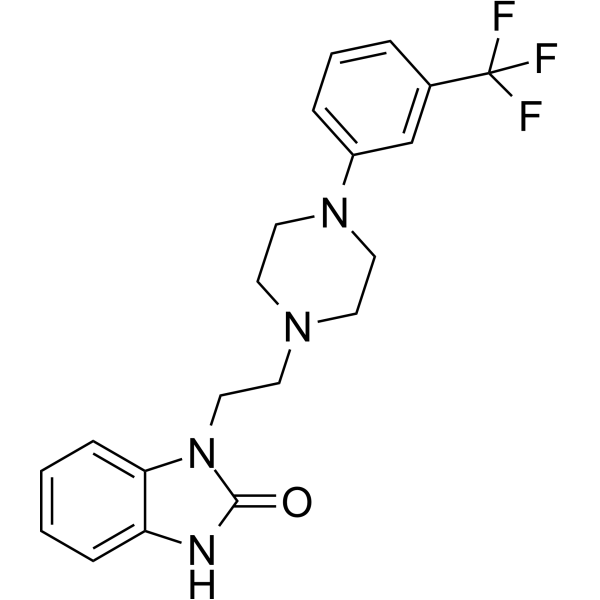
- HY-17637S2
-
|
ITI-007-d4
|
Isotope-Labeled Compounds
Dopamine Receptor
5-HT Receptor
|
Neurological Disease
Cancer
|
|
Lumateperone-d4 (ITI-007-d4) is deuterium labeled Lumateperone. Lumateperone (ITI-007) is an orally active 5-HT2A receptor antagonist (Ki = 0.54 nM), a partial agonist of presynaptic D2 receptors and an antagonist of postsynaptic D2 receptors (Ki = 32 nM), and a dopamine D1 receptor modulator. Lumateperone has anticancer activity and can also be used for the study of schizophrenia and bipolar depression .
|
-

- HY-109112
-
|
RP5063
|
Dopamine Receptor
5-HT Receptor
|
Neurological Disease
Inflammation/Immunology
|
|
Brilaroxazine (RP5603) is a potent and orally active multimodal dopamine (DA)/serotonin (5-HT) modulator. Brilaroxazine is a partial agonist of dopamine (DA) D2, D3, and D4 receptors, 5-HT1A (Ki=1.5 nM) and 5-HT2A (Ki=2.5 nM), and has antagonist activity at 5-HT2B (Ki=0.19 nM), and 5-HT7 (Ki=2.7 nM) receptors . Brilaroxazine is an atypical antipsychotic agent, and has the potential to improve cognitive impairments in neuropsychiatric and neurological diseases in vivo .
|
-
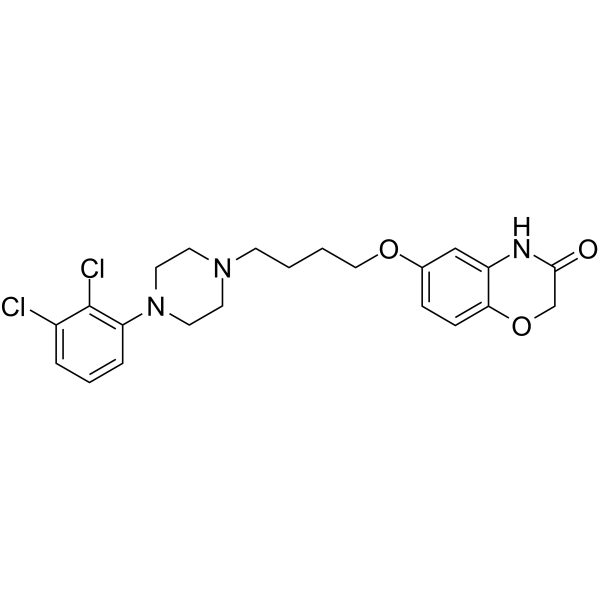
- HY-133152
-
|
DM-3411
|
5-HT Receptor
Dopamine Receptor
|
Neurological Disease
|
|
Brexpiprazole S-oxide (DM-3411) is a main metabolite of Brexpiprazole and is metabolized by cytochrome P450 3A4 (CYP3A4). Brexpiprazole is an atypical antipsychotic agent and a partial agonist of human 5-HT1A and dopamine receptor with Kis of 0.12 nM and 0.3 nM, respectively. Brexpiprazole is also a 5-HT2A receptor antagonist with a Ki of 0.47 nM .
|
-
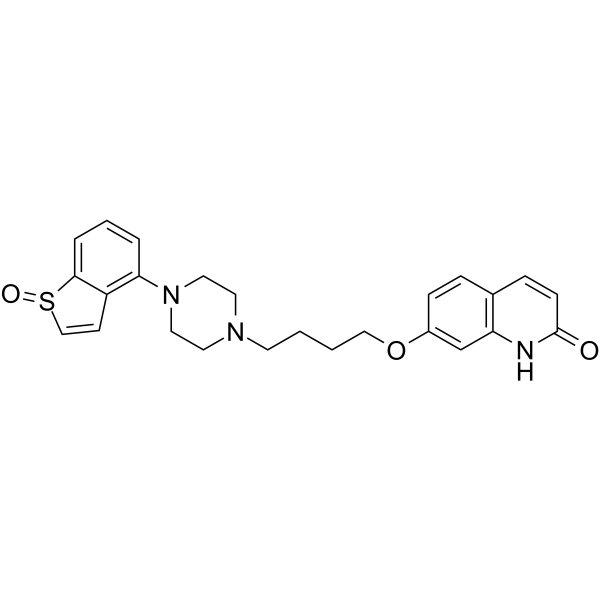
- HY-A0095S1
-
|
BIMT-17-d4-1; BIMT-17BS-d4-1
|
Isotope-Labeled Compounds
5-HT Receptor
|
Neurological Disease
|
|
Flibanserin-d4-1 is deuterium labeled Flibanserin. Flibanserin (BIMT-17) is a full agonist of the serotonin 5-HT1A receptor (Ki=1 nM) and an antagonist of 5-HT2A (49 nM). Flibanserin binds to dopamine D4 receptors (4-24 nM), and has negligible affinity for a variety of other neurotransmitter receptors and ion channels. Flibanserin is efficacious in treating hypoactive sexual desire disorder (HSDD) .
|
-
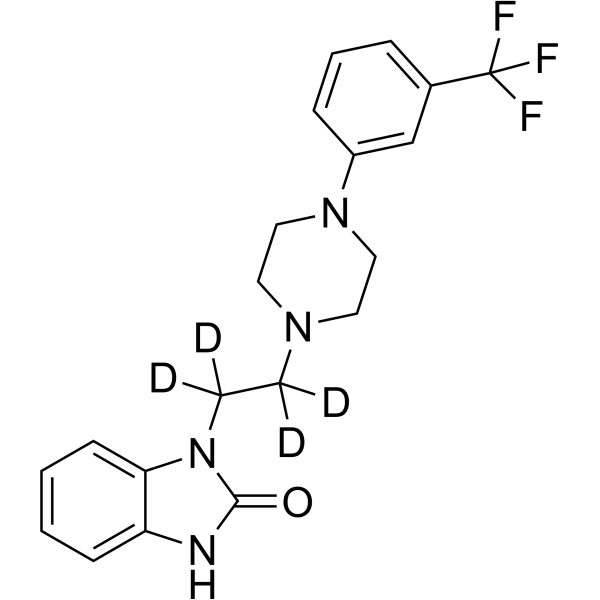
- HY-19733S
-
|
ITI-007-13C,d3 tosylate
|
Isotope-Labeled Compounds
Dopamine Receptor
5-HT Receptor
|
Neurological Disease
Cancer
|
|
Lumateperone- 13C,d3 (ITI-007- 13C,d3) tosylate is 13C and deuterium labeled Lumateperone (tosylate). Lumateperone (ITI-007) tosylate is a 5-HT2A receptor antagonist (Ki = 0.54 nM), a partial agonist of presynaptic D2 receptors and an antagonist of postsynaptic D2 receptors (Ki = 32 nM), and a dopamine D1 receptor modulator. Lumateperone tosylate has anticancer activity and can also be used in studies of psychiatric disorders such as schizophrenia .
|
-

- HY-101341R
-
|
|
5-HT Receptor
Reference Standards
|
Neurological Disease
|
|
RS 67333 (hydrochloride) (Standard) is the analytical standard of RS 67333 (hydrochloride) (HY-101341). This product is intended for research and analytical applications. RS 67333 hydrochloride is a potent and selective 5-HT4 receptor (5-HT4R) partial agonist with a pKi of 8.7 in guinea-pig striatum. RS 67333 hydrochloride exhibits lower affinities at several other receptors including 5-HT1A, 5-HT1D, 5-HT2A, 5-HT2C, dopamine D1, D2 and muscarinic M1-M3 receptors. RS 67333 hydrochloride has neuroprotective effects, and can be used for Alzheimer's disease research .
|
-

- HY-109112R
-
|
RP5063 (Standard)
|
Reference Standards
Dopamine Receptor
5-HT Receptor
|
Neurological Disease
Inflammation/Immunology
|
|
Brilaroxazine (Standard) is the analytical standard of Brilaroxazine. This product is intended for research and analytical applications. Brilaroxazine (RP5603) is a potent and orally active multimodal dopamine (DA)/serotonin (5-HT) modulator. Brilaroxazine is a partial agonist of dopamine (DA) D2, D3, and D4 receptors, 5-HT1A (Ki=1.5 nM) and 5-HT2A (Ki=2.5 nM), and has antagonist activity at 5-HT2B (Ki=0.19 nM), and 5-HT7 (Ki=2.7 nM) receptors . Brilaroxazine is an atypical antipsychotic agent, and has the potential to improve cognitive impairments in neuropsychiatric and neurological diseases in vivo .
|
-

- HY-135392S
-
|
AC-279-d9 hydrochloride
|
Isotope-Labeled Compounds
|
Neurological Disease
|
|
N-Desmethyl Pimavanserin-d9 hydrochloride (AC-279-d9 hydrochloride) is the deuterium labeled N-Desmethyl Pimavanserin (HY-135392). N-Desmethyl Pimavanserin is the active metabolite of Pimavanserin. Pimavanserin is a selective inverse agonist of the 5-HT2A receptor with pIC50 and pKd of 8.73 and 9.3, respectively .
|
-

- HY-15780A
-
|
OPC-34712 hydrochloride
|
5-HT Receptor
Dopamine Receptor
Adrenergic Receptor
|
Neurological Disease
|
|
Brexpiprazole (OPC-34712) hydrochloride, an atypical orally active antipsychotic agent, is a partial agonist of human 5-HT1A and dopamine D2L receptor with Kis of 0.12 nM and 0.3 nM, respectively. Brexpiprazole hydrochloride is also a 5-HT2A receptor antagonist with a Ki of 0.47 nM. Brexpiprazole hydrochloride also shows potent antagonist activity at human noradrenergic α1B (Ki=0.17 nM) and α2C receptors (Ki=0.59 nM) .
|
-
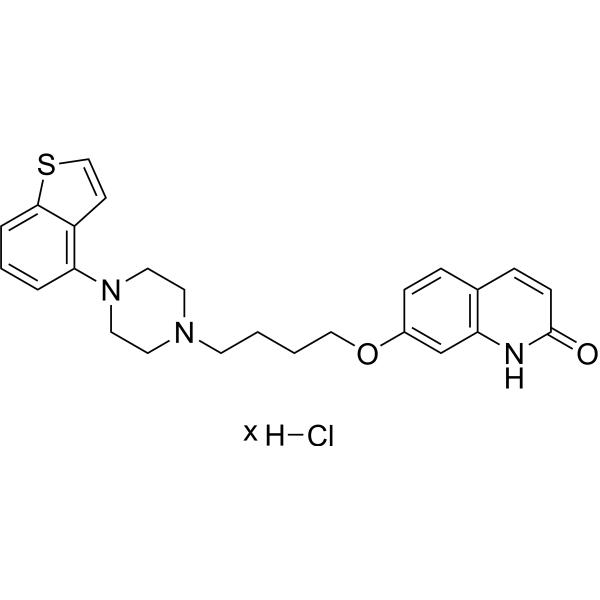
- HY-103110R
-
|
|
Reference Standards
5-HT Receptor
Adrenergic Receptor
|
Neurological Disease
|
|
ST1936 (Standard) is the analytical standard of ST1936 (HY-103110). This product is intended for research and analytical applications. ST1936 is a selective, nanomolar affinity 5-HT6 receptor agonist with Ki values of 13 nM, 168 nM and 245 nM for human 5-HT6, 5-HT7 and 5-HT2B receptors, respectively. ST1936 also shows moderate affinity (Ki of 300 nM) for human and rat α2 adrenergic receptor .
|
-

- HY-15780
-
|
OPC-34712
|
5-HT Receptor
Dopamine Receptor
Adrenergic Receptor
|
Neurological Disease
|
|
Brexpiprazole (OPC-34712), an atypical orally active antipsychotic agent, is a partial agonist of human 5-HT1A and dopamine D2L receptor with Kis of 0.12 nM and 0.3 nM, respectively. Brexpiprazole is also a 5-HT2A receptor antagonist with a Ki of 0.47 nM. Brexpiprazole also shows potent antagonist activity at human noradrenergic α1B (Ki=0.17 nM) and α2C receptors (Ki=0.59 nM) .
|
-
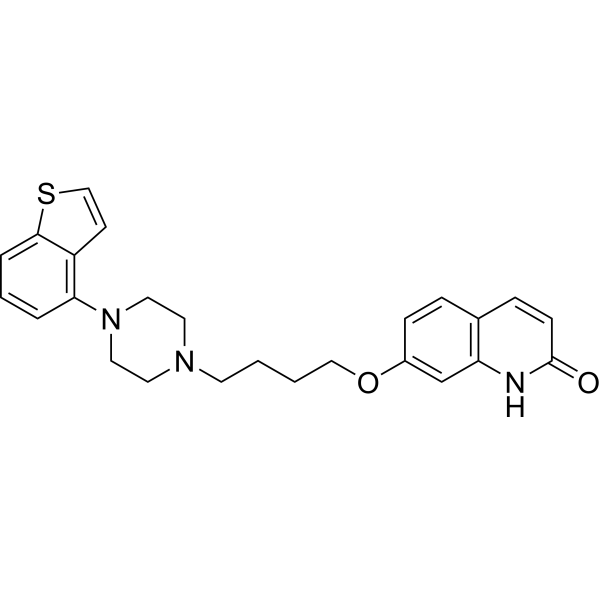
- HY-15401
-
|
|
5-HT Receptor
|
Neurological Disease
Metabolic Disease
|
|
WAY 163909 is an orally active, blood-brain barrier permeable 5-HT2C receptor-selective agonist. WAY 163909 exhibits an EC50 of 8 nM and a Ki of 10.5 nM for h5-HT2C. Instead of triggering apoptosis, WAY 163909 induces anorectic, antipsychotic-like, antidepressant-like, anti-aggressive and anti-compulsive effects. WAY 163909 alleviates ketamine-induced hypothermia, but impairs sexual function at high doses. With rapid antidepressant-like properties, WAY 163909 can be used in research related to obesity, schizophrenia, depression, obsessive-compulsive disorder, and anesthesia-induced hypothermia .
|
-
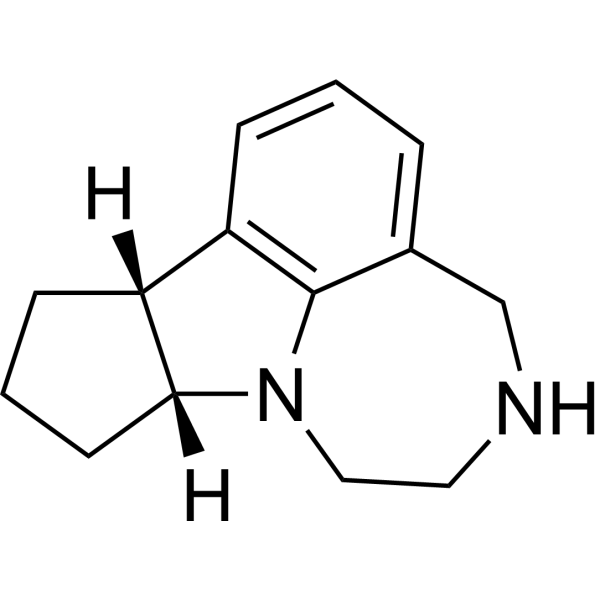
- HY-15401A
-
|
|
5-HT Receptor
|
Neurological Disease
Metabolic Disease
|
|
WAY 163909 hydrochloride is an orally active, blood-brain barrier permeable 5-HT2C receptor-selective agonist. WAY 163909 hydrochloride exhibits an EC50 of 8 nM and a Ki of 10.5 nM for h5-HT2C. Instead of triggering apoptosis, WAY 163909 hydrochloride induces anorectic, antipsychotic-like, antidepressant-like, anti-aggressive and anti-compulsive effects. WAY 163909 hydrochloride alleviates ketamine-induced hypothermia, but impairs sexual function at high doses. With rapid antidepressant-like properties, WAY 163909 hydrochloride can be used in research related to obesity, schizophrenia, depression, obsessive-compulsive disorder, and anesthesia-induced hypothermia .
|
-

- HY-A0095R
-
|
BIMT-17 (Standard); BIMT-17BS (Standard)
|
Reference Standards
5-HT Receptor
|
Neurological Disease
Cancer
|
|
Flibanserin (Standard) is the analytical standard of Flibanserin. This product is intended for research and analytical applications. Flibanserin (BIMT-17; BIMT-17BS) is an orally active serotonin 5-HT1A receptor agonist and 5-HT2A receptor antagonist with Ki values of 1 nM and 49 nM, respectively. Flibanserin binds to dopamine D4 receptors with an Ki value of 4-24 nM. Flibanserin shows anti-depression and anti-anxiety effect, can be used to hypoactive sexual desire disorder (HSDD) research - .
|
-

- HY-A0095A
-
|
BIMT-17 hydrochloride (propan-2-ol) hydrate; BIMT-17BS hydrochloride (propan-2-ol) hydrate
|
5-HT Receptor
|
Neurological Disease
Cancer
|
|
Flibanserin (BIMT-17) hydrochloride (propan-2-ol) hydrate is an orally active serotonin 5-HT1A receptor agonist and 5-HT2A receptor antagonist with Ki values of 1 nM and 49 nM, respectively. Flibanserin hydrochloride (propan-2-ol) hydrate binds to dopamine D4 receptors with an Ki value of 4-24 nM. Flibanserin hydrochloride (propan-2-ol) hydrate shows anti-depression and anti-anxiety effect, can be used to hypoactive sexual desire disorder (HSDD) research - .
|
-
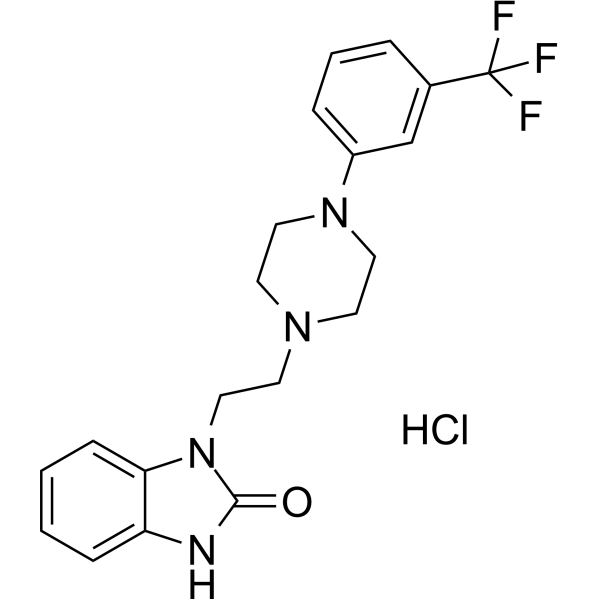
- HY-B0731AS
-
|
SM-9018-d8 free base
|
Isotope-Labeled Compounds
5-HT Receptor
Dopamine Receptor
|
Neurological Disease
|
|
Perospirone-d8 (SM-9018-d8 (free base)) is deuterium labeled Perospirone. Perospirone (SM-9018 free base) is an orally active antagonist of 5-HT2A receptor (Ki=0.6 nM) and dopamine D2 receptor (Ki=1.4 nM), and also a partial agonist of 5-HT1A receptor (Ki=2.9 nM). Perospirone is an atypical antipsychotic agent and has the potential for schizophrenic disease research .
|
-

- HY-137572
-
|
|
5-HT Receptor
|
Neurological Disease
Inflammation/Immunology
|
|
(R)-DOI hydrochloride is a selective 5HT2A receptor agonist. (R)-DOI hydrochloride has anti-inflammatory, anti-oxidative stress, and lysosomal function-improving effects. (R)-DOI hydrochloride can be used for the researches of inflammation and neurological disease, such as Alzheimer's disease .
|
-

- HY-118796
-
|
4-HO-MET; 4-Hydroxy-N-methyl-N-ethyltryptamine
|
5-HT Receptor
Serotonin Transporter
|
Neurological Disease
|
|
4-Hydroxy MET (4-HO-MET; 4-Hydroxy-N-methyl-N-ethyltryptamine) is a synthetic tryptamine psychoactive substance. 4-Hydroxy MET is a partial 5-HT2A receptor agonist, a serotonin transporter inhibitor and weak norepinephrine transporter inhibitor. 4-Hydroxy MET affects emotional, motoric, and cognitive functions via serotonergic hallucinogenic activity .
|
-

- HY-111136
-
|
|
GABA Receptor
5-HT Receptor
Dopamine Receptor
Histamine Receptor
|
Neurological Disease
|
|
BL-1020 mesylate is the mesylate salt form of BL-1020. BL-1020 mesylate is an antipsychotic agent. BL-1020 mesylate is inhibitor for dopamine receptor and serotonin receptor (5-HT receptor), with Ki of 0.066, 0.062 and 0.21 nM, for D2L, D2S and 5-HT2A receptors, respectively. BL-1020 mesylate is agonist for GABAA receptor with Ki of 3.74 μM, and enhances the GABA release. BL-1020 mesylate exhibits high affinity with histamine receptor (Ki is 0.47 nM). BL-1020 mesylate reduces Amphetamine-induced hyperactivity, with lower catalepsy and sedation. BL-1020 mesylate is blood-brain barrier penetrate .
|
-

- HY-14147
-
|
BRL 24924
|
5-HT Receptor
|
Metabolic Disease
|
|
Renzapride (BRL 24924), a substituted benzamide, is a full 5-HT4 receptor agonist with a Ki value of 115 nM. Renzapride (BRL 24924) is also a 5HT2b and 5HT3 receptor antagonist . Renzapride could be used for constipation predominant irritable bowel syndrome (C-IBS) study .
|
-
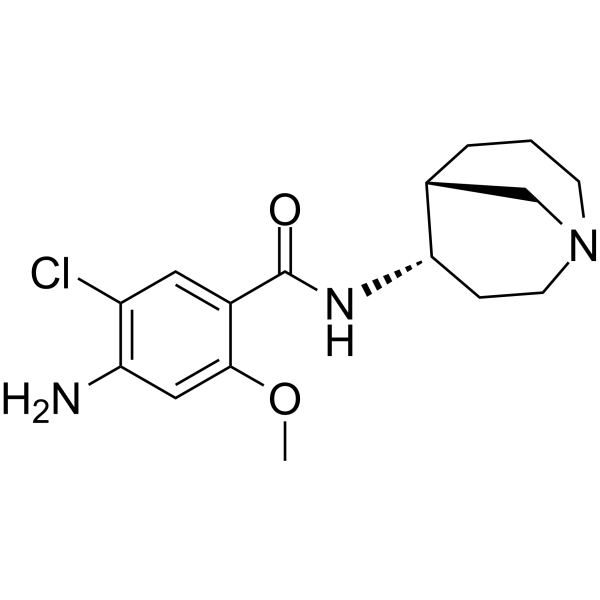
- HY-110024
-
|
|
5-HT Receptor
Dopamine Receptor
|
Neurological Disease
|
|
S-14506 hydrochloride is a potent 5-HT1A agonist, as well as 5-HT2A/2C antagonist. S-14506 hydrochloride displays dopamine antagonist properties by blocking dopamine D2 receptors. S-14506 hydrochloride inhibits the in vivo binding of [3H]raclopride in striatum and olfactory bulbs. S-14506 hydrochloride has the potential for the research of anxiolytic agent .
|
-
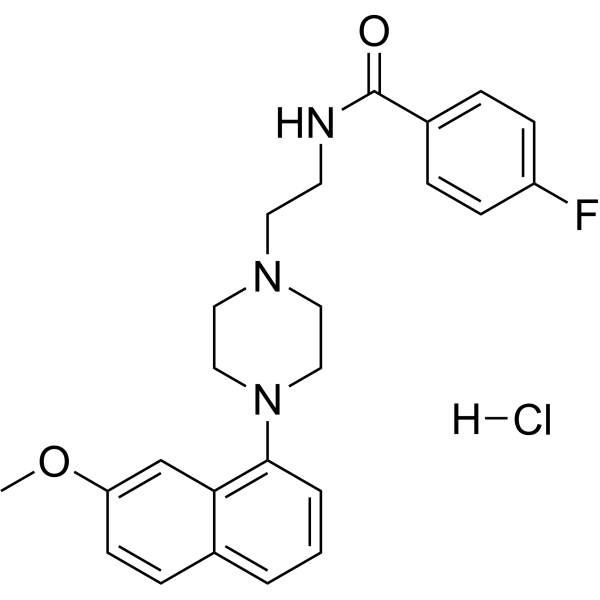
- HY-N0247
-
|
|
Hedgehog
Smo
STAT
Interleukin Related
TNF Receptor
|
Inflammation/Immunology
Cancer
|
|
Saikosaponin B1 is a bioactive constituent of Radix Bupleuri. Saikosaponin B1 is an agonist of the 5-HT2C receptor with an EC50 of 147.41 μM. Saikosaponin B1 inhibits the Hedgehog (Hh) signaling pathway by targeting the transmembrane protein SMO. Sailosaponin B1 can reduce liver fibrosis. Saikosaponin B1 has anti-cancer activities thus can be studies in research for cancers such as Medulloblastoma (MB) .
|
-
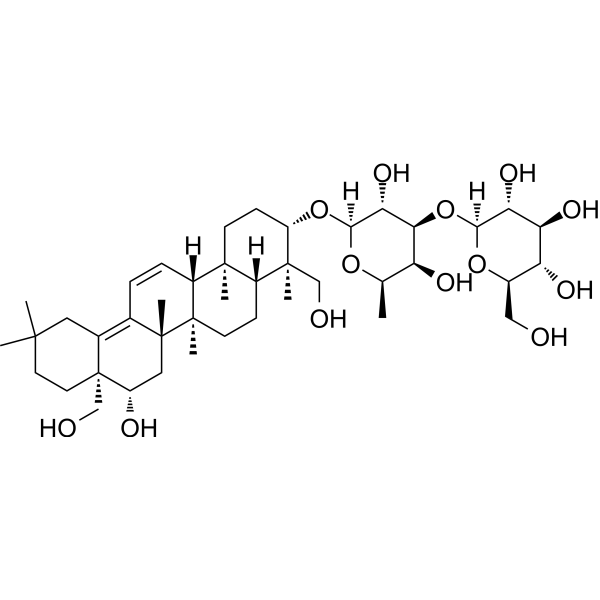
- HY-14557AR
-
|
ACP-103 hemitartrate (Standard)
|
5-HT Receptor
Reference Standards
|
Neurological Disease
|
|
Pimavanserin hemitartrate (Standard) is the analytical standard of Pimavanserin hemitartrate. This product is intended for research and analytical applications. Pimavanserin (ACP-103) hemitartrate is a potent and brain-penetrant 5-HT 2A receptor inverse agonist with pIC50 and pKi of 8.73 and 9.3, respectively.
|
-

- HY-133152S
-
|
DM-3411 d8
|
Isotope-Labeled Compounds
5-HT Receptor
Dopamine Receptor
|
Neurological Disease
|
|
Brexpiprazole S-oxide-d8 (DM-3411 D8) is a deuterium labeled Brexpiprazole S-oxide (HY-133152). Brexpiprazole S-oxide is a main metabolite of Brexpiprazole and is metabolized by cytochrome P450 3A4 (CYP3A4). Brexpiprazole is an atypical antipsychotic agent and a partial agonist of human 5-HT1A and dopamine receptor with Kis of 0.12 nM and 0.3 nM, respectively. Brexpiprazole is also a 5-HT2A receptor antagonist with a Ki of 0.47 nM .
|
-
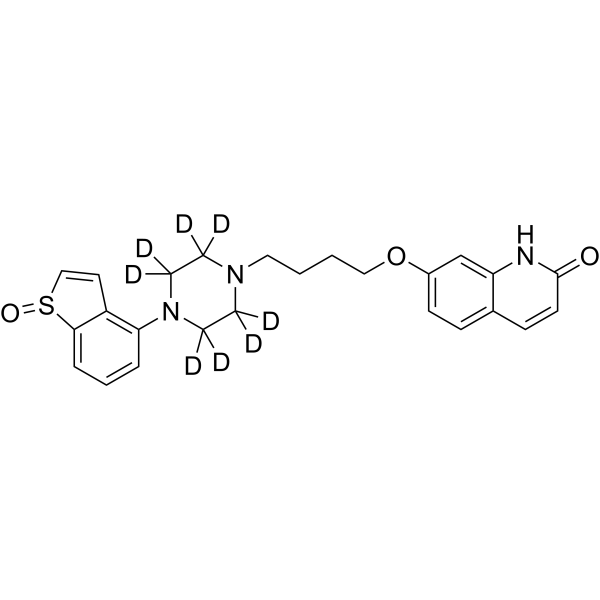
- HY-15780R
-
|
OPC-34712 (Standard)
|
Reference Standards
5-HT Receptor
Dopamine Receptor
Adrenergic Receptor
|
Neurological Disease
|
|
Brexpiprazole (Standard) is the analytical standard of Brexpiprazole. This product is intended for research and analytical applications. Brexpiprazole (OPC-34712), an atypical orally active antipsychotic agent, is a partial agonist of human 5-HT1A and dopamine D2L receptor with Kis of 0.12 nM and 0.3 nM, respectively. Brexpiprazole is also a 5-HT2A receptor antagonist with a Ki of 0.47 nM. Brexpiprazole also shows potent antagonist activity at human noradrenergic α1B (Ki=0.17 nM) and α2C receptors (Ki=0.59 nM) .
|
-

- HY-14147A
-
|
(S)-BRL 24924
|
5-HT Receptor
|
Metabolic Disease
|
|
(S)-Renzapride ((S)-BRL 24924) is the isomer of HY-14147 Renzapride. Renzapride is a 5-HT4 receptor agonist with a Ki value of 115 nM. Renzapride also is a 5HT2b and 5HT3 receptor antagonist. Renzapride can be used for constipation predominant irritable bowel syndrome (C-IBS) study .
|
-
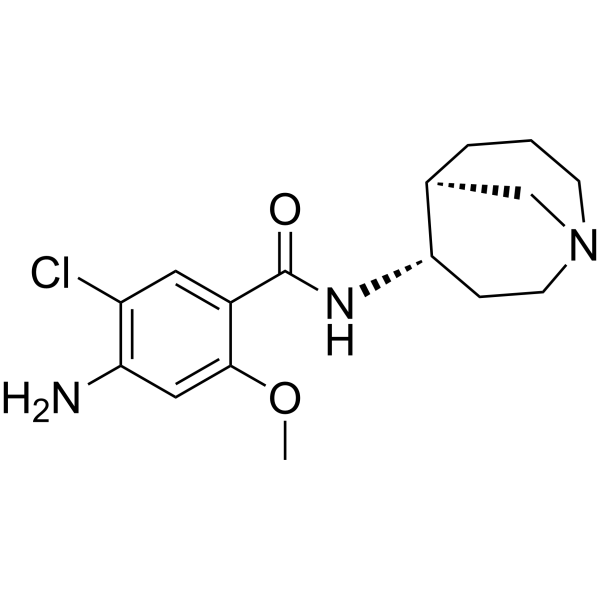
- HY-19358
-
|
2-Methyl-5-hydroxytryptamine; 2-Methylserotonin; 2-Me-5-HT
|
5-HT Receptor
|
Neurological Disease
|
|
2-Methyl-5-HT (2-Methyl-5-hydroxytryptamine) is a potent and selective 5-HT3 receptor agonist. 2-Methyl-5-HT is shown to display anti-depressive-like effects .
|
-
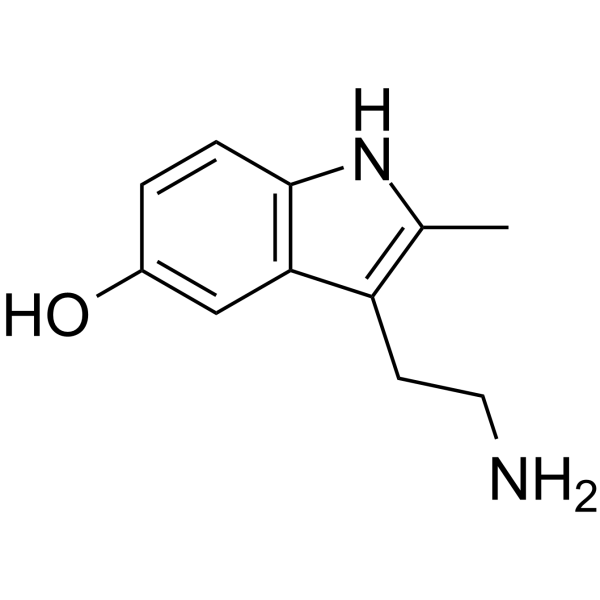
- HY-105285
-
|
Neu-P11
|
Melatonin Receptor
5-HT Receptor
P2X Receptor
TRP Channel
Sodium Channel
|
Neurological Disease
|
|
Piromelatine (Neu-P11) is a melatonin MT1/MT2 receptor agonist, serotonin 5-HT1A/5-HT1D agonist, and serotonin 5-HT2B antagonist. Piromelatine (Neu-P11) possesses sleep promoting, analgesic, anti-neurodegenerative, anxiolytic and antidepressant potentials. Piromelatine (Neu-P11) also possesses pain-related P2X3, TRPV1, and Nav1.7 channel-inhibition capacities .
|
-
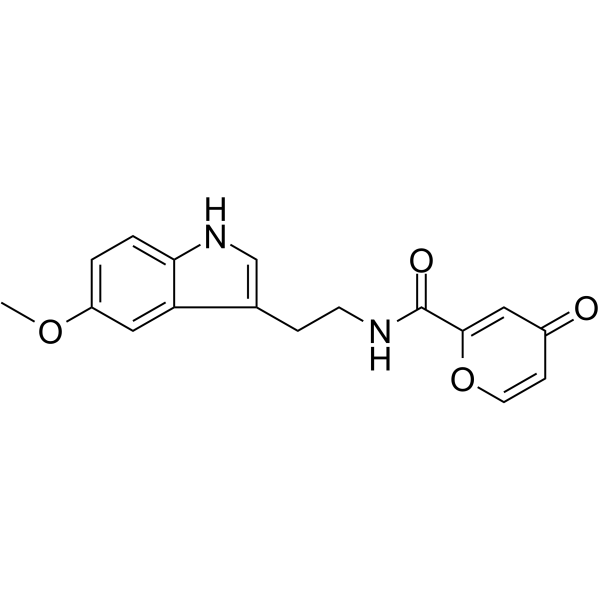
- HY-101369
-
|
|
5-HT Receptor
|
Cardiovascular Disease
Neurological Disease
|
|
BW-723C86 is an orally active and a selective 5-HT2B receptor agonist. BW-723C86 exhibits anxiolytic-like actions. BW-723C86 also causes hyperphagia and reduced grooming in rats. BW-723C86 dilates pulmonary arteries and inhibits liquid meal-induced gastric accommodation .
|
-
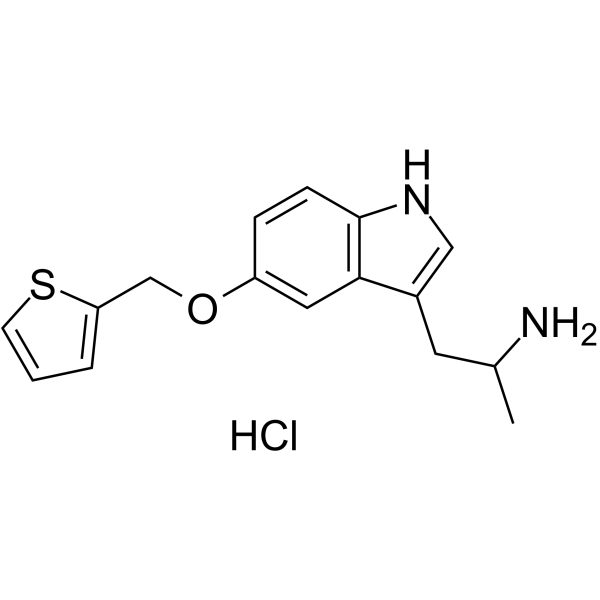
- HY-14539B
-
|
HF 1854 dihydrochloride
|
Dopamine Receptor
mAChR
Adrenergic Receptor
5-HT Receptor
|
Neurological Disease
Cancer
|
|
Clozapine (HF 1854) dihydrochloride is an antipsychotic used for the research of schizophrenia. Clozapine has high affinity for a number of neuroreceptors. Clozapine is a potent antagonist of dopamine D2 with a Ki of 75 nM. Clozapine inhibits the muscarinic M1 receptor and serotonin 5HT2A receptor with Kis of 9.5 nM and 4 nM, respectively . Clozapine is also a potent and selective agonist at the muscarinic M4 receptor (EC50=11 nM) .
|
-

- HY-14539
-
|
HF 1854; ZINC000019796155
|
Dopamine Receptor
mAChR
Adrenergic Receptor
5-HT Receptor
Ligands for E3 Ligase
|
Neurological Disease
Cancer
|
|
Clozapine (HF 1854) is an antipsychotic used for the research of schizophrenia. Clozapine has high affinity for a number of neuroreceptors. Clozapine is a potent antagonist of dopamine D2 with a Ki of 75 nM. Clozapine inhibits the muscarinic M1 receptor and serotonin 5HT2A receptor with Kis of 9.5 nM and 4 nM, respectively . Clozapine is also a potent and selective agonist at the muscarinic M4 receptor (EC50=11 nM) .
|
-
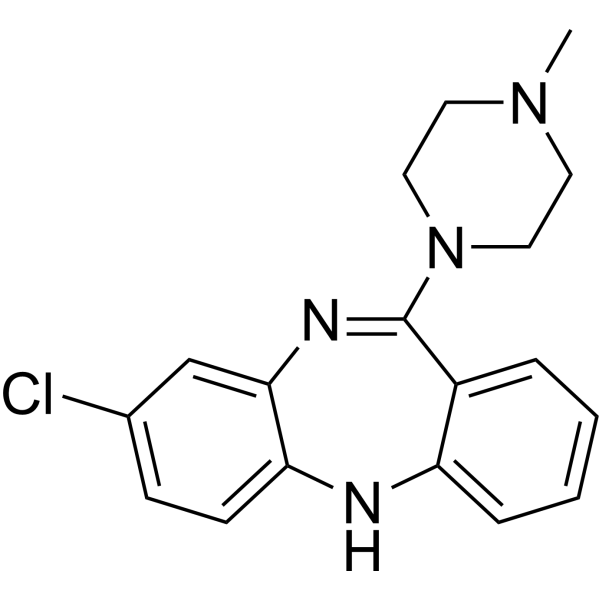
- HY-14539A
-
|
HF 1854 hydrochloride
|
Dopamine Receptor
mAChR
Adrenergic Receptor
5-HT Receptor
|
Neurological Disease
|
|
Clozapine hydrochloride (HF 1854 hydrochloride) is an antipsychotic used for the research of schizophrenia. Clozapine hydrochloride has high affinity for a number of neuroreceptors. Clozapine hydrochloride is a potent antagonist of dopamine D2 with a Ki of 75 nM. Clozapine hydrochloride inhibits the muscarinic M1 receptor and serotonin 5HT2A receptor with Kis of 9.5 nM and 4 nM, respectively . Clozapine hydrochloride is also a potent and selective agonist at the muscarinic M4 receptor (EC50=11 nM) .
|
-

- HY-W052508R
-
|
N-Desalkylquetiapine (Standard)
|
5-HT Receptor
Reference Standards
|
Neurological Disease
|
|
Norquetiapine is an antidepressant and neuroprotective agent and is the active metabolic component of Quetiapine (HY-14544). Norquetiapine is also a partial 5-HT1A receptor agonist, and a presynaptic α2, 5-HT2C and 5-HT7 b> Receptor antagonist. Norquetiapine can also selectively inhibit norepinephrine transporter (NET), inhibit norepinephrine reuptake, and has potential inhibitory effects on bipolar depression, major depressive disorder, and generalized anxiety disorder. Norquetiapine demonstrated in vivo activity in forced swimming in mice and learned helplessness tests in rats .
|
-

- HY-15780S
-
|
OPC-34712-d8
|
Isotope-Labeled Compounds
5-HT Receptor
Dopamine Receptor
Adrenergic Receptor
|
Neurological Disease
|
|
Brexpiprazole-d8 (OPC-34712-d8) is the deuterium labeled Brexpiprazole (HY-15780). Brexpiprazole (OPC-34712), an atypical orally active antipsychotic agent, is a partial agonist of human 5-HT1A and dopamine D2L receptor with Kis of 0.12 nM and 0.3 nM, respectively. Brexpiprazole is also a 5-HT2A receptor antagonist with a Ki of 0.47 nM. Brexpiprazole also shows potent antagonist activity at human noradrenergic α1B (Ki=0.17 nM) and α2C receptors (Ki=0.59 nM) .
|
-
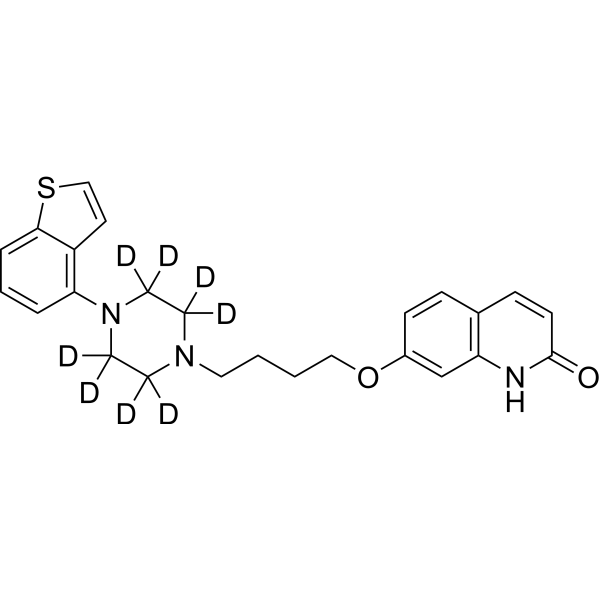
- HY-15780S1
-
|
OPC-34712-d8-1
|
Isotope-Labeled Compounds
Dopamine Receptor
Adrenergic Receptor
5-HT Receptor
|
Neurological Disease
|
|
Brexpiprazole-d8-1 (OPC-34712-d8-1) is the deuterium labeled Brexpiprazole (HY-15780) . Brexpiprazole (OPC-34712), an atypical orally active antipsychotic agent, is a partial agonist of human 5-HT1A and dopamine D2L receptor with Kis of 0.12 nM and 0.3 nM, respectively. Brexpiprazole is also a 5-HT2A receptor antagonist with a Ki of 0.47 nM. Brexpiprazole also shows potent antagonist activity at human noradrenergic α1B (Ki=0.17 nM) and α2C receptors (Ki=0.59 nM) .
|
-
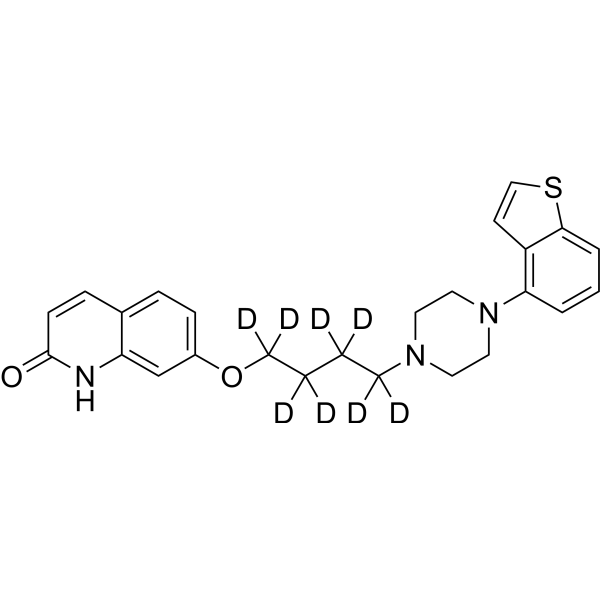
- HY-W130288
-
|
|
5-HT Receptor
Adenylate Cyclase
Apoptosis
Reactive Oxygen Species (ROS)
|
Cancer
|
|
1-(1-Naphthyl)piperazine is a 5-HT receptor modulator that acts as both a 5-HT2A receptor antagonist and 5-HT1A receptor agonist, and binds to human 5-HT6 receptor with a Ki of 120 nM. 1-(1-Naphthyl)piperazine partially inhibits forskolin-stimulated adenylate cyclase activity in calf substantia nigra. 1-(1-Naphthyl)piperazine inhibits UV-induced immunosuppression. 1-(1-Naphthyl)piperazine induces S-phase cell cycle delay, apoptosis and increases ROS levels, leading to inhibit MNT-1 cell proliferation. 1-(1-Naphthyl)piperazine can be used for melanoma research .
|
-

- HY-W050162
-
|
TMCA
|
GABA Receptor
5-HT Receptor
|
Neurological Disease
|
|
(E)-3,4,5-Trimethoxycinnamic acid (TMCA) is a cinnamic acid substituted by multi-methoxy groups. (E)-3,4,5-Trimethoxycinnamic acid is an orally active and potent GABAA/BZ receptor agonist. (E)-3,4,5-Trimethoxycinnamic exhibits favourable binding affinity to 5-HT2C and 5-HT1A receptor, with IC50 values of 2.5 and 7.6 μM, respectively. (E)-3,4,5-Trimethoxycinnamic acid shows anticonvulsant and sedative activity. (E)-3,4,5-Trimethoxycinnamic acid can be used for the research of insomnia, headache and epilepsy .
|
-
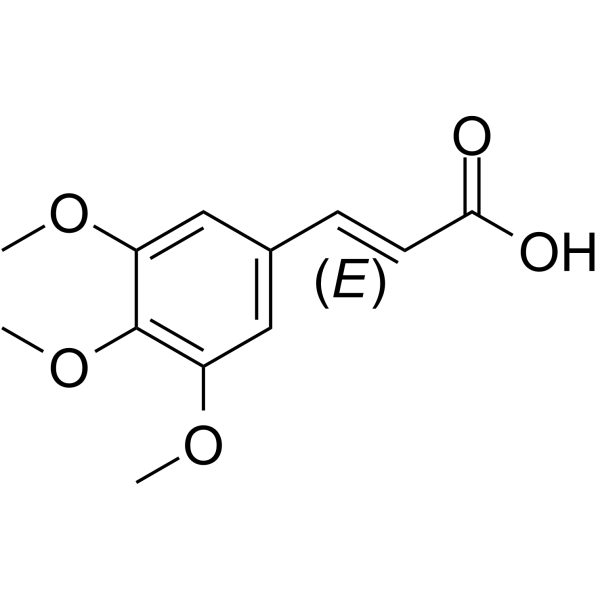
- HY-105285R
-
|
Neu-P11 (Standard)
|
Reference Standards
Melatonin Receptor
5-HT Receptor
P2X Receptor
TRP Channel
Sodium Channel
|
Neurological Disease
|
|
Piromelatine (Standard) is the analytical standard of Piromelatine. This product is intended for research and analytical applications. Piromelatine (Neu-P11) is a melatonin MT1/MT2 receptor agonist, serotonin 5-HT1A/5-HT1D agonist, and serotonin 5-HT2B antagonist. Piromelatine (Neu-P11) possesses sleep promoting, analgesic, anti-neurodegenerative, anxiolytic and antidepressant potentials. Piromelatine (Neu-P11) also possesses pain-related P2X3, TRPV1, and Nav1.7 channel-inhibition capacities .
|
-

- HY-N0247R
-
|
|
Reference Standards
Smo
|
Cancer
|
|
Saikosaponin B1 (Standard) is the analytical standard of Saikosaponin B1. This product is intended for research and analytical applications. Saikosaponin B1 is a bioactive constituent of Radix Bupleuri. Saikosaponin B1 is an agonist of the 5-HT2C receptor with an EC50 of 147.41 μM. Saikosaponin B1 inhibits the Hedgehog (Hh) signaling pathway by targeting the transmembrane protein SMO. Sailosaponin B1 can reduce liver fibrosis. Saikosaponin B1 has anti-cancer activities thus can be studies in research for cancers such as Medulloblastoma (MB) .
|
-

- HY-14539R
-
|
HF 1854 (Standard)
|
Reference Standards
Dopamine Receptor
mAChR
Adrenergic Receptor
5-HT Receptor
|
Neurological Disease
|
|
Clozapine (Standard) is the analytical standard of Clozapine. This product is intended for research and analytical applications. Clozapine (HF 1854) is an antipsychotic used for the research of schizophrenia. Clozapine has high affinity for a number of neuroreceptors. Clozapine is a potent antagonist of dopamine D2 with a Ki of 75 nM. Clozapine inhibits the muscarinic M1 receptor and serotonin 5HT2A receptor with Kis of 9.5 nM and 4 nM, respectively . Clozapine is also a potent and selective agonist at the muscarinic M4 receptor (EC50=11 nM) .
|
-
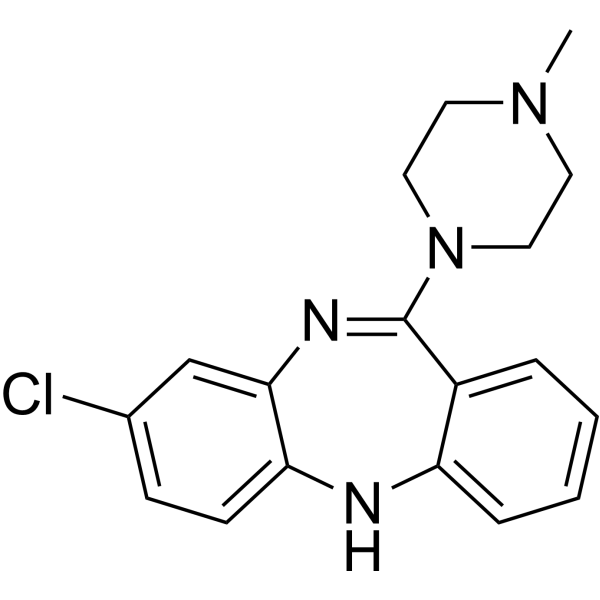
- HY-W040555
-
|
N-Desalkylquetiapine dihydrochloride
|
Drug Metabolite
5-HT Receptor
HCN Channel
Serotonin Transporter
|
Neurological Disease
|
|
Norquetiapine ( N-Desalkylauetiapine) dihydrochloride, a metabolite of Quetiapine (HY-14544), is a selective HCN1 channel inhibitor, with an IC50 of 13.9 μM. Norquetiapine dihydrochloride selectively inhibits noradrenaline reuptake, is a partial 5-HT1A (Ki = 45 nM) receptor agonist, and acts as an antagonist at presynapticα2 (Ki = 237 nM), 5-HT2C(Ki = 107 nM), and 5-HT7 (Ki = 76 nM) receptors. Norquetiapine dihydrochloride blocks the human cardiac sodium channel Nav1.5 in a state-dependent manner. Norquetiapine dihydrochloride shows partial anti-inflammatory effects in LPS (HY-D1056) injected C57BL/6 mice. Norquetiapine dihydrochloride can be used for the study of depression and inflammation .
|
-

- HY-W052508
-
|
N-Desalkylquetiapine
|
Drug Metabolite
5-HT Receptor
HCN Channel
Serotonin Transporter
|
Neurological Disease
|
|
Norquetiapine ( N-Desalkylauetiapine), a metabolite of Quetiapine (HY-14544), is a selective HCN1 channel inhibitor, with an IC50 of 13.9 μM. Norquetiapine selectively inhibits noradrenaline reuptake, is a partial 5-HT1A (Ki = 45 nM) receptor agonist, and acts as an antagonist at presynapticα2 (Ki = 237 nM), 5-HT2C(Ki = 107 nM), and 5-HT7 (Ki = 76 nM) receptors. Norquetiapine blocks the human cardiac sodium channel Nav1.5 in a state-dependent manner. Norquetiapine shows partial anti-inflammatory effects in LPS (HY-D1056) injected C57BL/6 mice. Norquetiapine can be used for the study of depression and inflammation .
|
-

- HY-14539S3
-
|
HF 1854-d3
|
Isotope-Labeled Compounds
5-HT Receptor
Adrenergic Receptor
Dopamine Receptor
mAChR
|
Neurological Disease
Cancer
|
|
Clozapine-d3 (HF 1854-d3) is deuterium labeled Clozapine. Clozapine (HF 1854) is an antipsychotic used for the research of schizophrenia. Clozapine has high affinity for a number of neuroreceptors. Clozapine is a potent antagonist of dopamine D2 with a Ki of 75 nM. Clozapine inhibits the muscarinic M1 receptor and serotonin 5HT2A receptor with Kis of 9.5 nM and 4 nM, respectively . Clozapine is also a potent and selective agonist at the muscarinic M4 receptor (EC50=11 nM) .
|
-

- HY-101369R
-
|
|
5-HT Receptor
Reference Standards
|
Cardiovascular Disease
Neurological Disease
|
|
BW-723C86 (Standard) is the analytical standard of BW-723C86 (HY-101369). This product is intended for research and analytical applications. BW-723C86 is an orally active and a selective 5-HT2B receptor agonist. BW-723C86 exhibits anxiolytic-like actions. BW-723C86 also causes hyperphagia and reduced grooming in rats. BW-723C86 dilates pulmonary arteries and inhibits liquid meal-induced gastric accommodation .
|
-

- HY-W052508S
-
|
N-Desalkylquetiapine-d8
|
Isotope-Labeled Compounds
|
Others
Neurological Disease
Inflammation/Immunology
|
|
Norquetiapine-d8 (N-Desalkylquetiapine-d8) is the deuterium labeled Norquetiapine.Norquetiapine ( N-Desalkylauetiapine), a metabolite of Quetiapine (HY-14544), is a selective HCN1 channel inhibitor, with an IC50 of 13.9 μM. Norquetiapine selectively inhibits noradrenaline reuptake, is a partial 5-HT1A (Ki = 45 nM) receptor agonist, and acts as an antagonist at presynapticα2 (Ki = 237 nM), 5-HT2C(Ki = 107 nM), and 5-HT7 (Ki = 76 nM) receptors. Norquetiapine blocks the human cardiac sodium channel Nav1.5 in a state-dependent manner. Norquetiapine shows partial anti-inflammatory effects in LPS (HY-D1056) injected C57BL/6 mice. Norquetiapine can be used for the study of depression and inflammation .
|
-
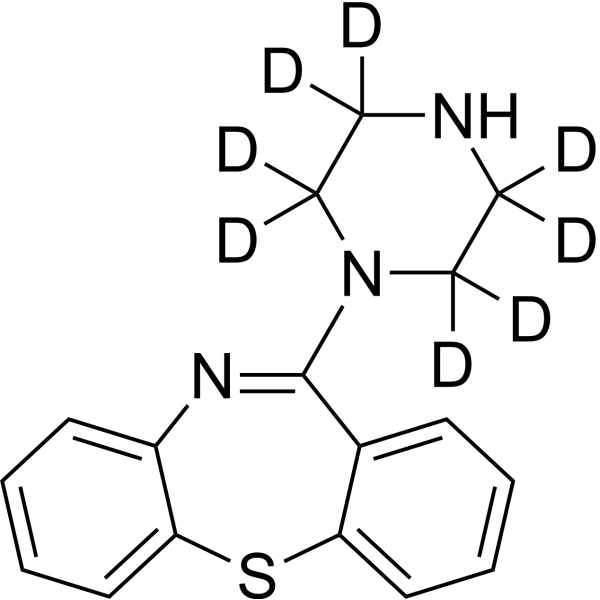
| Cat. No. |
Product Name |
Type |
-
- HY-100993
-
|
|
Biochemical Assay Reagents
|
|
α-Methylserotonin maleate is a potent and selective agonist of 5-HT2 receptor. α-Methylserotonin maleate is an analogue of serotonin formed in vivo from α-Methyltryptophan. α-Methylserotonin maleate mediates the lymphatic smooth muscle contraction and prevents the up-regulation of serotonin-receptor-mediated phosphoinositide hydrolysis .
|
-
- HY-15401A
-
|
|
Biochemical Assay Reagents
|
|
WAY 163909 hydrochloride is an orally active, blood-brain barrier permeable 5-HT2C receptor-selective agonist. WAY 163909 hydrochloride exhibits an EC50 of 8 nM and a Ki of 10.5 nM for h5-HT2C. Instead of triggering apoptosis, WAY 163909 hydrochloride induces anorectic, antipsychotic-like, antidepressant-like, anti-aggressive and anti-compulsive effects. WAY 163909 hydrochloride alleviates ketamine-induced hypothermia, but impairs sexual function at high doses. With rapid antidepressant-like properties, WAY 163909 hydrochloride can be used in research related to obesity, schizophrenia, depression, obsessive-compulsive disorder, and anesthesia-induced hypothermia .
|
| Cat. No. |
Product Name |
Category |
Target |
Chemical Structure |
-
- HY-N0049
-
-
-
- HY-17038
-
-
-
- HY-N0247
-
-
-
- HY-N4157
-
|
|
Uncaria rhynchophylla (Miq.) Miq. ex Havil.
Structural Classification
Iridoids
Terpenoids
Rubiaceae
Plants
Source Classification
|
mAChR
5-HT Receptor
Bacterial
|
|
Isopteropodine is a positive modulator that selectively acts on muscarinic M1 and 5-HT2 receptors. Isopteropodine has an EC50 of 9.92 μM for acetylcholine and 14.5 μM for 5-HT. Isopteropodine also has antibacterial activity against Gram-positive bacteria, with MICs of 150 μg/mL and 250 μg/mL for Staphylococcus aureus and Bacillus subtilis, respectively. Isopteropodine enhances receptor function by increasing the affinity of agonists for receptors and can also inhibit the growth of specific Gram-positive bacteria, and can be used in cognitive impairment and antibacterial research .
|
-
-
- HY-17038A
-
-
-
- HY-N8200
-
-
-
- HY-17038B
-
-
-
- HY-17038R
-
-
-
- HY-N4157R
-
|
|
Uncaria rhynchophylla (Miq.) Miq. ex Havil.
Structural Classification
Iridoids
Terpenoids
Rubiaceae
Plants
Source Classification
|
Reference Standards
mAChR
5-HT Receptor
Bacterial
|
|
Isopteropodine (Standard) is the analytical standard of Isopteropodine (HY-N4157). This product is intended for research and analytical applications. Isopteropodine is a positive modulator that selectively acts on muscarinic M1 and 5-HT2 receptors. Isopteropodine has an EC50 of 9.92 μM for acetylcholine and 14.5 μM for 5-HT. Isopteropodine also has antibacterial activity against Gram-positive bacteria, with MICs of 150 μg/mL and 250 μg/mL for Staphylococcus aureus and Bacillus subtilis, respectively. Isopteropodine enhances receptor function by increasing the affinity of agonists for receptors and can also inhibit the growth of specific Gram-positive bacteria, and can be used in cognitive impairment and antibacterial research .
|
-
-
- HY-N0049R
-
|
|
Alkaloids
other families
Plants
Source Classification
|
Reference Standards
5-HT Receptor
Dopamine Receptor
|
|
Nuciferine (Standard) is the analytical standard of Nuciferine. This product is intended for research and analytical applications. Nuciferine is an antagonist at 5-HT2A (IC50=478 nM), 5-HT2C (IC50=131 nM), and 5-HT2B (IC50=1 μM), an inverse agonist at 5-HT7 (IC50=150 nM), a partial agonist at D2 (EC50=64 nM), D5 (EC50=2.6 μM) and 5-HT6 (EC50=700 nM), an agonist at 5-HT1A (EC50=3.2 μM) and D4 (EC50=2 μM) receptor.
|
-
-
- HY-17038AR
-
-
-
- HY-N0247R
-
-
| Cat. No. |
Product Name |
Chemical Structure |
-
- HY-15780S1
-
|
|
|
Brexpiprazole-d8-1 (OPC-34712-d8-1) is the deuterium labeled Brexpiprazole (HY-15780) . Brexpiprazole (OPC-34712), an atypical orally active antipsychotic agent, is a partial agonist of human 5-HT1A and dopamine D2L receptor with Kis of 0.12 nM and 0.3 nM, respectively. Brexpiprazole is also a 5-HT2A receptor antagonist with a Ki of 0.47 nM. Brexpiprazole also shows potent antagonist activity at human noradrenergic α1B (Ki=0.17 nM) and α2C receptors (Ki=0.59 nM) .
|
-
-
- HY-126057S
-
|
|
|
(R)-Praziquantel-d11 is the deuterium labeled (R)-Praziquantel. (R)-Praziquantel, the active enantiomer of Praziquantel, is a partial agonist of the human 5-HT2B receptor. (R)-Praziquantel acts as an antischistosomal eutomer .
|
-
-
- HY-15780S
-
|
|
|
Brexpiprazole-d8 (OPC-34712-d8) is the deuterium labeled Brexpiprazole (HY-15780). Brexpiprazole (OPC-34712), an atypical orally active antipsychotic agent, is a partial agonist of human 5-HT1A and dopamine D2L receptor with Kis of 0.12 nM and 0.3 nM, respectively. Brexpiprazole is also a 5-HT2A receptor antagonist with a Ki of 0.47 nM. Brexpiprazole also shows potent antagonist activity at human noradrenergic α1B (Ki=0.17 nM) and α2C receptors (Ki=0.59 nM) .
|
-
-
- HY-W052508S
-
|
|
|
Norquetiapine-d8 (N-Desalkylquetiapine-d8) is the deuterium labeled Norquetiapine.Norquetiapine ( N-Desalkylauetiapine), a metabolite of Quetiapine (HY-14544), is a selective HCN1 channel inhibitor, with an IC50 of 13.9 μM. Norquetiapine selectively inhibits noradrenaline reuptake, is a partial 5-HT1A (Ki = 45 nM) receptor agonist, and acts as an antagonist at presynapticα2 (Ki = 237 nM), 5-HT2C(Ki = 107 nM), and 5-HT7 (Ki = 76 nM) receptors. Norquetiapine blocks the human cardiac sodium channel Nav1.5 in a state-dependent manner. Norquetiapine shows partial anti-inflammatory effects in LPS (HY-D1056) injected C57BL/6 mice. Norquetiapine can be used for the study of depression and inflammation .
|
-
-
- HY-14546S
-
|
|
|
Aripiprazole-d8 (OPC-14597-d8) is the deuterium labeled Aripiprazole (HY-14546). Aripiprazole (OPC-14597), an atypical antipsychotic, is a potent and high-affinity dopamine D2 receptor partial agonist. Aripiprazole is an inverse agonist at 5-HT2B and 5-HT2A receptors and displays partial agonist actions at 5-HT1A, 5-HT2C, D3, and D4 receptors. Aripiprazole can be used for the research of schizophrenia and COVID19.
|
-
-
- HY-17038S2
-
|
|
|
Agomelatine-d3 is the deuterium labeled Agomelatine. Agomelatine (S-20098) is a specific agonist of MT1 and MT2 receptors with Kis of 0.1, 0.06, 0.12, and 0.27 nM for CHO-hMT1, HEK-hMT1, CHO-hMT2, and HEK-hMT2, respectively . Agomelatine is a selective 5-HT2C receptor antagonist with pKis of 6.4 and 6.2 at native (porcine) and cloned, human 5-HT2C receptors, respectively .
|
-
-
- HY-133152S
-
|
|
|
Brexpiprazole S-oxide-d8 (DM-3411 D8) is a deuterium labeled Brexpiprazole S-oxide (HY-133152). Brexpiprazole S-oxide is a main metabolite of Brexpiprazole and is metabolized by cytochrome P450 3A4 (CYP3A4). Brexpiprazole is an atypical antipsychotic agent and a partial agonist of human 5-HT1A and dopamine receptor with Kis of 0.12 nM and 0.3 nM, respectively. Brexpiprazole is also a 5-HT2A receptor antagonist with a Ki of 0.47 nM .
|
-
-
- HY-B0031S2
-
|
|
|
Quetiapine-d8 (fumarate) is the deuterium labeled Quetiapine. Quetiapine is a 5-HT receptors agonist with a pEC50 of 4.77 for human 5-HT1A receptor. Quetiapine is a dopamine receptor antagonist with a pIC50 of 6.33 for human D2 receptor. Quetiapine has moderate to high affinity for the human D2, HT1A, 5-HT2A, 5-HT2C receptor with pKis of 7.25, 5.74, 7.54, 5.55. Antidepressant and anxiolytic effects .
|
-
-
- HY-17038S1
-
|
|
|
Agomelatine-d4 is the deuterium labeled Agomelatine. Agomelatine (S-20098) is a specific agonist of MT1 and MT2 receptors with Kis of 0.1, 0.06, 0.12, and 0.27 nM for CHO-hMT1, HEK-hMT1, CHO-hMT2, and HEK-hMT2, respectively . Agomelatine is a selective 5-HT2C receptor antagonist with pKis of 6.4 and 6.2 at native (porcine) and cloned, human 5-HT2C receptors, respectively .
|
-
-
- HY-15296S1
-
|
|
|
Cabergoline-d6 is deuterium labeled Cabergoline. Cabergoline is an ergot derived-dopamine D2-like receptor agonist that has high affinity for D2, D3, and 5-HT2B receptors (Ki=0.7, 1.5, and 1.2, respectively).
|
-
-
- HY-17637S2
-
|
|
|
Lumateperone-d4 (ITI-007-d4) is deuterium labeled Lumateperone. Lumateperone (ITI-007) is an orally active 5-HT2A receptor antagonist (Ki = 0.54 nM), a partial agonist of presynaptic D2 receptors and an antagonist of postsynaptic D2 receptors (Ki = 32 nM), and a dopamine D1 receptor modulator. Lumateperone has anticancer activity and can also be used for the study of schizophrenia and bipolar depression .
|
-
-
- HY-W744750
-
|
|
|
TDHL-d10 (Tergurid-d10; Terguride-d10; trans-Dihydrolisuride-d10) is the deuterium labeled TDHL (HY-12714). TDHL (Tergurid) is a dopamine receptor agonist with a Kd of 0.39 nM for D2 receptor and an orally available 5-HT-2 receptor antagonist.
|
-
-
- HY-113008AS
-
|
|
|
cis-Urocanic acid- 13C3 is the 13C-labeled cis-Urocanic acid. cis-Urocanic acid is a 5-HT2A receptor agonist. cis-Urocanic acid binds to 5-HT receptor with relatively high affinity (Kd=4.6 nM). cis-Urocanic acid is an immune modulator that induces immunosuppression by binding to the 5-HT2A receptor .
|
-
-
- HY-176436S
-
|
|
|
GW-117 is a 5-HT2C receptor antagonist and a melatonin (MT1/MT2) receptor agonist. GW-117 shows antidepressant-like and anxiolytic-like effects .
|
-
-
- HY-14153S
-
|
|
|
Tegaserod-d11 is deuterated labeled Tegaserod (HY-14153). Tegaserod is an orally active serotonin receptor 4 (HTR4; 5-HT4R) agonist and a 5-HT2B receptor antagonist. Tegaserod has pKis of 7.5, 8.4 and 7.0 for human recombinant 5-HT2A, 5-HT2B and 5-HT2C receptors, respectively. Tegaserod causes tumor cell apoptosis, blunts PI3K/Akt/mTOR signaling and decreases S6 phosphorylation. Tegaserod has anti-tumor activity and has the potential for irritable bowel syndrome (IBS) research .
|
-
-
- HY-32329S
-
|
|
|
Setiptiline-d3 is the deuterium labeled Setiptiline. Setiptiline (Org-8282) is a serotonin receptor antagonist. Setiptiline is a tetracyclic antidepressant (TeCA) which acts as a noradrenergic and specific serotonergic antidepressant (NaSSA). Setiptiline acts as a norepinephrine reuptake inhibitor, α2-adrenergic receptor antagonist, and serotonin receptor antagonist, likely at the 5-HT2A, 5-HT2C, and/or 5-HT3 subtypes, as well as an H1 receptor inverse agonist/antihistamine .
|
-
-
- HY-B0031S3
-
|
|
|
Quetiapine-d8 (hemifumarate) is the deuterium labeled Quetiapine hemifumarate. Quetiapine hemifumarate is a 5-HT receptors agonist with a pEC50 of 4.77 for human 5-HT1A receptor. Quetiapine hemifumarate is a dopamine receptor antagonist with a pIC50 of 6.33 for human D2 receptor. Quetiapine hemifumarate has moderate to high affinity for the human D2, HT1A, 5-HT2A, 5-HT2C receptor with pKis of 7.25, 5.74, 7.54, 5.55. Antidepressant and anxiolytic effects .
|
-
-
- HY-B0031S4
-
|
|
|
Quetiapine (hemifumarate)-d8 is the deuterium labeled Quetiapine hemifumarate . Quetiapine hemifumarate is a 5-HT receptors agonist with a pEC50 of 4.77 for human 5-HT1A receptor. Quetiapine hemifumarate is a dopamine receptor antagonist with a pIC50 of 6.33 for human D2 receptor. Quetiapine hemifumarate has moderate to high affinity for the human D2, HT1A, 5-HT2A, 5-HT2C receptor with pKis of 7.25, 5.74, 7.54, 5.55. Antidepressant and anxiolytic effects .
|
-
-
- HY-B0031S5
-
|
|
|
Quetiapine-d4-1 fumarate is deuterated labeled Quetiapine (hemifumarate) (HY-B0031). Quetiapine hemifumarate is a 5-HT receptors agonist with a pEC50 of 4.77 for human 5-HT1A receptor. Quetiapine hemifumarate is a dopamine receptor antagonist with a pIC50 of 6.33 for human D2 receptor. Quetiapine hemifumarate has moderate to high affinity for the human D2, HT1A, 5-HT2A, 5-HT2C receptor with pKis of 7.25, 5.74, 7.54, 5.55. Antidepressant and anxiolytic effects .
|
-
-
- HY-A0095S
-
|
|
|
Flibanserin-d4 is a deuterium labeled Flibanserin (BIMT-17). Flibanserin is a full agonist of the serotonin 5-HT1A receptor (Ki=1 nM) and an antagonist of 5-HT2A (49 nM) .
|
-
-
- HY-14153AS
-
|
|
|
Tegaserod- 13C,d3 (maleate) is the 13C- and deuterium labeled Tegaserod (maleate). Tegaserod maleate is a selective 5-HT4 receptor partial agonist and a 5-HT2B receptor antagonist. Tegaserod maleate exhibits a promotile effect throughout the gastrointestinal (GI) tract .
|
-
-
- HY-14544AS
-
|
|
|
Quetiapine-d4 (hydrochloride) (ICI204636-d4 (hydrochloride)) is deuterium labeled Quetiapine. Quetiapine (ICI204636) is a 5-HT receptors agonist with a pEC50 of 4.77 for human 5-HT1A receptor. Quetiapine is a dopamine receptor antagonist with a pIC50 of 6.33 for human D2 receptor. Quetiapine has moderate to high affinity for the human D2, HT1A, 5-HT2A, 5-HT2C receptor with pKis of 7.25, 5.74, 7.54, 5.55. Antidepressant and anxiolytic effects .
|
-
-
- HY-15296S
-
|
|
|
Cabergoline-d5 is the deuterium labeled Cabergoline. Cabergoline is an ergot derived-dopamine D2-like receptor agonist that has high affinity for D2, D3, and 5-HT2B receptors (Ki=0.7, 1.5, and 1.2, respectively) .
|
-
-
- HY-A0095S1
-
|
|
|
Flibanserin-d4-1 is deuterium labeled Flibanserin. Flibanserin (BIMT-17) is a full agonist of the serotonin 5-HT1A receptor (Ki=1 nM) and an antagonist of 5-HT2A (49 nM). Flibanserin binds to dopamine D4 receptors (4-24 nM), and has negligible affinity for a variety of other neurotransmitter receptors and ion channels. Flibanserin is efficacious in treating hypoactive sexual desire disorder (HSDD) .
|
-
-
- HY-19733S
-
|
|
|
Lumateperone- 13C,d3 (ITI-007- 13C,d3) tosylate is 13C and deuterium labeled Lumateperone (tosylate). Lumateperone (ITI-007) tosylate is a 5-HT2A receptor antagonist (Ki = 0.54 nM), a partial agonist of presynaptic D2 receptors and an antagonist of postsynaptic D2 receptors (Ki = 32 nM), and a dopamine D1 receptor modulator. Lumateperone tosylate has anticancer activity and can also be used in studies of psychiatric disorders such as schizophrenia .
|
-
-
- HY-135392S
-
|
|
|
N-Desmethyl Pimavanserin-d9 hydrochloride (AC-279-d9 hydrochloride) is the deuterium labeled N-Desmethyl Pimavanserin (HY-135392). N-Desmethyl Pimavanserin is the active metabolite of Pimavanserin. Pimavanserin is a selective inverse agonist of the 5-HT2A receptor with pIC50 and pKd of 8.73 and 9.3, respectively .
|
-
-
- HY-B0731AS
-
|
|
|
Perospirone-d8 (SM-9018-d8 (free base)) is deuterium labeled Perospirone. Perospirone (SM-9018 free base) is an orally active antagonist of 5-HT2A receptor (Ki=0.6 nM) and dopamine D2 receptor (Ki=1.4 nM), and also a partial agonist of 5-HT1A receptor (Ki=2.9 nM). Perospirone is an atypical antipsychotic agent and has the potential for schizophrenic disease research .
|
-
-
- HY-14539S3
-
|
|
|
Clozapine-d3 (HF 1854-d3) is deuterium labeled Clozapine. Clozapine (HF 1854) is an antipsychotic used for the research of schizophrenia. Clozapine has high affinity for a number of neuroreceptors. Clozapine is a potent antagonist of dopamine D2 with a Ki of 75 nM. Clozapine inhibits the muscarinic M1 receptor and serotonin 5HT2A receptor with Kis of 9.5 nM and 4 nM, respectively . Clozapine is also a potent and selective agonist at the muscarinic M4 receptor (EC50=11 nM) .
|
-
-
- HY-100658S
-
|
|
|
Didesmethyl cariprazine-d8 is the deuterium labeled Didesmethyl cariprazine (HY-100658). Didesmethyl cariprazine is an orally active, BBB-permeable metabolite of Cariprazine (HY-14763). Didesmethyl cariprazine is a partial agonist at the D2 and D3 receptors, full agonist at the 5-HT1A receptor, and antagonist at the human 5-HT2B receptor (Ki: 1.41 nM (human D2L), 0.056 nM (human D3), 1.7 nM (human 5-HT1A), 0.52 nM (human 5-HT2B)). Didesmethyl cariprazine dose-dependently inhibits the spontaneous activity of rat midbrain dopaminergic neurons.
|
-
| Cat. No. |
Product Name |
|
Classification |
-
- HY-172995
-
|
|
|
Alkynes
|
|
RS130-180 is a selective β-arrestin-biased agonist targeting the serotonin 2A receptor (5-HT2aR). RS130-180 is promising for research of neuropsychiatric disorders such as depression .
|
Your information is safe with us. * Required Fields.
Inquiry Information
- Product Name:
- Cat. No.:
- Quantity:
- MCE Japan Authorized Agent:








