



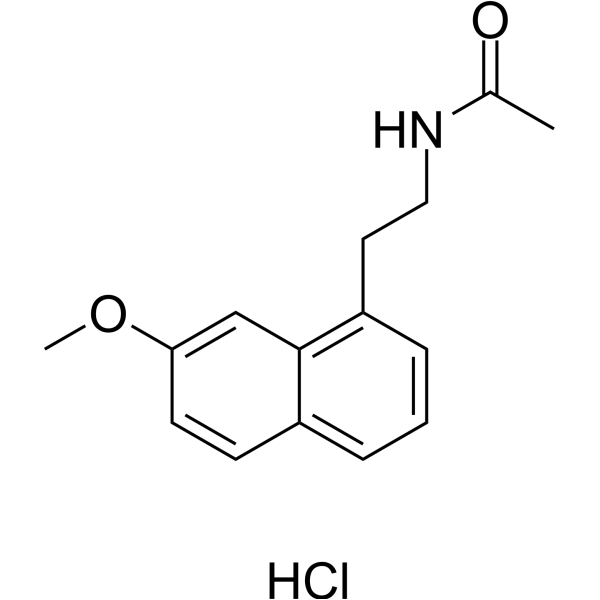
Agomelatine hydrochloride
Based on 9 publication(s) in Google Scholar
Agomelatine hydrochloride (S-20098 hydrochloride) is a specific agonist of MT1 and MT2 receptors with Kis of 0.1, 0.06, 0.12, and 0.27 nM for CHO-hMT1, HEK-hMT1, CHO-hMT2, and HEK-hMT2, respectively. Agomelatine hydrochloride is a selective 5-HT2C receptor antagonist with pKis of 6.4 and 6.2 at native (porcine) and cloned, human 5-HT2C receptors, respectively.
For research use only. We do not sell to patients.
- Purity : 99.95%
- CAS No.: 1176316-99-6
- Formula: C15H18ClNO2
- Molecular Weight:279.76
-
Storage:
4°C, sealed storage, away from moisture
* In solvent : -80°C, 6 months; -20°C, 1 month (sealed storage, away from moisture)

To place orders, for customer services and technical support, please contact: MedChemExpress USA
Tel: 609-228-6898 E-mail: [email protected] [email protected]


-
 Biological Activity
-
Chemical Information
-
Solvent & Solubility
- Purity & Documentation
- References
-
 Help & FAQs


-
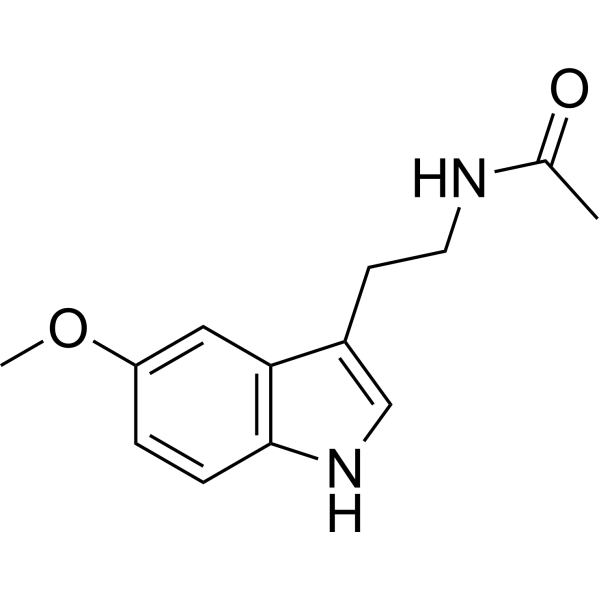
HY-B0075
MelatoninMelatonin Receptor Activator -

HY-17038AR
Agomelatine hydrochloride (Standard)MT1/2 Agonist -

HY-B0075R
Melatonin (standard)Melatonin Receptor Activator -
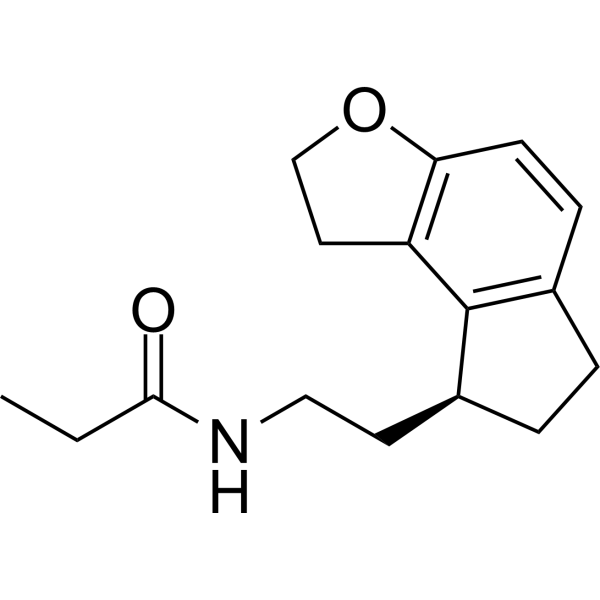
HY-A0014
RamelteonMT1/2 Inhibitor -
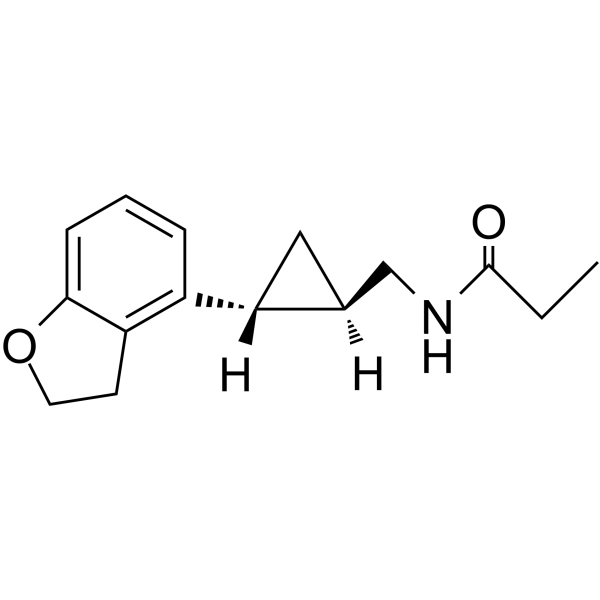
HY-14803
TasimelteonDual Melatonin Receptor Agonist -
HY-17038B
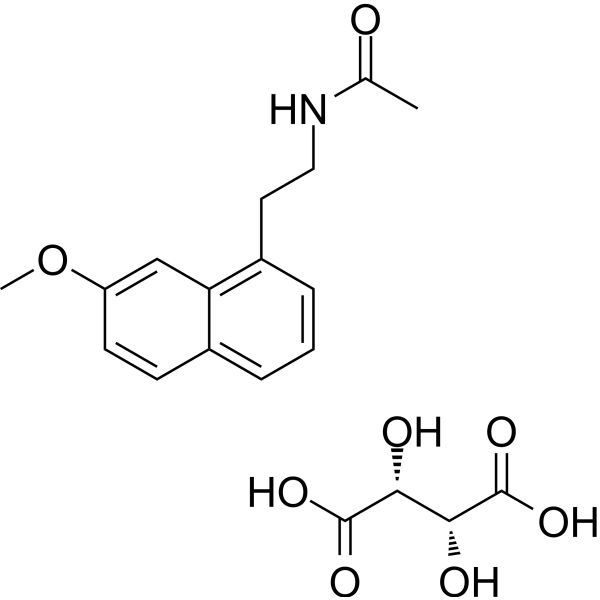
Agomelatine (L(+)-Tartaric acid)MT1/2 Agonist -

HY-A0014R
Ramelteon (Standard)MT1/2 Inhibitor -

HY-14803R
Tasimelteon (Standard)Dual Melatonin Receptor Agonist
Publications Citing Use of MedChemExpress (MCE) Agomelatine hydrochloride
More- Protein Cell. 2019 Mar;10(3):178-195. [Abstract]
- Nat Commun. 2025 Nov 6;16(1):9812. [Abstract]
- NPJ Digit Med. 2025 Nov 17;8(1):663. [Abstract]
- Cell Commun Signal. 2023 May 25;21(1):123. [Abstract]
- Neurosci Bull. 2025 Nov 18. [Abstract]
- Biochem Pharmacol. 2026 Feb:244:117624. [Abstract]
- Cell Rep Methods. 2023 Oct 23;3(10):100599. [Abstract]
- Pest Manag Sci. 2021 Jul;77(7):3561-3570. [Abstract]
- bioRxiv. 2025 Sep 21.
 Customer Validation & Images

-
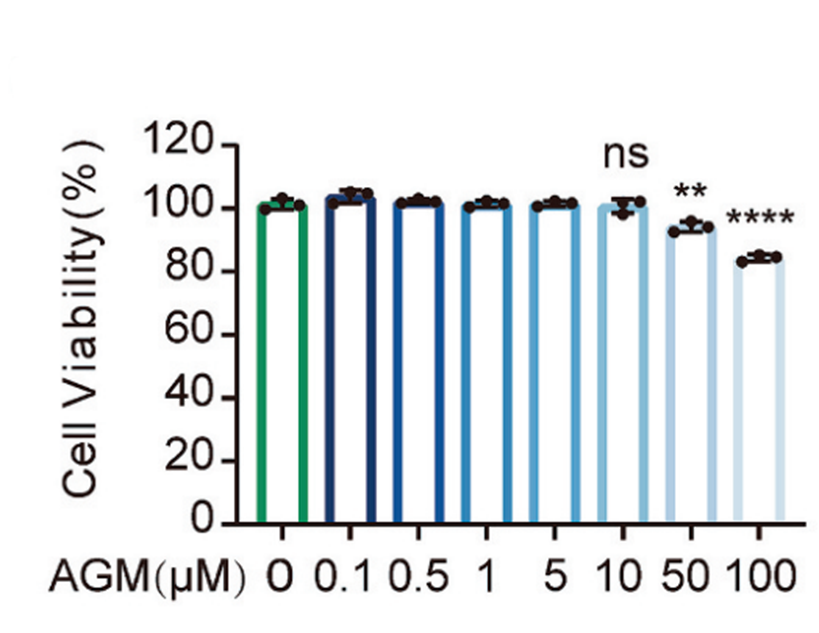
Cell Proliferation/Viability Assay
-
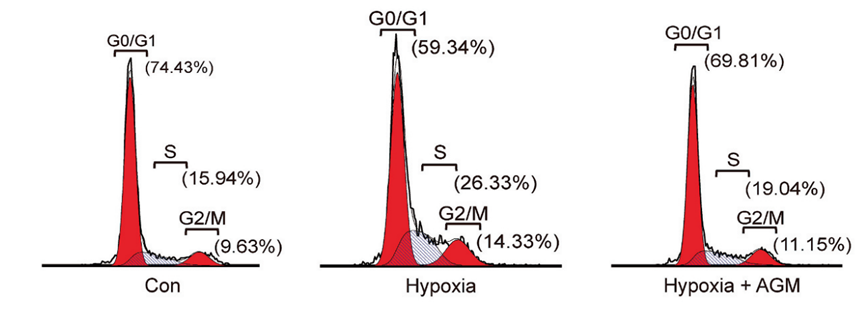
Flow Cytometry
-
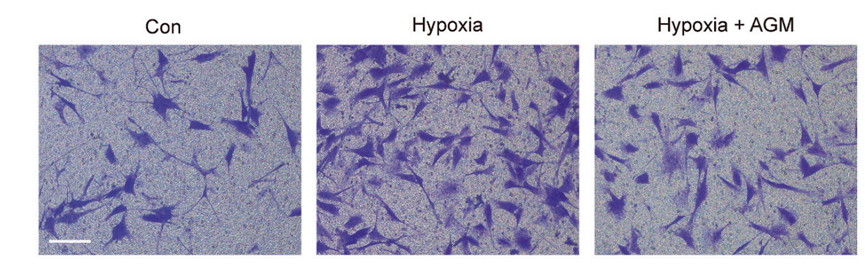
Cell Migration/Invasion Assay
-
IF
-
WB
All 5-HT Receptor Isoforms
More

Biological Activity
Description
IC50 & Target
|
5-HT2C Receptor |
5-HT2C Receptor 6.4 (pKi, native porcine) |
5-HT2C Receptor 6.2 (pKi, human) |
hMT1 0.1 (Ki, CHO Cells) |
hMT1 0.06 (Ki, HEK Cells) |
hMT2 0.12 (Ki, CHO Cells) |
hMT2 0.27 (Ki, HEK Cells) |
In Vitro
Agomelatine (S 20098) acts as a full agonist of MT1 and MT2 receptors with EC50s of 1.6±0.4, 0.10±0.04 nM for CHO hMT1 CHO-hMT2 (hΜΤ1 and hΜΤ2 receptors expressed in CHO or HEK cell membranes)[1].
Agomelatine (S20098) also interacts with h5-HT2B receptors (6.6), whereas it shows low affinity at native (rat)/cloned, human 5-HT2A (<5.0/5.3) and 5-HT1A (<5.0/5.2) receptors, and negligible (<5.0) affinity for other 5-HT receptors[2].
MedChemExpress (MCE) has not independently confirmed the accuracy of these methods. They are for reference only. .
In Vivo
MedChemExpress (MCE) has not independently confirmed the accuracy of these methods. They are for reference only.
-
Animal Model:Female Swiss mice (20-30 g) were administered PTZ (85 mg/kg, i.p.), PTX (7 mg/kg, i.p.), strychnine (75 mg/kg, i.p.), Pilocarpine (400 mg/kg, i.p.), respectively[3]
-
Dosage:25, 50, or 75 mg/kg
-
Administration:Administered intraperitoneally (i.p.)
-
Result:All dosages showed a significant decrease in thiobarbituric acid reactive substances (TBARS) levels and nitrite content in all brain areas when compared to controls in the Pilocarpine induced seizure model.
All dosages decreased TBARS levels in all brain areas, and at low doses (25 or 50 mg/kg) decreased nitrite contents, but only at 25 or 50 mg/kg showed a significant increase in catalase activity in three brain areas when compared to controls in the Strychnine-induced seizure model.
Did not have any antioxidant effects on parameters of oxidative stress produced by PTX- or PTZ-induced seizure models when compared to controls.
Clinical Trial
| NCT Number | Sponsor | Condition | Start Date |
Phase

|
|---|---|---|---|---|
| NCT01329991 | Plexxikon| | 2011-05 | PHASE1 |


Chemical Information
-
CAS No. 1176316-99-6
-
Appearance Solid
-
Molecular Weight 279.76
-
Formula C15H18ClNO2
-
Color White to off-white
-
SMILES
CC(NCCC1=C2C=C(OC)C=CC2=CC=C1)=O.Cl
-
Synonyms
S-20098 hydrochloride
-
Shipping
Room temperature in continental US; may vary elsewhere.
-
Storage
4°C, sealed storage, away from moisture
* In solvent : -80°C, 6 months; -20°C, 1 month (sealed storage, away from moisture)


Publications (9)
-
Journal Impact Factor
-
Most Recent
-
Protein Cell
Identification of serotonin 2A receptor as a novel HCV entry factor by a chemical biology strategy. [Abstract]2019 Mar;10(3):178-195. PMID: 29542010 -
Nat Commun
2025 Nov 6;16(1):9812. PMID: 41198646 -
NPJ Digit Med
Tandospirone augments cisplatin treatment by lowering cholesterol and managing distress in NSCLC patients. [Abstract]2025 Nov 17;8(1):663. PMID: 41249389 -
Cell Commun Signal
Tricyclic antidepressants induce liver inflammation by targeting NLRP3 inflammasome activation. [Abstract]2023 May 25;21(1):123. PMID: 37231437 -
Neurosci Bull
Agomelatine Targets Aquaporin-4 Polarization to Rescue Glymphatic Dysfunction in Parkinson's Disease. [Abstract]2025 Nov 18. PMID: 41251938 -
Biochem Pharmacol
Agomelatine alleviates hypoxia-induced pulmonary arterial hypertension by activating mitophagy via the SIRT1/FoxO1/ULK1 signaling pathway. [Abstract]2026 Feb:244:117624. PMID: 41360230
Agomelatine hydrochloride purchased from MedChemExpress. Usage Cited in: Biochem Pharmacol. 2026 Feb:244:117624. [Abstract]
PASMCs exposed to Agomelatine (AGM) (0.1–100 μM) for 48 h under normoxia with viability quantified by CCK-8 assay.
Agomelatine hydrochloride purchased from MedChemExpress. Usage Cited in: Biochem Pharmacol. 2026 Feb:244:117624. [Abstract]
Cell cycle analysis by flow cytometry of control, hypoxia and hypoxia + Agomelatine (AGM) (10 μM) groups.
Agomelatine hydrochloride purchased from MedChemExpress. Usage Cited in: Biochem Pharmacol. 2026 Feb:244:117624. [Abstract]
Cell migration determined by transwell migration assay treated with Agomelatine (AMG) (10 μM).
Agomelatine hydrochloride purchased from MedChemExpress. Usage Cited in: Biochem Pharmacol. 2026 Feb:244:117624. [Abstract]
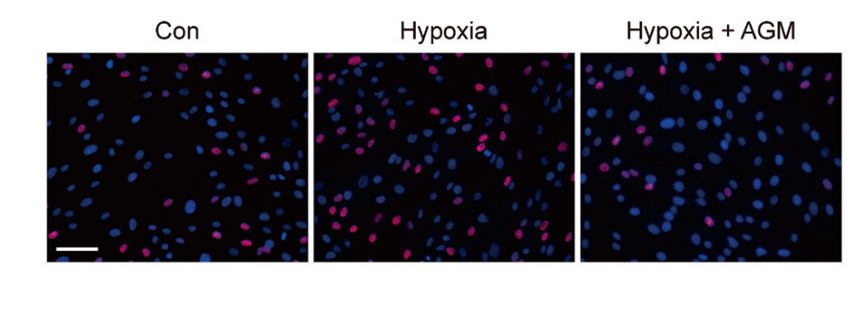
Representative photographs of the EdU incorporation assay of PASMCs treated with Agomelatine (AMG) (10 μM).
Agomelatine hydrochloride purchased from MedChemExpress. Usage Cited in: Biochem Pharmacol. 2026 Feb:244:117624. [Abstract]
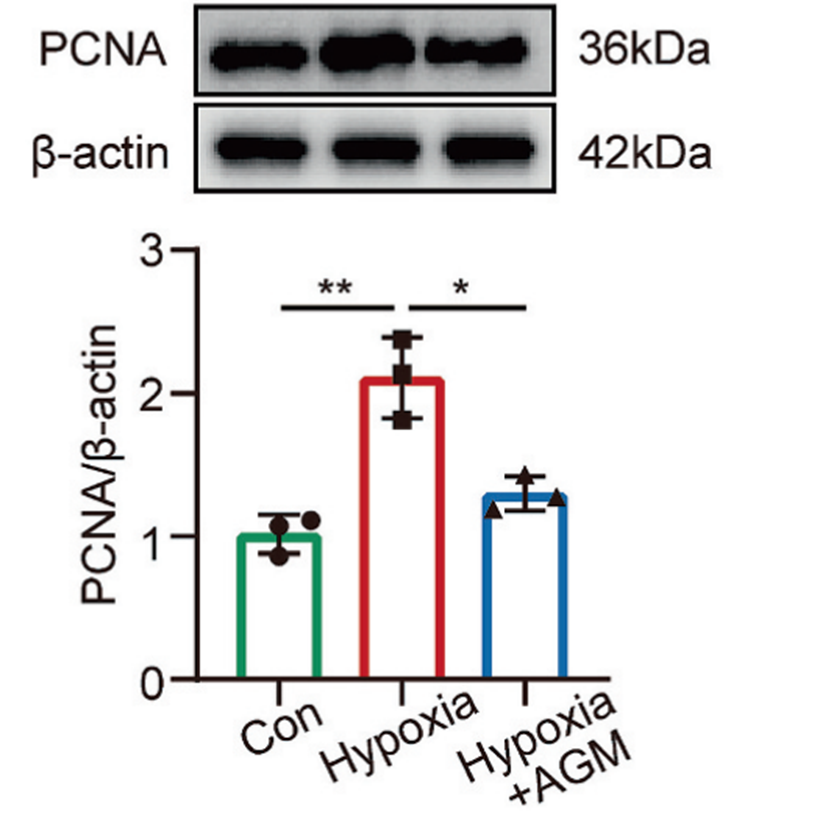
Western blot analysis of PCNA in control, hypoxia and hypoxia + Agomelatine (AGM) (10 μM) groups.
-
Cell Rep Methods
RECOVER identifies synergistic drug combinations in vitro through sequential model optimization. [Abstract]2023 Oct 23;3(10):100599. PMID: 37797618 -
Pest Manag Sci
MicroRNA-315-5p promotes rice black-streaked dwarf virus infection by targeting a melatonin receptor in the small brown planthopper. [Abstract]2021 Jul;77(7):3561-3570. PMID: 33840148 -


Solvent & Solubility
In Vitro:
DMSO : ≥ 100 mg/mL (357.45 mM; Hygroscopic DMSO has a significant impact on the solubility of product, please use newly opened DMSO)
H2O : < 0.1 mg/mL (insoluble)
* "≥" means soluble, but saturation unknown.
Please refer to the solubility information to select the appropriate solvent. Once prepared, please aliquot and store the solution to prevent product inactivation from repeated freeze-thaw cycles.
Storage method and period of stock solution: -80°C, 6 months; -20°C, 1 month (sealed storage, away from moisture). When stored at -80°C, please use it within 6 months. When stored at -20°C, please use it within 1 month.
Please refer to the solubility information to select the appropriate solvent. Once prepared, please aliquot and store the solution to prevent product inactivation from repeated freeze-thaw cycles.
Storage method and period of stock solution: -80°C, 6 months; -20°C, 1 month (sealed storage, away from moisture). When stored at -80°C, please use it within 6 months. When stored at -20°C, please use it within 1 month.
Concentration (start) × Volume (start) = Concentration (final) × Volume (final)
In Vivo:
Select the appropriate dissolution method based on your experimental animal and administration route.
- For the following dissolution methods, please ensure to first prepare a clear stock solution using an In Vitro approach and then sequentially add co-solvents:
- To ensure reliable experimental results, the clarified stock solution can be appropriately stored based on storage conditions. As for the working solution for In Vivo experiments, it is recommended to prepare freshly and use it on the same day.
- The percentages shown for the solvents indicate their volumetric ratio in the final prepared solution. If precipitation or phase separation occurs during preparation, heat and/or sonication can be used to aid dissolution.
Add each solvent one by one: 10% DMSO 40% PEG300 5% Tween-80 45% Saline
Solubility: ≥ 2.5 mg/mL (8.94 mM); Clear solution
This protocol yields a clear solution of ≥ 2.5 mg/mL (saturation unknown).
Taking 1 mL working solution as an example, add 100 μL DMSO stock solution (25.0 mg/mL) to 400 μL PEG300, and mix evenly; then add 50 μL Tween-80 and mix evenly; then add 450 μL Saline to adjust the volume to 1 mL.
Preparation of Saline: Dissolve 0.9 g sodium chloride in ddH₂O and dilute to 100 mL to obtain a clear Saline solution.
Add each solvent one by one: 10% DMSO 90% (20% SBE-β-CD in Saline)
Solubility: ≥ 2.5 mg/mL (8.94 mM); Clear solution
This protocol yields a clear solution of ≥ 2.5 mg/mL (saturation unknown).
Taking 1 mL working solution as an example, add 100 μL DMSO stock solution (25.0 mg/mL) to 900 μL 20% SBE-β-CD in Saline, and mix evenly.
Preparation of 20% SBE-β-CD in Saline (4°C, storage for one week): 2 g SBE-β-CD powder is dissolved in 10 mL Saline, completely dissolve until clear.
In Vivo Dissolution Calculator
Please enter the basic information of animal experiments:
-
-
-
-
Recommended: Prepare an additional quantity of animals to account for potential losses during experiments.
Please enter your animal formula composition:
-
%DMSO +
Recommended: Keep the proportion of DMSO in working solution below 2% if your animal is weak.
-
%+
-
+%Tween-80 + +
-
%Saline +
The co-solvents required include: DMSO, . All of co-solvents are available by MedChemExpress (MCE). , Tween 80. All of co-solvents are available by MedChemExpress (MCE).
Working solution concentration: 0.22 mg/mL
Method for preparing stock solution: mg drug dissolved in μL DMSO. Stock solution concentration: mg/mL. * In solvent : -80°C, 6 months; -20°C, 1 month (sealed storage, away from moisture)
1. Take μL DMSO stock solution;
2. Add μL .
μL , mix evenly;
3. Then add μL Tween 80, mix evenly;
4. Then add μL
Please ensure that the stock solution in the first step is dissolved to a clear state, and add co-solvents in sequence. You can use ultrasonic heating (ultrasonic cleaner, recommended frequency 20-40 kHz), vortexing, etc. to assist dissolution.


Purity & Documentation
-
Data Sheet (286 KB)
-
SDS (252 KB)
- English - EN (252 KB)
- Français - FR (252 KB)
- Deutsch - DE (252 KB)
- Norwegian - NO (252 KB)
- Español - ES (252 KB)
- Swedish - SV (252 KB)
- Italian - IT (252 KB)
- Korean - KR (252 KB)
- Portuguese - PT (252 KB)
-
Handling Instructions (2659 KB)
References
[1]. Audinot V, et al. New selective ligands of human cloned melatonin MT1 and MT2 receptors. Naunyn Schmiedebergs Arch Pharmacol. 2003 Jun;367(6):553-61. [Content Brief]
[2]. Millan MJ, et al. The novel melatonin agonist agomelatine (S20098) is an antagonist at 5-hydroxytryptamine2C receptors, blockade of which enhances the activity of frontocortical dopaminergic and adrenergic pathways. J Pharmacol Exp Ther. 2003 Sep;306(3):954-64. [Content Brief]
[3]. Aguiar CC, et al. Effects of agomelatine on oxidative stress in the brain of mice after chemically induced seizures. Cell Mol Neurobiol. 2013 Aug;33(6):825-35. [Content Brief]


Complete Stock Solution Preparation Table
Please refer to the solubility information to select the appropriate solvent. Once prepared, please aliquot and store the solution to prevent product inactivation from repeated freeze-thaw cycles.
Storage method and period of stock solution: -80°C, 6 months; -20°C, 1 month (sealed storage, away from moisture). When stored at -80°C, please use it within 6 months. When stored at -20°C, please use it within 1 month.
| Optional Solvent | Concentration Solvent Mass | 1 mg | 5 mg | 10 mg | 25 mg |
|---|---|---|---|---|---|
| DMSO | 1 mM | 3.5745 mL | 17.8725 mL | 35.7449 mL | 89.3623 mL |
| 5 mM | 0.7149 mL | 3.5745 mL | 7.1490 mL | 17.8725 mL | |
| 10 mM | 0.3574 mL | 1.7872 mL | 3.5745 mL | 8.9362 mL | |
| 15 mM | 0.2383 mL | 1.1915 mL | 2.3830 mL | 5.9575 mL | |
| 20 mM | 0.1787 mL | 0.8936 mL | 1.7872 mL | 4.4681 mL | |
| 25 mM | 0.1430 mL | 0.7149 mL | 1.4298 mL | 3.5745 mL | |
| 30 mM | 0.1191 mL | 0.5957 mL | 1.1915 mL | 2.9787 mL | |
| 40 mM | 0.0894 mL | 0.4468 mL | 0.8936 mL | 2.2341 mL | |
| 50 mM | 0.0715 mL | 0.3574 mL | 0.7149 mL | 1.7872 mL | |
| 60 mM | 0.0596 mL | 0.2979 mL | 0.5957 mL | 1.4894 mL | |
| 80 mM | 0.0447 mL | 0.2234 mL | 0.4468 mL | 1.1170 mL | |
| 100 mM | 0.0357 mL | 0.1787 mL | 0.3574 mL | 0.8936 mL |


Agomelatine hydrochloride Related Classifications
HY-17038A Related Classifications
 Powered by Bioz