1. Search Result
Search Result
Results for "

PARP-IN-1

" in MedChemExpress (MCE) Product Catalog:

139

Inhibitors & Agonists

12

Natural
Products

4

Isotope-Labeled Compounds

1

Click Chemistry

Cat. No. Product Name Target Research Areas Chemical Structure
  • HY-16106
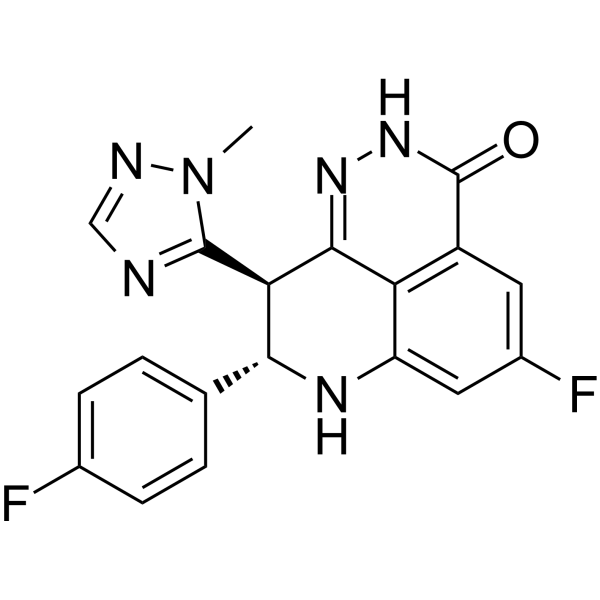
    Talazoparib
    Maximum Cited Publications
    98 Publications Verification

    BMN-673; LT-673

    PARP Cancer
    Talazoparib (BMN-673) is a highly potent, orally active PARP1/2 inhibitor.Talazoparib inhibits PARP1 and PARP2 enzyme activity with Kis of 1.2 nM and 0.87 nM, respectively. Talazoparib has antitumor activity [1].
    Talazoparib
  • HY-10617A
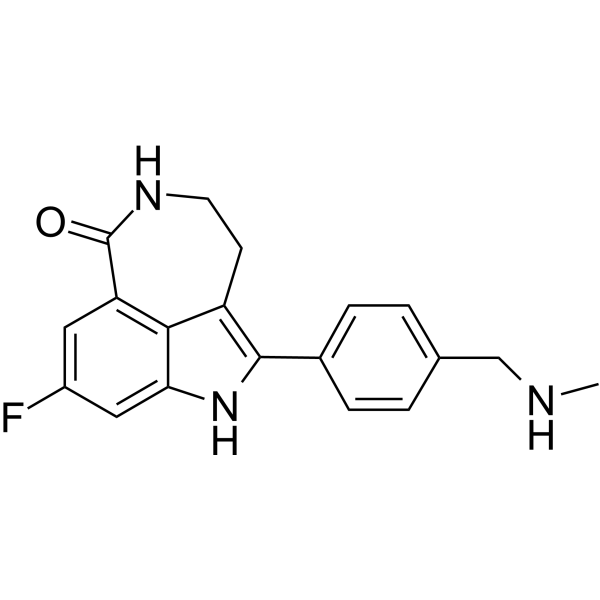
    Rucaparib
    45+ Cited Publications

    AG014699; PF-01367338

    PARP Cancer
    Rucaparib (AG014699) is an orally active, potent inhibitor of PARP proteins (PARP-1, PARP-2 and PARP-3) with a Ki of 1.4 nM for PARP1. Rucaparib is a modest hexose-6-phosphate dehydrogenase (H6PD) inhibitor. Rucaparib has the potential for castration-resistant prostate cancer (CRPC) research [1] .
    Rucaparib
  • HY-12022
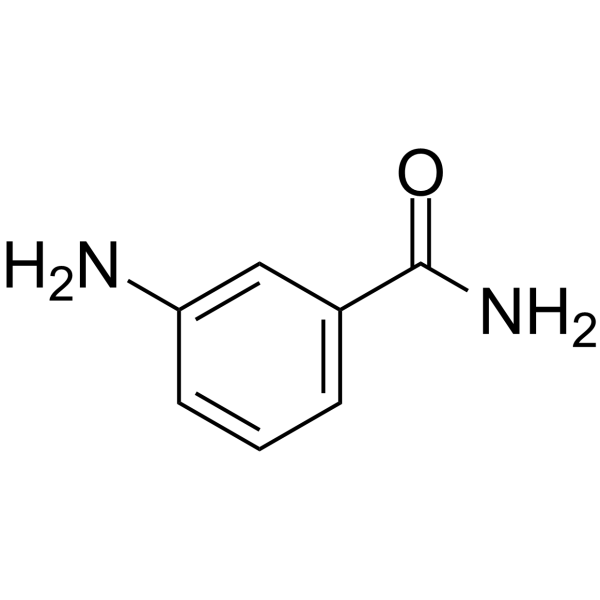
    3-Aminobenzamide
    5+ Cited Publications

    PARP-IN-1

    PARP Cancer
    3-Aminobenzamide (PARP-IN-1) is a potent inhibitor of PARP with IC50 of appr 50 nM in CHO cells, and acts as a mediator of oxidant-induced myocyte dysfunction during reperfusion.
    3-Aminobenzamide
  • HY-113432

    2PY

    Endogenous Metabolite PARP Metabolic Disease
    Nudifloramide (2PY) is one of the end products of nicotinamide-adenine dinucleotide (NAD) degradation. Nudifloramide significantly inhibits poly(ADP-ribose) polymerase (PARP-1) activity in vitro [1].
    Nudifloramide
  • HY-10617
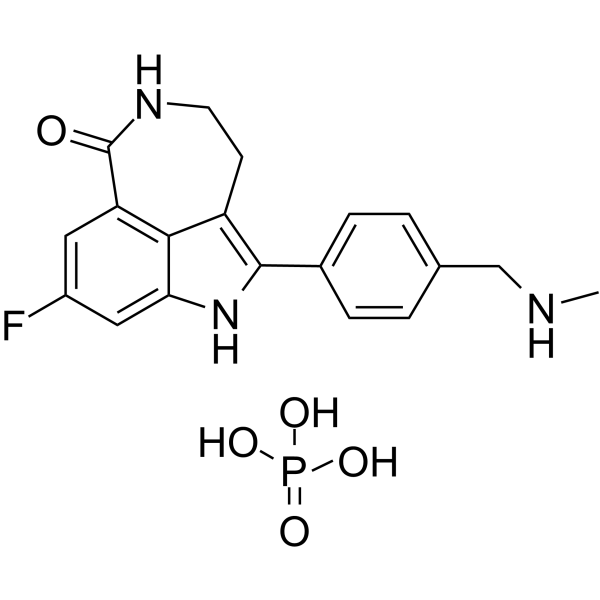
    Rucaparib phosphate
    45+ Cited Publications

    AG-014699 phosphate; PF-01367338 phosphate

    PARP Cancer
    Rucaparib (AG014699) phosphate is an orally active, potent inhibitor of PARP proteins (PARP-1, PARP-2 and PARP-3) with a Ki of 1.4 nM for PARP1. Rucaparib phosphate is a modest hexose-6-phosphate dehydrogenase (H6PD) inhibitor. Rucaparib phosphate has the potential for castration-resistant prostate cancer (CRPC) research [1] .
    Rucaparib phosphate
  • HY-137450

    IMP4297; JS109

    PARP Cancer
    Senaparib (IMP4297) is a highly potent, selective and orally active PARP1/2 inhibitor. Senaparib (IMP4297) exhibits strong antitumor activity in animal models [1].
    Senaparib
  • HY-108413
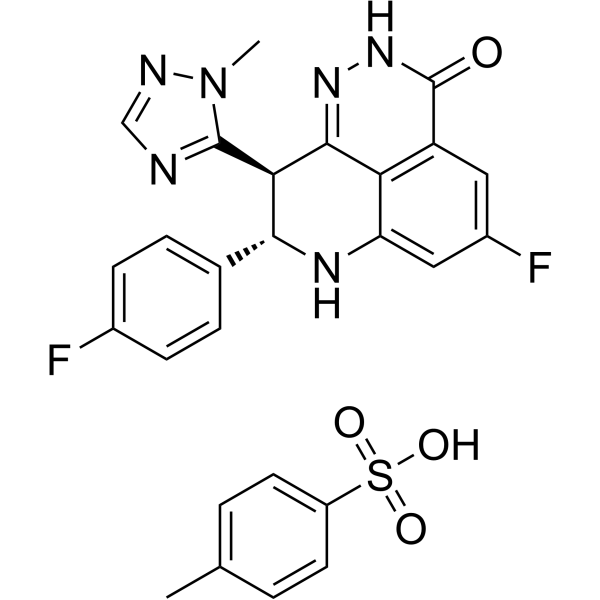
    Talazoparib tosylate
    Maximum Cited Publications
    98 Publications Verification

    BMN 673ts

    PARP Cancer
    Talazoparib tosylate (BMN 673ts) is a novel, potent and orally available PARP1/2 inhibitor with an IC50 of 0.57 nM for PARP1.
    Talazoparib tosylate
  • HY-12032
    AG14361
    5+ Cited Publications

    PARP Cancer
    AG14361 is a potent PARP-1 inhibitor, with a Ki of < 5 nM, and in permeabilized SW620 and intact SW620 cells, the IC50s are 29 nM and 14 nM, respectively.
    AG14361
  • HY-102003
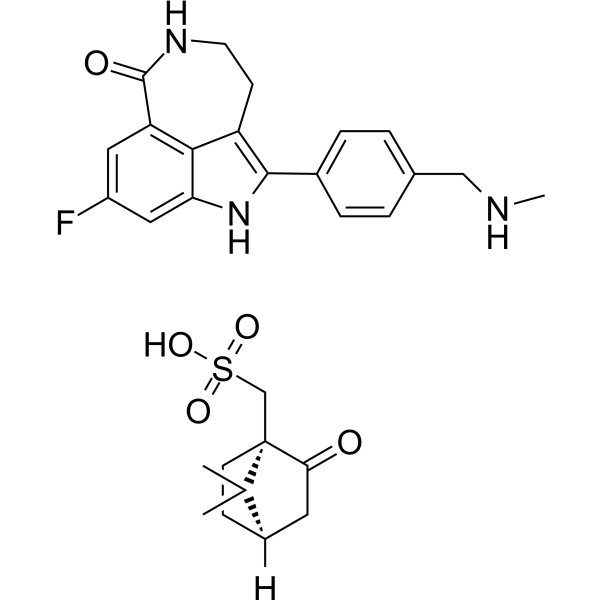
    Rucaparib monocamsylate
    35+ Cited Publications

    AG014699 monocamsylate; PF-01367338 monocamsylate

    PARP Cancer
    Rucaparib (AG014699) monocamsylate is an orally active, potent inhibitor of PARP proteins (PARP-1, PARP-2 and PARP-3) with a Ki of 1.4 nM for PARP1. Rucaparib monocamsylate is a modest hexose-6-phosphate dehydrogenase (H6PD) inhibitor. Rucaparib monocamsylate has the potential for castration-resistant prostate cancer (CRPC) research [1] .
    Rucaparib monocamsylate
  • HY-13688
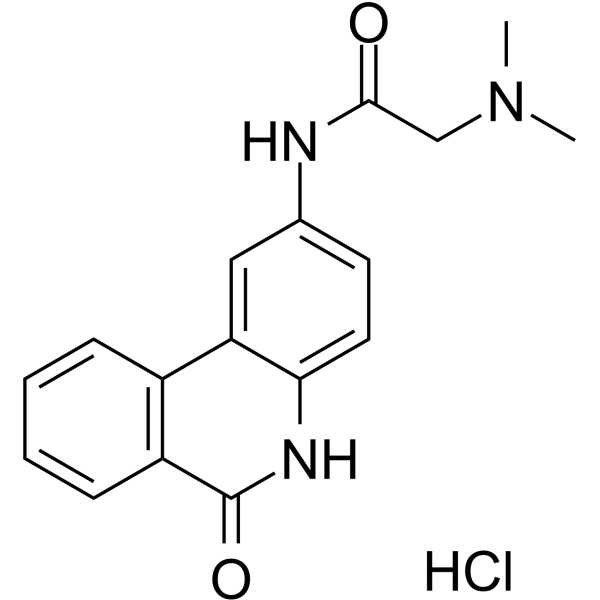
    PJ34 hydrochloride
    30+ Cited Publications

    PARP Cancer
    PJ34 hydrochloride is an inhibitor of PARP1/2 with IC50 of 110 nM and 86 nM, respectively.
    PJ34 hydrochloride
  • HY-14478
    UPF 1069
    1 Publications Verification

    PARP Cancer
    UPF 1069 is a PARP inhibitor, with IC50s of 8 and 0.3 μM for PARP-1 and PARP-2, respectively.
    UPF 1069
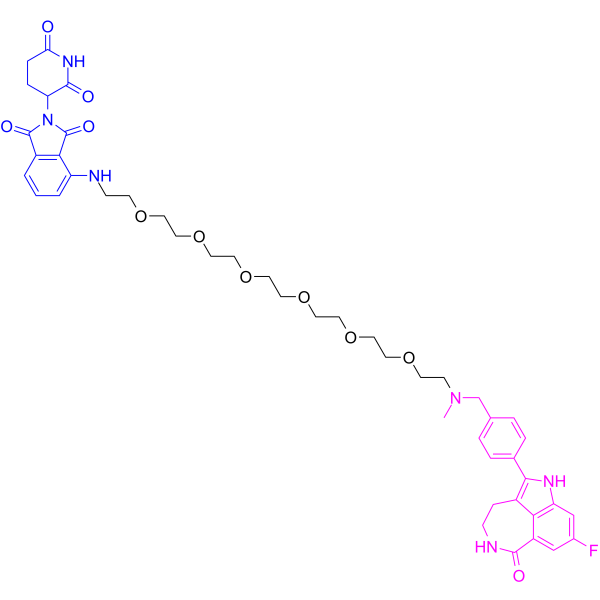
  • HY-130644
    iRucaparib-AP6
    2 Publications Verification

    PROTACs PARP Cancer
    iRucaparib-AP6 is a highly efficient and specific PROTAC PARP1 degrader. iRucaparib-AP6, a non-trapping PARP1 degrader, blocks both the catalytic activity and scaffolding effects of PARP1 .
    iRucaparib-AP6
  • HY-113352

    Endogenous Metabolite PARP Cancer
    7-Methylguanine is an orally active and competitive PARP-1 inhibitor with a Ki value of 61 μM. 7-Methylguanine is a metabolite of nucleic acids. 7-Methylguanine has anticancer activity against uterine sarcoma and colon adenocarcinoma. 7-Methylguanine is used as a probe for protein-DNA interactions [1] .
    7-Methylguanine
  • HY-161302

    Apoptosis DNA/RNA Synthesis PARP Cancer
    Polθ/PARP-IN-1 (compound 25d) is a potent dual DNA polymerase theta (Polθ) and PARP inhibitor with IC50 values of 45.6, 5.4 nM, respectively. Polθ/PARP-IN-1 shows antiproliferative activity. Polθ/PARP-IN-1 induces apoptosis and cell cycle arrest at G2/M phase, causes DNA damage. Polθ/PARP-IN-1 shows anti-tumor activity [1].
    Polθ/PARP-IN-1
  • HY-108632
    BYK204165
    1 Publications Verification

    PARP Cancer
    BYK204165 is a potent and selective PARP1 inhibitor. BYK204165 inhibits cell-free recombinant human PARP-1 (hPARP-1) with a pIC50 of 7.35 (pKi=7.05), and murine PARP-2 (mPARP-2) with a pIC50 of 5.38, respectively. BYK204165 displays 100-fold selectivity for PARP-1 .
    BYK204165
  • HY-18954
    NMS-P118
    3 Publications Verification

    PARP Cancer
    NMS-P118 is a potent, orally available, and highly selective PARP-1 Inhibitor for cancer therapy.
    NMS-P118
  • HY-W006566

    5-AmINoisoquINolIN-1-one

    PARP Cancer
    5-AIQ (5-Aminoisoquinolin-1-one) is a PARP-1 inhibitor. 5-AIQ is an important functional group in various drugs. 5-AIQ reduces the tissue injury associated with ischemia-reperfusion of the liver, it can be used for the research of the research conditions associated with ischemia-reperfusion of the liver [1] .
    5-AIQ
  • HY-145734

    Microtubule/Tubulin Cancer
    AMXI-5001 is a potent, orally active, and dual parp1/2 and microtubule polymerization inhibitor. MXI-5001 exhibits selective antitumor cytotoxicity across a wide variety of human cancer cells with much lower IC50s than existing clinical PARP1/2 inhibitors. AMXI-5001 induces complete regression of established tumors, including exceedingly large tumors [1].
    AMXI-5001
  • HY-119653

    PARP Cancer
    AZ9482 is a triple PARP1/2/6 inhibitor, with IC50 values of 1 nM, 1 nM and 640 nM for PARP1, PARP2 and PARP6, respectively [1].
    AZ9482
  • HY-122661

    MPH

    PARP Apoptosis Cancer
    Mefuparib hydrochloride (MPH) is an orally active, substrate-competitive and selective PARP1/2 inhibitor with IC50s of 3.2 nM and 1.9 nM, respectively. Mefuparib hydrochloride induces apoptosis and possesses prominent anticancer activity in vitro and in vivo [1] .
    Mefuparib hydrochloride
  • HY-134354A

    ADP-ribose-pNP disodium

    Poly(ADP-ribose) Glycohydrolase (PARG) Others
    pNP-ADPr disodium is a colorimetric substrate that used for the first continuous Poly(ADP-ribose) glycohydrolase (PARG) and ADP-ribosyl hydrolase 3 (ARH3) activity assays. pNP-ADPr disodium can be used for the research of poly(ADP-ribose)polymerase (PARP) enzymes .
    pNP-ADPr disodium
  • HY-113432S

    Endogenous Metabolite PARP Metabolic Disease
    Nudifloramide-d3 (2PY-d3) is the deuterium labeled Nudifloramide. Nudifloramide (2PY) is one of the end products of nicotinamide-adenine dinucleotide (NAD) degradation. Nudifloramide significantly inhibits poly(ADP-ribose) polymerase (PARP-1) activity in vitro [1].
    Nudifloramide-d3
  • HY-128836

    Ligands for E3 Ligase Others
    (4R,5S)-Nutlin carboxylic acid is a MDM2 ligand and also a nutlin-3 derivative. (4R,5S)-Nutlin carboxylic acid can be linked to target protein ligands via a linker to form a PROTAC that can be used for targeting PARP1 .
    (4R,5S)-Nutlin carboxylic acid
  • HY-161288

    PARP Cancer
    UKTT15 (compound 6) is an allosteric inhibitor of PARP1 .
    UKTT15
  • HY-132297A
    PARP1-IN-5 dihydrochloride
    1 Publications Verification

    PARP Cancer
    PARP1-IN-5 dihydrochloride is a low toxicity, orally active, potent and selective PARP-1 inhibitor (IC50 =14.7 nM). PARP1-IN-5 dihydrochloride can be used for the research of cancer [1].
    PARP1-IN-5 dihydrochloride
  • HY-113432R

    2PY (Standard)

    Reference Standards Endogenous Metabolite PARP Metabolic Disease
    Nudifloramide (Standard) is the analytical standard of Nudifloramide. This product is intended for research and analytical applications. Nudifloramide (2PY) is one of the end products of nicotinamide-adenine dinucleotide (NAD) degradation. Nudifloramide significantly inhibits poly(ADP-ribose) polymerase (PARP-1) activity in vitro [1].
    Nudifloramide (Standard)
  • HY-12022R

    PARP-IN-1 (Standard)

    PARP Reference Standards Cancer
    3-Aminobenzamide (Standard) is the analytical standard of 3-Aminobenzamide. This product is intended for research and analytical applications. 3-Aminobenzamide (PARP-IN-1) is a potent inhibitor of PARP with IC50 of appr 50 nM in CHO cells, and acts as a mediator of oxidant-induced myocyte dysfunction during reperfusion.
    3-Aminobenzamide (Standard)
  • HY-105253

    PARP Neurological Disease
    PARP-2/1-IN-2 (Compound 4a), the enantiomer of Veliparib (HY-10129), is a potent PARP inhibitor with Kis of 2 and 5 nM against PARP-2 and PARP-1, respectively. PARP-2/1-IN-2 has an EC50 of 3 nM in a cell based assay of PARP activity .
    PARP-2/1-IN-2
  • HY-160937

    Ligands for Target Protein for PROTAC PARP Cancer
    AZD-9574-acid (Compound 70D) is a PARP-1 ligand. AZD-9574-acid serves as a Ligand for Target Protein for PROTAC for the synthesis of PARP-1 PROTAC degraders. AZD-9574-acid is applicable to cancer research [1].
    AZD-9574-acid
  • HY-116218

    JPI-289 free base

    PARP Cardiovascular Disease Neurological Disease
    Amelparib (JPI-289 free base) is a potent, orally active, and water-soluble inhibitor of PARP-1. Amelparib inhibits PARP-1 activity (IC50=18.5 nM) and cellular PAR formation (IC50=10.7 nM) in the nanomolar range. Amelparib is a potential neuroprotective agent. Amelparib has the potential for the research of acute ischaemic stroke [1].
    Amelparib
  • HY-W156961

    PARP Neurological Disease
    LS-75 is a PARP-1 inhibitor with blood-brain permeability and IC50 value of 18 μM. LS-75 has neuroprotective activity [1].
    LS-75
  • HY-146336

    PARP Apoptosis Cancer
    PARP1/2/TNKS1/2-IN-1 (Compound I-9) is a dual PARP-1, PARP-2, TNKS1 and TNKS2 inhibitor with IC50 values of 0.25 nM, 1.2 nM, 13.5 nM and 4.15 nM against PARP-1, PARP-2, TNKS1 and TNKS2, respectively. PARP1/2/TNKS1/2-IN-1 exhibits favorable synergistic antitumor efficacy and induces apoptosis [1].
    PARP1/2/TNKS1/2-IN-1
  • HY-105303

    PARP Cancer
    CEP-9722, the proagent of CEP-8983, is a selective and orally active PARP-1 and PARP-2 inhibitor with IC50s of 20 nM and 6 nM, respectively. CEP-9722 has anticancer effects [1] .
    CEP-9722
  • HY-134354

    ADP-ribose-pNP

    Poly(ADP-ribose) Glycohydrolase (PARG) Others
    pNP-ADPr is a colorimetric substrate that used for the first continuous Poly(ADP-ribose) glycohydrolase (PARG) and ADP-ribosyl hydrolase 3 (ARH3) activity assays. pNP-ADPr can be used for the research of poly(ADP-ribose)polymerase (PARP) enzymes .
    pNP-ADPr
  • HY-149348

    Topoisomerase PARP Apoptosis Cancer
    DiPT-4 is a dual TOP1/PARP1 inhibitor that induces massive DNA double-strand breaks (DSBs), cell cycle arrest, and apoptosis in cancer cells. DiPT-4 has the potential to overcome cancer drug resistance [1].
    DiPT-4
  • HY-105692

    PARP Neurological Disease
    DR2313 is a potent, selective, competitive and brain-penetrant inhibitor of poly(ADP-ribose) polymerase (PARP), with IC50s of 0.20 μM and 0.24 μM for PARP-1 and PARP-2, respectively. DR2313 exhibits neuroprotective effects on ischemic injuries in vitro and in vivo [1] .
    DR2313
  • HY-16106S1

    BMN-673-d4; LT-673-d4

    Isotope-Labeled Compounds PARP Cancer
    Talazoparib-d4 (BMN-673-d4) is deuterium labeled Talazoparib. Talazoparib (BMN-673) is a highly potent, orally active PARP1/2 inhibitor.Talazoparib inhibits PARP1 and PARP2 enzyme activity with Kis of 1.2 nM and 0.87 nM, respectively. Talazoparib has antitumor activity [1].
    Talazoparib-d4
  • HY-102003A

    AG014699 camsylate; PF-01367338 camsylate

    PARP Cancer
    Rucaparib (AG014699) camsylate is an orally active, potent inhibitor of PARP proteins (PARP-1, PARP-2 and PARP-3) with a Ki of 1.4 nM for PARP1. Rucaparib camsylate is a modest hexose-6-phosphate dehydrogenase (H6PD) inhibitor. Rucaparib camsylate has the potential for castration-resistant prostate cancer (CRPC) research [1] .
    Rucaparib camsylate
  • HY-157165

    Microtubule/Tubulin PARP Cancer
    Tubulin/PARP-IN-1 (compound 14) is a dual PARP-tubulin inhibitor with activity against endometrial cancer. Tubulin/PARP-IN-1 inhibits PARP and tubulin with IC50s of 74 nM (PARP1), 109 nM (PARP2), and 1.4 μM (Microtubule/Tubulin), respectively. Tubulin/PARP-IN-1 can induce apoptosis and autophagy and cause cell cycle arrest in the G2/M phase [1].
    Tubulin/PARP-IN-1
  • HY-164475

    PARP Cancer
    PARP1-IN-29 is an orally active PARP-1 inhibitor with an IC50 value of 6.3 nM. PARP1-IN-29, after being labeled with [18F], can be used for positron emission tomography (PET) imaging, specifically targeting PARP-1 in tumors. PARP1-IN-29 is applicable in the fields of oncology and imaging research, particularly for detecting PARP-1 activity in cancer [1].
    PARP1-IN-29
  • HY-161606

    PARP Cancer
    PARP-1/2/7-IN-1 (compound 86) is a potent inhibitor of PARP-1/2/7, with the IC50 of < 10 nM [1].
    PARP-1/2/7-IN-1
  • HY-10615
    A-620223
    1 Publications Verification

    PARP Cancer
    A-620223 is a PARP-1 inhibitor with a Ki of 8 nM against PARP-1 and EC50 of 3 nM in a whole cell assay. A-620223 demonstrates good in vivo efficacy in a B16F10 subcutaneous murine melanoma model in combination with Temozolomide (TMZ) (HY-17364) and in an MX-1 breast xenograph model in combination with Cisplatin (HY-17394). A-620223 can be used for the studies of melanoma and breast cancer [1].
    A-620223
  • HY-128599

    PARP Cancer
    NMS-P515 is a potent, orally active and stereospecific PARP-1 inhibitor, with a Kd of 16 nM and an IC50 of 27 nM (in Hela cells). Anti-tumor activity [1].
    NMS-P515
  • HY-34386

    PARP Inflammation/Immunology Cancer
    6(5H)-Phenanthridinone is a potent PARP-1 inhibitor and immunomodulator. 6(5H)-Phenanthridinone inhibits cell proliferation and can be used in cancer research [1].
    6(5H)-Phenanthridinone
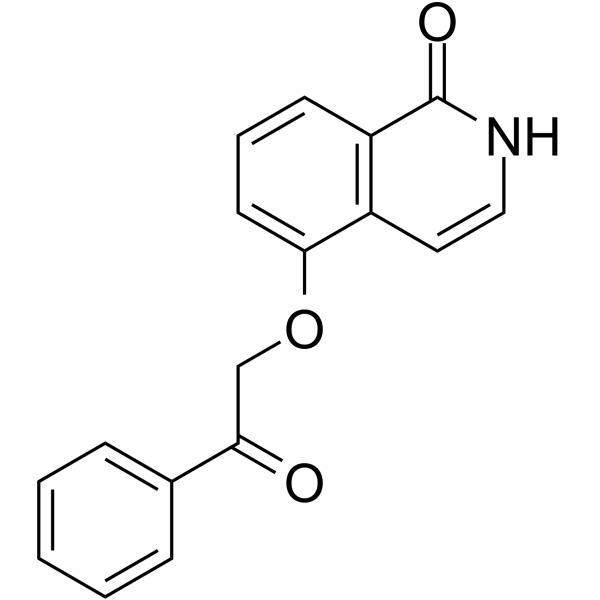
  • HY-153581

    PARP Others
    ARTD3/PARP3-IN-1 is an unselective inhibitor of diphtheria toxin-like ADP-ribosyltransferase 3 (ARTD3)/PARP3 .
    ARTD3/PARP3-IN-1
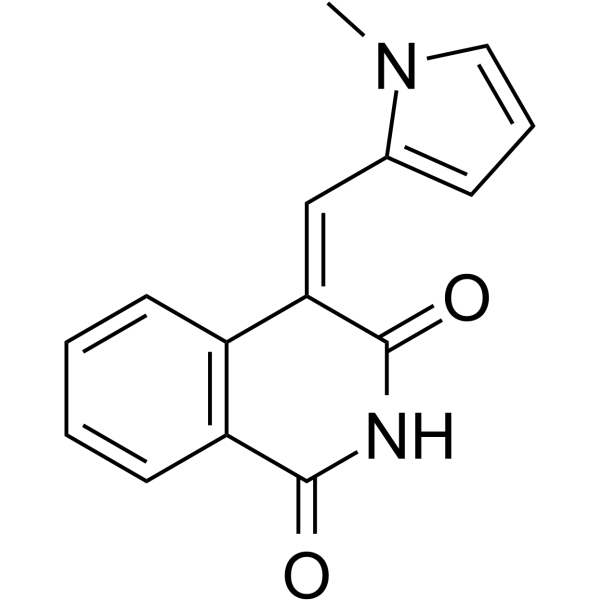
  • HY-123232

    PARP Cancer
    KU-0058684 is a potent PARP inhibitor, with an IC50 of 3.2 nM for PARP-1. KU-0058684 significantly reduces DNA double strand break (DSB) repair [1] .
    KU-0058684
  • HY-N7569

    Apoptosis Caspase PPAR Cancer
    Demethoxyfumitremorgin C is a secondary metabolite of the marine fungus, Aspergillus fumigatus. Demethoxyfumitremorgin C induces prostate cancer cell apoptosis. Demethoxyfumitremorgin C activates caspase-3, -8, and -9, leading to PARP/ cleavage .
    Demethoxyfumitremorgin C
  • HY-132297

    PARP Cancer
    PARP1-IN-5 is a low toxicity, orally active, potent and selective PARP-1 inhibitor (IC50 =14.7 nM). PARP1-IN-5 can be used for the research of cancer [1].
    PARP1-IN-5
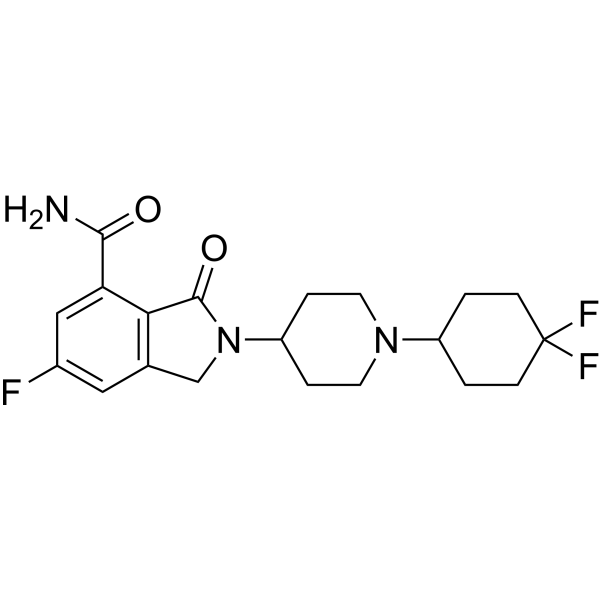
  • HY-177100

    PARP Others
    Lotixparib (Example 1) is an inhibitor of poly(ADP-ribose)polymerase-1 (PARP-1). Lotixparib has cytoprotective effect against a retinal disease. Lotixparib can be studied in research for PARP-1-associated diseases [1].
    Lotixparib
  • HY-132157

    PARP Cancer
    8-Chloroquinazolin-4-ol is a poly (ADP-ribose) polymerase-1 (PARP-1) inhibitor with an IC50 value of 5.65 μM. 8-Chloroquinazolin-4-ol can be used in cancer-related research [1].
    8-Chloroquinazolin-4-ol

Inquiry Online

Your information is safe with us. * Required Fields.

Salutation


Country or Region *

Applicant Name *


Organization Name *

Department *


Email Address *


Product Name *

Cat. No.


Requested quantity *

Phone Number *


Remarks

Inquiry Online

Inquiry Information

Product Name:
Cat. No.:
Quantity:
MCE Japan Authorized Agent:

