



Amelparib
Based on 1 Customer Validation
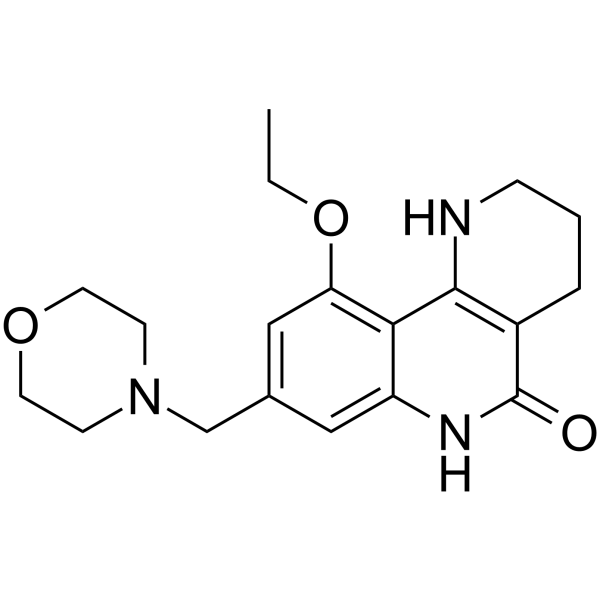
Amelparib (JPI-289 free base) is a potent, orally active, and water-soluble inhibitor of PARP-1. Amelparib inhibits PARP-1 activity (IC50=18.5 nM) and cellular PAR formation (IC50=10.7 nM) in the nanomolar range. Amelparib is a potential neuroprotective agent. Amelparib has the potential for the research of acute ischaemic stroke.
For research use only. We do not sell to patients.
- Purity : 99.17%
- CAS No.: 1227156-72-0
- Formula: C19H25N3O3
- Molecular Weight:343.42
-
Storage:Powder -20°C, 3 years , 4°C, 2 years ; In solvent -80°C, 6 months , -20°C, 1 month

To place orders, for customer services and technical support, please contact: MedChemExpress USA
Tel: 609-228-6898 E-mail: [email protected] [email protected]


-
 Biological Activity
-
Chemical Information
-
Solvent & Solubility
- Purity & Documentation
- References
-
 Help & FAQs


-
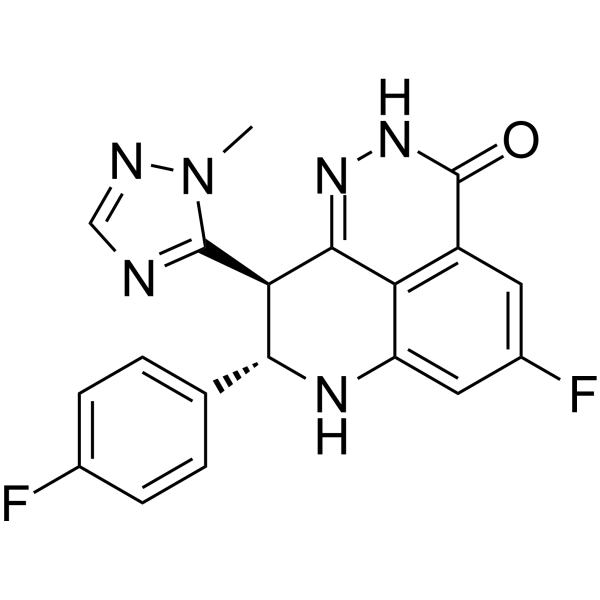
HY-16106
TalazoparibPARP Inhibitor -
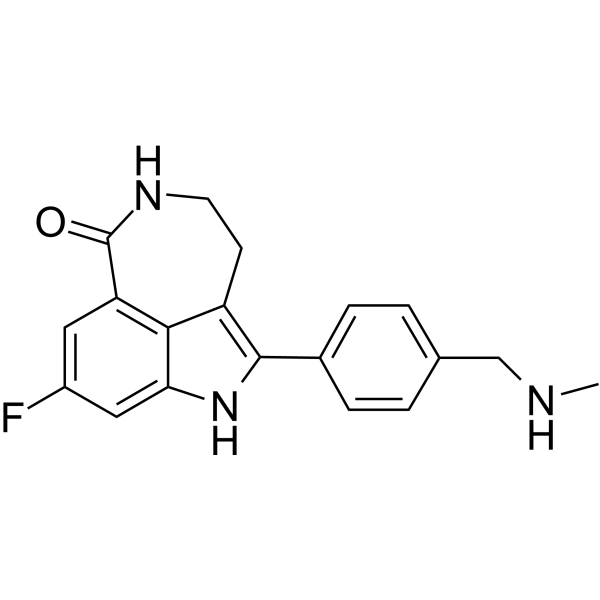
HY-10617A
RucaparibPARP Inhibitor -
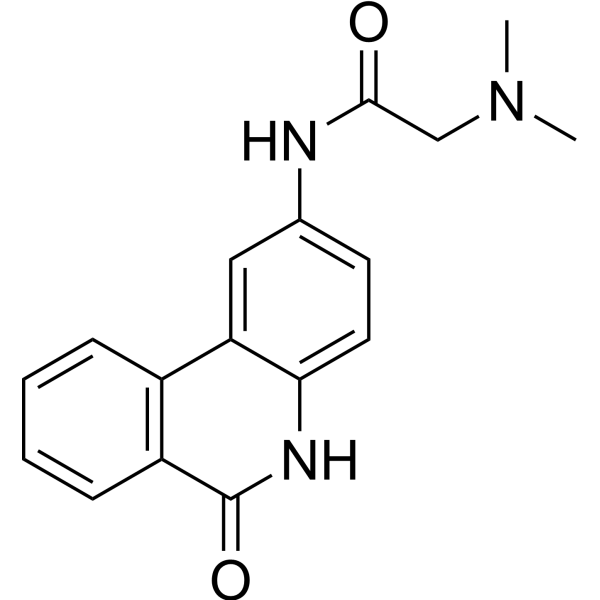
HY-13688A
PJ34PARP Inhibitor -
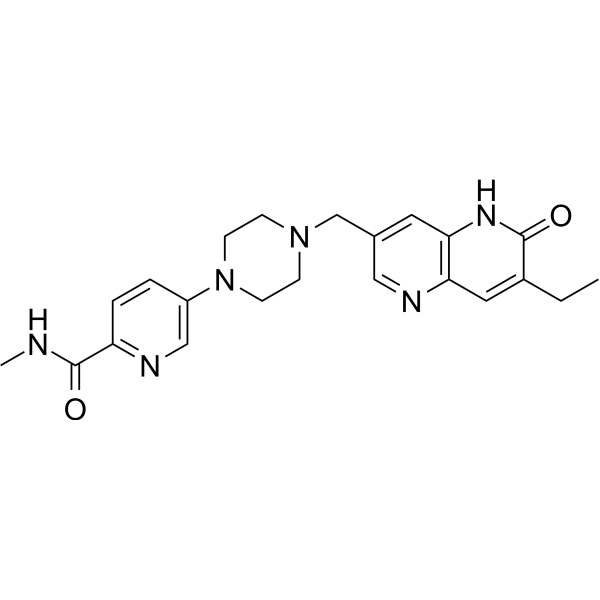
HY-132167
SaruparibPARP Inhibitor -
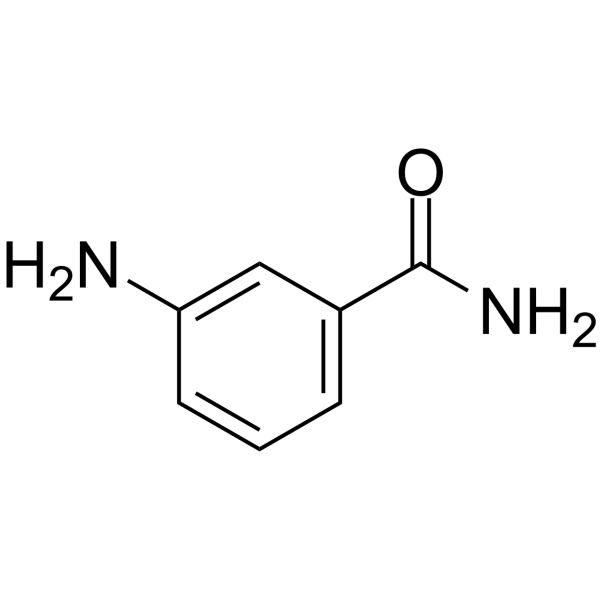
HY-12022
3-AminobenzamidePARP Inhibitor -
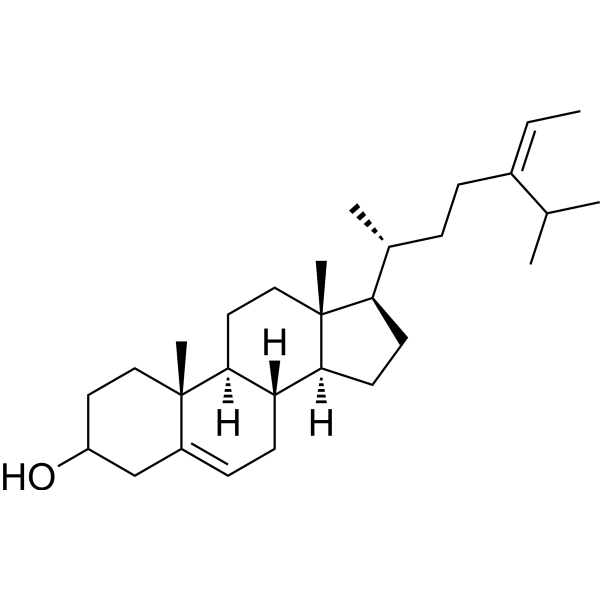
HY-N4103
FucosterolBioactive Sterol -
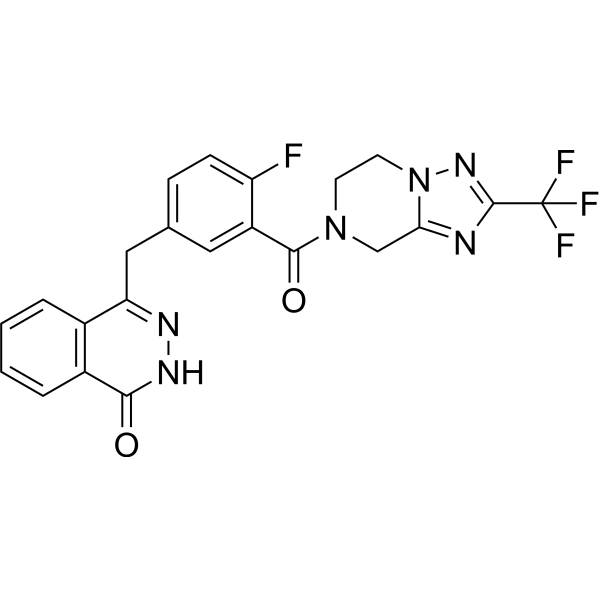
HY-114778
FluzoparibPARP1 Inhibitor -
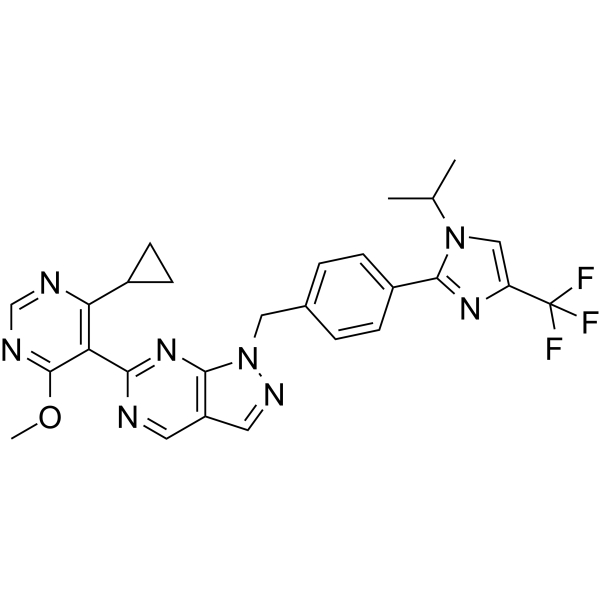
HY-145471
KSQ-4279USP1 Inhibitor -
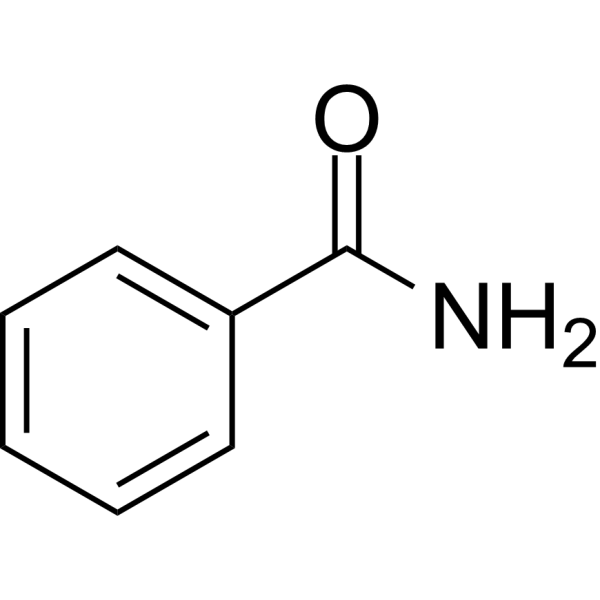
HY-Z0283
BenzamidePARP Inhibitor -
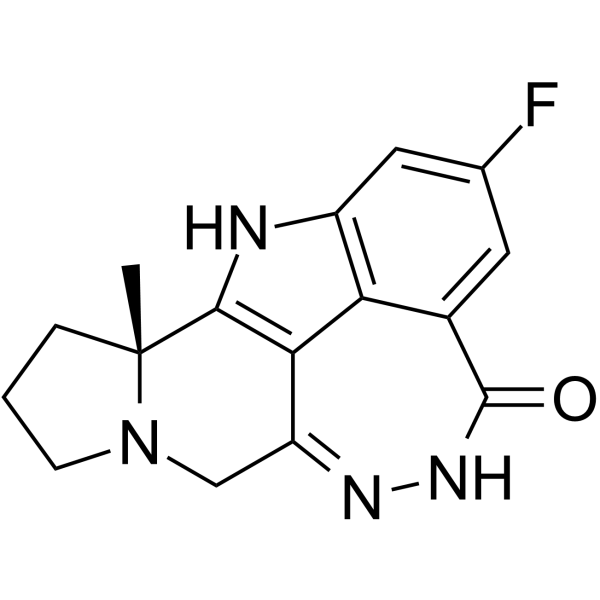
HY-104044
PamiparibPARP1/2 Inhibitor -
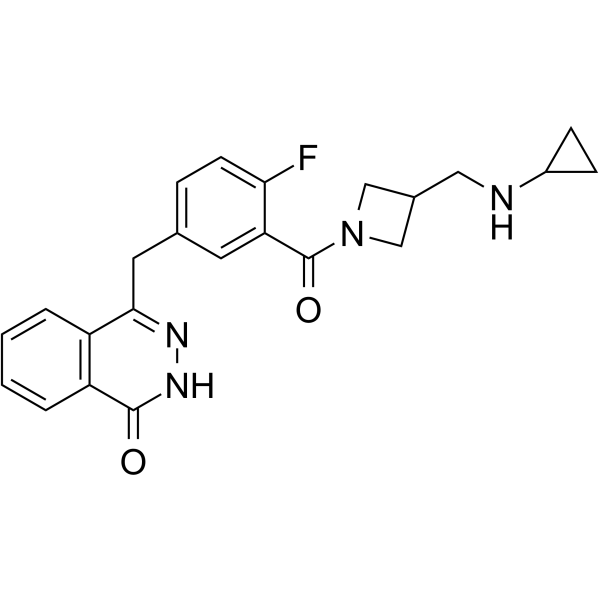
HY-137457
VenadaparibPARP 1/2 Inhibitor -
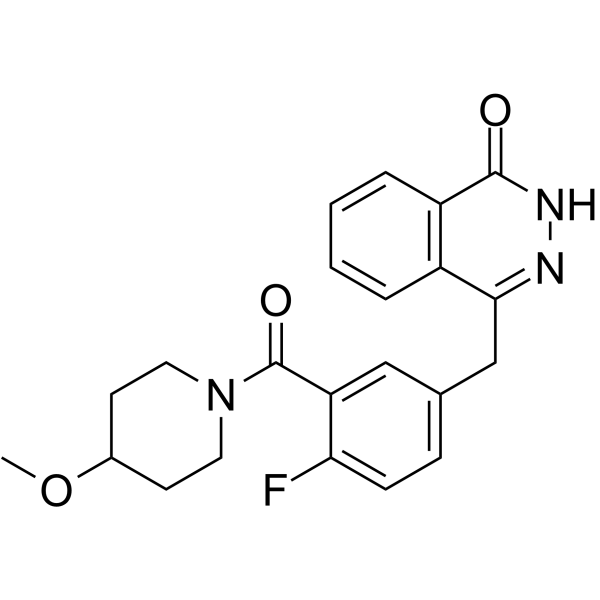
HY-13536
AZD-2461PARP Inhibitor


Biological Activity
Description
IC50 & Target
IC50: 18.5 nM (PARP-1)[1].
In Vitro
Amelparib (0.001 mM-1 mM; 2 h) dose-dependently reduces the number of apoptotic cells in cortical neurons induced by hypoxia for 24 h and 48 h[1]. Amelparib (0, 0.01, 0.1 and 1 mM; 2 h) dose-dependently reduces the increased PARP activity in cortical neurons, the expression of cleaved caspase-3 in cortical neurons subjected to 6 h of hypoxia, and the levels of HIF-1α and PAR in cortical neurons subjected to 2 h of hypoxia[1].
MedChemExpress (MCE) has not independently confirmed the accuracy of these methods. They are for reference only.
-
Cell Line:PCCNs
-
Concentration:0.001-1 mM
-
Incubation Time:2 h
-
Result:Reduces apoptosis of PCCNs induced by hypoxia for 24h and 48h dose-dependently.
-
Cell Line:PCCNs
-
Concentration:0, 0.01, 0.1 and 1 mM
-
Incubation Time:2 h
-
Result:Decreased the levels of HIF-1α, PAR, AIF, and cytochrome c at 2 h of administration dose-dependently.
Reduced the expression of cleaved caspase-3 in the case of 6 h administration dose-dependently.
In Vivo
Amelparib (10 mg/kg, i.v.; single dose 2 or 8 h after MCAO) reduces mean infarct size and alleviates brain swelling in male SD rats[2].
Amelparib (10 mg/kg, i.v.; single dose 2 h after MCAO) reduces apoptosis of penumbra cells in male SD rats[2].
MedChemExpress (MCE) has not independently confirmed the accuracy of these methods. They are for reference only.
-
Animal Model:Male Sprague–Dawley rats[2]
-
Dosage:10 mg/kg
-
Administration:Intravenous injection (i.v.), 2 h after MCAO
-
Result:Reduced the infarct area by 53% and the number of apoptotic cells by 56% after 24 h of administration.


Chemical Information
-
CAS No. 1227156-72-0
-
Appearance Solid
-
Molecular Weight 343.42
-
Formula C19H25N3O3
-
Color Off-white to light yellow
-
SMILES
O=C1C2=C(C3=C(C=C(C=C3N1)CN4CCOCC4)OCC)NCCC2
-
Synonyms
JPI-289 free base
-
Shipping
Room temperature in continental US; may vary elsewhere.
-
Storage
Powder -20°C 3 years 4°C 2 years In solvent -80°C 6 months -20°C 1 month


Solvent & Solubility
In Vitro:
DMSO : 100 mg/mL (291.19 mM; ultrasonic and adjust pH to 2 with 1M HCl; Hygroscopic DMSO has a significant impact on the solubility of product, please use newly opened DMSO)
Please refer to the solubility information to select the appropriate solvent. Once prepared, please aliquot and store the solution to prevent product inactivation from repeated freeze-thaw cycles.
Storage method and period of stock solution: -80°C, 6 months; -20°C, 1 month. When stored at -80°C, please use it within 6 months. When stored at -20°C, please use it within 1 month.
Please refer to the solubility information to select the appropriate solvent. Once prepared, please aliquot and store the solution to prevent product inactivation from repeated freeze-thaw cycles.
Storage method and period of stock solution: -80°C, 6 months; -20°C, 1 month. When stored at -80°C, please use it within 6 months. When stored at -20°C, please use it within 1 month.
Concentration (start) × Volume (start) = Concentration (final) × Volume (final)
In Vivo:
Select the appropriate dissolution method based on your experimental animal and administration route.
- For the following dissolution methods, please ensure to first prepare a clear stock solution using an In Vitro approach and then sequentially add co-solvents:
- To ensure reliable experimental results, the clarified stock solution can be appropriately stored based on storage conditions. As for the working solution for In Vivo experiments, it is recommended to prepare freshly and use it on the same day.
- The percentages shown for the solvents indicate their volumetric ratio in the final prepared solution. If precipitation or phase separation occurs during preparation, heat and/or sonication can be used to aid dissolution.
Add each solvent one by one: 10% DMSO 40% PEG300 5% Tween-80 45% Saline
Solubility: 2.5 mg/mL (7.28 mM); Clear solution; Need ultrasonic
This protocol yields a clear solution of 2.5 mg/mL.
Taking 1 mL working solution as an example, add 100 μL DMSO stock solution (25.0 mg/mL) to 400 μL PEG300, and mix evenly; then add 50 μL Tween-80 and mix evenly; then add 450 μL Saline to adjust the volume to 1 mL.
Preparation of Saline: Dissolve 0.9 g sodium chloride in ddH₂O and dilute to 100 mL to obtain a clear Saline solution.
Add each solvent one by one: 10% DMSO 90% (20% SBE-β-CD in Saline)
Solubility: 2.5 mg/mL (7.28 mM); Clear solution; Need ultrasonic
This protocol yields a clear solution of 2.5 mg/mL.
Taking 1 mL working solution as an example, add 100 μL DMSO stock solution (25.0 mg/mL) to 900 μL 20% SBE-β-CD in Saline, and mix evenly.
Preparation of 20% SBE-β-CD in Saline (4°C, storage for one week): 2 g SBE-β-CD powder is dissolved in 10 mL Saline, completely dissolve until clear.
In Vivo Dissolution Calculator
Please enter the basic information of animal experiments:
-
-
-
-
Recommended: Prepare an additional quantity of animals to account for potential losses during experiments.
Please enter your animal formula composition:
-
%DMSO +
Recommended: Keep the proportion of DMSO in working solution below 2% if your animal is weak.
-
%+
-
+%Tween-80 + +
-
%Saline +
The co-solvents required include: DMSO, . All of co-solvents are available by MedChemExpress (MCE). , Tween 80. All of co-solvents are available by MedChemExpress (MCE).
Working solution concentration: 0.22 mg/mL
Method for preparing stock solution: mg drug dissolved in μL DMSO. Stock solution concentration: mg/mL.
1. Take μL DMSO stock solution;
2. Add μL .
μL , mix evenly;
3. Then add μL Tween 80, mix evenly;
4. Then add μL
Please ensure that the stock solution in the first step is dissolved to a clear state, and add co-solvents in sequence. You can use ultrasonic heating (ultrasonic cleaner, recommended frequency 20-40 kHz), vortexing, etc. to assist dissolution.


Purity & Documentation
-
Data Sheet (278 KB)
-
SDS (252 KB)
- English - EN (252 KB)
- Français - FR (252 KB)
- Deutsch - DE (252 KB)
- Norwegian - NO (252 KB)
- Español - ES (252 KB)
- Swedish - SV (252 KB)
- Italian - IT (252 KB)
- Korean - KR (252 KB)
- Portuguese - PT (252 KB)
-
Handling Instructions (2659 KB)
References
[1]. Kim Y, et al. Neuroprotective effects of a novel poly (ADP-ribose) polymerase-1 inhibitor, JPI-289, in hypoxic rat cortical neurons. Clin Exp Pharmacol Physiol. 2017;44(6):671-679. [Content Brief]
[2]. Youngchul Kim, et al. Early treatment with poly (ADP-ribose) polymerase-1 inhibitor (JPI-289) reduces infarct volume and improves long-term behavior in an animal model of ischemic stroke. Molecular neurobiology 55 (2018): 7153-7163. [Content Brief]


Complete Stock Solution Preparation Table
Please refer to the solubility information to select the appropriate solvent. Once prepared, please aliquot and store the solution to prevent product inactivation from repeated freeze-thaw cycles.
Storage method and period of stock solution: -80°C, 6 months; -20°C, 1 month. When stored at -80°C, please use it within 6 months. When stored at -20°C, please use it within 1 month.
| Optional Solvent | Concentration Solvent Mass | 1 mg | 5 mg | 10 mg | 25 mg |
|---|---|---|---|---|---|
| DMSO | 1 mM | 2.9119 mL | 14.5594 mL | 29.1189 mL | 72.7972 mL |
| 5 mM | 0.5824 mL | 2.9119 mL | 5.8238 mL | 14.5594 mL | |
| 10 mM | 0.2912 mL | 1.4559 mL | 2.9119 mL | 7.2797 mL | |
| 15 mM | 0.1941 mL | 0.9706 mL | 1.9413 mL | 4.8531 mL | |
| 20 mM | 0.1456 mL | 0.7280 mL | 1.4559 mL | 3.6399 mL | |
| 25 mM | 0.1165 mL | 0.5824 mL | 1.1648 mL | 2.9119 mL | |
| 30 mM | 0.0971 mL | 0.4853 mL | 0.9706 mL | 2.4266 mL | |
| 40 mM | 0.0728 mL | 0.3640 mL | 0.7280 mL | 1.8199 mL | |
| 50 mM | 0.0582 mL | 0.2912 mL | 0.5824 mL | 1.4559 mL | |
| 60 mM | 0.0485 mL | 0.2427 mL | 0.4853 mL | 1.2133 mL | |
| 80 mM | 0.0364 mL | 0.1820 mL | 0.3640 mL | 0.9100 mL | |
| 100 mM | 0.0291 mL | 0.1456 mL | 0.2912 mL | 0.7280 mL |


Amelparib Related Classifications
HY-116218 Related Classifications
 Powered by Bioz