Search Result
Results for "
glutamate receptor agonist
" in MedChemExpress (MCE) Product Catalog:
32
Isotope-Labeled Compounds
| Cat. No. |
Product Name |
Target |
Research Areas |
Chemical Structure |
-
- HY-14608
-
|
|
Environmental Pollutants
Endogenous Metabolite
iGluR
Ferroptosis
Apoptosis
|
Neurological Disease
|
|
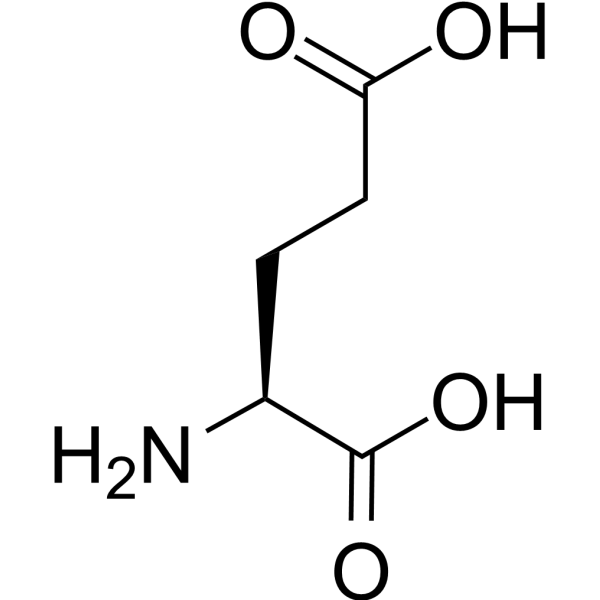
L-Glutamic acid is an excitatory amino acid neurotransmitter that acts as an agonist for all subtypes of glutamate receptors (metabolic rhodophylline, NMDA, and AMPA). L-Glutamic acid has an agonist effect on the release of DA from dopaminergic nerve endings. L-Glutamic acid can be used in the study of neurological diseases. L-Glutamic acid acts at ionotropic and metabotropic glutamate receptors .
|
-
-
- HY-N2309
-
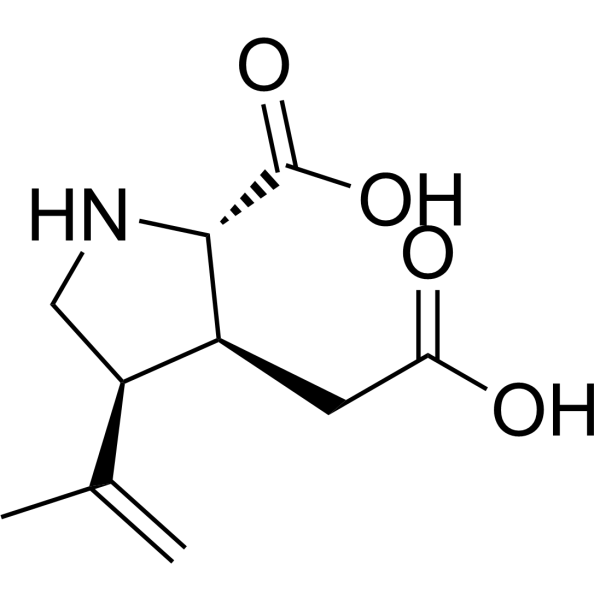
Kainic acid
Maximum Cited Publications
35 Publications Verification
|
EAAT
|
Neurological Disease
|
|
Kainic acid is a potent excitotoxic agent. Kainic acid hydrate also is an agonist for a subtype of ionotropic glutamate receptor. Kainic acid induces seizures .
|
-
-
- HY-17551
-
-
-
- HY-14608A
-
|
|
Environmental Pollutants
iGluR
Apoptosis
Ferroptosis
Endogenous Metabolite
|
Neurological Disease
|
|
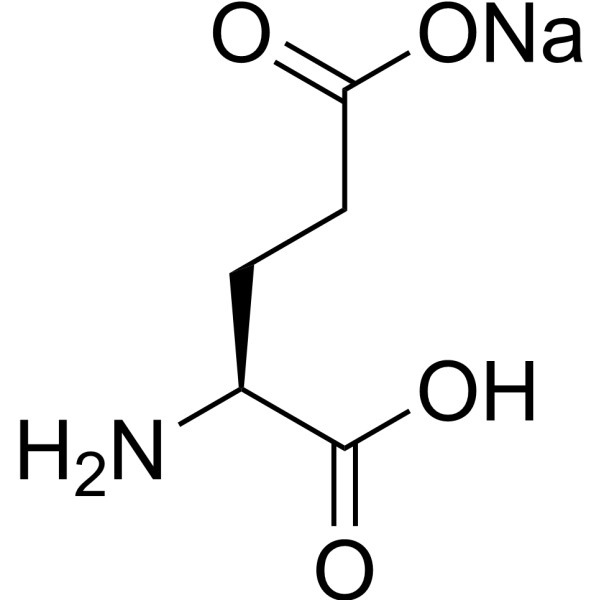
L-Glutamic acid monosodium salt is an excitatory amino acid neurotransmitter that acts as an agonist for all subtypes of glutamate receptors (metabolic rhodophylline, NMDA, and AMPA). L-Glutamic acid monosodium salt has an agonist effect on the release of DA from dopaminergic nerve endings. L-Glutamic acid monosodium salt can be used in the study of neurological diseases. L-Glutamic acid monosodium salt acts at ionotropic and metabotropic glutamate receptors .
|
-
-
- HY-100806
-
-
-
- HY-100807
-
-
-
- HY-W014666
-
-
-
- HY-100808
-
|
(R)-Serine
|
iGluR
Endogenous Metabolite
|
Neurological Disease
|
|
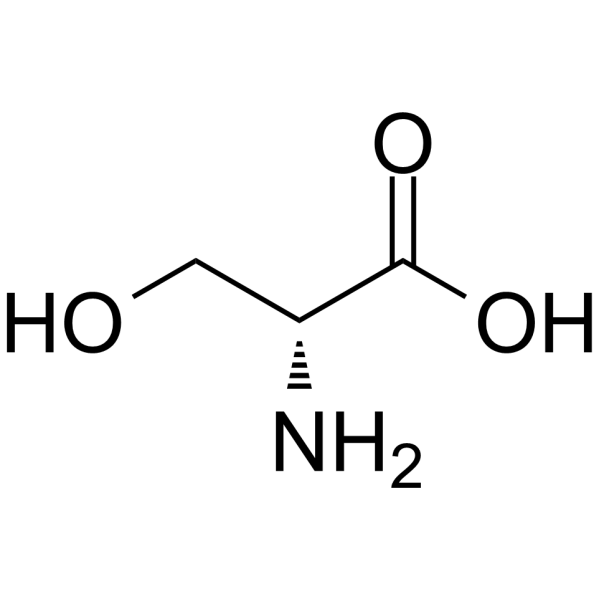
D-Serine ((R)-Serine), an endogenous amino acid involved in glia-synapse interactions that has unique neurotransmitter characteristics, is a potent co-agonist at the NMDA glutamate receptor. D-Serinee has a cardinal modulatory role in major NMDAR-dependent processes including NMDAR-mediated neurotransmission, neurotoxicity, synaptic plasticity, and cell migration .
|
-
-
- HY-100806S
-
-
-
- HY-14608S5
-
|
|
Endogenous Metabolite
iGluR
Ferroptosis
Apoptosis
|
Neurological Disease
|
|
L-Glutamic acid- 13C5 is the 13C-labeled L-Glutamic acid. L-Glutamic acid acts as an excitatory transmitter and an agonist at all subtypes of glutamate receptors (metabotropic, kainate, NMDA, and AMPA). L-Glutamic acid shows a direct activating effect on the release of DA from dopaminergic terminals.
|
-
-
- HY-100815B
-
|
(±)-AMPA
|
iGluR
|
Neurological Disease
|
|
(RS)-AMPA ((±)-AMPA) is a glutamate analogue and a potent and selective excitatory neurotransmitter L-glutamic acid agonist. (RS)-AMPA does not interfere with binding sites for kainic acid or NMDA receptors .
|
-
-
- HY-107512
-
-
-
- HY-Y0966S8
-
|
|
Endogenous Metabolite
iGluR
|
Neurological Disease
|
|
Glycine-d5 is the deuterium labeled Glycine. Glycine is an inhibitory neurotransmitter in the CNS and also acts as a co-agonist along with glutamate, facilitating an excitatory potential at the glutaminergic N-methyl-D-aspartic acid (NMDA) receptors.
|
-
-
- HY-W011417
-
|
|
Endogenous Metabolite
mGluR
Apoptosis
|
Others
|
|
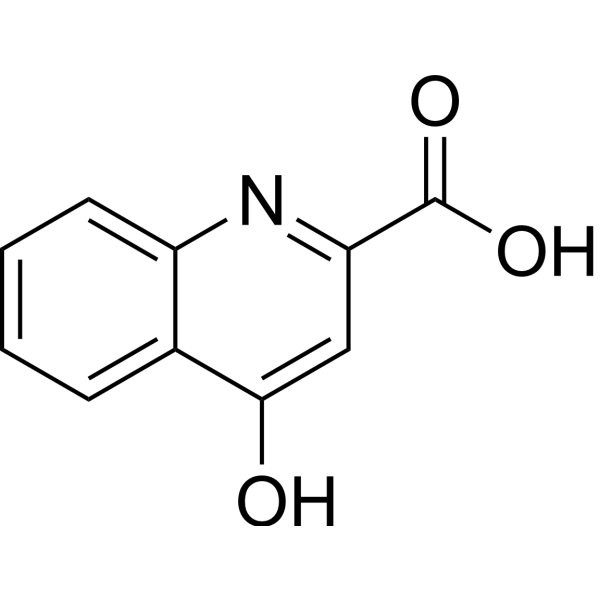
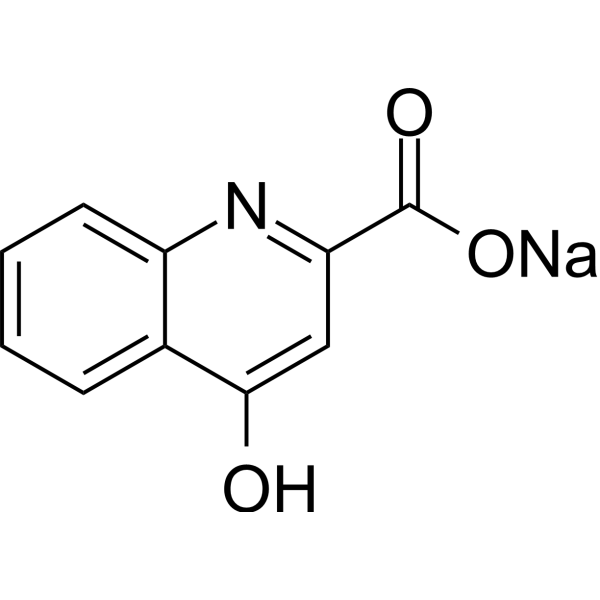
Cinnabarinic acid is a specific orthosteric agonist of mGlu4 by interacting with residues of the glutamate binding pocket of mGlu4, has no activity at other mGlu receptors. Cinnabarinic acid is an endogenous metabolite of the kynurenine pathway of tryptophan. Cinnabarinic acid induces cell apoptosis .
|
-
-
- HY-14608S7
-
|
|
Endogenous Metabolite
iGluR
Ferroptosis
Apoptosis
|
Neurological Disease
|
|
L-Glutamic acid-d5 is the deuterium labeled L-Glutamic acid. L-Glutamic acid acts as an excitatory transmitter and an agonist at all subtypes of glutamate receptors (metabotropic, kainate, NMDA, and AMPA). L-Glutamic acid shows a direct activating effect on the release of DA from dopaminergic terminals.
|
-
-
- HY-12598
-
|
|
mGluR
|
Neurological Disease
|
|
(S)-3,5-DHPG is a weak, but selective group I metabotropic glutamate receptors (mGluRs) agonist with Ki values of 0.9 μM and 3.9 μM for mGluR1a and mGluR5a, respectively . (S)-3,5-DHPG exhibits anxiolytic activity in rats subjected to hypoxia .
|
-
-
- HY-Y0966R
-
|
|
Reference Standards
Endogenous Metabolite
iGluR
VEGFR
|
Neurological Disease
|
|
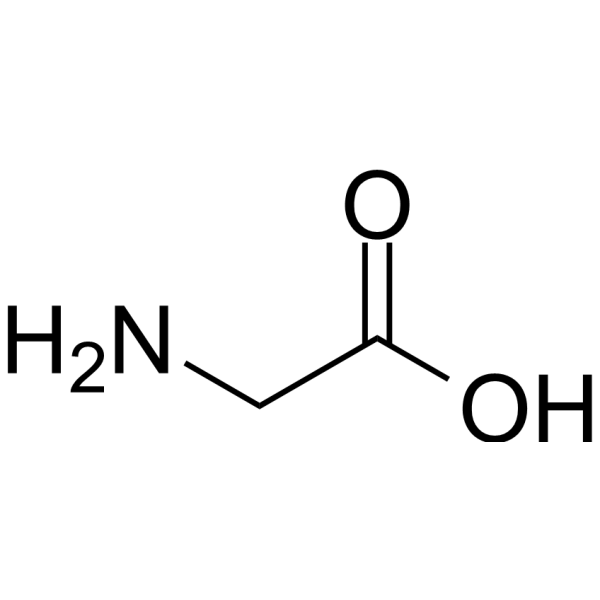
Glycine (Standard) is the analytical standard of Glycine. This product is intended for research and analytical applications. Glycine is an inhibitory neurotransmitter in the CNS and also acts as a co-agonist along with glutamate, facilitating an excitatory potential at the glutaminergic N-methyl-D-aspartic acid (NMDA) receptors. Glycine is orally active. Glycine can be used to study cell protection, cancer, neurological diseases, and angiogenesis .
|
-
-
- HY-100807S
-
-
-
- HY-14608S8
-
|
|
Endogenous Metabolite
iGluR
Ferroptosis
Apoptosis
|
Neurological Disease
|
|
L-Glutamic acid-d3 is the deuterium labeled L-Glutamic acid. L-Glutamic acid acts as an excitatory transmitter and an agonist at all subtypes of glutamate receptors (metabotropic, kainate, NMDA, and AMPA). L-Glutamic acid shows a direct activating effect on the release of DA from dopaminergic terminals.
|
-
-
- HY-14608S3
-
-
-
- HY-90003
-
|
|
Opioid Receptor
iGluR
MMP
PI3K
Akt
NF-κB
|
Neurological Disease
Inflammation/Immunology
|
|
Tianeptine is an atypical antidepressant. Tianeptine is a moderate-intensity agonist of the μ-opioid receptor (MOR), and to a lesser extent, is an agonist of the δ-opioid receptor (DOR). Tianeptine is a glutamate modulator that can enhance AMPA receptor and antagonize NMDA receptor. tianeptine increases sensitivity of the α1 adrenergic receptor, which only manifests in chronic treatment. Tianeptine exerts neuroprotective effects under stress/inflammation-induced conditions, exhibiting anti-inflammatory and antioxidant properties. Tianeptine inhibits MMP-9 by suppressing the PI3K/Akt-mediated NF-κB pathway. Tianeptine can be used to alleviate symptoms of depression and anxiety, but does not cause sedative effects .
|
-
-
- HY-N2309A
-
|
|
mGluR
|
Neurological Disease
|
|
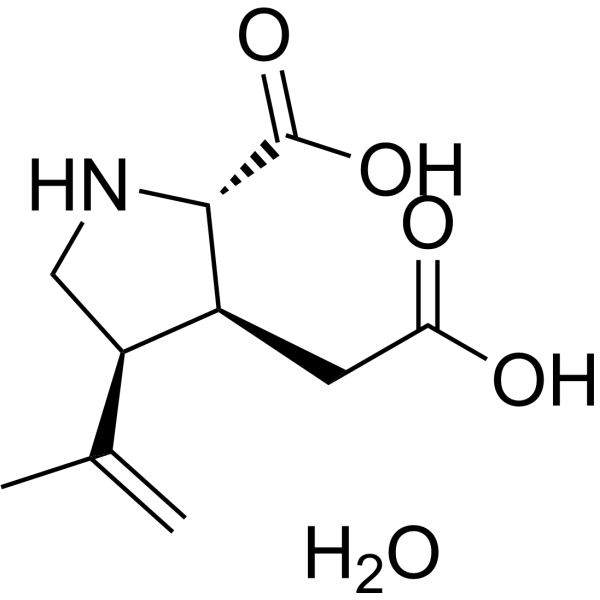
Kainic acid hydrate is a potent excitotoxic agent. Kainic acid hydrate also is an agonist for a subtype of ionotropic glutamate receptor. Kainic acid hydrate induces seizures .
|
-
-
- HY-Y0966S3
-
-
-
- HY-12363
-
U-69593
1 Publications Verification
|
Opioid Receptor
|
Neurological Disease
|
|
U-69593 is a potent and selective κ1-opioid receptor agonist . U-69593 attenuates addictive agent-induced behavioral sensitization in the rat . U-69593 reduces anxiety and enhances spontaneous alternation memory in mice . U-69593 reduces calcium-dependent dialysate levels of dopamine and glutamate in the ventral striatum .
|
-
-
- HY-W419700
-
|
|
Endogenous Metabolite
iGluR
Ferroptosis
Apoptosis
|
Neurological Disease
|
|
L-Glutamic acid ammonium is an excitatory amino acid neurotransmitter that acts as an agonist for all subtypes of glutamate receptors (metabolic rhodophylline, NMDA, and AMPA). L-Glutamic acid ammonium has an agonist effect on the release of DA from dopaminergic nerve endings. L-Glutamic acid can be used in the study of neurological diseases. L-Glutamic acid ammonium acts at ionotropic and?metabotropic glutamate receptors .
|
-
-
- HY-W014666S
-
-
-
- HY-Y0966S1
-
-
-
- HY-Y0966S
-
|
|
Endogenous Metabolite
iGluR
|
Neurological Disease
|
|
Glycine- 15N is the 15N-labeled Glycine. Glycine is an inhibitory neurotransmitter in the CNS and also acts as a co-agonist along with glutamate, facilitating an excitatory potential at the glutaminergic N-methyl-D-aspartic acid (NMDA) receptors .
|
-
-
- HY-100807R
-
-
-
- HY-100806R
-
-
-
- HY-100804
-
|
|
mGluR
Endogenous Metabolite
|
Neurological Disease
|
|
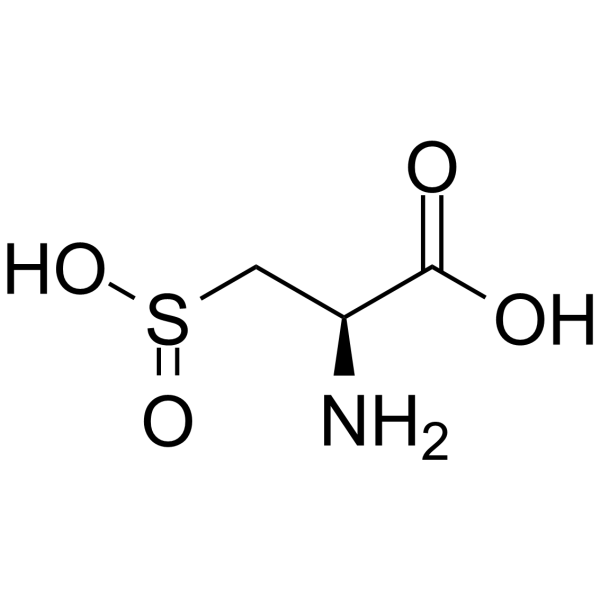
L-Cysteinesulfinic acid is a potent agonist at several rat metabotropic glutamate receptors (mGluRs) with pEC50s of 3.92, 4.6, 3.9, 2.7, 4.0, and 3.94 for mGluR1, mGluR5, mGluR2, mGluR4, mGluR6, and mGluR8, respectively .
|
-
-
- HY-12499
-
|
(-)-Willardiine
|
iGluR
|
Neurological Disease
|
|
(S)-Willardiine ((-)-Willardiine) is a subtype-selective glutamate receptor agonist and the active isomer of Willardiine. Willardiine binds to and activates hGluR1, hGluR2, hGluR4 and hGluR5, with Ki values of 3.6 nM and 0.24 nM for hGluR4 and hGluR5, respectively. (S)-Willardiine is used to investigate the distribution and physiological functions of glutamate receptor subunits in the central nervous system .
|
-
-
- HY-W016145
-
|
|
Endogenous Metabolite
iGluR
Ferroptosis
Apoptosis
|
Neurological Disease
Metabolic Disease
Inflammation/Immunology
Cancer
|
|
L-Glutamic acid monosodium hydrate is an excitatory amino acid neurotransmitter that acts as an agonist for all subtypes of glutamate receptors (metabolic rhodophylline, NMDA, and AMPA). L-Glutamic acid monosodium hydrate has an agonist effect on the release of DA from dopaminergic nerve endings. L-Glutamic acid monosodium hydrate can be used in the study of neurological diseases. L-Glutamic acid monosodium hydrate acts at ionotropic and?metabotropic glutamate receptors .
|
-
-
- HY-Y0966S6
-
|
|
Endogenous Metabolite
iGluR
|
Neurological Disease
|
|
Glycine- 13C2, 15N is the 13C- and 15N-labeled Glycine. Glycine is an inhibitory neurotransmitter in the CNS and also acts as a co-agonist along with glutamate, facilitating an excitatory potential at the glutaminergic N-methyl-D-aspartic acid (NMDA) receptors.
|
-
-
- HY-14608S
-
|
|
Endogenous Metabolite
iGluR
Ferroptosis
Apoptosis
|
Neurological Disease
|
|
L-Glutamic acid- 13C is the 13C-labeled L-Glutamic acid. L-Glutamic acid acts as an excitatory transmitter and an agonist at all subtypes of glutamate receptors (metabotropic, kainate, NMDA, and AMPA). L-Glutamic acid shows a direct activating effect on the release of DA from dopaminergic terminals.
|
-
-
- HY-W017230
-
|
|
mGluR
Endogenous Metabolite
|
Neurological Disease
|
|
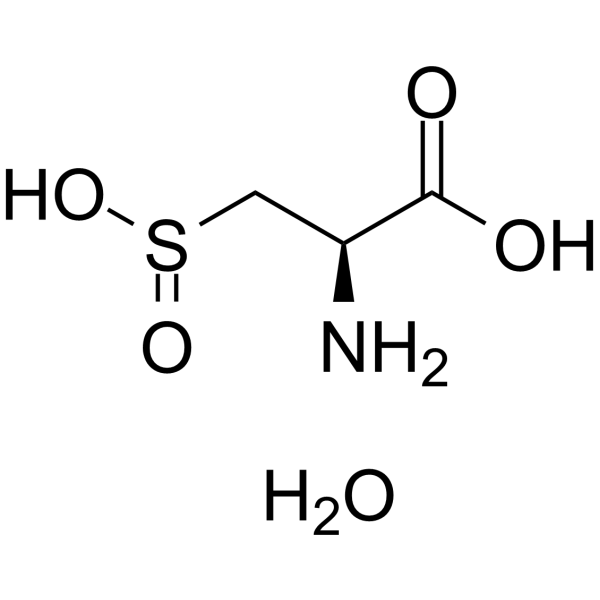
L-Cysteinesulfinic acid monohydrate is a potent agonist at several rat metabotropic glutamate receptors (mGluRs) with pEC50s of 3.92, 4.6, 3.9, 2.7, 4.0, and 3.94 for mGluR1, mGluR5, mGluR2, mGluR4, mGluR6, and mGluR8, respectively .
|
-
-
- HY-W011417R
-
|
|
Endogenous Metabolite
Reference Standards
mGluR
Apoptosis
|
Others
|
|
Cinnabarinic acid (Standard) is the analytical standard of Cinnabarinic acid. This product is intended for research and analytical applications. Cinnabarinic acid is a specific orthosteric agonist of mGlu4 by interacting with residues of the glutamate binding pocket of mGlu4, has no activity at other mGlu receptors. Cinnabarinic acid is an endogenous metabolite of the kynurenine pathway of tryptophan. Cinnabarinic acid induces cell apoptosis .
|
-
-
- HY-90003A
-
|
|
Opioid Receptor
iGluR
MMP
PI3K
Akt
NF-κB
|
Neurological Disease
Inflammation/Immunology
|
|
Tianeptine sodium salt is an atypical antidepressant. Tianeptine sodium salt is a moderate-intensity agonist of the μ-opioid receptor (MOR), and to a lesser extent, is an agonist of the δ-opioid receptor (DOR). Tianeptine sodium salt is a glutamate modulator that can enhance AMPA receptor and antagonize NMDA receptor. Tianeptine sodium salt increases sensitivity of the α1 adrenergic receptor, which only manifests in chronic treatment. Tianeptine sodium salt exerts neuroprotective effects under stress/inflammation-induced conditions, exhibiting anti-inflammatory and antioxidant properties. Tianeptine sodium salt inhibits MMP-9 by suppressing the PI3K/Akt-mediated NF-κB pathway. Tianeptine sodium salt can be used to alleviate symptoms of depression and anxiety, but does not cause sedative effects .
|
-
-
- HY-103565
-
AMN082
1 Publications Verification
|
mGluR
|
Neurological Disease
|
|
AMN082, a selective, orally active, and brain penetrant mGluR7 agonist, directly activates receptor signaling via an allosteric site in the transmembrane domain. AMN082 potently inhibits cAMP accumulation and stimulates GTPγS binding (EC50 values, 64-290 nM) at transfected mammalian cells expressing mGluR7. AMN082 shows selectivity over other mGluR subtypes and selected ionotropic glutamate receptors. Antidepressant effects .
|
-
-
- HY-W017500
-
|
|
iGluR
|
Neurological Disease
|
|
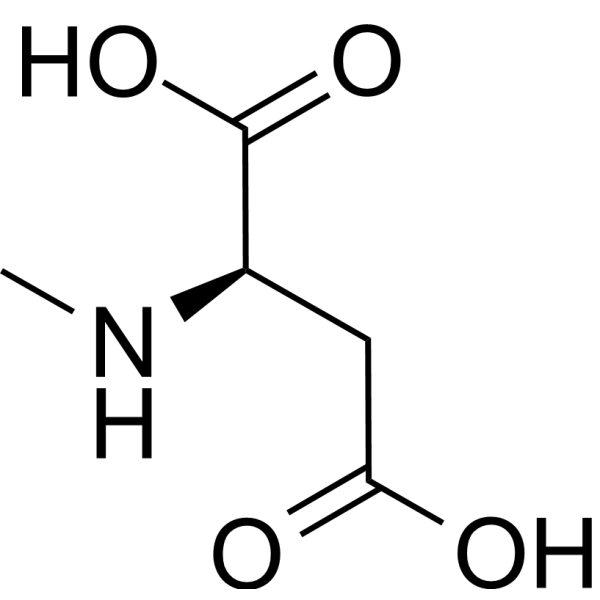
N-Methyl-DL-aspartic acid is a glutamate analogue and a NMDA receptor agonist and can be used for neurological diseases research .
|
-
-
- HY-W014666R
-
-
-
- HY-107516
-
|
(S)-3,4-Dicarboxyphenylglycine
|
mGluR
|
Neurological Disease
|
|
(S)-3,4-DCPG is a selective agonist of metabotropic glutamate receptor 8a (mGluR8a) with an EC50 of 31 nM in AV12-664 cells expressing human mGluR8 .
|
-
-
- HY-Y0966S10
-
|
|
Isotope-Labeled Compounds
Endogenous Metabolite
iGluR
|
Cancer
|
|
Glycine-d3 is the deuterium labeled Glycine. Glycine is an inhibitory neurotransmitter in the CNS and also acts as a co-agonist along with glutamate, facilitating an excitatory potential at the glutaminergic N-methyl-D-aspartic acid (NMDA) receptors.
|
-
-
- HY-Y0966S2
-
|
|
Endogenous Metabolite
iGluR
|
Neurological Disease
|
|
Glycine-2- 13C is the 13C-labeled Glycine. Glycine is an inhibitory neurotransmitter in the CNS and also acts as a co-agonist along with glutamate, facilitating an excitatory potential at the glutaminergic N-methyl-D-aspartic acid (NMDA) receptors.
|
-
-
- HY-Y0966S4
-
|
|
Endogenous Metabolite
iGluR
|
Neurological Disease
|
|
Glycine-1- 13C is the 13C-labeled Glycine. Glycine is an inhibitory neurotransmitter in the CNS and also acts as a co-agonist along with glutamate, facilitating an excitatory potential at the glutaminergic N-methyl-D-aspartic acid (NMDA) receptors.
|
-
-
- HY-14608S2
-
|
|
Endogenous Metabolite
iGluR
Ferroptosis
Apoptosis
|
Neurological Disease
|
|
L-Glutamic acid- 15N is the 15N-labeled L-Glutamic acid. L-Glutamic acid acts as an excitatory transmitter and an agonist at all subtypes of glutamate receptors (metabotropic, kainate, NMDA, and AMPA). L-Glutamic acid shows a direct activating effect on the release of DA from dopaminergic terminals .
|
-
-
- HY-100807S2
-
-
-
- HY-14608S1
-
|
|
Endogenous Metabolite
iGluR
Ferroptosis
Apoptosis
|
Neurological Disease
|
|
L-Glutamic acid-1- 13C is the 13C-labeled L-Glutamic acid. L-Glutamic acid acts as an excitatory transmitter and an agonist at all subtypes of glutamate receptors (metabotropic, kainate, NMDA, and AMPA). L-Glutamic acid shows a direct activating effect on the release of DA from dopaminergic terminals.
|
-
-
- HY-131286A
-
|
LY-544344 (hydrochloride)
|
Drug Derivative
mGluR
|
Neurological Disease
|
|
Talaglumetad hydrochloride (LY-544344 hydrochloride) is an orally active prodrug of Eglumegad (HY-18941) and a metabotropic glutamate receptor 2/3 (mGluR2/3) agonist. Talaglumetad hydrochloride undergoes transmembrane transport via the intestinal peptide transporter hPepT1, and is enzymatically hydrolyzed to produce L-alanine and the parent drug Eglumegad after entering the body. Talaglumetad hydrochloride can be used in research related to metabotropic glutamate receptor 2-associated neurological systems .
|
-
-
- HY-Y0966S7
-
-
- HY-14608S6
-
-
- HY-16713A
-
|
(5S)-Fluorowillardiine hydrochloride; (S)-5-Fluorowillardiine hydrochloride
|
iGluR
|
Neurological Disease
|
|
(S)-(-)-5-Fluorowillardiine ((5S)-Fluorowillardiine; (S)-5-Fluorowillardiine) hydrochloride is a potent, highly selective non-NMDA ionotropic glutamate receptor (iGluR, AMPA/Kainate receptor) agonist . (S)-(-)-5-Fluorowillardiine hydrochloride activates high-affinity AMPA-preferring receptors (EC50 = 0.70 μM) and low-affinity kainate-preferring receptors (EC50 = 170 μM), thereby inducing biphasic dose-dependent neurotoxicity/excitotoxicity. (S)-(-)-5-Fluorowillardiine hydrochloride is applicable to research related to schizophrenia, temporal lobe epilepsy, and bipolar disorder .
|
-
- HY-W141876
-
|
|
Bacterial
|
Others
|
|
DL-2-Aminopimelic Acid is a weak agonist of glutamate receptors and also reduces the sensitivity of leech glutamate receptors to glutamate .
|
-
- HY-100807S1
-
-
- HY-14608S4
-
-
- HY-103549
-
|
|
mGluR
|
Neurological Disease
|
|
Z-Cyclopentyl-AP4 is a kainate-type glutamate receptor agonist (orthosteric agonist). Z-Cyclopentyl-AP4 is more selective for mGlu4 than mGlu8 .
|
-
- HY-101227
-
|
|
EAAT
|
Metabolic Disease
|
|
(±)-threo-3-Methylglutamic acid is a potent EAAT2/4 inhibitor. (±)-threo-3-Methylglutamic acid also is an ionotropic glutamate receptor agonist. (±)-threo-3-Methylglutamic acid inhibits glutamate uptake by rod outer segments .
|
-
- HY-170409
-
|
|
Trk Receptor
Apoptosis
|
Neurological Disease
Inflammation/Immunology
|
|
BNN27 is the agonist for TrkA receptor and p75NTR receptor, that exhibits neurotrophic and anti-apoptotic effects. BNN27 increases the levels of glutamate, GABA, and glutamine in the rat hippocampus and prefrontal cortex, improves glutamate turnover. BNN27 exhibits neuroprotective efficacy in mouse amyotrophic lateral sclerosis (ALS) model, exhibits anti-inflammatory efficacy in experimental autoimmune encephalomyelitis (EAE) model, exhibits retinal protective efficacy in rat diabete models. BNN27 is blood-brain barrier penetrable .
|
-
- HY-14608S10
-
|
|
Apoptosis
iGluR
Ferroptosis
Endogenous Metabolite
|
Neurological Disease
|
|
L-Glutamic acid- 13C2 is the 13C labeled L-Glutamic acid . L-Glutamic acid acts as an excitatory transmitter and an agonist at all subtypes of glutamate receptors (metabotropic, kainate, NMDA, and AMPA). L-Glutamic acid shows a direct activating effect on the release of DA from dopaminergic terminals .
|
-
- HY-W017230R
-
|
|
Reference Standards
mGluR
Endogenous Metabolite
|
Neurological Disease
|
|
L-Cysteinesulfinic acid monohydrate is a potent agonist at several rat metabotropic glutamate receptors (mGluRs) with pEC50s of 3.92, 4.6, 3.9, 2.7, 4.0, and 3.94 for mGluR1, mGluR5, mGluR2, mGluR4, mGluR6, and mGluR8, respectively .
|
-
- HY-100804R
-
|
|
Reference Standards
mGluR
Endogenous Metabolite
|
Neurological Disease
|
|
L-Cysteinesulfinic acid (Standard) is the analytical standard of L-Cysteinesulfinic acid. This product is intended for research and analytical applications. L-Cysteinesulfinic acid is a potent agonist at several rat metabotropic glutamate receptors (mGluRs) with pEC50s of 3.92, 4.6, 3.9, 2.7, 4.0, and 3.94 for mGluR1, mGluR5, mGluR2, mGluR4, mGluR6, and mGluR8, respectively .
|
-
- HY-W141876R
-
|
|
Bacterial
Reference Standards
|
Others
|
|
DL-2-Aminopimelic Acid is a weak agonist of glutamate receptors and also reduces the sensitivity of leech glutamate receptors to glutamate .
|
-
- HY-100815C
-
|
(±)-AMPA hydrobromide
|
iGluR
|
Neurological Disease
|
|
(RS)-AMPA ((±)-AMPA) hydrobromide is a glutamate analogue and a potent and selective excitatory neurotransmitter L-glutamic acid agonist. (RS)-AMPA hydrobromide does not interfere with binding sites for kainic acid or NMDA receptors .
|
-
- HY-102091
-
|
(2R,4R)-4-Aminopyrrolidine-2,4-dicarboxylic acid
|
mGluR
|
Neurological Disease
|
|
(2R,4R)-APDC is a group II metabotropic glutamate receptor (mGluR) agonist. (2R,4R)-APDC affects cell proliferation by inhibiting glutamate release, enhancing motor responses produced by D1 receptor activation, or reducing brain-derived neurotrophic factor (BDNF) levels. (2R,4R)-APDC can be used in the study of epilepsy and other neurological diseases .
|
-
- HY-14608AR
-
|
|
Reference Standards
iGluR
Apoptosis
Ferroptosis
Endogenous Metabolite
|
Neurological Disease
|
|
L-Glutamic acid (monosodium salt) (Standard) is the analytical standard of L-Glutamic acid (monosodium salt). This product is intended for research and analytical applications. L-Glutamic acid monosodium salt is an excitatory amino acid neurotransmitter that acts as an agonist for all subtypes of glutamate receptors (metabolic rhodophylline, NMDA, and AMPA). L-Glutamic acid monosodium salt has an agonist effect on the release of DA from dopaminergic nerve endings. L-Glutamic acid monosodium salt can be used in the study of neurological diseases .
|
-
- HY-90003S
-
|
|
Isotope-Labeled Compounds
Opioid Receptor
iGluR
MMP
PI3K
Akt
NF-κB
|
Neurological Disease
Inflammation/Immunology
|
|
Tianeptine-d12 is a deuterated analog of Tianeptine (HY-90003).Tianeptine is an atypical antidepressant. Tianeptine is a moderate-intensity agonist of the μ-opioid receptor (MOR), and to a lesser extent, is an agonist of the δ-opioid receptor (DOR). Tianeptine is a glutamate modulator that can enhance AMPA receptor and antagonize NMDA receptor. Tianeptine increases sensitivity of the α1 adrenergic receptor, which only manifests in chronic treatment. Tianeptine exerts neuroprotective effects under stress/inflammation-induced conditions, exhibiting anti-inflammatory and antioxidant properties. Tianeptine inhibits MMP-9 by suppressing the PI3K/Akt-mediated NF-κB pathway. Tianeptine can be used to alleviate symptoms of depression and anxiety, but does not cause sedative effects.
|
-
- HY-90003AR
-
|
|
Reference Standards
Opioid Receptor
iGluR
MMP
PI3K
Akt
NF-κB
|
Neurological Disease
Inflammation/Immunology
|
|
Tianeptine sodium salt (Standard) is the analytical standard of Tianeptine sodium salt (HY-90003A). This product is intended for research and analytical applications. Tianeptine sodium salt is an atypical antidepressant. Tianeptine sodium salt is a moderate-intensity agonist of the μ-opioid receptor (MOR), and to a lesser extent, is an agonist of the δ-opioid receptor (DOR). Tianeptine sodium salt is a glutamate modulator that can enhance AMPA receptor and antagonize NMDA receptor. Tianeptine sodium salt increases sensitivity of the α1 adrenergic receptor, which only manifests in chronic treatment. Tianeptine sodium salt exerts neuroprotective effects under stress/inflammation-induced conditions, exhibiting anti-inflammatory and antioxidant properties. Tianeptine sodium salt inhibits MMP-9 by suppressing the PI3K/Akt-mediated NF-κB pathway. Tianeptine sodium salt can be used to alleviate symptoms of depression and anxiety, but does not cause sedative effects.
|
-
- HY-103565A
-
|
|
mGluR
|
Neurological Disease
|
|
AMN082 free base, a selective, orally active, and brain penetrant mGluR7 agonist, directly activates receptor signaling via an allosteric site in the transmembrane domain. AMN082 free base potently inhibits cAMP accumulation and stimulates GTPγS binding (EC50 values, 64-290 nM) at transfected mammalian cells expressing mGluR7. AMN082 free base shows selectivity over other mGluR subtypes and selected ionotropic glutamate receptors. Antidepressant effects .
|
-
- HY-11041
-
|
|
mGluR
|
Neurological Disease
|
|
LSP1-2111 is a phosphinic glutamate derivative that agonists metabotropic glutamate (mGlu) receptor .
|
-
- HY-162232A
-
|
|
mGluR
|
Neurological Disease
|
|
mGluR2 agonist 1 hydrochloride is a potent selective agonist for metabotropic glutamate receptors mGluR 2 with EC50 of 82 nM .
|
-
- HY-120243
-
|
|
iGluR
|
Neurological Disease
|
|
L-Ibotenic acid is a psychoactive compound found in Amanita muscaria and related mushroom species. L-Ibotenic acid is a conformationally restricted analog of the neurotransmitter glutamate, which may be activated by different conformations of L-glutamate and is a non-selective glutamate receptor agonist .
|
-
- HY-W017500R
-
-
- HY-107667
-
|
|
nAChR
|
Neurological Disease
|
|
TC-2559 fumarate is a potent and selective neuronal acetylcholine receptor agonist. TC-2559 fumarate is potent and efficacious in the activation of CNS receptors and reduces glutamate-induced neurotoxicity in vitro .
|
-
- HY-162232
-
|
|
mGluR
|
Neurological Disease
|
|
mGluR2 agonist 1 (Compound 5b) is a potent and selective metabotropic glutamate 2 receptor (mGluR) agonist with an EC50 of 82 nM. mGluR2 agonist 1 can be used for the research of central nervous system (CNS) diseases .
|
-
- HY-W016145S
-
|
|
Isotope-Labeled Compounds
Endogenous Metabolite
iGluR
Ferroptosis
Apoptosis
|
Neurological Disease
Metabolic Disease
Inflammation/Immunology
Cancer
|
|
L-Glutamic acid- 13C5 hydrate salt is the 13C labeled L-Glutamic acid hydrate salt. L-Glutamic acid monosodium hydrate is an excitatory amino acid neurotransmitter that acts as an agonist for all subtypes of glutamate receptors (metabolic rhodophylline, NMDA, and AMPA). L-Glutamic acid monosodium hydrate has an agonist effect on the release of DA from dopaminergic nerve endings. L-Glutamic acid monosodium hydrate can be used in the study of neurological diseases. L-Glutamic acid monosodium hydrate acts at ionotropic and?metabotropic glutamate receptors.
|
-
- HY-131287
-
|
|
mGluR
|
Neurological Disease
|
|
MGS0028 is a selective metabotropic glutamate 2/3 (mGlu2/3) receptor agonist. MGS0028 can be used for psychiatric disorders research .
|
-
- HY-114589
-
|
|
mGluR
|
Others
|
|
VU0240382 is a metabotropic glutamate receptor subtype 5 modulator whose activity differs depending on whether it has allosteric agonist activity. VU0240382 with allosteric agonist activity can activate mGlu(5) receptors in cell lines, but has no agonist activity in natural systems and has similar efficacy to mGlu(5) modulators without allosteric agonist activity in animal models.
|
-
- HY-100815D
-
|
(±)-AMPA monohydrate
|
iGluR
|
Neurological Disease
|
|
(RS)-AMPA ((±)-AMPA) monohydrate is a glutamate analogue and a potent and selective excitatory neurotransmitter L-glutamic acid agonist. (RS)-AMPA monohydrate does not interfere with binding sites for kainic acid or NMDA receptors .
|
-
- HY-100815E
-
|
(±)-AMPA hydrochloride
|
iGluR
|
Neurological Disease
|
|
(RS)-AMPA ((±)-AMPA) hydrochloride is a glutamate analogue and a potent and selective excitatory neurotransmitter L-glutamic acid agonist. (RS)-AMPA hydrobromide does not interfere with binding sites for kainic acid or NMDA receptors .
|
-
- HY-131336
-
|
|
mGluR
|
Neurological Disease
|
|
MGS0274, an ester-based lipophilic proagent of a metabotropic glutamate (mGlu)2 and mGlu3 receptor agonist MGS0008, shows improved oral bioavailability. MGS0274 has the potential for the research of schizophrenia .
|
-
- HY-Y0966S9
-
-
- HY-Y0966S5
-
-
- HY-103551A
-
|
|
mGluR
|
Neurological Disease
|
|
LY 541850 is claimed from human ionotropic and metabotropic glutamate (mGlu) receptors expressed in non-neuronal cells. LY541850 is a selective orthosteric mGlu2 agonist and mGlu3 antagonist with IC50 values of 0.161 μM and 0.038 μM, respectively .
|
-
- HY-100815BR
-
|
(±)-AMPA (Standard)
|
Reference Standards
iGluR
|
Neurological Disease
|
|
(RS)-AMPA (Standard) is the analytical standard of (RS)-AMPA. This product is intended for research and analytical applications. (RS)-AMPA ((±)-AMPA) is a glutamate analogue and a potent and selective excitatory neurotransmitter L-glutamic acid agonist. (RS)-AMPA does not interfere with binding sites for kainic acid or NMDA receptors .
|
-
- HY-14608S12
-
|
L-Glutamic acid-14C
|
iGluR
Ferroptosis
Apoptosis
|
Neurological Disease
|
|
L-Glutamic acid-14C is L-Glutamic acid (HY-14608) labeled with the radioactive isotope carbon-14. L-Glutamic acid is an excitatory amino acid neurotransmitter and an agonist for all subtypes of glutamate receptors (metabotropic, NMDA, and AMPA). L-Glutamic acid acts as an agonist in the release of DA from dopaminergic nerve terminals and can be used in the study of neurological diseases .
|
-
- HY-107512R
-
-
- HY-114076
-
|
|
GABA Receptor
|
Neurological Disease
|
|
CGP55845 is a potent and selective GABAB receptor antagonist with activity that blocks agonist binding. The IC50 value of CGP55845 is 5 nM, indicating that it exhibits significant activity in inhibiting GABA and glutamate release. The apparent Kd of CGP55845 when forming a complex with the GABAB receptor is 30 nM, indicating its high affinity for this receptor. CGP55845 is as potent as 100 μM CGP 35348 in relieving the inhibitory effect of (R)-(-)-baclofen .
|
-
- HY-113981
-
|
|
mGluR
|
Neurological Disease
|
|
LY459477 is a potent, selective and orally active metabotropic glutamate 2/3 receptor (mGluR2/3) agonist. LY459477 can effectively suppress Phencyclidine-evoked locomotor activity at doses that do not impair neuromuscular coordination. LY459477 can be used for the research of neurological disease .
|
-
- HY-Y0966S11
-
|
|
iGluR
Endogenous Metabolite
|
Neurological Disease
|
|
Glycine- 13C2, 15N,d2 is the deuterium, 13C and 15N labeled Glycine . Glycine is an inhibitory neurotransmitter in the CNS and also acts as a co-agonist along with glutamate, facilitating an excitatory potential at the glutaminergic N-methyl-D-aspartic acid (NMDA) receptors .
|
-
- HY-14608S9
-
-
- HY-102091A
-
|
(2R,4R)-4-Aminopyrrolidine-2,4-dicarboxylic acid hydrate
|
mGluR
|
Neurological Disease
|
|
(2R,4R)-APDC hydrate ((2R,4R)-4-Aminopyrrolidine-2,4-dicarboxylic acid hydrate) is a group II metabotropic glutamate receptor (mGluR) agonist. (2R,4R)-APDC hydrate affects cell proliferation by inhibiting glutamate release, enhancing motor responses produced by D1 receptor activation, or reducing brain-derived neurotrophic factor (BDNF) levels. (2R,4R)-APDC hydrate can be used in the study of epilepsy and other neurological diseases .
|
-
- HY-131293
-
|
|
mGluR
|
Neurological Disease
|
|
MGS0008 is an orally active and brain-penetrant metabotropic glutamate receptor 2/3 (mGlu2/3) agonist with EC50 values of 29.4 nM and 45.4 nM for mGluR2 and mGluR3, respectively. MGS0008 is promising for research of central nervous system disorders, including schizophrenia, anxiety, and neurodegenerative diseases .
|
-
- HY-144224S
-
|
|
Isotope-Labeled Compounds
Opioid Receptor
iGluR
MMP
PI3K
Akt
NF-κB
|
Neurological Disease
Inflammation/Immunology
Cancer
|
|
Tianeptine-d6 hydrochloride is the deuterium labeled Tianeptine hydrochloride. Tianeptine hydrochloride is an atypical antidepressant. Tianeptine hydrochloride is a moderate-intensity agonist of the μ-opioid receptor (MOR), and to a lesser extent, is an agonist of the δ-opioid receptor (DOR). Tianeptine hydrochloride is a glutamate modulator that can enhance AMPA receptor and antagonize NMDA receptor. Tianeptine hydrochloride increases sensitivity of the α1 adrenergic receptor, which only manifests in chronic treatment. Tianeptine hydrochloride exerts neuroprotective effects under stress/inflammation-induced conditions, exhibiting anti-inflammatory and antioxidant properties. Tianeptine hydrochloride inhibits MMP-9 by suppressing the PI3K/Akt-mediated NF-κB pathway. Tianeptine hydrochloride can be used to alleviate symptoms of depression and anxiety, but does not cause sedative effects.
|
-
- HY-100781
-
|
D-APB; D-2-Amino-4-phosphonobutyric acid
|
iGluR
|
Neurological Disease
|
|
D-AP4 (D-APB; D-2-Amino-4-phosphonobutyric acid), a phosphono analogue of glutamate, is an NMDA broad spectrum excitatory amino acid receptor antagonist. D-AP4 also is an agonist for a quisqualate-sensitized AP6 site in hippocampus. D-AP4 inhibits AMPA receptor-stimulated 57Co 2+ influx in cultured cerebellar granule cells (IC50 ≥ 100 μM) .
|
-
- HY-100840
-
|
(S)-4-Carboxy-3-hydroxyphenylglycine
|
mGluR
|
Neurological Disease
|
|
(S)-4C3HPG ((S)-4-Carboxy-3-hydroxyphenylglycine) is an antagonist of metabotropic glutamate receptor 1a (mGluR 1a) and an agonist of GluR2. (S)-4C3HPG has the anticonvulsant activity and protects against audiogenic seizures in DBA/2 mice .
|
-
- HY-16713
-
|
(5S)-Fluorowillardiine; (S)-5-Fluorowillardiine
|
iGluR
|
Neurological Disease
|
|
(S)-(-)-5-Fluorowillardiine ((5S)-Fluorowillardiine; (S)-5-Fluorowillardiine) is a potent, highly selective non-NMDA ionotropic glutamate receptor (iGluR, AMPA/Kainate receptor) agonist . (S)-(-)-5-Fluorowillardiine activates high-affinity AMPA-preferring receptors (EC50 = 0.70 μM) and low-affinity kainate-preferring receptors (EC50 = 170 μM), thereby inducing biphasic dose-dependent neurotoxicity/excitotoxicity. (S)-(-)-5-Fluorowillardiine is applicable to research related to schizophrenia, temporal lobe epilepsy, and bipolar disorder .
|
-
- HY-108041
-
|
BCI 838
|
mGluR
|
Neurological Disease
|
|
MGS 0210 (BCI 838) is an orally active metabolite of glutamate receptor 2/3 (mGluR2/3) agonists. MGS 0210 improves amnesia and reduces anxiety in APP mice. MGS 0210 improves PTSD-related behaviors in a mouse model of post-traumatic stress disorder (PTSD). MGS 0210 can be used in research on neurological disorders such as Alzheimer's disease and major depressive disorder .
|
-
- HY-148611
-
|
|
iGluR
|
Neurological Disease
|
|
NSC339614 potassium is a selective GluN1/GluN2C and GluN1/GluN2D receptor enhancer with the activity of enhancing neuronal responses to specific NMDA receptors. NSC339614 potassium can selectively enhance the signaling of GluN1/GluN2C and GluN1/GluN2D receptors without affecting other NMDA receptors. The mechanism of action of NSC339614 potassium does not compete with agonists of L-glutamate or glycine, nor does it depend on membrane potential. The activity of NSC339614 potassium depends on the specific structure of the agonist ligand binding domain, showing its potential as a novel pharmacological agent for studying the function of NMDA receptor subtypes and providing new lead compounds for a variety of neurological diseases .
|
-
- HY-131286
-
|
LY-544344
|
mGluR
|
Neurological Disease
|
|
Talaglumetad (LY-544344) is an orally active prodrug of Eglumegad (HY-18941) and a metabotropic glutamate receptor 2/3 (mGluR2/3) agonist. Talaglumetad undergoes transmembrane transport via the intestinal peptide transporter hPepT1, and is enzymatically hydrolyzed to produce L-alanine and the parent drug Eglumegad after entering the body. Talaglumetad can be used in research related to metabotropic glutamate receptor 2-associated neurological systems .
|
-
- HY-156505A
-
|
|
iGluR
|
Neurological Disease
|
|
R-(+)-EU-1180-453 is a positive allosteric modulator targeting NMDA receptors containing GluN2C and GluN2D subunits, with a pEC50 value of 5.5 for both rat receptor subtypes, and it can cross the blood-brain barrier. R-(+)-EU-1180-453 increases the potency of glutamate, enhances receptor responses to maximally effective concentrations of agonists, and acts only on receptors bound to both co-agonists. R-(+)-EU-1180-453 is applicable to research related to Alzheimer's disease, Parkinson's disease, epilepsy, and neuropathic pain .
|
-
- HY-N5134
-
|
5'-GMP; 5'-guanosine monophosphate
|
Endogenous Metabolite
iGluR
|
Neurological Disease
Metabolic Disease
|
|
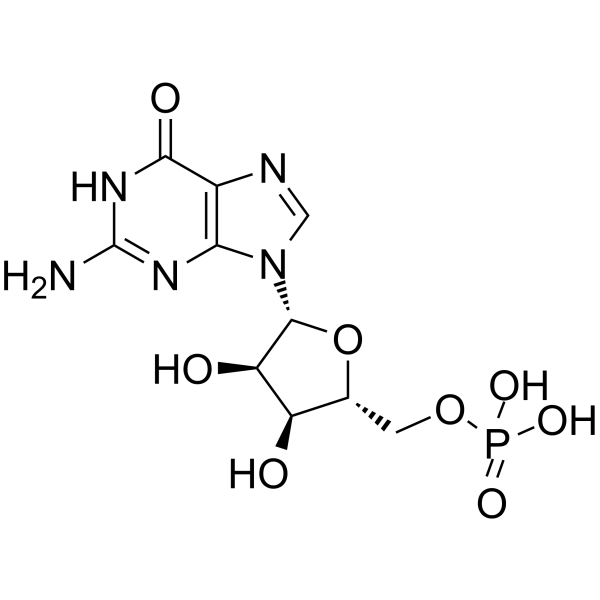
5'-Guanylic acid is a purine nucleotide that participates in physiological processes such as energy metabolism, signal transduction, and gene expression regulation. 5'-Guanylic acid regulates the expression of genes related to fatty acid metabolism. 5'-Guanylic acid is the weak agonist for ionotropic glutamate receptors (iGluR), reduces the activity of the glutamatergic system and exhibits neuroprotective effect. 5'-Guanylic acid also causes neuronal cell death at high concentrations .
|
-
- HY-Y0966
-
-
- HY-110070
-
|
2-Amino-4-phosphonobutyric acid sodium
|
mGluR
|
Others
Neurological Disease
|
|
DL-AP4 sodium (2-Amino-4-phosphonobutyric acid sodium) is an agonist for metabotropic glutamate receptors (mGluR). DL-AP4 sodium binds to mGluR4, activates the signaling pathway that is negatively correlated with adenylate cyclase, and inhibits the Forskolin (HY-15371)-induced production of cAMP. DL-AP4 sodium is also an inhibitor for ON channel, that reduces the sensitivity of photoreceptors to brightness changes .
|
-
- HY-N5134R
-
|
5'-GMP (Standard); 5'-guanosine monophosphate (Standard)
|
Reference Standards
Endogenous Metabolite
|
|
|
5'-Guanylic acid is a purine nucleotide that participates in physiological processes such as energy metabolism, signal transduction, and gene expression regulation. 5'-Guanylic acid regulates the expression of genes related to fatty acid metabolism. 5'-Guanylic acid is the weak agonist for ionotropic glutamate receptors (iGluR), reduces the activity of the glutamatergic system and exhibits neuroprotective effect. 5'-Guanylic acid also causes neuronal cell death at high concentrations .
|
-
- HY-100840A
-
|
4-Carboxy-3-hydroxyphenylglycine
|
mGluR
|
Neurological Disease
|
|
(RS)-4C3HPG (4-Carboxy-3-hydroxyphenylglycine) is an effective competitive antagonist at the metabotropic glutamate receptor 1 (mGluR1) in the central nervous system, and it is also an agonist at mGluR2/3. (RS)-4C3HPG exhibits neuroprotective effects in an acute global ischemia rat model .
|
-
- HY-103565R
-
|
|
Reference Standards
mGluR
|
Neurological Disease
|
|
AMN082 (Standard) is the analytical standard of AMN082. This product is intended for research and analytical applications. AMN082, a selective, orally active, and brain penetrant mGluR7 agonist, directly activates receptor signaling via an allosteric site in the transmembrane domain. AMN082 potently inhibits cAMP accumulation and stimulates GTPγS binding (EC50 values, 64-290 nM) at transfected mammalian cells expressing mGluR7. AMN082 shows selectivity over other mGluR subtypes and selected ionotropic glutamate receptors. Antidepressant effects .
|
-
- HY-117734
-
|
|
iGluR
|
Neurological Disease
|
|
PYD-106 is a stereoselective pyrrolidinone (PYD) positive allosteric modulator for GluN2C-containing NMDA receptors. PYD-106 increases opening frequency and open time of single channel currents activated by maximally effective concentrations of agonist but only has modest effects on glutamate and glycine EC50. PYD-106 selectively enhances the responses of diheteromeric GluN1/GluN2C receptors but not triheteromeric GluN1/GluN2A/GluN2C receptors .
|
-
- HY-100808R
-
|
(R)-Serine (Standard)
|
Reference Standards
iGluR
Endogenous Metabolite
|
Neurological Disease
|
|
D-Serine (Standard) is the analytical standard of D-Serine. This product is intended for research and analytical applications. D-Serine ((R)-Serine), an endogenous amino acid involved in glia-synapse interactions that has unique neurotransmitter characteristics, is a potent co-agonist at the NMDA glutamate receptor. D-Serinee has a cardinal modulatory role in major NMDAR-dependent processes including NMDAR-mediated neurotransmission, neurotoxicity, synaptic plasticity, and cell migration[1][2].
|
-
- HY-P1077
-
CALP1
3 Publications Verification
|
mGluR
Phosphodiesterase (PDE)
Apoptosis
Calmodulin
|
Inflammation/Immunology
|
|
CALP1 is a calmodulin (CaM) agonist (Kd of 88 µM) with binding to the CaM EF-hand/Ca 2+-binding site. CALP1 blocks calcium influx and apoptosis (IC50 of 44.78 µM) through inhibition of calcium channel opening. CALP1 blocks glutamate receptor channels and blocks a store-operated nonselective cation channel. CALP1 activates CaM-dependent phosphodiesterase activity .
|
-
- HY-100808S
-
|
(R)-Serine-d3
|
Isotope-Labeled Compounds
Endogenous Metabolite
iGluR
|
Neurological Disease
|
|
D-Serine-d3 ((R)-Serine-d3) is a deuterium labeled D-Serine (HY-100808). D-Serine ((R)-Serine), an endogenous amino acid involved in glia-synapse interactions that has unique neurotransmitter characteristics, is a potent co-agonist at the NMDA glutamate receptor. D-Serinee has a cardinal modulatory role in major NMDAR-dependent processes including NMDAR-mediated neurotransmission, neurotoxicity, synaptic plasticity, and cell migration .
|
-
- HY-120553
-
|
|
Apoptosis
|
Neurological Disease
|
|
B355252, a phenoxy thiophene sulfonamide small molecule, is a potent NGF receptor agonist. B355252 potentiates NGF-induced neurite outgrowth. B355252 protects ischemic neurons from neuronal loss by attenuating DNA damage, reducing ROS production and the LDH level, and preventing neuronal apoptosis. B355252 has anti-apoptotic effects in glutamate-induced excitotoxicity, as well as in a murine hippocampal cell line (HT22) model of Parkinson disease (PD) .
|
-
- HY-P1077A
-
|
|
mGluR
Phosphodiesterase (PDE)
Apoptosis
Calmodulin
|
Inflammation/Immunology
|
|
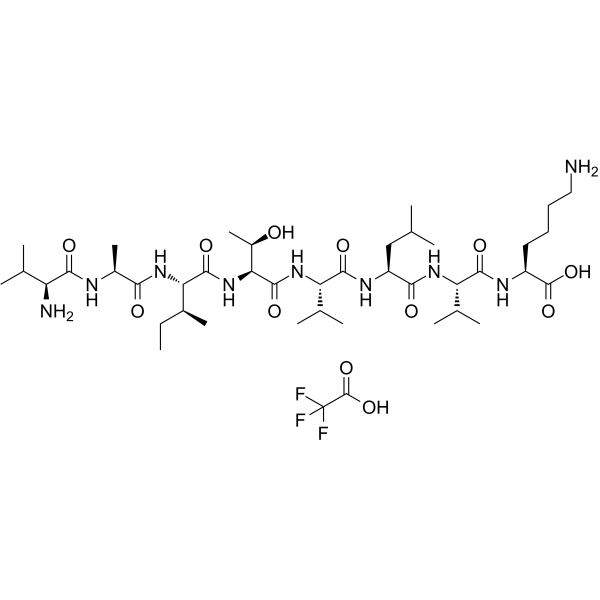
CALP1 TFA is a calmodulin (CaM) agonist (Kd of 88 µM) with binding to the CaM EF-hand/Ca 2+-binding site. CALP1 TFA blocks calcium influx and apoptosis (IC50 of 44.78 µM) through inhibition of calcium channel opening. CALP1 TFA blocks glutamate receptor channels and blocks a store-operated nonselective cation channel. CALP1 TFA activates CaM-dependent phosphodiesterase activity .
|
-
- HY-30004
-
|
|
Environmental Pollutants
Endogenous Metabolite
|
Cardiovascular Disease
Metabolic Disease
|
|
1-Aminocyclopropane-1-carboxylic acid is an endogenous metabolite. In the presence of low concentrations (1 μM) of glutamate, 1-Aminocyclopropane-1-carboxylic acid acts as a small molecule agonist of NMDA receptors with an EC50 of 0.7-0.9 μM. At high concentrations (10 μM) of glutamate, 1-Aminocyclopropane-1-carboxylic acid acts as a competitive antagonist of NMDA receptors with an EC50 of 81.6 nM. 1-Aminocyclopropane-1-carboxylic acid exerts neuroprotective activity by moderately activating NMDA receptors to prevent neuronal cell death in ischemic animal models. Additionally, 1-Aminocyclopropane-1-carboxylic acid is an antagonist of NMDA receptors, inducing blood pressure reduction and antioxidant effects in stroke-prone hypertensive rats. 1-Aminocyclopropane-1-carboxylic acid enhances object recognition memory and cognitive flexibility dependent on the prefrontal cortex, but does not affect impulsivity nor exhibit an antipsychotic-like profile. 1-Aminocyclopropane-1-carboxylic acid shows promise for research in the field of neurotoxicity. .
|
-
- HY-121833
-
|
|
Trk Receptor
Akt
ERK
|
Neurological Disease
Cancer
|
|
Gambogic amide is a potent and selective agonist of TrkA and also induces its tyrosine phosphorylation and activation of downstream signaling, including Akt and MAPK. Gambogic amide specifically interacts with the cytoplasmic juxtamembrane domain of the TrkA receptor and triggers its dimerization, leading to activation. Gambogic amide has neuroprotective activity preventing glutamate-induced neuronal cell death. Gambogic amide has improved efficacy in a transient middle cerebral artery occlusion model of stroke and could be used to study neurodegenerative diseases and stroke .
|
-
- HY-120511
-
KNT-127
1 Publications Verification
|
Opioid Receptor
|
Neurological Disease
|
|
KNT-127 is a selective and BBB-penetrant δ-opioid receptor (DOR) agonist (Ki = 0.16 nM). KNT-127 is highly selective to the δ receptor, with Ki values of 0.16, 21.3 and 153 nM for δ, μ and κ receptors, respectively. KNT-127 acts as a biased ligand that mainly activates cyclic adenosine monophosphate (cAMP) signaling with lower beta-arrestin signaling activation. KNT-127 increases the release of dopamine and L-glutamate in the striatum, nucleus accumbens, and prefrontal cortex. KNT-127 exhibits antidepressant- and anxiolytic-like effects. KNT-127 can be studied in research on neurological diseases .
|
-
- HY-103565AR
-
|
|
Reference Standards
mGluR
|
Neurological Disease
|
|
AMN082 (free base) (Standard) is the analytical standard of AMN082 (free base). This product is intended for research and analytical applications. AMN082 free base, a selective, orally active, and brain penetrant mGluR7 agonist, directly activates receptor signaling via an allosteric site in the transmembrane domain. AMN082 free base potently inhibits cAMP accumulation and stimulates GTPγS binding (EC50 values, 64-290 nM) at transfected mammalian cells expressing mGluR7. AMN082 free base shows selectivity over other mGluR subtypes and selected ionotropic glutamate receptors. Antidepressant effects .
|
-
- HY-101310
-
|
|
iGluR
EAAT
Bcl-2 Family
Caspase
|
Cardiovascular Disease
Neurological Disease
Inflammation/Immunology
|
|
SYM 2081 is a kainate receptor agonist. SYM 2081 is a substrate of EAAT1 (Km of 54 μM). SYM 2081 inhibits EAAT2-mediated glutamate transport (Kb is 3.4 μM in Xenopus oocytes), modulates Apoptotic signaling pathways (increases Bcl-2 and decreases Bax/caspase-3 expression). SYM 2081 exhibits neuroprotective activity. SYM 2081 can be used in the study of hypoxic-ischemic brain damage and inflammatory or neuropathic pain .
|
-
- HY-W010970
-
|
5'-GMP disodium salt; 5'-guanosine monophosphate disodium salt
|
Endogenous Metabolite
iGluR
|
Neurological Disease
Metabolic Disease
|
|
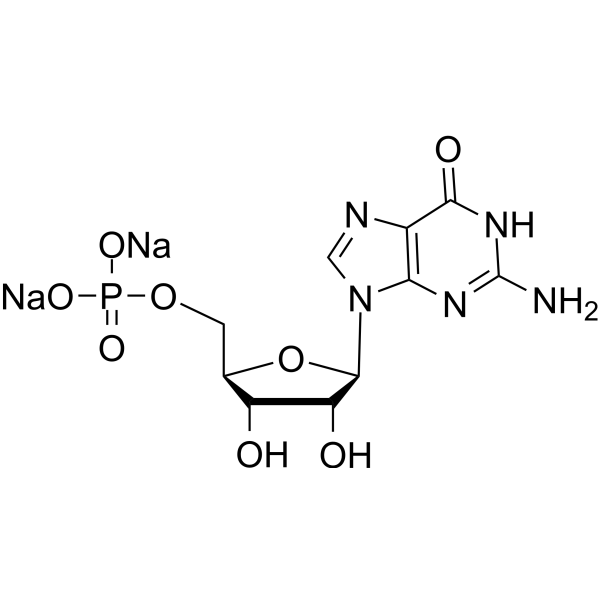
5'-Guanylic acid disodium salt is the disodium salt form of 5'-Guanylic acid (HY-N5134). 5'-Guanylic acid disodium salt is a purine nucleotide that participates in physiological processes such as energy metabolism, signal transduction, and gene expression regulation. 5'-Guanylic acid disodium salt regulates the expression of genes related to fatty acid metabolism. 5'-Guanylic acid disodium salt is the weak agonist for ionotropic glutamate receptors (iGluR), reduces the activity of the glutamatergic system and exhibits neuroprotective effect. 5'-Guanylic acid disodium salt also causes neuronal cell death at high concentrations .
|
-
- HY-30004R
-
|
|
Reference Standards
Endogenous Metabolite
|
Cardiovascular Disease
Metabolic Disease
|
|
1-Aminocyclopropane-1-carboxylic acid (Standard) is the analytical standard of 1-Aminocyclopropane-1-carboxylic acid. This product is intended for research and analytical applications. 1-Aminocyclopropane-1-carboxylic acid is an endogenous metabolite. In the presence of low concentrations (1 μM) of glutamate, 1-Aminocyclopropane-1-carboxylic acid acts as a small molecule agonist of NMDA receptors with an EC50 of 0.7-0.9 μM. At high concentrations (10 μM) of glutamate, 1-Aminocyclopropane-1-carboxylic acid acts as a competitive antagonist of NMDA receptors with an EC50 of 81.6 nM. 1-Aminocyclopropane-1-carboxylic acid exerts neuroprotective activity by moderately activating NMDA receptors to prevent neuronal cell death in ischemic animal models. Additionally, 1-Aminocyclopropane-1-carboxylic acid is an antagonist of NMDA receptors, inducing blood pressure reduction and antioxidant effects in stroke-prone hypertensive rats. 1-Aminocyclopropane-1-carboxylic acid enhances object recognition memory and cognitive flexibility dependent on the prefrontal cortex, but does not affect impulsivity nor exhibit an antipsychotic-like profile. 1-Aminocyclopropane-1-carboxylic acid shows promise for research in the field of neurotoxicity. .
|
-
- HY-101310R
-
|
|
iGluR
Reference Standards
EAAT
Bcl-2 Family
Caspase
|
Cardiovascular Disease
Neurological Disease
Inflammation/Immunology
|
|
SYM 2081 (Standard) is the analytical standard of SYM 2081 (HY-101310). This product is intended for research and analytical applications. SYM 2081 is a kainate receptor agonist. SYM 2081 is a substrate of EAAT1 (Km of 54 μM). SYM 2081 inhibits EAAT2-mediated glutamate transport (Kb is 3.4 μM in Xenopus oocytes), modulates Apoptotic signaling pathways (increases Bcl-2 and decreases Bax/caspase-3 expression). SYM 2081 exhibits neuroprotective activity. SYM 2081 can be used in the study of hypoxic-ischemic brain damage and inflammatory or neuropathic pain .
|
-
- HY-132227
-
|
3',4'-Dichlorobenzamil hydrochloride; L-594881 hydrochloride
|
Na+/Ca2+ Exchanger
|
Others
|
|
Dichlorobenzamil (3',4'-Dichlorobenzamil; L-594881) hydrochloride is a Na +-Ca 2+ Exchanger inhibitor. Dichlorobenzamil (hydrochloride) attenuates the Na +-Ca 2+ exchanger-mediated inward current induced by activation of type I metabotropic glutamate receptors in second-order baroreceptor neurons of the rat nucleus tractus solitarius .
|
-
- HY-14608R
-
|
|
Reference Standards
Endogenous Metabolite
iGluR
Ferroptosis
Apoptosis
|
Neurological Disease
|
L-Glutamic acid (Standard) is the analytical standard of L-Glutamic acid. This product is intended for research and analytical applications. L-Glutamic acid is an excitatory amino acid neurotransmitter that acts as an agonist for all subtypes of glutamate receptors (metabolic rhodophylline, NMDA, and AMPA). L-Glutamic acid has an agonist effect on the release of DA from dopaminergic nerve endings. L-Glutamic acid can be used in the study of neurological diseases .
IC50 & Target:DA .
In Vitro: L-Glutamic acid (120, 500, 750, 1000 mg/dL) can reduce the harmful effect of lithium on the embryonic development of Xenopus Xenopus .
L-Glutamic acid (2, 5, 10, 20 mM, 24-48 h) can induce neuroexcitotoxicity in neuroblastoma .
In Vivo: L-Glutamic acid (3 g/kg, subcutaneous injection) can promote excitotoxic degeneration of retinal ganglion cells in mice .
L-Glutamic acid (750 mg/kg, intraperitoneal injection) can reduce and inhibit oxidative stress induced by chlorpyrifos (CPF) in rats .
|
-
- HY-155811
-
|
|
iGluR
|
Neurological Disease
|
|
DQP-997-74 (compound 2i) is a selective negative allosteric modulator of N-methyl-d-aspartate receptor (NMDAR), specifically targeting GluN2C/D (IC50: 0.069 μM and 0.035 μM), with blood-brain barrier penetrability. Where DQP refers to dihydroquinoline-pyrazoline. DQP-997-74 acts synergistically with the agonist glutamate to exhibit time-dependent enhanced potency in inhibiting hypersynchronous activity driven by high-frequency excitatory synaptic transmission. DQP-997-74 reduces the number of epileptogenesis in a murine model of tuberous sclerosis complex (TSC)-induced epilepsy. DQP-997-74 can be used for research on NMDAR-related neurological diseases .
|
-
| Cat. No. |
Product Name |
Target |
Research Area |
-
- HY-P1077
-
CALP1
3 Publications Verification
|
mGluR
Phosphodiesterase (PDE)
Apoptosis
Calmodulin
|
Inflammation/Immunology
|
|
CALP1 is a calmodulin (CaM) agonist (Kd of 88 µM) with binding to the CaM EF-hand/Ca 2+-binding site. CALP1 blocks calcium influx and apoptosis (IC50 of 44.78 µM) through inhibition of calcium channel opening. CALP1 blocks glutamate receptor channels and blocks a store-operated nonselective cation channel. CALP1 activates CaM-dependent phosphodiesterase activity .
|
-
- HY-P1077A
-
|
|
mGluR
Phosphodiesterase (PDE)
Apoptosis
Calmodulin
|
Inflammation/Immunology
|
|
CALP1 TFA is a calmodulin (CaM) agonist (Kd of 88 µM) with binding to the CaM EF-hand/Ca 2+-binding site. CALP1 TFA blocks calcium influx and apoptosis (IC50 of 44.78 µM) through inhibition of calcium channel opening. CALP1 TFA blocks glutamate receptor channels and blocks a store-operated nonselective cation channel. CALP1 TFA activates CaM-dependent phosphodiesterase activity .
|
| Cat. No. |
Product Name |
Category |
Target |
Chemical Structure |
-
- HY-14608
-
-
-
- HY-N2309
-
-
-
- HY-Y0966
-
-
-
- HY-17551
-
-
-
- HY-14608A
-
-
-
- HY-100806
-
-
-
- HY-100807
-
-
-
- HY-W014666
-
-
-
- HY-N5134
-
-
-
- HY-100808
-
-
-
- HY-30004
-
|
|
Structural Classification
Classification of Application Fields
Ketones, Aldehydes, Acids
Metabolic Disease
Endogenous metabolite
Disease Research Fields
Source Classification
|
Environmental Pollutants
Endogenous Metabolite
|
|
1-Aminocyclopropane-1-carboxylic acid is an endogenous metabolite. In the presence of low concentrations (1 μM) of glutamate, 1-Aminocyclopropane-1-carboxylic acid acts as a small molecule agonist of NMDA receptors with an EC50 of 0.7-0.9 μM. At high concentrations (10 μM) of glutamate, 1-Aminocyclopropane-1-carboxylic acid acts as a competitive antagonist of NMDA receptors with an EC50 of 81.6 nM. 1-Aminocyclopropane-1-carboxylic acid exerts neuroprotective activity by moderately activating NMDA receptors to prevent neuronal cell death in ischemic animal models. Additionally, 1-Aminocyclopropane-1-carboxylic acid is an antagonist of NMDA receptors, inducing blood pressure reduction and antioxidant effects in stroke-prone hypertensive rats. 1-Aminocyclopropane-1-carboxylic acid enhances object recognition memory and cognitive flexibility dependent on the prefrontal cortex, but does not affect impulsivity nor exhibit an antipsychotic-like profile. 1-Aminocyclopropane-1-carboxylic acid shows promise for research in the field of neurotoxicity. .
|
-
-
- HY-107512
-
-
-
- HY-Y0966R
-
-
-
- HY-W010970
-
|
5'-GMP disodium salt; 5'-guanosine monophosphate disodium salt
|
Classification of Application Fields
Ketones, Aldehydes, Acids
Other Diseases
Endogenous metabolite
Disease Research Fields
Source Classification
|
Endogenous Metabolite
iGluR
|
|
5'-Guanylic acid disodium salt is the disodium salt form of 5'-Guanylic acid (HY-N5134). 5'-Guanylic acid disodium salt is a purine nucleotide that participates in physiological processes such as energy metabolism, signal transduction, and gene expression regulation. 5'-Guanylic acid disodium salt regulates the expression of genes related to fatty acid metabolism. 5'-Guanylic acid disodium salt is the weak agonist for ionotropic glutamate receptors (iGluR), reduces the activity of the glutamatergic system and exhibits neuroprotective effect. 5'-Guanylic acid disodium salt also causes neuronal cell death at high concentrations .
|
-
-
- HY-14608R
-
|
|
Structural Classification
Microorganisms
Disease markers
Endocrine diseases
Amino acids
Nervous System Disorder
Endogenous metabolite
Cardiovascular System Disorder
Cancer
Source Classification
|
Reference Standards
Endogenous Metabolite
iGluR
Ferroptosis
Apoptosis
|
L-Glutamic acid (Standard) is the analytical standard of L-Glutamic acid. This product is intended for research and analytical applications. L-Glutamic acid is an excitatory amino acid neurotransmitter that acts as an agonist for all subtypes of glutamate receptors (metabolic rhodophylline, NMDA, and AMPA). L-Glutamic acid has an agonist effect on the release of DA from dopaminergic nerve endings. L-Glutamic acid can be used in the study of neurological diseases .
IC50 & Target:DA .
In Vitro: L-Glutamic acid (120, 500, 750, 1000 mg/dL) can reduce the harmful effect of lithium on the embryonic development of Xenopus Xenopus .
L-Glutamic acid (2, 5, 10, 20 mM, 24-48 h) can induce neuroexcitotoxicity in neuroblastoma .
In Vivo: L-Glutamic acid (3 g/kg, subcutaneous injection) can promote excitotoxic degeneration of retinal ganglion cells in mice .
L-Glutamic acid (750 mg/kg, intraperitoneal injection) can reduce and inhibit oxidative stress induced by chlorpyrifos (CPF) in rats .
|
-
-
- HY-100807R
-
-
-
- HY-100806R
-
-
-
- HY-100804
-
|
|
Ketones, Aldehydes, Acids
Endogenous metabolite
Source Classification
|
mGluR
Endogenous Metabolite
|
|
L-Cysteinesulfinic acid is a potent agonist at several rat metabotropic glutamate receptors (mGluRs) with pEC50s of 3.92, 4.6, 3.9, 2.7, 4.0, and 3.94 for mGluR1, mGluR5, mGluR2, mGluR4, mGluR6, and mGluR8, respectively .
|
-
-
- HY-W017230
-
|
|
Natural Products
Neurological Disease
Classification of Application Fields
Endogenous metabolite
Disease Research Fields
Source Classification
|
mGluR
Endogenous Metabolite
|
|
L-Cysteinesulfinic acid monohydrate is a potent agonist at several rat metabotropic glutamate receptors (mGluRs) with pEC50s of 3.92, 4.6, 3.9, 2.7, 4.0, and 3.94 for mGluR1, mGluR5, mGluR2, mGluR4, mGluR6, and mGluR8, respectively .
|
-
-
- HY-W014666R
-
-
-
- HY-30004R
-
|
|
Structural Classification
Microorganisms
Ketones, Aldehydes, Acids
Endogenous metabolite
Source Classification
|
Reference Standards
Endogenous Metabolite
|
|
1-Aminocyclopropane-1-carboxylic acid (Standard) is the analytical standard of 1-Aminocyclopropane-1-carboxylic acid. This product is intended for research and analytical applications. 1-Aminocyclopropane-1-carboxylic acid is an endogenous metabolite. In the presence of low concentrations (1 μM) of glutamate, 1-Aminocyclopropane-1-carboxylic acid acts as a small molecule agonist of NMDA receptors with an EC50 of 0.7-0.9 μM. At high concentrations (10 μM) of glutamate, 1-Aminocyclopropane-1-carboxylic acid acts as a competitive antagonist of NMDA receptors with an EC50 of 81.6 nM. 1-Aminocyclopropane-1-carboxylic acid exerts neuroprotective activity by moderately activating NMDA receptors to prevent neuronal cell death in ischemic animal models. Additionally, 1-Aminocyclopropane-1-carboxylic acid is an antagonist of NMDA receptors, inducing blood pressure reduction and antioxidant effects in stroke-prone hypertensive rats. 1-Aminocyclopropane-1-carboxylic acid enhances object recognition memory and cognitive flexibility dependent on the prefrontal cortex, but does not affect impulsivity nor exhibit an antipsychotic-like profile. 1-Aminocyclopropane-1-carboxylic acid shows promise for research in the field of neurotoxicity. .
|
-
-
- HY-W017230R
-
|
|
Structural Classification
Natural Products
Endogenous metabolite
Source Classification
|
Reference Standards
mGluR
Endogenous Metabolite
|
|
L-Cysteinesulfinic acid monohydrate is a potent agonist at several rat metabotropic glutamate receptors (mGluRs) with pEC50s of 3.92, 4.6, 3.9, 2.7, 4.0, and 3.94 for mGluR1, mGluR5, mGluR2, mGluR4, mGluR6, and mGluR8, respectively .
|
-
-
- HY-100804R
-
|
|
Structural Classification
Ketones, Aldehydes, Acids
Endogenous metabolite
Source Classification
|
Reference Standards
mGluR
Endogenous Metabolite
|
|
L-Cysteinesulfinic acid (Standard) is the analytical standard of L-Cysteinesulfinic acid. This product is intended for research and analytical applications. L-Cysteinesulfinic acid is a potent agonist at several rat metabotropic glutamate receptors (mGluRs) with pEC50s of 3.92, 4.6, 3.9, 2.7, 4.0, and 3.94 for mGluR1, mGluR5, mGluR2, mGluR4, mGluR6, and mGluR8, respectively .
|
-
-
- HY-14608AR
-
-
-
- HY-107512R
-
-
-
- HY-100808R
-
-
| Cat. No. |
Product Name |
Chemical Structure |
-
- HY-100806S
-
1 Publications Verification
|
|
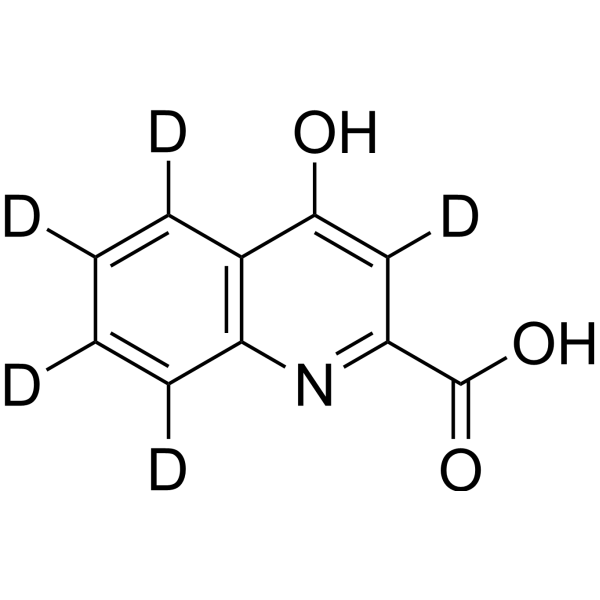
Kynurenic acid-d5 is the deuterium labeled Kynurenic acid. Kynurenic acid, an endogenous tryptophan metabolite, is a broad-spectrum antagonist targeting NMDA, glutamate, α7 nicotinic acetylcholine receptor. Kynurenic acid is also an agonist of GPR35/CXCR8 .
|
-
-
- HY-14608S5
-
1 Publications Verification
|
|
L-Glutamic acid- 13C5 is the 13C-labeled L-Glutamic acid. L-Glutamic acid acts as an excitatory transmitter and an agonist at all subtypes of glutamate receptors (metabotropic, kainate, NMDA, and AMPA). L-Glutamic acid shows a direct activating effect on the release of DA from dopaminergic terminals.
|
-
-
- HY-Y0966S8
-
|
|
|
Glycine-d5 is the deuterium labeled Glycine. Glycine is an inhibitory neurotransmitter in the CNS and also acts as a co-agonist along with glutamate, facilitating an excitatory potential at the glutaminergic N-methyl-D-aspartic acid (NMDA) receptors.
|
-
-
- HY-14608S7
-
|
|
|
L-Glutamic acid-d5 is the deuterium labeled L-Glutamic acid. L-Glutamic acid acts as an excitatory transmitter and an agonist at all subtypes of glutamate receptors (metabotropic, kainate, NMDA, and AMPA). L-Glutamic acid shows a direct activating effect on the release of DA from dopaminergic terminals.
|
-
-
- HY-100807S
-
2 Publications Verification
|
|
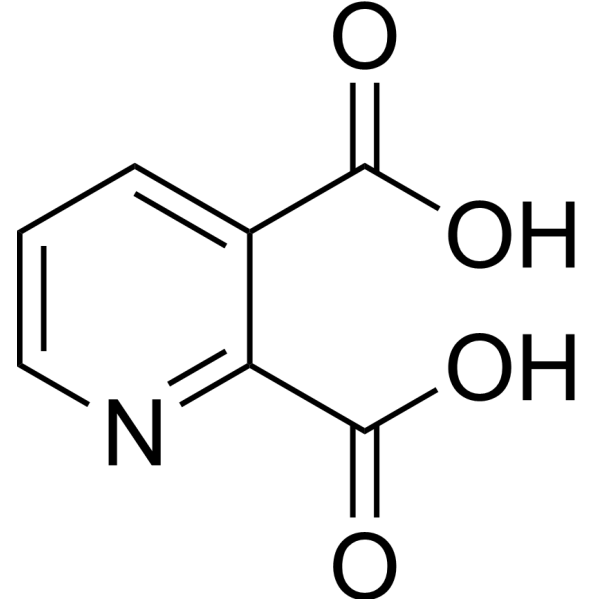
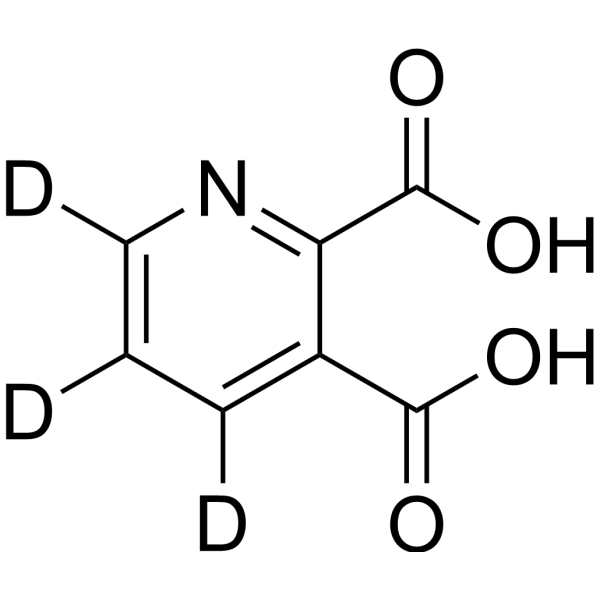
Quinolinic acid-d3 is the deuterium labeled Quinolinic acid. Quinolinic acid, an endogenous metabolite of tryptophan, is a N-methyl-D-aspartate receptor (NMDA receptor) agonist. Quinolinic acid increases glutamate efflux, induces the generation of ROS, activates nitric oxide synthase, produces excessive NO, leading to calcium ion influx and neuronal apoptosis.
|
-
-
- HY-14608S8
-
|
|
|
L-Glutamic acid-d3 is the deuterium labeled L-Glutamic acid. L-Glutamic acid acts as an excitatory transmitter and an agonist at all subtypes of glutamate receptors (metabotropic, kainate, NMDA, and AMPA). L-Glutamic acid shows a direct activating effect on the release of DA from dopaminergic terminals.
|
-
-
- HY-14608S3
-
|
|
|
L-Glutamic acid- 13C5, 15N is the 13C- and 15N-labeled L-Glutamic acid. L-Glutamic acid acts as an excitatory transmitter and an agonist at all subtypes of glutamate receptors (metabotropic, kainate, NMDA, and AMPA). L-Glutamic acid shows a direct activating effect on the release of DA from dopaminergic terminals.
|
-
-
- HY-Y0966S3
-
|
|
|
Glycine- 13C2 is the 13C-labeled Glycine. Glycine is an inhibitory neurotransmitter in the CNS and also acts as a co-agonist along with glutamate, facilitating an excitatory potential at the glutaminergic N-methyl-D-aspartic acid (NMDA) receptors.
|
-
-
- HY-W014666S
-
|
|
|
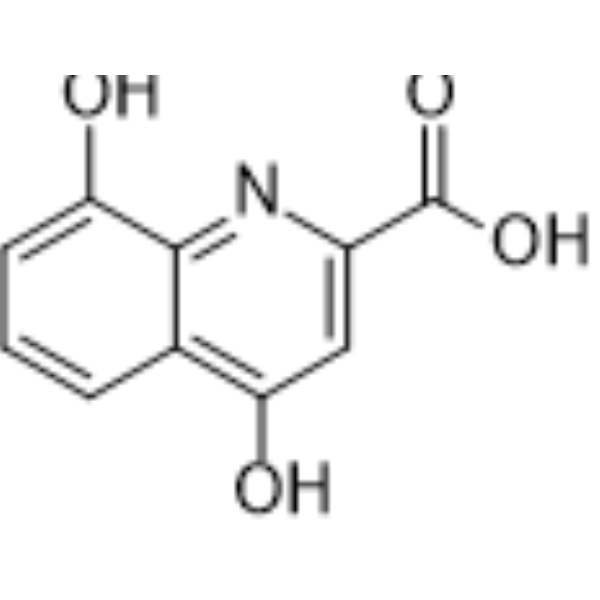
Xanthurenic acid-d4 is the deuterium labeled Xanthurenic acid . Xanthurenic acid is a putative endogenous Group II metabotropic glutamate receptor agonist, on sensory transmission in the thalamus .
|
-
-
- HY-Y0966S1
-
|
|
|
Glycine-d2 is the deuterium labeled Glycine. Glycine is an inhibitory neurotransmitter in the CNS and also acts as a co-agonist along with glutamate, facilitating an excitatory potential at the glutaminergic N-methyl-D-aspartic acid (NMDA) receptors.
|
-
-
- HY-Y0966S
-
|
|
|
Glycine- 15N is the 15N-labeled Glycine. Glycine is an inhibitory neurotransmitter in the CNS and also acts as a co-agonist along with glutamate, facilitating an excitatory potential at the glutaminergic N-methyl-D-aspartic acid (NMDA) receptors .
|
-
-
- HY-Y0966S6
-
|
|
|
Glycine- 13C2, 15N is the 13C- and 15N-labeled Glycine. Glycine is an inhibitory neurotransmitter in the CNS and also acts as a co-agonist along with glutamate, facilitating an excitatory potential at the glutaminergic N-methyl-D-aspartic acid (NMDA) receptors.
|
-
-
- HY-14608S
-
|
|
|
L-Glutamic acid- 13C is the 13C-labeled L-Glutamic acid. L-Glutamic acid acts as an excitatory transmitter and an agonist at all subtypes of glutamate receptors (metabotropic, kainate, NMDA, and AMPA). L-Glutamic acid shows a direct activating effect on the release of DA from dopaminergic terminals.
|
-
-
- HY-Y0966S10
-
|
|
|
Glycine-d3 is the deuterium labeled Glycine. Glycine is an inhibitory neurotransmitter in the CNS and also acts as a co-agonist along with glutamate, facilitating an excitatory potential at the glutaminergic N-methyl-D-aspartic acid (NMDA) receptors.
|
-
-
- HY-Y0966S2
-
|
|
|
Glycine-2- 13C is the 13C-labeled Glycine. Glycine is an inhibitory neurotransmitter in the CNS and also acts as a co-agonist along with glutamate, facilitating an excitatory potential at the glutaminergic N-methyl-D-aspartic acid (NMDA) receptors.
|
-
-
- HY-Y0966S4
-
|
|
|
Glycine-1- 13C is the 13C-labeled Glycine. Glycine is an inhibitory neurotransmitter in the CNS and also acts as a co-agonist along with glutamate, facilitating an excitatory potential at the glutaminergic N-methyl-D-aspartic acid (NMDA) receptors.
|
-
-
- HY-14608S2
-
|
|
|
L-Glutamic acid- 15N is the 15N-labeled L-Glutamic acid. L-Glutamic acid acts as an excitatory transmitter and an agonist at all subtypes of glutamate receptors (metabotropic, kainate, NMDA, and AMPA). L-Glutamic acid shows a direct activating effect on the release of DA from dopaminergic terminals .
|
-
-
- HY-100807S2
-
|
|
|
Quinolinic acid-13C4, 15N is an isotopic labeled Quinolinic acid (HY-100807). Quinolinic acid, an endogenous metabolite of tryptophan, is a N-methyl-D-aspartate receptor (NMDA receptor) agonist. Quinolinic acid increases glutamate efflux, induces the generation of ROS, activates nitric oxide synthase, produces excessive NO, leading to calcium ion influx and neuronal apoptosis.
|
-
-
- HY-14608S1
-
|
|
|
L-Glutamic acid-1- 13C is the 13C-labeled L-Glutamic acid. L-Glutamic acid acts as an excitatory transmitter and an agonist at all subtypes of glutamate receptors (metabotropic, kainate, NMDA, and AMPA). L-Glutamic acid shows a direct activating effect on the release of DA from dopaminergic terminals.
|
-
-
- HY-Y0966S7
-
|
|
|
Glycine-2- 13C, 15N is the 13C- and 15N-labeled Glycine. Glycine is an inhibitory neurotransmitter in the CNS and also acts as a co-agonist along with glutamate, facilitating an excitatory potential at the glutaminergic N-methyl-D-aspartic acid (NMDA) receptors.
|
-
-
- HY-14608S6
-
|
|
|
L-Glutamic acid-5- 13C is the 13C-labeled L-Glutamic acid. L-Glutamic acid acts as an excitatory transmitter and an agonist at all subtypes of glutamate receptors (metabotropic, kainate, NMDA, and AMPA). L-Glutamic acid shows a direct activating effect on the release of DA from dopaminergic terminals.
|
-
-
- HY-100808S
-
|
|
|
D-Serine-d3 ((R)-Serine-d3) is a deuterium labeled D-Serine (HY-100808). D-Serine ((R)-Serine), an endogenous amino acid involved in glia-synapse interactions that has unique neurotransmitter characteristics, is a potent co-agonist at the NMDA glutamate receptor. D-Serinee has a cardinal modulatory role in major NMDAR-dependent processes including NMDAR-mediated neurotransmission, neurotoxicity, synaptic plasticity, and cell migration .
|
-
-
- HY-100807S1
-
|
|
|
Quinolinic acid- 13C7 is the 13C labeled Quinolinic acid (HY-100807). Quinolinic acid, an endogenous metabolite of tryptophan, is a N-methyl-D-aspartate receptor (NMDA receptor) agonist. Quinolinic acid increases glutamate efflux, induces the generation of ROS, activates nitric oxide synthase, produces excessive NO, leading to calcium ion influx and neuronal apoptosis.
|
-
-
- HY-14608S4
-
|
|
|
L-Glutamic acid- 13C5, 15N,d5 is the deuterium, 13C-, and 15-labeled L-Glutamic acid. L-Glutamic acid acts as an excitatory transmitter and an agonist at all subtypes of glutamate receptors (metabotropic, kainate, NMDA, and AMPA). L-Glutamic acid shows a direct activating effect on the release of DA from dopaminergic terminals.
|
-
-
- HY-14608S10
-
|
|
|
L-Glutamic acid- 13C2 is the 13C labeled L-Glutamic acid . L-Glutamic acid acts as an excitatory transmitter and an agonist at all subtypes of glutamate receptors (metabotropic, kainate, NMDA, and AMPA). L-Glutamic acid shows a direct activating effect on the release of DA from dopaminergic terminals .
|
-
-
- HY-90003S
-
|
|
|
Tianeptine-d12 is a deuterated analog of Tianeptine (HY-90003).Tianeptine is an atypical antidepressant. Tianeptine is a moderate-intensity agonist of the μ-opioid receptor (MOR), and to a lesser extent, is an agonist of the δ-opioid receptor (DOR). Tianeptine is a glutamate modulator that can enhance AMPA receptor and antagonize NMDA receptor. Tianeptine increases sensitivity of the α1 adrenergic receptor, which only manifests in chronic treatment. Tianeptine exerts neuroprotective effects under stress/inflammation-induced conditions, exhibiting anti-inflammatory and antioxidant properties. Tianeptine inhibits MMP-9 by suppressing the PI3K/Akt-mediated NF-κB pathway. Tianeptine can be used to alleviate symptoms of depression and anxiety, but does not cause sedative effects.
|
-
-
- HY-W016145S
-
|
|
|
L-Glutamic acid- 13C5 hydrate salt is the 13C labeled L-Glutamic acid hydrate salt. L-Glutamic acid monosodium hydrate is an excitatory amino acid neurotransmitter that acts as an agonist for all subtypes of glutamate receptors (metabolic rhodophylline, NMDA, and AMPA). L-Glutamic acid monosodium hydrate has an agonist effect on the release of DA from dopaminergic nerve endings. L-Glutamic acid monosodium hydrate can be used in the study of neurological diseases. L-Glutamic acid monosodium hydrate acts at ionotropic and?metabotropic glutamate receptors.
|
-
-
- HY-Y0966S9
-
|
|
|
Glycine- 15N,d2 is the deuterium and 15N-labeled Glycine. Glycine is an inhibitory neurotransmitter in the CNS and also acts as a co-agonist along with glutamate, facilitating an excitatory potential at the glutaminergic N-methyl-D-aspartic acid (NMDA) receptors.
|
-
-
- HY-Y0966S5
-
|
|
|
Glycine-1- 13C, 15N is the 13C- and 15N-labeled Glycine. Glycine is an inhibitory neurotransmitter in the CNS and also acts as a co-agonist along with glutamate, facilitating an excitatory potential at the glutaminergic N-methyl-D-aspartic acid (NMDA) receptors.
|
-
-
- HY-Y0966S11
-
|
|
|
Glycine- 13C2, 15N,d2 is the deuterium, 13C and 15N labeled Glycine . Glycine is an inhibitory neurotransmitter in the CNS and also acts as a co-agonist along with glutamate, facilitating an excitatory potential at the glutaminergic N-methyl-D-aspartic acid (NMDA) receptors .
|
-
-
- HY-14608S9
-
|
|
|
L-Glutamic acid- 15N,d5 is the deuterium and 15N-labeled L-Glutamic acid. L-Glutamic acid acts as an excitatory transmitter and an agonist at all subtypes of glutamate receptors (metabotropic, kainate, NMDA, and AMPA). L-Glutamic acid shows a direct activating effect on the release of DA from dopaminergic terminals.
|
-
-
- HY-144224S
-
|
|
|
Tianeptine-d6 hydrochloride is the deuterium labeled Tianeptine hydrochloride. Tianeptine hydrochloride is an atypical antidepressant. Tianeptine hydrochloride is a moderate-intensity agonist of the μ-opioid receptor (MOR), and to a lesser extent, is an agonist of the δ-opioid receptor (DOR). Tianeptine hydrochloride is a glutamate modulator that can enhance AMPA receptor and antagonize NMDA receptor. Tianeptine hydrochloride increases sensitivity of the α1 adrenergic receptor, which only manifests in chronic treatment. Tianeptine hydrochloride exerts neuroprotective effects under stress/inflammation-induced conditions, exhibiting anti-inflammatory and antioxidant properties. Tianeptine hydrochloride inhibits MMP-9 by suppressing the PI3K/Akt-mediated NF-κB pathway. Tianeptine hydrochloride can be used to alleviate symptoms of depression and anxiety, but does not cause sedative effects.
|
-
| Cat. No. |
Product Name |
|
Classification |
-
- HY-Y0966
-
|
|
|
Fillers
|
|
Glycine is an inhibitory neurotransmitter in the CNS and also acts as a co-agonist along with glutamate, facilitating an excitatory potential at the glutaminergic N-methyl-D-aspartic acid (NMDA) receptors. Glycine is orally active. Glycine inhibits the membrane aggregation of NINJ1 and prevents plasma membrane rupture during cell death. Glycine can be used to study cell protection, cancer, neurological diseases, and angiogenesis .
|
-
- HY-W010970
-
|
5'-GMP disodium salt; 5'-guanosine monophosphate disodium salt
|
|
Nucleotide Analogs
|
|
5'-Guanylic acid disodium salt is the disodium salt form of 5'-Guanylic acid (HY-N5134). 5'-Guanylic acid disodium salt is a purine nucleotide that participates in physiological processes such as energy metabolism, signal transduction, and gene expression regulation. 5'-Guanylic acid disodium salt regulates the expression of genes related to fatty acid metabolism. 5'-Guanylic acid disodium salt is the weak agonist for ionotropic glutamate receptors (iGluR), reduces the activity of the glutamatergic system and exhibits neuroprotective effect. 5'-Guanylic acid disodium salt also causes neuronal cell death at high concentrations .
|
Your information is safe with us. * Required Fields.
Inquiry Information
- Product Name:
- Cat. No.:
- Quantity:
- MCE Japan Authorized Agent:

