Search Result
Results for "
sn-Glycero-3-
" in MedChemExpress (MCE) Product Catalog:
137
Biochemical Assay Reagents
121
Isotope-Labeled Compounds
| Cat. No. |
Product Name |
Target |
Research Areas |
Chemical Structure |
-
- HY-130462
-
|
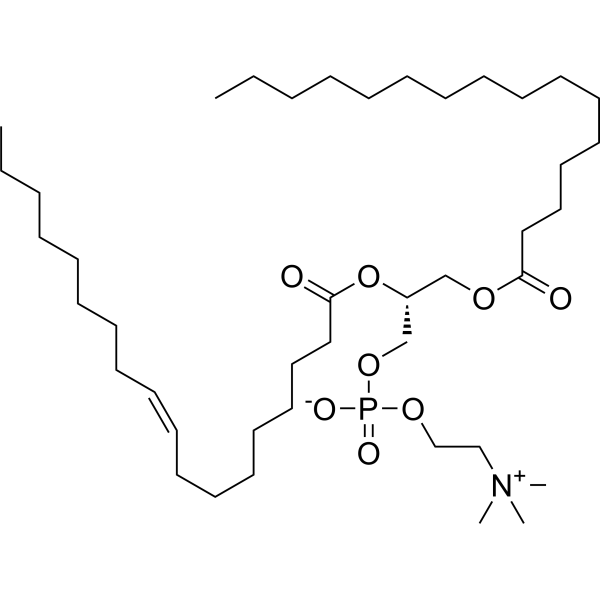
POPC
|
Liposome
|
Others
|
|
1-Palmitoyl-2-oleoyl-sn-glycero-3-PC (POPC), a phospholipid, is a major component of biological membranes. 1-Palmitoyl-2-oleoyl-sn-glycero-3-PC is used for the preparation of liposomes and studying the properties of lipid bilayers .
|
-
-
- HY-17552
-
|
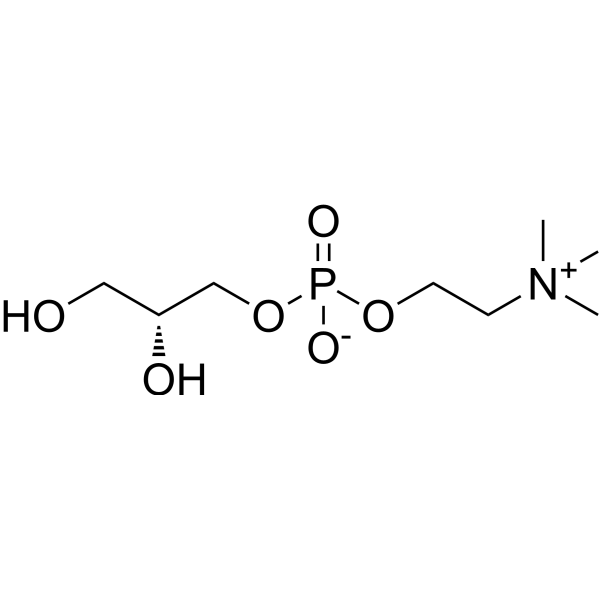
Choline Alfoscerate; Alpha-GPC; L-α-GPC
|
Cholinesterase (ChE)
Endogenous Metabolite
|
Neurological Disease
|
|
sn-Glycero-3-phosphocholine (Choline Alfoscerate) is a precursor in the biosynthesis of brain phospholipids and increases the bioavailability of choline in nervous tissue. sn-Glycero-3-phosphocholine (Choline Alfoscerate) has significant effects on cognitive function with a good safety profile and tolerability, and is effective in the treatment of Alzheimer's disease and dementia .
|
-
-
- HY-125783
-
-
-
- HY-113010
-
-
-
- HY-W127499
-
|
DEPC; L-Dierucoyl lecithin; Dierucoyllecithin
|
Liposome
|
Others
|
|
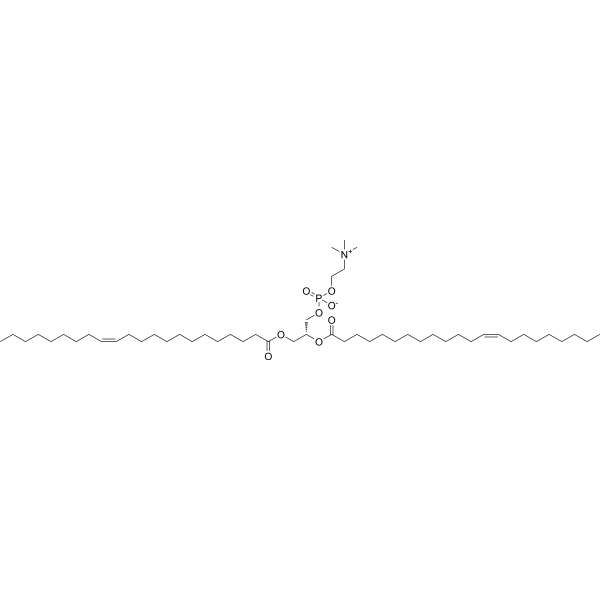
1,2-Dierucoyl-sn-glycero-3-phosphocholine (DEPC) is the composition of liposome membrane. 1,2-Dierucoyl-sn-glycero-3-phosphocholine is used for the preparation of liposomes and studying the properties of lipid bilayers. The GO (glucose oxidase) in the 1,2-Dierucoyl-sn-glycero-3-phosphocholine liposome shows the high activity .
|
-
-
- HY-W013063
-
|
|
Liposome
|
Metabolic Disease
|
|
1,2-Dilinoleoyl-sn-glycero-3-phosphocholine is a phospholipid. 1,2-Dilinoleoyl-sn-glycero-3-phosphocholine can be used for obesity research .
|
-

-
- HY-126356
-
|
|
Liposome
|
Cardiovascular Disease
|
|
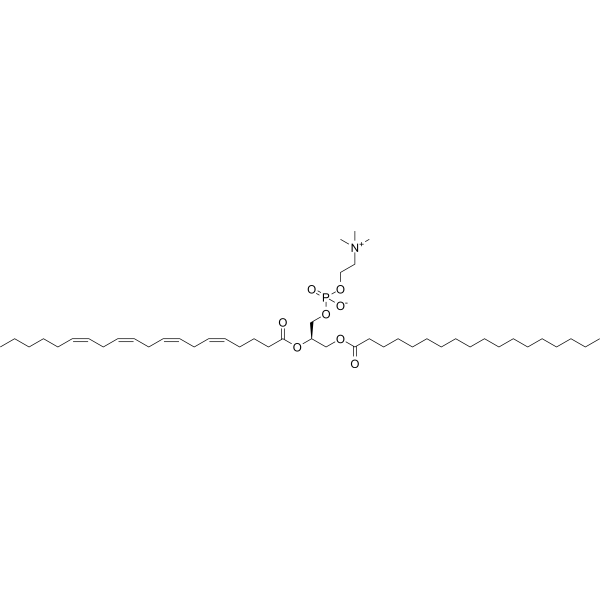
1-Stearoyl-2-arachidonoyl-sn-glycero-3-phosphocholine is a major phospholipid in low-density lipoprotein and belongs to the group of 1-acyl phosphatidylcholines. 1-Stearoyl-2-arachidonoyl-sn-glycero-3-phosphocholine does not induce morphological changes in washed human platelets. 1-Stearoyl-2-arachidonoyl-sn-glycero-3-phosphocholine can be used for the research of atherosclerosis and thrombotic diseases .
|
-
-
- HY-145742
-
|
DSPG sodium
|
Liposome
|
Cardiovascular Disease
|
|
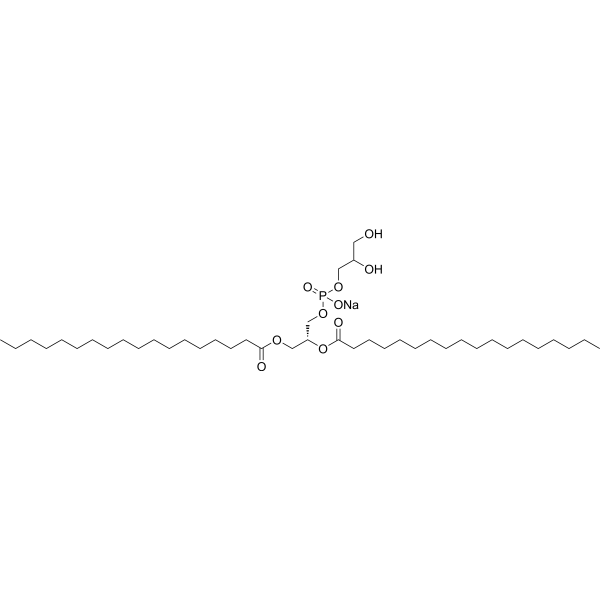
1,2-Distearoyl-sn-Glycero-3-Phosphatidylglycerol (sodium) is the component of liposomes for drug delivery .
|
-
-
- HY-122056
-
|
L-α-Diheptanoyllecithin; 12-Diheptanoyl-sn-Glycero-3-PC
|
Biochemical Assay Reagents
|
Metabolic Disease
|
|
1,2-Diheptanoyl-SN-glycero-3-phosphocholine (L-α-Diheptanoyllecithin; 12-Diheptanoyl-sn-glycero-3-PC) is an ester product.
|
-

-
- HY-145539
-
|
|
Liposome
|
Others
|
|
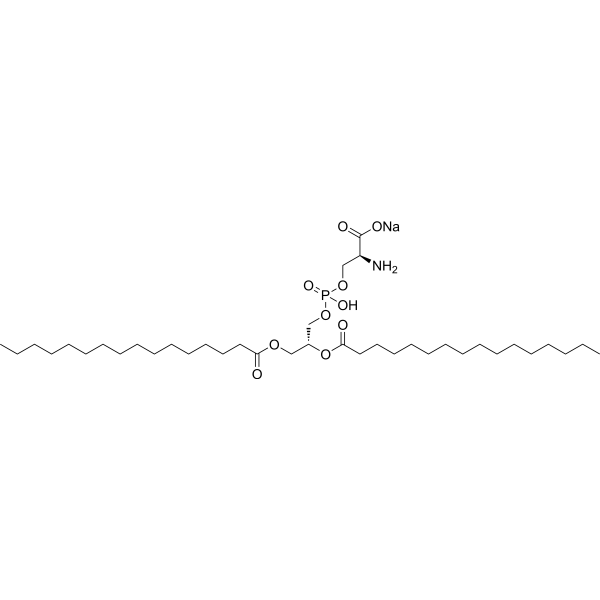
1,2-Dipalmitoyl-sn-glycero-3-PS sodium is a phosphatidylserine phospholipid. 1,2-Dipalmitoyl-sn-glycero-3-PS sodium is used for the preparation of phospholipid bilayers .
|
-
-
- HY-112307A
-
|
|
Liposome
|
Cardiovascular Disease
Inflammation/Immunology
|
|
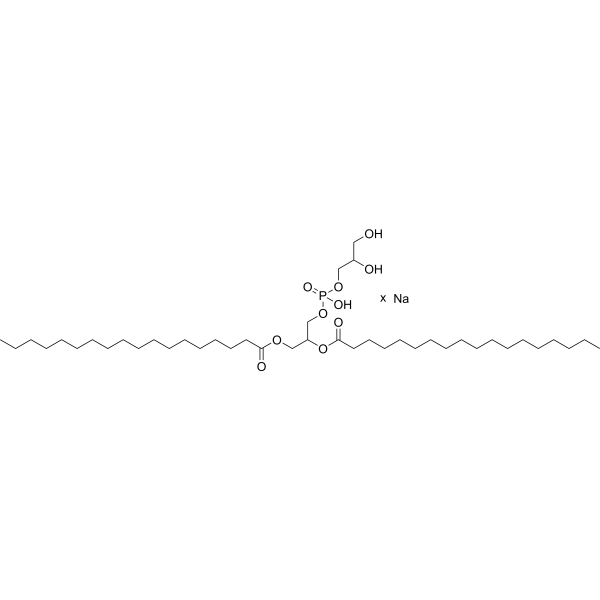
(Rac)-1,2-Distearoyl-sn-Glycero-3-Phosphatidylglycerol (sodium) is an anionic phospholipid, can be studied for drug delivery and the synthesis of liposomes. 1,2-Distearoyl-sn-Glycero-3-Phosphatidylglycerol-containing liposomes can induce Tregs that are specific for the liposomes’ cargo. 1,2-Distearoyl-sn-Glycero-3-Phosphatidylglycerol is taken up by antigen-presenting cells mediated via complement component 1q (C1q) .
|
-
-
- HY-142989
-
|
|
Liposome
HIV
HCV
HBV
|
Infection
Cancer
|
|
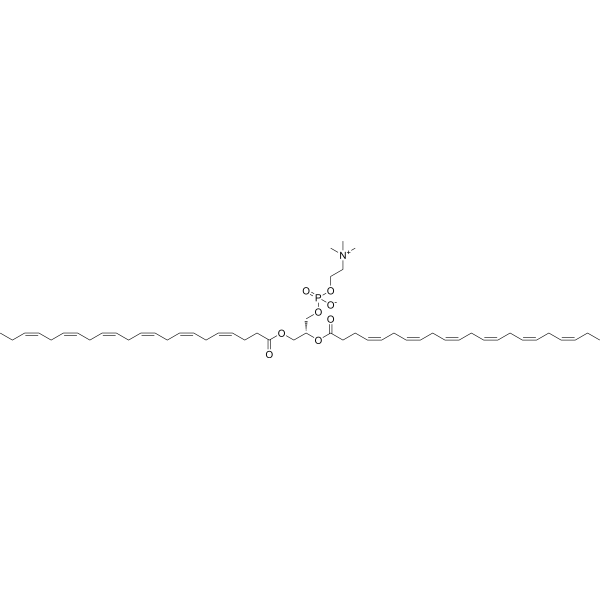
1,2-Didocosahexaenoyl-sn-glycero-3-phosphocholine is a polyunsaturated phospholipid that serves as a component of lipid monolayers and small unilamellar vesicles. 1,2-Didocosahexaenoyl-sn-glycero-3-phosphocholine can be used to prepare endoplasmic reticulum-targeted liposomes (PERLs), which are composed of 1,2-didocosahexaenoyl-sn-glycero-3-phosphoethanolamine, l-α-phosphatidylinositol and l-α-phosphatidylserine at a molar ratio of 1.5:1.5:1:1. PERLs reduce cholesterol levels in human peripheral blood mononuclear cells (PBMCs) and decrease HIV-1 particle secretion from HIV-1-infected PBMCs. Liposomes formed from 1,2-Didocosahexaenoyl-sn-glycero-3-phosphocholine exhibit cytotoxicity against leukemia cells. 1,2-Didocosahexaenoyl-sn-glycero-3-phosphocholine is applicable to studies related to hepatitis C virus infection, HIV infection, hepatitis B virus infection and leukemia .
|
-
-
- HY-165718
-
-

-
- HY-W040255
-
|
PGPC
|
Ferroptosis
FABP
Caspase
Interleukin Related
Apoptosis
|
Inflammation/Immunology
|
|
1-Palmitoyl-2-glutaryl-sn-glycero-3-phosphocholine is an oxidized phospholipid. 1-Palmitoyl-2-glutaryl-sn-glycero-3-phosphocholine reduces the viability of HUVECs, increases the levels of ferrous ions and lipid peroxidation, promotes the production of superoxide anions, and decreases the levels of glutathione and GPX4 in cells. 1-Palmitoyl-2-glutaryl-sn-glycero-3-phosphocholine upregulates the mRNA and protein levels of FABP3 in HUVECs, impairs mitochondrial membrane potential, and induces ferroptosis-related changes as well as mitochondrial dysfunction and damage. 1-Palmitoyl-2-glutaryl-sn-glycero-3-phosphocholine activates caspase-11 and promotes the continuous release of IL-1β from macrophages and dendritic cells. 1-Palmitoyl-2-glutaryl-sn-glycero-3-phosphocholine inhibits the proliferation of aortic smooth muscle cells and induces apoptosis in these cells. 1-Palmitoyl-2-glutaryl-sn-glycero-3-phosphocholine is applicable to relevant research on atherosclerosis [3] .
|
-

-
- HY-141617
-
|
|
Liposome
|
Metabolic Disease
|
|
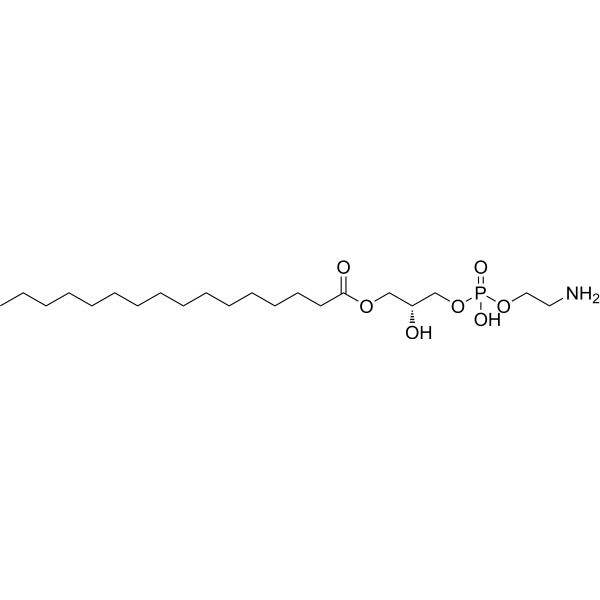
1-Palmitoyl-2-hydroxy-sn-glycero-3-PE is a naturally occurring lysophospholipid. 1-Palmitoyl-2-hydroxy-sn-glycero-3-PE also acts as an immune response regulator and toxicity alleviator produced by Microcystis aeruginosa under Cu 2+ stress .
|
-
-
- HY-142990
-
|
|
Liposome
|
Others
|
|
1-Oleoyl-2-palmitoyl-sn-glycero-3-PC derives from an oleic acid. 1-Oleoyl-2-palmitoyl-sn-glycero-3-PC can be used for the synthesis of liposomes .
|
-

-
- HY-115415
-
|
|
Liposome
|
Others
|
|
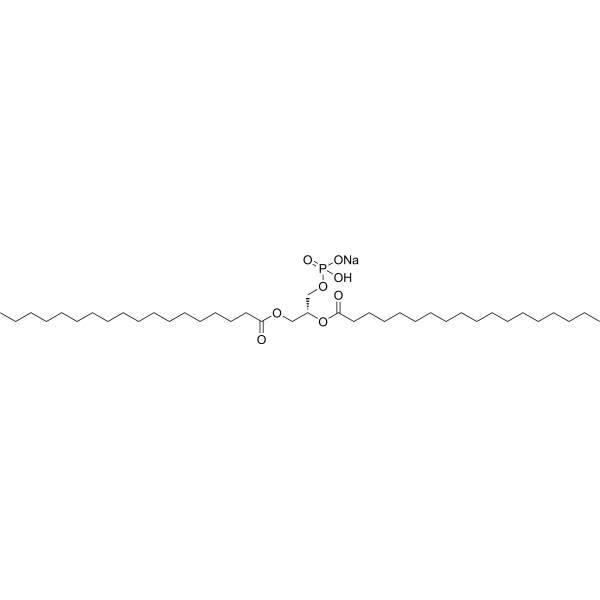
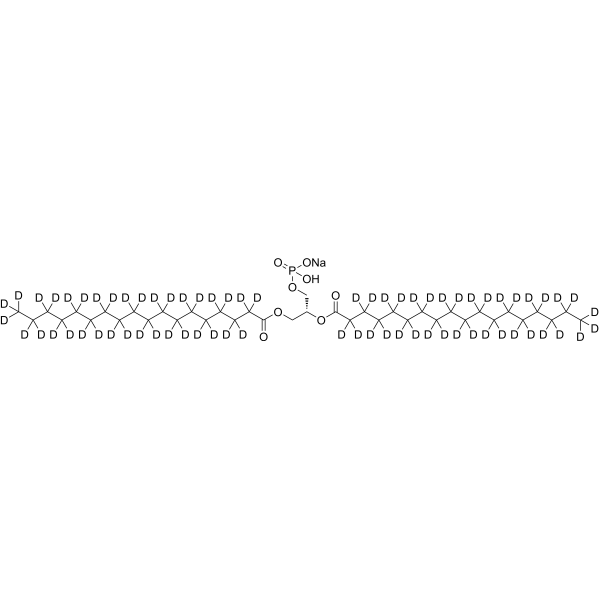
1,2-Distearoyl-sn-glycero-3-phosphate, sodium salt is a phospholipid commonly used as a component of liposome formulations and drug delivery systems. 1,2-Distearoyl-sn-glycero-3-phosphate, sodium salt has unique chemical properties that make it an effective tool for encapsulating drugs and delivering them to specific targets in the body. It acts as a stabilizer and emulsifier, which can improve the solubility and bioavailability of drugs.
|
-
-
- HY-146794S
-
|
|
Isotope-Labeled Compounds
|
Others
|
|
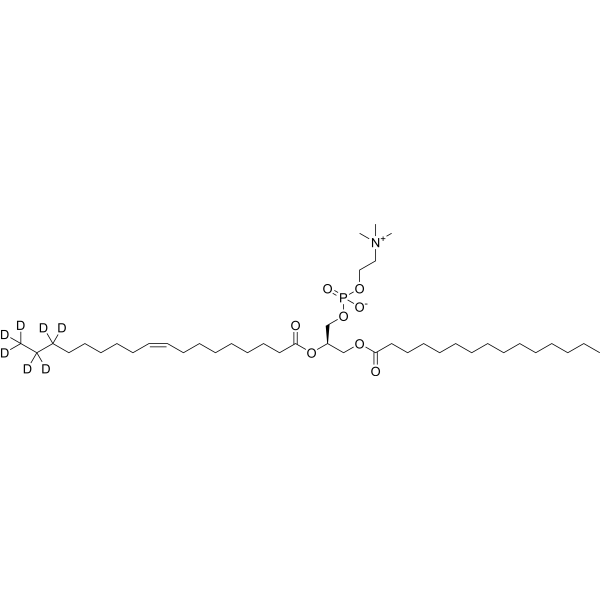
1-Pentadecanoyl-2-oleoyl-sn-glycero-3-phosphocholine-d7 is deuterium labeled 1-Pentadecanoyl-2-oleoyl-sn-glycero-3-phosphocholine.
|
-
-
- HY-146798S
-
|
|
Isotope-Labeled Compounds
|
Others
|
|
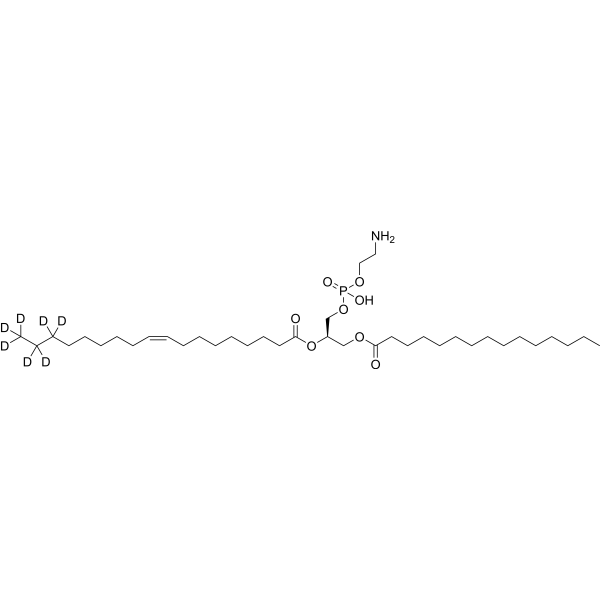
1-Pentadecanoyl-2-oleoyl-sn-glycero-3-phosphoethanolamine-d7 is deuterium labeled 1-Pentadecanoyl-2-oleoyl-sn-glycero-3-phosphoethanolamine.
|
-
-
- HY-W322225
-
|
DLPE; 1,2-Dilauroyl-sn-Glycero-3-PE
|
Liposome
|
Others
|
|
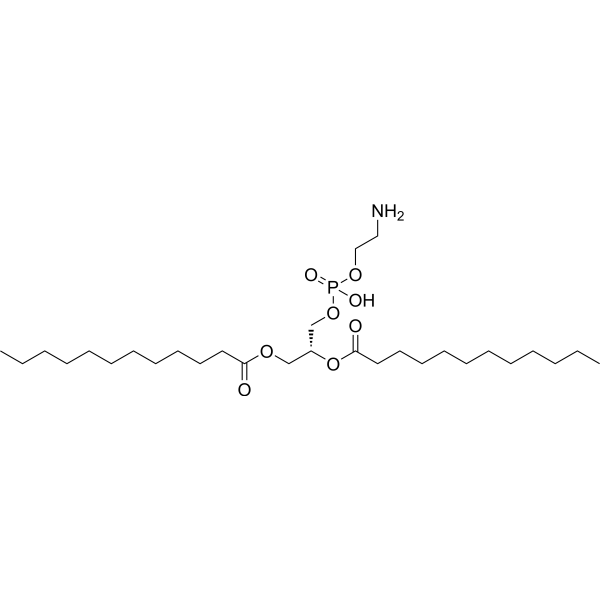
1,2-Dilauroyl-sn-glycero-3-phosphoethanolamine (DLPE) is a derivative of phosphatidylethanolamine with lauric acid (12:0) acyl chains. 1,2-Dilauroyl-sn-glycero-3-phosphoethanolamine can be used to synthesize liposomes .
|
-
-
- HY-W587891
-
-

-
- HY-157721
-
|
DBPC
|
Liposome
|
Others
|
|
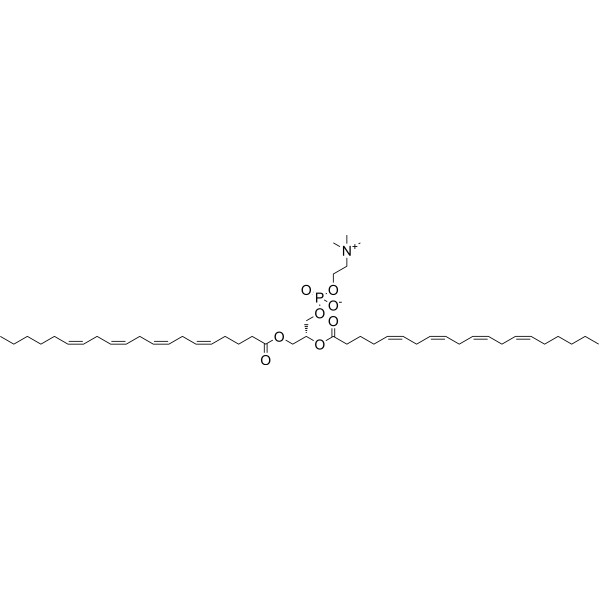
1,2-Dibehenoyl-sn-glycero-3-phosphocholine (DBPC) is a phospholipid found in cell membranes. 1, 2-dibehenoyl-SN-glycero-3-phosphocholine can be used to generate micelles, liposomes, and other types of artificial membranes .
|
-
-
- HY-147071
-
|
DAPE
|
Liposome
|
Metabolic Disease
|
|
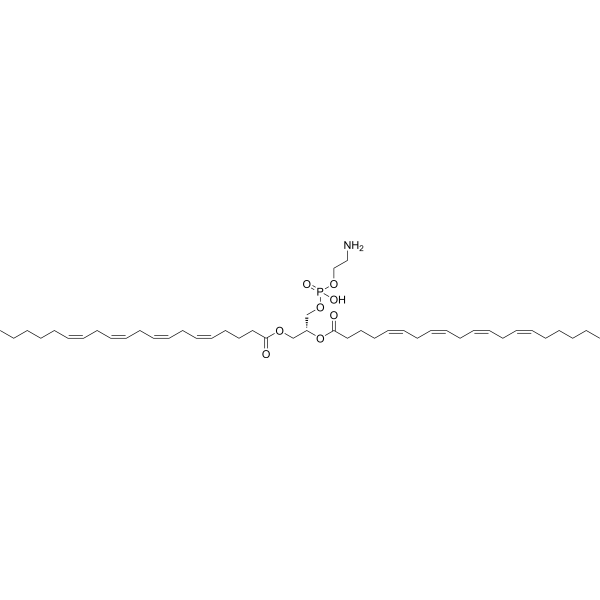
1,2-Diarachidonoyl-sn-glycero-3-phosphoethanolamine (DAPE) is a phospholipid phosphatidylethanolamine. Unlike other phospholipid phosphatidylethanolamines, 1,2-Diarachidonoyl-sn-glycero-3-phosphoethanolamine has no significant effect on protein phosphatase PP2A activity and does not inhibit insulin-stimulated GLUT4 translocation .
|
-
-
- HY-17552R
-
|
Choline Alfoscerate (Standard); Alpha-GPC (Standard); L-α-GPC (Standard)
|
Reference Standards
Cholinesterase (ChE)
Endogenous Metabolite
|
Neurological Disease
|
|
sn-Glycero-3-phosphocholine (Standard) is the analytical standard of sn-Glycero-3-phosphocholine. This product is intended for research and analytical applications. sn-Glycero-3-phosphocholine (Choline Alfoscerate) is a precursor in the biosynthesis of brain phospholipids and increases the bioavailability of choline in nervous tissue. sn-Glycero-3-phosphocholine (Choline Alfoscerate) has significant effects on cognitive function with a good safety profile and tolerability, and is effective in the treatment of Alzheimer's disease and dementia[1][2].
|
-

-
- HY-130462R
-
|
POPC (Standard)
|
Liposome
Reference Standards
|
Others
|
|
1-Palmitoyl-2-oleoyl-sn-glycero-3-PC (Standard) is the analytical standard of 1-Palmitoyl-2-oleoyl-sn-glycero-3-PC. This product is intended for research and analytical applications. 1-Palmitoyl-2-oleoyl-sn-glycero-3-PC (POPC), a phospholipid, is a major component of biological membranes. 1-Palmitoyl-2-oleoyl-sn-glycero-3-PC is used for the preparation of liposomes and studying the properties of lipid bilayers .
|
-

-
- HY-W923150
-
-

-
- HY-157622
-
|
|
Biochemical Assay Reagents
|
|
|
1-Palmitoyl-2-linoleoyl-sn-glycero-3-phosphocholine is a glycerophospholipid with activity for studying the effects of phosphatidylcholine (PC) on the lubrication of damaged mesothelial cells. 1-Palmitoyl-2-linoleoyl-sn-glycero-3-phosphocholine can be used to explore the function and repair mechanism of cell membranes. 1-Palmitoyl-2-linoleoyl-sn-glycero-3-phosphocholine has important application potential in biomedical research.
|
-

-
- HY-139931S
-
-
-
- HY-17552S
-
|
Choline Alfoscerate-d9; Alpha-GPC-d9; L-α-GPC-d9
|
Isotope-Labeled Compounds
Cholinesterase (ChE)
Endogenous Metabolite
|
Neurological Disease
|
|
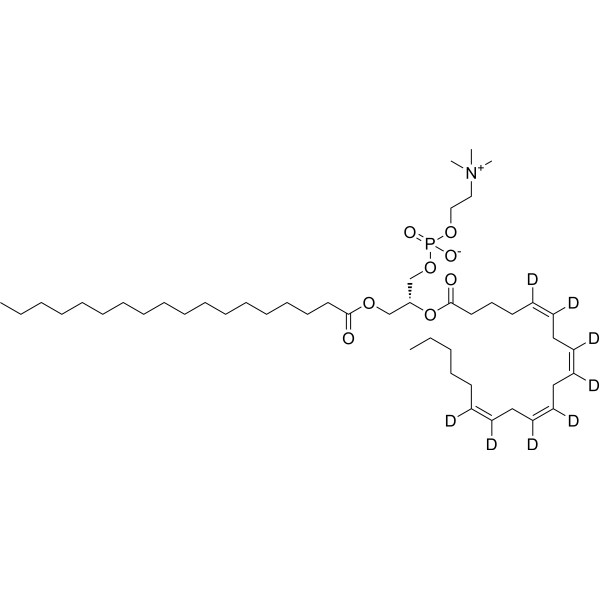
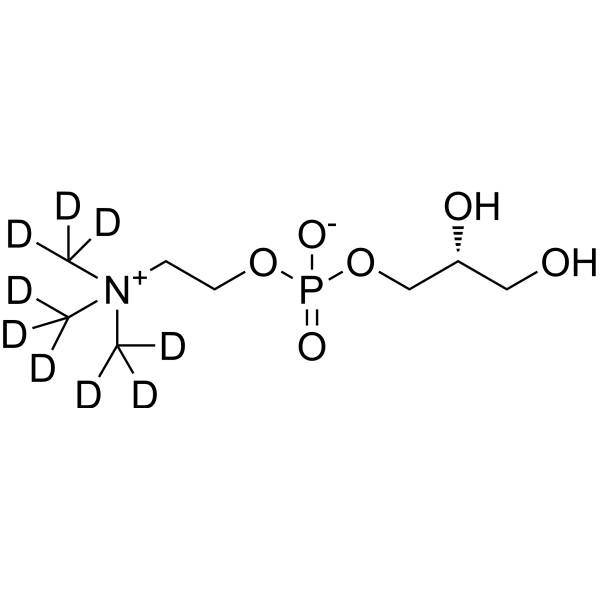
sn-Glycero-3-phosphocholine-d9 is the deuterium labeled sn-Glycero-3-phosphocholine. sn-Glycero-3-phosphocholine (Choline Alfoscerate) is a precursor in the biosynthesis of brain phospholipids and increases the bioavailability of choline in nervous tissue. sn-Glycero-3-phosphocholine (Choline Alfoscerate) has significant effects on cognitive function with a good safety profile and tolerability, and is effective in the treatment of Alzheimer's disease and dementia .
|
-
-
- HY-W019999
-
-
-
- HY-125783R
-
|
16:0 Lyso PC (Standard)
|
Endogenous Metabolite
Reference Standards
|
Cardiovascular Disease
Metabolic Disease
Inflammation/Immunology
|
|
1-Palmitoyl-sn-glycero-3-phosphocholine (Standard) (16:0 Lyso PC (Standard)) is the analytical standard of 1-Palmitoyl-sn-glycero-3-phosphocholine (HY-125783). This product is intended for research and analytical applications. 1-Palmitoyl-sn-glycero-3-phosphocholine is an abundant lysophosphatidylcholine. 1-Palmitoyl-sn-glycero-3-phosphocholine exhibits proinflammatory activity. 1-Palmitoyl-sn-glycero-3-phosphocholine can be used in the study of atherosclerosis [3] .
|
-

-
- HY-146833S
-
|
|
Isotope-Labeled Compounds
|
Others
|
|
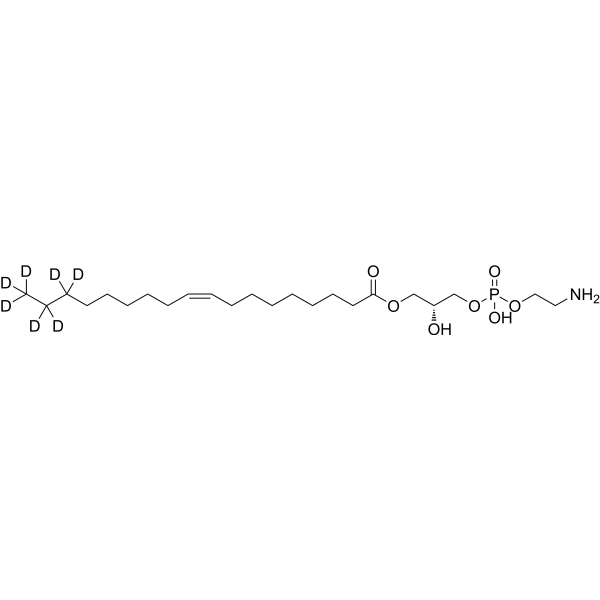
1-Oleoyl-2-hydroxy-sn-glycero-3-phosphatidylethanolamine-d7 is deuterium labeled 1-Oleoyl-2-hydroxy-sn-glycero-3-phosphatidylethanolamine.
|
-
-
- HY-158710
-
|
|
Reactive Oxygen Species (ROS)
|
Cancer
|
|
1-Palmitoyl-2-pyropheophorbide a-sn-glycero-3-pc is a phospholipid-porphyrin conjugate. 1-Palmitoyl-2-pyropheophorbide a-sn-glycero-3-pc can be utilized in photodynamic therapy research .
|
-

-
- HY-157702
-
-

-
- HY-165856
-
-

-
- HY-W338792
-
|
1-Decanoyl-2-hydroxy-sn-Glycero-3-phosphatidylcholine
|
Endogenous Metabolite
|
Others
|
|
1-Decanoyl-sn-glycero-3-phosphocholine (1-Decanoyl-2-hydroxy-sn-glycero-3-phosphatidylcholine) is a lipidic compound that can be found in sperm membrane lipids .
|
-

-
- HY-145508
-
|
1,2-Didodecanoyl-sn-Glycero-3-phospho-(1′racGlycerol) sodium
|
Biochemical Assay Reagents
|
Metabolic Disease
|
|
1,2-Dilauroyl-sn-glycero-3-PG (1,2-Didodecanoyl-sn-glycero-3-phospho-(1′racglycerol)) sodium is a phospholipid containing 12:0 fatty acids that exhibits excellent surfactant properties.
|
-

-
- HY-115415S
-
-
-
- HY-W013063S
-
|
|
Isotope-Labeled Compounds
|
Metabolic Disease
|
|
1,2-Dilinoleoyl-sn-glycero-3-phosphocholine-d11 is a deuterium labeled 1,2-Dilinoleoyl-sn-glycero-3-phosphocholine (HY-W013063). 1,2-Dilinoleoyl-sn-glycero-3-phosphocholine is a phospholipid. 1,2-Dilinoleoyl-sn-glycero-3-phosphocholine can be used for obesity research .
|
-

-
- HY-145742S
-
|
|
Isotope-Labeled Compounds
Liposome
|
Cardiovascular Disease
|
|
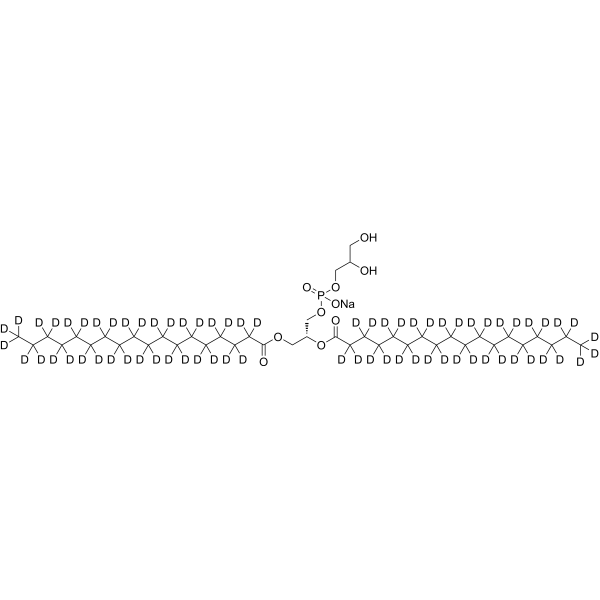
1,2-Distearoyl-sn-Glycero-3-Phosphatidylglycerol-d70 (sodium) is deuterium labeled 1,2-Distearoyl-sn-Glycero-3-Phosphatidylglycerol. 1,2-Distearoyl-sn-Glycero-3-Phosphatidylglycerol (sodium) is the component of liposomes for drug delivery .
|
-
-
- HY-W339833
-
|
|
Biochemical Assay Reagents
|
|
|
1-Myristoyl-2-hydroxy-sn-glycero-3-phosphate sodium is a kind of activity that promotes platelet aggregation and stimulates smooth muscle contraction. 1-Myristoyl-2-hydroxy-sn-glycero-3-phosphate sodium can enhance cell chemotaxis and cytoskeletal rearrangement. 1-Myristoyl-2-hydroxy-sn-glycero-3-phosphate sodium can also promote Ca2+ mobilization and neurotransmitter release. 1-Myristoyl-2-hydroxy-sn-glycero-3-phosphate sodium also has a certain effect on cell proliferation.
|
-

-
- HY-W800732
-
|
Dilinoleoyllecithin
|
Liposome
|
Others
|
|
1,2-Dilinoleoyl-sn-glycero-3-PC (Dilinoleoyllecithin) is a phospholipid. 1,2-Dilinoleoyl-sn-glycero-3-PC can be used in the manufacture of artificial membranes .
|
-

-
- HY-W127457S
-
-
-
- HY-W331649
-
-

-
- HY-W040268S1
-
|
|
Isotope-Labeled Compounds
Endogenous Metabolite
|
Others
|
|
1,2-Dipalmitoyl-sn-glycero-3-phosphoethanolamine-d9 is deuterium labeled 1,2-Dipalmitoyl-sn-glycero-3-phosphoethanolamine. 1,2-Dipalmitoyl-sn-glycero-3-phosphoethanolamine is a phospholipid that is a major component of the lipid bilayer that surrounds cells and provides stability to the membrane .
|
-

-
- HY-W040268S
-
|
|
Isotope-Labeled Compounds
Endogenous Metabolite
|
Others
|
|
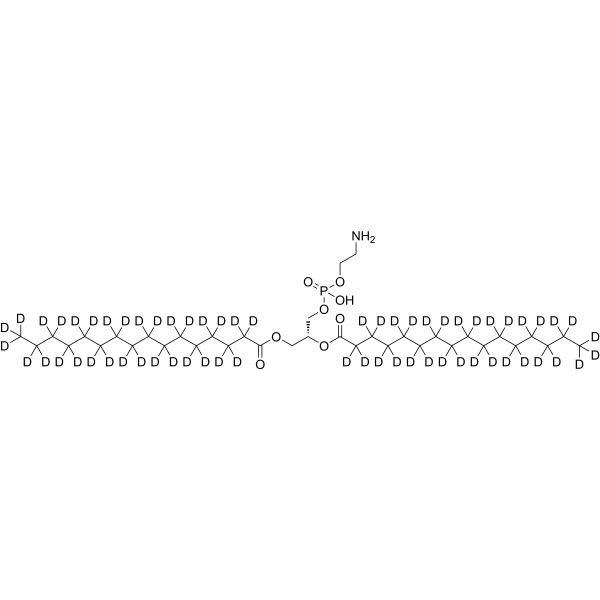
1,2-Dipalmitoyl-sn-glycero-3-phosphoethanolamine-d62 is deuterium labeled 1,2-Dipalmitoyl-sn-glycero-3-phosphoethanolamine. 1,2-Dipalmitoyl-sn-glycero-3-phosphoethanolamine is a phospholipid that is a major component of the lipid bilayer that surrounds cells and provides stability to the membrane .
|
-
-
- HY-165877
-
-

-
- HY-165924
-
-

-
- HY-165867
-
-

-
- HY-165876
-
-

- HY-157681
-
-

- HY-165889
-
-

- HY-165870
-
-

- HY-167816
-
|
21:0 PC
|
Bacterial
|
|
|
1,2-Diheneicosanoyl-sn-glycero-3-phosphocholine (21:0 PC) is a surfactant with antibacterial activity. 1,2-Diheneicosanoyl-sn-glycero-3-phosphocholine can act in mucus to help prevent the spread of pathogens. 1,2-Diheneicosanoyl-sn-glycero-3-phosphocholine plays a protective role in biofilms, maintaining the health of organisms.
|
-

- HY-126356S
-
|
|
Isotope-Labeled Compounds
Liposome
|
Cardiovascular Disease
|
|
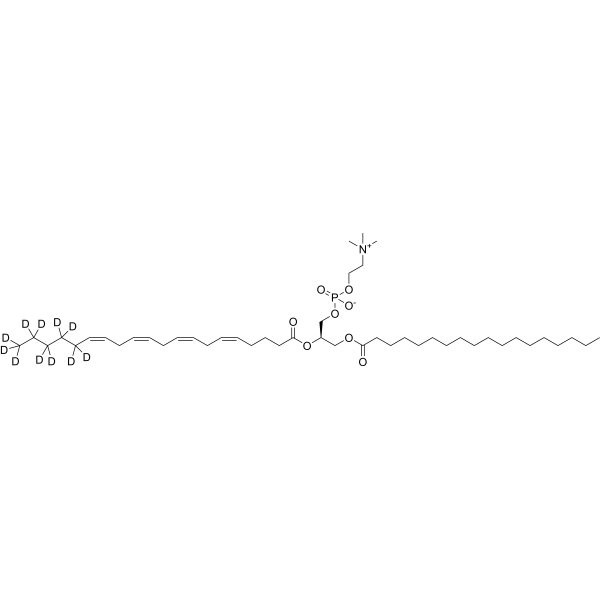
1-Stearoyl-2-arachidonoyl-sn-glycero-3-phosphocholine-d11 is the deuterium labeled 1-Stearoyl-2-arachidonoyl-sn-glycero-3-phosphocholine (HY-126356). 1-Stearoyl-2-arachidonoyl-sn-glycero-3-phosphocholine is a major phospholipid in low-density lipoprotein and belongs to the group of 1-acyl phosphatidylcholines. 1-Stearoyl-2-arachidonoyl-sn-glycero-3-phosphocholine does not induce morphological changes in washed human platelets. 1-Stearoyl-2-arachidonoyl-sn-glycero-3-phosphocholine can be used for the research of atherosclerosis and thrombotic diseases .
|
-
- HY-167538
-
-

- HY-146894S
-
|
1,2-Distearoyl-sn-Glycero-3-PC-d35; 1,2-Distearoyl-sn-Glycero-3-phosphorylcholine-d35
|
Isotope-Labeled Compounds
|
Others
|
|
1-Stearoyl-2-stearoyl-sn-glycero-3-phosphocholine-d35 is deuterium labeled 1-Stearoyl-2-stearoyl-sn-glycero-3-phosphocholine.
|
-

- HY-141616S
-
-
- HY-141617S
-
-
- HY-146785S
-
|
|
Isotope-Labeled Compounds
|
Others
|
|
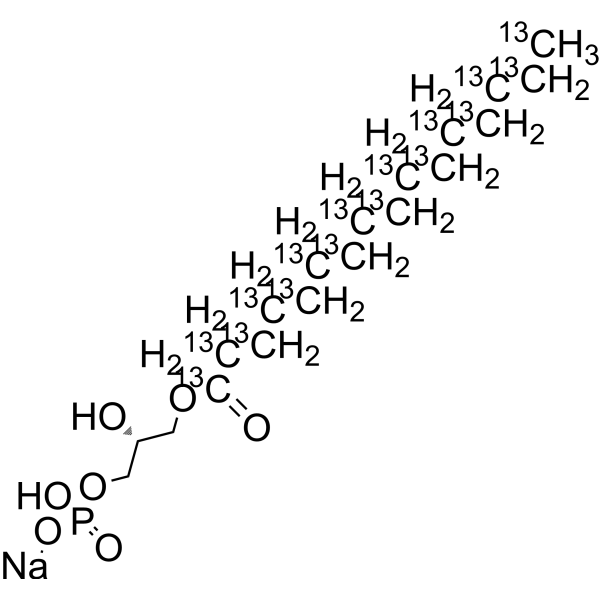
1-Palmitoyl-2-hydroxy-sn-glycero-3-phosphate- 13C16 (sodium) is 13C16 labeled 1-Palmitoyl-2-hydroxy-sn-glycero-3-phosphate.
|
-
- HY-143675S
-
-
- HY-165895
-
|
|
Liposome
|
Metabolic Disease
|
|
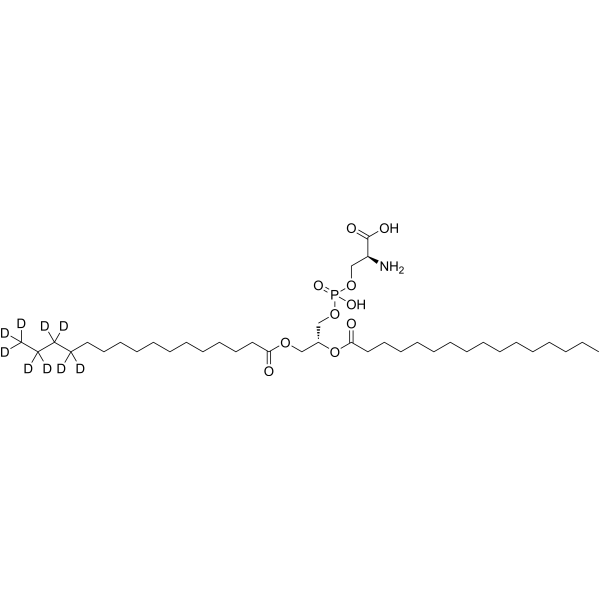
1,2-Dipentadecanoyl-sn-glycero-3-phosphatidylethanolamine is a phospholipid and can be used in the preparation of lipid nanoparticles.
|
-

- HY-165711
-
-

- HY-165717
-
-

- HY-W331017
-
|
26:0 Lyso PC
|
Endogenous Metabolite
|
Neurological Disease
|
|
1-Hexacosanoyl-sn-glycero-3-phosphocholine (26:0 Lyso PC) is a long-chain fatty acid. 1-Hexacosanoyl-sn-glycero-3-phosphocholine can be used as a biomarker for X-linked adrenoleukodystrophy (ALD) in mice .
|
-

- HY-112530S
-
|
DSPE-d70
|
Isotope-Labeled Compounds
Endogenous Metabolite
|
Metabolic Disease
|
|
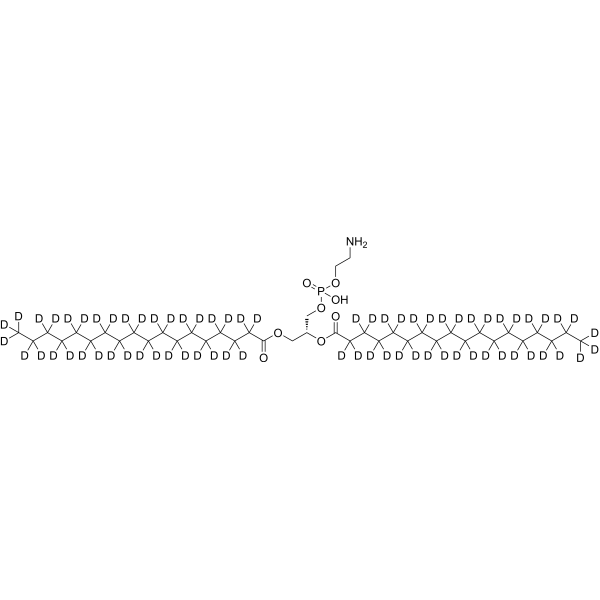
1,2-Distearoyl-sn-glycero-3-phosphorylethanolamine-d70 is deuterium labeled 1,2-Distearoyl-sn-glycero-3-phosphorylethanolamine. 1,2-Distearoyl-sn-glycero-3-phosphorylethanolamine (DSPE) is a phosphoethanolamine (PE) lipid that can be used in the synthesis
|
-
- HY-113010S1
-
-
- HY-W770239
-
|
|
Isotope-Labeled Compounds
|
Metabolic Disease
|
|
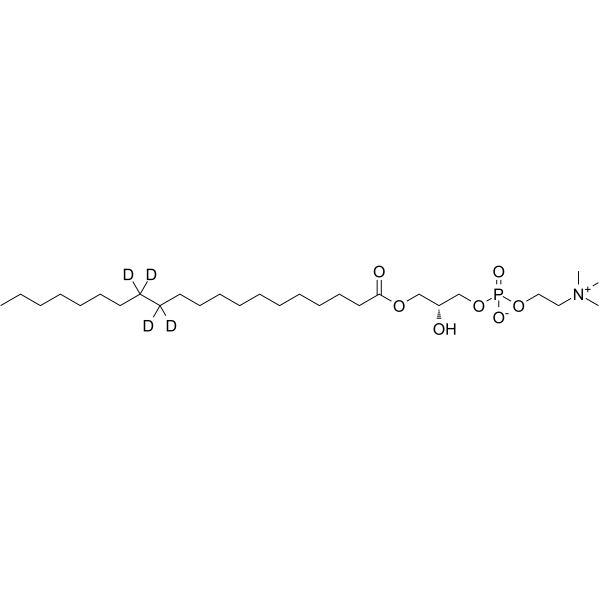
1-Docosahexaenoyl-sn-glycero-3-phosphocholine-d9 is the deuterium labeled 1-Docosahexaenoyl-sn-glycero-3-phosphocholine (HY-W587891). 1-Docosahexaenoyl-sn-glycero-3-phosphocholine is an ester product.
|
-

- HY-W013063S1
-
|
|
Isotope-Labeled Compounds
|
Metabolic Disease
|
|
1,2-Dilinoleoyl-sn-glycero-3-phosphocholine-d9 is the deuterium labeled 1,2-Dilinoleoyl-sn-glycero-3-phosphocholine. 1,2-Dilinoleoyl-sn-glycero-3-phosphocholine is a phospholipid. 1,2-Dilinoleoyl-sn-glycero-3-phosphocholine can be used for obesity research .
|
-

- HY-145539A
-
|
|
Liposome
|
Others
|
|
1,2-Dipalmitoyl-sn-glycero-3-PS is a phosphatidylserine phospholipid. 1,2-Dipalmitoyl-sn-glycero-3-PS is used for the preparation of phospholipid bilayers .
|
-

- HY-145539S
-
|
|
Isotope-Labeled Compounds
Liposome
|
Others
|
|
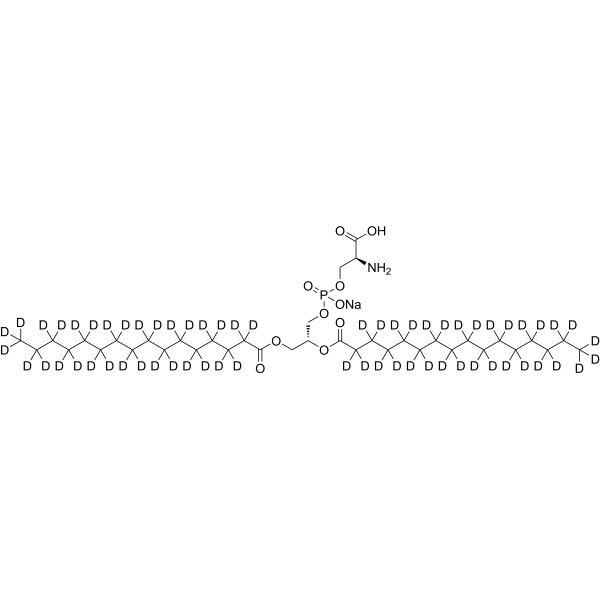
1,2-Dipalmitoyl-sn-glycero-3-PS-d62 sodium is deuterium labeled 1,2-Dipalmitoyl-sn-glycero-3-PS sodium (HY-145539). 1,2-Dipalmitoyl-sn-glycero-3-PS sodium is a phosphatidylserine phospholipid. 1,2-Dipalmitoyl-sn-glycero-3-PS sodium is used for the preparation of phospholipid bilayers .
|
-
- HY-179751
-
-

- HY-145539SA
-
|
|
Isotope-Labeled Compounds
|
Others
|
|
1,2-Dipalmitoyl-sn-glycero-3-PS-d62 ammonium is the deuterium labeled 1,2-Dipalmitoyl-sn-glycero-3-PS ammonium. 1,2-Dipalmitoyl-sn-glycero-3-PS is a phosphatidylserine phospholipid. 1,2-Dipalmitoyl-sn-glycero-3-PS is used for the preparation of phospholipid bilayers.
|
-

- HY-178754S
-
-

- HY-122056S1
-
|
L-α-Diheptanoyllecithin-d26; 12-Diheptanoyl-sn-Glycero-3-PC-d26
|
Isotope-Labeled Compounds
|
Metabolic Disease
|
|
1,2-Diheptanoyl-SN-glycero-3-phosphocholine-d26 (L-α-Diheptanoyllecithin-d26) is the deuterium labeled 1,2-Diheptanoyl-SN-glycero-3-phosphocholine (HY-122056). 1,2-Diheptanoyl-SN-glycero-3-phosphocholine (L-α-Diheptanoyllecithin; 12-Diheptanoyl-sn-glycero-3-PC) is an ester product.
|
-

- HY-122056S
-
|
L-α-Diheptanoyllecithin-d35; 12-Diheptanoyl-sn-Glycero-3-PC-d35
|
Isotope-Labeled Compounds
|
Metabolic Disease
|
|
1,2-Diheptanoyl-SN-glycero-3-phosphocholine-d35 (L-α-Diheptanoyllecithin-d35) is the deuterium labeled 1,2-Diheptanoyl-SN-glycero-3-phosphocholine (HY-122056). 1,2-Diheptanoyl-SN-glycero-3-phosphocholine (L-α-Diheptanoyllecithin; 12-Diheptanoyl-sn-glycero-3-PC) is an ester product.
|
-

- HY-W040268R
-
|
|
Endogenous Metabolite
Reference Standards
|
Others
|
|
1,2-Dipalmitoyl-sn-glycero-3-phosphoethanolamine (Standard) is the analytical standard of 1,2-Dipalmitoyl-sn-glycero-3-phosphoethanolamine (HY-W040268). This product is intended for research and analytical applications. 1,2-Dipalmitoyl-sn-glycero-3-phosphoethanolamine is a phospholipid that is a major component of the lipid bilayer that surrounds cells and provides stability to the membrane .
|
-

- HY-W127457S3
-
|
|
Isotope-Labeled Compounds
|
Others
|
|
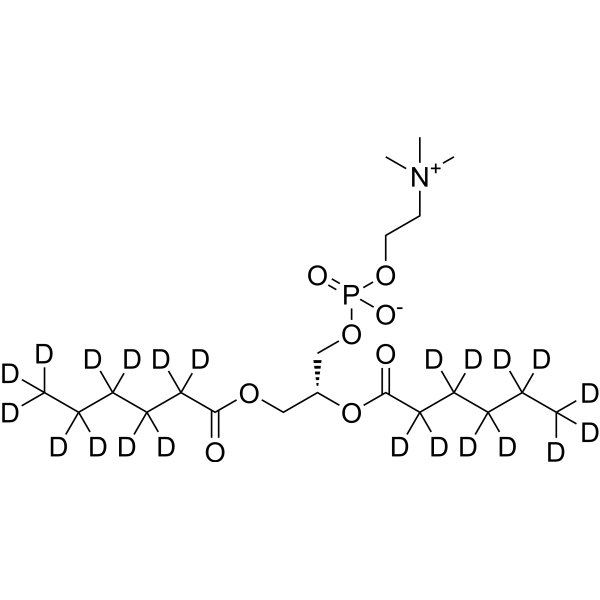
1,2-Dihexanoyl-sn-glycero-3-phosphocholine-d31 is the deuterium labeled 1,2-Dihexanoyl-sn-glycero-3-phosphocholine. 1,2-Dihexanoyl-sn-glycero-3-phosphocholine is a phosphatidylcholine. It can play a role as a surfactant and is commonly used in the generation of micelles, liposomes, and other types of artificial membranes.
|
-

- HY-W127457S2
-
|
|
Isotope-Labeled Compounds
|
Others
|
|
1,2-Dihexanoyl-sn-glycero-3-phosphocholine-d9 is the deuterium labeled 1,2-Dihexanoyl-sn-glycero-3-phosphocholine. 1,2-Dihexanoyl-sn-glycero-3-phosphocholine is a phosphatidylcholine. It can play a role as a surfactant and is commonly used in the generation of micelles, liposomes, and other types of artificial membranes.
|
-

- HY-177192
-
|
DMPS
|
Biochemical Assay Reagents
|
Others
|
|
1,2-Dimyristoyl-sn-glycero-3-phosphoserine (DMPS) is an anionic, negatively charged phosphatidylserine phospholipid. 1,2-Dimyristoyl-sn-glycero-3-phosphoserine acts as an internal standard for liquid chromatography/mass spectrometry analyses .
|
-

- HY-178736S
-
|
DLPE-d46; 1,2-Dilauroyl-sn-Glycero-3-PE-d46
|
Isotope-Labeled Compounds
|
Others
|
|
1,2-Dilauroyl-sn-glycero-3-phosphoethanolamine-d46 (DLPE-d46) is the deuterium labeled 1,2-Dilauroyl-sn-glycero-3-phosphoethanolamine.
|
-

- HY-141617S1
-
|
|
Isotope-Labeled Compounds
|
Metabolic Disease
|
|
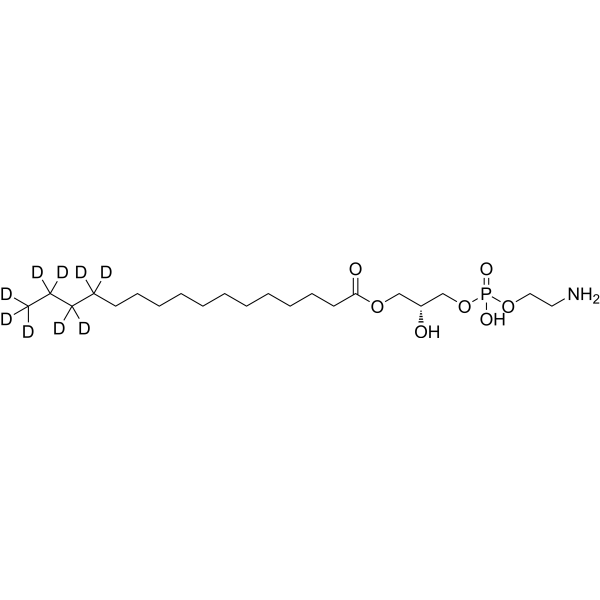
1-Palmitoyl-2-hydroxy-sn-glycero-3-PE-d31 is the deuterium labeled 1-Palmitoyl-2-hydroxy-sn-glycero-3-PE (HY-141617). 1-Palmitoyl-2-hydroxy-sn-glycero-3-PE is a naturally occurring choline phospholipid that can be synthesized from phosphatidylcholine and fatty acids. 1-Palmitoyl-2-hydroxy-sn-glycero-3-PE is used as a structure-related lipid control .
|
-

- HY-167809
-
|
|
Biochemical Assay Reagents
|
|
|
1-Palmitoyl-2-cholesterylcarbonoyl-sn-glycero-3-phosphocholine is a sterol-modified phospholipid with the activity of maintaining the stability of membrane bilayer structure and enhancing the liposome-mediated compound delivery process. 1-Palmitoyl-2-cholesterylcarbonoyl-sn-glycero-3-phosphocholine is widely used in biomedical applications to improve the delivery efficiency of compounds. 1-Palmitoyl-2-cholesterylcarbonoyl-sn-glycero-3-phosphocholine can also improve the release and distribution of compounds in cells.
|
-

- HY-178703S
-
|
L-α-Diheptanoyllecithin-d9; 12-Diheptanoyl-sn-Glycero-3-PC-d9
|
Isotope-Labeled Compounds
|
Others
|
|
1,2-Diheptanoyl-SN-glycero-3-phosphocholine-d9 (L-α-Diheptanoyllecithin-d9) is the deuterium labeled 1,2-Diheptanoyl-SN-glycero-3-phosphocholine.
|
-

- HY-179967
-
-

- HY-179996
-
-

- HY-179941
-
-

- HY-179984
-
-

- HY-179752
-
-

- HY-179753
-
-

- HY-179951
-
-

- HY-179968
-
-

- HY-179983
-
-

- HY-179969
-
|
|
Others
|
Metabolic Disease
|
|
1-Myristoyl-2-docosahexaenoyl-sn-glycero-3-phosphatidylethanolamine is a lycerophospholipid.
|
-

- HY-180001
-
-

- HY-179069
-
-

- HY-179755
-
-

- HY-179754
-
-

- HY-179997
-
|
|
Others
|
Metabolic Disease
|
|
1-Palmitoyl-2-docosapentaenoyl-sn-glycero-3-phosphatidylethanolamine is a lycerophospholipid.
|
-

- HY-179741
-
|
|
Others
|
Others
|
|
1-Myristoyl-2-lauroyl-sn-glycero-3-phosphocholine is a phosphocholine.
|
-

- HY-W040193B
-
|
(S)-1,2-Distearoyl-sn-Glycero-3-PC; (S)-1,2-Distearoyl-sn-Glycero-3-phosphorylcholine
|
Liposome
|
Others
|
|
(S)-DSPC ((S)-1,2-Distearoyl-sn-glycero-3-PC) is a (S)-enantiomer of DSPC (HY-W040193).
|
-

- HY-112839
-
|
|
Endogenous Metabolite
|
|
|
1-Myristoyl-2-(4-nitrophenylsuccinyl)-sn-glycero-3-phosphocholine is a synthetic phospholipid with the activity of inhibiting cell proliferation. 1-Myristoyl-2-(4-nitrophenylsuccinyl)-sn-glycero-3-phosphocholine can be used as a compound carrier to increase the bioavailability of the compound. 1-Myristoyl-2-(4-nitrophenylsuccinyl)-sn-glycero-3-phosphocholine also plays an important role in cell membrane research and provides an effective tool for understanding cell signal transduction.
|
-

- HY-146875S
-
|
|
Isotope-Labeled Compounds
|
Others
|
|
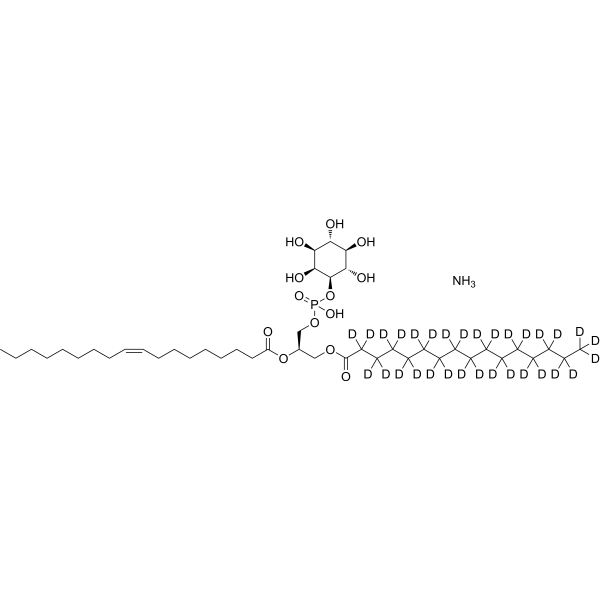
1-Palmitoyl-2-oleoyl-sn-glycero-3-phosphoinositol-d31 (ammonium) is deuterium labeled 1-Palmitoyl-2-oleoyl-sn-glycero-3-phosphoinositol (ammonium).
|
-
- HY-146825S
-
|
|
Isotope-Labeled Compounds
|
Others
|
|
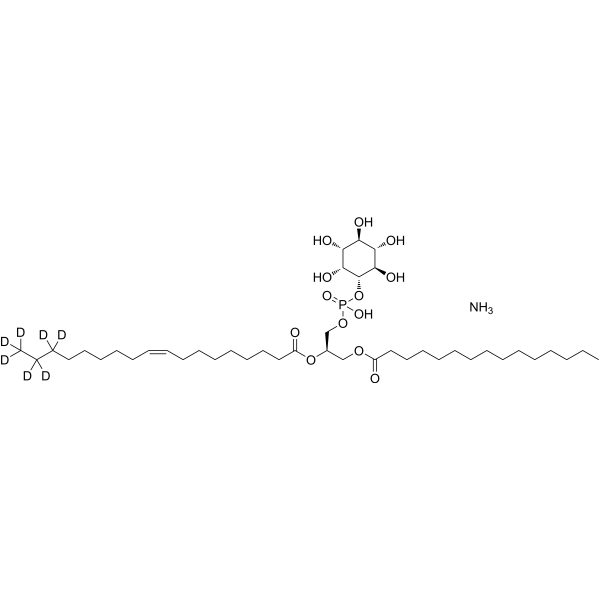
1-Pentadecanoyl-2-oleoyl-sn-glycero-3-phosphoinositol-d7 (ammonium) is deuterium labeled 1-Pentadecanoyl-2-oleoyl-sn-glycero-3-phosphoinositol (ammonium).
|
-
- HY-W140439
-
|
18:1 Lyso PC
|
Endogenous Metabolite
|
Inflammation/Immunology
|
|
1-Oleoyl-sn-glycero-3-phosphocholine (18:1 Lyso PC), a lysophospholipid, is a GPR82 inhibitor. 1-Oleoyl-sn-glycero-3-phosphocholine abrogates constitutive Gi-coupled GPR82 activity, shifts active/inactive equilibrium to inactive, suppresses Gi protein activation, increases cAMP production, and decreases GTPγS binding to Gαi proteins. 1-Oleoyl-sn-glycero-3-phosphocholine contributes to adipocyte lipolysis regulation.1-Oleoyl-sn-glycero-3-phosphocholine exhibits reduced serum levels in mouse models of steatohepatitis, linked to hepatic Lpcat 1-4 up-regulation .
|
-

- HY-W040193
-
DSPC
Maximum Cited Publications
18 Publications Verification
1,2-Distearoyl-sn-Glycero-3-PC; 1,2-Distearoyl-sn-Glycero-3-phosphorylcholine
|
Liposome
|
Others
|
|
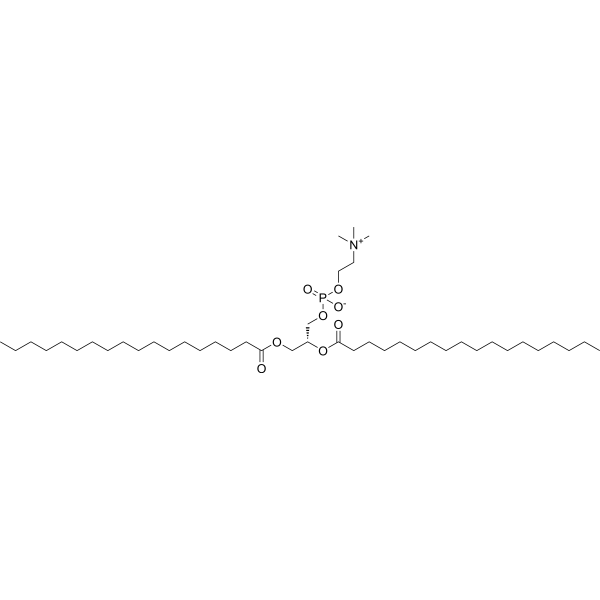
DSPC (1,2-Distearoyl-sn-glycero-3-phosphorylcholine) is a cylindrical-shaped lipid. DSPC is used to synthesize liposomes, and is the lipid component in the lipid nanoparticle (LNP) system .
|
-
- HY-157642
-
-

- HY-166988
-
-

- HY-157644
-
-

- HY-113424AS
-
|
DOPC-d9
|
Isotope-Labeled Compounds
Endogenous Metabolite
|
Others
|
|
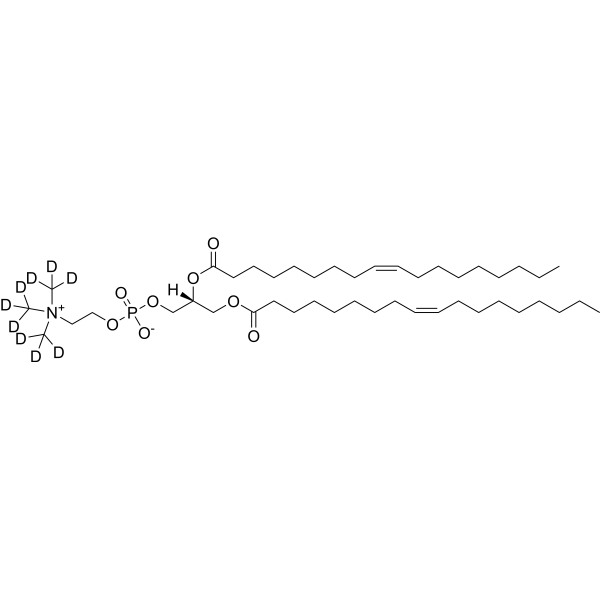
1,2-Dioleoyl-sn-glycero-3-phosphocholine-d9 is deuterium labeled 1,2-Dioleoyl-sn-glycero-3-phosphocholine. 1,2-Dioleoyl-sn-glycero-3-phosphocholine (DOPC) is a phospholipid and is commonly used alone, or with other components, in the generation of micelle
|
-
- HY-N16165
-
|
18:3 PC; Dilinolenoylphosphatidylcholine
|
Liposome
|
Others
|
|
1,2-Dilinolenoyl-sn-Glycero-3-Phosphatidylcholine (18:3 PC; Dilinolenoylphosphatidylcholine) is a phosphatidylcholine derivative and zwitterionic phospholipid. 1,2-Dilinolenoyl-sn-Glycero-3-Phosphatidylcholine serves as a component of oral liposomal compositions .
|
-

- HY-167547
-
-

- HY-125619
-
|
|
Liposome
|
Others
|
|
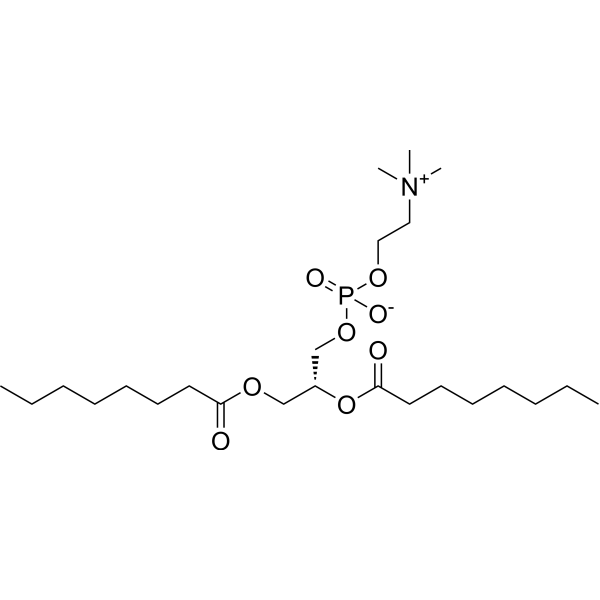
1,2-dioctanoyl-sn-glycero-3-phosphocholine, is a phospholipid commonly used as a component of liposome formulations and drug delivery systems. 1,2-dioctanoyl-sn-glycero-3-phosphocholine has unique chemical properties that allow it to form stable bilayers and vesicles, allowing drug encapsulation and delivery to specific targets in the body. It acts as a stabilizer and emulsifier, which can improve the solubility and bioavailability of drugs.
|
-
- HY-157689
-
|
20:1(Cis)PC
|
Biochemical Assay Reagents
|
|
|
1,2-Dieicosenoyl-sn-glycero-3-phosphocholine (20:1(Cis)PC) is a phospholipid that has the activity of promoting the binding of proteins to liposomes. 1,2-Dieicosenoyl-sn-glycero-3-phosphocholine can serve as a component of biological membranes and enhance the fluidity of cell membranes. 1,2-Dieicosenoyl-sn-glycero-3-phosphocholine also plays an important role in compound delivery systems, improving the biocompatibility and targeting of compounds.
|
-

- HY-145547
-
|
14:0 Lyso PE; 1-Myristoyl-2-hydroxy-sn-Glycero-3-PE; 1-Tetradecanoyl-sn-Glycero-3-phosphoethanolamine
|
Liposome
|
Metabolic Disease
|
|
1-Myristoyl-2-hydroxy-sn-glycero-3-phosphoethanolamine (14:0 Lyso PE) is a lysophospholipid with a phosphoethanolamine head and a myristoyl tail. The free amine group can conjugate with NHS active ester or coupled with carboxylic acid in the presence of a coupling agent. It also induces transient increases in intracellular calcium in PC12 cells . Serum levels of 1-Myristoyl-2-hydroxy-sn-glycero-3-phosphoethanolamine are elevated in patients with malignant breast cancer compared to healthy controls .
|
-

- HY-166992
-
|
|
Biochemical Assay Reagents
|
Others
|
|
1,2-Dioleoyl-sn-glycero-3-PA (ammonium) is a phospholipid. Phospholipids have good biocompatibility and significant amphiphilic characteristics, making them the main and suitable dosage form or excipient in drug formulations, thereby achieving better therapeutic effects. 1,2-Dioleoyl-sn-glycero-3-PA (ammonium)can be used in drug delivery research .
|
-

- HY-125783S1
-
-
- HY-125783S2
-
-

- HY-125783S
-
-
- HY-146820S
-
|
|
Isotope-Labeled Compounds
|
Others
|
|
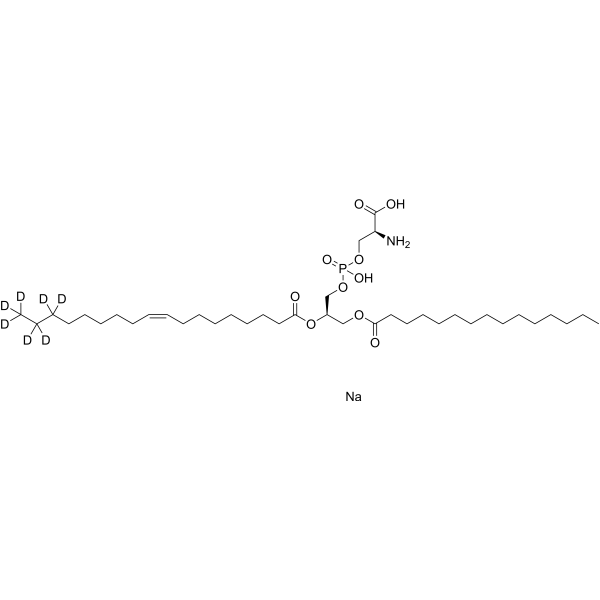
1-Pentadecanoyl-2-oleoyl-sn-glycero-3-phospho-L-serine-d7 (sodium) is deuterium labeled 1-Pentadecanoyl-2-oleoyl-sn-glycero-3-phospho-L-serine (sodium).
|
-
- HY-146864S
-
|
|
Isotope-Labeled Compounds
|
Others
|
|
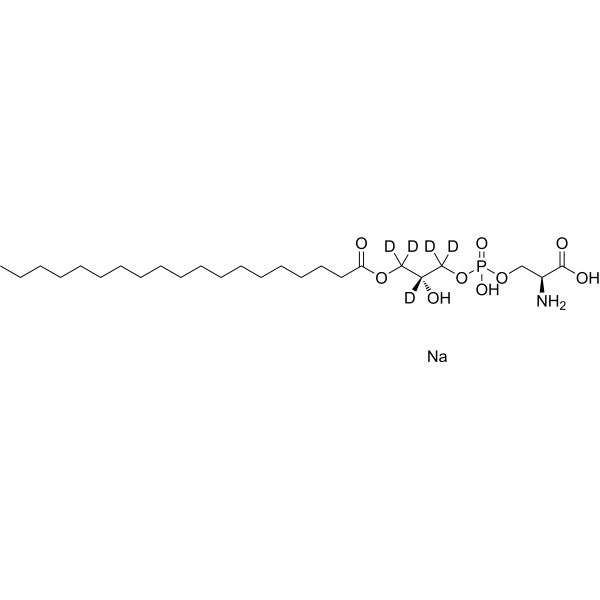
1-Nonadecanoyl-2-hydroxy-sn-glycero-3-phospho-L-serine-d5 (sodium) is deuterium labeled 1-Nonadecanoyl-2-hydroxy-sn-glycero-3-phospho-L-serine (sodium).
|
-
- HY-146861S
-
|
|
Isotope-Labeled Compounds
|
Others
|
|
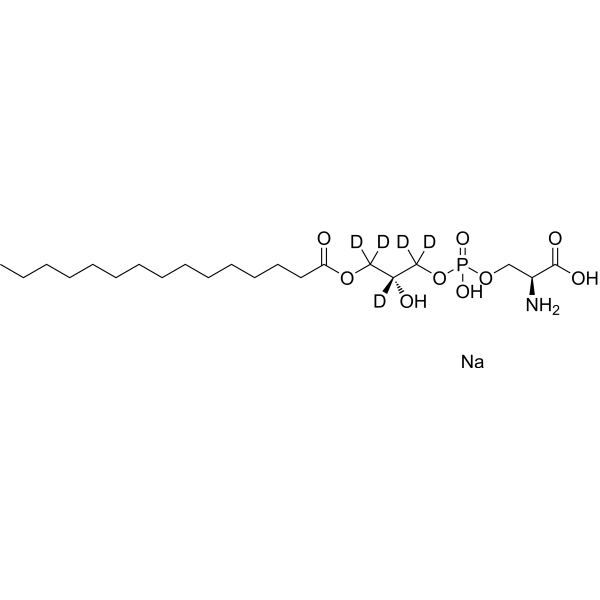
1-Pentadecanoyl-2-hydroxy-sn-glycero-3-phospho-L-serine-d5 (sodium) is deuterium labeled 1-Pentadecanoyl-2-hydroxy-sn-glycero-3-phospho-L-serine (sodium).
|
-
- HY-146865S
-
|
|
Isotope-Labeled Compounds
|
Others
|
|
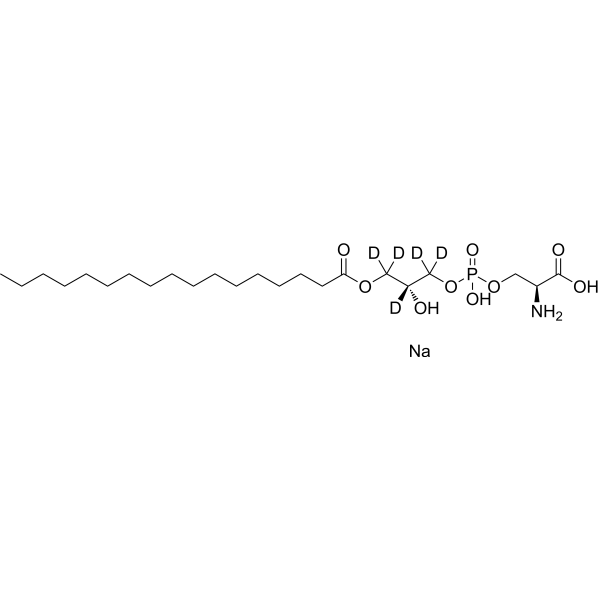
1-Heptadecanoyl-2-hydroxy-sn-glycero-3-phospho-L-serine-d5 (sodium) is deuterium labeled 1-Heptadecanoyl-2-hydroxy-sn-glycero-3-phospho-L-serine (sodium).
|
-
- HY-W140439S1
-
-
- HY-148601
-
|
DSPG
|
Liposome
|
Others
|
|
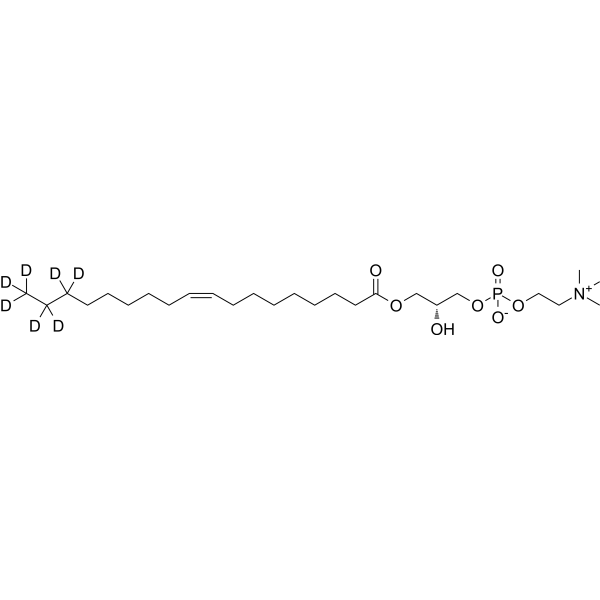
1,2-Distearoyl-sn-Glycero-3-Phosphatidylglycerol is an anionic phospholipid, can be used for drug delivery and the synthesis of liposomes.
|
-
- HY-141613
-
|
DOPS-NA
|
Liposome
|
Others
|
|
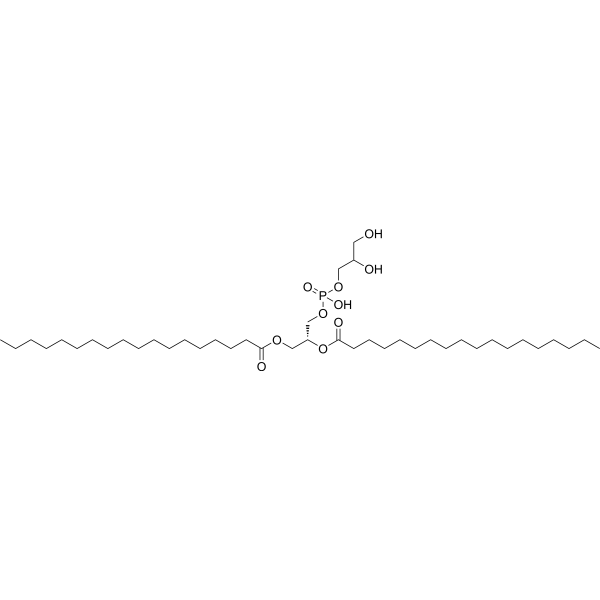
1,2-Dioleoyl-sn-glycero-3-phospho-L-serine sodium (DOPS-NA) is a ubstitute for Phosphoserine/phosphatidylserine. 1,2-Dioleoyl-sn-glycero-3-phospho-L-serine sodium can be used together with DOPC and DOPE in lipid mixtures for the synthesis of liposomes. 1,2-Dioleoyl-sn-glycero-3-phospho-L-serine sodium can self-assemble into single-layer or double-layer membrane structures, similar to cell membranes, and possesses high membrane fluidity and flexibility. 1,2-Dioleoyl-sn-glycero-3-phospho-L-serine is widely applied in membrane biology, cell membrane research, lipid preparation, and drug delivery systems .
|
-
- HY-W040268
-
|
|
Endogenous Metabolite
|
Others
|
|
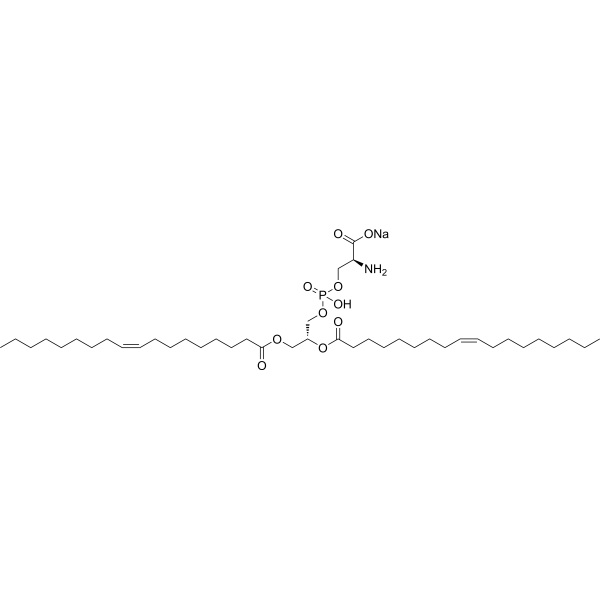
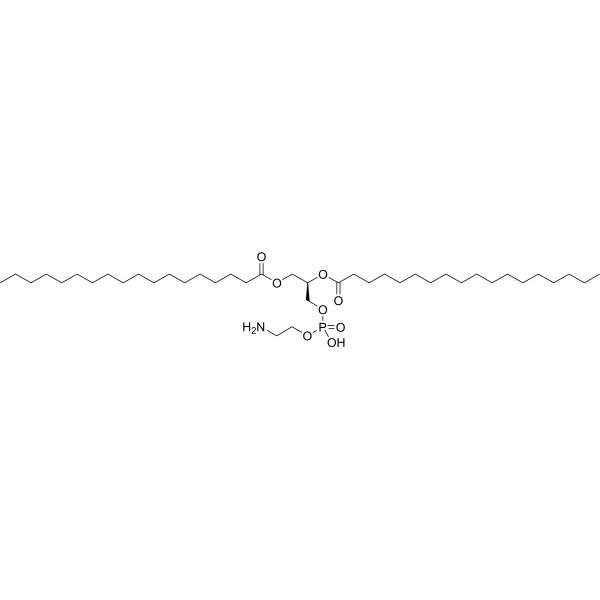
1,2-Dipalmitoyl-sn-glycero-3-phosphoethanolamine is a phospholipid that is a major component of the lipid bilayer that surrounds cells and provides stability to the membrane .
|
-
- HY-130462S1
-
|
POPC-d82
|
Isotope-Labeled Compounds
|
Others
|
|
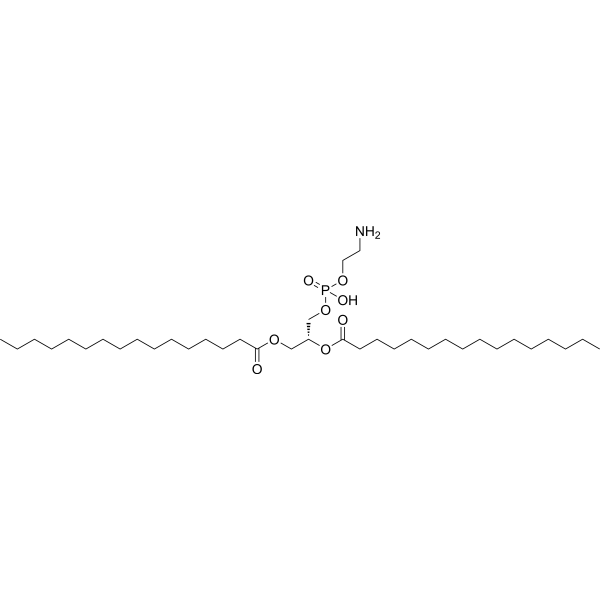
1-Palmitoyl-2-oleoyl-sn-glycero-3-PC-d82 is deuterium labeled 1-Palmitoyl-2-oleoyl-sn-glycero-3-PC. 1-Palmitoyl-2-oleoyl-sn-glycero-3-PC (POPC), a phospholipid, is a major component of biological membranes. 1-Palmitoyl-2-oleoyl-sn-glycero-3-PC is used for
|
-
- HY-130462S
-
|
POPC-d31
|
Isotope-Labeled Compounds
|
Others
|
|
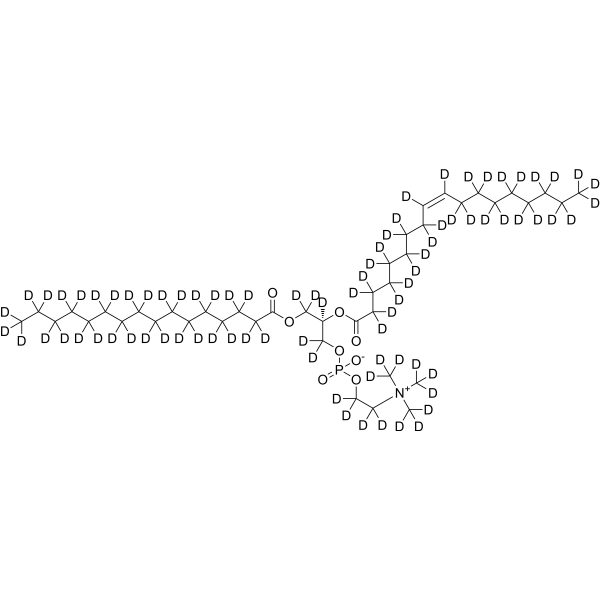
1-Palmitoyl-2-oleoyl-sn-glycero-3-PC-d31 is deuterium labeled 1-Palmitoyl-2-oleoyl-sn-glycero-3-PC. 1-Palmitoyl-2-oleoyl-sn-glycero-3-PC (POPC), a phospholipid, is a major component of biological membranes. 1-Palmitoyl-2-oleoyl-sn-glycero-3-PC is used for
|
-

- HY-W704966
-
-

- HY-112530
-
-
- HY-N8633
-
|
|
Endogenous Metabolite
|
Others
|
|
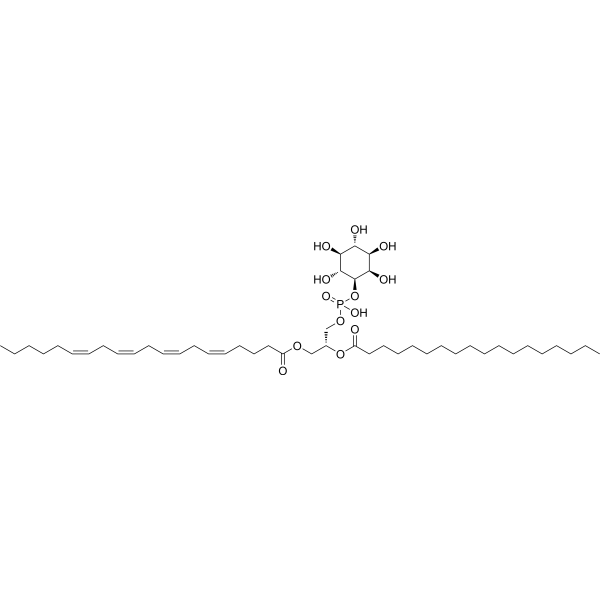
1-Stearoyl-2-arachidonoyl-sn-glycero-3-phosphoinositol is an endogenous metabolite that is a cell membrane component .
|
-
- HY-W127567
-
|
|
Biochemical Assay Reagents
|
Others
|
|
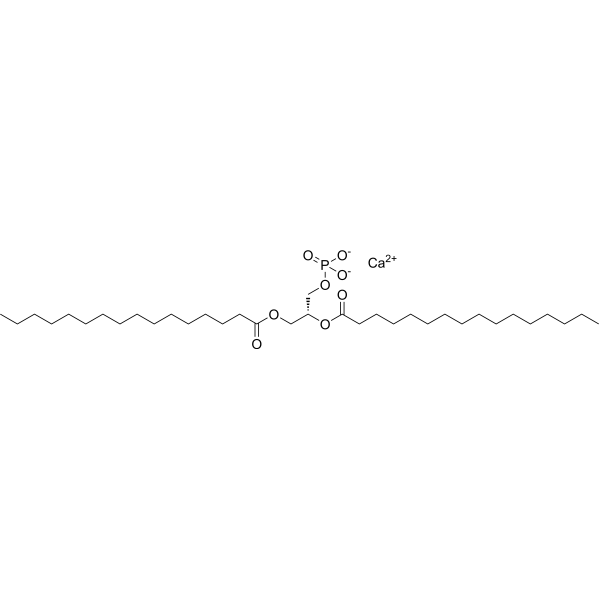
1,2-Dipalmitoyl-sn-glycero-3-phosphate (calcium) is a biochemical reagent that can be used as a biological material or organic compound for life science related research.
|
-
- HY-172267
-
|
|
Biochemical Assay Reagents
|
Others
|
|
1,2-Dioleoyl-sn-glycero-3-succinate is a biochemical reagent that can be used as a biological material or organic compound for life science related research.
|
-

- HY-W355700S
-
|
|
Isotope-Labeled Compounds
|
Infection
|
|
1-Oleoyl-2-hydroxy-sn-glycero-3-phosphoethanolamine-d31 is the deuterium labeled 1-Oleoyl-2-hydroxy-sn-glycero-3-phosphoethanolamine (HY-W355700). 1-oleoyl-sn-glycero-3-phosphoethanolamine (LysoPE 18:1) is a lysophosphatidylethanolamine molecule involved in phospholipid metabolism, targeting cell membrane receptors (such as G protein-coupled receptors) to regulate cell signaling pathways. 1-oleoyl-sn-glycero-3-phosphoethanolamine may activate mitogen-activated protein kinase (MAPK) signaling, promote cell migration, regulate inflammatory responses and lipid metabolism, and has both pro-inflammatory and anti-inflammatory activities. 1-oleoyl-sn-glycero-3-phosphoethanolamine is mainly used in the screening of biomarkers for metabolic diseases (such as non-alcoholic fatty liver disease and obesity), as well as the study of the mechanism of lysophospholipids in cell membrane homeostasis and signal transduction .
|
-

- HY-146869S
-
|
|
Isotope-Labeled Compounds
|
Others
|
|
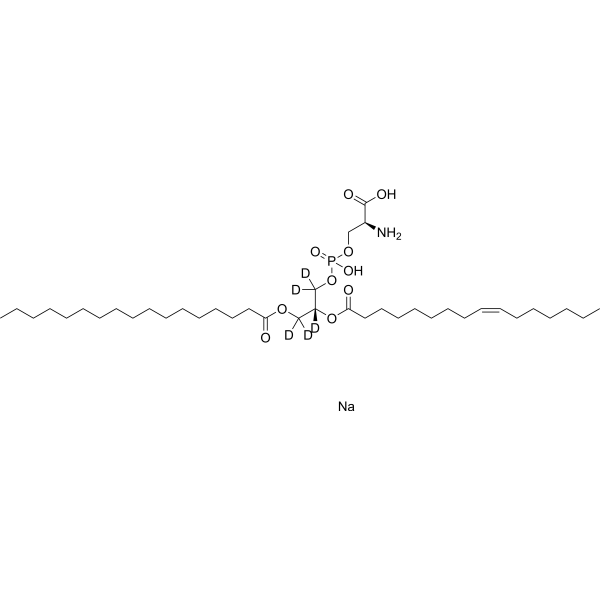
1-Heptadecanoyl-2-palmitoleoyl-sn-glycero-3-phospho- L-serine-d5 (sodium) is deuterium labeled 1-Heptadecanoyl-2-palmitoleoyl-sn-glycero-3-phospho- L-serine (sodium).
|
-
- HY-146870S
-
|
|
Isotope-Labeled Compounds
|
Others
|
|
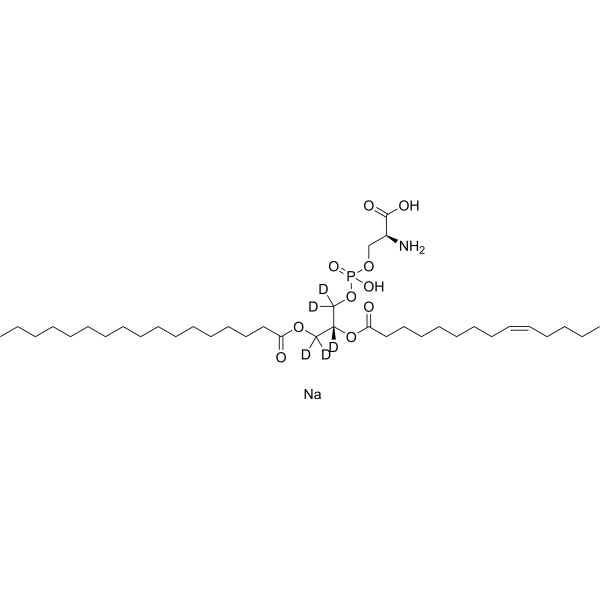
1-Heptadecanoyl-2-myristoleoyl-sn-glycero-3-phospho- L-serine-d5 (sodium) is deuterium labeled 1-Heptadecanoyl-2-myristoleoyl-sn-glycero-3-phospho- L-serine (sodium).
|
-
- HY-146867S
-
|
|
Isotope-Labeled Compounds
|
Others
|
|
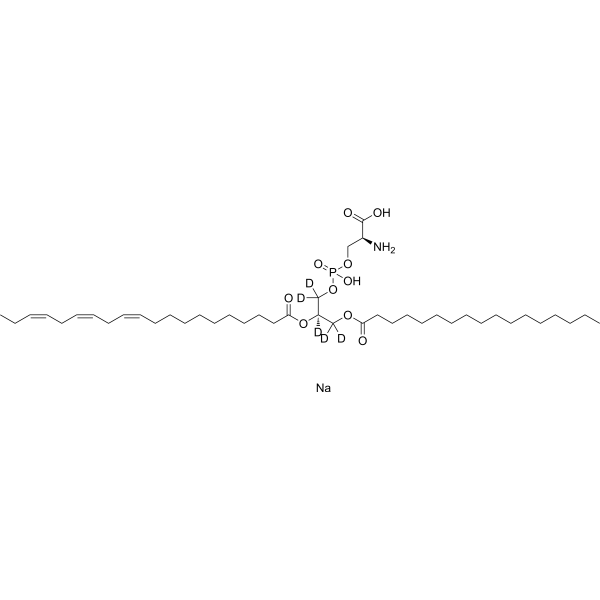
1-Heptadecanoyl-2-eicosatrienoyl-sn-glycero-3-phospho- L-serine-d5 (sodium) is deuterium labeled 1-Heptadecanoyl-2-eicosatrienoyl-sn-glycero-3-phospho- L-serine (sodium).
|
-
- HY-146866S
-
|
|
Isotope-Labeled Compounds
|
Others
|
|
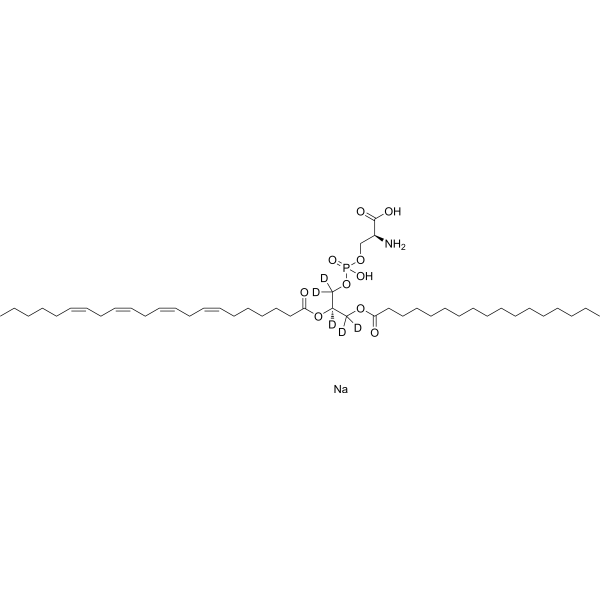
1-Heptadecanoyl-2-docosatetraenoyl-sn-glycero-3-phospho- L-serine-d5 (sodium) is deuterium labeled 1-Heptadecanoyl-2-docosatetraenoyl-sn-glycero-3-phospho- L-serine (sodium).
|
-
- HY-146868S
-
|
|
Isotope-Labeled Compounds
|
Others
|
|
1-Heptadecanoyl-2-oleoyl-sn-glycero-3-phospho- L-serine-d5 (sodium) is deuterium labeled 1-Heptadecanoyl-2-oleoyl-sn-glycero-3-phospho- L-serine (sodium).
|
-
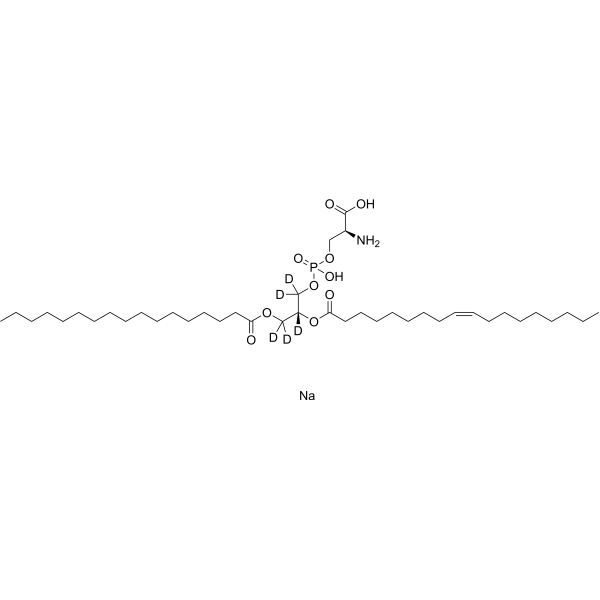
- HY-178735S
-
|
DOPC-d62
|
Isotope-Labeled Compounds
|
Others
|
|
1,2-Dioleoyl-sn-glycero-3-phosphocholine-d62 (DOPC-d62) is the deuterium labeled 1,2-Dioleoyl-sn-glycero-3-phosphocholine.
|
-

- HY-W585377
-
-

- HY-W355700
-
|
|
Drug Metabolite
|
Infection
|
|
1-oleoyl-sn-glycero-3-phosphoethanolamine (LysoPE 18:1) is a lysophosphatidylethanolamine molecule involved in phospholipid metabolism, targeting cell membrane receptors (such as G protein-coupled receptors) to regulate cell signaling pathways. 1-oleoyl-sn-glycero-3-phosphoethanolamine may activate mitogen-activated protein kinase (MAPK) signaling, promote cell migration, regulate inflammatory responses and lipid metabolism, and has both pro-inflammatory and anti-inflammatory activities. 1-oleoyl-sn-glycero-3-phosphoethanolamine is mainly used in the screening of biomarkers for metabolic diseases (such as non-alcoholic fatty liver disease and obesity), as well as the study of the mechanism of lysophospholipids in cell membrane homeostasis and signal transduction .
|
-
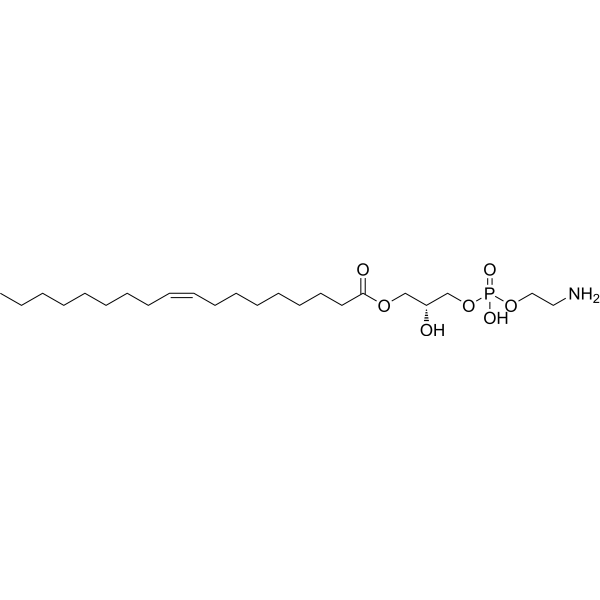
- HY-167807
-
|
|
Biochemical Assay Reagents
|
|
|
1-Palmitoyl-2-(6,7-dibromo)stearoyl-sn-glycero-3-phosphocholine is a phospholipid with good biocompatibility. 1-Palmitoyl-2-(6,7-dibromo)stearoyl-sn-glycero-3-phosphocholine can be used to prepare large unilamellar vesicles.
|
-

- HY-172566
-
|
1-Myristyl LPA
|
Drug Derivative
Calcium Channel
|
Others
|
|
1-Myristyl-2-hydroxy-sn-glycero-3-PA (1-Myristyl LPA) is a lysophosphatidic acid derivative. 1-Myristyl-2-hydroxy-sn-glycero-3-PA can increase intracellular calcium concentration in HEL cells .
|
-

- HY-158947S
-
-

- HY-145545
-
|
PE(18:0/22:4); 1-Stearoyl-2-Docosatraenoyl-sn-Glycero-3-PE
|
Endogenous Metabolite
|
Metabolic Disease
|
|
1-Stearoyl-2-adrenoyl-sn-glycero-3-PE is a phospholipid that contains stearic acid (HY-B2219) and adrenic acid (HY-W013215) at the sn-1 and sn-2 positions, respectively. 1-Stearoyl-2-adrenoyl-sn-glycero-3-PE levels are inversely correlated with subject age in mitochondria isolated from human post-mortem hippocampus.
|
-

- HY-W127457
-
|
|
Liposome
|
Others
|
|
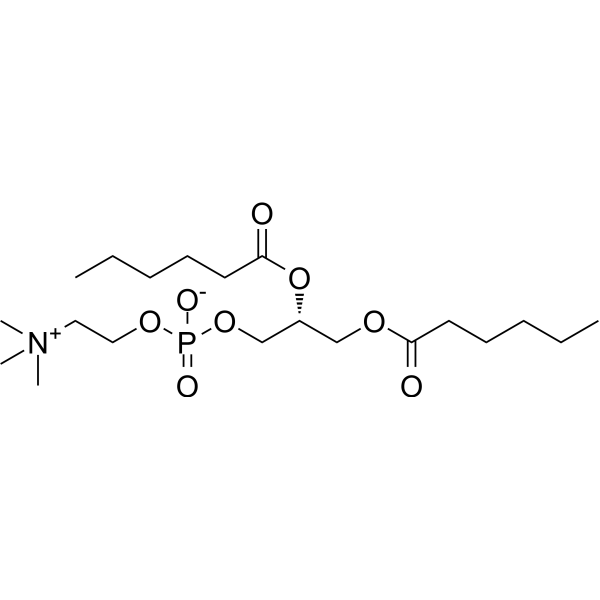
1,2-dihexanoyl-sn-glycero-3-phosphocholine is a phosphatidylcholine. It can play a role as a surfactant and is commonly used in the generation of micelles, liposomes, and other types of artificial membranes.
|
-
- HY-168797
-
-

- HY-W725327
-
|
1,2-Dipropionyl-sn-Glycero-3-Phosphatidylcholine; 1,2-Dipropionyl-sn-Glycero-3-Phosphocholine; PC(3:0/3:0)
|
Endogenous Metabolite
|
Metabolic Disease
|
|
1,2-Dipropionyl-sn-glycero-3-PC is a phospholipid containing propionic acid at the sn-1 and sn-2 positions. It has been used to study the interaction between water and the phosphocholine headgroup in aqueous solutions.
|
-

- HY-145502
-
|
|
Biochemical Assay Reagents
|
Others
|
|
1,2-Dipalmitoyl-sn-glycero-3-PE-N-(cap biotin) sodium is used in the composition of lipid vesicles for supported lipid bilayer (SLB) formation. 1,2-Dipalmitoyl-sn-glycero-3-PE-N-(cap biotin) sodium can be used as a probe for understanding the interactions between proteins and lipid-tethered ligands .
|
-

- HY-157673
-
|
16:1 PE
|
Phosphatase
Apoptosis
|
Cancer
|
|
1,2-Dipalmitoleoyl-sn-glycero-3-phosphoethanolamine (16:1 PE) is a phosphatidylethanolamine that can enhance PP2A and PTP1B activities in malignant pleural mesothelioma cells. 1,2-Dipalmitoleoyl-sn-glycero-3-phosphoethanolamine induces apoptosis of NCI-H28 malignant pleural mesothelioma cells .
|
-

- HY-109541S5
-
|
DMPC-d67; 1,2-Dimyristoyl-sn-Glycero-3-phosphocholine-d67
|
Isotope-Labeled Compounds
|
Others
|
|
1,2-Dimyristoyl-sn-glycero-3-phosphocholine-d67 is deuterium labeled 1,2-Dimyristoyl-sn-glycero-3-phosphocholine. 1,2-Dimyristoyl-sn-glycero-3-phosphocholine (DMPC) is a synthetic phospholipid used in liposomes. 1,2-Dimyristoyl-sn-glycero-3-phosphocholine
|
-
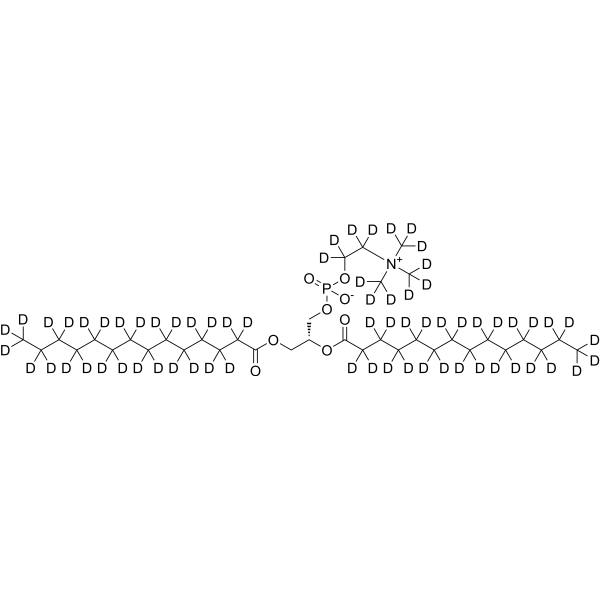
- HY-W340037
-
-

- HY-N18868
-
|
PC(16:0/8:0)
|
Endogenous Metabolite
|
Cardiovascular Disease
|
|
1-Palmitoyl-2-capryloyl-sn-glycero-3-phosphocholine (PC(16:0/8:0)) is a phosphatidylcholine glycerophospholipid. 1-Palmitoyl-2-capryloyl-sn-glycero-3-phosphocholine promotes platelet aggregation and flow-induced platelet-dependent thrombus formation. 1-Palmitoyl-2-capryloyl-sn-glycero-3-phosphocholine is a valid biomarker for CAD risk, severity, and subtype differentiation. 1-Palmitoyl-2-capryloyl-sn-glycero-3-phosphocholine is suitable for basic research on various types of coronary artery disease .
|
-

- HY-125783S3
-
-
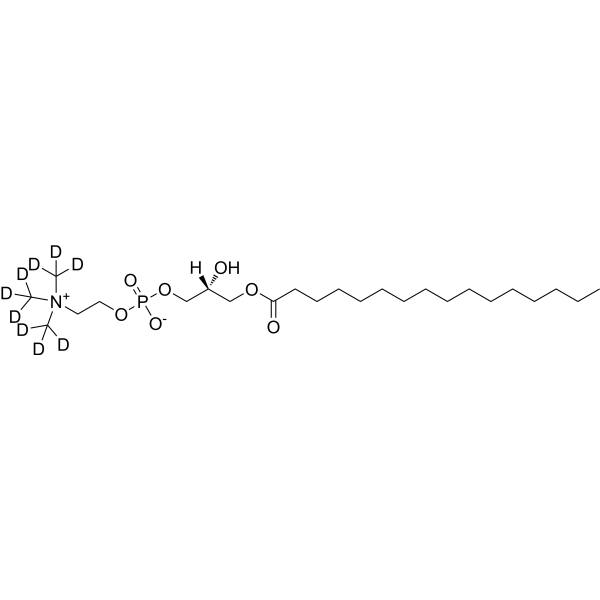
- HY-W587499
-
|
|
Liposome
|
Cancer
|
|
2-Arachidonoyl-sn-glycero-3-phosphocholine is a phospholipid molecule that is a major component of the plasma membrane. It is a phospholipid molecule that is involved in the regulation of membrane fluidity, signal transduction, cell-cell communication, and mediator of inflammation.
|
-

- HY-166989
-
-

- HY-178730S
-
|
DMPS-d3 ammonium
|
Isotope-Labeled Compounds
|
Others
|
|
1,2-Dimyristoyl-sn-glycero-3-phosphoserine-d3 ammonium (DMPS-d3 ammonium) is the deuterium labeled 1,2-Dimyristoyl-sn-glycero-3-phosphoserine ammonium.
|
-

- HY-178766S
-
|
DPPG-d62 ammonium
|
Isotope-Labeled Compounds
|
Others
|
|
1,2-Dipalmitoyl-sn-glycero-3-phosphoglycerol-d62 ammonium (DPPG-d62 ammonium) is the deuterium labeled 1,2-Dipalmitoyl-sn-glycero-3-phosphoglycerol ammonium.
|
-

- HY-178870S
-
|
1,2-POPS-d3 ammonium; 2-Oleoyl-1-palmitoyl-sn-Glycero-3-phospho-L-serine ammonium; 1-Hexadecanoyl-2-(9Z-octadecenoyl)-sn-Glycero-3-phospho-L-serine-d3 ammonium
|
Isotope-Labeled Compounds
|
Others
|
|
1-Palmitoyl-2-oleoyl-sn-glycero-3-phospho-L-serine-d3 (1,2-POPS-d3) ammonium is the deuterium labeled 1-Palmitoyl-2-oleoyl-sn-glycero-3-phospho-L-serine ammonium.
|
-

- HY-W040193S
-
|
1,2-Distearoyl-sn-Glycero-3-PC-d70; 1,2-Distearoyl-sn-Glycero-3-phosphorylcholine-d70
|
Isotope-Labeled Compounds
Liposome
|
Others
|
|
DSPC-d70 (1,2-Distearoyl-sn-glycero-3-phosphorylcholine-d70) is the deuterium labeled DSPC (HY-W040193). DSPC is a cylindrical-shaped lipid. 1,2-Distearoyl-sn-glycero-3-phosphorylcholine is used to synthesize liposomes, and is the lipid component in the lipid nanoparticle (LNP) system .
|
-

- HY-W040193S6
-
|
1,2-Distearoyl-sn-Glycero-3-PC-d13; 1,2-Distearoyl-sn-Glycero-3-phosphorylcholine-d13
|
Isotope-Labeled Compounds
Liposome
|
Others
|
|
DSPC-d13 (1,2-Distearoyl-sn-glycero-3-phosphorylcholine-d13) is the deuterium labeled DSPC (HY-W040193). DSPC is a cylindrical-shaped lipid. 1,2-Distearoyl-sn-glycero-3-phosphorylcholine is used to synthesize liposomes, and is the lipid component in the lipid nanoparticle (LNP) system .
|
-
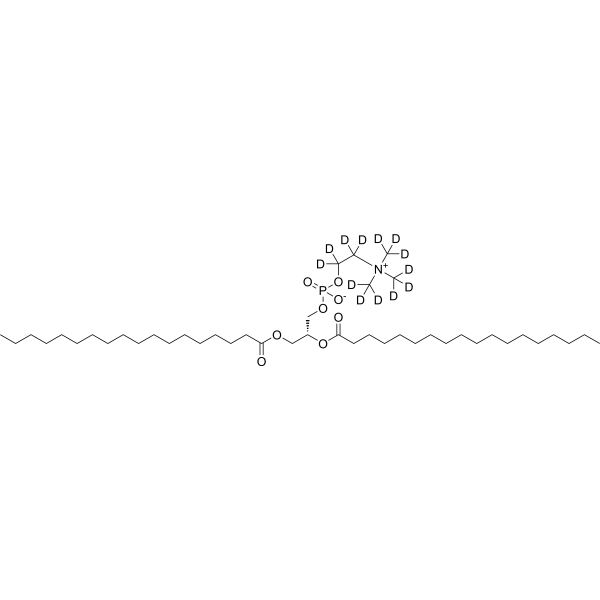
- HY-W040193S2
-
|
1,2-Distearoyl-sn-Glycero-3-PC-d79; 1,2-Distearoyl-sn-Glycero-3-phosphorylcholine-d79
|
Isotope-Labeled Compounds
Liposome
|
Others
|
|
DSPC-d79 (1,2-Distearoyl-sn-glycero-3-phosphorylcholine-d79) is the deuterium labeled DSPC (HY-W040193). DSPC is a cylindrical-shaped lipid. 1,2-Distearoyl-sn-glycero-3-phosphorylcholine is used to synthesize liposomes, and is the lipid component in the lipid nanoparticle (LNP) system .
|
-

- HY-W040193S1
-
|
1,2-Distearoyl-sn-Glycero-3-PC-d74; 1,2-Distearoyl-sn-Glycero-3-phosphorylcholine-d74
|
Isotope-Labeled Compounds
Liposome
|
Others
|
|
DSPC-d74 (1,2-Distearoyl-sn-glycero-3-phosphorylcholine-d74) is the deuterium labeled DSPC (HY-W040193). DSPC is a cylindrical-shaped lipid. 1,2-Distearoyl-sn-glycero-3-phosphorylcholine is used to synthesize liposomes, and is the lipid component in the lipid nanoparticle (LNP) system .
|
-

- HY-W040193S3
-
|
1,2-Distearoyl-sn-Glycero-3-PC-d83; 1,2-Distearoyl-sn-Glycero-3-phosphorylcholine-d83
|
Isotope-Labeled Compounds
Liposome
|
Others
|
|
DSPC-d83 (1,2-Distearoyl-sn-glycero-3-phosphorylcholine-d83) is the deuterium labeled DSPC (HY-W040193). DSPC is a cylindrical-shaped lipid. 1,2-Distearoyl-sn-glycero-3-phosphorylcholine is used to synthesize liposomes, and is the lipid component in the lipid nanoparticle (LNP) system .
|
-
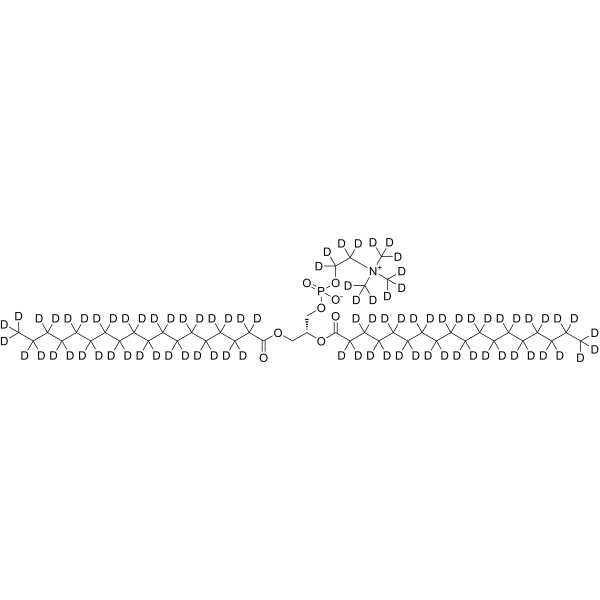
- HY-W040193S5
-
|
1,2-Distearoyl-sn-Glycero-3-PC-d9; 1,2-Distearoyl-sn-Glycero-3-phosphorylcholine-d9
|
Isotope-Labeled Compounds
Liposome
|
Others
|
|
DSPC-d9 (1,2-Distearoyl-sn-glycero-3-phosphorylcholine-d9) is the deuterium labeled DSPC (HY-W040193). DSPC is a cylindrical-shaped lipid. 1,2-Distearoyl-sn-glycero-3-phosphorylcholine is used to synthesize liposomes, and is the lipid component in the lipid nanoparticle (LNP) system .
|
-

- HY-W040193S4
-
|
1,2-Distearoyl-sn-Glycero-3-PC-d4; 1,2-Distearoyl-sn-Glycero-3-phosphorylcholine-d4
|
Isotope-Labeled Compounds
Liposome
|
Others
|
|
DSPC-d4 (1,2-Distearoyl-sn-glycero-3-phosphorylcholine-d4) is the deuterium labeled DSPC (HY-W040193). DSPC is a cylindrical-shaped lipid. 1,2-Distearoyl-sn-glycero-3-phosphorylcholine is used to synthesize liposomes, and is the lipid component in the lipid nanoparticle (LNP) system .
|
-
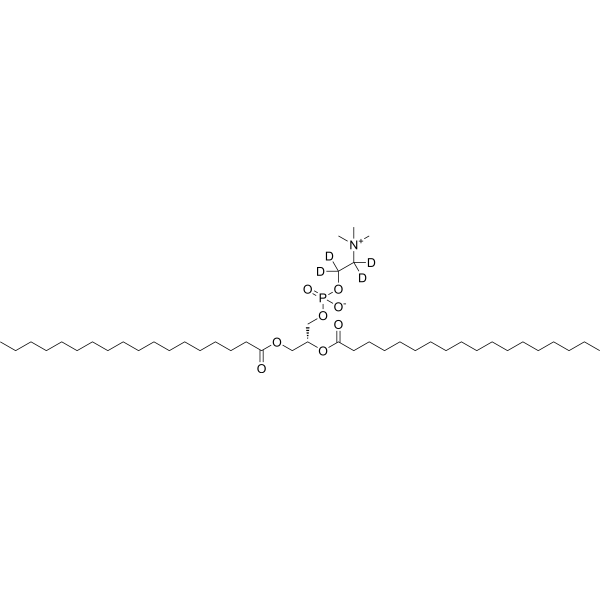
- HY-157718
-
|
|
Biochemical Assay Reagents
|
|
|
1,2-Di-O-(9Z-octadecenyl)-sn-glycero-3-phosphocholine is a surfactant that has the activity of promoting liposome formation. 1,2-Di-O-(9Z-octadecenyl)-sn-glycero-3-phosphocholine can effectively study the biological effects of ceramide and ceramide phosphate. 1,2-Di-O-(9Z-octadecenyl)-sn-glycero-3-phosphocholine shows important application in the determination of phospholipase A activity of lecithin-cholesterol acyltransferase in ether matrix.
|
-

- HY-168373
-
|
|
Endogenous Metabolite
|
Others
|
|
1-Stearoyl-2-eicosapentaenoyl-sn-glycero-3-PC is a phospholipid that can be found in human red blood cells (RBCs) .
|
-

- HY-145547S
-
|
14:0 Lyso PE-d27; 1-Myristoyl-2-hydroxy-sn-Glycero-3-PE-d27; 1-Tetradecanoyl-sn-Glycero-3-phosphoethanolamine-d27
|
Isotope-Labeled Compounds
|
Metabolic Disease
|
|
1-Myristoyl-2-hydroxy-sn-glycero-3-phosphoethanolamine-d27 (14:0 Lyso PE-d27) is the deuterium labeled 1-Myristoyl-2-hydroxy-sn-glycero-3-phosphoethanolamine. 1-Myristoyl-2-hydroxy-sn-glycero-3-phosphoethanolamine (14:0 Lyso PE) is a lysophospholipid with a phosphoethanolamine head and a myristoyl tail. The free amine group can conjugate with NHS active ester or coupled with carboxylic acid in the presence of a coupling agent. It also induces transient increases in intracellular calcium in PC12 cells .
|
-

- HY-W040193GL
-
|
1,2-Distearoyl-sn-Glycero-3-PC (GMP Like); 1,2-Distearoyl-sn-Glycero-3-phosphorylcholine (GMP Like)
|
Liposome
|
Others
|
|
DSPC (GMP Like) (1,2-Distearoyl-sn-glycero-3-phosphorylcholine) is DSPC (HY-W040193) produced by using GMP like guidelines. GMP Like small molecules works appropriately as an auxiliary reagent for cell therapy manufacture. DSPC (1,2-Distearoyl-sn-glycero-3-phosphorylcholine) is a cylindrical-shaped lipid. DSPC is used to synthesize liposomes, and is the lipid component in the lipid nanoparticle (LNP) system .
|
-

- HY-130462S3
-
|
POPC-d64
|
Isotope-Labeled Compounds
|
Others
|
|
1-Palmitoyl-2-oleoyl-sn-glycero-3-PC-d62 (POPC-d64) is deuterium labeled 1-Palmitoyl-2-oleoyl-sn-glycero-3-PC. 1-Palmitoyl-2-oleoyl-sn-glycero-3-PC (POPC), a phospholipid, is a major component of biological membranes. 1-Palmitoyl-2-oleoyl-sn-glycero-3-PC is used for the preparation of liposomes and studying the properties of lipid bilayers [3].
|
-

- HY-130462S4
-
|
POPC-d9
|
Isotope-Labeled Compounds
|
Others
|
|
1-Palmitoyl-2-oleoyl-sn-glycero-3-PC-d9 (POPC-d9) is the deuterium labeled 1-Palmitoyl-2-oleoyl-sn-glycero-3-PC (HY-130462). 1-Palmitoyl-2-oleoyl-sn-glycero-3-PC (POPC), a phospholipid, is a major component of biological membranes. 1-Palmitoyl-2-oleoyl-sn-glycero-3-PC is used for the preparation of liposomes and studying the properties of lipid bilayers .
|
-

- HY-130462S5
-
|
POPC-d62
|
Isotope-Labeled Compounds
|
Others
|
|
1-Palmitoyl-2-oleoyl-sn-glycero-3-PC-d62 (POPC-d62) is the deuterium labeled 1-Palmitoyl-2-oleoyl-sn-glycero-3-PC (HY-130462). 1-Palmitoyl-2-oleoyl-sn-glycero-3-PC (POPC), a phospholipid, is a major component of biological membranes. 1-Palmitoyl-2-oleoyl-sn-glycero-3-PC is used for the preparation of liposomes and studying the properties of lipid bilayers .
|
-

- HY-134174A
-
|
16:0-18:1 PA
|
Biochemical Assay Reagents
|
|
|
1-Palmitoyl-2-oleoyl-sn-glycero-3-phosphate sodium (16:0-18:1 PA) is a phospholipid with activities in regulating biological membrane fluidity and participating in cell signal transduction. 1-Palmitoyl-2-oleoyl-sn-glycero-3-phosphate sodium can be used to study the effects on the activity of chloroplast envelope monogalactosyldiacylglycerol (MGDG) synthase. 1-Palmitoyl-2-oleoyl-sn-glycero-3-phosphate sodium plays an important role in cell membrane integrity and function.
|
-

- HY-W127347
-
|
|
Biochemical Assay Reagents
|
Others
|
|
1,2-Dioleoyl-sn-glycero-3-phosphoric acid disodium is a biochemical reagent that can be used as a biological material or organic compound for life science related research.
|
-
- HY-178743S
-
|
1,2-POPS-d62 ammonium; 2-Oleoyl-1-palmitoyl-sn-Glycero-3-phospho-L-serine-d62 ammonium; 1-Hexadecanoyl-2--(9Z-octadecenoyl)-sn-Glycero-3-phospho-L-serine-d62 ammonium
|
Isotope-Labeled Compounds
|
Others
|
|
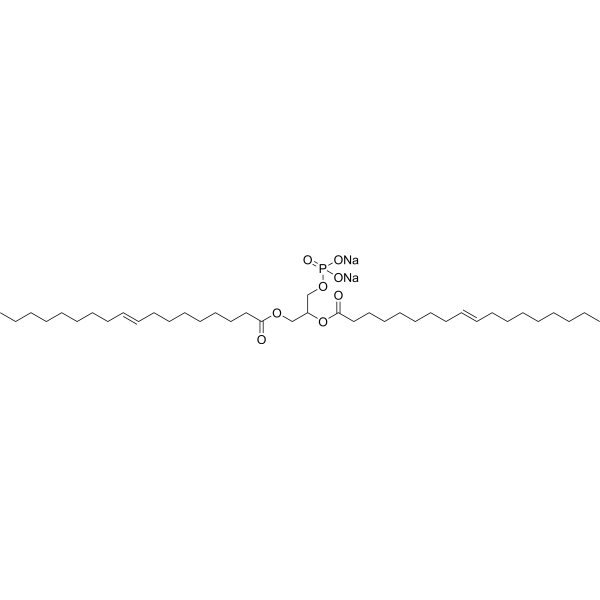
1-Palmitoyl-2-oleoyl-sn-glycero-3-phospho-L-serine-d62 ammonium (1,2-POPS-d62 ammonium) is the deuterium labeled 1-Palmitoyl-2-oleoyl-sn-glycero-3-phospho-L-serine ammonium.
|
-

- HY-179968S
-
-

- HY-143671S
-
|
SAPE-d11
|
Isotope-Labeled Compounds
|
Others
|
|
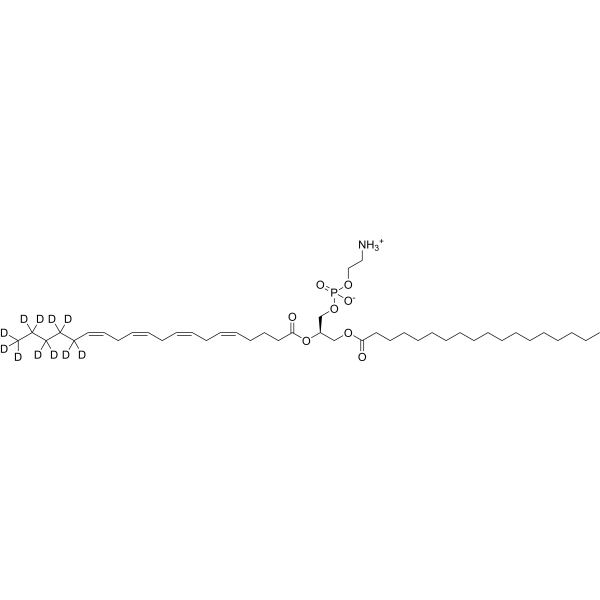
1-Stearoyl-2-arachidonoyl-sn-glycero-3-PE-d11 is the deuterium labeled 1-Stearoyl-2-arachidonoyl-sn-glycero-3-PE .
|
-
- HY-157679
-
-

- HY-113424A
-
|
DOPC
|
Liposome
Endogenous Metabolite
|
Others
|
|
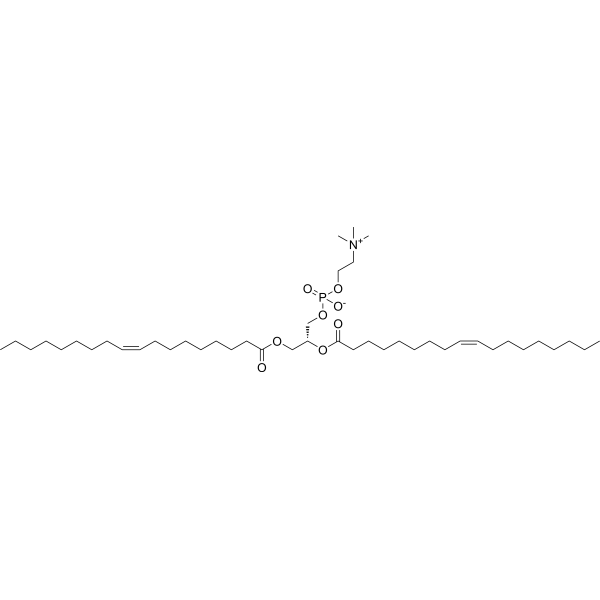
1,2-Dioleoyl-sn-glycero-3-phosphocholine (DOPC) is a phospholipid and is commonly used alone, or with other components, in the generation of micelles, liposomes, and other types of artificial membranes.
|
-
- HY-W350486
-
|
1,2-Dipalmitoyl-sn-Glycero-3-phosphomethanol sodium
|
Biochemical Assay Reagents
|
Others
|
|
16:0 Phosphatidylmethanol (1,2-Dipalmitoyl-sn-glycero-3-phosphomethanol) sodium is a phosphatidyl alcohol with methanol head groups .
|
-

- HY-170463
-
|
1,2-Dipalmitoyl-sn-Glycero-3-phosphopropanol sodium
|
Biochemical Assay Reagents
|
Others
|
|
16:0 Phosphatidylpropanol (1,2-Dipalmitoyl-sn-glycero-3-phosphopropanol) sodium is a phosphatidyl alcohol with propanol head groups .
|
-

- HY-170229
-
|
1-O-Heptadecyl-2-hydroxy-sn-Glycero-3-phosphocholine
|
Biochemical Assay Reagents
|
Others
|
|
C17 Lyso PAF (1-O-Heptadecyl-2-hydroxy-sn-glycero-3-phosphocholine) is a precursor and metabolite of 1-O-heptadecyl-2-acetyl-sn-glycero-3-phosphocholine (C17:0 PAF) .
|
-

- HY-176006
-
|
Diheptanoyl thio-PE
|
Lipase
|
Others
|
|
1,2-Bis(heptanoylthio)-sn-glycero-3-PE (Diheptanoyl thio-PE) is a sulfur-containing phosphoethanolamine.
|
-

- HY-141616
-
-
- HY-175115
-
|
|
Liposome
|
Others
|
|
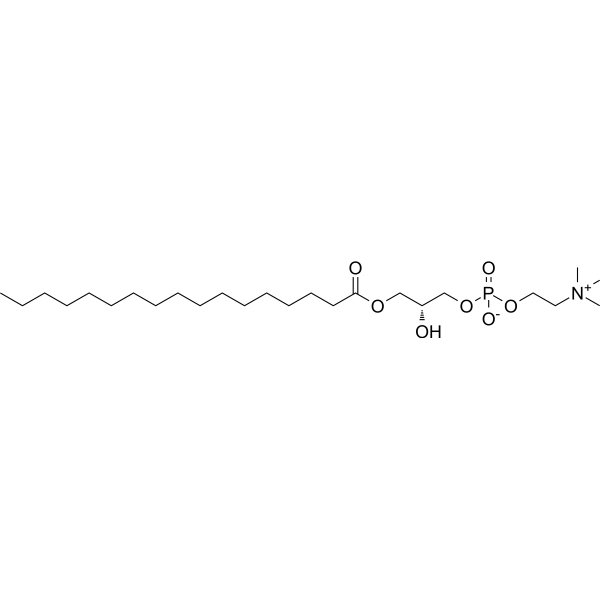
1-Stearoyl-2-17(S)-HDoTE-sn-glycero-3-PE is a phospholipid. 1-Stearoyl-2-17(S)-HDoTE-sn-glycero-3-PE contains Stearic acid (HY-B2219) and the oxidized adrenic acid metabolite 17(S)-HDoTE (HY-168774) at the sn-1 and sn-2 positions, respectively.
|
-

- HY-172385
-
|
1,2-Dipalmitoyl-sn-Glycero-3-succinate
|
Biochemical Assay Reagents
|
Others
|
|
16:0 DGS (1,2-Dipalmitoyl-sn-glycero-3-succinate) can be used for the preparation of pH-sensitive liposomes .
|
-

- HY-142988
-
|
1S-2M-PC
|
Liposome
|
Others
|
|
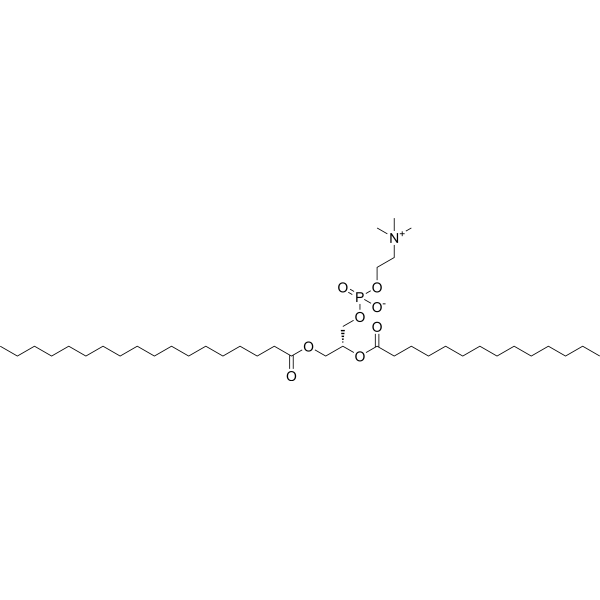
1-Stearoyl-2-myristoyl-sn-glycero-3-PC (1S-2M-PC) belongs to the class of asymmetric phospholipids. 1-Stearoyl-2-myristoyl-sn-glycero-3-PC is abundant in biological membranes .
|
-
- HY-125771
-
|
18:0 Lyso-PC; LPC(18:0)
|
Endogenous Metabolite
HDAC
STAT
Apoptosis
|
Cancer
|
|
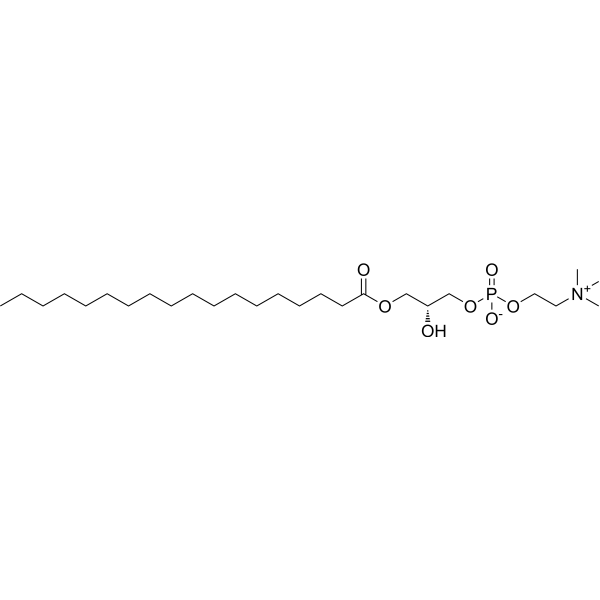
1-Stearoyl-sn-glycero-3-phosphocholine is a lysophosphatidylcholine that inhibits HDAC3 activity and phosphorylation of STAT3 in K562 cells. 1-Stearoyl-sn-glycero-3-phosphocholine induces apoptosis and exhibits anticancer activity in chronic myelogenous leukemia (CML) K562 cells .
|
-
- HY-172516
-
|
|
Biochemical Assay Reagents
|
Others
|
|
1-Palmitoyl-2-(propargylacetyl)-sn-glycero-3-phosphocholine is a phosphocholine containing an azide-reactive propargyl on one of its tails and a positively charged quaternary amine head.
|
-

- HY-170464
-
|
1-Palmitoyl-2-cholesterylhemisuccinoyl-sn-Glycero-3-phosphocholine
|
Biochemical Assay Reagents
|
Others
|
|
PChemsPC (1-Palmitoyl-2-cholesterylhemisuccinoyl-sn-glycero-3-phosphocholine) is a sterol-lipid that robustly demixes into micron-scale, liquid phases .
|
-

- HY-111915
-
|
18:1 PA sodium salt
|
Liposome
|
Cancer
|
|
1,2-Dioleoyl-sn-glycero-3-phosphate sodium salt (18:1 PA sodium salt) is an anionic lipid that can be used to prepare liposomes, micelles and artificial membranes .
|
-
- HY-178791S
-
|
DH7PE-d26
|
Isotope-Labeled Compounds
|
Others
|
|
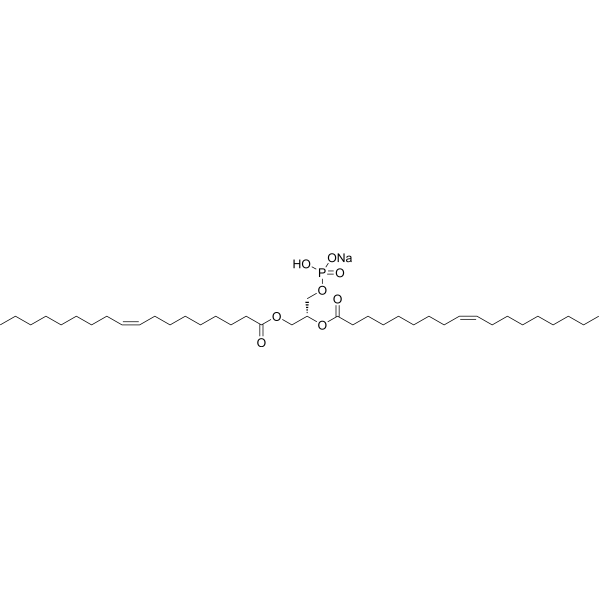
1,2-Diheptanoyl-sn-glycero-3-phosphoethanolamine-d26 (DH7PE-d26) is the deuterium labeled 1,2-Diheptanoyl-sn-glycero-3-phosphoethanolamine.
|
-

- HY-146791S
-
|
|
Isotope-Labeled Compounds
|
Others
|
|
1',3'-Bis[1,2-dilinoleoyl-sn-glycero-3-phospho]-glycerol-d5 (ammonium) is deuterium labeled 1',3'-Bis[1,2-dilinoleoyl-sn-glycero-3-phospho]-glycerol (ammonium).
|
-
![1',3'-Bis[1,2-dilinoleoyl-sn-glycero-3-phospho]-glycerol-d5 ammonium](//file.medchemexpress.com/product_pic/hy-146791s.gif)
- HY-157586
-
|
Lysophosphatidylethanolamine C18:2; LysoPE(0:0/18:2)
|
Biochemical Assay Reagents
|
Others
|
|
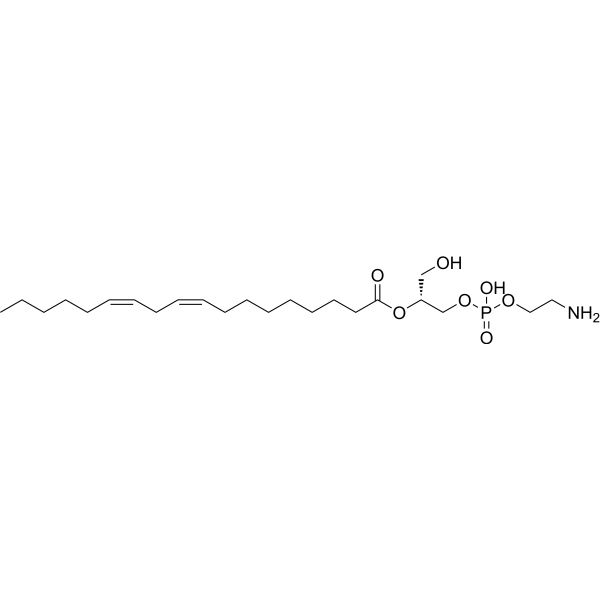
2-Linoleoyl-sn-glycero-3-phosphoethanolamine (Lysophosphatidylethanolamine C18:2) is a kind of lipid metabolite, that can be used as biomarkers. 2-Linoleoyl-sn-glycero-3-phosphoethanolamine can also serve as a model for aminophospholipids .
|
-
- HY-W140488
-
|
10:0 PE
|
Liposome
|
Cancer
|
|
1,2-Didecanoyl-sn-glycero-3-phosphoethanolamine, a phospholipid, showes very promising P-gp inhibitory results at a concentration of 0.3 mM.
|
-

- HY-146829S
-
|
15:0-18:1-PA-d7
|
Isotope-Labeled Compounds
|
Others
|
|
1-Pentadecanoyl-2-oleoyl-sn-glycero-3-phosphate-d7 (sodium) is deuterium labeled 1-Pentadecanoyl-2-oleoyl-sn-glycero-3-phosphate (sodium).
|
-
- HY-148979
-
|
SAPE
|
Biochemical Assay Reagents
|
Others
|
|
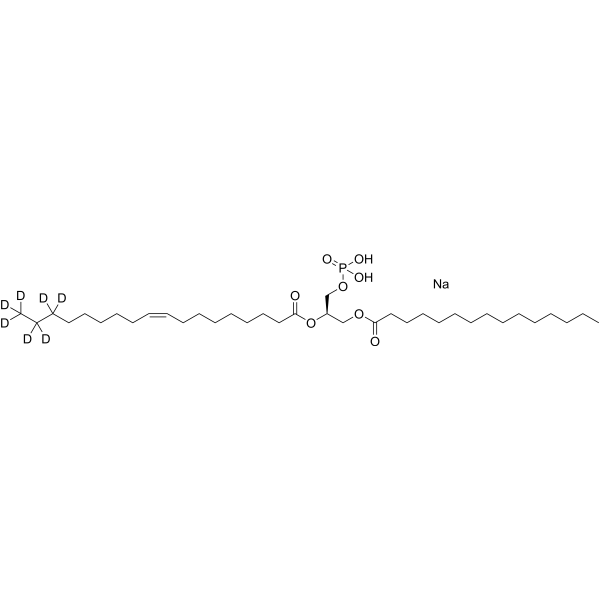
1-Stearoyl-2-arachidonoyl-sn-glycero-3-phosphorylethanolamine (SAPE) is a naturally-occurring phospholipid that can be found in inner mitochondrial membrane (MITO) .
|
-
- HY-115435S
-
|
DMPS-Na-d54; Dimyristoyl phosphatidylserine-d54 sodium
|
Isotope-Labeled Compounds
|
Others
|
|
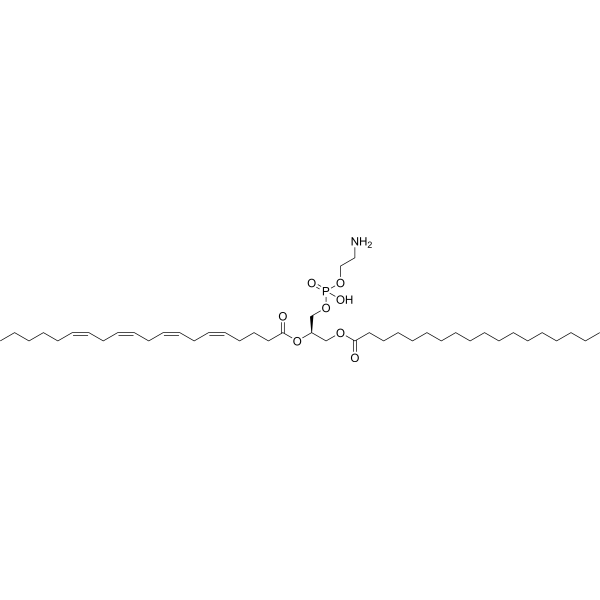
1,2-Dimyristoyl-sn-glycero-3-phospho-L-serine-d54 (sodium) is deuterium labeled 1,2-Dimyristoyl-sn-glycero-3-phospho-L-serine.
|
-
- HY-165030
-
|
15(S)-HETE-SAPC; 15(S)-Hydroxyeicostetraenoic acid-SAPC; 1-Stearoyl-2-15(S)-HETE-sn-Glycero-3-phosphatidylcholine
|
Drug Derivative
|
Others
|
|
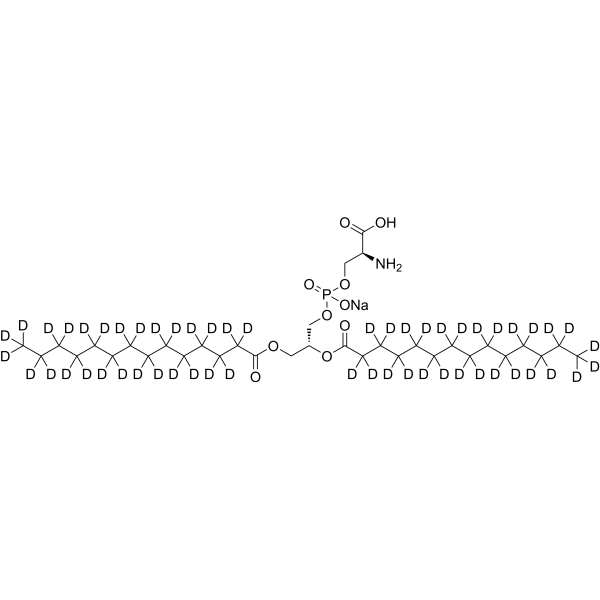
1-Stearoyl-2-15(S)-HETE-sn-glycero-3-PC is an active compound.
|
-

- HY-109541S6
-
|
(Rac)-DMPC-d72; (Rac)-1,2-Dimyristoyl-sn-Glycero-3-phosphocholine-d72
|
Isotope-Labeled Compounds
|
Others
|
|
(Rac)-1,2-Dimyristoyl-sn-glycero-3-phosphocholine-d72 is deuterium labeled (Rac)-1,2-Dimyristoyl-sn-glycero-3-phosphocholine. 1,2-Dimyristoyl-sn-glycero-3-phosphocholine (DMPC) is a synthetic phospholipid used in liposomes. 1,2-Dimyristoyl-sn-glycero-3-ph
|
-

- HY-157692
-
|
1,2-Didecanoyl-sn-Glycero-3-phospho-L-serine sodium
|
Biochemical Assay Reagents
|
|
|
10:0 PS (1,2-Didecanoyl-sn-glycero-3-phospho-L-serine (sodium)) is a kind of biochemical reagent.
|
-

- HY-126213
-
|
18:1 Lyso-PS
|
NADPH Oxidase
Interleukin Related
Apoptosis
|
Inflammation/Immunology
|
|
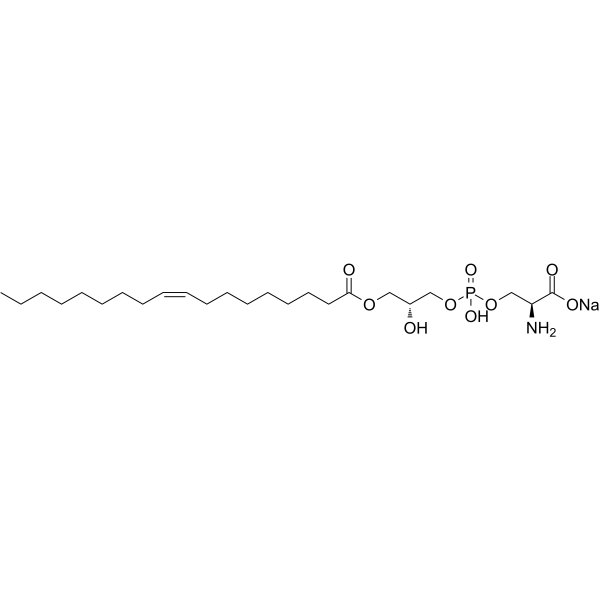
Oleoyl-2-hydroxy-sn-glycero-3-phospho-L-serine sodium (18:1 Lyso-PS) is a modified PS product generated following NADPH oxidase activation and Lyso-PS signal transduction. 1-Oleoyl-2-hydroxy-sn-glycero-3-phospho-L-serine sodium signals through macrophage G2A to enhance the phagocytic uptake of PS-dependent apoptotic (apoptosis) neutrophils and PS-exposed activated neutrophils. 1-Oleoyl-2-hydroxy-sn-glycero-3-phospho-L-serine sodium enhances macrophage phagocytic uptake of apoptotic cells, carboxylate-modified microspheres, and PS-exposed non-apoptotic activated neutrophils. 1-Oleoyl-2-hydroxy-sn-glycero-3-phospho-L-serine sodium serves as an acyl acceptor substrate for the lysophosphatidyltransferase At1g78690p to generate diacylphosphatidylserine. 1-Oleoyl-2-hydroxy-sn-glycero-3-phospho-L-serine sodium reduces the secretion of IL-8 and decreases the proportion of viable colon cancer cells. 1-Oleoyl-2-hydroxy-sn-glycero-3-phospho-L-serine sodium is applicable to studies on peritonitis and inflammatory bowel disease [3].
|
-
- HY-W322575
-
|
DHPC
|
Liposome
|
Others
|
|
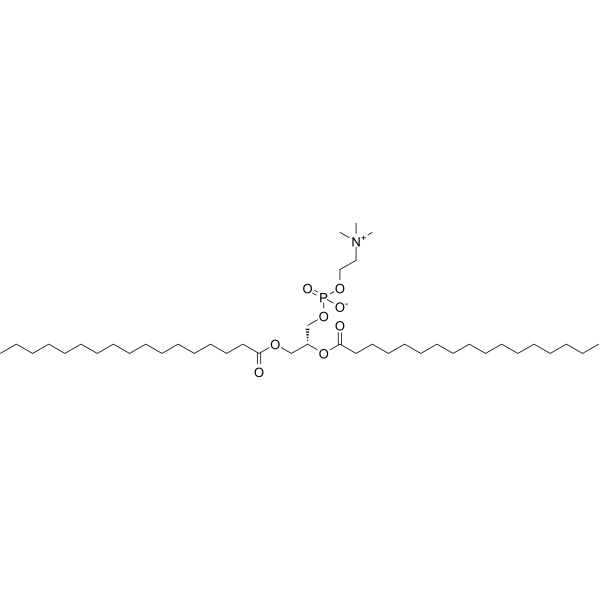
1,2-Diheptadecanoyl-sn-glycero-3-phosphorylcholine (DHPC) is a biologically active phospholipid compound and a derivative of phosphatidylcholine (PC) . It can be used in the generation of micelles, liposomes, and other types of artificial membranes.
|
-
- HY-142991
-
|
POPG
|
Liposome
|
Others
|
|
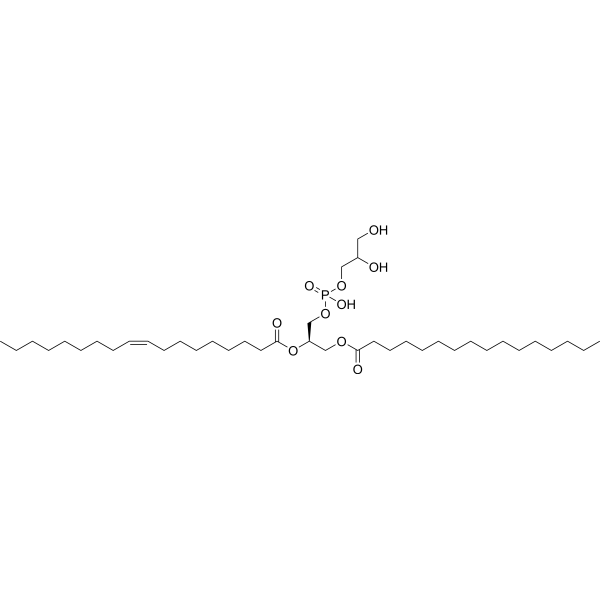
1-Palmitoyl-2-oleoyl-sn-glycero-3-phosphatidylglycerol (POPG) is an anionic phosphatidylglycerol that often serves as a key component to co-construct model phospholipid bilayers with phosphatidylcholine (e.g., at a 3:1 POPC:POPG ratio) for investigating the structure and dynamics of transmembrane proteins. 1-Palmitoyl-2-oleoyl-sn-glycero-3-phosphatidylglycerol acts as a fundamental material for mimicking the physicochemical properties of biological membranes and enables the elucidation of membrane protein interaction mechanisms .
|
-
- HY-170457
-
|
1-Oleoyl-2-cholesterylhemisuccinoyl-sn-Glycero-3-phosphocholine
|
Biochemical Assay Reagents
|
Others
|
|
OChemsPC (1-Oleoyl-2-cholesterylhemisuccinoyl-sn-glycero-3-phosphocholine), a sterol-lipid, is an unsaturated hydrocarbon chain replaces the saturated chain of Sterol-lipid A .
|
-

- HY-145507S
-
|
1-Palmitoyl-2-hydroxy-sn-Glycero-3-PG-d31 ammonium; 16:0 Lyso PG-d31 ammonium; PG(16:0/0:0)-d31 ammonium; 1-Hexadecanoyl-sn-Glycero-3-phospho-(1'racGlycerol)-d31 ammonium
|
Isotope-Labeled Compounds
|
Metabolic Disease
|
|
1-Palmitoyl-2-hydroxy-sn-glycero-3-phospho-(1'-rac-glycerol)-d31 ammonium (1-Palmitoyl-2-hydroxy-sn-glycero-3-PG-d31 ammonium) is the deuterium labeled 1-Palmitoyl-2-hydroxy-sn-glycero-3-phospho-(1'-rac-glycerol) ammonium (HY-145507). 1-Palmitoyl-2-hydroxy-sn-glycero-3-phospho-(1'-rac-glycerol) (16:0 Lyso PE) sodium is a lysophospholipid containing palmitic acid (16:0) at the sn-1 position. It can be used in the generation of micelles, liposomes, and other types of artificial membranes, including lipid-based drug carrier systems.
|
-

- HY-157647
-
|
PC(18:0/22:4)
|
CDK
Apoptosis
|
Cancer
|
|
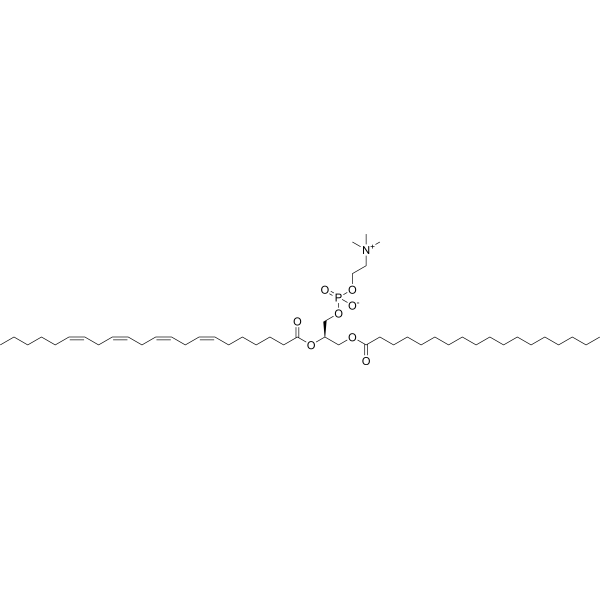
1-Stearoyl-2-Adrenoyl-sn-glycero-3-PC (PC(18:0/22:4)) is an inhibitor of cyclin-dependent kinases (CDKs). 1-Stearoyl-2-Adrenoyl-sn-glycero-3-PC induces apoptosis and inhibits the growth of various cancer cell lines .
|
-
- HY-W340113
-
|
1,2-Dipentadecanoyl-sn-Glycero-3-phosphocholine
|
Biochemical Assay Reagents
|
Others
|
|
15:0 PC (1,2-Dipentadecanoyl-sn-glycero-3-phosphocholine) is a phosphatidylcholine that can be used for giant unilamellar lipid vesicles (GUVs) preparation .
|
-

- HY-W339758
-
|
1,2-Didecanoyl-sn-Glycero-3-phosphate sodium
|
Biochemical Assay Reagents
|
Others
|
|
10:0 PA (1,2-Didecanoyl-sn-glycero-3-phosphate) sodium is an anionic lipid that can be used to prepare nanoemulsions to improve the oral bioavailability of Etoposide (HY-13629) .
|
-

- HY-157699
-
|
|
Liposome
Biochemical Assay Reagents
|
|
|
1,2-Dioleoyl-sn-glycero-3-phospho-(1'-myo-inositol-5'-phosphate) ammonium is a membrane-bound signaling molecule with intracellular activity in regulating membrane trafficking and signal transduction. 1,2-Dioleoyl-sn-glycero-3-phospho-(1'-myo-inositol-5'-phosphate) ammonium can be used in the preparation of liposomes to enhance the efficiency of compound delivery. 1,2-Dioleoyl-sn-glycero-3-phospho-(1'-myo-inositol-5'-phosphate) ammonium can also act as a coordinator of the actin cytoskeleton and participate in the regulation of cell morphology and motility.
|
-

- HY-W140439R
-
-

- HY-W414749
-
|
1-Octanoyl-sn-Glycero-3-phosphocholine
|
Biochemical Assay Reagents
|
Others
|
|
08:0 Lyso PC (1-Octanoyl-sn-glycero-3-phosphocholine) is a lysolecithin that can be hydrolyzed by Phospholipase A2 (HY-P3029) .
|
-

- HY-W127359
-
|
(S)-DLPC
|
Biochemical Assay Reagents
|
Others
|
|
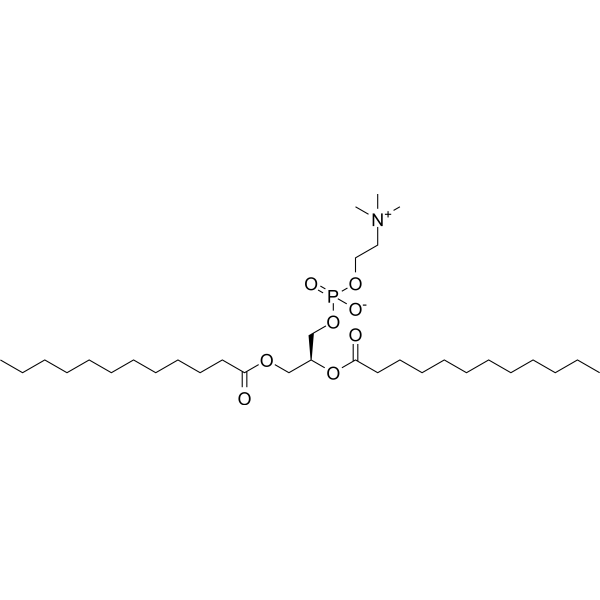
(S)-1,2-Dilauroyl-sn-glycero-3-phosphocholine is a biochemical reagent that can be used as a biological material or organic compound for life science related research.
|
-
- HY-130462S2
-
|
POPC-13C16
|
Isotope-Labeled Compounds
Liposome
|
Others
|
|
1-Palmitoyl-2-oleoyl-sn-glycero-3-PC- 13C16 (POPC- 13C16) is 13C labeled 1-Palmitoyl-2-oleoyl-sn-glycero-3-PC. 1-Palmitoyl-2-oleoyl-sn-glycero-3-PC (POPC), a phospholipid, is a major component of biological membranes. 1-Palmitoyl-2-oleoyl-sn-glycero-3-PC is used for the preparation of liposomes and studying the properties of lipid bilayers [3].
|
-

- HY-145473
-
|
15(S)-HETE-SAPE; 15(S)-Hydroxyeicosatetraenoic acid-SAPE; 1-Stearoyl-2-15(S)-HETE-sn-Glycero-3-Phosphatidylethanolamine
|
Endogenous Metabolite
|
Metabolic Disease
|
|
1-Stearoyl-2-15(S)-HETE-sn-glycero-3-PE (15(S)-HETE-SAPE) is a phospholipid containing stearic acid (HY-B2219) at the sn-1 position and 15(S)-HETE (HY-113336) at the sn-2 position. 1-Stearoyl-2-15(S)-HETE-sn-glycero-3-PE is formed by direct oxidation of 1-stearoyl-2-arachidonoyl-sn-glycero-3-PE (SAPE) by 15-LOX in human peripheral mononuclear cells activated with the calcium ionophore A23187 (HY-N6687).
|
-

- HY-113424AS1
-
|
1,2-Dioleoyl-sn-Glycero-3-phosphocholine-d31
|
Isotope-Labeled Compounds
|
Others
|
|
DOPC-d31 (1,2-Dioleoyl-sn-glycero-3-phosphocholine-d31) is the deuterium labeled DOPC (HY-113424A). 1,2-Dioleoyl-sn-glycero-3-phosphocholine (DOPC) is a phospholipid and is commonly used alone, or with other components, in the generation of micelles, liposomes, and other types of artificial membranes.
|
-

- HY-158947
-
-

- HY-W127460
-
|
1-Hexadecyl-2-azelaoyl-sn-Glycero-3-phosphocholine
|
Biochemical Assay Reagents
|
Others
|
|
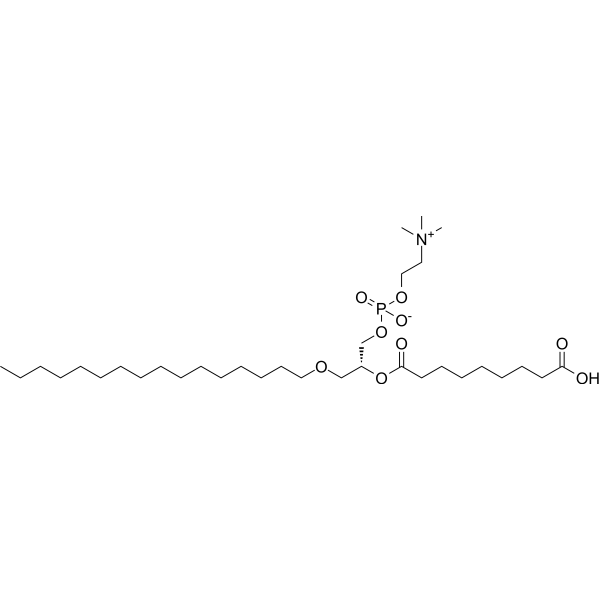
1-hexadecyl-2-azelaoyl-sn-glycero-3-phosphocholine is a biochemical reagent that can be used as a biological material or organic compound for life science related research.
|
-
- HY-W339358
-
|
1,2-Diundecanoyl-sn-Glycero-3-phosphocholine
|
Biochemical Assay Reagents
|
Others
|
|
11:0 PC (1,2-Diundecanoyl-sn-glycero-3-phosphocholine) is a phosphatidylcholine, which plays a role in the folding of intact, functionally competent integral membrane proteins .
|
-

- HY-W725309
-
|
1-Stearoyl-2-oleoyl-sn-Glycero-3-phosphate sodium
|
Biochemical Assay Reagents
|
Others
|
|
18:0-18:1 PA (1-Stearoyl-2-oleoyl-sn-glycero-3-phosphate) sodium is an anionic lipid .
|
-

- HY-126359
-
|
SLPC; 18:0-18:2 PC
|
Endogenous Metabolite
|
Cardiovascular Disease
Metabolic Disease
|
|
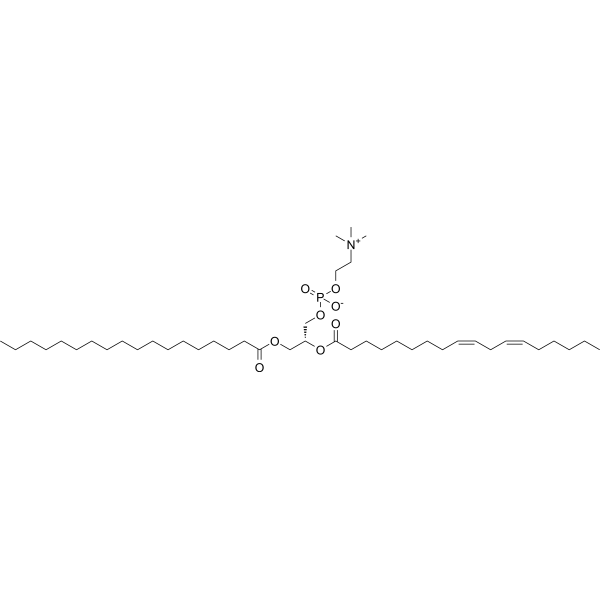
1-Stearoyl-2-linoleoyl-sn-glycero-3-phosphocholine (SLPC; 18:0-18:2 PC) is an endogenous phospholipid marker molecule in the glycerophospholipid metabolic pathway. 1-Stearoyl-2-linoleoyl-sn-glycero-3-phosphocholine is a core component of the phospholipid bilayer of biological membranes and a key responsive lipid for radiation injury and cardiometabolic diseases. 1-Stearoyl-2-linoleoyl-sn-glycero-3-phosphocholine constitutes the phospholipid bilayers of cell membranes and high-density lipoprotein (HDL), and regulates the core activity of lipoprotein functional homeostasis. The content of 1-Stearoyl-2-linoleoyl-sn-glycero-3-phosphocholine in mouse serum shows a significant dose-dependent decrease with increasing ionizing radiation dose, and its level in human HDL also decreases significantly in metabolic syndrome. 1-Stearoyl-2-linoleoyl-sn-glycero-3-phosphocholine can serve as a biological dosimeter marker for ionizing radiation injury, and is used for rapid and accurate assessment of radiation absorbed dose in exposed individuals. 1-Stearoyl-2-linoleoyl-sn-glycero-3-phosphocholine can also act as a lipidomics research target for cardiometabolic diseases such as lipid metabolic syndrome and early-onset coronary heart disease .
|
-
- HY-157675
-
|
|
Endogenous Metabolite
|
Others
|
|
1,2-Dinervonoyl-sn-glycero-3-phosphocholine (24:1 cis PC), characterized by its two 24-carbon fatty acid chains, each featuring a cis double bond at the 15th carbon, is believed to play a role in neuronal differentiation signaling.
|
-

- HY-W725399
-
|
DLiPC; PC24
|
Drug Intermediate
Endogenous Metabolite
|
Others
|
|
1,2-Dilignoceroyl-sn-glycero-3-phosphocholine (DLiPC) is a long-chain diacyl phospholipid characterized by its C24 saturated hydrocarbon chains and serves as a significant precursor for eicosanoids.
|
-

- HY-178737S
-
|
18:2 PS-d3 ammonium
|
Isotope-Labeled Compounds
|
Others
|
|
1,2-Dilinoleoyl-sn-glycero-3-phospho-L-serine-d3 ammonium (18:2 PS-d3 ammonium) is the deuterium labeled 1,2-Dilinoleoyl-sn-glycero-3-phospho-L-serine ammonium.
|
-

- HY-164112
-
-

- HY-W753474
-
|
1,2-DI9-trans-hexa-decenoyl-sn-Glycero-3-phosphocholine; PC(16:1(9E)/16:1(9E))
|
Biochemical Assay Reagents
|
Metabolic Disease
|
|
1,2-Dipalmitelaidoyl-sn-glycero-3-phosphocholine (PC(16:1(9E)/16:1(9E))) is an ester product.
|
-

- HY-W590534S
-
-

- HY-W040185
-
|
1,2-DPPA sodium; PA(14:0/14:0) sodium; 1,2-Dimyristoyl-sn-Glycero-3-phosphate sodium
|
Liposome
|
Metabolic Disease
|
|
1,2-Dimyristoyl-sn-glycero-3-phosphate monosodium is a phospholipid containing the long-chain (14:0) myristic acid inserted at the sn-1 and sn-2 positions. It can be used in the generation of micelles, liposomes, and other types of artificial membranes.
|
-

- HY-167817
-
|
18:1 Phosphatidylpropanol sodium
|
Biochemical Assay Reagents
|
|
|
1,2-Dioleoyl-sn-glycero-3-phosphopropanol sodium (18:1 Phosphatidylpropanol sodium) is a bioactive phospholipid that has the capability to be used in mass spectrometry analysis and is able to effectively quantify Peth in human blood.
|
-

- HY-178788S
-
|
PSPS-d66 ammonium
|
Isotope-Labeled Compounds
|
Others
|
|
1-Palmitoyl-2-stearoyl-sn-glycero-3-phospho-L-serine-d66 ammonium (PSPS-d66 ammonium) is the deuterium labeled 1-Palmitoyl-2-stearoyl-sn-glycero-3-phospho-L-serine ammonium.
|
-

- HY-147072
-
|
18:0 -18:2 PS
|
Liposome
|
Others
|
|
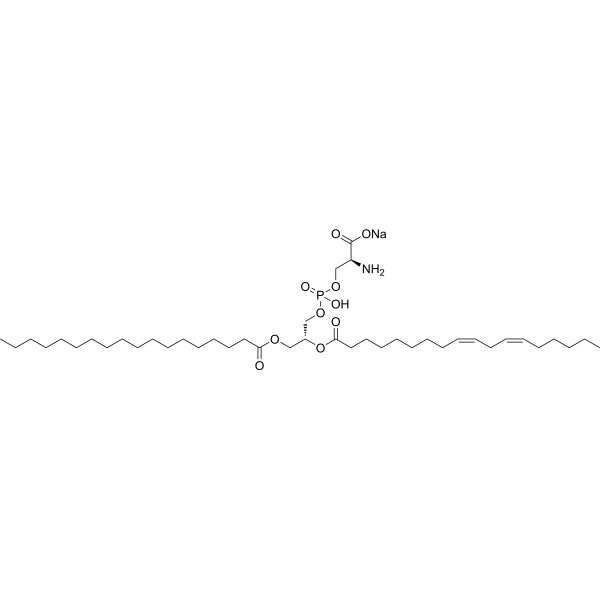
1-Stearoyl-2-linoleoyl-sn-glycero-3-phospho-L-serine sodium is a glycerophospholipid .
|
-
- HY-125771S
-
|
18:0 Lyso-PC-d35; LPC(18:0)-d35
|
Isotope-Labeled Compounds
Endogenous Metabolite
HDAC
STAT
Apoptosis
|
Cancer
|
|
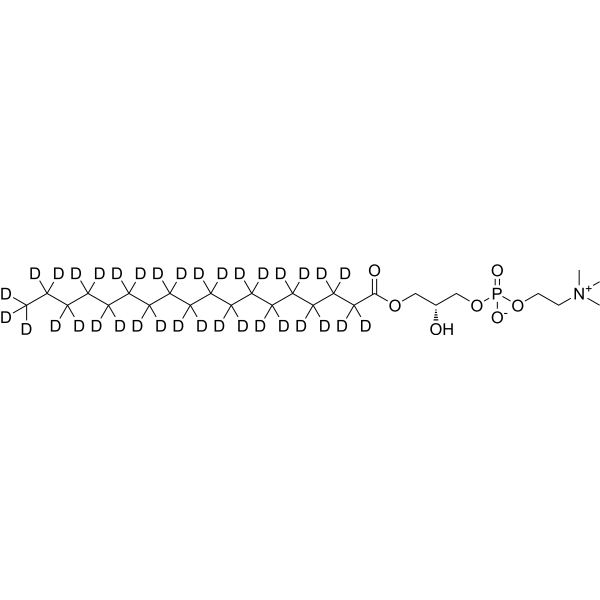
1-Stearoyl-sn-glycero-3-phosphocholine-d35 is deuterium labeled 1-Stearoyl-sn-glycero-3-phosphocholine (HY-125771). 1-Stearoyl-sn-glycero-3-phosphocholine is a lysophosphatidylcholine that inhibits HDAC3 activity and phosphorylation of STAT3 in K562 cells. 1-Stearoyl-sn-glycero-3-phosphocholine induces apoptosis and exhibits anticancer activity in chronic myelogenous leukemia (CML) K562 cells .
|
-
- HY-115701
-
|
1-Stearoyl-2-15(S)-HpETE-sn-Glycero-3-phosphoethanolamine; 15(S)-HpETE-SAPE; 15(S)-hydroperoxyeicostetraenoic acid-SAPE
|
Ferroptosis
|
Inflammation/Immunology
|
|
1-Stearoyl-2-15(S)-HpETE-sn-glycero-3-Pe is a phospholipid that contains stearic acid (HY-B2219) at the sn-1 position and 15(S)-HpETE at the sn-2 position. It is produced via oxidation of 1-stearoyl-2-arachidonoyl-sn-glycero-3-Pe (SAPE) by 15-lipoxygenase (15-LO). 1-Stearoyl-2-15(S)-HpETE-sn-glycero-3-Pe (0.6 and 0.9 μM) increases ferroptotic cell death in wild-type and Acsl4 knockout Pfa1 mouse embryonic fibroblasts (MEFs) treated with the GPX4 inhibitor RSL3.
|
-

- HY-W339764
-
|
10:0 PG
|
Biochemical Assay Reagents
|
|
|
1, 2-didecanoyl-SN-glycero-3-phospho -(1'-rac-glycerol) (10:0 PG) sodium is a biochemical reagent .
|
-

- HY-165029
-
|
PLPC
|
Liposome
|
Others
|
|
1-Palmitoyl-2-linoleoyl-sn-glycero-3-PC (PLPC) is a phospholipid used as a major component in lipid bilayer system models. 1-Palmitoyl-2-linoleoyl-sn-glycero-3-PC can serve as an untreated control, mixed with oxidized lipids such as 1-palmitoyl-2-(13-hydroxy-9,11-octadecanedienoyl)-lecithin (OHPLPC) and 1-palmitoyl-2-(13-hydroperoxy-9,11-octadecanedienoyl)-lecithin (HpPLPC), to study the effects of oxidation on membrane properties .
|
-

- HY-145505
-
|
18:1 Lyso-PG; 1-Oleoyl-2-hydroxy-sn-Glycero-3-phospho-(1'-rac-Glycerol); 1-Oleoyl-2-hydroxy-sn-Glycero-3-phosphoGlycerol
|
Endogenous Metabolite
Liposome
|
Metabolic Disease
|
|
1-Oleoyl-2-hydroxy-sn-glycero-3-PG (18:1 Lyso PE) sodium is a lysophospholipid containing oleic acid (18:1) at the sn-1 position. It can be used in the generation of micelles, liposomes, and other types of artificial membranes, including lipid-based drug carrier systems.
|
-

- HY-W583868
-
|
1,2-POPE; 16:0-18:1 PE
|
Liposome
|
Others
|
|
1-Palmitoyl-2-oleoyl-sn-glycero-3-PE (1,2-POPE; 16:0-18:1 PE) is a phosphatidylethanolamine (PE) lipid. 1-Palmitoyl-2-oleoyl-sn-glycero-3-PE can induce lipid bilayer to form a hexagonal phase (HII) structure in an acidic environment and promote membrane fusion. 1-Palmitoyl-2-oleoyl-sn-glycero-3-PE can enhance the endosomal escape ability of lipid nanoparticles (LNPs) and improve the cellular delivery efficiency of nucleic acid drugs such as mRNA. 1-Palmitoyl-2-oleoyl-sn-glycero-3-PE can be used for LNP carrier targeting of gene therapy and mRNA vaccines .
|
-
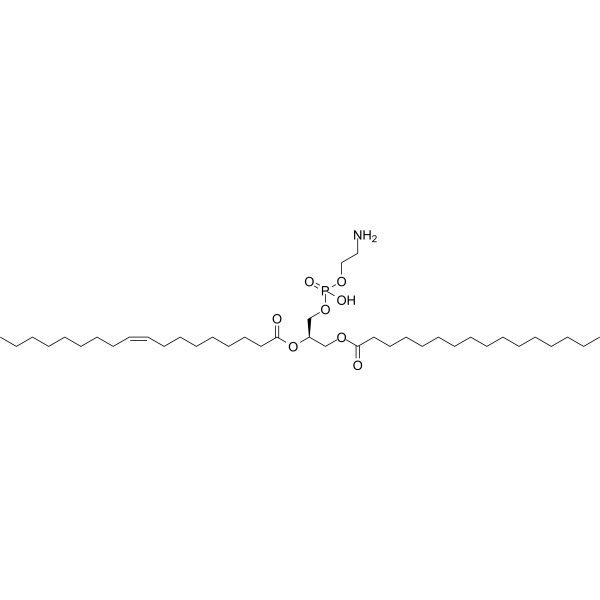
- HY-134174
-
|
|
Liposome
|
Cancer
|
|
1-Palmitoyl-2-oleoyl-sn-glycero-3-phosphate is a phospholipid containing saturated palmitic acid (16:0) and monounsaturated oleic acid (18:1) inserted at the sn-1 and sn-2 positions, respectively. It can be used in the generation of micelles, liposomes, and other types of artificial membranes.
|
-

- HY-157700
-
|
C16(Plasm) LPC; Lysophosphatidylcholine 16:0p/0:0
|
Biochemical Assay Reagents
|
Neurological Disease
|
|
Hexadecenyl-2-hydroxy-sn-glycero-3-PC (C16(Plasm) LPC) is a phosphatidylcholine. Hexadecenyl-2-hydroxy-sn-glycero-3-PC prolongs the lag-phase of α-syn aggregation, and can be used in Parkinson’s disease research .
|
-

- HY-178810S
-
|
DOPS-NH3-d62
|
Isotope-Labeled Compounds
|
Others
|
|
1,2-Dioleoyl-sn-glycero-3-phospho-L-serine-d62 ammonium (DOPS-NH3-d62) is the deuterium labeled 1,2-Dioleoyl-sn-glycero-3-phospho-L-serine ammonium.
|
-

- HY-165997
-
-

- HY-152922
-
|
C16(plasm)-18:2-PC; 1-1(Z)-Hexadecenyl-2-Linoleoyl-sn-Glycero-3-PC; PC(P-16:0/18:2)
|
Biochemical Assay Reagents
|
Others
|
|
1-(1(Z)-Hexadecenyl)-2-linoleoyl-sn-glycero-3-phosphocholine (C16(plasm)-18:2-PC; 1-1(Z)-Hexadecenyl-2-Linoleoyl-sn-glycero-3-PC; PC(P-16:0/18:2)) is a phosphatidylcholine, which can be used in lipid preparations and as a marker in metabolomic research .
|
-

- HY-W040172
-
|
1,2-Di-O-hexyl-sn-Glycero-3-phosphocholine
|
Biochemical Assay Reagents
|
Others
|
|
06:0 Diether PC (1,2-Di-O-hexyl-sn-glycero-3-phosphocholine) is a glycerophospholipid that can be used for bicelles preparation .
|
-

- HY-171906A
-
|
1-Arachidonoyl-sn-Glycerol 3-phosphate sodium; 1-Arachidonoyl LPA sodium; LPA (20:4) sodium
|
LPL Receptor
|
Cancer
|
|
1-Arachidonoyl-2-hydroxy-sn-glycero-3-PA (sodium) (1-Arachidonoyl-sn-glycerol 3-phosphate (sodium)) is a phospholipid with arachifonic acid at the sn-1 position. 1-Arachidonoyl-2-hydroxy-sn-glycero-3-PA (sodium) binds to the LPA2/EDG4 receptor (EC50 of 10 nM). 1-Arachidonoyl-2-hydroxy-sn-glycero-3-PA (sodium) can be found in rat brain as 37% of the arachidoinic acid-containing lysophosphatidic acid species. 1-Arachidonoyl-2-hydroxy-sn-glycero-3-PA (sodium) is the precursor to 1-arachidonoyl glycerol. 1-Arachidonoyl-2-hydroxy-sn-glycero-3-PA (sodium) can prevent TNF-α and IL-6 secretion in wild type LPS-stimulated dendritic cells. 1-Arachidonoyl-2-hydroxy-sn-glycero-3-PA (sodium) reduces differentiation of HT-29 colon carcinoma cells into goblet cells when sodium butyrate is present [3] .
|
-

- HY-W339206
-
|
|
Endogenous Metabolite
|
Others
|
|
1,2-Dinonanoyl-sn-glycero-3-phosphocholine, a specific phosphatidylcholine, features fatty acyl configurations that can influence the physical properties of membranes, making it a key component for generating eicosanoids. As a phospholipid abundant in membranes, it has fatty acids attached to glycerol at the sn-1 and sn-2 positions via ester bonds.
|
-

- HY-181452
-
|
LPA 20:0 sodium; PA(20:0/0:0) sodium; 1-Arachidoyl LPA sodium
|
Endogenous Metabolite
|
Endocrinology
|
|
1-Arachidoyl-2-hydroxy-sn-glycero-3-PA sodium (LPA 20:0 sodium) (Compound LPA 20:0/lyso) is a lysophospholipid. 1-Arachidoyl-2-hydroxy-sn-glycero-3-PA sodium is detectable in urine .
|
-

- HY-168372
-
|
|
Phospholipase
|
Metabolic Disease
|
|
1-Myristoyl-2-Linoleoyl-sn-glycero-3-PC is a phospholipid that contains Myristic acid (HY-N2041) and Linoleic acid (HY-N0729) at the sn-1 and sn-2 positions, respectively, which is found in human plasma .
|
-

- HY-175069
-
|
PA(18:1/18:1) ammonium salt; 1,2-DOPA ammonium salt
|
Liposome
|
Others
|
|
1,2-Dioleoyl-sn-glycero-3-PA (ammonium salt) is a phospholipid with long-chain fatty acid oleic acid inserted at the sn-1 and sn-2 positions. 1,2-Dioleoyl-sn-glycero-3-PA (ammonium salt) can be used to synthsize artificial membranes such as liposomes .
|
-

- HY-157625
-
|
1-Palmitoyl-2-Docosahexaenoyl-sn-Glycero-3-PE; PE(16:0/22:6(4Z,7Z,10Z,13Z,16Z,19Z))
|
Biochemical Assay Reagents
|
Metabolic Disease
|
|
1-Palmitoyl-2-docosahexaenoyl-sn-glycero-3-phosphoethanolamine (1-Palmitoyl-2-Docosahexaenoyl-sn-glycero-3-PE; PE(16:0/22:6(4Z,7Z,10Z,13Z,16Z,19Z))) is an ester product.
|
-

- HY-158750
-
-

- HY-W339838S
-
|
14:0 Lyso PG-d27 sodium
|
Isotope-Labeled Compounds
|
Cancer
|
|
1-Myristoyl-2-hydroxy-sn-glycero-3-PG-d27 sodium (14:0 Lyso PG-d27) is the deuterium labeled 1-Myristoyl-2-hydroxy-sn-glycero-3-PG sodium (HY-W339838). 1-Myristoyl-2-hydroxy-sn-glycero-3-PG sodium is a lysophospholipid containing myristic acid (14:0) at the sn-1 position. It has been used in the generation of micelles, liposomes, and other types of artificial membranes, including lipid-based drug carrier systems.
|
-

- HY-145473S
-
|
15(S)-HETE-SAPE; 15(S)-Hydroxyeicosatetraenoic acid-SAPE-d11; 1-Stearoyl-2-15(S)-HETE-sn-Glycero-3-Phosphatidylethanolamine-d11
|
Isotope-Labeled Compounds
Others
|
Metabolic Disease
|
|
1-Stearoyl-2-15(S)-HETE-sn-glycero-3-PE-d11 (15(S)-HETE-SAPE-d11) is deuterium labeled 1-Stearoyl-2-15(S)-HETE-sn-glycero-3-PE. 1-Stearoyl-2-15(S)-HETE-sn-glycero-3-PE is a phospholipid that contains stearic acid (HY-B2219) at the sn-1 position and 15(S)-HETE at the sn-2 position. It is formed in human peripheral monocytes activated by the calcium ionophore A23187 (HY-N6687) by direct oxidation of 1-stearoyl-2-arachidonoyl-sn-glycero-3-PE (SAPE) by 15-LO. Phosphoethanolamine (PE) HETEs (PE-HETEs), including 1-stearoyl-2-15(S)-HETE-sn-glycero-3-PE, are the main source of esterified HETE in ionophore-activated monocytes .
|
-

- HY-177191
-
|
L-α-DimyristoylphosphatidylGlycerol; 1,2-Dimyristoyl-sn-Glycero-3-phosphoGlycerol
|
Liposome
|
Others
|
|
DMPG (L-α-Dimyristoylphosphatidylglycerol; 1,2-Dimyristoyl-sn-glycero-3-phosphoglycerol) is a phospholipid that can be used for preparing formulations such as liposomes or gels. DMPG can be used in the research of drug delivery .
|
-

- HY-157715
-
|
|
Biochemical Assay Reagents
|
|
|
1,2-Dioctanoyl-sn-glycero-3-phospho-(1'-myo-inositol-3',4',5'-trisphosphate) ammonium is a membrane-bound signaling molecule with activities that regulate cell growth, metabolism, proliferation, and survival. 1,2-Dioctanoyl-sn-glycero-3-phospho-(1'-myo-inositol-3',4',5'-trisphosphate) ammonium plays an important role in cell physiology and participates in multiple signal transduction pathways. 1,2-Dioctanoyl-sn-glycero-3-phospho-(1'-myo-inositol-3',4',5'-trisphosphate) ammonium has a profound effect on intracellular signaling.
|
-

- HY-W414591
-
|
1-Lauroyl-2-hydroxy-sn-Glycero-3-phosphatidylcholine; 12:0 Lyso PC
|
Drug Derivative
|
Metabolic Disease
|
|
L-alpha-lysophosphatidylcholine, lauroyl (1-Lauroyl-2-hydroxy-sn-glycero-3-phosphatidylcholine) is an ester product.
|
-

- HY-147076
-
|
1,2-Diarachidonoyl-sn-Glycero-3-[phospho-rac-(1-Glycerol)] sodium
|
Biochemical Assay Reagents
|
Others
|
|
20:4 PG (1,2-Diarachidonoyl-sn-glycero-3-[phospho-rac-(1-glycerol)]) sodium is a glycerophospholipid that can be used as an oxidized phospholipid .
|
-

- HY-157661
-
|
1',3'-Bis[1,2-dimyristoyl-sn-Glycero-3-phospho]-Glycerol sodium
|
Biochemical Assay Reagents
|
|
|
14:0 Cardiolipin sodium (1',3'-Bis[1,2-dimyristoyl-sn-glycero-3-phospho]-glycerol (sodium)) is a kind of biochemical reagent.
|
-

- HY-W714524
-
|
16:0-18:1 PS (POPS)
|
Liposome
|
Others
|
|
2-Oleoyl-1-palmitoyl-sn-glycero-3-phospho-L-serine sodium (16:0-18:1 PS (POPS)) is an anionic phospholipid with oleic acid (18:1) and palmitic acid (16:0) tails containing a carboxylic acid (COOH) and amine (NH2) in their head group. 2-Oleoyl-1-palmitoyl-sn-glycero-3-phospho-L-serine sodium has been used in the preparation of lipid-mixing vesicles, liposomes, and artificial membranes .
|
-

- HY-181456
-
|
LPA O-18:0 sodium
|
Drug Derivative
|
Others
|
|
1-Octadecyl-2-hydroxy-sn-glycero-3-phosphate (LPA O-18:0) sodium is a precursor compound of a glycosyl phospholipid (Plasmalogen), which can be used for studying diseases related to Plasmalogen deficiency .
|
-

- HY-177475
-
|
1-Arachidonoyl-sn-Glycero-3-phosphocholine
|
Endogenous Metabolite
|
Metabolic Disease
Cancer
|
|
LysoPC 20:4 (20:4) (1-Arachidonoyl-sn-glycero-3-phosphocholine) is a serum metabolite. LysoPC 20:4 (20:4) decreases in tumor-bearing mice, but the reduction is not significant. LysoPC (20:4) can be used in cancer and obesity-related research .
|
-

- HY-157696
-
|
1,2-Di-O-octadecyl-sn-Glycero-3-phosphocholine
|
Biochemical Assay Reagents
|
Others
|
|
18:0 Diether PC (1,2-Di-O-octadecyl-sn-glycero-3-phosphocholine) is a glycerophospholipid that can be used as a nonhydrolizable ether lipid in calcein-containing vesicles .
|
-

- HY-168371
-
|
|
Scavenger Receptor Class B type I (SR-BI)
|
Metabolic Disease
|
|
1-Palmitoyl-2-13(S)-HODE-sn-glycero-3-PC (13-HODE-PC) is an oxidized phospholipid that contains Palmitic acid (HY-N0830) and 13(S)-HODE (HY-113884B) at the sn-1 and sn-2 positions, respectively. 1-Palmitoyl-2-13(S)-HODE-sn-glycero-3-PC has the ability to compete for the binding of 125I-NO2-LDL (5 g/mL) to CD36-transfected 293 cells, with the IC50 of > 200 μM .
|
-

- HY-175113
-
|
|
Liposome
|
Others
|
|
1-1(Z)-Octadecenyl-2-adrenoyl-sn-glycero-3-PC is a plasmalogen that contains 1(Z)-octadecenoic acid and adrenic acid (HY-W013215) at the sn-1 and sn-2 positions, respectively .
|
-

- HY-W336015
-
|
(2R)-2,3-bis(heptadecanoyloxy)propyl hydrogen phosphate sodium
|
Biochemical Assay Reagents
|
Metabolic Disease
|
|
1,2-Diheptadecanoyl-sn-glycero-3-phosphatidic acid (sodium) ((2R)-2,3-bis(heptadecanoyloxy)propyl hydrogen phosphate (sodium)) is an ester product.
|
-

- HY-157415
-
|
1,2-Dierucoyl-sn-3-phosphatidylethanolamine; di22:1-PE; PE(22:1/22:1)
|
Liposome
|
Inflammation/Immunology
|
|
1,2-Dierucoyl-sn-glycero-3-PE (1,2-Dierucoyl-sn-3-phosphatidylethanolamine) is a phospholipid that contains erucic acid. 1,2-Dierucoyl-sn-glycero-3-PE can be used in the generation of lipid nanoparticles (LNPs) to deliver mRNA in vivo. 1,2-Dierucoyl-sn-glycero-3-PE can also be used to synthesize numerous PEG-conjugates for liposomes incorporation [3] .
|
-

- HY-146881S
-
|
DMPC-d27; 1,2-Dimyristoyl-sn-Glycero-3-phosphocholine-d27; Dimyristoyl phosphatidylcholine-d27
|
Isotope-Labeled Compounds
|
Others
|
|
1-Myristoyl-2-myristoyl-sn-glycero-3-phosphocholine-d27 is deuterium labeled 1-Myristoyl-2-myristoyl-sn-glycero-3-phosphocholine.
|
-
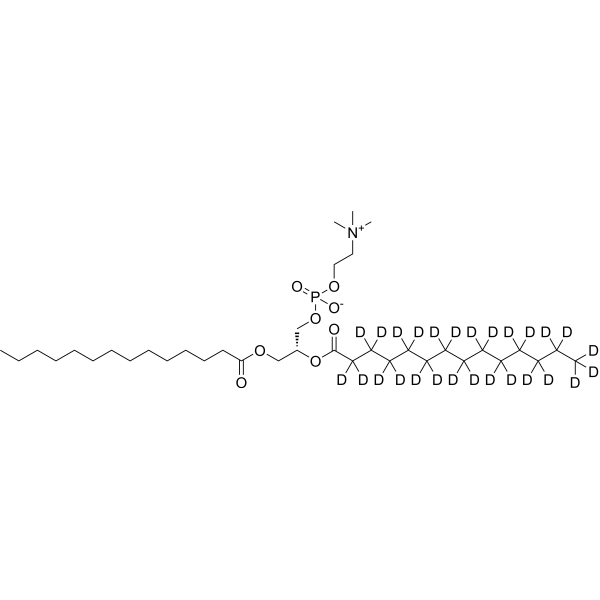
- HY-130671A
-
|
(R)-1,2-Dipalmitoyl-sn-Glycero-3-phosphoGlycerol sodium
|
Liposome
|
Others
|
|
L-DPPG ((R)-1,2-Dipalmitoyl-sn-glycero-3-phosphoglycerol sodium) is a phospholipid targeting biological membranes. L-DPPG interacts with lipid bilayers through hydrophobic and electrostatic interactions. L-DPPG is used in research on drug delivery systems .
|
-

- HY-178758S
-
|
PSPC-d66; PC(16:0-18:0)-d66
|
Isotope-Labeled Compounds
|
Others
|
|
1-Palmitoyl-2-stearoyl-sn-glycero-3-phosphocholine-d66 (PSPC-d66) is the deuterium labeled 1-Palmitoyl-2-stearoyl-sn-glycero-3-phosphocholine.
|
-

- HY-168796
-
|
|
Biochemical Assay Reagents
|
Metabolic Disease
|
|
1-Palmitoyl-2-13(S)-HpODE-sn-glycero-3-PC is a phospholipid that contains Palmitic acid (HY-N0830) and 13(S)-HpODE (HY-110406) at the sn-1 and sn-2 positions, respectively.
|
-

- HY-107501
-
|
(Rac)-1-Oleoyl-sn-Glycero-3-phosphate sodium; (Rac)-1-Oleoyl-LPA sodium
|
Drug Isomer
|
Neurological Disease
|
|
(Rac)-1-Oleoyl lysophosphatidic acid ((Rac)-1-Oleoyl-sn-glycero-3-phosphate) sodium is the racemic isomer of 1-Oleoyl lysophosphatidic acid sodium (HY-107614) .
|
-
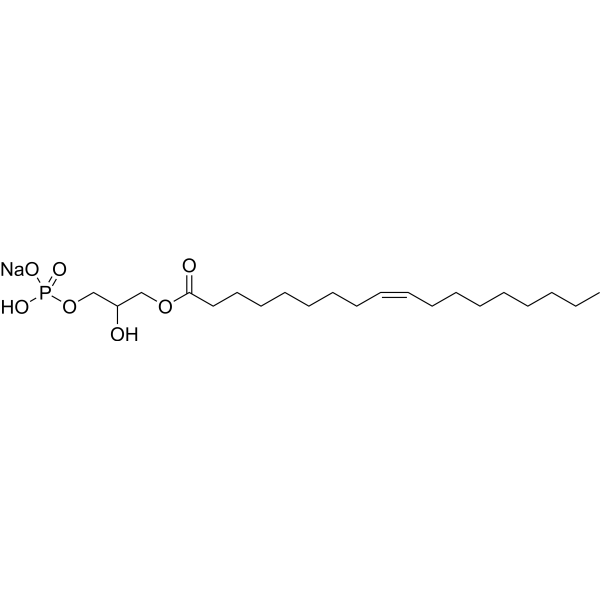
- HY-W838254
-
|
|
PKC
Endogenous Metabolite
|
Others
|
|
1,2-Dipentadecanoyl-sn-glycero-3-phospho-(1'-rac-glycerol) sodium functions as an activator for the protein kinase C family and is an anionic phospholipid found in mitochondrial and microsomal membranes, playing a crucial role in the composition of lung surfactant, particularly within the membranes of lamellar bodies in the lungs.
|
-

- HY-W714524A
-
|
16:0-18:1 PS (POPS) free acid
|
Liposome
|
Others
|
|
2-Oleoyl-1-palmitoyl-sn-glycero-3-phospho-L-serine (16:0-18:1 PS (POPS) free acid) is an anionic phospholipid with oleic acid (18:1) and palmitic acid (16:0) tails containing a carboxylic acid (COOH) and amine (NH2) in their head group. 2-Oleoyl-1-palmitoyl-sn-glycero-3-phospho-L-serine has been used in the preparation of lipid-mixing vesicles, liposomes, and artificial membranes .
|
-

- HY-115435
-
|
DMPS-Na; Dimyristoyl phosphatidylserine sodium
|
Liposome
|
Cancer
|
|
1,2-Dimyristoyl-sn-glycero-3-phospho-L-serine sodium is an anionic phospholipid with myristic acid tails (14:0) and contains a carboxylic acid (COOH) and amine (NH2) in their head group. It has been used in the preparation of liposome.
|
-

- HY-145507
-
|
1-Palmitoyl-2-hydroxy-sn-Glycero-3-PG sodium; 16:0 Lyso PG; PG(16:0/0:0); 1-Hexadecanoyl-sn-Glycero-3-phospho-(1'racGlycerol) sodium
|
Liposome
|
Metabolic Disease
|
|
1-Palmitoyl-2-hydroxy-sn-glycero-3-phospho-(1'-rac-glycerol) (16:0 Lyso PE) sodium is a lysophospholipid containing palmitic acid (16:0) at the sn-1 position. It can be used in the generation of micelles, liposomes, and other types of artificial membranes, including lipid-based drug carrier systems.
|
-

- HY-175111
-
|
|
Liposome
|
Others
|
|
1-Stearoyl-2-17(S)-HDoTE-sn-glycero-3-PC is a phospholipid that contains stearic acid (HY-B2219) and the oxidized adrenic acid metabolite 17(S)-HDoTE (HY-168774) at the sn-1 and sn-2 positions, respectively .
|
-

- HY-170461
-
|
1,2-Dioleoyl-sn-Glycero-3-phosphoethanolamine-N,N-dimethyl
|
Biochemical Assay Reagents
|
Others
|
|
18:1 Dimethyl PE (1,2-Dioleoyl-sn-glycero-3-phosphoethanolamine-N,N-dimethyl) is a phospholipid that can be used as a biological material or organic compound for life science related research.
|
-

- HY-141615
-
|
PDME; 16:0 Dimethyl PE
|
Liposome
|
Cancer
|
|
1,2-Dipalmitoyl-sn-glycero-3-phospho-N,N-dimethylethanolamine has been used in the generation of liposomes and monolayers for use in the study of membrane permeability and monolayer viscosity, respectively.
|
-

- HY-W583868S
-
|
1,2-POPE-d62; 16:0-18:1 PE-d62
|
Isotope-Labeled Compounds
|
Others
|
|
1-Palmitoyl-2-oleoyl-sn-glycero-3-PE-d62 (1,2-POPE-d62) is the deuterium labeled 1-Palmitoyl-2-oleoyl-sn-glycero-3-PE. 1-Palmitoyl-2-oleoyl-sn-glycero-3-PE (1,2-POPE; 16:0-18:1 PE) is a phosphatidylethanolamine (PE) lipid. 1-Palmitoyl-2-oleoyl-sn-glycero-3-PE can induce lipid bilayer to form a hexagonal phase (HII) structure in an acidic environment and promote membrane fusion. 1-Palmitoyl-2-oleoyl-sn-glycero-3-PE can enhance the endosomal escape ability of lipid nanoparticles (LNPs) and improve the cellular delivery efficiency of nucleic acid drugs such as mRNA. 1-Palmitoyl-2-oleoyl-sn-glycero-3-PE can be used for LNP carrier targeting of gene therapy and mRNA vaccines .
|
-

- HY-167567
-
|
1,2-Dihexadecanoyl-sn-Glycero-3-phosphoethanolamine-N-(2,4-dinitrophenyl) ammonium
|
Biochemical Assay Reagents
|
|
|
16:0 DNP PE (1,2-Dihexadecanoyl-sn-glycero-3-phosphoethanolamine-N-(2,4-dinitrophenyl) (ammonium)) is a kind of biochemical reagent.
|
-

- HY-157623
-
|
1-Palmitoyl-2-hydroxy-sn-Glycero-3-phospho-L-serine sodium
|
Biochemical Assay Reagents
|
Others
|
|
16:0 Lyso PS (1-Palmitoyl-2-hydroxy-sn-glycero-3-phospho-L-serine sodium) is a lysophospholipid. 16:0 Lyso PS serves as a standard for preparing standard curves .
|
-

- HY-134225
-
-

- HY-173587
-
|
1,2-Bis(heptanoylthio) GlycerophosphatidylGlycerol sodium
|
Phospholipase
|
Metabolic Disease
|
|
1,2-Bis(heptanoylthio)-sn-glycero-3-PG (1,2-Bis(heptanoylthio) glycerophosphatidylglycerol) sodium is a fatty acylthioesterified phosphatidylglycerol derivative that can be used to mimic the action of phospholipases or as a probe molecule for membrane fusion studies .
|
-

- HY-W127368
-
|
L-α-Phosphatidylethanolamine, β-linoleoyl-γ-palmitoyl
|
Biochemical Assay Reagents
|
Others
|
|
2-Linoleoyl-1-palmitoyl-sn-glycero-3-phosphoethanolamine is a biochemical reagent that can be used as a biological material or organic compound for life science related research.
|
-
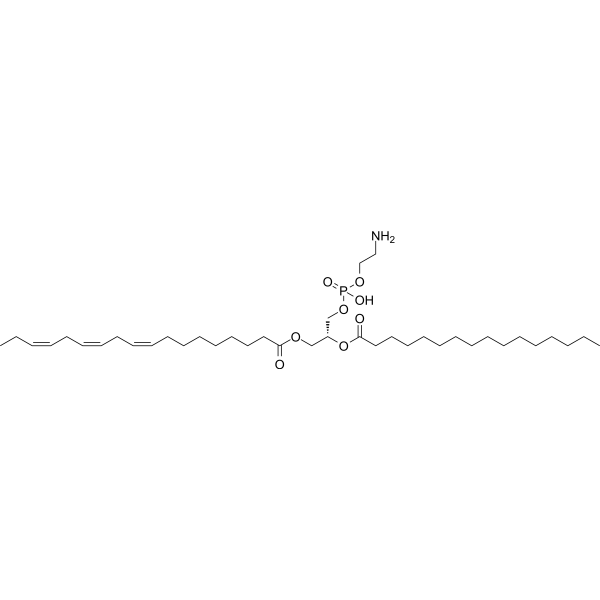
- HY-157629
-
|
PAPE; 1-Palmitoyl-2-arachidonoyl PE
|
Reactive Oxygen Species (ROS)
|
Others
|
|
1-Palmitoyl-2-arachidonoyl-sn-glycero-3-PE (PAPE), a compound isolated from egg yolk with antioxidant activity related to the unsaturated fatty acid content, was extracted, purified, and analyzed by various techniques.
|
-

- HY-W440958
-
|
PSPC; PC(16:0-18:0)
|
Liposome
|
Cancer
|
|
1-Palmitoyl-2-stearoyl-sn-glycero-3-phosphocholine is an assymetrical phospholipid containing saturated palmitic and stearic acid at the sn-1 and sn-2 position respectively. The phosphate group is attached to choline.
|
-

- HY-W839203
-
|
1,2-Didocosanoyl-sn-Glycero-3-phosphocholine; PC(22:0/22:0)
|
Endogenous Metabolite
|
Others
|
|
22:0 PC (1,2-Didocosanoyl-sn-glycero-3-phosphocholine), a type of phosphatidylcholine, functions as a lung surfactant and is characterized as an amphipathic molecule predominantly found in the outer leaflets of biological membrane bilayers.
|
-

- HY-W745661
-
|
1-Palmitoyl-2-docosahexaenoyl-sn-Glycero-3-phosphocholine-d9
|
Isotope-Labeled Compounds
|
Others
|
|
Palmitoyldocosahexaenoyl Phosphatidylcholine-d9 (1-Palmitoyl-2-docosahexaenoyl-sn-glycero-3-phosphocholine-d9) is deuterium labeled Palmitoyldocosahexaenoyl Phosphatidylcholine .
|
-

- HY-170459
-
|
1-Oleoyl-2-(12-biotinyl(aminododecanoyl))-sn-Glycero-3-phosphoethanolamine
|
Biochemical Assay Reagents
|
Others
|
|
18:1-12:0 Biotin PE (1-Oleoyl-2-(12-biotinyl(aminododecanoyl))-sn-glycero-3-phosphoethanolamine) can be used to prepare liposomes .
|
-

- HY-W923483
-
|
1-O-Hexadecyl-2-oleoyl-sn-Glycero-3-phosphocholine
|
Platelet-activating Factor Receptor (PAFR)
Endogenous Metabolite
|
Cardiovascular Disease
|
|
C16-18:1 PC (1-O-Hexadecyl-2-oleoyl-sn-glycero-3-phosphocholine), also known as 1-O-hexadecyl-2-oleoyl-sn-glycero-3-phosphocholine (HOPC), is a member of the platelet-activating factor (PAF) family of glycerophospholipids and serves as a pro-inflammatory lipid mediator with diverse biological and pharmacological effects; it features a mono-ether structure with an oleoyl chain (18:1) ester-linked at the sn-2 position and a hexadecyl chain (16:0) ether-linked at the sn-1 position.
|
-

- HY-177193
-
|
1,2-Dimyristoyl-sn-Glycero-3-phosphate; 1,2-Dimyristoyl-PA
|
Liposome
|
Others
|
|
DMPA (1,2-Dimyristoyl-sn-glycero-3-phosphate; 1,2-Dimyristoyl-PA) is a phospholipid that can be used for preparing liposomes. DMPA, when used as a negatively charged lipid component in fluid liposomes, supports liposome-bacterium fusion. DMPA can be used in the research of drug delivery .
|
-

- HY-125940
-
|
1,2-Dipalmitoyl-sn-Glycero-3-phosphoGlycerol sodium
|
Liposome
|
Others
|
|
DPPG (1,2-Dipalmitoyl-sn-glycero-3-phosphoglycerol sodium) is a phospholipid that contains long-chain (16:0) palmitic acid inserted at the sn-1 and sn-2 positions, and it serves as an active component to prevent BaP molecules from entering the water subphase. DPPG is used to prepare micelles, liposomes, and other types of artificial membranes that can resist damage from UV radiation [3].
|
-
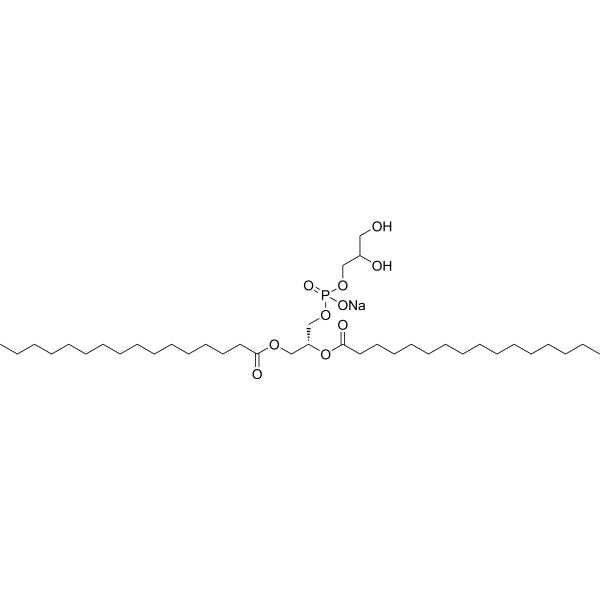
- HY-W344927
-
|
(2R)-2,3-Bis(heptadecanoyloxy)propyl 2,3-dihydroxypropyl phosphate sodium
|
Biochemical Assay Reagents
|
Metabolic Disease
|
|
1,2-Diheptadecanoyl-sn-Glycero-3-Phosphatidylglycerol (sodium) ((2R)-2,3-Bis(heptadecanoyloxy)propyl 2,3-dihydroxypropyl phosphate (sodium)) is an ester product.
|
-

- HY-125940S
-
|
1,2-Dipalmitoyl-sn-Glycero-3-phosphoGlycerol-d62 sodium
|
Isotope-Labeled Compounds
|
Others
|
|
DPPG-d62 (sodium) is deuterium labeled DPPG. DPPG sodium (1,2-Dipalmitoyl-sn-glycero-3-PG sodium) is a phospholipid containing the long-chain(16:0) palmitic acid inserted at the sn-1 and sn-2 positions. DPPG sodium is used in the generation of micelles, l
|
-
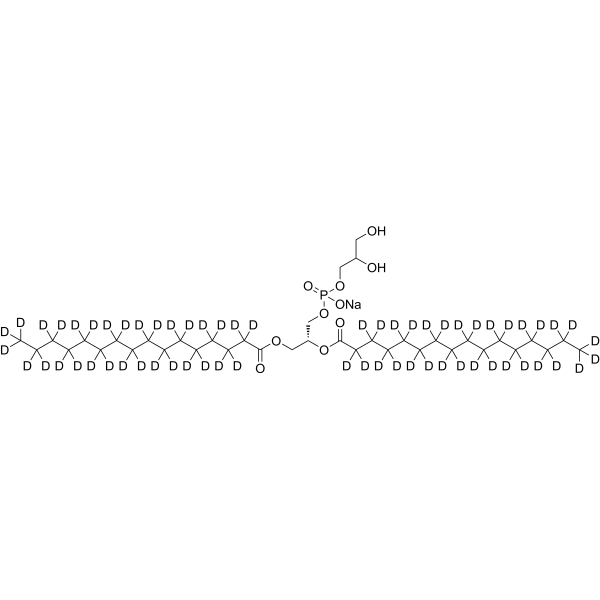
- HY-W339838
-
|
14:0 Lyso PG
|
Liposome
|
Cancer
|
|
1-Myristoyl-2-hydroxy-sn-glycero-3-PG sodium is a lysophospholipid containing myristic acid (14:0) at the sn-1 position. It has been used in the generation of micelles, liposomes, and other types of artificial membranes, including lipid-based drug carrier systems.
|
-

- HY-157423A
-
|
1,2-Dipalmitoleoyl-sn-Glycero-3-phosphocholine,chloroform
|
Biochemical Assay Reagents
|
Others
|
|
16:1 (DELTA 9-Cis) PC,chloroform (1,2-Dipalmitoleoyl-sn-glycero-3-phosphocholine,chloroform) is a kind of biological materials or organic compounds that are widely used in life science research.
|
-

- HY-107614
-
|
1-Oleoyl-sn-Glycero-3-phosphate sodium; 1-Oleoyl-LPA sodium
|
LPL Receptor
Mitosis
|
Neurological Disease
|
|
1-Oleoyl lysophosphatidic acid (1-Oleoyl-sn-glycero-3-phosphate) sodium, a potent bioactive phospholipid, is a LPA receptor activator. 1-Oleoyl lysophosphatidic acid sodium can promote mitosis by inducing DNA synthesis. 1-Oleoyl lysophosphatidic acid sodium is also involved in normal and pathological emotional responses, including anxiety and depression [3].
|
-
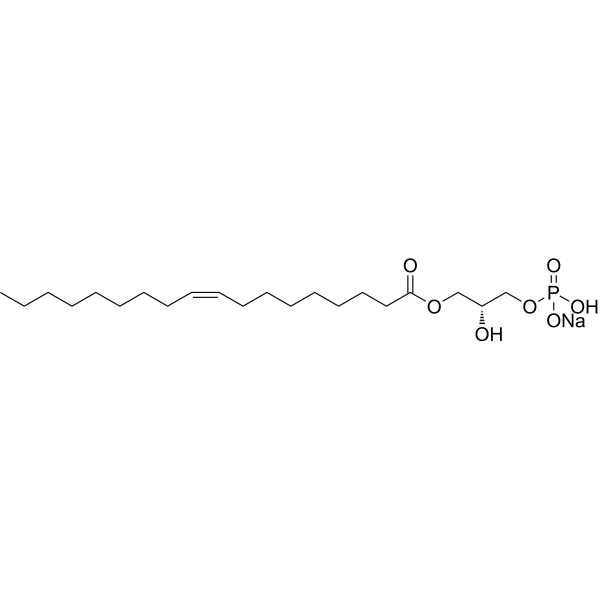
- HY-157651
-
|
|
Biochemical Assay Reagents
|
Others
|
|
1-Stearoyl-2-arachidonoyl-sn-glycero-3-phospho-(1'-myo-inositol-3',4'-bisphosphate) ammonium regulates the activity of the actin network associated with endocytic structures .
|
-

- HY-167811
-
|
16:0 Lysyl PG hydrochloride
|
Biochemical Assay Reagents
|
|
|
1,2-Dipalmitoyl-sn-glycero-3-[phospho-rac-(3-lysyl(1-glycerol))] hydrochloride (16:0 Lysyl PG hydrochloride) is a synthetic phospholipid with the activity of promoting the preparation of artificial vesicles.
|
-
![1,2-Dipalmitoyl-sn-glycero-3-[phospho-rac-(3-lysyl(1-glycerol))] hydrochloride](//file.medchemexpress.com/product_pic/hy-167811.gif)
- HY-141613S
-
|
(2S,8R,19Z)DOPS-d3 ammonium
|
Isotope-Labeled Compounds
|
Others
|
|
(2S,8R,19Z)1,2-Dioleoyl-sn-glycero-3-phospho-L-serine-d3 ammonium ((2S,8R,19Z)DOPS-d3 ammonium) is the deuterium labeled (2S,8R,19Z)1,2-Dioleoyl-sn-glycero-3-phospho-L-serine ammonium (HY-141613). 1,2-Dioleoyl-sn-glycero-3-phospho-L-serine sodium (DOPS-NA) is a ubstitute for Phosphoserine/phosphatidylserine. 1,2-Dioleoyl-sn-glycero-3-phospho-L-serine sodium can be used together with DOPC and DOPE in lipid mixtures for the synthesis of liposomes. 1,2-Dioleoyl-sn-glycero-3-phospho-L-serine sodium can self-assemble into single-layer or double-layer membrane structures, similar to cell membranes, and possesses high membrane fluidity and flexibility. 1,2-Dioleoyl-sn-glycero-3-phospho-L-serine is widely applied in membrane biology, cell membrane research, lipid preparation, and drug delivery systems .
|
-

- HY-130671B
-
|
(S,S)-1,2-Dipalmitoyl-sn-Glycero-3-phosphoGlycerol sodium
|
Liposome
|
Others
|
|
(S,S)-DPPG is an enantiomeric isomer of L-DPPG. L-DPPG ((R)-1,2-Dipalmitoyl-sn-glycero-3-phosphoglycerol (sodium)) is a phospholipid targeting biological membranes. L-DPPG interacts with lipid bilayers through hydrophobic and electrostatic interactions. L-DPPG is used in research on drug delivery systems .
|
-

- HY-131652
-
|
16:0 Diether PC
|
Liposome
|
Metabolic Disease
|
|
1,2-Di-O-hexadecyl-sn-glycero-3-phosphocholine (16:0 Diether PC) is a synthetic ether-linked phospholipid containing hexadecyl groups at the sn-1 and sn-2 positions. It is commonly used in the generation of liposomes and artificial membranes to study membrane dynamics.
|
-

- HY-173384
-
|
1,2-distearoyl-sn-Glycero-3-phosphoethanolamine-N- tetraazacyclododecane-N-tetraacetic acid, sodium salt
|
Biochemical Assay Reagents
|
Neurological Disease
Inflammation/Immunology
Cancer
|
|
DSPE-DOTA sodium (1,2-distearoyl-sn-glycero-3-phosphoethanolamine-N- tetraazacyclododecane-N-tetraacetic acid, sodium salt) is a chelating lipid used as a key contrast agent in magnetic resonance imaging (MRI). DSPE-DOTA sodium can be used for imaging detection of tumors, neurological and inflammatory diseases .
|
-

- HY-131640
-
|
1,2-Didecanoyl-sn-Glycero-3-phosphocholine
|
Liposome
|
Others
|
|
1,2-Didecanoyl PC (1,2-Didecanoyl-sn-glycero-3-phosphocholine) is a phosphocholine that can be introduced into single-chain mean field theory as a coarse-grained model of saturated phospholipids. The 1,2-Didecanoyl PC model can be used to estimate the free energy of compressive or tensile bilayers in stacks or multilayers and gives a reasonable estimate of the free energy .
|
-
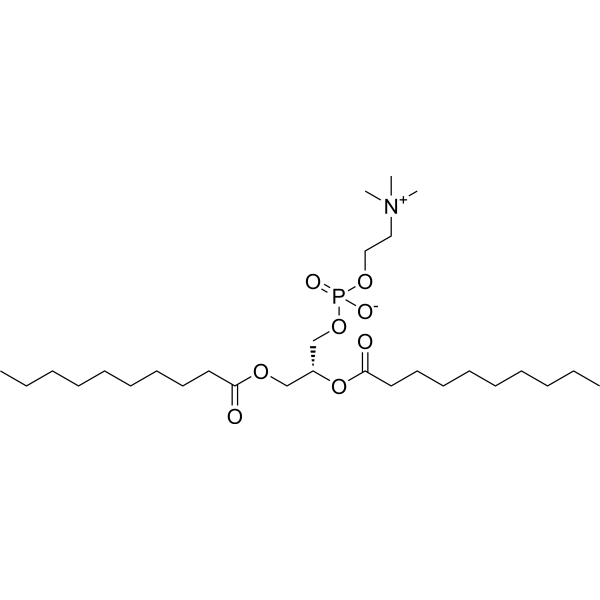
- HY-137862
-
|
1-Oleoyl-sn-Glycero-3-phosphate; 1-Oleoyl-LPA
|
LPL Receptor
|
Neurological Disease
|
|
1-Oleoyl lysophosphatidic acid (1-Oleoyl-sn-glycero-3-phosphate) is an abundant lysophosphatidic acid (LPA) species with high biological activity due to its strong affinity for the LPA receptors. 1-Oleoyl lysophosphatidic acid is commonly used in most laboratories as a reagent for LPA receptor activation . 1-Oleoyl lysophosphatidic acid increases SRE-driven β-galactosidase activity .
|
-
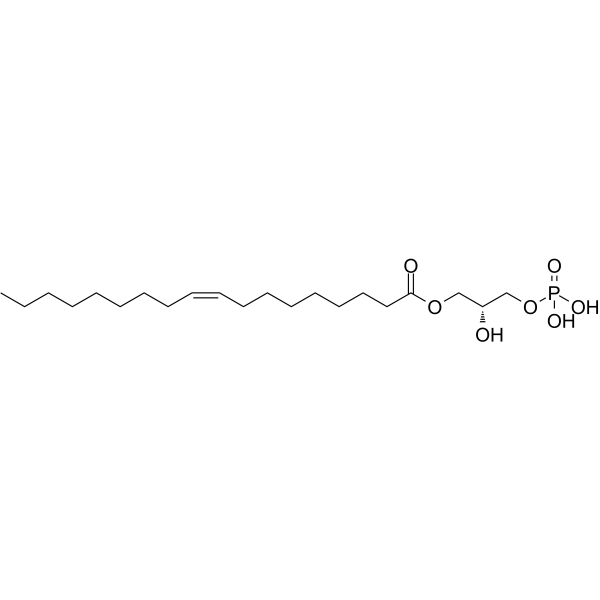
- HY-154830
-
|
1-Nonadecanoyl-2-hydroxy-sn-Glycero-3-phosphocholine; 19:0 Lyso PC
|
Liposome
Interleukin Related
|
Others
|
|
Lysophosphatidylcholine C19:0 (1-Nonadecanoyl-2-hydroxy-sn-glycero-3-phosphocholine) is an acyl chain lipid. Lysophosphatidylcholine C19:0 increases IL-1beta secretion .
|
-
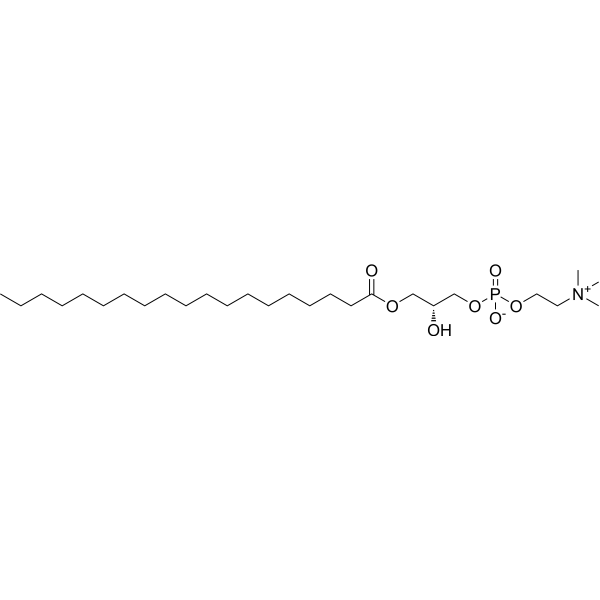
- HY-W800734
-
|
MPPC; PC(14:0/16:0)
|
Liposome
|
Cancer
|
|
1-Myristoyl-2-palmitoyl-sn-glycero-3-phosphocholine (MPPC) is an asymmetrical phosphatidylcholine containing a myristic acid (14:0) at the sn-1 position and a palmitic acid (16:0) at the sn-2 position. It is commonly used in the generation of micelles, liposomes, and other types of artificial membranes.
|
-

- HY-107737S3
-
|
1,2-Dilauroyl-sn-Glycero-3-phosphocholine-d9
|
Isotope-Labeled Compounds
|
Metabolic Disease
|
|
1,2-DLPC-d9 (1,2-Dilauroyl-sn-glycero-3-phosphocholine-d9) is the deuterium labeled 1,2-DLPC. 1,2-DLPC (1,2-Dilauroyl-sn-glycero-3-phosphocholine) is a ligand for LRH-1 agonists. 1,2-DLPC is a phospholipid used in the synthesis of liposomes. 1,2-DLPC enhances fat breakdown and apoptosis in fat cells through a TNFα-dependent pathway, while also inhibiting palmitate-induced insulin resistance through PPARα-mediated inflammation in muscle cells [3].
|
-

- HY-107737S2
-
|
1,2-Dilauroyl-sn-Glycero-3-phosphocholine-d46
|
Isotope-Labeled Compounds
|
Metabolic Disease
|
|
1,2-DLPC-d46 (1,2-Dilauroyl-sn-glycero-3-phosphocholine-d46) is the deuterium labeled 1,2-DLPC. 1,2-DLPC (1,2-Dilauroyl-sn-glycero-3-phosphocholine) is a ligand for LRH-1 agonists. 1,2-DLPC is a phospholipid used in the synthesis of liposomes. 1,2-DLPC enhances fat breakdown and apoptosis in fat cells through a TNFα-dependent pathway, while also inhibiting palmitate-induced insulin resistance through PPARα-mediated inflammation in muscle cells [3].
|
-

- HY-107737S
-
|
1,2-Dilauroyl-sn-Glycero-3-phosphocholine-d55
|
Isotope-Labeled Compounds
|
Metabolic Disease
|
|
1,2-DLPC-d55 (1,2-Dilauroyl-sn-glycero-3-phosphocholine-d55) is the deuterium labeled 1,2-DLPC. 1,2-DLPC (1,2-Dilauroyl-sn-glycero-3-phosphocholine) is a ligand for LRH-1 agonists. 1,2-DLPC is a phospholipid used in the synthesis of liposomes. 1,2-DLPC enhances fat breakdown and apoptosis in fat cells through a TNFα-dependent pathway, while also inhibiting palmitate-induced insulin resistance through PPARα-mediated inflammation in muscle cells [3].
|
-

- HY-165157
-
|
16:0p/20:4-PC; PC(P-16:0/20:4); C16(plasm)-20:4-PC
|
Biochemical Assay Reagents
|
Others
|
|
1-1(Z)-Hexadecenyl-2-arachidonoyl-sn-glycero-3-PC is a biochemical reagent.
|
-

- HY-107737
-
|
1,2-Dilauroyl-sn-Glycero-3-phosphocholine
|
Liposome
Apoptosis
TNF Receptor
PPAR
|
Metabolic Disease
|
|
1,2-DLPC (1,2-Dilauroyl-sn-glycero-3-phosphocholine) is a ligand for LRH-1 agonists. 1,2-DLPC is a phospholipid used in the synthesis of liposomes. 1,2-DLPC enhances fat breakdown and apoptosis in fat cells through a TNFα-dependent pathway, while also inhibiting palmitate-induced insulin resistance through PPARα-mediated inflammation in muscle cells [3].
|
-
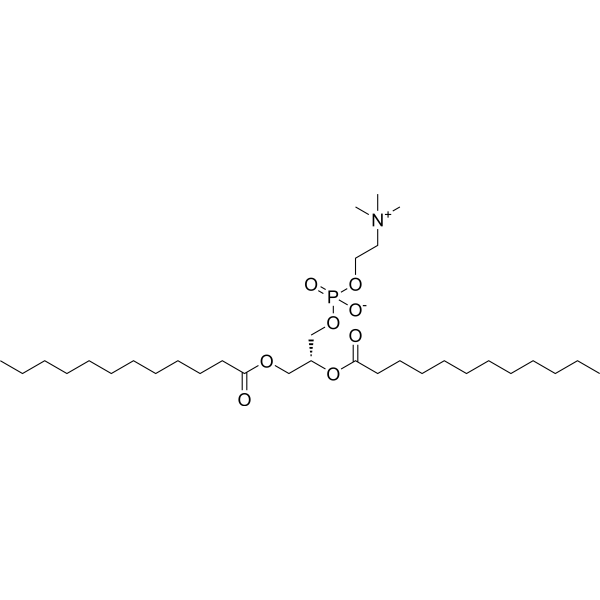
- HY-141614
-
|
Phosphatidylcholine Diarachidoyl; 1,2-DAPC; L-α-Diarachidonoyl lecithin
|
Liposome
|
Metabolic Disease
|
|
1,2-Diarachidoyl-sn-glycero-3-phosphocholine (1,2-DAPC) is a phospholipid containing the saturated long-chain (20:0) arachidic acid inserted at the sn-1 and sn-2 positions. It can be used in the generation of micelles, liposomes, and other types of artificial membranes.
|
-

- HY-167586S
-
|
1-Stearoyl-2-docosahexaenoyl-sn-Glycero-3-phosphocholine-d9
|
Isotope-Labeled Compounds
|
Others
|
|
18:0-22:6 PC-d9 (1-Stearoyl-2-docosahexaenoyl-sn-glycero-3-phosphocholine-d9) is deuterium labeled 18:0-22:6 PC .
|
-

- HY-113925
-
|
1,2-DLPA Sodium; (2R)-2,3-bis(dodecanoyloxy)propyl hydrogen phosphate sodium
|
Liposome
|
Metabolic Disease
|
|
1,2-Dilauroyl-sn-glycero-3-phosphate (1,2-DLPA) sodium is a phospholipid containing the medium-chain (12:0) lauric acid inserted at the sn-1 and sn-2 positions. It can be used in the generation of micelles, liposomes, and other types of artificial membranes.
|
-

- HY-139406
-
|
PtdIns-(4)-P1 (1,2-dioctanoyl) ammonium; 08:0 PI(4)P ammonium
|
Biochemical Assay Reagents
|
Neurological Disease
|
|
1,2-Dioctanoyl-sn-glycero-3-phospho-(1'-myo-inositol-4'-phosphate) (PtdIns-(4)-P1 (1,2-dioctanoyl)) ammonium is a synthetic phosphatidylinositol. 1,2-Dioctanoyl-sn-glycero-3-phospho-(1'-myo-inositol-4'-phosphate) ammonium can be used for the research of signal transduction research .
|
-

- HY-167585S
-
|
1-Palmitoyl-2-linoleoyl(-d5)-sn-Glycero-3-phosphocholine
|
Isotope-Labeled Compounds
|
Others
|
|
16:0-18:2 PC-d5 (1-Palmitoyl-2-linoleoyl(d5)-sn-glycero-3-phosphocholine) is deuterium labeled 16:0-18:2 PC .
|
-

- HY-N9410S
-
|
1-Linoleoyl-2-Hydroxy-sn-Glycero-3-PC-d9
|
Isotope-Labeled Compounds
Endogenous Metabolite
|
Metabolic Disease
|
|
Lysophosphatidylcholine 18:2-d9 is deuterium labeled Lysophosphatidylcholine 18:2. Lysophosphatidylcholine 18:2 (1-Linoleoyl-2-Hydroxy-sn-glycero-3-PC), a lysophospholipid, is a potential biomarker identified from insulin resistance (IR) polycystic ovary
|
-
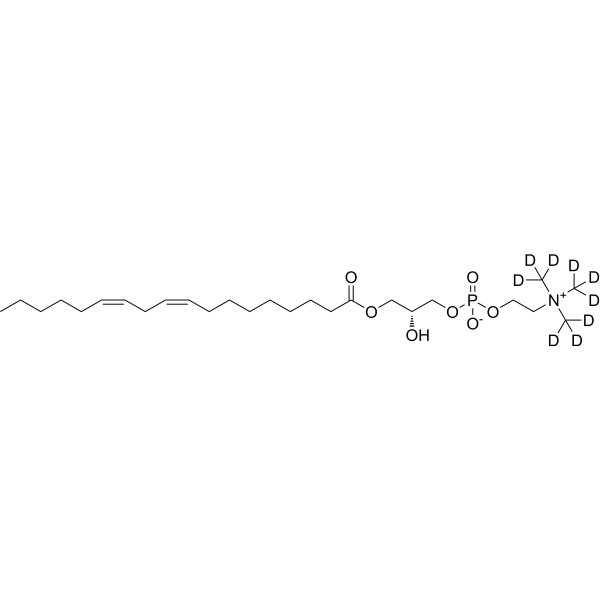
- HY-165097
-
|
15(S)-HpETE-SAPC; 15(S)-Hydroperoxyeicostetraenoic acid-SAPC
|
Reactive Oxygen Species (ROS)
|
Others
|
|
1-Stearoyl-2-15(S)-HpETE-sn-glycero-3-PC (15(S)-HpETE-SAPC) is a compound studied for the cytotoxicity of phosphatidylcholine hydroperoxides. Its cytotoxicity is exerted through the decomposition of hydroperoxides to produce toxic compounds.
|
-

- HY-170458
-
|
1-Stearoyl-2-linoleoyl-sn-Glycero-3-phospho-(1'-rac-Glycerol) sodium
|
Biochemical Assay Reagents
|
Others
|
|
18:0-18:2 PG (1-Stearoyl-2-linoleoyl-sn-glycero-3-phospho-(1'-rac-glycerol)) sodium is a glycerophospholipid contains Stearic acid (HY-B2219), Linolenic acid (HY-N0728) and phospho-rac-(1-glycerol) .
|
-

- HY-175410
-
|
1,2-Dioloeoyl-sn-Glycero-3-phosphoethanolamine-C8; 1,2-DOPE-C8
|
Liposome
|
Others
|
|
DOPE-C8 (1,2-Dioloeoyl-sn-glycero-3-phosphoethanolamine-C8; 1,2-DOPE-C8) is a zwitterionic phospholipid derived from DOPE that has been used to generate lipid nanoparticles (LNPs) for in vivo delivery of mRNA .
|
-

- HY-145506
-
|
18:0 Lyso PG sodium
|
Liposome
|
Metabolic Disease
|
|
1-Stearoyl-2-hydroxy-sn-glycero-3-phospho-(1'-rac-glycerol) (18:0 Lyso PE) sodium is a lysophospholipid containing stearic acid (18:0) at the sn-1 position. It can be used in the generation of micelles, liposomes, and other types of artificial membranes, including lipid-based drug carrier systems.
|
-

- HY-171906
-
|
1-Arachidonoyl-sn-Glycerol 3-phosphate; 1-Arachidonoyl LPA; LPA (20:4)
|
LPL Receptor
|
Inflammation/Immunology
|
|
1-Arachidonoyl-2-hydroxy-sn-glycero-3-PA is a phospholipid containing arachidonic acid at the sn-1 position. It is a precursor to 1-arachidonoyl glycerol (1-Monoarachidin; HY-130567) . 1-Arachidonoyl-2-hydroxy-sn-glycero-3-PA binds to the LPA2/EDG4 receptor with an EC50 value of approximately 10 nM . It prevents TNF-α and IL-6 secretion in wild-type but not Lpa2-/- dendritic cells stimulated by LPS [3]. It also decreases differentiation of HT-29 human colon carcinoma cells to goblet cells in the presence of sodium butyrate .
|
-

- HY-170466
-
|
1-Palmitoyl-2-stearoyl-(12-doxyl)-sn-Glycero-3-phosphocholine
|
Biochemical Assay Reagents
|
Others
|
|
16:0-12 Doxyl PC (1-Palmitoyl-2-stearoyl-(12-doxyl)-sn-glycero-3-phosphocholine) is a fluorescence quencher, and its nitrogen oxide is located downstream of the sn-2 chain. 16:0-12 Doxyl PC has a better fluorescence quenching effect onthe fluorophore is buried within the hydrocarbon interior of the bilayer .
|
-

- HY-120991
-
|
1-Palmitoyl-2-linoleoyl PE; (1-Palmitoyl, 2-linoleoyl)-phosphatidylethanolamine; (1-Palmitoyl, 2-linoleoyl)-phosphoethanolamine
|
Liposome
|
Others
|
|
1-Palmitoyl-2-linoleoyl-sn-glycero-3-PE (1-Palmitoyl-2-linoleoyl PE) is a lipid, which promotes nucleic acid such as sRNA to absorb and enter the target cell .
|
-

- HY-W127369
-
|
PC(O-16:0/22:6(4Z,7Z,10Z,13Z,16Z,19Z))
|
Endogenous Metabolite
|
Metabolic Disease
|
|
1-O-Hexadecyl-2-O-docosahexaenoyl-sn-glycero-3-phosphorylcholine is an endogenous metabolite present in Urine that can be used for the research of Obesity .
|
-

- HY-157714
-
|
1,2-Dioctanoyl-sn-Glycero-3-phospho-1′-myo-inositol-3′,4′-bisphosphate ammonium
|
Biochemical Assay Reagents
|
|
|
08:0 PI(3,4)P2 (1,2-Dioctanoyl-sn-glycero-3-phospho-(1′-myo-inositol-3′,4′-bisphosphate) (ammonium)) is a kind of biochemical reagent.
|
-

- HY-157703
-
|
1,2-Dioleoyl-sn-Glycero-3-phospho-1′-myo-inositol-4′,5′-bisphosphate ammonium
|
Biochemical Assay Reagents
|
|
|
18:1 PI(4,5)P2 (1,2-Dioleoyl-sn-glycero-3-phospho-(1′-myo-inositol-4′,5′-bisphosphate) (ammonium)) is a kind of biochemical reagent.
|
-

- HY-185709
-
|
1-Lyso-2-arachidonoyl-sn-Glycero-3-phosphoethanolamine
|
Leukotriene Receptor
Interleukin Related
TNF Receptor
NO Synthase
|
Inflammation/Immunology
|
|
2-ARA-LysoPtdEtn (1-Lyso-2-arachidonoyl-sn-glycero-3-phosphoethanolamine) is an orally active polyunsaturated acyl lysophosphatidylethanolamine. 2-ARA-LysoPtdEtn diminishes formation of LTC4, LTB4, and 12-HETE. 2-ARA-LysoPtdEtn lowers levels of IL-1β, IL-6, TNF-α, and NO. 2-ARA-LysoPtdEtn augments IL-10 levels and upgrades formation of 15-HETE and LXA4. 2-ARA-LysoPtdEtn can be used for the research of peritonitis .
|
-

- HY-107614R
-
|
1-Oleoyl-sn-Glycero-3-phosphate sodium (Standard); 1-Oleoyl-LPA sodium (Standard)
|
LPL Receptor
Mitosis
Reference Standards
|
Neurological Disease
|
|
1-Oleoyl lysophosphatidic acid sodium (Standard) is the analytical standard of 1-Oleoyl lysophosphatidic acid (sodium) (HY-107614). This product is intended for research and analytical applications. 1-Oleoyl lysophosphatidic acid (1-Oleoyl-sn-glycero-3-phosphate) sodium, a potent bioactive phospholipid, is a LPA receptor activator. 1-Oleoyl lysophosphatidic acid sodium can promote mitosis by inducing DNA synthesis. 1-Oleoyl lysophosphatidic acid sodium is also involved in normal and pathological emotional responses, including anxiety and depression [3].
|
-

- HY-157678
-
|
18:2 PS sodium
|
Liposome
|
Others
|
|
1,2-Dilinoleoyl-sn-glycero-3-phospho-L-serine sodium (18:2 PS sodium) is a lipid compound that can be used for liposome preparation. Liposomes are the main component of vesicles with concentric phospholipid bilayer membranes, which can be used to construct drug delivery systems for anti-cancer and anti-infection fields. Highly polar water-soluble loads can be captured in the internal aqueous space of liposomes, while lipophilic loads can be distributed into the lipid bilayer and become part of the lipid bilayer. Especially for the delivery of antisense oligonucleotides, it can overcome the problems of inefficient cellular uptake and rapid loss in the body.
|
-

- HY-N11605S
-
|
1-(1Z-hexadecenyl)-2-oleoyl(-d9)-sn-Glycero-3-phosphocholine
|
Isotope-Labeled Compounds
|
Others
|
|
C16(plasm)-18:1(d9) PC (1-(1Z-hexadecenyl)-2-oleoyl(d9)-sn-glycero-3-phosphocholine) is deuterium labeled PC 16:0/18:1 .
|
-

- HY-165119
-
|
PE(18:0/20:5); 18:0/20:5-PE
|
Endogenous Metabolite
|
Others
|
|
1-Stearoyl-2-eicosapentaenoyl-sn-glycero-3-PE (PE(18:0/20:5)) is a phospholipid identified in plasma lipid profile analysis, with similar lipid level changes in high-grade cervical intraepithelial neoplasia and cervical cancer compared with normal state and low-grade cervical intraepithelial neoplasia, and can be used to monitor cervical cancer progression.
|
-

- HY-107737R
-
|
1,2-Dilauroyl-sn-Glycero-3-phosphocholine (Standard)
|
Reference Standards
Liposome
Apoptosis
TNF Receptor
PPAR
|
Metabolic Disease
|
|
1,2-DLPC (Standard) is the analytical standard of 1,2-DLPC (HY-107737). This product is intended for research and analytical applications. 1,2-DLPC (1,2-Dilauroyl-sn-glycero-3-phosphocholine) is a ligand for LRH-1 agonists. 1,2-DLPC is a phospholipid used in the synthesis of liposomes. 1,2-DLPC enhances fat breaKdown and apoptosis in fat cells through a TNFα-dependent pathway, while also inhibiting palmitate-induced insulin resistance through PPARα-mediated inflammation in muscle cells [3].
|
-

- HY-N11604
-
|
C16(Plasm)-16:1-PC; PC(P-16:0/16:1); PlsC 16:0/16:1
|
Biochemical Assay Reagents
|
Metabolic Disease
|
|
1-(1(Z)-Hexadecenyl)-2-palmitoleoyl-sn-glycero-3-phosphocholine [PC (P-16:0/16:1 (9Z))] is a phosphatidylcholine that can be utilized for liposome preparation and serves as a marker in metabolomics research .
|
-

- HY-157624
-
|
18:0-22:6 PE
|
Liposome
|
Others
|
|
1-Stearoyl-2-docosahexaenoyl-sn-glycero-3-phosphoethanolamine (18:0-22:6 PE) is a lipid compound that can be used for liposome preparation. Liposomes are the main component of vesicles with concentric phospholipid bilayer membranes, which can be used to construct drug delivery systems for anti-cancer and anti-infection fields. Highly polar water-soluble loads can be captured in the internal aqueous space of liposomes, while lipophilic loads can be distributed into the lipid bilayer and become part of the lipid bilayer. Especially for the delivery of antisense oligonucleotides, it can overcome the problems of inefficient cellular uptake and rapid loss in the body.
|
-

- HY-N9410
-
|
1-Linoleoyl-2-Hydroxy-sn-Glycero-3-PC; LPC(18:2/0:0); LysoPC(18:2)
|
Endogenous Metabolite
|
Metabolic Disease
|
|
Lysophosphatidylcholine 18:2 (1-Linoleoyl-2-Hydroxy-sn-glycero-3-PC), a lysophospholipid, is a potential biomarker identified from insulin resistance (IR) polycystic ovary syndrome (PCOS). Low plasma Lysophosphatidylcholine 18:2 also has been shown to predict impaired glucose tolerance, insulin resistance, type 2 diabetes, coronary artery disease, and memory impairment .
|
-
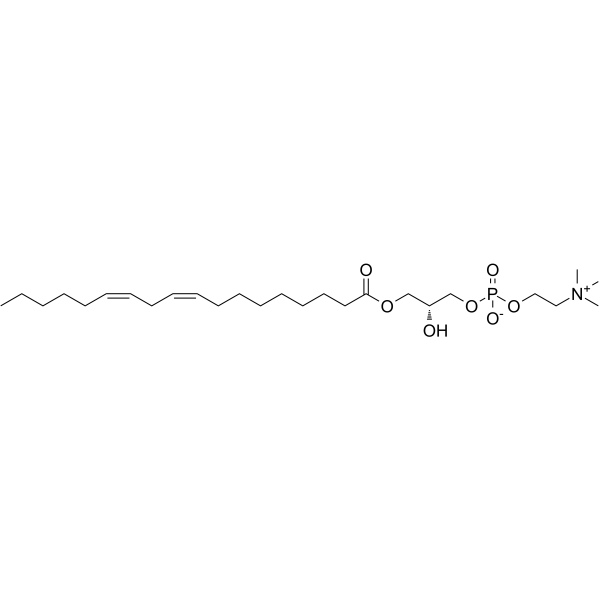
- HY-W440982A
-
|
(Rac)-PC(18:0/18:1); (Rac)-2-Oleoyl-1-stearoyl-sn-Glycero-3-phosphocholine
|
Liposome
|
Others
|
|
(Rac)-SOPC ((Rac)-PC(18:0/18:1)) ((Rac)-2-Oleoyl-1-stearoyl-sn-glycero-3-phosphocholine) is the racemate of SOPC (HY-W440982). SOPC is an asymmetrical phospholipid with saturated fatty acid (stearic acid/18:0) at sn-1 position and unsaturated fatty acid (oleic acid/18:1) at sn-2 position. SOPC can stabilize the outer segment membrane of frog rods .
|
-

- HY-133233
-
|
1-Palmitylthio-2-palmitoylamido-1,2-dideoxy-sn-Glycero-3-phosphorylcholine
|
Endogenous Metabolite
Phospholipase
|
Metabolic Disease
|
|
Thioetheramide-PC (1-Palmitylthio-2-palmitoylamido-1,2-dideoxy-sn-glycero-3-phosphorylcholine) is a structurally modified phospholipid that acts as a competitive, reversible inhibitor of secretory phospholipase A2 (sPLA2). Thioetheramide-PC has an IC50 value of 2 μM at a substrate concentration of 0.5 mM. In addition to binding to the catalytic site of sPLA2, Thioetheramide-PC also binds to the activation site of the enzyme. Thioetheramide-PC binds more tightly to the activation site than to the catalytic site. As a result of this dual interaction, at low concentrations, Thioetheramide-PC may activate phospholipase activity rather than inhibit it.
|
-

- HY-164231A
-
|
1-Stearoyl-2-arachidonoyl-sn-Glycero-3-phospho-L-serine sodium; SAPS (18:0/20:4(5Z,8Z,11Z,14Z)) sodium
|
Biochemical Assay Reagents
|
Others
|
|
18:0,20:4 PS (1-Stearoyl-2-arachidonoyl-sn-glycero-3-phospho-L-serine) sodium can be incorporated into RNA particles that act as RNA delivery vehicles for in vivo application, facilitating delivery of RNA to target tissues .
|
-

- HY-164231
-
|
1-Stearoyl-2-arachidonoyl-sn-Glycero-3-phospho-L-serine; SAPS (18:0/20:4(5Z,8Z,11Z,14Z))
|
Biochemical Assay Reagents
|
Others
|
|
18:0,20:4 PS (1-Stearoyl-2-arachidonoyl-sn-glycero-3-phospho-L-serine) is a phosphatidylserine component for RNA particle formulations. 18:0,20:4 PS can be used as RNA delivery vehicles .
|
-

- HY-141636
-
|
1-Palmitoyl-2-arachidonoyl-sn-Glycero-3-phosphocholine; PAPC; PC(16:0/20:4)
|
Endogenous Metabolite
Biochemical Assay Reagents
|
Cardiovascular Disease
|
|
1-Palmitoyl-2-arachidonoyl-sn-glycero-3-PC (PAPC) is a phospholipid containing palmitic acid (16:0) and arachidonic acid (20:4) at the sn-1 and sn-2 positions, respectively, that is found in biological membranes. PAPC is oxidized in vivo, and its oxidation products are involved in chronic inflammation and vascular disease. PAPC has been used to study signaling of oxidized phospholipids. Levels of PAPC are decreased in isolated human multiple myeloma cells.
|
-

- HY-157698
-
|
C18(plasm)-20:4-PC; 18:0p/20:4-PC; PC(P-18:0/20:4)
|
Endogenous Metabolite
|
Metabolic Disease
|
|
1-1(Z)-Octadecenyl-2-arachidonoyl-sn-glycero-3-PC is a plasmalogen that contains 1(Z)-octadecenoic acid and arachidonic acid (HY-109590) at the sn-1 and sn-2 positions, respectively. It scavenges singlet oxygen in a cell-free assay.
|
-

- HY-157652
-
|
1-Stearoyl-2-arachidonoyl-sn-Glycero-3-phospho-1′-myo-inositol-3′,4′,5′-trisphosphate ammonium
|
Biochemical Assay Reagents
|
|
|
18:0-20:4 PI(3,4,5)P3 (1-Stearoyl-2-arachidonoyl-sn-glycero-3-phospho-(1′-myo-inositol-3′,4′,5′-trisphosphate) (ammonium)) is a kind of biochemical reagent.
|
-

- HY-165116
-
|
18:0p/22:6-PE; C18(Plasm)-22:6-PE; PE(P-18:0/22:6)
|
Endogenous Metabolite
|
Others
|
|
1-1(Z)-Octadecenyl-2-docosahexaenoyl-sn-glycero-3-PE (18:0p/22:6-PE) is a lipid identified in rat brain tissue by mass spectrometry imaging with specific structural and distribution characteristics, and isomers of different fatty acid chains can be identified by improved methods.
|
-

- HY-157695
-
|
C18(Plasm)-22:6-PC; PC(P-18:0/22:6); 18:0p/22:6-PC
|
Endogenous Metabolite
|
Others
|
|
1-(1Z-Octadecenyl)-2-docosahexaenoyl-sn-glycero-3-phosphocholine (C18(Plasm)-22:6-PC) is a phospholipid identified in fish viscera by lipidomics strategy. It has different content and distribution in different fish species and can be used as an indicator of fish species differentiation.
|
-

- HY-132190
-
|
1-O-Hexa-decyl-2-acetyl-sn-Glycero-3-phospho(N,N,N-trimethyl)-hexanolamine
|
Platelet-activating Factor Receptor (PAFR)
|
Cardiovascular Disease
|
|
Hexanolamino PAF C-16 (1-O-hexadecyl-2-acetyl-sn-glycero-3-phospho (N,N,N trimethyl) hexanolamine) is a Platelet-activating Factor Receptor (PAFR) Modulator with partial agonist activity. Hexanolamino PAF C-16 induces platelet aggregation and macrophage production but fails to increase [Ca2+]i in platelets, suggesting that PAF receptors may interact with PAF receptors through Ca 2+-dependent and -independent pathways. Related to platelet aggregation .
|
-
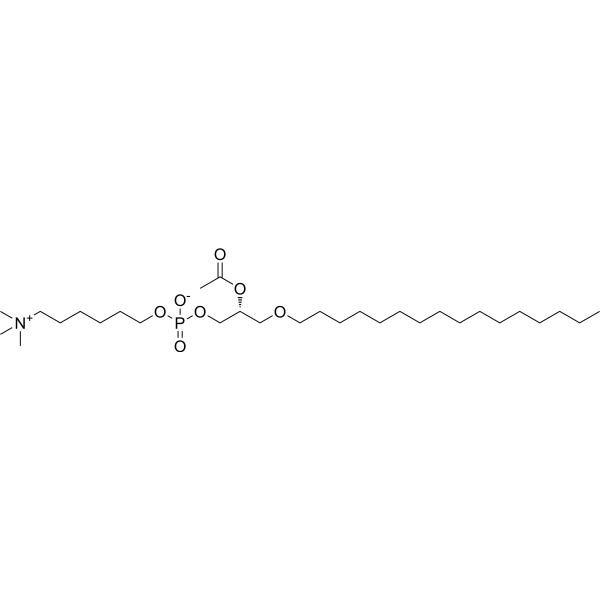
- HY-112005G
-
|
Dioleoylphosphatidylethanolamine; 1,2-Dioleoyl-sn-Glycero-3-phosphoethanolamine
|
Ferroptosis
Glutathione Peroxidase
ACSL Family
Amino acid Transporter
|
Neurological Disease
Inflammation/Immunology
|
|
DOPE GMP is DOPE (HY-112005) produced by using GMP guidelines. GMP small molecules works appropriately as an auxiliary reagent for cell therapy manufacture. DOPE (Dioleoylphosphatidylethanolamine; 1,2-Dioleoyl-sn-glycero-3-phosphoethanolamine) is an orally active inhibitor of ferroptosis with anti-inflammatory and intestinal barrier maintenance activities. DOPE regulates the expression of ACSL4, SLC7A11 and GPX4 to restore the redox system balance, thereby reducing the levels of lipid peroxides, iron ions and intestinal inflammatory factors (IL-1β and IL-6). DOPE promotes the migration and proliferation of intestinal epithelial cells and increases the level of tight junction proteins; it also destabilizes endosomal membranes, mediates the conjugation of RVG peptides with mesenchymal stem cell-derived exosomes to enhance brain targeting. DOPE can be applied to research related to neonatal necrotizing enterocolitis and Alzheimer's disease [3] .
|
-

- HY-D1556
-
|
1,2-dioleoyl-sn-Glycero-3-phosphoethanolamine-N-(carboxyfluorescein) ammonium
|
Fluorescent Dye
|
Cancer
|
|
18:1 PE CF (1,2-dioleoyl-sn-glycero-3-phosphoethanolamine-N-(carboxyfluorescein) (ammonium)) is a pH-sensitive fluorescent indicator. 18:1 PE CF exhibits changes in fluorescence intensity in response to pH variations and reflects the electrostatic states of cationic liposomes and lipoplexes. 18:1 PE CF supports real-time visualization of pH distribution and membrane deformation in giant unilamellar vesicles and is suitable for steady-state fluorescence testing in large unilamellar vesicle membranes. 18:1 PE CF is capable of monitoring the surface electrical potential of cationic liposomes and lipoplexes and can effectively label lipid bilayers and nanomicelles. 18:1 PE CF can be used for the research of the investigation of lung cancer (Ex = 495 nm; Em = 520 nm) [3] .
|
-
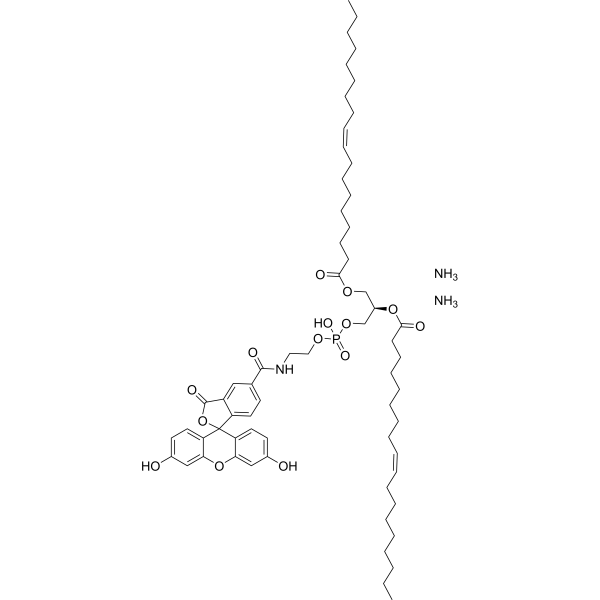
- HY-157697
-
|
18:0p/20:4-PE; C18(Plasm)-20:4-PE; PE(P-18:0/20:4)
|
Endogenous Metabolite
|
Metabolic Disease
|
|
1-1(Z)-Octadecenyl-2-arachidonoyl-sn-glycero-3-PE (18:0p/20:4-PE; C18(Plasm)-20:4-PE) is a plasmalogen that contains 1(Z)-octadecenoic acid and arachidonic acid (HY-109590) at the sn-1 and sn-2 positions, respectively.
|
-

- HY-141636S
-
|
1-Palmitoyl-2-arachidonoyl-sn-Glycero-3-phosphocholine-d9-1; PAPC-d9-1; PC(16:0/20:4)-d9-1
|
Isotope-Labeled Compounds
Endogenous Metabolite
|
Cardiovascular Disease
|
|
1-PalMitoyl-2-arachidoyllecithin-d9-1 (1-Palmitoyl-2-arachidonoyl-sn-glycero-3-phosphocholine-d9-1) is deuterium labeled 1-PalMitoyl-2-arachidoyllecithin. 1-Palmitoyl-2-arachidonoyl-sn-glycero-3-PC (PAPC) is a phospholipid containing palmitic acid (16:0) and arachidonic acid (20:4) at the sn-1 and sn-2 positions, respectively, that is found in biological membranes. PAPC is oxidized in vivo, and its oxidation products are involved in chronic inflammation and vascular disease. PAPC has been used to study signaling of oxidized phospholipids. Levels of PAPC are decreased in isolated human multiple myeloma cells .
|
-

- HY-165663S
-
|
1-Myistoyl-d7-2-Lioleoyl-s-glyceo-3-Phosphatidylcholie; 1-Myistoyl-d7-2-Lioleoyl-s-glyceo-3-Phosphocholie; PC(14:0-d7/18:2); 14:0-d7/18:2-PC
|
Isotope-Labeled Compounds
|
Others
|
|
1-Myristoyl-d7-2-Linoleoyl-sn-glycero-3-PC (1-Myistoyl-d7-2-Lioleoyl-s-glyceo-3-Phosphatidylcholie, 1-Myistoyl-d7-2-Lioleoyl-s-glyceo-3-Phosphocholie, PC(14:0-d7/18:2), 14:0-d7/18:2-PC) is deuterium labeled 1-Myristoyl-2-Linoleoyl-sn-glycero-3-PC .
|
-

- HY-A0245R
-
|
|
Reference Standards
VD/VDR
|
Metabolic Disease
|
|
1-Palmitoyl-2-oleoyl-sn-glycero-3-PC (Standard) is the analytical standard of 1-Palmitoyl-2-oleoyl-sn-glycero-3-PC. This product is intended for research and analytical applications. 1-Palmitoyl-2-oleoyl-sn-glycero-3-PC (POPC), a phospholipid, is a major component of biological membranes. 1-Palmitoyl-2-oleoyl-sn-glycero-3-PC is used for the preparation of liposomes and studying the properties of lipid bilayers .
|
-

- HY-146892S
-
|
129Y83-d31
|
Isotope-Labeled Compounds
|
Others
|
|
1-Palmitoyl-2-palmitoyl-sn-glycero-3-phosphocholine-d31 is deuterium labeled 1-Palmitoyl-2-palmitoyl-sn-glycero-3-phosphocholine.
|
-
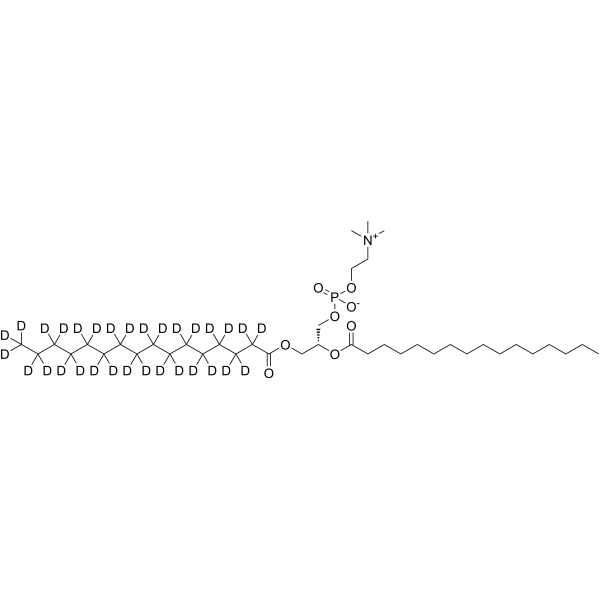
- HY-22274S
-
|
|
Isotope-Labeled Compounds
|
Others
|
|
1,2-Dimyristoyl-sn-glycero-3-phospho-(1'-rac-glycerol)-d54 (sodium) is deuterium labeled 1,2-Dimyristoyl-sn-glycero-3-phospho-(1'-rac-glycerol) (sodium).
|
-
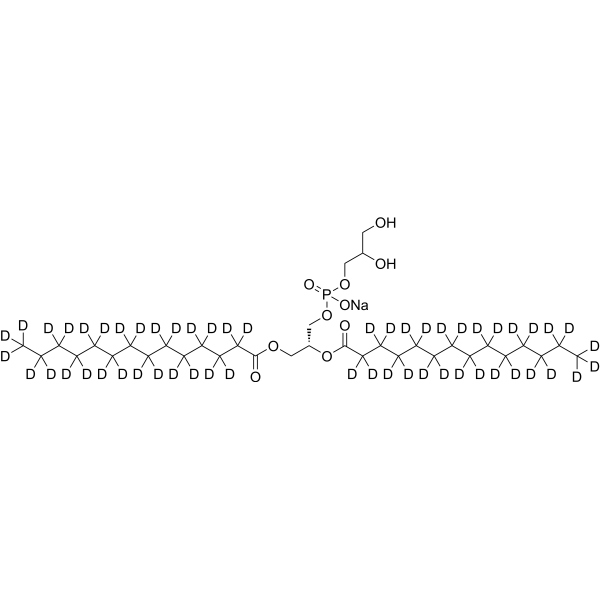
- HY-22274AS
-
|
|
Isotope-Labeled Compounds
|
Others
|
|
1,2-Dimyristoyl-sn-glycero-3-phospho-(1'-rac-glycerol)-d54 (ammonium) is deuterium labeled 1,2-Dimyristoyl-sn-glycero-3-phospho-(1'-rac-glycerol) (ammonium) .
|
-

- HY-W590536
-
|
1-Palmitoyl-2-Lauroyl-sn-Glycero-3-Phosphatidylcholine; 1-Palmitoyl-2-Lauroyl-sn-Glycero-3-Phosphocholine
|
Liposome
|
Cancer
|
|
1,2-PLPC is a phospholipid containing palmitoyl (16:0) and lauryl (12:0) acyl substituents at the sn-1 and sn-2 positions, respectively. It can be used in the generation of micelles, liposomes, and other types of artificial membranes.
|
-

- HY-112005
-
|
Dioleoylphosphatidylethanolamine; 1,2-Dioleoyl-sn-Glycero-3-phosphoethanolamine
|
Liposome
Endogenous Metabolite
|
Inflammation/Immunology
|
|
DOPE (Dioleoylphosphatidylethanolamine) is a neutral helper lipid for cationic liposome and combines with cationic phospholipids to improve transfection efficiency of naked siRNA .
|
-
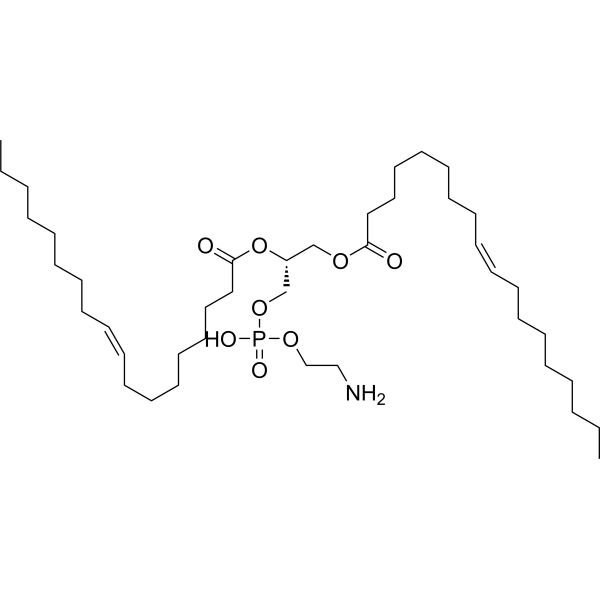
- HY-W440981
-
|
1-Stearoyl-2-palmitoyl-sn-Glycero-3-phosphocholine
|
Liposome
|
Cancer
|
|
SPPC is a phospholipid with different length of fatty acid. The sn-1 position contains a stearic acid (18:0) while the sn-2 position is occupied by a palmitic acid (16:0).
|
-

- HY-W725552
-
|
|
Biochemical Assay Reagents
|
Others
|
|
1-Palmitoyl-2-[12'-(palmitoyloxy)octadecanoyl]-sn-glycero-3-phosphoholine is a palmitic acid esters of hydroxystearic acid (PAHSA).
|
-

- HY-N15913
-
|
|
Drug Isomer
|
Others
|
|
ent-DOPC is a glycerol chirality isomer of 1,2-Dioleoyl-sn-glycero-3-phosphocholine (DOPC) (HY-113424A) .
|
-

- HY-W440985
-
|
1,2-dilauroyl-sn-Glycero-3-phospho-L-serine
|
Liposome
|
Cancer
|
|
DLPS is an anionic phospholipid with lauric acid tails (12:0) and contains a carboxylic acid (COOH) and amine (NH2) in their head group. It has been used in the preparation of lipid-mixing vesicles, liposome, or artificial membrane. Due to the medium size of fatty acid chain, DLPS is used to form thinner membranes/walls.
|
-

- HY-N15898
-
|
|
Others
|
Others
|
|
18:1 Ptd Ethylene glycol (1,2-dioleoyl-sn-glycero-3-phosphoethyleneglycol) sodium is a phosphatidylalkanol and can be used in lipidosome-related research.
|
-

- HY-W341624
-
|
1,2-Dipalmitoyl-sn-Glycero-3-phosphothioethanol sodium salt
|
Liposome
|
Metabolic Disease
|
|
16:0 Ptd thioethanol sodium is a lipid that can be used to prepare lipid nanoparticles (LNPs) for drug delivery.
|
-

- HY-W783252
-
|
1-Palmitoyl-2-arachidonoyl-sn-Glycero-3-phosphate sodium
|
Others
|
Metabolic Disease
|
|
16:0-20:4 PA (sodium) is a phosphatidic acid.
|
-

- HY-109541
-
|
DMPC; 1,2-Dimyristoyl-sn-Glycero-3-phosphocholine; Dimyristoyl phosphatidylcholine
|
Liposome
|
Cancer
|
|
Colfosceril miristate (DMPC) is a synthetic phospholipid. Colfosceril miristate has antiproliferative effects on various tumors. Colfosceril miristate is used to study lipid monolayers, bilayers and drug delivery [3].
|
-
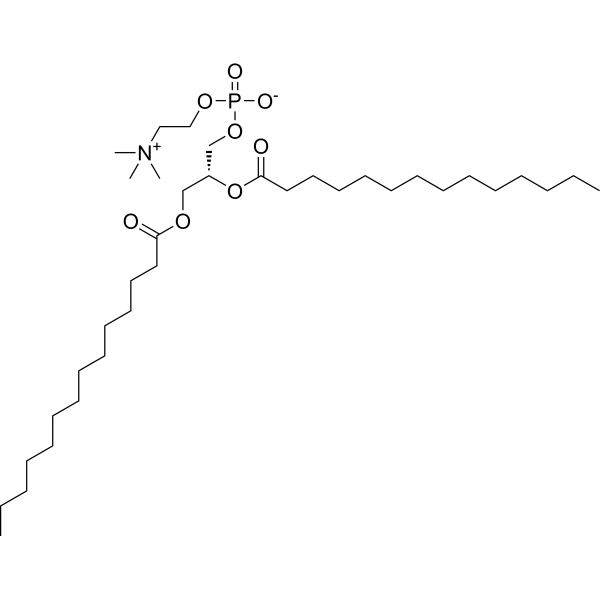
- HY-N16283
-
|
2,3-Distearoyl-sn-Glycero-1-phosphoethanolamine
|
Biochemical Assay Reagents
|
Others
|
|
Ent-DSPE is an enantiomer of 1,2-Distearoyl-sn-glycero-3-phosphorylethanolamine (DSPE) (HY-112530). Ent-DSPE can be used to prepare lipid nanoparticles for drug delivery .
|
-

- HY-151998S
-
|
|
Isotope-Labeled Compounds
|
Metabolic Disease
|
|
DMPG-d54 is the deuterium labeled DMPG (1,2-Dimyristoyl-sn-glycero-3-phosphatidylglycerol). DMPG is a lipid that can be used to prepare lipid nanoparticles (LNPs) for drug delivery.
|
-

- HY-143203
-
|
1-Stearoyl-2-linoleoyl-sn-Glycero-3-phosphoethanolamine
|
Liposome
|
Cancer
|
|
18:0-18:2 PE is an important component of phosphatidylethanolamine (PE), involved in phospholipid metabolism and associated with diseases such as ovarian cancer. 18:0-18:2 PE in the hot processing process, its unsaturated fatty acids will degrade to form a variety of odor active compounds. 18:0-18:2 PE is mainly used in the field of food science to improve the flavor of aquatic products, as well as medical research on diseases related to phospholipid metabolism .
|
-
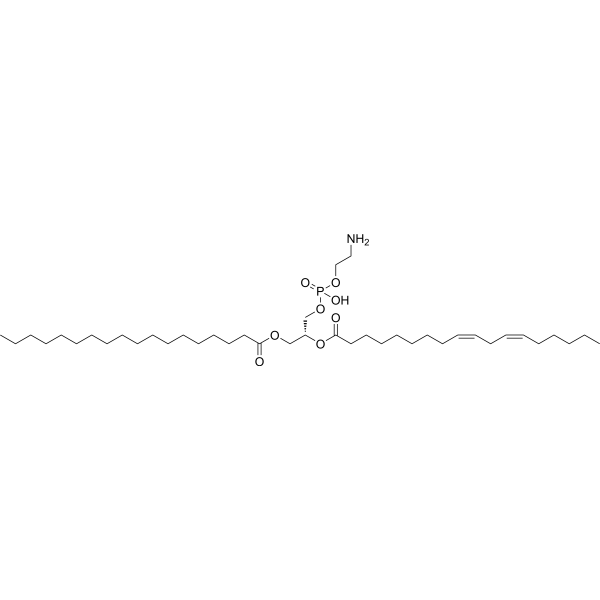
- HY-W590535
-
|
1,2-DNPC;
1,2-Dinonadecanoyl-sn-Glycero-3-phosphocholine
|
Liposome
|
Cancer
|
|
19:0 PC is a saturated phospholipid that has been used as a standard for the quantification of phosphatidylcholines in human synovial fluid. It has also been used to study dynamics of lipid bilayer phase transition.
|
-

- HY-W800798
-
|
1,2-dipalmitoyl-sn-Glycero-3-phosphoethanolamine-N-(cyanur)
|
Liposome
|
Cancer
|
|
16:0 Cyanur PE is a cyanur-functionalized lipid attached to a phosphoethanolamine linked to two palmitic acid groups.
|
-

- HY-W800792
-
|
1,2-dioleoyl-sn-Glycero-3-phosphoethanolamine-N-(succinyl)
|
Liposome
|
Cancer
|
|
18:1 Succinyl PE is a carboxylic acid-functionalized lipid with a two carbon linker to a phosphoethanolamine bound to two oleic acid tails.
|
-

- HY-W800793
-
|
1,2-dipalmitoyl-sn-Glycero-3-phosphoethanolamine-N-(succinyl)
|
Liposome
|
Cancer
|
|
16:0 Succinyl PE is a carboxylic acid-functionalized lipid with a two carbon linker to a phosphoethanolamine bound to two palmitic acid tails.
|
-

- HY-W800797
-
|
1,2-dipalmitoyl-sn-Glycero-3-phosphoethanolamine-N-(biotinyl)
|
Liposome
|
Cancer
|
|
16:0 Biotinyl PE is a biotin-functionalized lipid attached to a phosphoethanolamine linked to two palmitic acid groups.
|
-

- HY-W800796
-
|
1,2-dioleoyl-sn-Glycero-3-phosphoethanolamine-N-(biotinyl)
|
Liposome
|
Cancer
|
|
18:1 Biotinyl PE is a biotin-functionalized lipid attached to a phosphoethanolamine linked to two oleic acid groups.
|
-

- HY-W800733
-
|
1,2-Dilauroyl-sn-Glycero-3-phosphorylGlycerol; PG(12:0/12:0)
|
Liposome
|
Cancer
|
|
DLPG is a phospholipid containing lauric acid (12 chain fatty acid) inserted at the sn-1 and sn-2 positions. Its phosphate group is attached to glycerol. It is used in the generation of micelles, liposomes, and other artificial membranes.
|
-

- HY-N15926
-
|
|
Biochemical Assay Reagents
|
Others
|
|
ent-POPC is an enantiomer of 1-Palmitoyl-2-oleoyl-sn-glycero-3-PC (POPC) (HY-130462). ent-POPC can be used to prepare lipid nanoparticles for drug delivery .
|
-

- HY-157423
-
|
1,2-Dipalmitoleoyl-sn-Glycero-3-phosphocholine
|
Liposome
|
Others
|
|
16:1 (DELTA 9-Cis) PC is a phospholipid metabolite
.
|
-
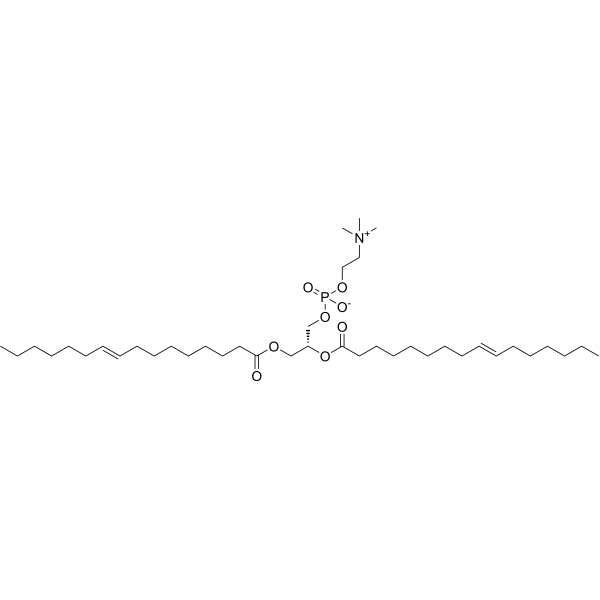
- HY-107614G
-
|
1-Oleoyl-sn-Glycero-3-phosphate sodium; 1-Oleoyl-LPA sodium
|
LPL Receptor
ROCK
TGF-beta/Smad
TGF-β Receptor
|
Neurological Disease
Cancer
|
|
1-Oleoyl lysophosphatidic acid sodium (GMP) is the GMP-grade form of 1-Oleoyl lysophosphatidic acid sodium (HY-107614). GMP-grade small molecules serve as auxiliary reagents in cell therapy. 1-Oleoyl lysophosphatidic acid sodium is a bioactive lipid signaling molecule. 1-Oleoyl lysophosphatidic acid sodium inhibits lysoPLD-catalyzed hydrolysis of lysophosphatidylcholine and FS-3. 1-Oleoyl lysophosphatidic acid sodium activates LPA1 and LPA2, thereby triggering calcium mobilization, NFATc1 translocation, Rho/ROCK activation, Smad2/3 phosphorylation and c-Fos expression. 1-Oleoyl lysophosphatidic acid sodium induces anxiety-like, depression-like and hypoactivity phenotypes, regulates osteoclast cytoskeleton and viability, reduces osteoclast bone resorptive activity, and drives mesenchymal stem cell differentiation into myofibroblast-like cells. 1-Oleoyl lysophosphatidic acid sodium stimulates the secretion of transforming growth factor-β1 and stromal cell-derived factor-1. 1-Oleoyl lysophosphatidic acid sodium is applicable to research related to anxiety, depression and ovarian cancer [3] .
|
-

- HY-W019833
-
|
PC(14:0/18:0); 1-Myristoyl-2-stearoyl-sn-Glycero-3-phosphocholine
|
Endogenous Metabolite
|
Metabolic Disease
|
|
MSPC is an asymmetrical phosphatidylcholine containing a myristic acid (14:0) at the sn-1 position and a stearic acid (18:0) at the sn-2 position. It can self assemble in water to form lipid bilayers. Reagent grade, for research purpose.
|
-
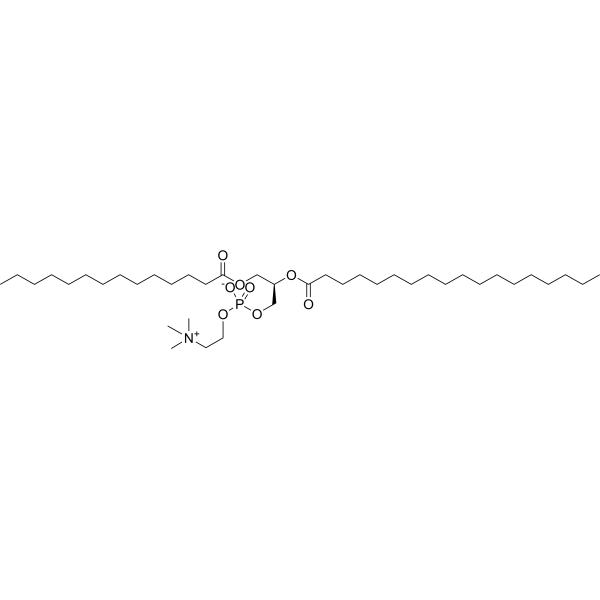
- HY-W440957
-
|
PC(16:0/14:0); 1-palmitoyl-2-myristoyl-sn-Glycero-3-phosphocholine
|
Liposome
|
Cancer
|
|
PMPC is a phosphatidylcholine with asymmetrical fatty acid. Palmitic acid occupies sn-1 position while myristic acid is placed at the sn-2 position.
|
-

- HY-173383
-
|
1,2-dioleoyl-sn-Glycero-3-phosphoethanolamine-N- tetraazacyclododecane-N-tetraacetic acid, sodium salt
|
Biochemical Assay Reagents
|
Inflammation/Immunology
Cancer
|
|
DOPE-DOTA sodium is a chelated lipid that serves as a key contrast agent in magnetic resonance imaging (MRI). DOPE-DOTA sodium can be used for cancer, blood-brain barrier disruption, abnormalities such as aneurysms or plaque buildup, inflammation in arthritis, and liver function and lesions study
|
-

- HY-137862A
-
|
(Rac)-1-Oleoyl-sn-Glycero-3-phosphate; (Rac)-1-Oleoyl-LPA
|
LPL Receptor
Drug Isomer
|
Neurological Disease
|
|
(Rac)-1-Oleoyl lysophosphatidic acid is an isomer of 1-Oleoyl lysophosphatidic acid sodium (HY-107614). 1-Oleoyl lysophosphatidic acid sodium is a bioactive lipid that can activate the LPA receptors .
|
-

- HY-W440982
-
|
PC(18:0/18:1); 2-Oleoyl-1-stearoyl-sn-Glycero-3-phosphocholine
|
Liposome
|
Others
|
|
SOPC (PC (18:0/18:1)) is a phosphatidylcholine lipid, which is an unsaturated phospholipid containing a cis double bond. When SOPC binds to Imatinib (HY-15463), Imatinib easily penetrates into its unsaturated liposome bilayer structure, and SOPC forms ordered, larger parallel stripe domains .
|
-
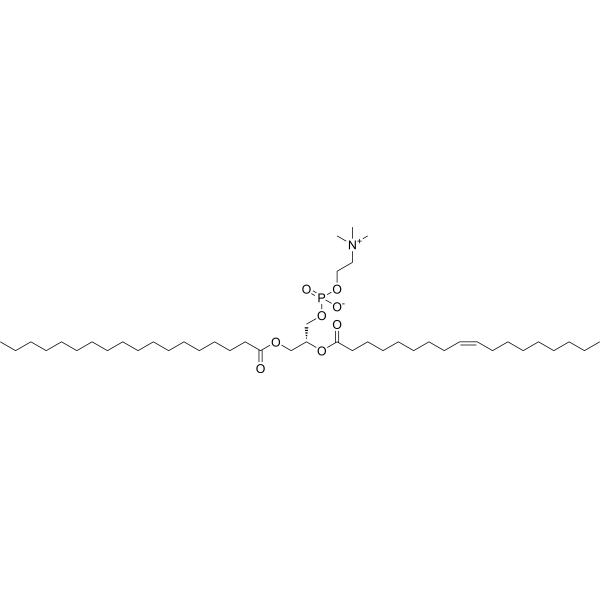
- HY-167588S
-
|
|
Isotope-Labeled Compounds
|
Others
|
|
1-Heptadecanoyl-2-eicosatrienoyl-sn-glycero(d5)-3-phosphoethanolamine is deuterium labeled 1-Heptadecanoyl-2-eicosatrienoyl-sn-glycero-3-phosphoethanolamine .
|
-

- HY-W040293
-
|
PE(6:0/6:0); 1,2-Dihexanoyl-sn-Glycero-3-phosphoethanolamine
|
Apoptosis
|
Cancer
|
|
06:0 PE (PE(6:0/6:0)) is a water-soluble phospholipid characterized by its short acyl chains, exhibiting notable antitumor activity and the ability to inhibit tumor progression in vivo, alongside antiproliferative and proapoptotic effects, while serving as a precursor for phosphatidylcholine and phosphatidylethanolamine.
|
-

- HY-157279
-
|
1-Palmitoyl-2-linoleoyl-sn-Glycero-3-phospho-L-serine sodium
|
Others
|
Metabolic Disease
|
|
16:0-18:2 PS (sodium) is a phosphatidylserine.
|
-

- HY-W127550
-
|
PG(16:0/16:0)
|
Biochemical Assay Reagents
|
Others
|
|
rac-DPPG sodium is a biochemical reagent that can be used as a biological material or organic compound for life science related research.
|
-
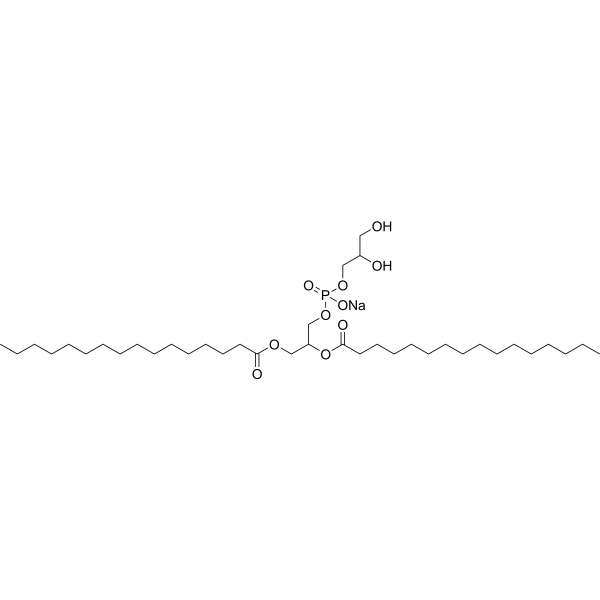
- HY-W800794
-
|
DPPE-NG; 1,2-dipalmitoyl-sn-Glycero-3-phosphoethanolamine-N-(glutaryl)
|
Liposome
|
Cancer
|
|
16:0 Glutaryl PE is is a carboxylic acid-functionalized lipid with a three carbon linker to a phosphoethanolamine bound to two palmitic acid tails.
|
-

- HY-112005GL
-
|
Dioleoylphosphatidylethanolamine (GMP Like); 1,2-Dioleoyl-sn-Glycero-3-phosphoethanolamine (GMP Like)
|
Liposome
Endogenous Metabolite
|
Inflammation/Immunology
|
|
DOPE (GMP Like) is the GMP Like class DOPE (HY-112005), and can be used as pharmaceutical excipients. GMP small molecules works appropriately as an auxiliary reagent for cell therapy manufacture. DOPE is a neutral helper lipid for cationic liposome and combines with cationic phospholipids to improve transfection efficiency of naked siRNA .
|
-

- HY-N16163
-
|
1-Palmitoyl-2-arachidonoyl-sn-Glycero-3-phospho-L-serine sodium
|
Others
|
Metabolic Disease
|
|
16:0-20:4 PS (sodium) is a phosphatidylserine.
|
-

- HY-113123
-
|
14:0 Lyso PC; 1-myristoyl-sn-Glycero-3-phosphatidylcholine
|
Endogenous Metabolite
|
Neurological Disease
Metabolic Disease
|
|
LysoPC(14:0/0:0) is a lysophospholipid (LyP). It is a monoglycerophospholipid in which a phosphorylcholine moiety occupies a glycerol substitution site. LysoPC(14:0/0:0) has potent antispasmodic effect .
|
-
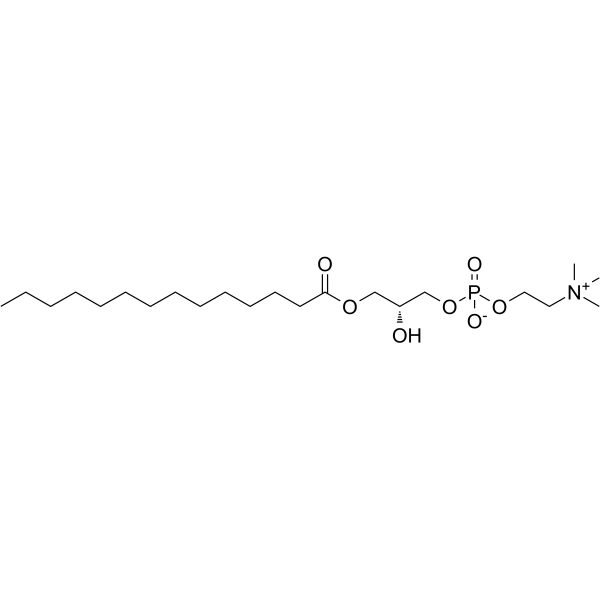
- HY-157619
-
|
1-Palmitoyl-2-oleoyl-sn-Glycero-3-phosphoinositol ammonium
|
Others
|
Metabolic Disease
|
|
16:0-18:1 PI (ammonium) is a phosphoinositide. Phosphoinositides (PI) are similar to other phospholipids, but the head group is the cyclic myo-inositol.
|
-

- HY-W800795
-
|
DOPE-NG; 1,2-dioleoyl-sn-Glycero-3-phosphoethanolamine-N-(dodecanoyl)
|
Liposome
|
Cancer
|
|
18:1 Dodecanyl PE is a carboxylic acid-functionalized lipid with a ten carbon linker to a phosphoethanolamine bound to two oleic acid tails.
|
-

- HY-170706
-
|
|
Liposome
|
Cancer
|
|
DSPE-PEG (2000)-COOH is a pegylated derivative of 1,2-Distearoyl-sn-glycero-3-phosphorylethanolamine (HY-112530) . DSPE-PEG2000-COOH can form micelles for targeted drug delivery .
|
-

- HY-W800785
-
|
1-palMitoyl-2-(10,12-tricosadiynoyl)-sn-Glycero-3-phosphocholine
|
Liposome
|
Cancer
|
|
16:0-23:2 Diyne PC is a phospholipase-mediated hydrolyzed phosphocoline with palmitic acid (16:0) and Pentacosa-10,12-diynoic acid for tails.
|
-

- HY-W440823B
-
|
|
Liposome
|
Cancer
|
|
DSPE-PEG2000-amine sodium is a pegylated derivative of 1,2-Distearoyl-sn-glycero-3-phosphorylethanolamine (HY-112530), which can be used to synthesize solid lipid and thermosensitive liposomal nanoparticles for the delivery of anticancer agents [3].
|
-

- HY-130463
-
|
PG(16:0/18:1); 1-Palmitoyl-2-oleoyl-sn-Glycero-3-phospho-(1'-rac-Glycerol)
|
Liposome
Biochemical Assay Reagents
Neurotensin Receptor
|
Neurological Disease
|
|
POPG sodium salt is a negatively charged phospholipid. POPG sodium salt affects the interactions of membrane proteins with other molecules by changing the charge characteristics of the lipid environment. POPG sodium salt increases the apparent affinity of Gαq and Gβ1γ1 for activated NTS1. POPG sodium salt can interact with the positive charge of peptides. POPG sodium salt can be used in Parkinson's disease research [3] .
|
-
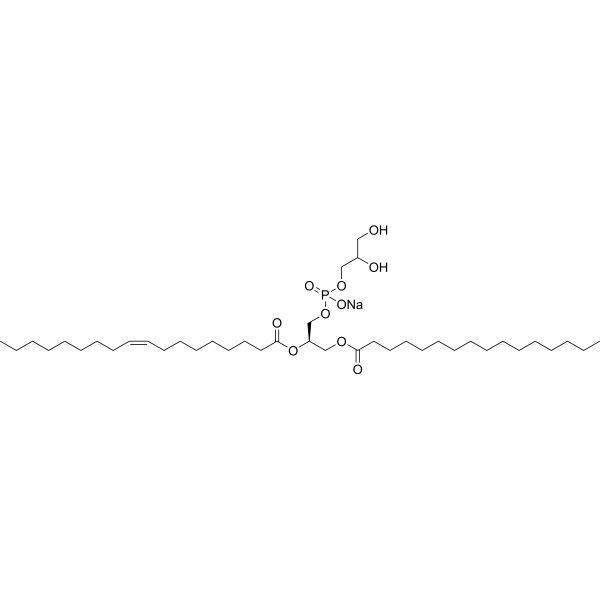
- HY-167590S
-
|
|
Isotope-Labeled Compounds
|
Others
|
|
1-Heptadecanoyl-2-eicosatrienoyl-sn-glycero(d5)-3-phospho-(1’-rac-glycerol)(sodium) is deuterium labeled 1-Heptadecanoyl-2-eicosatrienoyl-sn-glycero-3-phospho-(1’-rac-glycerol)(sodium) .
|
-

- HY-178701S
-
|
14:0 Lyso PG-d27 ammonium
|
|
|
|
|
-

- HY-130671S
-
-

- HY-112005S
-
|
Dioleoylphosphatidylethanolamine-d62; 1,2-Dioleoyl-sn-Glycero-3-phosphoethanolamine-d62
|
Isotope-Labeled Compounds
|
Inflammation/Immunology
|
|
DOPE-d62 (Dioleoylphosphatidylethanolamine-d62) is the deuterium labeled DOPE (HY-112005). DOPE (Dioleoylphosphatidylethanolamine) is a neutral helper lipid for cationic liposome and combines with cationic phospholipids to improve transfection efficiency of naked siRNA .
|
-

- HY-109541S
-
|
DMPC-d58; 1,2-Dimyristoyl-sn-Glycero-3-phosphocholine-d58
|
Isotope-Labeled Compounds
|
Cancer
|
|
Colfosceril miristate-d58 (DMPC-d58) is deuterium labeled Colfosceril miristate. Colfosceril miristate a synthetic phospholipid used in liposomes. Colfosceril miristate is used to study lipid monolayers, bilayers and drug delivery .
|
-
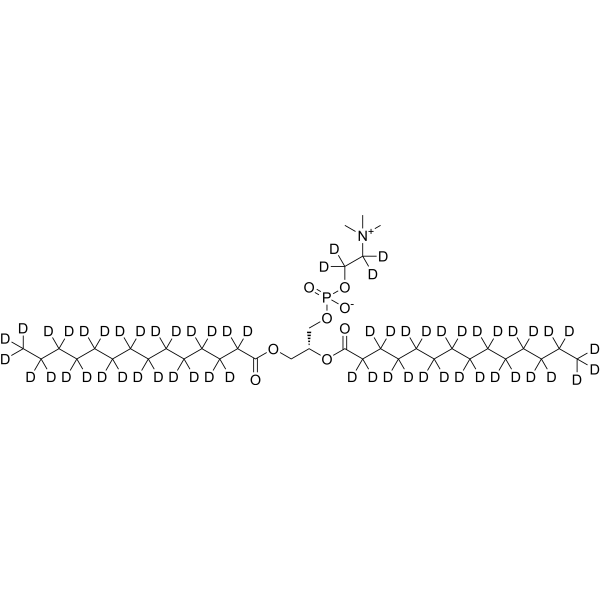
- HY-109541S3
-
|
DMPC-d13; 1,2-Dimyristoyl-sn-Glycero-3-phosphocholine-d13
|
Isotope-Labeled Compounds
|
Others
|
|
Colfosceril miristate-d13 (DMPC-d13) is deuterium labeled Colfosceril miristate. Colfosceril miristate a synthetic phospholipid used in liposomes. Colfosceril miristate is used to study lipid monolayers, bilayers and drug delivery .
|
-
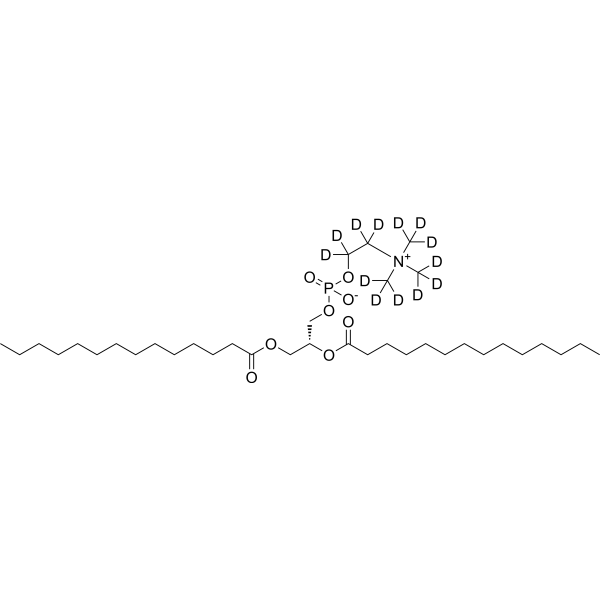
- HY-109541S1
-
|
DMPC-d4; 1,2-Dimyristoyl-sn-Glycero-3-phosphocholine-d4
|
Isotope-Labeled Compounds
|
Cancer
|
|
Colfosceril miristate-d4 (DMPC-d4) is deuterium labeled Colfosceril miristate. Colfosceril miristate is a synthetic phospholipid used in liposomes. Colfosceril miristate is used to study lipid monolayers, bilayers and drug delivery .
|
-
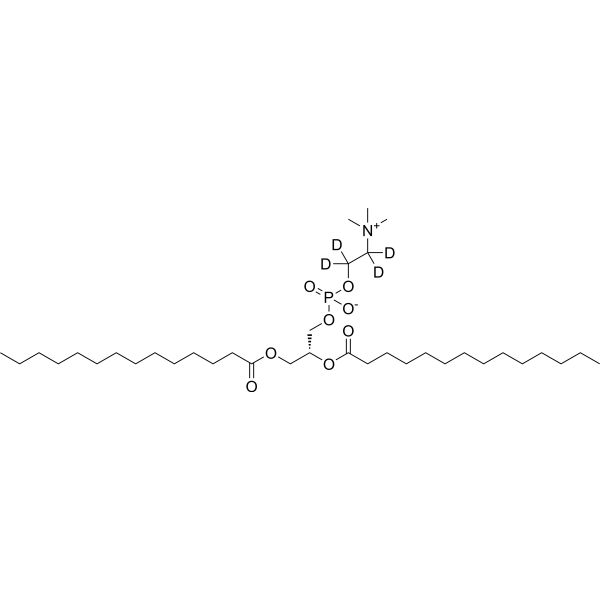
- HY-109541S4
-
|
DMPC-d63; 1,2-Dimyristoyl-sn-Glycero-3-phosphocholine-d63
|
Isotope-Labeled Compounds
|
Cancer
|
|
Colfosceril miristate-d63 (DMPC-d63) is deuterium labeled Colfosceril miristate. Colfosceril miristate a synthetic phospholipid used in liposomes. Colfosceril miristate is used to study lipid monolayers, bilayers and drug delivery .
|
-
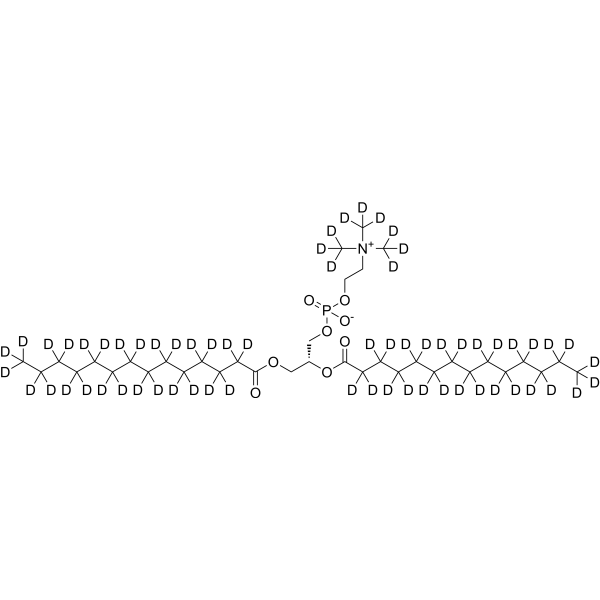
- HY-112760
-
|
DSPE-mPEG2000 sodium; 1,2-Distearoyl-sn-Glycero-3-phosphoethanolamine-N-[methoxy(polyethylene glycol)-2000] sodium
|
Liposome
|
Others
|
|
18:0 mPEG2000 PE (DSPE-mPEG2000) sodium is a conjugate of phospholipid and polyethylene glycol, and it can serve as an important PEG lipid component in lipid nanoparticles (LNPs). 18:0 mPEG2000 PE sodium can be used in the research of gene transfection, drug carriers and drug delivery .
|
-
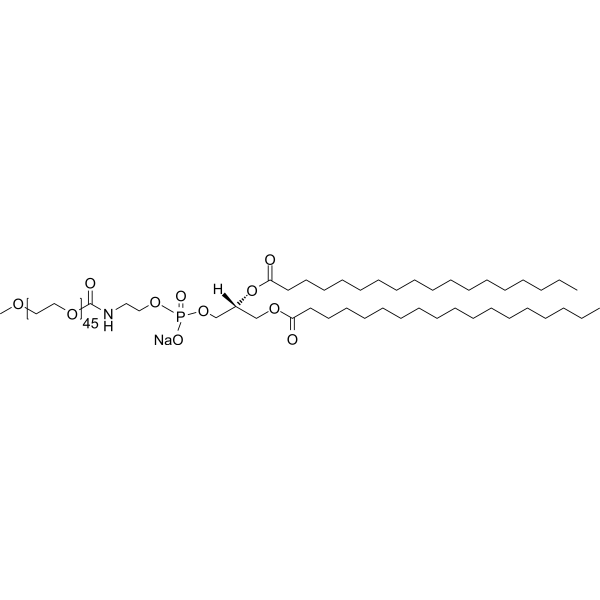
- HY-109541S2
-
|
DMPC-d9; 1,2-Dimyristoyl-sn-Glycero-3-phosphocholine-d9
|
Isotope-Labeled Compounds
|
Cancer
|
|
Colfosceril miristate-d9 (DMPC-d9) is deuterium labeled Colfosceril miristate. Colfosceril miristate a synthetic phospholipid used in liposomes. Colfosceril miristate is used to study lipid monolayers, bilayers and drug delivery .
|
-
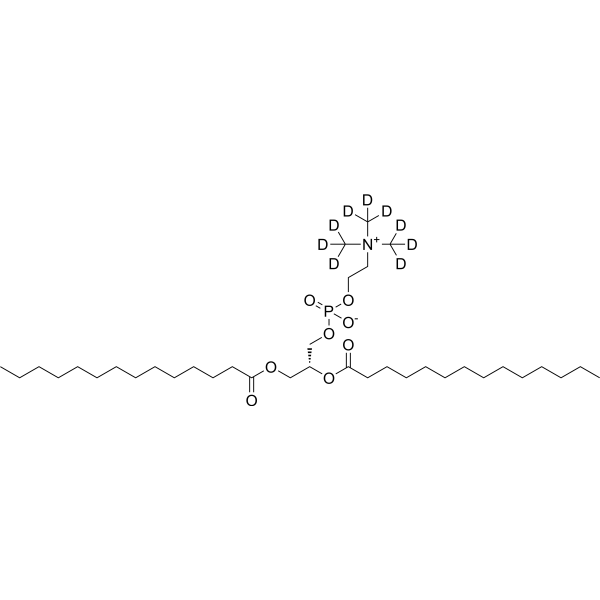
- HY-142978
-
|
DSPE-mPEG2000; 1,2-Distearoyl-sn-Glycero-3-phosphoethanolamine-N-[methoxy(polyethylene glycol)-2000]
|
Liposome
|
Others
|
|
18:0 mPEG2000 PE (DSPE-mPEG2000) ammonium is a kind of amphiphilic polymer material. 18:0 mPEG2000 PE ammonium combines hydrophobic lipids (18:0 stearic acid chain) with hydrophilic polyethylene glycol (2 kDa) chains to form amphiphilic molecules, which are used to construct stable liposomes/nanoparticles, thereby enhancing drug delivery, prolonging circulation time, and achieving targeted effects through its functional terminal groups (usually biotin or carboxyl groups). 18:0 mPEG2000 PE ammonium can be used for the research of nanoprobes and drug delivery [3] .
|
-
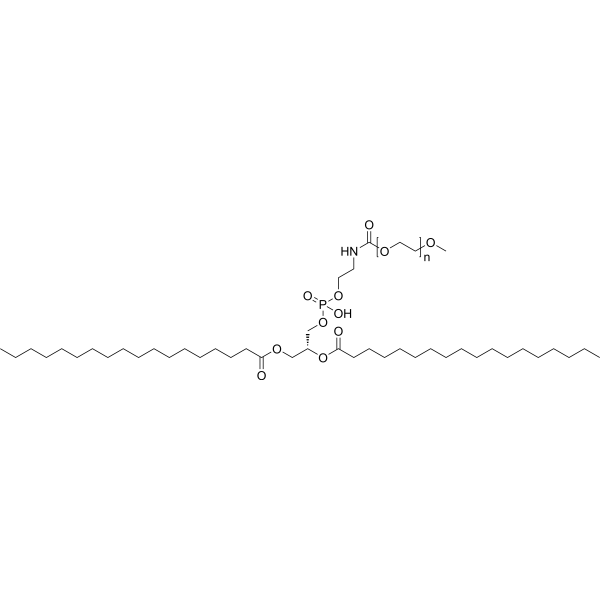
- HY-W591332
-
|
|
Liposome
|
Cancer
|
|
mPEG2000-DMPE is a PEGylated 1,2-Dimyristoyl-sn-glycero-3-phosphoethanolamine (14:0 PE) compound with a methyl group at the other end of the PEG chain. The PEG polymer exhibits amphiphatic behavior and helps to form stable micelles in an aqueous solution. It can be used to prepare nanoparticles or liposomes for targeted drug delivery applications.
|
-

- HY-141570
-
|
|
Phospholipase
|
Others
|
|
Lyso-PAF C-16 is a precursor and metabolite of 1-O-hexadecyl-2-acetyl-sn-glycero-3-phosphocholine (PAF C-16). Lyso-PAF C-16 is a substrate for either PAF C-16 formation by the remodeling pathway or selective acylation with arachidonic acid by a CoA-independent transacylase [3] .
|
-
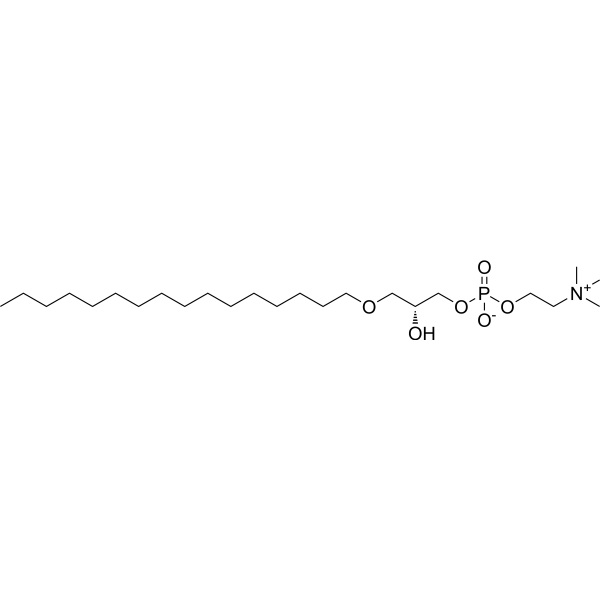
- HY-W591332A
-
|
|
Biochemical Assay Reagents
|
Others
|
|
mPEG1000-DMPE is a PEGylated 1,2-Dimyristoyl-sn-glycero-3-phosphoethanolamine (14:0 PE) compound with a methyl group at the?other?end of the PEG chain. The PEG polymer exhibits amphiphatic behavior and helps to form stable micelles in an aqueous solution. It can be used to prepare nanoparticles or liposomes for targeted drug delivery applications .
|
-

- HY-144012A
-
|
16:0 PEG350 PE; 1,2-Dipalmitoyl-sn-Glycero-3-phosphoethanolamine-N-[methoxy(polyethylene glycol)-350] ammonium
|
Liposome
CD1
|
Others
|
|
DPPE-PEG350 is a CD1d-dependent lipid antagonist thus blocking the ERK phosphorylation pathway in iNKT cells . DPPE-PEG350 is a PEG lipid functional end group used in the synthesis of liposomes (LPs) for the design of conjugated polymer nanoparticles.
|
-
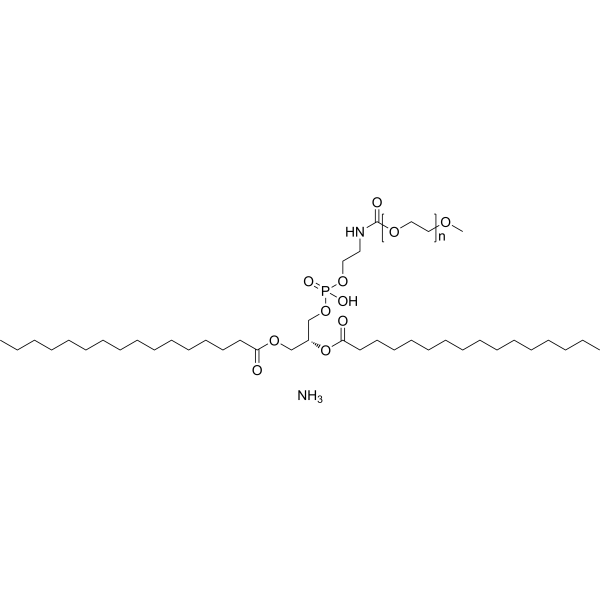
- HY-144012B
-
|
16:0 PEG550 PE; 1,2-Dipalmitoyl-sn-Glycero-3-phosphoethanolamine-N-[methoxy(polyethylene glycol)-550] ammonium
|
Biochemical Assay Reagents
Liposome
|
Others
|
|
DPPE-PEG550 is a PEG lipid functional end group used in the synthesis of liposomes (LPs) for the design of conjugated polymer nanoparticles. Through biotin modification and carboxyl terminus, lipid nanoparticles (LNPs) further coupling with other biomolecules can be achieved. Functionalized nanoparticles can be used for targeted labeling of specific cellular proteins. With streptavidin as a linker, biotinylated PEG lipid-conjugated polymer nanoparticles are able to bind to biotinylated antibodies on cell surface receptors, yielding the utility of fluorescence-based imaging and sensing.
|
-
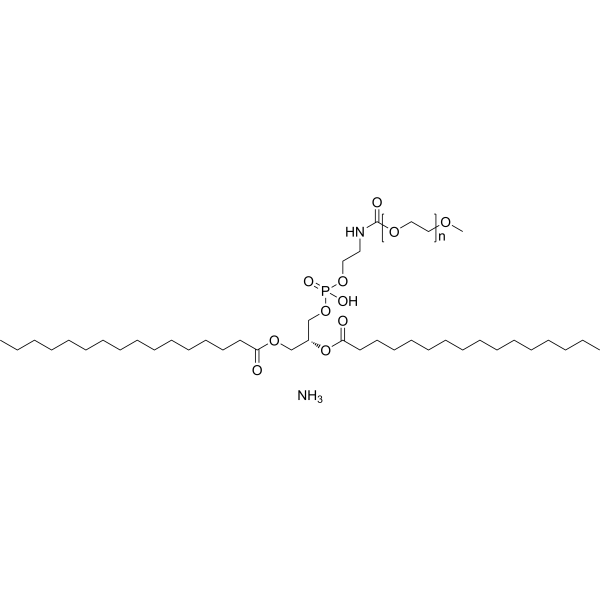
- HY-144012D
-
|
16:0 PEG1000 PE; 1,2-Dipalmitoyl-sn-Glycero-3-phosphoethanolamine-N-[methoxy(polyethylene glycol)-1000] ammonium
|
Liposome
|
Others
|
|
DPPE-PEG1000 is a PEG lipid functional end group used in the synthesis of liposomes (LPs) for the design of conjugated polymer nanoparticles. Through biotin modification and carboxyl terminus, lipid nanoparticles (LNPs) further coupling with other biomolecules can be achieved. Functionalized nanoparticles can be used for targeted labeling of specific cellular proteins. With streptavidin as a linker, biotinylated PEG lipid-conjugated polymer nanoparticles are able to bind to biotinylated antibodies on cell surface receptors, yielding the utility of fluorescence-based imaging and sensing.
|
-
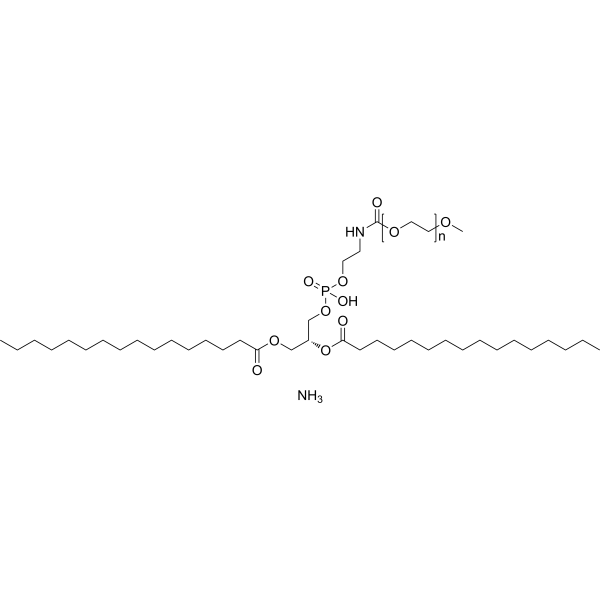
- HY-144012E
-
|
16:0 PEG3000 PE; 1,2-Dipalmitoyl-sn-Glycero-3-phosphoethanolamine-N-[methoxy(polyethylene glycol)-3000] ammonium
|
Liposome
|
Others
|
|
DPPE-PEG3000 is a PEG lipid functional end group used in the synthesis of liposomes (LPs) for the design of conjugated polymer nanoparticles. Through biotin modification and carboxyl terminus, lipid nanoparticles (LNPs) further coupling with other biomolecules can be achieved. Functionalized nanoparticles can be used for targeted labeling of specific cellular proteins. With streptavidin as a linker, biotinylated PEG lipid-conjugated polymer nanoparticles are able to bind to biotinylated antibodies on cell surface receptors, yielding the utility of fluorescence-based imaging and sensing.
|
-
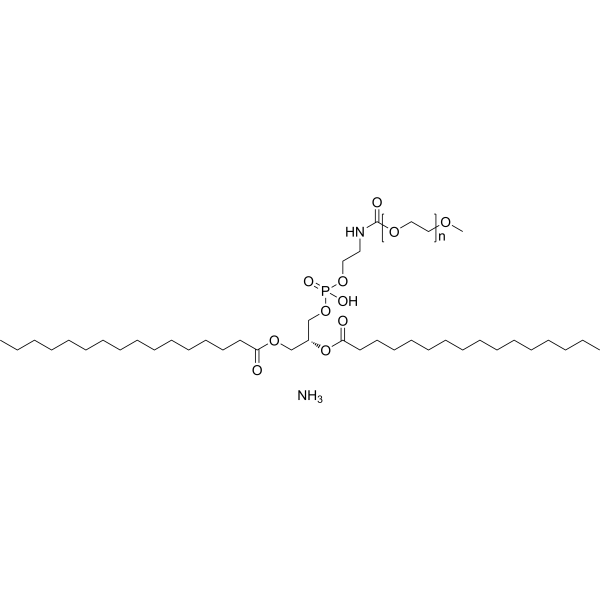
- HY-144012H
-
|
16:0 PEG5000 PE; 1,2-Dipalmitoyl-sn-Glycero-3-phosphoethanolamine-N-[methoxy(polyethylene glycol)-5000] ammonium
|
Liposome
|
Others
|
|
DPPE-PEG5000 (16:0 PEG5000 PE) is a polymer-lipid conjugate and LipoParticle stabilizer with a PEG chain of 5,000 g/mol molecular weight attached to its polar head, and it can be internalized by biological membranes. DPPE-PEG5000 enables LipoParticle to maintain colloidal stability after 20-fold dilution in PBS or cell culture medium, and prevents aggregate formation during lyophilization and rehydration. DPPE-PEG5000 helps enhance the non-cytotoxic property of LipoParticle formulations against human osteoblasts. DPPE-PEG5000 serves as a PEG lipid functional end group for synthesizing liposomes (LPs), is used in the design of conjugated polymer nanoparticles, and applies to research related to bone and joint infections .
|
-
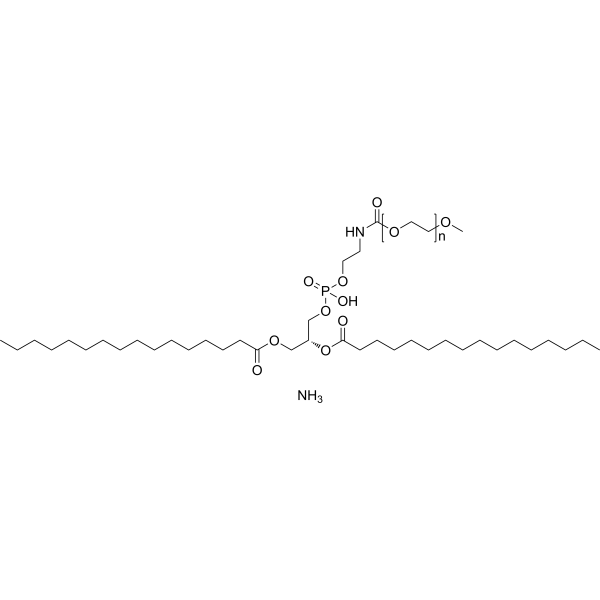
- HY-144012C
-
|
16:0 PEG750 PE; 1,2-Dipalmitoyl-sn-Glycero-3-phosphoethanolamine-N-[methoxy(polyethylene glycol)-750] ammonium
|
Biochemical Assay Reagents
Liposome
|
Others
|
|
DPPE-PEG750 is a PEG lipid functional end group used in the synthesis of liposomes (LPs) for the design of conjugated polymer nanoparticles. Through biotin modification and carboxyl terminus, lipid nanoparticles (LNPs) further coupling with other biomolecules can be achieved. Functionalized nanoparticles can be used for targeted labeling of specific cellular proteins. With streptavidin as a linker, biotinylated PEG lipid-conjugated polymer nanoparticles are able to bind to biotinylated antibodies on cell surface receptors, yielding the utility of fluorescence-based imaging and sensing.
|
-
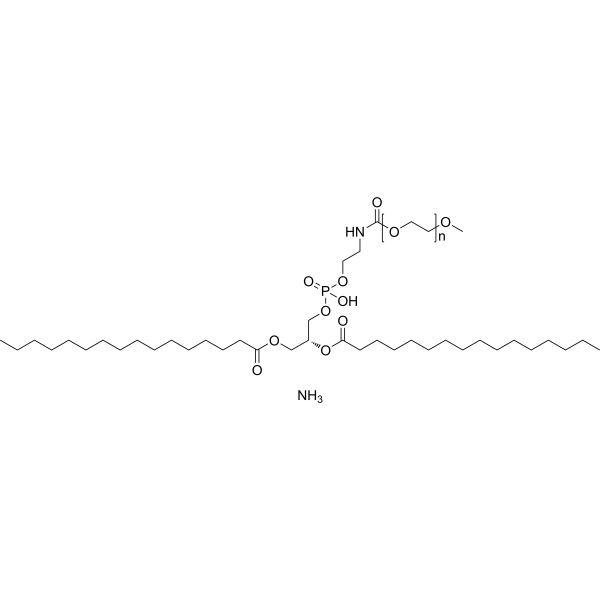
- HY-185404
-
|
|
Drug Intermediate
|
Others
|
|
DSPE-PEG8-OH is a monodisperse lipid-polyethylene glycol conjugate featuring a hydrophobic 1,2-distearoyl-sn-glycero-3-phosphoethanolamine (DSPE) anchor, an 8-unit discrete (PEG8) spacer, and a terminal hydroxyl (-OH) group. DSPE-PEG8-OH is primarily used in liposome formulation, nanoparticle surface modification, and targeted drug delivery systems.
|
-

- HY-155926
-
|
14:0 PEG750 PE ammonium; 1,2-Dimyristoyl-sn-Glycero-3-phosphoethanolamine-N-[methoxy(polyethylene glycol)-750] ammonium
|
Liposome
|
Others
|
|
DMPE-PEG750 ammonium (14:0 PEG750 PE ammonium) is a PEG lipid functional end group used in the synthesis of liposomes (LPs) for the design of conjugated polymeric nanoparticles. Through biotin modification and carboxyl terminus, lipid nanoparticles (LNPs) further coupling with other biomolecules can be achieved. Functionalized nanoparticles can be used for targeted labeling of specific cellular proteins. With streptavidin as a linker, biotinylated PEG lipid-conjugated polymer nanoparticles are able to bind to biotinylated antibodies on cell surface receptors, yielding the utility of fluorescence-based imaging and sensing.
|
-
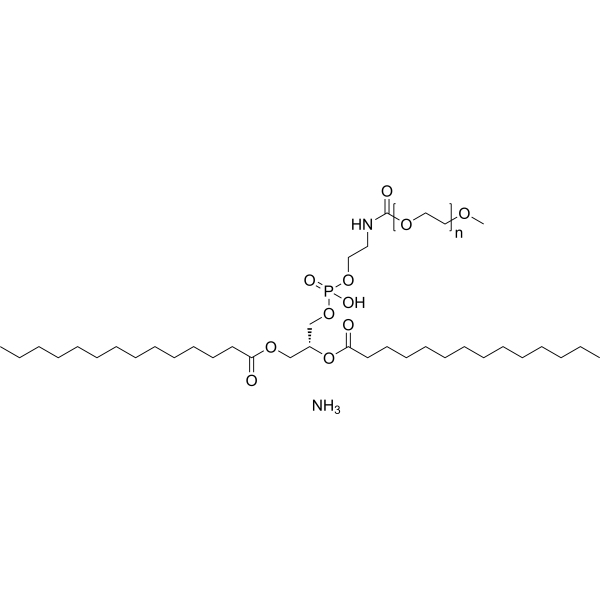
- HY-155931
-
|
DOPE-PEG550 ammonium; 1,2-Dioleoyl-sn-Glycero-3-phosphoethanolamine-N-[methoxy(polyethylene glycol)-550] ammonium
|
Liposome
|
Others
|
|
18:1 PEG550 PE ammonium (DOPE-PEG550 ammonium) is a PEG lipid functional end group used in the synthesis of liposomes (LPs) for the design of conjugated polymer nanoparticles. Through biotin modification and carboxyl terminus, lipid nanoparticles (LNPs) further coupling with other biomolecules can be achieved. Functionalized nanoparticles can be used for targeted labeling of specific cellular proteins. With streptavidin as a linker, biotinylated PEG lipid-conjugated polymer nanoparticles are able to bind to biotinylated antibodies on cell surface receptors, yielding the utility of fluorescence-based imaging and sensing.
|
-
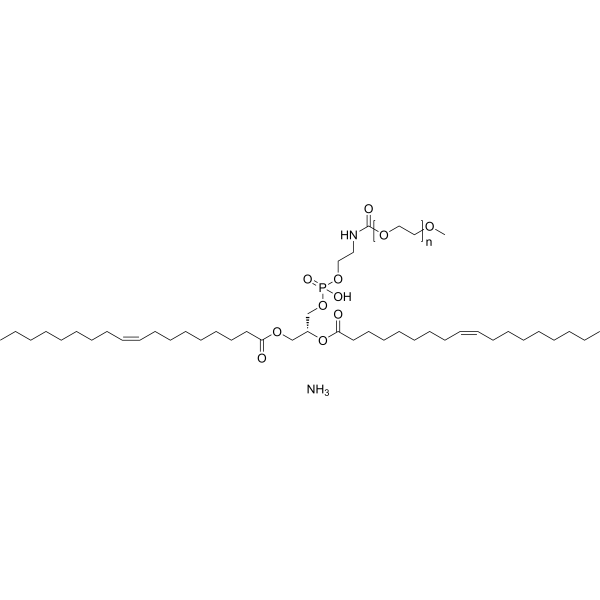
- HY-144013H
-
|
DSPE-mPEG5000 ammonium; 1,2-Distearoyl-sn-Glycero-3-phosphoethanolamine-N-[methoxy(polyethylene glycol)-5000] ammonium
|
Liposome
|
Cancer
|
|
18:0 mPEG5000 PE (DSPE-mPEG5000) ammonium is a kind of amphiphilic polymer material. 18:0 mPEG5000 PE ammonium combines hydrophobic lipids (18:0 stearic acid chain) with hydrophilic polyethylene glycol (5 kDa) chains to form amphiphilic molecules, which are used to construct stable liposomes/nanoparticles, thereby enhancing drug delivery, prolonging circulation time, and achieving targeted effects through its functional terminal groups (usually biotin or carboxyl groups). 18:0 mPEG5000 PE ammonium can be used for the research of nanoprobes and drug delivery [3] .
|
-
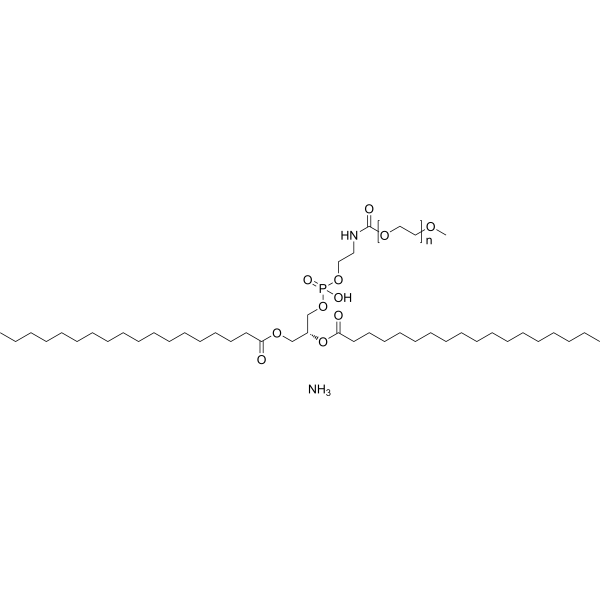
- HY-144013B
-
|
DSPE-mPEG550 ammonium; 1,2-Distearoyl-sn-Glycero-3-phosphoethanolamine-N-[methoxy(polyethylene glycol)-550] ammonium
|
Biochemical Assay Reagents
Liposome
|
Others
|
|
18:0 mPEG550 PE (ammonium) is a PEG lipid functional end group used in the synthesis of liposomes (LPs) for the design of conjugated polymeric nanoparticles. Through biotin modification and carboxyl terminus, lipid nanoparticles (LNPs) further coupling with other biomolecules can be achieved. Functionalized nanoparticles can be used for targeted labeling of specific cellular proteins. With streptavidin as a linker, biotinylated PEG lipid-conjugated polymer nanoparticles are able to bind to biotinylated antibodies on cell surface receptors, yielding the utility of fluorescence-based imaging and sensing.
|
-
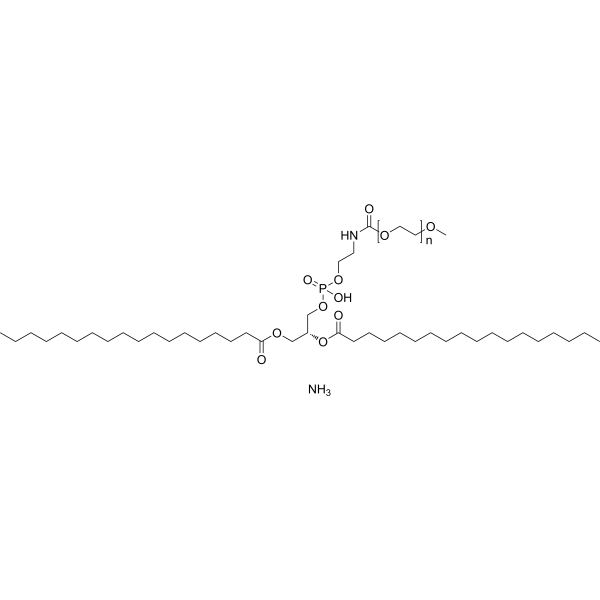
- HY-144013D
-
|
DSPE-mPEG1000 ammonium; 1,2-Distearoyl-sn-Glycero-3-phosphoethanolamine-N-[methoxy(polyethylene glycol)-1000] ammonium
|
Liposome
|
Others
|
|
18:0 mPEG1000 PE (ammonium) is a PEG lipid functional end group used in the synthesis of liposomes (LPs) for the design of conjugated polymeric nanoparticles. Through biotin modification and carboxyl terminus, lipid nanoparticles (LNPs) further coupling with other biomolecules can be achieved. Functionalized nanoparticles can be used for targeted labeling of specific cellular proteins. With streptavidin as a linker, biotinylated PEG lipid-conjugated polymer nanoparticles are able to bind to biotinylated antibodies on cell surface receptors, yielding the utility of fluorescence-based imaging and sensing.
|
-
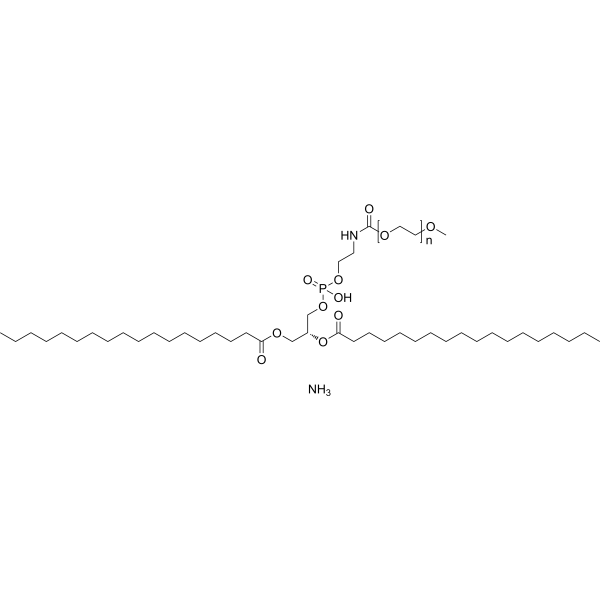
- HY-155934
-
|
DOPE-PEG5000 ammonium; 1,2-Dioleoyl-sn-Glycero-3-phosphoethanolamine-N-[methoxy(polyethylene glycol)-5000] ammonium
|
Liposome
|
Others
|
|
18:1 PEG5000 PE ammonium (DOPE-PEG5000 ammonium) is a PEG lipid functional end group used in the synthesis of liposomes (LPs) for the design of conjugated polymer nanoparticles. Through biotin modification and carboxyl terminus, lipid nanoparticles (LNPs) further coupling with other biomolecules can be achieved. Functionalized nanoparticles can be used for targeted labeling of specific cellular proteins. With streptavidin as a linker, biotinylated PEG lipid-conjugated polymer nanoparticles are able to bind to biotinylated antibodies on cell surface receptors, yielding the utility of fluorescence-based imaging and sensing.
|
-
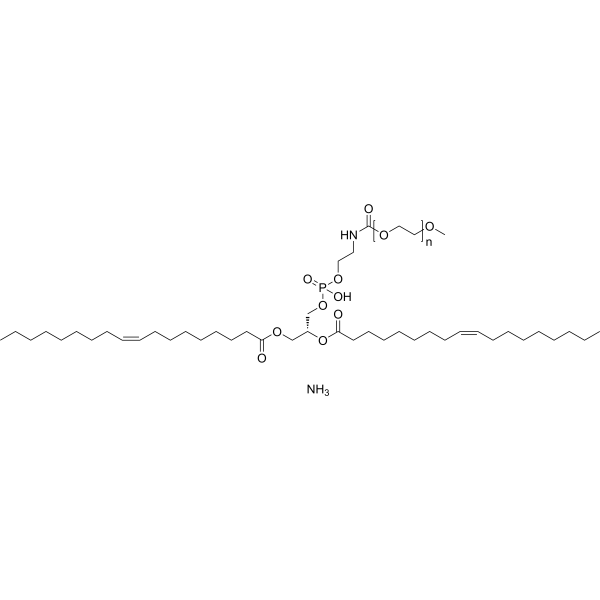
- HY-144010
-
|
DOPE-PEG2000 ammonium; 1,2-Dioleoyl-sn-Glycero-3-phosphoethanolamine-N-[methoxy(polyethylene glycol)-2000] ammonium
|
Liposome
|
Others
|
|
18:1 PEG2000 PE ammonium (DOPE-PEG2000 ammonium) is a polyethyleneglycol/phosphatidyl-ethanolamine conjugate. 18:1 PEG2000 PE ammonium (DOPE-PEG2000 ammonium) can be used for drug delivery .
|
-
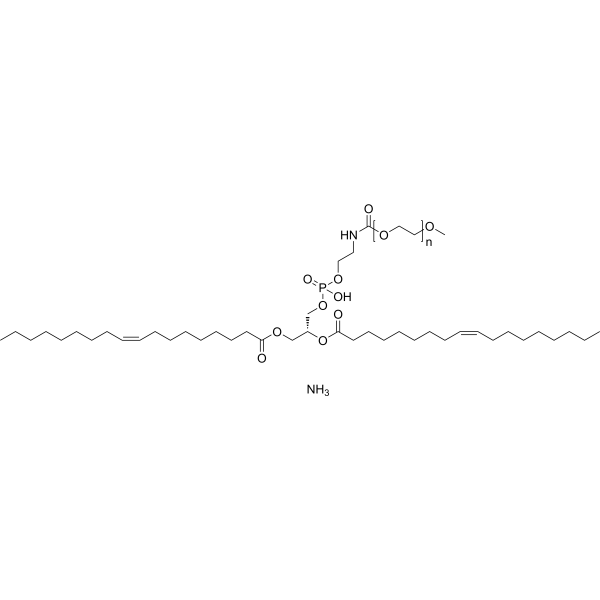
- HY-155927
-
|
14:0 PEG1000 PE ammonium; 1,2-Dimyristoyl-sn-Glycero-3-phosphoethanolamine-N-[methoxy(polyethylene glycol)-1000] ammonium
|
Liposome
|
Others
|
|
DMPE-PEG1000 ammonium (14:0 PEG1000 PE ammonium) is a PEG lipid functional end group used in the synthesis of liposomes (LPs) for the design of conjugated polymer nanoparticles. Through biotin modification and carboxyl terminus, lipid nanoparticles (LNPs) further coupling with other biomolecules can be achieved. Functionalized nanoparticles can be used for targeted labeling of specific cellular proteins. With streptavidin as a linker, biotinylated PEG lipid-conjugated polymer nanoparticles are able to bind to biotinylated antibodies on cell surface receptors, yielding the utility of fluorescence-based imaging and sensing.
|
-
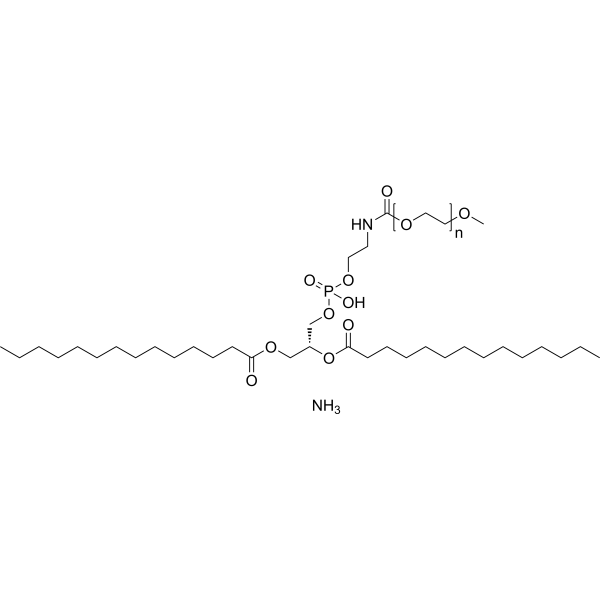
- HY-144013A
-
|
DSPE-mPEG350 ammonium; 1,2-Distearoyl-sn-Glycero-3-phosphoethanolamine-N-[methoxy(polyethylene glycol)-350] ammonium
|
Liposome
|
Others
|
|
18:0 mPEG350 PE (ammonium) is a PEG lipid functional end group used in the synthesis of liposomes (LPs) for the design of conjugated polymer nanoparticles. Through biotin modification and carboxyl terminus, lipid nanoparticles (LNPs) further coupling with other biomolecules can be achieved. Functionalized nanoparticles can be used for targeted labeling of specific cellular proteins. With streptavidin as a linker, biotinylated PEG lipid-conjugated polymer nanoparticles are able to bind to biotinylated antibodies on cell surface receptors, yielding the utility of fluorescence-based imaging and sensing.
|
-
- HY-144004A
-
|
DSPE-PEG5000 Maleimide ammonium; 1,2-Distearoyl-sn-Glycero-3-phosphoethanolamine-N-[maleimide(polyethylene glycol)-5000] ammonium
|
Liposome
|
Others
|
|
DSPE-PEG-Maleimide has DSPE phospholipid and maleimide to prepare nanostructured lipid carrier. DSPE-PEG-Maleimide extends blood circulation time and higher stability for encapsulated agents . DSPE-PEG5000-Mal ammonium contains PEG5000.
|
-
- HY-144013
-
|
DSPE-mPEG2000 ammonium; 1,2-Distearoyl-sn-Glycero-3-phosphoethanolamine-N-[methoxy(polyethylene glycol)-2000] ammonium
|
Liposome
|
Others
|
|
18:0 mPEG2000 PE (DSPE-mPEG2000) ammonium is a polyethyleneglycol/phosphatidyl-ethanolamine conjugate. 18:0 mPEG2000 PE ammonium can be used for drug delivery .
|
-
- HY-155933
-
|
DOPE-PEG3000 ammonium; 1,2-Dioleoyl-sn-Glycero-3-phosphoethanolamine-N-[methoxy(polyethylene glycol)-3000] ammonium
|
Liposome
|
Others
|
|
18:1 PEG3000 PE ammonium (DOPE-PEG3000 ammonium) is a PEG lipid functional end group used in the synthesis of liposomes (LPs) for the design of conjugated polymer nanoparticles. Through biotin modification and carboxyl terminus, lipid nanoparticles (LNPs) further coupling with other biomolecules can be achieved. Functionalized nanoparticles can be used for targeted labeling of specific cellular proteins. With streptavidin as a linker, biotinylated PEG lipid-conjugated polymer nanoparticles are able to bind to biotinylated antibodies on cell surface receptors, yielding the utility of fluorescence-based imaging and sensing.
|
-
- HY-155932
-
|
DOPE-PEG1000 ammonium; 1,2-Dioleoyl-sn-Glycero-3-phosphoethanolamine-N-[methoxy(polyethylene glycol)-1000] ammonium
|
Liposome
|
Others
|
|
18:1 PEG1000 PE ammonium (DOPE-PEG1000 ammonium) is a PEG lipid functional end group used in the synthesis of liposomes (LPs) for the design of conjugated polymer nanoparticles. Through biotin modification and carboxyl terminus, lipid nanoparticles (LNPs) further coupling with other biomolecules can be achieved. Functionalized nanoparticles can be used for targeted labeling of specific cellular proteins. With streptavidin as a linker, biotinylated PEG lipid-conjugated polymer nanoparticles are able to bind to biotinylated antibodies on cell surface receptors, yielding the utility of fluorescence-based imaging and sensing.
|
-
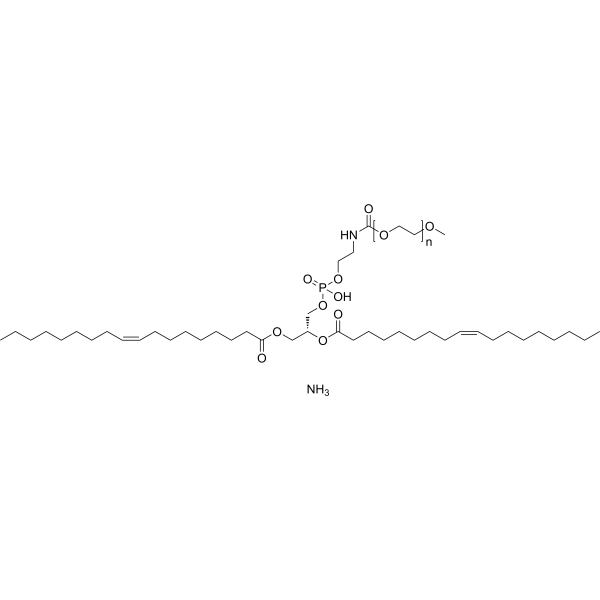
- HY-144004
-
|
DSPE-PEG2000 Maleimide ammonium; 1,2-Distearoyl-sn-Glycero-3-phosphoethanolamine-N-[maleimide(polyethylene glycol)-2000] ammonium
|
Liposome
|
Others
|
|
DSPE-PEG-Maleimide has DSPE phospholipid and maleimide to prepare nanostructured lipid carrier. DSPE-PEG-Maleimide extends blood circulation time and higher stability for encapsulated agents .
|
-
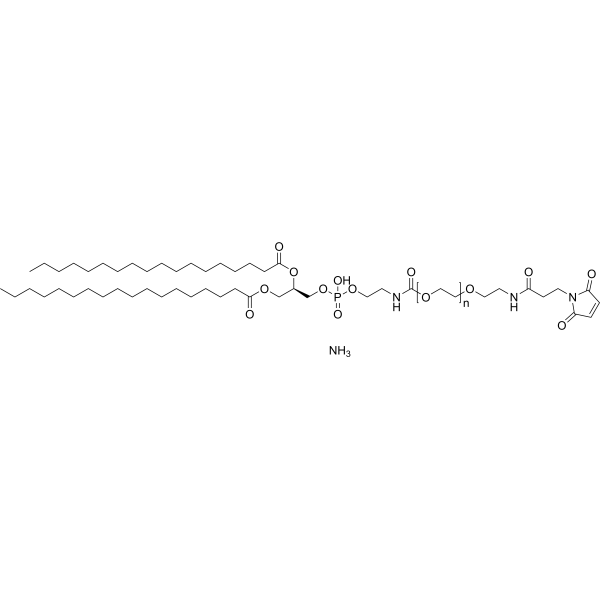
- HY-155925
-
|
14:0 PEG550 PE ammonium; 1,2-Dimyristoyl-sn-Glycero-3-phosphoethanolamine-N-[methoxy(polyethylene glycol)-550] ammonium
|
Liposome
|
Others
|
|
DMPE-PEG550 ammonium (14:0 PEG550 PE ammonium) is a PEG lipid functional end group used in the synthesis of liposomes (LPs) for the design of conjugated polymeric nanoparticles. Through biotin modification and carboxyl terminus, lipid nanoparticles (LNPs) further coupling with other biomolecules can be achieved. Functionalized nanoparticles can be used for targeted labeling of specific cellular proteins. With streptavidin as a linker, biotinylated PEG lipid-conjugated polymer nanoparticles are able to bind to biotinylated antibodies on cell surface receptors, yielding the utility of fluorescence-based imaging and sensing.
|
-
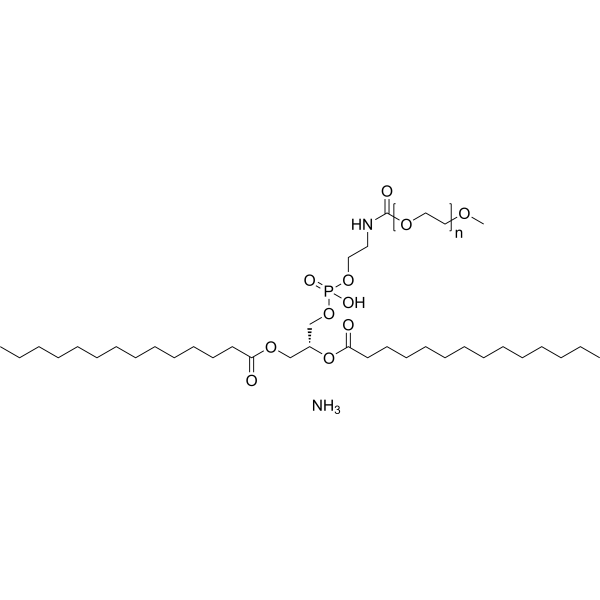
- HY-144012
-
|
16:0 PEG2000 PE ammonium; 1,2-Dipalmitoyl-sn-Glycero-3-phosphoethanolamine-N-[methoxy(polyethylene glycol)-2000] ammonium
|
Liposome
|
Others
|
|
DPPE-PEG2000 ammonium (16:0 PEG5000 PE) is a polymer-lipid conjugate and LipoParticle stabilizer with a PEG chain of 5,000 g/mol molecular weight attached to its polar head, and it can be internalized by biological membranes. DPPE-PEG2000 ammonium enables LipoParticle to maintain colloidal stability after 20-fold dilution in PBS or cell culture medium, and prevents aggregate formation during lyophilization and rehydration. DPPE-PEG2000 ammonium helps enhance the non-cytotoxic property of LipoParticle formulations against human osteoblasts. DPPE-PEG2000 ammonium serves as a PEG lipid functional end group for synthesizing liposomes (LPs), is used in the design of conjugated polymer nanoparticles, and applies to research related to bone and joint infections .
|
-
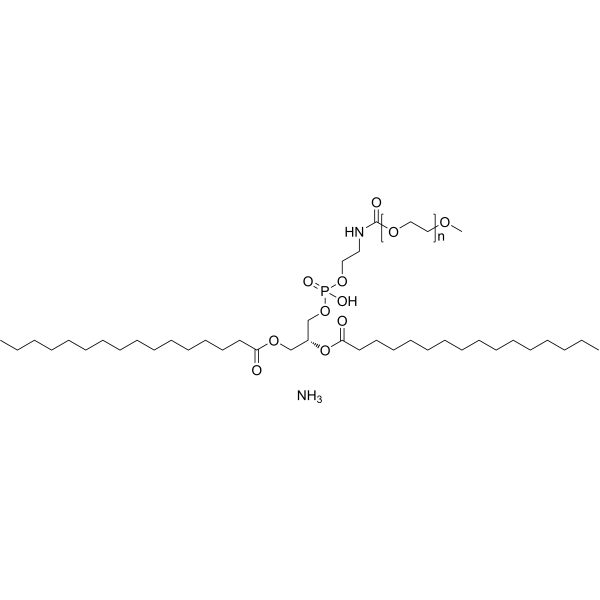
- HY-144013E
-
|
DSPE-mPEG3000 ammonium; 1,2-Distearoyl-sn-Glycero-3-phosphoethanolamine-N-[methoxy(polyethylene glycol)-3000] ammonium
|
Liposome
|
Others
|
|
18:0 mPEG3000 PE (ammonium) is a PEG lipid functional end group used in the synthesis of liposomes (LPs) for the design of conjugated polymeric nanoparticles. Through biotin modification and carboxyl terminus, lipid nanoparticles (LNPs) further coupling with other biomolecules can be achieved. Functionalized nanoparticles can be used for targeted labeling of specific cellular proteins. With streptavidin as a linker, biotinylated PEG lipid-conjugated polymer nanoparticles are able to bind to biotinylated antibodies on cell surface receptors, yielding the utility of fluorescence-based imaging and sensing.
|
-
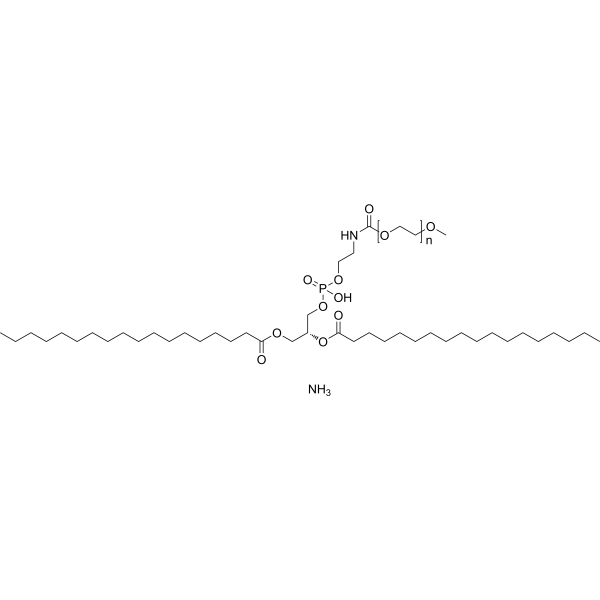
- HY-155930
-
|
DOPE-PEG350 ammonium; 1,2-Dioleoyl-sn-Glycero-3-phosphoethanolamine-N-[methoxy(polyethylene glycol)-350] ammonium
|
Liposome
|
Others
|
|
18:1 PEG350 PE ammonium (DOPE-PEG350 ammonium) is a PEG lipid functional end group used in the synthesis of liposomes (LPs) for the design of conjugated polymer nanoparticles. Through biotin modification and carboxyl terminus, lipid nanoparticles (LNPs) further coupling with other biomolecules can be achieved. Functionalized nanoparticles can be used for targeted labeling of specific cellular proteins. With streptavidin as a linker, biotinylated PEG lipid-conjugated polymer nanoparticles are able to bind to biotinylated antibodies on cell surface receptors, yielding the utility of fluorescence-based imaging and sensing.
|
-
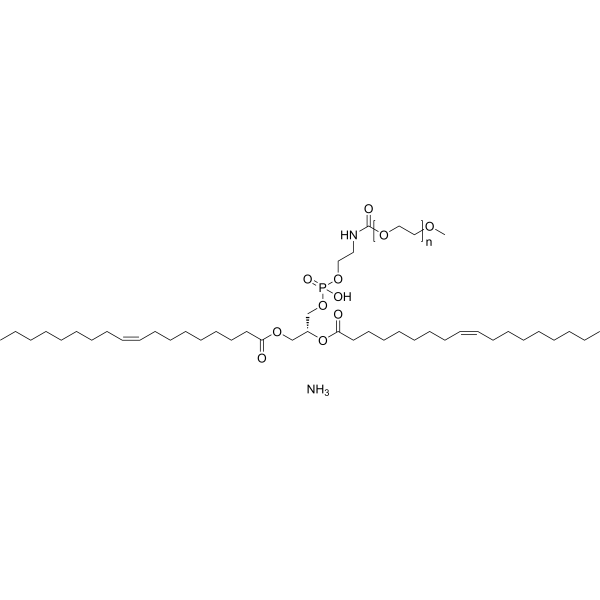
- HY-144006
-
|
14:0 PEG2000 PE ammonium; 1,2-Dimyristoyl-sn-Glycero-3-phosphoethanolamine-N-[methoxy(polyethylene glycol)-2000] ammonium
|
Liposome
|
Others
|
|
DMPE-PEG2000 ammonium (14:0 PEG2000 PE ammonium) is a PEG-phospholipid conjugate to prepare nanostructured lipid carrier .
|
-
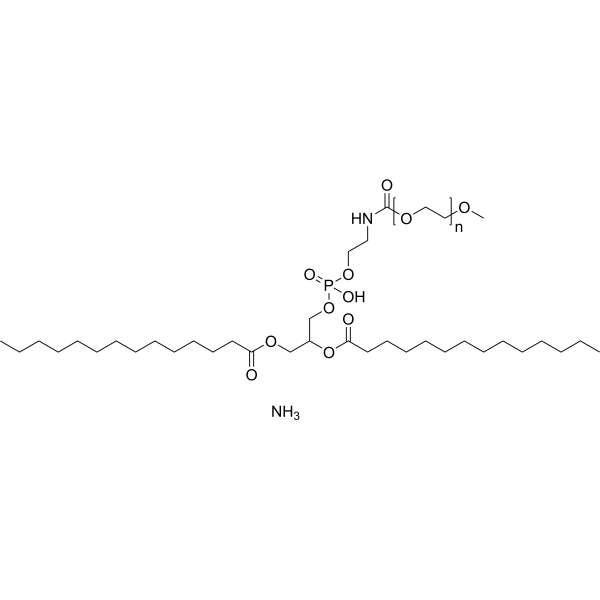
- HY-155924
-
|
14:0 PEG350 PE ammonium; 1,2-Dimyristoyl-sn-Glycero-3-phosphoethanolamine-N-[methoxy(polyethylene glycol)-350] ammonium
|
Liposome
|
Others
|
|
DMPE-PEG350 ammonium (14:0 PEG350 PE ammonium) is a PEG lipid functional end group used in the synthesis of liposomes (LPs) for the design of conjugated polymer nanoparticles. Through biotin modification and carboxyl terminus, lipid nanoparticles (LNPs) further coupling with other biomolecules can be achieved. Functionalized nanoparticles can be used for targeted labeling of specific cellular proteins. With streptavidin as a linker, biotinylated PEG lipid-conjugated polymer nanoparticles are able to bind to biotinylated antibodies on cell surface receptors, yielding the utility of fluorescence-based imaging and sensing.
|
-
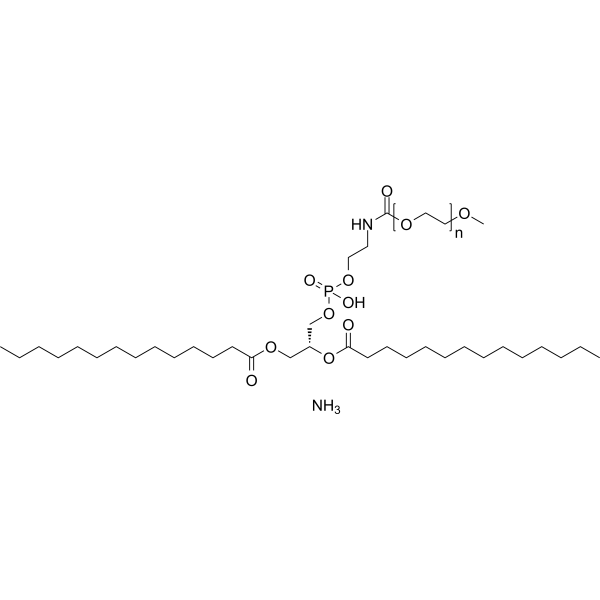
- HY-144013C
-
|
DSPE-mPEG750 ammonium; 1,2-Distearoyl-sn-Glycero-3-phosphoethanolamine-N-[methoxy(polyethylene glycol)-750] ammonium
|
Biochemical Assay Reagents
Liposome
|
Others
|
|
18:0 mPEG750 PE (ammonium) is a PEG lipid functional end group used in the synthesis of liposomes (LPs) for the design of conjugated polymeric nanoparticles. Through biotin modification and carboxyl terminus, lipid nanoparticles (LNPs) further coupling with other biomolecules can be achieved. Functionalized nanoparticles can be used for targeted labeling of specific cellular proteins. With streptavidin as a linker, biotinylated PEG lipid-conjugated polymer nanoparticles are able to bind to biotinylated antibodies on cell surface receptors, yielding the utility of fluorescence-based imaging and sensing.
|
-
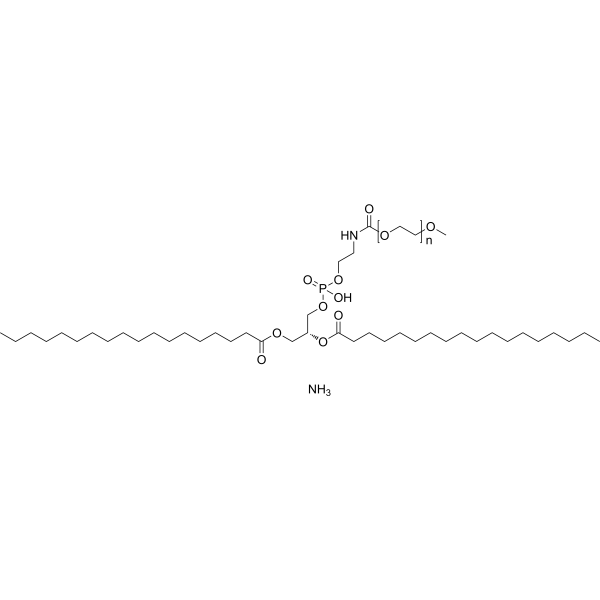
- HY-W040293S
-
|
PE(6:0/6:0)-d22; 1,2-Dihexanoyl-sn-Glycero-3-phosphoethanolamine-d22
|
Isotope-Labeled Compounds
|
Cancer
|
|
06:0 PE-d22 (PE(6:0/6:0)-d22) is the deuterium labeled 06:0 PE (HY-W040293). 06:0 PE (PE(6:0/6:0)) is a water-soluble phospholipid characterized by its short acyl chains, exhibiting notable antitumor activity and the ability to inhibit tumor progression in vivo, alongside antiproliferative and proapoptotic effects, while serving as a precursor for phosphatidylcholine and phosphatidylethanolamine.
|
-

- HY-155929
-
|
14:0 PEG5000 PE ammonium; 1,2-Dimyristoyl-sn-Glycero-3-phosphoethanolamine-N-[methoxy(polyethylene glycol)-5000] ammonium
|
Liposome
|
Others
|
|
DMPE-PEG5000 ammonium (14:0 PEG5000 PE ammonium) is a PEG lipid functional end group used in the synthesis of liposomes (LPs) for the design of conjugated polymer nanoparticles. Through biotin modification and carboxyl terminus, lipid nanoparticles (LNPs) further coupling with other biomolecules can be achieved. Functionalized nanoparticles can be used for targeted labeling of specific cellular proteins. With streptavidin as a linker, biotinylated PEG lipid-conjugated polymer nanoparticles are able to bind to biotinylated antibodies on cell surface receptors, yielding the utility of fluorescence-based imaging and sensing.
|
-
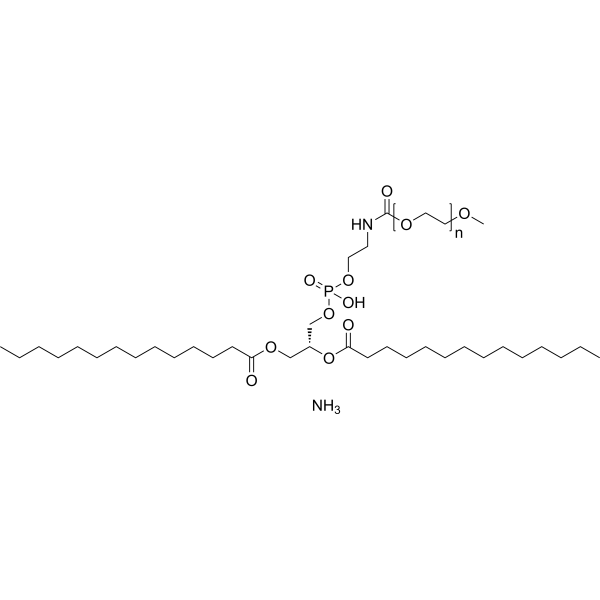
- HY-155928
-
|
14:0 PEG3000 PE ammonium; 1,2-Dimyristoyl-sn-Glycero-3-phosphoethanolamine-N-[methoxy(polyethylene glycol)-3000] ammonium
|
Liposome
|
Others
|
|
DMPE-PEG3000 ammonium (14:0 PEG3000 PE ammonium) is a PEG lipid functional end group used in the synthesis of liposomes (LPs) for the design of conjugated polymer nanoparticles. Through biotin modification and carboxyl terminus, lipid nanoparticles (LNPs) further coupling with other biomolecules can be achieved. Functionalized nanoparticles can be used for targeted labeling of specific cellular proteins. With streptavidin as a linker, biotinylated PEG lipid-conjugated polymer nanoparticles are able to bind to biotinylated antibodies on cell surface receptors, yielding the utility of fluorescence-based imaging and sensing.
|
-
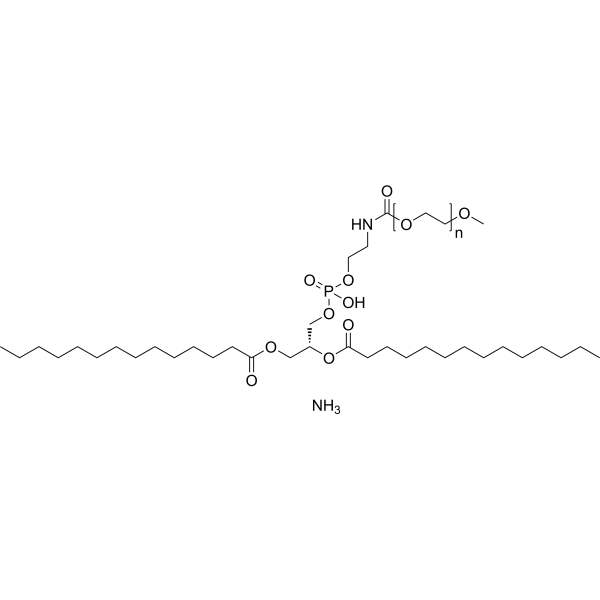
- HY-159194
-
|
|
Liposome
|
Cancer
|
|
DSPE-PEG2000-Cy5.5 is a phospholipid-fluorophore conjugate consisting of Cy5.5 covalently linked to 1,2-distearoyl-sn-glycero-3-phosphoethanolamine (DSPE), serving as a surface label for liposomes in multimodal CT/optical imaging.DSPE-PEG2000-Cy5.5 can be used for the research of non-small cell lung cancer .
|
-

- HY-125385
-
|
|
Endogenous Metabolite
|
Metabolic Disease
|
|
Sulforhodamine 101 DHPE is a fluorescent probe made from the conjugation of the phospholipid 1,2-dipalmitoyl-sn-glycero-3-PE to sulforhodamine 101, a red fluorescent dye that displays excitation/emission spectra of 586/605 nm, respectively. It integrates into phospholipid bilayers and has been used for imaging of solid supported lipid bilayers, detection of protein-ligand binding on bilayers, and to monitor colocalization of lipid probes in liposomes via resonance energy transfer (RET).
|
-

- HY-113123S1
-
|
14:0 Lyso PC-d7; 1-myristoyl-sn-Glycero-3-phosphatidylcholine-d7
|
Isotope-Labeled Compounds
Endogenous Metabolite
|
Neurological Disease
Metabolic Disease
|
|
LysoPC(14:0/0:0)-d7 (14:0 Lyso PC-d7) is deuterium labeled LysoPC(14:0/0:0). LysoPC(14:0/0:0) is a lysophospholipid (LyP). It is a monoglycerophospholipid in which a phosphorylcholine moiety occupies a glycerol substitution site. LysoPC(14:0/0:0) has potent antispasmodic effect .
|
-

- HY-W583869
-
|
1-Stearoyl-2-Oleoyl-sn-Glycero-3-PE; 18:0-18:1 PE; PE(18:0/18:1)
|
Liposome
|
Metabolic Disease
|
|
1-Stearoyl-2-oleoyl-sn-glycerol-3-phosphoethanolamine is a phospholipids that contains stearic acid and oleic acid at the sn-1 and sn-2 positions, respectively. It has been used in the generation of lipid nanoparticles (LNPs) for in vitro delivery of mRNA or nuclear-targeted plasmid DNA.
|
-

- HY-146841S
-
|
1-Nonadecanoyl-2-hydroxy-sn-Glycero-3-phosphocholine-d5; 19:0 Lyso PC-d5
|
Isotope-Labeled Compounds
|
Others
|
|
Lecithin-cholesterol acyltransferase C19:0-d5 (19:0 lecithin-cholesterol acyltransferase-d5) is the deuterated form of lecithin-cholesterol acyltransferase C19:0 (HY-154830). Lecithin-cholesterol acyltransferase C19:0 is a lysophosphatidylcholine with a fully saturated C19 acyl chain. When lecithin-cholesterol acyltransferase C19:0 is combined with LPS (HY-D1056), it can induce the secretion of IL-1β by human monocyte-derived dendritic cells. Lecithin-cholesterol acyltransferase C19:0 can reduce the survival rate of dendritic cells derived from monocytes.
|
-
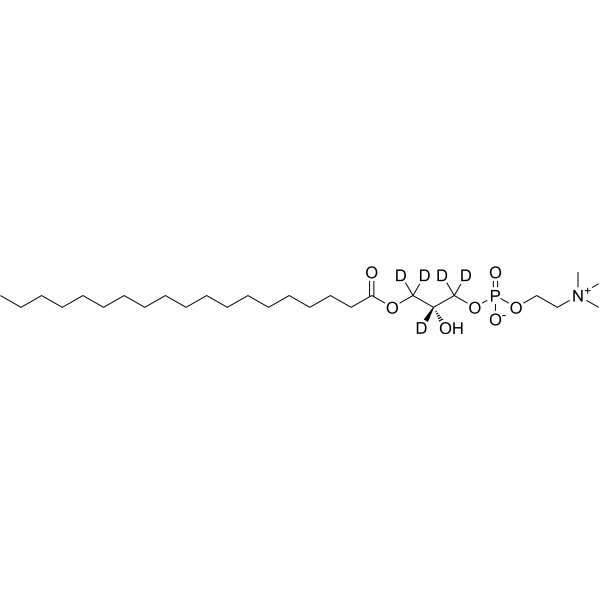
- HY-B2235A
-
|
L-α-Phosphatidylcholine (egg yolk), 75%; 1,2-Diacyl-sn-Glycero-3-phosphocholine (egg yolk), 75%; egg yolk Lecithins, 75%
|
Environmental Pollutants
Biochemical Assay Reagents
|
Others
Metabolic Disease
|
|
L-α-Lecithin (egg yolk), 75% is a kind of biological materials. L-α-Lecithin (egg yolk), 75% can be used for studying cell membrane structure, biofilm potential, liposome research, etc .
|
-

- HY-178787S
-
|
PG(16:0/18:1)-d62; 1-Palmitoyl-2-oleoyl-sn-Glycero-3-phospho-(1'-rac-Glycerol)-d62
|
Isotope-Labeled Compounds
Liposome
Biochemical Assay Reagents
Neurotensin Receptor
|
Neurological Disease
|
|
POPG-d62 (PG(16:0/18:1)-d62) is the deuterium labeled POPG (HY-142991). POPG sodium salt is a negatively charged phospholipid. POPG sodium salt affects the interactions of membrane proteins with other molecules by changing the charge characteristics of the lipid environment. POPG sodium salt increases the apparent affinity of Gαq and Gβ1γ1 for activated NTS1. POPG sodium salt can interact with the positive charge of peptides. POPG sodium salt can be used in Parkinson's disease research.
|
-

- HY-146841S1
-
|
(Rac)-1-Nonadecanoyl-2-hydroxy-sn-Glycero-3-phosphocholine-d5; (Rac)-19:0 Lyso PC-d5
|
Isotope-Labeled Compounds
|
Others
|
|
(Rac)-19:0 Lyso PC-d5 is the deuterium labeled (Rac)-19:0 Lyso PC.
|
-

- HY-W440823A
-
|
DSPE-PEG1000-NH2 ammonium
|
Liposome
|
Cancer
|
|
DSPE-PEG1000-Amine (DSPE-PEG1000-NH2) ammonium is a 1,2-distearoyl-sn-glycero-3-phosphoethanolamine-polyethylene glycol conjugate with a terminal amino group. DSPE-PEG1000-Amine ammonium can functionalize the surface of PLGA-lecithin-PEG core-shell nanoparticles to introduce positive surface charges. The amino group of DSPE-PEG1000-Amine ammonium can be converted into an aromatic aldehyde to react with the acetone-protected aromatic hydrazide on the surface of bovine carbonic anhydrase (BCA) molecules .
|
-
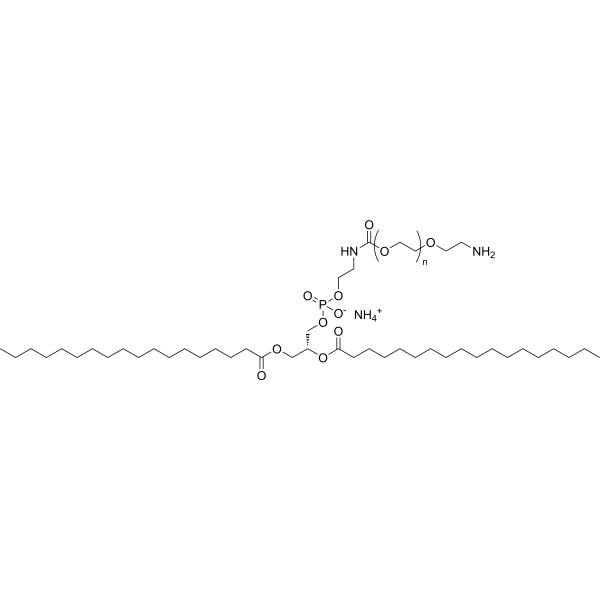
- HY-B2235B
-
|
L-α-Phosphatidylcholine (egg yolk, Type XVI-E), 99%, lyophilized powder; 1,2-Diacyl-sn-Glycero-3-phosphocholine (egg yolk, Type XVI-E), 99%; egg yolk Lecithins, Type XVI-E, 99%
|
Environmental Pollutants
Biochemical Assay Reagents
Liposome
|
Others
|
|
L-α-Lecithin (egg yolk, Type XVI-E), 99% (L-α-Phosphatidylcholine (egg yolk, Type XVI-E), 99%) is an active biomaterial. L-α-Lecithin (egg yolk, Type XVI-E), 99% forms liposomes with compounds (PF or BA). L-α-Lecithin (egg yolk, Type XVI-E), 99% increases membrane fluidity and affects microemulsion stability and fluorescence intensity stained with Nile red (HY-D0718). L-α-Lecithin (egg yolk, Type XVI-E), 99% It can be used for cell membrane structure research, biological membrane potential research, and liposome research [3] .
|
-

| Cat. No. |
Product Name |
Type |
-
- HY-D1556
-
|
1,2-dioleoyl-sn-Glycero-3-phosphoethanolamine-N-(carboxyfluorescein) ammonium
|
Fluorescent Dyes
|
|
18:1 PE CF (1,2-dioleoyl-sn-glycero-3-phosphoethanolamine-N-(carboxyfluorescein) (ammonium)) is a pH-sensitive fluorescent indicator. 18:1 PE CF exhibits changes in fluorescence intensity in response to pH variations and reflects the electrostatic states of cationic liposomes and lipoplexes. 18:1 PE CF supports real-time visualization of pH distribution and membrane deformation in giant unilamellar vesicles and is suitable for steady-state fluorescence testing in large unilamellar vesicle membranes. 18:1 PE CF is capable of monitoring the surface electrical potential of cationic liposomes and lipoplexes and can effectively label lipid bilayers and nanomicelles. 18:1 PE CF can be used for the research of the investigation of lung cancer (Ex = 495 nm; Em = 520 nm) [3] .
|
-
- HY-159194
-
|
|
Fluorescent Dyes
|
|
DSPE-PEG2000-Cy5.5 is a phospholipid-fluorophore conjugate consisting of Cy5.5 covalently linked to 1,2-distearoyl-sn-glycero-3-phosphoethanolamine (DSPE), serving as a surface label for liposomes in multimodal CT/optical imaging.DSPE-PEG2000-Cy5.5 can be used for the research of non-small cell lung cancer .
|
-
- HY-W040193GL
-
|
1,2-Distearoyl-sn-Glycero-3-PC (GMP Like); 1,2-Distearoyl-sn-Glycero-3-phosphorylcholine (GMP Like)
|
Fluorescent Dyes
|
|
DSPC (GMP Like) (1,2-Distearoyl-sn-glycero-3-phosphorylcholine) is DSPC (HY-W040193) produced by using GMP like guidelines. GMP Like small molecules works appropriately as an auxiliary reagent for cell therapy manufacture. DSPC (1,2-Distearoyl-sn-glycero-3-phosphorylcholine) is a cylindrical-shaped lipid. DSPC is used to synthesize liposomes, and is the lipid component in the lipid nanoparticle (LNP) system .
|
-
- HY-107614G
-
|
1-Oleoyl-sn-Glycero-3-phosphate sodium; 1-Oleoyl-LPA sodium
|
Fluorescent Dyes
|
|
1-Oleoyl lysophosphatidic acid sodium (GMP) is the GMP-grade form of 1-Oleoyl lysophosphatidic acid sodium (HY-107614). GMP-grade small molecules serve as auxiliary reagents in cell therapy. 1-Oleoyl lysophosphatidic acid sodium is a bioactive lipid signaling molecule. 1-Oleoyl lysophosphatidic acid sodium inhibits lysoPLD-catalyzed hydrolysis of lysophosphatidylcholine and FS-3. 1-Oleoyl lysophosphatidic acid sodium activates LPA1 and LPA2, thereby triggering calcium mobilization, NFATc1 translocation, Rho/ROCK activation, Smad2/3 phosphorylation and c-Fos expression. 1-Oleoyl lysophosphatidic acid sodium induces anxiety-like, depression-like and hypoactivity phenotypes, regulates osteoclast cytoskeleton and viability, reduces osteoclast bone resorptive activity, and drives mesenchymal stem cell differentiation into myofibroblast-like cells. 1-Oleoyl lysophosphatidic acid sodium stimulates the secretion of transforming growth factor-β1 and stromal cell-derived factor-1. 1-Oleoyl lysophosphatidic acid sodium is applicable to research related to anxiety, depression and ovarian cancer [3] .
|
-
- HY-112005GL
-
|
Dioleoylphosphatidylethanolamine (GMP Like); 1,2-Dioleoyl-sn-Glycero-3-phosphoethanolamine (GMP Like)
|
Fluorescent Dyes
|
|
DOPE (GMP Like) is the GMP Like class DOPE (HY-112005), and can be used as pharmaceutical excipients. GMP small molecules works appropriately as an auxiliary reagent for cell therapy manufacture. DOPE is a neutral helper lipid for cationic liposome and combines with cationic phospholipids to improve transfection efficiency of naked siRNA .
|
-
- HY-112005G
-
|
Dioleoylphosphatidylethanolamine; 1,2-Dioleoyl-sn-Glycero-3-phosphoethanolamine
|
Fluorescent Dyes
|
|
DOPE GMP is DOPE (HY-112005) produced by using GMP guidelines. GMP small molecules works appropriately as an auxiliary reagent for cell therapy manufacture. DOPE (Dioleoylphosphatidylethanolamine; 1,2-Dioleoyl-sn-glycero-3-phosphoethanolamine) is an orally active inhibitor of ferroptosis with anti-inflammatory and intestinal barrier maintenance activities. DOPE regulates the expression of ACSL4, SLC7A11 and GPX4 to restore the redox system balance, thereby reducing the levels of lipid peroxides, iron ions and intestinal inflammatory factors (IL-1β and IL-6). DOPE promotes the migration and proliferation of intestinal epithelial cells and increases the level of tight junction proteins; it also destabilizes endosomal membranes, mediates the conjugation of RVG peptides with mesenchymal stem cell-derived exosomes to enhance brain targeting. DOPE can be applied to research related to neonatal necrotizing enterocolitis and Alzheimer's disease [3] .
|
| Cat. No. |
Product Name |
Type |
-
- HY-W040193
-
DSPC
Maximum Cited Publications
18 Publications Verification
1,2-Distearoyl-sn-Glycero-3-PC; 1,2-Distearoyl-sn-Glycero-3-phosphorylcholine
|
Biochemical Assay Reagents
|
|
DSPC (1,2-Distearoyl-sn-glycero-3-phosphorylcholine) is a cylindrical-shaped lipid. DSPC is used to synthesize liposomes, and is the lipid component in the lipid nanoparticle (LNP) system .
|
-
- HY-112005
-
|
Dioleoylphosphatidylethanolamine; 1,2-Dioleoyl-sn-Glycero-3-phosphoethanolamine
|
Biochemical Assay Reagents
|
|
DOPE (Dioleoylphosphatidylethanolamine) is a neutral helper lipid for cationic liposome and combines with cationic phospholipids to improve transfection efficiency of naked siRNA .
|
-
- HY-113424A
-
|
DOPC
|
Biochemical Assay Reagents
|
|
1,2-Dioleoyl-sn-glycero-3-phosphocholine (DOPC) is a phospholipid and is commonly used alone, or with other components, in the generation of micelles, liposomes, and other types of artificial membranes.
|
-
- HY-130462
-
|
POPC
|
Biochemical Assay Reagents
|
|
1-Palmitoyl-2-oleoyl-sn-glycero-3-PC (POPC), a phospholipid, is a major component of biological membranes. 1-Palmitoyl-2-oleoyl-sn-glycero-3-PC is used for the preparation of liposomes and studying the properties of lipid bilayers .
|
-
- HY-111915
-
|
18:1 PA sodium salt
|
Biochemical Assay Reagents
|
|
1,2-Dioleoyl-sn-glycero-3-phosphate sodium salt (18:1 PA sodium salt) is an anionic lipid that can be used to prepare liposomes, micelles and artificial membranes .
|
-
- HY-112530
-
|
DSPE
|
Biochemical Assay Reagents
|
|
1,2-Distearoyl-sn-glycero-3-phosphorylethanolamine (DSPE) is a phosphoethanolamine (PE) lipid that can be used in the synthesis of liposomes .
|
-
- HY-109541
-
|
DMPC; 1,2-Dimyristoyl-sn-Glycero-3-phosphocholine; Dimyristoyl phosphatidylcholine
|
Biochemical Assay Reagents
|
|
Colfosceril miristate (DMPC) is a synthetic phospholipid. Colfosceril miristate has antiproliferative effects on various tumors. Colfosceril miristate is used to study lipid monolayers, bilayers and drug delivery [3].
|
-
- HY-141613
-
|
DOPS-NA
|
Biochemical Assay Reagents
|
|
1,2-Dioleoyl-sn-glycero-3-phospho-L-serine sodium (DOPS-NA) is a ubstitute for Phosphoserine/phosphatidylserine. 1,2-Dioleoyl-sn-glycero-3-phospho-L-serine sodium can be used together with DOPC and DOPE in lipid mixtures for the synthesis of liposomes. 1,2-Dioleoyl-sn-glycero-3-phospho-L-serine sodium can self-assemble into single-layer or double-layer membrane structures, similar to cell membranes, and possesses high membrane fluidity and flexibility. 1,2-Dioleoyl-sn-glycero-3-phospho-L-serine is widely applied in membrane biology, cell membrane research, lipid preparation, and drug delivery systems .
|
-
- HY-125771
-
|
18:0 Lyso-PC; LPC(18:0)
|
Biochemical Assay Reagents
|
|
1-Stearoyl-sn-glycero-3-phosphocholine is a lysophosphatidylcholine that inhibits HDAC3 activity and phosphorylation of STAT3 in K562 cells. 1-Stearoyl-sn-glycero-3-phosphocholine induces apoptosis and exhibits anticancer activity in chronic myelogenous leukemia (CML) K562 cells .
|
-
- HY-W583868
-
|
1,2-POPE; 16:0-18:1 PE
|
Biochemical Assay Reagents
|
|
1-Palmitoyl-2-oleoyl-sn-glycero-3-PE (1,2-POPE; 16:0-18:1 PE) is a phosphatidylethanolamine (PE) lipid. 1-Palmitoyl-2-oleoyl-sn-glycero-3-PE can induce lipid bilayer to form a hexagonal phase (HII) structure in an acidic environment and promote membrane fusion. 1-Palmitoyl-2-oleoyl-sn-glycero-3-PE can enhance the endosomal escape ability of lipid nanoparticles (LNPs) and improve the cellular delivery efficiency of nucleic acid drugs such as mRNA. 1-Palmitoyl-2-oleoyl-sn-glycero-3-PE can be used for LNP carrier targeting of gene therapy and mRNA vaccines .
|
-
- HY-107737
-
|
1,2-Dilauroyl-sn-Glycero-3-phosphocholine
|
Biochemical Assay Reagents
|
|
1,2-DLPC (1,2-Dilauroyl-sn-glycero-3-phosphocholine) is a ligand for LRH-1 agonists. 1,2-DLPC is a phospholipid used in the synthesis of liposomes. 1,2-DLPC enhances fat breakdown and apoptosis in fat cells through a TNFα-dependent pathway, while also inhibiting palmitate-induced insulin resistance through PPARα-mediated inflammation in muscle cells [3].
|
-
- HY-W127499
-
|
DEPC; L-Dierucoyl lecithin; Dierucoyllecithin
|
Biochemical Assay Reagents
|
|
1,2-Dierucoyl-sn-glycero-3-phosphocholine (DEPC) is the composition of liposome membrane. 1,2-Dierucoyl-sn-glycero-3-phosphocholine is used for the preparation of liposomes and studying the properties of lipid bilayers. The GO (glucose oxidase) in the 1,2-Dierucoyl-sn-glycero-3-phosphocholine liposome shows the high activity .
|
-
- HY-125940
-
|
1,2-Dipalmitoyl-sn-Glycero-3-phosphoGlycerol sodium
|
Biochemical Assay Reagents
|
|
DPPG (1,2-Dipalmitoyl-sn-glycero-3-phosphoglycerol sodium) is a phospholipid that contains long-chain (16:0) palmitic acid inserted at the sn-1 and sn-2 positions, and it serves as an active component to prevent BaP molecules from entering the water subphase. DPPG is used to prepare micelles, liposomes, and other types of artificial membranes that can resist damage from UV radiation [3].
|
-
- HY-W013063
-
|
|
Biochemical Assay Reagents
|
|
1,2-Dilinoleoyl-sn-glycero-3-phosphocholine is a phospholipid. 1,2-Dilinoleoyl-sn-glycero-3-phosphocholine can be used for obesity research .
|
-
- HY-145742
-
|
DSPG sodium
|
Biochemical Assay Reagents
|
|
1,2-Distearoyl-sn-Glycero-3-Phosphatidylglycerol (sodium) is the component of liposomes for drug delivery .
|
-
- HY-145539
-
|
|
Biochemical Assay Reagents
|
|
1,2-Dipalmitoyl-sn-glycero-3-PS sodium is a phosphatidylserine phospholipid. 1,2-Dipalmitoyl-sn-glycero-3-PS sodium is used for the preparation of phospholipid bilayers .
|
-
- HY-112307A
-
|
|
Biochemical Assay Reagents
|
|
(Rac)-1,2-Distearoyl-sn-Glycero-3-Phosphatidylglycerol (sodium) is an anionic phospholipid, can be studied for drug delivery and the synthesis of liposomes. 1,2-Distearoyl-sn-Glycero-3-Phosphatidylglycerol-containing liposomes can induce Tregs that are specific for the liposomes’ cargo. 1,2-Distearoyl-sn-Glycero-3-Phosphatidylglycerol is taken up by antigen-presenting cells mediated via complement component 1q (C1q) .
|
-
- HY-142989
-
|
|
Biochemical Assay Reagents
|
|
1,2-Didocosahexaenoyl-sn-glycero-3-phosphocholine is a polyunsaturated phospholipid that serves as a component of lipid monolayers and small unilamellar vesicles. 1,2-Didocosahexaenoyl-sn-glycero-3-phosphocholine can be used to prepare endoplasmic reticulum-targeted liposomes (PERLs), which are composed of 1,2-didocosahexaenoyl-sn-glycero-3-phosphoethanolamine, l-α-phosphatidylinositol and l-α-phosphatidylserine at a molar ratio of 1.5:1.5:1:1. PERLs reduce cholesterol levels in human peripheral blood mononuclear cells (PBMCs) and decrease HIV-1 particle secretion from HIV-1-infected PBMCs. Liposomes formed from 1,2-Didocosahexaenoyl-sn-glycero-3-phosphocholine exhibit cytotoxicity against leukemia cells. 1,2-Didocosahexaenoyl-sn-glycero-3-phosphocholine is applicable to studies related to hepatitis C virus infection, HIV infection, hepatitis B virus infection and leukemia .
|
-
- HY-W040255
-
|
PGPC
|
Biochemical Assay Reagents
|
|
1-Palmitoyl-2-glutaryl-sn-glycero-3-phosphocholine is an oxidized phospholipid. 1-Palmitoyl-2-glutaryl-sn-glycero-3-phosphocholine reduces the viability of HUVECs, increases the levels of ferrous ions and lipid peroxidation, promotes the production of superoxide anions, and decreases the levels of glutathione and GPX4 in cells. 1-Palmitoyl-2-glutaryl-sn-glycero-3-phosphocholine upregulates the mRNA and protein levels of FABP3 in HUVECs, impairs mitochondrial membrane potential, and induces ferroptosis-related changes as well as mitochondrial dysfunction and damage. 1-Palmitoyl-2-glutaryl-sn-glycero-3-phosphocholine activates caspase-11 and promotes the continuous release of IL-1β from macrophages and dendritic cells. 1-Palmitoyl-2-glutaryl-sn-glycero-3-phosphocholine inhibits the proliferation of aortic smooth muscle cells and induces apoptosis in these cells. 1-Palmitoyl-2-glutaryl-sn-glycero-3-phosphocholine is applicable to relevant research on atherosclerosis [3] .
|
-
- HY-W127457
-
|
|
Biochemical Assay Reagents
|
|
1,2-dihexanoyl-sn-glycero-3-phosphocholine is a phosphatidylcholine. It can play a role as a surfactant and is commonly used in the generation of micelles, liposomes, and other types of artificial membranes.
|
-
- HY-148979
-
|
SAPE
|
Biochemical Assay Reagents
|
|
1-Stearoyl-2-arachidonoyl-sn-glycero-3-phosphorylethanolamine (SAPE) is a naturally-occurring phospholipid that can be found in inner mitochondrial membrane (MITO) .
|
-
- HY-142990
-
|
|
Biochemical Assay Reagents
|
|
1-Oleoyl-2-palmitoyl-sn-glycero-3-PC derives from an oleic acid. 1-Oleoyl-2-palmitoyl-sn-glycero-3-PC can be used for the synthesis of liposomes .
|
-
- HY-115415
-
|
|
Biochemical Assay Reagents
|
|
1,2-Distearoyl-sn-glycero-3-phosphate, sodium salt is a phospholipid commonly used as a component of liposome formulations and drug delivery systems. 1,2-Distearoyl-sn-glycero-3-phosphate, sodium salt has unique chemical properties that make it an effective tool for encapsulating drugs and delivering them to specific targets in the body. It acts as a stabilizer and emulsifier, which can improve the solubility and bioavailability of drugs.
|
-
- HY-134174A
-
|
16:0-18:1 PA
|
Biochemical Assay Reagents
|
|
1-Palmitoyl-2-oleoyl-sn-glycero-3-phosphate sodium (16:0-18:1 PA) is a phospholipid with activities in regulating biological membrane fluidity and participating in cell signal transduction. 1-Palmitoyl-2-oleoyl-sn-glycero-3-phosphate sodium can be used to study the effects on the activity of chloroplast envelope monogalactosyldiacylglycerol (MGDG) synthase. 1-Palmitoyl-2-oleoyl-sn-glycero-3-phosphate sodium plays an important role in cell membrane integrity and function.
|
-
- HY-W127460
-
|
1-Hexadecyl-2-azelaoyl-sn-Glycero-3-phosphocholine
|
Biochemical Assay Reagents
|
|
1-hexadecyl-2-azelaoyl-sn-glycero-3-phosphocholine is a biochemical reagent that can be used as a biological material or organic compound for life science related research.
|
-
- HY-142988
-
|
1S-2M-PC
|
Biochemical Assay Reagents
|
|
1-Stearoyl-2-myristoyl-sn-glycero-3-PC (1S-2M-PC) belongs to the class of asymmetric phospholipids. 1-Stearoyl-2-myristoyl-sn-glycero-3-PC is abundant in biological membranes .
|
-
- HY-142991
-
|
POPG
|
Biochemical Assay Reagents
|
|
1-Palmitoyl-2-oleoyl-sn-glycero-3-phosphatidylglycerol (POPG) is an anionic phosphatidylglycerol that often serves as a key component to co-construct model phospholipid bilayers with phosphatidylcholine (e.g., at a 3:1 POPC:POPG ratio) for investigating the structure and dynamics of transmembrane proteins. 1-Palmitoyl-2-oleoyl-sn-glycero-3-phosphatidylglycerol acts as a fundamental material for mimicking the physicochemical properties of biological membranes and enables the elucidation of membrane protein interaction mechanisms .
|
-
- HY-157623
-
|
1-Palmitoyl-2-hydroxy-sn-Glycero-3-phospho-L-serine sodium
|
Biochemical Assay Reagents
|
|
16:0 Lyso PS (1-Palmitoyl-2-hydroxy-sn-glycero-3-phospho-L-serine sodium) is a lysophospholipid. 16:0 Lyso PS serves as a standard for preparing standard curves .
|
-
- HY-143203
-
|
1-Stearoyl-2-linoleoyl-sn-Glycero-3-phosphoethanolamine
|
Biochemical Assay Reagents
|
|
18:0-18:2 PE is an important component of phosphatidylethanolamine (PE), involved in phospholipid metabolism and associated with diseases such as ovarian cancer. 18:0-18:2 PE in the hot processing process, its unsaturated fatty acids will degrade to form a variety of odor active compounds. 18:0-18:2 PE is mainly used in the field of food science to improve the flavor of aquatic products, as well as medical research on diseases related to phospholipid metabolism .
|
-
- HY-130462R
-
|
POPC (Standard)
|
Biochemical Assay Reagents
|
|
1-Palmitoyl-2-oleoyl-sn-glycero-3-PC (Standard) is the analytical standard of 1-Palmitoyl-2-oleoyl-sn-glycero-3-PC. This product is intended for research and analytical applications. 1-Palmitoyl-2-oleoyl-sn-glycero-3-PC (POPC), a phospholipid, is a major component of biological membranes. 1-Palmitoyl-2-oleoyl-sn-glycero-3-PC is used for the preparation of liposomes and studying the properties of lipid bilayers .
|
-
- HY-W725309
-
|
1-Stearoyl-2-oleoyl-sn-Glycero-3-phosphate sodium
|
Biochemical Assay Reagents
|
|
18:0-18:1 PA (1-Stearoyl-2-oleoyl-sn-glycero-3-phosphate) sodium is an anionic lipid .
|
-
- HY-157661
-
|
1',3'-Bis[1,2-dimyristoyl-sn-Glycero-3-phospho]-Glycerol sodium
|
Biochemical Assay Reagents
|
|
14:0 Cardiolipin sodium (1',3'-Bis[1,2-dimyristoyl-sn-glycero-3-phospho]-glycerol (sodium)) is a kind of biochemical reagent.
|
-
- HY-157622
-
|
|
Biochemical Assay Reagents
|
|
1-Palmitoyl-2-linoleoyl-sn-glycero-3-phosphocholine is a glycerophospholipid with activity for studying the effects of phosphatidylcholine (PC) on the lubrication of damaged mesothelial cells. 1-Palmitoyl-2-linoleoyl-sn-glycero-3-phosphocholine can be used to explore the function and repair mechanism of cell membranes. 1-Palmitoyl-2-linoleoyl-sn-glycero-3-phosphocholine has important application potential in biomedical research.
|
-
- HY-148601
-
|
DSPG
|
Biochemical Assay Reagents
|
|
1,2-Distearoyl-sn-Glycero-3-Phosphatidylglycerol is an anionic phospholipid, can be used for drug delivery and the synthesis of liposomes.
|
-
- HY-157673
-
|
16:1 PE
|
Biochemical Assay Reagents
|
|
1,2-Dipalmitoleoyl-sn-glycero-3-phosphoethanolamine (16:1 PE) is a phosphatidylethanolamine that can enhance PP2A and PTP1B activities in malignant pleural mesothelioma cells. 1,2-Dipalmitoleoyl-sn-glycero-3-phosphoethanolamine induces apoptosis of NCI-H28 malignant pleural mesothelioma cells .
|
-
- HY-W040193GL
-
|
1,2-Distearoyl-sn-Glycero-3-PC (GMP Like); 1,2-Distearoyl-sn-Glycero-3-phosphorylcholine (GMP Like)
|
Biochemical Assay Reagents
|
|
DSPC (GMP Like) (1,2-Distearoyl-sn-glycero-3-phosphorylcholine) is DSPC (HY-W040193) produced by using GMP like guidelines. GMP Like small molecules works appropriately as an auxiliary reagent for cell therapy manufacture. DSPC (1,2-Distearoyl-sn-glycero-3-phosphorylcholine) is a cylindrical-shaped lipid. DSPC is used to synthesize liposomes, and is the lipid component in the lipid nanoparticle (LNP) system .
|
-
- HY-157692
-
|
1,2-Didecanoyl-sn-Glycero-3-phospho-L-serine sodium
|
Biochemical Assay Reagents
|
|
10:0 PS (1,2-Didecanoyl-sn-glycero-3-phospho-L-serine (sodium)) is a kind of biochemical reagent.
|
-
- HY-167811
-
|
16:0 Lysyl PG hydrochloride
|
Biochemical Assay Reagents
|
|
1,2-Dipalmitoyl-sn-glycero-3-[phospho-rac-(3-lysyl(1-glycerol))] hydrochloride (16:0 Lysyl PG hydrochloride) is a synthetic phospholipid with the activity of promoting the preparation of artificial vesicles.
|
-
- HY-107614G
-
|
1-Oleoyl-sn-Glycero-3-phosphate sodium; 1-Oleoyl-LPA sodium
|
Biochemical Assay Reagents
|
|
1-Oleoyl lysophosphatidic acid sodium (GMP) is the GMP-grade form of 1-Oleoyl lysophosphatidic acid sodium (HY-107614). GMP-grade small molecules serve as auxiliary reagents in cell therapy. 1-Oleoyl lysophosphatidic acid sodium is a bioactive lipid signaling molecule. 1-Oleoyl lysophosphatidic acid sodium inhibits lysoPLD-catalyzed hydrolysis of lysophosphatidylcholine and FS-3. 1-Oleoyl lysophosphatidic acid sodium activates LPA1 and LPA2, thereby triggering calcium mobilization, NFATc1 translocation, Rho/ROCK activation, Smad2/3 phosphorylation and c-Fos expression. 1-Oleoyl lysophosphatidic acid sodium induces anxiety-like, depression-like and hypoactivity phenotypes, regulates osteoclast cytoskeleton and viability, reduces osteoclast bone resorptive activity, and drives mesenchymal stem cell differentiation into myofibroblast-like cells. 1-Oleoyl lysophosphatidic acid sodium stimulates the secretion of transforming growth factor-β1 and stromal cell-derived factor-1. 1-Oleoyl lysophosphatidic acid sodium is applicable to research related to anxiety, depression and ovarian cancer [3] .
|
-
- HY-112005GL
-
|
Dioleoylphosphatidylethanolamine (GMP Like); 1,2-Dioleoyl-sn-Glycero-3-phosphoethanolamine (GMP Like)
|
Biochemical Assay Reagents
|
|
DOPE (GMP Like) is the GMP Like class DOPE (HY-112005), and can be used as pharmaceutical excipients. GMP small molecules works appropriately as an auxiliary reagent for cell therapy manufacture. DOPE is a neutral helper lipid for cationic liposome and combines with cationic phospholipids to improve transfection efficiency of naked siRNA .
|
-
- HY-W339358
-
|
1,2-Diundecanoyl-sn-Glycero-3-phosphocholine
|
Biochemical Assay Reagents
|
|
11:0 PC (1,2-Diundecanoyl-sn-glycero-3-phosphocholine) is a phosphatidylcholine, which plays a role in the folding of intact, functionally competent integral membrane proteins .
|
-
- HY-145508
-
|
1,2-Didodecanoyl-sn-Glycero-3-phospho-(1′racGlycerol) sodium
|
Biochemical Assay Reagents
|
|
1,2-Dilauroyl-sn-glycero-3-PG (1,2-Didodecanoyl-sn-glycero-3-phospho-(1′racglycerol)) sodium is a phospholipid containing 12:0 fatty acids that exhibits excellent surfactant properties.
|
-
- HY-W339833
-
|
|
Biochemical Assay Reagents
|
|
1-Myristoyl-2-hydroxy-sn-glycero-3-phosphate sodium is a kind of activity that promotes platelet aggregation and stimulates smooth muscle contraction. 1-Myristoyl-2-hydroxy-sn-glycero-3-phosphate sodium can enhance cell chemotaxis and cytoskeletal rearrangement. 1-Myristoyl-2-hydroxy-sn-glycero-3-phosphate sodium can also promote Ca2+ mobilization and neurotransmitter release. 1-Myristoyl-2-hydroxy-sn-glycero-3-phosphate sodium also has a certain effect on cell proliferation.
|
-
- HY-W331649
-
-
- HY-167816
-
|
21:0 PC
|
Biochemical Assay Reagents
|
|
1,2-Diheneicosanoyl-sn-glycero-3-phosphocholine (21:0 PC) is a surfactant with antibacterial activity. 1,2-Diheneicosanoyl-sn-glycero-3-phosphocholine can act in mucus to help prevent the spread of pathogens. 1,2-Diheneicosanoyl-sn-glycero-3-phosphocholine plays a protective role in biofilms, maintaining the health of organisms.
|
-
- HY-167538
-
-
- HY-W331017
-
|
26:0 Lyso PC
|
Biochemical Assay Reagents
|
|
1-Hexacosanoyl-sn-glycero-3-phosphocholine (26:0 Lyso PC) is a long-chain fatty acid. 1-Hexacosanoyl-sn-glycero-3-phosphocholine can be used as a biomarker for X-linked adrenoleukodystrophy (ALD) in mice .
|
-
- HY-157642
-
-
- HY-166988
-
-
- HY-167547
-
- HY-125619
-
|
|
Biochemical Assay Reagents
|
|
1,2-dioctanoyl-sn-glycero-3-phosphocholine, is a phospholipid commonly used as a component of liposome formulations and drug delivery systems. 1,2-dioctanoyl-sn-glycero-3-phosphocholine has unique chemical properties that allow it to form stable bilayers and vesicles, allowing drug encapsulation and delivery to specific targets in the body. It acts as a stabilizer and emulsifier, which can improve the solubility and bioavailability of drugs.
|
- HY-157689
-
|
20:1(Cis)PC
|
Biochemical Assay Reagents
|
|
1,2-Dieicosenoyl-sn-glycero-3-phosphocholine (20:1(Cis)PC) is a phospholipid that has the activity of promoting the binding of proteins to liposomes. 1,2-Dieicosenoyl-sn-glycero-3-phosphocholine can serve as a component of biological membranes and enhance the fluidity of cell membranes. 1,2-Dieicosenoyl-sn-glycero-3-phosphocholine also plays an important role in compound delivery systems, improving the biocompatibility and targeting of compounds.
|
- HY-109541S1
-
|
DMPC-d4; 1,2-Dimyristoyl-sn-Glycero-3-phosphocholine-d4
|
Biochemical Assay Reagents
|
|
Colfosceril miristate-d4 (DMPC-d4) is deuterium labeled Colfosceril miristate. Colfosceril miristate is a synthetic phospholipid used in liposomes. Colfosceril miristate is used to study lipid monolayers, bilayers and drug delivery .
|
- HY-W585377
-
|
|
Biochemical Assay Reagents
|
|
1-Palmitoyl-2-(dipyrrometheneboron difluoride)undecanoyl-sn-glycero-3-phosphocholine is a biochemical reagent.
|
- HY-109541S5
-
|
DMPC-d67; 1,2-Dimyristoyl-sn-Glycero-3-phosphocholine-d67
|
Biochemical Assay Reagents
|
|
1,2-Dimyristoyl-sn-glycero-3-phosphocholine-d67 is deuterium labeled 1,2-Dimyristoyl-sn-glycero-3-phosphocholine. 1,2-Dimyristoyl-sn-glycero-3-phosphocholine (DMPC) is a synthetic phospholipid used in liposomes. 1,2-Dimyristoyl-sn-glycero-3-phosphocholine
|
- HY-166989
-
- HY-157718
-
|
|
Biochemical Assay Reagents
|
|
1,2-Di-O-(9Z-octadecenyl)-sn-glycero-3-phosphocholine is a surfactant that has the activity of promoting liposome formation. 1,2-Di-O-(9Z-octadecenyl)-sn-glycero-3-phosphocholine can effectively study the biological effects of ceramide and ceramide phosphate. 1,2-Di-O-(9Z-octadecenyl)-sn-glycero-3-phosphocholine shows important application in the determination of phospholipase A activity of lecithin-cholesterol acyltransferase in ether matrix.
|
- HY-170229
-
|
1-O-Heptadecyl-2-hydroxy-sn-Glycero-3-phosphocholine
|
Biochemical Assay Reagents
|
|
C17 Lyso PAF (1-O-Heptadecyl-2-hydroxy-sn-glycero-3-phosphocholine) is a precursor and metabolite of 1-O-heptadecyl-2-acetyl-sn-glycero-3-phosphocholine (C17:0 PAF) .
|
- HY-172385
-
|
1,2-Dipalmitoyl-sn-Glycero-3-succinate
|
Biochemical Assay Reagents
|
|
16:0 DGS (1,2-Dipalmitoyl-sn-glycero-3-succinate) can be used for the preparation of pH-sensitive liposomes .
|
- HY-109541S6
-
|
(Rac)-DMPC-d72; (Rac)-1,2-Dimyristoyl-sn-Glycero-3-phosphocholine-d72
|
Biochemical Assay Reagents
|
|
(Rac)-1,2-Dimyristoyl-sn-glycero-3-phosphocholine-d72 is deuterium labeled (Rac)-1,2-Dimyristoyl-sn-glycero-3-phosphocholine. 1,2-Dimyristoyl-sn-glycero-3-phosphocholine (DMPC) is a synthetic phospholipid used in liposomes. 1,2-Dimyristoyl-sn-glycero-3-ph
|
- HY-170457
-
|
1-Oleoyl-2-cholesterylhemisuccinoyl-sn-Glycero-3-phosphocholine
|
Biochemical Assay Reagents
|
|
OChemsPC (1-Oleoyl-2-cholesterylhemisuccinoyl-sn-glycero-3-phosphocholine), a sterol-lipid, is an unsaturated hydrocarbon chain replaces the saturated chain of Sterol-lipid A .
|
- HY-W339758
-
|
1,2-Didecanoyl-sn-Glycero-3-phosphate sodium
|
Biochemical Assay Reagents
|
|
10:0 PA (1,2-Didecanoyl-sn-glycero-3-phosphate) sodium is an anionic lipid that can be used to prepare nanoemulsions to improve the oral bioavailability of Etoposide (HY-13629) .
|
- HY-157699
-
|
|
Biochemical Assay Reagents
|
|
1,2-Dioleoyl-sn-glycero-3-phospho-(1'-myo-inositol-5'-phosphate) ammonium is a membrane-bound signaling molecule with intracellular activity in regulating membrane trafficking and signal transduction. 1,2-Dioleoyl-sn-glycero-3-phospho-(1'-myo-inositol-5'-phosphate) ammonium can be used in the preparation of liposomes to enhance the efficiency of compound delivery. 1,2-Dioleoyl-sn-glycero-3-phospho-(1'-myo-inositol-5'-phosphate) ammonium can also act as a coordinator of the actin cytoskeleton and participate in the regulation of cell morphology and motility.
|
- HY-W414749
-
|
1-Octanoyl-sn-Glycero-3-phosphocholine
|
Biochemical Assay Reagents
|
|
08:0 Lyso PC (1-Octanoyl-sn-glycero-3-phosphocholine) is a lysolecithin that can be hydrolyzed by Phospholipase A2 (HY-P3029) .
|
- HY-W127359
-
|
(S)-DLPC
|
Biochemical Assay Reagents
|
|
(S)-1,2-Dilauroyl-sn-glycero-3-phosphocholine is a biochemical reagent that can be used as a biological material or organic compound for life science related research.
|
- HY-W339764
-
|
10:0 PG
|
Biochemical Assay Reagents
|
|
1, 2-didecanoyl-SN-glycero-3-phospho -(1'-rac-glycerol) (10:0 PG) sodium is a biochemical reagent .
|
- HY-157696
-
|
1,2-Di-O-octadecyl-sn-Glycero-3-phosphocholine
|
Biochemical Assay Reagents
|
|
18:0 Diether PC (1,2-Di-O-octadecyl-sn-glycero-3-phosphocholine) is a glycerophospholipid that can be used as a nonhydrolizable ether lipid in calcein-containing vesicles .
|
- HY-W127368
-
|
L-α-Phosphatidylethanolamine, β-linoleoyl-γ-palmitoyl
|
Biochemical Assay Reagents
|
|
2-Linoleoyl-1-palmitoyl-sn-glycero-3-phosphoethanolamine is a biochemical reagent that can be used as a biological material or organic compound for life science related research.
|
- HY-170459
-
|
1-Oleoyl-2-(12-biotinyl(aminododecanoyl))-sn-Glycero-3-phosphoethanolamine
|
Biochemical Assay Reagents
|
|
18:1-12:0 Biotin PE (1-Oleoyl-2-(12-biotinyl(aminododecanoyl))-sn-glycero-3-phosphoethanolamine) can be used to prepare liposomes .
|
- HY-157651
-
|
|
Biochemical Assay Reagents
|
|
1-Stearoyl-2-arachidonoyl-sn-glycero-3-phospho-(1'-myo-inositol-3',4'-bisphosphate) ammonium regulates the activity of the actin network associated with endocytic structures .
|
- HY-173384
-
|
1,2-distearoyl-sn-Glycero-3-phosphoethanolamine-N- tetraazacyclododecane-N-tetraacetic acid, sodium salt
|
Biochemical Assay Reagents
|
|
DSPE-DOTA sodium (1,2-distearoyl-sn-glycero-3-phosphoethanolamine-N- tetraazacyclododecane-N-tetraacetic acid, sodium salt) is a chelating lipid used as a key contrast agent in magnetic resonance imaging (MRI). DSPE-DOTA sodium can be used for imaging detection of tumors, neurological and inflammatory diseases .
|
- HY-139406
-
|
PtdIns-(4)-P1 (1,2-dioctanoyl) ammonium; 08:0 PI(4)P ammonium
|
Biochemical Assay Reagents
|
|
1,2-Dioctanoyl-sn-glycero-3-phospho-(1'-myo-inositol-4'-phosphate) (PtdIns-(4)-P1 (1,2-dioctanoyl)) ammonium is a synthetic phosphatidylinositol. 1,2-Dioctanoyl-sn-glycero-3-phospho-(1'-myo-inositol-4'-phosphate) ammonium can be used for the research of signal transduction research .
|
- HY-170458
-
|
1-Stearoyl-2-linoleoyl-sn-Glycero-3-phospho-(1'-rac-Glycerol) sodium
|
Biochemical Assay Reagents
|
|
18:0-18:2 PG (1-Stearoyl-2-linoleoyl-sn-glycero-3-phospho-(1'-rac-glycerol)) sodium is a glycerophospholipid contains Stearic acid (HY-B2219), Linolenic acid (HY-N0728) and phospho-rac-(1-glycerol) .
|
- HY-157703
-
|
1,2-Dioleoyl-sn-Glycero-3-phospho-1′-myo-inositol-4′,5′-bisphosphate ammonium
|
Biochemical Assay Reagents
|
|
18:1 PI(4,5)P2 (1,2-Dioleoyl-sn-glycero-3-phospho-(1′-myo-inositol-4′,5′-bisphosphate) (ammonium)) is a kind of biochemical reagent.
|
- HY-157652
-
|
1-Stearoyl-2-arachidonoyl-sn-Glycero-3-phospho-1′-myo-inositol-3′,4′,5′-trisphosphate ammonium
|
Biochemical Assay Reagents
|
|
18:0-20:4 PI(3,4,5)P3 (1-Stearoyl-2-arachidonoyl-sn-glycero-3-phospho-(1′-myo-inositol-3′,4′,5′-trisphosphate) (ammonium)) is a kind of biochemical reagent.
|
- HY-173383
-
|
1,2-dioleoyl-sn-Glycero-3-phosphoethanolamine-N- tetraazacyclododecane-N-tetraacetic acid, sodium salt
|
Biochemical Assay Reagents
|
|
DOPE-DOTA sodium is a chelated lipid that serves as a key contrast agent in magnetic resonance imaging (MRI). DOPE-DOTA sodium can be used for cancer, blood-brain barrier disruption, abnormalities such as aneurysms or plaque buildup, inflammation in arthritis, and liver function and lesions study
|
- HY-W127550
-
|
PG(16:0/16:0)
|
Biochemical Assay Reagents
|
|
rac-DPPG sodium is a biochemical reagent that can be used as a biological material or organic compound for life science related research.
|
- HY-167809
-
|
|
Biochemical Assay Reagents
|
|
1-Palmitoyl-2-cholesterylcarbonoyl-sn-glycero-3-phosphocholine is a sterol-modified phospholipid with the activity of maintaining the stability of membrane bilayer structure and enhancing the liposome-mediated compound delivery process. 1-Palmitoyl-2-cholesterylcarbonoyl-sn-glycero-3-phosphocholine is widely used in biomedical applications to improve the delivery efficiency of compounds. 1-Palmitoyl-2-cholesterylcarbonoyl-sn-glycero-3-phosphocholine can also improve the release and distribution of compounds in cells.
|
- HY-157644
-
- HY-166992
-
|
|
Biochemical Assay Reagents
|
|
1,2-Dioleoyl-sn-glycero-3-PA (ammonium) is a phospholipid. Phospholipids have good biocompatibility and significant amphiphilic characteristics, making them the main and suitable dosage form or excipient in drug formulations, thereby achieving better therapeutic effects. 1,2-Dioleoyl-sn-glycero-3-PA (ammonium)can be used in drug delivery research .
|
- HY-109541S
-
|
DMPC-d58; 1,2-Dimyristoyl-sn-Glycero-3-phosphocholine-d58
|
Biochemical Assay Reagents
|
|
Colfosceril miristate-d58 (DMPC-d58) is deuterium labeled Colfosceril miristate. Colfosceril miristate a synthetic phospholipid used in liposomes. Colfosceril miristate is used to study lipid monolayers, bilayers and drug delivery .
|
- HY-W127567
-
|
|
Biochemical Assay Reagents
|
|
1,2-Dipalmitoyl-sn-glycero-3-phosphate (calcium) is a biochemical reagent that can be used as a biological material or organic compound for life science related research.
|
- HY-167807
-
|
|
Biochemical Assay Reagents
|
|
1-Palmitoyl-2-(6,7-dibromo)stearoyl-sn-glycero-3-phosphocholine is a phospholipid with good biocompatibility. 1-Palmitoyl-2-(6,7-dibromo)stearoyl-sn-glycero-3-phosphocholine can be used to prepare large unilamellar vesicles.
|
- HY-W340037
-
- HY-W350486
-
|
1,2-Dipalmitoyl-sn-Glycero-3-phosphomethanol sodium
|
Biochemical Assay Reagents
|
|
16:0 Phosphatidylmethanol (1,2-Dipalmitoyl-sn-glycero-3-phosphomethanol) sodium is a phosphatidyl alcohol with methanol head groups .
|
- HY-170463
-
|
1,2-Dipalmitoyl-sn-Glycero-3-phosphopropanol sodium
|
Biochemical Assay Reagents
|
|
16:0 Phosphatidylpropanol (1,2-Dipalmitoyl-sn-glycero-3-phosphopropanol) sodium is a phosphatidyl alcohol with propanol head groups .
|
- HY-170464
-
|
1-Palmitoyl-2-cholesterylhemisuccinoyl-sn-Glycero-3-phosphocholine
|
Biochemical Assay Reagents
|
|
PChemsPC (1-Palmitoyl-2-cholesterylhemisuccinoyl-sn-glycero-3-phosphocholine) is a sterol-lipid that robustly demixes into micron-scale, liquid phases .
|
- HY-W340113
-
|
1,2-Dipentadecanoyl-sn-Glycero-3-phosphocholine
|
Biochemical Assay Reagents
|
|
15:0 PC (1,2-Dipentadecanoyl-sn-glycero-3-phosphocholine) is a phosphatidylcholine that can be used for giant unilamellar lipid vesicles (GUVs) preparation .
|
- HY-164112
-
|
18:1 CDP DG
|
Biochemical Assay Reagents
|
|
1,2-Dioleoyl-sn-glycero-3-(cytidine diphosphate) ammonium (18:1 CDP DG) is a diacylglycerol derivate .
|
- HY-167817
-
|
18:1 Phosphatidylpropanol sodium
|
Biochemical Assay Reagents
|
|
1,2-Dioleoyl-sn-glycero-3-phosphopropanol sodium (18:1 Phosphatidylpropanol sodium) is a bioactive phospholipid that has the capability to be used in mass spectrometry analysis and is able to effectively quantify Peth in human blood.
|
- HY-W040172
-
|
1,2-Di-O-hexyl-sn-Glycero-3-phosphocholine
|
Biochemical Assay Reagents
|
|
06:0 Diether PC (1,2-Di-O-hexyl-sn-glycero-3-phosphocholine) is a glycerophospholipid that can be used for bicelles preparation .
|
- HY-157715
-
|
|
Biochemical Assay Reagents
|
|
1,2-Dioctanoyl-sn-glycero-3-phospho-(1'-myo-inositol-3',4',5'-trisphosphate) ammonium is a membrane-bound signaling molecule with activities that regulate cell growth, metabolism, proliferation, and survival. 1,2-Dioctanoyl-sn-glycero-3-phospho-(1'-myo-inositol-3',4',5'-trisphosphate) ammonium plays an important role in cell physiology and participates in multiple signal transduction pathways. 1,2-Dioctanoyl-sn-glycero-3-phospho-(1'-myo-inositol-3',4',5'-trisphosphate) ammonium has a profound effect on intracellular signaling.
|
- HY-147076
-
|
1,2-Diarachidonoyl-sn-Glycero-3-[phospho-rac-(1-Glycerol)] sodium
|
Biochemical Assay Reagents
|
|
20:4 PG (1,2-Diarachidonoyl-sn-glycero-3-[phospho-rac-(1-glycerol)]) sodium is a glycerophospholipid that can be used as an oxidized phospholipid .
|
- HY-170461
-
|
1,2-Dioleoyl-sn-Glycero-3-phosphoethanolamine-N,N-dimethyl
|
Biochemical Assay Reagents
|
|
18:1 Dimethyl PE (1,2-Dioleoyl-sn-glycero-3-phosphoethanolamine-N,N-dimethyl) is a phospholipid that can be used as a biological material or organic compound for life science related research.
|
- HY-167567
-
|
1,2-Dihexadecanoyl-sn-Glycero-3-phosphoethanolamine-N-(2,4-dinitrophenyl) ammonium
|
Biochemical Assay Reagents
|
|
16:0 DNP PE (1,2-Dihexadecanoyl-sn-glycero-3-phosphoethanolamine-N-(2,4-dinitrophenyl) (ammonium)) is a kind of biochemical reagent.
|
- HY-170466
-
|
1-Palmitoyl-2-stearoyl-(12-doxyl)-sn-Glycero-3-phosphocholine
|
Biochemical Assay Reagents
|
|
16:0-12 Doxyl PC (1-Palmitoyl-2-stearoyl-(12-doxyl)-sn-glycero-3-phosphocholine) is a fluorescence quencher, and its nitrogen oxide is located downstream of the sn-2 chain. 16:0-12 Doxyl PC has a better fluorescence quenching effect onthe fluorophore is buried within the hydrocarbon interior of the bilayer .
|
- HY-157714
-
|
1,2-Dioctanoyl-sn-Glycero-3-phospho-1′-myo-inositol-3′,4′-bisphosphate ammonium
|
Biochemical Assay Reagents
|
|
08:0 PI(3,4)P2 (1,2-Dioctanoyl-sn-glycero-3-phospho-(1′-myo-inositol-3′,4′-bisphosphate) (ammonium)) is a kind of biochemical reagent.
|
- HY-107737R
-
|
1,2-Dilauroyl-sn-Glycero-3-phosphocholine (Standard)
|
Biochemical Assay Reagents
|
|
1,2-DLPC (Standard) is the analytical standard of 1,2-DLPC (HY-107737). This product is intended for research and analytical applications. 1,2-DLPC (1,2-Dilauroyl-sn-glycero-3-phosphocholine) is a ligand for LRH-1 agonists. 1,2-DLPC is a phospholipid used in the synthesis of liposomes. 1,2-DLPC enhances fat breaKdown and apoptosis in fat cells through a TNFα-dependent pathway, while also inhibiting palmitate-induced insulin resistance through PPARα-mediated inflammation in muscle cells [3].
|
- HY-112005G
-
|
Dioleoylphosphatidylethanolamine; 1,2-Dioleoyl-sn-Glycero-3-phosphoethanolamine
|
Biochemical Assay Reagents
|
|
DOPE GMP is DOPE (HY-112005) produced by using GMP guidelines. GMP small molecules works appropriately as an auxiliary reagent for cell therapy manufacture. DOPE (Dioleoylphosphatidylethanolamine; 1,2-Dioleoyl-sn-glycero-3-phosphoethanolamine) is an orally active inhibitor of ferroptosis with anti-inflammatory and intestinal barrier maintenance activities. DOPE regulates the expression of ACSL4, SLC7A11 and GPX4 to restore the redox system balance, thereby reducing the levels of lipid peroxides, iron ions and intestinal inflammatory factors (IL-1β and IL-6). DOPE promotes the migration and proliferation of intestinal epithelial cells and increases the level of tight junction proteins; it also destabilizes endosomal membranes, mediates the conjugation of RVG peptides with mesenchymal stem cell-derived exosomes to enhance brain targeting. DOPE can be applied to research related to neonatal necrotizing enterocolitis and Alzheimer's disease [3] .
|
- HY-109541S3
-
|
DMPC-d13; 1,2-Dimyristoyl-sn-Glycero-3-phosphocholine-d13
|
Biochemical Assay Reagents
|
|
Colfosceril miristate-d13 (DMPC-d13) is deuterium labeled Colfosceril miristate. Colfosceril miristate a synthetic phospholipid used in liposomes. Colfosceril miristate is used to study lipid monolayers, bilayers and drug delivery .
|
- HY-109541S4
-
|
DMPC-d63; 1,2-Dimyristoyl-sn-Glycero-3-phosphocholine-d63
|
Biochemical Assay Reagents
|
|
Colfosceril miristate-d63 (DMPC-d63) is deuterium labeled Colfosceril miristate. Colfosceril miristate a synthetic phospholipid used in liposomes. Colfosceril miristate is used to study lipid monolayers, bilayers and drug delivery .
|
- HY-112760
-
|
DSPE-mPEG2000 sodium; 1,2-Distearoyl-sn-Glycero-3-phosphoethanolamine-N-[methoxy(polyethylene glycol)-2000] sodium
|
Biochemical Assay Reagents
|
|
18:0 mPEG2000 PE (DSPE-mPEG2000) sodium is a conjugate of phospholipid and polyethylene glycol, and it can serve as an important PEG lipid component in lipid nanoparticles (LNPs). 18:0 mPEG2000 PE sodium can be used in the research of gene transfection, drug carriers and drug delivery .
|
- HY-109541S2
-
|
DMPC-d9; 1,2-Dimyristoyl-sn-Glycero-3-phosphocholine-d9
|
Biochemical Assay Reagents
|
|
Colfosceril miristate-d9 (DMPC-d9) is deuterium labeled Colfosceril miristate. Colfosceril miristate a synthetic phospholipid used in liposomes. Colfosceril miristate is used to study lipid monolayers, bilayers and drug delivery .
|
- HY-142978
-
|
DSPE-mPEG2000; 1,2-Distearoyl-sn-Glycero-3-phosphoethanolamine-N-[methoxy(polyethylene glycol)-2000]
|
Biochemical Assay Reagents
|
|
18:0 mPEG2000 PE (DSPE-mPEG2000) ammonium is a kind of amphiphilic polymer material. 18:0 mPEG2000 PE ammonium combines hydrophobic lipids (18:0 stearic acid chain) with hydrophilic polyethylene glycol (2 kDa) chains to form amphiphilic molecules, which are used to construct stable liposomes/nanoparticles, thereby enhancing drug delivery, prolonging circulation time, and achieving targeted effects through its functional terminal groups (usually biotin or carboxyl groups). 18:0 mPEG2000 PE ammonium can be used for the research of nanoprobes and drug delivery [3] .
|
- HY-W591332A
-
|
|
Biochemical Assay Reagents
|
|
mPEG1000-DMPE is a PEGylated 1,2-Dimyristoyl-sn-glycero-3-phosphoethanolamine (14:0 PE) compound with a methyl group at the?other?end of the PEG chain. The PEG polymer exhibits amphiphatic behavior and helps to form stable micelles in an aqueous solution. It can be used to prepare nanoparticles or liposomes for targeted drug delivery applications .
|
- HY-144012A
-
|
16:0 PEG350 PE; 1,2-Dipalmitoyl-sn-Glycero-3-phosphoethanolamine-N-[methoxy(polyethylene glycol)-350] ammonium
|
Biochemical Assay Reagents
|
|
DPPE-PEG350 is a CD1d-dependent lipid antagonist thus blocking the ERK phosphorylation pathway in iNKT cells . DPPE-PEG350 is a PEG lipid functional end group used in the synthesis of liposomes (LPs) for the design of conjugated polymer nanoparticles.
|
- HY-144012B
-
|
16:0 PEG550 PE; 1,2-Dipalmitoyl-sn-Glycero-3-phosphoethanolamine-N-[methoxy(polyethylene glycol)-550] ammonium
|
Biochemical Assay Reagents
|
|
DPPE-PEG550 is a PEG lipid functional end group used in the synthesis of liposomes (LPs) for the design of conjugated polymer nanoparticles. Through biotin modification and carboxyl terminus, lipid nanoparticles (LNPs) further coupling with other biomolecules can be achieved. Functionalized nanoparticles can be used for targeted labeling of specific cellular proteins. With streptavidin as a linker, biotinylated PEG lipid-conjugated polymer nanoparticles are able to bind to biotinylated antibodies on cell surface receptors, yielding the utility of fluorescence-based imaging and sensing.
|
- HY-144012D
-
|
16:0 PEG1000 PE; 1,2-Dipalmitoyl-sn-Glycero-3-phosphoethanolamine-N-[methoxy(polyethylene glycol)-1000] ammonium
|
Biochemical Assay Reagents
|
|
DPPE-PEG1000 is a PEG lipid functional end group used in the synthesis of liposomes (LPs) for the design of conjugated polymer nanoparticles. Through biotin modification and carboxyl terminus, lipid nanoparticles (LNPs) further coupling with other biomolecules can be achieved. Functionalized nanoparticles can be used for targeted labeling of specific cellular proteins. With streptavidin as a linker, biotinylated PEG lipid-conjugated polymer nanoparticles are able to bind to biotinylated antibodies on cell surface receptors, yielding the utility of fluorescence-based imaging and sensing.
|
- HY-144012E
-
|
16:0 PEG3000 PE; 1,2-Dipalmitoyl-sn-Glycero-3-phosphoethanolamine-N-[methoxy(polyethylene glycol)-3000] ammonium
|
Biochemical Assay Reagents
|
|
DPPE-PEG3000 is a PEG lipid functional end group used in the synthesis of liposomes (LPs) for the design of conjugated polymer nanoparticles. Through biotin modification and carboxyl terminus, lipid nanoparticles (LNPs) further coupling with other biomolecules can be achieved. Functionalized nanoparticles can be used for targeted labeling of specific cellular proteins. With streptavidin as a linker, biotinylated PEG lipid-conjugated polymer nanoparticles are able to bind to biotinylated antibodies on cell surface receptors, yielding the utility of fluorescence-based imaging and sensing.
|
- HY-144012H
-
|
16:0 PEG5000 PE; 1,2-Dipalmitoyl-sn-Glycero-3-phosphoethanolamine-N-[methoxy(polyethylene glycol)-5000] ammonium
|
Biochemical Assay Reagents
|
|
DPPE-PEG5000 (16:0 PEG5000 PE) is a polymer-lipid conjugate and LipoParticle stabilizer with a PEG chain of 5,000 g/mol molecular weight attached to its polar head, and it can be internalized by biological membranes. DPPE-PEG5000 enables LipoParticle to maintain colloidal stability after 20-fold dilution in PBS or cell culture medium, and prevents aggregate formation during lyophilization and rehydration. DPPE-PEG5000 helps enhance the non-cytotoxic property of LipoParticle formulations against human osteoblasts. DPPE-PEG5000 serves as a PEG lipid functional end group for synthesizing liposomes (LPs), is used in the design of conjugated polymer nanoparticles, and applies to research related to bone and joint infections .
|
- HY-144012C
-
|
16:0 PEG750 PE; 1,2-Dipalmitoyl-sn-Glycero-3-phosphoethanolamine-N-[methoxy(polyethylene glycol)-750] ammonium
|
Biochemical Assay Reagents
|
|
DPPE-PEG750 is a PEG lipid functional end group used in the synthesis of liposomes (LPs) for the design of conjugated polymer nanoparticles. Through biotin modification and carboxyl terminus, lipid nanoparticles (LNPs) further coupling with other biomolecules can be achieved. Functionalized nanoparticles can be used for targeted labeling of specific cellular proteins. With streptavidin as a linker, biotinylated PEG lipid-conjugated polymer nanoparticles are able to bind to biotinylated antibodies on cell surface receptors, yielding the utility of fluorescence-based imaging and sensing.
|
- HY-155926
-
|
14:0 PEG750 PE ammonium; 1,2-Dimyristoyl-sn-Glycero-3-phosphoethanolamine-N-[methoxy(polyethylene glycol)-750] ammonium
|
Biochemical Assay Reagents
|
|
DMPE-PEG750 ammonium (14:0 PEG750 PE ammonium) is a PEG lipid functional end group used in the synthesis of liposomes (LPs) for the design of conjugated polymeric nanoparticles. Through biotin modification and carboxyl terminus, lipid nanoparticles (LNPs) further coupling with other biomolecules can be achieved. Functionalized nanoparticles can be used for targeted labeling of specific cellular proteins. With streptavidin as a linker, biotinylated PEG lipid-conjugated polymer nanoparticles are able to bind to biotinylated antibodies on cell surface receptors, yielding the utility of fluorescence-based imaging and sensing.
|
- HY-155931
-
|
DOPE-PEG550 ammonium; 1,2-Dioleoyl-sn-Glycero-3-phosphoethanolamine-N-[methoxy(polyethylene glycol)-550] ammonium
|
Biochemical Assay Reagents
|
|
18:1 PEG550 PE ammonium (DOPE-PEG550 ammonium) is a PEG lipid functional end group used in the synthesis of liposomes (LPs) for the design of conjugated polymer nanoparticles. Through biotin modification and carboxyl terminus, lipid nanoparticles (LNPs) further coupling with other biomolecules can be achieved. Functionalized nanoparticles can be used for targeted labeling of specific cellular proteins. With streptavidin as a linker, biotinylated PEG lipid-conjugated polymer nanoparticles are able to bind to biotinylated antibodies on cell surface receptors, yielding the utility of fluorescence-based imaging and sensing.
|
- HY-144013H
-
|
DSPE-mPEG5000 ammonium; 1,2-Distearoyl-sn-Glycero-3-phosphoethanolamine-N-[methoxy(polyethylene glycol)-5000] ammonium
|
Biochemical Assay Reagents
|
|
18:0 mPEG5000 PE (DSPE-mPEG5000) ammonium is a kind of amphiphilic polymer material. 18:0 mPEG5000 PE ammonium combines hydrophobic lipids (18:0 stearic acid chain) with hydrophilic polyethylene glycol (5 kDa) chains to form amphiphilic molecules, which are used to construct stable liposomes/nanoparticles, thereby enhancing drug delivery, prolonging circulation time, and achieving targeted effects through its functional terminal groups (usually biotin or carboxyl groups). 18:0 mPEG5000 PE ammonium can be used for the research of nanoprobes and drug delivery [3] .
|
- HY-144013B
-
|
DSPE-mPEG550 ammonium; 1,2-Distearoyl-sn-Glycero-3-phosphoethanolamine-N-[methoxy(polyethylene glycol)-550] ammonium
|
Biochemical Assay Reagents
|
|
18:0 mPEG550 PE (ammonium) is a PEG lipid functional end group used in the synthesis of liposomes (LPs) for the design of conjugated polymeric nanoparticles. Through biotin modification and carboxyl terminus, lipid nanoparticles (LNPs) further coupling with other biomolecules can be achieved. Functionalized nanoparticles can be used for targeted labeling of specific cellular proteins. With streptavidin as a linker, biotinylated PEG lipid-conjugated polymer nanoparticles are able to bind to biotinylated antibodies on cell surface receptors, yielding the utility of fluorescence-based imaging and sensing.
|
- HY-144013D
-
|
DSPE-mPEG1000 ammonium; 1,2-Distearoyl-sn-Glycero-3-phosphoethanolamine-N-[methoxy(polyethylene glycol)-1000] ammonium
|
Biochemical Assay Reagents
|
|
18:0 mPEG1000 PE (ammonium) is a PEG lipid functional end group used in the synthesis of liposomes (LPs) for the design of conjugated polymeric nanoparticles. Through biotin modification and carboxyl terminus, lipid nanoparticles (LNPs) further coupling with other biomolecules can be achieved. Functionalized nanoparticles can be used for targeted labeling of specific cellular proteins. With streptavidin as a linker, biotinylated PEG lipid-conjugated polymer nanoparticles are able to bind to biotinylated antibodies on cell surface receptors, yielding the utility of fluorescence-based imaging and sensing.
|
- HY-155934
-
|
DOPE-PEG5000 ammonium; 1,2-Dioleoyl-sn-Glycero-3-phosphoethanolamine-N-[methoxy(polyethylene glycol)-5000] ammonium
|
Biochemical Assay Reagents
|
|
18:1 PEG5000 PE ammonium (DOPE-PEG5000 ammonium) is a PEG lipid functional end group used in the synthesis of liposomes (LPs) for the design of conjugated polymer nanoparticles. Through biotin modification and carboxyl terminus, lipid nanoparticles (LNPs) further coupling with other biomolecules can be achieved. Functionalized nanoparticles can be used for targeted labeling of specific cellular proteins. With streptavidin as a linker, biotinylated PEG lipid-conjugated polymer nanoparticles are able to bind to biotinylated antibodies on cell surface receptors, yielding the utility of fluorescence-based imaging and sensing.
|
- HY-144010
-
|
DOPE-PEG2000 ammonium; 1,2-Dioleoyl-sn-Glycero-3-phosphoethanolamine-N-[methoxy(polyethylene glycol)-2000] ammonium
|
Biochemical Assay Reagents
|
|
18:1 PEG2000 PE ammonium (DOPE-PEG2000 ammonium) is a polyethyleneglycol/phosphatidyl-ethanolamine conjugate. 18:1 PEG2000 PE ammonium (DOPE-PEG2000 ammonium) can be used for drug delivery .
|
- HY-155927
-
|
14:0 PEG1000 PE ammonium; 1,2-Dimyristoyl-sn-Glycero-3-phosphoethanolamine-N-[methoxy(polyethylene glycol)-1000] ammonium
|
Biochemical Assay Reagents
|
|
DMPE-PEG1000 ammonium (14:0 PEG1000 PE ammonium) is a PEG lipid functional end group used in the synthesis of liposomes (LPs) for the design of conjugated polymer nanoparticles. Through biotin modification and carboxyl terminus, lipid nanoparticles (LNPs) further coupling with other biomolecules can be achieved. Functionalized nanoparticles can be used for targeted labeling of specific cellular proteins. With streptavidin as a linker, biotinylated PEG lipid-conjugated polymer nanoparticles are able to bind to biotinylated antibodies on cell surface receptors, yielding the utility of fluorescence-based imaging and sensing.
|
- HY-144013A
-
|
DSPE-mPEG350 ammonium; 1,2-Distearoyl-sn-Glycero-3-phosphoethanolamine-N-[methoxy(polyethylene glycol)-350] ammonium
|
Biochemical Assay Reagents
|
|
18:0 mPEG350 PE (ammonium) is a PEG lipid functional end group used in the synthesis of liposomes (LPs) for the design of conjugated polymer nanoparticles. Through biotin modification and carboxyl terminus, lipid nanoparticles (LNPs) further coupling with other biomolecules can be achieved. Functionalized nanoparticles can be used for targeted labeling of specific cellular proteins. With streptavidin as a linker, biotinylated PEG lipid-conjugated polymer nanoparticles are able to bind to biotinylated antibodies on cell surface receptors, yielding the utility of fluorescence-based imaging and sensing.
|
- HY-144004A
-
|
DSPE-PEG5000 Maleimide ammonium; 1,2-Distearoyl-sn-Glycero-3-phosphoethanolamine-N-[maleimide(polyethylene glycol)-5000] ammonium
|
Biochemical Assay Reagents
|
|
DSPE-PEG-Maleimide has DSPE phospholipid and maleimide to prepare nanostructured lipid carrier. DSPE-PEG-Maleimide extends blood circulation time and higher stability for encapsulated agents . DSPE-PEG5000-Mal ammonium contains PEG5000.
|
- HY-144013
-
|
DSPE-mPEG2000 ammonium; 1,2-Distearoyl-sn-Glycero-3-phosphoethanolamine-N-[methoxy(polyethylene glycol)-2000] ammonium
|
Biochemical Assay Reagents
|
|
18:0 mPEG2000 PE (DSPE-mPEG2000) ammonium is a polyethyleneglycol/phosphatidyl-ethanolamine conjugate. 18:0 mPEG2000 PE ammonium can be used for drug delivery .
|
- HY-155933
-
|
DOPE-PEG3000 ammonium; 1,2-Dioleoyl-sn-Glycero-3-phosphoethanolamine-N-[methoxy(polyethylene glycol)-3000] ammonium
|
Biochemical Assay Reagents
|
|
18:1 PEG3000 PE ammonium (DOPE-PEG3000 ammonium) is a PEG lipid functional end group used in the synthesis of liposomes (LPs) for the design of conjugated polymer nanoparticles. Through biotin modification and carboxyl terminus, lipid nanoparticles (LNPs) further coupling with other biomolecules can be achieved. Functionalized nanoparticles can be used for targeted labeling of specific cellular proteins. With streptavidin as a linker, biotinylated PEG lipid-conjugated polymer nanoparticles are able to bind to biotinylated antibodies on cell surface receptors, yielding the utility of fluorescence-based imaging and sensing.
|
- HY-155932
-
|
DOPE-PEG1000 ammonium; 1,2-Dioleoyl-sn-Glycero-3-phosphoethanolamine-N-[methoxy(polyethylene glycol)-1000] ammonium
|
Biochemical Assay Reagents
|
|
18:1 PEG1000 PE ammonium (DOPE-PEG1000 ammonium) is a PEG lipid functional end group used in the synthesis of liposomes (LPs) for the design of conjugated polymer nanoparticles. Through biotin modification and carboxyl terminus, lipid nanoparticles (LNPs) further coupling with other biomolecules can be achieved. Functionalized nanoparticles can be used for targeted labeling of specific cellular proteins. With streptavidin as a linker, biotinylated PEG lipid-conjugated polymer nanoparticles are able to bind to biotinylated antibodies on cell surface receptors, yielding the utility of fluorescence-based imaging and sensing.
|
- HY-144004
-
|
DSPE-PEG2000 Maleimide ammonium; 1,2-Distearoyl-sn-Glycero-3-phosphoethanolamine-N-[maleimide(polyethylene glycol)-2000] ammonium
|
Biochemical Assay Reagents
|
|
DSPE-PEG-Maleimide has DSPE phospholipid and maleimide to prepare nanostructured lipid carrier. DSPE-PEG-Maleimide extends blood circulation time and higher stability for encapsulated agents .
|
- HY-155925
-
|
14:0 PEG550 PE ammonium; 1,2-Dimyristoyl-sn-Glycero-3-phosphoethanolamine-N-[methoxy(polyethylene glycol)-550] ammonium
|
Biochemical Assay Reagents
|
|
DMPE-PEG550 ammonium (14:0 PEG550 PE ammonium) is a PEG lipid functional end group used in the synthesis of liposomes (LPs) for the design of conjugated polymeric nanoparticles. Through biotin modification and carboxyl terminus, lipid nanoparticles (LNPs) further coupling with other biomolecules can be achieved. Functionalized nanoparticles can be used for targeted labeling of specific cellular proteins. With streptavidin as a linker, biotinylated PEG lipid-conjugated polymer nanoparticles are able to bind to biotinylated antibodies on cell surface receptors, yielding the utility of fluorescence-based imaging and sensing.
|
- HY-144012
-
|
16:0 PEG2000 PE ammonium; 1,2-Dipalmitoyl-sn-Glycero-3-phosphoethanolamine-N-[methoxy(polyethylene glycol)-2000] ammonium
|
Biochemical Assay Reagents
|
|
DPPE-PEG2000 ammonium (16:0 PEG5000 PE) is a polymer-lipid conjugate and LipoParticle stabilizer with a PEG chain of 5,000 g/mol molecular weight attached to its polar head, and it can be internalized by biological membranes. DPPE-PEG2000 ammonium enables LipoParticle to maintain colloidal stability after 20-fold dilution in PBS or cell culture medium, and prevents aggregate formation during lyophilization and rehydration. DPPE-PEG2000 ammonium helps enhance the non-cytotoxic property of LipoParticle formulations against human osteoblasts. DPPE-PEG2000 ammonium serves as a PEG lipid functional end group for synthesizing liposomes (LPs), is used in the design of conjugated polymer nanoparticles, and applies to research related to bone and joint infections .
|
- HY-144013E
-
|
DSPE-mPEG3000 ammonium; 1,2-Distearoyl-sn-Glycero-3-phosphoethanolamine-N-[methoxy(polyethylene glycol)-3000] ammonium
|
Biochemical Assay Reagents
|
|
18:0 mPEG3000 PE (ammonium) is a PEG lipid functional end group used in the synthesis of liposomes (LPs) for the design of conjugated polymeric nanoparticles. Through biotin modification and carboxyl terminus, lipid nanoparticles (LNPs) further coupling with other biomolecules can be achieved. Functionalized nanoparticles can be used for targeted labeling of specific cellular proteins. With streptavidin as a linker, biotinylated PEG lipid-conjugated polymer nanoparticles are able to bind to biotinylated antibodies on cell surface receptors, yielding the utility of fluorescence-based imaging and sensing.
|
- HY-155930
-
|
DOPE-PEG350 ammonium; 1,2-Dioleoyl-sn-Glycero-3-phosphoethanolamine-N-[methoxy(polyethylene glycol)-350] ammonium
|
Biochemical Assay Reagents
|
|
18:1 PEG350 PE ammonium (DOPE-PEG350 ammonium) is a PEG lipid functional end group used in the synthesis of liposomes (LPs) for the design of conjugated polymer nanoparticles. Through biotin modification and carboxyl terminus, lipid nanoparticles (LNPs) further coupling with other biomolecules can be achieved. Functionalized nanoparticles can be used for targeted labeling of specific cellular proteins. With streptavidin as a linker, biotinylated PEG lipid-conjugated polymer nanoparticles are able to bind to biotinylated antibodies on cell surface receptors, yielding the utility of fluorescence-based imaging and sensing.
|
- HY-144006
-
|
14:0 PEG2000 PE ammonium; 1,2-Dimyristoyl-sn-Glycero-3-phosphoethanolamine-N-[methoxy(polyethylene glycol)-2000] ammonium
|
Biochemical Assay Reagents
|
|
DMPE-PEG2000 ammonium (14:0 PEG2000 PE ammonium) is a PEG-phospholipid conjugate to prepare nanostructured lipid carrier .
|
- HY-155924
-
|
14:0 PEG350 PE ammonium; 1,2-Dimyristoyl-sn-Glycero-3-phosphoethanolamine-N-[methoxy(polyethylene glycol)-350] ammonium
|
Biochemical Assay Reagents
|
|
DMPE-PEG350 ammonium (14:0 PEG350 PE ammonium) is a PEG lipid functional end group used in the synthesis of liposomes (LPs) for the design of conjugated polymer nanoparticles. Through biotin modification and carboxyl terminus, lipid nanoparticles (LNPs) further coupling with other biomolecules can be achieved. Functionalized nanoparticles can be used for targeted labeling of specific cellular proteins. With streptavidin as a linker, biotinylated PEG lipid-conjugated polymer nanoparticles are able to bind to biotinylated antibodies on cell surface receptors, yielding the utility of fluorescence-based imaging and sensing.
|
- HY-144013C
-
|
DSPE-mPEG750 ammonium; 1,2-Distearoyl-sn-Glycero-3-phosphoethanolamine-N-[methoxy(polyethylene glycol)-750] ammonium
|
Biochemical Assay Reagents
|
|
18:0 mPEG750 PE (ammonium) is a PEG lipid functional end group used in the synthesis of liposomes (LPs) for the design of conjugated polymeric nanoparticles. Through biotin modification and carboxyl terminus, lipid nanoparticles (LNPs) further coupling with other biomolecules can be achieved. Functionalized nanoparticles can be used for targeted labeling of specific cellular proteins. With streptavidin as a linker, biotinylated PEG lipid-conjugated polymer nanoparticles are able to bind to biotinylated antibodies on cell surface receptors, yielding the utility of fluorescence-based imaging and sensing.
|
- HY-155929
-
|
14:0 PEG5000 PE ammonium; 1,2-Dimyristoyl-sn-Glycero-3-phosphoethanolamine-N-[methoxy(polyethylene glycol)-5000] ammonium
|
Biochemical Assay Reagents
|
|
DMPE-PEG5000 ammonium (14:0 PEG5000 PE ammonium) is a PEG lipid functional end group used in the synthesis of liposomes (LPs) for the design of conjugated polymer nanoparticles. Through biotin modification and carboxyl terminus, lipid nanoparticles (LNPs) further coupling with other biomolecules can be achieved. Functionalized nanoparticles can be used for targeted labeling of specific cellular proteins. With streptavidin as a linker, biotinylated PEG lipid-conjugated polymer nanoparticles are able to bind to biotinylated antibodies on cell surface receptors, yielding the utility of fluorescence-based imaging and sensing.
|
- HY-155928
-
|
14:0 PEG3000 PE ammonium; 1,2-Dimyristoyl-sn-Glycero-3-phosphoethanolamine-N-[methoxy(polyethylene glycol)-3000] ammonium
|
Biochemical Assay Reagents
|
|
DMPE-PEG3000 ammonium (14:0 PEG3000 PE ammonium) is a PEG lipid functional end group used in the synthesis of liposomes (LPs) for the design of conjugated polymer nanoparticles. Through biotin modification and carboxyl terminus, lipid nanoparticles (LNPs) further coupling with other biomolecules can be achieved. Functionalized nanoparticles can be used for targeted labeling of specific cellular proteins. With streptavidin as a linker, biotinylated PEG lipid-conjugated polymer nanoparticles are able to bind to biotinylated antibodies on cell surface receptors, yielding the utility of fluorescence-based imaging and sensing.
|
- HY-B2235A
-
|
L-α-Phosphatidylcholine (egg yolk), 75%; 1,2-Diacyl-sn-Glycero-3-phosphocholine (egg yolk), 75%; egg yolk Lecithins, 75%
|
Biochemical Assay Reagents
|
|
L-α-Lecithin (egg yolk), 75% is a kind of biological materials. L-α-Lecithin (egg yolk), 75% can be used for studying cell membrane structure, biofilm potential, liposome research, etc .
|
- HY-W440823A
-
|
DSPE-PEG1000-NH2 ammonium
|
Biochemical Assay Reagents
|
|
DSPE-PEG1000-Amine (DSPE-PEG1000-NH2) ammonium is a 1,2-distearoyl-sn-glycero-3-phosphoethanolamine-polyethylene glycol conjugate with a terminal amino group. DSPE-PEG1000-Amine ammonium can functionalize the surface of PLGA-lecithin-PEG core-shell nanoparticles to introduce positive surface charges. The amino group of DSPE-PEG1000-Amine ammonium can be converted into an aromatic aldehyde to react with the acetone-protected aromatic hydrazide on the surface of bovine carbonic anhydrase (BCA) molecules .
|
- HY-B2235B
-
|
L-α-Phosphatidylcholine (egg yolk, Type XVI-E), 99%, lyophilized powder; 1,2-Diacyl-sn-Glycero-3-phosphocholine (egg yolk, Type XVI-E), 99%; egg yolk Lecithins, Type XVI-E, 99%
|
Biochemical Assay Reagents
|
|
L-α-Lecithin (egg yolk, Type XVI-E), 99% (L-α-Phosphatidylcholine (egg yolk, Type XVI-E), 99%) is an active biomaterial. L-α-Lecithin (egg yolk, Type XVI-E), 99% forms liposomes with compounds (PF or BA). L-α-Lecithin (egg yolk, Type XVI-E), 99% increases membrane fluidity and affects microemulsion stability and fluorescence intensity stained with Nile red (HY-D0718). L-α-Lecithin (egg yolk, Type XVI-E), 99% It can be used for cell membrane structure research, biological membrane potential research, and liposome research [3] .
|
| Cat. No. |
Product Name |
Category |
Target |
Chemical Structure |
-
- HY-113424A
-
-
-
- HY-130462
-
-
-
- HY-112530
-
-
-
- HY-17552
-
-
-
- HY-125783
-
-
-
- HY-N9410
-
-
-
- HY-125771
-
-
-
- HY-W040268
-
-
-
- HY-113010
-
-
-
- HY-113123
-
-
-
- HY-126356
-
-
-
- HY-126359
-
|
SLPC; 18:0-18:2 PC
|
Structural Classification
Classification of Application Fields
Metabolic Disease
Endogenous metabolite
Disease Research Fields
Lipid
Source Classification
|
Endogenous Metabolite
|
|
1-Stearoyl-2-linoleoyl-sn-glycero-3-phosphocholine (SLPC; 18:0-18:2 PC) is an endogenous phospholipid marker molecule in the glycerophospholipid metabolic pathway. 1-Stearoyl-2-linoleoyl-sn-glycero-3-phosphocholine is a core component of the phospholipid bilayer of biological membranes and a key responsive lipid for radiation injury and cardiometabolic diseases. 1-Stearoyl-2-linoleoyl-sn-glycero-3-phosphocholine constitutes the phospholipid bilayers of cell membranes and high-density lipoprotein (HDL), and regulates the core activity of lipoprotein functional homeostasis. The content of 1-Stearoyl-2-linoleoyl-sn-glycero-3-phosphocholine in mouse serum shows a significant dose-dependent decrease with increasing ionizing radiation dose, and its level in human HDL also decreases significantly in metabolic syndrome. 1-Stearoyl-2-linoleoyl-sn-glycero-3-phosphocholine can serve as a biological dosimeter marker for ionizing radiation injury, and is used for rapid and accurate assessment of radiation absorbed dose in exposed individuals. 1-Stearoyl-2-linoleoyl-sn-glycero-3-phosphocholine can also act as a lipidomics research target for cardiometabolic diseases such as lipid metabolic syndrome and early-onset coronary heart disease .
|
-
-
- HY-W019833
-
-
-
- HY-141616
-
-
-
- HY-157647
-
-
-
- HY-17552R
-
|
Choline Alfoscerate (Standard); Alpha-GPC (Standard); L-α-GPC (Standard)
|
Structural Classification
Natural Products
Microorganisms
Endogenous metabolite
Source Classification
|
Reference Standards
Cholinesterase (ChE)
Endogenous Metabolite
|
|
sn-Glycero-3-phosphocholine (Standard) is the analytical standard of sn-Glycero-3-phosphocholine. This product is intended for research and analytical applications. sn-Glycero-3-phosphocholine (Choline Alfoscerate) is a precursor in the biosynthesis of brain phospholipids and increases the bioavailability of choline in nervous tissue. sn-Glycero-3-phosphocholine (Choline Alfoscerate) has significant effects on cognitive function with a good safety profile and tolerability, and is effective in the treatment of Alzheimer's disease and dementia[1][2].
|
-
-
- HY-130462R
-
|
POPC (Standard)
|
Structural Classification
Natural Products
Microorganisms
Plants
Source Classification
|
Liposome
Reference Standards
|
|
1-Palmitoyl-2-oleoyl-sn-glycero-3-PC (Standard) is the analytical standard of 1-Palmitoyl-2-oleoyl-sn-glycero-3-PC. This product is intended for research and analytical applications. 1-Palmitoyl-2-oleoyl-sn-glycero-3-PC (POPC), a phospholipid, is a major component of biological membranes. 1-Palmitoyl-2-oleoyl-sn-glycero-3-PC is used for the preparation of liposomes and studying the properties of lipid bilayers .
|
-
-
- HY-W127369
-
-
-
- HY-N11604
-
-
-
- HY-W440982A
-
|
(Rac)-PC(18:0/18:1); (Rac)-2-Oleoyl-1-stearoyl-sn-Glycero-3-phosphocholine
|
Structural Classification
Animals
Lipid
Source Classification
|
Liposome
|
|
(Rac)-SOPC ((Rac)-PC(18:0/18:1)) ((Rac)-2-Oleoyl-1-stearoyl-sn-glycero-3-phosphocholine) is the racemate of SOPC (HY-W440982). SOPC is an asymmetrical phospholipid with saturated fatty acid (stearic acid/18:0) at sn-1 position and unsaturated fatty acid (oleic acid/18:1) at sn-2 position. SOPC can stabilize the outer segment membrane of frog rods .
|
-
-
- HY-125783R
-
-
-
- HY-N15913
-
|
|
Lipid
|
Drug Isomer
|
|
ent-DOPC is a glycerol chirality isomer of 1,2-Dioleoyl-sn-glycero-3-phosphocholine (DOPC) (HY-113424A) .
|
-
-
- HY-W040193B
-
|
(S)-1,2-Distearoyl-sn-Glycero-3-PC; (S)-1,2-Distearoyl-sn-Glycero-3-phosphorylcholine
|
Lipid
|
Liposome
|
|
(S)-DSPC ((S)-1,2-Distearoyl-sn-glycero-3-PC) is a (S)-enantiomer of DSPC (HY-W040193).
|
-
-
- HY-N16283
-
|
2,3-Distearoyl-sn-Glycero-1-phosphoethanolamine
|
Lipid
|
Biochemical Assay Reagents
|
|
Ent-DSPE is an enantiomer of 1,2-Distearoyl-sn-glycero-3-phosphorylethanolamine (DSPE) (HY-112530). Ent-DSPE can be used to prepare lipid nanoparticles for drug delivery .
|
-
-
- HY-W040268R
-
-
-
- HY-N15926
-
|
|
Lipid
|
Biochemical Assay Reagents
|
|
ent-POPC is an enantiomer of 1-Palmitoyl-2-oleoyl-sn-glycero-3-PC (POPC) (HY-130462). ent-POPC can be used to prepare lipid nanoparticles for drug delivery .
|
-
-
- HY-N18868
-
|
PC(16:0/8:0)
|
Structural Classification
Microorganisms
Terpenoids
Sesquiterpenes
Lipid
Source Classification
|
Endogenous Metabolite
|
|
1-Palmitoyl-2-capryloyl-sn-glycero-3-phosphocholine (PC(16:0/8:0)) is a phosphatidylcholine glycerophospholipid. 1-Palmitoyl-2-capryloyl-sn-glycero-3-phosphocholine promotes platelet aggregation and flow-induced platelet-dependent thrombus formation. 1-Palmitoyl-2-capryloyl-sn-glycero-3-phosphocholine is a valid biomarker for CAD risk, severity, and subtype differentiation. 1-Palmitoyl-2-capryloyl-sn-glycero-3-phosphocholine is suitable for basic research on various types of coronary artery disease .
|
-
-
- HY-W725552
-
|
|
Lipid
|
Biochemical Assay Reagents
|
|
1-Palmitoyl-2-[12'-(palmitoyloxy)octadecanoyl]-sn-glycero-3-phosphoholine is a palmitic acid esters of hydroxystearic acid (PAHSA).
|
-
| Cat. No. |
Product Name |
Chemical Structure |
-
- HY-W040193S
-
|
|
|
DSPC-d70 (1,2-Distearoyl-sn-glycero-3-phosphorylcholine-d70) is the deuterium labeled DSPC (HY-W040193). DSPC is a cylindrical-shaped lipid. 1,2-Distearoyl-sn-glycero-3-phosphorylcholine is used to synthesize liposomes, and is the lipid component in the lipid nanoparticle (LNP) system .
|
-
-
- HY-W040193S3
-
|
|
|
DSPC-d83 (1,2-Distearoyl-sn-glycero-3-phosphorylcholine-d83) is the deuterium labeled DSPC (HY-W040193). DSPC is a cylindrical-shaped lipid. 1,2-Distearoyl-sn-glycero-3-phosphorylcholine is used to synthesize liposomes, and is the lipid component in the lipid nanoparticle (LNP) system .
|
-
-
- HY-146794S
-
|
|
|
1-Pentadecanoyl-2-oleoyl-sn-glycero-3-phosphocholine-d7 is deuterium labeled 1-Pentadecanoyl-2-oleoyl-sn-glycero-3-phosphocholine.
|
-
-
- HY-146798S
-
|
|
|
1-Pentadecanoyl-2-oleoyl-sn-glycero-3-phosphoethanolamine-d7 is deuterium labeled 1-Pentadecanoyl-2-oleoyl-sn-glycero-3-phosphoethanolamine.
|
-
-
- HY-113424AS
-
|
|
|
1,2-Dioleoyl-sn-glycero-3-phosphocholine-d9 is deuterium labeled 1,2-Dioleoyl-sn-glycero-3-phosphocholine. 1,2-Dioleoyl-sn-glycero-3-phosphocholine (DOPC) is a phospholipid and is commonly used alone, or with other components, in the generation of micelle
|
-
-
- HY-130462S
-
|
|
|
1-Palmitoyl-2-oleoyl-sn-glycero-3-PC-d31 is deuterium labeled 1-Palmitoyl-2-oleoyl-sn-glycero-3-PC. 1-Palmitoyl-2-oleoyl-sn-glycero-3-PC (POPC), a phospholipid, is a major component of biological membranes. 1-Palmitoyl-2-oleoyl-sn-glycero-3-PC is used for
|
-
-
- HY-125783S1
-
|
|
|
1-Palmitoyl-sn-glycero-3-phosphocholine-d31 (16:0 Lyso PC-d31) is deuterium labeled 1-Palmitoyl-sn-glycero-3-phosphocholine (HY-125783). 1-Palmitoyl-sn-glycero-3-phosphocholine (16:0 Lyso PC) is an abundant lysophosphatidylcholine. 1-Palmitoyl-sn-glycero-3-phosphocholine exhibits proinflammatory activity. 1-Palmitoyl-sn-glycero-3-phosphocholine can be used in the study of atherosclerosis [3] .
|
-
-
- HY-N9410S
-
|
|
|
Lysophosphatidylcholine 18:2-d9 is deuterium labeled Lysophosphatidylcholine 18:2. Lysophosphatidylcholine 18:2 (1-Linoleoyl-2-Hydroxy-sn-glycero-3-PC), a lysophospholipid, is a potential biomarker identified from insulin resistance (IR) polycystic ovary
|
-
-
- HY-139931S
-
|
|
|
1-Stearoyl-2-Arachidonoyl-d8-sn-glycero-3-PC is the deuterium labeled 1-Stearoyl-2-Arachidonoyl-sn-glycero-3-PC .
|
-
-
- HY-125783S3
-
|
|
|
1-Palmitoyl-sn-glycero-3-phosphocholine-d9-1 (16:0 Lyso PC-d9-1) is deuterium labeled 1-Palmitoyl-sn-glycero-3-phosphocholine (HY-125783). 1-Palmitoyl-sn-glycero-3-phosphocholine (16:0 Lyso PC) is an abundant lysophosphatidylcholine. 1-Palmitoyl-sn-glycero-3-phosphocholine exhibits proinflammatory activity. 1-Palmitoyl-sn-glycero-3-phosphocholine can be used in the study of atherosclerosis [3] .
|
-
-
- HY-17552S
-
|
|
|
sn-Glycero-3-phosphocholine-d9 is the deuterium labeled sn-Glycero-3-phosphocholine. sn-Glycero-3-phosphocholine (Choline Alfoscerate) is a precursor in the biosynthesis of brain phospholipids and increases the bioavailability of choline in nervous tissue. sn-Glycero-3-phosphocholine (Choline Alfoscerate) has significant effects on cognitive function with a good safety profile and tolerability, and is effective in the treatment of Alzheimer's disease and dementia .
|
-
-
- HY-125771S
-
|
|
|
1-Stearoyl-sn-glycero-3-phosphocholine-d35 is deuterium labeled 1-Stearoyl-sn-glycero-3-phosphocholine (HY-125771). 1-Stearoyl-sn-glycero-3-phosphocholine is a lysophosphatidylcholine that inhibits HDAC3 activity and phosphorylation of STAT3 in K562 cells. 1-Stearoyl-sn-glycero-3-phosphocholine induces apoptosis and exhibits anticancer activity in chronic myelogenous leukemia (CML) K562 cells .
|
-
-
- HY-W019999
-
|
|
|
1,2-Dimyristoyl-d54-sn-glycero-3-phosphocholine is the deuterium labeled 1,2-Dimyristoyl-sn-glycero-3-phosphocholine.
|
-
-
- HY-146833S
-
|
|
|
1-Oleoyl-2-hydroxy-sn-glycero-3-phosphatidylethanolamine-d7 is deuterium labeled 1-Oleoyl-2-hydroxy-sn-glycero-3-phosphatidylethanolamine.
|
-
-
- HY-W140439S1
-
|
|
|
1-Oleoyl-sn-glycero-3-phosphocholine-d7 is deuterium labeled L-Alpha-Lysophosphatidylcholine,oleoyl.
|
-
-
- HY-115415S
-
|
|
|
1,2-Distearoyl-sn-glycero-3-phosphate-d70 (sodium) is deuterium labeled 1,2-Distearoyl-sn-glycero-3-phosphate.
|
-
-
- HY-W013063S
-
|
|
|
1,2-Dilinoleoyl-sn-glycero-3-phosphocholine-d11 is a deuterium labeled 1,2-Dilinoleoyl-sn-glycero-3-phosphocholine (HY-W013063). 1,2-Dilinoleoyl-sn-glycero-3-phosphocholine is a phospholipid. 1,2-Dilinoleoyl-sn-glycero-3-phosphocholine can be used for obesity research .
|
-
-
- HY-145742S
-
|
|
|
1,2-Distearoyl-sn-Glycero-3-Phosphatidylglycerol-d70 (sodium) is deuterium labeled 1,2-Distearoyl-sn-Glycero-3-Phosphatidylglycerol. 1,2-Distearoyl-sn-Glycero-3-Phosphatidylglycerol (sodium) is the component of liposomes for drug delivery .
|
-
-
- HY-W127457S
-
|
|
|
1,2-Dihexanoyl-sn-glycero-3-phosphocholine-d22 is deuterium labeled 1,2-Dihexanoyl-sn-glycero-3-phosphocholine.
|
-
-
- HY-W040268S1
-
|
|
|
1,2-Dipalmitoyl-sn-glycero-3-phosphoethanolamine-d9 is deuterium labeled 1,2-Dipalmitoyl-sn-glycero-3-phosphoethanolamine. 1,2-Dipalmitoyl-sn-glycero-3-phosphoethanolamine is a phospholipid that is a major component of the lipid bilayer that surrounds cells and provides stability to the membrane .
|
-
-
- HY-W040268S
-
|
|
|
1,2-Dipalmitoyl-sn-glycero-3-phosphoethanolamine-d62 is deuterium labeled 1,2-Dipalmitoyl-sn-glycero-3-phosphoethanolamine. 1,2-Dipalmitoyl-sn-glycero-3-phosphoethanolamine is a phospholipid that is a major component of the lipid bilayer that surrounds cells and provides stability to the membrane .
|
-
-
- HY-126356S
-
|
|
|
1-Stearoyl-2-arachidonoyl-sn-glycero-3-phosphocholine-d11 is the deuterium labeled 1-Stearoyl-2-arachidonoyl-sn-glycero-3-phosphocholine (HY-126356). 1-Stearoyl-2-arachidonoyl-sn-glycero-3-phosphocholine is a major phospholipid in low-density lipoprotein and belongs to the group of 1-acyl phosphatidylcholines. 1-Stearoyl-2-arachidonoyl-sn-glycero-3-phosphocholine does not induce morphological changes in washed human platelets. 1-Stearoyl-2-arachidonoyl-sn-glycero-3-phosphocholine can be used for the research of atherosclerosis and thrombotic diseases .
|
-
-
- HY-146894S
-
|
|
|
1-Stearoyl-2-stearoyl-sn-glycero-3-phosphocholine-d35 is deuterium labeled 1-Stearoyl-2-stearoyl-sn-glycero-3-phosphocholine.
|
-
-
- HY-141616S
-
|
|
|
1-Heptadecanoyl-2-hydroxy-sn-glycero-3-phosphocholine-d5 is deuterium labeled 1-Heptadecanoyl-2-hydroxy-sn-glycero-3-phosphocholine.
|
-
-
- HY-141617S
-
|
|
|
1-Palmitoyl-d9-2-hydroxy-sn-glycero-3-PE is the deuterium labeled 1-Palmitoyl-2-hydroxy-sn-glycero-3-PE .
|
-
-
- HY-146785S
-
|
|
|
1-Palmitoyl-2-hydroxy-sn-glycero-3-phosphate- 13C16 (sodium) is 13C16 labeled 1-Palmitoyl-2-hydroxy-sn-glycero-3-phosphate.
|
-
-
- HY-143675S
-
|
|
|
1-Palmitoyl-2-palmitoyl-sn-glycero-3-PS-d9 is the deuterium labeled 1-Palmitoyl-2-palmitoyl-sn-glycero-3-PS .
|
-
-
- HY-112530S
-
|
|
|
1,2-Distearoyl-sn-glycero-3-phosphorylethanolamine-d70 is deuterium labeled 1,2-Distearoyl-sn-glycero-3-phosphorylethanolamine. 1,2-Distearoyl-sn-glycero-3-phosphorylethanolamine (DSPE) is a phosphoethanolamine (PE) lipid that can be used in the synthesis
|
-
-
- HY-146875S
-
|
|
|
1-Palmitoyl-2-oleoyl-sn-glycero-3-phosphoinositol-d31 (ammonium) is deuterium labeled 1-Palmitoyl-2-oleoyl-sn-glycero-3-phosphoinositol (ammonium).
|
-
-
- HY-146825S
-
|
|
|
1-Pentadecanoyl-2-oleoyl-sn-glycero-3-phosphoinositol-d7 (ammonium) is deuterium labeled 1-Pentadecanoyl-2-oleoyl-sn-glycero-3-phosphoinositol (ammonium).
|
-
-
- HY-125783S2
-
|
|
|
1-Palmitoyl-sn-glycero-3-phosphocholine-d49 (16:0 Lyso PC-d49) is deuterium labeled 1-Palmitoyl-sn-glycero-3-phosphocholine (HY-125783). 1-Palmitoyl-sn-glycero-3-phosphocholine (16:0 Lyso PC) is an abundant lysophosphatidylcholine. 1-Palmitoyl-sn-glycero-3-phosphocholine exhibits proinflammatory activity. 1-Palmitoyl-sn-glycero-3-phosphocholine can be used in the study of atherosclerosis [3] .
|
-
-
- HY-125783S
-
|
|
|
1-Palmitoyl-sn-glycero-3-phosphocholine-d9 (16:0 Lyso PC-d9) is deuterium labeled 1-Palmitoyl-sn-glycero-3-phosphocholine (HY-125783). 1-Palmitoyl-sn-glycero-3-phosphocholine (16:0 Lyso PC) is an abundant lysophosphatidylcholine. 1-Palmitoyl-sn-glycero-3-phosphocholine exhibits proinflammatory activity. 1-Palmitoyl-sn-glycero-3-phosphocholine can be used in the study of atherosclerosis [3] .
|
-
-
- HY-146820S
-
|
|
|
1-Pentadecanoyl-2-oleoyl-sn-glycero-3-phospho-L-serine-d7 (sodium) is deuterium labeled 1-Pentadecanoyl-2-oleoyl-sn-glycero-3-phospho-L-serine (sodium).
|
-
-
- HY-146864S
-
|
|
|
1-Nonadecanoyl-2-hydroxy-sn-glycero-3-phospho-L-serine-d5 (sodium) is deuterium labeled 1-Nonadecanoyl-2-hydroxy-sn-glycero-3-phospho-L-serine (sodium).
|
-
-
- HY-146861S
-
|
|
|
1-Pentadecanoyl-2-hydroxy-sn-glycero-3-phospho-L-serine-d5 (sodium) is deuterium labeled 1-Pentadecanoyl-2-hydroxy-sn-glycero-3-phospho-L-serine (sodium).
|
-
-
- HY-146865S
-
|
|
|
1-Heptadecanoyl-2-hydroxy-sn-glycero-3-phospho-L-serine-d5 (sodium) is deuterium labeled 1-Heptadecanoyl-2-hydroxy-sn-glycero-3-phospho-L-serine (sodium).
|
-
-
- HY-130462S1
-
|
|
|
1-Palmitoyl-2-oleoyl-sn-glycero-3-PC-d82 is deuterium labeled 1-Palmitoyl-2-oleoyl-sn-glycero-3-PC. 1-Palmitoyl-2-oleoyl-sn-glycero-3-PC (POPC), a phospholipid, is a major component of biological membranes. 1-Palmitoyl-2-oleoyl-sn-glycero-3-PC is used for
|
-
-
- HY-146869S
-
|
|
|
1-Heptadecanoyl-2-palmitoleoyl-sn-glycero-3-phospho- L-serine-d5 (sodium) is deuterium labeled 1-Heptadecanoyl-2-palmitoleoyl-sn-glycero-3-phospho- L-serine (sodium).
|
-
-
- HY-146870S
-
|
|
|
1-Heptadecanoyl-2-myristoleoyl-sn-glycero-3-phospho- L-serine-d5 (sodium) is deuterium labeled 1-Heptadecanoyl-2-myristoleoyl-sn-glycero-3-phospho- L-serine (sodium).
|
-
-
- HY-146866S
-
|
|
|
1-Heptadecanoyl-2-docosatetraenoyl-sn-glycero-3-phospho- L-serine-d5 (sodium) is deuterium labeled 1-Heptadecanoyl-2-docosatetraenoyl-sn-glycero-3-phospho- L-serine (sodium).
|
-
-
- HY-158947S
-
|
|
|
1-1(Z)-Hexadecenyl-2-Palmitoyl-d9-sn-glycero-3-PE is deuterium labeled 1-1(Z)-Hexadecenyl-2-palmitoyl-sn-glycero-3-PE .
|
-
-
- HY-109541S5
-
|
|
|
1,2-Dimyristoyl-sn-glycero-3-phosphocholine-d67 is deuterium labeled 1,2-Dimyristoyl-sn-glycero-3-phosphocholine. 1,2-Dimyristoyl-sn-glycero-3-phosphocholine (DMPC) is a synthetic phospholipid used in liposomes. 1,2-Dimyristoyl-sn-glycero-3-phosphocholine
|
-
-
- HY-W040193S6
-
|
|
|
DSPC-d13 (1,2-Distearoyl-sn-glycero-3-phosphorylcholine-d13) is the deuterium labeled DSPC (HY-W040193). DSPC is a cylindrical-shaped lipid. 1,2-Distearoyl-sn-glycero-3-phosphorylcholine is used to synthesize liposomes, and is the lipid component in the lipid nanoparticle (LNP) system .
|
-
-
- HY-W040193S2
-
|
|
|
DSPC-d79 (1,2-Distearoyl-sn-glycero-3-phosphorylcholine-d79) is the deuterium labeled DSPC (HY-W040193). DSPC is a cylindrical-shaped lipid. 1,2-Distearoyl-sn-glycero-3-phosphorylcholine is used to synthesize liposomes, and is the lipid component in the lipid nanoparticle (LNP) system .
|
-
-
- HY-W040193S1
-
|
|
|
DSPC-d74 (1,2-Distearoyl-sn-glycero-3-phosphorylcholine-d74) is the deuterium labeled DSPC (HY-W040193). DSPC is a cylindrical-shaped lipid. 1,2-Distearoyl-sn-glycero-3-phosphorylcholine is used to synthesize liposomes, and is the lipid component in the lipid nanoparticle (LNP) system .
|
-
-
- HY-W040193S5
-
|
|
|
DSPC-d9 (1,2-Distearoyl-sn-glycero-3-phosphorylcholine-d9) is the deuterium labeled DSPC (HY-W040193). DSPC is a cylindrical-shaped lipid. 1,2-Distearoyl-sn-glycero-3-phosphorylcholine is used to synthesize liposomes, and is the lipid component in the lipid nanoparticle (LNP) system .
|
-
-
- HY-W040193S4
-
|
|
|
DSPC-d4 (1,2-Distearoyl-sn-glycero-3-phosphorylcholine-d4) is the deuterium labeled DSPC (HY-W040193). DSPC is a cylindrical-shaped lipid. 1,2-Distearoyl-sn-glycero-3-phosphorylcholine is used to synthesize liposomes, and is the lipid component in the lipid nanoparticle (LNP) system .
|
-
-
- HY-130462S3
-
|
|
|
1-Palmitoyl-2-oleoyl-sn-glycero-3-PC-d62 (POPC-d64) is deuterium labeled 1-Palmitoyl-2-oleoyl-sn-glycero-3-PC. 1-Palmitoyl-2-oleoyl-sn-glycero-3-PC (POPC), a phospholipid, is a major component of biological membranes. 1-Palmitoyl-2-oleoyl-sn-glycero-3-PC is used for the preparation of liposomes and studying the properties of lipid bilayers [3].
|
-
-
- HY-143671S
-
|
|
|
1-Stearoyl-2-arachidonoyl-sn-glycero-3-PE-d11 is the deuterium labeled 1-Stearoyl-2-arachidonoyl-sn-glycero-3-PE .
|
-
-
- HY-146791S
-
|
|
|
1',3'-Bis[1,2-dilinoleoyl-sn-glycero-3-phospho]-glycerol-d5 (ammonium) is deuterium labeled 1',3'-Bis[1,2-dilinoleoyl-sn-glycero-3-phospho]-glycerol (ammonium).
|
-
- HY-146829S
-
|
|
|
1-Pentadecanoyl-2-oleoyl-sn-glycero-3-phosphate-d7 (sodium) is deuterium labeled 1-Pentadecanoyl-2-oleoyl-sn-glycero-3-phosphate (sodium).
|
-
- HY-115435S
-
|
|
|
1,2-Dimyristoyl-sn-glycero-3-phospho-L-serine-d54 (sodium) is deuterium labeled 1,2-Dimyristoyl-sn-glycero-3-phospho-L-serine.
|
-
- HY-109541S6
-
|
|
|
(Rac)-1,2-Dimyristoyl-sn-glycero-3-phosphocholine-d72 is deuterium labeled (Rac)-1,2-Dimyristoyl-sn-glycero-3-phosphocholine. 1,2-Dimyristoyl-sn-glycero-3-phosphocholine (DMPC) is a synthetic phospholipid used in liposomes. 1,2-Dimyristoyl-sn-glycero-3-ph
|
-
- HY-130462S2
-
|
|
|
1-Palmitoyl-2-oleoyl-sn-glycero-3-PC- 13C16 (POPC- 13C16) is 13C labeled 1-Palmitoyl-2-oleoyl-sn-glycero-3-PC. 1-Palmitoyl-2-oleoyl-sn-glycero-3-PC (POPC), a phospholipid, is a major component of biological membranes. 1-Palmitoyl-2-oleoyl-sn-glycero-3-PC is used for the preparation of liposomes and studying the properties of lipid bilayers [3].
|
-
- HY-146881S
-
|
|
|
1-Myristoyl-2-myristoyl-sn-glycero-3-phosphocholine-d27 is deuterium labeled 1-Myristoyl-2-myristoyl-sn-glycero-3-phosphocholine.
|
-
- HY-W745661
-
|
|
|
Palmitoyldocosahexaenoyl Phosphatidylcholine-d9 (1-Palmitoyl-2-docosahexaenoyl-sn-glycero-3-phosphocholine-d9) is deuterium labeled Palmitoyldocosahexaenoyl Phosphatidylcholine .
|
-
- HY-125940S
-
|
|
|
DPPG-d62 (sodium) is deuterium labeled DPPG. DPPG sodium (1,2-Dipalmitoyl-sn-glycero-3-PG sodium) is a phospholipid containing the long-chain(16:0) palmitic acid inserted at the sn-1 and sn-2 positions. DPPG sodium is used in the generation of micelles, l
|
-
- HY-167586S
-
|
|
|
18:0-22:6 PC-d9 (1-Stearoyl-2-docosahexaenoyl-sn-glycero-3-phosphocholine-d9) is deuterium labeled 18:0-22:6 PC .
|
-
- HY-167585S
-
|
|
|
16:0-18:2 PC-d5 (1-Palmitoyl-2-linoleoyl(d5)-sn-glycero-3-phosphocholine) is deuterium labeled 16:0-18:2 PC .
|
-
- HY-N11605S
-
|
|
|
C16(plasm)-18:1(d9) PC (1-(1Z-hexadecenyl)-2-oleoyl(d9)-sn-glycero-3-phosphocholine) is deuterium labeled PC 16:0/18:1 .
|
-
- HY-113010S1
-
|
|
|
1-Arachidoyl-sn-glycero-3-phosphocholine-d4 is the deuterium labeled 1-Arachidoyl-sn-glycero-3-phosphocholine. 1-Arachidoyl-sn-glycero-3-phosphocholine is a lysophospholipid (LyP).
|
-
- HY-W770239
-
|
|
|
1-Docosahexaenoyl-sn-glycero-3-phosphocholine-d9 is the deuterium labeled 1-Docosahexaenoyl-sn-glycero-3-phosphocholine (HY-W587891). 1-Docosahexaenoyl-sn-glycero-3-phosphocholine is an ester product.
|
-
- HY-W013063S1
-
|
|
|
1,2-Dilinoleoyl-sn-glycero-3-phosphocholine-d9 is the deuterium labeled 1,2-Dilinoleoyl-sn-glycero-3-phosphocholine. 1,2-Dilinoleoyl-sn-glycero-3-phosphocholine is a phospholipid. 1,2-Dilinoleoyl-sn-glycero-3-phosphocholine can be used for obesity research .
|
-
- HY-145539S
-
|
|
|
1,2-Dipalmitoyl-sn-glycero-3-PS-d62 sodium is deuterium labeled 1,2-Dipalmitoyl-sn-glycero-3-PS sodium (HY-145539). 1,2-Dipalmitoyl-sn-glycero-3-PS sodium is a phosphatidylserine phospholipid. 1,2-Dipalmitoyl-sn-glycero-3-PS sodium is used for the preparation of phospholipid bilayers .
|
-
- HY-145539SA
-
|
|
|
1,2-Dipalmitoyl-sn-glycero-3-PS-d62 ammonium is the deuterium labeled 1,2-Dipalmitoyl-sn-glycero-3-PS ammonium. 1,2-Dipalmitoyl-sn-glycero-3-PS is a phosphatidylserine phospholipid. 1,2-Dipalmitoyl-sn-glycero-3-PS is used for the preparation of phospholipid bilayers.
|
-
- HY-178754S
-
|
|
|
12-Dipalmitoyl-sn-glycero-3-PS-d3 ammonium is the deuterium labeled 12-Dipalmitoyl-sn-glycero-3-PS ammonium.
|
-
- HY-122056S1
-
|
|
|
1,2-Diheptanoyl-SN-glycero-3-phosphocholine-d26 (L-α-Diheptanoyllecithin-d26) is the deuterium labeled 1,2-Diheptanoyl-SN-glycero-3-phosphocholine (HY-122056). 1,2-Diheptanoyl-SN-glycero-3-phosphocholine (L-α-Diheptanoyllecithin; 12-Diheptanoyl-sn-glycero-3-PC) is an ester product.
|
-
- HY-122056S
-
|
|
|
1,2-Diheptanoyl-SN-glycero-3-phosphocholine-d35 (L-α-Diheptanoyllecithin-d35) is the deuterium labeled 1,2-Diheptanoyl-SN-glycero-3-phosphocholine (HY-122056). 1,2-Diheptanoyl-SN-glycero-3-phosphocholine (L-α-Diheptanoyllecithin; 12-Diheptanoyl-sn-glycero-3-PC) is an ester product.
|
-
- HY-W127457S3
-
|
|
|
1,2-Dihexanoyl-sn-glycero-3-phosphocholine-d31 is the deuterium labeled 1,2-Dihexanoyl-sn-glycero-3-phosphocholine. 1,2-Dihexanoyl-sn-glycero-3-phosphocholine is a phosphatidylcholine. It can play a role as a surfactant and is commonly used in the generation of micelles, liposomes, and other types of artificial membranes.
|
-
- HY-W127457S2
-
|
|
|
1,2-Dihexanoyl-sn-glycero-3-phosphocholine-d9 is the deuterium labeled 1,2-Dihexanoyl-sn-glycero-3-phosphocholine. 1,2-Dihexanoyl-sn-glycero-3-phosphocholine is a phosphatidylcholine. It can play a role as a surfactant and is commonly used in the generation of micelles, liposomes, and other types of artificial membranes.
|
-
- HY-178736S
-
|
|
|
1,2-Dilauroyl-sn-glycero-3-phosphoethanolamine-d46 (DLPE-d46) is the deuterium labeled 1,2-Dilauroyl-sn-glycero-3-phosphoethanolamine.
|
-
- HY-141617S1
-
|
|
|
1-Palmitoyl-2-hydroxy-sn-glycero-3-PE-d31 is the deuterium labeled 1-Palmitoyl-2-hydroxy-sn-glycero-3-PE (HY-141617). 1-Palmitoyl-2-hydroxy-sn-glycero-3-PE is a naturally occurring choline phospholipid that can be synthesized from phosphatidylcholine and fatty acids. 1-Palmitoyl-2-hydroxy-sn-glycero-3-PE is used as a structure-related lipid control .
|
-
- HY-178703S
-
|
|
|
1,2-Diheptanoyl-SN-glycero-3-phosphocholine-d9 (L-α-Diheptanoyllecithin-d9) is the deuterium labeled 1,2-Diheptanoyl-SN-glycero-3-phosphocholine.
|
-
- HY-W355700S
-
|
|
|
1-Oleoyl-2-hydroxy-sn-glycero-3-phosphoethanolamine-d31 is the deuterium labeled 1-Oleoyl-2-hydroxy-sn-glycero-3-phosphoethanolamine (HY-W355700). 1-oleoyl-sn-glycero-3-phosphoethanolamine (LysoPE 18:1) is a lysophosphatidylethanolamine molecule involved in phospholipid metabolism, targeting cell membrane receptors (such as G protein-coupled receptors) to regulate cell signaling pathways. 1-oleoyl-sn-glycero-3-phosphoethanolamine may activate mitogen-activated protein kinase (MAPK) signaling, promote cell migration, regulate inflammatory responses and lipid metabolism, and has both pro-inflammatory and anti-inflammatory activities. 1-oleoyl-sn-glycero-3-phosphoethanolamine is mainly used in the screening of biomarkers for metabolic diseases (such as non-alcoholic fatty liver disease and obesity), as well as the study of the mechanism of lysophospholipids in cell membrane homeostasis and signal transduction .
|
-
- HY-146867S
-
|
|
|
1-Heptadecanoyl-2-eicosatrienoyl-sn-glycero-3-phospho- L-serine-d5 (sodium) is deuterium labeled 1-Heptadecanoyl-2-eicosatrienoyl-sn-glycero-3-phospho- L-serine (sodium).
|
-
- HY-146868S
-
|
|
|
1-Heptadecanoyl-2-oleoyl-sn-glycero-3-phospho- L-serine-d5 (sodium) is deuterium labeled 1-Heptadecanoyl-2-oleoyl-sn-glycero-3-phospho- L-serine (sodium).
|
-
- HY-178735S
-
|
|
|
1,2-Dioleoyl-sn-glycero-3-phosphocholine-d62 (DOPC-d62) is the deuterium labeled 1,2-Dioleoyl-sn-glycero-3-phosphocholine.
|
-
- HY-178730S
-
|
|
|
1,2-Dimyristoyl-sn-glycero-3-phosphoserine-d3 ammonium (DMPS-d3 ammonium) is the deuterium labeled 1,2-Dimyristoyl-sn-glycero-3-phosphoserine ammonium.
|
-
- HY-178766S
-
|
|
|
1,2-Dipalmitoyl-sn-glycero-3-phosphoglycerol-d62 ammonium (DPPG-d62 ammonium) is the deuterium labeled 1,2-Dipalmitoyl-sn-glycero-3-phosphoglycerol ammonium.
|
-
- HY-178870S
-
|
|
|
1-Palmitoyl-2-oleoyl-sn-glycero-3-phospho-L-serine-d3 (1,2-POPS-d3) ammonium is the deuterium labeled 1-Palmitoyl-2-oleoyl-sn-glycero-3-phospho-L-serine ammonium.
|
-
- HY-145547S
-
|
|
|
1-Myristoyl-2-hydroxy-sn-glycero-3-phosphoethanolamine-d27 (14:0 Lyso PE-d27) is the deuterium labeled 1-Myristoyl-2-hydroxy-sn-glycero-3-phosphoethanolamine. 1-Myristoyl-2-hydroxy-sn-glycero-3-phosphoethanolamine (14:0 Lyso PE) is a lysophospholipid with a phosphoethanolamine head and a myristoyl tail. The free amine group can conjugate with NHS active ester or coupled with carboxylic acid in the presence of a coupling agent. It also induces transient increases in intracellular calcium in PC12 cells .
|
-
- HY-130462S4
-
|
|
|
1-Palmitoyl-2-oleoyl-sn-glycero-3-PC-d9 (POPC-d9) is the deuterium labeled 1-Palmitoyl-2-oleoyl-sn-glycero-3-PC (HY-130462). 1-Palmitoyl-2-oleoyl-sn-glycero-3-PC (POPC), a phospholipid, is a major component of biological membranes. 1-Palmitoyl-2-oleoyl-sn-glycero-3-PC is used for the preparation of liposomes and studying the properties of lipid bilayers .
|
-
- HY-130462S5
-
|
|
|
1-Palmitoyl-2-oleoyl-sn-glycero-3-PC-d62 (POPC-d62) is the deuterium labeled 1-Palmitoyl-2-oleoyl-sn-glycero-3-PC (HY-130462). 1-Palmitoyl-2-oleoyl-sn-glycero-3-PC (POPC), a phospholipid, is a major component of biological membranes. 1-Palmitoyl-2-oleoyl-sn-glycero-3-PC is used for the preparation of liposomes and studying the properties of lipid bilayers .
|
-
- HY-178743S
-
|
|
|
1-Palmitoyl-2-oleoyl-sn-glycero-3-phospho-L-serine-d62 ammonium (1,2-POPS-d62 ammonium) is the deuterium labeled 1-Palmitoyl-2-oleoyl-sn-glycero-3-phospho-L-serine ammonium.
|
-
- HY-179968S
-
|
|
|
1-Myristoyl-2-docosahexaenoyl-sn-glycero-3-phosphatidylcholine-d9 is a deuterated phosphatidylcholine.
|
-
- HY-178791S
-
|
|
|
1,2-Diheptanoyl-sn-glycero-3-phosphoethanolamine-d26 (DH7PE-d26) is the deuterium labeled 1,2-Diheptanoyl-sn-glycero-3-phosphoethanolamine.
|
-
- HY-145507S
-
|
|
|
1-Palmitoyl-2-hydroxy-sn-glycero-3-phospho-(1'-rac-glycerol)-d31 ammonium (1-Palmitoyl-2-hydroxy-sn-glycero-3-PG-d31 ammonium) is the deuterium labeled 1-Palmitoyl-2-hydroxy-sn-glycero-3-phospho-(1'-rac-glycerol) ammonium (HY-145507). 1-Palmitoyl-2-hydroxy-sn-glycero-3-phospho-(1'-rac-glycerol) (16:0 Lyso PE) sodium is a lysophospholipid containing palmitic acid (16:0) at the sn-1 position. It can be used in the generation of micelles, liposomes, and other types of artificial membranes, including lipid-based drug carrier systems.
|
-
- HY-113424AS1
-
|
|
|
DOPC-d31 (1,2-Dioleoyl-sn-glycero-3-phosphocholine-d31) is the deuterium labeled DOPC (HY-113424A). 1,2-Dioleoyl-sn-glycero-3-phosphocholine (DOPC) is a phospholipid and is commonly used alone, or with other components, in the generation of micelles, liposomes, and other types of artificial membranes.
|
-
- HY-178737S
-
|
|
|
1,2-Dilinoleoyl-sn-glycero-3-phospho-L-serine-d3 ammonium (18:2 PS-d3 ammonium) is the deuterium labeled 1,2-Dilinoleoyl-sn-glycero-3-phospho-L-serine ammonium.
|
-
- HY-W590534S
-
|
|
|
1-Palmitoyl-sn-glycero-3-phosphocholine-d3 is a deuterated phosphocholine.
|
-
- HY-178788S
-
|
|
|
1-Palmitoyl-2-stearoyl-sn-glycero-3-phospho-L-serine-d66 ammonium (PSPS-d66 ammonium) is the deuterium labeled 1-Palmitoyl-2-stearoyl-sn-glycero-3-phospho-L-serine ammonium.
|
-
- HY-178810S
-
|
|
|
1,2-Dioleoyl-sn-glycero-3-phospho-L-serine-d62 ammonium (DOPS-NH3-d62) is the deuterium labeled 1,2-Dioleoyl-sn-glycero-3-phospho-L-serine ammonium.
|
-
- HY-W339838S
-
|
|
|
1-Myristoyl-2-hydroxy-sn-glycero-3-PG-d27 sodium (14:0 Lyso PG-d27) is the deuterium labeled 1-Myristoyl-2-hydroxy-sn-glycero-3-PG sodium (HY-W339838). 1-Myristoyl-2-hydroxy-sn-glycero-3-PG sodium is a lysophospholipid containing myristic acid (14:0) at the sn-1 position. It has been used in the generation of micelles, liposomes, and other types of artificial membranes, including lipid-based drug carrier systems.
|
-
- HY-145473S
-
|
|
|
1-Stearoyl-2-15(S)-HETE-sn-glycero-3-PE-d11 (15(S)-HETE-SAPE-d11) is deuterium labeled 1-Stearoyl-2-15(S)-HETE-sn-glycero-3-PE. 1-Stearoyl-2-15(S)-HETE-sn-glycero-3-PE is a phospholipid that contains stearic acid (HY-B2219) at the sn-1 position and 15(S)-HETE at the sn-2 position. It is formed in human peripheral monocytes activated by the calcium ionophore A23187 (HY-N6687) by direct oxidation of 1-stearoyl-2-arachidonoyl-sn-glycero-3-PE (SAPE) by 15-LO. Phosphoethanolamine (PE) HETEs (PE-HETEs), including 1-stearoyl-2-15(S)-HETE-sn-glycero-3-PE, are the main source of esterified HETE in ionophore-activated monocytes .
|
-
- HY-178758S
-
|
|
|
1-Palmitoyl-2-stearoyl-sn-glycero-3-phosphocholine-d66 (PSPC-d66) is the deuterium labeled 1-Palmitoyl-2-stearoyl-sn-glycero-3-phosphocholine.
|
-
- HY-W583868S
-
|
|
|
1-Palmitoyl-2-oleoyl-sn-glycero-3-PE-d62 (1,2-POPE-d62) is the deuterium labeled 1-Palmitoyl-2-oleoyl-sn-glycero-3-PE. 1-Palmitoyl-2-oleoyl-sn-glycero-3-PE (1,2-POPE; 16:0-18:1 PE) is a phosphatidylethanolamine (PE) lipid. 1-Palmitoyl-2-oleoyl-sn-glycero-3-PE can induce lipid bilayer to form a hexagonal phase (HII) structure in an acidic environment and promote membrane fusion. 1-Palmitoyl-2-oleoyl-sn-glycero-3-PE can enhance the endosomal escape ability of lipid nanoparticles (LNPs) and improve the cellular delivery efficiency of nucleic acid drugs such as mRNA. 1-Palmitoyl-2-oleoyl-sn-glycero-3-PE can be used for LNP carrier targeting of gene therapy and mRNA vaccines .
|
-
- HY-141613S
-
|
|
|
(2S,8R,19Z)1,2-Dioleoyl-sn-glycero-3-phospho-L-serine-d3 ammonium ((2S,8R,19Z)DOPS-d3 ammonium) is the deuterium labeled (2S,8R,19Z)1,2-Dioleoyl-sn-glycero-3-phospho-L-serine ammonium (HY-141613). 1,2-Dioleoyl-sn-glycero-3-phospho-L-serine sodium (DOPS-NA) is a ubstitute for Phosphoserine/phosphatidylserine. 1,2-Dioleoyl-sn-glycero-3-phospho-L-serine sodium can be used together with DOPC and DOPE in lipid mixtures for the synthesis of liposomes. 1,2-Dioleoyl-sn-glycero-3-phospho-L-serine sodium can self-assemble into single-layer or double-layer membrane structures, similar to cell membranes, and possesses high membrane fluidity and flexibility. 1,2-Dioleoyl-sn-glycero-3-phospho-L-serine is widely applied in membrane biology, cell membrane research, lipid preparation, and drug delivery systems .
|
-
- HY-107737S3
-
|
|
|
1,2-DLPC-d9 (1,2-Dilauroyl-sn-glycero-3-phosphocholine-d9) is the deuterium labeled 1,2-DLPC. 1,2-DLPC (1,2-Dilauroyl-sn-glycero-3-phosphocholine) is a ligand for LRH-1 agonists. 1,2-DLPC is a phospholipid used in the synthesis of liposomes. 1,2-DLPC enhances fat breakdown and apoptosis in fat cells through a TNFα-dependent pathway, while also inhibiting palmitate-induced insulin resistance through PPARα-mediated inflammation in muscle cells [3].
|
-
- HY-107737S2
-
|
|
|
1,2-DLPC-d46 (1,2-Dilauroyl-sn-glycero-3-phosphocholine-d46) is the deuterium labeled 1,2-DLPC. 1,2-DLPC (1,2-Dilauroyl-sn-glycero-3-phosphocholine) is a ligand for LRH-1 agonists. 1,2-DLPC is a phospholipid used in the synthesis of liposomes. 1,2-DLPC enhances fat breakdown and apoptosis in fat cells through a TNFα-dependent pathway, while also inhibiting palmitate-induced insulin resistance through PPARα-mediated inflammation in muscle cells [3].
|
-
- HY-107737S
-
|
|
|
1,2-DLPC-d55 (1,2-Dilauroyl-sn-glycero-3-phosphocholine-d55) is the deuterium labeled 1,2-DLPC. 1,2-DLPC (1,2-Dilauroyl-sn-glycero-3-phosphocholine) is a ligand for LRH-1 agonists. 1,2-DLPC is a phospholipid used in the synthesis of liposomes. 1,2-DLPC enhances fat breakdown and apoptosis in fat cells through a TNFα-dependent pathway, while also inhibiting palmitate-induced insulin resistance through PPARα-mediated inflammation in muscle cells [3].
|
-
- HY-141636S
-
|
|
|
1-PalMitoyl-2-arachidoyllecithin-d9-1 (1-Palmitoyl-2-arachidonoyl-sn-glycero-3-phosphocholine-d9-1) is deuterium labeled 1-PalMitoyl-2-arachidoyllecithin. 1-Palmitoyl-2-arachidonoyl-sn-glycero-3-PC (PAPC) is a phospholipid containing palmitic acid (16:0) and arachidonic acid (20:4) at the sn-1 and sn-2 positions, respectively, that is found in biological membranes. PAPC is oxidized in vivo, and its oxidation products are involved in chronic inflammation and vascular disease. PAPC has been used to study signaling of oxidized phospholipids. Levels of PAPC are decreased in isolated human multiple myeloma cells .
|
-
- HY-165663S
-
|
|
|
1-Myristoyl-d7-2-Linoleoyl-sn-glycero-3-PC (1-Myistoyl-d7-2-Lioleoyl-s-glyceo-3-Phosphatidylcholie, 1-Myistoyl-d7-2-Lioleoyl-s-glyceo-3-Phosphocholie, PC(14:0-d7/18:2), 14:0-d7/18:2-PC) is deuterium labeled 1-Myristoyl-2-Linoleoyl-sn-glycero-3-PC .
|
-
- HY-146892S
-
|
|
|
1-Palmitoyl-2-palmitoyl-sn-glycero-3-phosphocholine-d31 is deuterium labeled 1-Palmitoyl-2-palmitoyl-sn-glycero-3-phosphocholine.
|
-
- HY-22274S
-
|
|
|
1,2-Dimyristoyl-sn-glycero-3-phospho-(1'-rac-glycerol)-d54 (sodium) is deuterium labeled 1,2-Dimyristoyl-sn-glycero-3-phospho-(1'-rac-glycerol) (sodium).
|
-
- HY-22274AS
-
|
|
|
1,2-Dimyristoyl-sn-glycero-3-phospho-(1'-rac-glycerol)-d54 (ammonium) is deuterium labeled 1,2-Dimyristoyl-sn-glycero-3-phospho-(1'-rac-glycerol) (ammonium) .
|
-
- HY-151998S
-
|
|
|
DMPG-d54 is the deuterium labeled DMPG (1,2-Dimyristoyl-sn-glycero-3-phosphatidylglycerol). DMPG is a lipid that can be used to prepare lipid nanoparticles (LNPs) for drug delivery.
|
-
- HY-167588S
-
|
|
|
1-Heptadecanoyl-2-eicosatrienoyl-sn-glycero(d5)-3-phosphoethanolamine is deuterium labeled 1-Heptadecanoyl-2-eicosatrienoyl-sn-glycero-3-phosphoethanolamine .
|
-
- HY-167590S
-
|
|
|
1-Heptadecanoyl-2-eicosatrienoyl-sn-glycero(d5)-3-phospho-(1’-rac-glycerol)(sodium) is deuterium labeled 1-Heptadecanoyl-2-eicosatrienoyl-sn-glycero-3-phospho-(1’-rac-glycerol)(sodium) .
|
-
- HY-178701S
-
-
- HY-130671S
-
|
|
|
L-DPPG-d9 (free base) is deuterium labeled L-DPPG (free base) .
|
-
- HY-112005S
-
|
|
|
DOPE-d62 (Dioleoylphosphatidylethanolamine-d62) is the deuterium labeled DOPE (HY-112005). DOPE (Dioleoylphosphatidylethanolamine) is a neutral helper lipid for cationic liposome and combines with cationic phospholipids to improve transfection efficiency of naked siRNA .
|
-
- HY-109541S
-
|
|
|
Colfosceril miristate-d58 (DMPC-d58) is deuterium labeled Colfosceril miristate. Colfosceril miristate a synthetic phospholipid used in liposomes. Colfosceril miristate is used to study lipid monolayers, bilayers and drug delivery .
|
-
- HY-109541S3
-
|
|
|
Colfosceril miristate-d13 (DMPC-d13) is deuterium labeled Colfosceril miristate. Colfosceril miristate a synthetic phospholipid used in liposomes. Colfosceril miristate is used to study lipid monolayers, bilayers and drug delivery .
|
-
- HY-109541S1
-
|
|
|
Colfosceril miristate-d4 (DMPC-d4) is deuterium labeled Colfosceril miristate. Colfosceril miristate is a synthetic phospholipid used in liposomes. Colfosceril miristate is used to study lipid monolayers, bilayers and drug delivery .
|
-
- HY-109541S4
-
|
|
|
Colfosceril miristate-d63 (DMPC-d63) is deuterium labeled Colfosceril miristate. Colfosceril miristate a synthetic phospholipid used in liposomes. Colfosceril miristate is used to study lipid monolayers, bilayers and drug delivery .
|
-
- HY-109541S2
-
|
|
|
Colfosceril miristate-d9 (DMPC-d9) is deuterium labeled Colfosceril miristate. Colfosceril miristate a synthetic phospholipid used in liposomes. Colfosceril miristate is used to study lipid monolayers, bilayers and drug delivery .
|
-
- HY-W040293S
-
|
|
|
06:0 PE-d22 (PE(6:0/6:0)-d22) is the deuterium labeled 06:0 PE (HY-W040293). 06:0 PE (PE(6:0/6:0)) is a water-soluble phospholipid characterized by its short acyl chains, exhibiting notable antitumor activity and the ability to inhibit tumor progression in vivo, alongside antiproliferative and proapoptotic effects, while serving as a precursor for phosphatidylcholine and phosphatidylethanolamine.
|
-
- HY-113123S1
-
|
|
|
LysoPC(14:0/0:0)-d7 (14:0 Lyso PC-d7) is deuterium labeled LysoPC(14:0/0:0). LysoPC(14:0/0:0) is a lysophospholipid (LyP). It is a monoglycerophospholipid in which a phosphorylcholine moiety occupies a glycerol substitution site. LysoPC(14:0/0:0) has potent antispasmodic effect .
|
-
- HY-146841S
-
|
|
|
Lecithin-cholesterol acyltransferase C19:0-d5 (19:0 lecithin-cholesterol acyltransferase-d5) is the deuterated form of lecithin-cholesterol acyltransferase C19:0 (HY-154830). Lecithin-cholesterol acyltransferase C19:0 is a lysophosphatidylcholine with a fully saturated C19 acyl chain. When lecithin-cholesterol acyltransferase C19:0 is combined with LPS (HY-D1056), it can induce the secretion of IL-1β by human monocyte-derived dendritic cells. Lecithin-cholesterol acyltransferase C19:0 can reduce the survival rate of dendritic cells derived from monocytes.
|
-
- HY-178787S
-
|
|
|
POPG-d62 (PG(16:0/18:1)-d62) is the deuterium labeled POPG (HY-142991). POPG sodium salt is a negatively charged phospholipid. POPG sodium salt affects the interactions of membrane proteins with other molecules by changing the charge characteristics of the lipid environment. POPG sodium salt increases the apparent affinity of Gαq and Gβ1γ1 for activated NTS1. POPG sodium salt can interact with the positive charge of peptides. POPG sodium salt can be used in Parkinson's disease research.
|
-
- HY-146841S1
-
|
|
|
(Rac)-19:0 Lyso PC-d5 is the deuterium labeled (Rac)-19:0 Lyso PC.
|
-
| Cat. No. |
Product Name |
|
Classification |
-
- HY-172516
-
|
|
|
Alkynes
|
|
1-Palmitoyl-2-(propargylacetyl)-sn-glycero-3-phosphocholine is a phosphocholine containing an azide-reactive propargyl on one of its tails and a positively charged quaternary amine head.
|
| Cat. No. |
Product Name |
|
Classification |
-
- HY-W040193
-
DSPC
Maximum Cited Publications
18 Publications Verification
1,2-Distearoyl-sn-Glycero-3-PC; 1,2-Distearoyl-sn-Glycero-3-phosphorylcholine
|
|
Phospholipids
|
|
DSPC (1,2-Distearoyl-sn-glycero-3-phosphorylcholine) is a cylindrical-shaped lipid. DSPC is used to synthesize liposomes, and is the lipid component in the lipid nanoparticle (LNP) system .
|
-
- HY-113424A
-
|
DOPC
|
|
Phospholipids
|
|
1,2-Dioleoyl-sn-glycero-3-phosphocholine (DOPC) is a phospholipid and is commonly used alone, or with other components, in the generation of micelles, liposomes, and other types of artificial membranes.
|
-
- HY-130462
-
|
POPC
|
|
Phospholipids
|
|
1-Palmitoyl-2-oleoyl-sn-glycero-3-PC (POPC), a phospholipid, is a major component of biological membranes. 1-Palmitoyl-2-oleoyl-sn-glycero-3-PC is used for the preparation of liposomes and studying the properties of lipid bilayers .
|
-
- HY-111915
-
|
18:1 PA sodium salt
|
|
Phospholipids
|
|
1,2-Dioleoyl-sn-glycero-3-phosphate sodium salt (18:1 PA sodium salt) is an anionic lipid that can be used to prepare liposomes, micelles and artificial membranes .
|
-
- HY-112530
-
|
DSPE
|
|
Phospholipids
|
|
1,2-Distearoyl-sn-glycero-3-phosphorylethanolamine (DSPE) is a phosphoethanolamine (PE) lipid that can be used in the synthesis of liposomes .
|
-
- HY-125783
-
|
16:0 Lyso PC
|
|
Phospholipids
|
|
1-Palmitoyl-sn-glycero-3-phosphocholine (16:0 Lyso PC) is an abundant lysophosphatidylcholine. 1-Palmitoyl-sn-glycero-3-phosphocholine exhibits proinflammatory activity. 1-Palmitoyl-sn-glycero-3-phosphocholine can be used in the study of atherosclerosis [3] .
|
-
- HY-141613
-
|
DOPS-NA
|
|
Phospholipids
|
|
1,2-Dioleoyl-sn-glycero-3-phospho-L-serine sodium (DOPS-NA) is a ubstitute for Phosphoserine/phosphatidylserine. 1,2-Dioleoyl-sn-glycero-3-phospho-L-serine sodium can be used together with DOPC and DOPE in lipid mixtures for the synthesis of liposomes. 1,2-Dioleoyl-sn-glycero-3-phospho-L-serine sodium can self-assemble into single-layer or double-layer membrane structures, similar to cell membranes, and possesses high membrane fluidity and flexibility. 1,2-Dioleoyl-sn-glycero-3-phospho-L-serine is widely applied in membrane biology, cell membrane research, lipid preparation, and drug delivery systems .
|
-
- HY-125771
-
|
18:0 Lyso-PC; LPC(18:0)
|
|
Phospholipids
|
|
1-Stearoyl-sn-glycero-3-phosphocholine is a lysophosphatidylcholine that inhibits HDAC3 activity and phosphorylation of STAT3 in K562 cells. 1-Stearoyl-sn-glycero-3-phosphocholine induces apoptosis and exhibits anticancer activity in chronic myelogenous leukemia (CML) K562 cells .
|
-
- HY-W583868
-
|
1,2-POPE; 16:0-18:1 PE
|
|
Phospholipids
|
|
1-Palmitoyl-2-oleoyl-sn-glycero-3-PE (1,2-POPE; 16:0-18:1 PE) is a phosphatidylethanolamine (PE) lipid. 1-Palmitoyl-2-oleoyl-sn-glycero-3-PE can induce lipid bilayer to form a hexagonal phase (HII) structure in an acidic environment and promote membrane fusion. 1-Palmitoyl-2-oleoyl-sn-glycero-3-PE can enhance the endosomal escape ability of lipid nanoparticles (LNPs) and improve the cellular delivery efficiency of nucleic acid drugs such as mRNA. 1-Palmitoyl-2-oleoyl-sn-glycero-3-PE can be used for LNP carrier targeting of gene therapy and mRNA vaccines .
|
-
- HY-107737
-
|
1,2-Dilauroyl-sn-Glycero-3-phosphocholine
|
|
Phospholipids
|
|
1,2-DLPC (1,2-Dilauroyl-sn-glycero-3-phosphocholine) is a ligand for LRH-1 agonists. 1,2-DLPC is a phospholipid used in the synthesis of liposomes. 1,2-DLPC enhances fat breakdown and apoptosis in fat cells through a TNFα-dependent pathway, while also inhibiting palmitate-induced insulin resistance through PPARα-mediated inflammation in muscle cells [3].
|
-
- HY-W040268
-
|
|
|
Phospholipids
|
|
1,2-Dipalmitoyl-sn-glycero-3-phosphoethanolamine is a phospholipid that is a major component of the lipid bilayer that surrounds cells and provides stability to the membrane .
|
-
- HY-W127499
-
|
DEPC; L-Dierucoyl lecithin; Dierucoyllecithin
|
|
Phospholipids
|
|
1,2-Dierucoyl-sn-glycero-3-phosphocholine (DEPC) is the composition of liposome membrane. 1,2-Dierucoyl-sn-glycero-3-phosphocholine is used for the preparation of liposomes and studying the properties of lipid bilayers. The GO (glucose oxidase) in the 1,2-Dierucoyl-sn-glycero-3-phosphocholine liposome shows the high activity .
|
-
- HY-W140439
-
|
18:1 Lyso PC
|
|
Phospholipids
|
|
1-Oleoyl-sn-glycero-3-phosphocholine (18:1 Lyso PC), a lysophospholipid, is a GPR82 inhibitor. 1-Oleoyl-sn-glycero-3-phosphocholine abrogates constitutive Gi-coupled GPR82 activity, shifts active/inactive equilibrium to inactive, suppresses Gi protein activation, increases cAMP production, and decreases GTPγS binding to Gαi proteins. 1-Oleoyl-sn-glycero-3-phosphocholine contributes to adipocyte lipolysis regulation.1-Oleoyl-sn-glycero-3-phosphocholine exhibits reduced serum levels in mouse models of steatohepatitis, linked to hepatic Lpcat 1-4 up-regulation .
|
-
- HY-125940
-
|
1,2-Dipalmitoyl-sn-Glycero-3-phosphoGlycerol sodium
|
|
Phospholipids
|
|
DPPG (1,2-Dipalmitoyl-sn-glycero-3-phosphoglycerol sodium) is a phospholipid that contains long-chain (16:0) palmitic acid inserted at the sn-1 and sn-2 positions, and it serves as an active component to prevent BaP molecules from entering the water subphase. DPPG is used to prepare micelles, liposomes, and other types of artificial membranes that can resist damage from UV radiation [3].
|
-
- HY-W013063
-
|
|
|
Phospholipids
|
|
1,2-Dilinoleoyl-sn-glycero-3-phosphocholine is a phospholipid. 1,2-Dilinoleoyl-sn-glycero-3-phosphocholine can be used for obesity research .
|
-
- HY-W355700
-
|
|
|
Phospholipids
|
|
1-oleoyl-sn-glycero-3-phosphoethanolamine (LysoPE 18:1) is a lysophosphatidylethanolamine molecule involved in phospholipid metabolism, targeting cell membrane receptors (such as G protein-coupled receptors) to regulate cell signaling pathways. 1-oleoyl-sn-glycero-3-phosphoethanolamine may activate mitogen-activated protein kinase (MAPK) signaling, promote cell migration, regulate inflammatory responses and lipid metabolism, and has both pro-inflammatory and anti-inflammatory activities. 1-oleoyl-sn-glycero-3-phosphoethanolamine is mainly used in the screening of biomarkers for metabolic diseases (such as non-alcoholic fatty liver disease and obesity), as well as the study of the mechanism of lysophospholipids in cell membrane homeostasis and signal transduction .
|
-
- HY-145742
-
|
DSPG sodium
|
|
Phospholipids
|
|
1,2-Distearoyl-sn-Glycero-3-Phosphatidylglycerol (sodium) is the component of liposomes for drug delivery .
|
-
- HY-122056
-
|
L-α-Diheptanoyllecithin; 12-Diheptanoyl-sn-Glycero-3-PC
|
|
Phospholipids
|
|
1,2-Diheptanoyl-SN-glycero-3-phosphocholine (L-α-Diheptanoyllecithin; 12-Diheptanoyl-sn-glycero-3-PC) is an ester product.
|
-
- HY-145539
-
|
|
|
Phospholipids
|
|
1,2-Dipalmitoyl-sn-glycero-3-PS sodium is a phosphatidylserine phospholipid. 1,2-Dipalmitoyl-sn-glycero-3-PS sodium is used for the preparation of phospholipid bilayers .
|
-
- HY-112307A
-
|
|
|
Phospholipids
|
|
(Rac)-1,2-Distearoyl-sn-Glycero-3-Phosphatidylglycerol (sodium) is an anionic phospholipid, can be studied for drug delivery and the synthesis of liposomes. 1,2-Distearoyl-sn-Glycero-3-Phosphatidylglycerol-containing liposomes can induce Tregs that are specific for the liposomes’ cargo. 1,2-Distearoyl-sn-Glycero-3-Phosphatidylglycerol is taken up by antigen-presenting cells mediated via complement component 1q (C1q) .
|
-
- HY-142989
-
|
|
|
Phospholipids
|
|
1,2-Didocosahexaenoyl-sn-glycero-3-phosphocholine is a polyunsaturated phospholipid that serves as a component of lipid monolayers and small unilamellar vesicles. 1,2-Didocosahexaenoyl-sn-glycero-3-phosphocholine can be used to prepare endoplasmic reticulum-targeted liposomes (PERLs), which are composed of 1,2-didocosahexaenoyl-sn-glycero-3-phosphoethanolamine, l-α-phosphatidylinositol and l-α-phosphatidylserine at a molar ratio of 1.5:1.5:1:1. PERLs reduce cholesterol levels in human peripheral blood mononuclear cells (PBMCs) and decrease HIV-1 particle secretion from HIV-1-infected PBMCs. Liposomes formed from 1,2-Didocosahexaenoyl-sn-glycero-3-phosphocholine exhibit cytotoxicity against leukemia cells. 1,2-Didocosahexaenoyl-sn-glycero-3-phosphocholine is applicable to studies related to hepatitis C virus infection, HIV infection, hepatitis B virus infection and leukemia .
|
-
- HY-141617
-
|
|
|
Phospholipids
|
|
1-Palmitoyl-2-hydroxy-sn-glycero-3-PE is a naturally occurring lysophospholipid. 1-Palmitoyl-2-hydroxy-sn-glycero-3-PE also acts as an immune response regulator and toxicity alleviator produced by Microcystis aeruginosa under Cu 2+ stress .
|
-
- HY-W127457
-
|
|
|
Phospholipids
|
|
1,2-dihexanoyl-sn-glycero-3-phosphocholine is a phosphatidylcholine. It can play a role as a surfactant and is commonly used in the generation of micelles, liposomes, and other types of artificial membranes.
|
-
- HY-147072
-
|
18:0 -18:2 PS
|
|
Phospholipids
|
|
1-Stearoyl-2-linoleoyl-sn-glycero-3-phospho-L-serine sodium is a glycerophospholipid .
|
-
- HY-165029
-
|
PLPC
|
|
Cationic Lipids
|
|
1-Palmitoyl-2-linoleoyl-sn-glycero-3-PC (PLPC) is a phospholipid used as a major component in lipid bilayer system models. 1-Palmitoyl-2-linoleoyl-sn-glycero-3-PC can serve as an untreated control, mixed with oxidized lipids such as 1-palmitoyl-2-(13-hydroxy-9,11-octadecanedienoyl)-lecithin (OHPLPC) and 1-palmitoyl-2-(13-hydroperoxy-9,11-octadecanedienoyl)-lecithin (HpPLPC), to study the effects of oxidation on membrane properties .
|
-
- HY-W714524
-
|
16:0-18:1 PS (POPS)
|
|
Phospholipids
|
|
2-Oleoyl-1-palmitoyl-sn-glycero-3-phospho-L-serine sodium (16:0-18:1 PS (POPS)) is an anionic phospholipid with oleic acid (18:1) and palmitic acid (16:0) tails containing a carboxylic acid (COOH) and amine (NH2) in their head group. 2-Oleoyl-1-palmitoyl-sn-glycero-3-phospho-L-serine sodium has been used in the preparation of lipid-mixing vesicles, liposomes, and artificial membranes .
|
-
- HY-115435
-
|
DMPS-Na; Dimyristoyl phosphatidylserine sodium
|
|
Phospholipids
|
|
1,2-Dimyristoyl-sn-glycero-3-phospho-L-serine sodium is an anionic phospholipid with myristic acid tails (14:0) and contains a carboxylic acid (COOH) and amine (NH2) in their head group. It has been used in the preparation of liposome.
|
-
- HY-131640
-
|
1,2-Didecanoyl-sn-Glycero-3-phosphocholine
|
|
Phospholipids
|
|
1,2-Didecanoyl PC (1,2-Didecanoyl-sn-glycero-3-phosphocholine) is a phosphocholine that can be introduced into single-chain mean field theory as a coarse-grained model of saturated phospholipids. The 1,2-Didecanoyl PC model can be used to estimate the free energy of compressive or tensile bilayers in stacks or multilayers and gives a reasonable estimate of the free energy .
|
-
- HY-142990
-
|
|
|
Phospholipids
|
|
1-Oleoyl-2-palmitoyl-sn-glycero-3-PC derives from an oleic acid. 1-Oleoyl-2-palmitoyl-sn-glycero-3-PC can be used for the synthesis of liposomes .
|
-
- HY-115415
-
|
|
|
Phospholipids
|
|
1,2-Distearoyl-sn-glycero-3-phosphate, sodium salt is a phospholipid commonly used as a component of liposome formulations and drug delivery systems. 1,2-Distearoyl-sn-glycero-3-phosphate, sodium salt has unique chemical properties that make it an effective tool for encapsulating drugs and delivering them to specific targets in the body. It acts as a stabilizer and emulsifier, which can improve the solubility and bioavailability of drugs.
|
-
- HY-134174A
-
|
16:0-18:1 PA
|
|
Phospholipids
|
|
1-Palmitoyl-2-oleoyl-sn-glycero-3-phosphate sodium (16:0-18:1 PA) is a phospholipid with activities in regulating biological membrane fluidity and participating in cell signal transduction. 1-Palmitoyl-2-oleoyl-sn-glycero-3-phosphate sodium can be used to study the effects on the activity of chloroplast envelope monogalactosyldiacylglycerol (MGDG) synthase. 1-Palmitoyl-2-oleoyl-sn-glycero-3-phosphate sodium plays an important role in cell membrane integrity and function.
|
-
- HY-157647
-
|
PC(18:0/22:4)
|
|
Phospholipids
|
|
1-Stearoyl-2-Adrenoyl-sn-glycero-3-PC (PC(18:0/22:4)) is an inhibitor of cyclin-dependent kinases (CDKs). 1-Stearoyl-2-Adrenoyl-sn-glycero-3-PC induces apoptosis and inhibits the growth of various cancer cell lines .
|
-
- HY-W040185
-
|
1,2-DPPA sodium; PA(14:0/14:0) sodium; 1,2-Dimyristoyl-sn-Glycero-3-phosphate sodium
|
|
Phospholipids
|
|
1,2-Dimyristoyl-sn-glycero-3-phosphate monosodium is a phospholipid containing the long-chain (14:0) myristic acid inserted at the sn-1 and sn-2 positions. It can be used in the generation of micelles, liposomes, and other types of artificial membranes.
|
-
- HY-157700
-
|
C16(Plasm) LPC; Lysophosphatidylcholine 16:0p/0:0
|
|
Phospholipids
|
|
Hexadecenyl-2-hydroxy-sn-glycero-3-PC (C16(Plasm) LPC) is a phosphatidylcholine. Hexadecenyl-2-hydroxy-sn-glycero-3-PC prolongs the lag-phase of α-syn aggregation, and can be used in Parkinson’s disease research .
|
-
- HY-157629
-
|
PAPE; 1-Palmitoyl-2-arachidonoyl PE
|
|
Phospholipids
|
|
1-Palmitoyl-2-arachidonoyl-sn-glycero-3-PE (PAPE), a compound isolated from egg yolk with antioxidant activity related to the unsaturated fatty acid content, was extracted, purified, and analyzed by various techniques.
|
-
- HY-W322225
-
|
DLPE; 1,2-Dilauroyl-sn-Glycero-3-PE
|
|
Phospholipids
|
|
1,2-Dilauroyl-sn-glycero-3-phosphoethanolamine (DLPE) is a derivative of phosphatidylethanolamine with lauric acid (12:0) acyl chains. 1,2-Dilauroyl-sn-glycero-3-phosphoethanolamine can be used to synthesize liposomes .
|
-
- HY-157721
-
|
DBPC
|
|
Phospholipids
|
|
1,2-Dibehenoyl-sn-glycero-3-phosphocholine (DBPC) is a phospholipid found in cell membranes. 1, 2-dibehenoyl-SN-glycero-3-phosphocholine can be used to generate micelles, liposomes, and other types of artificial membranes .
|
-
- HY-147071
-
|
DAPE
|
|
Phospholipids
|
|
1,2-Diarachidonoyl-sn-glycero-3-phosphoethanolamine (DAPE) is a phospholipid phosphatidylethanolamine. Unlike other phospholipid phosphatidylethanolamines, 1,2-Diarachidonoyl-sn-glycero-3-phosphoethanolamine has no significant effect on protein phosphatase PP2A activity and does not inhibit insulin-stimulated GLUT4 translocation .
|
-
- HY-W704966
-
|
|
|
Phospholipids
|
|
2-Stearoyl-sn-glycero-3-PC is a lysophospholipid that contains stearic acid (HY-B2219) at the sn-2 position. It has been found in rabbit myocardium.
|
-
- HY-142988
-
|
1S-2M-PC
|
|
Phospholipids
|
|
1-Stearoyl-2-myristoyl-sn-glycero-3-PC (1S-2M-PC) belongs to the class of asymmetric phospholipids. 1-Stearoyl-2-myristoyl-sn-glycero-3-PC is abundant in biological membranes .
|
-
- HY-W322575
-
|
DHPC
|
|
Phospholipids
|
|
1,2-Diheptadecanoyl-sn-glycero-3-phosphorylcholine (DHPC) is a biologically active phospholipid compound and a derivative of phosphatidylcholine (PC) . It can be used in the generation of micelles, liposomes, and other types of artificial membranes.
|
-
- HY-142991
-
|
POPG
|
|
Phospholipids
|
|
1-Palmitoyl-2-oleoyl-sn-glycero-3-phosphatidylglycerol (POPG) is an anionic phosphatidylglycerol that often serves as a key component to co-construct model phospholipid bilayers with phosphatidylcholine (e.g., at a 3:1 POPC:POPG ratio) for investigating the structure and dynamics of transmembrane proteins. 1-Palmitoyl-2-oleoyl-sn-glycero-3-phosphatidylglycerol acts as a fundamental material for mimicking the physicochemical properties of biological membranes and enables the elucidation of membrane protein interaction mechanisms .
|
-
- HY-145505
-
|
18:1 Lyso-PG; 1-Oleoyl-2-hydroxy-sn-Glycero-3-phospho-(1'-rac-Glycerol); 1-Oleoyl-2-hydroxy-sn-Glycero-3-phosphoGlycerol
|
|
Phospholipids
|
|
1-Oleoyl-2-hydroxy-sn-glycero-3-PG (18:1 Lyso PE) sodium is a lysophospholipid containing oleic acid (18:1) at the sn-1 position. It can be used in the generation of micelles, liposomes, and other types of artificial membranes, including lipid-based drug carrier systems.
|
-
- HY-145507
-
|
1-Palmitoyl-2-hydroxy-sn-Glycero-3-PG sodium; 16:0 Lyso PG; PG(16:0/0:0); 1-Hexadecanoyl-sn-Glycero-3-phospho-(1'racGlycerol) sodium
|
|
Phospholipids
|
|
1-Palmitoyl-2-hydroxy-sn-glycero-3-phospho-(1'-rac-glycerol) (16:0 Lyso PE) sodium is a lysophospholipid containing palmitic acid (16:0) at the sn-1 position. It can be used in the generation of micelles, liposomes, and other types of artificial membranes, including lipid-based drug carrier systems.
|
-
- HY-141615
-
|
PDME; 16:0 Dimethyl PE
|
|
Phospholipids
|
|
1,2-Dipalmitoyl-sn-glycero-3-phospho-N,N-dimethylethanolamine has been used in the generation of liposomes and monolayers for use in the study of membrane permeability and monolayer viscosity, respectively.
|
-
- HY-157623
-
|
1-Palmitoyl-2-hydroxy-sn-Glycero-3-phospho-L-serine sodium
|
|
Phospholipids
|
|
16:0 Lyso PS (1-Palmitoyl-2-hydroxy-sn-glycero-3-phospho-L-serine sodium) is a lysophospholipid. 16:0 Lyso PS serves as a standard for preparing standard curves .
|
-
- HY-W339838
-
|
14:0 Lyso PG
|
|
Phospholipids
|
|
1-Myristoyl-2-hydroxy-sn-glycero-3-PG sodium is a lysophospholipid containing myristic acid (14:0) at the sn-1 position. It has been used in the generation of micelles, liposomes, and other types of artificial membranes, including lipid-based drug carrier systems.
|
-
- HY-131652
-
|
16:0 Diether PC
|
|
Phospholipids
|
|
1,2-Di-O-hexadecyl-sn-glycero-3-phosphocholine (16:0 Diether PC) is a synthetic ether-linked phospholipid containing hexadecyl groups at the sn-1 and sn-2 positions. It is commonly used in the generation of liposomes and artificial membranes to study membrane dynamics.
|
-
- HY-W753474
-
|
1,2-DI9-trans-hexa-decenoyl-sn-Glycero-3-phosphocholine; PC(16:1(9E)/16:1(9E))
|
|
Phospholipids
|
|
1,2-Dipalmitelaidoyl-sn-glycero-3-phosphocholine (PC(16:1(9E)/16:1(9E))) is an ester product.
|
-
- HY-157661
-
|
1',3'-Bis[1,2-dimyristoyl-sn-Glycero-3-phospho]-Glycerol sodium
|
|
Phospholipids
|
|
14:0 Cardiolipin sodium (1',3'-Bis[1,2-dimyristoyl-sn-glycero-3-phospho]-glycerol (sodium)) is a kind of biochemical reagent.
|
- HY-W440958
-
|
PSPC; PC(16:0-18:0)
|
|
Phospholipids
|
|
1-Palmitoyl-2-stearoyl-sn-glycero-3-phosphocholine is an assymetrical phospholipid containing saturated palmitic and stearic acid at the sn-1 and sn-2 position respectively. The phosphate group is attached to choline.
|
- HY-157622
-
|
|
|
Phospholipids
|
|
1-Palmitoyl-2-linoleoyl-sn-glycero-3-phosphocholine is a glycerophospholipid with activity for studying the effects of phosphatidylcholine (PC) on the lubrication of damaged mesothelial cells. 1-Palmitoyl-2-linoleoyl-sn-glycero-3-phosphocholine can be used to explore the function and repair mechanism of cell membranes. 1-Palmitoyl-2-linoleoyl-sn-glycero-3-phosphocholine has important application potential in biomedical research.
|
- HY-148601
-
|
DSPG
|
|
Phospholipids
|
|
1,2-Distearoyl-sn-Glycero-3-Phosphatidylglycerol is an anionic phospholipid, can be used for drug delivery and the synthesis of liposomes.
|
- HY-157673
-
|
16:1 PE
|
|
Phospholipids
|
|
1,2-Dipalmitoleoyl-sn-glycero-3-phosphoethanolamine (16:1 PE) is a phosphatidylethanolamine that can enhance PP2A and PTP1B activities in malignant pleural mesothelioma cells. 1,2-Dipalmitoleoyl-sn-glycero-3-phosphoethanolamine induces apoptosis of NCI-H28 malignant pleural mesothelioma cells .
|
- HY-172516
-
|
|
|
Phospholipids
|
|
1-Palmitoyl-2-(propargylacetyl)-sn-glycero-3-phosphocholine is a phosphocholine containing an azide-reactive propargyl on one of its tails and a positively charged quaternary amine head.
|
- HY-157692
-
|
1,2-Didecanoyl-sn-Glycero-3-phospho-L-serine sodium
|
|
Phospholipids
|
|
10:0 PS (1,2-Didecanoyl-sn-glycero-3-phospho-L-serine (sodium)) is a kind of biochemical reagent.
|
- HY-W725399
-
|
DLiPC; PC24
|
|
Phospholipids
|
|
1,2-Dilignoceroyl-sn-glycero-3-phosphocholine (DLiPC) is a long-chain diacyl phospholipid characterized by its C24 saturated hydrocarbon chains and serves as a significant precursor for eicosanoids.
|
- HY-167811
-
|
16:0 Lysyl PG hydrochloride
|
|
Phospholipids
|
|
1,2-Dipalmitoyl-sn-glycero-3-[phospho-rac-(3-lysyl(1-glycerol))] hydrochloride (16:0 Lysyl PG hydrochloride) is a synthetic phospholipid with the activity of promoting the preparation of artificial vesicles.
|
- HY-141614
-
|
Phosphatidylcholine Diarachidoyl; 1,2-DAPC; L-α-Diarachidonoyl lecithin
|
|
Phospholipids
|
|
1,2-Diarachidoyl-sn-glycero-3-phosphocholine (1,2-DAPC) is a phospholipid containing the saturated long-chain (20:0) arachidic acid inserted at the sn-1 and sn-2 positions. It can be used in the generation of micelles, liposomes, and other types of artificial membranes.
|
- HY-158710
-
|
|
|
Phospholipids
|
|
1-Palmitoyl-2-pyropheophorbide a-sn-glycero-3-pc is a phospholipid-porphyrin conjugate. 1-Palmitoyl-2-pyropheophorbide a-sn-glycero-3-pc can be utilized in photodynamic therapy research .
|
- HY-157702
-
|
|
|
Phospholipids
|
|
1-Heptadecenoyl-2-OH-sn-glycero-3-phosphoethanolamine is an ester product.
|
- HY-157625
-
|
1-Palmitoyl-2-Docosahexaenoyl-sn-Glycero-3-PE; PE(16:0/22:6(4Z,7Z,10Z,13Z,16Z,19Z))
|
|
Phospholipids
|
|
1-Palmitoyl-2-docosahexaenoyl-sn-glycero-3-phosphoethanolamine (1-Palmitoyl-2-Docosahexaenoyl-sn-glycero-3-PE; PE(16:0/22:6(4Z,7Z,10Z,13Z,16Z,19Z))) is an ester product.
|
- HY-113925
-
|
1,2-DLPA Sodium; (2R)-2,3-bis(dodecanoyloxy)propyl hydrogen phosphate sodium
|
|
Phospholipids
|
|
1,2-Dilauroyl-sn-glycero-3-phosphate (1,2-DLPA) sodium is a phospholipid containing the medium-chain (12:0) lauric acid inserted at the sn-1 and sn-2 positions. It can be used in the generation of micelles, liposomes, and other types of artificial membranes.
|
- HY-W800732
-
|
Dilinoleoyllecithin
|
|
Phospholipids
|
|
1,2-Dilinoleoyl-sn-glycero-3-PC (Dilinoleoyllecithin) is a phospholipid. 1,2-Dilinoleoyl-sn-glycero-3-PC can be used in the manufacture of artificial membranes .
|
- HY-157681
-
|
|
|
Phospholipids
|
|
1,2-Dilinolenoyl-sn-glycero-3-phosphocholine is an ester product.
|
- HY-165895
-
|
|
|
Phospholipids
|
|
1,2-Dipentadecanoyl-sn-glycero-3-phosphatidylethanolamine is a phospholipid and can be used in the preparation of lipid nanoparticles.
|
- HY-W331017
-
|
26:0 Lyso PC
|
|
Phospholipids
|
|
1-Hexacosanoyl-sn-glycero-3-phosphocholine (26:0 Lyso PC) is a long-chain fatty acid. 1-Hexacosanoyl-sn-glycero-3-phosphocholine can be used as a biomarker for X-linked adrenoleukodystrophy (ALD) in mice .
|
- HY-157642
-
|
|
|
Phospholipids
|
|
1-Hexanoyl-2-hydroxy-sn-glycero-3-phosphocholine is a biochemical assay reagent.
|
- HY-125619
-
|
|
|
Phospholipids
|
|
1,2-dioctanoyl-sn-glycero-3-phosphocholine, is a phospholipid commonly used as a component of liposome formulations and drug delivery systems. 1,2-dioctanoyl-sn-glycero-3-phosphocholine has unique chemical properties that allow it to form stable bilayers and vesicles, allowing drug encapsulation and delivery to specific targets in the body. It acts as a stabilizer and emulsifier, which can improve the solubility and bioavailability of drugs.
|
- HY-157689
-
|
20:1(Cis)PC
|
|
Phospholipids
|
|
1,2-Dieicosenoyl-sn-glycero-3-phosphocholine (20:1(Cis)PC) is a phospholipid that has the activity of promoting the binding of proteins to liposomes. 1,2-Dieicosenoyl-sn-glycero-3-phosphocholine can serve as a component of biological membranes and enhance the fluidity of cell membranes. 1,2-Dieicosenoyl-sn-glycero-3-phosphocholine also plays an important role in compound delivery systems, improving the biocompatibility and targeting of compounds.
|
- HY-145547
-
|
14:0 Lyso PE; 1-Myristoyl-2-hydroxy-sn-Glycero-3-PE; 1-Tetradecanoyl-sn-Glycero-3-phosphoethanolamine
|
|
Phospholipids
|
|
1-Myristoyl-2-hydroxy-sn-glycero-3-phosphoethanolamine (14:0 Lyso PE) is a lysophospholipid with a phosphoethanolamine head and a myristoyl tail. The free amine group can conjugate with NHS active ester or coupled with carboxylic acid in the presence of a coupling agent. It also induces transient increases in intracellular calcium in PC12 cells . Serum levels of 1-Myristoyl-2-hydroxy-sn-glycero-3-phosphoethanolamine are elevated in patients with malignant breast cancer compared to healthy controls .
|
- HY-125783S
-
|
16:0 Lyso PC-d9
|
|
Phospholipids
|
|
1-Palmitoyl-sn-glycero-3-phosphocholine-d9 (16:0 Lyso PC-d9) is deuterium labeled 1-Palmitoyl-sn-glycero-3-phosphocholine (HY-125783). 1-Palmitoyl-sn-glycero-3-phosphocholine (16:0 Lyso PC) is an abundant lysophosphatidylcholine. 1-Palmitoyl-sn-glycero-3-phosphocholine exhibits proinflammatory activity. 1-Palmitoyl-sn-glycero-3-phosphocholine can be used in the study of atherosclerosis [3] .
|
- HY-145545
-
|
PE(18:0/22:4); 1-Stearoyl-2-Docosatraenoyl-sn-Glycero-3-PE
|
|
Phospholipids
|
|
1-Stearoyl-2-adrenoyl-sn-glycero-3-PE is a phospholipid that contains stearic acid (HY-B2219) and adrenic acid (HY-W013215) at the sn-1 and sn-2 positions, respectively. 1-Stearoyl-2-adrenoyl-sn-glycero-3-PE levels are inversely correlated with subject age in mitochondria isolated from human post-mortem hippocampus.
|
- HY-W725327
-
|
1,2-Dipropionyl-sn-Glycero-3-Phosphatidylcholine; 1,2-Dipropionyl-sn-Glycero-3-Phosphocholine; PC(3:0/3:0)
|
|
Phospholipids
|
|
1,2-Dipropionyl-sn-glycero-3-PC is a phospholipid containing propionic acid at the sn-1 and sn-2 positions. It has been used to study the interaction between water and the phosphocholine headgroup in aqueous solutions.
|
- HY-145502
-
|
|
|
Phospholipids
|
|
1,2-Dipalmitoyl-sn-glycero-3-PE-N-(cap biotin) sodium is used in the composition of lipid vesicles for supported lipid bilayer (SLB) formation. 1,2-Dipalmitoyl-sn-glycero-3-PE-N-(cap biotin) sodium can be used as a probe for understanding the interactions between proteins and lipid-tethered ligands .
|
- HY-157718
-
|
|
|
Phospholipids
|
|
1,2-Di-O-(9Z-octadecenyl)-sn-glycero-3-phosphocholine is a surfactant that has the activity of promoting liposome formation. 1,2-Di-O-(9Z-octadecenyl)-sn-glycero-3-phosphocholine can effectively study the biological effects of ceramide and ceramide phosphate. 1,2-Di-O-(9Z-octadecenyl)-sn-glycero-3-phosphocholine shows important application in the determination of phospholipase A activity of lecithin-cholesterol acyltransferase in ether matrix.
|
- HY-157679
-
|
|
|
Phospholipids
|
|
1-O-Hexadecyl-2-eicosapentaenoyl-SN-glycero-3-phosphocholine is a phospholipid present in blood plasma and blood cells .
|
- HY-W140488
-
|
10:0 PE
|
|
Phospholipids
|
|
1,2-Didecanoyl-sn-glycero-3-phosphoethanolamine, a phospholipid, showes very promising P-gp inhibitory results at a concentration of 0.3 mM.
|
- HY-157699
-
|
|
|
Phospholipids
|
|
1,2-Dioleoyl-sn-glycero-3-phospho-(1'-myo-inositol-5'-phosphate) ammonium is a membrane-bound signaling molecule with intracellular activity in regulating membrane trafficking and signal transduction. 1,2-Dioleoyl-sn-glycero-3-phospho-(1'-myo-inositol-5'-phosphate) ammonium can be used in the preparation of liposomes to enhance the efficiency of compound delivery. 1,2-Dioleoyl-sn-glycero-3-phospho-(1'-myo-inositol-5'-phosphate) ammonium can also act as a coordinator of the actin cytoskeleton and participate in the regulation of cell morphology and motility.
|
- HY-134174
-
|
|
|
Phospholipids
|
|
1-Palmitoyl-2-oleoyl-sn-glycero-3-phosphate is a phospholipid containing saturated palmitic acid (16:0) and monounsaturated oleic acid (18:1) inserted at the sn-1 and sn-2 positions, respectively. It can be used in the generation of micelles, liposomes, and other types of artificial membranes.
|
- HY-175069
-
|
PA(18:1/18:1) ammonium salt; 1,2-DOPA ammonium salt
|
|
Phospholipids
|
|
1,2-Dioleoyl-sn-glycero-3-PA (ammonium salt) is a phospholipid with long-chain fatty acid oleic acid inserted at the sn-1 and sn-2 positions. 1,2-Dioleoyl-sn-glycero-3-PA (ammonium salt) can be used to synthsize artificial membranes such as liposomes .
|
- HY-157696
-
|
1,2-Di-O-octadecyl-sn-Glycero-3-phosphocholine
|
|
Phospholipids
|
|
18:0 Diether PC (1,2-Di-O-octadecyl-sn-glycero-3-phosphocholine) is a glycerophospholipid that can be used as a nonhydrolizable ether lipid in calcein-containing vesicles .
|
- HY-130671A
-
|
(R)-1,2-Dipalmitoyl-sn-Glycero-3-phosphoGlycerol sodium
|
|
Phospholipids
|
|
L-DPPG ((R)-1,2-Dipalmitoyl-sn-glycero-3-phosphoglycerol sodium) is a phospholipid targeting biological membranes. L-DPPG interacts with lipid bilayers through hydrophobic and electrostatic interactions. L-DPPG is used in research on drug delivery systems .
|
- HY-134225
-
|
16:0e/20:4-GPC
|
|
Phospholipids
|
|
1-O-Hexadecyl-2-arachidonoyl-sn-glycero-3-PC (16:0e/20:4-GPC) is an alkylether-glycerophosphocholine (GPC) .
|
- HY-W839203
-
|
1,2-Didocosanoyl-sn-Glycero-3-phosphocholine; PC(22:0/22:0)
|
|
Phospholipids
|
|
22:0 PC (1,2-Didocosanoyl-sn-glycero-3-phosphocholine), a type of phosphatidylcholine, functions as a lung surfactant and is characterized as an amphipathic molecule predominantly found in the outer leaflets of biological membrane bilayers.
|
- HY-157651
-
|
|
|
Phospholipids
|
|
1-Stearoyl-2-arachidonoyl-sn-glycero-3-phospho-(1'-myo-inositol-3',4'-bisphosphate) ammonium regulates the activity of the actin network associated with endocytic structures .
|
- HY-130671B
-
|
(S,S)-1,2-Dipalmitoyl-sn-Glycero-3-phosphoGlycerol sodium
|
|
Phospholipids
|
|
(S,S)-DPPG is an enantiomeric isomer of L-DPPG. L-DPPG ((R)-1,2-Dipalmitoyl-sn-glycero-3-phosphoglycerol (sodium)) is a phospholipid targeting biological membranes. L-DPPG interacts with lipid bilayers through hydrophobic and electrostatic interactions. L-DPPG is used in research on drug delivery systems .
|
- HY-W800734
-
|
MPPC; PC(14:0/16:0)
|
|
Phospholipids
|
|
1-Myristoyl-2-palmitoyl-sn-glycero-3-phosphocholine (MPPC) is an asymmetrical phosphatidylcholine containing a myristic acid (14:0) at the sn-1 position and a palmitic acid (16:0) at the sn-2 position. It is commonly used in the generation of micelles, liposomes, and other types of artificial membranes.
|
- HY-139406
-
|
PtdIns-(4)-P1 (1,2-dioctanoyl) ammonium; 08:0 PI(4)P ammonium
|
|
Phospholipids
|
|
1,2-Dioctanoyl-sn-glycero-3-phospho-(1'-myo-inositol-4'-phosphate) (PtdIns-(4)-P1 (1,2-dioctanoyl)) ammonium is a synthetic phosphatidylinositol. 1,2-Dioctanoyl-sn-glycero-3-phospho-(1'-myo-inositol-4'-phosphate) ammonium can be used for the research of signal transduction research .
|
- HY-157644
-
|
|
|
Phospholipids
|
|
1-Heptanoyl-2-hydroxy-sn-glycero-3-phosphocholine is a biochemical assay reagent.
|
- HY-W587499
-
|
|
|
Phospholipids
|
|
2-Arachidonoyl-sn-glycero-3-phosphocholine is a phospholipid molecule that is a major component of the plasma membrane. It is a phospholipid molecule that is involved in the regulation of membrane fluidity, signal transduction, cell-cell communication, and mediator of inflammation.
|
- HY-175115
-
|
|
|
Phospholipids
|
|
1-Stearoyl-2-17(S)-HDoTE-sn-glycero-3-PE is a phospholipid. 1-Stearoyl-2-17(S)-HDoTE-sn-glycero-3-PE contains Stearic acid (HY-B2219) and the oxidized adrenic acid metabolite 17(S)-HDoTE (HY-168774) at the sn-1 and sn-2 positions, respectively.
|
- HY-157670
-
|
18:1-18:0 PC
|
|
Phospholipids
|
|
1-Oleoyl-2-stearoyl-sn-glycero-3-phosphocholine is a phospholipid.
|
- HY-157675
-
|
|
|
Phospholipids
|
|
1,2-Dinervonoyl-sn-glycero-3-phosphocholine (24:1 cis PC), characterized by its two 24-carbon fatty acid chains, each featuring a cis double bond at the 15th carbon, is believed to play a role in neuronal differentiation signaling.
|
- HY-164112
-
- HY-177191
-
|
L-α-DimyristoylphosphatidylGlycerol; 1,2-Dimyristoyl-sn-Glycero-3-phosphoGlycerol
|
|
Phospholipids
|
|
DMPG (L-α-Dimyristoylphosphatidylglycerol; 1,2-Dimyristoyl-sn-glycero-3-phosphoglycerol) is a phospholipid that can be used for preparing formulations such as liposomes or gels. DMPG can be used in the research of drug delivery .
|
- HY-157715
-
|
|
|
Phospholipids
|
|
1,2-Dioctanoyl-sn-glycero-3-phospho-(1'-myo-inositol-3',4',5'-trisphosphate) ammonium is a membrane-bound signaling molecule with activities that regulate cell growth, metabolism, proliferation, and survival. 1,2-Dioctanoyl-sn-glycero-3-phospho-(1'-myo-inositol-3',4',5'-trisphosphate) ammonium plays an important role in cell physiology and participates in multiple signal transduction pathways. 1,2-Dioctanoyl-sn-glycero-3-phospho-(1'-myo-inositol-3',4',5'-trisphosphate) ammonium has a profound effect on intracellular signaling.
|
- HY-147076
-
|
1,2-Diarachidonoyl-sn-Glycero-3-[phospho-rac-(1-Glycerol)] sodium
|
|
Phospholipids
|
|
20:4 PG (1,2-Diarachidonoyl-sn-glycero-3-[phospho-rac-(1-glycerol)]) sodium is a glycerophospholipid that can be used as an oxidized phospholipid .
|
- HY-157415
-
|
1,2-Dierucoyl-sn-3-phosphatidylethanolamine; di22:1-PE; PE(22:1/22:1)
|
|
Phospholipids
|
|
1,2-Dierucoyl-sn-glycero-3-PE (1,2-Dierucoyl-sn-3-phosphatidylethanolamine) is a phospholipid that contains erucic acid. 1,2-Dierucoyl-sn-glycero-3-PE can be used in the generation of lipid nanoparticles (LNPs) to deliver mRNA in vivo. 1,2-Dierucoyl-sn-glycero-3-PE can also be used to synthesize numerous PEG-conjugates for liposomes incorporation [3] .
|
- HY-175111
-
|
|
|
Phospholipids
|
|
1-Stearoyl-2-17(S)-HDoTE-sn-glycero-3-PC is a phospholipid that contains stearic acid (HY-B2219) and the oxidized adrenic acid metabolite 17(S)-HDoTE (HY-168774) at the sn-1 and sn-2 positions, respectively .
|
- HY-175410
-
|
1,2-Dioloeoyl-sn-Glycero-3-phosphoethanolamine-C8; 1,2-DOPE-C8
|
|
Cationic Lipids
|
|
DOPE-C8 (1,2-Dioloeoyl-sn-glycero-3-phosphoethanolamine-C8; 1,2-DOPE-C8) is a zwitterionic phospholipid derived from DOPE that has been used to generate lipid nanoparticles (LNPs) for in vivo delivery of mRNA .
|
- HY-145506
-
|
18:0 Lyso PG sodium
|
|
Phospholipids
|
|
1-Stearoyl-2-hydroxy-sn-glycero-3-phospho-(1'-rac-glycerol) (18:0 Lyso PE) sodium is a lysophospholipid containing stearic acid (18:0) at the sn-1 position. It can be used in the generation of micelles, liposomes, and other types of artificial membranes, including lipid-based drug carrier systems.
|
- HY-157687
-
|
1,2-Dielaidoyl-sn-Glycero-3-phosphocholine
|
|
Phospholipids
|
|
18:1 (Δ9-Trans) PC (1,2-Dielaidoyl-sn-glycero-3-phosphocholine) is a phosphoglyceride with two unsaturated acyl chains. The product line is designed to offer compounds with different physical properties, including short chain (C3-C8, water soluble and hygroscopic), saturated, polyunsaturated and mixed acid PCs.
|
- HY-120991
-
|
1-Palmitoyl-2-linoleoyl PE; (1-Palmitoyl, 2-linoleoyl)-phosphatidylethanolamine; (1-Palmitoyl, 2-linoleoyl)-phosphoethanolamine
|
|
Phospholipids
|
|
1-Palmitoyl-2-linoleoyl-sn-glycero-3-PE (1-Palmitoyl-2-linoleoyl PE) is a lipid, which promotes nucleic acid such as sRNA to absorb and enter the target cell .
|
- HY-157714
-
|
1,2-Dioctanoyl-sn-Glycero-3-phospho-1′-myo-inositol-3′,4′-bisphosphate ammonium
|
|
Phospholipids
|
|
08:0 PI(3,4)P2 (1,2-Dioctanoyl-sn-glycero-3-phospho-(1′-myo-inositol-3′,4′-bisphosphate) (ammonium)) is a kind of biochemical reagent.
|
- HY-157703
-
|
1,2-Dioleoyl-sn-Glycero-3-phospho-1′-myo-inositol-4′,5′-bisphosphate ammonium
|
|
Phospholipids
|
|
18:1 PI(4,5)P2 (1,2-Dioleoyl-sn-glycero-3-phospho-(1′-myo-inositol-4′,5′-bisphosphate) (ammonium)) is a kind of biochemical reagent.
|
- HY-157678
-
|
18:2 PS sodium
|
|
Phospholipids
|
|
1,2-Dilinoleoyl-sn-glycero-3-phospho-L-serine sodium (18:2 PS sodium) is a lipid compound that can be used for liposome preparation. Liposomes are the main component of vesicles with concentric phospholipid bilayer membranes, which can be used to construct drug delivery systems for anti-cancer and anti-infection fields. Highly polar water-soluble loads can be captured in the internal aqueous space of liposomes, while lipophilic loads can be distributed into the lipid bilayer and become part of the lipid bilayer. Especially for the delivery of antisense oligonucleotides, it can overcome the problems of inefficient cellular uptake and rapid loss in the body.
|
- HY-157624
-
|
18:0-22:6 PE
|
|
Phospholipids
|
|
1-Stearoyl-2-docosahexaenoyl-sn-glycero-3-phosphoethanolamine (18:0-22:6 PE) is a lipid compound that can be used for liposome preparation. Liposomes are the main component of vesicles with concentric phospholipid bilayer membranes, which can be used to construct drug delivery systems for anti-cancer and anti-infection fields. Highly polar water-soluble loads can be captured in the internal aqueous space of liposomes, while lipophilic loads can be distributed into the lipid bilayer and become part of the lipid bilayer. Especially for the delivery of antisense oligonucleotides, it can overcome the problems of inefficient cellular uptake and rapid loss in the body.
|
- HY-N9410
-
|
1-Linoleoyl-2-Hydroxy-sn-Glycero-3-PC; LPC(18:2/0:0); LysoPC(18:2)
|
|
Phospholipids
|
|
Lysophosphatidylcholine 18:2 (1-Linoleoyl-2-Hydroxy-sn-glycero-3-PC), a lysophospholipid, is a potential biomarker identified from insulin resistance (IR) polycystic ovary syndrome (PCOS). Low plasma Lysophosphatidylcholine 18:2 also has been shown to predict impaired glucose tolerance, insulin resistance, type 2 diabetes, coronary artery disease, and memory impairment .
|
- HY-W440982A
-
|
(Rac)-PC(18:0/18:1); (Rac)-2-Oleoyl-1-stearoyl-sn-Glycero-3-phosphocholine
|
|
Phospholipids
|
|
(Rac)-SOPC ((Rac)-PC(18:0/18:1)) ((Rac)-2-Oleoyl-1-stearoyl-sn-glycero-3-phosphocholine) is the racemate of SOPC (HY-W440982). SOPC is an asymmetrical phospholipid with saturated fatty acid (stearic acid/18:0) at sn-1 position and unsaturated fatty acid (oleic acid/18:1) at sn-2 position. SOPC can stabilize the outer segment membrane of frog rods .
|
- HY-141636
-
|
1-Palmitoyl-2-arachidonoyl-sn-Glycero-3-phosphocholine; PAPC; PC(16:0/20:4)
|
|
Phospholipids
|
|
1-Palmitoyl-2-arachidonoyl-sn-glycero-3-PC (PAPC) is a phospholipid containing palmitic acid (16:0) and arachidonic acid (20:4) at the sn-1 and sn-2 positions, respectively, that is found in biological membranes. PAPC is oxidized in vivo, and its oxidation products are involved in chronic inflammation and vascular disease. PAPC has been used to study signaling of oxidized phospholipids. Levels of PAPC are decreased in isolated human multiple myeloma cells.
|
- HY-157698
-
|
C18(plasm)-20:4-PC; 18:0p/20:4-PC; PC(P-18:0/20:4)
|
|
Phospholipids
|
|
1-1(Z)-Octadecenyl-2-arachidonoyl-sn-glycero-3-PC is a plasmalogen that contains 1(Z)-octadecenoic acid and arachidonic acid (HY-109590) at the sn-1 and sn-2 positions, respectively. It scavenges singlet oxygen in a cell-free assay.
|
- HY-157652
-
|
1-Stearoyl-2-arachidonoyl-sn-Glycero-3-phospho-1′-myo-inositol-3′,4′,5′-trisphosphate ammonium
|
|
Phospholipids
|
|
18:0-20:4 PI(3,4,5)P3 (1-Stearoyl-2-arachidonoyl-sn-glycero-3-phospho-(1′-myo-inositol-3′,4′,5′-trisphosphate) (ammonium)) is a kind of biochemical reagent.
|
- HY-157695
-
|
C18(Plasm)-22:6-PC; PC(P-18:0/22:6); 18:0p/22:6-PC
|
|
Phospholipids
|
|
1-(1Z-Octadecenyl)-2-docosahexaenoyl-sn-glycero-3-phosphocholine (C18(Plasm)-22:6-PC) is a phospholipid identified in fish viscera by lipidomics strategy. It has different content and distribution in different fish species and can be used as an indicator of fish species differentiation.
|
- HY-157697
-
|
18:0p/20:4-PE; C18(Plasm)-20:4-PE; PE(P-18:0/20:4)
|
|
Phospholipids
|
|
1-1(Z)-Octadecenyl-2-arachidonoyl-sn-glycero-3-PE (18:0p/20:4-PE; C18(Plasm)-20:4-PE) is a plasmalogen that contains 1(Z)-octadecenoic acid and arachidonic acid (HY-109590) at the sn-1 and sn-2 positions, respectively.
|
- HY-W590536
-
|
1-Palmitoyl-2-Lauroyl-sn-Glycero-3-Phosphatidylcholine; 1-Palmitoyl-2-Lauroyl-sn-Glycero-3-Phosphocholine
|
|
Phospholipids
|
|
1,2-PLPC is a phospholipid containing palmitoyl (16:0) and lauryl (12:0) acyl substituents at the sn-1 and sn-2 positions, respectively. It can be used in the generation of micelles, liposomes, and other types of artificial membranes.
|
- HY-112005
-
|
Dioleoylphosphatidylethanolamine; 1,2-Dioleoyl-sn-Glycero-3-phosphoethanolamine
|
|
Phospholipids
|
|
DOPE (Dioleoylphosphatidylethanolamine) is a neutral helper lipid for cationic liposome and combines with cationic phospholipids to improve transfection efficiency of naked siRNA .
|
- HY-W440981
-
|
1-Stearoyl-2-palmitoyl-sn-Glycero-3-phosphocholine
|
|
Phospholipids
|
|
SPPC is a phospholipid with different length of fatty acid. The sn-1 position contains a stearic acid (18:0) while the sn-2 position is occupied by a palmitic acid (16:0).
|
- HY-W725552
-
|
|
|
Phospholipids
|
|
1-Palmitoyl-2-[12'-(palmitoyloxy)octadecanoyl]-sn-glycero-3-phosphoholine is a palmitic acid esters of hydroxystearic acid (PAHSA).
|
- HY-W440985
-
|
1,2-dilauroyl-sn-Glycero-3-phospho-L-serine
|
|
Phospholipids
|
|
DLPS is an anionic phospholipid with lauric acid tails (12:0) and contains a carboxylic acid (COOH) and amine (NH2) in their head group. It has been used in the preparation of lipid-mixing vesicles, liposome, or artificial membrane. Due to the medium size of fatty acid chain, DLPS is used to form thinner membranes/walls.
|
- HY-157641
-
|
2-Oleoyl-sn-Glycero-3-phosphorylcholine
|
|
Phospholipids
|
|
2-18:1 Lyso PC is a lycerophospholipid.
|
- HY-W341624
-
|
1,2-Dipalmitoyl-sn-Glycero-3-phosphothioethanol sodium salt
|
|
Phospholipids
|
|
16:0 Ptd thioethanol sodium is a lipid that can be used to prepare lipid nanoparticles (LNPs) for drug delivery.
|
- HY-109541
-
|
DMPC; 1,2-Dimyristoyl-sn-Glycero-3-phosphocholine; Dimyristoyl phosphatidylcholine
|
|
Phospholipids
|
|
Colfosceril miristate (DMPC) is a synthetic phospholipid. Colfosceril miristate has antiproliferative effects on various tumors. Colfosceril miristate is used to study lipid monolayers, bilayers and drug delivery [3].
|
- HY-143203
-
|
1-Stearoyl-2-linoleoyl-sn-Glycero-3-phosphoethanolamine
|
|
Phospholipids
|
|
18:0-18:2 PE is an important component of phosphatidylethanolamine (PE), involved in phospholipid metabolism and associated with diseases such as ovarian cancer. 18:0-18:2 PE in the hot processing process, its unsaturated fatty acids will degrade to form a variety of odor active compounds. 18:0-18:2 PE is mainly used in the field of food science to improve the flavor of aquatic products, as well as medical research on diseases related to phospholipid metabolism .
|
- HY-W590535
-
|
1,2-DNPC;
1,2-Dinonadecanoyl-sn-Glycero-3-phosphocholine
|
|
Phospholipids
|
|
19:0 PC is a saturated phospholipid that has been used as a standard for the quantification of phosphatidylcholines in human synovial fluid. It has also been used to study dynamics of lipid bilayer phase transition.
|
- HY-W800798
-
|
1,2-dipalmitoyl-sn-Glycero-3-phosphoethanolamine-N-(cyanur)
|
|
Phospholipids
|
|
16:0 Cyanur PE is a cyanur-functionalized lipid attached to a phosphoethanolamine linked to two palmitic acid groups.
|
- HY-W800793
-
|
1,2-dipalmitoyl-sn-Glycero-3-phosphoethanolamine-N-(succinyl)
|
|
Phospholipids
|
|
16:0 Succinyl PE is a carboxylic acid-functionalized lipid with a two carbon linker to a phosphoethanolamine bound to two palmitic acid tails.
|
- HY-W800797
-
|
1,2-dipalmitoyl-sn-Glycero-3-phosphoethanolamine-N-(biotinyl)
|
|
Phospholipids
|
|
16:0 Biotinyl PE is a biotin-functionalized lipid attached to a phosphoethanolamine linked to two palmitic acid groups.
|
- HY-W800733
-
|
1,2-Dilauroyl-sn-Glycero-3-phosphorylGlycerol; PG(12:0/12:0)
|
|
Phospholipids
|
|
DLPG is a phospholipid containing lauric acid (12 chain fatty acid) inserted at the sn-1 and sn-2 positions. Its phosphate group is attached to glycerol. It is used in the generation of micelles, liposomes, and other artificial membranes.
|
- HY-157423
-
|
1,2-Dipalmitoleoyl-sn-Glycero-3-phosphocholine
|
|
Phospholipids
|
|
16:1 (DELTA 9-Cis) PC is a phospholipid metabolite
.
|
- HY-W019833
-
|
PC(14:0/18:0); 1-Myristoyl-2-stearoyl-sn-Glycero-3-phosphocholine
|
|
Phospholipids
|
|
MSPC is an asymmetrical phosphatidylcholine containing a myristic acid (14:0) at the sn-1 position and a stearic acid (18:0) at the sn-2 position. It can self assemble in water to form lipid bilayers. Reagent grade, for research purpose.
|
- HY-W440957
-
|
PC(16:0/14:0); 1-palmitoyl-2-myristoyl-sn-Glycero-3-phosphocholine
|
|
Phospholipids
|
|
PMPC is a phosphatidylcholine with asymmetrical fatty acid. Palmitic acid occupies sn-1 position while myristic acid is placed at the sn-2 position.
|
- HY-W440982
-
|
PC(18:0/18:1); 2-Oleoyl-1-stearoyl-sn-Glycero-3-phosphocholine
|
|
Phospholipids
|
|
SOPC (PC (18:0/18:1)) is a phosphatidylcholine lipid, which is an unsaturated phospholipid containing a cis double bond. When SOPC binds to Imatinib (HY-15463), Imatinib easily penetrates into its unsaturated liposome bilayer structure, and SOPC forms ordered, larger parallel stripe domains .
|
- HY-W800794
-
|
DPPE-NG; 1,2-dipalmitoyl-sn-Glycero-3-phosphoethanolamine-N-(glutaryl)
|
|
Phospholipids
|
|
16:0 Glutaryl PE is is a carboxylic acid-functionalized lipid with a three carbon linker to a phosphoethanolamine bound to two palmitic acid tails.
|
- HY-113123
-
|
14:0 Lyso PC; 1-myristoyl-sn-Glycero-3-phosphatidylcholine
|
|
Phospholipids
|
|
LysoPC(14:0/0:0) is a lysophospholipid (LyP). It is a monoglycerophospholipid in which a phosphorylcholine moiety occupies a glycerol substitution site. LysoPC(14:0/0:0) has potent antispasmodic effect .
|
- HY-W800795
-
|
DOPE-NG; 1,2-dioleoyl-sn-Glycero-3-phosphoethanolamine-N-(dodecanoyl)
|
|
Phospholipids
|
|
18:1 Dodecanyl PE is a carboxylic acid-functionalized lipid with a ten carbon linker to a phosphoethanolamine bound to two oleic acid tails.
|
- HY-W800785
-
|
1-palMitoyl-2-(10,12-tricosadiynoyl)-sn-Glycero-3-phosphocholine
|
|
Phospholipids
|
|
16:0-23:2 Diyne PC is a phospholipase-mediated hydrolyzed phosphocoline with palmitic acid (16:0) and Pentacosa-10,12-diynoic acid for tails.
|
- HY-W753636
-
|
1-Palmitoyl-2-arachidonoyl-sn-Glycero-3-phospho-(1'-rac-Glycerol) sodium
|
|
Phospholipids
|
|
16:0-20:4 PG (sodium)is a phosphatidylglycerol.
|
- HY-130463
-
|
PG(16:0/18:1); 1-Palmitoyl-2-oleoyl-sn-Glycero-3-phospho-(1'-rac-Glycerol)
|
|
Phospholipids
|
|
POPG sodium salt is a negatively charged phospholipid. POPG sodium salt affects the interactions of membrane proteins with other molecules by changing the charge characteristics of the lipid environment. POPG sodium salt increases the apparent affinity of Gαq and Gβ1γ1 for activated NTS1. POPG sodium salt can interact with the positive charge of peptides. POPG sodium salt can be used in Parkinson's disease research [3] .
|
- HY-W725579
-
|
1-Pentadecanoyl-2-oleoyl-sn-Glycero-3-phosphoethanolamine; PE (15:0/18:1(9Z))
|
|
Phospholipids
|
|
15:0-18:1 PEis a phosphatidylethanolamine.
|
- HY-112760
-
|
DSPE-mPEG2000 sodium; 1,2-Distearoyl-sn-Glycero-3-phosphoethanolamine-N-[methoxy(polyethylene glycol)-2000] sodium
|
|
Pegylated Lipids
|
|
18:0 mPEG2000 PE (DSPE-mPEG2000) sodium is a conjugate of phospholipid and polyethylene glycol, and it can serve as an important PEG lipid component in lipid nanoparticles (LNPs). 18:0 mPEG2000 PE sodium can be used in the research of gene transfection, drug carriers and drug delivery .
|
- HY-142978
-
|
DSPE-mPEG2000; 1,2-Distearoyl-sn-Glycero-3-phosphoethanolamine-N-[methoxy(polyethylene glycol)-2000]
|
|
Pegylated Lipids
|
|
18:0 mPEG2000 PE (DSPE-mPEG2000) ammonium is a kind of amphiphilic polymer material. 18:0 mPEG2000 PE ammonium combines hydrophobic lipids (18:0 stearic acid chain) with hydrophilic polyethylene glycol (2 kDa) chains to form amphiphilic molecules, which are used to construct stable liposomes/nanoparticles, thereby enhancing drug delivery, prolonging circulation time, and achieving targeted effects through its functional terminal groups (usually biotin or carboxyl groups). 18:0 mPEG2000 PE ammonium can be used for the research of nanoprobes and drug delivery [3] .
|
- HY-W591332
-
|
|
|
Pegylated Lipids
|
|
mPEG2000-DMPE is a PEGylated 1,2-Dimyristoyl-sn-glycero-3-phosphoethanolamine (14:0 PE) compound with a methyl group at the other end of the PEG chain. The PEG polymer exhibits amphiphatic behavior and helps to form stable micelles in an aqueous solution. It can be used to prepare nanoparticles or liposomes for targeted drug delivery applications.
|
- HY-141570
-
|
|
|
Phospholipids
|
|
Lyso-PAF C-16 is a precursor and metabolite of 1-O-hexadecyl-2-acetyl-sn-glycero-3-phosphocholine (PAF C-16). Lyso-PAF C-16 is a substrate for either PAF C-16 formation by the remodeling pathway or selective acylation with arachidonic acid by a CoA-independent transacylase [3] .
|
- HY-144012A
-
|
16:0 PEG350 PE; 1,2-Dipalmitoyl-sn-Glycero-3-phosphoethanolamine-N-[methoxy(polyethylene glycol)-350] ammonium
|
|
Pegylated Lipids
|
|
DPPE-PEG350 is a CD1d-dependent lipid antagonist thus blocking the ERK phosphorylation pathway in iNKT cells . DPPE-PEG350 is a PEG lipid functional end group used in the synthesis of liposomes (LPs) for the design of conjugated polymer nanoparticles.
|
- HY-144012B
-
|
16:0 PEG550 PE; 1,2-Dipalmitoyl-sn-Glycero-3-phosphoethanolamine-N-[methoxy(polyethylene glycol)-550] ammonium
|
|
Pegylated Lipids
|
|
DPPE-PEG550 is a PEG lipid functional end group used in the synthesis of liposomes (LPs) for the design of conjugated polymer nanoparticles. Through biotin modification and carboxyl terminus, lipid nanoparticles (LNPs) further coupling with other biomolecules can be achieved. Functionalized nanoparticles can be used for targeted labeling of specific cellular proteins. With streptavidin as a linker, biotinylated PEG lipid-conjugated polymer nanoparticles are able to bind to biotinylated antibodies on cell surface receptors, yielding the utility of fluorescence-based imaging and sensing.
|
- HY-144012D
-
|
16:0 PEG1000 PE; 1,2-Dipalmitoyl-sn-Glycero-3-phosphoethanolamine-N-[methoxy(polyethylene glycol)-1000] ammonium
|
|
Pegylated Lipids
|
|
DPPE-PEG1000 is a PEG lipid functional end group used in the synthesis of liposomes (LPs) for the design of conjugated polymer nanoparticles. Through biotin modification and carboxyl terminus, lipid nanoparticles (LNPs) further coupling with other biomolecules can be achieved. Functionalized nanoparticles can be used for targeted labeling of specific cellular proteins. With streptavidin as a linker, biotinylated PEG lipid-conjugated polymer nanoparticles are able to bind to biotinylated antibodies on cell surface receptors, yielding the utility of fluorescence-based imaging and sensing.
|
- HY-144012E
-
|
16:0 PEG3000 PE; 1,2-Dipalmitoyl-sn-Glycero-3-phosphoethanolamine-N-[methoxy(polyethylene glycol)-3000] ammonium
|
|
Pegylated Lipids
|
|
DPPE-PEG3000 is a PEG lipid functional end group used in the synthesis of liposomes (LPs) for the design of conjugated polymer nanoparticles. Through biotin modification and carboxyl terminus, lipid nanoparticles (LNPs) further coupling with other biomolecules can be achieved. Functionalized nanoparticles can be used for targeted labeling of specific cellular proteins. With streptavidin as a linker, biotinylated PEG lipid-conjugated polymer nanoparticles are able to bind to biotinylated antibodies on cell surface receptors, yielding the utility of fluorescence-based imaging and sensing.
|
- HY-144012H
-
|
16:0 PEG5000 PE; 1,2-Dipalmitoyl-sn-Glycero-3-phosphoethanolamine-N-[methoxy(polyethylene glycol)-5000] ammonium
|
|
Pegylated Lipids
|
|
DPPE-PEG5000 (16:0 PEG5000 PE) is a polymer-lipid conjugate and LipoParticle stabilizer with a PEG chain of 5,000 g/mol molecular weight attached to its polar head, and it can be internalized by biological membranes. DPPE-PEG5000 enables LipoParticle to maintain colloidal stability after 20-fold dilution in PBS or cell culture medium, and prevents aggregate formation during lyophilization and rehydration. DPPE-PEG5000 helps enhance the non-cytotoxic property of LipoParticle formulations against human osteoblasts. DPPE-PEG5000 serves as a PEG lipid functional end group for synthesizing liposomes (LPs), is used in the design of conjugated polymer nanoparticles, and applies to research related to bone and joint infections .
|
- HY-144012C
-
|
16:0 PEG750 PE; 1,2-Dipalmitoyl-sn-Glycero-3-phosphoethanolamine-N-[methoxy(polyethylene glycol)-750] ammonium
|
|
Pegylated Lipids
|
|
DPPE-PEG750 is a PEG lipid functional end group used in the synthesis of liposomes (LPs) for the design of conjugated polymer nanoparticles. Through biotin modification and carboxyl terminus, lipid nanoparticles (LNPs) further coupling with other biomolecules can be achieved. Functionalized nanoparticles can be used for targeted labeling of specific cellular proteins. With streptavidin as a linker, biotinylated PEG lipid-conjugated polymer nanoparticles are able to bind to biotinylated antibodies on cell surface receptors, yielding the utility of fluorescence-based imaging and sensing.
|
- HY-155926
-
|
14:0 PEG750 PE ammonium; 1,2-Dimyristoyl-sn-Glycero-3-phosphoethanolamine-N-[methoxy(polyethylene glycol)-750] ammonium
|
|
Pegylated Lipids
|
|
DMPE-PEG750 ammonium (14:0 PEG750 PE ammonium) is a PEG lipid functional end group used in the synthesis of liposomes (LPs) for the design of conjugated polymeric nanoparticles. Through biotin modification and carboxyl terminus, lipid nanoparticles (LNPs) further coupling with other biomolecules can be achieved. Functionalized nanoparticles can be used for targeted labeling of specific cellular proteins. With streptavidin as a linker, biotinylated PEG lipid-conjugated polymer nanoparticles are able to bind to biotinylated antibodies on cell surface receptors, yielding the utility of fluorescence-based imaging and sensing.
|
- HY-155931
-
|
DOPE-PEG550 ammonium; 1,2-Dioleoyl-sn-Glycero-3-phosphoethanolamine-N-[methoxy(polyethylene glycol)-550] ammonium
|
|
Pegylated Lipids
|
|
18:1 PEG550 PE ammonium (DOPE-PEG550 ammonium) is a PEG lipid functional end group used in the synthesis of liposomes (LPs) for the design of conjugated polymer nanoparticles. Through biotin modification and carboxyl terminus, lipid nanoparticles (LNPs) further coupling with other biomolecules can be achieved. Functionalized nanoparticles can be used for targeted labeling of specific cellular proteins. With streptavidin as a linker, biotinylated PEG lipid-conjugated polymer nanoparticles are able to bind to biotinylated antibodies on cell surface receptors, yielding the utility of fluorescence-based imaging and sensing.
|
- HY-144013H
-
|
DSPE-mPEG5000 ammonium; 1,2-Distearoyl-sn-Glycero-3-phosphoethanolamine-N-[methoxy(polyethylene glycol)-5000] ammonium
|
|
Pegylated Lipids
|
|
18:0 mPEG5000 PE (DSPE-mPEG5000) ammonium is a kind of amphiphilic polymer material. 18:0 mPEG5000 PE ammonium combines hydrophobic lipids (18:0 stearic acid chain) with hydrophilic polyethylene glycol (5 kDa) chains to form amphiphilic molecules, which are used to construct stable liposomes/nanoparticles, thereby enhancing drug delivery, prolonging circulation time, and achieving targeted effects through its functional terminal groups (usually biotin or carboxyl groups). 18:0 mPEG5000 PE ammonium can be used for the research of nanoprobes and drug delivery [3] .
|
- HY-144013B
-
|
DSPE-mPEG550 ammonium; 1,2-Distearoyl-sn-Glycero-3-phosphoethanolamine-N-[methoxy(polyethylene glycol)-550] ammonium
|
|
Pegylated Lipids
|
|
18:0 mPEG550 PE (ammonium) is a PEG lipid functional end group used in the synthesis of liposomes (LPs) for the design of conjugated polymeric nanoparticles. Through biotin modification and carboxyl terminus, lipid nanoparticles (LNPs) further coupling with other biomolecules can be achieved. Functionalized nanoparticles can be used for targeted labeling of specific cellular proteins. With streptavidin as a linker, biotinylated PEG lipid-conjugated polymer nanoparticles are able to bind to biotinylated antibodies on cell surface receptors, yielding the utility of fluorescence-based imaging and sensing.
|
- HY-144013D
-
|
DSPE-mPEG1000 ammonium; 1,2-Distearoyl-sn-Glycero-3-phosphoethanolamine-N-[methoxy(polyethylene glycol)-1000] ammonium
|
|
Pegylated Lipids
|
|
18:0 mPEG1000 PE (ammonium) is a PEG lipid functional end group used in the synthesis of liposomes (LPs) for the design of conjugated polymeric nanoparticles. Through biotin modification and carboxyl terminus, lipid nanoparticles (LNPs) further coupling with other biomolecules can be achieved. Functionalized nanoparticles can be used for targeted labeling of specific cellular proteins. With streptavidin as a linker, biotinylated PEG lipid-conjugated polymer nanoparticles are able to bind to biotinylated antibodies on cell surface receptors, yielding the utility of fluorescence-based imaging and sensing.
|
- HY-155934
-
|
DOPE-PEG5000 ammonium; 1,2-Dioleoyl-sn-Glycero-3-phosphoethanolamine-N-[methoxy(polyethylene glycol)-5000] ammonium
|
|
Pegylated Lipids
|
|
18:1 PEG5000 PE ammonium (DOPE-PEG5000 ammonium) is a PEG lipid functional end group used in the synthesis of liposomes (LPs) for the design of conjugated polymer nanoparticles. Through biotin modification and carboxyl terminus, lipid nanoparticles (LNPs) further coupling with other biomolecules can be achieved. Functionalized nanoparticles can be used for targeted labeling of specific cellular proteins. With streptavidin as a linker, biotinylated PEG lipid-conjugated polymer nanoparticles are able to bind to biotinylated antibodies on cell surface receptors, yielding the utility of fluorescence-based imaging and sensing.
|
- HY-144010
-
|
DOPE-PEG2000 ammonium; 1,2-Dioleoyl-sn-Glycero-3-phosphoethanolamine-N-[methoxy(polyethylene glycol)-2000] ammonium
|
|
Pegylated Lipids
|
|
18:1 PEG2000 PE ammonium (DOPE-PEG2000 ammonium) is a polyethyleneglycol/phosphatidyl-ethanolamine conjugate. 18:1 PEG2000 PE ammonium (DOPE-PEG2000 ammonium) can be used for drug delivery .
|
- HY-155927
-
|
14:0 PEG1000 PE ammonium; 1,2-Dimyristoyl-sn-Glycero-3-phosphoethanolamine-N-[methoxy(polyethylene glycol)-1000] ammonium
|
|
Pegylated Lipids
|
|
DMPE-PEG1000 ammonium (14:0 PEG1000 PE ammonium) is a PEG lipid functional end group used in the synthesis of liposomes (LPs) for the design of conjugated polymer nanoparticles. Through biotin modification and carboxyl terminus, lipid nanoparticles (LNPs) further coupling with other biomolecules can be achieved. Functionalized nanoparticles can be used for targeted labeling of specific cellular proteins. With streptavidin as a linker, biotinylated PEG lipid-conjugated polymer nanoparticles are able to bind to biotinylated antibodies on cell surface receptors, yielding the utility of fluorescence-based imaging and sensing.
|
- HY-144013A
-
|
DSPE-mPEG350 ammonium; 1,2-Distearoyl-sn-Glycero-3-phosphoethanolamine-N-[methoxy(polyethylene glycol)-350] ammonium
|
|
Pegylated Lipids
|
|
18:0 mPEG350 PE (ammonium) is a PEG lipid functional end group used in the synthesis of liposomes (LPs) for the design of conjugated polymer nanoparticles. Through biotin modification and carboxyl terminus, lipid nanoparticles (LNPs) further coupling with other biomolecules can be achieved. Functionalized nanoparticles can be used for targeted labeling of specific cellular proteins. With streptavidin as a linker, biotinylated PEG lipid-conjugated polymer nanoparticles are able to bind to biotinylated antibodies on cell surface receptors, yielding the utility of fluorescence-based imaging and sensing.
|
- HY-144004A
-
|
DSPE-PEG5000 Maleimide ammonium; 1,2-Distearoyl-sn-Glycero-3-phosphoethanolamine-N-[maleimide(polyethylene glycol)-5000] ammonium
|
|
Pegylated Lipids
|
|
DSPE-PEG-Maleimide has DSPE phospholipid and maleimide to prepare nanostructured lipid carrier. DSPE-PEG-Maleimide extends blood circulation time and higher stability for encapsulated agents . DSPE-PEG5000-Mal ammonium contains PEG5000.
|
- HY-144013
-
|
DSPE-mPEG2000 ammonium; 1,2-Distearoyl-sn-Glycero-3-phosphoethanolamine-N-[methoxy(polyethylene glycol)-2000] ammonium
|
|
Pegylated Lipids
|
|
18:0 mPEG2000 PE (DSPE-mPEG2000) ammonium is a polyethyleneglycol/phosphatidyl-ethanolamine conjugate. 18:0 mPEG2000 PE ammonium can be used for drug delivery .
|
- HY-155933
-
|
DOPE-PEG3000 ammonium; 1,2-Dioleoyl-sn-Glycero-3-phosphoethanolamine-N-[methoxy(polyethylene glycol)-3000] ammonium
|
|
Pegylated Lipids
|
|
18:1 PEG3000 PE ammonium (DOPE-PEG3000 ammonium) is a PEG lipid functional end group used in the synthesis of liposomes (LPs) for the design of conjugated polymer nanoparticles. Through biotin modification and carboxyl terminus, lipid nanoparticles (LNPs) further coupling with other biomolecules can be achieved. Functionalized nanoparticles can be used for targeted labeling of specific cellular proteins. With streptavidin as a linker, biotinylated PEG lipid-conjugated polymer nanoparticles are able to bind to biotinylated antibodies on cell surface receptors, yielding the utility of fluorescence-based imaging and sensing.
|
- HY-155932
-
|
DOPE-PEG1000 ammonium; 1,2-Dioleoyl-sn-Glycero-3-phosphoethanolamine-N-[methoxy(polyethylene glycol)-1000] ammonium
|
|
Pegylated Lipids
|
|
18:1 PEG1000 PE ammonium (DOPE-PEG1000 ammonium) is a PEG lipid functional end group used in the synthesis of liposomes (LPs) for the design of conjugated polymer nanoparticles. Through biotin modification and carboxyl terminus, lipid nanoparticles (LNPs) further coupling with other biomolecules can be achieved. Functionalized nanoparticles can be used for targeted labeling of specific cellular proteins. With streptavidin as a linker, biotinylated PEG lipid-conjugated polymer nanoparticles are able to bind to biotinylated antibodies on cell surface receptors, yielding the utility of fluorescence-based imaging and sensing.
|
- HY-144004
-
|
DSPE-PEG2000 Maleimide ammonium; 1,2-Distearoyl-sn-Glycero-3-phosphoethanolamine-N-[maleimide(polyethylene glycol)-2000] ammonium
|
|
Pegylated Lipids
|
|
DSPE-PEG-Maleimide has DSPE phospholipid and maleimide to prepare nanostructured lipid carrier. DSPE-PEG-Maleimide extends blood circulation time and higher stability for encapsulated agents .
|
- HY-155925
-
|
14:0 PEG550 PE ammonium; 1,2-Dimyristoyl-sn-Glycero-3-phosphoethanolamine-N-[methoxy(polyethylene glycol)-550] ammonium
|
|
Pegylated Lipids
|
|
DMPE-PEG550 ammonium (14:0 PEG550 PE ammonium) is a PEG lipid functional end group used in the synthesis of liposomes (LPs) for the design of conjugated polymeric nanoparticles. Through biotin modification and carboxyl terminus, lipid nanoparticles (LNPs) further coupling with other biomolecules can be achieved. Functionalized nanoparticles can be used for targeted labeling of specific cellular proteins. With streptavidin as a linker, biotinylated PEG lipid-conjugated polymer nanoparticles are able to bind to biotinylated antibodies on cell surface receptors, yielding the utility of fluorescence-based imaging and sensing.
|
- HY-144012
-
|
16:0 PEG2000 PE ammonium; 1,2-Dipalmitoyl-sn-Glycero-3-phosphoethanolamine-N-[methoxy(polyethylene glycol)-2000] ammonium
|
|
Pegylated Lipids
|
|
DPPE-PEG2000 ammonium (16:0 PEG5000 PE) is a polymer-lipid conjugate and LipoParticle stabilizer with a PEG chain of 5,000 g/mol molecular weight attached to its polar head, and it can be internalized by biological membranes. DPPE-PEG2000 ammonium enables LipoParticle to maintain colloidal stability after 20-fold dilution in PBS or cell culture medium, and prevents aggregate formation during lyophilization and rehydration. DPPE-PEG2000 ammonium helps enhance the non-cytotoxic property of LipoParticle formulations against human osteoblasts. DPPE-PEG2000 ammonium serves as a PEG lipid functional end group for synthesizing liposomes (LPs), is used in the design of conjugated polymer nanoparticles, and applies to research related to bone and joint infections .
|
- HY-144013E
-
|
DSPE-mPEG3000 ammonium; 1,2-Distearoyl-sn-Glycero-3-phosphoethanolamine-N-[methoxy(polyethylene glycol)-3000] ammonium
|
|
Pegylated Lipids
|
|
18:0 mPEG3000 PE (ammonium) is a PEG lipid functional end group used in the synthesis of liposomes (LPs) for the design of conjugated polymeric nanoparticles. Through biotin modification and carboxyl terminus, lipid nanoparticles (LNPs) further coupling with other biomolecules can be achieved. Functionalized nanoparticles can be used for targeted labeling of specific cellular proteins. With streptavidin as a linker, biotinylated PEG lipid-conjugated polymer nanoparticles are able to bind to biotinylated antibodies on cell surface receptors, yielding the utility of fluorescence-based imaging and sensing.
|
- HY-155930
-
|
DOPE-PEG350 ammonium; 1,2-Dioleoyl-sn-Glycero-3-phosphoethanolamine-N-[methoxy(polyethylene glycol)-350] ammonium
|
|
Pegylated Lipids
|
|
18:1 PEG350 PE ammonium (DOPE-PEG350 ammonium) is a PEG lipid functional end group used in the synthesis of liposomes (LPs) for the design of conjugated polymer nanoparticles. Through biotin modification and carboxyl terminus, lipid nanoparticles (LNPs) further coupling with other biomolecules can be achieved. Functionalized nanoparticles can be used for targeted labeling of specific cellular proteins. With streptavidin as a linker, biotinylated PEG lipid-conjugated polymer nanoparticles are able to bind to biotinylated antibodies on cell surface receptors, yielding the utility of fluorescence-based imaging and sensing.
|
- HY-144006
-
|
14:0 PEG2000 PE ammonium; 1,2-Dimyristoyl-sn-Glycero-3-phosphoethanolamine-N-[methoxy(polyethylene glycol)-2000] ammonium
|
|
Pegylated Lipids
|
|
DMPE-PEG2000 ammonium (14:0 PEG2000 PE ammonium) is a PEG-phospholipid conjugate to prepare nanostructured lipid carrier .
|
- HY-155924
-
|
14:0 PEG350 PE ammonium; 1,2-Dimyristoyl-sn-Glycero-3-phosphoethanolamine-N-[methoxy(polyethylene glycol)-350] ammonium
|
|
Pegylated Lipids
|
|
DMPE-PEG350 ammonium (14:0 PEG350 PE ammonium) is a PEG lipid functional end group used in the synthesis of liposomes (LPs) for the design of conjugated polymer nanoparticles. Through biotin modification and carboxyl terminus, lipid nanoparticles (LNPs) further coupling with other biomolecules can be achieved. Functionalized nanoparticles can be used for targeted labeling of specific cellular proteins. With streptavidin as a linker, biotinylated PEG lipid-conjugated polymer nanoparticles are able to bind to biotinylated antibodies on cell surface receptors, yielding the utility of fluorescence-based imaging and sensing.
|
- HY-144013C
-
|
DSPE-mPEG750 ammonium; 1,2-Distearoyl-sn-Glycero-3-phosphoethanolamine-N-[methoxy(polyethylene glycol)-750] ammonium
|
|
Pegylated Lipids
|
|
18:0 mPEG750 PE (ammonium) is a PEG lipid functional end group used in the synthesis of liposomes (LPs) for the design of conjugated polymeric nanoparticles. Through biotin modification and carboxyl terminus, lipid nanoparticles (LNPs) further coupling with other biomolecules can be achieved. Functionalized nanoparticles can be used for targeted labeling of specific cellular proteins. With streptavidin as a linker, biotinylated PEG lipid-conjugated polymer nanoparticles are able to bind to biotinylated antibodies on cell surface receptors, yielding the utility of fluorescence-based imaging and sensing.
|
- HY-155929
-
|
14:0 PEG5000 PE ammonium; 1,2-Dimyristoyl-sn-Glycero-3-phosphoethanolamine-N-[methoxy(polyethylene glycol)-5000] ammonium
|
|
Pegylated Lipids
|
|
DMPE-PEG5000 ammonium (14:0 PEG5000 PE ammonium) is a PEG lipid functional end group used in the synthesis of liposomes (LPs) for the design of conjugated polymer nanoparticles. Through biotin modification and carboxyl terminus, lipid nanoparticles (LNPs) further coupling with other biomolecules can be achieved. Functionalized nanoparticles can be used for targeted labeling of specific cellular proteins. With streptavidin as a linker, biotinylated PEG lipid-conjugated polymer nanoparticles are able to bind to biotinylated antibodies on cell surface receptors, yielding the utility of fluorescence-based imaging and sensing.
|
- HY-155928
-
|
14:0 PEG3000 PE ammonium; 1,2-Dimyristoyl-sn-Glycero-3-phosphoethanolamine-N-[methoxy(polyethylene glycol)-3000] ammonium
|
|
Pegylated Lipids
|
|
DMPE-PEG3000 ammonium (14:0 PEG3000 PE ammonium) is a PEG lipid functional end group used in the synthesis of liposomes (LPs) for the design of conjugated polymer nanoparticles. Through biotin modification and carboxyl terminus, lipid nanoparticles (LNPs) further coupling with other biomolecules can be achieved. Functionalized nanoparticles can be used for targeted labeling of specific cellular proteins. With streptavidin as a linker, biotinylated PEG lipid-conjugated polymer nanoparticles are able to bind to biotinylated antibodies on cell surface receptors, yielding the utility of fluorescence-based imaging and sensing.
|
- HY-159194
-
|
|
|
Pegylated Lipids
Fluorescent Lipids
|
|
DSPE-PEG2000-Cy5.5 is a phospholipid-fluorophore conjugate consisting of Cy5.5 covalently linked to 1,2-distearoyl-sn-glycero-3-phosphoethanolamine (DSPE), serving as a surface label for liposomes in multimodal CT/optical imaging.DSPE-PEG2000-Cy5.5 can be used for the research of non-small cell lung cancer .
|
- HY-W583869
-
|
1-Stearoyl-2-Oleoyl-sn-Glycero-3-PE; 18:0-18:1 PE; PE(18:0/18:1)
|
|
Phospholipids
|
|
1-Stearoyl-2-oleoyl-sn-glycerol-3-phosphoethanolamine is a phospholipids that contains stearic acid and oleic acid at the sn-1 and sn-2 positions, respectively. It has been used in the generation of lipid nanoparticles (LNPs) for in vitro delivery of mRNA or nuclear-targeted plasmid DNA.
|
- HY-W440823A
-
|
DSPE-PEG1000-NH2 ammonium
|
|
Pegylated Lipids
|
|
DSPE-PEG1000-Amine (DSPE-PEG1000-NH2) ammonium is a 1,2-distearoyl-sn-glycero-3-phosphoethanolamine-polyethylene glycol conjugate with a terminal amino group. DSPE-PEG1000-Amine ammonium can functionalize the surface of PLGA-lecithin-PEG core-shell nanoparticles to introduce positive surface charges. The amino group of DSPE-PEG1000-Amine ammonium can be converted into an aromatic aldehyde to react with the acetone-protected aromatic hydrazide on the surface of bovine carbonic anhydrase (BCA) molecules .
|
| Cat. No. |
Product Name |
Target |
Research Areas |
Chemical Structure |
-
- HY-W040193GL
-
|
1,2-Distearoyl-sn-Glycero-3-PC (GMP Like); 1,2-Distearoyl-sn-Glycero-3-phosphorylcholine (GMP Like)
|
Liposome
|
Others
|
|
DSPC (GMP Like) (1,2-Distearoyl-sn-glycero-3-phosphorylcholine) is DSPC (HY-W040193) produced by using GMP like guidelines. GMP Like small molecules works appropriately as an auxiliary reagent for cell therapy manufacture. DSPC (1,2-Distearoyl-sn-glycero-3-phosphorylcholine) is a cylindrical-shaped lipid. DSPC is used to synthesize liposomes, and is the lipid component in the lipid nanoparticle (LNP) system .
|
-
-
- HY-112005G
-
|
Dioleoylphosphatidylethanolamine; 1,2-Dioleoyl-sn-Glycero-3-phosphoethanolamine
|
Ferroptosis
Glutathione Peroxidase
ACSL Family
Amino acid Transporter
|
Neurological Disease
Inflammation/Immunology
|
|
DOPE GMP is DOPE (HY-112005) produced by using GMP guidelines. GMP small molecules works appropriately as an auxiliary reagent for cell therapy manufacture. DOPE (Dioleoylphosphatidylethanolamine; 1,2-Dioleoyl-sn-glycero-3-phosphoethanolamine) is an orally active inhibitor of ferroptosis with anti-inflammatory and intestinal barrier maintenance activities. DOPE regulates the expression of ACSL4, SLC7A11 and GPX4 to restore the redox system balance, thereby reducing the levels of lipid peroxides, iron ions and intestinal inflammatory factors (IL-1β and IL-6). DOPE promotes the migration and proliferation of intestinal epithelial cells and increases the level of tight junction proteins; it also destabilizes endosomal membranes, mediates the conjugation of RVG peptides with mesenchymal stem cell-derived exosomes to enhance brain targeting. DOPE can be applied to research related to neonatal necrotizing enterocolitis and Alzheimer's disease [3] .
|
-
-
- HY-107614G
-
|
1-Oleoyl-sn-Glycero-3-phosphate sodium; 1-Oleoyl-LPA sodium
|
LPL Receptor
ROCK
TGF-beta/Smad
TGF-β Receptor
|
Neurological Disease
Cancer
|
|
1-Oleoyl lysophosphatidic acid sodium (GMP) is the GMP-grade form of 1-Oleoyl lysophosphatidic acid sodium (HY-107614). GMP-grade small molecules serve as auxiliary reagents in cell therapy. 1-Oleoyl lysophosphatidic acid sodium is a bioactive lipid signaling molecule. 1-Oleoyl lysophosphatidic acid sodium inhibits lysoPLD-catalyzed hydrolysis of lysophosphatidylcholine and FS-3. 1-Oleoyl lysophosphatidic acid sodium activates LPA1 and LPA2, thereby triggering calcium mobilization, NFATc1 translocation, Rho/ROCK activation, Smad2/3 phosphorylation and c-Fos expression. 1-Oleoyl lysophosphatidic acid sodium induces anxiety-like, depression-like and hypoactivity phenotypes, regulates osteoclast cytoskeleton and viability, reduces osteoclast bone resorptive activity, and drives mesenchymal stem cell differentiation into myofibroblast-like cells. 1-Oleoyl lysophosphatidic acid sodium stimulates the secretion of transforming growth factor-β1 and stromal cell-derived factor-1. 1-Oleoyl lysophosphatidic acid sodium is applicable to research related to anxiety, depression and ovarian cancer [3] .
|
-
-
- HY-112005GL
-
|
Dioleoylphosphatidylethanolamine (GMP Like); 1,2-Dioleoyl-sn-Glycero-3-phosphoethanolamine (GMP Like)
|
Liposome
Endogenous Metabolite
|
Inflammation/Immunology
|
|
DOPE (GMP Like) is the GMP Like class DOPE (HY-112005), and can be used as pharmaceutical excipients. GMP small molecules works appropriately as an auxiliary reagent for cell therapy manufacture. DOPE is a neutral helper lipid for cationic liposome and combines with cationic phospholipids to improve transfection efficiency of naked siRNA .
|
-
Your information is safe with us. * Required Fields.
Inquiry Information
- Product Name:
- Cat. No.:
- Quantity:
- MCE Japan Authorized Agent:





![1',3'-Bis[1,2-dilinoleoyl-sn-glycero-3-phospho]-glycerol-d5 ammonium](http://file.medchemexpress.com/product_pic/hy-146791s.gif)


![1,2-Dipalmitoyl-sn-glycero-3-[phospho-rac-(3-lysyl(1-glycerol))] hydrochloride](http://file.medchemexpress.com/product_pic/hy-167811.gif)





