



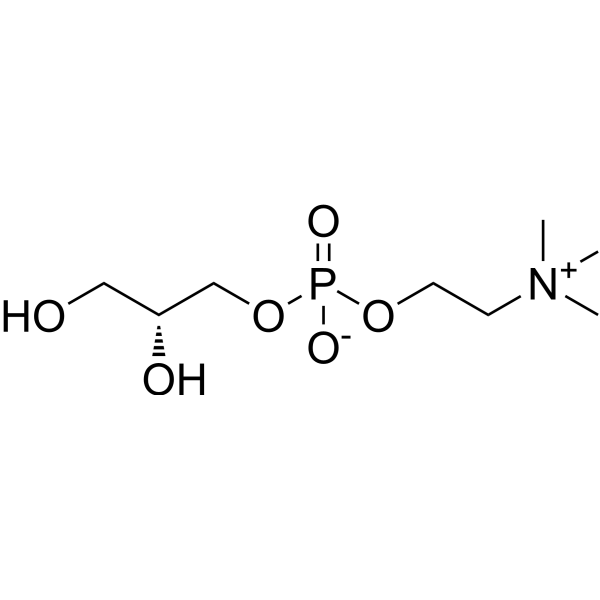
sn-Glycero-3-phosphocholine
Based on 2 publication(s) in Google Scholar
sn-Glycero-3-phosphocholine (Choline Alfoscerate) is a precursor in the biosynthesis of brain phospholipids and increases the bioavailability of choline in nervous tissue. sn-Glycero-3-phosphocholine (Choline Alfoscerate) has significant effects on cognitive function with a good safety profile and tolerability, and is effective in the treatment of Alzheimer's disease and dementia.
For research use only. We do not sell to patients.
- Purity : 98.0%
- CAS No.: 28319-77-9
- Formula: C8H20NO6P
- Molecular Weight:257.22
-
Storage:
4°C, stored under nitrogen, away from moisture
* In solvent : -80°C, 6 months; -20°C, 1 month (stored under nitrogen, away from moisture)

To place orders, for customer services and technical support, please contact: MedChemExpress USA
Tel: 609-228-6898 E-mail: [email protected] [email protected]


-
 Biological Activity
-
Chemical Information
-
Solvent & Solubility
- Protocols
- Purity & Documentation
- References
-
 Help & FAQs


-

HY-17552R
sn-Glycero-3-phosphocholine (Standard)Cholinesterase (ChE) Activator -
HY-16658B
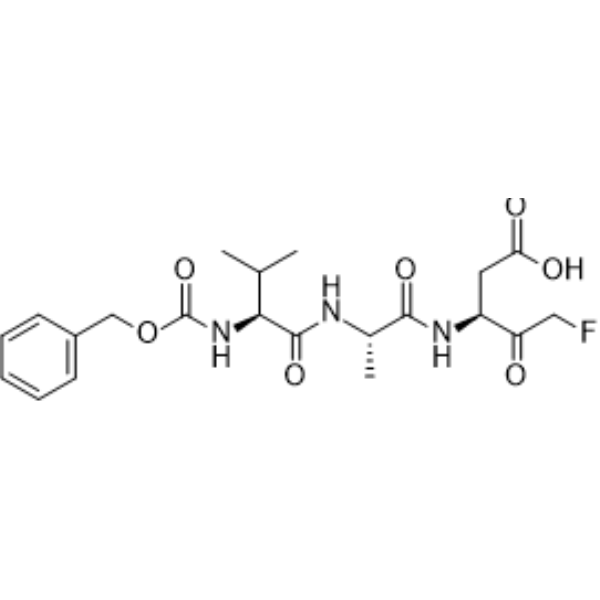
Z-VAD-FMKPan-Caspase Inhibitor -
HY-B1337
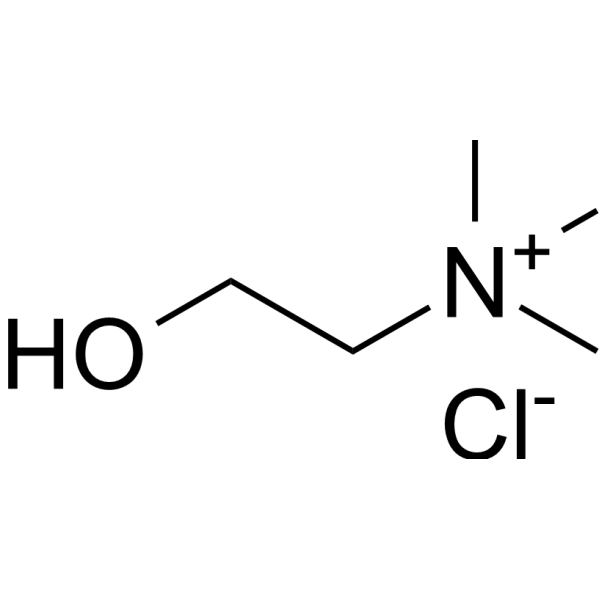
Choline chlorideBronchodilator -
HY-B0739
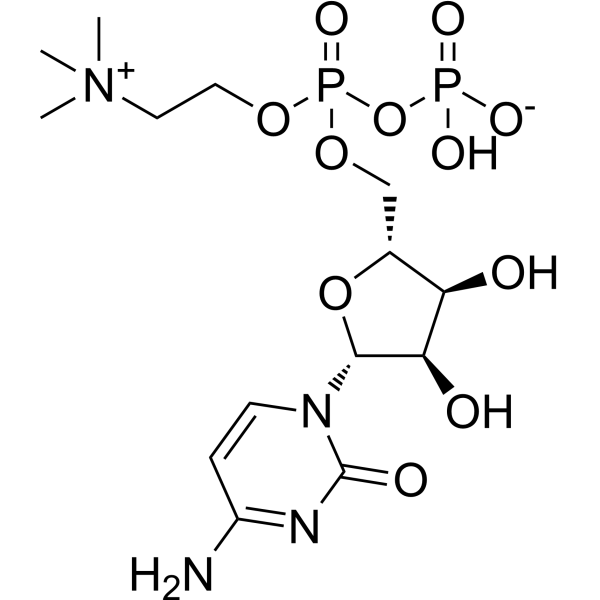
CiticolineEndogenous Metabolite -
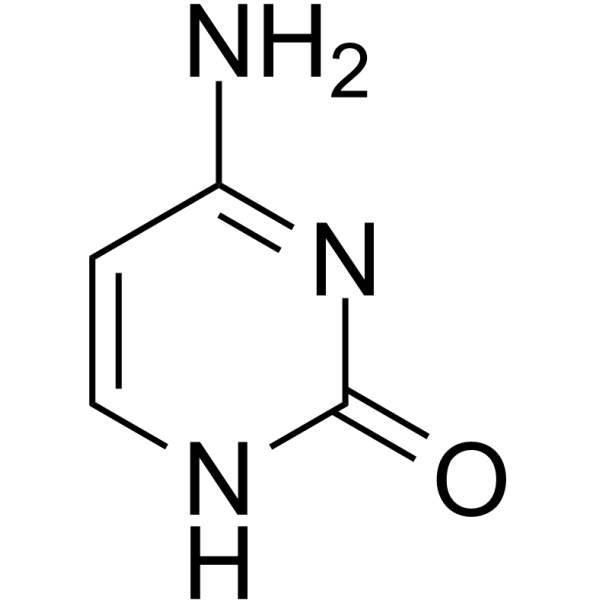
HY-I0626
CytosineEndogenous Metabolite -
HY-K0301
Cell Counting Kit-8 -
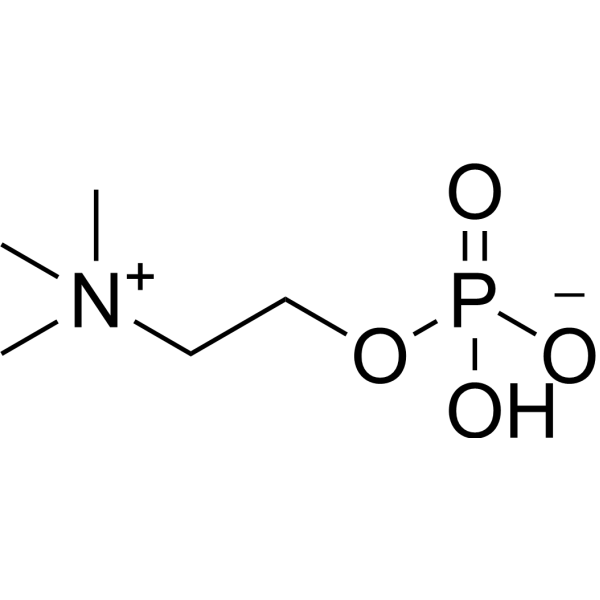
HY-B2233B
PhosphorylcholineEndogenous Metabolite -
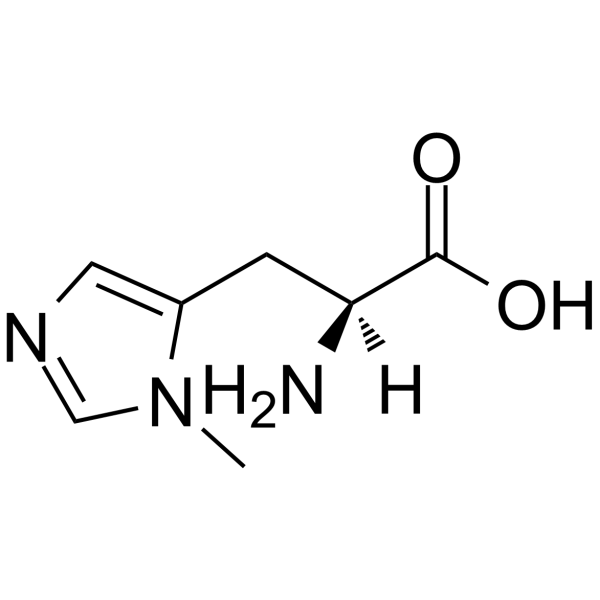
HY-W017007
3-Methyl-L-histidineEndogenous Amino Acid -
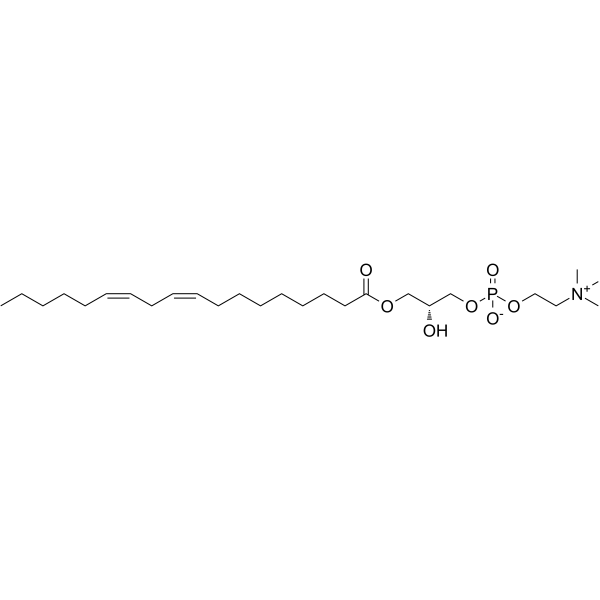
HY-N9410
Lysophosphatidylcholine 18:2Diagnostic Biomarker -

HY-145779A
H-Glu(Met-OH)-OH TFAPeptide -
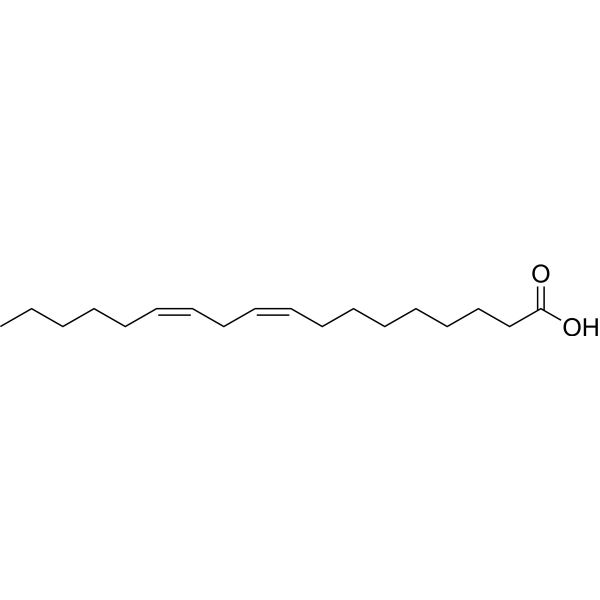
HY-N0729
Linoleic acidHuman Endogenous Metabolite -

HY-Y1888
Corn oil
Publications Citing Use of MedChemExpress (MCE) sn-Glycero-3-phosphocholine
More Customer Validation & Images

-
Bio/Physico-chemical Assay

All Endogenous Metabolite Isoforms
More

Biological Activity
Description
IC50 & Target
|
Human Endogenous Metabolite |
In Vivo
sn-Glycero-3-phosphocholine (Choline Alfoscerate) increases the release of acetylcholine in rat hippocampus, facilitates learning and memory in experimental animals, improves brain transduction mechanisms and decreases age-dependent structural changes occurring in rat brain areas involved in learning and memory[3].
MedChemExpress (MCE) has not independently confirmed the accuracy of these methods. They are for reference only.
-
Animal Model:Sprague-Dawley male rats[2]
-
Dosage:250 mg/kg
-
Administration:Intramuscular injection; starting at 3 weeks after seizure and continuing daily for 3 weeks
-
Result:Improve seizure-induced cognitive impairment.
Clinical Trial
| NCT Number | Sponsor | Condition | Start Date |
Phase

|
|---|---|---|---|---|
| NCT01329991 | Plexxikon| | 2011-05 | PHASE1 |


Chemical Information
-
CAS No. 28319-77-9
-
Appearance Solid
-
Molecular Weight 257.22
-
Formula C8H20NO6P
-
Color White to off-white
-
SMILES
O=P(OCC[N+](C)(C)C)(OC[C@H](O)CO)[O-]
-
Synonyms
Choline Alfoscerate; Alpha-GPC; L-α-GPC
-
Structure Classification
-
Initial Source
-
Shipping
Room temperature in continental US; may vary elsewhere.
-
Storage
4°C, stored under nitrogen, away from moisture
* In solvent : -80°C, 6 months; -20°C, 1 month (stored under nitrogen, away from moisture)


Publications (2)
-
Journal Impact Factor
-
Most Recent
-
Int J Biol Macromol
Reticuline isomerase AKR1B1 with aldo-keto reductase activity and detoxification function from the insect Blaps rhynchopetera. [Abstract]2026 Mar:352:151224. PMID: 41791543 -
J Phys Chem B
Effect of Osmolytes on Water Mobility Correlates with Their Stabilizing Effect on Proteins. [Abstract]2022 Apr 7;126(13):2466-2475. PMID: 35349285
sn-Glycero-3-phosphocholine purchased from MedChemExpress. Usage Cited in: J Phys Chem B. 2022 Apr 7;126(13):2466-2475. [Abstract]
Denaturation Temperature (Tm) of RNase A in 1 mol/L Osmolyte Solutions containing sn-Glycero-3-phosphocholine (PC).


Solvent & Solubility
In Vitro:
H2O : 100 mg/mL (388.77 mM; Need ultrasonic)
Please refer to the solubility information to select the appropriate solvent. Once prepared, please aliquot and store the solution to prevent product inactivation from repeated freeze-thaw cycles.
Storage method and period of stock solution: -80°C, 6 months; -20°C, 1 month (stored under nitrogen, away from moisture). When stored at -80°C, please use it within 6 months. When stored at -20°C, please use it within 1 month.
* Note: If you choose water as the stock solution, please dilute it to the working solution, then filter and sterilize it with a 0.22 μm filter before use.
Please refer to the solubility information to select the appropriate solvent. Once prepared, please aliquot and store the solution to prevent product inactivation from repeated freeze-thaw cycles.
Storage method and period of stock solution: -80°C, 6 months; -20°C, 1 month (stored under nitrogen, away from moisture). When stored at -80°C, please use it within 6 months. When stored at -20°C, please use it within 1 month.
* Note: If you choose water as the stock solution, please dilute it to the working solution, then filter and sterilize it with a 0.22 μm filter before use.
Concentration (start) × Volume (start) = Concentration (final) × Volume (final)
In Vivo:
Select the appropriate dissolution method based on your experimental animal and administration route.
- For the following dissolution methods, please ensure to first prepare a clear stock solution using an In Vitro approach and then sequentially add co-solvents:
- To ensure reliable experimental results, the clarified stock solution can be appropriately stored based on storage conditions. As for the working solution for In Vivo experiments, it is recommended to prepare freshly and use it on the same day.
- The percentages shown for the solvents indicate their volumetric ratio in the final prepared solution. If precipitation or phase separation occurs during preparation, heat and/or sonication can be used to aid dissolution.
Add each solvent one by one: 10% DMSO 40% PEG300 5% Tween-80 45% Saline
Solubility: ≥ 2.08 mg/mL (8.09 mM); Clear solution
This protocol yields a clear solution of ≥ 2.08 mg/mL (saturation unknown).
Taking 1 mL working solution as an example, add 100 μL DMSO stock solution (20.8 mg/mL) to 400 μL PEG300, and mix evenly; then add 50 μL Tween-80 and mix evenly; then add 450 μL Saline to adjust the volume to 1 mL.
Preparation of Saline: Dissolve 0.9 g sodium chloride in ddH₂O and dilute to 100 mL to obtain a clear Saline solution.
Add each solvent one by one: 10% DMSO 90% (20% SBE-β-CD in Saline)
Solubility: ≥ 2.08 mg/mL (8.09 mM); Clear solution
This protocol yields a clear solution of ≥ 2.08 mg/mL (saturation unknown).
Taking 1 mL working solution as an example, add 100 μL DMSO stock solution (20.8 mg/mL) to 900 μL 20% SBE-β-CD in Saline, and mix evenly.
Preparation of 20% SBE-β-CD in Saline (4°C, storage for one week): 2 g SBE-β-CD powder is dissolved in 10 mL Saline, completely dissolve until clear.
For the following dissolution methods, please prepare the working solution directly:
It is recommended to prepare fresh solutions and use them promptly within a short period of time.
The percentages shown for the solvents indicate their volumetric ratio in the final prepared solution. If precipitation or phase separation occurs during preparation, heat and/or sonication can be used to aid dissolution.
Add each solvent one by one: PBS
Solubility: 150 mg/mL (583.16 mM); Clear solution; Need ultrasonic
In Vivo Dissolution Calculator
Please enter the basic information of animal experiments:
-
-
-
-
Recommended: Prepare an additional quantity of animals to account for potential losses during experiments.
Working solution concentration: 0.22 mg/mL
This product has good water solubility, please refer to the measured solubility data in water/PBS/Saline for details.

Protocols
-
Protocol for Pharmacokinetic Study
Pharmacokinetic studies quantify how an organism handles a drug over time through absorption, distribution, metabolism, and excretion, and the core experimental readout is the concentration-time profile of parent drug and, when relevant, metabolites in biological matrices such as plasma, whole blood, urine, bile, or tissue. Pharmacokinetic analysis links dose, route, exposure, clearance, half-life, distribution, bioavailability, and systemic exposure to drug efficacy and toxicity hypotheses rather than measuring a signaling pathway directly. The literature links pharmacokinetics to drug-development phenotypes by showing that drug metabolism and pharmacokinetics influence compound progression, exposure-response interpretation, safety margins, dosing strategy, and failure risk during discovery and development. DMPK science contributes to compound optimization by integrating physicochemical properties, in vitro metabolism, transporter behavior, in vivo exposure, and pharmacodynamic contex
-
Protocol for Water Maze
The Morris Water Maze is a rodent spatial learning and memory assay in which a mouse or rat swims in opaque water to find an escape platform; in the hidden-platform version, the animal cannot see the platform and must use distal extra-maze cues to learn its fixed spatial location. The assay primarily measures hippocampus-dependent spatial learning during acquisition trials and spatial reference memory during probe trials after platform removal; readouts include escape latency, swim path length, swim speed, quadrant occupancy, platform-site crossings, and proximity to the former platform location.
-
Alzheimer’s Disease Modeling
Alzheimer’s Disease (AD) is a neurodegenerative disorder characterized by a progressive decline in cognitive functions and loss of specific types of neurons and synapses. Alzheimer's symptoms can be simulated in mice by injecting drugs (such as Aβ) or genetically modified.


Purity & Documentation
-
Data Sheet (272 KB)
-
SDS (396 KB)
- English - EN (396 KB)
- Français - FR (396 KB)
- Deutsch - DE (396 KB)
- Norwegian - NO (396 KB)
- Español - ES (396 KB)
- Swedish - SV (396 KB)
- Italian - IT (396 KB)
- Korean - KR (396 KB)
- Portuguese - PT (396 KB)
-
Handling Instructions (2659 KB)
References
[1]. Lee SH, et al. Late treatment with choline alfoscerate (l-alpha glycerylphosphorylcholine, α-GPC) increases hippocampal neurogenesis and provides protection against seizure-induced neuronal death and cognitive impairment. Brain Res. 2017 Jan 1;1654(Pt A):66-76. [Content Brief]
[2]. Traini E, et al. Choline alphoscerate (alpha-glyceryl-phosphoryl-choline) an old choline- containing phospholipidwith a still interesting profile as cognition enhancing agent. Curr Alzheimer Res. 2013 Dec;10(10):1070-9. [Content Brief]


Complete Stock Solution Preparation Table
Please refer to the solubility information to select the appropriate solvent. Once prepared, please aliquot and store the solution to prevent product inactivation from repeated freeze-thaw cycles.
Storage method and period of stock solution: -80°C, 6 months; -20°C, 1 month (stored under nitrogen, away from moisture). When stored at -80°C, please use it within 6 months. When stored at -20°C, please use it within 1 month.
| Optional Solvent | Concentration Solvent Mass | 1 mg | 5 mg | 10 mg | 25 mg |
|---|---|---|---|---|---|
| H2O | 1 mM | 3.8877 mL | 19.4386 mL | 38.8772 mL | 97.1931 mL |
| 5 mM | 0.7775 mL | 3.8877 mL | 7.7754 mL | 19.4386 mL | |
| 10 mM | 0.3888 mL | 1.9439 mL | 3.8877 mL | 9.7193 mL | |
| 15 mM | 0.2592 mL | 1.2959 mL | 2.5918 mL | 6.4795 mL | |
| 20 mM | 0.1944 mL | 0.9719 mL | 1.9439 mL | 4.8597 mL | |
| 25 mM | 0.1555 mL | 0.7775 mL | 1.5551 mL | 3.8877 mL | |
| 30 mM | 0.1296 mL | 0.6480 mL | 1.2959 mL | 3.2398 mL | |
| 40 mM | 0.0972 mL | 0.4860 mL | 0.9719 mL | 2.4298 mL | |
| 50 mM | 0.0778 mL | 0.3888 mL | 0.7775 mL | 1.9439 mL | |
| 60 mM | 0.0648 mL | 0.3240 mL | 0.6480 mL | 1.6199 mL | |
| 80 mM | 0.0486 mL | 0.2430 mL | 0.4860 mL | 1.2149 mL | |
| 100 mM | 0.0389 mL | 0.1944 mL | 0.3888 mL | 0.9719 mL |
* Note: If you choose water as the stock solution, please dilute it to the working solution, then filter and sterilize it with a 0.22 μm filter before use.


sn-Glycero-3-phosphocholine Related Classifications
HY-17552 Related Classifications
 Powered by Bioz