



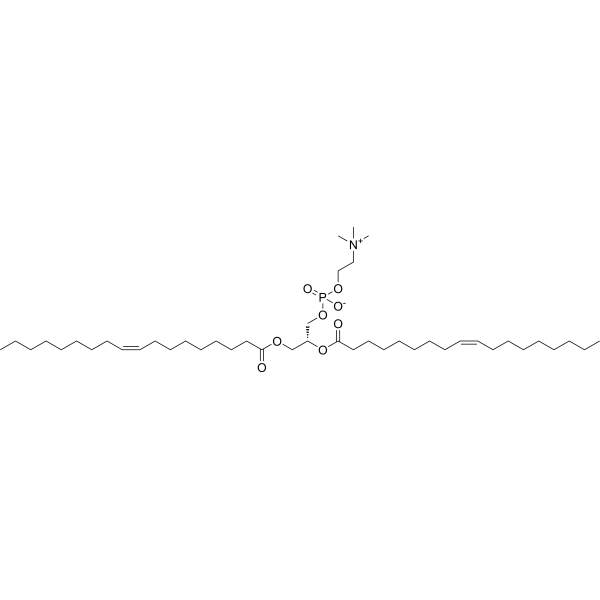
1,2-Dioleoyl-sn-glycero-3-phosphocholine
Based on 12 publication(s) in Google Scholar
1,2-Dioleoyl-sn-glycero-3-phosphocholine (DOPC) is a phospholipid and is commonly used alone, or with other components, in the generation of micelles, liposomes, and other types of artificial membranes.
For research use only. We do not sell to patients.
- Purity : 99.93%
- CAS No.: 4235-95-4
- Formula: C44H84NO8P
- Molecular Weight:786.11
-
Storage:
-20°C, protect from light, stored under nitrogen
* In solvent : -80°C, 6 months; -20°C, 1 month (protect from light, stored under nitrogen)

To place orders, for customer services and technical support, please contact: MedChemExpress USA
Tel: 609-228-6898 E-mail: [email protected] [email protected]


-
 Biological Activity
-
Chemical Information
-
Solvent & Solubility
- Purity & Documentation
- References
-
 Help & FAQs


-
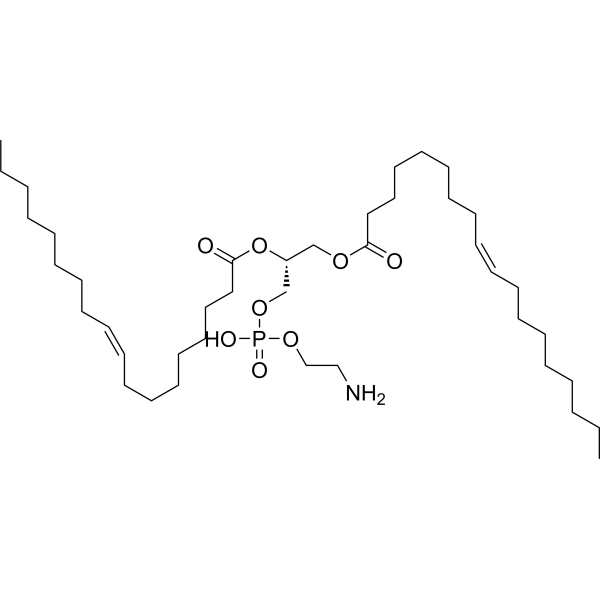
HY-112005
DOPE -
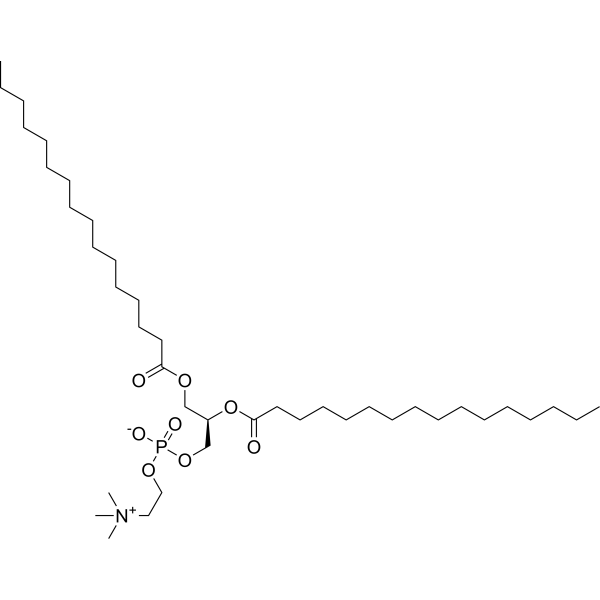
HY-109506
DPPC -
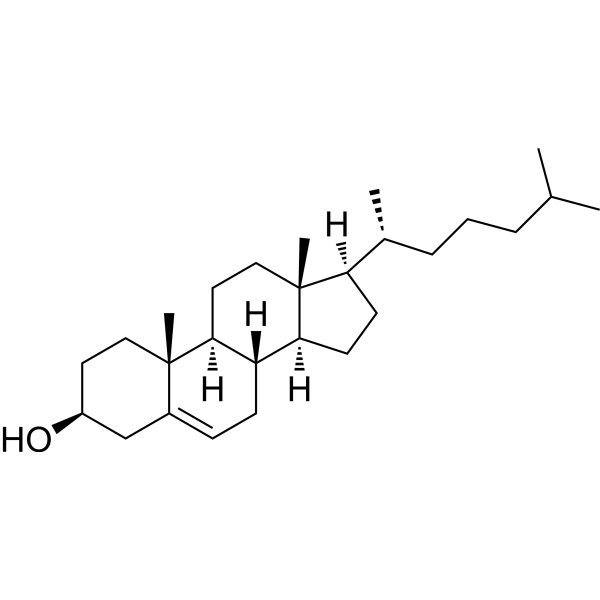
HY-N0322
Cholesterol (from animal) -

HY-W040193
DSPC -
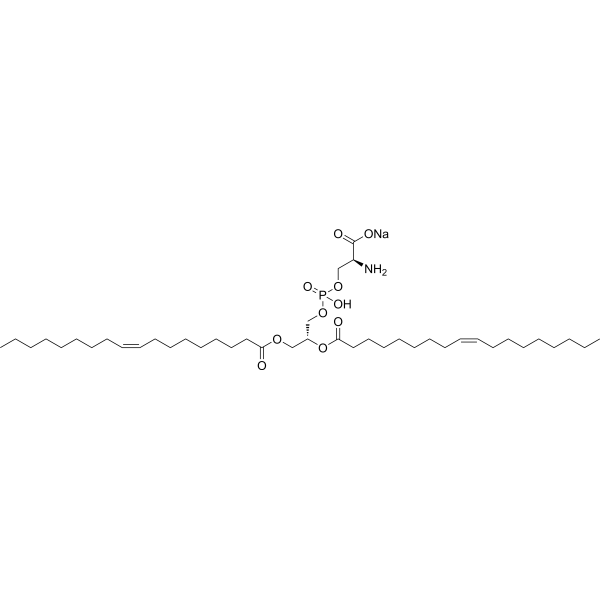
HY-141613
1,2-Dioleoyl-sn-glycero-3-phospho-L-serine sodium -
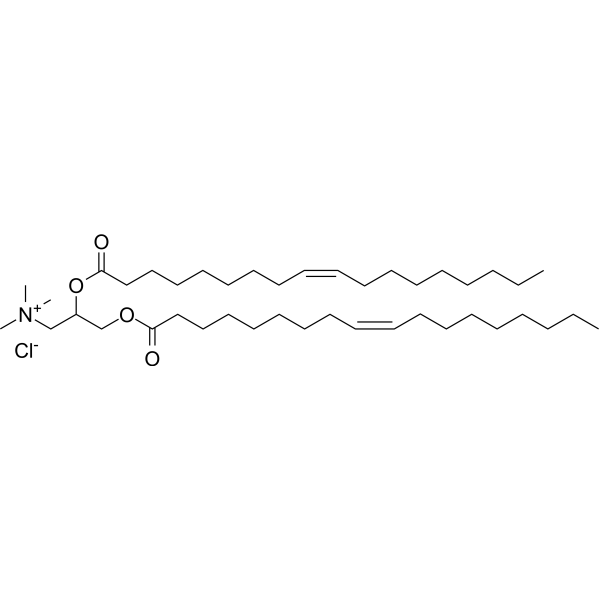
HY-112754A
DOTAP chloride -
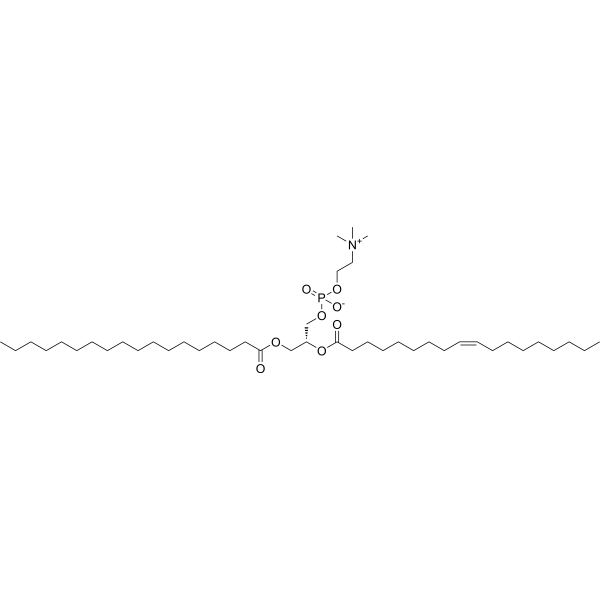
HY-W440982
SOPC -
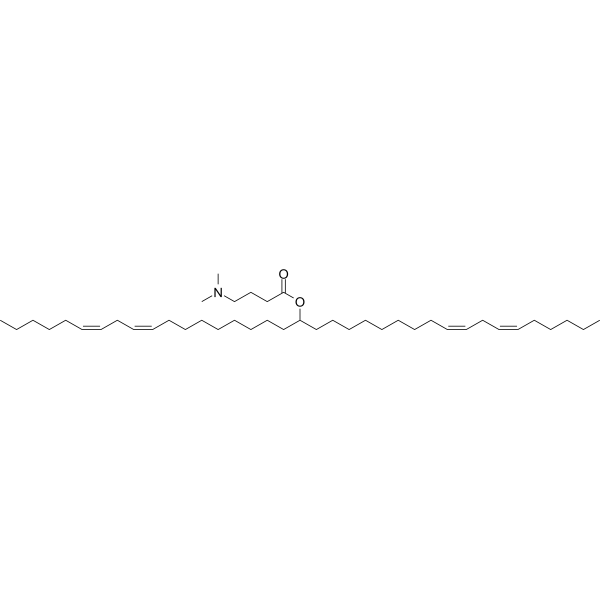
HY-112251
D-Lin-MC3-DMA -
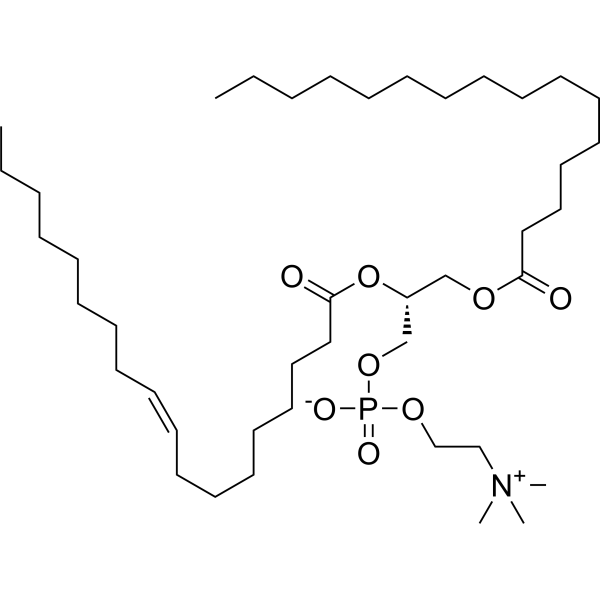
HY-130462
1-Palmitoyl-2-oleoyl-sn-glycero-3-PC -
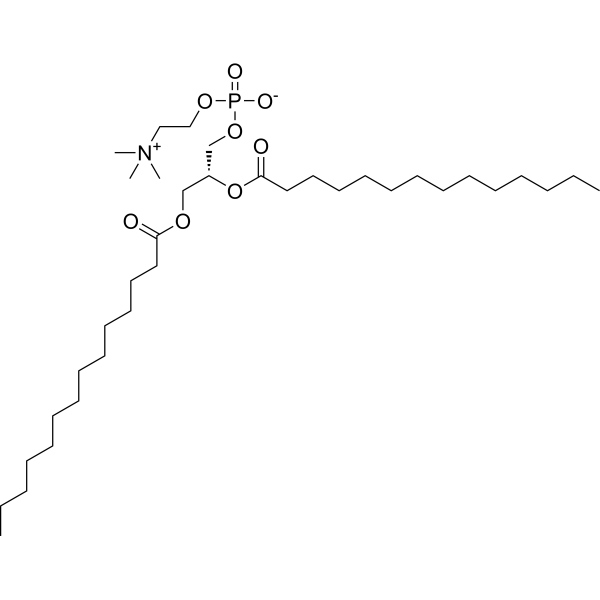
HY-109541
Colfosceril miristate -
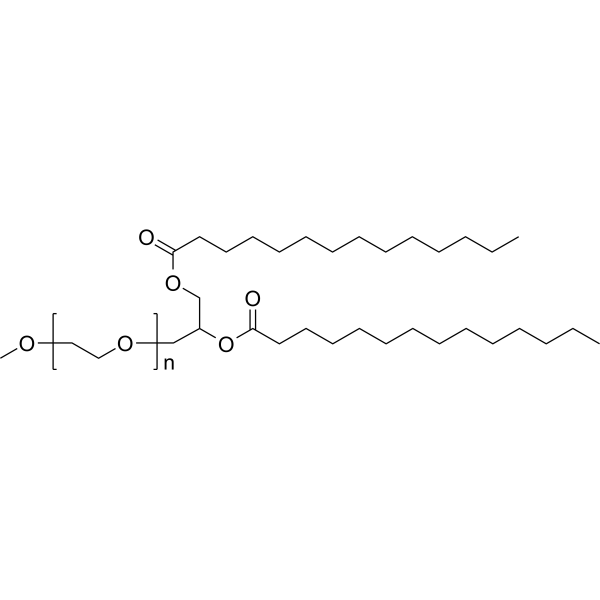
HY-112764
mPEG2000-DMG -
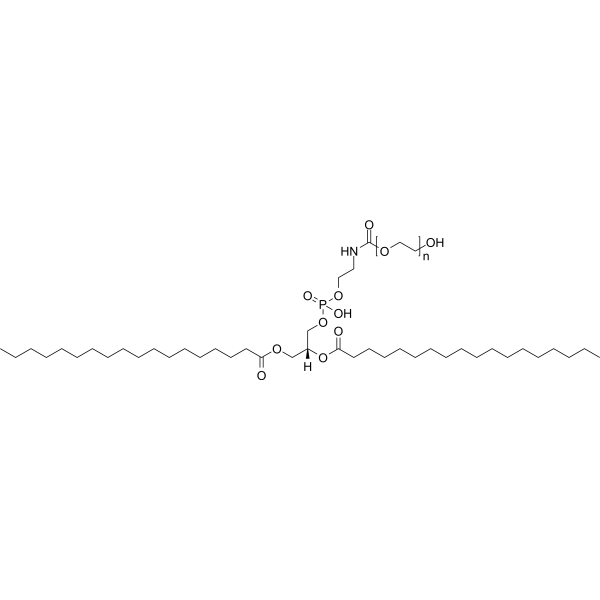
HY-142979
DSPE-PEG 2000
Publications Citing Use of MedChemExpress (MCE) 1,2-Dioleoyl-sn-glycero-3-phosphocholine
More- J Am Chem Soc. 2026 Mar 11;148(9):10225-10240. [Abstract]
- Biomaterials. 2026 Jun:329:123927. [Abstract]
- Biomaterials. 2025 Aug:319:123184. [Abstract]
- ACS Appl Mater Interfaces. 2025 Oct 8;17(40):55861-55875. [Abstract]
- ACS Appl Mater Interfaces. 2025 Mar 5;17(9):13646-13659. [Abstract]
- J Agric Food Chem. 2025 Feb 5;73(5):2935-2950. [Abstract]
- iScience. 2026 Mar 21;29(4):115451. [Abstract]
- Mol Hum Reprod.2024 May 30;30(6):gaae016. [Abstract]
- J Surfactants Deterg. 30 May 2022.
- bioRxiv. 2026 Apr 16.
- bioRxiv. 2026 Apr 27.
- SSRN. 2024 Feb 5.
All Endogenous Metabolite Isoforms
More

Biological Activity
Description
IC50 & Target
|
Human Endogenous Metabolite |
In Vitro
Application of DOPC in biochemical experiments
1. Liposome construction
Drug delivery carrier: DOPC is widely used in liposome preparation due to its high membrane stability and low cytotoxicity. For example, liposomes formed by mixing DOPC and cholesterol (2:1 molar ratio) can efficiently encapsulate hydrophobic drugs (such as paclitaxel) with a drug loading efficiency of more than 85%, and achieve tumor-targeted delivery through enhanced permeability retention (EPR)[1].
Gene transfection assistance: DOPC is combined with cationic lipids (such as DOTAP) to form lipid complexes, which can reduce the cytotoxicity of cationic lipids and improve the transfection efficiency of plasmid DNA or siRNA[2].
2. Membrane protein research
Membrane protein reconstitution: DOPC is a commonly used phospholipid for the construction of nanodiscs. Together with membrane scaffold protein (MSP), it forms a phospholipid bilayer structure with a diameter of about 10 nm, providing a natural membrane environment for membrane proteins (such as GPCRs) to maintain their conformation and function[3].
Electrophysiological studies: DOPC is used to form a planar lipid bilayer (BLM), and combined with the patch clamp technique, the conductivity characteristics and gating mechanism of ion channels (such as potassium channels) are studied[4].
3. Cell membrane structral studies
Membrane fluidity analysis: DOPC lipid bilayers are labeled with fluorescent probes (such as DPH) to measure their microdomain fluidity and quantify the effect of cholesterol on membrane order (for every 10 mol% increase in cholesterol concentration, membrane fluidity decreases by 15%)[5].
Molecular interactions: Using surface plasmon resonance (SPR) technology, the affinity of the antimicrobial peptide LL-37 to DOPC membranes was measured (KD ≈ 1.2×10⁻⁶ M), revealing its membrane damage mechanism[6].
4. Cell toxicity assessment
Toxicity control: As a neutral phospholipid, DOPC is often used as a negative control to evaluate the cytotoxicity of other lipid nanoparticles (e.g., cationic liposomes)[7].
MedChemExpress (MCE) has not independently confirmed the accuracy of these methods. They are for reference only.


Chemical Information
-
CAS No. 4235-95-4
-
Appearance <-21 °C Solid,>-21 °C Liquid
-
Molecular Weight 786.11
-
Formula C44H84NO8P
-
Color Colorless to off-white
-
SMILES
CCCCCCCC/C=C\CCCCCCCC(OC[C@@H](OC(CCCCCCC/C=C\CCCCCCCC)=O)COP(OCC[N+](C)(C)C)([O-])=O)=O
-
Synonyms
DOPC
-
Initial Source
-
Shipping
Room temperature in continental US; may vary elsewhere.
-
Storage
-20°C, protect from light, stored under nitrogen
* In solvent : -80°C, 6 months; -20°C, 1 month (protect from light, stored under nitrogen)


Publications (12)
-
Journal Impact Factor
-
Most Recent
-
J Am Chem Soc
Safe and Highly Efficient Lipid-Pro-Dexamethasone Nanoparticles for mRNA Delivery and Base Editing. [Abstract]2026 Mar 11;148(9):10225-10240. PMID: 41733506 -
Biomaterials
AI agent-based discovery of D-enantiomeric antimicrobial peptides against multidrug-resistant bacterial infection. [Abstract]2026 Jun:329:123927. PMID: 41443039 -
Biomaterials
Harnessing prazosin for tumors: Liposome hybrid nanovesicles activate tumor immunotherapy via autophagy inhibition. [Abstract]2025 Aug:319:123184. PMID: 39985978 -
ACS Appl Mater Interfaces
Feedback-Amplified Drug Delivery of αPD-L1-Modified Lipoplatin for Chronological Synergy in NSCLC through PD-L1 Upregulation. [Abstract]2025 Oct 8;17(40):55861-55875. PMID: 40997865 -
ACS Appl Mater Interfaces
Self-Assembling Lauroylated Antimicrobial Peptide with Superior Antimicrobial Activity, Stability, and Selectivity. [Abstract]2025 Mar 5;17(9):13646-13659. PMID: 39964258 -
J Agric Food Chem
Mannuronate Oligosaccharides Ameliorate Experimental Colitis and Secondary Neurological Dysfunction by Manipulating the Gut-Brain Axis. [Abstract]2025 Feb 5;73(5):2935-2950. PMID: 39846727 -
iScience
Detection of circulating tumor cells in cholangiocarcinoma via epithelial-mesenchymal transition markers and their application. [Abstract]2026 Mar 21;29(4):115451. PMID: 42006317 -
Mol Hum Reprod
Methyl-CpG-binding protein 2 regulates CYP27A1-induced myometrial contraction during preterm labor. [Abstract]2024 May 30;30(6):gaae016. PMID: 38704863 -
-
-
-


Solvent & Solubility
In Vitro:
Ethanol : 50 mg/mL (63.60 mM; Need ultrasonic)
DMSO : 5 mg/mL (6.36 mM; ultrasonic and warming and heat to 60°C; Hygroscopic DMSO has a significant impact on the solubility of product, please use newly opened DMSO)
Please refer to the solubility information to select the appropriate solvent. Once prepared, please aliquot and store the solution to prevent product inactivation from repeated freeze-thaw cycles.
Storage method and period of stock solution: -80°C, 6 months; -20°C, 1 month (protect from light, stored under nitrogen). When stored at -80°C, please use it within 6 months. When stored at -20°C, please use it within 1 month.
Please refer to the solubility information to select the appropriate solvent. Once prepared, please aliquot and store the solution to prevent product inactivation from repeated freeze-thaw cycles.
Storage method and period of stock solution: -80°C, 6 months; -20°C, 1 month (protect from light, stored under nitrogen). When stored at -80°C, please use it within 6 months. When stored at -20°C, please use it within 1 month.
Concentration (start) × Volume (start) = Concentration (final) × Volume (final)
In Vivo:
Select the appropriate dissolution method based on your experimental animal and administration route.
- For the following dissolution methods, please ensure to first prepare a clear stock solution using an In Vitro approach and then sequentially add co-solvents:
- To ensure reliable experimental results, the clarified stock solution can be appropriately stored based on storage conditions. As for the working solution for In Vivo experiments, it is recommended to prepare freshly and use it on the same day.
- The percentages shown for the solvents indicate their volumetric ratio in the final prepared solution. If precipitation or phase separation occurs during preparation, heat and/or sonication can be used to aid dissolution.
Add each solvent one by one: 10% DMSO 40% PEG300 5% Tween-80 45% Saline
Solubility: 0.5 mg/mL (0.64 mM); Suspended solution; Need ultrasonic
This protocol yields a suspended solution of 0.5 mg/mL. Suspended solution can be used for oral and intraperitoneal injection.
Taking 1 mL working solution as an example, add 100 μL DMSO stock solution (5.0 mg/mL) to 400 μL PEG300, and mix evenly; then add 50 μL Tween-80 and mix evenly; then add 450 μL Saline to adjust the volume to 1 mL.
Preparation of Saline: Dissolve 0.9 g sodium chloride in ddH₂O and dilute to 100 mL to obtain a clear Saline solution.
Add each solvent one by one: 10% DMSO 90% (20% SBE-β-CD in Saline)
Solubility: 0.5 mg/mL (0.64 mM); Suspended solution; Need ultrasonic
This protocol yields a suspended solution of 0.5 mg/mL. Suspended solution can be used for oral and intraperitoneal injection.
Taking 1 mL working solution as an example, add 100 μL DMSO stock solution (5.0 mg/mL) to 900 μL 20% SBE-β-CD in Saline, and mix evenly.
Preparation of 20% SBE-β-CD in Saline (4°C, storage for one week): 2 g SBE-β-CD powder is dissolved in 10 mL Saline, completely dissolve until clear.
In Vivo Dissolution Calculator
Please enter the basic information of animal experiments:
-
-
-
-
Recommended: Prepare an additional quantity of animals to account for potential losses during experiments.
Please enter your animal formula composition:
-
%DMSO +
Recommended: Keep the proportion of DMSO in working solution below 2% if your animal is weak.
-
%+
-
+%Tween-80 + +
-
%Saline +
The co-solvents required include: DMSO, . All of co-solvents are available by MedChemExpress (MCE). , Tween 80. All of co-solvents are available by MedChemExpress (MCE).
Working solution concentration: 0.22 mg/mL
Method for preparing stock solution: mg drug dissolved in μL DMSO. Stock solution concentration: mg/mL. * In solvent : -80°C, 6 months; -20°C, 1 month (protect from light, stored under nitrogen)
1. Take μL DMSO stock solution;
2. Add μL .
μL , mix evenly;
3. Then add μL Tween 80, mix evenly;
4. Then add μL
Please ensure that the stock solution in the first step is dissolved to a clear state, and add co-solvents in sequence. You can use ultrasonic heating (ultrasonic cleaner, recommended frequency 20-40 kHz), vortexing, etc. to assist dissolution.


Purity & Documentation
-
Data Sheet (275 KB)
-
SDS (647 KB)
- English - EN (647 KB)
- Français - FR (647 KB)
- Deutsch - DE (647 KB)
- Norwegian - NO (647 KB)
- Español - ES (647 KB)
- Swedish - SV (647 KB)
- Italian - IT (647 KB)
- Korean - KR (647 KB)
- Portuguese - PT (647 KB)
-
Handling Instructions (2659 KB)
References
[1]. Sercombe L, et al. Advances and Challenges of Liposome Assisted Drug Delivery. Front Pharmacol. 2015 Dec 1;6:286. [Content Brief]
[2]. Zelphati O, et al. Mechanism of oligonucleotide release from cationic liposomes. Proc Natl Acad Sci U S A. 1996 Oct 15;93(21):11493-8. [Content Brief]
[4]. Montal M, et al. Formation of bimolecular membranes from lipid monolayers and a study of their electrical properties. Proc Natl Acad Sci U S A. 1972 Dec;69(12):3561-6. [Content Brief]
[5]. Lentz BR. Use of fluorescent probes to monitor molecular order and motions within liposome bilayers. Chem Phys Lipids. 1993 Sep;64(1-3):99-116. [Content Brief]
[6]. Henzler Wildman KA, et al. Mechanism of lipid bilayer disruption by the human antimicrobial peptide, LL-37. Biochemistry. 2003 Jun 3;42(21):6545-58. [Content Brief]
[7]. Albanese A, et al. The effect of nanoparticle size, shape, and surface chemistry on biological systems. Annu Rev Biomed Eng. 2012;14:1-16. [Content Brief]


Complete Stock Solution Preparation Table
Please refer to the solubility information to select the appropriate solvent. Once prepared, please aliquot and store the solution to prevent product inactivation from repeated freeze-thaw cycles.
Storage method and period of stock solution: -80°C, 6 months; -20°C, 1 month (protect from light, stored under nitrogen). When stored at -80°C, please use it within 6 months. When stored at -20°C, please use it within 1 month.
| Optional Solvent | Concentration Solvent Mass | 1 mg | 5 mg | 10 mg | 25 mg |
|---|---|---|---|---|---|
| DMSO / Ethanol | 1 mM | 1.2721 mL | 6.3604 mL | 12.7209 mL | 31.8022 mL |
| 5 mM | 0.2544 mL | 1.2721 mL | 2.5442 mL | 6.3604 mL | |
| Ethanol | 10 mM | 0.1272 mL | 0.6360 mL | 1.2721 mL | 3.1802 mL |
| 15 mM | 0.0848 mL | 0.4240 mL | 0.8481 mL | 2.1201 mL | |
| 20 mM | 0.0636 mL | 0.3180 mL | 0.6360 mL | 1.5901 mL | |
| 25 mM | 0.0509 mL | 0.2544 mL | 0.5088 mL | 1.2721 mL | |
| 30 mM | 0.0424 mL | 0.2120 mL | 0.4240 mL | 1.0601 mL | |
| 40 mM | 0.0318 mL | 0.1590 mL | 0.3180 mL | 0.7951 mL | |
| 50 mM | 0.0254 mL | 0.1272 mL | 0.2544 mL | 0.6360 mL | |
| 60 mM | 0.0212 mL | 0.1060 mL | 0.2120 mL | 0.5300 mL |


1,2-Dioleoyl-sn-glycero-3-phosphocholine Related Classifications
HY-113424A Related Classifications
 Powered by Bioz