



1-Palmitoyl-2-linoleoyl-sn-glycero-3-PE

Based on 1 Customer Validation
1-Palmitoyl-2-linoleoyl-sn-glycero-3-PE (1-Palmitoyl-2-linoleoyl PE; (1-Palmitoyl, 2-linoleoyl)-phosphatidylethanolamine; (1-Palmitoyl, 2-linoleoyl)-phosphoethanolamine) is a phosphatidylethanolamine phospholipid with a palmitoyl chain at sn-1 and a linoleoyl chain at sn-2, and an oxidation-prone substrate. 1-Palmitoyl-2-linoleoyl-sn-glycero-3-PE undergoes glycation and subsequent oxidation via Fenton system, forming long-chain and short-chain products at C-7, C-8, C-9, C-12 of its sn-2 acyl chain and glycated polar head. 1-Palmitoyl-2-linoleoyl-sn-glycero-3-PE’s glycated form oxidizes more quickly than non-glycated phosphatidylethanolamines and contributes to increased oxidative stress modifications. 1-Palmitoyl-2-linoleoyl-sn-glycero-3-PE can be used for the research of drug delivery.
For research use only. We do not sell to patients.
- Purity : 98.0%
- CAS No.: 26662-95-3
- Formula: C39H74NO8P
- Molecular Weight:715.98
-
Storage:Powder -20°C, 3 years ; In solvent -80°C, 6 months , -20°C, 1 month


To place orders, for customer services and technical support, please contact: MedChemExpress USA
Tel: 609-228-6898 E-mail: [email protected] [email protected]


-
 Biological Activity
-
Chemical Information
-
Solvent & Solubility
- Protocols
- Purity & Documentation
- References
-
 Help & FAQs


-
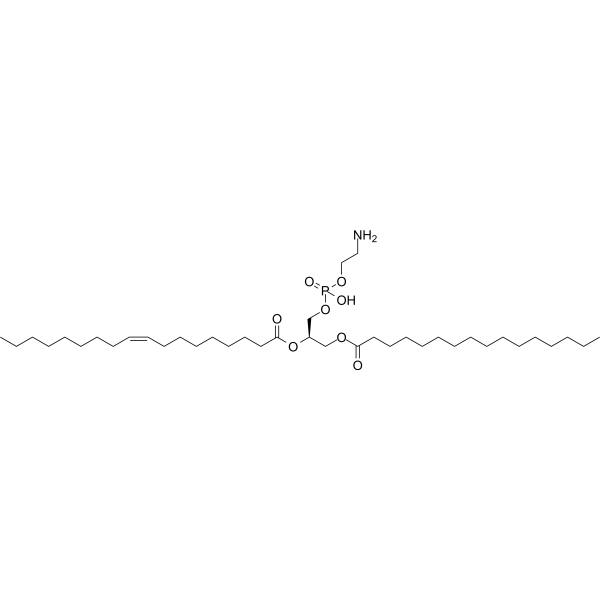
HY-W583868
1-Palmitoyl-2-oleoyl-sn-glycero-3-PEPhospholipid -
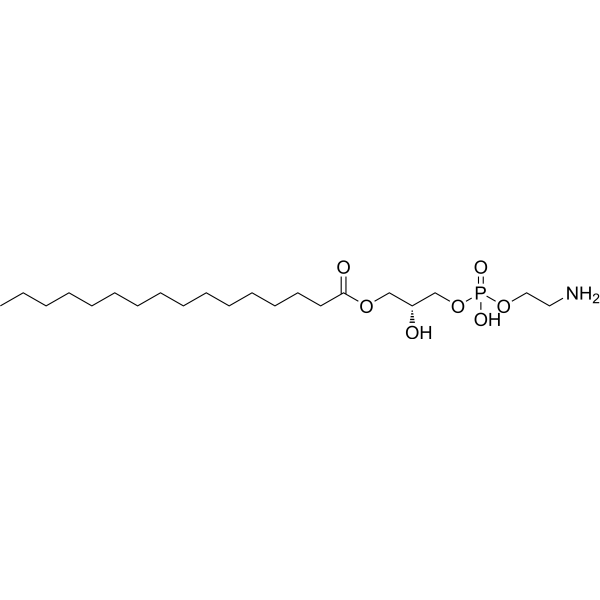
HY-141617
1-Palmitoyl-2-hydroxy-sn-glycero-3-PEOccurring Lysophospholipid -

HY-157624
1-Stearoyl-2-docosahexaenoyl-sn-glycero-3-phosphoethanolamineLiposome -
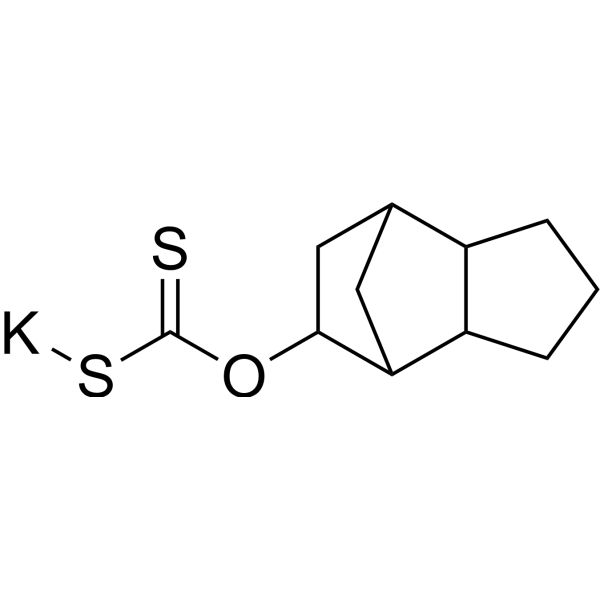
HY-70072
D609PC-PLC Inhibitor -
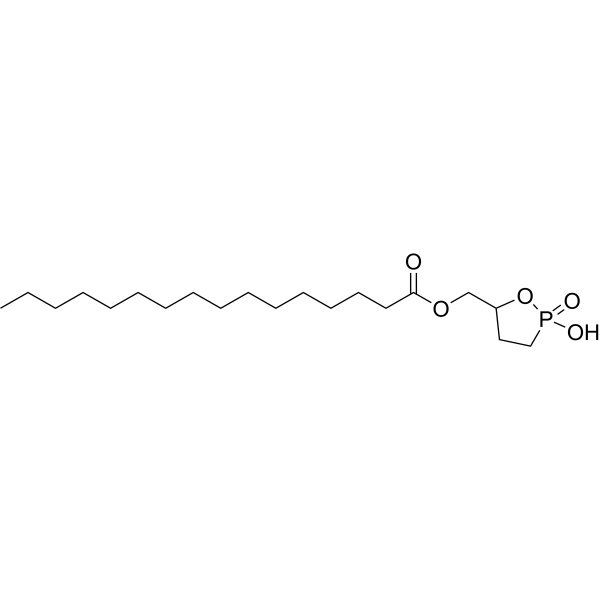
HY-139061
Palmitoyl 3-carbacyclic phosphatidic acidcyclophosphatidic Acid -
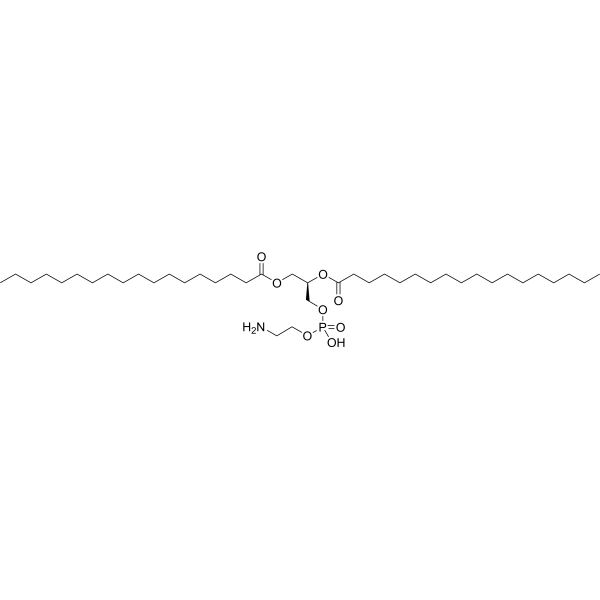
HY-112530
1,2-Distearoyl-sn-glycero-3-phosphorylethanolaminePhosphoethanolamine (PE) Lipid -
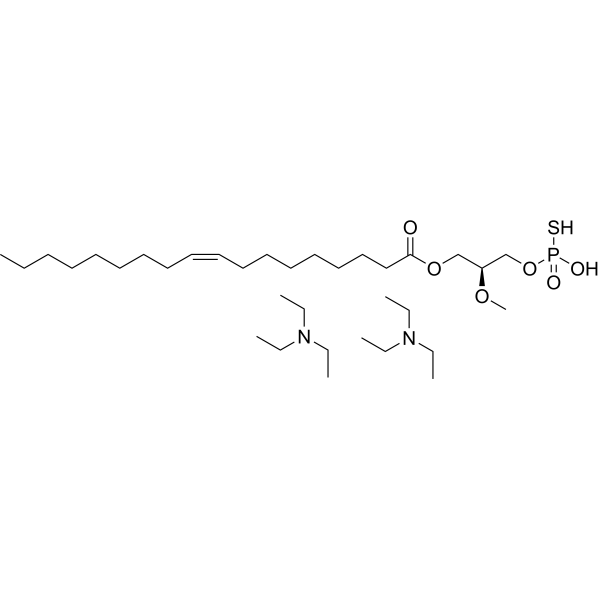
HY-120967
(2S)-OMPT triethylamine, in ethanol:chloroform (1:1), 98%Biochemical Assay Reagent -

HY-100045
p-Nitrophenyl phosphorylcholinePhospholipase C Substrate -
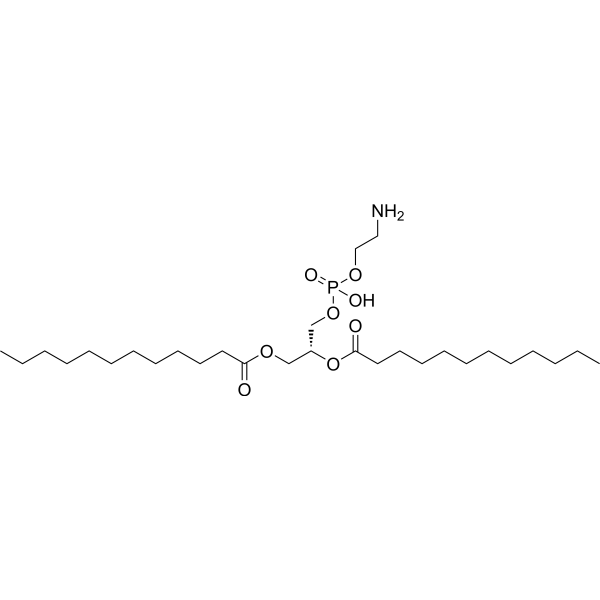
HY-W322225
1,2-Dilauroyl-sn-glycero-3-phosphoethanolamineAnionic Phospholipid -
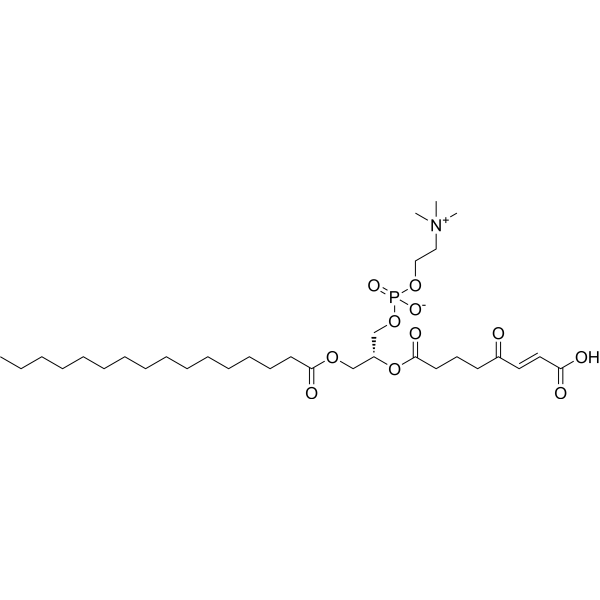
HY-126726
KOdiA-PCBiochemical Assay Reagent -

HY-125385
Sulforhodamine 101 DHPE


Biological Activity
Description
In Vitro
1-Palmitoyl-2-linoleoyl-sn-glycero-3-PE undergoes glycation and subsequent oxidation via Fenton system, forming long-chain and short-chain products at C-7, C-8, C-9, C-12 of its sn-2 acyl chain and glycated polar head[1].
MedChemExpress (MCE) has not independently confirmed the accuracy of these methods. They are for reference only. Further protocols information, click here.


Chemical Information
-
CAS No. 26662-95-3
-
Appearance Solid
-
Molecular Weight 715.98
-
Formula C39H74NO8P
-
Color White to off-white
-
SMILES
CCCCC/C=C\C/C=C\CCCCCCCC(O[C@@H](COP(O)(OCCN)=O)COC(CCCCCCCCCCCCCCC)=O)=O
-
Synonyms
1-Palmitoyl-2-linoleoyl PE; (1-Palmitoyl, 2-linoleoyl)-phosphatidylethanolamine; (1-Palmitoyl, 2-linoleoyl)-phosphoethanolamine
-
Shipping
Room temperature in continental US; may vary elsewhere.
-
Storage
Powder -20°C 3 years In solvent -80°C 6 months -20°C 1 month


Solvent & Solubility
In Vitro:
Ethanol : 25 mg/mL (34.92 mM; Need ultrasonic)
Please refer to the solubility information to select the appropriate solvent. Once prepared, please aliquot and store the solution to prevent product inactivation from repeated freeze-thaw cycles.
Storage method and period of stock solution: -80°C, 6 months; -20°C, 1 month. When stored at -80°C, please use it within 6 months. When stored at -20°C, please use it within 1 month.
Please refer to the solubility information to select the appropriate solvent. Once prepared, please aliquot and store the solution to prevent product inactivation from repeated freeze-thaw cycles.
Storage method and period of stock solution: -80°C, 6 months; -20°C, 1 month. When stored at -80°C, please use it within 6 months. When stored at -20°C, please use it within 1 month.
Concentration (start) × Volume (start) = Concentration (final) × Volume (final)

Protocols
-
ROS/oxidative-stress fluorescent staining
ROS/oxidative-stress fluorescent staining uses cell-permeant fluorogenic probes that become fluorescent after oxidation inside cells or tissues; commonly used examples include DCFH-DA/DCFDA for broad cellular oxidant detection, DHE for superoxide-related signal detection, MitoSOX for mitochondrial superoxide-related signal detection, and CellROX probes for oxidative-stress-associated fluorescence readouts. The assay detects probe oxidation rather than a single ROS species unless the probe and analysis method have been chemically validated for that species. DCFH-DA enters cells, is deacetylated by intracellular esterases to DCFH, and produces fluorescent DCF after oxidation, so the readout is used as an operational measure of total cellular oxidative stress rather than a species-specific ROS measurement. DHE and MitoSOX can report superoxide-related oxidation, but red fluorescence alone can include non-specific ethidium-like oxidation products; HPLC or optimized spectral approaches are


Purity & Documentation
-
Data Sheet (268 KB)
-
SDS (252 KB)
- English - EN (252 KB)
- Français - FR (252 KB)
- Deutsch - DE (252 KB)
- Norwegian - NO (252 KB)
- Español - ES (252 KB)
- Swedish - SV (252 KB)
- Italian - IT (252 KB)
- Korean - KR (252 KB)
- Portuguese - PT (252 KB)
-
Handling Instructions (2659 KB)
References


Complete Stock Solution Preparation Table
Please refer to the solubility information to select the appropriate solvent. Once prepared, please aliquot and store the solution to prevent product inactivation from repeated freeze-thaw cycles.
Storage method and period of stock solution: -80°C, 6 months; -20°C, 1 month. When stored at -80°C, please use it within 6 months. When stored at -20°C, please use it within 1 month.
| Optional Solvent | Concentration Solvent Mass | 1 mg | 5 mg | 10 mg | 25 mg |
|---|---|---|---|---|---|
| Ethanol | 1 mM | 1.3967 mL | 6.9834 mL | 13.9669 mL | 34.9172 mL |
| 5 mM | 0.2793 mL | 1.3967 mL | 2.7934 mL | 6.9834 mL | |
| 10 mM | 0.1397 mL | 0.6983 mL | 1.3967 mL | 3.4917 mL | |
| 15 mM | 0.0931 mL | 0.4656 mL | 0.9311 mL | 2.3278 mL | |
| 20 mM | 0.0698 mL | 0.3492 mL | 0.6983 mL | 1.7459 mL | |
| 25 mM | 0.0559 mL | 0.2793 mL | 0.5587 mL | 1.3967 mL | |
| 30 mM | 0.0466 mL | 0.2328 mL | 0.4656 mL | 1.1639 mL |


1-Palmitoyl-2-linoleoyl-sn-glycero-3-PE Related Classifications
HY-120991 Related Classifications
 Powered by Bioz
Keywords
- 1-Palmitoyl-2-linoleoyl-sn-glycero-3-PE
- 26662-95-3
- 1-Palmitoyl-2-linoleoyl PE
- (1-Palmitoyl, 2-linoleoyl)-phosphatidylethanolamine
- (1-Palmitoyl, 2-linoleoyl)-phosphoethanolamine
- Liposome
- diabetic complications
- Fenton system
- phosphatidylethanolamine phospholipid
- glucose moiety
- glycation
- oxidation
- oxidative stress modifications
- palmitoyl chain
- linoleoyl chain
- Inhibitor
- inhibitor
- inhibit