



Phosphatidylethanolamines (PE)

- Formula: C23H44NO7P
- Molecular Weight: 477.57
LysoPE (18:2/0:0) is a lysophosphatidylethanolamine implicated in phospholipid metabolism. LysoPE (18:2/0:0) shows significantly altered serum levels in mice exposed to a combination of DEHP (HY-B1945) and Aroclor 1254, which is associated with disturbed phospholipid metabolism. LysoPE (18:2/0:0) can be used for the research of endocrine-disrupting compound-induced metabolic disorders and lipid metabolism disturbance. LysoPE (18:2/0:0) is identified as a potential biomarker for the combined toxicity of DEHP and Aroclor 1254.

Lysophosphatidylethanolamines, egg (Lyso-PE (egg); LPE (egg); L-α-lysophosphatidylethanolamine) is a naturally occurring lysophospholipid isolated from purified egg phosphatidylcholine. Lysophosphatidylethanolamines, egg acts as a hepatic lipid biomarker in oleic acid-induced hepatocytes. The level of Lysophosphatidylethanolamines, egg decreases in mice fed a high-fat diet. Lysophosphatidylethanolamines, egg can be used in studies related to non-alcoholic fatty liver disease and hyperlipidemia.
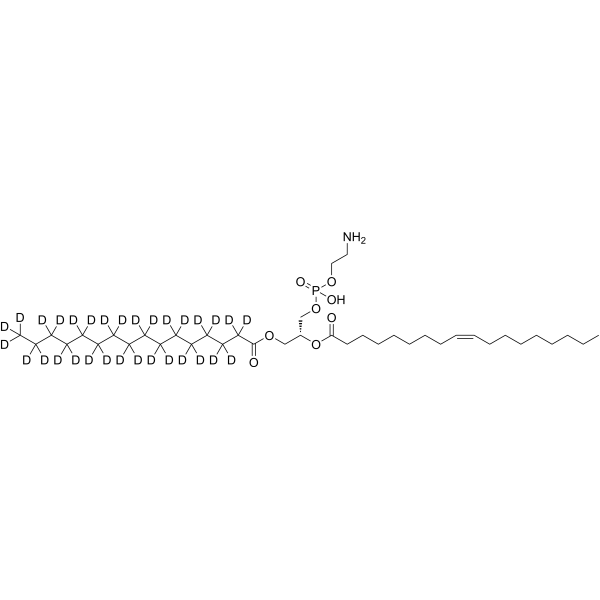
- Formula: C39H45D31NO8P
- Molecular Weight: 749.19
16:0-18:1 PE-d31 is deuterium labeled 16:0-18:1 PE.

- Formula: C39H76NO8P
- Molecular Weight: 718.00
1-Palmitoyl-2-oleoylphosphatidylethanolamine (POPE) is a PE-based synthetic phospholipid that can intercalate with other amphiphilic molecules to form stable bilayers at physiological pH. 1-Palmitoyl-2-oleoylphosphatidylethanolamine can be used in drug delivery research.
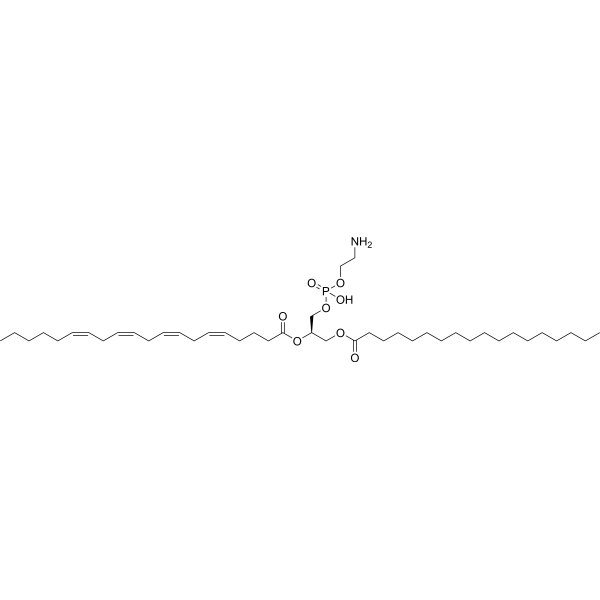
- Formula: C43H78NO8P
- Molecular Weight: 768.06
1-Stearoyl-2-arachidonoyl-sn-glycero-3-phosphorylethanolamine (SAPE) is a fluorescent reporter that specifically binds biotin. 1-Stearoyl-2-arachidonoyl-sn-glycero-3-phosphorylethanolamine produces a detectable fluorescent signal to quantify target factors. 1-Stearoyl-2-arachidonoyl-sn-glycero-3-phosphorylethanolamine can be used for the research of primary liver cancer, cervical cancer.

DSPE-pSar50 (DSPE-Polysarcosine50) is a pSar-lipid derivative. DSPE-pSar50 is a hydrophilic alternative to PEG and can be used in drug delivery research.

- Formula: C74H117N4O14PS2
- Molecular Weight: 1381.84
Sulforhodamine 101 DHPE is a fluorescent probe made from the conjugation of the phospholipid 1,2-dipalmitoyl-sn-glycero-3-PE to sulforhodamine 101, a red fluorescent dye that displays excitation/emission spectra of 586/605 nm, respectively. It integrates into phospholipid bilayers and has been used for imaging of solid supported lipid bilayers, detection of protein-ligand binding on bilayers, and to monitor colocalization of lipid probes in liposomes via resonance energy transfer (RET).

- Formula: C43H80NO7P
- Molecular Weight: 754.07
KIT-13 is an orally active plasmalogen derivative to inhibit neuroinflammation and mitochondrial DNA leakage associated with Mecp2 deficiency. KIT-13 significantly reduce neurological symptoms and improves the life span of the Rett Syndrome (RTT) model mice. KIT-13 can be used for the study of RTT and other neuroinflammation-related diseases.
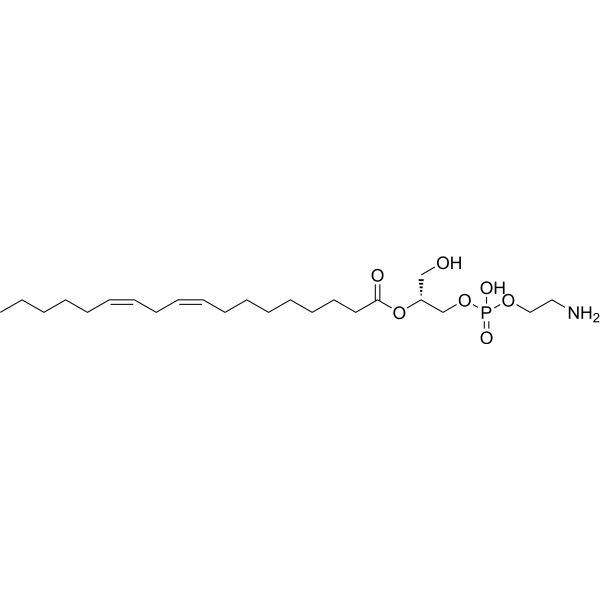
- Formula: C23H44NO7P
- Molecular Weight: 477.57
2-Linoleoyl-sn-glycero-3-phosphoethanolamine (Lysophosphatidylethanolamine C18:2) is a kind of lipid metabolite, that can be used as biomarkers. 2-Linoleoyl-sn-glycero-3-phosphoethanolamine can also serve as a model for aminophospholipids.

- Formula: C41H78NO8P
- Molecular Weight: 744.03
18:1 (Δ9-Trans) PE is a kind of biochemical reagent.

- Formula: C43H78NO10P
- Molecular Weight: 800.05
1-Stearoyl-2-15(S)-HpETE-sn-glycero-3-Pe is a phospholipid that contains stearic acid (HY-B2219) at the sn-1 position and 15(S)-HpETE at the sn-2 position. It is produced via oxidation of 1-stearoyl-2-arachidonoyl-sn-glycero-3-Pe (SAPE) by 15-lipoxygenase (15-LO). 1-Stearoyl-2-15(S)-HpETE-sn-glycero-3-Pe (0.6 and 0.9 μM) increases ferroptotic cell death in wild-type and Acsl4 knockout Pfa1 mouse embryonic fibroblasts (MEFs) treated with the GPX4 inhibitor RSL3.
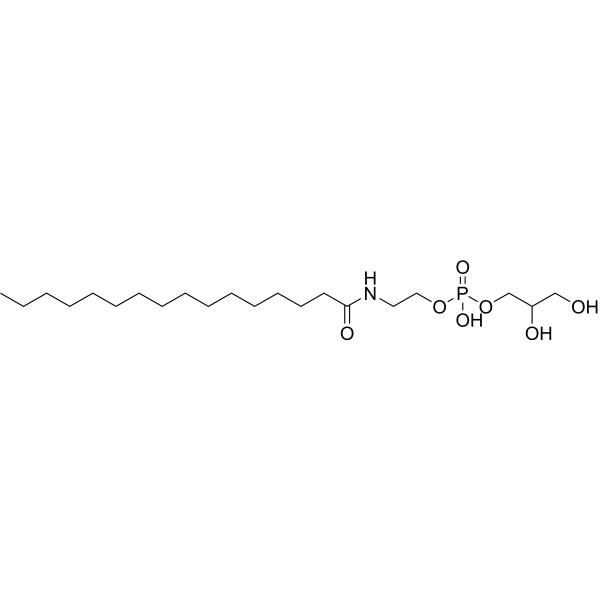
- Formula: C21H44NO7P
- Molecular Weight: 453.55
Glycerophospho-N-palmitoyl ethanolamine (GP-NPEA) is a metabolic precursor of palmitoyl ethanolamide PEA (HY-157829). Glycerophospho-N-palmitoyl ethanolamine decreases in the cortex of CUMS rats, which may be related to a disorder in the endocannabinoid system arising after the onset of depression.

Soy PE (LPI) is the most abundant phospholipid in prokaryotes and the second most abundant found in the membrane of mammalian, plant, and yeast cells, comprising approximately 25% of total mammalian phospholipids. In the brain, phosphatidylethanolamine comprises almost half of the total phospholipids. It is synthesized mainly through the cytidine diphosphate-ethanolamine and phosphatidylserine decarboxylation pathways, which occur in the endoplasmic reticulum (ER) and mitochondrial membranes, respectively. It is a precursor in the synthesis of phosphatidylcholine and arachidonoyl ethanolamide and is a source of ethanolamine used in various cellular functions. In E.coli, phosphatidylethanolamine deficiency prevents proper assembly of lactose permease, suggesting a role as a lipid chaperone. It is a cofactor in the propagation of prions in vitro and can convert recombinant mammalian proteins into infectious molecules even in the absence of RNA. This product contains phosphatidylethanolamine molecular species with variable fatty acyl chain lengths at the sn-1 and sn-2 positions.

- Formula: C39H78NO8P
- Molecular Weight: 720.01
1,2-Diheptadecanoyl-sn-glycero-3-phosphatidylethanolamine is an ester product.

- Formula: C38H76NO8P
- Molecular Weight: 705.99
16:0 Monomethyl PE (1,2-NMeDPPE) is an alkyl phosphate.

- Formula: C35H70NO8P
- Molecular Weight: 663.91
1,2-Dipentadecanoyl-sn-glycero-3-phosphatidylethanolamine is a phospholipid and can be used in the preparation of lipid nanoparticles.

- Formula: C45H90NO7P
- Molecular Weight: 788.17
Plasmalogen phosphatidylethanolamine (22:0/P-18:0) (PE(22:0/P-18:0)) is a phosphatidylethanolamine.

- Formula: C25H42NO7P
- Molecular Weight: 499.58


- Formula: C39H76NO8P
- Molecular Weight: 718.00
18:1(n9)-16:0 PE-IsoPure is an isomerically pure mixed-acyl glycerophospholipid.



