



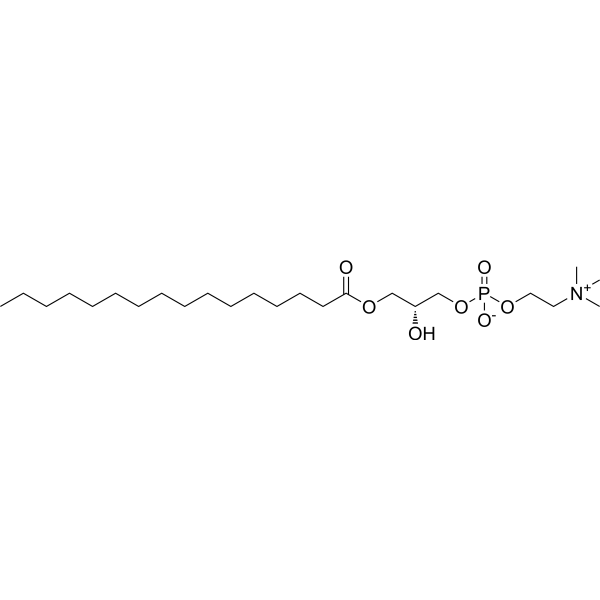
1-Palmitoyl-sn-glycero-3-phosphocholine
Based on 2 publication(s) in Google Scholar
1-Palmitoyl-sn-glycero-3-phosphocholine (16:0 Lyso PC) is an abundant lysophosphatidylcholine. 1-Palmitoyl-sn-glycero-3-phosphocholine exhibits proinflammatory activity. 1-Palmitoyl-sn-glycero-3-phosphocholine can be used in the study of atherosclerosis.
For research use only. We do not sell to patients.
- Purity : 99.92%
- CAS No.: 17364-16-8
- Formula: C24H50NO7P
- Molecular Weight:495.63
-
Storage:
4°C, sealed storage, away from moisture and light
* In solvent : -80°C, 6 months; -20°C, 1 month (sealed storage, away from moisture and light)

To place orders, for customer services and technical support, please contact: MedChemExpress USA
Tel: 609-228-6898 E-mail: [email protected] [email protected]


-
 Biological Activity
-
Chemical Information
-
Solvent & Solubility
- Purity & Documentation
- References
-
 Help & FAQs


-
HY-125771
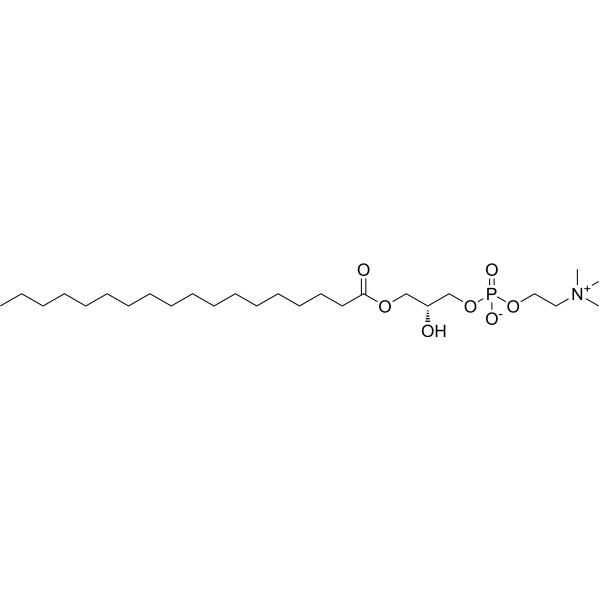
1-Stearoyl-sn-glycero-3-phosphocholine -
HY-113123
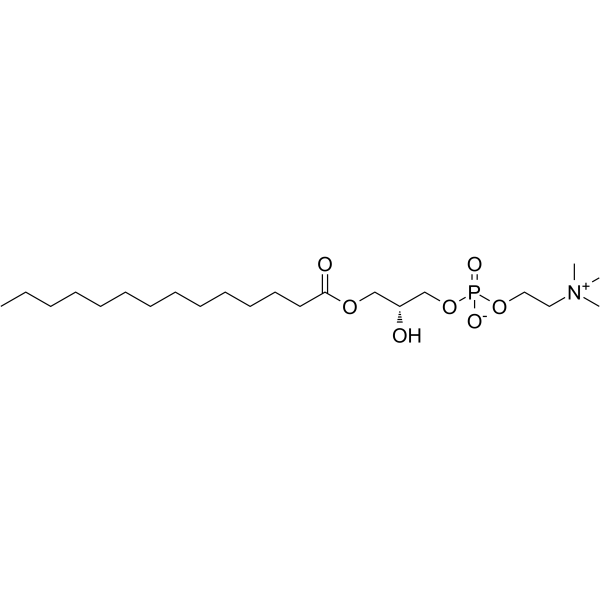
LysoPC(14:0/0:0) -
HY-W355700
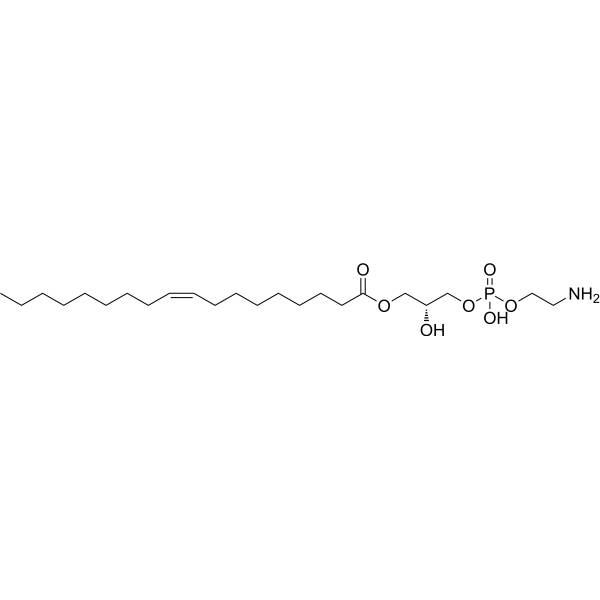
1-Oleoyl-2-hydroxy-sn-glycero-3-phosphoethanolamine -
HY-109506
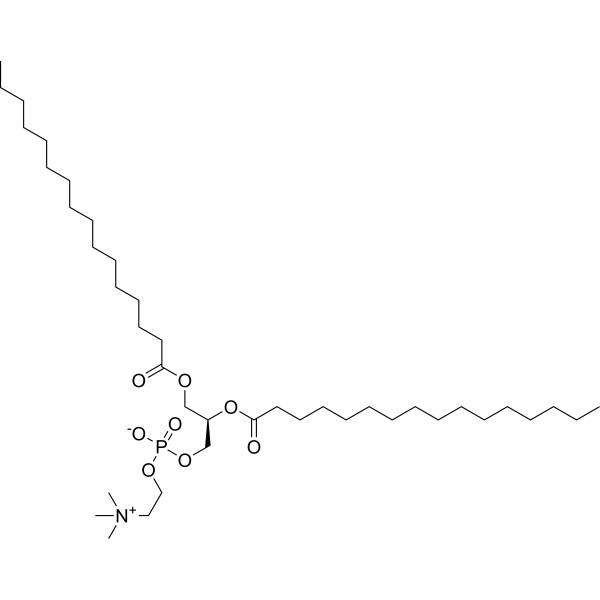
DPPC -
HY-141616
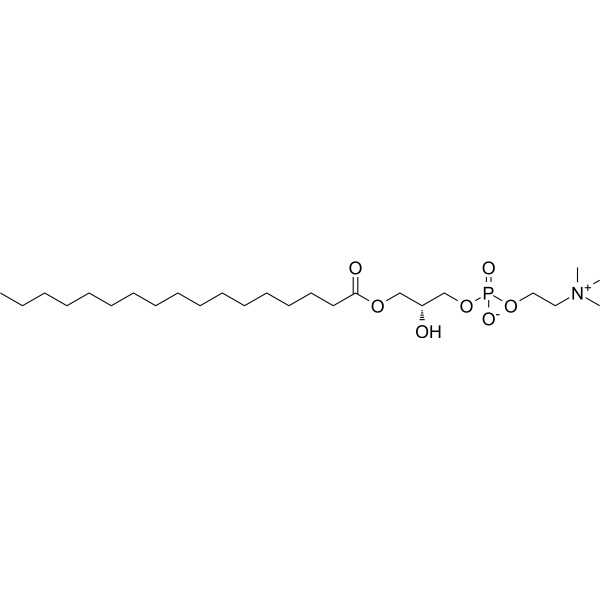
1-Heptadecanoyl-2-hydroxy-sn-glycero-3-phosphocholine -
HY-113424A
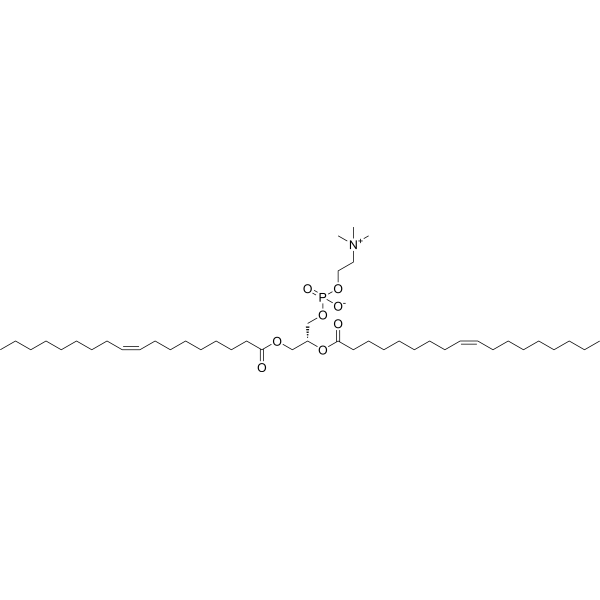
1,2-Dioleoyl-sn-glycero-3-phosphocholine -
HY-N0455
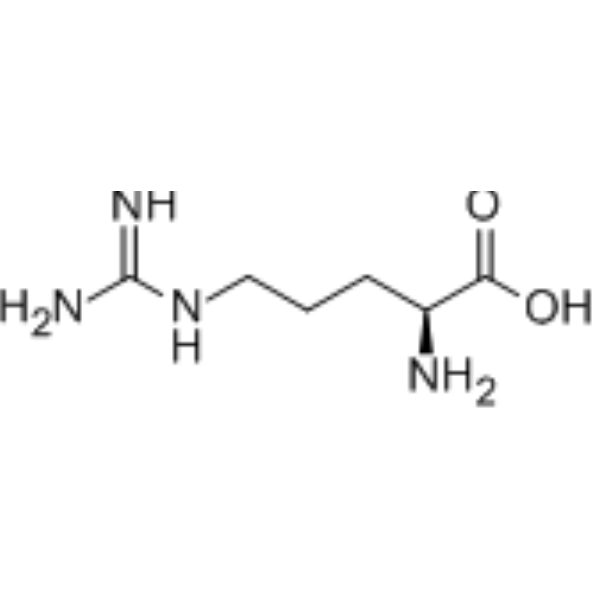
L-Arginine -
HY-90006
5-Fluorouracil -

HY-W140439
1-Oleoyl-sn-glycero-3-phosphocholine -
HY-N2327
Oleamide -
HY-76082
L-Pyroglutamic acid -

HY-125853
Phosphatidylcholines,soya
Publications Citing Use of MedChemExpress (MCE) 1-Palmitoyl-sn-glycero-3-phosphocholine
More Customer Validation & Images

-
Microbiological Assay
All Endogenous Metabolite Isoforms
More

Biological Activity
Description
IC50 & Target
|
Human Endogenous Metabolite |
In Vitro
1-Palmitoyl-sn-glycero-3-phosphocholine (125 μM, 2 h) induces superoxide overload on HUVECs by inhibiting SOD1. The levels of phosphoryl-ERK1/2 and eNOS were down-regulated[1].
1-Palmitoyl-sn-glycero-3-phosphocholine (0.3, 1 μM, 24 h) can enhance the secretion of IL-6, IL-1β, IL-12 and TNF-α in LPS (HY-D1056)-stimulated M1 macrophages[2].
1-Palmitoyl-sn-glycero-3-phosphocholine (10 μM, 24 h) increases TGF-β1 production and Foxp3 protein level in isolated human peripheral blood Treg cells[3].
MedChemExpress (MCE) has not independently confirmed the accuracy of these methods. They are for reference only.
-
Cell Line:HUVECs
-
Concentration:50, 100, 125, 150 μM
-
Incubation Time:2 h
-
Result:Inhibited cell viability in a concentration-dependent manner.
-
Cell Line:HUVECs
-
Concentration:50, 100, 125, 150 μM
-
Incubation Time:0.5, 1, 2 h
-
Result:Time-dependently decreased protein levels of eNOS and SOD1.
In Vivo
MedChemExpress (MCE) has not independently confirmed the accuracy of these methods. They are for reference only.
-
Animal Model:Cecal ligation and puncture (CLP) mice[4]
-
Dosage:10 mg/kg
-
Administration:s.c.
-
Result:Increased bactericidal activity of neutrophils, but not macrophages, by enhancing H(2)O(2) production in neutrophils that ingested E. coli.


Chemical Information
-
CAS No. 17364-16-8
-
Appearance Solid
-
Molecular Weight 495.63
-
Formula C24H50NO7P
-
Color White to off-white
-
SMILES
CCCCCCCCCCCCCCCC(OC[C@@H](O)COP(OCC[N+](C)(C)C)([O-])=O)=O
-
Synonyms
16:0 Lyso PC
-
Initial Source
-
Shipping
Room temperature in continental US; may vary elsewhere.
-
Storage
4°C, sealed storage, away from moisture and light
* In solvent : -80°C, 6 months; -20°C, 1 month (sealed storage, away from moisture and light)


Publications (2)
-
Journal Impact Factor
-
Most Recent
-
NPJ Biofilms Microbiomes
Gut bacteria facilitate leaf beetles in adapting to dietary specialization by enhancing larval fitness. [Abstract]2024 Oct 22;10(1):110. PMID: 39438487
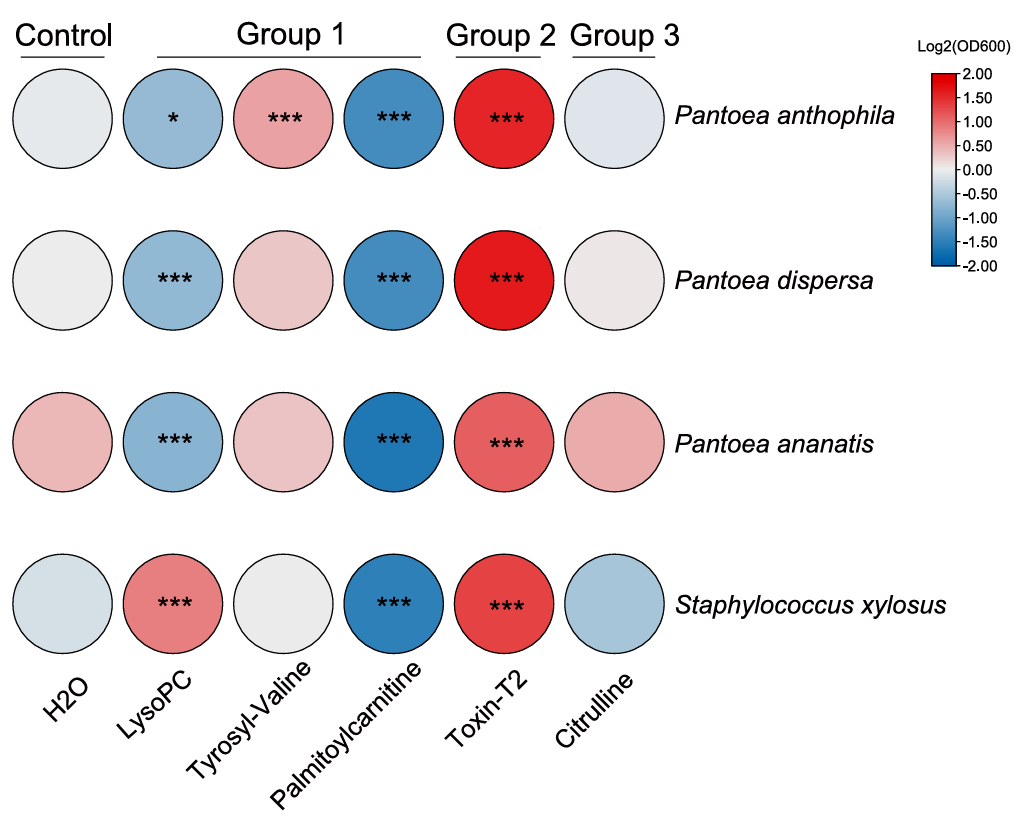
1-Palmitoyl-sn-glycero-3-phosphocholine purchased from MedChemExpress. Usage Cited in: NPJ Biofilms Microbiomes. 2024 Oct 22;10(1):110. [Abstract]
Heatmap shows that metabolites enriched in new leaves can promote gut bacterial growth (n = 10). Four bacteria species were cultivated for 24 h in 1/2 LB liquid medium supplemented with 1000 nmol/mL of the five metabolites from three groups (LysoPC(1-Palmitoyl-sn-glycero-3-phosphocholine), Tyrosyl-Valine, Palmitoylcarnitine, Toxin-T2 and Citrulline) or H2O.
-
Langmuir
Stability of Liposomal Membrane of Hemoglobin-Vesicles (Artificial Red Cells) for Over Years of Storage Evaluated Using Liquid Chromatography-Mass Spectrometry. [Abstract]2024 Jun 11;40(23):12264-12275. PMID: 38804272


Solvent & Solubility
In Vitro:
H2O : 50 mg/mL (100.88 mM; Need ultrasonic)
Please refer to the solubility information to select the appropriate solvent. Once prepared, please aliquot and store the solution to prevent product inactivation from repeated freeze-thaw cycles.
Storage method and period of stock solution: -80°C, 6 months; -20°C, 1 month (sealed storage, away from moisture and light). When stored at -80°C, please use it within 6 months. When stored at -20°C, please use it within 1 month.
* Note: If you choose water as the stock solution, please dilute it to the working solution, then filter and sterilize it with a 0.22 μm filter before use.
Please refer to the solubility information to select the appropriate solvent. Once prepared, please aliquot and store the solution to prevent product inactivation from repeated freeze-thaw cycles.
Storage method and period of stock solution: -80°C, 6 months; -20°C, 1 month (sealed storage, away from moisture and light). When stored at -80°C, please use it within 6 months. When stored at -20°C, please use it within 1 month.
* Note: If you choose water as the stock solution, please dilute it to the working solution, then filter and sterilize it with a 0.22 μm filter before use.
Concentration (start) × Volume (start) = Concentration (final) × Volume (final)
In Vivo:
For the following dissolution methods, please prepare the working solution directly:
It is recommended to prepare fresh solutions and use them promptly within a short period of time.
The percentages shown for the solvents indicate their volumetric ratio in the final prepared solution. If precipitation or phase separation occurs during preparation, heat and/or sonication can be used to aid dissolution.
Add each solvent one by one: PBS
Solubility: 50 mg/mL (100.88 mM); Clear solution; Need ultrasonic


Purity & Documentation
-
Data Sheet (276 KB)
-
SDS (396 KB)
- English - EN (396 KB)
- Français - FR (396 KB)
- Deutsch - DE (396 KB)
- Norwegian - NO (396 KB)
- Español - ES (396 KB)
- Swedish - SV (396 KB)
- Italian - IT (396 KB)
- Korean - KR (396 KB)
- Portuguese - PT (396 KB)
-
Handling Instructions (2659 KB)
References
[1]. Choi S, et al. Superoxide generated by lysophosphatidylcholine induces endothelial nitric oxide synthase downregulation in human endothelial cells. Cell Physiol Biochem. 2010;25(2-3):233-40. [Content Brief]
[2]. Qin X, et al. Lysophosphatidylcholine perpetuates macrophage polarization toward classically activated phenotype in inflammation. Cell Immunol. 2014 May-Jun;289(1-2):185-90. [Content Brief]
[3]. Hasegawa H, et al. Lysophosphatidylcholine enhances the suppressive function of human naturally occurring regulatory T cells through TGF-β production. Biochem Biophys Res Commun. 2011 Nov 25;415(3):526-31. [Content Brief]
[4]. Yan JJ, et al. Therapeutic effects of lysophosphatidylcholine in experimental sepsis. Nat Med. 2004 Feb;10(2):161-7. [Content Brief]


Complete Stock Solution Preparation Table
Please refer to the solubility information to select the appropriate solvent. Once prepared, please aliquot and store the solution to prevent product inactivation from repeated freeze-thaw cycles.
Storage method and period of stock solution: -80°C, 6 months; -20°C, 1 month (sealed storage, away from moisture and light). When stored at -80°C, please use it within 6 months. When stored at -20°C, please use it within 1 month.
| Optional Solvent | Concentration Solvent Mass | 1 mg | 5 mg | 10 mg | 25 mg |
|---|---|---|---|---|---|
| H2O | 1 mM | 2.0176 mL | 10.0882 mL | 20.1763 mL | 50.4409 mL |
| 5 mM | 0.4035 mL | 2.0176 mL | 4.0353 mL | 10.0882 mL | |
| 10 mM | 0.2018 mL | 1.0088 mL | 2.0176 mL | 5.0441 mL | |
| 15 mM | 0.1345 mL | 0.6725 mL | 1.3451 mL | 3.3627 mL | |
| 20 mM | 0.1009 mL | 0.5044 mL | 1.0088 mL | 2.5220 mL | |
| 25 mM | 0.0807 mL | 0.4035 mL | 0.8071 mL | 2.0176 mL | |
| 30 mM | 0.0673 mL | 0.3363 mL | 0.6725 mL | 1.6814 mL | |
| 40 mM | 0.0504 mL | 0.2522 mL | 0.5044 mL | 1.2610 mL | |
| 50 mM | 0.0404 mL | 0.2018 mL | 0.4035 mL | 1.0088 mL | |
| 60 mM | 0.0336 mL | 0.1681 mL | 0.3363 mL | 0.8407 mL | |
| 80 mM | 0.0252 mL | 0.1261 mL | 0.2522 mL | 0.6305 mL | |
| 100 mM | 0.0202 mL | 0.1009 mL | 0.2018 mL | 0.5044 mL |
* Note: If you choose water as the stock solution, please dilute it to the working solution, then filter and sterilize it with a 0.22 μm filter before use.


1-Palmitoyl-sn-glycero-3-phosphocholine Related Classifications
HY-125783 Related Classifications
 Powered by Bioz