



Infection
-
Infection (11)

- 1
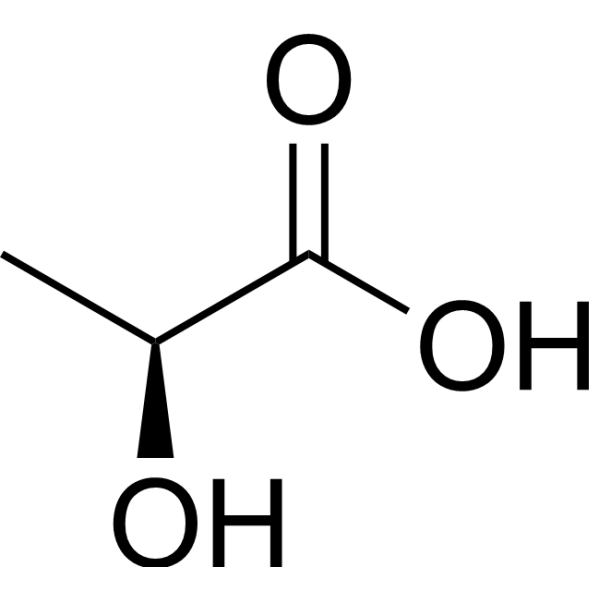
- Formula: C3H6O3
- Molecular Weight: 90.08
L-Lactic acid is a buildiing block which can be used as a precursor for the production of the bioplastic polymer poly-lactic acid. L-Lactic acid has antiproliferative activity.
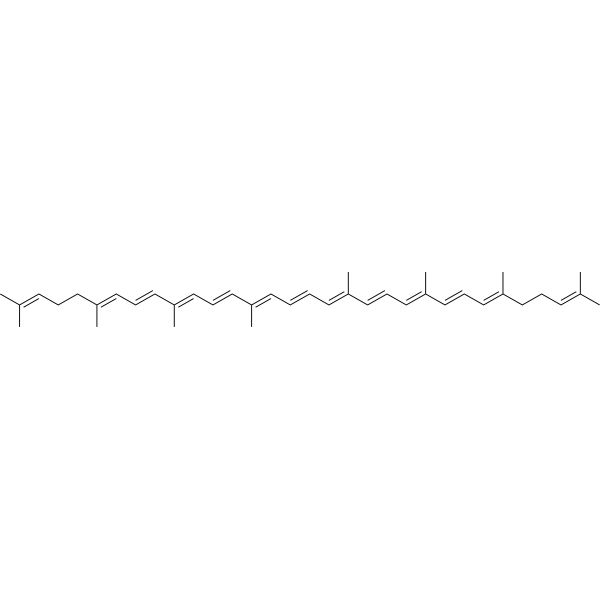
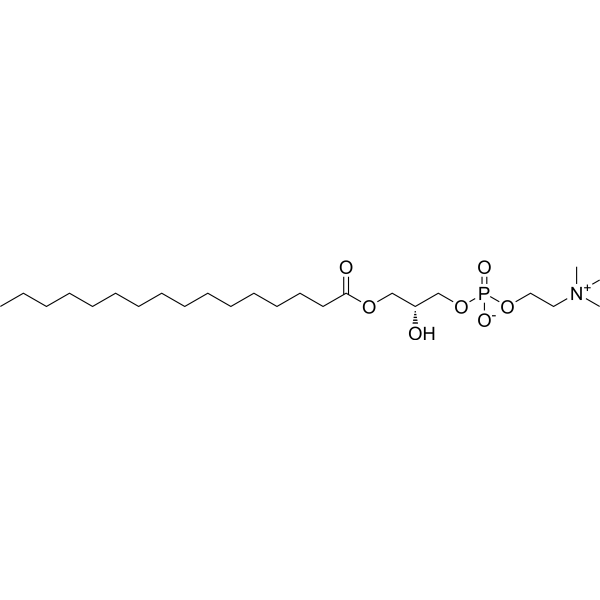
- Formula: C24H50NO7P
- Molecular Weight: 495.63
1-Palmitoyl-sn-glycero-3-phosphocholine (16:0 Lyso PC) is an abundant lysophosphatidylcholine. 1-Palmitoyl-sn-glycero-3-phosphocholine exhibits proinflammatory activity. 1-Palmitoyl-sn-glycero-3-phosphocholine can be used in the study of atherosclerosis.
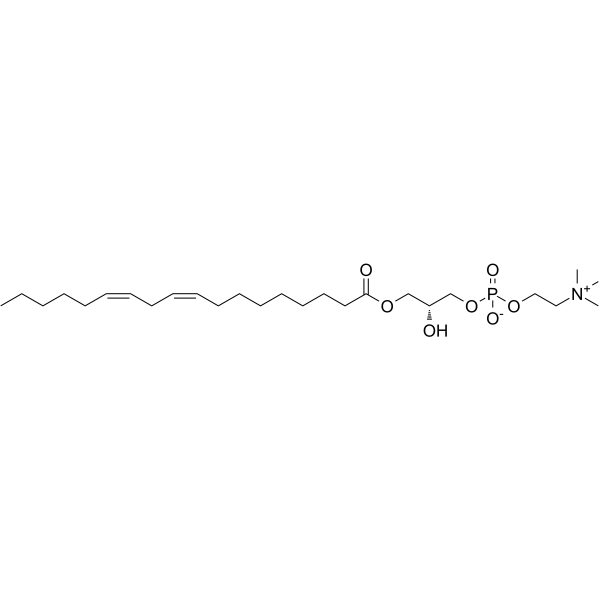
- Formula: C26H50NO7P
- Molecular Weight: 519.65
Lysophosphatidylcholine 18:2 (1-Linoleoyl-2-Hydroxy-sn-glycero-3-PC), a lysophospholipid, is a potential biomarker identified from insulin resistance (IR) polycystic ovary syndrome (PCOS). Low plasma Lysophosphatidylcholine 18:2 also has been shown to predict impaired glucose tolerance, insulin resistance, type 2 diabetes, coronary artery disease, and memory impairment.
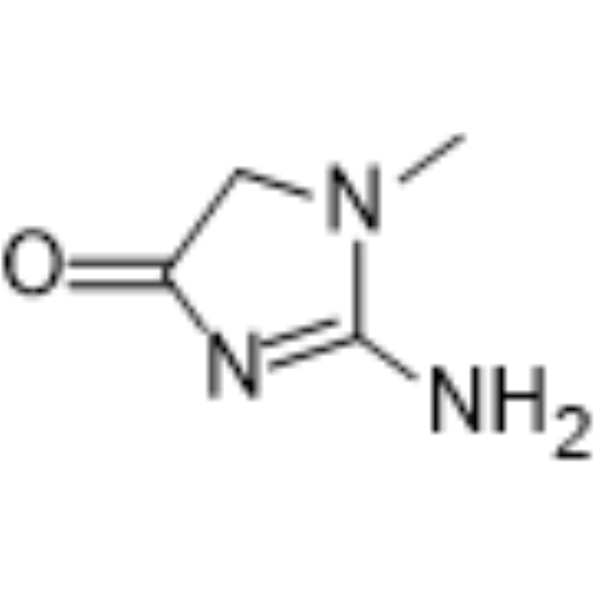
- Formula: C4H7N3O
- Molecular Weight: 113.12
Creatinine (NSC13123) is an orally active, blood-brain barrier-permeable modulator of GABAA and NMDA receptors, with activities of antioxidation and metabolic regulation. Creatinine is generated via non-enzymatic conversion of creatine and phosphocreatine in muscle. Creatinine serum levels correlate with muscle mass, glomerular filtration rate, and extrarenal clearance, serving as an evaluation biomarker for renal function, muscle mass, and clinical outcomes, and used for perioperative renal risk assessment. In addition, Creatinine can induce specific Cryptococcus species to produce creatinine deiminase and act as their nitrogen source, while it can be secreted via renal tubules. Creatinine is widely used in research related to various diseases such as neurodegenerative diseases, psychiatric disorders, acute kidney injury, chronic kidney disease, and renal failure.

- Formula: C₄H₇N₃O
- Molecular Weight: 113.12
Creatinine (Standard) is the analytical standard of Creatinine. This product is intended for research and analytical applications. Creatinine (NSC13123) is an orally active, blood-brain barrier-permeable modulator of GABAA and NMDA receptors, with activities of antioxidation and metabolic regulation. Creatinine is generated via non-enzymatic conversion of creatine and phosphocreatine in muscle. Creatinine serum levels correlate with muscle mass, glomerular filtration rate, and extrarenal clearance, serving as an evaluation biomarker for renal function, muscle mass, and clinical outcomes, and used for perioperative renal risk assessment. In addition, Creatinine can induce specific Cryptococcus species to produce creatinine deiminase and act as their nitrogen source, while it can be secreted via renal tubules. Creatinine is widely used in research related to various diseases such as neurodegenerative diseases, psychiatric disorders, acute kidney injury, chronic kidney disease, and renal failure.
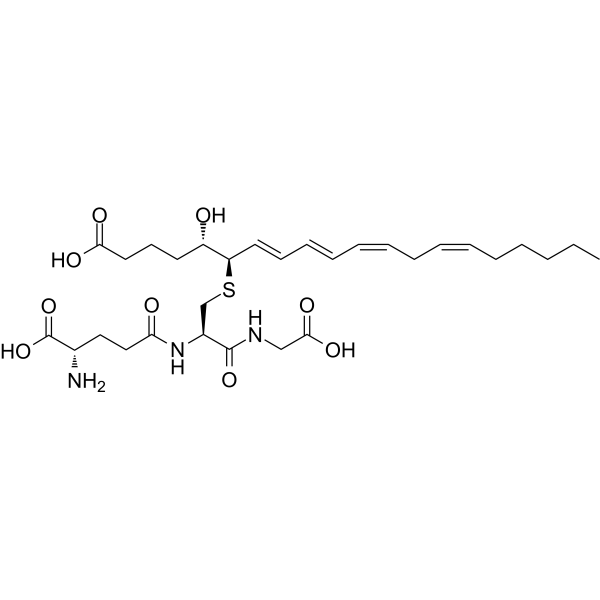
- Formula: C30H47N3O9S
- Molecular Weight: 625.77
Leukotriene C4 is a eicosanoid lipid mediator and produced by immune cells during type 2 inflammation. Leukotriene C4 can mediate inflammation,allergy, bronchoconstriction, and vascular leakage.
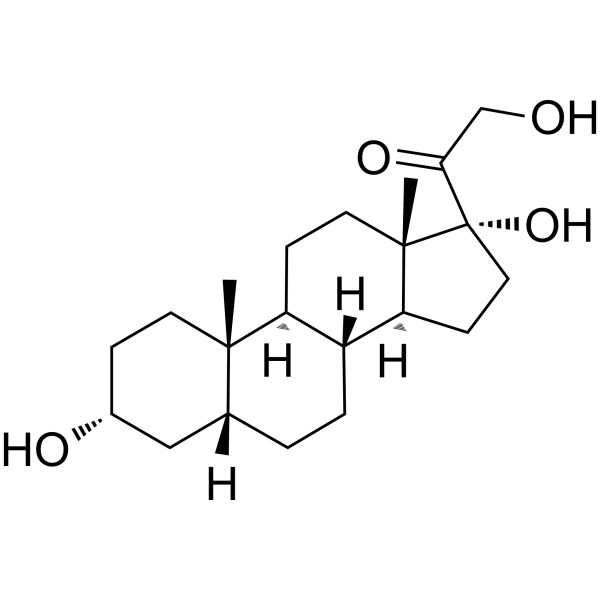
- Formula: C21H34O4
- Molecular Weight: 350.49
Tetrahydro-11-deoxycortisol (Tetrahydrodeoxycortisol) is an endogenous metabolite present in Urine that can be used for the research of 11 Beta Hydroxylase Deficiency.

- Formula: C11H15N5O5
- Molecular Weight: 297.27
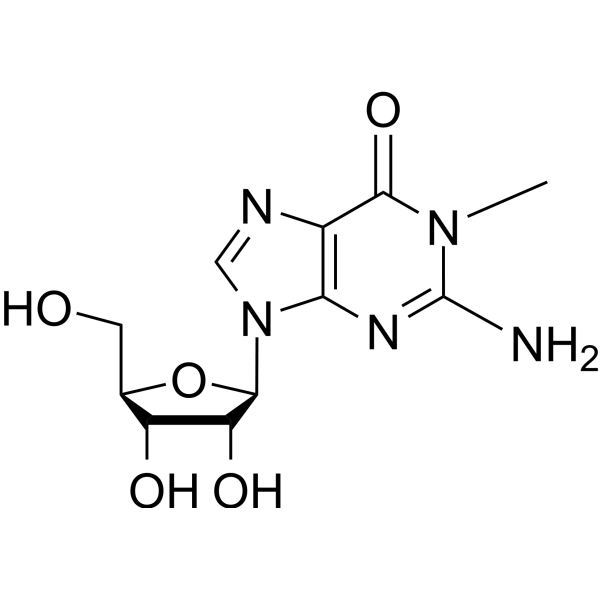
1-Methylguanosine (Standard) is the analytical standard of 1-Methylguanosine. This product is intended for research and analytical applications. 1-Methylguanosine is a methylated nucleoside originating from RNA degradation. 1-Methylguanosine is a tumour marker.

- Formula: C24H50NO7P
- Molecular Weight: 495.63
1-Palmitoyl-sn-glycero-3-phosphocholine (Standard) (16:0 Lyso PC (Standard)) is the analytical standard of 1-Palmitoyl-sn-glycero-3-phosphocholine (HY-125783). This product is intended for research and analytical applications. 1-Palmitoyl-sn-glycero-3-phosphocholine is an abundant lysophosphatidylcholine. 1-Palmitoyl-sn-glycero-3-phosphocholine exhibits proinflammatory activity. 1-Palmitoyl-sn-glycero-3-phosphocholine can be used in the study of atherosclerosis.
- 1



