



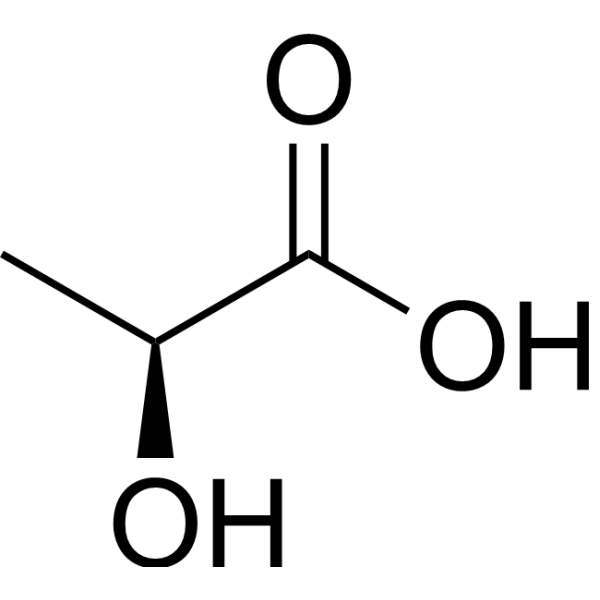
L-Lactic acid
Based on 22 publication(s) in Google Scholar
L-Lactic acid is a buildiing block which can be used as a precursor for the production of the bioplastic polymer poly-lactic acid. L-Lactic acid has antiproliferative activity.
Para uso exclusivo en investigación. No vendemos a pacientes.
- Pureza : 99.57%
- No. CAS: 79-33-4
- Fòrmula: C3H6O3
- Peso molecular:90.08
-
Almacenamiento:
4°C, sealed storage, away from moisture
* In solvent : -80°C, 6 months; -20°C, 1 month (sealed storage, away from moisture)

To place orders, for customer services and technical support, please contact: MedChemExpress USA
Tel: 609-228-6898 E-mail: [email protected] [email protected]


-
 Actividad biológica
-
Chemical Information
-
Solvente y solubilidad
- Protocolo
- Pureza y Documentación
- Referencias
-
 Help & FAQs


-
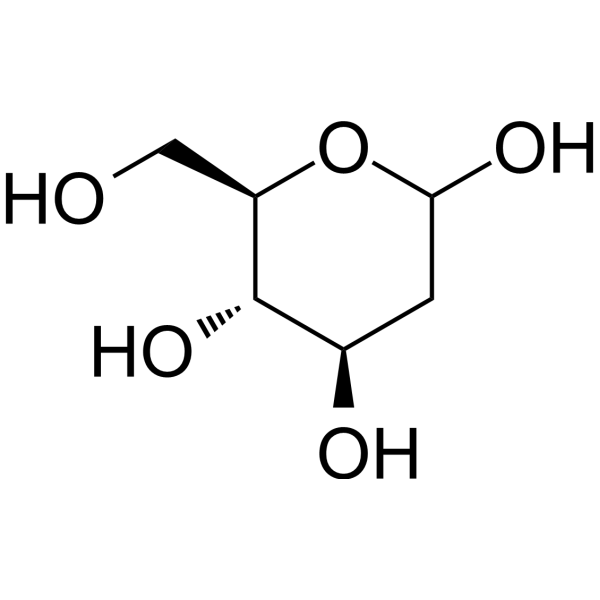
HY-13966
2-Deoxy-D-glucoseGlycolysis Inhibitor -
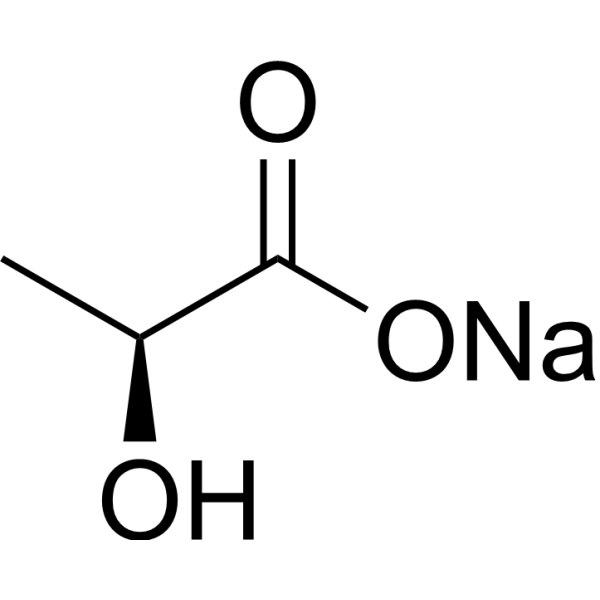
HY-W040233
L-Lactic acid sodiumBuildiing Block -
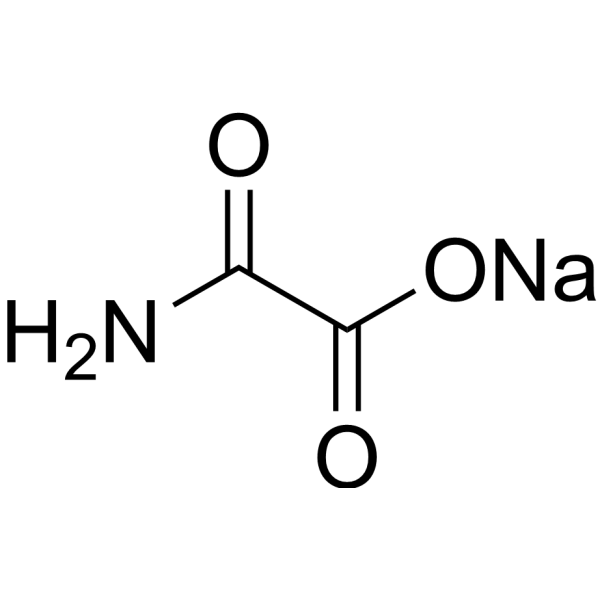
HY-W013032A
Oxamic acid sodiumLDH-A Inhibitor -
HY-W015883
Fumaric acidAnti-inflammatory agent -
HY-13259
MG-132Proteasome Inhibitor -
HY-B2227B
Lactic acid sodium (60% w/w in water)Glycolysis Production -
HY-B2227
Lactic acidGlycolysis Production -

HY-Y0344D
Sodium chloride, for cell cultureBiochemical Assay Reagent -
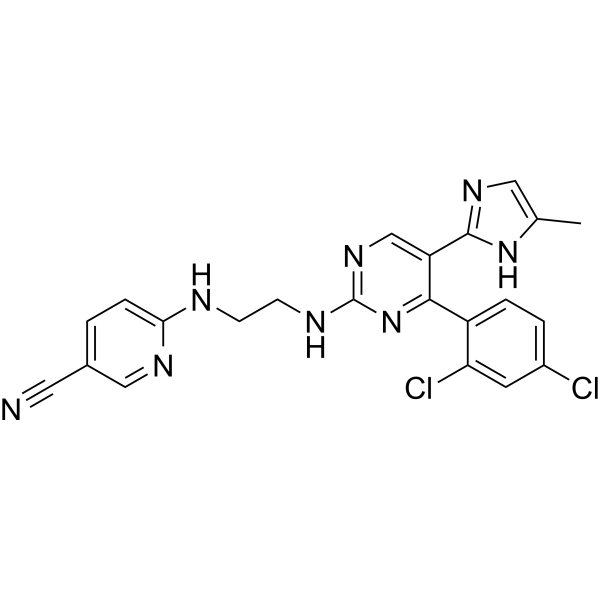
HY-10182
LaduviglusibGSK-3 Inhibitor -
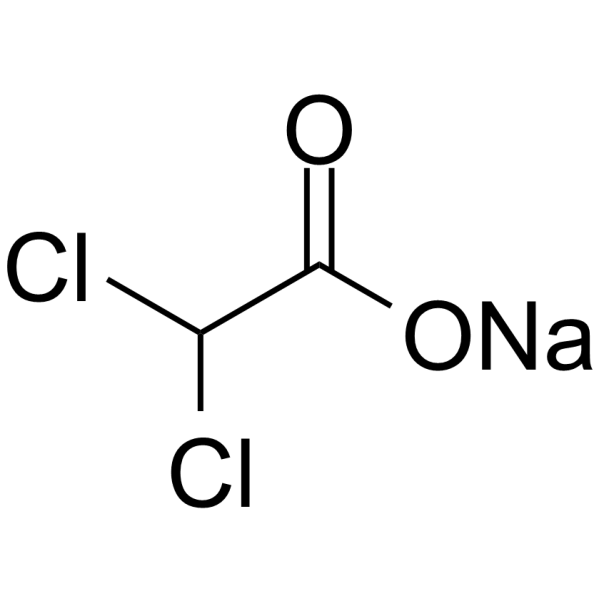
HY-Y0445A
Sodium dichloroacetatePDK Inhibitor -
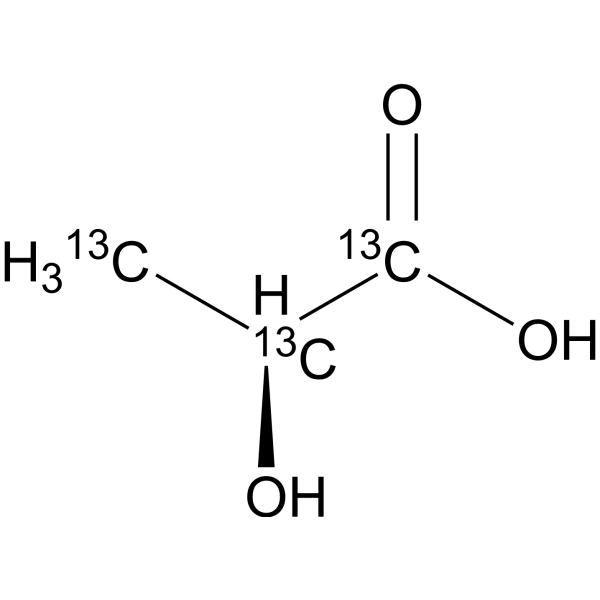
HY-Y0479S
L-Lactic acid-13C3Stable Isotope
Publications Citing Use of MedChemExpress (MCE) L-Lactic acid
More- Autophagy. 2026 Jul 8:1-18. [Abstract]
- Mol Cell. 2026 Sep 3;86(17):3529-3544.e9.
- Adv Sci (Weinh). 2025 Feb;12(8):e2411943. [Abstract]
- Adv Sci (Weinh). 2024 Mar;11(10):e2304761. [Abstract]
- Small. 2022 Apr;18(13):e2107236. [Abstract]
- Phytomedicine. 2026 Sep:159:158525.
- Diabetologia. 2024 Jul;67(7):1429-1443. [Abstract]
- Cell Chem Biol. 2026 Feb 19;33(2):213-226.e5. [Abstract]
- Int J Biol Macromol. 2025 Aug 24;323(Pt 1):147098. [Abstract]
- Int J Biol Macromol. 2022 Dec 1;222(Pt B):2225-2243. [Abstract]
- Int J Mol Med. 2026 Aug;58(2):207. [Abstract]
- Cell Rep. 2025 Apr 9;44(4):115545. [Abstract]
- Commun Chem. 2025 Dec 9. [Abstract]
- J Autoimmun. 2025 May:153:103411. [Abstract]
- J Ethnopharmacol. 2025 Jan 31:340:119287. [Abstract]
- Cells. 2026 Jul 9;15(14):1240.
- Int Immunopharmacol. 2024 Jan 5:126:111265. [Abstract]
- Exp Eye Res. 2025 Jun:255:110361. [Abstract]
- PLoS One. 2025 Sep 18;20(9):e0332825. [Abstract]
- bioRxiv. 2026 Jul 7.
- Res Sq. 2026 Jun 15.
- SSRN. 2026 Jun 16.
 Customer Validation & Images

-
RT-PCR
-
Cell Proliferation/Viability Assay
-
Cell Migration/Invasion Assay
-
Bio/Physico-chemical Assay
-
WB
Ver todos los productos específicos de isoformas Endogenous Metabolite
MoreVer todos los productos específicos de isoformas Antibiotic
More

Actividad biológica
Descripciòn
IC50 & Target
|
Microbial Metabolite |
Human Endogenous Metabolite |
Cellular Effect
|
Cell Line

|
Type | Value | Description | References |
|---|---|---|---|---|
| A549 | IC50 |
26.6 μM
Compound: Lactic acid
|
Antiproliferative activity against human A549 cells after 48 hrs by MTT assay
Antiproliferative activity against human A549 cells after 48 hrs by MTT assay
|
[PMID: 28710964] |
| MRC5 | IC50 |
23.93 μM
Compound: Lactic acid
|
Cytotoxicity against human MRC5 cells after 48 hrs by MTT assay
Cytotoxicity against human MRC5 cells after 48 hrs by MTT assay
|
[PMID: 28710964] |
In Vitro
L-Lactic Acid (24-48 h) secreted from gastric mucosal cells enhances growth of Helicobacter pylori[1].
L-Lactic Acid (48 h) shows antiproliferative activity against human A549 and MRC5 cells, with IC50 of 26.6 μM and 23.93 μM[2].
MedChemExpress (MCE) has not independently confirmed the accuracy of these methods. They are for reference only.
In Vivo
MedChemExpress (MCE) has not independently confirmed the accuracy of these methods. They are for reference only.


Chemical Information
-
No. CAS 79-33-4
-
Appearance <53°C Solid,>53°C Liquid
-
Peso molecular 90.08
-
Fòrmula C3H6O3
-
Color Colorless to off-white
-
SMILES
C[C@H](O)C(O)=O
-
Synonyms
(S)-2-Hydroxypropanoic acid
-
Structure Classification
-
Initial Source
-
Envío
Room temperature in continental US; may vary elsewhere.
-
Almacenamiento
4°C, sealed storage, away from moisture
* In solvent : -80°C, 6 months; -20°C, 1 month (sealed storage, away from moisture)


Publications (22)
-
Journal Impact Factor
-
Most Recent
-
Autophagy
AARS2-mediated lactylation of ULK1 promotes autophagy-dependent progression of clear cell renal cell carcinoma. [Abstract]2026 Jul 8:1-18. PMID: 42381569 -
-
Adv Sci (Weinh)
Aldehyde Dehydrogenase 2 Lactylation Aggravates Mitochondrial Dysfunction by Disrupting PHB2 Mediated Mitophagy in Acute Kidney Injury. [Abstract]2025 Feb;12(8):e2411943. PMID: 39737891 -
Adv Sci (Weinh)
Enzymatically Bioactive Nucleus Pulposus Matrix Hydrogel Microspheres for Exogenous Stem Cells Therapy and Endogenous Repair Strategy to Achieve Disc Regeneration. [Abstract]2024 Mar;11(10):e2304761. PMID: 38145353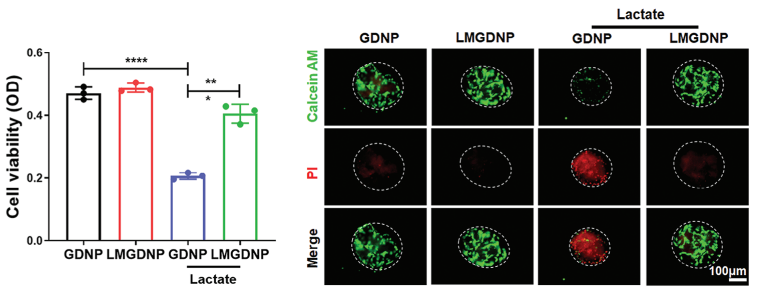
L-Lactic acid purchased from MedChemExpress. Usage Cited in: Adv Sci (Weinh). 2024 Mar;11(10):e2304761. [Abstract]
Evaluation of the viability of BMSCs cultured on microspheres with or without lactate (L-Lactic acid; 6 mM) for 24 h. Fluorescence images of the live/dead assays of BMSCs cultured on microspheres with or without lactate for 24 h.
-
Small
Stemness Maintenance and Massproduction of Neural Stem Cells on Poly L-Lactic Acid Nanofibrous Membrane Based on Piezoelectriceffect. [Abstract]2022 Apr;18(13):e2107236. PMID: 35166031 -
-
Diabetologia
2024 Jul;67(7):1429-1443. PMID: 38676722 -
Cell Chem Biol
2026 Feb 19;33(2):213-226.e5. PMID: 41643668 -
Int J Biol Macromol
Lactate-related genes signature as a novel prognostic landscape in laryngeal squamous cell carcinoma: insights from 156 machine learning algorithms and in vitro validation. [Abstract]2025 Aug 24;323(Pt 1):147098. PMID: 40858160
L-Lactic acid purchased from MedChemExpress. Usage Cited in: Int J Biol Macromol. 2025 Aug 24;323(Pt 1):147098. [Abstract]
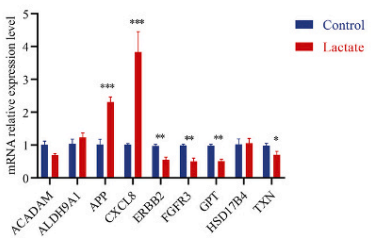
Lactate (L-Lactic acid; 24 h) TU668 cells, the expression levels of hub genes were quantified by PCR.
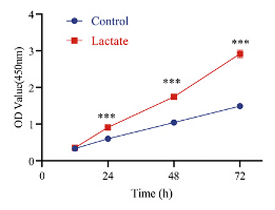
L-Lactic acid purchased from MedChemExpress. Usage Cited in: Int J Biol Macromol. 2025 Aug 24;323(Pt 1):147098. [Abstract]
Lactate (L-Lactic acid; 15 mM; 24, 48, 72 h) cell viability was assessed using the CCK-8 assay in TU686 cells.
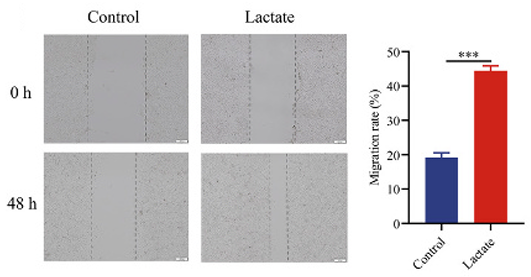
L-Lactic acid purchased from MedChemExpress. Usage Cited in: Int J Biol Macromol. 2025 Aug 24;323(Pt 1):147098. [Abstract]
Lactate (L-Lactic acid; 15 mM; 0, 48 h), cell migration capacity was evaluated via a scratch wound healing assay in TU686 cells.
-
Int J Biol Macromol
HIF1α lactylation enhances KIAA1199 transcription to promote angiogenesis and vasculogenic mimicry in prostate cancer. [Abstract]2022 Dec 1;222(Pt B):2225-2243. PMID: 36209908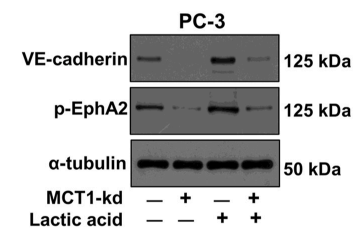
L-Lactic acid purchased from MedChemExpress. Usage Cited in: Int J Biol Macromol. 2022 Dec 1;222(Pt B):2225-2243. [Abstract]
Assessed by WB, extracellular lactate (L-Lactic acid) treatment (10 mM, 72 h) significantly increased VE-cadherin and p-EphA2 (Ser897) expressions, which could be reversed by MCT1 silencing PC-3 cells.
-
Int J Mol Med
2026 Aug;58(2):207. PMID: 42246181 -
Cell Rep
High-glucose-associated YTHDC1 lactylation reduces the sensitivity of bladder cancer to enfortumab vedotin therapy. [Abstract]2025 Apr 9;44(4):115545. PMID: 40215164
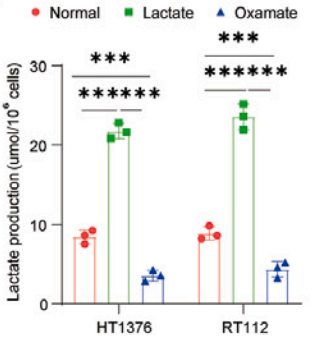
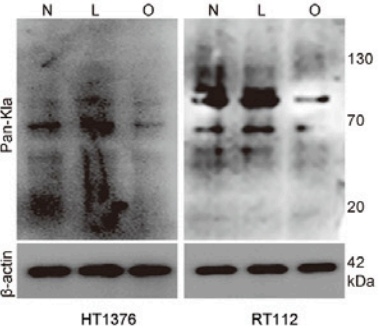
L-Lactic acid purchased from MedChemExpress. Usage Cited in: Cell Rep. 2025 Apr 9;44(4):115545. [Abstract]
HT1376 and RT112 cells were treated with lactate (10 mM)/oxamate (10 mM) for 24 h. Then, the cells were harvested for lactic acid content detection analysis.
L-Lactic acid purchased from MedChemExpress. Usage Cited in: Cell Rep. 2025 Apr 9;44(4):115545. [Abstract]
HT1376 and RT112 cells were treated with lactate (10 mM)/oxamate (10 mM) for 24 h. Then, the cells were harvested for lactic acid content detection analysis.
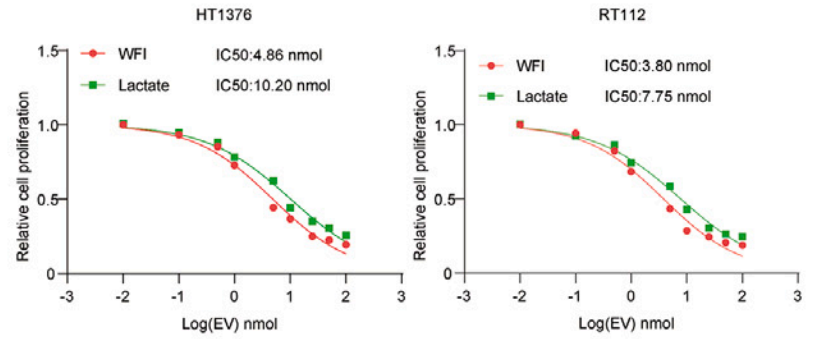
L-Lactic acid purchased from MedChemExpress. Usage Cited in: Cell Rep. 2025 Apr 9;44(4):115545. [Abstract]
HT1376 and RT112 cells were treated with the lactate (10 mM) for 48 h then treated with continuous doses of EV for 24 h and harvested for CCK-8 assays to measure the IC50 values of EV.
-
Commun Chem
Stepped collisional energy improves protein acylation identification by eliminating positional bias of cyclic immonium ions. [Abstract]2025 Dec 9. PMID: 41366033 -
J Autoimmun
Neutrophil extracellular traps induce trophoblasts pyroptosis via enhancing NLRP3 lactylation in SLE pregnancies. [Abstract]2025 May:153:103411. PMID: 40179478 -
J Ethnopharmacol
Icariin maintaining TMEM119-positive microglial population improves hippocampus-associated memory in senescent mice in relation to R-3-hydroxybutyric acid metabolism. [Abstract]2025 Jan 31:340:119287. PMID: 39736348 -
-
Int Immunopharmacol
Identifying the critical oncogenic mechanism of LDHA based on a prognostic model of T-cell synthetic drivers. [Abstract]2024 Jan 5:126:111265. PMID: 38000233 -
Exp Eye Res
Spatial alteration of metabolites in diabetic cortical cataracts: New insight into lactate. [Abstract]2025 Jun:255:110361. PMID: 40157629 -
PLoS One
2025 Sep 18;20(9):e0332825. PMID: 40966256 -
-
-


Solvente y solubilidad
In Vitro:
H2O : 100 mg/mL (1110.12 mM; Need ultrasonic)
DMSO : 100 mg/mL (1110.12 mM; Need ultrasonic; Hygroscopic DMSO has a significant impact on the solubility of product, please use newly opened DMSO)
Please refer to the solubility information to select the appropriate solvent. Once prepared, please aliquot and store the solution to prevent product inactivation from repeated freeze-thaw cycles.
Storage method and period of stock solution: -80°C, 6 months; -20°C, 1 month (sealed storage, away from moisture). When stored at -80°C, please use it within 6 months. When stored at -20°C, please use it within 1 month.
* Note: If you choose water as the stock solution, please dilute it to the working solution, then filter and sterilize it with a 0.22 μm filter before use.
Please refer to the solubility information to select the appropriate solvent. Once prepared, please aliquot and store the solution to prevent product inactivation from repeated freeze-thaw cycles.
Storage method and period of stock solution: -80°C, 6 months; -20°C, 1 month (sealed storage, away from moisture). When stored at -80°C, please use it within 6 months. When stored at -20°C, please use it within 1 month.
* Note: If you choose water as the stock solution, please dilute it to the working solution, then filter and sterilize it with a 0.22 μm filter before use.
Concentration (start) × Volume (start) = Concentration (final) × Volume (final)
In Vivo:
Select the appropriate dissolution method based on your experimental animal and administration route.
- For the following dissolution methods, please ensure to first prepare a clear stock solution using an In Vitro approach and then sequentially add co-solvents:
- To ensure reliable experimental results, the clarified stock solution can be appropriately stored based on storage conditions. As for the working solution for In Vivo experiments, it is recommended to prepare freshly and use it on the same day.
- The percentages shown for the solvents indicate their volumetric ratio in the final prepared solution. If precipitation or phase separation occurs during preparation, heat and/or sonication can be used to aid dissolution.
Add each solvent one by one: 10% DMSO 40% PEG300 5% Tween-80 45% Saline
Solubility: ≥ 2.08 mg/mL (23.09 mM); Clear solution
This protocol yields a clear solution of ≥ 2.08 mg/mL (saturation unknown).
Taking 1 mL working solution as an example, add 100 μL DMSO stock solution (20.8 mg/mL) to 400 μL PEG300, and mix evenly; then add 50 μL Tween-80 and mix evenly; then add 450 μL Saline to adjust the volume to 1 mL.
Preparation of Saline: Dissolve 0.9 g sodium chloride in ddH₂O and dilute to 100 mL to obtain a clear Saline solution.
Add each solvent one by one: 10% DMSO 90% (20% SBE-β-CD in Saline)
Solubility: ≥ 2.08 mg/mL (23.09 mM); Clear solution
This protocol yields a clear solution of ≥ 2.08 mg/mL (saturation unknown).
Taking 1 mL working solution as an example, add 100 μL DMSO stock solution (20.8 mg/mL) to 900 μL 20% SBE-β-CD in Saline, and mix evenly.
Preparation of 20% SBE-β-CD in Saline (4°C, storage for one week): 2 g SBE-β-CD powder is dissolved in 10 mL Saline, completely dissolve until clear.
In Vivo Dissolution Calculator
Please enter the basic information of animal experiments:
-
-
-
-
Recommended: Prepare an additional quantity of animals to account for potential losses during experiments.
Working solution concentration: 0.22 mg/mL
This product has good water solubility, please refer to the measured solubility data in water/PBS/Saline for details.


Pureza y Documentación
-
Ficha de datos (278 KB)
-
SDS (477 KB)
- English - EN (477 KB)
- Français - FR (477 KB)
- Deutsch - DE (477 KB)
- Norwegian - NO (477 KB)
- Español - ES (477 KB)
- Swedish - SV (477 KB)
- Italian - IT (477 KB)
- Korean - KR (477 KB)
- Portuguese - PT (477 KB)
-
Instrucciones de manejo (2659 KB)
Referencias
[1]. 1. Takahashi T, et al. L-lactic acid secreted from gastric mucosal cells enhances growth of Helicobacter pylori. Helicobacter. 2007 Oct;12(5):532-40. [Content Brief]
[2]. 2. Recio R, et al. Design, synthesis and biological studies of a library of NK1-Receptor Ligands Based on a 5-arylthiosubstituted 2-amino-4,6-diaryl-3-cyano-4H-pyran core: Switch from antagonist to agonist effect by chemical modification. Eur J Med Chem. 2017 Sep 29;138:644-660. [Content Brief]
[3]. 3. Zhang G, et al. L-lactic acid's improvement of swimming endurance in mice. Int J Sport Nutr Exerc Metab. 2009 Dec;19(6):673-84. [Content Brief]


Complete Stock Solution Preparation Table
Please refer to the solubility information to select the appropriate solvent. Once prepared, please aliquot and store the solution to prevent product inactivation from repeated freeze-thaw cycles.
Storage method and period of stock solution: -80°C, 6 months; -20°C, 1 month (sealed storage, away from moisture). When stored at -80°C, please use it within 6 months. When stored at -20°C, please use it within 1 month.
| Optional Solvent | Concentration Solvent Mass | 1 mg | 5 mg | 10 mg | 25 mg |
|---|---|---|---|---|---|
| H2O / DMSO | 1 mM | 11.1012 mL | 55.5062 mL | 111.0124 mL | 277.5311 mL |
| 5 mM | 2.2202 mL | 11.1012 mL | 22.2025 mL | 55.5062 mL | |
| 10 mM | 1.1101 mL | 5.5506 mL | 11.1012 mL | 27.7531 mL | |
| 15 mM | 0.7401 mL | 3.7004 mL | 7.4008 mL | 18.5021 mL | |
| 20 mM | 0.5551 mL | 2.7753 mL | 5.5506 mL | 13.8766 mL | |
| 25 mM | 0.4440 mL | 2.2202 mL | 4.4405 mL | 11.1012 mL | |
| 30 mM | 0.3700 mL | 1.8502 mL | 3.7004 mL | 9.2510 mL | |
| 40 mM | 0.2775 mL | 1.3877 mL | 2.7753 mL | 6.9383 mL | |
| 50 mM | 0.2220 mL | 1.1101 mL | 2.2202 mL | 5.5506 mL | |
| 60 mM | 0.1850 mL | 0.9251 mL | 1.8502 mL | 4.6255 mL | |
| 80 mM | 0.1388 mL | 0.6938 mL | 1.3877 mL | 3.4691 mL | |
| 100 mM | 0.1110 mL | 0.5551 mL | 1.1101 mL | 2.7753 mL |
* Note: If you choose water as the stock solution, please dilute it to the working solution, then filter and sterilize it with a 0.22 μm filter before use.


L-Lactic acid Related Classifications
HY-Y0479 Related Classifications
 Powered by Bioz