



Lysophosphatidylcholine 18:2

Based on 1 Customer Validation
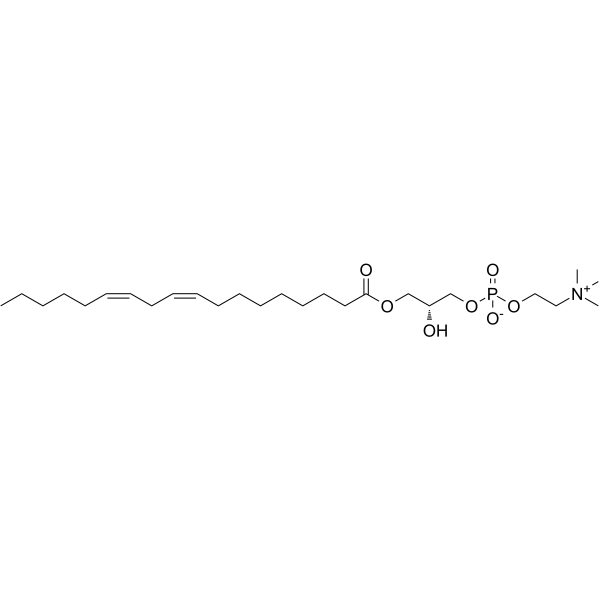
Lysophosphatidylcholine 18:2 (1-Linoleoyl-2-Hydroxy-sn-glycero-3-PC), a lysophospholipid, is a potential biomarker identified from insulin resistance (IR) polycystic ovary syndrome (PCOS). Low plasma Lysophosphatidylcholine 18:2 also has been shown to predict impaired glucose tolerance, insulin resistance, type 2 diabetes, coronary artery disease, and memory impairment.
For research use only. We do not sell to patients.
- Purity : 99.12%
- CAS No.: 22252-07-9
- Formula: C26H50NO7P
- Molecular Weight:519.65
-
Storage:
-20°C, stored under nitrogen
* In solvent : -80°C, 6 months; -20°C, 1 month (stored under nitrogen)

To place orders, for customer services and technical support, please contact: MedChemExpress USA
Tel: 609-228-6898 E-mail: [email protected] [email protected]


-
 Biological Activity
-
Chemical Information
-
Solvent & Solubility
- Purity & Documentation
- References
-
 Help & FAQs


-

HY-W140439
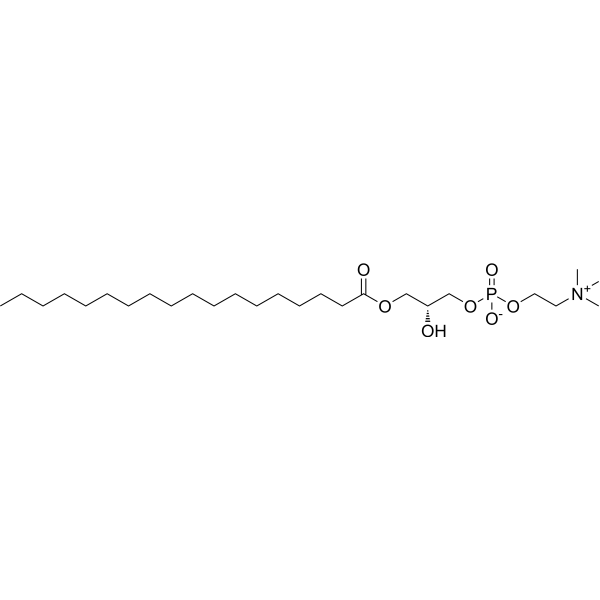
1-Oleoyl-sn-glycero-3-phosphocholine -
HY-125771
1-Stearoyl-sn-glycero-3-phosphocholine -
HY-113123
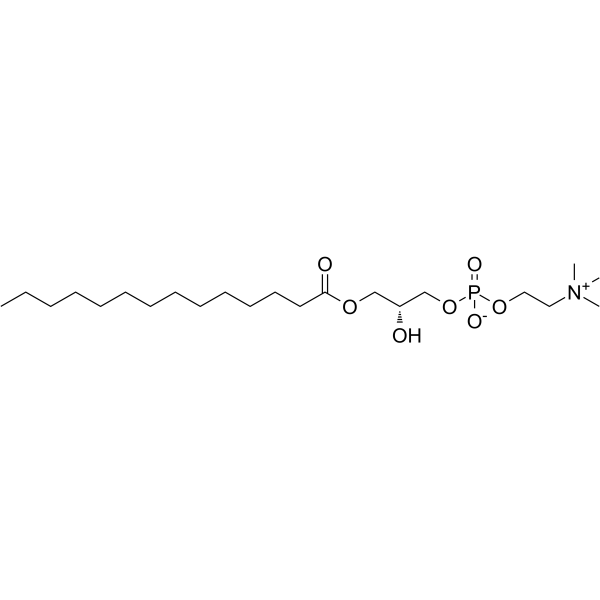
LysoPC(14:0/0:0) -
HY-13757A
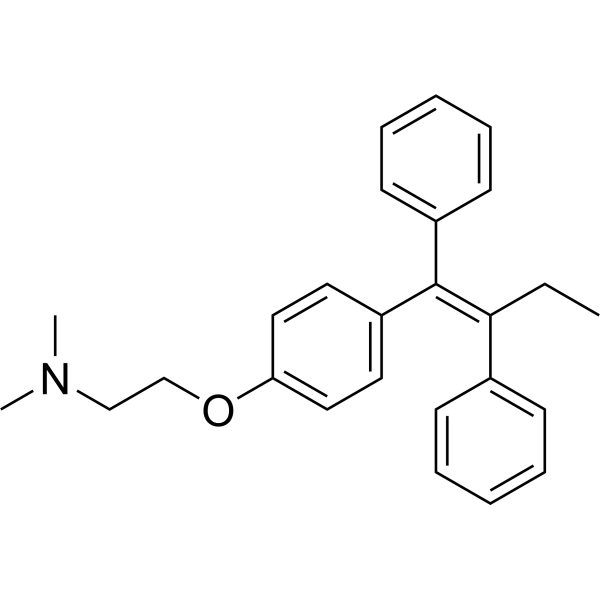
Tamoxifen -
HY-Y0320
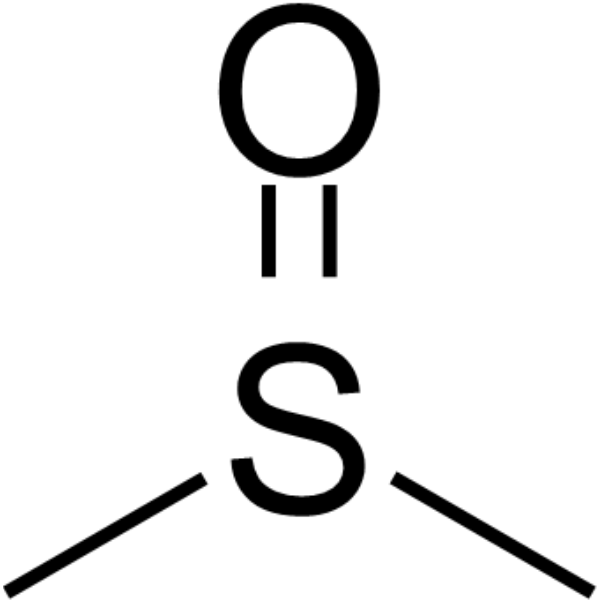
Dimethyl sulfoxide, meets analytical specification of Ch.P. -
HY-15141
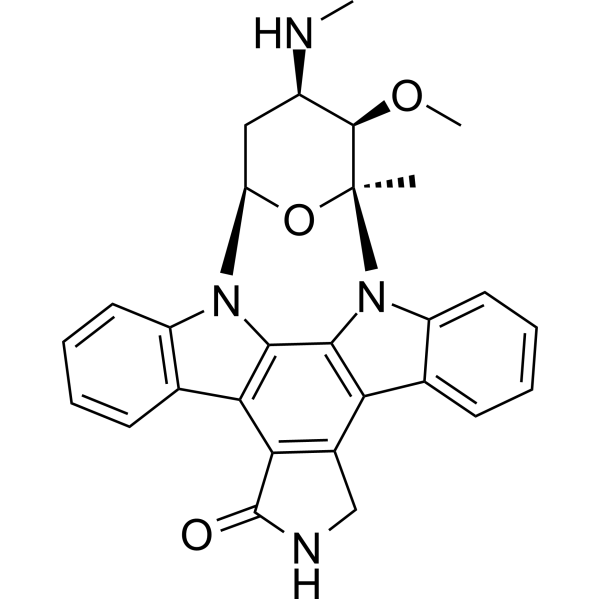
Staurosporine -
HY-N0391
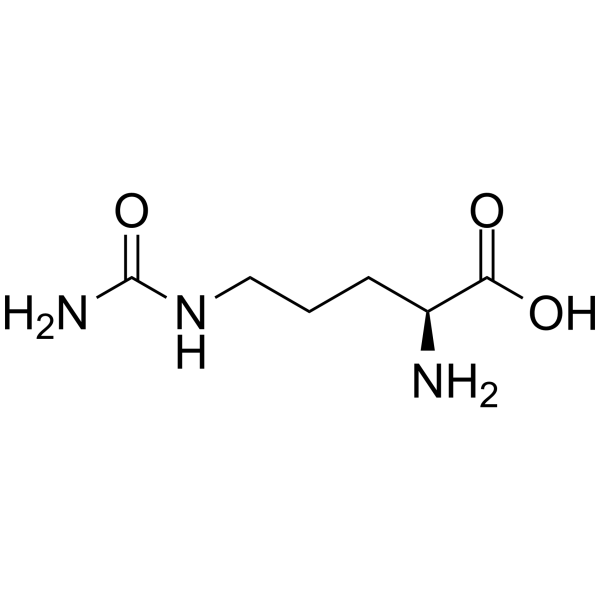
L-Citrulline -
HY-125783
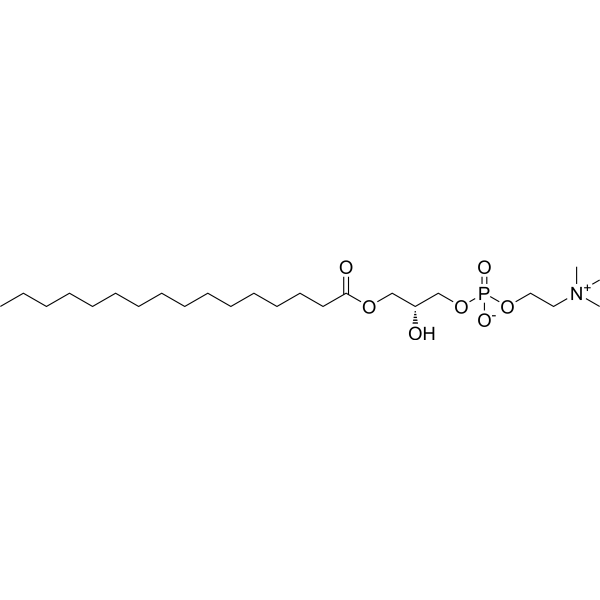
1-Palmitoyl-sn-glycero-3-phosphocholine -
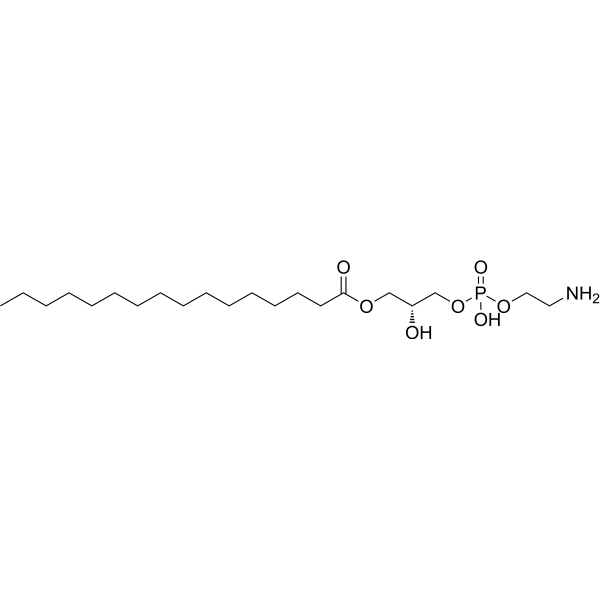
HY-141617
1-Palmitoyl-2-hydroxy-sn-glycero-3-PE -
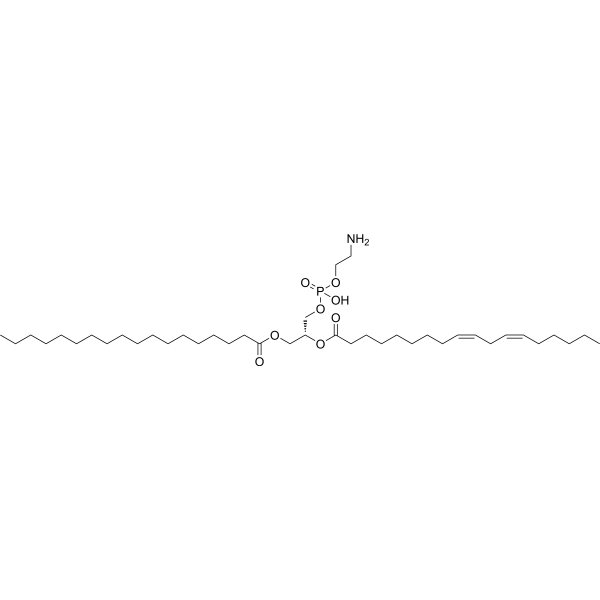
HY-143203
18:0-18:2 PE -

HY-122056
1,2-Diheptanoyl-SN-glycero-3-phosphocholine -
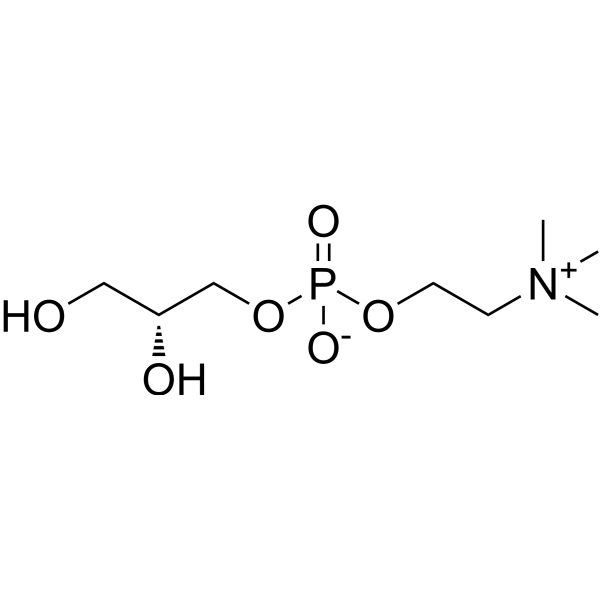
HY-17552
sn-Glycero-3-phosphocholine
All Endogenous Metabolite Isoforms
More

Biological Activity
Description
IC50 & Target
[1]|
Human Endogenous Metabolite |
In Vitro
Lysophosphatidylcholine 18:2 (1-Linoleoyl-2-Hydroxy-sn-glycero-3-PC) contributes to the separation of IR PCOS and control groups. Significant decrease in the levels of phosphocholines (PCs) and lyso PC (18:2), and increase in trilauric glyceride level are observed in the plasma of IR PCOS[1].
Lysophosphatidylcholine (LPC), a major class of glycerophospholipids in human plasma, are implicated in inflammation, insulin resistance, obesity, and type 2 diabetes[2].
MedChemExpress (MCE) has not independently confirmed the accuracy of these methods. They are for reference only.


Chemical Information
-
CAS No. 22252-07-9
-
Appearance Oil
-
Molecular Weight 519.65
-
Formula C26H50NO7P
-
Color Light yellow to orange
-
SMILES
CCCCC/C=C\C/C=C\CCCCCCCC(OC[C@@H](O)COP(OCC[N+](C)(C)C)([O-])=O)=O
-
Synonyms
1-Linoleoyl-2-Hydroxy-sn-glycero-3-PC; LPC(18:2/0:0); LysoPC(18:2)
-
Structure Classification
-
Shipping
Room temperature in continental US; may vary elsewhere.
-
Storage
-20°C, stored under nitrogen
* In solvent : -80°C, 6 months; -20°C, 1 month (stored under nitrogen)


Solvent & Solubility
In Vitro:
Ethanol : ≥ 100 mg/mL (192.44 mM)
DMSO : 40 mg/mL (76.97 mM; Need ultrasonic; Hygroscopic DMSO has a significant impact on the solubility of product, please use newly opened DMSO)
* "≥" means soluble, but saturation unknown.
Please refer to the solubility information to select the appropriate solvent. Once prepared, please aliquot and store the solution to prevent product inactivation from repeated freeze-thaw cycles.
Storage method and period of stock solution: -80°C, 6 months; -20°C, 1 month (stored under nitrogen). When stored at -80°C, please use it within 6 months. When stored at -20°C, please use it within 1 month.
Please refer to the solubility information to select the appropriate solvent. Once prepared, please aliquot and store the solution to prevent product inactivation from repeated freeze-thaw cycles.
Storage method and period of stock solution: -80°C, 6 months; -20°C, 1 month (stored under nitrogen). When stored at -80°C, please use it within 6 months. When stored at -20°C, please use it within 1 month.
Concentration (start) × Volume (start) = Concentration (final) × Volume (final)
In Vivo:
Select the appropriate dissolution method based on your experimental animal and administration route.
- For the following dissolution methods, please ensure to first prepare a clear stock solution using an In Vitro approach and then sequentially add co-solvents:
- To ensure reliable experimental results, the clarified stock solution can be appropriately stored based on storage conditions. As for the working solution for In Vivo experiments, it is recommended to prepare freshly and use it on the same day.
- The percentages shown for the solvents indicate their volumetric ratio in the final prepared solution. If precipitation or phase separation occurs during preparation, heat and/or sonication can be used to aid dissolution.
Add each solvent one by one: 10% EtOH 40% PEG300 5% Tween-80 45% Saline
Solubility: 3.03 mg/mL (5.83 mM); Clear solution; Need ultrasonic
This protocol yields a clear solution of 3.03 mg/mL.
Taking 1 mL working solution as an example, add 100 μL EtOH stock solution (30.3 mg/mL) to 400 μL PEG300, and mix evenly; then add 50 μL Tween-80 and mix evenly; then add 450 μL Saline to adjust the volume to 1 mL.
Preparation of Saline: Dissolve 0.9 g sodium chloride in ddH₂O and dilute to 100 mL to obtain a clear Saline solution.
Add each solvent one by one: 10% DMSO 40% PEG300 5% Tween-80 45% Saline
Solubility: 2.5 mg/mL (4.81 mM); Suspended solution; Need ultrasonic
This protocol yields a suspended solution of 2.5 mg/mL. Suspended solution can be used for oral and intraperitoneal injection.
Taking 1 mL working solution as an example, add 100 μL DMSO stock solution (25.0 mg/mL) to 400 μL PEG300, and mix evenly; then add 50 μL Tween-80 and mix evenly; then add 450 μL Saline to adjust the volume to 1 mL.
Preparation of Saline: Dissolve 0.9 g sodium chloride in ddH₂O and dilute to 100 mL to obtain a clear Saline solution.
Add each solvent one by one: 10% DMSO 90% (20% SBE-β-CD in Saline)
Solubility: 2.5 mg/mL (4.81 mM); Suspended solution; Need ultrasonic
This protocol yields a suspended solution of 2.5 mg/mL. Suspended solution can be used for oral and intraperitoneal injection.
Taking 1 mL working solution as an example, add 100 μL DMSO stock solution (25.0 mg/mL) to 900 μL 20% SBE-β-CD in Saline, and mix evenly.
Preparation of 20% SBE-β-CD in Saline (4°C, storage for one week): 2 g SBE-β-CD powder is dissolved in 10 mL Saline, completely dissolve until clear.
In Vivo Dissolution Calculator
Please enter the basic information of animal experiments:
-
-
-
-
Recommended: Prepare an additional quantity of animals to account for potential losses during experiments.
Please enter your animal formula composition:
-
%DMSO +
Recommended: Keep the proportion of DMSO in working solution below 2% if your animal is weak.
-
%+
-
+%Tween-80 + +
-
%Saline +
The co-solvents required include: DMSO, . All of co-solvents are available by MedChemExpress (MCE). , Tween 80. All of co-solvents are available by MedChemExpress (MCE).
Working solution concentration: 0.22 mg/mL
Method for preparing stock solution: mg drug dissolved in μL DMSO. Stock solution concentration: mg/mL. * In solvent : -80°C, 6 months; -20°C, 1 month (stored under nitrogen)
1. Take μL DMSO stock solution;
2. Add μL .
μL , mix evenly;
3. Then add μL Tween 80, mix evenly;
4. Then add μL
Please ensure that the stock solution in the first step is dissolved to a clear state, and add co-solvents in sequence. You can use ultrasonic heating (ultrasonic cleaner, recommended frequency 20-40 kHz), vortexing, etc. to assist dissolution.


Purity & Documentation
-
Data Sheet (271 KB)
-
SDS (587 KB)
- English - EN (587 KB)
- Français - FR (587 KB)
- Deutsch - DE (587 KB)
- Norwegian - NO (587 KB)
- Español - ES (587 KB)
- Swedish - SV (587 KB)
- Italian - IT (587 KB)
- Korean - KR (587 KB)
- Portuguese - PT (587 KB)
-
Handling Instructions (2659 KB)
References
[1]. Gonzalez-Freire M, et al. Targeted Metabolomics Shows Low Plasma Lysophosphatidylcholine 18:2 Predicts Greater Decline of Gait Speed in Older Adults: The Baltimore Longitudinal Study of Aging. J Gerontol A Biol Sci Med Sci. 2019;74(1):62-67. [Content Brief]
[2]. Chen YX, et al. UHPLC/Q-TOFMS-based plasma metabolomics of polycystic ovary syndrome patients with and without insulin resistance. J Pharm Biomed Anal. 2016;121:141-150. [Content Brief]


Complete Stock Solution Preparation Table
Please refer to the solubility information to select the appropriate solvent. Once prepared, please aliquot and store the solution to prevent product inactivation from repeated freeze-thaw cycles.
Storage method and period of stock solution: -80°C, 6 months; -20°C, 1 month (stored under nitrogen). When stored at -80°C, please use it within 6 months. When stored at -20°C, please use it within 1 month.
| Optional Solvent | Concentration Solvent Mass | 1 mg | 5 mg | 10 mg | 25 mg |
|---|---|---|---|---|---|
| DMSO / Ethanol | 1 mM | 1.9244 mL | 9.6219 mL | 19.2437 mL | 48.1093 mL |
| 5 mM | 0.3849 mL | 1.9244 mL | 3.8487 mL | 9.6219 mL | |
| 10 mM | 0.1924 mL | 0.9622 mL | 1.9244 mL | 4.8109 mL | |
| 15 mM | 0.1283 mL | 0.6415 mL | 1.2829 mL | 3.2073 mL | |
| 20 mM | 0.0962 mL | 0.4811 mL | 0.9622 mL | 2.4055 mL | |
| 25 mM | 0.0770 mL | 0.3849 mL | 0.7697 mL | 1.9244 mL | |
| 30 mM | 0.0641 mL | 0.3207 mL | 0.6415 mL | 1.6036 mL | |
| 40 mM | 0.0481 mL | 0.2405 mL | 0.4811 mL | 1.2027 mL | |
| 50 mM | 0.0385 mL | 0.1924 mL | 0.3849 mL | 0.9622 mL | |
| 60 mM | 0.0321 mL | 0.1604 mL | 0.3207 mL | 0.8018 mL | |
| Ethanol | 80 mM | 0.0241 mL | 0.1203 mL | 0.2405 mL | 0.6014 mL |
| 100 mM | 0.0192 mL | 0.0962 mL | 0.1924 mL | 0.4811 mL |


Lysophosphatidylcholine 18:2 Related Classifications
HY-N9410 Related Classifications
 Powered by Bioz