



1,2-Diheptanoyl-SN-glycero-3-phosphocholine

Based on 1 Customer Validation
1,2-Diheptanoyl-SN-glycero-3-phosphocholine (L-α-Diheptanoyllecithin; 12-Diheptanoyl-sn-glycero-3-PC) is a short-chain phospholipid. 11,2-Diheptanoyl-SN-glycero-3-phosphocholine forms bimolecular micelles with long-chain phospholipids, and these micelles undergo adsorption and spontaneous fusion to generate supported lipid bilayers. 1,2-Diheptanoyl-SN-glycero-3-phosphocholine enhances the transdermal penetration of hydrophilic low-molecular-weight compounds via micellar pretreatment of the skin of hairless mice. 1,2-Diheptanoyl-SN-glycero-3-phosphocholine can be used in studies of membrane biology, structural biology and transdermal drug delivery.
For research use only. We do not sell to patients.
- Purity : 99.81%
- CAS No.: 39036-04-9
- Formula: C22H44NO8P
- Molecular Weight:481.56
-
Storage:Pure form -20°C, 3 years , 4°C, 2 years ; In solvent -80°C, 6 months , -20°C, 1 month


To place orders, for customer services and technical support, please contact: MedChemExpress USA
Tel: 609-228-6898 E-mail: [email protected] [email protected]


-
 Biological Activity
-
Chemical Information
-
Solvent & Solubility
- Purity & Documentation
- References
-
 Help & FAQs


-
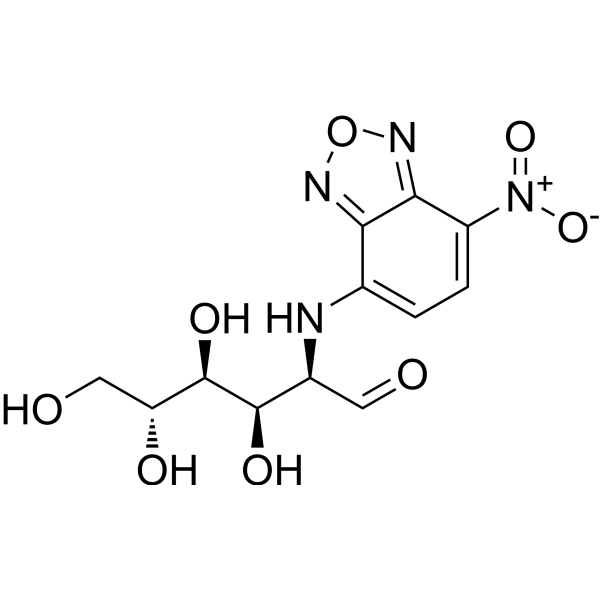
HY-116215
2-NBDG -
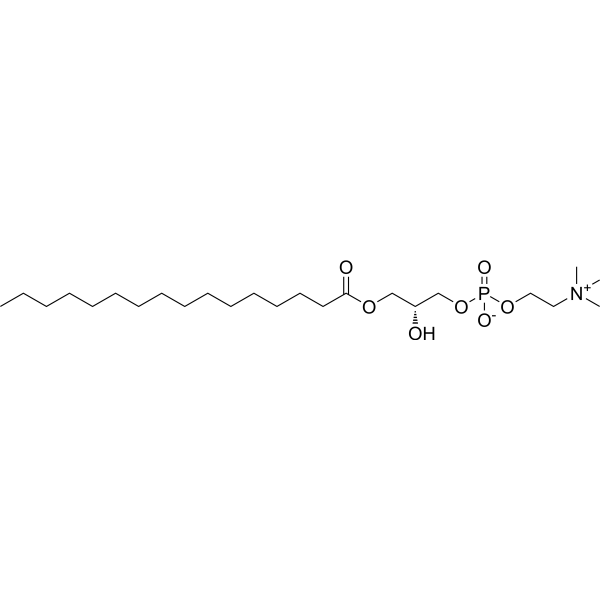
HY-125783
1-Palmitoyl-sn-glycero-3-phosphocholine -
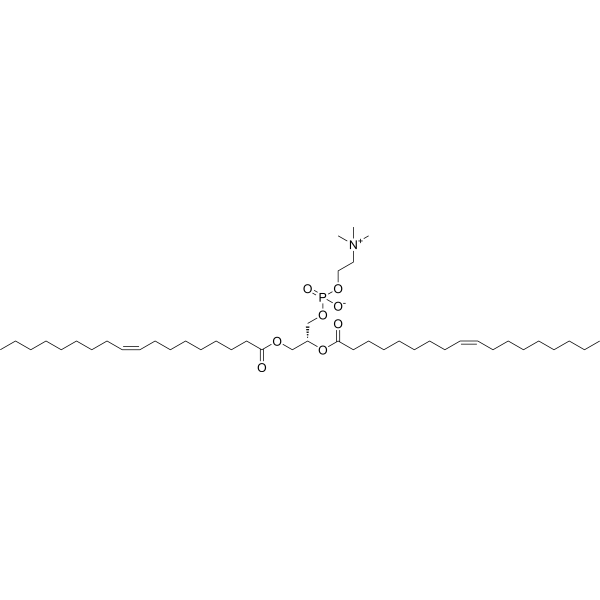
HY-113424A
1,2-Dioleoyl-sn-glycero-3-phosphocholine -
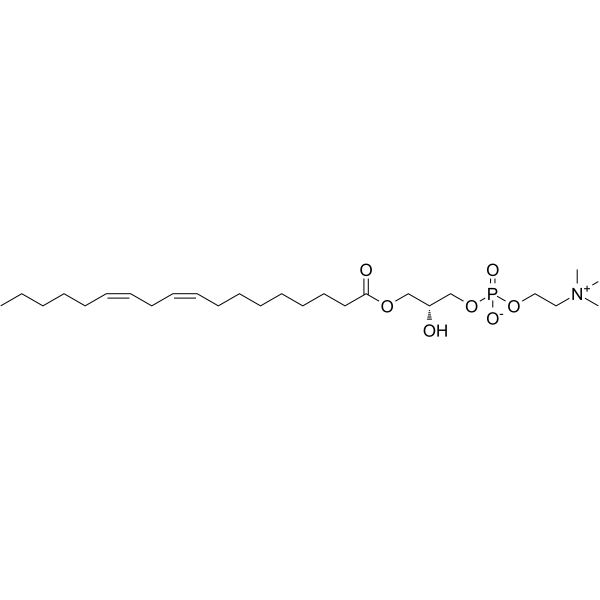
HY-N9410
Lysophosphatidylcholine 18:2 -
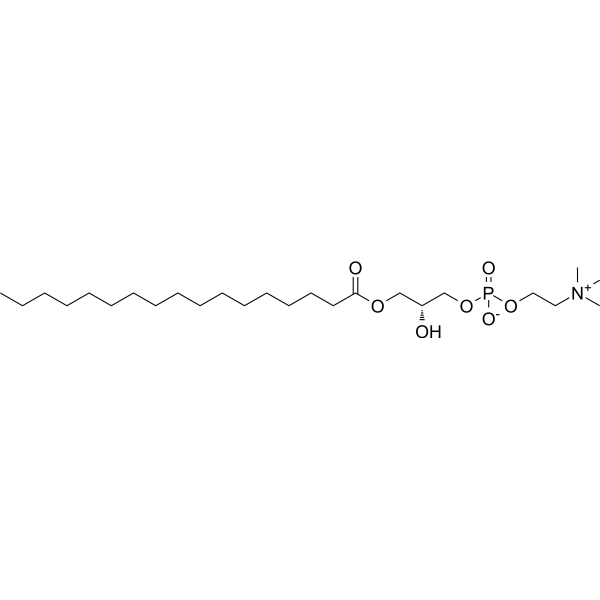
HY-141616
1-Heptadecanoyl-2-hydroxy-sn-glycero-3-phosphocholine -

HY-DY1019
2-NBDG (solution) -

HY-134154
PAz-PC -
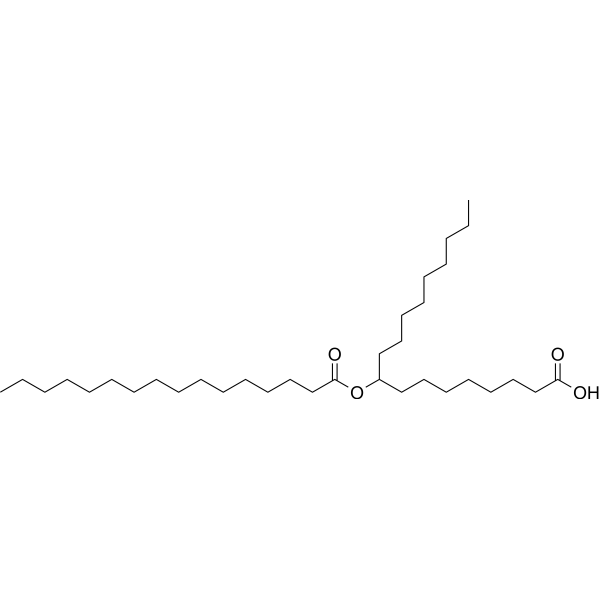
HY-120657
9-PAHSA -

HY-153830
LacCer (d18:1/16:0) -
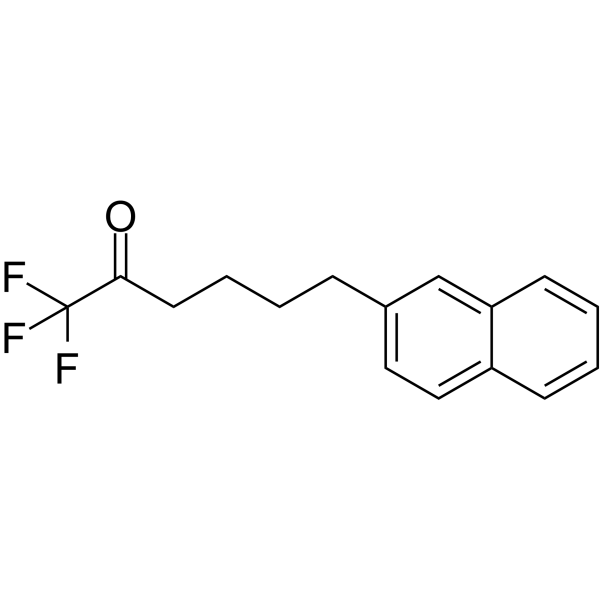
HY-115403
FKGK18 -

HY-156206
C24 Dihydro ceramide (d18:0/24:0) -
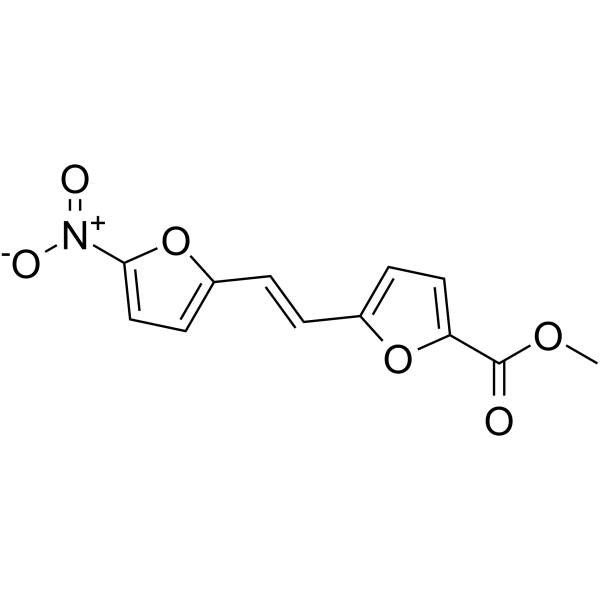
HY-123538
GRK2 Inhibitor 1


Biological Activity
Description
In Vitro
1,2-Diheptanoyl-SN-glycero-3-phosphocholine forms spherical micelles in aqueous solution, can decompose within the stratum corneum of hairless mice, and does not induce the formation of lamellar structures[1].
Pretreatment with 1,2-Diheptanoyl-SN-glycero-3-phosphocholine micelles significantly enhances the penetration of hydrophilic sodium fluorescein into full-thickness skin of hairless mice, although the enhancement is weaker than that achieved by bimolecular micelle pretreatment[1].
Application of 1,2-Diheptanoyl-SN-glycero-3-phosphocholine micelles to full-thickness skin of hairless mice causes a slight increase in transepidermal water loss, indicating minimal damage to the skin barrier[1].
When 1,2-Diheptanoyl-SN-glycero-3-phosphocholine micelles act on the stratum corneum of hairless mice *in vitro*, they do not induce structural changes in the lamellar lipid arrangement of the native stratum corneum[1].
1,2-Diheptanoyl-SN-glycero-3-phosphocholine serves as the short-chain phospholipid component in mixed bimolecular micelles for the preparation of silica-supported lipid bilayers[2].
MedChemExpress (MCE) has not independently confirmed the accuracy of these methods. They are for reference only.


Chemical Information
-
CAS No. 39036-04-9
-
Appearance Oil
-
Molecular Weight 481.56
-
Formula C22H44NO8P
-
Color White to off-white
-
SMILES
CCCCCCC(OC[C@H](COP(OCC[N+](C)(C)C)([O-])=O)OC(CCCCCC)=O)=O
-
Synonyms
L-α-Diheptanoyllecithin; 12-Diheptanoyl-sn-glycero-3-PC
-
Shipping
Room temperature in continental US; may vary elsewhere.
-
Storage
Pure form -20°C 3 years 4°C 2 years In solvent -80°C 6 months -20°C 1 month


Solvent & Solubility
In Vitro:
Ethanol : 100 mg/mL (207.66 mM; Need ultrasonic)
Please refer to the solubility information to select the appropriate solvent. Once prepared, please aliquot and store the solution to prevent product inactivation from repeated freeze-thaw cycles.
Storage method and period of stock solution: -80°C, 6 months; -20°C, 1 month. When stored at -80°C, please use it within 6 months. When stored at -20°C, please use it within 1 month.
Please refer to the solubility information to select the appropriate solvent. Once prepared, please aliquot and store the solution to prevent product inactivation from repeated freeze-thaw cycles.
Storage method and period of stock solution: -80°C, 6 months; -20°C, 1 month. When stored at -80°C, please use it within 6 months. When stored at -20°C, please use it within 1 month.
Concentration (start) × Volume (start) = Concentration (final) × Volume (final)
In Vivo:
Select the appropriate dissolution method based on your experimental animal and administration route.
- For the following dissolution methods, please ensure to first prepare a clear stock solution using an In Vitro approach and then sequentially add co-solvents:
- To ensure reliable experimental results, the clarified stock solution can be appropriately stored based on storage conditions. As for the working solution for In Vivo experiments, it is recommended to prepare freshly and use it on the same day.
- The percentages shown for the solvents indicate their volumetric ratio in the final prepared solution. If precipitation or phase separation occurs during preparation, heat and/or sonication can be used to aid dissolution.
Add each solvent one by one: 10% EtOH 40% PEG300 5% Tween-80 45% Saline
Solubility: ≥ 5 mg/mL (10.38 mM); Clear solution
This protocol yields a clear solution of ≥ 5 mg/mL (saturation unknown).
Taking 1 mL working solution as an example, add 100 μL EtOH stock solution (50.0 mg/mL) to 400 μL PEG300, and mix evenly; then add 50 μL Tween-80 and mix evenly; then add 450 μL Saline to adjust the volume to 1 mL.
Preparation of Saline: Dissolve 0.9 g sodium chloride in ddH₂O and dilute to 100 mL to obtain a clear Saline solution.
Add each solvent one by one: 10% EtOH 90% (20% SBE-β-CD in Saline)
Solubility: ≥ 5 mg/mL (10.38 mM); Clear solution
This protocol yields a clear solution of ≥ 5 mg/mL (saturation unknown).
Taking 1 mL working solution as an example, add 100 μL EtOH stock solution (50.0 mg/mL) to 900 μL 20% SBE-β-CD in Saline, and mix evenly.
Preparation of 20% SBE-β-CD in Saline (4°C, storage for one week): 2 g SBE-β-CD powder is dissolved in 10 mL Saline, completely dissolve until clear.
Add each solvent one by one: 10% EtOH 90% Corn Oil
Solubility: ≥ 5 mg/mL (10.38 mM); Clear solution
This protocol yields a clear solution of ≥ 5 mg/mL (saturation unknown). If the continuous dosing period exceeds half a month, please choose this protocol carefully.
Taking 1 mL working solution as an example, add 100 μL EtOH stock solution (50.0 mg/mL) to 900 μL Corn oil, and mix evenly.
In Vivo Dissolution Calculator
Please enter the basic information of animal experiments:
-
-
-
-
Recommended: Prepare an additional quantity of animals to account for potential losses during experiments.
Working solution concentration: 0.22 mg/mL


Purity & Documentation
-
Data Sheet (278 KB)
-
SDS (394 KB)
- English - EN (394 KB)
- Français - FR (394 KB)
- Deutsch - DE (394 KB)
- Norwegian - NO (394 KB)
- Español - ES (394 KB)
- Swedish - SV (394 KB)
- Italian - IT (394 KB)
- Korean - KR (394 KB)
- Portuguese - PT (394 KB)
-
Handling Instructions (2659 KB)
References


Complete Stock Solution Preparation Table
Please refer to the solubility information to select the appropriate solvent. Once prepared, please aliquot and store the solution to prevent product inactivation from repeated freeze-thaw cycles.
Storage method and period of stock solution: -80°C, 6 months; -20°C, 1 month. When stored at -80°C, please use it within 6 months. When stored at -20°C, please use it within 1 month.
| Optional Solvent | Concentration Solvent Mass | 1 mg | 5 mg | 10 mg | 25 mg |
|---|---|---|---|---|---|
| Ethanol | 1 mM | 2.0766 mL | 10.3829 mL | 20.7658 mL | 51.9146 mL |
| 5 mM | 0.4153 mL | 2.0766 mL | 4.1532 mL | 10.3829 mL | |
| 10 mM | 0.2077 mL | 1.0383 mL | 2.0766 mL | 5.1915 mL | |
| 15 mM | 0.1384 mL | 0.6922 mL | 1.3844 mL | 3.4610 mL | |
| 20 mM | 0.1038 mL | 0.5191 mL | 1.0383 mL | 2.5957 mL | |
| 25 mM | 0.0831 mL | 0.4153 mL | 0.8306 mL | 2.0766 mL | |
| 30 mM | 0.0692 mL | 0.3461 mL | 0.6922 mL | 1.7305 mL | |
| 40 mM | 0.0519 mL | 0.2596 mL | 0.5191 mL | 1.2979 mL | |
| 50 mM | 0.0415 mL | 0.2077 mL | 0.4153 mL | 1.0383 mL | |
| 60 mM | 0.0346 mL | 0.1730 mL | 0.3461 mL | 0.8652 mL | |
| 80 mM | 0.0260 mL | 0.1298 mL | 0.2596 mL | 0.6489 mL | |
| 100 mM | 0.0208 mL | 0.1038 mL | 0.2077 mL | 0.5191 mL |


1,2-Diheptanoyl-SN-glycero-3-phosphocholine Related Classifications
HY-122056 Related Classifications
 Powered by Bioz
Keywords
- 1,2-Diheptanoyl-SN-glycero-3-phosphocholine
- 39036-04-9
- L-α-Diheptanoyllecithin
- 12-Diheptanoyl-sn-glycero-3-PC
- Biochemical Assay Reagents
- sodium fluorescein
- micellar pre-treatment
- short-chain phosphatidylcholine
- supported lipid bilayer
- long-chain phospholipids
- transdermal penetration
- stratum corneum
- lamellar permeation pathway
- bicelle formulations
- hairless mouse skin
- Inhibitor
- inhibitor
- inhibit