



1-Palmitoyl-2-oleoyl-sn-glycero-3-phosphate

Based on 1 Customer Validation
1-Palmitoyl-2-oleoyl-sn-glycero-3-phosphate (16:0-18:1 PA) is an anionic phospholipid containing a monounsaturated acyl chain. 1-Palmitoyl-2-oleoyl-sn-glycero-3-phosphate exhibits activity in modulating biological membrane fluidity and participating in cell signal transduction. 1-Palmitoyl-2-oleoyl-sn-glycero-3-phosphate is used in the preparation of micelles, liposomes, and other types of artificial membranes.
For research use only. We do not sell to patients.
- Purity : 99.0%
- CAS No.: 62600-81-1
- Formula: C37H71O8P
- Molecular Weight:674.93
-
Storage:
Solution, -20°C, 2 years


To place orders, for customer services and technical support, please contact: MedChemExpress USA
Tel: 609-228-6898 E-mail: [email protected] [email protected]


-
 Biological Activity
-
Chemical Information
- Protocols
- Purity & Documentation
- References
-
 Help & FAQs


-
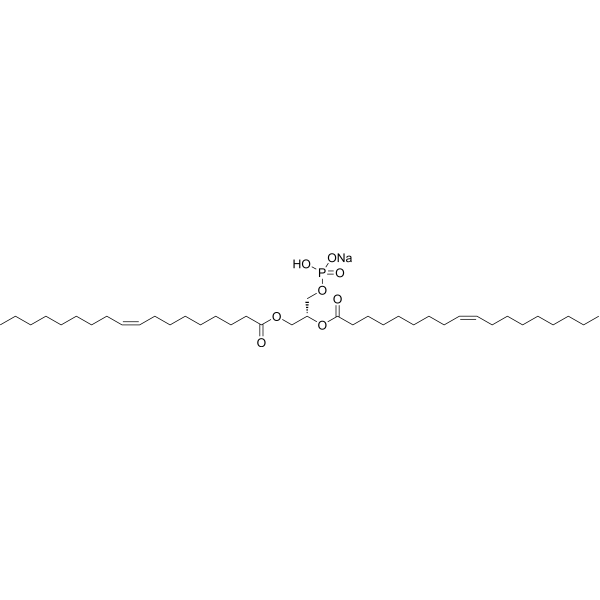
HY-111915
1,2-Dioleoyl-sn-glycero-3-phosphate sodium saltAnionic Lipid -
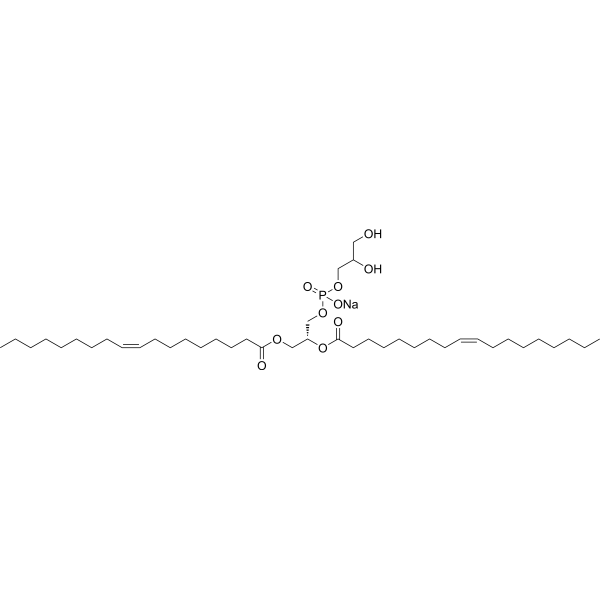
HY-141571
DOPG sodiumBiochemical Assay Reagent -
HY-W251428
Phosphatidylglycerols (egg) sodium saltBiochemical Assay Reagent -
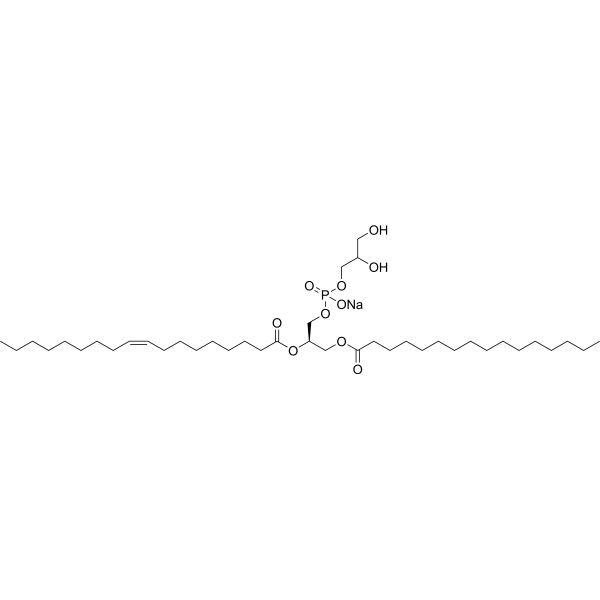
HY-130463
POPG sodiumPhospholipid -
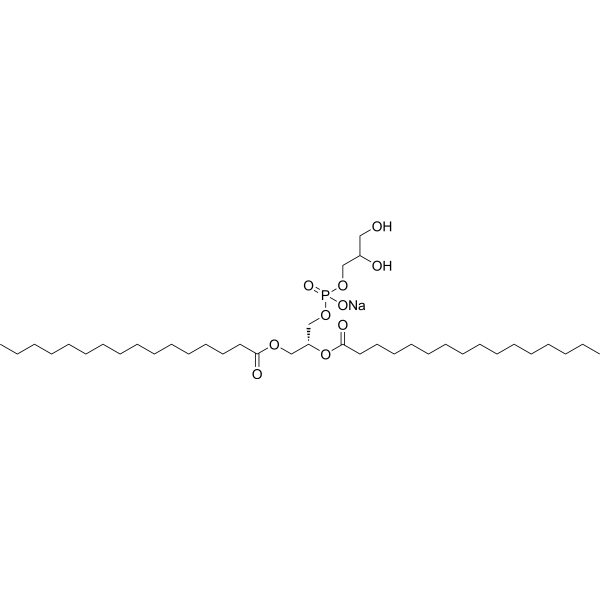
HY-125940
DPPGBiological Reagent -

HY-W040193
DSPCLiposome Compound -
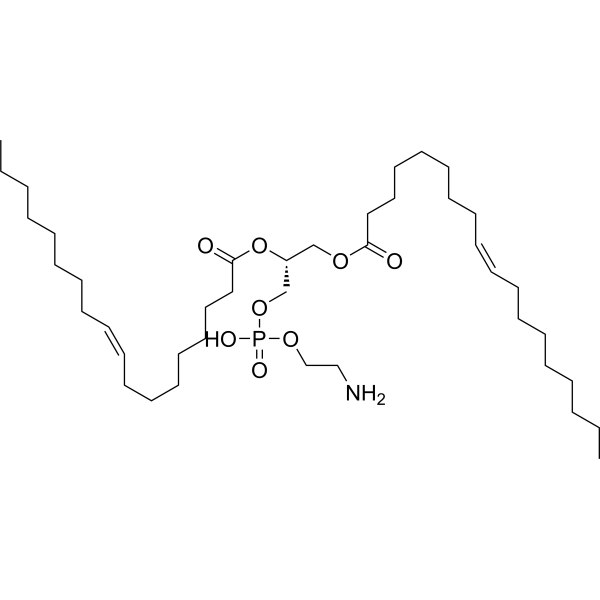
HY-112005
DOPEFerroptosis Inhibitor -
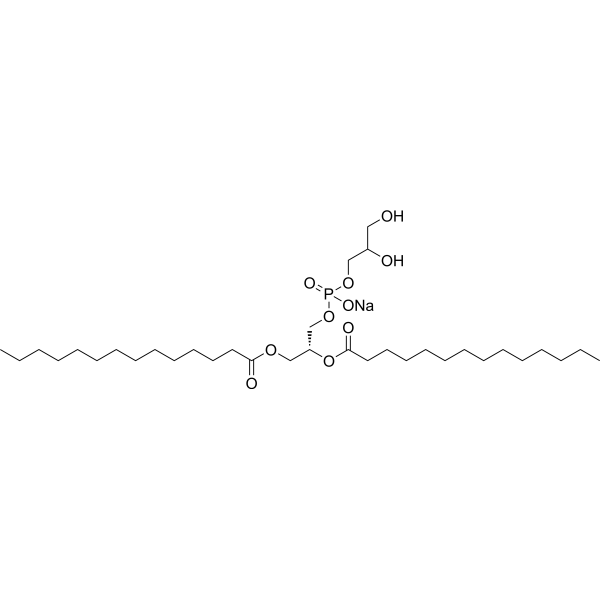
HY-22274
DMPG sodiumBiochemical Assay Reagent -

HY-115435
1,2-Dimyristoyl-sn-glycero-3-phospho-L-serine sodiumLiposome -
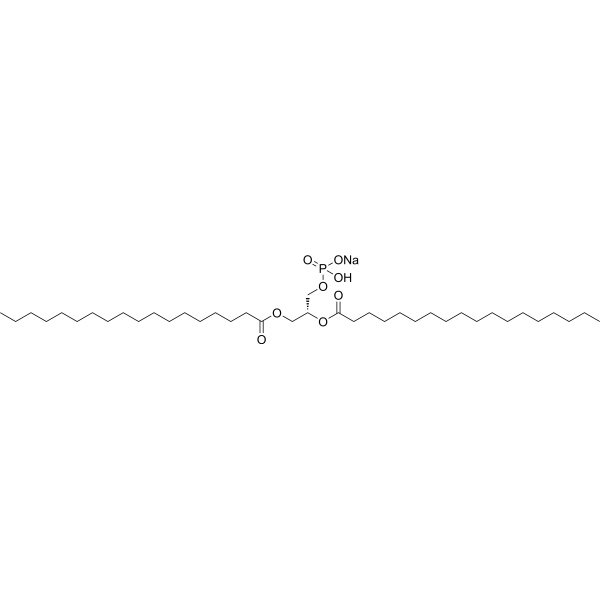
HY-115415
1,2-Distearoyl-sn-glycero-3-phosphate sodiumBiochemical Assay Reagent -

HY-145505
1-Oleoyl-2-hydroxy-sn-glycero-3-PG sodiumPhospholipids -
HY-112307A
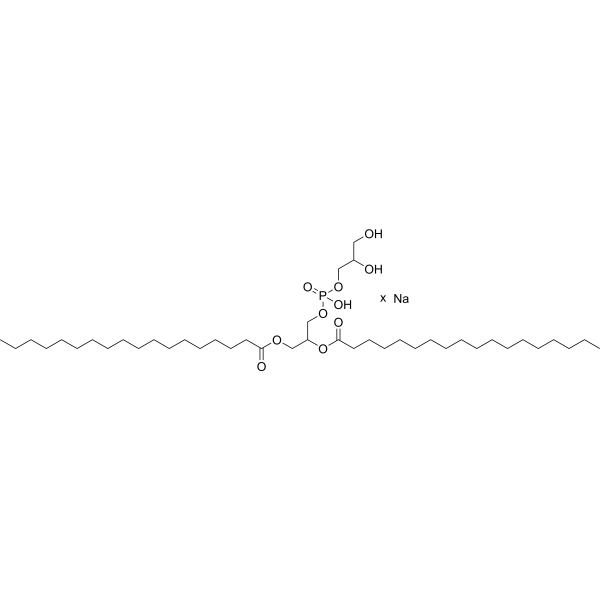
(Rac)-1,2-Distearoyl-sn-Glycero-3-Phosphatidylglycerol sodiumDrug Delivery Liposome


Biological Activity
Description
In Vitro
1-Palmitoyl-2-oleoyl-sn-glycero-3-phosphate (16:0-18:1 PA) sodium provides a negatively charged membrane environment in artificial liposomes, thereby successfully recruiting recombinant STX17 protein into the liposome layer[1].
1-Palmitoyl-2-oleoyl-sn-glycero-3-phosphate (15% phospholipid (w/w); 2-3 days) sodium exhibits a fully hydrated Tm of 24°C, a dried Tm of 70°C, and maintains a Tm value above 25°C up to 97% RH[1].
MedChemExpress (MCE) has not independently confirmed the accuracy of these methods. They are for reference only. Further protocols information, click here.


Chemical Information
-
CAS No. 62600-81-1
-
Appearance Liquid
-
Molecular Weight 674.93
-
Formula C37H71O8P
-
Color Colorless to light yellow
-
SMILES
CCCCCCCC/C=C\CCCCCCCC(O[C@@H](COP(O)(O)=O)COC(CCCCCCCCCCCCCCC)=O)=O
-
Synonyms
16:0-18:1 PA
-
Shipping
Room temperature in continental US; may vary elsewhere.
-
Storage
Solution, -20°C, 2 years

Protocols
-
Directly Induced Neuron Culture
Directly induced neuron culture converts somatic cells, most commonly fibroblasts, into induced neurons without passing through a pluripotent or neural progenitor stage; classic evidence shows that mouse fibroblasts can be converted by Ascl1, Brn2/Pou3f2, and Myt1l, human fibroblasts can be converted by defined neuronal transcription factors, and human fibroblasts can also be converted by miR-9/9-124 with neurogenic or subtype-specifying transcription factors. The readout is acquisition of neuronal identity and function, assessed by neuronal morphology, neuronal markers such as Tuj1/βIII-tubulin, MAP2, synapsin, and subtype markers when relevant, together with functional assays such as action-potential firing, synaptic activity, and electrophysiology.


Purity & Documentation
-
Data Sheet (265 KB)
-
SDS (585 KB)
- English - EN (585 KB)
- Français - FR (585 KB)
- Deutsch - DE (585 KB)
- Norwegian - NO (585 KB)
- Español - ES (585 KB)
- Swedish - SV (585 KB)
- Italian - IT (585 KB)
- Korean - KR (585 KB)
- Portuguese - PT (585 KB)
-
Handling Instructions (2659 KB)
References

Calculators
Concentration (start) × Volume (start) = Concentration (final) × Volume (final)


1-Palmitoyl-2-oleoyl-sn-glycero-3-phosphate Related Classifications
HY-134174 Related Classifications
 Powered by Bioz
Keywords
- 1-Palmitoyl-2-oleoyl-sn-glycero-3-phosphate
- 62600-81-1
- 16:0-18:1 PA
- Biochemical Assay Reagents
- Liposome
- fused silica capillaries
- gel-to-liquid crystalline phase transition temperature
- palmitoyl and oleoyl acyl chains
- capillary electrophoresis
- anionic liposomes
- in vitro liposome flotation binding assays
- POPA bilayers
- anionic phosphatidic acid phospholipid
- autophagosome-mimicking liposomes
- hydrated mesophases
- Inhibitor
- inhibitor
- inhibit