Search Result
Results for "
CHO+cell
" in MedChemExpress (MCE) Product Catalog:
2
Biochemical Assay Reagents
14
Isotope-Labeled Compounds
| Cat. No. |
Product Name |
Target |
Research Areas |
Chemical Structure |
-
- HY-N0169
-
-
-
- HY-12789
-
|
APD334
|
LPL Receptor
|
Inflammation/Immunology
|
|
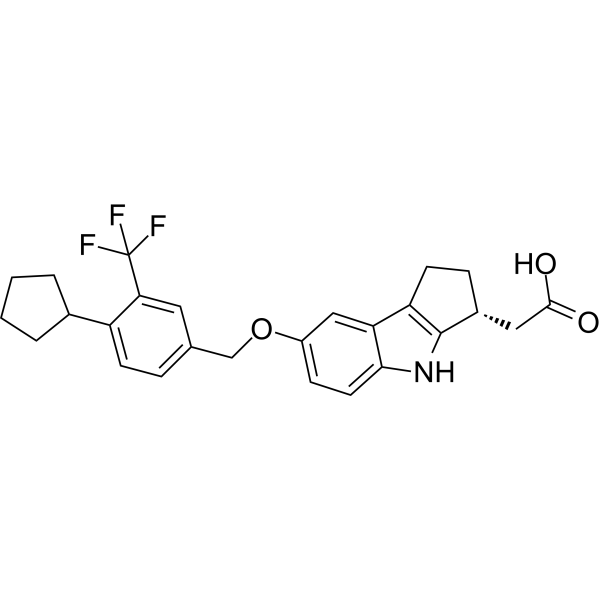
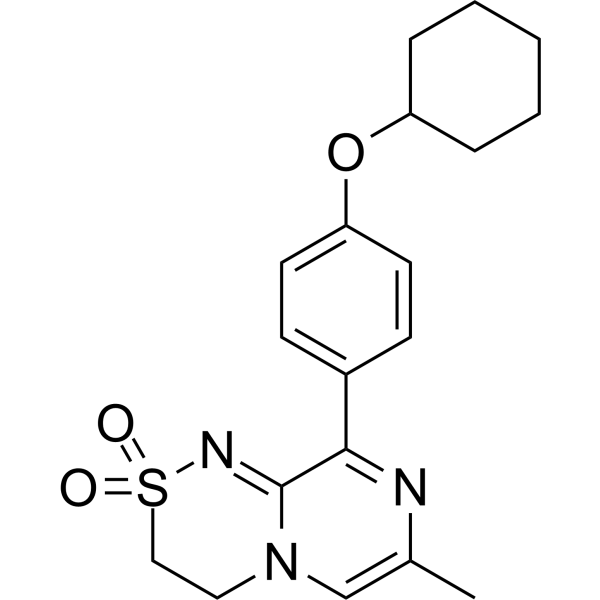
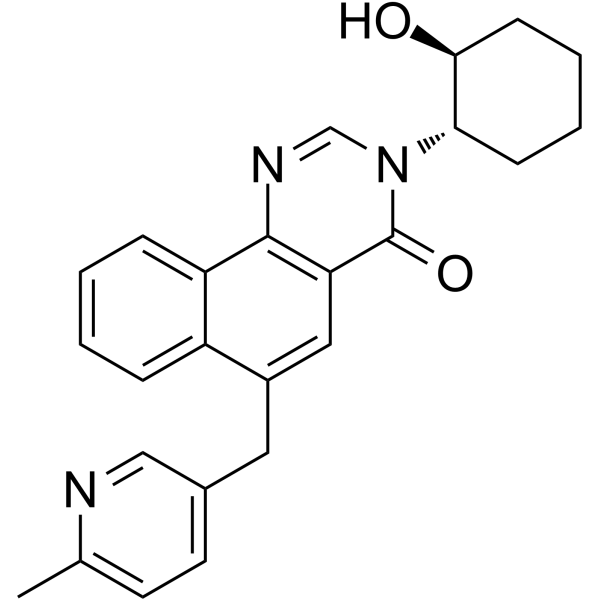
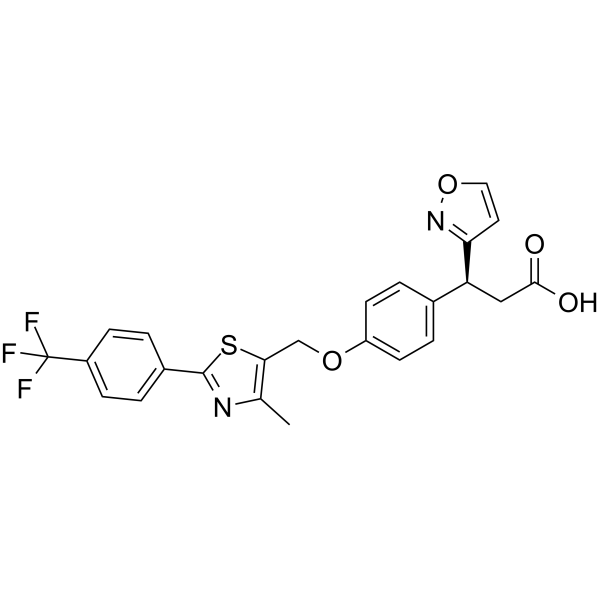
Etrasimod (APD334) is a potent, selective and orally available antagonist of the sphingosine-1-phosphate-1 (S1P1) receptor with an IC50 value of 1.88 nM in CHO cells.
|
-
-
- HY-16346
-
-
-
- HY-14302
-
|
GR33343X
|
Adrenergic Receptor
|
Inflammation/Immunology
Endocrinology
|
|
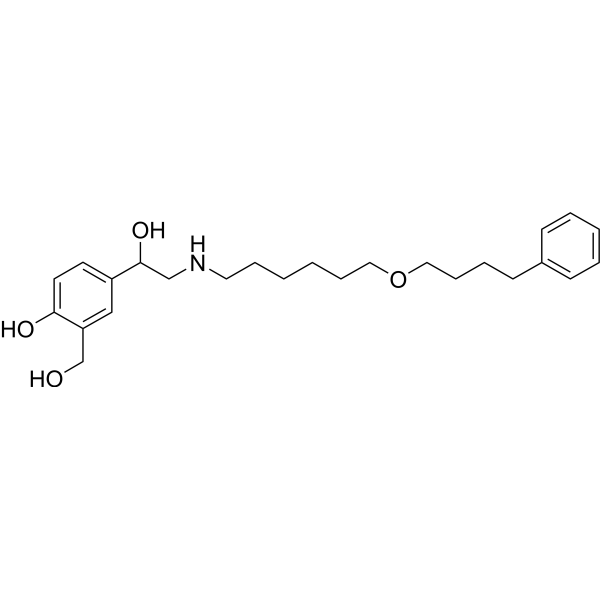
Salmeterol (GR33343X) is a potent and selective human β2 adrenoceptor agonist. Salmeterol shows potent stimulation of cAMP accumulation in CHO cells expressing human β2, β1 and β3 adrenoceptors with pEC50s of 9.6, 6.1, and 5.9, respectively .
|
-
-
- HY-115864
-
|
TAK-653; NBI-1065845
|
iGluR
Lipoxygenase
|
Neurological Disease
|
|
Osavampator (TAK-653) is a AMPA receptor positive allosteric modulator. Osavampator selectively binds to AMPA-R in a glutamate-dependent manner and induces Ca2+ influx in hGluA1i CHO cells (EC50 = 3.3 μM). Osavampator improves learning and memory in many models. Osavampator is can be used for the research of depressive disorders .
|
-
-
- HY-12022
-
|
PARP-IN-1
|
PARP
|
Cancer
|
|
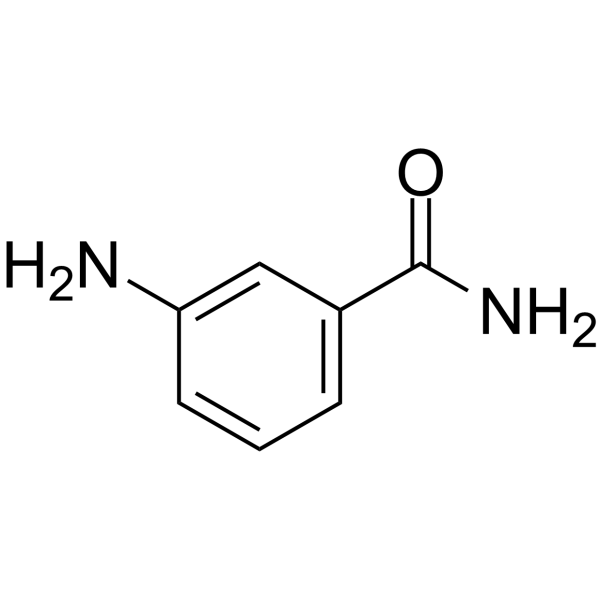
3-Aminobenzamide (PARP-IN-1) is a potent inhibitor of PARP with IC50 of appr 50 nM in CHO cells, and acts as a mediator of oxidant-induced myocyte dysfunction during reperfusion.
|
-
-
- HY-16039
-
|
|
LPL Receptor
|
Inflammation/Immunology
|
|
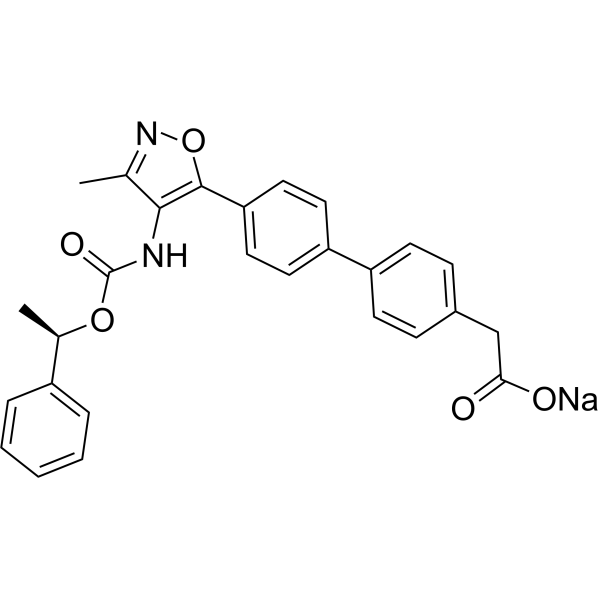
AM095 is a selective LPA1 receptor antagonist. The IC50 for AM095 antagonism of LPA-induced calcium flux of human or mouse LPA1-transfected CHO cells is 0.025 and 0.023 μM, respectively.
|
-
-
- HY-100678
-
|
|
Adenosine Receptor
PI3K
|
Inflammation/Immunology
Cancer
|
|
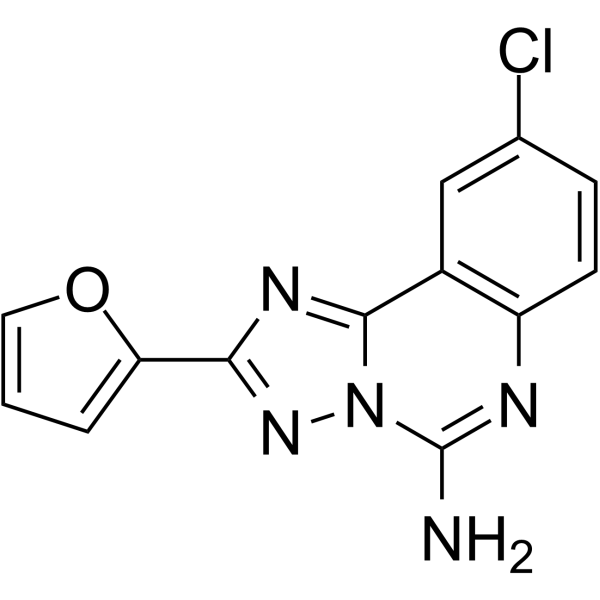
CGS 15943 is an orally bioavailable non-xanthine Adenosine Receptor antagonist. Its Ki for human A1, A2A, A2B, and A3 Adenosine Receptors are 3.5, 4.2, 16, and 50 nM in transfected CHO cells, respectively. .
|
-
-
- HY-15618
-
|
M1 receptor modulator
|
mAChR
Calcium Channel
|
Neurological Disease
|
|
MK-7622 (M1 receptor modulator) is an orally active positive allosteric modulator of muscarinic M1 acetylcholine receptors (mAChRs). MK-7622 enhances ACh-induced calcium flux in CHO cells expressing human M1 receptors (EC50 = 21 nM) and shows robust agonist activity in rat M1-expressing CHO cells, increasing intracellular calcium. MK-7622 reverses Scopolamine (HY-N0296)-induced cognitive deficits in rhesus macaques in an object retrieval detour task. MK-7622 can be used for the study of Alzheimer's disease (AD) .
|
-
-
- HY-100228A
-
|
d,l-SKF89976A hydrochloride
|
GABA Receptor
|
Neurological Disease
|
|
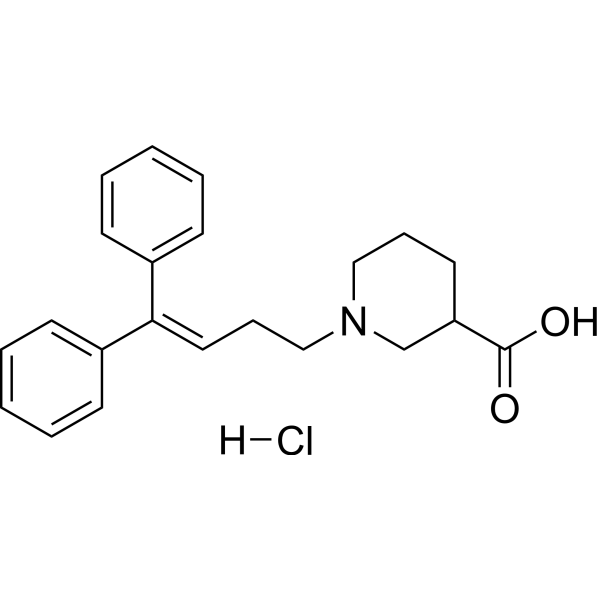
SKF89976A hydrochloride is a selective GABA transporter (GAT-1) inhibitor with IC50s of 0.28 μM, 137.34 μM and 202.8 μM for GAT-1, GAT-2 and GAT-3 in CHO cells, respectively.
|
-
-
- HY-17453
-
|
GR 33343X xinafoate
|
Adrenergic Receptor
|
Inflammation/Immunology
Endocrinology
|
|
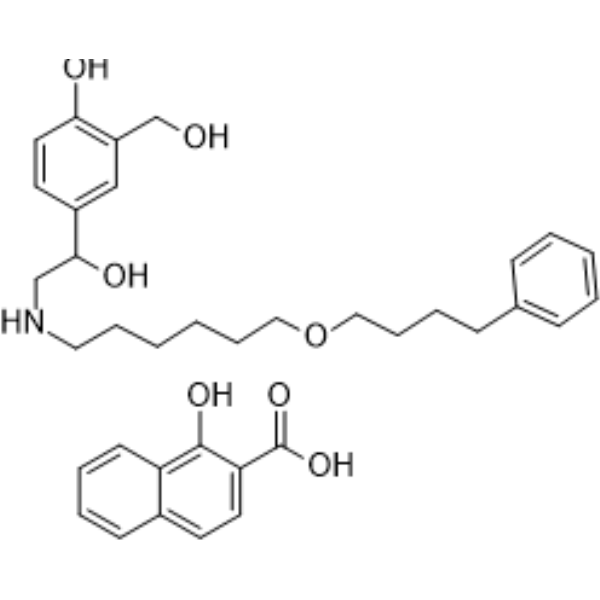
Salmeterol (GR 33343X) xinafoate is a potent and selective human β2 adrenoceptor agonist. Salmeterol shows potent stimulation of cAMP accumulation in CHO cells expressing human β2, β1 and β3 adrenoceptors with pEC50s of 9.6, 6.1, and 5.9, respectively .
|
-
-
- HY-14552
-
|
SB 223412
|
Neurokinin Receptor
|
Neurological Disease
Endocrinology
|
|
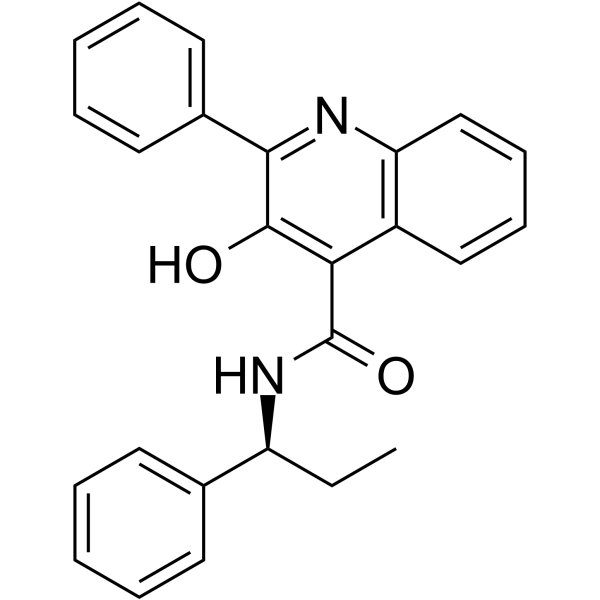
Talnetant (SB 223412) is a selective, competitive, brain-permeable NK3 receptor antagonist with a Ki of 1.4 nM in hNK-3-CHO cells. Talnetant is 100-fold more selective for hNK-3 relative to the hNK-2 receptor and has no affinity for hNK-1. Talnetant can be used in schizophrenia-related studies .
|
-
-
- HY-10655
-
|
ACT-058362
|
Urotensin Receptor
|
Cardiovascular Disease
|
|
Palosuran (ACT-058362) is a potent, selective, and orally active antagonist of urotensin II receptor, with an IC50 of 3.6 nM for CHO cell membranes expressing human recombinant receptors. Palosuran can improves pancreatic and renal function in diabetic rats .
|
-
-
- HY-I1120
-
|
|
SGLT
|
Metabolic Disease
|
|
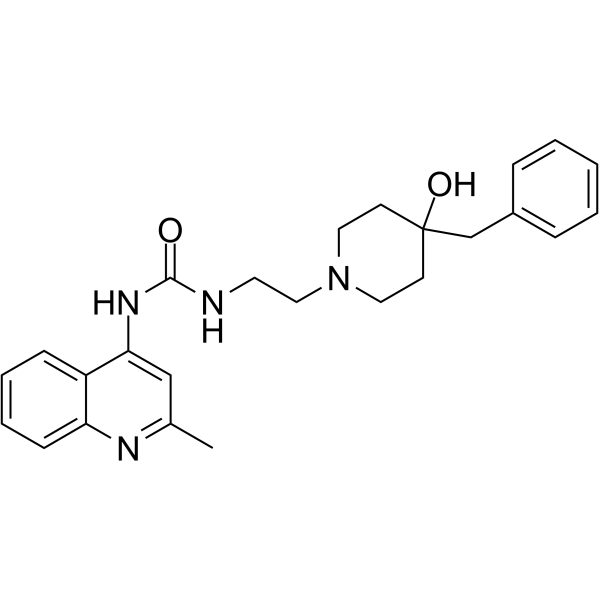
SGLT2-IN-1 (Compound 5) is an inhibitor for sodium-dependent glucose cotransporter (SGLT2), with IC50 of 33 nM in CHO cells transfected with human SGLT2. SGLT2-IN-1 is selective for SGLT2 over SGLT1. SGLT2-IN-1 is an active metabolite of dapagliflozinactive metabolite of dapagliflozin .
|
-

-
- HY-107721
-
|
|
Opioid Receptor
|
Neurological Disease
|
|
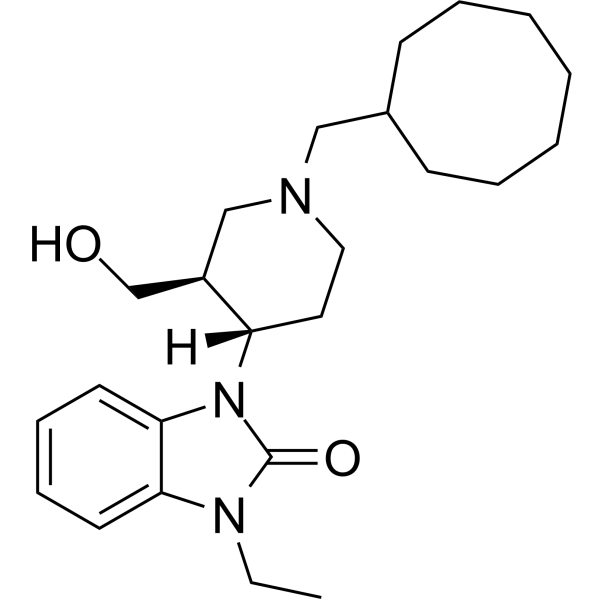
(±)-J-113397 is a potent and selective non-peptidyl ORL1 receptor antagonist with a Ki of 1.8 nM for cloned human ORL1. J-113397 inhibited nociceptin/orphanin FQ-stimulated GTPγS binding to CHO cells expressing ORL1 with an IC50 value of 5.3 nM. J-113397 can be used for researching the physiological roles of nociceptin/orphanin FQ .
|
-
-
- HY-P991104
-
|
|
Integrin
|
Metabolic Disease
|
|
Anti-EMMPRIN/CD147 Antibody is a human antibody expressed in CHO cells, targeting Basigin. Anti-EMMPRIN/CD147 Antibody can be referenced as Human IgG1 kappa, Isotype Control (HY-P99001).
|
-

-
- HY-P99610
-
|
BI-754091
|
PD-1/PD-L1
|
Cancer
|
|
Ezabenlimab (BI-754091) is an anti-PD-1 mAb with binding constant Kd value of 6 nM (CHO cells). Ezabenlimab blocks the interaction of PD-1 with PD-L1 and PD-L2. Ezabenlimab increases interferon-γ secretion in T cells, and inhibits tumor growth in vivo .
|
-

-
- HY-P9980A
-
|
|
ADC Antibody
TNF Receptor
|
Cancer
|
|
Belantamab (FUT8-KO) is an anti-BCMA (TNFRSF17) monoclonal antibody expressed by CHO cells with the fucosyltransferase 8 gene (FUT8) knocked out. Fucose deficiency enhances the ADCC effect of the antibody. Belantamab (FUT8-KO) can be used to synthesize antibody-active molecule conjugate (ADC), Belantamab mafodotin .
|
-

-
- HY-124543
-
|
|
Adenosine Receptor
|
Neurological Disease
|
|
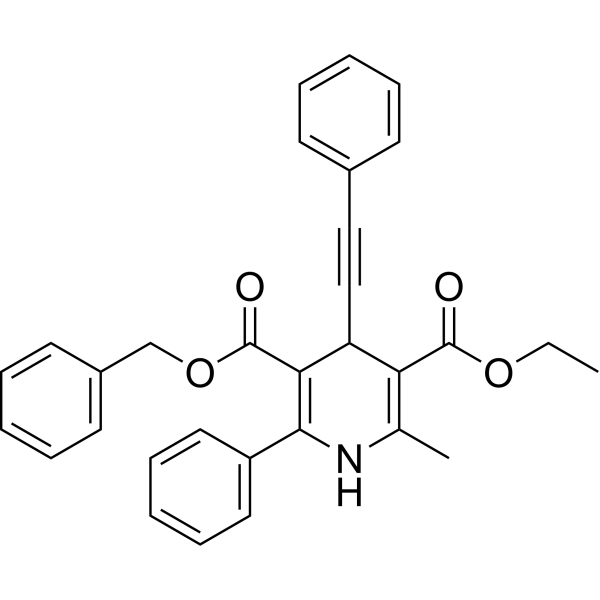
MRS-1191 is a potent and selective A3 adenosine receptor antagonist with a KB value of 92 nM, a Ki value of 31.4 nM for human A3 receptor and an IC50 of 120 nM for CHO cells . MRS-1191 is a click chemistry reagent, it contains an Alkyne group and can undergo copper-catalyzed azide-alkyne cycloaddition (CuAAc) with molecules containing Azide groups.
|
-
-
- HY-110003
-
|
ACPA
|
Cannabinoid Receptor
|
Neurological Disease
|
|
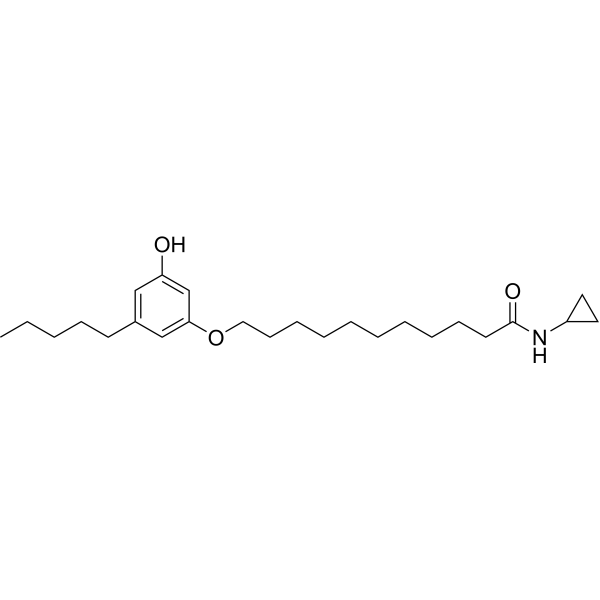
Arachidonylcyclopropylamide (ACPA) is a potent and selective CB1 receptors agonist. Arachidonylcyclopropylamide inhibits forskolin-stimulated cAMP production in CHO cells transfected with human cannabinoid CB1 receptors (IC50=2 nM) .
|
-

-
- HY-19365
-
AB-MECA
1 Publications Verification
|
Adenosine Receptor
|
Neurological Disease
|
|
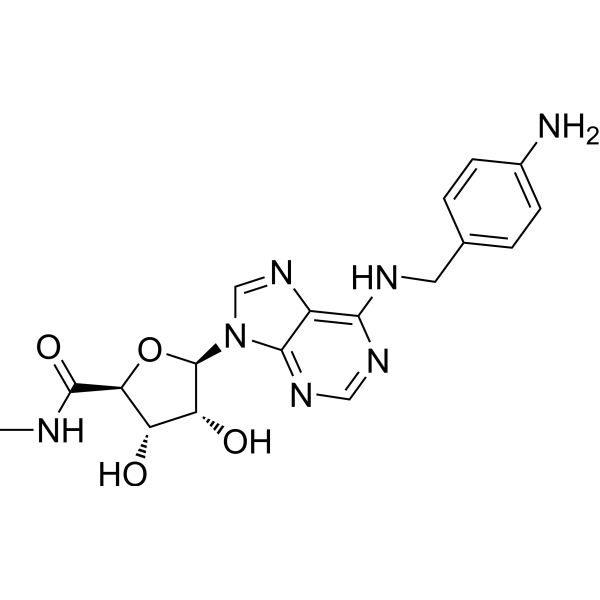
AB-MECA is a high affinity A3 adenosine receptor agonist with a binding Ki of 430.5 nM for human A3 receptors in CHO cells. AB-MECA can enhance plasma histamine level .
|
-
-
- HY-N0169R
-
-

-
- HY-13222
-
|
|
Opioid Receptor
|
Neurological Disease
Cancer
|
|
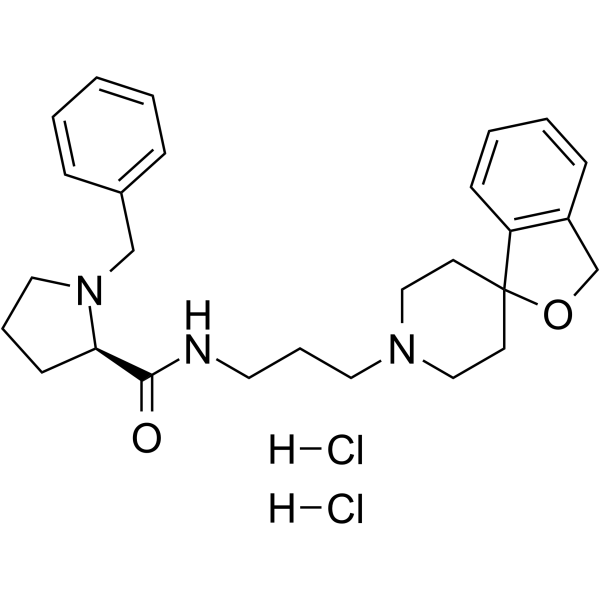
BAN ORL 24 is a nociceptin/orphanin FQ (N/OFQ) peptide receptor (NOP) antagonist. BAN ORL 24 has antagonistic effect for nociceptin (NOP) receptor with KI value of 0.24 nM in CHO cell. BAN ORL 24 can be used for the research of cancer and analgesic .
|
-
-
- HY-P990587
-
FR104
1 Publications Verification
|
CD28
|
Inflammation/Immunology
|
|
FR104 is a humanized antibody expressed in CHO cells that targets CD28. FR104 comprises a huIgG2 heavy chain and a huκ light chain, with a predicted molecular weight (MW) of 145 kDa. The isotype control for FR104 can be referenced as Human IgG2 kappa, Isotype Control (HY-P99002).
|
-

-
- HY-156460
-
|
|
CCR
|
Inflammation/Immunology
|
|
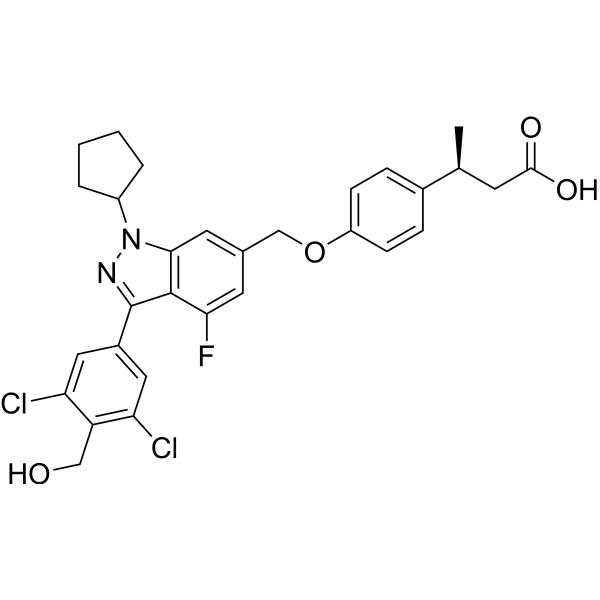
CMKLR1 antagonist 1 (compound S-26d) is a potent and orally active chemokine-like receptor 1 (CMKLR1) antagonist, with a pIC50 value of 7.44 in hCMKLR1-transfected CHO cells. CMKLR1 antagonist 1 can be used for psoriasis and metabolic diseases research .
|
-
-
- HY-W012126
-
|
2,6-Dichloro-N-phenylaniline
|
Bacterial
|
Infection
Cancer
|
|
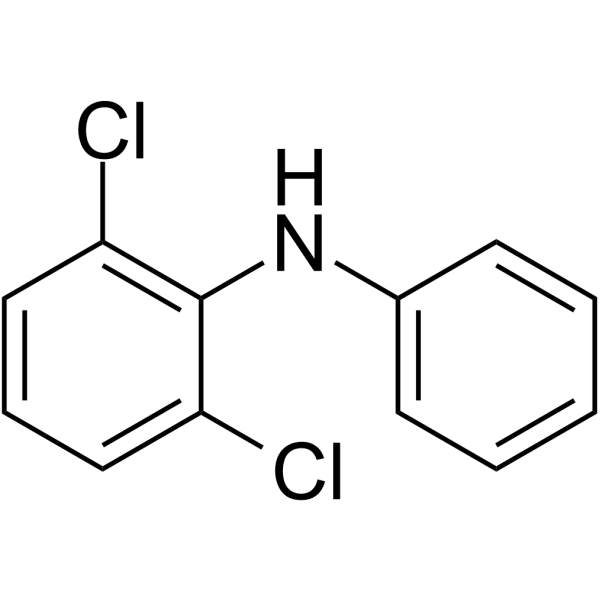
2,6-Dichlorodiphenylamine is an analogue of Diclofenac Sodium (HY-15037) and has anti-Candida albicans activity. Diclofenac Sodium is a potent and nonselective anti-inflammatory agent, acts as a COX inhibitor, with IC50s of 4 and 1.3 nM for human COX-1 and COX-2 in CHO cells.
|
-
-
- HY-P991108
-
|
HKT288 antibody
|
Transmembrane Glycoprotein
|
Cancer
|
|
Anti-CDH6/K-Cadherin Antibody (HKT288 antibody) is a human antibody expressed in CHO cells, targeting CDH6. Anti-CDH6/K-Cadherin Antibody (HKT288 antibody) can be referenced as Human IgG1 kappa, Isotype Control (HY-P99001).
|
-

-
- HY-P990480
-
|
|
LDLR
|
Inflammation/Immunology
|
|
The Anti-oxLDL Antibody is a humanized antibody expressed in CHO cells that targets oxLDL. The Anti-oxLDL Antibody has a huIgG1 heavy chain and a huκ light chain, with a predicted molecular weight (MW) of 150 kDa. The isotype control for the Anti-oxLDL Antibody can be referenced as Human IgG1 kappa, Isotype Control (HY-P99001).
|
-

-
- HY-P990675
-
|
|
VEGFR
|
Inflammation/Immunology
|
|
VGX-100 is a humanized antibody expressed in CHO cells, targeting VEGFC. VGX-100 is composed of huIgG1 heavy chains and huλ light chains, with a predicted molecular weight (MW) of 143.6 kDa. The isotype control for VGX-100 can refer to Human IgG1 kappa, Isotype Control (HY-P99001).
|
-

-
- HY-P990561
-
|
|
Interleukin Related
|
Inflammation/Immunology
|
|
BT-063 is a humanized antibody expressed in CHO cells, targeting IL-10. BT-063 contains huIgG1 heavy chain and huκ light chain, with a predicted molecular weight (MW) of 145.74 kDa. The isotype control for BT-063 can refer to Human IgG1 kappa, Isotype Control (HY-P99001).
|
-

-
- HY-114962
-
|
|
Melatonin Receptor
|
Neurological Disease
|
|
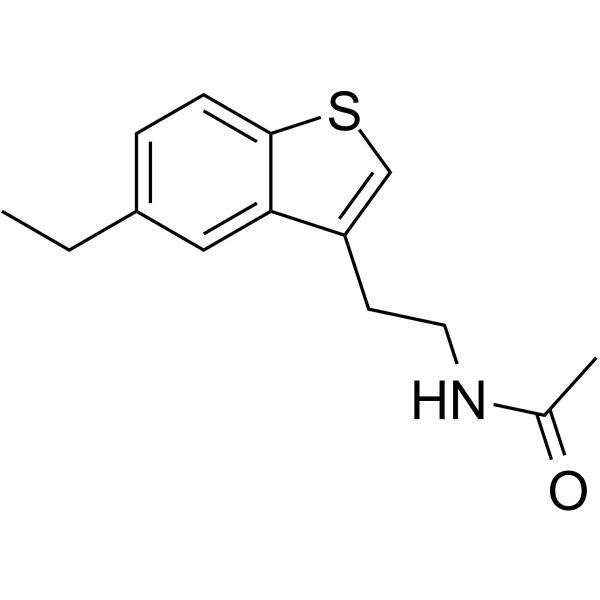
S-22153 is a potent melatonin receptor antagonist with EC50 values of 19 nM, 4.6 nM for hMT1 and hMT2 melatonin receptor, respectively. S-22153 has Ki values of 8.6 nM (CHO cells) and 16.3 nM (HEK cells) for hMT1, and 6.0 nM (CHO cells) and 8.2 nM (HEK cells) for hMT2. S-22153 is a specific ligand of MT1 and MT2 melatonin receptors subtypes .
|
-
-
- HY-P991103
-
|
|
Interleukin Related
|
Inflammation/Immunology
|
|
Anti-IL-25 Antibody is a human antibody expressed in CHO cells, targeting IL-25. Anti-IL-25 Antibody can be referenced as Human IgG1 kappa, Isotype Control (HY-P99001).
|
-

-
- HY-121541
-
|
|
Cannabinoid Receptor
|
Cancer
|
|
CB-25 is a ligand of CB1 cannabinoid receptors, acting as a partial agonist. CB-25 enhances Forskolin (HY-15371)-induced cAMP formation in cancer cells but not hCB1-CHO cells .
|
-
-
- HY-P991109
-
|
PF-06647263 antibody
|
Transmembrane Glycoprotein
|
Neurological Disease
|
|
Anti-EFNA4 Antibody (PF-06647263 antibody) is a human antibody expressed in CHO cells, targeting EFNA4. Anti-EFNA4 Antibody can be referenced as Human IgG1 kappa, Isotype Control (HY-P99001).
|
-

-
- HY-P991099
-
|
|
GCGR
|
Metabolic Disease
|
|
Anti-GLP1R Antibody is a human antibody expressed in CHO cells, targeting GLP1R. Anti-GLP1R Antibody can be referenced as Human IgG1 kappa, Isotype Control (HY-P99001).
|
-

-
- HY-P990572
-
DCBY02
1 Publications Verification
|
Transmembrane Glycoprotein
|
Inflammation/Immunology
|
|
DCBY02 is a monoclonal antibody targeting CD93 expressed in CHO cells. DCBY02 has a heavy chain of the mlgG type and a light chain of the mkappa type, with a predicted molecular weight (MW) of 150 kDa. The isotype control for DCBY02 can be referenced as Mouse IgG1 kappa, Isotype Control.
|
-

-
- HY-103067
-
|
S20951
|
Potassium Channel
|
Cardiovascular Disease
Neurological Disease
|
|
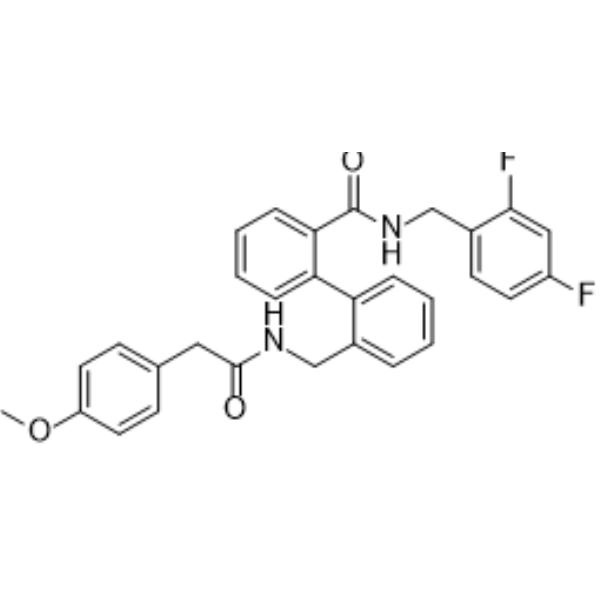
A1899 is a potent and highly selective blocker of the K2P channel TASK-1. A1899 has IC50 values of 35.1 nM and 7 nM for TASK-1 channels expressed in oocytes and CHO cells, respectively. A1899 is also an IKur blocker that can be used for the research of cardiovascular diseases .
|
-
-
- HY-135119
-
|
|
Adrenergic Receptor
|
Inflammation/Immunology
Endocrinology
|
|
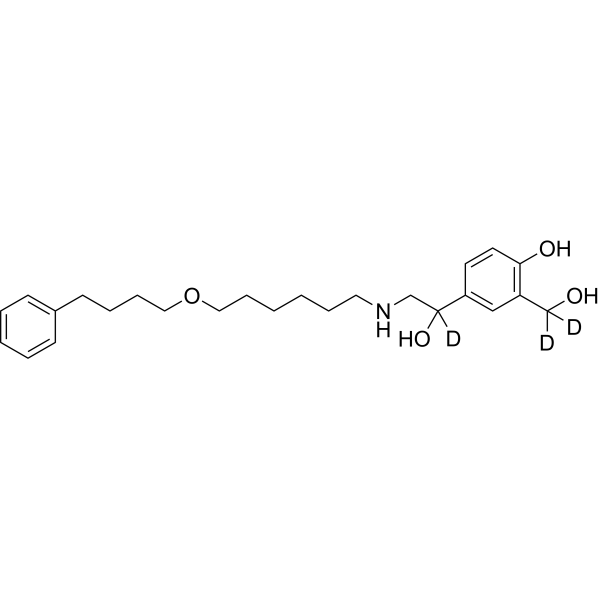
Salmeterol-d3 is a deuterium labeled Salmeterol. Salmeterol is a potent and selective human β2 adrenoceptor agonist. Salmeterol shows potent stimulation of cAMP accumulation in CHO cells expressing human β2, β1 and β3 adrenoceptors with pEC50s of 9.6, 6.1, and 5.9, respectively .
|
-
-
- HY-114128
-
|
NN-7088; NN 7170
|
Factor VIII
|
Others
|
|
Turoctocog alfa pegol is a recombinant coagulation factor VIII (FVIII) from chinese hamster ovary (CHO) cells. Turoctocog alfa pegol can be used for researching haemophilia A .
|
-

-
- HY-P99295A
-
|
RG 7160 (FUT8-KO); RO 5083945 (FUT8-KO); Anti-EGFR Recombinant Antibody (FUT8-KO)
|
EGFR
|
Cancer
|
|
Imgatuzumab (FUT8-KO) is a humanized monoclonal antibody against EGFR expressed in CHO cells with the fucosyltransferase 8 gene (FUT8) knocked out. Imgatuzumab is an immunomodulator. Imgatuzumab may be used in cancer research.
|
-

-
- HY-P9801
-
|
SARS-CoV-2 (2019-nCoV) Spike RBD Antibody
|
SARS-CoV
|
Infection
|
|
Anti-Spike-RBD mAb is a CHO cell derived human monoclonal IgG1 antibody. Blocking the interaction of Spike protein and ACE2. Anti-Spike-RBD mAb is a potential therapeutic approach for SARS-CoV-2 treatment .
|
-

-
- HY-12789S
-
|
APD334-d9
|
Isotope-Labeled Compounds
LPL Receptor
|
Inflammation/Immunology
|
|
Etrasimod-d9 (APD334-d9) is a deuterium labeled Etrasimod (HY-12789). Etrasimod (APD334) is a potent, selective and orally available antagonist of the sphingosine-1-phosphate-1 (S1P1) receptor with an IC50 value of 1.88 nM in CHO cells. .
|
-

-
- HY-107656
-
|
|
mAChR
|
Neurological Disease
|
|
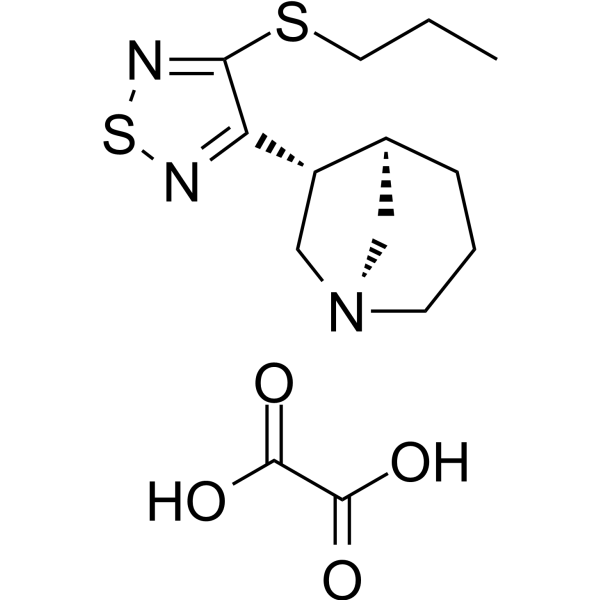
PTAC oxalate is a selective muscarinic receptor ligand. PTAC oxalate is an partial agonist of M2 and M4 but antagonist of M1, M3, and M5 (Ki values of 0.2-2.8 nM for hM1-5 in CHO cells). PTAC oxalate alleviates the mechanical allodynia on the neuropathic pain and has antidepression effects .
|
-
-
- HY-118806A
-
|
|
mAChR
|
Neurological Disease
|
|
AC-42 hydrochloride is the hydrochloride salt form of AC-42 (HY-118806). AC-42 hydrochloride is an allosteric agonist for muscarinic M1 receptor with EC50s of 805 nM and 220 nM for human wild-type and Y381A mutated M1 receptors, respectively. AC-42 hydrochloride stimulates the inositol phosphate (IP)-accumulation and calcium mobilization in CHO cells .
|
-

-
- HY-14397S
-
|
Indometacin-d4
|
Isotope-Labeled Compounds
COX
Autophagy
|
Inflammation/Immunology
Cancer
|
|
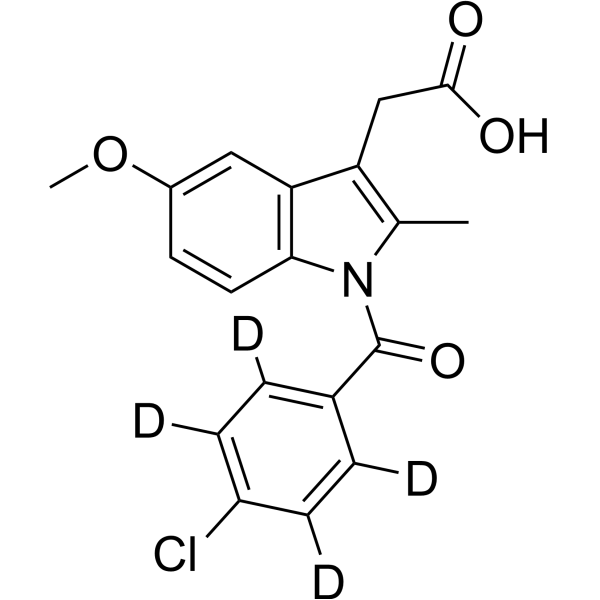
Indomethacin-d4 (Indometacin-d4) is a deuterium labeled Indomethacin. Indomethacin is a potent, blood-brain permeable and nonselective inhibitor of COX1 and COX2, with IC50s of 18 nM and 26 nM for human COX-1 and COX-2, respectively, in CHO cells . Indomethacin disrupts autophagic flux by disturbing the normal functioning of lysosomes .
|
-
-
- HY-P990532
-
|
|
Wnt
|
Inflammation/Immunology
|
|
Anti-TPBG Antibody is a humanized antibody expressed in CHO cells, targeting TPBG. The Anti-TPBG Antibody is composed of a huIgG1 heavy chain and a huκ light chain, with a predicted molecular weight (MW) of 145.8 kDa. The isotype control for Anti-TPBG Antibody can refer to Human IgG1 kappa, Isotype Control (HY-P99001).
|
-

-
- HY-P990638
-
|
|
CXCR
|
Inflammation/Immunology
|
|
NI-0701 is a humanized antibody expressed in CHO cells that targets CCL5/RANTES. NI-0701 has a huIgG2 heavy chain and a huλ light chain, with a predicted molecular weight (MW) of 145 kDa. The isotype control for NI-0701 can be referenced as Human IgG2 lambda, Isotype Control (HY-P991206).
|
-

-
- HY-100402
-
|
|
mGluR
|
Cancer
|
|
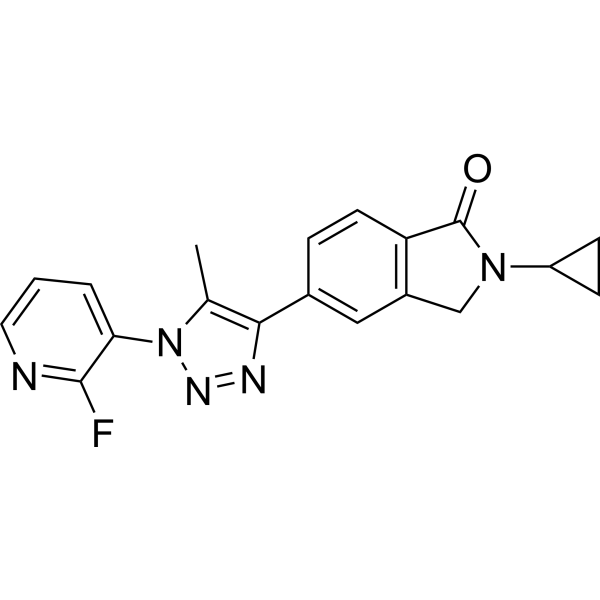
CFMTI inhibits L-glutamate-induced intracellular Ca 2+ mobilization in CHO cells expressing human and rat mGluR1a, with IC50s of 2.6 and 2.3 nM, respectively .
|
-
-
- HY-N0169S
-
-
-
- HY-P9807
-
|
SARS-CR3022; SARS-CoV-2 Antibody-CR3022
|
SARS-CoV
|
Infection
Inflammation/Immunology
|
|
Anti-SARS-CoV-2 Spike mAb (CR3022) is a a CHO cell derived human monoclonal IgG1 antibody. It binds to both S1 domain of SARS-CoV/SARS-CoV-2 Spike protein .
|
-
- HY-12585
-
|
|
Free Fatty Acid Receptor
|
Metabolic Disease
|
|
AM-4668 is a GPR40 agonist for type 2 diabetes. EC50s of 3.6 nM and 36 nM for GPR40 in A9 cells (GPR40 IP3 assay) and CHO cells (GPR40 aequorin assay), respectively .
|
-
- HY-W288480
-
|
|
Apoptosis
|
Cancer
|
|
Trihexyl phosphate is an organophosphate flame retardant. Trihexyl phosphate causes mitochondrial impairment and induces cell apoptosis in CHO cells. Trihexyl phosphate promotes the proliferation of human breast cancer cells (MCF-7) in a dose-dependent manner and exerts estrogenicity via ERα-independent pathways .
|
-

- HY-111274
-
|
Indometacin farnesil
|
COX
Autophagy
|
Inflammation/Immunology
|
|
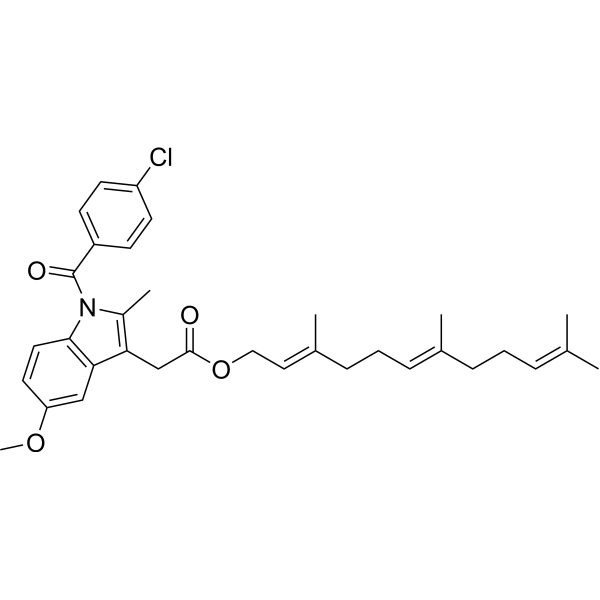
Indomethacin farnesil is an orally active proagent of Indomethacin. Indomethacin (Indometacin) is a potent, blood-brain permeable and nonselective inhibitor of COX1 and COX2, with IC50s of 18 nM and 26 nM for human COX-1 and COX-2, respectively, in CHO cells. Indomethacin disrupts autophagic flux by disturbing the normal functioning of lysosomes .
|
-
- HY-P991576
-
|
|
Transmembrane Glycoprotein
|
Cancer
|
|
Anti-CD326/EPCAM Antibody (3622W94) is a humanized antibody expressed in CHO cells, targeting EpCAM/TROP1/CD326. Anti-CD326/EPCAM Antibody (3622W94) can be used for epithelial cancers research, such as pancreatic, prostate and breast cancer.
|
-

- HY-14397S1
-
|
|
COX
Autophagy
|
Inflammation/Immunology
Cancer
|
|
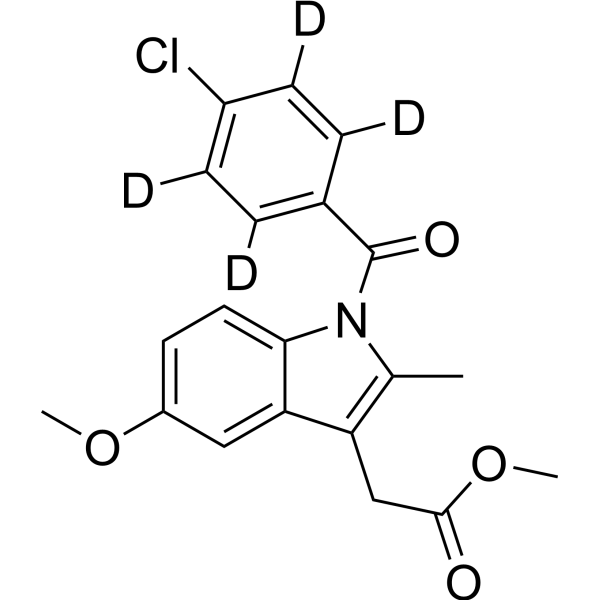
Indomethacin-d4 Methyl Ester is the deuterium labeled Indomethacin. Indomethacin (Indometacin) is a potent, blood-brain permeable and nonselective inhibitor of COX1 and COX2, with IC50s of 18 nM and 26 nM for human COX-1 and COX-2, respectively, in CHO cells . Indomethacin disrupts autophagic flux by disturbing the normal functioning of lysosomes .
|
-
- HY-P990467
-
|
|
Transmembrane Glycoprotein
|
Inflammation/Immunology
|
|
The Anti-MICB Antibody is a humanized antibody expressed in CHO cells, targeting MICB. The Anti-MICB Antibody contains a huIgG2 heavy chain and a huκ light chain, with a predicted molecular weight (MW) of 143.66 kDa. The isotype control for the Anti-MICB Antibody can be referenced as Human IgG2 kappa, Isotype Control (HY-P99002).
|
-

- HY-14552A
-
|
SB 223412 hydrochloride; SB 223412-A
|
Neurokinin Receptor
|
Neurological Disease
Endocrinology
|
|
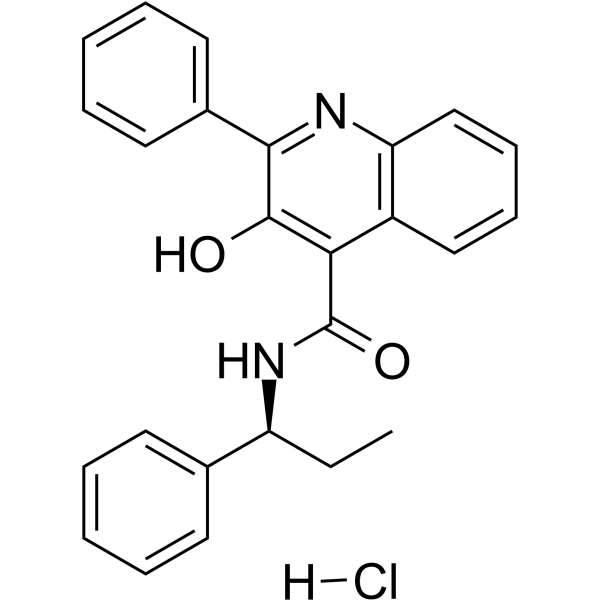
Talnetant (SB 223412) hydrochloride is a selective, competitive, brain-permeable NK3 receptor antagonist with a Ki of 1.4 nM in hNK-3-CHO cells. Talnetant hydrochloride is 100-fold more selective for hNK-3 relative to the hNK-2 receptor and has no affinity for hNK-1. Talnetant hydrochloride can be used in schizophrenia-related studies .
|
-
- HY-N0169A
-
-
- HY-P9802
-
|
SARS-CoV-2 (2019-nCoV) Single-Domain Antibodies; Humanized Single Domain Antibody
|
SARS-CoV
|
Infection
|
|
Anti-Spike-RBD Single Domain mAb is a CHO cell derived Alpaca monoclonal VHH-huFc antibody, specifically binds to SARS-CoV-2 RBD with high affinity .
|
-

- HY-P991107
-
|
|
Transmembrane Glycoprotein
|
Cancer
|
|
Anti-Dysadherin Antibody is a human antibody expressed in CHO cells, targeting dysadherin. Anti-Dysadherin Antibody can be referenced as Human IgG1 kappa, Isotype Control (HY-P99001).
|
-

- HY-169835
-
|
|
mGluR
|
Neurological Disease
|
|
1-Benzyl-APDC acts as an agonist for mGluR6, with an EC50 of 20 μM in CHO cells. 1-Benzyl-APDC is a weak antagonist of mGluR2, with an IC50 of 200 μM .
|
-

- HY-111332
-
|
|
mGluR
|
Others
|
|
(E)-PHCCC is a positive allosteric modulator (PAM) for mGluR4, that enhances the activity of the receptor's endogenous ligand (glutamate), and exhibits activity in the calcium mobilization assay in CHO cells with an EC50 of 3.2 μM .
|
-

- HY-117683
-
|
|
TRP Channel
|
Neurological Disease
|
|
BCTP is a TRPV1 antagonist. BCTP activated at low pH showed functional antagonist activity against human TRPV1 in CHO cells (IC50=18 nM). BCTP can be used in the study of chronic pain .
|
-

- HY-P991102
-
|
|
CD3
|
Cancer
|
|
Anti-MUC17 Antibody is a human antibody expressed in CHO cells, targeting MUC17. Anti-MUC17 Antibody can be referenced as Human IgG1 kappa, Isotype Control (HY-P99001).
|
-

- HY-P991105
-
|
|
Dynamin
|
Others
|
|
Anti-Clathrin Heavy Chain Antibody is a human antibody expressed in CHO cells, targeting Clathrin Heavy Chain. Anti-Clathrin Heavy Chain Antibody can be referenced as Human IgG1 kappa, Isotype Control (HY-P99001).
|
-

- HY-P991098
-
|
|
Trk Receptor
|
Neurological Disease
|
|
Anti-TrkB/NTRK2 Antibody is a human antibody expressed in CHO cells, targeting TrkB. Anti-TrkB/NTRK2 Antibody can be referenced as Human IgG2 kappa, Isotype Control (HY-P99002).
|
-

- HY-10655A
-
|
ACT-058362 hydrochloride
|
Urotensin Receptor
|
Cardiovascular Disease
|
|
Palosuran hydrochloride (ACT-058362 hydrochloride) is a potent, selective, and orally active antagonist of urotensin II receptor, with an IC50 of 3.6 nM for CHO cell membranes expressing human recombinant receptors. Palosuran hydrochloride can improves pancreatic and renal function in diabetic rats .
|
-
- HY-P991101
-
|
|
Amyloid-β
|
Neurological Disease
|
|
Anti-Amyloid Beta Antibody (scFv59) is a human antibody expressed in CHO cells, targeting Amyloid-β. Anti-Amyloid Beta Antibody (scFv59) can be referenced as Human IgG1 kappa, Isotype Control (HY-P99001).
|
-

- HY-100228
-
|
|
GABA Receptor
|
Neurological Disease
|
|
SKF89976A is a selective GABA transporter (GAT-1) inhibitor with IC50s of 0.28 μM, 137.34 μM and 202.8 μM for GAT-1, GAT-2 and GAT-3 in CHO cells, respectively.
|
-

- HY-12789R
-
|
APD334 (Standard)
|
LPL Receptor
Reference Standards
|
Inflammation/Immunology
|
|
Etrasimod (Standard) is the analytical standard of Etrasimod. This product is intended for research and analytical applications. Etrasimod (APD334) is a potent, selective and orally available antagonist of the sphingosine-1-phosphate-1 (S1P1) receptor with an IC50 value of 1.88 nM in CHO cells.
|
-

- HY-12022R
-
|
PARP-IN-1 (Standard)
|
PARP
Reference Standards
|
Cancer
|
|
3-Aminobenzamide (Standard) is the analytical standard of 3-Aminobenzamide. This product is intended for research and analytical applications. 3-Aminobenzamide (PARP-IN-1) is a potent inhibitor of PARP with IC50 of appr 50 nM in CHO cells, and acts as a mediator of oxidant-induced myocyte dysfunction during reperfusion.
|
-

- HY-149504
-
|
|
Drug Metabolite
mAChR
|
Neurological Disease
|
|
3-Hydroxy darifenacin is a metabolite of Darifenacin (HY-A0033). 3-Hydroxy darifenacin is an antagonist of M1-5 muscarinic receptors with Kis values of 17.78, 79.43, 2.24, 36.31 and 6.17 nM, respectively in CHO cells .
|
-

- HY-118806
-
|
|
mAChR
|
Neurological Disease
|
|
AC-42 is a poent M1 muscarinic selective allosteric agonist with EC50s of 805 nM and 220 nM for human wild-type and Y381A mutated M1 receptors, respectively. AC-42 stimulates the IP-accumulation and calcium mobilization in CHO cells .
|
-
- HY-16346R
-
|
CID 6451149 (Standard)
|
Reference Standards
Neurokinin Receptor
|
Neurological Disease
Endocrinology
|
|
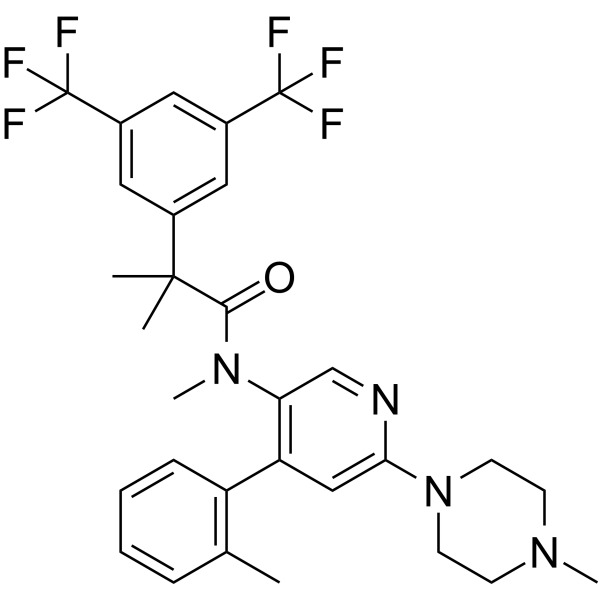
Netupitant (Standard) is the analytical standard of Netupitant. This product is intended for research and analytical applications. Netupitant (CID-6451149) is a highly potent, selective and orally active neurokinin-1 (NK1) receptor antagonist with a Ki of 0.95 nM for hNK1 in CHO cells. Netupitant has antiemetic affect .
|
-

- HY-P9803
-
|
SARS-80R; SARS Antibody-80R
|
SARS-CoV
|
Infection
|
|
Anti-SARS-80R mAb (SARS-80R) is a human monoclonal IgG1 antibody produced in CHO cells. Anti-SARS-80R mAb can specifically bind to Spike (S1) protein to prevent SARS virus infection of susceptible cells .
|
-

- HY-P9805
-
|
MERS-3A1; MERS Antibody-3A1
|
SARS-CoV
|
Infection
|
|
Anti-MERS-3A1 mAb (MERS-3A1) is a human monoclonal IgG1 antibody with the high binding affinity produced in CHO cells.
Anti-MERS-3A1 mAb bocks the binding of MERS-CoV spike protein to DPP4 receptor .
|
-
- HY-13222A
-
|
|
Opioid Receptor
|
Cancer
|
|
BAN ORL 24 free base is a nociceptin/orphanin FQ (N/OFQ) peptide receptor (NOP) antagonist. BAN ORL 24 free base has antagonistic effect for nociceptin (NOP) receptor with KI value of 0.24 nM in CHO cell. BAN ORL 24 free base can be used for the research of cancer and analgesic .
|
-
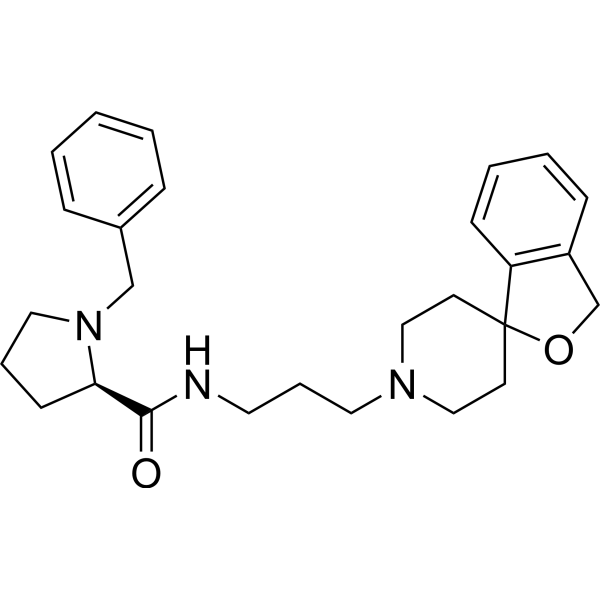
- HY-10655AR
-
|
ACT-058362 hydrochloride (Standard)
|
Reference Standards
Urotensin Receptor
|
Cardiovascular Disease
|
|
Palosuran (hydrochloride) (Standard) is the analytical standard of Palosuran (hydrochloride). This product is intended for research and analytical applications. Palosuran hydrochloride (ACT-058362 hydrochloride) is a potent, selective, and orally active antagonist of urotensin II receptor, with an IC50 of 3.6 nM for CHO cell membranes expressing human recombinant receptors. Palosuran hydrochloride can improves pancreatic and renal function in diabetic rats .
|
-

- HY-10655R
-
|
ACT-058362 (Standard)
|
Reference Standards
Urotensin Receptor
|
Cardiovascular Disease
|
|
Palosuran (Standard) is the analytical standard of Palosuran. This product is intended for research and analytical applications. Palosuran (ACT-058362) is a potent, selective, and orally active antagonist of urotensin II receptor, with an IC50 of 3.6 nM for CHO cell membranes expressing human recombinant receptors. Palosuran can improves pancreatic and renal function in diabetic rats .
|
-

- HY-P990564
-
|
BAY-103356; CDP-571
|
TNF Receptor
|
Inflammation/Immunology
|
|
Senlizumab is a humanized antibody expressed in CHO cells that targets TNFSF2/TNFa. Senlizumab is composed of huIgG4SP heavy chains and huκ light chains, with a predicted molecular weight (MW) of 146.9 kDa. The isotype control for Senlizumab can refer to Human IgG4 kappa, Isotype Control (HY-P99003).
|
-

- HY-P990431
-
|
|
Ser/Thr Protease
|
Inflammation/Immunology
|
|
Anti-HGFA Antibody is a humanized antibody expressed in CHO cells, targeting HGFA. The Anti-HGFA Antibody contains huIgG1 heavy chain and huκ light chain, with a predicted molecular weight (MW) of 150 kDa. The isotype control for Anti-HGFA Antibody can refer to Human IgG1 kappa, Isotype Control (HY-P99001).
|
-

- HY-147704
-
|
|
Bacterial
|
Infection
|
|
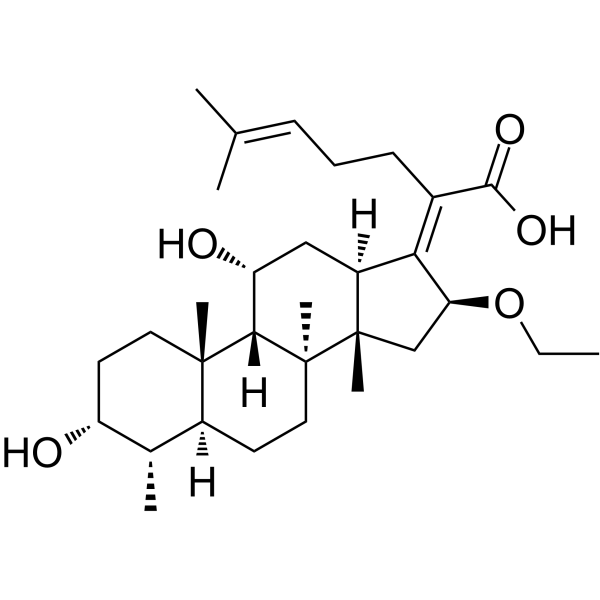
Antimycobacterial agent-2 (compound 58) is a potent antimycobacterial agent. Antimycobacterial agent-2 shows anti-mycobacterial activities with an MIC99 of 0.8 µM for Mycobacterium tuberculosis (M.tb) H37Rv. Antimycobacterial agent-2 shows cytotoxic activities with an IC50 of48.1 µM for CHO cells .
|
-
- HY-P990544
-
|
AJW 200; AJvW 2
|
Integrin
|
Inflammation/Immunology
|
|
Anti-vWF Antibody is a humanized antibody expressed in CHO cells that targets vWF. The Anti-vWF Antibody is equipped with huIgG1 heavy chain and huκ light chain, with a predicted molecular weight (MW) of 145.62 kDa. The isotype control for Anti-vWF Antibody can be referenced as Human IgG1 kappa, Isotype Control (HY-P99001).
|
-

- HY-P990622
-
|
|
Transmembrane Glycoprotein
|
Inflammation/Immunology
|
|
MB-311 is a humanized antibody expressed in CHO cells, targeting Lewis Y. MB-311 has a huIgG1 heavy chain and a huλ light chain, with a predicted molecular weight (MW) of 150 kDa. The isotype control for MB-311 can refer to Human IgG1 kappa, Isotype Control (HY-P99001).
|
-

- HY-P990535
-
|
|
Interleukin Related
|
Inflammation/Immunology
|
|
Anti-TSLP Antibody is a human-derived antibody expressed in CHO cells, targeting TSLP. The Anti-TSLP Antibody contains the huIgG1 heavy chain and huκ light chain, with a predicted molecular weight (MW) of 150 kDa. The isotype control for Anti-TSLP Antibody can refer to Human IgG1 kappa, Isotype Control (HY-P99001).
|
-

- HY-100678R
-
|
|
Reference Standards
Adenosine Receptor
PI3K
|
Inflammation/Immunology
Cancer
|
|
CGS 15943 (Standard) is the analytical standard of CGS 15943. This product is intended for research and analytical applications. CGS 15943 is an orally bioavailable non-xanthine Adenosine Receptor antagonist. Its Ki for human A1, A2A, A2B, and A3 Adenosine Receptors are 3.5, 4.2, 16, and 50 nM in transfected CHO cells, respectively. .
|
-

- HY-P990611
-
|
|
Transmembrane Glycoprotein
|
Inflammation/Immunology
|
|
KRN-330 is a humanized antibody expressed in CHO cells, targeting GPA33. KRN-330 has a huIgG1 heavy chain and a huκ light chain, with a predicted molecular weight (MW) of 150 kDa. The isotype control for KRN-330 can be referenced as Human IgG1 kappa, Isotype Control (HY-P99001).
|
-

- HY-P990374
-
|
|
Transmembrane Glycoprotein
|
Inflammation/Immunology
|
|
Anti-CLEC7A Antibody is a humanized antibody expressed in CHO cells, targeting CLEC7A. The predicted molecular weight (MW) of Anti-CLEC7A Antibody is 150 kDa. The isotype control for Anti-CLEC7A Antibody can refer to Human IgG4 kappa, Isotype Control (HY-P99003).
|
-

- HY-P990460
-
|
|
TGF-beta/Smad
|
Inflammation/Immunology
|
|
Anti-LAP Antibody is a humanized antibody expressed in CHO cells, targeting LAP. The Anti-LAP Antibody features a huIgG2 heavy chain and a huκ light chain, with a predicted molecular weight (MW) of 150 kDa. For isotype control of the Anti-LAP Antibody, you can refer to Human IgG2 kappa, Isotype Control (HY-P99002).
|
-

- HY-110041
-
|
|
Cannabinoid Receptor
|
Inflammation/Immunology
|
|
L-759656 is a selective cannabinoid CB2 receptor agonist, with the Ki of 11.8 nM for the human CB2 receptor. L-759656 potently inhibits Forskolin (HY-15371)-stimulated cyclic AMP production in Chinese Hamster Ovary (CHO) cells, with an EC50 of 3.1 nM. L-759656 can be used for the study of immune-related diseases and inflammatory diseases .
|
-

- HY-P990602
-
|
|
Interleukin Related
|
Inflammation/Immunology
|
|
IMA-026 is a humanized antibody expressed in CHO cells that targets IL-13. IMA-026 has a huIgG1 heavy chain and a huκ light chain, with a predicted molecular weight (MW) of 146.88 kDa. The isotype control for IMA-026 can be referenced as Human IgG1 kappa, Isotype Control (HY-P99001).
|
-

- HY-P990677
-
|
|
CCR
|
Inflammation/Immunology
|
|
VLST-002 is a humanized antibody expressed in CHO cells, targeting CCL5/RANTES. VLST-002 has a huIgG1 heavy chain and a huκ light chain, with a predicted molecular weight (MW) of 150 kDa. The isotype control for VLST-002 can refer to Human IgG1 kappa, Isotype Control (HY-P99001).
|
-

- HY-115827
-
|
|
Prostaglandin Receptor
|
Others
|
|
AH22921 is an EP4 prostaglandin receptor antagonist with the activity of antagonizing the activation of adenylate cyclase by prostaglandins in CHO cells. AH22921 can shift the PGE2 concentration-response curve to the right in CHO cells. It is a non-competitive antagonist that is selective for EP4 receptors and has an antagonistic effect on EP4 receptors in CHO cells, but does not affect the PGE2 concentration-response curve in NPE cells containing EP2 receptors.
|
-

- HY-P990755A
-
|
|
EGFR
|
Cancer
|
|
Pamvatamig (FUT8-KO) is an anti-EGFR/MET monoclonal antibody expressed by CHO cells with the fucosyltransferase 8 gene (FUT8) knocked out. Fucose deficiency enhances the ADCC effect of the antibody.
|
-

- HY-P99226A
-
-

- HY-180455
-
|
|
Adrenergic Receptor
|
Neurological Disease
|
|
AR ligand-50 (Compound 4) is an adrenergic receptor ligand (pKi: 7.14 for human α2-adrenergic receptor on CHO cells). AR Ligand-50 can be used in the research of neurological disorders .
|
-

- HY-100402R
-
|
|
mGluR
Reference Standards
|
Cancer
|
|
CFMTI (Standard) is the analytical standard of CFMTI (HY-100402). This product is intended for research and analytical applications. CFMTI inhibits L-glutamate-induced intracellular Ca2+ mobilization in CHO cells expressing human and rat mGluR1a, with IC50s of 2.6 and 2.3 nM, respectively .
|
-

- HY-182705
-
|
|
Estrogen Receptor/ERR
|
Endocrinology
|
|
Org 214444-0 is an orally active, nanomolar-potent and selective FSHR agonist, with EC50 values of 2.0 nM and 1.2 nM in human and rat (measured in CHO cells). Org 214444-0 activates human granulosa cells in vitro, supports rat follicular development and induces ovulation in vivo. Org 214444-0 can be used for the research of infertility .
|
-

- HY-P991944A
-
|
|
CCR
|
Cancer
|
|
ZL-1218 (FUT8-KO) is an anti-CCR8 monoclonal antibody expressed by CHO cells with the fucosyltransferase 8 gene (FUT8) knocked out. Fucose deficiency enhances the antibody-dependent cellular cytotoxicity (ADCC) effect of the antibody. ZL-1218 (FUT8-KO) can be used for the research of solid tumour .
|
-

- HY-P991481A
-
|
|
CCR
|
Inflammation/Immunology
Cancer
|
|
S-531011 (FUT8-KO) is an anti-CCR8 monoclonal antibody expressed by CHO cells with the fucosyltransferase 8 gene (FUT8) knocked out. Fucose deficiency enhances the antibody-dependent cellular cytotoxicity (ADCC) effect of the antibody. S-531011 (FUT8-KO) can be used for the research of cancer immunity .
|
-

- HY-P9991A
-
|
|
Gap Junction Protein
|
Cancer
|
|
Osemitamab (FUT8-KO) is an anti-claudin-18.2 monoclonal antibody expressed by CHO cells with the fucosyltransferase 8 gene (FUT8) knocked out. Fucose deficiency enhances the ADCC effect of the antibody. Osemitamab in combination with Capecitabine (HY-B0016) and Oxaliplatin (HY-17371), can be used for G/GEJ cancer study .
|
-

- HY-103428
-
LE 300
2 Publications Verification
|
Dopamine Receptor
5-HT Receptor
|
Neurological Disease
|
|
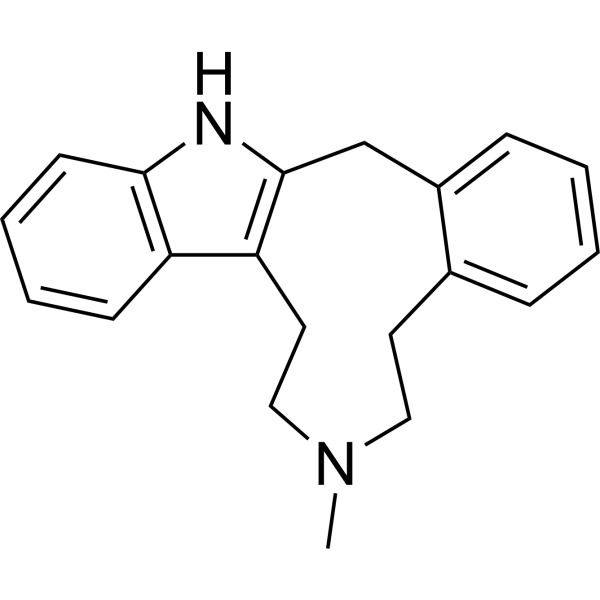
LE 300 is a potent and selective dopamine D1-like receptor antagonist with Kis of 1.9 nM and 7.5 nM in CHO cell membranes expressing human dopamine D1 and D5 receptors, respectively. LE 300 is an antagonist of the 5-HT2A receptor with a pA2 of 8.32 in a rat tail artery assay .
|
-
- HY-100228AR
-
|
d,l-SKF89976A hydrochloride (Standard)
|
GABA Receptor
Reference Standards
|
Neurological Disease
|
|
SKF89976A (hydrochloride) (Standard) is the analytical standard of SKF89976A (hydrochloride) (HY-100228A). This product is intended for research and analytical applications. SKF89976A hydrochloride is a selective GABA transporter (GAT-1) inhibitor with IC50s of 0.28 μM, 137.34 μM and 202.8 μM for GAT-1, GAT-2 and GAT-3 in CHO cells, respectively.
|
-

- HY-134988
-
|
|
FXR
Phosphatase
Cytochrome P450
|
Inflammation/Immunology
|
|
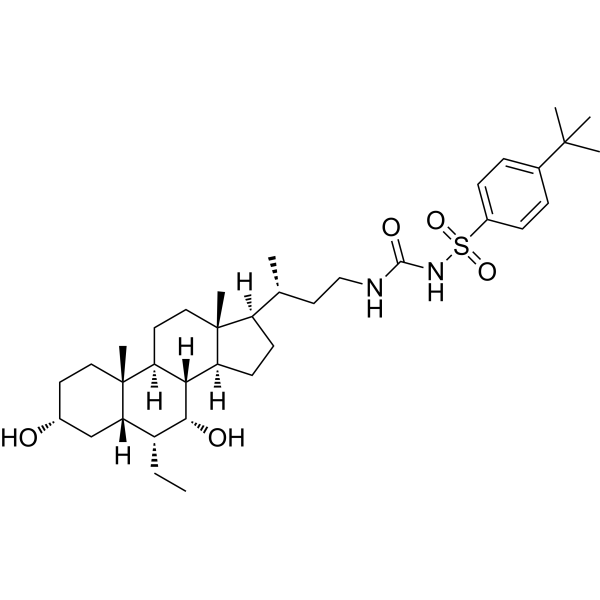
EDP-305 is an orally active, potent and selective farnesoid X receptor (FXR) agonist, with EC50 values of 34 nM (chimeric FXR in CHO cells) and 8 nM (full-length FXR in HEK cells). EDP-305 shows a potent and consistent antifibrotic effect. EDP-305 can be used for primary biliary cholangitis (PBC) and non-alcoholic steatohepatitis (NASH) research .
|
-
- HY-P990653
-
|
|
CCR
|
Inflammation/Immunology
|
|
R707 is a human antibody expressed in CHO cells that targets CCR7/CD197. R707 contains huIgG1 heavy chain and huκ light chain, with a predicted molecular weight (MW) of 145.36 kDa. The isotype control for R707 can be referenced as Human IgG1 kappa, Isotype Control (HY-P99001).
|
-

- HY-P990597
-
|
|
FGFR
|
Inflammation/Immunology
|
|
HuGAL-F2 is a human-derived antibody expressed in CHO cells, targeting FGF2. HuGAL-F2 contains a huIgG2 heavy chain and a huκ light chain, with a predicted molecular weight (MW) of 150 kDa. The isotype control for HuGAL-F2 can refer to Human IgG1 kappa, Isotype Control (HY-P99001).
|
-

- HY-P99010A
-
|
|
Interleukin Related
FGFR
|
Cancer
|
|
Bemarituzumab (FUT8-KO) is an anti-FGFR2b monoclonal antibody expressed by CHO cells with the fucosyltransferase 8 gene (FUT8) knocked out. Fucose deficiency enhances the ADCC effect of the antibody. Bemarituzumab (FUT8-KO) lacks a core fucose in the polysaccharide portion of the Fc domain of the antibody, and results in a high affinity to human FcγRIIIa .
|
-

- HY-15038
-
|
|
COX
Apoptosis
|
Inflammation/Immunology
Cancer
|
|
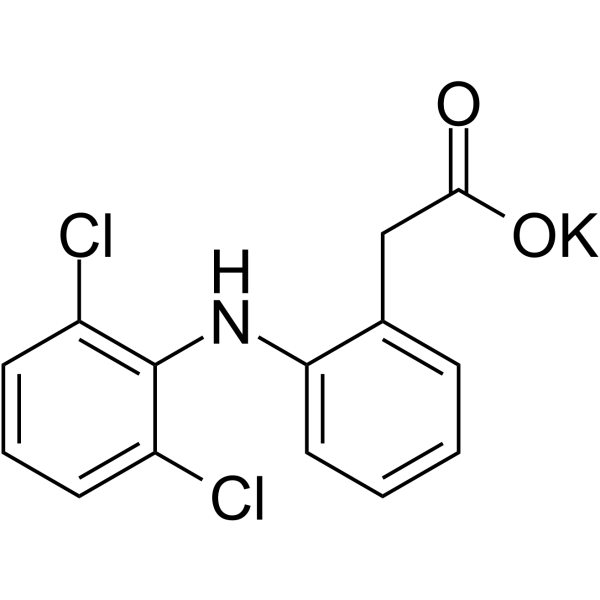
Diclofenac potassium is a potent and nonselective anti-inflammatory agent, acts as a COX inhibitor, with IC50s of 4 and 1.3 nM for human COX-1 and COX-2 in CHO cells , and 5.1 and 0.84 μM for ovine COX-1 and COX-2, respectively . Diclofenac potassium induces apoptosis of neural stem cells (NSCs) via the activation of the caspase cascade .
|
-
- HY-15036
-
Diclofenac
Maximum Cited Publications
24 Publications Verification
|
COX
Apoptosis
|
Inflammation/Immunology
Cancer
|
|
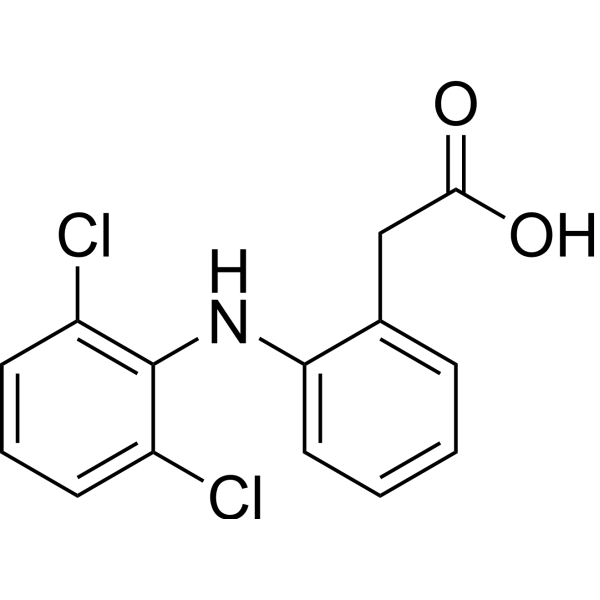
Diclofenac is a potent and nonselective anti-inflammatory agent, acts as a COX inhibitor, with IC50s of 4 and 1.3 nM for human COX-1 and COX-2 in CHO cells , and 5.1 and 0.84 μM for ovine COX-1 and COX-2, respectively . Diclofenac induces apoptosis of neural stem cells (NSCs) via the activation of the caspase cascade .
|
-
- HY-15039
-
|
|
Bradykinin Receptor
|
Metabolic Disease
Inflammation/Immunology
Endocrinology
|
|
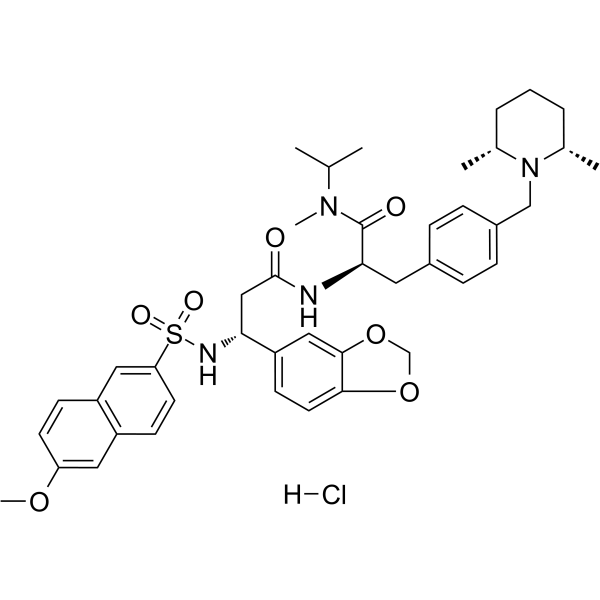
SSR240612 is a potent, and orally active specific non-peptide bradykinin B1 receptor antagonist, with Kis of 0.48 nM and 0.73 nM for B1 kinin receptors of human fibroblast MRC5 and HEK cells expressing human B1 receptors, 481 nM and 358 nM for B2 receptors of guinea pig ileum membranes and CHO cells expressing human B1 receptor, respectively.
|
-
- HY-P1217
-
|
|
Melanocortin Receptor
|
Inflammation/Immunology
|
|
[D-Trp8]-γ-MSH is a potent and selective agonist of melanocortin 3 (MC3) receptor, with IC50s of 6.7 nM, 600 nM and 340 nM for hMC3, hMC4 and hMC5, respectively in CHO cells. [D-Trp8]-γ-MSH could provide protection against multiple inflammatory disorders such as rheumatoid arthritis and colitis .
|
-
![[D-Trp8]-γ-MSH](//file.medchemexpress.com/product_pic/hy-p1217.gif)
- HY-P990674
-
|
|
GLUT
|
Inflammation/Immunology
|
|
VB1-050 is a human antibody expressed in CHO cells, targeting SLC2A8. VB1-050 is composed of huIgG1 heavy chains and huκ light chains, with a predicted molecular weight (MW) of 150 kDa. The isotype control for VB1-050 can refer to Human IgG1 kappa, Isotype Control (HY-P99001).
|
-

- HY-14302S1
-
|
GR33343X-d5
|
Isotope-Labeled Compounds
Adrenergic Receptor
|
Endocrinology
|
|
Salmeterol-d5 is a deuterated labeled Salmeterol . Salmeterol (GR33343X) is a potent and selective human β2 adrenoceptor agonist. Salmeterol shows potent stimulation of cAMP accumulation in CHO cells expressing human β2, β1 and β3 adrenoceptors with pEC50s of 9.6, 6.1, and 5.9, respectively .
|
-

- HY-P990523
-
|
|
Transmembrane Glycoprotein
|
Inflammation/Immunology
|
|
Anti-TMEFF2 Antibody is a humanized antibody expressed in CHO cells, targeting TMEFF2. The Anti-TMEFF2 Antibody features a huIgG1 heavy chain and a huκ light chain, with a predicted molecular weight (MW) of 150 kDa. The isotype control for the Anti-TMEFF2 Antibody can be referenced as Human IgG1 kappa, Isotype Control (HY-P99001).
|
-

- HY-P990349
-
|
|
CD19
|
Inflammation/Immunology
|
|
The Anti-CD19 Antibody is a humanized antibody expressed in CHO cells, targeting CD19. The Anti-CD19 Antibody contains a huIgG1 heavy chain and a huκ light chain, with a predicted molecular weight (MW) of 145 kDa. The isotype control for Anti-CD19 Antibody can be referenced as Human IgG1 kappa, Isotype Control (HY-P99001).
|
-

- HY-P990513
-
|
|
Microtubule/Tubulin
|
Inflammation/Immunology
|
|
The Anti-STOP1 Antibody is a human antibody expressed in CHO cells that targets STOP1. The Anti-STOP1 Antibody contains a huIgG1 heavy chain and a huκ light chain, with a predicted molecular weight (MW) of 150 kDa. The isotype control for the Anti-STOP1 Antibody can refer to Human IgG1 kappa, Isotype Control (HY-P99001).
|
-

- HY-P1217A
-
|
|
Melanocortin Receptor
|
Inflammation/Immunology
|
|
[D-Trp8]-γ-MSH TFA is a potent and selective agonist of melanocortin 3 (MC3) receptor, with IC50s of 6.7 nM, 600 nM and 340 nM for hMC3, hMC4 and hMC5, respectively in CHO cells. [D-Trp8]-γ-MSH TFA could provide protection against multiple inflammatory disorders such as rheumatoid arthritis and colitis .
|
-
![[D-Trp8]-γ-MSH TFA](//file.medchemexpress.com/product_pic/hy-p1217a.gif)
- HY-17453S
-
|
GR 33343X-d3 xinafoate
|
Isotope-Labeled Compounds
Adrenergic Receptor
|
Inflammation/Immunology
Endocrinology
|
|
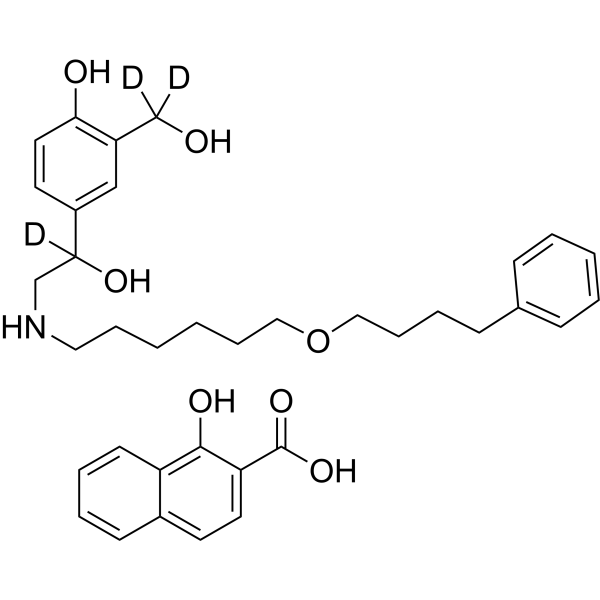
Salmeterol-d3 (xinafoate) is the deuterium labeled Salmeterol xinafoate. Salmeterol (GR 33343X) xinafoate is a potent and selective human β2 adrenoceptor agonist. Salmeterol shows potent stimulation of cAMP accumulation in CHO cells expressing human β2, β1 and β3 adrenoceptors with pEC50s of 9.6, 6.1, and 5.9, respectively .
|
-
- HY-P99113A
-
|
|
CD19
|
Inflammation/Immunology
|
|
Inebilizumab (FUT8-KO) is an anti-CD19 monoclonal antibody expressed by CHO cells with the fucosyltransferase 8 gene (FUT8) knocked out. Fucose deficiency enhances the antibody-dependent cellular cytotoxicity (ADCC) effect of the antibody.Inebilizumab (FUT8-KO) exhibits enhanced ADCC against B cells and can be used for research on multiple sclerosis and neuromyelitis optica .
|
-

- HY-P1318
-
|
|
Opioid Receptor
|
Neurological Disease
|
|
Ac-RYYRIK-NH2 is a potent and partial agonist on ORL1 transfected in CHO cells (Kd=1.5 nM) and behaves as a endogenous ligand of ORL1. Ac-RYYRIK-NH2 is a specific antagonist for the activation of G protein and competitively antagonizes the stimulation of [ 35S]-GTPgS binding to G proteins by nociceptin/orphanin FQ (noc/OFQ) in membranes and sections of rat brain .
|
-

- HY-15037
-
|
GP 45840
|
COX
Apoptosis
|
Inflammation/Immunology
Cancer
|
|
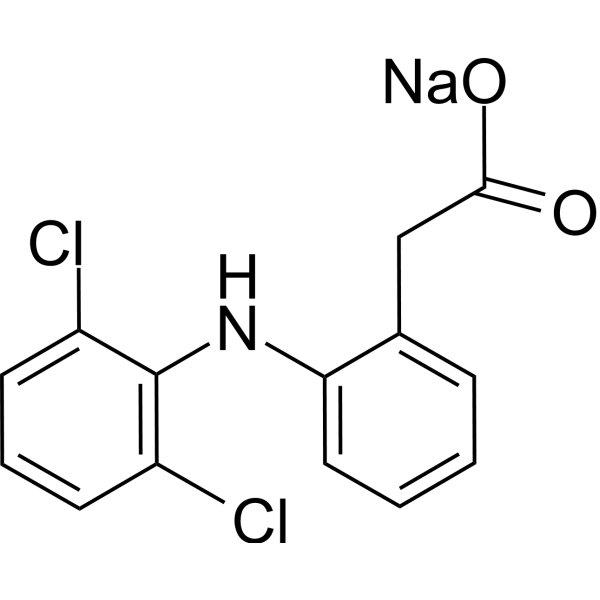
Diclofenac Sodium (GP 45840) is a potent and nonselective anti-inflammatory agent, acts as a COX inhibitor, with IC50s of 4 and 1.3 nM for human COX-1 and COX-2 in CHO cells , and 5.1 and 0.84 μM for ovine COX-1 and COX-2, respectively . Diclofenac Sodium induces apoptosis of neural stem cells (NSCs) via the activation of the caspase cascade .
|
-
- HY-P990419
-
|
|
Amino Acid Decarboxylase
|
Inflammation/Immunology
|
|
Anti-GAD65 Antibody is a humanized antibody expressed in CHO cells that targets GAD65. The Anti-GAD65 Antibody has a huIgG1 heavy chain and a huλ light chain, with a predicted molecular weight (MW) of 146.48 kDa. The isotype control for Anti-GAD65 Antibody can refer to Human IgG1 kappa, Isotype Control (HY-P99001).
|
-

- HY-128103
-
|
|
GCGR
Adenylate Cyclase
|
Metabolic Disease
|
|
Glucagon receptor antagonist-7 (Compound 1) is an antagonist for hGCGR, that inhibits the binding of 125I-labeled glucagon to the human glucagon receptor (hGCGR) with IC50 of 181 nM. Glucagon receptor antagonist-7 activates glucagon-stimulated adenylyl cyclase with a KDB of 81 nM in CHO cell. Glucagon receptor antagonist-7 inhibits glucagon-mediated glycogenolysis in human hepatocytes, and lowers blood glucose levels .
|
-

- HY-P990478
-
|
|
CRAC Channel
|
Inflammation/Immunology
|
|
Anti-Orai1 Antibody is a humanized antibody expressed in CHO cells that targets Orai1. The Anti-Orai1 Antibody has a huIgG2 heavy chain and a huλ light chain, with an predicted molecular weight (MW) of 150 kDa. The isotype control for Anti-Orai1 Antibody can refer to Human IgG2 kappa, Isotype Control (HY-P99002).
|
-

- HY-P990573
-
|
RG-7636
|
Endothelin Receptor
|
Inflammation/Immunology
|
|
DEDN6526A (RG-7636) is a humanized antibody expressed in CHO cells, targeting ETBR. DEDN6526A (RG-7636) has a huIgG1 type heavy chain and a huκ type light chain, with a predicted molecular weight (MW) of 145 kDa. The isotype control for DEDN6526A (RG-7636) can be referenced as Human IgG1 kappa, Isotype Control (HY-P99001).
|
-

- HY-15036A
-
|
|
COX
Apoptosis
|
Inflammation/Immunology
Cancer
|
|
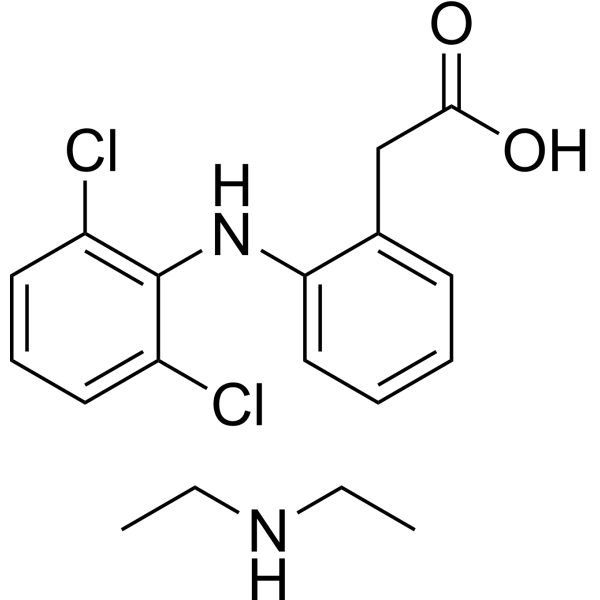
Diclofenac diethylamine is a potent and nonselective anti-inflammatory agent, acts as a COX inhibitor, with IC50s of 4 and 1.3 nM for human COX-1 and COX-2 in CHO cells , and 5.1 and 0.84 μM for ovine COX-1 and COX-2, respectively . Diclofenac diethylamine induces apoptosis of neural stem cells (NSCs) via the activation of the caspase cascade .
|
-
- HY-P991135A
-
|
RO-7502175 (FUT8-KO); RG-6411 (FUT8-KO)
|
CCR
|
Cancer
|
|
Enzelkitug (RO-7502175; RG-6411) (FUT8-KO) is an anti-CCR8 monoclonal antibody expressed by CHO cells with the fucosyltransferase 8 gene (FUT8) knocked out. Fucose deficiency enhances the antibody-dependent cellular cytotoxicity (ADCC) effect of the antibody. Enzelkitug (FUT8-KO) can be used for the research of various solid tumors and hematological malignancies .
|
-

- HY-P1542
-
|
Catostomus urotensin I
|
CRFR
|
Cardiovascular Disease
Endocrinology
|
|
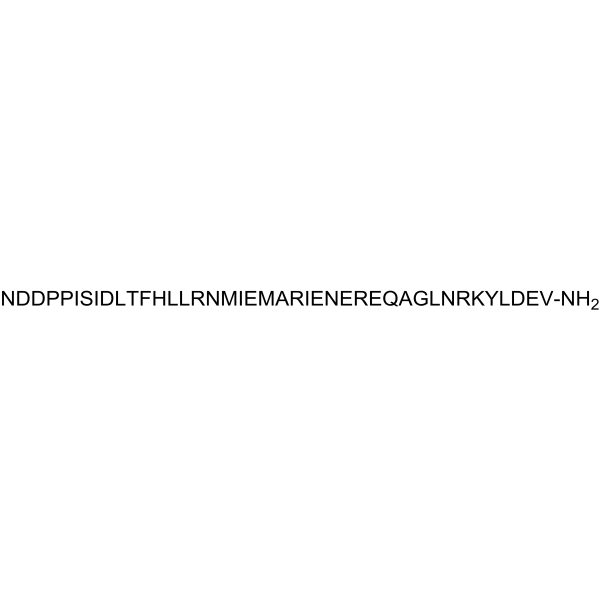
Urotensin I (Catostomus urotensin I), a CRF-like neuropeptide, acts as an agonist of CRF receptor with pEC50s of 11.46, 9.36 and 9.85 for human CRF1, human CRF2 and rat CRF2α receptors in CHO cells, and Kis of 0.4, 1.8, and 5.7 nM for hCRF1, rCRF2α and mCRF2β receptors, respectively .
|
-
- HY-P1318A
-
|
|
Opioid Receptor
|
Neurological Disease
|
|
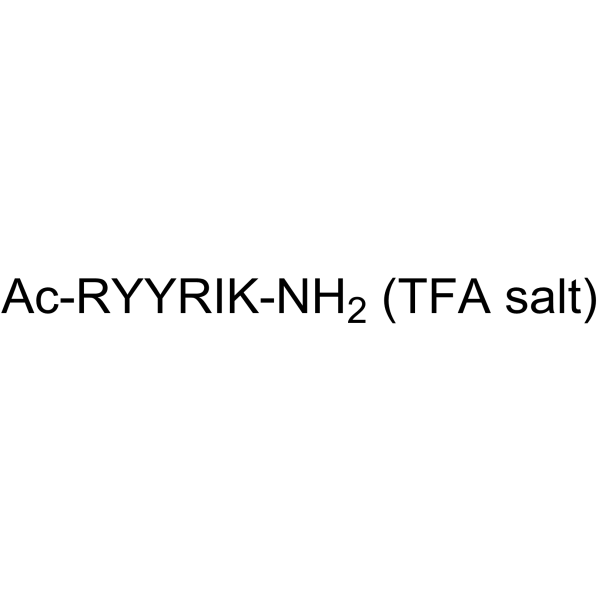
Ac-RYYRIK-NH2 TFA is a potent and partial agonist on ORL1 transfected in CHO cells (Kd=1.5 nM) and behaves as a endogenous ligand of ORL1. Ac-RYYRIK-NH2 is a specific antagonist for the activation of G protein and competitively antagonizes the stimulation of [ 35S]-GTPgS binding to G proteins by nociceptin/orphanin FQ (noc/OFQ) in membranes and sections of rat brain .
|
-
- HY-P990439
-
|
|
IFNAR
|
Inflammation/Immunology
|
|
The Anti-IFNAR1 Antibody is a humanized antibody expressed in CHO cells, targeting IFNAR1. The Anti-IFNAR1 Antibody has a huIgG1 heavy chain and a huκ light chain, with a predicted molecular weight (MW) of 144.92 kDa. The isotype control for the Anti-IFNAR1 Antibody can refer to Human IgG1 kappa, Isotype Control (HY-P99001).
|
-

- HY-W931056
-
|
|
TRP Channel
|
Neurological Disease
|
|
AMG-628 is an orally active inhibitor for TRPV1, that inhibits Capsaicin (HY-10448) or acid (pH 5)-induced Ca 2+ influx into TRPV1- expressing CHO cell with IC50 of 4.9 and 3.1 nM. AMG-628 exhibits analgesic activity in Capsaicin (HY-10448)-induced rat model, and exhibits a half-life of 2.4 h in rats .
|
-

- HY-14302R
-
|
GR33343X (Standard)
|
Adrenergic Receptor
Reference Standards
|
Inflammation/Immunology
Endocrinology
|
|
Salmeterol (Standard) is the analytical standard of Salmeterol. This product is intended for research and analytical applications. Salmeterol (GR33343X) is a potent and selective human β2 adrenoceptor agonist. Salmeterol shows potent stimulation of cAMP accumulation in CHO cells expressing human β2, β1 and β3 adrenoceptors with pEC50s of 9.6, 6.1, and 5.9, respectively .
|
-

- HY-P990676
-
|
|
Fc Receptor (FcR)
|
Inflammation/Immunology
|
|
VIB-9600 is a humanized antibody expressed in CHO cells, targeting FcgR2a/CD32a. VIB-9600 has a huIgG1 type heavy chain and huκ type light chain, with a predicted molecular weight (MW) of 150 kDa. The isotype control for VIB-9600 can be referenced as Human IgG1 kappa, Isotype Control (HY-P99001).
|
-

- HY-P1542B
-
|
Catostomus urotensin I TFA
|
CRFR
|
Cardiovascular Disease
Endocrinology
|
|
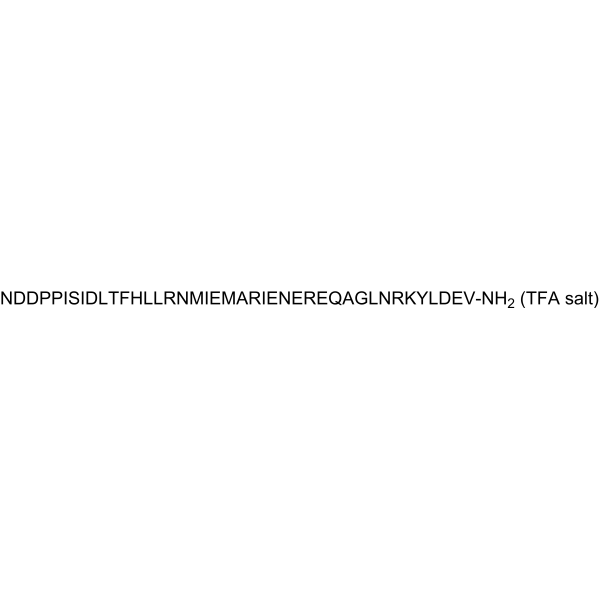
Urotensin I (Catostomus urotensin I) TFA, a CRF-like neuropeptide, acts as an agonist of CRF receptor with pEC50s of 11.46, 9.36 and 9.85 for human CRF1, human CRF2 and rat CRF2α receptors in CHO cells, and Kis of 0.4, 1.8, and 5.7 nM for hCRF1, rCRF2α and mCRF2β receptors, respectively .
|
-
- HY-P990517
-
|
|
TGF-beta/Smad
|
Inflammation/Immunology
|
|
Anti-TGFb1 Antibody is a humanized antibody expressed in CHO cells that targets TGFb1. The Anti-TGFb1 Antibody has a huIgG1 type heavy chain and a huκ type light chain, with a predicted molecular weight (MW) of 145 kDa. The isotype control for Anti-TGFb1 Antibody can refer to Human IgG1 kappa, Isotype Control (HY-P99001).
|
-

- HY-P990372
-
|
|
C-type Lectin-like Receptors (CTLRs)
|
Inflammation/Immunology
|
|
The Anti-CLEC14A Antibody is a humanized antibody expressed in CHO cells, targeting CLEC14A. The Anti-CLEC14A Antibody contains an IgG1 heavy chain and a huκ light chain, with a predicted molecular weight (MW) of 150 kDa. The isotype control for the Anti-CLEC14A Antibody can refer to Human IgG1 kappa, Isotype Control (HY-P99001).
|
-

- HY-P990481
-
|
|
PACAP Receptor
|
Inflammation/Immunology
|
|
Anti-PACAP38 Antibody is a human antibody expressed in CHO cells, targeting PACAP38. The Anti-PACAP38 Antibody has a huIgG4SP type heavy chain and a huκ type light chain, with a predicted molecular weight (MW) of 150 kDa. The isotype control for Anti-PACAP38 Antibody can refer to Human IgG4 kappa, Isotype Control (HY-P99003).
|
-

- HY-17453S1
-
|
GR 33343X-13C6 xinafoate
|
Isotope-Labeled Compounds
Adrenergic Receptor
|
Inflammation/Immunology
Endocrinology
|
|
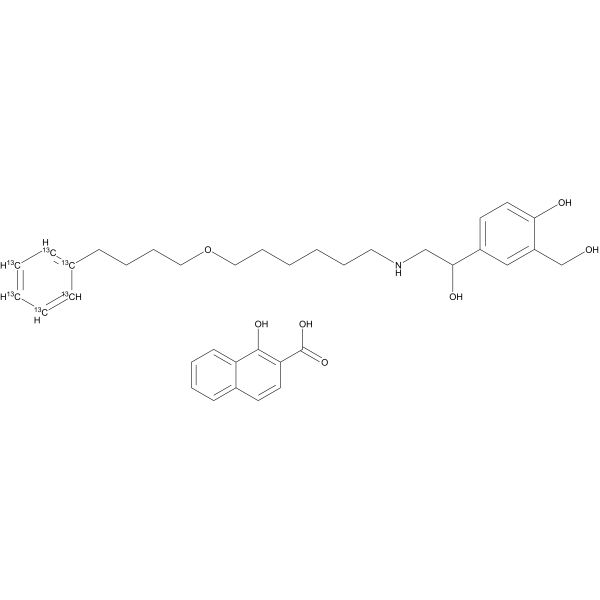
Salmeterol- 13C6 (xinafoate) is the 13C6 labeled Salmeterol (xinafoate). Salmeterol (GR 33343X) xinafoate is a potent and selective human β2 adrenoceptor agonist. Salmeterol shows potent stimulation of cAMP accumulation in CHO cells expressing human β2, β1 and β3 adrenoceptors with pEC50s of 9.6, 6.1, and 5.9, respectively.
|
-
- HY-P990344
-
|
|
Bcl-2 Family
|
Inflammation/Immunology
|
|
The Anti-Bcl-2 Antibody is a humanized antibody expressed in CHO cells, targeting Bcl-2. The Anti-Bcl-2 Antibody has a huIgG1 heavy chain and a huκ light chain, with a predicted molecular weight (MW) of 145.74 kDa. The isotype control for Anti-Bcl-2 Antibody can be referenced as Human IgG1 kappa, Isotype Control (HY-P99001).
|
-

- HY-P9977A
-
|
|
EGFR
|
Cancer
|
|
Amivantamab (FUT8-KO) is an anti-EGFR-MET monoclonal antibody expressed by CHO cells with the fucosyltransferase 8 gene (FUT8) knocked out. Fucose deficiency enhances the ADCC effect of the antibody. Amivantamab (FUT8-KO) inhibits ligand binding, promotes endocytosis and degradation of receptor-antibody complexes, and induces Fc-dependent cytokinesis in macrophages and antibody-dependent cytotoxicity in natural killer cells .
|
-

- HY-P990613
-
|
CBA-1205
|
Notch
|
Inflammation/Immunology
|
|
LIV-1205 (CBA-1205) is a humanized antibody expressed in CHO cells that targets DLK1. LIV-1205 (CBA-1205) contains a huIgG1 type heavy chain and a huκ type light chain, with a predicted molecular weight (MW) of 150 kDa. The isotype control for LIV-1205 (CBA-1205) can be referenced as Human IgG1 kappa, Isotype Control (HY-P99001).
|
-

- HY-15037S2
-
|
GP 45840-13C6
|
Isotope-Labeled Compounds
COX
Apoptosis
|
Inflammation/Immunology
|
|
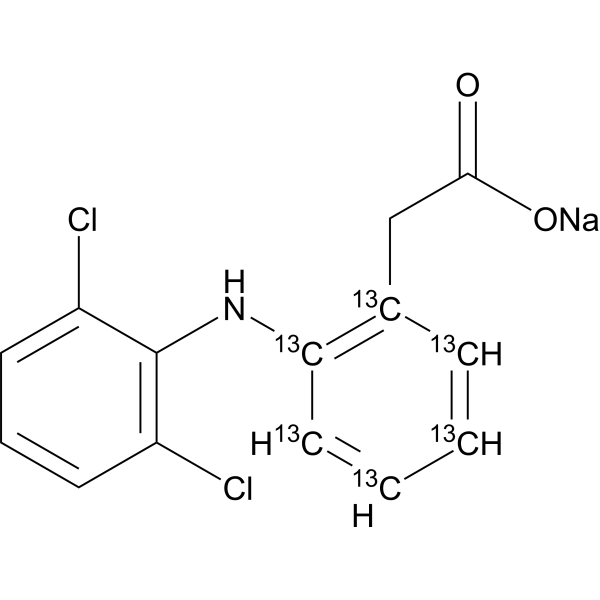
Diclofenac- 13C6 (Sodium) is the 13C6 labeled Diclofenac (Sodium). Diclofenac Sodium (GP 45840) is a potent and nonselective anti-inflammatory agent, acts as a COX inhibitor, with IC50s of 4 and 1.3 nM for human COX-1 and COX-2 in CHO cells, and 5.1 and 0.84 μM for ovine COX-1 and COX-2, respectively. Diclofenac Sodium induces apoptosis of neural stem cells (NSCs) via the activation of the caspase cascade.
|
-
- HY-15036S1
-
|
|
Isotope-Labeled Compounds
COX
Apoptosis
|
Inflammation/Immunology
|
|
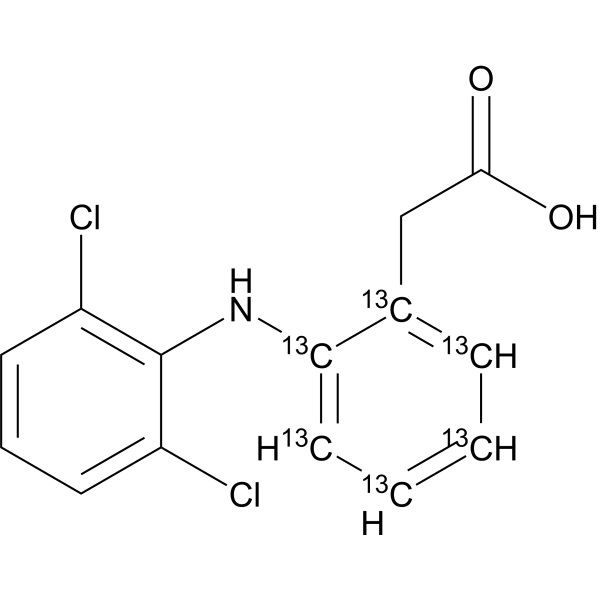
Diclofenac- 13C6 is the 13C6 labeled Diclofenac. Diclofenac is a potent and nonselective anti-inflammatory agent, acts as a COX inhibitor, with IC50s of 4 and 1.3 nM for human COX-1 and COX-2 in CHO cells, and 5.1 and 0.84 μM for ovine COX-1 and COX-2, respectively. Diclofenac induces apoptosis of neural stem cells (NSCs) via the activation of the caspase cascade.
|
-
- HY-17453R
-
|
GR 33343X xinafoate (Standard)
|
Reference Standards
Adrenergic Receptor
|
Inflammation/Immunology
Endocrinology
|
|
Salmeterol (xinafoate) (Standard) is the analytical standard of Salmeterol (xinafoate). This product is intended for research and analytical applications. Salmeterol (GR 33343X) xinafoate is a potent and selective human β2 adrenoceptor agonist. Salmeterol shows potent stimulation of cAMP accumulation in CHO cells expressing human β2, β1 and β3 adrenoceptors with pEC50s of 9.6, 6.1, and 5.9, respectively .
|
-

- HY-P990332
-
|
CNTO 2125
|
Amyloid-β
|
Inflammation/Immunology
|
|
Anti-Amyloid Beta Antibody (CNTO 2125) is a humanized antibody expressed in CHO cells, targeting Amyloid Beta/Aβ. Anti-Amyloid Beta Antibody (CNTO 2125) features a huIgG1 heavy chain and a huκ light chain, with a predicted molecular weight (MW) of 145 kDa. The isotype control for Anti-Amyloid Beta Antibody (CNTO 2125) can be referenced as Human IgG1 kappa, Isotype Control (HY-P99001).
|
-

- HY-130358
-
|
|
Calcium Channel
|
Neurological Disease
|
|
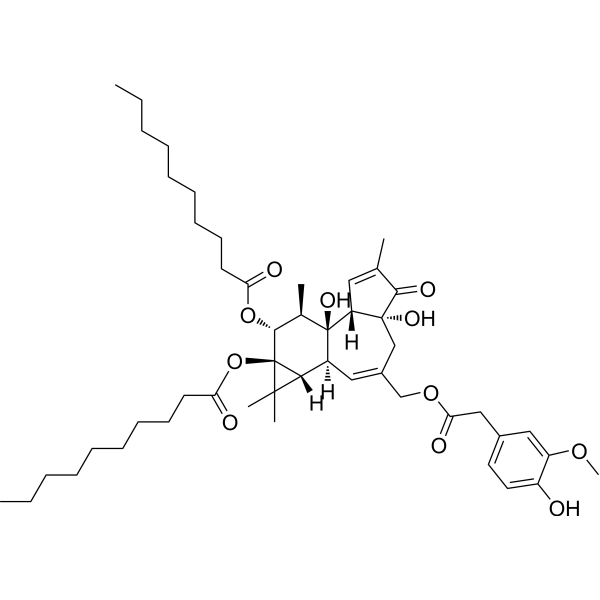
PDDHV is a calcium absorption inducer and may achieve 45Ca 2+ influx by stimulating vanillic acid receptor VR1. PDDHV induces 45Ca 2+ uptake (EC50: 70 nM) in rat dorsal root ganglion neurons (expressing native vanilloid receptors) and calcium mobilization (EC50: 125 nM) in VR1-transfected CHO cells. PDDHV also inhibits [3H]-resiniferatoxin (RTX) binding to the dorsal root ganglion membrane in rats .
|
-
- HY-P990657
-
|
RO5458640
|
TNF Receptor
|
Inflammation/Immunology
|
|
RG-7212 (RO5458640) is a human-derived antibody expressed in CHO cells, targeting TNFSF12/TWEAK. RG-7212 (RO5458640) has a huIgG1 type heavy chain and a huκ type light chain, with a predicted molecular weight (MW) of 146.02 kDa. The isotype control for RG-7212 (RO5458640) can be referenced as Human IgG1 kappa, Isotype Control (HY-P99001).
|
-

- HY-P990643
-
|
|
Integrin
|
Inflammation/Immunology
|
|
OS-2966 is a humanized antibody expressed in CHO cells, targeting Integrin b1/ITGB1/CD29. OS-2966 carries a huIgG1 type heavy chain and a huκ type light chain, with a predicted molecular weight (MW) of 145.5 kDa. The isotype control for OS-2966 can be referenced as Human IgG1 kappa, Isotype Control (HY-P99001).
|
-

- HY-P990353
-
|
TRX1
|
Transmembrane Glycoprotein
|
Inflammation/Immunology
|
|
Anti-CD4 Antibody (TRX1) is a humanized antibody expressed in CHO cells that targets CD4. Anti-CD4 Antibody (TRX1) has a huIgG1 heavy chain and a huκ light chain, with a predicted molecular weight (MW) of 145 kDa. The isotype control for Anti-CD4 Antibody (TRX1) can be referenced as Human IgG1 kappa, Isotype Control (HY-P99001).
|
-

- HY-P990403
-
|
|
Transmembrane Glycoprotein
|
Inflammation/Immunology
|
|
The Anti-DSG3 Antibody is a humanized antibody expressed in CHO cells, targeting DSG3. The Anti-DSG3 Antibody has a huIgG1 type heavy chain and a huκ type light chain, and its predicted molecular weight (MW) is 146.54 kDa. The isotype control for the Anti-DSG3 Antibody can be referenced as Human IgG1 kappa, Isotype Control (HY-P99001).
|
-

- HY-15036S
-
|
|
Isotope-Labeled Compounds
COX
Apoptosis
|
Inflammation/Immunology
|
|
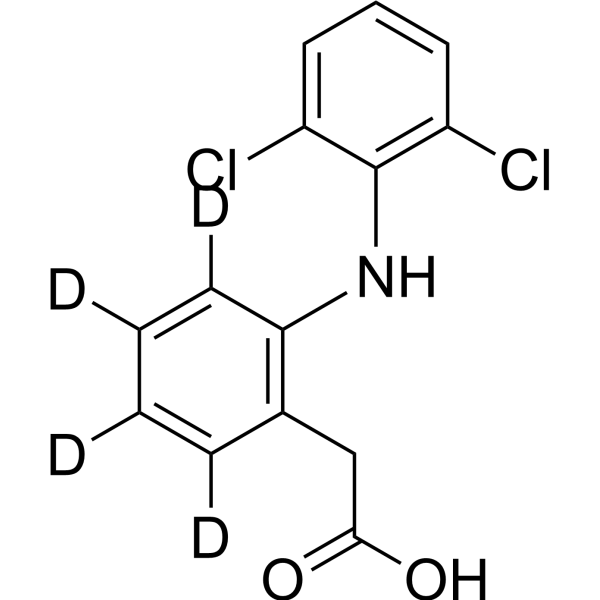
Diclofenac-d4 is the deuterium labeled Diclofenac. Diclofenac is a potent and nonselective anti-inflammatory agent, acts as a COX inhibitor, with IC50s of 4 and 1.3 nM for human COX-1 and COX-2 in CHO cells , and 5.1 and 0.84 μM for ovine COX-1 and COX-2, respectively . Diclofenac induces apoptosis of neural stem cells (NSCs) via the activation of the caspase cascade .
|
-
- HY-123411
-
|
BCI 632
|
mGluR
|
Neurological Disease
|
MGS0039 is a type II group mGluR antagonist. MGS0039 has a high affinity for mGluR2 and mGluR3, with Ki values of 2.2 nM and 4.5 nM, respectively. MGS0039 can attenuate the inhibitory effect of glutamate-induced cyclic AMP formation triggered by Forskolin (HY-15371) in CHO cells expressing mGluR2/mGluR3. MGS0039 shows antidepressant-like activity in rats .
|
-

- HY-P990321
-
|
MEDI 8968
|
Interleukin Related
|
Inflammation/Immunology
|
|
AMG-108 is a humanized antibody expressed in CHO cells, targeting IL-1R1/CD121a. AMG-108 is composed of a huIgG2 heavy chain and a huκ light chain, with a predicted molecular weight (MW) of 144.62 kDa. The isotype control for AMG-108 can refer to Human IgG2 kappa, Isotype Control (HY-P99002).
|
-

- HY-W012126R
-
|
2,6-Dichloro-N-phenylaniline (Standard)
|
Reference Standards
Bacterial
|
Infection
Cancer
|
|
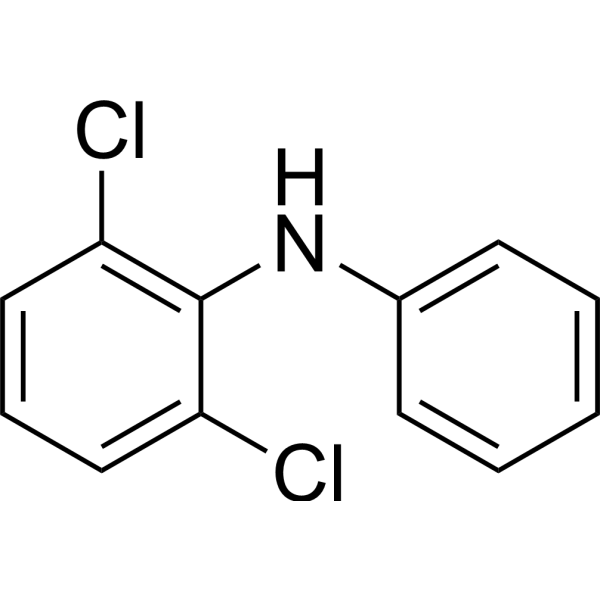
2,6-Dichlorodiphenylamine (Standard) is the analytical standard of 2,6-Dichlorodiphenylamine. This product is intended for research and analytical applications. 2,6-Dichlorodiphenylamine is an analogue of Diclofenac Sodium (HY-15037) and has anti-Candida albicans activity. Diclofenac Sodium is a potent and nonselective anti-inflammatory agent, acts as a COX inhibitor, with IC50s of 4 and 1.3 nM for human COX-1 and COX-2 in CHO cells.
|
-
- HY-P990313
-
|
|
CXCR
Interleukin Related
|
Inflammation/Immunology
|
|
ABX-IL8 is a human-derived antibody expressed in CHO cells, targeting CXCL8/IL-8. ABX-IL8 contains a huIgG2 heavy chain and a huκ light chain, with a predicted molecular weight (MW) of 143.94 kDa. The isotype control for ABX-IL8 can refer to Human IgG2 kappa, Isotype Control (HY-P99002).
|
-

- HY-P990328
-
|
XT-M4
|
Transmembrane Glycoprotein
|
Inflammation/Immunology
|
|
Anti-AGER/RAGE Antibody (XT-M4) is a humanized antibody expressed in CHO cells, targeting AGER/RAGE. Anti-AGER/RAGE Antibody (XT-M4) contains a huIgG1 heavy chain and a huκ light chain, with a predicted molecular weight (MW) of 150 kDa. The isotype control for Anti-AGER/RAGE Antibody (XT-M4) can be referenced as Human IgG1 kappa, Isotype Control (HY-P99001).
|
-

- HY-107691
-
|
|
Neurokinin Receptor
|
Neurological Disease
Endocrinology
Cancer
|
|
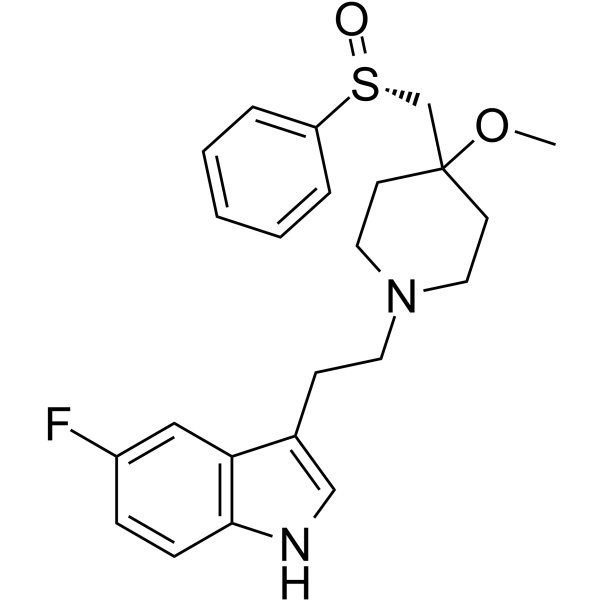
GR 159897 is a highly potent, selective, competitive, brain-penetrated non-peptide neurokinin 2 (NK2) receptor antagonist. GR 159897 has little or no affinity for NK1 and NK3 receptors. GR 159897 inhibits binding of [ 3H]GR100679 to human NK2 (hNK2)-CHO cells and rat colon membranes with pKis of 9.51 and 10, respectively. Antagonizes bronchoconstriction. Anxiolytic-like and anti-tumor effects .
|
-
- HY-15036R
-
|
|
Reference Standards
COX
Apoptosis
|
Inflammation/Immunology
Cancer
|
|
Diclofenac (Standard) is the analytical standard of Diclofenac. This product is intended for research and analytical applications. Diclofenac is a potent and nonselective anti-inflammatory agent, acts as a COX inhibitor, with IC50s of 4 and 1.3 nM for human COX-1 and COX-2 in CHO cells , and 5.1 and 0.84 μM for ovine COX-1 and COX-2, respectively . Diclofenac induces apoptosis of neural stem cells (NSCs) via the activation of the caspase cascade .
|
-

- HY-15037R
-
|
GP 45840 (Standard)
|
Reference Standards
COX
Apoptosis
|
Inflammation/Immunology
Cancer
|
|
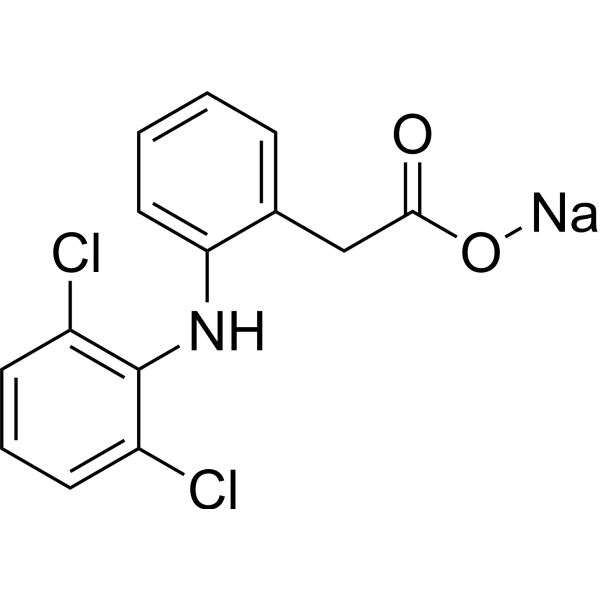
Diclofenac (Sodium) (Standard) is the analytical standard of Diclofenac (Sodium). This product is intended for research and analytical applications. Diclofenac Sodium (GP 45840) is a potent and nonselective anti-inflammatory agent, acts as a COX inhibitor, with IC50s of 4 and 1.3 nM for human COX-1 and COX-2 in CHO cells , and 5.1 and 0.84 μM for ovine COX-1 and COX-2, respectively . Diclofenac Sodium induces apoptosis of neural stem cells (NSCs) via the activation of the caspase cascade .
|
-
- HY-P990417
-
|
|
Antifolate
|
Inflammation/Immunology
|
|
Anti-FOLR1/FRA Antibody is a humanized antibody expressed in CHO cells, targeting FOLR1/FRA. The Anti-FOLR1/FRA Antibody contains a huIgG1 heavy chain and a huκ light chain, with a predicted molecular weight (MW) of 146.46 kDa. The isotype control for the Anti-FOLR1/FRA Antibody can be referenced as Human IgG1 kappa, Isotype Control (HY-P99001).
|
-

- HY-169780
-
|
|
TRP Channel
|
Neurological Disease
Inflammation/Immunology
|
|
(S)-AMG-628 (Compound 16q) is the S-isomer of AMG-628 (HY-123374). (S)-AMG-628 is the orally active antagonist for TRPV1, that inhibits the Capsaicin (HY-10448)- and acid-induced Ca 2+-influx with IC50 of 7 nM and 5 nM in CHO cell. (S)-AMG-628 ameliorates Capsaicin-induced rats flinching, and reverses the thermal hypersensitivity in CFA-(HY-153808) induced inflammatory pain models .
|
-

- HY-15037S1
-
|
|
COX
Apoptosis
|
Inflammation/Immunology
|
|
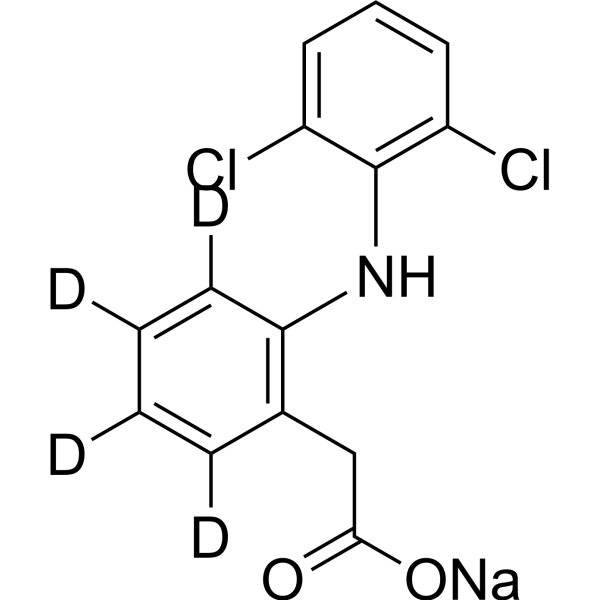
Diclofenac-d4 (sodium) is the deuterium labeled Diclofenac sodium. Diclofenac Sodium (GP 45840) is a potent and nonselective anti-inflammatory agent, acts as a COX inhibitor, with IC50s of 4 and 1.3 nM for human COX-1 and COX-2 in CHO cells , and 5.1 and 0.84 μM for ovine COX-1 and COX-2, respectively . Diclofenac Sodium induces apoptosis of neural stem cells (NSCs) via the activation of the caspase cascade .
|
-
- HY-N8497
-
|
|
Bacterial
|
Infection
|
|
Leoidin is an OATP1B1 and OATP1B3 inhibitor with Ki values of 0.08 and 1.84 μM,respectively. Leoidin inhibits sodium fluorescein uptake in CHO cells expressing the human OATP1B1 and OATP1B3. Leoidin is an antibacterial agent against both Gram-positive and Gram-negative pathogens. Leoidin inhibits phenylalanyl-tRNA synthetase (PheRS) (IC50= 42 μM) and inhibits protein synthesis in bacterial. Leoidin can be isolated from L. gangaleoides .
|
-

- HY-P990664
-
|
SC-005 antibody
|
Transmembrane Glycoprotein
|
Inflammation/Immunology
|
|
Anti-Melanotransferrin/CD228 Antibody (SC-005 antibody) is a humanized antibody expressed in CHO cells, targeting Melanotransferrin/CD228. Anti-Melanotransferrin/CD228 Antibody carries a huIgG1 heavy chain and a huκ light chain, with a predicted molecular weight (MW) of 145.16 kDa. The isotype control for Anti-Melanotransferrin/CD228 Antibody can refer to Human IgG1 kappa, Isotype Control (HY-P99001).
|
-

- HY-P990327
-
|
humZ270 mAb
|
TGF-β Receptor
|
Inflammation/Immunology
|
|
The Anti-ACVR2B Antibody is a human antibody expressed in CHO cells, targeting ACVR2B. The Anti-ACVR2B Antibody has huIgG1 heavy chain and huκ light chain, with a predicted molecular weight (MW) of 144.42 kDa. The isotype control for the Anti-ACVR2B Antibody can refer to Human IgG1 kappa, Isotype Control (HY-P99001).
|
-

- HY-15038R
-
|
|
Reference Standards
COX
Apoptosis
|
Inflammation/Immunology
Cancer
|
|
Diclofenac (potassium) (Standard) is the analytical standard of Diclofenac (potassium). This product is intended for research and analytical applications. Diclofenac potassium is a potent and nonselective anti-inflammatory agent, acts as a COX inhibitor, with IC50s of 4 and 1.3 nM for human COX-1 and COX-2 in CHO cells , and 5.1 and 0.84 μM for ovine COX-1 and COX-2, respectively . Diclofenac potassium induces apoptosis of neural stem cells (NSCs) via the activation of the caspase cascade .
|
-

- HY-118944
-
|
|
Adrenergic Receptor
|
Endocrinology
|
|
L-748328 is a potent and selective human β3-adrenergic receptor antagonist. L-748328 has a Ki of 3.7 nM against human cloned β3-AR expressed in Chinese hamster ovary (CHO) cells. In addition, L-748328 inhibits the lipolytic response induced by the β3-AR agonist L-742791 in isolated non-human primate adipocytes .
|
-

- HY-I1120R
-
|
|
Reference Standards
SGLT
|
Metabolic Disease
|
|
SGLT2-IN-1 (standard) is the analytical standard for SGLT2-IN-1. This product is used for research and analytical applications. SGLT2-IN-1 (Compound 5) is an inhibitor for sodium-dependent glucose cotransporter (SGLT2), with IC50 of 33 nM in CHO cells transfected with human SGLT2. SGLT2-IN-1 is selective for SGLT2 over SGLT1. SGLT2-IN-1 is an active metabolite of dapagliflozinactive metabolite of dapagliflozin.
|
-

- HY-15037S
-
|
|
Isotope-Labeled Compounds
COX
Apoptosis
|
Inflammation/Immunology
|
|
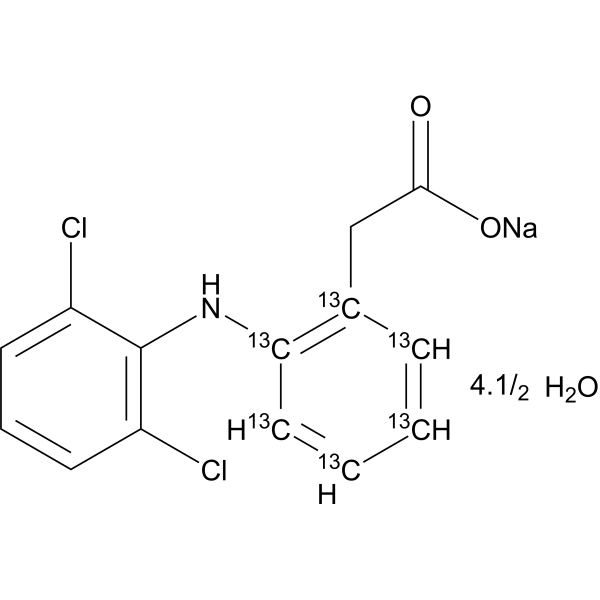
Diclofenac- 13C6 (sodium heminonahydrate) is the 13C-labeled Diclofenac Sodium. Diclofenac Sodium (GP 45840) is a potent and nonselective anti-inflammatory agent, acts as a COX inhibitor, with IC50s of 4 and 1.3 nM for human COX-1 and COX-2 in CHO cells , and 5.1 and 0.84 μM for ovine COX-1 and COX-2, respectively . Diclofenac Sodium induces apoptosis of neural stem cells (NSCs) via the activation of the caspase cascade .
|
-
- HY-124543R
-
|
|
Adenosine Receptor
|
Neurological Disease
|
|
MRS-1191 (Standard) is the analytical standard of MRS-1191. This product is intended for research and analytical applications. MRS-1191 is a potent and selective A3 adenosine receptor antagonist with a KB value of 92 nM, a Ki value of 31.4 nM for human A3 receptor and an IC50 of 120 nM for CHO cells . MRS-1191 is a click chemistry reagent, it contains an Alkyne group and can undergo copper-catalyzed azide-alkyne cycloaddition (CuAAc) with molecules containing Azide groups.
|
-

- HY-P990579
-
|
|
HCV
|
Inflammation/Immunology
|
|
Anti-CLDN6 Antibody (DS-9606A antibody) is a humanized antibody expressed in CHO cells, targeting CLDN6. Anti-CLDN6 Antibody features an IgG1 type heavy chain and a huκ type light chain, with a predicted molecular weight (MW) of 145.84 kDa. The isotype control for Anti-CLDN6 Antibody can refer to Human IgG1 kappa, Isotype Control (HY-P99001).
|
-

- HY-P990387
-
|
|
Ser/Thr Protease
|
Inflammation/Immunology
|
|
The Anti-CTSS/Cathepsin S Antibody (Fsn0503h) is a humanized antibody expressed in CHO cells, targeting CTSS/Cathepsin S. The Anti-CTSS/Cathepsin S Antibody (Fsn0503h) has a huIgG1 type heavy chain and a huκ type light chain, with a predicted molecular weight (MW) of 150 kDa. The isotype control for Anti-CTSS/Cathepsin S Antibody (Fsn0503h) can be referenced as Human IgG1 kappa, Isotype Control (HY-P99001).
|
-

- HY-P991942A
-
|
BAY3375968 (FUT8-KO); TPP-23411 (FUT8-KO)
|
CCR
|
Cancer
|
|
Lanerkitug (FUT8-KO) (BAY3375968 (FUT8-KO)) is an anti-CCR8 monoclonal antibody expressed by CHO cells with the fucosyltransferase 8 gene (FUT8) knocked out. Fucose deficiency enhances the ADCC effect of the antibody. Lanerkitug (HY-P991942) selectively depletes human CCR8+Tregs via antibody dependent cellular cytotoxicity (ADCC) and antibody dependent cellular phagocytosis (ADCP). Lanerkitug can be used in the research of solid tumors .
|
-

- HY-163765
-
|
|
PI4K
Potassium Channel
|
Infection
|
|
Antimalarial agent 41 (Compound 17) exhibits antimalarial activity, which inhibits Plasmodium falciparum with an IC50 of 40 nM (NF54 strain) and 76 nM (K1 strain). Antimalarial agent 41 is an inhibitor for P. falciparum phosphatidylinositol-4-kinase β (Pf PI4K) and hERG channel, with an IC50 of 53 nM and 3 μM. Antimalarial agent 41 exhibits cytotoxicity to CHO cells with an IC50 of 34 μM. Antimalarial agent 41 ameliorates the malaria infection and exhibits good pharmacokinetic characters in mouse models .
|
-

- HY-110091
-
|
|
TRP Channel
|
Neurological Disease
|
|
TRPV1 antagonist 9 (compound 13c) is an orally active transient receptor potential vanilloid 1 (TRPV1) channel antagonist. TRPV1 antagonist 9 blocks Ca 2+ uptake by CHO cells expressing TRPV1 receptors with IC50 values are 0.6 and 0.8 nM for Capsaicin (HY-10448) and acid-induced Ca 2+ uptake, respectively. TRPV1 antagonist 9 blocks Capsaicin (HY-10448)-induced flinch response and causes hyperthermia in rats .
|
-

- HY-P991100
-
|
|
Cadherin
|
Cancer
|
|
Anti-CDH17/Cadherin-17 Antibody (10C12) is a human antibody expressed in CHO cells, targeting CDH17/Cadherin-17. Anti-CDH17/Cadherin-17 Antibody (10C12) can be referenced as Human IgG1 kappa, Isotype Control (HY-P99001). Anti-CDH17/Cadherin-17 Antibody (10C12) can be used in the study of cancer .
|
-

- HY-15036AR
-
|
|
Reference Standards
COX
Apoptosis
|
Inflammation/Immunology
Cancer
|
|
Diclofenac (diethylamine) (Standard) is the analytical standard of Diclofenac (diethylamine). This product is intended for research and analytical applications. Diclofenac diethylamine is a potent and nonselective anti-inflammatory agent, acts as a COX inhibitor, with IC50s of 4 and 1.3 nM for human COX-1 and COX-2 in CHO cells , and 5.1 and 0.84 μM for ovine COX-1 and COX-2, respectively . Diclofenac diethylamine induces apoptosis of neural stem cells (NSCs) via the activation of the caspase cascade .
|
-

- HY-12709A
-
|
|
Adrenergic Receptor
|
Cardiovascular Disease
Inflammation/Immunology
|
|
ARC 239 dihydrochloride is a selective α2B/2C adrenoceptor antagonist (pKd values are 5.95, 7.41 and 7.56 at α2A, α2B, and α2C receptors respectively). ARC 239 dihydrochloride binds to CHO cell membranes expressing human recombinant a2A-, a2B- or a2C-adrenoceptor subtypes with pKis of 5.6, 8.4, and 7.08, respectively .
|
-
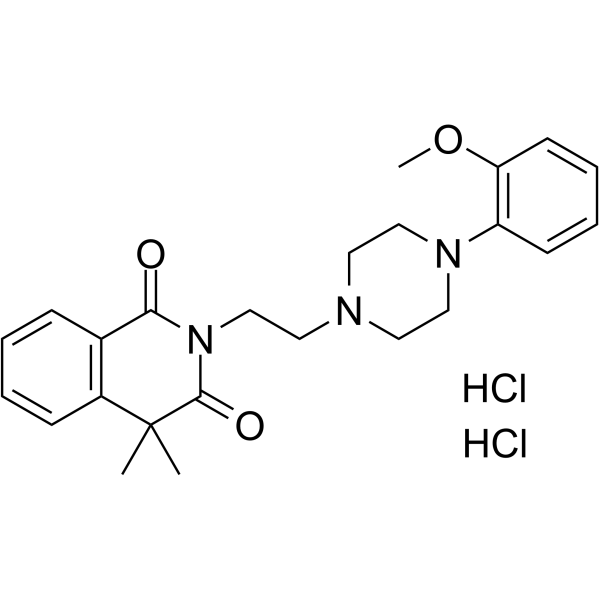
- HY-P990415
-
|
|
FGFR
|
Inflammation/Immunology
|
|
The Anti-FGFR1/CD331 Antibody is a humanized antibody expressed in CHO cells, targeting FGFR1/CD331. The Anti-FGFR1/CD331 Antibody is equipped with huIgG1 heavy chain and huκ light chain, with a predicted molecular weight (MW) of 150 kDa. The isotype control for the Anti-FGFR1/CD331 Antibody can be referenced as Human IgG1 kappa, Isotype Control (HY-P99001).
|
-

- HY-W753345
-
|
2,6-Dichloro-N-phenylaniline-13C6
|
Isotope-Labeled Compounds
Bacterial
|
Cancer
|
|
2,6-Dichlorodiphenylamine- 13C6 (2,6-Dichloro-N-phenylaniline- 13C6) is the 13C-labeled 2,6-Dichlorodiphenylamine (HY-W012126). 2,6-Dichlorodiphenylamine is an analogue of Diclofenac Sodium (HY-15037) and has anti-Candida albicans activity. Diclofenac Sodium is a potent and nonselective anti-inflammatory agent, acts as a?COX?inhibitor, with?IC50s of 4 and 1.3 nM for human COX-1 and COX-2 in CHO cells.
|
-

- HY-181108
-
|
|
PDGFR
Parasite
|
Infection
|
|
GSK190937 is a type II platelet-derived growth factor receptor alpha (PDGFRA) human kinase inhibitor with antimalarial activity. GSK190937 can inhibit the formation of hemozoin in the malaria parasite, resulting in the accumulation of free hemoglobin within the malaria parasite. GSK190937 shows IC50 values of 0.22, 0.59 and 0.25 μM against P. falciparum NF54, K1 and Dd2 parasite. GSK190937 shows an IC50 of 25 μM for CHO cells. GSK190937 can be used for research of malaria .
|
-

- HY-P990530
-
|
hMAK195
|
TNF Receptor
|
Inflammation/Immunology
|
|
Anti-TNFSF2/TNFa Antibody (hMAK195) is a human antibody expressed in CHO cells that targets TNFSF2/TNFa. Anti-TNFSF2/TNFa Antibody (hMAK195) has a huIgG1 heavy chain and a huκ light chain, with a predicted molecular weight (MW) of 145.06 kDa. The isotype control for Anti-TNFSF2/TNFa Antibody (hMAK195) can be referenced as Human IgG1 kappa, Isotype Control (HY-P99001).
|
-

- HY-P990392
-
|
|
CXCR
|
Inflammation/Immunology
|
|
Anti-CXCL8/IL-8 Antibody is a human antibody expressed in CHO cells that targets CXCL8/IL-8. The Anti-CXCL8/IL-8 Antibody is composed of a huIgG1 heavy chain and a huκ light chain, with a predicted molecular weight (MW) of 145 kDa. The isotype control for Anti-CXCL8/IL-8 Antibody can be referenced as Human IgG1 kappa, Isotype Control (HY-P99001).
|
-

- HY-P99406A
-
|
|
EGFR
|
Cancer
|
|
Petosemtamab (FUT8-KO) is an anti-EGFR and anti-LGR5 monoclonal antibody expressed in CHO cells with the fucosyltransferase 8 gene (FUT8) knocked out. Fucosyl loss enhances the ADCC effect of the antibody. Petosemtamab (FUT8-KO) leads to EGFR signaling blockade and receptor degradation in LGR5+ cancer cells. Petosemtamab (FUT8-KO) can be used for research on solid tumors such as head and neck squamous cell carcinoma (HNSCC) and metastatic colorectal cancer (CRC) .
|
-

- HY-P990391
-
|
|
CXCR
|
Inflammation/Immunology
|
|
The Anti-CXCL4/PF4 Antibody is a human antibody expressed in CHO cells that targets CXCL4/PF4. The Anti-CXCL4/PF4 Antibody has a huIgG4SP type heavy chain and a huκ type light chain, with a predicted molecular weight (MW) of 144.5 kDa. The isotype control for Anti-CXCL4/PF4 Antibody can be referenced as Human IgG4 kappa, Isotype Control (HY-P99003).
|
-

- HY-P990364
-
|
|
Transmembrane Glycoprotein
|
Inflammation/Immunology
|
|
Anti-CEACAM1/CD66a Antibody is a human antibody expressed in CHO cells that targets CEACAM1/CD66a. The Anti-CEACAM1/CD66a Antibody is equipped with huIgG1 heavy chain and huκ light chain, with a predicted molecular weight (MW) of 144.98 kDa. The isotype control for the Anti-CEACAM1/CD66a Antibody can refer to Human IgG1 kappa, Isotype Control (HY-P99001).
|
-

- HY-118945
-
|
|
Prostaglandin Receptor
Bradykinin Receptor
|
Cardiovascular Disease
Metabolic Disease
Inflammation/Immunology
|
|
FR191413 is a selective bradykinin B2 receptor agonist that stimulates prostaglandin E2 production in WI-38 cells and activates BK B2 receptor-mediated pathways such as vasodilation and organ protection. FR191413 competitively binds to [ 3H]-BK in guinea pig ileum (GPI) membranes and CHO cells transfected with the human BK B2 receptor, with IC50 values of 20.0 nM and 2.60 nM, respectively. FR191413 can be used in research related to cardiovascular diseases and diabetes, including hypertension, myocardial hypertrophy, myocardial infarction, arrhythmias, and diabetic nephropathy .
|
-

- HY-107664A
-
|
|
Neurotensin Receptor
|
Neurological Disease
|
|
SR 142948 dihydrochloride is an orally active and selective non-peptide neurotensin receptor (NT) antagonist with IC50s of 1.19 nM, 0.32 nM, 3.96 nM in h-NTR1-CHO cells, HT-29 cells, and adult rat brain, respectively. SR 142948 dihydrochloride antagonizes NT-induced inositol monophosphate formation in HT-29 cells with an IC50 of 3.9 nM. SR 142948 dihydrochloride blocks hypothermia, analgesia and steering behavior induced by NT in vivo. SR 142948 dihydrochloride shows blood-brain permeability and can be used in study of psychiatric disorders .
|
-
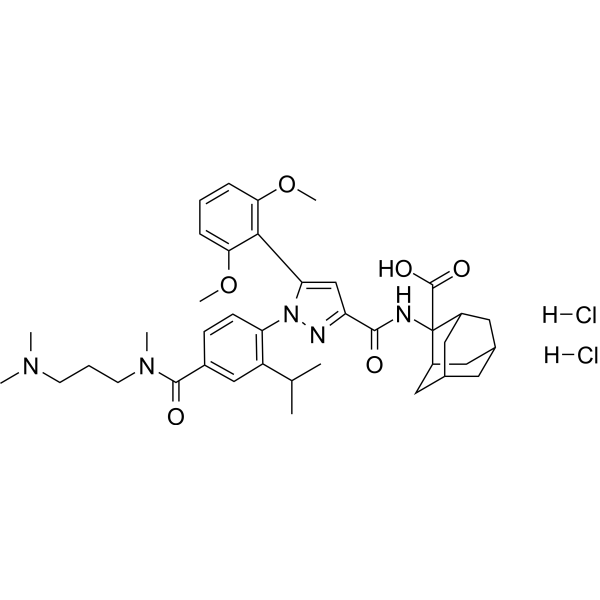
- HY-P990516
-
|
|
PKA
|
Inflammation/Immunology
|
|
The Anti-TEM7R/PLXDC2 Antibody is a human-derived antibody expressed in CHO cells, targeting TEM7R/PLXDC2. The Anti-TEM7R/PLXDC2 Antibody contains a huIgG1 heavy chain and a huκ light chain, with a predicted molecular weight (MW) of 145 kDa. The isotype control for the Anti-TEM7R/PLXDC2 Antibody can be referenced as Human IgG1 kappa, Isotype Control (HY-P99001).
|
-

- HY-107664
-
|
|
Neurotensin Receptor
|
Neurological Disease
|
|
SR 142948 is an orally active and selective non-peptide neurotensin receptor (NT) antagonist with IC50s of 1.19 nM, 0.32 nM, 3.96 nM in h-NTR1-CHO cells, HT-29 cells, and adult rat brain, respectively. SR 142948 antagonizes NT-induced inositol monophosphate formation in HT-29 cells with an IC50 of 3.9 nM. SR 142948 blocks hypothermia, analgesia and steering behavior induced by NT in vivo. SR 142948 shows blood-brain permeability and can be used in study of psychiatric disorders .
|
-
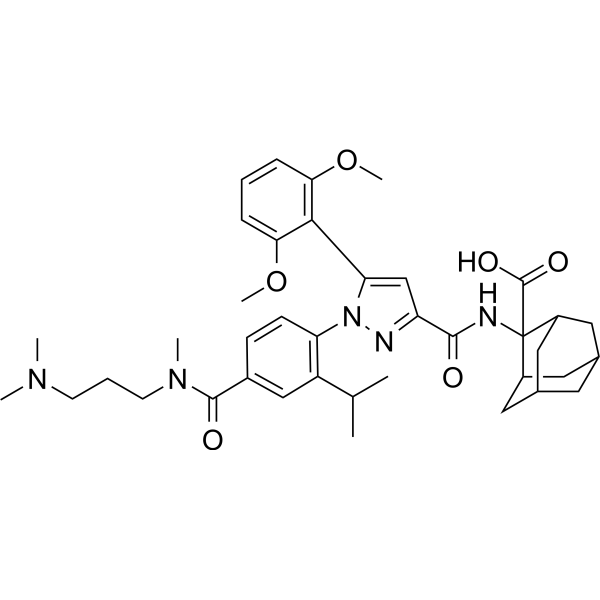
- HY-P990472
-
|
H5B14
|
c-Met/HGFR
|
Inflammation/Immunology
|
|
Anti-MSPR/RON/CD136 Antibody (H5B14) is a humanized antibody expressed in CHO cells, targeting MSPR/RON/CD136. Anti-MSPR/RON/CD136 Antibody (H5B14) has a huIgG1 heavy chain and a huκ light chain, with a predicted molecular weight (MW) of 156.7 kDa. The isotype control for Anti-MSPR/RON/CD136 Antibody (H5B14) can be referenced as Human IgG1 kappa, Isotype Control (HY-P99001).
|
-

- HY-P990397
-
|
FA19-1
|
VEGFR
|
Inflammation/Immunology
|
|
The Anti-DCBLD2/ESDN Antibody (FA19-1) is a humanized antibody expressed in CHO cells that targets DCBLD2/ESDN. The Anti-DCBLD2/ESDN Antibody (FA19-1) contains a huIgG1 heavy chain and a huκ light chain, with a predicted molecular weight (MW) of 150 kDa. The isotype control for the Anti-DCBLD2/ESDN Antibody (FA19-1) can be referenced as Human IgG1 kappa, Isotype Control (HY-P99001).
|
-

- HY-175851
-
|
|
Adenosine Receptor
|
Neurological Disease
|
|
A2AAR antagonist 5 is a selective A2AAR antagonist. A2AAR antagonist 5 inhibits NECA-stimulated adenylyl cyclase activity in hA2AAR-expressing CHO cells with an IC50 value of 1863 nM. A2AAR antagonist 5 possesses strong free radical scavenging activity, with an EC50 value of 22.21 μM in the DPPH assay. A2AAR antagonist 5 exerts notable neuroprotective effects in in vitro cerebral ischemia models. A2AAR antagonist 5 can be used for the study of cerebral ischemia .
|
-

- HY-P990505
-
|
|
Transmembrane Glycoprotein
|
Inflammation/Immunology
|
|
The Anti-Siglec-15/CD33L3 Antibody is a human-derived antibody expressed in CHO cells, targeting Siglec-15/CD33L3. The Anti-Siglec-15/CD33L3 Antibody contains a huIgG1 heavy chain and a huλ light chain, with a predicted molecular weight (MW) of 146.02 kDa. The isotype control for the Anti-Siglec-15/CD33L3 Antibody can be referenced as Human IgG1 kappa, Isotype Control (HY-P99001).
|
-

- HY-107664B
-
|
|
Neurotensin Receptor
|
Neurological Disease
|
|
SR 142948 TFA is an orally active and selective non-peptide neurotensin receptor (NT) antagonist with IC50s of 1.19 nM, 0.32 nM, 3.96 nM in h-NTR1-CHO cells, HT-29 cells, and adult rat brain, respectively. SR 142948 TFA antagonizes NT-induced inositol monophosphate formation in HT-29 cells with an IC50 of 3.9 nM. SR 142948 TFA blocks hypothermia, analgesia and steering behavior induced by NT in vivo. SR 142948 TFA shows blood-brain permeability and can be used in study of psychiatric disorders .
|
-

- HY-171328
-
|
|
Dopamine Receptor
|
Neurological Disease
|
|
RG-15 is the orally active antagonist for dopamine receptor that exhibits goof affinity to human D2 receptor and human D3 receptor with pKi of 8.23 and 10.49. RG-15 inhibits dopamine-stimulated [ 35S]GTPγS binding with IC50 of 21.2 nM (rat striatal membranes), 36.7 nM (mouse A9 cells expressing human D2L receptors) and 7.2 nM (CHO cells expressing human D3 receptors). RG-15 increases the turnover and biosynthesis of dopamine in mouse striatum and olfactory bulb, exhibiting antipsychotic activity .
|
-

- HY-P990545
-
|
ANX005
|
Complement System
|
Neurological Disease
|
|
Tanruprubart (ANX005) is a C1q inhibitor and C1q depleter. Tanruprubart is a human antibody expressed in CHO cells, with huIgG1 heavy chains and huκ light chains, and its predicted molecular weight (MW) is 145 kDa. For the isotype control of Tanruprubart, refer to Human IgG1 kappa, Isotype Control (HY-P99001). The IC50 of Tanruprubart is 346 ng/mL for humans and 259 ng/mL for rats; its EC50 is 3.8 ng/mL for humans, 5.2 ng/mL for rats, and 9.9 ng/mL for mice. Tanruprubart is applicable to the research of Guillain-Barré syndrome and Alzheimer's disease .
|
-

- HY-173537
-
|
Ins(1,2,4,5)P4 tetrasodium salt; 1,2,4,5-IP4 tetrasodium salt
|
Calcium Channel
|
Neurological Disease
|
|
D-myo-Inositol-1,2,4,5-tetraphosphate (DL-Ins-(1,2,4,5)P4) tetrasodium is raracemic regioisomer of myo-inositol tetrakisphosphates (IP4s). D-myo-Inositol-1,2,4,5-tetraphosphate tetrasodium is an Ins(1,4,5)P3 receptor agonist with a Ki of 11 nM. D-myo-Inositol-1,2,4,5-tetraphosphate tetrasodium induces Ca 2+ mobilization with an EC50 value of 0.22 μM in CHO cells .
|
-

- HY-P990543
-
|
|
VEGFR
|
Inflammation/Immunology
|
|
The Anti-VEGFR2/KDR/CD309 Antibody (AT001) is a humanized antibody expressed in CHO cells that targets VEGFR2/KDR/CD309. The Anti-VEGFR2/KDR/CD309 Antibody (AT001) contains a huIgG1 heavy chain and a huκ light chain, with a predicted molecular weight (MW) of 145 kDa. The isotype control for the Anti-VEGFR2/KDR/CD309 Antibody (AT001) can be referenced as Human IgG4 kappa, Isotype Control (HY-P99003).
|
-

- HY-19927A
-
|
|
5-HT Receptor
|
Neurological Disease
Endocrinology
|
|
DA-6886 is a 5-Hydroxytryptamine receptor 4 (5-HT4) agonist. DA-6886 induces relaxation of the rat oesophagus preparation in a 5-HT4 receptor antagonist-sensitive manner. The evaluation of DA-6886 in CHO cells expressing hERG channels reveals that it inhibits hERG channel current with an pIC50 value of 4.3, indicating that the compound is 1000-fold more selective for the 5-HT4 receptor over hERG channels. DA-6886 can be used in the study of constipated irritable bowel syndrome .
|
-

- HY-P1320A
-
|
|
Opioid Receptor
|
Inflammation/Immunology
|
|
[Nphe1]Nociceptin(1-13)NH2, a novel nociceptin/orphanin FQ (NC) endogenous ligand, is a selective and competitive ociceptin receptor antagonist without any residual agonist activity. [Nphe1]nociceptin(1-13)NH2?binds selectively to recombinant nociceptin receptors (pKi=8.4) and antagonizes the inhibitory effects of nociceptin on cyclic AMP accumulation in CHO cells (pA2=6.0). [Nphe1]Nociceptin(1-13)NH2 has the potential to act as an analgesic agent .
|
-
![[Nphe1]Nociceptin(1-13)NH2 TFA](//file.medchemexpress.com/product_pic/hy-p1320a.gif)
- HY-P99653A
-
|
VAY-736 (FUT8-KO)
|
TNF Receptor
Apoptosis
NF-κB
|
Inflammation/Immunology
Cancer
|
|
Ianalumab (VAY-736) (FUT8-KO) is an anti-BAFF-R monoclonal antibody expressed in CHO cells with the fucosyltransferase 8 gene (FUT8) knocked out. Fucose depletion enhances its B cell clearance capacity. Ianalumab (FUT8-KO) competitively blocks the binding of BAFF to BAFF-R, inhibits the BAFF-mediated alternative NF-κB pro-survival signaling pathway, and abrogates the apoptotic (apoptosis) protective effect of BAFF on cancer cells. Ianalumab (FUT8-KO) can be used in research related to primary Sjögren's syndrome and chronic lymphocytic leukemia .
|
-

- HY-P1320
-
|
|
Opioid Receptor
|
Inflammation/Immunology
|
|
[Nphe1]Nociceptin(1-13)NH2, a novel nociceptin/orphanin FQ (NC) endogenous ligand, is a selective and competitive ociceptin receptor antagonist without any residual agonist activity. [Nphe1]nociceptin(1-13)NH2 binds selectively to recombinant nociceptin receptors (pKi=8.4) and antagonizes the inhibitory effects of nociceptin on cyclic AMP accumulation in CHO cells (pA2=6.0). [Nphe1]Nociceptin(1-13)NH2 has the potential to act as an analgesic agent .
|
-
![[Nphe1]Nociceptin(1-13)NH2](//file.medchemexpress.com/product_pic/hy-p1320.gif)
- HY-175486
-
|
|
Opioid Receptor
|
Neurological Disease
|
|
KOR agonist 6 is a KOR agonist (Ki = 0.25 pM). KOR agonist 6 shows agonistic activity at MOR and DOR in CHO cells and inhibits Forskolin (HY-15371)-stimulated cAMP accumulation. KOR agonist 6 stimulates KOR-mediated [ 35S]GTPγS binding and inhibits cAMP accumulation in KOR-expressing HEK293 cells with potent agonistic activity, while showing lower β-arrestin recruitment potency. KOR agonist 6 demonstrates anti-nociceptive efficacy in mice. KOR agonist 6 can be used for the study of analgesics with reduced central nervous system (CNS) side effects .
|
-

- HY-P990143
-
|
|
LDLR
|
Others
|
|
Anti-Mouse/Rat/Bovine VLDL-R Antibody (IgG-6A6) is an anti-mouse/rat/bovine VLDL-R IgG1 monoclonal antibody. Anti-Mouse/Rat/Bovine VLDL-R Antibody (IgG-6A6) can specifically recognize VLDLR type-I and type-II expressed in CHO cells. Anti-Mouse/Rat/Bovine VLDL-R Antibody (IgG-6A6) can be used to detect the expression of VLDLR in different cells and tissues. Anti-Mouse/Rat/Bovine VLDL-R Antibody (IgG-6A6) often used in western blot experiments .
|
-
- HY-107664R
-
|
|
Reference Standards
Neurotensin Receptor
|
Neurological Disease
|
|
SR 142948 (Standard) is the analytical standard of SR 142948 (HY-107664). This product is intended for research and analytical applications. SR 142948 is an orally active and selective non-peptide neurotensin receptor (NT) antagonist with IC50s of 1.19 nM, 0.32 nM, 3.96 nM in h-NTR1-CHO cells, HT-29 cells, and adult rat brain, respectively. SR 142948 antagonizes NT-induced inositol monophosphate formation in HT-29 cells with an IC50 of 3.9 nM. SR 142948 blocks hypothermia, analgesia and steering behavior induced by NT in vivo. SR 142948 shows blood-brain permeability and can be used in study of psychiatric disorders .
|
-

- HY-P990363
-
|
PTA001_A4
|
Cadherin
|
Cancer
|
|
The Anti-CDH17/Cadherin-17 Antibody (PTA001_A4) is a humanized antibody expressed in CHO cells, targeting CDH17/Cadherin-17. The Anti-CDH17/Cadherin-17 Antibody (PTA001_A4) features an IgG1 heavy chain and a huκ light chain, with a predicted molecular weight (MW) of 149.12 kDa. The isotype control for the Anti-CDH17/Cadherin-17 Antibody (PTA001_A4) can be referenced as Human IgG1 kappa, Isotype Control (HY-P99001).
|
-

- HY-175251
-
|
|
GABA Receptor
|
Neurological Disease
|
|
GABAA receptor modulator-9 is and positive allosteric modulator of a1β2y2 subtype GABAA that can cross the blood-brain barrier. GABAA receptor modulator-9 exhibits comparable activity on α1β2γ2 (EC50: 0.9 μM in oocytes, 0.2 μM in CHO cells) and on α1β2, α3β2γ2 and α1β3γ2 (EC50s of 1.3, 3.4 and 1.1 μM). GABAA receptor modulator-9 significantly suppresses seizure progression and reduces delayed mortality. GABAA receptor modulator-9 can be used for the study of status epilepticus (SE) .
|
-

- HY-P990324
-
|
3F6-9G5
|
Adenosine Receptor
|
Inflammation/Immunology
|
|
Anti-AA2AR/Adenosine A2aR Antibody (3F6-9G5) is a humanized antibody expressed in CHO cells, targeting AA2AR/Adenosine A2aR. Anti-AA2AR/Adenosine A2aR Antibody (3F6-9G5) contains huIgG1 heavy chain and huκ light chain, with a predicted molecular weight (MW) of 146.66 kDa. The isotype control for Anti-AA2AR/Adenosine A2aR Antibody (3F6-9G5) can be referenced as Human IgG1 kappa, Isotype Control (HY-P99001).
|
-

- HY-124273
-
|
L-threo Cer(d18:1/2:0); L-threo Ceramide (d18:1/2:0); N-acetyl-L-threo-Sphingosine
|
Endogenous Metabolite
|
Cardiovascular Disease
|
|
C2 L-threo Ceramide (d18:1/2:0) (L-threo Cer(d18:1/2:0); L-threo Ceramide (d18:1/2:0)) is a bioactive sphingolipid and cell-permeable analog of naturally occurring ceramides. It stimulates cholesterol efflux in CHO cells expressing the human ABCA1 receptor when used at a concentration of 10 μM, however, this efflux is 50% less than that stimulated by C2 ceramide. C2 L-threo Ceramide inhibits IL-4 production by 17% in EL4 T cells stimulated with phorbol 12-myristate 13-acetate when used at a concentration of 10 μM. It also induces cell cycle arrest in the G0/G1 phase and a 7-fold increase in sphingosine accumulation as well as inhibits growth of HL-60 leukemia cells.
|
-

- HY-W017113
-
|
|
Environmental Pollutants
Endogenous Metabolite
|
Metabolic Disease
|
|
2-Mercaptobenzothiazole is an activator of the aryl hydrocarbon receptor (AhR) , inhibiting thyroid hormone synthesis and dopamine beta-hydroxylase activity . 2-Mercaptobenzothiazole promotes bladder cancer cell invasion by altering the conformation of the AhR ligand binding domain (LBD), activating AhR transcription, and upregulating the mRNA and protein expression of target genes CYP1A1 and CYP1B1 . 2-Mercaptobenzothiazole inhibits thyroid peroxidase (TPO) with an IC50 value of 11.5 μM, induces histological changes such as follicular cell hypertrophy in Xenopus laevis tadpoles, delaying metamorphosis . 2-Mercaptobenzothiazole increases chromosomal aberrations and sister chromatid exchanges (SCEs) in Chinese hamster ovary (CHO) cells, and enhances carcinogenicity in F344/N rats . 2-Mercaptobenzothiazole inhibits norepinephrine synthesis in mice and completely blocks the conversion of exogenous dopamine to norepinephrine in rat cardiomyocytes .
|
-
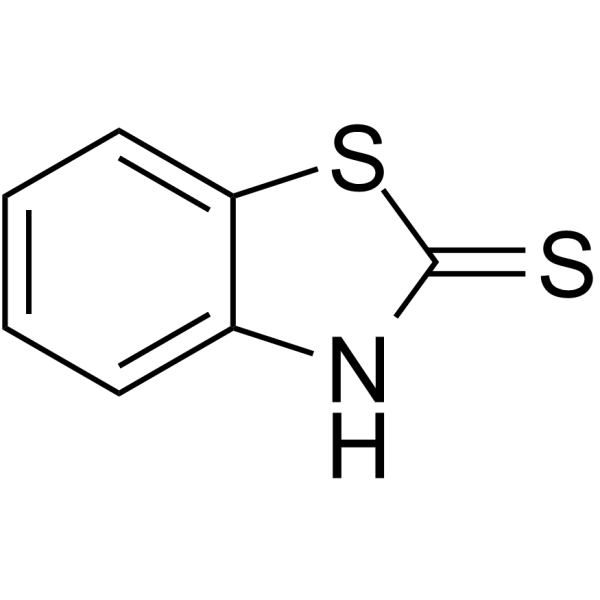
- HY-103117
-
|
|
5-HT Receptor
|
Neurological Disease
|
|
S 32212 hydrochloride is an inverse agonist of 5-HT receptors 5-HT2(CINI) and 5-HT2(CVSV) (Kis=6.6, 8.9 nM) and an antagonist of 5-HT2A and α2β-adrenergic receptors (Ki=5.8, 5.8 nM). S 32212 hydrochloride can reduce the binding of GTPγS to Gαq, and reduce the activity of phospholipase C (PLC) in HEK293 cells expressing 5-HT2(CINI) receptor and CHO cells expressing 5-HT2(CVSV) receptor (EC50=38 and 18.6 nM, respectively). S 32212 hydrochloride (2.5 mg/kg) reduces 5-HT receptor agonist-induced head twitches and penile erections in mice and rats. S 32212 hydrochloride (10, 40 mg/kg) reduces immobility time in the forced swim test and marble burying behavior in mice and rats, exerting antidepressant and anxiolytic activities.
|
-

- HY-112624K
-
|
Dextran 5; Dextran D5; Dextran T5(MW 4500-5500)
|
Apoptosis
Autophagy
|
Others
|
|
Dextran T5 (MW 5,000) is a sulfated polysaccharide anti-apoptotic and autophagic agent. Dextran T5 (MW 5,000) has sulfated groups and interacts with cell membranes by mimicking endogenous glycosaminoglycans, inhibiting the mitochondrial apoptotic pathway and delaying DNA fragmentation to exert anti-apoptotic activity. Dextran T5 (MW 5,000) also promotes the conversion of LC3-I to LC3-II and the formation of autophagosomes to activate the autophagic pathway. Dextran T5 (MW 5,000) can prolong the survival cycle of CHO cells and increase the production of recombinant erythropoietin (EPO). The Dextran series of compounds are also natural polysaccharide drug carriers that can be connected to drugs through covalent bonding methods such as ester bonds, amide bonds or click chemistry, or self-assembled to form carriers such as nanoparticles and hydrogels. Dextran is biodegradable and biocompatible, and can achieve targeted delivery and controlled release of drugs. Dextran derivatives can prolong drug half-life, increase local concentration and reduce immune clearance activity. The Dextran series of compounds are also natural polysaccharide drug carriers that can be connected to drugs through covalent bonding methods such as ester bonds, amide bonds or click chemistry, or self-assembled to form carriers such as nanoparticles and hydrogels. Dextran is biodegradable and biocompatible, and can achieve targeted delivery and controlled release of drugs. Dextran derivatives can prolong the half-life of drugs, increase local concentrations, and reduce the activity of immune clearance .
|
-

| Cat. No. |
Product Name |
Type |
-
- HY-112624K
-
|
Dextran 5; Dextran D5; Dextran T5(MW 4500-5500)
|
Biochemical Assay Reagents
|
|
Dextran T5 (MW 5,000) is a sulfated polysaccharide anti-apoptotic and autophagic agent. Dextran T5 (MW 5,000) has sulfated groups and interacts with cell membranes by mimicking endogenous glycosaminoglycans, inhibiting the mitochondrial apoptotic pathway and delaying DNA fragmentation to exert anti-apoptotic activity. Dextran T5 (MW 5,000) also promotes the conversion of LC3-I to LC3-II and the formation of autophagosomes to activate the autophagic pathway. Dextran T5 (MW 5,000) can prolong the survival cycle of CHO cells and increase the production of recombinant erythropoietin (EPO). The Dextran series of compounds are also natural polysaccharide drug carriers that can be connected to drugs through covalent bonding methods such as ester bonds, amide bonds or click chemistry, or self-assembled to form carriers such as nanoparticles and hydrogels. Dextran is biodegradable and biocompatible, and can achieve targeted delivery and controlled release of drugs. Dextran derivatives can prolong drug half-life, increase local concentration and reduce immune clearance activity. The Dextran series of compounds are also natural polysaccharide drug carriers that can be connected to drugs through covalent bonding methods such as ester bonds, amide bonds or click chemistry, or self-assembled to form carriers such as nanoparticles and hydrogels. Dextran is biodegradable and biocompatible, and can achieve targeted delivery and controlled release of drugs. Dextran derivatives can prolong the half-life of drugs, increase local concentrations, and reduce the activity of immune clearance .
|
-
- HY-N0169A
-
|
HDCA sodium
|
Biochemical Assay Reagents
|
|
Hyodeoxycholic acid sodium is a secondary bile acid formed in the small intestine by the gut flora, and acts as a TGR5 (GPCR19) agonist, with an EC50 of 31.6 µM in CHO cells .
|
| Cat. No. |
Product Name |
Target |
Research Area |
-
- HY-P1217
-
|
|
Melanocortin Receptor
|
Inflammation/Immunology
|
|
[D-Trp8]-γ-MSH is a potent and selective agonist of melanocortin 3 (MC3) receptor, with IC50s of 6.7 nM, 600 nM and 340 nM for hMC3, hMC4 and hMC5, respectively in CHO cells. [D-Trp8]-γ-MSH could provide protection against multiple inflammatory disorders such as rheumatoid arthritis and colitis .
|
-
- HY-P1320
-
|
|
Opioid Receptor
|
Inflammation/Immunology
|
|
[Nphe1]Nociceptin(1-13)NH2, a novel nociceptin/orphanin FQ (NC) endogenous ligand, is a selective and competitive ociceptin receptor antagonist without any residual agonist activity. [Nphe1]nociceptin(1-13)NH2 binds selectively to recombinant nociceptin receptors (pKi=8.4) and antagonizes the inhibitory effects of nociceptin on cyclic AMP accumulation in CHO cells (pA2=6.0). [Nphe1]Nociceptin(1-13)NH2 has the potential to act as an analgesic agent .
|
-
- HY-P1542
-
|
Catostomus urotensin I
|
CRFR
|
Cardiovascular Disease
Endocrinology
|
|
Urotensin I (Catostomus urotensin I), a CRF-like neuropeptide, acts as an agonist of CRF receptor with pEC50s of 11.46, 9.36 and 9.85 for human CRF1, human CRF2 and rat CRF2α receptors in CHO cells, and Kis of 0.4, 1.8, and 5.7 nM for hCRF1, rCRF2α and mCRF2β receptors, respectively .
|
-
- HY-P1542B
-
|
Catostomus urotensin I TFA
|
CRFR
|
Cardiovascular Disease
Endocrinology
|
|
Urotensin I (Catostomus urotensin I) TFA, a CRF-like neuropeptide, acts as an agonist of CRF receptor with pEC50s of 11.46, 9.36 and 9.85 for human CRF1, human CRF2 and rat CRF2α receptors in CHO cells, and Kis of 0.4, 1.8, and 5.7 nM for hCRF1, rCRF2α and mCRF2β receptors, respectively .
|
-
- HY-P1217A
-
|
|
Melanocortin Receptor
|
Inflammation/Immunology
|
|
[D-Trp8]-γ-MSH TFA is a potent and selective agonist of melanocortin 3 (MC3) receptor, with IC50s of 6.7 nM, 600 nM and 340 nM for hMC3, hMC4 and hMC5, respectively in CHO cells. [D-Trp8]-γ-MSH TFA could provide protection against multiple inflammatory disorders such as rheumatoid arthritis and colitis .
|
-
- HY-P1318
-
|
|
Opioid Receptor
|
Neurological Disease
|
|
Ac-RYYRIK-NH2 is a potent and partial agonist on ORL1 transfected in CHO cells (Kd=1.5 nM) and behaves as a endogenous ligand of ORL1. Ac-RYYRIK-NH2 is a specific antagonist for the activation of G protein and competitively antagonizes the stimulation of [ 35S]-GTPgS binding to G proteins by nociceptin/orphanin FQ (noc/OFQ) in membranes and sections of rat brain .
|
-
- HY-P1318A
-
|
|
Opioid Receptor
|
Neurological Disease
|
|
Ac-RYYRIK-NH2 TFA is a potent and partial agonist on ORL1 transfected in CHO cells (Kd=1.5 nM) and behaves as a endogenous ligand of ORL1. Ac-RYYRIK-NH2 is a specific antagonist for the activation of G protein and competitively antagonizes the stimulation of [ 35S]-GTPgS binding to G proteins by nociceptin/orphanin FQ (noc/OFQ) in membranes and sections of rat brain .
|
-
- HY-P1320A
-
|
|
Opioid Receptor
|
Inflammation/Immunology
|
|
[Nphe1]Nociceptin(1-13)NH2, a novel nociceptin/orphanin FQ (NC) endogenous ligand, is a selective and competitive ociceptin receptor antagonist without any residual agonist activity. [Nphe1]nociceptin(1-13)NH2?binds selectively to recombinant nociceptin receptors (pKi=8.4) and antagonizes the inhibitory effects of nociceptin on cyclic AMP accumulation in CHO cells (pA2=6.0). [Nphe1]Nociceptin(1-13)NH2 has the potential to act as an analgesic agent .
|
-
- HY-K3030
-
|
|
|
Ham’s F-12K Medium was originally designed for the culture of primary human hepatocytes and differentiated rat and chicken cells. It is particularly suitable for single-cell cloning of Chinese hamster ovary (CHO) cells under serum-free conditions. When supplemented with serum, it can also be used for the culture of various other mammalian cell types, including chondrocytes and rat prostate epithelial cells.
|
| Cat. No. |
Product Name |
Target |
Research Area |
Image |
-
- HY-P99113A
-
|
|
CD19
|
Inflammation/Immunology
|
|
Inebilizumab (FUT8-KO) is an anti-CD19 monoclonal antibody expressed by CHO cells with the fucosyltransferase 8 gene (FUT8) knocked out. Fucose deficiency enhances the antibody-dependent cellular cytotoxicity (ADCC) effect of the antibody.Inebilizumab (FUT8-KO) exhibits enhanced ADCC against B cells and can be used for research on multiple sclerosis and neuromyelitis optica .
|
-

(5)
-
- HY-P99010A
-
|
|
Interleukin Related
FGFR
|
Cancer
|
|
Bemarituzumab (FUT8-KO) is an anti-FGFR2b monoclonal antibody expressed by CHO cells with the fucosyltransferase 8 gene (FUT8) knocked out. Fucose deficiency enhances the ADCC effect of the antibody. Bemarituzumab (FUT8-KO) lacks a core fucose in the polysaccharide portion of the Fc domain of the antibody, and results in a high affinity to human FcγRIIIa .
|
-
(5)
-
- HY-P99369
-
|
IPH 4102; Anti-KIR3DL2/CD158k Reference Antibody (lacutamab)
|
Inhibitory Antibodies
|
Cancer
|
|
Lacutamab (IPH4102) is a humanizedized monoclonal antibody (mAb) directed against the immune receptor molecule KIR3DL2, produced by recombinant technology in CHO cells. Lacutamab can be used in research of cutaneous T-cell lymphoma .
|
-

(5)
-
- HY-P990481
-
|
|
PACAP Receptor
|
Inflammation/Immunology
|
|
Anti-PACAP38 Antibody is a human antibody expressed in CHO cells, targeting PACAP38. The Anti-PACAP38 Antibody has a huIgG4SP type heavy chain and a huκ type light chain, with a predicted molecular weight (MW) of 150 kDa. The isotype control for Anti-PACAP38 Antibody can refer to Human IgG4 kappa, Isotype Control (HY-P99003).
|
-
(5)
-
- HY-P9977A
-
|
|
EGFR
|
Cancer
|
|
Amivantamab (FUT8-KO) is an anti-EGFR-MET monoclonal antibody expressed by CHO cells with the fucosyltransferase 8 gene (FUT8) knocked out. Fucose deficiency enhances the ADCC effect of the antibody. Amivantamab (FUT8-KO) inhibits ligand binding, promotes endocytosis and degradation of receptor-antibody complexes, and induces Fc-dependent cytokinesis in macrophages and antibody-dependent cytotoxicity in natural killer cells .
|
-
(5)
-
- HY-P990643
-
|
|
Integrin
|
Inflammation/Immunology
|
|
OS-2966 is a humanized antibody expressed in CHO cells, targeting Integrin b1/ITGB1/CD29. OS-2966 carries a huIgG1 type heavy chain and a huκ type light chain, with a predicted molecular weight (MW) of 145.5 kDa. The isotype control for OS-2966 can be referenced as Human IgG1 kappa, Isotype Control (HY-P99001).
|
-
(5)
-
- HY-P991104
-
|
|
Integrin
|
Metabolic Disease
|
|
Anti-EMMPRIN/CD147 Antibody is a human antibody expressed in CHO cells, targeting Basigin. Anti-EMMPRIN/CD147 Antibody can be referenced as Human IgG1 kappa, Isotype Control (HY-P99001).
|
-
(5)
-
- HY-P99610
-
|
BI-754091
|
PD-1/PD-L1
|
Cancer
|
|
Ezabenlimab (BI-754091) is an anti-PD-1 mAb with binding constant Kd value of 6 nM (CHO cells). Ezabenlimab blocks the interaction of PD-1 with PD-L1 and PD-L2. Ezabenlimab increases interferon-γ secretion in T cells, and inhibits tumor growth in vivo .
|
-
(5)
-
- HY-P9980A
-
|
|
ADC Antibody
TNF Receptor
|
Cancer
|
|
Belantamab (FUT8-KO) is an anti-BCMA (TNFRSF17) monoclonal antibody expressed by CHO cells with the fucosyltransferase 8 gene (FUT8) knocked out. Fucose deficiency enhances the ADCC effect of the antibody. Belantamab (FUT8-KO) can be used to synthesize antibody-active molecule conjugate (ADC), Belantamab mafodotin .
|
-
(5)
-
- HY-P990676
-
|
|
Fc Receptor (FcR)
|
Inflammation/Immunology
|
|
VIB-9600 is a humanized antibody expressed in CHO cells, targeting FcgR2a/CD32a. VIB-9600 has a huIgG1 type heavy chain and huκ type light chain, with a predicted molecular weight (MW) of 150 kDa. The isotype control for VIB-9600 can be referenced as Human IgG1 kappa, Isotype Control (HY-P99001).
|
-
(5)
-
- HY-P990634
-
|
|
Inhibitory Antibodies
|
Inflammation/Immunology
|
|
NEO-201 is a humanized antibody expressed in CHO cells that targets CEACAM6/CD66c. NEO-201 features a huIgG1 heavy chain and a huκ light chain, with a predicted molecular weight (MW) of 145.48 kDa. The isotype control for NEO-201 can refer to Human IgG1 kappa, Isotype Control (HY-P99001).
|
-

(5)
-
- HY-P990587
-
FR104
1 Publications Verification
|
CD28
|
Inflammation/Immunology
|
|
FR104 is a humanized antibody expressed in CHO cells that targets CD28. FR104 comprises a huIgG2 heavy chain and a huκ light chain, with a predicted molecular weight (MW) of 145 kDa. The isotype control for FR104 can be referenced as Human IgG2 kappa, Isotype Control (HY-P99002).
|
-
(5)
-
- HY-P990569
-
|
MK-6018
|
Inhibitory Antibodies
|
Inflammation/Immunology
|
|
CM-24 is a humanized antibody expressed in CHO cells, targeting CEACAM1/CD66a. The predicted molecular weight (MW) of CM-24 is 145 kDa. The isotype control for CM-24 can refer to Human IgG1 kappa, Isotype Control (HY-P99001).
|
-

(5)
-
- HY-P991108
-
|
HKT288 antibody
|
Transmembrane Glycoprotein
|
Cancer
|
|
Anti-CDH6/K-Cadherin Antibody (HKT288 antibody) is a human antibody expressed in CHO cells, targeting CDH6. Anti-CDH6/K-Cadherin Antibody (HKT288 antibody) can be referenced as Human IgG1 kappa, Isotype Control (HY-P99001).
|
-
(5)
-
- HY-P990480
-
|
|
LDLR
|
Inflammation/Immunology
|
|
The Anti-oxLDL Antibody is a humanized antibody expressed in CHO cells that targets oxLDL. The Anti-oxLDL Antibody has a huIgG1 heavy chain and a huκ light chain, with a predicted molecular weight (MW) of 150 kDa. The isotype control for the Anti-oxLDL Antibody can be referenced as Human IgG1 kappa, Isotype Control (HY-P99001).
|
-
(5)
-
- HY-P990675
-
|
|
VEGFR
|
Inflammation/Immunology
|
|
VGX-100 is a humanized antibody expressed in CHO cells, targeting VEGFC. VGX-100 is composed of huIgG1 heavy chains and huλ light chains, with a predicted molecular weight (MW) of 143.6 kDa. The isotype control for VGX-100 can refer to Human IgG1 kappa, Isotype Control (HY-P99001).
|
-
(5)
-
- HY-P990650
-
|
|
Inhibitory Antibodies
|
Inflammation/Immunology
|
|
PY159 is a humanized antibody expressed in CHO cells, targeting TREM1/CD354. PY159 carries a huIgG1 heavy chain and a huκ light chain, with a predicted molecular weight (MW) of 143.66 kDa. The isotype control for PY159 can be referenced as Human IgG1 kappa, Isotype Control (HY-P99001).
|
-

(5)
-
- HY-P990561
-
|
|
Interleukin Related
|
Inflammation/Immunology
|
|
BT-063 is a humanized antibody expressed in CHO cells, targeting IL-10. BT-063 contains huIgG1 heavy chain and huκ light chain, with a predicted molecular weight (MW) of 145.74 kDa. The isotype control for BT-063 can refer to Human IgG1 kappa, Isotype Control (HY-P99001).
|
-
(5)
-
- HY-P990439
-
|
|
IFNAR
|
Inflammation/Immunology
|
|
The Anti-IFNAR1 Antibody is a humanized antibody expressed in CHO cells, targeting IFNAR1. The Anti-IFNAR1 Antibody has a huIgG1 heavy chain and a huκ light chain, with a predicted molecular weight (MW) of 144.92 kDa. The isotype control for the Anti-IFNAR1 Antibody can refer to Human IgG1 kappa, Isotype Control (HY-P99001).
|
-
(5)
-
- HY-P990670
-
|
Eltivutabart
|
Inhibitory Antibodies
|
Inflammation/Immunology
|
|
TTX-030 is a humanized antibody expressed in CHO cells, targeting ENTPD1/CD39. TTX-030 contains huIgG4SP heavy chain and huκ light chain, with a predicted molecular weight (MW) of 150 kDa. The isotype control for TTX-030 can refer to Human IgG4 kappa, Isotype Control (HY-P99003).
|
-

(5)
-
- HY-P990625
-
|
|
Inhibitory Antibodies
|
Inflammation/Immunology
|
|
MEDI-3617 is a humanized antibody expressed in CHO cells, targeting Ang2/ANGPT2/Angiopoietin2. MEDI-3617 has a huIgG2 heavy chain and huκ light chain, with a predicted molecular weight (MW) of 145 kDa. The isotype control for MEDI-3617 can refer to Human IgG2 kappa, Isotype Control (HY-P99002).
|
-

(5)
-
- HY-P990613
-
|
CBA-1205
|
Notch
|
Inflammation/Immunology
|
|
LIV-1205 (CBA-1205) is a humanized antibody expressed in CHO cells that targets DLK1. LIV-1205 (CBA-1205) contains a huIgG1 type heavy chain and a huκ type light chain, with a predicted molecular weight (MW) of 150 kDa. The isotype control for LIV-1205 (CBA-1205) can be referenced as Human IgG1 kappa, Isotype Control (HY-P99001).
|
-
(5)
-
- HY-P991103
-
|
|
Interleukin Related
|
Inflammation/Immunology
|
|
Anti-IL-25 Antibody is a human antibody expressed in CHO cells, targeting IL-25. Anti-IL-25 Antibody can be referenced as Human IgG1 kappa, Isotype Control (HY-P99001).
|
-
(5)
-
- HY-P991109
-
|
PF-06647263 antibody
|
Transmembrane Glycoprotein
|
Neurological Disease
|
|
Anti-EFNA4 Antibody (PF-06647263 antibody) is a human antibody expressed in CHO cells, targeting EFNA4. Anti-EFNA4 Antibody can be referenced as Human IgG1 kappa, Isotype Control (HY-P99001).
|
-
(5)
-
- HY-P991099
-
|
|
GCGR
|
Metabolic Disease
|
|
Anti-GLP1R Antibody is a human antibody expressed in CHO cells, targeting GLP1R. Anti-GLP1R Antibody can be referenced as Human IgG1 kappa, Isotype Control (HY-P99001).
|
-
(5)
-
- HY-P990554
-
|
|
Inhibitory Antibodies
|
Inflammation/Immunology
|
|
BHQ-880 is a humanized antibody expressed in CHO cells, targeting DKK1. The predicted molecular weight (MW) of BHQ-880 is 142.96 kDa. The isotype control for BHQ-880 can refer to Human IgG1 kappa, Isotype Control (HY-P99001).
|
-

(5)
-
- HY-P990572
-
DCBY02
1 Publications Verification
|
Transmembrane Glycoprotein
|
Inflammation/Immunology
|
|
DCBY02 is a monoclonal antibody targeting CD93 expressed in CHO cells. DCBY02 has a heavy chain of the mlgG type and a light chain of the mkappa type, with a predicted molecular weight (MW) of 150 kDa. The isotype control for DCBY02 can be referenced as Mouse IgG1 kappa, Isotype Control.
|
-
(5)
-
- HY-P990552
-
|
|
Inhibitory Antibodies
|
Inflammation/Immunology
|
|
ATN-658 is a mouse-derived IgG antibody expressed in CHO cells that targets PLAUR/uPAR/CD87. ATN-658 contains muIgG1 heavy chain and mκ light chain, with a predicted molecular weight (MW) of 145 kDa. The isotype control for ATN-658 can be referenced as Mouse IgG1 kappa, Isotype Control (HY-P99977).
|
-

(5)
-
- HY-P990586
-
|
FOR46
|
Inhibitory Antibodies
|
Inflammation/Immunology
|
|
FG-3246 (FOR46) is a humanized antibody expressed in CHO cells that targets CD46. FG-3246 (FOR46) has a huIgG1 heavy chain and a huλ light chain, with a predicted molecular weight (MW) of 143.6 kDa. The isotype control for FG-3246 (FOR46) can be referenced as Human IgG1 kappa, Isotype Control (HY-P99001).
|
-

(5)
-
- HY-P990349
-
|
|
CD19
|
Inflammation/Immunology
|
|
The Anti-CD19 Antibody is a humanized antibody expressed in CHO cells, targeting CD19. The Anti-CD19 Antibody contains a huIgG1 heavy chain and a huκ light chain, with a predicted molecular weight (MW) of 145 kDa. The isotype control for Anti-CD19 Antibody can be referenced as Human IgG1 kappa, Isotype Control (HY-P99001).
|
-
(5)
-
- HY-P990517
-
|
|
TGF-beta/Smad
|
Inflammation/Immunology
|
|
Anti-TGFb1 Antibody is a humanized antibody expressed in CHO cells that targets TGFb1. The Anti-TGFb1 Antibody has a huIgG1 type heavy chain and a huκ type light chain, with a predicted molecular weight (MW) of 145 kDa. The isotype control for Anti-TGFb1 Antibody can refer to Human IgG1 kappa, Isotype Control (HY-P99001).
|
-
(5)
-
- HY-P990657
-
|
RO5458640
|
TNF Receptor
|
Inflammation/Immunology
|
|
RG-7212 (RO5458640) is a human-derived antibody expressed in CHO cells, targeting TNFSF12/TWEAK. RG-7212 (RO5458640) has a huIgG1 type heavy chain and a huκ type light chain, with a predicted molecular weight (MW) of 146.02 kDa. The isotype control for RG-7212 (RO5458640) can be referenced as Human IgG1 kappa, Isotype Control (HY-P99001).
|
-
(5)
-
- HY-114128
-
|
NN-7088; NN 7170
|
Factor VIII
|
Others
|
|
Turoctocog alfa pegol is a recombinant coagulation factor VIII (FVIII) from chinese hamster ovary (CHO) cells. Turoctocog alfa pegol can be used for researching haemophilia A .
|
-
(5)
-
- HY-P99295A
-
|
RG 7160 (FUT8-KO); RO 5083945 (FUT8-KO); Anti-EGFR Recombinant Antibody (FUT8-KO)
|
EGFR
|
Cancer
|
|
Imgatuzumab (FUT8-KO) is a humanized monoclonal antibody against EGFR expressed in CHO cells with the fucosyltransferase 8 gene (FUT8) knocked out. Imgatuzumab is an immunomodulator. Imgatuzumab may be used in cancer research.
|
-
(5)
-
- HY-P9801
-
|
SARS-CoV-2 (2019-nCoV) Spike RBD Antibody
|
SARS-CoV
|
Infection
|
|
Anti-Spike-RBD mAb is a CHO cell derived human monoclonal IgG1 antibody. Blocking the interaction of Spike protein and ACE2. Anti-Spike-RBD mAb is a potential therapeutic approach for SARS-CoV-2 treatment .
|
-
(5)
-
- HY-P990560
-
|
|
Inhibitory Antibodies
|
Inflammation/Immunology
|
|
BNC-101 is a human-derived antibody expressed in CHO cells that targets GPR49/LGR5. The predicted molecular weight (MW) of BNC-101 is 145.34 kDa. The isotype control for BNC-101 can refer to Human IgG1 kappa, Isotype Control (HY-P99001).
|
-

(5)
-
- HY-P990632
-
|
HuMab-5B1
|
Inhibitory Antibodies
|
Inflammation/Immunology
|
|
MVT-5873 is a humanized antibody expressed in CHO cells, targeting Sialyl-Lewis A. MVT-5873 has a huIgG1 heavy chain and a huλ light chain, with a predicted molecular weight (MW) of 145.66 kDa. The isotype control for MVT-5873 can refer to Human IgG1 kappa, Isotype Control (HY-P99001).
|
-

(5)
-
- HY-P990532
-
|
|
Wnt
|
Inflammation/Immunology
|
|
Anti-TPBG Antibody is a humanized antibody expressed in CHO cells, targeting TPBG. The Anti-TPBG Antibody is composed of a huIgG1 heavy chain and a huκ light chain, with a predicted molecular weight (MW) of 145.8 kDa. The isotype control for Anti-TPBG Antibody can refer to Human IgG1 kappa, Isotype Control (HY-P99001).
|
-
(5)
-
- HY-P990329
-
|
|
Inhibitory Antibodies
|
Inflammation/Immunology
|
|
Anti-Albumin Antibody is a human-derived antibody expressed in CHO cells, targeting Albumin. The Anti-Albumin Antibody features huIgG1 heavy chain and huλ light chain, with a predicted molecular weight (MW) of 144.24 kDa. The isotype control for Anti-Albumin Antibody can refer to Human IgG1 lambda2, Isotype Control (HY-P990096).
|
-

(5)
-
- HY-P990638
-
|
|
CXCR
|
Inflammation/Immunology
|
|
NI-0701 is a humanized antibody expressed in CHO cells that targets CCL5/RANTES. NI-0701 has a huIgG2 heavy chain and a huλ light chain, with a predicted molecular weight (MW) of 145 kDa. The isotype control for NI-0701 can be referenced as Human IgG2 lambda, Isotype Control (HY-P991206).
|
-
(5)
-
- HY-P990646
-
|
|
Inhibitory Antibodies
|
Inflammation/Immunology
|
|
The Anti-TPBG Antibody (PF-06263507) is a humanized antibody expressed in CHO cells that targets TPBG. PF-06263507 has a huIgG1 type heavy chain and a huκ type light chain, with a predicted molecular weight (MW) of 145.8 kDa. The isotype control for PF-06263507 can refer to Human IgG1 kappa, Isotype Control (HY-P99001).
|
-

(5)
-
- HY-P9807
-
|
SARS-CR3022; SARS-CoV-2 Antibody-CR3022
|
SARS-CoV
|
Infection
Inflammation/Immunology
|
|
Anti-SARS-CoV-2 Spike mAb (CR3022) is a a CHO cell derived human monoclonal IgG1 antibody. It binds to both S1 domain of SARS-CoV/SARS-CoV-2 Spike protein .
|
-
(5)
-
- HY-P991576
-
|
|
Transmembrane Glycoprotein
|
Cancer
|
|
Anti-CD326/EPCAM Antibody (3622W94) is a humanized antibody expressed in CHO cells, targeting EpCAM/TROP1/CD326. Anti-CD326/EPCAM Antibody (3622W94) can be used for epithelial cancers research, such as pancreatic, prostate and breast cancer.
|
-
(5)
-
- HY-P990465
-
|
|
Inhibitory Antibodies
|
Inflammation/Immunology
|
|
The Anti-Meflin Antibody is a humanized antibody expressed in CHO cells, targeting Meflin. The Anti-Meflin Antibody is equipped with huIgG1 heavy chain and huκ light chain, with a predicted molecular weight (MW) of 150 kDa. For the isotype control of Anti-Meflin Antibody, you can refer to Human IgG1 kappa, Isotype Control (HY-P99001).
|
-

(5)
-
- HY-P990467
-
|
|
Transmembrane Glycoprotein
|
Inflammation/Immunology
|
|
The Anti-MICB Antibody is a humanized antibody expressed in CHO cells, targeting MICB. The Anti-MICB Antibody contains a huIgG2 heavy chain and a huκ light chain, with a predicted molecular weight (MW) of 143.66 kDa. The isotype control for the Anti-MICB Antibody can be referenced as Human IgG2 kappa, Isotype Control (HY-P99002).
|
-
(5)
-
- HY-P990354
-
|
|
Inhibitory Antibodies
|
Inflammation/Immunology
|
|
The Anti-CD48 Antibody is a humanized antibody expressed in CHO cells that targets CD48. The Anti-CD48 Antibody features a huIgG1 heavy chain and a huκ light chain, with a predicted molecular weight (MW) of 150 kDa. For the isotype control of the Anti-CD48 Antibody, you can refer to Human IgG4 kappa, Isotype Control (HY-P99003).
|
-

(5)
-
- HY-P990359
-
|
|
Inhibitory Antibodies
|
Inflammation/Immunology
|
|
Anti-CD83 Antibody is a humanized antibody expressed in CHO cells that targets CD83. Anti-CD83 Antibody has a huIgG1 heavy chain and a huκ light chain, with a predicted molecular weight (MW) of 144.8 kDa. The isotype control for Anti-CD83 Antibody can refer to Human IgG2 lambda, Isotype Control (HY-P991206).
|
-

(5)
-
- HY-P990419
-
|
|
Amino Acid Decarboxylase
|
Inflammation/Immunology
|
|
Anti-GAD65 Antibody is a humanized antibody expressed in CHO cells that targets GAD65. The Anti-GAD65 Antibody has a huIgG1 heavy chain and a huλ light chain, with a predicted molecular weight (MW) of 146.48 kDa. The isotype control for Anti-GAD65 Antibody can refer to Human IgG1 kappa, Isotype Control (HY-P99001).
|
-
(5)
-
- HY-P9802
-
|
SARS-CoV-2 (2019-nCoV) Single-Domain Antibodies; Humanized Single Domain Antibody
|
SARS-CoV
|
Infection
|
|
Anti-Spike-RBD Single Domain mAb is a CHO cell derived Alpaca monoclonal VHH-huFc antibody, specifically binds to SARS-CoV-2 RBD with high affinity .
|
-
(5)
-
- HY-P991107
-
|
|
Transmembrane Glycoprotein
|
Cancer
|
|
Anti-Dysadherin Antibody is a human antibody expressed in CHO cells, targeting dysadherin. Anti-Dysadherin Antibody can be referenced as Human IgG1 kappa, Isotype Control (HY-P99001).
|
-
(5)
- HY-P991102
-
|
|
CD3
|
Cancer
|
|
Anti-MUC17 Antibody is a human antibody expressed in CHO cells, targeting MUC17. Anti-MUC17 Antibody can be referenced as Human IgG1 kappa, Isotype Control (HY-P99001).
|
-
(5)
- HY-P991105
-
|
|
Dynamin
|
Others
|
|
Anti-Clathrin Heavy Chain Antibody is a human antibody expressed in CHO cells, targeting Clathrin Heavy Chain. Anti-Clathrin Heavy Chain Antibody can be referenced as Human IgG1 kappa, Isotype Control (HY-P99001).
|
-
(5)
- HY-P991098
-
|
|
Trk Receptor
|
Neurological Disease
|
|
Anti-TrkB/NTRK2 Antibody is a human antibody expressed in CHO cells, targeting TrkB. Anti-TrkB/NTRK2 Antibody can be referenced as Human IgG2 kappa, Isotype Control (HY-P99002).
|
-
(5)
- HY-P991101
-
|
|
Amyloid-β
|
Neurological Disease
|
|
Anti-Amyloid Beta Antibody (scFv59) is a human antibody expressed in CHO cells, targeting Amyloid-β. Anti-Amyloid Beta Antibody (scFv59) can be referenced as Human IgG1 kappa, Isotype Control (HY-P99001).
|
-
(5)
- HY-P9803
-
|
SARS-80R; SARS Antibody-80R
|
SARS-CoV
|
Infection
|
|
Anti-SARS-80R mAb (SARS-80R) is a human monoclonal IgG1 antibody produced in CHO cells. Anti-SARS-80R mAb can specifically bind to Spike (S1) protein to prevent SARS virus infection of susceptible cells .
|
-
(5)
- HY-P9805
-
|
MERS-3A1; MERS Antibody-3A1
|
SARS-CoV
|
Infection
|
|
Anti-MERS-3A1 mAb (MERS-3A1) is a human monoclonal IgG1 antibody with the high binding affinity produced in CHO cells.
Anti-MERS-3A1 mAb bocks the binding of MERS-CoV spike protein to DPP4 receptor .
|
-
(5)
- HY-P990564
-
|
BAY-103356; CDP-571
|
TNF Receptor
|
Inflammation/Immunology
|
|
Senlizumab is a humanized antibody expressed in CHO cells that targets TNFSF2/TNFa. Senlizumab is composed of huIgG4SP heavy chains and huκ light chains, with a predicted molecular weight (MW) of 146.9 kDa. The isotype control for Senlizumab can refer to Human IgG4 kappa, Isotype Control (HY-P99003).
|
-
(5)
- HY-P990431
-
|
|
Ser/Thr Protease
|
Inflammation/Immunology
|
|
Anti-HGFA Antibody is a humanized antibody expressed in CHO cells, targeting HGFA. The Anti-HGFA Antibody contains huIgG1 heavy chain and huκ light chain, with a predicted molecular weight (MW) of 150 kDa. The isotype control for Anti-HGFA Antibody can refer to Human IgG1 kappa, Isotype Control (HY-P99001).
|
-
(5)
- HY-P990544
-
|
AJW 200; AJvW 2
|
Integrin
|
Inflammation/Immunology
|
|
Anti-vWF Antibody is a humanized antibody expressed in CHO cells that targets vWF. The Anti-vWF Antibody is equipped with huIgG1 heavy chain and huκ light chain, with a predicted molecular weight (MW) of 145.62 kDa. The isotype control for Anti-vWF Antibody can be referenced as Human IgG1 kappa, Isotype Control (HY-P99001).
|
-
(5)
- HY-P990622
-
|
|
Transmembrane Glycoprotein
|
Inflammation/Immunology
|
|
MB-311 is a humanized antibody expressed in CHO cells, targeting Lewis Y. MB-311 has a huIgG1 heavy chain and a huλ light chain, with a predicted molecular weight (MW) of 150 kDa. The isotype control for MB-311 can refer to Human IgG1 kappa, Isotype Control (HY-P99001).
|
-
(5)
- HY-P990535
-
|
|
Interleukin Related
|
Inflammation/Immunology
|
|
Anti-TSLP Antibody is a human-derived antibody expressed in CHO cells, targeting TSLP. The Anti-TSLP Antibody contains the huIgG1 heavy chain and huκ light chain, with a predicted molecular weight (MW) of 150 kDa. The isotype control for Anti-TSLP Antibody can refer to Human IgG1 kappa, Isotype Control (HY-P99001).
|
-
(5)
- HY-P990611
-
|
|
Transmembrane Glycoprotein
|
Inflammation/Immunology
|
|
KRN-330 is a humanized antibody expressed in CHO cells, targeting GPA33. KRN-330 has a huIgG1 heavy chain and a huκ light chain, with a predicted molecular weight (MW) of 150 kDa. The isotype control for KRN-330 can be referenced as Human IgG1 kappa, Isotype Control (HY-P99001).
|
-
(5)
- HY-P990374
-
|
|
Transmembrane Glycoprotein
|
Inflammation/Immunology
|
|
Anti-CLEC7A Antibody is a humanized antibody expressed in CHO cells, targeting CLEC7A. The predicted molecular weight (MW) of Anti-CLEC7A Antibody is 150 kDa. The isotype control for Anti-CLEC7A Antibody can refer to Human IgG4 kappa, Isotype Control (HY-P99003).
|
-
(5)
- HY-P990460
-
|
|
TGF-beta/Smad
|
Inflammation/Immunology
|
|
Anti-LAP Antibody is a humanized antibody expressed in CHO cells, targeting LAP. The Anti-LAP Antibody features a huIgG2 heavy chain and a huκ light chain, with a predicted molecular weight (MW) of 150 kDa. For isotype control of the Anti-LAP Antibody, you can refer to Human IgG2 kappa, Isotype Control (HY-P99002).
|
-
(5)
- HY-P990660
-
|
|
Inhibitory Antibodies
|
Inflammation/Immunology
|
|
RGX-019 is a humanized antibody expressed in CHO cells, targeting MER/MERTK. RGX-019 has a huIgG1 heavy chain and a huκ light chain, with a predicted molecular weight (MW) of 150 kDa. The isotype control for RGX-019 can refer to Human IgG1 kappa, Isotype Control (HY-P99001).
|
-

(5)
- HY-P990602
-
|
|
Interleukin Related
|
Inflammation/Immunology
|
|
IMA-026 is a humanized antibody expressed in CHO cells that targets IL-13. IMA-026 has a huIgG1 heavy chain and a huκ light chain, with a predicted molecular weight (MW) of 146.88 kDa. The isotype control for IMA-026 can be referenced as Human IgG1 kappa, Isotype Control (HY-P99001).
|
-
(5)
- HY-P990677
-
|
|
CCR
|
Inflammation/Immunology
|
|
VLST-002 is a humanized antibody expressed in CHO cells, targeting CCL5/RANTES. VLST-002 has a huIgG1 heavy chain and a huκ light chain, with a predicted molecular weight (MW) of 150 kDa. The isotype control for VLST-002 can refer to Human IgG1 kappa, Isotype Control (HY-P99001).
|
-
(5)
- HY-P9991A
-
|
|
Gap Junction Protein
|
Cancer
|
|
Osemitamab (FUT8-KO) is an anti-claudin-18.2 monoclonal antibody expressed by CHO cells with the fucosyltransferase 8 gene (FUT8) knocked out. Fucose deficiency enhances the ADCC effect of the antibody. Osemitamab in combination with Capecitabine (HY-B0016) and Oxaliplatin (HY-17371), can be used for G/GEJ cancer study .
|
-
(5)
- HY-P990653
-
|
|
CCR
|
Inflammation/Immunology
|
|
R707 is a human antibody expressed in CHO cells that targets CCR7/CD197. R707 contains huIgG1 heavy chain and huκ light chain, with a predicted molecular weight (MW) of 145.36 kDa. The isotype control for R707 can be referenced as Human IgG1 kappa, Isotype Control (HY-P99001).
|
-
(5)
- HY-P990597
-
|
|
FGFR
|
Inflammation/Immunology
|
|
HuGAL-F2 is a human-derived antibody expressed in CHO cells, targeting FGF2. HuGAL-F2 contains a huIgG2 heavy chain and a huκ light chain, with a predicted molecular weight (MW) of 150 kDa. The isotype control for HuGAL-F2 can refer to Human IgG1 kappa, Isotype Control (HY-P99001).
|
-
(5)
- HY-P990674
-
|
|
GLUT
|
Inflammation/Immunology
|
|
VB1-050 is a human antibody expressed in CHO cells, targeting SLC2A8. VB1-050 is composed of huIgG1 heavy chains and huκ light chains, with a predicted molecular weight (MW) of 150 kDa. The isotype control for VB1-050 can refer to Human IgG1 kappa, Isotype Control (HY-P99001).
|
-
(5)
- HY-P990536
-
|
|
Inhibitory Antibodies
|
Inflammation/Immunology
|
|
Anti-TSPAN8 Antibody is a human source antibody expressed in CHO cells, targeting TSPAN8. The Anti-TSPAN8 Antibody has a huIgG1 heavy chain and a huκ light chain, with a predicted molecular weight (MW) of 150 kDa. The isotype control for the Anti-TSPAN8 Antibody can refer to Human IgG1 kappa, Isotype Control (HY-P99001).
|
-

(5)
- HY-P990624
-
|
|
Inhibitory Antibodies
|
Inflammation/Immunology
|
|
MEDI-2045 is a humanized antibody expressed in CHO cells that targets IL-4Ra/CD124. MEDI-2045 has a huIgG1 heavy chain and a huλ light chain, with a predicted molecular weight (MW) of 150 kDa. The isotype control for MEDI-2045 can be referenced as Human IgG1 kappa, Isotype Control (HY-P99001).
|
-

(5)
- HY-P990523
-
|
|
Transmembrane Glycoprotein
|
Inflammation/Immunology
|
|
Anti-TMEFF2 Antibody is a humanized antibody expressed in CHO cells, targeting TMEFF2. The Anti-TMEFF2 Antibody features a huIgG1 heavy chain and a huκ light chain, with a predicted molecular weight (MW) of 150 kDa. The isotype control for the Anti-TMEFF2 Antibody can be referenced as Human IgG1 kappa, Isotype Control (HY-P99001).
|
-
(5)
- HY-P990513
-
|
|
Microtubule/Tubulin
|
Inflammation/Immunology
|
|
The Anti-STOP1 Antibody is a human antibody expressed in CHO cells that targets STOP1. The Anti-STOP1 Antibody contains a huIgG1 heavy chain and a huκ light chain, with a predicted molecular weight (MW) of 150 kDa. The isotype control for the Anti-STOP1 Antibody can refer to Human IgG1 kappa, Isotype Control (HY-P99001).
|
-
(5)
- HY-P990478
-
|
|
CRAC Channel
|
Inflammation/Immunology
|
|
Anti-Orai1 Antibody is a humanized antibody expressed in CHO cells that targets Orai1. The Anti-Orai1 Antibody has a huIgG2 heavy chain and a huλ light chain, with an predicted molecular weight (MW) of 150 kDa. The isotype control for Anti-Orai1 Antibody can refer to Human IgG2 kappa, Isotype Control (HY-P99002).
|
-
(5)
- HY-P990573
-
|
RG-7636
|
Endothelin Receptor
|
Inflammation/Immunology
|
|
DEDN6526A (RG-7636) is a humanized antibody expressed in CHO cells, targeting ETBR. DEDN6526A (RG-7636) has a huIgG1 type heavy chain and a huκ type light chain, with a predicted molecular weight (MW) of 145 kDa. The isotype control for DEDN6526A (RG-7636) can be referenced as Human IgG1 kappa, Isotype Control (HY-P99001).
|
-
(5)
- HY-P990372
-
|
|
C-type Lectin-like Receptors (CTLRs)
|
Inflammation/Immunology
|
|
The Anti-CLEC14A Antibody is a humanized antibody expressed in CHO cells, targeting CLEC14A. The Anti-CLEC14A Antibody contains an IgG1 heavy chain and a huκ light chain, with a predicted molecular weight (MW) of 150 kDa. The isotype control for the Anti-CLEC14A Antibody can refer to Human IgG1 kappa, Isotype Control (HY-P99001).
|
-
(5)
- HY-P990344
-
|
|
Bcl-2 Family
|
Inflammation/Immunology
|
|
The Anti-Bcl-2 Antibody is a humanized antibody expressed in CHO cells, targeting Bcl-2. The Anti-Bcl-2 Antibody has a huIgG1 heavy chain and a huκ light chain, with a predicted molecular weight (MW) of 145.74 kDa. The isotype control for Anti-Bcl-2 Antibody can be referenced as Human IgG1 kappa, Isotype Control (HY-P99001).
|
-
(5)
- HY-P990332
-
|
CNTO 2125
|
Amyloid-β
|
Inflammation/Immunology
|
|
Anti-Amyloid Beta Antibody (CNTO 2125) is a humanized antibody expressed in CHO cells, targeting Amyloid Beta/Aβ. Anti-Amyloid Beta Antibody (CNTO 2125) features a huIgG1 heavy chain and a huκ light chain, with a predicted molecular weight (MW) of 145 kDa. The isotype control for Anti-Amyloid Beta Antibody (CNTO 2125) can be referenced as Human IgG1 kappa, Isotype Control (HY-P99001).
|
-
(5)
- HY-P990755A
-
|
|
EGFR
|
Cancer
|
|
Pamvatamig (FUT8-KO) is an anti-EGFR/MET monoclonal antibody expressed by CHO cells with the fucosyltransferase 8 gene (FUT8) knocked out. Fucose deficiency enhances the ADCC effect of the antibody.
|
-
(5)
- HY-P99226A
-
-
(5)
- HY-P990427
-
|
|
Inhibitory Antibodies
|
Inflammation/Immunology
|
|
Anti-Haptoglobin Antibody is a humanized antibody expressed in CHO cells that targets Haptoglobin. The Anti-Haptoglobin Antibody is equipped with a huIgG1 heavy chain and a huκ light chain, with a predicted molecular weight (MW) of 150 kDa. The isotype control for Anti-Haptoglobin Antibody can refer to Human IgG1 kappa, Isotype Control (HY-P99001).
|
-

(5)
- HY-P990404
-
|
|
Inhibitory Antibodies
|
Inflammation/Immunology
|
|
The Anti-EphA2 Antibody is a human-derived antibody expressed in CHO cells, targeting EphA2. The predicted molecular weight (MW) of the Anti-EphA2 Antibody is 150 kDa. The isotype control for the Anti-EphA2 Antibody can be referred to as Human IgG1 kappa, Isotype Control (HY-P99001).
|
-

(5)
- HY-P990658
-
|
|
Inhibitory Antibodies
|
Inflammation/Immunology
|
|
RG-7652 is a humanized antibody expressed in CHO cells, targeting PCSK9. RG-7652 contains huIgG1 heavy chain and huκ light chain, with a predicted molecular weight (MW) of 145.88 kDa. The isotype control for RG-7652 can be referenced as Human IgG1 kappa, Isotype Control (HY-P99001).
|
-

(5)
- HY-P990570
-
|
|
Inhibitory Antibodies
|
Inflammation/Immunology
|
|
CMAB008 is a humanized antibody expressed in CHO cells that targets TNFSF2/TNFa. CMAB008 contains huIgG1 heavy chain and huκ light chain, with a predicted molecular weight (MW) of 145 kDa. The isotype control for CMAB008 can refer to Human IgG1 kappa, Isotype Control (HY-P99001).
|
-

(5)
- HY-P990484
-
|
|
Inhibitory Antibodies
|
Inflammation/Immunology
|
|
The Anti-PCLA Antibody is a recombinant human antibody expressed in CHO cells, targeting PCLA. The Anti-PCLA Antibody is equipped with huIgG1 heavy chain and huκ light chain, with a predicted molecular weight (MW) of 150 kDa. The isotype control for the Anti-PCLA Antibody can be referred to as Human IgG1 kappa, Isotype Control (HY-P99001).
|
-

(5)
- HY-P990492
-
|
|
Inhibitory Antibodies
|
Inflammation/Immunology
|
|
The Anti-PMEL Antibody is a human-derived antibody expressed in CHO cells, targeting PMEL. The Anti-PMEL Antibody contains a huIgG1 heavy chain and a huκ light chain, with a predicted molecular weight (MW) of 145.54 kDa. The isotype control for the Anti-PMEL Antibody can be referenced as Human IgG1 kappa, Isotype Control (HY-P99001).
|
-

(5)
- HY-P990668
-
|
|
Inhibitory Antibodies
|
Inflammation/Immunology
|
|
TOL-101 is a humanized antibody expressed in CHO cells that targets TCR. TOL-101 is composed of huIgG2 heavy chains and huκ light chains, with a predicted molecular weight (MW) of 125.6 kDa. The isotype control for TOL-101 can be referenced as Human IgG2 kappa, Isotype Control (HY-P99002).
|
-

(5)
- HY-P991944A
-
|
|
CCR
|
Cancer
|
|
ZL-1218 (FUT8-KO) is an anti-CCR8 monoclonal antibody expressed by CHO cells with the fucosyltransferase 8 gene (FUT8) knocked out. Fucose deficiency enhances the antibody-dependent cellular cytotoxicity (ADCC) effect of the antibody. ZL-1218 (FUT8-KO) can be used for the research of solid tumour .
|
-
(5)
- HY-P991481A
-
|
|
CCR
|
Inflammation/Immunology
Cancer
|
|
S-531011 (FUT8-KO) is an anti-CCR8 monoclonal antibody expressed by CHO cells with the fucosyltransferase 8 gene (FUT8) knocked out. Fucose deficiency enhances the antibody-dependent cellular cytotoxicity (ADCC) effect of the antibody. S-531011 (FUT8-KO) can be used for the research of cancer immunity .
|
-
(5)
- HY-P990585
-
|
|
Inhibitory Antibodies
|
Inflammation/Immunology
|
|
ESBA-105 is a humanized antibody expressed in CHO cells, targeting TNFSF2/TNFa. ESBA-105 carries a huIgG1 heavy chain and a huκ light chain, with an anticipated molecular weight (MW) of 145.14 kDa. The isotype control for ESBA-105 can be referenced as Human IgG1 kappa, Isotype Control (HY-P99001).
|
-

(5)
- HY-P990482
-
|
|
Inhibitory Antibodies
|
Inflammation/Immunology
|
|
The Anti-PAR2 Antibody is a human-derived antibody expressed in CHO cells, targeting PAR2. The Anti-PAR2 Antibody contains a huIgG2 heavy chain and a huλ light chain, with a predicted molecular weight (MW) of 150 kDa. The isotype control for the Anti-PAR2 Antibody can be referred to as Human IgG2 kappa, Isotype Control (HY-P99002).
|
-

(5)
- HY-P990463
-
|
|
Inhibitory Antibodies
|
Inflammation/Immunology
|
|
The Anti-MAGEA3 Antibody is a humanized antibody expressed in CHO cells that targets MAGEA3. The Anti-MAGEA3 Antibody features a huIgG1 heavy chain and a huκ light chain, with a predicted molecular weight (MW) of 150 kDa. The isotype control for the Anti-MAGEA3 Antibody can be referenced as Human IgG1 kappa, Isotype Control (HY-P99001).
|
-

(5)
- HY-P991135A
-
|
RO-7502175 (FUT8-KO); RG-6411 (FUT8-KO)
|
CCR
|
Cancer
|
|
Enzelkitug (RO-7502175; RG-6411) (FUT8-KO) is an anti-CCR8 monoclonal antibody expressed by CHO cells with the fucosyltransferase 8 gene (FUT8) knocked out. Fucose deficiency enhances the antibody-dependent cellular cytotoxicity (ADCC) effect of the antibody. Enzelkitug (FUT8-KO) can be used for the research of various solid tumors and hematological malignancies .
|
-
(5)
- HY-P990338
-
|
|
Inhibitory Antibodies
|
Inflammation/Immunology
|
|
Anti-ASIC1 Antibody is a humanized antibody expressed in CHO cells that targets ASIC1. The Anti-ASIC1 Antibody contains a huIgG1 heavy chain and a huκ light chain, with a predicted molecular weight (MW) of 145.22 kDa. The isotype control for Anti-ASIC1 Antibody can be referenced as Human IgG1 kappa, Isotype Control (HY-P99001).
|
-

(5)
- HY-P990438
-
|
|
Inhibitory Antibodies
|
Inflammation/Immunology
|
|
The Anti-IFNa1 Antibody is a humanized antibody expressed in CHO cells that targets IFNa1. The Anti-IFNa1 Antibody contains a huIgG1 heavy chain and a huκ light chain, with a predicted molecular weight (MW) of 144.82 kDa. The isotype control for the Anti-IFNa1 Antibody can be referenced as Human IgG1 kappa, Isotype Control (HY-P99001).
|
-

(5)
- HY-P990449
-
|
|
Inhibitory Antibodies
|
Inflammation/Immunology
|
|
Anti-IL-21 Antibody is a humanized antibody expressed in CHO cells that targets IL-21. The Anti-IL-21 Antibody contains huIgG1 heavy chain and huκ light chain, with a predicted molecular weight (MW) of 145.32 kDa. The isotype control for Anti-IL-21 Antibody can be referenced as Human IgG1 kappa, Isotype Control (HY-P99001).
|
-

(5)
- HY-P990339
-
|
ORY012
|
Inhibitory Antibodies
|
Inflammation/Immunology
|
|
Anti-AXL/UFO Antibody (ORY012) is a humanized antibody expressed in CHO cells, targeting AXL/UFO. Anti-AXL/UFO Antibody (ORY012) has a huIgG1 heavy chain and a huκ light chain, with a predicted molecular weight (MW) of 144.78 kDa. The isotype control for Anti-AXL/UFO Antibody (ORY012) can be referenced as Human IgG1 kappa, Isotype Control (HY-P99001).
|
-

(5)
- HY-P990512
-
|
|
Inhibitory Antibodies
|
Inflammation/Immunology
|
|
Anti-Sphingosine-1-phosphate Antibody is a humanized antibody expressed in CHO cells that targets Sphingosine-1-phosphate. Anti-Sphingosine-1-phosphate Antibody is equipped with a huIgG1 heavy chain and a huκ light chain, with a predicted molecular weight (MW) of 150 kDa. The isotype control for Anti-Sphingosine-1-phosphate Antibody can refer to Human IgG1 kappa, Isotype Control (HY-P99001).
|
-

(5)
- HY-P990353
-
|
TRX1
|
Transmembrane Glycoprotein
|
Inflammation/Immunology
|
|
Anti-CD4 Antibody (TRX1) is a humanized antibody expressed in CHO cells that targets CD4. Anti-CD4 Antibody (TRX1) has a huIgG1 heavy chain and a huκ light chain, with a predicted molecular weight (MW) of 145 kDa. The isotype control for Anti-CD4 Antibody (TRX1) can be referenced as Human IgG1 kappa, Isotype Control (HY-P99001).
|
-
(5)
- HY-P990380
-
|
|
Inhibitory Antibodies
|
Inflammation/Immunology
|
|
Anti-CRTAM/CD355 Antibody is a humanized antibody expressed in CHO cells, targeting CRTAM/CD355. The Anti-CRTAM/CD355 Antibody features a huIgG1 heavy chain and a huκ light chain, with a predicted molecular weight (MW) of 150 kDa. The isotype control for Anti-CRTAM/CD355 Antibody can be referenced as Human IgG1 kappa, Isotype Control (HY-P99001).
|
-

(5)
- HY-P990603
-
|
RG-6290
|
Inhibitory Antibodies
|
Inflammation/Immunology
|
|
IMC-C103C is a human antibody expressed in CHO cells, targeting MAGE-A4. IMC-C103C contains huIgG1 heavy chain and huκ light chain, with a predicted molecular weight (MW) of 150 kDa. The isotype control for IMC-C103C can be referenced as Human IgG1 kappa, Isotype Control (HY-P99001).
|
-

(5)
- HY-P990403
-
|
|
Transmembrane Glycoprotein
|
Inflammation/Immunology
|
|
The Anti-DSG3 Antibody is a humanized antibody expressed in CHO cells, targeting DSG3. The Anti-DSG3 Antibody has a huIgG1 type heavy chain and a huκ type light chain, and its predicted molecular weight (MW) is 146.54 kDa. The isotype control for the Anti-DSG3 Antibody can be referenced as Human IgG1 kappa, Isotype Control (HY-P99001).
|
-
(5)
- HY-P990321
-
|
MEDI 8968
|
Interleukin Related
|
Inflammation/Immunology
|
|
AMG-108 is a humanized antibody expressed in CHO cells, targeting IL-1R1/CD121a. AMG-108 is composed of a huIgG2 heavy chain and a huκ light chain, with a predicted molecular weight (MW) of 144.62 kDa. The isotype control for AMG-108 can refer to Human IgG2 kappa, Isotype Control (HY-P99002).
|
-
(5)
- HY-P990313
-
|
|
CXCR
Interleukin Related
|
Inflammation/Immunology
|
|
ABX-IL8 is a human-derived antibody expressed in CHO cells, targeting CXCL8/IL-8. ABX-IL8 contains a huIgG2 heavy chain and a huκ light chain, with a predicted molecular weight (MW) of 143.94 kDa. The isotype control for ABX-IL8 can refer to Human IgG2 kappa, Isotype Control (HY-P99002).
|
-
(5)
- HY-P990328
-
|
XT-M4
|
Transmembrane Glycoprotein
|
Inflammation/Immunology
|
|
Anti-AGER/RAGE Antibody (XT-M4) is a humanized antibody expressed in CHO cells, targeting AGER/RAGE. Anti-AGER/RAGE Antibody (XT-M4) contains a huIgG1 heavy chain and a huκ light chain, with a predicted molecular weight (MW) of 150 kDa. The isotype control for Anti-AGER/RAGE Antibody (XT-M4) can be referenced as Human IgG1 kappa, Isotype Control (HY-P99001).
|
-
(5)
- HY-P990443
-
|
H2L6
|
Inhibitory Antibodies
|
Inflammation/Immunology
|
|
Anti-IL-13 Antibody (H2L6) is a humanized antibody expressed in CHO cells that targets IL-13. Anti-IL-13 Antibody (H2L6) has a huIgG1 heavy chain and a huκ light chain, with a predicted molecular weight (MW) of 146.16 kDa. The isotype control for Anti-IL-13 Antibody (H2L6) can be referenced as Human IgG1 kappa, Isotype Control (HY-P99001).
|
-

(5)
- HY-P990902A
-
|
BMS-986012 (FUT8-KO)
|
Inhibitory Antibodies
|
Cancer
|
|
Atigotatug (FUT8-KO) is an anti-fuc-GM1 monoclonal antibody expressed by CHO cells with the fucosyltransferase 8 gene (FUT8) knocked out, and fucose deficiency enhances the ADCC effect of the antibody. Atigotatug (HY-P990902) is a Fucosyl ganglioside GM1 (fuc-GM1)-targeting IgG1κ type humanized antibody. Atigotatug can induce immune-mediated tumor cell death, such as small cell lung cancer .
|
-

(5)
- HY-P990417
-
|
|
Antifolate
|
Inflammation/Immunology
|
|
Anti-FOLR1/FRA Antibody is a humanized antibody expressed in CHO cells, targeting FOLR1/FRA. The Anti-FOLR1/FRA Antibody contains a huIgG1 heavy chain and a huκ light chain, with a predicted molecular weight (MW) of 146.46 kDa. The isotype control for the Anti-FOLR1/FRA Antibody can be referenced as Human IgG1 kappa, Isotype Control (HY-P99001).
|
-
(5)
- HY-P990664
-
|
SC-005 antibody
|
Transmembrane Glycoprotein
|
Inflammation/Immunology
|
|
Anti-Melanotransferrin/CD228 Antibody (SC-005 antibody) is a humanized antibody expressed in CHO cells, targeting Melanotransferrin/CD228. Anti-Melanotransferrin/CD228 Antibody carries a huIgG1 heavy chain and a huκ light chain, with a predicted molecular weight (MW) of 145.16 kDa. The isotype control for Anti-Melanotransferrin/CD228 Antibody can refer to Human IgG1 kappa, Isotype Control (HY-P99001).
|
-
(5)
- HY-P990327
-
|
humZ270 mAb
|
TGF-β Receptor
|
Inflammation/Immunology
|
|
The Anti-ACVR2B Antibody is a human antibody expressed in CHO cells, targeting ACVR2B. The Anti-ACVR2B Antibody has huIgG1 heavy chain and huκ light chain, with a predicted molecular weight (MW) of 144.42 kDa. The isotype control for the Anti-ACVR2B Antibody can refer to Human IgG1 kappa, Isotype Control (HY-P99001).
|
-
(5)
- HY-P990579
-
|
|
HCV
|
Inflammation/Immunology
|
|
Anti-CLDN6 Antibody (DS-9606A antibody) is a humanized antibody expressed in CHO cells, targeting CLDN6. Anti-CLDN6 Antibody features an IgG1 type heavy chain and a huκ type light chain, with a predicted molecular weight (MW) of 145.84 kDa. The isotype control for Anti-CLDN6 Antibody can refer to Human IgG1 kappa, Isotype Control (HY-P99001).
|
-
(5)
- HY-P990387
-
|
|
Ser/Thr Protease
|
Inflammation/Immunology
|
|
The Anti-CTSS/Cathepsin S Antibody (Fsn0503h) is a humanized antibody expressed in CHO cells, targeting CTSS/Cathepsin S. The Anti-CTSS/Cathepsin S Antibody (Fsn0503h) has a huIgG1 type heavy chain and a huκ type light chain, with a predicted molecular weight (MW) of 150 kDa. The isotype control for Anti-CTSS/Cathepsin S Antibody (Fsn0503h) can be referenced as Human IgG1 kappa, Isotype Control (HY-P99001).
|
-
(5)
- HY-P991942A
-
|
BAY3375968 (FUT8-KO); TPP-23411 (FUT8-KO)
|
CCR
|
Cancer
|
|
Lanerkitug (FUT8-KO) (BAY3375968 (FUT8-KO)) is an anti-CCR8 monoclonal antibody expressed by CHO cells with the fucosyltransferase 8 gene (FUT8) knocked out. Fucose deficiency enhances the ADCC effect of the antibody. Lanerkitug (HY-P991942) selectively depletes human CCR8+Tregs via antibody dependent cellular cytotoxicity (ADCC) and antibody dependent cellular phagocytosis (ADCP). Lanerkitug can be used in the research of solid tumors .
|
-
(5)
- HY-P991100
-
|
|
Cadherin
|
Cancer
|
|
Anti-CDH17/Cadherin-17 Antibody (10C12) is a human antibody expressed in CHO cells, targeting CDH17/Cadherin-17. Anti-CDH17/Cadherin-17 Antibody (10C12) can be referenced as Human IgG1 kappa, Isotype Control (HY-P99001). Anti-CDH17/Cadherin-17 Antibody (10C12) can be used in the study of cancer .
|
-
(5)
- HY-P990499
-
|
|
Inhibitory Antibodies
|
Inflammation/Immunology
|
|
Anti-RHD/CD240d Antibody is a humanized antibody expressed in CHO cells that targets RHD/CD240d. The Anti-RHD/CD240d Antibody has a huIgG1 heavy chain and a huκ light chain, with a predicted molecular weight (MW) of 146.4 kDa. The isotype control for Anti-RHD/CD240d Antibody can be referenced as Human IgG1 kappa, Isotype Control (HY-P99001).
|
-

(5)
- HY-P990470
-
|
|
Inhibitory Antibodies
|
Inflammation/Immunology
|
|
The Anti-MRC2/CD280 Antibody is a humanized antibody expressed in CHO cells, targeting MRC2/CD280. The Anti-MRC2/CD280 Antibody has a huIgG1 heavy chain and a huκ light chain, with a predicted molecular weight (MW) of 145.42 kDa. The isotype control for the Anti-MRC2/CD280 Antibody can be referenced as Human IgG1 kappa, Isotype Control (HY-P99001).
|
-

(5)
- HY-P990415
-
|
|
FGFR
|
Inflammation/Immunology
|
|
The Anti-FGFR1/CD331 Antibody is a humanized antibody expressed in CHO cells, targeting FGFR1/CD331. The Anti-FGFR1/CD331 Antibody is equipped with huIgG1 heavy chain and huκ light chain, with a predicted molecular weight (MW) of 150 kDa. The isotype control for the Anti-FGFR1/CD331 Antibody can be referenced as Human IgG1 kappa, Isotype Control (HY-P99001).
|
-
(5)
- HY-P990537
-
|
|
Inhibitory Antibodies
|
Inflammation/Immunology
|
|
The Anti-VCAM1/CD106 Antibody is a humanized antibody expressed in CHO cells, targeting VCAM1/CD106. The Anti-VCAM1/CD106 Antibody has a huIgG2 heavy chain and a huλ light chain, with a predicted molecular weight (MW) of 143.4 kDa. For the isotype control of the Anti-VCAM1/CD106 Antibody, please refer to Human IgG2 kappa, Isotype Control (HY-P99002).
|
-

(5)
- HY-P990530
-
|
hMAK195
|
TNF Receptor
|
Inflammation/Immunology
|
|
Anti-TNFSF2/TNFa Antibody (hMAK195) is a human antibody expressed in CHO cells that targets TNFSF2/TNFa. Anti-TNFSF2/TNFa Antibody (hMAK195) has a huIgG1 heavy chain and a huκ light chain, with a predicted molecular weight (MW) of 145.06 kDa. The isotype control for Anti-TNFSF2/TNFa Antibody (hMAK195) can be referenced as Human IgG1 kappa, Isotype Control (HY-P99001).
|
-
(5)
- HY-P990320
-
|
TNX-832
|
Inhibitory Antibodies
|
Inflammation/Immunology
|
|
ALT-836 (TNX-832) is a humanized antibody expressed in CHO cells, targeting F3/Factor III/Tissue Factor/CD142. ALT-836 (TNX-832) has a huIgG4SP type heavy chain and a huκ type light chain, with a predicted molecular weight (MW) of 144.34 kDa. The isotype control for ALT-836 (TNX-832) can be referenced as Human IgG4 kappa, Isotype Control (HY-P99003).
|
-

(5)
- HY-P990392
-
|
|
CXCR
|
Inflammation/Immunology
|
|
Anti-CXCL8/IL-8 Antibody is a human antibody expressed in CHO cells that targets CXCL8/IL-8. The Anti-CXCL8/IL-8 Antibody is composed of a huIgG1 heavy chain and a huκ light chain, with a predicted molecular weight (MW) of 145 kDa. The isotype control for Anti-CXCL8/IL-8 Antibody can be referenced as Human IgG1 kappa, Isotype Control (HY-P99001).
|
-
(5)
- HY-P99406A
-
|
|
EGFR
|
Cancer
|
|
Petosemtamab (FUT8-KO) is an anti-EGFR and anti-LGR5 monoclonal antibody expressed in CHO cells with the fucosyltransferase 8 gene (FUT8) knocked out. Fucosyl loss enhances the ADCC effect of the antibody. Petosemtamab (FUT8-KO) leads to EGFR signaling blockade and receptor degradation in LGR5+ cancer cells. Petosemtamab (FUT8-KO) can be used for research on solid tumors such as head and neck squamous cell carcinoma (HNSCC) and metastatic colorectal cancer (CRC) .
|
-
(5)
- HY-P990391
-
|
|
CXCR
|
Inflammation/Immunology
|
|
The Anti-CXCL4/PF4 Antibody is a human antibody expressed in CHO cells that targets CXCL4/PF4. The Anti-CXCL4/PF4 Antibody has a huIgG4SP type heavy chain and a huκ type light chain, with a predicted molecular weight (MW) of 144.5 kDa. The isotype control for Anti-CXCL4/PF4 Antibody can be referenced as Human IgG4 kappa, Isotype Control (HY-P99003).
|
-
(5)
- HY-P990364
-
|
|
Transmembrane Glycoprotein
|
Inflammation/Immunology
|
|
Anti-CEACAM1/CD66a Antibody is a human antibody expressed in CHO cells that targets CEACAM1/CD66a. The Anti-CEACAM1/CD66a Antibody is equipped with huIgG1 heavy chain and huκ light chain, with a predicted molecular weight (MW) of 144.98 kDa. The isotype control for the Anti-CEACAM1/CD66a Antibody can refer to Human IgG1 kappa, Isotype Control (HY-P99001).
|
-
(5)
- HY-P991563
-
|
|
Inhibitory Antibodies
|
Others
|
|
Anti-CEACAM5 Antibody (A5B7) is a humanized antibody expressed in CHO cells, targeting CEACAM5/CEA/CD66e. Anti-CEACAM5 Antibody (A5B7) consists of a huIgG1 heavy chain and a huκ light chain, with a predicted molecular weight (MW) of 145 kDa. The isotype control for the Anti-CEACAM5 Antibody (A5B7) can be referenced as Human IgG1 kappa, Isotype Control (HY-P99001).
|
-

(5)
- HY-P990516
-
|
|
PKA
|
Inflammation/Immunology
|
|
The Anti-TEM7R/PLXDC2 Antibody is a human-derived antibody expressed in CHO cells, targeting TEM7R/PLXDC2. The Anti-TEM7R/PLXDC2 Antibody contains a huIgG1 heavy chain and a huκ light chain, with a predicted molecular weight (MW) of 145 kDa. The isotype control for the Anti-TEM7R/PLXDC2 Antibody can be referenced as Human IgG1 kappa, Isotype Control (HY-P99001).
|
-
(5)
- HY-P990472
-
|
H5B14
|
c-Met/HGFR
|
Inflammation/Immunology
|
|
Anti-MSPR/RON/CD136 Antibody (H5B14) is a humanized antibody expressed in CHO cells, targeting MSPR/RON/CD136. Anti-MSPR/RON/CD136 Antibody (H5B14) has a huIgG1 heavy chain and a huκ light chain, with a predicted molecular weight (MW) of 156.7 kDa. The isotype control for Anti-MSPR/RON/CD136 Antibody (H5B14) can be referenced as Human IgG1 kappa, Isotype Control (HY-P99001).
|
-
(5)
- HY-P990397
-
|
FA19-1
|
VEGFR
|
Inflammation/Immunology
|
|
The Anti-DCBLD2/ESDN Antibody (FA19-1) is a humanized antibody expressed in CHO cells that targets DCBLD2/ESDN. The Anti-DCBLD2/ESDN Antibody (FA19-1) contains a huIgG1 heavy chain and a huκ light chain, with a predicted molecular weight (MW) of 150 kDa. The isotype control for the Anti-DCBLD2/ESDN Antibody (FA19-1) can be referenced as Human IgG1 kappa, Isotype Control (HY-P99001).
|
-
(5)
- HY-P990385
-
|
|
Inhibitory Antibodies
|
Inflammation/Immunology
|
|
Anti-CTLA-4/CD152 Antibody is a humanized antibody expressed in CHO cells that targets CTLA-4/CD152. The Anti-CTLA-4/CD152 Antibody has a huIgG4SP type heavy chain and a huκ type light chain, with a predicted molecular weight (MW) of 145 kDa. The isotype control for the Anti-CTLA-4/CD152 Antibody can be referenced as Human IgG1 kappa, Isotype Control (HY-P99001).
|
-

(5)
- HY-P990505
-
|
|
Transmembrane Glycoprotein
|
Inflammation/Immunology
|
|
The Anti-Siglec-15/CD33L3 Antibody is a human-derived antibody expressed in CHO cells, targeting Siglec-15/CD33L3. The Anti-Siglec-15/CD33L3 Antibody contains a huIgG1 heavy chain and a huλ light chain, with a predicted molecular weight (MW) of 146.02 kDa. The isotype control for the Anti-Siglec-15/CD33L3 Antibody can be referenced as Human IgG1 kappa, Isotype Control (HY-P99001).
|
-
(5)
- HY-P990323
-
|
|
Inhibitory Antibodies
|
Inflammation/Immunology
|
|
The Anti-158P1D7 Antibody is a human-derived antibody expressed in CHO cells, targeting 158P1D7. The Anti-158P1D7 Antibody contains a huIgG2 heavy chain and a huκ light chain, with a predicted molecular weight (MW) of 150 kDa. The isotype control for the Anti-158P1D7 Antibody can be referenced as Human IgG2 kappa, Isotype Control (HY-P99002).
|
-

(5)
- HY-P990545
-
|
ANX005
|
Complement System
|
Neurological Disease
|
|
Tanruprubart (ANX005) is a C1q inhibitor and C1q depleter. Tanruprubart is a human antibody expressed in CHO cells, with huIgG1 heavy chains and huκ light chains, and its predicted molecular weight (MW) is 145 kDa. For the isotype control of Tanruprubart, refer to Human IgG1 kappa, Isotype Control (HY-P99001). The IC50 of Tanruprubart is 346 ng/mL for humans and 259 ng/mL for rats; its EC50 is 3.8 ng/mL for humans, 5.2 ng/mL for rats, and 9.9 ng/mL for mice. Tanruprubart is applicable to the research of Guillain-Barré syndrome and Alzheimer's disease .
|
-
(5)
- HY-P990543
-
|
|
VEGFR
|
Inflammation/Immunology
|
|
The Anti-VEGFR2/KDR/CD309 Antibody (AT001) is a humanized antibody expressed in CHO cells that targets VEGFR2/KDR/CD309. The Anti-VEGFR2/KDR/CD309 Antibody (AT001) contains a huIgG1 heavy chain and a huκ light chain, with a predicted molecular weight (MW) of 145 kDa. The isotype control for the Anti-VEGFR2/KDR/CD309 Antibody (AT001) can be referenced as Human IgG4 kappa, Isotype Control (HY-P99003).
|
-
(5)
- HY-P990376
-
|
|
Inhibitory Antibodies
|
Inflammation/Immunology
|
|
Anti-Complement C5aR1 Antibody is a human recombinant antibody expressed in CHO cells, targeting C5AR/C5AR1 /C5R1. Anti-Complement C5aR1 Antibody has a huIgG4SP type heavy chain and a huκ type light chain, with a predicted molecular weight (MW) of 146.4 kDa. The isotype control for Anti-Complement C5aR1 Antibody can be referenced as Human IgG1 kappa, Isotype Control (HY-P99001).
|
-

(5)
- HY-P99653A
-
|
VAY-736 (FUT8-KO)
|
TNF Receptor
Apoptosis
NF-κB
|
Inflammation/Immunology
Cancer
|
|
Ianalumab (VAY-736) (FUT8-KO) is an anti-BAFF-R monoclonal antibody expressed in CHO cells with the fucosyltransferase 8 gene (FUT8) knocked out. Fucose depletion enhances its B cell clearance capacity. Ianalumab (FUT8-KO) competitively blocks the binding of BAFF to BAFF-R, inhibits the BAFF-mediated alternative NF-κB pro-survival signaling pathway, and abrogates the apoptotic (apoptosis) protective effect of BAFF on cancer cells. Ianalumab (FUT8-KO) can be used in research related to primary Sjögren's syndrome and chronic lymphocytic leukemia .
|
-
(5)
- HY-P990506
-
|
NCI m971
|
Inhibitory Antibodies
|
Inflammation/Immunology
|
|
Anti-Siglec-2/CD22 Antibody (NCI m971) is a humanized antibody expressed in CHO cells that targets Siglec-2/CD22. Anti-Siglec-2/CD22 Antibody (NCI m971) features a huIgG1 type heavy chain and a huκ type light chain, with a predicted molecular weight (MW) of 146.64 kDa. The isotype control for Anti-Siglec-2/CD22 Antibody (NCI m971) can refer to Human IgG1 kappa, Isotype Control (HY-P99001).
|
-

(5)
- HY-P990365
-
|
|
Inhibitory Antibodies
|
Inflammation/Immunology
|
|
The Anti-CEACAM5/CEA/CD66e Antibody is a humanized antibody expressed in CHO cells, targeting CEACAM5/CEA/CD66e. The Anti-CEACAM5/CEA/CD66e Antibody has a huIgG1 heavy chain and a huκ light chain, with a predicted molecular weight (MW) of 145 kDa. The isotype control for the Anti-CEACAM5/CEA/CD66e Antibody can be referenced as Human IgG1 kappa, Isotype Control (HY-P99001).
|
-

(5)
- HY-P990409
-
|
|
Inhibitory Antibodies
|
Inflammation/Immunology
|
|
Anti-ERBB1/EGFR/HER1 Antibody (7A7) is a human-derived antibody expressed in CHO cells, targeting ERBB1/EGFR/HER1. Anti-ERBB1/EGFR/HER1 Antibody (7A7) has a muIgG1 heavy chain and an mκ light chain, with a predicted molecular weight (MW) of 150 kDa. The isotype control for Anti-ERBB1/EGFR/HER1 Antibody (7A7) can be referenced as Human IgG1 kappa, Isotype Control (HY-P99001).
|
-

(5)
- HY-P990424
-
|
|
Inhibitory Antibodies
|
Inflammation/Immunology
|
|
The Anti-GPR44/PTGDR2/CD294 Antibody is a human antibody expressed in CHO cells that targets GPR44/PTGDR2/CD294. The Anti-GPR44/PTGDR2/CD294 Antibody is equipped with an huIgG1 heavy chain and an huκ light chain, with a predicted molecular weight (MW) of 150 kDa. The isotype control for the Anti-GPR44/PTGDR2/CD294 Antibody can be referenced as Human IgG1 kappa, Isotype Control (HY-P99001).
|
-

(5)
- HY-P990489
-
|
IMC-2C5
|
Inhibitory Antibodies
|
Inflammation/Immunology
|
|
Anti-PDGFRB/CD140b Antibody (IMC-2C5) is a humanized antibody expressed in CHO cells that targets PDGFRB/CD140b. Anti-PDGFRB/CD140b Antibody (IMC-2C5) contains huIgG1 heavy chain and huκ light chain, with a predicted molecular weight (MW) of 145.54 kDa. The isotype control for Anti-PDGFRB/CD140b Antibody (IMC-2C5) can be referenced as Human IgG1 kappa, Isotype Control (HY-P99001).
|
-

(5)
- HY-P990143
-
|
|
LDLR
|
Others
|
|
Anti-Mouse/Rat/Bovine VLDL-R Antibody (IgG-6A6) is an anti-mouse/rat/bovine VLDL-R IgG1 monoclonal antibody. Anti-Mouse/Rat/Bovine VLDL-R Antibody (IgG-6A6) can specifically recognize VLDLR type-I and type-II expressed in CHO cells. Anti-Mouse/Rat/Bovine VLDL-R Antibody (IgG-6A6) can be used to detect the expression of VLDLR in different cells and tissues. Anti-Mouse/Rat/Bovine VLDL-R Antibody (IgG-6A6) often used in western blot experiments .
|
-
(5)
- HY-P990363
-
|
PTA001_A4
|
Cadherin
|
Cancer
|
|
The Anti-CDH17/Cadherin-17 Antibody (PTA001_A4) is a humanized antibody expressed in CHO cells, targeting CDH17/Cadherin-17. The Anti-CDH17/Cadherin-17 Antibody (PTA001_A4) features an IgG1 heavy chain and a huκ light chain, with a predicted molecular weight (MW) of 149.12 kDa. The isotype control for the Anti-CDH17/Cadherin-17 Antibody (PTA001_A4) can be referenced as Human IgG1 kappa, Isotype Control (HY-P99001).
|
-
(5)
- HY-P990315
-
|
AGS-16C
|
Inhibitory Antibodies
|
Inflammation/Immunology
|
|
Anti-ENPP3/CD203c Antibody (AGS-16C3F antibody) is a humanized antibody expressed in CHO cells, targeting ENPP3/CD203c. Anti-ENPP3/CD203c Antibody contains a huIgG2 heavy chain and a huκ light chain, with a predicted molecular weight (MW) of 154.04 kDa. The isotype control for Anti-ENPP3/CD203c Antibody can refer to Human IgG2 kappa, Isotype Control (HY-P99002).
|
-

(5)
- HY-P990324
-
|
3F6-9G5
|
Adenosine Receptor
|
Inflammation/Immunology
|
|
Anti-AA2AR/Adenosine A2aR Antibody (3F6-9G5) is a humanized antibody expressed in CHO cells, targeting AA2AR/Adenosine A2aR. Anti-AA2AR/Adenosine A2aR Antibody (3F6-9G5) contains huIgG1 heavy chain and huκ light chain, with a predicted molecular weight (MW) of 146.66 kDa. The isotype control for Anti-AA2AR/Adenosine A2aR Antibody (3F6-9G5) can be referenced as Human IgG1 kappa, Isotype Control (HY-P99001).
|
-
(5)
| Cat. No. |
Product Name |
Category |
Target |
Chemical Structure |
-
- HY-N0169
-
-
-
- HY-W017113
-
|
|
Structural Classification
Natural Products
Classification of Application Fields
Metabolic Disease
Endogenous metabolite
Disease Research Fields
Source Classification
|
Environmental Pollutants
Endogenous Metabolite
|
|
2-Mercaptobenzothiazole is an activator of the aryl hydrocarbon receptor (AhR) , inhibiting thyroid hormone synthesis and dopamine beta-hydroxylase activity . 2-Mercaptobenzothiazole promotes bladder cancer cell invasion by altering the conformation of the AhR ligand binding domain (LBD), activating AhR transcription, and upregulating the mRNA and protein expression of target genes CYP1A1 and CYP1B1 . 2-Mercaptobenzothiazole inhibits thyroid peroxidase (TPO) with an IC50 value of 11.5 μM, induces histological changes such as follicular cell hypertrophy in Xenopus laevis tadpoles, delaying metamorphosis . 2-Mercaptobenzothiazole increases chromosomal aberrations and sister chromatid exchanges (SCEs) in Chinese hamster ovary (CHO) cells, and enhances carcinogenicity in F344/N rats . 2-Mercaptobenzothiazole inhibits norepinephrine synthesis in mice and completely blocks the conversion of exogenous dopamine to norepinephrine in rat cardiomyocytes .
|
-
-
- HY-N0169R
-
-
-
- HY-N8497
-
|
|
Monophenols
Microorganisms
Phenols
Source Classification
|
Bacterial
|
|
Leoidin is an OATP1B1 and OATP1B3 inhibitor with Ki values of 0.08 and 1.84 μM,respectively. Leoidin inhibits sodium fluorescein uptake in CHO cells expressing the human OATP1B1 and OATP1B3. Leoidin is an antibacterial agent against both Gram-positive and Gram-negative pathogens. Leoidin inhibits phenylalanyl-tRNA synthetase (PheRS) (IC50= 42 μM) and inhibits protein synthesis in bacterial. Leoidin can be isolated from L. gangaleoides .
|
-
| Cat. No. |
Product Name |
Chemical Structure |
-
- HY-15036S
-
|
|
|
Diclofenac-d4 is the deuterium labeled Diclofenac. Diclofenac is a potent and nonselective anti-inflammatory agent, acts as a COX inhibitor, with IC50s of 4 and 1.3 nM for human COX-1 and COX-2 in CHO cells , and 5.1 and 0.84 μM for ovine COX-1 and COX-2, respectively . Diclofenac induces apoptosis of neural stem cells (NSCs) via the activation of the caspase cascade .
|
-
-
- HY-15036S1
-
|
|
|
Diclofenac- 13C6 is the 13C6 labeled Diclofenac. Diclofenac is a potent and nonselective anti-inflammatory agent, acts as a COX inhibitor, with IC50s of 4 and 1.3 nM for human COX-1 and COX-2 in CHO cells, and 5.1 and 0.84 μM for ovine COX-1 and COX-2, respectively. Diclofenac induces apoptosis of neural stem cells (NSCs) via the activation of the caspase cascade.
|
-
-
- HY-135119
-
|
|
|
Salmeterol-d3 is a deuterium labeled Salmeterol. Salmeterol is a potent and selective human β2 adrenoceptor agonist. Salmeterol shows potent stimulation of cAMP accumulation in CHO cells expressing human β2, β1 and β3 adrenoceptors with pEC50s of 9.6, 6.1, and 5.9, respectively .
|
-
-
- HY-15037S2
-
|
|
|
Diclofenac- 13C6 (Sodium) is the 13C6 labeled Diclofenac (Sodium). Diclofenac Sodium (GP 45840) is a potent and nonselective anti-inflammatory agent, acts as a COX inhibitor, with IC50s of 4 and 1.3 nM for human COX-1 and COX-2 in CHO cells, and 5.1 and 0.84 μM for ovine COX-1 and COX-2, respectively. Diclofenac Sodium induces apoptosis of neural stem cells (NSCs) via the activation of the caspase cascade.
|
-
-
- HY-15037S1
-
|
|
|
Diclofenac-d4 (sodium) is the deuterium labeled Diclofenac sodium. Diclofenac Sodium (GP 45840) is a potent and nonselective anti-inflammatory agent, acts as a COX inhibitor, with IC50s of 4 and 1.3 nM for human COX-1 and COX-2 in CHO cells , and 5.1 and 0.84 μM for ovine COX-1 and COX-2, respectively . Diclofenac Sodium induces apoptosis of neural stem cells (NSCs) via the activation of the caspase cascade .
|
-
-
- HY-12789S
-
|
|
|
Etrasimod-d9 (APD334-d9) is a deuterium labeled Etrasimod (HY-12789). Etrasimod (APD334) is a potent, selective and orally available antagonist of the sphingosine-1-phosphate-1 (S1P1) receptor with an IC50 value of 1.88 nM in CHO cells. .
|
-
-
- HY-14397S
-
|
|
|
Indomethacin-d4 (Indometacin-d4) is a deuterium labeled Indomethacin. Indomethacin is a potent, blood-brain permeable and nonselective inhibitor of COX1 and COX2, with IC50s of 18 nM and 26 nM for human COX-1 and COX-2, respectively, in CHO cells . Indomethacin disrupts autophagic flux by disturbing the normal functioning of lysosomes .
|
-
-
- HY-N0169S
-
|
|
|
Hyodeoxycholic acid-d5 is the deuterium labeled Hyodeoxycholic acid. Hyodeoxycholic acid is a secondary bile acid formed in the small intestine by the gut flora, and acts as a TGR5 (GPCR19) agonist, with an EC50 of 31.6 µM in CHO cells.
|
-
-
- HY-14397S1
-
|
|
|
Indomethacin-d4 Methyl Ester is the deuterium labeled Indomethacin. Indomethacin (Indometacin) is a potent, blood-brain permeable and nonselective inhibitor of COX1 and COX2, with IC50s of 18 nM and 26 nM for human COX-1 and COX-2, respectively, in CHO cells . Indomethacin disrupts autophagic flux by disturbing the normal functioning of lysosomes .
|
-
-
- HY-14302S1
-
|
|
|
Salmeterol-d5 is a deuterated labeled Salmeterol . Salmeterol (GR33343X) is a potent and selective human β2 adrenoceptor agonist. Salmeterol shows potent stimulation of cAMP accumulation in CHO cells expressing human β2, β1 and β3 adrenoceptors with pEC50s of 9.6, 6.1, and 5.9, respectively .
|
-
-
- HY-17453S
-
|
|
|
Salmeterol-d3 (xinafoate) is the deuterium labeled Salmeterol xinafoate. Salmeterol (GR 33343X) xinafoate is a potent and selective human β2 adrenoceptor agonist. Salmeterol shows potent stimulation of cAMP accumulation in CHO cells expressing human β2, β1 and β3 adrenoceptors with pEC50s of 9.6, 6.1, and 5.9, respectively .
|
-
-
- HY-17453S1
-
|
|
|
Salmeterol- 13C6 (xinafoate) is the 13C6 labeled Salmeterol (xinafoate). Salmeterol (GR 33343X) xinafoate is a potent and selective human β2 adrenoceptor agonist. Salmeterol shows potent stimulation of cAMP accumulation in CHO cells expressing human β2, β1 and β3 adrenoceptors with pEC50s of 9.6, 6.1, and 5.9, respectively.
|
-
-
- HY-15037S
-
|
|
|
Diclofenac- 13C6 (sodium heminonahydrate) is the 13C-labeled Diclofenac Sodium. Diclofenac Sodium (GP 45840) is a potent and nonselective anti-inflammatory agent, acts as a COX inhibitor, with IC50s of 4 and 1.3 nM for human COX-1 and COX-2 in CHO cells , and 5.1 and 0.84 μM for ovine COX-1 and COX-2, respectively . Diclofenac Sodium induces apoptosis of neural stem cells (NSCs) via the activation of the caspase cascade .
|
-
-
- HY-W753345
-
|
|
|
2,6-Dichlorodiphenylamine- 13C6 (2,6-Dichloro-N-phenylaniline- 13C6) is the 13C-labeled 2,6-Dichlorodiphenylamine (HY-W012126). 2,6-Dichlorodiphenylamine is an analogue of Diclofenac Sodium (HY-15037) and has anti-Candida albicans activity. Diclofenac Sodium is a potent and nonselective anti-inflammatory agent, acts as a?COX?inhibitor, with?IC50s of 4 and 1.3 nM for human COX-1 and COX-2 in CHO cells.
|
-
Your information is safe with us. * Required Fields.
Inquiry Information
- Product Name:
- Cat. No.:
- Quantity:
- MCE Japan Authorized Agent:





![[D-Trp8]-γ-MSH](http://file.medchemexpress.com/product_pic/hy-p1217.gif)


![[D-Trp8]-γ-MSH TFA](http://file.medchemexpress.com/product_pic/hy-p1217a.gif)


![[Nphe1]Nociceptin(1-13)NH2 TFA](http://file.medchemexpress.com/product_pic/hy-p1320a.gif)

![[Nphe1]Nociceptin(1-13)NH2](http://file.medchemexpress.com/product_pic/hy-p1320.gif)





