



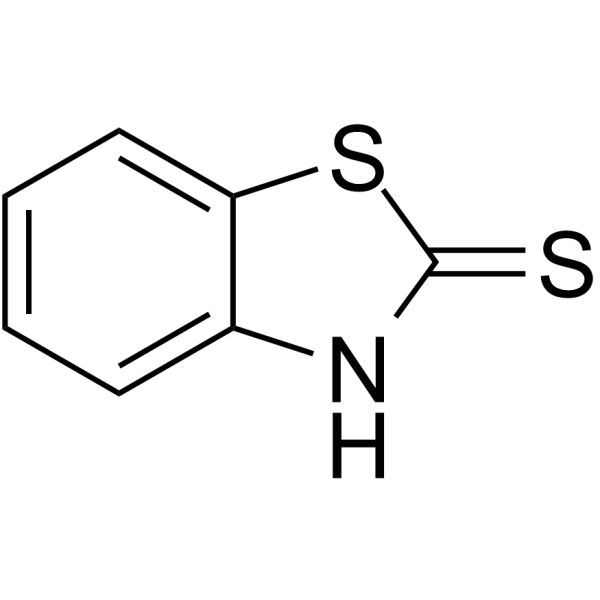
2-Mercaptobenzothiazole
Based on 1 publication(s) in Google Scholar
2-Mercaptobenzothiazole is an activator of the aryl hydrocarbon receptor (AhR), inhibiting thyroid hormone synthesis and dopamine beta-hydroxylase activity. 2-Mercaptobenzothiazole promotes bladder cancer cell invasion by altering the conformation of the AhR ligand binding domain (LBD), activating AhR transcription, and upregulating the mRNA and protein expression of target genes CYP1A1 and CYP1B1. 2-Mercaptobenzothiazole inhibits thyroid peroxidase (TPO) with an IC50 value of 11.5 μM, induces histological changes such as follicular cell hypertrophy in Xenopus laevis tadpoles, delaying metamorphosis. 2-Mercaptobenzothiazole increases chromosomal aberrations and sister chromatid exchanges (SCEs) in Chinese hamster ovary (CHO) cells, and enhances carcinogenicity in F344/N rats. 2-Mercaptobenzothiazole inhibits norepinephrine synthesis in mice and completely blocks the conversion of exogenous dopamine to norepinephrine in rat cardiomyocytes.
For research use only. We do not sell to patients.
- Purity : 99.49%
- CAS No.: 149-30-4
- Formula: C7H5NS2
- Molecular Weight:167.26
-
Storage:Powder -20°C, 3 years , 4°C, 2 years ; In solvent -80°C, 6 months , -20°C, 1 month

To place orders, for customer services and technical support, please contact: MedChemExpress USA
Tel: 609-228-6898 E-mail: [email protected] [email protected]


-
 Biological Activity
-
Chemical Information
-
Solvent & Solubility
- Protocols
- Purity & Documentation
- References
-
 Help & FAQs


-

HY-W017113R
2-Mercaptobenzothiazole (Standard) -
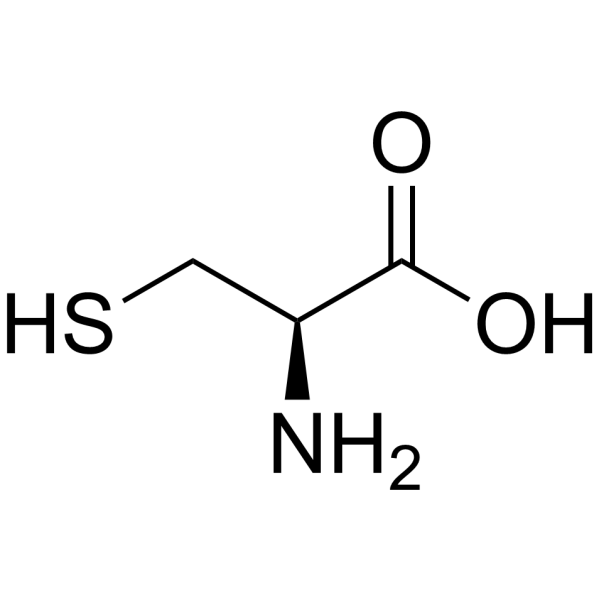
HY-Y0337
L-CysteineAnorectic Agent -
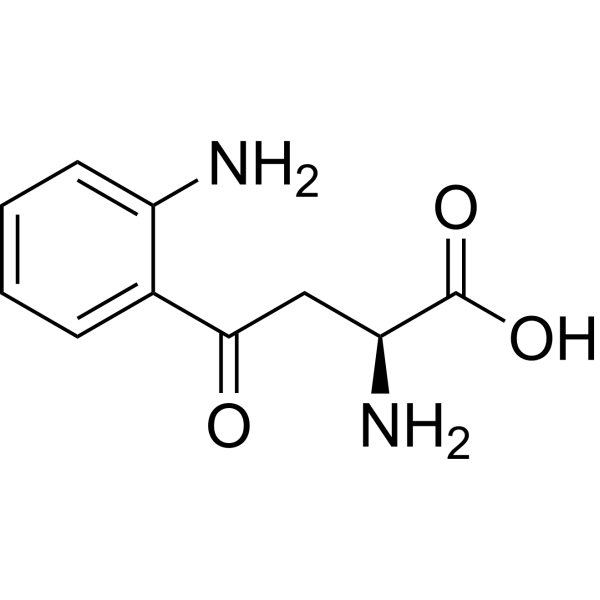
HY-104026
L-KynurenineAryl Hydrocarbon Receptor Agonist -
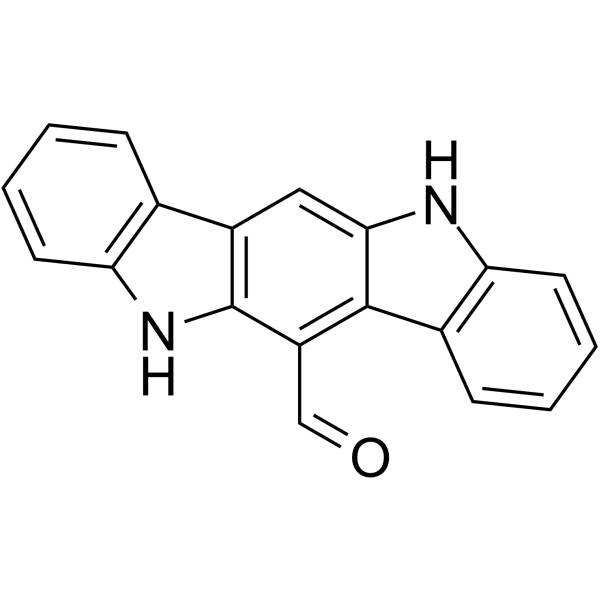
HY-12451
FICZAhR Agonist -

HY-Y0337R
L-Cysteine (Standard) -
HY-W028393
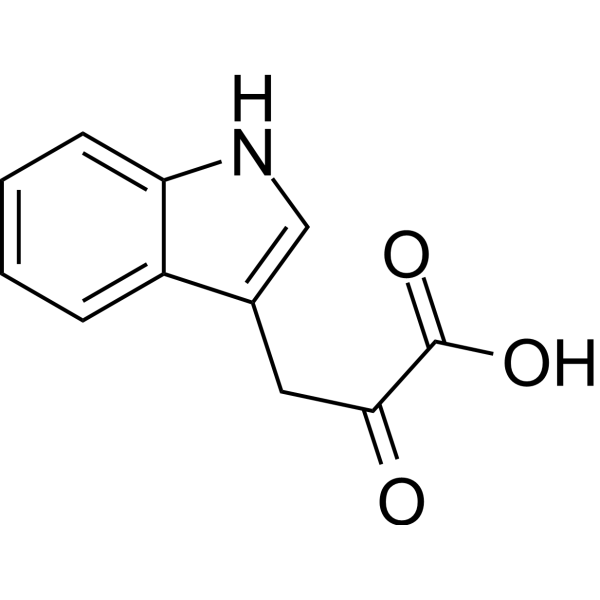
Indole-3-pyruvic acidAHR Agonist -
HY-N0178
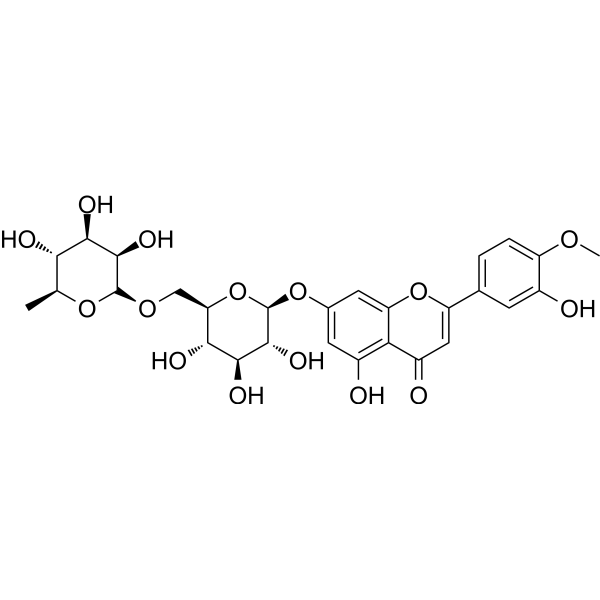
DiosminAryl Hydrocarbon Receptor Agonist -
HY-104026R
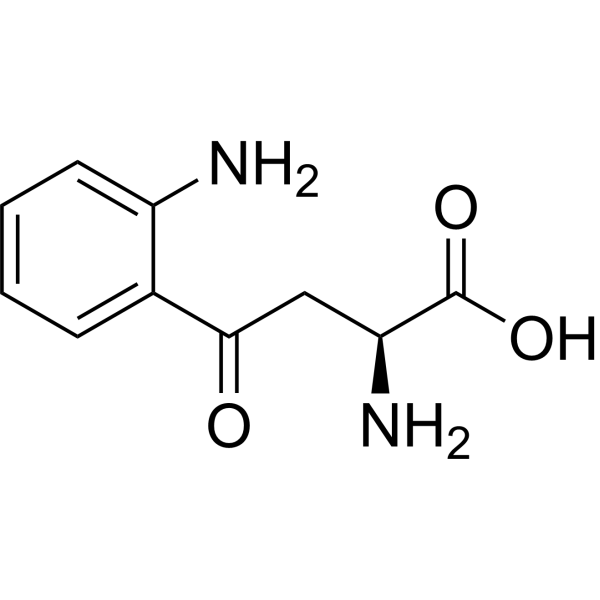
L-Kynurenine (Standard)Aryl Hydrocarbon Receptor Agonist -
HY-109044
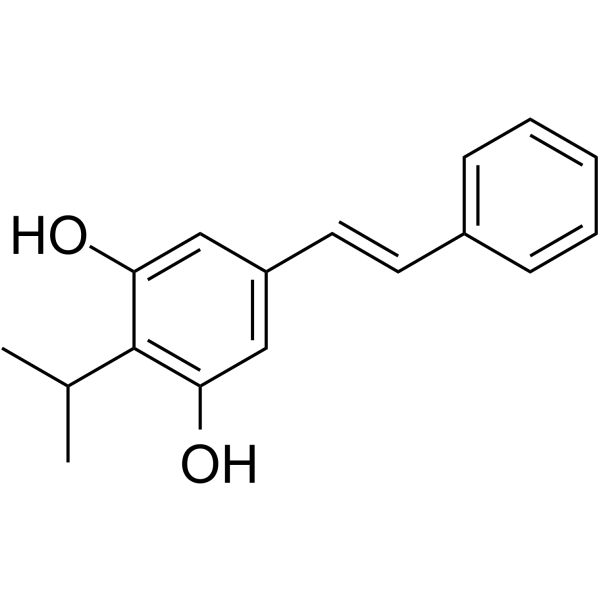
TapinarofAhR Agonist -
HY-W012675
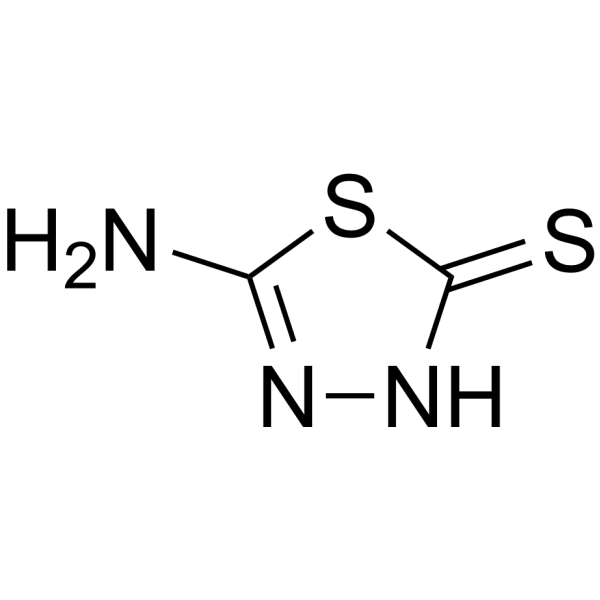
2-Amino-5-mercapto-1,3,4-thiadiazoleBiochemical Reagent -
HY-102023
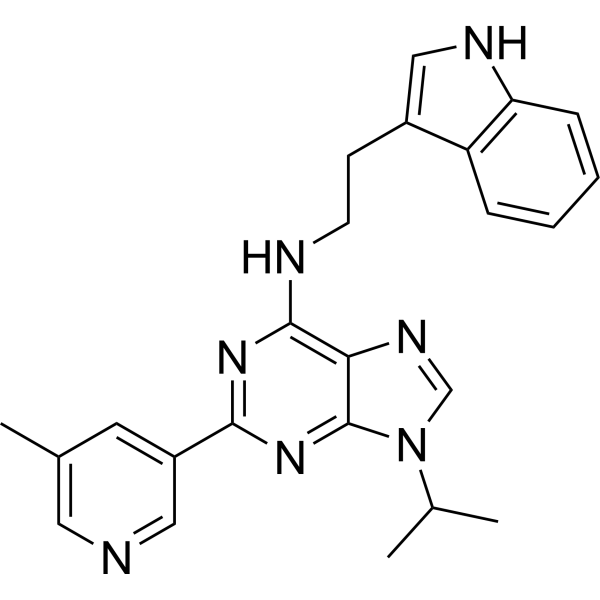
GNF351AHR Antagonist -
HY-12396
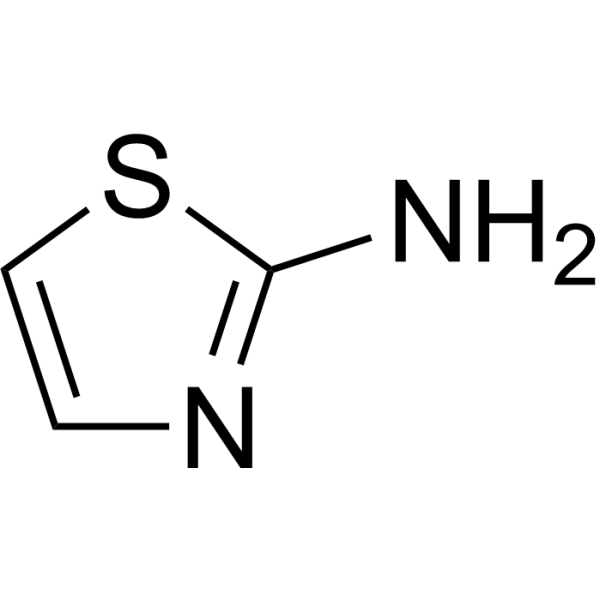
AminothiazoleVirus Protease Inhibitor
Publications Citing Use of MedChemExpress (MCE) 2-Mercaptobenzothiazole
MoreAll Endogenous Metabolite Isoforms
More

Biological Activity
Description
IC50 & Target
|
Human Endogenous Metabolite |
Cellular Effect
|
Cell Line

|
Type | Value | Description | References |
|---|---|---|---|---|
| MCF7 | GI50 |
>100 μM
Compound: 1a
|
Cytotoxicity against human MCF7 cells assessed as reduction in cell viability measured after 72 hrs by MTT assay
Cytotoxicity against human MCF7 cells assessed as reduction in cell viability measured after 72 hrs by MTT assay
|
[PMID: 27487570] |
| PC-3 | GI50 |
84.9 μM
Compound: 1a
|
Cytotoxicity against human PC3 cells assessed as reduction in cell viability measured after 72 hrs by MTT assay
Cytotoxicity against human PC3 cells assessed as reduction in cell viability measured after 72 hrs by MTT assay
|
[PMID: 27487570] |
In Vitro
2-Mercaptobenzothiazole (1, 5, 25 μM; 24 h) activated AhR, upregulated the mRNA and protein expressions of AhR, CYP1A1, CYP1B1 (qPCR; WB) and the cell metastasis marker MMP1, and promoted the invasion of T24 cells (cell invasion)[1].
2-Mercaptobenzothiazole (10-5M; 5 x 10⁻⁶M) non-competitively inhibits dopamine β-hydroxylase by 72% and 47%[4].
MedChemExpress (MCE) has not independently confirmed the accuracy of these methods. They are for reference only.
-
Cell Line:T24
-
Concentration:1, 5, 25 μM; 1 μM AhR antagonist (SR1) co-incubation as MMP1 control
-
Incubation Time:24 h
-
Result:Increased the cell invasion rate, which was decreased after co-incubation with SR1.
-
Cell Line:T24
-
Concentration:1, 5, 25 μM; 1 μM SR1 co-incubation as MMP1 control
-
Incubation Time:24 h
-
Result:Increased protein expression of AhR, CYP1A1, CYP1B1 and cell metastasis marker MMP1.
-
Cell Line:T24
-
Concentration:1, 5, 25 μM
-
Incubation Time:24 h
-
Result:Increased mRNA expression of AhR, CYP1A1, CYP1B1 and cell metastasis marker MMP1
In Vivo
2-Mercaptobenzothiazole (750 and 1,500 mg/kg; Five times a week; 103 weeks; i.g.) has carcinogenic activity in male F344/N rats, manifested by increased incidence of monocytic leukemia, pancreatic acinar cell adenoma, adrenal pheochromocytoma, and preputial gland adenoma or carcinoma. It has carcinogenic activity in female F344/N rats, manifested by increased incidence of adrenal pheochromocytoma and pituitary adenoma[3].
2-Mercaptobenzothiazole (300 mg/kg, i.p.) effectively block the conversion of exogenous dopamine to norepinephrine in rat cardiomyocytes, thereby inhibiting its synthesis[4].
MedChemExpress (MCE) has not independently confirmed the accuracy of these methods. They are for reference only.
-
Animal Model:NF51, NF54 (Xenopus laevis larvae)[2]
-
Dosage:500, 250, 125, 62.5, and 31 g/L,continuously exposed, 21days for NF51; 500, 250, 125, 62.5, and 31 g/L, continuously exposed, 7 days for NF54
-
Administration:Exposure
-
Result:Delayed the development of the 21-day group but did not affect the 7-day group.
Caused thyroid histological changes, including hypertrophy, proliferation, and colloid depletion of follicular cells in a concentration-dependent manner; increased thyroid iodine levels; and increased NIS gene expression in thyroid tissue in a concentration-dependent manner.
-
Animal Model:F344/N rats and B6C3F1 mice[3]
-
Dosage:750 and 1,500 mg/kg, 13 weeks; 0,375 and 750 mg/kg for mice and male rats, 0, 188 or 375 mg/kg for female rats, 5 days a week, 103 weeks
-
Administration:i.g.
-
Result:Caused cancer in rats, and even low doses caused cancer in male mice.
-
Animal Model:CF-1 male mice, Upjohn Sprague-Dawley male rats[4]
-
Dosage:300 mg/kg
-
Administration:Intraperitoneal injection (i.p.)
-
Result:Caused the mice to have a depression state after 1 and 2 hours, when norepinephrine levels dropped to about 60% of the control group.
Blocked the conversion of dopamine to newly synthesized noradrenaline and physical activity decreased in rats.
- Spheroid/Tumor Organoid Invasion Assay
- Ex Vivo Tissue Slice/Explant Invasion Assay
- RNA extraction experimental
- Western Blot
- Patient-Derived Organoid Invasion Assay
- 3D Tumor Spheroid Invasion Assay
- Matrigel Transwell/Boyden Chamber Invasion Assay
- Protocol For Protein Expression And Purification
- Invadopodia/Fluorescent Gelatin Degradation Assay
- Carcinogenicity Bioassay
- Research Protocol for Endocrine Diseases
- Organotypic 3D Invasion Assay
- Cell invasion
- Matrigel/ECM Transwell Invasion Assay
- 3D Collagen/Hydrogel Matrix Invasion Assay


Chemical Information
-
CAS No. 149-30-4
-
Appearance Solid
-
Molecular Weight 167.26
-
Formula C7H5NS2
-
Color White to yellow
-
SMILES
S=C1SC2=CC=CC=C2N1
-
Structure Classification
-
Initial Source
-
Shipping
Room temperature in continental US; may vary elsewhere.
-
Storage
Powder -20°C 3 years 4°C 2 years In solvent -80°C 6 months -20°C 1 month


Publications (1)
-
Journal Impact Factor
-
Most Recent


Solvent & Solubility
In Vitro:
DMSO : 100 mg/mL (597.87 mM; Need ultrasonic; Hygroscopic DMSO has a significant impact on the solubility of product, please use newly opened DMSO)
Please refer to the solubility information to select the appropriate solvent. Once prepared, please aliquot and store the solution to prevent product inactivation from repeated freeze-thaw cycles.
Storage method and period of stock solution: -80°C, 6 months; -20°C, 1 month. When stored at -80°C, please use it within 6 months. When stored at -20°C, please use it within 1 month.
Please refer to the solubility information to select the appropriate solvent. Once prepared, please aliquot and store the solution to prevent product inactivation from repeated freeze-thaw cycles.
Storage method and period of stock solution: -80°C, 6 months; -20°C, 1 month. When stored at -80°C, please use it within 6 months. When stored at -20°C, please use it within 1 month.
Concentration (start) × Volume (start) = Concentration (final) × Volume (final)
In Vivo:
Select the appropriate dissolution method based on your experimental animal and administration route.
- For the following dissolution methods, please ensure to first prepare a clear stock solution using an In Vitro approach and then sequentially add co-solvents:
- To ensure reliable experimental results, the clarified stock solution can be appropriately stored based on storage conditions. As for the working solution for In Vivo experiments, it is recommended to prepare freshly and use it on the same day.
- The percentages shown for the solvents indicate their volumetric ratio in the final prepared solution. If precipitation or phase separation occurs during preparation, heat and/or sonication can be used to aid dissolution.
Add each solvent one by one: 10% DMSO 40% PEG300 5% Tween-80 45% Saline
Solubility: ≥ 2.5 mg/mL (14.95 mM); Clear solution
This protocol yields a clear solution of ≥ 2.5 mg/mL (saturation unknown).
Taking 1 mL working solution as an example, add 100 μL DMSO stock solution (25.0 mg/mL) to 400 μL PEG300, and mix evenly; then add 50 μL Tween-80 and mix evenly; then add 450 μL Saline to adjust the volume to 1 mL.
Preparation of Saline: Dissolve 0.9 g sodium chloride in ddH₂O and dilute to 100 mL to obtain a clear Saline solution.
In Vivo Dissolution Calculator
Please enter the basic information of animal experiments:
-
-
-
-
Recommended: Prepare an additional quantity of animals to account for potential losses during experiments.
Please enter your animal formula composition:
-
%DMSO +
Recommended: Keep the proportion of DMSO in working solution below 2% if your animal is weak.
-
%+
-
+%Tween-80 + +
-
%Saline +
The co-solvents required include: DMSO, . All of co-solvents are available by MedChemExpress (MCE). , Tween 80. All of co-solvents are available by MedChemExpress (MCE).
Working solution concentration: 0.22 mg/mL
Method for preparing stock solution: mg drug dissolved in μL DMSO. Stock solution concentration: mg/mL.
1. Take μL DMSO stock solution;
2. Add μL .
μL , mix evenly;
3. Then add μL Tween 80, mix evenly;
4. Then add μL
Please ensure that the stock solution in the first step is dissolved to a clear state, and add co-solvents in sequence. You can use ultrasonic heating (ultrasonic cleaner, recommended frequency 20-40 kHz), vortexing, etc. to assist dissolution.


Purity & Documentation
-
Data Sheet (283 KB)
-
SDS (597 KB)
- English - EN (597 KB)
- Français - FR (597 KB)
- Deutsch - DE (597 KB)
- Norwegian - NO (597 KB)
- Español - ES (597 KB)
- Swedish - SV (597 KB)
- Italian - IT (597 KB)
- Korean - KR (597 KB)
- Portuguese - PT (597 KB)
-
Handling Instructions (2659 KB)
References
[1]. Jiachen Zhang, et al. Promotion of Bladder Cancer Cell Metastasis by 2-Mercaptobenzothiazole via Its Activation of Aryl Hydrocarbon Receptor Transcription: Molecular Dynamics Simulations, Cell-Based Assays, and Machine Learning-Driven Prediction. Environ Sci Technol. 2022 Sep 20;56(18):13254-13263. [Content Brief]
[2]. Joseph E Tietge, et al. Inhibition of the thyroid hormone pathway in Xenopus laevis by 2-mercaptobenzothiazole. Aquat Toxicol. 2013 Jan 15:126:128-36. [Content Brief]
[3]. National Toxicology Program . “NTP Toxicology and Carcinogenesis Studies of 2-Mercaptobenzothiazole (CAS No. 149-30-4) in F344/N Rats and B6C3F1 Mice (Gavage Studies).” National Toxicology Program technical report series vol. 332 (1988): 1-172. [Content Brief]
[4]. G A Johnson, et al. 2-mercaptobenzothiazole, an inhibitor of dopamine beta-hydroxylase. Aquat Toxicol. 1970 Sep;22(9):710-2. [Content Brief]


Complete Stock Solution Preparation Table
Please refer to the solubility information to select the appropriate solvent. Once prepared, please aliquot and store the solution to prevent product inactivation from repeated freeze-thaw cycles.
Storage method and period of stock solution: -80°C, 6 months; -20°C, 1 month. When stored at -80°C, please use it within 6 months. When stored at -20°C, please use it within 1 month.
| Optional Solvent | Concentration Solvent Mass | 1 mg | 5 mg | 10 mg | 25 mg |
|---|---|---|---|---|---|
| DMSO | 1 mM | 5.9787 mL | 29.8936 mL | 59.7872 mL | 149.4679 mL |
| 5 mM | 1.1957 mL | 5.9787 mL | 11.9574 mL | 29.8936 mL | |
| 10 mM | 0.5979 mL | 2.9894 mL | 5.9787 mL | 14.9468 mL | |
| 15 mM | 0.3986 mL | 1.9929 mL | 3.9858 mL | 9.9645 mL | |
| 20 mM | 0.2989 mL | 1.4947 mL | 2.9894 mL | 7.4734 mL | |
| 25 mM | 0.2391 mL | 1.1957 mL | 2.3915 mL | 5.9787 mL | |
| 30 mM | 0.1993 mL | 0.9965 mL | 1.9929 mL | 4.9823 mL | |
| 40 mM | 0.1495 mL | 0.7473 mL | 1.4947 mL | 3.7367 mL | |
| 50 mM | 0.1196 mL | 0.5979 mL | 1.1957 mL | 2.9894 mL | |
| 60 mM | 0.0996 mL | 0.4982 mL | 0.9965 mL | 2.4911 mL | |
| 80 mM | 0.0747 mL | 0.3737 mL | 0.7473 mL | 1.8683 mL | |
| 100 mM | 0.0598 mL | 0.2989 mL | 0.5979 mL | 1.4947 mL |


2-Mercaptobenzothiazole Related Classifications
HY-W017113 Related Classifications
 Powered by Bioz