



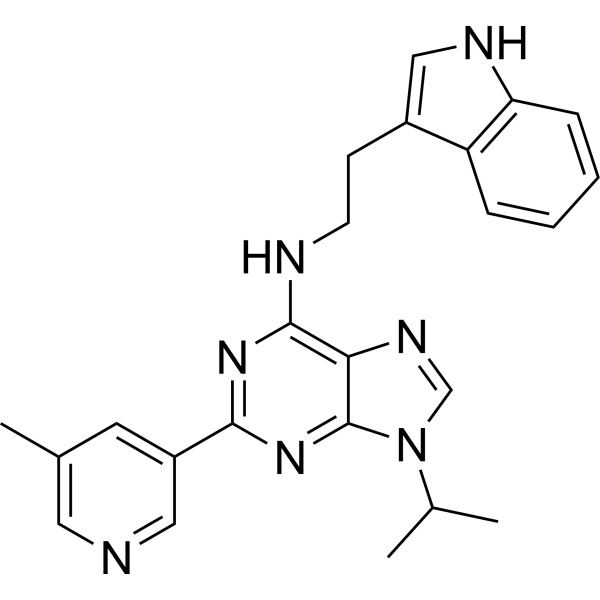
GNF351
Based on 8 publication(s) in Google Scholar
GNF351 is a full aryl hydrocarbon receptor (AHR) antagonist. GNF351 competes with a photoaffinity AHR ligand for binding to the AHR with an IC50 of 62 nM. GNF351 is minimal toxicity in mouse or human keratinocytes.
For research use only. We do not sell to patients.
- Purity : 99.87%
- CAS No.: 1227634-69-6
- Formula: C24H25N7
- Molecular Weight:411.50
-
Storage:Powder -20°C, 3 years , 4°C, 2 years ; In solvent -80°C, 2 years , -20°C, 1 year

To place orders, for customer services and technical support, please contact: MedChemExpress USA
Tel: 609-228-6898 E-mail: [email protected] [email protected]


-
 Biological Activity
-
Chemical Information
-
Solvent & Solubility
- Purity & Documentation
- References
-
 Help & FAQs


-
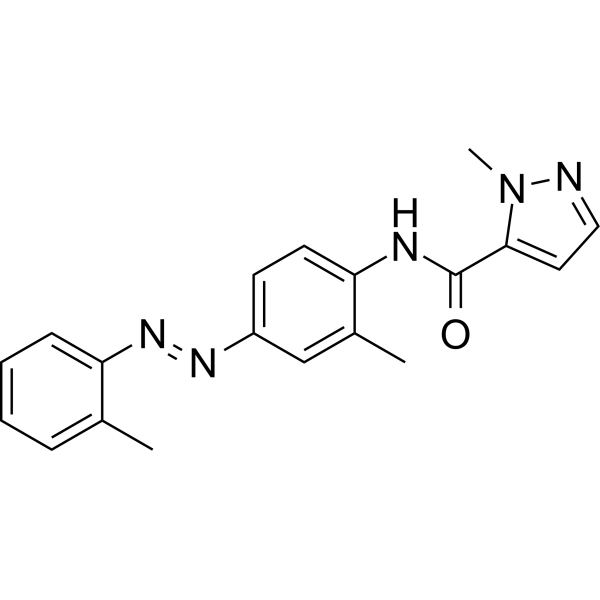
HY-12684
CH-223191AhR Antagonist -
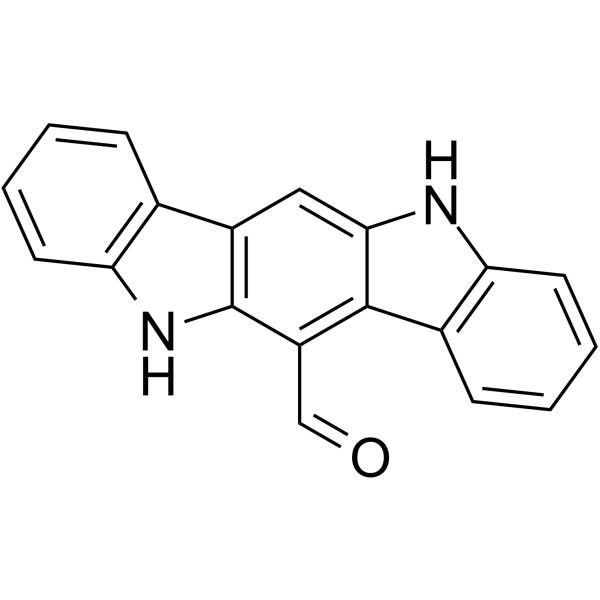
HY-12451
FICZAhR Agonist -
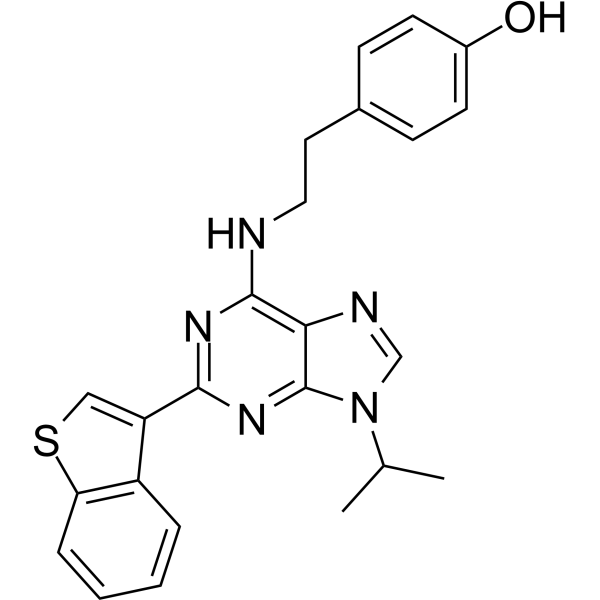
HY-15001
Stemregenin 1AhR Antagonist -
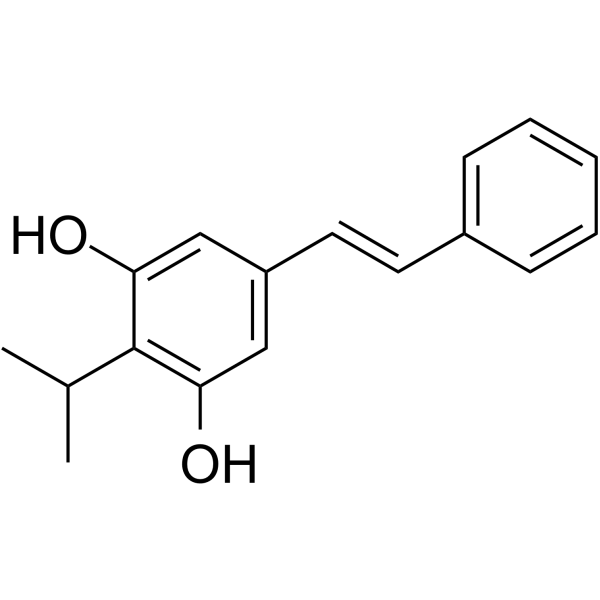
HY-109044
TapinarofAhR Agonist -
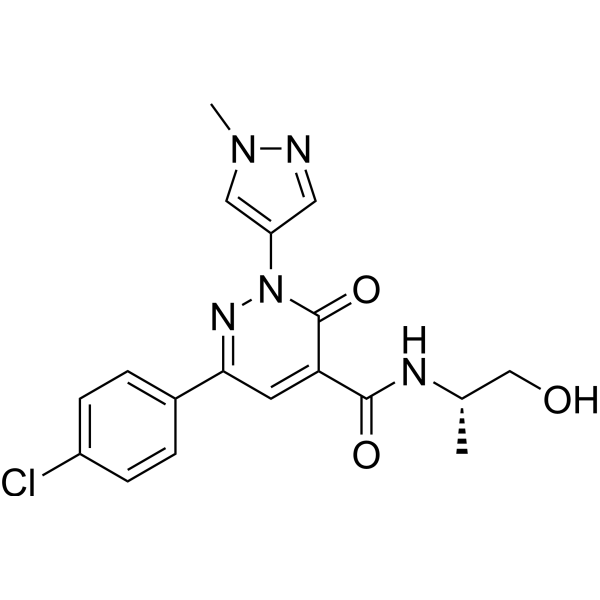
HY-135829
BAY 2416964AHR Antagonist -
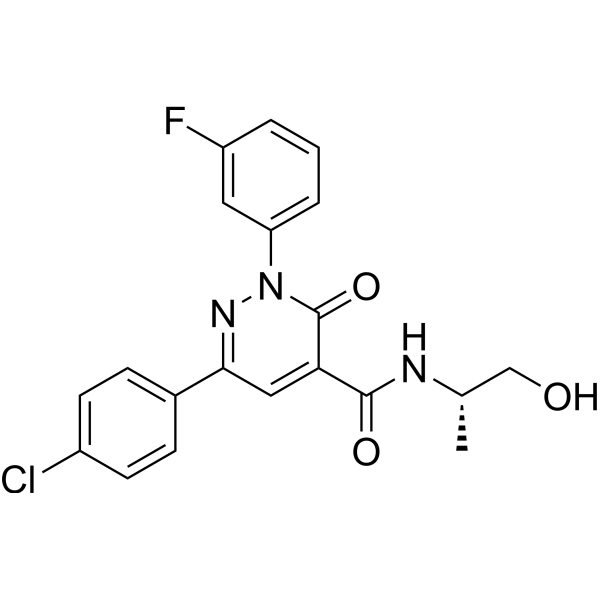
HY-111449
BAY-218AHR Antagonist -
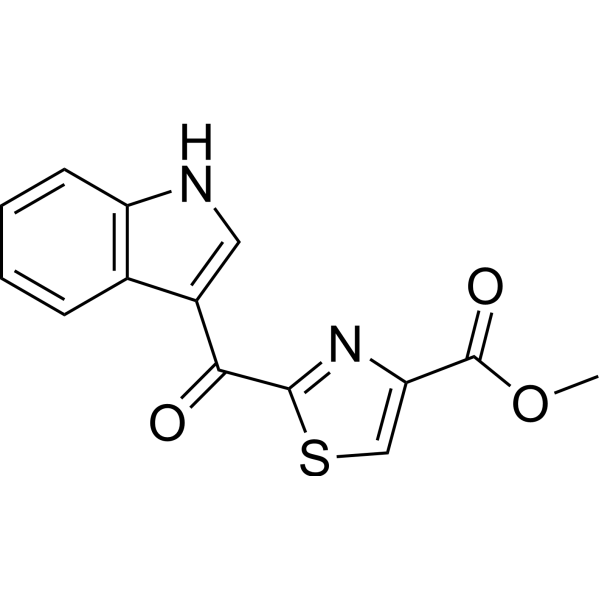
HY-19317
ITEAryl Hydrocarbon Receptor Agonist -
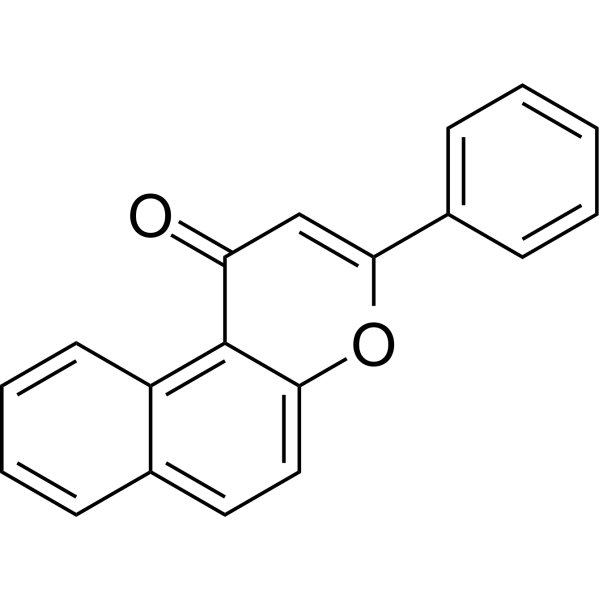
HY-114740
β-NaphthoflavoneAhR agonist -

HY-15001G
Stemregenin 1 (GMP)AhR Antagonist -
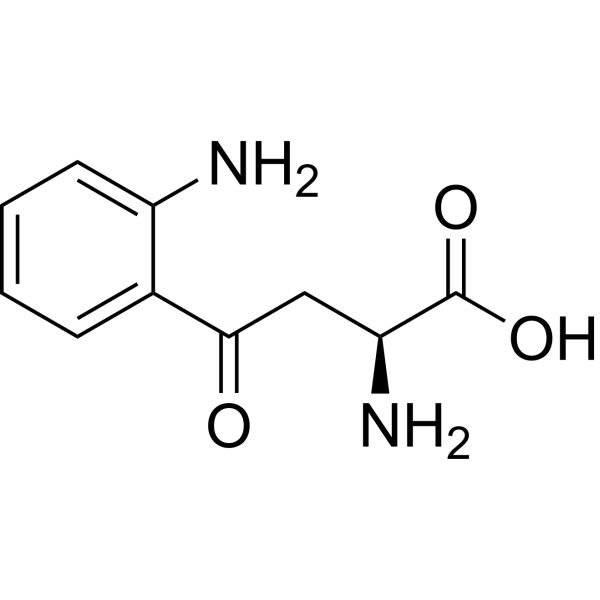
HY-104026
L-KynurenineAryl Hydrocarbon Receptor Agonist -
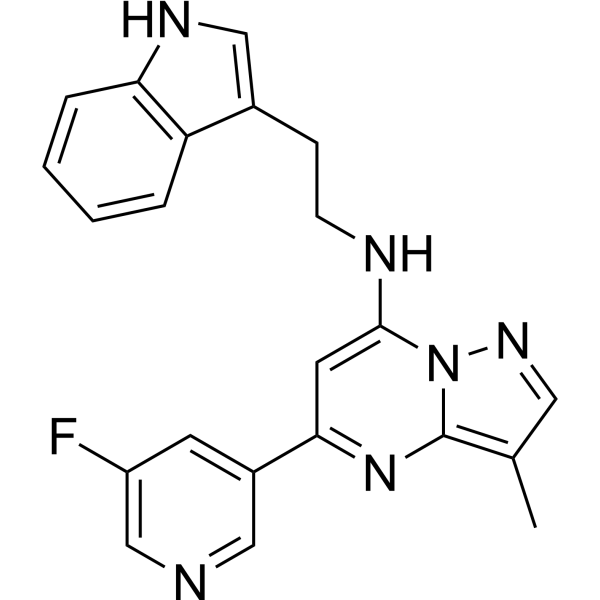
HY-134217
KYN-101AHR Inhibitor -
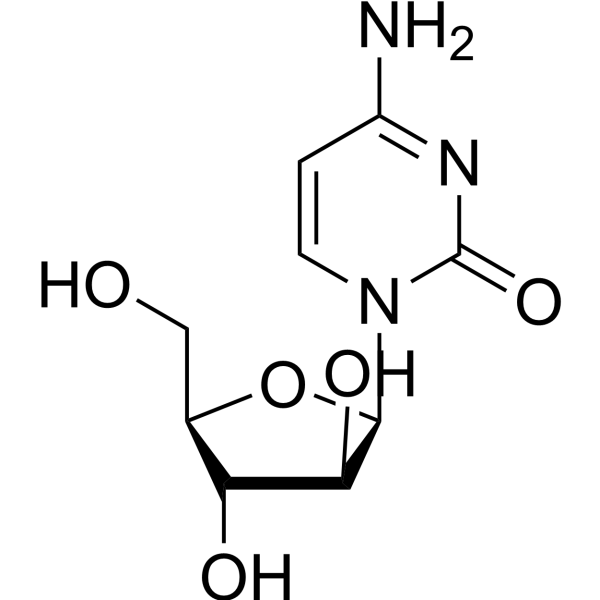
HY-13605
CytarabineDNA Synthesis Inhibitor
Publications Citing Use of MedChemExpress (MCE) GNF351
More- J Exp Clin Cancer Res. 2023 Mar 1;42(1):53. [Abstract]
- Cell Chem Biol. 2026 Jan 15;33(1):91-101.e12. [Abstract]
- Int J Biol Macromol. 2022 Dec 1;222(Pt A):1127-1136. [Abstract]
- J Invest Dermatol. 2024 Apr;144(4):862-873.e4.
- J Nutr Biochem. 2023 Dec:122:109456. [Abstract]
- Clemson University. 2025.
- SSRN. 2025 Jul 25.
- bioRxiv. 2025 May 21.
 Customer Validation & Images

-
In Vivo Efficacy Study

-
Flow Cytometry

-
Bio/Physico-chemical Assay

-
Cell Proliferation/Viability Assay

-
RT-PCR


Biological Activity
Description
IC50 & Target
IC50: 62 nM (aryl hydrocarbon receptor)[1]
In Vitro
GNF351 (500 nM, 48 hours) significantly reduces the percentage of Ki67-positive cells and cell number after treating proliferating monolayer cultures of human keratinocytes[1].
MedChemExpress (MCE) has not independently confirmed the accuracy of these methods. They are for reference only. .
-
Cell Line:Human primary keratinocytes
-
Concentration:500 nM
-
Incubation Time:48 hours
-
Result:Showed a significant reduction in the percentage of Ki67-positive cells and cell number after treating proliferating monolayer cultures of human keratinocytes for 48 hours.


Chemical Information
-
CAS No. 1227634-69-6
-
Appearance Solid
-
Molecular Weight 411.50
-
Formula C24H25N7
-
Color Off-white to light yellow
-
SMILES
CC1=CN=CC(C2=NC(NCCC3=CNC4=C3C=CC=C4)=C5N=CN(C(C)C)C5=N2)=C1
-
Shipping
Room temperature in continental US; may vary elsewhere.
-
Storage
Powder -20°C 3 years 4°C 2 years In solvent -80°C 2 years -20°C 1 year


Publications (8)
-
Journal Impact Factor
-
Most Recent
-
J Exp Clin Cancer Res
Aryl hydrocarbon receptor nuclear translocator limits the recruitment and function of regulatory neutrophils against colorectal cancer by regulating the gut microbiota. [Abstract]2023 Mar 1;42(1):53. PMID: 36859266
GNF351 purchased from MedChemExpress. Usage Cited in: J Exp Clin Cancer Res. 2023 Mar 1;42(1):53. [Abstract]
GNF351 (GNT) (5 mg/kg; i.p.; once weekly). The number of colonic tumors and the tumor diameter are summarized. The graph summarizes data from three independent experiments with fifteen mice per group.
GNF351 purchased from MedChemExpress. Usage Cited in: J Exp Clin Cancer Res. 2023 Mar 1;42(1):53. [Abstract]
GNF351 (GNT) (5 mg/kg; i.p.; once weekly). Percentage of tumor-infiltrating neutrophils in the colon. The results showed that inhibiting ARNT increased the percentage of CD11b+Gr1+ cells.
GNF351 purchased from MedChemExpress. Usage Cited in: J Exp Clin Cancer Res. 2023 Mar 1;42(1):53. [Abstract]
GNF351 (GNF) (5 mg/kg; i.p.; once weekly). Tumor-infiltrating neutrophils were isolated and stimulated with LPS in vitro as indicated to detect NETs. The percentage of NETs-forming cells was quantified.
GNF351 purchased from MedChemExpress. Usage Cited in: J Exp Clin Cancer Res. 2023 Mar 1;42(1):53. [Abstract]
GNF351 (GNF) (5 mg/kg; i.p.; once weekly). Suppressive assay of tumor-infiltrating neutrophils from tumor-bearing mice. Data from coculture with allogeneic CD4+ T cells with different ratio between neutrophils and T cells are shown.
GNF351 purchased from MedChemExpress. Usage Cited in: J Exp Clin Cancer Res. 2023 Mar 1;42(1):53. [Abstract]
mRNA expression of ARNT in neutrophils treated by GNF351 (GNF) (500 nM; 12 h).

GNF351 purchased from MedChemExpress. Usage Cited in: J Exp Clin Cancer Res. 2023 Mar 1;42(1):53. [Abstract]
GNF351 (GNF) (50-500 nM; 12 h). Level of TNFα and IL-10 concentration in culture supernatant by ELISA.
-
Cell Chem Biol
Identification of aryl hydrocarbon receptor as a functional target that enhances astrocytic ApoE secretion. [Abstract]2026 Jan 15;33(1):91-101.e12. PMID: 41483807 -
Int J Biol Macromol
Polysaccharides derived from Shenling Baizhu San improve colitis via modulating tryptophan metabolism in mice. [Abstract]2022 Dec 1;222(Pt A):1127-1136. PMID: 36191780 -
-
J Nutr Biochem
Polyphenol and glucosinolate-derived AhR modulators regulate GPR15 expression on human CD4+ T cells. [Abstract]2023 Dec:122:109456. PMID: 37788725 -
-
-


Solvent & Solubility
In Vitro:
DMSO : ≥ 125 mg/mL (303.77 mM; Hygroscopic DMSO has a significant impact on the solubility of product, please use newly opened DMSO)
* "≥" means soluble, but saturation unknown.
Please refer to the solubility information to select the appropriate solvent. Once prepared, please aliquot and store the solution to prevent product inactivation from repeated freeze-thaw cycles.
Storage method and period of stock solution: -80°C, 2 years; -20°C, 1 year. When stored at -80°C, please use it within 2 years. When stored at -20°C, please use it within 1 year.
Please refer to the solubility information to select the appropriate solvent. Once prepared, please aliquot and store the solution to prevent product inactivation from repeated freeze-thaw cycles.
Storage method and period of stock solution: -80°C, 2 years; -20°C, 1 year. When stored at -80°C, please use it within 2 years. When stored at -20°C, please use it within 1 year.
Concentration (start) × Volume (start) = Concentration (final) × Volume (final)
In Vivo:
Select the appropriate dissolution method based on your experimental animal and administration route.
- For the following dissolution methods, please ensure to first prepare a clear stock solution using an In Vitro approach and then sequentially add co-solvents:
- To ensure reliable experimental results, the clarified stock solution can be appropriately stored based on storage conditions. As for the working solution for In Vivo experiments, it is recommended to prepare freshly and use it on the same day.
- The percentages shown for the solvents indicate their volumetric ratio in the final prepared solution. If precipitation or phase separation occurs during preparation, heat and/or sonication can be used to aid dissolution.
Add each solvent one by one: 10% DMSO 40% PEG300 5% Tween-80 45% Saline
Solubility: ≥ 2.08 mg/mL (5.05 mM); Clear solution
This protocol yields a clear solution of ≥ 2.08 mg/mL (saturation unknown).
Taking 1 mL working solution as an example, add 100 μL DMSO stock solution (20.8 mg/mL) to 400 μL PEG300, and mix evenly; then add 50 μL Tween-80 and mix evenly; then add 450 μL Saline to adjust the volume to 1 mL.
Preparation of Saline: Dissolve 0.9 g sodium chloride in ddH₂O and dilute to 100 mL to obtain a clear Saline solution.
In Vivo Dissolution Calculator
Please enter the basic information of animal experiments:
-
-
-
-
Recommended: Prepare an additional quantity of animals to account for potential losses during experiments.
Please enter your animal formula composition:
-
%DMSO +
Recommended: Keep the proportion of DMSO in working solution below 2% if your animal is weak.
-
%+
-
+%Tween-80 + +
-
%Saline +
The co-solvents required include: DMSO, . All of co-solvents are available by MedChemExpress (MCE). , Tween 80. All of co-solvents are available by MedChemExpress (MCE).
Working solution concentration: 0.22 mg/mL
Method for preparing stock solution: mg drug dissolved in μL DMSO. Stock solution concentration: mg/mL.
1. Take μL DMSO stock solution;
2. Add μL .
μL , mix evenly;
3. Then add μL Tween 80, mix evenly;
4. Then add μL
Please ensure that the stock solution in the first step is dissolved to a clear state, and add co-solvents in sequence. You can use ultrasonic heating (ultrasonic cleaner, recommended frequency 20-40 kHz), vortexing, etc. to assist dissolution.


Purity & Documentation
-
Data Sheet (278 KB)
-
SDS (393 KB)
- English - EN (393 KB)
- Français - FR (393 KB)
- Deutsch - DE (393 KB)
- Norwegian - NO (393 KB)
- Español - ES (393 KB)
- Swedish - SV (393 KB)
- Italian - IT (393 KB)
- Korean - KR (393 KB)
- Portuguese - PT (393 KB)
-
Handling Instructions (2659 KB)
References


Complete Stock Solution Preparation Table
Please refer to the solubility information to select the appropriate solvent. Once prepared, please aliquot and store the solution to prevent product inactivation from repeated freeze-thaw cycles.
Storage method and period of stock solution: -80°C, 2 years; -20°C, 1 year. When stored at -80°C, please use it within 2 years. When stored at -20°C, please use it within 1 year.
| Optional Solvent | Concentration Solvent Mass | 1 mg | 5 mg | 10 mg | 25 mg |
|---|---|---|---|---|---|
| DMSO | 1 mM | 2.4301 mL | 12.1507 mL | 24.3013 mL | 60.7533 mL |
| 5 mM | 0.4860 mL | 2.4301 mL | 4.8603 mL | 12.1507 mL | |
| 10 mM | 0.2430 mL | 1.2151 mL | 2.4301 mL | 6.0753 mL | |
| 15 mM | 0.1620 mL | 0.8100 mL | 1.6201 mL | 4.0502 mL | |
| 20 mM | 0.1215 mL | 0.6075 mL | 1.2151 mL | 3.0377 mL | |
| 25 mM | 0.0972 mL | 0.4860 mL | 0.9721 mL | 2.4301 mL | |
| 30 mM | 0.0810 mL | 0.4050 mL | 0.8100 mL | 2.0251 mL | |
| 40 mM | 0.0608 mL | 0.3038 mL | 0.6075 mL | 1.5188 mL | |
| 50 mM | 0.0486 mL | 0.2430 mL | 0.4860 mL | 1.2151 mL | |
| 60 mM | 0.0405 mL | 0.2025 mL | 0.4050 mL | 1.0126 mL | |
| 80 mM | 0.0304 mL | 0.1519 mL | 0.3038 mL | 0.7594 mL | |
| 100 mM | 0.0243 mL | 0.1215 mL | 0.2430 mL | 0.6075 mL |


GNF351 Related Classifications
HY-102023 Related Classifications
 Powered by Bioz