



SKF89976A hydrochloride

Based on 1 Customer Validation
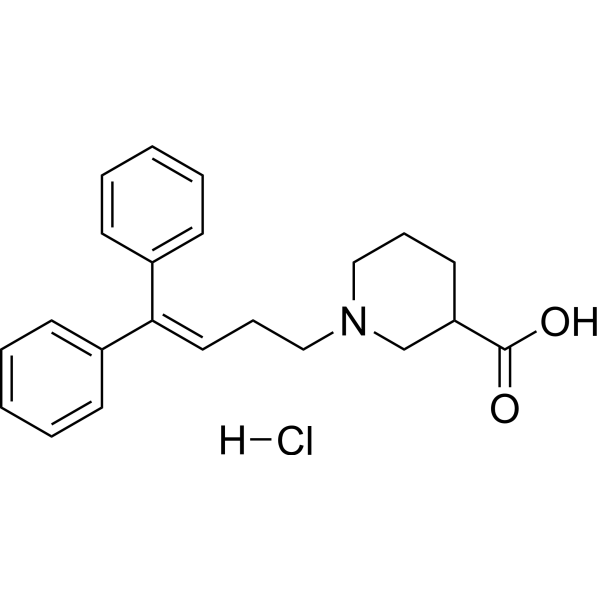
SKF89976A hydrochloride is a selective GABA transporter (GAT-1) inhibitor with IC50s of 0.28 μM, 137.34 μM and 202.8 μM for GAT-1, GAT-2 and GAT-3 in CHO cells, respectively.
For research use only. We do not sell to patients.
- Purity: 98.73%
- CAS No.: 85375-15-1
- Formula: C22H26ClNO2
- Molecular Weight:371.90
-
Storage:
4°C, sealed storage, away from moisture
* In solvent : -80°C, 6 months; -20°C, 1 month (sealed storage, away from moisture)

To place orders, for customer services and technical support, please contact: MedChemExpress USA
Tel: 609-228-6898 E-mail: [email protected] [email protected]


-
 Biological Activity
-
Chemical Information
-
Solvent & Solubility
- Protocol
- Purity & Documentation
- References
-
 Help & FAQs


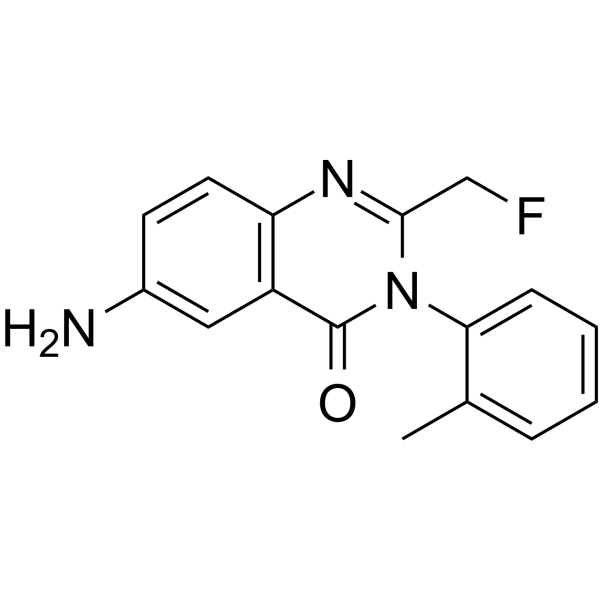
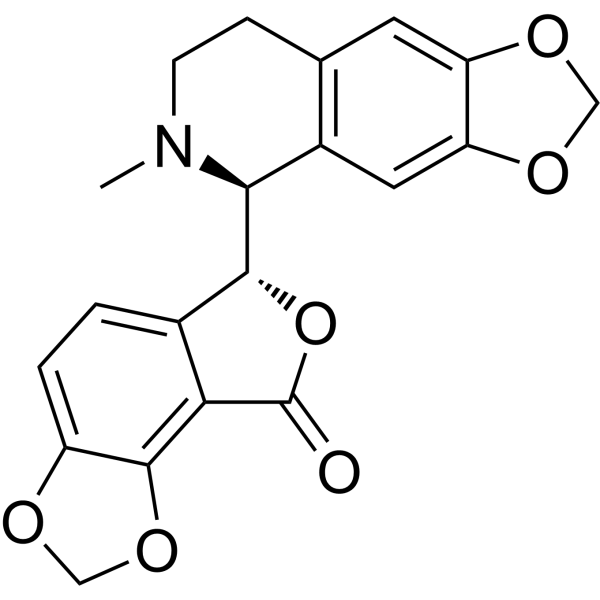
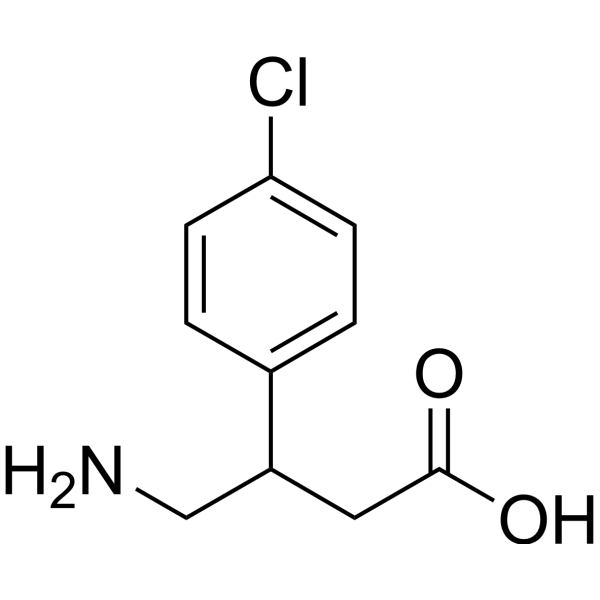
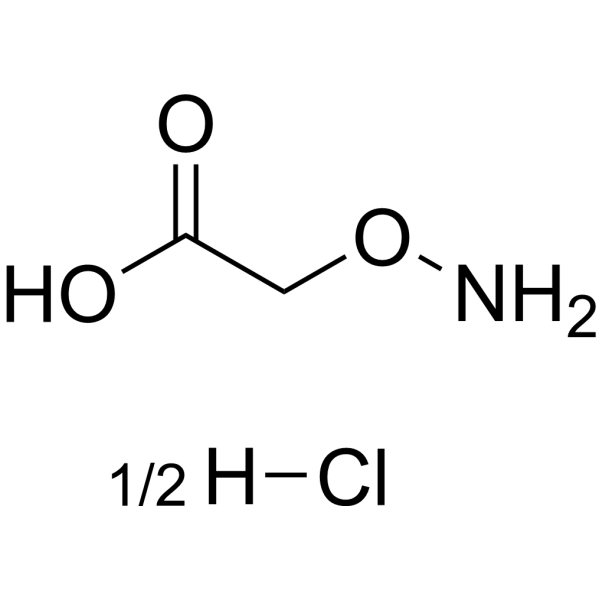


Biological Activity
Description
IC50 & Target
IC50: 0.28 μM (GAT-1), 137.34 μM (GAT-2), 202.8 μM (GAT-3)[1]
Cellular Effect
|
Cell Line

|
Type | Value | Description | References |
|---|---|---|---|---|
| HEK293 | IC50 |
0.13 μM
Compound: 4, SK and F-89976-A
|
Inhibition of [3H]GABA uptake at mouse GAT1 expressed in HEK293 cells after 25 mins by scintillation counting analysis
Inhibition of [3H]GABA uptake at mouse GAT1 expressed in HEK293 cells after 25 mins by scintillation counting analysis
|
[PMID: 23336362] |
In Vitro
SKF89976A has a weak antiallodynic action. SKF89976A weakly inhibits serotonin transporter (SERT), noradrenaline transporter (NET), and dopamine transporter (DAT) in chinese hamster ovary (CHO) cells stably expressing each transporter using a substrate uptake assay, with IC50 values of 3514 , 202.13, and 728.8, respectively[1]. SKF89976A is a GABA-transport blocker. GABA (1 mM) elicited an inward current that is completely suppressed by the GABA transport inhibitors tiagabine (10 μM) and SKF89976A (100 μM), but is unaffected by 100 μM picrotoxin. 100 μM SKF 89976-A is known to block the transport of GABA into cells, completely eliminated the GABA-elicited current in a reversible fashion[2]. SKF89976A is a nontransportable blockers of GAT-1. SKF89976-A also suppresses baseline inward currents that likely result from tonic GAT activation by background GABA. SKF89976A (100 μM) reversibly reduces GAT currents in every studied cell by 67.9±4.4% (n=19). Intracellular perfusion of 20 μM SKF89976-A progressively reduced and blocked GABA-induced GAT currents without blocking GABAAR-mediated currents (n=4)[3].
MedChemExpress (MCE) has not independently confirmed the accuracy of these methods. They are for reference only.
In Vivo
MedChemExpress (MCE) has not independently confirmed the accuracy of these methods. They are for reference only.


Chemical Information
-
CAS No. 85375-15-1
-
Appearance Solid
-
Molecular Weight 371.90
-
Formula C22H26ClNO2
-
Color Light yellow to khaki
-
SMILES
O=C(C1CN(CC/C=C(C2=CC=CC=C2)/C3=CC=CC=C3)CCC1)O.[H]Cl
-
Synonyms
d,l-SKF89976A hydrochloride
-
Shipping
Room temperature in continental US; may vary elsewhere.
-
Storage
4°C, sealed storage, away from moisture
* In solvent : -80°C, 6 months; -20°C, 1 month (sealed storage, away from moisture)


Solvent & Solubility
In Vitro:
DMSO : 100 mg/mL (268.89 mM; Need ultrasonic; Hygroscopic DMSO has a significant impact on the solubility of product, please use newly opened DMSO)
H2O : 20 mg/mL (53.78 mM; Need ultrasonic)
Please refer to the solubility information to select the appropriate solvent. Once prepared, please aliquot and store the solution to prevent product inactivation from repeated freeze-thaw cycles.
Storage method and period of stock solution: -80°C, 6 months; -20°C, 1 month (sealed storage, away from moisture). When stored at -80°C, please use it within 6 months. When stored at -20°C, please use it within 1 month.
* Note: If you choose water as the stock solution, please dilute it to the working solution, then filter and sterilize it with a 0.22 μm filter before use.
Please refer to the solubility information to select the appropriate solvent. Once prepared, please aliquot and store the solution to prevent product inactivation from repeated freeze-thaw cycles.
Storage method and period of stock solution: -80°C, 6 months; -20°C, 1 month (sealed storage, away from moisture). When stored at -80°C, please use it within 6 months. When stored at -20°C, please use it within 1 month.
* Note: If you choose water as the stock solution, please dilute it to the working solution, then filter and sterilize it with a 0.22 μm filter before use.
Concentration (start) × Volume (start) = Concentration (final) × Volume (final)
In Vivo:
Select the appropriate dissolution method based on your experimental animal and administration route.
- For the following dissolution methods, please ensure to first prepare a clear stock solution using an In Vitro approach and then sequentially add co-solvents:
- To ensure reliable experimental results, the clarified stock solution can be appropriately stored based on storage conditions. As for the working solution for In Vivo experiments, it is recommended to prepare freshly and use it on the same day.
- The percentages shown for the solvents indicate their volumetric ratio in the final prepared solution. If precipitation or phase separation occurs during preparation, heat and/or sonication can be used to aid dissolution.
Add each solvent one by one: 10% DMSO 40% PEG300 5% Tween-80 45% Saline
Solubility: ≥ 2.5 mg/mL (6.72 mM); Clear solution
This protocol yields a clear solution of ≥ 2.5 mg/mL (saturation unknown).
Taking 1 mL working solution as an example, add 100 μL DMSO stock solution (25.0 mg/mL) to 400 μL PEG300, and mix evenly; then add 50 μL Tween-80 and mix evenly; then add 450 μL Saline to adjust the volume to 1 mL.
Preparation of Saline: Dissolve 0.9 g sodium chloride in ddH₂O and dilute to 100 mL to obtain a clear Saline solution.
Add each solvent one by one: 10% DMSO 90% (20% SBE-β-CD in Saline)
Solubility: ≥ 2.5 mg/mL (6.72 mM); Clear solution
This protocol yields a clear solution of ≥ 2.5 mg/mL (saturation unknown).
Taking 1 mL working solution as an example, add 100 μL DMSO stock solution (25.0 mg/mL) to 900 μL 20% SBE-β-CD in Saline, and mix evenly.
Preparation of 20% SBE-β-CD in Saline (4°C, storage for one week): 2 g SBE-β-CD powder is dissolved in 10 mL Saline, completely dissolve until clear.
For the following dissolution methods, please prepare the working solution directly:
It is recommended to prepare fresh solutions and use them promptly within a short period of time.
The percentages shown for the solvents indicate their volumetric ratio in the final prepared solution. If precipitation or phase separation occurs during preparation, heat and/or sonication can be used to aid dissolution.
Add each solvent one by one: PBS
Solubility: 25 mg/mL (67.22 mM); Clear solution; Need ultrasonic
In Vivo Dissolution Calculator
Please enter the basic information of animal experiments:
-
-
-
-
Recommended: Prepare an additional quantity of animals to account for potential losses during experiments.
Working solution concentration: 0.22 mg/mL
This product has good water solubility, please refer to the measured solubility data in water/PBS/Saline for details.

Protocol
Cell Assay[1]
CHO cells stably expressing the mouse GAT subtypes, rat serotonin transporter (SERT), rat noradrenaline transporter (NET), and rat dopamine transporter (DAT) are incubated with 10 nM tritium-labeled GABA or monoamines for 10 min in the absence or presence of various concentrations of the GAT inhibitors (e.g., SKF89976A) tested. Values presented for SERT, NET, and DAT are the mean±S.E.M. for 3 experiments, with each being performed in duplicate[1].
MedChemExpress (MCE) has not independently confirmed the accuracy of these methods. They are for reference only.
Animal Administration[1]
Mice[1]
5-week-old ddY male mice, weighing 25-30 g at the beginning of the study are used. Mice are administered NNC05-2090, SKF89976A (0.3 mg/kg, i.p.), (S)-SNAP5114, or amitriptyline. The composition of ACSF (in mM) is 142 mM NaCl, 5 mM KCl, 2 mM CaCl2, 2 mM MgCl2, 1.25 mM NaH2PO4, 10 mM d-glucose, 10 mM HEPES, and 0.05% fatty acid-free bovine serum albumin (pH 7.4). The intraperitoneal (i.p.) injection of drugs is administered in a volume of 0.1 mL/10 g body weight. When given intravenously (i.v.), solutions are injected into the tail vein in a volume of 0.1 mL/10 g body weight. The head of a mouse is placed into a plastic cap and the body is held with one hand for an intrathecal (i.t.) injection. A 27-gauge needle attached to a Hamilton microsyringe is inserted into the subarachnoid space between the L5 and L6 vertebrae of the conscious mouse and 5 mL of the drug solution is slowly injected[1].
MedChemExpress (MCE) has not independently confirmed the accuracy of these methods. They are for reference only.


Purity & Documentation
-
Data Sheet (276 KB)
-
SDS (393 KB)
- English - EN (393 KB)
- Français - FR (393 KB)
- Deutsch - DE (393 KB)
- Norwegian - NO (393 KB)
- Español - ES (393 KB)
- Swedish - SV (393 KB)
- Italian - IT (393 KB)
- Korean - KR (393 KB)
- Portuguese - PT (393 KB)
-
Handling Instructions (2659 KB)
References
[1]. Jinzenji A, et al. Antiallodynic action of 1-(3-(9H-Carbazol-9-yl)-1-propyl)-4-(2-methyoxyphenyl)-4-piperidinol (NNC05-2090), a betaine/GABA transporter inhibitor. J Pharmacol Sci. 2014;125(2):217-26. [Content Brief]
[2]. Kreitzer MA, et al. Glutamate modulation of GABA transport in retinal horizontal cells of the skate. J Physiol. 2003 Feb 1;546(Pt 3):717-31. [Content Brief]
[3]. Barakat L, et al. GAT-1 and reversible GABA transport in Bergmann glia in slices. J Neurophysiol. 2002 Sep;88(3):1407-19. [Content Brief]


Complete Stock Solution Preparation Table
Please refer to the solubility information to select the appropriate solvent. Once prepared, please aliquot and store the solution to prevent product inactivation from repeated freeze-thaw cycles.
Storage method and period of stock solution: -80°C, 6 months; -20°C, 1 month (sealed storage, away from moisture). When stored at -80°C, please use it within 6 months. When stored at -20°C, please use it within 1 month.
| Optional Solvent | Concentration Solvent Mass | 1 mg | 5 mg | 10 mg | 25 mg |
|---|---|---|---|---|---|
| H2O / DMSO | 1 mM | 2.6889 mL | 13.4445 mL | 26.8889 mL | 67.2224 mL |
| 5 mM | 0.5378 mL | 2.6889 mL | 5.3778 mL | 13.4445 mL | |
| 10 mM | 0.2689 mL | 1.3444 mL | 2.6889 mL | 6.7222 mL | |
| 15 mM | 0.1793 mL | 0.8963 mL | 1.7926 mL | 4.4815 mL | |
| 20 mM | 0.1344 mL | 0.6722 mL | 1.3444 mL | 3.3611 mL | |
| 25 mM | 0.1076 mL | 0.5378 mL | 1.0756 mL | 2.6889 mL | |
| 30 mM | 0.0896 mL | 0.4481 mL | 0.8963 mL | 2.2407 mL | |
| 40 mM | 0.0672 mL | 0.3361 mL | 0.6722 mL | 1.6806 mL | |
| 50 mM | 0.0538 mL | 0.2689 mL | 0.5378 mL | 1.3444 mL | |
| DMSO | 60 mM | 0.0448 mL | 0.2241 mL | 0.4481 mL | 1.1204 mL |
| 80 mM | 0.0336 mL | 0.1681 mL | 0.3361 mL | 0.8403 mL | |
| 100 mM | 0.0269 mL | 0.1344 mL | 0.2689 mL | 0.6722 mL |
* Note: If you choose water as the stock solution, please dilute it to the working solution, then filter and sterilize it with a 0.22 μm filter before use.


SKF89976A hydrochloride Related Classifications
HY-100228A Related Classifications
 Powered by Bioz