Search Result
Results for "
fmoc-
" in MedChemExpress (MCE) Product Catalog:
42
Biochemical Assay Reagents
82
Isotope-Labeled Compounds
| Cat. No. |
Product Name |
Target |
Research Areas |
Chemical Structure |
-
- HY-41189
-
|
|
ADC Linker
|
Cancer
|
|
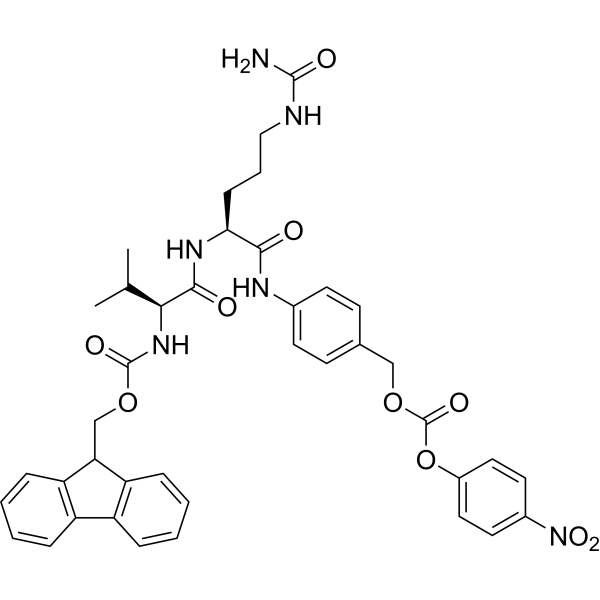
Fmoc-Val-Cit-PAB-PNP is a cleavable ADC linker used in the synthesis of antibody-drug conjugates (ADCs). Fmoc-Val-Cit-PAB-PNP has superior plasma stability comparable to that of non-cleavable linkers .
|
-
-
- HY-Y1636
-
-
-
- HY-Y1250
-
|
fmoc-glycine
|
Amino Acid Derivatives
|
Others
|
|
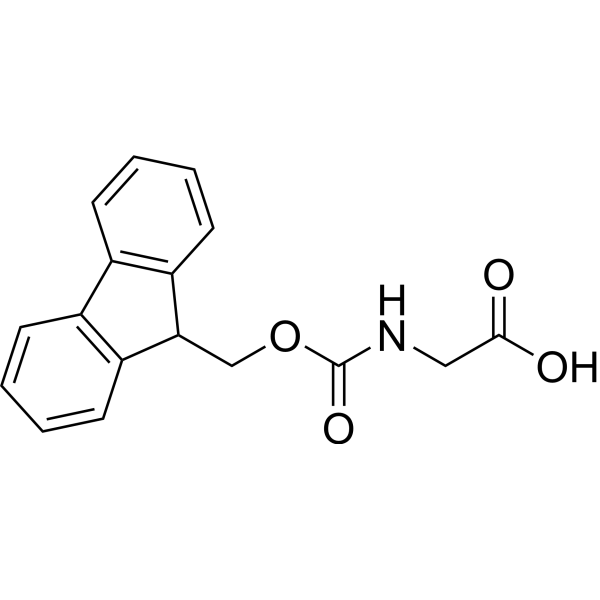
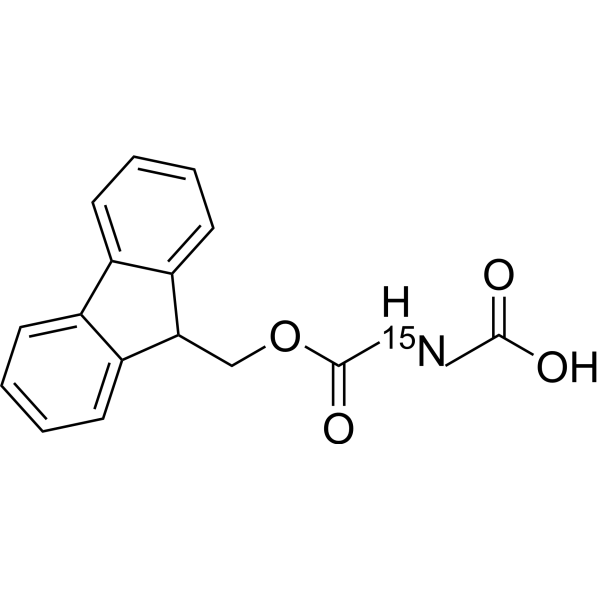
Fmoc-Gly-OH (Fmoc glycine) is a Fmoc-protected glycine derivative, can be used for the synthesis of compounds .
|
-
-
- HY-I1111
-
-
-
- HY-19821
-
-
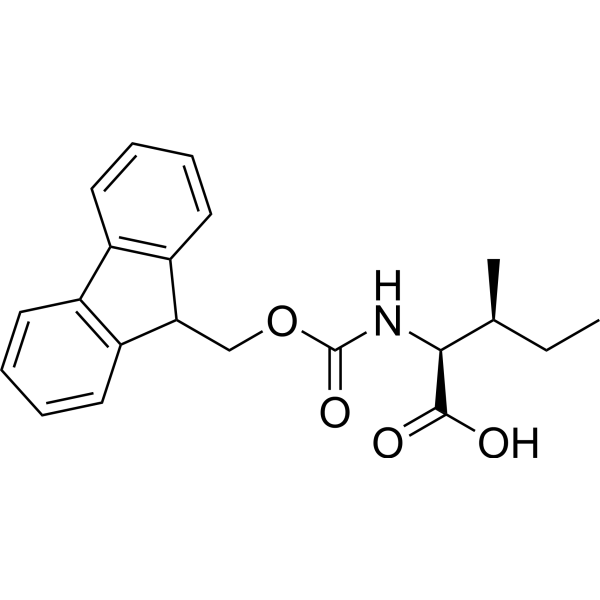
-
- HY-79647
-
|
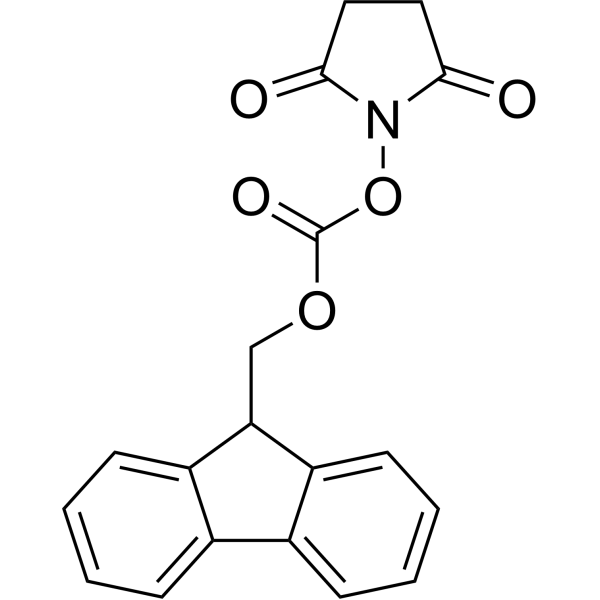
N-(fmoc-oxy)succinimide
|
Biochemical Assay Reagents
|
Others
|
|
Fmoc-OSu (N-(Fmoc-oxy)succinimide) is an acylating agent that targets amino groups (-NH2). It can selectively protect the amino groups of amino acids by covalently binding with primary or secondary amines through nucleophilic substitution reactions. Fmoc-OSu forms a stable amide bond with the amino group to avoid side reactions of the amino group in peptide synthesis. It can also be used as a fluorescent labeling reagent to react with glycosylamines for efficient labeling of N-sugar chains. Fmoc-OSu can be used as an Fmoc protection strategy in peptide synthesis, and as a fluorescent labeling and analysis method for N-sugar chains .
|
-
-
- HY-W007713
-
|
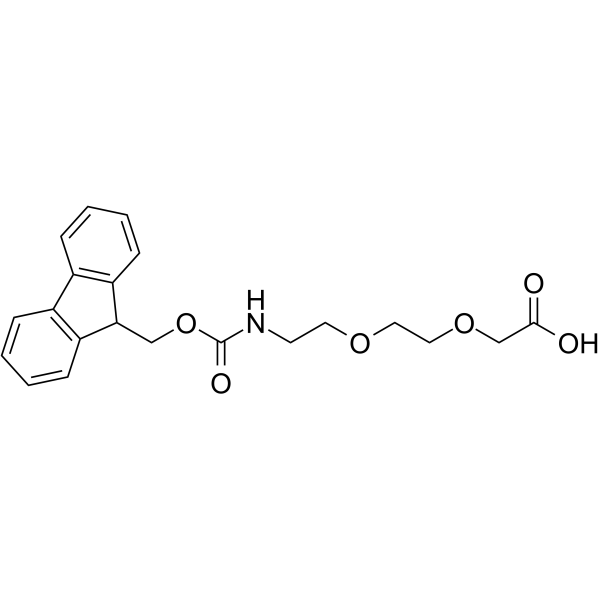
fmoc-NH-PEG2-CH2COOH
|
ADC Linker
PROTAC Linkers
|
Cancer
|
|
Fmoc-8-amino-3,6-dioxaoctanoic acid (Fmoc-NH-PEG2-CH2COOH) is a cleavable ADC linker used in the synthesis of antibody-drug conjugates (ADCs). Fmoc-8-amino-3,6-dioxaoctanoic acid is also a PEG-based PROTAC linker that can be used in the synthesis of PROTACs .
|
-
-
- HY-W008034
-
|
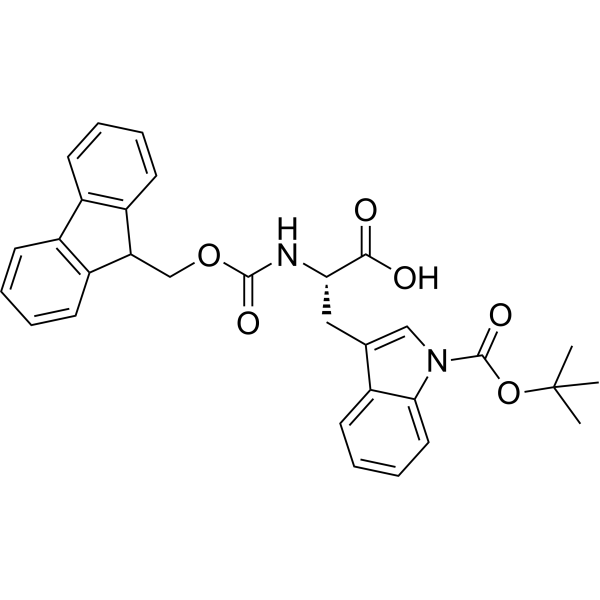
fmoc-L-Trp(Boc)-OH
|
Amino Acid Derivatives
|
Cancer
|
|
Fmoc-Trp(Boc)-OH (Fmoc-L-Trp(Boc)-OH) is an amino acid derivative with protective groups. Fmoc-Trp(Boc)-OH can self-assemble into stable and pH-responsive spherical nanoparticles, which can load and release bioactive molecules, with good biocompatibility and high cell uptake rate. Fmoc-Trp(Boc)-OH can be used in research on drug delivery .
|
-
-
- HY-W002327
-
-
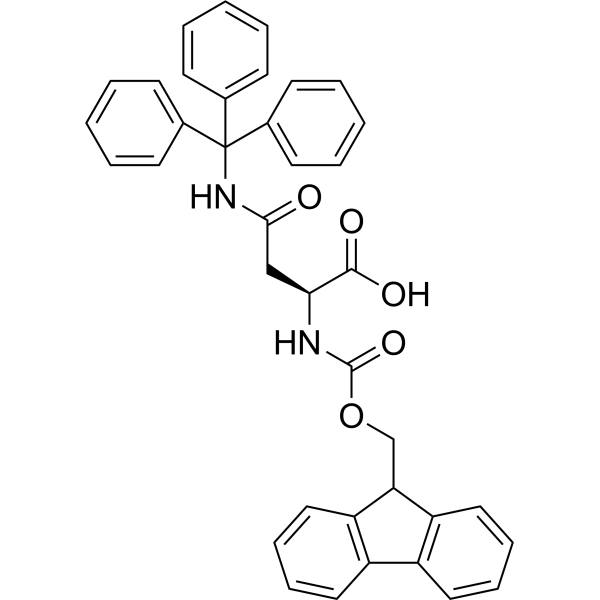
-
- HY-P4198
-
|
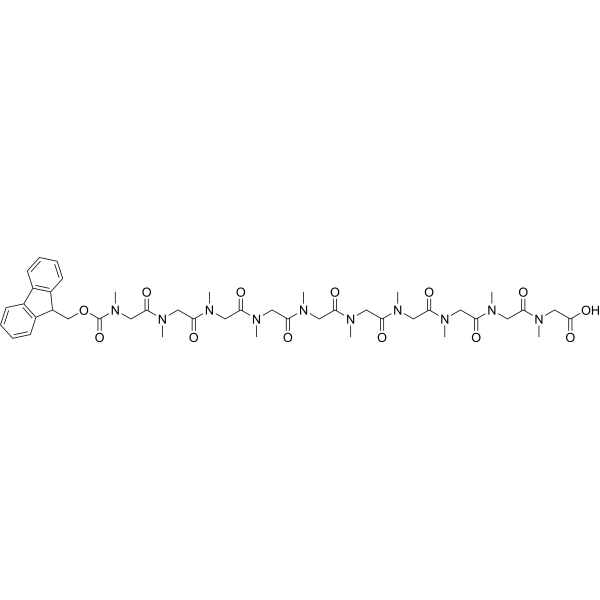
fmoc-Sar10
|
Biochemical Assay Reagents
|
Others
|
|
Fmoc-N(Me)-Sar10 (Fmoc-Sar10) is an Fmoc-protected derivative of a methylated sarcosine decamer, which supports cell adhesion, proliferation, and maintenance of cell phenotype. Fmoc-N(Me)-Sar10 is primarily used in peptide synthesis to introduce enzymatically stable spacer sequences. By mimicking the extracellular matrix (ECM), Fmoc-N(Me)-Sar10 provides a 3D growth microenvironment for cells and is mainly used in tissue engineering and 3D cell culture, particularly suitable for in vitro culture studies of cells such as chondrocytes .
|
-
-
- HY-156848
-
|
|
Drug-Linker Conjugates for ADC
|
Cancer
|
|
Fmoc-GGFG-DXd is a drug-linker conjugate for ADC. Fmoc-GGFG-DXd contains a ADC linker Fmoc-GGFG and a DNA topoisomerase I inhibitor DXd (HY-13631D) .
|
-

-
- HY-W010893
-
-
-
- HY-W013081
-
|
|
Amino Acid Derivatives
|
Others
|
|
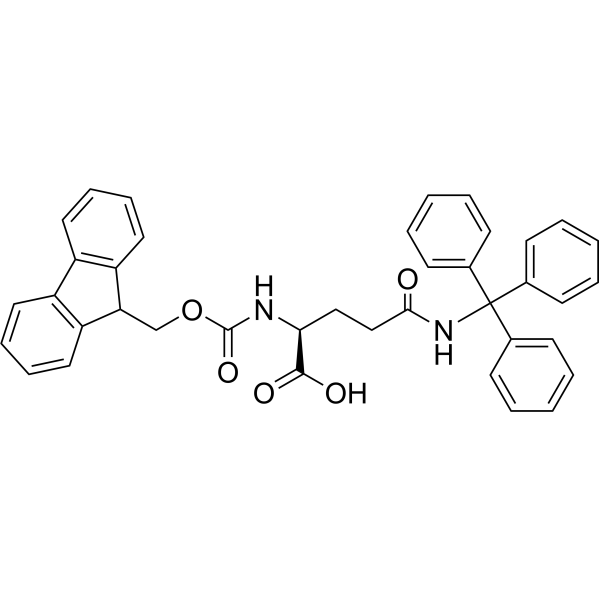
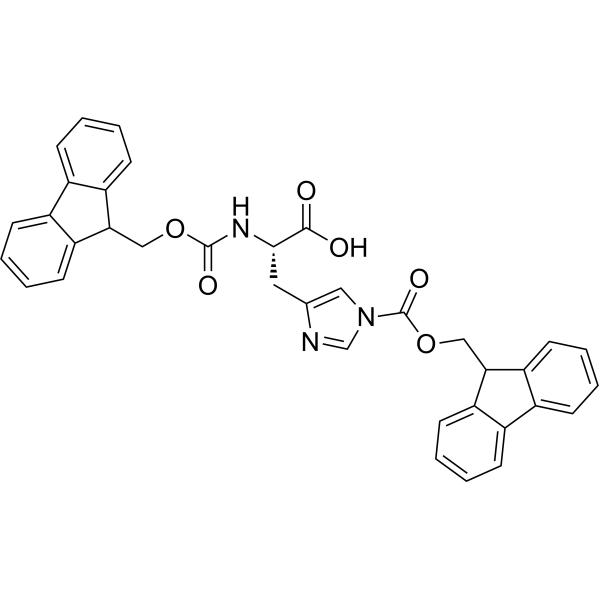
Fmoc-Gln(Trt)-OH is a glutamine derivative containing amine protecting group Fmoc. Fmoc-Gln(Trt)-OH can be used in solid-phase peptide synthesis .
|
-
-
- HY-W008386
-
-
-
- HY-W007052
-
-
-
- HY-W011020
-
-
-
- HY-W048688
-
|
|
Amino Acid Derivatives
|
Others
|
|
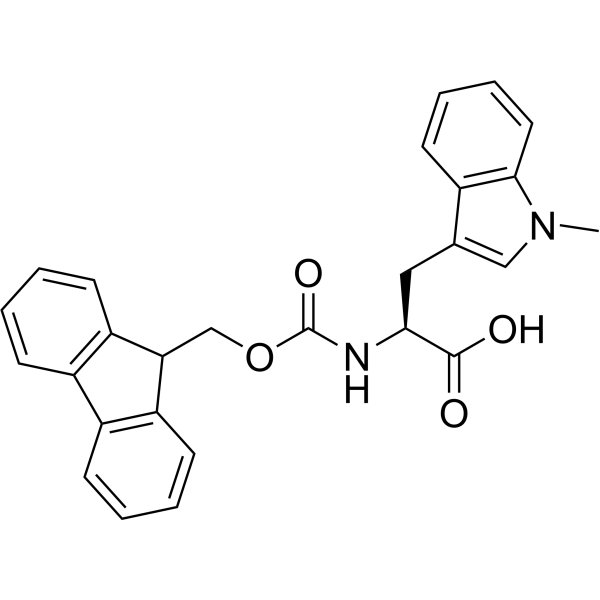
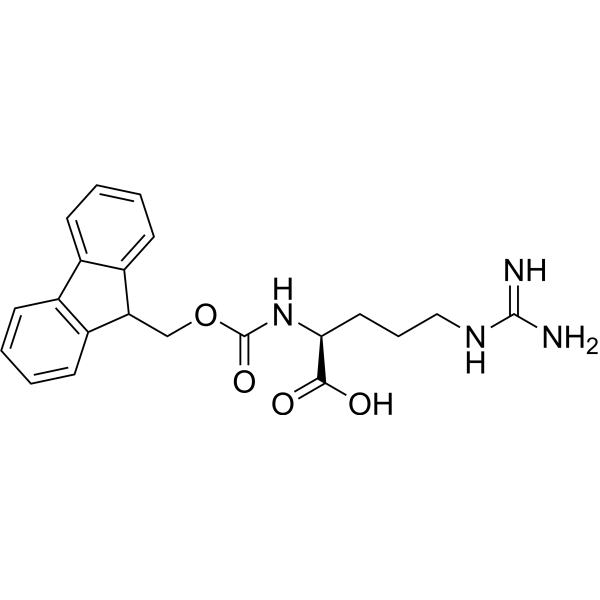
Fmoc-Trp(Me)-OH is an amino acid derivative. Fmoc-Trp(Me)-OH is formed by introducing a methyl group onto the nitrogen atom (N-1 position) of the indole ring of tryptophan (Trp) and protecting the amino group with Fmoc (9-fluorenylmethyloxycarbonyl). Fmoc-Trp(Me)-OH can be used in the synthesis of proteins or peptides .
|
-
-
- HY-W013750
-
-
-
- HY-W072147
-
|
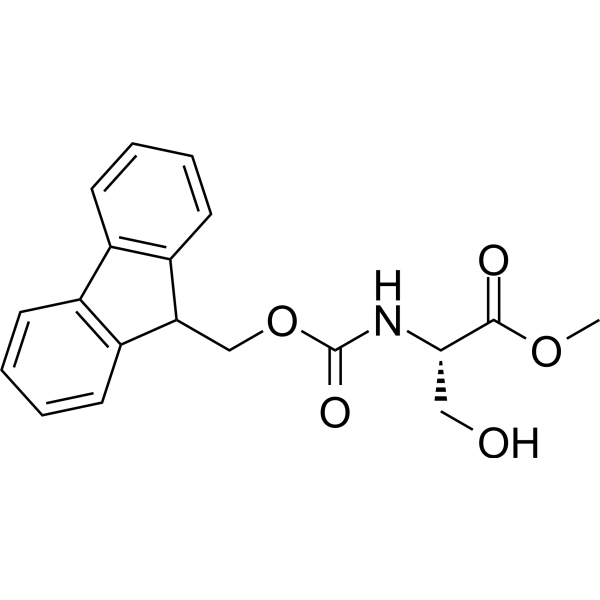
fmoc-L-Ser-OMe
|
Amino Acid Derivatives
Drug Intermediate
|
Others
|
|
Fmoc-Ser-OMe (Fmoc-L-Ser-OMe) is an Fmoc-protected L-serine methyl ester and also a solid-phase peptide synthesis intermediate. Fmoc-Ser-OMe is linked to Ellman resin via its hydroxyl side chain. Fmoc-Ser-OMe is used in peptide synthesis .
|
-
-
- HY-Y1250S2
-
|
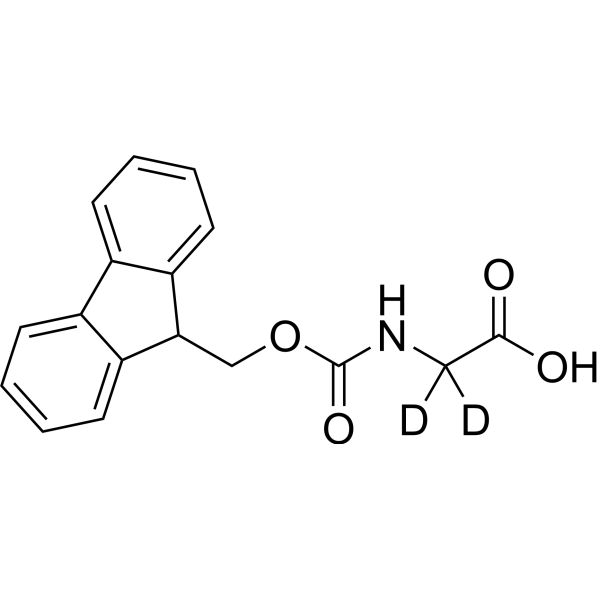
fmoc-glycine-d2
|
Isotope-Labeled Compounds
Amino Acid Derivatives
|
Others
|
|
Fmoc-Gly-OH-2,2-d2 (Fmoc-glycine-2,2-d2) is the deuterium labeled Fmoc-Gly-OH (HY-Y1250). Fmoc-Gly-OH (Fmoc glycine) is a Fmoc-protected glycine derivative, can be used for the synthesis of compounds .
|
-
-
- HY-78933
-
|
|
Microtubule/Tubulin
ADC Payload
|
Cancer
|
|
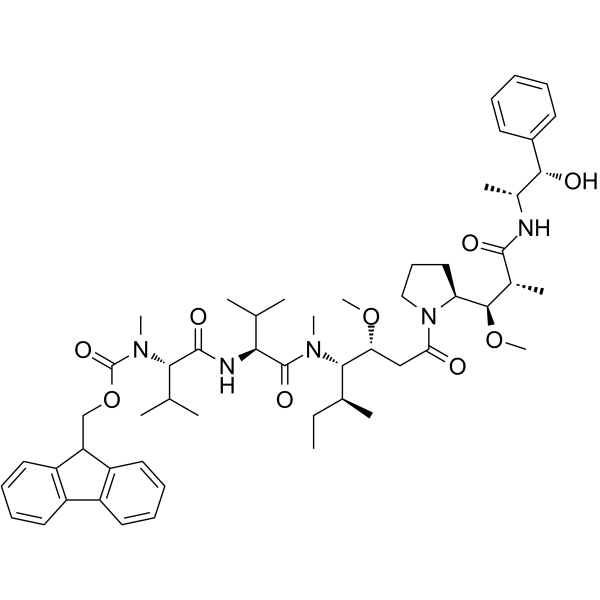
Fmoc-MMAE is a protective group-conjugated monomethyl auristatin E (MMAE), which is a potent tubulin inhibitor. Fmoc-MMAE can be used in the synthesis of ADC .
|
-
-
- HY-W041988
-
|
|
Bacterial
|
Infection
|
|
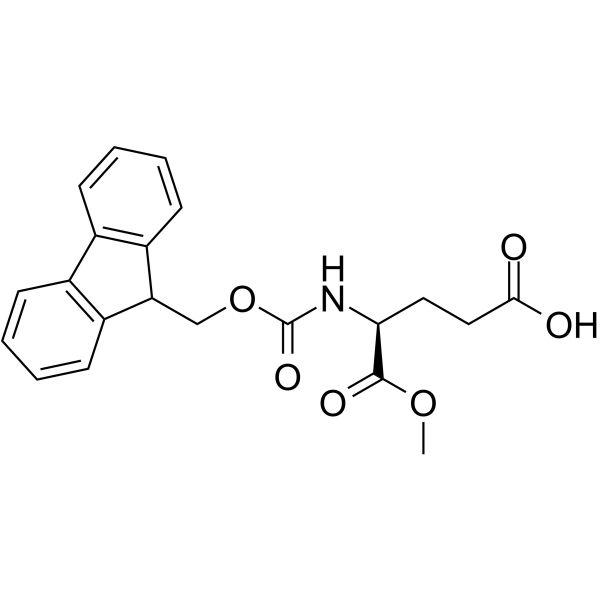
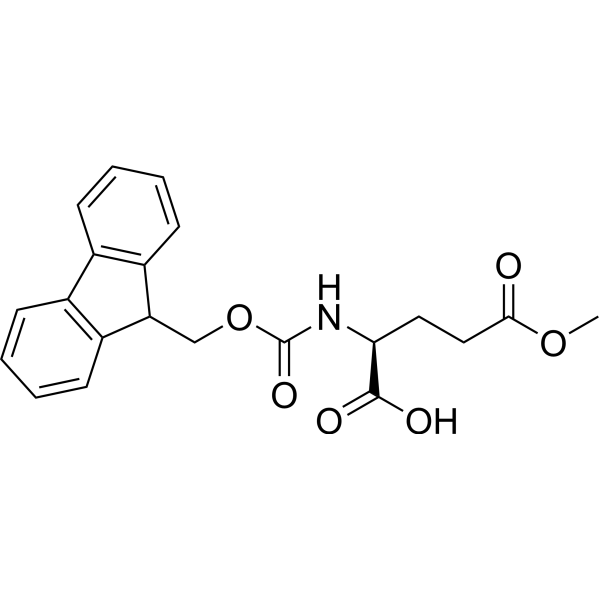
Fmoc-Glu-OMe is a glutamic acid derivative. Fmoc-Glu-OMe exhibits significant antibacterial activity and excellent gelation properties in silver nitrate (AgNO3) solution. Fmoc-Glu-OMe promotes wound healing in rat models and eliminates bacteria in MRSA-infected rat wound models. Fmoc-Glu-OMe can be used in studies related to wound infections and MRSA-infected wounds .
|
-
-
- HY-101064S3
-
|
|
PPAR
|
Metabolic Disease
|
|
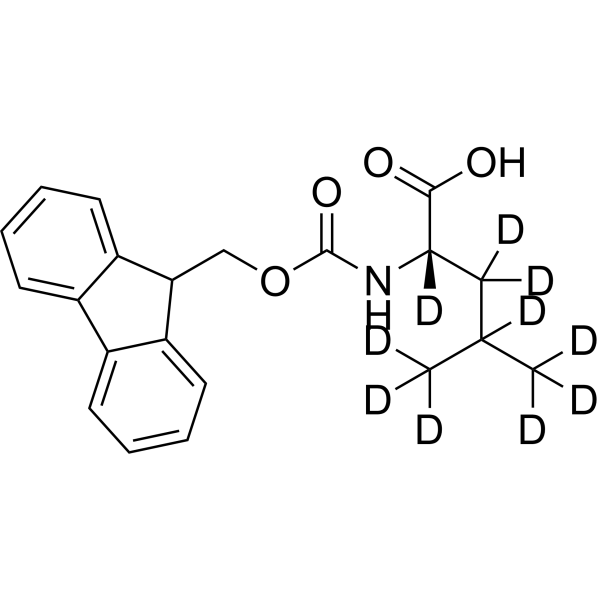
Fmoc-leucine-d10 is the deuterium labeled Fmoc-leucine. Fmoc-leucine is a selective PPARγ modulator. Fmoc-leucine activates PPARγ with a lower potency but a similar maximal efficacy than rosiglitazone. Fmoc-leucine improves insulin sensitivity in normal, diet-induced glucose-intolerant, and in diabetic db/db mice. Fmoc-leucine has a lower adipogenic activity .
|
-
-
- HY-W010895
-
-
-
- HY-W048682
-
|
|
Amino Acid Derivatives
|
Others
|
|
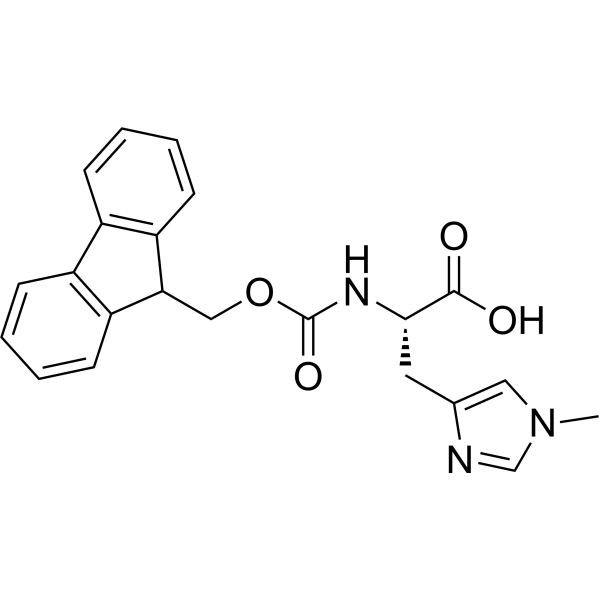
Fmoc-1-methyl-L-histidine is an Fmoc-protected amino acid as well as an amino acid-containing building block. Fmoc-1-methyl-L-histidine is applicable to the generation of the ε-nitrogen-coordinated copper center in nitrite copper reductase. It also serves as an intermediate in peptide synthesis .
|
-
-
- HY-W008064
-
|
fmoc-L-Citrulline
|
Amino Acid Derivatives
|
Cancer
|
|
Fmoc-Cit-OH (Fmoc-L-Citrulline) is an amino acid derivative with an Fmoc protecting group, which can be used to synthesize a degradable ADC linker composed of a valine-citrulline (Val-Cit) motif .
|
-

-
- HY-W425682
-
|
|
Drug Intermediate
|
Others
|
|
Fmoc-L-Penicillamine is formed by the connection of the Fmoc protecting group and L-Penicillamine through a specific chemical bond. Fmoc-L-Penicillamine plays an important role in organic synthesis, especially in the field of peptide synthesis .
|
-

-
- HY-W009118
-
|
|
Amino Acid Derivatives
|
Others
|
|
Fmoc-5-Ava-OH is an amino acid derivative with an Fmoc protecting group, which can be used to synthesize fatty acid-based dimeric peptides with PSD-95 inhibitory activity .
|
-

-
- HY-P11295
-
|
|
ADC Linker
|
Cancer
|
|
Fmoc-GGFG-PAB-PNP is an ADC linker used in the synthesis of antibody-drug conjugates (ADC) .
|
-

-
- HY-W004101
-
-

-
- HY-W022255
-
|
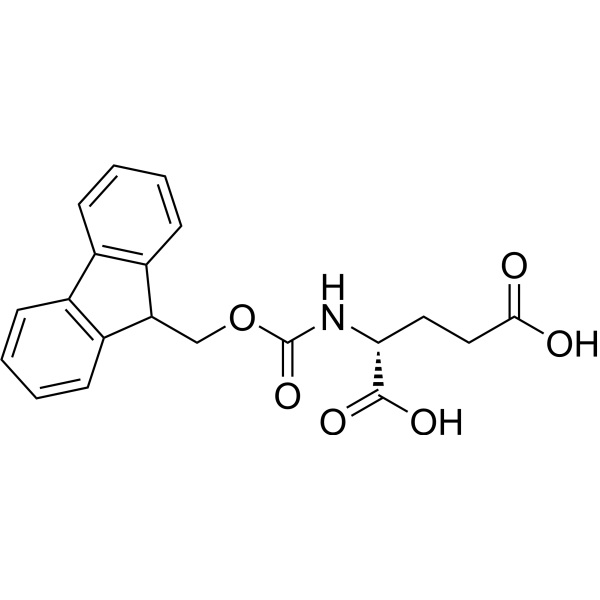
D-fmoc-glutamic acid
|
Amino Acid Derivatives
|
Others
|
|
Fmoc-D-Glu-OH (D-Fmoc-glutamic acid) is a derivative of glutamate, can be used to prepare supramolecular hydrogels .
|
-
-
- HY-W111383
-
|
(R)-1-fmoc-3-pyrrolidinecarboxylic acid
|
Drug Intermediate
|
Others
|
|
Fmoc-D-β-Pro-OH ((R)-1-Fmoc-3-pyrrolidinecarboxylic acid) is a drug intermediate for synthesis of various active compounds.
|
-

-
- HY-W048674
-
|
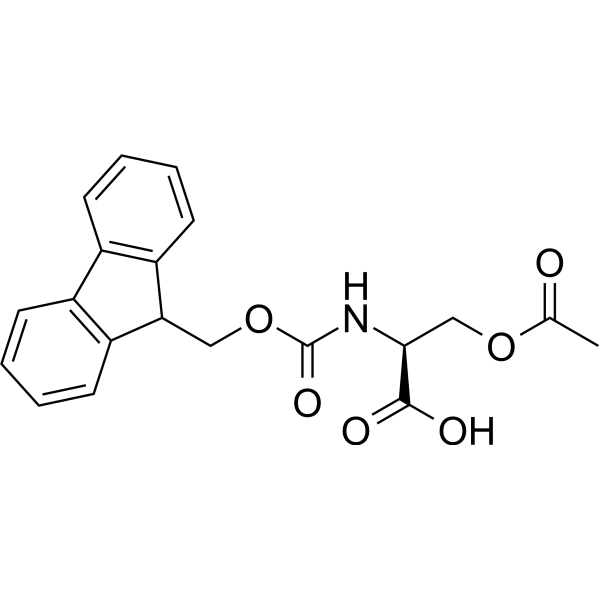
fmoc-O-acetyl-L-serine
|
Amino Acid Derivatives
|
Infection
|
|
Fmoc-Ser(Ac)-OH (Fmoc-O-acetyl-L-serine) is a Serine derivative. Fmoc-Ser(Ac)-OH can be used for the preparation of broad-spectrum coronavirus membrane fusion inhibitor .
|
-
-
- HY-W142161
-
|
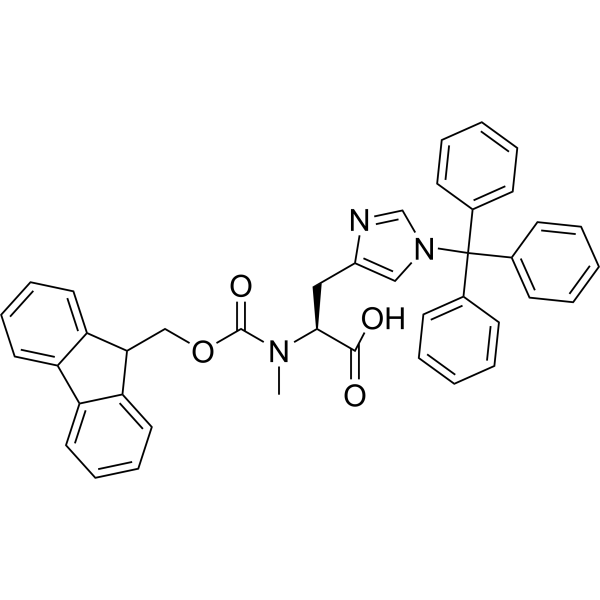
fmoc-MeHis(Trt)-OH
|
Amino Acid Derivatives
|
Others
|
|
Fmoc-N-Me-His(Trt)-OH (Fmoc-MeHis(Trt)-OH) is an Amino acid derivative containing a carboxyl group. Fmoc-N-Me-His(Trt)-OH can be used for the synthesis of Fmoc-MeHis (Trt)-Leu-OH and N-methyl peptides .
|
-
-
- HY-79255
-
|
|
ADC Payload
Microtubule/Tubulin
|
Cancer
|
|
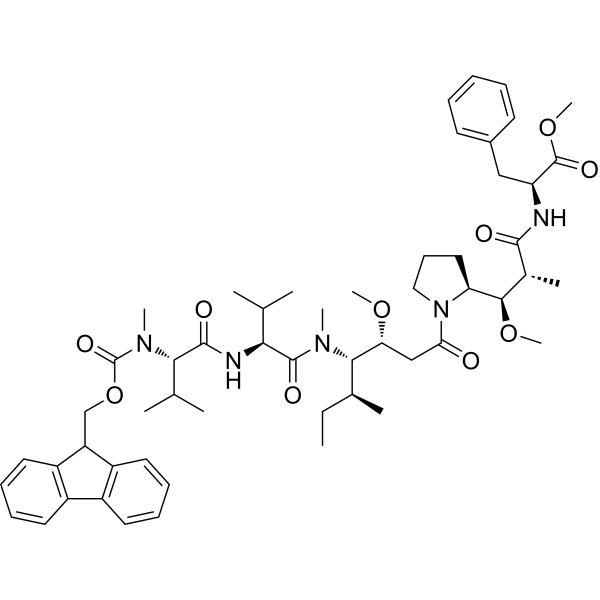
Fmoc-MMAF-OMe is an anticancer agent and tubulin polymerization inhibitor with an Fmoc protecting group. The active ingredient of Fmoc-MMAF-OMe, MMAF (HY-15579), is the cytotoxic (ADC Cytotoxin) component of classic antibody drug conjugates (ADCs) .
|
-
-
- HY-22295
-
|
|
Biochemical Assay Reagents
|
Others
|
|
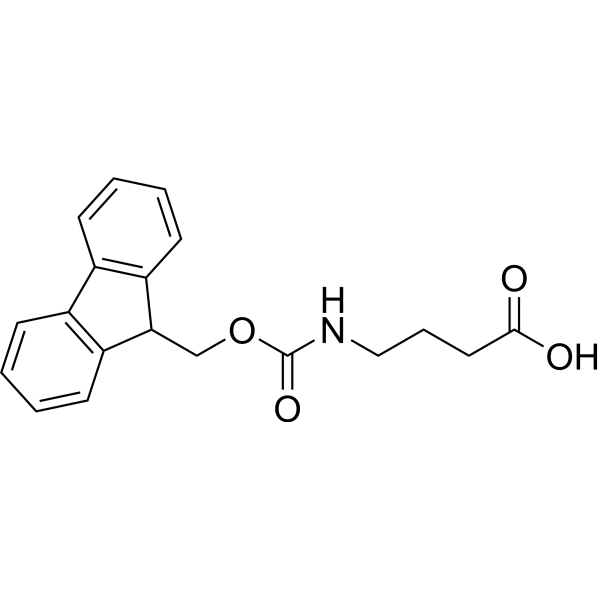
Fmoc-4-aminobutanoic acid is a biochemical reagent that can be used as a biological material or organic compound for life science related research.
|
-
-
- HY-W013083
-
-
-
- HY-Y1250S
-
-
-
- HY-164732
-
|
|
Amino Acid Derivatives
Biochemical Assay Reagents
|
Others
|
|
Fmoc-Lys (DOTA)-OH is an Fmoc-protected Lysine derivative with metal-chelating properties, containing the macrocyclic chelator DOTA. Fmoc-Lys (DOTA)-OH undergoes metallation with Tb or Lu. Fmoc-Lys (DOTA)-OH utilizes metal coordination to protect the carboxyl groups of DOTA. Fmoc-Lys (DOTA)-OH can be used in solid-phase peptide synthesis research .
|
-

-
- HY-W048722
-
|
fmoc-D-2-Thienylalanine
|
Amino Acid Derivatives
|
Others
|
|
Fmoc-D-Thi-OH (Fmoc-D-2-Thienylalanine) is an amino acid derivative with an Fmoc protecting group, which can be used to synthesize AS-Z-P with thrombin inhibitory activity .
|
-

-
- HY-103664A
-
|
|
Amino Acid Derivatives
|
Cancer
|
|
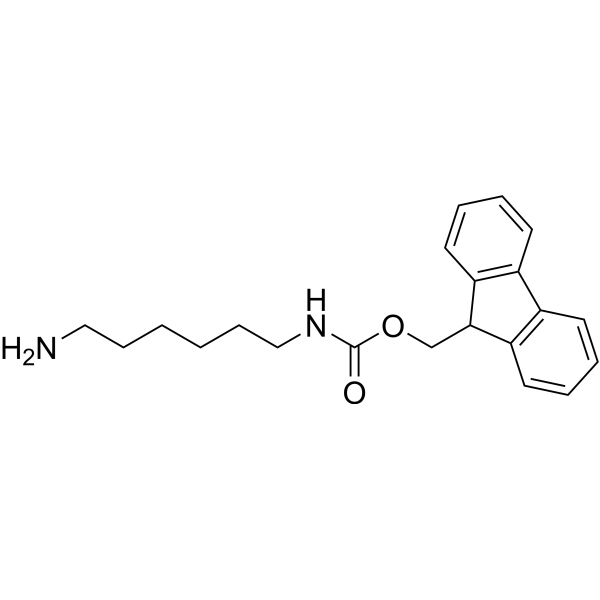
Fmoc-1,6-diaminohexane hydrochloride is the hydrochloride form of Fmoc-1,6-diaminohexane (HY-103664). Fmoc-1,6-diaminohexane hydrochloride conjugates with monoclonal antibody, and exhibits anticancer activity against p21-deficient cancer .
|
-

-
- HY-W048209
-
|
|
Amino Acid Derivatives
|
Others
|
|
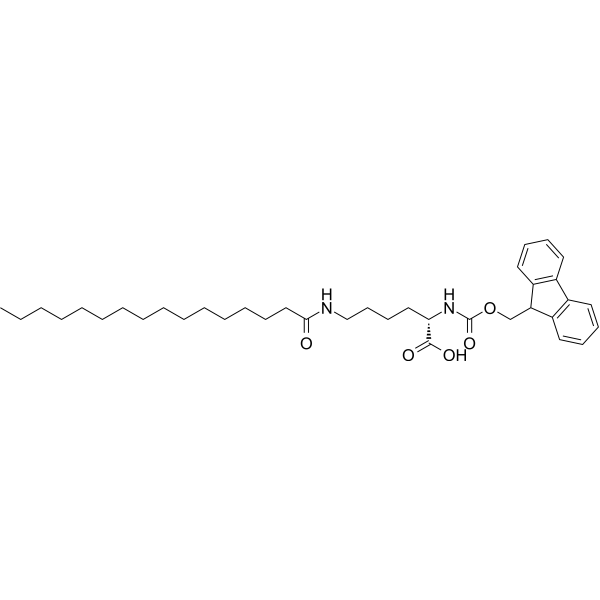
Fmoc-Lys(Palmitoyl)-OH is a Fmoc-amino acid with long alkyl chains. Fmoc-Lys(Palmitoyl)-OH can be used for peptide synthesis .
|
-
-
- HY-W009056
-
|
|
PROTAC Linkers
|
Cancer
|
|
Fmoc-7-amino-heptanoic acid is an alkane chain with terminal Fmoc-protected amine and carboxylic acid groups. Fmoc-7-amino-heptanoic acid can be used as a PROTAC linker in the synthesis of PROTACs. The Fmoc group can be deprotected under basic condition to obtain the free amine which can be used for further conjugations. The terminal carboxylic acid can react with primary amine groups in the presence of activators (e.g. EDC, or HATU) to form a stable amide bond.
|
-

-
- HY-W019682
-
|
|
Biochemical Assay Reagents
|
Cancer
|
|
Fmoc-FF is a building block. Fmoc-FF-prepared hydrogels and nanogels selectively deliver Dexamethasone (HY-14648) to leukemia cells .
|
-

-
- HY-I1111S
-
-
-
- HY-148339
-
|
|
Drug-Linker Conjugates for ADC
|
Others
|
|
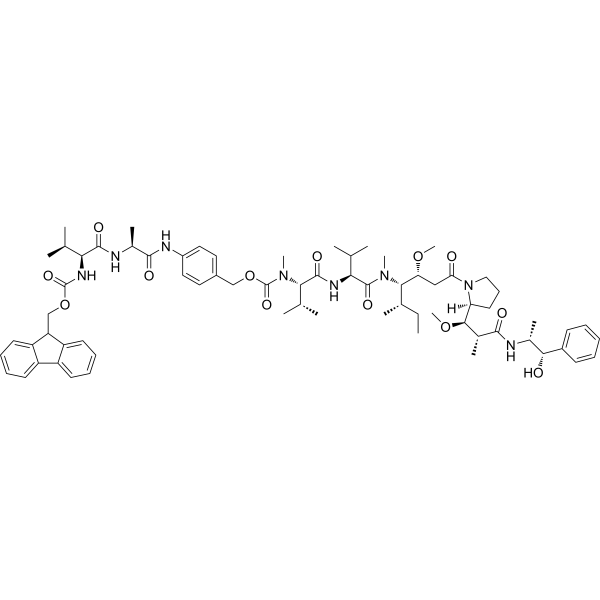
Fmoc-VAP-MMAE is a agent-linker conjugates for ADC. Fmoc-VAP-MMAE consists of an ADC linker and a tubulin inhibitor MMAE (HY-15162), with a protective Fmoc group .
|
-
-
- HY-W013751
-
|
N-fmoc-glycyl-L-valine
|
Drug Intermediate
|
Others
|
|
Fmoc-Gly-Val-OH (N-Fmoc-glycyl-L-valine) is a glycyl valine derivative, can be used for the synthesis of drugs or other compounds .
|
-

-
- HY-79131S5
-
-
-
- HY-W010756
-
|
|
Biochemical Assay Reagents
|
Others
|
|
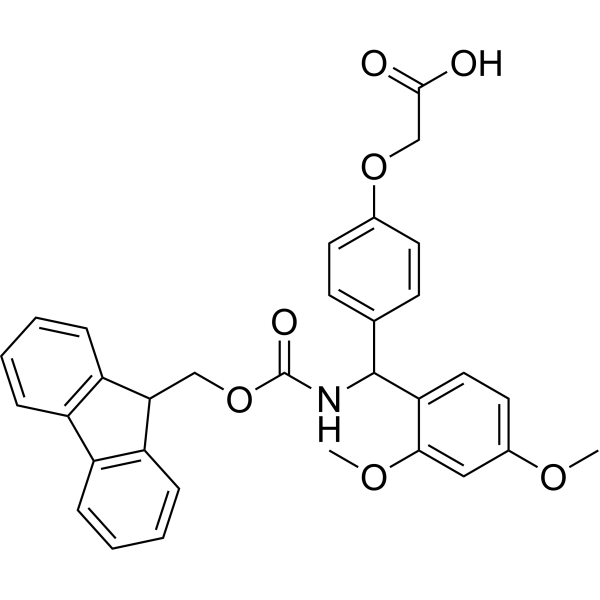
FMOC-AM is a derivative of aminomethyl resin. FMOC-AM provides a solid-phase carrier basis for peptide chain synthesis and can be used in solid-phase peptide synthesis .
|
-
-
- HY-P5045
-
-
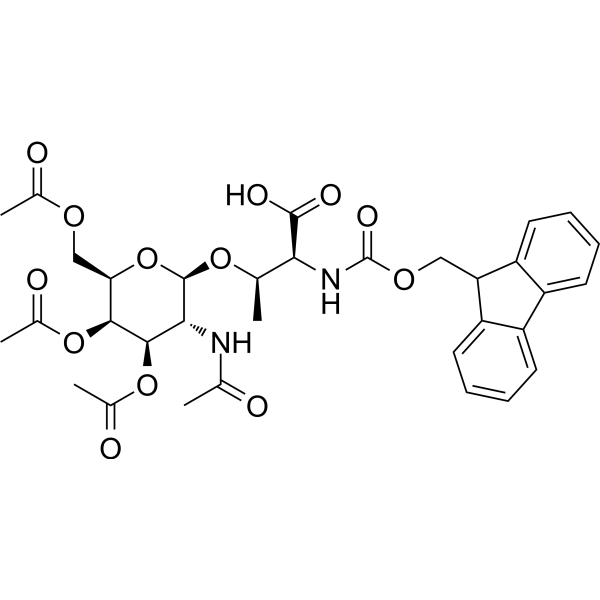
- HY-W088805
-
|
fmoc-3-carboxypiperidine
|
Amino Acid Derivatives
|
Others
|
|
Fmoc-NIP-OH (Fmoc-3-carboxypiperidine) is a Fmoc-protected amino acid derivative commonly used in peptide synthesis .
|
-

- HY-W052227
-
-
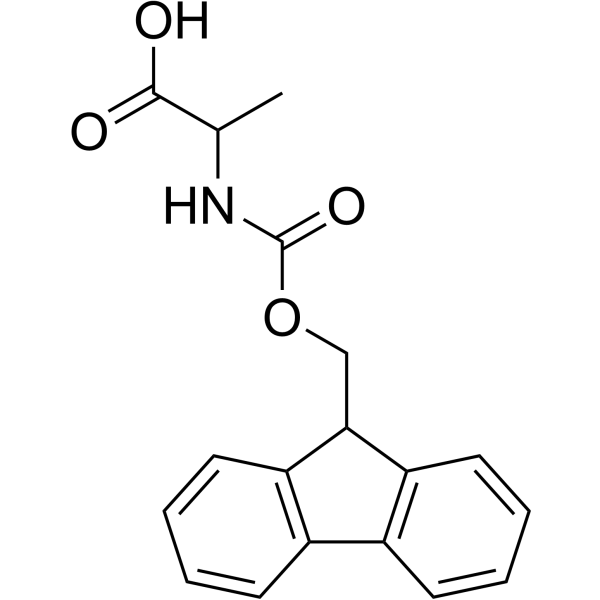
- HY-W414638
-
|
N-fmoc-L-proline N-succinimidyl ester
|
Drug Intermediate
|
Others
|
|
Fmoc-pro-osu (N-Fmoc-L-proline N-succinimidyl esterl) is a drug intermediate for synthesis of various active compounds.
|
-

- HY-W008963
-
|
Nα-fmoc-D-tryptophan; fmoc-D-Trp-OH
|
Biochemical Assay Reagents
|
Others
|
|
Fmoc-D-Trp-OH (Nα-Fmoc-D-tryptophan) is a biochemical reagent that can be used as a biological material or organic compound for life science related research .
|
-
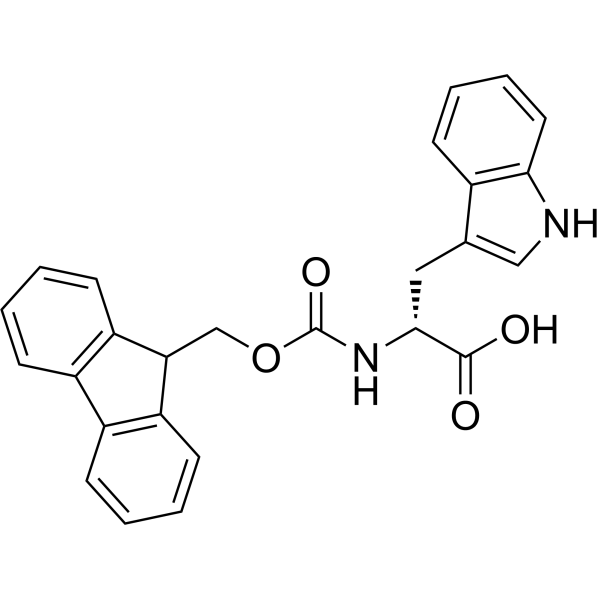
- HY-W048718
-
|
fmoc-D-α-t-butylglycine
|
Amino Acid Derivatives
|
Others
|
|
Fmoc-D-Tle-OH (Fmoc-D-α-t-butylglycine) is an amino acid derivative with an Fmoc protecting group, which can be used to synthesize chelating agents that can form a single stereoisomer-enriched form after coordination with metal centers .
|
-

- HY-W013162
-
-
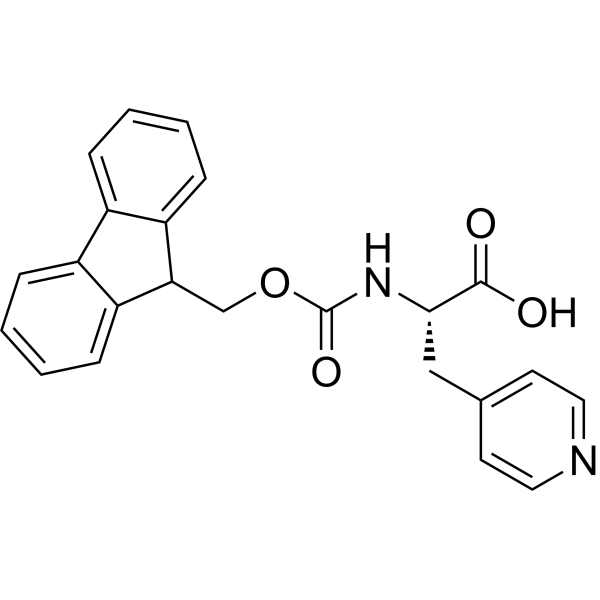
- HY-19821S
-
-
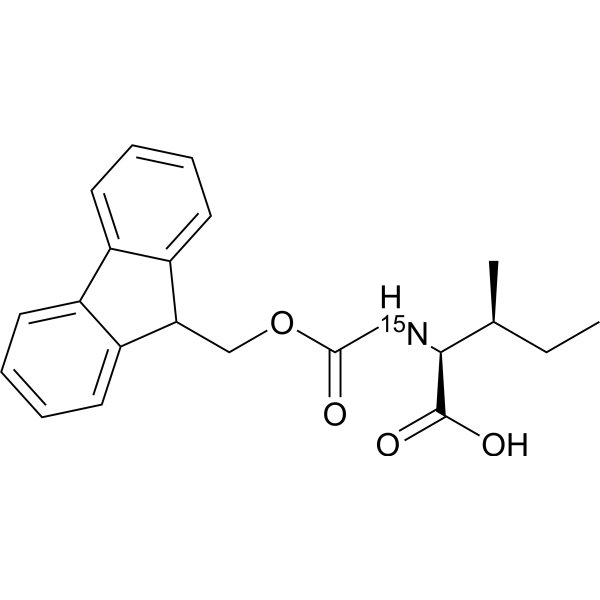
- HY-W097054
-
|
|
Amino Acid Derivatives
|
Others
|
|
Fmoc-L-cysteic acid is an amino acid derivative with an Fmoc protecting group, which can be used to synthesize triarylsulfonium compounds for radiolabeling of peptides .
|
-

- HY-W022223
-
-
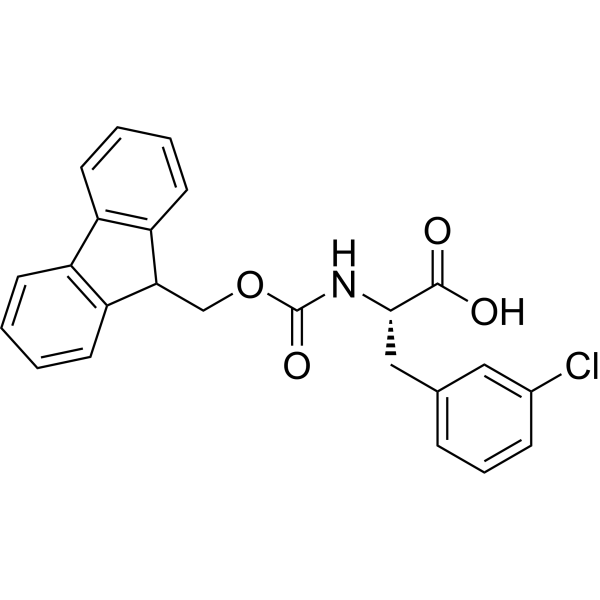
- HY-W141765
-
|
|
Biochemical Assay Reagents
|
Others
|
|
Fmoc-Cit-PAB-OH is a peptide linker containing an Fmoc-protected amine and citrulline residue. The Fmoc group can be deprotected under basic conditions to obtain the free amine, which can be used for further conjugations.
|
-

- HY-W011021
-
-
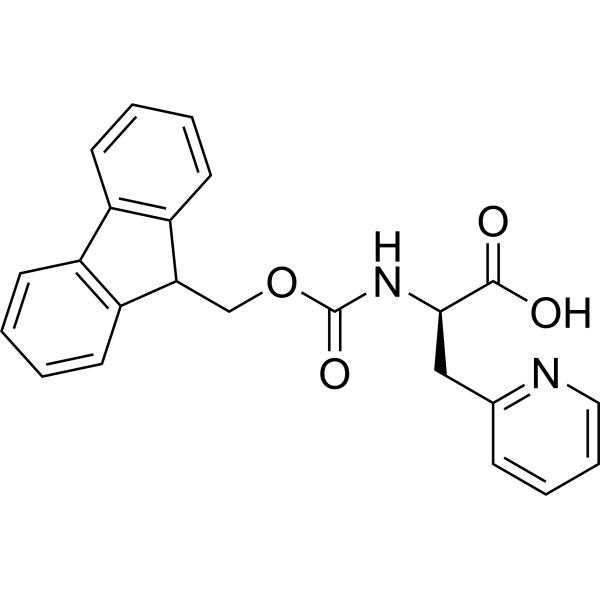
- HY-W1050525
-
|
|
ADC Linker
|
Cancer
|
|
Fmoc-Val-Ala-Gly (compound 58a) is a cleavable ADC linker, can be conjugated to the antibody Trastuzumab (HY-P9907) to form an antibody-drug conjugate (ADC) .
|
-

- HY-Y1250S3
-
-
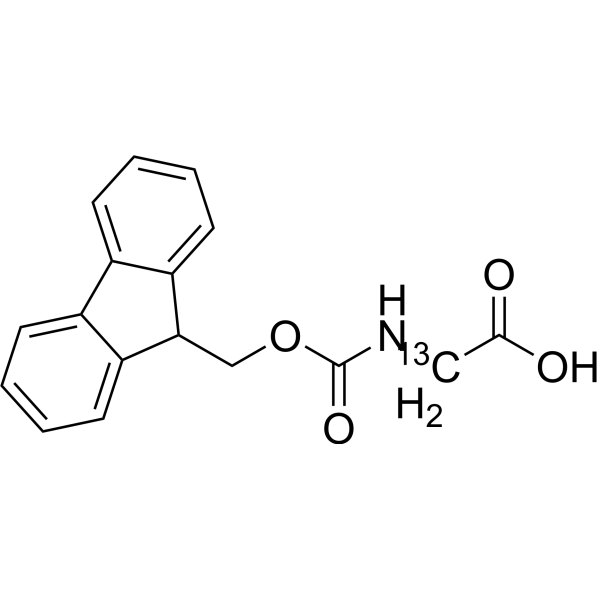
- HY-Y1250S4
-
|
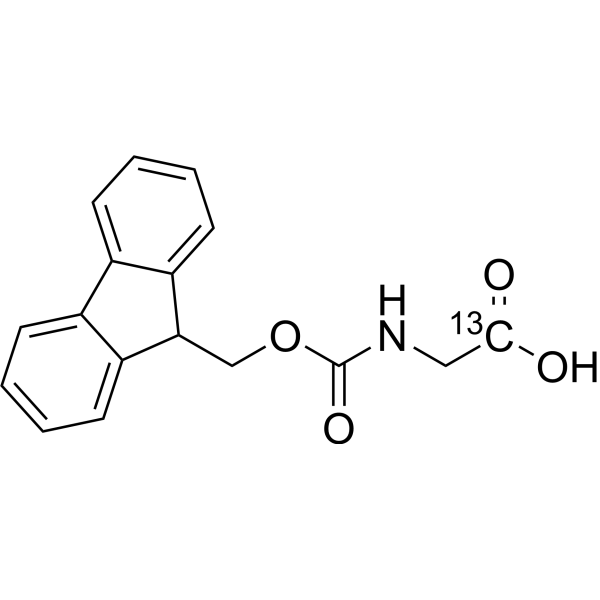
fmoc-glycine-1-13C
|
Isotope-Labeled Compounds
Amino Acid Derivatives
|
Others
|
|
Fmoc-Gly-OH-1- 13C (Fmoc-glycine-1- 13C) is a 13C-labeled Fmoc-Gly-OH (HY-Y1250). Fmoc-Gly-OH (Fmoc glycine) is a Fmoc-protected glycine derivative, can be used for the synthesis of compounds .
|
-
- HY-W097110
-
|
|
PROTAC Linkers
|
Cancer
|
|
Fmoc-11-aminoundecanoic acid can be used as a PROTAC linker in the synthesis of PROTACs and other conjugation applications. Fmoc-11-aminoundecanoic acid is an alkane chain with terminal Fmoc-protected amine and carboxylic acid groups. The Fmoc group can be deprotected under basic condition to obtain the free amine which can be used for further conjugations. The terminal carboxylic acid can react with primary amine groups in the presence of activators (e.g. EDC, or HATU) to form a stable amide bond.
|
-

- HY-Y1250S5
-
|
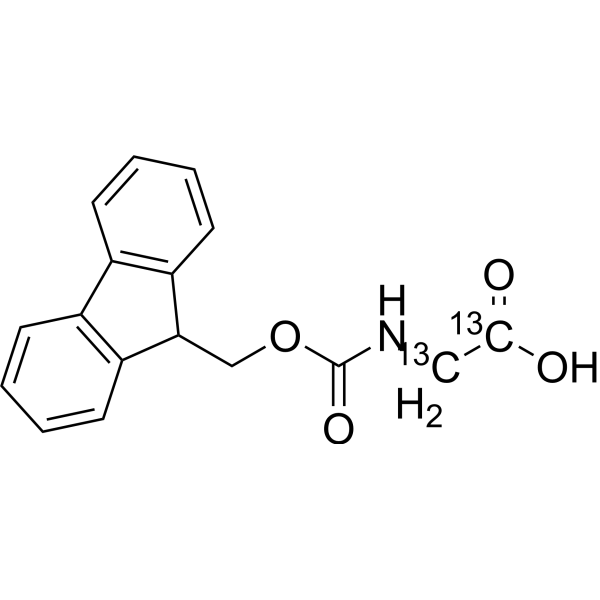
fmoc-glycine-13C2
|
Isotope-Labeled Compounds
Amino Acid Derivatives
|
Others
|
|
Fmoc-Gly-OH- 13C2 (Fmoc-glycine- 13C2) is a 13C-labeled Fmoc-Gly-OH (HY-Y1250). Fmoc-Gly-OH (Fmoc glycine) is a Fmoc-protected glycine derivative, can be used for the synthesis of compounds .
|
-
- HY-I1111S4
-
-
- HY-78921R
-
|
|
Reference Standards
ADC Linker
|
Cancer
|
|
Fmoc-3VVD-OH (Standard) is the analytical standard of Fmoc-3VVD-OH (HY-78921). This product is intended for research and analytical applications. Fmoc-3VVD-OH is a cleavable ADC linker used in the synthesis of antibody-drug conjugates (ADCs).
|
-

- HY-159135
-
-

- HY-I1111S1
-
-
- HY-I1129
-
|
|
Isotope-Labeled Compounds
ADC Linker
|
Cancer
|
|
Fmoc-3VVD-OH-d8 is a deuterium labeled Fmoc-3VVD-OH (HY-78921). Fmoc-3VVD-OH is a cleavable ADC linker used in the synthesis of antibody-drug conjugates (ADCs) .
|
-

- HY-W338516
-
|
|
Amino Acid Derivatives
|
Others
|
|
Fmoc-L-Homoarginine hydrochloride is a derivative of amino acid with protecting groups. Fmoc-L-Homoarginine hydrochloride can be used for synthesis of homoarginine containing peptide .
|
-

- HY-174961
-
|
fmoc-NH-PEG1000-Mal
|
Biochemical Assay Reagents
|
Others
|
|
Fmoc-PEG1000-Maleimide (Fmoc-NH-PEG1000-Mal) is a PEG derivative with an Fmoc protecting group and a Maleimide (HY-W007324) reactive group. Fmoc is a commonly used amino protecting group that protects the amino group from unwanted reactions until it is removed for a specific coupling reaction. Maleimide forms a stable thioether bond with sulfhydryl (-SH) groups. PEG modification can improve solubility and stability and reduce the immunogenicity of proteins and peptides .
|
-

- HY-174961C
-
|
fmoc-NH-PEG5000-Mal
|
Biochemical Assay Reagents
|
Others
|
|
Fmoc-PEG5000-Maleimide (Fmoc-NH-PEG5000-Mal) is a PEG derivative with an Fmoc protecting group and a Maleimide (HY-W007324) reactive group. Fmoc is a commonly used amino protecting group that protects the amino group from unwanted reactions until it is removed for a specific coupling reaction. Maleimide forms a stable thioether bond with sulfhydryl (-SH) groups. PEG modification can improve solubility and stability and reduce the immunogenicity of proteins and peptides .
|
-

- HY-177894
-
|
|
Drug Intermediate
|
Others
|
|
Fmoc-Asp(OMpe)-Cbz is a drug intermediate that can be used for the synthesis of Fmoc-Asp(OMpe)-OH.
|
-

- HY-79131S3
-
-
- HY-174949B
-
|
fmoc-NH-PEG3400-Thiol
|
Biochemical Assay Reagents
|
Others
|
|
FMOC-NH-PEG3400-SH (FMOC-NH-PEG3400-Thiol) is a PEG derivative with an Fmoc protecting group and a thiol (-SH) reactive group. The thiol group is a highly reactive chemical group that can react specifically with a variety of molecules to form stable covalent bonds. Fmoc is a commonly used amino protecting group that protects the amino group from unwanted reactions until it is removed when a specific coupling reaction is required.
|
-

- HY-W052227S
-
-
- HY-79128S2
-
-

- HY-W013780S2
-
-
- HY-P11504
-
|
|
Biochemical Assay Reagents
|
Others
|
|
Fmoc-Lys-Gly-Dopa-OH is a tripeptide. Fmoc-Lys-Gly-Dopa-OH forms coacervates in aqueous solution via phase separation. Fmoc-Lys-Gly-Dopa-OH coacervates, with the assistance of Fe 3+, provide a viable material to engineer the surface of mammalian cells .
|
-

- HY-P4613
-
|
|
Drug Derivative
Drug Intermediate
|
Others
|
|
Fmoc-D-allo-Thr-OH is a derivative of D-allothreonine (HY-W001959), which is commonly used as a building block in solid-phase peptide synthesis (SPPS) .
|
-

- HY-103664AR
-
|
|
Reference Standards
Others
|
Cancer
|
|
Fmoc-1,6-diaminohexane hydrochloride (Standard) is the analytical standard of Fmoc-1,6-diaminohexane hydrochloride (HY-103664A). This product is intended for research and analytical applications. Fmoc-1,6-diaminohexane hydrochloride is the hydrochloride form of Fmoc-1,6-diaminohexane (HY-103664). Fmoc-1,6-diaminohexane hydrochloride conjugates with monoclonal antibody, and exhibits anticancer activity against p21-deficient cancer .
|
-

- HY-W574398
-
|
|
Biochemical Assay Reagents
|
Others
|
|
Fmoc-Aeg-OH is a peptide nucleic acid (PNA) backbone intermediate and an Fmoc-protected carboxylic acid. Fmoc-Aeg-OH can be coupled with base acetic acids to synthesize Fmoc-protected PNA monomers, including those with modified bases .
|
-

- HY-W402665
-
|
fmoc-C(Bhoc)-Aeg-OH
|
Drug Intermediate
|
Metabolic Disease
|
|
Fmoc-PNA-T-OH (Fmoc-C (Bhoc)-Aeg-OH) is a Bhoc-protected peptide nucleic acid (PNA) monomer. Fmoc-PNA-T-OH is used in the research of type 2 diabetes (t2d) .
|
-

- HY-P11690
-
|
|
Biochemical Assay Reagents
|
Cancer
|
|
Fmoc-Aeg-OBn is a benzyl-protected N-(2-aminoethyl)-glycine PNA backbone derivative. Fmoc-Aeg-OBn serves as a key intermediate for the synthesis of Fmoc-protected PNA monomers with modified nucleobases. Fmoc-Aeg-OBn can be used to prepare PNA with unique physicochemical properties, which is suitable for antisense and gene diagnostic applications. Fmoc-Aeg-OBn is applicable to cancer-related research .
|
-

- HY-103664R
-
|
|
Amino Acid Derivatives
Reference Standards
|
Neurological Disease
Cancer
|
|
Fmoc-1,6-diaminohexane (Standard) is the analytical standard of Fmoc-1,6-diaminohexane (HY-103664). This product is intended for research and analytical applications. Fmoc-1,6-diaminohexane is an analog of Osw-1 which has the potential for Alzheimer's disease and cancer treatment from patent US 20140135279 A1.
|
-

- HY-138169
-
-

- HY-W479025
-
|
|
Biochemical Assay Reagents
|
Others
|
|
Fmoc-DODA hydrochloride is a linker with an Fmoc-protected amine and a terminal amine group. The Fmoc group can be deprotected under basic condition to obtain the free amine which can be used for further conjugations. The amino group is reactive with carboxylic acids, activated NHS esters, carbonyls (ketone, aldehyde) etc.
|
-

- HY-P11693
-
|
|
Drug Intermediate
|
Others
|
|
Fmoc-Aeg-OMe hydrochloride is a methyl ester derivative of Fmoc-protected aminoethylglycine and can be used fo polyamide nucleic acid synthesis .
|
-

- HY-W424255
-
|
|
Drug Intermediate
|
Others
|
|
Fmoc-Aeg-OMe is a methyl ester derivative of Fmoc-protected aminoethylglycine and can be used fo polyamide nucleic acid synthesis .
|
-

- HY-79648S
-
-
- HY-W009151S2
-
-

- HY-174961B
-
|
fmoc-NH-PEG3400-Mal
|
Biochemical Assay Reagents
|
Others
|
|
Fmoc-PEG3400-Maleimide (Fmoc-NH-PEG3400-Mal) is a PEG derivative with an Fmoc protecting group and a Maleimide (HY-W007324) reactive group. Fmoc is a commonly used amino protecting group that protects the amino group from unwanted reactions until it is removed for a specific coupling reaction. Maleimide forms a stable thioether bond with sulfhydryl (-SH) groups. PEG modification can improve solubility and stability and reduce the immunogenicity of proteins and peptides .
|
-

- HY-174961A
-
|
fmoc-NH-PEG2000-Mal
|
Biochemical Assay Reagents
|
Others
|
|
Fmoc-PEG2000-Maleimide (Fmoc-NH-PEG2000-Mal) is a PEG derivative with an Fmoc protecting group and a Maleimide (HY-W007324) reactive group. Fmoc is a commonly used amino protecting group that protects the amino group from unwanted reactions until it is removed for a specific coupling reaction. Maleimide forms a stable thioether bond with sulfhydryl (-SH) groups. PEG modification can improve solubility and stability and reduce the immunogenicity of proteins and peptides .
|
-

- HY-W800804
-
|
|
Biochemical Assay Reagents
|
Others
|
|
Fmoc-Ala-PAB-OH is a peptide linker containing an Fmoc-protected amine and an alanine residue. The Fmoc group can be deprotected under basic condition to obtain the free amine which can be used for further conjugations.
|
-

- HY-174949
-
|
fmoc-NH-PEG1000-Thiol
|
Biochemical Assay Reagents
|
Others
|
|
FMOC-NH-PEG1000-SH (FMOC-NH-PEG1000-Thiol) is a PEG derivative with an Fmoc protecting group and a thiol (-SH) reactive group. The thiol group is a highly reactive chemical group that can react specifically with a variety of molecules to form stable covalent bonds. Fmoc is a commonly used amino protecting group that protects the amino group from unwanted reactions until it is removed when a specific coupling reaction is required.
|
-

- HY-174949A
-
|
fmoc-NH-PEG2000-Thiol
|
Biochemical Assay Reagents
|
Others
|
|
FMOC-NH-PEG2000-SH (FMOC-NH-PEG2000-Thiol) is a PEG derivative with an Fmoc protecting group and a thiol (-SH) reactive group. The thiol group is a highly reactive chemical group that can react specifically with a variety of molecules to form stable covalent bonds. Fmoc is a commonly used amino protecting group that protects the amino group from unwanted reactions until it is removed when a specific coupling reaction is required.
|
-

- HY-174949C
-
|
fmoc-NH-PEG5000-Thiol
|
Biochemical Assay Reagents
|
Others
|
|
FMOC-NH-PEG5000-SH (FMOC-NH-PEG5000-Thiol) is a PEG derivative with an Fmoc protecting group and a thiol (-SH) reactive group. The thiol group is a highly reactive chemical group that can react specifically with a variety of molecules to form stable covalent bonds. Fmoc is a commonly used amino protecting group that protects the amino group from unwanted reactions until it is removed when a specific coupling reaction is required.
|
-

- HY-174949D
-
|
fmoc-NH-PEG10000-Thiol
|
Biochemical Assay Reagents
|
Others
|
|
FMOC-NH-PEG10000-SH (FMOC-NH-PEG10000-Thiol) is a PEG derivative with an Fmoc protecting group and a thiol (-SH) reactive group. The thiol group is a highly reactive chemical group that can react specifically with a variety of molecules to form stable covalent bonds. Fmoc is a commonly used amino protecting group that protects the amino group from unwanted reactions until it is removed when a specific coupling reaction is required.
|
-

- HY-W009204S8
-
-
- HY-P11697
-
|
|
Drug Intermediate
|
Others
|
|
Fmoc-PNA-maleimide-OH is a Fmoc-protected functionalized peptide nucleic acid monomer featuring a maleimide group for thiol-reactive conjugation. Fmoc-PNA-maleimide-OH can be used in constructing PNA conjugates for molecular assembly applications.
|
-

- HY-Y1250S1
-
|
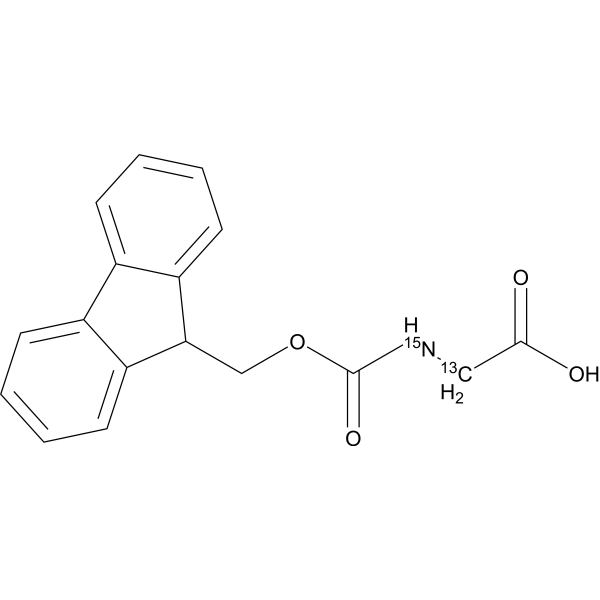
fmoc-glycine-2-13C,15N
|
Isotope-Labeled Compounds
Amino Acid Derivatives
|
Others
|
|
Fmoc-Gly-OH-2- 13C, 15N (Fmoc-glycine-2- 13C, 15N) is the 13C, 15N labeled Fmoc-Gly-OH (HY-Y1250). Fmoc-Gly-OH (Fmoc glycine) is a Fmoc-protected glycine derivative, can be used for the synthesis of compounds .
|
-
- HY-W097128
-
|
|
PROTAC Linkers
|
Cancer
|
|
Fmoc-12-aminododecanoic acid is an alkane chain with terminal Fmoc-protected amine and carboxylic acid groups. The compound can be used as a PROTAC linker in the synthesis of PROTACs. The Fmoc group can be deprotected under basic condition to obtain the free amine which can be used for further conjugations. The terminal carboxylic acid can react with primary amine groups in the presence of activators (e.g. EDC, or HATU) to form a stable amide bond.
|
-

- HY-160513
-
|
|
DNA/RNA Synthesis
|
Others
|
|
Fmoc‑PNA‑Abasic(Boc)‑OH is a synthetic peptide nucleic acid modified with Fmoc and Boc protecting groups. Fmoc‑PNA‑Abasic(Boc)‑OH can be used in molecular biology research.
|
-

- HY-P11687
-
|
|
Drug Intermediate
|
Others
|
|
Fmoc-PNA-M(Boc)-OH is a peptide nucleic acid monomer with Fmoc and Boc protecting groups. Fmoc-PNA-M(Boc)-OH can be used for synthesis of peptide nucleic acid .
|
-

- HY-W008371S2
-
-
- HY-W013780S3
-
-
- HY-W007720S1
-
-
- HY-W007720S
-
-
- HY-79131S4
-
-
- HY-I1111S3
-
-
- HY-172719
-
|
|
Biochemical Assay Reagents
|
Others
|
|
Fmoc-PEG9-alcohol is a heterobifunctional PEG linker featuring a Fmoc-protected primary amine and an alcohol group. The hydroxy group is a versatile functionality while the Fmoc protecting group can be removed with base to reveal a primary amine.
|
-

- HY-P11689
-
|
|
Biochemical Assay Reagents
|
Others
|
|
Fmoc-PNA-J (Bhoc)-OH is a protected peptide nucleic acid (PNA) monomer building block used for solid-phase synthesis of PNA oligomers. Fmoc-PNA-J (Bhoc)-OH carries Fmoc/Bhoc protecting groups and functions as a standard Fmoc-protected PNA monomer .
|
-

- HY-W111228
-
|
|
PROTAC Linkers
|
Cancer
|
|
Fmoc-9-aminononanoic acid is an alkane chain with terminal Fmoc-protected amine and carboxylic acid groups. The compound can be used as a PROTAC linker in the synthesis of PROTACs and and other conjugation applications. The Fmoc group can be deprotected under basic condition to obtain the free amine which can be used for further conjugations. The terminal carboxylic acid can react with primary amine groups in the presence of activators (e.g. EDC, or HATU) to form a stable amide bond.
|
-

- HY-101064R
-
|
N-fmoc-leucine (Standard); NPC 15199 (Standard); NSC 334290 (Standard)
|
PPAR
Reference Standards
|
Metabolic Disease
|
|
Fmoc-leucine (Standard) is the analytical standard of Fmoc-leucine (HY-101064). This product is intended for research and analytical applications. Fmoc-leucine is a selective PPARγ modulator. Fmoc-leucine activates PPARγ with a lower potency but a similar maximal efficacy than rosiglitazone. Fmoc-leucine improves insulin sensitivity in normal, diet-induced glucose-intolerant, and in diabetic db/db mice. Fmoc-leucine has a lower adipogenic activity .
|
-

- HY-19811
-
-
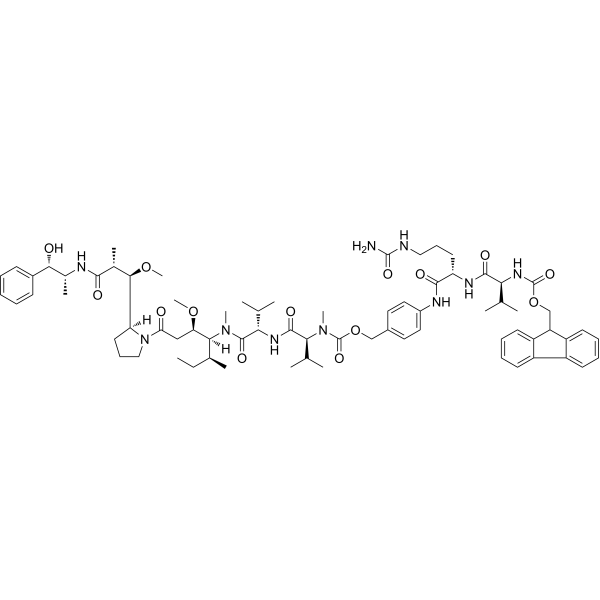
- HY-W004864
-
|
|
Amino Acid Derivatives
|
Others
|
|
Fmoc-(S)-2-(4-pentenyl) Ala-OH is an Fmoc-protected unnatural amino acid. Fmoc-(S)-2-(4-pentenyl) Ala-OH can be used for polypeptide synthesis, such as NYAD-13 (HY-P10834) .
|
-

- HY-W008371S
-
-
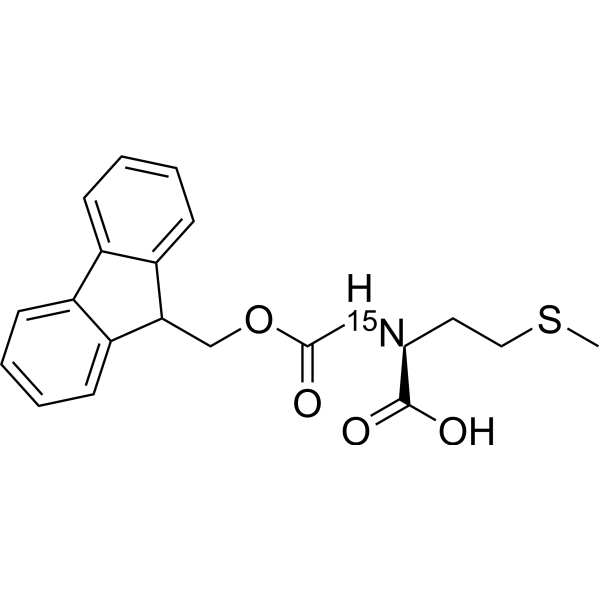
- HY-W013152
-
-
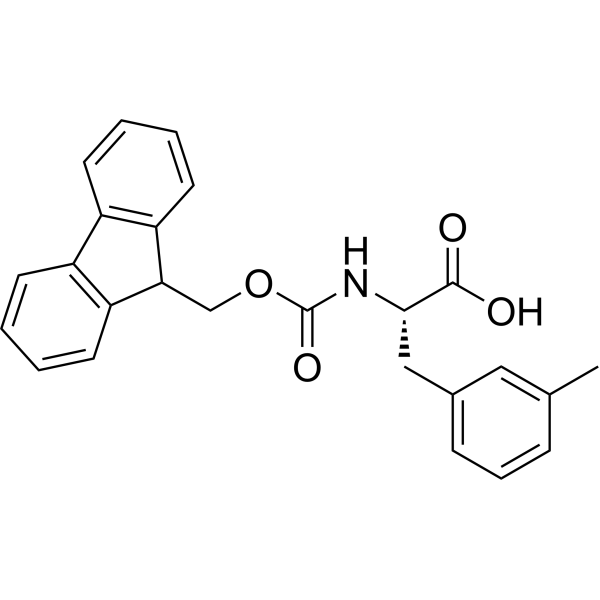
- HY-W009204S
-
-
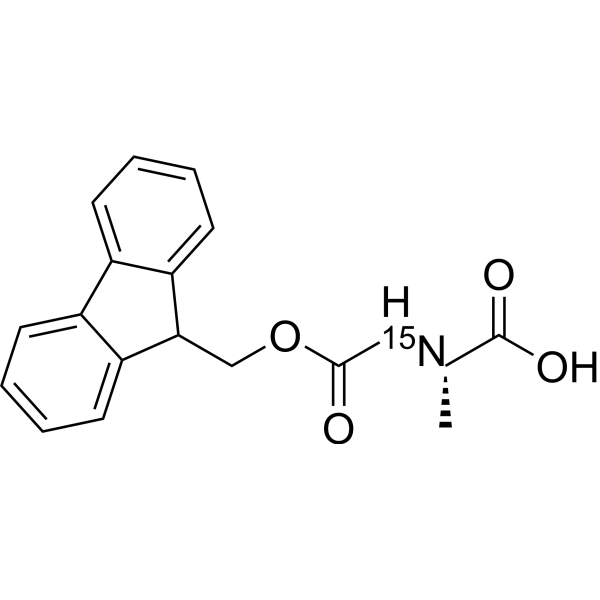
- HY-W009204S6
-
-
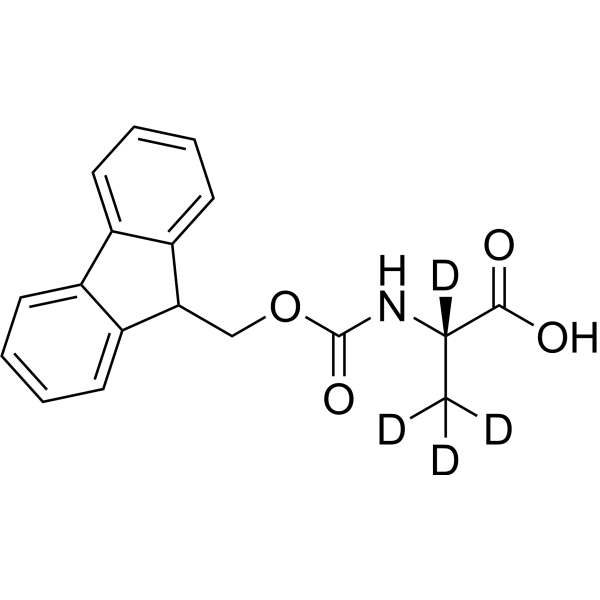
- HY-79131S2
-
-
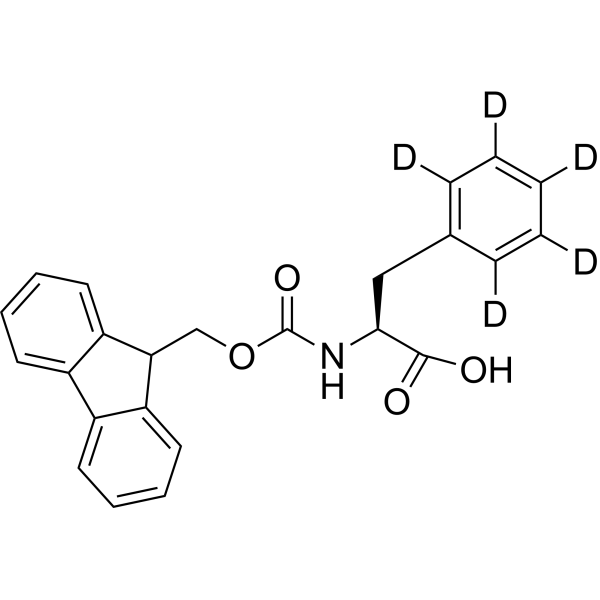
- HY-78921
-
|
|
ADC Linker
|
Cancer
|
|
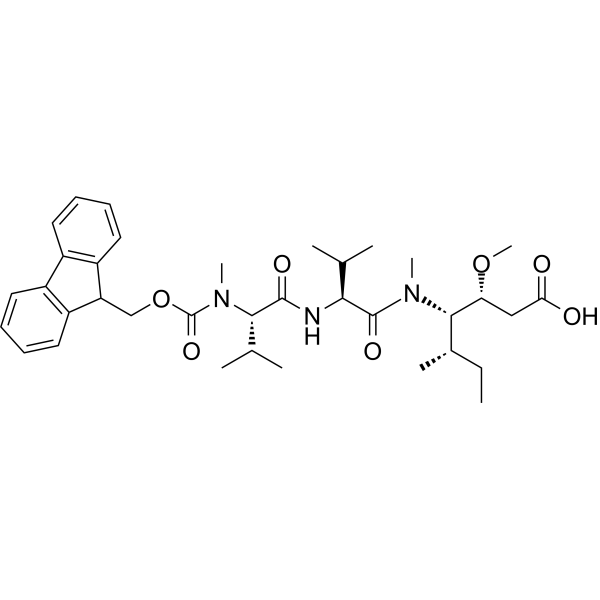
Fmoc-3VVD-OH is a cleavable ADC linker used in the synthesis of antibody-drug conjugates (ADCs) .
|
-
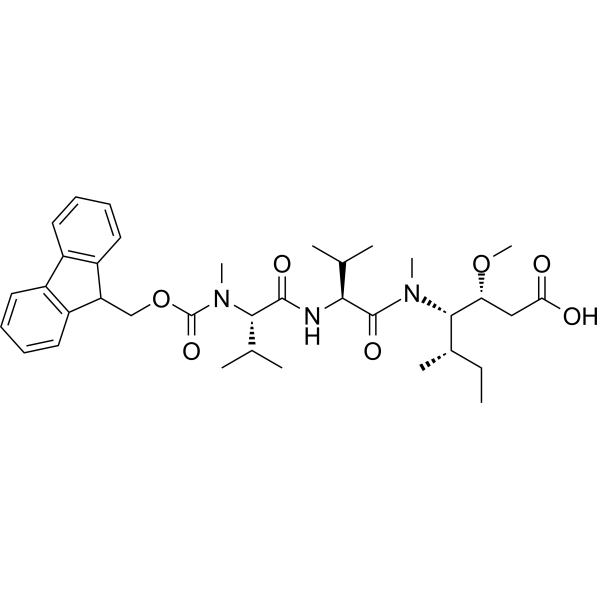
- HY-W009034
-
-
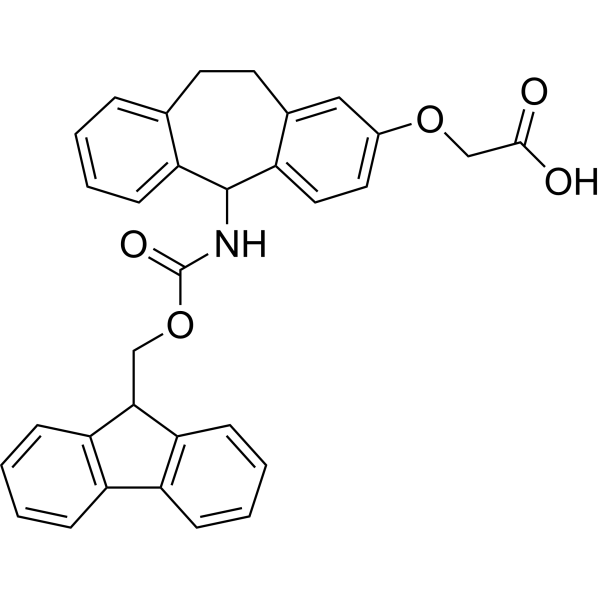
- HY-W010862R
-
|
|
Amino Acid Derivatives
Reference Standards
|
Others
|
|
Fmoc-Lys(Alloc)-OH (Standard) is the analytical standard of Fmoc-Lys(Alloc)-OH (HY-W010862). This product is intended for research and analytical applications. Fmoc-Lys(Alloc)-OH is a lysine derivative.
|
-

- HY-W590561
-
|
|
Biochemical Assay Reagents
|
Others
|
|
Fmoc-Asp(biotinyl-PEG)-OH is a biotinylation reagent with a Fmoc-protected amino group. The Fmoc group can be deprotected under basic conditions to obtain the free amine which can be used for further conjugations.
|
-

- HY-W007941S1
-
-
- HY-101064S4
-
-
- HY-178222
-
|
|
ADC Linker
|
Others
|
|
Fmoc-Gly-Thr-OH is an ADC Linker. Fmoc-Gly-Thr-OH can be used to synthesize antibody-drug conjugates (ADCs).
|
-

- HY-W106311
-
|
|
Drug Intermediate
|
Cancer
|
|
Fmoc-Val-Ala-OH is an intermediate for synthesizing the ADC linker. Fmoc-Val-Ala-OH can be used for the research of cancer .
|
-

- HY-P11695
-
|
|
Biochemical Assay Reagents
|
Others
|
|
Fmoc-Aeg (Dde) is a protected aminoethylglycine (AEG) monomer used for solid-phase synthesis of peptide nucleic acids (PNAs). Fmoc-Aeg (Dde) contains the fluorenylmethoxycarbonyl (Fmoc) and 1-(4,4-dimethyl-2,6-dioxocyclohex-1-ylidene) ethyl (Dde) protecting groups .
|
-

- HY-W142064
-
|
|
Antibiotic
|
Others
|
|
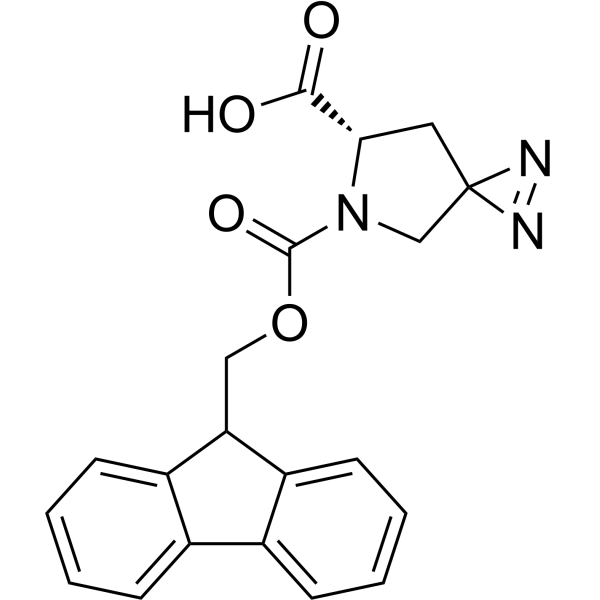
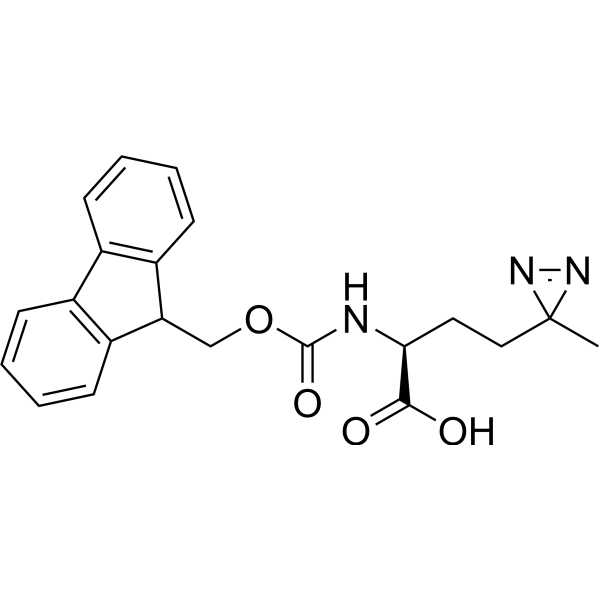
Fmoc-L-photo-proline is a photo-crosslinking amino acid which can be incorporated into synthetic peptides using solid-phase Fmoc chemistry. Fmoc-L-photo-proline can synthesis of cyclic peptidomimetic antibiotic and be used for preparation of diverse peptide-based photoaffinity probes research .
|
-
- HY-19318G
-
|
|
ADC Linker
|
Cancer
|
|
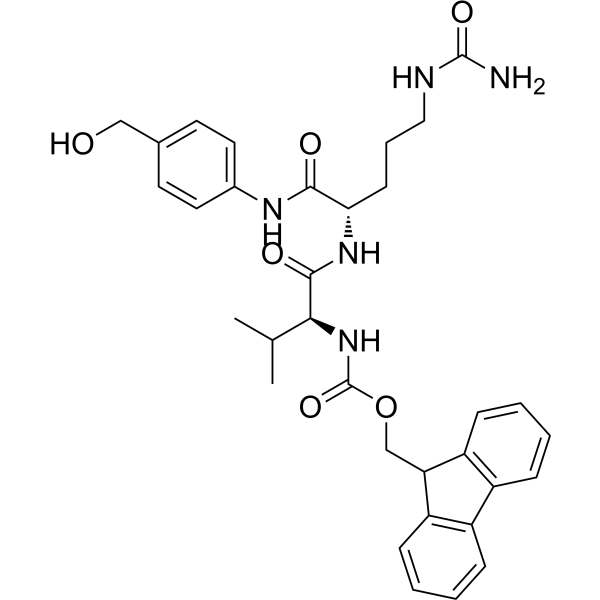
Fmoc-Val-Cit-PAB GMP is a GMP grade Fmoc-Val-Cit-PAB (HY-19318). Fmoc-Val-Cit-PAB is a cleavable antibody-conjugated active molecule (ADC) commonly used linker.
|
-
- HY-W013154
-
|
|
Amino Acid Derivatives
|
Others
|
|
Fmoc-Tic-OH is an amino acid derivative with an Fmoc protecting group, which can be used to synthesize bioactive peptide mimetics, such as the biotinylated derivative of the opioid receptor antagonist TIPP .
|
-

- HY-W013780S
-
-
- HY-79131S
-
-
- HY-W019797
-
|
|
PROTAC Linkers
|
Others
|
|
Fmoc-amino-(PEG)n-acid is a PEG-based PROTAC linker containing an Fmoc-protected amine and a terminal carboxylic acid and can be used in the synthesis of PROTACs.
|
-

- HY-101064
-
|
N-fmoc-leucine; NPC 15199; NSC 334290
|
PPAR
Calcium Channel
Lipase
|
Metabolic Disease
Inflammation/Immunology
|
|
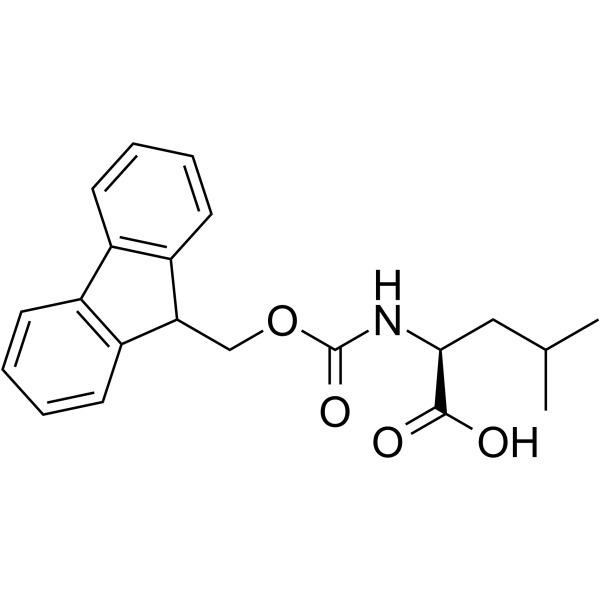
Fmoc-Leucine (N-FMOC-leucine) is an anti-inflammatory agent that not only promotes extracellular Ca 2+ influx but also facilitates intracellular Ca 2+ release. Fmoc-Leucine is a selective ligand for PPARγ (Ki = 15 μM), exhibiting insulin-sensitizing effects but with weak fatogenic activity. Fmoc-Leucine exhibits unique self-assembly properties and can form transient gels, stable gels, or crystals/2D sheets through different pathways. Fmoc-Leucine can be used in the research of diabetes, colitis, and bladder cancer .
|
-
- HY-W009204S5
-
-
- HY-W007798S1
-
|
|
Isotope-Labeled Compounds
|
Others
|
|
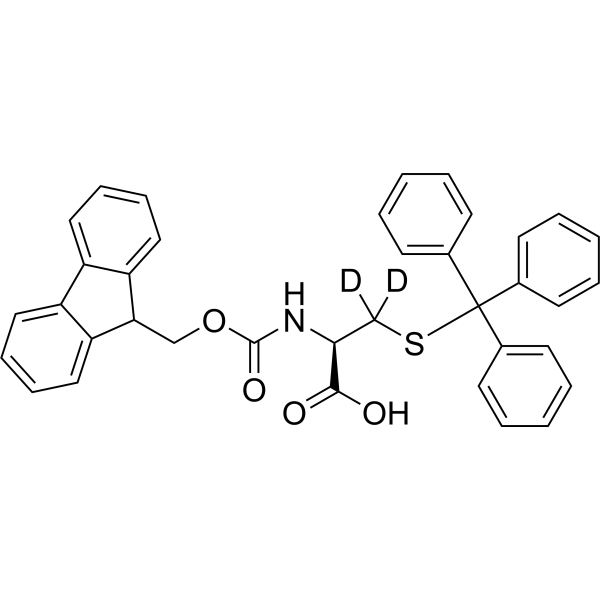
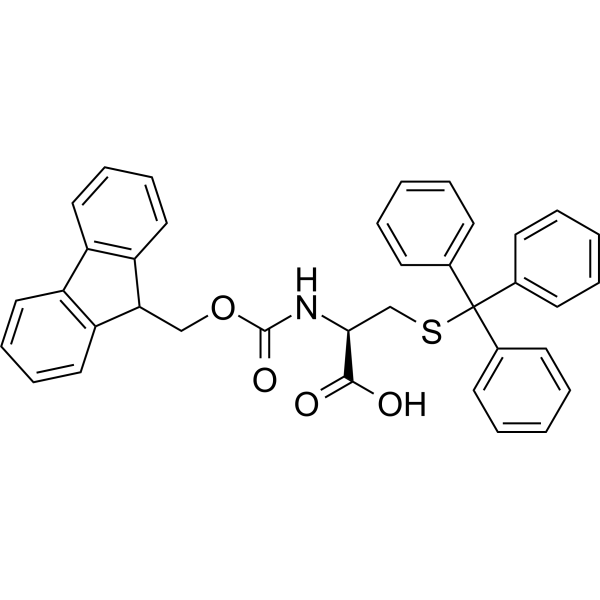
Fmoc-Cys(Trt)-OH-d2 is the deuterium labeled Fmoc-Cys(Trt)-OH. Fmoc-Cys(Trt)-OH is an N-terminal protected cysteine derivative .
|
-
- HY-101064S1
-
|
|
Isotope-Labeled Compounds
PPAR
|
Metabolic Disease
|
|
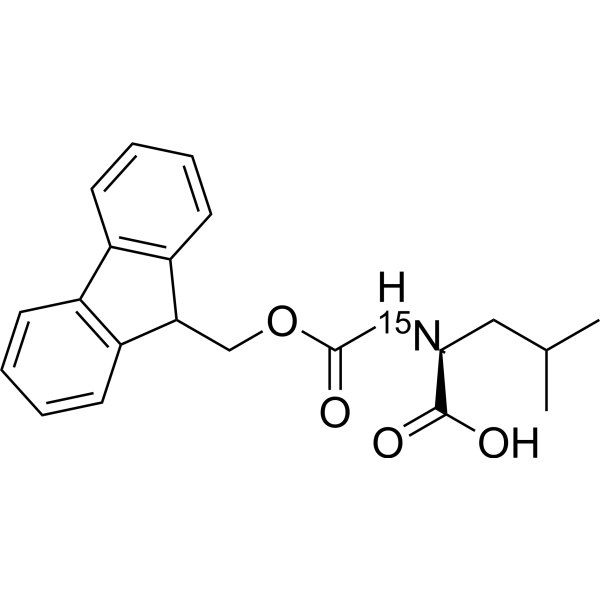
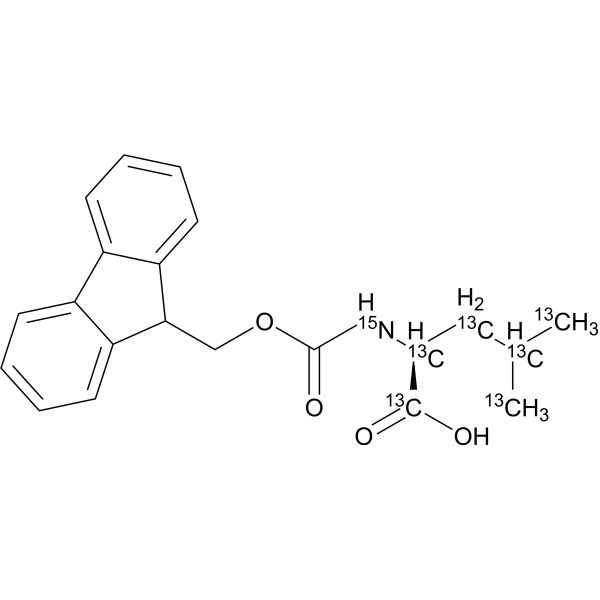
Fmoc-leucine- 13C6, 15N is a 15N-labeled and 13C-labled Fmoc-leucine. Fmoc-leucine is a selective PPARγ modulator. Fmoc-leucine activates PPARγ with a lower potency but a similar maximal efficacy than rosiglitazone. Fmoc-leucine improves insulin sensitivity
|
-
- HY-Y1636S1
-
-
- HY-Y1169S
-
|
|
Isotope-Labeled Compounds
Amino Acid Derivatives
|
Others
|
|
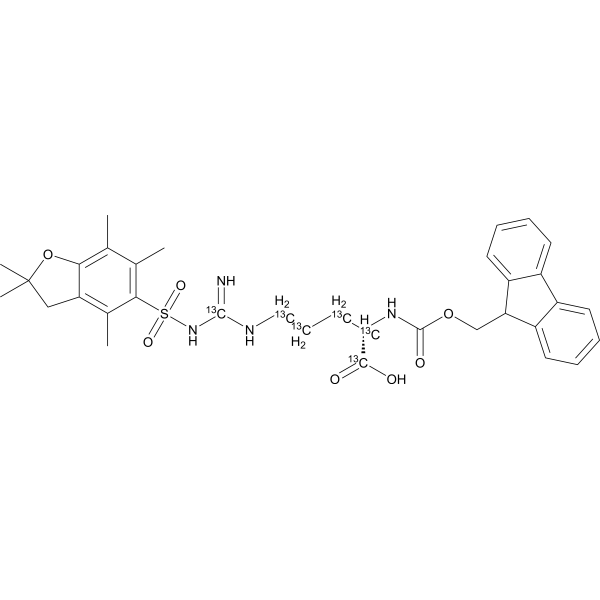
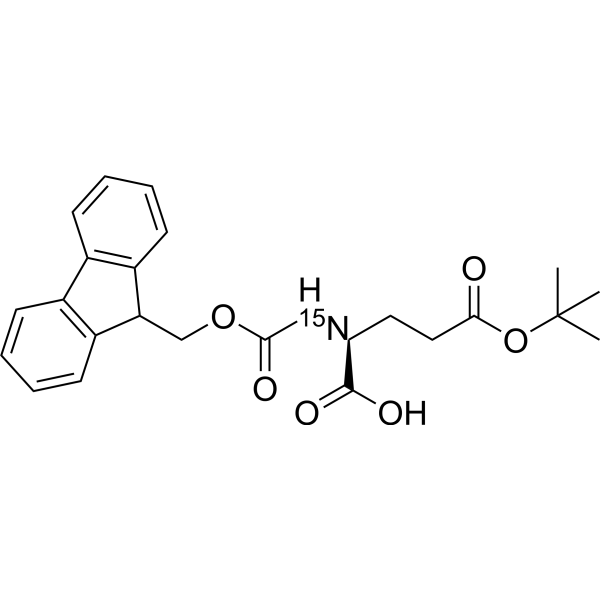
Fmoc-Asp(OtBu)-OH- 15N is the 15N-labeled Fmoc-Asp(OtBu)-OH (HY-Y1169). Fmoc-Asp(OtBu)-OH (4-tert-Butyl N-(fluoren-9-ylmethoxycarbonyl)-L-aspartate) is an aspartate derivative containing amine protecting group Fmoc. Fmoc-Asp(OtBu)-OH can be used for peptide synthesis .
|
-

- HY-Y1250S6
-
|
fmoc glycine-13C2,15N
|
Isotope-Labeled Compounds
Amino Acid Derivatives
|
Others
|
|
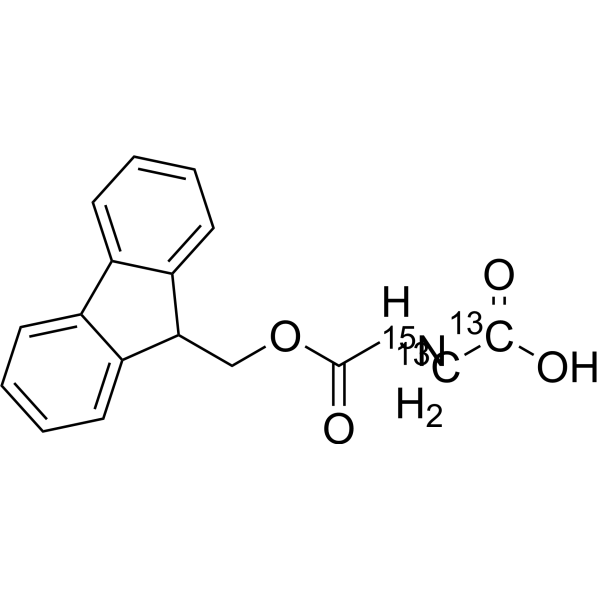
Fmoc-Gly-OH- 13C2, 15N (Fmoc glycine- 13C2, 15N) is a 15N-labeled and 13C-labled Fmoc-Gly-OH (HY-Y1250). Fmoc-Gly-OH (Fmoc glycine) is a Fmoc-protected glycine derivative, can be used for the synthesis of compounds .
|
-
- HY-W1048542
-
|
|
Biochemical Assay Reagents
|
Others
|
|
Fmoc-NH-PEG1000-COOH is a PEG product containing two Fmoc-protected amines and a carboxylic acid. Fmoc-NH-PEG1000-COOH is an important cross-linking agent with PEG chains .
|
-

- HY-W010758
-
-
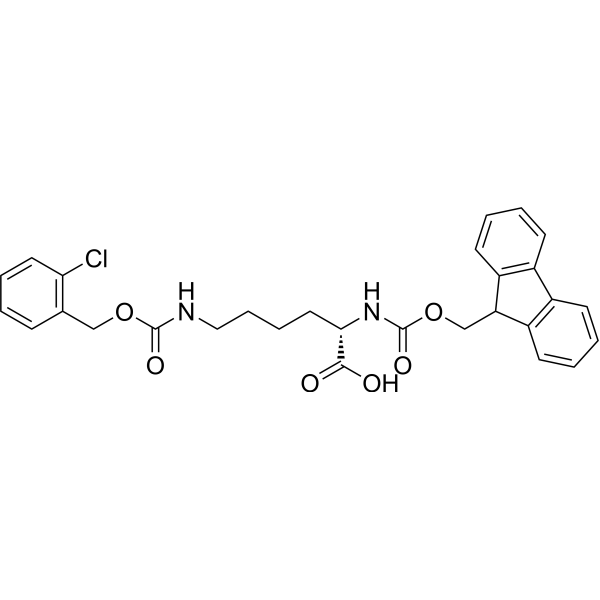
- HY-P11691
-
|
|
Biochemical Assay Reagents
|
Others
|
|
Fmoc-PNA-D (tetraBoc)-OH is an Fmoc/Boc-protected diaminopurine peptide nucleic acid (PNA) monomer suitable for standard Fmoc solid-phase synthesis. Fmoc-PNA-D (tetraBoc)-OH carries Boc-protected exocyclic amino groups and can be incorporated into pseudo-complementary PNA oligomers for applications in antigenic peptide nucleic acid and DNA nanotechnology research .
|
-

- HY-W007655
-
|
|
Biochemical Assay Reagents
Amino Acid Derivatives
|
Others
|
|
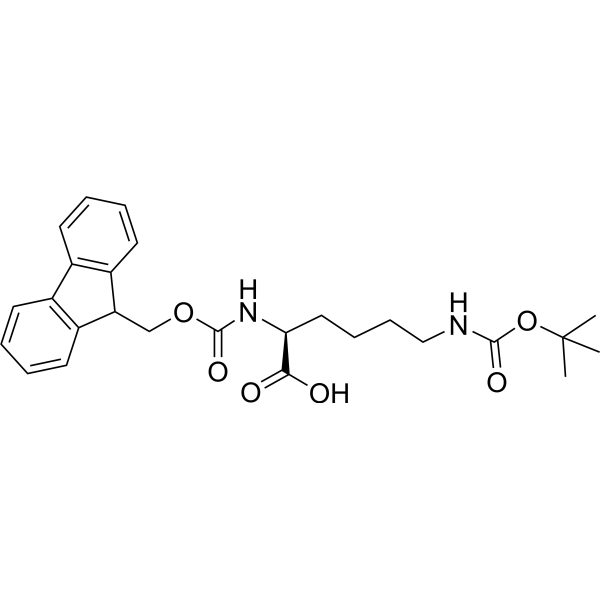
Fmoc-D-Lys (Boc)-OH is an Fmoc- and Boc-protected D-lysine derivative. Fmoc-D-Lys (Boc)-OH ensures the precise incorporation of D-lysine into peptide chains, maintaining the specific conformation and biological activity of peptides. Fmoc-D-Lys (Boc)-OH can be used in research on the synthesis of peptides containing unnatural amino acids .
|
-

- HY-148462
-
|
|
ADC Linker
|
Cancer
|
|
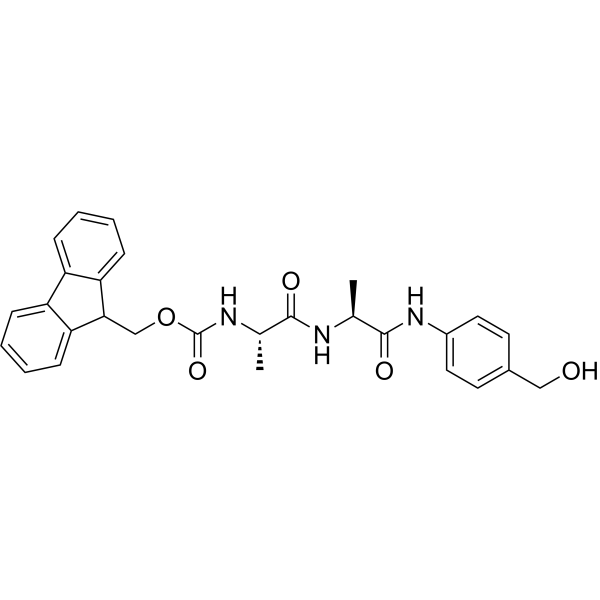
Fmoc-Ala-Ala-PAB is a cleavable ADC linker. Fmoc-Ala-Ala-PAB can be used in the synthesis of antibody-drug conjugates (ADCs) .
|
-
- HY-46398
-
|
|
PROTAC Linkers
|
Cancer
|
|
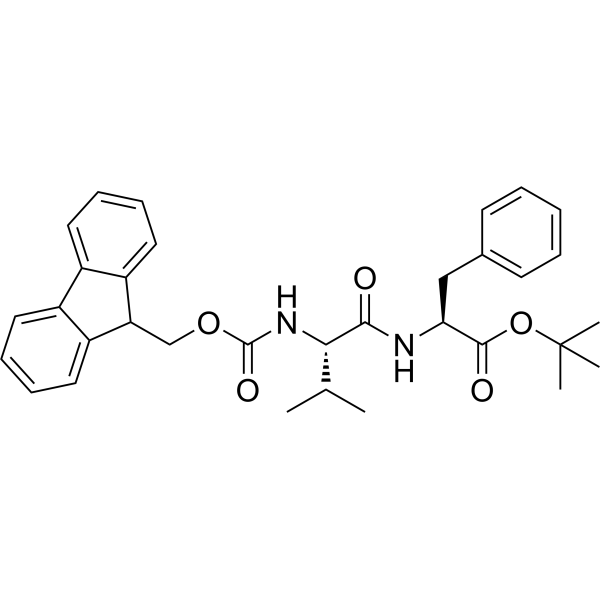
Fmoc-Val-Phe-Boc is a PROTAC linker and a maleimide-GGFG peptide linker. Fmoc-Val-Phe-Boc can be used in the synthesis of the Deruxtecan .
|
-
- HY-W752883
-
-

- HY-W008021S2
-
-

- HY-W010712S1
-
|
|
Isotope-Labeled Compounds
Amino Acid Derivatives
|
Others
|
|
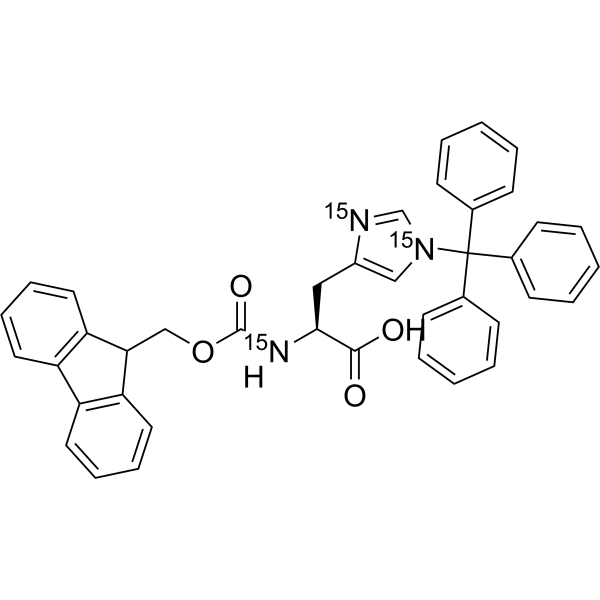
Fmoc-His(Trt)-OH- 15N3 is the 15N labeled Fmoc-His(Trt)-OH (HY-W010712). Fmoc-His (Trt)-OH is a histidine derivative. Fmoc-His(Trt)-OH has trityl (Trt) group to protect the side-chain of His. Fmoc-His(Trt)-OH has Fmoc group to protect -αNH2. Fmoc-His(Trt)-OH can be used for solid phase synthesis of peptides, providing protection against racemization and by-product formation .
|
-
- HY-W008024
-
|
|
Amino Acid Derivatives
|
Others
|
|
Fmoc-Dab(Boc)-OH is an amino acid derivative with an Fmoc protecting group that can be used to synthesize somatostatin analogs that inhibit neointima formation induced by balloon injury in rats without altering growth hormone release. Fmoc-Dab(Boc)-OH can be used for the synthesis of peptides .
|
-

- HY-177548
-
-

- HY-W025936
-
|
|
Drug Intermediate
|
Others
|
|
Fmoc‑PNA‑G (Bhoc)‑OH is a guanine-containing peptide nucleic acid monomer, in which both Bhoc on the nucleobase and Fmoc on the backbone serve as protecting groups. Fmoc‑PNA‑G (Bhoc)‑OH is applicable for the synthesis of peptide nucleic acids .
|
-

- HY-43781
-
|
|
Biochemical Assay Reagents
|
Others
|
|
Fmoc-Lys(Boc)-PAB-OH is a peptide linker containing an Fmoc-protected amine and a Boc-protected lysine residue. The Fmoc group can be deprotected under basic condition to obtain the free amine which can be used for further conjugations.
|
-

- HY-W010712
-
|
|
Amino Acid Derivatives
|
Others
|
|
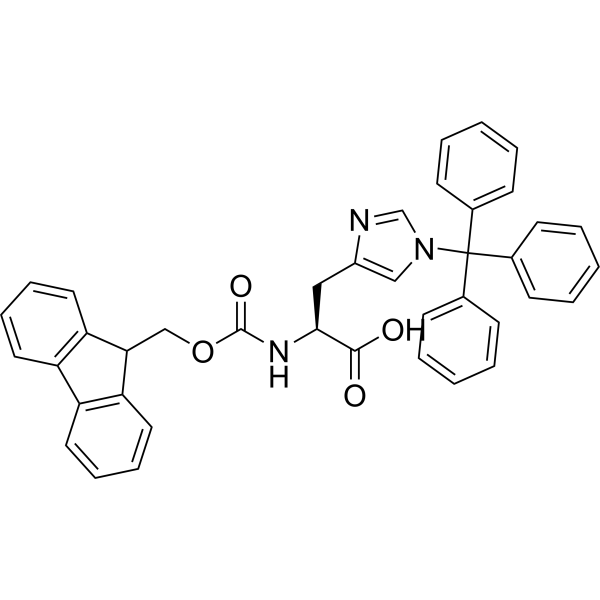
Fmoc-His(Trt)-OH is a histidine derivative with a trityl (Trt) group protecting the His side chain. Fmoc-His(Trt)-OH also has an Fmoc group protecting the α-NH2 group. Fmoc-His(Trt)-OH can be used in solid-phase peptide synthesis to prevent racemization and byproduct formation. Fmoc-His(Trt)-OH acts as a protected histidine precursor in solid-phase peptide synthesis (SPPS), participating in peptide chain construction through amide bond formation. Fmoc-His(Trt)-OH can be precisely incorporated into the target peptide sequence, ensuring correct peptide chain synthesis and reducing impurity formation. Fmoc-His(Trt)-OH is mainly used in the solid-phase synthesis research of pharmaceutical peptides and bioactive peptides, and is particularly suitable for the preparation of peptide drugs requiring precise control of histidine configuration .
|
-
- HY-W008688
-
-
- HY-W011084
-
-
- HY-132988
-
-
- HY-W007706S1
-
-

- HY-W010922
-
|
|
Amino Acid Derivatives
|
Others
|
|
Fmoc-Dap(Boc)-OH is an amino acid derivative with an Fmoc protecting group, which can be used to synthesize bicyclic peptide tachykinin NK2 antagonists .
|
-

- HY-W008876
-
-

- HY-W010975
-
|
|
ADC Linker
PROTAC Linkers
|
Cancer
|
|
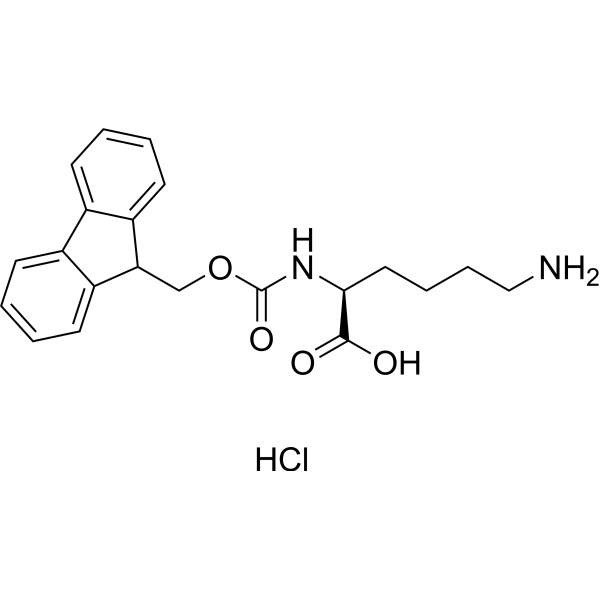
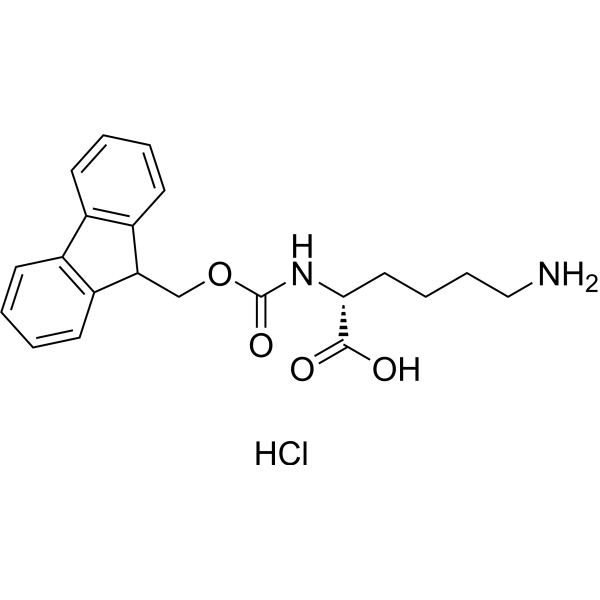
Fmoc-Lys-OH hydrochloride is a cleavable ADC linker used in the synthesis of antibody-drug conjugates (ADCs). Fmoc-Lys-OH hydrochloride is also a alkyl chain-based PROTAC linker that can be used in the synthesis of PROTACs.
|
-
- HY-W009204S1A
-
-

- HY-W007706R
-
-

- HY-W729010
-
-

- HY-W591441
-
|
|
Biochemical Assay Reagents
|
Others
|
|
Fmoc-Ala-PAB-PNP is an Alanine linked to 4-aminobenzoiate (PAB) with terminal Fmoc and PNP groups. The Fmoc group can be deprotected under basic conditions to release the free amine which can be used for further conjugations. PNP is a good leaving group when reacting with an amine-bearing payload.
|
-

- HY-W591439
-
|
|
Biochemical Assay Reagents
|
Others
|
|
Fmoc-Lys(Boc)-PAB-PNP is a Boc-protected Lysine linked to 4-aminobenzoiate (PAB) with terminal Fmoc and PNP groups. The Fmoc group can be deprotected under basic conditions to release the free amine which can be used for further conjugations.
|
-

- HY-151637
-
|
|
Amino Acid Derivatives
|
Others
|
|
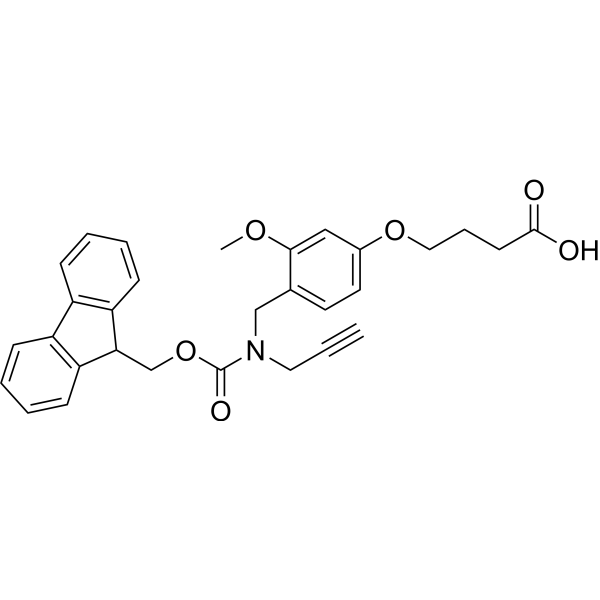
Fmoc-N-propargyl-MPBA is a propargyl-substituted MPBA linker derived from 4-hydroxy-3-methoxybenzaldehyde. Fmoc-N-propargyl-MPBA can be elongated using standard Fmoc-based solid phase chemistry and linked to supports by standard coupling procedures . Fmoc-N-propargyl-MPBA is a click chemistry reagent, it contains an Alkyne group and can undergo copper-catalyzed azide-alkyne cycloaddition (CuAAc) with molecules containing Azide groups.
|
-
- HY-W011002
-
-
- HY-W011026S1
-
-
- HY-W011026S
-
-
- HY-157248
-
-

- HY-W016032
-
-
- HY-W008072S
-
-
- HY-W010880
-
-
- HY-W591440
-
|
|
Biochemical Assay Reagents
|
Others
|
|
Fmoc-Cit-PAB-PNP is a Citrulline linked to 4-aminobenzoiate (PAB) with terminal Fmoc and PNP groups. The Fmoc group can be deprotected under basic conditions to release the free amine which can be used for further conjugations. PNP group is a good leaving group when reacting with an amine-bearing payload.
|
-

- HY-P11688
-
|
|
Biochemical Assay Reagents
|
Others
|
Fmoc-PNA-M (Bhoc)-OH is a standard peptide nucleic acid (PNA) monomer building block. Fmoc-PNA-M (Bhoc)-OH carries two protecting groups, Fmoc and Bhoc, and is specifically designed for solid-phase and automated PNA synthesis. Fmoc-PNA-M (Bhoc)-OH efficiently participates in the construction of sequence-specific PNA probes. Through its protecting group strategy, Fmoc-PNA-M (Bhoc)-OH ensures the accuracy and efficiency of PNA synthesis, and is one of the important raw materials for PNA synthesis at present .
|
-

- HY-78921AG
-
|
|
ADC Linker
|
Cancer
|
|
Fmoc-3VVD-OH (GMP) is a cleavable ADC linker used in the synthesis of antibody-drug conjugates (ADCs) .
|
-
- HY-W010959
-
-
- HY-W010793
-
-
- HY-W009005
-
-
- HY-W008696
-
-
- HY-W009003
-
-
- HY-W009088
-
-
- HY-79131
-
-
- HY-W009204
-
-
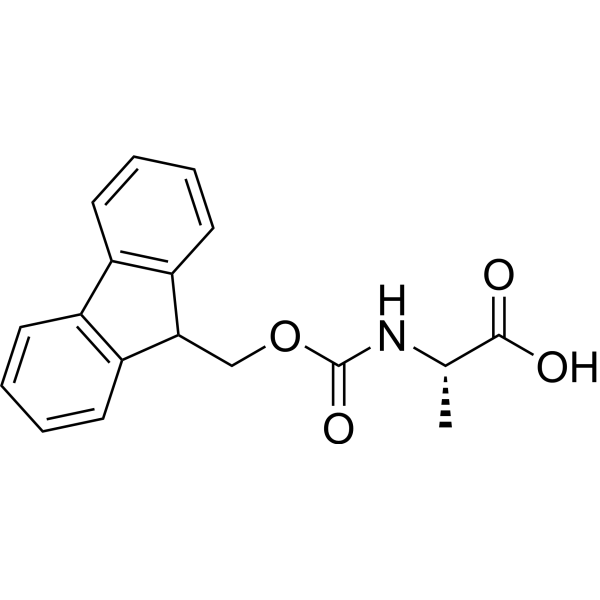
- HY-W009085
-
-
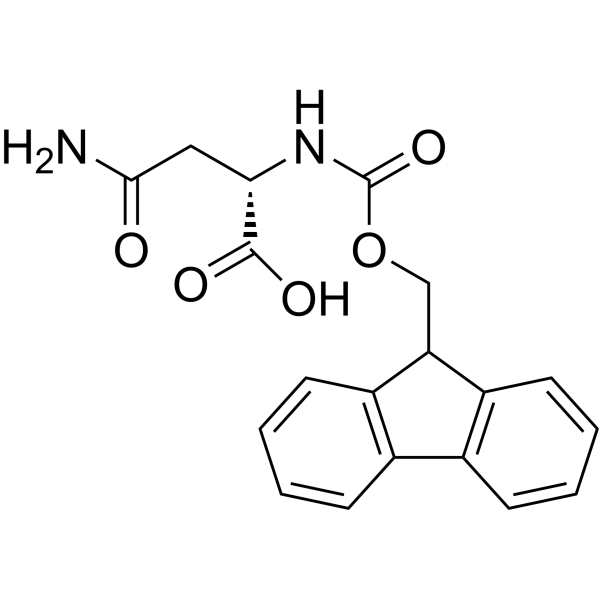
- HY-W008360
-
-
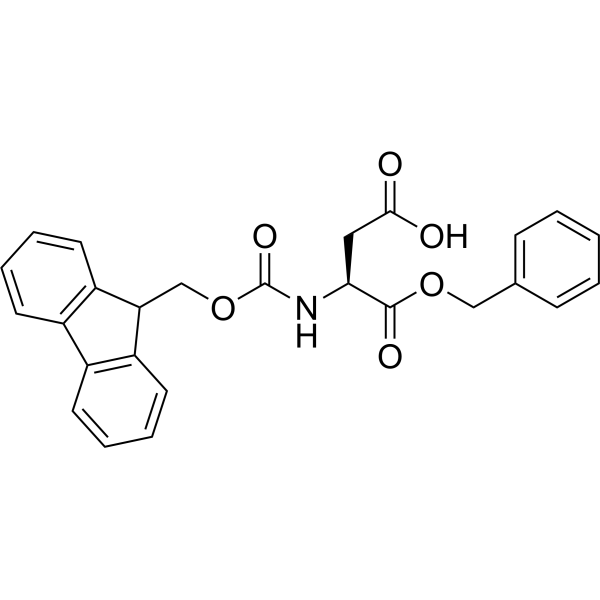
- HY-W009151
-
-
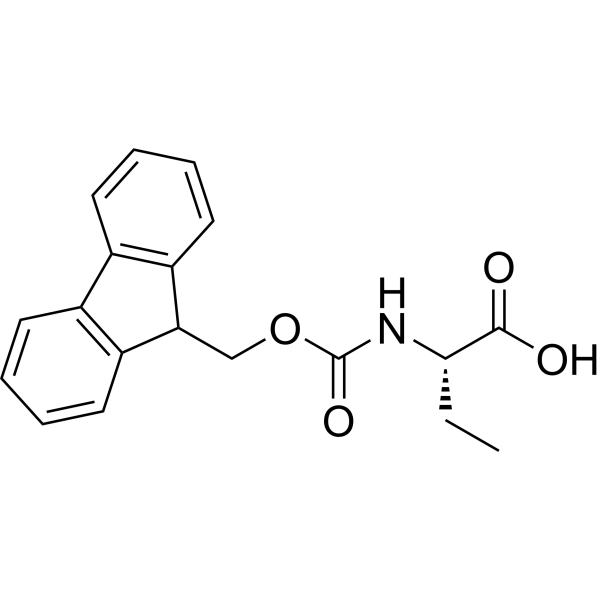
- HY-W007020
-
-
- HY-W019028
-
-
- HY-W041991
-
-
- HY-W011081
-
-
- HY-W007720
-
-
- HY-79648
-
-
- HY-W011000
-
-
- HY-W008176
-
-
- HY-22297
-
-
- HY-W008475
-
-
- HY-W013780
-
-
- HY-W141948
-
-
- HY-W041982
-
-
- HY-W013190
-
-
- HY-W011135
-
-
- HY-164166
-
-

- HY-W008205
-
|
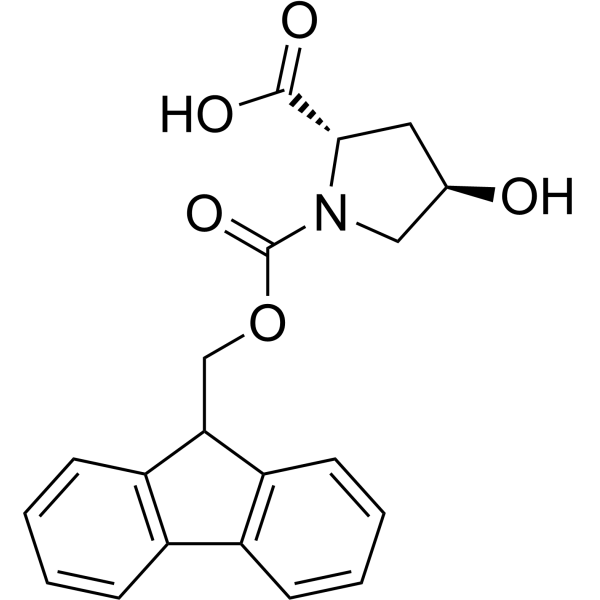
fmoc-L-Hydroxyproline
|
Biochemical Assay Reagents
|
Others
|
|
Fmoc-Hyp-OH is a biochemical reagent that can be used as a biological material or organic compound for life science related research.
|
-
- HY-W048671
-
|
|
Amino Acid Derivatives
|
Others
|
|
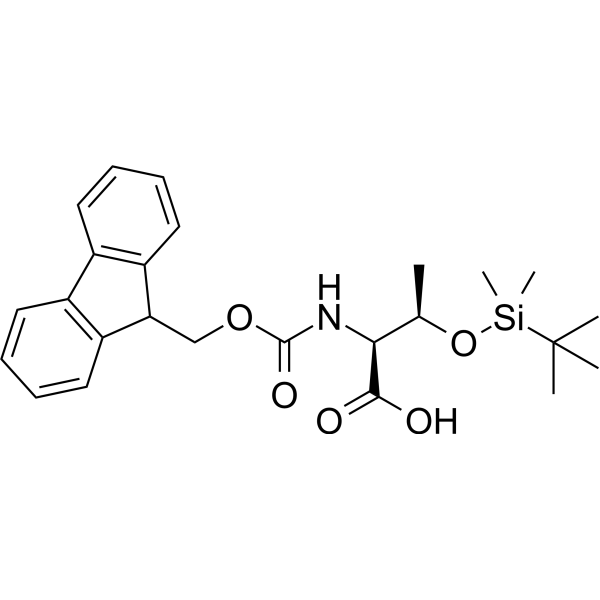
Fmoc-Thr(TBDMS)-OH is a Threonine derivative. Fmoc-Thr(TBDMS)-OH can be used for the preparation of sugar ligand-tethered functional nucleic acid conjugates for targeted research .
|
-
- HY-134517
-
|
|
Amino Acid Derivatives
|
Others
|
|
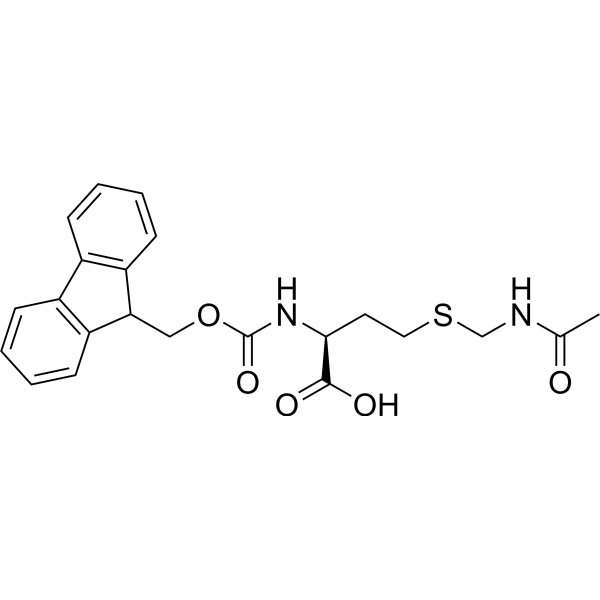
Fmoc-HoCys(ACM)-OH, a homolog of cysteine, is synthesized from L-methionine. Fmoc-HoCys(ACM)-OH also can be used for the synthesis of solid phase peptide .
|
-
- HY-W009204S3
-
-
- HY-W009204S2
-
-
- HY-P11684
-
|
|
DNA/RNA Synthesis
|
Others
|
|
Fmoc-PNA-C(Boc)-OH is a protected peptide nucleic acid (PNA) monomer for solid-phase synthesis. Fmoc-PNA-C(Boc)-OH possesses Fmoc-protected skeletal amino groups and Boc-protected cytosine bases, designed to construct stable synthetic DNA analogs. Fmoc-PNA-C(Boc)-OH can be used to prepare highly specific, enzyme-stable antisense probes and diagnostic probes.
|
-

- HY-W105531
-
|
|
ADC Linker
|
Cancer
|
|
Fmoc-Ala-Ala-Pro-OH is a F-moc protected tripeptide linker which may be employed in the creation of antibody drug conjugates (ADCs).
|
-

- HY-W019032
-
|
|
Amino Acid Derivatives
|
Others
|
|
Fmoc-D-Dab(Boc)-OH is an amino acid derivative with an Fmoc protecting group, which can be used to synthesize peptides with antibacterial activity .
|
-

- HY-79128
-
-
- HY-W048825
-
|
|
Amino Acid Derivatives
|
Others
|
|
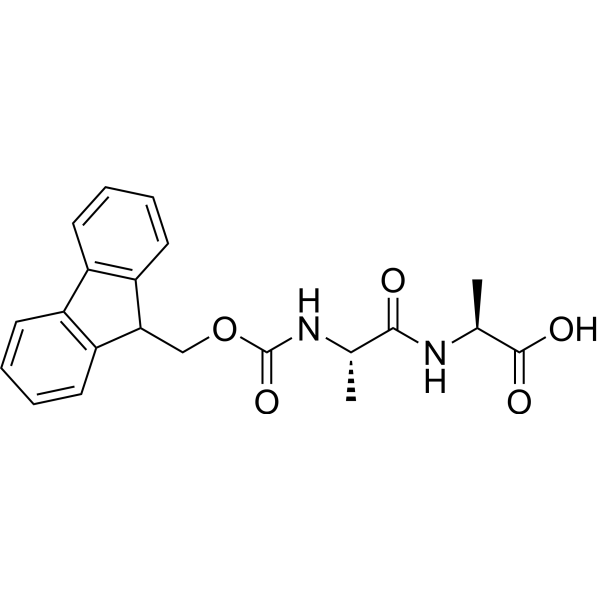
Fmoc-Ala-Ala-OH is a self-assembling fluorenylmethoxycarbonyl dipeptide, a small amphiphilic building block composed of a dipeptide linked to a fluorenylmethoxycarbonyl (Fmoc) group. Under conditions of pH < 4, Fmoc-Ala-Ala-OH spontaneously assembles to form a nanofiber network, constructing a hydrogel scaffold with a water content exceeding 99% (w/w). The fibers have a diameter of approximately 22 nm, matching the size of extracellular matrix (ECM) components. Fmoc-Ala-Ala-OH supports cell adhesion, proliferation, and maintains of cell phenotype. Fmoc-Ala-Ala-OH's function is to mimic the ECM, providing a 3D growth microenvironment for cells, and Fmoc-Ala-Ala-OH is primarily used in tissue engineering and 3D cell culture, particularly suitable for in vitro culture studies of cells such as chondrocytes[1] .
|
-
- HY-185429
-
-
![Fmoc-Lys[Octa(OtBu)-Glu-OtBu]-OH](//file.medchemexpress.com/product_pic/hy-185429.gif)
- HY-W111226
-
|
|
Amyloid-β
Amino Acid Derivatives
|
Cardiovascular Disease
Neurological Disease
|
|
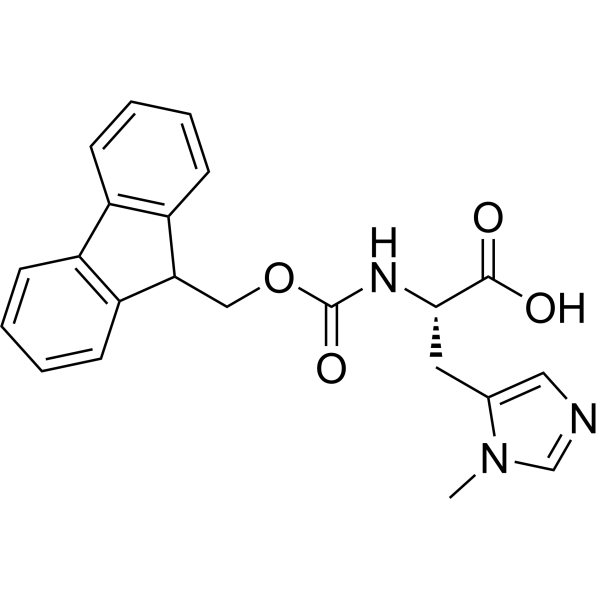
Fmoc-His (3-Me)-OH is a histidine derivative with a methylated imidazole group. Fmoc-His (3-Me)-OH can be used for the synthesis of the chemically modified tripeptide His (3-methyl)-Arg-Trp (H (3-Me)-RW). Fmoc-His (3-Me)-OH serves as a resin in Fmoc solid-phase synthesis for the generation of the His-(3-Me)-Gly-Lys peptide. Fmoc-His (3-Me)-OH is a building block for the synthesis of NAHIS02-(p-Met). Fmoc-His (3-Me)-OH can be applied in research related to Alzheimer's disease .
|
-
- HY-W041989
-
-

- HY-103664
-
-
- HY-W101305
-
|
|
Amino Acid Derivatives
|
Others
|
|
Fmoc-Pen(Acm)-OH is an amino acid derivative with an Fmoc protecting group that can be used to synthesize chemically modified cyclic peptides containing cell adhesion recognition (CAR) sequences .
|
-

- HY-W010830
-
-
- HY-W665456
-
|
|
Drug Intermediate
|
Others
|
|
Fmoc‑PNA‑U‑OH is a peptide nucleic acid monomer that can be used for the synthesis of peptide nucleic acids (PNAs). Fmoc‑PNA‑U‑OH exhibits specific binding to adenine, resistance to enzymatic degradation, and strong hybridization properties. Fmoc‑PNA‑U‑OH can be applied in research fields such as gene diagnosis, molecular biology, and antisense therapy.
|
-

- HY-W190934
-
|
|
Biochemical Assay Reagents
|
Others
|
|
Fmoc-Ala-Pro-OH is a linker with an Fmoc-protected amine and a terminal carboxylic acid. The Fmoc group can be deprotected under basic condition to obtain the free amine which can be used for further conjugations. The terminal carboxylic acid can be reacted with primary amine groups in the presence of activators (e.g. EDC, or HATU) to form a stable amide bond.
|
-

- HY-W574030
-
|
|
Neurotensin Receptor
|
Neurological Disease
|
|
Fmoc-DL-Leu-OH acts as a partial agonist of the neurotensin NTS1 receptor (NTS1R) with an EC50 of 215.50 μM. Fmoc-DL-Leu-OH triggers intracellular calcium mobilization, and its activity is blocked by selective NTS1R antagonists. Fmoc-DL-Leu-OH can be used in the research of schizophrenia .
|
-

- HY-Y0134S
-
-
- HY-101064S2
-
|
N-fmoc-leucine-d3; NPC 15199-d3; NSC 334290-d3
|
PPAR
|
Metabolic Disease
|
|
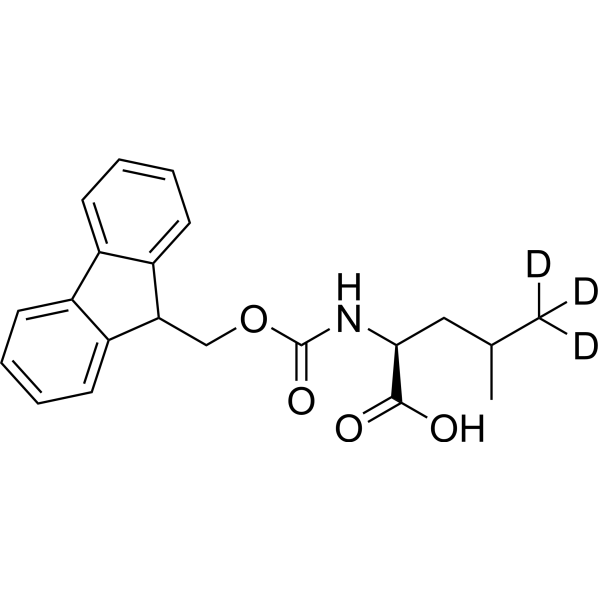
Fmoc-leucine-d3 is the deuterium labeled Fmoc-leucine. Fmoc-leucine is a selective PPARγ modulator. Fmoc-leucine activates PPARγ with a lower potency but a similar maximal efficacy than rosiglitazone. Fmoc-leucine improves insulin sensitivity in normal, diet-induced glucose-intolerant, and in diabetic db/db mice. Fmoc-leucine has a lower adipogenic activity .
|
-
- HY-153151
-
|
|
Drug Intermediate
|
Cancer
|
|
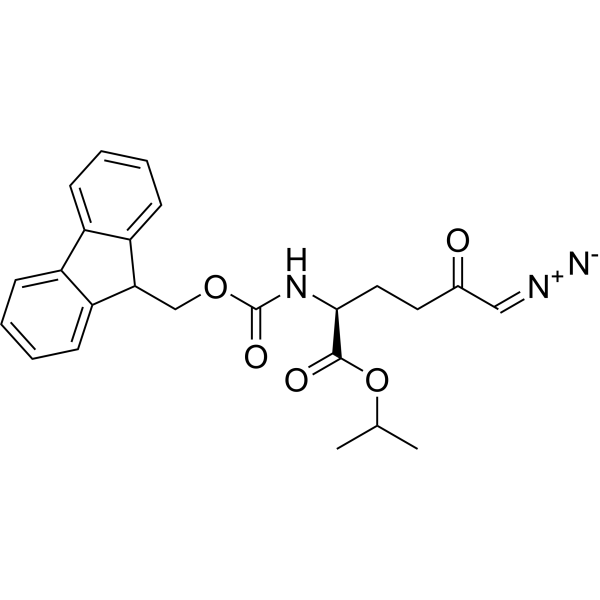
Fmoc-DON-Boc (Compound 8b) is an Fmoc-protected compound that can be used for the synthesis of proagent of 6-diazo-5-oxo-L-norleucine (DON; HY-108357). DON is a glutamine antagonist .
|
-
- HY-131833G
-
|
|
ADC Linker
|
Cancer
|
|
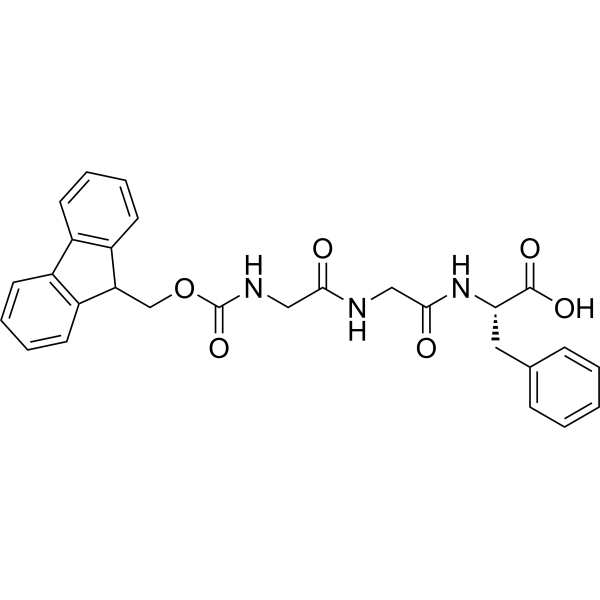
Fmoc-Gly-Gly-Phe-OH GMP is a GMP grade Fmoc-Gly-Gly-Phe-OH (HY-131833). Fmoc-Gly-Gly-Phe-OH is a cleavable ADC linker used in the synthesis of antibody-drug conjugates (ADCs) .
|
-
- HY-131833A
-
|
|
ADC Linker
|
Cancer
|
|
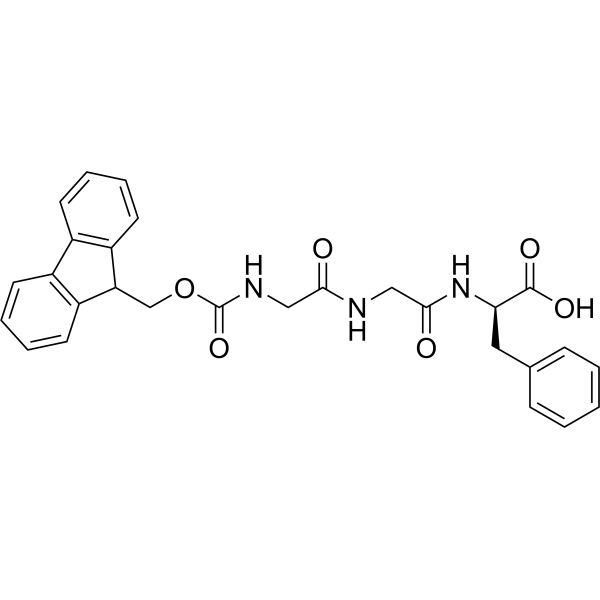
Fmoc-Gly-Gly-D-Phe-OH is a cleavable ADC linker used in the synthesis of antibody-drug conjugates (ADCs). Fmoc-Gly-Gly-D-Phe-OH is the D-isomer of Fmoc-Gly-Gly-Phe-OH (HY-131833).
|
-
- HY-104004
-
|
fmoc-Ser-(GalNAc(Ac)3-alpha-D)-OH; fmoc-Ser[GalNAc(Ac)3-α-D]-OH; fmoc-Ser(Ac3AcNH-α-Gal)-OH
|
Amino Acid Derivatives
Drug Intermediate
|
Cancer
|
|
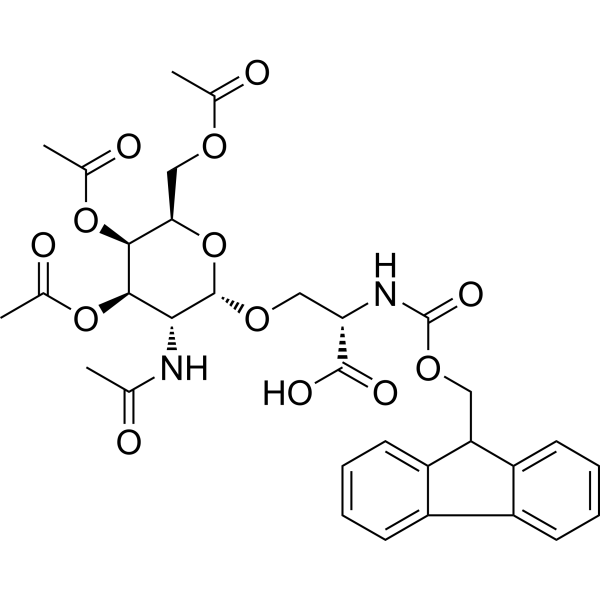
Fmoc-Ser (O-α-D-GalNAc (OAc) 3)-OH (Fmoc-Ser-(GalNAc(Ac)3-alpha-D)-OH) is a protected glycosylated amino acid and Tn antigen. Fmoc-Ser (O-α-D-GalNAc (OAc) 3)-OH serves as a building block in the solid-phase synthesis of Tn-based cancer vaccine constructs. Fmoc-Ser (O-α-D-GalNAc (OAc) 3)-OH supports solid-phase peptide synthesis .
|
-
- HY-W048739
-
|
|
Amino Acid Derivatives
|
Others
|
|
Fmoc-α-Me-Leu-OH is a leucine derivative with an Fmoc protecting group, which can be used to synthesize peptides with oxytocin receptor agonist activity .
|
-

- HY-W008922
-
|
|
Amino Acid Derivatives
|
Others
|
|
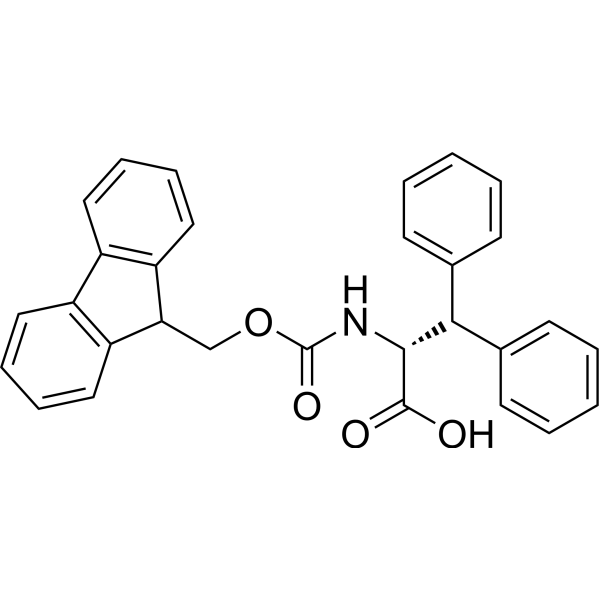
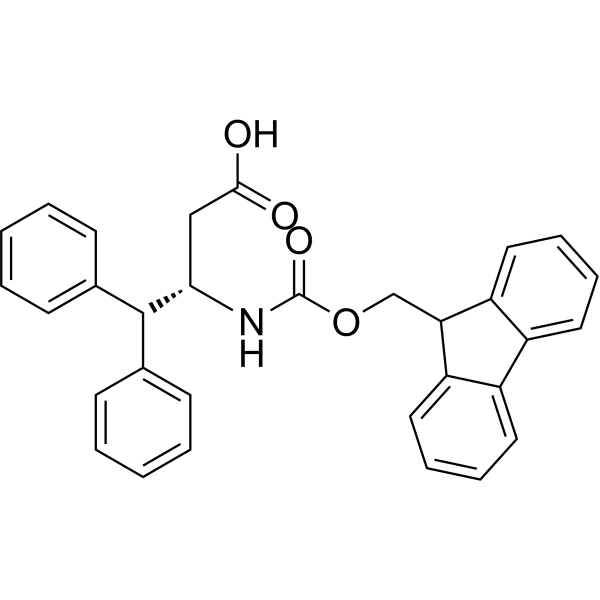
Fmoc-D-3,3-diphenylalanine is a non-natural D-configuration amino acid derivative protected by Fmoc and commonly used in peptide synthesis research.
|
-
- HY-151695
-
|
N2-fmoc-N6-[(propargyloxy)carbonyl]-L-lysine
|
ADC Linker
|
Others
|
|
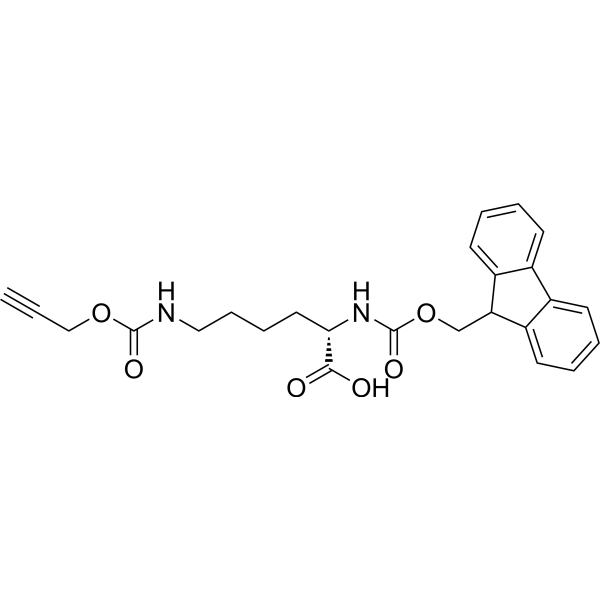
Fmoc-L-Lys(Pryoc)-OH (N2-Fmoc-N6-[(propargyloxy)carbonyl]-L-lysine) is a click chemistry reagent containing an azide group .
|
-
- HY-W348896
-
-

- HY-44234A
-
|
|
ADC Linker
|
Cancer
|
|
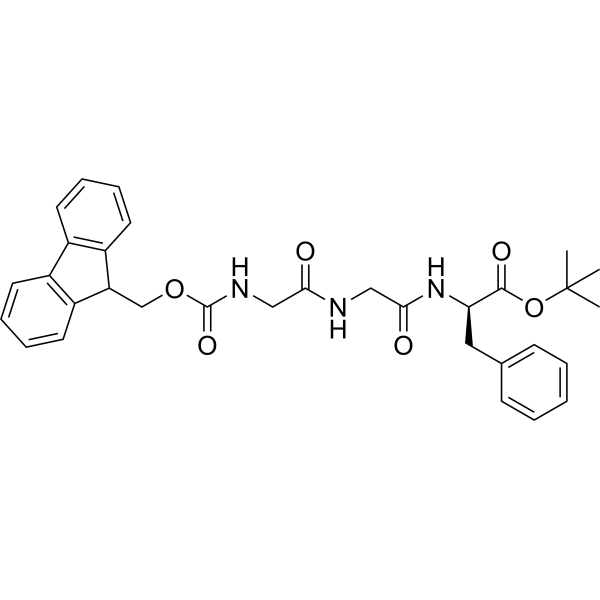
Fmoc-Gly-Gly-D-Phe-OtBu is a cleavable ADC linker used in the synthesis of antibody-drug conjugates (ADCs). Fmoc-Gly-Gly-D-Phe-OtBu is the R-isomer of Fmoc-Gly-Gly-Phe-OtBu (HY-44234) .
|
-
- HY-W008235
-
|
|
Amino Acid Derivatives
Drug Intermediate
|
Cancer
|
|
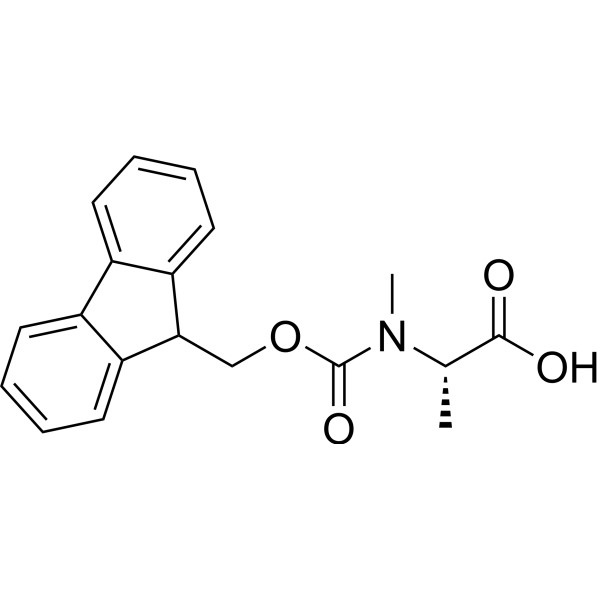
Fmoc-N-Me-Ala-OH is an Fmoc-protected N-methyl-L-alanine and also a building block for solid-phase peptide synthesis. As a building block, Fmoc-N-Me-Ala-OH is used to synthesize peptidomimetic antagonists of XIAP BIR3 derived from Smac/DIABLO .
|
-
- HY-W010698S
-
-

- HY-140945
-
|
|
PROTAC Linkers
|
Cancer
|
|
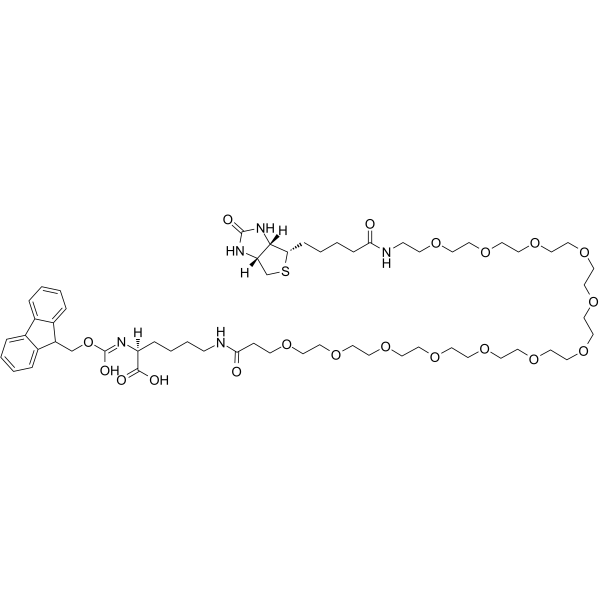
Fmoc-Lys (biotin-PEG12)-OH is a PEG-based PROTAC linker that can be used in the synthesis of PROTACs .
|
-
- HY-112516
-
|
|
Amino Acid Derivatives
|
Others
|
|
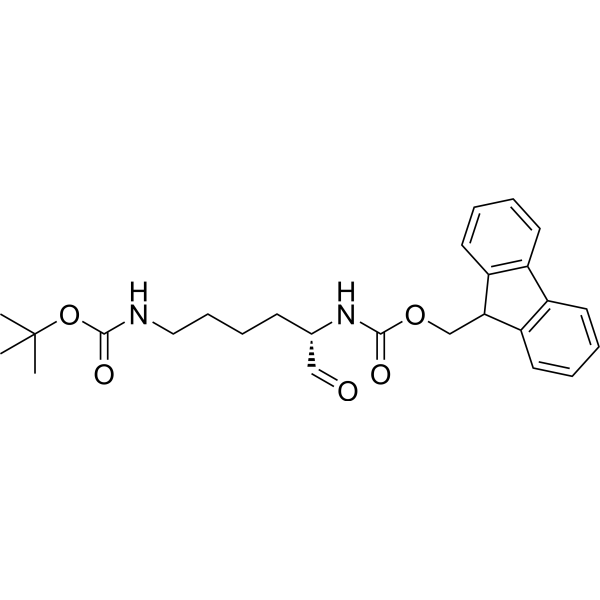
Fmoc-Lys(amino aldehyde)-Boc is a lysine derivative, and is very sensitive to acid and heat. Fmoc-Lys(amino aldehyde)-Boc and can be used in solid phase synthesis .
|
-
- HY-W011210
-
|
|
Amino Acid Derivatives
|
Others
|
|
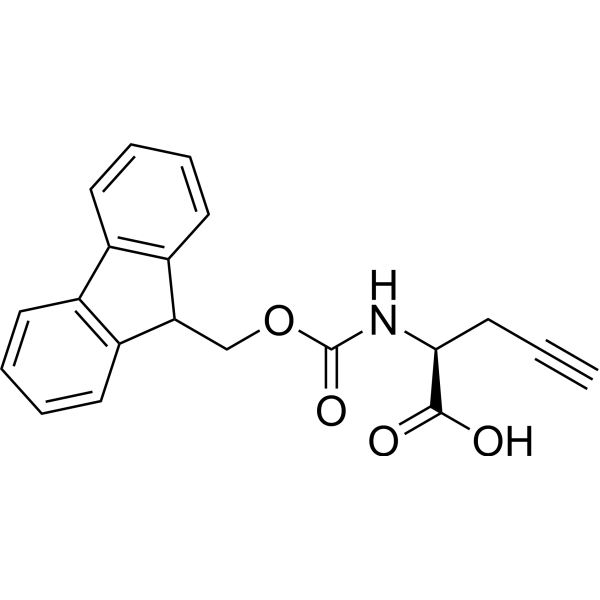
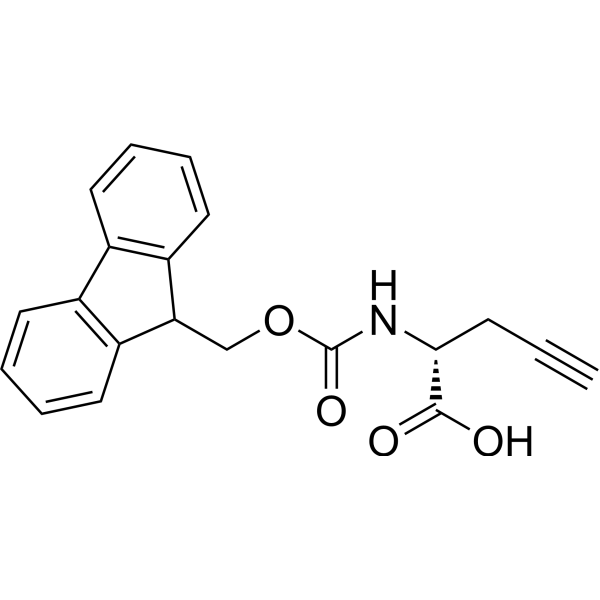
Fmoc-Pra-OH is a Glycine (HY-Y0966) derivative . Fmoc-Pra-OH is a click chemistry reagent, it contains an Alkyne group and can undergo copper-catalyzed azide-alkyne cycloaddition (CuAAc) with molecules containing Azide groups.
|
-
- HY-W800656
-
|
|
Biochemical Assay Reagents
|
Others
|
|
Fmoc-PEG4-hydroxy is a PEG linker containing an Fmoc-protected amine and a hydroxyl group. The hydrophilic PEG spacer increases solubility in aqueous media. The Fmoc group can be deprotected under basic condition to obtain the free amine which can be used for further conjugations. The hydroxyl group enables further derivatization or replacement with other reactive functional groups.
|
-

- HY-Y1169
-
|
4-tert-Butyl N-(fluoren-9-ylmethoxycarbonyl)-L-aspartate; fmoc-L-Asp(OtBu)-OH
|
Amino Acid Derivatives
|
Others
|
|
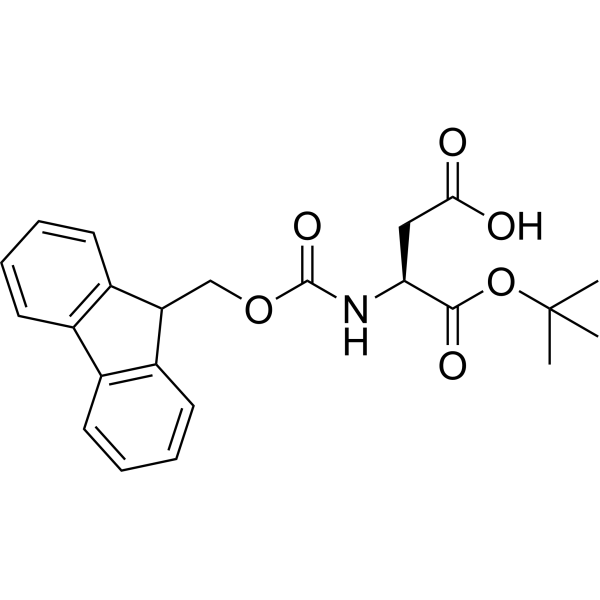
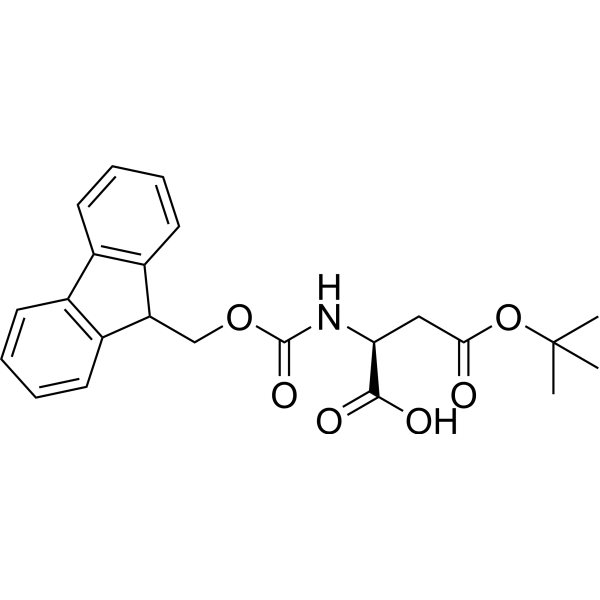
Fmoc-Asp(OtBu)-OH (4-tert-Butyl N-(fluoren-9-ylmethoxycarbonyl)-L-aspartate) is an aspartate derivative containing amine protecting group Fmoc. Fmoc-Asp(OtBu)-OH can be used for peptide synthesis .
|
-
- HY-W141987
-
-
- HY-W142030
-
-
- HY-W747366
-
-

- HY-181429
-
|
|
Drug-Linker Conjugates for ADC
|
Cancer
|
|
Fmoc-Gly-Gly-Phe-Gly-Paclitaxel (Compound 16a-3) is a drug-linker conjugates for ADC. Fmoc-Gly-Gly-Phe-Gly-Paclitaxel contains the ADC linker Fmoc-Gly-Gly-Phe-OH (HY-131833) and a potent tubulin polymerization inhibitor Paclitaxel (HY-B0015). Fmoc-Gly-Gly-Phe-Gly-Paclitaxel can be used for the research of cancer .
|
-

- HY-W1048542A
-
|
|
Biochemical Assay Reagents
|
Others
|
|
Fmoc-NH-PEG2000-COOH is a linear hetero-bifunctional PEG product with two Fmoc-protected amines and a carboxylic acid at both ends. Fmoc-NH-PEG2000-COOH is an important cross-linking agent with PEG chains. The protected amine can be regenerated by mild alkaline conditions .
|
-

- HY-W1048542D
-
|
|
Biochemical Assay Reagents
|
Others
|
|
Fmoc-NH-PEG5000-COOH is a linear hetero-bifunctional PEG product with two Fmoc-protected amines and a carboxylic acid at both ends. Fmoc-NH-PEG5000-COOH is an important cross-linking agent with PEG chains. The protected amine can be regenerated by mild alkaline conditions .
|
-

- HY-W1048542C
-
|
|
Biochemical Assay Reagents
|
Others
|
|
Fmoc-NH-PEG3400-COOH is a linear hetero-bifunctional PEG product with two Fmoc-protected amines and a carboxylic acid at both ends. Fmoc-NH-PEG3400-COOH is an important cross-linking agent with PEG chains. The protected amine can be regenerated by mild alkaline conditions .
|
-

- HY-W1048542H
-
|
|
Biochemical Assay Reagents
|
Others
|
|
Fmoc-NH-PEG20000-COOH is a linear hetero-bifunctional PEG product with two Fmoc-protected amines and a carboxylic acid at both ends. Fmoc-NH-PEG20000-COOH is an important cross-linking agent with PEG chains. The protected amine can be regenerated by mild alkaline conditions .
|
-

- HY-P11685
-
|
|
DNA/RNA Synthesis
|
Others
|
|
Fmoc-PNA-thioU(PMB)-OH is a nucleobase-modified peptide nucleic acid (PNA) monomer used in solid-phase synthesis. Fmoc-PNA-thioU(PMB)-OH features a thiouracil base protected with a p-methoxybenzyl (PMB) group on an Fmoc-protected backbone, designed for incorporating modified PNA bases into oligonucleotides to study binding properties.
|
-

- HY-W1048542I
-
|
|
Biochemical Assay Reagents
|
Others
|
|
Fmoc-NH-PEG40000-COOH is a linear hetero-bifunctional PEG product with two Fmoc-protected amines and a carboxylic acid at both ends. Fmoc-NH-PEG40000-COOH is an important cross-linking agent with PEG chains. The protected amine can be regenerated by mild alkaline conditions .
|
-

- HY-W1048542E
-
|
|
Biochemical Assay Reagents
|
Others
|
|
Fmoc-NH-PEG10000-COOH is a linear hetero-bifunctional PEG product with two Fmoc-protected amines and a carboxylic acid at both ends. Fmoc-NH-PEG10000-COOH is an important cross-linking agent with PEG chains. The protected amine can be regenerated by mild alkaline conditions .
|
-

- HY-W008156R
-
-

- HY-W008371
-
-
- HY-19821S1
-
|
fmoc-L-isoleucine-13C6,15N
|
Isotope-Labeled Compounds
|
Others
|
|
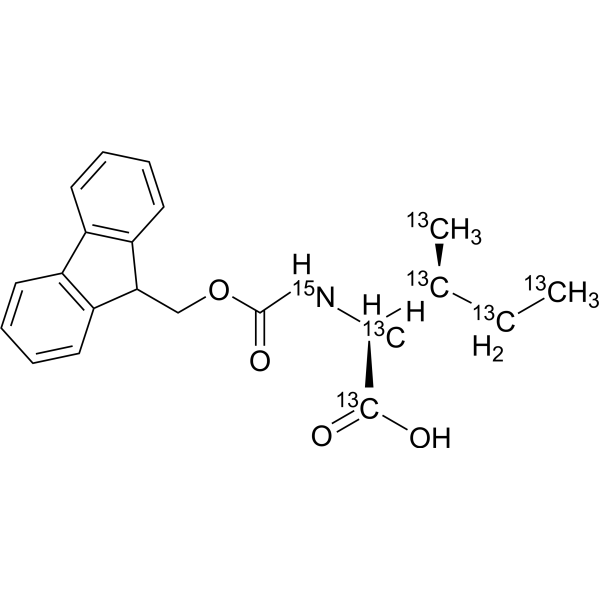
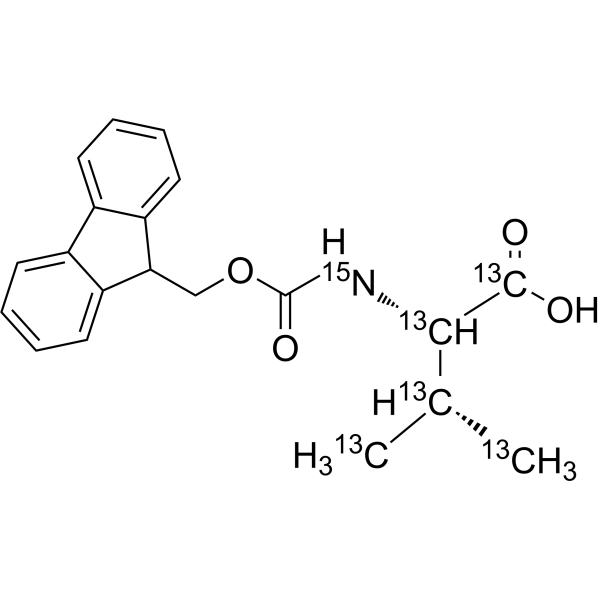
Fmoc-Ile-OH- 13C6, 15N is the 13C and 15N labeled Fmoc-Ile-OH . Fmoc-Ile-OH is an isoleucine derivative .
|
-
- HY-79128S
-
-
- HY-130477
-
|
|
PROTAC Linkers
|
Cancer
|
|
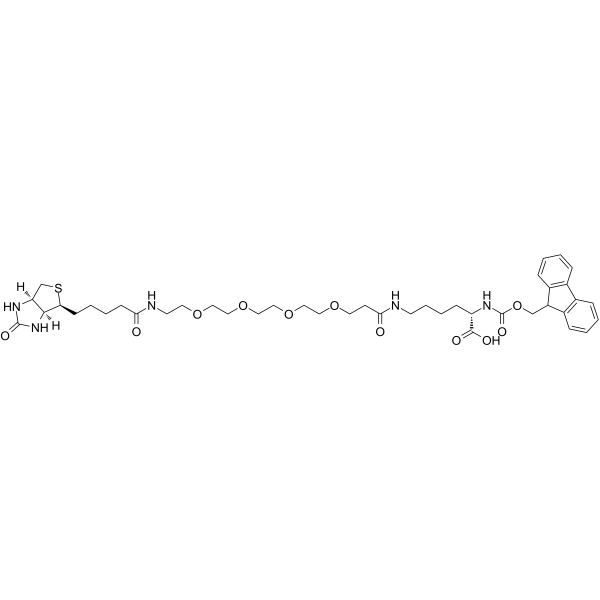
Fmoc-Lys (biotin-PEG4)-OH is a biotin-labeled, PEG-based PROTAC linker that can be used in the synthesis of PROTACs .
|
-
- HY-P11686
-
|
|
DNA/RNA Synthesis
|
Others
|
|
Fmoc-PNA-G(Boc)-OH is a synthetic peptide nucleic acid (PNA) modified with Fmoc and Boc protecting groups, designed for precise synthesis and targeted binding to complementary DNA or RNA sequences. Fmoc-PNA-G(Boc)-OH serves as a versatile tool in molecular biology, offering robustness, specificity, and applicability across various research and diagnostic fields.
|
-

- HY-79125
-
|
|
ADC Linker
PROTAC Linkers
|
Cancer
|
|
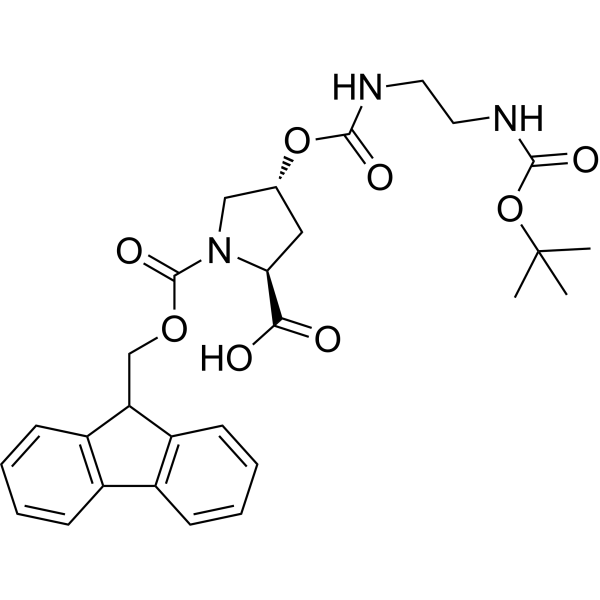
Fmoc-Hyp(Bom)-OH is a non-cleavable ADC linker used in the synthesis of antibody-drug conjugates (ADCs). Fmoc-Hyp(Bom)-OH is also a alkyl chain-based PROTAC linker that can be used in the synthesis of PROTACs<
|
-
- HY-128929
-
|
|
ADC Linker
|
Cancer
|
|
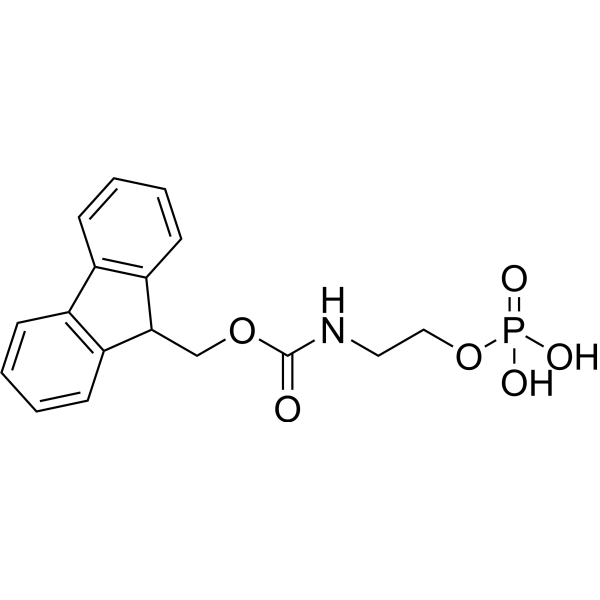
Fmoc-PEA (Example 1-2) is a used as a cleavable linker for antibody-drug conjugates (ADC) .
|
-
- HY-137950
-
-
- HY-W013659
-
-
- HY-W008016
-
-
- HY-W008021
-
-
- HY-W008958
-
-
- HY-W010734
-
-
- HY-W141985
-
-
- HY-W010965
-
-
- HY-22296
-
-
- HY-W011089
-
-
- HY-W007941
-
-
- HY-W010729
-
-

- HY-159136
-
-

- HY-W011126
-
-
- HY-W007798
-
-
- HY-W011026
-
-
- HY-W008075
-
-
- HY-W008273
-
-
- HY-W010721
-
-
- HY-W040024
-
-
- HY-W008872
-
-
- HY-W008926
-
-
- HY-W007942
-
-
- HY-W041990
-
-
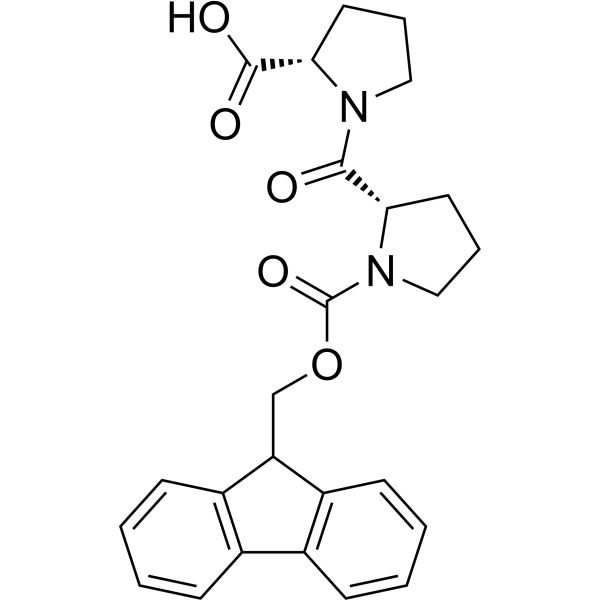
- HY-W010943
-
-
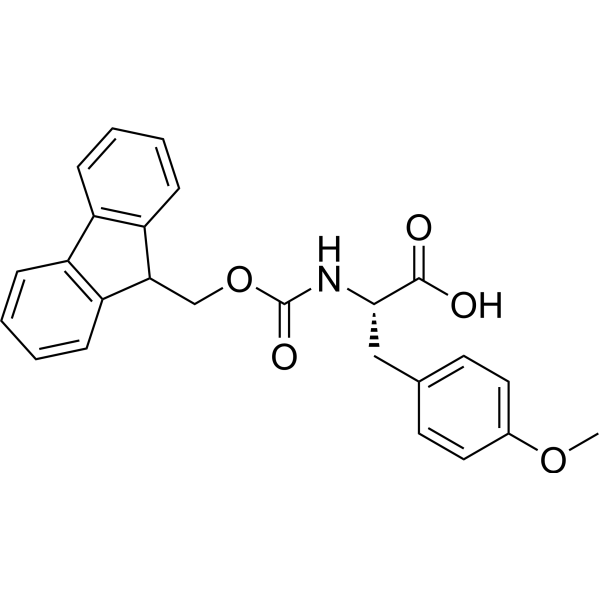
- HY-W013145
-
-
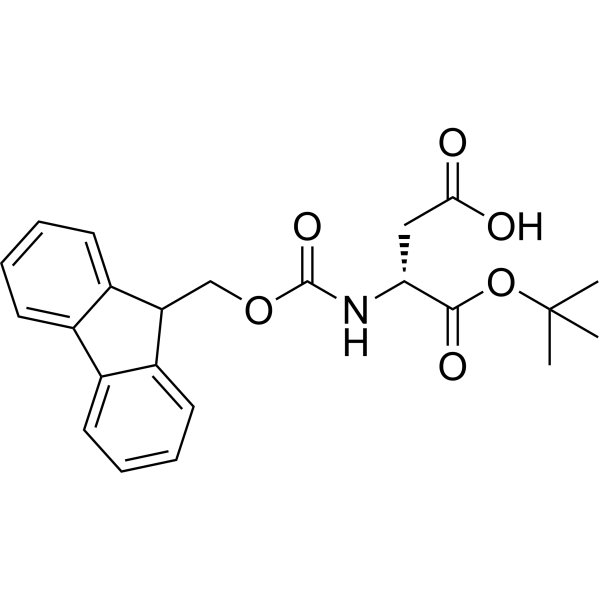
- HY-W009006
-
-
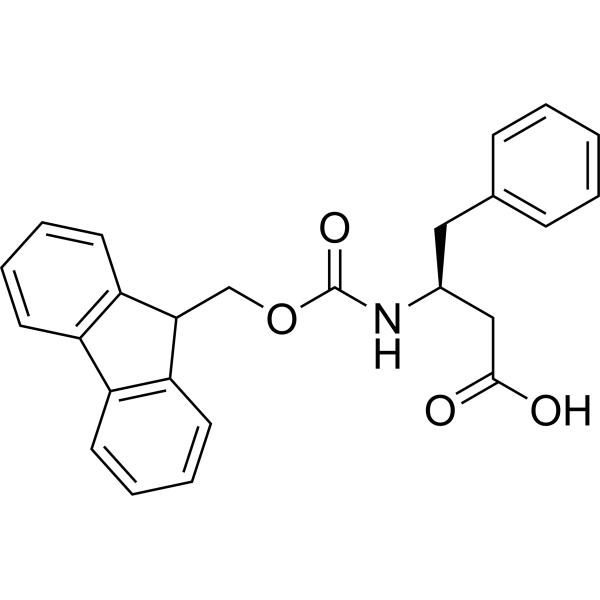
- HY-W008986
-
-
- HY-W009124
-
-
- HY-W007706
-
-
- HY-W013185
-
-
- HY-134852
-
-
- HY-W010794
-
-
- HY-W141946
-
-
- HY-W013118
-
-
- HY-W010862
-
-
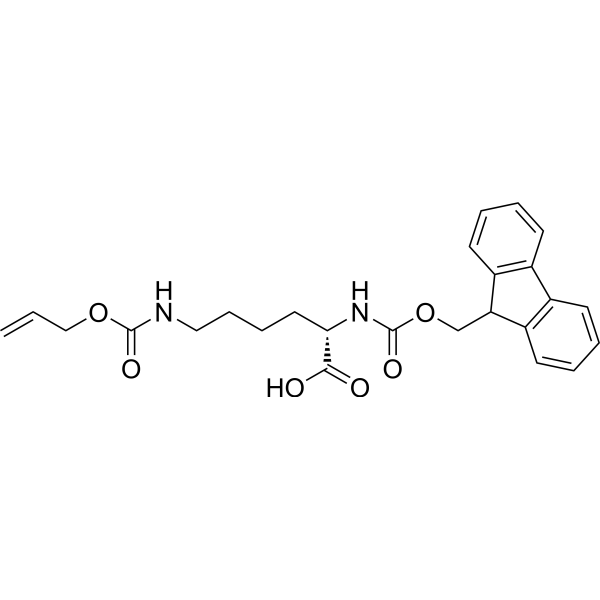
- HY-W008869
-
-
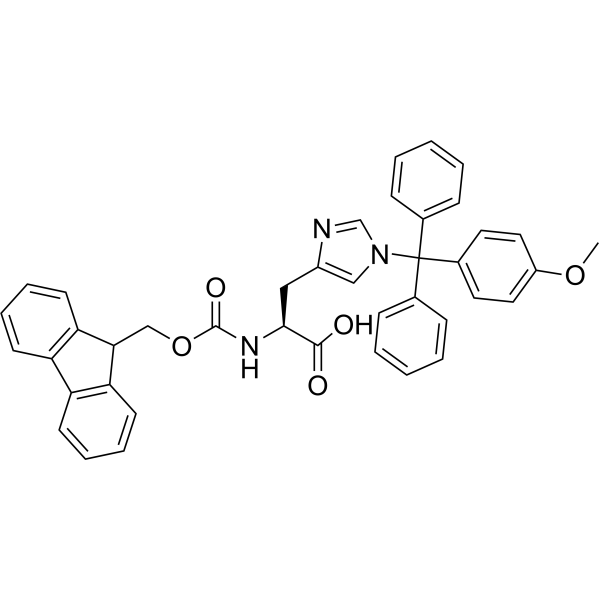
- HY-W142115
-
-
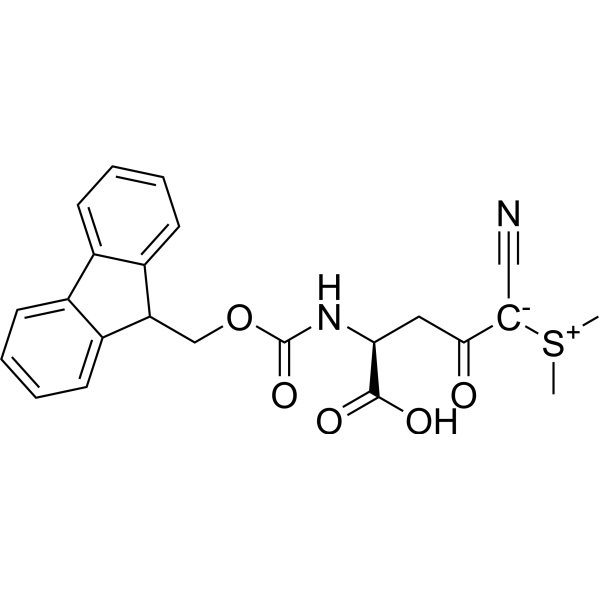
- HY-W007108
-
-
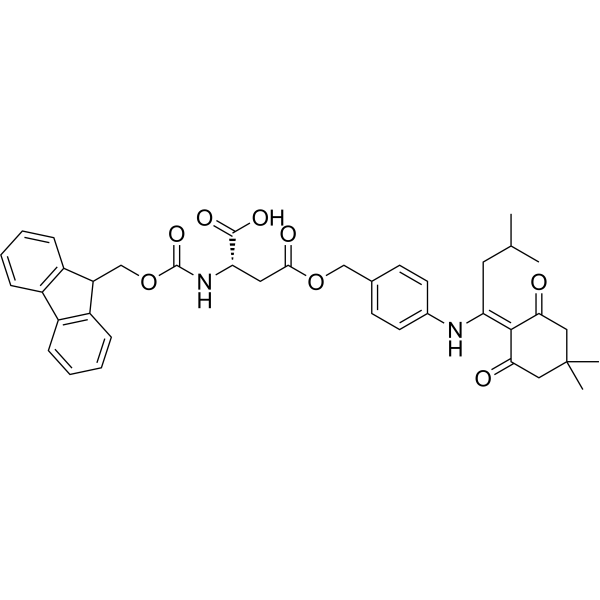
- HY-W008256
-
-
- HY-W010976
-
-
- HY-W025807
-
-
- HY-W097163
-
-
- HY-W010782
-
-
- HY-W013143
-
-
- HY-W010962
-
-
- HY-W002436
-
-
- HY-W010964
-
-
- HY-W009119
-
-
- HY-W008072
-
-
- HY-W005815
-
-
- HY-104004R
-
|
fmoc-Ser-(GalNAc(Ac)3-alpha-D)-OH (Standard); fmoc-Ser[GalNAc(Ac)3-α-D]-OH (Standard); fmoc-Ser(Ac3AcNH-α-Gal)-OH (Standard)
|
Amino Acid Derivatives
Reference Standards
Drug Intermediate
|
Cancer
|
|
Fmoc-Ser(O-α-D-GalNAc(OAc)3)-OH (Standard) is the analytical standard of Fmoc-Ser(O-α-D-GalNAc(OAc)3)-OH (HY-104004). This product is intended for research and analytical applications. Fmoc-Ser (O-α-D-GalNAc (OAc) 3)-OH (Fmoc-Ser-(GalNAc(Ac)3-alpha-D)-OH) is a protected glycosylated amino acid and Tn antigen. Fmoc-Ser (O-α-D-GalNAc (OAc) 3)-OH serves as a building block in the solid-phase synthesis of Tn-based cancer vaccine constructs. Fmoc-Ser (O-α-D-GalNAc (OAc) 3)-OH supports solid-phase peptide synthesis .
|
-

- HY-W041983
-
-
- HY-W011342
-
-
- HY-W010839
-
-
- HY-W041984
-
-
- HY-151640
-
|
|
ADC Linker
|
Others
|
|
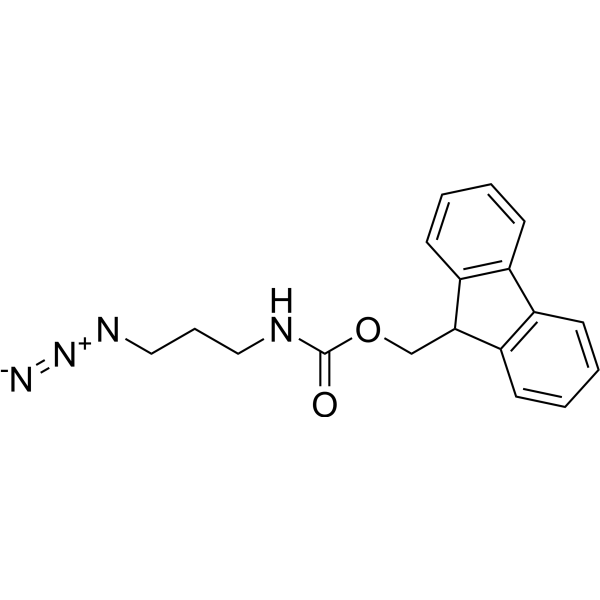
Fmoc-DAP-N3 is a click chemistry reagent containing an azide group. Fmoc-DAP-N3 is a short, linear spacer molecule with Fmoc protected amino function. Fmoc-DAP-N3 can be used in click conjugation and amid bond formation either with small molecules or for bioconjugation with proteins and antibodies . It contains an azide group and can undergo copper-catalyzed azide-alkyne cycloaddition (CuAAc) with molecules containing alkyne groups. It can also undergo ring strain-promoted alkyne-azide cycloaddition (SPAAC) with molecules containing DBCO or BCN groups.
|
-
- HY-W013153
-
|
|
Amino Acid Derivatives
|
Others
|
|
Fmoc-D-Tic-OH is an amino acid derivative with an Fmoc protecting group, which can be used to synthesize bioactive peptide mimetics, such as [desArg 10]HOE 140, which has bradykinin B1 antagonist activity .
|
-

- HY-W008689
-
|
N-fmoc-6-Aminohexanoic acid
|
Biochemical Assay Reagents
|
Others
|
|
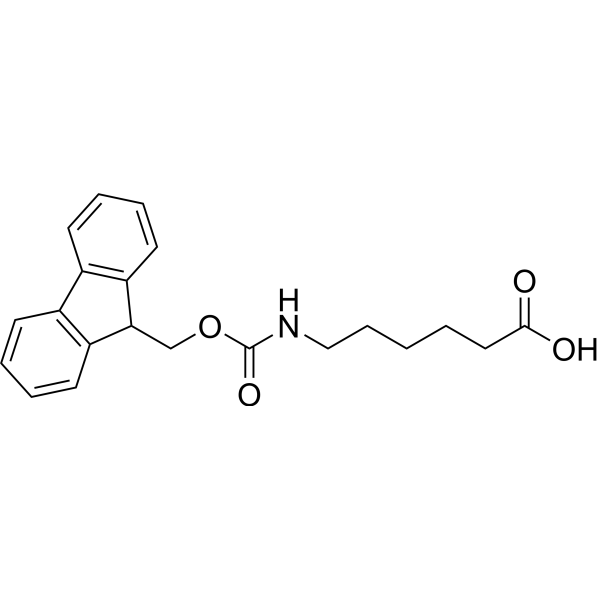
Fmoc-ε-Acp-OH is a biochemical reagent that can be used as a biological material or organic compound for life science related research.
|
-
- HY-W800846
-
|
|
Biochemical Assay Reagents
|
Others
|
|
Fmoc-Amido-Tri-(carboxyethoxymethyl)-methane is a multifunctional reagent containing three carboxylic acids and a primary amine that is Fmoc-protected. The carboxylic acids can react with primary amine groups to form stable amide bonds. The Fmoc protecting group can be removed using piperidine, freeing up the amine for a variety of uses such as coupling with carboxylic acids to form amide bonds.
|
-

- HY-151780
-
|
|
ADC Linker
|
Others
|
|
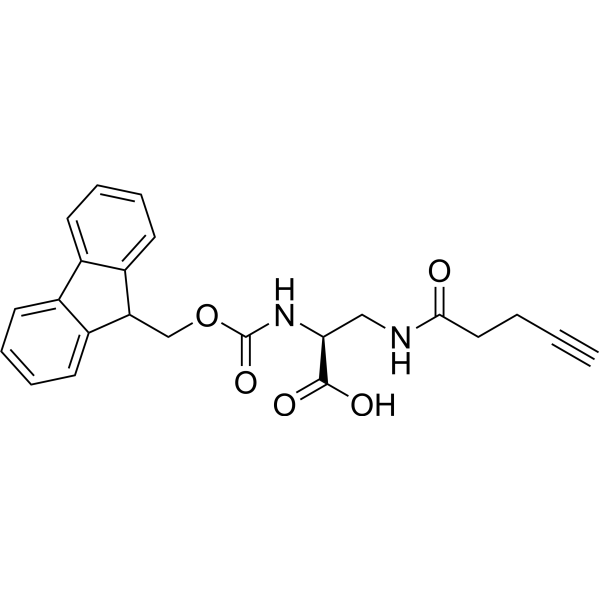
Fmoc-L-Dap(Pentynoyl)-OH is a click chemistry reagent containing an azide group. Fmoc-L-Dap(Pentynoyl)-OH serves as an amino acid building block for introducing alkyne functions into peptide sequences by standard Fmoc/tBu protocols. The alkyne residue can be engaged for copper catalyzed click reaction with organic azides or with tetrazines for copper-free conjugations . Fmoc-L-Dap(Pentynoyl)-OH is a click chemistry reagent, it contains an Alkyne group and can undergo copper-catalyzed azide-alkyne cycloaddition (CuAAc) with molecules containing Azide groups.
|
-
- HY-W048697
-
|
|
Amino Acid Derivatives
|
Others
|
|
Fmoc-D-Pen(Trt)-OH is an amino acid derivative with an Fmoc protecting group, which can be used to synthesize analogs of cyclic lanthionine enkephalin, a δ-opioid receptor selective ligand .
|
-

- HY-79131S1
-
|
|
Isotope-Labeled Compounds
|
Others
|
|
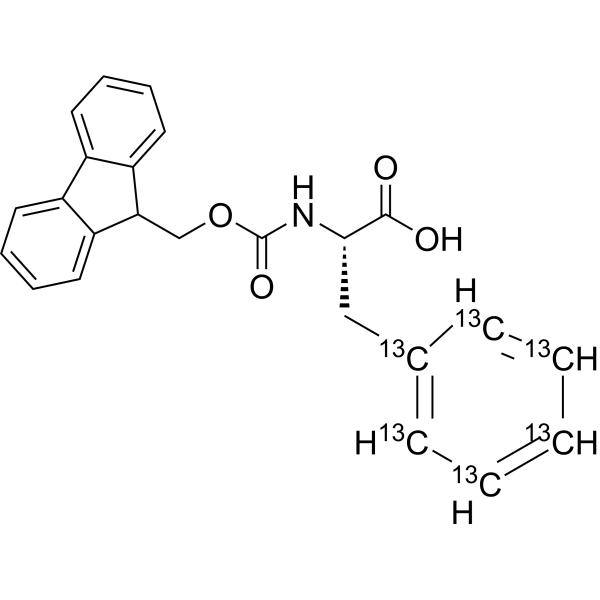
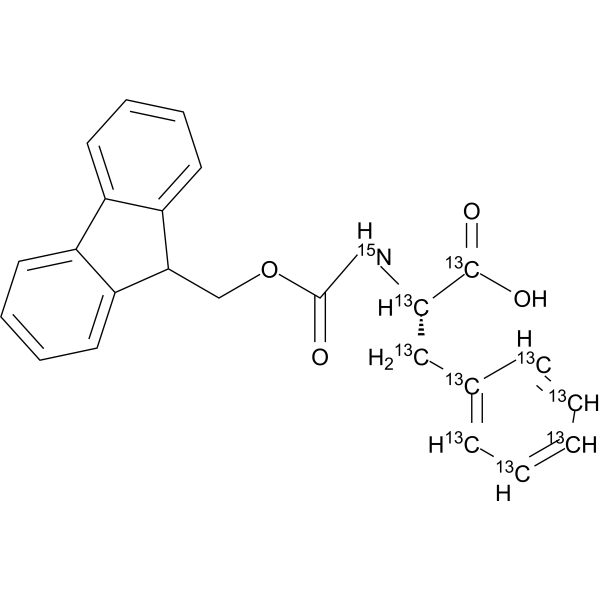
Fmoc-Phe-OH- 13C9, 15N is a 15N-labeled and 13C-labled Fmoc-Phe-OH (HY-79131). Fmoc-Phe-OH is a phenylalanine derivative .
|
-
- HY-126532
-
|
|
Drug-Linker Conjugates for ADC
|
Cancer
|
|
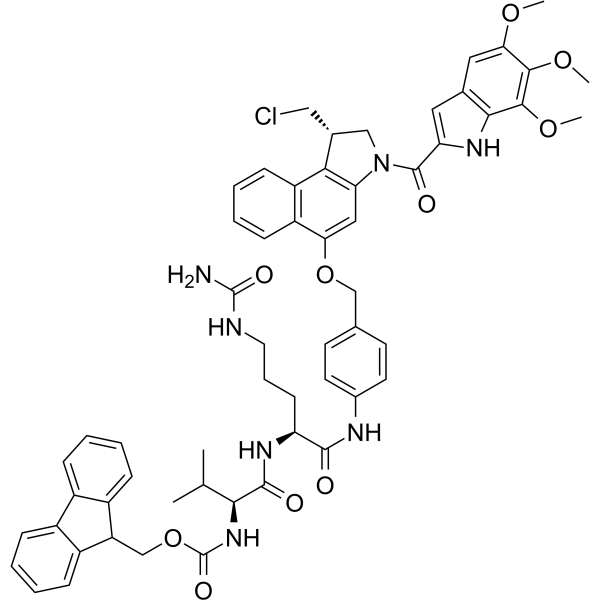
Fmoc-Val-Cit-PAB-Duocarmycin TM is a agent-linker conjugate for ADC by using the antitumor antibiotic, Duocarmycin TM, linked via Fmoc-Val-Cit-PAB.
|
-
- HY-W109214
-
|
|
Amino Acid Derivatives
|
Others
|
|
Fmoc-L-Dap(Boc,Me)-OH is a derivative of amino acid with protecting groups. Fmoc-L-Dap(Boc,Me)-OH can be used for synthesis of diaminopropionic acid containing peptide .
|
-

- HY-W729138
-
|
|
ADC Linker
|
Others
|
|
Fmoc-D-homoArg(Et)2-OH (hydrochloride) is a Fmoc-protected derivative of D-Homoarginine (HArg) that renders peptides and proteins resistant to proteolysis by trypsin. Fmoc-D-homoArg(Et)2-OH (hydrochloride) can be used as a cleavable ADC linker to synthesize antibody-drug conjugates (ADCs) .
|
-

- HY-Y1169S1
-
|
|
Isotope-Labeled Compounds
|
Others
|
|
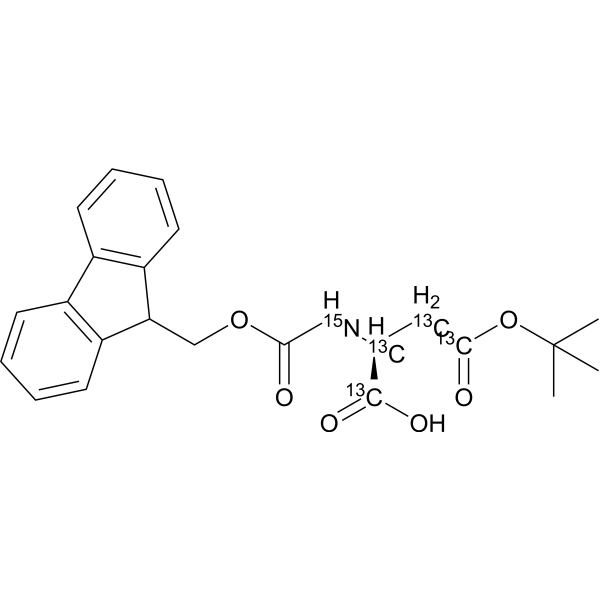
Fmoc-Asp(OtBu)-OH- 13C4, 15N is the 13C and 15N labeled Fmoc-Asp(OtBu)-OH . Fmoc-Asp(OtBu)-OH (4-tert-Butyl N-(fluoren-9-ylmethoxycarbonyl)-L-aspartate) is a aspartate derivative containing amine protecting group Fmoc. Fmoc-Asp(OtBu)-OH can be used for peptide synthesis .
|
-
- HY-W013726
-
|
|
Biochemical Assay Reagents
Amino Acid Derivatives
|
Others
|
|
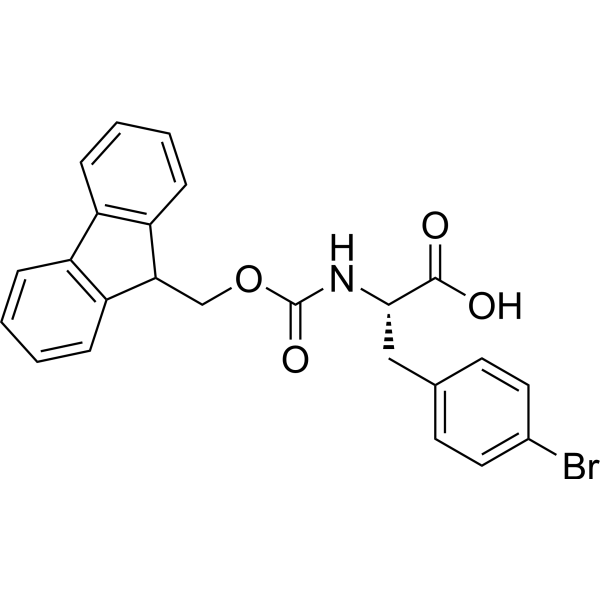
Fmoc-Phe(4-Br)-OH is a widely used amino acid derivative. Fmoc-Phe(4-Br)-OH can be used in the synthesis of compounds and for the study of protein-protein interactions and the development of biomaterials. Fmoc-Phe(4-Br)-OH can be used in peptide synthesis to incorporate phenylalanine bromide into the peptide chain .
|
-
- HY-W009204S4
-
-
- HY-W013780S1
-
-
- HY-W046355
-
-

- HY-147104
-
|
|
Fluorescent Dye
|
Others
|
|
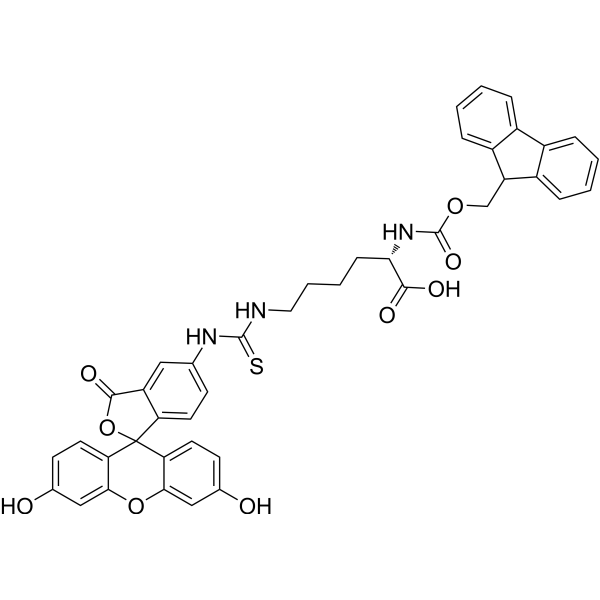
Fmoc-Lys(5-FITC)-OH is a marker for polypeptides or proteins. FITC is a fluorescence probe for the labeling of amines. FITC is a pH- and Cu 2+-sensitive fluorescence dye .
|
-
- HY-W011277
-
|
|
ADC Linker
PROTAC Linkers
|
Cancer
|
|
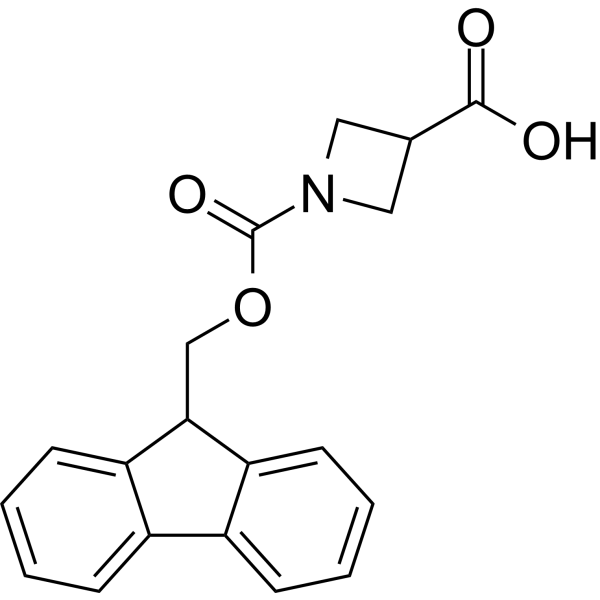
Fmoc-azetidine-3-carboxylic acid is a cleavable ADC linker used in the synthesis of antibody-drug conjugates (ADCs). Fmoc-azetidine-3-carboxylic acid is also a alkyl chain-based PROTAC linker that can be used in the synthesis of PROTACs.
|
-
- HY-W002327S
-
|
|
Isotope-Labeled Compounds
|
Others
|
|
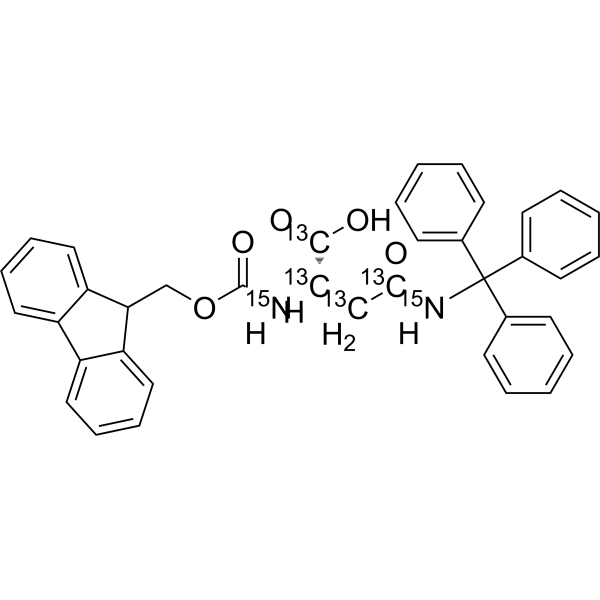
Fmoc-Asn(Trt)-OH- 13C4, 15N2 is a 15N-labeled and 13C-labled Fmoc-Asn(Trt)-OH (HY-W002327). Fmoc-Asn (Trt)-OH is an Fmoc-protected asparagine derivative. Fmoc-Asn (Trt)-OH supports solid-phase peptide synthesis .
|
-
- HY-P2392
-
-
- HY-W112057
-
-
- HY-W141961
-
-
- HY-W007056
-
-

- HY-W337644
-
|
|
Amino Acid Derivatives
|
Others
|
|
Fmoc-L-Homoarg(Et)2-OH hydrochloride is a derivative of amino acid with protecting groups. Fmoc-L-Dap(Boc,Me)-OH can be used for synthesis of homoarginine containing peptide .
|
-

- HY-I1111S2
-
-
- HY-W008395
-
|
|
Amino Acid Derivatives
|
Others
|
|
Fmoc-D-Pra-OH is a Glycine (HY-Y0966) derivative . Fmoc-D-Pra-OH is a click chemistry reagent, it contains an Alkyne group and can undergo copper-catalyzed azide-alkyne cycloaddition (CuAAc) with molecules containing Azide groups.
|
-
- HY-W048730
-
|
|
Amino Acid Derivatives
|
Others
|
|
Fmoc-Phe(4-tBu)-OH is an amino acid derivative with an Fmoc protecting group, which can be used to synthesize rOicPaPhe(p-Me)-NH(2) with platelet aggregation activation inhibitory activity .
|
-

- HY-W013081S
-
|
|
Isotope-Labeled Compounds
Amino Acid Derivatives
|
Others
|
|
Fmoc-Gln(Trt)-OH- 13C5, 15N2 is the 13C-labeled and 15N-labeled Fmoc-Gln(Trt)-OH (HY-W013081). Fmoc-Gln(Trt)-OH is a glutamine derivative containing amine protecting group Fmoc. Fmoc-Gln(Trt)-OH can be used in solid-phase peptide synthesis .
|
-

- HY-I1112
-
-
- HY-W041992
-
-
- HY-W010732
-
-
- HY-W141986
-
-
- HY-W041987
-
-
- HY-W008371S1
-
|
|
Isotope-Labeled Compounds
|
Others
|
|
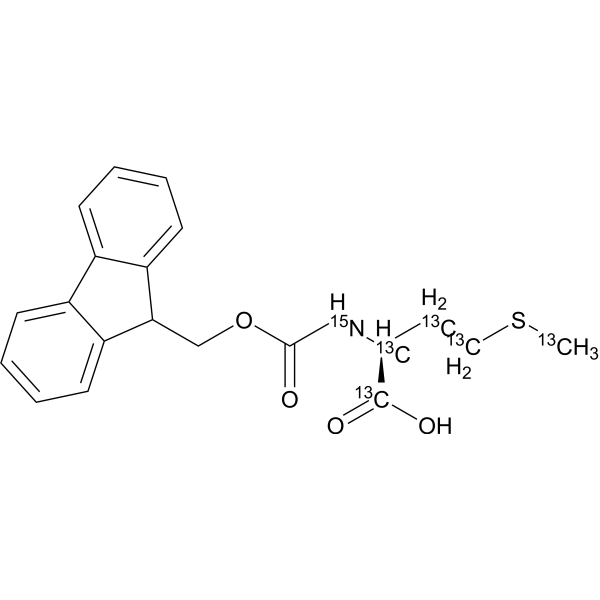
Fmoc-Met-OH- 13C5, 15N is a 15N-labeled and 13C-labled Fmoc-Met-OH (HY-W008371). Fmoc-Met-OH is a Methionine (HY-13694) derivative .
|
-
- HY-178257
-
|
|
ADC Payload
|
Cancer
|
|
Fmoc-Val-Lys-PAB-Exatecan is a derivative of Exatecan (DX-8951) (HY-13631). Fmoc-Val-Lys-PAB-Exatecan can be connected to monoclonal antibodies via linkers to form antibody-drug conjugate (ADC) molecules. Fmoc-Val-Lys-PAB-Exatecan is often combined with CD70 mAb to form ADC drugs for the study of tumors with high CD70 expression .
|
-

- HY-W008558
-
|
|
Amino Acid Derivatives
|
Others
|
|
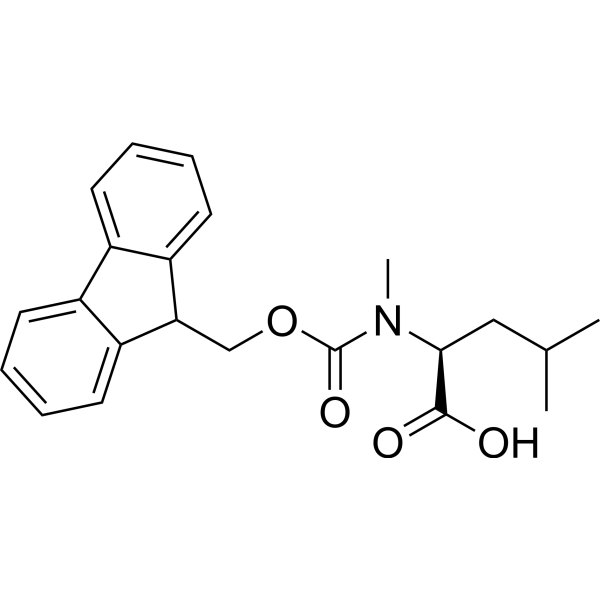
Fmoc-N-Me-Leu-OH is an N-Fmoc-N-methyl amino acid that can be used in peptide coupling reactions. Fmoc-N-Me-Leu-OH is primarily used as a standard building block in solid-phase peptide synthesis (SPPS) to introduce N-methylleucine residues into peptide chains, thereby enhancing the enzymatic stability, altering conformational flexibility, and modifying the biological activity of the target peptide .
|
-
- HY-W540123
-
|
|
Biochemical Assay Reagents
|
Cancer
|
Fmoc-PNA-A(Bhoc)-OH is a protected peptide nucleic acid (PNA) monomer carrying an adenine base. Fmoc-PNA-A(Bhoc)-OH contains Fmoc and benzhydryloxycarbonyl (Bhoc) protecting groups, and serves as a standard building block designed specifically for solid-phase PNA synthesis. Fmoc-PNA-A(Bhoc)-OH can be efficiently used to synthesize PNA-based sequence-specific hybridization probes. These probes have broad applications in molecular biology research; for example, they can be used in HER2-expressing tumor-related studies, providing tools for disease diagnosis and mechanism exploration .
|
-

- HY-178289
-
|
|
Drug-Linker Conjugates for ADC
|
Cancer
|
|
Fmoc-Val-Lys(Boc)-PAB-Exatecan (Compound 39-7) is a Drug-Linker Conjugates for ADC. Fmoc-Val-Lys(Boc)-PAB-Exatecan consists of the ADC Cytotoxin Exatecan (HY-13631) and a linker PAB-Val-Lys-Boc (HY-138651). Fmoc-Val-Lys(Boc)-PAB-Exatecan can be used for synthesis of ADCs .
|
-

- HY-133404
-
|
|
PROTAC Linkers
|
Cancer
|
|
Fmoc-aminooxy-PFP ester is an alkyl/ether-based PROTAC linker that can be used in the synthesis of PROTACs .
|
-
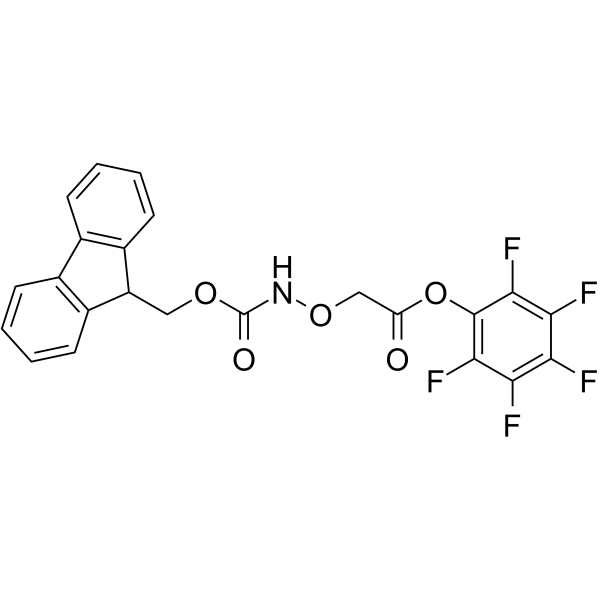
- HY-138546
-
|
|
Bacterial
|
Infection
|
|
Fmoc-Tpi-OH is a biologically active amino acid that can be used to synthesize antimicrobial peptide mimetics .
|
-

- HY-W048733
-
-

- HY-W419989
-
-

- HY-W419324
-
-

- HY-W283704
-
-

- HY-W097232
-
-

- HY-W039112
-
-
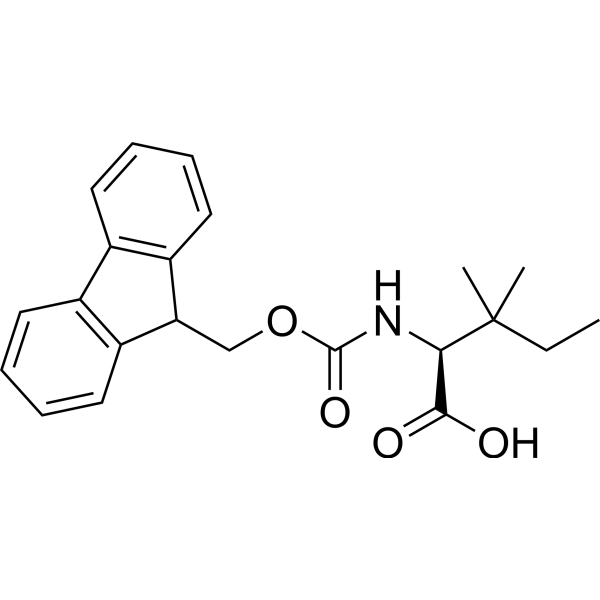
- HY-W106325
-
|
|
Amino Acid Derivatives
|
Others
|
|
Fmoc-N-Me-D-Trp(Boc)-OH is an amino acid derivative with an Fmoc protecting group, which can be used to synthesize somatostatin-dopamine chimeric analogs .
|
-

- HY-W015987
-
|
fmoc-NH2
|
Biochemical Assay Reagents
|
Others
|
|
9-Fluorenylmethyl carbamate (Fmoc-NH2) is an amide compound with an Fmoc protecting group, which can be used as a photobase initiator to prepare organosilane-based proton exchange membranes .
|
-

- HY-P3882
-
|
|
Amino Acid Derivatives
|
Neurological Disease
|
|
Fmoc-Ala-Glu-Gln-Lys-NH2 (AEQK) is a tetrapeptide. Fmoc-Ala-Glu-Gln-Lys-NH2 is the inactive control for Fmoc-Ala-Glu-Asn-Lys-NH2 (AENK) peptide inhibitor. AENK blocks proteolysis of UNC5C protein .
|
-
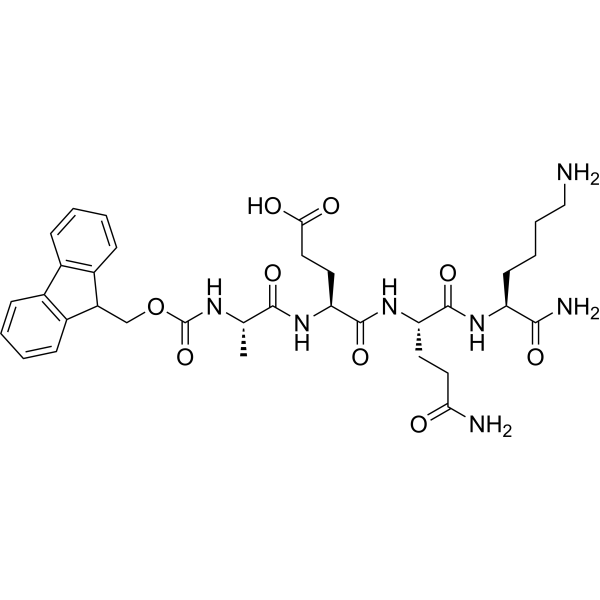
- HY-Y1636S
-
-

- HY-Y1844
-
-
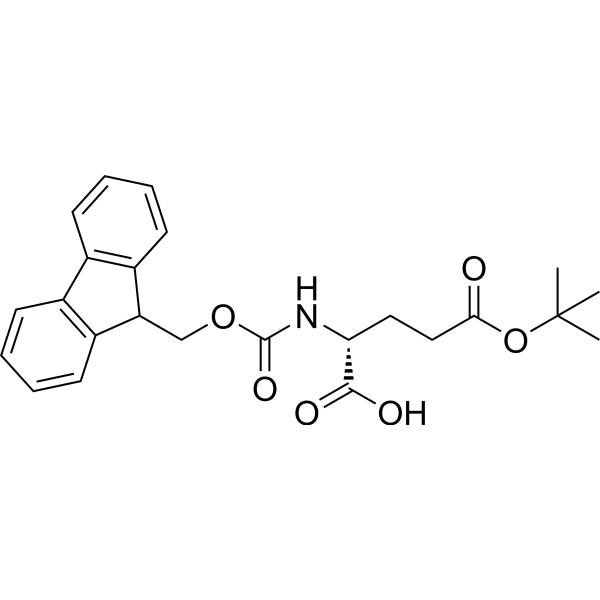
- HY-W008866
-
-
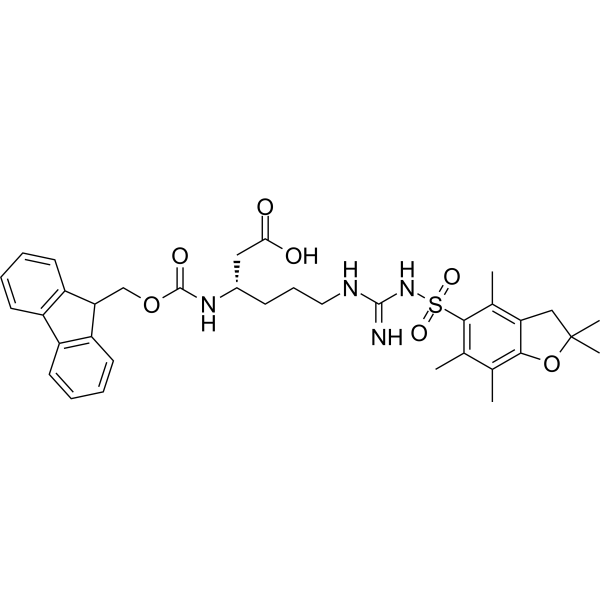
- HY-W048724
-
-

- HY-W008426
-
-
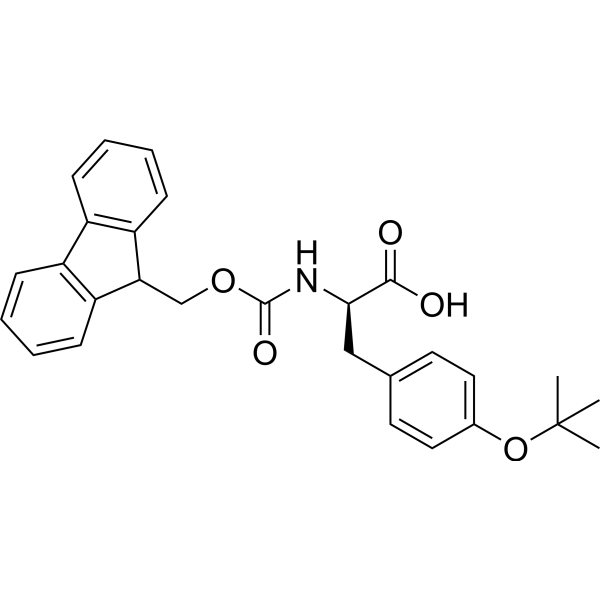
- HY-W043473
-
-
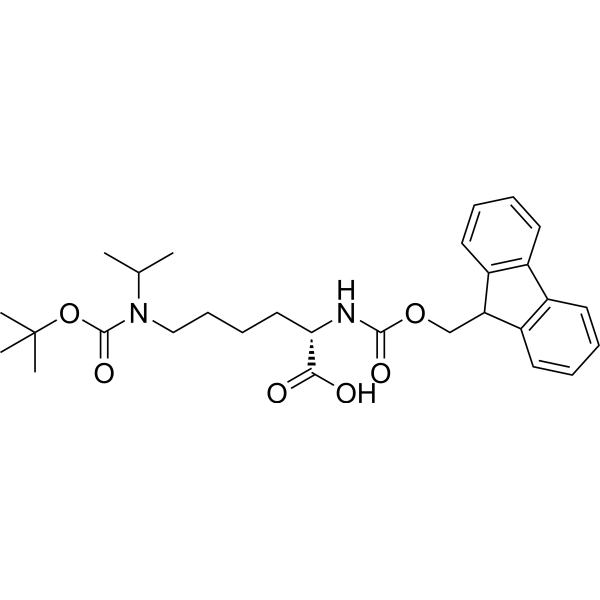
- HY-W010888
-
-
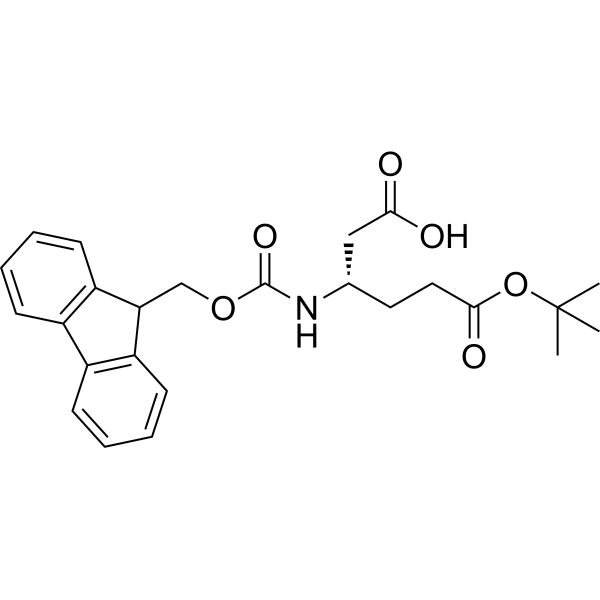
- HY-W008156
-
-
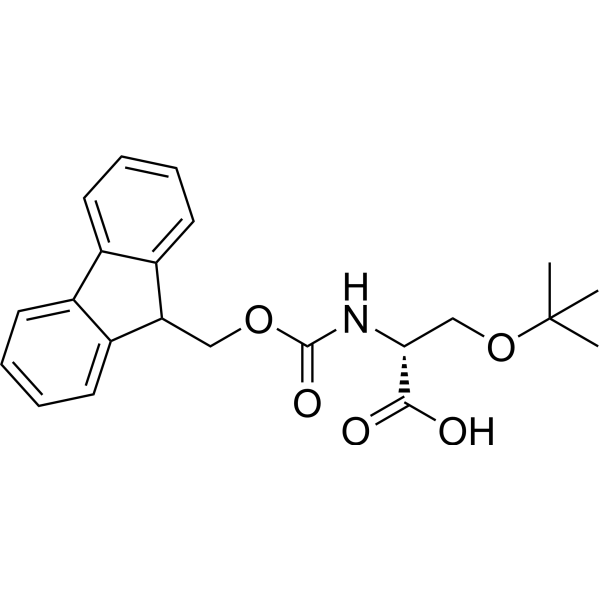
- HY-W022227
-
-
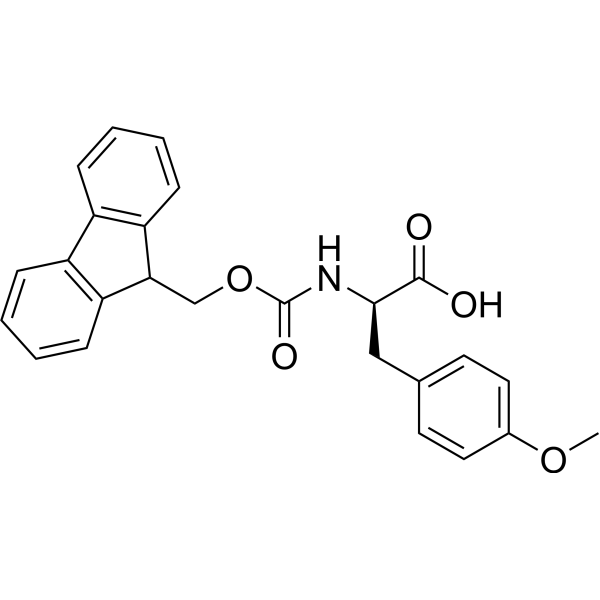
- HY-W010714
-
-
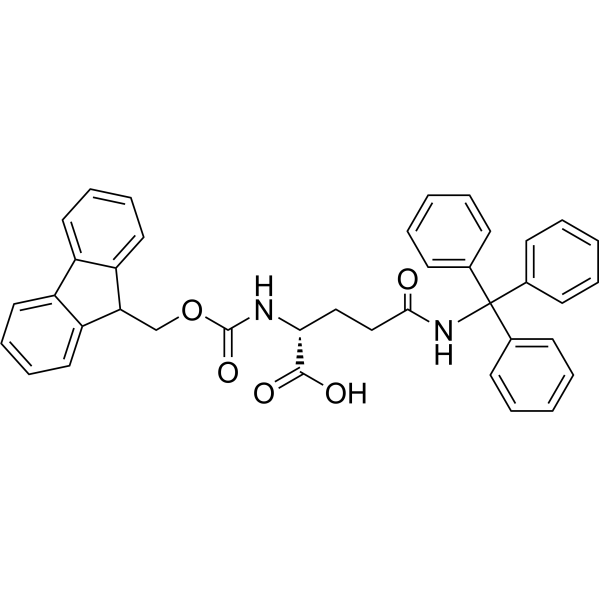
- HY-W013144
-
-
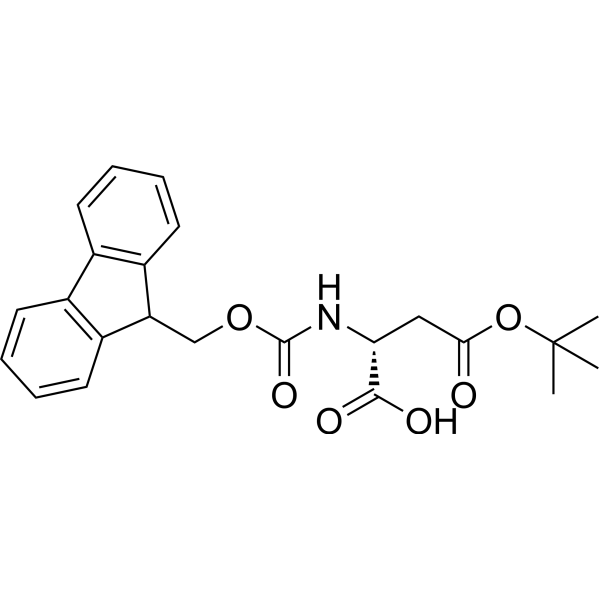
- HY-W041986
-
-
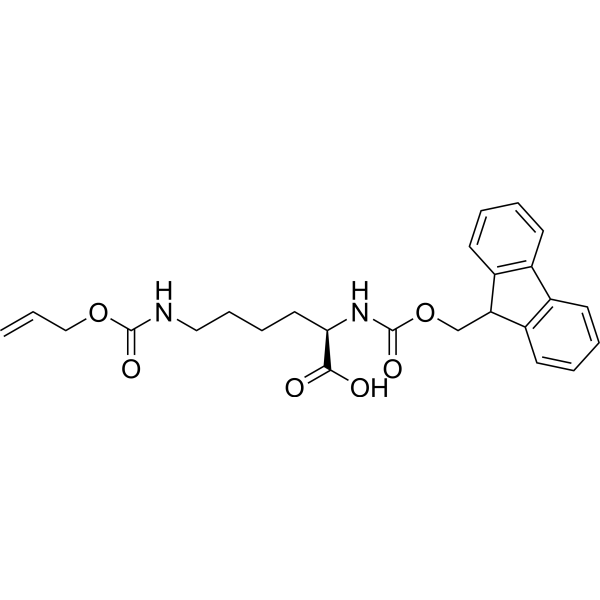
- HY-W041985
-
-
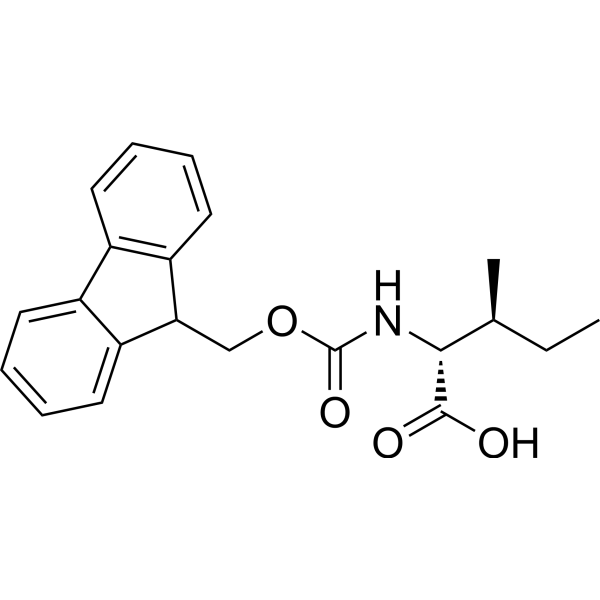
- HY-W010924
-
-
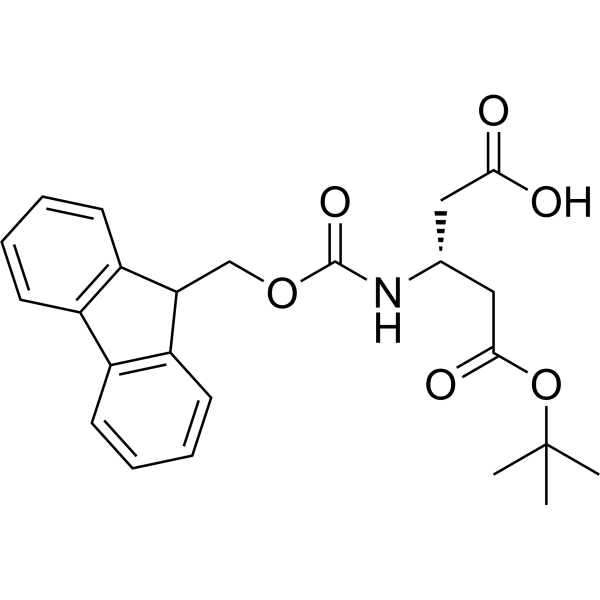
- HY-W010698
-
-
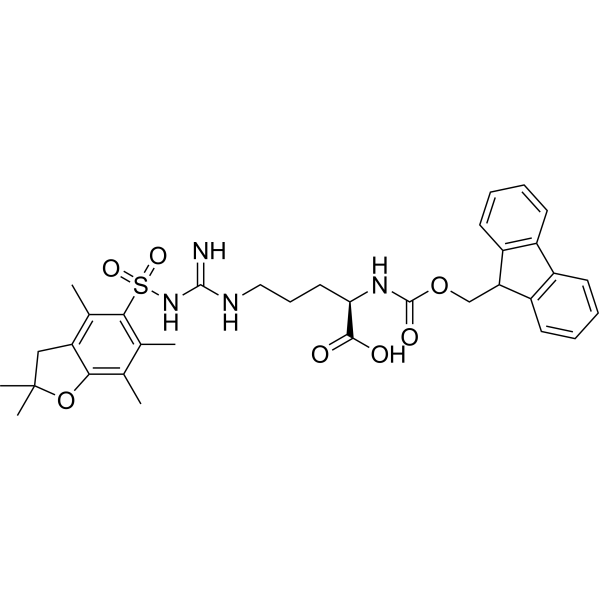
- HY-W140794
-
-
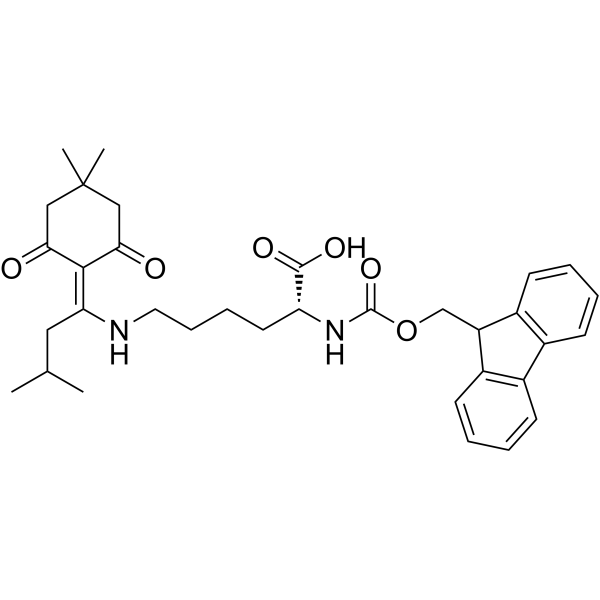
- HY-66024
-
-
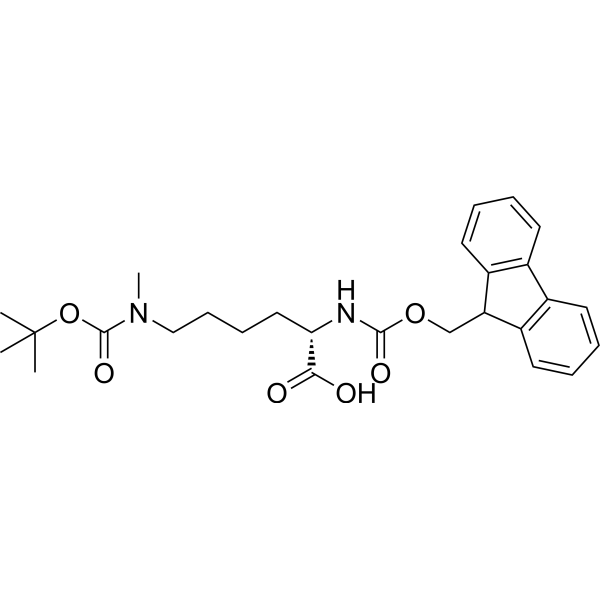
- HY-W141944
-
-

- HY-W010724
-
-
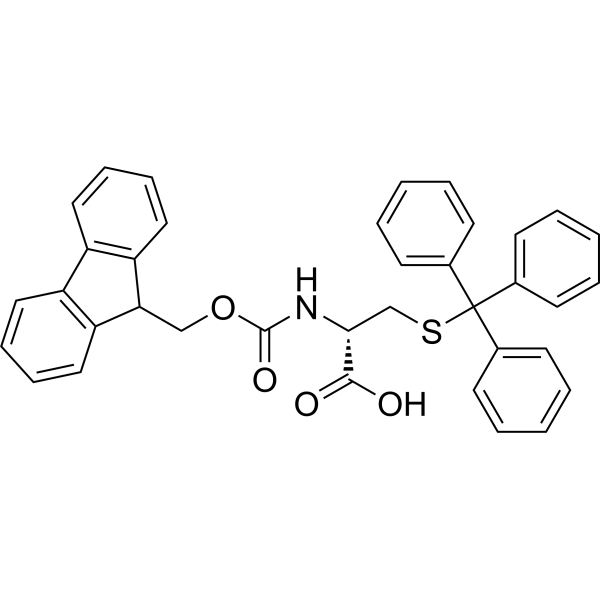
- HY-156396
-
|
|
ADC Linker
|
Cancer
|
|
Fmoc-Val-Ala-Gly is an ADC linker, can be used to synthesize antibody-drug conjugates (ADCs) .
|
-

- HY-W008560
-
-
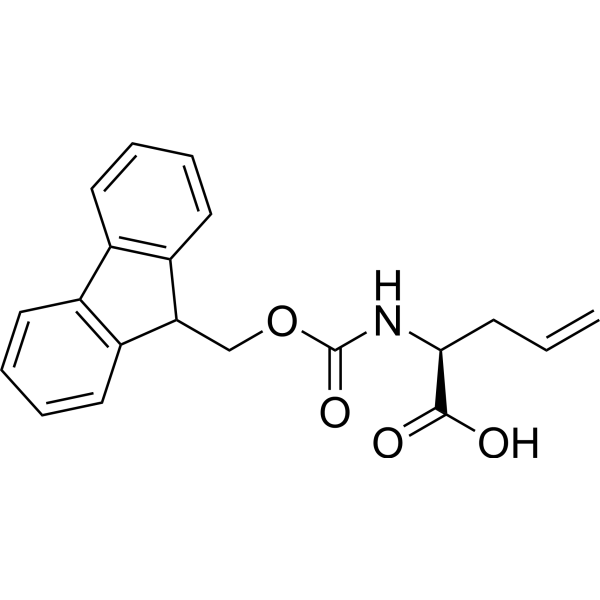
- HY-139292
-
|
|
Amino Acid Derivatives
|
Cancer
|
|
Fmoc-NH-PEG6-alcohol is a cleavable ADC linker used in the synthesis of antibody-drug conjugates (ADCs). Fmoc-NH-PEG6-alcohol is extracted from patent WO2016030791, example comp 91 .
|
-
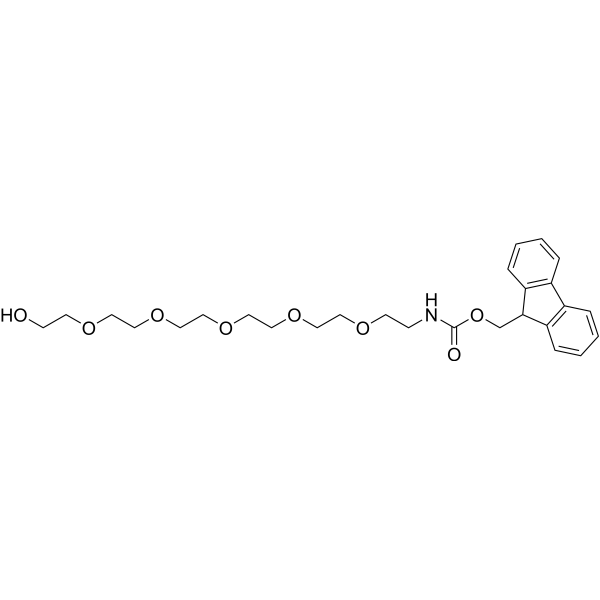
- HY-W007941S
-
|
|
Isotope-Labeled Compounds
|
Others
|
|
Fmoc-Ser(tBu)-OH- 13C3, 15N is a 15N-labeled and 13C-labled Fmoc-Ser(tBu)-OH (HY-W007941). Fmoc-Ser(tBu)-OH is a serine derivative .
|
-
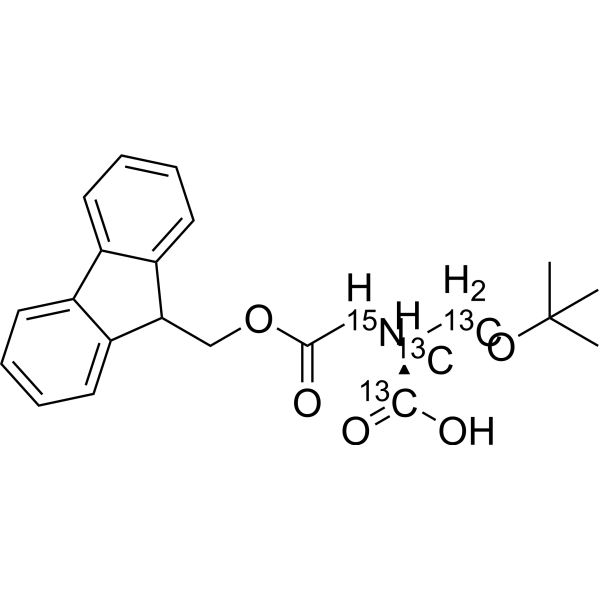
- HY-W008016S
-
-
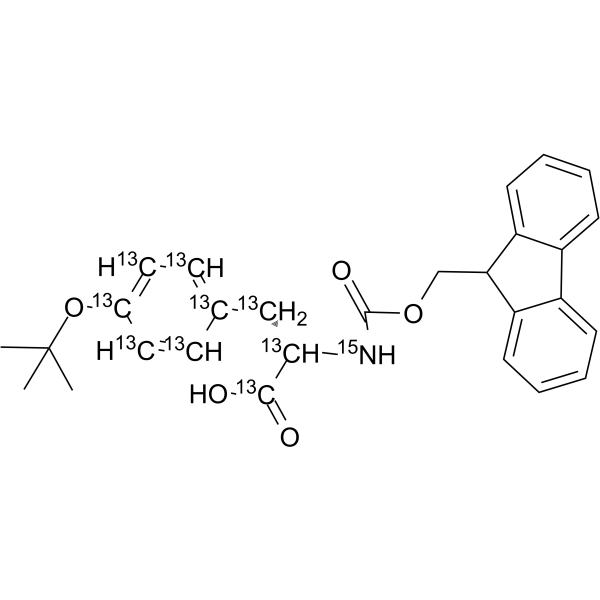
- HY-W007706S
-
|
|
Isotope-Labeled Compounds
|
Others
|
|
Fmoc-Thr(tBu)-OH- 13C4, 15N is a 15N-labeled and 13C-labled Fmoc-Thr(tBu)-OH (HY-W007706). Fmoc-Thr(tBu)-OH is a threonine derivative .
|
-
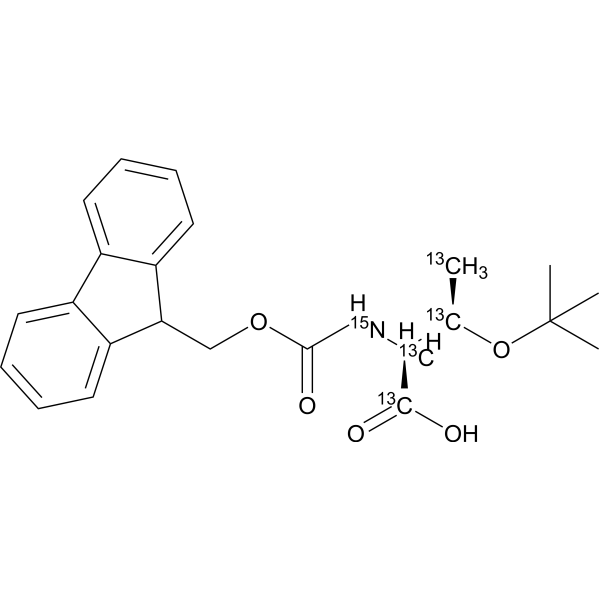
- HY-W008555
-
-
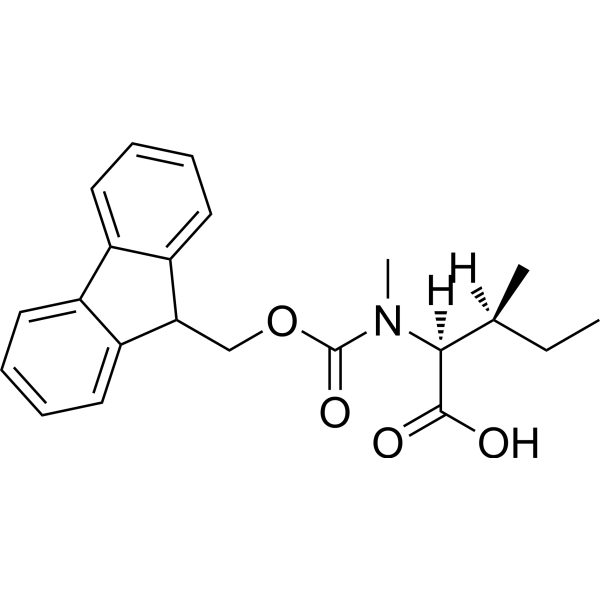
- HY-W010997
-
-
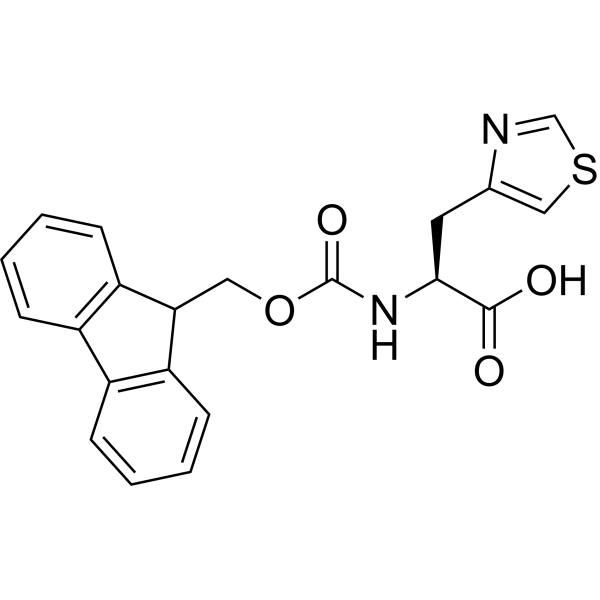
- HY-W101954
-
|
|
Biochemical Assay Reagents
|
Others
|
|
(Fmoc-Cys-OtBu)2 (Disulfide bond) is a cystine dipeptide which is linked through an oxidized disulfide bond. (Fmoc-Cys-OtBu)2 (disulfide bridge) can be used in the synthesis of cleavable disulfide linkers.
|
-

- HY-W009204S1
-
-
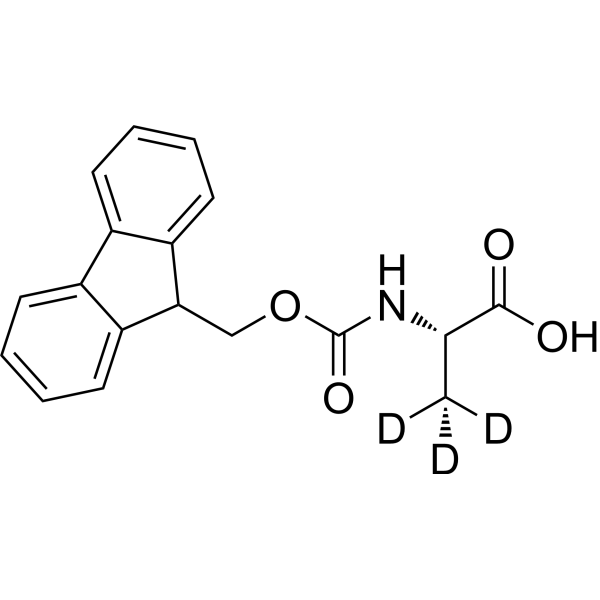
- HY-153976
-
|
|
Drug-Linker Conjugates for ADC
|
Cancer
|
|
Fmoc-Gly3-VC-PAB-MMAE is a Drug-Linker Conjugates for ADC. Fmoc-Gly3-VC-PAB-MMAE consists of Monomethyl auristatin E (HY-15162) and a linker .
|
-
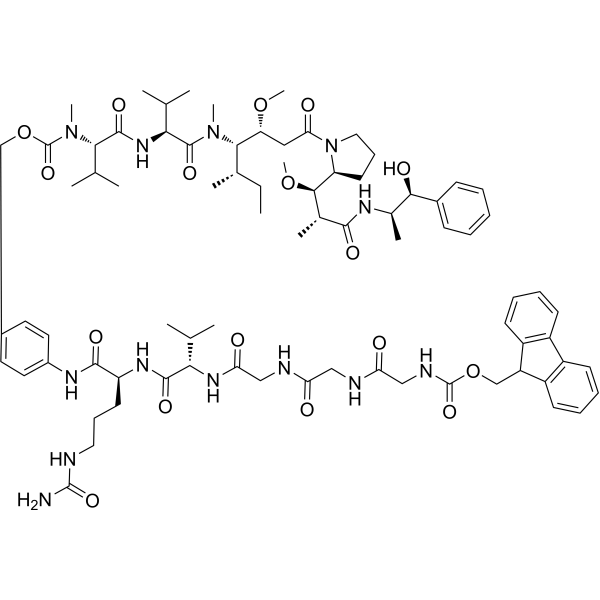
- HY-W010825
-
-
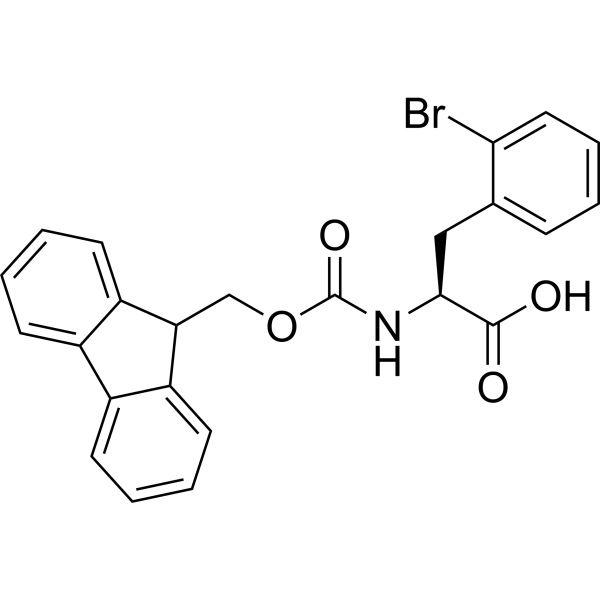
- HY-W010894
-
-
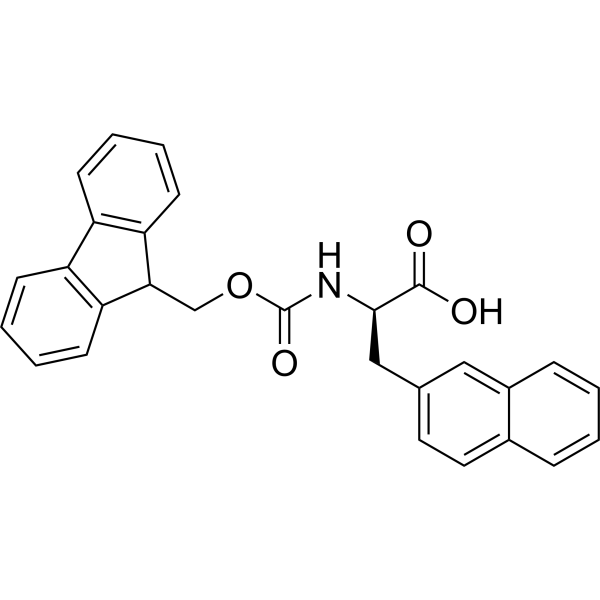
- HY-W016031
-
-
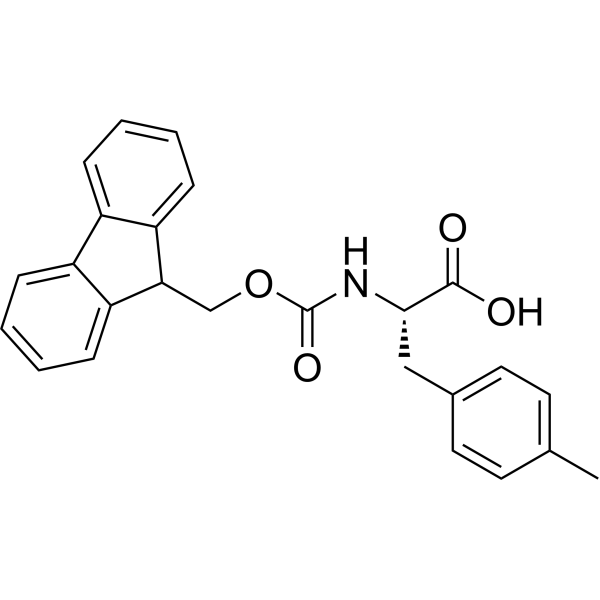
- HY-W097122
-
-

- HY-W008527
-
-
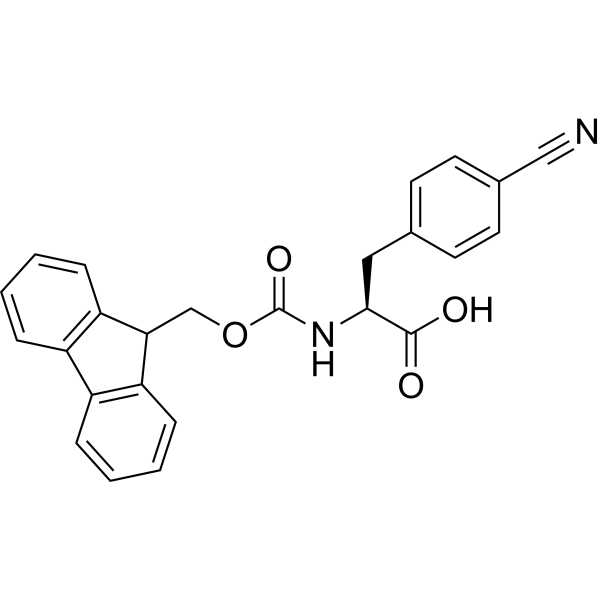
- HY-W008971
-
-
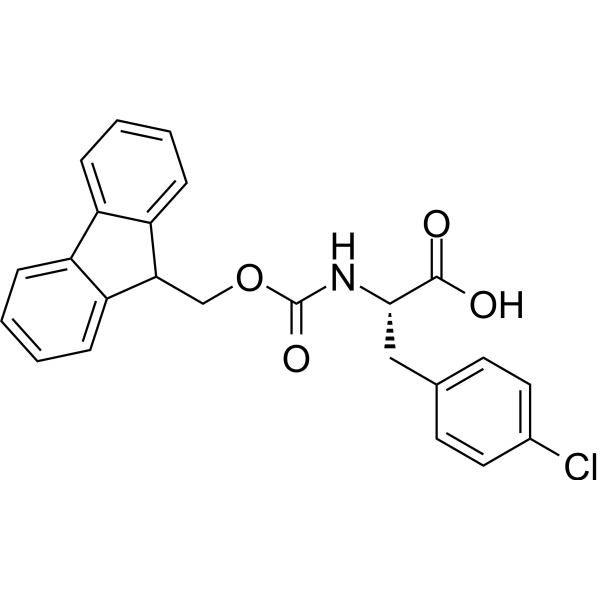
- HY-W008995
-
-
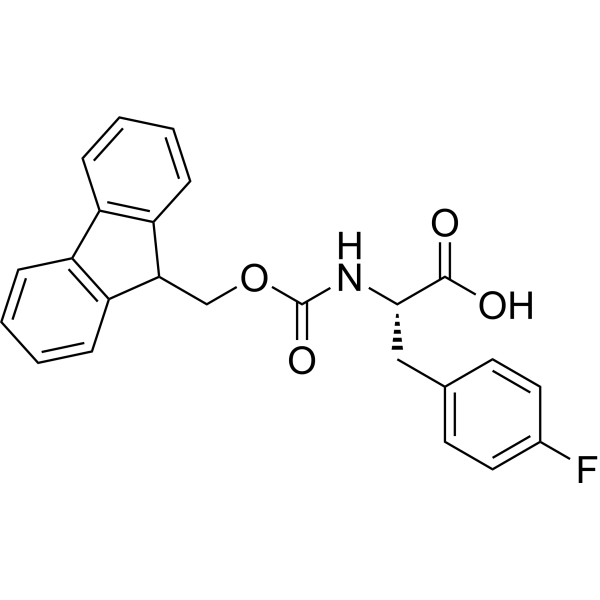
- HY-66026
-
-
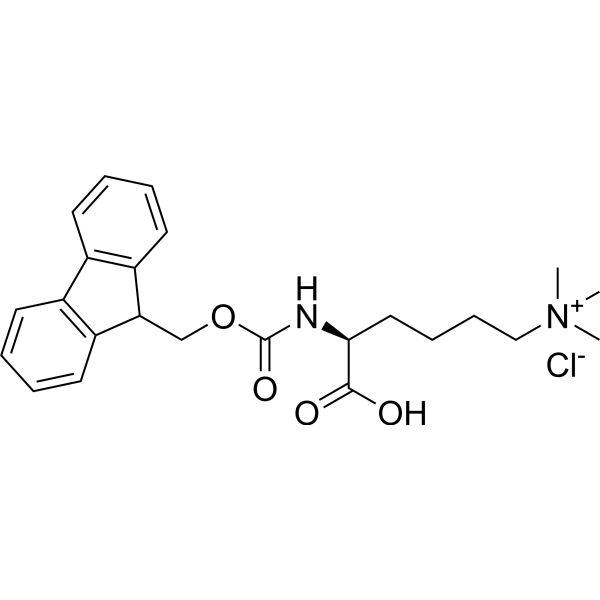
- HY-W010931
-
-
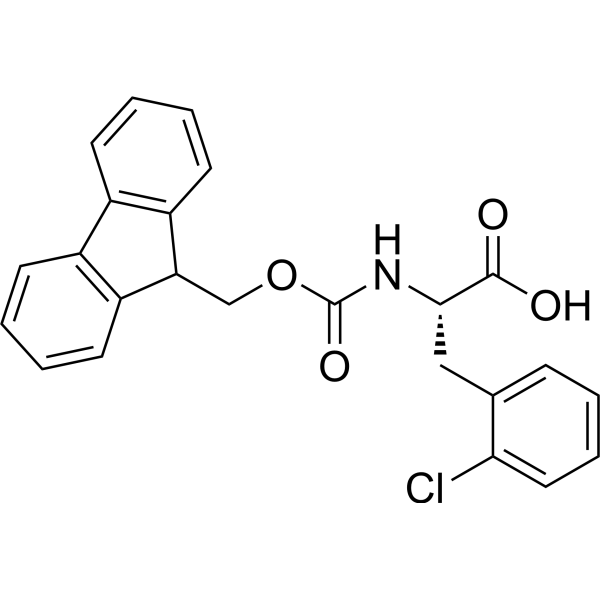
- HY-W010871
-
-
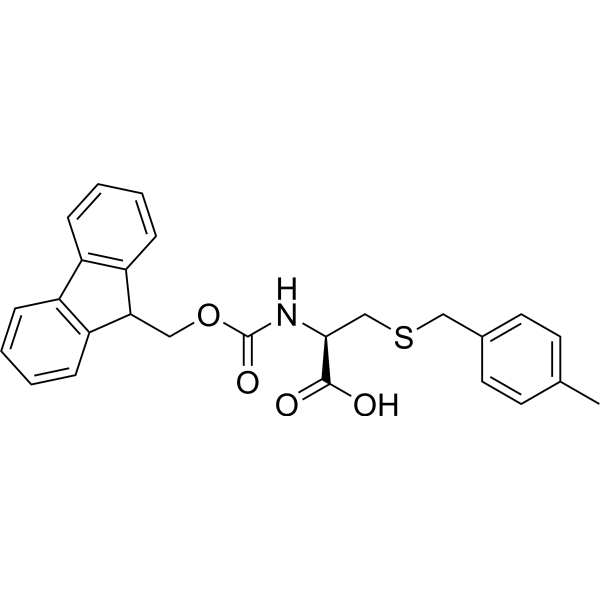
- HY-66025
-
-
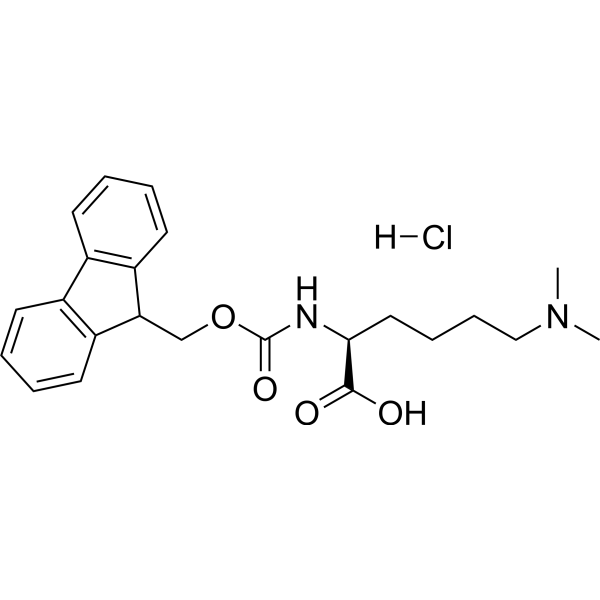
- HY-W013735
-
-
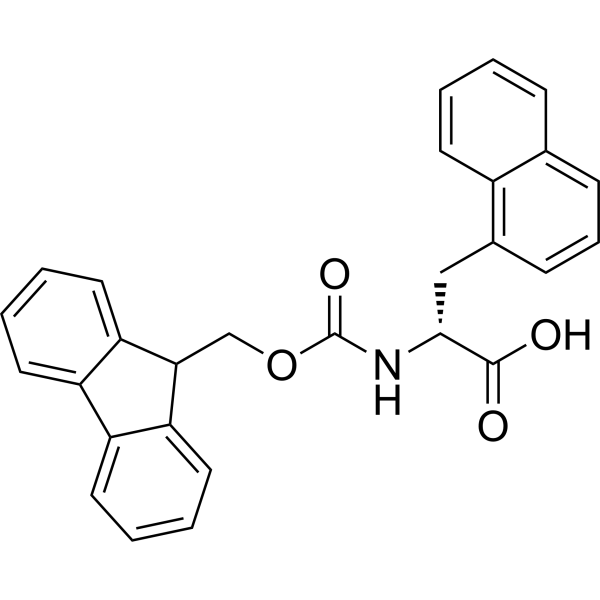
- HY-W010836
-
-
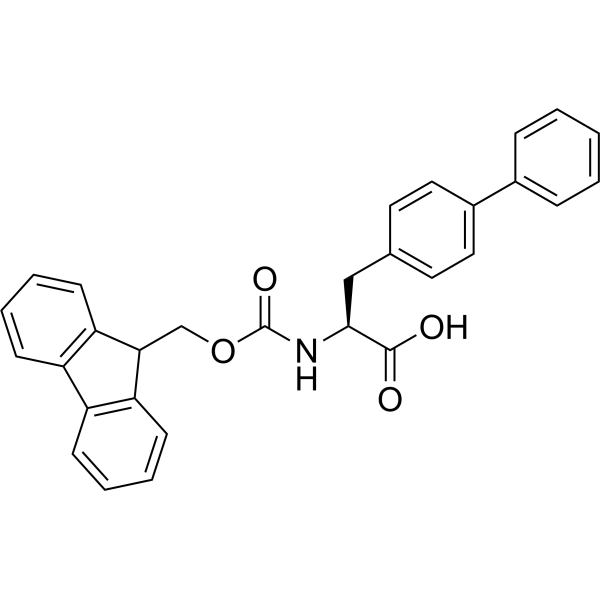
- HY-W008999
-
-
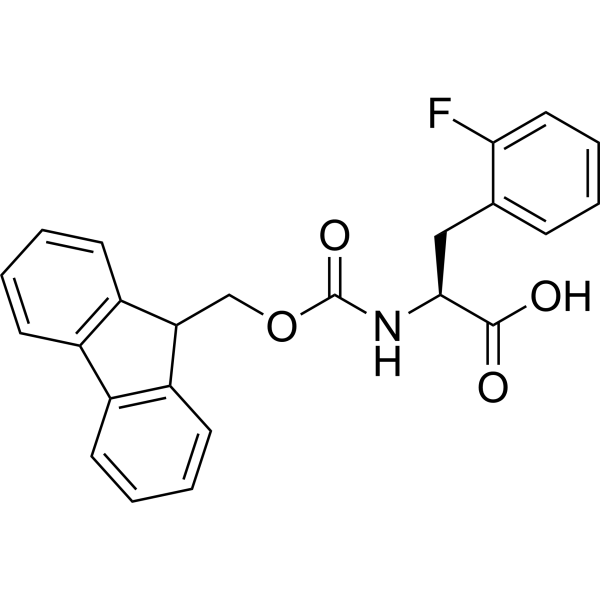
- HY-W013714
-
-
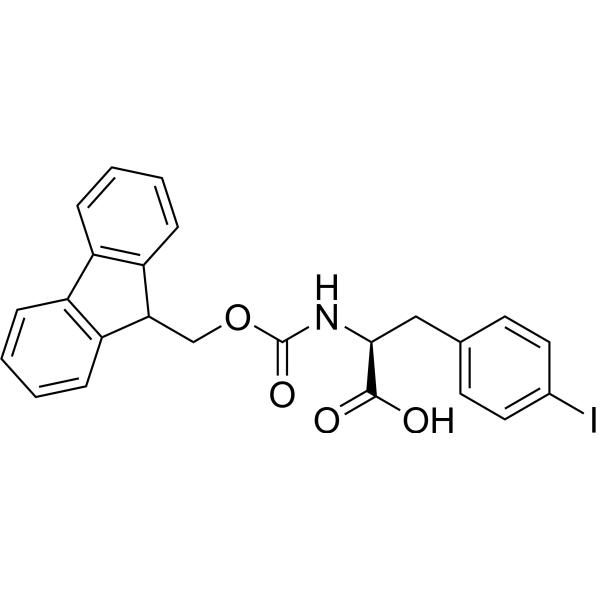
- HY-W010811
-
-
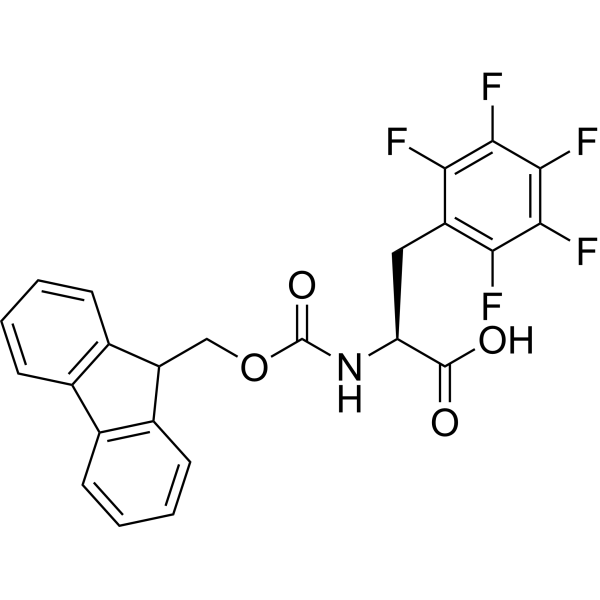
- HY-W009023
-
-
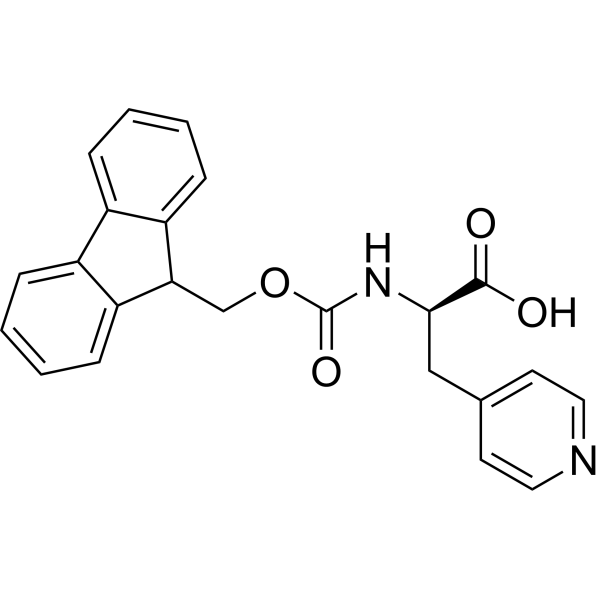
- HY-19318
-
|
|
ADC Linker
|
Cancer
|
|
Fmoc-Val-Cit-PAB is a cleavable antibody-conjugated active molecule (ADC) commonly used linker.
|
-
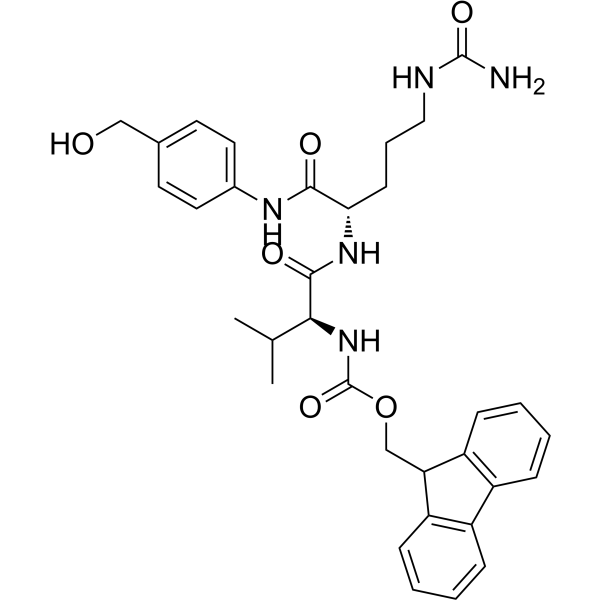
- HY-179478
-
-

- HY-P11692
-
|
|
Drug Intermediate
|
Others
|
|
Fmoc-Aeg-OtBu is an intermediate in solid-phase peptide synthesis, and serves as a building block for introducing pseudoproline motifs or backbone modifications .
|
-

- HY-137002
-
|
|
Amino Acid Derivatives
Biochemical Assay Reagents
|
Others
|
|
Fmoc-N-Me-Arg(Pbf)-OH is an amino acid derivative containing a guanidinium protecting group on the arginine side chain. Fmoc-N-Me-Arg(Pbf)-OH is used in the synthesis of neurotensin-derived NTS1 ligands for PET imaging .
|
-

- HY-403689
-
|
|
Biochemical Assay Reagents
|
Others
|
|
Fmoc-PNA-J(Boc)-OH is a nucleobase-modified PNA monomer (2-aminopyridine PNA monomer M) with Fmoc and Boc protecting groups, used for solid-phase synthesis of PNAs that form stable Hoogsteen triple helices with double-stranded RNA at physiologically relevant conditions .
|
-

- HY-W190720
-
|
|
Biochemical Assay Reagents
|
Others
|
|
Fmoc-NH-PEG4-HZ-BOC is a PEG reagent containing an Fmoc-protected amine and a Boc-protected hydrazide. The Fmoc group can be deprotected under basic condition to obtain the free amine which can be used for further conjugations. The hydrophilic PEG spacer increases solubility in aqueous media. The Boc can be deprotected under mild acidic conditions to form a reactive hydrazide, which can then be coupled with various carbonyl groups.
|
-

- HY-44980G
-
|
|
ADC Linker
|
Cancer
|
|
Fmoc-Gly-NH-CH2-acetyloxy GMP is a GMP grade Fmoc-Gly-NH-CH2-acetyloxy (HY-44980). GMP small molecules works appropriately as an auxiliary reagent for cell therapy manufacture. Fmoc-Gly-NH-CH2-acetyloxy is a cleavable linker that can be used to synthesize antiboy-drug Conjugates (ADCs).
|
-
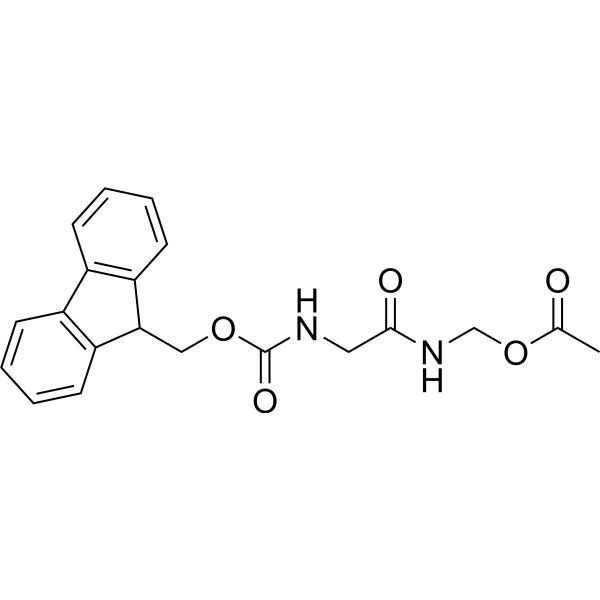
- HY-W023121
-
|
|
ADC Linker
|
Cancer
|
|
Fmoc-Gly-Gly-OH is a cleavable ADC linker used in the synthesis of antibody-drug conjugates (ADCs) .
|
-
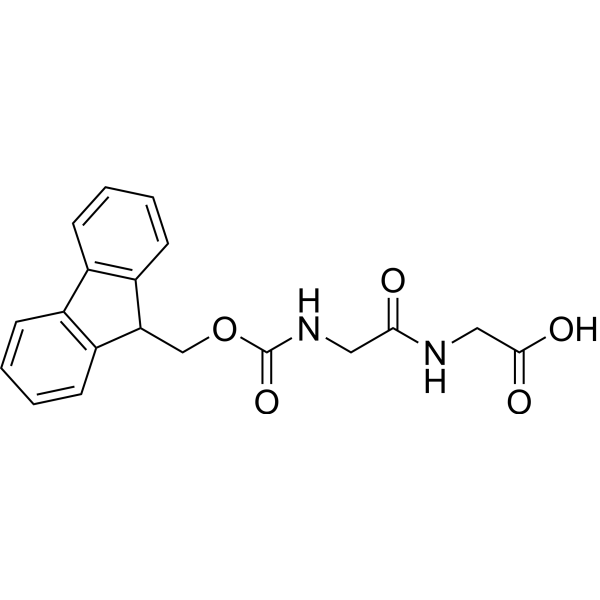
- HY-W097109A
-
|
|
ADC Linker
|
Cancer
|
|
Fmoc-(D-Phe)-Osu is a cleavable ADC linker used in the synthesis of antibody-drug conjugates (ADCs) .
|
-
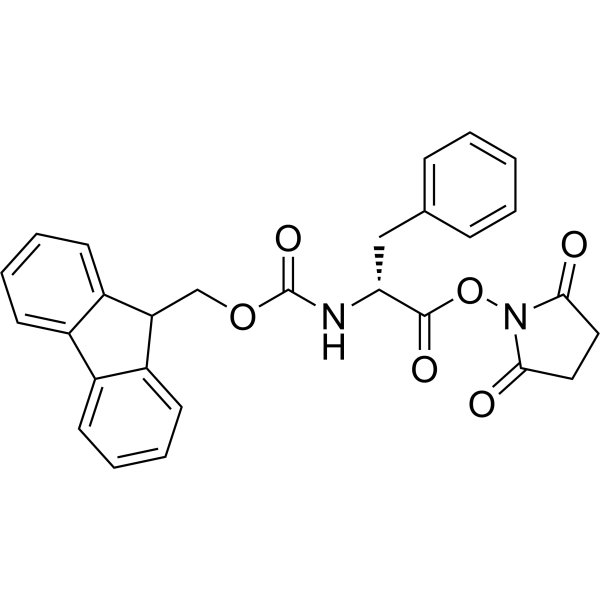
- HY-P5299
-
-
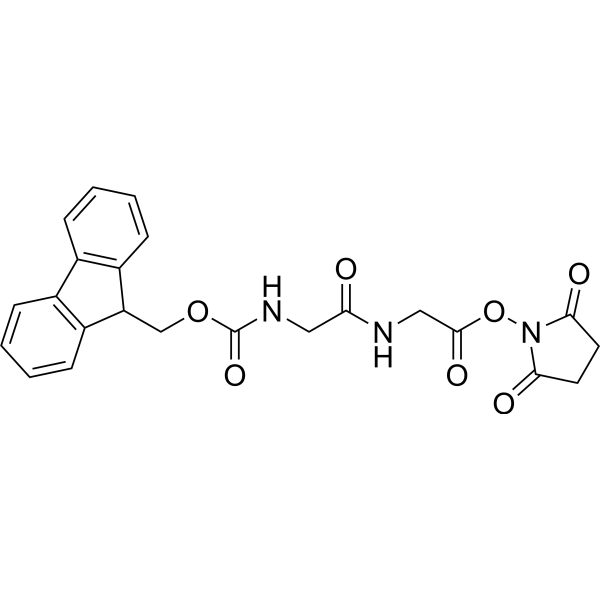
- HY-101064S
-
|
|
PPAR
|
Others
|
|
Fmoc-leucine- 13C is a 13C-labeled Boc-GlycineFmoc-leucine (HY-101064).
|
-
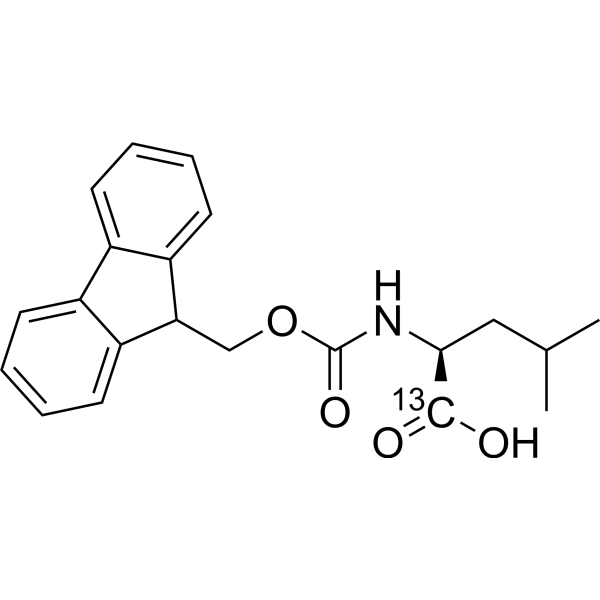
- HY-135418
-
|
|
ADC Linker
|
Cancer
|
|
Fmoc-Asp-NH2 is a cleavable ADC linker used in the synthesis of antibody-drug conjugates (ADCs).
|
-
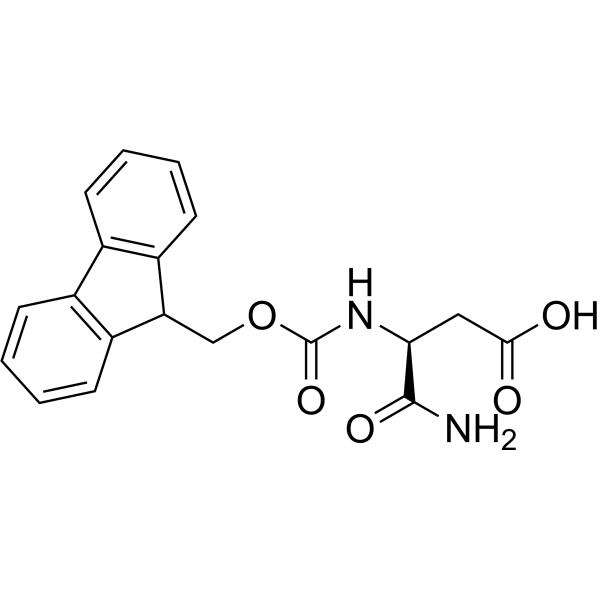
- HY-156813
-
|
|
ADC Linker
|
Cancer
|
|
Fmoc-Val-Ala-aminomethyl acetate (Compound 58b) is an ADC Linker, and can be used for synthesis of ADCs .
|
-
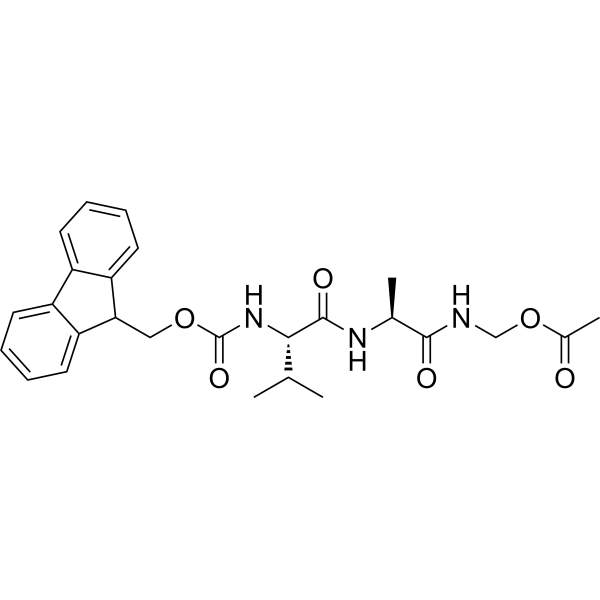
- HY-PS0011
-
|
|
Drug Intermediate
|
Others
|
|
Fmoc-Gly-Wang resin is a resin containing a glycine protecting group and can be used for the synthesis of peptides .
|
-

- HY-W013144S
-
-

- HY-W045822
-
|
|
ADC Linker
PROTAC Linkers
|
Cancer
|
|
Fmoc-Lys(Pal-Glu-OtBu)-OH is a non-cleavable ADC linker used in the synthesis of antibody-drug conjugates (ADCs). Fmoc-Lys(Pal-Glu-OtBu)-OH is also a alkyl chain-based PROTAC linker that can be used in the synthesis of PROTACs.
|
-
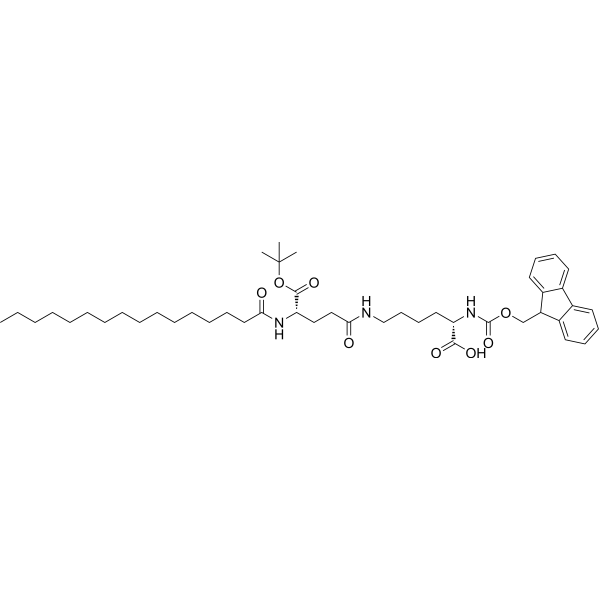
- HY-W008529
-
-
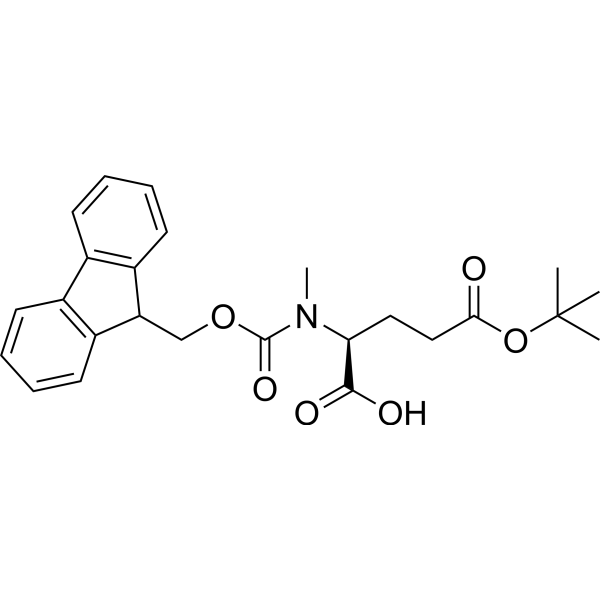
- HY-46859
-
-
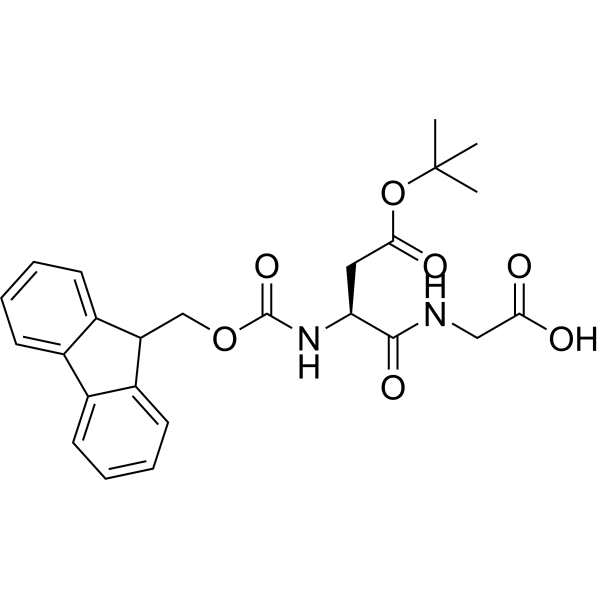
- HY-W013749
-
-
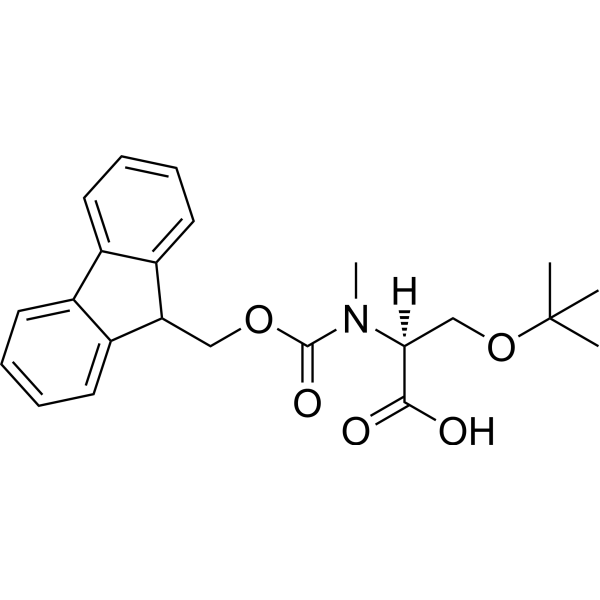
- HY-W013769
-
-
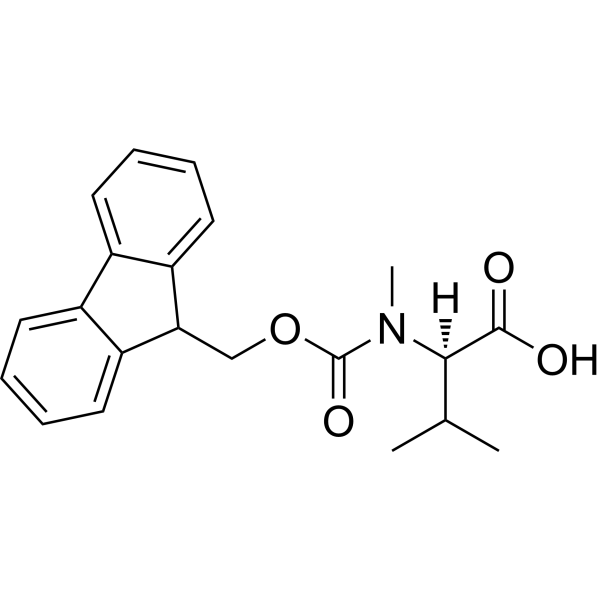
- HY-W010770
-
-
![Fmoc-Thr[PO(OBzl)OH]-OH](//file.medchemexpress.com/product_pic/hy-w010770.gif)
- HY-W013745
-
-
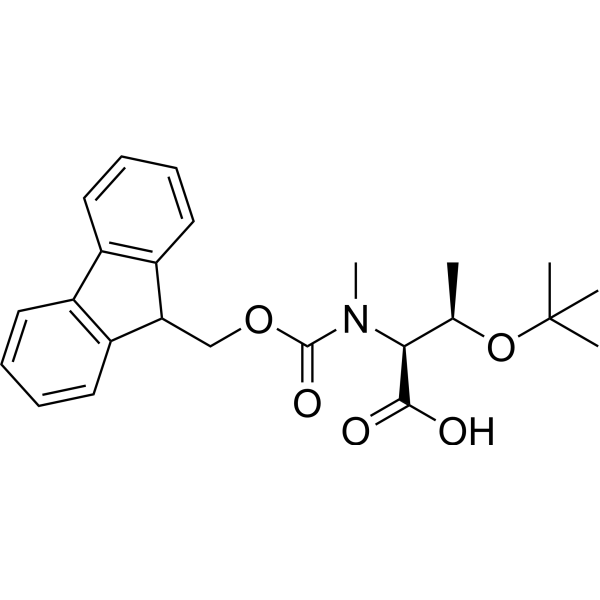
- HY-W013740
-
-
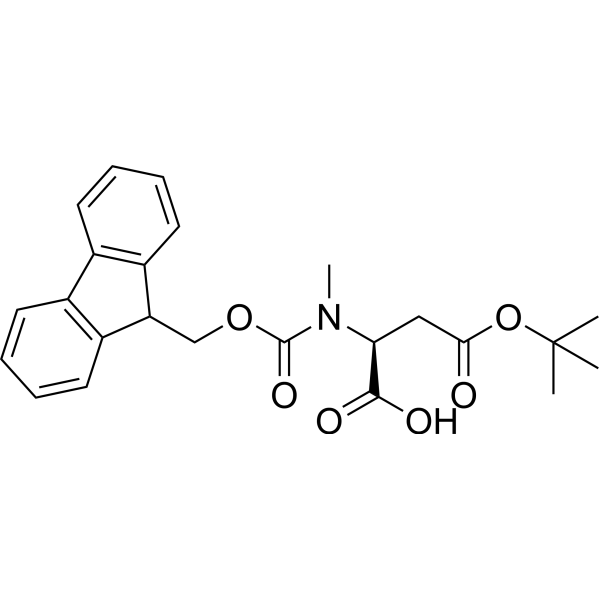
- HY-W022281
-
-
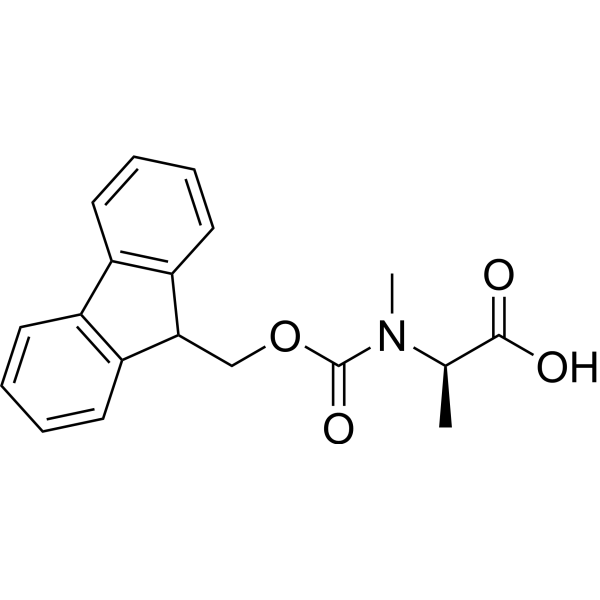
- HY-W008034S
-
|
fmoc-L-Trp(Boc)-OH-13C11,15N2
|
Isotope-Labeled Compounds
Amino Acid Derivatives
|
Cancer
|
|
Fmoc-Trp(Boc)-OH- 13C11, 15N2 (Fmoc-L-Trp(Boc)-OH- 13C11, 15N2) is the 13C-labeled and 15N-labeled Fmoc-Trp(Boc)-OH (HY-W008034). Fmoc-Trp(Boc)-OH (Fmoc-L-Trp(Boc)-OH) is an amino acid derivative with protective groups. Fmoc-Trp(Boc)-OH can self-assemble into stable and pH-responsive spherical nanoparticles, which can load and release bioactive molecules, with good biocompatibility and high cell uptake rate. Fmoc-Trp(Boc)-OH can be used in research on drug delivery .
|
-

- HY-19318A
-
|
|
ADC Linker
|
Cancer
|
|
Fmoc-D-Val-Cit-PAB is a cleavable linker for antibody-agent-conjugation (ADC) .
|
-
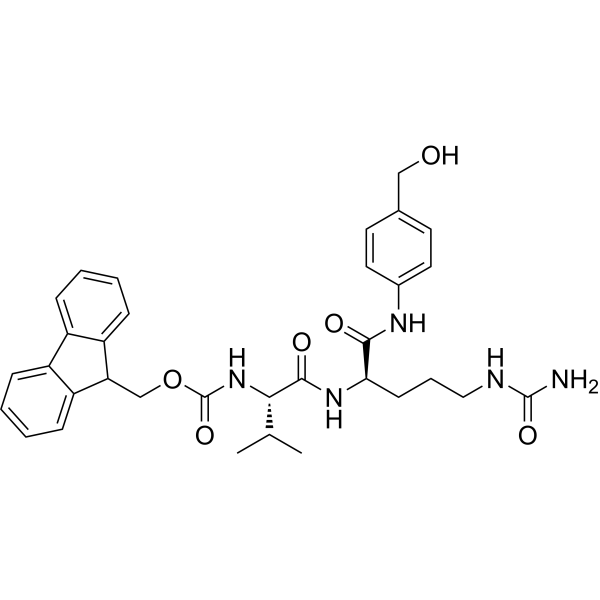
- HY-19318B
-
|
|
ADC Linker
|
Cancer
|
|
Fmoc-D-Val-Cit-PAB is a cleavable linker for antibody-agent-conjugation (ADC) .
|
-
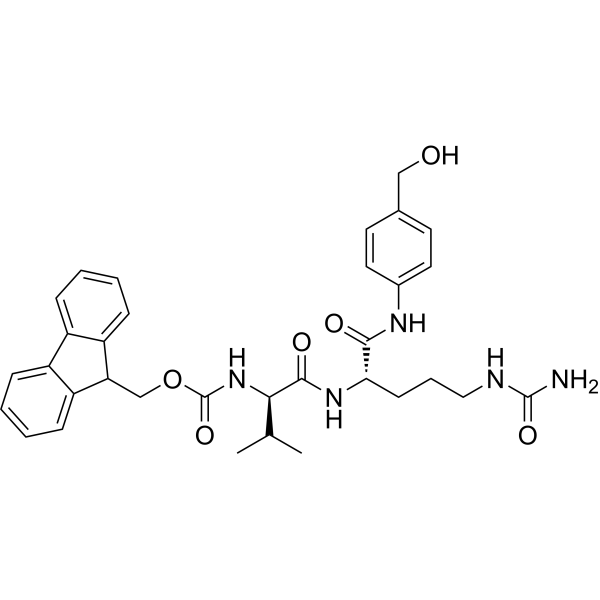
- HY-W013779
-
-
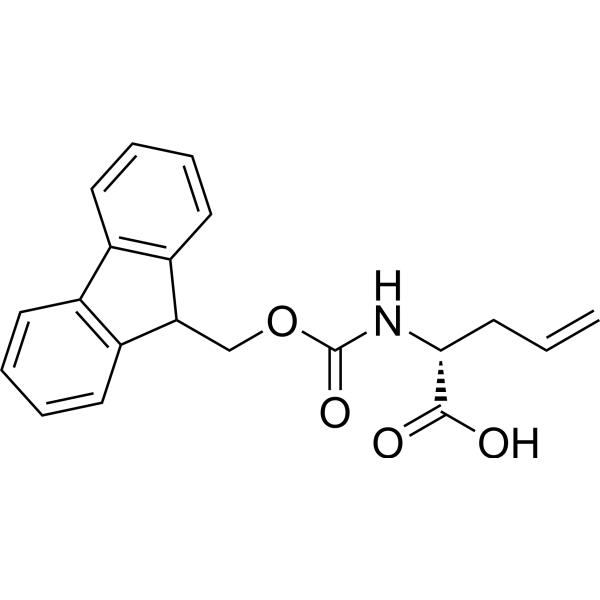
- HY-104004A
-
|
fmoc-Ser-(GlcNAc(Ac)3-beta-D)-OH; fmoc-Ser[GlcNAc(Ac)3-β-D]-OH; fmoc-Ser(Ac3AcNH-β-Glc)-OH
|
Amino Acid Derivatives
|
Others
|
|
Fmoc-Ser(O-β-D-GlcNAc(OAc)3)-OH is a serine derivative .
|
-
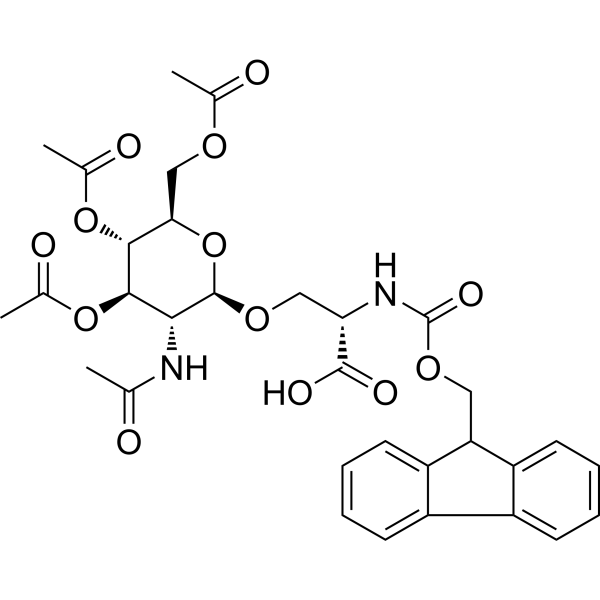
- HY-138720
-
|
|
PROTAC Linkers
|
Cancer
|
|
Fmoc-PEG9-NHS ester is a PEG-based PROTAC linker that can be used in the synthesis of PROTACs .
|
-
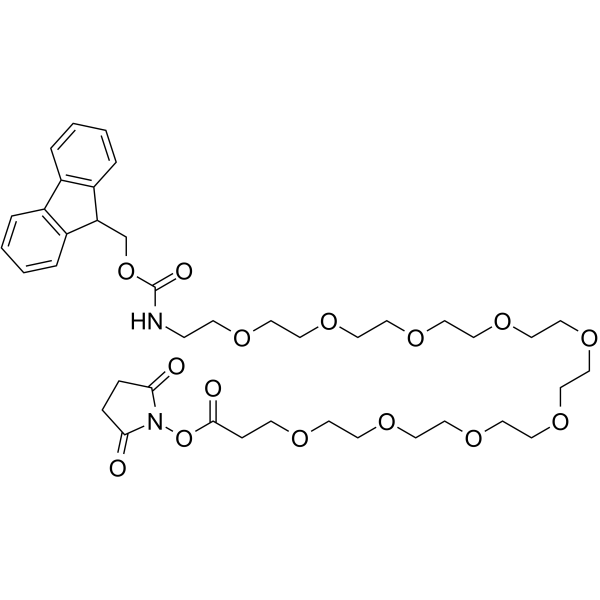
- HY-130907
-
|
|
PROTAC Linkers
|
Cancer
|
|
Fmoc-N-PEG24-acid is a PEG-based PROTAC linker that can be used in the synthesis of PROTACs .
|
-
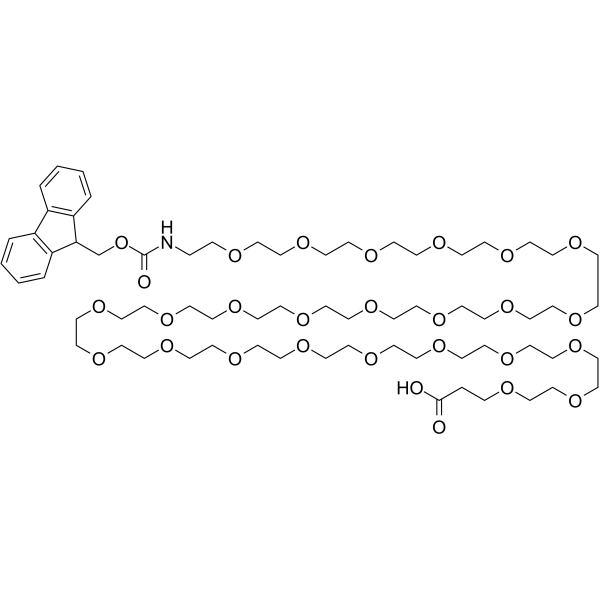
- HY-138434
-
|
|
PROTAC Linkers
|
Cancer
|
|
Fmoc-NH-PEG14-acid is a PEG-based PROTAC linker that can be used in the synthesis of PROTACs .
|
-
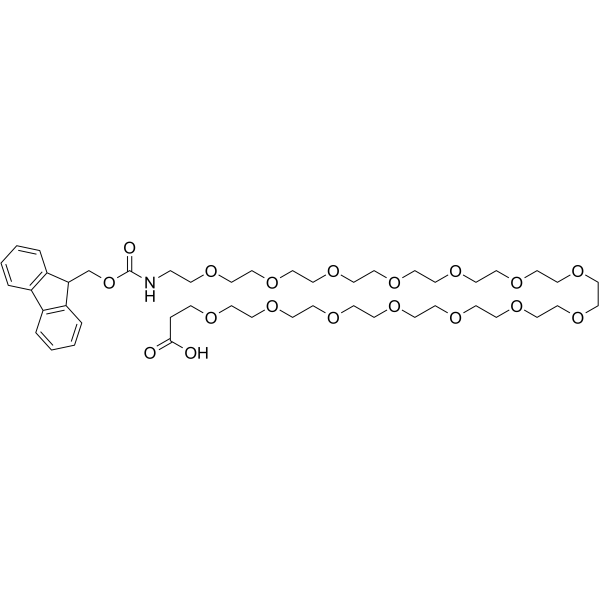
- HY-141101
-
|
|
PROTAC Linkers
|
Cancer
|
|
Fmoc-PEG12-NHS ester is a PEG-based PROTAC linker that can be used in the synthesis of PROTACs .
|
-
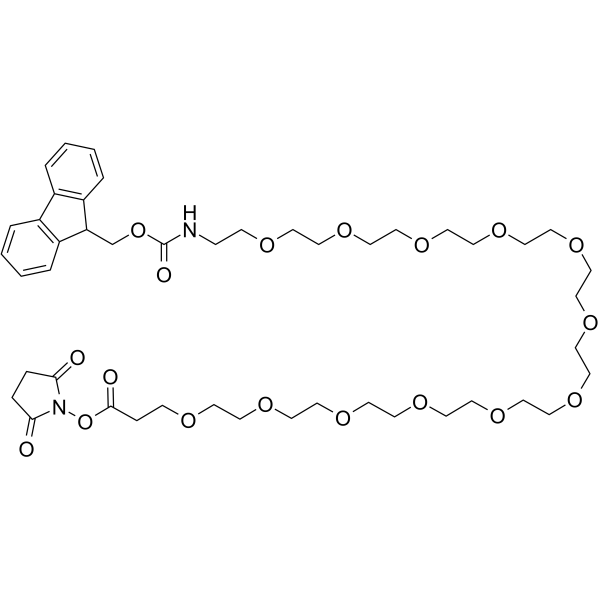
- HY-138721
-
|
|
PROTAC Linkers
|
Cancer
|
|
Fmoc-PEG10-NHS ester is a PEG-based PROTAC linker that can be used in the synthesis of PROTACs .
|
-
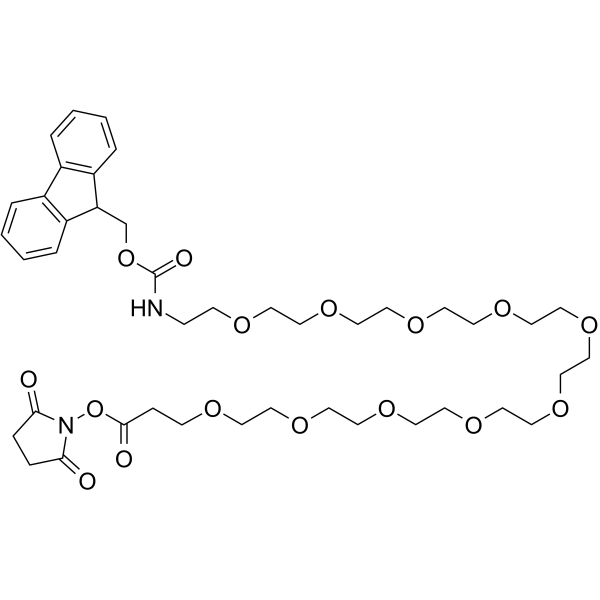
- HY-W143484
-
|
|
PROTAC Linkers
|
Cancer
|
|
Fmoc-PEG3-alcohol is a PEG-based PROTAC linker that can be used in the synthesis of PROTACs .
|
-
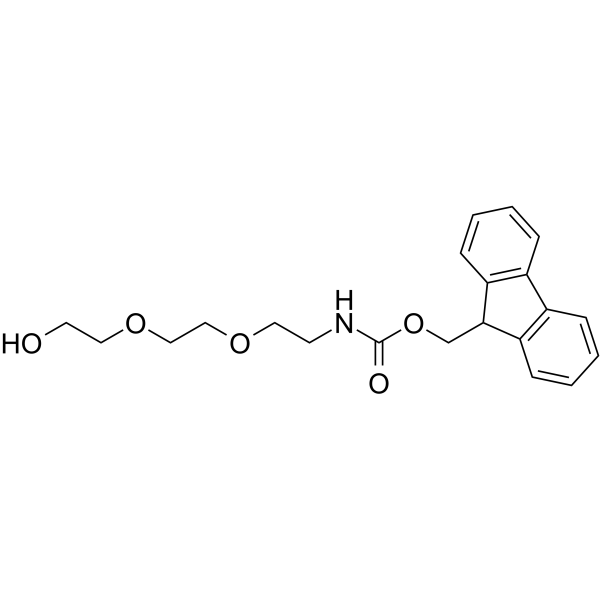
- HY-140461
-
|
|
PROTAC Linkers
|
Cancer
|
|
Fmoc-NH-PEG10-acid is a PEG-based PROTAC linker that can be used in the synthesis of PROTACs .
|
-
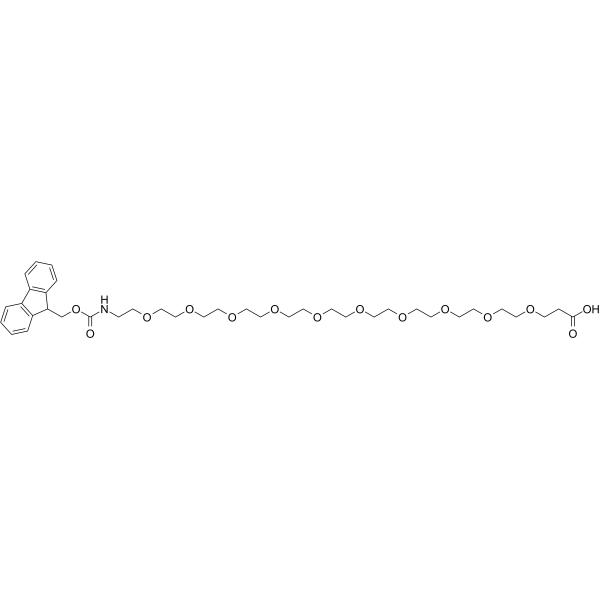
- HY-122459
-
|
|
PROTAC Linkers
|
Cancer
|
|
Fmoc-PEG5-NHS ester is a PEG-based PROTAC linker that can be used in the synthesis of PROTACs .
|
-
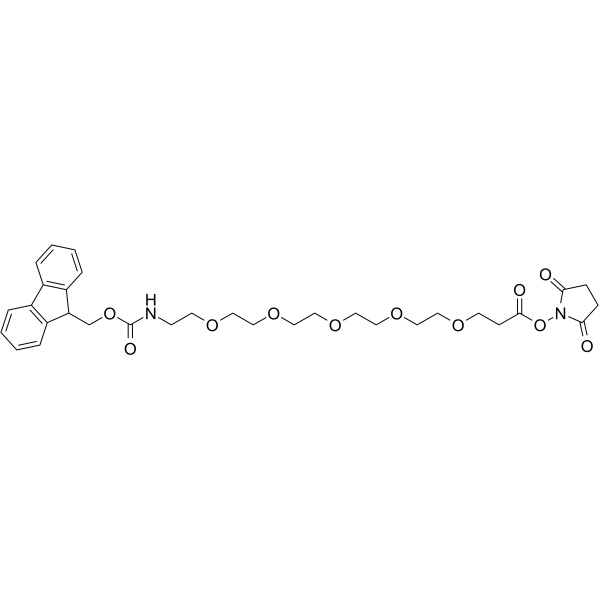
- HY-141102
-
|
|
PROTAC Linkers
|
Cancer
|
|
Fmoc-PEG24-NHS ester is a PEG-based PROTAC linker that can be used in the synthesis of PROTACs .
|
-
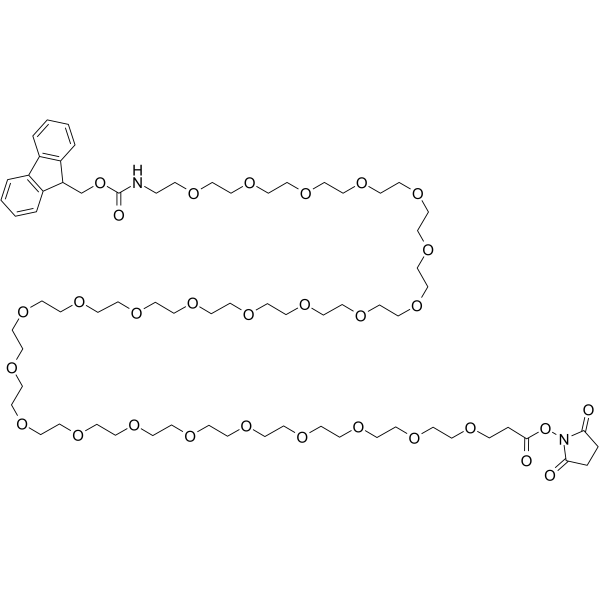
- HY-140440
-
|
|
PROTAC Linkers
|
Cancer
|
|
Fmoc-aminooxy-PEG4-acid is a PEG-based PROTAC linker that can be used in the synthesis of PROTACs .
|
-
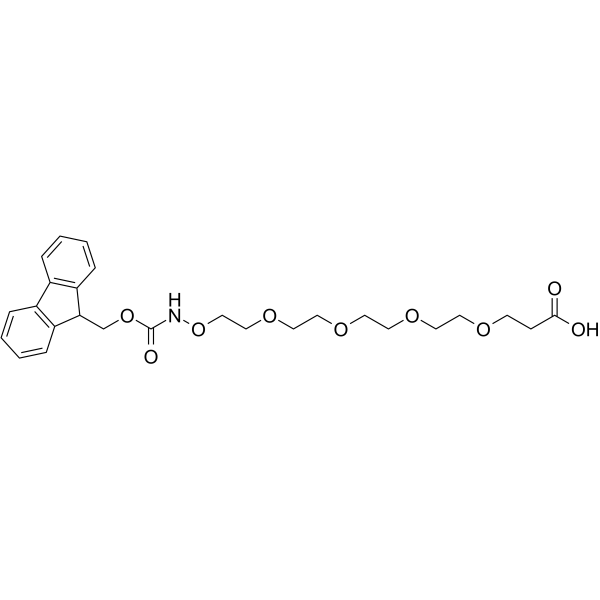
- HY-138330
-
|
|
PROTAC Linkers
|
Cancer
|
|
Fmoc-PEG5-NHBoc is a PEG-based PROTAC linker that can be used in the synthesis of PROTACs .
|
-
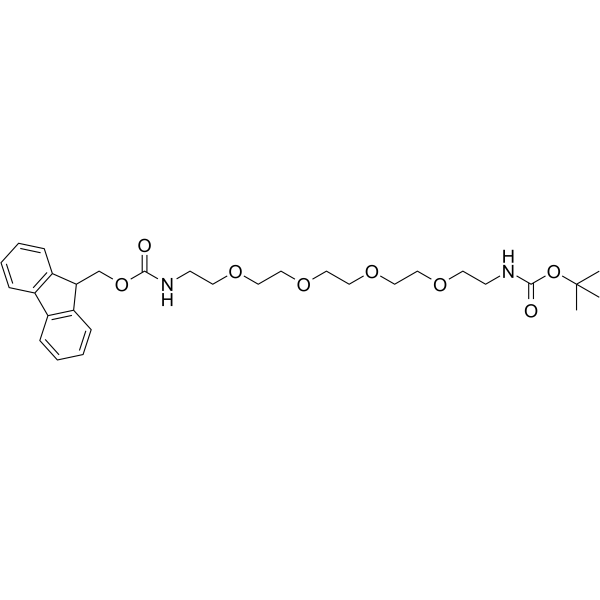
- HY-122456
-
|
|
PROTAC Linkers
|
Cancer
|
|
Fmoc-PEG4-NHS ester is a PEG-based PROTAC linker that can be used in the synthesis of PROTACs .
|
-
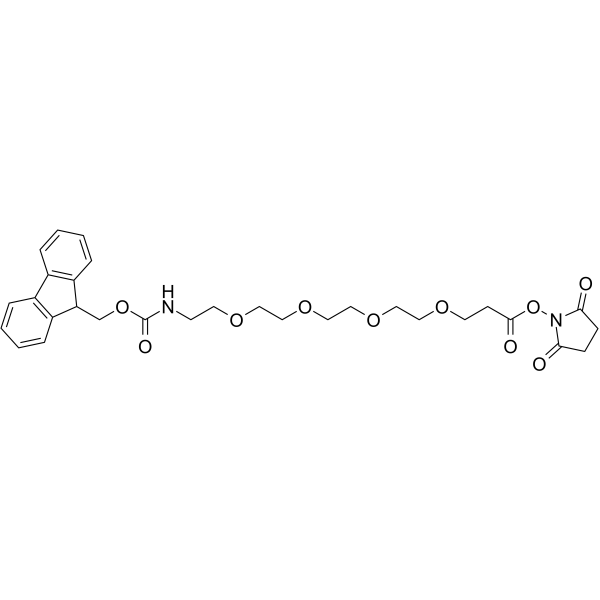
- HY-140441
-
|
|
PROTAC Linkers
|
Cancer
|
|
Fmoc-aminooxy-PEG12-acid is a PEG-based PROTAC linker that can be used in the synthesis of PROTACs .
|
-
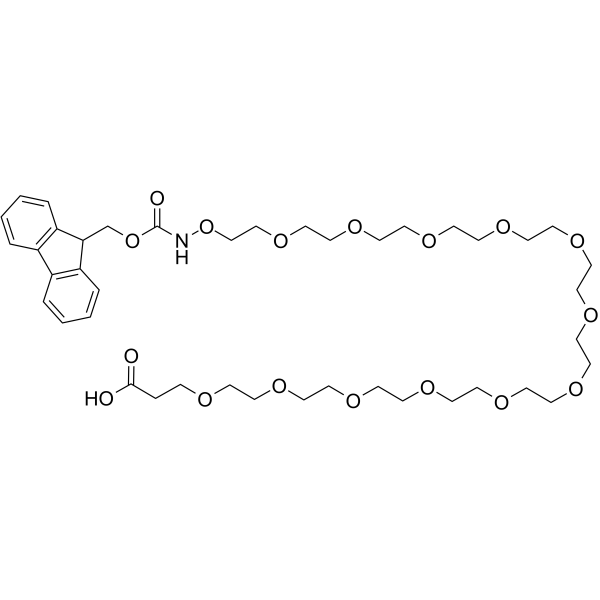
- HY-W040245
-
|
|
PROTAC Linkers
|
Cancer
|
|
Fmoc-amino-PEG5-acid is a PEG-based PROTAC linker that can be used in the synthesis of PROTACs .
|
-
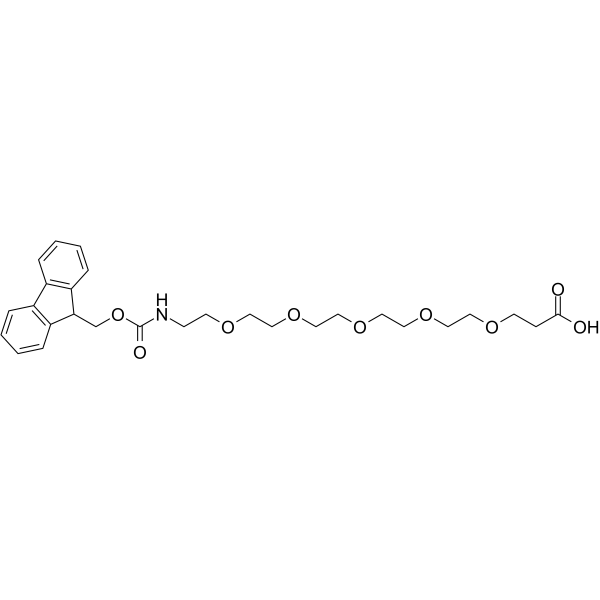
- HY-126882
-
|
|
PROTAC Linkers
|
Cancer
|
|
Fmoc-PEG6-NHS ester is a PEG-based PROTAC linker that can be used in the synthesis of PROTACs .
|
-
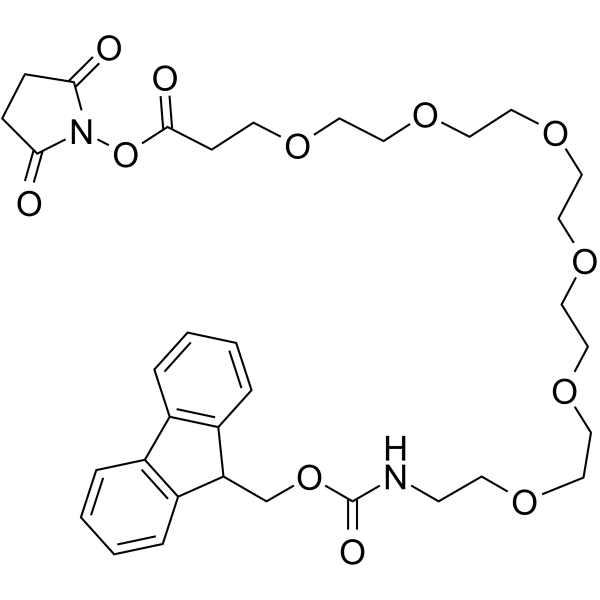
- HY-W048700
-
-
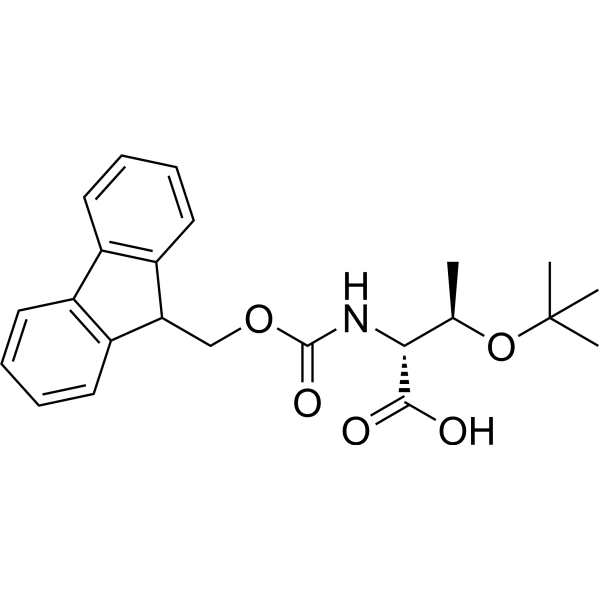
- HY-Y1169S2
-
|
4-tert-Butyl N-(fluoren-9-ylmethoxycarbonyl)-L-aspartate-d3; fmoc-L-Asp(OtBu)-OH-d3
|
Isotope-Labeled Compounds
Amino Acid Derivatives
|
Others
|
|
Fmoc-Asp(OtBu)-OH-d3 (4-tert-Butyl N-(fluoren-9-ylmethoxycarbonyl)-L-aspartate-d3) is deuterium labeled Fmoc-Asp(OtBu)-OH. Fmoc-Asp(OtBu)-OH (4-tert-Butyl N-(fluoren-9-ylmethoxycarbonyl)-L-aspartate) is a aspartate derivative containing amine protecting group Fmoc. Fmoc-Asp(OtBu)-OH can be used for peptide synthesis .
|
-

- HY-P2402
-
-
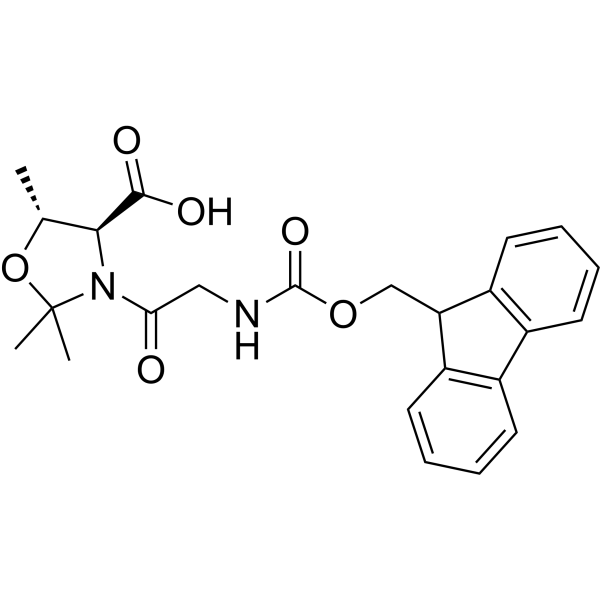
- HY-W101718
-
|
|
ADC Linker
|
Cancer
|
|
Fmoc-N-(2-Boc-aminoethyl)-Gly-OH is a Fmoc-protected glycine derivative that can be used in antibody agent coupling (ADC) synthesis. ADC consists of antibodies that are linked to ADC cytotoxins via ADC junctions .
|
-
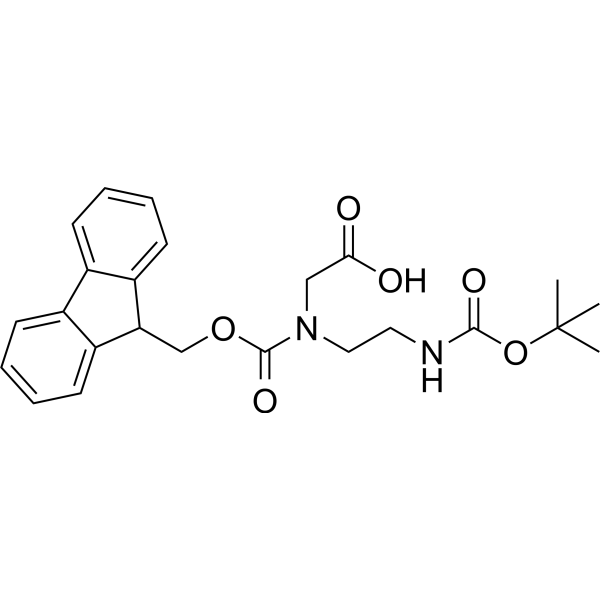
- HY-79128S1
-
-
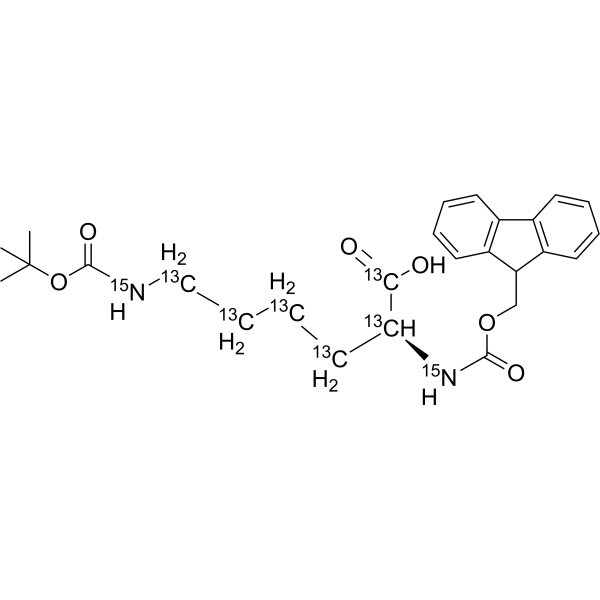
- HY-W010856
-
|
|
Biochemical Assay Reagents
|
Others
|
|
Fmoc-Orn(Boc)-OH is a biochemical reagent that can be used as a biological material or organic compound for life science related research.
|
-
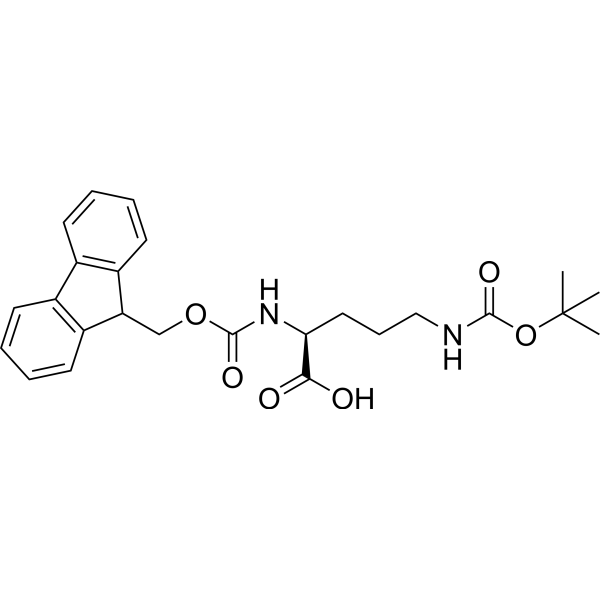
- HY-140464
-
|
|
PROTAC Linkers
|
Cancer
|
|
Fmoc-N-amido-PEG36-acid is a PEG-based PROTAC linker that can be used in the synthesis of PROTACs .
|
-
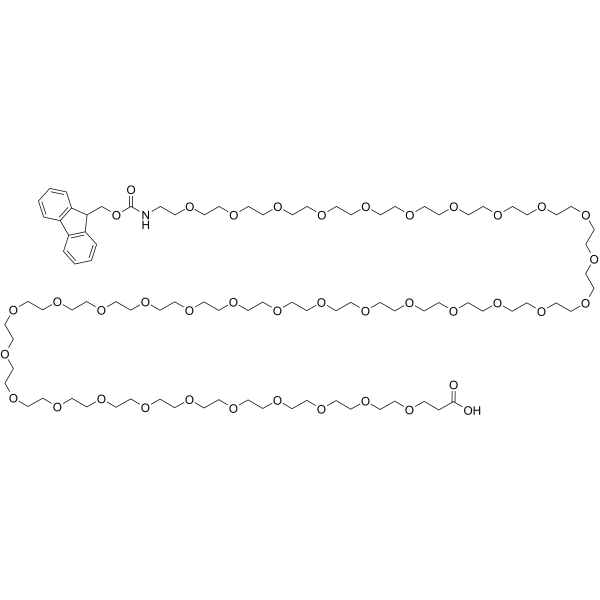
- HY-140460
-
|
|
PROTAC Linkers
|
Cancer
|
|
Fmoc-N-amido-PEG7-acid is a PEG-based PROTAC linker that can be used in the synthesis of PROTACs .
|
-
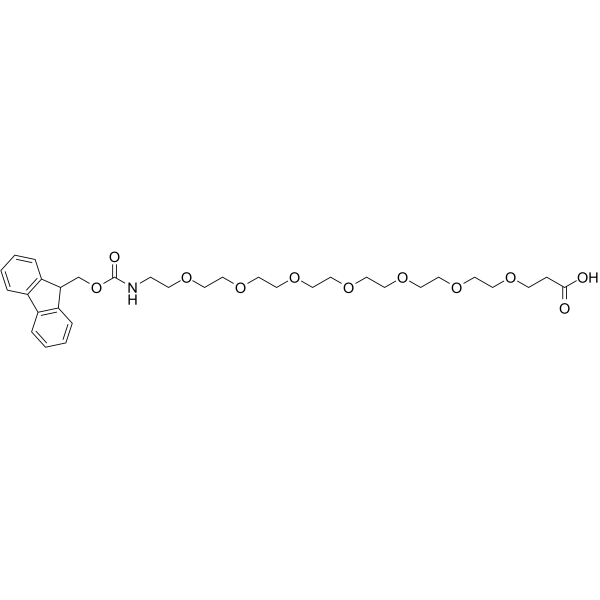
- HY-140462
-
|
|
PROTAC Linkers
|
Cancer
|
|
Fmoc-N-amido-PEG20-acid is a PEG-based PROTAC linker that can be used in the synthesis of PROTACs .
|
-
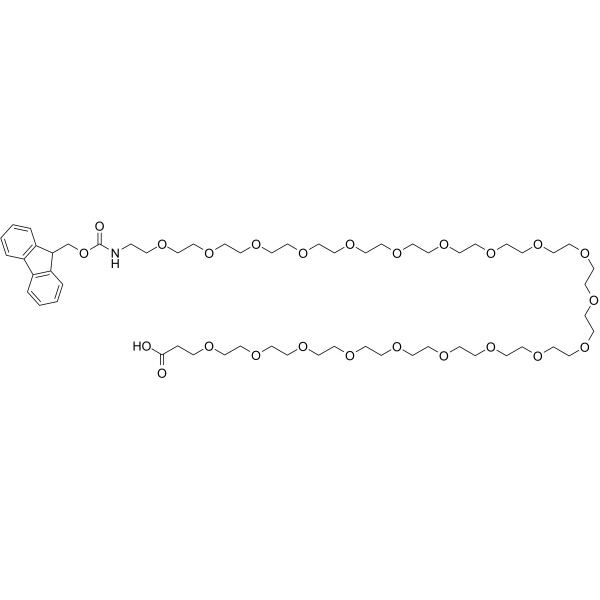
- HY-W336281
-
|
|
Biochemical Assay Reagents
|
Others
|
|
Fmoc-Cys(npys)-OH is a biochemical reagent that can be used as a biological material or organic compound for life science related research.
|
-

- HY-140463
-
|
|
PROTAC Linkers
|
Cancer
|
|
Fmoc-N-amido-PEG23-acid is a PEG-based PROTAC linker that can be used in the synthesis of PROTACs .
|
-
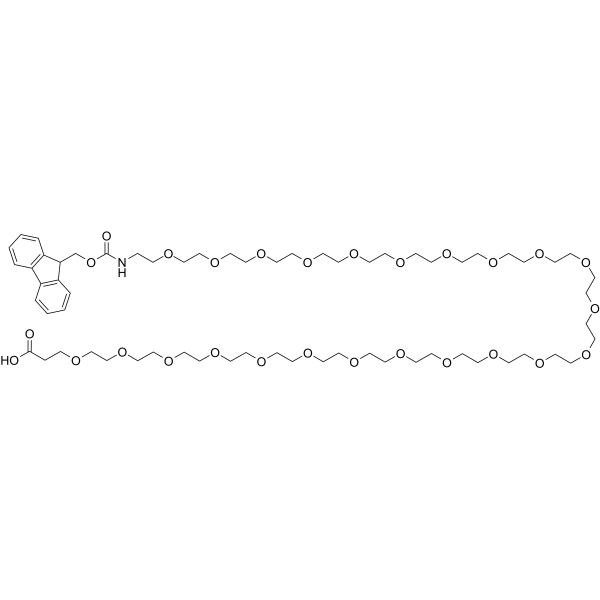
- HY-W298929
-
|
|
Biochemical Assay Reagents
|
Others
|
|
Fmoc-Gly-Phe-OH is a biochemical reagent that can be used as a biological material or organic compound for life science related research.
|
-

- HY-P2405
-
-
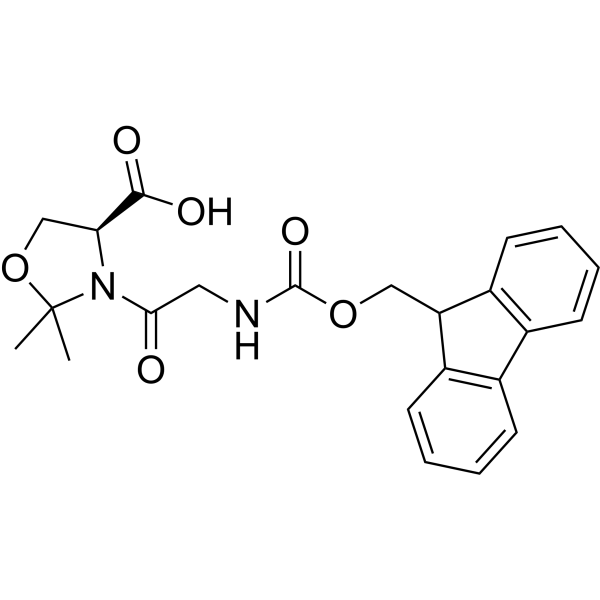
- HY-W141945
-
-
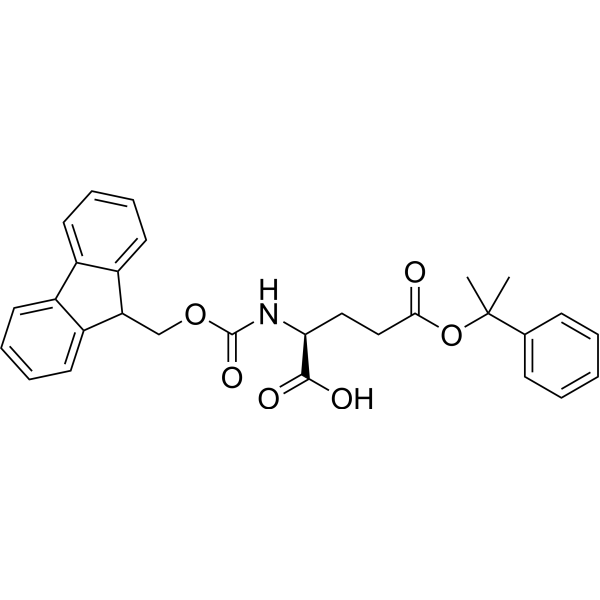
- HY-182232
-
-

- HY-W008997
-
-
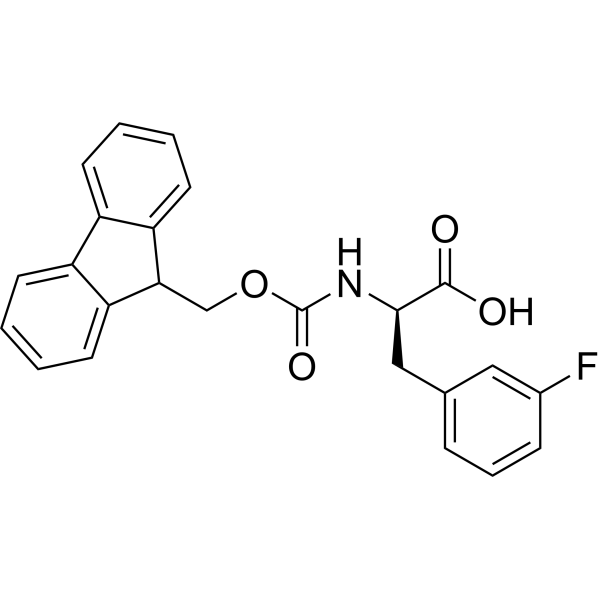
- HY-W142008
-
-
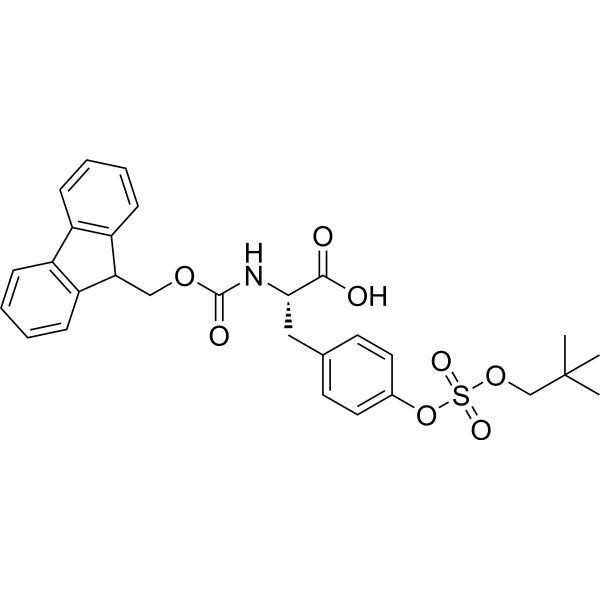
- HY-W010957
-
-
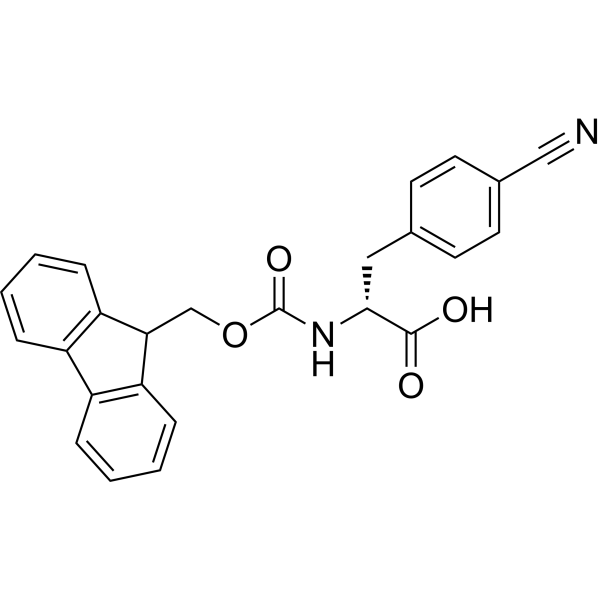
- HY-W016028
-
-
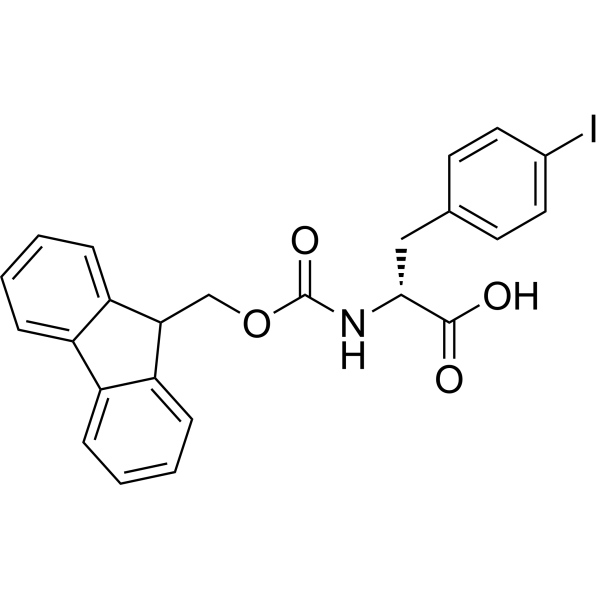
- HY-W008972
-
-
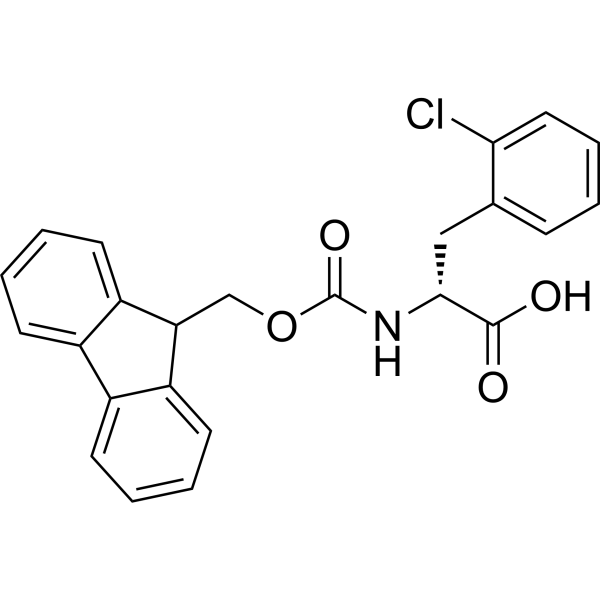
- HY-W017617
-
-
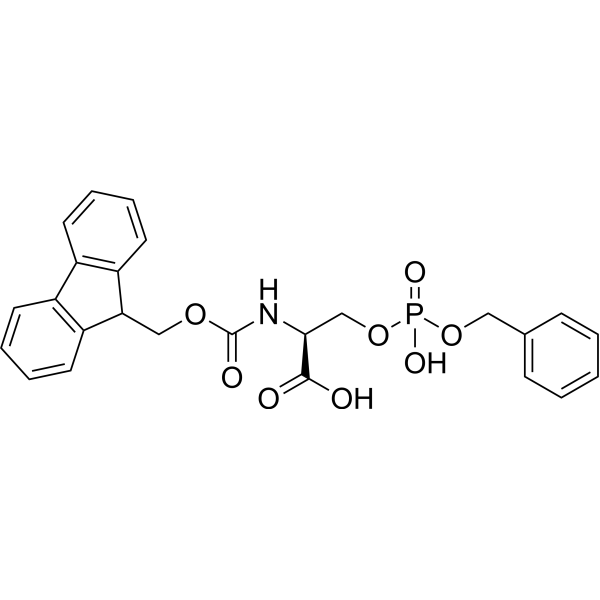
- HY-W010838
-
-
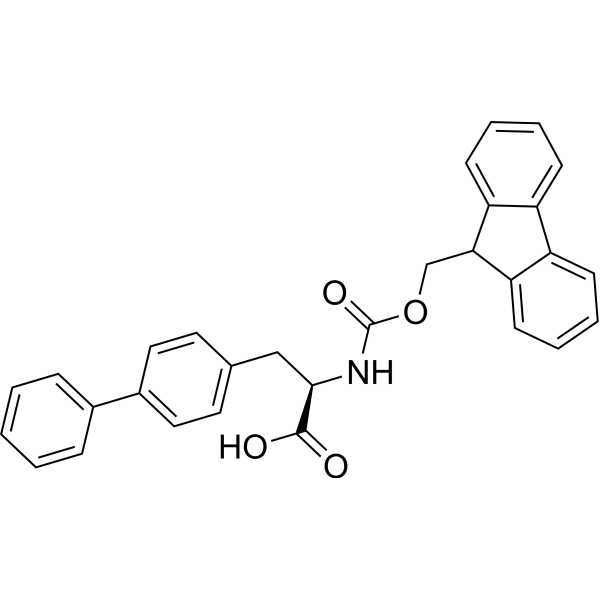
- HY-W008996
-
-
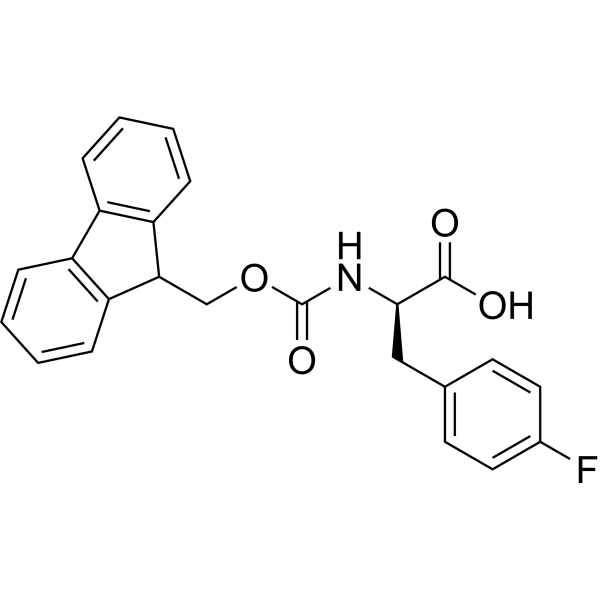
- HY-W142086
-
-
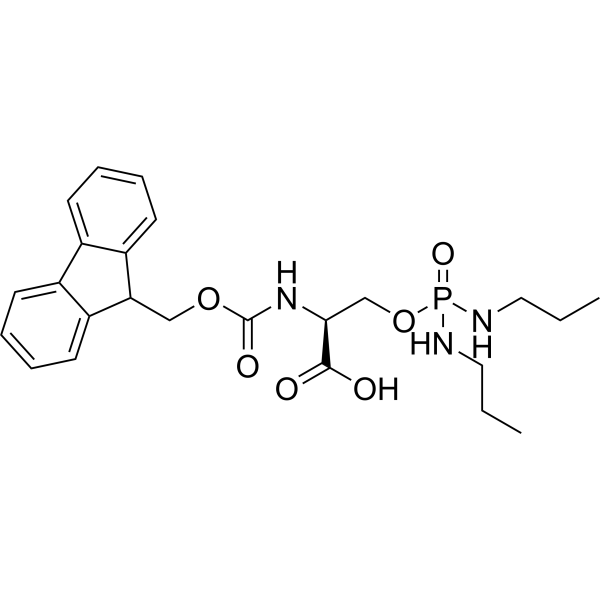
- HY-W010927
-
-
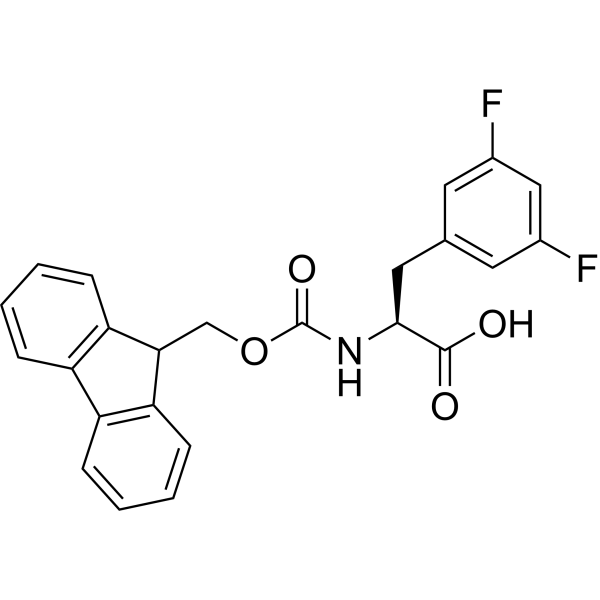
- HY-W010974
-
-
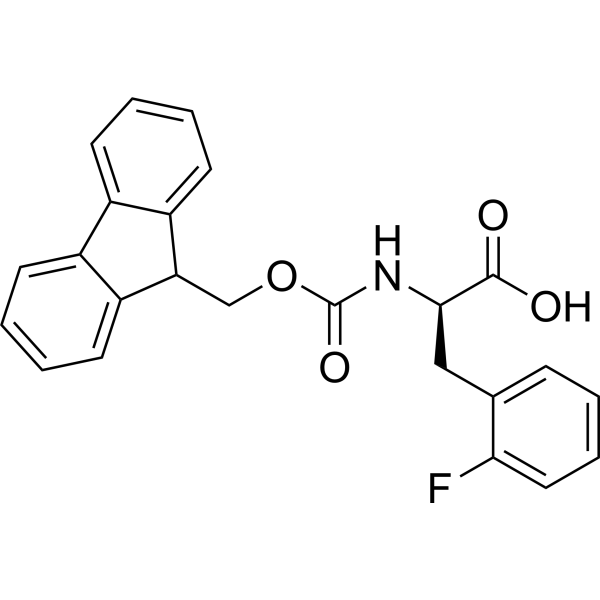
- HY-129361
-
-
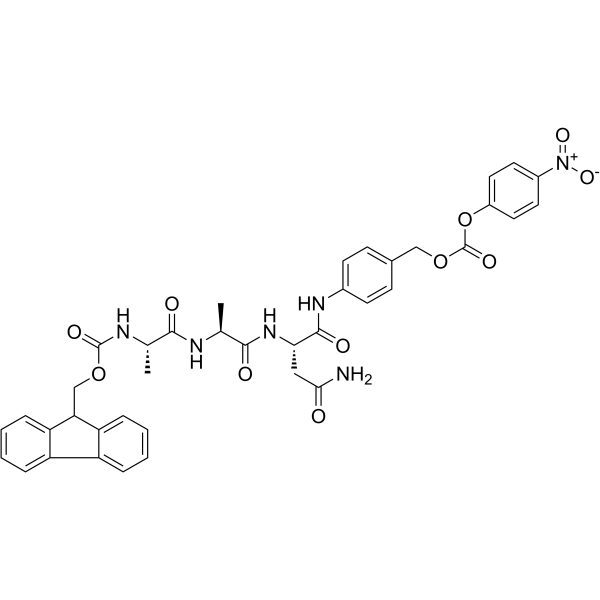
- HY-W010926
-
-
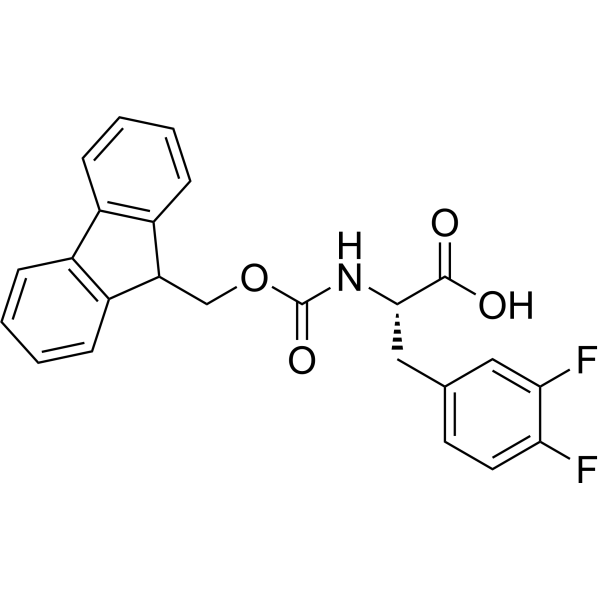
- HY-138106
-
|
|
Amino Acid Derivatives
|
Others
|
|
Fmoc-D-Cit-OH is citrulline with an Fmoc protecting group, which can be used to synthesize bioactive peptide mimetics, such as H-Dmt-D-Cit-Aba-b-Ala-NMe-30,50-(CF3)2-Bn and H-Dmt-D-Cit-Aba-b-Ala-NMe-Bn with neurokinin-1 antagonist activity .
|
-

- HY-151669
-
|
|
ADC Linker
|
Others
|
|
Fmoc-D-Aha-OH is a click chemistry reagent containing an azide . Fmoc-D-Aha-OH is a click chemistry reagent, it contains an Azide group and can undergo copper-catalyzed azide-alkyne cycloaddition reaction (CuAAc) with molecules containing Alkyne groups. It can also undergo strain-promoted alkyne-azide cycloaddition (SPAAC) reactions with molecules containing DBCO or BCN groups.
|
-
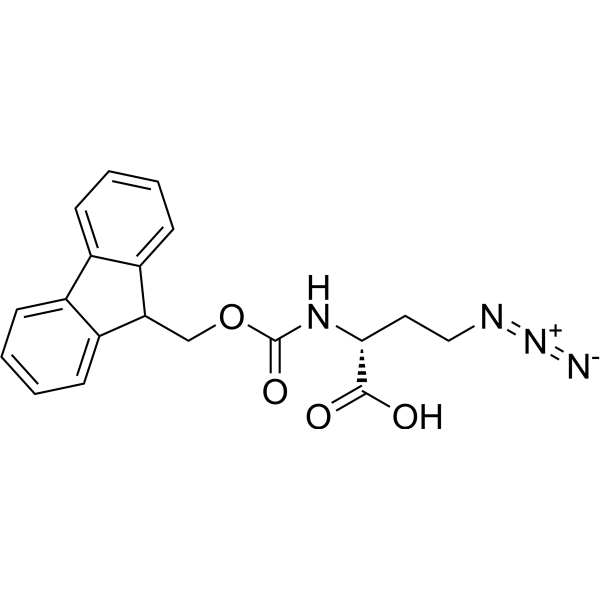
- HY-160072
-
|
|
Drug Intermediate
|
Cancer
|
|
Fmoc-NH-PEG2-NHS ester is an intermediate used in the synthesis of E-selectin antagonists [1] .
|
-
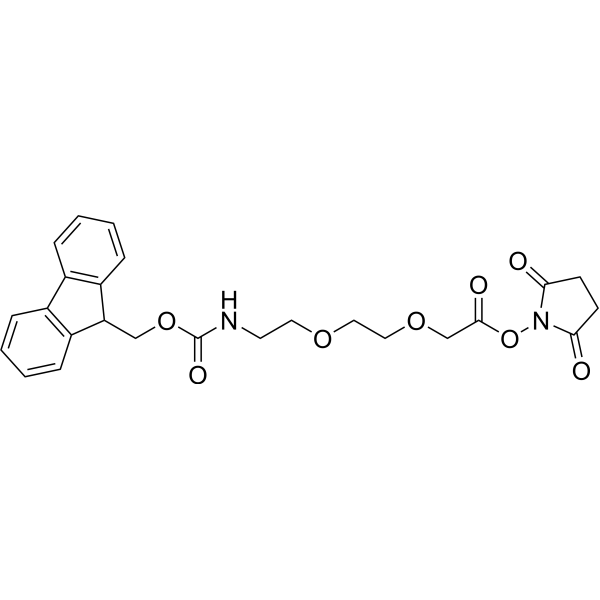
- HY-79129
-
|
|
ADC Linker
|
Cancer
|
|
Fmoc-D-Trp(Boc)-OH is a cleavable ADC linker that used in the synthesis of antibody-drug conjugates (ADCs).
|
-
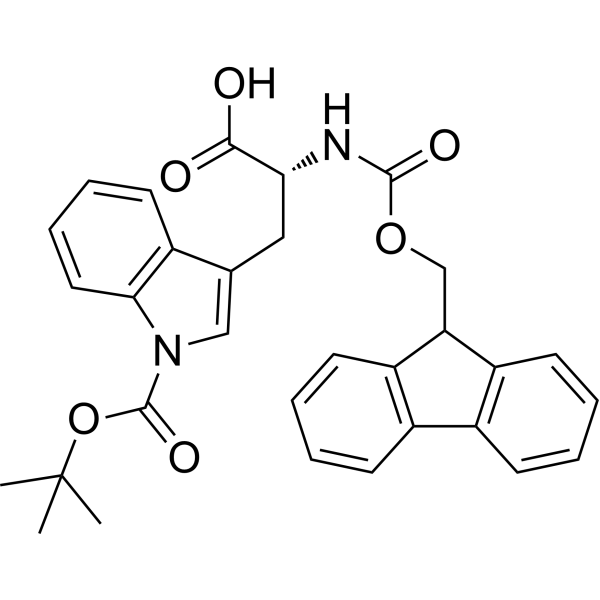
- HY-W013123
-
|
|
Amino Acid Derivatives
|
Others
|
|
Fmoc-D-Phe(4-CF3)-OH is Phenylalanine derivative. Fmoc-D-Phe(4-CF3)-OH can be used for the research of peptide inhibitors of protein-protein interactions .
|
-
- HY-179477
-
|
|
Amino Acid Derivatives
Drug Intermediate
|
Others
|
|
Fmoc-β-Ala-Asp(OMpe)-OH is a specialized amino acid derivative used in solid-phase peptide synthesis (SPPS). Fmoc-β-Ala-Asp(OMpe)-OH consists of a beta-alanine spacer linked to an aspartic acid residue, where the beta-carboxyl group is protected with a 3-methylpentyl ester (OMpe) to prevent aspartimide formation during synthesis. Fmoc-β-Ala-Asp(OMpe)-OH a useful building block for creating peptides that contain aspartic acid, as the OMpe group is designed to minimize unwanted side reactions .
|
-

- HY-W615153
-
|
|
Amino Acid Derivatives
|
Others
|
|
Fmoc-L-Lys[Oct-(OtBu)-Glu-(OtBu)-AEEA-AEEA]-OH is an L-Lys (an amino acid) derivative. Fmoc protects amino acids, ensuring their accurate peptide synthesis .
|
-
![Fmoc-L-Lys[Oct-(OtBu)-Glu-(OtBu)-AEEA-AEEA]-OH](//file.medchemexpress.com/product_pic/hy-w615153.gif)
- HY-151842
-
|
|
ADC Linker
|
Others
|
|
Fmoc-EDA-N3 is a click chemistry reagent containing an azide group . Fmoc-EDA-N3 is a click chemistry reagent, it contains an Azide group and can undergo copper-catalyzed azide-alkyne cycloaddition reaction (CuAAc) with molecules containing Alkyne groups. It can also undergo strain-promoted alkyne-azide cycloaddition (SPAAC) reactions with molecules containing DBCO or BCN groups.
|
-
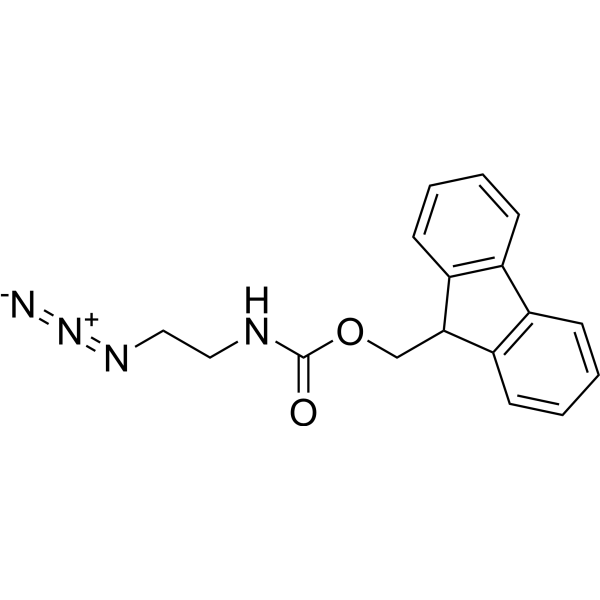
- HY-144628
-
|
|
ADC Linker
|
Cancer
|
|
Fmoc-Asn-Pro-Val-PABC-PNP (compound 6) is a potent ADC Linker .
|
-
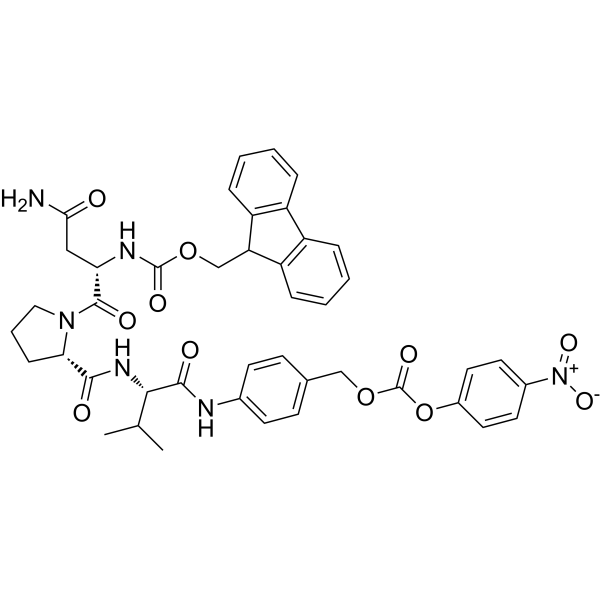
- HY-151638
-
|
|
ADC Linker
|
Others
|
|
FMOC-3-azido-D-alanine is a click chemistry reagent containing an azide group . It contains an azide group and can undergo copper-catalyzed azide-alkyne cycloaddition (CuAAc) with molecules containing alkyne groups. It can also undergo ring strain-promoted alkyne-azide cycloaddition (SPAAC) with molecules containing DBCO or BCN groups.
|
-
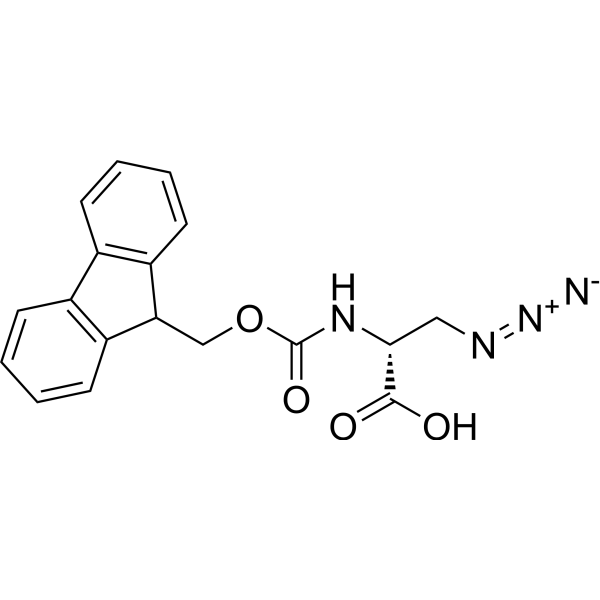
- HY-126353
-
|
|
ADC Linker
|
Cancer
|
|
Fmoc-Val-Ala-PAB-OH is a cleavable ADC linker used in the synthesis of antibody-drug conjugates (ADCs) .
|
-
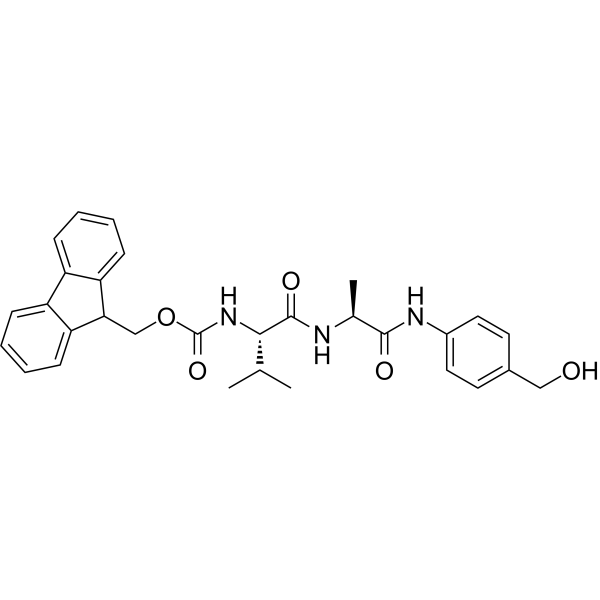
- HY-44234
-
|
|
ADC Linker
|
Cancer
|
|
Fmoc-Gly-Gly-Phe-OtBu is a cleavable ADC linker used in the synthesis of antibody-drug conjugates (ADCs) .
|
-
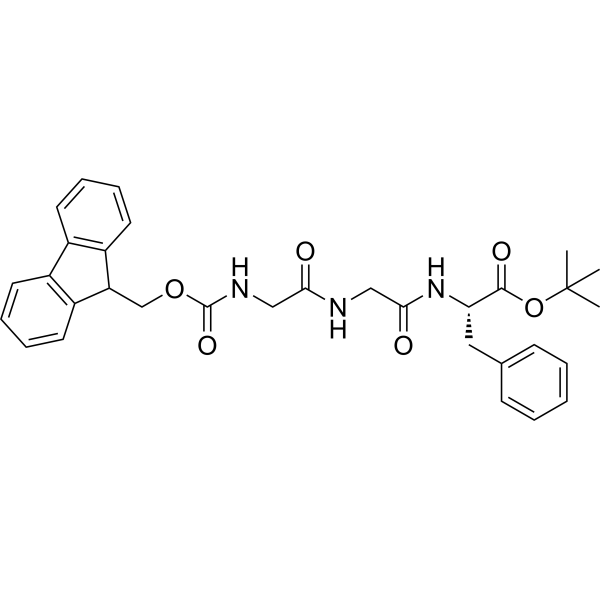
- HY-W540122
-
-
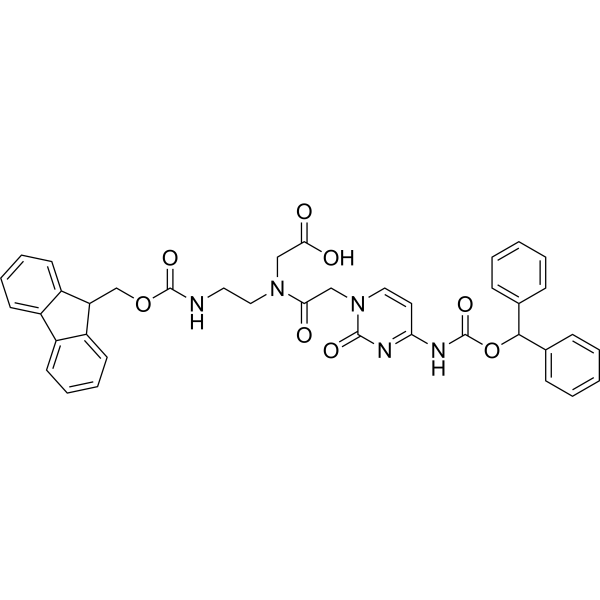
- HY-400191A
-
|
|
ADC Linker
|
Cancer
|
|
Fmoc-Gly-Gly-allyl propionate is a cleavable linker that can be used to synthesize Antibody-Drug Conjugates (ADCs) .
|
-

- HY-136136
-
|
|
ADC Linker
|
Cancer
|
|
Fmoc-Val-Ala-PAB-PNP is a cleavable ADC linker used in the synthesis of antibody-drug conjugates (ADCs) .
|
-
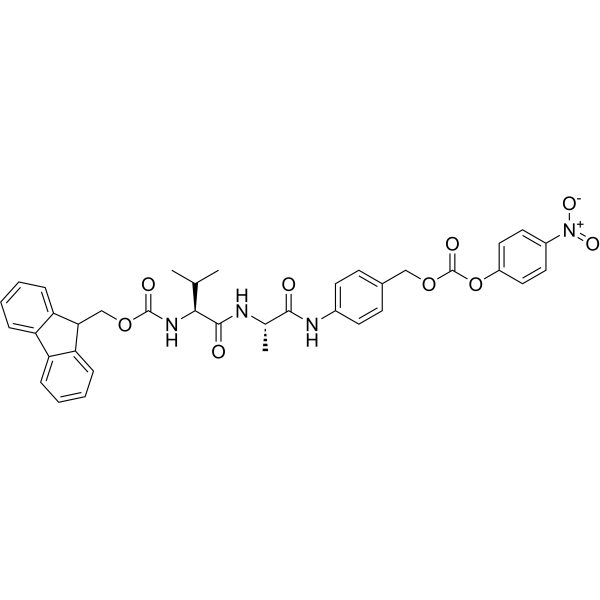
- HY-140118
-
|
|
ADC Linker
|
Cancer
|
|
Fmoc-NH-ethyl-SS-propionic acid is a cleavable ADC linker used in the synthesis of antibody-drug conjugates (ADCs) .
|
-
- HY-PS0015
-
-

- HY-131833
-
|
|
ADC Linker
|
Cancer
|
|
Fmoc-Gly-Gly-Phe-OH is a cleavable ADC linker used in the synthesis of antibody-drug conjugates (ADCs) .
|
-
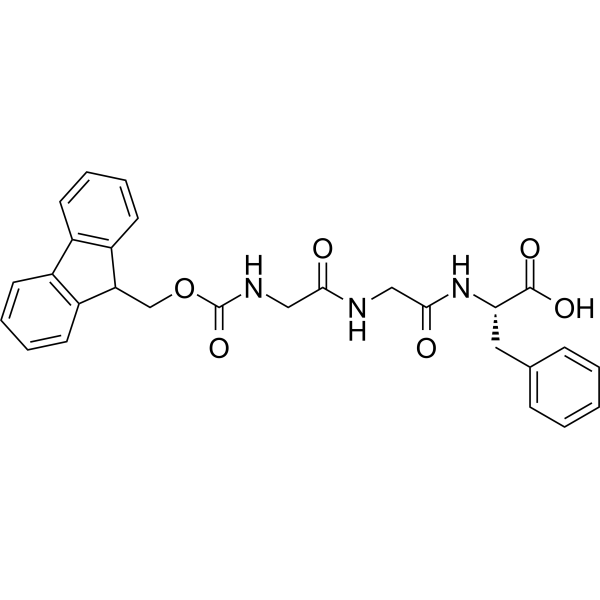
- HY-139353
-
|
|
ADC Linker
|
Cancer
|
|
Fmoc-Phe-Lys(Boc)-PAB is a cleavable ADC linker used in the synthesis of antibody-drug conjugates (ADCs) .
|
-
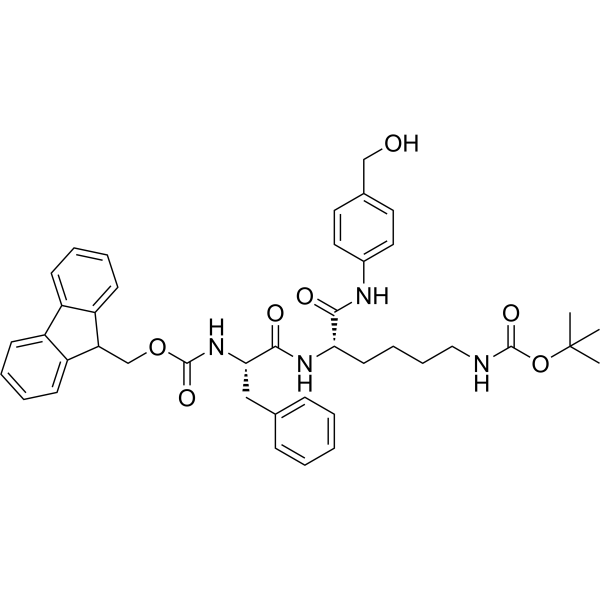
- HY-136107
-
|
|
ADC Linker
|
Cancer
|
|
Fmoc-Phe-Lys(Trt)-PAB is a cleavable ADC linker used in the synthesis of antibody-drug conjugates (ADCs) .
|
-
- HY-W145762
-
-

- HY-141902S
-
-
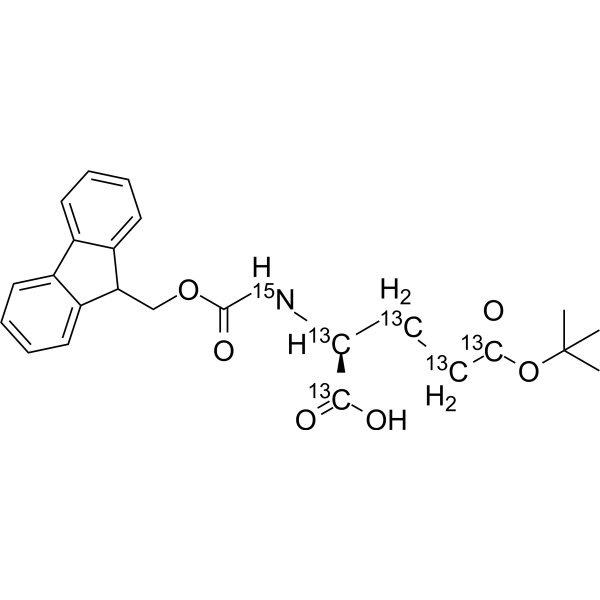
- HY-19318C
-
|
|
ADC Linker
|
Cancer
|
|
Fmoc-D-Val-D-Cit-PAB is a cleavable linker for antibody-agent-conjugation (ADC) .
|
-
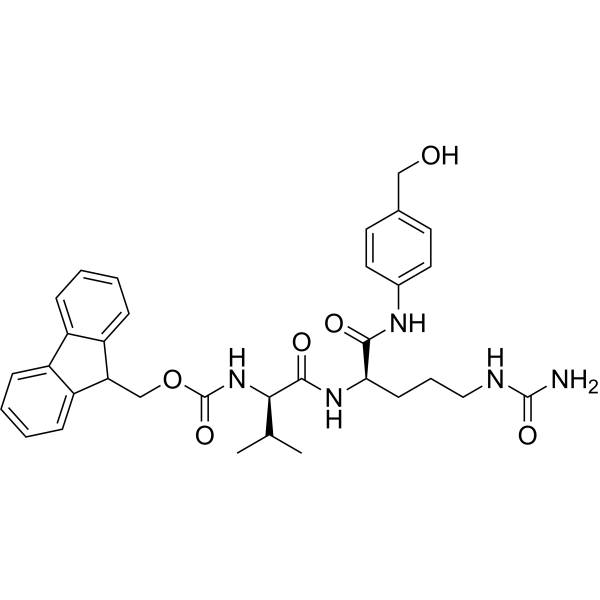
- HY-W010982
-
-
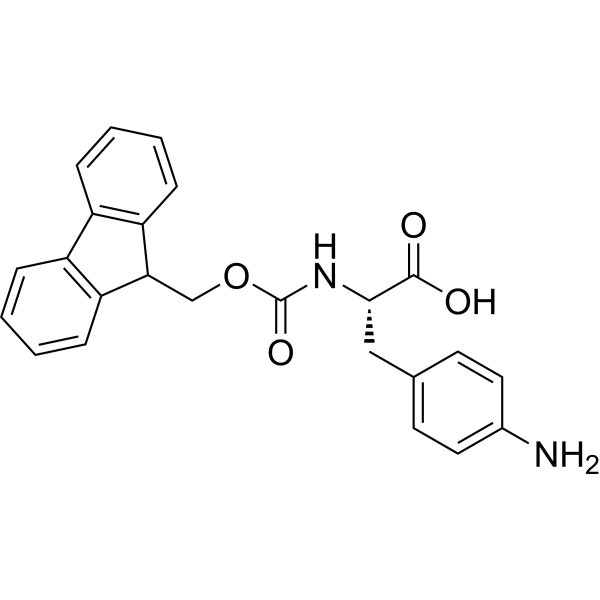
- HY-W010986
-
|
|
Drug Intermediate
|
Others
|
|
Fmoc-N-Me-Phe-OH is an N-methylated amino acid that can be used for the synthesis of some active compounds .
|
-
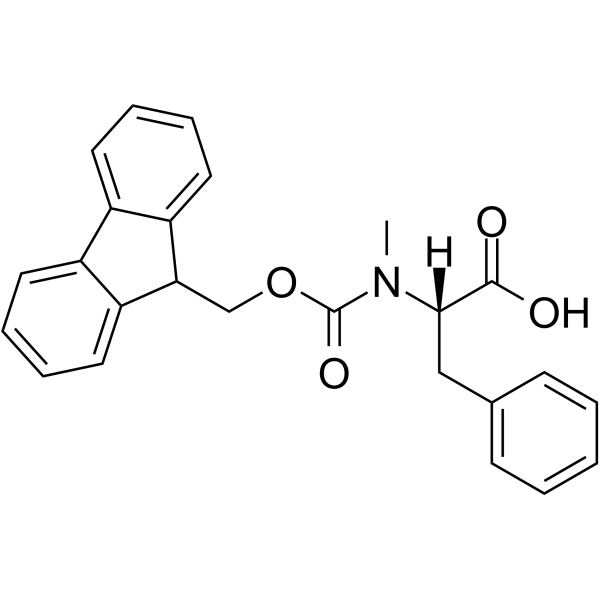
- HY-140442
-
|
|
PROTAC Linkers
|
Cancer
|
|
Fmoc-aminooxy-PEG12-NHS ester is a PEG-based PROTAC linker that can be used in the synthesis of PROTACs .
|
-
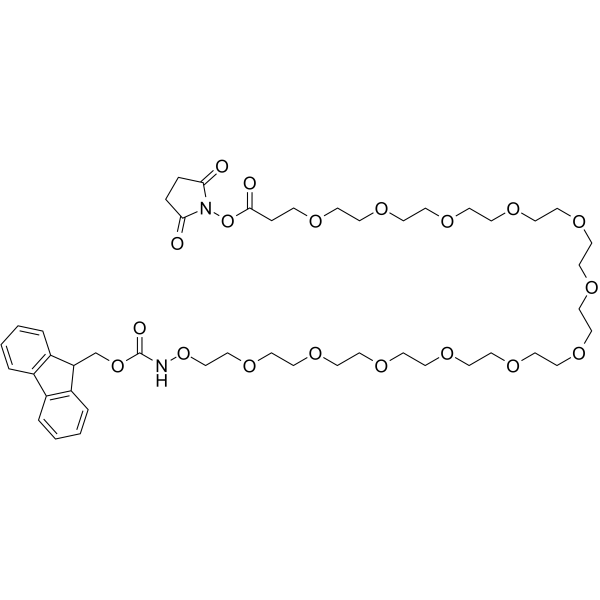
- HY-141103
-
|
|
PROTAC Linkers
|
Cancer
|
|
Fmoc-NMe-PEG4-NHS ester is a PEG-based PROTAC linker that can be used in the synthesis of PROTACs .
|
-
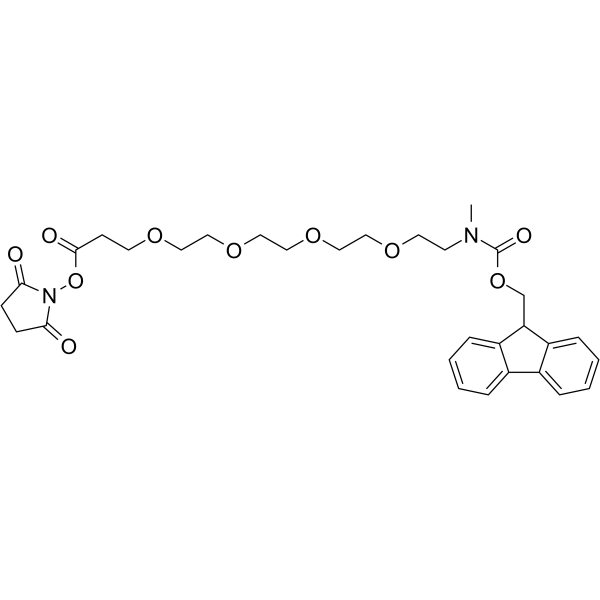
- HY-126880
-
|
|
PROTAC Linkers
|
Cancer
|
|
Fmoc-NH-PEG8-NHS ester is a PEG-based PROTAC linker that can be used in the synthesis of PROTACs .
|
-
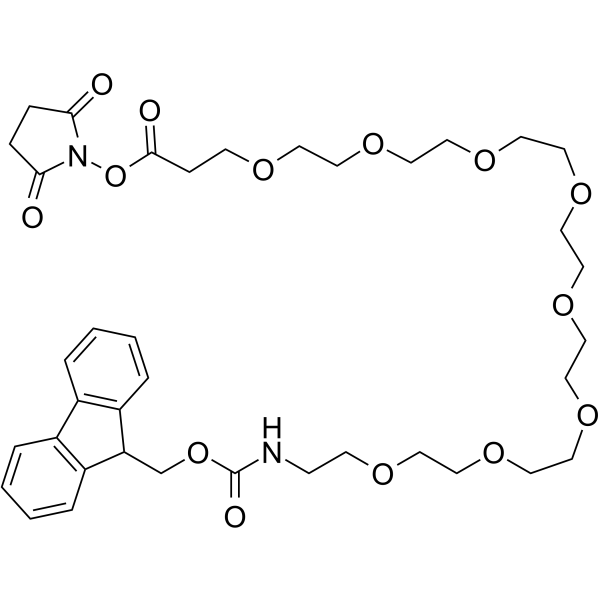
- HY-133470
-
|
|
PROTAC Linkers
|
Cancer
|
|
Fmoc-NH-PEG4-alcohol is a PEG-based PROTAC linker that can be used in the synthesis of PROTACs .
|
-
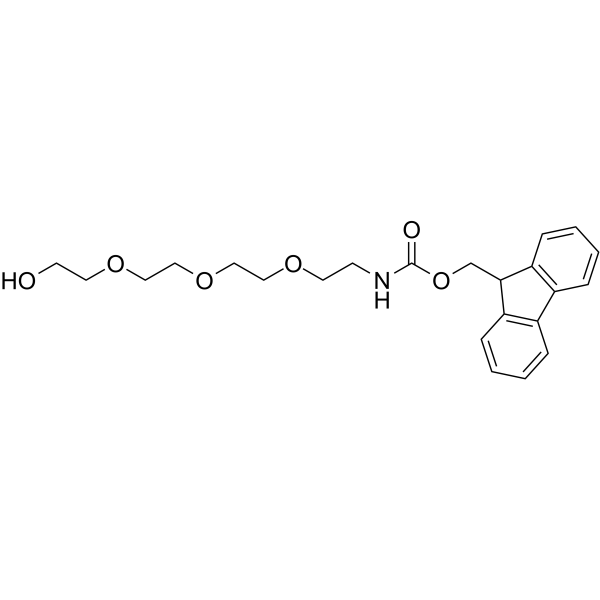
- HY-W006886
-
|
|
Amino Acid Derivatives
|
Others
|
Fmoc-(R)-2-(7-octenyl) Ala-OH is an unnatural Fmoc-protected amino acid and modification module. Fmoc-(R)-2-(7-octenyl) Ala-OH serves as a key building block for all-hydrocarbon cross-linking modification of antimicrobial peptides, and facilitates the generation of stapled peptide derivatives. When introduced into specific sites of the parent peptide, Fmoc-(R)-2-(7-octenyl) Ala-OH effectively increases the α-helix content of the peptide chain, thereby significantly enhancing its antimicrobial activity and proteolytic stability. Fmoc-(R)-2-(7-octenyl) Ala-OH is widely used in research on bacterial infections and the development of related antimicrobial agents . Stapled peptide is a specially chemically modified polypeptide. It locks the peptide chain into a stable α-helical structure by introducing a "staple"-like chemical bridge (usually an all-carbon backbone) at specific positions of the peptide chain.
|
-

- HY-P2410
-
-
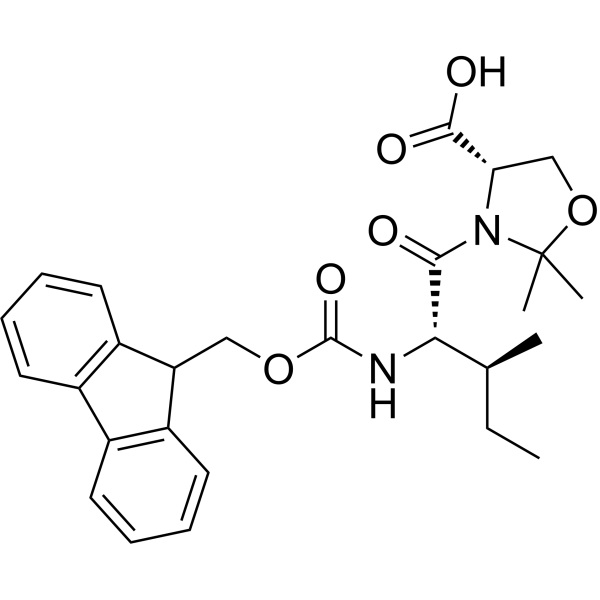
- HY-P2398
-
-
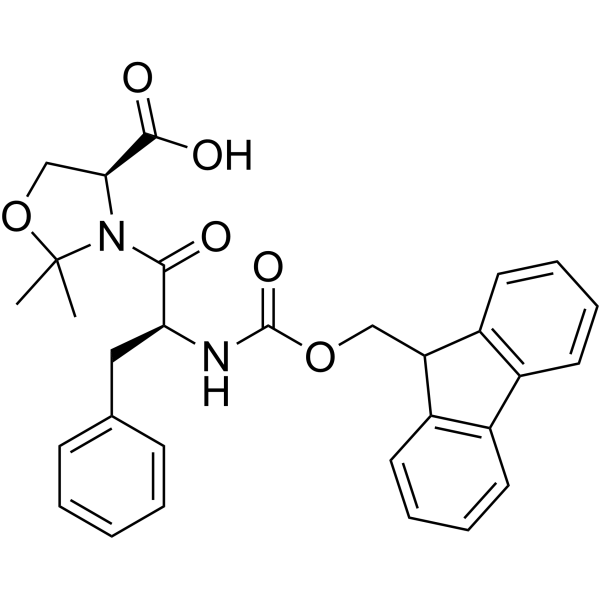
- HY-P2385
-
-
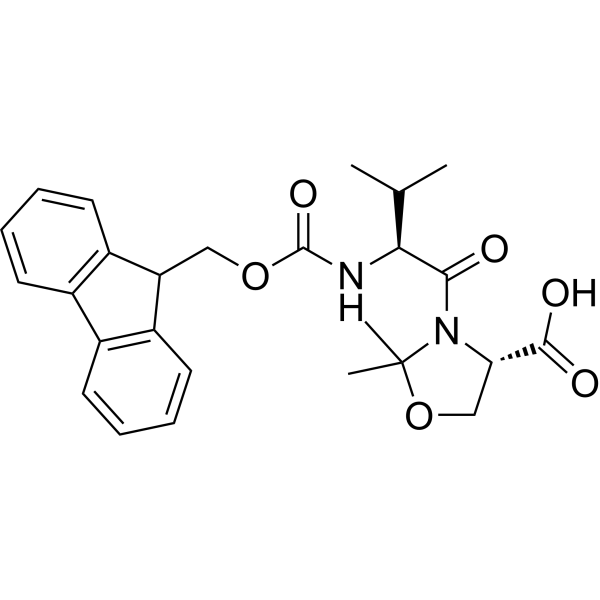
- HY-P2400
-
-
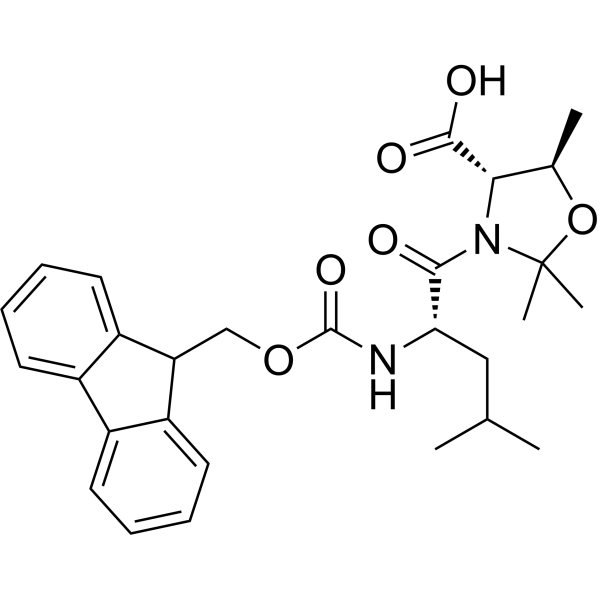
- HY-P2396
-
-
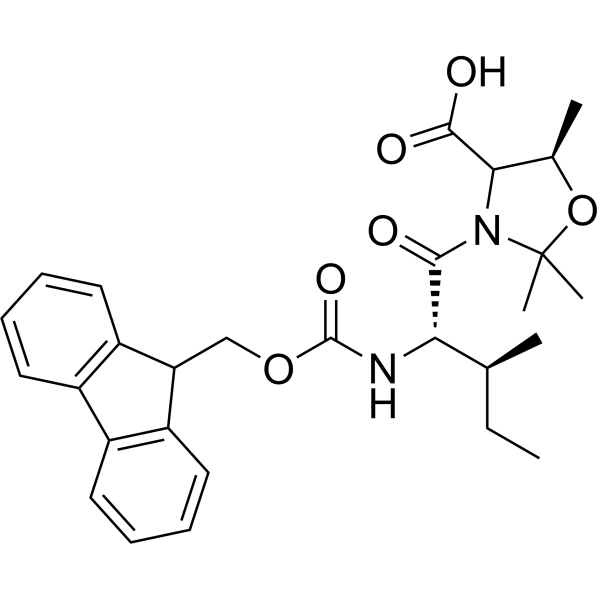
- HY-P2409
-
-
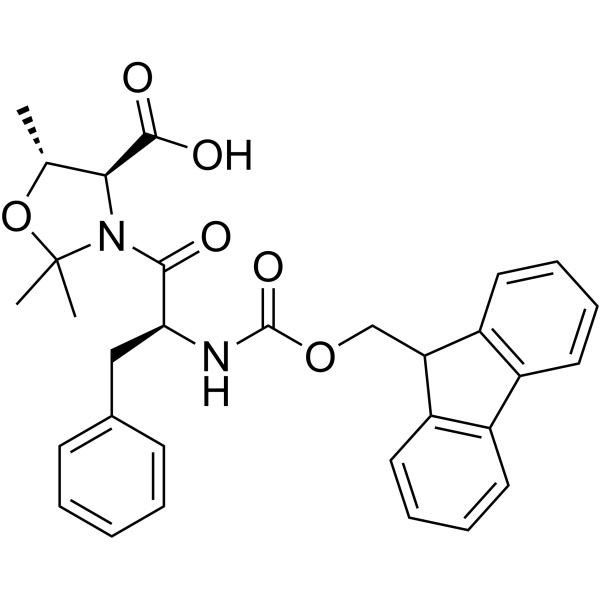
- HY-P2390
-
-
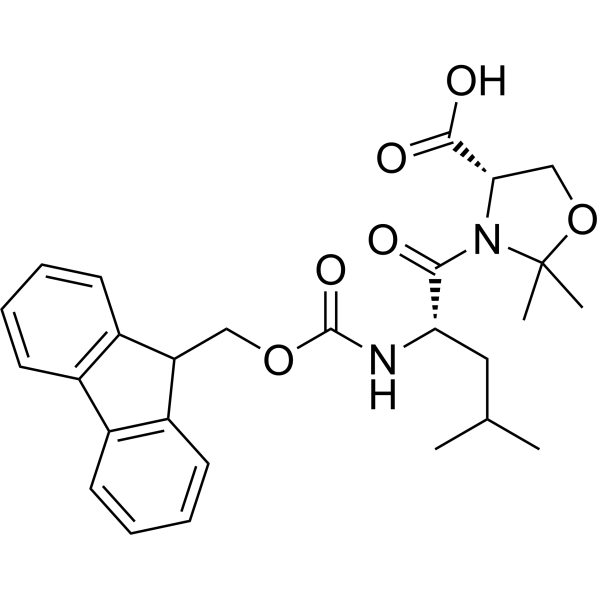
- HY-P2393
-
-
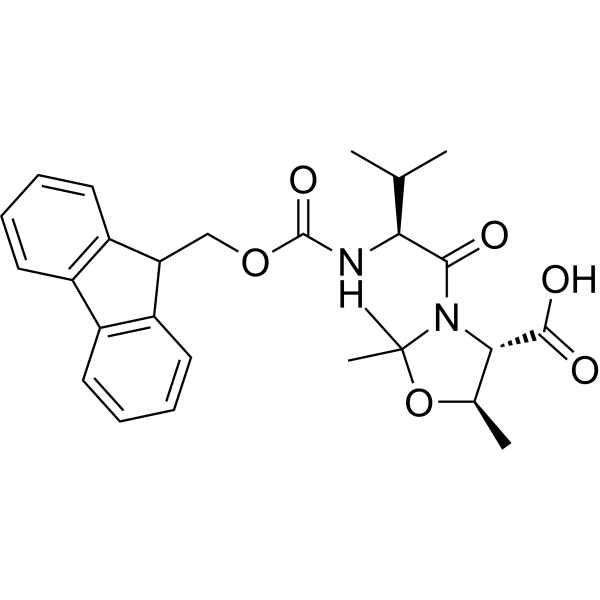
- HY-P2386
-
-
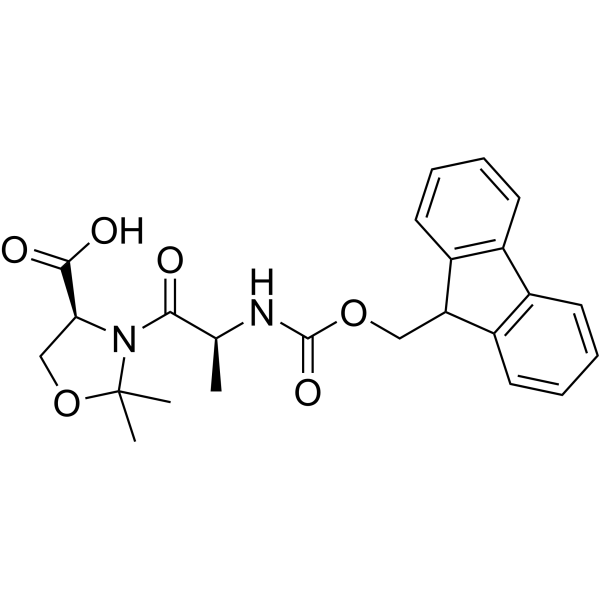
- HY-138123
-
|
|
Biochemical Assay Reagents
|
Others
|
|
Fmoc-Glu(OtBu)-OSu is used for synthesizing N3S chelators and double branched and triple branched carboxyl terminated polyethylene glycol reagents .
|
-

- HY-156825
-
-
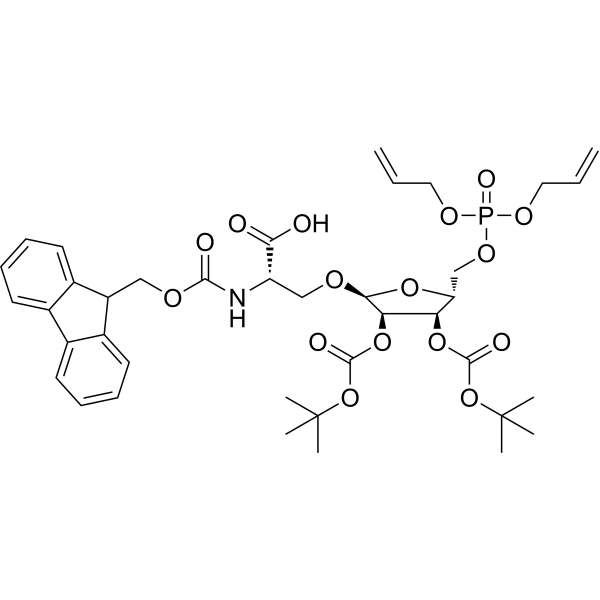
- HY-W101772
-
-

- HY-W018847
-
|
|
Drug Intermediate
|
Others
|
|
Fmoc-(R)-2-(pentenyl)Ala-OH is a peptide intermediate and can be used in peptide synthesis.
|
-

- HY-W871891
-
|
|
Biochemical Assay Reagents
|
Others
|
|
Fmoc-Glu(Otbu)-Gly-OH is a biochemical reagent that can be used as a biological material or organic compound for life science related research.
|
-

- HY-141464
-
|
fmoc-Asn(Ac3AcNH-beta-Glc)-OH
|
Amino Acid Derivatives
|
Cancer
|
|
Fmoc-L-Asn(beta-D-GlcNAc(Ac)3)-OH (Fmoc-Asn(Ac3AcNH-beta-Glc)-OH) can be used in the synthesis of silicon-fluoride acceptor (SiFA) derivatized octreotate derivatives. SiFA-octreotate analogues, as tumor imaging agents, are useful tool for the research of positron emission tomography (PET) .
|
-
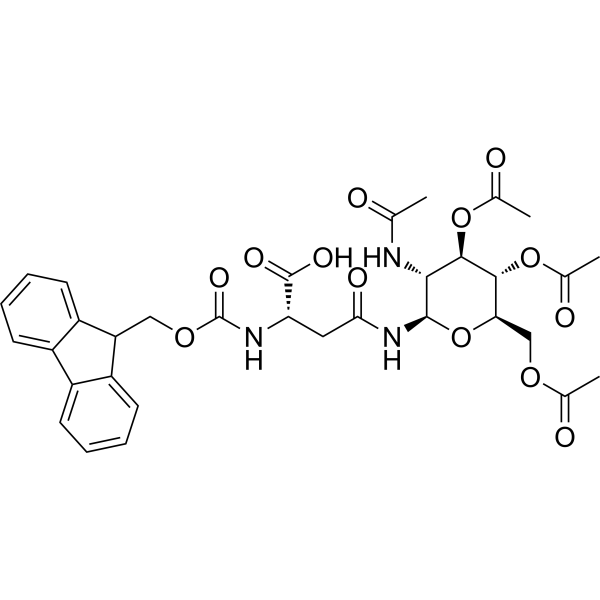
- HY-W141820
-
-

- HY-W010850
-
-
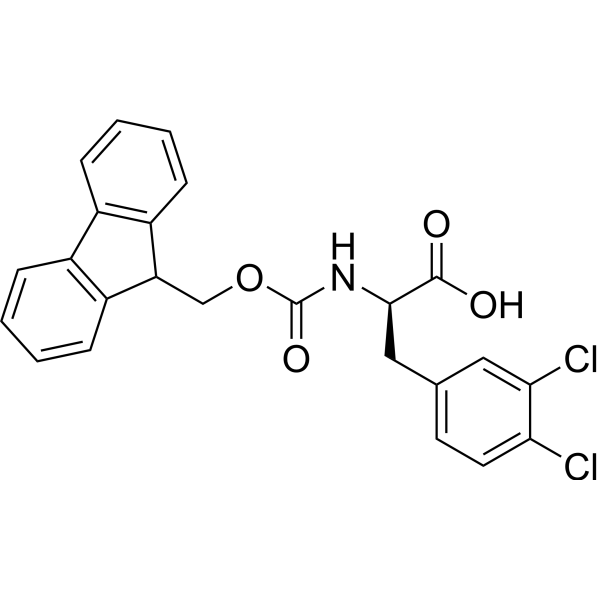
- HY-400191
-
|
|
ADC Linker
|
Cancer
|
|
Fmoc-Gly-(d-Gly)-allyl propionate is a cleavable linker that can be used to synthesize Antibody-Drug Conjugates (ADCs).
|
-
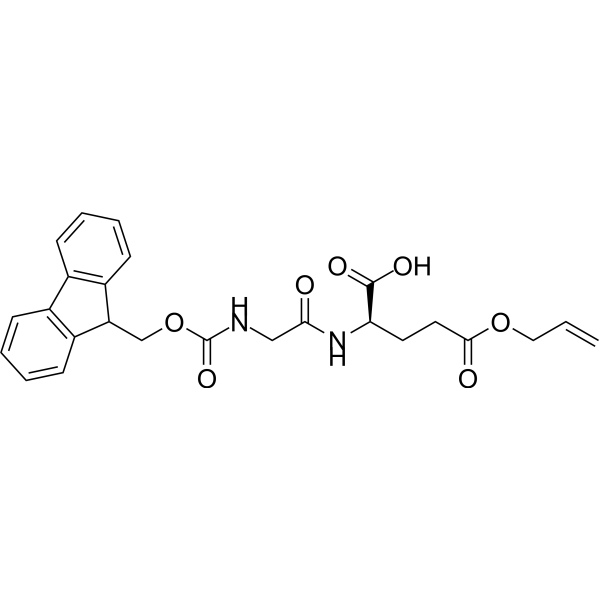
- HY-175994
-
|
|
ADC Linker
|
Others
|
|
Fmoc-β-Ala-Trp(Boc)-OH is a cleavable ADC linker used in the synthesis of antibody-drug conjugates (ADCs).
|
-

- HY-114430
-
|
|
ADC Linker
|
Others
|
|
Fmoc-Phe-Lys(Boc)-PAB-PNP is a cleavable ADC linker used in the synthesis of antibody-drug conjugates (ADCs).
|
-
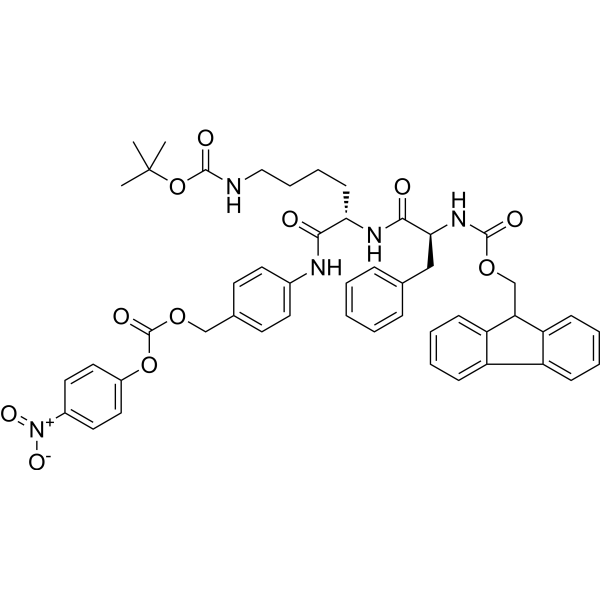
- HY-164867
-
|
|
Amino Acid Derivatives
|
Others
|
|
Fmoc-L-Dap(NBSD)-OH is a benzodiazole amino acid that can be used as a building block for constructing background-free peptide probes for fluorescence imaging .
|
-

- HY-134682
-
|
|
PROTAC Linkers
|
Cancer
|
|
Fmoc-NH-PEG5-C2-NH2 is a PEG-based PROTAC linker. Fmoc-NH-PEG5-C2-NH2 can be used in the synthesis of PROTACs .
|
-
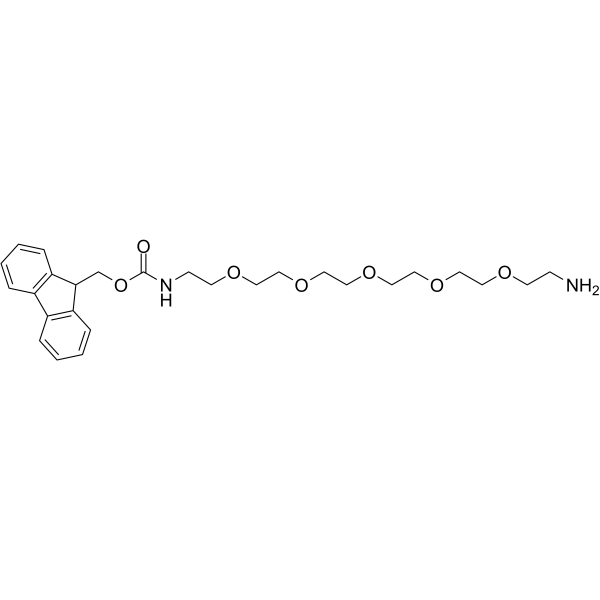
- HY-134682A
-
|
|
PROTAC Linkers
|
Cancer
|
|
Fmoc-NH-PEG5-C2-NH2 hydrochloride is a PEG-based PROTAC linker. Fmoc-NH-PEG5-C2-NH2 hydrochloride can be used in the synthesis of PROTACs .
|
-

- HY-130364
-
|
|
ADC Linker
PROTAC Linkers
|
Cancer
|
|
Fmoc-NH-PEG6-CH2COOH is a cleavable ADC linker used in the synthesis of antibody-drug conjugates (ADCs). Fmoc-NH-PEG6-CH2COOH is also a PEG-based PROTAC linker that can be used in the synthesis of PROTACs .
|
-
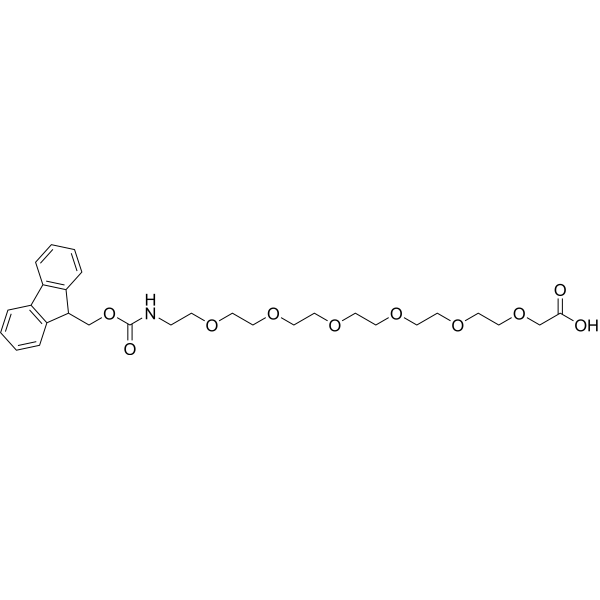
- HY-133062
-
|
|
ADC Linker
PROTAC Linkers
|
Cancer
|
|
Fmoc-NH-PEG5-CH2COOH is a cleavable ADC linker used in the synthesis of antibody-drug conjugates (ADCs). Fmoc-NH-PEG5-CH2COOH is also a PEG-based PROTAC linker that can be used in the synthesis of PROTACs .
|
-
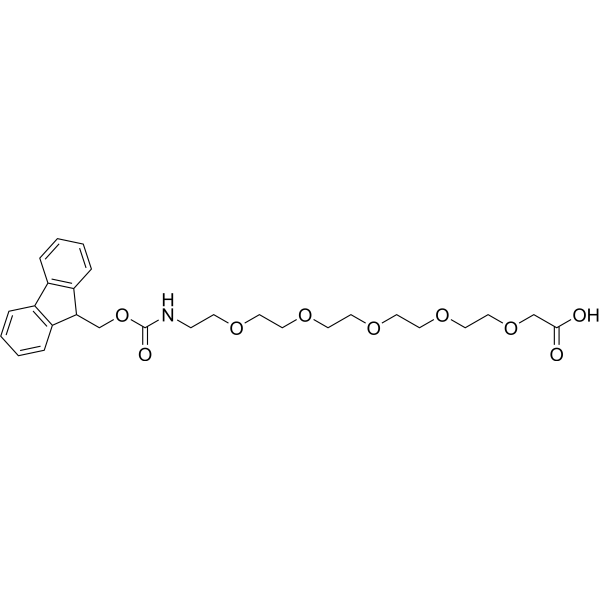
- HY-133063
-
|
|
ADC Linker
PROTAC Linkers
|
Cancer
|
|
Fmoc-NH-PEG8-CH2COOH is a cleavable ADC linker used in the synthesis of antibody-drug conjugates (ADCs). Fmoc-NH-PEG8-CH2COOH is also a PEG-based PROTAC linker that can be used in the synthesis of PROTACs .
|
-
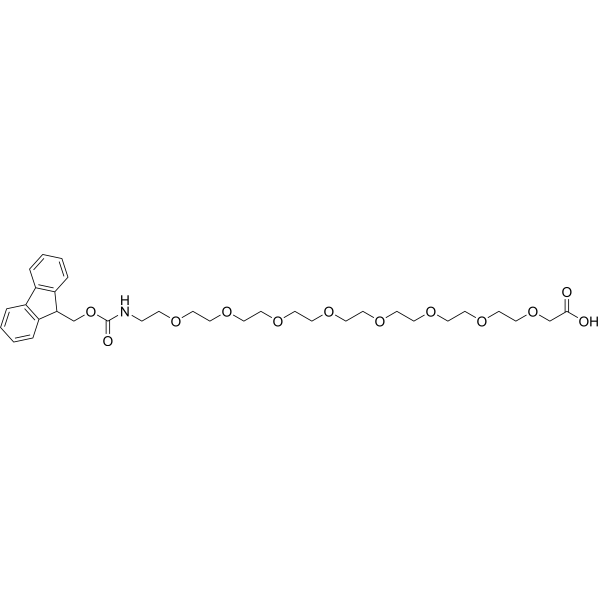
- HY-W055861
-
|
|
ADC Linker
PROTAC Linkers
|
Cancer
|
|
Fmoc-NH-PEG1-CH2COOH is a cleavable ADC linker used in the synthesis of antibody-drug conjugates (ADCs). Fmoc-NH-PEG1-CH2COOH is also a PEG-based PROTAC linker that can be used in the synthesis of PROTACs .
|
-
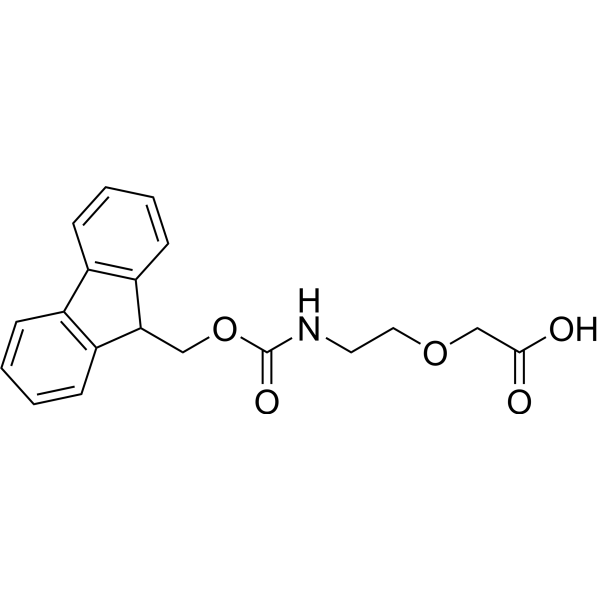
- HY-130175
-
|
|
ADC Linker
PROTAC Linkers
|
Cancer
|
|
Fmoc-NH-PEG4-CH2COOH is a cleavable ADC linker used in the synthesis of antibody-drug conjugates (ADCs). Fmoc-NH-PEG4-CH2COOH is also a PEG-based PROTAC linker that can be used in the synthesis of PROTACs .
|
-
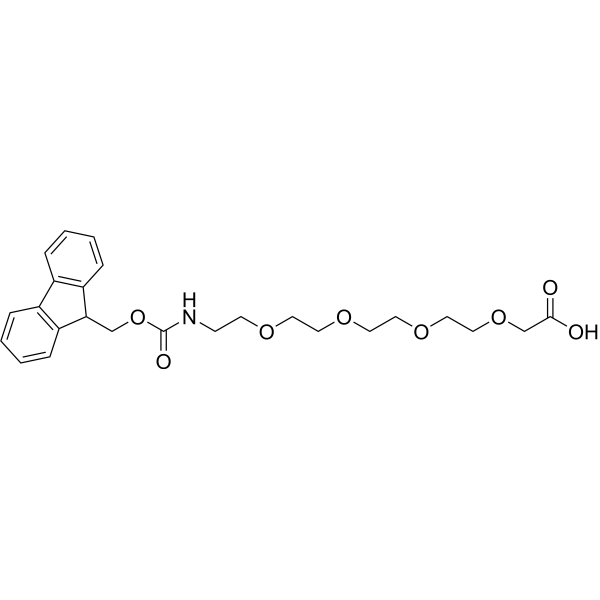
- HY-W007798S
-
|
|
Isotope-Labeled Compounds
|
Others
|
|
Fmoc-Cys(Trt)-OH-1,2,3- 13C3, 15N is a 15N-labeled and 13C-labled Fmoc-Cys(Trt)-OH-1,2,3 (HY-W007798). Fmoc-Cys(Trt)-OH is a cysteine derivative .
|
-
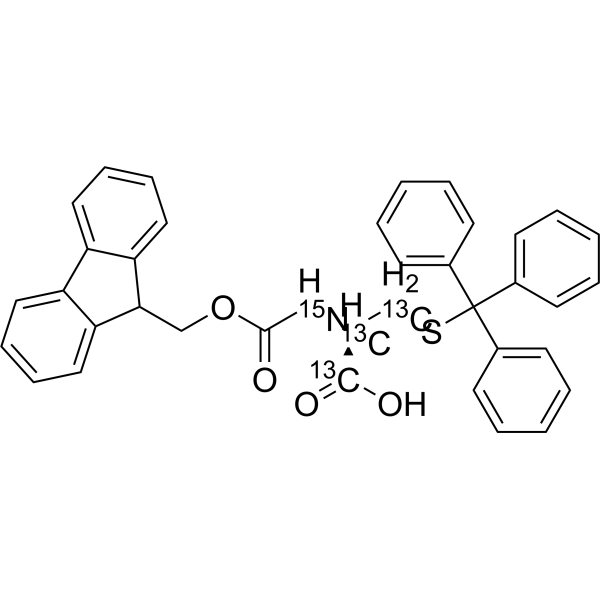
- HY-W142062
-
|
fmoc-(2S,4S)-4-azidoproline
|
Amino Acid Derivatives
|
Others
|
|
cis-Fmoc-Pro(4-N3)-OH is a proline derivative . cis-Fmoc-Pro(4-N3)-OH is a click chemistry reagent, it contains an Azide group and can undergo copper-catalyzed azide-alkyne cycloaddition reaction (CuAAc) with molecules containing Alkyne groups. It can also undergo strain-promoted alkyne-azide cycloaddition (SPAAC) reactions with molecules containing DBCO or BCN groups.
|
-
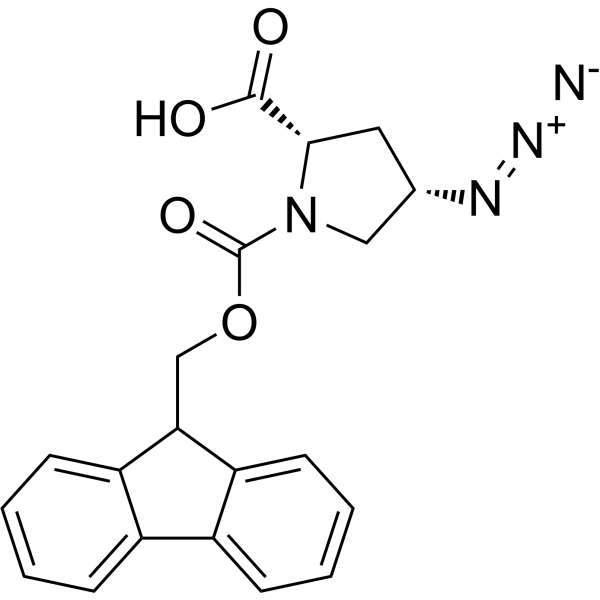
- HY-151671
-
|
|
ADC Linker
|
Others
|
|
Fmoc-L-MeLys(N3)-OH is a click chemistry reagent containing an azide. Fmoc-L-MeLys(N3)-OH is a SPPS building-block for the introduction of N-Me-Lys that can be modified at the N3-group using Click-chemistry . Fmoc-L-MeLys(N3)-OH is a click chemistry reagent, it contains an Azide group and can undergo copper-catalyzed azide-alkyne cycloaddition reaction (CuAAc) with molecules containing Alkyne groups. It can also undergo strain-promoted alkyne-azide cycloaddition (SPAAC) reactions with molecules containing DBCO or BCN groups.
|
-
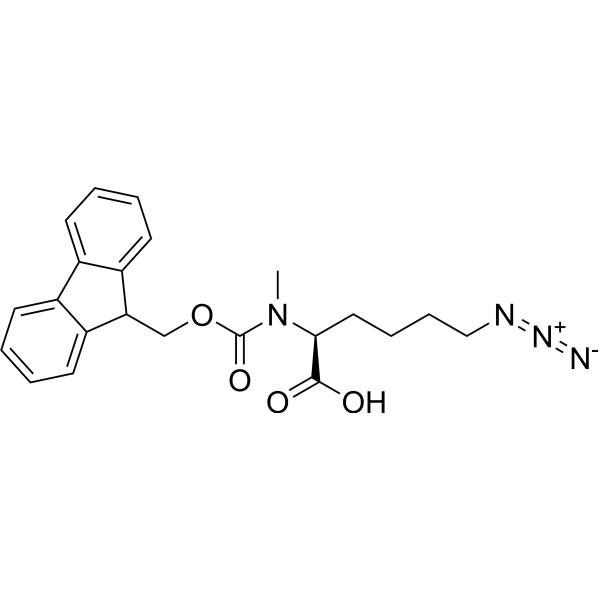
- HY-129350
-
|
|
ADC Linker
|
Cancer
|
|
Fmoc-Phe-Lys(Trt)-PAB-PNP is a cleavable ADC linker used in the synthesis of antibody-drug conjugates (ADCs) .
|
-
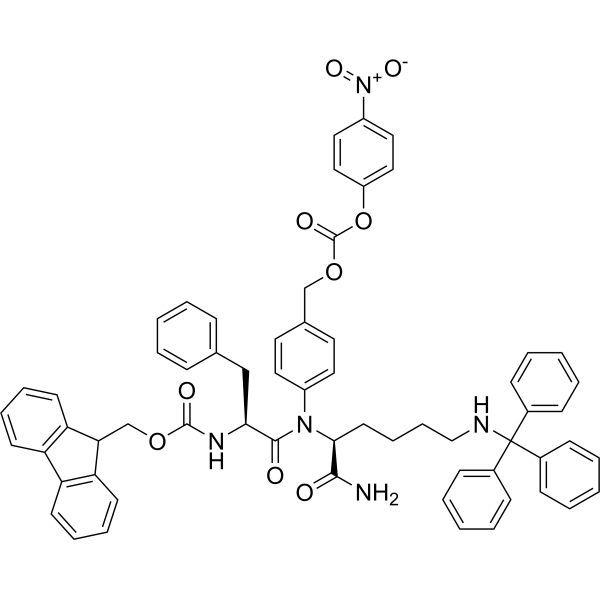
- HY-140119
-
|
|
ADC Linker
|
Cancer
|
|
Fmoc-NH-ethyl-SS-propionic NHS ester is a cleavable ADC linker used in the synthesis of antibody-drug conjugates (ADCs) .
|
-
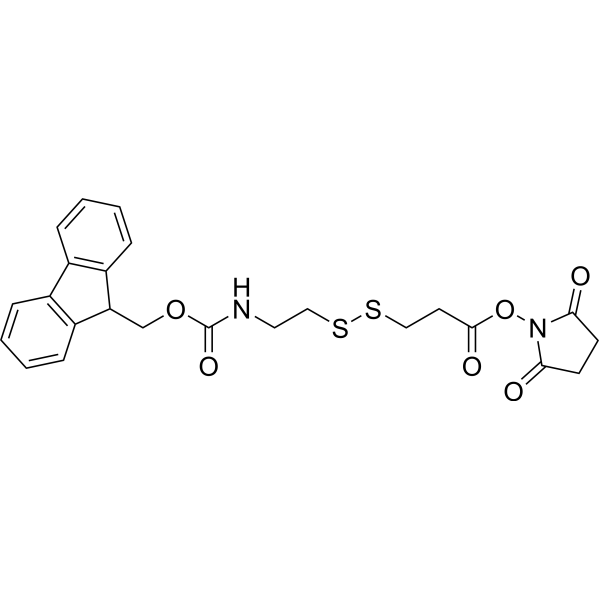
- HY-W190794
-
|
|
PROTAC Linkers
|
Cancer
|
|
FMOC-PEG7-CH2COOH is a PROTAC linker that can be used in the synthesis of PROTACs.
|
-

- HY-130933
-
|
|
ADC Linker
|
Cancer
|
|
Fmoc-Ala-Ala-Asn(Trt)-OH is a cleavable ADC linker used in the synthesis of antibody-drug conjugates (ADCs) .
|
-
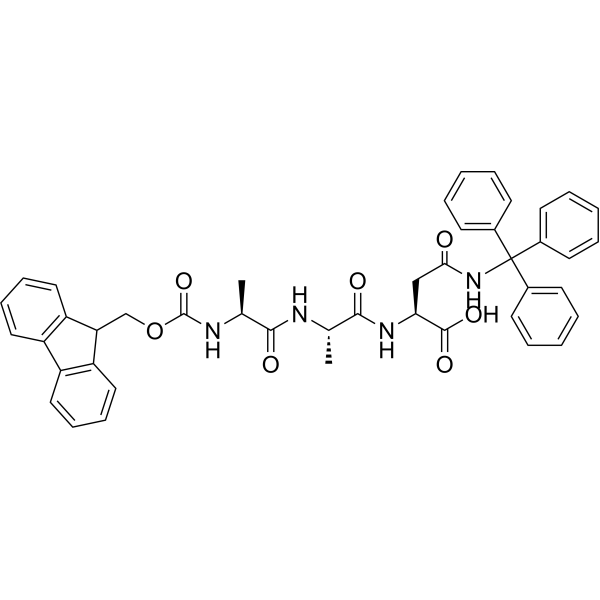
- HY-43279
-
|
|
ADC Linker
|
Cancer
|
|
Fmoc-Gly-NH-CH2-O-CH2COOH is an ADC linker. Fmoc-Gly-NH-CH2-O-CH2COOH can be used for synthesis of ADCs .
|
-
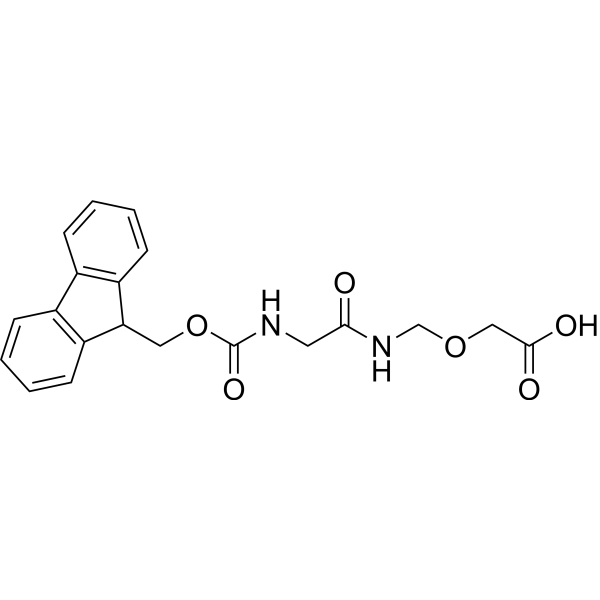
- HY-W000434
-
|
fmoc-15-amino-4,7,10,13-tetraoxapentadecanoic acid
|
ADC Linker
PROTAC Linkers
|
Cancer
|
|
Fmoc-NH-PEG4-CH2CH2COOH is a cleavable ADC linker used in the synthesis of antibody-drug conjugates (ADCs). Fmoc-NH-PEG4-CH2CH2COOH is also a PEG-based PROTAC linker that can be used in the synthesis of PROTACs .
|
-
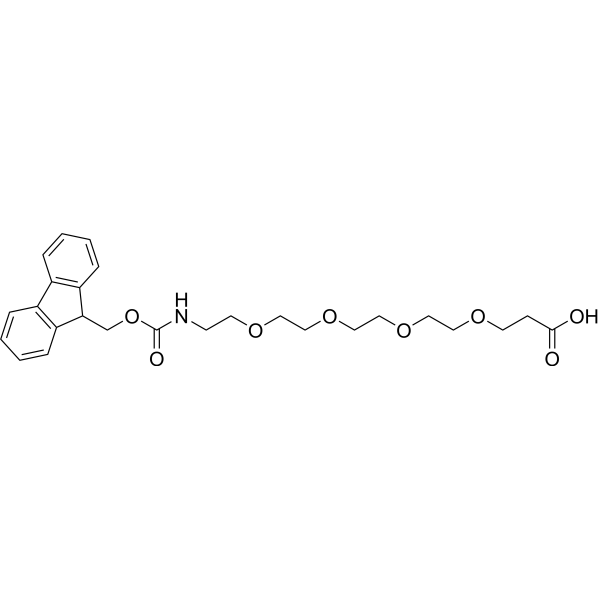
- HY-W008908
-
-
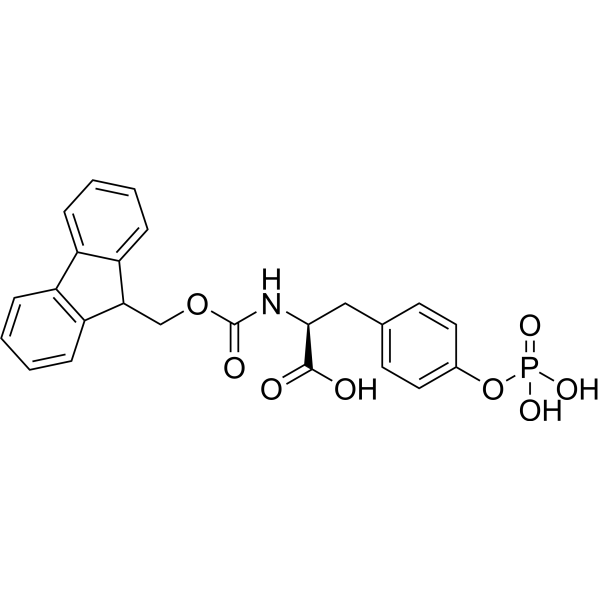
- HY-W141821
-
-
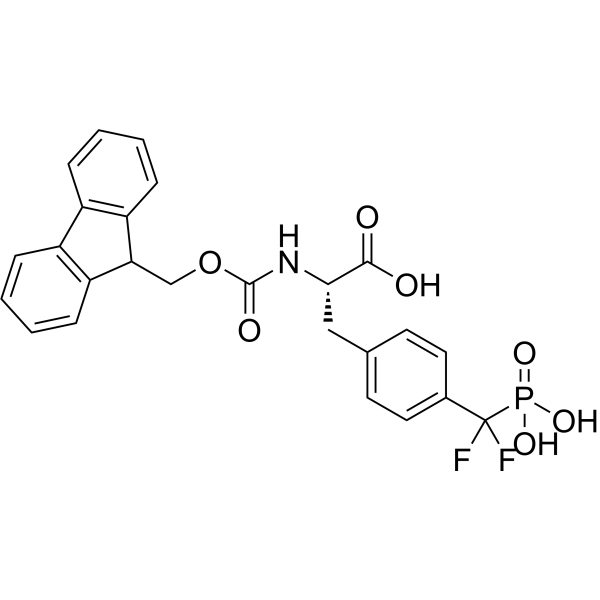
- HY-W008867
-
-
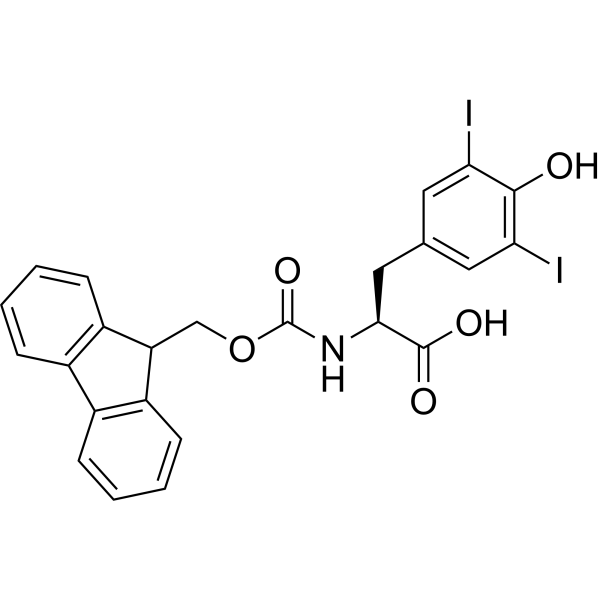
- HY-138331
-
|
|
PROTAC Linkers
|
Cancer
|
|
Fmoc-N-amido-PEG6-amine is a PEG-based PROTAC linker that can be used in the synthesis of PROTACs .
|
-
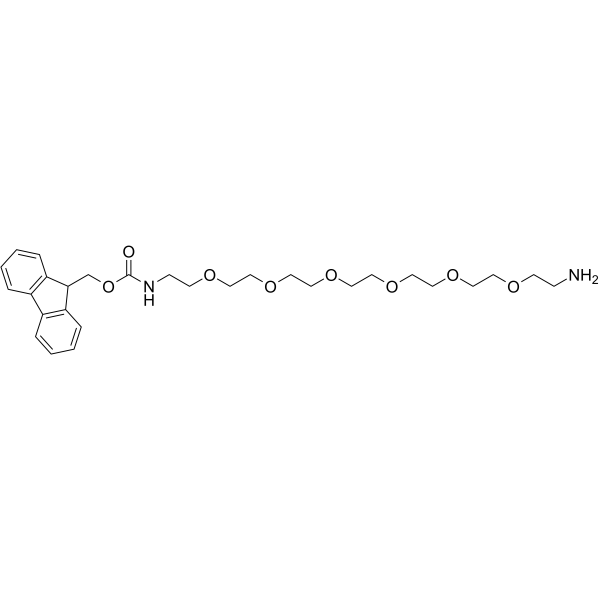
- HY-W100942
-
-

- HY-134681
-
|
|
PROTAC Linkers
|
Cancer
|
|
Fmoc-NH-PEG5-NH-Boc is a PEG-based PROTAC linker that can be used in the synthesis of PROTACs .
|
-
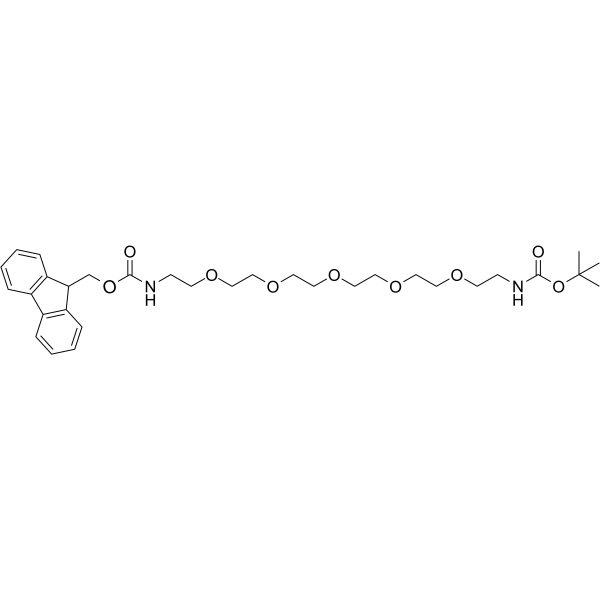
- HY-138320
-
|
|
PROTAC Linkers
|
Cancer
|
|
Fmoc-N-amido-PEG36-Boc is a PEG-based PROTAC linker that can be used in the synthesis of PROTACs .
|
-
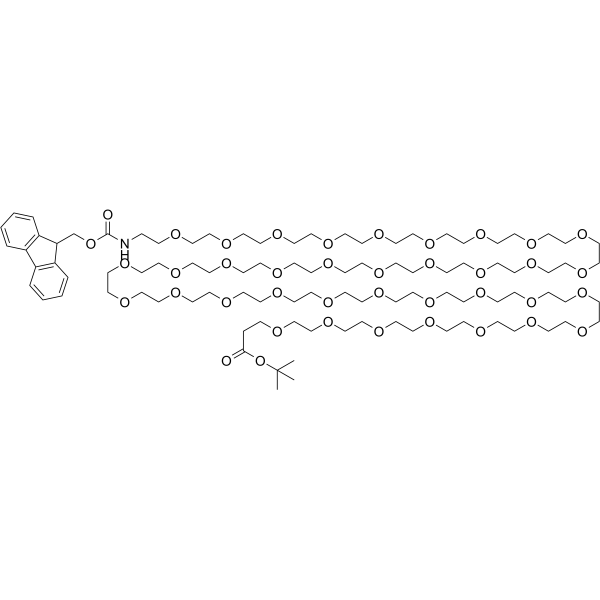
- HY-W096094
-
|
|
PROTAC Linkers
|
Cancer
|
|
Fmoc-N-amido-PEG2-alcohol is a PEG-based PROTAC linker that can be used in the synthesis of PROTACs .
|
-
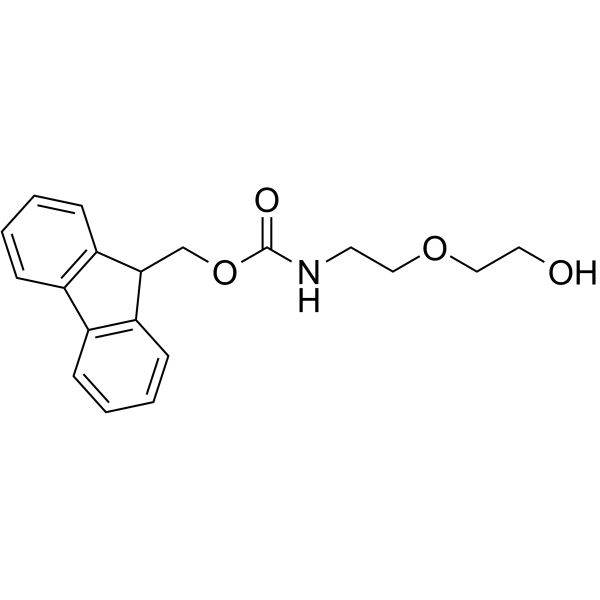
- HY-W729030
-
|
|
Biochemical Assay Reagents
|
Others
|
|
Fmoc-Lys(biotinyl-e-aminocaproyl)-OH is a biotinylated biochemical assay reagent, that can be used to develop the ferrocene-based biosensor .
|
-

- HY-134715
-
|
|
PROTAC Linkers
|
Cancer
|
|
Fmoc-N-amido-PEG4-amine is a PEG-based PROTAC linker that can be used in the synthesis of PROTACs .
|
-
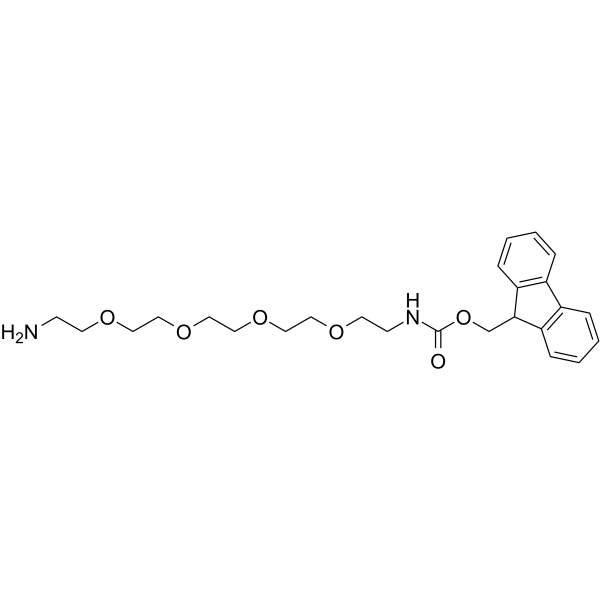
- HY-44980
-
|
|
ADC Linker
|
Cancer
|
|
Fmoc-Gly-NH-CH2-acetyloxy is a cleavable linker that can be used to synthesize antiboy-drug Conjugates (ADCs).
|
-
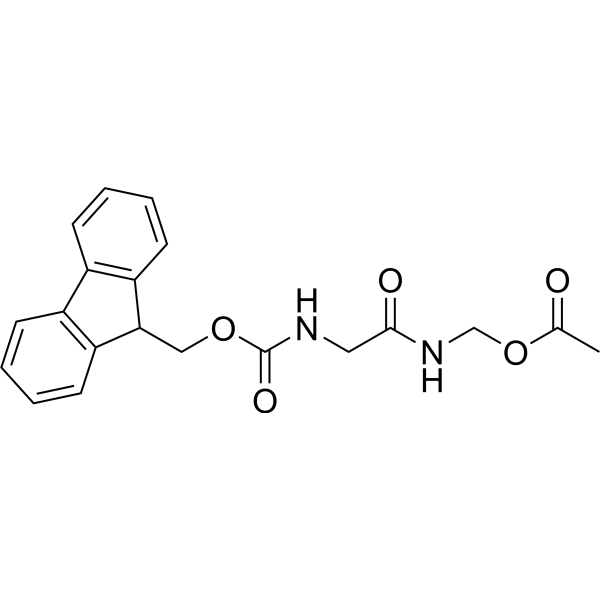
- HY-151687
-
|
|
ADC Linker
|
Others
|
|
Fmoc-L-Tyr(2-azidoethyl)-OH is a click chemistry reagent containing an azide group. Fmoc-L-Tyr(2-azidoethyl)-OH is unnatural Fmoc-protected Tyrosine derivative bears an azidoethyl substitution as reactive handle e.g. for biorthogonal conjugations, via a Cu(I)-catalyzed 1,3-dipolar Click cycloaddition with alkynes. And azido-UAAs can be employed as IR reporters . It contains an azide group and can undergo copper-catalyzed azide-alkyne cycloaddition (CuAAc) with molecules containing alkyne groups. It can also undergo ring strain-promoted alkyne-azide cycloaddition (SPAAC) with molecules containing DBCO or BCN groups.
|
-
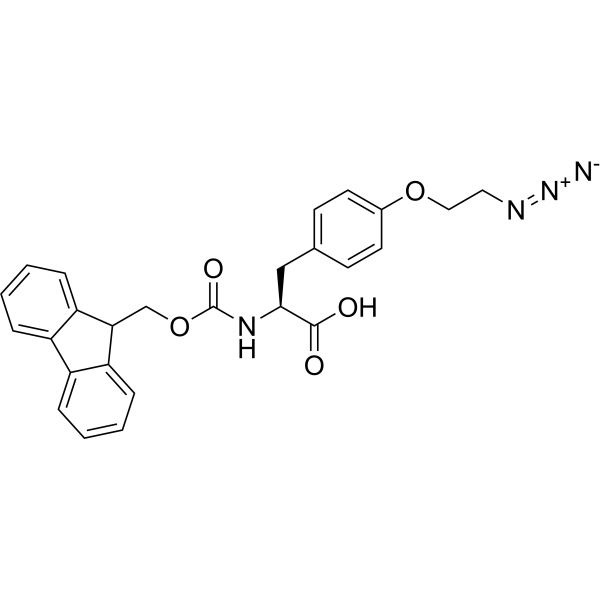
- HY-P2403
-
-
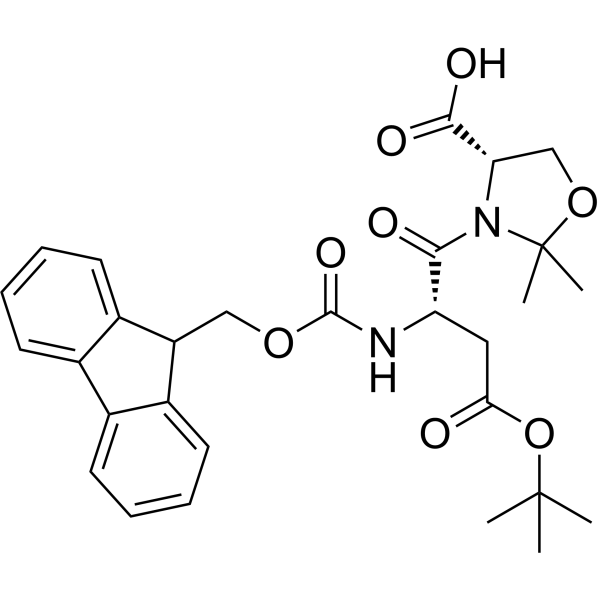
- HY-P2397
-
-
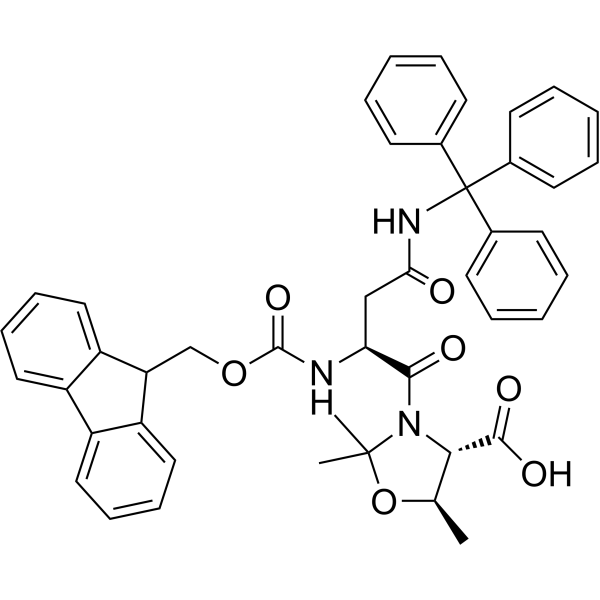
- HY-P2384
-
-
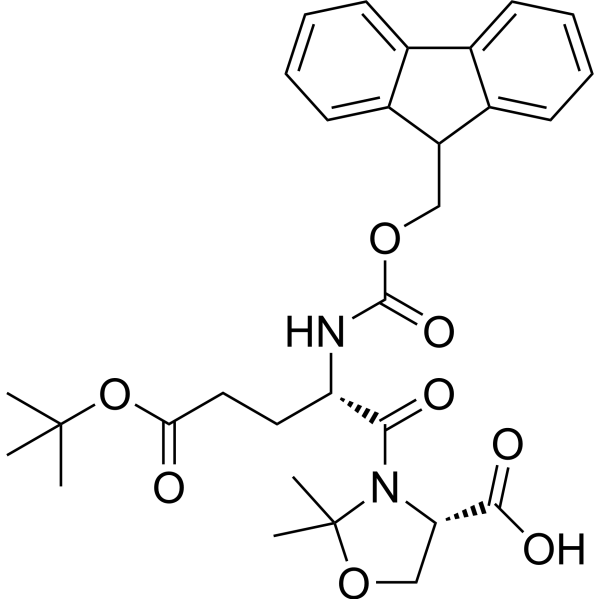
- HY-P2387
-
-
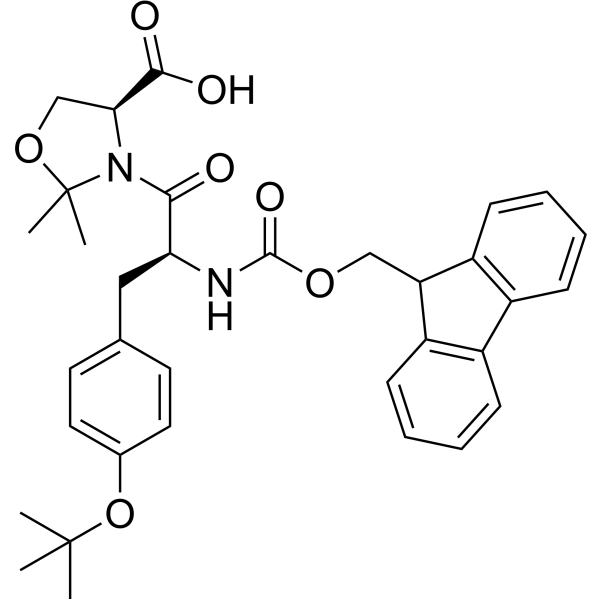
- HY-P2411
-
-
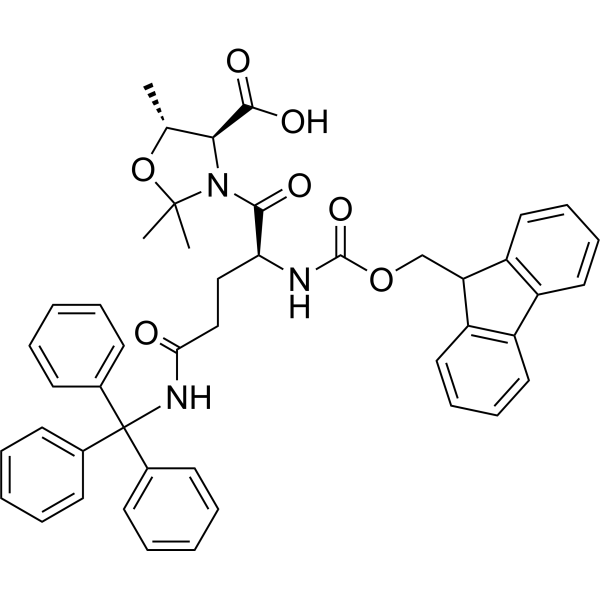
- HY-P2399
-
-
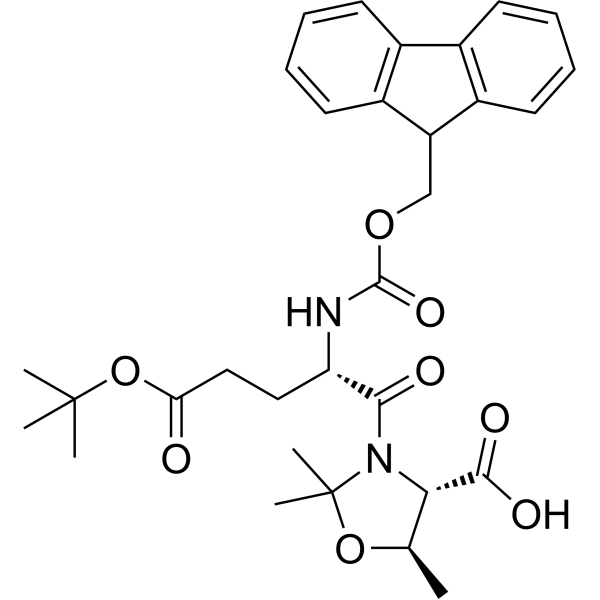
- HY-P2395
-
-
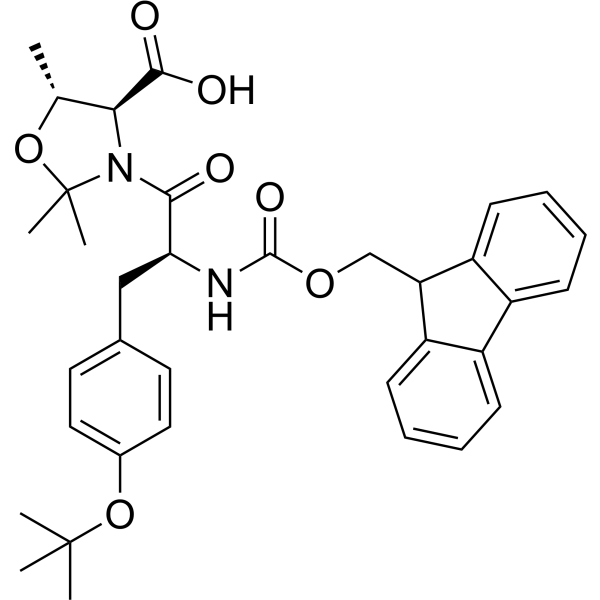
- HY-P2401
-
-
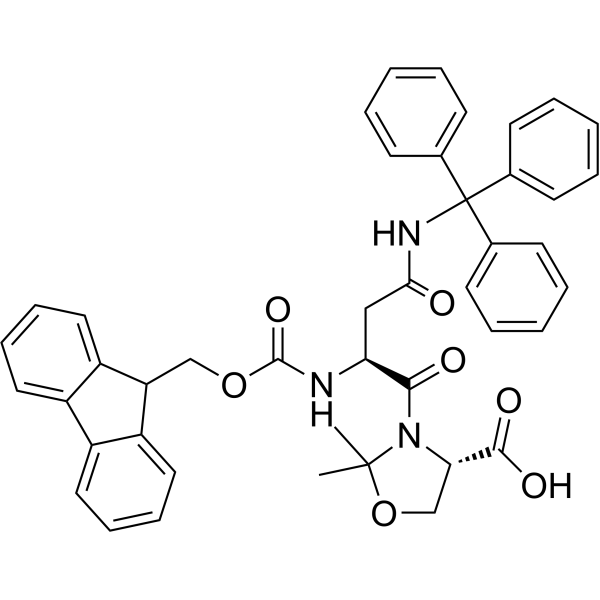
- HY-P2404
-
-
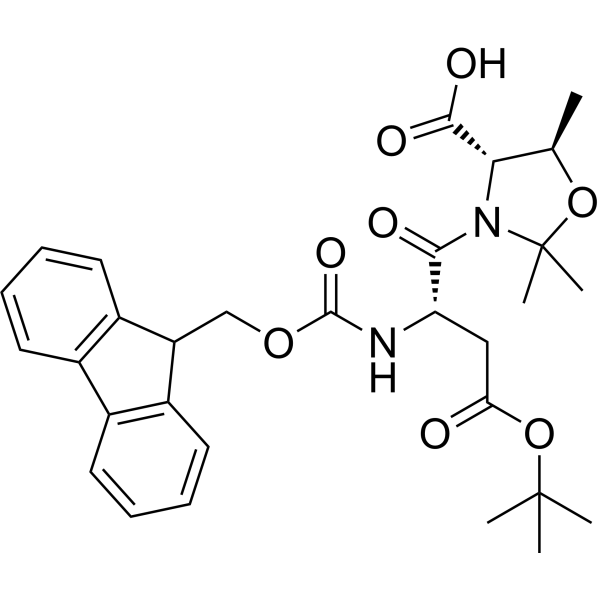
- HY-P2391
-
-
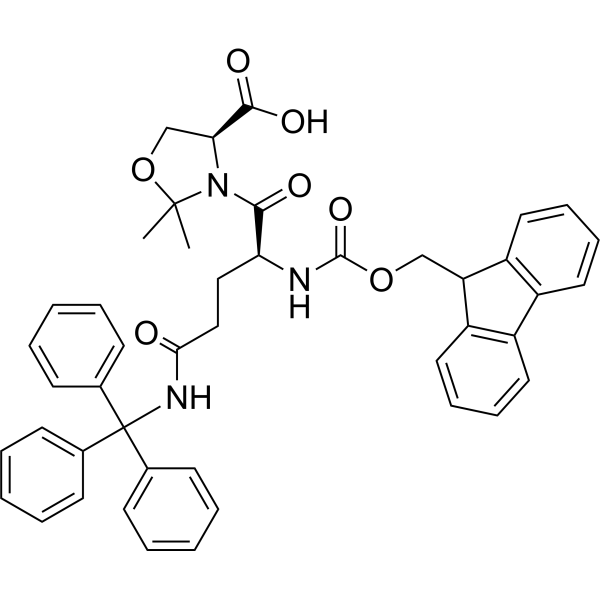
- HY-P2389
-
-
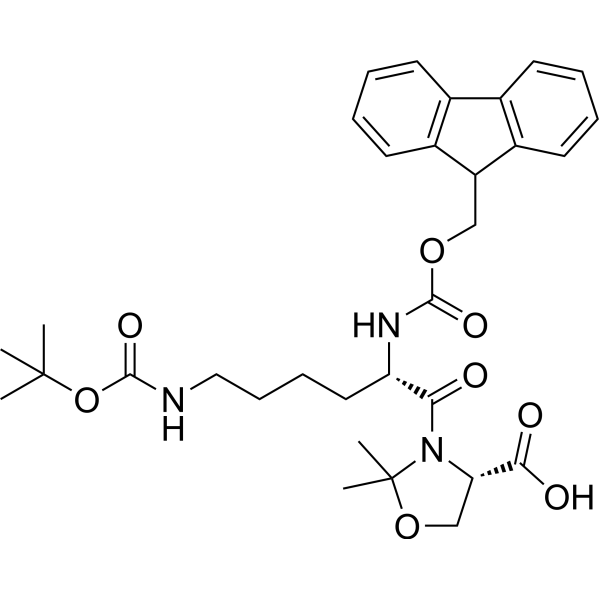
- HY-P2407
-
-
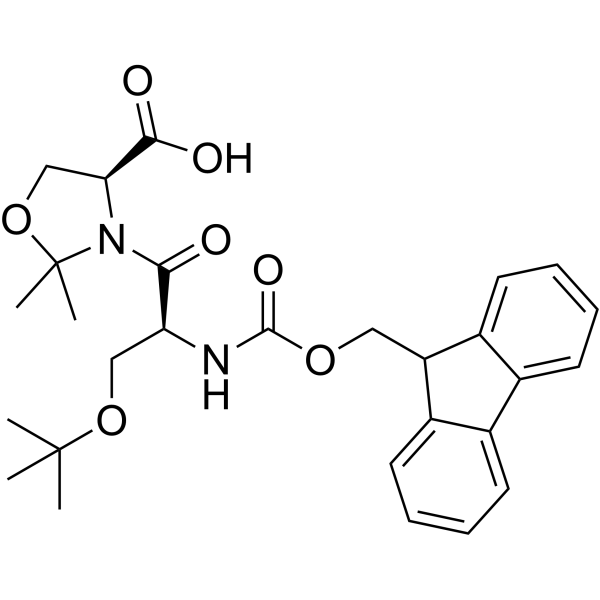
- HY-P2388
-
-
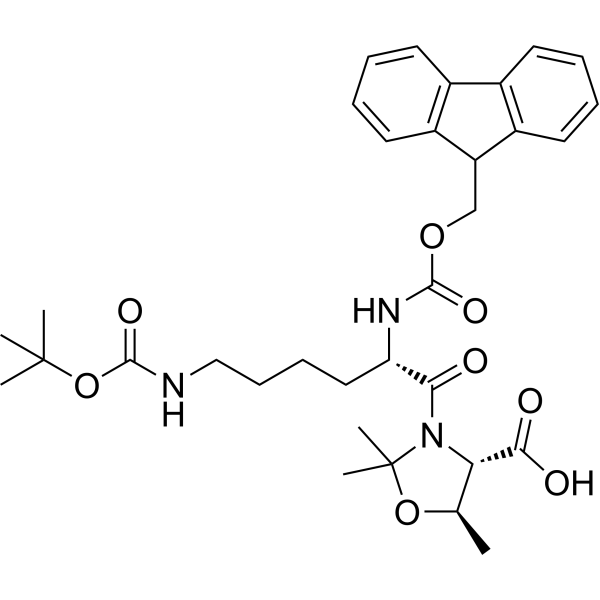
- HY-P2412
-
-
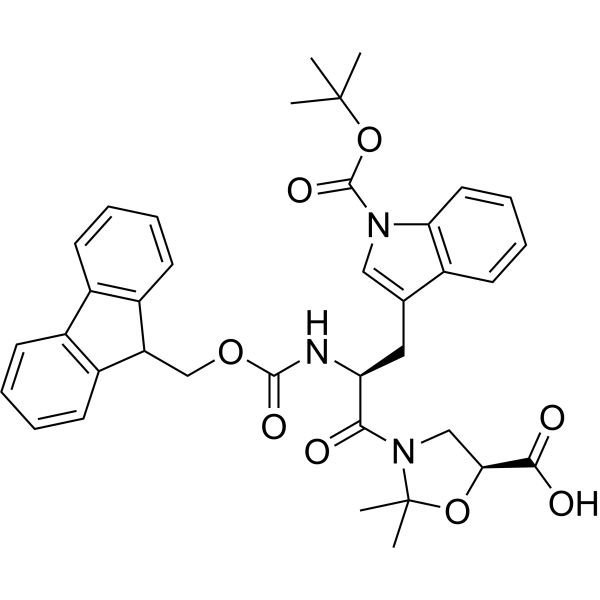
- HY-P2408
-
-
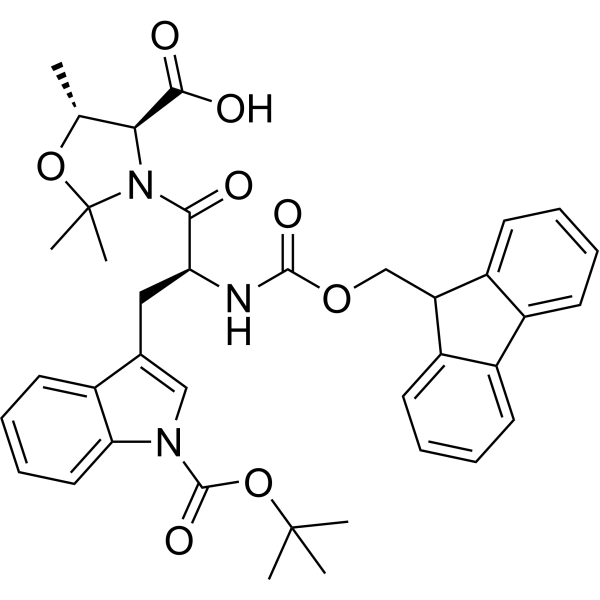
- HY-151778
-
|
|
ADC Linker
|
Others
|
|
Fmoc-Abg(N3)-OH is a click chemistry reagent containing an azide group. Fmoc-Abg(N3)-OH has the potential to synthesize peptide nucleic acids (PNA) and peptoids. It contains an azide group and can undergo copper-catalyzed azide-alkyne cycloaddition (CuAAc) with molecules containing alkyne groups. It can also undergo ring strain-promoted alkyne-azide cycloaddition (SPAAC) with molecules containing DBCO or BCN groups.
|
-
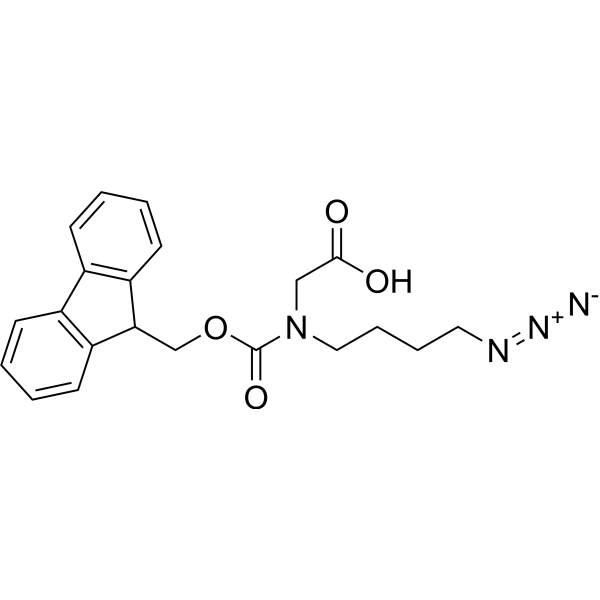
- HY-136106
-
|
|
ADC Linker
|
Cancer
|
|
Fmoc-Gly3-Val-Cit-PAB is a cleavable ADC linker used in the synthesis of antibody-drug conjugates (ADCs) .
|
-
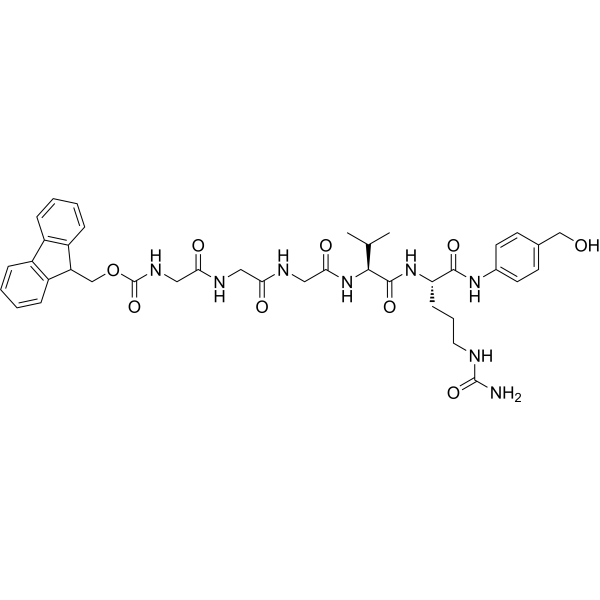
- HY-164181
-
-

- HY-P2394
-
-
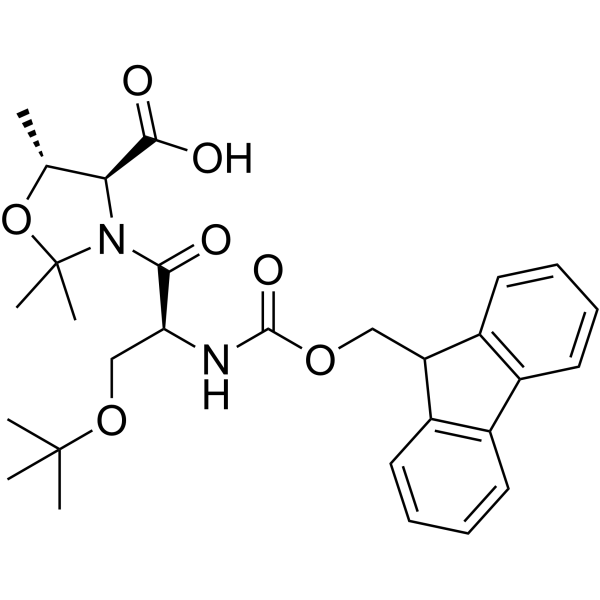
- HY-W749603
-
|
|
Biochemical Assay Reagents
Radionuclide-Drug Conjugates (RDCs)
|
Cancer
|
|
Fmoc-L-Lys-mono-amide-DOTA-tris(t-Bu ester) is a bifunctional chelator (Bifunctional Chelator; BFC) and a macrocyclic DOTA derivative used for tumor pre-targeting. Fmoc-L-Lys-mono-amide-DOTA-tris(t-Bu ester) can be used for conjugation of peptides and radionuclides.
|
-
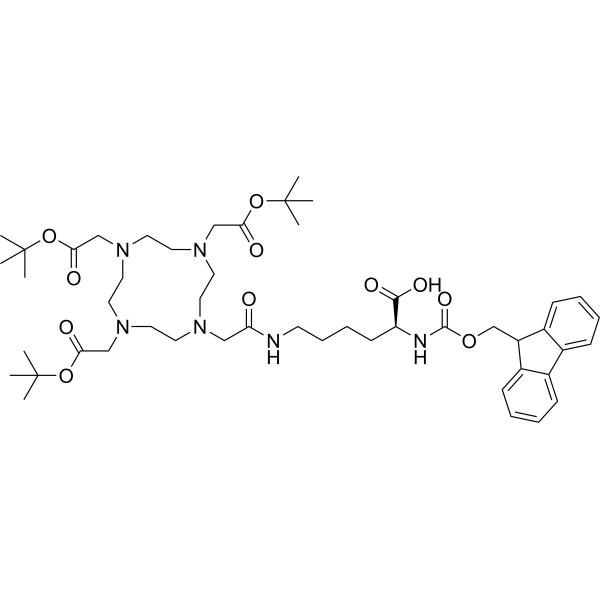
- HY-46346
-
|
|
PROTAC Linkers
|
Cancer
|
|
Fmoc-Gly-NH-CH2-O-CH2-Cbz is a PROTAC linker and a maleimide-GGFG peptide linker. Fmoc-Gly-NH-CH2-O-CH2-Cbz can be used in the synthesis of the Deruxtecan .
|
-
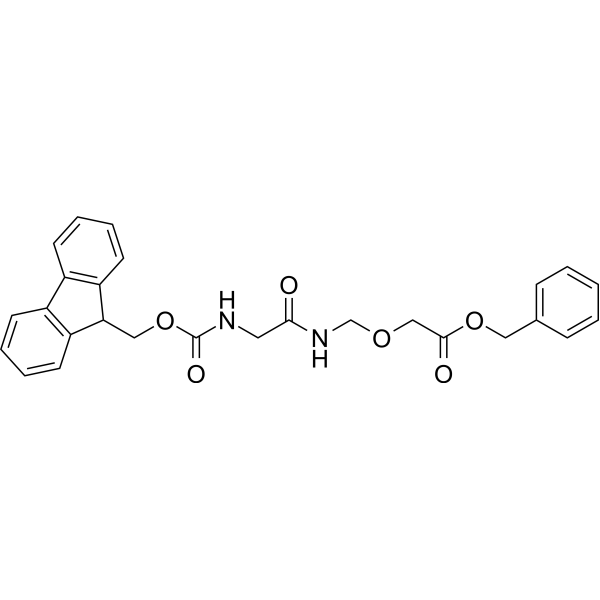
- HY-W141907
-
-

- HY-131955
-
|
|
ADC Linker
|
Cancer
|
|
Fmoc-aminooxy-PEG2-NH2 is a cleavable ADC linker used in the synthesis of antibody-drug conjugates (ADCs) .
|
-
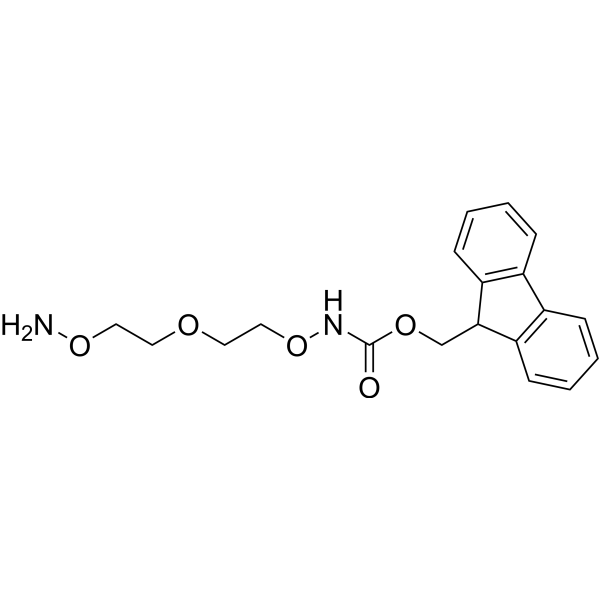
- HY-140013
-
|
|
PROTAC Linkers
|
Cancer
|
|
Fmoc-NH-PEG1-C2-acid is a PEG-based PROTAC linker that can be used in the synthesis of PROTACs .
|
-
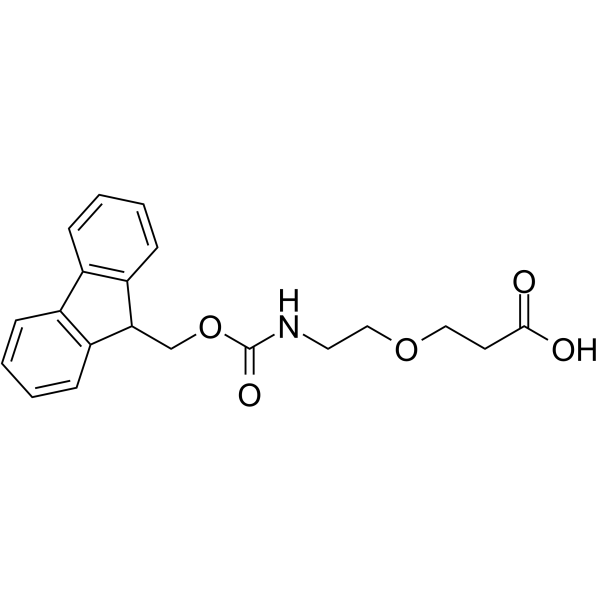
- HY-140465
-
|
|
PROTAC Linkers
|
Cancer
|
|
Fmoc-NMe-PEG4-C2-acid is a PEG-based PROTAC linker that can be used in the synthesis of PROTACs .
|
-
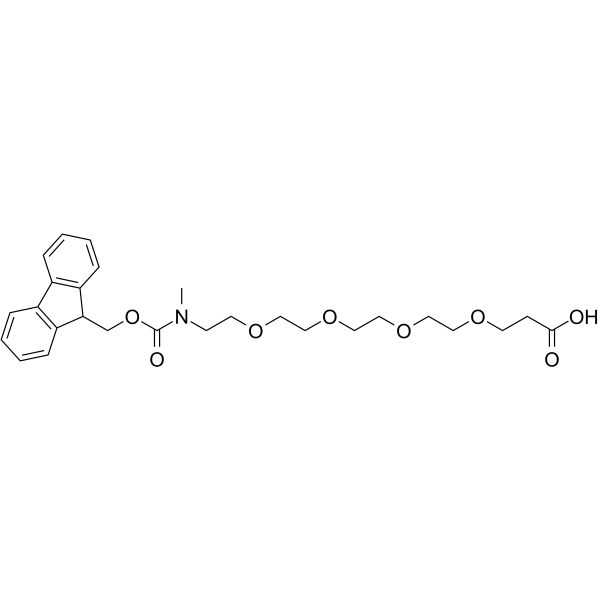
- HY-151663
-
|
fmoc-Abu(3-N3)-OH (2R,3R)
|
ADC Linker
|
Others
|
|
Fmoc-Abu(3-N3) (Fmoc-Abu(3-N3)-OH) (2R,3R) is a click chemistry reagent containing an azide group. Fmoc-Abu(3-N3) (2R,3R) can be used for the research of various biochemical . It contains an azide group and can undergo copper-catalyzed azide-alkyne cycloaddition (CuAAc) with molecules containing alkyne groups. It can also undergo ring strain-promoted alkyne-azide cycloaddition (SPAAC) with molecules containing DBCO or BCN groups.
|
-
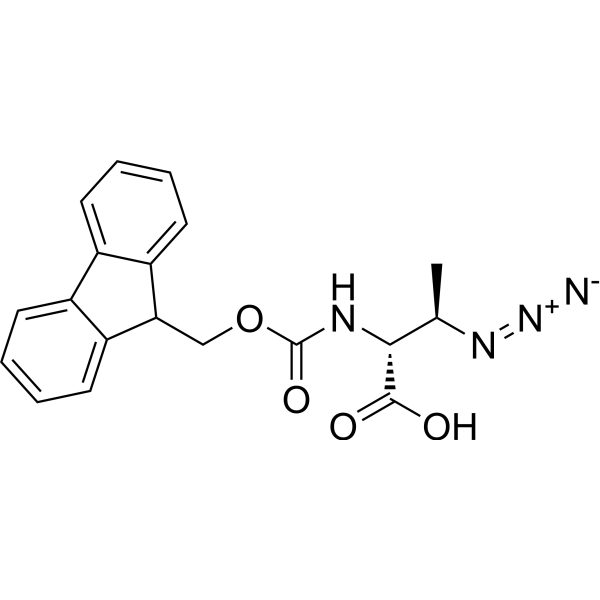
- HY-136154
-
|
|
ADC Linker
|
Cancer
|
|
Fmoc-Glu-(Boc)-Val-Cit-PAB-PNP is a cleavable ADC linker used in the synthesis of antibody-drug conjugates (ADCs) .
|
-
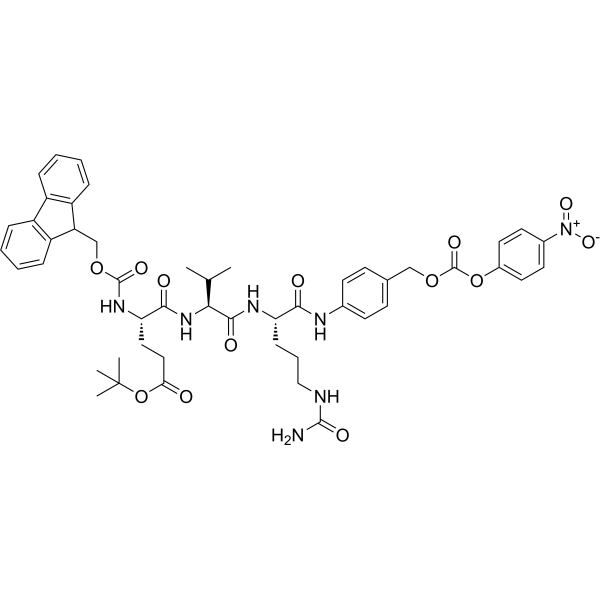
- HY-125485
-
|
|
PROTAC Linkers
|
Cancer
|
|
Fmoc-C-PEG3-C3-Succinamic acid is a PROTAC linker that can be used in the synthesis of PROTACs.
|
-

- HY-W141817
-
-
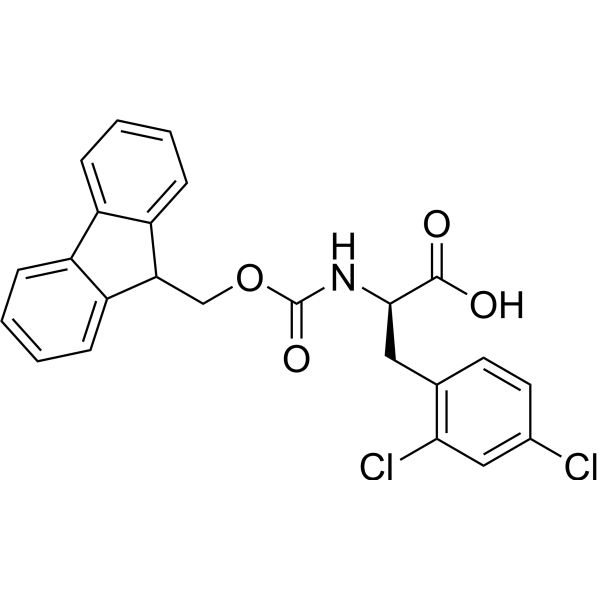
- HY-151826
-
|
|
ADC Linker
|
Others
|
|
Fmoc-D-Lys(pentynoyl)-OH is a click chemistry reagent containing an azide group. Used to introduce alkyne functionality into peptides that can be further modified using Click-chemistry .
|
-
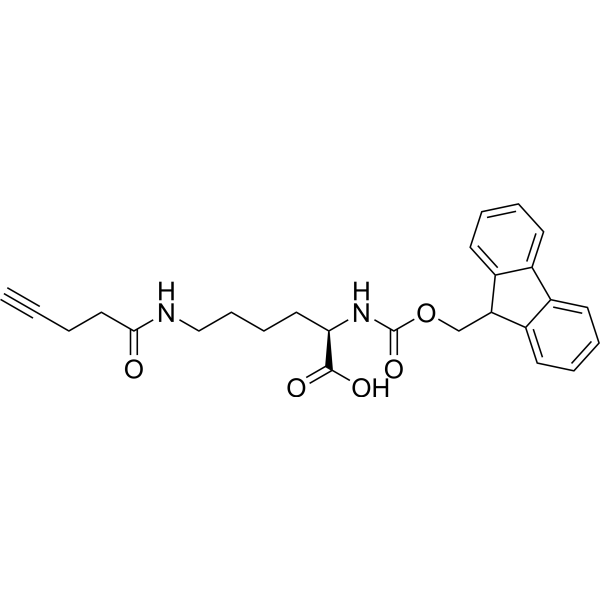
- HY-151660
-
|
|
ADC Linker
|
Others
|
|
Fmoc-D-Lys(N3)-OH is a click chemistry reagent containing an azide group. Fmoc-D-Lys(N3)-OH can be used for the research of various biochemical . It contains an azide group and can undergo copper-catalyzed azide-alkyne cycloaddition (CuAAc) with molecules containing alkyne groups. It can also undergo ring strain-promoted alkyne-azide cycloaddition (SPAAC) with molecules containing DBCO or BCN groups.
|
-
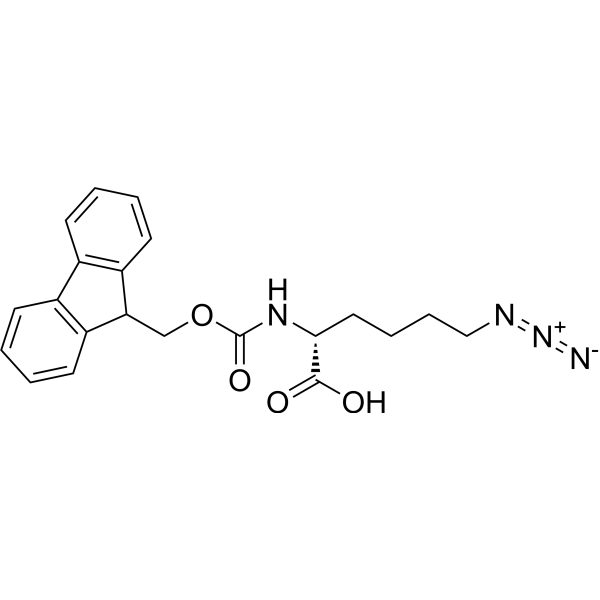
- HY-132099
-
|
|
PROTAC Linkers
|
Cancer
|
|
Fmoc-N-amido-PEG2-azide is a PEG-based PROTAC linker that can be used in the synthesis of PROTACs . Fmoc-N-amido-PEG2-azide is a click chemistry reagent, it contains an Azide group and can undergo copper-catalyzed azide-alkyne cycloaddition reaction (CuAAc) with molecules containing Alkyne groups. It can also undergo strain-promoted alkyne-azide cycloaddition (SPAAC) reactions with molecules containing DBCO or BCN groups.
|
-
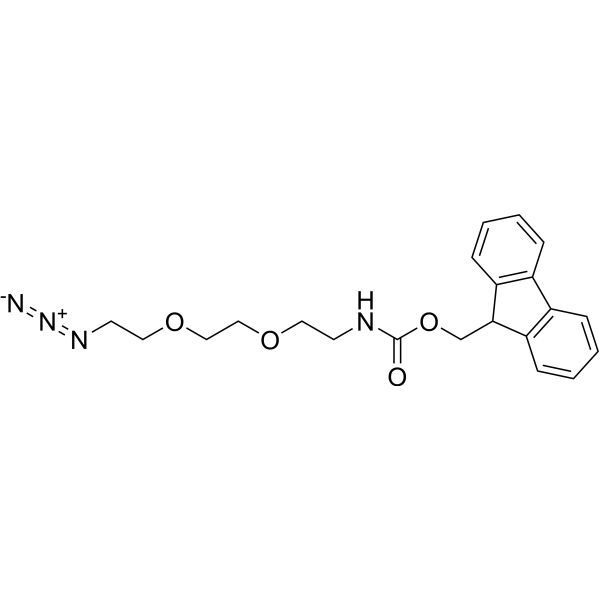
- HY-132110
-
|
|
PROTAC Linkers
|
Cancer
|
|
Fmoc-N-amido-PEG3-azide is a PEG-based PROTAC linker that can be used in the synthesis of PROTACs . Fmoc-N-amido-PEG3-azide is a click chemistry reagent, it contains an Azide group and can undergo copper-catalyzed azide-alkyne cycloaddition reaction (CuAAc) with molecules containing Alkyne groups. It can also undergo strain-promoted alkyne-azide cycloaddition (SPAAC) reactions with molecules containing DBCO or BCN groups.
|
-
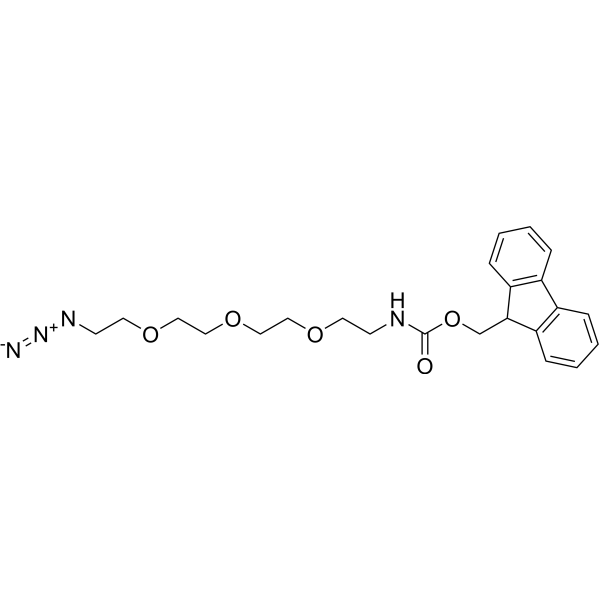
- HY-132111
-
|
|
PROTAC Linkers
|
Cancer
|
|
Fmoc-N-amido-PEG5-azide is a PEG-based PROTAC linker that can be used in the synthesis of PROTACs . Fmoc-N-amido-PEG5-azide is a click chemistry reagent, it contains an Azide group and can undergo copper-catalyzed azide-alkyne cycloaddition reaction (CuAAc) with molecules containing Alkyne groups. It can also undergo strain-promoted alkyne-azide cycloaddition (SPAAC) reactions with molecules containing DBCO or BCN groups.
|
-
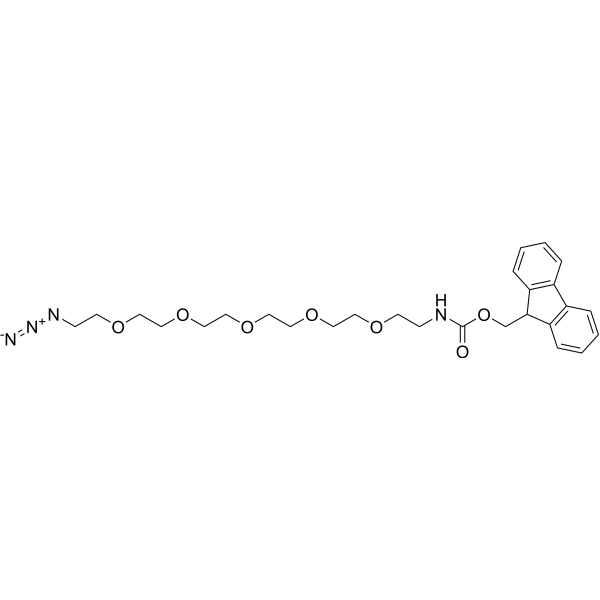
- HY-151733
-
|
|
ADC Linker
|
Others
|
|
Fmoc-D-Dbu(N3)-OH is a click chemistry reagent containing an Azide . Fmoc-D-Dbu(N3)-OH is a click chemistry reagent, it contains an Azide group and can undergo copper-catalyzed azide-alkyne cycloaddition reaction (CuAAc) with molecules containing Alkyne groups. It can also undergo strain-promoted alkyne-azide cycloaddition (SPAAC) reactions with molecules containing DBCO or BCN groups.
|
-
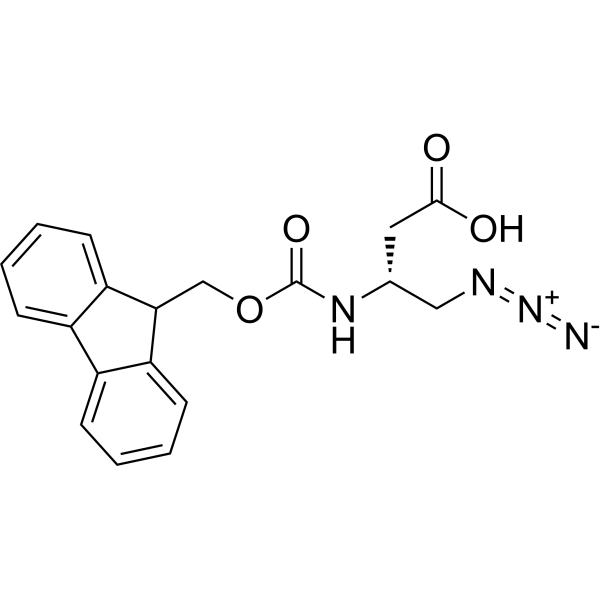
- HY-136058
-
|
fmoc-Lys(PEG4-N3)-OH
|
ADC Linker
|
Cancer
|
|
N3-PEG4-amido-Lys(Fmoc)-acid is a cleavable 4 unit PEG ADC linker used in the synthesis of antibody-drug conjugates (ADCs) . N3-PEG4-amido-Lys(Fmoc)-acid is a click chemistry reagent, it contains an Azide group and can undergo copper-catalyzed azide-alkyne cycloaddition reaction (CuAAc) with molecules containing Alkyne groups. It can also undergo strain-promoted alkyne-azide cycloaddition (SPAAC) reactions with molecules containing DBCO or BCN groups.
|
-
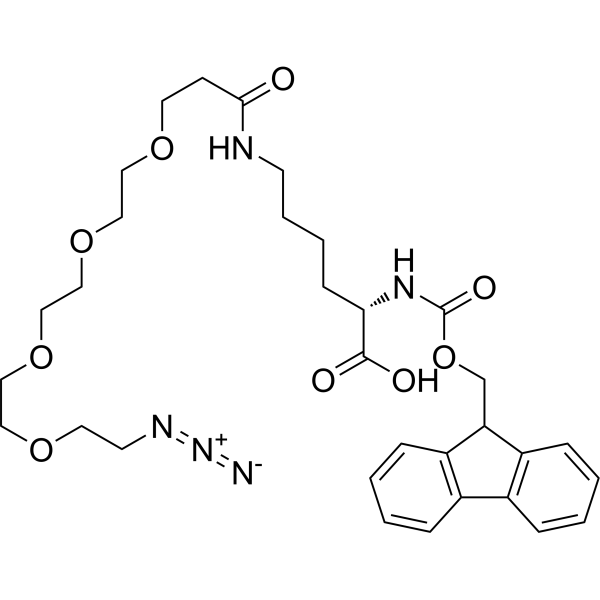
- HY-W048673
-
|
|
Amino Acid Derivatives
|
Others
|
|
Fmoc-Phe (4-CONH2)-OH is a protected phenylalanine derivative commonly used in peptide synthesis, and it can be applied in polypeptide research .
|
-

- HY-120773
-
|
|
PROTAC Linkers
|
Cancer
|
|
Fmoc-PEG3-CH2CH2-NHS ester is a PEG-based PROTAC linker that can be used in the synthesis of PROTACs .
|
-
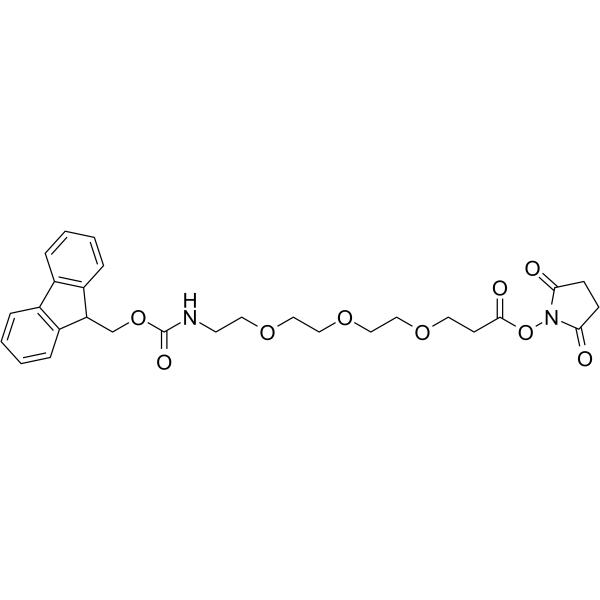
- HY-204602
-
|
|
Drug-Linker Conjugates for ADC
|
Cancer
|
|
Fmoc-Val-Cit-PAB-MMAF-OtBu is a conjugate of MMAF and ADC linker, which can be coupled with the corresponding antibody to form an ADC molecule to exert anti-tumor activity .
|
-

- HY-126881
-
|
|
PROTAC Linkers
|
Cancer
|
|
Fmoc-PEG2-CH2CH2-NHS ester is a PEG-based PROTAC linker that can be used in the synthesis of PROTACs .
|
-
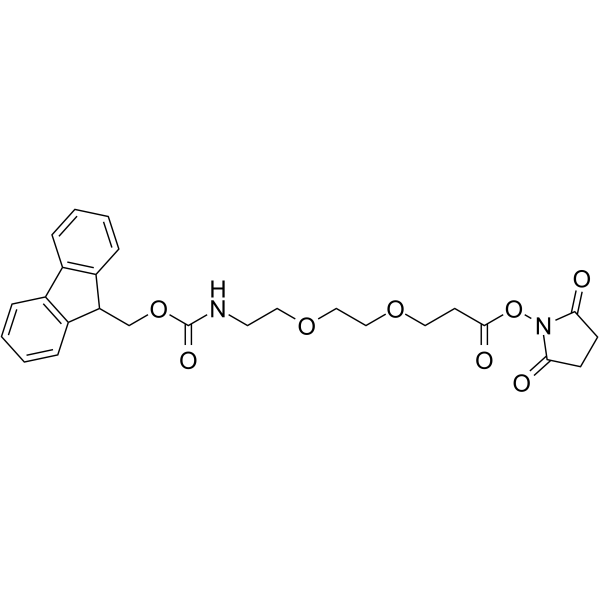
- HY-P3497
-
|
|
Amino Acid Derivatives
|
Others
|
|
Fmoc-Cys-Asp10 is a non-releasable oligopeptide linker, involves in the synthesis of releasable oligopeptide linker. Releasable oligopeptide linker can be used to deliver agent to a bone fracture-homing oligopeptide and reduces fractured femur healing times .
|
-
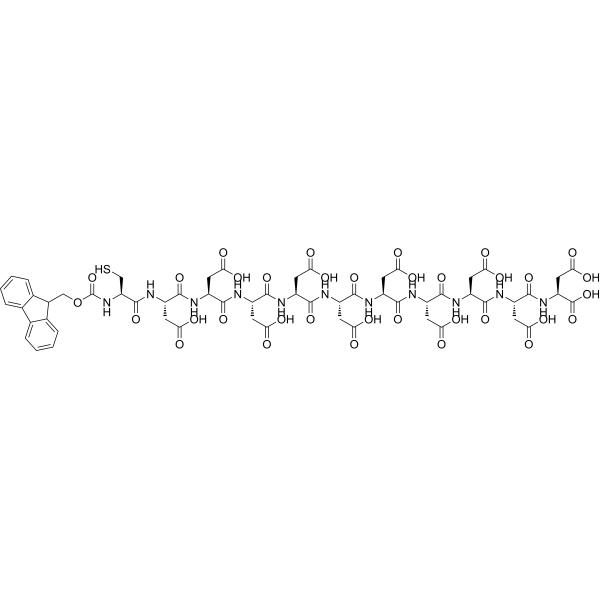
- HY-140668
-
|
|
PROTAC Linkers
|
Cancer
|
|
Fmoc-N-PEG3400-CH2COOH is a PEG-based PROTAC linker that can be used in the synthesis of PROTACs .
|
-
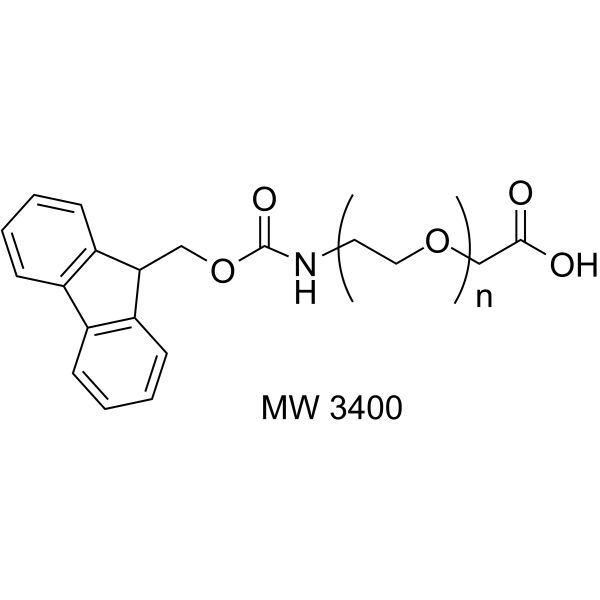
- HY-135029
-
|
|
PROTAC Linkers
|
Cancer
|
|
Fmoc-N-PEG3-CH2-NHS ester is a PEG-based PROTAC linker that can be used in the synthesis of PROTACs .
|
-
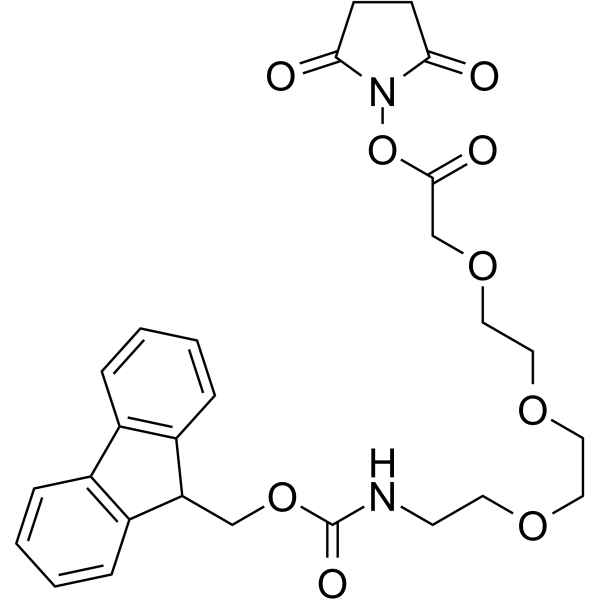
- HY-140467
-
|
|
PROTAC Linkers
|
Cancer
|
|
Fmoc-NH-PEG12-CH2COOH is a PEG-based PROTAC linker that can be used in the synthesis of PROTACs .
|
-
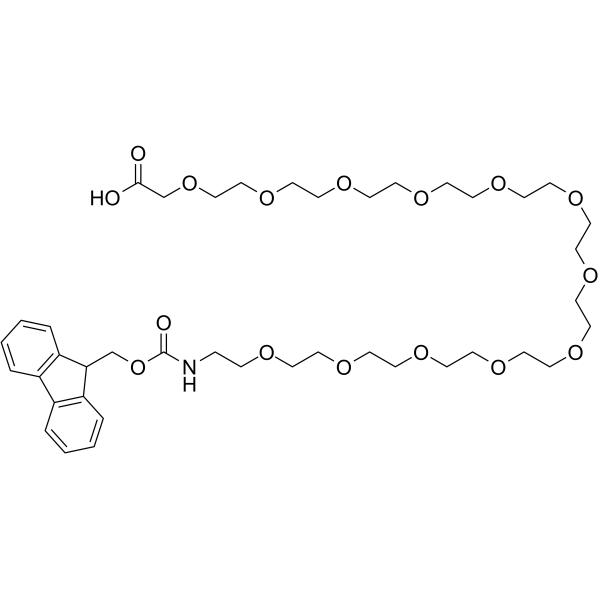
- HY-140466
-
|
|
PROTAC Linkers
|
Cancer
|
|
Fmoc-NH-PEG11-CH2COOH is a PEG-based PROTAC linker that can be used in the synthesis of PROTACs .
|
-
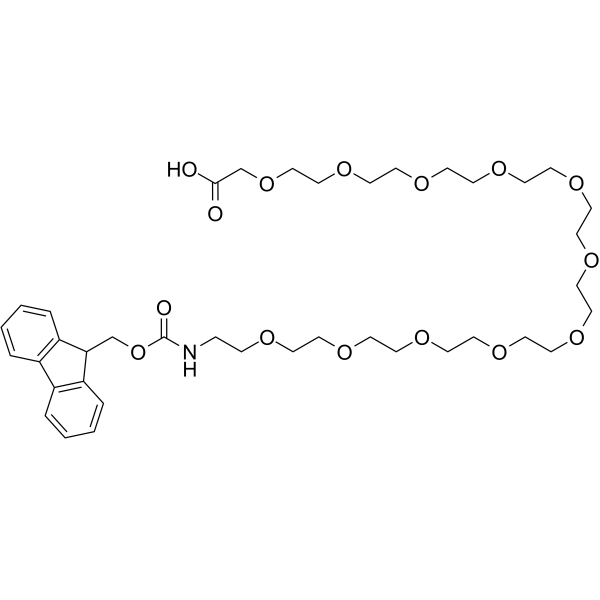
- HY-140669
-
|
|
PROTAC Linkers
|
Cancer
|
|
Fmoc-N-PEG5000-CH2COOH is a PEG-based PROTAC linker that can be used in the synthesis of PROTACs .
|
-
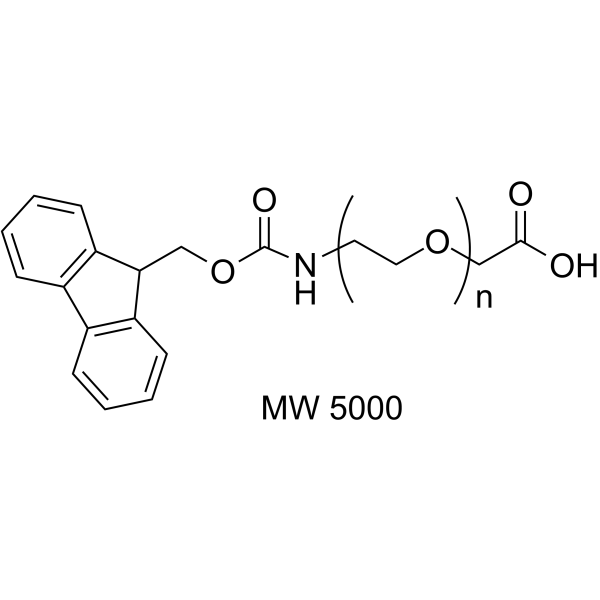
- HY-W008568
-
|
|
PROTAC Linkers
|
Cancer
|
|
Fmoc-amino-PEG3-CH2COOH is a PEG-based PROTAC linker that can be used in the synthesis of PROTACs .
|
-
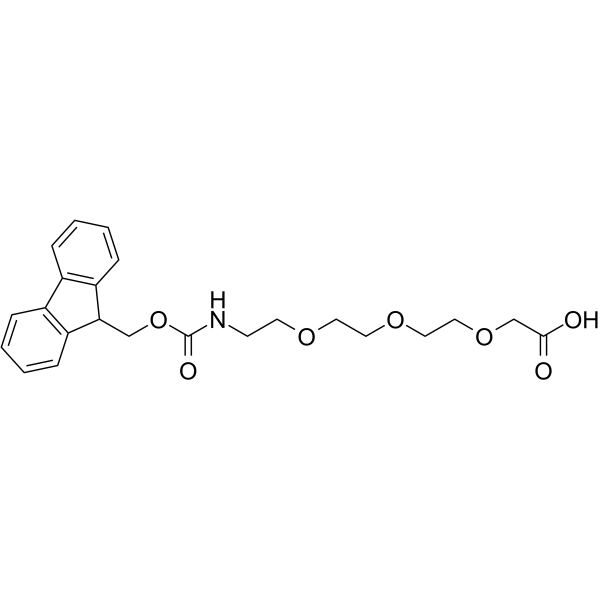
- HY-W250408
-
-

- HY-W021402
-
|
|
PROTAC Linkers
|
Cancer
|
|
Fmoc-NH-PEG2-C2-NH2 (hydrochloride) is a PROTAC linker that can be used in the synthesis of PROTACs.
|
-

- HY-130941
-
|
|
ADC Linker
|
Cancer
|
|
Fmoc-N-bis-PEG3-NH-Boc is a cleavable 3 unit PEG ADC linker used in the synthesis of antibody-drug conjugates (ADCs) .
|
-
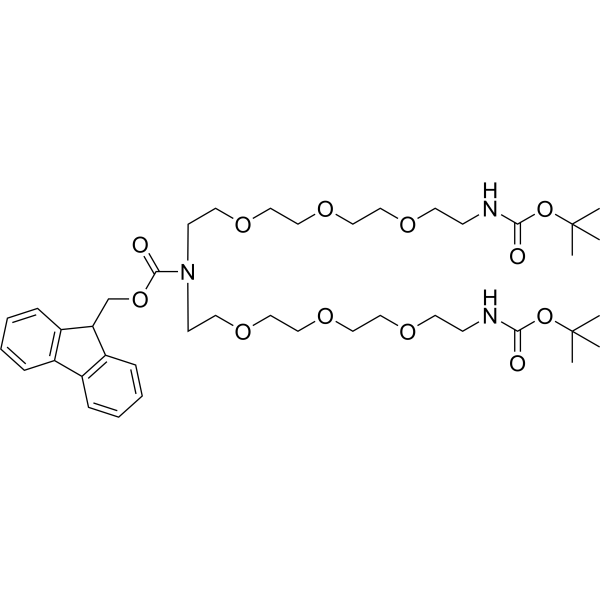
- HY-136108
-
|
|
ADC Linker
|
Cancer
|
|
Fmoc-Gly3-Val-Cit-PAB-PNP is a cleavable 4 unit PEG ADC linker used in the synthesis of antibody-drug conjugates (ADCs) .
|
-
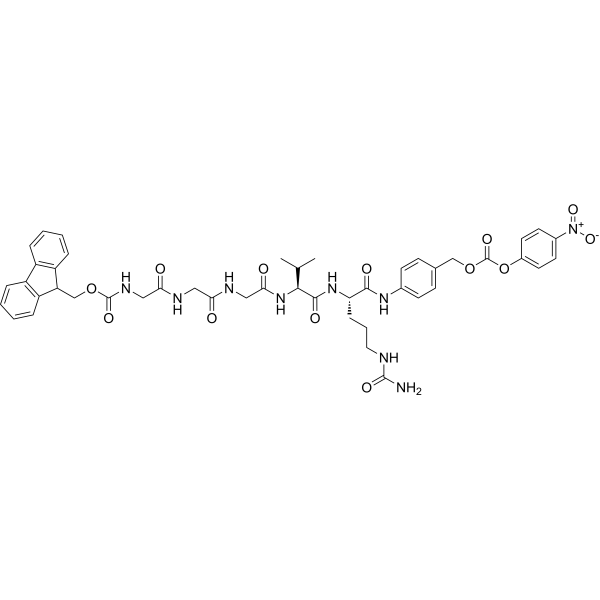
- HY-141149
-
|
|
ADC Linker
|
Cancer
|
|
Fmoc-PEG4-Ala-Ala-Asn-PAB is a cleavable 4 unit PEG ADC linker used in the synthesis of antibody-drug conjugates (ADCs) .
|
-
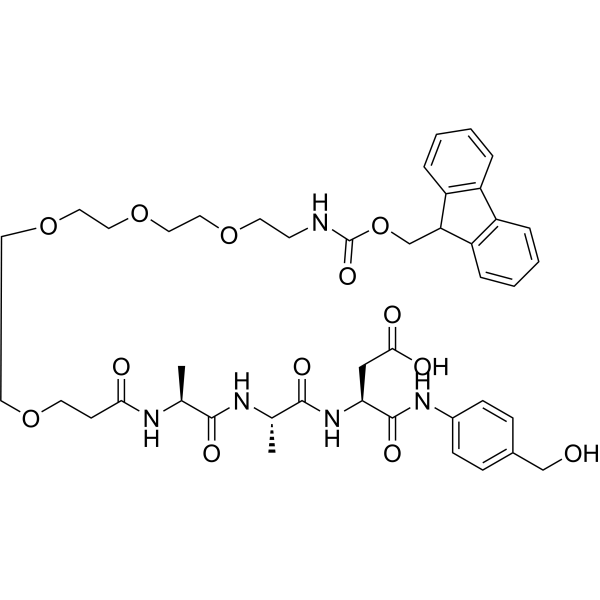
- HY-130167
-
|
|
ADC Linker
PROTAC Linkers
|
Cancer
|
|
Fmoc-NH-PEG9-CH2CH2COOH is a cleavable ADC linker used in the synthesis of antibody-drug conjugates (ADCs). Fmoc-NH-PEG9-CH2CH2COOH is also a PEG-based PROTAC linker that can be used in the synthesis of PROTACs .
|
-
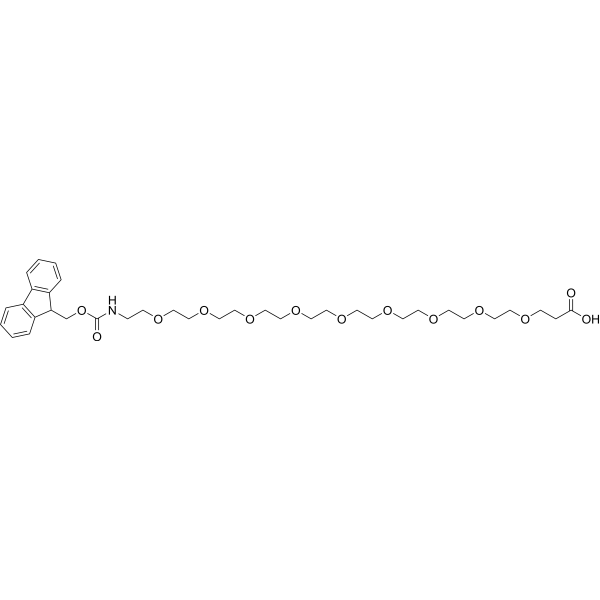
- HY-W040238
-
|
|
ADC Linker
PROTAC Linkers
|
Cancer
|
|
Fmoc-NH-PEG2-CH2CH2COOH is a cleavable ADC linker used in the synthesis of antibody-drug conjugates (ADCs). Fmoc-NH-PEG2-CH2CH2COOH is also a PEG-based PROTAC linker that can be used in the synthesis of PROTACs .
|
-
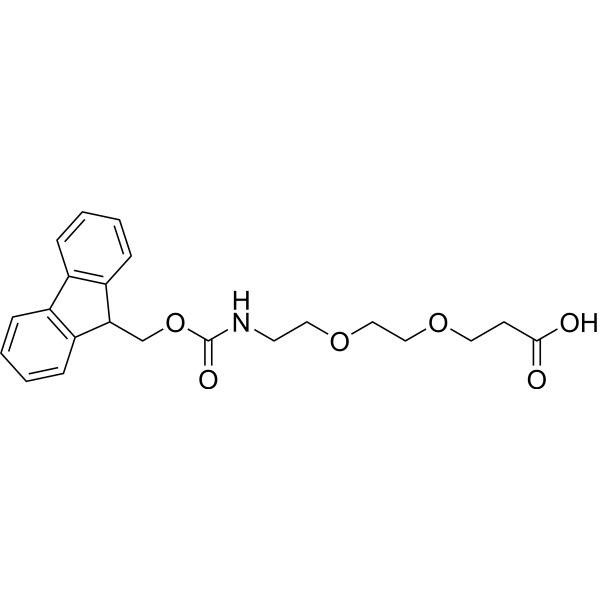
- HY-W040231
-
|
|
ADC Linker
PROTAC Linkers
|
Cancer
|
|
Fmoc-NH-PEG3-CH2CH2COOH is a cleavable ADC linker used in the synthesis of antibody-drug conjugates (ADCs). Fmoc-NH-PEG3-CH2CH2COOH is also a PEG-based PROTAC linker that can be used in the synthesis of PROTACs .
|
-
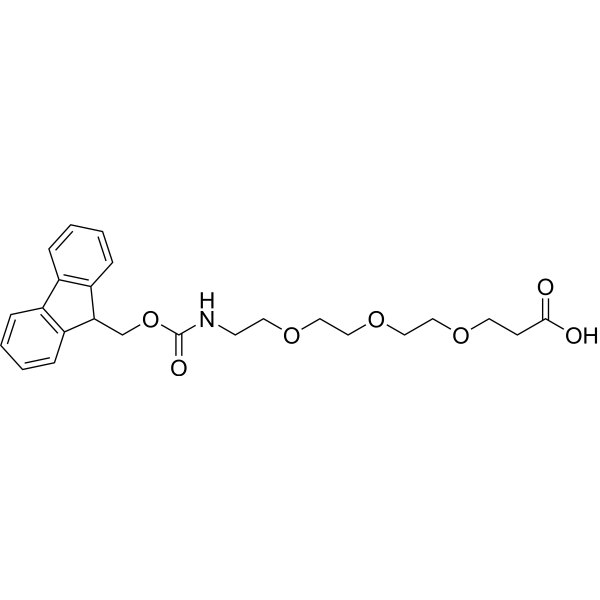
- HY-160714
-
|
|
ADC Linker
|
Cancer
|
|
Fmoc-Ala-Ala-Ala-amide-C-O-C-COOH (Compound IM-3) is a cleavable ADC linker .
|
-
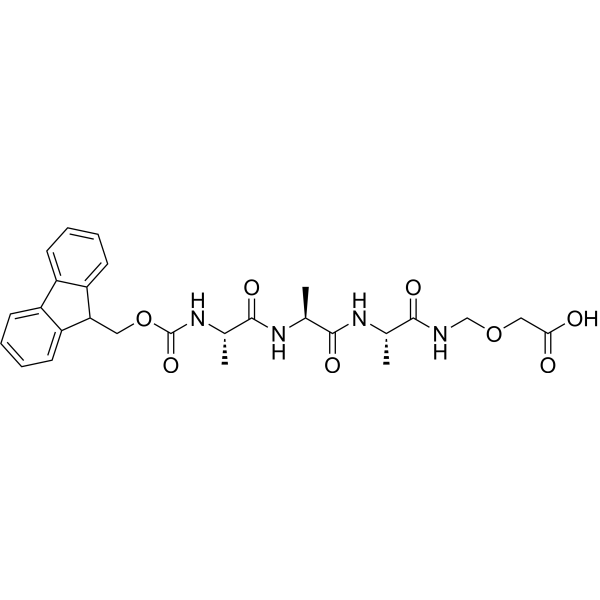
- HY-45669
-
|
|
PROTAC Linkers
|
Cancer
|
|
Fmoc-Gly-Gly-Phe-Gly-CH2-O-CH2-Cbz is a PROTAC linker and a maleimide-GGFG peptide linker. Fmoc-Gly-Gly-Phe-Gly-CH2-O-CH2-Cbz can be used in the synthesis of the Deruxtecan .
|
-
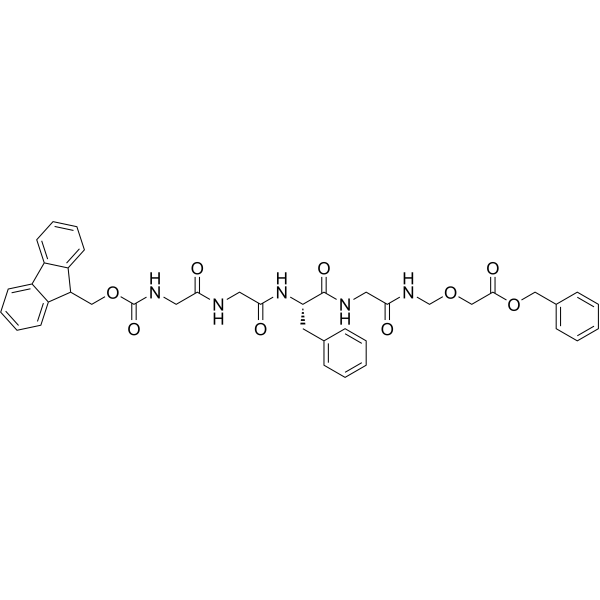
- HY-151781
-
|
|
ADC Linker
|
Others
|
|
Fmoc-L-Dap(Poc)-OH is a click chemistry reagent containing an azide group. Amino acid building block suitable for side chain Click conjugation with standard protocols and together with tetrazine linkers in copper-free Click conjugation (Diels-Alder) .
|
-
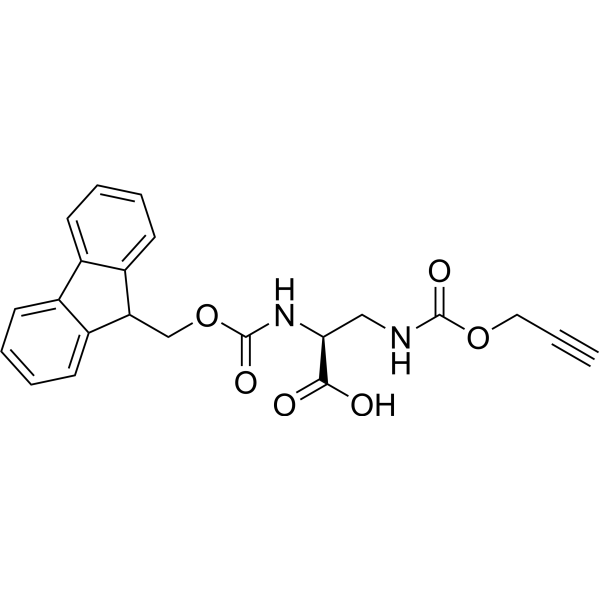
- HY-W800621
-
|
|
ADC Linker
|
Cancer
|
|
Fmoc-PEG2-Val-Cit-PAB-OH is an enzyme-cleavable ADC linker featuring a Boc-protected amine, a hydrophilic PEG spacer, and a Val-Cit-PAB dipeptide. The benzylic alcohol on the PAB can be used to attach with reactive groups such as PNP for conjugation with drug payloads. The Fmoc protecting group may be removed with piperidine to reveal a primary amine for use in coupling reactions to form amides. The Val-Cit-PAB is cleaved by cellular proteases for efficient release of payloads to the cell.
|
-

- HY-W800623
-
|
|
ADC Linker
|
Cancer
|
|
Fmoc-PEG6-Val-Cit-PAB-OH is an enzyme-cleavable ADC linker featuring a Boc-protected amine, a hydrophilic PEG spacer, and a Val-Cit-PAB dipeptide. The benzylic alcohol on the PAB can be used to attach with reactive groups such as PNP for conjugation with drug payloads. The Fmoc protecting group may be removed with piperidine to reveal a primary amine which may be used in coupling reactions to form amides. The Val-Cit-PAB is cleaved by cellular proteases for efficient release of payloads to the cell.
|
-

- HY-W800622
-
|
|
ADC Linker
|
Cancer
|
|
Fmoc-PEG4-Val-Cit-PAB-OH is an enzyme-cleavable ADC linker featuring a Boc-protected amine, a hydrophilic PEG spacer, and a Val-Cit-PAB dipeptide. The benzylic alcohol on the PAB can be used to attach with reactive groups such as PNP for conjugation with drug payloads. The Fmoc protecting group may be removed with piperidine to reveal a primary amine which may be used in coupling reactions to form amides. The Val-Cit-PAB is cleaved by cellular proteases for efficient release of payloads to the cell.
|
-

- HY-140340
-
|
|
PROTAC Linkers
|
Cancer
|
|
Fmoc-NH-pentanoic acid-NHS-SO3Na is an alkyl chain-based PROTAC linker that can be used in the synthesis of PROTACs .
|
-
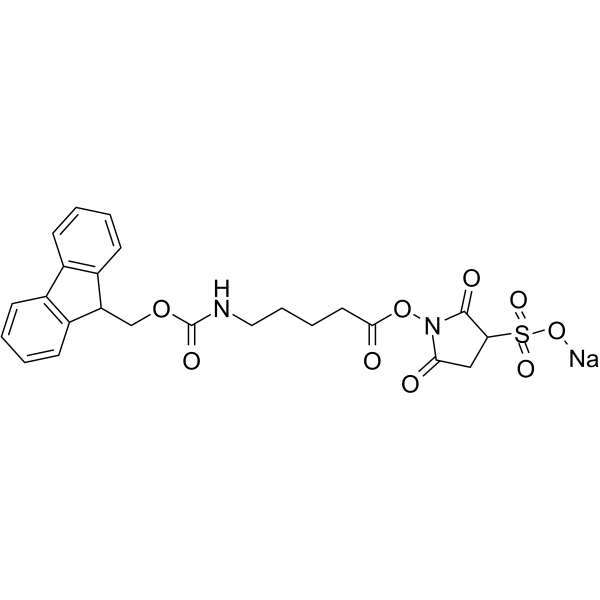
- HY-P3497A
-
|
|
Amino Acid Derivatives
|
Others
|
|
Fmoc-Cys-Asp10 (TFA) is a non-releasable oligopeptide linker, involves in the synthesis of releasable oligopeptide linker. Releasable oligopeptide linker can be used to deliver agent to a bone fracture-homing oligopeptide and reduces fractured femur healing times .
|
-
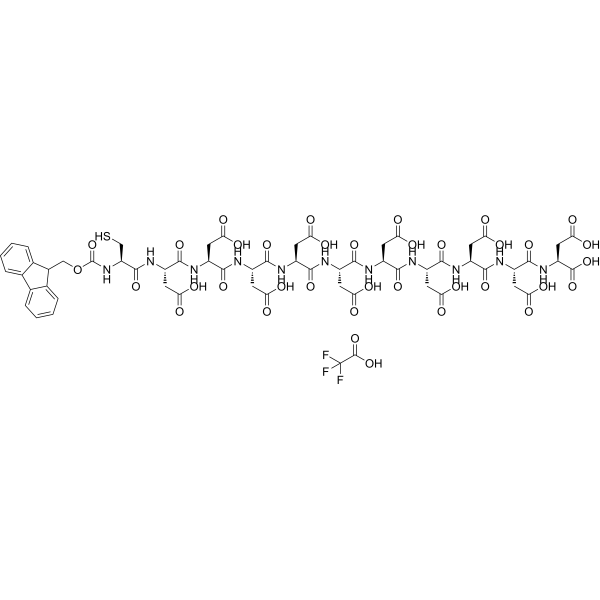
- HY-180953
-
|
|
Drug Intermediate
Drug Derivative
|
Infection
|
|
Fmoc-NH-C2-diphosphate-dexamethasone (Compound 17) is a derivative of Dexamethasone (HY-14648) and can be used as a drug intermediate for the synthesis of the Raltitrexed (HY-10821)-Dexamethasone conjugate .
|
-

- HY-141153
-
|
|
ADC Linker
|
Cancer
|
|
Fmoc-PEG3-Ala-Ala-Asn(Trt)-PAB-PNP is a cleavable linker for synthesis of antibody-drug conjugates (ADCs) .
|
-

- HY-133471
-
|
|
PROTAC Linkers
|
Cancer
|
|
Fmoc-NH-PEG3-C2-NH2 is a PEG-based PROTAC linker that can be used in the synthesis of PROTACs .
|
-
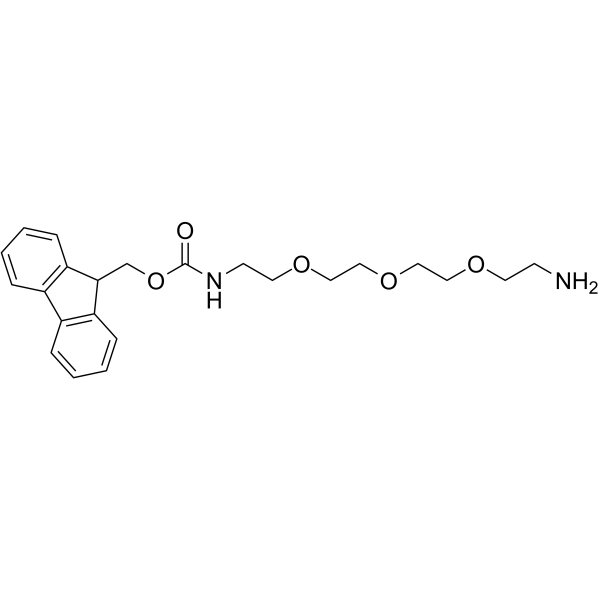
- HY-W044285
-
|
|
Amino Acid Derivatives
|
Others
|
|
Fmoc-D-4-Aph(cBm)-OH is an amino acid derivative with an Fmoc protecting group, which can be used to synthesize biologically active peptide mimetics, such as Ac-D2Nal-D4Cpa-D3Pal-Ser-4Aph/4Amf(P)-D4Aph/D4Amf(Q)-Leu-ILys-Pro-DAla-NH2 with gonadotropin-releasing hormone (GnRH) antagonist activity .
|
-

- HY-177549
-
|
|
Drug Derivative
ADC Payload
Microtubule/Tubulin
Apoptosis
|
Cancer
|
|
Fmoc-PEG6-VCP-Eribulin is the derivative of Eribulin (HY-13442). Eribulin (E7389) is a microtubule targeting agent that is used for the research of metastatic breast cancer. Eribulin inhibits the proliferation of cancer cells by binding microtubule proteins and microtubules .
|
-

- HY-151679
-
|
|
ADC Linker
|
Others
|
|
Fmoc-L-Lys(4-N3-Z)-OH is a click chemistry reagent containing an azide group. Fmoc-L-Lys(4-N3-Z)-OH acts as Lysine building-block for SPPS containing an Azide moiety as a bioorthogonal ligation handle, an infrared probe and a photo-affinity reagent. It can be decaged by trans-cyclooctenols via a strain-promoted 1,3-dipolar cycloaddition . Fmoc-L-Lys(4-N3-Z)-OH is a click chemistry reagent, it contains an Azide group and can undergo copper-catalyzed azide-alkyne cycloaddition reaction (CuAAc) with molecules containing Alkyne groups. It can also undergo strain-promoted alkyne-azide cycloaddition (SPAAC) reactions with molecules containing DBCO or BCN groups.
|
-
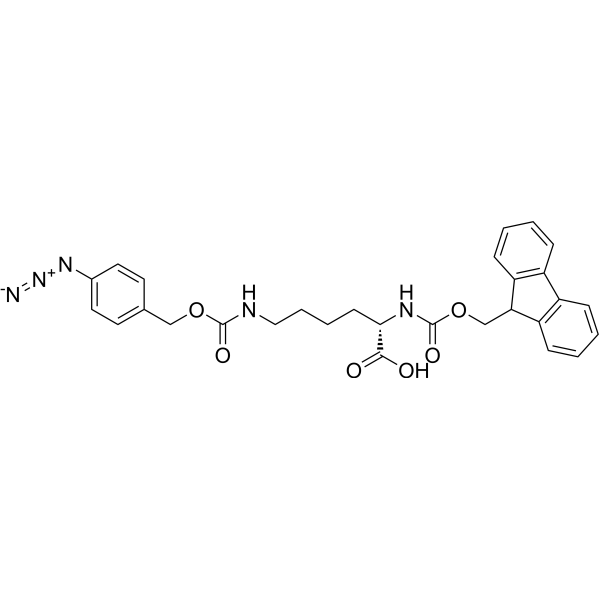
- HY-141151
-
|
|
ADC Linker
|
Cancer
|
|
Fmoc-PEG3-Ala-Ala-Asn(Trt)-PAB is a cleavable 3 unit PEG ADC linker used in the synthesis of antibody-drug conjugates (ADCs) .
|
-
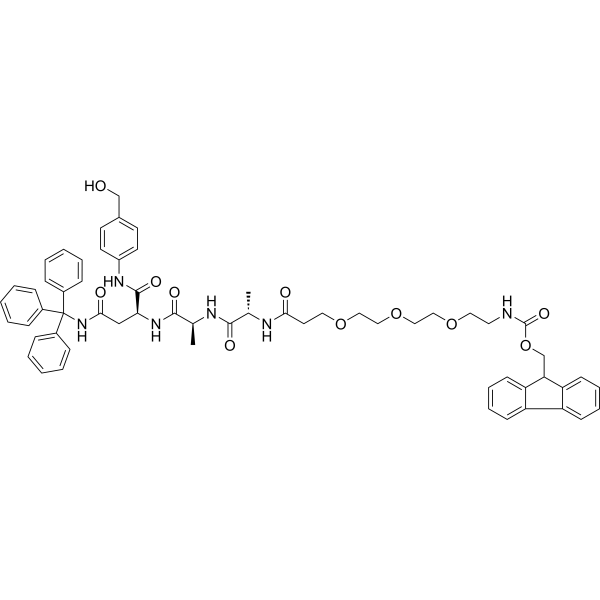
- HY-130077
-
|
|
PROTAC Linkers
|
Cancer
|
|
Fmoc-PEG1-CH2CH2-NHS ester is a PEG-based PROTAC linker that can be used in the synthesis of PROTACs .
|
-
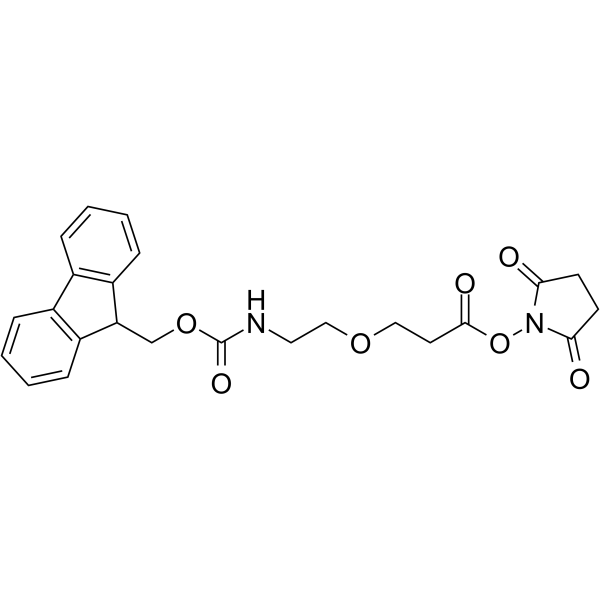
- HY-W035378
-
|
|
ADC Linker
PROTAC Linkers
|
Cancer
|
|
Fmoc-N-methyl-PEG3-CH2CH2COOH is a cleavable ADC linker used in the synthesis of antibody-drug conjugates (ADCs). Fmoc-N-methyl-PEG3-CH2CH2COOH is also a PEG-based PROTAC linker that can be used in the synthesis of PROTACs .
|
-
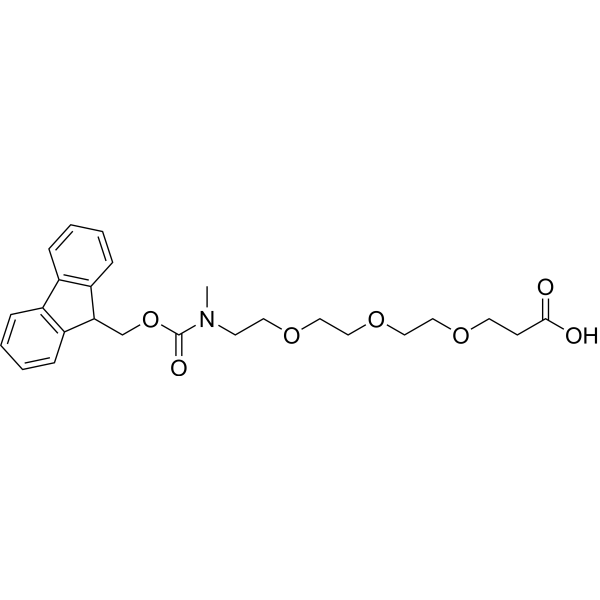
- HY-49453
-
|
|
PROTAC Linkers
|
Cancer
|
|
Fmoc-Gly-Gly-(D-Phe)-Gly-CH2-O-CH2-Cbz is a PROTAC linker and a maleimide-GGFG peptide linker. Fmoc-Gly-Gly-(D-Phe)-Gly-CH2-O-CH2-Cbz can be used in the synthesis of the Deruxtecan .
|
-
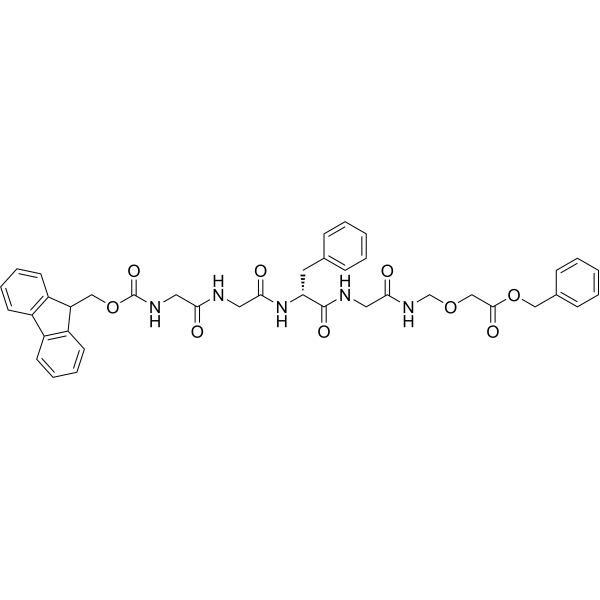
- HY-W130844
-
|
|
Biochemical Assay Reagents
|
Others
|
|
Fmoc-Thr(tBu)-Thr(Psi(Me, Me)Pro)-OH is a biochemical reagent that can be used as a biological material or organic compound for life science related research.
|
-

- HY-151786
-
|
|
ADC Linker
|
Others
|
|
Fmoc-L-Lys(Pentynoyl-DIM)-OH is a click chemistry reagent containing an azide. Fmoc-L-Lys(Pentynoyl-DIM)-OH can be used as a SPPS building block for the “helping hand” strategy for purification of highly insoluble peptides. Solubilizing residues are attached to the Lys side-chains using Click-chemistry. The solubilizing tag can be removed with 1M hydrazine or hydroxylamine solution . It contains an azide group and can undergo copper-catalyzed azide-alkyne cycloaddition (CuAAc) with molecules containing alkyne groups. It can also undergo ring strain-promoted alkyne-azide cycloaddition (SPAAC) with molecules containing DBCO or BCN groups.
|
-
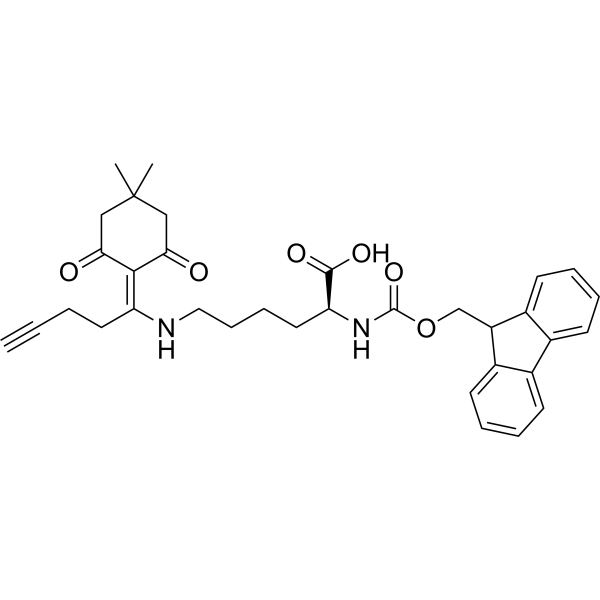
- HY-22062
-
|
Cyclohexaneacetic acid, α-[[(9H-fluoren-9-ylmethoxy)carbonyl]amino]-, (S)-
|
Amino Acid Derivatives
|
Others
|
|
Fmoc-Chg-OH is a Glycine (HY-Y0966) derivative .
|
-
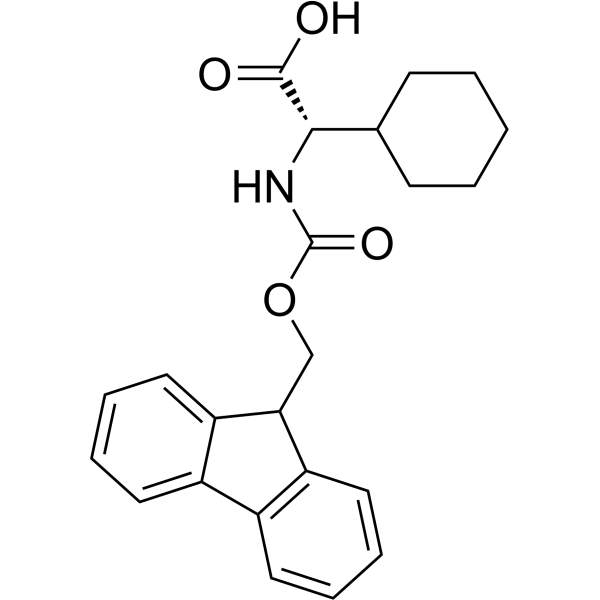
- HY-136155
-
|
|
ADC Linker
|
Cancer
|
|
Fmoc-NH-Azide-PEG4-L-Lysine-PFP ester is a cleavable 4 unit PEG ADC linker used in the synthesis of antibody-drug conjugates (ADCs) . Fmoc-NH-Azide-PEG4-L-Lysine-PFP ester is a click chemistry reagent, it contains an Azide group and can undergo copper-catalyzed azide-alkyne cycloaddition reaction (CuAAc) with molecules containing Alkyne groups. It can also undergo strain-promoted alkyne-azide cycloaddition (SPAAC) reactions with molecules containing DBCO or BCN groups.
|
-
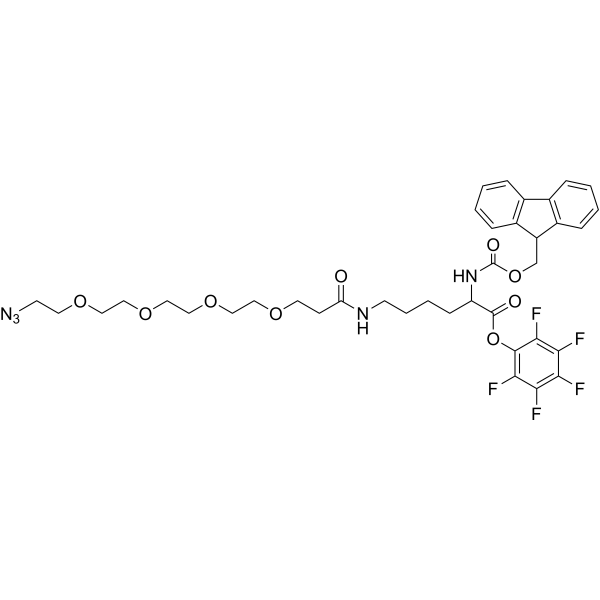
- HY-W145646
-
|
|
Biochemical Assay Reagents
|
Others
|
|
Fmoc-L-Ser((Ac)4-β-D-Glc)-OH is a biochemical reagent that can be used as a biological material or organic compound for life science related research.
|
-
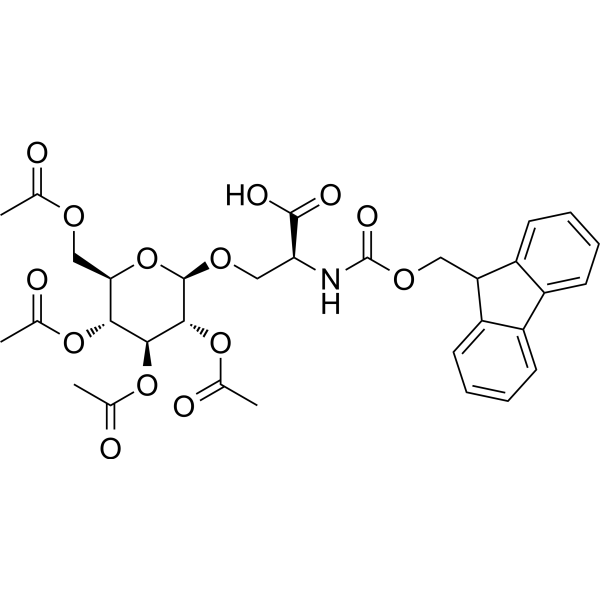
- HY-79130
-
|
Benzeneacetic acid, α-[[(9H-fluoren-9-ylmethoxy)carbonyl]amino]-, (S)-; (S)-2-[[[(9H-Fluoren-9-yl)methoxy]carbonyl]amino]phenylethanoic acid; (S)-N-fmoc-α-phenylglycine; N-9-Fluorenylmethoxycarbonyl-L-phenylglycine
|
Amino Acid Derivatives
|
Others
|
|
Fmoc-(S)-phenylglycine is a Glycine (HY-Y0966) derivative .
|
-
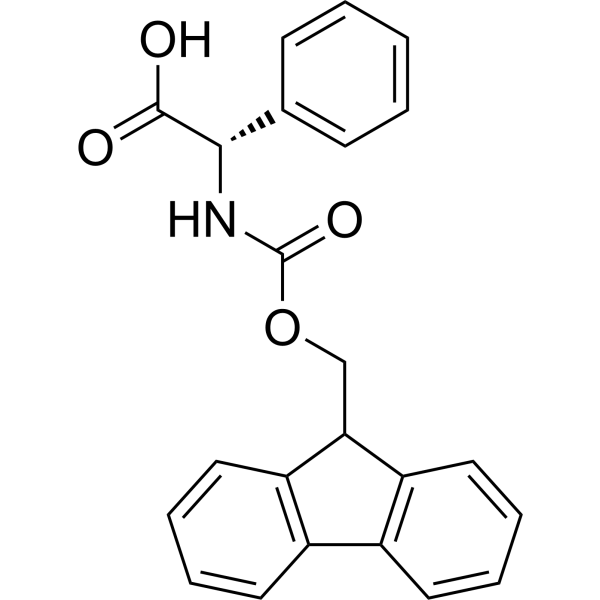
- HY-181428
-
|
|
Drug-Linker Conjugates for ADC
|
Cancer
|
|
Fmoc-Gly-Gly-Phe-Gly-Docetaxel (compound 16h-3) is a drug-linker conjugate for ADC, which comprises a microtubule depolymerization inhibitor and a linker. Puxitatug samrotecan drug-linker can be used to synthesize antibody-drug conjugate (ADC) .
|
-

- HY-130870
-
|
|
PROTAC Linkers
|
Cancer
|
|
Fmoc-NH-PEG11-CH2CH2COOH is a PEG-based PROTAC linker that can be used in the synthesis of PROTACs .
|
-
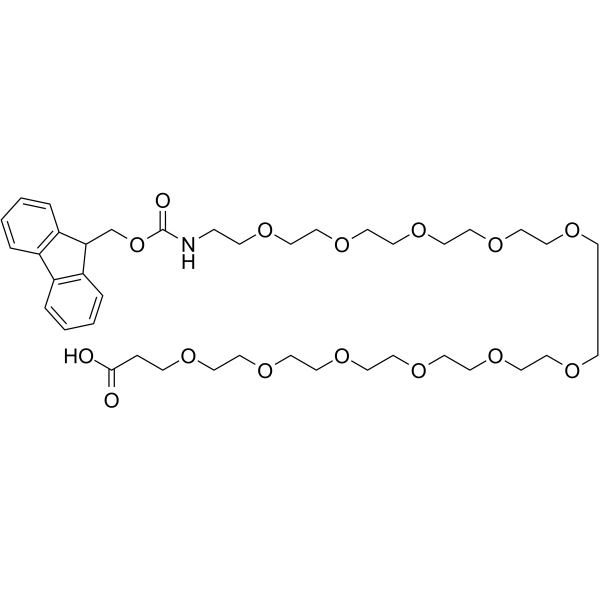
- HY-133363
-
|
|
PROTAC Linkers
|
Cancer
|
|
Fmoc-NH-PEG19-CH2CH2COOH is a PEG-based PROTAC linker that can be used in the synthesis of PROTACs .
|
-
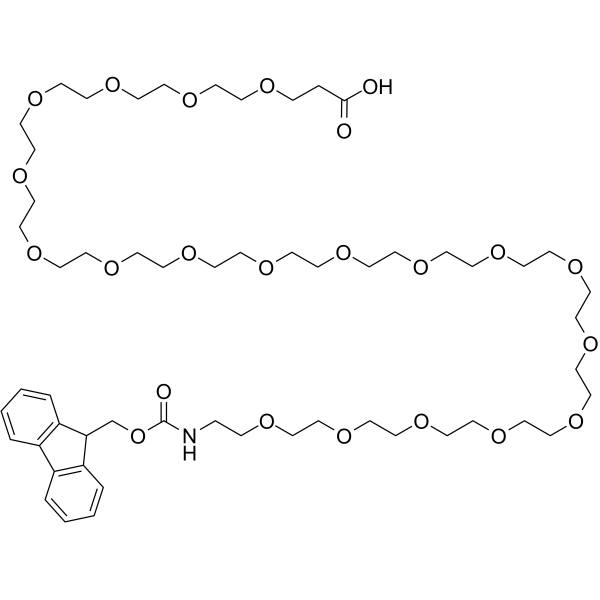
- HY-133364
-
|
|
PROTAC Linkers
|
Cancer
|
|
Fmoc-NH-PEG25-CH2CH2COOH is a PEG-based PROTAC linker that can be used in the synthesis of PROTACs .
|
-
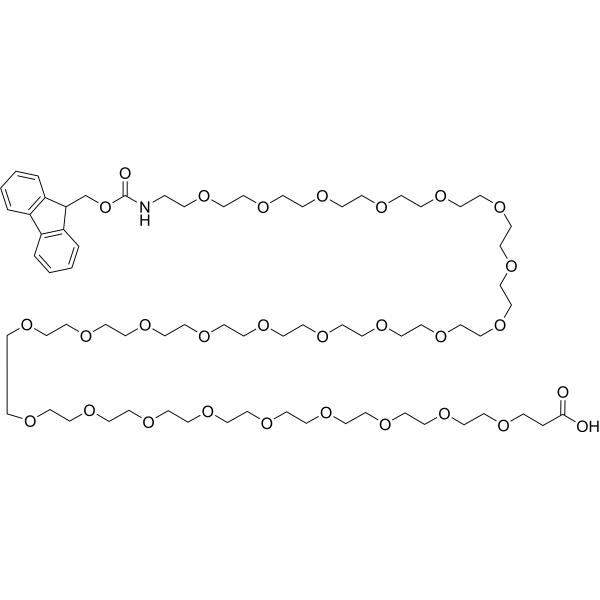
- HY-135821
-
|
|
PROTAC Linkers
|
Cancer
|
|
Fmoc-NH-PEG12-CH2CH2COOH is a PEG-based PROTAC linker that can be used in the synthesis of PROTACs .
|
-
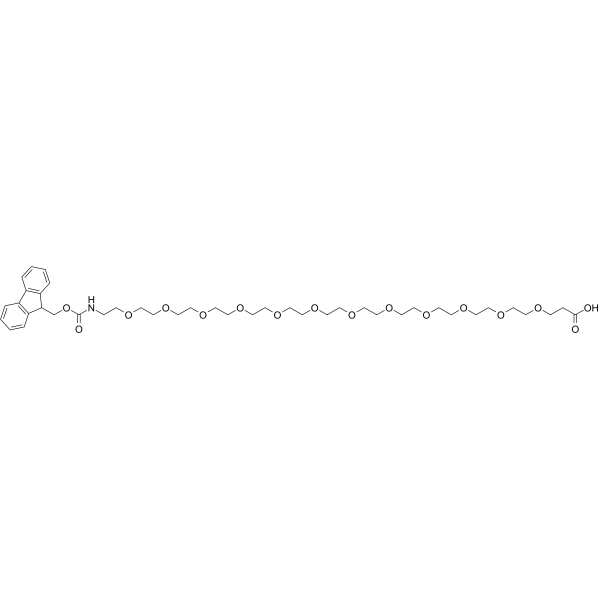
- HY-133361
-
|
|
PROTAC Linkers
|
Cancer
|
|
Fmoc-NH-PEG15-CH2CH2COOH is a PEG-based PROTAC linker that can be used in the synthesis of PROTACs .
|
-
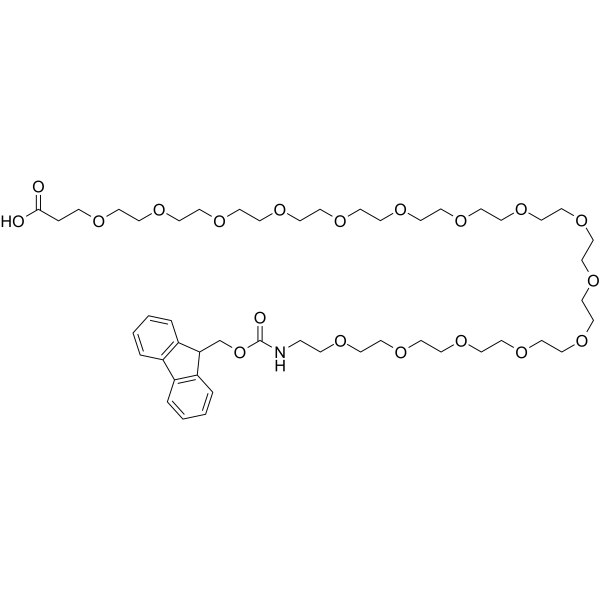
- HY-133365
-
|
|
PROTAC Linkers
|
Cancer
|
|
Fmoc-NH-PEG30-CH2CH2COOH is a PEG-based PROTAC linker that can be used in the synthesis of PROTACs .
|
-
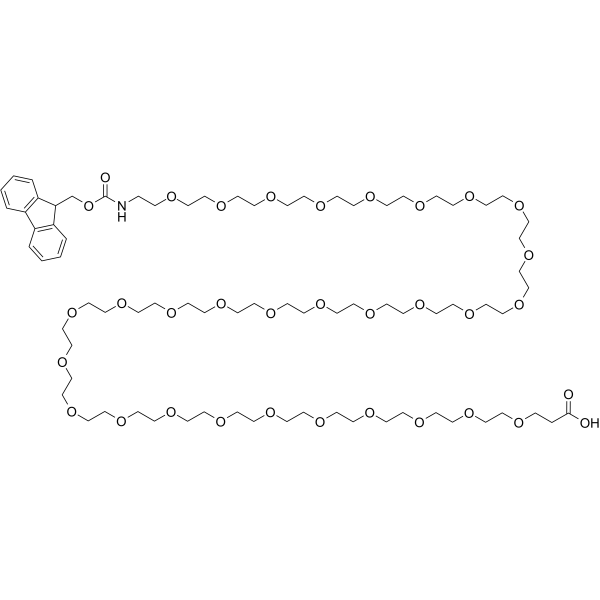
- HY-133362
-
|
|
PROTAC Linkers
|
Cancer
|
|
Fmoc-NH-PEG16-CH2CH2COOH is a PEG-based PROTAC linker that can be used in the synthesis of PROTACs .
|
-
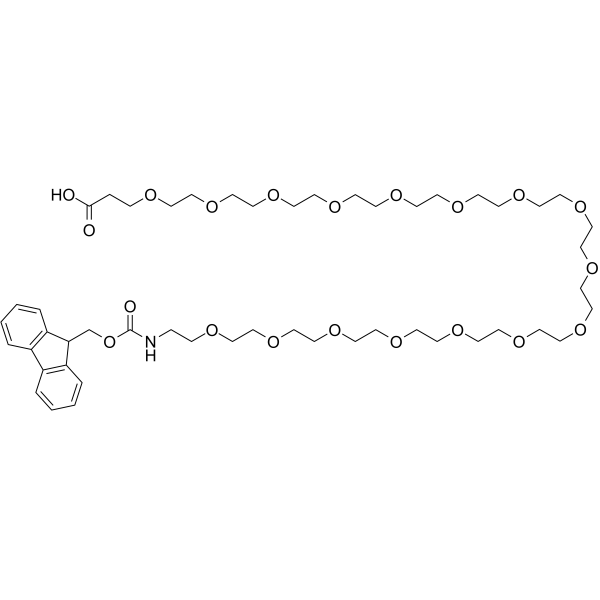
- HY-W040135
-
-
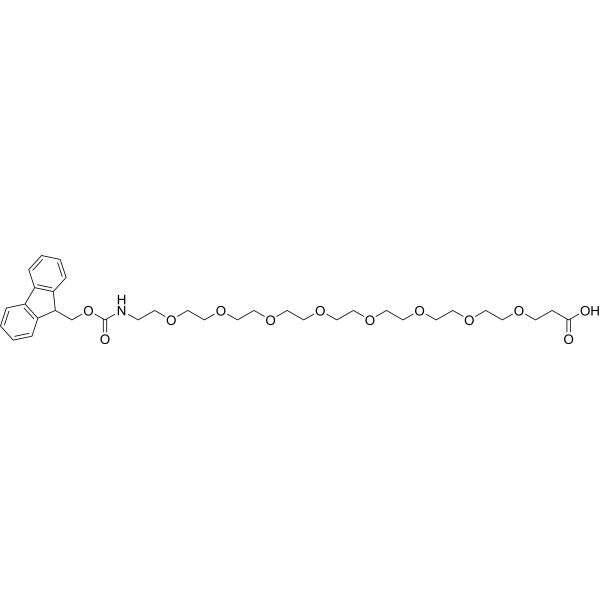
- HY-W040246
-
-
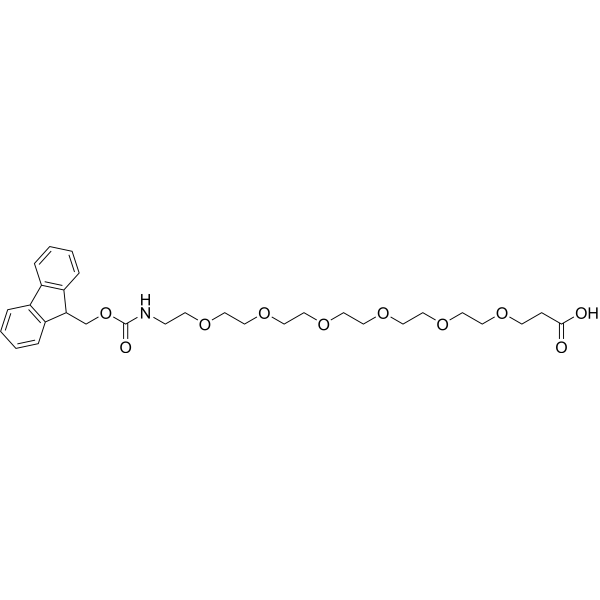
- HY-151825
-
|
|
ADC Linker
|
Others
|
|
Fmoc-L-Phe(4-NH-Poc)-OH is a click chemistry reagent containing an azide group. Used as an orthogonally protected building block in solid-phase peptide synthesis. Poc-group can be further modified using Click-chemistry .
|
-
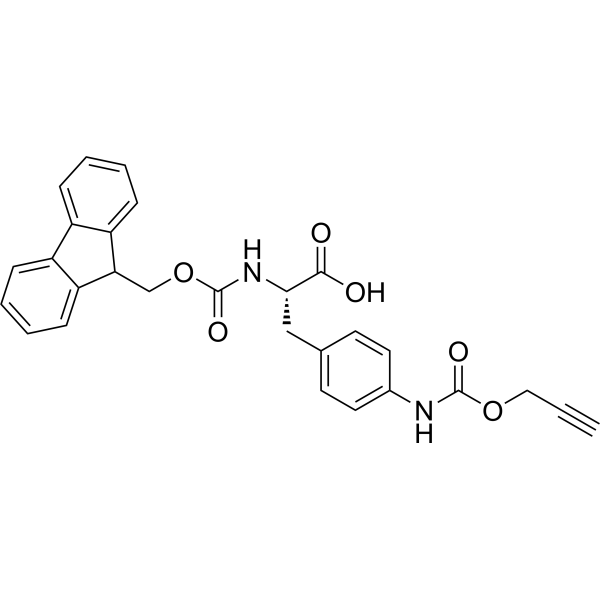
- HY-W092205
-
|
|
PROTAC Linkers
|
Cancer
|
|
Fmoc-NH-CH2-PEG3-C2-NH2 (hydrochloride) is a PROTAC linker that can be used in the synthesis of PROTACs.
|
-

- HY-160069
-
|
|
PROTAC Linkers
|
Others
|
|
Fmoc-Gly-Gly-Gly-NH-PEG4-C2-COOH is a PEG-based PROTAC linker that can be used in the synthesis of PROTACs
|
-
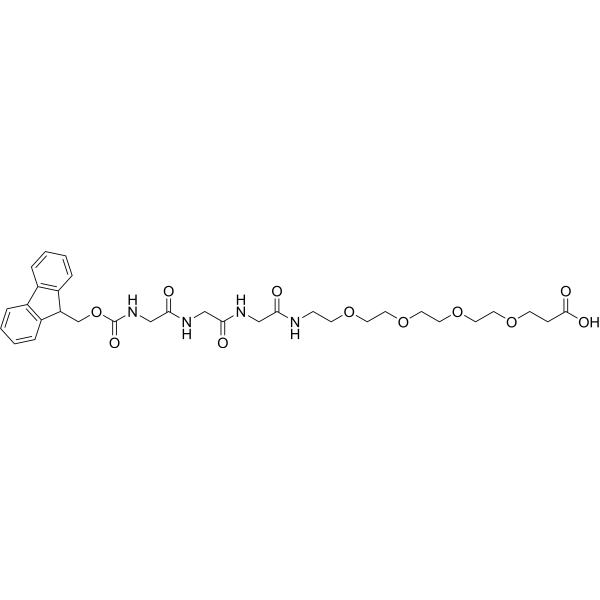
- HY-114174
-
|
|
Amyloid-β
|
Neurological Disease
|
|
Fmoc-Ala-Glu-Asn-Lys-NH2 is a selective asparagine endopeptidase (AEP) inhibitor peptide and suppresses amyloid precursor protein (APP) cleavage. AEP, a pH-controlled cysteine proteinase, is activated during ageing and mediates APP proteolytic processing .
|
-
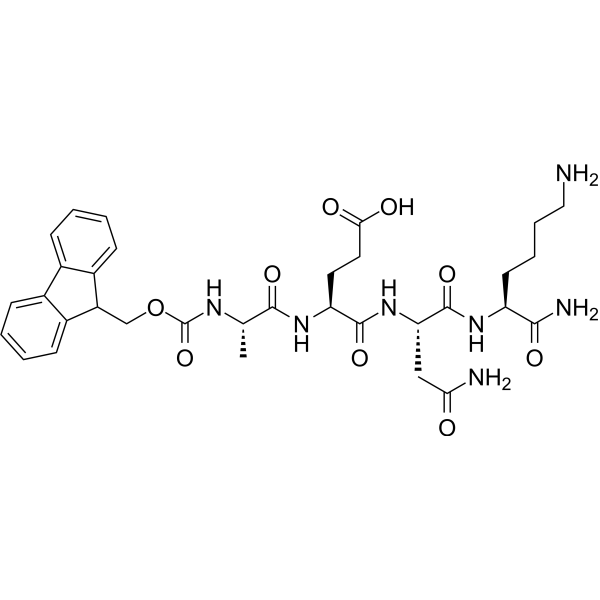
- HY-W096128
-
|
|
PROTAC Linkers
|
Cancer
|
|
Fmoc-NH-PEG3-amide-CH2OCH2COOH is a PEG-based PROTAC linker that can be used in the synthesis of PROTACs .
|
-
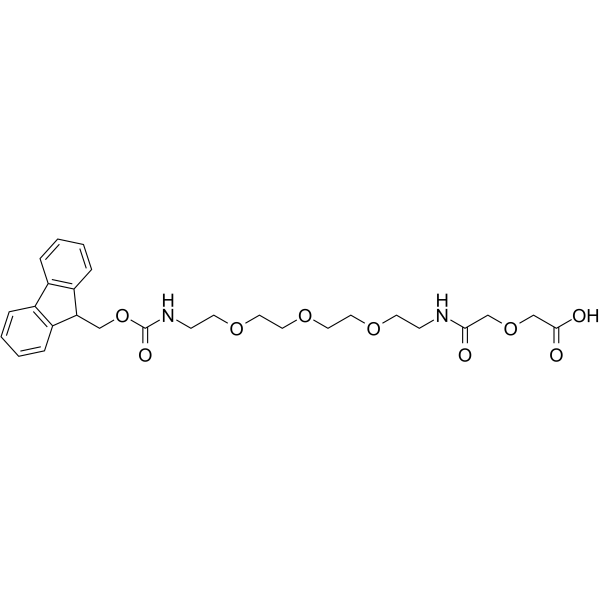
- HY-402648
-
|
|
Drug Derivative
ADC Linker
PROTAC Linkers
|
Cancer
|
|
Fmoc-L-Lys(Boc-AEEA-AEEA)-OH is the derivative of AEEA-AEEA (HY-W125504). AEEA-AEEA is a non-cleavable ADC linker used in the synthesis of antibody-drug conjugates (ADCs). AEEA-AEEA is also an alkyl chain-based PROTAC linker that can be used in the synthesis of PROTACs.
|
-

- HY-45545
-
-
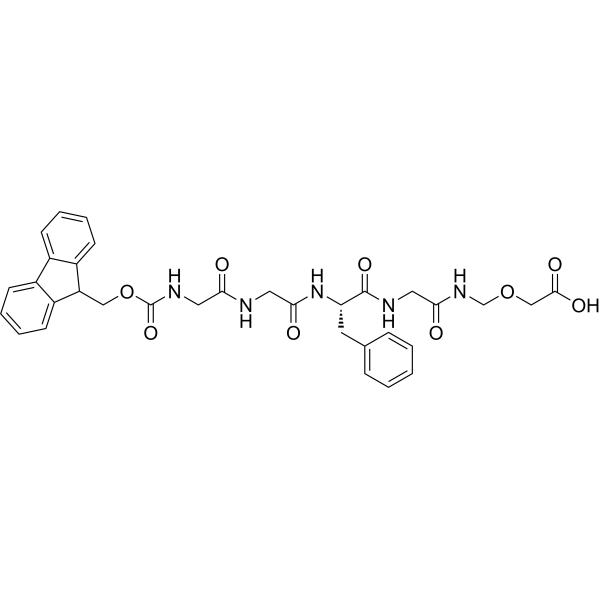
- HY-P10929
-
|
|
Drug Intermediate
|
Others
|
|
Fmoc-Lys(tBuO-Ara-Glu(AEEA-AEEA)-OtBu)-OH is a drug intermediate in the synthesis of Tirzepatide. Tirzepatide is a dual glucose-dependent insulinotropic peptide (GIP) and glucagon-like peptide-1 receptor (GLP-1R) agonist .
|
-

- HY-151738
-
|
|
ADC Linker
|
Others
|
|
Fmoc-Aeg(N3)-OH is a click chemistry reagent containing an Azide. Alkylating the Nitrogen of an amide bond results in peptoid structures, which leads to conformational restrains, like N-methylation and allows backbone derivatisation. Altering cytotoxicity, bacterial cell selectivity and receptor pharmacology through formation of peptoid derivatives have been published for Cilengitide, Piscidin 1, and MC3, MC4 and MC5 receptor agonist. This building block enables design of macrocycles through intermolecular crosslinking or backbone stabilization through intermolecular ring-closure. This compound is a potential building block for the construction of (customized) peptide nucleic acids (PNAs) and for peptoid synthesis . Fmoc-Aeg(N3)-OH is a click chemistry reagent, it contains an Azide group and can undergo copper-catalyzed azide-alkyne cycloaddition reaction (CuAAc) with molecules containing Alkyne groups. It can also undergo strain-promoted alkyne-azide cycloaddition (SPAAC) reactions with molecules containing DBCO or BCN groups.
|
-
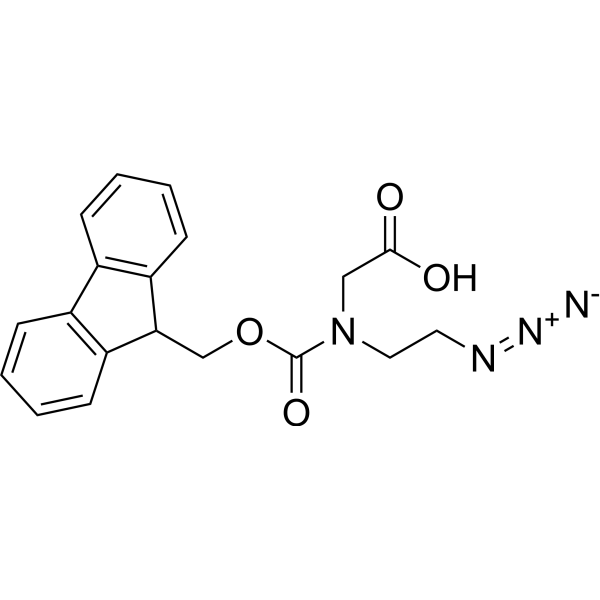
- HY-156810
-
|
|
ADC Linker
|
Cancer
|
|
Fmoc-PEG4-GGFG-CH2-O-CH2-Cbz is a cleavable ADC linker containing 4 units of PEG, which can be used to synthesize active antibody conjugation molecules (ADC) .
|
-
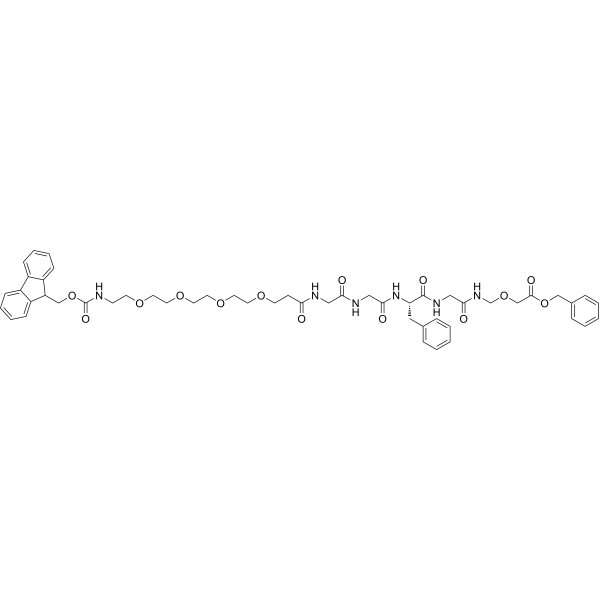
- HY-49412
-
|
|
Drug Intermediate
|
Others
|
|
Fmoc-Gly-Gly-Phe-Gly-NH-CH2-O-CO-CH3 (compound DC-13-C) is an intermediate in the synthesis of Exatecan (HY-13631) derivatives .
|
-
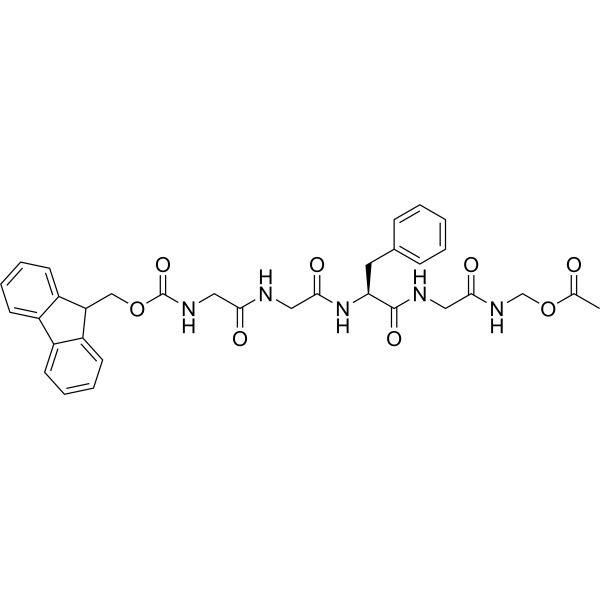
- HY-151659
-
|
|
ADC Linker
|
Others
|
|
Fmoc-L-Lys(N3-Gly)-OH is a click chemistry reagent containing a lysine-containing azidoacetyl group building-block for SPPS and can be used for various biochemical studies . It contains an azide group and can undergo copper-catalyzed azide-alkyne cycloaddition (CuAAc) with molecules containing alkyne groups. It can also undergo ring strain-promoted alkyne-azide cycloaddition (SPAAC) with molecules containing DBCO or BCN groups.
|
-
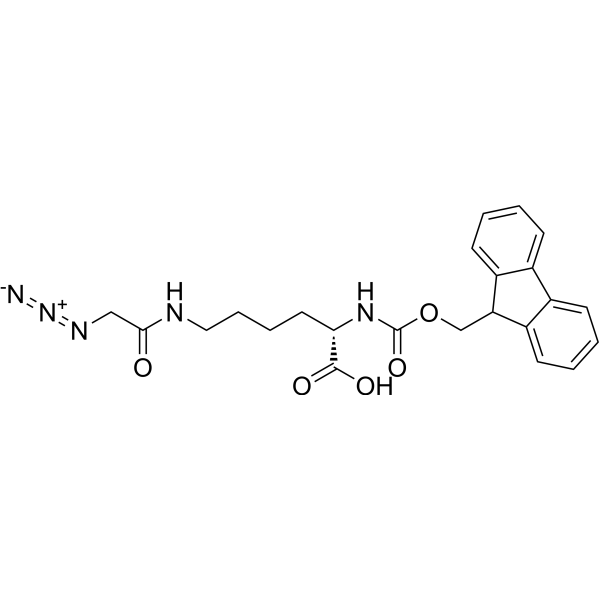
- HY-W250541
-
|
|
ADC Linker
|
Cancer
|
|
Fmoc-Gly-NH-CH2-O-Cyclopropane-CH2COOH is an intermediate in the synthesis of ADC linker.The linker composed of Benzyl 2-cyclopropyl-2-hydroxyacetate can be coupled to Exatecan (HY-13631) and combined with antibodies (such as antibody hu2F7) .
|
-
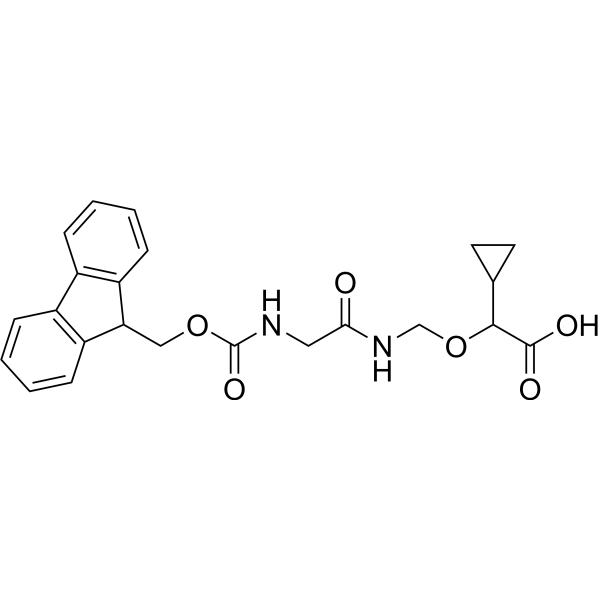
- HY-W077284
-
|
fmoc-N-Me-Abu(4)-OH
|
PROTAC Linkers
|
Cancer
|
|
4-((((9H-Fluoren-9-yl)methoxy)carbonyl)(methyl)amino)butanoic acid (FMoc-N-Me-Abu(4)-OH) is a PROTAC linker that can be used in the synthesis of PROTACs.
|
-

- HY-151787
-
|
|
ADC Linker
|
Others
|
|
Fmoc-L-Lys(N3-Aca-DIM)-OH is a click chemistry reagent containing an azide group. Used as a SPPS building-block for the “helping hand” strategy for purification of highly insoluble peptides. Solubilizing residues are attached to the Lys side-chains using Click-chemistry. The solubilizing tag can be removed with 1M hydrazine or hydroxylamine solution . It contains an azide group and can undergo copper-catalyzed azide-alkyne cycloaddition (CuAAc) with molecules containing alkyne groups. It can also undergo ring strain-promoted alkyne-azide cycloaddition (SPAAC) with molecules containing DBCO or BCN groups.
|
-
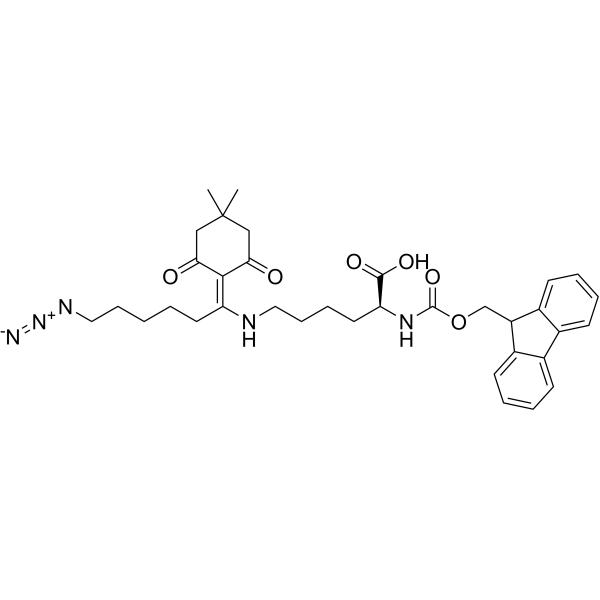
- HY-49463
-
|
|
ADC Linker
|
Neurological Disease
|
|
Fmoc-Gly-Gly-Phe-Gly-CH2-O-CH2-Gly-CH2-O-CH2-Cbz is an ADC linker that can be used in the synthesis of ADCs (such as Trastuzumab deruxtecan and U3-1402).
|
-
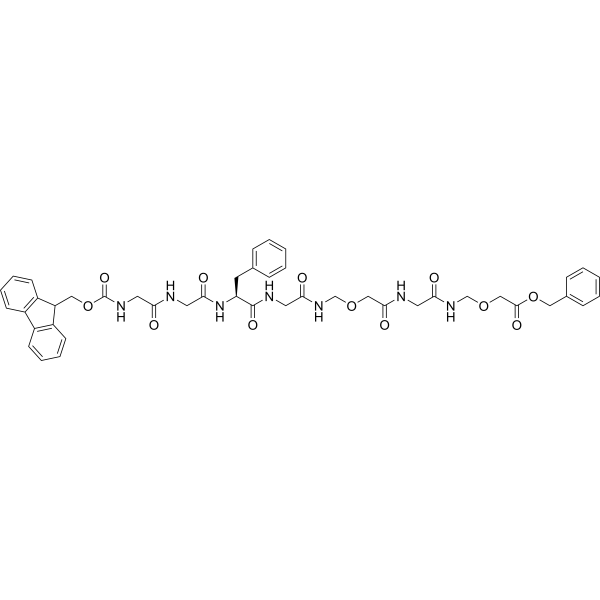
- HY-151829
-
|
|
ADC Linker
|
Others
|
|
Fmoc-L-Asn(EDA-N3)-OH is a click chemistry reagent containing an azide group. This building block is reported in literature for the modification of Amanitin via Click Chemistry. Alpha-Amanitin is the deadliest member of the amatoxin peptide family produced by the death-cap mushroom A. phalloides. It is an orally available, rigid, bicyclic octapeptide and one of the most lethal known natural products (LD50 = 50-100 μg/kg) acting as highly selective allosteric inhibitor of the RNA polymerase II . It contains an azide group and can undergo copper-catalyzed azide-alkyne cycloaddition (CuAAc) with molecules containing alkyne groups. It can also undergo ring strain-promoted alkyne-azide cycloaddition (SPAAC) with molecules containing DBCO or BCN groups.
|
-
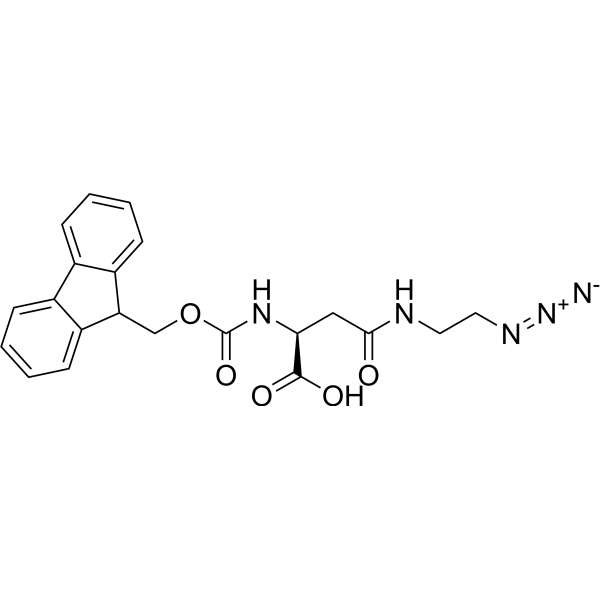
- HY-W072732
-
-
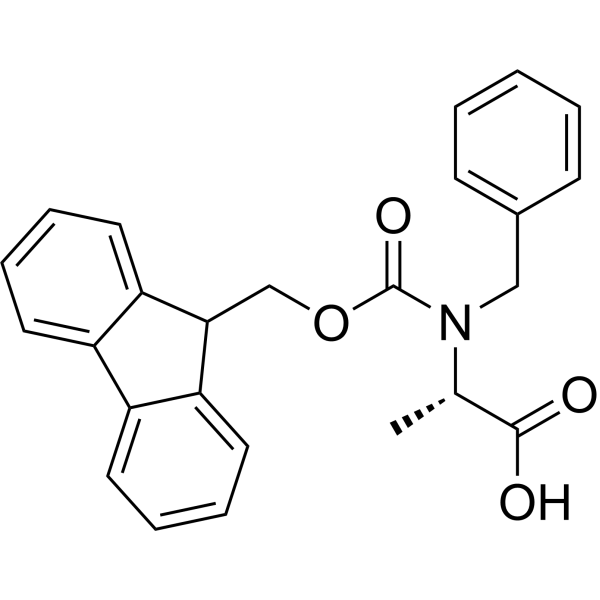
- HY-Y0134
-
|
|
Amino Acid Derivatives
|
Others
|
|
(S)-2-((((9H-fluoren-9-yl)methoxy)carbonyl)amino)-5-(tert-butoxy)-5-oxopentanoic acid is a glutamic acid derivative .
|
-
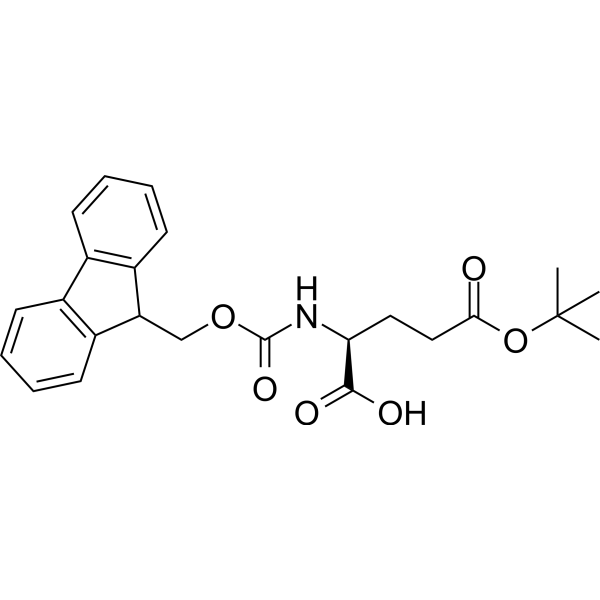
- HY-W000843
-
-
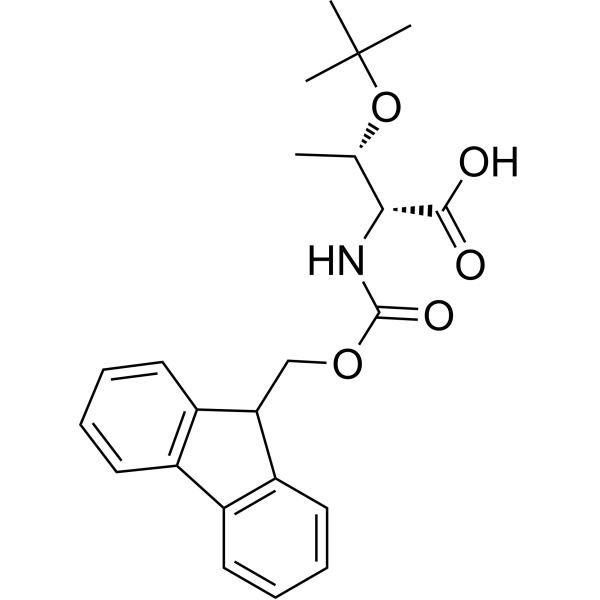
- HY-W010719
-
-
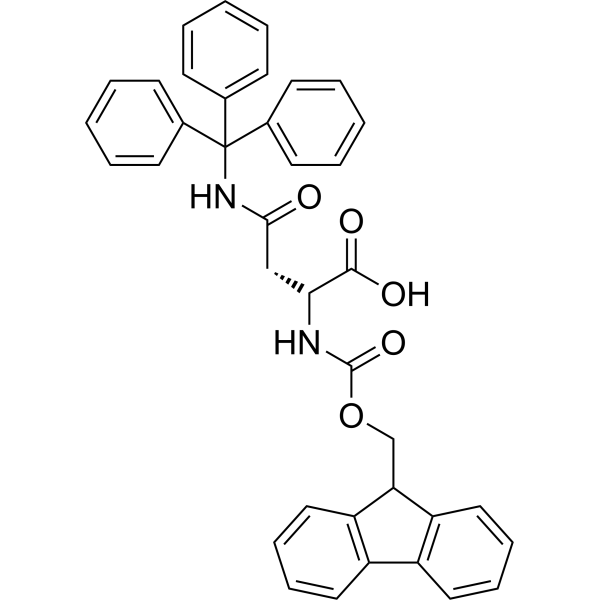
- HY-P0232
-
-
![Fmoc-Thr[GalNAc(Ac)3-α-D]-OH](//file.medchemexpress.com/product_pic/hy-p0232.gif)
- HY-W041986R
-
-

- HY-23861
-
|
fmoc-N,N-dimethyl-L-Glutamine
|
Amino Acid Derivatives
|
Others
|
|
N2-(((9H-Fluoren-9-yl)methoxy)carbonyl)-N5,N5-dimethyl-L-glutamine is a glutamine derivative .
|
-
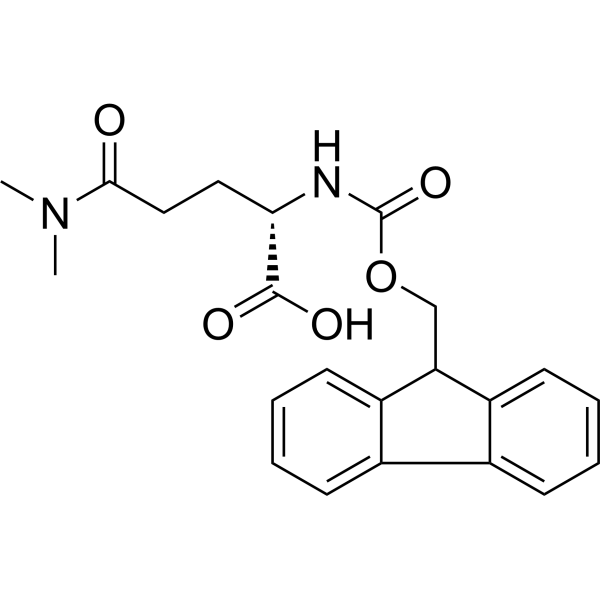
- HY-W006937
-
|
Boc-p-amino-D-Phe(fmoc)-OH; Boc-D-phe(4-NH-fmoc)-OH
|
Amino Acid Derivatives
|
Others
|
|
Boc-D-(4-fmoc)-aminophenylalanine (Boc-p-amino-D-Phe(Fmoc)-OH) is an amino acid derivative with an Fmoc protecting group, which can be used to synthesize peptides with gonadotropin-releasing hormone antagonist activity .
|
-

- HY-W871908
-
|
|
Biochemical Assay Reagents
|
Others
|
|
Boc-Aeg(Fmoc)-OH is a Boc/Fmoc-protected 2-aminoethylglycine building block. Boc-Aeg(Fmoc)-OH facilitates solid-phase synthesis of acridine oligomers with a (2-aminoethyl)glycine backbone .
|
-

- HY-150850S
-
-
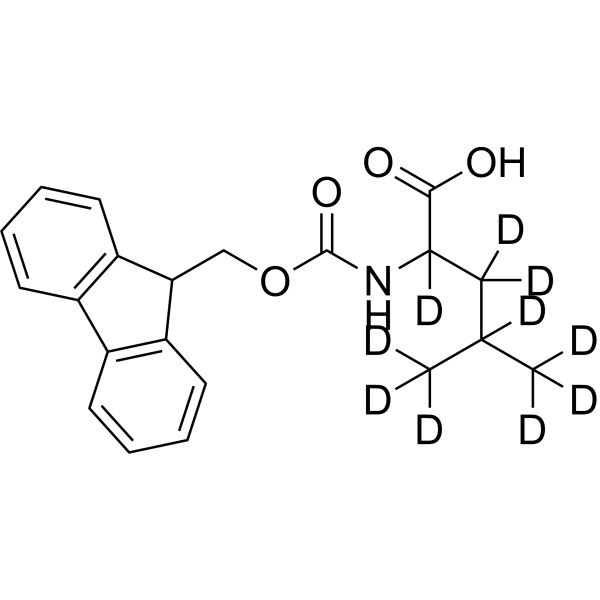
- HY-W415169
-
|
|
Drug Intermediate
|
Others
|
|
H-Aeg(Fmoc)-OBzl hydrochloride is an Fmoc-protected aminoethylglycine derivative with benzyl ester and can be used for synthesis of peptide nucleic acid and protected oligomers.
|
-

- HY-P11696
-
|
|
Drug Intermediate
|
Others
|
|
H-Aeg(Fmoc)-OH hydrochloride is an Fmoc-protected aminoethylglycine monomer with a free carboxyl group and can be used for peptide nucleic acid synthesis.
|
-

- HY-P11694
-
|
|
Biochemical Assay Reagents
|
Neurological Disease
|
|
Alloc-Aeg (Fmoc)-OH is a protected serine triphosphate building block and an Nα-Fmoc protected amino acid. Alloc-Aeg (Fmoc)-OH contains serine protected by α-N-allyloxycarbonyl (Alloc) and bis (allyl) phosphate groups, and it can be used in the synthesis of peptide nucleic acids (PNAs). Alloc-Aeg (Fmoc)-OH is applicable to research related to Alzheimer's disease .
|
-

- HY-133472
-
|
|
PROTAC Linkers
|
Cancer
|
|
DBCO-NHCO-PEG3-Fmoc is a PEG-based PROTAC linker that can be used in the synthesis of PROTACs . DBCO-NHCO-PEG3-Fmoc is a click chemistry reagent, it contains a DBCO group that can undergo strain-promoted alkyne-azide cycloaddition (SPAAC) with molecules containing Azide groups.
|
-
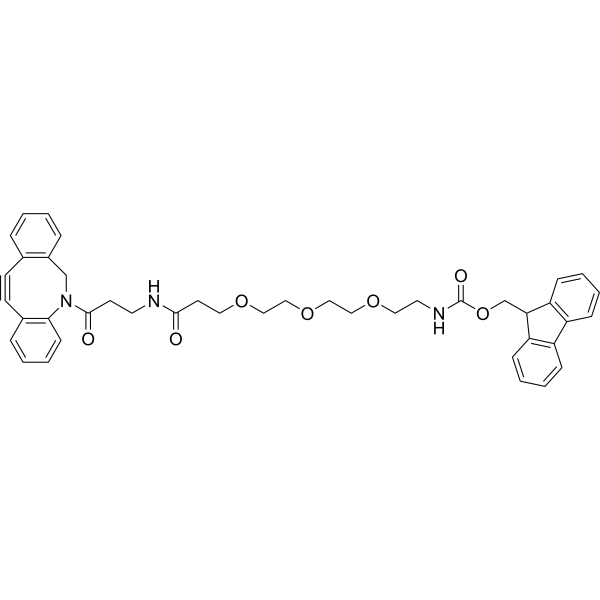
- HY-W419374
-
|
|
Amino Acid Derivatives
|
Others
|
|
ivDde-Lys(Fmoc)-OH is a derivative of amino acid with protecting groups. ivDde-Lys(Fmoc)-OH can be used for peptide synthesis .
|
-

- HY-W738628
-
-

- HY-174896A
-
|
|
Biochemical Assay Reagents
|
Others
|
|
DSPE-PEG2000-Fmoc is a lipid-containing PEG derivative that can be used to form micelles as nanoparticles for drug delivery . Fmoc is a commonly used amino protecting group that protects the amino group from unwanted reactions until it is removed when a specific coupling reaction is required.
|
-

- HY-174896
-
|
|
Biochemical Assay Reagents
|
Others
|
|
DSPE-PEG1000-Fmoc is a lipid-containing PEG derivative that can be used to form micelles as nanoparticles for drug delivery . Fmoc is a commonly used amino protecting group that protects the amino group from unwanted reactions until it is removed when a specific coupling reaction is required.
|
-

- HY-174896B
-
|
|
Biochemical Assay Reagents
|
Others
|
|
DSPE-PEG3400-Fmoc is a lipid-containing PEG derivative that can be used to form micelles as nanoparticles for drug delivery . Fmoc is a commonly used amino protecting group that protects the amino group from unwanted reactions until it is removed when a specific coupling reaction is required.
|
-

- HY-174896C
-
|
|
Biochemical Assay Reagents
|
Others
|
|
DSPE-PEG5000-Fmoc is a lipid-containing PEG derivative that can be used to form micelles as nanoparticles for drug delivery . Fmoc is a commonly used amino protecting group that protects the amino group from unwanted reactions until it is removed when a specific coupling reaction is required.
|
-

- HY-W591968
-
|
|
PROTAC Linkers
|
Cancer
|
|
14-(Fmoc-amino)-tetradecanoic acid can be used as a PROTAC linker in the synthesis of PROTACs. 14-(Fmoc-amino)-tetradecanoic acid is an alkane chain with terminal Fmoc-protected amine and carboxylic acid groups. The Fmoc group can be deprotected under basic condition to obtain the free amine which can be used for further conjugations. The terminal carboxylic acid can react with primary amine groups in the presence of activators (e.g. EDC, or HATU) to form a stable amide bond.
|
-

- HY-W009030
-
|
|
PROTAC Linkers
|
Cancer
|
|
N-Fmoc-8-aminooctanoic acid can be used as a PROTAC linker in the synthesis of PROTACs. N-Fmoc-8-aminooctanoic acid is an alkane chain with terminal Fmoc-protected amine and carboxylic acid groups. The Fmoc group can be deprotected under basic condition to obtain the free amine which can be used for further conjugations. The terminal carboxylic acid can react with primary amine groups in the presence of activators (e.g. EDC, or HATU) to form a stable amide bond.
|
-

- HY-W548477
-
|
|
Amino Acid Derivatives
|
Others
|
|
H-Lys(Fmoc)-OH hydrochloride is an amino acid derivative with an Fmoc protecting group, which can be used to synthesize diacylated GLP-1 derivatives with antidiabetic activity .
|
-

- HY-W116478S
-
-
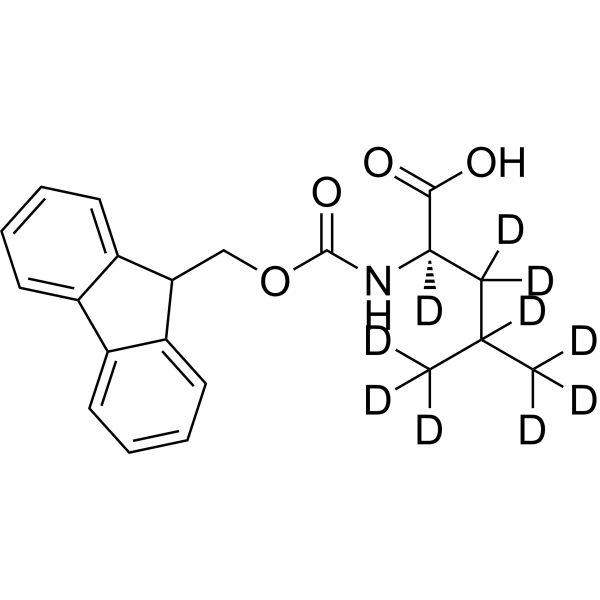
- HY-W009049S
-
-
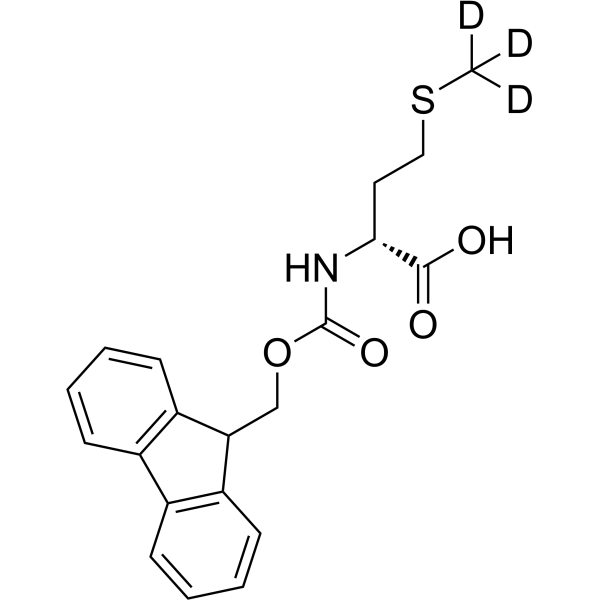
- HY-174931B
-
|
|
Biochemical Assay Reagents
|
Others
|
|
HO-PEG3400-NH-Fmoc is a PEG derivative with an Fmoc protecting group and a hydroxyl (OH) reactive group. Fmoc is a commonly used amino protecting group that protects the amino group from unwanted reactions until it is removed for a specific coupling reaction.
|
-

- HY-174931
-
|
|
Biochemical Assay Reagents
|
Others
|
|
HO-PEG1000-NH-Fmoc is a PEG derivative with an Fmoc protecting group and a hydroxyl (OH) reactive group. Fmoc is a commonly used amino protecting group that protects the amino group from unwanted reactions until it is removed for a specific coupling reaction.
|
-

- HY-174931C
-
|
|
Biochemical Assay Reagents
|
Others
|
|
HO-PEG5000-NH-Fmoc is a PEG derivative with an Fmoc protecting group and a hydroxyl (OH) reactive group. Fmoc is a commonly used amino protecting group that protects the amino group from unwanted reactions until it is removed for a specific coupling reaction.
|
-

- HY-174931A
-
|
|
Biochemical Assay Reagents
|
Others
|
|
HO-PEG2000-NH-Fmoc is a PEG derivative with an Fmoc protecting group and a hydroxyl (OH) reactive group. Fmoc is a commonly used amino protecting group that protects the amino group from unwanted reactions until it is removed for a specific coupling reaction.
|
-

- HY-W108867
-
|
|
Drug Intermediate
|
|
|
N-Fmoc-ethylenediamine hydrobromide is an important chemical reagent with the activity of promoting organic synthesis reactions. N-Fmoc-ethylenediamine hydrobromide is often used in the synthesis of peptides and other amino compounds in the field of biochemistry because it can effectively protect the amino group and provide good reactivity. The application of N-Fmoc-ethylenediamine hydrobromide helps to improve the efficiency and selectivity of synthesis and becomes a key component in organic synthesis.
|
-

- HY-W005144
-
-
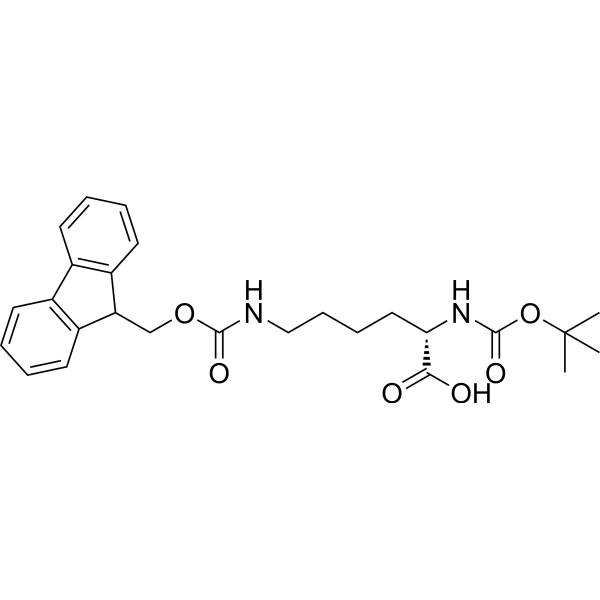
- HY-W008196
-
-
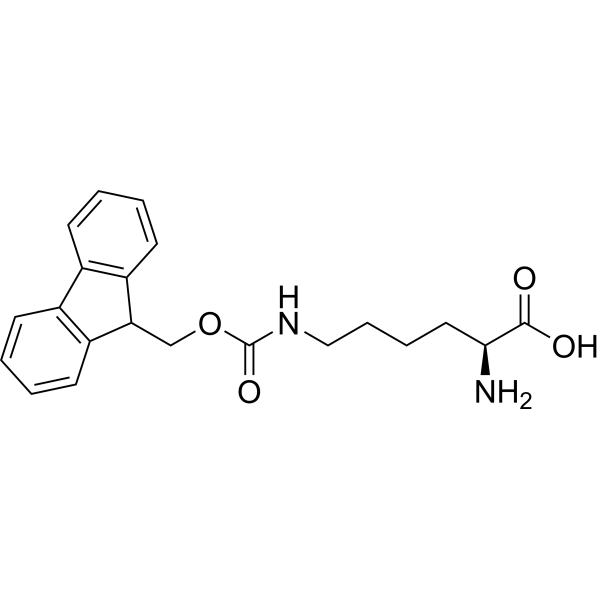
- HY-W010857
-
-

- HY-W092202
-
-

- HY-157052
-
|
|
PROTAC Linkers
|
Others
|
|
exo-BCN-Fmoc-L-Lysine is a Click Amino Acid that can be used as a linker in the synthesis of PROTAC molecules. exo-BCN-Fmoc-L-Lysine contains a BCN group that can undergo strain-promoted alkyne-azide cycloaddition (SPAAC) with molecules containing Azide groups.
|
-
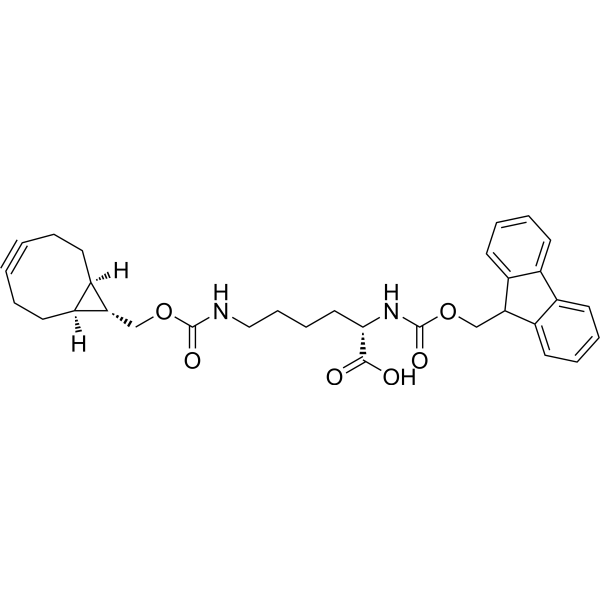
- HY-78733
-
-
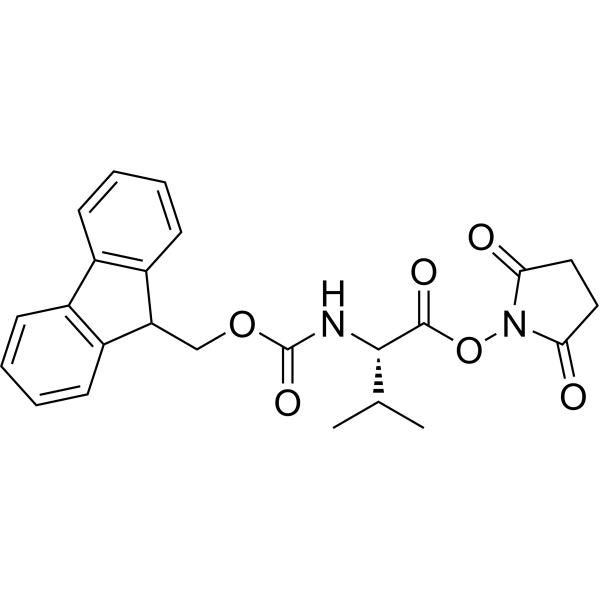
- HY-79132
-
-
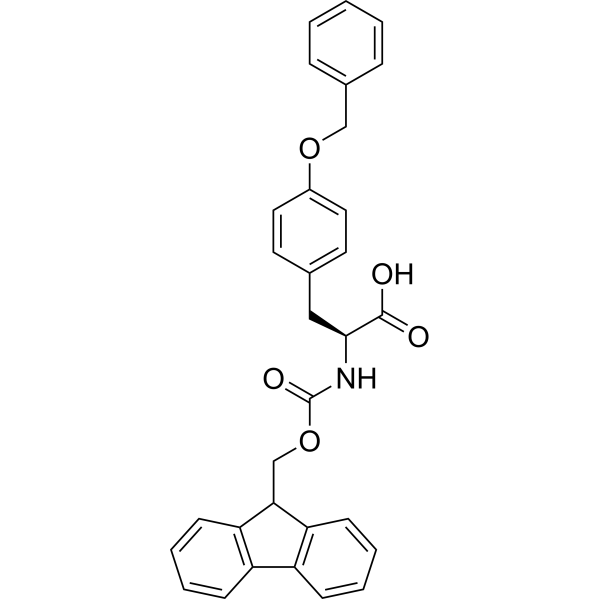
- HY-151715
-
|
|
Biochemical Assay Reagents
|
Others
|
|
N3-D-Dap(Fmoc)-OH is a click chemistry reagent. N3-D-Dap(Fmoc)-OH can be used as a component for coupling by click reaction and as an orthogonally protected diaminocarboxylic acid derivative. N3-D-Dap(Fmoc)-OH contains an azide group and can undergo copper-catalyzed azide-alkyne cycloaddition (CuAAc) with molecules containing alkyne groups. N3-D-Dap(Fmoc)-OH can also undergo ring strain-promoted alkyne-azide cycloaddition (SPAAC) with molecules containing DBCO or BCN groups .
|
-
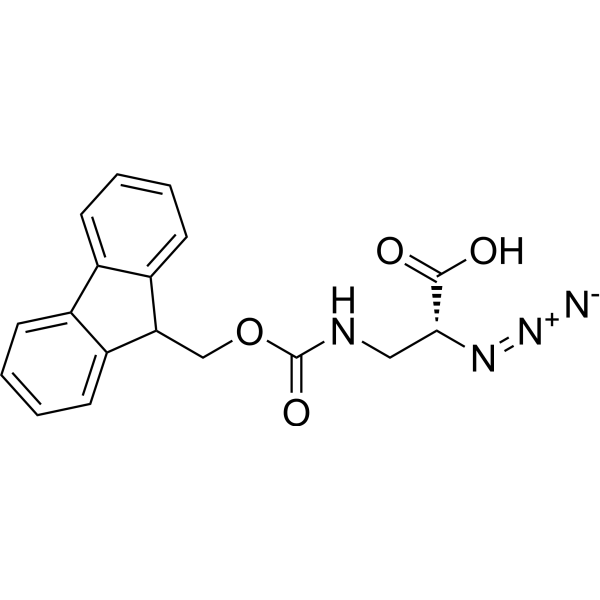
- HY-129362
-
|
|
ADC Linker
|
Cancer
|
|
Phe-Lys(Fmoc)-PAB is a cathepsin cleavable ADC linker used for the antibody-drug conjugates (ADCs) .
|
-
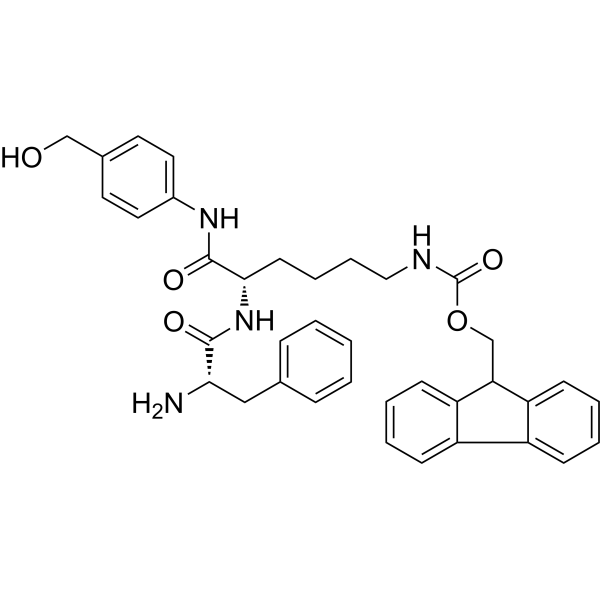
- HY-176930
-
|
|
ADC Linker
|
Others
|
|
N-Fmoc-EvcPAB-PNP is a cleavable ADC linker used in the synthesis of antibody-drug conjugates (ADC) .
|
-

- HY-47858
-
-

- HY-W006923
-
-
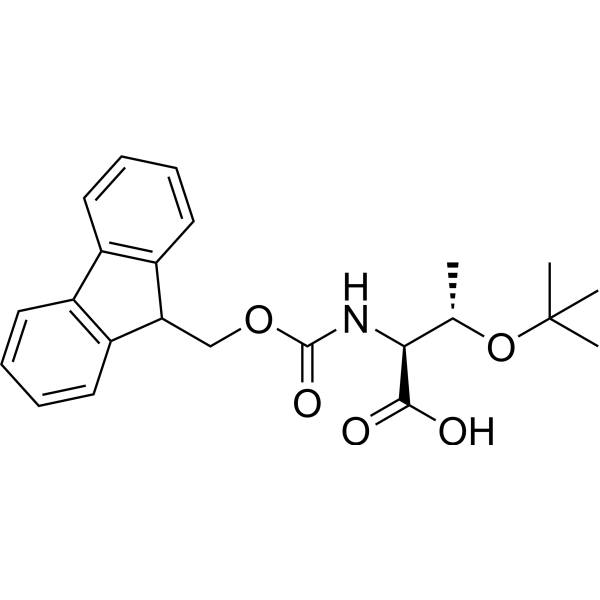
- HY-W002327S1
-
-
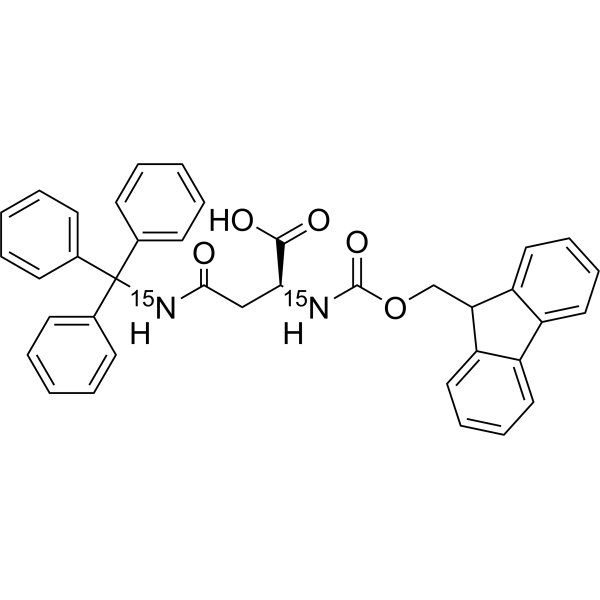
- HY-W088097
-
-
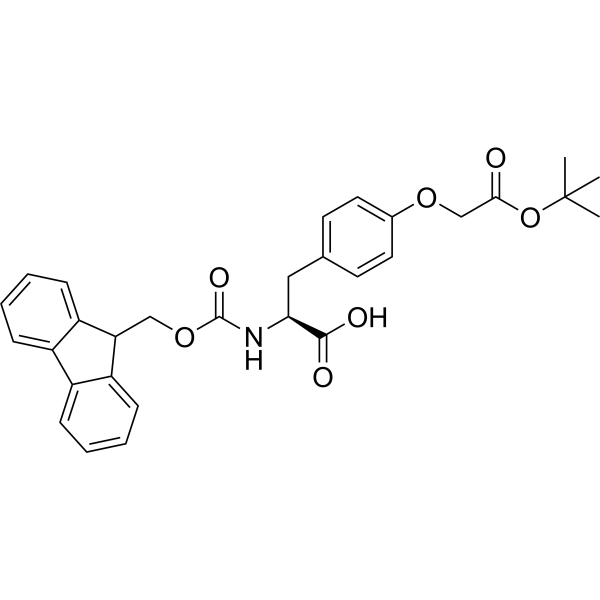
- HY-138318
-
|
|
PROTAC Linkers
|
Cancer
|
|
DBCO-PEG3-amide-N-Fmoc is a PEG-based PROTAC linker that can be used in the synthesis of PROTACs . DBCO-PEG3-amide-N-Fmoc is a click chemistry reagent, it contains a DBCO group that can undergo strain-promoted alkyne-azide cycloaddition (SPAAC) with molecules containing Azide groups.
|
-
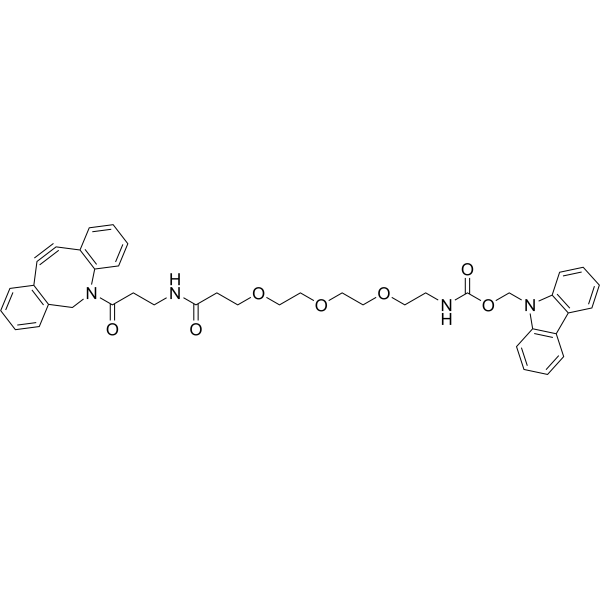
- HY-W102532
-
|
|
Biochemical Assay Reagents
|
Others
|
|
Boc-Thr(Fmoc-Val)-OH is a biochemical reagent that can be used as a biological material or organic compound for life science related research.
|
-

- HY-P4277
-
|
|
Glyoxalase (GLO)
|
Others
|
|
N,S-Bis-Fmoc-Glutathione is a potent glyoxalase II inhibitor with a Ki value of 0.75 μM and an IC50 of 2.5 μM .
|
-
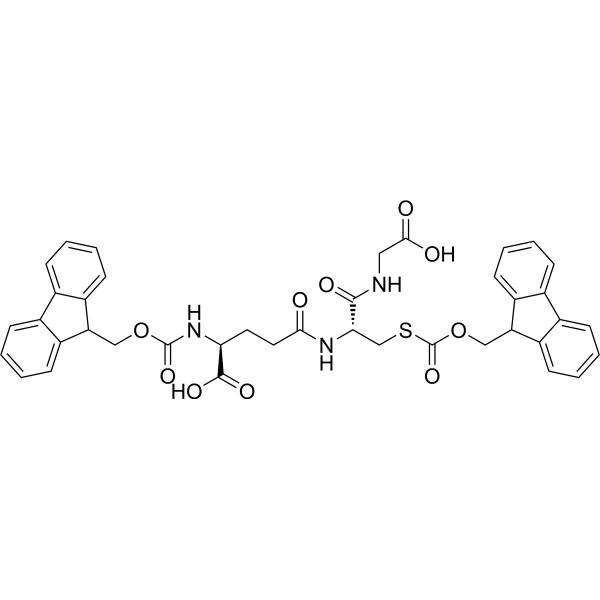
- HY-151748
-
|
|
ADC Linker
|
Others
|
|
N3-L-Orn(Fmoc)-OH is a Fmoc-protected ornithine derivative, can be used as a click chemistry reagent. It contains an azide group and can undergo copper-catalyzed azide-alkyne cycloaddition (CuAAc) with molecules containing alkyne groups. It can also undergo ring strain-promoted alkyne-azide cycloaddition (SPAAC) with molecules containing DBCO or BCN groups.
|
-
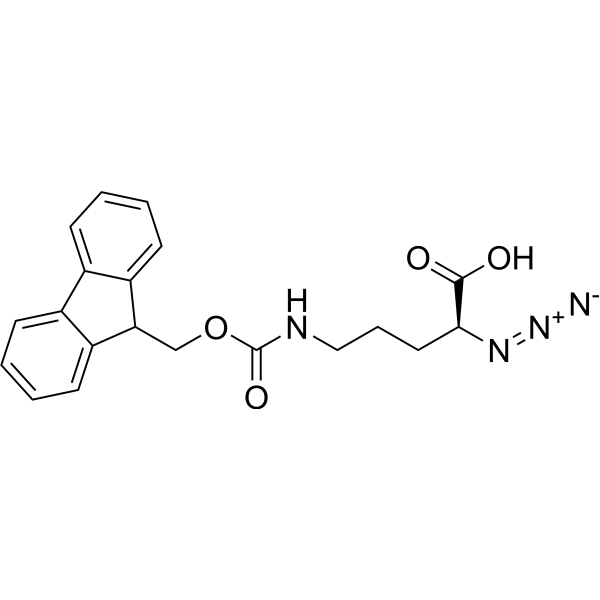
- HY-W008575
-
-
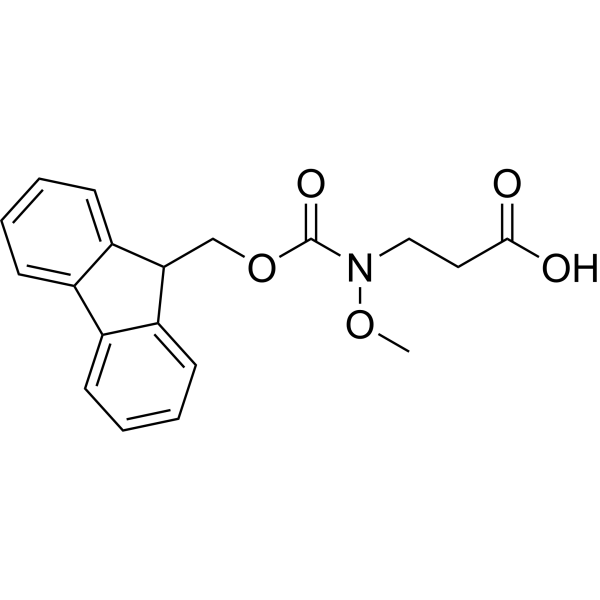
- HY-W036160
-
|
|
Amino Acid Derivatives
|
Others
|
|
N-Fmoc-O-ethyl-L-homoserine is an homoserine derivative, can be used in cyclic peptide compounds synthesis, as a reducing reagent .
|
-
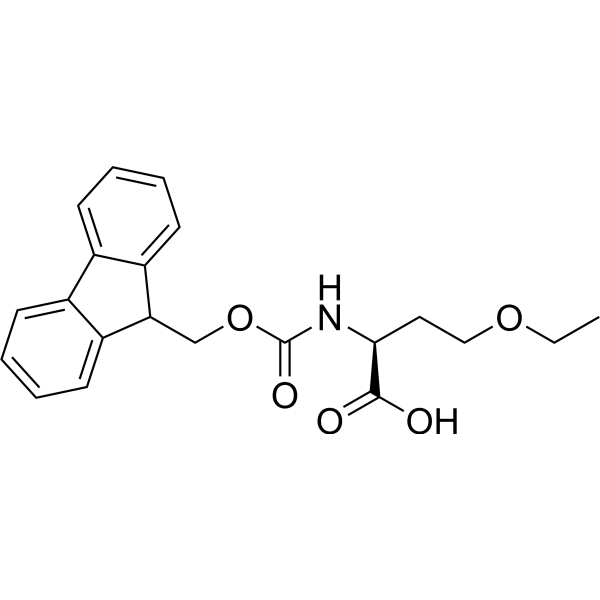
- HY-W1119942
-
|
|
Drug Intermediate
DNA/RNA Synthesis
|
Others
|
|
N-Fmoc-3R-hydroxypyrrolidine-5S-methanol is an organic compound containing a pyrrolidine ring. N-Fmoc-3R-hydroxypyrrolidine-5S-methanol can be used as an intermediate in the synthesis of other active compounds, such as nucleic acids.
|
-

- HY-W142171
-
-
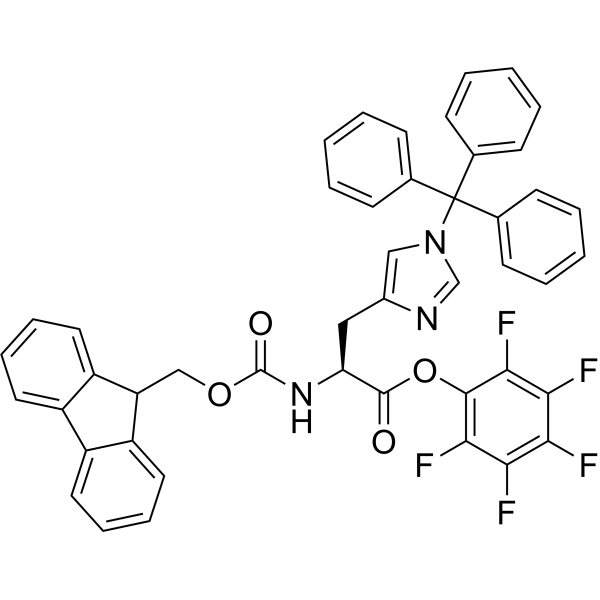
- HY-W048199
-
-
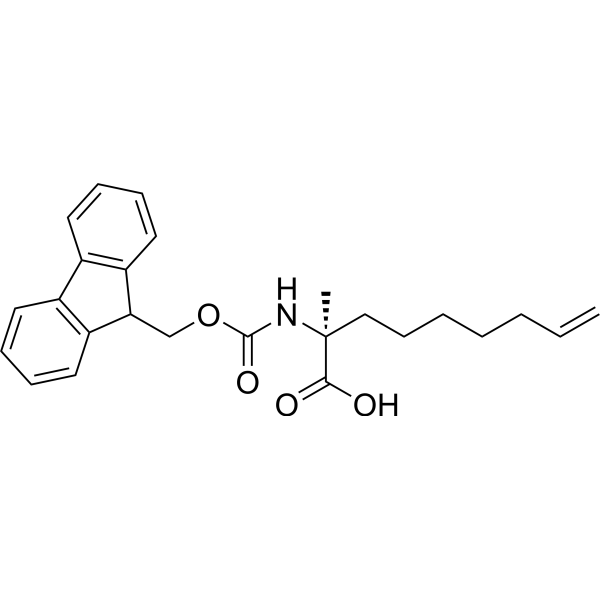
- HY-P4277A
-
|
|
Glyoxalase (GLO)
|
Others
|
|
N,S-Bis-Fmoc-Glutathione TFA is a potent glyoxalase II inhibitor with a Ki value of 0.75 μM and an IC50 of 2.5 μM .
|
-

- HY-W048205
-
|
|
Amino Acid Derivatives
|
Others
|
|
N6-Diazo-L-Fmoc-lysine is an active compand and can be used in a variety of chemical studies. N6-Diazo-L-Fmoc-lysine is a click chemistry reagent, it contains an Azide group and can undergo copper-catalyzed azide-alkyne cycloaddition reaction (CuAAc) with molecules containing Alkyne groups. It can also undergo strain-promoted alkyne-azide cycloaddition (SPAAC) reactions with molecules containing DBCO or BCN groups.
|
-
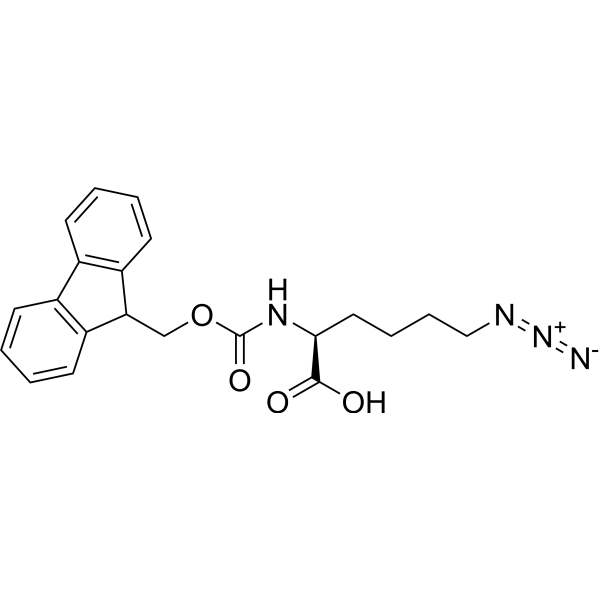
- HY-151843
-
|
|
ADC Linker
|
Others
|
|
N3-L-Lys(Fmoc)-OH is a click chemistry reagent containing an azide group . N3-L-Lys(Fmoc)-OH is a click chemistry reagent, it contains an Azide group and can undergo copper-catalyzed azide-alkyne cycloaddition reaction (CuAAc) with molecules containing Alkyne groups. It can also undergo strain-promoted alkyne-azide cycloaddition (SPAAC) reactions with molecules containing DBCO or BCN groups.
|
-
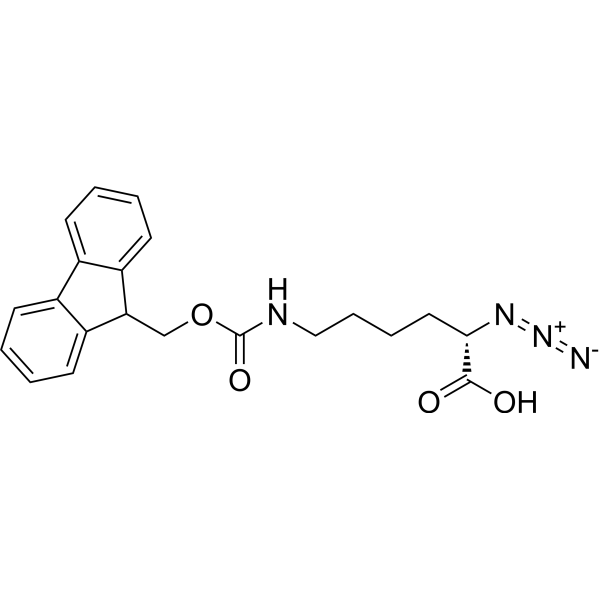
- HY-140848
-
|
|
PROTAC Linkers
|
Cancer
|
|
Azide-PEG3-L-alanine-Fmoc is a PEG-based PROTAC linker that can be used in the synthesis of PROTACs . Azide-PEG3-L-alanine-Fmoc is a click chemistry reagent, it contains an Azide group and can undergo copper-catalyzed azide-alkyne cycloaddition reaction (CuAAc) with molecules containing Alkyne groups. It can also undergo strain-promoted alkyne-azide cycloaddition (SPAAC) reactions with molecules containing DBCO or BCN groups.
|
-
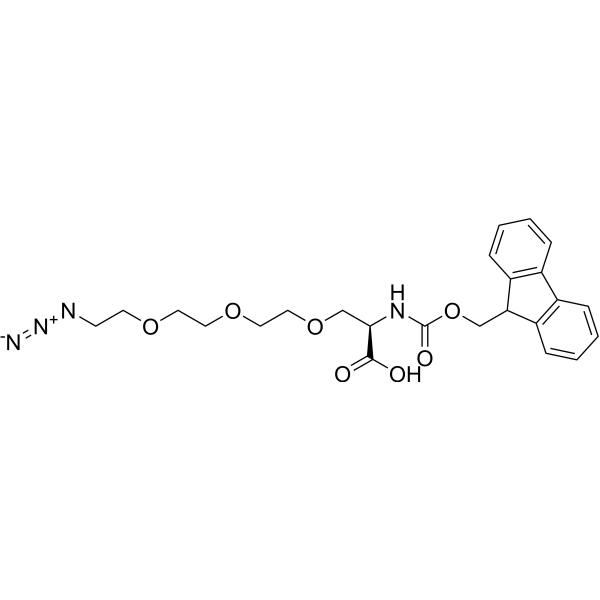
- HY-W151297
-
|
|
Drug Intermediate
|
Others
|
|
(3S)-Fmoc-1-pyrrolidine-3-carboxylic acid is a drug intermediate for synthesis of various active compounds.
|
-

- HY-W074914
-
-
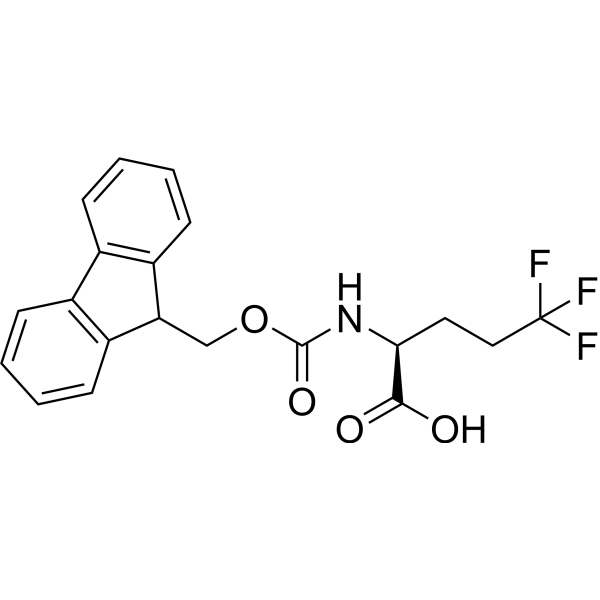
- HY-152978
-
|
|
Nucleoside Antimetabolite/Analog
Phosphoramidites
|
Others
|
|
2'-Deoxy-5'-O-DMT-N4-Fmoc-5-methylcytidine is a cytidine analog. Cytidine analogs have a mechanism of inhibiting DNA methyltransferases (such as Zebularine, HY-13420), and have potential anti-metabolic and anti-tumor activities .
|
-
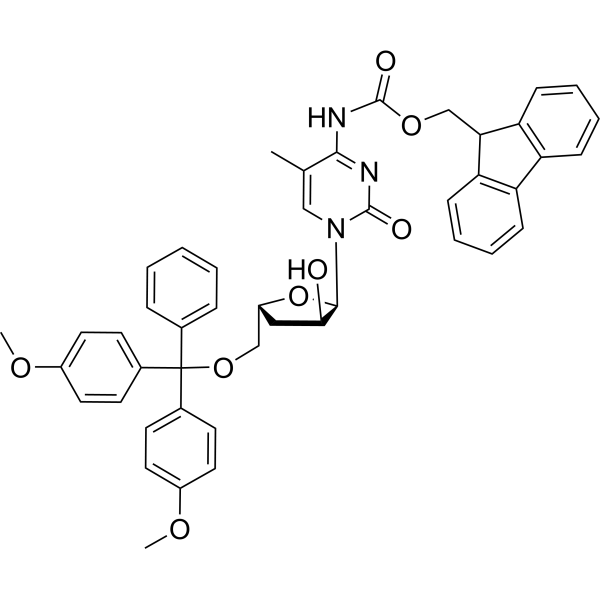
- HY-W141923
-
-
![N-[2-(Fmoc-amino)-ethyl]-Gly-O-tBu hydrochloride](//file.medchemexpress.com/product_pic/hy-w141923.gif)
- HY-W1119944
-
-

- HY-151681
-
|
cis-4-Azido-N-fmoc-D-proline
|
ADC Linker
|
Others
|
|
(2R,4R)-Fmoc-D-Pro(4-N3)-OH (cis-4-Azido-N-Fmoc-D-proline) is a click chemistry reagent containing an azide group . It contains an azide group and can undergo copper-catalyzed azide-alkyne cycloaddition (CuAAc) with molecules containing alkyne groups. It can also undergo ring strain-promoted alkyne-azide cycloaddition (SPAAC) with molecules containing DBCO or BCN groups.
|
-
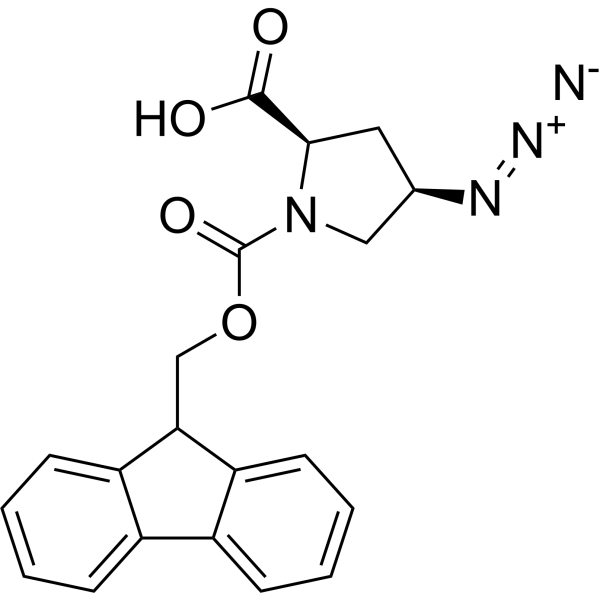
- HY-151749
-
|
|
ADC Linker
|
Others
|
|
N3-D-Lys(Fmoc)-OH is a click chemistry reagent containing an azide group. Click chemistry is a powerful chemical reaction with excellent bioorthogonality features: biocompatible, rapid and highly specific in biological environments . N3-D-Lys(Fmoc)-OH is a click chemistry reagent, it contains an Azide group and can undergo copper-catalyzed azide-alkyne cycloaddition reaction (CuAAc) with molecules containing Alkyne groups. It can also undergo strain-promoted alkyne-azide cycloaddition (SPAAC) reactions with molecules containing DBCO or BCN groups.
|
-
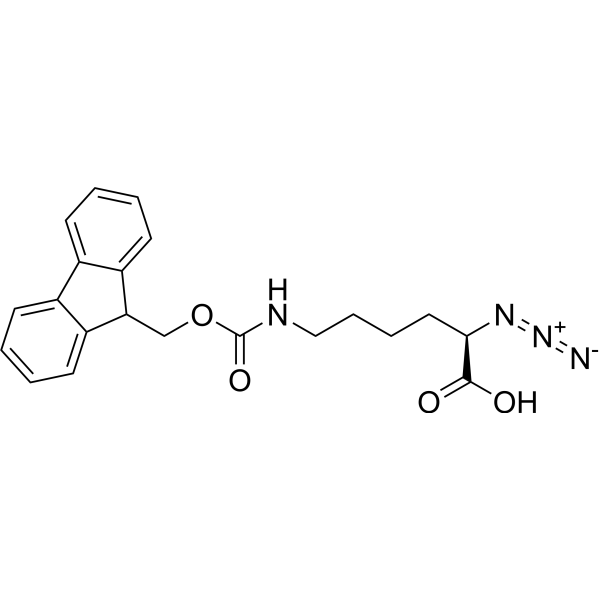
- HY-131082
-
|
|
ADC Linker
|
Cancer
|
|
(R)-8-Azido-2-(Fmoc-amino)octanoic acid is a non-cleavable ADC linker used in the synthesis of antibody-drug conjugates (ADCs) . (R)-8-Azido-2-(Fmoc-amino)octanoic acid is a click chemistry reagent, it contains an Azide group and can undergo copper-catalyzed azide-alkyne cycloaddition reaction (CuAAc) with molecules containing Alkyne groups. It can also undergo strain-promoted alkyne-azide cycloaddition (SPAAC) reactions with molecules containing DBCO or BCN groups.
|
-
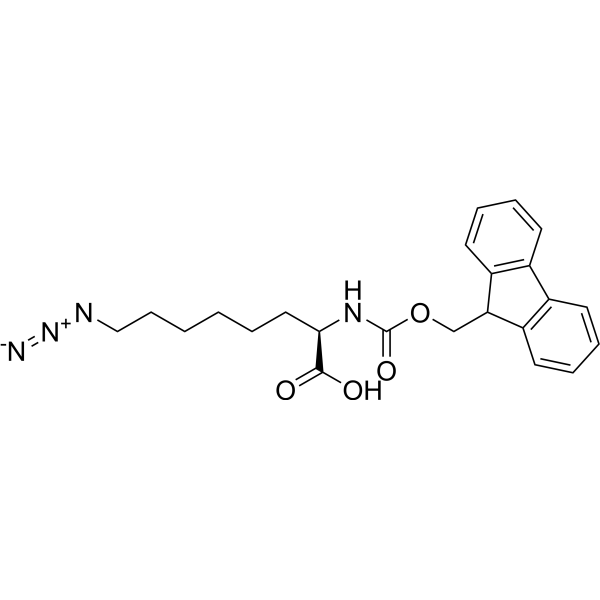
- HY-W039102
-
|
|
Amino Acid Derivatives
|
Cancer
|
|
N-Fmoc-N,O-dimethyl-L-serine is a serine derivative that can be used for coibamide A synthesis. Coibamide A is a marine natural product with potent antiproliferative activity against human cancer cells .
|
-
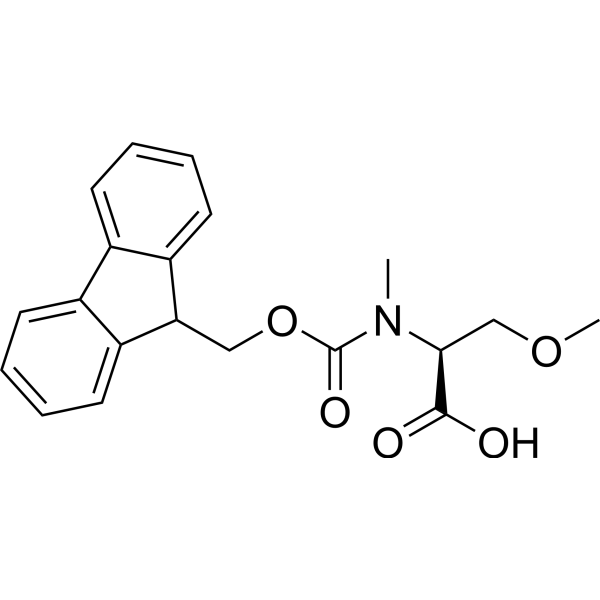
- HY-W540023
-
|
|
ADC Linker
|
Cancer
|
|
Endo-BCN-Fmoc-L-Lysine is a linker containing the lyophilic bidentate macrocyclic ligand endo-BCN, which can further synthesize macrocyclic complexes. In click chemistry, endo-BCN can react with molecules containing azide groups to form stable triazoles in the absence of catalysts.
|
-
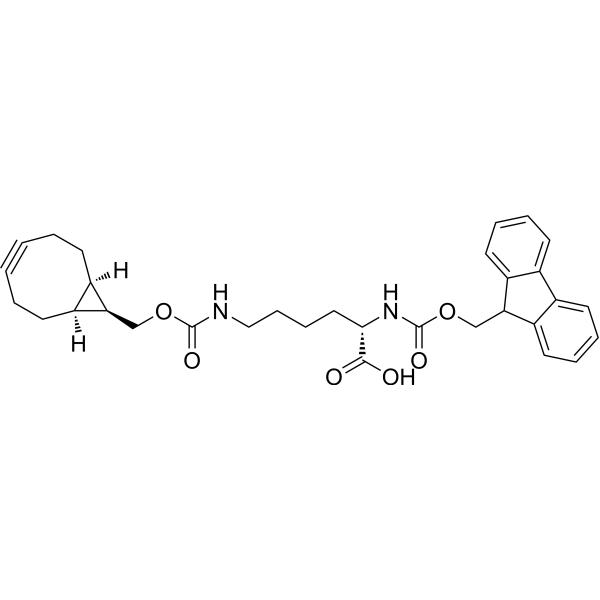
- HY-140846
-
|
|
PROTAC Linkers
|
Cancer
|
|
N-Fmoc-N'-(azido-PEG4)-L-Lysine is an alkyl/ether-based PROTAC linker that can be used in the synthesis of PROTACs . N-Fmoc-N'-(azido-PEG4)-L-Lysine is a click chemistry reagent, it contains an Azide group and can undergo copper-catalyzed azide-alkyne cycloaddition reaction (CuAAc) with molecules containing Alkyne groups. It can also undergo strain-promoted alkyne-azide cycloaddition (SPAAC) reactions with molecules containing DBCO or BCN groups.
|
-
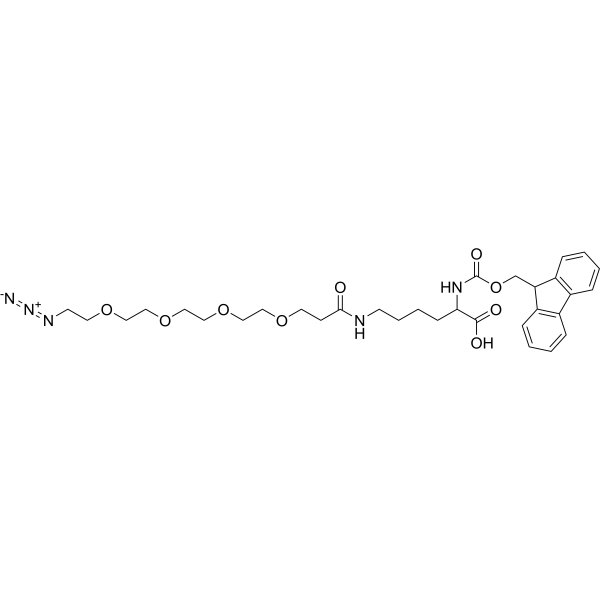
- HY-152979
-
|
|
DNA/RNA Synthesis
Phosphoramidites
|
Others
|
|
2'-Deoxy-5'-O-DMT-N4-Fmoc-5-methylcytidine 3'-CE-phosphoramidite is a cytidine analog. Cytidine analogs have a mechanism of inhibiting DNA methyltransferases (such as Zebularine, HY-13420), and have potential anti-metabolic and anti-tumor activities .
|
-
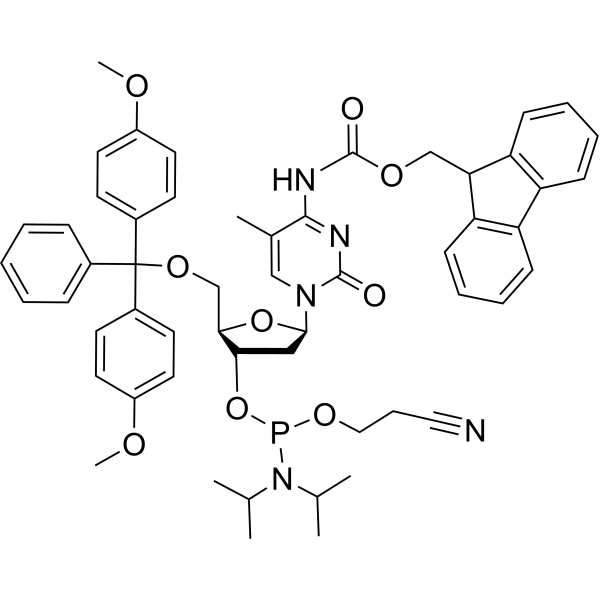
- HY-151814
-
|
|
ADC Linker
|
Others
|
|
(2S,4S)-Fmoc-L-Pro(4-NHPoc)-OH is a click chemistry reagent containing an azide group.
|
-
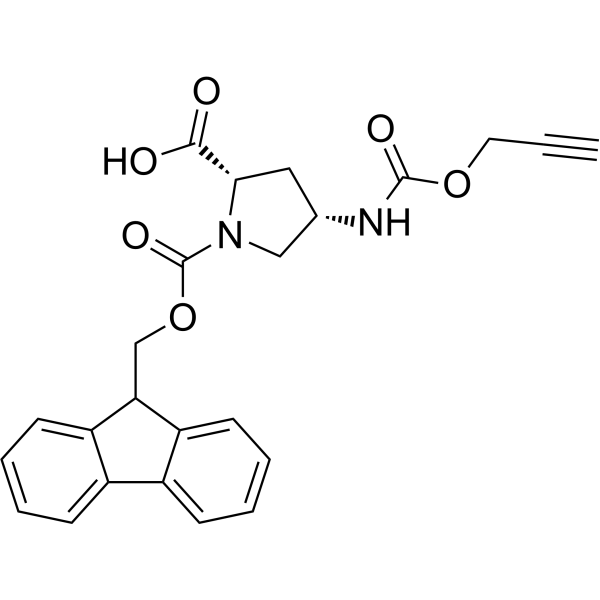
- HY-131087
-
|
|
ADC Linker
|
Cancer
|
|
Me-triacetyl-β-D-glucopyranuronate-Ph-CH2OH-Fmoc is a cleavable ADC linker used in the synthesis of antibody-drug conjugates (ADCs) .
|
-
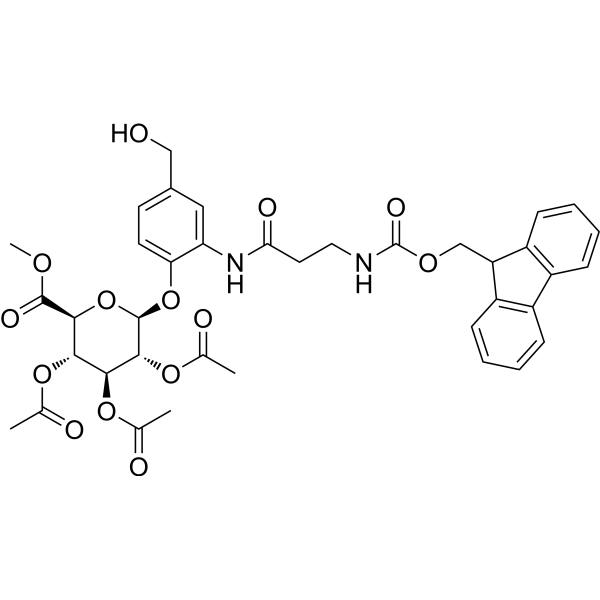
- HY-140847
-
|
|
PROTAC Linkers
|
Cancer
|
|
N-Fmoc-N'-(azido-PEG4)-L-Lysine-PFP ester is an alkyl/ether and PEG-based PROTAC linker that can be used in the synthesis of PROTACs . N-Fmoc-N'-(azido-PEG4)-L-Lysine-PFP ester is a click chemistry reagent, it contains an Azide group and can undergo copper-catalyzed azide-alkyne cycloaddition reaction (CuAAc) with molecules containing Alkyne groups. It can also undergo strain-promoted alkyne-azide cycloaddition (SPAAC) reactions with molecules containing DBCO or BCN groups.
|
-
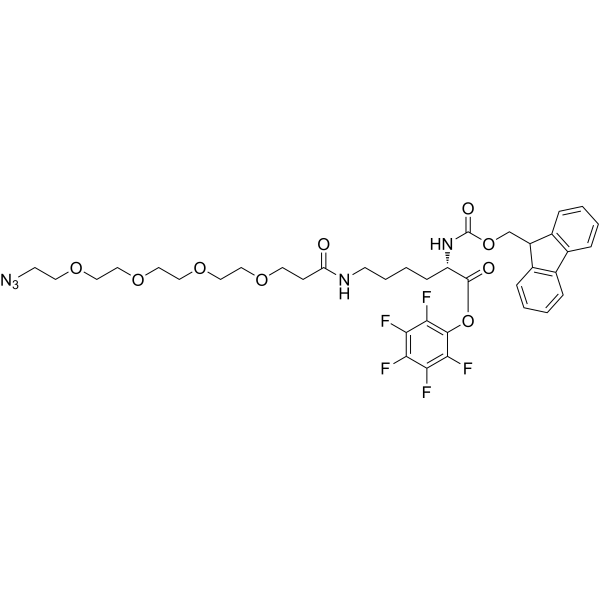
- HY-153195
-
|
|
Drug Intermediate
|
Cancer
|
|
Tetra-O-acetyl-β-D-galactopyranosyl-Ph-CH2OH-Fmoc can be used as conjugates to prepare antibody drug conjugates (ADCs) .
|
-
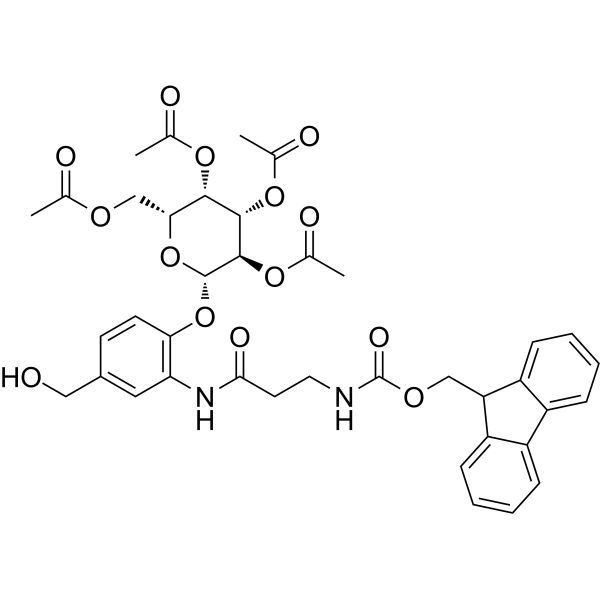
- HY-W011533
-
|
N-fmoc-ethanolamine
|
PROTAC Linkers
|
Cancer
|
|
(9H-Fluoren-9-yl)methyl (2-hydroxyethyl)carbamate (N-Fmoc-ethanolamine) is a PROTAC linker that can be used in the synthesis of PROTACs.
|
-

- HY-152873
-
|
|
Nucleoside Antimetabolite/Analog
|
Others
|
|
Uridine-5-(N-Fmoc-methylamino)-acetyl (9-fluorenylmethyl) ester is a purine nucleoside analogue. Purine nucleoside analogs have broad antitumor activity targeting indolent lymphoid malignancies. Anticancer mechanisms in this process rely on inhibition of DNA synthesis, induction of apoptosis, etc .
|
-
- HY-151689
-
|
|
ADC Linker
|
Others
|
|
(2S,3R)-Fmoc-Abu(3-N3)-OH is a click chemistry reagent containing an azide group. (2S,3R)-Fmoc-Abu(3-N3)-OH can be used for the research of various biochemical . It contains an azide group and can undergo copper-catalyzed azide-alkyne cycloaddition (CuAAc) with molecules containing alkyne groups. It can also undergo ring strain-promoted alkyne-azide cycloaddition (SPAAC) with molecules containing DBCO or BCN groups.
|
-
- HY-151850
-
|
|
ADC Linker
|
Others
|
|
(2S,4R)-Fmoc-L-Pro(4-N3)-OH is a click chemistry reagent containing an azide . (2S,4R)-Fmoc-L-Pro(4-N3)-OH is a click chemistry reagent, it contains an Azide group and can undergo copper-catalyzed azide-alkyne cycloaddition reaction (CuAAc) with molecules containing Alkyne groups. It can also undergo strain-promoted alkyne-azide cycloaddition (SPAAC) reactions with molecules containing DBCO or BCN groups.
|
-
- HY-151828
-
|
|
ADC Linker
|
Others
|
|
N3-Gly-Aeg(Fmoc)-OH is a click chemistry reagent containing an azide group. PNA building-block that can be further modified using Click-chemistry . It contains an azide group and can undergo copper-catalyzed azide-alkyne cycloaddition (CuAAc) with molecules containing alkyne groups. It can also undergo ring strain-promoted alkyne-azide cycloaddition (SPAAC) with molecules containing DBCO or BCN groups.
|
-
- HY-131296
-
|
|
Drug Derivative
|
Inflammation/Immunology
|
|
5-A-RU-PABC-Val-Cit-Fmoc is the proagent of 5-A-RU . 5-A-RU, a precursor of bacterial Riboflavin, is a mucosal-associated invariant T (MAIT) cells activator. 5-A-RU forms potent MAIT-activating antigens via non-enzymatic reactions with small molecules, such as glyoxal and methylglyoxal, which are derived from other metabolic pathways .
|
-
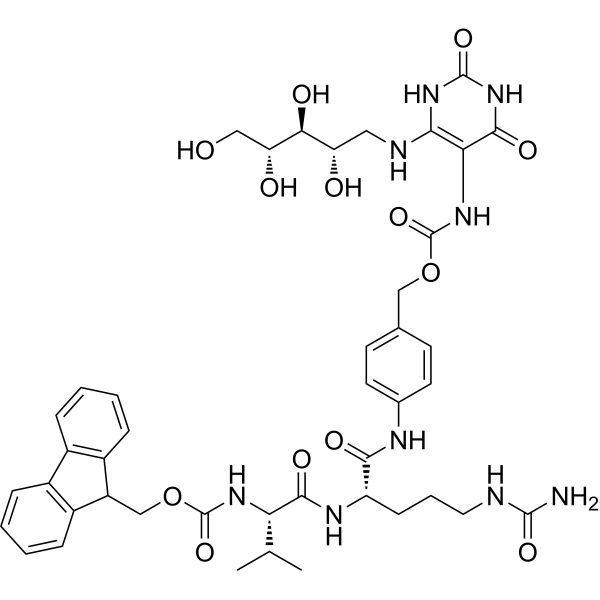
- HY-153196
-
|
|
ADC Linker
|
Others
|
|
Tetra-O-acetyl-β-D-galactopyranosyl-Ph-CH2-(4-nitrophenyl)carbonate-Fmoc (Example 2.28.6) is an ADC linker that can be used to synthesize antibody-conjugated active molecules (ADCs) .
|
-
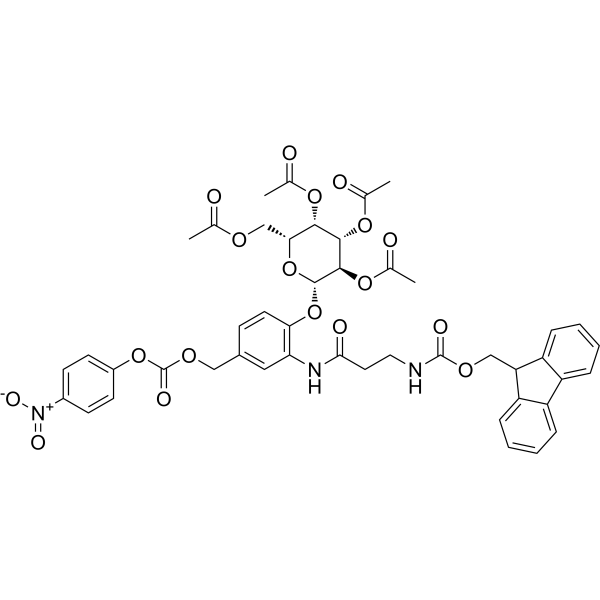
- HY-151779
-
|
|
ADC Linker
|
Others
|
|
N3-L-Dab(Fmoc)-OH is a click chemistry reagent containing an azide group. Click chemistry has great potential for use in binding between nucleic acids, lipids, proteins, and other molecules, and has been used in many research fields because of its beneficial characteristics, including high yield, high specificity, and simplicity . It contains an azide group and can undergo copper-catalyzed azide-alkyne cycloaddition (CuAAc) with molecules containing alkyne groups. It can also undergo ring strain-promoted alkyne-azide cycloaddition (SPAAC) with molecules containing DBCO or BCN groups.
|
-
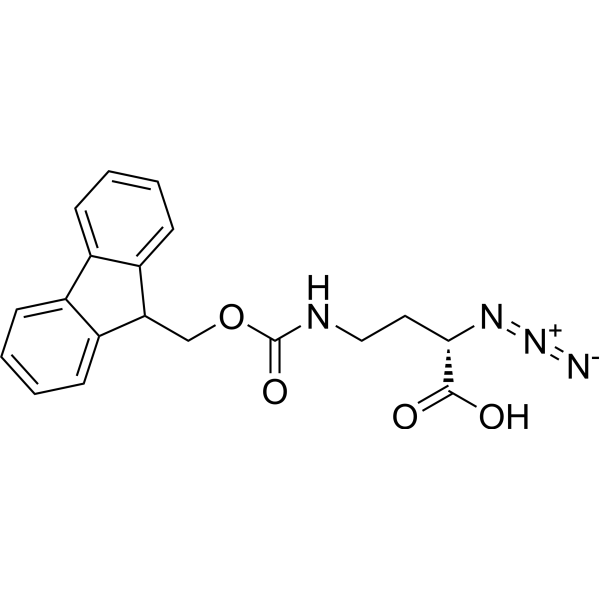
- HY-151734
-
|
|
ADC Linker
|
Others
|
|
(2R,3S)-Fmoc-Abu(3-N3)-OH is a click chemistry reagent containing an azide group . It contains an azide group and can undergo copper-catalyzed azide-alkyne cycloaddition (CuAAc) with molecules containing alkyne groups. It can also undergo ring strain-promoted alkyne-azide cycloaddition (SPAAC) with molecules containing DBCO or BCN groups.
|
-
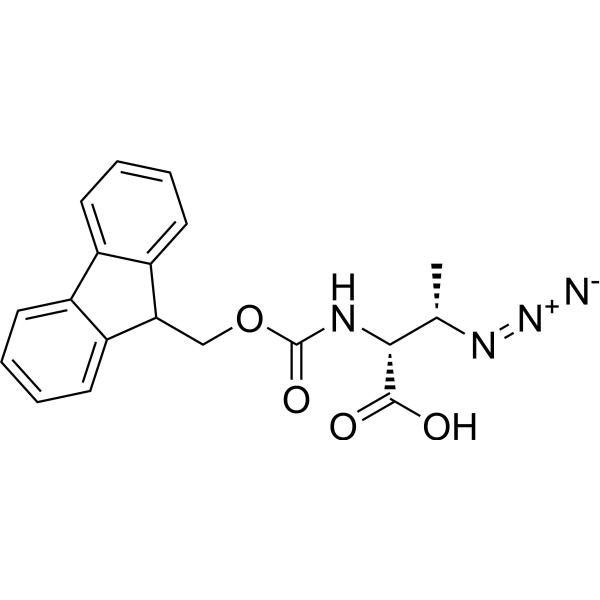
- HY-151762
-
|
|
ADC Linker
|
Others
|
|
(2R,4S)-Fmoc-D-Pro(4-N3)-OH is a click chemistry reagent containing an azide group. It contains an azide group and can undergo copper-catalyzed azide-alkyne cycloaddition (CuAAc) with molecules containing alkyne groups. It can also undergo ring strain-promoted alkyne-azide cycloaddition (SPAAC) with molecules containing DBCO or BCN groups.
|
-
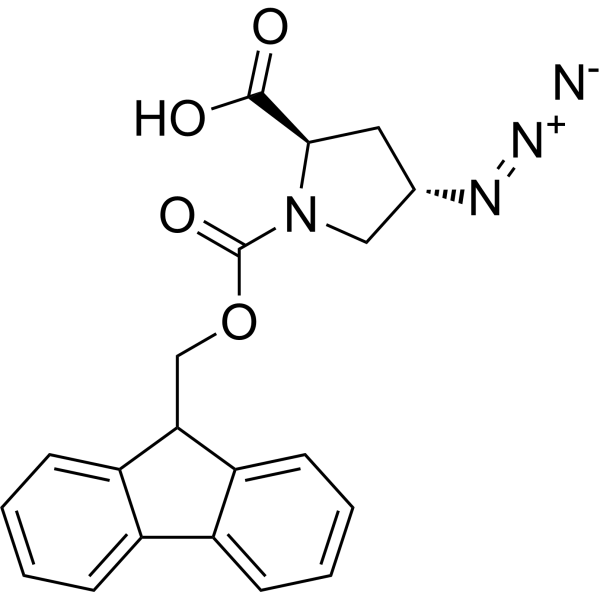
- HY-152983
-
|
|
DNA/RNA Synthesis
Phosphoramidites
|
Others
|
|
2'-Deoxy-5'-O-DMT-N6-Fmoc-adenosine 3'CE-phosphoramidite is an adenosine analog. Adenosine analogs mostly act as smooth muscle vasodilators and have also been shown to inhibit cancer progression. Its popular products are adenosine phosphate, Acadesine (HY-13417), Clofarabine (HY-A0005), Fludarabine phosphate (HY-B0028) and Vidarabine (HY-B0277) .
|
-
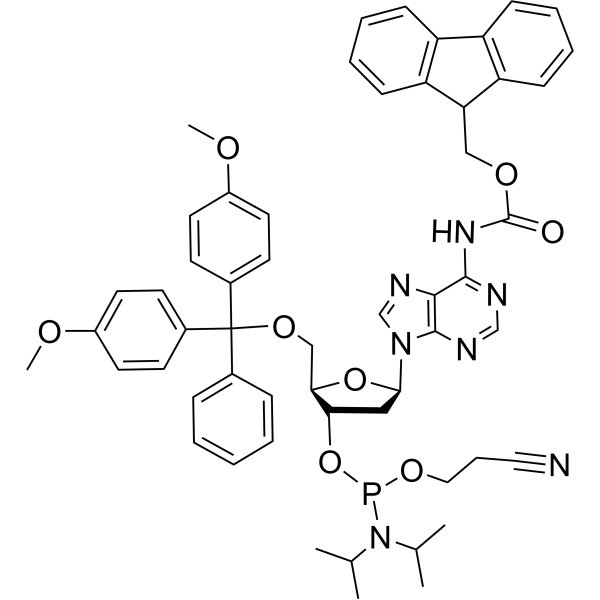
- HY-129480
-
|
|
Drug Intermediate
|
Others
|
|
Vertilmicin sulfate combines with FMOC-Cl to form the Vertilmicin-FMOC-Cl adduct, and can be used for the determination of glucosamine sulfate in plasma .
|
-
- HY-W047799
-
|
|
Amino Acid Derivatives
|
Others
|
|
Fmoc-Phe(4-CONH2)-OH is an amino acid derivative with an Fmoc protecting group, which can be used to synthesize a small-sized HTLV-I protease inhibitor with hydrophilicity .
|
-

- HY-W286743S
-
-
- HY-W321016S
-
-
- HY-177973
-
-

- HY-148463
-
|
|
ADC Linker
|
Cancer
|
|
MP-Ala-Ala-PAB is a cleavable ADC linker. Fmoc-Ala-Ala-PAB can be used in the synthesis of antibody-drug conjugates (ADCs) .
|
-
- HY-148464
-
|
|
ADC Linker
|
Cancer
|
|
MC-Ala-Ala-PAB is a cleavable ADC linker. Fmoc-Ala-Ala-PAB can be used in the synthesis of antibody-drug conjugates (ADCs) .
|
-
- HY-P2439
-
|
|
Neurokinin Receptor
|
Others
|
|
MEN 10208 is a neurokinin A antagonist prepared by solid phase synthesis. The Fmoc strategy has more advantages than the Boc strategy in its preparation, and can obtain products with higher yield and purity.
|
-

- HY-W089230
-
|
N,N'-Di-tert-butoxycarbonyl-L-histidine
|
Amino Acid Derivatives
|
Others
|
|
Boc-His(Boc)-OH (N,N'-Di-tert-butoxycarbonyl-L-histidine) is an amino acid derivative with an Fmoc protecting group, which can be used to synthesize the dodecapeptide α-mating factor of Saccharomyces cerevisiae .
|
-

- HY-W131404
-
|
|
Biochemical Assay Reagents
|
Others
|
|
Boc-Aeg-OEt is an aminoethylglycine monomer based on a Boc- and ethyl ester-protected AEG backbone, with substitution by a pyridine ligand. Boc-Aeg-OEt reduces steric hindrance in a series of dipeptide synthesis reactions, and has higher solubility in common solvents than the Fmoc-aeg-OtBu backbone .
|
-

- HY-P11152
-
|
|
HIV
|
Infection
Inflammation/Immunology
|
|
HIV-1 tat Protein (1-9) occurs extracellularly and has a role in the immunosuppression of non-HIV-1-infected T cells in acquired AIDS. HIV-1 tat Protein (1-9) is an inhibitor of DP IV. HIV-1 tat Protein (1-9) can be synthesized by phase peptide synthesis with Fmoc (N-(9-fluorenyl)methoxycarbonyl) technique using the peptide synthesizer 431A. HIV-1 tat Protein (1-9) can be studied in research on HIV-1 .
|
-

- HY-Y0912
-
|
N-HBTU
|
Biochemical Assay Reagents
|
Inflammation/Immunology
|
|
HBTU (N-HBTU) is a guanidinium-based peptide coupling reagent and immunological sensitizer. HBTU can be used in combination with bases such as DIPEA (HY-130142) to complete coupling reactions, with HOBt and TMU as by-products. HBTU is a standard reagent in automated solid-phase peptide synthesis, particularly for the Fmoc/tBu strategy, which effectively promotes coupling steps, but it is not suitable for sterically hindered amino acids or dipeptide derivatives. HBTU can induce rhinitis, dermatitis, bronchial asthma and severe allergic reactions. HBTU can be used to study the pathogenesis of allergic reactions, occupational rhinitis, allergic contact dermatitis and bronchial asthma .
|
-

| Cat. No. |
Product Name |
Type |
-
- HY-78921AG
-
|
|
Fluorescent Dyes
|
|
Fmoc-3VVD-OH (GMP) is a cleavable ADC linker used in the synthesis of antibody-drug conjugates (ADCs) .
|
-
- HY-19318G
-
|
|
Fluorescent Dyes
|
|
Fmoc-Val-Cit-PAB GMP is a GMP grade Fmoc-Val-Cit-PAB (HY-19318). Fmoc-Val-Cit-PAB is a cleavable antibody-conjugated active molecule (ADC) commonly used linker.
|
-
- HY-131833G
-
|
|
Fluorescent Dyes
|
|
Fmoc-Gly-Gly-Phe-OH GMP is a GMP grade Fmoc-Gly-Gly-Phe-OH (HY-131833). Fmoc-Gly-Gly-Phe-OH is a cleavable ADC linker used in the synthesis of antibody-drug conjugates (ADCs) .
|
-
- HY-44980G
-
|
|
Fluorescent Dyes
|
|
Fmoc-Gly-NH-CH2-acetyloxy GMP is a GMP grade Fmoc-Gly-NH-CH2-acetyloxy (HY-44980). GMP small molecules works appropriately as an auxiliary reagent for cell therapy manufacture. Fmoc-Gly-NH-CH2-acetyloxy is a cleavable linker that can be used to synthesize antiboy-drug Conjugates (ADCs).
|
| Cat. No. |
Product Name |
Type |
-
- HY-79647
-
|
N-(fmoc-oxy)succinimide
|
Biochemical Assay Reagents
|
|
Fmoc-OSu (N-(Fmoc-oxy)succinimide) is an acylating agent that targets amino groups (-NH2). It can selectively protect the amino groups of amino acids by covalently binding with primary or secondary amines through nucleophilic substitution reactions. Fmoc-OSu forms a stable amide bond with the amino group to avoid side reactions of the amino group in peptide synthesis. It can also be used as a fluorescent labeling reagent to react with glycosylamines for efficient labeling of N-sugar chains. Fmoc-OSu can be used as an Fmoc protection strategy in peptide synthesis, and as a fluorescent labeling and analysis method for N-sugar chains .
|
-
- HY-W008034
-
|
fmoc-L-Trp(Boc)-OH
|
Biochemical Assay Reagents
|
|
Fmoc-Trp(Boc)-OH (Fmoc-L-Trp(Boc)-OH) is an amino acid derivative with protective groups. Fmoc-Trp(Boc)-OH can self-assemble into stable and pH-responsive spherical nanoparticles, which can load and release bioactive molecules, with good biocompatibility and high cell uptake rate. Fmoc-Trp(Boc)-OH can be used in research on drug delivery .
|
-
- HY-W002327
-
|
|
Biochemical Assay Reagents
|
|
Fmoc-Asn (Trt)-OH is an Fmoc-protected asparagine derivative. Fmoc-Asn (Trt)-OH supports solid-phase peptide synthesis .
|
-
- HY-W013081
-
|
|
Biochemical Assay Reagents
|
|
Fmoc-Gln(Trt)-OH is a glutamine derivative containing amine protecting group Fmoc. Fmoc-Gln(Trt)-OH can be used in solid-phase peptide synthesis .
|
-
- HY-W007655
-
|
|
Biochemical Assay Reagents
|
|
Fmoc-D-Lys (Boc)-OH is an Fmoc- and Boc-protected D-lysine derivative. Fmoc-D-Lys (Boc)-OH ensures the precise incorporation of D-lysine into peptide chains, maintaining the specific conformation and biological activity of peptides. Fmoc-D-Lys (Boc)-OH can be used in research on the synthesis of peptides containing unnatural amino acids .
|
-
- HY-W008689
-
|
N-fmoc-6-Aminohexanoic acid
|
Biochemical Assay Reagents
|
|
Fmoc-ε-Acp-OH is a biochemical reagent that can be used as a biological material or organic compound for life science related research.
|
-
- HY-W749603
-
|
|
Biochemical Assay Reagents
|
|
Fmoc-L-Lys-mono-amide-DOTA-tris(t-Bu ester) is a bifunctional chelator (Bifunctional Chelator; BFC) and a macrocyclic DOTA derivative used for tumor pre-targeting. Fmoc-L-Lys-mono-amide-DOTA-tris(t-Bu ester) can be used for conjugation of peptides and radionuclides.
|
-
- HY-22295
-
|
|
Biochemical Assay Reagents
|
|
Fmoc-4-aminobutanoic acid is a biochemical reagent that can be used as a biological material or organic compound for life science related research.
|
-
- HY-W008205
-
|
fmoc-L-Hydroxyproline
|
Biochemical Assay Reagents
|
|
Fmoc-Hyp-OH is a biochemical reagent that can be used as a biological material or organic compound for life science related research.
|
-
- HY-W010856
-
|
|
Biochemical Assay Reagents
|
|
Fmoc-Orn(Boc)-OH is a biochemical reagent that can be used as a biological material or organic compound for life science related research.
|
-
- HY-W1048542
-
|
|
Biochemical Assay Reagents
|
|
Fmoc-NH-PEG1000-COOH is a PEG product containing two Fmoc-protected amines and a carboxylic acid. Fmoc-NH-PEG1000-COOH is an important cross-linking agent with PEG chains .
|
-
- HY-78921AG
-
|
|
Biochemical Assay Reagents
|
|
Fmoc-3VVD-OH (GMP) is a cleavable ADC linker used in the synthesis of antibody-drug conjugates (ADCs) .
|
-
- HY-W008963
-
|
Nα-fmoc-D-tryptophan; fmoc-D-Trp-OH
|
Biochemical Assay Reagents
|
|
Fmoc-D-Trp-OH (Nα-Fmoc-D-tryptophan) is a biochemical reagent that can be used as a biological material or organic compound for life science related research .
|
-
- HY-19318G
-
|
|
Biochemical Assay Reagents
|
|
Fmoc-Val-Cit-PAB GMP is a GMP grade Fmoc-Val-Cit-PAB (HY-19318). Fmoc-Val-Cit-PAB is a cleavable antibody-conjugated active molecule (ADC) commonly used linker.
|
-
- HY-131833G
-
|
|
Biochemical Assay Reagents
|
|
Fmoc-Gly-Gly-Phe-OH GMP is a GMP grade Fmoc-Gly-Gly-Phe-OH (HY-131833). Fmoc-Gly-Gly-Phe-OH is a cleavable ADC linker used in the synthesis of antibody-drug conjugates (ADCs) .
|
-
- HY-W145646
-
|
|
Biochemical Assay Reagents
|
|
Fmoc-L-Ser((Ac)4-β-D-Glc)-OH is a biochemical reagent that can be used as a biological material or organic compound for life science related research.
|
-
- HY-174961
-
|
fmoc-NH-PEG1000-Mal
|
Biochemical Assay Reagents
|
|
Fmoc-PEG1000-Maleimide (Fmoc-NH-PEG1000-Mal) is a PEG derivative with an Fmoc protecting group and a Maleimide (HY-W007324) reactive group. Fmoc is a commonly used amino protecting group that protects the amino group from unwanted reactions until it is removed for a specific coupling reaction. Maleimide forms a stable thioether bond with sulfhydryl (-SH) groups. PEG modification can improve solubility and stability and reduce the immunogenicity of proteins and peptides .
|
-
- HY-174961C
-
|
fmoc-NH-PEG5000-Mal
|
Biochemical Assay Reagents
|
|
Fmoc-PEG5000-Maleimide (Fmoc-NH-PEG5000-Mal) is a PEG derivative with an Fmoc protecting group and a Maleimide (HY-W007324) reactive group. Fmoc is a commonly used amino protecting group that protects the amino group from unwanted reactions until it is removed for a specific coupling reaction. Maleimide forms a stable thioether bond with sulfhydryl (-SH) groups. PEG modification can improve solubility and stability and reduce the immunogenicity of proteins and peptides .
|
-
- HY-174949B
-
|
fmoc-NH-PEG3400-Thiol
|
Biochemical Assay Reagents
|
|
FMOC-NH-PEG3400-SH (FMOC-NH-PEG3400-Thiol) is a PEG derivative with an Fmoc protecting group and a thiol (-SH) reactive group. The thiol group is a highly reactive chemical group that can react specifically with a variety of molecules to form stable covalent bonds. Fmoc is a commonly used amino protecting group that protects the amino group from unwanted reactions until it is removed when a specific coupling reaction is required.
|
-
- HY-174896A
-
|
|
Biochemical Assay Reagents
|
|
DSPE-PEG2000-Fmoc is a lipid-containing PEG derivative that can be used to form micelles as nanoparticles for drug delivery . Fmoc is a commonly used amino protecting group that protects the amino group from unwanted reactions until it is removed when a specific coupling reaction is required.
|
-
- HY-174931
-
|
|
Biochemical Assay Reagents
|
|
HO-PEG1000-NH-Fmoc is a PEG derivative with an Fmoc protecting group and a hydroxyl (OH) reactive group. Fmoc is a commonly used amino protecting group that protects the amino group from unwanted reactions until it is removed for a specific coupling reaction.
|
-
- HY-W747366
-
-
- HY-W1048542A
-
|
|
Biochemical Assay Reagents
|
|
Fmoc-NH-PEG2000-COOH is a linear hetero-bifunctional PEG product with two Fmoc-protected amines and a carboxylic acid at both ends. Fmoc-NH-PEG2000-COOH is an important cross-linking agent with PEG chains. The protected amine can be regenerated by mild alkaline conditions .
|
-
- HY-W1048542D
-
|
|
Biochemical Assay Reagents
|
|
Fmoc-NH-PEG5000-COOH is a linear hetero-bifunctional PEG product with two Fmoc-protected amines and a carboxylic acid at both ends. Fmoc-NH-PEG5000-COOH is an important cross-linking agent with PEG chains. The protected amine can be regenerated by mild alkaline conditions .
|
-
- HY-W1048542C
-
|
|
Biochemical Assay Reagents
|
|
Fmoc-NH-PEG3400-COOH is a linear hetero-bifunctional PEG product with two Fmoc-protected amines and a carboxylic acid at both ends. Fmoc-NH-PEG3400-COOH is an important cross-linking agent with PEG chains. The protected amine can be regenerated by mild alkaline conditions .
|
-
- HY-W1048542H
-
|
|
Biochemical Assay Reagents
|
|
Fmoc-NH-PEG20000-COOH is a linear hetero-bifunctional PEG product with two Fmoc-protected amines and a carboxylic acid at both ends. Fmoc-NH-PEG20000-COOH is an important cross-linking agent with PEG chains. The protected amine can be regenerated by mild alkaline conditions .
|
-
- HY-W1048542I
-
|
|
Biochemical Assay Reagents
|
|
Fmoc-NH-PEG40000-COOH is a linear hetero-bifunctional PEG product with two Fmoc-protected amines and a carboxylic acid at both ends. Fmoc-NH-PEG40000-COOH is an important cross-linking agent with PEG chains. The protected amine can be regenerated by mild alkaline conditions .
|
-
- HY-W1048542E
-
|
|
Biochemical Assay Reagents
|
|
Fmoc-NH-PEG10000-COOH is a linear hetero-bifunctional PEG product with two Fmoc-protected amines and a carboxylic acid at both ends. Fmoc-NH-PEG10000-COOH is an important cross-linking agent with PEG chains. The protected amine can be regenerated by mild alkaline conditions .
|
-
- HY-44980G
-
|
|
Biochemical Assay Reagents
|
|
Fmoc-Gly-NH-CH2-acetyloxy GMP is a GMP grade Fmoc-Gly-NH-CH2-acetyloxy (HY-44980). GMP small molecules works appropriately as an auxiliary reagent for cell therapy manufacture. Fmoc-Gly-NH-CH2-acetyloxy is a cleavable linker that can be used to synthesize antiboy-drug Conjugates (ADCs).
|
-
- HY-W729030
-
|
|
Biochemical Assay Reagents
|
|
Fmoc-Lys(biotinyl-e-aminocaproyl)-OH is a biotinylated biochemical assay reagent, that can be used to develop the ferrocene-based biosensor .
|
-
- HY-174961B
-
|
fmoc-NH-PEG3400-Mal
|
Biochemical Assay Reagents
|
|
Fmoc-PEG3400-Maleimide (Fmoc-NH-PEG3400-Mal) is a PEG derivative with an Fmoc protecting group and a Maleimide (HY-W007324) reactive group. Fmoc is a commonly used amino protecting group that protects the amino group from unwanted reactions until it is removed for a specific coupling reaction. Maleimide forms a stable thioether bond with sulfhydryl (-SH) groups. PEG modification can improve solubility and stability and reduce the immunogenicity of proteins and peptides .
|
-
- HY-174961A
-
|
fmoc-NH-PEG2000-Mal
|
Biochemical Assay Reagents
|
|
Fmoc-PEG2000-Maleimide (Fmoc-NH-PEG2000-Mal) is a PEG derivative with an Fmoc protecting group and a Maleimide (HY-W007324) reactive group. Fmoc is a commonly used amino protecting group that protects the amino group from unwanted reactions until it is removed for a specific coupling reaction. Maleimide forms a stable thioether bond with sulfhydryl (-SH) groups. PEG modification can improve solubility and stability and reduce the immunogenicity of proteins and peptides .
|
-
- HY-174949
-
|
fmoc-NH-PEG1000-Thiol
|
Biochemical Assay Reagents
|
|
FMOC-NH-PEG1000-SH (FMOC-NH-PEG1000-Thiol) is a PEG derivative with an Fmoc protecting group and a thiol (-SH) reactive group. The thiol group is a highly reactive chemical group that can react specifically with a variety of molecules to form stable covalent bonds. Fmoc is a commonly used amino protecting group that protects the amino group from unwanted reactions until it is removed when a specific coupling reaction is required.
|
-
- HY-174949A
-
|
fmoc-NH-PEG2000-Thiol
|
Biochemical Assay Reagents
|
|
FMOC-NH-PEG2000-SH (FMOC-NH-PEG2000-Thiol) is a PEG derivative with an Fmoc protecting group and a thiol (-SH) reactive group. The thiol group is a highly reactive chemical group that can react specifically with a variety of molecules to form stable covalent bonds. Fmoc is a commonly used amino protecting group that protects the amino group from unwanted reactions until it is removed when a specific coupling reaction is required.
|
-
- HY-174949C
-
|
fmoc-NH-PEG5000-Thiol
|
Biochemical Assay Reagents
|
|
FMOC-NH-PEG5000-SH (FMOC-NH-PEG5000-Thiol) is a PEG derivative with an Fmoc protecting group and a thiol (-SH) reactive group. The thiol group is a highly reactive chemical group that can react specifically with a variety of molecules to form stable covalent bonds. Fmoc is a commonly used amino protecting group that protects the amino group from unwanted reactions until it is removed when a specific coupling reaction is required.
|
-
- HY-174949D
-
|
fmoc-NH-PEG10000-Thiol
|
Biochemical Assay Reagents
|
|
FMOC-NH-PEG10000-SH (FMOC-NH-PEG10000-Thiol) is a PEG derivative with an Fmoc protecting group and a thiol (-SH) reactive group. The thiol group is a highly reactive chemical group that can react specifically with a variety of molecules to form stable covalent bonds. Fmoc is a commonly used amino protecting group that protects the amino group from unwanted reactions until it is removed when a specific coupling reaction is required.
|
-
- HY-174896
-
|
|
Biochemical Assay Reagents
|
|
DSPE-PEG1000-Fmoc is a lipid-containing PEG derivative that can be used to form micelles as nanoparticles for drug delivery . Fmoc is a commonly used amino protecting group that protects the amino group from unwanted reactions until it is removed when a specific coupling reaction is required.
|
-
- HY-174896B
-
|
|
Biochemical Assay Reagents
|
|
DSPE-PEG3400-Fmoc is a lipid-containing PEG derivative that can be used to form micelles as nanoparticles for drug delivery . Fmoc is a commonly used amino protecting group that protects the amino group from unwanted reactions until it is removed when a specific coupling reaction is required.
|
-
- HY-174896C
-
|
|
Biochemical Assay Reagents
|
|
DSPE-PEG5000-Fmoc is a lipid-containing PEG derivative that can be used to form micelles as nanoparticles for drug delivery . Fmoc is a commonly used amino protecting group that protects the amino group from unwanted reactions until it is removed when a specific coupling reaction is required.
|
-
- HY-174931B
-
|
|
Biochemical Assay Reagents
|
|
HO-PEG3400-NH-Fmoc is a PEG derivative with an Fmoc protecting group and a hydroxyl (OH) reactive group. Fmoc is a commonly used amino protecting group that protects the amino group from unwanted reactions until it is removed for a specific coupling reaction.
|
-
- HY-174931C
-
|
|
Biochemical Assay Reagents
|
|
HO-PEG5000-NH-Fmoc is a PEG derivative with an Fmoc protecting group and a hydroxyl (OH) reactive group. Fmoc is a commonly used amino protecting group that protects the amino group from unwanted reactions until it is removed for a specific coupling reaction.
|
-
- HY-174931A
-
|
|
Biochemical Assay Reagents
|
|
HO-PEG2000-NH-Fmoc is a PEG derivative with an Fmoc protecting group and a hydroxyl (OH) reactive group. Fmoc is a commonly used amino protecting group that protects the amino group from unwanted reactions until it is removed for a specific coupling reaction.
|
| Cat. No. |
Product Name |
Target |
Research Area |
-
- HY-Y1636
-
-
- HY-Y1250
-
|
fmoc-glycine
|
Amino Acid Derivatives
|
Others
|
|
Fmoc-Gly-OH (Fmoc glycine) is a Fmoc-protected glycine derivative, can be used for the synthesis of compounds .
|
-
- HY-I1111
-
-
- HY-19821
-
-
- HY-W009204
-
-
- HY-W013780
-
-
- HY-79128
-
-
- HY-W010712
-
|
|
Amino Acid Derivatives
|
Others
|
|
Fmoc-His(Trt)-OH is a histidine derivative with a trityl (Trt) group protecting the His side chain. Fmoc-His(Trt)-OH also has an Fmoc group protecting the α-NH2 group. Fmoc-His(Trt)-OH can be used in solid-phase peptide synthesis to prevent racemization and byproduct formation. Fmoc-His(Trt)-OH acts as a protected histidine precursor in solid-phase peptide synthesis (SPPS), participating in peptide chain construction through amide bond formation. Fmoc-His(Trt)-OH can be precisely incorporated into the target peptide sequence, ensuring correct peptide chain synthesis and reducing impurity formation. Fmoc-His(Trt)-OH is mainly used in the solid-phase synthesis research of pharmaceutical peptides and bioactive peptides, and is particularly suitable for the preparation of peptide drugs requiring precise control of histidine configuration .
|
-
- HY-79131
-
-
- HY-W008176
-
-
- HY-W009085
-
-
- HY-P4198
-
|
fmoc-Sar10
|
Biochemical Assay Reagents
|
Others
|
|
Fmoc-N(Me)-Sar10 (Fmoc-Sar10) is an Fmoc-protected derivative of a methylated sarcosine decamer, which supports cell adhesion, proliferation, and maintenance of cell phenotype. Fmoc-N(Me)-Sar10 is primarily used in peptide synthesis to introduce enzymatically stable spacer sequences. By mimicking the extracellular matrix (ECM), Fmoc-N(Me)-Sar10 provides a 3D growth microenvironment for cells and is mainly used in tissue engineering and 3D cell culture, particularly suitable for in vitro culture studies of cells such as chondrocytes .
|
-
- HY-W010893
-
-
- HY-W019028
-
-
- HY-W048825
-
|
|
Amino Acid Derivatives
|
Others
|
|
Fmoc-Ala-Ala-OH is a self-assembling fluorenylmethoxycarbonyl dipeptide, a small amphiphilic building block composed of a dipeptide linked to a fluorenylmethoxycarbonyl (Fmoc) group. Under conditions of pH < 4, Fmoc-Ala-Ala-OH spontaneously assembles to form a nanofiber network, constructing a hydrogel scaffold with a water content exceeding 99% (w/w). The fibers have a diameter of approximately 22 nm, matching the size of extracellular matrix (ECM) components. Fmoc-Ala-Ala-OH supports cell adhesion, proliferation, and maintains of cell phenotype. Fmoc-Ala-Ala-OH's function is to mimic the ECM, providing a 3D growth microenvironment for cells, and Fmoc-Ala-Ala-OH is primarily used in tissue engineering and 3D cell culture, particularly suitable for in vitro culture studies of cells such as chondrocytes[1] .
|
-
- HY-W008386
-
-
- HY-W007052
-
-
- HY-W011020
-
-
- HY-79648
-
-
- HY-W011135
-
-
- HY-W072147
-
|
fmoc-L-Ser-OMe
|
Amino Acid Derivatives
Drug Intermediate
|
Others
|
|
Fmoc-Ser-OMe (Fmoc-L-Ser-OMe) is an Fmoc-protected L-serine methyl ester and also a solid-phase peptide synthesis intermediate. Fmoc-Ser-OMe is linked to Ellman resin via its hydroxyl side chain. Fmoc-Ser-OMe is used in peptide synthesis .
|
-
- HY-W041988
-
|
|
Bacterial
|
Infection
|
|
Fmoc-Glu-OMe is a glutamic acid derivative. Fmoc-Glu-OMe exhibits significant antibacterial activity and excellent gelation properties in silver nitrate (AgNO3) solution. Fmoc-Glu-OMe promotes wound healing in rat models and eliminates bacteria in MRSA-infected rat wound models. Fmoc-Glu-OMe can be used in studies related to wound infections and MRSA-infected wounds .
|
-
- HY-W004864
-
|
|
Amino Acid Derivatives
|
Others
|
|
Fmoc-(S)-2-(4-pentenyl) Ala-OH is an Fmoc-protected unnatural amino acid. Fmoc-(S)-2-(4-pentenyl) Ala-OH can be used for polypeptide synthesis, such as NYAD-13 (HY-P10834) .
|
-
- HY-W008688
-
-
- HY-W011084
-
-
- HY-W008876
-
-
- HY-W010959
-
-
- HY-W008696
-
-
- HY-W010895
-
-
- HY-W010922
-
|
|
Amino Acid Derivatives
|
Others
|
|
Fmoc-Dap(Boc)-OH is an amino acid derivative with an Fmoc protecting group, which can be used to synthesize bicyclic peptide tachykinin NK2 antagonists .
|
-
- HY-W010880
-
-
- HY-W007020
-
-
- HY-W041991
-
-
- HY-W011081
-
-
- HY-22297
-
-
- HY-W013190
-
-
- HY-164166
-
-
- HY-W008064
-
|
fmoc-L-Citrulline
|
Amino Acid Derivatives
|
Cancer
|
|
Fmoc-Cit-OH (Fmoc-L-Citrulline) is an amino acid derivative with an Fmoc protecting group, which can be used to synthesize a degradable ADC linker composed of a valine-citrulline (Val-Cit) motif .
|
-
- HY-W009118
-
|
|
Amino Acid Derivatives
|
Others
|
|
Fmoc-5-Ava-OH is an amino acid derivative with an Fmoc protecting group, which can be used to synthesize fatty acid-based dimeric peptides with PSD-95 inhibitory activity .
|
-
- HY-W011002
-
-
- HY-W016032
-
-
- HY-W009003
-
-
- HY-W009088
-
-
- HY-W007720
-
-
- HY-W011000
-
-
- HY-W008475
-
-
- HY-W041982
-
-
- HY-P11295
-
|
|
ADC Linker
|
Cancer
|
|
Fmoc-GGFG-PAB-PNP is an ADC linker used in the synthesis of antibody-drug conjugates (ADC) .
|
-
- HY-W004101
-
-
- HY-W022255
-
|
D-fmoc-glutamic acid
|
Amino Acid Derivatives
|
Others
|
|
Fmoc-D-Glu-OH (D-Fmoc-glutamic acid) is a derivative of glutamate, can be used to prepare supramolecular hydrogels .
|
- HY-W048674
-
|
fmoc-O-acetyl-L-serine
|
Amino Acid Derivatives
|
Infection
|
|
Fmoc-Ser(Ac)-OH (Fmoc-O-acetyl-L-serine) is a Serine derivative. Fmoc-Ser(Ac)-OH can be used for the preparation of broad-spectrum coronavirus membrane fusion inhibitor .
|
- HY-W142161
-
|
fmoc-MeHis(Trt)-OH
|
Amino Acid Derivatives
|
Others
|
|
Fmoc-N-Me-His(Trt)-OH (Fmoc-MeHis(Trt)-OH) is an Amino acid derivative containing a carboxyl group. Fmoc-N-Me-His(Trt)-OH can be used for the synthesis of Fmoc-MeHis (Trt)-Leu-OH and N-methyl peptides .
|
- HY-W013154
-
|
|
Amino Acid Derivatives
|
Others
|
|
Fmoc-Tic-OH is an amino acid derivative with an Fmoc protecting group, which can be used to synthesize bioactive peptide mimetics, such as the biotinylated derivative of the opioid receptor antagonist TIPP .
|
- HY-W008024
-
|
|
Amino Acid Derivatives
|
Others
|
|
Fmoc-Dab(Boc)-OH is an amino acid derivative with an Fmoc protecting group that can be used to synthesize somatostatin analogs that inhibit neointima formation induced by balloon injury in rats without altering growth hormone release. Fmoc-Dab(Boc)-OH can be used for the synthesis of peptides .
|
- HY-W009151
-
- HY-W019032
-
|
|
Amino Acid Derivatives
|
Others
|
|
Fmoc-D-Dab(Boc)-OH is an amino acid derivative with an Fmoc protecting group, which can be used to synthesize peptides with antibacterial activity .
|
- HY-W013083
-
- HY-W048722
-
|
fmoc-D-2-Thienylalanine
|
Amino Acid Derivatives
|
Others
|
|
Fmoc-D-Thi-OH (Fmoc-D-2-Thienylalanine) is an amino acid derivative with an Fmoc protecting group, which can be used to synthesize AS-Z-P with thrombin inhibitory activity .
|
- HY-W048209
-
|
|
Amino Acid Derivatives
|
Others
|
|
Fmoc-Lys(Palmitoyl)-OH is a Fmoc-amino acid with long alkyl chains. Fmoc-Lys(Palmitoyl)-OH can be used for peptide synthesis .
|
- HY-W010793
-
- HY-W009005
-
- HY-W008360
-
- HY-W019682
-
|
|
Biochemical Assay Reagents
|
Cancer
|
|
Fmoc-FF is a building block. Fmoc-FF-prepared hydrogels and nanogels selectively deliver Dexamethasone (HY-14648) to leukemia cells .
|
- HY-W013751
-
|
N-fmoc-glycyl-L-valine
|
Drug Intermediate
|
Others
|
|
Fmoc-Gly-Val-OH (N-Fmoc-glycyl-L-valine) is a glycyl valine derivative, can be used for the synthesis of drugs or other compounds .
|
- HY-W010758
-
- HY-P5037
-
|
|
Peptides
|
Others
|
|
Fmoc-Gly-Pro-Hyp-OH is a tripeptide that can be used in peptide synthesis .
|
- HY-P5962
-
|
|
Peptides
|
Others
|
|
Fmoc-Gly-Pro-Hyp(OtBu)-OH (TFA) is a tripeptide that can be used in peptide synthesis .
|
- HY-P5045
-
- HY-W052227
-
- HY-W048718
-
|
fmoc-D-α-t-butylglycine
|
Amino Acid Derivatives
|
Others
|
|
Fmoc-D-Tle-OH (Fmoc-D-α-t-butylglycine) is an amino acid derivative with an Fmoc protecting group, which can be used to synthesize chelating agents that can form a single stereoisomer-enriched form after coordination with metal centers .
|
- HY-W013162
-
- HY-W097054
-
|
|
Amino Acid Derivatives
|
Others
|
|
Fmoc-L-cysteic acid is an amino acid derivative with an Fmoc protecting group, which can be used to synthesize triarylsulfonium compounds for radiolabeling of peptides .
|
- HY-W022223
-
- HY-P10715
-
|
|
Peptides
|
Inflammation/Immunology
Cancer
|
|
Fmoc-KCRGDK is a self-assembling peptide that can be used to prepare hydrogels and assist in drug delivery for immune checkpoint inhibitors. Fmoc-KCRGDK can be applied in cancer immunotherapy research .
|
- HY-W011021
-
- HY-W013152
-
- HY-W007706R
-
- HY-157248
-
- HY-W048671
-
|
|
Amino Acid Derivatives
|
Others
|
|
Fmoc-Thr(TBDMS)-OH is a Threonine derivative. Fmoc-Thr(TBDMS)-OH can be used for the preparation of sugar ligand-tethered functional nucleic acid conjugates for targeted research .
|
- HY-W1050525
-
|
|
ADC Linker
|
Cancer
|
|
Fmoc-Val-Ala-Gly (compound 58a) is a cleavable ADC linker, can be conjugated to the antibody Trastuzumab (HY-P9907) to form an antibody-drug conjugate (ADC) .
|
- HY-P5037A
-
|
|
Peptides
|
Others
|
|
Fmoc-Gly-Pro-Hyp-OH TFA is a tripeptide that can be used in peptide synthesis .
|
- HY-W338516
-
|
|
Amino Acid Derivatives
|
Others
|
|
Fmoc-L-Homoarginine hydrochloride is a derivative of amino acid with protecting groups. Fmoc-L-Homoarginine hydrochloride can be used for synthesis of homoarginine containing peptide .
|
- HY-W010862R
-
|
|
Amino Acid Derivatives
Reference Standards
|
Others
|
|
Fmoc-Lys(Alloc)-OH (Standard) is the analytical standard of Fmoc-Lys(Alloc)-OH (HY-W010862). This product is intended for research and analytical applications. Fmoc-Lys(Alloc)-OH is a lysine derivative.
|
- HY-W141948
-
- HY-P11504
-
|
|
Biochemical Assay Reagents
|
Others
|
|
Fmoc-Lys-Gly-Dopa-OH is a tripeptide. Fmoc-Lys-Gly-Dopa-OH forms coacervates in aqueous solution via phase separation. Fmoc-Lys-Gly-Dopa-OH coacervates, with the assistance of Fe 3+, provide a viable material to engineer the surface of mammalian cells .
|
- HY-P4613
-
|
|
Drug Derivative
Drug Intermediate
|
Others
|
|
Fmoc-D-allo-Thr-OH is a derivative of D-allothreonine (HY-W001959), which is commonly used as a building block in solid-phase peptide synthesis (SPPS) .
|
- HY-W574398
-
|
|
Biochemical Assay Reagents
|
Others
|
|
Fmoc-Aeg-OH is a peptide nucleic acid (PNA) backbone intermediate and an Fmoc-protected carboxylic acid. Fmoc-Aeg-OH can be coupled with base acetic acids to synthesize Fmoc-protected PNA monomers, including those with modified bases .
|
- HY-W402665
-
|
fmoc-C(Bhoc)-Aeg-OH
|
Drug Intermediate
|
Metabolic Disease
|
|
Fmoc-PNA-T-OH (Fmoc-C (Bhoc)-Aeg-OH) is a Bhoc-protected peptide nucleic acid (PNA) monomer. Fmoc-PNA-T-OH is used in the research of type 2 diabetes (t2d) .
|
- HY-P11690
-
|
|
Biochemical Assay Reagents
|
Cancer
|
|
Fmoc-Aeg-OBn is a benzyl-protected N-(2-aminoethyl)-glycine PNA backbone derivative. Fmoc-Aeg-OBn serves as a key intermediate for the synthesis of Fmoc-protected PNA monomers with modified nucleobases. Fmoc-Aeg-OBn can be used to prepare PNA with unique physicochemical properties, which is suitable for antisense and gene diagnostic applications. Fmoc-Aeg-OBn is applicable to cancer-related research .
|
- HY-P11693
-
|
|
Drug Intermediate
|
Others
|
|
Fmoc-Aeg-OMe hydrochloride is a methyl ester derivative of Fmoc-protected aminoethylglycine and can be used fo polyamide nucleic acid synthesis .
|
- HY-W424255
-
|
|
Drug Intermediate
|
Others
|
|
Fmoc-Aeg-OMe is a methyl ester derivative of Fmoc-protected aminoethylglycine and can be used fo polyamide nucleic acid synthesis .
|
- HY-P11697
-
|
|
Drug Intermediate
|
Others
|
|
Fmoc-PNA-maleimide-OH is a Fmoc-protected functionalized peptide nucleic acid monomer featuring a maleimide group for thiol-reactive conjugation. Fmoc-PNA-maleimide-OH can be used in constructing PNA conjugates for molecular assembly applications.
|
- HY-160513
-
|
|
DNA/RNA Synthesis
|
Others
|
|
Fmoc‑PNA‑Abasic(Boc)‑OH is a synthetic peptide nucleic acid modified with Fmoc and Boc protecting groups. Fmoc‑PNA‑Abasic(Boc)‑OH can be used in molecular biology research.
|
- HY-P11687
-
|
|
Drug Intermediate
|
Others
|
|
Fmoc-PNA-M(Boc)-OH is a peptide nucleic acid monomer with Fmoc and Boc protecting groups. Fmoc-PNA-M(Boc)-OH can be used for synthesis of peptide nucleic acid .
|
- HY-P11689
-
|
|
Biochemical Assay Reagents
|
Others
|
|
Fmoc-PNA-J (Bhoc)-OH is a protected peptide nucleic acid (PNA) monomer building block used for solid-phase synthesis of PNA oligomers. Fmoc-PNA-J (Bhoc)-OH carries Fmoc/Bhoc protecting groups and functions as a standard Fmoc-protected PNA monomer .
|
- HY-P11695
-
|
|
Biochemical Assay Reagents
|
Others
|
|
Fmoc-Aeg (Dde) is a protected aminoethylglycine (AEG) monomer used for solid-phase synthesis of peptide nucleic acids (PNAs). Fmoc-Aeg (Dde) contains the fluorenylmethoxycarbonyl (Fmoc) and 1-(4,4-dimethyl-2,6-dioxocyclohex-1-ylidene) ethyl (Dde) protecting groups .
|
- HY-P11691
-
|
|
Biochemical Assay Reagents
|
Others
|
|
Fmoc-PNA-D (tetraBoc)-OH is an Fmoc/Boc-protected diaminopurine peptide nucleic acid (PNA) monomer suitable for standard Fmoc solid-phase synthesis. Fmoc-PNA-D (tetraBoc)-OH carries Boc-protected exocyclic amino groups and can be incorporated into pseudo-complementary PNA oligomers for applications in antigenic peptide nucleic acid and DNA nanotechnology research .
|
- HY-W025936
-
|
|
Drug Intermediate
|
Others
|
|
Fmoc‑PNA‑G (Bhoc)‑OH is a guanine-containing peptide nucleic acid monomer, in which both Bhoc on the nucleobase and Fmoc on the backbone serve as protecting groups. Fmoc‑PNA‑G (Bhoc)‑OH is applicable for the synthesis of peptide nucleic acids .
|
- HY-P11688
-
|
|
Biochemical Assay Reagents
|
Others
|
Fmoc-PNA-M (Bhoc)-OH is a standard peptide nucleic acid (PNA) monomer building block. Fmoc-PNA-M (Bhoc)-OH carries two protecting groups, Fmoc and Bhoc, and is specifically designed for solid-phase and automated PNA synthesis. Fmoc-PNA-M (Bhoc)-OH efficiently participates in the construction of sequence-specific PNA probes. Through its protecting group strategy, Fmoc-PNA-M (Bhoc)-OH ensures the accuracy and efficiency of PNA synthesis, and is one of the important raw materials for PNA synthesis at present .
|
- HY-P11684
-
|
|
DNA/RNA Synthesis
|
Others
|
|
Fmoc-PNA-C(Boc)-OH is a protected peptide nucleic acid (PNA) monomer for solid-phase synthesis. Fmoc-PNA-C(Boc)-OH possesses Fmoc-protected skeletal amino groups and Boc-protected cytosine bases, designed to construct stable synthetic DNA analogs. Fmoc-PNA-C(Boc)-OH can be used to prepare highly specific, enzyme-stable antisense probes and diagnostic probes.
|
- HY-W111226
-
|
|
Amyloid-β
Amino Acid Derivatives
|
Cardiovascular Disease
Neurological Disease
|
|
Fmoc-His (3-Me)-OH is a histidine derivative with a methylated imidazole group. Fmoc-His (3-Me)-OH can be used for the synthesis of the chemically modified tripeptide His (3-methyl)-Arg-Trp (H (3-Me)-RW). Fmoc-His (3-Me)-OH serves as a resin in Fmoc solid-phase synthesis for the generation of the His-(3-Me)-Gly-Lys peptide. Fmoc-His (3-Me)-OH is a building block for the synthesis of NAHIS02-(p-Met). Fmoc-His (3-Me)-OH can be applied in research related to Alzheimer's disease .
|
- HY-W041989
-
- HY-W101305
-
|
|
Amino Acid Derivatives
|
Others
|
|
Fmoc-Pen(Acm)-OH is an amino acid derivative with an Fmoc protecting group that can be used to synthesize chemically modified cyclic peptides containing cell adhesion recognition (CAR) sequences .
|
- HY-W010830
-
- HY-W665456
-
|
|
Drug Intermediate
|
Others
|
|
Fmoc‑PNA‑U‑OH is a peptide nucleic acid monomer that can be used for the synthesis of peptide nucleic acids (PNAs). Fmoc‑PNA‑U‑OH exhibits specific binding to adenine, resistance to enzymatic degradation, and strong hybridization properties. Fmoc‑PNA‑U‑OH can be applied in research fields such as gene diagnosis, molecular biology, and antisense therapy.
|
- HY-W048739
-
|
|
Amino Acid Derivatives
|
Others
|
|
Fmoc-α-Me-Leu-OH is a leucine derivative with an Fmoc protecting group, which can be used to synthesize peptides with oxytocin receptor agonist activity .
|
- HY-W008922
-
|
|
Amino Acid Derivatives
|
Others
|
|
Fmoc-D-3,3-diphenylalanine is a non-natural D-configuration amino acid derivative protected by Fmoc and commonly used in peptide synthesis research.
|
- HY-W011210
-
|
|
Amino Acid Derivatives
|
Others
|
|
Fmoc-Pra-OH is a Glycine (HY-Y0966) derivative . Fmoc-Pra-OH is a click chemistry reagent, it contains an Alkyne group and can undergo copper-catalyzed azide-alkyne cycloaddition (CuAAc) with molecules containing Azide groups.
|
- HY-Y1169
-
|
4-tert-Butyl N-(fluoren-9-ylmethoxycarbonyl)-L-aspartate; fmoc-L-Asp(OtBu)-OH
|
Amino Acid Derivatives
|
Others
|
|
Fmoc-Asp(OtBu)-OH (4-tert-Butyl N-(fluoren-9-ylmethoxycarbonyl)-L-aspartate) is an aspartate derivative containing amine protecting group Fmoc. Fmoc-Asp(OtBu)-OH can be used for peptide synthesis .
|
- HY-W141987
-
- HY-W142030
-
- HY-P11685
-
|
|
DNA/RNA Synthesis
|
Others
|
|
Fmoc-PNA-thioU(PMB)-OH is a nucleobase-modified peptide nucleic acid (PNA) monomer used in solid-phase synthesis. Fmoc-PNA-thioU(PMB)-OH features a thiouracil base protected with a p-methoxybenzyl (PMB) group on an Fmoc-protected backbone, designed for incorporating modified PNA bases into oligonucleotides to study binding properties.
|
- HY-W008156R
-
- HY-W008371
-
- HY-P11686
-
|
|
DNA/RNA Synthesis
|
Others
|
|
Fmoc-PNA-G(Boc)-OH is a synthetic peptide nucleic acid (PNA) modified with Fmoc and Boc protecting groups, designed for precise synthesis and targeted binding to complementary DNA or RNA sequences. Fmoc-PNA-G(Boc)-OH serves as a versatile tool in molecular biology, offering robustness, specificity, and applicability across various research and diagnostic fields.
|
- HY-137950
-
- HY-W013659
-
- HY-W008016
-
- HY-W008021
-
- HY-W008958
-
- HY-W010734
-
- HY-W141985
-
- HY-W010965
-
- HY-22296
-
- HY-W011089
-
- HY-W007941
-
- HY-W010729
-
- HY-W011126
-
- HY-W007798
-
- HY-W011026
-
- HY-W008075
-
- HY-W008273
-
- HY-W010721
-
- HY-W040024
-
- HY-W008872
-
- HY-W008926
-
- HY-W007942
-
- HY-W041990
-
- HY-W010943
-
- HY-W013145
-
- HY-W009006
-
- HY-W008986
-
- HY-W009124
-
- HY-W007706
-
- HY-W013185
-
- HY-134852
-
- HY-W010794
-
- HY-W141946
-
- HY-W013118
-
- HY-W010862
-
- HY-W008869
-
- HY-W142115
-
- HY-W007108
-
- HY-W008256
-
- HY-W010976
-
- HY-W025807
-
- HY-W097163
-
- HY-W010782
-
- HY-W013143
-
- HY-W010962
-
- HY-W002436
-
- HY-W010964
-
- HY-W009119
-
- HY-W008072
-
- HY-W005815
-
- HY-W041983
-
- HY-W011342
-
- HY-W010839
-
- HY-W041984
-
- HY-W013153
-
|
|
Amino Acid Derivatives
|
Others
|
|
Fmoc-D-Tic-OH is an amino acid derivative with an Fmoc protecting group, which can be used to synthesize bioactive peptide mimetics, such as [desArg 10]HOE 140, which has bradykinin B1 antagonist activity .
|
- HY-W048697
-
|
|
Amino Acid Derivatives
|
Others
|
|
Fmoc-D-Pen(Trt)-OH is an amino acid derivative with an Fmoc protecting group, which can be used to synthesize analogs of cyclic lanthionine enkephalin, a δ-opioid receptor selective ligand .
|
- HY-W109214
-
|
|
Amino Acid Derivatives
|
Others
|
|
Fmoc-L-Dap(Boc,Me)-OH is a derivative of amino acid with protecting groups. Fmoc-L-Dap(Boc,Me)-OH can be used for synthesis of diaminopropionic acid containing peptide .
|
- HY-W729138
-
|
|
ADC Linker
|
Others
|
|
Fmoc-D-homoArg(Et)2-OH (hydrochloride) is a Fmoc-protected derivative of D-Homoarginine (HArg) that renders peptides and proteins resistant to proteolysis by trypsin. Fmoc-D-homoArg(Et)2-OH (hydrochloride) can be used as a cleavable ADC linker to synthesize antibody-drug conjugates (ADCs) .
|
- HY-W013726
-
|
|
Biochemical Assay Reagents
Amino Acid Derivatives
|
Others
|
|
Fmoc-Phe(4-Br)-OH is a widely used amino acid derivative. Fmoc-Phe(4-Br)-OH can be used in the synthesis of compounds and for the study of protein-protein interactions and the development of biomaterials. Fmoc-Phe(4-Br)-OH can be used in peptide synthesis to incorporate phenylalanine bromide into the peptide chain .
|
- HY-W046355
-
- HY-P2392
-
- HY-W112057
-
- HY-W141961
-
- HY-W007056
-
- HY-W337644
-
|
|
Amino Acid Derivatives
|
Others
|
|
Fmoc-L-Homoarg(Et)2-OH hydrochloride is a derivative of amino acid with protecting groups. Fmoc-L-Dap(Boc,Me)-OH can be used for synthesis of homoarginine containing peptide .
|
- HY-W008395
-
|
|
Amino Acid Derivatives
|
Others
|
|
Fmoc-D-Pra-OH is a Glycine (HY-Y0966) derivative . Fmoc-D-Pra-OH is a click chemistry reagent, it contains an Alkyne group and can undergo copper-catalyzed azide-alkyne cycloaddition (CuAAc) with molecules containing Azide groups.
|
- HY-W048730
-
|
|
Amino Acid Derivatives
|
Others
|
|
Fmoc-Phe(4-tBu)-OH is an amino acid derivative with an Fmoc protecting group, which can be used to synthesize rOicPaPhe(p-Me)-NH(2) with platelet aggregation activation inhibitory activity .
|
- HY-W041992
-
- HY-W010732
-
- HY-W141986
-
- HY-W041987
-
- HY-W540123
-
|
|
Biochemical Assay Reagents
|
Cancer
|
Fmoc-PNA-A(Bhoc)-OH is a protected peptide nucleic acid (PNA) monomer carrying an adenine base. Fmoc-PNA-A(Bhoc)-OH contains Fmoc and benzhydryloxycarbonyl (Bhoc) protecting groups, and serves as a standard building block designed specifically for solid-phase PNA synthesis. Fmoc-PNA-A(Bhoc)-OH can be efficiently used to synthesize PNA-based sequence-specific hybridization probes. These probes have broad applications in molecular biology research; for example, they can be used in HER2-expressing tumor-related studies, providing tools for disease diagnosis and mechanism exploration .
|
- HY-W048733
-
- HY-W419989
-
- HY-W419324
-
- HY-W283704
-
- HY-W097232
-
- HY-W039112
-
- HY-W106325
-
|
|
Amino Acid Derivatives
|
Others
|
|
Fmoc-N-Me-D-Trp(Boc)-OH is an amino acid derivative with an Fmoc protecting group, which can be used to synthesize somatostatin-dopamine chimeric analogs .
|
- HY-W015987
-
|
fmoc-NH2
|
Biochemical Assay Reagents
|
Others
|
|
9-Fluorenylmethyl carbamate (Fmoc-NH2) is an amide compound with an Fmoc protecting group, which can be used as a photobase initiator to prepare organosilane-based proton exchange membranes .
|
- HY-P3882
-
|
|
Amino Acid Derivatives
|
Neurological Disease
|
|
Fmoc-Ala-Glu-Gln-Lys-NH2 (AEQK) is a tetrapeptide. Fmoc-Ala-Glu-Gln-Lys-NH2 is the inactive control for Fmoc-Ala-Glu-Asn-Lys-NH2 (AENK) peptide inhibitor. AENK blocks proteolysis of UNC5C protein .
|
- HY-Y1844
-
- HY-W008866
-
- HY-W048724
-
- HY-W008426
-
- HY-W043473
-
- HY-W010888
-
- HY-W008156
-
- HY-W022227
-
- HY-W010714
-
- HY-W013144
-
- HY-W041986
-
- HY-W041985
-
- HY-W010924
-
- HY-W010698
-
- HY-W140794
-
- HY-66024
-
- HY-W141944
-
- HY-W010724
-
- HY-W008560
-
- HY-W010997
-
- HY-W010825
-
- HY-W010894
-
- HY-W016031
-
- HY-W008527
-
- HY-W008971
-
- HY-W008995
-
- HY-66026
-
- HY-W010931
-
- HY-W010871
-
- HY-66025
-
- HY-W013735
-
- HY-W010836
-
- HY-W008999
-
- HY-W013714
-
- HY-W010811
-
- HY-W009023
-
- HY-P11692
-
|
|
Drug Intermediate
|
Others
|
|
Fmoc-Aeg-OtBu is an intermediate in solid-phase peptide synthesis, and serves as a building block for introducing pseudoproline motifs or backbone modifications .
|
- HY-137002
-
|
|
Amino Acid Derivatives
Biochemical Assay Reagents
|
Others
|
|
Fmoc-N-Me-Arg(Pbf)-OH is an amino acid derivative containing a guanidinium protecting group on the arginine side chain. Fmoc-N-Me-Arg(Pbf)-OH is used in the synthesis of neurotensin-derived NTS1 ligands for PET imaging .
|
- HY-403689
-
|
|
Biochemical Assay Reagents
|
Others
|
|
Fmoc-PNA-J(Boc)-OH is a nucleobase-modified PNA monomer (2-aminopyridine PNA monomer M) with Fmoc and Boc protecting groups, used for solid-phase synthesis of PNAs that form stable Hoogsteen triple helices with double-stranded RNA at physiologically relevant conditions .
|
- HY-P5299
-
- HY-PS0011
-
|
|
Drug Intermediate
|
Others
|
|
Fmoc-Gly-Wang resin is a resin containing a glycine protecting group and can be used for the synthesis of peptides .
|
- HY-W008529
-
- HY-W013749
-
- HY-W013769
-
- HY-W010770
-
- HY-W013745
-
- HY-W013740
-
- HY-W022281
-
- HY-W013779
-
- HY-104004A
-
|
fmoc-Ser-(GlcNAc(Ac)3-beta-D)-OH; fmoc-Ser[GlcNAc(Ac)3-β-D]-OH; fmoc-Ser(Ac3AcNH-β-Glc)-OH
|
Amino Acid Derivatives
|
Others
|
|
Fmoc-Ser(O-β-D-GlcNAc(OAc)3)-OH is a serine derivative .
|
- HY-PS0002
-
|
|
Peptides
|
Others
|
|
Fmoc-Ala-Wang resin is a resin containing an alanine amino protecting group and can be used for peptide synthesis .
|
- HY-W048700
-
- HY-P2402
-
- HY-P2405
-
- HY-W141945
-
- HY-W008997
-
- HY-W142008
-
- HY-W010957
-
- HY-W016028
-
- HY-W008972
-
- HY-W017617
-
- HY-W010838
-
- HY-W008996
-
- HY-W142086
-
- HY-W010927
-
- HY-W010974
-
- HY-W010926
-
- HY-138106
-
|
|
Amino Acid Derivatives
|
Others
|
|
Fmoc-D-Cit-OH is citrulline with an Fmoc protecting group, which can be used to synthesize bioactive peptide mimetics, such as H-Dmt-D-Cit-Aba-b-Ala-NMe-30,50-(CF3)2-Bn and H-Dmt-D-Cit-Aba-b-Ala-NMe-Bn with neurokinin-1 antagonist activity .
|
- HY-W013123
-
|
|
Amino Acid Derivatives
|
Others
|
|
Fmoc-D-Phe(4-CF3)-OH is Phenylalanine derivative. Fmoc-D-Phe(4-CF3)-OH can be used for the research of peptide inhibitors of protein-protein interactions .
|
- HY-PS0015
-
- HY-PS0005
-
|
|
Peptides
|
Others
|
|
Fmoc-Arg(Pbf)-Wang resin is a resin containing an arginine protecting group and can be used for the synthesis of peptides .
|
- HY-W145762
-
- HY-W010982
-
- HY-W006886
-
|
|
Amino Acid Derivatives
|
Others
|
Fmoc-(R)-2-(7-octenyl) Ala-OH is an unnatural Fmoc-protected amino acid and modification module. Fmoc-(R)-2-(7-octenyl) Ala-OH serves as a key building block for all-hydrocarbon cross-linking modification of antimicrobial peptides, and facilitates the generation of stapled peptide derivatives. When introduced into specific sites of the parent peptide, Fmoc-(R)-2-(7-octenyl) Ala-OH effectively increases the α-helix content of the peptide chain, thereby significantly enhancing its antimicrobial activity and proteolytic stability. Fmoc-(R)-2-(7-octenyl) Ala-OH is widely used in research on bacterial infections and the development of related antimicrobial agents . Stapled peptide is a specially chemically modified polypeptide. It locks the peptide chain into a stable α-helical structure by introducing a "staple"-like chemical bridge (usually an all-carbon backbone) at specific positions of the peptide chain.
|
- HY-P2410
-
- HY-P2398
-
- HY-P2385
-
- HY-P2400
-
- HY-P2396
-
- HY-P2409
-
- HY-P2390
-
- HY-P2393
-
- HY-P2386
-
- HY-W101772
-
- HY-W018847
-
|
|
Drug Intermediate
|
Others
|
|
Fmoc-(R)-2-(pentenyl)Ala-OH is a peptide intermediate and can be used in peptide synthesis.
|
- HY-W141820
-
- HY-W010850
-
- HY-W142062
-
|
fmoc-(2S,4S)-4-azidoproline
|
Amino Acid Derivatives
|
Others
|
|
cis-Fmoc-Pro(4-N3)-OH is a proline derivative . cis-Fmoc-Pro(4-N3)-OH is a click chemistry reagent, it contains an Azide group and can undergo copper-catalyzed azide-alkyne cycloaddition reaction (CuAAc) with molecules containing Alkyne groups. It can also undergo strain-promoted alkyne-azide cycloaddition (SPAAC) reactions with molecules containing DBCO or BCN groups.
|
- HY-W008908
-
- HY-W141821
-
- HY-W008867
-
- HY-W100942
-
- HY-P2403
-
- HY-P2397
-
- HY-P2384
-
- HY-P2387
-
- HY-P2411
-
- HY-P2399
-
- HY-P2395
-
- HY-P2401
-
- HY-P2404
-
- HY-P2391
-
- HY-P2389
-
- HY-P2407
-
- HY-P2388
-
- HY-P2412
-
- HY-P2408
-
- HY-P2394
-
- HY-W141907
-
- HY-W141817
-
- HY-W048673
-
|
|
Amino Acid Derivatives
|
Others
|
|
Fmoc-Phe (4-CONH2)-OH is a protected phenylalanine derivative commonly used in peptide synthesis, and it can be applied in polypeptide research .
|
- HY-P3497
-
|
|
Amino Acid Derivatives
|
Others
|
|
Fmoc-Cys-Asp10 is a non-releasable oligopeptide linker, involves in the synthesis of releasable oligopeptide linker. Releasable oligopeptide linker can be used to deliver agent to a bone fracture-homing oligopeptide and reduces fractured femur healing times .
|
- HY-P3497A
-
|
|
Amino Acid Derivatives
|
Others
|
|
Fmoc-Cys-Asp10 (TFA) is a non-releasable oligopeptide linker, involves in the synthesis of releasable oligopeptide linker. Releasable oligopeptide linker can be used to deliver agent to a bone fracture-homing oligopeptide and reduces fractured femur healing times .
|
- HY-W044285
-
|
|
Amino Acid Derivatives
|
Others
|
|
Fmoc-D-4-Aph(cBm)-OH is an amino acid derivative with an Fmoc protecting group, which can be used to synthesize biologically active peptide mimetics, such as Ac-D2Nal-D4Cpa-D3Pal-Ser-4Aph/4Amf(P)-D4Aph/D4Amf(Q)-Leu-ILys-Pro-DAla-NH2 with gonadotropin-releasing hormone (GnRH) antagonist activity .
|
- HY-22062
-
|
Cyclohexaneacetic acid, α-[[(9H-fluoren-9-ylmethoxy)carbonyl]amino]-, (S)-
|
Amino Acid Derivatives
|
Others
|
|
Fmoc-Chg-OH is a Glycine (HY-Y0966) derivative .
|
- HY-79130
-
|
Benzeneacetic acid, α-[[(9H-fluoren-9-ylmethoxy)carbonyl]amino]-, (S)-; (S)-2-[[[(9H-Fluoren-9-yl)methoxy]carbonyl]amino]phenylethanoic acid; (S)-N-fmoc-α-phenylglycine; N-9-Fluorenylmethoxycarbonyl-L-phenylglycine
|
Amino Acid Derivatives
|
Others
|
|
Fmoc-(S)-phenylglycine is a Glycine (HY-Y0966) derivative .
|
- HY-114174
-
|
|
Amyloid-β
|
Neurological Disease
|
|
Fmoc-Ala-Glu-Asn-Lys-NH2 is a selective asparagine endopeptidase (AEP) inhibitor peptide and suppresses amyloid precursor protein (APP) cleavage. AEP, a pH-controlled cysteine proteinase, is activated during ageing and mediates APP proteolytic processing .
|
- HY-P10929
-
|
|
Drug Intermediate
|
Others
|
|
Fmoc-Lys(tBuO-Ara-Glu(AEEA-AEEA)-OtBu)-OH is a drug intermediate in the synthesis of Tirzepatide. Tirzepatide is a dual glucose-dependent insulinotropic peptide (GIP) and glucagon-like peptide-1 receptor (GLP-1R) agonist .
|
- HY-W072732
-
- HY-Y0134
-
|
|
Amino Acid Derivatives
|
Others
|
|
(S)-2-((((9H-fluoren-9-yl)methoxy)carbonyl)amino)-5-(tert-butoxy)-5-oxopentanoic acid is a glutamic acid derivative .
|
- HY-W000843
-
- HY-W010719
-
- HY-P0232
-
- HY-W041986R
-
- HY-23861
-
|
fmoc-N,N-dimethyl-L-Glutamine
|
Amino Acid Derivatives
|
Others
|
|
N2-(((9H-Fluoren-9-yl)methoxy)carbonyl)-N5,N5-dimethyl-L-glutamine is a glutamine derivative .
|
- HY-W006937
-
|
Boc-p-amino-D-Phe(fmoc)-OH; Boc-D-phe(4-NH-fmoc)-OH
|
Amino Acid Derivatives
|
Others
|
|
Boc-D-(4-fmoc)-aminophenylalanine (Boc-p-amino-D-Phe(Fmoc)-OH) is an amino acid derivative with an Fmoc protecting group, which can be used to synthesize peptides with gonadotropin-releasing hormone antagonist activity .
|
- HY-W871908
-
|
|
Biochemical Assay Reagents
|
Others
|
|
Boc-Aeg(Fmoc)-OH is a Boc/Fmoc-protected 2-aminoethylglycine building block. Boc-Aeg(Fmoc)-OH facilitates solid-phase synthesis of acridine oligomers with a (2-aminoethyl)glycine backbone .
|
- HY-W415169
-
|
|
Drug Intermediate
|
Others
|
|
H-Aeg(Fmoc)-OBzl hydrochloride is an Fmoc-protected aminoethylglycine derivative with benzyl ester and can be used for synthesis of peptide nucleic acid and protected oligomers.
|
- HY-P11696
-
|
|
Drug Intermediate
|
Others
|
|
H-Aeg(Fmoc)-OH hydrochloride is an Fmoc-protected aminoethylglycine monomer with a free carboxyl group and can be used for peptide nucleic acid synthesis.
|
- HY-P11694
-
|
|
Biochemical Assay Reagents
|
Neurological Disease
|
|
Alloc-Aeg (Fmoc)-OH is a protected serine triphosphate building block and an Nα-Fmoc protected amino acid. Alloc-Aeg (Fmoc)-OH contains serine protected by α-N-allyloxycarbonyl (Alloc) and bis (allyl) phosphate groups, and it can be used in the synthesis of peptide nucleic acids (PNAs). Alloc-Aeg (Fmoc)-OH is applicable to research related to Alzheimer's disease .
|
- HY-W419374
-
|
|
Amino Acid Derivatives
|
Others
|
|
ivDde-Lys(Fmoc)-OH is a derivative of amino acid with protecting groups. ivDde-Lys(Fmoc)-OH can be used for peptide synthesis .
|
- HY-W548477
-
|
|
Amino Acid Derivatives
|
Others
|
|
H-Lys(Fmoc)-OH hydrochloride is an amino acid derivative with an Fmoc protecting group, which can be used to synthesize diacylated GLP-1 derivatives with antidiabetic activity .
|
- HY-W005144
-
- HY-W008196
-
- HY-W092202
-
- HY-78733
-
- HY-79132
-
- HY-W006923
-
- HY-W088097
-
- HY-P4277
-
|
|
Glyoxalase (GLO)
|
Others
|
|
N,S-Bis-Fmoc-Glutathione is a potent glyoxalase II inhibitor with a Ki value of 0.75 μM and an IC50 of 2.5 μM .
|
- HY-W036160
-
|
|
Amino Acid Derivatives
|
Others
|
|
N-Fmoc-O-ethyl-L-homoserine is an homoserine derivative, can be used in cyclic peptide compounds synthesis, as a reducing reagent .
|
- HY-W142171
-
- HY-W048199
-
- HY-P4277A
-
|
|
Glyoxalase (GLO)
|
Others
|
|
N,S-Bis-Fmoc-Glutathione TFA is a potent glyoxalase II inhibitor with a Ki value of 0.75 μM and an IC50 of 2.5 μM .
|
- HY-W048205
-
|
|
Amino Acid Derivatives
|
Others
|
|
N6-Diazo-L-Fmoc-lysine is an active compand and can be used in a variety of chemical studies. N6-Diazo-L-Fmoc-lysine is a click chemistry reagent, it contains an Azide group and can undergo copper-catalyzed azide-alkyne cycloaddition reaction (CuAAc) with molecules containing Alkyne groups. It can also undergo strain-promoted alkyne-azide cycloaddition (SPAAC) reactions with molecules containing DBCO or BCN groups.
|
- HY-W074914
-
- HY-W141923
-
- HY-W039102
-
|
|
Amino Acid Derivatives
|
Cancer
|
|
N-Fmoc-N,O-dimethyl-L-serine is a serine derivative that can be used for coibamide A synthesis. Coibamide A is a marine natural product with potent antiproliferative activity against human cancer cells .
|
- HY-W047799
-
|
|
Amino Acid Derivatives
|
Others
|
|
Fmoc-Phe(4-CONH2)-OH is an amino acid derivative with an Fmoc protecting group, which can be used to synthesize a small-sized HTLV-I protease inhibitor with hydrophilicity .
|
- HY-P2439
-
|
|
Neurokinin Receptor
|
Others
|
|
MEN 10208 is a neurokinin A antagonist prepared by solid phase synthesis. The Fmoc strategy has more advantages than the Boc strategy in its preparation, and can obtain products with higher yield and purity.
|
- HY-W089230
-
|
N,N'-Di-tert-butoxycarbonyl-L-histidine
|
Amino Acid Derivatives
|
Others
|
|
Boc-His(Boc)-OH (N,N'-Di-tert-butoxycarbonyl-L-histidine) is an amino acid derivative with an Fmoc protecting group, which can be used to synthesize the dodecapeptide α-mating factor of Saccharomyces cerevisiae .
|
- HY-W131404
-
|
|
Biochemical Assay Reagents
|
Others
|
|
Boc-Aeg-OEt is an aminoethylglycine monomer based on a Boc- and ethyl ester-protected AEG backbone, with substitution by a pyridine ligand. Boc-Aeg-OEt reduces steric hindrance in a series of dipeptide synthesis reactions, and has higher solubility in common solvents than the Fmoc-aeg-OtBu backbone .
|
- HY-P11152
-
|
|
HIV
|
Infection
Inflammation/Immunology
|
|
HIV-1 tat Protein (1-9) occurs extracellularly and has a role in the immunosuppression of non-HIV-1-infected T cells in acquired AIDS. HIV-1 tat Protein (1-9) is an inhibitor of DP IV. HIV-1 tat Protein (1-9) can be synthesized by phase peptide synthesis with Fmoc (N-(9-fluorenyl)methoxycarbonyl) technique using the peptide synthesizer 431A. HIV-1 tat Protein (1-9) can be studied in research on HIV-1 .
|
| Cat. No. |
Product Name |
Chemical Structure |
-
- HY-Y1250S2
-
|
|
|
Fmoc-Gly-OH-2,2-d2 (Fmoc-glycine-2,2-d2) is the deuterium labeled Fmoc-Gly-OH (HY-Y1250). Fmoc-Gly-OH (Fmoc glycine) is a Fmoc-protected glycine derivative, can be used for the synthesis of compounds .
|
-
-
- HY-101064S3
-
|
|
|
Fmoc-leucine-d10 is the deuterium labeled Fmoc-leucine. Fmoc-leucine is a selective PPARγ modulator. Fmoc-leucine activates PPARγ with a lower potency but a similar maximal efficacy than rosiglitazone. Fmoc-leucine improves insulin sensitivity in normal, diet-induced glucose-intolerant, and in diabetic db/db mice. Fmoc-leucine has a lower adipogenic activity .
|
-
-
- HY-101064S2
-
|
|
|
Fmoc-leucine-d3 is the deuterium labeled Fmoc-leucine. Fmoc-leucine is a selective PPARγ modulator. Fmoc-leucine activates PPARγ with a lower potency but a similar maximal efficacy than rosiglitazone. Fmoc-leucine improves insulin sensitivity in normal, diet-induced glucose-intolerant, and in diabetic db/db mice. Fmoc-leucine has a lower adipogenic activity .
|
-
-
- HY-W013780S1
-
|
|
|
Fmoc-Pro-OH- 13C5, 15N is a 15N-labeled and 13C-labled Fmoc-Pro-OH (HY-W013780). Fmoc-Pro-OH is a proline derivative .
|
-
-
- HY-79131S2
-
|
|
|
Fmoc-Phe-OH-d5 is the deuterium labeled Fmoc-Phe-OH .
|
-
-
- HY-101064S1
-
|
|
|
Fmoc-leucine- 13C6, 15N is a 15N-labeled and 13C-labled Fmoc-leucine. Fmoc-leucine is a selective PPARγ modulator. Fmoc-leucine activates PPARγ with a lower potency but a similar maximal efficacy than rosiglitazone. Fmoc-leucine improves insulin sensitivity
|
-
-
- HY-79131S1
-
|
|
|
Fmoc-Phe-OH- 13C9, 15N is a 15N-labeled and 13C-labled Fmoc-Phe-OH (HY-79131). Fmoc-Phe-OH is a phenylalanine derivative .
|
-
-
- HY-79128S1
-
|
|
|
Fmoc-L-Lys (Boc)-OH- 13C6, 15N2 is a 15N-labeled and 13C-labled Fmoc-L-Lys (Boc)-OH (HY-79128). Fmoc-L-Lys (Boc)-OH is a lysine derivative .
|
-
-
- HY-Y1250S
-
|
|
|
Fmoc-Gly-OH- 15N (Fmoc-glycine- 15N) is the 15N labeled Fmoc-Gly-OH (HY-Y1250). Fmoc-Gly-OH (Fmoc glycine) is a Fmoc-protected glycine derivative, can be used for the synthesis of compounds .
|
-
-
- HY-79131S4
-
|
|
|
Fmoc-Phe-OH-d8 is the deuterium labeled Fmoc-Phe-OH.
|
-
-
- HY-W007941S1
-
|
|
|
Fmoc-Ser(tBu)-OH- 15N is the 15N labeled Fmoc-Ser(tBu)-OH . Fmoc-Ser(tBu)-OH is a serine derivative .
|
-
-
- HY-W009204S4
-
|
|
|
Fmoc-Ala-OH- 13C3, 15N is a 15N-labeled and 13C-labled Fmoc-Ala-OH (HY-W009204). Fmoc-Ala-OH is an alanine derivative .
|
-
-
- HY-Y1636S
-
|
|
|
Fmoc-Arg(Pbf)-OH- 13C6, 15N4 is the 13C-labeled and 15N-labeled Fmoc-Arg(Pbf)-OH (HY-Y1636). Fmoc-Arg(Pbf)-OH is an arginine derivative containing amine protecting group Fmoc. Fmoc-Arg(Pbf)-OH is a building block for the introduction of Arg into SPPS (Solid-Phase Peptide Synthesis) .
|
-
-
- HY-I1111S
-
|
|
|
Fmoc-L-Val-OH-d8 is a deuterium labeled Fmoc-L-Val-OH (HY-I1111). Fmoc-L-Val-OH is a kind of protect amino acids .
|
-
-
- HY-79131S5
-
|
|
|
Fmoc-Phe-OH- 13C is the 13C labeled Fmoc-Phe-OH . Fmoc-Phe-OH is a phenylalanine derivative .
|
-
-
- HY-W008371S2
-
|
|
|
Fmoc-Met-OH-d3 is the deuterium labeled Fmoc-Met-OH.
|
-
-
- HY-W007720S1
-
|
|
|
Fmoc-Ser-OH- 15N is the 15N labeled Fmoc-Ser-OH.
|
-
-
- HY-W007720S
-
|
|
|
Fmoc-Ser-OH-d3 is the deuterium labeled Fmoc-Ser-OH.
|
-
-
- HY-Y1250S6
-
|
|
|
Fmoc-Gly-OH- 13C2, 15N (Fmoc glycine- 13C2, 15N) is a 15N-labeled and 13C-labled Fmoc-Gly-OH (HY-Y1250). Fmoc-Gly-OH (Fmoc glycine) is a Fmoc-protected glycine derivative, can be used for the synthesis of compounds .
|
-
-
- HY-W007706S1
-
|
|
|
Fmoc-Thr(tBu)-OH- 15N is the 15N-labeled Fmoc-Thr(tBu)-OH (HY-W007706). Fmoc-Thr(tBu)-OH is a threonine derivative .
|
-
-
- HY-W009204S2
-
|
|
|
Fmoc-Ala-OH-1- 13C is the 13C labeled Fmoc-Ala-OH .
|
-
-
- HY-19821S1
-
|
|
|
Fmoc-Ile-OH- 13C6, 15N is the 13C and 15N labeled Fmoc-Ile-OH . Fmoc-Ile-OH is an isoleucine derivative .
|
-
-
- HY-I1111S2
-
|
|
|
Fmoc-L-Val-OH- 13C5, 15N is a 15N-labeled and 13C-labled Fmoc-L-Val-OH (HY-I1111). Fmoc-L-Val-OH is a valine derivative .
|
-
-
- HY-W013081S
-
|
|
|
Fmoc-Gln(Trt)-OH- 13C5, 15N2 is the 13C-labeled and 15N-labeled Fmoc-Gln(Trt)-OH (HY-W013081). Fmoc-Gln(Trt)-OH is a glutamine derivative containing amine protecting group Fmoc. Fmoc-Gln(Trt)-OH can be used in solid-phase peptide synthesis .
|
-
-
- HY-W007941S
-
|
|
|
Fmoc-Ser(tBu)-OH- 13C3, 15N is a 15N-labeled and 13C-labled Fmoc-Ser(tBu)-OH (HY-W007941). Fmoc-Ser(tBu)-OH is a serine derivative .
|
-
-
- HY-W008016S
-
|
|
|
Fmoc-Tyr(tBu)-OH- 13C9, 15N is a 15N-labeled and 13C-labled Fmoc-Tyr(tBu)-OH (HY-W008016). Fmoc-Tyr(tBu)-OH is a tyrosine derivative .
|
-
-
- HY-W007706S
-
|
|
|
Fmoc-Thr(tBu)-OH- 13C4, 15N is a 15N-labeled and 13C-labled Fmoc-Thr(tBu)-OH (HY-W007706). Fmoc-Thr(tBu)-OH is a threonine derivative .
|
-
-
- HY-W007798S
-
|
|
|
Fmoc-Cys(Trt)-OH-1,2,3- 13C3, 15N is a 15N-labeled and 13C-labled Fmoc-Cys(Trt)-OH-1,2,3 (HY-W007798). Fmoc-Cys(Trt)-OH is a cysteine derivative .
|
-
-
- HY-19821S
-
|
|
|
Fmoc-Ile-OH- 15N is the 15N labeled Fmoc-Ile-OH .
|
-
-
- HY-W009204S
-
|
|
|
Fmoc-Ala-OH- 15N is the 15N labeled Fmoc-Ala-OH .
|
-
-
- HY-W009204S6
-
|
|
|
Fmoc-Ala-OH-d4 is the deuterium labeled Fmoc-Ala-OH .
|
-
-
- HY-101064S4
-
|
|
|
Fmoc-leucine- 15N is a 15N-labeled and 15N-labled Fmoc-leucine (HY-101064).
|
-
-
- HY-W013780S
-
|
|
|
Fmoc-Pro-OH- 13C is a 13C-labeled Fmoc-Pro-OH (HY-W013780). Fmoc-Pro-OH is a proline derivative .
|
-
-
- HY-79131S
-
|
|
|
Fmoc-Phe-OH- 13C6 is a 13C-labeled Fmoc-Phe-OH (HY-79131). Fmoc-Phe-OH is a phenylalanine derivative .
|
-
-
- HY-W007798S1
-
|
|
|
Fmoc-Cys(Trt)-OH-d2 is the deuterium labeled Fmoc-Cys(Trt)-OH. Fmoc-Cys(Trt)-OH is an N-terminal protected cysteine derivative .
|
-
-
- HY-W008371S1
-
|
|
|
Fmoc-Met-OH- 13C5, 15N is a 15N-labeled and 13C-labled Fmoc-Met-OH (HY-W008371). Fmoc-Met-OH is a Methionine (HY-13694) derivative .
|
-
-
- HY-Y1250S3
-
|
|
|
Fmoc-Gly-OH- 13C (Fmoc-glycine- 13C) is a 13C-labeled Fmoc-Gly-OH (HY-Y1250). Fmoc-Gly-OH (Fmoc glycine) is a Fmoc-protected glycine derivative, can be used for the synthesis of compounds .
|
-
-
- HY-Y1250S4
-
|
|
|
Fmoc-Gly-OH-1- 13C (Fmoc-glycine-1- 13C) is a 13C-labeled Fmoc-Gly-OH (HY-Y1250). Fmoc-Gly-OH (Fmoc glycine) is a Fmoc-protected glycine derivative, can be used for the synthesis of compounds .
|
-
-
- HY-Y1250S5
-
|
|
|
Fmoc-Gly-OH- 13C2 (Fmoc-glycine- 13C2) is a 13C-labeled Fmoc-Gly-OH (HY-Y1250). Fmoc-Gly-OH (Fmoc glycine) is a Fmoc-protected glycine derivative, can be used for the synthesis of compounds .
|
-
-
- HY-I1111S4
-
|
|
|
Fmoc-L-Val-OH- 15N is a 15N-labeled Fmoc-L-Val-OH (HY-I1111). Fmoc-L-Val-OH is a valine derivative .
|
-
-
- HY-I1111S1
-
|
|
|
Fmoc-L-Val-OH-1- 13C is a 13C-labeled Fmoc-L-Val-OH (HY-I1111). Fmoc-L-Val-OH is a valine derivative .
|
-
-
- HY-I1129
-
|
|
|
Fmoc-3VVD-OH-d8 is a deuterium labeled Fmoc-3VVD-OH (HY-78921). Fmoc-3VVD-OH is a cleavable ADC linker used in the synthesis of antibody-drug conjugates (ADCs) .
|
-
-
- HY-79131S3
-
|
|
|
Fmoc-Phe-OH- 15N is a 15N-labeled Fmoc-Phe-OH (HY-79131). Fmoc-Phe-OH is a phenylalanine derivative .
|
-
-
- HY-W052227S
-
|
|
|
Fmoc-DL-Ala-OH-d is the deuterium labeled DL-Alanine-2-N-fmoc.
|
-
-
- HY-79128S2
-
|
|
|
Fmoc-L-Lys (Boc)-OH- 13C (Fmoc-L-Lys(Boc)-OH- 13C) is 13C labeled Fmoc-L-Lys (Boc)-OH. Fmoc-L-Lys (Boc)-OH is a lysine derivative .
|
-
-
- HY-W013780S2
-
|
|
|
Fmoc-Pro-OH- 15N is a 15N-labeled Fmoc-Pro-OH (HY-W013780). Fmoc-Pro-OH is a proline derivative .
|
-
-
- HY-W009204S8
-
|
|
|
Fmoc-Ala-OH-d is the deuterium labeled Fmoc-Ala-OH .
|
-
-
- HY-Y1250S1
-
|
|
|
Fmoc-Gly-OH-2- 13C, 15N (Fmoc-glycine-2- 13C, 15N) is the 13C, 15N labeled Fmoc-Gly-OH (HY-Y1250). Fmoc-Gly-OH (Fmoc glycine) is a Fmoc-protected glycine derivative, can be used for the synthesis of compounds .
|
-
-
- HY-W013780S3
-
|
|
|
Fmoc-Pro-OH-d3 is the deuterium labeled Fmoc-Pro-OH.
|
-
-
- HY-I1111S3
-
|
|
|
Fmoc-L-Val-OH- 13C5 is a 13C-labeled Fmoc-L-Val-OH (HY-I1111). Fmoc-L-Val-OH is a valine derivative .
|
-
- HY-150850S
-
|
|
|
DL-Leucine-N-FMOC-d10 is the deuterium labeled DL-Leucine-N-FMOC .
|
-
- HY-W008371S
-
|
|
|
Fmoc-Met-OH- 15N is the 15N labeled Fmoc-Met-OH .
|
-
- HY-W009204S5
-
|
|
|
Fmoc-Ala-OH- 13C3 is a 13C-labeled Fmoc-Ala-OH (HY-W009204). Fmoc-Ala-OH is an alanine derivative .
|
-
- HY-Y1636S1
-
|
|
|
Fmoc-Arg(Pbf)-OH- 13C6 is the 13C labeled Fmoc-Arg(Pbf)-OH . Fmoc-Arg(Pbf)-OH is an arginine derivative containing amine protecting group Fmoc. Fmoc-Arg(Pbf)-OH is a building block for the introduction of Arg into SPPS (Solid-Phase Peptide Synthesis) .
|
-
- HY-W010712S1
-
|
|
|
Fmoc-His(Trt)-OH- 15N3 is the 15N labeled Fmoc-His(Trt)-OH (HY-W010712). Fmoc-His (Trt)-OH is a histidine derivative. Fmoc-His(Trt)-OH has trityl (Trt) group to protect the side-chain of His. Fmoc-His(Trt)-OH has Fmoc group to protect -αNH2. Fmoc-His(Trt)-OH can be used for solid phase synthesis of peptides, providing protection against racemization and by-product formation .
|
-
- HY-W738628
-
|
|
|
N-Fmoc-L-isoleucine-d10 is the deuterium labeled Fmoc-D-Allo-Ile-OH (HY-W041985). Fmoc-D-Allo-Ile-OH is an isoleucine derivative .
|
-
- HY-W011026S1
-
|
|
|
Fmoc-D-Phe-OH-d8 is the deuterium labeled Fmoc-D-Phe-OH.
|
-
- HY-W011026S
-
|
|
|
Fmoc-D-Phe-OH-d5 is the deuterium labeled Fmoc-D-Phe-OH.
|
-
- HY-W008072S
-
|
|
|
Fmoc-D-Ala-OH-d3 is the deuterium labeled Fmoc-D-Ala-OH.
|
-
- HY-W116478S
-
|
|
|
D-Leucine-N-fmoc-d10 is the deuterium labeled D-Leucine-N-fmoc.
|
-
- HY-W009049S
-
|
|
|
D-Methionine-N-fmoc-d3 is the deuterium labeled D-Methionine-N-fmoc.
|
-
- HY-W009204S3
-
|
|
|
Fmoc-Ala-OH-3- 13C is the 13C labeled Fmoc-Ala-OH .
|
-
- HY-Y0134S
-
|
|
|
Fmoc-Glu(OtBu)-OH- 15N is a 15N-labeled Fmoc-Glu(OtBu)-OH .
|
-
- HY-W010698S
-
|
|
|
Fmoc-D-Arg(Pbf)-OH-d6 is the deuterium labeled Fmoc-D-Arg(Pbf)-OH (HY-W010698). Fmoc-D-Arg(Pbf)-OH is an arginine derivative .
|
-
- HY-79128S
-
|
|
|
Fmoc-L-Lys (Boc)-OH- 15N2 is a 15N-labeled Fmoc-L-Lys (Boc)-OH (HY-79128). Fmoc-L-Lys (Boc)-OH is a lysine derivative .
|
-
- HY-Y1169S1
-
|
|
|
Fmoc-Asp(OtBu)-OH- 13C4, 15N is the 13C and 15N labeled Fmoc-Asp(OtBu)-OH . Fmoc-Asp(OtBu)-OH (4-tert-Butyl N-(fluoren-9-ylmethoxycarbonyl)-L-aspartate) is a aspartate derivative containing amine protecting group Fmoc. Fmoc-Asp(OtBu)-OH can be used for peptide synthesis .
|
-
- HY-W002327S
-
|
|
|
Fmoc-Asn(Trt)-OH- 13C4, 15N2 is a 15N-labeled and 13C-labled Fmoc-Asn(Trt)-OH (HY-W002327). Fmoc-Asn (Trt)-OH is an Fmoc-protected asparagine derivative. Fmoc-Asn (Trt)-OH supports solid-phase peptide synthesis .
|
-
- HY-W009204S1
-
|
|
|
Fmoc-Ala-OH-3,3,3-d3 is the deuterium labeled Fmoc-Ala-OH-3,3,3 .
|
-
- HY-101064S
-
|
|
|
Fmoc-leucine- 13C is a 13C-labeled Boc-GlycineFmoc-leucine (HY-101064).
|
-
- HY-W008034S
-
|
|
|
Fmoc-Trp(Boc)-OH- 13C11, 15N2 (Fmoc-L-Trp(Boc)-OH- 13C11, 15N2) is the 13C-labeled and 15N-labeled Fmoc-Trp(Boc)-OH (HY-W008034). Fmoc-Trp(Boc)-OH (Fmoc-L-Trp(Boc)-OH) is an amino acid derivative with protective groups. Fmoc-Trp(Boc)-OH can self-assemble into stable and pH-responsive spherical nanoparticles, which can load and release bioactive molecules, with good biocompatibility and high cell uptake rate. Fmoc-Trp(Boc)-OH can be used in research on drug delivery .
|
-
- HY-Y1169S2
-
|
|
|
Fmoc-Asp(OtBu)-OH-d3 (4-tert-Butyl N-(fluoren-9-ylmethoxycarbonyl)-L-aspartate-d3) is deuterium labeled Fmoc-Asp(OtBu)-OH. Fmoc-Asp(OtBu)-OH (4-tert-Butyl N-(fluoren-9-ylmethoxycarbonyl)-L-aspartate) is a aspartate derivative containing amine protecting group Fmoc. Fmoc-Asp(OtBu)-OH can be used for peptide synthesis .
|
-
- HY-W002327S1
-
|
|
|
L-Asparagine-N-Fmoc,N-beta-trityl- 15N2 is a 15N-labeled L-Asparagine-N-Fmoc,N-beta-trityl .
|
-
- HY-141902S
-
|
|
|
FMOC-L-Glutamic Acid- 13C5, 15N-5-t-butyl ester is the 13C and 15N labeled FMOC-L-Glutamic Acid-5-t-butyl ester .
|
-
- HY-W286743S
-
|
|
|
CML-d4 is the deuterium labeled Fmoc-L-Lys (Boc)-OH .
|
-
- HY-W321016S
-
|
|
|
SWEP-d3 is the deuterium labeled Fmoc-Tyr(tBu)-OH .
|
-
- HY-79648S
-
|
|
|
Fmoc-Aib-OH-d3 is the deuterium labeled Fmoc-Aib-OH (HY-79648). Fmoc-Aib-OH is an alanine derivative .
|
-
- HY-W009151S2
-
|
|
|
Fmoc-Abu-OH-d5 is the deuterium labeled Fmoc-Abu-OH (HY-W009151). Fmoc-Abu-OH is an alanine derivative.
|
-
- HY-Y1169S
-
|
|
|
Fmoc-Asp(OtBu)-OH- 15N is the 15N-labeled Fmoc-Asp(OtBu)-OH (HY-Y1169). Fmoc-Asp(OtBu)-OH (4-tert-Butyl N-(fluoren-9-ylmethoxycarbonyl)-L-aspartate) is an aspartate derivative containing amine protecting group Fmoc. Fmoc-Asp(OtBu)-OH can be used for peptide synthesis .
|
-
- HY-W752883
-
|
|
|
Fmoc-D-Ala-OH-d4 is the deuterium labeled Fmoc-D-Ala-OH (HY-W008072). Fmoc-D-Ala-OH is an alanine derivative .
|
-
- HY-W008021S2
-
|
|
|
Fmoc-D-Leu-OH-d7 is the deuterium labeled Fmoc-D-Leu-OH (HY-W008021). Fmoc-D-Leu-OH is a leucine derivative .
|
-
- HY-W009204S1A
-
|
|
|
Fmoc-Ala-OH-d3 hydrate is the deuterium labeled Fmoc-Ala-OH-3,3,3 .
|
-
- HY-W013144S
-
|
|
|
Fmoc-D-Asp(OtBu)-OH- 13C4, 15N is the 13C- and 15N-labeled Fmoc-D-Asp(OtBu)-OH (HY-W013144). Fmoc-D-Asp(OtBu)-OH is an aspartic acid derivative .
|
-
| Cat. No. |
Product Name |
|
Classification |
-
- HY-W011210
-
|
|
|
Alkynes
|
|
Fmoc-Pra-OH is a Glycine (HY-Y0966) derivative . Fmoc-Pra-OH is a click chemistry reagent, it contains an Alkyne group and can undergo copper-catalyzed azide-alkyne cycloaddition (CuAAc) with molecules containing Azide groups.
|
-
- HY-W048205
-
|
|
|
Azide
|
|
N6-Diazo-L-Fmoc-lysine is an active compand and can be used in a variety of chemical studies. N6-Diazo-L-Fmoc-lysine is a click chemistry reagent, it contains an Azide group and can undergo copper-catalyzed azide-alkyne cycloaddition reaction (CuAAc) with molecules containing Alkyne groups. It can also undergo strain-promoted alkyne-azide cycloaddition (SPAAC) reactions with molecules containing DBCO or BCN groups.
|
-
- HY-W008395
-
|
|
|
Alkynes
|
|
Fmoc-D-Pra-OH is a Glycine (HY-Y0966) derivative . Fmoc-D-Pra-OH is a click chemistry reagent, it contains an Alkyne group and can undergo copper-catalyzed azide-alkyne cycloaddition (CuAAc) with molecules containing Azide groups.
|
-
- HY-W142062
-
|
fmoc-(2S,4S)-4-azidoproline
|
|
Azide
|
|
cis-Fmoc-Pro(4-N3)-OH is a proline derivative . cis-Fmoc-Pro(4-N3)-OH is a click chemistry reagent, it contains an Azide group and can undergo copper-catalyzed azide-alkyne cycloaddition reaction (CuAAc) with molecules containing Alkyne groups. It can also undergo strain-promoted alkyne-azide cycloaddition (SPAAC) reactions with molecules containing DBCO or BCN groups.
|
-
- HY-133472
-
|
|
|
DBCO
PROTAC Synthesis
|
|
DBCO-NHCO-PEG3-Fmoc is a PEG-based PROTAC linker that can be used in the synthesis of PROTACs . DBCO-NHCO-PEG3-Fmoc is a click chemistry reagent, it contains a DBCO group that can undergo strain-promoted alkyne-azide cycloaddition (SPAAC) with molecules containing Azide groups.
|
-
- HY-151669
-
|
|
|
Azide
|
|
Fmoc-D-Aha-OH is a click chemistry reagent containing an azide . Fmoc-D-Aha-OH is a click chemistry reagent, it contains an Azide group and can undergo copper-catalyzed azide-alkyne cycloaddition reaction (CuAAc) with molecules containing Alkyne groups. It can also undergo strain-promoted alkyne-azide cycloaddition (SPAAC) reactions with molecules containing DBCO or BCN groups.
|
-
- HY-151715
-
|
|
|
Azide
|
|
N3-D-Dap(Fmoc)-OH is a click chemistry reagent. N3-D-Dap(Fmoc)-OH can be used as a component for coupling by click reaction and as an orthogonally protected diaminocarboxylic acid derivative. N3-D-Dap(Fmoc)-OH contains an azide group and can undergo copper-catalyzed azide-alkyne cycloaddition (CuAAc) with molecules containing alkyne groups. N3-D-Dap(Fmoc)-OH can also undergo ring strain-promoted alkyne-azide cycloaddition (SPAAC) with molecules containing DBCO or BCN groups .
|
-
- HY-151748
-
|
|
|
Azide
|
|
N3-L-Orn(Fmoc)-OH is a Fmoc-protected ornithine derivative, can be used as a click chemistry reagent. It contains an azide group and can undergo copper-catalyzed azide-alkyne cycloaddition (CuAAc) with molecules containing alkyne groups. It can also undergo ring strain-promoted alkyne-azide cycloaddition (SPAAC) with molecules containing DBCO or BCN groups.
|
-
- HY-151781
-
|
|
|
Alkynes
|
|
Fmoc-L-Dap(Poc)-OH is a click chemistry reagent containing an azide group. Amino acid building block suitable for side chain Click conjugation with standard protocols and together with tetrazine linkers in copper-free Click conjugation (Diels-Alder) .
|
-
- HY-151814
-
|
|
|
Alkynes
|
|
(2S,4S)-Fmoc-L-Pro(4-NHPoc)-OH is a click chemistry reagent containing an azide group.
|
-
- HY-151829
-
|
|
|
Azide
|
|
Fmoc-L-Asn(EDA-N3)-OH is a click chemistry reagent containing an azide group. This building block is reported in literature for the modification of Amanitin via Click Chemistry. Alpha-Amanitin is the deadliest member of the amatoxin peptide family produced by the death-cap mushroom A. phalloides. It is an orally available, rigid, bicyclic octapeptide and one of the most lethal known natural products (LD50 = 50-100 μg/kg) acting as highly selective allosteric inhibitor of the RNA polymerase II . It contains an azide group and can undergo copper-catalyzed azide-alkyne cycloaddition (CuAAc) with molecules containing alkyne groups. It can also undergo ring strain-promoted alkyne-azide cycloaddition (SPAAC) with molecules containing DBCO or BCN groups.
|
-
- HY-151637
-
|
|
|
Alkynes
|
|
Fmoc-N-propargyl-MPBA is a propargyl-substituted MPBA linker derived from 4-hydroxy-3-methoxybenzaldehyde. Fmoc-N-propargyl-MPBA can be elongated using standard Fmoc-based solid phase chemistry and linked to supports by standard coupling procedures . Fmoc-N-propargyl-MPBA is a click chemistry reagent, it contains an Alkyne group and can undergo copper-catalyzed azide-alkyne cycloaddition (CuAAc) with molecules containing Azide groups.
|
-
- HY-151695
-
|
N2-fmoc-N6-[(propargyloxy)carbonyl]-L-lysine
|
|
Alkynes
|
|
Fmoc-L-Lys(Pryoc)-OH (N2-Fmoc-N6-[(propargyloxy)carbonyl]-L-lysine) is a click chemistry reagent containing an azide group .
|
-
- HY-151842
-
|
|
|
Azide
|
|
Fmoc-EDA-N3 is a click chemistry reagent containing an azide group . Fmoc-EDA-N3 is a click chemistry reagent, it contains an Azide group and can undergo copper-catalyzed azide-alkyne cycloaddition reaction (CuAAc) with molecules containing Alkyne groups. It can also undergo strain-promoted alkyne-azide cycloaddition (SPAAC) reactions with molecules containing DBCO or BCN groups.
|
-
- HY-151638
-
|
|
|
Azide
|
|
FMOC-3-azido-D-alanine is a click chemistry reagent containing an azide group . It contains an azide group and can undergo copper-catalyzed azide-alkyne cycloaddition (CuAAc) with molecules containing alkyne groups. It can also undergo ring strain-promoted alkyne-azide cycloaddition (SPAAC) with molecules containing DBCO or BCN groups.
|
-
- HY-151843
-
|
|
|
Azide
|
|
N3-L-Lys(Fmoc)-OH is a click chemistry reagent containing an azide group . N3-L-Lys(Fmoc)-OH is a click chemistry reagent, it contains an Azide group and can undergo copper-catalyzed azide-alkyne cycloaddition reaction (CuAAc) with molecules containing Alkyne groups. It can also undergo strain-promoted alkyne-azide cycloaddition (SPAAC) reactions with molecules containing DBCO or BCN groups.
|
-
- HY-132099
-
|
|
|
Azide
PROTAC Synthesis
|
|
Fmoc-N-amido-PEG2-azide is a PEG-based PROTAC linker that can be used in the synthesis of PROTACs . Fmoc-N-amido-PEG2-azide is a click chemistry reagent, it contains an Azide group and can undergo copper-catalyzed azide-alkyne cycloaddition reaction (CuAAc) with molecules containing Alkyne groups. It can also undergo strain-promoted alkyne-azide cycloaddition (SPAAC) reactions with molecules containing DBCO or BCN groups.
|
-
- HY-151733
-
|
|
|
Azide
|
|
Fmoc-D-Dbu(N3)-OH is a click chemistry reagent containing an Azide . Fmoc-D-Dbu(N3)-OH is a click chemistry reagent, it contains an Azide group and can undergo copper-catalyzed azide-alkyne cycloaddition reaction (CuAAc) with molecules containing Alkyne groups. It can also undergo strain-promoted alkyne-azide cycloaddition (SPAAC) reactions with molecules containing DBCO or BCN groups.
|
-
- HY-151681
-
|
cis-4-Azido-N-fmoc-D-proline
|
|
Azide
|
|
(2R,4R)-Fmoc-D-Pro(4-N3)-OH (cis-4-Azido-N-Fmoc-D-proline) is a click chemistry reagent containing an azide group . It contains an azide group and can undergo copper-catalyzed azide-alkyne cycloaddition (CuAAc) with molecules containing alkyne groups. It can also undergo ring strain-promoted alkyne-azide cycloaddition (SPAAC) with molecules containing DBCO or BCN groups.
|
-
- HY-151749
-
|
|
|
Azide
|
|
N3-D-Lys(Fmoc)-OH is a click chemistry reagent containing an azide group. Click chemistry is a powerful chemical reaction with excellent bioorthogonality features: biocompatible, rapid and highly specific in biological environments . N3-D-Lys(Fmoc)-OH is a click chemistry reagent, it contains an Azide group and can undergo copper-catalyzed azide-alkyne cycloaddition reaction (CuAAc) with molecules containing Alkyne groups. It can also undergo strain-promoted alkyne-azide cycloaddition (SPAAC) reactions with molecules containing DBCO or BCN groups.
|
-
- HY-151679
-
|
|
|
Azide
|
|
Fmoc-L-Lys(4-N3-Z)-OH is a click chemistry reagent containing an azide group. Fmoc-L-Lys(4-N3-Z)-OH acts as Lysine building-block for SPPS containing an Azide moiety as a bioorthogonal ligation handle, an infrared probe and a photo-affinity reagent. It can be decaged by trans-cyclooctenols via a strain-promoted 1,3-dipolar cycloaddition . Fmoc-L-Lys(4-N3-Z)-OH is a click chemistry reagent, it contains an Azide group and can undergo copper-catalyzed azide-alkyne cycloaddition reaction (CuAAc) with molecules containing Alkyne groups. It can also undergo strain-promoted alkyne-azide cycloaddition (SPAAC) reactions with molecules containing DBCO or BCN groups.
|
-
- HY-151786
-
|
|
|
Alkynes
Azide
|
|
Fmoc-L-Lys(Pentynoyl-DIM)-OH is a click chemistry reagent containing an azide. Fmoc-L-Lys(Pentynoyl-DIM)-OH can be used as a SPPS building block for the “helping hand” strategy for purification of highly insoluble peptides. Solubilizing residues are attached to the Lys side-chains using Click-chemistry. The solubilizing tag can be removed with 1M hydrazine or hydroxylamine solution . It contains an azide group and can undergo copper-catalyzed azide-alkyne cycloaddition (CuAAc) with molecules containing alkyne groups. It can also undergo ring strain-promoted alkyne-azide cycloaddition (SPAAC) with molecules containing DBCO or BCN groups.
|
-
- HY-151659
-
|
|
|
Azide
|
|
Fmoc-L-Lys(N3-Gly)-OH is a click chemistry reagent containing a lysine-containing azidoacetyl group building-block for SPPS and can be used for various biochemical studies . It contains an azide group and can undergo copper-catalyzed azide-alkyne cycloaddition (CuAAc) with molecules containing alkyne groups. It can also undergo ring strain-promoted alkyne-azide cycloaddition (SPAAC) with molecules containing DBCO or BCN groups.
|
-
- HY-151779
-
|
|
|
Azide
|
|
N3-L-Dab(Fmoc)-OH is a click chemistry reagent containing an azide group. Click chemistry has great potential for use in binding between nucleic acids, lipids, proteins, and other molecules, and has been used in many research fields because of its beneficial characteristics, including high yield, high specificity, and simplicity . It contains an azide group and can undergo copper-catalyzed azide-alkyne cycloaddition (CuAAc) with molecules containing alkyne groups. It can also undergo ring strain-promoted alkyne-azide cycloaddition (SPAAC) with molecules containing DBCO or BCN groups.
|
-
- HY-151762
-
|
|
|
Azide
|
|
(2R,4S)-Fmoc-D-Pro(4-N3)-OH is a click chemistry reagent containing an azide group. It contains an azide group and can undergo copper-catalyzed azide-alkyne cycloaddition (CuAAc) with molecules containing alkyne groups. It can also undergo ring strain-promoted alkyne-azide cycloaddition (SPAAC) with molecules containing DBCO or BCN groups.
|
-
- HY-151640
-
|
|
|
Azide
|
|
Fmoc-DAP-N3 is a click chemistry reagent containing an azide group. Fmoc-DAP-N3 is a short, linear spacer molecule with Fmoc protected amino function. Fmoc-DAP-N3 can be used in click conjugation and amid bond formation either with small molecules or for bioconjugation with proteins and antibodies . It contains an azide group and can undergo copper-catalyzed azide-alkyne cycloaddition (CuAAc) with molecules containing alkyne groups. It can also undergo ring strain-promoted alkyne-azide cycloaddition (SPAAC) with molecules containing DBCO or BCN groups.
|
-
- HY-151780
-
|
|
|
Alkynes
|
|
Fmoc-L-Dap(Pentynoyl)-OH is a click chemistry reagent containing an azide group. Fmoc-L-Dap(Pentynoyl)-OH serves as an amino acid building block for introducing alkyne functions into peptide sequences by standard Fmoc/tBu protocols. The alkyne residue can be engaged for copper catalyzed click reaction with organic azides or with tetrazines for copper-free conjugations . Fmoc-L-Dap(Pentynoyl)-OH is a click chemistry reagent, it contains an Alkyne group and can undergo copper-catalyzed azide-alkyne cycloaddition (CuAAc) with molecules containing Azide groups.
|
-
- HY-157052
-
|
|
|
BCN
PROTAC Synthesis
|
|
exo-BCN-Fmoc-L-Lysine is a Click Amino Acid that can be used as a linker in the synthesis of PROTAC molecules. exo-BCN-Fmoc-L-Lysine contains a BCN group that can undergo strain-promoted alkyne-azide cycloaddition (SPAAC) with molecules containing Azide groups.
|
-
- HY-151671
-
|
|
|
Azide
|
|
Fmoc-L-MeLys(N3)-OH is a click chemistry reagent containing an azide. Fmoc-L-MeLys(N3)-OH is a SPPS building-block for the introduction of N-Me-Lys that can be modified at the N3-group using Click-chemistry . Fmoc-L-MeLys(N3)-OH is a click chemistry reagent, it contains an Azide group and can undergo copper-catalyzed azide-alkyne cycloaddition reaction (CuAAc) with molecules containing Alkyne groups. It can also undergo strain-promoted alkyne-azide cycloaddition (SPAAC) reactions with molecules containing DBCO or BCN groups.
|
-
- HY-151687
-
|
|
|
Azide
|
|
Fmoc-L-Tyr(2-azidoethyl)-OH is a click chemistry reagent containing an azide group. Fmoc-L-Tyr(2-azidoethyl)-OH is unnatural Fmoc-protected Tyrosine derivative bears an azidoethyl substitution as reactive handle e.g. for biorthogonal conjugations, via a Cu(I)-catalyzed 1,3-dipolar Click cycloaddition with alkynes. And azido-UAAs can be employed as IR reporters . It contains an azide group and can undergo copper-catalyzed azide-alkyne cycloaddition (CuAAc) with molecules containing alkyne groups. It can also undergo ring strain-promoted alkyne-azide cycloaddition (SPAAC) with molecules containing DBCO or BCN groups.
|
-
- HY-151826
-
|
|
|
Alkynes
|
|
Fmoc-D-Lys(pentynoyl)-OH is a click chemistry reagent containing an azide group. Used to introduce alkyne functionality into peptides that can be further modified using Click-chemistry .
|
-
- HY-151660
-
|
|
|
Azide
|
|
Fmoc-D-Lys(N3)-OH is a click chemistry reagent containing an azide group. Fmoc-D-Lys(N3)-OH can be used for the research of various biochemical . It contains an azide group and can undergo copper-catalyzed azide-alkyne cycloaddition (CuAAc) with molecules containing alkyne groups. It can also undergo ring strain-promoted alkyne-azide cycloaddition (SPAAC) with molecules containing DBCO or BCN groups.
|
-
- HY-151738
-
|
|
|
Azide
|
|
Fmoc-Aeg(N3)-OH is a click chemistry reagent containing an Azide. Alkylating the Nitrogen of an amide bond results in peptoid structures, which leads to conformational restrains, like N-methylation and allows backbone derivatisation. Altering cytotoxicity, bacterial cell selectivity and receptor pharmacology through formation of peptoid derivatives have been published for Cilengitide, Piscidin 1, and MC3, MC4 and MC5 receptor agonist. This building block enables design of macrocycles through intermolecular crosslinking or backbone stabilization through intermolecular ring-closure. This compound is a potential building block for the construction of (customized) peptide nucleic acids (PNAs) and for peptoid synthesis . Fmoc-Aeg(N3)-OH is a click chemistry reagent, it contains an Azide group and can undergo copper-catalyzed azide-alkyne cycloaddition reaction (CuAAc) with molecules containing Alkyne groups. It can also undergo strain-promoted alkyne-azide cycloaddition (SPAAC) reactions with molecules containing DBCO or BCN groups.
|
-
- HY-151828
-
|
|
|
Azide
|
|
N3-Gly-Aeg(Fmoc)-OH is a click chemistry reagent containing an azide group. PNA building-block that can be further modified using Click-chemistry . It contains an azide group and can undergo copper-catalyzed azide-alkyne cycloaddition (CuAAc) with molecules containing alkyne groups. It can also undergo ring strain-promoted alkyne-azide cycloaddition (SPAAC) with molecules containing DBCO or BCN groups.
|
-
- HY-151734
-
|
|
|
Azide
|
|
(2R,3S)-Fmoc-Abu(3-N3)-OH is a click chemistry reagent containing an azide group . It contains an azide group and can undergo copper-catalyzed azide-alkyne cycloaddition (CuAAc) with molecules containing alkyne groups. It can also undergo ring strain-promoted alkyne-azide cycloaddition (SPAAC) with molecules containing DBCO or BCN groups.
|
-
- HY-138318
-
|
|
|
PROTAC Synthesis
DBCO
|
|
DBCO-PEG3-amide-N-Fmoc is a PEG-based PROTAC linker that can be used in the synthesis of PROTACs . DBCO-PEG3-amide-N-Fmoc is a click chemistry reagent, it contains a DBCO group that can undergo strain-promoted alkyne-azide cycloaddition (SPAAC) with molecules containing Azide groups.
|
-
- HY-151778
-
|
|
|
Azide
|
|
Fmoc-Abg(N3)-OH is a click chemistry reagent containing an azide group. Fmoc-Abg(N3)-OH has the potential to synthesize peptide nucleic acids (PNA) and peptoids. It contains an azide group and can undergo copper-catalyzed azide-alkyne cycloaddition (CuAAc) with molecules containing alkyne groups. It can also undergo ring strain-promoted alkyne-azide cycloaddition (SPAAC) with molecules containing DBCO or BCN groups.
|
-
- HY-151663
-
|
fmoc-Abu(3-N3)-OH (2R,3R)
|
|
Azide
|
|
Fmoc-Abu(3-N3) (Fmoc-Abu(3-N3)-OH) (2R,3R) is a click chemistry reagent containing an azide group. Fmoc-Abu(3-N3) (2R,3R) can be used for the research of various biochemical . It contains an azide group and can undergo copper-catalyzed azide-alkyne cycloaddition (CuAAc) with molecules containing alkyne groups. It can also undergo ring strain-promoted alkyne-azide cycloaddition (SPAAC) with molecules containing DBCO or BCN groups.
|
-
- HY-132110
-
|
|
|
Azide
PROTAC Synthesis
|
|
Fmoc-N-amido-PEG3-azide is a PEG-based PROTAC linker that can be used in the synthesis of PROTACs . Fmoc-N-amido-PEG3-azide is a click chemistry reagent, it contains an Azide group and can undergo copper-catalyzed azide-alkyne cycloaddition reaction (CuAAc) with molecules containing Alkyne groups. It can also undergo strain-promoted alkyne-azide cycloaddition (SPAAC) reactions with molecules containing DBCO or BCN groups.
|
-
- HY-132111
-
|
|
|
Azide
PROTAC Synthesis
|
|
Fmoc-N-amido-PEG5-azide is a PEG-based PROTAC linker that can be used in the synthesis of PROTACs . Fmoc-N-amido-PEG5-azide is a click chemistry reagent, it contains an Azide group and can undergo copper-catalyzed azide-alkyne cycloaddition reaction (CuAAc) with molecules containing Alkyne groups. It can also undergo strain-promoted alkyne-azide cycloaddition (SPAAC) reactions with molecules containing DBCO or BCN groups.
|
-
- HY-140848
-
|
|
|
PROTAC Synthesis
Azide
|
|
Azide-PEG3-L-alanine-Fmoc is a PEG-based PROTAC linker that can be used in the synthesis of PROTACs . Azide-PEG3-L-alanine-Fmoc is a click chemistry reagent, it contains an Azide group and can undergo copper-catalyzed azide-alkyne cycloaddition reaction (CuAAc) with molecules containing Alkyne groups. It can also undergo strain-promoted alkyne-azide cycloaddition (SPAAC) reactions with molecules containing DBCO or BCN groups.
|
-
- HY-136058
-
|
fmoc-Lys(PEG4-N3)-OH
|
|
ADC Synthesis
Azide
|
|
N3-PEG4-amido-Lys(Fmoc)-acid is a cleavable 4 unit PEG ADC linker used in the synthesis of antibody-drug conjugates (ADCs) . N3-PEG4-amido-Lys(Fmoc)-acid is a click chemistry reagent, it contains an Azide group and can undergo copper-catalyzed azide-alkyne cycloaddition reaction (CuAAc) with molecules containing Alkyne groups. It can also undergo strain-promoted alkyne-azide cycloaddition (SPAAC) reactions with molecules containing DBCO or BCN groups.
|
-
- HY-131082
-
|
|
|
Azide
ADC Synthesis
|
|
(R)-8-Azido-2-(Fmoc-amino)octanoic acid is a non-cleavable ADC linker used in the synthesis of antibody-drug conjugates (ADCs) . (R)-8-Azido-2-(Fmoc-amino)octanoic acid is a click chemistry reagent, it contains an Azide group and can undergo copper-catalyzed azide-alkyne cycloaddition reaction (CuAAc) with molecules containing Alkyne groups. It can also undergo strain-promoted alkyne-azide cycloaddition (SPAAC) reactions with molecules containing DBCO or BCN groups.
|
-
- HY-W540023
-
|
|
|
BCN
|
|
Endo-BCN-Fmoc-L-Lysine is a linker containing the lyophilic bidentate macrocyclic ligand endo-BCN, which can further synthesize macrocyclic complexes. In click chemistry, endo-BCN can react with molecules containing azide groups to form stable triazoles in the absence of catalysts.
|
-
- HY-140846
-
|
|
|
Azide
PROTAC Synthesis
|
|
N-Fmoc-N'-(azido-PEG4)-L-Lysine is an alkyl/ether-based PROTAC linker that can be used in the synthesis of PROTACs . N-Fmoc-N'-(azido-PEG4)-L-Lysine is a click chemistry reagent, it contains an Azide group and can undergo copper-catalyzed azide-alkyne cycloaddition reaction (CuAAc) with molecules containing Alkyne groups. It can also undergo strain-promoted alkyne-azide cycloaddition (SPAAC) reactions with molecules containing DBCO or BCN groups.
|
-
- HY-136155
-
|
|
|
Azide
ADC Synthesis
|
|
Fmoc-NH-Azide-PEG4-L-Lysine-PFP ester is a cleavable 4 unit PEG ADC linker used in the synthesis of antibody-drug conjugates (ADCs) . Fmoc-NH-Azide-PEG4-L-Lysine-PFP ester is a click chemistry reagent, it contains an Azide group and can undergo copper-catalyzed azide-alkyne cycloaddition reaction (CuAAc) with molecules containing Alkyne groups. It can also undergo strain-promoted alkyne-azide cycloaddition (SPAAC) reactions with molecules containing DBCO or BCN groups.
|
-
- HY-140847
-
|
|
|
PROTAC Synthesis
Azide
|
|
N-Fmoc-N'-(azido-PEG4)-L-Lysine-PFP ester is an alkyl/ether and PEG-based PROTAC linker that can be used in the synthesis of PROTACs . N-Fmoc-N'-(azido-PEG4)-L-Lysine-PFP ester is a click chemistry reagent, it contains an Azide group and can undergo copper-catalyzed azide-alkyne cycloaddition reaction (CuAAc) with molecules containing Alkyne groups. It can also undergo strain-promoted alkyne-azide cycloaddition (SPAAC) reactions with molecules containing DBCO or BCN groups.
|
-
- HY-151825
-
|
|
|
Alkynes
|
|
Fmoc-L-Phe(4-NH-Poc)-OH is a click chemistry reagent containing an azide group. Used as an orthogonally protected building block in solid-phase peptide synthesis. Poc-group can be further modified using Click-chemistry .
|
-
- HY-151689
-
|
|
|
Azide
|
|
(2S,3R)-Fmoc-Abu(3-N3)-OH is a click chemistry reagent containing an azide group. (2S,3R)-Fmoc-Abu(3-N3)-OH can be used for the research of various biochemical . It contains an azide group and can undergo copper-catalyzed azide-alkyne cycloaddition (CuAAc) with molecules containing alkyne groups. It can also undergo ring strain-promoted alkyne-azide cycloaddition (SPAAC) with molecules containing DBCO or BCN groups.
|
-
- HY-151850
-
|
|
|
Azide
|
|
(2S,4R)-Fmoc-L-Pro(4-N3)-OH is a click chemistry reagent containing an azide . (2S,4R)-Fmoc-L-Pro(4-N3)-OH is a click chemistry reagent, it contains an Azide group and can undergo copper-catalyzed azide-alkyne cycloaddition reaction (CuAAc) with molecules containing Alkyne groups. It can also undergo strain-promoted alkyne-azide cycloaddition (SPAAC) reactions with molecules containing DBCO or BCN groups.
|
- HY-151787
-
|
|
|
Azide
|
|
Fmoc-L-Lys(N3-Aca-DIM)-OH is a click chemistry reagent containing an azide group. Used as a SPPS building-block for the “helping hand” strategy for purification of highly insoluble peptides. Solubilizing residues are attached to the Lys side-chains using Click-chemistry. The solubilizing tag can be removed with 1M hydrazine or hydroxylamine solution . It contains an azide group and can undergo copper-catalyzed azide-alkyne cycloaddition (CuAAc) with molecules containing alkyne groups. It can also undergo ring strain-promoted alkyne-azide cycloaddition (SPAAC) with molecules containing DBCO or BCN groups.
|
| Cat. No. |
Product Name |
|
Classification |
-
- HY-164181
-
-
- HY-152978
-
|
|
|
Phosphoramidites
Cytosine
|
|
2'-Deoxy-5'-O-DMT-N4-Fmoc-5-methylcytidine is a cytidine analog. Cytidine analogs have a mechanism of inhibiting DNA methyltransferases (such as Zebularine, HY-13420), and have potential anti-metabolic and anti-tumor activities .
|
-
- HY-152979
-
|
|
|
Phosphoramidites
Cytosine
|
|
2'-Deoxy-5'-O-DMT-N4-Fmoc-5-methylcytidine 3'-CE-phosphoramidite is a cytidine analog. Cytidine analogs have a mechanism of inhibiting DNA methyltransferases (such as Zebularine, HY-13420), and have potential anti-metabolic and anti-tumor activities .
|
-
- HY-152873
-
|
|
|
Nucleoside Analogs
Uridine
|
|
Uridine-5-(N-Fmoc-methylamino)-acetyl (9-fluorenylmethyl) ester is a purine nucleoside analogue. Purine nucleoside analogs have broad antitumor activity targeting indolent lymphoid malignancies. Anticancer mechanisms in this process rely on inhibition of DNA synthesis, induction of apoptosis, etc .
|
-
- HY-152983
-
|
|
|
Phosphoramidites
Adenine
|
|
2'-Deoxy-5'-O-DMT-N6-Fmoc-adenosine 3'CE-phosphoramidite is an adenosine analog. Adenosine analogs mostly act as smooth muscle vasodilators and have also been shown to inhibit cancer progression. Its popular products are adenosine phosphate, Acadesine (HY-13417), Clofarabine (HY-A0005), Fludarabine phosphate (HY-B0028) and Vidarabine (HY-B0277) .
|
-
- HY-182232
-
|
|
|
Phosphoramidites
Thymine
|
|
Fmoc amino-modifier C6 dT is a phosphoramidite that can be used in the synthesis of oligonucleotides.
|
| Cat. No. |
Product Name |
Target |
Research Areas |
Chemical Structure |
-
- HY-19318G
-
|
|
ADC Linker
|
Cancer
|
|
Fmoc-Val-Cit-PAB GMP is a GMP grade Fmoc-Val-Cit-PAB (HY-19318). Fmoc-Val-Cit-PAB is a cleavable antibody-conjugated active molecule (ADC) commonly used linker.
|
-
-
- HY-78921AG
-
|
|
ADC Linker
|
Cancer
|
|
Fmoc-3VVD-OH (GMP) is a cleavable ADC linker used in the synthesis of antibody-drug conjugates (ADCs) .
|
-
-
- HY-131833G
-
|
|
ADC Linker
|
Cancer
|
|
Fmoc-Gly-Gly-Phe-OH GMP is a GMP grade Fmoc-Gly-Gly-Phe-OH (HY-131833). Fmoc-Gly-Gly-Phe-OH is a cleavable ADC linker used in the synthesis of antibody-drug conjugates (ADCs) .
|
-
-
- HY-44980G
-
|
|
ADC Linker
|
Cancer
|
|
Fmoc-Gly-NH-CH2-acetyloxy GMP is a GMP grade Fmoc-Gly-NH-CH2-acetyloxy (HY-44980). GMP small molecules works appropriately as an auxiliary reagent for cell therapy manufacture. Fmoc-Gly-NH-CH2-acetyloxy is a cleavable linker that can be used to synthesize antiboy-drug Conjugates (ADCs).
|
-
Your information is safe with us. * Required Fields.
Inquiry Information
- Product Name:
- Cat. No.:
- Quantity:
- MCE Japan Authorized Agent:





![Fmoc-Lys[Octa(OtBu)-Glu-OtBu]-OH](http://file.medchemexpress.com/product_pic/hy-185429.gif)


![Fmoc-Thr[PO(OBzl)OH]-OH](http://file.medchemexpress.com/product_pic/hy-w010770.gif)


![Fmoc-L-Lys[Oct-(OtBu)-Glu-(OtBu)-AEEA-AEEA]-OH](http://file.medchemexpress.com/product_pic/hy-w615153.gif)


![Fmoc-Thr[GalNAc(Ac)3-α-D]-OH](http://file.medchemexpress.com/product_pic/hy-p0232.gif)


![N-[2-(Fmoc-amino)-ethyl]-Gly-O-tBu hydrochloride](http://file.medchemexpress.com/product_pic/hy-w141923.gif)





