



HBTU

Based on 1 Customer Validation
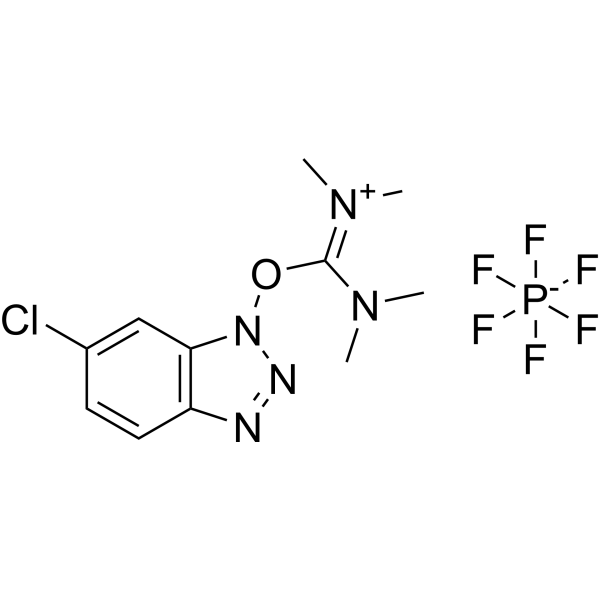
HBTU (N-HBTU) is a guanidinium-based peptide coupling reagent and immunological sensitizer. HBTU can be used in combination with bases such as DIPEA (HY-130142) to complete coupling reactions, with HOBt and TMU as by-products. HBTU is a standard reagent in automated solid-phase peptide synthesis, particularly for the Fmoc/tBu strategy, which effectively promotes coupling steps, but it is not suitable for sterically hindered amino acids or dipeptide derivatives. HBTU can induce rhinitis, dermatitis, bronchial asthma and severe allergic reactions. HBTU can be used to study the pathogenesis of allergic reactions, occupational rhinitis, allergic contact dermatitis and bronchial asthma.
For research use only. We do not sell to patients.
- Purity : 99.35%
- CAS No.: 94790-37-1
- Formula: C11H16F6N5OP
- Molecular Weight:379.24
-
Storage:Powder -20°C, 3 years , 4°C, 2 years ; In solvent -80°C, 6 months , -20°C, 1 month


To place orders, for customer services and technical support, please contact: MedChemExpress USA
Tel: 609-228-6898 E-mail: [email protected] [email protected]


-
 Biological Activity
-
Chemical Information
-
Solvent & Solubility
- Protocols
- Purity & Documentation
- References
-
 Help & FAQs


-

HY-Y1703
HATUPeptide Coupling Reagent -

HY-D0177
(Benzotriazol-1-yloxy)tripyrrolidinophosphonium hexafluorophosphatePeptide Coupling Reagent -

HY-Z0275
HOATPeptide Bond-forming Reagent -
HY-D0178
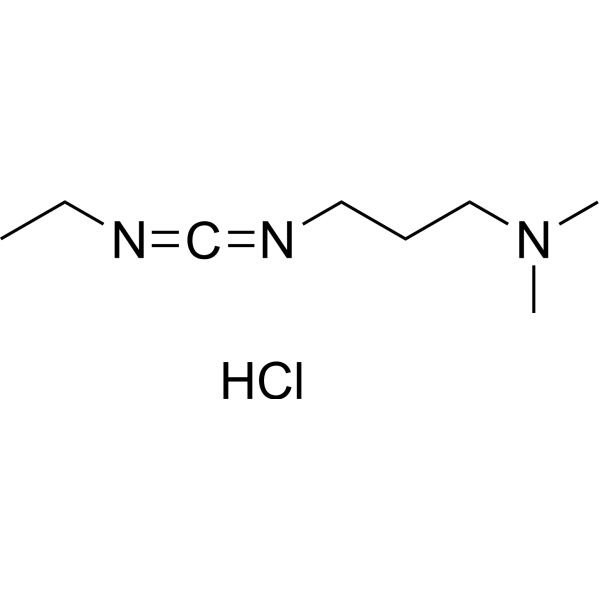
1-Ethyl-(3-dimethylaminopropyl)carbodiimide hydrochlorideCarbodiimide Reagent -
HY-W008386
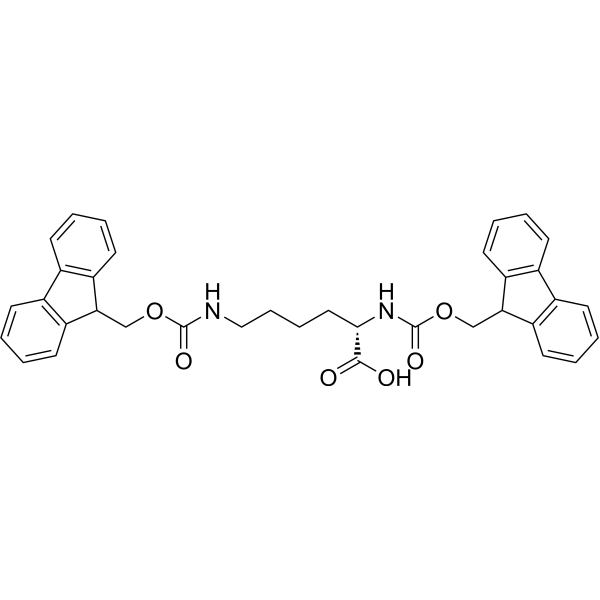
Fmoc-Lys(Fmoc)-OHAmino Acid Derivative -
HY-Y1250
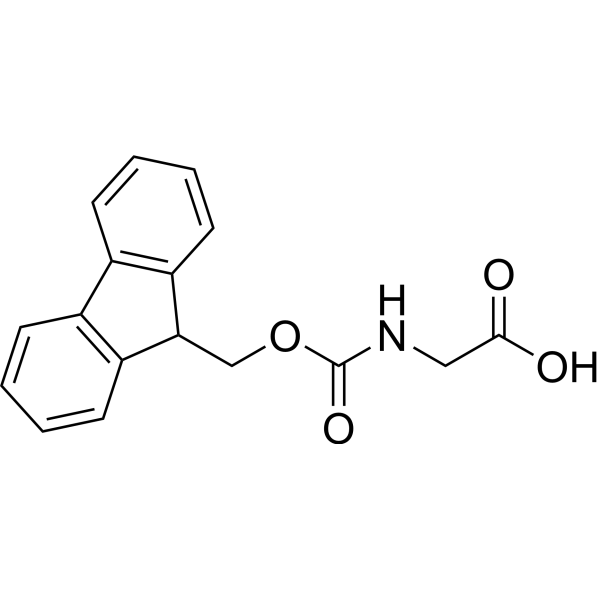
Fmoc-Gly-OHGlycine Derivative -
HY-W010951
HCTUBiochemical Reagent -
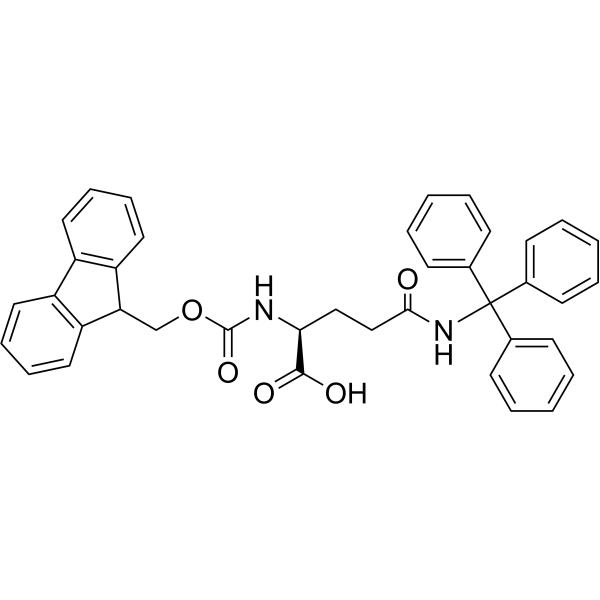
HY-W013081
Fmoc-Gln(Trt)-OHGlutamine Derivative -
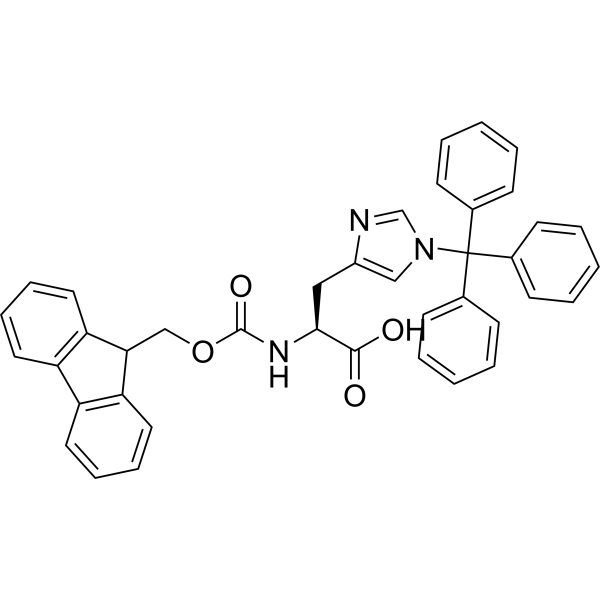
HY-W010712
Fmoc-His(Trt)-OHBuilding Block in Solid-phase Peptide Synthesis -
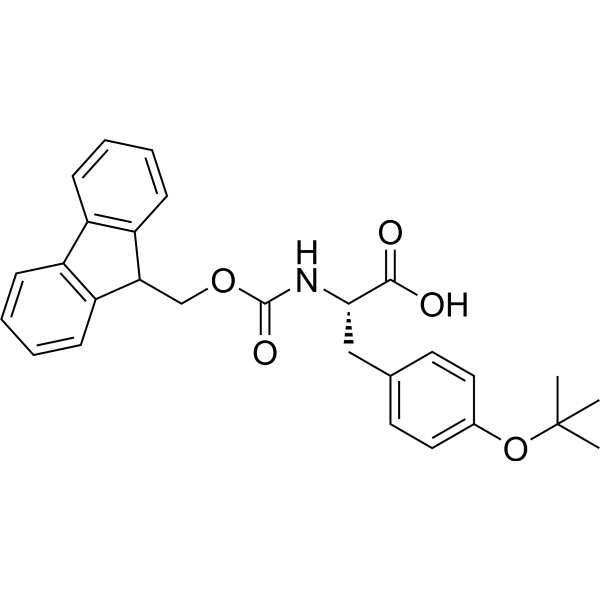
HY-W008016
Fmoc-Tyr(tBu)-OHAmino Acid Derivative -
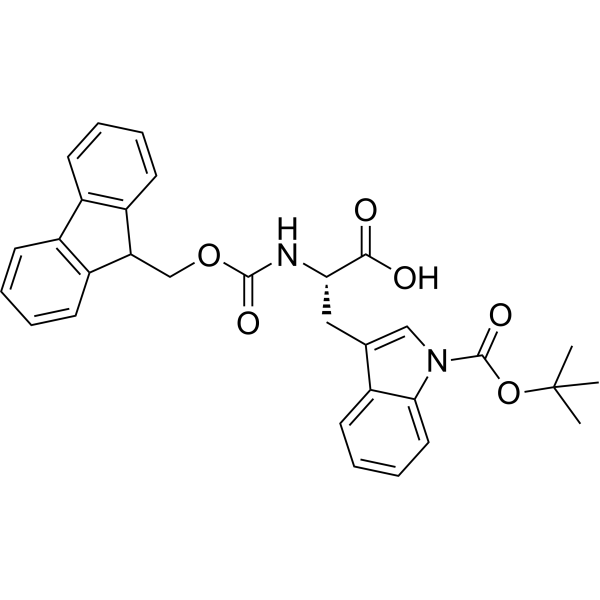
HY-W008034
Fmoc-Trp(Boc)-OHAmino Acid Derivative -
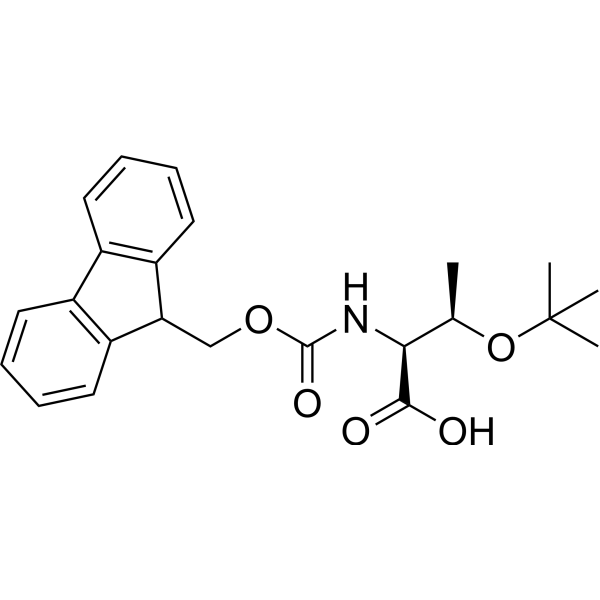
HY-W007706
Fmoc-Thr(tBu)-OHAmino Acid Derivative


Biological Activity
Description
In Vitro
N-HBTU supports standard solid-phase synthesis of the biotinylated Mon1 peptide, and optimized N-Dcpm protected dipeptide building blocks are predicted to be compatible with standard N-HBTU coupling protocols for Asp-Gly-containing peptides[1].
MedChemExpress (MCE) has not independently confirmed the accuracy of these methods. They are for reference only.


Chemical Information
-
CAS No. 94790-37-1
-
Appearance Solid
-
Molecular Weight 379.24
-
Formula C11H16F6N5OP
-
Color White to off-white
-
SMILES
F[P-](F)(F)(F)(F)F.C/[N+](C)=C(N(C)C)/ON1C2=CC=CC=C2N=N1
-
Synonyms
N-HBTU
-
Shipping
Room temperature in continental US; may vary elsewhere.
-
Storage
Powder -20°C 3 years 4°C 2 years In solvent -80°C 6 months -20°C 1 month


Solvent & Solubility
In Vitro:
DMSO : 200 mg/mL (527.37 mM; Need ultrasonic; Hygroscopic DMSO has a significant impact on the solubility of product, please use newly opened DMSO)
Please refer to the solubility information to select the appropriate solvent. Once prepared, please aliquot and store the solution to prevent product inactivation from repeated freeze-thaw cycles.
Storage method and period of stock solution: -80°C, 6 months; -20°C, 1 month. When stored at -80°C, please use it within 6 months. When stored at -20°C, please use it within 1 month.
Please refer to the solubility information to select the appropriate solvent. Once prepared, please aliquot and store the solution to prevent product inactivation from repeated freeze-thaw cycles.
Storage method and period of stock solution: -80°C, 6 months; -20°C, 1 month. When stored at -80°C, please use it within 6 months. When stored at -20°C, please use it within 1 month.
Concentration (start) × Volume (start) = Concentration (final) × Volume (final)


Purity & Documentation
-
Data Sheet (272 KB)
-
SDS (393 KB)
- English - EN (393 KB)
- Français - FR (393 KB)
- Deutsch - DE (393 KB)
- Norwegian - NO (393 KB)
- Español - ES (393 KB)
- Swedish - SV (393 KB)
- Italian - IT (393 KB)
- Korean - KR (393 KB)
- Portuguese - PT (393 KB)
-
Handling Instructions (2659 KB)
References
[2]. Röder R, et al. On the use of N-dicyclopropylmethyl aspartyl-glycine synthone for backbone amide protection. J Pept Sci. 2010;16(1):65-70. [Content Brief]
[3]. McKnelly KJ, et al. Anaphylaxis Induced by Peptide Coupling Agents: Lessons Learned from Repeated Exposure to HATU, HBTU, and HCTU. J Org Chem. 2020;85(3):1764-1768. [Content Brief]


Complete Stock Solution Preparation Table
Please refer to the solubility information to select the appropriate solvent. Once prepared, please aliquot and store the solution to prevent product inactivation from repeated freeze-thaw cycles.
Storage method and period of stock solution: -80°C, 6 months; -20°C, 1 month. When stored at -80°C, please use it within 6 months. When stored at -20°C, please use it within 1 month.
| Optional Solvent | Concentration Solvent Mass | 1 mg | 5 mg | 10 mg | 25 mg |
|---|---|---|---|---|---|
| DMSO | 1 mM | 2.6369 mL | 13.1843 mL | 26.3685 mL | 65.9213 mL |
| 5 mM | 0.5274 mL | 2.6369 mL | 5.2737 mL | 13.1843 mL | |
| 10 mM | 0.2637 mL | 1.3184 mL | 2.6369 mL | 6.5921 mL | |
| 15 mM | 0.1758 mL | 0.8790 mL | 1.7579 mL | 4.3948 mL | |
| 20 mM | 0.1318 mL | 0.6592 mL | 1.3184 mL | 3.2961 mL | |
| 25 mM | 0.1055 mL | 0.5274 mL | 1.0547 mL | 2.6369 mL | |
| 30 mM | 0.0879 mL | 0.4395 mL | 0.8790 mL | 2.1974 mL | |
| 40 mM | 0.0659 mL | 0.3296 mL | 0.6592 mL | 1.6480 mL | |
| 50 mM | 0.0527 mL | 0.2637 mL | 0.5274 mL | 1.3184 mL | |
| 60 mM | 0.0439 mL | 0.2197 mL | 0.4395 mL | 1.0987 mL | |
| 80 mM | 0.0330 mL | 0.1648 mL | 0.3296 mL | 0.8240 mL | |
| 100 mM | 0.0264 mL | 0.1318 mL | 0.2637 mL | 0.6592 mL |


HBTU Related Classifications
HY-Y0912 Related Classifications
 Powered by Bioz
Keywords
- HBTU
- 94790-37-1
- N-HBTU
- Biochemical Assay Reagents
- dermatitis
- biotinylated Mon1 peptide
- solid-phase peptide synthesis
- bronchial asthma
- Fmoc/tBu strategy
- guanidinium (uronium) peptide coupling reagent
- immune sensitizer
- rhinitis
- sterically hindered amino acid/dipeptide derivatives
- anaphylaxis
- Inhibitor
- inhibitor
- inhibit