Search Result
Results for "
peg+linker
" in MedChemExpress (MCE) Product Catalog:
14
Biochemical Assay Reagents
| Cat. No. |
Product Name |
Target |
Research Areas |
Chemical Structure |
-
- HY-131872
-
|
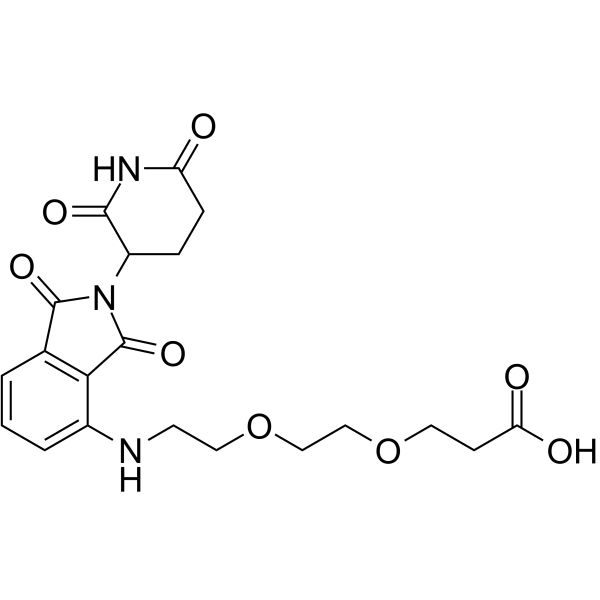
Pomalidomide 4'-PEG2-acid
|
E3 Ligase Ligand-Linker Conjugates
|
Cancer
|
|
Pomalidomide-PEG2-COOH (Pomalidomide 4'-PEG2-acid) is a synthesized E3 ligase ligand-linker conjugate that incorporates the Pomalidomide based cereblon ligand and 2-unit PEG linker used in PROTAC technology .
|
-
-
- HY-130088
-
|
|
ADC Linker
|
Cancer
|
|
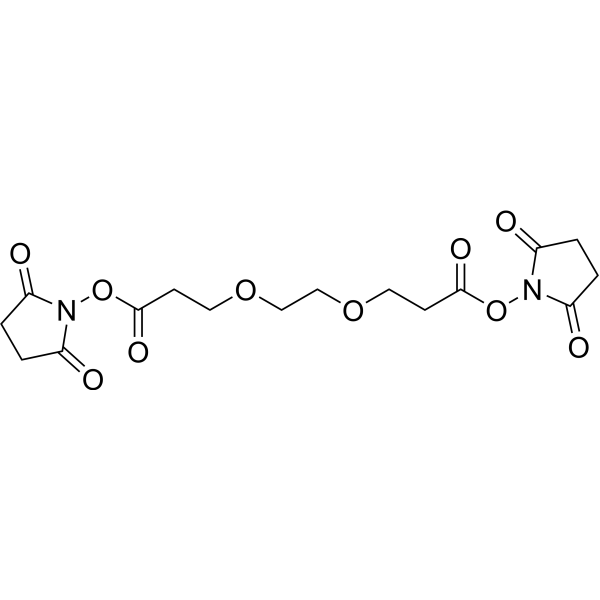
Bis-PEG2-NHS ester is a nonclaevable 2-unit PEG linker for antibody-agent-conjugation (ADC).
|
-
-
- HY-103604
-
|
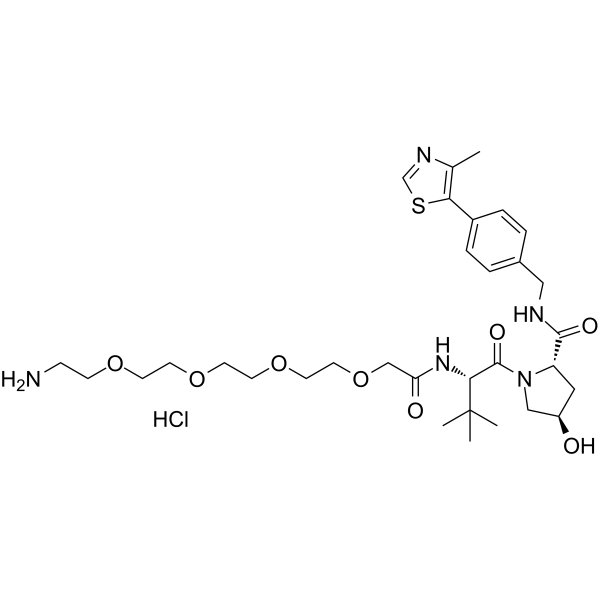
VH032-PEG4-NH2 hydrochloride; VHL Ligand-Linker Conjugates 4 hydrochloride; E3 ligase Ligand-Linker Conjugates 7
|
E3 Ligase Ligand-Linker Conjugates
|
Cancer
|
|
(S,R,S)-AHPC-PEG4-NH2 hydrochloride is a synthesized E3 ligase ligand-linker conjugate that incorporates the (S,R,S)-AHPC based VHL ligand and 4-unit PEG linker used in PROTAC technology.
|
-
-
- HY-130087
-
|
|
ADC Linker
|
Cancer
|
|
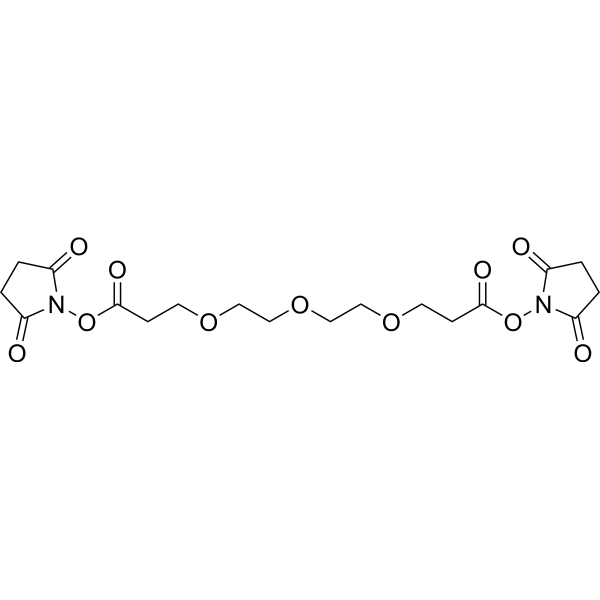
Bis-PEG3-NHS ester is a nonclaevable 3-unit PEG linker for antibody-agent-conjugation (ADC).
|
-
-
- HY-112599B
-
|
|
E3 Ligase Ligand-Linker Conjugates
|
Cancer
|
|
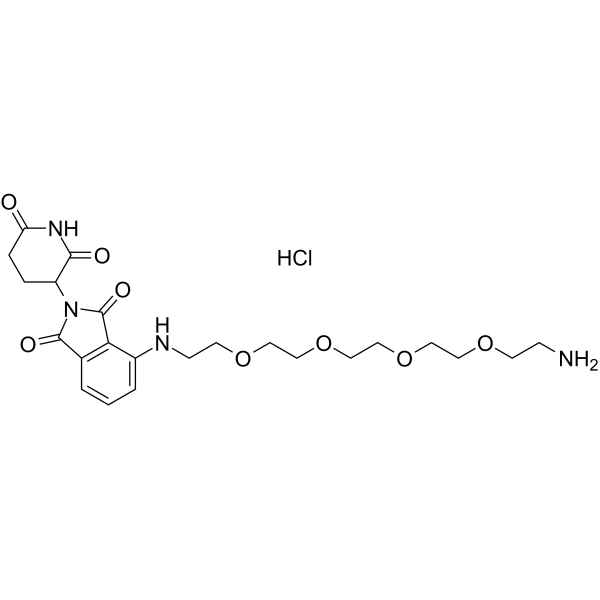
Pomalidomide-PEG4-C2-NH2 hydrochloride is a synthesized E3 ligase ligand-linker conjugate that incorporates the Pomalidomide based cereblon ligand and 4-unit PEG linker used in the synthesis of PROTACs..
|
-
-
- HY-133699
-
|
|
E3 Ligase Ligand-Linker Conjugates
|
Cancer
|
|
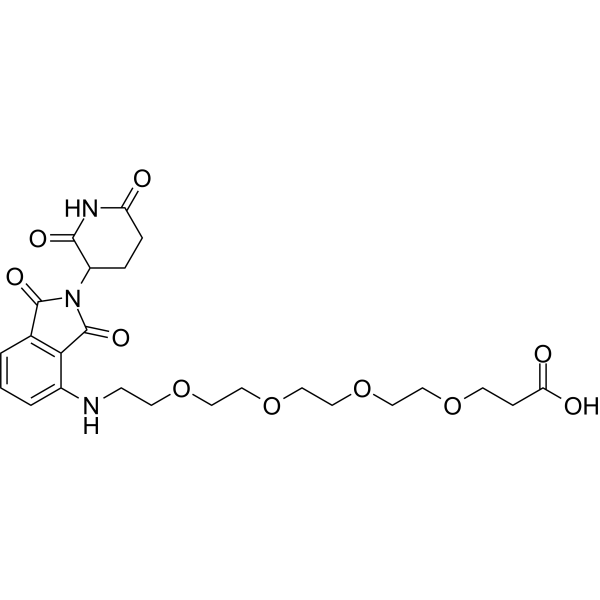
Pomalidomide-PEG4-COOH is a E3 ligase ligand-linker conjugate. Pomalidomide-PEG4-COOH contains the Pomalidomide based cereblon ligand and 4-unit PEG linker used in PROTAC technology .
|
-
-
- HY-156383
-
|
|
PROTAC Linkers
|
Cancer
|
|
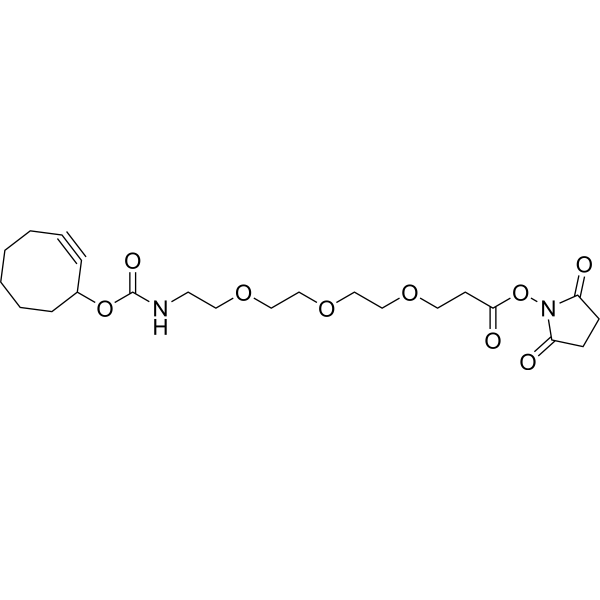
SCO-PEG3-NHS is a PEG linker with a terminal imine(NH) group. SCO-PEG3-NHS is a PEG-based PROTAC linker can be used in the synthesis of PROTACs.
|
-
-
- HY-137531
-
|
|
E3 Ligase Ligand-Linker Conjugates
|
Cancer
|
|
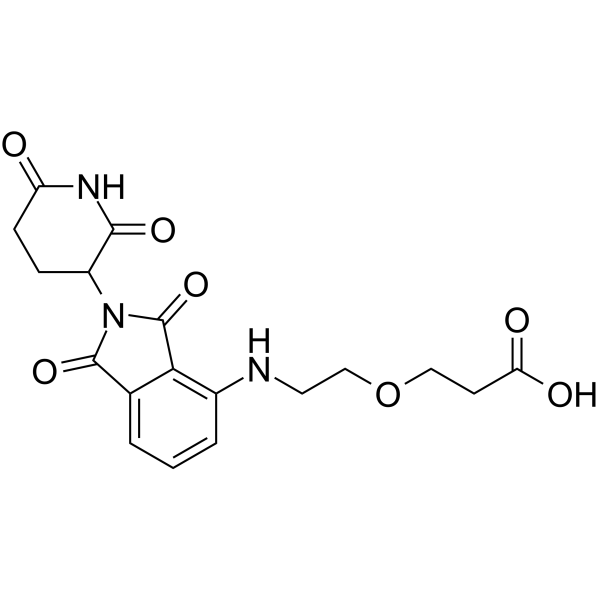
Pomalidomide-PEG1-C2-COOH is a synthesized E3 ligase ligand-linker conjugate that incorporates the Pomalidomide based cereblon ligand and 1-unit PEG linker used in PROTAC technology .
|
-
-
- HY-21930
-
|
Cereblon Ligand -Linker Conjugates 1; E3 Ligase Ligand-Linker Conjugates 1
|
E3 Ligase Ligand-Linker Conjugates
|
Cancer
|
|
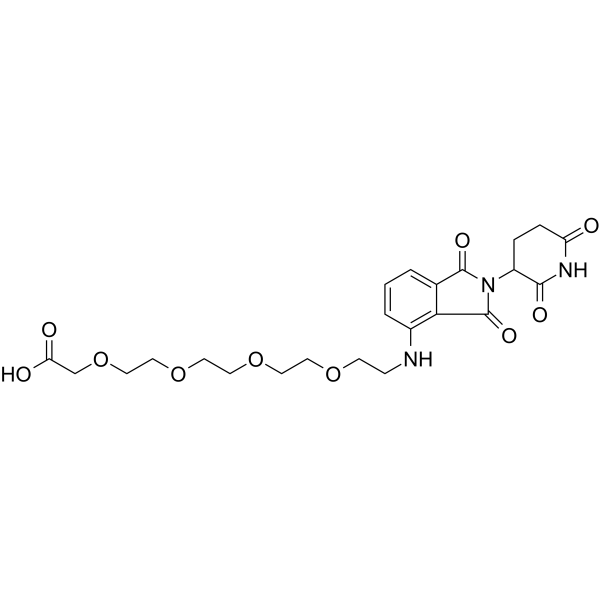
Pomalidomide-PEG4-C-COOH (Cereblon Ligand -Linker Conjugate 1) is a synthesized E3 ligase ligand-linker conjugate that incorporates the Pomalidomide based cereblon ligand and 4-unit PEG linker used in PROTAC technology.
|
-
-
- HY-129703B
-
|
Thalidomide-NH-PEG2-C2-NH2 hydrochloride
|
E3 Ligase Ligand-Linker Conjugates
Autophagy
Apoptosis
|
Cancer
|
|
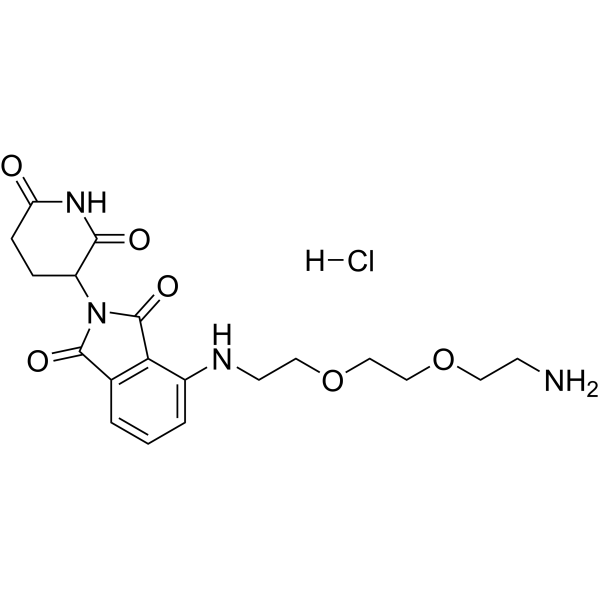
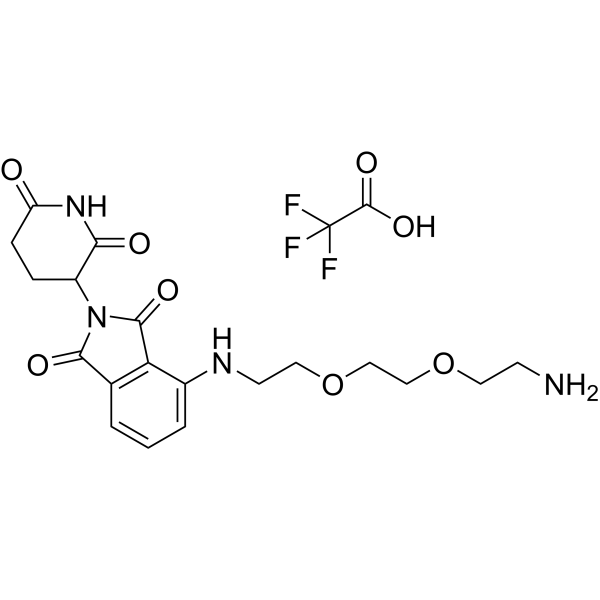
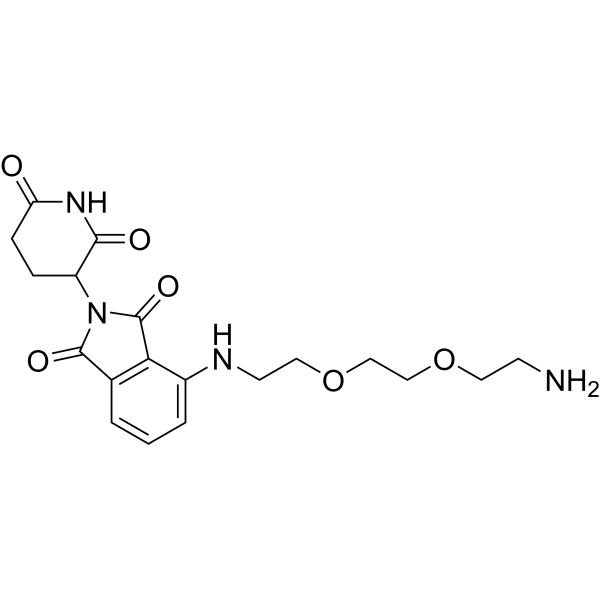
Thalidomide-PEG2-C2-NH2 hydrochloride is a synthesized E3 ligase ligand-linker conjugate that incorporates the Thalidomide based cereblon ligand and 2-unit PEG linker used in PROTAC technology .
|
-
-
- HY-103604A
-
|
VH032-PEG4-NH2; VHL Ligand-Linker Conjugates 4 ; E3 ligase Ligand-Linker Conjugates 7 Free Base
|
E3 Ligase Ligand-Linker Conjugates
|
Cancer
|
|
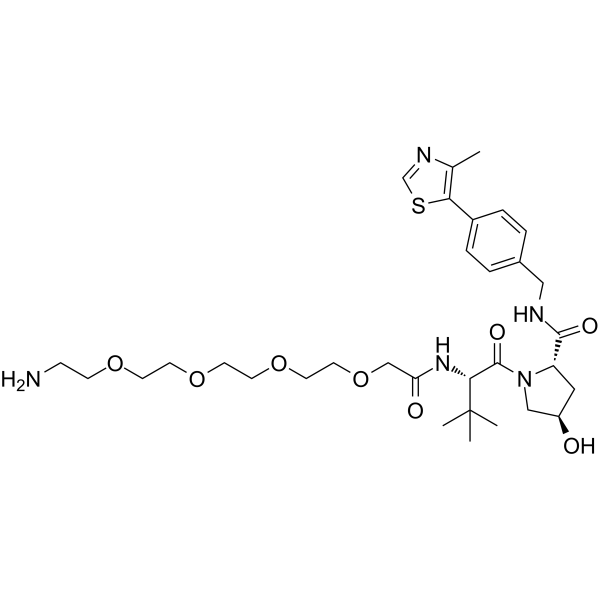
(S,R,S)-AHPC-PEG4-NH2 is a synthesized E3 ligase ligand-linker conjugate that incorporates the (S,R,S)-AHPC based VHL ligand and 4-unit PEG linker used in PROTAC technology.
|
-
-
- HY-136166
-
-
-
- HY-103611
-
|
Cereblon Ligand-Linker Conjugates 3 TFA; E3 ligase Ligand-Linker Conjugates 14 TFA
|
E3 Ligase Ligand-Linker Conjugates
Autophagy
Apoptosis
|
Cancer
|
|
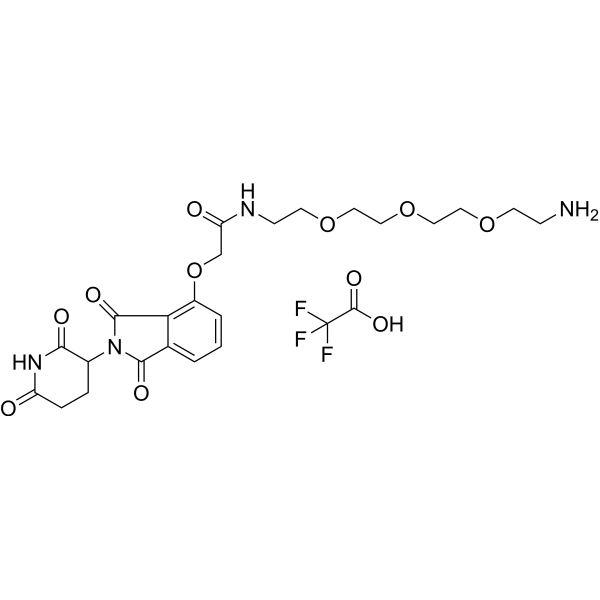
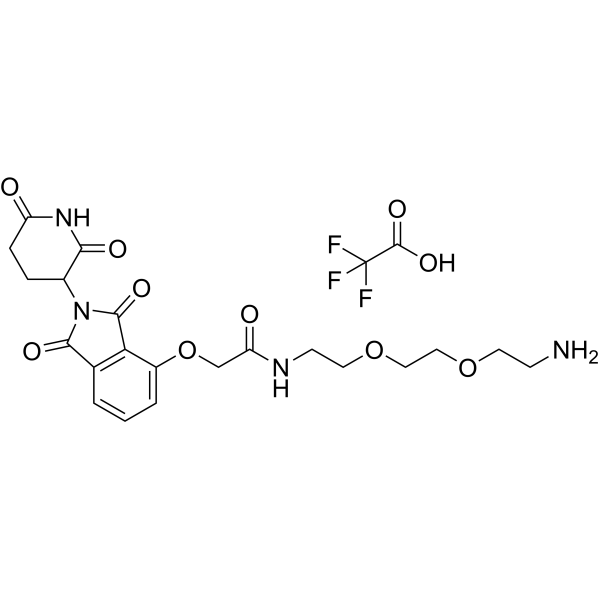
Thalidomide-O-amido-PEG3-C2-NH2 TFA is a synthesized E3 ligase ligand-linker conjugate that incorporates the Thalidomide based cereblon ligand and 3-unit PEG linker used in PROTAC technology.
|
-
-
- HY-130089
-
|
|
ADC Linker
|
Cancer
|
|
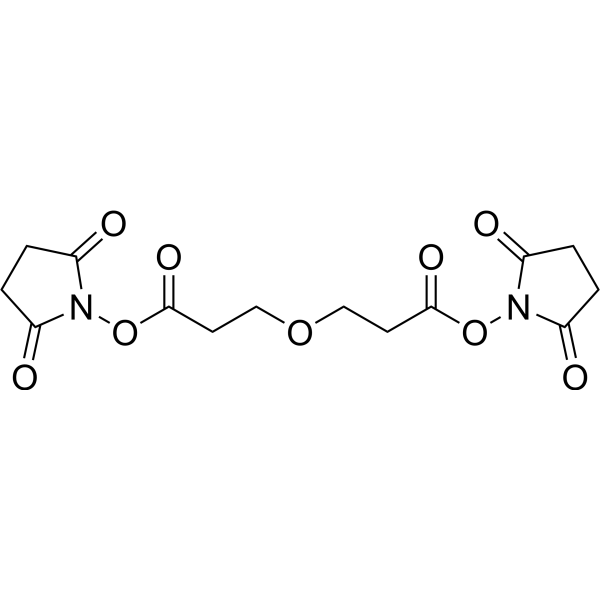
Bis-PEG1-NHS ester is a nonclaevable 1-unit PEG linker for antibody-agent-conjugation (ADC).
|
-
-
- HY-141658
-
|
Pomalidomide-PEG6-COOH
|
E3 Ligase Ligand-Linker Conjugates
|
Cancer
|
|
Pomalidomide-PEG6-C2-COOH is a synthesized E3 ligase ligand-linker conjugate that incorporates the Pomalidomide (HY-10984) based cereblon ligand and 6-unit PEG linker used in PROTAC technology .
|
-

-
- HY-130104
-
|
|
ADC Linker
|
Cancer
|
|
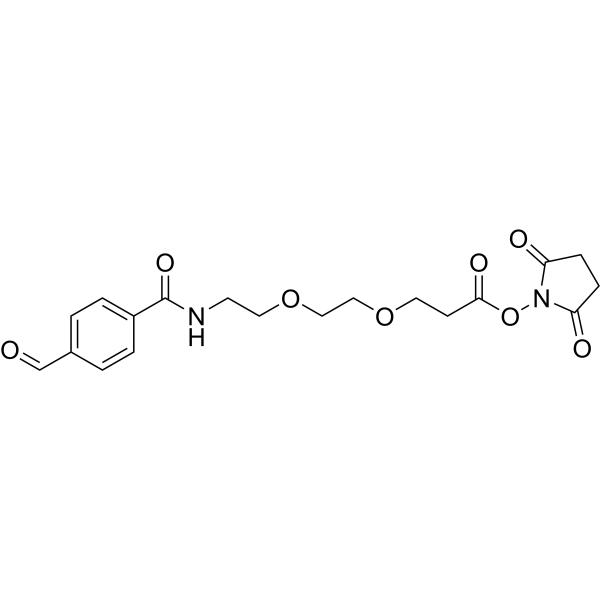
Ald-Ph-amido-PEG2-C2-NHS ester is a nonclaevable 2-unit PEG linker for antibody-agent-conjugation (ADC).
|
-
-
- HY-130101
-
|
|
ADC Linker
|
Cancer
|
|
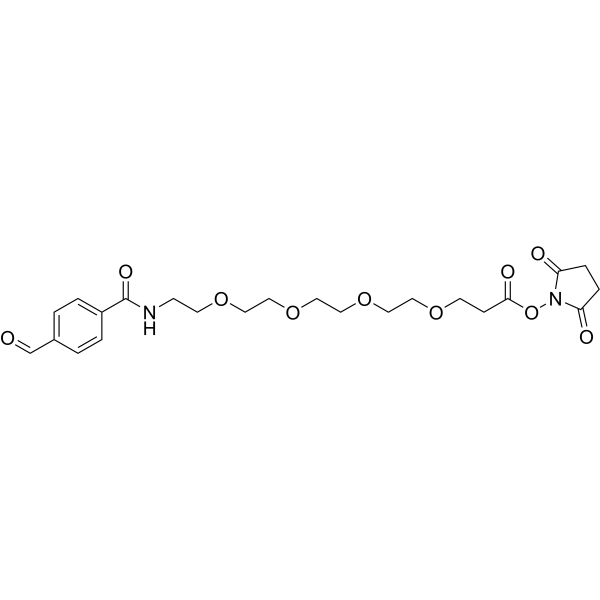
Ald-Ph-amido-PEG4-C2-NHS ester is a nonclaevable 4-unit PEG linker for antibody-agent-conjugation (ADC).
|
-
-
- HY-112599
-
|
Cereblon Ligand-Linker Conjugates 8; E3 Ligase Ligand-Linker Conjugates 22
|
E3 Ligase Ligand-Linker Conjugates
|
Cancer
|
|
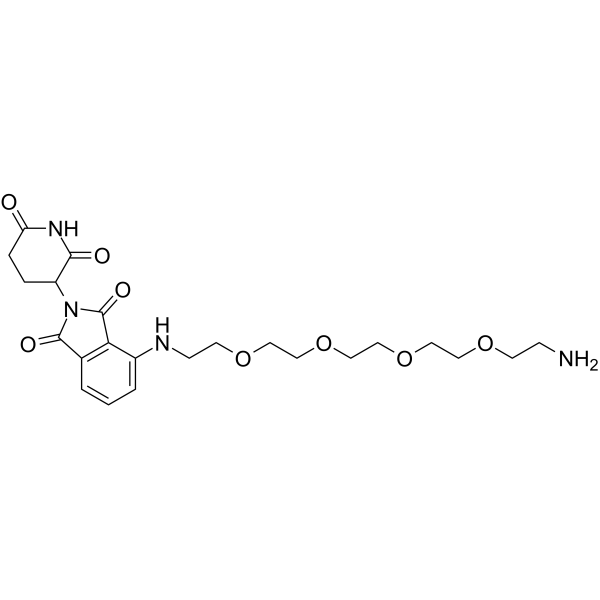
Pomalidomide-PEG4-C2-NH2 is a synthesized E3 ligase ligand-linker conjugate that incorporates the Pomalidomide based cereblon ligand and 4-unit PEG linker used in PROTAC technology.
|
-
-
- HY-164785
-
|
|
Drug Intermediate
|
Others
|
|
TCO-PEG5-maleimide is a PEG linker with TCO and maleimide groups, specifically enabling tetrazine click chemistry and thiol conjugation for bioconjugation, probe design, and drug delivery.
|
-

-
- HY-41549
-
|
Cereblon Ligand-Linker Conjugates 9; E3 Ligase Ligand-Linker Conjugates 2
|
E3 Ligase Ligand-Linker Conjugates
|
Cancer
|
|
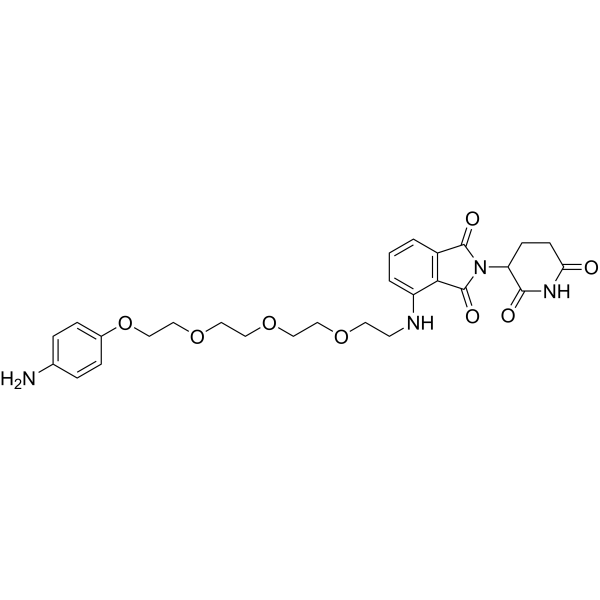
Pomalidomide-PEG4-Ph-NH2 is a synthesized E3 ligase ligand-linker conjugate that incorporates the Pomalidomide based cereblon ligand and 4-unit PEG linker used in PROTAC technology.
|
-
-
- HY-107440A
-
-
-
- HY-163790
-
|
|
PROTAC Linkers
|
Others
|
|
Desthiobiotin-PEG3-sulfo-Maleimide is a PEG linker can be used in the synthesis of PROTACs .
|
-

-
- HY-130102
-
|
|
ADC Linker
|
Cancer
|
|
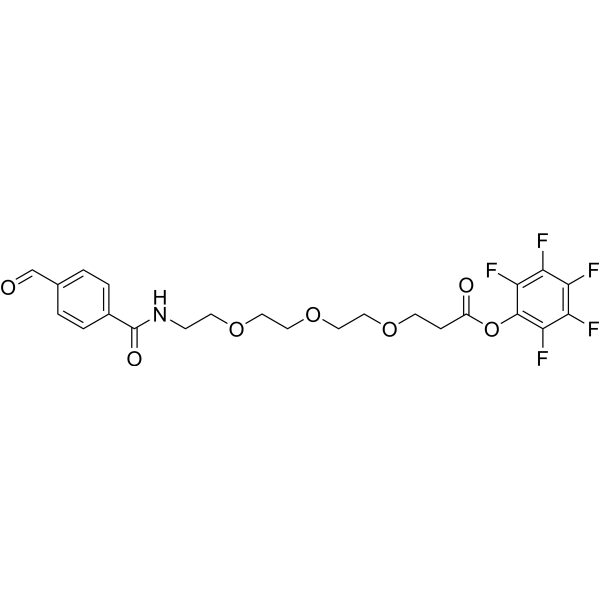
Ald-Ph-amido-PEG3-C2-Pfp ester is an noncleavable ADC linker, which belongs to a polyethylene glycol (PEG) linker.
|
-
-
- HY-130095
-
|
|
ADC Linker
|
Cancer
|
|
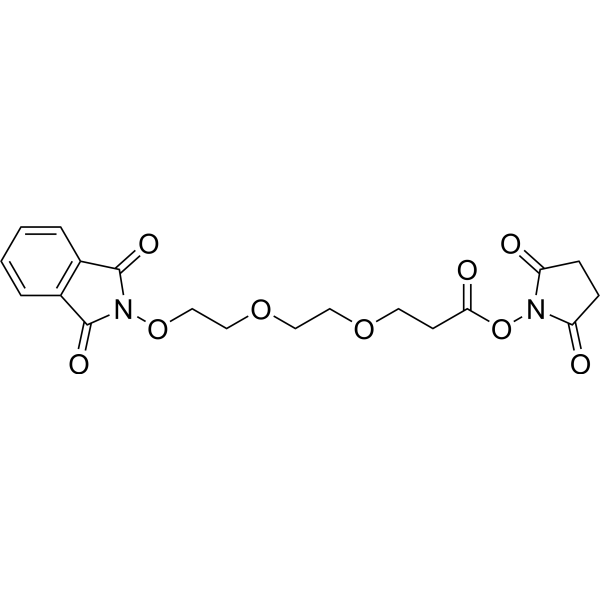
NHPI-PEG2-C2-NHS ester is a nonclaevable 2-unit PEG linker used in the synthesis of antibody-drug conjugates (ADCs).
|
-
-
- HY-130092
-
|
|
ADC Linker
|
Cancer
|
|
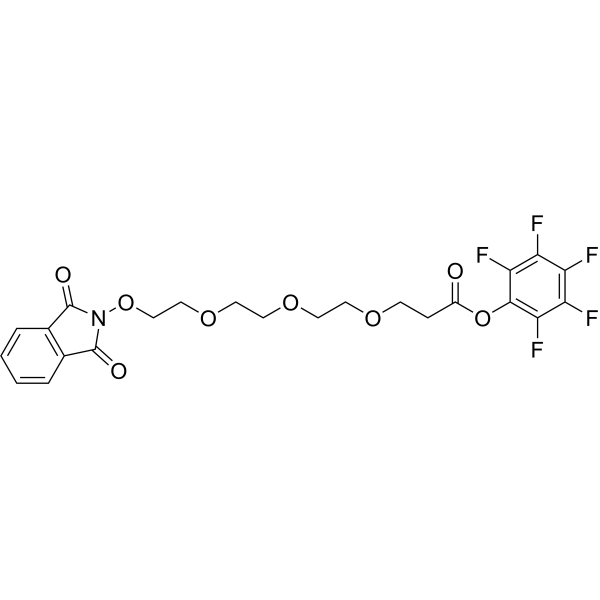
NHPI-PEG3-C2-Pfp ester is a nonclaevable 3-unit PEG linker used in the synthesis of antibody-drug conjugates (ADCs).
|
-
-
- HY-130106
-
|
|
ADC Linker
|
Cancer
|
|
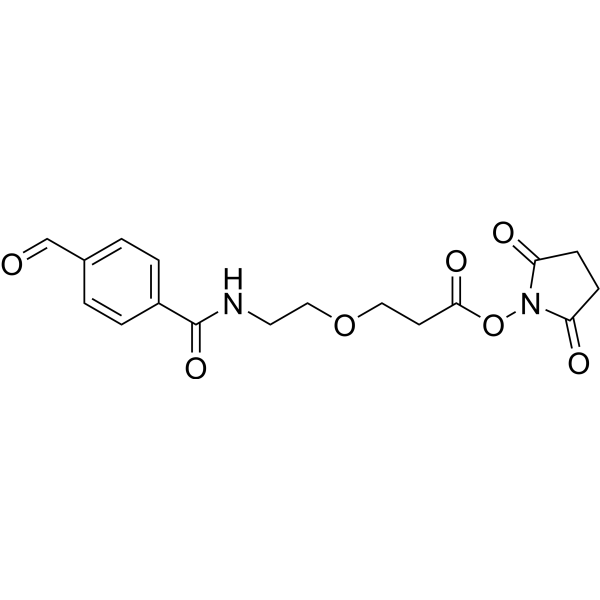
Ald-Ph-amido-PEG1-C2-NHS ester is a nonclaevable 1-unit PEG linker for antibody-agent-conjugation (ADC).
|
-
-
- HY-128846
-
|
Cereblon Ligand-Linker Conjugates 15
|
E3 Ligase Ligand-Linker Conjugates
|
Cancer
|
|
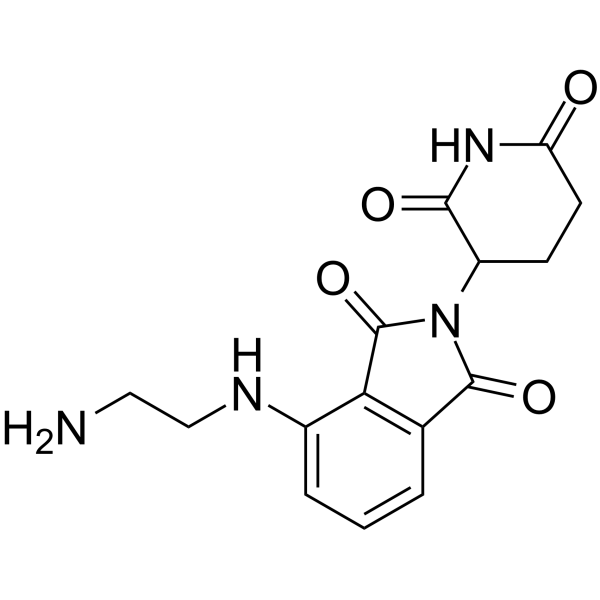
Pomalidomide-C2-NH2 is a synthesized E3 ligase ligand-linker conjugate that incorporates the Pomalidomide based cereblon ligand and a PEG linker used in PROTAC technology.
|
-
-
- HY-124780
-
|
|
PROTAC Linkers
|
Others
|
|
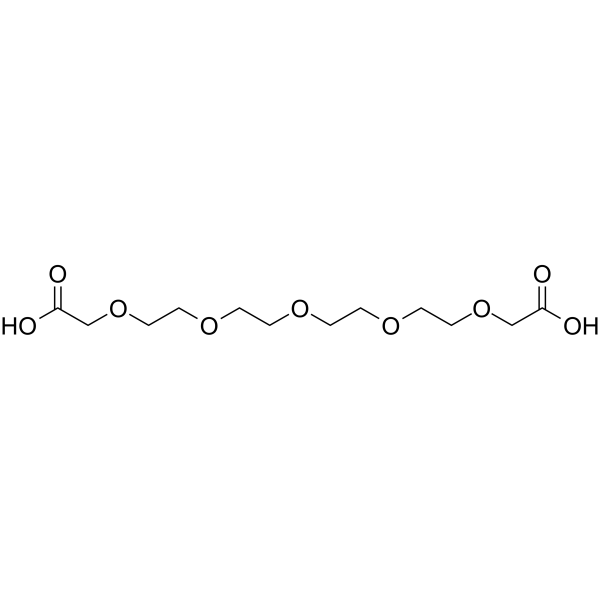
HOOCCH2O-PEG4-CH2COOH, compound 5, is a symmetric PEG linker, used for the synthesis of the first class of Homo-PROTAC .
|
-
-
- HY-W615095
-
|
|
Biochemical Assay Reagents
|
Others
|
|
Biotin-PEG2-alkyne is a short PEG linker featuring a biotin group and a terminal alkyne. Biotin is useful for affinity-based applications such as pull-down assays while terminal alkynes are used in copper (I) click chemistry with azides.
|
-

-
- HY-128716
-
|
Cereblon Ligand-Linker Conjugates 5; E3 ligase Ligand-Linker Conjugates 30
|
E3 Ligase Ligand-Linker Conjugates
|
Cancer
|
|
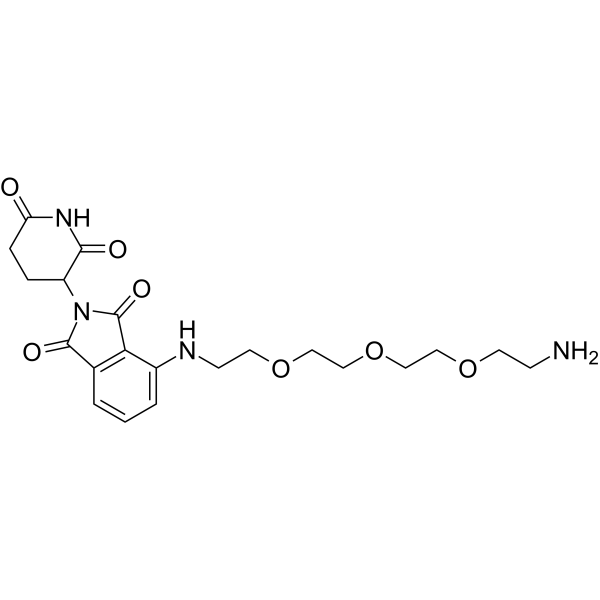
Pomalidomide-PEG3-C2-NH2 is a synthesized E3 ligase ligand-linker conjugate that incorporates the Pomalidomide based cereblon ligand and 3-unit PEG linker used in PROTAC technology.
|
-
-
- HY-136165
-
|
|
E3 Ligase Ligand-Linker Conjugates
|
Cancer
|
|
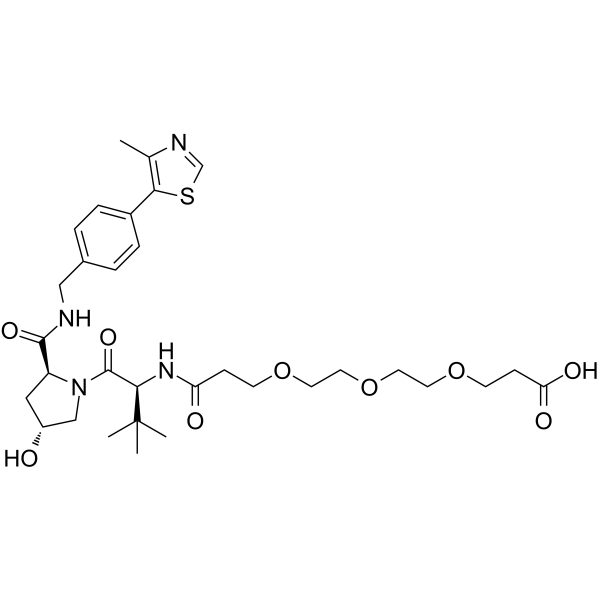
(S,R,S)-AHPC-PEG3-propionic acid is a synthesized E3 ligase ligand-linker conjugate that incorporates the (S,R,S)-AHPC based VHL ligand and 3-unit PEG linker used in PROTAC technology .
|
-
-
- HY-112599A
-
|
Cereblon Ligand-Linker Conjugates 8 TFA; E3 Ligase Ligand-Linker Conjugates 22 TFA
|
E3 Ligase Ligand-Linker Conjugates
|
Cancer
|
|
Pomalidomide-PEG4-C2-NH2 TFA is a synthesized E3 ligase ligand-linker conjugate that incorporates the Pomalidomide based cereblon ligand and 4-unit PEG linker used in PROTAC technology.
|
-

-
- HY-129703A
-
-
-
- HY-103602A
-
|
VH032-PEG3-NH2; VHL Ligand-Linker Conjugates 1; E3 ligase Ligand-Linker Conjugates 5 Free Base
|
E3 Ligase Ligand-Linker Conjugates
|
Cancer
|
|
(S,R,S)-AHPC-PEG3-NH2 is a synthesized E3 ligase ligand-linker conjugate that incorporates the (S,R,S)-AHPC based VHL ligand and 3-unit PEG linker used in PROTAC technology.
|
-
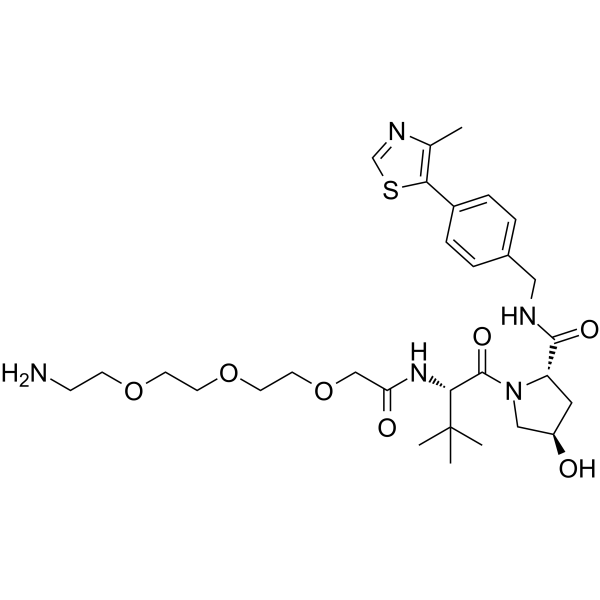
-
- HY-112617A
-
-
-
- HY-138369
-
-
-
- HY-140017
-
-

-
- HY-W580021
-
-

-
- HY-W800685
-
-

-
- HY-130100
-
|
|
ADC Linker
|
Cancer
|
|
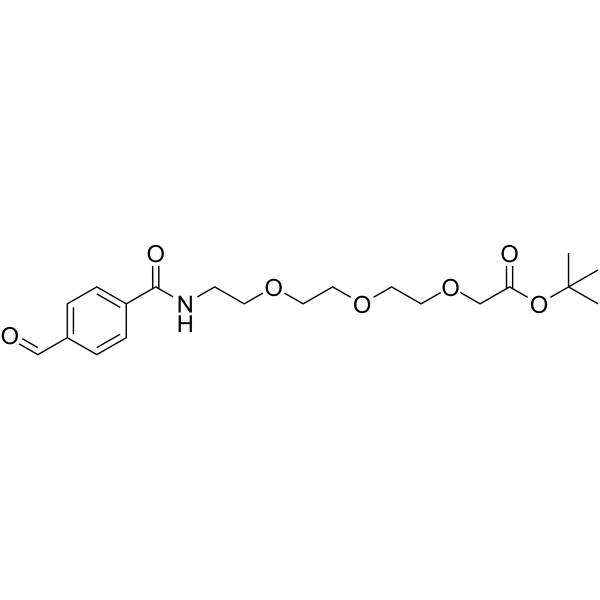
Ald-Ph-amido-PEG3-C1-Boc is an ADC linker, which belongs to a polyethylene glycol (PEG) linker.
|
-
-
- HY-130295
-
-
-
- HY-126510
-
|
|
ADC Linker
|
Cancer
|
|
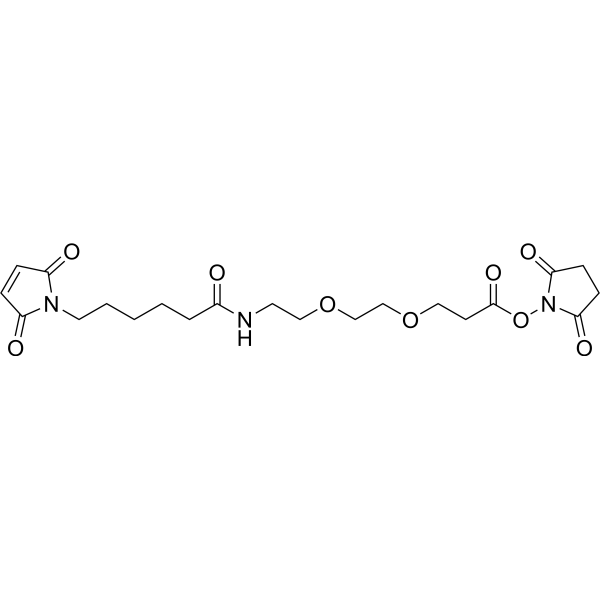
MC-PEG2-C2- NHS ester is a nonclaevable 2-unit PEG linker used in the synthesis of antibody-drug conjugates (ADCs).
|
-
-
- HY-130093
-
|
|
ADC Linker
|
Cancer
|
|
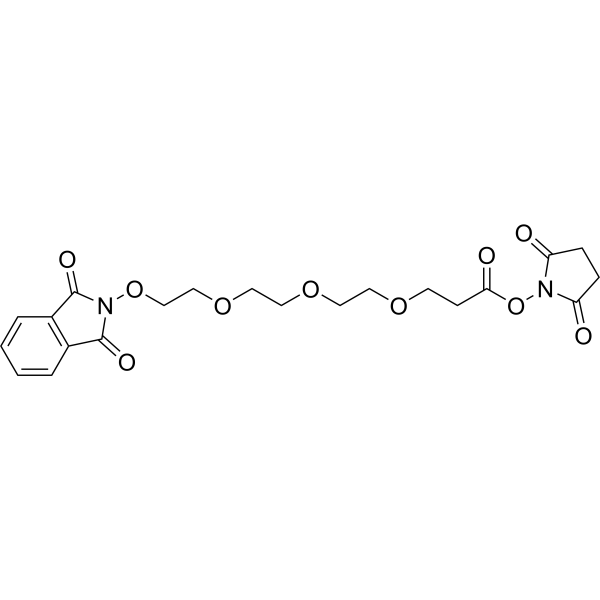
NHPI-PEG3-C2-NHS ester is a nonclaevable 3-unit PEG linker used in the synthesis of antibody-drug conjugates (ADCs).
|
-
-
- HY-130103
-
|
|
ADC Linker
|
Cancer
|
|
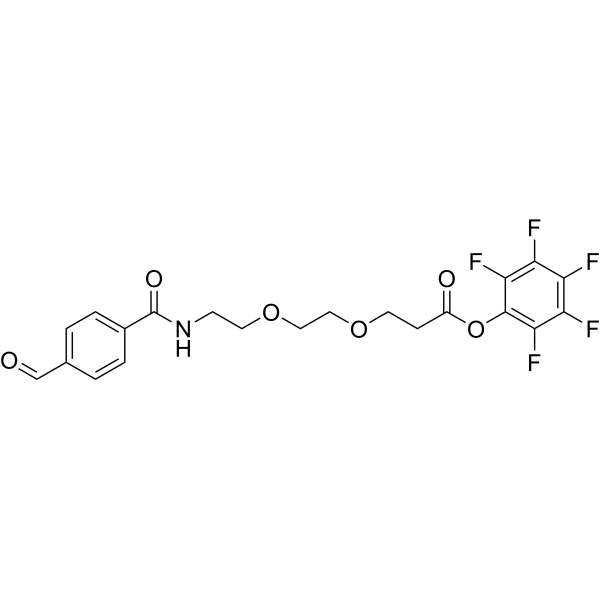
Ald-Ph-amido-PEG2-C2-Pfp ester is a nonclaevable 2-unit PEG linker for antibody-agent-conjugation (ADC).
|
-
-
- HY-130094
-
|
|
ADC Linker
|
Cancer
|
|
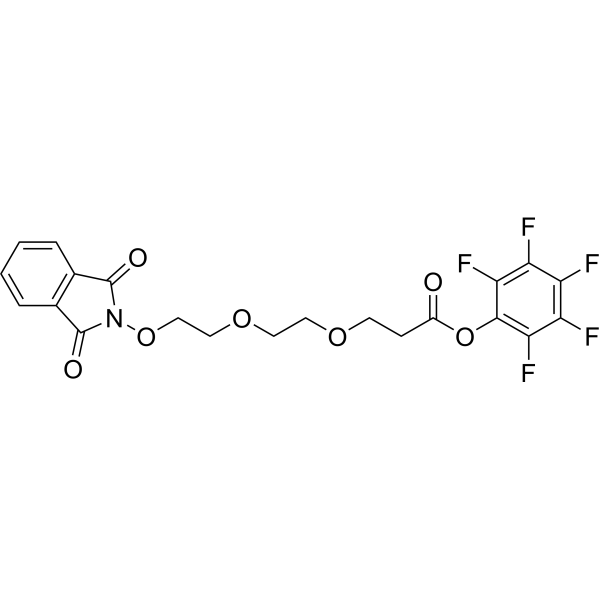
NHPI-PEG2-C2-Pfp ester is a nonclaevable 2-unit PEG linker used in the synthesis of antibody-drug conjugates (ADCs).
|
-
-
- HY-130105
-
|
|
ADC Linker
|
Cancer
|
|
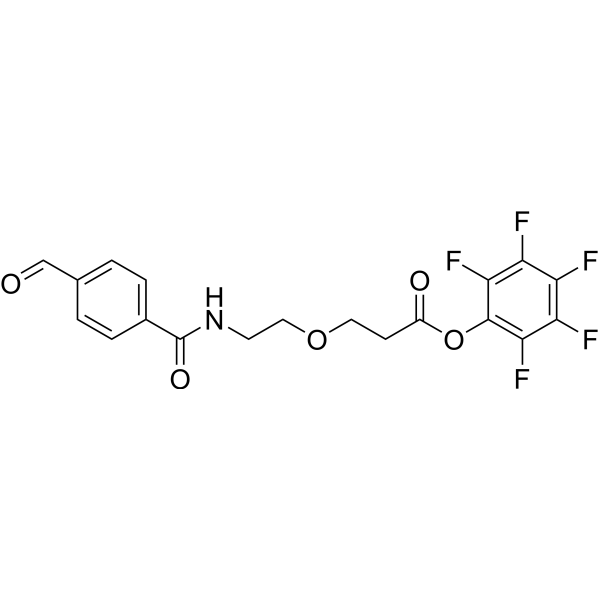
Ald-Ph-amido-PEG1-C2-Pfp ester is a nonclaevable 1-unit PEG linker for antibody-agent-conjugation (ADC).
|
-
-
- HY-W190914
-
|
|
Biochemical Assay Reagents
|
Others
|
|
TCO-PEG2-TCO is a homebifunctional reagent containing TCO moiety at both ends of the molecule. TCO group specifically and efficiently reacts with tetrazine. The hydrophilic PEG linker increases the solubility of compounds in aqueous media.
|
-

-
- HY-136156
-
|
|
E3 Ligase Ligand-Linker Conjugates
|
Cancer
|
|
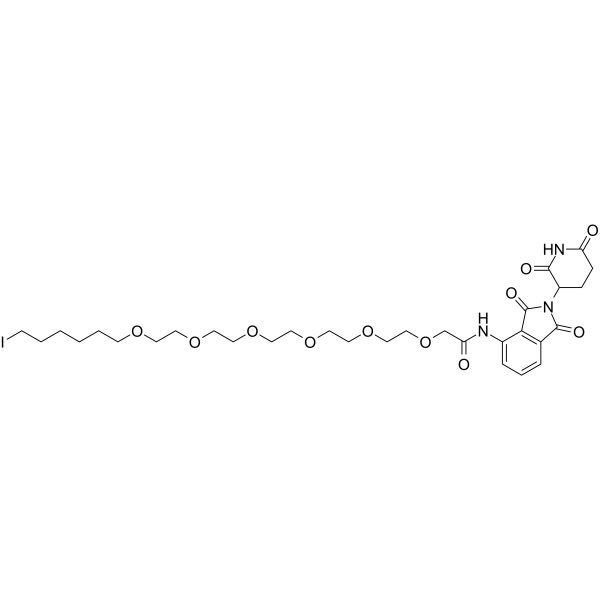
Pomalidomide-PEG6-butyl iodide is a synthesized E3 ligase ligand-linker conjugate that incorporates the Pomalidomide based cereblon ligand and 6-unit PEG linker used in PROTAC technology .
|
-
-
- HY-W878813
-
|
|
Biochemical Assay Reagents
|
Others
|
|
Tos-PEG22-Tos is a PEG linker containing two tosyl groups. The hydrophilic PEG spacer increases solubility in aqueous media. The tosyl group is a very good leaving group for nucleophilic substitution reactions.
|
-

-
- HY-136161
-
|
|
E3 Ligase Ligand-Linker Conjugates
|
Cancer
|
|
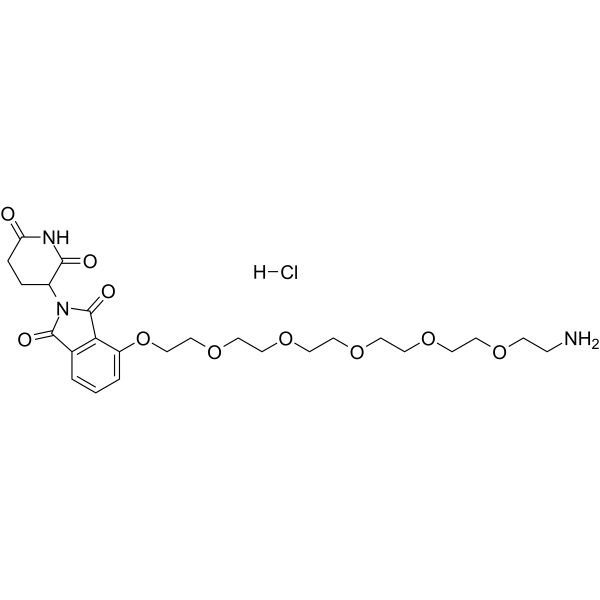
Pomalidomide-PEG6-NH2 hydrochloride is a synthesized E3 ligase ligand-linker conjugate that incorporates the Pomalidomide based cereblon ligand and 6-unit PEG linker used in PROTAC technology.
|
-
- HY-162450
-
|
|
PROTACs
MDM-2/p53
Apoptosis
|
Cancer
|
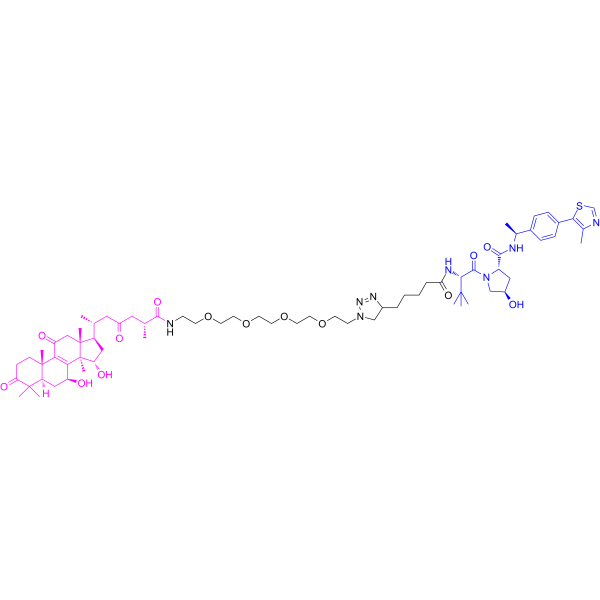
Antitumor agent-150 (V10), an anti-breast cancer agent, is a PROTAC-based MDM2 protein degrader (Red: Ganoderic acid A; Black: 4O-PEG linker; Blue: VHL ligand) .
|
-
- HY-W190786
-
|
|
Biochemical Assay Reagents
|
Others
|
|
Bromoacetamido-PEG2-azide is a heterobifunctional PEG linker containing a reactive bromoacetamido and a terminal azide.The bromoacetamidogroup is a very reactive group for nucleophilic substitution. The azide group can react with alkyne, BCN, DBCO via Click Chemistry.
|
-

- HY-156381
-
|
|
Biochemical Assay Reagents
|
Others
|
|
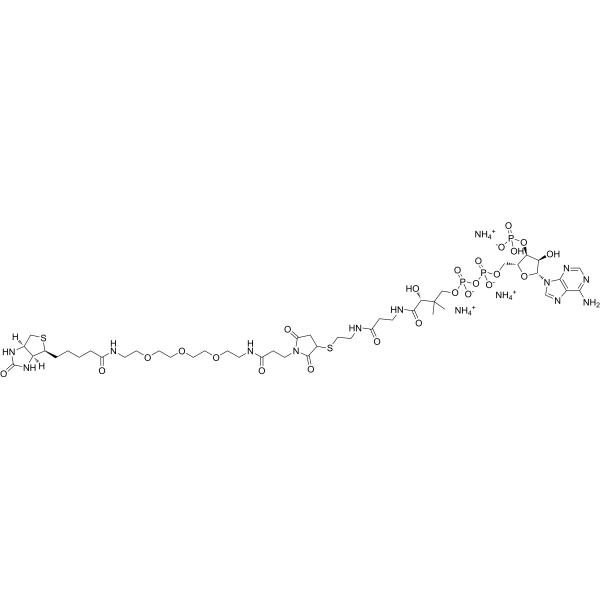
Biotin-PEG3-CoenzymeA is a non cell-permeable substrate based on biotin with a PEG linker. Biotin-PEG3-CoenzymeA can be used for biotinylation of living cells, Labeling in solution, interaction studies .
|
-
- HY-W190836
-
|
|
Biochemical Assay Reagents
|
Others
|
|
Azide-PEG2-Tos is a small PEG linker featuring an azide and a tosylate. Tosylates are good leaving groups which are easily displaced by nucleophiles while azide is a click chemistry handle which is used to react with terminal alkynes or strained cyclooctynes.
|
-

- HY-125846
-
|
VH032-PEG1-OTs; VHL Ligand-Linker Conjugates 2; E3 ligase Ligand-Linker Conjugates 51
|
E3 Ligase Ligand-Linker Conjugates
|
Cancer
|
|
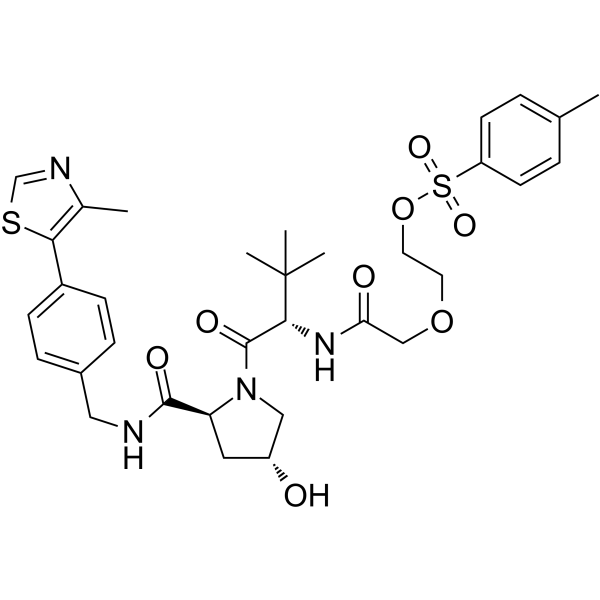
(S,R,S)-AHPC-PEG1-OTs is a synthesized E3 ligase ligand-linker conjugate that incorporates the (S,R,S)-AHPC based VHL ligand and 1-unit PEG linker used in PROTAC technology.
|
-
- HY-129703
-
-
- HY-W190752
-
|
|
Biochemical Assay Reagents
|
Others
|
|
m-PEG13-acid is a PEG linker containing a terminal carboxylic acid. The terminal carboxylic acid can react with primary amine groups in the presence of activators (e.g. EDC, or HATU) to form a stable amide bond. The hydrophilic PEG spacer increases solubility in aqueous media.
|
-

- HY-W800669
-
|
|
PROTAC Linkers
|
Cancer
|
|
(S, R, S)-AHPC-PEG2-NHS ester is a synthetic PROTAC linker that incorporatess an E3 ligase ligand with a PEG linker to empower PROTAC medicine chemistry. NHS ester is reactive with amine moiety. The hydrophilic PEG spacer increases its aqueous solubility.
|
-

- HY-131912
-
-
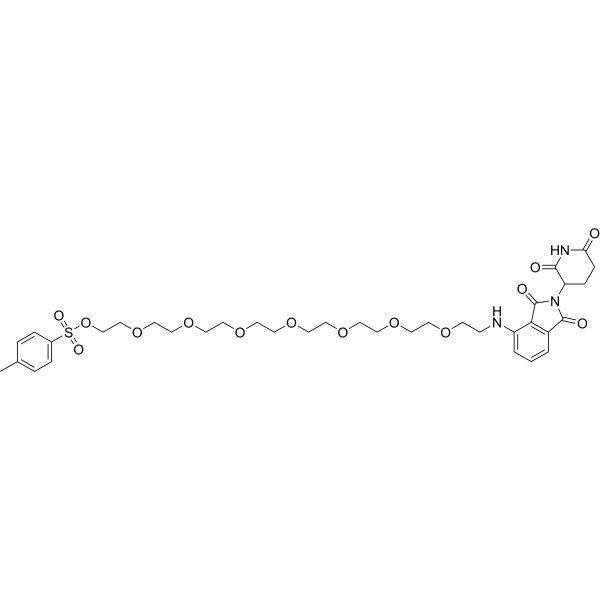
- HY-W800657
-
|
|
Biochemical Assay Reagents
|
Others
|
|
Azido-PEG1-hydrazide hydrochloride is a bifunctional PEG linker containing an azide group and a hydrazide group. The azide group can react with alkyne, BCN, DBCO via Click Chemistry to yield a stable triazole linkage. Hydrazine moiety reacts with an aldehyde to form semi-permanent hydrazone bonds.
|
-

- HY-140812
-
|
|
Biochemical Assay Reagents
|
Others
|
|
Azido-PEG3-phosphonic acid is a PEG linker which contains an azide moiety and a phosphonic acid. Azido-PEG3-phosphonic acid is a click chemistry reagent. It contains an azide group and can undergo copper-catalyzed azide-alkyne cycloaddition (CuAAc) with molecules containing alkyne groups.
|
-

- HY-125883
-
|
Cereblon Ligand-Linker Conjugates 20; E3 Ligase Ligand-Linker Conjugates 53
|
E3 Ligase Ligand-Linker Conjugates
|
Cancer
|
|
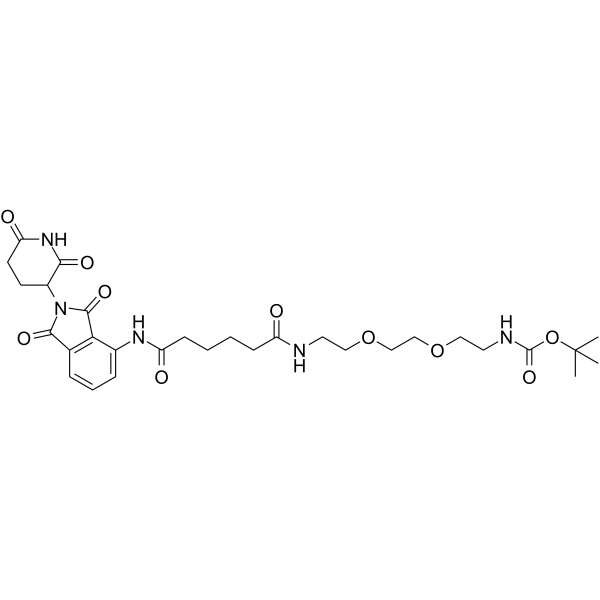
Pomalidomide-amido-C4-amido-PEG2-C2-NH-Boc is a synthesized E3 ligase ligand-linker conjugate that incorporates the Pomalidomide based cereblon ligand and 2-unit PEG linker used in PROTAC technology.
|
-
- HY-178685
-
-

- HY-W800661
-
|
|
Biochemical Assay Reagents
|
Others
|
|
Tos-PEG3-methyl ester is a PEG linker with tosyl and methyl ester moieties. The tosyl group is a very good leaving group for nucleophilic substitution reactions. The hydrophilic PEG linker increases the water solubility of the compound. Methyl ester can be hydrolyzed under strong basic condition.
|
-

- HY-186115
-
-

- HY-W190928
-
|
|
Biochemical Assay Reagents
|
Others
|
|
2-(Azido-PEG2-amido)-1,3-bis-(tert-butyldimethylsilanoxy)propane is a PEG linker containing a TBDMS acid labile, alcohol protecting group. The azide group is able to participate in copper-catalyzed Click Chemistry reactions with alkynes, DBCO and BCN to generate triazole linkages. The hydrophilic PEG linker increases the solubility properties of compounds in aqueous media.
|
-

- HY-173303
-
|
|
Biochemical Assay Reagents
|
Others
|
|
PEG3-Bis-nitrophenyl carbonate is a PEG linker with two nitrophenyl carbonate groups that can react rapidly with primary amines.
|
-

- HY-179327
-
|
|
Drug-Linker Conjugates for ADC
|
Others
|
|
N-(Hexanoyloxy)succinimide-MMAE is a conjugate of the ADC drug toxin molecule and the linker, containing a degradable PEG linker and the toxin molecule MMAE (HY-15162) .
|
-

- HY-W800717
-
|
|
Biochemical Assay Reagents
|
Others
|
|
Tetra-(amido-PEG10-azide) is a branched PEG linker with four terminal azide groups. The azide groups enable PEGylation via Click Chemistry.
|
-

- HY-W800686
-
|
|
Biochemical Assay Reagents
|
Others
|
|
Acid-PEG4-NHS ester is a PEG linker with a carboxylic acid and an NHS ester. Both functional group can react with primary amine, but the carboxylic acid will need activators such as EDC or HATU.
|
-

- HY-W800648
-
|
|
Biochemical Assay Reagents
|
Others
|
|
Mal-PEG2-Amide is a PEG linker with a maleimide group which can react with a thiol group to form a covalent bond, enabling the connection of biomolecule with a thiol.
|
-

- HY-W800716
-
|
|
Biochemical Assay Reagents
|
Others
|
|
Tri(Azide-PEG10-NHCO-ethyloxyethyl)amine is a branched PEG linker with three terminal azide groups. The azide groups enable PEGylation via Click Chemistry.
|
-

- HY-181958
-
|
|
Drug-Linker Conjugates for ADC
|
Others
|
|
mAb-AsnAsn-E104 is a conjugate of an ADC drug toxin molecule and a linker, which contains a degradable PEG linker and the toxin molecule E104 (HY-156174) .
|
-

- HY-W591314
-
|
|
Biochemical Assay Reagents
|
Others
|
|
m-PEG11-Ms is a PEG linker featuring a methoxy cap and a mesylate group. The methoxy cap is inert while the mesylate is a good leaving group which is easily displaced by nucleophiles such as alcohols and amines.
|
-

- HY-W574509
-
|
|
Biochemical Assay Reagents
|
Cancer
|
|
Tos-PEG2-acid (compound 30) is a PEG linker containing a tosyl group and a terminal carboxylic acid. Tos-PEG2-acid can react with primary amine groups .
|
-

- HY-W590592
-
|
|
Biochemical Assay Reagents
|
Others
|
|
Azido-PEG12-azide is a monodisperse PEG linker containing two azide groups. The azide group can react with alkyne, BCN, or DBCO via Click Chemistry to yield a stable triazole linkage.
|
-

- HY-W190985
-
|
|
Biochemical Assay Reagents
|
Others
|
|
AZD-PEG5-methyl ester is a PEG linker containing an AZD group and a methyl ester group which can be hydrolyzed under strong basic condition. The hydrophilic PEG spacer increases solubility in aqueous media.
|
-

- HY-W190912
-
|
|
Biochemical Assay Reagents
|
Others
|
|
AZD-PEG2-PFP is a PEG linker containing an AZD group and a PFP ester group, an activated ester that reacts with primary amines to form amide bonds. The hydrophilic PEG spacer increases solubility in aqueous media.
|
-

- HY-W615173
-
|
|
Biochemical Assay Reagents
|
Others
|
|
NHS ester-C2-NHCO-C2-NHS is a heterobifunctional PEG linker, featuring a terminal NHS ester that can be used to label amine compounds and maleimide group for reactions with thiol groups.
|
-

- HY-W800678
-
|
|
Biochemical Assay Reagents
|
Others
|
|
Bromoacetamido-PEG2-AZD is a PEG linker containing an AZD group and a bromide group which is a very good leaving group for nucleophilic substitution reactions. The hydrophilic PEG spacer increases solubility in aqueous media.
|
-

- HY-W924949
-
|
|
E3 Ligase Ligand-Linker Conjugates
|
Others
|
|
Pomalidomide-PEG3-OH (compound 53a) is an E3 Ligase Ligand-Linker Conjugates consisting of a pomalidomide (HY-10984)-based cereblon ligand and a 2-unit PEG linker .
|
-

- HY-172719
-
|
|
Biochemical Assay Reagents
|
Others
|
|
Fmoc-PEG9-alcohol is a heterobifunctional PEG linker featuring a Fmoc-protected primary amine and an alcohol group. The hydroxy group is a versatile functionality while the Fmoc protecting group can be removed with base to reveal a primary amine.
|
-

- HY-W924948
-
|
|
E3 Ligase Ligand-Linker Conjugates
|
Others
|
|
Pomalidomide-PEG3-OH (compound 53b) is an E3 Ligase Ligand-Linker Conjugates consisting of a pomalidomide (HY-10984)-based cereblon ligand and a 3-unit PEG linker .
|
-

- HY-172720
-
|
|
Biochemical Assay Reagents
|
Others
|
|
Azide-PEG5-Ms serves as a PEG linker containing an azide that reacts with BCN, DBCO, alkyne via Click Chemistry and mesyl group that is a good leaving group for nucleophilic substitution reactions. The PEG spacer imparts water solubility.
|
-

- HY-W800660
-
|
|
Biochemical Assay Reagents
|
Others
|
|
endo-BCN-PEG4-Boc-amine is a PEG linker containing a BCN group and a Boc-protected amine. The protected amine can be deprotected under mild acidic conditions. The BCN group can react with azide-tagged biomolecules.
|
-

- HY-W190738
-
|
|
Biochemical Assay Reagents
|
Others
|
|
Azide-PEG8-Tos is a small PEG linker featuring an azide and a tosylate. Tosylates are good leaving groups which are easily displaced by nucleophiles while azide is a click chemistry motif which is used to react with terminal alkynes or strained cyclooctynes.
|
-

- HY-160541
-
|
|
ADC Linker
|
Inflammation/Immunology
|
|
Mal-PEG2000-NHS ester is a PEG linker, can be used to link lipoteichoic acid (LTA) and CpG DNA fragments to synthesis CpG-TA Heterodiners. Mal-PEG2000-NHS ester can be used for immune stimulation research .
|
-

- HY-W591379
-
|
|
Biochemical Assay Reagents
|
Others
|
|
Amino-PEG19-amine is a PEG linker containing two amine functional groups. The hydrophilic PEG spacer increases solubility in aqueous media. The amino groups are reactive with carboxylic acids, activated NHS esters, carbonyls (ketone, aldehyde), etc.
|
-

- HY-172511
-
|
|
Biochemical Assay Reagents
|
Others
|
|
m-PEG9-4-nitrophenyl carbonate serves as a PEG linker containing a nitrophenyl carbonate, which is readily displaced by amine nucleophiles to form carbamate bonds under mild conditions. The PEG9 chain bolsters the water solublity of the compound.
|
-

- HY-W800688
-
|
|
Biochemical Assay Reagents
|
Others
|
|
Acid-PEG5-Amide-Tri(3-methoxypropanamide-PEG4-Azide) Methane is a branched PEG linker with a terminal carboxylic acid group and three terminal azides. The azide groups enables PEGylation via Click Chemistry.
|
-

- HY-W793100
-
|
|
Biochemical Assay Reagents
|
Others
|
|
Endo-BCN-PEG2-Biotin is a PEG linker containing a BCN group and a terminal carboxylic acid. The BCN groupis very reactive with azide-tagged molecules. The amino group is reactive with carboxylic acids, activated NHS esters, carbonyls (ketone, aldehyde) etc.
|
-

- HY-W591971
-
|
|
Biochemical Assay Reagents
|
Others
|
|
5-((tert-Butoxycarbonyl)amino)pentyl 4-methylbenzenesulfonate is a PEG linker containing a Boc protected amine and a tosyl group. The protected amine can be deprotected under mild acidic conditions. The tosyl group is a very good leaving group for nucleophilic substitution reactions.
|
-

- HY-W590575
-
|
|
Biochemical Assay Reagents
|
Others
|
|
Azido-PEG3-flouride is a PEG linker containing a fluorine atom and an azide group. The hydrophilic PEG spacer increases solubility in aqueous media. The azide group can react with alkyne, BCN, DBCO via Click Chemistry to yield a stable triazole linkage.
|
-

- HY-W190936
-
|
|
E3 Ligase Ligand-Linker Conjugates
|
Cancer
|
|
Thalidomide-O-PEG5-Tosyl is a molecule that incorporatess the Thalidomide based cereblon ligand and 4-unit PEG linker used in PROTAC technology. Thalidomide-O-PEG5-tosyl is reactive with nucleophiles such as amine, hydroxy containing molecules.
|
-

- HY-W800662
-
|
|
Biochemical Assay Reagents
|
Others
|
|
Bromo-PEG2-methyl ester is a PEG linker containing a bromide moiety and a methyl ester. The bromide (Br) is a very good leaving group for nucleophilic substitution reactions. The hydrophilic PEG spacer increases solubility in aqueous media. Methyl ester can be hydrolyzed under strong basic condition.
|
-

- HY-180547
-
|
|
PROTACs
|
Neurological Disease
|
|
MRC71 is a TRIMTAC degrader targeting Halo Tag, containing a PEG linker and chloroalkane. MRC71 selectively degrades oligomeric CAV1- and Cavin1-mEGFP-Halo over monomeric mEGFP-Halo and exhibits a characteristic hook effect concentration-dependence for degradation .
|
-

- HY-W190910
-
|
|
Biochemical Assay Reagents
|
Others
|
|
AZD-PEG2-acid is a PEG linker containing an AZD group and a terminal carboxylic acid. The hydrophilic PEG spacer increases solubility in aqueous media. The terminal carboxylic acid can react with primary amine groups in the presence of activators (e.g. EDC, or HATU) to form a stable amide bond.
|
-

- HY-182805
-
|
|
Drug-Linker Conjugates for ADC
|
Others
|
|
6-Dehydroxy-demethylation-α-Amanitin-OH-PAB-Ala-Val-CO-C2-mal is a conjugate of the ADC drug toxin molecule and the linker, containing a degradable PEG linker and the toxin molecule I-4, a bicyclic peptide derived from amatoxin .
|
-

- HY-W590586
-
|
|
Biochemical Assay Reagents
|
Others
|
|
Mal-PEG4-NH-Boc is a PEG linker containing a maleimide group and a Boc protected amine group. The hydrophilic PEG spacer increases solubility in aqueous media. The protected amine can be deprotected under acidic conditions. The maleimide group will react with a thiol group to form a covalent bond.
|
-

- HY-W800803
-
|
|
Biochemical Assay Reagents
|
Others
|
|
Mal-PEG5-NH-Boc is a PEG linker containing a maleimide group and a Boc protected amine group. The hydrophilic PEG spacer increases solubility in aqueous media. The protected amine can be deprotected under acidic conditions. The maleimide group will react with a thiol group to form a covalent bond.
|
-

- HY-132288
-
|
|
E3 Ligase Ligand-Linker Conjugates
|
Cancer
|
|
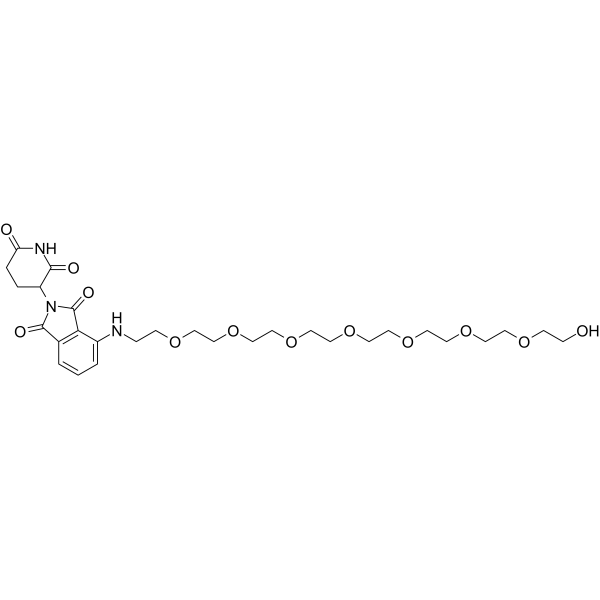
Pom-8PEG, an E3 ligase ligand-linker conjugate, incorporates a cereblon (CRBN) ligand for the E3 ubiquitin ligase and an 8-unit PEG linker. Pom-8PEG can be used in the synthesis of PROTAC, such as IDO1 PROTAC degrader .
|
-
- HY-131647
-
|
Pomalidomide-PEG5-CO2H
|
E3 Ligase Ligand-Linker Conjugates
|
Cancer
|
|
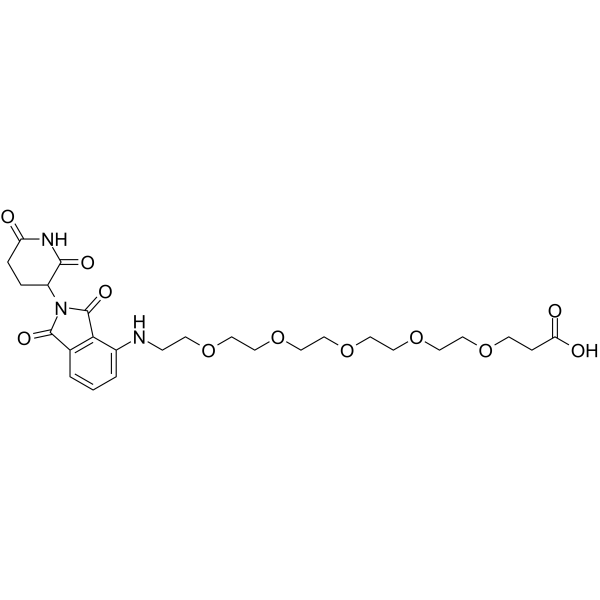
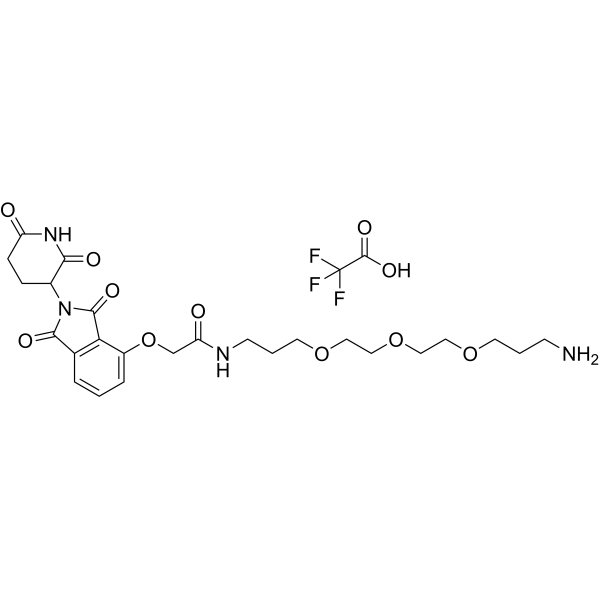
Pomalidomide 4'-PEG5-acid (Pomalidomide-PEG5-CO2H) is a synthesized E3 ligase ligand-linker conjugate that incorporates the Pomalidomide based cereblon ligand and 5-unit PEG linker used in PROTAC technology .
|
-
- HY-131646
-
-
- HY-W286613
-
|
|
Biochemical Assay Reagents
|
Others
|
|
N-Boc-Biocytin is a biotin PEG linker containing a carboxylic group and Boc-protected amine. Reaction of carboxylic with primary amino (-NH2) forms stable, irreversible amide bonds. The Boc group can be deprotected under acidic condition to obtain the free amine which can be used for further conjugations.
|
-

- HY-W800724
-
|
|
Biochemical Assay Reagents
|
Others
|
|
Methyltetrazine-PEG4-DBCO is a PEG linker with a terminal TCO reactive reagent and a DBCO group. DBCO is commonly used for copper-free Click Chemistry reactions. Methyltetrazine can be used to convert azido-containing peptides or proteins into tetrazine-modified peptides or protein without catalyst or axillary reagents.
|
-

- HY-116006
-
|
PROTAC Linker 36
|
PROTAC Linkers
|
Cancer
|
|
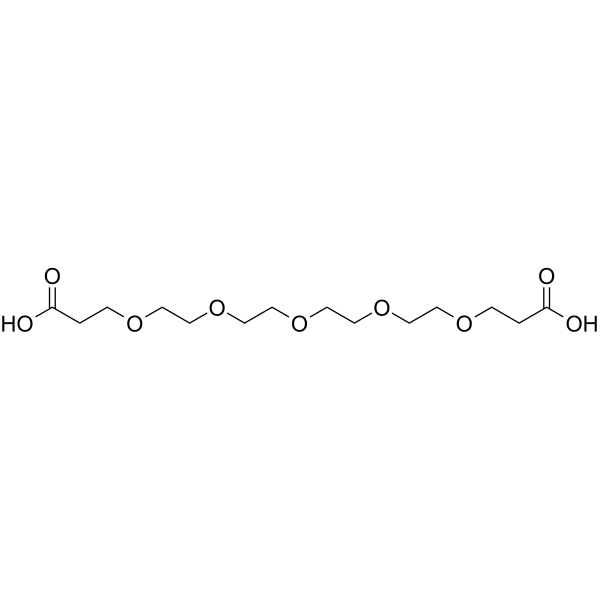
Bis-PEG5-acid (PROTAC Linker 36) is a PROTAC linker, which belongs to a polyethylene glycol (PEG) linker. Bis-PEG5-acid (PROTAC Linker 36) can be used in the synthesis of the CP5V. CP5V is a PROTAC, and specifically degrades Cdc20 .
|
-
- HY-W007545
-
|
PROTAC Linker 35
|
PROTAC Linkers
|
Cancer
|
|
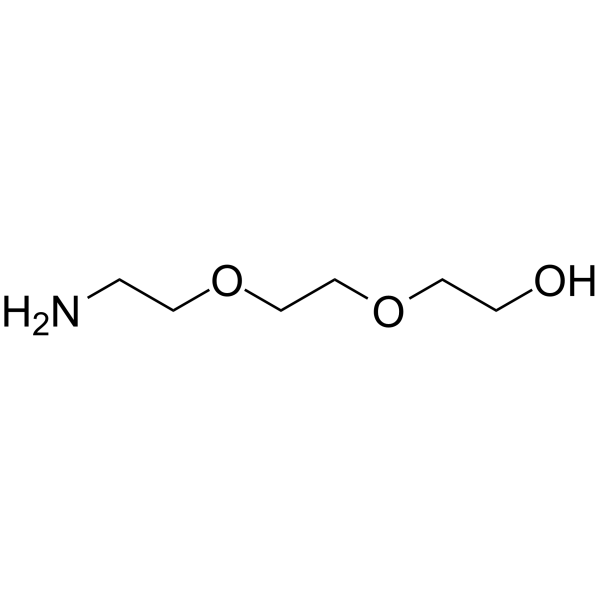
NH2-PEG3 (PROTAC Linker 35) is a PROTAC linker, which belongs to a polyethylene glycol (PEG) linker. NH2-PEG3 (PROTAC Linker 35) can be used in the synthesis of the PROTAC (β-NF-JQ1) .
|
-
- HY-W800658
-
|
|
Biochemical Assay Reagents
|
Others
|
|
DBCO-PEG6-NH-Boc is a click chemistry reagent with a DBCO group and a Boc-protected amine. The DBCO can undergo copper-free Click Chemistry reactions with azides. The Boc protecting group can be removed under acidic conditions. The hydrophilic PEG linker increases the water solubility of the compound.
|
-

- HY-107440
-
|
Cereblon Ligand-Linker Conjugates 3 ; E3 Ligase Ligand-Linker Conjugates 14
|
E3 Ligase Ligand-Linker Conjugates
Autophagy
Apoptosis
|
Cancer
|
|
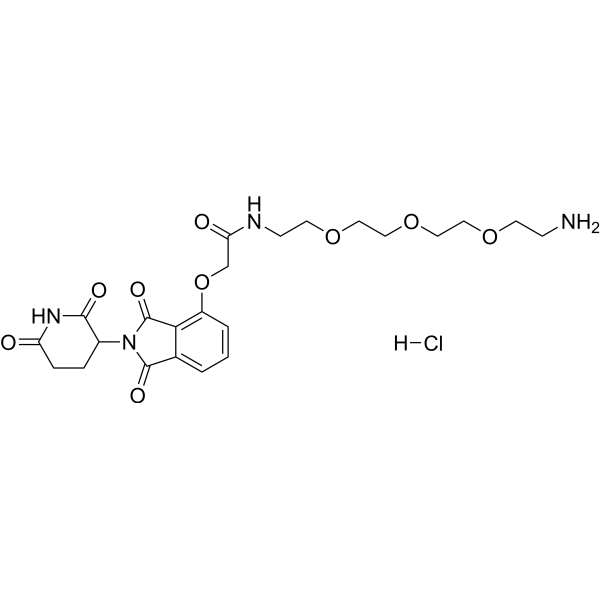
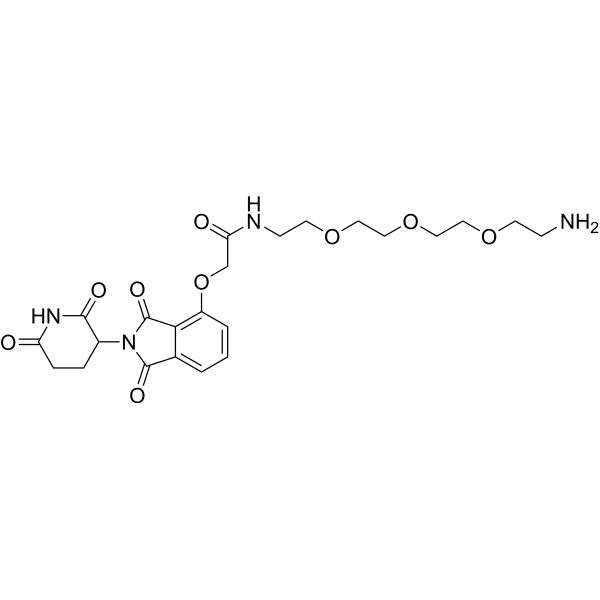
Thalidomide-O-amido-PEG3-C2-NH2 (Cereblon Ligand-Linker Conjugates 3) is a synthesized E3 ligase ligand-linker conjugate that incorporates the Thalidomide based cereblon ligand and 3-unit PEG linker used in PROTAC technology.
|
-
- HY-W153502
-
|
|
Biochemical Assay Reagents
|
Others
|
|
MeNH-PEG2-OH is a PEG linker containing a hydroxyl group with a methylamine group. The hydrophilic PEG spacer increases solubility in aqueous media. The hydroxyl group enables further derivatization or replacement with other reactive functional groups. The methylamine group is reactive with carboxylic acids, carbonyls (ketone, aldehyde) etc.
|
-

- HY-130521
-
|
Cereblon Ligand-Linker Conjugates 22; E3 ligase Ligand-Linker Conjugates 55
|
E3 Ligase Ligand-Linker Conjugates
|
Cancer
|
|
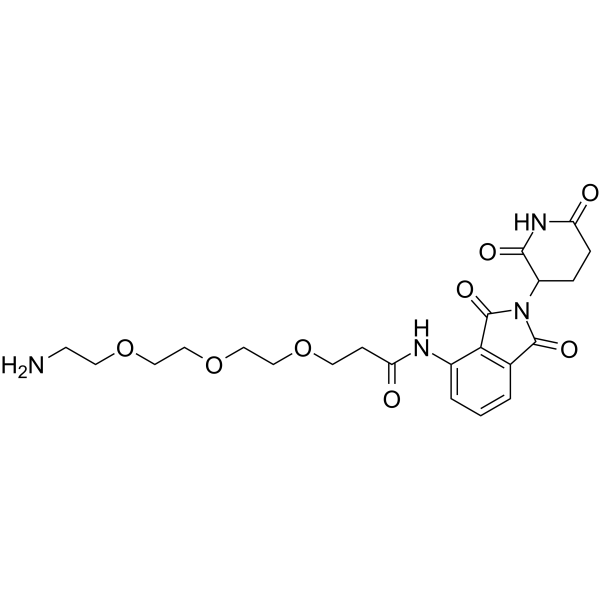
Pomalidomide-amido-PEG3-C2-NH2 (Cereblon Ligand-Linker Conjugates 22) is a synthesized E3 ligase ligand-linker conjugate that incorporates the Pomalidomide based cereblon ligand and 3-unit PEG linker used in PROTAC technology .
|
-
- HY-W909314
-
|
|
Biochemical Assay Reagents
|
Others
|
|
t-Butyoxycarboxy-PEG4-para-nitrophenyl carbonate is a PEG linker with a nitrophenyl group linked to a carbonate, four PEG units, and a t-butyl group that can be deprotected under acidic conditions. The PEG units enhance the solubility of the molecule in aqueous media. Nitrophenyl group is reactive towards the amino-bearing molecules.
|
-

- HY-130159
-
|
|
Biochemical Assay Reagents
|
Others
|
|
Hydroxy-PEG12-t-butyl ester is a PEG linker containing a hydroxyl group with a t-butyl ester. The hydrophilic PEG spacer increases solubility in aqueous media. The hydroxyl group enables further derivatization or replacement with other reactive functional groups. The t-butyl protected carboxyl group can be deprotected under acidic conditions.
|
-

- HY-W190808
-
|
|
Biochemical Assay Reagents
|
Others
|
|
Tos-PEG11-t-butyl ester is a PEG linker containing a t-butyl ester and a tosyl group. The hydrophilic PEG spacer increases solubility in aqueous media. The t-butyl protected carboxyl group can be deprotected under acidic conditions. The tosyl group is a very good leaving group for nucleophilic substitution reactions.
|
-

- HY-138550A
-
|
|
E3 Ligase Ligand-Linker Conjugates
|
Cancer
|
|
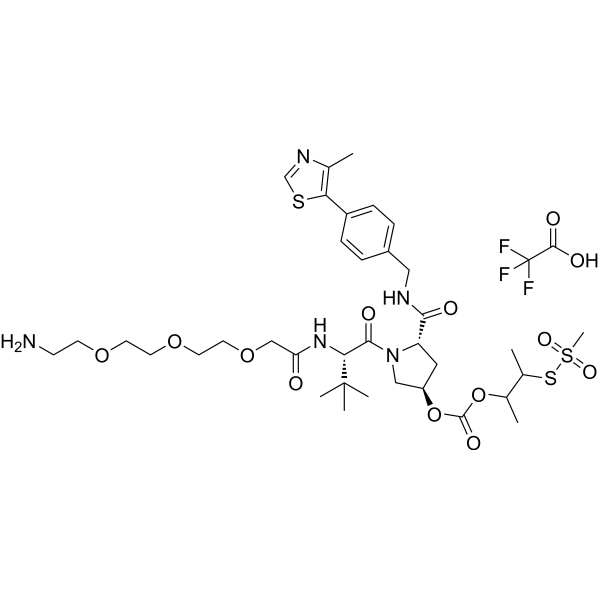
(S,R,S)-AHPC-3-methylbutanyl acetate-methanesulfonothioate-PEG3-NH2 TFA is a synthesized E3 ligase ligand-linker conjugate that incorporates the (S,R,S)-AHPC based ligand and 3-unit PEG linker used in PROTAC technology .
|
-
- HY-158985
-
|
|
AUTACs
Autophagy
|
Cancer
|
|
Amino-PEG3-2G degrader-1 (compound ) is a conjugate of a PEG Linker and a pyrazole-linked FBnG tag for ubiquitin-proteasome system (UPS) induction. Amino-PEG3-2G degrader-1 can be used to synthesize autophagy-targeting chimeras (AUTACs) .
|
-

- HY-126513
-
|
|
ADC Linker
|
Cancer
|
|
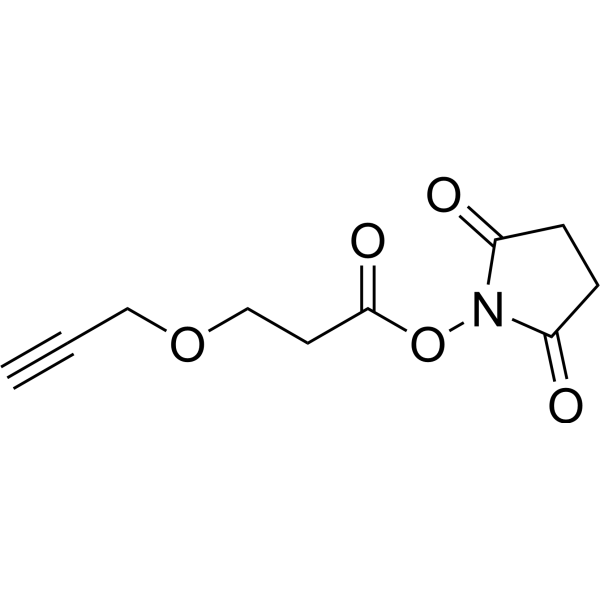
Propargyl-PEG1-NHS ester is a nonclaevable 1-unit PEG linker for antibody-agent-conjugation (ADC). Propargyl-PEG1-NHS ester is a click chemistry reagent, it contains an Alkyne group and can undergo copper-catalyzed azide-alkyne cycloaddition (CuAAc) with molecules containing Azide groups.
|
-
- HY-164862
-
|
|
PROTAC Linkers
|
Others
|
|
N-(NHS ester-PEG2)-N-bis(PEG3-azide) is a PEG linker with an NHS ester group and two terminal azide groups. N-(NHS ester-PEG2)-N-bis(PEG3-azide) can be utilized in Click Chemistry .
|
-

- HY-140818
-
|
|
Biochemical Assay Reagents
|
Others
|
|
Azido-PEG8-hydrazide-Boc is a PEG linker which contains an azide moiety and a Boc-protected hydrazide. Azido-PEG8-hydrazide-Boc is a click chemistry reagent. It contains an azide group and can undergo copper-catalyzed azide-alkyne cycloaddition (CuAAc) with molecules containing alkyne groups.
|
-

- HY-126516
-
|
|
ADC Linker
|
Cancer
|
|
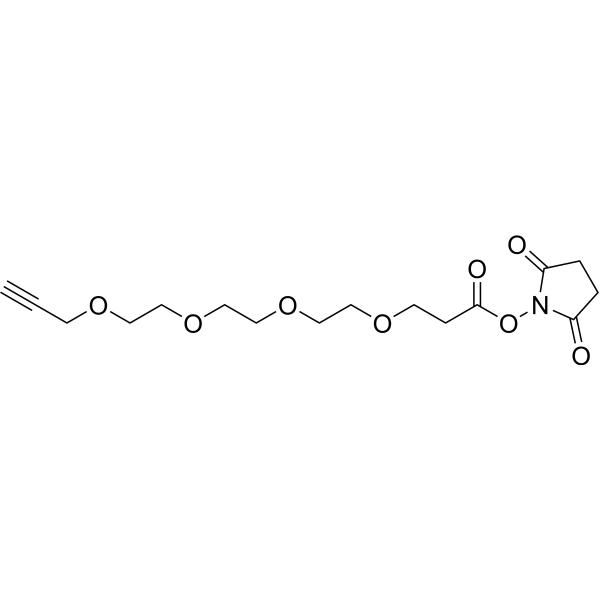
Propargyl-PEG4-NHS ester is a nonclaevable 4-unit PEG linker for antibody-agent-conjugation (ADC). Propargyl-PEG4-NHS ester is a click chemistry reagent, it contains an Alkyne group and can undergo copper-catalyzed azide-alkyne cycloaddition (CuAAc) with molecules containing Azide groups.
|
-
- HY-182806
-
|
|
Drug-Linker Conjugates for ADC
|
Others
|
|
Demethylation-desulfuration-α-Amanitin-OH-PAB-Ala-Val-CO-C2-mal is a conjugate of an ADC drug toxin molecule and a linker, containing a degradable PEG linker and the toxin molecule M-4, which is a cyclic peptide derived from α-Amanitin (HY-19610) .
|
-

- HY-W451433
-
|
|
Biochemical Assay Reagents
|
Others
|
|
OTs-PEG1-NHCbz is a PEG linker containing a tosyl group and benzyl (Cbz) protecting group. The hydrophilic PEG spacer increases the water solubility of the compound in aqueous media. The tosyl group is a very good leaving group for nucleophilic substitution reactions. The benzyl protecting group can be removed via hydrogenolysis to form a free amine.
|
-

- HY-W190950
-
|
|
Biochemical Assay Reagents
|
Others
|
|
AZD-PEG5-PFP is a PEG linker containing an AZD group and a PFP ester group, an activated ester that reacts with primary amines to form amide bonds. PFP ester has been found to be more stable than other amine reactive groups because it is less likely to undergo hydrolysis. The hydrophilic PEG spacer increases solubility in aqueous media.
|
-

- HY-130271
-
|
VH032-PEG5-COOH; VHL Ligand-Linker Conjugates 16; E3 Ligase Ligand-Linker Conjugates 58
|
E3 Ligase Ligand-Linker Conjugates
|
Cancer
|
|
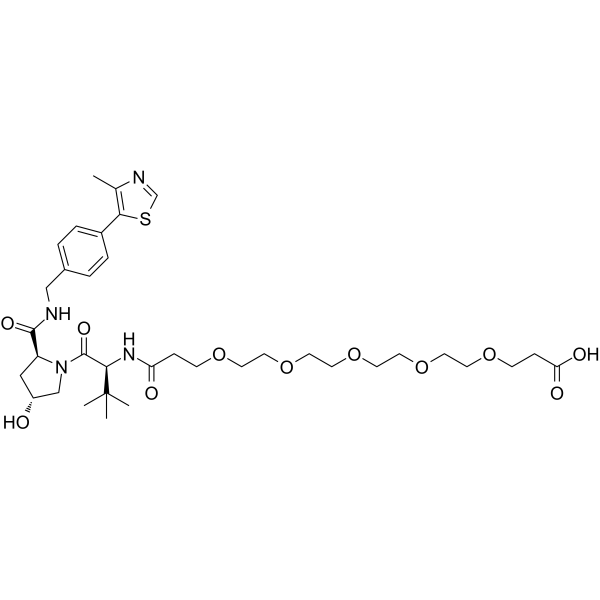
(S,R,S)-AHPC-PEG5-COOH (VH032-PEG5-COOH) is a synthesized E3 ligase ligand-linker conjugate that incorporates the (S,R,S)-AHPC based VHL ligand and 5-unit PEG linker used in PROTAC technology .
|
-
- HY-W1113139
-
|
|
Biochemical Assay Reagents
|
Others
|
|
H2N-PEG4-C3-OH is a PEG linker with a terminal amino group that can react with carboxylic acids, activated NHS esters, carbonyls (ketone, aldehyde), etc. Hydroxyl group can react with a variety of functional groups. PEG spacer improves the compound's aqueous solubility.
|
-

- HY-101974
-
|
|
Biochemical Assay Reagents
|
Others
|
|
Biotin-PEG3-Bromide is a short PEG linker featuring a biotin group and a bromide. The bromide is a halogen which is easily displaced by nucleophiles such as alcohols or amines. Alternatively, bromide can be applied in a number of cross-coupling reactions such as in a Suzuki reaction. Biotin is useful for affinity-based applications such as pull-down assays or for ligating with streptavidin proteins.
|
-

- HY-W800610
-
|
|
Biochemical Assay Reagents
|
Others
|
|
AZD-PEG13-PFP is a PEG linker containing an AZD group and a PFP ester group, an activated ester that reacts with primary amines to form amide bonds. PFP ester has been found to be more stable than other amine reactive groups because it is less likely to undergo hydrolysis. The hydrophilic PEG spacer increases solubility in aqueous media.
|
-

- HY-112600A
-
|
Cereblon Ligand-Linker Conjugates 12 TFA; E3 Ligase Ligand-Linker Conjugates 23 TFA
|
E3 Ligase Ligand-Linker Conjugates
Autophagy
Apoptosis
|
Cancer
|
|
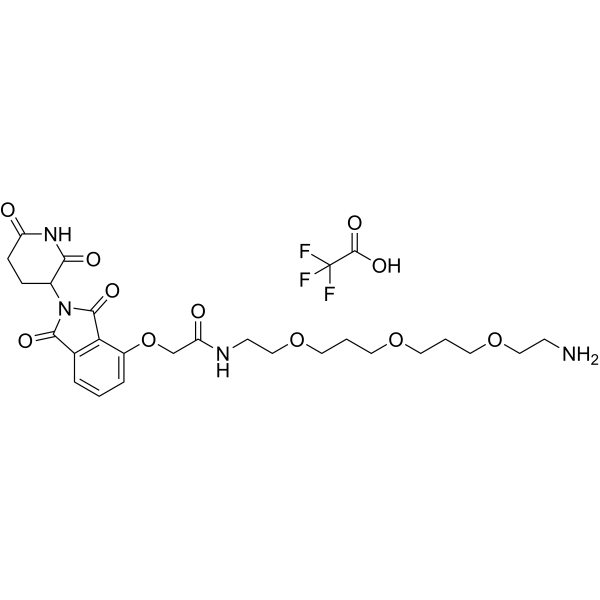
Thalidomide-O-amido-PEG1-(C1-PEG)2-C2-NH2 TFA is a synthesized E3 ligase ligand-linker conjugate that incorporates the Thalidomide based cereblon ligand and 3-unit PEG linker used in PROTAC technology.
|
-
- HY-140015A
-
|
|
PROTAC Linkers
|
Cancer
|
|
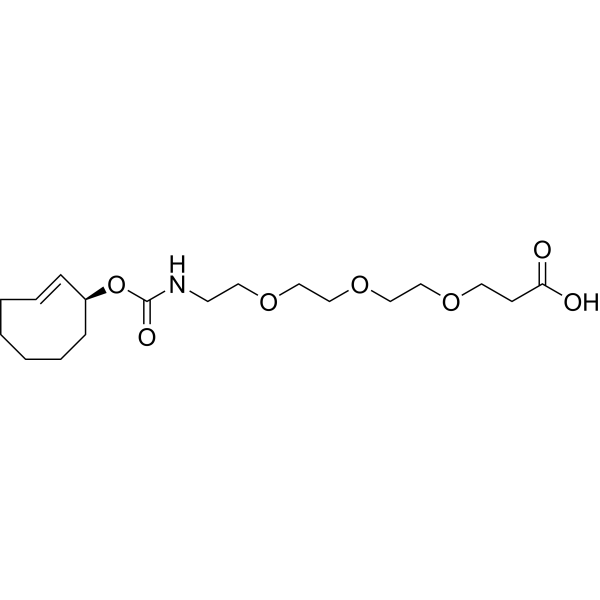
(S)-TCO-PEG3-acid is a click chemistry PEG linker with a terminal carboxylic acid(COOH) group. The terminal carboxylic acid is reactive with primary amine groups to form a stable amide bond. (S)-TCO-PEG3-acid is a PEG-based PROTAC linker can be used in the synthesis of PROTACs.
|
-
- HY-W190933
-
|
|
Biochemical Assay Reagents
|
Others
|
|
Bis-PEG6-TFP ester is a PEG linker with two terminal TFP ester moieties. TFP esters are amine reactive and are also more stable than NHS esters against hydrolysis. The PEG chain increases the water solubility properties of compounds in aqueous media. The water solubility properties of PEG chains are enhanced as the PEG chain grows.
|
-

- HY-174813
-
|
|
E3 Ligase Ligand-Linker Conjugates
|
Others
|
|
Pomalidomide-PEG3-Cys is an E3 ligase ligand-linker conjugate that incorporates a CRBN ligand Pomalidomide (HY-10984) and 3-unit PEG linker. Pomalidomide-PEG3-Cys can be used for synthesis of PROTAC BRD4 Degrader-33 (HY-174811) .
|
-

- HY-W460133
-
|
|
Biochemical Assay Reagents
|
Others
|
|
tert-Butyl (2-(2-(2-iodoethoxy)ethoxy)ethyl)carbamate is a PEG linker containing a Boc protected amine and an iodine group. The protected amine can be deprotected under mild acidic conditions. Iodine (I) is a very good leaving group for nucleophilic substitution reactions. The hydrophilic PEG spacer increases solubility in aqueous media.
|
-

- HY-147207D
-
|
|
Liposome
|
Others
|
|
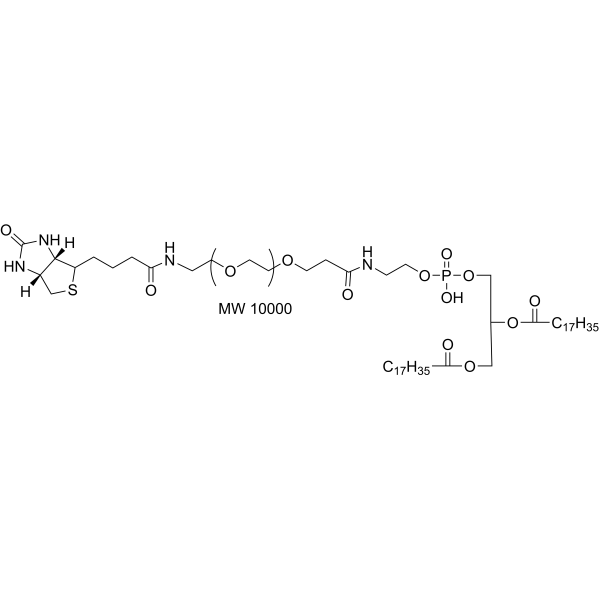
Phospholipid-PEG10000-Biotin is a phospholipid PEG derivative that has a biotin and a phospholipid bridged by a linear PEG linker. Phospholipid-PEG10000-Biotin can interact with avidinylated antibodies. Phospholipid-PEG10000-Biotin can be used to modify liposome and cells surface, and pancreatic islets for cell transplantation .
|
-
- HY-172294
-
|
|
Biochemical Assay Reagents
|
Others
|
|
Mes-PEG2-CH2-t-butyl ester is a PEG linker consisting of a PEG2 linker for improved water-solubility of the compound and a t-butyl ester group which can be deprotected under acidic conditions. The mesylate serves as an excellent leaving group, offering all the advantages without the limitation of having an acidic proton that could react with nucleophiles.
|
-

- HY-W572763
-
|
|
Biochemical Assay Reagents
|
Others
|
|
Tos-PEG6-acid is a PEG linker containing a tosyl group and a terminal carboxylic acid. The hydrophilic PEG spacer increases solubility in aqueous media. The tosyl group is a very good leaving group for nucleophilic substitution reactions. The terminal carboxylic acid can react with primary amine groups in the presence of activators (e.g. HATU) to form a stable amide bond.
|
-

- HY-116655A
-
|
|
Biochemical Assay Reagents
|
Others
|
|
Hydroxy-PEG1-acid sodium is a PEG linker containing a hydroxyl group with a terminal carboxylic acid (as sodium salt form). The free acid form is not stable due to the reaction of OH with PEG-COOH group to form polymer. The sodium salt form is stable for storage and shipping. The hydrophilic PEG spacer increases solubility in aqueous media. The hydroxyl group enables further derivatization or replacement with other reactive functional groups.
|
-

- HY-147207B
-
|
|
Liposome
|
Others
|
|
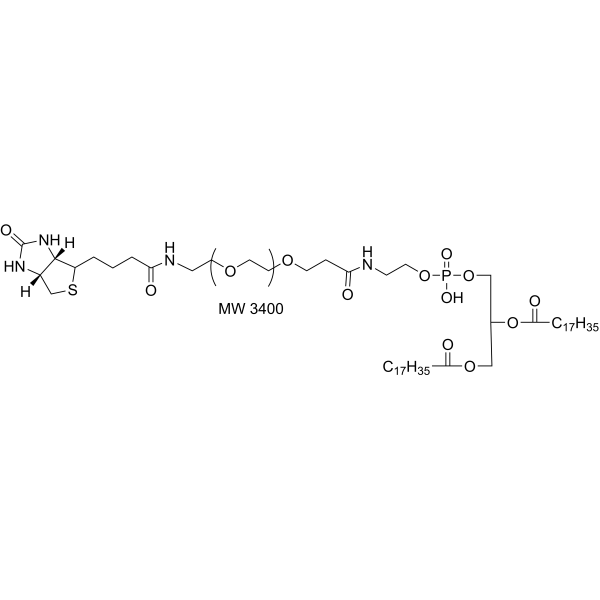
Phospholipid-PEG3400-Biotin is a phospholipid PEG derivative that has a biotin and a phospholipid bridged by a linear PEG linker. Phospholipid-PEG3400-Biotin can interact with avidinylated antibodies. Phospholipid-PEG3400-Biotin can be used to modify liposome and cells surface, and pancreatic islets for cell transplantation .
|
-
- HY-W190958
-
|
|
Biochemical Assay Reagents
|
Others
|
|
Boc-NH-Tri-(carbonylethoxymethyl)-methane is a branched PEG linker with a Boc-protected amino and three terminal carboxilic acid groups. The Boc group can be deprotected under mild acidic conditions to form the free amine. The terminal carboxylic acid groups can react with primary amine groups in the presence of activators (e.g. EDC, or HATU) to form a stable amide bond.
|
-

- HY-W800654
-
|
|
Biochemical Assay Reagents
|
Others
|
|
Mal-PEG5-amine is a PEG linker containing a maleimide group and an amine group. The hydrophilic PEG spacer increases solubility in aqueous media. The amine group is reactive with carboxylic acids, activated NHS esters, carbonyls (ketone, aldehyde) etc. The maleimide group will react with a thiol group to form a covalent bond, enabling the connection of biomolecule with a thiol.
|
-

- HY-140810
-
|
|
Biochemical Assay Reagents
|
Others
|
|
3-(Azido-PEG5-amino)propanol is a PEG linker which contains an azide moiety and a hydroxyl group. 3-(Azido-PEG5-amino)propanol is a click chemistry reagent. It contains an azide group and can undergo copper-catalyzed azide-alkyne cycloaddition (CuAAc) with molecules containing alkyne groups.
|
-

- HY-W190922
-
|
|
Biochemical Assay Reagents
|
Others
|
|
Mal-PEG4-amine is a PEG linker containing a maleimide group and an amine group. The hydrophilic PEG spacer increases solubility in aqueous media. The amine group is reactive with carboxylic acids, activated NHS esters, carbonyls (ketone, aldehyde) etc. The maleimide group will react with a thiol group to form a covalent bond, enabling the connection of biomolecule with a thiol.
|
-

- HY-W591360
-
|
|
Biochemical Assay Reagents
|
Others
|
|
Iodoacetamido-PEG6-azide is an aqueous soluble PEG linker containing an azide and a terminal Iodoacetamido group. The azide group can react with alkyne, BCN, DBCO via Click Chemistry to yield a stable triazole linkage. The Iodoacetamido moiety is commonly used to bind covalently with the thiol group of cysteine so the protein cannot form disulfide bonds.
|
-

- HY-103602
-
|
VH032-PEG3-NH2 hydrochloride; VHL Ligand-Linker Conjugates 1 hydrochloride; E3 ligase Ligand-Linker Conjugates 5
|
E3 Ligase Ligand-Linker Conjugates
|
Cancer
|
|
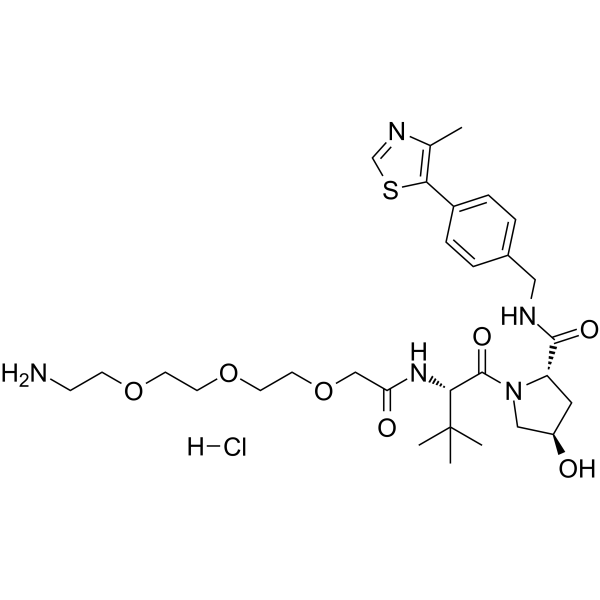
(S,R,S)-AHPC-PEG3-NH2 (VH032-PEG3-NH2) hydrochloride is a synthesized E3 ligase ligand-linker conjugate that incorporates the (S,R,S)-AHPC based VHL ligand and 3-unit PEG linker used in PROTAC technology.
|
-
- HY-172505
-
|
|
Biochemical Assay Reagents
|
Others
|
|
Mal-PEG12-t-butyl ester is a PEG linker containing a maleimide group and a t-butyl ester group. The hydrophilic PEG spacer increases solubility in aqueous media. The t-butyl protected carboxyl group can be deprotected under acidic conditions. The maleimide group will react with a thiol group to form a covalent bond, enabling the connection of biomolecule with a thiol.
|
-

- HY-147207E
-
|
|
Liposome
|
Others
|
|
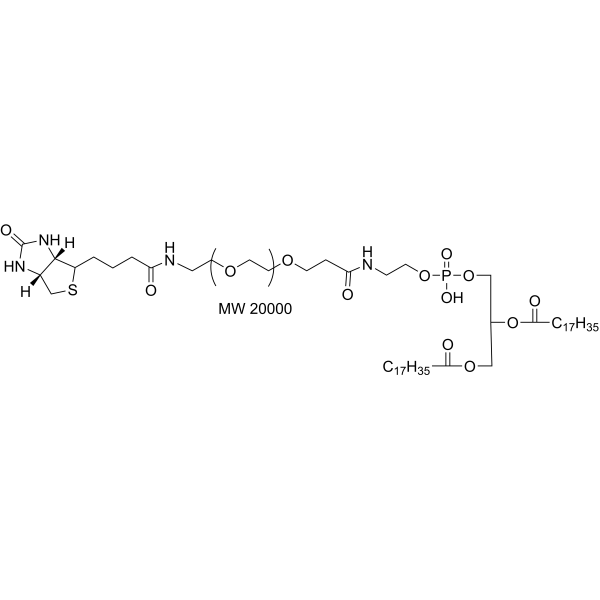
Phospholipid-PEG20000-Biotin is a phospholipid PEG derivative that has a biotin and a phospholipid bridged by a linear PEG linker. Phospholipid-PEG20000-Biotin can interact with avidinylated antibodies. Phospholipid-PEG20000-Biotin can be used to modify liposome and cells surface, and pancreatic islets for cell transplantation .
|
-
- HY-147207
-
|
|
Liposome
|
Others
|
|
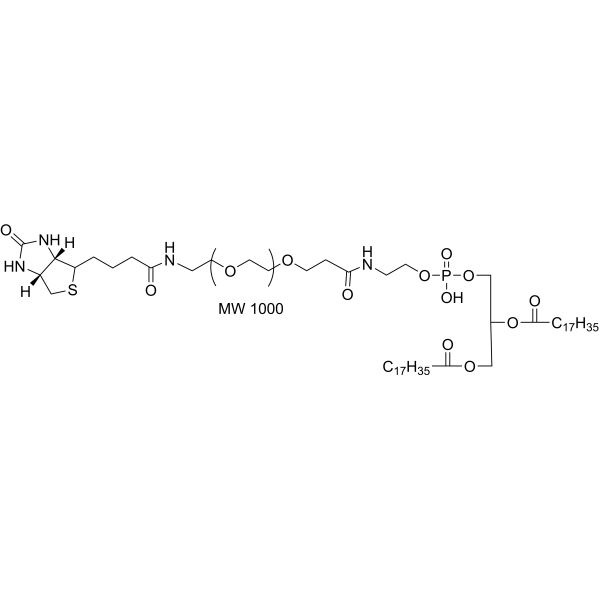
Phospholipid-PEG1000-Biotin is a phospholipid PEG derivative that has a biotin and a phospholipid bridged by a linear PEG linker. Phospholipid-PEG1000-Biotin can interact with avidinylated antibodies. Phospholipid-PEG1000-Biotin can be used to modify liposome and cells surface, and pancreatic islets for cell transplantation .
|
-
- HY-W591402
-
|
|
ADC Linker
|
Cancer
|
|
3,4-Dibromo-Mal-PEG4-acid is a site specific ADC linker with a dibromomaleimide group and an acid group. The dibromomaleimide group allows for two points of substitution due to the two bromine atoms. The carboxylic acid can react with primary amines in the presence of EDC and HATU to form a stable amide bond. The hydrophilic PEG linker increases the water solubility of compounds in aqueous media.
|
-

- HY-176366
-
|
|
E3 Ligase Ligand-Linker Conjugates
|
Cancer
|
|
AHPC-PEG6-CH2COOH is an E3 ligase ligand-linker conjugate that incorporates a VHL ligand and 6-unit PEG linker (HY-122702). AHPC-PEG6-CH2COOH can be used for synthesis of PROTAC CMP98 (HY-136257) .
|
-

- HY-103599
-
|
VH032-PEG2-N3; VHL Ligand-Linker Conjugates 6; E3 ligase Ligand-Linker Conjugates 13
|
E3 Ligase Ligand-Linker Conjugates
|
Cancer
|
|
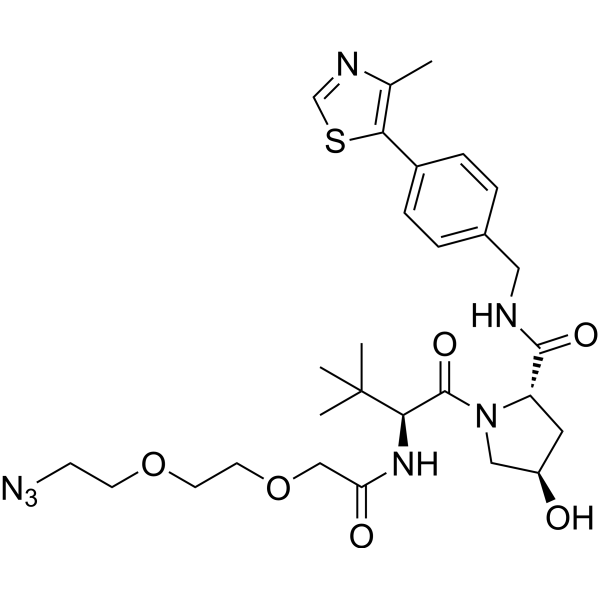
(S,R,S)-AHPC-PEG2-N3 is a synthesized E3 ligase ligand-linker conjugate that incorporates the (S,R,S)-AHPC based VHL ligand and 2-unit PEG linker. (S,R,S)-AHPC-PEG2-N3 can be used for the synthesis of PROTACs .
|
-
- HY-W800656
-
|
|
Biochemical Assay Reagents
|
Others
|
|
Fmoc-PEG4-hydroxy is a PEG linker containing an Fmoc-protected amine and a hydroxyl group. The hydrophilic PEG spacer increases solubility in aqueous media. The Fmoc group can be deprotected under basic condition to obtain the free amine which can be used for further conjugations. The hydroxyl group enables further derivatization or replacement with other reactive functional groups.
|
-

- HY-140855
-
|
|
Biochemical Assay Reagents
|
Others
|
|
Azido-PEG4-oxazolidin-2-one is a PEG linker which contains an azide moiety and an oxazolidin group. Azido-PEG4-oxazolidin-2-one is a click chemistry reagent. It contains an azide group and can undergo copper-catalyzed azide-alkyne cycloaddition (CuAAc) with molecules containing alkyne groups.
|
-

- HY-W800712
-
|
|
Biochemical Assay Reagents
|
Others
|
|
t-Boc-N-Amido-PEG11-Tos is a PEG linker containing a tosyl group and Boc-protected amine group. The hydrophilic PEG spacer increases the water solubility of a compound in aqueous media. The tosyl group is a very good leaving group for nucleophilic substitution reactions. The Boc group can be deprotected under mild acidic conditions to form a free amine.
|
-

- HY-W460275
-
|
|
Biochemical Assay Reagents
|
Others
|
|
t-Boc-N-Amido-PEG5-Tos is a PEG linker containing a tosyl group and Boc-protected amine group. The hydrophilic PEG spacer increases the water solubility of a compound in aqueous media. The tosyl group is a very good leaving group for nucleophilic substitution reactions. The Boc group can be deprotected under mild acidic conditions to form a free amine.
|
-

- HY-130853
-
|
|
E3 Ligase Ligand-Linker Conjugates
Autophagy
Apoptosis
|
Cancer
|
|
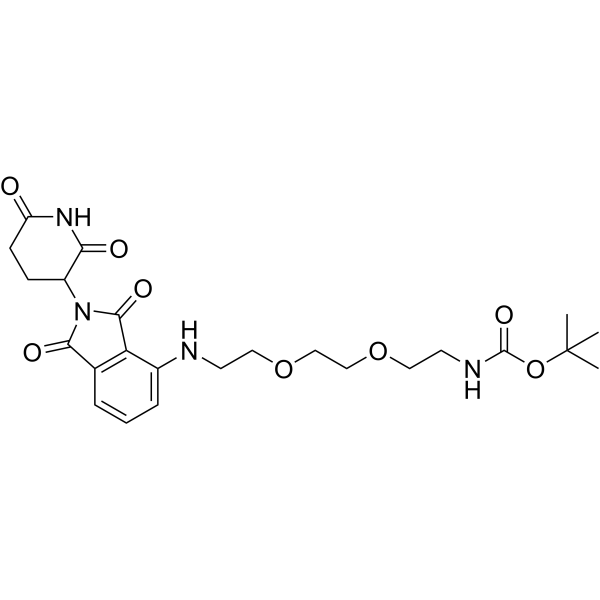
Thalidomide-NH-PEG2-C2-NH-Boc is a synthesized?E3 ligase ligand-linker conjugate?that incorporates the?Thalidomide?based cereblon ligand and a PEG linker used for dBRD9 (compound 6) synthesis. dBRD9 is a selective BRD9 probe PROTAC degrader for the study of BAF complex biology .
|
-
- HY-103603A
-
|
VH032-PEG2-NH2 ; VHL Ligand-Linker Conjugates 3 ; E3 ligase Ligand-Linker Conjugates 6 Free Base
|
E3 Ligase Ligand-Linker Conjugates
|
Cancer
|
|
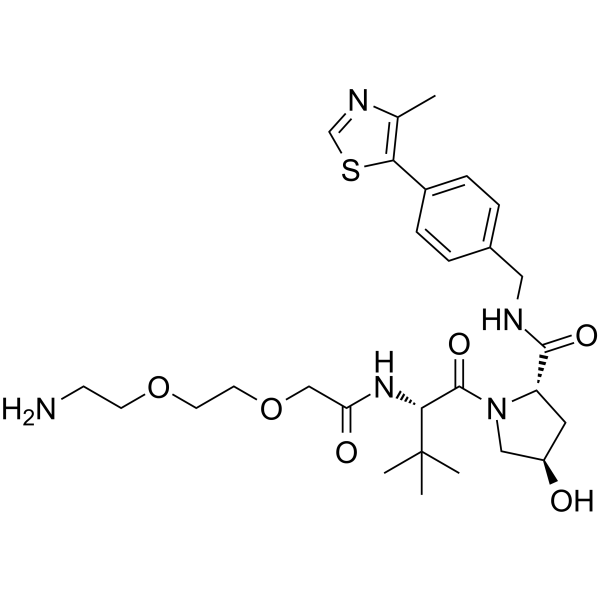
(S,R,S)-AHPC-PEG2-NH2 (VH032-PEG2-NH2) is a synthesized E3 ligase ligand-linker conjugate that incorporates the (S,R,S)-AHPC based VHL ligand and 2-unit PEG linker used in the synthesis of PROTACs .
|
-
- HY-W800706
-
|
|
Biochemical Assay Reagents
|
Others
|
|
Azidobutanamide-tri-(carboxyethoxymethyl)-methane is a aqueous soluble PEG linker with an azide group with three terminal carboxylic acids. The azide group can react with alkyne, BCN, DBCO via Click Chemistry to yield a stable triazole linkage. The terminal carboxylic acids can react with primary amine groups in the presence of activators (e.g. EDC, or HATU) to form a stable amide bond.
|
-

- HY-W440807
-
|
|
Liposome
|
Others
|
|
Oleoyl-Gly-Lys-(m-PEG11)-NH2 is a PEG-lipid molecule featuring an oleoyl amide linked to a Gly-Lys dipeptide and a methoxy PEG11 chain on the C-terminus of the lysine. The lysine primary amine may be used in a wide variety of reactions with carboxylic acids, NHS esters, and carbonyl groups. The PEG linker provides aqueous solubility.
|
-

- HY-103603
-
|
VH032-PEG2-NH2 hydrochloride; VHL Ligand-Linker Conjugates 3 hydrochloride; E3 ligase Ligand-Linker Conjugates 6
|
E3 Ligase Ligand-Linker Conjugates
|
Cancer
|
|
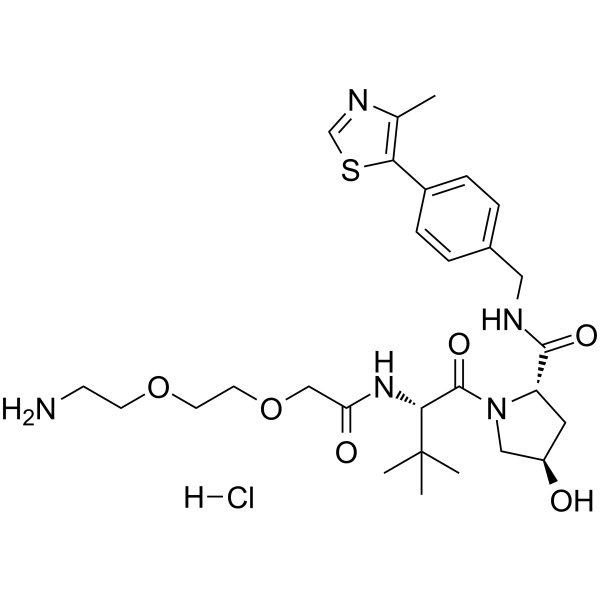
(S,R,S)-AHPC-PEG2-NH2 hydrochloride (VH032-PEG2-NH2 hydrochloride) is a synthesized E3 ligase ligand-linker conjugate that incorporates the (S,R,S)-AHPC based VHL ligand and 2-unit PEG linker used in the synthesis of PROTACs .
|
-
- HY-103603B
-
|
VH032-PEG2-NH2 dihydrochloride
|
E3 Ligase Ligand-Linker Conjugates
|
Cancer
|
|
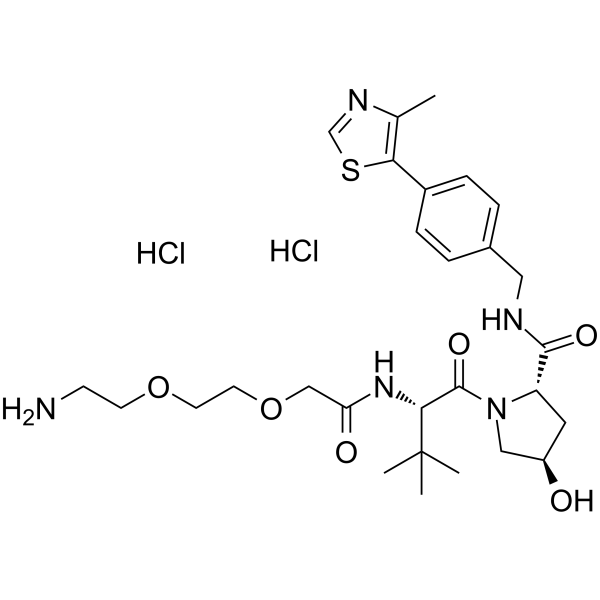
(S,R,S)-AHPC-PEG2-NH2 dihydrochloride (VH032-PEG2-NH2 dihydrochloride) is a synthesized E3 ligase ligand-linker conjugate that incorporates the (S,R,S)-AHPC based VHL ligand and 2-unit PEG linker used in the synthesis of PROTACs .
|
-
- HY-151834
-
|
|
ADC Linker
|
Others
|
|
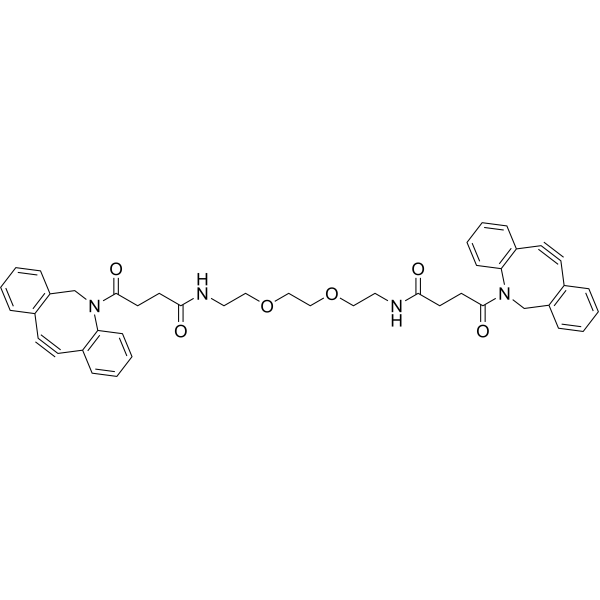
DBCO-PEG2-DBCO is a click chemistry reagent containing a DBCO group. DBCO-PEG2-DBCO is a PEG linker containing two terminal DBCO groups. The DBCO groups is commonly used for copper-free Click Chemistry reactions due to its strain promoted high energy. T Reagent grade, for research use only .
|
-
- HY-103602B
-
|
VH032-PEG3-NH2 dihydrochloride; VHL Ligand-Linker Conjugates 1 dihydrochloride; E3 ligase Ligand-Linker Conjugates 5 dihydrochloride
|
E3 Ligase Ligand-Linker Conjugates
|
Cancer
|
|
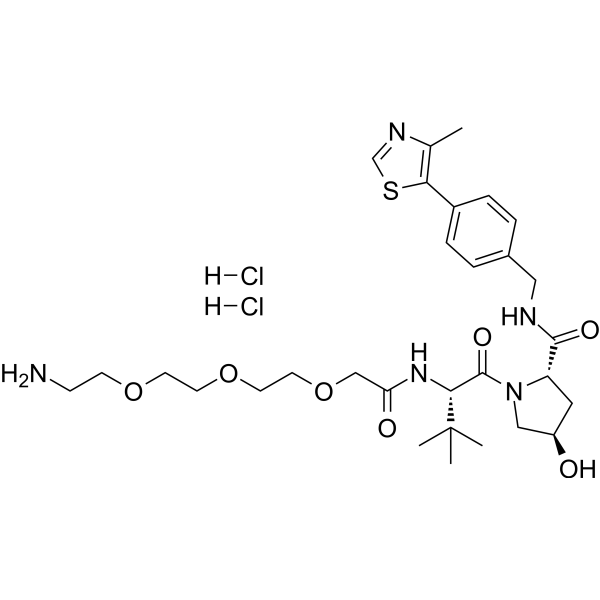
(S,R,S)-AHPC-PEG3-NH2 dihydrochloride (VH032-PEG3-NH2 dihydrochloride) is a synthesized E3 ligase ligand-linker conjugate that incorporates the (S,R,S)-AHPC based VHL ligand and 3-unit PEG linker used in PROTAC technology
|
-
- HY-159701A
-
|
|
Drug Intermediate
|
Others
|
|
DBCO-PEG2000-alendronic acid sodium is a PEG linker conjugated with alendronic acid (HY-B0631) and DBCO groups. Alendronic acid possesses bone-targeting properties, enabling strong chelation with calcium ions in bone and hydroxyapatite, and exhibits high specific adsorption on mineralized tissues such as bones and teeth. This compound can be applied to construct bone-targeted drug delivery systems and bone tissue imaging probes.
|
-

- HY-130296
-
|
PROTAC CDK6 ligand 1
|
Ligands for Target Protein for PROTAC
|
Cancer
|
|
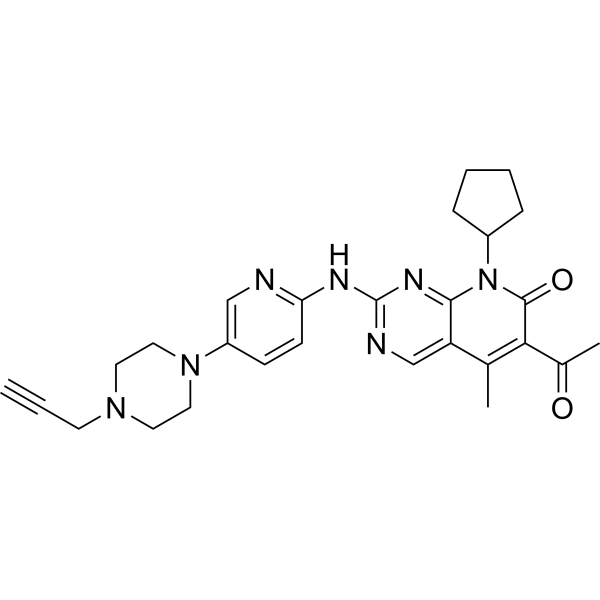
Palbociclib-propargyl is a ligand for target protein CDK6 for PROTAC, and binds to CRBN ligand via a PEG linker to make a PROTAC CP-10. CP-10 shows a DC50 of 2.1 nM for CDK6 . Palbociclib-propargyl is a click chemistry reagent, it contains an Alkyne group and can undergo copper-catalyzed azide-alkyne cycloaddition (CuAAc) with molecules containing Azide groups.
|
-
- HY-130982
-
|
|
E3 Ligase Ligand-Linker Conjugates
|
Cancer
|
|
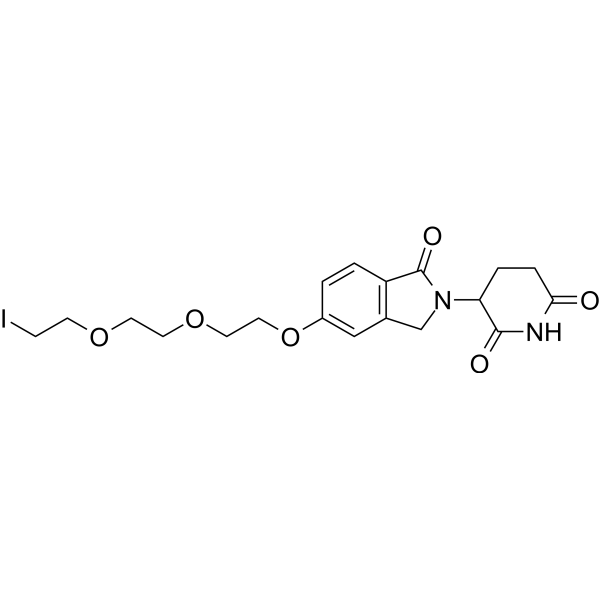
Lenalidomide-PEG3-iodine is a synthesized E3 ligase ligand-linker conjugate that incorporates the Lenalidomide based cereblon ligand and a 3-unit PEG linker. Lenalidomide-PEG3-iodine can be used in the synthesis of a series of PROTACs, such as SJF620 (HY-133137). SJF620 is a potent PROTAC BTK degrader with a DC50 of 7.9 nM .
|
-
- HY-131699
-
|
|
Biochemical Assay Reagents
|
Others
|
|
t-Butyl ester-PEG4-CH2COOH is a PEG linker containing a t-butyl group with a terminal carboxylic acid. The terminal carboxylic acid can react with primary amine groups in the presence of activators (e.g. HATU) to form a stable amide bond. The hydrophilic PEG spacer increases solubility in aqueous media. The t-butyl group can be deprotected under acidic conditions.
|
-

- HY-W800670
-
|
|
Biochemical Assay Reagents
|
Others
|
|
Mal-amido-PEG5-alkyne is a PEG linker containing a maleimide group and an alkyne. The hydrophilic PEG spacer increases solubility in aqueous media. The alkyne group can react with azide-bearing compounds or biomolecules via copper catalyzed azide-alkyne Click Chemistry to yield a stable triazole linkage. The maleimide group will react with a thiol group to form a covalent bond, enabling the connection of biomolecule with a thiol.
|
-

- HY-157084
-
|
|
ROS Kinase
Bacterial
|
Infection
|
|
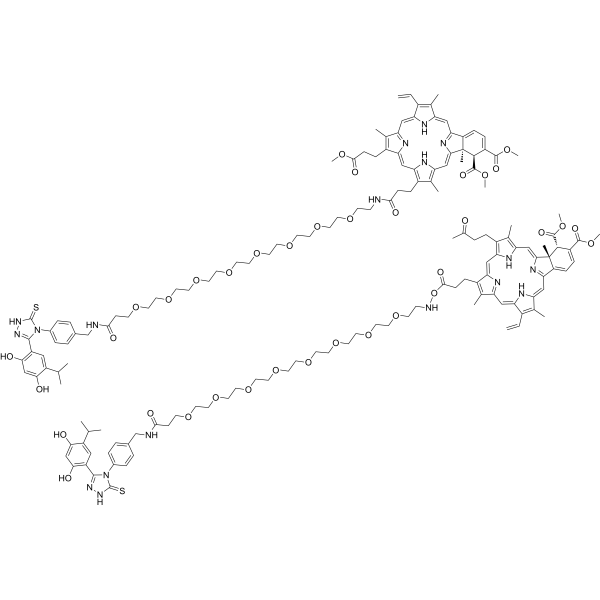
HS-291 is a HtpG inhibitor of Borrelia burgdorferi (Bb). HS-291 contains BX-2819 (high affinity for Bb HtpG), PEG linker, and Verteporfin (HY-B0146) (a photoactive toxin).HS-291 produces reactive oxygen species under light activation to oxidize HtpG and a discrete protein subset near chaperone proteins and can quickly and irreversibly inactivate Bb .
|
-
- HY-W800813
-
|
|
Biochemical Assay Reagents
|
Others
|
|
Carboxy-Amido-PEG5-N-Boc is a PEG linker containing a terminal carboxylic acid and Boc-protected amino group. The hydrophilic PEG spacer increases solubility in aqueous media. The terminal carboxylic acid can react with primary amine groups in the presence of activators (e.g. EDC, HATU) to form a stable amide bond. The Boc group can be deprotected under mild acidic conditions to form the free amine.
|
-

- HY-W190920
-
|
|
Biochemical Assay Reagents
|
Others
|
|
t-Butoxycarbonyl-PEG2-NHS ester has a t-Boc protecting group and an NHS ester moiety. The t-butyl group can be deprotected under acidic conditions. NHS ester can react specifically and efficiently with primary amines such as the side chain of lysine residues or aminosilane-coated surfaces at neutral or slightly basic condition to form a covalent bond. The hydrophilic PEG linker increases the water solubility of the compound in aqueous media.
|
-

- HY-172769
-
|
|
Histone Methyltransferase
|
Cancer
|
|
CM112 is a selective protein arginine methyltransferase 1 (PRMT1) degrader by tethering hydrophobic tag, adamantane, to MS023 with a 5-PEG linker. CM112 induces the degradation of PRMT1 in various solid cancer cell lines. CM112 can also target the nonenzymatic function of PRMT1 by downregulating the stability of the orphan receptor TR3. CM112 is promising for research of cancers .
|
-

- HY-W190881
-
|
|
Biochemical Assay Reagents
|
Others
|
|
N3-PEG11-CH2CH2Br is a PEG linker containing a bromine and an azide group. The hydrophilic PEG spacer increases solubility in aqueous media. The azide group can react with alkyne, BCN, DBCO via Click Chemistry to yield a stable triazole linkage. The bromine (Br) is a very good leaving group for nucleophilic substitution reactions.
|
-

- HY-W591982
-
|
|
Biochemical Assay Reagents
|
Others
|
|
t-Boc-N-amido-PEG12-acid is a PEG linker containing a terminal carboxylic acid and Boc-protected amino group. The hydrophilic PEG spacer increases solubility in aqueous media. The terminal carboxylic acid can react with primary amine groups in the presence of activators (e.g. EDC, or HATU) to form a stable amide bond. The Boc group can be deprotected under mild acidic conditions to form the free amine.
|
-

- HY-141161A
-
|
|
PROTAC Linkers
|
Cancer
|
|
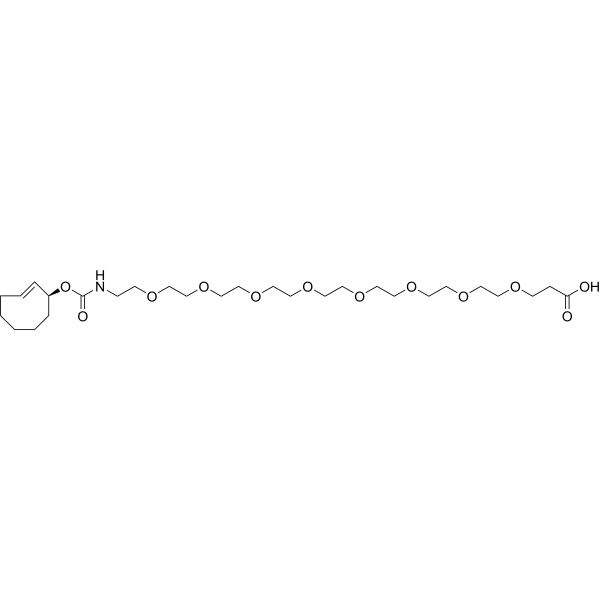
(S)-TCO-PEG8-acid is a click chemistry PEG linker with a terminal carboxylic acid(COOH) group. The terminal carboxylic acid is reactive with primary amine groups to form a stable amide bond. (S)-TCO-PEG8-acid is a PEG-based PROTAC linker can be used in the synthesis of PROTACs. (S)-TCO-PEG8-acid is longer than (S)-TCO-PEG3-acid .
|
-
- HY-176509D
-
|
|
Liposome
|
Others
|
|
DSPE-PEG10000-CHO is a linear heterobifunctional PEGylation reagent with DSPE phospholipids and aldehyde groups. PEG linkers have good hydrophilicity and water solubility. Aldehyde-polyethylene glycol (DSPE) is one of the most commonly used reactive phospholipids to bind antibodies, peptides or other ligands to the surface of liposomes and other lipid-polyethylene glycol nanoparticles. DSPE-PEG10000-CHO can be used for drug delivery .
|
-

- HY-400361
-
|
|
Biochemical Assay Reagents
|
Others
|
|
BocNH-PEG2-CH2COONHS ester is a PEG linker containing a terminal carboxylic acid and Boc-protected amino group. The hydrophilic PEG spacer increases solubility in aqueous media. The terminal carboxylic acid can react with primary amine groups in the presence of activators (e.g. EDC, HATU) to form a stable amide bond. The Boc group can be deprotected under mild acidic conditions to form the free amine.
|
-

- HY-176509B
-
|
|
Liposome
|
Others
|
|
DSPE-PEG3400-CHO is a linear heterobifunctional PEGylation reagent with DSPE phospholipids and aldehyde groups. PEG linkers have good hydrophilicity and water solubility. Aldehyde-polyethylene glycol (DSPE) is one of the most commonly used reactive phospholipids to bind antibodies, peptides or other ligands to the surface of liposomes and other lipid-polyethylene glycol nanoparticles. DSPE-PEG3400-CHO can be used for drug delivery .
|
-

- HY-176509C
-
|
|
Liposome
|
Others
|
|
DSPE-PEG5000-CHO is a linear heterobifunctional PEGylation reagent with DSPE phospholipids and aldehyde groups. PEG linkers have good hydrophilicity and water solubility. Aldehyde-polyethylene glycol (DSPE) is one of the most commonly used reactive phospholipids to bind antibodies, peptides or other ligands to the surface of liposomes and other lipid-polyethylene glycol nanoparticles. DSPE-PEG5000-CHO can be used for drug delivery .
|
-

- HY-W800664
-
|
|
Biochemical Assay Reagents
|
Others
|
|
5-(Azido-PEG4)-pent-2-yn-1-Ol is a PEG linker containing an azide group and a terminal hydroxyl group. The hydrophilic PEG spacer increases solubility in aqueous media. The azide group can react with alkyne, BCN, DBCO via Click Chemistry to yield a stable triazole linkage. The hydroxyl group enables further derivatization or replacement with other reactive functional groups.
|
-

- HY-176509
-
|
|
Liposome
|
Others
|
|
DSPE-PEG1000-CHO is a linear heterobifunctional PEGylation reagent with DSPE phospholipids and aldehyde groups. PEG linkers have good hydrophilicity and water solubility. Aldehyde-polyethylene glycol (DSPE) is one of the most commonly used reactive phospholipids to bind antibodies, peptides or other ligands to the surface of liposomes and other lipid-polyethylene glycol nanoparticles. DSPE-PEG1000-CHO can be used for drug delivery .
|
-

- HY-130851
-
|
|
HSP
|
Cancer
|
|
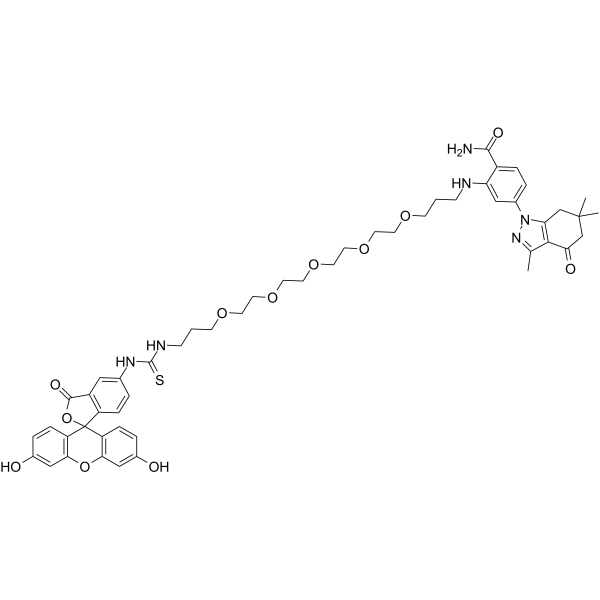
HS-27, a fluorescently-tethered Hsp90 inhibitor, assays surface Hsp90 expression on intact tissue specimens. HS-27 is made up of the core elements of SNX-5422, an Hsp90 inhibitor, tethered via a PEG linker to a fluorescein derivative (fluorescein isothiocyanate or FITC), that binds to ectopically expressed Hsp90. HS-27 has potential use in a see-and-treat paradigm in breast cancer .
|
-
- HY-176509E
-
|
|
Liposome
|
Others
|
|
DSPE-PEG20000-CHO is a linear heterobifunctional PEGylation reagent with DSPE phospholipids and aldehyde groups. PEG linkers have good hydrophilicity and water solubility. Aldehyde-polyethylene glycol (DSPE) is one of the most commonly used reactive phospholipids to bind antibodies, peptides or other ligands to the surface of liposomes and other lipid-polyethylene glycol nanoparticles. DSPE-PEG20000-CHO can be used for drug delivery .
|
-

- HY-176509H
-
|
|
Liposome
|
Others
|
|
DSPE-PEG40000-CHO is a linear heterobifunctional PEGylation reagent with DSPE phospholipids and aldehyde groups. PEG linkers have good hydrophilicity and water solubility. Aldehyde-polyethylene glycol (DSPE) is one of the most commonly used reactive phospholipids to bind antibodies, peptides or other ligands to the surface of liposomes and other lipid-polyethylene glycol nanoparticles. DSPE-PEG40000-CHO can be used for drug delivery .
|
-

- HY-176509A
-
|
|
Liposome
|
Others
|
|
DSPE-PEG2000-CHO is a linear heterobifunctional PEGylation reagent with DSPE phospholipids and aldehyde groups. PEG linkers have good hydrophilicity and water solubility. Aldehyde-polyethylene glycol (DSPE) is one of the most commonly used reactive phospholipids to bind antibodies, peptides or other ligands to the surface of liposomes and other lipid-polyethylene glycol nanoparticles. DSPE-PEG2000-CHO can be used for drug delivery .
|
-

- HY-151822
-
|
|
ADC Linker
|
Others
|
|
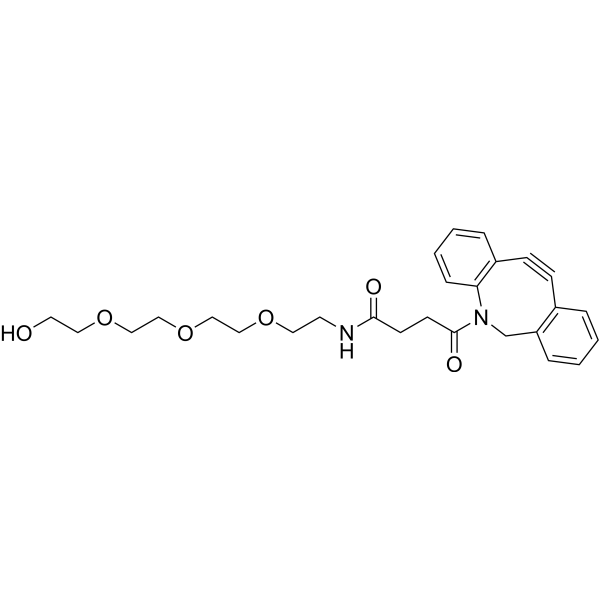
Hydroxy-PEG3-DBCO is a click chemistry reagent containing an azide group. Hydroxy-PEG3-DBCO is a PEG linker containing a DBCO moiety and a terminal primary hydroxyl group. The hydroxyl can react with a variety of functional groups and the hydrophilic PEG spacer arm can provide better solubility to labeled molecules. DBCO is commonly used for copper-free Click Chemistry reactions. Reagent grade, for research use only .
|
-
- HY-145090
-
|
|
PROTAC Linkers
ADC Linker
|
Others
|
|
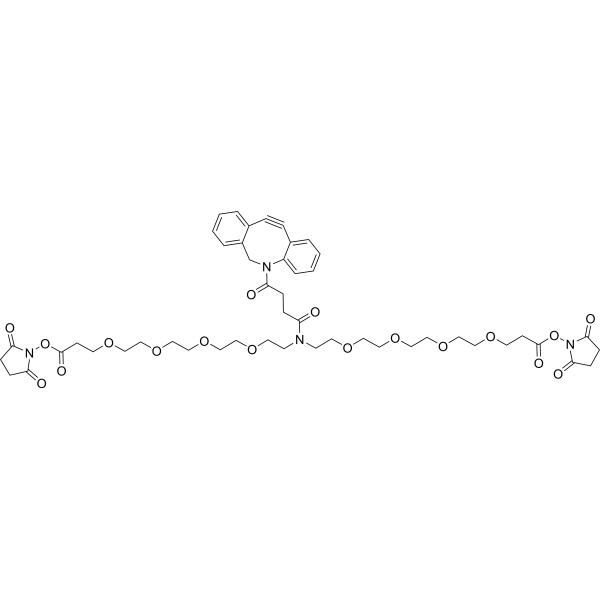
DBCO-N-bis(PEG4-NHS ester) is a PEG linker which contains two PEG4-NHS ester and a DBCO group. DBCO-N-bis(PEG4-NHS ester) is useful for protein modification or labeling. DBCO-N-bis(PEG4-NHS ester) is a click chemistry reagent, it contains a DBCO group that can undergo strain-promoted alkyne-azide cycloaddition (SPAAC) with molecules containing Azide groups.
|
-
- HY-W190753
-
|
|
Biochemical Assay Reagents
|
Others
|
|
BocNH-PEG8-CH2CH2COONHS is a PEG linker containing an NHS ester and a Boc-protected amino group. The hydrophilic PEG spacer increases the water solubility of a compound in aqueous media. The Boc group can be deprotected under mild acidic conditions to form a free amine. The NHS ester can be used to label the primary amines (-NH2) of proteins, amine-modified oligonucleotides, and other amine-containing molecules.
|
-

- HY-176181
-
|
|
E3 Ligase Ligand-Linker Conjugates
|
Inflammation/Immunology
|
|
Thalidomide-4-OH-PEG4-OTs is an E3 ligase ligand-linker conjugate that incorporates the Thalidomide (HY-14658) based CRBN ligand (HY-103596) and 4-unit PEG linker (HY-176182). Thalidomide-4-OH-PEG4-OTs can be used for synthesis of PROTAC STING degrader-4 (HY-176180) .
|
-

- HY-126677
-
|
|
ADC Linker
PROTAC Linkers
|
Cancer
|
|
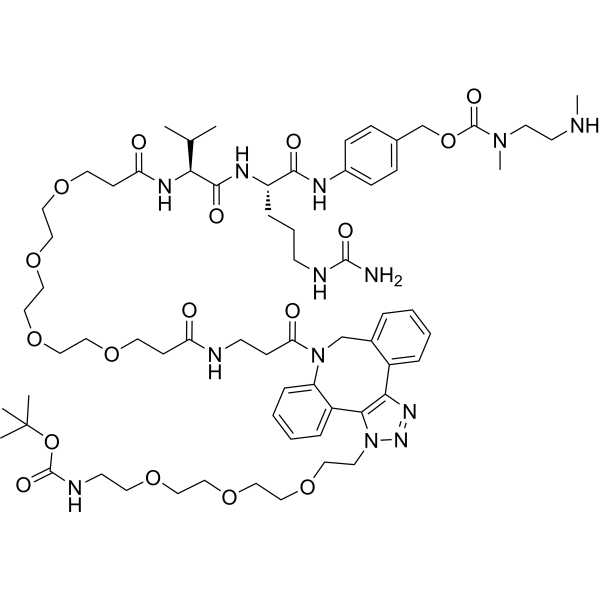
Boc-NH-PEG3-C2-triazole-DBCO-PEG4-VC-PAB-DMEA is a double claevable 3-unit and 4-unit PEG linker for antibody-agent-conjugation (ADC). Boc-NH-PEG3-C2-triazole-DBCO-PEG4-VC-PAB-DMEA also is a PROTAC linker that can be used in the synthesis of PROTACs.
|
-
- HY-W403327
-
|
|
Biochemical Assay Reagents
|
Others
|
|
CbzNH-PEG4-CH2COOH is a PEG linker containing an carboxylic acid (CO2H) group and a benzyl (Cbz) protecting group. The hydrophilic PEG spacer increases the water solubility of a compound in aqueous media. The terminal carboxylic acid is reactive with primary amine groups in the presence of activators (e.g. HATU) forming a stable amide bond. The benzyl protecting group can be removed via hydrogenolysis to form a free amine.
|
-

- HY-118112
-
|
|
Biochemical Assay Reagents
|
Others
|
|
4-N-Maleimidobenzoicacid-NHS is a PEG linker that finds utility in bioconjugation endeavors and protein labeling ventures. Specifically designed for selective reaction with thiol groups, the maleimide group establishes covalent linkages, thereby facilitating the coupling of proteins, peptides, or diverse molecules to thiol-bearing biomolecules. The NHS ester is able to react specifically and efficiently with primary amines (e.g. the side chain of lysine residues or aminosilane-coated surfaces) at neutral or slightly basic conditions to form a covalent bond.
|
-

- HY-128716A
-
|
Cereblon Ligand-Linker Conjugates 5 TFA ; E3 ligase Ligand-Linker Conjugates 30 TFA
|
E3 Ligase Ligand-Linker Conjugates
|
Cancer
|
|
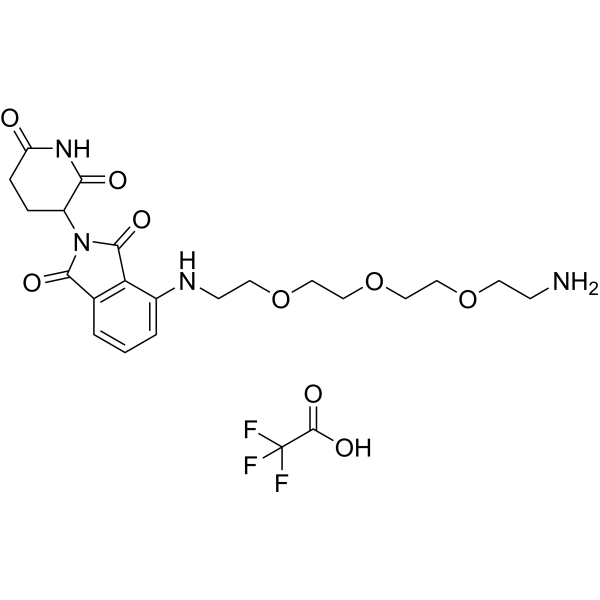
Pomalidomide-PEG3-C2-NH2 TFA (Cereblon Ligand-Linker Conjugates 5 (TFA)) is a synthetic E3 ligase ligand-linker conjugate comprising a Pomalidomide (HY-10984)-based cereblon ligand and a 3-unit PEG linker. Pomalidomide-PEG3-C2-NH2 TFA can be used for the synthesis of PROTACs .
|
-
- HY-W190842
-
|
|
Biochemical Assay Reagents
|
Others
|
|
m-PEG2-NHS ester is a PEG linker containing an NHS ester. The NHS ester of m-PEG2-NHS ester is used to label primary amines (-NH2) of proteins, amine-modified oligonucleotides and other amine-containing molecules. The hydrophilic PEG spacer effectively improves solubility in aqueous media. m-PEG2-NHS ester can be used in studies related to bioconjugation with ADC, proteins, peptides and other molecules .
|
-

- HY-W144703
-
|
9-Aminoheptadecane
|
Biochemical Assay Reagents
|
Others
|
|
Heptadecan-9-amine (9-Aminoheptadecane) is PEG linker containing a maleimide and TFP ester end group. Maleimide groups are reactive with thiols between pH 6.5 and 7.5. The TFP ester can react with primary amine groups and is also less susceptible to undergo hydrolysis compared to NHS ester. The hydrophilic PEG chains increase the water solubility of a compound in aqueous media. Longer PEG chains have improved water solubility relative to shorter PEG chains.
|
-

- HY-W348348
-
|
|
Biochemical Assay Reagents
|
Others
|
|
CbzNH-PEG3-CH2CH2NH2 is a PEG linker containing an amine group and a benzyl (Cbz) protecting group. The hydrophilic PEG spacer increases the water solubility of a compound in aqueous media. Amine group is reactive with carboxylic acids, activated NHS esters, carbonyls (ketone, aldehyde), etc. The benzyl protecting group can be removed via hydrogenolysis to form a free amine.
|
-

- HY-W800679
-
|
|
Biochemical Assay Reagents
|
Others
|
|
Mal-Cyclohexyl-PEG3-Biotin is a PEG linker containing a maleimide moiety and a biotin group. Maleimides react specifically with sulfhydryl groups to form a stable thioether linkage when the pH is between 6.5 and 7.5. The biotinylation can react with amine molecules in the presence of activator EDC or HATU. PEG attached to the biotin gives an extended spacer arm that permits the biotin to reach into the binding pocket of the protein. The PEG moiety also increases solubility of Biotin-PEG conjugates considerably.
|
-

- HY-126514
-
|
|
ADC Linker
|
Cancer
|
|
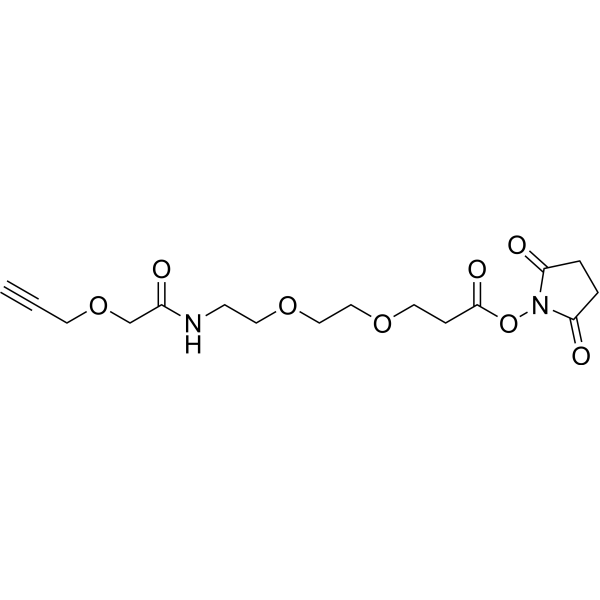
Propargyl-O-C1-amido-PEG2-C2-NHS ester is a nonclaevable 2-unit PEG linker for antibody-agent-conjugation (ADC). Propargyl-O-C1-amido-PEG2-C2-NHS ester is a click chemistry reagent, it contains an Alkyne group and can undergo copper-catalyzed azide-alkyne cycloaddition (CuAAc) with molecules containing Azide groups.
|
-
- HY-W800667
-
|
|
Biochemical Assay Reagents
|
Others
|
|
Hydroxy-PEG4-acid sodium is a PEG linker containing a hydroxyl group with a terminal carboxylic acid (as sodium salt form). The free acid form is not stable due to the reaction of OH with PEG-COOH group to form polymer. The sodium salt form is stable for storage and shipping. The terminal carboxylic acid can react with primary amine groups in the presence of activators (e.g. EDC, or HATU) to form a stable amide bond. The hydrophilic PEG spacer increases solubility in aqueous media. The hydroxyl group enables further derivatization or replacement with other reactive functional groups.
|
-

- HY-103608
-
|
VHL Ligand-Linker Conjugates 11; E3 ligase Ligand-Linker Conjugates 11
|
E3 Ligase Ligand-Linker Conjugates
|
Cancer
|
|
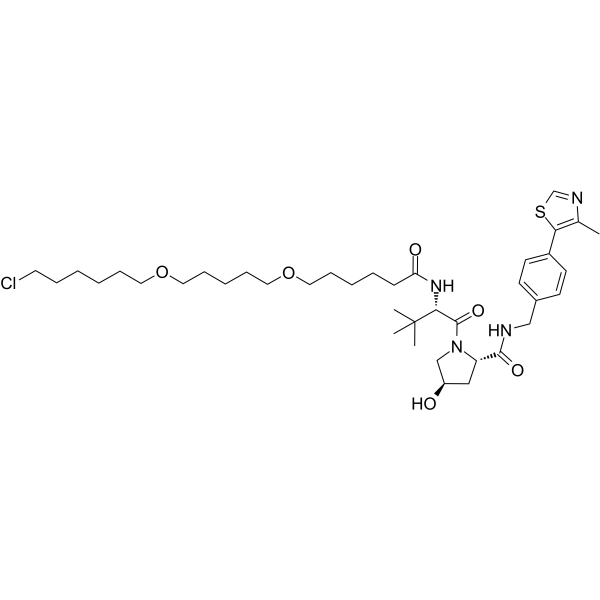
(S,R,S)-AHPC-(C3-PEG)2-C6-Cl is a small molecule HaloPROTAC that incorporates the (S,R,S)-AHPC based VHL ligand and 2-unit PEG linker. (S,R,S)-AHPC-(C3-PEG)2-C6-Cl is capable of inducing the degradation of GFP-HaloTag7 in cell-based assays .
|
-
- HY-126515
-
|
|
ADC Linker
|
Cancer
|
|
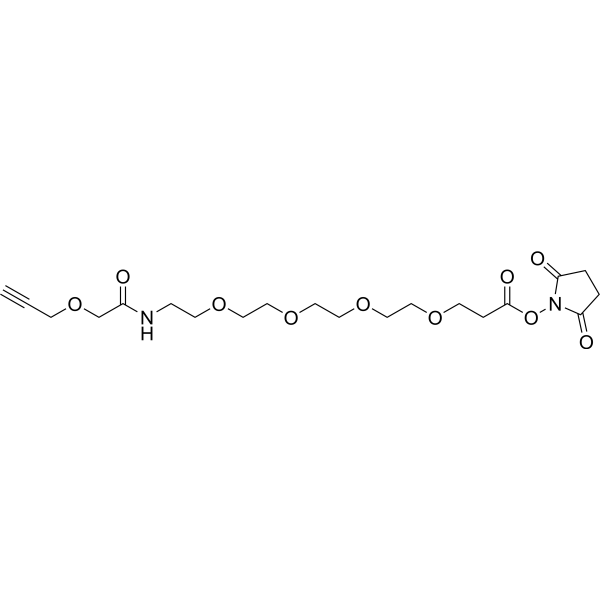
Propargyl-O-C1-amido-PEG4-C2-NHS ester is a nonclaevable 4-unit PEG linker for antibody-agent-conjugation (ADC). Propargyl-O-C1-amido-PEG4-C2-NHS ester is a click chemistry reagent, it contains an Alkyne group and can undergo copper-catalyzed azide-alkyne cycloaddition (CuAAc) with molecules containing Azide groups.
|
-
- HY-137538
-
|
|
E3 Ligase Ligand-Linker Conjugates
|
Cancer
|
|
Pomalidomide-PEG3-azide is a synthesized E3 ligase ligand-linker conjugate that incorporates the Pomalidomide based cereblon ligand and 3-unit PEG linker used in PROTAC technology . Pomalidomide-PEG3-azide is a click chemistry reagent, it contains an Azide group and can undergo copper-catalyzed azide-alkyne cycloaddition reaction (CuAAc) with molecules containing Alkyne groups. It can also undergo strain-promoted alkyne-azide cycloaddition (SPAAC) reactions with molecules containing DBCO or BCN groups.
|
-
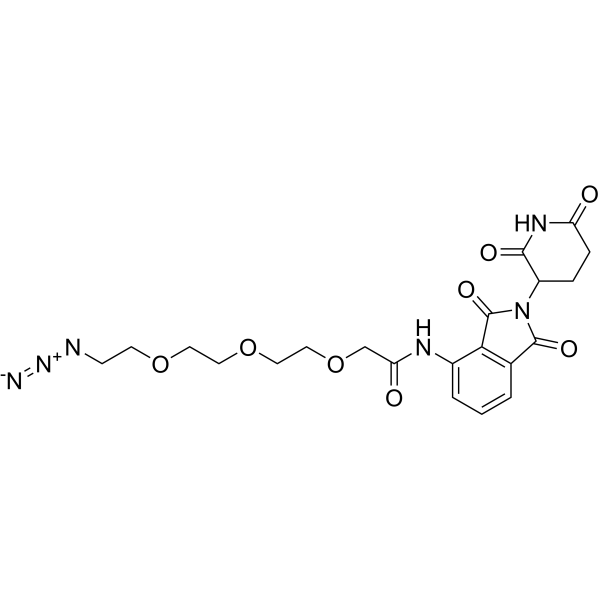
- HY-151820
-
|
|
ADC Linker
|
Others
|
|
DBCO-PEG24-acid is a click chemistry reagent. DBCO-PEG24-acid is an analog of DBCO-Acid with PEG linker and a DBCO group. The DBCO groups is commonly used for copper-free Click Chemistry reactions due to its strain promoted high energy. The hydrophilic PEG chain allows for increased water solubility. The terminal carboxylic acid can react with primary amine groups in the presence of activators (e.g. EDC, or HATU) to form a stable amide bond. Reagent grade, for research use only .
|
-
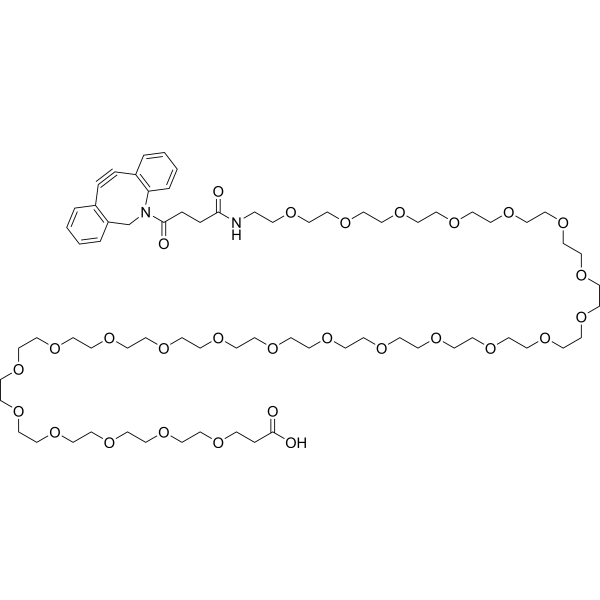
- HY-158985A
-
|
|
Autophagy
AUTACs
|
Cancer
|
|
Amino-PEG3-2G degrader-1 hydrochloride is the hydrochloride salt form of Amino-PEG3-2G degrader-1 (HY-158985). Amino-PEG3-2G degrader-1 hydrochloride is a conjugate of a PEG Linker and a pyrazole-linked FBnG tag for ubiquitin-proteasome system (UPS) induction. Amino-PEG3-2G degrader-1 hydrochloride can be used to synthesize autophagy-targeting chimeras (AUTACs) .
|
-

- HY-137537
-
|
|
E3 Ligase Ligand-Linker Conjugates
|
Cancer
|
|
Pomalidomide-PEG2-azide is a synthesized E3 ligase ligand-linker conjugate that incorporates the Pomalidomide based cereblon ligand and 2-unit PEG linker used in PROTAC technology . Pomalidomide-PEG2-azide is a click chemistry reagent, it contains an Azide group and can undergo copper-catalyzed azide-alkyne cycloaddition reaction (CuAAc) with molecules containing Alkyne groups. It can also undergo strain-promoted alkyne-azide cycloaddition (SPAAC) reactions with molecules containing DBCO or BCN groups.
|
-
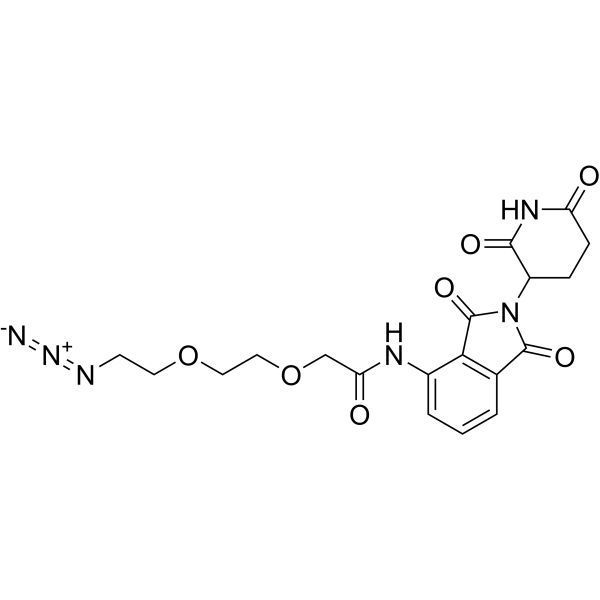
- HY-129619
-
|
|
SNIPERs
Estrogen Receptor/ERR
|
Cancer
|
|
SNIPER(ER)-87 consists of an inhibitor of apoptosis protein (IAP) ligand LCL161 derivative that is conjugated to the estrogen receptor α (ERα) ligand 4-hydroxytamoxifen by a PEG linker, and efficiently degrades the ERα protein (IC50=0.097 μM). SNIPER(ER)-87 preferentially recruits XIAP to ERα in the cells, and XIAP is the primary E3 ubiquitin ligase responsible for the SNIPER(ER)-87-induced ERα degradation .
|
-
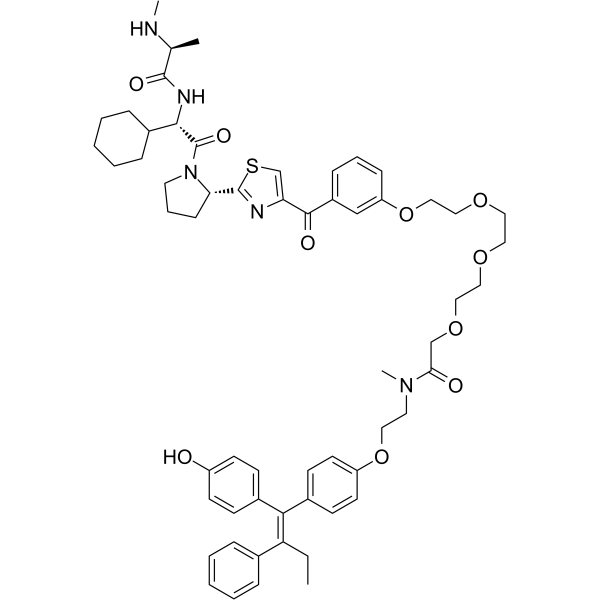
- HY-103604AR
-
|
VH032-PEG4-NH2 (Standard); VHL Ligand-Linker Conjugates 4 (Standard); E3 ligase Ligand-Linker Conjugates 7 Free Base (Standard)
|
Reference Standards
E3 Ligase Ligand-Linker Conjugates
|
Cancer
|
|
(S,R,S)-AHPC-PEG4-NH2 (Standard) is the analytical standard of (S,R,S)-AHPC-PEG4-NH2 (HY-103604A). This product is intended for research and analytical applications. (S,R,S)-AHPC-PEG4-NH2 is a synthesized E3 ligase ligand-linker conjugate that incorporates the (S,R,S)-AHPC based VHL ligand and 4-unit PEG linker used in PROTAC technology.
|
-

- HY-151821
-
|
|
ADC Linker
|
Others
|
|
Sulfo DBCO-PEG3-acid is a click chemistry reagent containing an azide group. Sulfo DBCO-PEG3-acid is an analog of DBCO-Acid with PEG linker and a DBCO group. The DBCO groups is commonly used for copper-free Click Chemistry reactions due to its strain promoted high energy. The hydrophilic PEG chain and sulfo group increase water solubility. The terminal carboxylic acid can react with primary amine groups in the presence of activators (e.g. EDC, or HATU) to form a stable amide bond. Reagent grade, for research use only .
|
-
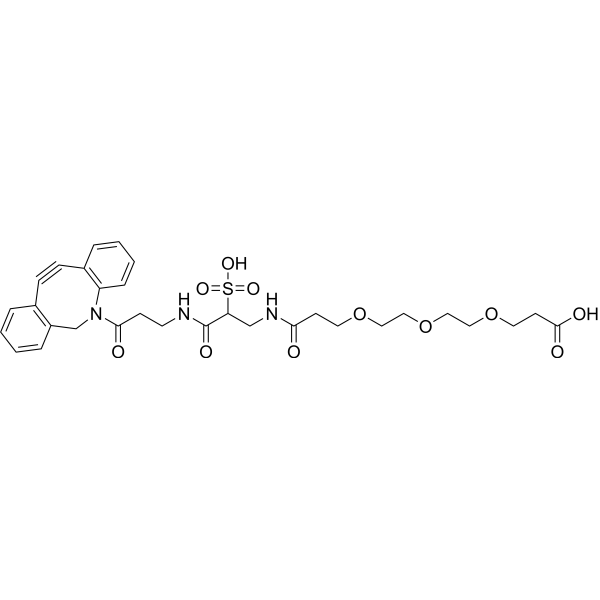
- HY-126529
-
|
|
ADC Linker
|
Cancer
|
|
N3-PEG3-C2-PFP ester is a nonclaevable 3-unit PEG linker used in the synthesis of antibody-drug conjugates (ADCs). N3-PEG3-C2-PFP ester is a click chemistry reagent, it contains an Azide group and can undergo copper-catalyzed azide-alkyne cycloaddition reaction (CuAAc) with molecules containing Alkyne groups. It can also undergo strain-promoted alkyne-azide cycloaddition (SPAAC) reactions with molecules containing DBCO or BCN groups.
|
-
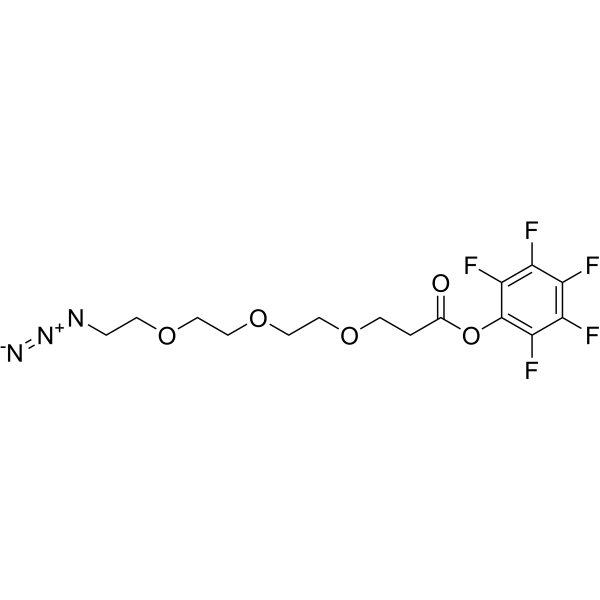
- HY-148840
-
|
|
Biochemical Assay Reagents
|
Others
|
|
Sulfo DBCO-PEG3-NHS ester is a click chemistry reagent containing an azide group. Sulfo DBCO-PEG3-NHS ester is an analog of DBCO-Acid with PEG linker and a DBCO group. The DBCO group is commonly used for copper-free Click Chemistry reactions due to its strain promoted high energy. The hydrophilic PEG chain and sulfo group increase water solubility. The terminal carboxylic acid can react with primary amine groups in the presence of activators (e.g. EDC, or HATU) to form a stable amide bond. Reagent grade, for research use only .
|
-
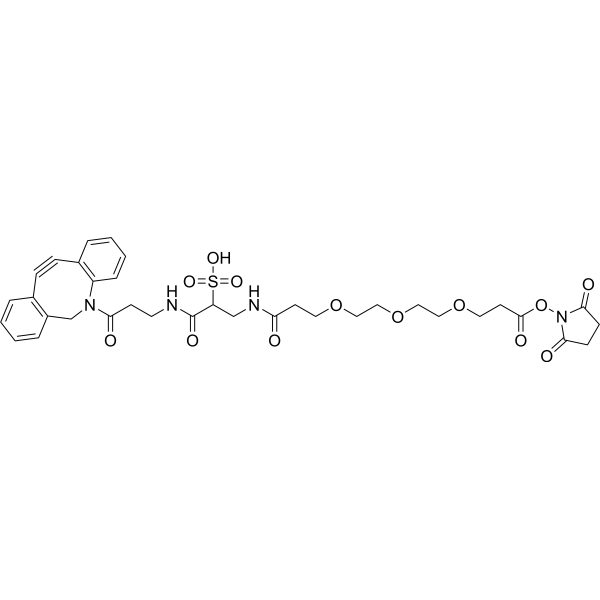
- HY-130108
-
|
|
ADC Linker
|
Cancer
|
|
N3-PEG4-C2-Pfp ester is a nonclaevable 4-unit PEG linker used in the synthesis of antibody-drug conjugates (ADCs). N3-PEG4-C2-Pfp ester is a click chemistry reagent, it contains an Azide group and can undergo copper-catalyzed azide-alkyne cycloaddition reaction (CuAAc) with molecules containing Alkyne groups. It can also undergo strain-promoted alkyne-azide cycloaddition (SPAAC) reactions with molecules containing DBCO or BCN groups.
|
-
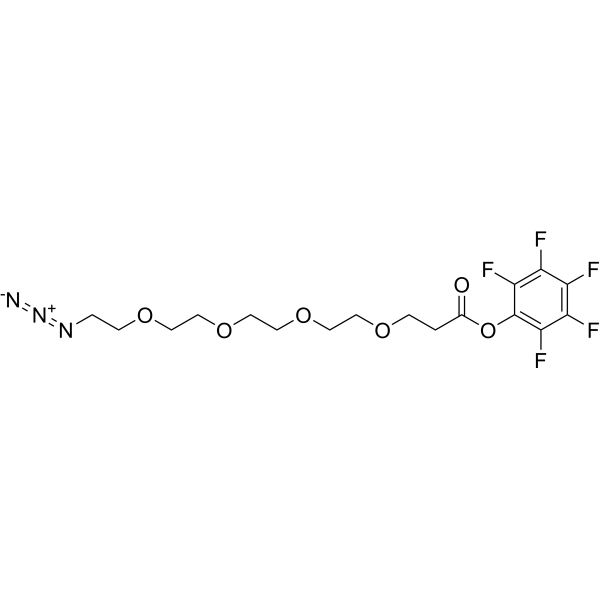
- HY-107440AR
-
|
|
Reference Standards
E3 Ligase Ligand-Linker Conjugates
Autophagy
Apoptosis
|
Cancer
|
|
Thalidomide-O-amido-PEG3-C2-NH2 hydrochloride (Standard) is the analytical standard of Thalidomide-O-amido-PEG3-C2-NH2 (hydrochloride) (HY-107440A). This product is intended for research and analytical applications. Thalidomide-O-amido-PEG3-C2-NH2 hydrochloride is a synthesized E3 ligase ligand-linker conjugate that incorporates the Thalidomide based cereblon ligand and 3-unit PEG linker used in PROTAC technology .
|
-

- HY-126527
-
|
|
ADC Linker
|
Cancer
|
|
N3-PEG2-C2-PFP ester is a nonclaevable 2-unit PEG linker used in the synthesis of antibody-drug conjugates (ADCs). N3-PEG2-C2-PFP ester is a click chemistry reagent, it contains an Azide group and can undergo copper-catalyzed azide-alkyne cycloaddition reaction (CuAAc) with molecules containing Alkyne groups. It can also undergo strain-promoted alkyne-azide cycloaddition (SPAAC) reactions with molecules containing DBCO or BCN groups.
|
-
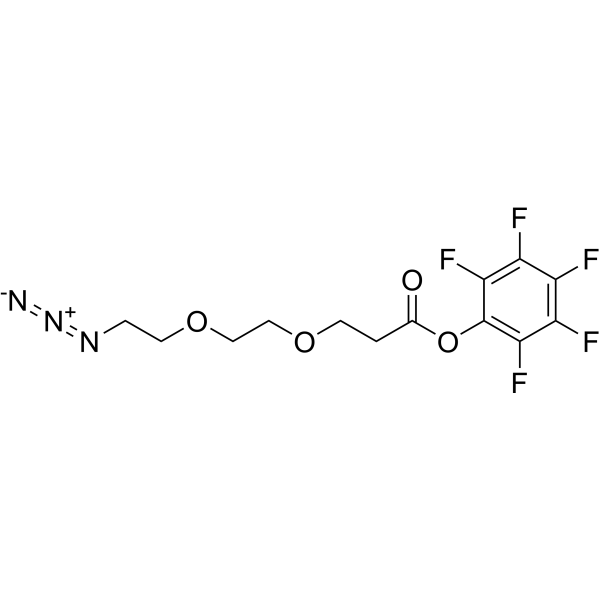
- HY-126528
-
|
|
ADC Linker
|
Cancer
|
|
N3-PEG3-C2-NHS ester is a nonclaevable 3-unit PEG linker used in the synthesis of antibody-drug conjugates (ADCs). N3-PEG3-C2-NHS ester is a click chemistry reagent, it contains an Azide group and can undergo copper-catalyzed azide-alkyne cycloaddition reaction (CuAAc) with molecules containing Alkyne groups. It can also undergo strain-promoted alkyne-azide cycloaddition (SPAAC) reactions with molecules containing DBCO or BCN groups.
|
-
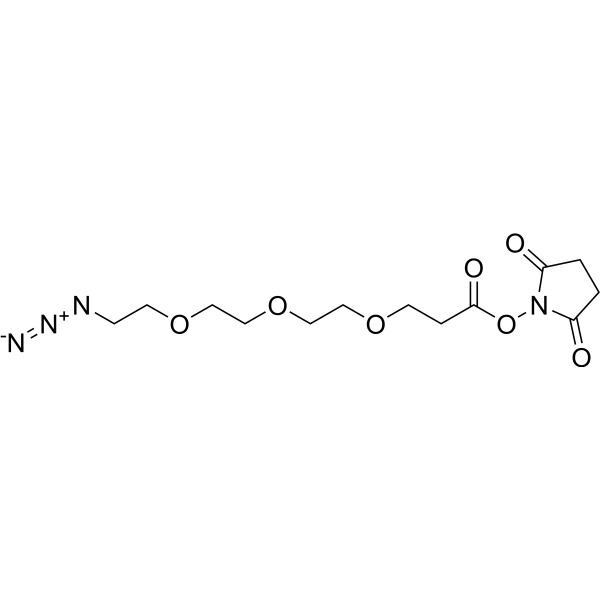
- HY-126526
-
|
|
ADC Linker
|
Cancer
|
|
N3-PEG2-C2-NHS ester is a nonclaevable 2-unit PEG linker used in the synthesis of antibody-drug conjugates (ADCs). N3-PEG2-C2-NHS ester is a click chemistry reagent, it contains an Azide group and can undergo copper-catalyzed azide-alkyne cycloaddition reaction (CuAAc) with molecules containing Alkyne groups. It can also undergo strain-promoted alkyne-azide cycloaddition (SPAAC) reactions with molecules containing DBCO or BCN groups.
|
-
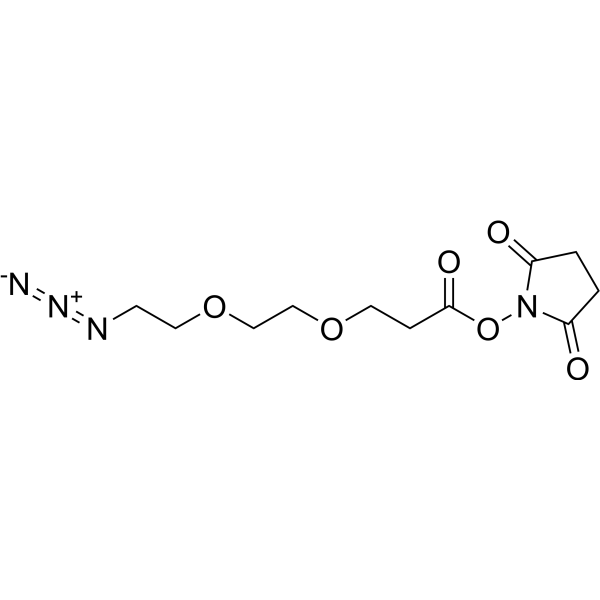
- HY-130109
-
|
|
ADC Linker
|
Cancer
|
|
N3-PEG4-C2-NHS ester is a nonclaevable 4-unit PEG linker used in the synthesis of antibody-drug conjugates (ADCs). N3-PEG4-C2-NHS ester is a click chemistry reagent, it contains an Azide group and can undergo copper-catalyzed azide-alkyne cycloaddition reaction (CuAAc) with molecules containing Alkyne groups. It can also undergo strain-promoted alkyne-azide cycloaddition (SPAAC) reactions with molecules containing DBCO or BCN groups.
|
-
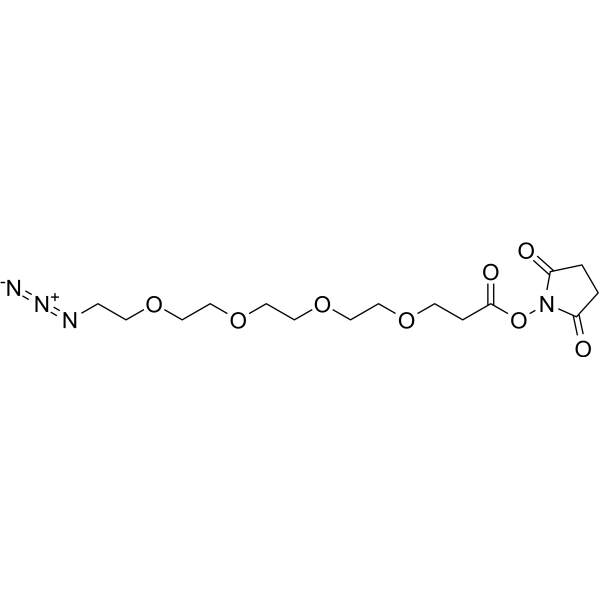
- HY-148840A
-
|
|
Biochemical Assay Reagents
|
Others
|
|
Sulfo DBCO-PEG3-NHS ester TEA is a click chemistry reagent containing an azide group. Sulfo DBCO-PEG3-NHS ester (TEA) is an analog of DBCO-Acid with PEG linker and a DBCO group. The DBCO group is commonly used for copper-free Click Chemistry reactions due to its strain promoted high energy. The hydrophilic PEG chain and sulfo group increase water solubility. The terminal carboxylic acid can react with primary amine groups in the presence of activators (e.g. EDC, or HATU) to form a stable amide bond. Reagent grade, for research use only .
|
-

- HY-103606
-
|
VH032-PEG6-C4-Cl; VHL Ligand-Linker Conjugates 10; E3 ligase Ligand-Linker Conjugates 9
|
E3 Ligase Ligand-Linker Conjugates
|
Cancer
|
|
(S,R,S)-AHPC-PEG6-C4-Cl is a conjugate of ligands for E3 and 25-atom-length linker. The connector of linker is Halogen group. (S,R,S)-AHPC-PEG6-C4-Cl incorporates the (S,R,S)-AHPC based VHL ligand and 6-unit PEG linker. (S,R,S)-AHPC-PEG6-C4-Cl is capable of inducing the degradation of GFP-HaloTag7 in cell-based assays .
|
-
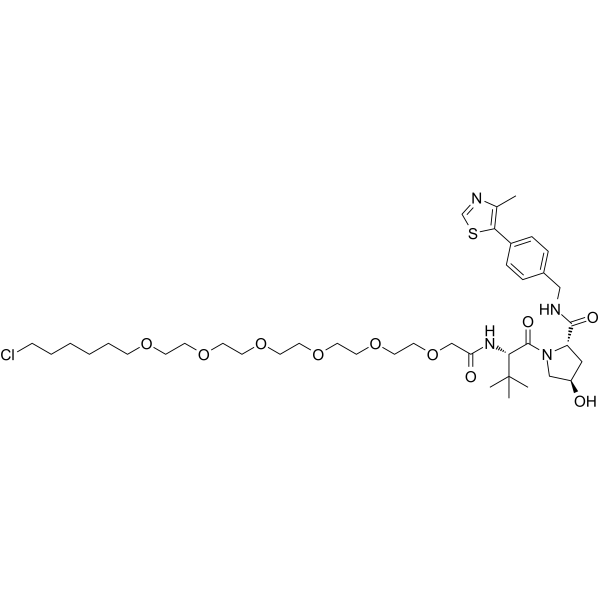
- HY-103603AR
-
|
VH032-PEG2-NH2 (Standard); VHL Ligand-Linker Conjugates 3 (Standard); E3 ligase Ligand-Linker Conjugates 6 Free Base (Standard)
|
Reference Standards
E3 Ligase Ligand-Linker Conjugates
|
Cancer
|
|
(S,R,S)-AHPC-PEG2-NH2 (Standard) is the analytical standard of (S,R,S)-AHPC-PEG2-NH2 (HY-103603A). This product is intended for research and analytical applications. (S,R,S)-AHPC-PEG2-NH2 (VH032-PEG2-NH2) is a synthesized E3 ligase ligand-linker conjugate that incorporates the (S,R,S)-AHPC based VHL ligand and 2-unit PEG linker used in the synthesis of PROTACs .
|
-

- HY-103601
-
|
VH032-PEG4-N3; VHL Ligand-Linker Conjugates 5; E3 ligase Ligand-Linker Conjugates 4
|
E3 Ligase Ligand-Linker Conjugates
|
Others
|
|
(S,R,S)-AHPC-PEG4-N3 is a synthesized E3 ligase ligand-linker conjugate that incorporates the (S,R,S)-AHPC based VHL ligand and 4-unit PEG linker used in PROTAC technology. (S,R,S)-AHPC-PEG4-N3 is a click chemistry reagent, it contains an Azide group and can undergo copper-catalyzed azide-alkyne cycloaddition reaction (CuAAc) with molecules containing Alkyne groups. It can also undergo strain-promoted alkyne-azide cycloaddition (SPAAC) reactions with molecules containing DBCO or BCN groups.
|
-
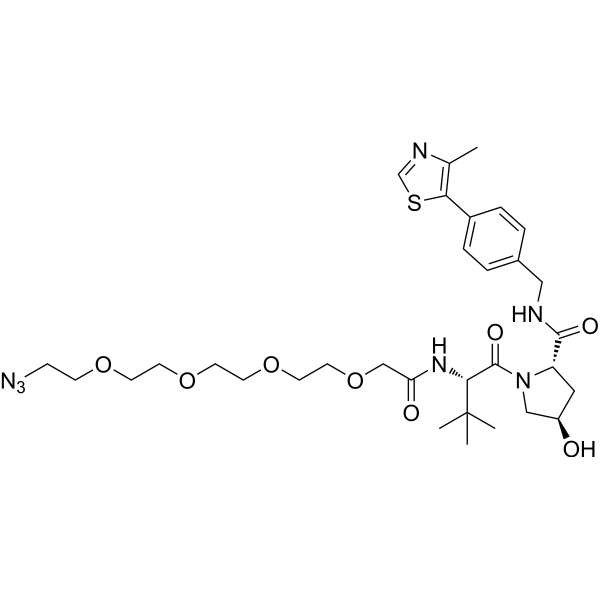
- HY-103603R
-
|
VH032-PEG2-NH2 hydrochloride (Standard); VHL Ligand-Linker Conjugates 3 hydrochloride (Standard); E3 ligase Ligand-Linker Conjugates 6 (Standard)
|
Reference Standards
E3 Ligase Ligand-Linker Conjugates
|
Cancer
|
|
(S,R,S)-AHPC-PEG2-NH2 hydrochloride (Standard) is the analytical standard of (S,R,S)-AHPC-PEG2-NH2 hydrochloride (HY-103603). This product is intended for research and analytical applications. (S,R,S)-AHPC-PEG2-NH2 hydrochloride (VH032-PEG2-NH2 hydrochloride) is a synthesized E3 ligase ligand-linker conjugate that incorporates the (S,R,S)-AHPC based VHL ligand and 2-unit PEG linker used in the synthesis of PROTACs .
|
-

- HY-W999557
-
|
|
E3 Ligase Ligand-Linker Conjugates
|
Cancer
|
|
(R,S,S)-VH032-PEG5-N3 is an E3 ligase ligand-linker conjugate comprising a VHL ligand based on VH032 and a 5-unit PEG linker. (R,S,S)-VH032-PEG5-N3 is a click chemistry reagent. It contains an azide group and can undergo copper-catalyzed azido-azynylene cycloaddition (CuAAc) with molecules containing an alkyne group. It can also undergo ring-strain-driven alkyne-azido cycloaddition (SPAAC) with molecules containing DBCO or BCN groups.
|
-

- HY-103611R
-
|
Cereblon Ligand-Linker Conjugates 3 TFA (Standard); E3 ligase Ligand-Linker Conjugates 14 TFA (Standard)
|
Reference Standards
E3 Ligase Ligand-Linker Conjugates
Autophagy
Apoptosis
|
Cancer
|
|
Thalidomide-O-amido-PEG3-C2-NH2 TFA (Standard) is the analytical standard of Thalidomide-O-amido-PEG3-C2-NH2 TFA (HY-103611). This product is intended for research and analytical applications. Thalidomide-O-amido-PEG3-C2-NH2 TFA is a synthesized E3 ligase ligand-linker conjugate that incorporates the Thalidomide based cereblon ligand and 3-unit PEG linker used in PROTAC technology.
|
-

- HY-103602R
-
|
VH032-PEG3-NH2 hydrochloride (Standard); VHL Ligand-Linker Conjugates 1 hydrochloride (Standard); E3 ligase Ligand-Linker Conjugates 5 (Standard)
|
Reference Standards
E3 Ligase Ligand-Linker Conjugates
|
Cancer
|
|
(S,R,S)-AHPC-PEG3-NH2 hydrochloride (Standard) is the analytical standard of (S,R,S)-AHPC-PEG3-NH2 hydrochloride (HY-103602). This product is intended for research and analytical applications. (S,R,S)-AHPC-PEG3-NH2 (VH032-PEG3-NH2) hydrochloride is a synthesized E3 ligase ligand-linker conjugate that incorporates the (S,R,S)-AHPC based VHL ligand and 3-unit PEG linker used in PROTAC technology.
|
-

- HY-103598
-
|
VH032-PEG3-N3; VHL Ligand-Linker Conjugates 8; E3 ligase Ligand-Linker Conjugates 12
|
E3 Ligase Ligand-Linker Conjugates
|
Cancer
|
|
(S,R,S)-AHPC-PEG3-N3 is a synthesized E3 ligase ligand-linker conjugate that incorporates the (S,R,S)-AHPC based VHL ligand and 3-unit PEG linker used in PROTAC technology. (S,R,S)-AHPC-PEG3-N3 is a click chemistry reagent, it contains an Azide group and can undergo copper-catalyzed azide-alkyne cycloaddition reaction (CuAAc) with molecules containing Alkyne groups. It can also undergo strain-promoted alkyne-azide cycloaddition (SPAAC) reactions with molecules containing DBCO or BCN groups.
|
-
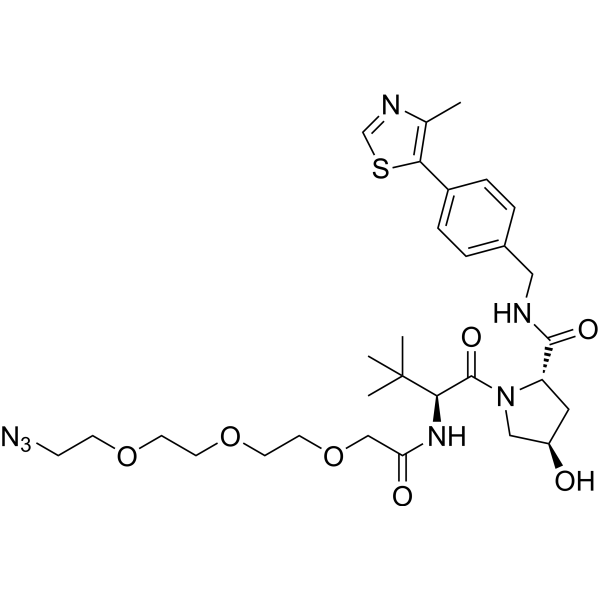
- HY-112495
-
|
HaloPROTAC 2
|
E3 Ligase Ligand-Linker Conjugates
|
Cancer
|
|
VH032-PEG5-C6-Cl (HaloPROTAC 2) is a conjugate of ligands for E3 and 21-atom-length linker. The connector of linker is Halogen group. VH032-PEG5-C6-Cl incorporates the VH032 based VHL ligand and 5-unit PEG linker. VH032-PEG5-C6-Cl is capable of inducing the degradation of GFP-HaloTag7 in cell-based assays .
|
-
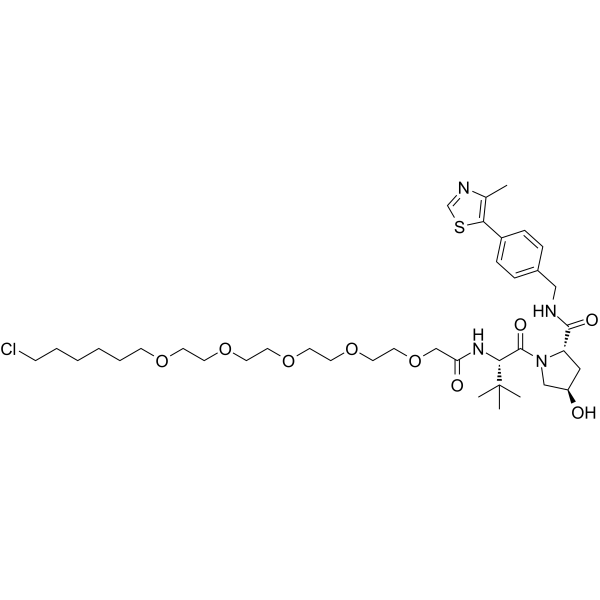
- HY-103599R
-
|
VH032-PEG2-N3 (Standard); VHL Ligand-Linker Conjugates 6 (Standard); E3 ligase Ligand-Linker Conjugates 13 (Standard)
|
Reference Standards
E3 Ligase Ligand-Linker Conjugates
|
Cancer
|
|
(S,R,S)-AHPC-PEG2-N3 (Standard) is the analytical standard of (S,R,S)-AHPC-PEG2-N3 (HY-103599). This product is intended for research and analytical applications. (S,R,S)-AHPC-PEG2-N3 is a synthesized E3 ligase ligand-linker conjugate that incorporates the (S,R,S)-AHPC based VHL ligand and 2-unit PEG linker. (S,R,S)-AHPC-PEG2-N3 can be used for the synthesis of PROTACs .
|
-

- HY-149845
-
|
|
PROTACs
GSK-3
|
Neurological Disease
|
|
PROTAC GSK-3β Degrader-1 (compound 1) is a degrader targets GSK-3β degradation with an IC50 value of 833 nM. PROTAC GSK-3β Degrader-1 contains SB-216763 (a GSK-3β inhibitor), a PEG linker and a CRBN (E3 ligase liand). PROTAC GSK-3β Degrader-1 reduces the neurotoxicity induced by Aβ25-35 peptide and CuSO4. PROTAC GSK-3β Degrader-1 can be used to research in Alzheimer's disease .
|
-
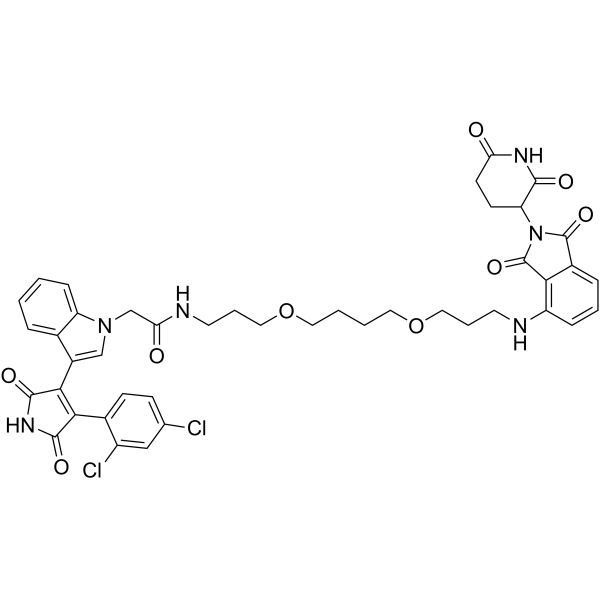
- HY-100874
-
|
|
Drug-Linker Conjugates for ADC
|
Cancer
|
|
N3-PEG3-vc-PAB-MMAE is a synthesized agent-linker conjugate for ADC that incorporates the MMAE (a tubulin inhibitor ) and 3-unit PEG linker. N3-PEG3-vc-PAB-MMAE shows potent antitumor activity. N3-PEG3-vc-PAB-MMAE is a click chemistry reagent, it contains an Azide group and can undergo copper-catalyzed azide-alkyne cycloaddition reaction (CuAAc) with molecules containing Alkyne groups. It can also undergo strain-promoted alkyne-azide cycloaddition (SPAAC) reactions with molecules containing DBCO or BCN groups.
|
-
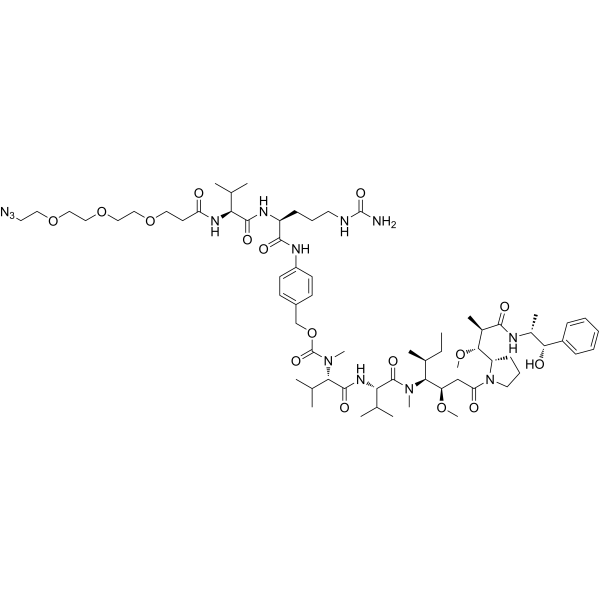
- HY-151769
-
|
|
ADC Linker
|
Others
|
|
TCO-PEG2-Sulfo-NHS ester-EDC Urea is a click chemistry reagent containing an azide group. TCO-PEG2-Sulfo-NHS ester is a PEG linker containing a TCO moiety and a sulfo-NHS ester moiety. The sulfo group makes this molecule soluble in waqueous buffer. This reagent can be used to label antibodies, proteins and other primary amine-containing macromolecules with TCO moiety. Reagent grade, for research use only . TCO-PEG2-Sulfo-NHS ester-EDC Urea is a click chemistry reagent, it contains a TCO group that can undergo an inverse electron demand Diels-Alder reaction (iEDDA) with molecules containing Tetrazine groups.
|
-
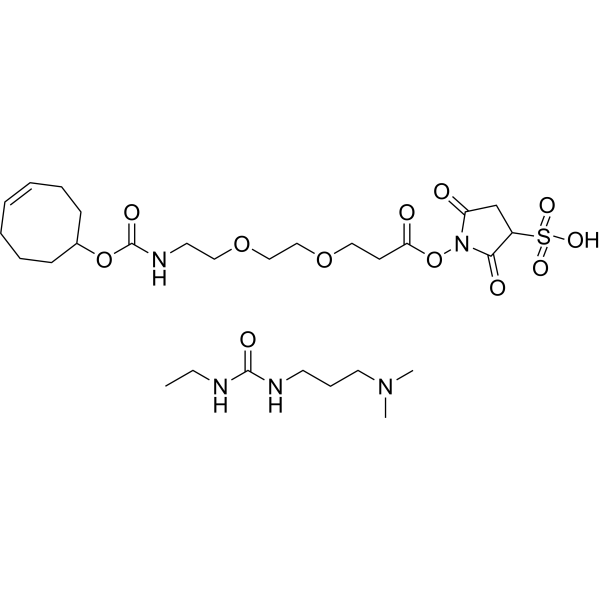
- HY-141126
-
|
|
Biochemical Assay Reagents
|
Cancer
|
|
Azido-PEG4-alpha-D-mannose is a PEG linker that combines an azide group with an alpha-D-mannose moiety. Azido-PEG4-alpha-D-mannose is a click chemistry reagent, it contains an Azide group and can undergo copper-catalyzed azide-alkyne cycloaddition reaction (CuAAc) with molecules containing Alkyne groups. It can also undergo strain-promoted alkyne-azide cycloaddition (SPAAC) reactions with molecules containing DBCO or BCN groups. Azido-PEG4-alpha-D-mannose has the targeting property of mannose, which can accurately deliver drugs to specific cells or tissues to improve the therapeutic effect of drugs .
|
-
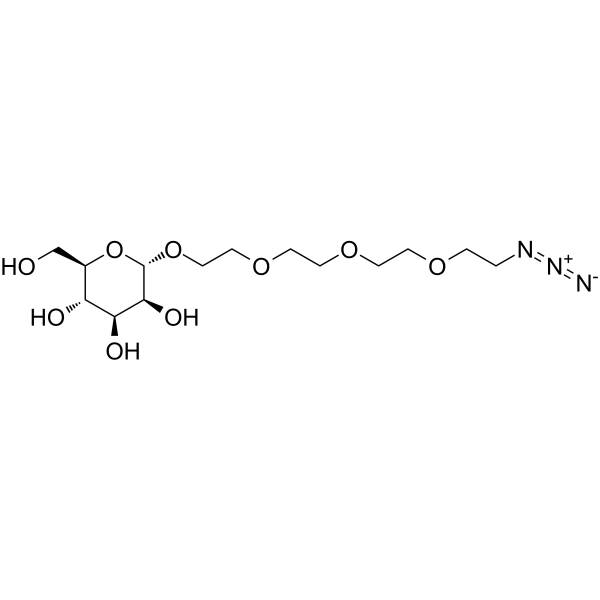
- HY-128832
-
|
MDM2 Ligand-Linker Conjugates 1; E3 ligase Ligand-Linker Conjugates 48
|
E3 Ligase Ligand-Linker Conjugates
|
Cancer
|
|
Nutlin-C1-amido-PEG4-C2-N3 is a synthesized E3 ligase ligand-linker conjugate that incorporates the Nutlin 3 based MDM2 ligand and 4-unit PEG linker used in PROTAC technology. Nutlin-C1-amido-PEG4-C2-N3 is a click chemistry reagent, it contains an Azide group and can undergo copper-catalyzed azide-alkyne cycloaddition reaction (CuAAc) with molecules containing Alkyne groups. It can also undergo strain-promoted alkyne-azide cycloaddition (SPAAC) reactions with molecules containing DBCO or BCN groups.
|
-
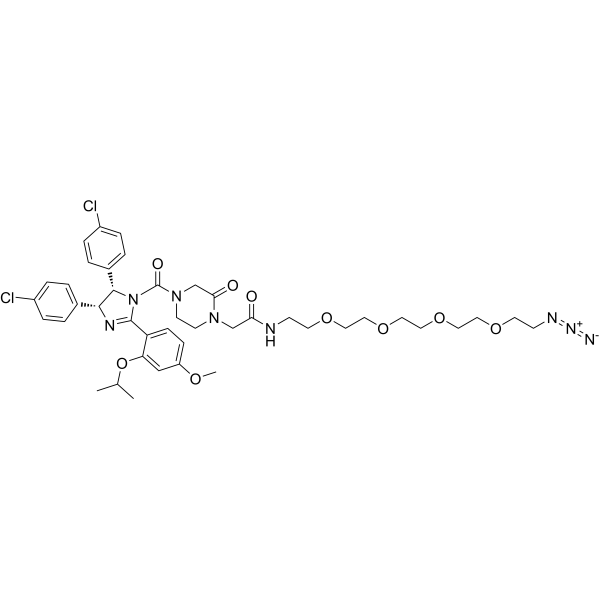
- HY-103600
-
|
VH032-PEG1-N3; VHL Ligand-Linker Conjugates 9; E3 ligase Ligand-Linker Conjugates 3
|
E3 Ligase Ligand-Linker Conjugates
|
Cancer
|
|
(S,R,S)-AHPC-PEG1-N3 (VH032-PEG1-N3) is a synthesized E3 ligase ligand-linker conjugate that incorporates the (S,R,S)-AHPC based VHL ligand and 1-unit PEG linker used in PROTAC technology. (S,R,S)-AHPC-PEG1-N3 is a click chemistry reagent, it contains an Azide group and can undergo copper-catalyzed azide-alkyne cycloaddition reaction (CuAAc) with molecules containing Alkyne groups. It can also undergo strain-promoted alkyne-azide cycloaddition (SPAAC) reactions with molecules containing DBCO or BCN groups.
|
-
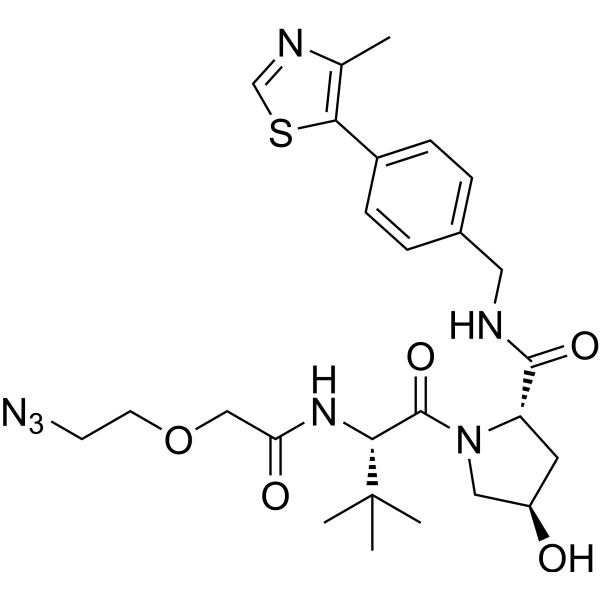
- HY-181164
-
|
|
PROTACs
Epigenetic Reader Domain
HIV
|
Infection
|
|
PROTAC BRD4 Degrader-43 is a BRD4 PROTAC degrader. PROTAC BRD4 Degrader-43 recruits the DCAF1-DDB1-Cul4A E3 ligase complex via a Vpr-derived peptide moiety to induce BRD4 ubiquitination and degradation through the ubiquitin-proteasome system. PROTAC BRD4 Degrader-43 exhibits potent HIV latency-reversing activity. PROTAC BRD4 Degrader-43 can be used for the research of HIV-1 latent infection . (Pink: BRD4 ligand (HY-13030); Blue: Cul4A-DDB1-DCAF1 ligand (HY-P11640); Black: conjugate of PEG linker + cell-penetrating peptide (HY-P2483))
|
-

- HY-103608R
-
|
VHL Ligand-Linker Conjugates 11 (Standard); E3 ligase Ligand-Linker Conjugates 11 (Standard)
|
Reference Standards
E3 Ligase Ligand-Linker Conjugates
|
Cancer
|
|
(S,R,S)-AHPC-(C3-PEG)2-C6-Cl (Standard) is the analytical standard of (S,R,S)-AHPC-(C3-PEG)2-C6-Cl (HY-103608). This product is intended for research and analytical applications. (S,R,S)-AHPC-(C3-PEG)2-C6-Cl is a small molecule HaloPROTAC that incorporates the (S,R,S)-AHPC based VHL ligand and 2-unit PEG linker. (S,R,S)-AHPC-(C3-PEG)2-C6-Cl is capable of inducing the degradation of GFP-HaloTag7 in cell-based assays .
|
-

- HY-151833
-
|
|
ADC Linker
|
Others
|
|
Methyltetrazine-amido-N-bis(PEG4-acid) is a click chemistry reagent containing an azide group. Methyltetrazine-amido-N-bis(PEG4-acid) is a PEG derivative that contains a methyltetrazine group and two acid groups. This reagent can react with TCO-containing compounds to form a stable covalent bond without the catalysis of Cu or elevated temperatures. The inverse-electron demand Diels-Alder cycloaddition reaction of TCO with tetrazines is the fastest bioorthogonal reaction with exceptional selectivity. The terminal carboxylic acid can react with primary amine groups in the presence of activators (e.g. EDC, or HATU) to form a stable amide bond. PEG linker increases the water solubility of the compound. Reagent grade, for research use only . Methyltetrazine-amido-N-bis(PEG4-acid) is a click chemistry reagent, it contains a Tetrazine group that can undergo an inverse electron demand Diels-Alder reaction (iEDDA) with molecules containing TCO groups.
|
-
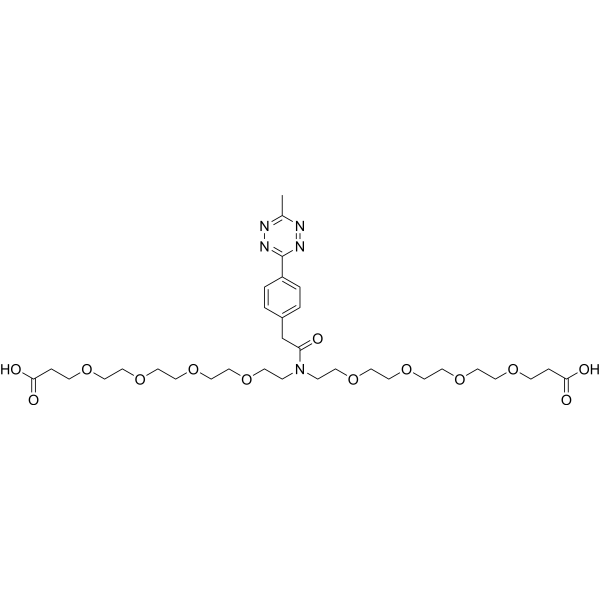
- HY-103601R
-
|
VH032-PEG4-N3 (Standard); VHL Ligand-Linker Conjugates 5 (Standard); E3 ligase Ligand-Linker Conjugates 4 (Standard)
|
Reference Standards
E3 Ligase Ligand-Linker Conjugates
|
Others
|
|
(S,R,S)-AHPC-PEG4-N3 (Standard) is the analytical standard of (S,R,S)-AHPC-PEG4-N3 (HY-103601). This product is intended for research and analytical applications. (S,R,S)-AHPC-PEG4-N3 is a synthesized E3 ligase ligand-linker conjugate that incorporates the (S,R,S)-AHPC based VHL ligand and 4-unit PEG linker used in PROTAC technology. (S,R,S)-AHPC-PEG4-N3 is a click chemistry reagent, it contains an Azide group and can undergo copper-catalyzed azide-alkyne cycloaddition reaction (CuAAc) with molecules containing Alkyne groups. It can also undergo strain-promoted alkyne-azide cycloaddition (SPAAC) reactions with molecules containing DBCO or BCN groups.
|
-

- HY-125843
-
|
Cereblon Ligand-Linker Conjugates 13; E3 ligase Ligand-Linker Conjugates 50
|
E3 Ligase Ligand-Linker Conjugates
|
Cancer
|
|
Pomalidomide-PEG1-C2-N3 is a synthesized E3 ligase ligand-linker conjugate that incorporates the Pomalidomide based cereblon ligand and 1-unit PEG linker used in PROTAC technology. Pomalidomide-PEG1-C2-N3 can be used to design a selective CDK6 PROTAC degrader CP-10. CP-10 induces the degradation of CDK6 with an DC50 of 2.1 nM . Pomalidomide-PEG1-C2-N3 is a click chemistry reagent, it contains an Azide group and can undergo copper-catalyzed azide-alkyne cycloaddition reaction (CuAAc) with molecules containing Alkyne groups. It can also undergo strain-promoted alkyne-azide cycloaddition (SPAAC) reactions with molecules containing DBCO or BCN groups.
|
-
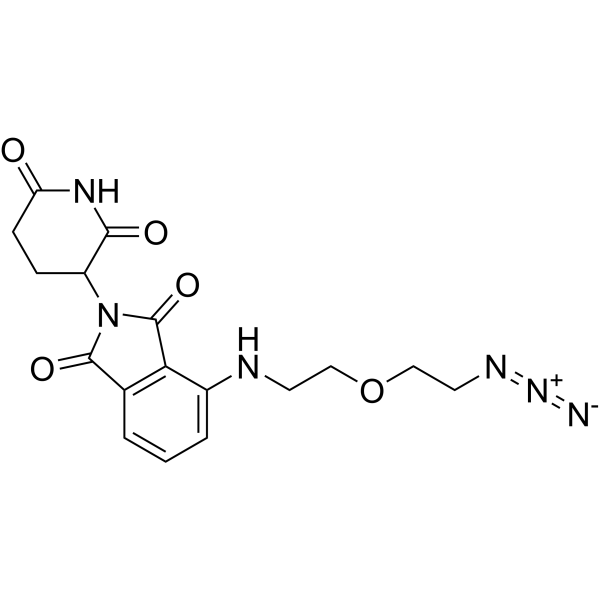
- HY-103606R
-
|
VH032-PEG6-C4-Cl (Standard); VHL Ligand-Linker Conjugates 10 (Standard); E3 ligase Ligand-Linker Conjugates 9 (Standard)
|
Reference Standards
E3 Ligase Ligand-Linker Conjugates
|
Cancer
|
|
(S,R,S)-AHPC-PEG6-C4-Cl (Standard) is the analytical standard of (S,R,S)-AHPC-PEG6-C4-Cl (HY-103606). This product is intended for research and analytical applications. (S,R,S)-AHPC-PEG6-C4-Cl is a conjugate of ligands for E3 and 25-atom-length linker. The connector of linker is Halogen group. (S,R,S)-AHPC-PEG6-C4-Cl incorporates the (S,R,S)-AHPC based VHL ligand and 6-unit PEG linker. (S,R,S)-AHPC-PEG6-C4-Cl is capable of inducing the degradation of GFP-HaloTag7 in cell-based assays .
|
-

- HY-103600R
-
|
VH032-PEG1-N3 (Standard); VHL Ligand-Linker Conjugates 9 (Standard); E3 ligase Ligand-Linker Conjugates 3 (Standard)
|
Reference Standards
E3 Ligase Ligand-Linker Conjugates
|
Cancer
|
|
(S,R,S)-AHPC-PEG1-N3 (Standard) is the analytical standard of (S,R,S)-AHPC-PEG1-N3 (HY-103600). This product is intended for research and analytical applications. (S,R,S)-AHPC-PEG1-N3 (VH032-PEG1-N3) is a synthesized E3 ligase ligand-linker conjugate that incorporates the (S,R,S)-AHPC based VHL ligand and 1-unit PEG linker used in PROTAC technology. (S,R,S)-AHPC-PEG1-N3 is a click chemistry reagent, it contains an Azide group and can undergo copper-catalyzed azide-alkyne cycloaddition reaction (CuAAc) with molecules containing Alkyne groups. It can also undergo strain-promoted alkyne-azide cycloaddition (SPAAC) reactions with molecules containing DBCO or BCN groups.
|
-

- HY-130654
-
|
VH032-C2-PEG4-N3
|
E3 Ligase Ligand-Linker Conjugates
|
Cancer
|
|
(S,R,S)-AHPC-C2-PEG4-N3 (VH032-C2-PEG4-N3) is a synthesized E3 ligase ligand-linker conjugate that incorporates the (S,R,S)-AHPC based VHL ligand and 4-unit PEG linker used in PROTAC technology. (S,R,S)-AHPC-C2-PEG4-N3 can be used in the synthesis of vRucaparib-TP4 (HY-130647). vRucaparib-TP4 a highly potent PARP1 degrader with a half-maximal degrading concentration (DC50) of 82 nM . (S,R,S)-AHPC-C2-PEG4-N3 is a click chemistry reagent, it contains an Azide group and can undergo copper-catalyzed azide-alkyne cycloaddition reaction (CuAAc) with molecules containing Alkyne groups. It can also undergo strain-promoted alkyne-azide cycloaddition (SPAAC) reactions with molecules containing DBCO or BCN groups.
|
-
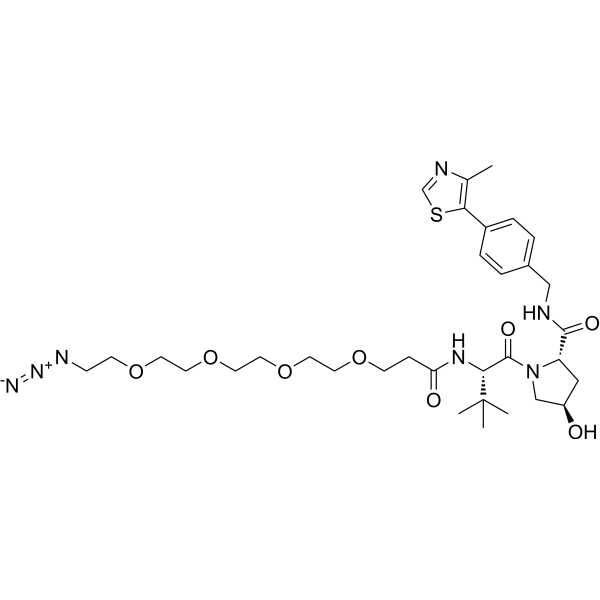
| Cat. No. |
Product Name |
Type |
-
- HY-101974
-
|
|
Fluorescent Dye
|
|
Biotin-PEG3-Bromide is a short PEG linker featuring a biotin group and a bromide. The bromide is a halogen which is easily displaced by nucleophiles such as alcohols or amines. Alternatively, bromide can be applied in a number of cross-coupling reactions such as in a Suzuki reaction. Biotin is useful for affinity-based applications such as pull-down assays or for ligating with streptavidin proteins.
|
| Cat. No. |
Product Name |
Type |
-
- HY-141658
-
|
Pomalidomide-PEG6-COOH
|
Biochemical Assay Reagents
|
|
Pomalidomide-PEG6-C2-COOH is a synthesized E3 ligase ligand-linker conjugate that incorporates the Pomalidomide (HY-10984) based cereblon ligand and 6-unit PEG linker used in PROTAC technology .
|
-
- HY-176509A
-
|
|
Biochemical Assay Reagents
|
|
DSPE-PEG2000-CHO is a linear heterobifunctional PEGylation reagent with DSPE phospholipids and aldehyde groups. PEG linkers have good hydrophilicity and water solubility. Aldehyde-polyethylene glycol (DSPE) is one of the most commonly used reactive phospholipids to bind antibodies, peptides or other ligands to the surface of liposomes and other lipid-polyethylene glycol nanoparticles. DSPE-PEG2000-CHO can be used for drug delivery .
|
-
- HY-176509C
-
|
|
Biochemical Assay Reagents
|
|
DSPE-PEG5000-CHO is a linear heterobifunctional PEGylation reagent with DSPE phospholipids and aldehyde groups. PEG linkers have good hydrophilicity and water solubility. Aldehyde-polyethylene glycol (DSPE) is one of the most commonly used reactive phospholipids to bind antibodies, peptides or other ligands to the surface of liposomes and other lipid-polyethylene glycol nanoparticles. DSPE-PEG5000-CHO can be used for drug delivery .
|
-
- HY-176509
-
|
|
Biochemical Assay Reagents
|
|
DSPE-PEG1000-CHO is a linear heterobifunctional PEGylation reagent with DSPE phospholipids and aldehyde groups. PEG linkers have good hydrophilicity and water solubility. Aldehyde-polyethylene glycol (DSPE) is one of the most commonly used reactive phospholipids to bind antibodies, peptides or other ligands to the surface of liposomes and other lipid-polyethylene glycol nanoparticles. DSPE-PEG1000-CHO can be used for drug delivery .
|
-
- HY-163790
-
-
- HY-147207B
-
|
|
Biochemical Assay Reagents
|
|
Phospholipid-PEG3400-Biotin is a phospholipid PEG derivative that has a biotin and a phospholipid bridged by a linear PEG linker. Phospholipid-PEG3400-Biotin can interact with avidinylated antibodies. Phospholipid-PEG3400-Biotin can be used to modify liposome and cells surface, and pancreatic islets for cell transplantation .
|
-
- HY-147207E
-
|
|
Biochemical Assay Reagents
|
|
Phospholipid-PEG20000-Biotin is a phospholipid PEG derivative that has a biotin and a phospholipid bridged by a linear PEG linker. Phospholipid-PEG20000-Biotin can interact with avidinylated antibodies. Phospholipid-PEG20000-Biotin can be used to modify liposome and cells surface, and pancreatic islets for cell transplantation .
|
-
- HY-147207
-
|
|
Biochemical Assay Reagents
|
|
Phospholipid-PEG1000-Biotin is a phospholipid PEG derivative that has a biotin and a phospholipid bridged by a linear PEG linker. Phospholipid-PEG1000-Biotin can interact with avidinylated antibodies. Phospholipid-PEG1000-Biotin can be used to modify liposome and cells surface, and pancreatic islets for cell transplantation .
|
-
- HY-176509D
-
|
|
Biochemical Assay Reagents
|
|
DSPE-PEG10000-CHO is a linear heterobifunctional PEGylation reagent with DSPE phospholipids and aldehyde groups. PEG linkers have good hydrophilicity and water solubility. Aldehyde-polyethylene glycol (DSPE) is one of the most commonly used reactive phospholipids to bind antibodies, peptides or other ligands to the surface of liposomes and other lipid-polyethylene glycol nanoparticles. DSPE-PEG10000-CHO can be used for drug delivery .
|
-
- HY-176509B
-
|
|
Biochemical Assay Reagents
|
|
DSPE-PEG3400-CHO is a linear heterobifunctional PEGylation reagent with DSPE phospholipids and aldehyde groups. PEG linkers have good hydrophilicity and water solubility. Aldehyde-polyethylene glycol (DSPE) is one of the most commonly used reactive phospholipids to bind antibodies, peptides or other ligands to the surface of liposomes and other lipid-polyethylene glycol nanoparticles. DSPE-PEG3400-CHO can be used for drug delivery .
|
-
- HY-176509H
-
|
|
Biochemical Assay Reagents
|
|
DSPE-PEG40000-CHO is a linear heterobifunctional PEGylation reagent with DSPE phospholipids and aldehyde groups. PEG linkers have good hydrophilicity and water solubility. Aldehyde-polyethylene glycol (DSPE) is one of the most commonly used reactive phospholipids to bind antibodies, peptides or other ligands to the surface of liposomes and other lipid-polyethylene glycol nanoparticles. DSPE-PEG40000-CHO can be used for drug delivery .
|
-
- HY-W793100
-
|
|
Biochemical Assay Reagents
|
|
Endo-BCN-PEG2-Biotin is a PEG linker containing a BCN group and a terminal carboxylic acid. The BCN groupis very reactive with azide-tagged molecules. The amino group is reactive with carboxylic acids, activated NHS esters, carbonyls (ketone, aldehyde) etc.
|
-
- HY-147207D
-
|
|
Biochemical Assay Reagents
|
|
Phospholipid-PEG10000-Biotin is a phospholipid PEG derivative that has a biotin and a phospholipid bridged by a linear PEG linker. Phospholipid-PEG10000-Biotin can interact with avidinylated antibodies. Phospholipid-PEG10000-Biotin can be used to modify liposome and cells surface, and pancreatic islets for cell transplantation .
|
-
- HY-176509E
-
|
|
Biochemical Assay Reagents
|
|
DSPE-PEG20000-CHO is a linear heterobifunctional PEGylation reagent with DSPE phospholipids and aldehyde groups. PEG linkers have good hydrophilicity and water solubility. Aldehyde-polyethylene glycol (DSPE) is one of the most commonly used reactive phospholipids to bind antibodies, peptides or other ligands to the surface of liposomes and other lipid-polyethylene glycol nanoparticles. DSPE-PEG20000-CHO can be used for drug delivery .
|
| Cat. No. |
Product Name |
|
Classification |
-
- HY-126513
-
|
|
|
Alkynes
ADC Synthesis
|
|
Propargyl-PEG1-NHS ester is a nonclaevable 1-unit PEG linker for antibody-agent-conjugation (ADC). Propargyl-PEG1-NHS ester is a click chemistry reagent, it contains an Alkyne group and can undergo copper-catalyzed azide-alkyne cycloaddition (CuAAc) with molecules containing Azide groups.
|
-
- HY-151834
-
|
|
|
DBCO
|
|
DBCO-PEG2-DBCO is a click chemistry reagent containing a DBCO group. DBCO-PEG2-DBCO is a PEG linker containing two terminal DBCO groups. The DBCO groups is commonly used for copper-free Click Chemistry reactions due to its strain promoted high energy. T Reagent grade, for research use only .
|
-
- HY-130109
-
|
|
|
Azide
ADC Synthesis
|
|
N3-PEG4-C2-NHS ester is a nonclaevable 4-unit PEG linker used in the synthesis of antibody-drug conjugates (ADCs). N3-PEG4-C2-NHS ester is a click chemistry reagent, it contains an Azide group and can undergo copper-catalyzed azide-alkyne cycloaddition reaction (CuAAc) with molecules containing Alkyne groups. It can also undergo strain-promoted alkyne-azide cycloaddition (SPAAC) reactions with molecules containing DBCO or BCN groups.
|
-
- HY-100874
-
|
|
|
Azide
ADC Synthesis
|
|
N3-PEG3-vc-PAB-MMAE is a synthesized agent-linker conjugate for ADC that incorporates the MMAE (a tubulin inhibitor ) and 3-unit PEG linker. N3-PEG3-vc-PAB-MMAE shows potent antitumor activity. N3-PEG3-vc-PAB-MMAE is a click chemistry reagent, it contains an Azide group and can undergo copper-catalyzed azide-alkyne cycloaddition reaction (CuAAc) with molecules containing Alkyne groups. It can also undergo strain-promoted alkyne-azide cycloaddition (SPAAC) reactions with molecules containing DBCO or BCN groups.
|
-
- HY-103601
-
|
VH032-PEG4-N3; VHL Ligand-Linker Conjugates 5; E3 ligase Ligand-Linker Conjugates 4
|
|
Azide
|
|
(S,R,S)-AHPC-PEG4-N3 is a synthesized E3 ligase ligand-linker conjugate that incorporates the (S,R,S)-AHPC based VHL ligand and 4-unit PEG linker used in PROTAC technology. (S,R,S)-AHPC-PEG4-N3 is a click chemistry reagent, it contains an Azide group and can undergo copper-catalyzed azide-alkyne cycloaddition reaction (CuAAc) with molecules containing Alkyne groups. It can also undergo strain-promoted alkyne-azide cycloaddition (SPAAC) reactions with molecules containing DBCO or BCN groups.
|
-
- HY-141126
-
|
|
|
Azide
PROTAC Synthesis
|
|
Azido-PEG4-alpha-D-mannose is a PEG linker that combines an azide group with an alpha-D-mannose moiety. Azido-PEG4-alpha-D-mannose is a click chemistry reagent, it contains an Azide group and can undergo copper-catalyzed azide-alkyne cycloaddition reaction (CuAAc) with molecules containing Alkyne groups. It can also undergo strain-promoted alkyne-azide cycloaddition (SPAAC) reactions with molecules containing DBCO or BCN groups. Azido-PEG4-alpha-D-mannose has the targeting property of mannose, which can accurately deliver drugs to specific cells or tissues to improve the therapeutic effect of drugs .
|
-
- HY-126516
-
|
|
|
Alkynes
ADC Synthesis
|
|
Propargyl-PEG4-NHS ester is a nonclaevable 4-unit PEG linker for antibody-agent-conjugation (ADC). Propargyl-PEG4-NHS ester is a click chemistry reagent, it contains an Alkyne group and can undergo copper-catalyzed azide-alkyne cycloaddition (CuAAc) with molecules containing Azide groups.
|
-
- HY-126528
-
|
|
|
Azide
ADC Synthesis
|
|
N3-PEG3-C2-NHS ester is a nonclaevable 3-unit PEG linker used in the synthesis of antibody-drug conjugates (ADCs). N3-PEG3-C2-NHS ester is a click chemistry reagent, it contains an Azide group and can undergo copper-catalyzed azide-alkyne cycloaddition reaction (CuAAc) with molecules containing Alkyne groups. It can also undergo strain-promoted alkyne-azide cycloaddition (SPAAC) reactions with molecules containing DBCO or BCN groups.
|
-
- HY-126526
-
|
|
|
Azide
ADC Synthesis
|
|
N3-PEG2-C2-NHS ester is a nonclaevable 2-unit PEG linker used in the synthesis of antibody-drug conjugates (ADCs). N3-PEG2-C2-NHS ester is a click chemistry reagent, it contains an Azide group and can undergo copper-catalyzed azide-alkyne cycloaddition reaction (CuAAc) with molecules containing Alkyne groups. It can also undergo strain-promoted alkyne-azide cycloaddition (SPAAC) reactions with molecules containing DBCO or BCN groups.
|
-
- HY-103598
-
|
VH032-PEG3-N3; VHL Ligand-Linker Conjugates 8; E3 ligase Ligand-Linker Conjugates 12
|
|
Azide
|
|
(S,R,S)-AHPC-PEG3-N3 is a synthesized E3 ligase ligand-linker conjugate that incorporates the (S,R,S)-AHPC based VHL ligand and 3-unit PEG linker used in PROTAC technology. (S,R,S)-AHPC-PEG3-N3 is a click chemistry reagent, it contains an Azide group and can undergo copper-catalyzed azide-alkyne cycloaddition reaction (CuAAc) with molecules containing Alkyne groups. It can also undergo strain-promoted alkyne-azide cycloaddition (SPAAC) reactions with molecules containing DBCO or BCN groups.
|
-
- HY-103600
-
|
VH032-PEG1-N3; VHL Ligand-Linker Conjugates 9; E3 ligase Ligand-Linker Conjugates 3
|
|
Azide
|
|
(S,R,S)-AHPC-PEG1-N3 (VH032-PEG1-N3) is a synthesized E3 ligase ligand-linker conjugate that incorporates the (S,R,S)-AHPC based VHL ligand and 1-unit PEG linker used in PROTAC technology. (S,R,S)-AHPC-PEG1-N3 is a click chemistry reagent, it contains an Azide group and can undergo copper-catalyzed azide-alkyne cycloaddition reaction (CuAAc) with molecules containing Alkyne groups. It can also undergo strain-promoted alkyne-azide cycloaddition (SPAAC) reactions with molecules containing DBCO or BCN groups.
|
-
- HY-130296
-
|
PROTAC CDK6 ligand 1
|
|
Alkynes
|
|
Palbociclib-propargyl is a ligand for target protein CDK6 for PROTAC, and binds to CRBN ligand via a PEG linker to make a PROTAC CP-10. CP-10 shows a DC50 of 2.1 nM for CDK6 . Palbociclib-propargyl is a click chemistry reagent, it contains an Alkyne group and can undergo copper-catalyzed azide-alkyne cycloaddition (CuAAc) with molecules containing Azide groups.
|
-
- HY-128832
-
|
MDM2 Ligand-Linker Conjugates 1; E3 ligase Ligand-Linker Conjugates 48
|
|
Azide
|
|
Nutlin-C1-amido-PEG4-C2-N3 is a synthesized E3 ligase ligand-linker conjugate that incorporates the Nutlin 3 based MDM2 ligand and 4-unit PEG linker used in PROTAC technology. Nutlin-C1-amido-PEG4-C2-N3 is a click chemistry reagent, it contains an Azide group and can undergo copper-catalyzed azide-alkyne cycloaddition reaction (CuAAc) with molecules containing Alkyne groups. It can also undergo strain-promoted alkyne-azide cycloaddition (SPAAC) reactions with molecules containing DBCO or BCN groups.
|
-
- HY-125843
-
|
Cereblon Ligand-Linker Conjugates 13; E3 ligase Ligand-Linker Conjugates 50
|
|
Azide
PROTAC Synthesis
|
|
Pomalidomide-PEG1-C2-N3 is a synthesized E3 ligase ligand-linker conjugate that incorporates the Pomalidomide based cereblon ligand and 1-unit PEG linker used in PROTAC technology. Pomalidomide-PEG1-C2-N3 can be used to design a selective CDK6 PROTAC degrader CP-10. CP-10 induces the degradation of CDK6 with an DC50 of 2.1 nM . Pomalidomide-PEG1-C2-N3 is a click chemistry reagent, it contains an Azide group and can undergo copper-catalyzed azide-alkyne cycloaddition reaction (CuAAc) with molecules containing Alkyne groups. It can also undergo strain-promoted alkyne-azide cycloaddition (SPAAC) reactions with molecules containing DBCO or BCN groups.
|
-
- HY-137538
-
|
|
|
Azide
|
|
Pomalidomide-PEG3-azide is a synthesized E3 ligase ligand-linker conjugate that incorporates the Pomalidomide based cereblon ligand and 3-unit PEG linker used in PROTAC technology . Pomalidomide-PEG3-azide is a click chemistry reagent, it contains an Azide group and can undergo copper-catalyzed azide-alkyne cycloaddition reaction (CuAAc) with molecules containing Alkyne groups. It can also undergo strain-promoted alkyne-azide cycloaddition (SPAAC) reactions with molecules containing DBCO or BCN groups.
|
-
- HY-130108
-
|
|
|
ADC Synthesis
Azide
|
|
N3-PEG4-C2-Pfp ester is a nonclaevable 4-unit PEG linker used in the synthesis of antibody-drug conjugates (ADCs). N3-PEG4-C2-Pfp ester is a click chemistry reagent, it contains an Azide group and can undergo copper-catalyzed azide-alkyne cycloaddition reaction (CuAAc) with molecules containing Alkyne groups. It can also undergo strain-promoted alkyne-azide cycloaddition (SPAAC) reactions with molecules containing DBCO or BCN groups.
|
-
- HY-103599
-
|
VH032-PEG2-N3; VHL Ligand-Linker Conjugates 6; E3 ligase Ligand-Linker Conjugates 13
|
|
Azide
|
|
(S,R,S)-AHPC-PEG2-N3 is a synthesized E3 ligase ligand-linker conjugate that incorporates the (S,R,S)-AHPC based VHL ligand and 2-unit PEG linker. (S,R,S)-AHPC-PEG2-N3 can be used for the synthesis of PROTACs .
|
-
- HY-137537
-
|
|
|
Azide
|
|
Pomalidomide-PEG2-azide is a synthesized E3 ligase ligand-linker conjugate that incorporates the Pomalidomide based cereblon ligand and 2-unit PEG linker used in PROTAC technology . Pomalidomide-PEG2-azide is a click chemistry reagent, it contains an Azide group and can undergo copper-catalyzed azide-alkyne cycloaddition reaction (CuAAc) with molecules containing Alkyne groups. It can also undergo strain-promoted alkyne-azide cycloaddition (SPAAC) reactions with molecules containing DBCO or BCN groups.
|
-
- HY-145090
-
|
|
|
PROTAC Synthesis
ADC Synthesis
DBCO
|
|
DBCO-N-bis(PEG4-NHS ester) is a PEG linker which contains two PEG4-NHS ester and a DBCO group. DBCO-N-bis(PEG4-NHS ester) is useful for protein modification or labeling. DBCO-N-bis(PEG4-NHS ester) is a click chemistry reagent, it contains a DBCO group that can undergo strain-promoted alkyne-azide cycloaddition (SPAAC) with molecules containing Azide groups.
|
-
- HY-130654
-
|
VH032-C2-PEG4-N3
|
|
Azide
|
|
(S,R,S)-AHPC-C2-PEG4-N3 (VH032-C2-PEG4-N3) is a synthesized E3 ligase ligand-linker conjugate that incorporates the (S,R,S)-AHPC based VHL ligand and 4-unit PEG linker used in PROTAC technology. (S,R,S)-AHPC-C2-PEG4-N3 can be used in the synthesis of vRucaparib-TP4 (HY-130647). vRucaparib-TP4 a highly potent PARP1 degrader with a half-maximal degrading concentration (DC50) of 82 nM . (S,R,S)-AHPC-C2-PEG4-N3 is a click chemistry reagent, it contains an Azide group and can undergo copper-catalyzed azide-alkyne cycloaddition reaction (CuAAc) with molecules containing Alkyne groups. It can also undergo strain-promoted alkyne-azide cycloaddition (SPAAC) reactions with molecules containing DBCO or BCN groups.
|
-
- HY-W190881
-
|
|
|
Azide
|
|
N3-PEG11-CH2CH2Br is a PEG linker containing a bromine and an azide group. The hydrophilic PEG spacer increases solubility in aqueous media. The azide group can react with alkyne, BCN, DBCO via Click Chemistry to yield a stable triazole linkage. The bromine (Br) is a very good leaving group for nucleophilic substitution reactions.
|
-
- HY-151822
-
|
|
|
DBCO
|
|
Hydroxy-PEG3-DBCO is a click chemistry reagent containing an azide group. Hydroxy-PEG3-DBCO is a PEG linker containing a DBCO moiety and a terminal primary hydroxyl group. The hydroxyl can react with a variety of functional groups and the hydrophilic PEG spacer arm can provide better solubility to labeled molecules. DBCO is commonly used for copper-free Click Chemistry reactions. Reagent grade, for research use only .
|
-
- HY-151821
-
|
|
|
DBCO
|
|
Sulfo DBCO-PEG3-acid is a click chemistry reagent containing an azide group. Sulfo DBCO-PEG3-acid is an analog of DBCO-Acid with PEG linker and a DBCO group. The DBCO groups is commonly used for copper-free Click Chemistry reactions due to its strain promoted high energy. The hydrophilic PEG chain and sulfo group increase water solubility. The terminal carboxylic acid can react with primary amine groups in the presence of activators (e.g. EDC, or HATU) to form a stable amide bond. Reagent grade, for research use only .
|
-
- HY-151769
-
|
|
|
TCO
Labeling and Fluorescence Imaging
|
|
TCO-PEG2-Sulfo-NHS ester-EDC Urea is a click chemistry reagent containing an azide group. TCO-PEG2-Sulfo-NHS ester is a PEG linker containing a TCO moiety and a sulfo-NHS ester moiety. The sulfo group makes this molecule soluble in waqueous buffer. This reagent can be used to label antibodies, proteins and other primary amine-containing macromolecules with TCO moiety. Reagent grade, for research use only . TCO-PEG2-Sulfo-NHS ester-EDC Urea is a click chemistry reagent, it contains a TCO group that can undergo an inverse electron demand Diels-Alder reaction (iEDDA) with molecules containing Tetrazine groups.
|
-
- HY-151820
-
|
|
|
DBCO
|
|
DBCO-PEG24-acid is a click chemistry reagent. DBCO-PEG24-acid is an analog of DBCO-Acid with PEG linker and a DBCO group. The DBCO groups is commonly used for copper-free Click Chemistry reactions due to its strain promoted high energy. The hydrophilic PEG chain allows for increased water solubility. The terminal carboxylic acid can react with primary amine groups in the presence of activators (e.g. EDC, or HATU) to form a stable amide bond. Reagent grade, for research use only .
|
-
- HY-148840
-
|
|
|
DBCO
|
|
Sulfo DBCO-PEG3-NHS ester is a click chemistry reagent containing an azide group. Sulfo DBCO-PEG3-NHS ester is an analog of DBCO-Acid with PEG linker and a DBCO group. The DBCO group is commonly used for copper-free Click Chemistry reactions due to its strain promoted high energy. The hydrophilic PEG chain and sulfo group increase water solubility. The terminal carboxylic acid can react with primary amine groups in the presence of activators (e.g. EDC, or HATU) to form a stable amide bond. Reagent grade, for research use only .
|
-
- HY-W190836
-
|
|
|
Azide
|
|
Azide-PEG2-Tos is a small PEG linker featuring an azide and a tosylate. Tosylates are good leaving groups which are easily displaced by nucleophiles while azide is a click chemistry handle which is used to react with terminal alkynes or strained cyclooctynes.
|
-
- HY-W800657
-
|
|
|
Azide
|
|
Azido-PEG1-hydrazide hydrochloride is a bifunctional PEG linker containing an azide group and a hydrazide group. The azide group can react with alkyne, BCN, DBCO via Click Chemistry to yield a stable triazole linkage. Hydrazine moiety reacts with an aldehyde to form semi-permanent hydrazone bonds.
|
-
- HY-140812
-
|
|
|
Azide
|
|
Azido-PEG3-phosphonic acid is a PEG linker which contains an azide moiety and a phosphonic acid. Azido-PEG3-phosphonic acid is a click chemistry reagent. It contains an azide group and can undergo copper-catalyzed azide-alkyne cycloaddition (CuAAc) with molecules containing alkyne groups.
|
-
- HY-W800724
-
|
|
|
DBCO
|
|
Methyltetrazine-PEG4-DBCO is a PEG linker with a terminal TCO reactive reagent and a DBCO group. DBCO is commonly used for copper-free Click Chemistry reactions. Methyltetrazine can be used to convert azido-containing peptides or proteins into tetrazine-modified peptides or protein without catalyst or axillary reagents.
|
-
- HY-W800658
-
|
|
|
DBCO
|
|
DBCO-PEG6-NH-Boc is a click chemistry reagent with a DBCO group and a Boc-protected amine. The DBCO can undergo copper-free Click Chemistry reactions with azides. The Boc protecting group can be removed under acidic conditions. The hydrophilic PEG linker increases the water solubility of the compound.
|
-
- HY-140818
-
|
|
|
Azide
|
|
Azido-PEG8-hydrazide-Boc is a PEG linker which contains an azide moiety and a Boc-protected hydrazide. Azido-PEG8-hydrazide-Boc is a click chemistry reagent. It contains an azide group and can undergo copper-catalyzed azide-alkyne cycloaddition (CuAAc) with molecules containing alkyne groups.
|
-
- HY-126515
-
|
|
|
Alkynes
ADC Synthesis
|
|
Propargyl-O-C1-amido-PEG4-C2-NHS ester is a nonclaevable 4-unit PEG linker for antibody-agent-conjugation (ADC). Propargyl-O-C1-amido-PEG4-C2-NHS ester is a click chemistry reagent, it contains an Alkyne group and can undergo copper-catalyzed azide-alkyne cycloaddition (CuAAc) with molecules containing Azide groups.
|
-
- HY-126514
-
|
|
|
Alkynes
ADC Synthesis
|
|
Propargyl-O-C1-amido-PEG2-C2-NHS ester is a nonclaevable 2-unit PEG linker for antibody-agent-conjugation (ADC). Propargyl-O-C1-amido-PEG2-C2-NHS ester is a click chemistry reagent, it contains an Alkyne group and can undergo copper-catalyzed azide-alkyne cycloaddition (CuAAc) with molecules containing Azide groups.
|
-
- HY-126529
-
|
|
|
ADC Synthesis
Azide
|
|
N3-PEG3-C2-PFP ester is a nonclaevable 3-unit PEG linker used in the synthesis of antibody-drug conjugates (ADCs). N3-PEG3-C2-PFP ester is a click chemistry reagent, it contains an Azide group and can undergo copper-catalyzed azide-alkyne cycloaddition reaction (CuAAc) with molecules containing Alkyne groups. It can also undergo strain-promoted alkyne-azide cycloaddition (SPAAC) reactions with molecules containing DBCO or BCN groups.
|
-
- HY-126527
-
|
|
|
ADC Synthesis
Azide
|
|
N3-PEG2-C2-PFP ester is a nonclaevable 2-unit PEG linker used in the synthesis of antibody-drug conjugates (ADCs). N3-PEG2-C2-PFP ester is a click chemistry reagent, it contains an Azide group and can undergo copper-catalyzed azide-alkyne cycloaddition reaction (CuAAc) with molecules containing Alkyne groups. It can also undergo strain-promoted alkyne-azide cycloaddition (SPAAC) reactions with molecules containing DBCO or BCN groups.
|
-
- HY-148840A
-
|
|
|
DBCO
|
|
Sulfo DBCO-PEG3-NHS ester TEA is a click chemistry reagent containing an azide group. Sulfo DBCO-PEG3-NHS ester (TEA) is an analog of DBCO-Acid with PEG linker and a DBCO group. The DBCO group is commonly used for copper-free Click Chemistry reactions due to its strain promoted high energy. The hydrophilic PEG chain and sulfo group increase water solubility. The terminal carboxylic acid can react with primary amine groups in the presence of activators (e.g. EDC, or HATU) to form a stable amide bond. Reagent grade, for research use only .
|
-
- HY-151833
-
|
|
|
Tetrazine
|
|
Methyltetrazine-amido-N-bis(PEG4-acid) is a click chemistry reagent containing an azide group. Methyltetrazine-amido-N-bis(PEG4-acid) is a PEG derivative that contains a methyltetrazine group and two acid groups. This reagent can react with TCO-containing compounds to form a stable covalent bond without the catalysis of Cu or elevated temperatures. The inverse-electron demand Diels-Alder cycloaddition reaction of TCO with tetrazines is the fastest bioorthogonal reaction with exceptional selectivity. The terminal carboxylic acid can react with primary amine groups in the presence of activators (e.g. EDC, or HATU) to form a stable amide bond. PEG linker increases the water solubility of the compound. Reagent grade, for research use only . Methyltetrazine-amido-N-bis(PEG4-acid) is a click chemistry reagent, it contains a Tetrazine group that can undergo an inverse electron demand Diels-Alder reaction (iEDDA) with molecules containing TCO groups.
|
-
- HY-178685
-
|
|
|
Azide
|
|
Peracetylated GalNAc PEG linker-azide is a monomeric raw material that can be used for nucleic acid synthesis.
|
-
- HY-186115
-
|
|
|
Azide
|
|
Azido-PEG4-phosphonic acid is a PEG linker that can serve as a linker for ADCs or PROTACs.
|
-
- HY-W190928
-
|
|
|
Azide
|
|
2-(Azido-PEG2-amido)-1,3-bis-(tert-butyldimethylsilanoxy)propane is a PEG linker containing a TBDMS acid labile, alcohol protecting group. The azide group is able to participate in copper-catalyzed Click Chemistry reactions with alkynes, DBCO and BCN to generate triazole linkages. The hydrophilic PEG linker increases the solubility properties of compounds in aqueous media.
|
-
- HY-W800717
-
|
|
|
Azide
|
|
Tetra-(amido-PEG10-azide) is a branched PEG linker with four terminal azide groups. The azide groups enable PEGylation via Click Chemistry.
|
-
- HY-W800716
-
|
|
|
Azide
|
|
Tri(Azide-PEG10-NHCO-ethyloxyethyl)amine is a branched PEG linker with three terminal azide groups. The azide groups enable PEGylation via Click Chemistry.
|
-
- HY-W590592
-
|
|
|
Azide
|
|
Azido-PEG12-azide is a monodisperse PEG linker containing two azide groups. The azide group can react with alkyne, BCN, or DBCO via Click Chemistry to yield a stable triazole linkage.
|
-
- HY-W590575
-
|
|
|
Azide
|
|
Azido-PEG3-flouride is a PEG linker containing a fluorine atom and an azide group. The hydrophilic PEG spacer increases solubility in aqueous media. The azide group can react with alkyne, BCN, DBCO via Click Chemistry to yield a stable triazole linkage.
|
-
- HY-140810
-
|
|
|
Azide
|
|
3-(Azido-PEG5-amino)propanol is a PEG linker which contains an azide moiety and a hydroxyl group. 3-(Azido-PEG5-amino)propanol is a click chemistry reagent. It contains an azide group and can undergo copper-catalyzed azide-alkyne cycloaddition (CuAAc) with molecules containing alkyne groups.
|
-
- HY-W591360
-
|
|
|
Azide
|
|
Iodoacetamido-PEG6-azide is an aqueous soluble PEG linker containing an azide and a terminal Iodoacetamido group. The azide group can react with alkyne, BCN, DBCO via Click Chemistry to yield a stable triazole linkage. The Iodoacetamido moiety is commonly used to bind covalently with the thiol group of cysteine so the protein cannot form disulfide bonds.
|
-
- HY-140855
-
|
|
|
Azide
|
|
Azido-PEG4-oxazolidin-2-one is a PEG linker which contains an azide moiety and an oxazolidin group. Azido-PEG4-oxazolidin-2-one is a click chemistry reagent. It contains an azide group and can undergo copper-catalyzed azide-alkyne cycloaddition (CuAAc) with molecules containing alkyne groups.
|
-
- HY-W800664
-
|
|
|
Azide
|
|
5-(Azido-PEG4)-pent-2-yn-1-Ol is a PEG linker containing an azide group and a terminal hydroxyl group. The hydrophilic PEG spacer increases solubility in aqueous media. The azide group can react with alkyne, BCN, DBCO via Click Chemistry to yield a stable triazole linkage. The hydroxyl group enables further derivatization or replacement with other reactive functional groups.
|
| Cat. No. |
Product Name |
|
Classification |
-
- HY-176509A
-
|
|
|
Pegylated Lipids
|
|
DSPE-PEG2000-CHO is a linear heterobifunctional PEGylation reagent with DSPE phospholipids and aldehyde groups. PEG linkers have good hydrophilicity and water solubility. Aldehyde-polyethylene glycol (DSPE) is one of the most commonly used reactive phospholipids to bind antibodies, peptides or other ligands to the surface of liposomes and other lipid-polyethylene glycol nanoparticles. DSPE-PEG2000-CHO can be used for drug delivery .
|
-
- HY-176509C
-
|
|
|
Pegylated Lipids
|
|
DSPE-PEG5000-CHO is a linear heterobifunctional PEGylation reagent with DSPE phospholipids and aldehyde groups. PEG linkers have good hydrophilicity and water solubility. Aldehyde-polyethylene glycol (DSPE) is one of the most commonly used reactive phospholipids to bind antibodies, peptides or other ligands to the surface of liposomes and other lipid-polyethylene glycol nanoparticles. DSPE-PEG5000-CHO can be used for drug delivery .
|
-
- HY-176509
-
|
|
|
Pegylated Lipids
|
|
DSPE-PEG1000-CHO is a linear heterobifunctional PEGylation reagent with DSPE phospholipids and aldehyde groups. PEG linkers have good hydrophilicity and water solubility. Aldehyde-polyethylene glycol (DSPE) is one of the most commonly used reactive phospholipids to bind antibodies, peptides or other ligands to the surface of liposomes and other lipid-polyethylene glycol nanoparticles. DSPE-PEG1000-CHO can be used for drug delivery .
|
-
- HY-147207B
-
|
|
|
Pegylated Lipids
|
|
Phospholipid-PEG3400-Biotin is a phospholipid PEG derivative that has a biotin and a phospholipid bridged by a linear PEG linker. Phospholipid-PEG3400-Biotin can interact with avidinylated antibodies. Phospholipid-PEG3400-Biotin can be used to modify liposome and cells surface, and pancreatic islets for cell transplantation .
|
-
- HY-147207E
-
|
|
|
Pegylated Lipids
|
|
Phospholipid-PEG20000-Biotin is a phospholipid PEG derivative that has a biotin and a phospholipid bridged by a linear PEG linker. Phospholipid-PEG20000-Biotin can interact with avidinylated antibodies. Phospholipid-PEG20000-Biotin can be used to modify liposome and cells surface, and pancreatic islets for cell transplantation .
|
-
- HY-147207
-
|
|
|
Pegylated Lipids
|
|
Phospholipid-PEG1000-Biotin is a phospholipid PEG derivative that has a biotin and a phospholipid bridged by a linear PEG linker. Phospholipid-PEG1000-Biotin can interact with avidinylated antibodies. Phospholipid-PEG1000-Biotin can be used to modify liposome and cells surface, and pancreatic islets for cell transplantation .
|
-
- HY-W440807
-
|
|
|
Pegylated Lipids
|
|
Oleoyl-Gly-Lys-(m-PEG11)-NH2 is a PEG-lipid molecule featuring an oleoyl amide linked to a Gly-Lys dipeptide and a methoxy PEG11 chain on the C-terminus of the lysine. The lysine primary amine may be used in a wide variety of reactions with carboxylic acids, NHS esters, and carbonyl groups. The PEG linker provides aqueous solubility.
|
-
- HY-176509D
-
|
|
|
Pegylated Lipids
|
|
DSPE-PEG10000-CHO is a linear heterobifunctional PEGylation reagent with DSPE phospholipids and aldehyde groups. PEG linkers have good hydrophilicity and water solubility. Aldehyde-polyethylene glycol (DSPE) is one of the most commonly used reactive phospholipids to bind antibodies, peptides or other ligands to the surface of liposomes and other lipid-polyethylene glycol nanoparticles. DSPE-PEG10000-CHO can be used for drug delivery .
|
-
- HY-176509B
-
|
|
|
Pegylated Lipids
|
|
DSPE-PEG3400-CHO is a linear heterobifunctional PEGylation reagent with DSPE phospholipids and aldehyde groups. PEG linkers have good hydrophilicity and water solubility. Aldehyde-polyethylene glycol (DSPE) is one of the most commonly used reactive phospholipids to bind antibodies, peptides or other ligands to the surface of liposomes and other lipid-polyethylene glycol nanoparticles. DSPE-PEG3400-CHO can be used for drug delivery .
|
-
- HY-176509H
-
|
|
|
Pegylated Lipids
|
|
DSPE-PEG40000-CHO is a linear heterobifunctional PEGylation reagent with DSPE phospholipids and aldehyde groups. PEG linkers have good hydrophilicity and water solubility. Aldehyde-polyethylene glycol (DSPE) is one of the most commonly used reactive phospholipids to bind antibodies, peptides or other ligands to the surface of liposomes and other lipid-polyethylene glycol nanoparticles. DSPE-PEG40000-CHO can be used for drug delivery .
|
-
- HY-178685
-
-
- HY-147207D
-
|
|
|
Pegylated Lipids
|
|
Phospholipid-PEG10000-Biotin is a phospholipid PEG derivative that has a biotin and a phospholipid bridged by a linear PEG linker. Phospholipid-PEG10000-Biotin can interact with avidinylated antibodies. Phospholipid-PEG10000-Biotin can be used to modify liposome and cells surface, and pancreatic islets for cell transplantation .
|
-
- HY-176509E
-
|
|
|
Pegylated Lipids
|
|
DSPE-PEG20000-CHO is a linear heterobifunctional PEGylation reagent with DSPE phospholipids and aldehyde groups. PEG linkers have good hydrophilicity and water solubility. Aldehyde-polyethylene glycol (DSPE) is one of the most commonly used reactive phospholipids to bind antibodies, peptides or other ligands to the surface of liposomes and other lipid-polyethylene glycol nanoparticles. DSPE-PEG20000-CHO can be used for drug delivery .
|
Your information is safe with us. * Required Fields.
Inquiry Information
- Product Name:
- Cat. No.:
- Quantity:
- MCE Japan Authorized Agent:








