Search Result
Results for "
mAChRs
" in MedChemExpress (MCE) Product Catalog:
1
Biochemical Assay Reagents
24
Isotope-Labeled Compounds
| Cat. No. |
Product Name |
Target |
Research Areas |
Chemical Structure |
-
- HY-B1205
-
-
-
- HY-12100
-
|
GSK573719A
|
mAChR
|
Inflammation/Immunology
Cancer
|
|
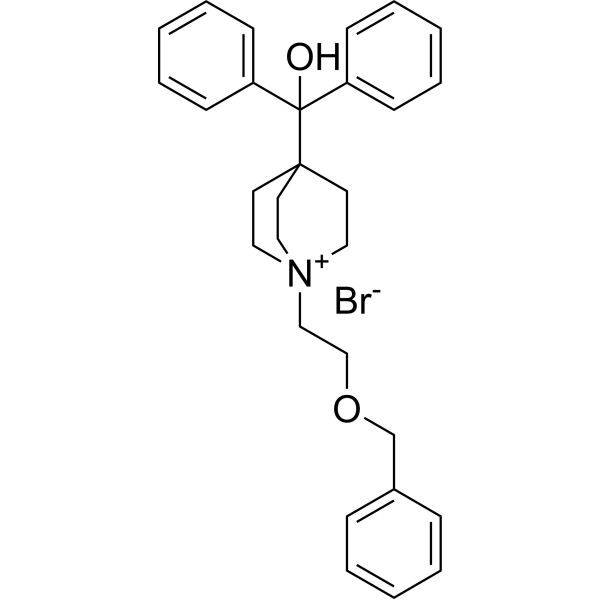
Umeclidinium bromide is a novel mAChR antagonist. The affinity (Ki) of Umeclidinium bromide for the cloned human M1-M5 mAChRs ranges from 0.05 to 0.16 nM.
|
-
-
- HY-B0406A
-
|
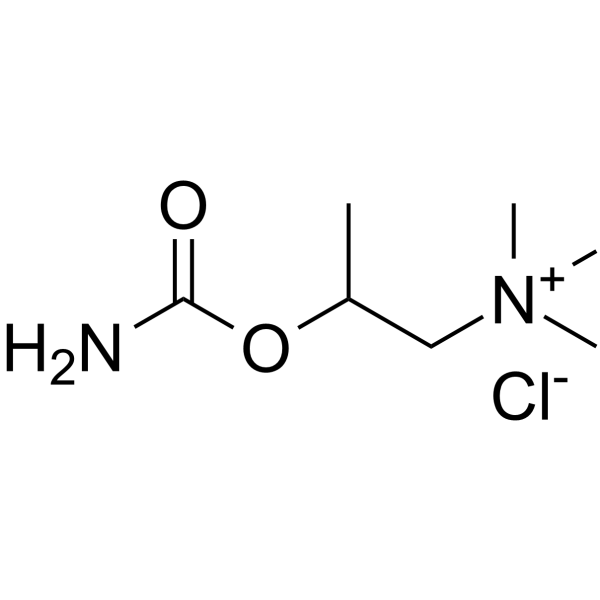
Carbamyl-β-methylcholine chloride
|
mAChR
|
Neurological Disease
Cancer
|
|
Bethanechol chloride (Carbamyl-β-methylcholine chloride), a parasympathomimetic agent, is a mAChR agonist that exerts its effects via directly stimulating the mAChR (M1, M2, M3, M4, and M5) of the parasympathetic nervous system .
|
-
-
- HY-B0499A
-
|
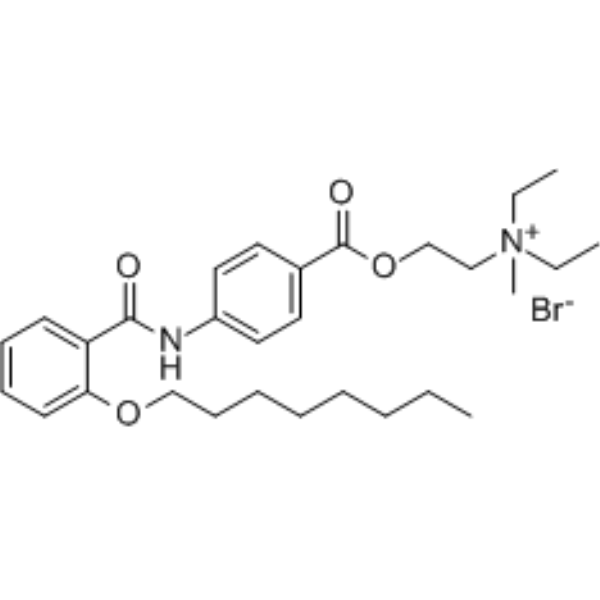
Octylonium bromide; SP63
|
mAChR
|
Neurological Disease
|
|
Otilonium bromide (OB) is an orally active mAChR inhibitor and smooth muscle relaxant which can interfere with the mobilization of calcium in intestinal smooth muscle, OB can be used for research of irritable bowel syndrome .
|
-
-
- HY-B0394
-
|
Tropine tropate sulfate monohydrate; DL-Hyoscyamine sulfate monohydrate
|
mAChR
|
Cardiovascular Disease
Neurological Disease
Cancer
|
|
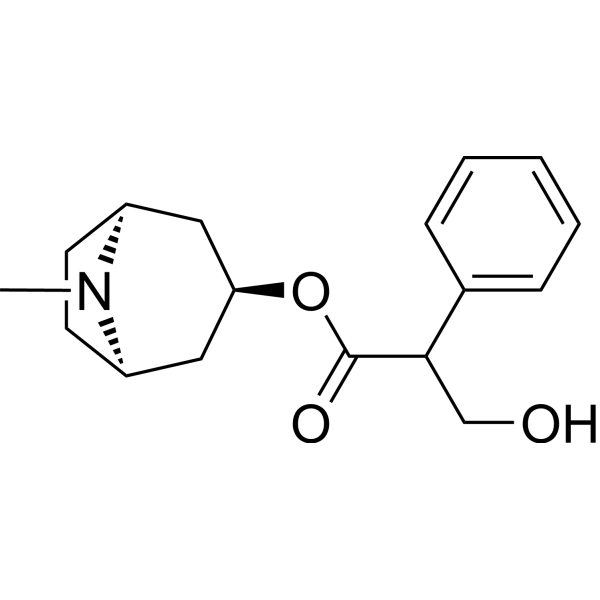
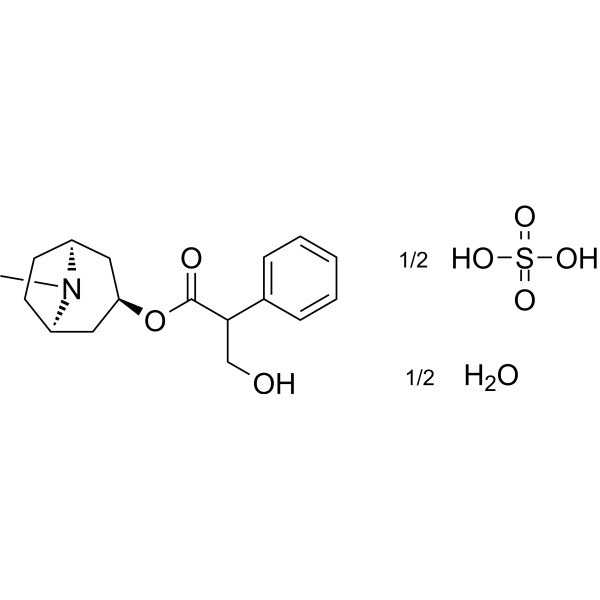
Atropine (Tropine tropate) sulfate monohydrate is a competitive muscarinic acetylcholine receptor (mAChR) antagonist with IC50 values of 0.39 and 0.71 nM for Human mAChR M4 and Chicken mAChR M4, respectively. Atropine sulfate monohydrate inhibits ACh-induced relaxations in human pulmonary veins. Atropine sulfate monohydrate can be used for research of anti-myopia and bradycardia .
|
-
-
- HY-B0461
-
|
|
mAChR
|
Neurological Disease
|
|
Trospium chloride is an orally active, specific and competitive antagonist of muscarinic cholinergic receptors (mAChRs), with antimuscarinic activity. Trospium chloride binds to muscarinic receptors M1, M2 and M3 with high affinity, but not nicotinic, cholinergic receptors .
|
-
-
- HY-B1205A
-
|
Tropine tropate sulfate; DL-Hyoscyamine sulfate; Sulfatropinol
|
mAChR
|
Cardiovascular Disease
Neurological Disease
Cancer
|
|
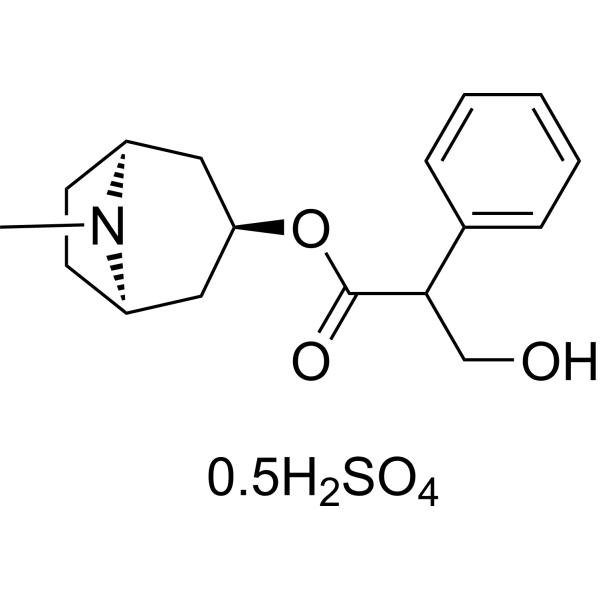
Atropine (Tropine tropate) sulfate is a competitive muscarinic acetylcholine receptor (mAChR) antagonist with IC50 values of 0.39 and 0.71 nM for Human mAChR M4 and Chicken mAChR M4, respectively. Atropine sulfate inhibits ACh-induced relaxations in human pulmonary veins. Atropine sulfate can be used for research of anti-myopia and bradycardia .
|
-
-
- HY-121404A
-
|
(+)-Muscarine chloride
|
mAChR
|
Neurological Disease
|
|
Muscarine ((+)-Muscarine) chloride is an agonist of prototype mAChR. Muscarine chloride is a toxin that can stimulate the parasympathetic nervous system .
|
-
-
- HY-101372A
-
|
|
mAChR
|
Neurological Disease
|
|
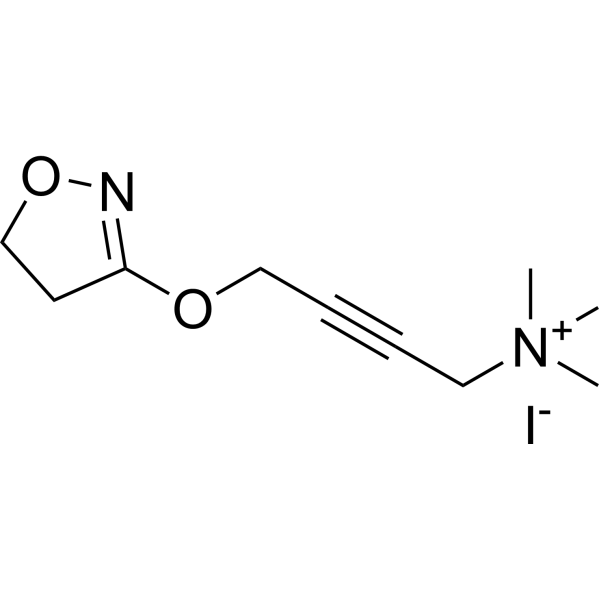
Oxotremorine M iodide is a potent and non-selective muscarinic acetylcholine receptor (mAChR) agonist. Oxotremorine M iodide potentiates NMDA receptors by muscarinic receptor dependent and independent mechanisms .
|
-
-
- HY-108234
-
|
VU 255035
|
mAChR
|
Neurological Disease
|
|
VU0255035 is a highly selective and competitive M1 mAChR antagonist. VU0255035 blocks M1 mAChR signals to reduce epileptic seizures and regulate neuronal membrane potential. VU0255035 can be used in research related to central nervous system diseases, such as epilepsy, Parkinson's disease, and dystonia .
|
-
-
- HY-B1223
-
|
|
mAChR
|
Neurological Disease
Cancer
|
|
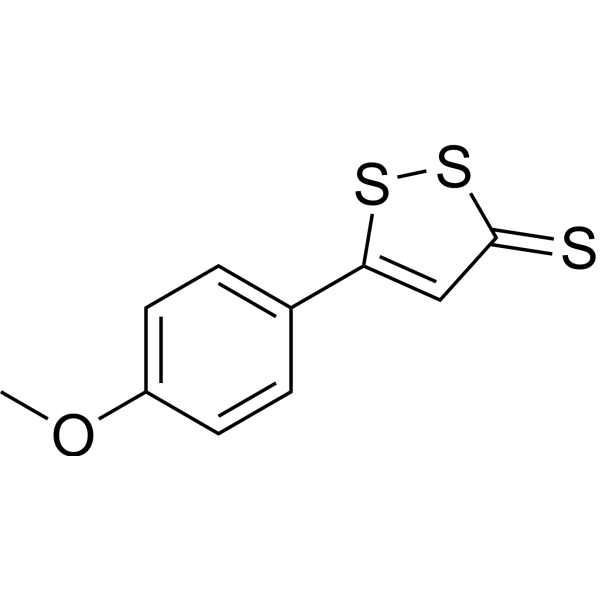
Anethole trithione, a sulfur heterocyclic choleretic, is a bile secretion-stimulating agent. Anethole trithione enhances salivary secretion and increases mAChRs, and can be used for dry mouth research .
|
-
-
- HY-101858
-
-
-
- HY-15851
-
-
-
- HY-12157
-
|
|
mAChR
|
Others
|
|
VU 0238429 is positive allosteric modulator of muscarinic acetylcholine receptor subtype 5 (mAChR5 or M5), with an EC50 of 1.16 μM.
|
-
-
- HY-101239
-
|
|
mAChR
|
Neurological Disease
|
|
Oxotremorine sesquifumarate is a mAChR agonist that mainly activates M2 receptors. Oxotremorine sesquifumarate can be used for neurological research .
|
-
-
- HY-B2070
-
-
-
- HY-141711
-
|
|
mAChR
|
Neurological Disease
|
|
VU6028418 is a potent, highly selective and orally bioavailable M4 mAChR antagonist with an IC50 of 4.1 nM against hM4 .
|
-
-
- HY-12439
-
ML380
1 Publications Verification
|
mAChR
|
Neurological Disease
|
|
ML380 is a potent, subtype-selective, and brain-penetrant positive allosteric modulator (PAM) of M5 mAChR, with EC50s of 190 and 610 nM for human and rat M5, respectively. ML380 exhibits moderate selectivity versus the M1 and M3 mAChR subtypes. ML380 could increase the affinity of ACh for the M5 mAChR .
|
-
-
- HY-148502
-
|
|
mAChR
|
Neurological Disease
|
|
VU6019650 is a potent and selective orthosteric antagonist of M5 mAChR (IC50=36 nM), can be used for opioid use disorder (OUD) relief. VU6019650 can cross blood brain barrier, potentially modulates the mesolimbic dopaminergic reward circuitry. VU6019650 blocks Oxotremorine M iodide (HY-101372A) induced increases of neuronal firing rates of midbrain dopamine neurons in the ventral tegmental area (VTA) .
|
-
-
- HY-176200
-
|
AF98943
|
mAChR
|
Neurological Disease
|
|
VU6008055 (AF98943) is a brain-penetrant, orally active and selective muscarinic acetylcholine receptor subtype 4 (mAChR4) activator with human EC50 values of 73.4 nM. VU6008055 potentiates mAChR4 receptor activity in the presence of acetylcholine, and exhibits no activity at mAChR1, mAChR3, or mAChR5. VU6008055 can be used for the research of schizophrenia, parkinson’s disease, alzheimer’s disease .
|
-
-
- HY-B0394S
-
|
Tropine tropate-d5; DL-Hyoscyamine-d5
|
mAChR
Autophagy
|
Neurological Disease
|
|
Atropine-d5 is the deuterium labeled Atropine (sulfate monohydrate). Atropine (Tropine tropate) sulfate monohydrate is a broad-spectrum and competitive muscarinic acetylcholine receptor (mAChR) antagonist with anti-myopia effect .
|
-
-
- HY-114933
-
|
|
mAChR
|
Neurological Disease
Metabolic Disease
|
|
VU0119498 is a pan Gq mAChR M1, M3, M5 positive allosteric modulator (PAM), with EC50s of 6.04, 6.38, and 4.08 µM, respectively. VU0119498 has antidiabetic activity .
|
-
-
- HY-147028
-
-
-
- HY-B1205R
-
|
Tropine tropate (Standard); DL-Hyoscyamine (Standard)
|
Reference Standards
mAChR
Endogenous Metabolite
|
Cardiovascular Disease
Neurological Disease
|
|
Atropine (Standard) is the analytical standard of Atropine. This product is intended for research and analytical applications. Atropine (Tropine tropate) is a competitive muscarinic acetylcholine receptor (mAChR) antagonist with IC50 values of 0.39 and 0.71 nM for Human mAChR M4 and Chicken mAChR M4, respectively. Atropine inhibits ACh-induced relaxations in human pulmonary veins. Atropine can be used for research of anti-myopia and bradycardia .
|
-
-
- HY-116490
-
|
|
mAChR
|
Cardiovascular Disease
|
Guvacoline hydrobromide, a pyridine alkaloid found in Areca triandra, can act as a weak full agonist of atrial and ileal mAChR .
|
-
-
- HY-B1719A
-
|
|
mAChR
|
Inflammation/Immunology
|
|
Oxyphenonium bromide is an antiacetylcholine compound. Oxyphenonium bromide is an antagonist of mAChR. Oxyphenonium bromide protects against the bronchial obstructive effects .
|
-
-
- HY-119226
-
|
|
mAChR
|
Neurological Disease
|
|
VU0152099 is a potent, selective and brain-penetrant mAChR M4 positive allosteric modulator with an EC50 of 0.4 µM for rat M4 receptor. VU0152099 is inactive for other mAChR subtypes or other GPCRs. VU0152099 has no agonist activity but potentiated responses of M4 to acetylcholine .
|
-
-
- HY-101839
-
|
VU0488130
|
mAChR
|
Neurological Disease
|
|
ML381 (VU0488130) is a highly selective, central nervous system penetrant mAChR M5 orthogonal antagonist (IC50 = 450 nM; Ki = 340 nM). ML381 is unstable in rat plasma and can be mainly used as a molecular probe for in vitro and electrophysiological studies .
|
-
-
- HY-177498
-
|
|
mAChR
|
Neurological Disease
|
|
M1 mAChR modulator-1 (Example 66) is a muscarinic M1 receptor (mAChR1) positive allosteric modulator. M1 mAChR modulator-1 effectively promotes gastrointestinal motility and defecation in mouse models with low central permeability. M1 mAChR modulator-1 can be used for constipation research .
|
-
-
- HY-B0406
-
|
Carbamyl-β-methylcholine
|
mAChR
|
Neurological Disease
Cancer
|
|
Bethanechol (Carbamyl-β-methylcholine), a parasympathomimetic agent, is a mAChR agonist that exerts its effects via directly stimulating the mAChR (M1, M2, M3, M4, and M5) of the parasympathetic nervous system .
|
-
-
- HY-14563
-
|
|
mAChR
|
Neurological Disease
|
|
VU10010 is a potent, highly selective and allosteric M4 mAChR potentiator with an EC50 of 400 nM. VU10010 binds to an allosteric site on M4 mAChR and increases affinity for acetylcholine and coupling to G proteins. VU10010 increases carbachol-induced depression of transmission at excitatory but not inhibitory synapses in the hippocampus .
|
-
-
- HY-100795A
-
|
(±)-Pirmenol hydrochloride; CI-845
|
mAChR
Potassium Channel
|
Cardiovascular Disease
|
|
Pirmenol ((±)-Pirmenol) hydrochloride is an orally active antiarrhythmic agent. Pirmenol hydrochloride inhibits IK.ACh (IC50: 0.1 μM) by blocking mAchR. Pirmenol hydrochloride can be used in the research of cardiovascular disease, such as atrial fibrillation .
|
-
-
- HY-12426A
-
|
|
mAChR
|
Neurological Disease
|
|
mAChR-IN-1 hydrochloride is a potent muscarinic cholinergic receptor (mAChR) antagonist, with an IC50 of 17 nM .
|
-
-
- HY-U00119
-
-
-
- HY-B1205AR
-
|
Tropine tropate sulfate (Standard); DL-Hyoscyamine sulfate (Standard); Sulfatropinol (Standard)
|
Reference Standards
mAChR
|
Cardiovascular Disease
Neurological Disease
|
|
Atropine (sulfate) (Standard) is the analytical standard of Atropine (sulfate). This product is intended for research and analytical applications. Atropine (Tropine tropate) sulfate is a competitive muscarinic acetylcholine receptor (mAChR) antagonist with IC50 values of 0.39 and 0.71 nM for Human mAChR M4 and Chicken mAChR M4, respectively. Atropine sulfate inhibits ACh-induced relaxations in human pulmonary veins. Atropine sulfate can be used for research of anti-myopia and bradycardia .
|
-
-
- HY-105771
-
|
|
mAChR
|
Neurological Disease
|
|
Parapenzolate bromide, an antispasmodic, is an orally active mAChR antagonist. Parapenzolate bromide is an anticholinergic agent .
|
-
-
- HY-121404
-
|
(+)-Muscarine
|
mAChR
|
Neurological Disease
|
|
Muscarine ((+)-Muscarine) is an agonist of prototype mAChR. Muscarine is a toxin that can stimulate the parasympathetic nervous system .
|
-
-
- HY-16423
-
|
Org 9487
|
mAChR
|
Neurological Disease
|
|
Rapacuronium bromide (Org 9487), a non-depolarizing neuromuscular blocker, is an allosteric modulator of muscarinic acetylcholine receptor (mAChR) .
|
-
-
- HY-117284
-
|
|
mAChR
|
Neurological Disease
|
|
Eucatropine is a potent muscarinic acetylcholine receptor (mAChR) inhibitor with an IC50 value of 0.583 μM. Eucatropine is an anticholinergic agent .
|
-
-
- HY-119918
-
|
|
mAChR
|
Neurological Disease
|
|
Cycrimine is an orally active muscarinic cholinergic receptor (mAChR) M1 antagonist, reduces the acetylcholine levels in parkinson model. Cycrimine shows antispasmodic activity, can be used in studies of behavioral and mental disorder .
|
-
-
- HY-175532
-
|
|
mAChR
|
Neurological Disease
|
|
M4 mAChR Modulator-2 is an orally active, selective, brain-penetrant positive allosteric modulator (PAM) of the M4 muscarinic acetylcholine receptor (M4 mAChR) (EC50 = 513 nM). M4 mAChR Modulator-2 exhibits high target selectivity, showing negligible affinity and low inhibition rates for non-target receptors (D1R/D2R/D3R, 5-HT subtypes, κ/δ/μ opioid receptors, H1, M1/M2) while specifically binding to M4 mAChR with a Ki of 377 nM and an inhibition rate of 62.8%. M4 mAChR Modulator-2 reverses Dizocilpine (MK-801) (HY-15084B)-induced hyperlocomotion in mice. M4 mAChR Modulator-2 can be used for the study of schizophrenia
|
-
-
- HY-122548
-
|
|
mAChR
|
Endocrinology
|
|
Butropium bromide is a competitive mAChR antagonist. Butropium bromide blocks acetylcholine-mediated glandular secretion and muscle contraction signals, suppressing salivary gland secretion and respiratory smooth muscle spasms. Butropium bromide is promising for research of excessive salivation .
|
-
-
- HY-B0499AR
-
|
Octylonium bromide (Standard); SP63 (Standard)
|
Reference Standards
mAChR
|
Neurological Disease
|
|
Otilonium (bromide) (Standard) is the analytical standard of Otilonium (bromide). This product is intended for research and analytical applications. Otilonium bromide (OB) is an orally active mAChR inhibitor and smooth muscle relaxant which can interfere with the mobilization of calcium in intestinal smooth muscle, OB can be used for research of irritable bowel syndrome .
|
-
-
- HY-12426
-
|
|
mAChR
|
Neurological Disease
|
|
mAChR-IN-1 is a potent muscarinic cholinergic receptor (mAChR) antagonist, with an IC50 of 17 nM .
|
-
-
- HY-U00139
-
-
-
- HY-B0406AS
-
|
Carbamyl-β-methylcholine-d6 chloride
|
Isotope-Labeled Compounds
mAChR
|
Neurological Disease
|
|
Bethanechol-d6 (chloride) is the deuterium labeled Bethanechol chloride. Bethanechol chloride (Carbamyl-β-methylcholine chloride), a parasympathomimetic agent, is a mAChR agonist that exerts its effects via directly stimulating the mAChR (M1, M2, M3, M4, and M5) of the parasympathetic nervous system .
|
-
-
- HY-43711
-
|
|
mAChR
|
Neurological Disease
|
|
Nor-benzetimide is a major metabolite of Benzetimide. Benzetimide is a mAChR antagonist with anticholinergic activity .
|
-
-
- HY-W664824
-
|
N-Desmethylquazepam
|
Drug Intermediate
mAChR
|
Neurological Disease
|
|
Desalkylquazepam (Compound 23; N-Desmethylquazepam) is a precursor in the synthesis of triazolobenzodiazepines . Desalkylquazepam is a mAChR modulator (EC 50 = 0.317 µM) .
|
-
-
- HY-W037331
-
|
Bis(4-fluorophenyl)methanol
|
mAChR
|
Others
|
|
4,4-Difluorobenzhydrol is a precursor of a mAChR antagonist, and its derivative 4,4-Difluorobenzhydrol Carbamate can selectively target the M1 subtype .
|
-
-
- HY-100795
-
|
(±)-Pirmenol; CI-845 free base
|
mAChR
Potassium Channel
|
Cardiovascular Disease
|
|
Pirmenol is an orally active antiarrhythmic agent. Pirmenol inhibits IK.ACh (IC50: 0.1 μM) by blocking mAchR. Pirmenol can be used in the research of cardiovascular disease, such as atrial fibrillation .
|
-
- HY-159177
-
|
|
mAChR
|
Neurological Disease
|
|
M4 mAChR Modulator-1 (compound 23i) is a M4 mAChR positive allosteric modulator (PAM). M4 mAChR Modulator-1 exhibits significantly greater cooperativity with ACh in β-arrestin recruitment over G protein activation. M4 mAChR Modulator-1 displays weak PAM effect in G protein-mediated responses, but strong PAM effect in β-arrestin recruitment .
|
-
- HY-120682
-
|
|
mAChR
|
Neurological Disease
|
|
UH-AH 37 is a muscarinic (mAChR) antagonist. UH-AH 37 exhibits a higher potency in inhibiting muscarinic responses in intestinal tissue than cardiac tissue .
|
-
- HY-116569
-
-
- HY-119333
-
|
|
mAChR
|
Neurological Disease
|
|
NNC 11-1607 is a selective M1/M4 muscarinic acetylcholine receptor (mAChR) agonist. NNC 11-1607 inhibits Forskolin (HY-15371)-stimulated cAMP accumulation in Chinese hamster ovary cells expressing the human M2 or M4 mAChR. NNC 11-1607 is promising for research of central nervous system disorders, such as Alzheimer’s disease and schizophrenia .
|
-
- HY-120576
-
|
VU0405652
|
mAChR
|
Neurological Disease
|
|
ML169 (VU0405652) is a potent, selective and brain penetrant positive allosteric modulator (PAM) of M1 mAChR, with an EC50 of 1.38 µM. ML169 is a MLPCN probe and can be used for Alzheimer’s disease .
|
-
- HY-171981
-
|
|
mAChR
|
Neurological Disease
|
|
VU6002703 (Compound 17) is a BBB-penetrable M4 mAChR positive allosteric modulator (PAM) with an EC50 of 0.6 μM for hM4. VU6002703 can be used for neuropsychiatric and rare genetic CNS disorders research .
|
-
- HY-137388A
-
|
p-Fluorohexahydrosiladifenidol hydrochloride
|
mAChR
Adrenergic Receptor
|
Cardiovascular Disease
Neurological Disease
Metabolic Disease
Cancer
|
|
p-F-HHSiD (p-Fluorohexahydrosiladifenidol) hydrochloride is a potent and selective M3 mAChR antagonist. p-F-HHSiD hydrochloride has antagonistic effects on other subtypes of the M receptor and the alpha1-adrenoceptor. p-F-HHSiD hydrochloride can be used for the researches of cancer, metabolic, neurological and cardiovascular disease such as, colon cancer, Alzheimer’s disease and diabetes .
|
-
- HY-124223
-
|
|
mAChR
|
Neurological Disease
|
|
AF-DX 384 (methanesulfonate) is a selective antagonist of M2 and M4 muscarinic acetylcholine receptors (Kis=6.03 and 10 nM, respectively) . AF-DX 384 (methanesulfonate) reverses deficits in novel object recognition and passive avoidance in aged rats, as well as in young rats with impairments induced by scopolamine .
|
-
- HY-155367
-
|
|
mAChR
|
Neurological Disease
|
|
mAChR antagonist 1 (compound 4a) is a mAChR antagonist with Ki values of 255 nM, 121 nM, 158 nM, and 255 nM for M1, M3, M4, and M5 subtype, respectively .
|
-
- HY-U00079A
-
|
FK-176
|
mAChR
|
Neurological Disease
|
|
Vamicamide (FK-176) is an orally active competitive mAChR antagonist that inhibits contractions induced by cholinergic nerve stimulation by preventing mAChR agonists from binding to mAChR. Vamicamide exhibits a good anti-bladder spasm effect, with a pA2 value of 6.82 in bladder tissue. Vamicamide can be used in research within the field of neurological diseases .
|
-
- HY-B1205B
-
|
Tropine tropate hydrobromide; DL-Hyoscyamine hydrobromide
|
mAChR
|
Cardiovascular Disease
Neurological Disease
Cancer
|
|
Atropine (Tropine tropate) hydrobromide is a competitive muscarinic acetylcholine receptor (mAChR) antagonist with IC50 values of 0.39 and 0.71 nM for Human mAChR M4 and Chicken mAChR M4, respectively. Atropine hydrobromide inhibits ACh-induced relaxations in human pulmonary veins. Atropine hydrobromide can be used for research of anti-myopia and bradycardia .
|
-
- HY-129826
-
|
|
mAChR
|
Others
|
|
J-104129 is a selective and orally active muscarinic M3 receptor antagonist (Ki = 4.2 nM). J-104129 is effective in promoting bronchodilation .
|
-
- HY-148961
-
|
|
mAChR
|
Neurological Disease
|
|
HTL-9936 is a selective M1 muscarinic acetylcholine receptor (M1-mAChR) agonist. HTL-9936 is promising for research of neurodegenerative disorders (e.g., Alzheimer’s) .
|
-
- HY-100916
-
-
- HY-B0394R
-
|
Tropine tropate sulfate monohydrate (Standard); DL-Hyoscyamine sulfate monohydrate (Standard)
|
Reference Standards
mAChR
|
Cardiovascular Disease
Neurological Disease
|
|
Atropine (sulfate monohydrate) (Standard) is the analytical standard of Atropine (sulfate monohydrate). This product is intended for research and analytical applications. Atropine (Tropine tropate) sulfate monohydrate is a competitive muscarinic acetylcholine receptor (mAChR) antagonist with IC50 values of 0.39 and 0.71 nM for Human mAChR M4 and Chicken mAChR M4, respectively. Atropine sulfate monohydrate inhibits ACh-induced relaxations in human pulmonary veins. Atropine sulfate monohydrate can be used for research of anti-myopia and bradycardia .
|
-
- HY-12100S1
-
|
GSK573719A-d10
|
mAChR
|
Inflammation/Immunology
|
|
Umeclidinium-d10 (bromide) is the deuterium labeled Umeclidinium bromide. Umeclidinium bromide is a novel mAChR antagonist. The affinity (Ki) of Umeclidinium bromide for the cloned human M1-M5 mAChRs ranges from 0.05 to 0.16 nM.
|
-
- HY-12100S
-
|
GSK573719A-d5
|
Isotope-Labeled Compounds
mAChR
|
Inflammation/Immunology
|
|
Umeclidinium-d5 (bromide) is the deuterium labeled Umeclidinium bromide. Umeclidinium bromide is a novel mAChR antagonist. The affinity (Ki) of Umeclidinium bromide for the cloned human M1-M5 mAChRs ranges from 0.05 to 0.16 nM.
|
-
- HY-W309130
-
|
|
mAChR
|
Neurological Disease
|
|
(S)-Tolterodine is a muscarinic acetylcholine receptor (mAChR) inhibitor, with an IC50 of 588 nM .
|
-
- HY-12100R
-
|
GSK573719A (Standard)
|
Reference Standards
mAChR
|
Inflammation/Immunology
Cancer
|
|
Umeclidinium (bromide) (Standard) is the analytical standard of Umeclidinium (bromide). This product is intended for research and analytical applications. Umeclidinium bromide is a novel mAChR antagonist. The affinity (Ki) of Umeclidinium bromide for the cloned human M1-M5 mAChRs ranges from 0.05 to 0.16 nM.
|
-
- HY-B0406AR
-
|
Carbamyl-β-methylcholine chloride (Standard)
|
mAChR
Reference Standards
|
Neurological Disease
Cancer
|
|
Bethanechol (chloride) (Standard) is the analytical standard of Bethanechol (chloride). This product is intended for research and analytical applications. Bethanechol chloride (Carbamyl-β-methylcholine chloride), a parasympathomimetic agent, is a mAChR agonist that exerts its effects via directly stimulating the mAChR (M1, M2, M3, M4, and M5) of the parasympathetic nervous system .
|
-
- HY-U00106
-
-
- HY-121404B
-
|
(+)-Muscarine tosylate
|
mAChR
|
Neurological Disease
|
|
Muscarine ((+)-Muscarine) tosylate is an agonist of prototype mAChR. Muscarine tosylate is a toxin that can stimulate the parasympathetic nervous system .
|
-
- HY-137040A
-
|
|
mAChR
|
Neurological Disease
|
|
Tiemonium iodide is a mAChR antagonist with antispasmodic properties. Tiemonium iodide can be used in nervous system research .
|
-
- HY-U00105
-
|
|
mAChR
|
Inflammation/Immunology
|
|
Oxitropium bromide is an mAChR antagonist used as an anticholinergic bronchodilator agent for the treatment of asthma and chronic obstructive pulmonary disease.
|
-
- HY-173031
-
|
|
mAChR
|
Neurological Disease
|
|
KTX-005 is the agonist for mAChR that regulates the signaling pathway of the neurotransmitter acetylcholine, and can be used for research of schizophrenia .
|
-
- HY-B1789
-
|
|
mAChR
|
Neurological Disease
|
|
Telenzepine is an antimuscarinic agent with Kis of 0.94 nM (M1 mAChR) and 17.8 nM (M2 mAChR) binding to muscarinic receptors. Telenzepine effectively blocks synaptic transmission promoted by muscarinic or M1 receptor agonists. Thus, Telenzepine can reduce the amplitude of extracellular slow excitatory postsynaptic potentials (EC50=38 nM) and slow inhibitory postsynaptic potentials (EC50=253 nM) .
|
-
- HY-169178
-
|
|
mAChR
|
Neurological Disease
|
|
VU6016235 is a highly selective, orally available, positive allosteric modulator of the M4 mAChR with in vivo inhibitory potency in animal models of psychosis. .
|
-
- HY-W076756
-
|
|
mAChR
|
Inflammation/Immunology
|
|
4-Piperidyl N-(2-biphenyl)carbamate (compound MA) is a competitive muscarinic acetylcholine receptor (mAChR) antagonist. 4-Piperidyl N-(2-biphenyl)carbamate exhibits higher affinity for M2 and M3 mAChR than β2AR (M2 pKi = 7.33; M3 pKi = 7.51; β2AR pKi = 4.94) .
|
-
- HY-170032
-
|
|
mAChR
|
Neurological Disease
|
|
Oxotremorine is an agonist for mAChR, that activates M1 and M3 acetylcholine receptors. Oxotremorine exhibits nicotine-like effects in drug discrimination experiments in macaques .
|
-
- HY-131574
-
|
|
mAChR
|
Neurological Disease
|
|
Heliosupine N-oxide, Heliosupin metabolite, inhibits muscarinic acetylcholine receptor (mAChR) with the IC50 of 350 μM. Heliosupine N-oxide is a pyrrolizidine alkaloid (PA) .
|
-
- HY-U00104
-
|
|
mAChR
|
Endocrinology
|
|
YM-46303 is an mAChR antagonist which exhibits the highest affinities for M1 and M3 receptors, and selectivity for M3 over M2 receptor.
|
-
- HY-160440A
-
|
|
mAChR
|
Neurological Disease
|
|
VU6021625 is a selective antagonist muscarinic acetylcholine receptors (mAChRs), with the IC50 value of 0.44 nM, 57 nM for human M4 and rat M4, respectively .
|
-
- HY-117966
-
|
|
mAChR
|
Cardiovascular Disease
|
|
Bibn 140 is a pyridine derivative substituted with a benzene ring, which has high affinity (Ki: 12 nM) and selectivity for M2 mAChR receptors over M1 receptors .
|
-
- HY-W739521
-
|
|
mAChR
|
Others
|
|
N-Desethyloxybutynin hydrochloride is an active metabolite of Oxybutynin. N-Desethyloxybutynin hydrochloride binds to mAChRs in isolated? human bladder and human parotid gland with pKi values of 8.2 and 8.7, respectively .
|
-
- HY-15502
-
-
- HY-119772
-
|
ML137
|
Cholinesterase (ChE)
|
Neurological Disease
|
|
VU0366369 (ML137) is a selective positive allosteric modulator (PAM) for mAChR M1 with an EC50 of 830 nM. VU0366369 can be used in research about central nervous system diseases .
|
-
- HY-101694
-
|
AWD 26-06 free base
|
mAChR
|
Inflammation/Immunology
|
|
Siltenzepine (AWD 26-06 free base) is an antagonist of mAChR with anti-acid activity, which can be used in peptic ulcers research. Siltenzepine exhibits rapidly but incompletely absorbed characterastic in rats (po) .
|
-
- HY-15116
-
|
|
Prolyl Endopeptidase (PREP)
|
Neurological Disease
|
|
ONO 1603, a novel prolyl endopeptidase inhibitor investigated as a potential antidementia drug, demonstrated neuroprotective and neurotrophic effects in cerebellar granule cells similar to tetrahydroaminoacridine (THA). At a concentration of 0.03 microM, ONO 1603 promoted neuronal survival, enhanced neurite outgrowth, increased m3-muscarinic acetylcholine receptor (mAChR) mRNA levels, and stimulated mAChR-mediated signaling pathways. These findings suggest that ONO 1603 shares pharmacological similarities with THA, indicating its potential as a therapeutic agent for Alzheimer's disease by enhancing cholinergic neurotransmission and neuronal function .
|
-
- HY-15851R
-
|
TD-4208 (Standard); GSK1160724 (Standard)
|
Reference Standards
mAChR
|
Cardiovascular Disease
Inflammation/Immunology
|
|
Revefenacin (Standard) is the analytical standard of Revefenacin. This product is intended for research and analytical applications. Revefenacin (TD-4208; GSK1160724) is a potent mAChR antagonist; has a high affinity on M3 receptor with a Ki of 0.18 nM.
|
-
- HY-19685A
-
|
|
mAChR
|
Neurological Disease
|
|
Sintropium bromide is a mAChR antagonist with anticholinergic effects. Sintropium bromide can be used for pain and spasm research .
|
-
- HY-119363
-
|
|
mAChR
|
Neurological Disease
|
|
VU6009453 (compound 15q) is a brain-penetrant M4 mAChR positive allosteric modulator (PAM) with an EC50 of 383 nM. VU6009453 can be used for research on neurological diseases .
|
-
- HY-182384
-
|
|
mAChR
|
Neurological Disease
|
|
VU6015241 is a selective, blood-brain barrier-permeable M4 mAChR Antagonist with a Ki value of 43.3 nM. VU6015241 is used for the research of dystonia and related movement disorders .
|
-
- HY-137388
-
|
p-Fluorohexahydrosiladifenidol
|
mAChR
Adrenergic Receptor
|
Cardiovascular Disease
Neurological Disease
Metabolic Disease
Cancer
|
|
p-F-HHSiD (p-Fluorohexahydrosiladifenidol) is a potent and selective M3 mAChR antagonist. p-F-HHSiD has antagonistic effects on other subtypes of the M receptor and the alpha1-adrenoceptor. p-F-HHSiD can be used for the researches of cancer, metabolic, neurological and cardiovascular disease such as, colon cancer, Alzheimer’s disease and diabetes .
|
-
- HY-131196
-
|
|
mAChR
|
Neurological Disease
|
|
M3 mAChR agonist 1 is an M3-preferring M3/M5 mAChR dual positive allosteric modulators (PAM). M3 mAChR agonist 1 shows excellent subtype selectivity over other subtypes of mAChRs including M1, M2, and M4 mAChRs. M3 mAChR agonist 1 increases the contraction of isolated rat bladder strips by modulating the M3 muscarinic acetylcholine receptor, leading to enhanced signaling pathways. M3 mAChR agonist 1 can be used for the research of endocrinology .
|
-
- HY-108234R
-
|
VU 255035 (Standard)
|
Reference Standards
mAChR
|
Neurological Disease
|
|
VU 0255035 (Standard) is the analytical standard of VU 0255035 (HY-108234). This product is intended for research and analytical applications. VU0255035 is a highly selective and competitive M1 mAChR antagonist. VU0255035 blocks M1 mAChR signals to reduce epileptic seizures and regulate neuronal membrane potential. VU0255035 can be used in research related to central nervous system diseases, such as epilepsy, ParKinson's disease, and dystonia .
|
-
- HY-101858R
-
|
|
Reference Standards
mAChR
|
Neurological Disease
|
|
BQCA (Standard) is the analytical standard of BQCA (HY-101858). This product is intended for research and analytical applications. BQCA a highly selective allosteric modulator of the M1 mAChR.
|
-
- HY-182010
-
|
|
nAChR
|
Neurological Disease
|
|
nAChR antagonist 3 is a selective α7 nAChR antagonist with an IC50 of 0.86 μM. nAChR antagonist 3 exerts a protective effect against paraoxon-induced toxicity. nAChR antagonist 3 can be used for the research of organophosphate poisoning .
|
-
- HY-181559S
-
|
AG06827
|
mAChR
|
Neurological Disease
|
|
VU6025733 (AG06827) is a highly selective, orally active and blood-brain barrier-penetrant positive allosteric modulator of the muscarinic acetylcholine receptor subtype M4 (M4 mAChR). VU6025733 exerts a potentiating effect on acetylcholine-induced receptor activation with an EC50 of 23 nM for hM4 and 55 nM for rM4. VU6025733 shows high selectivity over other muscarinic acetylcholine receptor subtypes, dose-dependently reduces amphetamine-induced hyperlocomotion in rats. VU6025733 is applicable to the research of schizophrenia, Parkinson's disease, and Alzheimer's disease .
|
-
- HY-117284A
-
|
|
mAChR
|
Neurological Disease
|
|
Eucatropine hydrochloride is a potent muscarinic acetylcholine receptor (mAChR) inhibitor with an IC50 value of 0.583 μM. Eucatropine hydrochloride acts as an anticholinergic agent. Eucatropine hydrochloride produces behavioral effects via central cholinergic receptive sites in cats .
|
-
- HY-180421
-
|
|
mAChR
|
Neurological Disease
|
|
VU6009048 is a CNS-penetrant human M4 muscarinic acetylcholine receptor (mAChR4) positive allosteric modulator. VU6009048 can be used for the research of parkinson’s disease, huntington’s disease, schizophrenia .
|
-
- HY-128783
-
|
|
mAChR
|
Neurological Disease
|
|
VU0090157 is a positive allosteric modulator (PAM) of the M1 muscarinic acetylcholine receptor (mAChR). VU0090157 increases the affinity of ACh by binding to the allosteric site. VU0090157 can be used in the study of schizophrenia and Alzheimer's disease .
|
-
- HY-17647R
-
|
ETX0914 (Standard); AZD0914 (Standard)
|
Reference Standards
DNA/RNA Synthesis
Bacterial
Antibiotic
|
Infection
|
|
Oxyphenonium (bromide) (Standard) is the analytical standard of Oxyphenonium (bromide). This product is intended for research and analytical applications. Oxyphenonium bromide is an antiacetylcholine compound. Oxyphenonium bromide is an antagonist of mAChR. Oxyphenonium bromide protects against the bronchial obstructive effects .
|
-
- HY-149732
-
|
|
mAChR
|
Neurological Disease
|
|
M1/M4 muscarinic agonist 3 (compound 44) is a muscarinic mAChR M1/M4 agonist with EC50s of 31 nM and 9.3 nM, respectively .
|
-
- HY-B1719AR
-
|
|
mAChR
Reference Standards
|
Inflammation/Immunology
|
|
Oxyphenonium (bromide) (Standard) is the analytical standard of Oxyphenonium (bromide). This product is intended for research and analytical applications. Oxyphenonium bromide is an antiacetylcholine compound. Oxyphenonium bromide is an antagonist of mAChR. Oxyphenonium bromide protects against the bronchial obstructive effects .
|
-
- HY-112209
-
|
|
mAChR
|
Neurological Disease
|
|
VU0467154 is a positive allosteric modulator of the M4 muscarinic acetylcholine receptor (mAChR), potentiating the response to ACh with pEC50s of 7.75, 6.2 and 6 for rat, human and cynomolgus monkey M4 receptor, respectively.
|
-
- HY-B0954A
-
|
|
mAChR
|
Endocrinology
|
|
Oxyphencyclimine is an orally active muscarinic receptor (mAChR) antagonist. Oxyphencyclimine is effective in reducing ulceration index and increasing pepsin activity in rat gastric ulcer model. Oxyphencyclimine can be used in studies of peptic ulcer disease and gastrointestinal spasm .
|
-
- HY-12567A
-
|
(R)-VU0483253
|
Drug Isomer
|
Others
|
|
(R)-ML375 ((R)-VU0483253) is an enantiomer of ML375 (HY-12567). (R)-ML375 is devoid of M5 mAChR activity (hM5, IC50>30 μM) .
|
-
- HY-B1806A
-
|
Pathilon chloride
|
mAChR
|
Neurological Disease
Inflammation/Immunology
|
|
Tridihexethyl (Pathilon) chloride is an orally active anticholinergic agent and mAChR antagonist, shows activities of antimuscarinic and anticholinergic. Tridihexethyl chloride shows pronounced antispasmodic and antisecretory effects on the gastrointestinal tract. Tridihexethyl chloride can be used in studies of peptic ulcer disease and acquired nystagmus .
|
-
- HY-15851S1
-
-
- HY-15851S2
-
-
- HY-15851S3
-
-
- HY-118356
-
|
|
Neurokinin Receptor
mAChR
|
Neurological Disease
|
|
WIN 62,577 is a rat-specific, but non-human, NK1 receptor antagonist. WIN 62,577 interacts with M1-M4 mAChRs and is an allosteric enhancer of acetylcholine affinity targeting the M3 receptor.
|
-
- HY-160440
-
|
|
mAChR
Drug Isomer
|
Others
|
|
rel-VU6021625 is the relative configuration of VU6021625 (HY-160440A). VU6021625 is a potent and selective mAChR M4 antagonist with IC50 values of 0.44 nM and 57 nM for human M4, rat M4, respectively .
|
-
- HY-112076
-
|
Methylatropine bromide
|
mAChR
|
Neurological Disease
|
|
Atropine methyl bromide, a muscarinic receptor (mAChR) antagonist, is a quaternary ammonium salt of atropine and a mydriatic for dilation of the pupil during ophthalmic examination. It is introduced for relieving pyloric spasm in infants for its highly polar nature. It penetrates less readily into the central nervous system than atropine .
|
-
- HY-B1188
-
|
|
mAChR
|
Neurological Disease
|
|
Propantheline bromide is an orally active mAChR antagonist. Propantheline bromide can be used in the research of smooth muscle dysfunction, excessive sweating, cramps or spasms of the stomach, intestines or bladder, and involuntary urination. Propantheline bromide can hardly cross the blood-brain barrier .
|
-
- HY-166417S
-
|
|
Isotope-Labeled Compounds
mAChR
|
Others
|
|
Tiotropium-d3 iodide is the deuterium labeled Tiotropium iodide. Tiotropium-d3 iodide is a muscarinic acetylcholine receptor (mAChR) antagonist that blocks the binding of the acetylcholine ligand. Tiotropium-d3 iodide serves as a stable isotope tracer for quantitative analysis .
|
-
- HY-112076A
-
|
Methylatropine nitrate; Atropine methyl nitrate
|
mAChR
|
Neurological Disease
|
|
Atropine methyl bromide, a muscarinic receptor (mAChR) antagonist, is a quaternary ammonium salt of atropine and a mydriatic for dilation of the pupil during ophthalmic examination. It is introduced for relieving pyloric spasm in infants for its highly polar nature. It penetrates less readily into the central nervous system than atropine .
|
-
- HY-B1223R
-
|
|
mAChR
Reference Standards
|
Neurological Disease
Cancer
|
|
Anethole trithione (Standard) is the analytical standard of Anethole trithione. This product is intended for research and analytical applications. Anethole trithione, a sulfur heterocyclic choleretic, is a bile secretion-stimulating agent. Anethole trithione enhances salivary secretion and increases mAChRs, and can be used for dry mouth research .
|
-
- HY-101679
-
|
|
mAChR
|
Neurological Disease
|
|
YM-58790 is a potent antagonist of mAChR. YM-58790 binds M1, M2, M3 with Ki values of 28 nM, 260 nM, and 15 nM. YM-58790 exhibits potent inhibitory activity on bladder pressuer in reflexly-evoked rhythmic contraction in rats .
|
-
- HY-B1296S1
-
-
- HY-B0461S
-
|
|
Isotope-Labeled Compounds
mAChR
|
Neurological Disease
|
|
Trospium-d8 (chloride) is the deuterium labeled Trospium chloride. Trospium chloride is an orally active, specific and competitive antagonist of muscarinic cholinergic receptors (mAChRs), with antimuscarinic activity. Trospium chloride binds to muscarinic receptors M1, M2 and M3 with high affinity, but not nicotinic, cholinergic receptors .
|
-
- HY-108171A
-
|
|
mAChR
|
Inflammation/Immunology
|
|
Hexocyclium methylsulfate is a potent mAChR antagonist with pKi values of 8.9, 7.7, 8.4, 8.8 for M1, M2, M3, and M4 subtype, respectively. Hexocyclium methylsulfate has the potential for the research of duodenal ulcer and irritable bowel syndrome .
|
-
- HY-17037
-
|
LS 519; Pirenzepin dihydrochloride; Gastrozepin dihydrochloride
|
mAChR
|
Metabolic Disease
Cancer
|
|
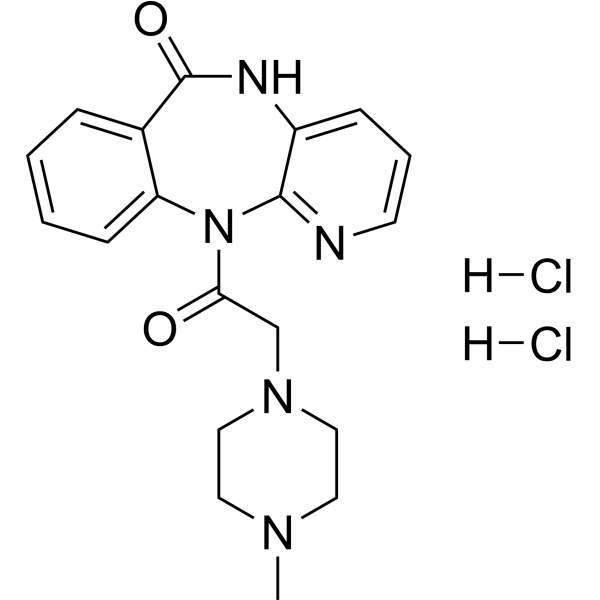
Pirenzepine (LS 519) dihydrochloride is a selective M1 mAChR (muscarinic acetylcholine receptor) antagonist, with poor penetration of the blood-brain barrier. Pirenzepine dihydrochloride reduces gastric acid secretion and reduces muscle spasm, can be used in peptic ulcers research. Pirenzepine dihydrochloride shows anti-proliferative activity to cancer cells .
|
-
- HY-107651
-
|
|
mAChR
|
Metabolic Disease
|
|
VU 0365114 is a selective mAChR M5 positive allosteric modulator, with an EC50 of 2.7 μM, and >30 μM for M1, M2, M3 and M4 receptors. VU 0365114 increases insulin secretion stimulated by ACh in human β-cells .
|
-
- HY-159578S
-
|
|
mAChR
|
Neurological Disease
|
|
VU6036864 (compound 45) is an orally active, selective mAChR M5 antagonist with IC50=20 nM for human M5. VU6036864 is >500-fold selective for human M1-4, with BBB characteristic and high oral bioavailability (%F>100%) .
|
-
- HY-B1188R
-
|
|
Reference Standards
mAChR
|
Neurological Disease
|
|
Propantheline (bromide) (Standard) is the analytical standard of Propantheline (bromide). This product is intended for research and analytical applications. Propantheline bromide is an orally active mAChR antagonist. Propantheline bromide can be used in the research of smooth muscle dysfunction, excessive sweating, cramps or spasms of the stomach, intestines or bladder, and involuntary urination .
|
-
- HY-122743
-
Iperoxo
2 Publications Verification
|
mAChR
|
Neurological Disease
|
|
Iperoxo is a potent superagonist of muscarinic acetylcholine receptor (mAChR) that activates M1, M2 and M3 receptors with pEC50 of 9.87, 10.1 and 9.78. Iperoxo can be used for direct probing activation-related conformational transitions of muscarinic receptors when labeled with tritium .
|
-
- HY-17037A
-
|
LS 519 free base; Pirenzepin; Gastrozepin
|
mAChR
|
Metabolic Disease
Cancer
|
|
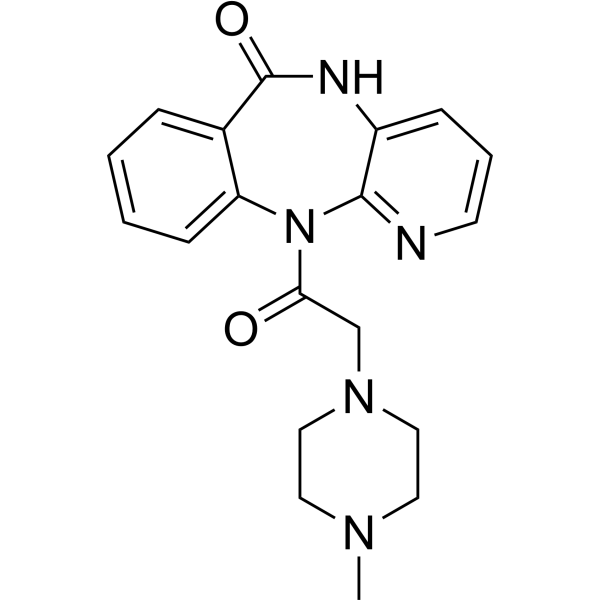
Pirenzepine (LS 519 free base) is a selective M1 mAChR (muscarinic acetylcholine receptor) antagonist, with poor penetration of the blood-brain barrier. Pirenzepine reduces gastric acid secretion and reduces muscle spasm, can be used in peptic ulcers research. Pirenzepine shows anti-proliferative activity to cancer cells .
|
-
- HY-149731
-
|
|
mAChR
|
Neurological Disease
|
|
M1/M2/M4 muscarinic agonist 2 (compound 43) is a muscarinic mAChR M1/M2/M4 agonist with EC50s of 30 nM, 200 nM and 6.2 nM, respectively .
|
-
- HY-B0461R
-
|
|
mAChR
Reference Standards
|
Neurological Disease
|
|
Trospium (chloride) (Standard) is the analytical standard of Trospium (chloride). This product is intended for research and analytical applications. Trospium chloride is an orally active, specific and competitive antagonist of muscarinic cholinergic receptors (mAChRs), with antimuscarinic activity. Trospium chloride binds to muscarinic receptors M1, M2 and M3 with high affinity, but not nicotinic, cholinergic receptors .
|
-
- HY-157956
-
|
|
mAChR
|
Neurological Disease
|
|
LASSBio-873 is an orally active muscarinic cholinergic receptor (mAChR) agonist that crosses the blood-brain barrier. LASSBio-873 has potent analgesic effects on acute and inflammatory pain. The analgesic effect of LASSBio-873 can be inhibited by intrathecal injection of the M2 receptor antagonist methoctramine .
|
-
- HY-12158
-
|
|
mAChR
|
Neurological Disease
|
|
VU0238441 is a pan muscarinic acetylcholine receptor (mAChR) positive allosteric modulator (PAM) with EC50s of 3.2 μM, 2.8 μM, 2.2 μM, 2.1 μM, >10 μM for M1, M2, M3, M5 and M4, respectively .
|
-
- HY-A0030
-
|
|
mAChR
|
Neurological Disease
Metabolic Disease
Cancer
|
|
Fesoterodine Fumarate is an orally active, nonsubtype selective, competitive muscarinic receptor (mAChR) antagonist with pKi values of 8.0, 7.7, 7.4, 7.3, 7.5 for M1, M2, M3, M4, M5 receptors, respectively. Fesoterodine Fumarate is used for the overactive bladder (OAB) .
|
-
- HY-107922
-
|
Isothazine
|
Cholinesterase (ChE)
iGluR
mAChR
|
Neurological Disease
|
|
Ethopropazine (Isothazine) hydrochloride is a potent and selective BChE inhibitor, a poor AChE inhibitor and a non-selective mAChR and NMDA antagonist. Ethopropazine hydrochloride has anticholinergic, antihistamine, antiadrenergic actions and properties. Ethopropazine hydrochloride alleviates thermal hyperalgesia in a dose dependent manner. Ethopropazine hydrochloride can be used for the research of Parkinson’s disease .
|
-
- HY-B0662R
-
|
KRP-197 (Standard); ONO-8025 (Standard)
|
Reference Standards
mAChR
|
Neurological Disease
Endocrinology
|
|
Imidafenacin (KRP-197; ONO-8025) is an orally active inhibitor of muscarinic (mAChR) M1 and M3 receptors. Imidafenacin potently inhibits bladder contraction in vivo and exerts an antidiuretic effect by enhancing the signaling pathway of vasopressin (antidiuretic hormone). Imidafenacin can be used in research related to overactive bladder .
|
-
- HY-149733
-
|
|
mAChR
|
Neurological Disease
|
|
M1/M2/M4 muscarinic agonist 3 (compound 45) is a muscarinic mAChR M1/M2/M4 agonist with EC50s of 3.2 nM, 32 nM and 1.7 nM, respectively .
|
-
- HY-101679A
-
|
|
mAChR
|
Neurological Disease
|
|
YM-58790 free base is a potent antagonist of mAChR. YM-58790 free base binds M1, M2, M3 with Ki values of 28 nM, 260 nM, and 15 nM. YM-58790 free base exhibits potent inhibitory activity on bladder pressuer in reflexly-evoked rhythmic contraction in rats .
|
-
- HY-12567
-
|
VU0483253
|
mAChR
|
Neurological Disease
|
|
ML375 (VU0483253) is a potent, highly selective, brain-penetrant and orally active M5 mAChR negative allosteric modulator (NAM) with IC50s of 300 nM and 790 nM for human and rat M5, respectively. ML375 is inactive at human and rat M1-M4 .
|
-
- HY-101372AR
-
|
|
mAChR
Reference Standards
|
Neurological Disease
|
|
Oxotremorine M (iodide) (Standard) is the analytical standard of Oxotremorine M (iodide) (HY-101372A). This product is intended for research and analytical applications. Oxotremorine M iodide is a potent and non-selective muscarinic acetylcholine receptor (mAChR) agonist. Oxotremorine M iodide potentiates NMDA receptors by muscarinic receptor dependent and independent mechanisms .
|
-
- HY-B0662A
-
|
KRP-197 hydrochloride; ONO-8025 hydrochloride
|
mAChR
Vasopressin Receptor
|
Neurological Disease
Endocrinology
|
|
Imidafenacin (KRP-197; ONO-8025) hydrochloride is an orally active inhibitor of muscarinic (mAChR) M1 and M3 receptors. Imidafenacin hydrochloride potently inhibits bladder contraction in vivo and exerts an antidiuretic effect by enhancing the signaling pathway of vasopressin (antidiuretic hormone). Imidafenacin hydrochloride can be used in research related to overactive bladder .
|
-
- HY-100795AR
-
|
(±)-Pirmenol hydrochloride (Standard); CI-845 (Standard)
|
mAChR
Reference Standards
Potassium Channel
|
Cardiovascular Disease
|
|
Pirmenol (hydrochloride) (Standard) is the analytical standard of Pirmenol (hydrochloride) (HY-100795A). This product is intended for research and analytical applications. Pirmenol ((±)-Pirmenol) hydrochloride is an orally active antiarrhythmic agent. Pirmenol hydrochloride inhibits IK.ACh (IC50: 0.1 μM) by blocking mAchR. Pirmenol hydrochloride can be used in the research of cardiovascular disease, such as atrial fibrillation .
|
-
- HY-70053
-
|
|
mAChR
|
Neurological Disease
Metabolic Disease
|
|
Fesoterodine is an orally active, nonsubtype selective, competitive muscarinic receptor (mAChR) antagonist with pKi values of 8.0, 7.7, 7.4, 7.3, 7.5 for M1, M2, M3, M4, M5 receptors, respectively. Fesoterodine is used for the overactive bladder (OAB) .
|
-
- HY-B0662
-
|
KRP-197; ONO-8025
|
mAChR
Vasopressin Receptor
|
Neurological Disease
Endocrinology
|
|
Imidafenacin (KRP-197; ONO-8025) is an orally active inhibitor of muscarinic (mAChR) M1 and M3 receptors. Imidafenacin potently inhibits bladder contraction in vivo and exerts an antidiuretic effect by enhancing the signaling pathway of vasopressin (antidiuretic hormone). Imidafenacin can be used in research related to overactive bladder .
|
-
- HY-B1343
-
|
|
Cholinesterase (ChE)
|
Neurological Disease
|
|
Pridinol mesylate is an orally active, blood-brain permeable, muscarinic acetylcholine receptor (mAChR)-directed muscle relaxant. Pridinol mesylate reduces the conduction of impulses to spinal motor neurons and exerts muscle relaxant activity. Pridinol mesylate inhibits skeletal muscle contractures in diseases of both central and peripheral origin and can be used in research in the field of musculoskeletal diseases .
|
-
- HY-B0781
-
|
|
Histamine Receptor
mAChR
Adrenergic Receptor
|
Neurological Disease
Endocrinology
|
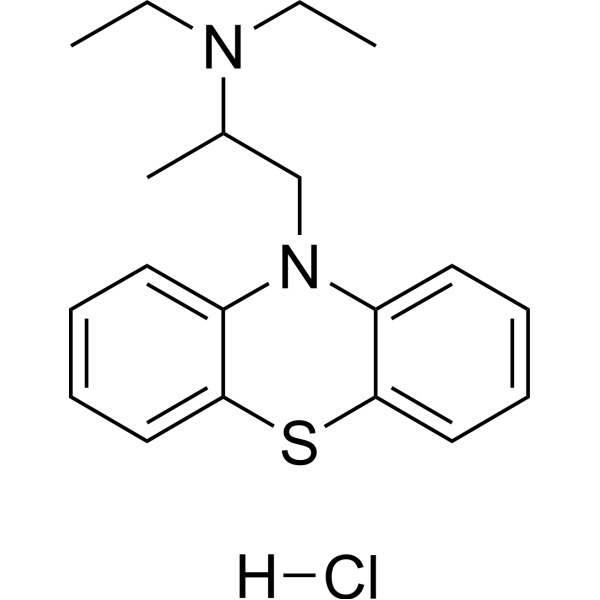
Promethazine hydrochloride is an orally active phenothiazine derivative with antihistaminic (H1), sedative, antiemetic, anticholinergic, and antimotion sickness properties. Promethazine hydrochloride is a potent H1 receptor antagonist and a mAChR antagonist. It also has a certain affinity for 5-HT2A and 5-HT2C receptors .
|
-
- HY-17037R
-
|
LS 519 (Standard); Pirenzepin dihydrochloride (Standard); Gastrozepin dihydrochloride (Standard)
|
Reference Standards
mAChR
|
Metabolic Disease
Cancer
|
|
Pirenzepine (dihydrochloride) (Standard) is the analytical standard of Pirenzepine (dihydrochloride). This product is intended for research and analytical applications. Pirenzepine (LS 519) dihydrochloride is a selective M1 mAChR (muscarinic acetylcholine receptor) antagonist. Pirenzepine dihydrochloride reduces gastric acid secretion and reduces muscle spasm, can be used in peptic ulcers research. Pirenzepine dihydrochloride shows anti-proliferative activity to cancer cells .
|
-
- HY-B1343A
-
|
|
Cholinesterase (ChE)
|
Neurological Disease
|
|
Pridinol is an orally active, blood-brain permeable, muscarinic acetylcholine receptor (mAChR)-directed muscle relaxant. Pridinol reduces the conduction of impulses to spinal motor neurons and exerts muscle relaxant activity. Pridinol inhibits skeletal muscle contractures in diseases of both central and peripheral origin and can be used in research in the field of musculoskeletal diseases .
|
-
- HY-65036
-
|
4-Bromo-2-pyridone
|
Biochemical Assay Reagents
Drug Intermediate
|
Neurological Disease
|
|
4-Bromo-2-hydroxypyridine is an intermediate. 4-Bromo-2-hydroxypyridine can be used to synthesize M1 muscarinic acetylcholine receptor (M1 mAChR) positive allosteric modulators. 4-Bromo-2-hydroxypyridine can be used in the research of Alzheimer's disease and schizophrenia .
|
-
- HY-70053A
-
|
|
mAChR
|
Neurological Disease
Metabolic Disease
Cancer
|
|
Fesoterodine L-mandelate is an orally active, nonsubtype selective, competitive muscarinic receptor (mAChR) antagonist with pKi values of 8.0, 7.7, 7.4, 7.3, 7.5 for M1, M2, M3, M4, M5 receptors, respectively. Fesoterodine L-mandelate is used for the overactive bladder (OAB) .
|
-
- HY-155819
-
|
|
mAChR
Phosphodiesterase (PDE)
|
Inflammation/Immunology
|
|
M3/PDE4 modulator-1 (compound 10f) is a bifunctional molecule that is an M3 mAChR antagonist and a PDE4 inhibitor. M3/PDE4 modulator-1 (10-1000 nM/kg; iv) reduces cysteine eosinophil influx in the OVA rat model .
|
-
- HY-16489A
-
|
|
mAChR
Calcium Channel
|
Neurological Disease
|
|
Terodiline hydrochloride is an M1-selective muscarinic receptor (mAChR) antagonist with Kbs of 15, 160, 280, and 198 nM in rabbit vas deferens (M1), atria (M2), bladder (M3) and ileal muscle (M3), respectively. Terodiline hydrochloride also is a Ca 2+ blocker. Terodiline hydrochloride acts as a treatment for urinary frequency and urge incontinence .
|
-
- HY-13340
-
|
VU152100
|
mAChR
|
Neurological Disease
|
|
VU0152100 (VU152100) is a highly selective mAChR positive allosteric modulator (permeable to the blood-brain barrier). VU0152100 reverses Amphetamine-induced hypermotility in rats and increased levels of extracellular dopamine in nucleus accumbens and caudate-putamen. VU0152100 has good research potential in psychosis and cognitive impairment associated with mental disorders such as schizophrenia .
|
-
- HY-17037AR
-
|
LS 519 free base (Standard); Pirenzepin (Standard); Gastrozepin (Standard)
|
mAChR
Reference Standards
|
Metabolic Disease
Cancer
|
|
Pirenzepine (Standard) is the analytical standard of Pirenzepine. This product is intended for research and analytical applications. Pirenzepine (LS 519 free base) is a selective M1 mAChR (muscarinic acetylcholine receptor) antagonist. Pirenzepine reduces gastric acid secretion and reduces muscle spasm, can be used in peptic ulcers research. Pirenzepine shows anti-proliferative activity to cancer cells .
|
-
- HY-76570A
-
|
(Rac)-Desfesoterodine hydrochloride; (Rac)-PNU-200577 hydrochloride
|
mAChR
|
Neurological Disease
|
|
(Rac)-5-Hydroxymethyl Tolterodine ((Rac)-Desfesoterodine) hydrochloride, an active metabolite of Tolterodine, is a mAChR antagonist (Ki values of 2.3 nM, 2 nM, 2.5 nM, 2.8 nM, and 2.9 nM for M1, M2, M3, M4, and M5 receptors, respectively). (Rac)-5-Hydroxymethyl Tolterodine hydrochloride can be used for overactive bladder research .
|
-
- HY-76569
-
|
PNU-200577; 5-Hydroxymethyl Tolterodine
|
mAChR
|
Neurological Disease
Cancer
|
|
Desfesoterodine (PNU-200577) is a potent and selective muscarinic receptor (mAChR) antagonist with a KB and a pA2 of 0.84 nM and 9.14, respectively . Desfesoterodine is a major pharmacologically active metabolite of Tolterodine (PNU-200583; HY-A0024) and Fesoterodine (HY-70053) . Desfesoterodine improves cerebral infarction induced detrusor overactivity in rats .
|
-
- HY-P1376A
-
|
|
mAChR
Adrenergic Receptor
|
Endocrinology
|
|
G-Protein antagonist peptide TFA is a truncated substance P-related peptide, competes with receptor for G protein binding. G-Protein antagonist peptide TFA inhibits the activation of Gi or Go by M2 muscarinic cholinergic receptor (M2 mAChR) or of Gs by beta-adrenergic receptor in the reconstituted phospholipid vesicles, assayed by receptor-promoted GTP hydrolysis .
|
-
- HY-76570
-
|
(Rac)-Desfesoterodine; (Rac)-PNU-200577
|
mAChR
|
Neurological Disease
|
|
(Rac)-5-Hydroxymethyl Tolterodine ((Rac)-Desfesoterodine), an active metabolite of Tolterodine, is a mAChR antagonist (Ki values of 2.3 nM, 2 nM, 2.5 nM, 2.8 nM, and 2.9 nM for M1, M2, M3, M4, and M5 receptors, respectively). (Rac)-5-Hydroxymethyl Tolterodine can be used for overactive bladder research .
|
-
- HY-A0030S
-
|
|
mAChR
|
Metabolic Disease
|
|
Fesoterodine-d7 (fumarate) is the deuterium labeled Fesoterodine fumarate . Fesoterodine Fumarate is an orally active, nonsubtype selective, competitive muscarinic receptor (mAChR) antagonist with pKi values of 8.0, 7.7, 7.4, 7.3, 7.5 for M1, M2, M3, M4, M5 receptors, respectively. Fesoterodine Fumarate is used for the overactive bladder (OAB) .
|
-
- HY-B0781S1
-
|
|
Isotope-Labeled Compounds
mAChR
Adrenergic Receptor
Histamine Receptor
|
Neurological Disease
Endocrinology
|
Promethazine-d3 (hydrochloride) is deuterium labeled Promethazine (hydrochloride). Promethazine hydrochloride is an orally active phenothiazine derivative with antihistaminic (H1), sedative, antiemetic, anticholinergic, and antimotion sickness properties. Promethazine hydrochloride is a potent H1 receptor antagonist and a mAChR antagonist. It also has a certain affinity for 5-HT2A and 5-HT2C receptors .
|
-
- HY-70053S
-
|
|
Isotope-Labeled Compounds
mAChR
|
Neurological Disease
Metabolic Disease
|
|
(Rac)-Fesoterodine-d14 fumarate is a labelled racemic Fesoterodine. Fesoterodine is an orally active, nonsubtype selective, competitive muscarinic receptor (mAChR) antagonist with pKivalues of 8.0, 7.7, 7.4, 7.3, 7.5 for M1, M2, M3, M4, M5 receptors, respectively. Fesoterodine is used for the overactive bladder (OAB) .
|
-
- HY-112076R
-
|
Methylatropine bromide (Standard)
|
Reference Standards
mAChR
|
Neurological Disease
|
|
Atropine methyl (bromide) (Standard) is the analytical standard of Atropine methyl (bromide). This product is intended for research and analytical applications. Atropine methyl bromide, a muscarinic receptor (mAChR) antagonist, is a quaternary ammonium salt of atropine and a mydriatic for dilation of the pupil during ophthalmic examination. It is introduced for relieving pyloric spasm in infants for its highly polar nature. It penetrates less readily into the central nervous system than atropine .
|
-
- HY-123778
-
|
|
mAChR
|
Neurological Disease
|
|
VU6007678 (compound 18g) is a central nervous system-penetrant muscarinic acetylcholine receptor(mAChR) potentiator. VU6007678 potentiates acetylcholine-mediated signaling at human M1, M3, M5 and rat M1, M3, M4, M5 muscarinic acetylcholine receptors. VU6007678 is applicable to research related to Alzheimer's disease, schizophrenia, and ischemic stroke .
|
-
- HY-W720879
-
|
|
Isotope-Labeled Compounds
mAChR
|
Metabolic Disease
|
|
Fesoterodine-d3 is the deuterium labeled Fesoterodine (HY-70053). Fesoterodine is an orally active, nonsubtype selective, competitive muscarinic receptor (mAChR) antagonist with pKi values of 8.0, 7.7, 7.4, 7.3, 7.5 for M1, M2, M3, M4, M5 receptors, respectively. Fesoterodine is used for the overactive bladder (OAB) .
|
-
- HY-A0030R
-
|
|
Reference Standards
mAChR
|
Neurological Disease
Metabolic Disease
Cancer
|
|
Fesoterodine (fumarate) (Standard) is the analytical standard of Fesoterodine (fumarate). This product is intended for research and analytical applications. Fesoterodine Fumarate is an orally active, nonsubtype selective, competitive muscarinic receptor (mAChR) antagonist with pKi values of 8.0, 7.7, 7.4, 7.3, 7.5 for M1, M2, M3, M4, M5 receptors, respectively. Fesoterodine Fumarate is used for the overactive bladder (OAB) .
|
-
- HY-17037S1
-
|
LS 519-d8 dihydrochloride; Pirenzepin-d8 dihydrochloride; Gastrozepin-d8 dihydrochloride
|
Isotope-Labeled Compounds
mAChR
|
Cancer
|
|
Pirenzepine-d8 (LS 519-d8; Pirenzepin-d8) dihydrochloride is a deuterium labeled Pirenzepine (dihydrochloride) (HY-17037). Pirenzepine (LS 519) dihydrochloride is a selective M1 mAChR (muscarinic acetylcholine receptor) antagonist. Pirenzepine dihydrochloride reduces gastric acid secretion and reduces muscle spasm, can be used in peptic ulcers research. Pirenzepine dihydrochloride shows anti-proliferative activity to cancer cells .
|
-
- HY-B0781R
-
|
|
Reference Standards
Histamine Receptor
mAChR
Adrenergic Receptor
|
Neurological Disease
Endocrinology
|
Promethazine (hydrochloride) (Standard) is the analytical standard of Promethazine (hydrochloride). This product is intended for research and analytical applications. Promethazine hydrochloride is an orally active phenothiazine derivative with antihistaminic (H1), sedative, antiemetic, anticholinergic, and antimotion sickness properties. Promethazine hydrochloride is a potent H1 receptor antagonist and a mAChR antagonist. It also has a certain affinity for 5-HT2A and 5-HT2C receptors .
|
-
- HY-107922R
-
|
Isothazine (Standard)
|
Reference Standards
Cholinesterase (ChE)
iGluR
mAChR
|
Neurological Disease
|
|
Ethopropazine (hydrochloride) (Standard) is the analytical standard of Ethopropazine (hydrochloride) (HY-107922). This product is intended for research and analytical applications. Ethopropazine (Isothazine) hydrochloride is a potent and selective BChE inhibitor, a poor AChE inhibitor and a non-selective mAChR and NMDA antagonist. Ethopropazine hydrochloride has anticholinergic, antihistamine, antiadrenergic actions and properties. Ethopropazine hydrochloride alleviates thermal hyperalgesia in a dose dependent manner. Ethopropazine hydrochloride can be used for the research of Parkinson’s disease .
|
-
- HY-107651R
-
|
|
Reference Standards
mAChR
|
Metabolic Disease
|
|
VU 0365114 (Standard) is the analytical standard of VU 0365114 (HY-107651). This product is intended for research and analytical applications. VU 0365114 is a selective mAChR M5 positive allosteric modulator, with an EC50 of 2.7 μM, and >30 μM for M1, M2, M3 and M4 receptors. VU 0365114 increases insulin secretion stimulated by ACh in human β-cells .
|
-
- HY-101679R
-
|
|
mAChR
Reference Standards
|
Neurological Disease
|
|
YM-58790 (Standard) is the analytical standard of YM-58790 (HY-101679). This product is intended for research and analytical applications. YM-58790 is a potent antagonist of mAChR. YM-58790 binds M1, M2, M3 with Ki values of 28 nM, 260 nM, and 15 nM. YM-58790 exhibits potent inhibitory activity on bladder pressuer in reflexly-evoked rhythmic contraction in rats .
|
-
- HY-B1343AS
-
|
|
Cholinesterase (ChE)
Isotope-Labeled Compounds
|
Neurological Disease
|
|
Pridinol-d5 is deuterium labeled Pridinol (HY-B1343A) . Pridinol is an orally active, blood-brain permeable, muscarinic acetylcholine receptor (mAChR)-directed muscle relaxant. Pridinol reduces the conduction of impulses to spinal motor neurons and exerts muscle relaxant activity. Pridinol inhibits skeletal muscle contractures in diseases of both central and peripheral origin and can be used in research in the field of musculoskeletal diseases .
|
-
- HY-76569R
-
|
PNU-200577 (Standard); 5-Hydroxymethyl Tolterodine (Standard)
|
Reference Standards
mAChR
|
Neurological Disease
|
|
Desfesoterodine (Standard) is the analytical standard of Desfesoterodine. This product is intended for research and analytical applications. Desfesoterodine (PNU-200577) is a potent and selective muscarinic receptor (mAChR) antagonist with a KB and a pA2 of 0.84 nM and 9.14, respectively . Desfesoterodine is a major pharmacologically active metabolite of Tolterodine (PNU-200583; HY-A0024) and Fesoterodine (HY-70053) . Desfesoterodine improves cerebral infarction induced detrusor overactivity in rats .
|
-
- HY-B1343R
-
|
|
Reference Standards
Cholinesterase (ChE)
|
Neurological Disease
|
|
Pridinol mesylate (Standard) is the analytical standard of Pridinol mesylate (HY-B1343). This product is intended for research and analytical applications. Pridinol mesylate is an orally active, blood-brain permeable, muscarinic acetylcholine receptor (mAChR)-directed muscle relaxant. Pridinol mesylate reduces the conduction of impulses to spinal motor neurons and exerts muscle relaxant activity. Pridinol mesylate inhibits skeletal muscle contractures in diseases of both central and peripheral origin and can be used in research in the field of musculoskeletal diseases .
|
-
- HY-13340R
-
|
VU152100 (Standard)
|
mAChR
Reference Standards
|
Neurological Disease
|
|
VU0152100 (Standard) is the analytical standard of VU0152100. This product is intended for research and analytical applications. VU0152100 (VU152100) is a highly selective mAChR positive allosteric modulator (permeable to the blood-brain barrier). VU0152100 reverses Amphetamine-induced hypermotility in rats and increased levels of extracellular dopamine in nucleus accumbens and caudate-putamen. VU0152100 has good research potential in psychosis and cognitive impairment associated with mental disorders such as schizophrenia .
|
-
- HY-107655
-
|
ABET
|
mAChR
|
Cardiovascular Disease
|
|
Arecaidine but-2-ynyl ester tosylate (ABET) is a selective mAChR M2 agonist that dose-dependently decreases mean arterial pressure and heart rate in rats. Arecaidine but-2-ynyl ester tosylate can be used for cardiovascular disease research . Arecaidine but-2-ynyl ester (tosylate) is a click chemistry reagent, it contains an Alkyne group and can undergo copper-catalyzed azide-alkyne cycloaddition (CuAAc) with molecules containing Azide groups.
|
-
- HY-183144
-
|
|
mAChR
|
Neurological Disease
Inflammation/Immunology
|
|
Vedaclidine is an orally active muscarinic acetylcholine receptor (mAChR) modulator with mixed receptor activity, which activates muscarinic M2 and M4 receptors and blocks muscarinic M1, M3 and M5 receptors. Vedaclidine exerts its activity through interaction with spinal M4 muscarinic receptors, and does not induce hypothermia or excessive salivation. Vedaclidine can be used in research related to pain, neuropathic pain and inflammatory pain states .
|
-
- HY-17037AS
-
|
LS 519 free base-d11; Pirenzepin-d11; Gastrozepin-d11
|
Isotope-Labeled Compounds
mAChR
|
Cancer
|
|
Pirenzepine-d11 (LS 519 (free base)-d11; Pirenzepin-d11; Gastrozepin-d11) is the deuterium labeled Pirenzepine (HY-17037A). Pirenzepine (LS 519 free base) is a selective M1 mAChR (muscarinic acetylcholine receptor) antagonist. Pirenzepine reduces gastric acid secretion and reduces muscle spasm, can be used in peptic ulcers research. Pirenzepine shows anti-proliferative activity to cancer cells .
|
-
- HY-76569S1
-
|
PNU-200577-d14; 5-Hydroxymethyl Tolterodine-d14
|
mAChR
Isotope-Labeled Compounds
|
Neurological Disease
|
|
(R)-Hydroxytolterodine-d14 is deuterated labeled Desfesoterodine (HY-76569). Desfesoterodine (PNU-200577) is a potent and selective muscarinic receptor (mAChR) antagonist with a KB and a pA2 of 0.84 nM and 9.14, respectively . Desfesoterodine is a major pharmacologically active metabolite of Tolterodine (PNU-200583; HY-A0024) and Fesoterodine (HY-70053) . Desfesoterodine improves cerebral infarction induced detrusor overactivity in rats .
|
-
- HY-76570S1
-
|
|
Isotope-Labeled Compounds
mAChR
|
Neurological Disease
|
|
5-Hydroxymethyl Tolterodine-d14 (formate) is deuterium labeled (Rac)-5-Hydroxymethyl Tolterodine. (Rac)-5-Hydroxymethyl Tolterodine ((Rac)-Desfesoterodine), an active metabolite of Tolterodine, is a mAChR antagonist (Ki values of 2.3 nM, 2 nM, 2.5 nM, 2.8 nM, and 2.9 nM for M1, M2, M3, M4, and M5 receptors, respectively). (Rac)-5-Hydroxymethyl Tolterodine can be used for overactive bladder research .
|
-
- HY-A0024
-
|
(R)-(+)-Tolterodine; (+)-Tolterodine; (R)-Tolterodine; PNU-200583
|
mAChR
Cytochrome P450
|
Neurological Disease
Cancer
|
|
Tolterodine ((R)-(+)-Tolterodine) is a mAChR inhibitor and substrate for cytochrome P450 enzymes. Tolterodine competitively binds acetylcholine, reduces sympathetic excitation, and inhibits involuntary bladder muscle contraction. Tolterodine restores the Nrf2/NF-κB signaling pathway, mediates protection against inflammatory response and ferroptosis. Tolterodine ameliorates LPS (HY-D1056)-induced reactive oxygen species production and lipid oxidation. Tolterodine can be used for the research of urinary tract infections and overactive bladder .
|
-
- HY-B0298
-
|
HS-592; Meclastine
|
Histamine Receptor
mAChR
Autophagy
Apoptosis
Keap1-Nrf2
p62
mTOR
Pyroptosis
IKK
|
Cardiovascular Disease
Neurological Disease
Inflammation/Immunology
|
|
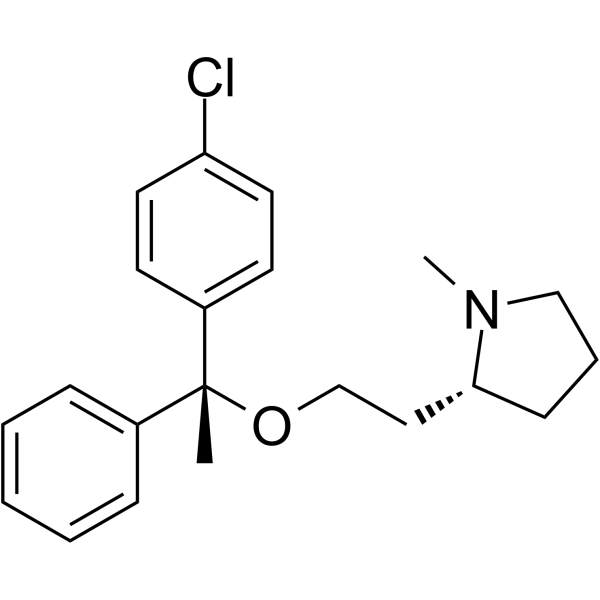
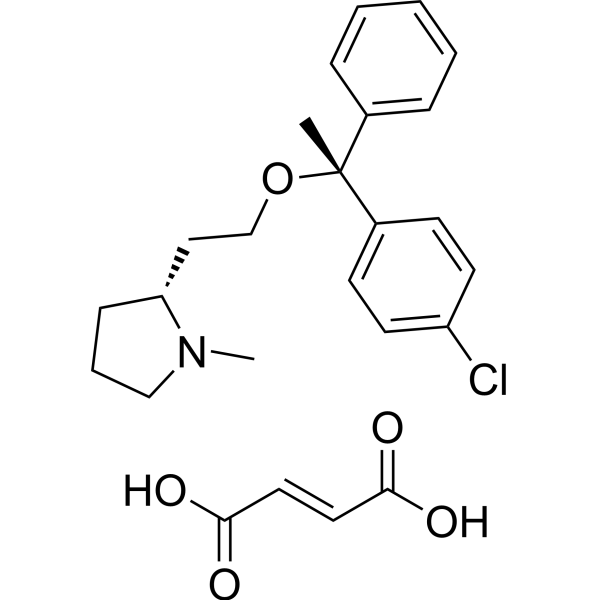
Clemastine (HS-592; Meclastine) is an orally active, blood-brain barrier-permeable H1 histamine receptor (H1 histamine receptor) antagonist with potent antiallergic effects. Clemastine also antagonizes muscarinic acetylcholine receptors (mAChR), particularly the M1 and M4 subtypes. In addition to antihistamine effects, Clemastine exhibits multiple pharmacological activities, especially in promoting central nervous system remyelination, activating autophagy and pyroptosis, exerting anti-apoptotic and neuroprotective effects, and suppressing inflammation .
|
-
- HY-151801
-
|
|
mAChR
|
Others
|
|
DIBA-Cy5 is a fluorescent DIBA antagonist made up be DIBA-alkyne binding Cyanine5 fluorophores (Cy5) and polyethylene glycol (PEG) biomolecules. DIBA-Cy5 can serve as a fluorescent ligand, suitable for probe attachment through click chemistry. DIBA-Cy5 exerts a high binding affinity to type-2 mAChR (M2R) with the Kd value of 1.80 nM, can directly stain M2R receptors in the sinoatrial node of a mouse heart .
|
-
- HY-B0298A
-
|
HS-592 fumarate; Meclastine fumarate
|
Histamine Receptor
Apoptosis
mAChR
Pyroptosis
Keap1-Nrf2
p62
Autophagy
mTOR
IKK
|
Neurological Disease
Metabolic Disease
|
|
Clemastine (HS-592; Meclastine) fumarate is an orally active, blood-brain barrier-permeable H1 histamine receptor (H1 histamine receptor) antagonist with potent antiallergic effects. Clemastine fumarate also antagonizes muscarinic acetylcholine receptors (mAChR), particularly the M1 and M4 subtypes. In addition to antihistamine effects, Clemastine fumarate exhibits multiple pharmacological activities, especially in promoting central nervous system remyelination, activating autophagy and pyroptosis, exerting anti-apoptotic and neuroprotective effects, and suppressing inflammation .
|
-
- HY-76570S
-
|
(Rac)-Desfesoterodine-d14; (Rac)-PNU-200577-d14
|
Isotope-Labeled Compounds
mAChR
|
Neurological Disease
|
|
(Rac)-5-Hydroxymethyl Tolterodine-d14 is the deuterium labeled (Rac)-5-Hydroxymethyl Tolterodine. (Rac)-5-Hydroxymethyl Tolterodine ((Rac)-Desfesoterodine), an active metabolite of Tolterodine, is a mAChR antagonist (Ki values of 2.3 nM, 2 nM, 2.5 nM, 2.8 nM, and 2.9 nM for M1, M2, M3, M4, and M5 receptors, respectively). (Rac)-5-Hydroxymethyl Tolterodine can be used for overactive bladder research .
|
-
- HY-14562
-
|
|
mAChR
Amyloid-β
|
Neurological Disease
Inflammation/Immunology
|
|
TBPB (tert-butyl peroxybenzoate) is a highly selective, blood-brain-permeable M1 mAChR allosteric agonist (EC50=289 nM) with anti-schizophrenia and anti-inflammatory activities. TBPB can enhance the sensitivity of M1 receptors to acetylcholine, activate downstream signaling pathways, and inhibit the release of pro-inflammatory cytokines (TNF-α, IL-6). TBPB can regulate the processing of amyloid and can be used in the study of neurodegenerative diseases (such as Alzheimer's disease) and inflammation-related diseases (such as sepsis) .
|
-
- HY-B0267A
-
|
|
mAChR
Potassium Channel
|
Neurological Disease
Cancer
|
|
Oxybutynin chloride is an oral active and competitive mAChR antagonist with Kis of 14.3 and 5.55 nM for specific [ 3H]NMS binding in the mouse bladder and cerebral cortex, respectively. Oxybutynin chloride inhibits vascular Kv channels in a manner independent of anticholinergic effect, with an IC50 value of 11.51 μM. Oxybutynin chloride reduces muscle spasm in the bladder and urinary tract, can be used in study of overactive bladder syndrome (OAB) . Oxybutynin (chloride) is a click chemistry reagent, it contains an Alkyne group and can undergo copper-catalyzed azide-alkyne cycloaddition (CuAAc) with molecules containing Azide groups.
|
-
- HY-180143
-
|
|
mAChR
Drug Derivative
|
Neurological Disease
|
|
VU6052254, a derivative of VU0467319 (HY-173396), is a selective, potent, orally active and brain-penetrant muscarinic M1 acetylcholine receptor (mAChR1) positive allosteric modulator with an EC50 of 59 nM. VU6052254 has no activity on the M2-5 receptor (EC50 > 30 μM). VU6052254 can improve memory recognition ability and reverse the cognitive impairment induced by Scopolamine (HY-N0296) with minimum effective dose both of 1 mg/kg. VU6052254 can be used for the research of neurological disease, such as Alzheimer's disease .
|
-
- HY-90010
-
|
Kabi-2234; PNU-200583E
|
mAChR
Cytochrome P450
|
Neurological Disease
Cancer
|
|
Tolterodine tartrate (Kabi-2234) is a mAChR inhibitor and substrate for cytochrome P450 enzymes. Tolterodine tartrate competitively binds acetylcholine, reduces sympathetic excitation, and inhibits involuntary bladder muscle contraction. Tolterodine tartrate restores the Nrf2/NF-κB signaling pathway, mediates protection against inflammatory response and ferroptosis. Tolterodine tartrate ameliorates LPS (HY-D1056)-induced reactive oxygen species production and lipid oxidation. Tolterodine tartrate can be used for the research of urinary tract infections and overactive bladder .
|
-
- HY-A0024S
-
|
(R)-(+)-Tolterodine-d14 hydrochloride; (+)-Tolterodine-d14 hydrochloride; (R)-Tolterodine-d14 hydrochloride; PNU-200583-d14 hydrochloride
|
Isotope-Labeled Compounds
mAChR
Cytochrome P450
|
Neurological Disease
|
|
Tolterodine-d14 (hydrochloride) is the deuterium labeled Tolterodine hydrochloride . Tolterodine ((R)-(+)-Tolterodine) is a mAChR inhibitor and substrate for cytochrome P450 enzymes. Tolterodine competitively binds acetylcholine, reduces sympathetic excitation, and inhibits involuntary bladder muscle contraction. Tolterodine restores the Nrf2/NF-κB signaling pathway, mediates protection against inflammatory response and ferroptosis. Tolterodine ameliorates LPS (HY-D1056)-induced reactive oxygen species production and lipid oxidation. Tolterodine can be used for the research of urinary tract infections and overactive bladder.
|
-
- HY-90010R
-
|
Kabi-2234 (Standard); PNU-200583E (Standard)
|
Reference Standards
mAChR
Cytochrome P450
|
Neurological Disease
Cancer
|
|
Tolterodine (tartrate) (Standard) is the analytical standard of Tolterodine tartrate. This product is intended for research and analytical applications. Tolterodine ((R)-(+)-Tolterodine) is a mAChR inhibitor and substrate for cytochrome P450 enzymes. Tolterodine competitively binds acetylcholine, reduces sympathetic excitation, and inhibits involuntary bladder muscle contraction. Tolterodine restores the Nrf2/NF-κB signaling pathway, mediates protection against inflammatory response and ferroptosis. Tolterodine ameliorates LPS (HY-D1056)-induced reactive oxygen species production and lipid oxidation. Tolterodine can be used for the research of urinary tract infections and overactive bladder.
|
-
- HY-B0344
-
|
(-)-Scopolamine methyl bromide; Hyoscine methyl bromide
|
mAChR
|
Neurological Disease
|
|
Methscopolamine bromide ((-)-Scopolamine methyl bromide; Hyoscine methyl bromide) is a peripherally acting muscarinic receptor (mAChR) antagonist that cannot cross the blood-brain barrier. Methscopolamine bromide blocks the muscarinic negative feedback regulation of acetylcholine release from striatal cholinergic terminals, thereby increasing acetylcholine release in the striatum of freely moving rats. Methscopolamine bromide does not induce motor excitation in freely moving rats, nor does it alter the duration of ethanol-induced loss of righting reflex in mice. Methscopolamine bromide fails to antagonize the arecoline-mediated reduction in the duration of ethanol-induced loss of righting reflex in mice .
|
-
- HY-P5846
-
|
MT3
|
mAChR
Adrenergic Receptor
|
Neurological Disease
|
|
Muscarinic toxin 3 (MT3) is a potent and non-competitive mAChR and adrenoceptors antagonist with pIC50s of 6.71, 8.79, 8.86, 7.57, 8.13, 8.49, <6.5, 7.29 against M1, M4, α1A, α1B, α1D,α2A,α2B and α2C receptors, respectively. Muscarinic toxin 3 displays prominent adrenoceptor activity .
|
-
- HY-A0024R
-
|
(R)-(+)-Tolterodine (Standard); (+)-Tolterodine (Standard); (R)-Tolterodine (Standard); PNU-200583 (Standard)
|
Reference Standards
mAChR
Cytochrome P450
|
Neurological Disease
Cancer
|
|
Tolterodine (Standard) is the analytical standard of Tolterodine. This product is intended for research and analytical applications. Tolterodine ((R)-(+)-Tolterodine) is a mAChR inhibitor and substrate for cytochrome P450 enzymes. Tolterodine competitively binds acetylcholine, reduces sympathetic excitation, and inhibits involuntary bladder muscle contraction. Tolterodine restores the Nrf2/NF-κB signaling pathway, mediates protection against inflammatory response and ferroptosis. Tolterodine ameliorates LPS (HY-D1056)-induced reactive oxygen species production and lipid oxidation. Tolterodine can be used for the research of urinary tract infections and overactive bladder.
|
-
- HY-B0298AS
-
|
HS-592-d5 fumarate; Meclastine-d5 fumarate
|
Isotope-Labeled Compounds
Histamine Receptor
Apoptosis
mAChR
Pyroptosis
Keap1-Nrf2
p62
Autophagy
mTOR
IKK
|
Neurological Disease
Metabolic Disease
|
|
Clemastine (HS-592; Meclastine)-d5 fumarate is the deuterium labeled Clemastine fumarate. Clemastine fumarate is an orally active, blood-brain barrier-permeable H1 histamine receptor (H1 histamine receptor) antagonist with potent antiallergic effects. Clemastine fumarate also antagonizes muscarinic acetylcholine receptors (mAChR), particularly the M1 and M4 subtypes. In addition to antihistamine effects, Clemastine fumarate exhibits multiple pharmacological activities, especially in promoting central nervous system remyelination, activating autophagy and pyroptosis, exerting anti-apoptotic and neuroprotective effects, and suppressing inflammation .
|
-
- HY-B0298AR
-
|
HS-592 fumarate (Standard); Meclastine fumarate (Standard)
|
Reference Standards
Histamine Receptor
Apoptosis
mAChR
Pyroptosis
Keap1-Nrf2
p62
Autophagy
mTOR
IKK
|
Neurological Disease
Metabolic Disease
|
|
Clemastine (HS-592; Meclastine) fumarate (Standard) is the analytical standard of Clemastine fumarate. This product is intended for research and analytical applications. Clemastine fumarate is an orally active, blood-brain barrier-permeable H1 histamine receptor (H1 histamine receptor) antagonist with potent antiallergic effects. Clemastine fumarate also antagonizes muscarinic acetylcholine receptors (mAChR), particularly the M1 and M4 subtypes. In addition to antihistamine effects, Clemastine fumarate exhibits multiple pharmacological activities, especially in promoting central nervous system remyelination, activating autophagy and pyroptosis, exerting anti-apoptotic and neuroprotective effects, and suppressing inflammation .
|
-
- HY-90010S
-
|
Kabi-2234-d14; PNU-200583E-d14
|
Isotope-Labeled Compounds
mAChR
Cytochrome P450
|
Neurological Disease
Cancer
|
|
Tolterodine tartrate-d14 (Kabi-2234-d14) is deuterium labeled Tolterodine tartrate. Tolterodine ((R)-(+)-Tolterodine) is a mAChR inhibitor and substrate for cytochrome P450 enzymes. Tolterodine competitively binds acetylcholine, reduces sympathetic excitation, and inhibits involuntary bladder muscle contraction. Tolterodine restores the Nrf2/NF-κB signaling pathway, mediates protection against inflammatory response and ferroptosis. Tolterodine ameliorates LPS (HY-D1056)-induced reactive oxygen species production and lipid oxidation. Tolterodine can be used for the research of urinary tract infections and overactive bladder.
|
-
- HY-15618
-
|
M1 receptor modulator
|
mAChR
Calcium Channel
|
Neurological Disease
|
|
MK-7622 (M1 receptor modulator) is an orally active positive allosteric modulator of muscarinic M1 acetylcholine receptors (mAChRs). MK-7622 enhances ACh-induced calcium flux in CHO cells expressing human M1 receptors (EC50 = 21 nM) and shows robust agonist activity in rat M1-expressing CHO cells, increasing intracellular calcium. MK-7622 reverses Scopolamine (HY-N0296)-induced cognitive deficits in rhesus macaques in an object retrieval detour task. MK-7622 can be used for the study of Alzheimer's disease (AD) .
|
-
- HY-107111
-
|
|
mAChR
|
Neurological Disease
|
|
GSK1034702 is an orally active and allosteric agonist of M1 mAChR (pEC50=8.1) that can cross the blood-brain barrier. GSK1034702 activates the Gq/11 protein-mediated signaling pathway, enhancing neuronal firing and long-term potentiation (LTP) in the CA1 region of the hippocampus. GSK1034702 can modulate hippocampal function, improve memory encoding in the nicotine withdrawal cognitive dysfunction model, and show pro-cognitive effects in rodents. GSK1034702 can be used for the study of the mechanisms of cognitive impairment diseases such as Alzheimer's disease, and has certain peripheral M receptor activation-related side effects (such as gastrointestinal reactions) .
|
-
- HY-B0267AR
-
|
|
Reference Standards
mAChR
Potassium Channel
|
Neurological Disease
|
|
Oxybutynin (chloride) (Standard) is the analytical standard of Oxybutynin (chloride). This product is intended for research and analytical applications. Oxybutynin chloride is an oral active and competitive mAChR antagonist with Kis of 14.3 and 5.55 nM for specific [ 3H]NMS binding in the mouse bladder and cerebral cortex, respectively. Oxybutynin chloride inhibits vascular Kv channels in a manner independent of anticholinergic effect, with an IC50 value of 11.51 μM. Oxybutynin chloride reduces muscle spasm in the bladder and urinary tract, can be used in study of overactive bladder syndrome (OAB) . Oxybutynin (chloride) is a click chemistry reagent, it contains an Alkyne group and can undergo copper-catalyzed azide-alkyne cycloaddition (CuAAc) with molecules containing Azide groups.
|
-
- HY-107111A
-
|
|
Cholinesterase (ChE)
mAChR
|
Neurological Disease
|
|
GSK1034702 hydrochloride is an orally active and allosteric agonist of M1 mAChR (pEC50=8.1) that can cross the blood-brain barrier. GSK1034702 hydrochloride activates the Gq/11 protein-mediated signaling pathway, enhancing neuronal firing and long-term potentiation (LTP) in the CA1 region of the hippocampus. GSK1034702 hydrochloride can modulate hippocampal function, improve memory encoding in the nicotine withdrawal cognitive dysfunction model, and show pro-cognitive effects in rodents. GSK1034702 hydrochloride can be used for the study of the mechanisms of cognitive impairment diseases such as Alzheimer's disease, and has certain peripheral M receptor activation-related side effects (such as gastrointestinal reactions) .
|
-
- HY-107111R
-
|
|
Reference Standards
mAChR
|
Neurological Disease
|
|
GSK1034702 (Standard) is the analytical standard of GSK1034702 (HY-107111). This product is intended for research and analytical applications. GSK1034702 is an orally active and allosteric agonist of M1 mAChR (pEC50=8.1) that can cross the blood-brain barrier. GSK1034702 activates the Gq/11 protein-mediated signaling pathway, enhancing neuronal firing and long-term potentiation (LTP) in the CA1 region of the hippocampus. GSK1034702 can modulate hippocampal function, improve memory encoding in the nicotine withdrawal cognitive dysfunction model, and show pro-cognitive effects in rodents. GSK1034702 can be used for the study of the mechanisms of cognitive impairment diseases such as Alzheimer's disease, and has certain peripheral M receptor activation-related side effects (such as gastrointestinal reactions) .
|
-
-
-
HY-L062
-
|
|
2,495 compounds
|
|
Neurotransmitter (NT) receptors, also known as neuroreceptors, are a broadly diverse group of membrane proteins that bind neurotransmitters for neuronal signaling. There are two major types of neurotransmitter receptors: ionotropic and metabotropic. Ionotropic receptors are ligand-gated ion channels, meaning that the receptor protein includes both a neurotransmitter binding site and an ion channel. The binding of a neurotransmitter molecule (the ligand) to the binding site induces a conformational change in the receptor structure, which opens, or gates, the ion channel. The term “metabotropic receptors” is typically used to refer to transmembrane G-protein-coupled receptors. Metabotropic receptors trigger second messenger-mediated effects within cells after neurotransmitter binding.
In some neurological diseases, the neurotransmitter receptor itself appears to be the target of the disease process. Many neuroactive drugs act by modifying neurotransmitter receptors. A better understanding of neurotransmitter receptor changes in disease may lead to improvements in therapy.
MCE designs a unique collection of 2,495 compounds targeting a variety of neurotransmitter receptors. MCE Neurotransmitter Receptor Compound Library is a useful tool for neurological diseases drug discovery.
|
| Cat. No. |
Product Name |
Type |
-
- HY-151801
-
|
|
Fluorescent Dye
|
|
DIBA-Cy5 is a fluorescent DIBA antagonist made up be DIBA-alkyne binding Cyanine5 fluorophores (Cy5) and polyethylene glycol (PEG) biomolecules. DIBA-Cy5 can serve as a fluorescent ligand, suitable for probe attachment through click chemistry. DIBA-Cy5 exerts a high binding affinity to type-2 mAChR (M2R) with the Kd value of 1.80 nM, can directly stain M2R receptors in the sinoatrial node of a mouse heart .
|
| Cat. No. |
Product Name |
Type |
-
- HY-65036
-
|
4-Bromo-2-pyridone
|
Biochemical Assay Reagents
|
|
4-Bromo-2-hydroxypyridine is an intermediate. 4-Bromo-2-hydroxypyridine can be used to synthesize M1 muscarinic acetylcholine receptor (M1 mAChR) positive allosteric modulators. 4-Bromo-2-hydroxypyridine can be used in the research of Alzheimer's disease and schizophrenia .
|
| Cat. No. |
Product Name |
Target |
Research Area |
-
- HY-P1376A
-
|
|
mAChR
Adrenergic Receptor
|
Endocrinology
|
|
G-Protein antagonist peptide TFA is a truncated substance P-related peptide, competes with receptor for G protein binding. G-Protein antagonist peptide TFA inhibits the activation of Gi or Go by M2 muscarinic cholinergic receptor (M2 mAChR) or of Gs by beta-adrenergic receptor in the reconstituted phospholipid vesicles, assayed by receptor-promoted GTP hydrolysis .
|
-
- HY-P5846
-
|
MT3
|
mAChR
Adrenergic Receptor
|
Neurological Disease
|
|
Muscarinic toxin 3 (MT3) is a potent and non-competitive mAChR and adrenoceptors antagonist with pIC50s of 6.71, 8.79, 8.86, 7.57, 8.13, 8.49, <6.5, 7.29 against M1, M4, α1A, α1B, α1D,α2A,α2B and α2C receptors, respectively. Muscarinic toxin 3 displays prominent adrenoceptor activity .
|
| Cat. No. |
Product Name |
Category |
Target |
Chemical Structure |
| Cat. No. |
Product Name |
Chemical Structure |
-
- HY-B0394S
-
|
|
|
Atropine-d5 is the deuterium labeled Atropine (sulfate monohydrate). Atropine (Tropine tropate) sulfate monohydrate is a broad-spectrum and competitive muscarinic acetylcholine receptor (mAChR) antagonist with anti-myopia effect .
|
-
-
- HY-B0461S
-
|
|
|
Trospium-d8 (chloride) is the deuterium labeled Trospium chloride. Trospium chloride is an orally active, specific and competitive antagonist of muscarinic cholinergic receptors (mAChRs), with antimuscarinic activity. Trospium chloride binds to muscarinic receptors M1, M2 and M3 with high affinity, but not nicotinic, cholinergic receptors .
|
-
-
- HY-A0030S
-
|
|
|
Fesoterodine-d7 (fumarate) is the deuterium labeled Fesoterodine fumarate . Fesoterodine Fumarate is an orally active, nonsubtype selective, competitive muscarinic receptor (mAChR) antagonist with pKi values of 8.0, 7.7, 7.4, 7.3, 7.5 for M1, M2, M3, M4, M5 receptors, respectively. Fesoterodine Fumarate is used for the overactive bladder (OAB) .
|
-
-
- HY-B0406AS
-
|
|
|
Bethanechol-d6 (chloride) is the deuterium labeled Bethanechol chloride. Bethanechol chloride (Carbamyl-β-methylcholine chloride), a parasympathomimetic agent, is a mAChR agonist that exerts its effects via directly stimulating the mAChR (M1, M2, M3, M4, and M5) of the parasympathetic nervous system .
|
-
-
- HY-159578S
-
|
|
|
VU6036864 (compound 45) is an orally active, selective mAChR M5 antagonist with IC50=20 nM for human M5. VU6036864 is >500-fold selective for human M1-4, with BBB characteristic and high oral bioavailability (%F>100%) .
|
-
-
- HY-12100S1
-
|
|
|
Umeclidinium-d10 (bromide) is the deuterium labeled Umeclidinium bromide. Umeclidinium bromide is a novel mAChR antagonist. The affinity (Ki) of Umeclidinium bromide for the cloned human M1-M5 mAChRs ranges from 0.05 to 0.16 nM.
|
-
-
- HY-12100S
-
|
|
|
Umeclidinium-d5 (bromide) is the deuterium labeled Umeclidinium bromide. Umeclidinium bromide is a novel mAChR antagonist. The affinity (Ki) of Umeclidinium bromide for the cloned human M1-M5 mAChRs ranges from 0.05 to 0.16 nM.
|
-
-
- HY-15851S1
-
|
|
|
Revefenacin-d9 (TD-4208-d9) is deuterium labeled Revefenacin. Revefenacin (TD-4208; GSK1160724) is a potent mAChR antagonist; has a high affinity on M3 receptor with a Ki of 0.18 nM.
|
-
-
- HY-15851S2
-
|
|
|
Revefenacin-d3 (TD-4208-d3) is deuterium labeled Revefenacin. Revefenacin (TD-4208; GSK1160724) is a potent mAChR antagonist; has a high affinity on M3 receptor with a Ki of 0.18 nM.
|
-
-
- HY-15851S3
-
|
|
|
Revefenacin-d4 (TD-4208-d4) is deuterium labeled Revefenacin. Revefenacin (TD-4208; GSK1160724) is a potent mAChR antagonist; has a high affinity on M3 receptor with a Ki of 0.18 nM.
|
-
-
- HY-B1296S1
-
|
|
|
Promethazine-d4 is a deuterated-labeled promethazine (HY-B0781). Promethazine is an orally active H1 receptor and mAChR antagonist with antihistamine (H1), sedative, antiemetic, anticholinergic, and anti-motion sickness properties .
|
-
-
- HY-B0781S1
-
|
|
Promethazine-d3 (hydrochloride) is deuterium labeled Promethazine (hydrochloride). Promethazine hydrochloride is an orally active phenothiazine derivative with antihistaminic (H1), sedative, antiemetic, anticholinergic, and antimotion sickness properties. Promethazine hydrochloride is a potent H1 receptor antagonist and a mAChR antagonist. It also has a certain affinity for 5-HT2A and 5-HT2C receptors .
|
-
-
- HY-70053S
-
|
|
|
(Rac)-Fesoterodine-d14 fumarate is a labelled racemic Fesoterodine. Fesoterodine is an orally active, nonsubtype selective, competitive muscarinic receptor (mAChR) antagonist with pKivalues of 8.0, 7.7, 7.4, 7.3, 7.5 for M1, M2, M3, M4, M5 receptors, respectively. Fesoterodine is used for the overactive bladder (OAB) .
|
-
-
- HY-W720879
-
|
|
|
Fesoterodine-d3 is the deuterium labeled Fesoterodine (HY-70053). Fesoterodine is an orally active, nonsubtype selective, competitive muscarinic receptor (mAChR) antagonist with pKi values of 8.0, 7.7, 7.4, 7.3, 7.5 for M1, M2, M3, M4, M5 receptors, respectively. Fesoterodine is used for the overactive bladder (OAB) .
|
-
-
- HY-17037S1
-
|
|
|
Pirenzepine-d8 (LS 519-d8; Pirenzepin-d8) dihydrochloride is a deuterium labeled Pirenzepine (dihydrochloride) (HY-17037). Pirenzepine (LS 519) dihydrochloride is a selective M1 mAChR (muscarinic acetylcholine receptor) antagonist. Pirenzepine dihydrochloride reduces gastric acid secretion and reduces muscle spasm, can be used in peptic ulcers research. Pirenzepine dihydrochloride shows anti-proliferative activity to cancer cells .
|
-
-
- HY-B1343AS
-
|
|
|
Pridinol-d5 is deuterium labeled Pridinol (HY-B1343A) . Pridinol is an orally active, blood-brain permeable, muscarinic acetylcholine receptor (mAChR)-directed muscle relaxant. Pridinol reduces the conduction of impulses to spinal motor neurons and exerts muscle relaxant activity. Pridinol inhibits skeletal muscle contractures in diseases of both central and peripheral origin and can be used in research in the field of musculoskeletal diseases .
|
-
-
- HY-17037AS
-
|
|
|
Pirenzepine-d11 (LS 519 (free base)-d11; Pirenzepin-d11; Gastrozepin-d11) is the deuterium labeled Pirenzepine (HY-17037A). Pirenzepine (LS 519 free base) is a selective M1 mAChR (muscarinic acetylcholine receptor) antagonist. Pirenzepine reduces gastric acid secretion and reduces muscle spasm, can be used in peptic ulcers research. Pirenzepine shows anti-proliferative activity to cancer cells .
|
-
-
- HY-76569S1
-
|
|
|
(R)-Hydroxytolterodine-d14 is deuterated labeled Desfesoterodine (HY-76569). Desfesoterodine (PNU-200577) is a potent and selective muscarinic receptor (mAChR) antagonist with a KB and a pA2 of 0.84 nM and 9.14, respectively . Desfesoterodine is a major pharmacologically active metabolite of Tolterodine (PNU-200583; HY-A0024) and Fesoterodine (HY-70053) . Desfesoterodine improves cerebral infarction induced detrusor overactivity in rats .
|
-
-
- HY-76570S1
-
|
|
|
5-Hydroxymethyl Tolterodine-d14 (formate) is deuterium labeled (Rac)-5-Hydroxymethyl Tolterodine. (Rac)-5-Hydroxymethyl Tolterodine ((Rac)-Desfesoterodine), an active metabolite of Tolterodine, is a mAChR antagonist (Ki values of 2.3 nM, 2 nM, 2.5 nM, 2.8 nM, and 2.9 nM for M1, M2, M3, M4, and M5 receptors, respectively). (Rac)-5-Hydroxymethyl Tolterodine can be used for overactive bladder research .
|
-
-
- HY-76570S
-
|
|
|
(Rac)-5-Hydroxymethyl Tolterodine-d14 is the deuterium labeled (Rac)-5-Hydroxymethyl Tolterodine. (Rac)-5-Hydroxymethyl Tolterodine ((Rac)-Desfesoterodine), an active metabolite of Tolterodine, is a mAChR antagonist (Ki values of 2.3 nM, 2 nM, 2.5 nM, 2.8 nM, and 2.9 nM for M1, M2, M3, M4, and M5 receptors, respectively). (Rac)-5-Hydroxymethyl Tolterodine can be used for overactive bladder research .
|
-
-
- HY-A0024S
-
|
|
|
Tolterodine-d14 (hydrochloride) is the deuterium labeled Tolterodine hydrochloride . Tolterodine ((R)-(+)-Tolterodine) is a mAChR inhibitor and substrate for cytochrome P450 enzymes. Tolterodine competitively binds acetylcholine, reduces sympathetic excitation, and inhibits involuntary bladder muscle contraction. Tolterodine restores the Nrf2/NF-κB signaling pathway, mediates protection against inflammatory response and ferroptosis. Tolterodine ameliorates LPS (HY-D1056)-induced reactive oxygen species production and lipid oxidation. Tolterodine can be used for the research of urinary tract infections and overactive bladder.
|
-
-
- HY-B0298AS
-
1 Publications Verification
|
|
Clemastine (HS-592; Meclastine)-d5 fumarate is the deuterium labeled Clemastine fumarate. Clemastine fumarate is an orally active, blood-brain barrier-permeable H1 histamine receptor (H1 histamine receptor) antagonist with potent antiallergic effects. Clemastine fumarate also antagonizes muscarinic acetylcholine receptors (mAChR), particularly the M1 and M4 subtypes. In addition to antihistamine effects, Clemastine fumarate exhibits multiple pharmacological activities, especially in promoting central nervous system remyelination, activating autophagy and pyroptosis, exerting anti-apoptotic and neuroprotective effects, and suppressing inflammation .
|
-
-
- HY-166417S
-
|
|
|
Tiotropium-d3 iodide is the deuterium labeled Tiotropium iodide. Tiotropium-d3 iodide is a muscarinic acetylcholine receptor (mAChR) antagonist that blocks the binding of the acetylcholine ligand. Tiotropium-d3 iodide serves as a stable isotope tracer for quantitative analysis .
|
-
-
- HY-90010S
-
|
|
|
Tolterodine tartrate-d14 (Kabi-2234-d14) is deuterium labeled Tolterodine tartrate. Tolterodine ((R)-(+)-Tolterodine) is a mAChR inhibitor and substrate for cytochrome P450 enzymes. Tolterodine competitively binds acetylcholine, reduces sympathetic excitation, and inhibits involuntary bladder muscle contraction. Tolterodine restores the Nrf2/NF-κB signaling pathway, mediates protection against inflammatory response and ferroptosis. Tolterodine ameliorates LPS (HY-D1056)-induced reactive oxygen species production and lipid oxidation. Tolterodine can be used for the research of urinary tract infections and overactive bladder.
|
-
| Cat. No. |
Product Name |
|
Classification |
-
- HY-159578S
-
|
|
|
Azide
|
|
VU6036864 (compound 45) is an orally active, selective mAChR M5 antagonist with IC50=20 nM for human M5. VU6036864 is >500-fold selective for human M1-4, with BBB characteristic and high oral bioavailability (%F>100%) .
|
Your information is safe with us. * Required Fields.
Inquiry Information
- Product Name:
- Cat. No.:
- Quantity:
- MCE Japan Authorized Agent:

