



Arecaidine but-2-ynyl ester tosylate

Based on 1 Customer Validation
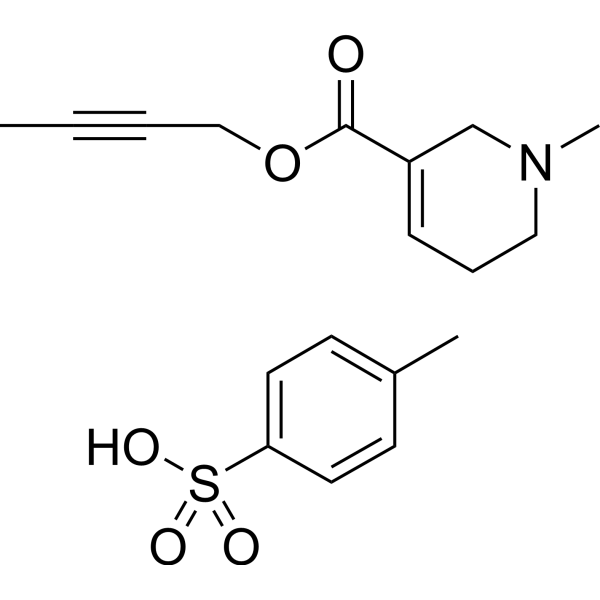
Arecaidine but-2-ynyl ester tosylate (ABET) is a selective mAChR M2 agonist that dose-dependently decreases mean arterial pressure and heart rate in rats. Arecaidine but-2-ynyl ester tosylate can be used for cardiovascular disease research. Arecaidine but-2-ynyl ester (tosylate) is a click chemistry reagent, it contains an Alkyne group and can undergo copper-catalyzed azide-alkyne cycloaddition (CuAAc) with molecules containing Azide groups.
For research use only. We do not sell to patients.
- Purity : 99.76%
- CAS No.: 119630-77-2
- Formula: C18H23NO5S
- Molecular Weight:365.44
-
Storage:
-20°C, sealed storage, away from moisture and light
* In solvent : -80°C, 6 months; -20°C, 1 month (sealed storage, away from moisture and light)

To place orders, for customer services and technical support, please contact: MedChemExpress USA
Tel: 609-228-6898 E-mail: [email protected] [email protected]


-
 Biological Activity
-
Chemical Information
-
Solvent & Solubility
- Protocols
- Purity & Documentation
- References
-
 Help & FAQs


-
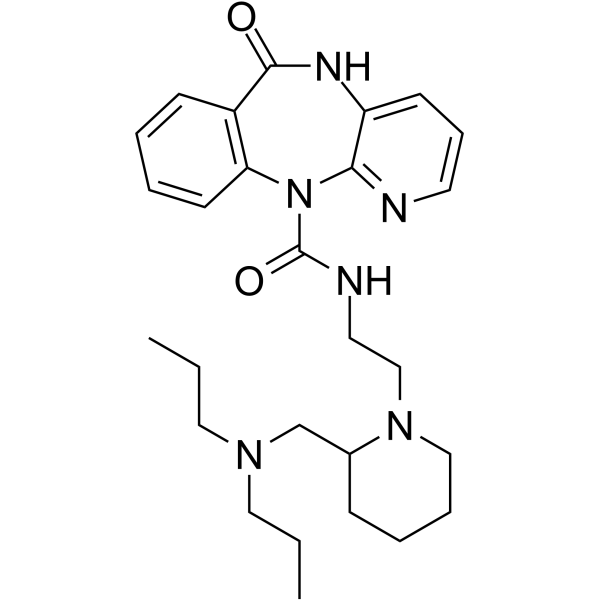
HY-107652
AF-DX 384 -
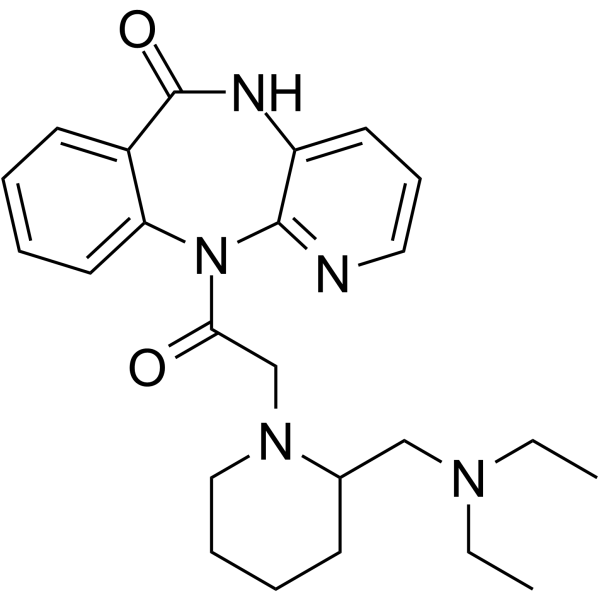
HY-101381
OtenzepadmAChR Antagonist -
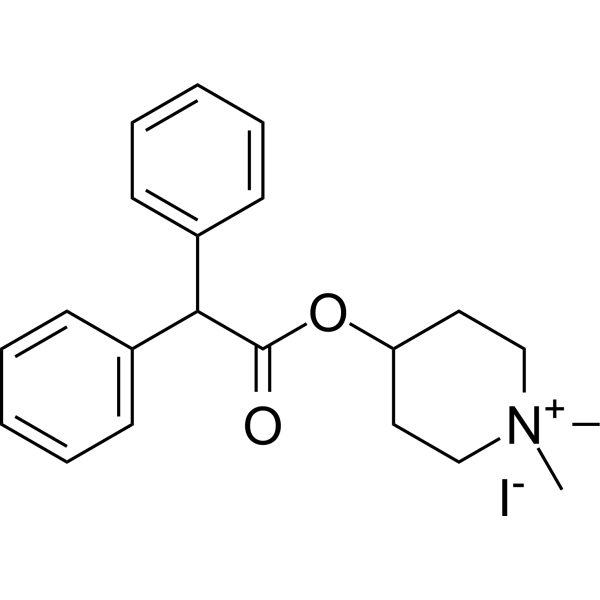
HY-100958
4-DAMPM3/M5 Receptor Antagonist -
HY-107647
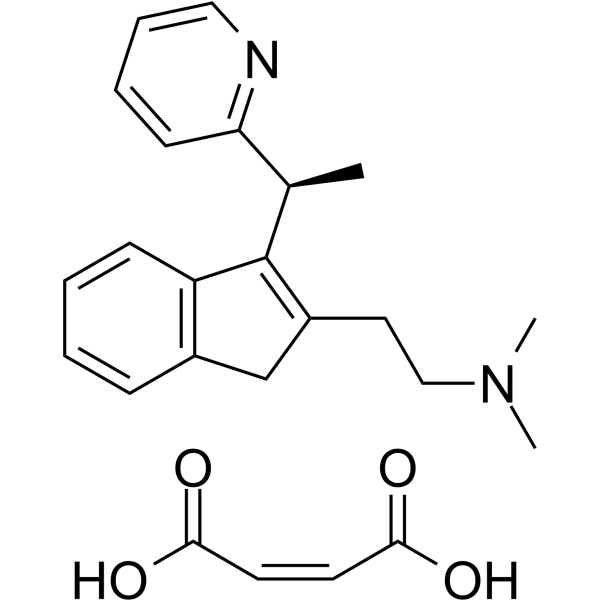
(S)-(+)-Dimethindene maleateM2 Receptor Antagonist -
HY-108234
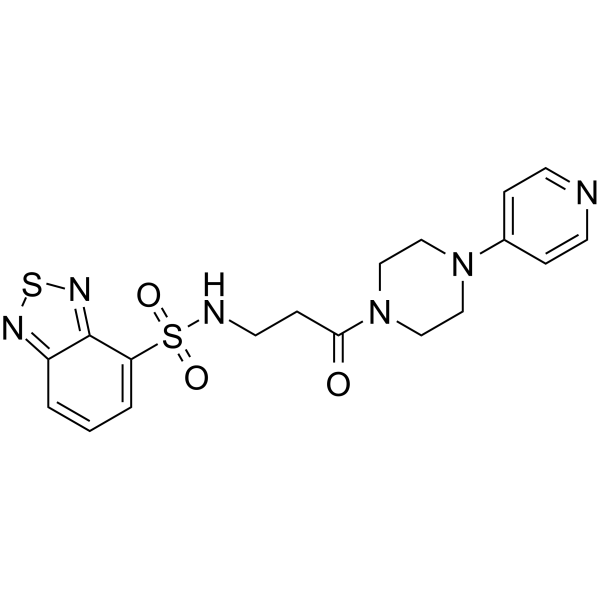
VU 0255035M1 Antagonist -
HY-101372A
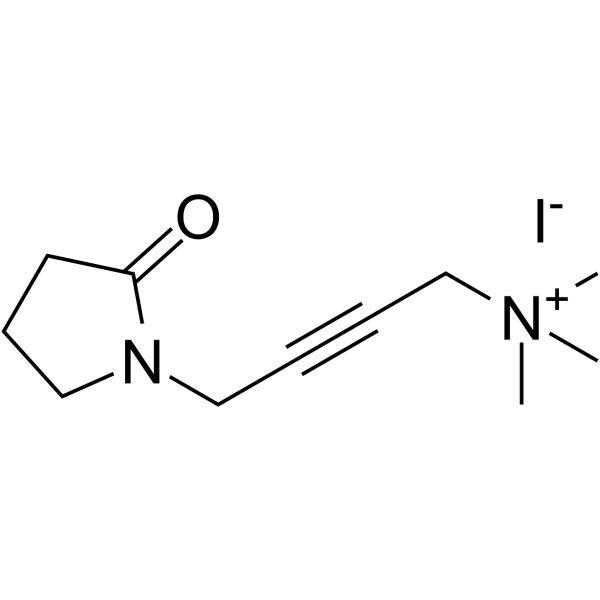
Oxotremorine M iodidemAChR Agonist -
HY-107654
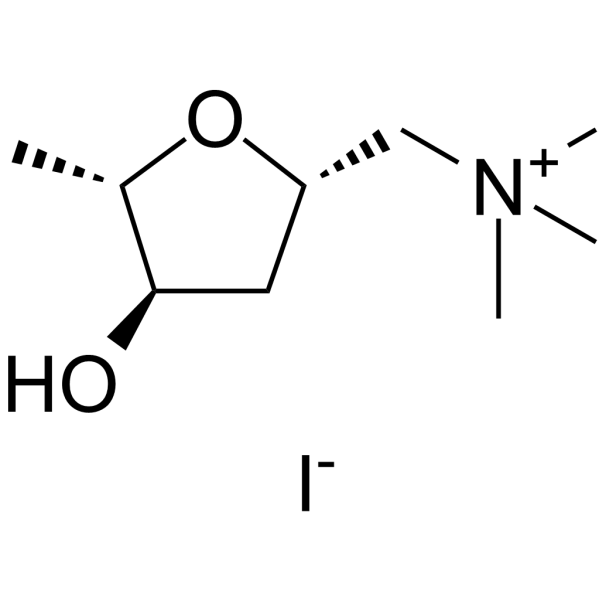
Muscarine iodidemAChR Agonist -
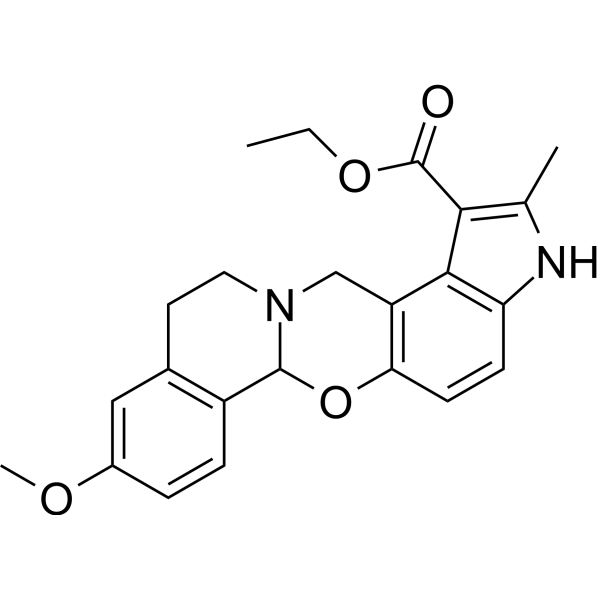
HY-107646
PD 102807M4 Receptor Antagonist -
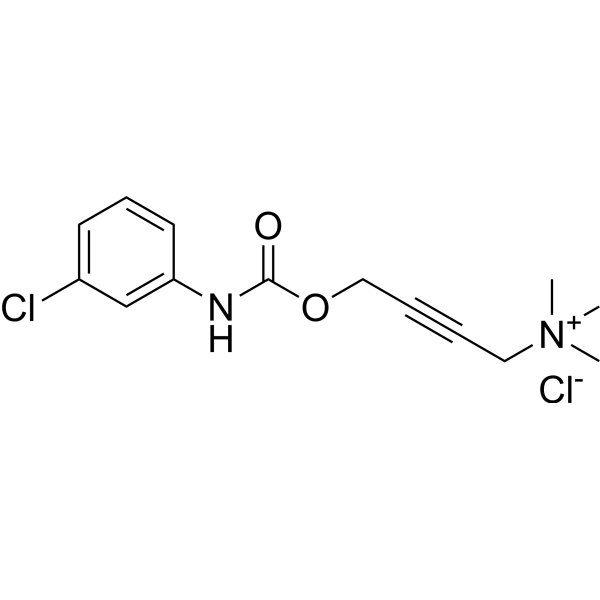
HY-107648
McN-A-343M1 Muscarinic Agonist -
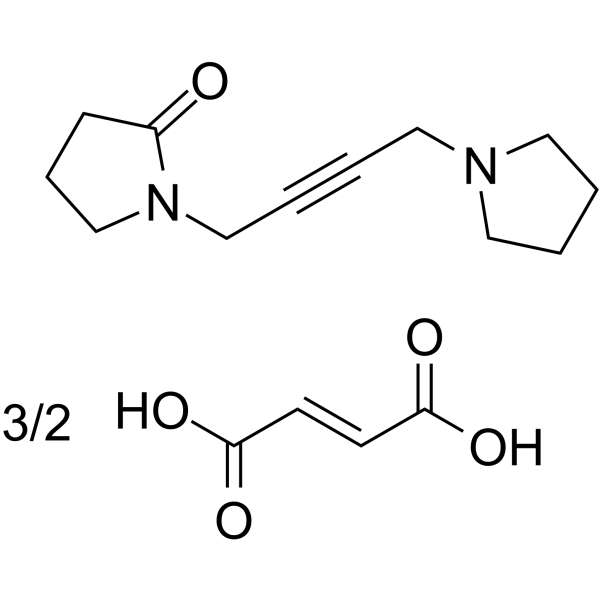
HY-101239
Oxotremorine sesquifumaratemAChR Agonist -
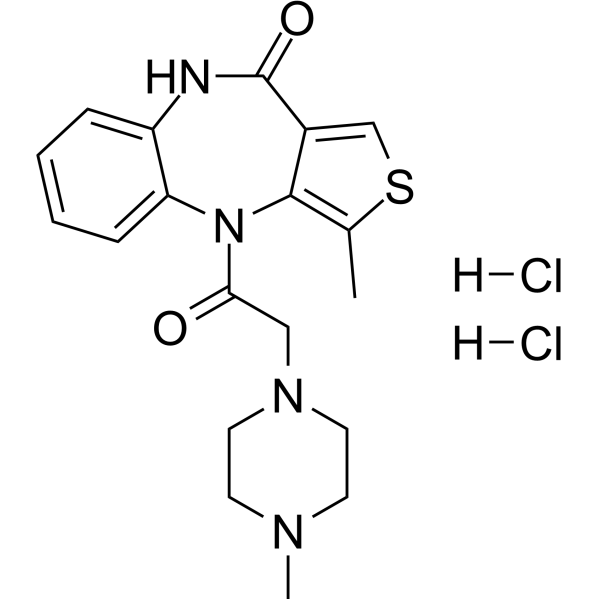
HY-B1789A
Telenzepine dihydrochlorideMuscarinic M1 Receptor Antagonist -
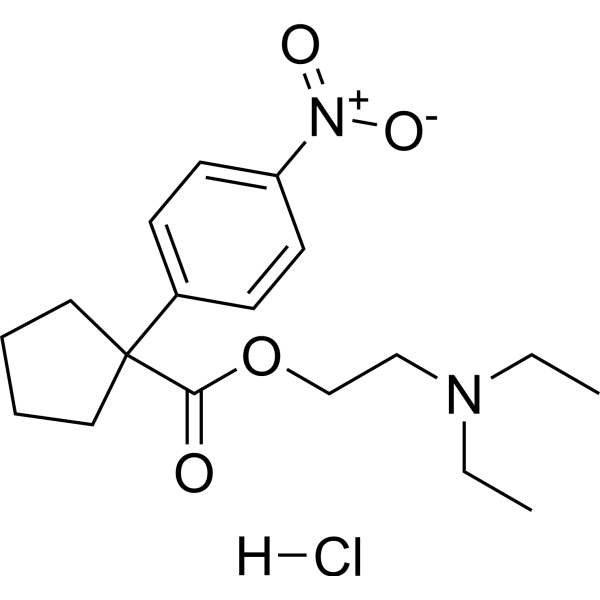
HY-100945
Nitrocaramiphen hydrochlorideM1 Receptor Antagonist


Biological Activity
Description


Chemical Information
-
CAS No. 119630-77-2
-
Appearance Solid
-
Molecular Weight 365.44
-
Formula C18H23NO5S
-
Color White to off-white
-
SMILES
CC#CCOC(C1=CCCN(C)C1)=O.O=S(O)(C2=CC=C(C)C=C2)=O
-
Synonyms
ABET
-
Shipping
Room temperature in continental US; may vary elsewhere.
-
Storage
-20°C, sealed storage, away from moisture and light
* In solvent : -80°C, 6 months; -20°C, 1 month (sealed storage, away from moisture and light)


Solvent & Solubility
In Vitro:
DMSO : 125 mg/mL (342.05 mM; Need ultrasonic; Hygroscopic DMSO has a significant impact on the solubility of product, please use newly opened DMSO)
Please refer to the solubility information to select the appropriate solvent. Once prepared, please aliquot and store the solution to prevent product inactivation from repeated freeze-thaw cycles.
Storage method and period of stock solution: -80°C, 6 months; -20°C, 1 month (sealed storage, away from moisture and light). When stored at -80°C, please use it within 6 months. When stored at -20°C, please use it within 1 month.
Please refer to the solubility information to select the appropriate solvent. Once prepared, please aliquot and store the solution to prevent product inactivation from repeated freeze-thaw cycles.
Storage method and period of stock solution: -80°C, 6 months; -20°C, 1 month (sealed storage, away from moisture and light). When stored at -80°C, please use it within 6 months. When stored at -20°C, please use it within 1 month.
Concentration (start) × Volume (start) = Concentration (final) × Volume (final)

Protocols
-
EdU Incorporation Assay (Click Chemistry-Based DNA Synthesis Measurement)
The EdU incorporation assay measures DNA synthesis by adding the thymidine analog 5-ethynyl-2′-deoxyuridine to cells or tissues, where it is incorporated into newly synthesized DNA during S phase. Incorporated EdU is detected by copper-catalyzed azide-alkyne cycloaddition, in which a fluorescent azide covalently reacts with the ethynyl group on EdU, allowing S-phase cells to be detected by fluorescence microscopy, flow cytometry, or high-content imaging. EdU detection does not require DNA denaturation or anti-BrdU antibody access, which preserves sample structure and improves compatibility with immunostaining and multiparameter cytometry compared with BrdU-based detection. EdU can be cytotoxic in a cell-type- and exposure-dependent manner, so pulse duration, concentration, and continuous-labeling designs should be validated for each cell type.
-
Research Protocol for Cardiovascular Diseases
Cardiovascular disease can be modeled as maladaptive cardiac remodeling, where ischemic injury or pressure overload activates inflammatory signaling, fibroblast activation, extracellular-matrix deposition, cardiomyocyte hypertrophy, vascular remodeling, and progressive ventricular dysfunction. The TGF-β/SMAD axis is a central profibrotic pathway after myocardial injury and pressure overload, while innate immune and cytokine pathways regulate leukocyte recruitment, scar formation, and adverse remodeling. Key unresolved questions include which inflammatory signals are reparative versus harmful, when fibrosis is protective versus maladaptive, and whether pathway inhibition improves function without weakening necessary infarct healing or compensatory remodeling.


Purity & Documentation
-
Data Sheet (273 KB)
-
SDS (393 KB)
- English - EN (393 KB)
- Français - FR (393 KB)
- Deutsch - DE (393 KB)
- Norwegian - NO (393 KB)
- Español - ES (393 KB)
- Swedish - SV (393 KB)
- Italian - IT (393 KB)
- Korean - KR (393 KB)
- Portuguese - PT (393 KB)
-
Handling Instructions (2659 KB)
References
[1]. Yoon SY, et al. A spinal muscarinic M2 receptor-GABAergic disinhibition pathway that modulates peripheral inflammation in mice. Neuropharmacology. 2007 Oct;53(5):677-86. [Content Brief]
[2]. Zhang C, et al. Role of Muscarinic Acetylcholine Receptor-2 in the Cerebellar Cortex in Cardiovascular Modulation in Anaesthetized Rats. Neurochem Res. 2016 Apr;41(4):804-12. [Content Brief]


Complete Stock Solution Preparation Table
Please refer to the solubility information to select the appropriate solvent. Once prepared, please aliquot and store the solution to prevent product inactivation from repeated freeze-thaw cycles.
Storage method and period of stock solution: -80°C, 6 months; -20°C, 1 month (sealed storage, away from moisture and light). When stored at -80°C, please use it within 6 months. When stored at -20°C, please use it within 1 month.
| Optional Solvent | Concentration Solvent Mass | 1 mg | 5 mg | 10 mg | 25 mg |
|---|---|---|---|---|---|
| DMSO | 1 mM | 2.7364 mL | 13.6821 mL | 27.3643 mL | 68.4107 mL |
| 5 mM | 0.5473 mL | 2.7364 mL | 5.4729 mL | 13.6821 mL | |
| 10 mM | 0.2736 mL | 1.3682 mL | 2.7364 mL | 6.8411 mL | |
| 15 mM | 0.1824 mL | 0.9121 mL | 1.8243 mL | 4.5607 mL | |
| 20 mM | 0.1368 mL | 0.6841 mL | 1.3682 mL | 3.4205 mL | |
| 25 mM | 0.1095 mL | 0.5473 mL | 1.0946 mL | 2.7364 mL | |
| 30 mM | 0.0912 mL | 0.4561 mL | 0.9121 mL | 2.2804 mL | |
| 40 mM | 0.0684 mL | 0.3421 mL | 0.6841 mL | 1.7103 mL | |
| 50 mM | 0.0547 mL | 0.2736 mL | 0.5473 mL | 1.3682 mL | |
| 60 mM | 0.0456 mL | 0.2280 mL | 0.4561 mL | 1.1402 mL | |
| 80 mM | 0.0342 mL | 0.1710 mL | 0.3421 mL | 0.8551 mL | |
| 100 mM | 0.0274 mL | 0.1368 mL | 0.2736 mL | 0.6841 mL |


Arecaidine but-2-ynyl ester tosylate Related Classifications
HY-107655 Related Classifications
 Powered by Bioz