



Oxyphencyclimine
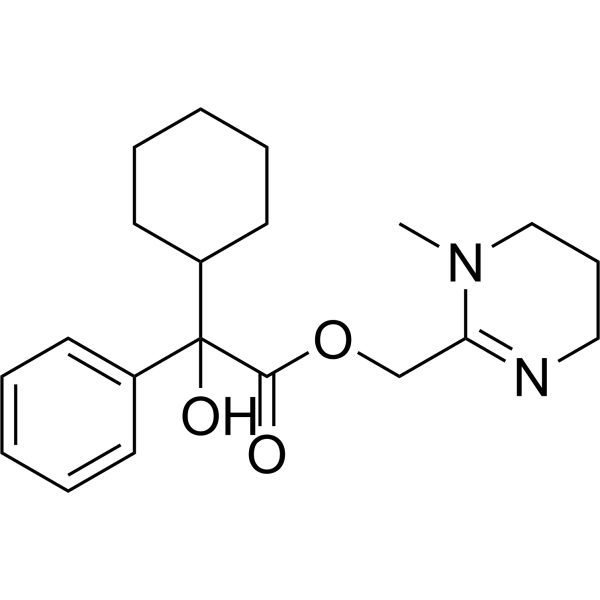
Oxyphencyclimine is an orally active muscarinic receptor (mAChR) antagonist. Oxyphencyclimine is effective in reducing ulceration index and increasing pepsin activity in rat gastric ulcer model. Oxyphencyclimine can be used in studies of peptic ulcer disease and gastrointestinal spasm.
For research use only. We do not sell to patients.
- CAS No.: 125-53-1
- Formula: C20H28N2O3
- Molecular Weight:344.45
-
Storage:
Please store the product under the recommended conditions in the Certificate of Analysis.

To place orders, for customer services and technical support, please contact: MedChemExpress USA
Tel: 609-228-6898 E-mail: [email protected] [email protected]


-
 Biological Activity
-
Chemical Information
- Purity & Documentation
- References
-
 Help & FAQs




Biological Activity
Description
In Vivo
MedChemExpress (MCE) has not independently confirmed the accuracy of these methods. They are for reference only.
-
Animal Model:Male or female Sprague-Dawley rats (160-170 g; Reserpine or Phenylbutazone-induced rat gastric ulcer model)[1].
-
Dosage:10 mg/kg
-
Administration:Oral administration; single.
-
Result:Increased pepsin activity in Reserpine-induced gastric ulcer rat from 5.9% (1 % homogenate) and 9.0% (supernatant) to 9.7% and 18.4%, respectively.
Increased pepsin activity in Phenylbutazone-induced gastric ulcer rat from 13.0% (1 % homogenate) and 26.1% (supernatant) to 21.3% and 43.6%, respectively.
Decreased rate of ulcers in Reserpine and Phenylbutazone-induced rat gastric ulcer model from 93% and 100 % to 38% and 60%, respectively.


Chemical Information
-
CAS No. 125-53-1
-
Molecular Weight 344.45
-
Formula C20H28N2O3
-
SMILES
O=C(C(C1=CC=CC=C1)(C2CCCCC2)O)OCC3=NCCCN3C
-
Shipping
Room temperature in continental US; may vary elsewhere.
-
Storage
Please store the product under the recommended conditions in the Certificate of Analysis.


Purity & Documentation
References
[1]. Coppi G, et al. Experimental gastric ulcers and stomach tissue pepsin activity in the rat. J Pharm Pharmacol. 1972 Apr;24(4):332-3. [Content Brief]
[2]. Waelbroeck M, et al. Stereoselective interaction of procyclidine, hexahydro-difenidol, hexbutinol and oxyphencyclimine, and of related antagonists, with four muscarinic receptors. Eur J Pharmacol. 1992 Sep 1;227(1):33-42. [Content Brief]

Calculators
Concentration (start) × Volume (start) = Concentration (final) × Volume (final)


Oxyphencyclimine Related Classifications
HY-B0954A Related Classifications
 Powered by Bioz