



VU 0255035
Based on 1 publication(s) in Google Scholar
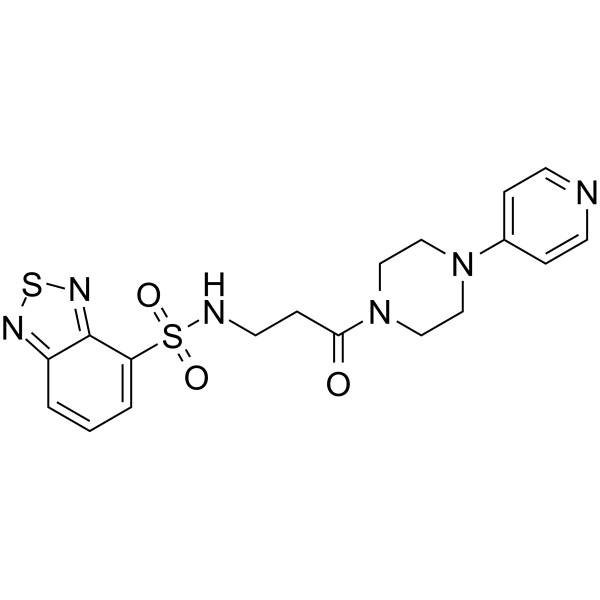
VU0255035 is a highly selective and competitive M1 mAChR antagonist. VU0255035 blocks M1 mAChR signals to reduce epileptic seizures and regulate neuronal membrane potential. VU0255035 can be used in research related to central nervous system diseases, such as epilepsy, Parkinson's disease, and dystonia.
Nos produits utilisent uniquement pour la recherche. Nous ne vendons pas aux patients.
- Pureté : 99.76%
- CAS No.: 1135243-19-4
- Formule: C18H20N6O3S2
- Masse moléculaire:432.52
-
Stockage:
4°C, protect from light
* In solvent : -80°C, 6 months; -20°C, 1 month (protect from light)

To place orders, for customer services and technical support, please contact: MedChemExpress USA
Tel: 609-228-6898 E-mail: [email protected] [email protected]


-
 Activité biologique
-
Chemical Information
-
Solvant et solubilité
- Protocole
- Pureté et documentation
- Références
-
 Help & FAQs


-
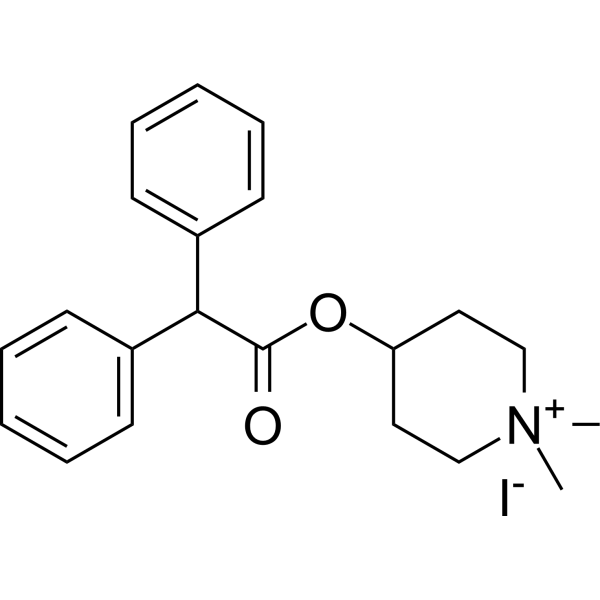
HY-100958
4-DAMPM3/M5 Receptor Antagonist -
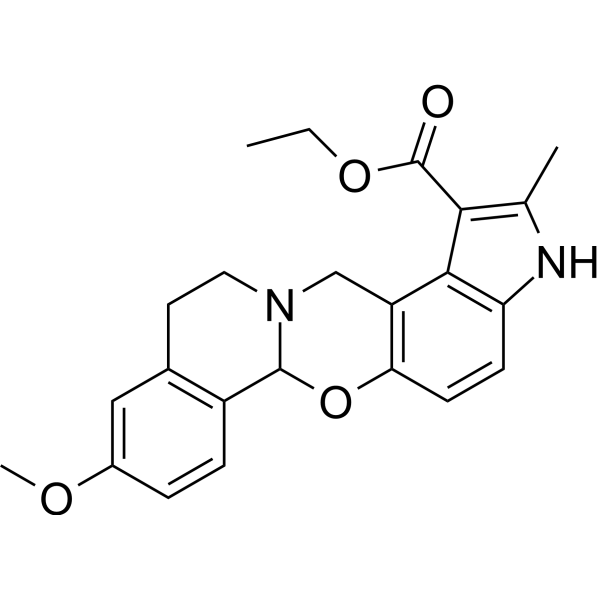
HY-107646
PD 102807M4 Receptor Antagonist -
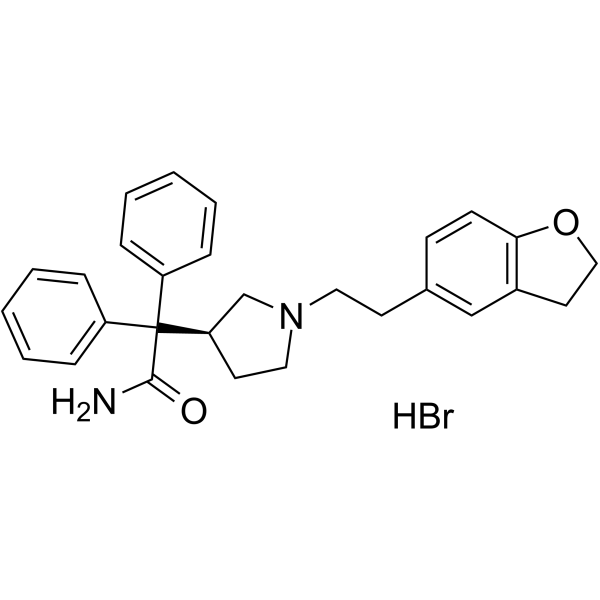
HY-A0012
Darifenacin hydrobromideM3 Muscarinic Receptor Antagonist -
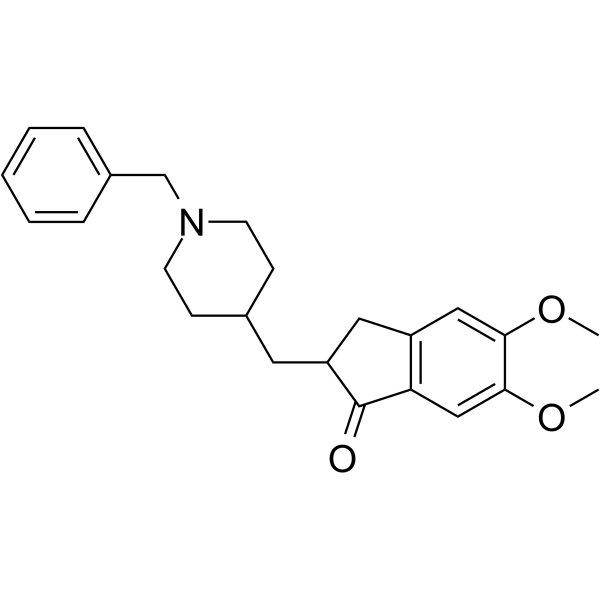
HY-14566
DonepezilSpecific AChE Inhibitor -
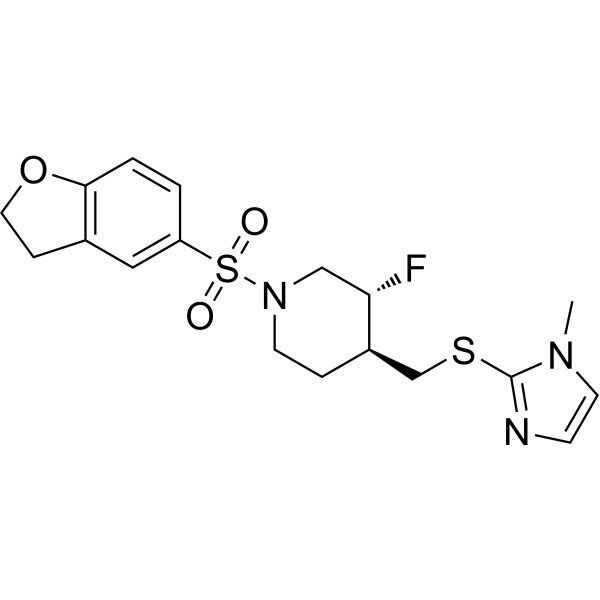
HY-148502
VU6019650M5 mAChR Antagonist -
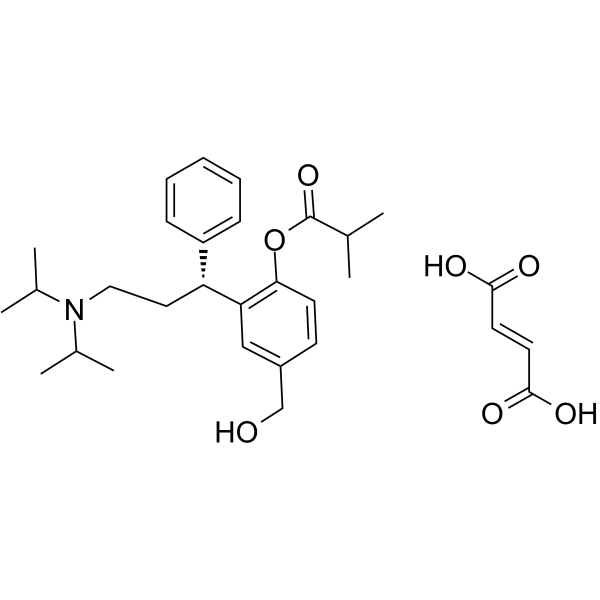
HY-A0030
Fesoterodine fumaratemAChR Antagonist -
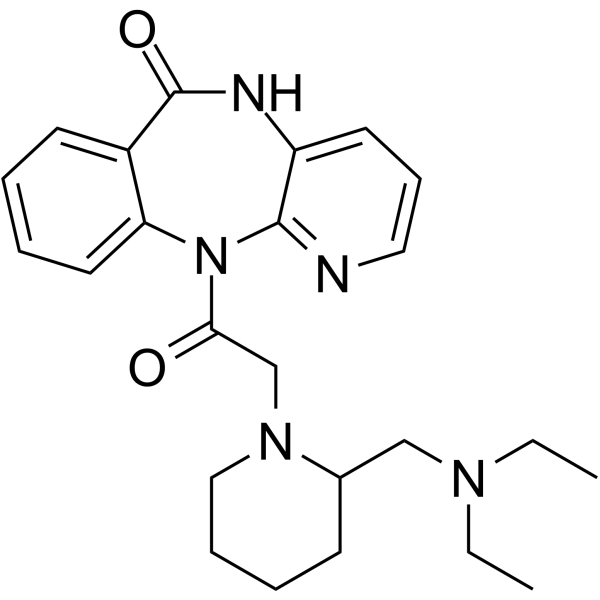
HY-101381
OtenzepadmAChR Antagonist -
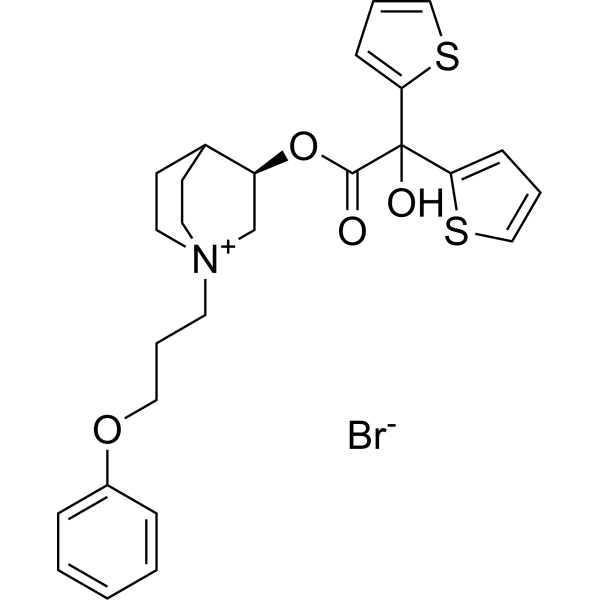
HY-14144
Aclidinium BromidemAChR Antagonist -
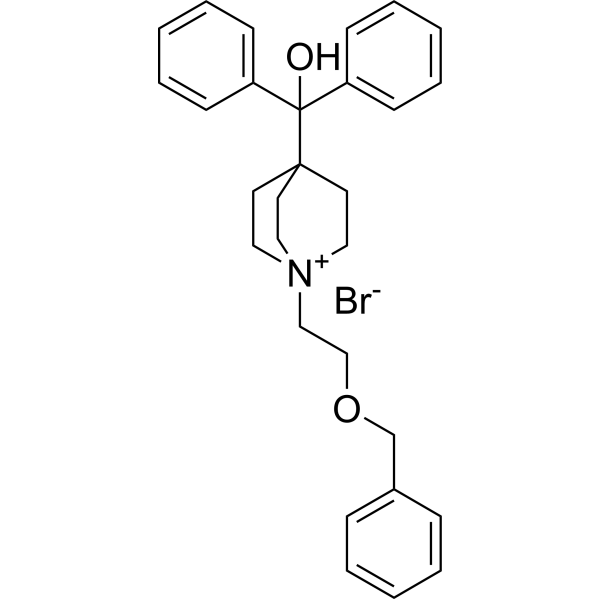
HY-12100
Umeclidinium bromidemAChR Antagonist -
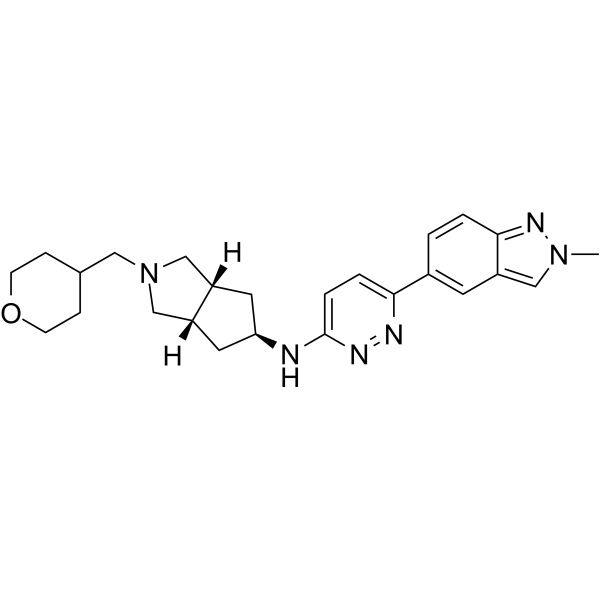
HY-160440
rel-VU6021625Relative Configuration of VU6021625 -

HY-108234R
VU 0255035 (Standard)Reference Standard -
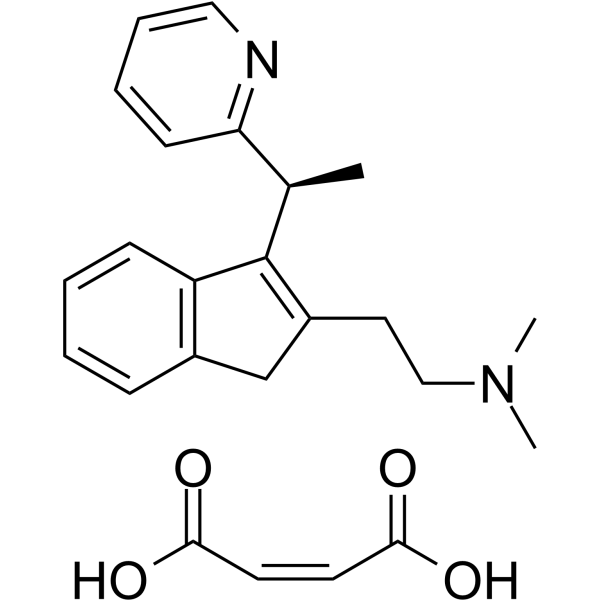
HY-107647
(S)-(+)-Dimethindene maleateM2 Receptor Antagonist
Publications Citing Use of MedChemExpress (MCE) VU 0255035
More

Activité biologique
Description
IC50 & Target
|
mAChR1 |
Cellular Effect
|
Cell Line

|
Type | Value | Description | References |
|---|---|---|---|---|
| CHO | IC50 |
0.24 μM
Compound: ML012, VU0255035
|
Antagonist activity at rat muscarinic M1 receptor expressed in CHO cells assessed as inhibition of acetylcholine-induced calcium mobilization by fluorescence assay
Antagonist activity at rat muscarinic M1 receptor expressed in CHO cells assessed as inhibition of acetylcholine-induced calcium mobilization by fluorescence assay
|
[PMID: 22197142] |
| CHO | IC50 |
0.69 μM
Compound: ML012, VU0255035
|
Antagonist activity at human muscarinic M1 receptor expressed in CHO cells assessed as inhibition of acetylcholine-induced calcium mobilization by fluorescence assay
Antagonist activity at human muscarinic M1 receptor expressed in CHO cells assessed as inhibition of acetylcholine-induced calcium mobilization by fluorescence assay
|
[PMID: 22197142] |
| CHO | IC50 |
690 nM
Compound: ML012, VU0255035
|
Antagonist activity at human muscarinic M1 receptor expressed in CHO cells assessed as inhibition of acetylcholine-induced calcium mobilization by fluorescence analysis
Antagonist activity at human muscarinic M1 receptor expressed in CHO cells assessed as inhibition of acetylcholine-induced calcium mobilization by fluorescence analysis
|
[PMID: 22749871] |
In Vitro
VU0255035 (0.1-3 μM) parallels the rightward shift of the concentration-response relationship of acetylcholine (ACh)-induced calcium mobilization and interacts with the orthosteric binding site of ACh as a competitive antagonist[1].
VU0255035 (1 nM-0.1 μM; 75 min) concentration-dependently blocks carbachol (CCh)-induced phosphatidylinositol (PI) hydrolysis in rat hippocampal slices with an IC50 of 2.4 μM[1].
VU0255035 (5 μM) completely blocks CCh-induced enhancement of NMDAR currents in hippocampal CA1 pyramidal neurons[1].
VU0255035 (5 μM) can significantly reduce the amplitude of choline-induced long-term depression (LTD) in hippocampal slice electrophysiological experiments, proving that choline-induced LTD depends on M receptors[2].
VU0255035 (5 μM) can completely block CCh-induced membrane potential depolarization of pyramidal neurons in the medial prefrontal cortex (mPFC) in brain slice membrane potential recording experiments[3].
MedChemExpress (MCE) has not independently confirmed the accuracy of these methods. They are for reference only.
In Vivo
VU0255035 (3-30 mg/kg; ip; single dose) has no effect on the acquisition of contextual fear conditioning in a rat contextual fear conditioning model, similar to M1 mAChR knockout mice. VU0255035 may not cause severe cognitive deficits like non-selective anticholinergic drugs[1].
MedChemExpress (MCE) has not independently confirmed the accuracy of these methods. They are for reference only.
-
Animal Model:C57Bk:129Sv mice (2-6 months old; pilocarpine-induced seizure model)[1]
-
Dosage:10 mg/kg
-
Administration:Intraperitoneal injection, single dose
-
Result:Decreased the seizure scores and reduced the mortality 24 hours after treatment..
-
Animal Model:Sprague-Dawley rats (male, 240-270 g; contextual fear conditioning model)[1]
-
Dosage:3-30 mg/kg (dissolved in 5% lactic acid [8.5% (v/v)] in water, adjusted to pH 6.5 using 1 N NaOH)
-
Administration:Intraperitoneal injection, single administration
-
Result:Had no effect on the acquisition of the contextual fear conditioning response within the tested dose range, consistent with the data of M1 mAChR knockout mice.


Chemical Information
-
CAS No. 1135243-19-4
-
Appearance Solid
-
Masse moléculaire 432.52
-
Formule C18H20N6O3S2
-
Color Light yellow to brown
-
SMILES
O=S(C1=CC=CC2=NSN=C21)(NCCC(N3CCN(C4=CC=NC=C4)CC3)=O)=O
-
Synonyms
VU 255035
-
Livraison
Room temperature in continental US; may vary elsewhere.
-
Stockage
4°C, protect from light
* In solvent : -80°C, 6 months; -20°C, 1 month (protect from light)


Publications (1)
-
Journal Impact Factor
-
Most Recent
-
Br J Pharmacol
Cholinergic G protein-coupled bile acid receptor 1 (TGR5/GPBA) in the medial septal orchestrates adult hippocampal neurogenesis and cognition in Alzheimer's disease mice. [Abstract]2025 Nov;182(21):5409-5429. PMID: 40926398


Solvant et solubilité
In Vitro:
DMSO : 62.5 mg/mL (144.50 mM; ultrasonic and warming and heat to 60°C; Hygroscopic DMSO has a significant impact on the solubility of product, please use newly opened DMSO)
Please refer to the solubility information to select the appropriate solvent. Once prepared, please aliquot and store the solution to prevent product inactivation from repeated freeze-thaw cycles.
Storage method and period of stock solution: -80°C, 6 months; -20°C, 1 month (protect from light). When stored at -80°C, please use it within 6 months. When stored at -20°C, please use it within 1 month.
Please refer to the solubility information to select the appropriate solvent. Once prepared, please aliquot and store the solution to prevent product inactivation from repeated freeze-thaw cycles.
Storage method and period of stock solution: -80°C, 6 months; -20°C, 1 month (protect from light). When stored at -80°C, please use it within 6 months. When stored at -20°C, please use it within 1 month.
Concentration (start) × Volume (start) = Concentration (final) × Volume (final)
In Vivo:
Select the appropriate dissolution method based on your experimental animal and administration route.
- For the following dissolution methods, please ensure to first prepare a clear stock solution using an In Vitro approach and then sequentially add co-solvents:
- To ensure reliable experimental results, the clarified stock solution can be appropriately stored based on storage conditions. As for the working solution for In Vivo experiments, it is recommended to prepare freshly and use it on the same day.
- The percentages shown for the solvents indicate their volumetric ratio in the final prepared solution. If precipitation or phase separation occurs during preparation, heat and/or sonication can be used to aid dissolution.
Add each solvent one by one: 10% DMSO 40% PEG300 5% Tween-80 45% Saline
Solubility: ≥ 2.08 mg/mL (4.81 mM); Clear solution
This protocol yields a clear solution of ≥ 2.08 mg/mL (saturation unknown).
Taking 1 mL working solution as an example, add 100 μL DMSO stock solution (20.8 mg/mL) to 400 μL PEG300, and mix evenly; then add 50 μL Tween-80 and mix evenly; then add 450 μL Saline to adjust the volume to 1 mL.
Preparation of Saline: Dissolve 0.9 g sodium chloride in ddH₂O and dilute to 100 mL to obtain a clear Saline solution.
Add each solvent one by one: 10% DMSO 90% (20% SBE-β-CD in Saline)
Solubility: ≥ 2.08 mg/mL (4.81 mM); Clear solution
This protocol yields a clear solution of ≥ 2.08 mg/mL (saturation unknown).
Taking 1 mL working solution as an example, add 100 μL DMSO stock solution (20.8 mg/mL) to 900 μL 20% SBE-β-CD in Saline, and mix evenly.
Preparation of 20% SBE-β-CD in Saline (4°C, storage for one week): 2 g SBE-β-CD powder is dissolved in 10 mL Saline, completely dissolve until clear.
In Vivo Dissolution Calculator
Please enter the basic information of animal experiments:
-
-
-
-
Recommended: Prepare an additional quantity of animals to account for potential losses during experiments.
Please enter your animal formula composition:
-
%DMSO +
Recommended: Keep the proportion of DMSO in working solution below 2% if your animal is weak.
-
%+
-
+%Tween-80 + +
-
%Saline +
The co-solvents required include: DMSO, . All of co-solvents are available by MedChemExpress (MCE). , Tween 80. All of co-solvents are available by MedChemExpress (MCE).
Working solution concentration: 0.22 mg/mL
Method for preparing stock solution: mg drug dissolved in μL DMSO. Stock solution concentration: mg/mL. * In solvent : -80°C, 6 months; -20°C, 1 month (protect from light)
1. Take μL DMSO stock solution;
2. Add μL .
μL , mix evenly;
3. Then add μL Tween 80, mix evenly;
4. Then add μL
Please ensure that the stock solution in the first step is dissolved to a clear state, and add co-solvents in sequence. You can use ultrasonic heating (ultrasonic cleaner, recommended frequency 20-40 kHz), vortexing, etc. to assist dissolution.


Pureté et documentation
-
Fiche technique (277 KB)
-
SDS (393 KB)
- English - EN (393 KB)
- Français - FR (393 KB)
- Deutsch - DE (393 KB)
- Norwegian - NO (393 KB)
- Español - ES (393 KB)
- Swedish - SV (393 KB)
- Italian - IT (393 KB)
- Korean - KR (393 KB)
- Portuguese - PT (393 KB)
-
Instruction de manipulation (2659 KB)
Références
[1]. Sheffler DJ, et al. A novel selective muscarinic acetylcholine receptor subtype 1 antagonist reduces seizures without impairing hippocampus-dependent learning. Mol Pharmacol. 2009 Aug;76(2):356-68. [Content Brief]
[2]. Grafe EL, et al. Effects of prenatal ethanol exposure on choline-induced long-term depression in the hippocampus. J Neurophysiol. 2021 Nov 1;126(5):1622-1634. [Content Brief]
[3]. Kurowski P, et al. Muscarinic receptor control of pyramidal neuron membrane potential in the medial prefrontal cortex (mPFC) in rats. Neuroscience. 2015 Sep 10;303:474-88. [Content Brief]


Complete Stock Solution Preparation Table
Please refer to the solubility information to select the appropriate solvent. Once prepared, please aliquot and store the solution to prevent product inactivation from repeated freeze-thaw cycles.
Storage method and period of stock solution: -80°C, 6 months; -20°C, 1 month (protect from light). When stored at -80°C, please use it within 6 months. When stored at -20°C, please use it within 1 month.
| Optional Solvent | Concentration Solvent Mass | 1 mg | 5 mg | 10 mg | 25 mg |
|---|---|---|---|---|---|
| DMSO | 1 mM | 2.3120 mL | 11.5602 mL | 23.1203 mL | 57.8008 mL |
| 5 mM | 0.4624 mL | 2.3120 mL | 4.6241 mL | 11.5602 mL | |
| 10 mM | 0.2312 mL | 1.1560 mL | 2.3120 mL | 5.7801 mL | |
| 15 mM | 0.1541 mL | 0.7707 mL | 1.5414 mL | 3.8534 mL | |
| 20 mM | 0.1156 mL | 0.5780 mL | 1.1560 mL | 2.8900 mL | |
| 25 mM | 0.0925 mL | 0.4624 mL | 0.9248 mL | 2.3120 mL | |
| 30 mM | 0.0771 mL | 0.3853 mL | 0.7707 mL | 1.9267 mL | |
| 40 mM | 0.0578 mL | 0.2890 mL | 0.5780 mL | 1.4450 mL | |
| 50 mM | 0.0462 mL | 0.2312 mL | 0.4624 mL | 1.1560 mL | |
| 60 mM | 0.0385 mL | 0.1927 mL | 0.3853 mL | 0.9633 mL | |
| 80 mM | 0.0289 mL | 0.1445 mL | 0.2890 mL | 0.7225 mL | |
| 100 mM | 0.0231 mL | 0.1156 mL | 0.2312 mL | 0.5780 mL |


VU 0255035 Related Classifications
HY-108234 Related Classifications
 Powered by Bioz